Articles | Volume 11, issue 3
https://doi.org/10.5194/essd-11-1109-2019
© Author(s) 2019. This work is distributed under
the Creative Commons Attribution 4.0 License.
the Creative Commons Attribution 4.0 License.
https://doi.org/10.5194/essd-11-1109-2019
© Author(s) 2019. This work is distributed under
the Creative Commons Attribution 4.0 License.
the Creative Commons Attribution 4.0 License.

31 Jul 2019
| 31 Jul 2019
A global monthly climatology of total alkalinity: a neural network approach
Daniel Broullón
CORRESPONDING AUTHOR
Instituto de Investigaciones Marinas, CSIC, Eduardo Cabello 6, 36208 Vigo, Spain
Fiz F. Pérez
Instituto de Investigaciones Marinas, CSIC, Eduardo Cabello 6, 36208 Vigo, Spain
Antón Velo
Instituto de Investigaciones Marinas, CSIC, Eduardo Cabello 6, 36208 Vigo, Spain
Mario Hoppema
Alfred Wegener Institute Helmholtz Centre for Polar and Marine
Research, Postfach 120161, 27515 Bremerhaven, Germany
Are Olsen
Geophysical Institute, University of Bergen and Bjerknes Centre for
Climate Research, Allégaten 70, 5007 Bergen, Norway
Taro Takahashi
Lamont-Doherty Earth Observatory of Columbia University, Palisades, NY 10964, USA
Robert M. Key
Atmospheric and Oceanic Sciences, Princeton University, 300 Forrestal Road, Sayre Hall, Princeton, NJ 08544, USA
Toste Tanhua
GEOMAR Helmholtz Centre for Ocean Research Kiel, Düsternbrooker
Weg 20, 24105 Kiel, Germany
Melchor González-Dávila
Instituto de Oceanografía y Cambio Global, IOCAG, Universidad de Las Palmas de Gran Canaria, Las Palmas de Gran Canaria, Spain
Emil Jeansson
Uni Research Climate, Bjerknes Centre for Climate Research,
Jahnebakken 5, 5007 Bergen, Norway
Alex Kozyr
NOAA National Centers for Environmental Information, 1315 East-West
Hwy Silver Spring, MD 20910, USA
Steven M. A. C. van Heuven
Faculty of Science and Engineering, Isotope Research – Energy and
Sustainability Research Institute Groningen, University of Groningen,
Nijenborgh 6, 9747 AG Groningen, the Netherlands
Related authors
Li-Qing Jiang, Amanda Fay, Jens Daniel Müller, Luke Gregor, Alizée Roobaert, Lydia Keppler, Dustin Carroll, Siv K. Lauvset, Tim DeVries, Judith Hauck, Christian Rödenbeck, Nicolas Metzl, Andrea J. Fassbender, Jean-Pierre Gattuso, Peter Landschützer, Rik Wanninkhof, Christopher Sabine, Simone R. Alin, Mario Hoppema, Are Olsen, Matthew P. Humphreys, Kunal Chakraborty, Ana C. Franco, Kumiko Azetsu-Scott, Dorothee C. E. Bakker, Leticia Barbero, Nicholas R. Bates, Nicole Besemer, Henry C. Bittig, Albert E. Boyd, Daniel Broullón, Wei-Jun Cai, Brendan R. Carter, Thi-Tuyet-Trang Chau, Chen-Tung Arthur Chen, Frédéric Cyr, John E. Dore, Ian Enochs, Richard A. Feely, Hernan E. Garcia, Marion Gehlen, Prasanna Kanti Ghoshal, Lucas Gloege, Melchor González-Dávila, Nicolas Gruber, Debby Ianson, Yosuke Iida, Masao Ishii, Apurva Padamnabh Joshi, Esther Kennedy, Alex Kozyr, Nico Lange, Claire Lo Monaco, Derek P. Manzello, Galen A. McKinley, Natalie M. Monacci, Xose A. Padin, Ana M. Palacio-Castro, Fiz F. Pérez, J. Magdalena Santana-Casiano, Jonathan Sharp, Adrienne Sutton, Jim Swift, Toste Tanhua, Maciej Telszewski, Jens Terhaar, Ruben van Hooidonk, Anton Velo, Andrew J. Watson, Angelicque E. White, Zelun Wu, Liang Xue, Hyelim Yoo, Jiye Zeng, and Guorong Zhong
Earth Syst. Sci. Data, 18, 1405–1462, https://doi.org/10.5194/essd-18-1405-2026, https://doi.org/10.5194/essd-18-1405-2026, 2026
Short summary
Short summary
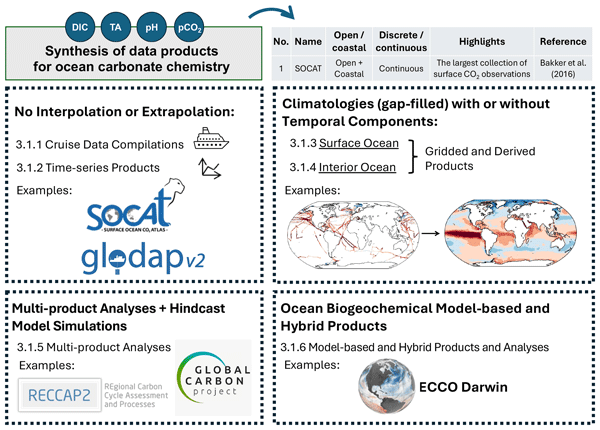
This review article provides an overview of 68 existing ocean carbonate chemistry data products and data product sets, encompassing a broad range of types, including compilations of cruise datasets, gap-filled observational products, model simulations, and more. It is designed to help researchers identify and access the data products that best support their scientific objectives, thereby facilitating progress in understanding the ocean's changing carbonate chemistry.
Mercedes de la Paz, Susana Flecha, Fatima Zohra Bouthir, Milad Fahkri, Abed El Rahman Hassoun, Valeria Ibello, Korhan Özkan, Fiz F. Pérez, Adil Chair, and Iris E. Hendriks
Earth Syst. Sci. Data, 18, 6207–6224, https://doi.org/10.5194/essd-18-6207-2026, https://doi.org/10.5194/essd-18-6207-2026, 2026
Short summary
Short summary
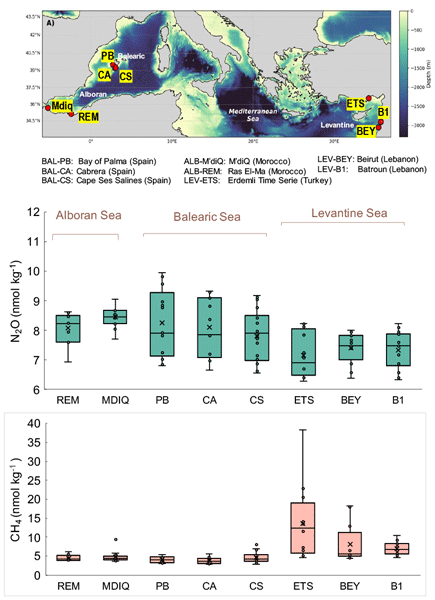
This study provides monthly year-long dataset of nitrous oxide and methane concentrations and their air-sea exchange in understudied coastal areas of the Mediterranean Sea. By using standardized methods across multiple sites, it reveals marked seasonal and regional differences, with methane showing highly variable bursts linked to local sources. The dataset addresses major observational gaps and offers a reliable foundation for future environmental evaluation in this sensitive region.
Mian Liu and Toste Tanhua
Ocean Sci., 22, 2595–2620, https://doi.org/10.5194/os-22-2595-2026, https://doi.org/10.5194/os-22-2595-2026, 2026
Short summary
Short summary
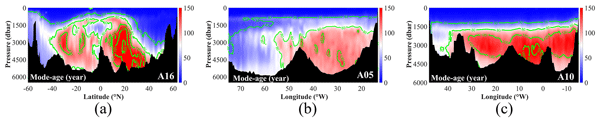
We measured the age of Atlantic waters using man-made gases and a radioactive isotope. Age increases with depth: young surface waters are about 30 years old, deep Antarctic water reaches 100 years, and the oldest bottom water is roughly 120 years. The western Atlantic is younger and better ventilated than the east. These patterns help estimate deep-sea oxygen use and are key for climate models and marine ecosystems.
Nico Lange, Siv K. Lauvset, Brendan R. Carter, Matthew P. Humphreys, Ryan J. Woosley, Are Olsen, Henry C. Bittig, Alex Kozyr, Marta Álvarez, Kumiko Azetsu-Scott, Susan Becker, Peter J. Brown, Leticia Cotrim da Cunha, Larissa Dias, Mario Hoppema, Masao Ishii, Emil Jeansson, Akihiko Murata, Jens Daniel Müller, Fiz F. Pérez, Carsten Schirnick, Reiner Steinfeldt, Adam Ulfsbo, Anton Velo, and Toste Tanhua
Earth Syst. Sci. Data Discuss., https://doi.org/10.5194/essd-2026-496, https://doi.org/10.5194/essd-2026-496, 2026
Preprint under review for ESSD
Short summary
Short summary
GLODAP is a data product for ocean inorganic carbon and related biogeochemical variables measured by the chemical analysis of water bottle samples from scientific cruises. GLODAPv3 is the third version release of GLODAP. The data that are included have been subjected to extensive quality control, including systematic evaluation of systematic cruise differences. This version contains data from 1181 hydrographic cruises covering the world's oceans from 1972 to 2023.
Hyelim Yoo, Li-Qing Jiang, Chris Langdon, Alex Kozyr, Simone R. Alin, Jose Martin Hernandez Ayon, Kumiko Azetsu-Scott, Leticia Barbero, Nicole Besemer, Albert Boyd, Jean R. Brodeur, Wei-Jun Cai, Brendan R. Carter, Cecilia Chapa, Eugene Colbourne, Jessica N. Cross, Ian Enochs, Leticia Espinosa-Carreon, Richard A. Feely, Karina E. Giesbrecht, Helen Gurney-Smith, Burke Hales, Naomi Harada, James Hooper, Christopher W. Hunt, Debby Ianson, Mike Jankulak, Terrence M. Joyce, Esther G. Kennedy, Brian A. King, Arne Körtzinger, Matthias Lankhorst, Gary Maillet, Derek Manzello, Anna K. McLaskey, Viviane V. Menezes, Nicolas Metzl, Christine Michel, Natalie M. Monacci, Julio M. Morell, Akihiko Murata, Jan Newton, Emily O'Grady, Ana M. Palacio-Castro, Denis Pierrot, Marc Ringuette, Christopher Sabine, Joseph E. Salisbury, Akash R. Sastri, Ute Schuster, Uwe Send, Ryan Smith, Michel Starr, James H. Swift, Lynne D. Talley, Helmuth Thomas, Douglas W. R. Wallace, Zhaohui Aleck Wang, Rik Wanninkhof, Chi S. Wong, Patricia L. Yager, and Igor Yashayaev
Earth Syst. Sci. Data Discuss., https://doi.org/10.5194/essd-2026-516, https://doi.org/10.5194/essd-2026-516, 2026
Preprint under review for ESSD
Short summary
Short summary
The coastal Ocean Data Analysis Product in North America (CODAP-NA, Version 2026) substantially increased both the spatial and temporal coverage of coastal biogeochemical measurements across North American continental shelves. This version comprises 446 cruises, 31,864 hydrographic profiles, and 195,489 discrete data records covering continental shelf environments from Alaska to Mexico in the west and from Canada to the Caribbean in the east from 1981 to 2024.
Marta Álvarez, Maribel I. García-Ibáñez, Nico Lange, Alex Kozyr, Antón Velo, Toste Tanhua, Giuseppe Civitarese, Carolina Cantoni, Malek Belgacem, Katrin Schroeder, Rubén Acerbi, Laurent Coppola, Thibaut Wagener, Noelia M. Fajar, Susana Flecha, Michele Giani, Louisa Giannoudi, Elisa F. Guallart, Abed El Rahman Hassoun, Emma I. Huertas, Valeria Ibello, Mehdia A. Keraghel, Férial Louanchi, Anna Luchetta, Fiz F. Pérez, Carsten Schirnick, Ekaterini Souvermezoglou, Lidia Urbini, Montserrat Vidal, and Patrizia Ziveri
Earth Syst. Sci. Data, 18, 4915–4941, https://doi.org/10.5194/essd-18-4915-2026, https://doi.org/10.5194/essd-18-4915-2026, 2026
Short summary
Short summary
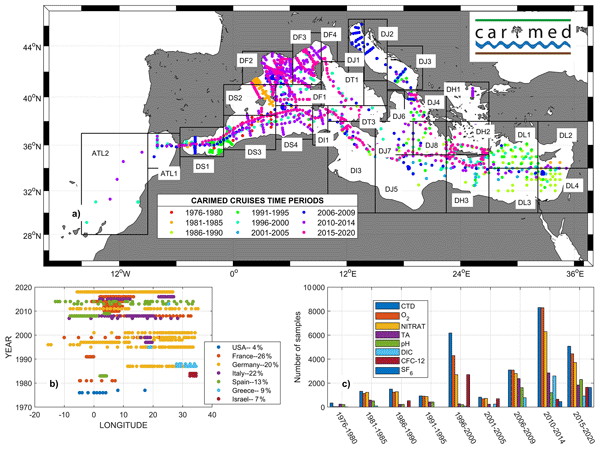
CARIMED (CARbon, tracers, and ancillary data In the MEDiterranean Sea) is a high-quality, FAIR (Findability, Accessibility, Interoperability, and Reusability) dataset integrating hydrographic, biogeochemical, and transient tracer data from 46 research cruises (1976–2018) across the Mediterranean Sea. The data underwent rigorous, basin-adapted quality control to remove systematic biases, unifying four decades of fragmented data, delivering two complementary products: the aggregated original cruise data product and the bias-adjusted data synthesis product.
Rémy Asselot, Virginie Thierry, Lidia I. Carracedo, Herle Mercier, Anton Velo, Raphaël Bajon, and Fiz F. Pérez
EGUsphere, https://doi.org/10.22541/essoar.15003488/v1, https://doi.org/10.22541/essoar.15003488/v1, 2026
Short summary
Short summary
Human activities have emitted large amounts of carbon dioxide (CO2) into the atmosphere since the beginning of the industrial revolution and this human-emitted CO2 (Cant) is absorbed by the ocean. We use autonomous robotic to show that the Cant content in the upper 2000 dbar of the Irminger Sea increased roughly steadily over 2011–2016, then reached a stationary state between 2016 and 2021. This study highlights how the monthly resolution of Argo data can complement ship-based measurements.
Matthew P. Humphreys, Siv K. Lauvset, Nico Lange, Henry C. Bittig, Brendan R. Carter, Mario Hoppema, Akihiko Murata, Are Olsen, Toste Tanhua, Adam Ulfsbo, Antón Velo, Ryan J. Woosley, Kumiko Azetsu-Scott, Jens D. Müller, and Fiz F. Pérez
EGUsphere, https://doi.org/10.5194/egusphere-2026-3063, https://doi.org/10.5194/egusphere-2026-3063, 2026
This preprint is open for discussion and under review for Ocean Science (OS).
Short summary
Short summary
The Global Ocean Data Analysis Project (GLODAP) collects oceanographic datasets from research cruises that are needed to study the marine carbon cycle. The datasets are quality controlled and adjusted where necessary to ensure consistency between cruises, and published as a global data product. Here, we present a new method for calculating the consistency adjustments called ‘furthest-first inversion’ which has been developed for the newest version of the data product.
Alessandro Zanchetta, Steven van Heuven, Rigel Kivi, Michel Ramonet, Andreas Engel, Maarten Krol, and Huilin Chen
EGUsphere, https://doi.org/10.5194/egusphere-2026-2799, https://doi.org/10.5194/egusphere-2026-2799, 2026
Short summary
Short summary
In this study, we calculate the mean lifetime of carbonyl sulfide (COS) and methane (CH4) in the stratosphere from continuous vertical profiles sampled with balloon-borne instruments. We used two methods based on the stratospheric relationship of these gas species with N2O. The estimated stratospheric lifetime range is 69–90 years for COS and 146–172 years for CH4. These results are consistent with other studies and suggest no long-term trends in the stratospheric lifetime of these gas species.
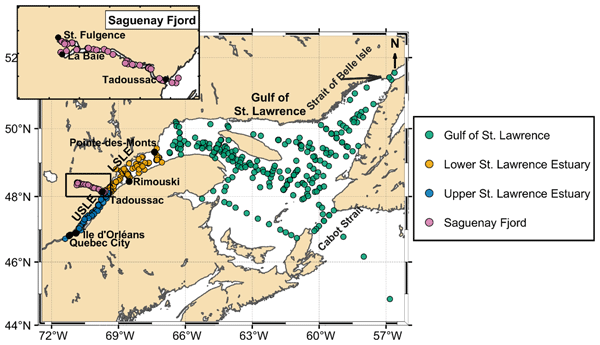
William A. Nesbitt, Alfonso O. Mucci, Toste Tanhua, Yves Gélinas, Jean-Éric Tremblay, Gwénaëlle Chaillou, Ludovic Pascal, Caroline Fradette, Lennart Gerke, Samuel W. Stevens, Mathilde Jutras, Marjolaine Blais, Martine Lizotte, Michel Starr, and Douglas W. R. Wallace
Earth Syst. Sci. Data, 18, 3609–3634, https://doi.org/10.5194/essd-18-3609-2026, https://doi.org/10.5194/essd-18-3609-2026, 2026
Short summary
Short summary
Over the past few decades, the St. Lawrence Estuary and Gulf have shown clear trends in oxygen depletion and acidification. This data description paper brings together twenty years of measurements from the St. Lawrence Estuary, Gulf of St. Lawrence, and Saguenay Fjord, carefully performing quality control procedures on data, and makes them publicly available. The resulting dataset supports future research, monitoring, and environmental management in this sensitive marine system.
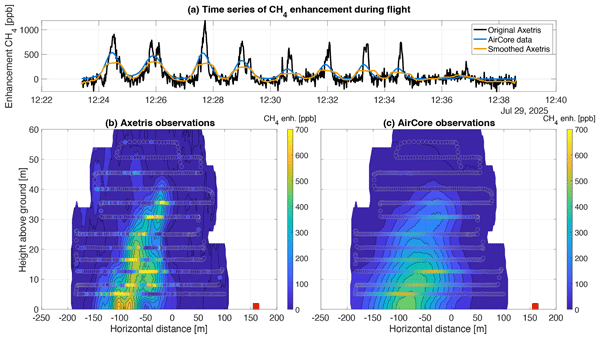
Noni van Ettinger, Steven M. A. C. van Heuven, and Huilin Chen
Atmos. Meas. Tech., 19, 3333–3362, https://doi.org/10.5194/amt-19-3333-2026, https://doi.org/10.5194/amt-19-3333-2026, 2026
Short summary
Short summary
This research evaluates the potential of a cost-effective methane sensor for quantifying anthropogenic emissions. With active temperature control, the sensor performs comparably to the high-precision Active AirCore in estimating dairy-farm mass emissions, achieving results within 10% uncertainty. The uncertainty is mainly driven by wind and background variability, rather than by sensor precision. The results show that cost-effective sensors can improve monitoring networks.
Johannes Degen, Nicole Bobrowski, Mélisende M. Bossard, Lucie Boucher, Huilin Chen, Andreas Engel, Bastien H. Geil, Giovanni B. Giuffrida, Steven van Heuven, Thorsten Hoffmann, Niklas Karbach, Gianluigi Ortenzi, and Tanja J. Schuck
EGUsphere, https://doi.org/10.5194/egusphere-2026-1865, https://doi.org/10.5194/egusphere-2026-1865, 2026
This preprint is open for discussion and under review for Atmospheric Measurement Techniques (AMT).
Short summary
Short summary
Observations in volcanic plumes often rely on Uncrewed Aerial Systems (UAS). In July 2024, we used the active AirCore technique with UAS to probe the plumes of Mount Etna (Italy). This was the first time to use this technique inside volcanic plumes. AirCore samples are stored in long coils for laboratory analyses delivering high-quality trace gas measurements. We observed enhanced mole fractions of CO2 and often also of CO. allowing conclusions on oxidation processes inside the crater.
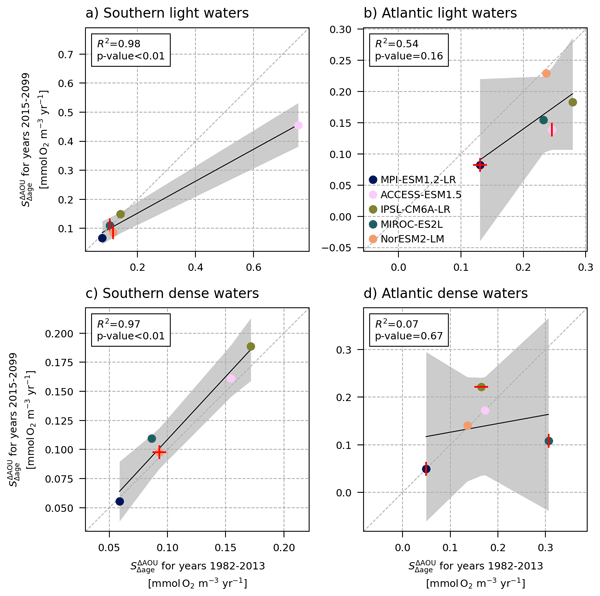
Damien Couespel, Xabier Davila, Nadine Goris, Emil Jeansson, Siv K. Lauvset, and Jerry Tjiputra
Biogeosciences, 23, 3433–3466, https://doi.org/10.5194/bg-23-3433-2026, https://doi.org/10.5194/bg-23-3433-2026, 2026
Short summary
Short summary
Remineralised carbon storage is projected to increase along the 21st century, but the magnitude of increase varies depending on the Earth system models. To constrain projections, we explore the relationship between remineralised carbon and deep ocean circulation. We show that the sensitivity of remineralised carbon to circulation slowdown varies considerably between models. More observational data and a larger model ensemble is needed to constrain projections of remineralised carbon storage.
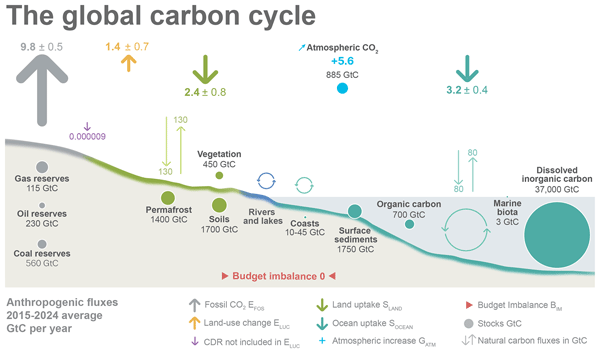
Pierre Friedlingstein, Michael O'Sullivan, Matthew W. Jones, Robbie M. Andrew, Dorothee C. E. Bakker, Judith Hauck, Peter Landschützer, Corinne Le Quéré, Hongmei Li, Ingrid T. Luijkx, Glen P. Peters, Wouter Peters, Julia Pongratz, Clemens Schwingshackl, Stephen Sitch, Josep G. Canadell, Philippe Ciais, Kjetil Aas, Simone R. Alin, Peter Anthoni, Leticia Barbero, Nicholas R. Bates, Nicolas Bellouin, Alice Benoit-Cattin, Carla F. Berghoff, Raffaele Bernardello, Laurent Bopp, Ida Bagus Mandhara Brasika, Matthew A. Chamberlain, Naveen Chandra, Frédéric Chevallier, Louise P. Chini, Nathan O. Collier, Thomas H. Colligan, Margot Cronin, Laique M. Djeutchouang, Xinyu Dou, Matt P. Enright, Kazutaka Enyo, Michael Erb, Wiley Evans, Richard A. Feely, Liang Feng, Daniel J. Ford, Adrianna Foster, Filippa Fransner, Thomas Gasser, Marion Gehlen, Thanos Gkritzalis, Jefferson Goncalves De Souza, Giacomo Grassi, Luke Gregor, Nicolas Gruber, Bertrand Guenet, Özgür Gürses, Kirsty Harrington, Ian Harris, Jens Heinke, George C. Hurtt, Yosuke Iida, Tatiana Ilyina, Akihiko Ito, Andrew R. Jacobson, Atul K. Jain, Tereza Jarníková, Annika Jersild, Fei Jiang, Steve D. Jones, Etsushi Kato, Ralph F. Keeling, Kees Klein Goldewijk, Jürgen Knauer, Yawen Kong, Jan Ivar Korsbakken, Charles Koven, Taro Kunimitsu, Xin Lan, Junjie Liu, Zhiqiang Liu, Zhu Liu, Claire Lo Monaco, Lei Ma, Gregg Marland, Patrick C. McGuire, Galen A. McKinley, Joe R. Melton, Natalie Monacci, Erwan Monier, Eric J. Morgan, David R. Munro, Jens D. Müller, Shin-Ichiro Nakaoka, Lorna R. Nayagam, Yosuke Niwa, Tobias Nutzel, Are Olsen, Abdirahman M. Omar, Naiqing Pan, Sudhanshu Pandey, Denis Pierrot, Zhangcai Qin, Pierre Regnier, Gregor Rehder, Laure Resplandy, Alizée Roobaert, Thais M. Rosan, Christian Rödenbeck, Jörg Schwinger, Ingunn Skjelvan, T. Luke Smallman, Victoria Spada, Mohanan G. Sreeush, Qing Sun, Adrienne J. Sutton, Colm Sweeney, Didier Swingedouw, Roland Séférian, Shintaro Takao, Hiroaki Tatebe, Hanqin Tian, Xiangjun Tian, Bronte Tilbrook, Hiroyuki Tsujino, Francesco Tubiello, Erik van Ooijen, Guido R. van der Werf, Sebastiaan J. van de Velde, Anthony P. Walker, Rik Wanninkhof, Xiaojuan Yang, Wenping Yuan, Xu Yue, and Jiye Zeng
Earth Syst. Sci. Data, 18, 3211–3288, https://doi.org/10.5194/essd-18-3211-2026, https://doi.org/10.5194/essd-18-3211-2026, 2026
Short summary
Short summary
The Global Carbon Budget 2025 describes the methodology, main results, and datasets used to quantify the anthropogenic emissions of carbon dioxide (CO2) and their partitioning among the atmosphere, land ecosystems, and the ocean over the historical period (1750–2025). These living datasets are updated every year to provide the highest transparency and traceability in the reporting of CO2, the key driver of climate change.
Lennart Gerke, Toste Tanhua, William A. Nesbitt, Samuel W. Stevens, and Douglas W. R. Wallace
Ocean Sci., 22, 1391–1407, https://doi.org/10.5194/os-22-1391-2026, https://doi.org/10.5194/os-22-1391-2026, 2026
Short summary
Short summary
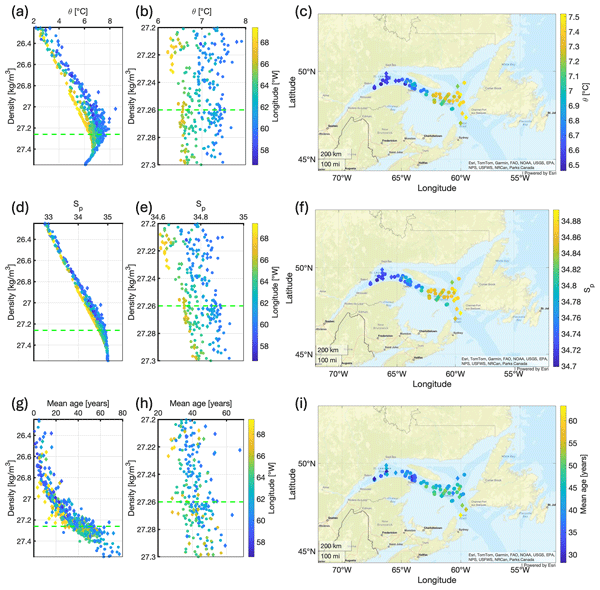
Transient tracer data, measured for the first time in 2022 in the Gulf of St. Lawrence, reveal older deep waters in the east than the west, contrary to expected estuarine circulation, indicating increased influence of older, warmer, less oxygenated North Atlantic Central Water over younger, oxygen-rich Labrador Current Water. While consistent with previous reports of increasing NACW contribution, our results contradict claims of a complete shift to NACW by 2021, showing that LCW still persists.
Raphaël Bajon, Lidia I. Carracedo, Herlé Mercier, Rémy Asselot, and Fiz F. Pérez
Biogeosciences, 23, 2335–2363, https://doi.org/10.5194/bg-23-2335-2026, https://doi.org/10.5194/bg-23-2335-2026, 2026
Short summary
Short summary
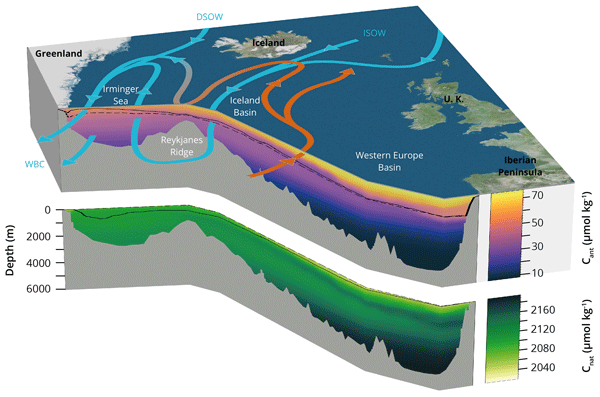
We analyzed three decades of carbon concentration and transport in the subpolar gyre of the North Atlantic Ocean, a key region in ocean carbon cycle. Natural carbon remained stable, but human-derived carbon rose by over 30 %. Upper layers exhibit strong seasonal to interannual variability driven by physical and biological processes. Carbon transport was tightly linked to circulation patterns. In the longterm, transport of human-derived carbon is proportional to the increase in its concentration.
Alessandro Zanchetta, Steven van Heuven, Joram Hooghiem, Rigel Kivi, Thomas Laemmel, Michel Ramonet, Markus Leuenberger, Peter Nyfeler, Sophie L. Baartman, Maarten Krol, and Huilin Chen
Atmos. Meas. Tech., 19, 1465–1486, https://doi.org/10.5194/amt-19-1465-2026, https://doi.org/10.5194/amt-19-1465-2026, 2026
Short summary
Short summary
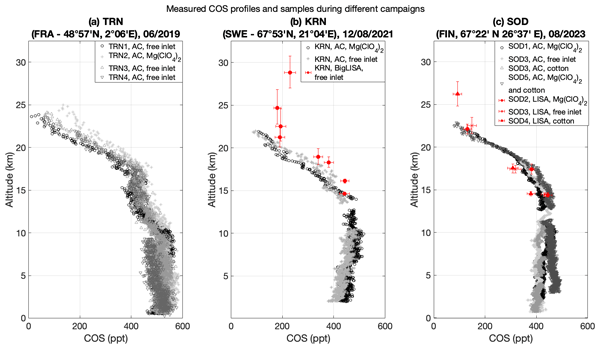
Continuous vertical profiles and discrete stratospheric samples of carbonyl sulfide (COS) were collected deploying the balloon-borne AirCore, LIghtweight Stratospheric Air (LISA) and BigLISA samplers and measured on a Quantum Cascade Laser Spectrometer (QCLS). Our measurements show good accordance with previous COS observations. Moreover, laboratory tests of ozone (O3) scrubbers proved squalene to remove O3 very efficiently without biasing the measurements of other trace gases.
Li-Qing Jiang, Amanda Fay, Jens Daniel Müller, Luke Gregor, Alizée Roobaert, Lydia Keppler, Dustin Carroll, Siv K. Lauvset, Tim DeVries, Judith Hauck, Christian Rödenbeck, Nicolas Metzl, Andrea J. Fassbender, Jean-Pierre Gattuso, Peter Landschützer, Rik Wanninkhof, Christopher Sabine, Simone R. Alin, Mario Hoppema, Are Olsen, Matthew P. Humphreys, Kunal Chakraborty, Ana C. Franco, Kumiko Azetsu-Scott, Dorothee C. E. Bakker, Leticia Barbero, Nicholas R. Bates, Nicole Besemer, Henry C. Bittig, Albert E. Boyd, Daniel Broullón, Wei-Jun Cai, Brendan R. Carter, Thi-Tuyet-Trang Chau, Chen-Tung Arthur Chen, Frédéric Cyr, John E. Dore, Ian Enochs, Richard A. Feely, Hernan E. Garcia, Marion Gehlen, Prasanna Kanti Ghoshal, Lucas Gloege, Melchor González-Dávila, Nicolas Gruber, Debby Ianson, Yosuke Iida, Masao Ishii, Apurva Padamnabh Joshi, Esther Kennedy, Alex Kozyr, Nico Lange, Claire Lo Monaco, Derek P. Manzello, Galen A. McKinley, Natalie M. Monacci, Xose A. Padin, Ana M. Palacio-Castro, Fiz F. Pérez, J. Magdalena Santana-Casiano, Jonathan Sharp, Adrienne Sutton, Jim Swift, Toste Tanhua, Maciej Telszewski, Jens Terhaar, Ruben van Hooidonk, Anton Velo, Andrew J. Watson, Angelicque E. White, Zelun Wu, Liang Xue, Hyelim Yoo, Jiye Zeng, and Guorong Zhong
Earth Syst. Sci. Data, 18, 1405–1462, https://doi.org/10.5194/essd-18-1405-2026, https://doi.org/10.5194/essd-18-1405-2026, 2026
Short summary
Short summary
This review article provides an overview of 68 existing ocean carbonate chemistry data products and data product sets, encompassing a broad range of types, including compilations of cruise datasets, gap-filled observational products, model simulations, and more. It is designed to help researchers identify and access the data products that best support their scientific objectives, thereby facilitating progress in understanding the ocean's changing carbonate chemistry.

Irene Sánchez-Mendoza, Melchor González-Dávila, David González-Santana, David Curbelo-Hernández, David Estupiñán-Santana, Aridane G. González, and J. Magdalena Santana-Casiano
Ocean Sci., 22, 609–628, https://doi.org/10.5194/os-22-609-2026, https://doi.org/10.5194/os-22-609-2026, 2026
Short summary
Short summary
Satellite and machine-learning methods now allow monitoring of pCO2,sw and acidity. Using ship and buoy data at the Canary Islands from 2019–2024, models (especially bagging) estimated CO2 and pH with high accuracy. Results show rapidly rising ocean CO2 and increasing acidification, driven by higher atmospheric CO2 and warming, including the 2023 marine heatwave. The region shifted from a weak CO2 sink to a strong source by 2024.

Fiz F. Pérez, Marta López-Mozos, Marcos Fontela, Maribel I. García-Ibáñez, Noelia Fajar, Xosé Antonio Padín, Mónica Castaño-Carrera, Mercedes de la Paz, Lidia I. Carracedo, Marta Álvarez, Herlé Mercier, Pascale Lherminier, and Antón Velo
Earth Syst. Sci. Data, 18, 801–821, https://doi.org/10.5194/essd-18-801-2026, https://doi.org/10.5194/essd-18-801-2026, 2026
Short summary
Short summary
Ocean acidification threatens marine ecosystems and the climate and is commonly assessed through ocean pH measurements. This study provides a new twenty-year dataset of pH measurements from the North Atlantic, derived from the correction and reevaluation of both historical and recent pH measurements affected by methodological bias. This revised dataset enables a more accurate reassessment of pH trends and carbon variables under novel and updated methodological standards.
Anne-Marie Wefing, Annabel Payne, Marcel Scheiwiller, Christof Vockenhuber, Marcus Christl, Toste Tanhua, and Núria Casacuberta
Ocean Sci., 21, 3311–3340, https://doi.org/10.5194/os-21-3311-2025, https://doi.org/10.5194/os-21-3311-2025, 2025
Short summary
Short summary
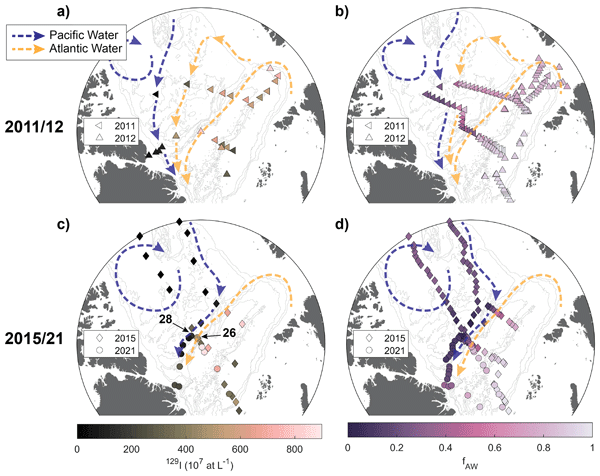
Here we used the anthropogenic radionuclides I-129 and U-236 as tracers for Atlantic Water circulation in the Arctic Ocean. New data collected in 2021 allowed to assess the distribution of Atlantic Water and mixing with Pacific-origin water in the surface layer in that year. By using historical tracer data from 2011 to 2021, we looked into temporal changes of the circulation and found slightly older waters in the central Arctic Ocean in 2021 compared to 2015.
Sophie L. Baartman, Steven M. Driever, Maarten L. J. Wassenaar, Linda M. J. Kooijmans, Nerea Ubierna, Leon Mossink, Maria E. Popa, Ara Cho, Lisa Wingate, Thomas Röckmann, Steven M. A. C. van Heuven, and Maarten C. Krol
Biogeosciences, 22, 5683–5703, https://doi.org/10.5194/bg-22-5683-2025, https://doi.org/10.5194/bg-22-5683-2025, 2025
Short summary
Short summary
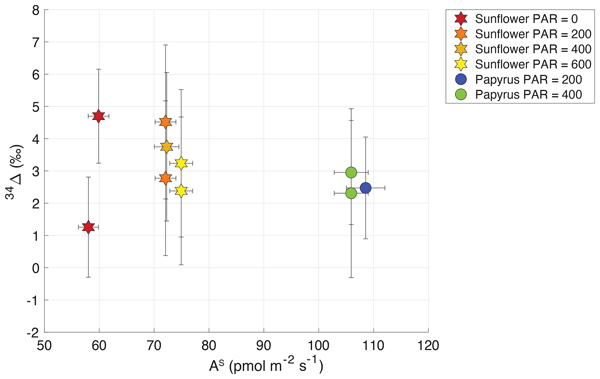
Carbonyl sulfide (COS) is a proposed tracer for gross primary production. For the first time, COS and carbon dioxide (CO2) uptake fluxes and isotope discrimination were jointly measured in sunflower and papyrus plants, using a flow-through plant chamber approach and varying light availability. COS isotope discrimination did not differ significantly between the species, nor with changes in light. CO2 fluxes and isotope values provided additional valuable information for data interpretation.
William A. Nesbitt, Samuel W. Stevens, Alfonso O. Mucci, Lennart Gerke, Toste Tanhua, Gwénaëlle Chaillou, and Douglas W. R. Wallace
Ocean Sci., 21, 2179–2195, https://doi.org/10.5194/os-21-2179-2025, https://doi.org/10.5194/os-21-2179-2025, 2025
Short summary
Short summary
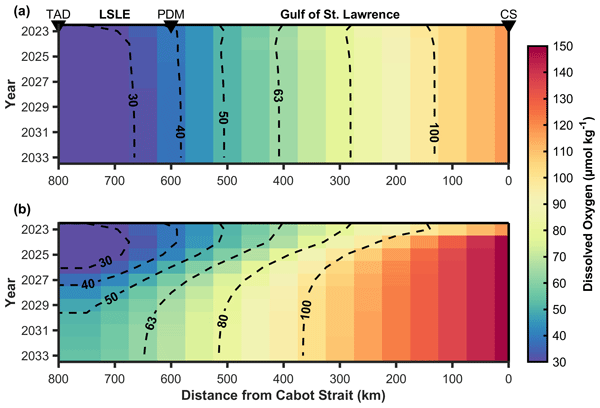
We combine two decades of oxygen data with new carbon observations and a tracer-informed model to quantify oxygen loss and carbon buildup in the deep waters of the Gulf and Lower St. Lawrence Estuary. We then test a novel idea: reoxygenating these waters with the oxygen produced as a by-product from green-hydrogen production. Our results suggest this could significantly reduce hypoxia, though full recovery would require larger inputs.
Johannes C. Laube, Tanja J. Schuck, Sophie Baartman, Huilin Chen, Markus Geldenhuys, Steven van Heuven, Timo Keber, Maria Elena Popa, Elinor Tuffnell, Florian Voet, Bärbel Vogel, Thomas Wagenhäuser, Alessandro Zanchetta, and Andreas Engel
Atmos. Meas. Tech., 18, 4087–4102, https://doi.org/10.5194/amt-18-4087-2025, https://doi.org/10.5194/amt-18-4087-2025, 2025
Short summary
Short summary
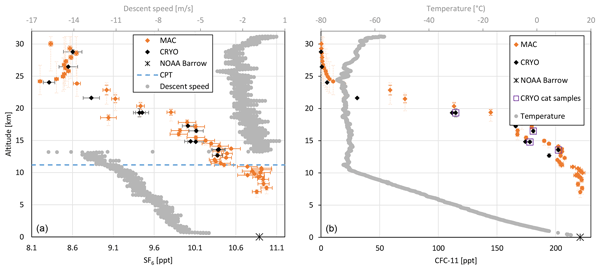
A large balloon was launched in summer 2021 in the Arctic to carry instruments for trace gas measurements up to 32 km, above the reach of aircraft. The main aims were to evaluate different techniques and atmospheric processes. We focus on halogenated greenhouse gases and ozone-depleting substances. For this, air was collected with the AirCore technique and a cryogenic air sampler and measured after the flight. A companion paper reports observations of major greenhouse gases.
Susana Flecha, Mercedes de la Paz, Fiz Fernández Pérez, Núria Marbà, Carlos Morell, Eva Alou-Font, Joaquín Tintoré, and Iris E. Hendriks
Ocean Sci., 21, 1515–1532, https://doi.org/10.5194/os-21-1515-2025, https://doi.org/10.5194/os-21-1515-2025, 2025
Short summary
Short summary
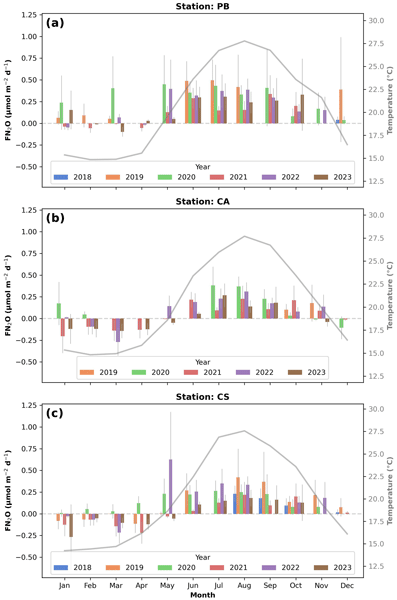
Nitrous oxide (N2O), a potent greenhouse gas, is understudied in coastal zones. We present N2O concentrations and air–sea fluxes from the Balearic coast (2018–2023). Concentrations varied slightly across sites, with areas acting as weak sources or being near equilibrium. Temperature was the main driver of seasonal changes. These findings improve our understanding of coastal N2O emissions.
David Curbelo-Hernández, David González-Santana, Aridane G. González, J. Magdalena Santana-Casiano, and Melchor González-Dávila
Biogeosciences, 22, 3329–3356, https://doi.org/10.5194/bg-22-3329-2025, https://doi.org/10.5194/bg-22-3329-2025, 2025
Short summary
Short summary
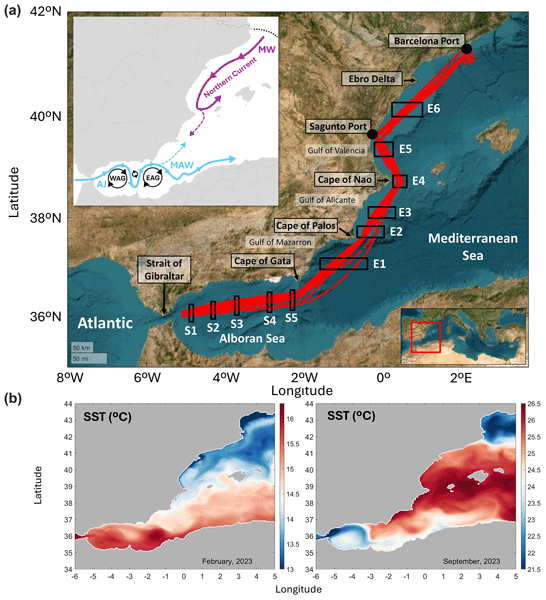
This study offers a unique high-resolution dataset (2019–2024) on surface physicochemical properties in the western Mediterranean Sea. It reveals accelerated surface warming, significantly altering CO2 levels and pH. Currently a net CO2 sink, the region may become a CO2 source by 2030 due to weakening in-gassing. The research highlights the value of VOS (volunteer observing ship) lines for monitoring climate impacts and emphasizes the need for ongoing observations to enhance long-term trend accuracy and future projections.
Tanja J. Schuck, Johannes Degen, Timo Keber, Katharina Meixner, Thomas Wagenhäuser, Mélanie Ghysels, Georges Durry, Nadir Amarouche, Alessandro Zanchetta, Steven van Heuven, Huilin Chen, Johannes C. Laube, Sophie L. Baartman, Carina van der Veen, Maria Elena Popa, and Andreas Engel
Atmos. Chem. Phys., 25, 4333–4348, https://doi.org/10.5194/acp-25-4333-2025, https://doi.org/10.5194/acp-25-4333-2025, 2025
Short summary
Short summary
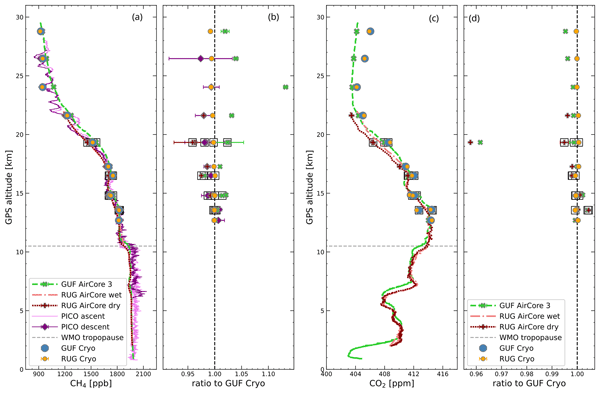
A balloon was launched in 2021 in the Arctic to carry instruments for trace gas measurements up to 32 km. One purpose was to compare measurement techniques. We focus on the major greenhouse gases. To measure these, air was sampled with the AirCore technique and with flask sampling, and samples were analysed after the flight. In flight, observations were done with an optical method. In a companion paper, we report on observations of chlorine and bromine containing trace gases.
Pierre Friedlingstein, Michael O'Sullivan, Matthew W. Jones, Robbie M. Andrew, Judith Hauck, Peter Landschützer, Corinne Le Quéré, Hongmei Li, Ingrid T. Luijkx, Are Olsen, Glen P. Peters, Wouter Peters, Julia Pongratz, Clemens Schwingshackl, Stephen Sitch, Josep G. Canadell, Philippe Ciais, Robert B. Jackson, Simone R. Alin, Almut Arneth, Vivek Arora, Nicholas R. Bates, Meike Becker, Nicolas Bellouin, Carla F. Berghoff, Henry C. Bittig, Laurent Bopp, Patricia Cadule, Katie Campbell, Matthew A. Chamberlain, Naveen Chandra, Frédéric Chevallier, Louise P. Chini, Thomas Colligan, Jeanne Decayeux, Laique M. Djeutchouang, Xinyu Dou, Carolina Duran Rojas, Kazutaka Enyo, Wiley Evans, Amanda R. Fay, Richard A. Feely, Daniel J. Ford, Adrianna Foster, Thomas Gasser, Marion Gehlen, Thanos Gkritzalis, Giacomo Grassi, Luke Gregor, Nicolas Gruber, Özgür Gürses, Ian Harris, Matthew Hefner, Jens Heinke, George C. Hurtt, Yosuke Iida, Tatiana Ilyina, Andrew R. Jacobson, Atul K. Jain, Tereza Jarníková, Annika Jersild, Fei Jiang, Zhe Jin, Etsushi Kato, Ralph F. Keeling, Kees Klein Goldewijk, Jürgen Knauer, Jan Ivar Korsbakken, Xin Lan, Siv K. Lauvset, Nathalie Lefèvre, Zhu Liu, Junjie Liu, Lei Ma, Shamil Maksyutov, Gregg Marland, Nicolas Mayot, Patrick C. McGuire, Nicolas Metzl, Natalie M. Monacci, Eric J. Morgan, Shin-Ichiro Nakaoka, Craig Neill, Yosuke Niwa, Tobias Nützel, Lea Olivier, Tsuneo Ono, Paul I. Palmer, Denis Pierrot, Zhangcai Qin, Laure Resplandy, Alizée Roobaert, Thais M. Rosan, Christian Rödenbeck, Jörg Schwinger, T. Luke Smallman, Stephen M. Smith, Reinel Sospedra-Alfonso, Tobias Steinhoff, Qing Sun, Adrienne J. Sutton, Roland Séférian, Shintaro Takao, Hiroaki Tatebe, Hanqin Tian, Bronte Tilbrook, Olivier Torres, Etienne Tourigny, Hiroyuki Tsujino, Francesco Tubiello, Guido van der Werf, Rik Wanninkhof, Xuhui Wang, Dongxu Yang, Xiaojuan Yang, Zhen Yu, Wenping Yuan, Xu Yue, Sönke Zaehle, Ning Zeng, and Jiye Zeng
Earth Syst. Sci. Data, 17, 965–1039, https://doi.org/10.5194/essd-17-965-2025, https://doi.org/10.5194/essd-17-965-2025, 2025
Short summary
Short summary
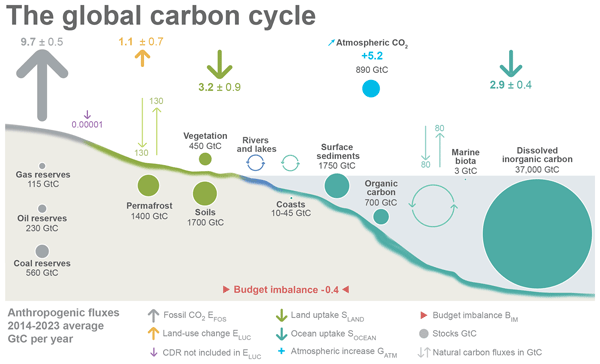
The Global Carbon Budget 2024 describes the methodology, main results, and datasets used to quantify the anthropogenic emissions of carbon dioxide (CO2) and their partitioning among the atmosphere, land ecosystems, and the ocean over the historical period (1750–2024). These living datasets are updated every year to provide the highest transparency and traceability in the reporting of CO2, the key driver of climate change.
David Curbelo-Hernández, Fiz F. Pérez, Melchor González-Dávila, Sergey V. Gladyshev, Aridane G. González, David González-Santana, Antón Velo, Alexey Sokov, and J. Magdalena Santana-Casiano
Biogeosciences, 21, 5561–5589, https://doi.org/10.5194/bg-21-5561-2024, https://doi.org/10.5194/bg-21-5561-2024, 2024
Short summary
Short summary
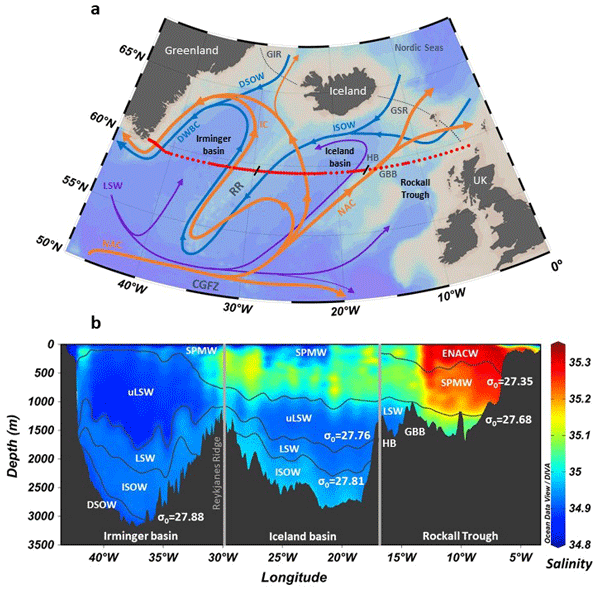
The study evaluated CO2–carbonate system dynamics in the North Atlantic subpolar gyre during 2009–2019. Significant ocean acidification, largely due to rising anthropogenic CO2 levels, was found. Cooling, freshening, and enhanced convective processes intensified this trend, affecting calcite and aragonite saturation. The findings contribute to a deeper understanding of ocean acidification and improve our knowledge about its impact on marine ecosystems.
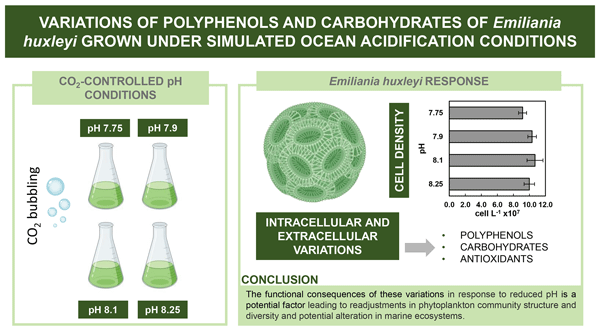
Milagros Rico, Paula Santiago-Díaz, Guillermo Samperio-Ramos, Melchor González-Dávila, and Juana Magdalena Santana-Casiano
Biogeosciences, 21, 4381–4394, https://doi.org/10.5194/bg-21-4381-2024, https://doi.org/10.5194/bg-21-4381-2024, 2024
Short summary
Short summary
Changes in pH generate stress conditions, either because high pH drastically decreases the availability of trace metals such as Fe(II), a restrictive element for primary productivity, or because reactive oxygen species are increased with low pH. The metabolic functions and composition of microalgae can be affected. These modifications in metabolites are potential factors leading to readjustments in phytoplankton community structure and diversity and possible alteration in marine ecosystems.
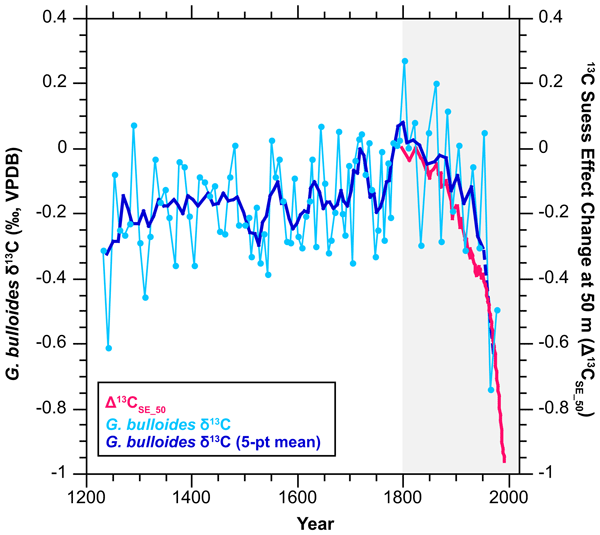
Nil Irvalı, Ulysses S. Ninnemann, Are Olsen, Neil L. Rose, David J. R. Thornalley, Tor L. Mjell, and François Counillon
Geochronology, 6, 449–463, https://doi.org/10.5194/gchron-6-449-2024, https://doi.org/10.5194/gchron-6-449-2024, 2024
Short summary
Short summary
Marine sediments are excellent archives for reconstructing past changes in climate and ocean circulation. Yet, dating uncertainties, particularly during the 20th century, pose major challenges. Here we propose a novel chronostratigraphic approach that uses anthropogenic signals, such as the oceanic 13C Suess effect and spheroidal carbonaceous fly-ash particles, to reduce age model uncertainties in high-resolution marine archives over the 20th century.
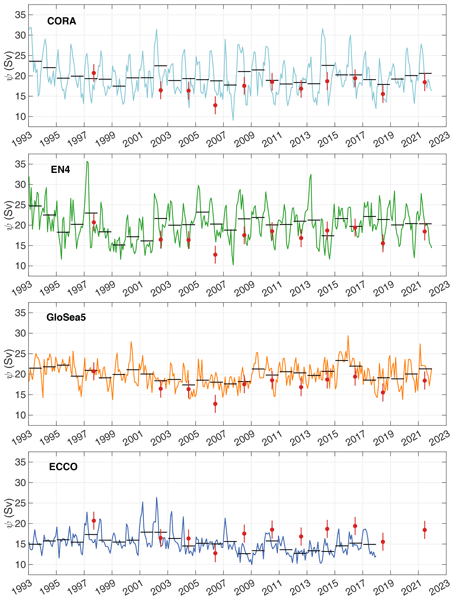
Herlé Mercier, Damien Desbruyères, Pascale Lherminier, Antón Velo, Lidia Carracedo, Marcos Fontela, and Fiz F. Pérez
Ocean Sci., 20, 779–797, https://doi.org/10.5194/os-20-779-2024, https://doi.org/10.5194/os-20-779-2024, 2024
Short summary
Short summary
We study the Atlantic Meridional Overturning Circulation (AMOC) measured between Greenland and Portugal between 1993–2021. We identify changes in AMOC limb volume and velocity as two major drivers of AMOC variability at subpolar latitudes. Volume variations dominate on the seasonal timescale, while velocity variations are more important on the decadal timescale. This decomposition proves useful for understanding the origin of the differences between AMOC time series from different analyses.
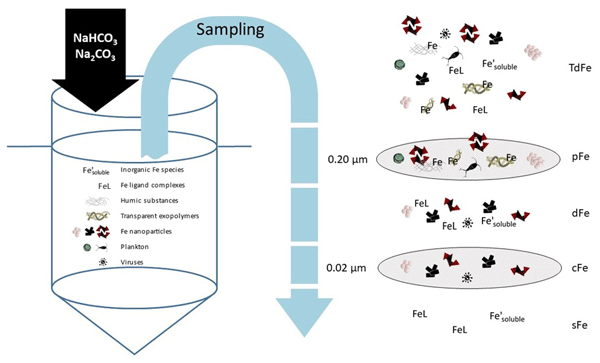
David González-Santana, María Segovia, Melchor González-Dávila, Librada Ramírez, Aridane G. González, Leonardo J. Pozzo-Pirotta, Veronica Arnone, Victor Vázquez, Ulf Riebesell, and J. Magdalena Santana-Casiano
Biogeosciences, 21, 2705–2715, https://doi.org/10.5194/bg-21-2705-2024, https://doi.org/10.5194/bg-21-2705-2024, 2024
Short summary
Short summary
In a recent experiment off the coast of Gran Canaria (Spain), scientists explored a method called ocean alkalinization enhancement (OAE), where carbonate minerals were added to seawater. This process changed the levels of certain ions in the water, affecting its pH and buffering capacity. The researchers were particularly interested in how this could impact the levels of essential trace metals in the water.

Siv K. Lauvset, Nico Lange, Toste Tanhua, Henry C. Bittig, Are Olsen, Alex Kozyr, Marta Álvarez, Kumiko Azetsu-Scott, Peter J. Brown, Brendan R. Carter, Leticia Cotrim da Cunha, Mario Hoppema, Matthew P. Humphreys, Masao Ishii, Emil Jeansson, Akihiko Murata, Jens Daniel Müller, Fiz F. Pérez, Carsten Schirnick, Reiner Steinfeldt, Toru Suzuki, Adam Ulfsbo, Anton Velo, Ryan J. Woosley, and Robert M. Key
Earth Syst. Sci. Data, 16, 2047–2072, https://doi.org/10.5194/essd-16-2047-2024, https://doi.org/10.5194/essd-16-2047-2024, 2024
Short summary
Short summary
GLODAP is a data product for ocean inorganic carbon and related biogeochemical variables measured by the chemical analysis of water bottle samples from scientific cruises. GLODAPv2.2023 is the fifth update of GLODAPv2 from 2016. The data that are included have been subjected to extensive quality controlling, including systematic evaluation of measurement biases. This version contains data from 1108 hydrographic cruises covering the world's oceans from 1972 to 2021.
Nico Lange, Björn Fiedler, Marta Álvarez, Alice Benoit-Cattin, Heather Benway, Pier Luigi Buttigieg, Laurent Coppola, Kim Currie, Susana Flecha, Dana S. Gerlach, Makio Honda, I. Emma Huertas, Siv K. Lauvset, Frank Muller-Karger, Arne Körtzinger, Kevin M. O'Brien, Sólveig R. Ólafsdóttir, Fernando C. Pacheco, Digna Rueda-Roa, Ingunn Skjelvan, Masahide Wakita, Angelicque White, and Toste Tanhua
Earth Syst. Sci. Data, 16, 1901–1931, https://doi.org/10.5194/essd-16-1901-2024, https://doi.org/10.5194/essd-16-1901-2024, 2024
Short summary
Short summary
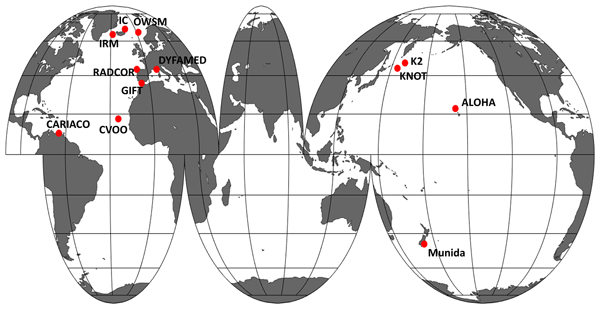
The Synthesis Product for Ocean Time Series (SPOTS) is a novel achievement expanding and complementing the biogeochemical data landscape by providing consistent and high-quality biogeochemical time-series data from 12 ship-based fixed time-series programs. SPOTS covers multiple unique marine environments and time-series ranges, including data from 1983 to 2021. All in all, it facilitates a variety of applications that benefit from the collective value of biogeochemical time-series observations.
Pierre Friedlingstein, Michael O'Sullivan, Matthew W. Jones, Robbie M. Andrew, Dorothee C. E. Bakker, Judith Hauck, Peter Landschützer, Corinne Le Quéré, Ingrid T. Luijkx, Glen P. Peters, Wouter Peters, Julia Pongratz, Clemens Schwingshackl, Stephen Sitch, Josep G. Canadell, Philippe Ciais, Robert B. Jackson, Simone R. Alin, Peter Anthoni, Leticia Barbero, Nicholas R. Bates, Meike Becker, Nicolas Bellouin, Bertrand Decharme, Laurent Bopp, Ida Bagus Mandhara Brasika, Patricia Cadule, Matthew A. Chamberlain, Naveen Chandra, Thi-Tuyet-Trang Chau, Frédéric Chevallier, Louise P. Chini, Margot Cronin, Xinyu Dou, Kazutaka Enyo, Wiley Evans, Stefanie Falk, Richard A. Feely, Liang Feng, Daniel J. Ford, Thomas Gasser, Josefine Ghattas, Thanos Gkritzalis, Giacomo Grassi, Luke Gregor, Nicolas Gruber, Özgür Gürses, Ian Harris, Matthew Hefner, Jens Heinke, Richard A. Houghton, George C. Hurtt, Yosuke Iida, Tatiana Ilyina, Andrew R. Jacobson, Atul Jain, Tereza Jarníková, Annika Jersild, Fei Jiang, Zhe Jin, Fortunat Joos, Etsushi Kato, Ralph F. Keeling, Daniel Kennedy, Kees Klein Goldewijk, Jürgen Knauer, Jan Ivar Korsbakken, Arne Körtzinger, Xin Lan, Nathalie Lefèvre, Hongmei Li, Junjie Liu, Zhiqiang Liu, Lei Ma, Greg Marland, Nicolas Mayot, Patrick C. McGuire, Galen A. McKinley, Gesa Meyer, Eric J. Morgan, David R. Munro, Shin-Ichiro Nakaoka, Yosuke Niwa, Kevin M. O'Brien, Are Olsen, Abdirahman M. Omar, Tsuneo Ono, Melf Paulsen, Denis Pierrot, Katie Pocock, Benjamin Poulter, Carter M. Powis, Gregor Rehder, Laure Resplandy, Eddy Robertson, Christian Rödenbeck, Thais M. Rosan, Jörg Schwinger, Roland Séférian, T. Luke Smallman, Stephen M. Smith, Reinel Sospedra-Alfonso, Qing Sun, Adrienne J. Sutton, Colm Sweeney, Shintaro Takao, Pieter P. Tans, Hanqin Tian, Bronte Tilbrook, Hiroyuki Tsujino, Francesco Tubiello, Guido R. van der Werf, Erik van Ooijen, Rik Wanninkhof, Michio Watanabe, Cathy Wimart-Rousseau, Dongxu Yang, Xiaojuan Yang, Wenping Yuan, Xu Yue, Sönke Zaehle, Jiye Zeng, and Bo Zheng
Earth Syst. Sci. Data, 15, 5301–5369, https://doi.org/10.5194/essd-15-5301-2023, https://doi.org/10.5194/essd-15-5301-2023, 2023
Short summary
Short summary
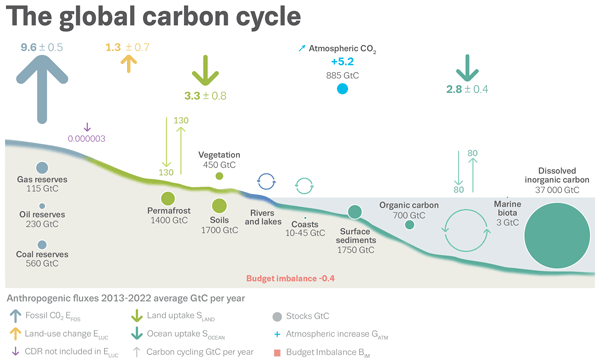
The Global Carbon Budget 2023 describes the methodology, main results, and data sets used to quantify the anthropogenic emissions of carbon dioxide (CO2) and their partitioning among the atmosphere, land ecosystems, and the ocean over the historical period (1750–2023). These living datasets are updated every year to provide the highest transparency and traceability in the reporting of CO2, the key driver of climate change.
Christoph Heinze, Thorsten Blenckner, Peter Brown, Friederike Fröb, Anne Morée, Adrian L. New, Cara Nissen, Stefanie Rynders, Isabel Seguro, Yevgeny Aksenov, Yuri Artioli, Timothée Bourgeois, Friedrich Burger, Jonathan Buzan, B. B. Cael, Veli Çağlar Yumruktepe, Melissa Chierici, Christopher Danek, Ulf Dieckmann, Agneta Fransson, Thomas Frölicher, Giovanni Galli, Marion Gehlen, Aridane G. González, Melchor Gonzalez-Davila, Nicolas Gruber, Örjan Gustafsson, Judith Hauck, Mikko Heino, Stephanie Henson, Jenny Hieronymus, I. Emma Huertas, Fatma Jebri, Aurich Jeltsch-Thömmes, Fortunat Joos, Jaideep Joshi, Stephen Kelly, Nandini Menon, Precious Mongwe, Laurent Oziel, Sólveig Ólafsdottir, Julien Palmieri, Fiz F. Pérez, Rajamohanan Pillai Ranith, Juliano Ramanantsoa, Tilla Roy, Dagmara Rusiecka, J. Magdalena Santana Casiano, Yeray Santana-Falcón, Jörg Schwinger, Roland Séférian, Miriam Seifert, Anna Shchiptsova, Bablu Sinha, Christopher Somes, Reiner Steinfeldt, Dandan Tao, Jerry Tjiputra, Adam Ulfsbo, Christoph Völker, Tsuyoshi Wakamatsu, and Ying Ye
Biogeosciences Discuss., https://doi.org/10.5194/bg-2023-182, https://doi.org/10.5194/bg-2023-182, 2023
Revised manuscript not accepted
Short summary
Short summary
For assessing the consequences of human-induced climate change for the marine realm, it is necessary to not only look at gradual changes but also at abrupt changes of environmental conditions. We summarise abrupt changes in ocean warming, acidification, and oxygen concentration as the key environmental factors for ecosystems. Taking these abrupt changes into account requires greenhouse gas emissions to be reduced to a larger extent than previously thought to limit respective damage.
Foteini Stavropoulou, Katarina Vinković, Bert Kers, Marcel de Vries, Steven van Heuven, Piotr Korbeń, Martina Schmidt, Julia Wietzel, Pawel Jagoda, Jaroslav M. Necki, Jakub Bartyzel, Hossein Maazallahi, Malika Menoud, Carina van der Veen, Sylvia Walter, Béla Tuzson, Jonas Ravelid, Randulph Paulo Morales, Lukas Emmenegger, Dominik Brunner, Michael Steiner, Arjan Hensen, Ilona Velzeboer, Pim van den Bulk, Hugo Denier van der Gon, Antonio Delre, Maklawe Essonanawe Edjabou, Charlotte Scheutz, Marius Corbu, Sebastian Iancu, Denisa Moaca, Alin Scarlat, Alexandru Tudor, Ioana Vizireanu, Andreea Calcan, Magdalena Ardelean, Sorin Ghemulet, Alexandru Pana, Aurel Constantinescu, Lucian Cusa, Alexandru Nica, Calin Baciu, Cristian Pop, Andrei Radovici, Alexandru Mereuta, Horatiu Stefanie, Alexandru Dandocsi, Bas Hermans, Stefan Schwietzke, Daniel Zavala-Araiza, Huilin Chen, and Thomas Röckmann
Atmos. Chem. Phys., 23, 10399–10412, https://doi.org/10.5194/acp-23-10399-2023, https://doi.org/10.5194/acp-23-10399-2023, 2023
Short summary
Short summary
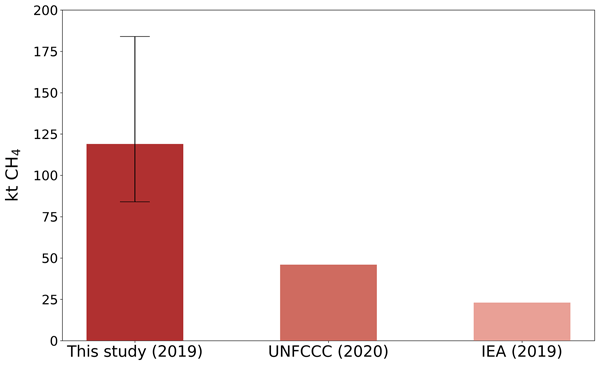
In this study, we quantify CH4 emissions from onshore oil production sites in Romania at source and facility level using a combination of ground- and drone-based measurement techniques. We show that the total CH4 emissions in our studied areas are much higher than the emissions reported to UNFCCC, and up to three-quarters of the detected emissions are related to operational venting. Our results suggest that oil and gas production infrastructure in Romania holds a massive mitigation potential.
Alessandro Zanchetta, Linda M. J. Kooijmans, Steven van Heuven, Andrea Scifo, Hubertus A. Scheeren, Ivan Mammarella, Ute Karstens, Jin Ma, Maarten Krol, and Huilin Chen
Biogeosciences, 20, 3539–3553, https://doi.org/10.5194/bg-20-3539-2023, https://doi.org/10.5194/bg-20-3539-2023, 2023
Short summary
Short summary
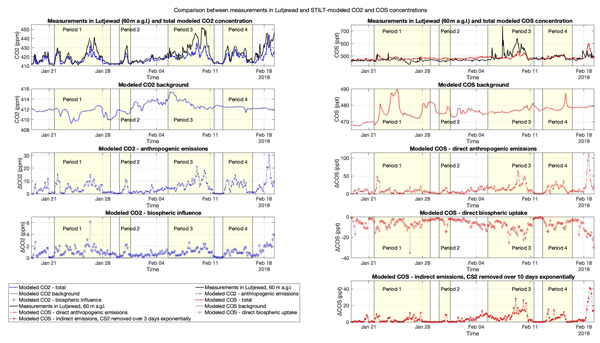
Carbonyl sulfide (COS) has been suggested as a tool to estimate carbon dioxide (CO2) uptake by plants during photosynthesis. However, understanding its sources and sinks is critical to preventing biases in this estimate. Combining observations and models, this study proves that regional sources occasionally influence the measurements at the 60 m tall Lutjewad tower (1 m a.s.l.; 53°24′ N, 6°21′ E) in the Netherlands. Moreover, it estimates nighttime COS fluxes to be −3.0 ± 2.6 pmol m−2 s−1.
Siv K. Lauvset, Nico Lange, Toste Tanhua, Henry C. Bittig, Are Olsen, Alex Kozyr, Simone Alin, Marta Álvarez, Kumiko Azetsu-Scott, Leticia Barbero, Susan Becker, Peter J. Brown, Brendan R. Carter, Leticia Cotrim da Cunha, Richard A. Feely, Mario Hoppema, Matthew P. Humphreys, Masao Ishii, Emil Jeansson, Li-Qing Jiang, Steve D. Jones, Claire Lo Monaco, Akihiko Murata, Jens Daniel Müller, Fiz F. Pérez, Benjamin Pfeil, Carsten Schirnick, Reiner Steinfeldt, Toru Suzuki, Bronte Tilbrook, Adam Ulfsbo, Anton Velo, Ryan J. Woosley, and Robert M. Key
Earth Syst. Sci. Data, 14, 5543–5572, https://doi.org/10.5194/essd-14-5543-2022, https://doi.org/10.5194/essd-14-5543-2022, 2022
Short summary
Short summary
GLODAP is a data product for ocean inorganic carbon and related biogeochemical variables measured by the chemical analysis of water bottle samples from scientific cruises. GLODAPv2.2022 is the fourth update of GLODAPv2 from 2016. The data that are included have been subjected to extensive quality controlling, including systematic evaluation of measurement biases. This version contains data from 1085 hydrographic cruises covering the world's oceans from 1972 to 2021.
Julian Gutt, Stefanie Arndt, David Keith Alan Barnes, Horst Bornemann, Thomas Brey, Olaf Eisen, Hauke Flores, Huw Griffiths, Christian Haas, Stefan Hain, Tore Hattermann, Christoph Held, Mario Hoppema, Enrique Isla, Markus Janout, Céline Le Bohec, Heike Link, Felix Christopher Mark, Sebastien Moreau, Scarlett Trimborn, Ilse van Opzeeland, Hans-Otto Pörtner, Fokje Schaafsma, Katharina Teschke, Sandra Tippenhauer, Anton Van de Putte, Mia Wege, Daniel Zitterbart, and Dieter Piepenburg
Biogeosciences, 19, 5313–5342, https://doi.org/10.5194/bg-19-5313-2022, https://doi.org/10.5194/bg-19-5313-2022, 2022
Short summary
Short summary
Long-term ecological observations are key to assess, understand and predict impacts of environmental change on biotas. We present a multidisciplinary framework for such largely lacking investigations in the East Antarctic Southern Ocean, combined with case studies, experimental and modelling work. As climate change is still minor here but is projected to start soon, the timely implementation of this framework provides the unique opportunity to document its ecological impacts from the very onset.
Pierre Friedlingstein, Michael O'Sullivan, Matthew W. Jones, Robbie M. Andrew, Luke Gregor, Judith Hauck, Corinne Le Quéré, Ingrid T. Luijkx, Are Olsen, Glen P. Peters, Wouter Peters, Julia Pongratz, Clemens Schwingshackl, Stephen Sitch, Josep G. Canadell, Philippe Ciais, Robert B. Jackson, Simone R. Alin, Ramdane Alkama, Almut Arneth, Vivek K. Arora, Nicholas R. Bates, Meike Becker, Nicolas Bellouin, Henry C. Bittig, Laurent Bopp, Frédéric Chevallier, Louise P. Chini, Margot Cronin, Wiley Evans, Stefanie Falk, Richard A. Feely, Thomas Gasser, Marion Gehlen, Thanos Gkritzalis, Lucas Gloege, Giacomo Grassi, Nicolas Gruber, Özgür Gürses, Ian Harris, Matthew Hefner, Richard A. Houghton, George C. Hurtt, Yosuke Iida, Tatiana Ilyina, Atul K. Jain, Annika Jersild, Koji Kadono, Etsushi Kato, Daniel Kennedy, Kees Klein Goldewijk, Jürgen Knauer, Jan Ivar Korsbakken, Peter Landschützer, Nathalie Lefèvre, Keith Lindsay, Junjie Liu, Zhu Liu, Gregg Marland, Nicolas Mayot, Matthew J. McGrath, Nicolas Metzl, Natalie M. Monacci, David R. Munro, Shin-Ichiro Nakaoka, Yosuke Niwa, Kevin O'Brien, Tsuneo Ono, Paul I. Palmer, Naiqing Pan, Denis Pierrot, Katie Pocock, Benjamin Poulter, Laure Resplandy, Eddy Robertson, Christian Rödenbeck, Carmen Rodriguez, Thais M. Rosan, Jörg Schwinger, Roland Séférian, Jamie D. Shutler, Ingunn Skjelvan, Tobias Steinhoff, Qing Sun, Adrienne J. Sutton, Colm Sweeney, Shintaro Takao, Toste Tanhua, Pieter P. Tans, Xiangjun Tian, Hanqin Tian, Bronte Tilbrook, Hiroyuki Tsujino, Francesco Tubiello, Guido R. van der Werf, Anthony P. Walker, Rik Wanninkhof, Chris Whitehead, Anna Willstrand Wranne, Rebecca Wright, Wenping Yuan, Chao Yue, Xu Yue, Sönke Zaehle, Jiye Zeng, and Bo Zheng
Earth Syst. Sci. Data, 14, 4811–4900, https://doi.org/10.5194/essd-14-4811-2022, https://doi.org/10.5194/essd-14-4811-2022, 2022
Short summary
Short summary
The Global Carbon Budget 2022 describes the datasets and methodology used to quantify the anthropogenic emissions of carbon dioxide (CO2) and their partitioning among the atmosphere, the land ecosystems, and the ocean. These living datasets are updated every year to provide the highest transparency and traceability in the reporting of CO2, the key driver of climate change.
Rainer Kiko, Marc Picheral, David Antoine, Marcel Babin, Léo Berline, Tristan Biard, Emmanuel Boss, Peter Brandt, Francois Carlotti, Svenja Christiansen, Laurent Coppola, Leandro de la Cruz, Emilie Diamond-Riquier, Xavier Durrieu de Madron, Amanda Elineau, Gabriel Gorsky, Lionel Guidi, Helena Hauss, Jean-Olivier Irisson, Lee Karp-Boss, Johannes Karstensen, Dong-gyun Kim, Rachel M. Lekanoff, Fabien Lombard, Rubens M. Lopes, Claudie Marec, Andrew M. P. McDonnell, Daniela Niemeyer, Margaux Noyon, Stephanie H. O'Daly, Mark D. Ohman, Jessica L. Pretty, Andreas Rogge, Sarah Searson, Masashi Shibata, Yuji Tanaka, Toste Tanhua, Jan Taucher, Emilia Trudnowska, Jessica S. Turner, Anya Waite, and Lars Stemmann
Earth Syst. Sci. Data, 14, 4315–4337, https://doi.org/10.5194/essd-14-4315-2022, https://doi.org/10.5194/essd-14-4315-2022, 2022
Short summary
Short summary
The term
marine particlescomprises detrital aggregates; fecal pellets; bacterioplankton, phytoplankton and zooplankton; and even fish. Here, we present a global dataset that contains 8805 vertical particle size distribution profiles obtained with Underwater Vision Profiler 5 (UVP5) camera systems. These data are valuable to the scientific community, as they can be used to constrain important biogeochemical processes in the ocean, such as the flux of carbon to the deep sea.
Elise S. Droste, Mario Hoppema, Melchor González-Dávila, Juana Magdalena Santana-Casiano, Bastien Y. Queste, Giorgio Dall'Olmo, Hugh J. Venables, Gerd Rohardt, Sharyn Ossebaar, Daniel Schuller, Sunke Trace-Kleeberg, and Dorothee C. E. Bakker
Ocean Sci., 18, 1293–1320, https://doi.org/10.5194/os-18-1293-2022, https://doi.org/10.5194/os-18-1293-2022, 2022
Short summary
Short summary
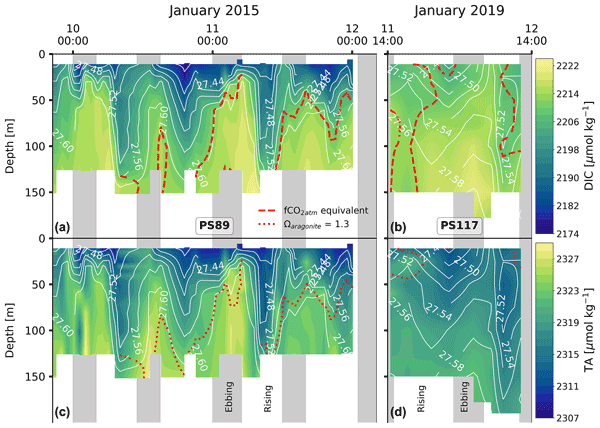
Tides affect the marine carbonate chemistry of a coastal polynya neighbouring the Ekström Ice Shelf by movement of seawater with different physical and biogeochemical properties. The result is that the coastal polynya in the summer can switch between being a sink or a source of CO2 multiple times a day. We encourage consideration of tides when collecting in polar coastal regions to account for tide-driven variability and to avoid overestimations or underestimations of air–sea CO2 exchange.
Hein J. W. de Baar, Mario Hoppema, and Elizabeth M. Jones
EGUsphere, https://doi.org/10.5194/egusphere-2022-676, https://doi.org/10.5194/egusphere-2022-676, 2022
Preprint archived
Short summary
Short summary
There is confusion in the literature on interactions of dissolved phosphate and sulphate with the alkalinity of seawater. These do play a minor role in the titration to determine alkalinity. However, a perceived biological role of phosphate and sulphate has been suggested in the value of Oceanic Alkalinity. We think this is mistaken. Some other minor issues additionally have led to confusion on the exact description of Alkalinity. We treat those against a theoretical and empirical background.
Gilles Reverdin, Claire Waelbroeck, Catherine Pierre, Camille Akhoudas, Giovanni Aloisi, Marion Benetti, Bernard Bourlès, Magnus Danielsen, Jérôme Demange, Denis Diverrès, Jean-Claude Gascard, Marie-Noëlle Houssais, Hervé Le Goff, Pascale Lherminier, Claire Lo Monaco, Herlé Mercier, Nicolas Metzl, Simon Morisset, Aïcha Naamar, Thierry Reynaud, Jean-Baptiste Sallée, Virginie Thierry, Susan E. Hartman, Edward W. Mawji, Solveig Olafsdottir, Torsten Kanzow, Anton Velo, Antje Voelker, Igor Yashayaev, F. Alexander Haumann, Melanie J. Leng, Carol Arrowsmith, and Michael Meredith
Earth Syst. Sci. Data, 14, 2721–2735, https://doi.org/10.5194/essd-14-2721-2022, https://doi.org/10.5194/essd-14-2721-2022, 2022
Short summary
Short summary
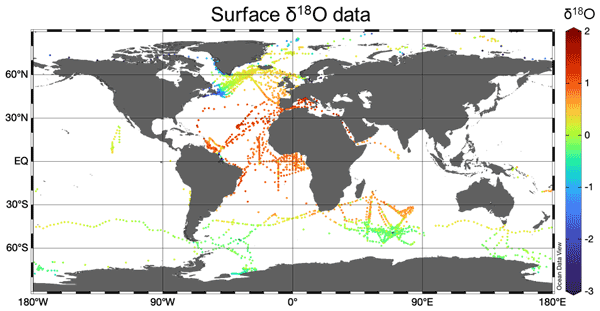
The CISE-LOCEAN seawater stable isotope dataset has close to 8000 data entries. The δ18O and δD isotopic data measured at LOCEAN have uncertainties of at most 0.05 ‰ and 0.25 ‰, respectively. Some data were adjusted to correct for evaporation. The internal consistency indicates that the data can be used to investigate time and space variability to within 0.03 ‰ and 0.15 ‰ in δ18O–δD17; comparisons with data analyzed in other institutions suggest larger differences with other datasets.
Pierre Friedlingstein, Matthew W. Jones, Michael O'Sullivan, Robbie M. Andrew, Dorothee C. E. Bakker, Judith Hauck, Corinne Le Quéré, Glen P. Peters, Wouter Peters, Julia Pongratz, Stephen Sitch, Josep G. Canadell, Philippe Ciais, Rob B. Jackson, Simone R. Alin, Peter Anthoni, Nicholas R. Bates, Meike Becker, Nicolas Bellouin, Laurent Bopp, Thi Tuyet Trang Chau, Frédéric Chevallier, Louise P. Chini, Margot Cronin, Kim I. Currie, Bertrand Decharme, Laique M. Djeutchouang, Xinyu Dou, Wiley Evans, Richard A. Feely, Liang Feng, Thomas Gasser, Dennis Gilfillan, Thanos Gkritzalis, Giacomo Grassi, Luke Gregor, Nicolas Gruber, Özgür Gürses, Ian Harris, Richard A. Houghton, George C. Hurtt, Yosuke Iida, Tatiana Ilyina, Ingrid T. Luijkx, Atul Jain, Steve D. Jones, Etsushi Kato, Daniel Kennedy, Kees Klein Goldewijk, Jürgen Knauer, Jan Ivar Korsbakken, Arne Körtzinger, Peter Landschützer, Siv K. Lauvset, Nathalie Lefèvre, Sebastian Lienert, Junjie Liu, Gregg Marland, Patrick C. McGuire, Joe R. Melton, David R. Munro, Julia E. M. S. Nabel, Shin-Ichiro Nakaoka, Yosuke Niwa, Tsuneo Ono, Denis Pierrot, Benjamin Poulter, Gregor Rehder, Laure Resplandy, Eddy Robertson, Christian Rödenbeck, Thais M. Rosan, Jörg Schwinger, Clemens Schwingshackl, Roland Séférian, Adrienne J. Sutton, Colm Sweeney, Toste Tanhua, Pieter P. Tans, Hanqin Tian, Bronte Tilbrook, Francesco Tubiello, Guido R. van der Werf, Nicolas Vuichard, Chisato Wada, Rik Wanninkhof, Andrew J. Watson, David Willis, Andrew J. Wiltshire, Wenping Yuan, Chao Yue, Xu Yue, Sönke Zaehle, and Jiye Zeng
Earth Syst. Sci. Data, 14, 1917–2005, https://doi.org/10.5194/essd-14-1917-2022, https://doi.org/10.5194/essd-14-1917-2022, 2022
Short summary
Short summary
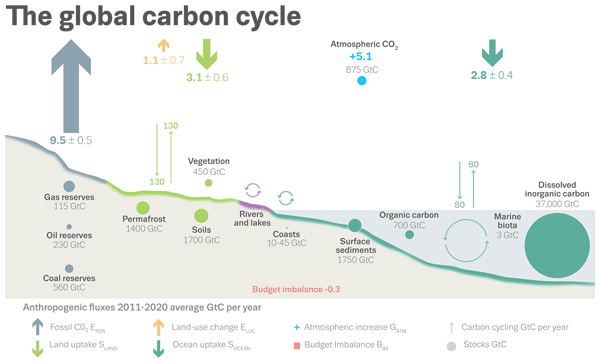
The Global Carbon Budget 2021 describes the data sets and methodology used to quantify the emissions of carbon dioxide and their partitioning among the atmosphere, land, and ocean. These living data are updated every year to provide the highest transparency and traceability in the reporting of CO2, the key driver of climate change.
Filippa Fransner, Friederike Fröb, Jerry Tjiputra, Nadine Goris, Siv K. Lauvset, Ingunn Skjelvan, Emil Jeansson, Abdirahman Omar, Melissa Chierici, Elizabeth Jones, Agneta Fransson, Sólveig R. Ólafsdóttir, Truls Johannessen, and Are Olsen
Biogeosciences, 19, 979–1012, https://doi.org/10.5194/bg-19-979-2022, https://doi.org/10.5194/bg-19-979-2022, 2022
Short summary
Short summary
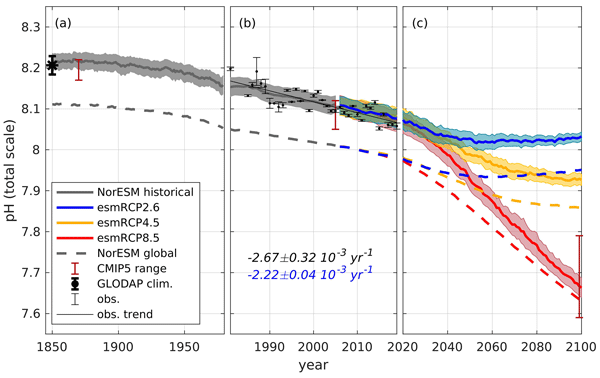
Ocean acidification, a direct consequence of the CO2 release by human activities, is a serious threat to marine ecosystems. In this study, we conduct a detailed investigation of the acidification of the Nordic Seas, from 1850 to 2100, by using a large set of samples taken during research cruises together with numerical model simulations. We estimate the effects of changes in different environmental factors on the rate of acidification and its potential effects on cold-water corals.
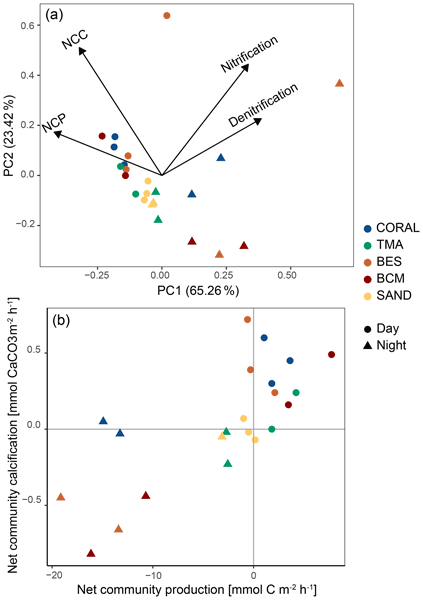
Alice E. Webb, Didier M. de Bakker, Karline Soetaert, Tamara da Costa, Steven M. A. C. van Heuven, Fleur C. van Duyl, Gert-Jan Reichart, and Lennart J. de Nooijer
Biogeosciences, 18, 6501–6516, https://doi.org/10.5194/bg-18-6501-2021, https://doi.org/10.5194/bg-18-6501-2021, 2021
Short summary
Short summary
The biogeochemical behaviour of shallow reef communities is quantified to better understand the impact of habitat degradation and species composition shifts on reef functioning. The reef communities investigated barely support reef functions that are usually ascribed to conventional coral reefs, and the overall biogeochemical behaviour is found to be similar regardless of substrate type. This suggests a decrease in functional diversity which may therefore limit services provided by this reef.
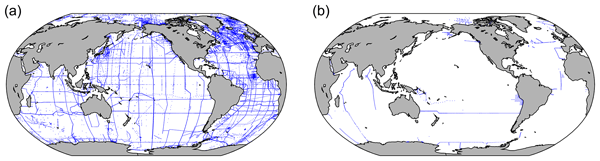
Siv K. Lauvset, Nico Lange, Toste Tanhua, Henry C. Bittig, Are Olsen, Alex Kozyr, Marta Álvarez, Susan Becker, Peter J. Brown, Brendan R. Carter, Leticia Cotrim da Cunha, Richard A. Feely, Steven van Heuven, Mario Hoppema, Masao Ishii, Emil Jeansson, Sara Jutterström, Steve D. Jones, Maren K. Karlsen, Claire Lo Monaco, Patrick Michaelis, Akihiko Murata, Fiz F. Pérez, Benjamin Pfeil, Carsten Schirnick, Reiner Steinfeldt, Toru Suzuki, Bronte Tilbrook, Anton Velo, Rik Wanninkhof, Ryan J. Woosley, and Robert M. Key
Earth Syst. Sci. Data, 13, 5565–5589, https://doi.org/10.5194/essd-13-5565-2021, https://doi.org/10.5194/essd-13-5565-2021, 2021
Short summary
Short summary
GLODAP is a data product for ocean inorganic carbon and related biogeochemical variables measured by the chemical analysis of water bottle samples from scientific cruises. GLODAPv2.2021 is the third update of GLODAPv2 from 2016. The data that are included have been subjected to extensive quality control, including systematic evaluation of measurement biases. This version contains data from 989 hydrographic cruises covering the world's oceans from 1972 to 2020.
Cited articles
Anderson, L. G., Jutterström, S., Kaltin, S., Jones, E. P., and
Björk, G.: Variability in river runoff distribution in the Eurasian
Basin of the Arctic Ocean, J. Geophys. Res., 109, 1–8,
https://doi.org/10.1029/2003JC001773, 2004.
Artioli, Y., Blackford, J. C., Butenschön, M., Holt, J. T., Wakelin, S.
L., Thomas, H., Borges, A. V., and Allen, I.: The carbonate system in the
North Sea: sensitivity and model validation, J. Mar. Syst., 102–104, 1–13,
https://doi.org/10.1016/j.jmarsys.2012.04.006, 2012.
Bakker, D. C. E., Pfeil, B., Landa, C. S., Metzl, N., O'Brien, K. M., Olsen, A., Smith, K., Cosca, C., Harasawa, S., Jones, S. D., Nakaoka, S.-I., Nojiri, Y., Schuster, U., Steinhoff, T., Sweeney, C., Takahashi, T., Tilbrook, B., Wada, C., Wanninkhof, R., Alin, S. R., Balestrini, C. F., Barbero, L., Bates, N. R., Bianchi, A. A., Bonou, F., Boutin, J., Bozec, Y., Burger, E. F., Cai, W.-J., Castle, R. D., Chen, L., Chierici, M., Currie, K., Evans, W., Featherstone, C., Feely, R. A., Fransson, A., Goyet, C., Greenwood, N., Gregor, L., Hankin, S., Hardman-Mountford, N. J., Harlay, J., Hauck, J., Hoppema, M., Humphreys, M. P., Hunt, C. W., Huss, B., Ibánhez, J. S. P., Johannessen, T., Keeling, R., Kitidis, V., Körtzinger, A., Kozyr, A., Krasakopoulou, E., Kuwata, A., Landschützer, P., Lauvset, S. K., Lefèvre, N., Lo Monaco, C., Manke, A., Mathis, J. T., Merlivat, L., Millero, F. J., Monteiro, P. M. S., Munro, D. R., Murata, A., Newberger, T., Omar, A. M., Ono, T., Paterson, K., Pearce, D., Pierrot, D., Robbins, L. L., Saito, S., Salisbury, J., Schlitzer, R., Schneider, B., Schweitzer, R., Sieger, R., Skjelvan, I., Sullivan, K. F., Sutherland, S. C., Sutton, A. J., Tadokoro, K., Telszewski, M., Tuma, M., van Heuven, S. M. A. C., Vandemark, D., Ward, B., Watson, A. J., and Xu, S.: A multi-decade record of high-quality fCO2 data in version 3 of the Surface Ocean CO2 Atlas (SOCAT), Earth Syst. Sci. Data, 8, 383–413, https://doi.org/10.5194/essd-8-383-2016, 2016.
Bates, N., Astor, Y., Church, M., Currie, K., Dore, J.,
Gonaález-Dávila, M., Lorenzoni, L., Muller-Karger, F., Olafsson, J.,
and Santa-Casiano, M.: A Time-Series View of Changing Ocean Chemistry Due to
Ocean Uptake of Anthropogenic CO2 and Ocean Acidification, Oceanography,
27, 126–141, https://doi.org/10.5670/oceanog.2014.16, 2014.
Beale, M. H., Hagan, T. M., and Demuth, H. B.: Deep Learning Toolbox™,
User's Guide, Release 2018a, The MathWorks, Inc., Natick, Massachusetts,
United States, available at: https://es.mathworks.com/help/pdf_doc/deeplearning/nnet_ug.pdf, last access: 20 August 2018.
Bittig, H. C., Steinhoff, T., Claustre, H., Fiedler, B., Williams, N. L.,
Sauzède, R., Körtzinger, A., and Gattuso, J.-P.: An alternative to
static climatologies: robust estimation of open ocean CO2 variables and
nutrient concentrations from T, S, and O2 data using Bayesian neural
networks, Front. Mar. Sci., 5, 328, https://doi.org/10.3389/fmars.2018.00328, 2018.
Brewer, P. G. and Goldman, J. C.: Alkalinity changes generated by
phytoplankton, Limnol. Oceanogr., 21, 108–117,
https://doi.org/10.4319/lo.1976.21.1.0108, 1976.
Broecker, W. S.: “NO”, a conservative water-mass tracer, Earth Planet.
Sci. Lett., 23, 100–107, https://doi.org/10.1016/0012-821X(74)90036-3, 1974.
Broullón, D., Pérez, F. F., Velo, A., Hoppema, M., Olsen, A., Takahashi, T., Key, R. M., González-Dávila, M., Tanhua, T., Jeansson, E., Kozyr, A., and van Heuven, S. M. A. C.: A global monthly climatology of total alkalinity: a neural network approach, Earth Syst. Sci. Data Discuss., https://doi.org/10.5194/essd-2018-111, in review, 2018.
Broullón, D., Pérez, F. F., Velo, A., Hoppema, M., Olsen, A., Takahashi, T., Key, R. M., González-Dávila, M., Tanhua, T., Jeansson, E., Kozyr, A., and van Heuven, S. M. A. C.: A global monthly climatology of total alkalinity: a neural network approach (2019) [Dataset], https://doi.org/10.20350/digitalCSIC/8644, 2019.
Carter, B. R., Toggweiler, J. R., Key, R. M., and Sarmiento, J. L.: Processes determining the marine alkalinity and calcium carbonate saturation state distributions, Biogeosciences, 11, 7349–7362, https://doi.org/10.5194/bg-11-7349-2014, 2014.
Carter, B. R., Feely, R. A., Williams, N. L., Dickson, A. G., Fong, M. B.,
and Takeshita, Y.: Updated methods for global locally interpolated
estimation of alkalinity, pH, and nitrate, Limnol. Oceanogr. Methods, 16,
119–131, https://doi.org/10.1002/lom3.10232, 2018.
Chen, C.-T. A.: Shelf-vs. dissolution-generated alkalinity above the
chemical lysocline, Deep Sea Res. Part II Top. Stud. Oceanogr., 49,
5365–5375, https://doi.org/10.1016/S0967-0645(02)00196-0, 2002.
Cooper, L. W., McClelland, J. W., Holmes, R. M., Raymond, P. A., Gibson, J.
J., Guay, C. K., and Peterson, B. J.: Flow-weighted values of runoff tracers
(δ18O, DOC, Ba, alkalinity) from the six largest Arctic rivers,
Geophys. Res. Lett., 35, 3–7, https://doi.org/10.1029/2008GL035007, 2008.
Dickson, A. G.: An exact definition of total alkalinity and a procedure for
the estimation of alkalinity and total inorganic carbon from titration data,
Deep Sea Res. Part A. Oceanogr. Res. Pap., 28, 609–623,
https://doi.org/10.1016/0198-0149(81)90121-7, 1981.
Doney, S. C., Fabry, V. J., Feely, R. A., and Kleypas, J. A.: Ocean
Acidification: The Other CO2 Problem, Ann. Rev. Mar. Sci., 1,
169–192, https://doi.org/10.1146/annurev.marine.010908.163834, 2009.
Fabry, V. J., Seibel, B. A., Feely, R. A., Fabry, J. C. O., and Fabry, V. J.:
Impacts of ocean acidification on marine fauna and ecosystem processes, ICES
J. Mar. Sci., 65, 414–432, https://doi.org/10.1093/icesjms/fsn048, 2008.
Fine, R. A., Willey, D. A., and Millero, F. J.: Alkalinity from Aquarius
satellite data, Geophys. Res. Lett., 44, 261–267, https://doi.org/10.1002/2016GL071712,
2017.
Friis, K., Körtzinger, A., and Wallace, D. W. R.: The salinity
normalization of marine inorganic carbon chemistry data, Geophys. Res.
Lett., 30, 1085, https://doi.org/10.1029/2002GL015898, 2003.
Fry, C. H., Tyrrell, T., Hain, M. P., Bates, N. R., and Achterberg, E. P.:
Analysis of global surface ocean alkalinity to determine controlling
processes, Mar. Chem., 174, 46–57, https://doi.org/10.1016/j.marchem.2015.05.003, 2015.
Garcia, H. E., Locarnini, R. A., Boyer, T. P., Antonov, J. I.,Baranova, O. K., Zweng,
M. M., Reagan, J. R., and Johnson, D. R.: World Ocean Atlas 2013, Volume 3:
Dissolved Oxygen, Apparent Oxygen Utilization, and Oxygen Saturation, edited by:
Levitus, S. and Mishonov, A., Technical Ed., NOAA Atlas NESDIS 75, 27 pp.,
2014a.
Garcia, H. E., Locarnini, R. A., Boyer, T. P., Antonov, J. I.,Baranova, O. K., Zweng,
M. M., Reagan, J. R., and Johnson, D. R.: World Ocean Atlas 2013, Volume 4:
Dissolved Inorganic Nutrients (phosphate, nitrate, silicate), edited by: Levitus, S. and Mishonov, A., NOAA Atlas NESDIS 76, 25 pp., 2014b.
Gardner, M. and Dorling, S.: Artificial neural networks (the multilayer
perceptron) – a review of applications in the atmospheric sciences, Atmos.
Environ., 32, 2627–2636, https://doi.org/10.1016/S1352-2310(97)00447-0, 1998.
Gevrey, M., Dimopoulos, I., and Lek, S.: Review and comparison of methods to
study the contribution of v ariables in artificial neural network models,
Ecol. Modell., 160, 249–264, 2003.
Hagan, M. T., Demuth, H. B., Beale, M. H., and De Jesuìs, O.: Neural network
design, ISBN 978-0971732117, available at: http://hagan.okstate.edu/nnd.html (last access: 26 July 2018), 2014.
Hoegh-Guldberg, O. and Bruno, J. F.: The Impact of Climate Change on the
World's Marine Ecosystems, Science, 80, 1523–1528, 2010.
Hoppema, M.: The distribution and seasonal variation of alkalinity in the
Southern Bight of the North Sea and in the Western Wadden Sea, Netherlands
J. Sea Res., 26, 11–23, https://doi.org/10.1016/0077-7579(90)90053-J, 1990.
Key, R. M., Olsen, A., van Heuven, S., Lauvset, S. K., Velo, A., Lin, X.,
Schirnick, C., Kozyr, A., Tanhua, T., Hoppema, M., Jutterström, S.,
Steinfeldt, R., Jeansson, E., Ishi, M., Perez, F. F., and Suzuki, T.: Global
Ocean Data Analysis Project, Version 2 (GLODAPv2), ORNL/CDIAC-162, NDP-093,
https://doi.org/10.3334/CDIAC/OTG.NDP093_GLODAPv2, 2015.
Kim, H. and Lee, K.: Significant contribution of dissolved organic matter to
seawater alkalinity, Geophys. Res. Lett., 36, 1–5,
https://doi.org/10.1029/2009GL040271, 2009.
Kroeker, K. J., Kordas, R. L., Crim, R., Hendriks, I. E., Ramajo, L., Singh,
G. S., Duarte, C. M., and Gattuso, J.-P.: Impacts of ocean acidification on
marine organisms: quantifying sensitivities and interaction with warming,
Glob. Chang. Biol., 19, 1884–1896, https://doi.org/10.1111/gcb.12179, 2013.
Landschützer, P., Gruber, N., Bakker, D. C. E., Schuster, U., Nakaoka, S., Payne, M. R., Sasse, T. P., and Zeng, J.: A neural network-based estimate of the seasonal to inter-annual variability of the Atlantic Ocean carbon sink, Biogeosciences, 10, 7793–7815, https://doi.org/10.5194/bg-10-7793-2013, 2013.
Landschützer, P., Gruber, N., Bakker, D. C. E., and Schuster, U.: Recent
variability of the global ocean carbon sink, Global Biogeochem. Cy.,
28, 927–949, https://doi.org/10.1002/2014GB004853, 2014.
Lauvset, S. K., Key, R. M., Olsen, A., van Heuven, S., Velo, A., Lin, X., Schirnick, C., Kozyr, A., Tanhua, T., Hoppema, M., Jutterström, S., Steinfeldt, R., Jeansson, E., Ishii, M., Perez, F. F., Suzuki, T., and Watelet, S.: A new global interior ocean mapped climatology: the 1∘ × 1∘ GLODAP version 2, Earth Syst. Sci. Data, 8, 325–340, https://doi.org/10.5194/essd-8-325-2016, 2016.
Lee, K., Tong, L. T., Millero, F. J., Sabine, C. L., Dickson, A. G., Goyet,
C., Park, G. H., Wanninkhof, R., Feely, R. A., and Key, R. M.: Global
relationships of total alkalinity with salinity and temperature in surface
waters of the world's oceans, Geophys. Res. Lett., 33, 1–5,
https://doi.org/10.1029/2006GL027207, 2006.
Levenberg, K.: A Method for the solution of certain non-linear probles in
least squares, Q. Appl. Math., II, 164–168, 1944.
Locarnini, R. A., Mishonov, A. V., Antonov, J. I., Boyer, T. P.,Garcia, H. E., Baranova,
O. K., Zweng, M. M., Paver, C. R., Reagan, J. R., Johnson, D. R.,
Hamilton, M., and Seidov, D.: World Ocean Atlas 2013, Volume 1: Temperature, edited by:
Levitus, S. and Mishonov, A., NOAA Atlas NESDIS 73, 40 pp., 2013.
Marquardt, D.: An Algorithm for Least-Squares Estimation of Nonlinear
Parameters, J. Soc. Ind. Appl. Math., 11, 431–441, 1963.
Millero, F. J., Lee, K., and Roche, M.: Distribution of alkalinity in the
surface waters of the major oceans, Mar. Chem., 60, 111–130,
https://doi.org/10.1016/S0304-4203(97)00084-4, 1998.
Olden, J. D. and Jackson, D. A.: Illuminating the “`black box”': a
randomization approach for understanding variable contributions in
artificial neural networks, Ecol. Modell., 154, 135–150,
https://doi.org/10.1016/S0304-3800(02)00064-9, 2002.
Olden, J. D., Joy, M. K., and Death, R. G.: An accurate comparison of methods
for quantifying variable importance in artificial neural networks using
simulated data An accurate comparison of methods for quantifying variable
importance in artificial neural networks using simulated data, Ecol.
Modell., 178, 389–397, https://doi.org/10.1016/j.ecolmodel.2004.03.013, 2004.
Olsen, A., Key, R. M., van Heuven, S., Lauvset, S. K., Velo, A., Lin, X., Schirnick, C., Kozyr, A., Tanhua, T., Hoppema, M., Jutterström, S., Steinfeldt, R., Jeansson, E., Ishii, M., Pérez, F. F., and Suzuki, T.: The Global Ocean Data Analysis Project version 2 (GLODAPv2) – an internally consistent data product for the world ocean, Earth Syst. Sci. Data, 8, 297–323, https://doi.org/10.5194/essd-8-297-2016, 2016.
Olsen, A., Lange, N., Key, R. M., Tanhua, T., Álvarez, M., Becker, S., Bittig, H. C., Carter, B. R., Cotrim da Cunha, L., Feely, R. A., van Heuven, S., Hoppema, M., Ishii, M., Jeansson, E., Jones, S. D., Jutterström, S., Karlsen, M. K., Kozyr, A., Lauvset, S. K., Lo Monaco, C., Murata, A., Pérez, F. F., Pfeil, B., Schirnick, C., Steinfeldt, R., Suzuki, T., Telszewski, M., Tilbrook, B., Velo, A., and Wanninkhof, R.: GLODAPv2.2019 – an update of GLODAPv2, Earth Syst. Sci. Data Discuss., https://doi.org/10.5194/essd-2019-66, in review, 2019.
Orr, J. C., Fabry, V. J., Aumont, O., Bopp, L., Doney, S. C., Feely, R. A.,
Gnanadesikan, A., Gruber, N., Ishida, A., Joos, F., Key, R. M., Lindsay, K.,
Maier-Reimer, E., Matear, R., Monfray, P., Mouchet, A., Najjar, R. G.,
Plattner, G. K., Rodgers, K. B., Sabine, C. L., Sarmiento, J. L., Schlitzer,
R., Slater, R. D., Totterdell, I. J., Weirig, M. F., Yamanaka, Y., and Yool,
A.: Anthropogenic ocean acidification over the twenty-first century and its
impact on calcifying organisms, Nature, 437, 681–686, 2005.
Renforth, P. and Henderson, G.: Assessing ocean alkalinity for carbon
sequestration, Rev. Geophys., 55, 636–674, https://doi.org/10.1002/2016RG000533,
2017.
Rumelhart, D. E., Hinton, G. E., and Williams, R. J.: Learning
representations by back-propagating errors, Nature, 323, 533–536,
https://doi.org/10.1038/323533a0, 1986.
Russell, S. J. and Norvig, P.: Artificial intelligence: a modern approach,
Prentice Hall, 2010.
Schlitzer, R., Ocean Data View, available at: http://odv.awi.de (last access: 21 May 2018), 2016.
Schneider, A., Wallace, D. W. R., and Körtzinger, A.: Alkalinity of the
Mediterranean Sea, Geophys. Res. Lett., 34, L15608, https://doi.org/10.1029/2006GL028842,
2007.
Shiklomanov, A. I., Holmes, R. M., McClelland, J. W., Tank, S. E., and
Spencer, R. G. M.: Arctic Great Rivers Observatory. Discharge Dataset, Version
20180724, available at: https://arcticgreatrivers.org/data/ (last access: 30 July 2019), 2018.
Steinfeldt, R., Rhein, M., Bullister, J. L., and Tanhua, T.: Inventory
changes in anthropogenic carbon from 1997–2003 in the Atlantic Ocean between
20∘ S and 65∘ N, Global Biogeochem. Cy., 23,
GB3010, https://doi.org/10.1029/2008GB003311, 2009.
Takahashi, T., Sutherland, S. C., Chipman, D. W., Goddard, J. G., and Ho, C.:
Climatological distributions of pH, pCO2, total CO2, alkalinity, and CaCO3
saturation in the global surface ocean, and temporal changes at selected
locations, Mar. Chem., 164, 95–125, https://doi.org/10.1016/j.marchem.2014.06.004,
2014.
Takahashi, T., Sutherland S. C., and Kozyr, A.: Global Ocean Surface Water
Partial Pressure of CO2 Database: Measurements Performed During 1957–2015
(Version 2015). ORNL/CDIAC-161, NDP-088(V2015), Carbon Dioxide Information
Analysis Center, Oak Ridge National Laboratory, U.S. Department of Energy,
Oak Ridge, Tennessee, https://doi.org/10.3334/CDIAC/OTG.NDP088(V2015), 2016.
Tanhua, T., Bates, N. R., and Körtzinger, A.: The marine carbon cycle and
ocean carbon inventories, Int. Geophys., 103, 787–815,
https://doi.org/10.1016/B978-0-12-391851-2.00030-1, 2013.
Troupin, C., Machín, F., Ouberdous, M., Sirjacobs, D., Barth, A., and
Beckers, J.-M.: High-resolution climatology of the northeast Atlantic using
Data-Interpolating Variational Analysis (Diva), J. Geophys. Res.-Ocean.,
115, 1–20, https://doi.org/10.1029/2009JC005512, 2010.
Vázquez-Rodríguez, M., Padin, X. A., Pardo, P. C., Ríos, A. F.,
and Pérez, F. F.: The subsurface layer reference to calculate preformed
alkalinity and air-sea CO 2 disequilibrium in the Atlantic Ocean, J. Mar.
Syst., 94, 52–63, https://doi.org/10.1016/j.jmarsys.2011.10.008, 2012.
Velo, A., Pérez, F. F., Tanhua, T., Gilcoto, M., Ríos, A. F., and
Key, R. M.: Total alkalinity estimation using MLR and neural network
techniques, J. Mar. Syst., 111–112, 11–18,
https://doi.org/10.1016/j.jmarsys.2012.09.002, 2013.
Wolf-Gladrow, D. A., Zeebe, R. E., Klaas, C., Körtzinger, A., and
Dickson, A. G.: Total alkalinity: The explicit conservative expression and
its application to biogeochemical processes, Mar. Chem., 106, 287–300, https://doi.org/10.1016/j.marchem.2007.01.006, 2007.
Zeng, J., Nojiri, Y., Landschützer, P., Telszewski, M., and Nakaoka, S.:
A global surface ocean fCO2 climatology based on a feed-forward neural
network, J. Atmos. Ocean. Technol., 31, 1838–1849,
https://doi.org/10.1175/JTECH-D-13-00137.1, 2014.
Zweng, M. M, Reagan, J. R., Antonov, J. I., Locarnini, R. A., Mishonov, A. V.,
Boyer, T. P., Garcia, H. E., Baranova, O. K., Johnson, D. R., Seidov, D., and Biddle, M. M.:
World Ocean Atlas 2013, Volume 2: Salinity, edited by: Levitus, S. and Mishonov, A., NOAA Atlas NESDIS 74, 39 pp., 2013.
Short summary
In this work, we are contributing to the knowledge of the consequences of climate change in the ocean. We have focused on a variable related to this process: total alkalinity. We have designed a monthly climatology of total alkalinity using artificial intelligence techniques, that is, a representation of the average capacity of the ocean in the last decades to decelerate the consequences of climate change. The climatology is especially useful to infer the evolution of the ocean through models.
In this work, we are contributing to the knowledge of the consequences of climate change in the...


Altmetrics
Final-revised paper
Preprint