Articles | Volume 15, issue 11
https://doi.org/10.5194/essd-15-5093-2023
© Author(s) 2023. This work is distributed under
the Creative Commons Attribution 4.0 License.
https://doi.org/10.5194/essd-15-5093-2023
© Author(s) 2023. This work is distributed under
the Creative Commons Attribution 4.0 License.
Investigating limnological processes and modern sedimentation at Lake Żabińskie, northeast Poland: a decade-long multi-variable dataset, 2012–2021
Wojciech Tylmann
CORRESPONDING AUTHOR
Department of Geomorphology and Quaternary Geology, Faculty of Oceanography and Geography, University of Gdańsk, 80309 Gdańsk, Poland
Alicja Bonk
Department of Geomorphology and Quaternary Geology, Faculty of Oceanography and Geography, University of Gdańsk, 80309 Gdańsk, Poland
Dariusz Borowiak
Department of Hydrology, Faculty of Oceanography and Geography, University of Gdańsk,80309 Gdańsk, Poland
deceased
Paulina Głowacka
Department of Geomorphology and Quaternary Geology, Faculty of Oceanography and Geography, University of Gdańsk, 80309 Gdańsk, Poland
Kamil Nowiński
Department of Hydrology, Faculty of Oceanography and Geography, University of Gdańsk,80309 Gdańsk, Poland
Joanna Piłczyńska
Department of Geomorphology and Quaternary Geology, Faculty of Oceanography and Geography, University of Gdańsk, 80309 Gdańsk, Poland
Agnieszka Szczerba
Department of Geomorphology and Quaternary Geology, Faculty of Oceanography and Geography, University of Gdańsk, 80309 Gdańsk, Poland
Maurycy Żarczyński
Department of Geomorphology and Quaternary Geology, Faculty of Oceanography and Geography, University of Gdańsk, 80309 Gdańsk, Poland
Related authors
Maurycy Żarczyński, Dirk Enters, Beata Szymczycha, and Wojciech Tylmann
EGUsphere, https://doi.org/10.5194/egusphere-2026-3312, https://doi.org/10.5194/egusphere-2026-3312, 2026
This preprint is open for discussion and under review for Biogeosciences (BG).
Short summary
Short summary
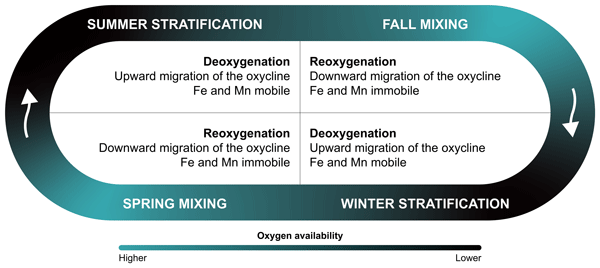
Sediments of thirty-one short cores from a small lake in NE Poland were studied to better understand the elemental response of the deposits in relation to changing water column conditions. We found that iron (Fe) and manganese (Mn) burial is controlled by geochemical focusing – a tendency of elements to concentrate in a given spot – and that sediment lithology is intrinsically connected to prevailing oxygen conditions. This sheds new light on indicators of past water oxygenation.
Stella Birlo, Wojciech Tylmann, and Bernd Zolitschka
Geochronology, 5, 65–90, https://doi.org/10.5194/gchron-5-65-2023, https://doi.org/10.5194/gchron-5-65-2023, 2023
Short summary
Short summary
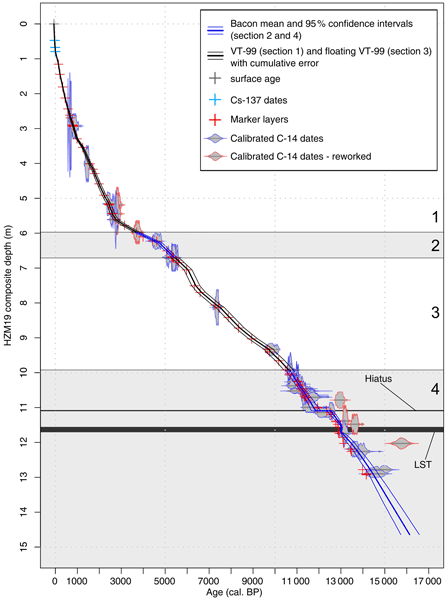
Sediment cores from the volcanic lake Holzmaar provide a very precise chronology based on tree-ring-like annual laminations or varves. We statistically combine this varve chronology with radiometric dating and tested three different methods to upgrade the age–depth model. However, only one of the three methods tested improved the dating accuracy considerably. With this work, an overview of different age integration methods is discussed and made available for increased future demands.
Paul D. Zander, Maurycy Żarczyński, Wojciech Tylmann, Shauna-kay Rainford, and Martin Grosjean
Clim. Past, 17, 2055–2071, https://doi.org/10.5194/cp-17-2055-2021, https://doi.org/10.5194/cp-17-2055-2021, 2021
Short summary
Short summary
High-resolution geochemical imaging techniques provide new opportunities to investigate the biogeochemical composition of sediments at micrometer scale. Here, we compare biogeochemical data from biochemical varves with meteorological data to understand how seasonal meteorological variations are recorded in varve composition. We find that these scanning techniques help to clarify climate–proxy relationships in biochemical varves and show great potential for high-resolution climate reconstruction.
Maurycy Żarczyński, Dirk Enters, Beata Szymczycha, and Wojciech Tylmann
EGUsphere, https://doi.org/10.5194/egusphere-2026-3312, https://doi.org/10.5194/egusphere-2026-3312, 2026
This preprint is open for discussion and under review for Biogeosciences (BG).
Short summary
Short summary
Sediments of thirty-one short cores from a small lake in NE Poland were studied to better understand the elemental response of the deposits in relation to changing water column conditions. We found that iron (Fe) and manganese (Mn) burial is controlled by geochemical focusing – a tendency of elements to concentrate in a given spot – and that sediment lithology is intrinsically connected to prevailing oxygen conditions. This sheds new light on indicators of past water oxygenation.
Stella Birlo, Wojciech Tylmann, and Bernd Zolitschka
Geochronology, 5, 65–90, https://doi.org/10.5194/gchron-5-65-2023, https://doi.org/10.5194/gchron-5-65-2023, 2023
Short summary
Short summary
Sediment cores from the volcanic lake Holzmaar provide a very precise chronology based on tree-ring-like annual laminations or varves. We statistically combine this varve chronology with radiometric dating and tested three different methods to upgrade the age–depth model. However, only one of the three methods tested improved the dating accuracy considerably. With this work, an overview of different age integration methods is discussed and made available for increased future demands.
Paul D. Zander, Maurycy Żarczyński, Wojciech Tylmann, Shauna-kay Rainford, and Martin Grosjean
Clim. Past, 17, 2055–2071, https://doi.org/10.5194/cp-17-2055-2021, https://doi.org/10.5194/cp-17-2055-2021, 2021
Short summary
Short summary
High-resolution geochemical imaging techniques provide new opportunities to investigate the biogeochemical composition of sediments at micrometer scale. Here, we compare biogeochemical data from biochemical varves with meteorological data to understand how seasonal meteorological variations are recorded in varve composition. We find that these scanning techniques help to clarify climate–proxy relationships in biochemical varves and show great potential for high-resolution climate reconstruction.
Cited articles
Bonk, A., Tylmann, W., Amann, B., Enters, D., and Grosjean, M.: Modern limnology and varve-formation processes in lake Żabińskie, northeastern Poland: Comprehensive process studies as a key to understand the sediment record, J. Limnol., 74, 358–370, https://doi.org/10.4081/jlimnol.2014.1117, 2015.
Bonk, A., Kinder, M., Enters, D., Grosjean, M., Meyer-Jacob, C., and Tylmann, W.: Sedimentological and geochemical responses of Lake Żabińskie (north-eastern Poland) to erosion changes during the last millennium, J. Paleolimnol., 56, 239–252, https://doi.org/10.1007/s10933-016-9910-6, 2016.
Brauer, A., Schwab, M. J., Brademann, B., Pinkerneil, S., and Theuerkauf, M.: Tiefer See – a key site for lake sediment research in NE Germany, DEUQUA Spec. Pub., 2, 89–93, https://doi.org/10.5194/deuquasp-2-89-2019, 2019.
Broadman, E., Thurston, L. L., Schiefer, E., McKay, N. P., Fortin, D., Geck, J., Loso, M. G., Nolan, M., Arcusa, S. H., Benson, C. W., Ellerbroek, R. A., Erb, M. P., Routson, C. C., Wiman, C., Wong, A. J., and Kaufman, D. S.: An Arctic watershed observatory at Lake Peters, Alaska: weather–glacier–river–lake system data for 2015–2018, Earth Syst. Sci. Data, 11, 1957–1970, https://doi.org/10.5194/essd-11-1957-2019, 2019.
Butz, C., Grosjean, M., Fischer, D., Wunderle, S., Tylmann, W., and Rein, B.: Hyperspectral imaging spectroscopy: a promising method for the biogeochemical analysis of lake sediments, J. Appl. Remote Sens., 9, 096031, https://doi.org/10.1117/1.jrs.9.096031, 2015.
Choiński, A.: Limnologia fizyczna Polski, Wydawnictwo Naukowe UAM, Poznań, 548 pp., 2007.
Croudace, I. W., Löwemark, L., Tjallingii, R., and Zolitschka, B.: High resolution XRF core scanners: A key tool for the environmental and palaeoclimate sciences, Quatern. Int., 514, 1–4, https://doi.org/10.1016/j.quaint.2019.05.038, 2019.
Czernecki, B., Głogowski, A., and Nowosad, J.: Climate: An R Package to Access Free In-Situ Meteorological and Hydrological Datasets for Environmental Assessment, Sustainability, 12, 394, https://doi.org/10.3390/su12010394, 2020.
Forest Data Bank: http://bdl.lasy.gov.pl (last access: 15 March 2023), 2014–2023.
Heinrich, I., Balanzategui, D., Bens, O., Blasch, G., Blume, T., Böttcher, F., Borg, E., Brademann, B., Brauer, A., Conrad, C., Dietze, E., Dräger, N., Fiener, P., Gerke, H. H., Güntner, A., Heine, I., Helle, G., Herbrich, M., Harfenmeister, K., Heußner, K.-U., Hohmann, C., Itzerott, S., Jurasinski, G., Kaiser, K., Kappler, C., Koebsch, F., Liebner, S., Lischeid, G., Merz, B., Missling, K. D., Morgner, M., Pinkerneil, S., Plessen, B., Raab, T., Ruhtz, T., Sachs, T., Sommer, M., Spengler, D., Stender, V., Stüve, P., and Wilken, F.: Interdisciplinary Geo-ecological Research across Time Scales in the Northeast German Lowland Observatory (TERENO-NE), Vadose Zone J., 17, 180116, https://doi.org/10.2136/vzj2018.06.0116, 2018.
Hernández-Almeida, I., Grosjean, M., Gómez-Navarro, J. J., Larocque-Tobler, I., Bonk, A., Enters, D., Ustrzycka, A., Piotrowska, N., Przybylak, R., Wacnik, A., Witak, M., and Tylmann, W.: Resilience, rapid transitions and regime shifts: Fingerprinting the responses of Lake Żabińskie (NE Poland) to climate variability and human disturbance since AD 1000, Holocene, 27, 258–270, https://doi.org/10.1177/0959683616658529, 2017.
Hutorowicz, H., Grabowska, K., and Nowicka, A.: Charakterystyka warunków klimatycznych Pojezierza Mazurskiego, Zesz. Probl. Post. Nauk Roln., 431, 21–29, 1996.
Maier, D. B., Gälman, V., Renberg, I., and Bigler, C.: Using a decadal diatom sediment trap record to unravel seasonal processes important for the formation of the sedimentary diatom signal, J. Paleolimnol., 60, 133–152, https://doi.org/10.1007/s10933-018-0020-5, 2018.
Marszelewski, W. and Skowron, R.: Ice cover as an indicator of winter air temperature changes: Case study of the Polish Lowland lakes, Hydrol. Sci. J., 51, 336–349, https://doi.org/10.1623/hysj.51.2.336, 2006.
Państwowy Instytut Geologiczny: Mapa Geośrodowiskowa Polski 1:50 000, Arkusz Giżycko, 2012, Państwowy Instytut Geologiczny, Warszawa, 2012.
Piccolroaz, S., Healey, N. C., Lenters, J. D., Schladow, S. G., Hook, S. J., Sahoo, G. B., and Toffolon, M.: On the predictability of lake surface temperature using air temperature in a changing climate: A case study for Lake Tahoe (U. S. A.), Limnol. Oceanogr., 63, 243–261, https://doi.org/10.1002/lno.10626, 2018.
Szumański, A.: Objaśnienia do Szczegółowej Mapy Geologicznej Polski, Arkusz Giżycko (104), Państwowy Insytytu Geologiczny, Warszwa, 33 pp., 2000.
Tomczyk, A. M. and Bednorz, E.: Atlas klimatu Polski (1991–2020), Bogucki Wydawnictwo Naukowe, Poznań, 2022.
Tylmann, W., Zolitschka, B., Enters, D., and Ohlendorf, C.: Laminated lake sediments in northeast Poland: Distribution, preconditions for formation and potential for paleoenvironmental investigation, J. Paleolimnol., 50, 487–503, https://doi.org/10.1007/s10933-013-9741-7, 2013.
Tylmann, W., Bonk, A., Borowiak, D., Głowacka, P., Nowiński, K., Piłczyńska, J., Szczerba, A., and Żarczyński, M.: Multi-parameter dataset on limnological variables and modern sedimentation at Lake Żabińskie, northeast Poland, 2012–2021, Gdańsk University of Technology [data set], https://doi.org/10.34808/w8w7-9x34, 2023.
Wacnik, A., Tylmann, W., Bonk, A., Goslar, T., Enters, D., Meyer-Jacob, C., and Grosjean, M.: Determining the responses of vegetation to natural processes and human impacts in north-eastern Poland during the last millennium: combined pollen, geochemical and historical data, Veg. Hist. Archaeobot., 25, 479–498, https://doi.org/10.1007/s00334-016-0565-z, 2016.
Witak, M., Hernández-Almeida, I., Grosjean, M., and Tylmann, W.: Diatom-based reconstruction of trophic status changes recorded in varved sediments of Lake Żabińskie (northeastern Poland), AD 1888–2010, Oceanol. Hydrobiol. St., 46, 1–17, https://doi.org/10.1515/ohs-2017-0001, 2017.
Zander, P. D., Żarczyński, M., Vogel, H., Tylmann, W., Wacnik, A., Sanchini, A., and Grosjean, M.: A high-resolution record of Holocene primary productivity and water-column mixing from the varved sediments of Lake Żabińskie, Poland, Sci. Total Environ., 755, 143713, https://doi.org/10.1016/j.scitotenv.2020.143713, 2021.
Żarczyński, M., Wacnik, A., and Tylmann, W.: Tracing lake mixing and oxygenation regime using the Fe/Mn ratio in varved sediments: 2000 year-long record of human-induced changes from Lake Żabińskie (NE Poland), Sci. Total Environ., 657, 585–596, https://doi.org/10.1016/j.scitotenv.2018.12.078, 2019.
Żarczyński, M., Zander, P. D., Grosjean, M., and Tylmann, W.: Linking the formation of varves in a eutrophic temperate lake to meteorological conditions and water column dynamics, Sci. Total Environ., 842, 156787, https://doi.org/10.1016/j.scitotenv.2022.156787, 2022.
Zolitschka, B., Francus, P., Ojala, A. E. K., and Schimmelmann, A.: Varves in lake sediments – a review, Quaternary Sci. Rev., 117, 1–41, https://doi.org/10.1016/j.quascirev.2015.03.019, 2015.
Short summary
We present a dataset from the decade-long monitoring of Lake Żabińskie, a hardwater and eutrophic lake in northeast Poland. The lake contains varved sediments, which form a unique archive of past environmental variability. The monitoring program was designed to capture a pattern of relationships between meteorological conditions, limnological processes, and modern sedimentation and to verify if meteorological and limnological phenomena can be precisely tracked with varves.
We present a dataset from the decade-long monitoring of Lake Żabińskie, a hardwater and...
Altmetrics
Final-revised paper
Preprint