Articles | Volume 14, issue 3
https://doi.org/10.5194/essd-14-1359-2022
© Author(s) 2022. This work is distributed under
the Creative Commons Attribution 4.0 License.
the Creative Commons Attribution 4.0 License.
https://doi.org/10.5194/essd-14-1359-2022
© Author(s) 2022. This work is distributed under
the Creative Commons Attribution 4.0 License.
the Creative Commons Attribution 4.0 License.
Data description article
| 
28 Mar 2022
Data description article |
| 28 Mar 2022
| 28 Mar 2022
High-resolution spatial-distribution maps of road transport exhaust emissions in Chile, 1990–2020
Mauricio Osses
CORRESPONDING AUTHOR
Department of Mechanical Engineering, Universidad Técnica Federico Santa María (UTFSM), Santiago,
Chile
Center for Climate and Resilience Research (CR)2, Santiago, Chile
Néstor Rojas
Department of Chemical and Environmental Engineering, Universidad Nacional de Colombia (UNAL), Bogotá, Colombia
Cecilia Ibarra
Center for Climate and Resilience Research (CR)2, Santiago, Chile
Department of Geophysics, Universidad de Chile, Santiago, Chile
Víctor Valdebenito
Department of Mechanical Engineering, Universidad Técnica Federico Santa María (UTFSM), Santiago,
Chile
Ignacio Laengle
Department of Mechanical Engineering, Universidad Técnica Federico Santa María (UTFSM), Santiago,
Chile
Nicolás Pantoja
Department of Mechanical Engineering, Universidad Técnica Federico Santa María (UTFSM), Santiago,
Chile
Center for Climate and Resilience Research (CR)2, Santiago, Chile
Darío Osses
Department of Geophysics, Universidad de Chile, Santiago, Chile
Kevin Basoa
Center for Climate and Resilience Research (CR)2, Santiago, Chile
Sebastián Tolvett
Department of Mechanical Engineering, Universidad Tecnológica Metropolitana, Santiago, Chile
Nicolás Huneeus
Center for Climate and Resilience Research (CR)2, Santiago, Chile
Department of Geophysics, Universidad de Chile, Santiago, Chile
Laura Gallardo
Center for Climate and Resilience Research (CR)2, Santiago, Chile
Department of Geophysics, Universidad de Chile, Santiago, Chile
Benjamín Gómez
Department of Mechanical Engineering, Universidad Técnica Federico Santa María (UTFSM), Santiago,
Chile
Center for Climate and Resilience Research (CR)2, Santiago, Chile
Related authors
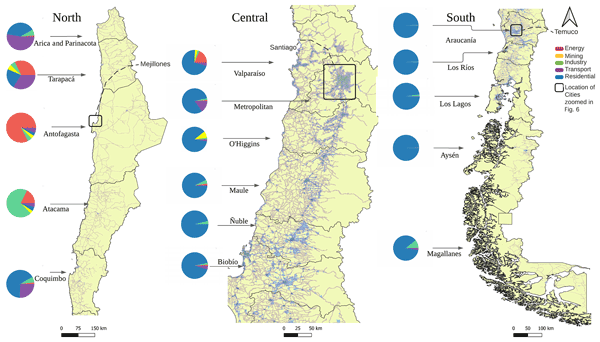
Nicolás Álamos, Nicolás Huneeus, Mariel Opazo, Mauricio Osses, Sebastián Puja, Nicolás Pantoja, Hugo Denier van der Gon, Alejandra Schueftan, René Reyes, and Rubén Calvo
Earth Syst. Sci. Data, 14, 361–379, https://doi.org/10.5194/essd-14-361-2022, https://doi.org/10.5194/essd-14-361-2022, 2022
Short summary
Short summary
This study presents the first high-resolution national inventory of anthropogenic emissions for Chile (Inventario Nacional de Emisiones Antropogénicas, INEMA). Emissions for vehicular, industrial, energy, mining and residential sectors are estimated for the period 2015–2017 and spatially distributed onto a high-resolution grid (1 × 1 km). This inventory will support policies seeking to mitigate climate change and improve air quality by providing qualified scientific spatial emission information.
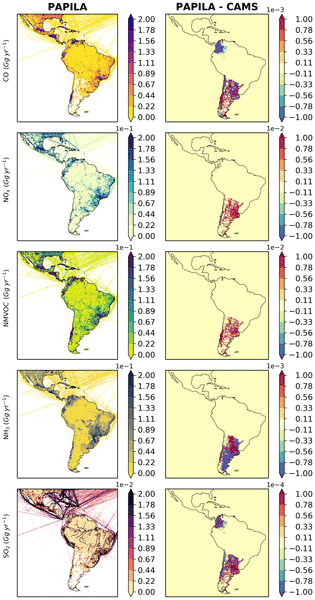
Paula Castesana, Melisa Diaz Resquin, Nicolás Huneeus, Enrique Puliafito, Sabine Darras, Darío Gómez, Claire Granier, Mauricio Osses Alvarado, Néstor Rojas, and Laura Dawidowski
Earth Syst. Sci. Data, 14, 271–293, https://doi.org/10.5194/essd-14-271-2022, https://doi.org/10.5194/essd-14-271-2022, 2022
Short summary
Short summary
This work presents the results of the first joint effort of South American and European researchers to generate regional maps of emissions. The PAPILA dataset is a collection of annual emission inventories of reactive gases (CO, NOx, NMVOCs, NH3, and SO2) from anthropogenic sources in the region for the period 2014–2016. This was developed on the basis of the CAMS-GLOB-ANT v4.1 dataset, enriching it with derived data from locally available emission inventories for Argentina, Chile, and Colombia.
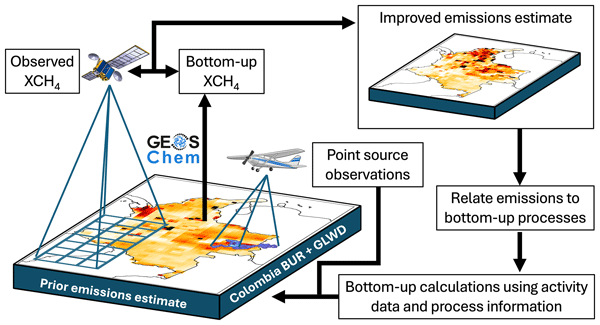
Sarah E. Hancock, Daniel J. Jacob, Rodrigo Jimenez, Andrés Ardila, Luis Morales-Rincon, Néstor Rojas, Lucas A. Estrada, Nicholas Balasus, James D. East, Melissa P. Sulprizio, Xiaolin Wang, James L. France, Lauren Potyk, Elise Penn, Zichong Chen, Daniel J. Varon, Christian Frankenberg, Marci Baranski, Andreea Calcan, and Robert J. Parker
Atmos. Chem. Phys., 26, 10455–10476, https://doi.org/10.5194/acp-26-10455-2026, https://doi.org/10.5194/acp-26-10455-2026, 2026
Short summary
Short summary
We combined satellite observations with detailed national data to improve estimates of Colombia’s methane emissions. Our results show that total methane emissions are higher than reported, with the biggest differences from fossil fuels. This approach demonstrates how satellite data can make national greenhouse gas reporting more accurate and transparent under the Paris Agreement.
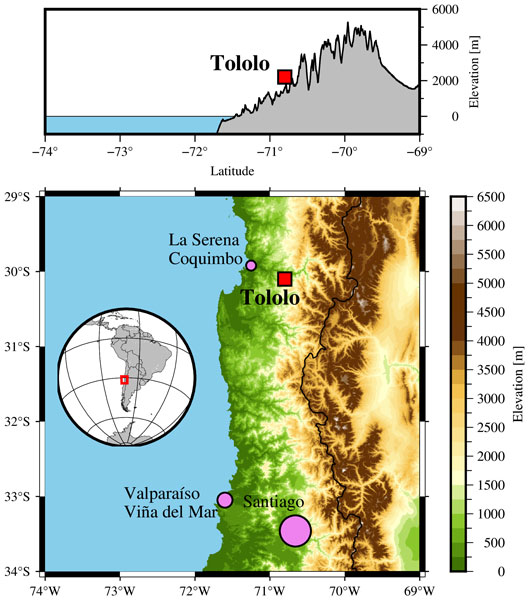
Laura Gallardo, Charlie Opazo, Camilo Menares, Kevin Basoa, Lucas Castillo, Nikos Daskalakis, Maria Kanakidou, Carmen Vega, Nicolás Huneeus, Roberto Rondanelli, and Rodrigo Seguel
Atmos. Chem. Phys., 26, 8783–8807, https://doi.org/10.5194/acp-26-8783-2026, https://doi.org/10.5194/acp-26-8783-2026, 2026
Short summary
Short summary
We assert the role of methane and other drivers of change in explaining the growing tropospheric ozone (O3) trend at Tololo (30.17° S, 70.80° W, 2154 m a.s.l.), and we quantify the contributions of biomass burning and stratospheric and upper tropospheric O3, particularly during the late winter and spring. These findings enhance understanding of O3 variability in the Southern Hemisphere free troposphere and underscore the importance of sustained observations at Tololo amid climate change.
Ricardo Morales-Betancourt, Cristóbal J. Galbán-Malagón, Thalia Montejo-Barato, Estela Blanco, Paula Tapia-Pino, Rosario Vargas, Cynthia Cordova, Colin Finnegan, Abenezer Shankute, Nicolas Huneeus, J. Sebastian Hernandez-Suarez, Paola Valencia, Marcelo Mena-Carrasco, and Robert B. Jackson
Atmos. Chem. Phys., 26, 8355–8365, https://doi.org/10.5194/acp-26-8355-2026, https://doi.org/10.5194/acp-26-8355-2026, 2026
Short summary
Short summary
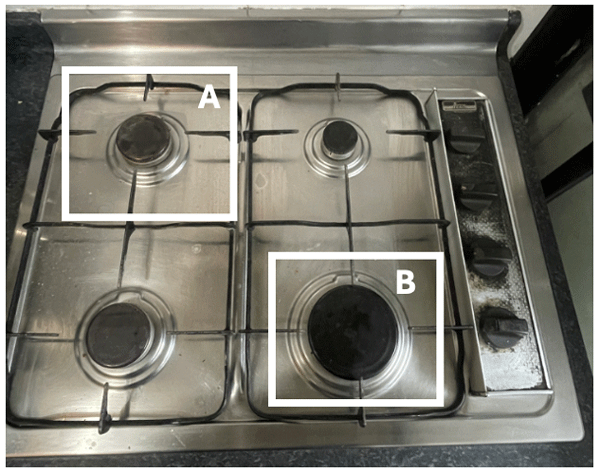
We measured measured CH₄, CO₂, CO, and NOx emissions from household gas stoves in Chile and Colombia. We found that emissions are much higher than official estimates, mainly due to small leaks and ignition. These hidden emissions contribute to climate change and air pollution. Our work shows the need for better measurement, reporting, and appliance standards to reduce environmental impacts from everyday cooking.
Rodrigo J. Seguel, Charlie Opazo, Yann Cohen, Owen R. Cooper, Laura Gallardo, Björn-Martin Sinnhuber, Florian Obersteiner, Andreas Zahn, Peter Hoor, Susanne Rohs, and Andreas Marsing
Atmos. Chem. Phys., 25, 8553–8573, https://doi.org/10.5194/acp-25-8553-2025, https://doi.org/10.5194/acp-25-8553-2025, 2025
Short summary
Short summary
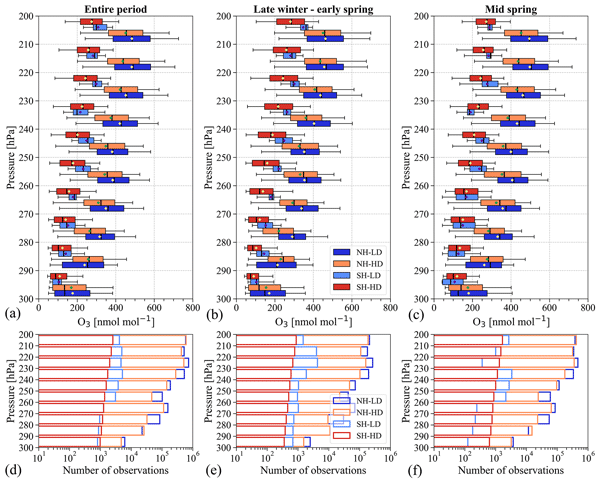
We explored ozone differences between the Northern Hemisphere and Southern Hemispheres in the upper troposphere–lower stratosphere. We found lower ozone (with stratospheric origin) in the Southern Hemisphere, especially during years of severe ozone depletion. Sudden stratospheric warming events increased the ozone in each hemisphere, highlighting the relationship between stratospheric processes and ozone in the upper troposphere, where ozone is an important greenhouse gas.
María Cazorla, Melissa Trujillo, Rodrigo Seguel, and Laura Gallardo
Atmos. Chem. Phys., 25, 7087–7109, https://doi.org/10.5194/acp-25-7087-2025, https://doi.org/10.5194/acp-25-7087-2025, 2025
Short summary
Short summary
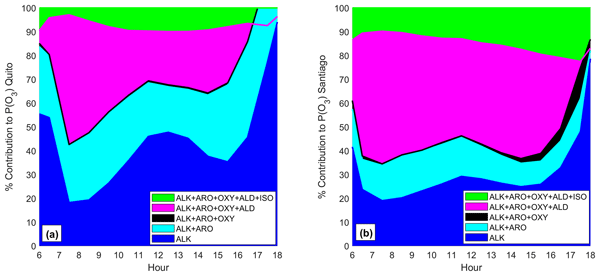
The current climate and environmental crises impose the need to take actions in cities to curb ozone as a pollutant and a climate forcer. This endeavor is challenging in understudied regions. In this work we analyze how reducing levels of precursor chemicals would affect ozone formation in Quito, Ecuador, and Santiago, Chile.
Flossie Brown, Gerd Folberth, Stephen Sitch, Paulo Artaxo, Marijn Bauters, Pascal Boeckx, Alexander W. Cheesman, Matteo Detto, Ninong Komala, Luciana Rizzo, Nestor Rojas, Ines dos Santos Vieira, Steven Turnock, Hans Verbeeck, and Alfonso Zambrano
Atmos. Chem. Phys., 24, 12537–12555, https://doi.org/10.5194/acp-24-12537-2024, https://doi.org/10.5194/acp-24-12537-2024, 2024
Short summary
Short summary
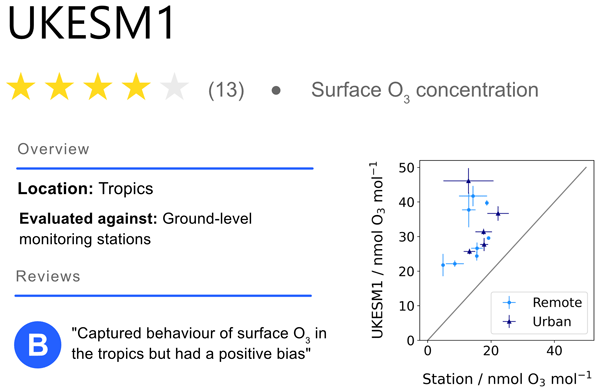
Ozone is a pollutant that is detrimental to human and plant health. Ozone monitoring sites in the tropics are limited, so models are often used to understand ozone exposure. We use measurements from the tropics to evaluate ozone from the UK Earth system model, UKESM1. UKESM1 is able to capture the pattern of ozone in the tropics, except in southeast Asia, although it systematically overestimates it at all sites. This work highlights that UKESM1 can capture seasonal and hourly variability.
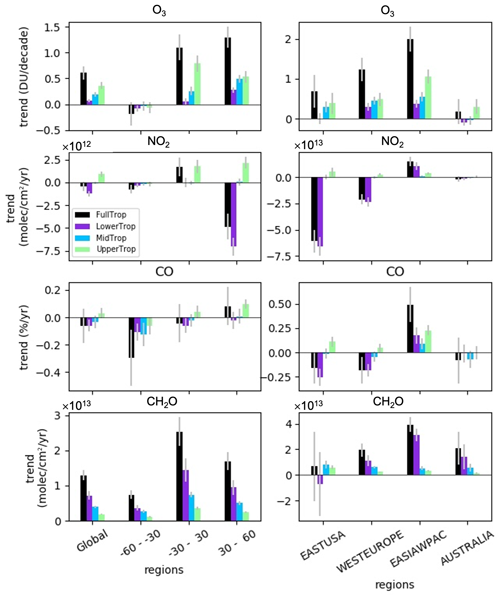
Yasin Elshorbany, Jerald R. Ziemke, Sarah Strode, Hervé Petetin, Kazuyuki Miyazaki, Isabelle De Smedt, Kenneth Pickering, Rodrigo J. Seguel, Helen Worden, Tamara Emmerichs, Domenico Taraborrelli, Maria Cazorla, Suvarna Fadnavis, Rebecca R. Buchholz, Benjamin Gaubert, Néstor Y. Rojas, Thiago Nogueira, Thérèse Salameh, and Min Huang
Atmos. Chem. Phys., 24, 12225–12257, https://doi.org/10.5194/acp-24-12225-2024, https://doi.org/10.5194/acp-24-12225-2024, 2024
Short summary
Short summary
We investigated tropospheric ozone spatial variability and trends from 2005 to 2019 and related those to ozone precursors on global and regional scales. We also investigate the spatiotemporal characteristics of the ozone formation regime in relation to ozone chemical sources and sinks. Our analysis is based on remote sensing products of the tropospheric column of ozone and its precursors, nitrogen dioxide, formaldehyde, and total column CO, as well as ozonesonde data and model simulations.
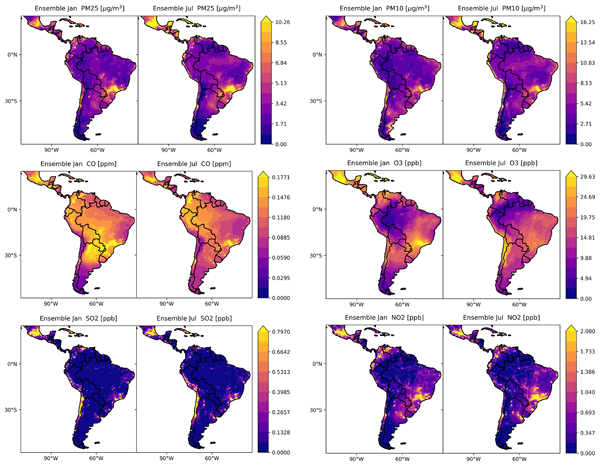
Jorge E. Pachón, Mariel A. Opazo, Pablo Lichtig, Nicolas Huneeus, Idir Bouarar, Guy Brasseur, Cathy W. Y. Li, Johannes Flemming, Laurent Menut, Camilo Menares, Laura Gallardo, Michael Gauss, Mikhail Sofiev, Rostislav Kouznetsov, Julia Palamarchuk, Andreas Uppstu, Laura Dawidowski, Nestor Y. Rojas, María de Fátima Andrade, Mario E. Gavidia-Calderón, Alejandro H. Delgado Peralta, and Daniel Schuch
Geosci. Model Dev., 17, 7467–7512, https://doi.org/10.5194/gmd-17-7467-2024, https://doi.org/10.5194/gmd-17-7467-2024, 2024
Short summary
Short summary
Latin America (LAC) has some of the most populated urban areas in the world, with high levels of air pollution. Air quality management in LAC has been traditionally focused on surveillance and building emission inventories. This study performed the first intercomparison and model evaluation in LAC, with interesting and insightful findings for the region. A multiscale modeling ensemble chain was assembled as a first step towards an air quality forecasting system.
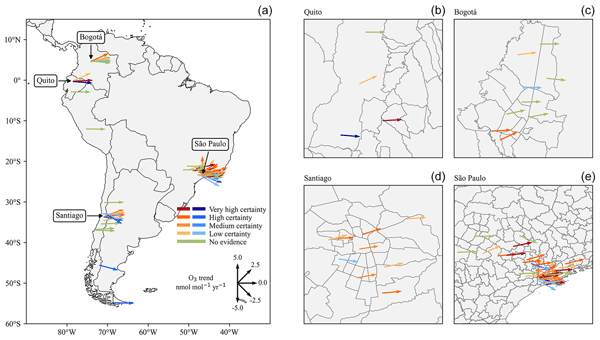
Rodrigo J. Seguel, Lucas Castillo, Charlie Opazo, Néstor Y. Rojas, Thiago Nogueira, María Cazorla, Mario Gavidia-Calderón, Laura Gallardo, René Garreaud, Tomás Carrasco-Escaff, and Yasin Elshorbany
Atmos. Chem. Phys., 24, 8225–8242, https://doi.org/10.5194/acp-24-8225-2024, https://doi.org/10.5194/acp-24-8225-2024, 2024
Short summary
Short summary
Trends of surface ozone were examined across South America. Our findings indicate that ozone trends in major South American cities either increase or remain steady, with no signs of decline. The upward trends can be attributed to chemical regimes that efficiently convert nitric oxide into nitrogen dioxide. Additionally, our results suggest a climate penalty for ozone driven by meteorological conditions that favor wildfire propagation in Chile and extensive heat waves in southern Brazil.

Rebecca M. Garland, Katye E. Altieri, Laura Dawidowski, Laura Gallardo, Aderiana Mbandi, Nestor Y. Rojas, and N'datchoh E. Touré
Atmos. Chem. Phys., 24, 5757–5764, https://doi.org/10.5194/acp-24-5757-2024, https://doi.org/10.5194/acp-24-5757-2024, 2024
Short summary
Short summary
This opinion piece focuses on two geographical areas in the Global South where the authors are based that are underrepresented in atmospheric science. This opinion provides context on common challenges and constraints, with suggestions on how the community can address these. The focus is on the strengths of atmospheric science research in these regions. It is these strengths, we believe, that highlight the critical role of Global South researchers in the future of atmospheric science research.
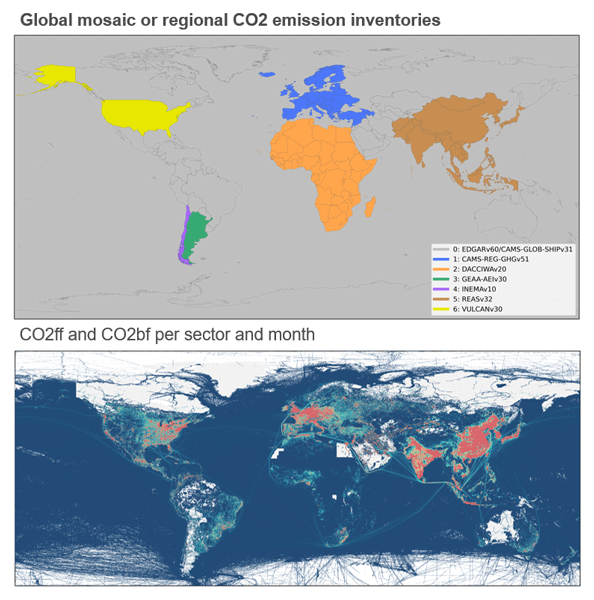
Ruben Urraca, Greet Janssens-Maenhout, Nicolás Álamos, Lucas Berna-Peña, Monica Crippa, Sabine Darras, Stijn Dellaert, Hugo Denier van der Gon, Mark Dowell, Nadine Gobron, Claire Granier, Giacomo Grassi, Marc Guevara, Diego Guizzardi, Kevin Gurney, Nicolás Huneeus, Sekou Keita, Jeroen Kuenen, Ana Lopez-Noreña, Enrique Puliafito, Geoffrey Roest, Simone Rossi, Antonin Soulie, and Antoon Visschedijk
Earth Syst. Sci. Data, 16, 501–523, https://doi.org/10.5194/essd-16-501-2024, https://doi.org/10.5194/essd-16-501-2024, 2024
Short summary
Short summary
CoCO2-MOSAIC 1.0 is a global mosaic of regional bottom-up inventories providing gridded (0.1×0.1) monthly emissions of anthropogenic CO2. Regional inventories include country-specific information and finer spatial resolution than global inventories. CoCO2-MOSAIC provides harmonized access to these datasets and can be considered as a regionally accepted reference to assess the quality of global inventories, as done in the current paper.
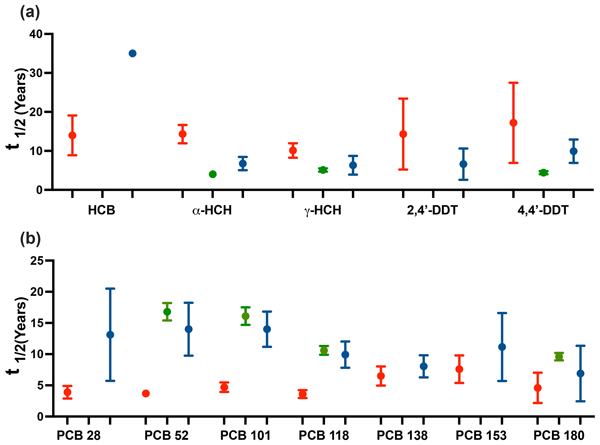
Thais Luarte, Victoria A. Gómez-Aburto, Ignacio Poblete-Castro, Eduardo Castro-Nallar, Nicolas Huneeus, Marco Molina-Montenegro, Claudia Egas, Germán Azcune, Andrés Pérez-Parada, Rainier Lohmann, Pernilla Bohlin-Nizzetto, Jordi Dachs, Susan Bengtson-Nash, Gustavo Chiang, Karla Pozo, and Cristóbal J. Galbán-Malagón
Atmos. Chem. Phys., 23, 8103–8118, https://doi.org/10.5194/acp-23-8103-2023, https://doi.org/10.5194/acp-23-8103-2023, 2023
Short summary
Short summary
In the last 40 years, different research groups have reported on the atmospheric concentrations of persistent organic pollutants in Antarctica. In the present work, we make a compilation to understand the historical trends and estimate the atmospheric half-life of each compound. Of the compounds studied, HCB was the only one that showed no clear trend, while the rest of the studied compounds showed a significant decrease over time. This is consistent with results for polar and sub-polar zones.

Rémy Lapere, Nicolás Huneeus, Sylvain Mailler, Laurent Menut, and Florian Couvidat
Atmos. Chem. Phys., 23, 1749–1768, https://doi.org/10.5194/acp-23-1749-2023, https://doi.org/10.5194/acp-23-1749-2023, 2023
Short summary
Short summary
Glaciers in the Andes of central Chile are shrinking rapidly in response to global warming. This melting is accelerated by the deposition of opaque particles onto snow and ice. In this work, model simulations quantify typical deposition rates of soot on glaciers in summer and winter months and show that the contribution of emissions from Santiago is not as high as anticipated. Additionally, the combination of regional- and local-scale meteorology explains the seasonality in deposition.

Lady Mateus-Fontecha, Angela Vargas-Burbano, Rodrigo Jimenez, Nestor Y. Rojas, German Rueda-Saa, Dominik van Pinxteren, Manuela van Pinxteren, Khanneh Wadinga Fomba, and Hartmut Herrmann
Atmos. Chem. Phys., 22, 8473–8495, https://doi.org/10.5194/acp-22-8473-2022, https://doi.org/10.5194/acp-22-8473-2022, 2022
Short summary
Short summary
This study reports the chemical composition of regionally representative PM2.5 in an area densely populated and substantially industrialized, located in the inter-Andean valley, with the highest sugarcane yield in the world and where sugarcane is burned and harvested year round. We found that sugarcane burning is not portrayed as a distinguishable sample composition component. Instead, the composition analysis revealed multiple associations among sugarcane burning components and other sources.
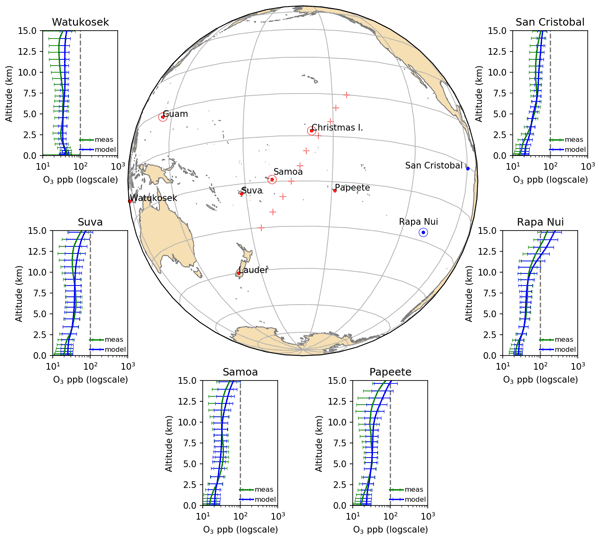
Nikos Daskalakis, Laura Gallardo, Maria Kanakidou, Johann Rasmus Nüß, Camilo Menares, Roberto Rondanelli, Anne M. Thompson, and Mihalis Vrekoussis
Atmos. Chem. Phys., 22, 4075–4099, https://doi.org/10.5194/acp-22-4075-2022, https://doi.org/10.5194/acp-22-4075-2022, 2022
Short summary
Short summary
Forest fires emit carbon monoxide (CO) that can be transported into the atmosphere far from the sources and reacts to produce ozone (O3) that affects climate, ecosystems and health. O3 is also produced in the stratosphere and can be transported downwards. Using a global numerical model, we found that forest fires can affect CO and O3 even in the South Pacific, the most pristine region of the global ocean, but transport from the stratosphere is a more important O3 source than fires in the region.
Nicolás Álamos, Nicolás Huneeus, Mariel Opazo, Mauricio Osses, Sebastián Puja, Nicolás Pantoja, Hugo Denier van der Gon, Alejandra Schueftan, René Reyes, and Rubén Calvo
Earth Syst. Sci. Data, 14, 361–379, https://doi.org/10.5194/essd-14-361-2022, https://doi.org/10.5194/essd-14-361-2022, 2022
Short summary
Short summary
This study presents the first high-resolution national inventory of anthropogenic emissions for Chile (Inventario Nacional de Emisiones Antropogénicas, INEMA). Emissions for vehicular, industrial, energy, mining and residential sectors are estimated for the period 2015–2017 and spatially distributed onto a high-resolution grid (1 × 1 km). This inventory will support policies seeking to mitigate climate change and improve air quality by providing qualified scientific spatial emission information.
Paula Castesana, Melisa Diaz Resquin, Nicolás Huneeus, Enrique Puliafito, Sabine Darras, Darío Gómez, Claire Granier, Mauricio Osses Alvarado, Néstor Rojas, and Laura Dawidowski
Earth Syst. Sci. Data, 14, 271–293, https://doi.org/10.5194/essd-14-271-2022, https://doi.org/10.5194/essd-14-271-2022, 2022
Short summary
Short summary
This work presents the results of the first joint effort of South American and European researchers to generate regional maps of emissions. The PAPILA dataset is a collection of annual emission inventories of reactive gases (CO, NOx, NMVOCs, NH3, and SO2) from anthropogenic sources in the region for the period 2014–2016. This was developed on the basis of the CAMS-GLOB-ANT v4.1 dataset, enriching it with derived data from locally available emission inventories for Argentina, Chile, and Colombia.
Cited articles
Álamos, N., Huneeus, N., Opazo, M., Osses, M., Puja, S., Pantoja, N., Denier van der Gon, H., Schueftan, A., Reyes, R., and Calvo, R.: High-resolution inventory of atmospheric emissions from transport, industrial, energy, mining and residential activities in Chile, Earth Syst. Sci. Data, 14, 361–379, https://doi.org/10.5194/essd-14-361-2022, 2022.
Barraza, F., Lambert, F., Jorquera, H., Villalobos, A. M., and Gallardo, L.: Temporal evolution of main ambient PM2.5 sources in Santiago, Chile, from 1998 to 2012, Atmos. Chem. Phys., 17, 10093–10107, https://doi.org/10.5194/acp-17-10093-2017, 2017.
BCN, Biblioteca del Congreso Nacional: Mapoteca, Mapas vectoriales webpage, https://www.bcn.cl/siit/mapas_vectoriales (last access: 23 November 2021), 2020.
Bond, T. C., Streets, D. G., Yarber, K. F., Nelson, S. M., Woo, J. H., and
Klimont, Z.: A technology-based global inventory of black and organic carbon
emissions from combustion, J. Geophys. Res.-Atmos., 109, 1–43,
https://doi.org/10.1029/2003JD003697, 2004.
Bond, T. C., Doherty, S. J., Fahey, D. W., Forster, P. M., Berntsen, T.,
Deangelo, B. J., Flanner, M. G., Ghan, S., Kärcher, B., Koch, D., Kinne,
S., Kondo, Y., Quinn, P. K., Sarofim, M. C., Schultz, M. G., Schulz, M.,
Venkataraman, C., Zhang, H., Zhang, S., Bellouin, N., Guttikunda, S. K.,
Hopke, P. K., Jacobson, M. Z., Kaiser, J. W., Klimont, Z., Lohmann, U.,
Schwarz, J. P., Shindell, D., Storelvmo, T., Warren, S. G., and Zender, C.
S.: Bounding the role of black carbon in the climate system: A scientific
assessment, J. Geophys. Res.-Atmos., 118, 5380–5552,
https://doi.org/10.1002/jgrd.50171, 2013.
Burnett, R., Chen, H., Szyszkowicz, M., Fann, N., Hubbell, B., Pope, C. A.,
Apte, J. S., Brauer, M., Cohen, A., Weichenthal, S., Coggins, J., Di, Q.,
Brunekreef, B., Frostad, J., Lim, S. S., Kan, H., Walker, K. D., Thurston,
G. D., Hayes, R. B., Lim, C. C., Turner, M. C., Jerrett, M., Krewski, D.,
Gapstur, S. M., Diver, W. R., Ostro, B., Goldberg, D., Crouse, D. L., Martin,
R. V., Peters, P., Pinault, L., Tjepkema, M., van Donkelaar, A., Villeneuve,
P. J., Miller, A. B., Yin, P., Zhou, M., Wang, L., Janssen, N. A. H., Marra, M.,
Atkinson, R. W., Tsang, H., Quoc Thach, T., Cannon, J. B., Allen, R. T., Hart,
J. E., Laden, F., Cesaroni, G., Forastiere, F., Weinmayr, G., Jaensch, A.,
Nagel, G., Concin, H., and Spadaro, J. V.: Global estimates of mortality
associated with long-term exposure to outdoor fine particulate matter, P.
Natl. Acad. Sci. USA, 115, 9592–9597, https://doi.org/10.1073/pnas.1803222115, 2018.
Cai, H., Burnham, A., and Wang, M.: Updated emission factors of air
pollutants from vehicle operations in GREETTM using MOVES, Syst. Assess.
Sect. Energy Syst. Div. Argonne Natl. Lab., September, 2013.
Chow, J. C., Watson, J. G., Lowenthal, D. H., Chen, L. W. A., and Motallebi,
N.: Black and organic carbon emission inventories: Review and application to
California, J. Air Waste Manage., 60, 497–507,
https://doi.org/10.3155/1047-3289.60.4.497, 2010.
Creutzig, F., Jochem, P., Edelenbosch, O. Y., Mattauch, L., van Vuuren, D. P., McCollum, D., and Minx, J.: Transport: A roadblock to climate change
mitigation?, Science, 350, 911–912, https://doi.org/10.1126/science.aac8033, 2015.
Crippa, M., Oreggioni, G., Guizzardi, D., Muntean, M., Schaaf, E., Lo Vullo,
E., Solazzo, E., Monforti-Ferrario, F., Olivier, J. G. J., and Vignati, E.: Fossil
CO2 and GHG emissions of all world countries – 2019 Report, EUR 29849
EN, Publications Office of the European Union, Luxembourg, ISBN
978-92-76-11100-9, https://doi.org/10.2760/687800, JRC117610, 2019.
Crippa, M., Solazzo, E., Huang, G., Guizzardi, D., Koffi, E., Muntean, M.,
Schieberle, C., Friedrich, R., and Janssens-Maenhout, G.: High resolution
temporal profiles in the Emissions Database for Global Atmospheric Research,
Sci. Data., 7, 121, https://doi.org/10.1038/s41597-020-0462-2, 2020.
EEA, European Environmental Agency: Spreadsheet Appendix 4 to chapter '1.A.3.b.i-iv Road transport', EMEP/EEA air pollutant emission inventory guidebook 2019, Updated on 25 September 2020 and linked to COPERT v. 5.4, https://www.eea.europa.eu/publications/emep-eea-guidebook-2019/part-b-sectoral-guidance-chapters/1-energy/1-a-combustion/road-transport-appendix-4-emission/view (last access: 23 November 2021), 2020.
Gallardo, L., Barraza, F., Ceballos, A., Galleguillos, M., Huneeus, N.,
Lambert, F., Ibarra, C., Munizaga, M., O'Ryan, R., Osses, M., Tolvett, S.,
Urquiza, A., and Véliz, K. D.: Evolution of air quality in Santiago: The
role of mobility and lessons from the science-policy interface, Elem. Sci.
Anth., 6, 38, https://doi.org/10.1525/elementa.293, 2018.
Gallardo, L., Basoa, K., Tolvett, S., Osses, M., Huneeus, N., Bustos, S.,
Barraza, J., and Ogaz, G.: Mitigación de carbono negro en la actualización de
la Contribución Nacionalmente Determinada de Chile: Resumen para tomadores
de decisión, available at:
https://www.cr2.cl/wp-content/uploads/2020/04/Mitigacion_carbono_negro_NDC_Chile2020.pdf (last access: 23 November 2021), Santiago de Chile, 2020.
Gobierno de Chile: Contribución determinada a nivel nacional (NDC) de
Chile, Actualización 2020,
https://www4.unfccc.int/sites/ndcstaging/PublishedDocuments/Chile irst/Chile's_NDC_2020_english.pdf (last access: 18 March 2022), 2020.
Gómez, B.: Modelación y proyección de emisiones contaminantes
generadas por vehículos terrestres en el período 2020–2050 en
Chile, Dissertation, Department of Mechanical Engineering, Universidad
Tecnológica Federico Santa María, Chile, 2020.
Hadley, O. L. and Kirchstetter, T. W.: Black-carbon reduction of snow
albedo, Nat. Clim. Change, 2, 437–440, https://doi.org/10.1038/nclimate1433, 2012.
Hardoy, J. and Romero Lankao, P.: Latin American cities and climate change: challenges and options to mitigation and adaptation responses, Curr. Opinion Environ. Sustain., 3, 158–163, https://doi.org/10.1016/j.cosust.2011.01.004, 2011.
Henríquez, C. and Romero, H.: Urban Climates in Latin America, Springer International Publishing, Cham, Switzerland, https://doi.org/10.1007/978-3-319-97013-4, 2019.
Huneeus, N., Denier van der Gon, H., Castesana, P., Menares, C., Granier,
C., Granier, L., Alonso, M., de Fatima Andrade, M., Dawidowski, L.,
Gallardo, L., Gomez, D., Klimont, Z., Janssens-Maenhout, G., Osses, M.,
Puliafito, S. E., Rojas, N., Ccoyllo, O. S., Tolvett, S., and Ynoue, R. Y.:
Evaluation of anthropogenic air pollutant emission inventories for South
America at national and city scale, Atmos. Environ., 235, 117606,
https://doi.org/10.1016/j.atmosenv.2020.117606, 2020a.
Huneeus, N., Urquiza A., Gayó, E., Osses, M., Arriagada, R., Vald s, M.,
Alamos, N., Amigo, C., Arrieta, D., Basoa, K., Billi, M., Blanco, G.,
Boisier, J.P., Calvo, R., Casielles, I., Castro, M., Chahu n, J., Christie,
D., Cordero, L., Correa, V., Cort s, J., Fleming, Z., Gajardo, N., Gallardo,
L., Gómez, L., Insunza, X., Iriarte, P., Labra a, J., Lambert, F.,
Muñoz, A., Opazo, M., O'Ryan, R., Osses, A., Plass, M., Rivas, M.,
Salinas, S., Santander, S., Seguel, R., Smith, P., Tolvett, S (2020). El
aire que respiramos: pasado, presente y futuro – Contaminación
atmosférica por MP2,5 en el centro y sur de Chile, Centro de Ciencia del
Clima y la Resiliencia (CR)2, (ANID/FONDAP/15110009), 102 pp.,
2020b.
INE, Instituto Nacional de Estadísticas: Official Statistics for population webpage, https://www.ine.cl/estadisticas/sociales/censos-de-poblacion-y-vivienda/poblacion-y-vivienda (last access: 23 November 2021), 2017.
Instituto Nacional de Estadísticas (INE): Censo 2017 de
población y vivienda, bases de datos, https://www.ine.cl/estadisticas/sociales/censos-de-poblacion-y-vivienda/poblacion-y-vivienda, 2020.
Janssens-Maenhout, G., Crippa, M., Guizzardi, D., Muntean, M., Schaaf, E.,
Olivier, J. G., Peters, J. A. H. W., and Schure, K. M.: Fossil CO2 & GHG
emissions of all world countries, Publications Office of the European Union,
Luxembourg, https://publications.jrc.ec.europa.eu/repository/handle/JRC107877 (last access: 18 March 2022) 2017.
Jorquera, H., Cifuentes, L. A., Osses, M., Domínguez, M. P.,
Valdés, J. M., Cabrera, C., and Busch, P.: Apoyo a la iniciativa para el
plan de mitigación de los contaminantes climáticos de vida corta en
Chile, Ministerio de Medioambiente, Chile, https://www.greenlab.uc.cl/wp-content/uploads/2017/07/0-Resumen-Ejecutivo.pdf (last access: 18 March 2022), 2017.
Kirrane, E. F., Luben, T. J., Benson, A., Owens, E. O., Sacks, J. D., Dutton,
S. J., Madden, M., and Nichols, J. L.: A systematic review of cardiovascular
responses associated with ambient black carbon and fine particulate matter,
Environ. Int., 127, 305–316, https://doi.org/10.1016/j.envint.2019.02.027,
2019.
Kuenen, J. J. P., Visschedijk, A. J. H., Jozwicka, M., and Denier van der Gon, H. A. C.: TNO-MACC_II emission inventory; a multi-year (2003–2009) consistent high-resolution European emission inventory for air quality modelling, Atmos. Chem. Phys., 14, 10963–10976, https://doi.org/10.5194/acp-14-10963-2014, 2014.
Kuylenstierna, J. C. I., Heaps, C. G., Ahmed, T., Vallack, H. W., Hicks, W.
K., Ashmore, M. R., Malley, C. S., Wang, G., Lefèvre, E. N., Anenberg,
S. C., Lacey, F., Shindell, D. T., Bhattacharjee, U., and Henze, D. K.:
Development of the Low Emissions Analysis Platform – Integrated Benefits
Calculator (LEAP-IBC) tool to assess air quality and climate co-benefits:
Application for Bangladesh, Environ. Int., 145, 106155,
https://doi.org/10.1016/j.envint.2020.106155, 2020.
MAPS Chile: Escenarios referenciales para la mitigación del cambio climático en Chile, Reporte Final Fase 1. Santiago de Chile: Ministerio del Medio Ambiente, https://mapschile.mma.gob.cl/lanzamiento-escenarios-referenciales-para-la-mitigacion-del-cambio-climatico-en-chile/ (last access: 23 November 2021), 2013.
Mazzeo, A., Huneeus, N., Ordoñez, C., Orfanoz-Cheuquelaf, A., Menut, L.,
Mailler, S., Valari, M., Denier van der Gon, H., Gallardo, L., Muñoz,
R., Donoso, R., Galleguillos, M., Osses, M., and Tolvett, S.: Impact of
residential combustion and transport emissions on air pollution in Santiago
during winter, Atmos. Environ., 190, 195–208,
https://doi.org/10.1016/j.atmosenv.2018.06.043, 2018.
McDuffie, E. E., Smith, S. J., O'Rourke, P., Tibrewal, K., Venkataraman, C., Marais, E. A., Zheng, B., Crippa, M., Brauer, M., and Martin, R. V.: A global anthropogenic emission inventory of atmospheric pollutants from sector- and fuel-specific sources (1970–2017): an application of the Community Emissions Data System (CEDS), Earth Syst. Sci. Data, 12, 3413–3442, https://doi.org/10.5194/essd-12-3413-2020, 2020.
Mena-Carrasco, M., Oliva, E., Saide, P., Spak, S. N., de la Maza, C., Osses,
M., Tolvett, S., Campbell, J. E., Tsao, T. E. C. C., and Molina, L. T.:
Estimating the health benefits from natural gas use in transport and heating
in Santiago, Chile, Sci. Total Environ., 429, 257–265,
https://doi.org/10.1016/j.scitotenv.2012.04.037, 2012.
Ministerio de Medio Ambiente (MMA): Cuarto Informe Bienal de Actualización
de Chile sobre Cambio Climático, Ministerio del Medio Ambiente,
Santiago,
https://cambioclimatico.mma.gob.cl/wp-content/uploads/2021/01/Chile_4th_BUR_2020.pdf (last access: 23 November 2021), 2020.
Ministerio del Medio Ambiente (MMA): Informe del Inventario Nacional de Chile
2020: Inventario nacional de gases de efecto invernadero y otros
contaminantes climáticos 1990–2018, Oficina de Cambio Climático.
Santiago, Chile, 2021.
Ministerio de Obras Públicas (MOP): Peaje y pasadas vehiculares
2008–2020, Dirección de Vialidad,
https://vialidad.mop.gob.cl/Paginas/PasadasVehiculares.aspx (last access: 23 November 2021), 2020.
Minjares, R., Wagner, D. V, Baral, A., Chambliss, S., Galarza, S., Posada,
F., SHARPE, B., Wu, G., Blumberg, K., Kamakate, F., LLOYD, A., Kojima, M.,
HAMILTON, K., Johnson, T., Kopp, A., Hosier, R., and Akbar, S.: Reducing
Black Carbon Emissions from Diesel Vehicles: Impacts, Control Strategies,
and Cost-Benefit Analysis, Washington DC, https://www.ccacoalition.org/en/resources/reducing-black-carbon-emissions-diesel-vehicles-impacts-control-strategies-and-cost (last access: 23 November 2021), 2014.
Moreno, F., Gramsch, E., Oyola, P., and Rubio, M. A.: Modification in the
Soil and Traffic-Related Sources of Particle Matter between 1998 and 2007 in
Santiago de Chile, J. Air Waste Manage., 60, 1410–1421,
https://doi.org/10.3155/1047-3289.60.12.1410, 2010.
Ntziachristos, L., Mellios, G., Fontaras, G., and Gkeivanidis, S.: Updates of
the Guidebook Chapter on Road Transport, LAT Rep., 707, 65 pp., 2007.
Ntziachristos, L., Gkatzoflias, D., Kouridis, C., and Samaras, Z.: COPERT: A European Road Transport Emission Inventory Model, in: Information Technologies in Environmental Engineering, edited by: Athanasiadis, I. N., Rizzoli, A. E., Mitkas, P. A., and Gómez, J. M., Environmental Science and Engineering. Springer, Berlin, Heidelberg, 491–504, https://doi.org/10.1007/978-3-540-88351-7_37, 2009.
OSM, Open Street Maps: Webpage for Chile, https://wiki.openstreetmap.org/wiki/ES:Chile (last access: 23 November 2021), 2020.
Osses, M., Tolvett, S., and Henríquez, P.: Análisis y Desarrollo de una Metodología de Estimación de Consumos Energéticos y Emisiones para el Transporte. Report commissioned by Secretaria de Transporte, SECTRA, http://www.sectra.gob.cl/biblioteca/detalle1.asp?mfn=2800 (last access: 23 November 2021), 2010.
Osses, M., Tolvett, S., and Henríquez, P.: Actualización
Metodológica del Modelo de Consumo Energético y Emisiones para el
Sector Transporte (STEP), Informe comisionado por la Secretaria de
Transporte, SECTRA, http://www.sectra.gob.cl/biblioteca/detalle1.asp?mfn=3236 (last access: 23 November 2021), 2014.
Osses, M., Rojas, N., Ibarra, C., Valdebenito, V., Laengle, I., Pantoja, N.,
Osses, D., Basoa, K., Tolvett, S., Huneeus, N., Gallardo, L., and Gómez, B.:
High-definition spatial distribution maps of on-road transport exhaust
emissions in Chile, 1990 – 2020, Mendeley Data V2 [data set], https://doi.org/10.17632/z69m8xm843.2, 2021.
Payri, F. and Desantes, J. M.: Motores de combustión interna
alternativos, edited by: Payri, F. and Desantes, J. M., 1st Edn., Editorial
Universitat Politècnica de València, Valencia, ISBN: 978-84-8363-705-0, 2011.
Ramanathan, V. and Carmichael, G.: Global and regional climate changes due
to black carbon, Nat. Geosci., 1, 221–227, https://doi.org/10.1038/ngeo156, 2008.
Smith, J. S, Zhou, Y., Kyle, P., Wang, H., and Yu, H.: A Community Emissions Data
System (CEDS): Emissions For CMIP6 and Beyond International Emission
Inventory Conference, 101, 19395–19409, 2015.
Tolvett, S., Henríquez, P., and Osses, M.: Análisis de variables
significativas para la generación de un inventario de emisiones de
fuentes móviles y su proyección, Ingeniare, Rev. Chil. Ing., 24, 32–39, https://doi.org/10.4067/S0718-33052016000500005, 2016.
Toro, R., Catalán, F., Urdanivia, F. R., Rojas, J. P., Manzano, C. A., Seguel, R., Gallardo, L., Osses, M., Pantoja, N., and Leiva-Guzmán, M. A.: Air pollution and COVID-19 lockdown in a large South American city: Santiago Metropolitan Area, Chile, Urban Clim., 36, 100803, https://doi.org/10.1016/j.uclim.2021.100803, 2021.
USEPA: Emission Factor for Greenhouse Gas Inventories, U.S.,
https://www.epa.gov/sites/default/files/2018-03/documents/emission-factors_mar_2018_0.pdf (last access: 23 November 2021), 2018.
WHO Regional Office for Europe: Health effects of black carbon,
Copenhagen,
https://www.euro.who.int/en/health-topics/environment-and-health/air-quality/publications/2012/health-effects-of-black-carbon-2012 (last access: 23 November 2021),
2012.
Zheng, B., Huo, H., Zhang, Q., Yao, Z. L., Wang, X. T., Yang, X. F., Liu, H., and He, K. B.: High-resolution mapping of vehicle emissions in China in 2008, Atmos. Chem. Phys., 14, 9787–9805, https://doi.org/10.5194/acp-14-9787-2014, 2014.
Short summary
This paper presents a detailed estimate of on-road vehicle emissions for Chile, between 1990–2020, and an analysis of emission trends for greenhouse gases and local pollutants. Data are disaggregated by type of vehicle and region at 0.01° × 0.01°. While the vehicle fleet grew 5-fold, CO2 emissions increased at a lower rate and local pollutants decreased. These trends can be explained by changes in improved vehicle technologies, better fuel quality and enforcement of emission standards.
This paper presents a detailed estimate of on-road vehicle emissions for Chile, between...


Altmetrics
Final-revised paper
Preprint