Articles | Volume 18, issue 7
https://doi.org/10.5194/essd-18-4915-2026
© Author(s) 2026. This work is distributed under
the Creative Commons Attribution 4.0 License.
the Creative Commons Attribution 4.0 License.
https://doi.org/10.5194/essd-18-4915-2026
© Author(s) 2026. This work is distributed under
the Creative Commons Attribution 4.0 License.
the Creative Commons Attribution 4.0 License.
Data description article
| 
15 Jul 2026
Data description article |
| 15 Jul 2026
| 15 Jul 2026
CARIMED (CARbon, tracers, and ancillary data In the MEDiterranean Sea): a ship-based data synthesis product – overview and quality control procedures

Centro Oceanográfico de A Coruña (COAC-IEO), CSIC, A Coruña, 15001, Spain
Maribel I. García-Ibáñez
Centro Oceanográfico de Baleares (COB-IEO), CSIC, Palma de Mallorca, 07015, Spain
Institut de Ciències del Mar (ICM), CSIC, Barcelona, Spain
Nico Lange
GEOMAR Helmholtz Centre for Ocean Research Kiel, Kiel, Germany
NORCE Norwegian Research Centre, Bjerknes Centre for Climate Research, Bergen, Norway
Alex Kozyr
National Centers for Environmental Information, National Oceanic and Atmospheric Administration, Silver Spring, Maryland 20910, United States
Antón Velo
Instituto de Investigaciones Marinas (IIM), CSIC, Vigo, 36208, Spain
Toste Tanhua
GEOMAR Helmholtz Centre for Ocean Research Kiel, Kiel, Germany
Giuseppe Civitarese
OGS-National Institut of Oceanography and Applied Geophysics, Trieste, Italy
Carolina Cantoni
Consiglio Nazionale delle Ricerche-Istituto di Scienze Marine (CNR-ISMAR), Rome/Trieste/Venice, Italy
Malek Belgacem
Consiglio Nazionale delle Ricerche-Istituto di Scienze Marine (CNR-ISMAR), Rome/Trieste/Venice, Italy
International Ocean Carbon Coordination Project (IOCCP), Institute of Oceanology, Polish Academy of Sciences, Sopot, Poland
Katrin Schroeder
Consiglio Nazionale delle Ricerche-Istituto di Scienze Marine (CNR-ISMAR), Rome/Trieste/Venice, Italy
Rubén Acerbi
Centro Oceanográfico de A Coruña (COAC-IEO), CSIC, A Coruña, 15001, Spain
Laurent Coppola
Sorbonne Université, CNRS, UMR 7093, Laboratoire d'Océanographie de Villefranche-sur-Mer (LOV), Villefranche-sur-Mer, France
Thibaut Wagener
Aix Marseille Université, CNRS, IRD, MIO, Marseille, France
Noelia M. Fajar
Centro Oceanográfico de A Coruña (COAC-IEO), CSIC, A Coruña, 15001, Spain
Instituto de Investigaciones Marinas (IIM), CSIC, Vigo, 36208, Spain
Susana Flecha
Instituto de Ciencias Marinas de Andalucía (ICMAN), CSIC, Puerto Real, Cádiz, Spain
Michele Giani
OGS-National Institut of Oceanography and Applied Geophysics, Trieste, Italy
Louisa Giannoudi
Hellenic Centre for Marine Research, HCMR, Anavissos, Greece
Elisa F. Guallart
Centro Oceanográfico de A Coruña (COAC-IEO), CSIC, A Coruña, 15001, Spain
Institut de Ciències del Mar (ICM), CSIC, Barcelona, Spain
Abed El Rahman Hassoun
GEOMAR Helmholtz Centre for Ocean Research Kiel, Kiel, Germany
National Council for Scientific Research, National Center for Marine Sciences, Beirut, Lebanon
Emma I. Huertas
Instituto de Ciencias Marinas de Andalucía (ICMAN), CSIC, Puerto Real, Cádiz, Spain
Valeria Ibello
Consiglio Nazionale delle Ricerche-Istituto di Scienze Marine (CNR-ISMAR), Rome/Trieste/Venice, Italy
Middle East Technical University, Institute of Marine Sciences, Mersin, Turkey
Mehdia A. Keraghel
Ecole Nationale Supérieure des Sciences de la Mer et de l'Aménagement du Littoral, ENSSMAL, Algiers, Algeria
Férial Louanchi
Ecole Nationale Supérieure des Sciences de la Mer et de l'Aménagement du Littoral, ENSSMAL, Algiers, Algeria
Anna Luchetta
Consiglio Nazionale delle Ricerche-Istituto di Scienze Marine (CNR-ISMAR), Rome/Trieste/Venice, Italy
Fiz F. Pérez
Instituto de Investigaciones Marinas (IIM), CSIC, Vigo, 36208, Spain
Carsten Schirnick
GEOMAR Helmholtz Centre for Ocean Research Kiel, Kiel, Germany
Ekaterini Souvermezoglou
Hellenic Centre for Marine Research, HCMR, Anavissos, Greece
Lidia Urbini
OGS-National Institut of Oceanography and Applied Geophysics, Trieste, Italy
Montserrat Vidal
Universitat de Barcelona (UB), Barcelona, Spain
Patrizia Ziveri
Institute of Environmental Science and Technology (ICTA-UAB), Universitat Autònoma de Barcelona, Bellaterra, Spain
Catalan Institution for Research and Advanced Studies (ICREA), Barcelona, Spain
Department of Animal Biology, Plant Biology and Ecology (BABVE), Universitat Autònoma de Barcelona, Bellaterra, Spain
Related authors
Nico Lange, Siv K. Lauvset, Brendan R. Carter, Matthew P. Humphreys, Ryan J. Woosley, Are Olsen, Henry C. Bittig, Alex Kozyr, Marta Álvarez, Kumiko Azetsu-Scott, Susan Becker, Peter J. Brown, Leticia Cotrim da Cunha, Larissa Dias, Mario Hoppema, Masao Ishii, Emil Jeansson, Akihiko Murata, Jens Daniel Müller, Fiz F. Pérez, Carsten Schirnick, Reiner Steinfeldt, Adam Ulfsbo, Anton Velo, and Toste Tanhua
Earth Syst. Sci. Data Discuss., https://doi.org/10.5194/essd-2026-496, https://doi.org/10.5194/essd-2026-496, 2026
Preprint under review for ESSD
Short summary
Short summary
GLODAP is a data product for ocean inorganic carbon and related biogeochemical variables measured by the chemical analysis of water bottle samples from scientific cruises. GLODAPv3 is the third version release of GLODAP. The data that are included have been subjected to extensive quality control, including systematic evaluation of systematic cruise differences. This version contains data from 1181 hydrographic cruises covering the world's oceans from 1972 to 2023.

Fiz F. Pérez, Marta López-Mozos, Marcos Fontela, Maribel I. García-Ibáñez, Noelia Fajar, Xosé Antonio Padín, Mónica Castaño-Carrera, Mercedes de la Paz, Lidia I. Carracedo, Marta Álvarez, Herlé Mercier, Pascale Lherminier, and Antón Velo
Earth Syst. Sci. Data, 18, 801–821, https://doi.org/10.5194/essd-18-801-2026, https://doi.org/10.5194/essd-18-801-2026, 2026
Short summary
Short summary
Ocean acidification threatens marine ecosystems and the climate and is commonly assessed through ocean pH measurements. This study provides a new twenty-year dataset of pH measurements from the North Atlantic, derived from the correction and reevaluation of both historical and recent pH measurements affected by methodological bias. This revised dataset enables a more accurate reassessment of pH trends and carbon variables under novel and updated methodological standards.
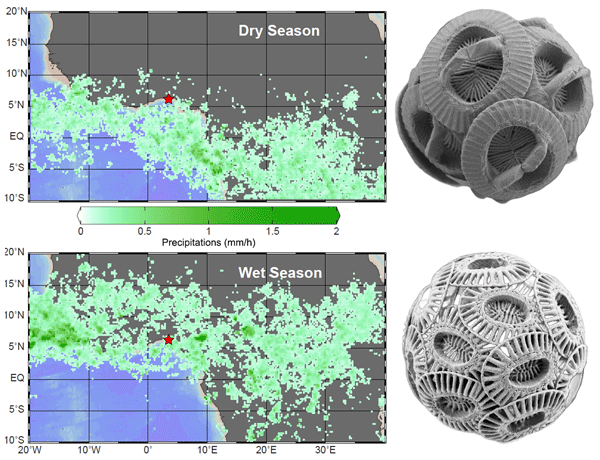
Falilu O. Adekunbi, Michaël Grelaud, Gerald Langer, Lucian O. Chukwu, Marta Alvarez, Shakirudeen Odunuga, Kai G. Schulz, and Patrizia Ziveri
Biogeosciences, 22, 7865–7880, https://doi.org/10.5194/bg-22-7865-2025, https://doi.org/10.5194/bg-22-7865-2025, 2025
Short summary
Short summary
This study is the first to explore seasonal changes in coccolithophores, microscopic algae important for ocean life and the carbon cycle, off the coast of Nigeria. Their abundance and diversity increased during the rainy season, driven by shifts in the Intertropical Convergence Zone. Despite regional differences, these coastal communities show patterns similar to other parts of the world, revealing possible shared environmental pressures.
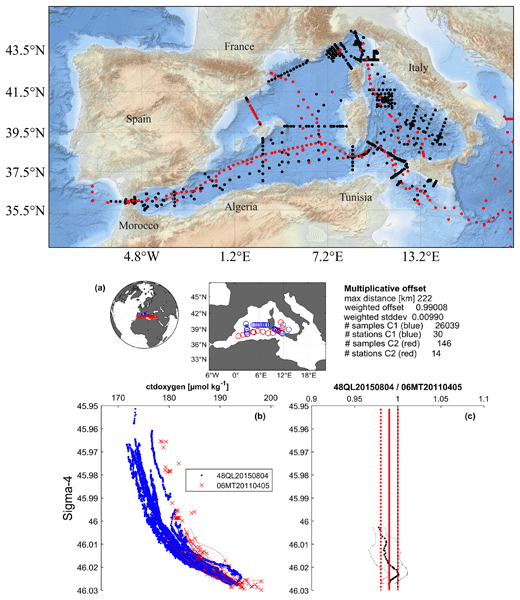
Malek Belgacem, Katrin Schroeder, Marta Álvarez, Siv K. Lauvset, Jacopo Chiggiato, Mireno Borghini, Carolina Cantoni, Tiziana Ciuffardi, and Stefania Sparnocchia
Earth Syst. Sci. Data, 17, 5315–5336, https://doi.org/10.5194/essd-17-5315-2025, https://doi.org/10.5194/essd-17-5315-2025, 2025
Short summary
Short summary
The Mediterranean Sea is changing rapidly, underscoring the urgent need for high-quality datasets to quantify trends and assess impacts on biogeochemical cycles. O2 is a key indicator of marine ecosystem health and plays a central role in CO2 and nutrient cycling. We compiled a regional-scale dataset of O2 in the western Mediterranean to provide a robust observational foundation for assessing O2 variability, associated with climate change, and anomalies related to deoxygenation processes.

Siv K. Lauvset, Nico Lange, Toste Tanhua, Henry C. Bittig, Are Olsen, Alex Kozyr, Marta Álvarez, Kumiko Azetsu-Scott, Peter J. Brown, Brendan R. Carter, Leticia Cotrim da Cunha, Mario Hoppema, Matthew P. Humphreys, Masao Ishii, Emil Jeansson, Akihiko Murata, Jens Daniel Müller, Fiz F. Pérez, Carsten Schirnick, Reiner Steinfeldt, Toru Suzuki, Adam Ulfsbo, Anton Velo, Ryan J. Woosley, and Robert M. Key
Earth Syst. Sci. Data, 16, 2047–2072, https://doi.org/10.5194/essd-16-2047-2024, https://doi.org/10.5194/essd-16-2047-2024, 2024
Short summary
Short summary
GLODAP is a data product for ocean inorganic carbon and related biogeochemical variables measured by the chemical analysis of water bottle samples from scientific cruises. GLODAPv2.2023 is the fifth update of GLODAPv2 from 2016. The data that are included have been subjected to extensive quality controlling, including systematic evaluation of measurement biases. This version contains data from 1108 hydrographic cruises covering the world's oceans from 1972 to 2021.
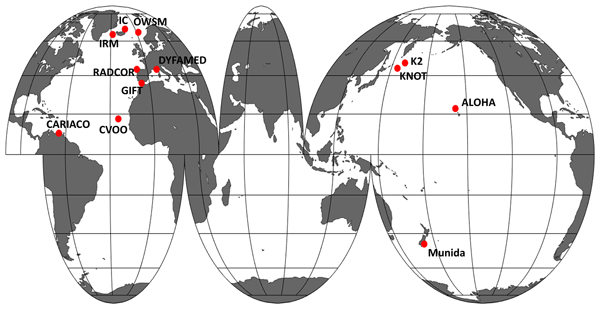
Nico Lange, Björn Fiedler, Marta Álvarez, Alice Benoit-Cattin, Heather Benway, Pier Luigi Buttigieg, Laurent Coppola, Kim Currie, Susana Flecha, Dana S. Gerlach, Makio Honda, I. Emma Huertas, Siv K. Lauvset, Frank Muller-Karger, Arne Körtzinger, Kevin M. O'Brien, Sólveig R. Ólafsdóttir, Fernando C. Pacheco, Digna Rueda-Roa, Ingunn Skjelvan, Masahide Wakita, Angelicque White, and Toste Tanhua
Earth Syst. Sci. Data, 16, 1901–1931, https://doi.org/10.5194/essd-16-1901-2024, https://doi.org/10.5194/essd-16-1901-2024, 2024
Short summary
Short summary
The Synthesis Product for Ocean Time Series (SPOTS) is a novel achievement expanding and complementing the biogeochemical data landscape by providing consistent and high-quality biogeochemical time-series data from 12 ship-based fixed time-series programs. SPOTS covers multiple unique marine environments and time-series ranges, including data from 1983 to 2021. All in all, it facilitates a variety of applications that benefit from the collective value of biogeochemical time-series observations.
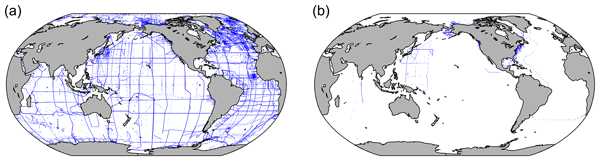
Siv K. Lauvset, Nico Lange, Toste Tanhua, Henry C. Bittig, Are Olsen, Alex Kozyr, Simone Alin, Marta Álvarez, Kumiko Azetsu-Scott, Leticia Barbero, Susan Becker, Peter J. Brown, Brendan R. Carter, Leticia Cotrim da Cunha, Richard A. Feely, Mario Hoppema, Matthew P. Humphreys, Masao Ishii, Emil Jeansson, Li-Qing Jiang, Steve D. Jones, Claire Lo Monaco, Akihiko Murata, Jens Daniel Müller, Fiz F. Pérez, Benjamin Pfeil, Carsten Schirnick, Reiner Steinfeldt, Toru Suzuki, Bronte Tilbrook, Adam Ulfsbo, Anton Velo, Ryan J. Woosley, and Robert M. Key
Earth Syst. Sci. Data, 14, 5543–5572, https://doi.org/10.5194/essd-14-5543-2022, https://doi.org/10.5194/essd-14-5543-2022, 2022
Short summary
Short summary
GLODAP is a data product for ocean inorganic carbon and related biogeochemical variables measured by the chemical analysis of water bottle samples from scientific cruises. GLODAPv2.2022 is the fourth update of GLODAPv2 from 2016. The data that are included have been subjected to extensive quality controlling, including systematic evaluation of measurement biases. This version contains data from 1085 hydrographic cruises covering the world's oceans from 1972 to 2021.
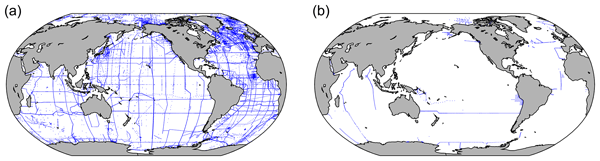
Siv K. Lauvset, Nico Lange, Toste Tanhua, Henry C. Bittig, Are Olsen, Alex Kozyr, Marta Álvarez, Susan Becker, Peter J. Brown, Brendan R. Carter, Leticia Cotrim da Cunha, Richard A. Feely, Steven van Heuven, Mario Hoppema, Masao Ishii, Emil Jeansson, Sara Jutterström, Steve D. Jones, Maren K. Karlsen, Claire Lo Monaco, Patrick Michaelis, Akihiko Murata, Fiz F. Pérez, Benjamin Pfeil, Carsten Schirnick, Reiner Steinfeldt, Toru Suzuki, Bronte Tilbrook, Anton Velo, Rik Wanninkhof, Ryan J. Woosley, and Robert M. Key
Earth Syst. Sci. Data, 13, 5565–5589, https://doi.org/10.5194/essd-13-5565-2021, https://doi.org/10.5194/essd-13-5565-2021, 2021
Short summary
Short summary
GLODAP is a data product for ocean inorganic carbon and related biogeochemical variables measured by the chemical analysis of water bottle samples from scientific cruises. GLODAPv2.2021 is the third update of GLODAPv2 from 2016. The data that are included have been subjected to extensive quality control, including systematic evaluation of measurement biases. This version contains data from 989 hydrographic cruises covering the world's oceans from 1972 to 2020.
Marcos Fontela, María Froján, Belén Arbones, María Jesús Álvarez-Fernández, Caio César-Ribeiro, Marylo Doval, José Luís Garrido, Sara Groppelli, María López-Acosta, María López-Rodríguez, Celeste L. Hinojo, Blanca Marigómez, Laura Moreno, Fiz F. Pérez, Isabel Gomes Teixeira, Antón Velo, and Xosé Antonio Padin
EGUsphere, https://doi.org/10.5194/egusphere-2026-5658, https://doi.org/10.5194/egusphere-2026-5658, 2026
This preprint is open for discussion and under review for Biogeosciences (BG).
Short summary
Short summary
Increasing seawater alkalinity is being explored as a way to remove carbon dioxide from the atmosphere, but effects on marine plankton are unclear. We exposed a coastal plankton community from northwest Iberian Upwelling System to this treatment. The responses were driven by nutrient exhaustion, not by the shift in water chemistry. Most plankton, and their ecosystem services, were unchanged; only the smallest size were affected. This approach may be ecologically safe at low nutrients.
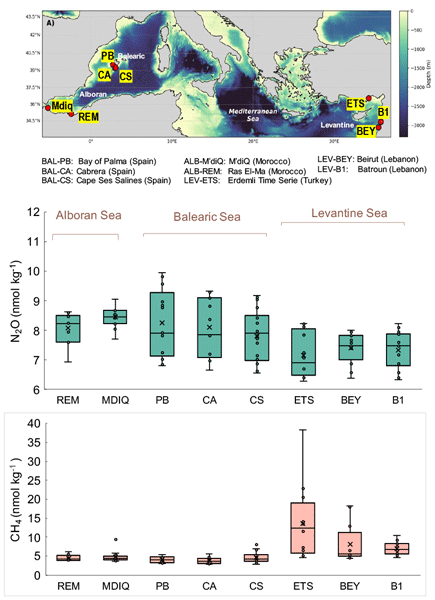
Mercedes de la Paz, Susana Flecha, Fatima Zohra Bouthir, Milad Fahkri, Abed El Rahman Hassoun, Valeria Ibello, Korhan Özkan, Fiz F. Pérez, Adil Chair, and Iris E. Hendriks
Earth Syst. Sci. Data, 18, 6207–6224, https://doi.org/10.5194/essd-18-6207-2026, https://doi.org/10.5194/essd-18-6207-2026, 2026
Short summary
Short summary
This study provides monthly year-long dataset of nitrous oxide and methane concentrations and their air-sea exchange in understudied coastal areas of the Mediterranean Sea. By using standardized methods across multiple sites, it reveals marked seasonal and regional differences, with methane showing highly variable bursts linked to local sources. The dataset addresses major observational gaps and offers a reliable foundation for future environmental evaluation in this sensitive region.
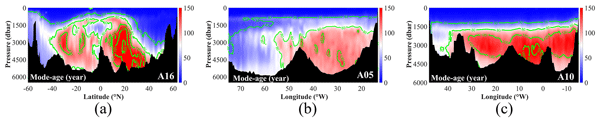
Mian Liu and Toste Tanhua
Ocean Sci., 22, 2595–2620, https://doi.org/10.5194/os-22-2595-2026, https://doi.org/10.5194/os-22-2595-2026, 2026
Short summary
Short summary
We measured the age of Atlantic waters using man-made gases and a radioactive isotope. Age increases with depth: young surface waters are about 30 years old, deep Antarctic water reaches 100 years, and the oldest bottom water is roughly 120 years. The western Atlantic is younger and better ventilated than the east. These patterns help estimate deep-sea oxygen use and are key for climate models and marine ecosystems.
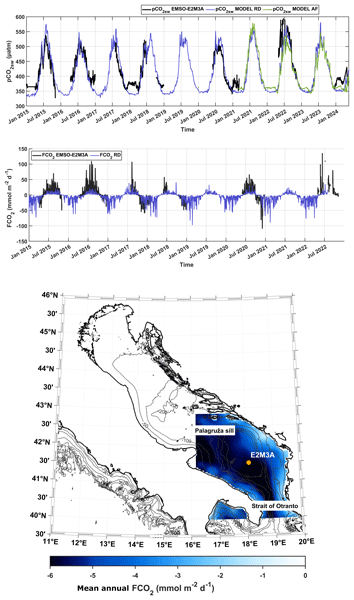
Carlotta Dentico, Gianpiero Cossarini, Giuseppe Civitarese, Michele Giani, Angelo Rubino, and Vanessa Cardin
Biogeosciences, 23, 5399–5418, https://doi.org/10.5194/bg-23-5399-2026, https://doi.org/10.5194/bg-23-5399-2026, 2026
Short summary
Short summary
The concentration of carbon dioxide in the atmosphere is rising due to human activities. The ocean has absorbed almost 30 % of the total emissions and stored in deeper waters. We studied the southern Adriatic, an area where dense water forms and sinks, helping move carbon from the surface to depth. Using a recently validated long-term dataset, we found that over the past decade this region acted as a net sink of carbon dioxide, highlighting its role in storing carbon in the Mediterranean Sea.
Nico Lange, Siv K. Lauvset, Brendan R. Carter, Matthew P. Humphreys, Ryan J. Woosley, Are Olsen, Henry C. Bittig, Alex Kozyr, Marta Álvarez, Kumiko Azetsu-Scott, Susan Becker, Peter J. Brown, Leticia Cotrim da Cunha, Larissa Dias, Mario Hoppema, Masao Ishii, Emil Jeansson, Akihiko Murata, Jens Daniel Müller, Fiz F. Pérez, Carsten Schirnick, Reiner Steinfeldt, Adam Ulfsbo, Anton Velo, and Toste Tanhua
Earth Syst. Sci. Data Discuss., https://doi.org/10.5194/essd-2026-496, https://doi.org/10.5194/essd-2026-496, 2026
Preprint under review for ESSD
Short summary
Short summary
GLODAP is a data product for ocean inorganic carbon and related biogeochemical variables measured by the chemical analysis of water bottle samples from scientific cruises. GLODAPv3 is the third version release of GLODAP. The data that are included have been subjected to extensive quality control, including systematic evaluation of systematic cruise differences. This version contains data from 1181 hydrographic cruises covering the world's oceans from 1972 to 2023.
Hyelim Yoo, Li-Qing Jiang, Chris Langdon, Alex Kozyr, Simone R. Alin, Jose Martin Hernandez Ayon, Kumiko Azetsu-Scott, Leticia Barbero, Nicole Besemer, Albert Boyd, Jean R. Brodeur, Wei-Jun Cai, Brendan R. Carter, Cecilia Chapa, Eugene Colbourne, Jessica N. Cross, Ian Enochs, Leticia Espinosa-Carreon, Richard A. Feely, Karina E. Giesbrecht, Helen Gurney-Smith, Burke Hales, Naomi Harada, James Hooper, Christopher W. Hunt, Debby Ianson, Mike Jankulak, Terrence M. Joyce, Esther G. Kennedy, Brian A. King, Arne Körtzinger, Matthias Lankhorst, Gary Maillet, Derek Manzello, Anna K. McLaskey, Viviane V. Menezes, Nicolas Metzl, Christine Michel, Natalie M. Monacci, Julio M. Morell, Akihiko Murata, Jan Newton, Emily O'Grady, Ana M. Palacio-Castro, Denis Pierrot, Marc Ringuette, Christopher Sabine, Joseph E. Salisbury, Akash R. Sastri, Ute Schuster, Uwe Send, Ryan Smith, Michel Starr, James H. Swift, Lynne D. Talley, Helmuth Thomas, Douglas W. R. Wallace, Zhaohui Aleck Wang, Rik Wanninkhof, Chi S. Wong, Patricia L. Yager, and Igor Yashayaev
Earth Syst. Sci. Data Discuss., https://doi.org/10.5194/essd-2026-516, https://doi.org/10.5194/essd-2026-516, 2026
Preprint under review for ESSD
Short summary
Short summary
The coastal Ocean Data Analysis Product in North America (CODAP-NA, Version 2026) substantially increased both the spatial and temporal coverage of coastal biogeochemical measurements across North American continental shelves. This version comprises 446 cruises, 31,864 hydrographic profiles, and 195,489 discrete data records covering continental shelf environments from Alaska to Mexico in the west and from Canada to the Caribbean in the east from 1981 to 2024.
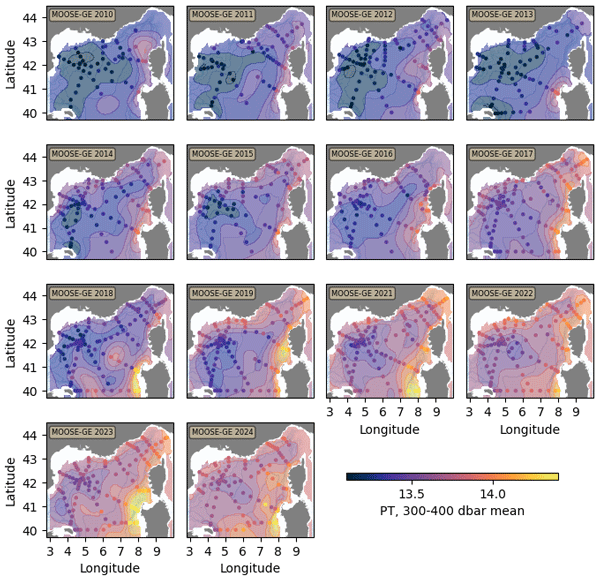
Laurent Coppola, Anthony Bosse, Thibaut Wagener, Dominique Lefevre, Magali Lescot, François Carlotti, Fabien Lombard, Lionel Guidi, Fabrice Not, Xavier Durrieu de Madron, Pascal Conan, Mireille Pujo-Pay, Caroline Ulses, Samuel Somot, Claude Estournel, Emilie Diamond Riquier, Céline Laus, Nathalie Leblond, Matthieu Labaste, Patrice Bretel, Melek Golbol, Stephane Kunesch, Jennifer Sola, Laure Chirurgien, Sandra Nunige, Sarah Romac, and Pierre Testor
Earth Syst. Sci. Data, 18, 5303–5327, https://doi.org/10.5194/essd-18-5303-2026, https://doi.org/10.5194/essd-18-5303-2026, 2026
Short summary
Short summary
The Mediterranean Ocean Observing System for the Environment program investigated the fast-changing northwestern Mediterranean through annual cruises from 2010 to 2024. Using consistent surface-to-seafloor measurements, checked against fixed and autonomous platforms, we find intermediate and deep waters warming and getting saltier, oxygen declining and dissolved carbon rising, indicating progressing acidification. These trends can reshape ecosystems and stress the need for sustained monitoring.
Rémy Asselot, Virginie Thierry, Lidia I. Carracedo, Herle Mercier, Anton Velo, Raphaël Bajon, and Fiz F. Pérez
EGUsphere, https://doi.org/10.22541/essoar.15003488/v1, https://doi.org/10.22541/essoar.15003488/v1, 2026
Short summary
Short summary
Human activities have emitted large amounts of carbon dioxide (CO2) into the atmosphere since the beginning of the industrial revolution and this human-emitted CO2 (Cant) is absorbed by the ocean. We use autonomous robotic to show that the Cant content in the upper 2000 dbar of the Irminger Sea increased roughly steadily over 2011–2016, then reached a stationary state between 2016 and 2021. This study highlights how the monthly resolution of Argo data can complement ship-based measurements.
Matthew P. Humphreys, Siv K. Lauvset, Nico Lange, Henry C. Bittig, Brendan R. Carter, Mario Hoppema, Akihiko Murata, Are Olsen, Toste Tanhua, Adam Ulfsbo, Antón Velo, Ryan J. Woosley, Kumiko Azetsu-Scott, Jens D. Müller, and Fiz F. Pérez
EGUsphere, https://doi.org/10.5194/egusphere-2026-3063, https://doi.org/10.5194/egusphere-2026-3063, 2026
Short summary
Short summary
The Global Ocean Data Analysis Project (GLODAP) collects oceanographic datasets from research cruises that are needed to study the marine carbon cycle. The datasets are quality controlled and adjusted where necessary to ensure consistency between cruises, and published as a global data product. Here, we present a new method for calculating the consistency adjustments called ‘furthest-first inversion’ which has been developed for the newest version of the data product.
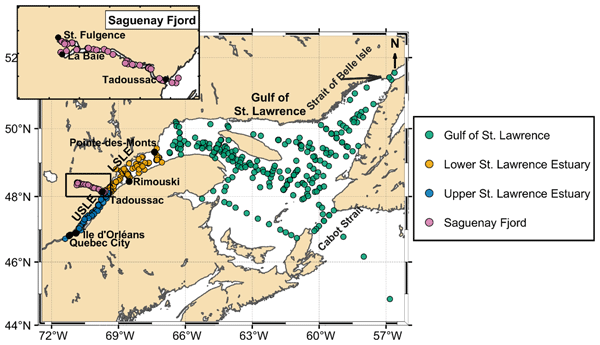
William A. Nesbitt, Alfonso O. Mucci, Toste Tanhua, Yves Gélinas, Jean-Éric Tremblay, Gwénaëlle Chaillou, Ludovic Pascal, Caroline Fradette, Lennart Gerke, Samuel W. Stevens, Mathilde Jutras, Marjolaine Blais, Martine Lizotte, Michel Starr, and Douglas W. R. Wallace
Earth Syst. Sci. Data, 18, 3609–3634, https://doi.org/10.5194/essd-18-3609-2026, https://doi.org/10.5194/essd-18-3609-2026, 2026
Short summary
Short summary
Over the past few decades, the St. Lawrence Estuary and Gulf have shown clear trends in oxygen depletion and acidification. This data description paper brings together twenty years of measurements from the St. Lawrence Estuary, Gulf of St. Lawrence, and Saguenay Fjord, carefully performing quality control procedures on data, and makes them publicly available. The resulting dataset supports future research, monitoring, and environmental management in this sensitive marine system.
Manuel Vargas-Yáñez, Orens Pasqueron de Fommervault, Emanuela Clementi, Christian Ferrarin, Svitlana Liubertseva, Diego Álvarez-Berastegui, Baptiste Mourre, Salvatore Aronica, Rosa Balbin, Joaquín Ballabrera-Poy, Sana Ben Ismail, Nathaniel Benssousan, Ismail Bessa, Alicia Blanco, Anthony Bosse, Evi Bourma, François Bourrin, Carlo Brandini, Fulvio Capodici, Clara Casals-Baixas, Branko Cermelj, Giuseppe Ciraolo, Pascal Conan, Laurent Coppola, Lorenzo Corgnati, Joaquín del Río, Emilie Diamond Riquier, Lara Diaz-Barroso, Bartolomeo Doronzo, Xavier Durrieu de Madron, Milad Fakhri, Costantine Frangoulis, Claudia Fratianni, Emilio García-Ladona, Jesus García-Lafuente, M. Carmen García-Martínez, Joaquín Garrabou, Josep Gasol, Adam Gauci, Frédéric Gazeau, Gerard Gregory, Abed El Raman Hassoun, Jordi Isern-Fontanet, Dominique Lefevre, Nadia Lo Bue, Guiomar López, Pablo Lorente, Deny Malengros, Ramon Massana, Sinan Mavruk, Stefano Miserocchi, Behzad Mostajir, Laure Mousseau, Francina Moya, Antonio Novellino, Arianna Orasi, Emanuele Organelli, Vicent Ouisse, Tal Ozer, Begoña Pérez-Gómez, Susana Pérez-Rubio, Leonidas Perivoliotis, Georges Petihakis, Anne Petrenko, Sebastien Pinel, Xavier Pitarch, Angela Pomaro, Lucía Quirós-Collazos, Emma Reyes, Simone Sammartino, Anna Sánchez-Vidal, Katrin Schroeder, Stefano Taddei, Elena Tel, Pierre Testor, Marco Torri, Daniela Turk, Laura Ursella, Dimitris Velaoras, Francesca Vidussi, Ivica Vilivić, Enrico Zambiachi, D. Nikolaos Zarokanellos, George Zodiatis, and Vanessa Cardin
EGUsphere, https://doi.org/10.5194/egusphere-2026-2632, https://doi.org/10.5194/egusphere-2026-2632, 2026
Short summary
Short summary
This work compiles current marine observation capabilities in the Mediterranean Sea, making this information accessible to scientists, organizations, stakeholders, and environmental policymakers. It supports initiatives such as Copernicus Marine Service, EMODNet, the European Ocean Pact, and EU directives. It is intended as a living resource to be updated, identifying strengths and gaps in Mediterranean observation systems.
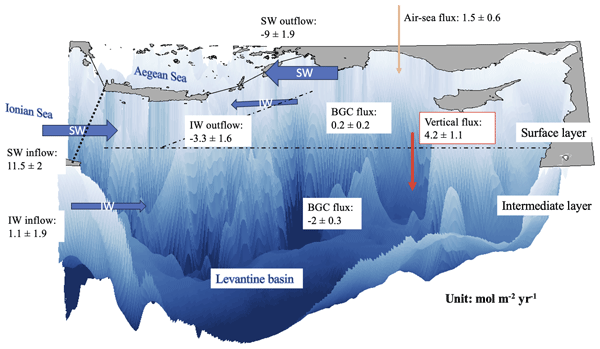
Joelle Habib, Caroline Ulses, Claude Estournel, Milad Fakhri, Patrick Marsaleix, Thierry Moutin, Dominique Lefevre, Mireille Pujo-Pay, Marine Fourrier, Laurent Coppola, Cathy Wimart-Rousseau, and Pascal Conan
Biogeosciences, 23, 2939–2958, https://doi.org/10.5194/bg-23-2939-2026, https://doi.org/10.5194/bg-23-2939-2026, 2026
Short summary
Short summary
The Levantine Basin in the eastern Mediterranean Sea is one of the most nutrient-poor marine regions on Earth. Using a detailed model and observations, we studied how oxygen changes from 2013 to 2020. We found that winter cooling draws oxygen into the sea and moves it to deeper waters, while warmer months release some back. Overall, the basin absorbs more oxygen than it releases, and winter heat loss and circulation patterns strongly control how oxygen is stored and transported.
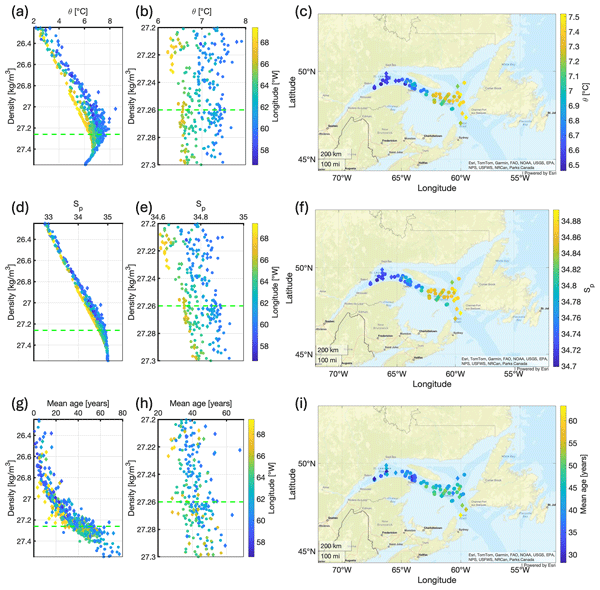
Lennart Gerke, Toste Tanhua, William A. Nesbitt, Samuel W. Stevens, and Douglas W. R. Wallace
Ocean Sci., 22, 1391–1407, https://doi.org/10.5194/os-22-1391-2026, https://doi.org/10.5194/os-22-1391-2026, 2026
Short summary
Short summary
Transient tracer data, measured for the first time in 2022 in the Gulf of St. Lawrence, reveal older deep waters in the east than the west, contrary to expected estuarine circulation, indicating increased influence of older, warmer, less oxygenated North Atlantic Central Water over younger, oxygen-rich Labrador Current Water. While consistent with previous reports of increasing NACW contribution, our results contradict claims of a complete shift to NACW by 2021, showing that LCW still persists.
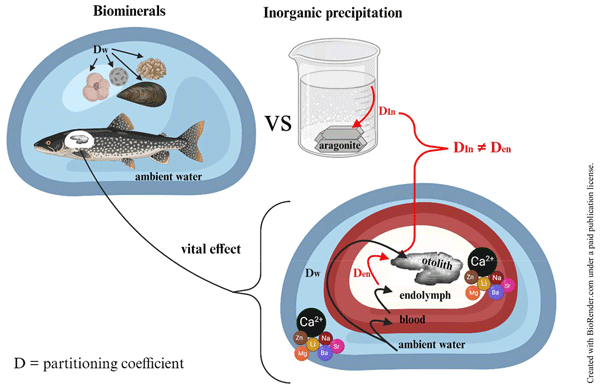
Athina Kekelou, Gerald Langer, and Patrizia Ziveri
Biogeosciences, 23, 2831–2845, https://doi.org/10.5194/bg-23-2831-2026, https://doi.org/10.5194/bg-23-2831-2026, 2026
Short summary
Short summary
Fish otolith formation is key for understanding the incorporation of elements into biominerals. It is often assumed that the final step of biomineralization consists of inorganic precipitation as the fluid where biominerals form can hardly be sampled. Thanks to fish ear anatomy, this can be overcome with otoliths. By comparing otolith formation and inorganic precipitation, we proved that this assumption is not always true. Our findings could refine models and shed light on biomineralization.
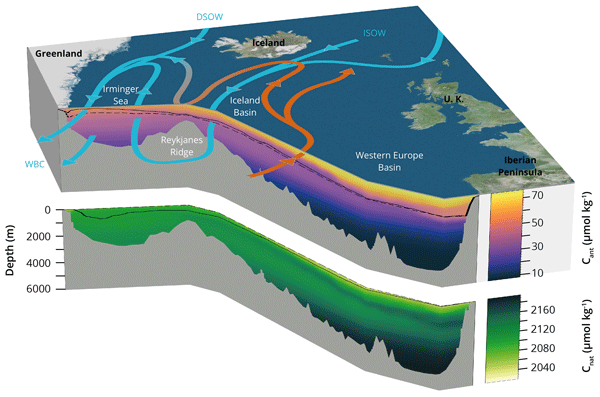
Raphaël Bajon, Lidia I. Carracedo, Herlé Mercier, Rémy Asselot, and Fiz F. Pérez
Biogeosciences, 23, 2335–2363, https://doi.org/10.5194/bg-23-2335-2026, https://doi.org/10.5194/bg-23-2335-2026, 2026
Short summary
Short summary
We analyzed three decades of carbon concentration and transport in the subpolar gyre of the North Atlantic Ocean, a key region in ocean carbon cycle. Natural carbon remained stable, but human-derived carbon rose by over 30 %. Upper layers exhibit strong seasonal to interannual variability driven by physical and biological processes. Carbon transport was tightly linked to circulation patterns. In the longterm, transport of human-derived carbon is proportional to the increase in its concentration.
Carlotta Dentico, Angelo Rubino, Giuseppe Civitarese, Michele Giani, Giuseppe Siena, Stefano Kuchler, Julien Le Meur, Andrea Corbo, and Vanessa Cardin
Earth Syst. Sci. Data, 18, 2119–2131, https://doi.org/10.5194/essd-18-2119-2026, https://doi.org/10.5194/essd-18-2119-2026, 2026
Short summary
Short summary
The ocean absorbs excess heat and carbon dioxide from human-driven climate change, causing warming, acidification, and impacts on marine life and coastal communities. The southern Adriatic, an important area for air-sea CO2 exchange, is still poorly characterized. Using high-resolution oceanographic measurements, local physical and biogeochemical changes were investigated, providing a dataset to improve future understanding of the role of the southern Adriatic as a carbon source or sink.
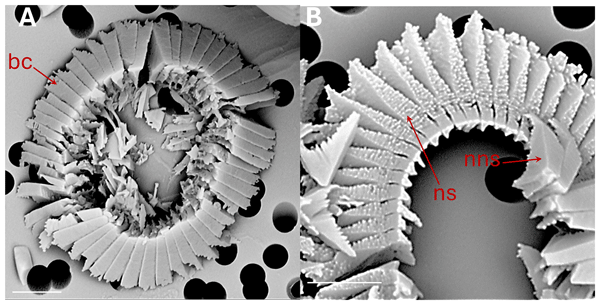
Gerald Langer, Ian Probert, Jeremy R. Young, and Patrizia Ziveri
Biogeosciences, 23, 1795–1808, https://doi.org/10.5194/bg-23-1795-2026, https://doi.org/10.5194/bg-23-1795-2026, 2026
Short summary
Short summary
Coccolithophores are important marine CaCO3 producers and their biominerals, the coccoliths, partly dissolve in the upper water column where dissolution is unexpected. Studying coccolith dissolution in field samples is hampered by a paucity of experimental studies describing dissolution morphologies. Here we fill this gap by experimentally dissolving different coccolithophores and applying our results to field samples.
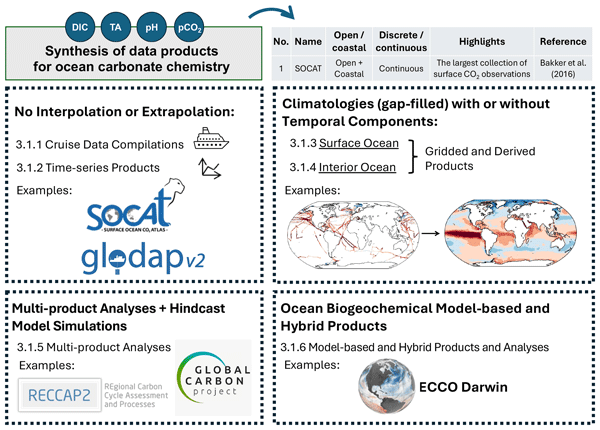
Li-Qing Jiang, Amanda Fay, Jens Daniel Müller, Luke Gregor, Alizée Roobaert, Lydia Keppler, Dustin Carroll, Siv K. Lauvset, Tim DeVries, Judith Hauck, Christian Rödenbeck, Nicolas Metzl, Andrea J. Fassbender, Jean-Pierre Gattuso, Peter Landschützer, Rik Wanninkhof, Christopher Sabine, Simone R. Alin, Mario Hoppema, Are Olsen, Matthew P. Humphreys, Kunal Chakraborty, Ana C. Franco, Kumiko Azetsu-Scott, Dorothee C. E. Bakker, Leticia Barbero, Nicholas R. Bates, Nicole Besemer, Henry C. Bittig, Albert E. Boyd, Daniel Broullón, Wei-Jun Cai, Brendan R. Carter, Thi-Tuyet-Trang Chau, Chen-Tung Arthur Chen, Frédéric Cyr, John E. Dore, Ian Enochs, Richard A. Feely, Hernan E. Garcia, Marion Gehlen, Prasanna Kanti Ghoshal, Lucas Gloege, Melchor González-Dávila, Nicolas Gruber, Debby Ianson, Yosuke Iida, Masao Ishii, Apurva Padamnabh Joshi, Esther Kennedy, Alex Kozyr, Nico Lange, Claire Lo Monaco, Derek P. Manzello, Galen A. McKinley, Natalie M. Monacci, Xose A. Padin, Ana M. Palacio-Castro, Fiz F. Pérez, J. Magdalena Santana-Casiano, Jonathan Sharp, Adrienne Sutton, Jim Swift, Toste Tanhua, Maciej Telszewski, Jens Terhaar, Ruben van Hooidonk, Anton Velo, Andrew J. Watson, Angelicque E. White, Zelun Wu, Liang Xue, Hyelim Yoo, Jiye Zeng, and Guorong Zhong
Earth Syst. Sci. Data, 18, 1405–1462, https://doi.org/10.5194/essd-18-1405-2026, https://doi.org/10.5194/essd-18-1405-2026, 2026
Short summary
Short summary
This review article provides an overview of 68 existing ocean carbonate chemistry data products and data product sets, encompassing a broad range of types, including compilations of cruise datasets, gap-filled observational products, model simulations, and more. It is designed to help researchers identify and access the data products that best support their scientific objectives, thereby facilitating progress in understanding the ocean's changing carbonate chemistry.
Fiz F. Pérez, Marta López-Mozos, Marcos Fontela, Maribel I. García-Ibáñez, Noelia Fajar, Xosé Antonio Padín, Mónica Castaño-Carrera, Mercedes de la Paz, Lidia I. Carracedo, Marta Álvarez, Herlé Mercier, Pascale Lherminier, and Antón Velo
Earth Syst. Sci. Data, 18, 801–821, https://doi.org/10.5194/essd-18-801-2026, https://doi.org/10.5194/essd-18-801-2026, 2026
Short summary
Short summary
Ocean acidification threatens marine ecosystems and the climate and is commonly assessed through ocean pH measurements. This study provides a new twenty-year dataset of pH measurements from the North Atlantic, derived from the correction and reevaluation of both historical and recent pH measurements affected by methodological bias. This revised dataset enables a more accurate reassessment of pH trends and carbon variables under novel and updated methodological standards.
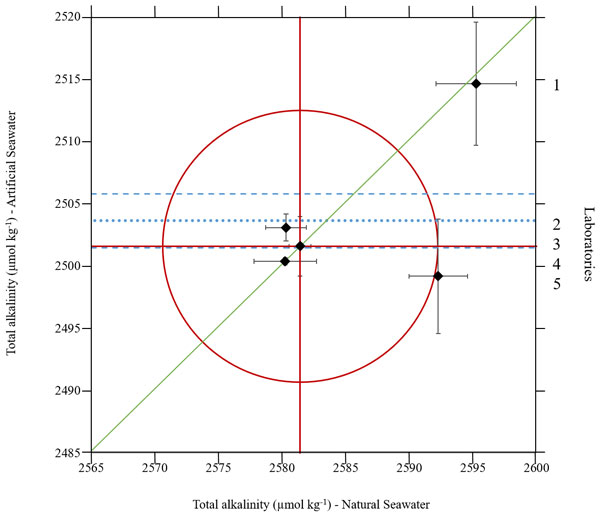
Gaëlle Capitaine, Samir Alliouane, Thierry Cariou, Jonathan Fin, Paola Fisicaro, and Thibaut Wagener
Ocean Sci., 22, 75–99, https://doi.org/10.5194/os-22-75-2026, https://doi.org/10.5194/os-22-75-2026, 2026
Short summary
Short summary
Measuring total alkalinity in seawater is essential for understanding and monitoring the ocean carbonate system. To improve the reliability of these measurements, we developed reference materials and tested them in an inter-laboratory comparison. We also thoroughly quantified, for the first time, the uncertainty of the standard measurement method. These results, as well as the key metrological tools developed, support more accurate long-term monitoring of the ocean carbonate system.
Falilu O. Adekunbi, Michaël Grelaud, Gerald Langer, Lucian O. Chukwu, Marta Alvarez, Shakirudeen Odunuga, Kai G. Schulz, and Patrizia Ziveri
Biogeosciences, 22, 7865–7880, https://doi.org/10.5194/bg-22-7865-2025, https://doi.org/10.5194/bg-22-7865-2025, 2025
Short summary
Short summary
This study is the first to explore seasonal changes in coccolithophores, microscopic algae important for ocean life and the carbon cycle, off the coast of Nigeria. Their abundance and diversity increased during the rainy season, driven by shifts in the Intertropical Convergence Zone. Despite regional differences, these coastal communities show patterns similar to other parts of the world, revealing possible shared environmental pressures.
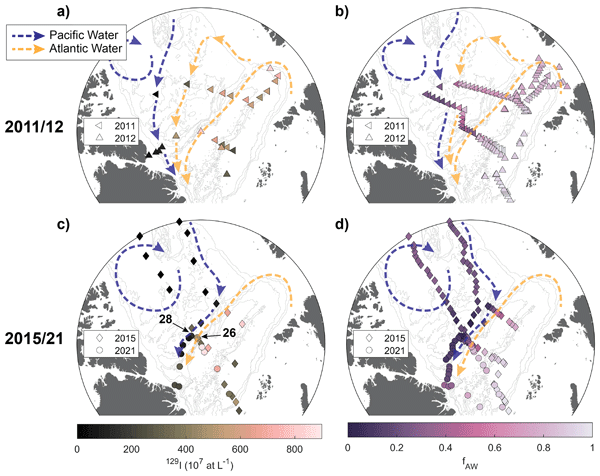
Anne-Marie Wefing, Annabel Payne, Marcel Scheiwiller, Christof Vockenhuber, Marcus Christl, Toste Tanhua, and Núria Casacuberta
Ocean Sci., 21, 3311–3340, https://doi.org/10.5194/os-21-3311-2025, https://doi.org/10.5194/os-21-3311-2025, 2025
Short summary
Short summary
Here we used the anthropogenic radionuclides I-129 and U-236 as tracers for Atlantic Water circulation in the Arctic Ocean. New data collected in 2021 allowed to assess the distribution of Atlantic Water and mixing with Pacific-origin water in the surface layer in that year. By using historical tracer data from 2011 to 2021, we looked into temporal changes of the circulation and found slightly older waters in the central Arctic Ocean in 2021 compared to 2015.
Malek Belgacem, Katrin Schroeder, Marta Álvarez, Siv K. Lauvset, Jacopo Chiggiato, Mireno Borghini, Carolina Cantoni, Tiziana Ciuffardi, and Stefania Sparnocchia
Earth Syst. Sci. Data, 17, 5315–5336, https://doi.org/10.5194/essd-17-5315-2025, https://doi.org/10.5194/essd-17-5315-2025, 2025
Short summary
Short summary
The Mediterranean Sea is changing rapidly, underscoring the urgent need for high-quality datasets to quantify trends and assess impacts on biogeochemical cycles. O2 is a key indicator of marine ecosystem health and plays a central role in CO2 and nutrient cycling. We compiled a regional-scale dataset of O2 in the western Mediterranean to provide a robust observational foundation for assessing O2 variability, associated with climate change, and anomalies related to deoxygenation processes.
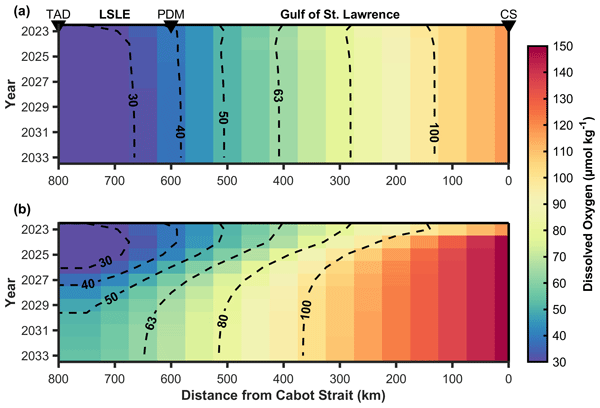
William A. Nesbitt, Samuel W. Stevens, Alfonso O. Mucci, Lennart Gerke, Toste Tanhua, Gwénaëlle Chaillou, and Douglas W. R. Wallace
Ocean Sci., 21, 2179–2195, https://doi.org/10.5194/os-21-2179-2025, https://doi.org/10.5194/os-21-2179-2025, 2025
Short summary
Short summary
We combine two decades of oxygen data with new carbon observations and a tracer-informed model to quantify oxygen loss and carbon buildup in the deep waters of the Gulf and Lower St. Lawrence Estuary. We then test a novel idea: reoxygenating these waters with the oxygen produced as a by-product from green-hydrogen production. Our results suggest this could significantly reduce hypoxia, though full recovery would require larger inputs.
Ariadna Celina Nocera, Lars Stemmann, Marcel Babin, Tristan Biard, Julie Coustenoble, François Carlotti, Laurent Coppola, Lucas Courchet, Laetitia Drago, Amanda Elineau, Lionel Guidi, Helena Hauss, Laëtitia Jalabert, Lee Karp-Boss, Rainer Kiko, Manon Laget, Fabien Lombard, Andrew McDonnell, Camille Merland, Solène Motreuil, Thelma Panaïotis, Marc Picheral, Andreas Rogge, Anya Waite, and Jean-Olivier Irisson
Earth Syst. Sci. Data Discuss., https://doi.org/10.5194/essd-2025-522, https://doi.org/10.5194/essd-2025-522, 2025
Revised manuscript accepted for ESSD
Short summary
Short summary
Plankton and detritus play a key role in ocean health and climate regulation. We present a large global dataset of images and information collected from 2008 to 2018 using specialized underwater camera (UVP). This publicly available dataset will support more accurate ecological models and help train artificial intelligence tools, improving how scientists track ocean biodiversity and monitor environmental changes.
Manuel Bensi, Giuseppe Civitarese, Diego Borme, Carmela Caroppo, Gabriella Caruso, Federica Cerino, Franco Decembrini, Alessandra de Olazabal, Tommaso Diociaiuti, Michele Giani, Vedrana Kovacevic, Martina Kralj, Angelina Lo Giudice, Giovanna Maimone, Marina Monti, Maria Papale, Luisa Patrolecco, Elisa Putelli, Alessandro Ciro Rappazzo, Federica Relitti, Carmen Rizzo, Francesca Spataro, Valentina Tirelli, Clara Turetta, and Maurizio Azzaro
Earth Syst. Sci. Data, 17, 3701–3719, https://doi.org/10.5194/essd-17-3701-2025, https://doi.org/10.5194/essd-17-3701-2025, 2025
Short summary
Short summary
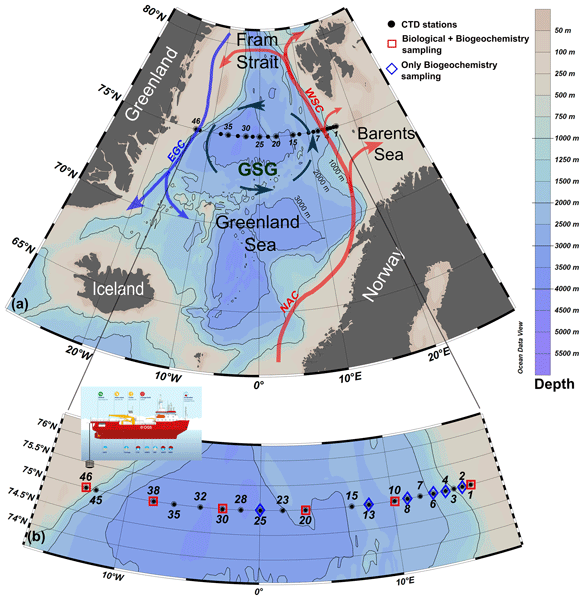
In September 2021, the Italian Arctic Research Programme funded a multidisciplinary study along 75° N in the Greenland Sea as part of the CASSANDRA project and the Synoptic Arctic Survey (SAS) programme. This study emphasises the spatial variability of water properties, nutrient distribution, and biological communities determined by oceanographic dynamics in a region influenced by sea ice melting, Atlantic Water inflow, and climatic teleconnections during a record low summer sea ice extent.
Susana Flecha, Mercedes de la Paz, Fiz Fernández Pérez, Núria Marbà, Carlos Morell, Eva Alou-Font, Joaquín Tintoré, and Iris E. Hendriks
Ocean Sci., 21, 1515–1532, https://doi.org/10.5194/os-21-1515-2025, https://doi.org/10.5194/os-21-1515-2025, 2025
Short summary
Short summary
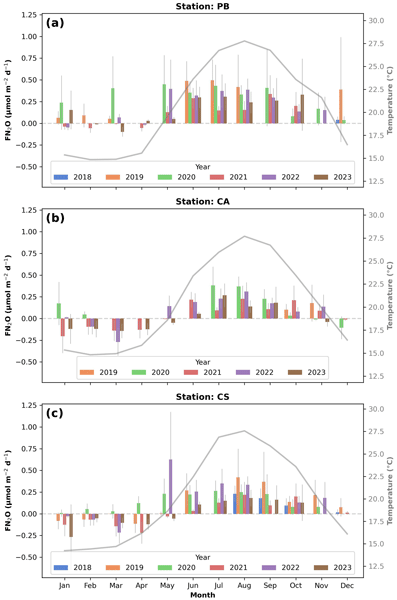
Nitrous oxide (N2O), a potent greenhouse gas, is understudied in coastal zones. We present N2O concentrations and air–sea fluxes from the Balearic coast (2018–2023). Concentrations varied slightly across sites, with areas acting as weak sources or being near equilibrium. Temperature was the main driver of seasonal changes. These findings improve our understanding of coastal N2O emissions.
Stefania Bianco, Manuela Bordiga, Gerald Langer, Patrizia Ziveri, Federica Cerino, Andrea Di Giulio, and Claudia Lupi
Biogeosciences, 22, 1821–1837, https://doi.org/10.5194/bg-22-1821-2025, https://doi.org/10.5194/bg-22-1821-2025, 2025
Short summary
Short summary
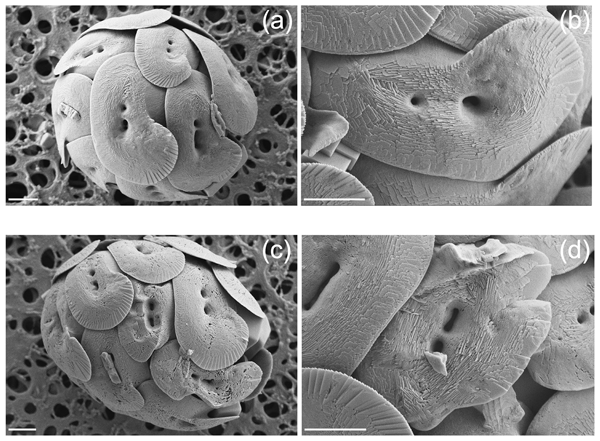
This work focuses on the response in culture experiments to increasing CO2 of the coccolithophore species Helicosphaera carteri, a unicellular marine calcifying microalgae. The absence of significant changes in coccolith malformations, along with stable size, shape, and calcification-to-photosynthesis ratio, is indicative of H. carteri low sensitivity to CO2 rise, together with its ability to maintain a stable contribution to the marine rain ratio under future climate changes.
Nicolas Metzl, Jonathan Fin, Claire Lo Monaco, Claude Mignon, Samir Alliouane, Bruno Bombled, Jacqueline Boutin, Yann Bozec, Steeve Comeau, Pascal Conan, Laurent Coppola, Pascale Cuet, Eva Ferreira, Jean-Pierre Gattuso, Frédéric Gazeau, Catherine Goyet, Emilie Grossteffan, Bruno Lansard, Dominique Lefèvre, Nathalie Lefèvre, Coraline Leseurre, Sébastien Petton, Mireille Pujo-Pay, Christophe Rabouille, Gilles Reverdin, Céline Ridame, Peggy Rimmelin-Maury, Jean-François Ternon, Franck Touratier, Aline Tribollet, Thibaut Wagener, and Cathy Wimart-Rousseau
Earth Syst. Sci. Data, 17, 1075–1100, https://doi.org/10.5194/essd-17-1075-2025, https://doi.org/10.5194/essd-17-1075-2025, 2025
Short summary
Short summary
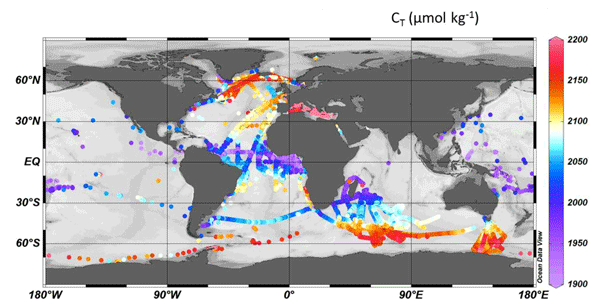
This work presents a new synthesis of 67 000 total alkalinity and total dissolved inorganic carbon observations obtained between 1993 and 2023 in the global ocean, coastal zones, and the Mediterranean Sea. We describe the data assemblage and associated quality control and discuss some potential uses of this dataset. The dataset is provided in a single format and includes the quality flag for each sample.
David Curbelo-Hernández, Fiz F. Pérez, Melchor González-Dávila, Sergey V. Gladyshev, Aridane G. González, David González-Santana, Antón Velo, Alexey Sokov, and J. Magdalena Santana-Casiano
Biogeosciences, 21, 5561–5589, https://doi.org/10.5194/bg-21-5561-2024, https://doi.org/10.5194/bg-21-5561-2024, 2024
Short summary
Short summary
The study evaluated CO2–carbonate system dynamics in the North Atlantic subpolar gyre during 2009–2019. Significant ocean acidification, largely due to rising anthropogenic CO2 levels, was found. Cooling, freshening, and enhanced convective processes intensified this trend, affecting calcite and aragonite saturation. The findings contribute to a deeper understanding of ocean acidification and improve our knowledge about its impact on marine ecosystems.
Riccardo Martellucci, Michele Giani, Elena Mauri, Laurent Coppola, Melf Paulsen, Marine Fourrier, Sara Pensieri, Vanessa Cardin, Carlotta Dentico, Roberto Bozzano, Carolina Cantoni, Anna Lucchetta, Alfredo Izquierdo, Miguel Bruno, and Ingunn Skjelvan
Earth Syst. Sci. Data, 16, 5333–5356, https://doi.org/10.5194/essd-16-5333-2024, https://doi.org/10.5194/essd-16-5333-2024, 2024
Short summary
Short summary
As part of the ATL2MED demonstration experiment, two autonomous surface vehicles undertook a 9-month mission from the northeastern Atlantic to the Adriatic Sea. Biofouling affected the measurement of variables such as conductivity and dissolved oxygen. COVID-19 limited the availability of discrete samples for validation. We present correction methods for salinity and dissolved oxygen. We use model products to correct salinity and apply the Argo floats in-air correction method for oxygen
Lucille Barré, Frédéric Diaz, Thibaut Wagener, Camille Mazoyer, Christophe Yohia, and Christel Pinazo
Geosci. Model Dev., 17, 5851–5882, https://doi.org/10.5194/gmd-17-5851-2024, https://doi.org/10.5194/gmd-17-5851-2024, 2024
Short summary
Short summary
The carbonate system is typically studied using measurements, but modeling can contribute valuable insights. Using a biogeochemical model, we propose a new representation of total alkalinity, dissolved inorganic carbon, pCO2, and pH in a highly dynamic Mediterranean coastal area, the Bay of Marseille, a useful addition to measurements. Through a detailed analysis of pCO2 and air–sea CO2 fluxes, we show that variations are strongly impacted by the hydrodynamic processes that affect the bay.
Herlé Mercier, Damien Desbruyères, Pascale Lherminier, Antón Velo, Lidia Carracedo, Marcos Fontela, and Fiz F. Pérez
Ocean Sci., 20, 779–797, https://doi.org/10.5194/os-20-779-2024, https://doi.org/10.5194/os-20-779-2024, 2024
Short summary
Short summary
We study the Atlantic Meridional Overturning Circulation (AMOC) measured between Greenland and Portugal between 1993–2021. We identify changes in AMOC limb volume and velocity as two major drivers of AMOC variability at subpolar latitudes. Volume variations dominate on the seasonal timescale, while velocity variations are more important on the decadal timescale. This decomposition proves useful for understanding the origin of the differences between AMOC time series from different analyses.
Siv K. Lauvset, Nico Lange, Toste Tanhua, Henry C. Bittig, Are Olsen, Alex Kozyr, Marta Álvarez, Kumiko Azetsu-Scott, Peter J. Brown, Brendan R. Carter, Leticia Cotrim da Cunha, Mario Hoppema, Matthew P. Humphreys, Masao Ishii, Emil Jeansson, Akihiko Murata, Jens Daniel Müller, Fiz F. Pérez, Carsten Schirnick, Reiner Steinfeldt, Toru Suzuki, Adam Ulfsbo, Anton Velo, Ryan J. Woosley, and Robert M. Key
Earth Syst. Sci. Data, 16, 2047–2072, https://doi.org/10.5194/essd-16-2047-2024, https://doi.org/10.5194/essd-16-2047-2024, 2024
Short summary
Short summary
GLODAP is a data product for ocean inorganic carbon and related biogeochemical variables measured by the chemical analysis of water bottle samples from scientific cruises. GLODAPv2.2023 is the fifth update of GLODAPv2 from 2016. The data that are included have been subjected to extensive quality controlling, including systematic evaluation of measurement biases. This version contains data from 1108 hydrographic cruises covering the world's oceans from 1972 to 2021.
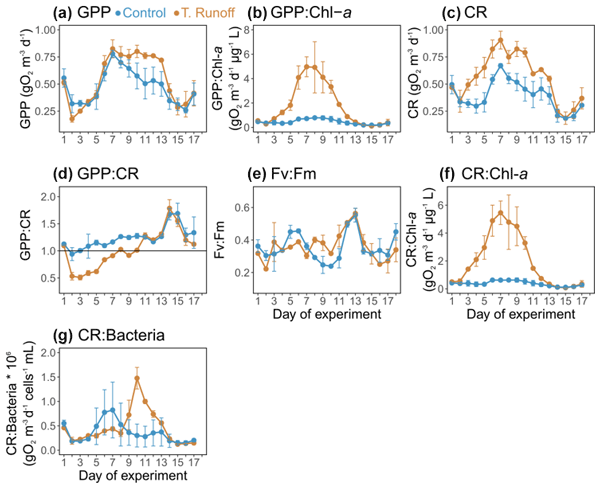
Tanguy Soulié, Francesca Vidussi, Justine Courboulès, Marie Heydon, Sébastien Mas, Florian Voron, Carolina Cantoni, Fabien Joux, and Behzad Mostajir
Biogeosciences, 21, 1887–1902, https://doi.org/10.5194/bg-21-1887-2024, https://doi.org/10.5194/bg-21-1887-2024, 2024
Short summary
Short summary
Due to climate change, it is projected that extreme rainfall events, which bring terrestrial matter into coastal seas, will occur more frequently in the Mediterranean region. To test the effects of runoffs of terrestrial matter on plankton communities from Mediterranean coastal waters, an in situ mesocosm experiment was conducted. The simulated runoff affected key processes mediated by plankton, such as primary production and respiration, suggesting major consequences of such events.
Nico Lange, Björn Fiedler, Marta Álvarez, Alice Benoit-Cattin, Heather Benway, Pier Luigi Buttigieg, Laurent Coppola, Kim Currie, Susana Flecha, Dana S. Gerlach, Makio Honda, I. Emma Huertas, Siv K. Lauvset, Frank Muller-Karger, Arne Körtzinger, Kevin M. O'Brien, Sólveig R. Ólafsdóttir, Fernando C. Pacheco, Digna Rueda-Roa, Ingunn Skjelvan, Masahide Wakita, Angelicque White, and Toste Tanhua
Earth Syst. Sci. Data, 16, 1901–1931, https://doi.org/10.5194/essd-16-1901-2024, https://doi.org/10.5194/essd-16-1901-2024, 2024
Short summary
Short summary
The Synthesis Product for Ocean Time Series (SPOTS) is a novel achievement expanding and complementing the biogeochemical data landscape by providing consistent and high-quality biogeochemical time-series data from 12 ship-based fixed time-series programs. SPOTS covers multiple unique marine environments and time-series ranges, including data from 1983 to 2021. All in all, it facilitates a variety of applications that benefit from the collective value of biogeochemical time-series observations.
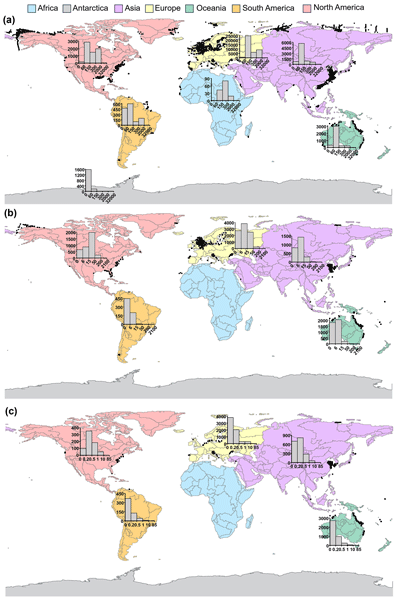
Christian Lønborg, Cátia Carreira, Gwenaël Abril, Susana Agustí, Valentina Amaral, Agneta Andersson, Javier Arístegui, Punyasloke Bhadury, Mariana B. Bif, Alberto V. Borges, Steven Bouillon, Maria Ll. Calleja, Luiz C. Cotovicz Jr., Stefano Cozzi, Maryló Doval, Carlos M. Duarte, Bradley Eyre, Cédric G. Fichot, E. Elena García-Martín, Alexandra Garzon-Garcia, Michele Giani, Rafael Gonçalves-Araujo, Renee Gruber, Dennis A. Hansell, Fuminori Hashihama, Ding He, Johnna M. Holding, William R. Hunter, J. Severino P. Ibánhez, Valeria Ibello, Shan Jiang, Guebuem Kim, Katja Klun, Piotr Kowalczuk, Atsushi Kubo, Choon-Weng Lee, Cláudia B. Lopes, Federica Maggioni, Paolo Magni, Celia Marrase, Patrick Martin, S. Leigh McCallister, Roisin McCallum, Patricia M. Medeiros, Xosé Anxelu G. Morán, Frank E. Muller-Karger, Allison Myers-Pigg, Marit Norli, Joanne M. Oakes, Helena Osterholz, Hyekyung Park, Maria Lund Paulsen, Judith A. Rosentreter, Jeff D. Ross, Digna Rueda-Roa, Chiara Santinelli, Yuan Shen, Eva Teira, Tinkara Tinta, Guenther Uher, Masahide Wakita, Nicholas Ward, Kenta Watanabe, Yu Xin, Youhei Yamashita, Liyang Yang, Jacob Yeo, Huamao Yuan, Qiang Zheng, and Xosé Antón Álvarez-Salgado
Earth Syst. Sci. Data, 16, 1107–1119, https://doi.org/10.5194/essd-16-1107-2024, https://doi.org/10.5194/essd-16-1107-2024, 2024
Short summary
Short summary
In this paper, we present the first edition of a global database compiling previously published and unpublished measurements of dissolved organic matter (DOM) collected in coastal waters (CoastDOM v1). Overall, the CoastDOM v1 dataset will be useful to identify global spatial and temporal patterns and to facilitate reuse in studies aimed at better characterizing local biogeochemical processes and identifying a baseline for modelling future changes in coastal waters.
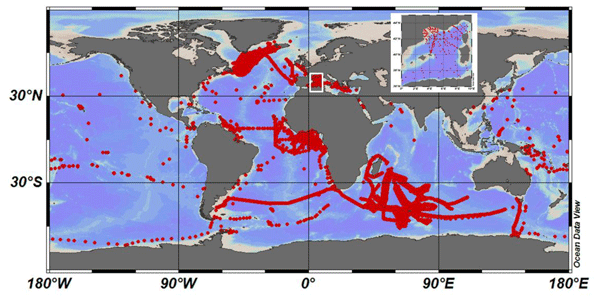
Nicolas Metzl, Jonathan Fin, Claire Lo Monaco, Claude Mignon, Samir Alliouane, David Antoine, Guillaume Bourdin, Jacqueline Boutin, Yann Bozec, Pascal Conan, Laurent Coppola, Frédéric Diaz, Eric Douville, Xavier Durrieu de Madron, Jean-Pierre Gattuso, Frédéric Gazeau, Melek Golbol, Bruno Lansard, Dominique Lefèvre, Nathalie Lefèvre, Fabien Lombard, Férial Louanchi, Liliane Merlivat, Léa Olivier, Anne Petrenko, Sébastien Petton, Mireille Pujo-Pay, Christophe Rabouille, Gilles Reverdin, Céline Ridame, Aline Tribollet, Vincenzo Vellucci, Thibaut Wagener, and Cathy Wimart-Rousseau
Earth Syst. Sci. Data, 16, 89–120, https://doi.org/10.5194/essd-16-89-2024, https://doi.org/10.5194/essd-16-89-2024, 2024
Short summary
Short summary
This work presents a synthesis of 44 000 total alkalinity and dissolved inorganic carbon observations obtained between 1993 and 2022 in the Global Ocean and the Mediterranean Sea at the surface and in the water column. Seawater samples were measured using the same method and calibrated with international Certified Reference Material. We describe the data assemblage, quality control and some potential uses of this dataset.
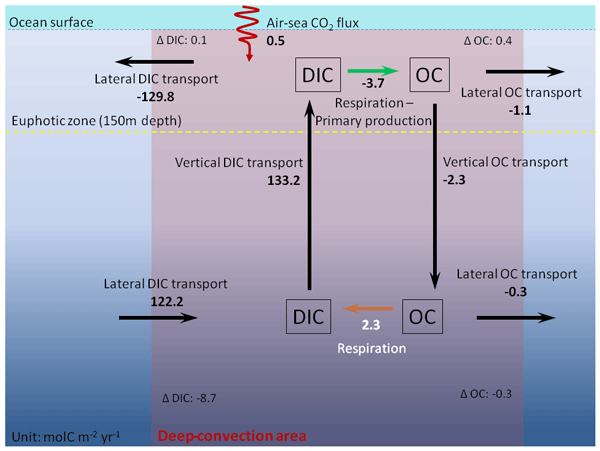
Caroline Ulses, Claude Estournel, Patrick Marsaleix, Karline Soetaert, Marine Fourrier, Laurent Coppola, Dominique Lefèvre, Franck Touratier, Catherine Goyet, Véronique Guglielmi, Fayçal Kessouri, Pierre Testor, and Xavier Durrieu de Madron
Biogeosciences, 20, 4683–4710, https://doi.org/10.5194/bg-20-4683-2023, https://doi.org/10.5194/bg-20-4683-2023, 2023
Short summary
Short summary
Deep convection plays a key role in the circulation, thermodynamics, and biogeochemical cycles in the Mediterranean Sea, considered to be a hotspot of biodiversity and climate change. In this study, we investigate the seasonal and annual budget of dissolved inorganic carbon in the deep-convection area of the northwestern Mediterranean Sea.
Lucille Barré, Frédéric Diaz, Thibaut Wagener, France Van Wambeke, Camille Mazoyer, Christophe Yohia, and Christel Pinazo
Geosci. Model Dev., 16, 6701–6739, https://doi.org/10.5194/gmd-16-6701-2023, https://doi.org/10.5194/gmd-16-6701-2023, 2023
Short summary
Short summary
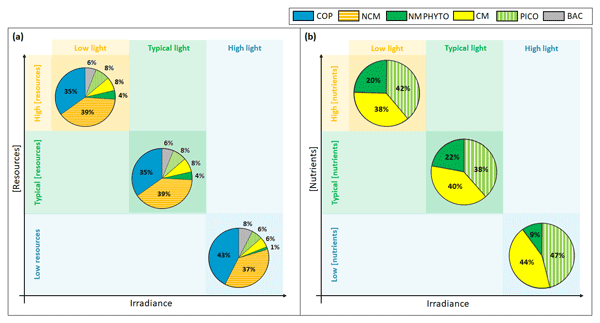
While several studies have shown that mixotrophs play a crucial role in the carbon cycle, the impact of environmental forcings on their dynamics remains poorly investigated. Using a biogeochemical model that considers mixotrophs, we study the impact of light and nutrient concentration on the ecosystem composition in a highly dynamic Mediterranean coastal area: the Bay of Marseille. We show that mixotrophs cope better with oligotrophic conditions compared to strict auto- and heterotrophs.
Christoph Heinze, Thorsten Blenckner, Peter Brown, Friederike Fröb, Anne Morée, Adrian L. New, Cara Nissen, Stefanie Rynders, Isabel Seguro, Yevgeny Aksenov, Yuri Artioli, Timothée Bourgeois, Friedrich Burger, Jonathan Buzan, B. B. Cael, Veli Çağlar Yumruktepe, Melissa Chierici, Christopher Danek, Ulf Dieckmann, Agneta Fransson, Thomas Frölicher, Giovanni Galli, Marion Gehlen, Aridane G. González, Melchor Gonzalez-Davila, Nicolas Gruber, Örjan Gustafsson, Judith Hauck, Mikko Heino, Stephanie Henson, Jenny Hieronymus, I. Emma Huertas, Fatma Jebri, Aurich Jeltsch-Thömmes, Fortunat Joos, Jaideep Joshi, Stephen Kelly, Nandini Menon, Precious Mongwe, Laurent Oziel, Sólveig Ólafsdottir, Julien Palmieri, Fiz F. Pérez, Rajamohanan Pillai Ranith, Juliano Ramanantsoa, Tilla Roy, Dagmara Rusiecka, J. Magdalena Santana Casiano, Yeray Santana-Falcón, Jörg Schwinger, Roland Séférian, Miriam Seifert, Anna Shchiptsova, Bablu Sinha, Christopher Somes, Reiner Steinfeldt, Dandan Tao, Jerry Tjiputra, Adam Ulfsbo, Christoph Völker, Tsuyoshi Wakamatsu, and Ying Ye
Biogeosciences Discuss., https://doi.org/10.5194/bg-2023-182, https://doi.org/10.5194/bg-2023-182, 2023
Revised manuscript not accepted
Short summary
Short summary
For assessing the consequences of human-induced climate change for the marine realm, it is necessary to not only look at gradual changes but also at abrupt changes of environmental conditions. We summarise abrupt changes in ocean warming, acidification, and oxygen concentration as the key environmental factors for ecosystems. Taking these abrupt changes into account requires greenhouse gas emissions to be reduced to a larger extent than previously thought to limit respective damage.
Joelle Habib, Caroline Ulses, Claude Estournel, Milad Fakhri, Patrick Marsaleix, Mireille Pujo-Pay, Marine Fourrier, Laurent Coppola, Alexandre Mignot, Laurent Mortier, and Pascal Conan
Biogeosciences, 20, 3203–3228, https://doi.org/10.5194/bg-20-3203-2023, https://doi.org/10.5194/bg-20-3203-2023, 2023
Short summary
Short summary
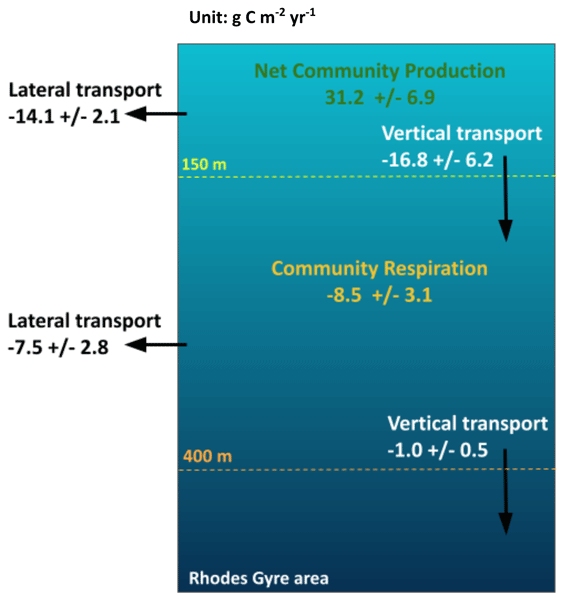
The Rhodes Gyre, eastern Mediterranean Sea, is the main Levantine Intermediate Water formation site. In this study, we use a 3D physical–biogeochemical model to investigate the seasonal and interannual variability of organic carbon dynamics in the gyre. Our results show its autotrophic nature and its high interannual variability, with enhanced primary production, downward exports, and onward exports to the surrounding regions during years marked by intense heat losses and deep mixed layers.
Francesco Paladini de Mendoza, Katrin Schroeder, Leonardo Langone, Jacopo Chiggiato, Mireno Borghini, Patrizia Giordano, Giulio Verazzo, and Stefano Miserocchi
Earth Syst. Sci. Data, 14, 5617–5635, https://doi.org/10.5194/essd-14-5617-2022, https://doi.org/10.5194/essd-14-5617-2022, 2022
Short summary
Short summary
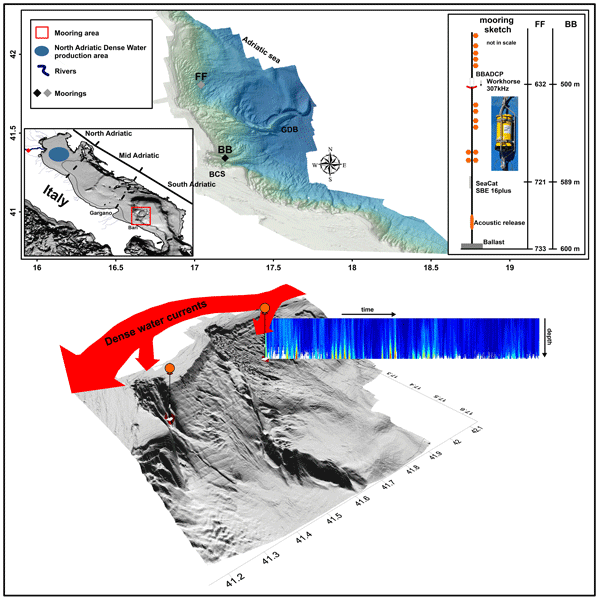
This work presents the dataset of continuous monitoring in the southern Adriatic Margin, providing a unique observatory of deep-water dynamics. The study area is influenced by episodic dense-water cascading, which is a fundamental process for water renewal and deep-water dynamics. Information about the frequency and intensity variations of these events is observed along a time series. The monitoring activities are still ongoing and the moorings are part of the EMSO-ERIC network.
Siv K. Lauvset, Nico Lange, Toste Tanhua, Henry C. Bittig, Are Olsen, Alex Kozyr, Simone Alin, Marta Álvarez, Kumiko Azetsu-Scott, Leticia Barbero, Susan Becker, Peter J. Brown, Brendan R. Carter, Leticia Cotrim da Cunha, Richard A. Feely, Mario Hoppema, Matthew P. Humphreys, Masao Ishii, Emil Jeansson, Li-Qing Jiang, Steve D. Jones, Claire Lo Monaco, Akihiko Murata, Jens Daniel Müller, Fiz F. Pérez, Benjamin Pfeil, Carsten Schirnick, Reiner Steinfeldt, Toru Suzuki, Bronte Tilbrook, Adam Ulfsbo, Anton Velo, Ryan J. Woosley, and Robert M. Key
Earth Syst. Sci. Data, 14, 5543–5572, https://doi.org/10.5194/essd-14-5543-2022, https://doi.org/10.5194/essd-14-5543-2022, 2022
Short summary
Short summary
GLODAP is a data product for ocean inorganic carbon and related biogeochemical variables measured by the chemical analysis of water bottle samples from scientific cruises. GLODAPv2.2022 is the fourth update of GLODAPv2 from 2016. The data that are included have been subjected to extensive quality controlling, including systematic evaluation of measurement biases. This version contains data from 1085 hydrographic cruises covering the world's oceans from 1972 to 2021.
Pierre Friedlingstein, Michael O'Sullivan, Matthew W. Jones, Robbie M. Andrew, Luke Gregor, Judith Hauck, Corinne Le Quéré, Ingrid T. Luijkx, Are Olsen, Glen P. Peters, Wouter Peters, Julia Pongratz, Clemens Schwingshackl, Stephen Sitch, Josep G. Canadell, Philippe Ciais, Robert B. Jackson, Simone R. Alin, Ramdane Alkama, Almut Arneth, Vivek K. Arora, Nicholas R. Bates, Meike Becker, Nicolas Bellouin, Henry C. Bittig, Laurent Bopp, Frédéric Chevallier, Louise P. Chini, Margot Cronin, Wiley Evans, Stefanie Falk, Richard A. Feely, Thomas Gasser, Marion Gehlen, Thanos Gkritzalis, Lucas Gloege, Giacomo Grassi, Nicolas Gruber, Özgür Gürses, Ian Harris, Matthew Hefner, Richard A. Houghton, George C. Hurtt, Yosuke Iida, Tatiana Ilyina, Atul K. Jain, Annika Jersild, Koji Kadono, Etsushi Kato, Daniel Kennedy, Kees Klein Goldewijk, Jürgen Knauer, Jan Ivar Korsbakken, Peter Landschützer, Nathalie Lefèvre, Keith Lindsay, Junjie Liu, Zhu Liu, Gregg Marland, Nicolas Mayot, Matthew J. McGrath, Nicolas Metzl, Natalie M. Monacci, David R. Munro, Shin-Ichiro Nakaoka, Yosuke Niwa, Kevin O'Brien, Tsuneo Ono, Paul I. Palmer, Naiqing Pan, Denis Pierrot, Katie Pocock, Benjamin Poulter, Laure Resplandy, Eddy Robertson, Christian Rödenbeck, Carmen Rodriguez, Thais M. Rosan, Jörg Schwinger, Roland Séférian, Jamie D. Shutler, Ingunn Skjelvan, Tobias Steinhoff, Qing Sun, Adrienne J. Sutton, Colm Sweeney, Shintaro Takao, Toste Tanhua, Pieter P. Tans, Xiangjun Tian, Hanqin Tian, Bronte Tilbrook, Hiroyuki Tsujino, Francesco Tubiello, Guido R. van der Werf, Anthony P. Walker, Rik Wanninkhof, Chris Whitehead, Anna Willstrand Wranne, Rebecca Wright, Wenping Yuan, Chao Yue, Xu Yue, Sönke Zaehle, Jiye Zeng, and Bo Zheng
Earth Syst. Sci. Data, 14, 4811–4900, https://doi.org/10.5194/essd-14-4811-2022, https://doi.org/10.5194/essd-14-4811-2022, 2022
Short summary
Short summary
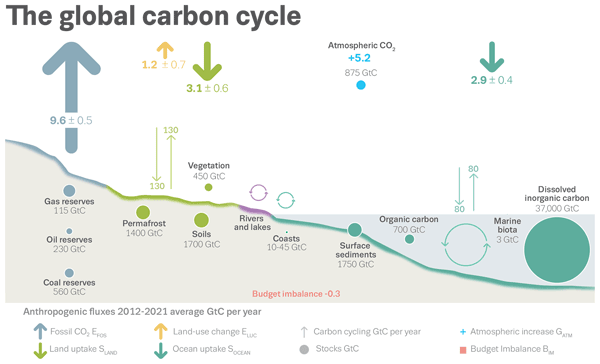
The Global Carbon Budget 2022 describes the datasets and methodology used to quantify the anthropogenic emissions of carbon dioxide (CO2) and their partitioning among the atmosphere, the land ecosystems, and the ocean. These living datasets are updated every year to provide the highest transparency and traceability in the reporting of CO2, the key driver of climate change.
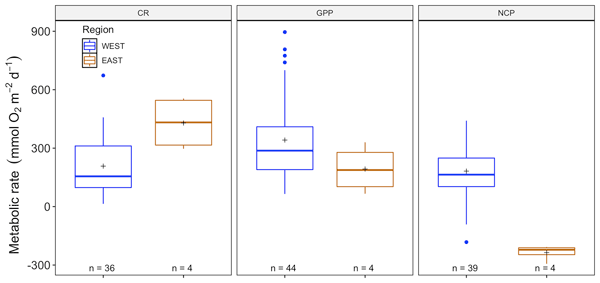
Iris E. Hendriks, Anna Escolano-Moltó, Susana Flecha, Raquel Vaquer-Sunyer, Marlene Wesselmann, and Núria Marbà
Biogeosciences, 19, 4619–4637, https://doi.org/10.5194/bg-19-4619-2022, https://doi.org/10.5194/bg-19-4619-2022, 2022
Short summary
Short summary
Seagrasses are marine plants with the capacity to act as carbon sinks due to their high primary productivity, using carbon for growth. This capacity can play a key role in climate change mitigation. We compiled and published data showing that two Mediterranean seagrass species have different metabolic rates, while the study method influences the rates of the measurements. Most communities act as carbon sinks, while the western basin might be more productive than the eastern Mediterranean.
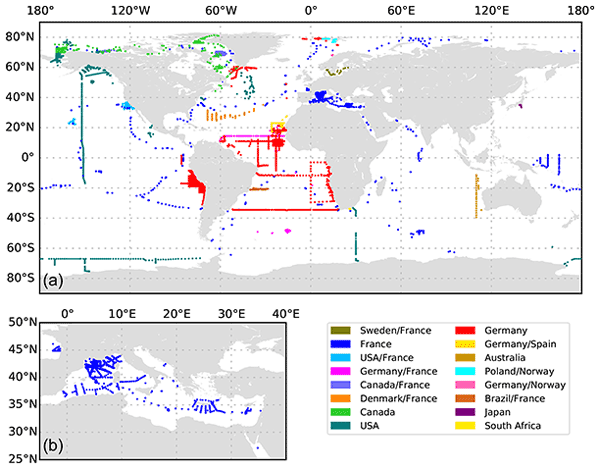
Rainer Kiko, Marc Picheral, David Antoine, Marcel Babin, Léo Berline, Tristan Biard, Emmanuel Boss, Peter Brandt, Francois Carlotti, Svenja Christiansen, Laurent Coppola, Leandro de la Cruz, Emilie Diamond-Riquier, Xavier Durrieu de Madron, Amanda Elineau, Gabriel Gorsky, Lionel Guidi, Helena Hauss, Jean-Olivier Irisson, Lee Karp-Boss, Johannes Karstensen, Dong-gyun Kim, Rachel M. Lekanoff, Fabien Lombard, Rubens M. Lopes, Claudie Marec, Andrew M. P. McDonnell, Daniela Niemeyer, Margaux Noyon, Stephanie H. O'Daly, Mark D. Ohman, Jessica L. Pretty, Andreas Rogge, Sarah Searson, Masashi Shibata, Yuji Tanaka, Toste Tanhua, Jan Taucher, Emilia Trudnowska, Jessica S. Turner, Anya Waite, and Lars Stemmann
Earth Syst. Sci. Data, 14, 4315–4337, https://doi.org/10.5194/essd-14-4315-2022, https://doi.org/10.5194/essd-14-4315-2022, 2022
Short summary
Short summary
The term
marine particlescomprises detrital aggregates; fecal pellets; bacterioplankton, phytoplankton and zooplankton; and even fish. Here, we present a global dataset that contains 8805 vertical particle size distribution profiles obtained with Underwater Vision Profiler 5 (UVP5) camera systems. These data are valuable to the scientific community, as they can be used to constrain important biogeochemical processes in the ocean, such as the flux of carbon to the deep sea.
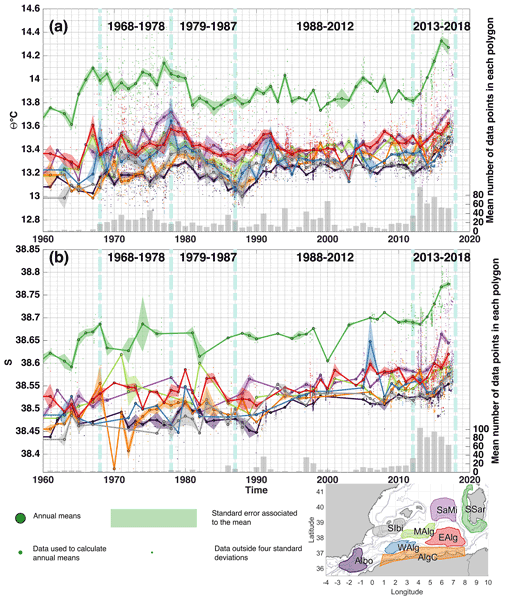
Katia Mallil, Pierre Testor, Anthony Bosse, Félix Margirier, Loic Houpert, Hervé Le Goff, Laurent Mortier, and Ferial Louanchi
Ocean Sci., 18, 937–952, https://doi.org/10.5194/os-18-937-2022, https://doi.org/10.5194/os-18-937-2022, 2022
Short summary
Short summary
Our study documents the circulation in the Algerian Basin of the western Mediterranean Sea using in situ data. It shows that the Algerian Gyres have an impact on the distribution at intermediate depth of Levantine Intermediate Water. They allow a westward transport from the south of Sardinia toward the interior of the Algerian Basin. Temperature and salinity trends of this water mass are also investigated, confirming a recent acceleration of the warming and salinification during the last decade.
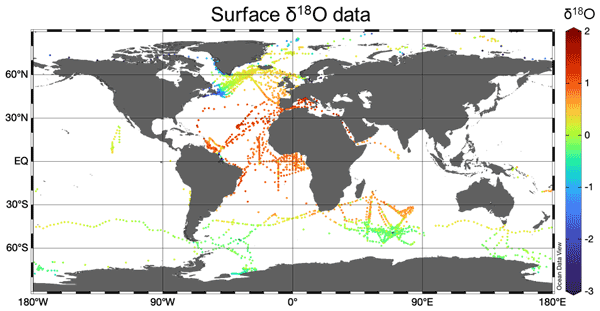
Gilles Reverdin, Claire Waelbroeck, Catherine Pierre, Camille Akhoudas, Giovanni Aloisi, Marion Benetti, Bernard Bourlès, Magnus Danielsen, Jérôme Demange, Denis Diverrès, Jean-Claude Gascard, Marie-Noëlle Houssais, Hervé Le Goff, Pascale Lherminier, Claire Lo Monaco, Herlé Mercier, Nicolas Metzl, Simon Morisset, Aïcha Naamar, Thierry Reynaud, Jean-Baptiste Sallée, Virginie Thierry, Susan E. Hartman, Edward W. Mawji, Solveig Olafsdottir, Torsten Kanzow, Anton Velo, Antje Voelker, Igor Yashayaev, F. Alexander Haumann, Melanie J. Leng, Carol Arrowsmith, and Michael Meredith
Earth Syst. Sci. Data, 14, 2721–2735, https://doi.org/10.5194/essd-14-2721-2022, https://doi.org/10.5194/essd-14-2721-2022, 2022
Short summary
Short summary
The CISE-LOCEAN seawater stable isotope dataset has close to 8000 data entries. The δ18O and δD isotopic data measured at LOCEAN have uncertainties of at most 0.05 ‰ and 0.25 ‰, respectively. Some data were adjusted to correct for evaporation. The internal consistency indicates that the data can be used to investigate time and space variability to within 0.03 ‰ and 0.15 ‰ in δ18O–δD17; comparisons with data analyzed in other institutions suggest larger differences with other datasets.
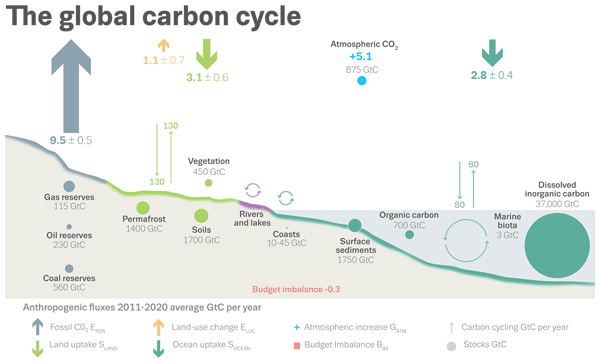
Pierre Friedlingstein, Matthew W. Jones, Michael O'Sullivan, Robbie M. Andrew, Dorothee C. E. Bakker, Judith Hauck, Corinne Le Quéré, Glen P. Peters, Wouter Peters, Julia Pongratz, Stephen Sitch, Josep G. Canadell, Philippe Ciais, Rob B. Jackson, Simone R. Alin, Peter Anthoni, Nicholas R. Bates, Meike Becker, Nicolas Bellouin, Laurent Bopp, Thi Tuyet Trang Chau, Frédéric Chevallier, Louise P. Chini, Margot Cronin, Kim I. Currie, Bertrand Decharme, Laique M. Djeutchouang, Xinyu Dou, Wiley Evans, Richard A. Feely, Liang Feng, Thomas Gasser, Dennis Gilfillan, Thanos Gkritzalis, Giacomo Grassi, Luke Gregor, Nicolas Gruber, Özgür Gürses, Ian Harris, Richard A. Houghton, George C. Hurtt, Yosuke Iida, Tatiana Ilyina, Ingrid T. Luijkx, Atul Jain, Steve D. Jones, Etsushi Kato, Daniel Kennedy, Kees Klein Goldewijk, Jürgen Knauer, Jan Ivar Korsbakken, Arne Körtzinger, Peter Landschützer, Siv K. Lauvset, Nathalie Lefèvre, Sebastian Lienert, Junjie Liu, Gregg Marland, Patrick C. McGuire, Joe R. Melton, David R. Munro, Julia E. M. S. Nabel, Shin-Ichiro Nakaoka, Yosuke Niwa, Tsuneo Ono, Denis Pierrot, Benjamin Poulter, Gregor Rehder, Laure Resplandy, Eddy Robertson, Christian Rödenbeck, Thais M. Rosan, Jörg Schwinger, Clemens Schwingshackl, Roland Séférian, Adrienne J. Sutton, Colm Sweeney, Toste Tanhua, Pieter P. Tans, Hanqin Tian, Bronte Tilbrook, Francesco Tubiello, Guido R. van der Werf, Nicolas Vuichard, Chisato Wada, Rik Wanninkhof, Andrew J. Watson, David Willis, Andrew J. Wiltshire, Wenping Yuan, Chao Yue, Xu Yue, Sönke Zaehle, and Jiye Zeng
Earth Syst. Sci. Data, 14, 1917–2005, https://doi.org/10.5194/essd-14-1917-2022, https://doi.org/10.5194/essd-14-1917-2022, 2022
Short summary
Short summary
The Global Carbon Budget 2021 describes the data sets and methodology used to quantify the emissions of carbon dioxide and their partitioning among the atmosphere, land, and ocean. These living data are updated every year to provide the highest transparency and traceability in the reporting of CO2, the key driver of climate change.
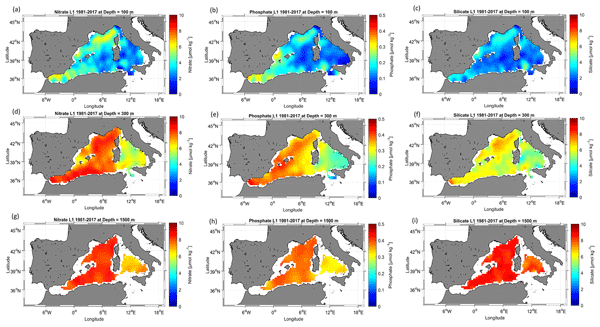
Malek Belgacem, Katrin Schroeder, Alexander Barth, Charles Troupin, Bruno Pavoni, Patrick Raimbault, Nicole Garcia, Mireno Borghini, and Jacopo Chiggiato
Earth Syst. Sci. Data, 13, 5915–5949, https://doi.org/10.5194/essd-13-5915-2021, https://doi.org/10.5194/essd-13-5915-2021, 2021
Short summary
Short summary
The Mediterranean Sea exhibits an anti-estuarine circulation, responsible for its low productivity. Understanding this peculiar character is still a challenge since there is no exact quantification of nutrient sinks and sources. Because nutrient in situ observations are generally infrequent and scattered in space and time, climatological mapping is often applied to sparse data in order to understand the biogeochemical state of the ocean. The dataset presented here partly addresses these issues.
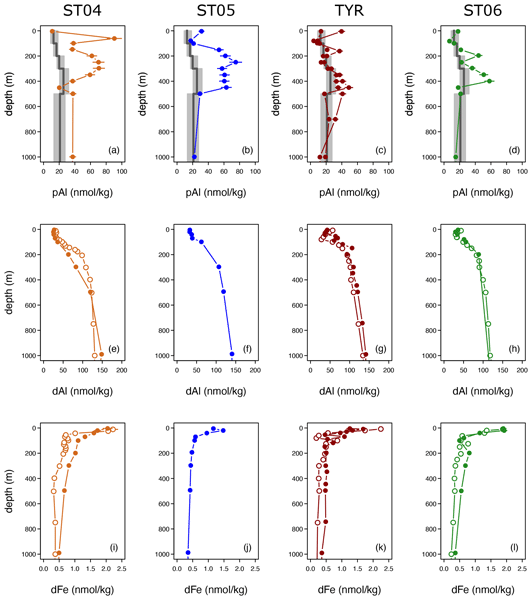
Matthieu Bressac, Thibaut Wagener, Nathalie Leblond, Antonio Tovar-Sánchez, Céline Ridame, Vincent Taillandier, Samuel Albani, Sophie Guasco, Aurélie Dufour, Stéphanie H. M. Jacquet, François Dulac, Karine Desboeufs, and Cécile Guieu
Biogeosciences, 18, 6435–6453, https://doi.org/10.5194/bg-18-6435-2021, https://doi.org/10.5194/bg-18-6435-2021, 2021
Short summary
Short summary
Phytoplankton growth is limited by the availability of iron in about 50 % of the ocean. Atmospheric deposition of desert dust represents a key source of iron. Here, we present direct observations of dust deposition in the Mediterranean Sea. A key finding is that the input of iron from dust primarily occurred in the deep ocean, while previous studies mainly focused on the ocean surface. This new insight will enable us to better represent controls on global marine productivity in models.
Siv K. Lauvset, Nico Lange, Toste Tanhua, Henry C. Bittig, Are Olsen, Alex Kozyr, Marta Álvarez, Susan Becker, Peter J. Brown, Brendan R. Carter, Leticia Cotrim da Cunha, Richard A. Feely, Steven van Heuven, Mario Hoppema, Masao Ishii, Emil Jeansson, Sara Jutterström, Steve D. Jones, Maren K. Karlsen, Claire Lo Monaco, Patrick Michaelis, Akihiko Murata, Fiz F. Pérez, Benjamin Pfeil, Carsten Schirnick, Reiner Steinfeldt, Toru Suzuki, Bronte Tilbrook, Anton Velo, Rik Wanninkhof, Ryan J. Woosley, and Robert M. Key
Earth Syst. Sci. Data, 13, 5565–5589, https://doi.org/10.5194/essd-13-5565-2021, https://doi.org/10.5194/essd-13-5565-2021, 2021
Short summary
Short summary
GLODAP is a data product for ocean inorganic carbon and related biogeochemical variables measured by the chemical analysis of water bottle samples from scientific cruises. GLODAPv2.2021 is the third update of GLODAPv2 from 2016. The data that are included have been subjected to extensive quality control, including systematic evaluation of measurement biases. This version contains data from 989 hydrographic cruises covering the world's oceans from 1972 to 2020.
Cited articles
Alekin, O. A.: Saturation of Mediterranean Sea water with calcium carbonate, Geochemistry, 206, 239–242, 1972.
Ali, E., Cramer, W., Carnicer, J., Georgopoulou, E., Hilmi, N. J. M., Le Cozannet, G., and Lionello, P.: Cross-Chapter Paper 4: Mediterranean Region, in: Climate Change 2022: Impacts, Adaptation and Vulnerability. Contribution of Working Group II to the Sixth Assessment Report of the Intergovernmental Panel on Climate Change, edited by: Pörtner, H.-O., Roberts, D. C., Tignor, M., Poloczanska, E. S., Mintenbeck, K., Alegría, A., Craig, M., Langsdorf, S., Löschke, S., Möller, V., Okem, A., and Rama, B., Cambridge University Press, Cambridge, UK and New York, NY, USA, 2233–2272, https://doi.org/10.1017/9781009325844.027, 2022.
Álvarez, M., Sanleón-Bartolomé, H., Tanhua, T., Mintrop, L., Luchetta, A., Cantoni, C., Schroeder, K., and Civitarese, G.: The CO2 system in the Mediterranean Sea: a basin wide perspective, Ocean Sci., 10, 69–92, https://doi.org/10.5194/os-10-69-2014, 2014.
Álvarez, M., Catalá, T. S., Civitarese, G., Coppola, L., Hassoun, A. E. R., Ibello, V., Lazzari, P., Lefèvre, D., Macías, D., Santinelli, C., and Ulses, C.: Chapter 11 – Mediterranean Sea general biogeochemistry, edited by: Schroeder, K. and Chiggiato, J., Oceanography of the Mediterranean Sea, Elsevier, 387–451, https://doi.org/10.1016/B978-0-12-823692-5.00004-2, 2023.
Álvarez, M., Lauvset, S. K., McDonagh, E., Firing, Y., Jebri, F., and Belgacem, M.: EuroGO-SHIP D2.4: Report on defining a framework for estimating uncertainty as part of a 2QC procedure, 2024.
Álvarez, M., García-Ibáñez, M. I., Lange, N., Kozyr, A., Velo, A., Tanhua, T., Civitarese, G., Cantoni, C., Belgacem, M., Schroeder, K., Acerbi, R., Coppola, L., Wagener, T., Fajar, N. M.., Flecha, S., Giani, M., Giannoudi, L., Guallart, E. F., Hassoun, A. E. R., Huertas, E., Ibello, V., Keraghel, M. A., Louanchi, F., Luchetta, A., Pérez, F. F., Schirnick, C., Souvermezoglou, E., Urbini, L., Vidal, M., and Ziveri, P.: CARbon, tracers, and ancillary data In the MEDiterranean Sea (CARIMED) (NCEI Accession 0309255), NOAA National Centers for Environmental Information [data set], https://doi.org/10.25921/cp5b-zq67, 2025.
Amante, C. and Eakins, B. W.: ETOPO1 1 Arc-Minute Global Relief Model: Procedures, Data Sources and Analysis, NOAA Technical Memorandum NESDIS NGDC-24, 2009.
Aoyama, M., Cheong, C., and Murata, A. (Eds.): Chemical Reference Materials for Oceanography. History, Production, and Certification, Springer Nature Singapore, https://doi.org/10.1007/978-981-96-2520-8, 2025.
Belgacem, M., Chiggiato, J., Borghini, M., Pavoni, B., Cerrati, G., Acri, F., Cozzi, S., Ribotti, A., Álvarez, M., Lauvset, S. K., and Schroeder, K.: Quality controlled dataset of dissolved inorganic nutrients in the western Mediterranean Sea (2004–2017) from R/V oceanographic cruises, PANGAEA [data set], https://doi.org/10.1594/PANGAEA.904172, 2019.
Belgacem, M., Chiggiato, J., Borghini, M., Pavoni, B., Cerrati, G., Acri, F., Cozzi, S., Ribotti, A., Álvarez, M., Lauvset, S. K., and Schroeder, K.: Dissolved inorganic nutrients in the western Mediterranean Sea (2004–2017), Earth Syst. Sci. Data, 12, 1985–2011, https://doi.org/10.5194/essd-12-1985-2020, 2020.
Belgacem, M., Schroeder, K., Barth, A., Troupin, C., Pavoni, B., Raimbault, P., Garcia, N., Borghini, M., and Chiggiato, J.: Climatological distribution of dissolved inorganic nutrients in the western Mediterranean Sea (1981–2017), Earth Syst. Sci. Data, 13, 5915–5949, https://doi.org/10.5194/essd-13-5915-2021, 2021.
Belgacem, M., Schroeder, K., Álvarez, M., Lauvset, S. K., Chiggiato, J., Borghini, M., Cantoni, C., Ciuffardi, T., and Sparnocchia, S.: A consistent regional dataset of dissolved oxygen in the western Mediterranean Sea (2004–2023): CTD-O2WMED, Earth Syst. Sci. Data, 17, 5315–5336, https://doi.org/10.5194/essd-17-5315-2025, 2025a.
Belgacem, M., Schroeder, K., Lauvset, S. K, Álvarez, M., Chiggiato, J.o, Borghini, M., Cantoni, C., Ciuffardi, T., and Sparnocchia, S.: CTD-O2WMED: Quality controlled dataset of CTD dissolved oxygen profiles in the Western Mediterranean Sea (2004-2023) from R/V oceanographic cruises, PANGAEA [data set], https://doi.org/10.1594/PANGAEA.982858, 2025b.
Béthoux, J. P., Gentili, B., and Tailliez, D.: Warming and freshwater budget change in the Mediterranean since the 1940s, their possible relation to the greenhouse effect, Geophysical Res. Lett., 25, 1023–1026, https://doi.org/10.1029/98GL00724, 1998.
Bittig, H. C., Steinhoff, T., Claustre, H., Fiedler, B., Williams, N. L., Sauzède, R., Körtzinger, A., and Gattuso J.-P.: An Alternative to Static Climatologies: Robust Estimation of Open Ocean CO2 Variables and Nutrient Concentrations From T, S, and O2 Data Using Bayesian Neural Networks, Front. Mar. Sci., 5, 328, https://doi.org/10.3389/fmars.2018.00328, 2018.
Bu, X. and Warner, M. J.: Solubility of chlorofluorocarbon-113 in water and seawater, Deep-Sea Res. Pt. I, 42, 1151–1161, 1995.
Bullister, J. L. and Wisegarver, D. P.: The solubility of carbon tetrachloride in water and seawater, Deep-Sea Res. Pt. I, 45, 1285–1302, 1998.
Bullister, J. L., Wisegarver, D. P., and Menzia, F. A.: The solubility of sulfur hexafluoride in water and seawater, Deep-Sea Res. Pt. I, 49, 175–187, 2002.
Cantoni, C., Durante, S., Calesso, G., Cipolla, A., Poiana, A., Borghini, M., Schroeder, K., and Chiggiato, J.: The carbonate chemistry of the Western Mediterranean during the OCEAN CERTAIN 2015 cruise, PANGAEA [data set], https://doi.org/10.1594/PANGAEA.911046, 2020.
Capitaine, G., Stoica, D., Wagener, T., and Fisicaro, P.: Production of a reference material for seawater pHT measurements by a National Metrology Institute, Mar. Chem., 252, 104244, https://doi.org/10.1016/j.marchem.2023.104244, 2023.
Cappelletto, M., Santoleri, R., Evangelista, L., Galgani, F., Garcés, E., Giorgetti, A., Fava, F., Herut, B., Hilmi, K., Kholeif, S., and Solidoro, C.: The Mediterranean Sea we want, Ocean Coast. Res. 69 (suppl 1), https://doi.org/10.1590/2675-2824069.21019mc, 2021.
Cardin, V., Civitarese, G., Hainbucher, D., Bensi, M., and Rubino, A.: Thermohaline properties in the Eastern Mediterranean in the last three decades: is the basin returning to the pre-EMT situation?, Ocean Sci., 11, 53–66, https://doi.org/10.5194/os-11-53-2015, 2015.
CARIMED: Carbon, tracers and ancillary data in the Mediterranean Sea, a data synthesis product for Mediterranean Sea observations on inorganic carbon and carbon-relevant variables, https://www.ncei.noaa.gov/access/ocean-carbon-acidification-data-system/oceans/CARIMED/, last access: 19 May 2026.
Carter, B. R., Bittig, H. C., Fassbender, A. J., Sharp, J. D., Takeshita, Y., Xu, Y. Y., Álvarez, M., Wanninkhof, R., Feely, R. A., and Barbero, L.: New and updated global empirical seawater property estimation routines, Limnol. Oceanogr.-Meth., 19, 785–809, https://doi.org/10.1002/lom3.10461, 2021.
Catalá, T. S., Martínez-Pérez, A. M., Nieto-Cid, M., Álvarez, M., Otero, J., Emelianov, M., Reche, I., Arístegui, J., and Álvarez-Salgado, X. A.: Dissolved Organic Matter (DOM) in the open Mediterranean Sea. I. Basin–wide distribution and drivers of chromophoric DOM, Prog. Oceanogr., 165, 35–51, https://doi.org/10.1016/j.pocean.2018.05.002, 2018.
Chai, F., Johnson, K. S., Claustre, H., Xing, X., Wang, Y., Boss, E., Riser, S., Fennel, K., Schofield, O., and Sutton, A.: Monitoring ocean biogeochemistry with autonomous platforms, Nat. Rev. Earth Environ., 1, 315–326, https://doi.org/10.1038/s43017-020-0053-y, 2020.
Chernyakova, A. M.: Element of the carbonate system in the Straits of Sicily (Tunis Strait) area, Oceanology, 16, 36–39, 1976.
Chiggiato, J., Artale, V., Durrieu de Madron, X., Schroeder, K., Taupier-Letage, I., Velaoras, D., and Vargas-Yáñez, M.: Chapter 9 – Recent changes in the Mediterranean Sea, in: Oceanography of the Mediterranean Sea, edited by: Schroeder, K. and Chiggiato, J., Elsevier, 289–334, ISBN 978-0-12-823692-5, https://doi.org/10.1016/B978-0-12-823692-5.00008-X, 2023.
CIESM: Impacts of acidification on biological, chemical and physical systems in the Mediterranean and Black Seas, No. 36 in CIESM Workshop Monographs, edited by: Briand, F., CIESM Publisher, Monaco, 124 pp., 2008.
CIESM: Designing Med-SHIP: a Program for repeated oceanographic surveys, CIESM Workshop Monograph no. 43, edited by: Briand, F., CIESM Publisher, Monaco, 164 pp., 2012.
Claustre, H., Morel, A., Hooker, S. B., Babin, M., Antoine, D., Oubelkheir, K., Bricaud, A., Leblanc, K., Quéguiner, B., and Maritorena, S.: Is desert dust making oligotrophic waters greener?, Geophys. Res. Lett., 29, 107-1–107-4, https://doi.org/10.1029/2001GL014056, 2002.
Clayton, T. D. and Byrne, R. H.: Spectrophotometric seawater pH measurements: total hydrogen ion concentration scale concentration scale calibration of m-cresol purple and at-sea results, DeepSea Res. Pt. I, 40, 2115–2129, 1993.
Conan, P., Testor, P., Estournel, C., D'Ortenzio, F., Pujo-Pay, M., and Durrieu de Madron, X.: Preface to the Special Section: Dense Water Formations in the Northwestern Mediterranean: From the Physical Forcings to the Biogeochemical Consequences, J. Geophys. Res.-Oceans, 23, 6983–6995, https://doi.org/10.1029/2018JC014301, 2018.
Cooley, S., Schoeman, D., Bopp, L., Boyd, P., Donner, S., Ghebrehiwet, D.Y., Ito, S.-I., Kiessling, W., Martinetto, P., Ojea, E., Racault, M.-F., Rost, B., and Skern-Mauritzen, M.: “Oceans and Coastal Ecosystems and Their Services”, in: Climate Change 2022: Impacts, Adaptation and Vulnerability Contribution of Working Group II to the Sixth Assessment Report of the Intergovernmental Panel on Climate Change, edited by: Pörtner, H.-O., Roberts, D. C., Tignor, M., Poloczanska, E. S., Mintenbeck, K., Alegría, A., Craig, M., Langsdorf, S., Löschke, S., Möller, V., Okem, A., and Rama, B.: Cambridge, UK and New York, NY, USA: Cambridge University Press, 379–550, https://doi.org/10.1017/9781009325844.005, 2022.
Copin-Montégut, C.: Alkalinity and carbon budgets in the Mediterranean Sea, Global Biogeochem. Cy., 7, 915–925, 1993.
Coppola, L., Raimbault, P., Mortier, L., and Testor, P.: Monitoring the environment in the northwestern Mediterranean Sea, Eos, 100, https://doi.org/10.1029/2019EO125951, 2019.
Cossarini, G., Lazzari, P., and Solidoro, C.: Spatiotemporal variability of alkalinity in the Mediterranean Sea, Biogeosciences, 12, 1647–1658, https://doi.org/10.5194/bg-12-1647-2015, 2015.
D'Ortenzio, F. and Ribera d'Alcalà, M.: On the trophic regimes of the Mediterranean Sea: a satellite analysis, Biogeosciences, 6, 139–148, https://doi.org/10.5194/bg-6-139-2009, 2009.
Dickson, A. G.: Standard Potential of the Reaction: AgCl(s) + 12H2(g) = Ag(s) + HCl(Aq), and and the Standard Acidity Constant of the Ion HSO4− in Synthetic Sea Water from 273.15 to 318.15 K, J. Chem. Thermodyn., 22, 113–127, https://doi.org/10.1016/0021-9614(90)90074-Z, 1990.
DOE: Handbook of Methods for the Determination of the Parameters of the Oceanic Carbon Dioxide System, edited by: Dickson, A. G. and Goyet, C., ORNL/CDIAC–74, 1994.
EMB (European Marine Board): Sustaining in situ ocean observations in the age of the digital ocean, EMB Policy Brief 9, 14, https://doi.org/10.5281/zenodo.4836060, 2021.
Fichaut, M., Garcia, M., Giorgetti, A., Iona, A., Kuznetsov, A., Rixen, M., and MEDAR Group: MEDAR/MEDATLAS 2002: A mediterranean and black sea database for operational oceanography, in Building the European Capacity in Operational Oceanography, Proceedings of the Third International Conference on EuroGOOS, edited by: Dahlin, H., Flemming, N. C., Nittis, K., and Petersson, S. E., Elsevier, Amsterdam, vol. 69, 645–648, https://doi.org/10.1016/S0422-9894(03)80107-1, 2003.
Firing, Y., Álvarez, M., Balan, S., Karstensen, J., Musat, T., O'Donnell, G., Sanchez-Franks, A., Schroeder, K., and Vasiliu, D.: EuroGO-SHIP D3.3: Report on updating salinity best practice, 2024.
Fourrier, M., Coppola, L., D'Ortenzio, F., Migon, C., and Gattuso, J.-P: Impact of intermittent convection in the northwestern Mediterranean Sea on oxygen content, nutrients, and the carbonate system, J. Geophys. Res.-Oceans, 127, e2022JC018615, https://doi.org/10.1029/2022JC018615, 2022.
Garcia, H. E. and Gordon, L. I.: Oxygen solubility in seawater: Better fitting equations, Limnol. Oceanogr., 37 1307–1312, https://doi.org/10.4319/lo.1992.37.6.1307, 1992.
García-Ibáñez, M. I. and Easley-Vidal, R. A.: Future Strategy for a Resilient Production and Certification of Seawater Reference Materials for the Carbonate System, in: Chemical Reference Materials for Oceanography, edited by: Aoyama, M., Cheong, C., and Murata, A., Springer Oceanography, Springer, Singapore, https://doi.org/10.1007/978-981-96-2520-8_13, 2025.
García-Ibáñez, M. I., Álvarez, M., Lange, N., Kozyr, A., Velo, A., Tanhua, T., Civitarese, G., Cantoni, C., Belgacem, M., Schroeder, K., Acerbi, R., Coppola, L., Wagener, T., Fajar, N. M., Flecha, S., Giani, M., Giannoudi, L., Guallart, E. F., Hassoun, A. E. R., Huertas, E. I.; Ibello, V., Keraghel, M. A., Louanchi, F., Luchetta, A., Pérez, F. F., Schirnick, C., Souvermezoglou, E., Urbini, L., Vidal, M., and Ziveri, P.: CARIMED (CARbon, tracers, and ancillary data In the MEDiterranean Sea) aggregated original cruise data product, DIGITAL.CSIC [data set], https://doi.org/10.20350/digitalCSIC/17785, 2025.
Gemayel, E., Hassoun, A. E. R., Benallal, M. A., Goyet, C., Rivaro, P., Abboud-Abi Saab, M., Krasakopoulou, E., Touratier, F., and Ziveri, P.: Climatological variations of total alkalinity and total dissolved inorganic carbon in the Mediterranean Sea surface waters, Earth Syst. Dynam., 6, 789–800, https://doi.org/10.5194/esd-6-789-2015, 2015.
Gouretski, V. and Jancke, K.: A description and quality assessment of the historical hydrographic data for the South Pacific Ocean, J. Atmos. Ocean. Tech., 16, 1791-1815, https://doi.org/10.1175/1520-0426(1999)016<1791:ADAQAO>2.0.CO;2, 1999.
Groupe MEDIPROD: Propriétés hydrologiques et chimiques des eaux du bassin occidental de la Méditerranée. Campagne MEDIPROD IV – 15 octobre – 17 novembre 1981, Publications du Centre National pour l'Exploitation des Océans (CNEXO), Série Résultats des campagnes à la mer, no 26 – 1984, ISSN 0339-2902, https://archimer.ifremer.fr/doc/00717/82871/ (last access: 26 June 2026), 1984.
Gruber, N.: Warming up, turning sour, losing breath: ocean biogeochemistry under global change, Philos. T. R. Soc. A, 369, 1980–1996, https://doi.org/10.1098/rsta.2011.0003, 2011.
Guidi, L., Fernàndez-Guerra, A., Bakker, D., Canchaya, C., Curry, E., Foglini, F., Irission, J.-O., Malde, K., Marshall, C. T., Obst, M., Ribeiro, R. P., and Tjiputra, J.: Big data in marine science, edited by:. Alexander, B., Heymans, J. J., Muñiz Piniella, A., Kellett, P., and Coopman, J., Ostend, Belgium: Future Science Brief 6 of the European Marine Board, Zenodo, https://doi.org/10.5281/zenodo.3755793, 2020.
Hainbucher, D., Álvarez, M., Astray Uceda, B., Bachi, G., Cardin, V., Celentano, P., Chaikalis, S., del Mar Chaves Montero, M., Civitarese, G., Fajar, N. M., Fripiat, F., Gerke, L., Gogou, A., Guallart, E. F., Gülk, B., El Rahman Hassoun, A., Lange, N., Rochner, A., Santinelli, C., Steinhoff, T., Tanhua, T., Urbini, L., Velaoras, D., Wolf, F., and Welsch, A.: Physical and biogeochemical parameters of the Mediterranean Sea during a cruise with RV Maria S. Merian in March 2018, Earth Syst. Sci. Data, 12, 2747–2763, https://doi.org/10.5194/essd-12-2747-2020, 2020.
Hartman, S. E., Gates, A. R., Lopez-Garcia, P., Bozzano, R., Delory, E., Favali, P., Lefevre, D., Chirurgien, L., Pensieri, S., Petihakis, G., Nair, R., Neves, S., Dañobeitia, J. J., Salvetat, F., Le Menn, M., Seppälä, J., Schroeder, K., and Piera, J.: Proposed synergies between oceanography and metrology, Front. Mar. Sci., 10, 1192030, https://doi.org/10.3389/fmars.2023.1192030, 2023.
Hassoun, A. E. R., Gemayel, E., Krasakopoulou, E., Goyet, C., Abboud-Abi Saab, M., Guglielmi, V., Touratier, F., and Falco, C.: Acidification of the Mediterranean Sea from anthropogenic carbon penetration, Deep-Sea Res. Pt. I, 102, 1–15, https://doi.org/10.1016/j.dsr.2015.04.005, 2015.
Hassoun, A. E. R., Bantelman, A., Canu, D., Comeau, S., Galdies, C., Gattuso, J.-P., Giani, M., Grelaud, M., Hendriks, I. E., Ibello, V., Idrissi, M., Krasakopoulou, E., Shaltout, N., Solidoro, C., Swarzenski, P. W., and Ziveri, P.: Ocean acidification research in the Mediterranean Sea: Status, trends and next steps, Front. Mar. Sci., 9, 892670, https://doi.org/10.3389/fmars.2022.892670, 2022.
Hellenic Centre for Marine Research: Hellenic National Oceanographic Data Centre (HCMR/HNODC), National Institute of Oceanography and Applied Geophysics – OGS, Division of Oceanography, Mediterranean Sea – Eutrophication and Acidity aggregated datasets 1911/2024 v2025. https://doi.org/10.13120/13d2a552-ee18-49a0-abdf-ac7936bc070f, 2025.
Henson, S. A.: Slow sciences: the value of long ocean biogeochemistry records, Philos. T. R. Soc. A., 372, 20130334, https://doi.org/10.1098/rsta.2013.0334, 2014.
Hood, E. M., Sabine, C. L., and Sloyan, B. M. (Eds.): The GO-SHIP Repeat Hydrography Manual: A Collection of Expert Reports and Guidelines, IOCCP Report Number 14, Paris, SCOR, 2010.
Huertas, I. E., Ríos, A. F., García-Lafuente, J., Navarro, G., Makaoui, A., Sánchez-Román, A., Rodriguez-Galvez, S., Orbi, A., Ruíz, J., and Pérez, F. F.: Atlantic forcing of the Mediterranean oligotrophy, Global Biogeochem. Cy., 26, GB2022, https://doi.org/10.1029/2011GB004167, 2012.
Ibello, V., Alemdar, P., Álvarez, M., Ayar, Y., Bednarsek, N., Bouthir, F. Z., Comeau, S., Fahkri, M., Flickinger, S., Flecha, S., García-Ibáñez, M., Giannoudi, L., Giani, M., Hassoun, A. E. R., Hendriks, I. E., Kocaman, E., Krajnc, B., Krasakopoulou, E., Laudicella, V. A., Metzl, N., Ogrinc, N., Santiago-Domenech, R., and Steinhoff, T.: An inter-laboratory comparison of marine carbonate system measurements in the Mediterranean Basin (Abstract ID: 2044368) [Poster], Ocean Sciences Meeting, 22–27 February 2026, Glasgow, Scotland (UK), 2026.
IOC, SCOR and IAPSO: The international thermodynamic equation of seawater – 2010: Calculation and use of thermodynamic properties. Intergovernmental Oceanographic Commission, Manuals and Guides No. 56, UNESCO (English), 196 pp., 2010.
JCGM: International Vocabulary of Metrology (VIM) – basic and general concepts and associated terms, 3rd Edn., https://www.bipm.org/documents/20126/2071204/JCGM_200_2012.pdf (last access: 26 June 2026), 2012.
Jiang, L.-Q., Feely, R. A., Wanninkhof, R., Greeley, D., Barbero, L., Alin, S., Carter, B. R., Pierrot, D., Featherstone, C., Hooper, J., Melrose, C., Monacci, N., Sharp, J. D., Shellito, S., Xu, Y.-Y., Kozyr, A., Byrne, R. H., Cai, W.-J., Cross, J., Johnson, G. C., Hales, B., Langdon, C., Mathis, J., Salisbury, J., and Townsend, D. W.: Coastal Ocean Data Analysis Product in North America (CODAP-NA) – an internally consistent data product for discrete inorganic carbon, oxygen, and nutrients on the North American ocean margins, Earth Syst. Sci. Data, 13, 2777–2799, https://doi.org/10.5194/essd-13-2777-2021, 2021.
Jiang, L.-Q., Kozyr, A., Relph, J. M., Ronje, E. I., Kamb, L., Burger, E., Myer, J., Nguyen, L., Arzayus, K. M., Boyer, T., Cross, S., Garcia, H., Hogan, P., Larsen, K., and Parsons, A. R.: The Ocean Carbon and Acidification Data System, Sci Data. Mar., 15, 136, https://doi.org/10.1038/s41597-023-02042-0, 2023.
Jiang, L.-Q., Fay, A., Müller, J. D., Gregor, L., Roobaert, A., Keppler, L., Carroll, D., Lauvset, S. K., DeVries, T., Hauck, J., Rödenbeck, C., Metzl, N., Fassbender, A. J., Gattuso, J.-P., Landschützer, P., Wanninkhof, R., Sabine, C., Alin, S. R., Hoppema, M., Olsen, A., Humphreys, M. P., Chakraborty, K., Franco, A. C., Azetsu-Scott, K., Bakker, D. C. E., Barbero, L., Bates, N. R., Besemer, N., Bittig, H. C., Boyd, A. E., Broullón, D., Cai, W.-J., Carter, B. R., Chau, T.-T.-T., Chen, C.-T. A., Cyr, F., Dore, J. E., Enochs, I., Feely, R. A., Garcia, H. E., Gehlen, M., Ghoshal, P. K., Gloege, L., González-Dávila, M., Gruber, N., Ianson, D., Iida, Y., Ishii, M., Joshi, A. P., Kennedy, E., Kozyr, A., Lange, N., Lo Monaco, C., Manzello, D. P., McKinley, G. A., Monacci, N. M., Padin, X. A., Palacio-Castro, A. M., Pérez, F. F., Santana-Casiano, J. M., Sharp, J., Sutton, A., Swift, J., Tanhua, T., Telszewski, M., Terhaar, J., van Hooidonk, R., Velo, A., Watson, A. J., White, A. E., Wu, Z., Xue, L., Yoo, H., Zeng, J., and Zhong, G.: Synthesis of data products for ocean carbonate chemistry, Earth Syst. Sci. Data, 18, 1405–1462, https://doi.org/10.5194/essd-18-1405-2026, 2026.
Johnson, G. C., Robbins, P. E., and Hufford, G. E.: Systematic adjustments of hydrographic sections for internal consistency, J. Atmos. Ocean. Tech., 18, 1234–1244, 2001.
Johnson, K. M., Wills, K. D., Butler, D. B., Johnson, W. K., and Wong, C. S.: Coulometric total CO2 analysis for marine studies, Mar. Chem., 44, 167–187, 1993.
Key, R. M., Kozyr, A., Sabine, C. L., Lee, K., Wanninkhof, R., Bullister, J. L., Feely, R. A., Millero, F. J., Mordy, C., and Peng, T.-H.: A global ocean carbon climatology: Results from Global Data Analysis Project (GLODAP), Global Biogeochem. Cy., 18, GB4031, https://doi.org/10.1029/2004GB002247, 2004.
Key, R. M., Tanhua, T., Olsen, A., Hoppema, M., Jutterström, S., Schirnick, C., van Heuven, S., Kozyr, A., Lin, X., Velo, A., Wallace, D. W. R., and Mintrop, L.: The CARINA data synthesis project: introduction and overview, Earth Syst. Sci. Data, 2, 105–121, https://doi.org/10.5194/essd-2-105-2010, 2010.
Keraghel, M. A., Louanchi, F., Zerrouki, M., Aït Kaci, M., Aït-Ameur, N., Labaste, M., Legoff, H., Taillandier, V., Harid, R., and Mortier, L.: Carbonate system properties and anthropogenic carbon inventory in the Algerian basin during SOMBA cruise (2014): acidification rate estimate, Mar. Chem., 221, 103783, https://doi.org/10.1016/j.marchem.2020.103783, 2020.
Klein, B., Roether, W., Manca, B. B., Bregant, D., Beitzel, V., Kovacevic, V., and Luchetta, A.: A large deep water transient in the eastern Mediterranean, Deep-Sea Res. Pt. I, 46, 371–414, 1999.
Krasakopoulou, E., Souvermezoglou, E., and Goyet, C.: Anthropogenic CO2 fluxes in the Otranto Strait (E. Mediterranean) in February 1995, Deep-Sea Res. Pt. I, 58, 1103-1114, https://doi.org/10.1016/j.dsr.2011.08.008, 2011.
Kubin, E., Menna, M., Mauri, E., Notarstefano, G., Mieruch, S. and Poulain, P.M.: Heat content and temperature trends in the Mediterranean Sea as derived from Argo float data, Front. Mar. Sci., 10, 1271638, https://doi.org/10.3389/fmars.2023.1271638, 2023.
Lange, N., Tanhua, T., Pfeil, B., Bange, H. W., Lauvset, S. K., Grégoire, M., Bakker, D. C. E., Jones, S. D., Fiedler, B., O'Brien, K. M., and Körtzinger, A.: A status assessment of selected data synthesis products for ocean biogeochemistry, Front. Mar. Sci., 10, 1078908, https://doi.org/10.3389/fmars.2023.1078908, 2023.
Lange, N., Fiedler, B., Álvarez, M., Benoit-Cattin, A., Benway, H., Buttigieg, P. L., Coppola, L., Currie, K., Flecha, S., Gerlach, D. S., Honda, M., Huertas, I. E., Lauvset, S. K., Muller-Karger, F., Körtzinger, A., O'Brien, K. M., Ólafsdóttir, S. R., Pacheco, F. C., Rueda-Roa, D., Skjelvan, I., Wakita, M., White, A., and Tanhua, T.: Synthesis Product for Ocean Time Series (SPOTS) – a ship-based biogeochemical pilot, Earth Syst. Sci. Data, 16, 1901–1931, https://doi.org/10.5194/essd-16-1901-2024, 2024.
Lascaratos, A., Roether, W., Nittis, K., and Klein, K.: Recent changes in the Eastern Mediterranean Deep Waters: A review, Prog. Oceanogr., 44, 5–36, 1999.
Lauvset, S. and Tanhua, T.: A toolbox for secondary quality control on ocean chemistry and hydrographic data, Limnol. Oceanogr. Meth., 11601–11608, https://doi.org/10.1002/lom3.10050, 2015.
Lauvset, S. K., Lange, N., Tanhua, T., Bittig, H. C., Olsen, A., Kozyr, A., Álvarez, M., Azetsu-Scott, K., Brown, P. J., Carter, B. R., Cotrim da Cunha, L., Hoppema, M., Humphreys, M. P., Ishii, M., Jeansson, E., Murata, A., Müller, J. D., Pérez, F. F., Schirnick, C., Steinfeldt, R., Suzuki, T., Ulfsbo, A., Velo, A., Woosley, R. J., and Key, R. M.: The annual update GLODAPv2.2023: the global interior ocean biogeochemical data product, Earth Syst. Sci. Data, 16, 2047–2072, https://doi.org/10.5194/essd-16-2047-2024, 2024.
Lee, K., Kim, T.-W., Byrne, R. H., Millero, F. J., Feely, R. A., and Liu, M.-M.: The universal ratio of boron to chlorinity for the North Pacific and North Atlantic Oceans, Geochim. Cosmochim. Ac., 74, 1801–1811, 2010.
Lee, K., Sabine, C. L., Tanhua, T., Kim, T. W., Feely, R. A., and Kim, H. C.: Roles of marginal seas in absorbing and storing fossil fuel CO2, Energy Environ. Sci., 4, 1133–1146, https://doi.org/10.1029/2003GB002067, 2011.
Li, P. and Tanhua, T.: Recent Changes in Deep Ventilation of the Mediterranean Sea; Evidence From Long-Term Transient Tracer Observations, Front. Mar. Sci. 7, 594, https://doi.org/10.3389/fmars.2020.00594, 2020.
Lindstrom, E., Gunn, J., Fischer, A., McCurdy, A., Glover, L., Alverson, K., Berx, B., Burkill, P., Chavez, F., Checkley, D., Clark, C., Fabry, V., Fischer, A., Gunn, J., Hall, J., Lindstrom, E., Masumoto, Y., Meldrum, D., Meredith, M., Monteiro, P., Mulbert, J., Pouliquen, S., Richter, C., Song, S., Tanner, M., Koopman, R., Cripe, D., Visbeck, M., and Wilson, S.: A framework for ocean observing, in By the task team for an integrated framework for sustained ocean observing (Paris: UNESCO), https://doi.org/10.5270/OceanObs09-FOO, 2012.
Lipizer, M., Molina Jack, M. E., Wesslander, K., Fyrberg, L., Tsompanou M., Iona A., Buga L., Sarbu G., Gatti J., Larsen M. M., Østrem A. K., and Giorgetti A.: Guidelines for eutrophication data aggregation, harmonisation and Quality Control, Version 3, 45 pp., https://doi.org/10.13120/8XM0-5M67, 2026.
Liu, X., Patsavas, M. C., and Byrne, R. H.: Purification and Characterization of meta-Cresol Purple for Spectrophotometric Seawater pH Measurements, Environ. Sci. Technol., 45, 4862–4868, https://doi.org/10.1021/es200665d, 2011.
López-Jurado, J.-L., González-Pola, C., and Vélez-Belchí, P.: Observation of an abrupt disruption of the long-term warming trend at the Balearic Sea, western Mediterranean Sea, in summer 2005, Geophys. Res. Lett., 32, L24606, https://doi.org/10.1029/2005GL024430, 2005.
Lovato, T. and Vichi, M.: An objective reconstruction of the Mediterranean Sea carbonate system. Deep Sea Res. Pt. I, 98, 21–30, https://doi.org/10.1016/j.dsr.2014.11.018, 2015.
Lueker, T. J., Dickson, A. G., and Keeling, C. D.: Ocean pCO2 calculated from dissolved inorganic carbon, alkalinity, and equations for K1 and K2: validation based on laboratory measurements of CO2 in gas and seawater at equilibrium, Mar. Chem., 70, 105–119, 2000.
Malanotte-Rizzoli, P. and Robinson, A. R.: Physical oceanography of the eastern Mediterranean, EOS – The Oceanography Report, 69, 194–203, 1988.
Malanotte-Rizzoli, P., Manca, B. B., Ribera d'Alcalà, M., Theocharis, A., Brenner, S., Budillon, G., and Ozsoy, E.: The eastern Mediterranean in the 80s and in the 90s: The big transition in the intermediate and deep circulations, Dyn. Atmos. Oceans, 29, 365–395, 1999.
Malanotte-Rizzoli, P., Artale, V., Borzelli-Eusebi, G. L., Brenner, S., Crise, A., Gacic, M., Kress, N., Marullo, S., Ribera d'Alcalà, M., Sofianos, S., Tanhua, T., Theocharis, A., Alvarez, M., Ashkenazy, Y., Bergamasco, A., Cardin, V., Carniel, S., Civitarese, G., D'Ortenzio, F., Font, J., Garcia-Ladona, E., Garcia-Lafuente, J. M., Gogou, A., Gregoire, M., Hainbucher, D., Kontoyannis, H., Kovacevic, V., Kraskapoulou, E., Kroskos, G., Incarbona, A., Mazzocchi, M. G., Orlic, M., Ozsoy, E., Pascual, A., Poulain, P.-M., Roether, W., Rubino, A., Schroeder, K., Siokou-Frangou, J., Souvermezoglou, E., Sprovieri, M., Tintoré, J., and Triantafyllou, G.: Physical forcing and physical/biochemical variability of the Mediterranean Sea: a review of unresolved issues and directions for future research, Ocean Sci., 10, 281–322, https://doi.org/10.5194/os-10-281-2014, 2014.
Manca, B., Burca, M., Giorgetti, A., Coatanoan, C., Garcia, M. J., and Iona, A.: Physical and biochemical averaged vertical profiles in the Mediterranean regions: an important tool to trace the climatology of water masses and to validate incoming data from operational oceanography, J. Marine Syst., 48, 83–116, https://doi.org/10.1016/j.jmarsys.2003.11.025, 2004.
McDonagh, E., et al.: Changes in Ocean Heat, Carbon Content, Ventilation, and Biology: A Review of the Second Decade of GO-SHIP Global Repeat Hydrography, Annu. Rev. Mar. Sci., accepted, 2026.
MEDAR Group: MEDATLAS/2002 database: Mediterranean and Black Sea database of temperature salinity and biochemical parameters, in: Climatological Atlas [CD-ROM], Fr. Res. Inst. For Exploit. of Sea, Issy-les-Moulineaux, France, 2002.
MEDAR Group: Hydrochemistry measured on water bottle samples during SHIKMONA cruise MC30IS, National Oceanographic Data Center, Silver Spring, PANGAEA [data set], https://doi.org/10.1594/PANGAEA.803955, 2012a.
MEDAR Group: Hydrochemistry measured on water bottle samples during SHIKMONA cruise MC26IS, PANGAEA [data set], https://doi.org/10.1594/PANGAEA.803954, 2012b.
MEDAR Group: Hydrochemistry measured on water bottle samples during SHIKMONA cruise MC24IS, PANGAEA [data set], https://doi.org/10.1594/PANGAEA.803953, 2012c.
MedECC: Climate and Environmental Change in the Mediterranean Basin – Current Situation and Risks for the Future, First Mediterranean Assessment Report, edited by: Cramer, W., Guiot, J., and Marini, K., Union for the Mediterranean, Plan Bleu, UNEP/MAP, Marseille, France, 632 pp., Zenodo, https://doi.org/10.5281/zenodo.4768833, 2020.
Mehrbach, C., Culberson, C. H., Hawley, J. E., and Pytkowitcz, R. M.: Measurements of the apparent dissociation constants of carbonic acid in seawater at atmospheric pressure, Limnol. Oceanogr., 18, 897–907, 1973.
Metzl, N., Fin, J., Lo Monaco, C., Mignon, C., Alliouane, S., Antoine, D., Bourdin, G., Boutin, J., Bozec, Y., Conan, P., Coppola, L., Diaz, F., Douville, E., Durrieu de Madron, X., Gattuso, J.-P., Gazeau, F., Golbol, M., Lansard, B., Lefèvre, D., Lefèvre, N., Lombard, F., Louanchi, F., Merlivat, L., Olivier, L., Petrenko, A., Petton, S., Pujo-Pay, M., Rabouille, C., Reverdin, G., Ridame, C., Tribollet, A., Vellucci, V., Wagener, T., and Wimart-Rousseau, C.: A synthesis of ocean total alkalinity and dissolved inorganic carbon measurements from 1993 to 2022: the SNAPO-CO2-v1 dataset, Earth Syst. Sci. Data, 16, 89–120, https://doi.org/10.5194/essd-16-89-2024, 2024.
Metzl, N., Fin, J., Lo Monaco, C., Mignon, C., Alliouane, S., Bombled, B., Boutin, J., Bozec, Y., Comeau, S., Conan, P., Coppola, L., Cuet, P., Ferreira, E., Gattuso, J.-P., Gazeau, F., Goyet, C., Grossteffan, E., Lansard, B., Lefèvre, D., Lefèvre, N., Leseurre, C., Petton, S., Pujo-Pay, M., Rabouille, C., Reverdin, G., Ridame, C., Rimmelin-Maury, P., Ternon, J.-F., Touratier, F., Tribollet, A., Wagener, T., and Wimart-Rousseau, C.: An updated synthesis of ocean total alkalinity and dissolved inorganic carbon measurements from 1993 to 2023: the SNAPO-CO2-v2 dataset, Earth Syst. Sci. Data, 17, 1075–1100, https://doi.org/10.5194/essd-17-1075-2025, 2025.
Millero, F. J., Morse, J., and Chen, C.-T.: The carbonate system in the Western Mediterranean Sea, Deep-Sea Res., 26A, 1395–1404, 1979.
Minas, H. J. and MEDAR Group: Hydrochemistry measured on water bottle samples during Jean Charcot cruise MEDIPROD IV, Institut français de recherche pour l'exploitation de la mer – Siège social, PANGAEA [data set], https://doi.org/10.1594/PANGAEA.804054, 2012.
Mouriño-Carballido, B., Hojas, E., Cermeño, P., Chouciño, P., Fernández-Castro, B., Latasa, M., Marañón, E., Morán, X. A. G., and Vidal, M.: Nutrient supply controls picoplankton community structure during three contrasting seasons in the northwestern Mediterranean Sea. Mar. Ecol. Prog. Ser., 543, 1–19, https://doi.org/10.3354/meps11558, 2016.
Moutin, T., Van Wambeke, F., and Prieur, L.: Introduction to the Biogeochemistry from the Oligotrophic to the Ultraoligotrophic Mediterranean (BOUM) experiment, Biogeosciences, 9, 3817–3825, https://doi.org/10.5194/bg-9-3817-2012, 2012.
Olsen, A., Key, R. M., van Heuven, S., Lauvset, S. K., Velo, A., Lin, X., Schirnick, C., Kozyr, A., Tanhua, T., Hoppema, M., Jutterström, S., Steinfeldt, R., Jeansson, E., Ishii, M., Pérez, F. F., and Suzuki, T.: The Global Ocean Data Analysis Project version 2 (GLODAPv2) – an internally consistent data product for the world ocean, Earth Syst. Sci. Data, 8, 297–323, https://doi.org/10.5194/essd-8-297-2016, 2016.
Orr, J. C., Epitalon, J.-M., Dickson, A. G., and Gattuso, J.-P.: Routine Uncertainty Propagation for the Marine Carbon Dioxide System, Mar. Chem., 207, 84–107, 2018.
Ozer, T., Gertman, I., Kress, N., Silverman, J., and Herut, B.: Interannual thermohaline, (1979–2014) and nutrient, (2002–2014) dynamics in the Levantine surface and intermediate water masses, SE Mediterranean Sea, Global Planet. Change, 151, 60–67, https://doi.org/10.1016/j.gloplacha.2016.04.001, 2017.
Packard, T. T., Minas, H. J., Coste, B., Martinez, R., Bonn, M. C., Gostan, J., Garfield, P., Christensen, J., Dortch, Q., Minas, M., Copin-Montegut, G., and Copin-Montegut, C.: Formation of the Alboran minimum zone, Deep-Sea Res., 35, 1111–1118, 1988.
Pearlman, J., Buttigieg, P. L., Bushnell, M., Delgado, C., Hermes, J., Heslop, E., Hörstmann, C., Isensee, K., Karstensen, J., Lambert, A., Lara-Lopez, A., Muller-Karger, F., Munoz Mas, C., Pearlman, F., Pissierssens, P., Przeslawski, R., Simpson, P., van Stavel, J., and Venkatesan, R.: Evolving and Sustaining Ocean Best Practices to Enable Interoperability in the UN Decade of Ocean Science for Sustainable Development, Front. Mar. Sci., 8, 619685, https://doi.org/10.3389/fmars.2021.619685, 2021.
Pérez, F. F. and Fraga, F.: A precise and rapid analytical procedure for alkalinity determination, Mar. Chem., 21, 169–182, 1987.
Pérez, F. F., Estrada, M., and Salat, J.: Sistema del carbónico, oxígeno y nutrientes en el Mediterráneo occidental, Inv. Pesq., 50, 333–351, 1986.
Pierrot, D., Brown, P., Van Heuven, S., Tanhua, T., Schuster, U., Wanninkhof, R., and Key, R. M.: CARINA TCO2 data in the Atlantic Ocean, Earth Syst. Sci. Data, 2, 177–187, https://doi.org/10.5194/essd-2-177-2010, 2010.
Prieur, L. and Sournia, A.: “Almofront-1” (April–May 1991): an interdisciplinary study of the Almeria-Oran geostrophic front, SW Mediterranean Sea, J. Maine Syst. 5, 187–203, https://doi.org/10.1016/0924-7963(94)90046-9, 1994.
Pujo-Pay, M., Conan, P., Oriol, L., Cornet-Barthaux, V., Falco, C., Ghiglione, J.-F., Goyet, C., Moutin, T., and Prieur, L.: Integrated survey of elemental stoichiometry (C, N, P) from the western to eastern Mediterranean Sea, Biogeosciences, 8, 883–899, https://doi.org/10.5194/bg-8-883-2011, 2011.
Rivaro, P., Messa, R., Massolo, S., and Frache, R.: Distributions of carbonate properties along the water column in the Mediterranean Sea: spatial and temporal variations, Mar. Chem., 121, 236–245, 2010.
Robinson, A. R. and Golnaraghi, M.: The physical and dynamical oceanography of the Mediterranean Sea, in: Ocean Processes in Climate Dynamics: Global and Mediterranean Examples, edited by: Malanotte-Rizzoli, P. and Robinson, A. R., NATO ASI Series, vol. 419, Springer, Dordrecht, https://doi.org/10.1007/978-94-011-0870-6_12, 1994.
Roether, W. and Schlitzer, R.: Eastern Mediterranean deep water renewal on the basis of chlorofluoromethane and tritium data, Dynam. Atmos. Oceans, 15, 333–354, 1991.
Roether, W., Manca, B. B., Klein, B., Bregant, D., Georgopoulos, D., Beitzel V., Kovacevic, V., and Luchetta, A.: Recent changes in eastern Mediterranean deep waters, Science, 271, 333–335, https://doi.org/10.1126/science.271.5247.333, 1996.
Roether, W., Klein, B., Beitzel, V., and Manca, B. B.: Property distributions and transient-tracer ages in Levantine Intermediate Water in the Eastern Mediterranean, J. Marine Syst. 18, 71–87, https://doi.org/10.1016/s0924-7963(98)00006-2, 1998.
Roether, W., Beitzel, V., Sültenfu, J., and Putzka, A.: The Eastern Mediterranean tritium distribution in 1987, J. Marine Syst., 20, 49-61, 1999.
Rubino, A. and Hainbucher, D.: A large abrupt change in the abyssal water masses of the eastern Mediterranean, Geophys. Res. Lett., 34, L23607, https://doi.org/10.1029/2007gl031737, 2007.
Saunders, P.: The International Temperature Scale of 1990, ITS-90. WOCE Newsletter 10, IOS, Wormley, UK, 1990.
Schlitzer, R., Roether, W., Oster, H., Junghans, H.-G., Hausmann, M., Johannsen, H., and Michelato, A.: Chlorofluoromethane and oxygen in the Eastern Mediterranean, Deep-Sea Res. Pt. I, 38, 1531–1551, https://doi.org/10.1016/0198-0149(91)90088-w, 1991.
Schmidt, J.: Introduction. Report on the Danish Oceanographical Expeditions 1908-1910 to the Mediterranean and Adjacent Seas, Høst & Son, Copenhagen, 1–49, 1912.
Schneider, A., Tanhua, T., Roether, W., and Steinfeldt, R.: Changes in ventilation of the Mediterranean Sea during the past 25 year, Ocean Sci., 10, 1–16, https://doi.org/10.5194/os-10-1-2014, 2014.
Schroeder, K., Tanhua, T., Bryden, H. L., Álvarez, M., Chiggiato, J., and Aracri, S.: Mediterranean Sea Ship-based Hydrographic Investigations Program (Med-SHIP), Oceanography, 28, 12–15, https://doi.org/10.5670/oceanog.2015.71, 2015.
Schroeder, K., Chiggiato, J., Bryden, H. L., Borghini, M., and Ismail, S. B.: Abrupt climate shift in the western Mediterranean Sea, Sci. Rep., 6, 23009, https://doi.org/10.1038/srep23009, 2016.
Schroeder, K., Chiggiato, J., Josey, S. A., Borghini, M., Aracri, S., and Sparnocchia, S.: Rapid response to climate change in a marginal sea, Sci. Rep., 7, 1–7, https://doi.org/10.1038/s41598-017-04455-5, 2017.
Schroeder, K., Cozzi, S., Belgacem, M., Borghini, M., Cantoni, C., Durante, S., Petrizzo, A., Poiana, A., and Chiggiato, J.: Along-Path Evolution of Biogeochemical and Carbonate System Properties in the Intermediate Water of the Western Mediterranean, Front. Mar. Sci., 7, 375, https://doi.org/10.3389/fmars.2020.00375, 2020.
Schroeder, K., Cusack, C., Vasiliu, D., and Musat, T.: D4.2. Report summarizing the results of consultations with regional networks, EuroGO-SHIP Report, 2024a.
Schroeder, K., Kovačević, V., Civitarese, G., Velaoras, D., Álvarez, M., Tanhua, T., Jullion, L., Coppola, L., Bensi, M., Ursella, L., Santinelli, C., Giani, M., Chiggiato, J., Aly-Eldeen, M., Assimakopoulou, G., Bachi, G., Bogner, B., Borghini, M., Cardin, V., and Zervoudaki, S.: Seawater physics and chemistry along the Med-SHIP transects in the Mediterranean Sea in 2016, Sci. Data, 11, 52, https://doi.org/10.1038/s41597-023-02835-3, 2024b.
Stöven, T. and Tanhua, T.: Ventilation of the Mediterranean Sea constrained by multiple transient tracer measurements, Ocean Sci., 10, 439–457, https://doi.org/10.5194/os-10-439-2014, 2014.
Suzuki, T., Ishii, M., Aoyama, A., Christian, J. R., Enyo, K., Kawano, T., Key, R. M., Kosugi, N., Kozyr, A., Miller, L. A., Murata, A., Nakano, T., Ono, T., Saino, T., Sasaki, K., Sasano, D., Takatani, Y., Wakita, M., and Sabine, C. L.: PACIFICA Data Synthesis Project, ORNL/CDIAC-159, NDP-092, Carbon Dioxide Information Analysis Center, Oak Ridge National Laboratory, U. S. Department of Energy, Oak Ridge, Tennessee, 2013.
Swift, J. H. and Diggs, S. C.: Description of WHP-Exchange Format for CTD/Hydrographic Data, CLIVAR and Carbon Hydrographic Data Office, UCSD Scripps Institution of Oceanography, 19 pp., 2008.
Talley, L. D., Feely, R. A., Sloyan, B. M., Wanninkhof, R., Baringer, M. O., Bullister, J. L., Carlson, C. A., Doney, S. C., Fine, R. A., Firing, E., Gruber, N., Hansell, D. A., Ishii, M., Johnson, G. C., Katsumata, K., Key, R. M., Kramp, M., Langdon, C., Macdonald, A. M., Mathis, J. T., McDonagh, E. L., Mecking, S., Millero, F. J., Mordy, C. W., Nakano, T., Sabine, C. L., Smethie, W. M., Swift, J. H., Tanhua, T., Thurnherr, A. M., Warner, M. J., and Zhang, J.-Z.: Changes in ocean heat, carbon content, and ventilation: Review of the first decade of global repeat hydrography (GO-SHIP), Ann. Rev. Mar. Sci., 8, 185–215, https://doi.org/10.1146/annurev-marine-052915-100829, 2016.
Tanhua, T., van Heuven, S., Key, R. M., Velo, A., Olsen, A., and Schirnick, C.: Quality control procedures and methods of the CARINA database, Earth Syst. Sci. Data, 2, 35–49, https://doi.org/10.5194/essd-2-35-2010, 2010.
Tanhua, T., Hainbucher, D., Schroeder, K., Cardin, V., Álvarez, M., and Civitarese, G.: The Mediterranean Sea system: a review and an introduction to the special issue, Ocean Sci., 9, 789–803, https://doi.org/10.5194/os-9-789-2013, 2013a.
Tanhua, T., Hainbucher, D., Cardin, V., Álvarez, M., Civitarese, G., McNichol, A. P., and Key, R. M.: Repeat hydrography in the Mediterranean Sea, data from the Meteor cruise 84/3 in 2011, Earth Syst. Sci. Data, 5, 289–294, https://doi.org/10.5194/essd-5-289-2013, 2013b.
Tanhua, T., McCurdy, A., Fischer, A., Appeltans, W., Bax, N., Currie, K., DeYoung, B., Dunn, D., Heslop, E., Glover, L. K., Gunn, J., Hill, K., Ishii, M., Legler, D., Lindstrom, E., Miloslavich, P., Moltmann, T., Nolan, G., Palacz, A., and Wilkin, J.: What we have learned from the framework for ocean observing: evolution of the global ocean observing system, Front. Mar. Sci., 6, https://doi.org/10.3389/fmars.2019.00471, 2019.
Tanhua, T., Lauvset, S. K., Lange, N., Olsen, A., Álvarez, M., Diggs, S., Bittig, H. C., Brown, P. J., Carter, B. R., da Cunha, L. C., Feely, R. A., Hoppema, M., Ishii, M., Jeansson, E., Kozyr, A., Murata, A., Pérez, F. F., Pfeil, B., Schirnick, C., and Key, R. M.: A vision for FAIR ocean data products, Commun. Earth Environ., 2, 136, https://doi.org/10.1038/s43247-021-00209-4, 2021.
Touratier, F., Goyet, C., Houpert, L., Durrieu de Madron, X., Lefèvre, D., Stabholz, M., and Guglielmi, V.: Role of deep convection on anthropogenic CO2 sequestration in the Gulf of Lions (northwestern Mediterranean Sea), Deep Sea Res. Pt. I, 113, 33–48, https://doi.org/10.1016/j.dsr.2016.04.003, 2016.
Uppström, L. R.: The Boron/Chlorinity Ratio of Deep-Sea Water from the Pacific Ocean, Deep-Sea Res., 21, 161–162, https://doi.org/10.1016/0011-7471(74)90074-6, 1974.
van Heuven, S., Pierrot, D., Rae, J. W. B., Lewis, E., and Wallace, D. W. R.: CO2SYS v 1.1. MATLAB Program Developed for CO2 System Calculations. ORNL/CDIAC-105b, Oak Ridge National Laboratory, Oak Ridge, Tennesee, https://doi.org/10.3334/CDIAC/otg.CO2SYS_MATLAB_v1.1, 2011.
Velo, A., Pérez, F. F., Lin, X., Key, R. M., Tanhua, T., de la Paz, M., Olsen, A., van Heuven, S., Jutterström, S., and Ríos, A. F.: CARINA data synthesis project: pH data scale unification and cruise adjustments, Earth Syst. Sci. Data, 2, 133–155, https://doi.org/10.5194/essd-2-133-2010, 2010.
Velo, A., Cacabelos, J., Lange, N., Tanhua, T., Olsen, A., and Perez, F. F.: EuroGO-SHIP AtlantOS_QC v1.5.0 (v1.5.0), Zenodo [code], https://doi.org/10.5281/zenodo.10015795, 2023.
Warner, M. J. and Weiss, R. F.: Solubilities of chlorofluorocarbons 11 and 12 in water and seawater, Deep-Sea Res. Pt. I, 32, 1485–1497, 1985.
Weiss, R. F., Broecker, W. S., Craig, H., and Spencer, D.: GEOSECS Indian Ocean Expedition Vol. 5, Hydrographic Data. National Science Foundation, Washington D.C., 1983.
Wilkinson, M. D., Dumontier, M., Aalbersberg, Ij. J., Appleton, G., Axton, M., Baak, A., Blomberg, N., Boiten, J. W., da Silva Santos, L. B., Bourne, P. E., Bouwman, J., Brookes, A. J., Clark, T., Crosas, M., Dillo, I., Dumon, O., Edmunds, S., Evelo, C. T., Finkers, R., and Mons, B.: The FAIR Guiding Principles for scientific data management and stewardship, Sci. Data, 3, 160018, https://doi.org/10.1038/sdata.2016.18, 2016.
Wüst, G.: On the vertical circulation of the Mediterranean Sea, J. Geophys. Res., 66, 3261-3271, 1961.
Ziveri, P. and Grelaud, M.: Physical oceanography measured on water bottle samples during Ángeles Alvariño cruise MedSeA2013, Universitat Autònoma de Barcelona, PANGAEA [data set], https://doi.org/10.1594/PANGAEA.846051, 2015.
Short summary
CARIMED (CARbon, tracers, and ancillary data In the MEDiterranean Sea) is a high-quality, FAIR (Findability, Accessibility, Interoperability, and Reusability) dataset integrating hydrographic, biogeochemical, and transient tracer data from 46 research cruises (1976–2018) across the Mediterranean Sea. The data underwent rigorous, basin-adapted quality control to remove systematic biases, unifying four decades of fragmented data, delivering two complementary products: the aggregated original cruise data product and the bias-adjusted data synthesis product.
CARIMED (CARbon, tracers, and ancillary data In the MEDiterranean Sea) is a high-quality, FAIR...


Altmetrics
Final-revised paper
Preprint