Articles | Volume 18, issue 5
https://doi.org/10.5194/essd-18-3507-2026
© Author(s) 2026. This work is distributed under
the Creative Commons Attribution 4.0 License.
the Creative Commons Attribution 4.0 License.
https://doi.org/10.5194/essd-18-3507-2026
© Author(s) 2026. This work is distributed under
the Creative Commons Attribution 4.0 License.
the Creative Commons Attribution 4.0 License.
Data description article
| Highlight paper
| 
22 May 2026
Data description article | Highlight paper |
| 22 May 2026
| 22 May 2026
Machine-learning-based estimates of global natural vegetated wetland methane emissions (2000–2025)

Department of Geography, National University of Singapore, Singapore
Department of Earth System Science, Stanford Doerr School of Sustainability, Stanford, CA, USA
Robert B. Jackson
Department of Earth System Science, Stanford Doerr School of Sustainability, Stanford, CA, USA
Woods Institute for the Environment and Precourt Institute for Energy, Stanford University, Stanford, CA, USA
Marielle Saunois
Laboratoire des Sciences du Climat et de l'Environnement (LSCE), CEA, CNRS, UVSQ, Université Paris Saclay, Gif-sur-Yvette, France
Philippe Ciais
Laboratoire des Sciences du Climat et de l'Environnement (LSCE), CEA, CNRS, UVSQ, Université Paris Saclay, Gif-sur-Yvette, France
Ben Poulter
Spark Climate Solutions, San Francisco, CA, USA
Josep G. Canadell
Global Carbon Project, CSIRO Environment, Canberra, ACT 2601, Australia
Prabir K. Patra
Research Institute for Global Change, JAMSTEC, 3173-25 Showa-machi, Kanazawa, Yokohama, 236-0001, Japan
Seto Inland Sea Carbon Neutral Research Center (S-CNC), Hiroshima University, Higashi-Hiroshima, Hiroshima 739-8529, Japan
Hanqin Tian
Center for Earth System Science and Global Sustainability, Boston College, Chestnut Hill, MA, USA
Department of Earth and Environmental Sciences, Boston College, Chestnut Hill, MA, USA
Zhen Zhang
State Key Laboratory of Tibetan Plateau Earth System, Environment and Resources, and Institute of Tibetan Plateau Research, Chinese Academy of Sciences, Beijing, China
Etienne Fluet-Chouinard
Earth System Science Division, Pacific Northwest National Laboratory, Richland, WA, USA
Zutao Ouyang
College of Forestry, Wildlife and Environment, Auburn University, Auburn, AL, USA
Ting Zhang
Department of Geography, National University of Singapore, Singapore
David J. Beerling
School of Biosciences, University of Sheffield, Sheffield, UK
Dmitry A. Belikov
Center for Environmental Remote Sensing, Chiba University, Chiba, Japan
Philippe Bousquet
Laboratoire des Sciences du Climat et de l'Environnement (LSCE), CEA, CNRS, UVSQ, Université Paris Saclay, Gif-sur-Yvette, France
Danilo Custodio
Laboratoire des Sciences du Climat et de l'Environnement (LSCE), CEA, CNRS, UVSQ, Université Paris Saclay, Gif-sur-Yvette, France
Naveen Chandra
Research Institute for Global Change, JAMSTEC, 3173-25 Showa-machi, Kanazawa, Yokohama, 236-0001, Japan
Xinyu Dou
Department of Earth System Science, Stanford Doerr School of Sustainability, Stanford, CA, USA
Nicola Gedney
Met Office Hadley Centre, Joint Centre for Hydrometeorological Research, Wallingford, UK
Peter O. Hopcroft
School of Geography, Earth & Environmental Sciences, University of Birmingham, Birmingham, UK
Alison M. Hoyt
Department of Earth System Science, Stanford Doerr School of Sustainability, Stanford, CA, USA
Kazuhito Ichii
Center for Environmental Remote Sensing, Chiba University, Chiba, Japan
Graduate School of Science and Engineering, Chiba University, 1-33, Yayoi-cho, Inage-ku, Japan
Akihito Ito
Graduate School of Agricultural and Life Sciences, The University of Tokyo, Tokyo, Japan
Atul K. Jain
Department of Climate, Meteorology, and Atmospheric Sciences, University of Illinois at Urbana-Champaign, Urbana, IL, USA
Katherine Jensen
Department of Earth and Atmospheric Sciences, City University of New York, New York, NY, USA
Fortunat Joos
Climate and Environmental Physics, Physics Institute and Oeschger Centre for Climate Change Research, University of Bern, Bern, Switzerland
Thomas Kleinen
Max Planck Institute for Meteorology, Hamburg, Germany
Masayuki Kondo
Seto Inland Sea Carbon Neutral Research Center (S-CNC), Hiroshima University, Higashi-Hiroshima, Hiroshima 739-8529, Japan
The IDEC Institute – Center for Peaceful and Sustainable Futures (CEPEAS), Hiroshima University, Higashi-Hiroshima, Hiroshima 739-8529, Japan
Network for Education and Research on Peace and Sustainability (NERPS), Hiroshima University, Higashi-Hiroshima, Hiroshima 739-8529, Japan
Graduate School of Humanities and Social Sciences International Economic Development Program (IEDP), Hiroshima University, Higashi-Hiroshima, Hiroshima 739-8529, Japan
Graduate School of Innovation and Practice for Smart Society (SmaSo), Hiroshima University, Higashi-Hiroshima, Hiroshima 739-8529, Japan
Town & Gown Institute for Innovation for the Future (TGIF), Hiroshima University, Higashi-Hiroshima, Hiroshima 739-8529, Japan
Fa Li
Department of Earth and Planetary Sciences, Jackson School of Geosciences, The University of Texas at Austin, Austin, TX, USA
Department of Earth System Science, Stanford Doerr School of Sustainability, Stanford, CA, USA
Tingting Li
Key Laboratory of Atmospheric Environment and Extreme Meteorology, Institute of Atmospheric Physics, Chinese Academy of Sciences, Beijing, China
Xiangyu Liu
Department of Earth, Atmospheric, and Planetary Sciences, Purdue University, West Lafayette, IN, USA
Shamil Maksyutov
Earth System Division, National Institute for Environmental Studies, Tsukuba, Ibaraki, Japan
Avni Malhotra
Biological Sciences Division, Pacific Northwest National Laboratory, Richland, WA, USA
Adrien Martinez
Laboratoire des Sciences du Climat et de l'Environnement (LSCE), CEA, CNRS, UVSQ, Université Paris Saclay, Gif-sur-Yvette, France
Kyle McDonald
Department of Earth and Atmospheric Sciences, City University of New York, New York, NY, USA
Joe R. Melton
Climate Research Division, Environment and Climate Change Canada, Victoria, BC, Canada
Jurek Müller
Climate and Environmental Physics, Physics Institute and Oeschger Centre for Climate Change Research, University of Bern, Bern, Switzerland
Yosuke Niwa
Earth System Division, National Institute for Environmental Studies, Tsukuba, Ibaraki, Japan
Shufen Pan
Department of Engineering, Boston College, Chestnut Hill, MA, USA
Center for Earth System Science and Global Sustainability, Boston College, Chestnut Hill, MA, USA
Shushi Peng
Sino-French Institute for Earth System Science, College of Urban and Environmental Sciences, Peking University, Beijing 100871, China
Changhui Peng
Department of Biology Sciences, University of Quebec at Montreal, C.P. 8888, Succ. Centre-Ville, Montreal, QC H3C 3P8, Canada
College of Geographic Science, Hunan Normal University, Changsha 410081, China
Zhangcai Qin
School of Atmospheric Sciences, Sun Yat-sen University, and Southern Marine Science and Engineering Guangdong Laboratory (Zhuhai), Zhuhai 519000, China
Peter Raymond
School of the Environment, Yale University, New Haven, CT, USA
William Riley
Climate and Ecosystem Sciences Division, Lawrence Berkeley National Laboratory, Berkeley, CA, USA
Arjo Segers
TNO, Department of Climate Air & Sustainability, P.O. Box 80015, 3508-TA, Utrecht, the Netherlands
Rona L. Thompson
Met Office Hadley Centre, Joint Centre for Hydrometeorological Research, Wallingford, UK
Aki Tsuruta
Finnish Meteorological Institute, P.O. Box 503, 00101, Helsinki, Finland
Laboratoire des Sciences du Climat et de l'Environnement (LSCE), CEA, CNRS, UVSQ, Université Paris Saclay, Gif-sur-Yvette, France
Kunxiaojia Yuan
Department of Earth and Atmospheric Sciences, University of Houston, Houston, TX, USA
Wenxin Zhang
School of Geographical & Earth Sciences, University of Glasgow, Glasgow, UK
Department of Earth and Environmental Sciences, Lund University, Lund, Sweden
Institute of Environment and Ecology, Tsinghua Shenzhen International Graduate School, Tsinghua University, Shenzhen 518055, China
State Environmental Protection Key Laboratory of Sources and Control of Air Pollution Complex, Beijing 100084, China
Qing Zhu
Climate and Ecosystem Sciences Division, Lawrence Berkeley National Laboratory, Berkeley, CA, USA
Qiuan Zhu
College of Hydrology and Water Resources, Hohai University, Nanjing 210098, China
Qianlai Zhuang
Department of Earth, Atmospheric, and Planetary Sciences, Purdue University, West Lafayette, IN, USA
Related authors
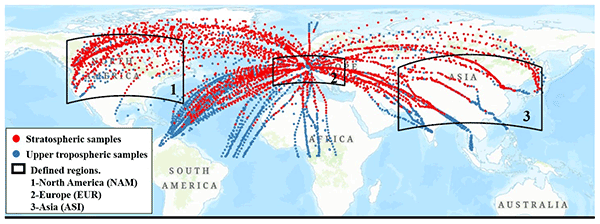
Mengze Li, Andrea Pozzer, Jos Lelieveld, and Jonathan Williams
Earth Syst. Sci. Data, 14, 4351–4364, https://doi.org/10.5194/essd-14-4351-2022, https://doi.org/10.5194/essd-14-4351-2022, 2022
Short summary
Short summary
We present a northern hemispheric airborne measurement dataset of atmospheric ethane, propane and methane and temporal trends for the time period 2006–2016 in the upper troposphere and lower stratosphere. The growth rates of ethane, methane, and propane in the upper troposphere are -2.24, 0.33, and -0.78 % yr-1, respectively, and in the lower stratosphere they are -3.27, 0.26, and -4.91 % yr-1, respectively, in 2006–2016.
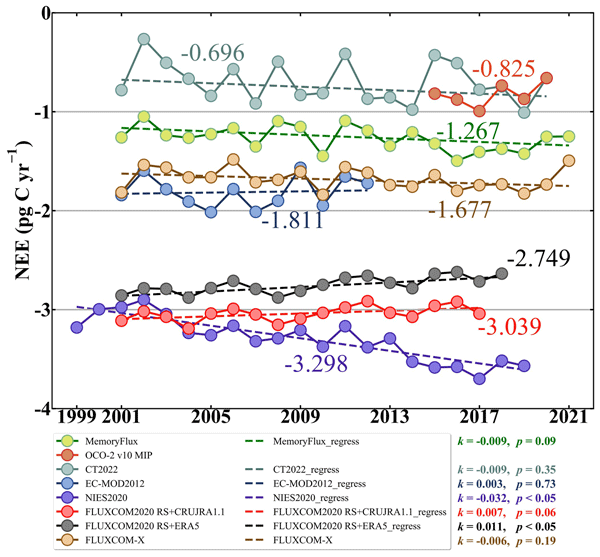
Chengcheng Huang, Wei He, Brendan Byrne, Ngoc Tu Nguyen, Jingfeng Xiao, Hua Yang, Philippe Ciais, Songhan Wang, Xing Li, Han Ma, Peipei Xu, Mengyao Zhao, Hui Chen, and Weimin Ju
Earth Syst. Sci. Data, 18, 7367–7390, https://doi.org/10.5194/essd-18-7367-2026, https://doi.org/10.5194/essd-18-7367-2026, 2026
Short summary
Short summary
We created MemoryFlux, a new dataset that showed how ecosystems across North America absorbed and released carbon from 2001 to 2021. Using a deep-learning approach trained on historical climate and environmental conditions, we improved estimates of land carbon exchange and captured carbon anomalies associated with major droughts and floods. MemoryFlux provides a more reliable view of carbon cycling and improves our understanding of how ecosystems respond to a changing climate.
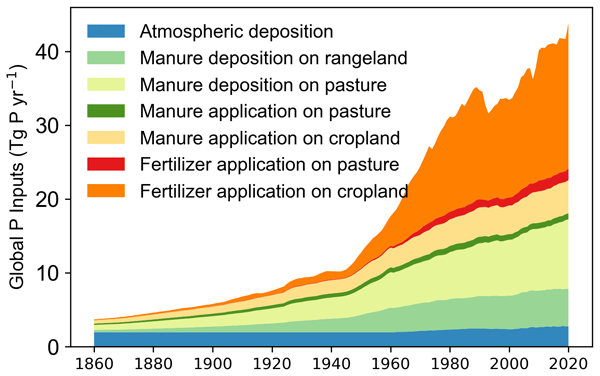
Zihao Bian, Hao Shi, Rui Li, Fei Lun, Francesco N. Tubiello, Nathaniel D. Mueller, Shiyu You, Rong Hao, Jiageng Ma, Longhui Li, Changchun Huang, Bing He, Yuanzhi Yao, and Hanqin Tian
Earth Syst. Sci. Data, 18, 7125–7141, https://doi.org/10.5194/essd-18-7125-2026, https://doi.org/10.5194/essd-18-7125-2026, 2026
Short summary
Short summary
The History of Anthropogenic Phosphorus Inputs (HaPi) provides a dataset of global human-driven phosphorus fluxes to terrestrial biosphere from 1860–2020 at a resolution of 5 arcmin. This comprehensive dataset consists of phosphorus fertilizer/manure application to cropland, manure application/deposition to pasture, manure deposition to rangeland, and atmospheric phosphorus deposition. It supports analyses of nutrient budgets and provides essential forcing data for Earth system models.
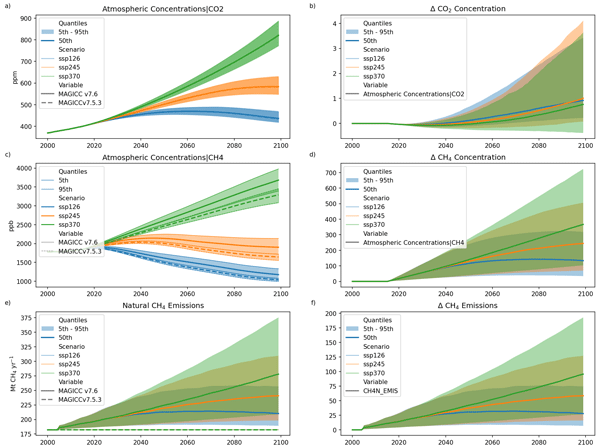
Trevor Sloughter, Zebedee Nicholls, Gang Tang, Thomas Kleinen, Zhen Zhang, and Joeri Rogelj
Geosci. Model Dev., 19, 9063–9076, https://doi.org/10.5194/gmd-19-9063-2026, https://doi.org/10.5194/gmd-19-9063-2026, 2026
Short summary
Short summary
High resolution models of the earth system exhibit some disagreement and uncertainty on future methane emissions from natural sources, in particular wetlands, with some studies predicting wetlands alone could be very significant sources over the 21st century. Modelling these emissions as a response to global temperature is one option for simple models to approximate the climate impact of wetlands. The effect is a small increase in overall temperatures and a widening of the uncertainty range.
Stiig Wilkenskjeld, Thomas Kleinen, Tobias Stacke, and Victor Brovkin
Biogeosciences, 23, 6583–6598, https://doi.org/10.5194/bg-23-6583-2026, https://doi.org/10.5194/bg-23-6583-2026, 2026
Short summary
Short summary
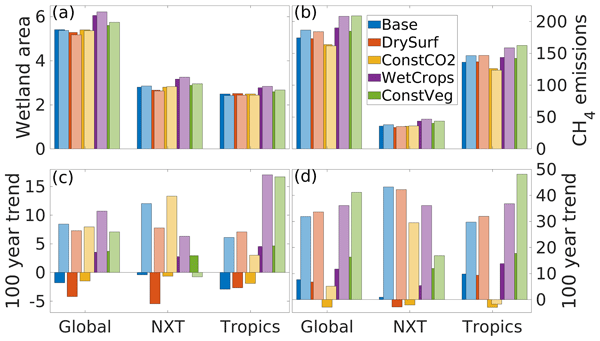
Methane is the second most important greenhouse gas with high potential for short term reductions of human induced global warming. We model methane emissions from the most important and most uncertain natural source: wetlands. We investigate how a number of assumptions, including human impact on natural wetlands, influences the wetlands and their methane emissions. Of the tested influences we find the most important to be how humans are altering the soil surface.
Tiia M. Määttä, Samantha H. Bosman, Jeffrey P. Chanton, Patrick Crill, Suzanne B. Hodgkins, Jalisha Theanutti Kallingal, Rachel M. Wilson, Ruth Varner, and Avni Malhotra
Biogeosciences, 23, 6639–6670, https://doi.org/10.5194/bg-23-6639-2026, https://doi.org/10.5194/bg-23-6639-2026, 2026
Short summary
Short summary
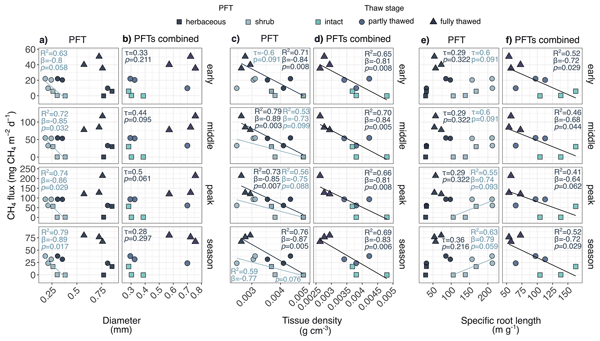
Permafrost thaw can lead to vegetation shifts and higher methane (CH4) emissions in peatlands. However, plant belowground controls of these emissions are uncertain. We investigated how plant roots and rhizomes contribute to CH4 emissions along a peatland permafrost thaw gradient. We found that low herbaceous plant root tissue density and high rhizome surface area were associated with higher CH4 emissions. This indicated increased plant-mediated CH4 transport with thaw.
Fenjuan Wang, Shamil Maksyutov, Rajesh Janardanan, Dmitry A. Belikov, Prabir K. Patra, Ruosi Liang, Yuzhong Zhang, Ge Ren, Hong Lin, Nicole Montenegro, Antoine Berchet, Marielle Saunois, Adrien Martinez, Sara Hyvärinen, Aki Tsuruta, Samuel Takele Kenea, Miao Liang, Xin Lan, Yukio Terao, M. Kawser Ahmed, Manish Naja, Akihiko Ito, Isamu Morino, Yukio Yoshida, Yu Someya, Tazu Saeki, and Tsuneo Matsunaga
Earth Syst. Sci. Data Discuss., https://doi.org/10.5194/essd-2026-420, https://doi.org/10.5194/essd-2026-420, 2026
Preprint under review for ESSD
Short summary
Short summary
Methane is a potent greenhouse gas driving climate change, yet Asian emissions remain highly uncertain. We conducted the first Methane Inversion inter-Comparison for Asia (MICA) combining seven models to estimate methane across Asia from 2010 to 2021 using satellite and ground data. We found that emissions are generally lower than prior inventories, though some countries underreport. This study provides a comprehensive, transparent dataset to quantify regional methane budgets across Asia.
Simon Scheiter, Jinfeng Chang, Philippe Ciais, Marie Dury, Louis Francois, Matthew Forrest, Alexandra Henrot, Christopher P. O. Reyer, Sonia Seneviratne, Jörg Steinkamp, Wim Thiery, Wenfang Xu, and Thomas Hickler
Biogeosciences, 23, 6409–6430, https://doi.org/10.5194/bg-23-6409-2026, https://doi.org/10.5194/bg-23-6409-2026, 2026
Short summary
Short summary
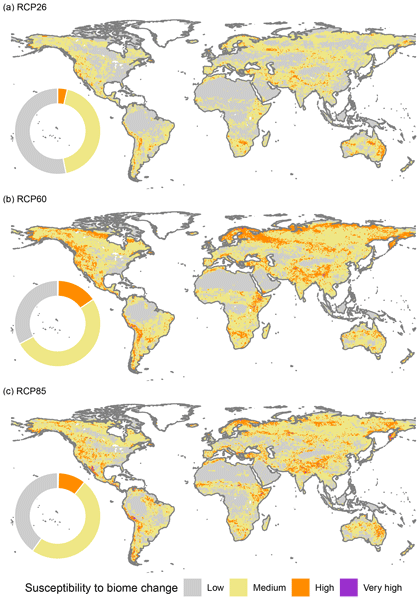
We show how climate change may reshape the world's major biomes, such as forests, grasslands, and tundra. Therefore, we combined dynamic vegetation models, machine learning and observation-based biome maps. We found that many biomes are likely to shift polewards as temperatures rise. Even under low-emission scenarios, large areas could change. These results help identify regions most susceptible to climate change and support global efforts to protect and manage natural ecosystems in the future.

Jiawei Jiang, Zhifeng Yan, Jinshi Jian, Jesper Riis Christiansen, Xinchu Wang, Ren-Min Yang, Zhen Zhang, and Philippe Ciais
Earth Syst. Sci. Data, 18, 6783–6797, https://doi.org/10.5194/essd-18-6783-2026, https://doi.org/10.5194/essd-18-6783-2026, 2026
Short summary
Short summary
Soil methane uptake represents the second-largest sink of atmospheric methane but the field observations have not yet been systematically compiled. Here, we compiled an open global soil methane uptake database from the 1980s, covering most regions in multi-timescale along with the soil moisture and temperature data. The data show strong seasonal changes and different controls across biomes, helping improve climate estimates, models, and satellite evaluations.
Li Xu, Qi Tang, Qing Zhu, William J. Riley, Guido R. van der Werf, Yang Chen, Michael J. Prather, and James T. Randerson
EGUsphere, https://doi.org/10.5194/egusphere-2026-4288, https://doi.org/10.5194/egusphere-2026-4288, 2026
This preprint is open for discussion and under review for Atmospheric Chemistry and Physics (ACP).
Short summary
Short summary
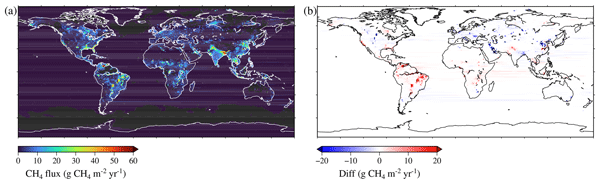
Using the E3SM version 3 model with interactive chemistry, this study shows that wildfires substantially perturb global and regional tropospheric chemistry and modify radiative effects through aerosol and ozone interactions, with particularly strong impacts in tropical fire regions. By connecting wildfire emissions with changes in atmospheric composition, radiation, and climate, this study provides important insights on how the atmosphere responds to changing fire activities.
Makoto Saito, Yosuke Niwa, Yukio Yoshida, Hiroshi Suto, Kei Shiomi, Akihide Kamei, Fumie Kataoka, Isamu Morino, Hibiki M. Noda, Hirofumi Ohyama, Tazu Saeki, Yu Someya, Hisashi Yashiro, and Tsuneo Matsunaga
Earth Syst. Sci. Data, 18, 6565–6588, https://doi.org/10.5194/essd-18-6565-2026, https://doi.org/10.5194/essd-18-6565-2026, 2026
Short summary
Short summary
This study evaluates the ability of the GOSAT‑2 satellite to observe atmospheric methane and estimate global emissions. Using a global analysis, we show that GOSAT‑2 provides wider coverage than earlier missions and produces emission estimates consistent with independent references. The results demonstrate that satellite data offer useful information on methane sources, especially in regions with few ground measurements.
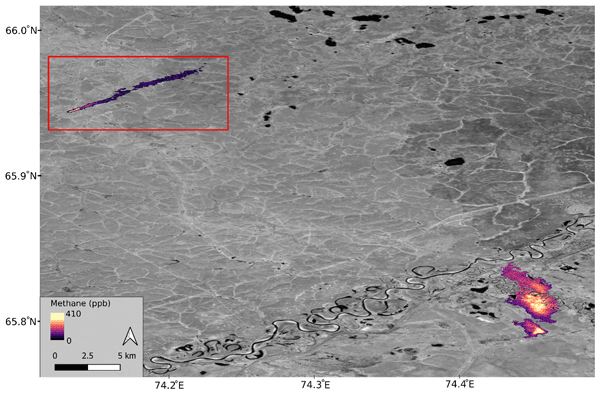
Anthony Campbell, Lauren Potyk, and Benjamin Poulter
Atmos. Meas. Tech., 19, 5603–5615, https://doi.org/10.5194/amt-19-5603-2026, https://doi.org/10.5194/amt-19-5603-2026, 2026
Short summary
Short summary
CH4 observations from space are an essential component for improving our estimates of CH4 emissions from fossil fuels and natural sources. We utilized GHGSat, a CH4 plume mapping satellite constellation, to update the fossil fuel emission inventory in the Western Siberian Lowlands to understand how including plume observations in models changes emissions estimates. Our approach resulted in a reduction in CH4 emissions attributed to wetlands.
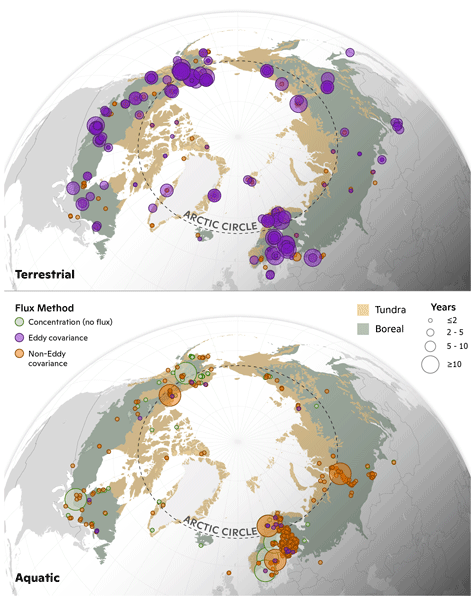
Anna-Maria Virkkala, Isabel Wargowsky, Judith Vogt, McKenzie A. Kuhn, Simran Madaan, Tiffany Windholz, Kyle A. Arndt, Gerard Rocher-Ros, Mathias Göckede, David Olefeldt, Edward A. G. Schuur, David Bastviken, Richard O'Keefe, Brendan M. Rogers, Jennifer D. Watts, Kelcy Kent, Kristoffer Aalstad, Kelly Aho, Joonatan Ala-Könni, Haley Alcock, Inge Althuizen, Christopher D. Arp, Jun Asanuma, Mika Aurela, Sivakiruthika Balathandayuthabani, Katrin Attermeyer, Alan Barr, Maialen Barret, Ochirbat Batkhishig, Christina Biasi, Mats P. Björkman, Andrew Black, Elena Blanc-Betes, Pascal Bodmer, Julia Boike, Abdullah Bolek, Frédéric Bouchard, Ingeborg Bussmann, Lea Cabrol, Eleonora Canfora, Sean Carey, Karel Castro-Morales, Namyi Chae, Andreas Christen, Torben R. Christensen, Casper T. Christiansen, Housen Chu, Graham Clark, Francois Clayer, Patrick Crill, Christopher Cunada, Scott J. Davidson, Joshua F. Dean, Sigrid Dengel, Matteo Detto, Catherine Dieleman, Florent Domine, Egor Dyukarev, Colin Edgar, Bo Elberling, Craig A. Emmerton, Eugenie Euskirchen, Grant Falvo, Thomas Friborg, Michelle Garneau, Mariasilvia Giamberini, Mikhail V. Glagolev, Miquel A. Gonzalez-Meler, Gustaf Granath, Jón Guðmundsson, Konsta Happonen, Yoshinobu Harazono, Lorna Harris, Josh Hashemi, Nicholas Hasson, Janna Heerah, Liam Heffernan, Manuel Helbig, Warren Helgason, Michal Heliasz, Greg Henry, Geert Hensgens, Tetsuya Hiyama, Beth Holmes, Macall Hock, David Holl, Jutta Holst, Thomas Holst, Gabriel Hould-Gosselin, Elyn Humphreys, Jacqueline Hung, Jussi Huotari, Hiroki Ikawa, Danil V. Ilyasov, Mamoru Ishikawa, Go Iwahana, Hiroki Iwata, Marcin Antoni Jackowicz-Korczynski, Joachim Jansen, Järvi Järveoja, Vincent E. J. Jassey, Rasmus Jensen, Katharina Jentzsch, Robert G. Jespersen, Carl-Fredrik Johannesson, Cheristy P. Jones, Anders Jonsson, Ji Young Jung, Sari Juutinen, Evan Kane, Jan Karlsson, Sergey Karsanaev, Kuno Kasak, Julia Kelly, Kasha Kempton, Marcus Klaus, George W. Kling, Natascha Kljun, Jacqueline Knutson, Hideki Kobayashi, John Kochendorfer, Kukka-Maaria Kohonen, Pasi Kolari, Mika Korkiakoski, Aino Korrensalo, Pirkko Kortelainen, Egle Koster, Kajar Koster, Ayumi Kotani, Praveena Krishnan, Juliya Kurbatova, Lars Kutzbach, Min Jung Kwon, Ethan D. Kyzivat, Jessica Lagroix, Theodore Langhorst, Elena Lapshina, Tuula Larmola, Klaus S. Larsen, Isabelle Laurion, Justin Ledman, Hanna Lee, A. Joshua Leffler, Lance Lesack, Anders Lindroth, David Lipson, Annalea Lohila, Efrén López-Blanco, Vincent L. St. Louis, Erik Lundin, Miska Luoto, Takashi Machimura, Marta Magnani, Avni Malhotra, Marja Maljanen, Ivan Mammarella, Elisa Männistö, Luca Belelli Marchesini, Phil Marsh, Pertti J. Martikainen, Maija E. Marushchak, Mikhail Mastepanov, Alex Mavrovic, Trofim Maximov, Christina Minions, Daniel F. Nadeau, Marco Montemayor, Tomoaki Morishita, Patrick Murphy, Erin Nicholls, Mats B. Nilsson, Anastasia Niyazova, Jenni Nordén, Koffi Dodji Noumonvi, Hannu Nykänen, Walter Oechel, Anne Ojala, Tomohiro Okadera, Sujan Pal, Alexey V. Panov, Tim Papakyriakou, Dario Papale, Sang-Jong Park, Frans-Jan W. Parmentier, Gilberto Pastorello, Mike Peacock, Matthias Peichl, Roman Petrov, Kyra St. Pierre, Norbert Pirk, Jessica Plein, Vilmantas Preskienis, Anatoly Prokushkin, Jukka Pumpanen, Hilary A. Rains, Niklas Rakos, Aleksi Räsänen, Helena Rautakoski, Riikka Rinnan, Janne Rinne, Adrian Rocha, Nigel Roulet, Alexandre Roy, Anna Rutgersson, Aleksandr F. Sabrekov, Torsten Sachs, Erik Sahlée, Alejandro Salazar, Henrique Oliveira Sawakuchi, Christopher Schulze, Roger Seco, Armando Sepulveda-Jauregui, Svetlana Serikova, Abbey Serrone, Hanna M. Silvennoinen, Sofie Sjogersten, June Skeeter, Jo Snöälv, Sebastian Sobek, Oliver Sonnentag, Emily H. Stanley, Maria Strack, Lena Strom, Patrick Sullivan, Ryan Sullivan, Anna Sytiuk, Torbern Tagesson, Pierre Taillardat, Julie Talbot, Suzanne E. Tank, Mario Tenuta, Irina Terenteva, Frederic Thalasso, Antoine Thiboult, Halldor Thorgeirsson, Fenix Garcia Tigreros, Margaret Torn, Amy Townsend-Small, Claire Treat, Alain Tremblay, Carlo Trotta, Eeva-Stiina Tuittila, Merritt Turetsky, Masahito Ueyama, Muhammad Umair, Aki Vähä, Lona van Delden, Maarten van Hardenbroek, Andrej Varlagin, Ruth K. Varner, Tarmo Virtanen, Elena Veretennikova, Timo Vesala, Carolina Voigt, Jorien E. Vonk, Robert Wagner, Katey Walter Anthony, Qinxue Wang, Masataka Watanabe, Hailey Webb, Jeffrey M. Welker, Andreas Westergaard-Nielsen, Sebastian Westermann, Jeffrey R. White, Christian Wille, Scott N. Williamson, Scott Zolkos, Donatella Zona, and Susan M. Natali
Earth Syst. Sci. Data, 18, 6357–6409, https://doi.org/10.5194/essd-18-6357-2026, https://doi.org/10.5194/essd-18-6357-2026, 2026
Short summary
Short summary
This dataset includes monthly measurements of carbon dioxide and methane exchange between land, water, and the atmosphere from over 1000 sites in Arctic and boreal regions. It combines measurements from a variety of ecosystems, including wetlands, forests, tundra, lakes, and rivers, gathered by over 260 researchers from 1984–2024. This dataset can be used to improve and reduce uncertainty in carbon budgets in order to strengthen our understanding of climate feedbacks in a warming world.
Xiaoying Shi, Daniel M. Ricciuto, Yaoping Wang, Joe R. Melton, Fortunat Joos, Yiqi Luo, Xiaofeng Xu, Dafeng Hui, Qianlai Zhuang, Chunjing Qiu, Hongxing He, Siya Shao, Xingjie Lu, Yongjiu Dai, Akihiko Ito, Qing Sun, Nitin Chaudhary, Ayesha Hussain, Mousong Wu, Jian Zhou, Jingwei Zhang, Ye Yuan, Rachael H. Turton, Eleanor J. Burke, Jiafu Mao, Yuefeng Hao, Natalie A. Griffiths, Verity Salmon, Paul J. Hanson, Melanie A. Mayes, and Peter E. Thornton
EGUsphere, https://doi.org/10.5194/egusphere-2026-5193, https://doi.org/10.5194/egusphere-2026-5193, 2026
This preprint is open for discussion and under review for Biogeosciences (BG).
Short summary
Short summary
Northern peatlands store vast amounts of carbon, but their response to climate change remains uncertain. We compared 15 ecosystem models with observations from a long-term warming and elevated carbon dioxide experiment in Minnesota. Models differed widely in their carbon responses, reflecting differences in ecosystem processes and model parameters. The results identify priorities for improving peatland models and projections of future carbon–climate feedbacks.
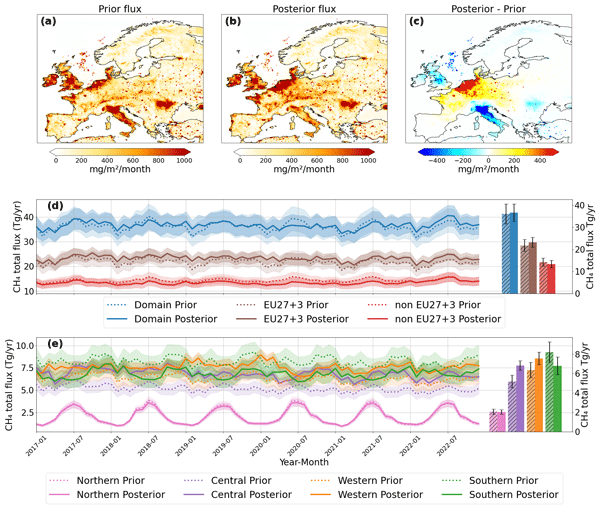
Anteneh Getachew Mengistu, Aki Tsuruta, Antoine Berchet, Rona Thompson, Maria Tenkanen, Hannakaisa Lindqvist, Tiina Markkanen, Antti Leppänen, Antti Laitinen, Adrien Martinez, Audrey Fortems-Cheiney, Lena Höglund-Isaksson, and Tuula Aalto
Atmos. Chem. Phys., 26, 12295–12327, https://doi.org/10.5194/acp-26-12295-2026, https://doi.org/10.5194/acp-26-12295-2026, 2026
Short summary
Short summary
Our manuscript presents a six-year, high-resolution inversion of European methane emissions using the Community Inversion Framework and FLEXPART. Leveraging an expanded in situ network, we reconcile inventories with observations, reveal regional biases, refine European methane budgets, and highlight the dominance of agricultural emissions. Results provide policy-relevant insights for mitigation and inventory verification.
Santiago Parraguez Cerda, Johann Rasmus Nüß, Nikos Daskalakis, Arjo Segers, Oliver Schneising, Mihalis Vrekoussis, and Maria Kanakidou
EGUsphere, https://doi.org/10.5194/egusphere-2026-3458, https://doi.org/10.5194/egusphere-2026-3458, 2026
This preprint is open for discussion and under review for Geoscientific Model Development (GMD).
Short summary
Short summary
Our study presents a parametric method for adaptive observation weighting in global CH4 emission inversions, using the spatial and temporal distribution of satellite observations. The approach reduces grid-cell weight variability by ∼20 %, improving the balance of observational influence, especially in remote regions, without added computational cost, and easily applicable to multiple datasets. Global 2019 inversions with TMVar yield consistent posterior emissions and good agreement with TCCON.
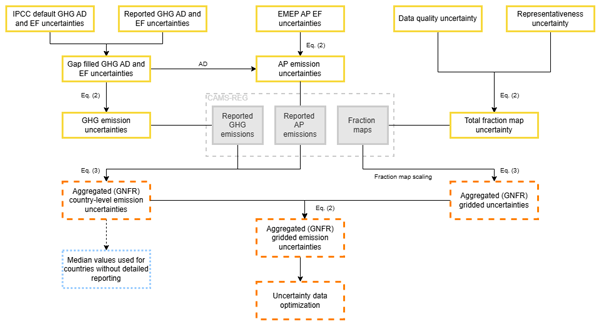
Ingrid Super, David Mathas, Bastiaan Jonkheid, Arjo Segers, and Jeroen Kuenen
Earth Syst. Sci. Data, 18, 6119–6137, https://doi.org/10.5194/essd-18-6119-2026, https://doi.org/10.5194/essd-18-6119-2026, 2026
Short summary
Short summary
We present an emission uncertainty estimate to support atmospheric monitoring of greenhouse gas and air pollutant emissions using observations. We find significant uncertainties in country-total emissions and in the spatial distribution of emissions, largely dependent on the pollutant considered. A dataset is provided that lists emission uncertainties for a state-of-the-art European emission inventory.
Hui Li, Philippe Ciais, Frédéric Chevallier, Bo Zheng, Paul I. Palmer, Frank Hase, Morgan Lopez, Elsa M. Ordway, Shushi Peng, Danielle Monteverde, Michel Ramonet, Jason M. St. Clair, Le Bienfaiteur Sagang, and Benjamin Poulter
Atmos. Chem. Phys., 26, 11893–11908, https://doi.org/10.5194/acp-26-11893-2026, https://doi.org/10.5194/acp-26-11893-2026, 2026
Short summary
Short summary
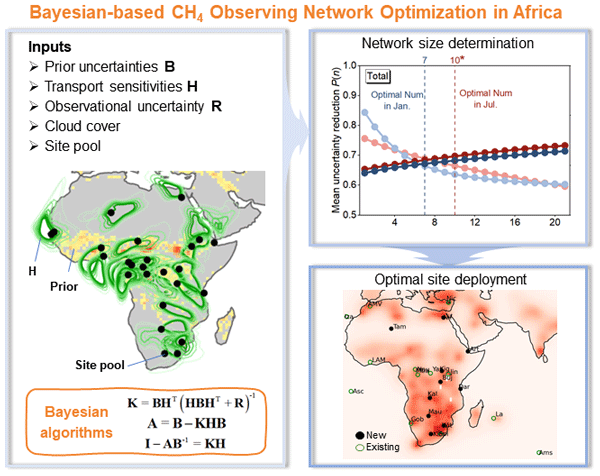
We studied how to best place methane monitoring instruments across Africa to better understand where emissions come from. Because observations can overlap in what they detect, adding more sites does not always improve results equally. Using a statistical approach, we identified both the ideal number and locations of sites (ten new sites can reduce emission uncertainty by over 65 % for total African CH4). Our results help guide cost-effective monitoring strategies in regions with limited data.
Simeng Li, Enrico Dammers, Beatriz Herrera, Arjo Segers, Mark W. Shephard, Martin Van Damme, Lieven Clarisse, Shelley van der Graaf, Roy Wichink Kruit, and Jan Willem Erisman
EGUsphere, https://doi.org/10.5194/egusphere-2026-4245, https://doi.org/10.5194/egusphere-2026-4245, 2026
This preprint is open for discussion and under review for Geoscientific Instrumentation, Methods and Data Systems (GI).
Short summary
Short summary
Ammonia from agriculture can harm ecosystems and air quality, but tracking emissions accurately is difficult. We developed a method combining in situ measurements and satellite observations to estimate ammonia emissions across the Netherlands. In situ measurement captures local detail while satellites provide broad coverage; combining both improves estimates. We also identified where new measurement stations would most improve emission monitoring, helping guide future network design.
Sophie F. von Fromm, R. Scott Winton, Derrick R. Vaughn, Jennifer C. Bowen, Susan Trumbore, Kateřina Jandová, Julie Shahan, Olga Vindušková, Shane W. Stoner, Maedeh Chitsaz, Avni Malhotra, Adrian A. Wackett, Alison M. Hoyt, Katherine Heckman, Katerina Georgiou, Daniel Wasner, Luisa Isabell Minich, Katherine E. Grant, Caitlin E. Hicks Pries, Karis J. McFarlane, Anna Abramova, Corey Lawrence, and Jeffrey Beem-Miller
Earth Syst. Sci. Data, 18, 5793–5815, https://doi.org/10.5194/essd-18-5793-2026, https://doi.org/10.5194/essd-18-5793-2026, 2026
Short summary
Short summary
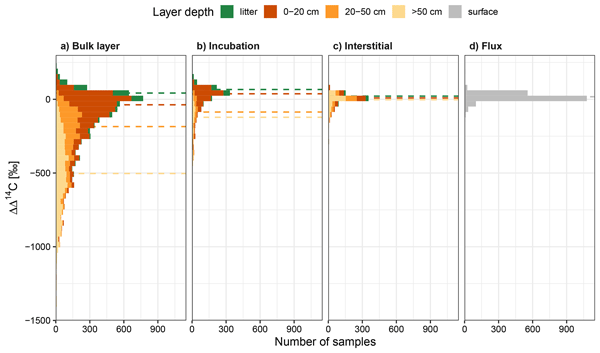
Here we present the updated International Soil Radiocarbon Database version 2, which compiles radiocarbon data from over 500 studies at 1700 locations worldwide. The database provides various soil radiocarbon measurements to improve our understanding of factors that influence the age distributions of carbon in soils. While we have made progress expanding the database and improving its structure, important gaps remain in tropical regions, deep soils, and certain measurement types.
Ke Yu, Yang Su, Ronny Lauerwald, Philippe Ciais, Yi Xi, Haoran Xu, Xianglin Zhang, Nicolas Viovy, Amie Pickering, Marie Collard, and Daniel S. Goll
Geosci. Model Dev., 19, 7217–7237, https://doi.org/10.5194/gmd-19-7217-2026, https://doi.org/10.5194/gmd-19-7217-2026, 2026
Short summary
Short summary
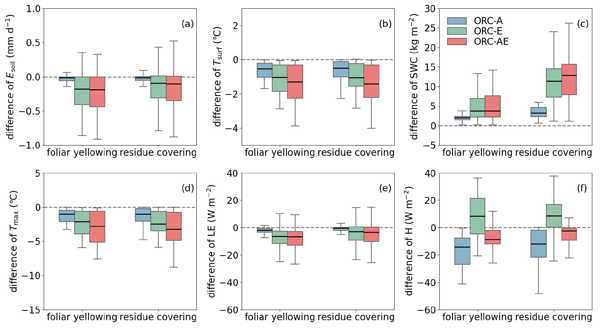
Coupling crop and land surface models helps quantify the climate effects of agriculture, but lacks crop-specific management processes. We enhanced a land surface model with time-varying albedo from foliar yellowing and residue cover, improving the simulation of energy and water fluxes. Results show cooler surfaces and slightly wetter soils during residue cover, highlighting how managements improve climate mitigation and adaptation, advancing the development of climate-smart agriculture.
Chantelle Burton, Francesca Di Giuseppe, Matthew W. Jones, Douglas I. Kelley, Maria L. F. Barbosa, Joe McNorton, Robert Potts, Carlota Segura-Garcia, John T. Abatzoglou, Iulian Alin Rosu, Niels Andela, Liana O. Anderson, Sally Archibald, Esther Brambleby, Emilio Chuvieco, Andy Ciavarella, Hamish Clarke, Francisco de la Barrera, Carlos M. Di Bella, Enza Di Tomaso, Kebonye Dintwe, Tim S. Doherty, Victoria M. Donovan, Jonathan M. Eden, Paulo M. Fernandes, Lukas Fiedler, Louis Giglio, Olivia Haas, Douglas Hamilton, Stijn Hantson, Sarah Harris, Andrew J. Hartley, Theodore R. Keeping, Crystal A. Kolden, Jean-Luc Kouassi, Elena Kukavskaya, Seppe Lampe, Zhongwei Liu, Guilherme Mataveli, Sarah Meier, Duarte Oom, Mark Parrington, Yuquan Qu, Victor Resco de Dios, Julien Ruffault, Mojtaba Sadegh, Cristina Santín, Fernando Sedano, Jacquelyn K. Shuman, Patrícia S. Silva, Fiona R. Spuler, Carmen B. Steinmann, Veerachai Tanpipat, Miguel Ángel Torres-Vazquez, Marco Turco, Guido R. van der Werf, Dave van Wees, Sander Veraverbeke, Jakob B. Wessel, and Bo Zheng
Earth Syst. Sci. Data Discuss., https://doi.org/10.5194/essd-2026-587, https://doi.org/10.5194/essd-2026-587, 2026
Preprint under review for ESSD
Short summary
Short summary
The third State of Wildfires report examines extreme wildfire events from 2025 to early 2026. It analyses key regional events in Midwestern Canadian Shield Forests, Northwest Iberia, and Chilean Temperate Forests and Matorral, assessing their impacts, drivers, and attributing them to climate change. Climate change greatly increased the likelihood of these fires, and without strong mitigation, such events will become more frequent.
Elsa Abs, Christoph Keuschnig, Pierre Amato, Chris Bowler, Eric Capo, Alexander B. Chase, Luciana Chavez Rodriguez, Abraham N. Dabengwa, Thomas Dussarrat, Thomas Guzman, Linnea K. Hernandez, Jenni Hultman, Kirsten Küsel, Zhen Li, Anna Mankowski, William J. Riley, Scott R. Saleska, and Lisa Wingate
Biogeosciences, 23, 5205–5237, https://doi.org/10.5194/bg-23-5205-2026, https://doi.org/10.5194/bg-23-5205-2026, 2026
Short summary
Short summary
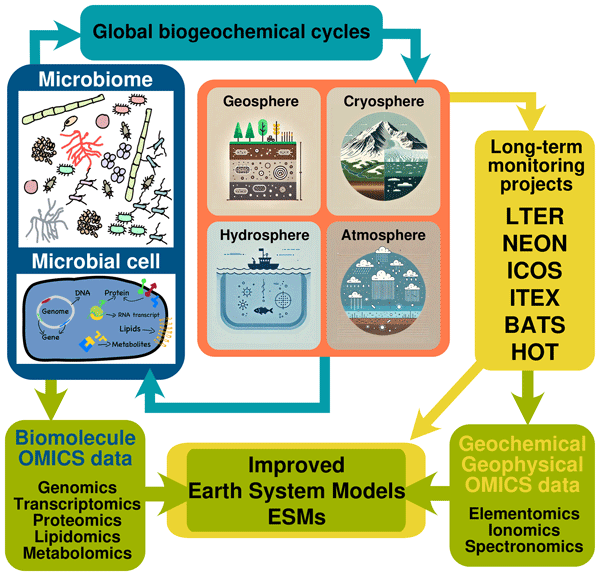
Meta-omics technologies offer new tools to understand how microbial and plant functional diversity shape biogeochemical cycles across ecosystems. This perspective explores how integrating omics data with ecological and modeling approaches can improve our understanding of greenhouse gas fluxes and nutrient dynamics, from soils to clouds, and from the past to the future. We highlight challenges and opportunities for scaling omics insights from local processes to Earth system models.
Kate Rees, Maria Val Martin, David Beerling, Aurelia Bezanger, Nicolas Cowan, Ruby Devlin, Mark Hanlon, Ben Langford, Sergiy Medinets, and Julia Drewer
EGUsphere, https://doi.org/10.5194/egusphere-2026-4380, https://doi.org/10.5194/egusphere-2026-4380, 2026
Short summary
Short summary
Enhanced rock weathering spreads crushed rock on soil to capture CO₂. We tested how this affects gases released from different UK soils in a lab study. Results varied with land uses: some soils released less CO₂ or more NO, others showed small changes in methane or other gases. This understanding of a wide range of trace gases is crucial to examine climate forcing and air quality implications of enhanced rock weathering deployment.
Ida Bagus Mandhara Brasika, Pierre Friedlingstein, Stephen Sitch, Michael O'Sullivan, Maria Carolina Duran-Rojas, Emma W. Littleton, Toby R. Marthews, Timothy Hill, Wei Li, Yidi Xu, Jiaxin Zhou, Xiangzhong Luo, Ruiying Zhao, Yuanchao Fan, Dedy Sukmara, Timer Manurung, Masayuki Kondo, Alexander Knohl, Tejaswini Jaajpera, and Lisma Safitri
EGUsphere, https://doi.org/10.5194/egusphere-2026-3689, https://doi.org/10.5194/egusphere-2026-3689, 2026
This preprint is open for discussion and under review for Geoscientific Model Development (GMD).
Short summary
Short summary
Oil palm is a major crop in Indonesia, but climate models often treat it as generic cropland. We developed a new way to represent oil palm in the Joint UK Land Environment Simulator. This improved how the model captures carbon stored and released by oil-palm plantations. The work helps estimate emissions from land-use change more realistically, supporting better understanding of tropical agriculture, deforestation and climate impacts.
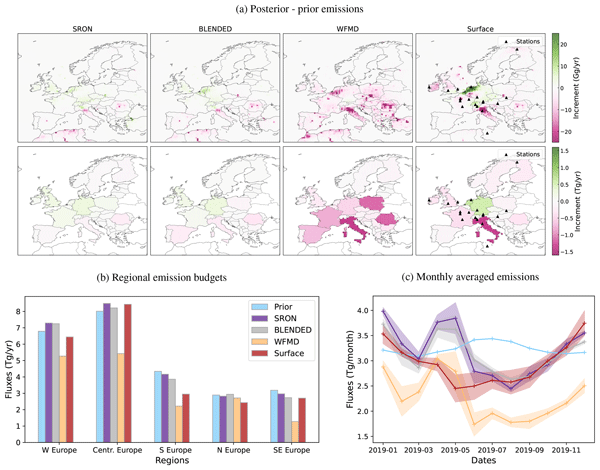
Aurélien Sicsik-Paré, Audrey Fortems-Cheiney, Isabelle Pison, Grégoire Broquet, Alvin Opler, Elise Potier, Adrien Martinez, Oliver Schneising, Michael Buchwitz, Joannes D. Maasakkers, Tobias Borsdorff, and Antoine Berchet
Atmos. Chem. Phys., 26, 10423–10454, https://doi.org/10.5194/acp-26-10423-2026, https://doi.org/10.5194/acp-26-10423-2026, 2026
Short summary
Short summary
Assimilating satellite methane observations provides top-down quantification of regional methane emissions. This study compares European emissions in 2019 estimated from the inversion of three satellite datasets. We find inconsistencies in national budgets and spatial patterns, with no product clearly superior. We disentangle drivers of the differences in emissions, highlighting the impact of differences in coverage, observations and errors on the consistency of methane emission estimates.
Martin Vojta, Rakesh Subramanian, Nikos Gialesakis, Rona L. Thompson, Andreas Stohl, and Maria Kanakidou
EGUsphere, https://doi.org/10.5194/egusphere-2026-3792, https://doi.org/10.5194/egusphere-2026-3792, 2026
Short summary
Short summary
We estimate methane emissions in the Eastern Mediterranean and Middle East for 2020 using TROPOMI satellite observations and inverse modeling. We find robust downward corrections of emissions around the Persian Gulf compared to the EDGAR v8.0 inventory, broadly consistent with the recent EDGAR_2025_GHG update, highlighting how observation-based estimates and inventory refinements can jointly improve our understanding of regional methane emissions.
Man Chen, Philippe Ciais, Gustaf Hugelius, and Filipe Aires
Earth Syst. Sci. Data Discuss., https://doi.org/10.5194/essd-2026-254, https://doi.org/10.5194/essd-2026-254, 2026
Preprint under review for ESSD
Short summary
Short summary
Peatlands are vital carbon stores, yet mapping them consistently across borders is challenging due to varying data quality and definitions. We developed PeatCover, a ~90 m resolution map that harmonizes existing inventories with Earth observation and hydro-topographic data through machine learning. PeatCover provides a spatially coherent dataset that resolves fine landscape structures. These improvements enable refined carbon assessments and methane emission models.
Pramit Kumar Deb Burman, Amol Kale, Yogesh K. Tiwari, Suraj Reddy Rodda, Sandipan Mukherjee, Pulakesh Das, Arunima Jayachandran, Dipankar Sarma, Palingamoorthy Gnanamoorthy, Nirmali Gogoi, Somnath Baidya Roy, Ganapati S. Bhat, and Kazuhito Ichii
EGUsphere, https://doi.org/10.5194/egusphere-2026-3597, https://doi.org/10.5194/egusphere-2026-3597, 2026
This preprint is open for discussion and under review for Biogeosciences (BG).
Short summary
Short summary
Accurate estimates of terrestrial carbon uptake are required to strategise effective climate mitigation measures. Several remotely sensed and modelled global datasets are available for such purposes, none of which is developed using in-situ measurements from India. We objectively evaluated the performance of these datasets over India. We find that machine learning algorithms perform best over croplands and forests, whereas satellite observations perform better over grasslands.
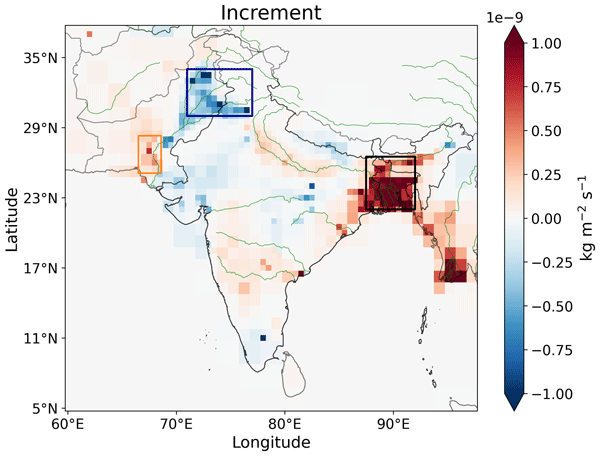
Rakesh Subramanian, Rona L. Thompson, Martin Vojta, Oliver Schneising, and Andreas Stohl
Atmos. Chem. Phys., 26, 9757–9777, https://doi.org/10.5194/acp-26-9757-2026, https://doi.org/10.5194/acp-26-9757-2026, 2026
Short summary
Short summary
We used satellite observations and atmospheric models to understand methane emissions over South Asia, a region with large uncertainties. The study finds that the total emissions are moderately higher than previously thought, with important spatial and seasonal differences, especially in areas affected by monsoon rainfall and seasonal flooding. The results highlight the influence of rainfall, wetlands, and agriculture on CH₄ emissions and show the need for seasonally resolved emission estimates.
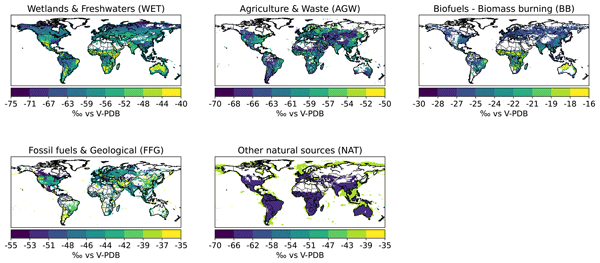
Emeline Tapin, Antoine Berchet, Adrien Martinez, Malika Menoud, Joël Thanwerdas, Xin Lan, Edward Malina, Daniele Gasbarra, and Marielle Saunois
Earth Syst. Sci. Data, 18, 4793–4832, https://doi.org/10.5194/essd-18-4793-2026, https://doi.org/10.5194/essd-18-4793-2026, 2026
Short summary
Short summary
We present global δ¹³C-CH₄ source signature maps (1998–2022) at 1°×1° resolution for five emission sectors and 11 sub-sectors, with quantified uncertainties. Sensitivity experiments with an atmospheric transport model assess how uncertainties in emissions, isotopic signatures, OH sinks, and kinetic isotope effects influence atmospheric δ¹³C-CH₄ and CH₄, providing guidance for isotopic inversions.
Amy E. Goldman, James C. Stegen, Elizabeth T. Borer, Robert Hensley, Allison Myers-Pigg, Mikayla A. Borton, Paytsar Muradyan, Nicholas D. Ward, Jean M. Andino, Andrew D. Richardson, Alexandro B. Leverkus, Christopher S. Lowry, Nate G. McDowell, Kaizad F. Patel, Scott J. Davidson, Brieanne Forbes, Martha R. Downs, W. Robert Bolton, Timothy D. Scheibe, and Avni Malhotra
EGUsphere, https://doi.org/10.5194/egusphere-2026-3537, https://doi.org/10.5194/egusphere-2026-3537, 2026
Short summary
Short summary
Distributed data generation, or data collected from multiple sources and locations using standardized approaches and coordination among researchers, is powerful for scalable environmental knowledge. This paper helps readers understand options for distributed data generation, offers practical guidance for outreach, operations, and sharing outcomes, and explores how artificial intelligence can help address longstanding challenges.
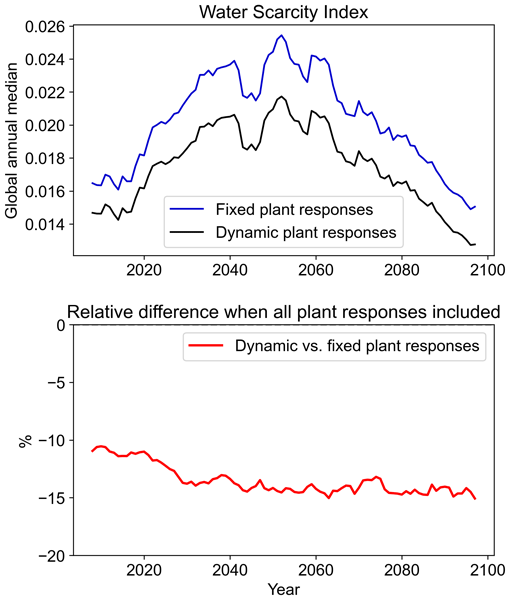
Jessica Stacey, Richard A. Betts, Andrew Hartley, Lina M. Mercado, and Nicola Gedney
Hydrol. Earth Syst. Sci., 30, 4225–4243, https://doi.org/10.5194/hess-30-4225-2026, https://doi.org/10.5194/hess-30-4225-2026, 2026
Short summary
Short summary
Plants typically transpire less with rising atmospheric carbon dioxide, leaving more water in the ground for human use, but many future water scarcity assessments ignore this effect. We use a land surface model to examine how plant responses to carbon dioxide and climate change affect future water scarcity. Our results suggest that including these plant responses increases overall water availability for most people, highlighting the importance of their inclusion in future water scarcity studies.
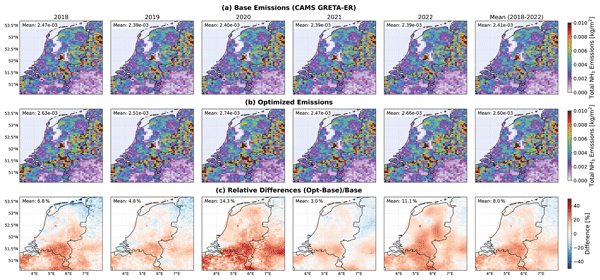
Tyler Wizenberg, Enrico Dammers, Arjo Segers, Mark W. Shephard, Pierre Coheur, Lieven Clarisse, Martin Van Damme, Henk Eskes, Roy Wichink Kruit, Shelley van der Graaf, and Martijn Schaap
Atmos. Chem. Phys., 26, 9589–9623, https://doi.org/10.5194/acp-26-9589-2026, https://doi.org/10.5194/acp-26-9589-2026, 2026
Short summary
Short summary
We combined five years of satellite data on ammonia and nitrogen dioxide concentrations with a regional model to better estimate nitrogen emissions and deposition in the Netherlands. This improved the accuracy of pollution maps and trends, especially in agricultural regions. Our approach helps identify when and where emissions are highest, supporting better air quality management and environmental protection by showing the benefits of using multiple complimentary satellite datasets together.
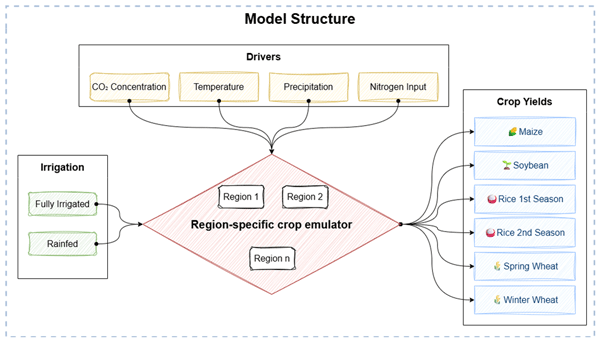
Xinrui Liu, Thomas Gasser, Jianmin Ma, Junfeng Liu, Jonas Jägermeyr, Christoph Müller, Christian Folberth, Florian Zabel, Atul K. Jain, Wenfeng Liu, and Heidi Webber
Geosci. Model Dev., 19, 5857–5880, https://doi.org/10.5194/gmd-19-5857-2026, https://doi.org/10.5194/gmd-19-5857-2026, 2026
Short summary
Short summary
This paper presents a crop yield emulator for four major crops (maize, rice, soybean, and wheat). Trained on process-based crop model simulations, it captures yield responses to key drivers: atmospheric CO2, temperature, water availability, and nitrogen use. The emulator closely reproduces the behavior of complex crop models and aligns well with FAO (Food and Agriculture Organization)-reported historical yields. It provides a robust and efficient method for representing agricultural outcomes in climate change impact assessments.
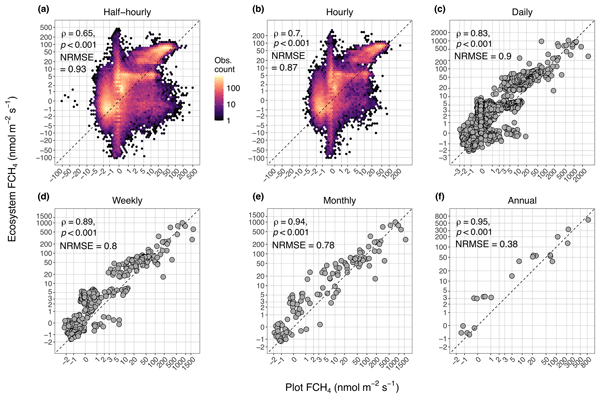
Tiia Määttä, Ankur R. Desai, Masahito Ueyama, Rodrigo Vargas, Eric J. Ward, Zhen Zhang, Gil Bohrer, Kyle Delwiche, Etienne Fluet-Chouinard, Järvi Järveoja, Sara H. Knox, Lulie Melling, Mats B. Nilsson, Matthias Peichl, Angela Che Ing Tang, Eeva-Stiina Tuittila, Jinsong Wang, Sheel Bansal, Sarah Feron, Manuel Helbig, Aino Korrensalo, Ken W. Krauss, Gavin McNicol, Shuli Niu, Zutao Ouyang, Kathleen Savage, Oliver Sonnentag, Robert Jackson, and Avni Malhotra
Biogeosciences, 23, 4379–4445, https://doi.org/10.5194/bg-23-4379-2026, https://doi.org/10.5194/bg-23-4379-2026, 2026
Short summary
Short summary
We compared ecosystem- and plot-scale methane fluxes across wetland and upland sites. Ecosystem-scale fluxes were higher than at plot scale, but differences were small. Vapor pressure deficit, atmospheric pressure, turbulence, and wind direction affected the differences. Both scales could be combined for improved methane flux estimates at coarser temporal scales.
Tim Stripp, Zhixuan Guo, Pierre Friedlingstein, Michael O’Sullivan, Stephen Sitch, Ana Bastos, Philippe Ciais, Jefferson Goncalves de Souza, Akihiko Ito, Wei Li, and Lei Ma
EGUsphere, https://doi.org/10.5194/egusphere-2026-3584, https://doi.org/10.5194/egusphere-2026-3584, 2026
Short summary
Short summary
Fire is a key process within the Earth system, yet it is often poorly represented in land carbon cycle models used to estimate how much carbon land ecosystems absorb from the atmosphere. We improved these models by applying long-term burned area data reconstructed from satellite observations. This reduced biases and uncertainty in fire carbon emission estimates and improved estimates of land carbon uptake, implying this method could enhance global and regional carbon budget estimates.
Madoka Koshino, Kazuhito Ichii, Misaki Hase, Daniel Henri, and Beak Munseon
EGUsphere, https://doi.org/10.5194/egusphere-2026-3311, https://doi.org/10.5194/egusphere-2026-3311, 2026
Short summary
Short summary
Vegetation change is often monitored using satellite observations, but different measures do not always show the same results. We compared four indicators across Asia and Oceania from 2000 to 2021 and found that agreement among them varied by region. In some northern areas, vegetation greening was not accompanied by increases in biomass or productivity. These findings show that combining multiple indicators provides a more complete picture of ecosystem change.
Nikola Besic, Philippe Ciais, Fa Li, Robert Jackson, Kunxiaojia Yuan, Shushi Peng, Benjamin Poulter, Zhen Zhang, and Qing Zhu
EGUsphere, https://doi.org/10.5194/egusphere-2026-2604, https://doi.org/10.5194/egusphere-2026-2604, 2026
This preprint is open for discussion and under review for Geoscientific Model Development (GMD).
Short summary
Short summary
Wetlands are the largest natural source of methane, an important greenhouse gas, but current estimates of their emissions remain highly uncertain because models often disagree. We combined field measurements from wetlands around the world with advanced statistical methods to identify where different models perform best. Our results show that accounting for regional differences in model skill can substantially change local methane estimates and potentially improve future climate assessments.
Rachel Nubwimana, Martin Brandt, Philippe Ciais, Maurice Mugabowindekwe, Sizhuo Li, Andrew Davies, Dimitri Gominski, Rasmus Fensholt, Sassan Saatchi, and Fabian Gieseke
EGUsphere, https://doi.org/10.5194/egusphere-2026-2924, https://doi.org/10.5194/egusphere-2026-2924, 2026
Short summary
Short summary
Trees outside forests; in savannas, farmlands, and drylands are largely invisible in global carbon maps. We developed a model that learns to spot trees in satellite photos and estimate how much carbon they store, trained only on rough existing maps without any manual labeling. Our maps turned out far more accurate than the maps it learned from, showing that smarter analysis of satellite imagery can reveal the hidden carbon stored in the world's overlooked trees.
April Sue Dalton, Michelle Garneau, and Joe R. Melton
Earth Syst. Sci. Data Discuss., https://doi.org/10.5194/essd-2026-169, https://doi.org/10.5194/essd-2026-169, 2026
Preprint under review for ESSD
Short summary
Short summary
Canadian peatlands store about 25 % of the world’s peat carbon. To better estimate this carbon, we compiled two large datasets: 88,763 peat-depth measurements from 844 sources and 436,923 locations where no peat was found. These data span nearly 100 years of studies and include many newly digitized records.
Thomas Kleinen, Helena Bergstedt, Philipp de Vrese, Tobias Stacke, and Victor Brovkin
EGUsphere, https://doi.org/10.5194/egusphere-2026-3098, https://doi.org/10.5194/egusphere-2026-3098, 2026
Short summary
Short summary
The Arctic holds a large amount of carbon in frozen permafrost soils. Climate change will thaw the permafrost, leading to carbon decomposition and CO2 emission. Using a land surface model, we tested the effect of plant distribution changes in low, medium and high warming futures. If the plant distribution is allowed to adapt to a changed climate, biomass increases strongly, limiting carbon losses to ~70 PgC under high warming, and even a small net gain of carbon in low warming scenarios.
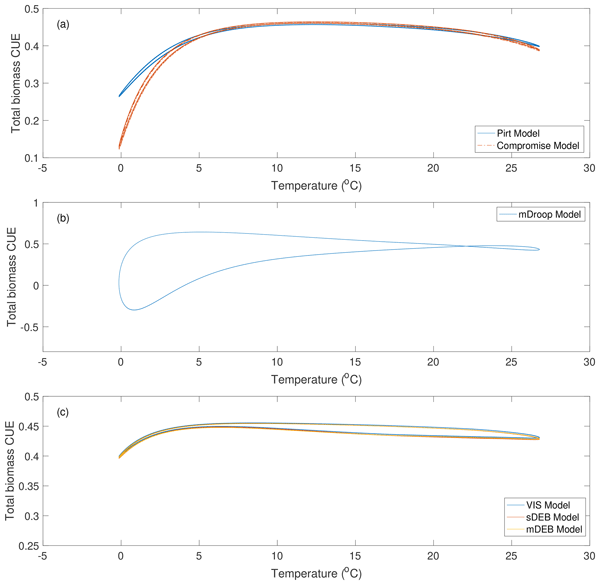
Jinyun Tang, William J. Riley, Gianna L. Marschmann, and Eoin L. Brodie
Biogeosciences, 23, 3995–4010, https://doi.org/10.5194/bg-23-3995-2026, https://doi.org/10.5194/bg-23-3995-2026, 2026
Short summary
Short summary
Carbon Use Efficiency (CUE) measures how biological organisms use carbon to synthesize new biomass, inferred to first increase and then decrease with specific growth rate. Our analysis of six biological growth models reveals that source-driven models fail to capture this relationship, while sink-driven models, using a reserve biomass pool, succeed. Existing biogeochemical models often depict a deterministic CUE-controlling factor relationship, which we find should be modeled dynamically instead.
Ricardo Morales-Betancourt, Cristóbal J. Galbán-Malagón, Thalia Montejo-Barato, Estela Blanco, Paula Tapia-Pino, Rosario Vargas, Cynthia Cordova, Colin Finnegan, Abenezer Shankute, Nicolas Huneeus, J. Sebastian Hernandez-Suarez, Paola Valencia, Marcelo Mena-Carrasco, and Robert B. Jackson
Atmos. Chem. Phys., 26, 8355–8365, https://doi.org/10.5194/acp-26-8355-2026, https://doi.org/10.5194/acp-26-8355-2026, 2026
Short summary
Short summary
We measured measured CH₄, CO₂, CO, and NOx emissions from household gas stoves in Chile and Colombia. We found that emissions are much higher than official estimates, mainly due to small leaks and ignition. These hidden emissions contribute to climate change and air pollution. Our work shows the need for better measurement, reporting, and appliance standards to reduce environmental impacts from everyday cooking.
Lilja Dahl, Martin Vojta, Ignacio Pisso, Rona L. Thompson, and Alessandro Bigi
EGUsphere, https://doi.org/10.5194/egusphere-2026-2734, https://doi.org/10.5194/egusphere-2026-2734, 2026
Short summary
Short summary
This study addresses the challenge of accurately representing mountain observations in Atmospheric Transport Models and inverse modeling studies. We introduce a new varying release height method based on potential temperature to better represent mountain observations in the ATM. We evaluated three release height methods at three mountain sites and the results show that the model performance strongly depends on the release height choice, meteorological resolution, and atmospheric conditions.
Xinyu Li, Shushi Peng, Victor M. Stepanenko, Liu Liu, and Dan Zhu
EGUsphere, https://doi.org/10.5194/egusphere-2026-2349, https://doi.org/10.5194/egusphere-2026-2349, 2026
This preprint is open for discussion and under review for Geoscientific Model Development (GMD).
Short summary
Short summary
Lakes release methane, but global totals are uncertain. We used a process-based computer model to simulate how methane forms and escapes. We calibrated the model in 15 lakes with continuous observations, and validated the model in 176 lakes. The model showed global lakes over ten hectares emit 17.7 to 20.1 million metric tons annually. Most gas escapes through bubbles, particularly from shallow areas. This study helps us track these emissions and predict how they might rise as the world warms.
Martin Vojta, Rona L. Thompson, and Ignacio Pisso
EGUsphere, https://doi.org/10.5194/egusphere-2026-2125, https://doi.org/10.5194/egusphere-2026-2125, 2026
Short summary
Short summary
To improve observation-based estimates of air pollutant emissions, we show how the assumption of lognormally distributed emission errors can be implemented in an atmospheric inverse modelling framework. We test how this choice influences results and find that optimizing for the median produces reliable emission estimates similar to conventional methods, while preventing unrealistic negative emission values and thereby improving physical consistency.
Anne Dallmeyer, Nils Weitzel, Laura Schild, Ulrike Herzschuh, Thomas Kleinen, and Martin Claussen
Clim. Past, 22, 1125–1157, https://doi.org/10.5194/cp-22-1125-2026, https://doi.org/10.5194/cp-22-1125-2026, 2026
Short summary
Short summary
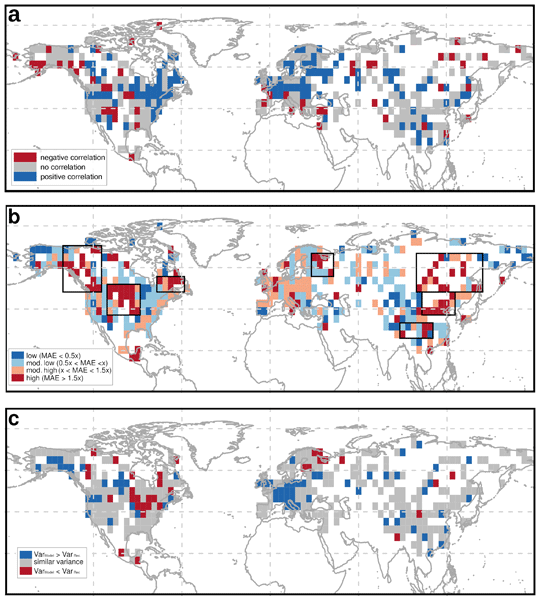
We compare pollen-based reconstructions of Northern Hemisphere tree cover over the last 20 000 years with simulations from the Max-Planck-Institute Earth System Model (MPI-ESM). The model captures broad forest trends but misses key regional patterns and the mid-Holocene forest peak. Testing climate drivers reveals mismatches in how temperature, water, and CO2 control forests, pointing to structural limits and the need for improved vegetation processes in models.
Sara Hyvärinen, Maria K. Tenkanen, Aki Tsuruta, Anttoni Erkkilä, Kimmo Rautiainen, Hermanni Aaltonen, Motoki Sasakawa, and Tuula Aalto
Atmos. Chem. Phys., 26, 7555–7587, https://doi.org/10.5194/acp-26-7555-2026, https://doi.org/10.5194/acp-26-7555-2026, 2026
Short summary
Short summary
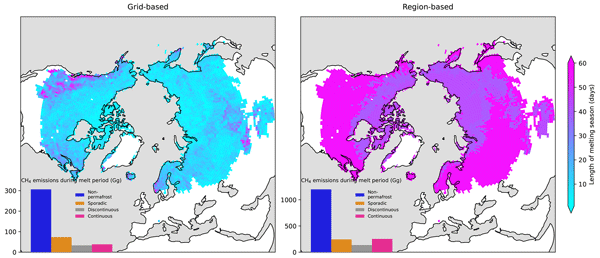
We analyzed melt period methane emissions from northern high-latitude wetlands using satellite thaw data and inverse modeling (2011–2021). Comparing region-based and grid-based approaches, we found that emissions varied with the length of the melt period, which depended on air temperature. We found spring melt period emissions ranged from 0.45 to 1.83 Tg depending on the approach, with no clear trend over the period. Our methods allow for seasonal methane monitoring across different scales.
Jinan Shi, Jiaxin Li, Lianru Gao, Siyu Liu, Rasmus Fensholt, Philippe Ciais, Xiaojun Li, Qiangqiang Yuan, Jean-Pierre Wigneron, and Lei Fan
Earth Syst. Sci. Data Discuss., https://doi.org/10.5194/essd-2026-193, https://doi.org/10.5194/essd-2026-193, 2026
Revised manuscript under review for ESSD
Short summary
Short summary
Satellite microwaves help monitor global vegetation, but existing data is too coarse.We enhanced it using higher-resolution information from a biomass map. This produced monthly 5-kilometer resolution data of tropical vegetation optical depth from 2015 to 2021. Our results show the enhanced data accurately captures vegetation dynamics and detects forest disturbances like clearing. By providing this finer-scale dataset, our work supports better local monitoring and protection of ecosystems.
Vimal Jose Vazhathara, Ravi Kumar Kunchala, Sajeev Philip, Jaswant Rathore, Dilip Ganguly, Sagnik Dey, Tomoki Nakayama, Yutaka Matsumi, and Prabir K. Patra
Atmos. Chem. Phys., 26, 6929–6949, https://doi.org/10.5194/acp-26-6929-2026, https://doi.org/10.5194/acp-26-6929-2026, 2026
Short summary
Short summary
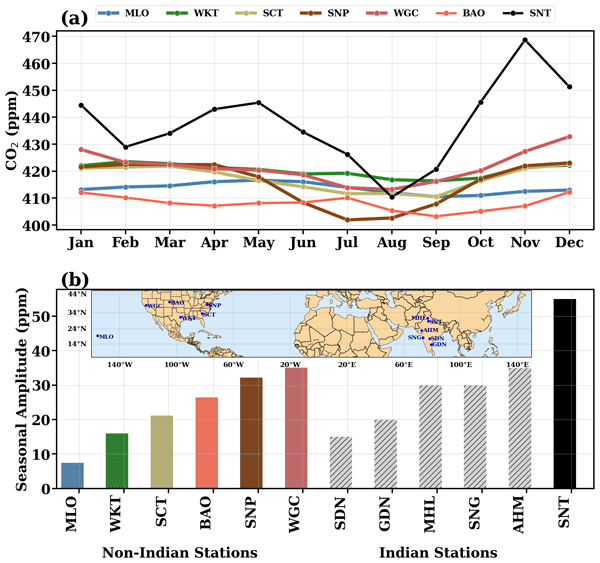
To address the lack of continuous ground-based CO2 measurements in the Indo-Gangetic Plain, we started ground-based measurements of atmospheric CO2 concentrations, for the very first time at Sonipat within the IGP. Based on these measurements, we examined the seasonal and diurnal patterns of atmospheric CO2. We found that the interplay of anthropogenic emissions, biospheric fluxes, and prevailing meteorology contributes to the observed high seasonal and diurnal variability of atmospheric CO2.
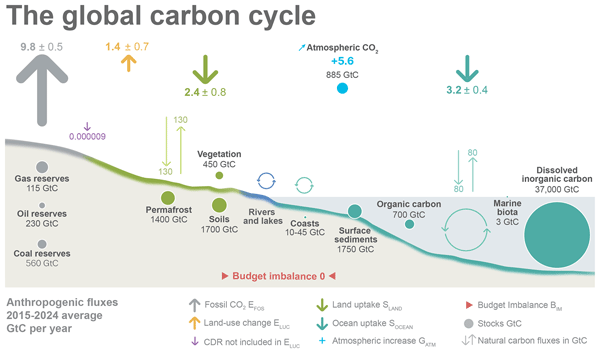
Pierre Friedlingstein, Michael O'Sullivan, Matthew W. Jones, Robbie M. Andrew, Dorothee C. E. Bakker, Judith Hauck, Peter Landschützer, Corinne Le Quéré, Hongmei Li, Ingrid T. Luijkx, Glen P. Peters, Wouter Peters, Julia Pongratz, Clemens Schwingshackl, Stephen Sitch, Josep G. Canadell, Philippe Ciais, Kjetil Aas, Simone R. Alin, Peter Anthoni, Leticia Barbero, Nicholas R. Bates, Nicolas Bellouin, Alice Benoit-Cattin, Carla F. Berghoff, Raffaele Bernardello, Laurent Bopp, Ida Bagus Mandhara Brasika, Matthew A. Chamberlain, Naveen Chandra, Frédéric Chevallier, Louise P. Chini, Nathan O. Collier, Thomas H. Colligan, Margot Cronin, Laique M. Djeutchouang, Xinyu Dou, Matt P. Enright, Kazutaka Enyo, Michael Erb, Wiley Evans, Richard A. Feely, Liang Feng, Daniel J. Ford, Adrianna Foster, Filippa Fransner, Thomas Gasser, Marion Gehlen, Thanos Gkritzalis, Jefferson Goncalves De Souza, Giacomo Grassi, Luke Gregor, Nicolas Gruber, Bertrand Guenet, Özgür Gürses, Kirsty Harrington, Ian Harris, Jens Heinke, George C. Hurtt, Yosuke Iida, Tatiana Ilyina, Akihiko Ito, Andrew R. Jacobson, Atul K. Jain, Tereza Jarníková, Annika Jersild, Fei Jiang, Steve D. Jones, Etsushi Kato, Ralph F. Keeling, Kees Klein Goldewijk, Jürgen Knauer, Yawen Kong, Jan Ivar Korsbakken, Charles Koven, Taro Kunimitsu, Xin Lan, Junjie Liu, Zhiqiang Liu, Zhu Liu, Claire Lo Monaco, Lei Ma, Gregg Marland, Patrick C. McGuire, Galen A. McKinley, Joe R. Melton, Natalie Monacci, Erwan Monier, Eric J. Morgan, David R. Munro, Jens D. Müller, Shin-Ichiro Nakaoka, Lorna R. Nayagam, Yosuke Niwa, Tobias Nutzel, Are Olsen, Abdirahman M. Omar, Naiqing Pan, Sudhanshu Pandey, Denis Pierrot, Zhangcai Qin, Pierre Regnier, Gregor Rehder, Laure Resplandy, Alizée Roobaert, Thais M. Rosan, Christian Rödenbeck, Jörg Schwinger, Ingunn Skjelvan, T. Luke Smallman, Victoria Spada, Mohanan G. Sreeush, Qing Sun, Adrienne J. Sutton, Colm Sweeney, Didier Swingedouw, Roland Séférian, Shintaro Takao, Hiroaki Tatebe, Hanqin Tian, Xiangjun Tian, Bronte Tilbrook, Hiroyuki Tsujino, Francesco Tubiello, Erik van Ooijen, Guido R. van der Werf, Sebastiaan J. van de Velde, Anthony P. Walker, Rik Wanninkhof, Xiaojuan Yang, Wenping Yuan, Xu Yue, and Jiye Zeng
Earth Syst. Sci. Data, 18, 3211–3288, https://doi.org/10.5194/essd-18-3211-2026, https://doi.org/10.5194/essd-18-3211-2026, 2026
Short summary
Short summary
The Global Carbon Budget 2025 describes the methodology, main results, and datasets used to quantify the anthropogenic emissions of carbon dioxide (CO2) and their partitioning among the atmosphere, land ecosystems, and the ocean over the historical period (1750–2025). These living datasets are updated every year to provide the highest transparency and traceability in the reporting of CO2, the key driver of climate change.
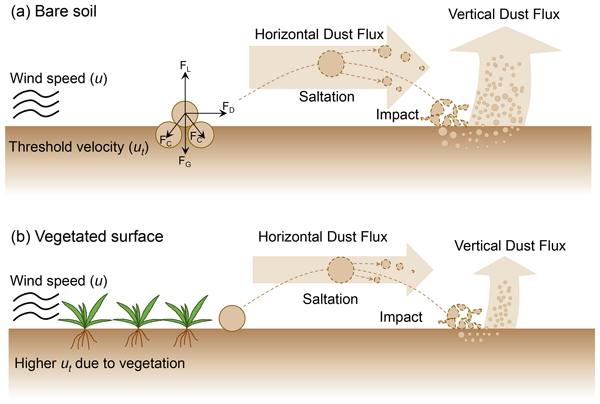
Siqing Xu, Yves Balkanski, Philippe Ciais, and Jean Sciare
Atmos. Chem. Phys., 26, 6321–6350, https://doi.org/10.5194/acp-26-6321-2026, https://doi.org/10.5194/acp-26-6321-2026, 2026
Short summary
Short summary
Uncertainty in dust emission estimates stems from simplified surface parameterizations. We incorporate dynamic vegetation cover into the dust emission scheme of an Earth System Model. Including vegetation reduces global dust emissions by 23 % and redistributes regional contributions by suppressing emissions in grass-covered dryland, improving agreement with observations of the global dust cycle. This work establishes a framework for advancing the representation of land–atmosphere feedbacks.
Guohua Liu, Philippe Ciais, Shengli Tao, Hui Yang, Chenwei Xiao, and Ana Bastos
Earth Syst. Sci. Data Discuss., https://doi.org/10.5194/essd-2026-246, https://doi.org/10.5194/essd-2026-246, 2026
Preprint under review for ESSD
Short summary
Short summary
We developed a long-term, moderate-resolution global dataset of forest above ground biomass, from satellite radar data and machine learning. The significance of this dataset lies in its ability to provide a continuous, moderate-resolution view of biomass carbon dynamics, offering a valuable resource for supporting studies of climate change, disturbance, and land use, and will help improve Earth System models and future carbon cycle.
Jincheng Wu, Philippe Ciais, Yuanyuan Huang, Jianing Fang, Pierre Gentine, Yidi Xu, Daniel Goll, Fayong Liu, Xiaomeng Du, Rui Ma, Nan Meng, Mengjie Han, Jinlong Zang, Runda Jiang, and Wei Li
EGUsphere, https://doi.org/10.5194/egusphere-2026-2241, https://doi.org/10.5194/egusphere-2026-2241, 2026
Short summary
Short summary
Predicting land carbon sinks remains a challenge because carbon allocation and turnover are poorly constrained in terrestrial biosphere models. We used a differentiable framework to jointly assimilate daily satellite data and long-term boreal forest growth trajectories. This approach significantly reduced biomass simulation errors. We found that boreal forests sustain biomass through long carbon residence times rather than high allocation rates, making them highly vulnerable to warming.
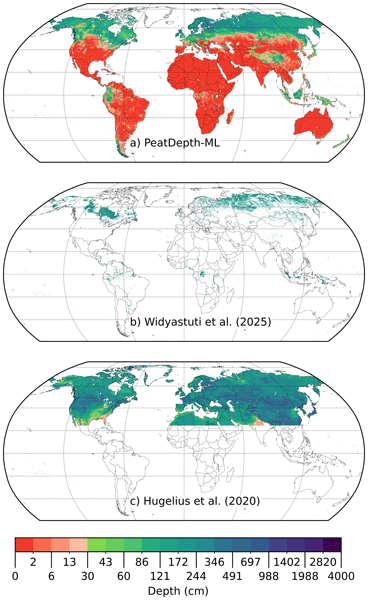
Jade Skye, Joe R. Melton, Colin Goldblatt, Angela Gallego-Sala, Michelle Garneau, and Scott Winton
Biogeosciences, 23, 2959–2983, https://doi.org/10.5194/bg-23-2959-2026, https://doi.org/10.5194/bg-23-2959-2026, 2026
Short summary
Short summary
We developed PeatDepth-ML, a machine learning model predicting peat depth worldwide to help estimate carbon stocks in these climate-critical ecosystems. Our model predicts median depths of 134 cm in peatlands. Using bootstrapping, we rigorously assessed how sampling bias affects predictions. This revealed predictor selection and regional accuracy can vary greatly with different data subsets, demonstrating model reliability fundamentally depends on training data quality and geographic coverage.
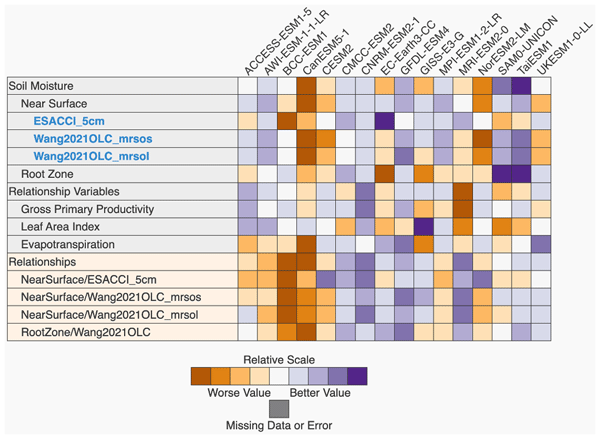
Elias C. Massoud, Nathan Collier, Yaoping Wang, Jiafu Mao, Adrian Harpold, Steven A. Kannenberg, Gerbrand Koren, Mukesh Kumar, Pushpendra Raghav, Pallav Ray, Mingjie Shi, Jing Tao, Sreedevi P. Vasu, Huiqi Wang, Qing Zhu, and Forrest M. Hoffman
Geosci. Model Dev., 19, 3427–3453, https://doi.org/10.5194/gmd-19-3427-2026, https://doi.org/10.5194/gmd-19-3427-2026, 2026
Short summary
Short summary
Soil moisture helps control how plants grow and how land exchanges water and energy with the atmosphere. We evaluated how well 16 Earth System Models represent soil moisture and its links to plant activity using a benchmarking system and observational data. Many models simulate surface soil moisture well but show larger errors deeper in the soil and in colder regions. Models that represent plant–soil water interactions more directly better capture how ecosystems respond to water availability.
Francesco Ulloa-Cedamanos, Adam T. Rexroade, Yihan Li, Lindsay B. Hutley, Wei Wen Wong, Marcus B. Wallin, Josep G. Canadell, Anna Lintern, and Clément Duvert
Earth Syst. Sci. Data, 18, 2723–2748, https://doi.org/10.5194/essd-18-2723-2026, https://doi.org/10.5194/essd-18-2723-2026, 2026
Short summary
Short summary
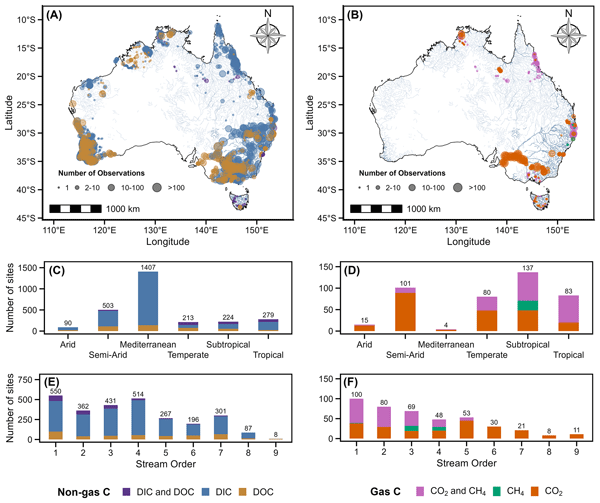
Rivers and streams play a key role in how carbon moves through the environment, but we know little about this in Australia. To help close this gap, we compile the first national database of carbon data from rivers and streams, combining past studies, government records, and new data. The data show where and when carbon was measured and reveal major gaps in long-term monitoring. This new resource will help scientists understand carbon and water systems across Australia.
William F. Lamb, Robbie M. Andrew, Matthew Jones, Zebedee Nicholls, Glen P. Peters, Chris Smith, Marielle Saunois, Giacomo Grassi, Julia Pongratz, Steven J. Smith, Francesco N. Tubiello, Monica Crippa, Matthew Gidden, Pierre Friedlingstein, Jan Minx, and Piers M. Forster
Earth Syst. Sci. Data, 18, 2549–2572, https://doi.org/10.5194/essd-18-2549-2026, https://doi.org/10.5194/essd-18-2549-2026, 2026
Short summary
Short summary
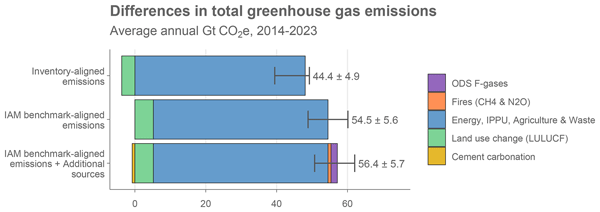
This study explores why global greenhouse gas (GHG) emissions estimates vary. Key reasons include different coverage of gases and sectors, varying definitions of anthropogenic land use change emissions, and the Paris Agreement not covering all emission sources. The study highlights three main ways emissions data is reported, each with different objectives and resulting in varying global emission totals. It emphasizes the need for transparency in choosing datasets and setting assessment scopes.
Liyang Liu, Philippe Ciais, Thu Hang Nguyen, Yi Xi, Chunjing Qiu, Elodie Salmon, Aram Kalhori, Christophe Guimbaud, Matthias Peichl, Joshua L. Ratcliffe, Koffi Dodji Noumonvi, and Xuefei Li
Biogeosciences, 23, 2277–2308, https://doi.org/10.5194/bg-23-2277-2026, https://doi.org/10.5194/bg-23-2277-2026, 2026
Short summary
Short summary
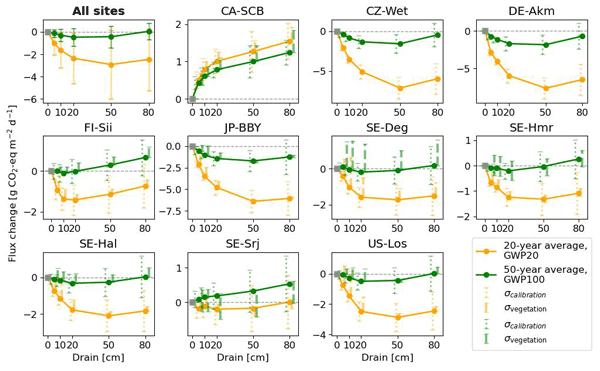
We simulate virtual idealized drainage at 10 pristine peatland sites. Over time, the emission factors of CO2 flux decrease and the reduction of CH4 emissions is amplified. The sensitivities of flux changes to drainage are primarily controlled by initial CO2 and CH4 fluxes, initial soil carbon content, peat vegetation community, air temperature and initial water table depth. Using GWP100 (100-year Global Warming Potential), our simulation suggested only very small net GHG (greenhouse gas) emission changes when peatland is drained for 50 years.
Yifan Li, Drew Pendergrass, Daniel Jacob, Yunxiao Tang, Jiaxin Qiu, and Bo Zheng
EGUsphere, https://doi.org/10.5194/egusphere-2025-6284, https://doi.org/10.5194/egusphere-2025-6284, 2026
Short summary
Short summary
We tracked China’s weekly methane emissions from 2019 to 2024 by constructing a satellite-based regional atmospheric inversion framework. Over the period, annual methane emissions in China rose from 61.1 to 66.8 million tonnes, with nearly half of the growth driven by livestock, alongside additional contributions from waste and oil and gas. Emissions growth shifted toward previously low-emitting northwest and northeast China, revealing new priorities for targeted methane mitigation.
Konstantin Gregor, Benjamin F. Meyer, Tillmann Gaida, Victor Justo Vasquez, Karina Bett-Williams, Matthew Forrest, João P. Darela-Filho, Sam Rabin, Marcos Longo, Joe R. Melton, Johan Nord, Peter Anthoni, Vladislav Bastrikov, Thomas Colligan, Christine Delire, Michael C. Dietze, George Hurtt, Akihiko Ito, Lasse T. Keetz, Jürgen Knauer, Johannes Köster, Tzu-Shun Lin, Lei Ma, Marie Minvielle, Stefan Olin, Sebastian Ostberg, Hao Shi, Reiner Schnur, Qing Sun, Peter E. Thornton, and Anja Rammig
Geosci. Model Dev., 19, 2407–2436, https://doi.org/10.5194/gmd-19-2407-2026, https://doi.org/10.5194/gmd-19-2407-2026, 2026
Short summary
Short summary
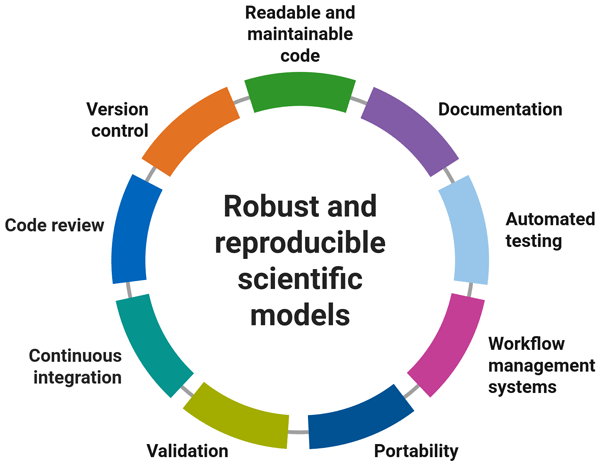
Geoscientific models are crucial for understanding Earth’s processes. However, they sometimes do not adhere to highest software quality standards, and scientific results are often hard to reproduce due to the complexity of the workflows. Here we gather the expertise of 20 modeling groups and software engineers to define best practices for making geoscientific models maintainable, usable, and reproducible. We conclude with an open-source example serving as a reference for modeling communities.
Shengxi Bai, Huilin Chen, Zhen Zhang, Shushi Peng, Fei Jiang, Fei Li, Shuzhuang Feng, Yingqi Yan, Qidan Huang, and Yongguang Zhang
EGUsphere, https://doi.org/10.5194/egusphere-2025-4610, https://doi.org/10.5194/egusphere-2025-4610, 2026
Short summary
Short summary
We examined methane emissions from coal mines in Shanxi Province, China’s major coal production region. Using satellite observations and advanced analysis, we found that rare but very large methane releases play a major role in total emissions. Policies to cut coal capacity initially reduced methane, but emissions rose again with production recovery. Our findings improve understanding of how energy policies affect climate pollution and offer a framework for better methane monitoring worldwide.
Robert B. Jackson, Jeremy A. Irvin, Neel Ramachandran, Chenghao Wang, Zutao Ouyang, Paul A. Tulloch, Frankie Y. Liu, and Andrew Y. Ng
Earth Syst. Sci. Data Discuss., https://doi.org/10.5194/essd-2026-124, https://doi.org/10.5194/essd-2026-124, 2026
Revised manuscript accepted for ESSD
Short summary
Short summary
The MEthane Tracking Emissions Reference (METER) database hosts 12 million potential methane-emitting sources globally from 200+ countries. It includes oil and gas facilities, coal mines, and other sources. We used machine-learning and satellite data to map the first global landfill dataset (~13,000 landfills >2.5-ha in size). METER should improve inventories of methane emissions by enhancing infrastructure counts and provides locations for tasking satellite detections.
Jeffrey Beem-Miller, William J. Riley, Peter B. Reich, Michael W. I. Schmidt, Yuxuan Bai, Raimundo Bermudez Villanueva, Zach Brown, Abad Chabbi, Susan E. Crow, Wenxu Dong, Serita D. Frey, Paul J. Hanson, Kai Jensen, Melissa A. Knorr, Emma Lathrop, Avni Malhotra, Patrick Megonigal, Adrienne Nicotra, Andrew Nottingham, Genevieve L. Noyce, Roy L. Rich, Heidi Rodenhizer, Agustín Sarquis, Andreas Schindlbacher, Edward A. G. Schuur, Zheng Shi, Artur Stefanski, Viktoria Unger, Tana E. Wood, Yuanhe Yang, Zhijie Yang, Jizhong Zhou, Biao Zhu, and Margaret S. Torn
Earth Syst. Sci. Data Discuss., https://doi.org/10.5194/essd-2026-23, https://doi.org/10.5194/essd-2026-23, 2026
Revised manuscript accepted for ESSD
Short summary
Short summary
The Soil Warming to Depth Data Integration Effort (SWEDDIE) synthesizes data from deep soil warming experiments around the world (n = 23), offering new insight into warming responses of both surface and subsoils. We demonstrate that variation in soil warming with depth is driven largely by warming methodology, while soil moisture changes due to warming differ by ecosystem. This work serves a foundation for future syntheses with SWEDDIE.
Markus Adloff, Frerk Pöppelmeier, Ashley Dinauer, Charlotte Laufkötter, and Fortunat Joos
EGUsphere, https://doi.org/10.5194/egusphere-2026-275, https://doi.org/10.5194/egusphere-2026-275, 2026
Short summary
Short summary
Carbon cycle models need to account for the recycling of marine particulate matter is recycled in the ocean to simulate marine biogeochemistry. Here, we show that a more complex representation than often-employed static exponential remineralisation profiles better captures key features of the marine biogeochemistry of a glacial ocean and alters the sensitivity of the marine carbon sink and marine oxygenation to warming.
Ke Yu, Yang Su, Philippe Ciais, Ronny Lauerwald, David Makowski, Tianqi Shi, Shengbiao Wu, Petra Sieber, Chuanlong Zhou, and Daniel Goll
EGUsphere, https://doi.org/10.5194/egusphere-2026-219, https://doi.org/10.5194/egusphere-2026-219, 2026
Short summary
Short summary
Bare soil reflectance affects surface energy exchange in agricultural systems, but its field-scale variability is still poorly known. Using satellite observations and machine learning, we examined spatiotemporal variations of bare soil reflectance across European croplands. We show that it varies with soil properties, soil moisture, and observation geometry. These results suggest that dynamic soil reflectance should be taken into account in surface energy balance studies of agroecosystems.
Joana Melo, Simone Rossi, Frédéric Achard, Ramdane Alkama, Josep G. Canadell, Sandro Federici, Pierre Friedlingstein, David Gibbs, Nancy Harris, Viola Heinrich, Michael O’Sullivan, Glen P. Peters, Julia Pongratz, Melissa Rose, Rosa Roman-Cuesta, María J. Sanz, Clemens Schwingshackl, Stephen Sitch, and Giacomo Grassi
Earth Syst. Sci. Data Discuss., https://doi.org/10.5194/essd-2025-631, https://doi.org/10.5194/essd-2025-631, 2026
Preprint under review for ESSD
Short summary
Short summary
We created the LULUCF Data Hub to make information on how land use affects carbon dioxide emissions and removals more transparent and comparable among datasets. We show country-level data from national reports and global sources, allowing users to explore differences and similarities in land-based carbon fluxes. It helps identify where data agree, where they differ, and where more research is needed.
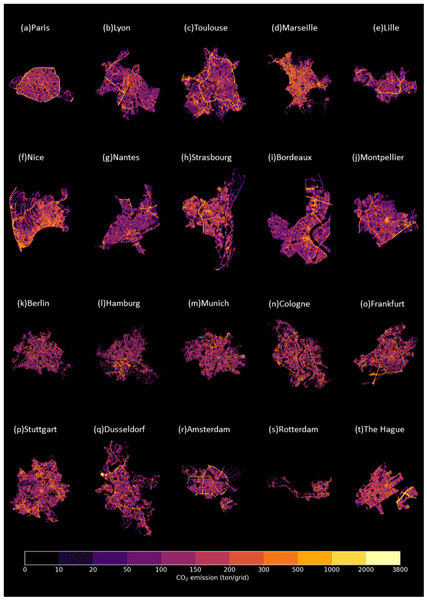
Qinren Shi, Philippe Ciais, Nicolas Megel, Xavier Bonnemaizon, Rohith Teja Mittakola, Richard Engelen, and Chuanlong Zhou
Earth Syst. Sci. Data, 18, 927–944, https://doi.org/10.5194/essd-18-927-2026, https://doi.org/10.5194/essd-18-927-2026, 2026
Short summary
Short summary
This study developed high-resolution maps (100 m × 100 m) showing how much carbon dioxide is emitted from cars and trucks in 20 European cities every hour. Using anonymous GPS signals from vehicles, we tracked traffic CO2 emission patterns throughout the year 2023. The results show that emissions vary significantly between cities and across different days and seasons. This method could help cities monitor on-road emissions in real time and design better strategies to reduce them.
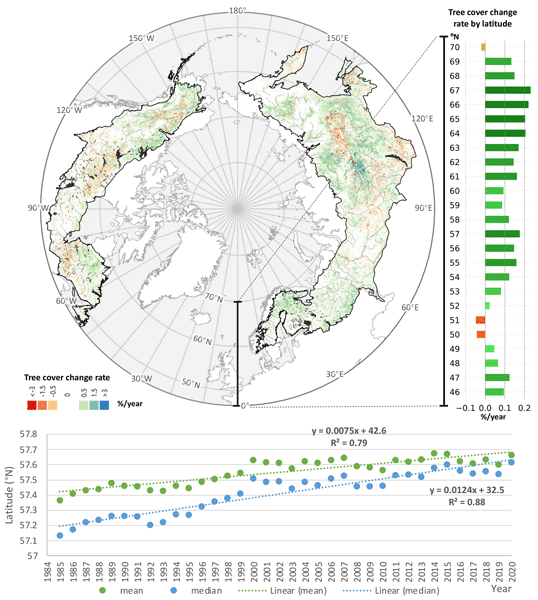
Min Feng, Joseph O. Sexton, Panshi Wang, Paul M. Montesano, Leonardo Calle, Nuno Carvalhais, Benjamin Poulter, Matthew J. Macander, Michael A. Wulder, Margaret Wooten, William Wagner, Akiko Elders, Saurabh Channan, and Christopher S. R. Neigh
Biogeosciences, 23, 1089–1101, https://doi.org/10.5194/bg-23-1089-2026, https://doi.org/10.5194/bg-23-1089-2026, 2026
Short summary
Short summary
Analysis of 36 years of satellite tree cover data provide the first comprehensive confirmation of the northward advance of the boreal forest. Boreal tree cover expanded by 0.84 million km² (12%) from 1985 to 2020 and shifted northward by 0.43°. Gains outpaced losses across most latitudes, confirming a biome-wide poleward shift. Young forests now comprise 15% of the area of the world’s largest forest biome, storing 1–6 Pg C and potentially sequestering an additional 2–4 Pg C as they mature.
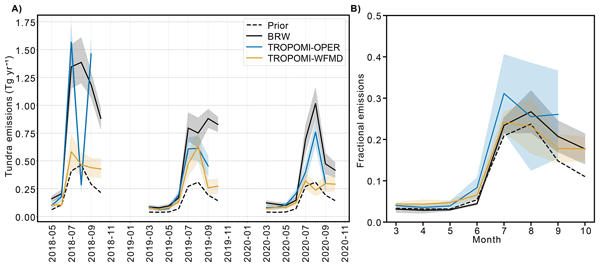
Rebecca H. Ward, Luke M. Western, Rachel L. Tunnicliffe, Elena Fillola, Aki Tsuruta, Tuula Aalto, and Anita L. Ganesan
Atmos. Meas. Tech., 19, 813–837, https://doi.org/10.5194/amt-19-813-2026, https://doi.org/10.5194/amt-19-813-2026, 2026
Short summary
Short summary
We studied methane emissions in Arctic Alaska using satellite observations to assess how well they can monitor this important greenhouse gas. We found that emission estimates varied depending on the satellite data product and were strongly affected by assumptions in the model. Our results highlight the need for careful interpretation of emissions from Arctic satellite data and thorough testing of models, with implications for reliable climate monitoring.
Lyla L. Taylor, Rachael H. James, Ilsa Kantola, and David J. Beerling
EGUsphere, https://doi.org/10.5194/egusphere-2025-5823, https://doi.org/10.5194/egusphere-2025-5823, 2026
Short summary
Short summary
Carbon capture via dissolution of CO2 in water during enhanced weathering of rock dusts applied to soils is difficult to verify, largely due to retention of cations in soils over unknown timescales. The ARTEMIS reactive transport model predicts carbon capture lag times of several decades at a site in Illinois, assuming continued rock dust treatments. Our results suggest that cation retention through the whole soil column should be assessed when predicting carbon capture via enhanced weathering.
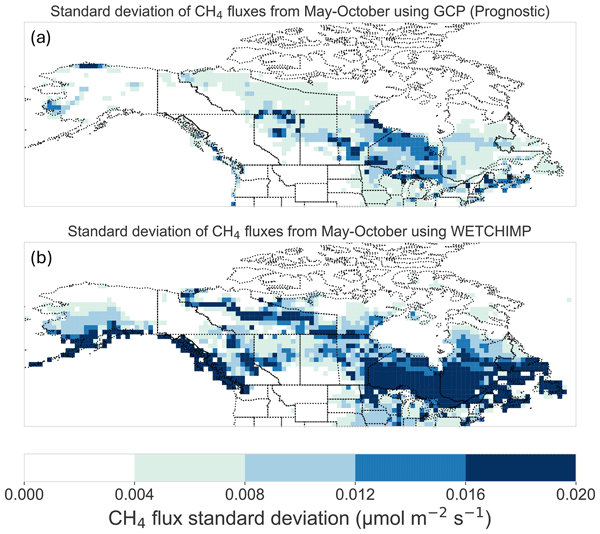
Hanyu Liu, Misa Ishizawa, Felix R. Vogel, Zhen Zhang, Benjamin Poulter, Leyang Feng, Ao Chen, Anna L. Gagné-Landmann, Deborah N. Huntzinger, Joe R. Melton, Vineet Yadav, Dylan C. Gaeta, Ziting Huang, Douglas E. J. Worthy, Douglas Chan, and Scot M. Miller
Atmos. Chem. Phys., 26, 1229–1247, https://doi.org/10.5194/acp-26-1229-2026, https://doi.org/10.5194/acp-26-1229-2026, 2026
Short summary
Short summary
We find that the state-of-the-art process-based methane flux models have both lower flux magnitude and reduced inter-model uncertainty compared to a previous model inter-comparison from over a decade ago. Despite these improvements, methane flux estimates from process-based models are still likely too high compared to atmospheric observations. We also find that models with simpler parameterizations often result in better agreement with atmospheric observations in high-latitude North America.
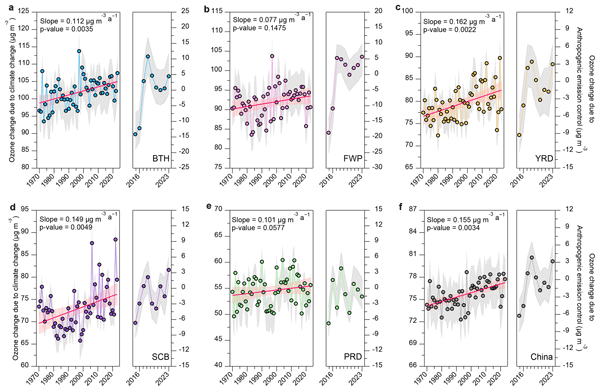
Jie Fang, Yunjiang Zhang, Didier Hauglustaine, Bo Zheng, Ming Wang, Jingyi Li, Yong Sun, Haiwei Li, Junfeng Wang, Yun Wu, Bin Yuan, Mindong Chen, and Xinlei Ge
Atmos. Chem. Phys., 26, 851–867, https://doi.org/10.5194/acp-26-851-2026, https://doi.org/10.5194/acp-26-851-2026, 2026
Short summary
Short summary
Surface ozone pollution is a pressing global challenge driven by human activities and a warming climate. Using nationwide observations (2013–2023) across China together with satellite data, we developed a new machine learning approach to decouple the impacts of emission controls and weather changes. Our results show that while emission reductions improved ozone in some regions, climate change is increasingly offsetting these gains, underscoring the need for joint air quality and climate actions.
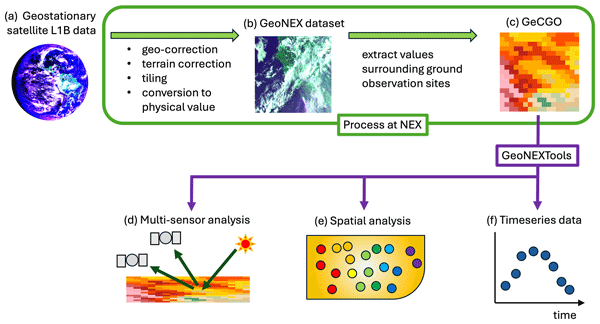
Hirofumi Hashimoto, Weile Wang, Taejin Park, Sepideh Khajehei, Kazuhito Ichii, Andrew R. Michaelis, Alberto Guzman, Ramakrishna R. Nemani, Margaret S. Torn, Koong Yi, and Ian G. Brosnan
Earth Syst. Sci. Data, 18, 397–410, https://doi.org/10.5194/essd-18-397-2026, https://doi.org/10.5194/essd-18-397-2026, 2026
Short summary
Short summary
We create the GeoNEX Coincident Ground Observations (GeCGO) dataset by extracting point data at observational network sites across the Americas from the gridded GeoNEX products. The GeoNEX dataset is a high-temporal-frequency dataset of the latest geostationary satellite observations. We also release the software GeoNEXTools, which helps with handling the GeCGO data. GeCGO and GeoNEXTools could help scientists use geostationary satellite data at ground observational sites of interest.
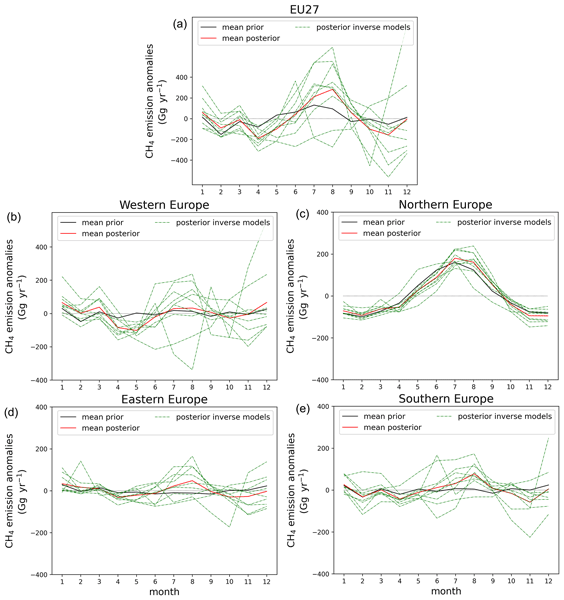
Eleftherios Ioannidis, Antoon Meesters, Michael Steiner, Dominik Brunner, Friedemann Reum, Isabelle Pison, Antoine Berchet, Rona Thompson, Espen Sollum, Frank-Thomas Koch, Christoph Gerbig, Fenjuan Wang, Shamil Maksyutov, Aki Tsuruta, Maria Tenkanen, Tuula Aalto, Guillaume Monteil, Hong Lin, Ge Ren, Marko Scholze, and Sander Houweling
Earth Syst. Sci. Data, 18, 167–198, https://doi.org/10.5194/essd-18-167-2026, https://doi.org/10.5194/essd-18-167-2026, 2026
Short summary
Short summary
This paper describes a detailed study on CH4 European emissions, using different methodologies (9 total inverse models). The study spans over 15 years and provides detailed information on European CH4 emission trends and seasonality, using in-situ data, including Integrated Carbon Observation System (ICOS) network. Our results highlight the importance of improving details in the inversion setup, such as the treatment of lateral boundary conditions to narrow the uncertainty ranges further.
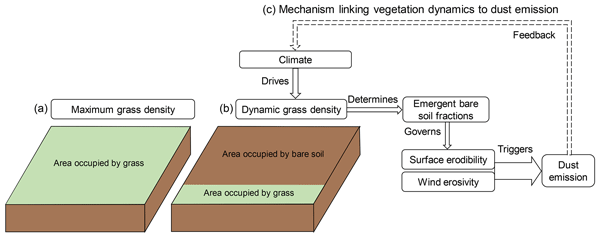
Siqing Xu, Sebastiaan Luyssaert, Yves Balkanski, Philippe Ciais, Nicolas Viovy, Liang Wan, and Jean Sciare
Geosci. Model Dev., 19, 1–25, https://doi.org/10.5194/gmd-19-1-2026, https://doi.org/10.5194/gmd-19-1-2026, 2026
Short summary
Short summary
Prescribing a fixed grassland density in the ORCHIDEE model limits its ability to capture grassland dynamics, leading to unrealistic mortality, especially in semi-arid grasslands. We proposed a dynamic density approach where a positive density-precipitation relationship emerges. This method improves spatial pattern, significantly reduces mortality, sustains productivity, and raises the aridity threshold above which frequent mortality events occur in grasslands.
Jean-Francois Lamarque, Pierre Friedlingstein, Brian Osias, Steve Strongin, Venkatramani Balaji, Kevin W. Bowman, Josep G. Canadell, Philippe Ciais, Heidi Cullen, Kenneth J. Davis, Scott C. Doney, Kevin R. Gurney, Alicia R. Karspeck, Charles D. Koven, Galen McKinley, Glen P. Peters, Julia Pongratz, Britt Stephens, and Colm Sweeney
EGUsphere, https://doi.org/10.5194/egusphere-2025-6457, https://doi.org/10.5194/egusphere-2025-6457, 2026
Short summary
Short summary
This Perspective highlights requirements to scale the carbon credit market and enable the growth in climate solutions funded through such market. The requirements are on the understanding of the value of the proposed carbon credit projects, and on the availability of a verification system. This verification becomes particularly relevant as the carbon credit market scales to significant impacts on CO2 (or other greenhouse gases), such that attribution to collective actions can be identified.
Nicole Montenegro, Antoine Berchet, Adrien Martinez, Joël Thanwerdas, Phillipe Bousquet, Isabelle Pison, and Marielle Saunois
EGUsphere, https://doi.org/10.5194/egusphere-2025-5923, https://doi.org/10.5194/egusphere-2025-5923, 2025
Short summary
Short summary
Top-down CH₄ flux estimates face substantial uncertainties arising from observational coverage, data and prior errors, and atmospheric transport. In this study, we use Observing System Simulation Experiments (OSSEs) to determine the capability of current observing systems to retrieve surface fluxes of CH₄ and to quantify the magnitude of their associated uncertainties. In situ data provide the strongest constraint, while combined systems inversions further enhance performance.
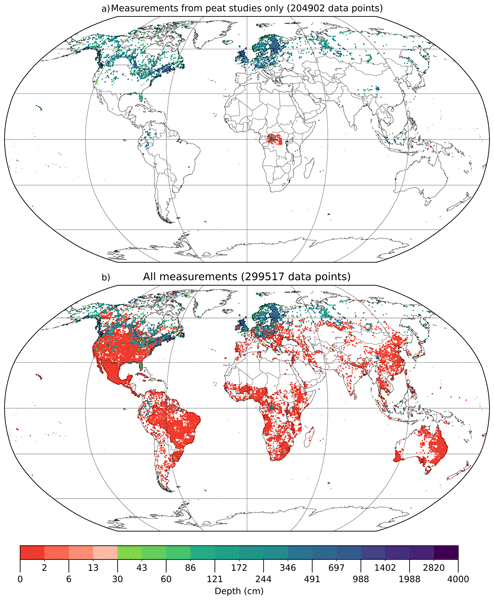
Jade Skye, Joe R. Melton, Colin Goldblatt, Louis Saumier, Angela Gallego-Sala, Michelle Garneau, R. Scott Winton, Erick B. Bahati, Juan C. Benavides, Lee Fedorchuk, Gérard Imani, Carol Kagaba Kairumba, Frank Kansiime, Mariusz Lamentowicz, Michel Mbasi, Daria Wochal, Sambor Czerwiński, Jacek Landowski, Joanna Landowska, Vincent Maire, Minna M. Väliranta, Matthew Warren, Lydia E. S. Cole, Marissa A. Davies, Erik A. Lilleskov, Jingjing Sun, and Yuwan Wang
Earth Syst. Sci. Data, 17, 7313–7330, https://doi.org/10.5194/essd-17-7313-2025, https://doi.org/10.5194/essd-17-7313-2025, 2025
Short summary
Short summary
Peatlands are large stores of carbon but are vulnerable to human activities and climate change. Comprehensive peatland data are vital to understand these ecosystems, but existing datasets are fragmented and contain errors. To address this, we created Peat-DBase – a standardized global database of peat depth measurements with > 200 000 measurements worldwide, showing median depths of 130 cm. Peat-DBase avoids overlapping data compilation efforts while identifying critical observational gaps.
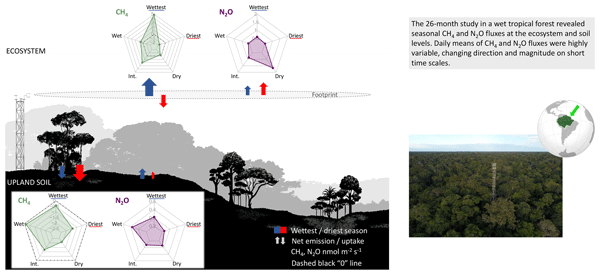
Laëtitia M. Bréchet, Mercedes Ibáñez, Robert B. Jackson, Benoît Burban, Clément Stahl, Damien Bonal, and Ivan A. Janssens
Biogeosciences, 22, 8031–8046, https://doi.org/10.5194/bg-22-8031-2025, https://doi.org/10.5194/bg-22-8031-2025, 2025
Short summary
Short summary
Net ecosystem and soil fluxes of the greenhouse gases methane (CH4) and nitrous oxide (N2O) were measured in a wet tropical forest. The measurements covered a 26-month period including contrasting seasons. The forest absorbed CH4 during the driest season, and emitted it during the wettest season, while consistently emitting N2O. The studied upland soils consistently absorb CH4 but emit N2O. Statistical models identified soil water content as one of the key drivers of these greenhouse gas fluxes.
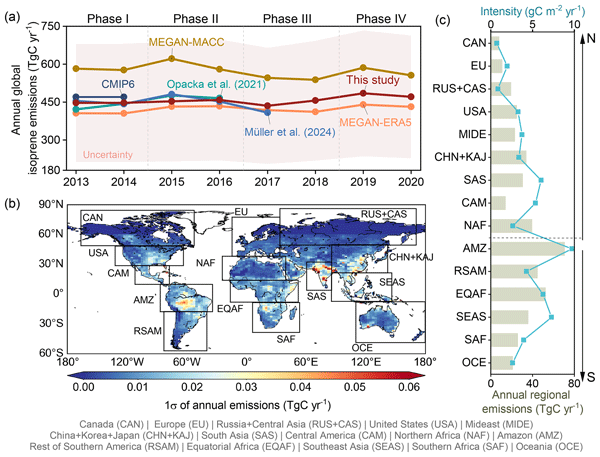
Hui Li, Philippe Ciais, Pramod Kumar, Didier A. Hauglustaine, Frédéric Chevallier, Grégoire Broquet, Dylan B. Millet, Kelley C. Wells, Jinghui Lian, and Bo Zheng
Earth Syst. Sci. Data, 17, 7035–7054, https://doi.org/10.5194/essd-17-7035-2025, https://doi.org/10.5194/essd-17-7035-2025, 2025
Short summary
Short summary
We present the first global, multi-year maps of monthly isoprene emissions (2013–2020) derived from satellite isoprene observations, averaging 456 TgC yr-1. The dataset reveals two emission peaks linked to 2015–2016 El Niño and 2019–2020 extreme heat events, driven mainly by tropical regions such as the Amazon. It highlights the region-specific sensitivity of biogenic isoprene emissions to temperature anomalies, providing new insights into their roles in air quality and climate feedbacks.
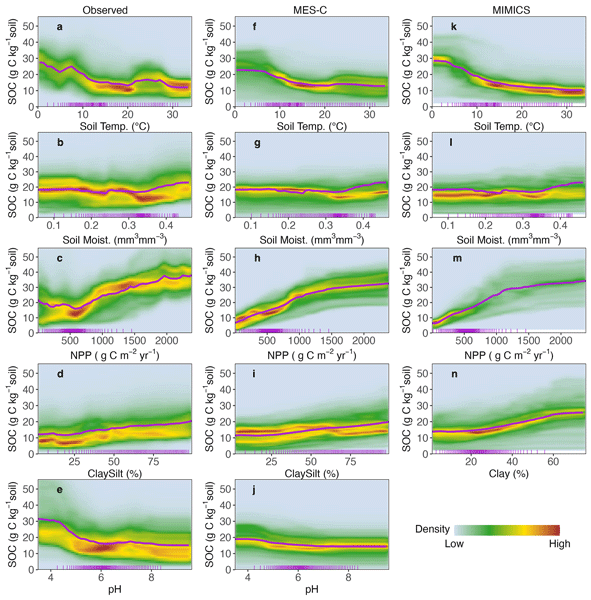
Lingfei Wang, Gab Abramowitz, Ying-Ping Wang, Andy Pitman, Philippe Ciais, and Daniel S. Goll
Biogeosciences, 22, 7845–7863, https://doi.org/10.5194/bg-22-7845-2025, https://doi.org/10.5194/bg-22-7845-2025, 2025
Short summary
Short summary
Accurate estimates of global soil organic carbon (SOC) content and its spatial pattern are critical for future climate change mitigation. However, the most advanced process-based SOC models struggle to do this task. Here we apply multiple explainable machine learning methods to identify missing variables and misrepresented relationships between environmental factors and SOC in these models, offering new insights to guide model development for more reliable SOC predictions.
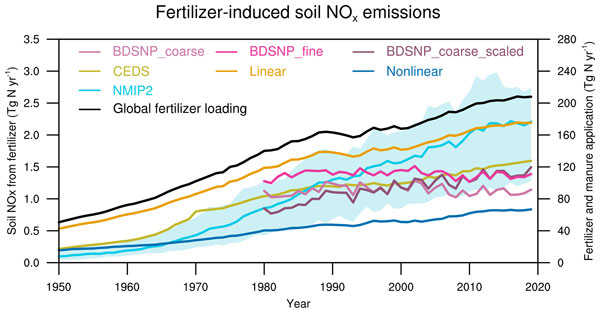
Cheng Gong, Yan Wang, Hanqin Tian, Sian Kou-Giesbrecht, Nicolas Vuichard, and Sönke Zaehle
Atmos. Chem. Phys., 25, 17009–17025, https://doi.org/10.5194/acp-25-17009-2025, https://doi.org/10.5194/acp-25-17009-2025, 2025
Short summary
Short summary
Our results showed substantially varied fertilizer-induced soil NOx emissions in 2019 from 0.84 to 2.2 Tg N yr-1 globally. Such variations further lead to 0.1 to 3.3 ppbv summertime ozone enhancement in agricultural hotspot regions and 6.7 ppbv to 16.6 ppbv reductions in global methane concentrations.
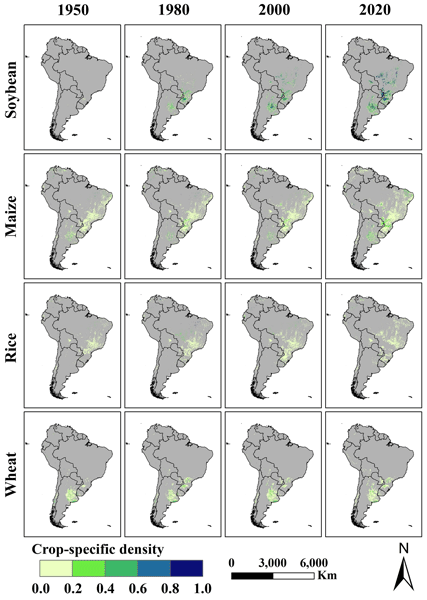
Binyuan Xu, Hanqin Tian, Shufen Pan, Xiaoyong Li, Ran Meng, Óscar Melo, Anne McDonald, María de los Ángeles Picone, Xiao-Peng Song, Edson Severnini, Katharine G. Young, and Feng Zhao
Earth Syst. Sci. Data, 17, 6353–6377, https://doi.org/10.5194/essd-17-6353-2025, https://doi.org/10.5194/essd-17-6353-2025, 2025
Short summary
Short summary
This study reconstructed the spatial and temporal patterns of four major crops (soybean, maize, wheat, and rice) in South America from 1950 to 2020 by integrating multiple data sources. The results reveal a significant expansion in cropland, particularly for soybean, leading to a substantial reduction in natural vegetation such as forests and grasslands. The datasets can be used to assess the impacts of cropland expansion on water, carbon, and nitrogen cycles in South America.
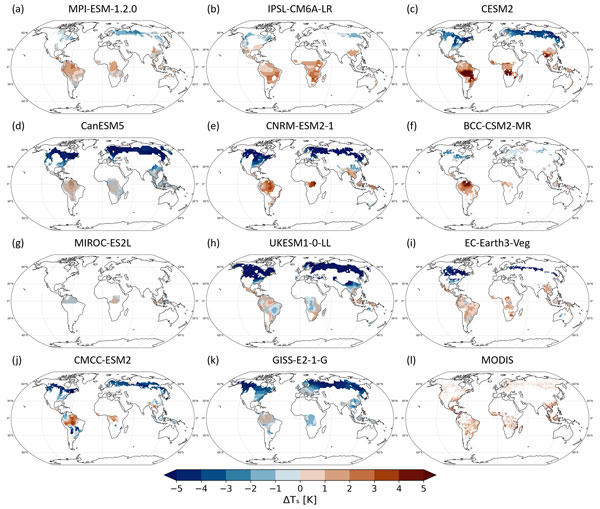
Nikolina Mileva, Julia Pongratz, Vivek K. Arora, Akihiko Ito, Sebastiaan Luyssaert, Sonali S. McDermid, Paul A. Miller, Daniele Peano, Roland Séférian, Yanwu Zhang, and Wolfgang Buermann
Earth Syst. Dynam., 16, 2137–2160, https://doi.org/10.5194/esd-16-2137-2025, https://doi.org/10.5194/esd-16-2137-2025, 2025
Short summary
Short summary
Despite forests being so important for mitigating climate change, there are still uncertainties about how much the changes in forest cover contribute to the cooling/warming of the climate. Climate models and real-world observations often disagree about the magnitude and even the direction of these changes. We constrain climate models scenarios of widespread deforestation with satellite and in-situ data and show that models still have difficulties representing the movement of heat and water.
Laura Bouillon, Valérie Gros, Morgan Lopez, Nicolas Bonnaire, Carole Philippon, Camille Yver Kwok, Leslie David, Olivier Perrussel, Olivier Sanchez, Simone Kotthaus, Jean-Eudes Petit, Philippe Ciais, and Michel Ramonet
Earth Syst. Sci. Data Discuss., https://doi.org/10.5194/essd-2025-602, https://doi.org/10.5194/essd-2025-602, 2025
Revised manuscript accepted for ESSD
Short summary
Short summary
The Saclay observatory, 20 km southwest of Paris, monitored greenhouse and reactive gases, as well as aerosols, over 10 years to assess the impact of urban emissions. By comparing downwind and background conditions, the study revealed significant reductions in pollutants linked to traffic: -35.6 % for CO, -52.3 % for NOₓ, -56.7 % for eBC, and -15 % for CO2. These trends align with emission decrease estimates from AIRPARIF inventories over the same period.
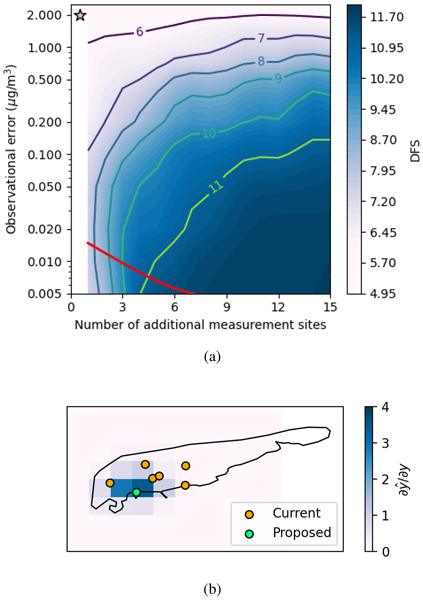
Simeng Li, Enrico Dammers, Arjo Segers, and Jan Willem Erisman
Atmos. Chem. Phys., 25, 15593–15611, https://doi.org/10.5194/acp-25-15593-2025, https://doi.org/10.5194/acp-25-15593-2025, 2025
Short summary
Short summary
Between 2019 and 2022, a notable reduction in livestock numbers has been observed on Schiermonnikoog, a small island in the north of the Netherlands. We have assessed ammonia emissions using real-world measurements on the island, demonstrated emission decrease, and proposed a network to improve emission monitoring.
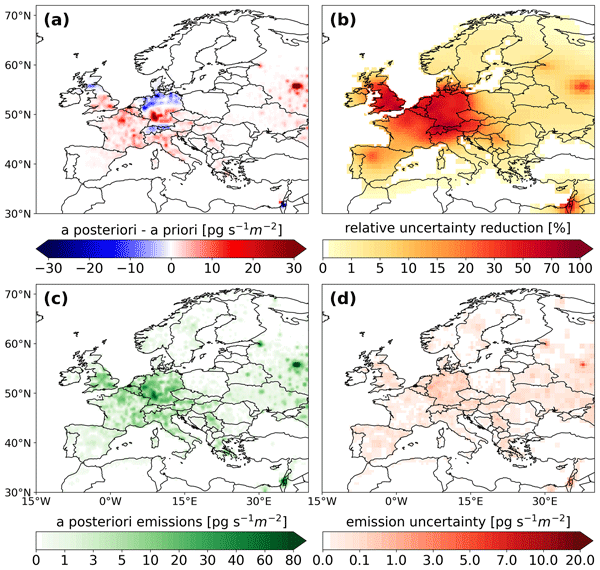
Martin Vojta, Andreas Plach, Rona L. Thompson, Pallav Purohit, Kieran Stanley, Simon O'Doherty, Dickon Young, Joe Pitt, Jgor Arduini, Xin Lan, and Andreas Stohl
Atmos. Chem. Phys., 25, 15197–15243, https://doi.org/10.5194/acp-25-15197-2025, https://doi.org/10.5194/acp-25-15197-2025, 2025
Short summary
Short summary
We determine European emissions of the highly potent greenhouse gas sulfur hexafluoride from 2005 to 2021 – focusing on high-emitting countries and the aggregated EU-27 emissions. Emissions declined in most regions, likely due to EU F-gas regulations. However, our results reveal that most studied countries underestimate their emissions in their national reports. Our sensitivity tests highlight the importance of dense observational networks for reliable inversion-based emission estimates.
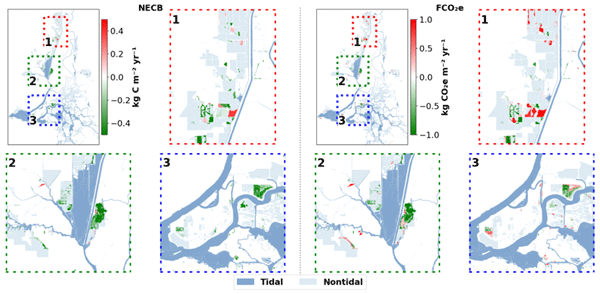
Ashley Brereton, Zelalem A. Mekonnen, Bhavna Arora, William J. Riley, Kunxiaojia Yuan, Yi Xu, Yu Zhang, Qing Zhu, Tyler L. Anthony, and Adina Paytan
Geosci. Model Dev., 18, 8157–8173, https://doi.org/10.5194/gmd-18-8157-2025, https://doi.org/10.5194/gmd-18-8157-2025, 2025
Short summary
Short summary
Wetlands absorb carbon dioxide (CO2), helping slow climate change, but they also release methane, a potent warming gas. We developed a collection of AI-based models to estimate magnitudes of CO2 and methane exchanged between the land and the atmosphere, for wetlands on a regional scale. This approach helps to inform land-use planning, restoration, and greenhouse gas accounting, while also creating a foundation for future advancements in prediction accuracy.

Félix Langot, Cyril Crevoisier, Thomas Lauvaux, Charbel Abdallah, Jérôme Pernin, Xin Lin, Marielle Saunois, Axel Guedj, Thomas Ponthieu, Julien Moyé, Michel Ramonet, Anke Roiger, Klaus-Dirk Gottschaldt, and Alina Fiehn
Atmos. Meas. Tech., 18, 5955–5983, https://doi.org/10.5194/amt-18-5955-2025, https://doi.org/10.5194/amt-18-5955-2025, 2025
Short summary
Short summary
Our study compares outputs from meteorological and atmospheric composition models to data from the MAGIC2021 campaign that took place in Sweden. Our results highlight performance differences among models, revealing strengths and weaknesses of different modelling techniques. We also found that wetland emission inventories overestimated emissions in regional simulations. This work helps to refine methane emission predictions, essential for understanding climate change.
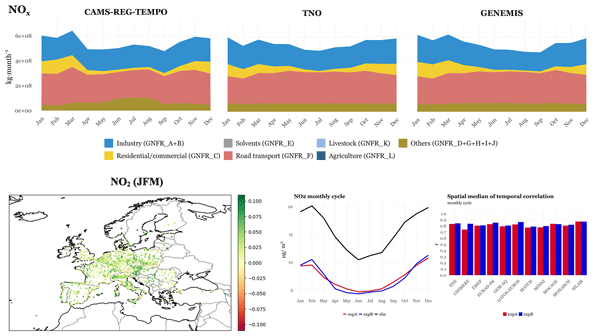
Marc Guevara, Augustin Colette, Antoine Guion, Valentin Petiot, Mario Adani, Joaquim Arteta, Anna Benedictow, Robert Bergström, Andrea Bolignano, Paula Camps, Ana C. Carvalho, Jesper Heile Christensen, Florian Couvidat, Ilaria D'Elia, Hugo Denier van der Gon, Gaël Descombes, John Douros, Hilde Fagerli, Yalda Fatahi, Elmar Friese, Lise Frohn, Michael Gauss, Camilla Geels, Risto Hänninen, Kaj Hansen, Oriol Jorba, Jacek W. Kaminski, Rostislav Kouznetsov, Richard Kranenburg, Jeroen Kuenen, Victor Lannuque, Frédérik Meleux, Agnes Nyíri, Yuliia Palamarchuk, Carlos Pérez García-Pando, Lennard Robertson, Felicita Russo, Arjo Segers, Mikhail Sofiev, Joanna Struzewska, Renske Timmermans, Andreas Uppstu, Alvaro Valdebenito, and Zhuyun Ye
Atmos. Chem. Phys., 25, 13245–13278, https://doi.org/10.5194/acp-25-13245-2025, https://doi.org/10.5194/acp-25-13245-2025, 2025
Short summary
Short summary
Air quality models require hourly emissions to accurately represent dispersion and physico-chemical processes in the atmosphere. Since emission inventories are typically provided at the annual level, emissions are downscaled to a refined temporal resolution using temporal profiles. This study quantifies the impact of using new anthropogenic temporal profiles on the performance of an European air quality multi-model ensemble. Overall, the findings indicate an improvement of the modelling results.
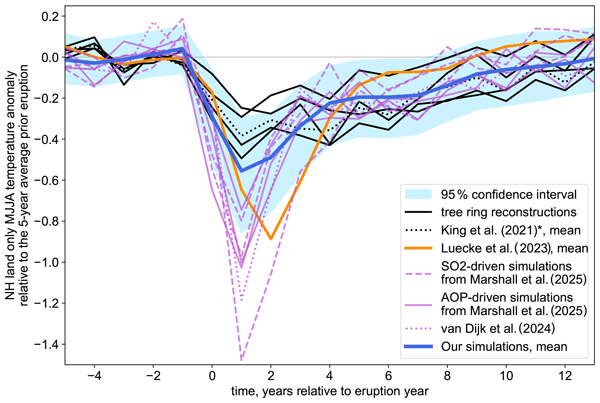
Magali Verkerk, Thomas J. Aubry, Chris Smith, Peter O. Hopcroft, Michael Sigl, Jessica E. Tierney, Kevin Anchukaitis, Matthew Osman, Anja Schmidt, and Matthew Toohey
Clim. Past, 21, 1755–1778, https://doi.org/10.5194/cp-21-1755-2025, https://doi.org/10.5194/cp-21-1755-2025, 2025
Short summary
Short summary
Large volcanic eruptions can trigger global cooling, affecting human societies. Using ice-core records and simple climate model to simulate volcanic effect over the last 8500 years, we show that volcanic eruptions cool the climate by 0.12 °C on average. By comparing model results with temperature recorded by tree rings over the last 1000 years, we demonstrate that our models can predict the large-scale cooling caused by volcanic eruptions and can be used in cases of large eruptions in the future.
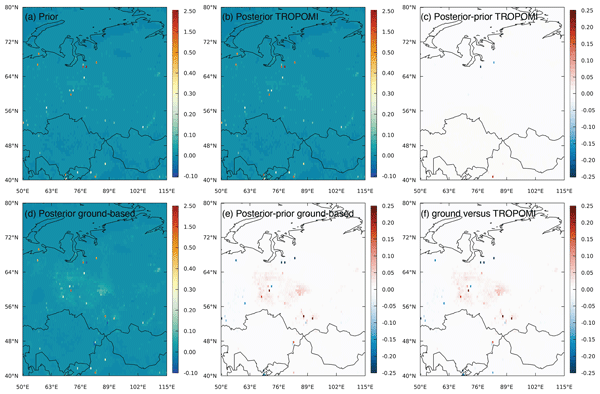
Rona L. Thompson, Nalini Krishnankutty, Ignacio Pisso, Philipp Schneider, Kerstin Stebel, Motoki Sasakawa, Andreas Stohl, and Stephen M. Platt
Atmos. Chem. Phys., 25, 12737–12751, https://doi.org/10.5194/acp-25-12737-2025, https://doi.org/10.5194/acp-25-12737-2025, 2025
Short summary
Short summary
Satellite remote sensing of atmospheric mixing ratios of greenhouse gases (GHGs) can provide information on their emissions. This study presents a novel method to use atmospheric mixing ratios observed by satellites with a Lagrangian model of atmospheric transport to estimate GHG emissions. This method can reduce model errors resulting from how an observation is represented by an atmospheric model, thereby helping to reduce the errors in the GHG emissions derived.
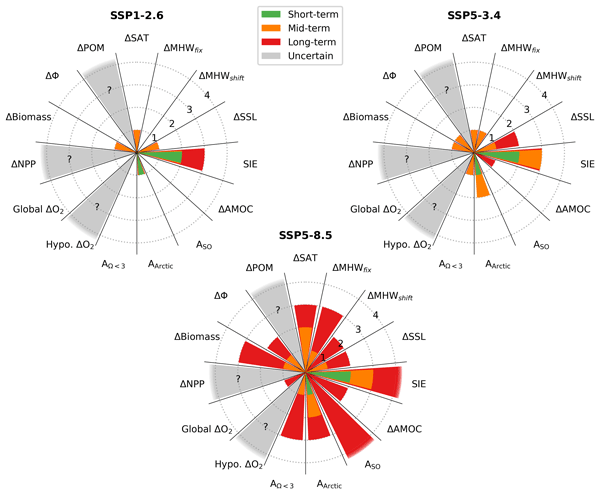
Timothée Bourgeois, Giang T. Tran, Aurich Jeltsch-Thömmes, Jörg Schwinger, Friederike Fröb, Thomas L. Frölicher, Thorsten Blenckner, Olivier Torres, Jean Negrel, David P. Keller, Andreas Oschlies, Laurent Bopp, and Fortunat Joos
Biogeosciences, 22, 5435–5462, https://doi.org/10.5194/bg-22-5435-2025, https://doi.org/10.5194/bg-22-5435-2025, 2025
Short summary
Short summary
Anthropogenic greenhouse gas emissions significantly impact ocean ecosystems through climate change and acidification, leading to either progressive or abrupt changes. This study maps the crossing of physical and ecological limits for various ocean impact metrics under three emission scenarios. Using Earth system models, we identify when these limits are exceeded, highlighting the urgent need for ambitious climate action to safeguard the world's oceans and ecosystems.
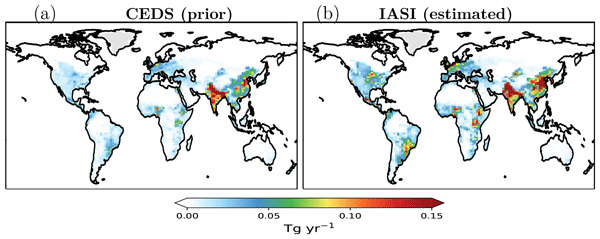
Pramod Kumar, Grégoire Broquet, Didier Hauglustaine, Maureen Beaudor, Lieven Clarisse, Martin Van Damme, Pierre Coheur, Anne Cozic, Bo Zheng, Beatriz Revilla Romero, Antony Delavois, and Philippe Ciais
Atmos. Chem. Phys., 25, 12379–12407, https://doi.org/10.5194/acp-25-12379-2025, https://doi.org/10.5194/acp-25-12379-2025, 2025
Short summary
Short summary
Global maps of the NH3 emissions over 2019–2022 are derived using IASI NH3 spaceborne observations, the LMDZ-INCA chemistry transport model at 1.27°×2.5° resolution, and the mass-balance approach. The average global NH3 emissions over the period are ~97 Tg NH3 yr-1, which is significantly higher than three reference inventories. The analysis provides confidence in the seasonal variability and regional budgets and provides new insights into NH3 emissions at global and regional scales.
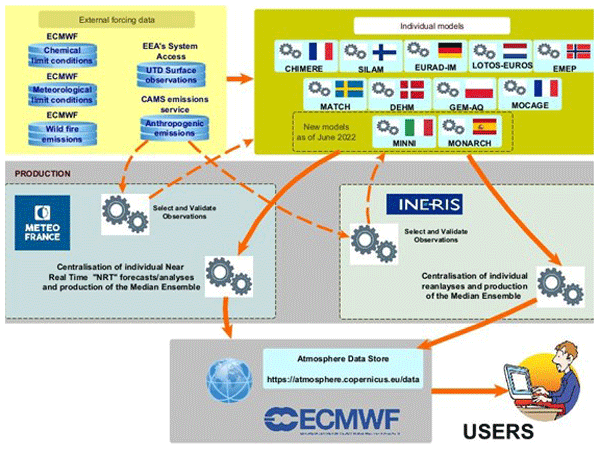
Augustin Colette, Gaëlle Collin, François Besson, Etienne Blot, Vincent Guidard, Frédérik Meleux, Adrien Royer, Valentin Petiot, Claire Miller, Oihana Fermond, Alizé Jeant, Mario Adani, Joaquim Arteta, Anna Benedictow, Robert Bergström, Dene Bowdalo, Jorgen Brandt, Gino Briganti, Ana C. Carvalho, Jesper Heile Christensen, Florian Couvidat, Ilaria D'Elia, Massimo D'Isidoro, Hugo Denier van der Gon, Gaël Descombes, Enza Di Tomaso, John Douros, Jeronimo Escribano, Henk Eskes, Hilde Fagerli, Yalda Fatahi, Johannes Flemming, Elmar Friese, Lise Frohn, Michael Gauss, Camilla Geels, Guido Guarnieri, Marc Guevara, Antoine Guion, Jonathan Guth, Risto Hänninen, Kaj Hansen, Ulas Im, Ruud Janssen, Marine Jeoffrion, Mathieu Joly, Luke Jones, Oriol Jorba, Evgeni Kadantsev, Michael Kahnert, Jacek W. Kaminski, Rostislav Kouznetsov, Richard Kranenburg, Jeroen Kuenen, Anne Caroline Lange, Joachim Langner, Victor Lannuque, Francesca Macchia, Astrid Manders, Mihaela Mircea, Agnes Nyiri, Miriam Olid, Carlos Pérez García-Pando, Yuliia Palamarchuk, Antonio Piersanti, Blandine Raux, Miha Razinger, Lennard Robertson, Arjo Segers, Martijn Schaap, Pilvi Siljamo, David Simpson, Mikhail Sofiev, Anders Stangel, Joanna Struzewska, Carles Tena, Renske Timmermans, Thanos Tsikerdekis, Svetlana Tsyro, Svyatoslav Tyuryakov, Anthony Ung, Andreas Uppstu, Alvaro Valdebenito, Peter van Velthoven, Lina Vitali, Zhuyun Ye, Vincent-Henri Peuch, and Laurence Rouïl
Geosci. Model Dev., 18, 6835–6883, https://doi.org/10.5194/gmd-18-6835-2025, https://doi.org/10.5194/gmd-18-6835-2025, 2025
Short summary
Short summary
The Copernicus Atmosphere Monitoring Service – Regional Production delivers daily forecasts, analyses, and reanalyses of air quality in Europe. The service relies on a distributed modelling production by 11 leading European modelling teams following stringent requirements with an operational design that has no equivalent in the world. All the products are free, open, and quality-assured and disseminated with a high level of reliability.
Lin Yu, Thomas Kleinen, Min Jung Kwon, Christian Knoblauch, and Christian Beer
EGUsphere, https://doi.org/10.5194/egusphere-2025-4648, https://doi.org/10.5194/egusphere-2025-4648, 2025
Short summary
Short summary
We studied how adding biochar to soils might affect future climate. Using computer simulations, we found that while global averages of temperature and rainfall change little, extreme events respond more clearly. Heat waves and heavy rain are reduced in many regions, though drought risks rise in some dry areas. These results suggest that biochar could help moderate harmful climate extremes, especially on land, but with region-specific effects.
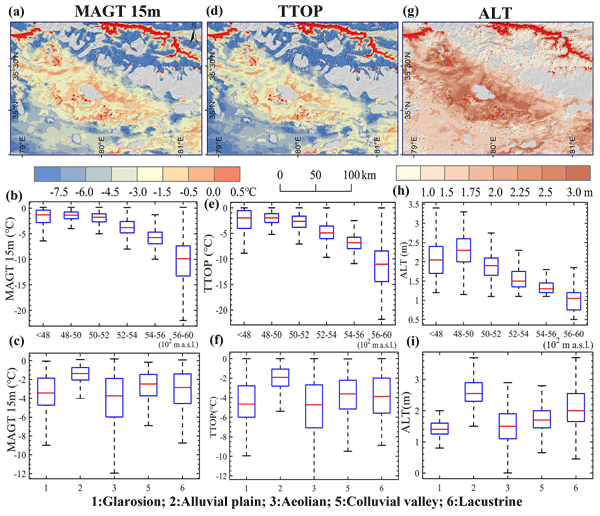
Jianting Zhao, Lin Zhao, Zhe Sun, Guojie Hu, Defu Zou, Minxuan Xiao, Guangyue Liu, Qiangqiang Pang, Erji Du, Zhibin Li, Xiaodong Wu, Yao Xiao, Lingxiao Wang, and Wenxin Zhang
The Cryosphere, 19, 4211–4236, https://doi.org/10.5194/tc-19-4211-2025, https://doi.org/10.5194/tc-19-4211-2025, 2025
Short summary
Short summary
We used the Moving-Grid Permafrost Model (MVPM) to simulate the permafrost thermal regime in West Kunlun (55,669 km², NW Qinghai–Tibet Plateau), driven by remote-sensing-based land surface temperature (LST; 1980–2022). The model showed high accuracy and stability. Despite ongoing warming (+0.40 °C per decade), permafrost extent remained stable, reflecting delayed deep responses. The permafrost thermal regime reveals altitude- and soil-dependent responses to climate change and offers valuable insights into thermal states in data-scarce regions.
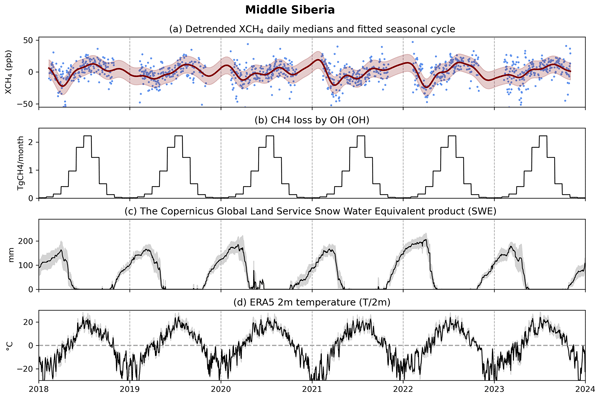
Ella Kivimäki, Maria Tenkanen, Tuula Aalto, Michael Buchwitz, Kari Luojus, Jouni Pulliainen, Kimmo Rautiainen, Oliver Schneising, Anu-Maija Sundström, Johanna Tamminen, Aki Tsuruta, and Hannakaisa Lindqvist
Biogeosciences, 22, 5193–5230, https://doi.org/10.5194/bg-22-5193-2025, https://doi.org/10.5194/bg-22-5193-2025, 2025
Short summary
Short summary
We study how environmental variables influencing natural methane fluxes explain the seasonal variability in satellite-observed methane in Northern Hemisphere high-latitude wetland areas. Using two atmospheric model set-ups, we assess consistency with satellite data. Methane loss through reaction with hydroxyl radicals and links with snow cover, temperature, and snowmelt had the strongest influence. Our study highlights the value of satellite observations for understanding large-scale wetland emissions.
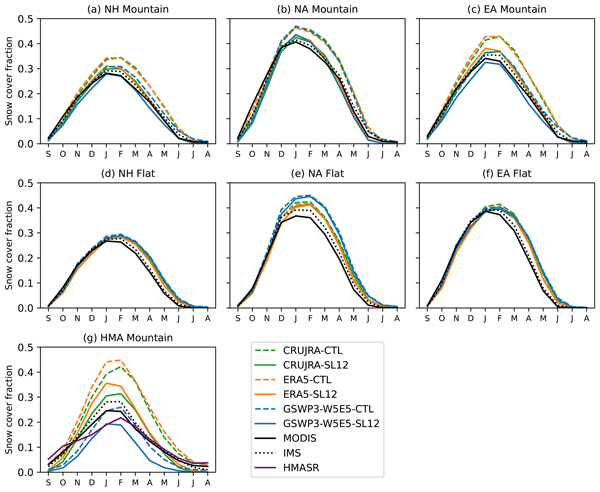
Libo Wang, Lawrence Mudryk, Joe R. Melton, Colleen Mortimer, Jason Cole, Gesa Meyer, Paul Bartlett, and Mickaël Lalande
Geosci. Model Dev., 18, 6597–6621, https://doi.org/10.5194/gmd-18-6597-2025, https://doi.org/10.5194/gmd-18-6597-2025, 2025
Short summary
Short summary
This study shows that an alternate snow cover fraction parameterization significantly improves snow simulation by CLASSIC in mountainous areas for all three choices of meteorological datasets. Annual mean bias, unbiased root mean squared area, and correlation improve by 75 %, 32 %, and 7 % when evaluated with MODIS observations over the Northern Hemisphere. We also link relative biases in the meteorological forcing data to differences in simulated snow water equivalent and snow cover fraction.

Yi Xi, Philippe Ciais, Dan Zhu, Chunjing Qiu, Yuan Zhang, Shushi Peng, Gustaf Hugelius, Simon P. K. Bowring, Daniel S. Goll, and Ying-Ping Wang
Geosci. Model Dev., 18, 6043–6062, https://doi.org/10.5194/gmd-18-6043-2025, https://doi.org/10.5194/gmd-18-6043-2025, 2025
Short summary
Short summary
Including high-latitude deep carbon is critical for projecting future soil carbon emissions, yet it is absent in most land surface models. Here we propose a new carbon accumulation protocol by integrating deep carbon from Yedoma deposits and representing the observed history of peat carbon formation in ORCHIDEE-MICT. Our results show an additional 157 Pg C in present-day Yedoma deposits and a 1–5 m shallower peat depth and 43 % less passive soil carbon in peatlands compared to the conventional protocol.
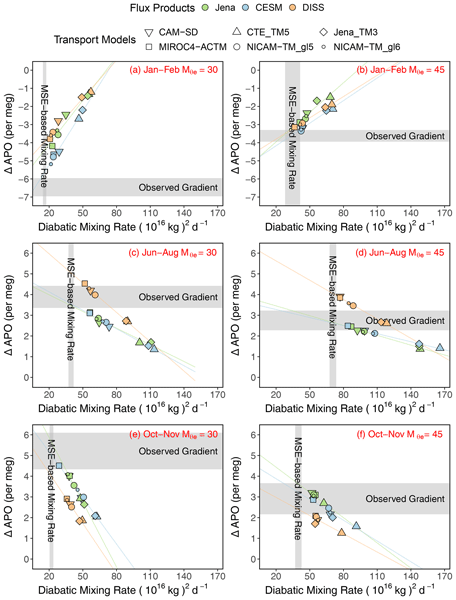
Yuming Jin, Britton B. Stephens, Matthew C. Long, Naveen Chandra, Frédéric Chevallier, Joram J. D. Hooghiem, Ingrid T. Luijkx, Shamil Maksyutov, Eric J. Morgan, Yosuke Niwa, Prabir K. Patra, Christian Rödenbeck, and Jesse Vance
Geosci. Model Dev., 18, 5937–5969, https://doi.org/10.5194/gmd-18-5937-2025, https://doi.org/10.5194/gmd-18-5937-2025, 2025
Short summary
Short summary
We carry out a comprehensive atmospheric transport model (ATM) intercomparison project. This project aims to evaluate errors in ATMs and three air-sea O2 flux products by comparing model simulations with observations collected from surface stations, ships, and aircraft. We also present a model evaluation framework to independently quantify transport-related and flux-related biases that contribute to model-observation discrepancies in atmospheric tracer distributions.
Yang Su, Nikola Besic, Xianglin Zhang, Yidi Xu, Saverio Francini, Giovanni D'Amico, Gherardo Chirici, Martin Schwartz, Ibrahim Fayad, Sarah Brood, Agnes Pellissier-tanon, Ke Yu, Haotian Chen, Songchao Chen, Alexandre d'Aspremont, and Philippe Ciais
Earth Syst. Sci. Data Discuss., https://doi.org/10.5194/essd-2025-378, https://doi.org/10.5194/essd-2025-378, 2025
Manuscript not accepted for further review
Short summary
Short summary
We created the first long-term map of tree height in Italy, showing yearly changes from 2004 to 2024 at a 30-meter resolution. Using satellite images and laser data from both aircraft and space, we applied deep learning and statistical fusion to produce accurate estimates. This map helps reveal where forests have been disturbed and how they recover over time, offering a valuable tool to support forest protection and climate policy.
Samuel Shou-En Tsao, Tim Jesper Surhoff, Giuseppe Amatulli, Maya Almaraz, Jonathan Gewirtzman, Beck Woollen, Eric W. Slessarev, James E. Saiers, Christopher T. Reinhard, Shuang Zhang, Noah J. Planavsky, and Peter A. Raymond
Earth Syst. Sci. Data Discuss., https://doi.org/10.5194/essd-2025-411, https://doi.org/10.5194/essd-2025-411, 2025
Revised manuscript under review for ESSD
Short summary
Short summary
We created the first detailed map of how much agricultural lime has been used across the United States from 1930 to 1987. Lime helps improve soil health and crop growth. Our study shows that how and where lime is used depends on climate, soil, and farming practices. By using machine learning, we found patterns that help explain these differences. This work helps us better understand the environmental role of lime and its impact on farming and climate.
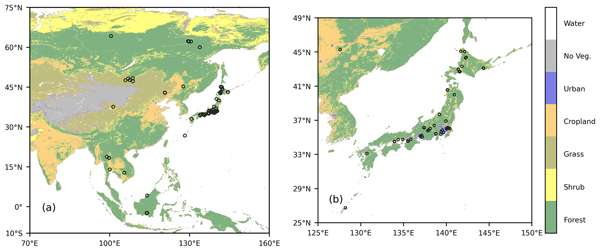
Masahito Ueyama, Yuta Takao, Hiromi Yazawa, Makiko Tanaka, Hironori Yabuki, Tomo'omi Kumagai, Hiroki Iwata, Md. Abdul Awal, Mingyuan Du, Yoshinobu Harazono, Yoshiaki Hata, Takashi Hirano, Tsutom Hiura, Reiko Ide, Sachinobu Ishida, Mamoru Ishikawa, Kenzo Kitamura, Yuji Kominami, Shujiro Komiya, Ayumi Kotani, Yuta Inoue, Takashi Machimura, Kazuho Matsumoto, Yojiro Matsuura, Yasuko Mizoguchi, Shohei Murayama, Hirohiko Nagano, Taro Nakai, Tatsuro Nakaji, Ko Nakaya, Shinjiro Ohkubo, Takeshi Ohta, Keisuke Ono, Taku M. Saitoh, Ayaka Sakabe, Takanori Shimizu, Seiji Shimoda, Michiaki Sugita, Kentaro Takagi, Yoshiyuki Takahashi, Naoya Takamura, Satoru Takanashi, Takahiro Takimoto, Yukio Yasuda, Qinxue Wang, Jun Asanuma, Hideo Hasegawa, Tetsuya Hiyama, Yoshihiro Iijima, Shigeyuki Ishidoya, Masayuki Itoh, Tomomichi Kato, Hiroaki Kondo, Yoshiko Kosugi, Tomonori Kume, Takahisa Maeda, Shoji Matsuura, Trofim Maximov, Takafumi Miyama, Ryo Moriwaki, Hiroyuki Muraoka, Roman Petrov, Jun Suzuki, Shingo Taniguchi, and Kazuhito Ichii
Earth Syst. Sci. Data, 17, 3807–3833, https://doi.org/10.5194/essd-17-3807-2025, https://doi.org/10.5194/essd-17-3807-2025, 2025
Short summary
Short summary
The JapanFlux2024 dataset, created through collaboration across Japan and East Asia, includes eddy covariance data from 83 sites spanning 683 site-years (1990–2023). This comprehensive dataset offers valuable insights into energy, water, and CO2 fluxes, supporting research on land–atmosphere interactions and process models; fosters global collaboration; and advances research in environmental science and regional climate dynamics.
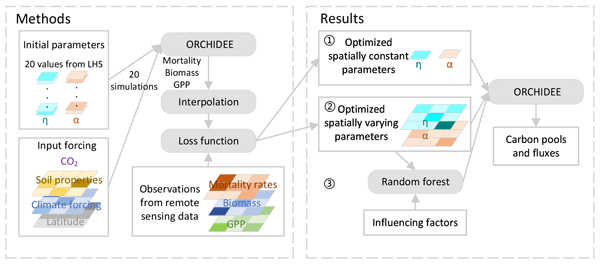
Lei Zhu, Philippe Ciais, Yitong Yao, Daniel Goll, Sebastiaan Luyssaert, Isabel Martínez Cano, Arthur Fendrich, Laurent Li, Hui Yang, Sassan Saatchi, Ricardo Dalagnol, and Wei Li
Geosci. Model Dev., 18, 4915–4933, https://doi.org/10.5194/gmd-18-4915-2025, https://doi.org/10.5194/gmd-18-4915-2025, 2025
Short summary
Short summary
This study enhances the accuracy of modeling the carbon dynamics of the Amazon rainforest by optimizing key model parameters based on satellite data. Using spatially varying parameters for tree mortality and photosynthesis, we improved predictions of biomass, productivity, and tree mortality. Our findings highlight the critical role of wood density and water availability in forest processes, offering insights to use in refining global carbon cycle models.
Rubaya Pervin, Scott Robeson, Mallory Barnes, Stephen Sitch, Anthony Walker, Ben Poulter, Fabienne Maignan, Qing Sun, Thomas Colligan, Sönke Zaehle, Kashif Mahmud, Peter Anthoni, Almut Arneth, Vivek Arora, Vladislav Bastrikov, Liam Bogucki, Bertrand Decharme, Christine Delire, Stefanie Falk, Akihiko Ito, Etsushi Kato, Daniel Kennedy, Jürgen Knauer, Michael O’Sullivan, Wenping Yuan, and Natasha MacBean
EGUsphere, https://doi.org/10.5194/egusphere-2025-2841, https://doi.org/10.5194/egusphere-2025-2841, 2025
Short summary
Short summary
Drylands contribute more than a third of the global vegetation productivity. Yet, these regions are not well represented in global vegetation models. Here, we tested how well 15 global models capture annual changes in dryland vegetation productivity. Models that didn’t have vegetation change over time or fire have lower variability in vegetation productivity. Models need better representation of grass cover types and their coverage. Our work highlights where and how these models need to improve.
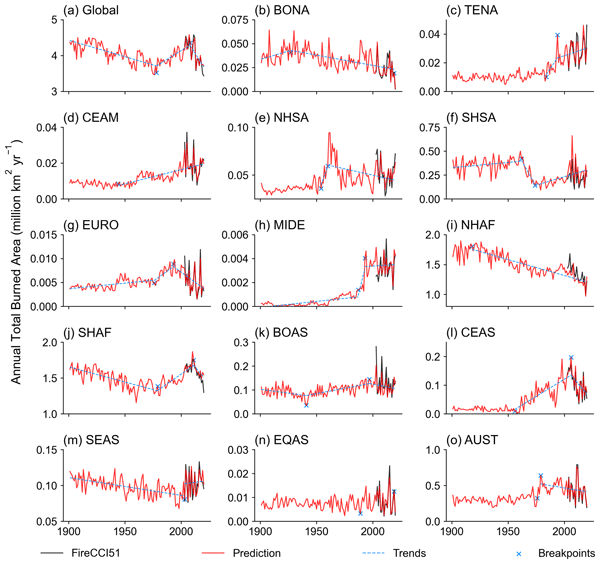
Zhixuan Guo, Wei Li, Philippe Ciais, Stephen Sitch, Guido R. van der Werf, Simon P. K. Bowring, Ana Bastos, Florent Mouillot, Jiaying He, Minxuan Sun, Lei Zhu, Xiaomeng Du, Nan Wang, and Xiaomeng Huang
Earth Syst. Sci. Data, 17, 3599–3618, https://doi.org/10.5194/essd-17-3599-2025, https://doi.org/10.5194/essd-17-3599-2025, 2025
Short summary
Short summary
To address the limitations of short time spans in satellite data and spatiotemporal discontinuity in site records, we reconstructed global monthly burned area maps at a 0.5° resolution for 1901–2020 using machine learning models. The global burned area is predicted at 3.46 × 10⁶–4.58 × 10⁶ km² per year, showing a decline from 1901 to 1978, an increase from 1978 to 2008 and a sharper decrease from 2008 to 2020. This dataset provides a benchmark for studies on fire ecology and the carbon cycle.
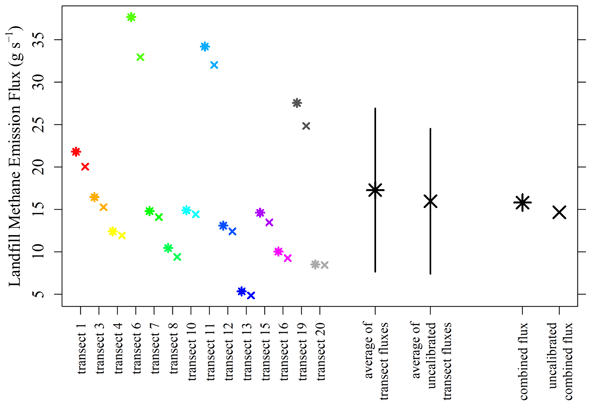
Adil Shah, Olivier Laurent, Pramod Kumar, Grégoire Broquet, Loïc Loigerot, Timothé Depelchin, Mathis Lozano, Camille Yver Kwok, Carole Philippon, Clément Romand, Elisa Allegrini, Matthieu Trombetti, and Philippe Ciais
Atmos. Meas. Tech., 18, 3425–3451, https://doi.org/10.5194/amt-18-3425-2025, https://doi.org/10.5194/amt-18-3425-2025, 2025
Short summary
Short summary
Acetylene mole fraction measurements from the Picarro G2203 were characterised. Abnormal sensor behaviour was observed in wet conditions. A dry linear calibration was derived, although this was invalid below 1.2 ppb due to unstable measurements. The instrument was used to measure acetylene as a methane tracer at a landfill site. Fluxes were derived from 14 downwind transects using both raw and calibrated acetylene mole fraction, with raw measurements resulting in 8 % flux underestimation.
Guohua Liu, Philippe Ciais, Shengli Tao, Hui Yang, and Ana Bastos
Earth Syst. Sci. Data Discuss., https://doi.org/10.5194/essd-2025-330, https://doi.org/10.5194/essd-2025-330, 2025
Manuscript not accepted for further review
Short summary
Short summary
We have developed a long-term and high-resolution global map of above-ground biomass changes from 1993 to 2020 using radar data and machine learning approach. This dataset can help understand the effects of disturbances, land-use changes, and extreme events on global carbon cycle, and enhance the representation of these processes in Earth System Models.
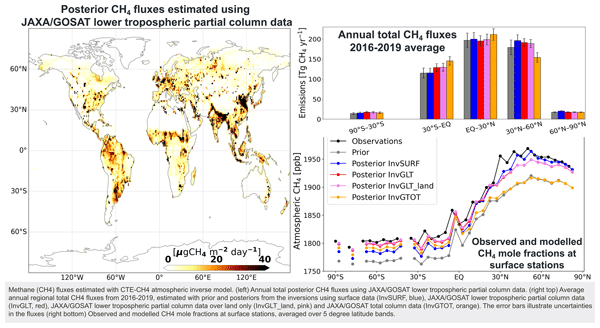
Aki Tsuruta, Akihiko Kuze, Kei Shiomi, Fumie Kataoka, Nobuhiro Kikuchi, Tuula Aalto, Leif Backman, Ella Kivimäki, Maria K. Tenkanen, Kathryn McKain, Omaira E. García, Frank Hase, Rigel Kivi, Isamu Morino, Hirofumi Ohyama, David F. Pollard, Mahesh K. Sha, Kimberly Strong, Ralf Sussmann, Yao Te, Voltaire A. Velazco, Mihalis Vrekoussis, Thorsten Warneke, Minqiang Zhou, and Hiroshi Suto
Atmos. Chem. Phys., 25, 7829–7862, https://doi.org/10.5194/acp-25-7829-2025, https://doi.org/10.5194/acp-25-7829-2025, 2025
Short summary
Short summary
Satellite data bring invaluable information about greenhouse gas emissions globally. We found that a new type of data from the Greenhouse Gas Observing Satellite (GOSAT), which contains information about methane in the lowest layer of Earth's atmosphere, could provide reliable estimates of recent methane emissions when combined with atmospheric modelling. Therefore, the use of such data is encouraged to improve emission quantification methods and advance our understanding of methane cycles.
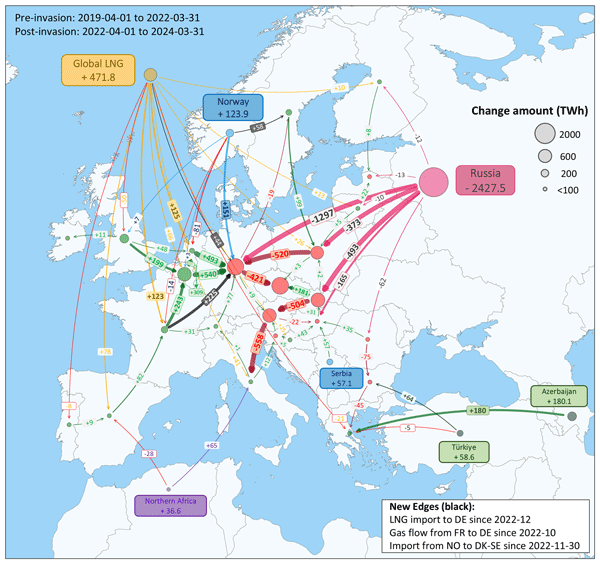
Chuanlong Zhou, Biqing Zhu, Antoine Halff, Steven J. Davis, Zhu Liu, Simon Bowring, Simon Ben Arous, and Philippe Ciais
Earth Syst. Sci. Data, 17, 3431–3446, https://doi.org/10.5194/essd-17-3431-2025, https://doi.org/10.5194/essd-17-3431-2025, 2025
Short summary
Short summary
After Russia's 2022 invasion of Ukraine, Europe's energy dynamics shifted significantly. Our study introduces updated datasets tracking changes in natural gas supply, usage, and transmission within the EU27&UK. We discovered that Europe adapted to losing Russian gas by increasing LNG (liquefied natural gas) imports and shifting to renewables. Our insights could shape future energy policies and climate research.
Rimal Abeed, Audrey Fortems-Cheiney, Grégoire Broquet, Robin Plauchu, Isabelle Pison, Antoine Berchet, Elise Potier, Bo Zheng, Gaëlle Dufour, Adriana Coman, Dilek Savas, Guillaume Siour, Henk Eskes, Beatriz Revilla-Romero, Antony Delavois, and Philippe Ciais
EGUsphere, https://doi.org/10.5194/egusphere-2025-3329, https://doi.org/10.5194/egusphere-2025-3329, 2025
Preprint archived
Short summary
Short summary
We investigate changes in air pollution from nitrogen oxides NOx (=NO+NO2) across Eastern China from 2019 to 2021, using a satellite-based modelling approach. Our results show a drop in pollution in 2020 in most provinces, and along the China-Mongolia-Russia Economic Corridor. The analysis also captures emission variations during the Lunar New Year. By estimating emissions at the provincial level, the study provides insights into how major events and policy measures influence local air quality.
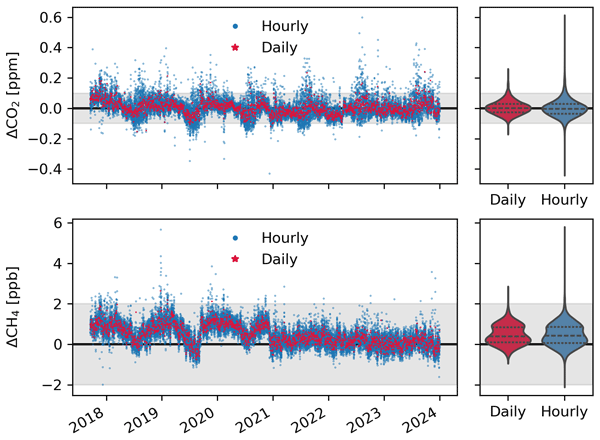
Antti Laitinen, Hermanni Aaltonen, Christoph Zellweger, Aki Tsuruta, Tuula Aalto, and Juha Hatakka
Atmos. Meas. Tech., 18, 3109–3133, https://doi.org/10.5194/amt-18-3109-2025, https://doi.org/10.5194/amt-18-3109-2025, 2025
Short summary
Short summary
This paper presents long-term observations of atmospheric CO2 and CH4 mole fractions and a comparison of two permanent and two mobile measurement systems located in Northern Finland. Furthermore, the observed mole fractions are compared against the mean marine boundary layer product for the Northern Hemisphere. The comparisons of all the systems show good agreement in relation to the World Meteorological Organization/Global Atmosphere Watch network compatibility goal limits for CO2 and CH4.
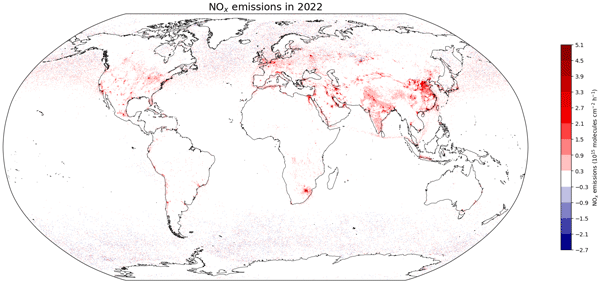
Anthony Rey-Pommier, Alexandre Héraud, Frédéric Chevallier, Philippe Ciais, Theodoros Christoudias, Jonilda Kushta, and Jean Sciare
Earth Syst. Sci. Data, 17, 3329–3351, https://doi.org/10.5194/essd-17-3329-2025, https://doi.org/10.5194/essd-17-3329-2025, 2025
Short summary
Short summary
In this study, we estimate emissions of nitrogen oxides (NOx) in 2022 at high resolution at the global scale, using satellite observations. We provide maps of the emissions and identify several types of sources. Our results are similar to the EDGAR emission inventory. However, differences are found in countries with lower observation densities and lower emissions.
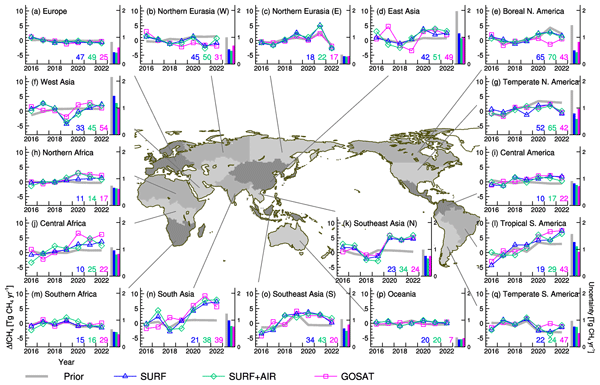
Yosuke Niwa, Yasunori Tohjima, Yukio Terao, Tazu Saeki, Akihiko Ito, Taku Umezawa, Kyohei Yamada, Motoki Sasakawa, Toshinobu Machida, Shin-Ichiro Nakaoka, Hideki Nara, Hiroshi Tanimoto, Hitoshi Mukai, Yukio Yoshida, Shinji Morimoto, Shinya Takatsuji, Kazuhiro Tsuboi, Yousuke Sawa, Hidekazu Matsueda, Kentaro Ishijima, Ryo Fujita, Daisuke Goto, Xin Lan, Kenneth Schuldt, Michal Heliasz, Tobias Biermann, Lukasz Chmura, Jarsolaw Necki, Irène Xueref-Remy, and Damiano Sferlazzo
Atmos. Chem. Phys., 25, 6757–6785, https://doi.org/10.5194/acp-25-6757-2025, https://doi.org/10.5194/acp-25-6757-2025, 2025
Short summary
Short summary
This study estimated regional and sectoral emission contributions to the unprecedented surge of atmospheric methane for 2020–2022. The methane is the second most important greenhouse gas, and its emissions reduction is urgently required to mitigate global warming. Numerical modeling-based estimates with three different sets of atmospheric observations consistently suggested large contributions of biogenic emissions from South Asia and Southeast Asia to the surge of atmospheric methane.
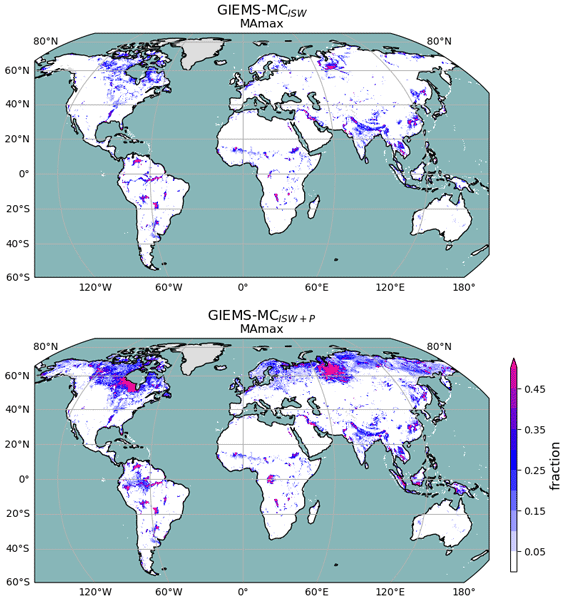
Juliette Bernard, Catherine Prigent, Carlos Jimenez, Etienne Fluet-Chouinard, Bernhard Lehner, Elodie Salmon, Philippe Ciais, Zhen Zhang, Shushi Peng, and Marielle Saunois
Earth Syst. Sci. Data, 17, 2985–3008, https://doi.org/10.5194/essd-17-2985-2025, https://doi.org/10.5194/essd-17-2985-2025, 2025
Short summary
Short summary
Wetlands are responsible for about a third of global emissions of methane, a potent greenhouse gas. We have developed the Global Inundation Extent from Multi-Satellites-MethaneCentric (GIEMS-MC) dataset to represent the dynamics of wetland extent on a global scale (0.25° × 0.25° resolution, monthly time step). This updated resource combines satellite data and existing wetland databases, covering 1992 to 2020. Consistent maps of other methane-emitting surface waters (lakes, rivers, reservoirs, rice paddies) are also provided.
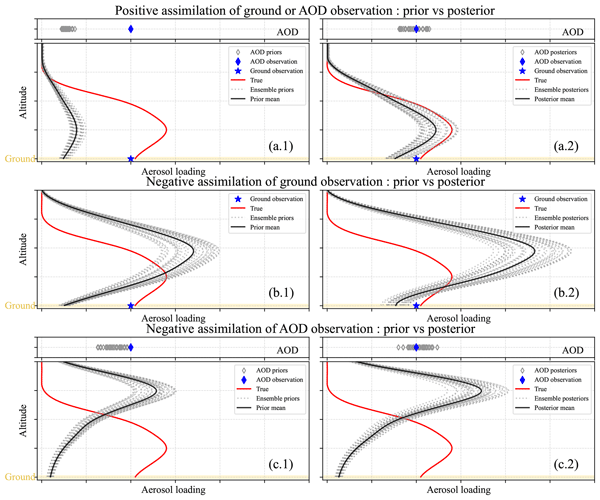
Mijie Pang, Jianbing Jin, Ting Yang, Xi Chen, Arjo Segers, Batjargal Buyantogtokh, Yixuan Gu, Jiandong Li, Hai Xiang Lin, Hong Liao, and Wei Han
Geosci. Model Dev., 18, 3781–3798, https://doi.org/10.5194/gmd-18-3781-2025, https://doi.org/10.5194/gmd-18-3781-2025, 2025
Short summary
Short summary
Aerosol data assimilation has gained popularity as it combines the advantages of modelling and observation. However, few studies have addressed the challenges in the prior vertical structure. Different observations are assimilated to examine the sensitivity of assimilation to vertical structure. Results show that assimilation can optimize the dust field in general. However, if the prior introduces an incorrect structure, the assimilation can significantly deteriorate the integrity of the aerosol profile.
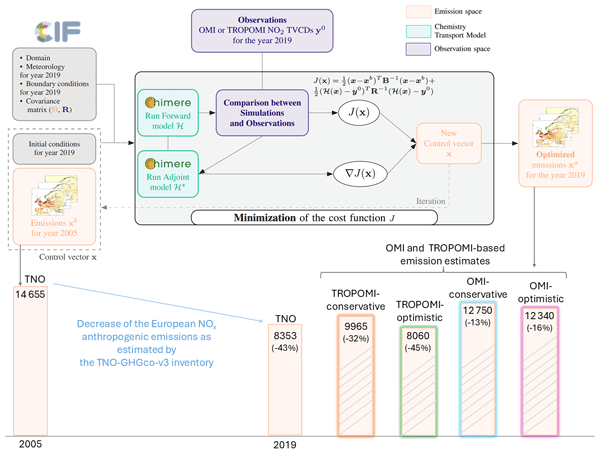
Audrey Fortems-Cheiney, Grégoire Broquet, Elise Potier, Antoine Berchet, Isabelle Pison, Adrien Martinez, Robin Plauchu, Rimal Abeed, Aurélien Sicsik-Paré, Gaelle Dufour, Adriana Coman, Dilek Savas, Guillaume Siour, Henk Eskes, Hugo A. C. Denier van der Gon, and Stijn N. C. Dellaert
Atmos. Chem. Phys., 25, 6047–6068, https://doi.org/10.5194/acp-25-6047-2025, https://doi.org/10.5194/acp-25-6047-2025, 2025
Short summary
Short summary
This study assesses the potential of the Ozone Monitoring Instrument (OMI) and the TROPOspheric Monitoring Instrument (TROPOMI) satellite observations to inform about the decrease in anthropogenic emissions of nitrogen oxides (NOx) in 2019 compared with 2005 at regional to national scales in Europe. Both the OMI and TROPOMI inversions show decreases in European NOx anthropogenic emission budgets in 2019 compared to 2005 but with different magnitudes.
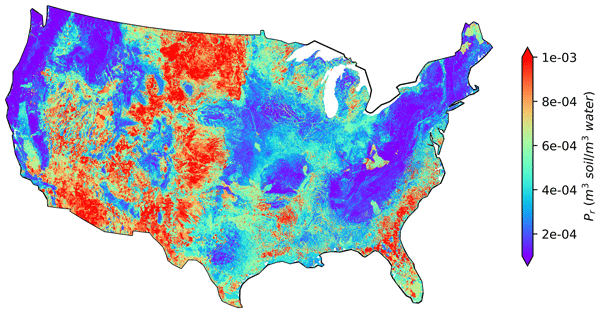
Lingbo Li, Hong-Yi Li, Guta Abeshu, Jinyun Tang, L. Ruby Leung, Chang Liao, Zeli Tan, Hanqin Tian, Peter Thornton, and Xiaojuan Yang
Earth Syst. Sci. Data, 17, 2713–2733, https://doi.org/10.5194/essd-17-2713-2025, https://doi.org/10.5194/essd-17-2713-2025, 2025
Short summary
Short summary
We have developed new maps that reveal how organic carbon from soil leaches into headwater streams over the contiguous United States. We use advanced artificial intelligence techniques and a massive amount of data, including observations at over 2500 gauges and a wealth of climate and environmental information. The maps are a critical step in understanding and predicting how carbon moves through our environment, hence making them a useful tool for tackling climate challenges.
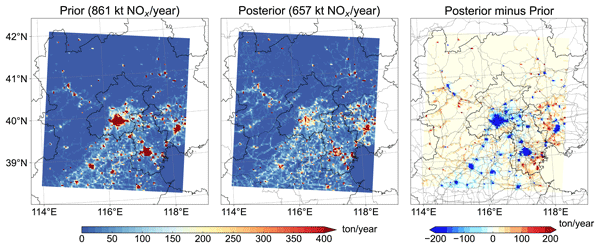
Yawen Kong, Bo Zheng, and Yuxi Liu
Atmos. Chem. Phys., 25, 5959–5976, https://doi.org/10.5194/acp-25-5959-2025, https://doi.org/10.5194/acp-25-5959-2025, 2025
Short summary
Short summary
Current high-resolution satellite remote sensing technologies provide a unique opportunity to derive timely high-resolution emission data. We developed an emission inversion system to assimilate satellite NO2 data to obtain daily kilometer-scale NOx emission inventories. Our results enhance inventory accuracy, allowing us to capture the effects of pollution control policies on daily emissions (e.g., during COVID-19 lockdowns) and improve fine-scale air quality modeling.
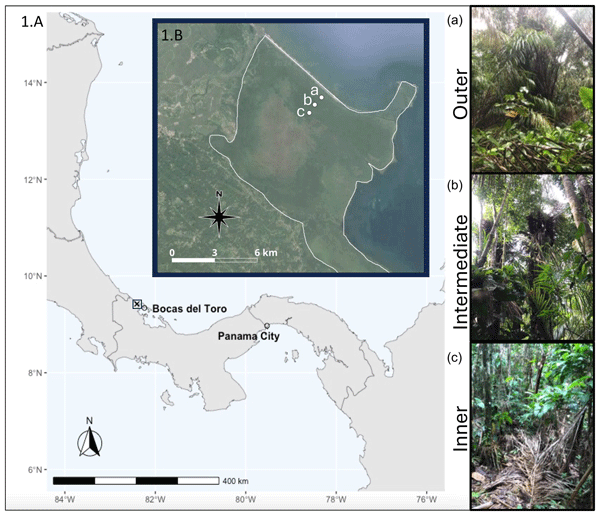
Alexandra Hedgpeth, Alison M. Hoyt, Kyle C. Cavanaugh, Karis J. McFarlane, and Daniela F. Cusack
Biogeosciences, 22, 2667–2690, https://doi.org/10.5194/bg-22-2667-2025, https://doi.org/10.5194/bg-22-2667-2025, 2025
Short summary
Short summary
Tropical peatlands store ancient carbon and have been identified as both being vulnerable to future climate change and taking a long time to recover after a disturbance. It is unknown if these gases are produced from decomposition of 1000-year-old peat. Radiocarbon dating shows emitted gases are young, indicating that surface carbon (rather than old peat) drives emissions. Preserving these ecosystems can trap old carbon, mitigating climate change.
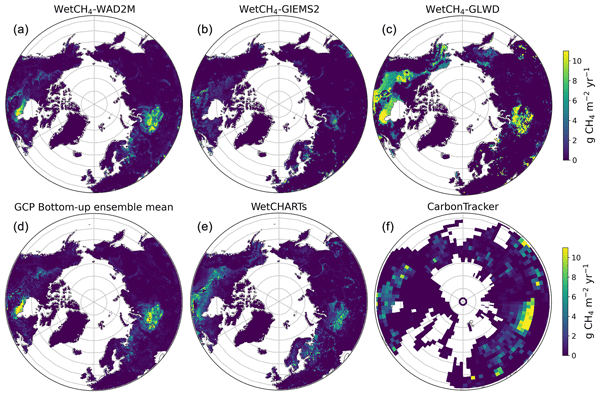
Qing Ying, Benjamin Poulter, Jennifer D. Watts, Kyle A. Arndt, Anna-Maria Virkkala, Lori Bruhwiler, Youmi Oh, Brendan M. Rogers, Susan M. Natali, Hilary Sullivan, Amanda Armstrong, Eric J. Ward, Luke D. Schiferl, Clayton D. Elder, Olli Peltola, Annett Bartsch, Ankur R. Desai, Eugénie Euskirchen, Mathias Göckede, Bernhard Lehner, Mats B. Nilsson, Matthias Peichl, Oliver Sonnentag, Eeva-Stiina Tuittila, Torsten Sachs, Aram Kalhori, Masahito Ueyama, and Zhen Zhang
Earth Syst. Sci. Data, 17, 2507–2534, https://doi.org/10.5194/essd-17-2507-2025, https://doi.org/10.5194/essd-17-2507-2025, 2025
Short summary
Short summary
We present daily methane (CH4) fluxes of northern wetlands at 10 km resolution during 2016–2022 (WetCH4) derived from a novel machine learning framework. We estimated an average annual CH4 emission of 22.8 ± 2.4 Tg CH4 yr−1 (15.7–51.6 Tg CH4 yr−1). Emissions were intensified in 2016, 2020, and 2022, with the largest interannual variation coming from Western Siberia. Continued, all-season tower observations and improved soil moisture products are needed for future improvement of CH4 upscaling.
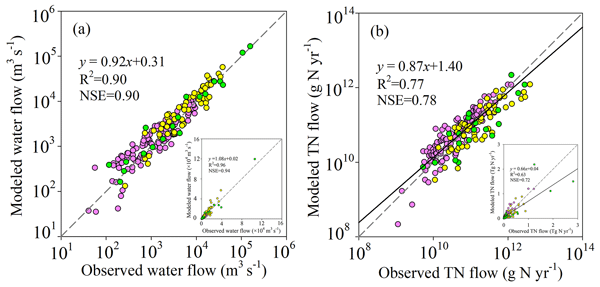
Minna Ma, Haicheng Zhang, Ronny Lauerwald, Philippe Ciais, and Pierre Regnier
Earth Syst. Dynam., 16, 841–867, https://doi.org/10.5194/esd-16-841-2025, https://doi.org/10.5194/esd-16-841-2025, 2025
Short summary
Short summary
A new offline model (LSM_Nlateral_Off) was developed to simulate the lateral transfer of nitrogen from land to oceans through the river network, incorporating the decomposition of DON (dissolved organic N) and PON (particulate organic N) and denitrification of DIN (dissolved inorganic N) during fluvial transport. Evaluations using observational data indicate that the model reproduces observed rates and seasonal variations in water discharge and N flow well.
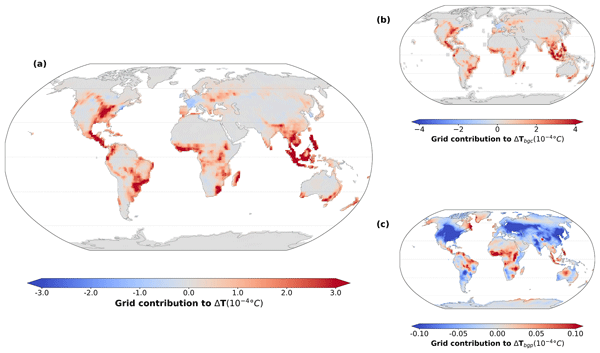
Amali A. Amali, Clemens Schwingshackl, Akihiko Ito, Alina Barbu, Christine Delire, Daniele Peano, David M. Lawrence, David Wårlind, Eddy Robertson, Edouard L. Davin, Elena Shevliakova, Ian N. Harman, Nicolas Vuichard, Paul A. Miller, Peter J. Lawrence, Tilo Ziehn, Tomohiro Hajima, Victor Brovkin, Yanwu Zhang, Vivek K. Arora, and Julia Pongratz
Earth Syst. Dynam., 16, 803–840, https://doi.org/10.5194/esd-16-803-2025, https://doi.org/10.5194/esd-16-803-2025, 2025
Short summary
Short summary
Our study explored the impact of anthropogenic land-use change (LUC) on climate dynamics, focusing on biogeophysical (BGP) and biogeochemical (BGC) effects using data from the Land Use Model Intercomparison Project (LUMIP) and the Coupled Model Intercomparison Project Phase 6 (CMIP6). We found that LUC-induced carbon emissions contribute to a BGC warming of 0.21 °C, with BGC effects dominating globally over BGP effects, which show regional variability. Our findings highlight discrepancies in model simulations and emphasize the need for improved representations of LUC processes.
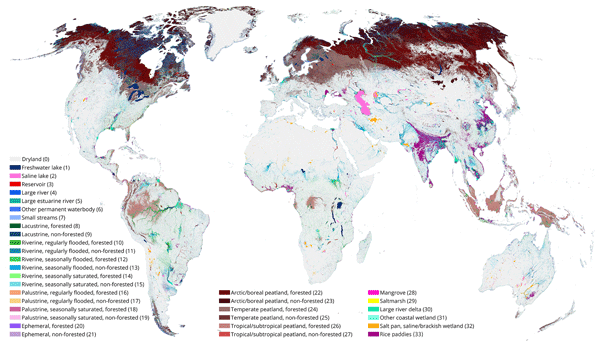
Bernhard Lehner, Mira Anand, Etienne Fluet-Chouinard, Florence Tan, Filipe Aires, George H. Allen, Philippe Bousquet, Josep G. Canadell, Nick Davidson, Meng Ding, C. Max Finlayson, Thomas Gumbricht, Lammert Hilarides, Gustaf Hugelius, Robert B. Jackson, Maartje C. Korver, Liangyun Liu, Peter B. McIntyre, Szabolcs Nagy, David Olefeldt, Tamlin M. Pavelsky, Jean-Francois Pekel, Benjamin Poulter, Catherine Prigent, Jida Wang, Thomas A. Worthington, Dai Yamazaki, Xiao Zhang, and Michele Thieme
Earth Syst. Sci. Data, 17, 2277–2329, https://doi.org/10.5194/essd-17-2277-2025, https://doi.org/10.5194/essd-17-2277-2025, 2025
Short summary
Short summary
The Global Lakes and Wetlands Database (GLWD) version 2 distinguishes a total of 33 non-overlapping wetland classes, providing a static map of the world’s inland surface waters. It contains cell fractions of wetland extents per class at a grid cell resolution of ~500 m. The total combined extent of all classes including all inland and coastal waterbodies and wetlands of all inundation frequencies – that is, the maximum extent – covers 18.2 × 10⁶ km2, equivalent to 13.4 % of total global land area.
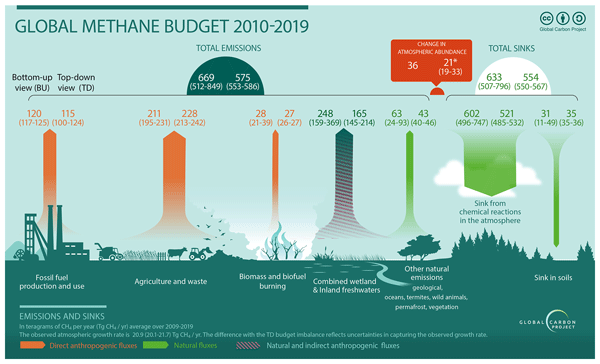
Marielle Saunois, Adrien Martinez, Benjamin Poulter, Zhen Zhang, Peter A. Raymond, Pierre Regnier, Josep G. Canadell, Robert B. Jackson, Prabir K. Patra, Philippe Bousquet, Philippe Ciais, Edward J. Dlugokencky, Xin Lan, George H. Allen, David Bastviken, David J. Beerling, Dmitry A. Belikov, Donald R. Blake, Simona Castaldi, Monica Crippa, Bridget R. Deemer, Fraser Dennison, Giuseppe Etiope, Nicola Gedney, Lena Höglund-Isaksson, Meredith A. Holgerson, Peter O. Hopcroft, Gustaf Hugelius, Akihiko Ito, Atul K. Jain, Rajesh Janardanan, Matthew S. Johnson, Thomas Kleinen, Paul B. Krummel, Ronny Lauerwald, Tingting Li, Xiangyu Liu, Kyle C. McDonald, Joe R. Melton, Jens Mühle, Jurek Müller, Fabiola Murguia-Flores, Yosuke Niwa, Sergio Noce, Shufen Pan, Robert J. Parker, Changhui Peng, Michel Ramonet, William J. Riley, Gerard Rocher-Ros, Judith A. Rosentreter, Motoki Sasakawa, Arjo Segers, Steven J. Smith, Emily H. Stanley, Joël Thanwerdas, Hanqin Tian, Aki Tsuruta, Francesco N. Tubiello, Thomas S. Weber, Guido R. van der Werf, Douglas E. J. Worthy, Yi Xi, Yukio Yoshida, Wenxin Zhang, Bo Zheng, Qing Zhu, Qiuan Zhu, and Qianlai Zhuang
Earth Syst. Sci. Data, 17, 1873–1958, https://doi.org/10.5194/essd-17-1873-2025, https://doi.org/10.5194/essd-17-1873-2025, 2025
Short summary
Short summary
Methane (CH4) is the second most important human-influenced greenhouse gas in terms of climate forcing after carbon dioxide (CO2). A consortium of multi-disciplinary scientists synthesise and update the budget of the sources and sinks of CH4. This edition benefits from important progress in estimating emissions from lakes and ponds, reservoirs, and streams and rivers. For the 2010s decade, global CH4 emissions are estimated at 575 Tg CH4 yr-1, including ~65 % from anthropogenic sources.
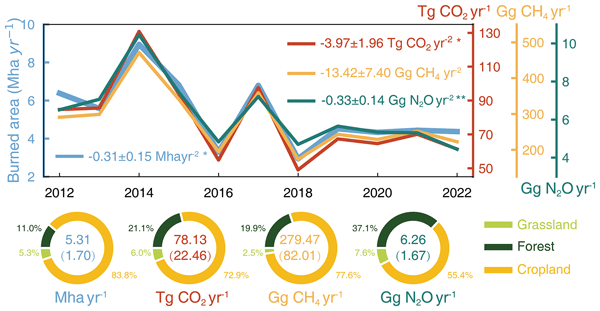
Zhengyang Lin, Ling Huang, Hanqin Tian, Anping Chen, and Xuhui Wang
Geosci. Model Dev., 18, 2509–2520, https://doi.org/10.5194/gmd-18-2509-2025, https://doi.org/10.5194/gmd-18-2509-2025, 2025
Short summary
Short summary
The China Wildfire Emission Dataset (ChinaWED v1) estimated wildfire emissions in China during 2012–2022 as 78.13 Tg CO2, 279.47 Gg CH4, and 6.26 Gg N2O annually. Agricultural fires dominated emissions, while forest and grassland emissions decreased. Seasonal peaks occurred in late spring, with hotspots in northeast, southwest, and east China. The model emphasizes the importance of using localized emission factors and high-resolution fire estimates for accurate assessments.
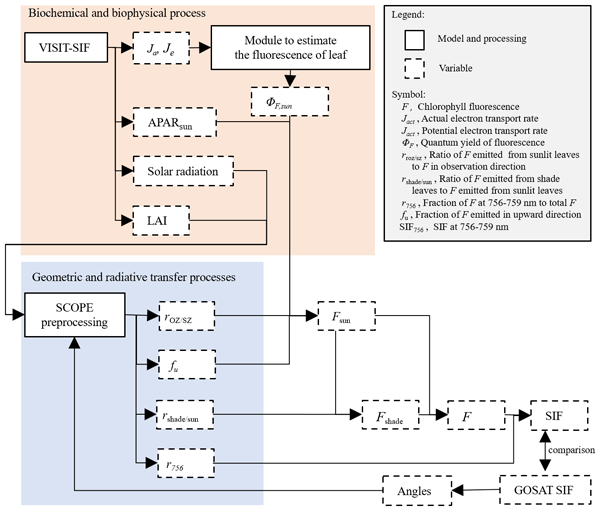
Tatsuya Miyauchi, Makoto Saito, Hibiki M. Noda, Akihiko Ito, Tomomichi Kato, and Tsuneo Matsunaga
Geosci. Model Dev., 18, 2329–2347, https://doi.org/10.5194/gmd-18-2329-2025, https://doi.org/10.5194/gmd-18-2329-2025, 2025
Short summary
Short summary
Solar-induced chlorophyll fluorescence (SIF) is an effective indicator for monitoring photosynthetic activity. This paper introduces VISIT-SIF, a biogeochemical model developed based on the Vegetation Integrative Simulator for Trace gases (VISIT) to represent satellite-observed SIF. Our simulations reproduced the global distribution and seasonal variations in observed SIF. VISIT-SIF helps to improve photosynthetic processes through a combination of biogeochemical modeling and observed SIF.
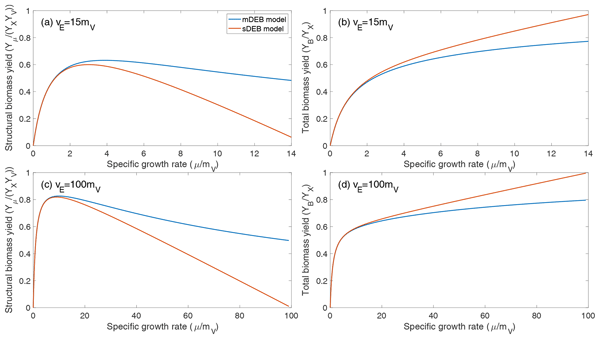
Jinyun Tang and William J. Riley
Biogeosciences, 22, 1809–1819, https://doi.org/10.5194/bg-22-1809-2025, https://doi.org/10.5194/bg-22-1809-2025, 2025
Short summary
Short summary
A new mathematical formulation of the dynamic energy budget model is presented for the growth of biological organisms. This new formulation combines mass conservation law and chemical kinetics theory and is computationally faster than the standard formulation of dynamic energy budget models. In simulating the growth of Thalassiosira weissflogii in a nitrogen-limiting chemostat, the new model is as good as the standard dynamic energy budget model using almost the same parameter values.
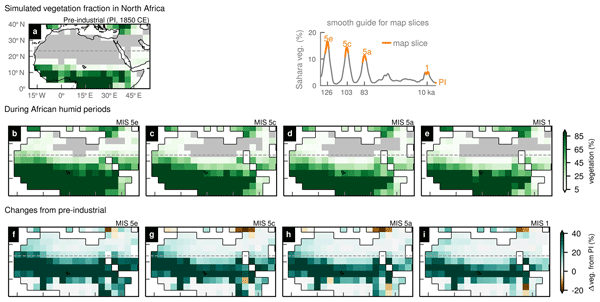
Mateo Duque-Villegas, Martin Claussen, Thomas Kleinen, Jürgen Bader, and Christian H. Reick
Clim. Past, 21, 773–794, https://doi.org/10.5194/cp-21-773-2025, https://doi.org/10.5194/cp-21-773-2025, 2025
Short summary
Short summary
We simulate the last glacial cycle with a comprehensive model of the Earth system and investigate vegetation cover change in northern Africa during the last four African Humid Periods (AHPs). We find a common pattern of vegetation change and relate it with climatic factors in order to discuss how vegetation might have evolved during even older AHPs. This scaling relationship we find according to past AHPs fails to account for projected changes in northern Africa under strong greenhouse gas warming.
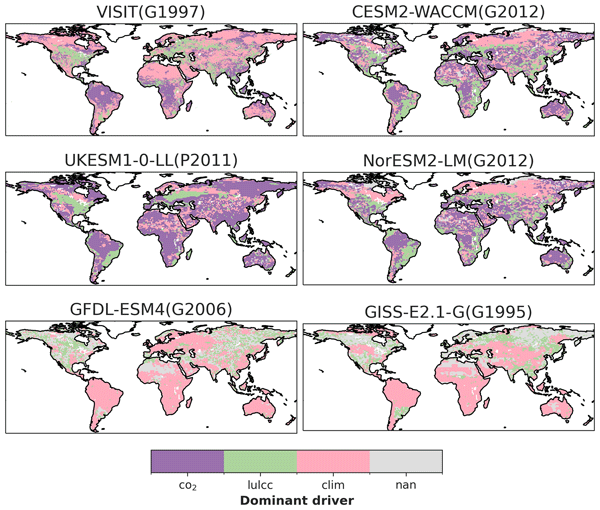
Ngoc Thi Nhu Do, Kengo Sudo, Akihiko Ito, Louisa K. Emmons, Vaishali Naik, Kostas Tsigaridis, Øyvind Seland, Gerd A. Folberth, and Douglas I. Kelley
Geosci. Model Dev., 18, 2079–2109, https://doi.org/10.5194/gmd-18-2079-2025, https://doi.org/10.5194/gmd-18-2079-2025, 2025
Short summary
Short summary
Understanding historical isoprene emission changes is important for predicting future climate, but trends and their controlling factors remain uncertain. This study shows that long-term isoprene trends vary among Earth system models mainly due to partially incorporating CO2 effects and land cover changes rather than to climate. Future models that refine these factors’ effects on isoprene emissions, along with long-term observations, are essential for better understanding plant–climate interactions.
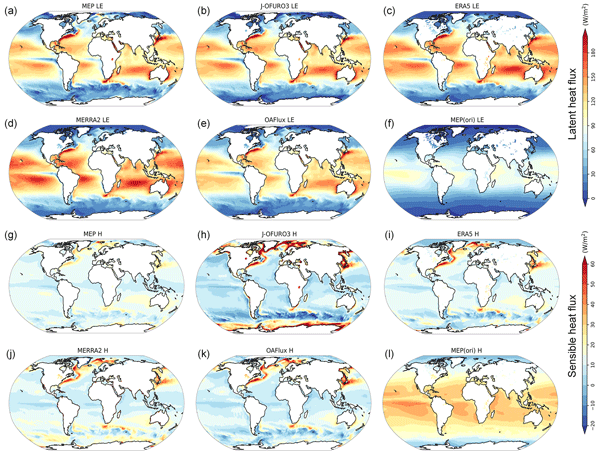
Yong Yang, Huaiwei Sun, Jingfeng Wang, Wenxin Zhang, Gang Zhao, Weiguang Wang, Lei Cheng, Lu Chen, Hui Qin, and Zhanzhang Cai
Earth Syst. Sci. Data, 17, 1191–1216, https://doi.org/10.5194/essd-17-1191-2025, https://doi.org/10.5194/essd-17-1191-2025, 2025
Short summary
Short summary
Traditional methods for estimating ocean heat flux often introduce large uncertainties due to complex parameterizations. To tackle this issue, we developed a novel framework based on maximum entropy production (MEP) theory. By incorporating heat storage effects and refining the Bowen ratio, we enhanced the MEP method's accuracy. This research derives a new long-term global ocean latent heat flux dataset that offers high accuracy, enhancing our understanding of ocean energy dynamics.
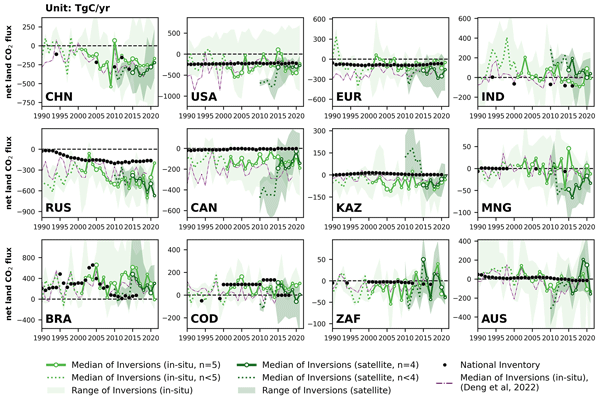
Zhu Deng, Philippe Ciais, Liting Hu, Adrien Martinez, Marielle Saunois, Rona L. Thompson, Kushal Tibrewal, Wouter Peters, Brendan Byrne, Giacomo Grassi, Paul I. Palmer, Ingrid T. Luijkx, Zhu Liu, Junjie Liu, Xuekun Fang, Tengjiao Wang, Hanqin Tian, Katsumasa Tanaka, Ana Bastos, Stephen Sitch, Benjamin Poulter, Clément Albergel, Aki Tsuruta, Shamil Maksyutov, Rajesh Janardanan, Yosuke Niwa, Bo Zheng, Joël Thanwerdas, Dmitry Belikov, Arjo Segers, and Frédéric Chevallier
Earth Syst. Sci. Data, 17, 1121–1152, https://doi.org/10.5194/essd-17-1121-2025, https://doi.org/10.5194/essd-17-1121-2025, 2025
Short summary
Short summary
This study reconciles national greenhouse gas (GHG) inventories with updated atmospheric inversion results to evaluate discrepancies for three principal GHG fluxes at the national level. Compared to our previous study, new satellite-based CO2 inversions were included and an updated mask of managed lands was used, improving agreement for Brazil and Canada. The proposed methodology can be regularly applied as a check to assess the gap between top-down inversions and bottom-up inventories.
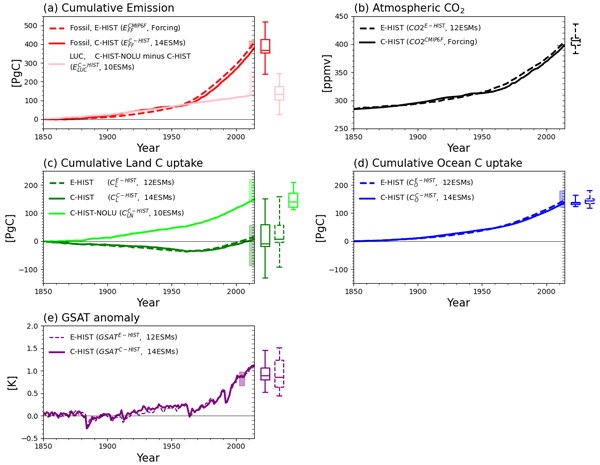
Tomohiro Hajima, Michio Kawamiya, Akihiko Ito, Kaoru Tachiiri, Chris D. Jones, Vivek Arora, Victor Brovkin, Roland Séférian, Spencer Liddicoat, Pierre Friedlingstein, and Elena Shevliakova
Biogeosciences, 22, 1447–1473, https://doi.org/10.5194/bg-22-1447-2025, https://doi.org/10.5194/bg-22-1447-2025, 2025
Short summary
Short summary
This study analyzes atmospheric CO2 concentrations and global carbon budgets simulated by multiple Earth system models, using several types of simulations (CO2 concentration- and emission-driven experiments). We successfully identified problems with regard to the global carbon budget in each model. We also found urgent issues with regard to land use change CO2 emissions that should be solved in the latest generation of models.
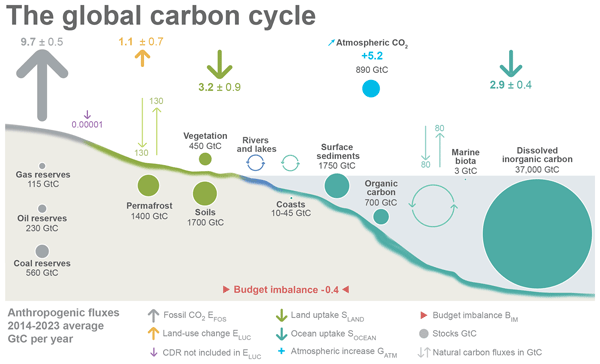
Pierre Friedlingstein, Michael O'Sullivan, Matthew W. Jones, Robbie M. Andrew, Judith Hauck, Peter Landschützer, Corinne Le Quéré, Hongmei Li, Ingrid T. Luijkx, Are Olsen, Glen P. Peters, Wouter Peters, Julia Pongratz, Clemens Schwingshackl, Stephen Sitch, Josep G. Canadell, Philippe Ciais, Robert B. Jackson, Simone R. Alin, Almut Arneth, Vivek Arora, Nicholas R. Bates, Meike Becker, Nicolas Bellouin, Carla F. Berghoff, Henry C. Bittig, Laurent Bopp, Patricia Cadule, Katie Campbell, Matthew A. Chamberlain, Naveen Chandra, Frédéric Chevallier, Louise P. Chini, Thomas Colligan, Jeanne Decayeux, Laique M. Djeutchouang, Xinyu Dou, Carolina Duran Rojas, Kazutaka Enyo, Wiley Evans, Amanda R. Fay, Richard A. Feely, Daniel J. Ford, Adrianna Foster, Thomas Gasser, Marion Gehlen, Thanos Gkritzalis, Giacomo Grassi, Luke Gregor, Nicolas Gruber, Özgür Gürses, Ian Harris, Matthew Hefner, Jens Heinke, George C. Hurtt, Yosuke Iida, Tatiana Ilyina, Andrew R. Jacobson, Atul K. Jain, Tereza Jarníková, Annika Jersild, Fei Jiang, Zhe Jin, Etsushi Kato, Ralph F. Keeling, Kees Klein Goldewijk, Jürgen Knauer, Jan Ivar Korsbakken, Xin Lan, Siv K. Lauvset, Nathalie Lefèvre, Zhu Liu, Junjie Liu, Lei Ma, Shamil Maksyutov, Gregg Marland, Nicolas Mayot, Patrick C. McGuire, Nicolas Metzl, Natalie M. Monacci, Eric J. Morgan, Shin-Ichiro Nakaoka, Craig Neill, Yosuke Niwa, Tobias Nützel, Lea Olivier, Tsuneo Ono, Paul I. Palmer, Denis Pierrot, Zhangcai Qin, Laure Resplandy, Alizée Roobaert, Thais M. Rosan, Christian Rödenbeck, Jörg Schwinger, T. Luke Smallman, Stephen M. Smith, Reinel Sospedra-Alfonso, Tobias Steinhoff, Qing Sun, Adrienne J. Sutton, Roland Séférian, Shintaro Takao, Hiroaki Tatebe, Hanqin Tian, Bronte Tilbrook, Olivier Torres, Etienne Tourigny, Hiroyuki Tsujino, Francesco Tubiello, Guido van der Werf, Rik Wanninkhof, Xuhui Wang, Dongxu Yang, Xiaojuan Yang, Zhen Yu, Wenping Yuan, Xu Yue, Sönke Zaehle, Ning Zeng, and Jiye Zeng
Earth Syst. Sci. Data, 17, 965–1039, https://doi.org/10.5194/essd-17-965-2025, https://doi.org/10.5194/essd-17-965-2025, 2025
Short summary
Short summary
The Global Carbon Budget 2024 describes the methodology, main results, and datasets used to quantify the anthropogenic emissions of carbon dioxide (CO2) and their partitioning among the atmosphere, land ecosystems, and the ocean over the historical period (1750–2024). These living datasets are updated every year to provide the highest transparency and traceability in the reporting of CO2, the key driver of climate change.
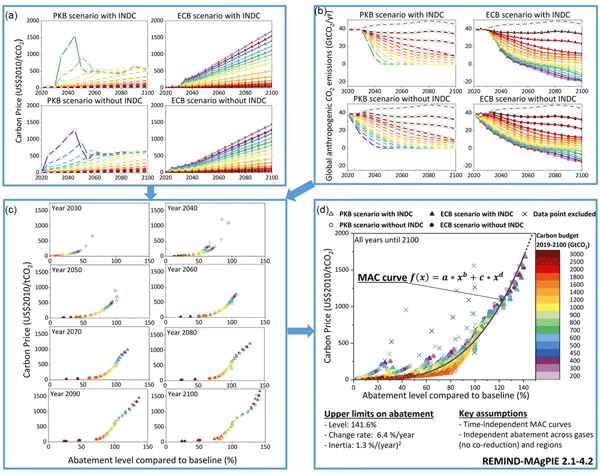
Weiwei Xiong, Katsumasa Tanaka, Philippe Ciais, Daniel J. A. Johansson, and Mariliis Lehtveer
Geosci. Model Dev., 18, 1575–1612, https://doi.org/10.5194/gmd-18-1575-2025, https://doi.org/10.5194/gmd-18-1575-2025, 2025
Short summary
Short summary
emIAM v1.0 is a new emulator for integrated assessment models (IAMs) using global and regional time-independent marginal abatement cost (MAC) curves for multiple greenhouse gases, optionally with time-dependent MAC curves for enhanced accuracy. Combined with climate emulators, emIAM enables development of cost-effective, multi-IAM emission pathways directly linked to temperature targets at low computational cost.
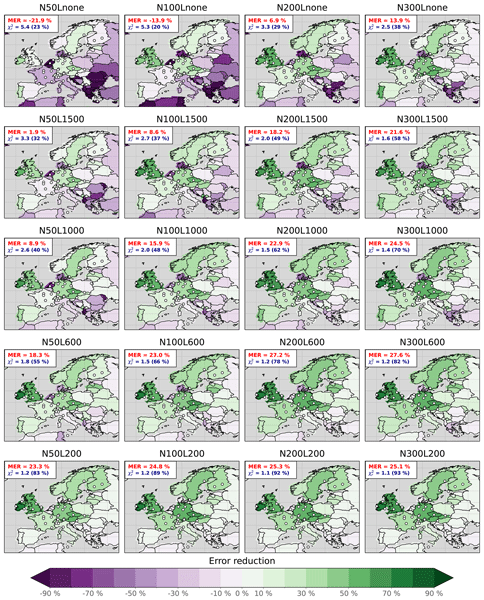
Joël Thanwerdas, Antoine Berchet, Lionel Constantin, Aki Tsuruta, Michael Steiner, Friedemann Reum, Stephan Henne, and Dominik Brunner
Geosci. Model Dev., 18, 1505–1544, https://doi.org/10.5194/gmd-18-1505-2025, https://doi.org/10.5194/gmd-18-1505-2025, 2025
Short summary
Short summary
The Community Inversion Framework (CIF) brings together methods for estimating greenhouse gas fluxes from atmospheric observations. The initial ensemble method implemented in CIF was found to be incomplete and could hardly be compared to other ensemble methods employed in the inversion community. In this paper, we present and evaluate a new implementation of the ensemble mode, building upon the initial developments.

Markus Adloff, Aurich Jeltsch-Thömmes, Frerk Pöppelmeier, Thomas F. Stocker, and Fortunat Joos
Clim. Past, 21, 571–592, https://doi.org/10.5194/cp-21-571-2025, https://doi.org/10.5194/cp-21-571-2025, 2025
Short summary
Short summary
We simulated how different processes affected the carbon cycle over the last eight glacial cycles. We found that the effects of interactive marine sediments enlarge the carbon fluxes that result from these processes, especially in the ocean, and alter various proxy signals. We provide an assessment of the directions of regional and global proxy changes that might be expected in response to different glacial–interglacial Earth system changes in the presence of interactive marine sediments.

James Stegen, Amy J. Burgin, Michelle H. Busch, Joshua B. Fisher, Joshua Ladau, Jenna Abrahamson, Lauren Kinsman-Costello, Li Li, Xingyuan Chen, Thibault Datry, Nate McDowell, Corianne Tatariw, Anna Braswell, Jillian M. Deines, Julia A. Guimond, Peter Regier, Kenton Rod, Edward K. P. Bam, Etienne Fluet-Chouinard, Inke Forbrich, Kristin L. Jaeger, Teri O'Meara, Tim Scheibe, Erin Seybold, Jon N. Sweetman, Jianqiu Zheng, Daniel C. Allen, Elizabeth Herndon, Beth A. Middleton, Scott Painter, Kevin Roche, Julianne Scamardo, Ross Vander Vorste, Kristin Boye, Ellen Wohl, Margaret Zimmer, Kelly Hondula, Maggi Laan, Anna Marshall, and Kaizad F. Patel
Biogeosciences, 22, 995–1034, https://doi.org/10.5194/bg-22-995-2025, https://doi.org/10.5194/bg-22-995-2025, 2025
Short summary
Short summary
The loss and gain of surface water (variable inundation) are common processes across Earth. Global change shifts variable inundation dynamics, highlighting a need for unified understanding that transcends individual variably inundated ecosystems (VIEs). We review the literature, highlight challenges, and emphasize opportunities to generate transferable knowledge by viewing VIEs through a common lens. We aim to inspire the emergence of a cross-VIE community based on a proposed continuum approach.
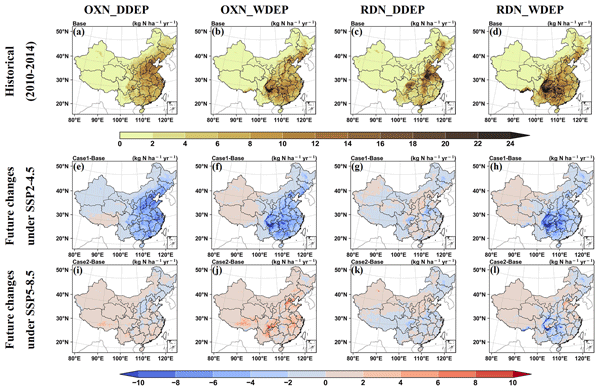
Mingrui Ma, Jiachen Cao, Dan Tong, Bo Zheng, and Yu Zhao
Atmos. Chem. Phys., 25, 2147–2166, https://doi.org/10.5194/acp-25-2147-2025, https://doi.org/10.5194/acp-25-2147-2025, 2025
Short summary
Short summary
We combined two global climate change pathways and three national emission control scenarios to analyze the future evolution of reactive nitrogen (Nr) deposition till the 2060s in China with air quality modeling. We show China’s clean air and carbon neutrality policies would overcome the adverse effects of climate change and efficiently reduce Nr deposition. The outflow of Nr fluxes from mainland China to the west Pacific would also be clearly reduced from continuous stringent emission controls.
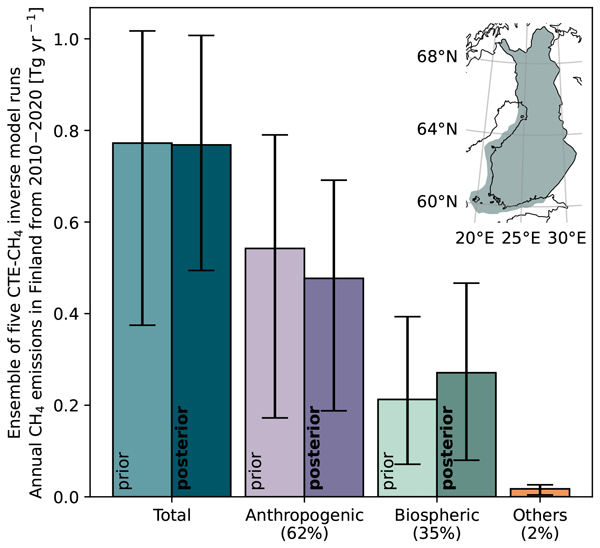
Maria K. Tenkanen, Aki Tsuruta, Hugo Denier van der Gon, Lena Höglund-Isaksson, Antti Leppänen, Tiina Markkanen, Ana Maria Roxana Petrescu, Maarit Raivonen, Hermanni Aaltonen, and Tuula Aalto
Atmos. Chem. Phys., 25, 2181–2206, https://doi.org/10.5194/acp-25-2181-2025, https://doi.org/10.5194/acp-25-2181-2025, 2025
Short summary
Short summary
Accurate national methane (CH4) emission estimates are essential for tracking progress towards climate goals. This study compares estimates from Finland, which use different methods and scales, and shows how well a global model estimates emissions within a country. The bottom-up estimates vary a lot, but constraining them with atmospheric CH4 measurements brought the estimates closer together. We also highlight the importance of quantifying natural emissions alongside anthropogenic emissions.
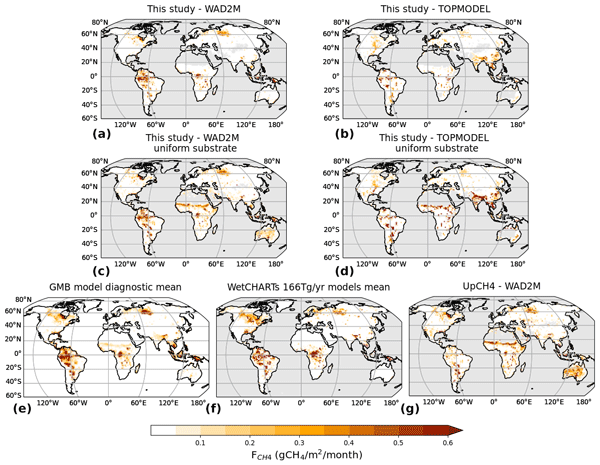
Juliette Bernard, Elodie Salmon, Marielle Saunois, Shushi Peng, Penélope Serrano-Ortiz, Antoine Berchet, Palingamoorthy Gnanamoorthy, Joachim Jansen, and Philippe Ciais
Geosci. Model Dev., 18, 863–883, https://doi.org/10.5194/gmd-18-863-2025, https://doi.org/10.5194/gmd-18-863-2025, 2025
Short summary
Short summary
Despite their importance, uncertainties remain in the evaluation of the drivers of temporal variability of methane emissions from wetlands on a global scale. Here, a simplified global model is developed, taking advantage of advances in remote-sensing data and in situ observations. The model reproduces the large spatial and temporal patterns of emissions, albeit with limitations in the tropics due to data scarcity. This model, while simple, can provide valuable insights into sensitivity analyses.
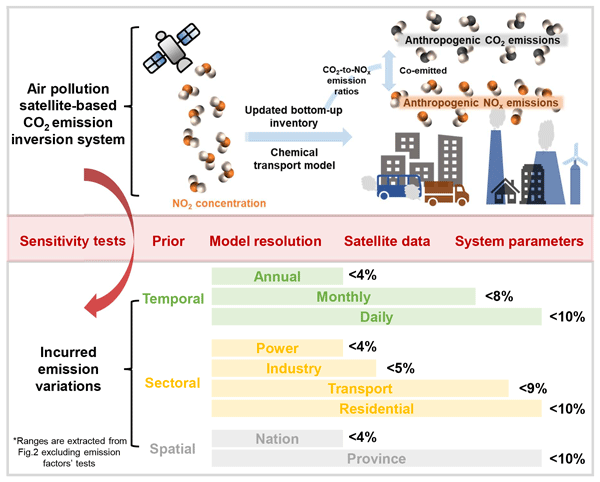
Hui Li, Jiaxin Qiu, and Bo Zheng
Atmos. Chem. Phys., 25, 1949–1963, https://doi.org/10.5194/acp-25-1949-2025, https://doi.org/10.5194/acp-25-1949-2025, 2025
Short summary
Short summary
We conduct a sensitivity analysis with 31 tests on various factors including prior emissions, model resolution, satellite constraint, and other system configurations to assess the vulnerability of emission estimates across temporal, sectoral, and regional dimensions. This reveals the robustness of emissions estimated by this air-pollution-satellite-based CO2 emission inversion system, with relative change between tests and base inversion below 4.0 % for national annual NOx and CO2 emissions.
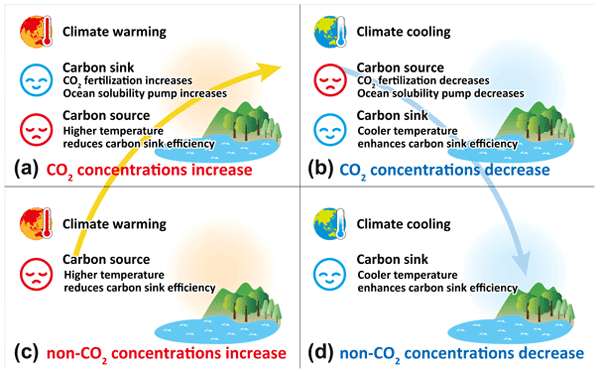
Irina Melnikova, Philippe Ciais, Katsumasa Tanaka, Hideo Shiogama, Kaoru Tachiiri, Tokuta Yokohata, and Olivier Boucher
Earth Syst. Dynam., 16, 257–273, https://doi.org/10.5194/esd-16-257-2025, https://doi.org/10.5194/esd-16-257-2025, 2025
Short summary
Short summary
Reducing non-CO2 greenhouse gases is important alongside CO2 for climate mitigation. Here, we look at how reducing their emissions compares to reducing CO2 using an Earth system model. While both types of gases contribute to warming, their regional climate impacts differ. Besides, the carbon cycle responds differently depending on whether climate change is driven by CO2 or non-CO2 gases. Considering both types of gases is important for carbon cycle analysis and climate mitigation strategies.
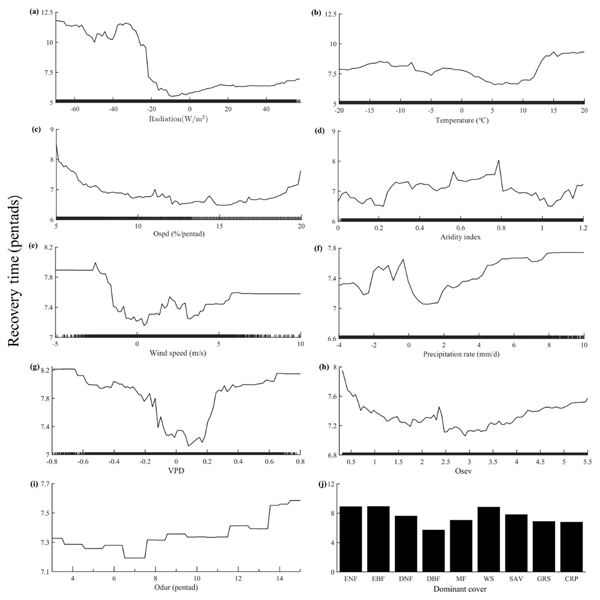
Mengge Lu, Huaiwei Sun, Yong Yang, Jie Xue, Hongbo Ling, Hong Zhang, and Wenxin Zhang
Hydrol. Earth Syst. Sci., 29, 613–625, https://doi.org/10.5194/hess-29-613-2025, https://doi.org/10.5194/hess-29-613-2025, 2025
Short summary
Short summary
Our study explores how ecosystems recover after flash droughts. Using vegetation and soil moisture data, we found that recovery takes about 37.5 d on average (longer in central and southern regions) in China. Factors like post-drought radiation and temperature affect recovery, with extreme temperatures prolonging it. Herbaceous plants recover faster than forests. Our findings aid water resource management and drought monitoring on a large scale, offering insights into ecosystem resilience.
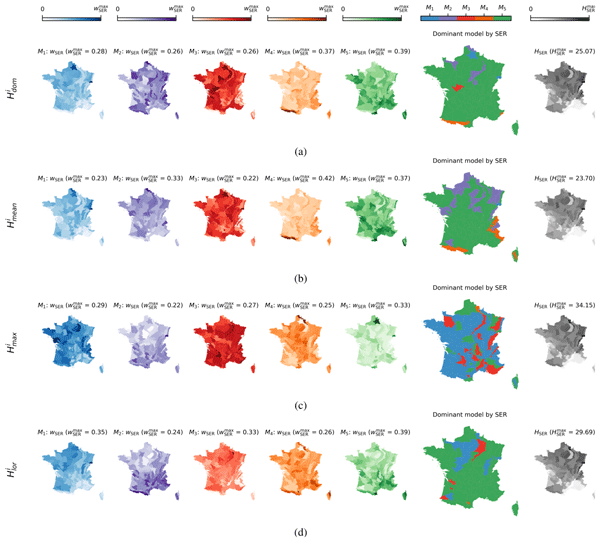
Nikola Besic, Nicolas Picard, Cédric Vega, Jean-Daniel Bontemps, Lionel Hertzog, Jean-Pierre Renaud, Fajwel Fogel, Martin Schwartz, Agnès Pellissier-Tanon, Gabriel Destouet, Frédéric Mortier, Milena Planells-Rodriguez, and Philippe Ciais
Geosci. Model Dev., 18, 337–359, https://doi.org/10.5194/gmd-18-337-2025, https://doi.org/10.5194/gmd-18-337-2025, 2025
Short summary
Short summary
The creation of advanced mapping models for forest attributes, utilizing remote sensing data and incorporating machine or deep learning methods, has become a key area of interest in the domain of forest observation and monitoring. This paper introduces a method where we blend and collectively interpret five models dedicated to estimating forest canopy height. We achieve this through Bayesian model averaging, offering a comprehensive analysis of these remote-sensing-based products.
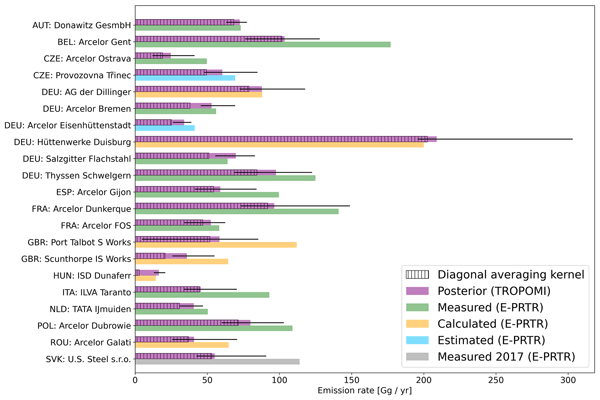
Gijs Leguijt, Joannes D. Maasakkers, Hugo A. C. Denier van der Gon, Arjo J. Segers, Tobias Borsdorff, Ivar R. van der Velde, and Ilse Aben
Atmos. Chem. Phys., 25, 555–574, https://doi.org/10.5194/acp-25-555-2025, https://doi.org/10.5194/acp-25-555-2025, 2025
Short summary
Short summary
The production of steel coincides with large emissions of greenhouse gases and air pollutants including carbon monoxide. European facilities are required to report their emissions, which are estimated using a variety of methods. We evaluate these estimates using carbon monoxide concentrations measured via satellite. We find generally good agreement between our values and those reported but also identify some uncertainties, showing that satellites can provide insights into these emissions.
Chiranjit Das, Ravi Kumar Kunchala, Prabir K. Patra, Naveen Chandra, Kentaro Ishijima, and Toshinobu Machida
EGUsphere, https://doi.org/10.5194/egusphere-2024-3976, https://doi.org/10.5194/egusphere-2024-3976, 2025
Preprint archived
Short summary
Short summary
Our study compares model CO2 with aircraft and OCO-2 data to identify transport model errors to better policy-related flux estimation. The model align better with aircraft data than satellite data, especially over oceans, but struggles near the surface due to inaccurate CO2 estimates. Over the Amazon and Asian megacities, differences arise from limited measurements and coarse model resolution, highlighting the need for improved monitoring and higher-resolution data to capture emissions better.
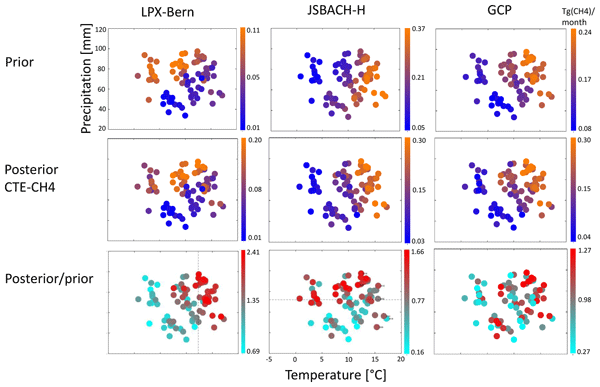
Tuula Aalto, Aki Tsuruta, Jarmo Mäkelä, Jurek Müller, Maria Tenkanen, Eleanor Burke, Sarah Chadburn, Yao Gao, Vilma Mannisenaho, Thomas Kleinen, Hanna Lee, Antti Leppänen, Tiina Markkanen, Stefano Materia, Paul A. Miller, Daniele Peano, Olli Peltola, Benjamin Poulter, Maarit Raivonen, Marielle Saunois, David Wårlind, and Sönke Zaehle
Biogeosciences, 22, 323–340, https://doi.org/10.5194/bg-22-323-2025, https://doi.org/10.5194/bg-22-323-2025, 2025
Short summary
Short summary
Wetland methane responses to temperature and precipitation were studied in a boreal wetland-rich region in northern Europe using ecosystem models, atmospheric inversions, and upscaled flux observations. The ecosystem models differed in their responses to temperature and precipitation and in their seasonality. However, multi-model means, inversions, and upscaled fluxes had similar seasonality, and they suggested co-limitation by temperature and precipitation.
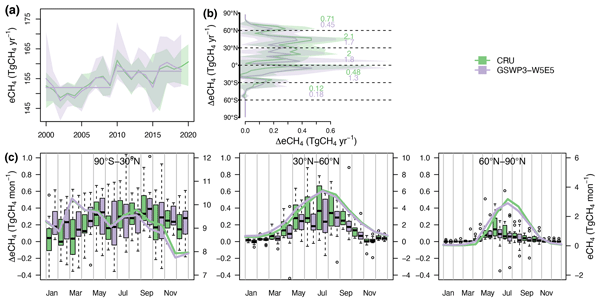
Zhen Zhang, Benjamin Poulter, Joe R. Melton, William J. Riley, George H. Allen, David J. Beerling, Philippe Bousquet, Josep G. Canadell, Etienne Fluet-Chouinard, Philippe Ciais, Nicola Gedney, Peter O. Hopcroft, Akihiko Ito, Robert B. Jackson, Atul K. Jain, Katherine Jensen, Fortunat Joos, Thomas Kleinen, Sara H. Knox, Tingting Li, Xin Li, Xiangyu Liu, Kyle McDonald, Gavin McNicol, Paul A. Miller, Jurek Müller, Prabir K. Patra, Changhui Peng, Shushi Peng, Zhangcai Qin, Ryan M. Riggs, Marielle Saunois, Qing Sun, Hanqin Tian, Xiaoming Xu, Yuanzhi Yao, Yi Xi, Wenxin Zhang, Qing Zhu, Qiuan Zhu, and Qianlai Zhuang
Biogeosciences, 22, 305–321, https://doi.org/10.5194/bg-22-305-2025, https://doi.org/10.5194/bg-22-305-2025, 2025
Short summary
Short summary
This study assesses global methane emissions from wetlands between 2000 and 2020 using multiple models. We found that wetland emissions increased by 6–7 Tg CH4 yr-1 in the 2010s compared to the 2000s. Rising temperatures primarily drove this increase, while changes in precipitation and CO2 levels also played roles. Our findings highlight the importance of wetlands in the global methane budget and the need for continuous monitoring to understand their impact on climate change.
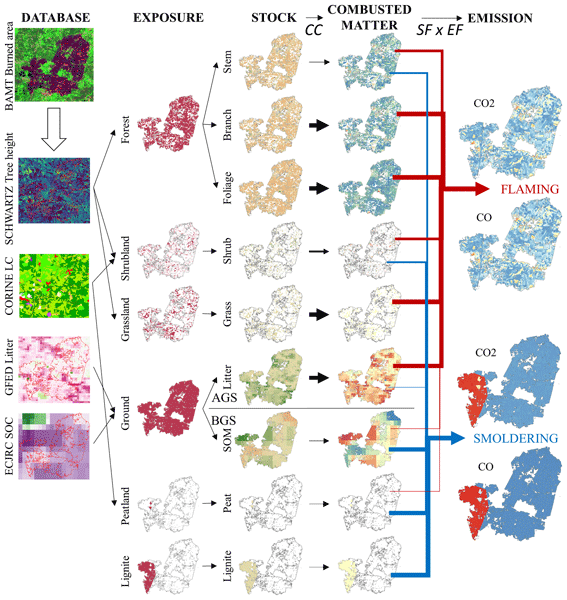
Lilian Vallet, Charbel Abdallah, Thomas Lauvaux, Lilian Joly, Michel Ramonet, Philippe Ciais, Morgan Lopez, Irène Xueref-Remy, and Florent Mouillot
Biogeosciences, 22, 213–242, https://doi.org/10.5194/bg-22-213-2025, https://doi.org/10.5194/bg-22-213-2025, 2025
Short summary
Short summary
The 2022 fire season had a huge impact on European temperate forest, with several large fires exhibiting prolonged soil combustion reported. We analyzed CO and CO2 concentration recorded at nearby atmospheric towers, revealing intense smoldering combustion. We refined a fire emission model to incorporate this process. We estimated 7.95 Mteq CO2 fire emission, twice the global estimate. Fires contributed to 1.97 % of France's annual carbon footprint, reducing forest carbon sink by 30 % this year.
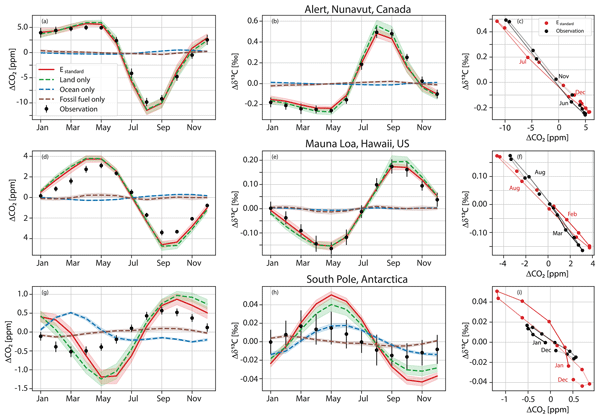
Fortunat Joos, Sebastian Lienert, and Sönke Zaehle
Biogeosciences, 22, 19–39, https://doi.org/10.5194/bg-22-19-2025, https://doi.org/10.5194/bg-22-19-2025, 2025
Short summary
Short summary
How plants regulate their exchange of CO2 and water with the atmosphere under global warming is critical for their carbon uptake and their cooling influence. We analyze the isotope ratio of atmospheric CO2 and detect no significant decadal trends in the seasonal cycle amplitude. The data are consistent with the regulation towards leaf CO2 and intrinsic water use efficiency growing proportionally to atmospheric CO2, in contrast to recent suggestions of downregulation of CO2 and water fluxes.
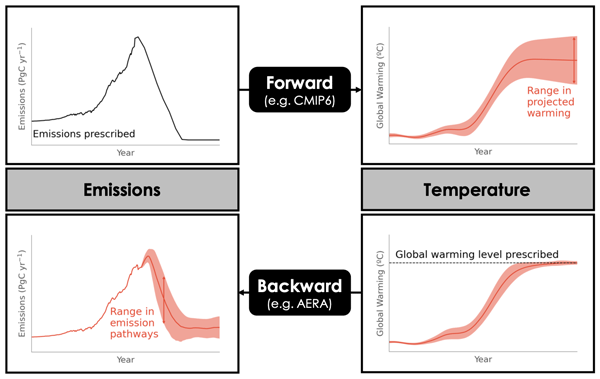
Yona Silvy, Thomas L. Frölicher, Jens Terhaar, Fortunat Joos, Friedrich A. Burger, Fabrice Lacroix, Myles Allen, Raffaele Bernardello, Laurent Bopp, Victor Brovkin, Jonathan R. Buzan, Patricia Cadule, Martin Dix, John Dunne, Pierre Friedlingstein, Goran Georgievski, Tomohiro Hajima, Stuart Jenkins, Michio Kawamiya, Nancy Y. Kiang, Vladimir Lapin, Donghyun Lee, Paul Lerner, Nadine Mengis, Estela A. Monteiro, David Paynter, Glen P. Peters, Anastasia Romanou, Jörg Schwinger, Sarah Sparrow, Eric Stofferahn, Jerry Tjiputra, Etienne Tourigny, and Tilo Ziehn
Earth Syst. Dynam., 15, 1591–1628, https://doi.org/10.5194/esd-15-1591-2024, https://doi.org/10.5194/esd-15-1591-2024, 2024
Short summary
Short summary
The adaptive emission reduction approach is applied with Earth system models to generate temperature stabilization simulations. These simulations provide compatible emission pathways and budgets for a given warming level, uncovering uncertainty ranges previously missing in the Coupled Model Intercomparison Project scenarios. These target-based emission-driven simulations offer a more coherent assessment across models for studying both the carbon cycle and its impacts under climate stabilization.
Amey Tilak, Alina Premrov, Ruchita Ingle, Nigel Roulet, Benjamin R. K. Runkle, Matthew Saunders, Avni Malhotra, and Kenneth Byrne
EGUsphere, https://doi.org/10.5194/egusphere-2024-3852, https://doi.org/10.5194/egusphere-2024-3852, 2024
Preprint archived
Short summary
Short summary
For the future model users, 16 peatland and wetland models reviewed to identify individual model operational scale (spatial and temporal), stabilization timeframes of different carbon pools, model specific advantages and limitations, common and specific model driving inputs, critical inputs of individual models impacting CH4 plant mediated, CH4 diffusion and CH4 ebullition. Finally, we qualitatively ranked the process representations in each model for CH4 production, oxidation and transport.
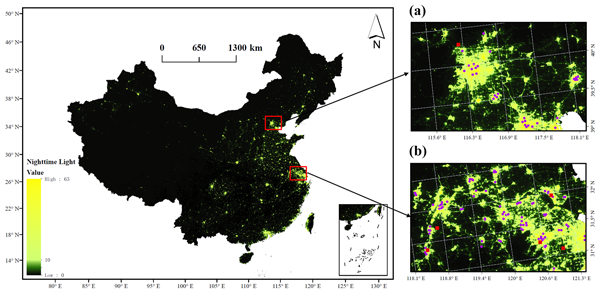
Li Fang, Jianbing Jin, Arjo Segers, Ke Li, Ji Xia, Wei Han, Baojie Li, Hai Xiang Lin, Lei Zhu, Song Liu, and Hong Liao
Geosci. Model Dev., 17, 8267–8282, https://doi.org/10.5194/gmd-17-8267-2024, https://doi.org/10.5194/gmd-17-8267-2024, 2024
Short summary
Short summary
Model evaluations against ground observations are usually unfair. The former simulates mean status over coarse grids and the latter the surrounding atmosphere. To solve this, we proposed the new land-use-based representative (LUBR) operator that considers intra-grid variance. The LUBR operator is validated to provide insights that align with satellite measurements. The results highlight the importance of considering fine-scale urban–rural differences when comparing models and observation.
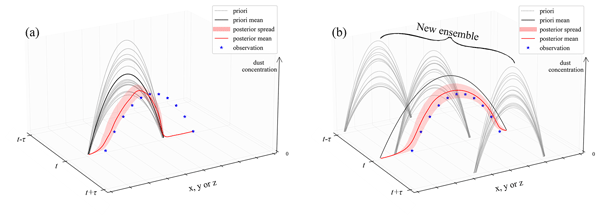
Mijie Pang, Jianbing Jin, Arjo Segers, Huiya Jiang, Wei Han, Batjargal Buyantogtokh, Ji Xia, Li Fang, Jiandong Li, Hai Xiang Lin, and Hong Liao
Geosci. Model Dev., 17, 8223–8242, https://doi.org/10.5194/gmd-17-8223-2024, https://doi.org/10.5194/gmd-17-8223-2024, 2024
Short summary
Short summary
The ensemble Kalman filter (EnKF) improves dust storm forecasts but faces challenges with position errors. The valid time shifting EnKF (VTS-EnKF) addresses this by adjusting for position errors, enhancing accuracy in forecasting dust storms, as proven in tests on 2021 events, even with smaller ensembles and time intervals.
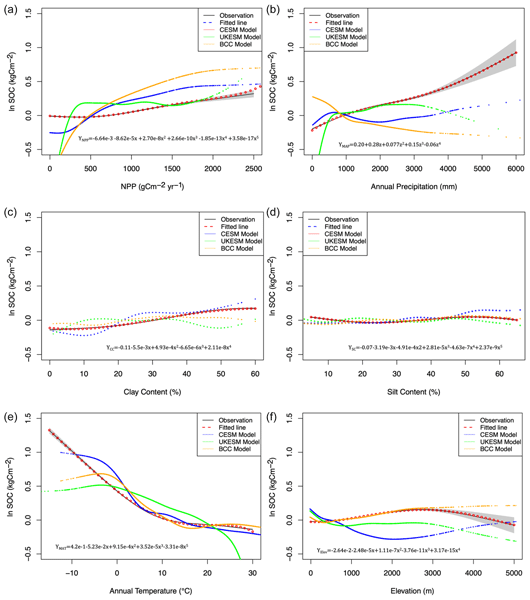
Kamal Nyaupane, Umakant Mishra, Feng Tao, Kyongmin Yeo, William J. Riley, Forrest M. Hoffman, and Sagar Gautam
Biogeosciences, 21, 5173–5183, https://doi.org/10.5194/bg-21-5173-2024, https://doi.org/10.5194/bg-21-5173-2024, 2024
Short summary
Short summary
Representing soil organic carbon (SOC) dynamics in Earth system models (ESMs) is a key source of uncertainty in predicting carbon–climate feedbacks. Using machine learning, we develop and compare predictive relationships in observations (Obs) and ESMs. We find different relationships between environmental factors and SOC stocks in Obs and ESMs. SOC prediction in ESMs may be improved by representing the functional relationships of environmental controllers in a way consistent with observations.
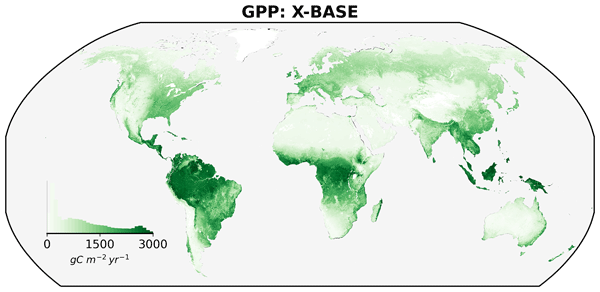
Jacob A. Nelson, Sophia Walther, Fabian Gans, Basil Kraft, Ulrich Weber, Kimberly Novick, Nina Buchmann, Mirco Migliavacca, Georg Wohlfahrt, Ladislav Šigut, Andreas Ibrom, Dario Papale, Mathias Göckede, Gregory Duveiller, Alexander Knohl, Lukas Hörtnagl, Russell L. Scott, Jiří Dušek, Weijie Zhang, Zayd Mahmoud Hamdi, Markus Reichstein, Sergio Aranda-Barranco, Jonas Ardö, Maarten Op de Beeck, Dave Billesbach, David Bowling, Rosvel Bracho, Christian Brümmer, Gustau Camps-Valls, Shiping Chen, Jamie Rose Cleverly, Ankur Desai, Gang Dong, Tarek S. El-Madany, Eugenie Susanne Euskirchen, Iris Feigenwinter, Marta Galvagno, Giacomo A. Gerosa, Bert Gielen, Ignacio Goded, Sarah Goslee, Christopher Michael Gough, Bernard Heinesch, Kazuhito Ichii, Marcin Antoni Jackowicz-Korczynski, Anne Klosterhalfen, Sara Knox, Hideki Kobayashi, Kukka-Maaria Kohonen, Mika Korkiakoski, Ivan Mammarella, Mana Gharun, Riccardo Marzuoli, Roser Matamala, Stefan Metzger, Leonardo Montagnani, Giacomo Nicolini, Thomas O'Halloran, Jean-Marc Ourcival, Matthias Peichl, Elise Pendall, Borja Ruiz Reverter, Marilyn Roland, Simone Sabbatini, Torsten Sachs, Marius Schmidt, Christopher R. Schwalm, Ankit Shekhar, Richard Silberstein, Maria Lucia Silveira, Donatella Spano, Torbern Tagesson, Gianluca Tramontana, Carlo Trotta, Fabio Turco, Timo Vesala, Caroline Vincke, Domenico Vitale, Enrique R. Vivoni, Yi Wang, William Woodgate, Enrico A. Yepez, Junhui Zhang, Donatella Zona, and Martin Jung
Biogeosciences, 21, 5079–5115, https://doi.org/10.5194/bg-21-5079-2024, https://doi.org/10.5194/bg-21-5079-2024, 2024
Short summary
Short summary
The movement of water, carbon, and energy from the Earth's surface to the atmosphere, or flux, is an important process to understand because it impacts our lives. Here, we outline a method called FLUXCOM-X to estimate global water and CO2 fluxes based on direct measurements from sites around the world. We go on to demonstrate how these new estimates of net CO2 uptake/loss, gross CO2 uptake, total water evaporation, and transpiration from plants compare to previous and independent estimates.
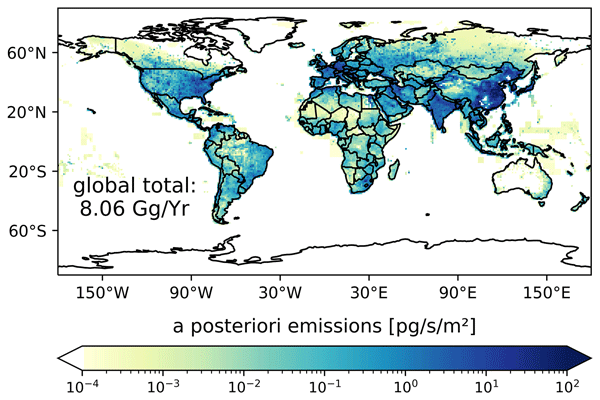
Martin Vojta, Andreas Plach, Saurabh Annadate, Sunyoung Park, Gawon Lee, Pallav Purohit, Florian Lindl, Xin Lan, Jens Mühle, Rona L. Thompson, and Andreas Stohl
Atmos. Chem. Phys., 24, 12465–12493, https://doi.org/10.5194/acp-24-12465-2024, https://doi.org/10.5194/acp-24-12465-2024, 2024
Short summary
Short summary
We constrain the global emissions of the very potent greenhouse gas sulfur hexafluoride (SF6) between 2005 and 2021. We show that SF6 emissions are decreasing in the USA and in the EU, while they are substantially growing in China, leading overall to an increasing global emission trend. The national reports for the USA, EU, and China all underestimated their SF6 emissions. However, stringent mitigation measures can successfully reduce SF6 emissions, as can be seen in the EU emission trend.
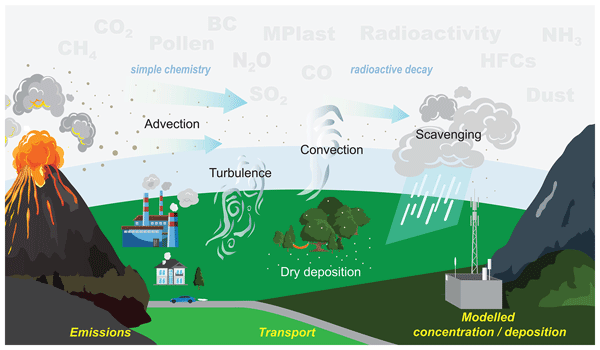
Lucie Bakels, Daria Tatsii, Anne Tipka, Rona Thompson, Marina Dütsch, Michael Blaschek, Petra Seibert, Katharina Baier, Silvia Bucci, Massimo Cassiani, Sabine Eckhardt, Christine Groot Zwaaftink, Stephan Henne, Pirmin Kaufmann, Vincent Lechner, Christian Maurer, Marie D. Mulder, Ignacio Pisso, Andreas Plach, Rakesh Subramanian, Martin Vojta, and Andreas Stohl
Geosci. Model Dev., 17, 7595–7627, https://doi.org/10.5194/gmd-17-7595-2024, https://doi.org/10.5194/gmd-17-7595-2024, 2024
Short summary
Short summary
Computer models are essential for improving our understanding of how gases and particles move in the atmosphere. We present an update of the atmospheric transport model FLEXPART. FLEXPART 11 is more accurate due to a reduced number of interpolations and a new scheme for wet deposition. It can simulate non-spherical aerosols and includes linear chemical reactions. It is parallelised using OpenMP and includes new user options. A new user manual details how to use FLEXPART 11.
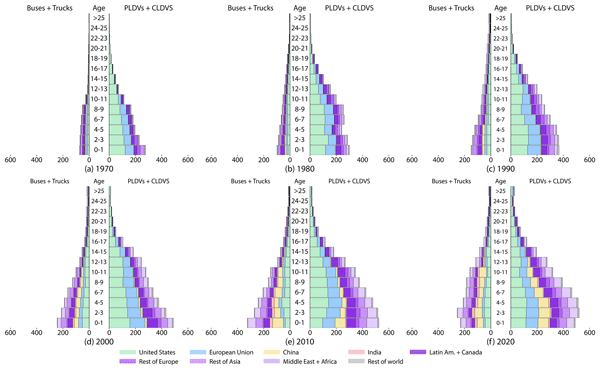
Liu Yan, Qiang Zhang, Bo Zheng, and Kebin He
Earth Syst. Sci. Data, 16, 4497–4509, https://doi.org/10.5194/essd-16-4497-2024, https://doi.org/10.5194/essd-16-4497-2024, 2024
Short summary
Short summary
A new database of fuel-, vehicle-type-, and age-specific CO2 emissions from global on-road vehicles from 1970 to 2020 is developed with the fleet turnover model built in this study. Based on this database, the evolution of the global vehicle stock over 50 years is analyzed, the dominant emission contributors by vehicle and fuel type are identified, and the age distribution of on-road CO2 emissions is characterized further.
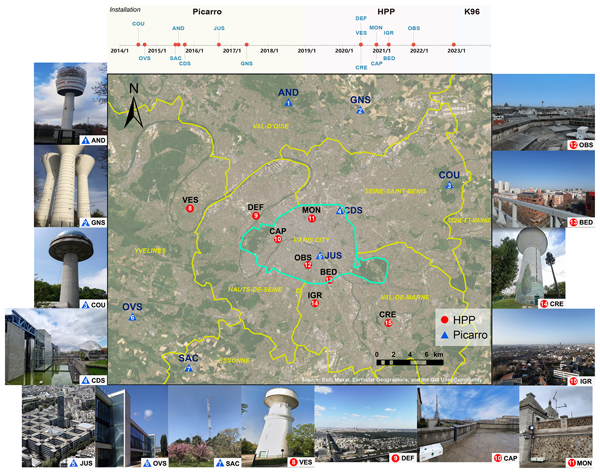
Jinghui Lian, Olivier Laurent, Mali Chariot, Luc Lienhardt, Michel Ramonet, Hervé Utard, Thomas Lauvaux, François-Marie Bréon, Grégoire Broquet, Karina Cucchi, Laurent Millair, and Philippe Ciais
Atmos. Meas. Tech., 17, 5821–5839, https://doi.org/10.5194/amt-17-5821-2024, https://doi.org/10.5194/amt-17-5821-2024, 2024
Short summary
Short summary
We have designed and deployed a mid-cost medium-precision CO2 sensor monitoring network in Paris since July 2020. The data are automatically calibrated by a newly implemented data processing system. The accuracies of the mid-cost instruments vary from 1.0 to 2.4 ppm for hourly afternoon measurements. Our model–data analyses highlight prospects for integrating mid-cost instrument data with high-precision measurements to improve fine-scale CO2 emission quantification in urban areas.
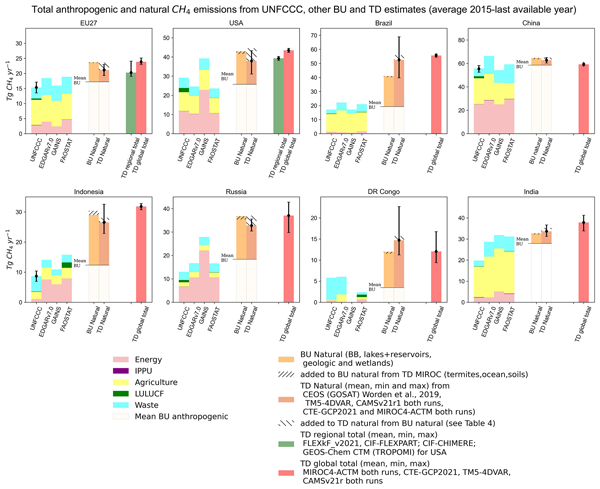
Ana Maria Roxana Petrescu, Glen P. Peters, Richard Engelen, Sander Houweling, Dominik Brunner, Aki Tsuruta, Bradley Matthews, Prabir K. Patra, Dmitry Belikov, Rona L. Thompson, Lena Höglund-Isaksson, Wenxin Zhang, Arjo J. Segers, Giuseppe Etiope, Giancarlo Ciotoli, Philippe Peylin, Frédéric Chevallier, Tuula Aalto, Robbie M. Andrew, David Bastviken, Antoine Berchet, Grégoire Broquet, Giulia Conchedda, Stijn N. C. Dellaert, Hugo Denier van der Gon, Johannes Gütschow, Jean-Matthieu Haussaire, Ronny Lauerwald, Tiina Markkanen, Jacob C. A. van Peet, Isabelle Pison, Pierre Regnier, Espen Solum, Marko Scholze, Maria Tenkanen, Francesco N. Tubiello, Guido R. van der Werf, and John R. Worden
Earth Syst. Sci. Data, 16, 4325–4350, https://doi.org/10.5194/essd-16-4325-2024, https://doi.org/10.5194/essd-16-4325-2024, 2024
Short summary
Short summary
This study provides an overview of data availability from observation- and inventory-based CH4 emission estimates. It systematically compares them and provides recommendations for robust comparisons, aiming to steadily engage more parties in using observational methods to complement their UNFCCC submissions. Anticipating improvements in atmospheric modelling and observations, future developments need to resolve knowledge gaps in both approaches and to better quantify remaining uncertainty.
Josselin Doc, Michel Ramonet, François-Marie Bréon, Delphine Combaz, Mali Chariot, Morgan Lopez, Marc Delmotte, Cristelle Cailteau-Fischbach, Guillaume Nief, Nathanaël Laporte, Thomas Lauvaux, and Philippe Ciais
EGUsphere, https://doi.org/10.5194/egusphere-2024-2826, https://doi.org/10.5194/egusphere-2024-2826, 2024
Short summary
Short summary
Description of the network for measuring greenhouse gas concentrations in the Paris region and analysis of eight years of continuous monitoring.

Thi Lan Anh Dinh, Daniel Goll, Philippe Ciais, and Ronny Lauerwald
Geosci. Model Dev., 17, 6725–6744, https://doi.org/10.5194/gmd-17-6725-2024, https://doi.org/10.5194/gmd-17-6725-2024, 2024
Short summary
Short summary
The study assesses the performance of the dynamic global vegetation model (DGVM) ORCHIDEE in capturing the impact of land-use change on carbon stocks across Europe. Comparisons with observations reveal that the model accurately represents carbon fluxes and stocks. Despite the underestimations in certain land-use conversions, the model describes general trends in soil carbon response to land-use change, aligning with the site observations.
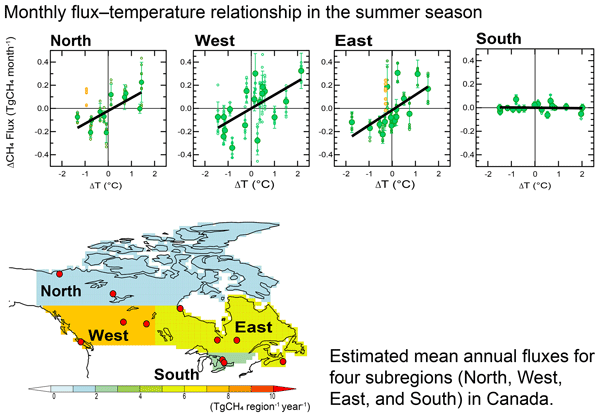
Misa Ishizawa, Douglas Chan, Doug Worthy, Elton Chan, Felix Vogel, Joe R. Melton, and Vivek K. Arora
Atmos. Chem. Phys., 24, 10013–10038, https://doi.org/10.5194/acp-24-10013-2024, https://doi.org/10.5194/acp-24-10013-2024, 2024
Short summary
Short summary
Methane (CH4) emissions in Canada for 2007–2017 were estimated using Canada’s surface greenhouse gas measurements. The estimated emissions show no significant trend, but emission uncertainty was reduced as more measurement sites became available. Notably for climate change, we find the wetland CH4 emissions show a positive correlation with surface air temperature in summer. Canada’s measurement network could monitor future CH4 emission changes and compliance with climate change mitigation goals.
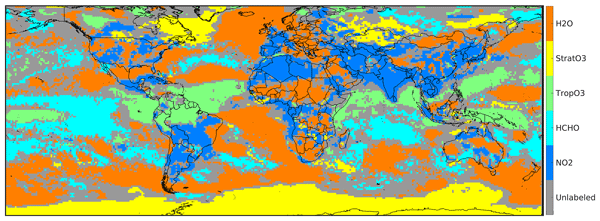
Amir H. Souri, Bryan N. Duncan, Sarah A. Strode, Daniel C. Anderson, Michael E. Manyin, Junhua Liu, Luke D. Oman, Zhen Zhang, and Brad Weir
Atmos. Chem. Phys., 24, 8677–8701, https://doi.org/10.5194/acp-24-8677-2024, https://doi.org/10.5194/acp-24-8677-2024, 2024
Short summary
Short summary
We explore a new method of using the wealth of information obtained from satellite observations of Aura OMI NO2, HCHO, and MERRA-2 reanalysis in NASA’s GEOS model equipped with an efficient tropospheric OH (TOH) estimator to enhance the representation of TOH spatial distribution and its long-term trends. This new framework helps us pinpoint regional inaccuracies in TOH and differentiate between established prior knowledge and newly acquired information from satellites on TOH trends.
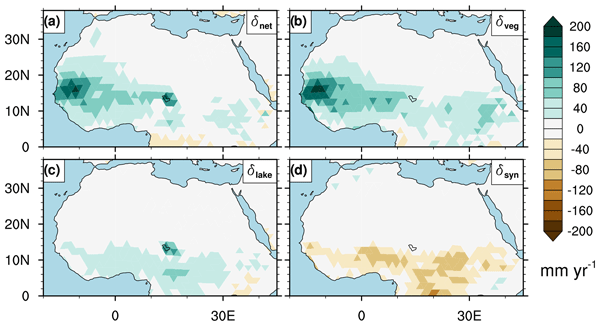
Nora Farina Specht, Martin Claussen, and Thomas Kleinen
Clim. Past, 20, 1595–1613, https://doi.org/10.5194/cp-20-1595-2024, https://doi.org/10.5194/cp-20-1595-2024, 2024
Short summary
Short summary
We close the terrestrial water cycle across the Sahara and Sahel by integrating a new endorheic-lake model into a climate model. A factor analysis of mid-Holocene simulations shows that both dynamic lakes and dynamic vegetation individually contribute to a precipitation increase over northern Africa that is collectively greater than that caused by the interaction between lake and vegetation dynamics. Thus, the lake–vegetation interaction causes a relative drying response across the entire Sahel.
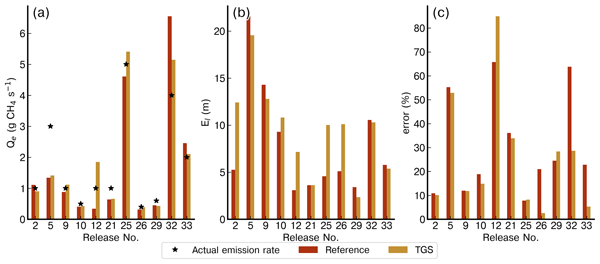
Rodrigo Rivera-Martinez, Pramod Kumar, Olivier Laurent, Gregoire Broquet, Christopher Caldow, Ford Cropley, Diego Santaren, Adil Shah, Cécile Mallet, Michel Ramonet, Leonard Rivier, Catherine Juery, Olivier Duclaux, Caroline Bouchet, Elisa Allegrini, Hervé Utard, and Philippe Ciais
Atmos. Meas. Tech., 17, 4257–4290, https://doi.org/10.5194/amt-17-4257-2024, https://doi.org/10.5194/amt-17-4257-2024, 2024
Short summary
Short summary
We explore the use of metal oxide semiconductors (MOSs) as a low-cost alternative for detecting and measuring CH4 emissions from industrial facilities. MOSs were exposed to several controlled releases to test their accuracy in detecting and quantifying emissions. Two reconstruction models were compared, and emission estimates were computed using a Gaussian dispersion model. Findings show that MOSs can provide accurate emission estimates with a 25 % emission rate error and a 9.5 m location error.
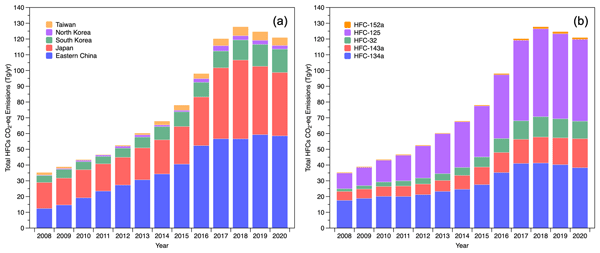
Haklim Choi, Alison L. Redington, Hyeri Park, Jooil Kim, Rona L. Thompson, Jens Mühle, Peter K. Salameh, Christina M. Harth, Ray F. Weiss, Alistair J. Manning, and Sunyoung Park
Atmos. Chem. Phys., 24, 7309–7330, https://doi.org/10.5194/acp-24-7309-2024, https://doi.org/10.5194/acp-24-7309-2024, 2024
Short summary
Short summary
We analyzed with an inversion model the atmospheric abundance of hydrofluorocarbons (HFCs), potent greenhouse gases, from 2008 to 2020 at Gosan station in South Korea and revealed a significant increase in emissions, especially from eastern China and Japan. This increase contradicts reported data, underscoring the need for accurate monitoring and reporting. Our findings are crucial for understanding and managing global HFCs emissions, highlighting the importance of efforts to reduce HFCs.
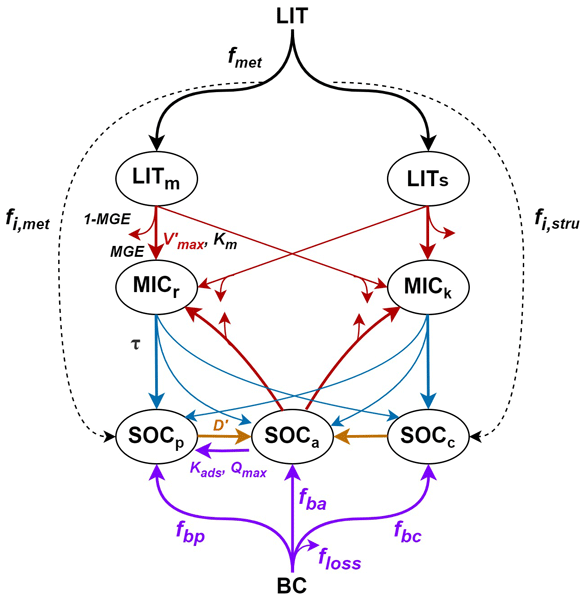
Mengjie Han, Qing Zhao, Xili Wang, Ying-Ping Wang, Philippe Ciais, Haicheng Zhang, Daniel S. Goll, Lei Zhu, Zhe Zhao, Zhixuan Guo, Chen Wang, Wei Zhuang, Fengchang Wu, and Wei Li
Geosci. Model Dev., 17, 4871–4890, https://doi.org/10.5194/gmd-17-4871-2024, https://doi.org/10.5194/gmd-17-4871-2024, 2024
Short summary
Short summary
The impact of biochar (BC) on soil organic carbon (SOC) dynamics is not represented in most land carbon models used for assessing land-based climate change mitigation. Our study develops a BC model that incorporates our current understanding of BC effects on SOC based on a soil carbon model (MIMICS). The BC model can reproduce the SOC changes after adding BC, providing a useful tool to couple dynamic land models to evaluate the effectiveness of BC application for CO2 removal from the atmosphere.
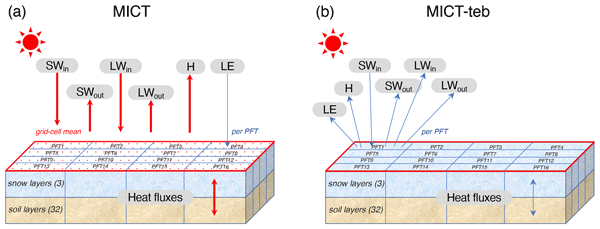
Yi Xi, Chunjing Qiu, Yuan Zhang, Dan Zhu, Shushi Peng, Gustaf Hugelius, Jinfeng Chang, Elodie Salmon, and Philippe Ciais
Geosci. Model Dev., 17, 4727–4754, https://doi.org/10.5194/gmd-17-4727-2024, https://doi.org/10.5194/gmd-17-4727-2024, 2024
Short summary
Short summary
The ORCHIDEE-MICT model can simulate the carbon cycle and hydrology at a sub-grid scale but energy budgets only at a grid scale. This paper assessed the implementation of a multi-tiling energy budget approach in ORCHIDEE-MICT and found warmer surface and soil temperatures, higher soil moisture, and more soil organic carbon across the Northern Hemisphere compared with the original version.
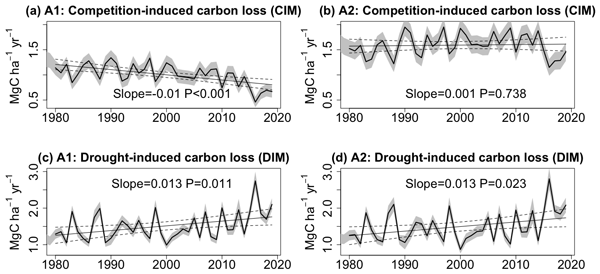
Yitong Yao, Philippe Ciais, Emilie Joetzjer, Wei Li, Lei Zhu, Yujie Wang, Christian Frankenberg, and Nicolas Viovy
Earth Syst. Dynam., 15, 763–778, https://doi.org/10.5194/esd-15-763-2024, https://doi.org/10.5194/esd-15-763-2024, 2024
Short summary
Short summary
Elevated CO2 concentration (eCO2) is critical for shaping the future path of forest carbon uptake, while uncertainties remain about concurrent carbon loss. Here, we found that eCO2 might amplify competition-induced carbon loss, while the extent of drought-induced carbon loss hinges on the balance between heightened biomass density and water-saving benefits. This is the first time that such carbon loss responses to ongoing climate change have been quantified separately over the Amazon rainforest.

Hanqin Tian, Naiqing Pan, Rona L. Thompson, Josep G. Canadell, Parvadha Suntharalingam, Pierre Regnier, Eric A. Davidson, Michael Prather, Philippe Ciais, Marilena Muntean, Shufen Pan, Wilfried Winiwarter, Sönke Zaehle, Feng Zhou, Robert B. Jackson, Hermann W. Bange, Sarah Berthet, Zihao Bian, Daniele Bianchi, Alexander F. Bouwman, Erik T. Buitenhuis, Geoffrey Dutton, Minpeng Hu, Akihiko Ito, Atul K. Jain, Aurich Jeltsch-Thömmes, Fortunat Joos, Sian Kou-Giesbrecht, Paul B. Krummel, Xin Lan, Angela Landolfi, Ronny Lauerwald, Ya Li, Chaoqun Lu, Taylor Maavara, Manfredi Manizza, Dylan B. Millet, Jens Mühle, Prabir K. Patra, Glen P. Peters, Xiaoyu Qin, Peter Raymond, Laure Resplandy, Judith A. Rosentreter, Hao Shi, Qing Sun, Daniele Tonina, Francesco N. Tubiello, Guido R. van der Werf, Nicolas Vuichard, Junjie Wang, Kelley C. Wells, Luke M. Western, Chris Wilson, Jia Yang, Yuanzhi Yao, Yongfa You, and Qing Zhu
Earth Syst. Sci. Data, 16, 2543–2604, https://doi.org/10.5194/essd-16-2543-2024, https://doi.org/10.5194/essd-16-2543-2024, 2024
Short summary
Short summary
Atmospheric concentrations of nitrous oxide (N2O), a greenhouse gas 273 times more potent than carbon dioxide, have increased by 25 % since the preindustrial period, with the highest observed growth rate in 2020 and 2021. This rapid growth rate has primarily been due to a 40 % increase in anthropogenic emissions since 1980. Observed atmospheric N2O concentrations in recent years have exceeded the worst-case climate scenario, underscoring the importance of reducing anthropogenic N2O emissions.
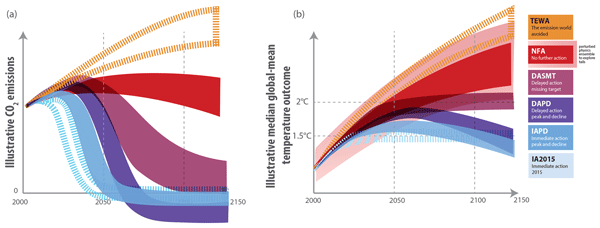
Malte Meinshausen, Carl-Friedrich Schleussner, Kathleen Beyer, Greg Bodeker, Olivier Boucher, Josep G. Canadell, John S. Daniel, Aïda Diongue-Niang, Fatima Driouech, Erich Fischer, Piers Forster, Michael Grose, Gerrit Hansen, Zeke Hausfather, Tatiana Ilyina, Jarmo S. Kikstra, Joyce Kimutai, Andrew D. King, June-Yi Lee, Chris Lennard, Tabea Lissner, Alexander Nauels, Glen P. Peters, Anna Pirani, Gian-Kasper Plattner, Hans Pörtner, Joeri Rogelj, Maisa Rojas, Joyashree Roy, Bjørn H. Samset, Benjamin M. Sanderson, Roland Séférian, Sonia Seneviratne, Christopher J. Smith, Sophie Szopa, Adelle Thomas, Diana Urge-Vorsatz, Guus J. M. Velders, Tokuta Yokohata, Tilo Ziehn, and Zebedee Nicholls
Geosci. Model Dev., 17, 4533–4559, https://doi.org/10.5194/gmd-17-4533-2024, https://doi.org/10.5194/gmd-17-4533-2024, 2024
Short summary
Short summary
The scientific community is considering new scenarios to succeed RCPs and SSPs for the next generation of Earth system model runs to project future climate change. To contribute to that effort, we reflect on relevant policy and scientific research questions and suggest categories for representative emission pathways. These categories are tailored to the Paris Agreement long-term temperature goal, high-risk outcomes in the absence of further climate policy and worlds “that could have been”.
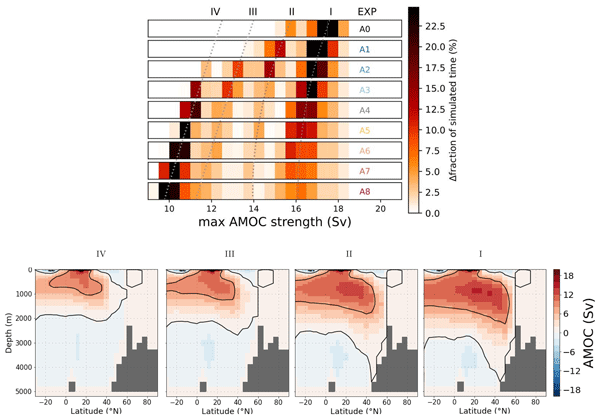
Markus Adloff, Frerk Pöppelmeier, Aurich Jeltsch-Thömmes, Thomas F. Stocker, and Fortunat Joos
Clim. Past, 20, 1233–1250, https://doi.org/10.5194/cp-20-1233-2024, https://doi.org/10.5194/cp-20-1233-2024, 2024
Short summary
Short summary
The Atlantic Meridional Overturning Circulation (AMOC) is an ocean current that transports heat into the North Atlantic. Over the ice age cycles, AMOC strength and its spatial pattern varied. We tested the role of heat forcing for these AMOC changes by simulating the temperature changes of the last eight glacial cycles. In our model, AMOC shifts between four distinct circulation modes caused by heat and salt redistributions that reproduce reconstructed long-term North Atlantic SST changes.
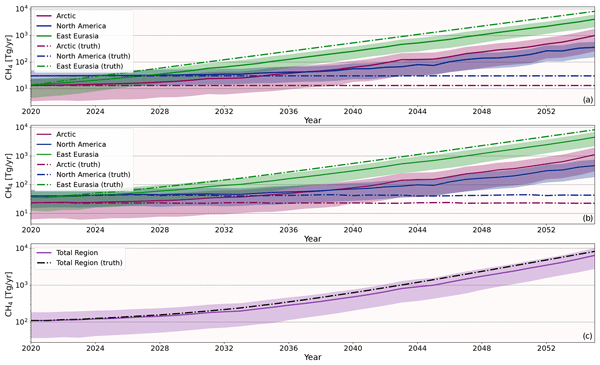
Sophie Wittig, Antoine Berchet, Isabelle Pison, Marielle Saunois, and Jean-Daniel Paris
Atmos. Chem. Phys., 24, 6359–6373, https://doi.org/10.5194/acp-24-6359-2024, https://doi.org/10.5194/acp-24-6359-2024, 2024
Short summary
Short summary
The aim of this work is to analyse how accurately a methane bomb event could be detected with the current and a hypothetically extended stationary observation network in the Arctic. For this, we incorporate synthetically modelled possible future CH4 concentrations based on plausible emission scenarios into an inverse modelling framework. We analyse how well the increase is detected in different Arctic regions and evaluate the impact of additional observation sites in this respect.
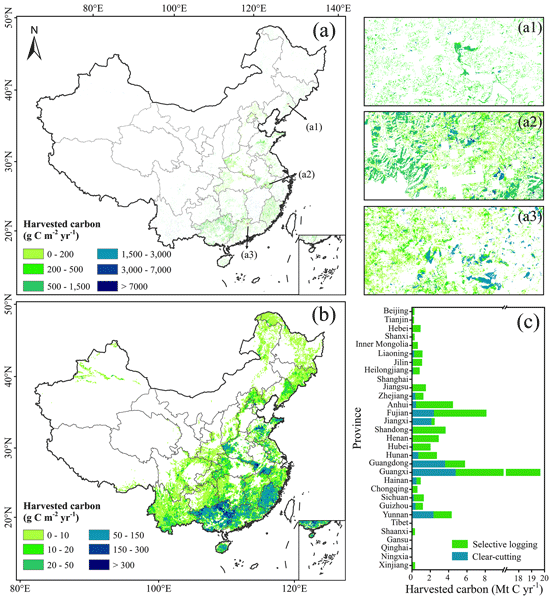
Daju Wang, Peiyang Ren, Xiaosheng Xia, Lei Fan, Zhangcai Qin, Xiuzhi Chen, and Wenping Yuan
Earth Syst. Sci. Data, 16, 2465–2481, https://doi.org/10.5194/essd-16-2465-2024, https://doi.org/10.5194/essd-16-2465-2024, 2024
Short summary
Short summary
This study generated a high-precision dataset, locating forest harvested carbon and quantifying post-harvest wood emissions for various uses. It enhances our understanding of forest harvesting and post-harvest carbon dynamics in China, providing essential data for estimating the forest ecosystem carbon budget and emphasizing wood utilization's impact on carbon emissions.
Yiming Xu, Qianlai Zhuang, Bailu Zhao, Michael Billmire, Christopher Cook, Jeremy Graham, Nancy French, and Ronald Prinn
EGUsphere, https://doi.org/10.5194/egusphere-2024-1324, https://doi.org/10.5194/egusphere-2024-1324, 2024
Preprint archived
Short summary
Short summary
We use a process-based model to simulate the fire impacts on soil thermal and hydrological dynamics and carbon budget of forest ecosystems in Northern Eurasia based on satellite-derived burn severity data. We find that fire severity generally increases in this region during the study period. Simulations indicate that fires increase soil temperature and water runoff. Fires lead the forest ecosystems to lose 2.3 Pg C, shifting the forests from a carbon sink to a source in this period.
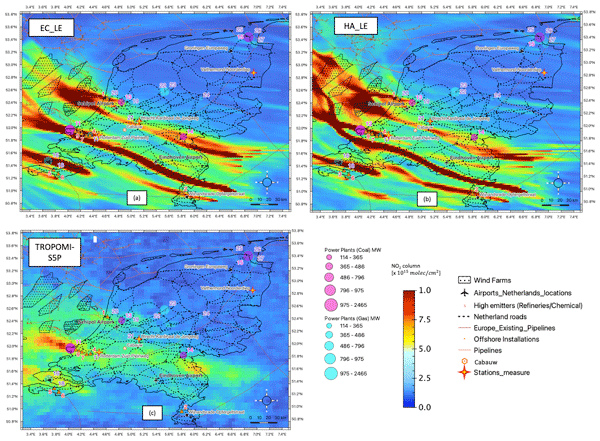
Andrés Yarce Botero, Michiel van Weele, Arjo Segers, Pier Siebesma, and Henk Eskes
Geosci. Model Dev., 17, 3765–3781, https://doi.org/10.5194/gmd-17-3765-2024, https://doi.org/10.5194/gmd-17-3765-2024, 2024
Short summary
Short summary
HARMONIE WINS50 reanalysis data with 0.025° × 0.025° resolution from 2019 to 2021 were coupled with the LOTOS-EUROS Chemical Transport Model. HARMONIE and ECMWF meteorology configurations against Cabauw observations (52.0° N, 4.9° W) were evaluated as simulated NO2 concentrations with ground-level sensors. Differences in crucial meteorological input parameters (boundary layer height, vertical diffusion coefficient) between the hydrostatic and non-hydrostatic models were analysed.
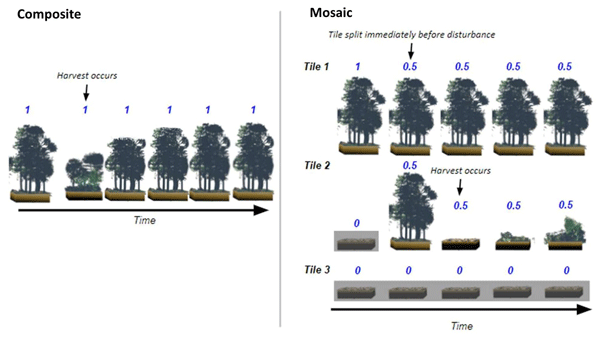
Salvatore R. Curasi, Joe R. Melton, Elyn R. Humphreys, Txomin Hermosilla, and Michael A. Wulder
Geosci. Model Dev., 17, 2683–2704, https://doi.org/10.5194/gmd-17-2683-2024, https://doi.org/10.5194/gmd-17-2683-2024, 2024
Short summary
Short summary
Canadian forests are responding to fire, harvest, and climate change. Models need to quantify these processes and their carbon and energy cycling impacts. We develop a scheme that, based on satellite records, represents fire, harvest, and the sparsely vegetated areas that these processes generate. We evaluate model performance and demonstrate the impacts of disturbance on carbon and energy cycling. This work has implications for land surface modeling and assessing Canada’s terrestrial C cycle.
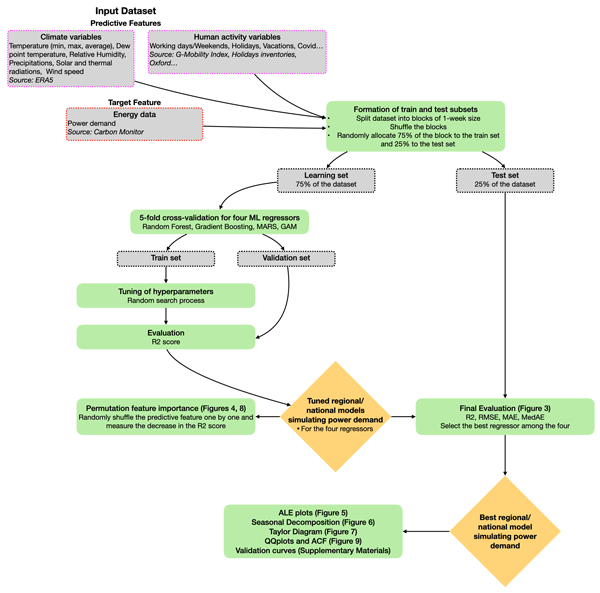
Léna Gurriaran, Yannig Goude, Katsumasa Tanaka, Biqing Zhu, Zhu Deng, Xuanren Song, and Philippe Ciais
Geosci. Model Dev., 17, 2663–2682, https://doi.org/10.5194/gmd-17-2663-2024, https://doi.org/10.5194/gmd-17-2663-2024, 2024
Short summary
Short summary
We developed a data-driven model simulating daily regional power demand based on climate and socioeconomic variables. Our model was applied to eight countries or regions (Australia, Brazil, China, EU, India, Russia, South Africa, US), identifying influential factors and their relationship with power demand. Our findings highlight the significance of economic indicators in addition to temperature, showcasing country-specific variations. This research aids energy planning and emission reduction.
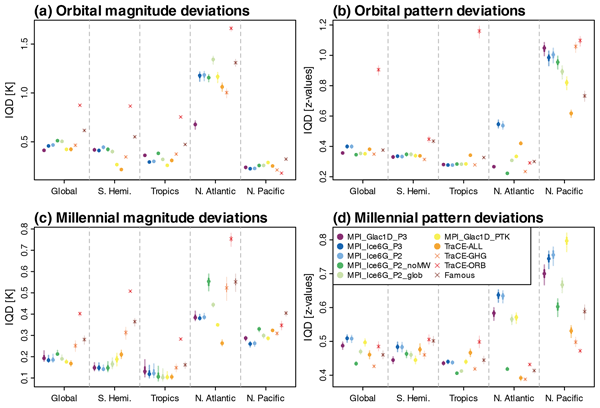
Nils Weitzel, Heather Andres, Jean-Philippe Baudouin, Marie-Luise Kapsch, Uwe Mikolajewicz, Lukas Jonkers, Oliver Bothe, Elisa Ziegler, Thomas Kleinen, André Paul, and Kira Rehfeld
Clim. Past, 20, 865–890, https://doi.org/10.5194/cp-20-865-2024, https://doi.org/10.5194/cp-20-865-2024, 2024
Short summary
Short summary
The ability of climate models to faithfully reproduce past warming episodes is a valuable test considering potentially large future warming. We develop a new method to compare simulations of the last deglaciation with temperature reconstructions. We find that reconstructions differ more between regions than simulations, potentially due to deficiencies in the simulation design, models, or reconstructions. Our work is a promising step towards benchmarking simulations of past climate transitions.
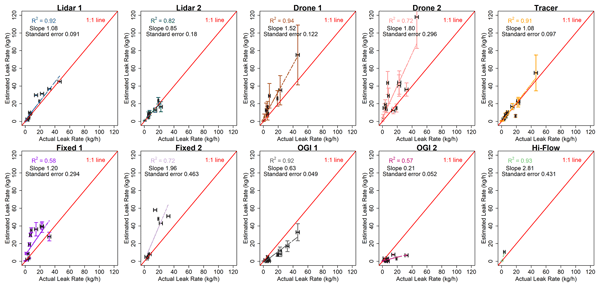
Yunsong Liu, Jean-Daniel Paris, Gregoire Broquet, Violeta Bescós Roy, Tania Meixus Fernandez, Rasmus Andersen, Andrés Russu Berlanga, Emil Christensen, Yann Courtois, Sebastian Dominok, Corentin Dussenne, Travis Eckert, Andrew Finlayson, Aurora Fernández de la Fuente, Catlin Gunn, Ram Hashmonay, Juliano Grigoleto Hayashi, Jonathan Helmore, Soeren Honsel, Fabrizio Innocenti, Matti Irjala, Torgrim Log, Cristina Lopez, Francisco Cortés Martínez, Jonathan Martinez, Adrien Massardier, Helle Gottschalk Nygaard, Paula Agregan Reboredo, Elodie Rousset, Axel Scherello, Matthias Ulbricht, Damien Weidmann, Oliver Williams, Nigel Yarrow, Murès Zarea, Robert Ziegler, Jean Sciare, Mihalis Vrekoussis, and Philippe Bousquet
Atmos. Meas. Tech., 17, 1633–1649, https://doi.org/10.5194/amt-17-1633-2024, https://doi.org/10.5194/amt-17-1633-2024, 2024
Short summary
Short summary
We investigated the performance of 10 methane emission quantification techniques in a blind controlled-release experiment at an inerted natural gas compressor station. We reported their respective strengths, weaknesses, and potential complementarity depending on the emission rates and atmospheric conditions. Additionally, we assess the dependence of emission quantification performance on key parameters such as wind speed, deployment constraints, and measurement duration.
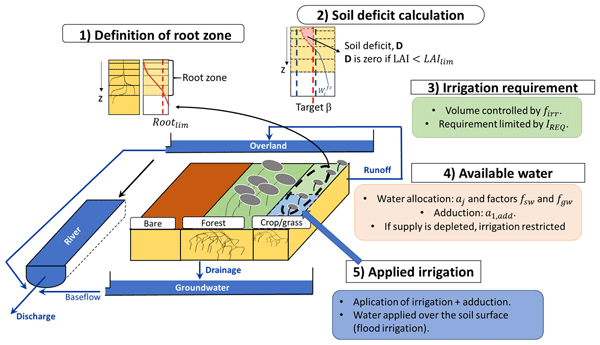
Pedro Felipe Arboleda-Obando, Agnès Ducharne, Zun Yin, and Philippe Ciais
Geosci. Model Dev., 17, 2141–2164, https://doi.org/10.5194/gmd-17-2141-2024, https://doi.org/10.5194/gmd-17-2141-2024, 2024
Short summary
Short summary
We show a new irrigation scheme included in the ORCHIDEE land surface model. The new irrigation scheme restrains irrigation due to water shortage, includes water adduction, and represents environmental limits and facilities to access water, due to representing infrastructure in a simple way. Our results show that the new irrigation scheme helps simulate acceptable land surface conditions and fluxes in irrigated areas, even if there are difficulties due to shortcomings and limited information.
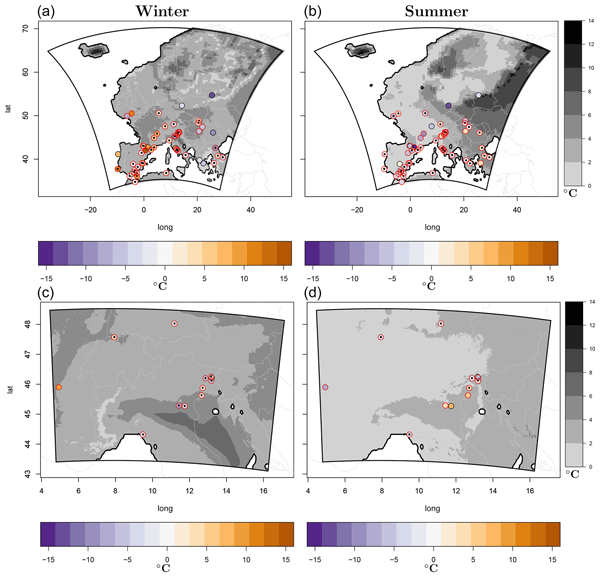
Emmanuele Russo, Jonathan Buzan, Sebastian Lienert, Guillaume Jouvet, Patricio Velasquez Alvarez, Basil Davis, Patrick Ludwig, Fortunat Joos, and Christoph C. Raible
Clim. Past, 20, 449–465, https://doi.org/10.5194/cp-20-449-2024, https://doi.org/10.5194/cp-20-449-2024, 2024
Short summary
Short summary
We present a series of experiments conducted for the Last Glacial Maximum (~21 ka) over Europe using the regional climate Weather Research and Forecasting model (WRF) at convection-permitting resolutions. The model, with new developments better suited to paleo-studies, agrees well with pollen-based climate reconstructions. This agreement is improved when considering different sources of uncertainty. The effect of convection-permitting resolutions is also assessed.
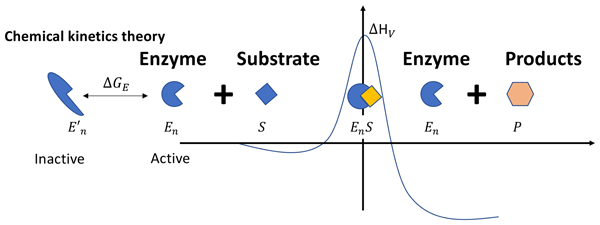
Jinyun Tang and William J. Riley
Biogeosciences, 21, 1061–1070, https://doi.org/10.5194/bg-21-1061-2024, https://doi.org/10.5194/bg-21-1061-2024, 2024
Short summary
Short summary
A chemical kinetics theory is proposed to explain the non-monotonic relationship between temperature and biochemical rates. It incorporates the observed thermally reversible enzyme denaturation that is ensured by the ceaseless thermal motion of molecules and ions in an enzyme solution and three well-established theories: (1) law of mass action, (2) diffusion-limited chemical reaction theory, and (3) transition state theory.
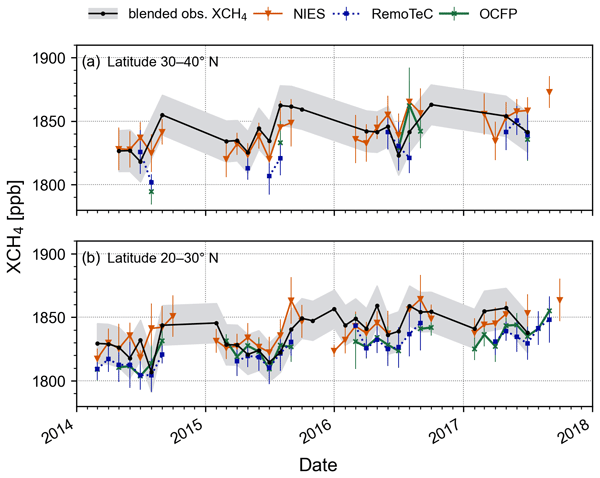
Astrid Müller, Hiroshi Tanimoto, Takafumi Sugita, Prabir K. Patra, Shin-ichiro Nakaoka, Toshinobu Machida, Isamu Morino, André Butz, and Kei Shiomi
Atmos. Meas. Tech., 17, 1297–1316, https://doi.org/10.5194/amt-17-1297-2024, https://doi.org/10.5194/amt-17-1297-2024, 2024
Short summary
Short summary
Satellite CH4 observations with high accuracy are needed to understand changes in atmospheric CH4 concentrations. But over oceans, reference data are limited. We combine various ship and aircraft observations with the help of atmospheric chemistry models to derive observation-based column-averaged mixing ratios of CH4 (obs. XCH4). We discuss three different approaches and demonstrate the applicability of the new reference dataset for carbon cycle studies and satellite evaluation.
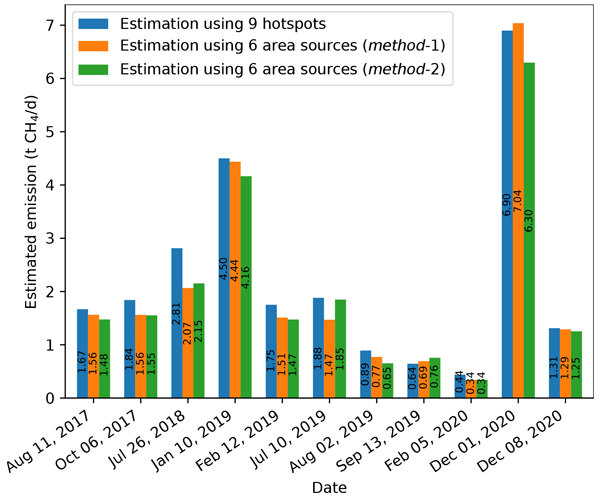
Pramod Kumar, Christopher Caldow, Grégoire Broquet, Adil Shah, Olivier Laurent, Camille Yver-Kwok, Sebastien Ars, Sara Defratyka, Susan Warao Gichuki, Luc Lienhardt, Mathis Lozano, Jean-Daniel Paris, Felix Vogel, Caroline Bouchet, Elisa Allegrini, Robert Kelly, Catherine Juery, and Philippe Ciais
Atmos. Meas. Tech., 17, 1229–1250, https://doi.org/10.5194/amt-17-1229-2024, https://doi.org/10.5194/amt-17-1229-2024, 2024
Short summary
Short summary
This study presents a series of mobile measurement campaigns to monitor the CH4 emissions from an active landfill. These measurements are processed using a Gaussian plume model and atmospheric inversion techniques to quantify the landfill CH4 emissions. The methane emission estimates range between ~0.4 and ~7 t CH4 per day, and their variations are analyzed. The robustness of the estimates is assessed depending on the distance of the measurements from the potential sources in the landfill.
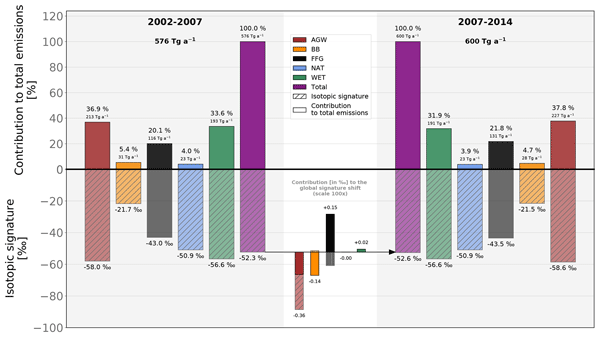
Joël Thanwerdas, Marielle Saunois, Antoine Berchet, Isabelle Pison, and Philippe Bousquet
Atmos. Chem. Phys., 24, 2129–2167, https://doi.org/10.5194/acp-24-2129-2024, https://doi.org/10.5194/acp-24-2129-2024, 2024
Short summary
Short summary
We investigate the causes of the renewed growth of atmospheric methane (CH4) after 2007 using inverse modeling. We use the additional information provided by observations of CH4 isotopic compositions to better differentiate between the emission categories. Accounting for the large uncertainties in source signatures, our results suggest that the post-2007 increase in atmospheric CH4 was caused by similar increases in emissions from (1) fossil fuels and (2) agriculture and waste.
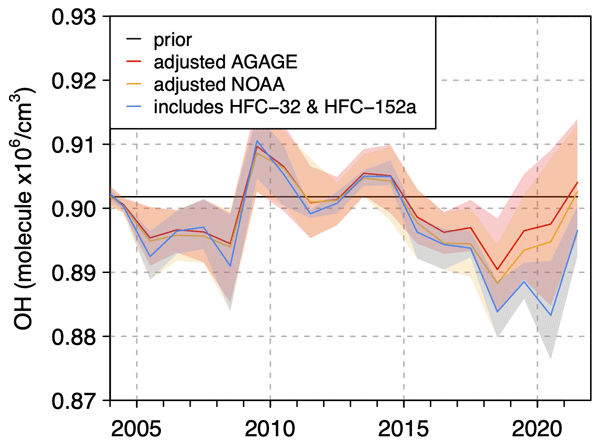
Rona L. Thompson, Stephen A. Montzka, Martin K. Vollmer, Jgor Arduini, Molly Crotwell, Paul B. Krummel, Chris Lunder, Jens Mühle, Simon O'Doherty, Ronald G. Prinn, Stefan Reimann, Isaac Vimont, Hsiang Wang, Ray F. Weiss, and Dickon Young
Atmos. Chem. Phys., 24, 1415–1427, https://doi.org/10.5194/acp-24-1415-2024, https://doi.org/10.5194/acp-24-1415-2024, 2024
Short summary
Short summary
The hydroxyl radical determines the atmospheric lifetimes of numerous species including methane. Since OH is very short-lived, it is not possible to directly measure its concentration on scales relevant for understanding its effect on other species. Here, OH is inferred by looking at changes in hydrofluorocarbons (HFCs). We find that OH levels have been fairly stable over our study period (2004 to 2021), suggesting that OH is not the main driver of the recent increase in atmospheric methane.
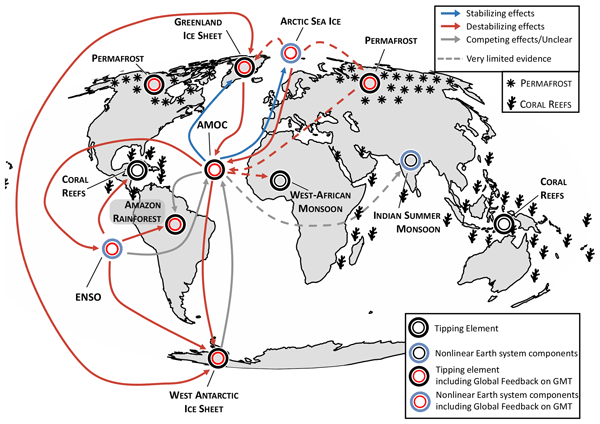
Nico Wunderling, Anna S. von der Heydt, Yevgeny Aksenov, Stephen Barker, Robbin Bastiaansen, Victor Brovkin, Maura Brunetti, Victor Couplet, Thomas Kleinen, Caroline H. Lear, Johannes Lohmann, Rosa Maria Roman-Cuesta, Sacha Sinet, Didier Swingedouw, Ricarda Winkelmann, Pallavi Anand, Jonathan Barichivich, Sebastian Bathiany, Mara Baudena, John T. Bruun, Cristiano M. Chiessi, Helen K. Coxall, David Docquier, Jonathan F. Donges, Swinda K. J. Falkena, Ann Kristin Klose, David Obura, Juan Rocha, Stefanie Rynders, Norman Julius Steinert, and Matteo Willeit
Earth Syst. Dynam., 15, 41–74, https://doi.org/10.5194/esd-15-41-2024, https://doi.org/10.5194/esd-15-41-2024, 2024
Short summary
Short summary
This paper maps out the state-of-the-art literature on interactions between tipping elements relevant for current global warming pathways. We find indications that many of the interactions between tipping elements are destabilizing. This means that tipping cascades cannot be ruled out on centennial to millennial timescales at global warming levels between 1.5 and 2.0 °C or on shorter timescales if global warming surpasses 2.0 °C.
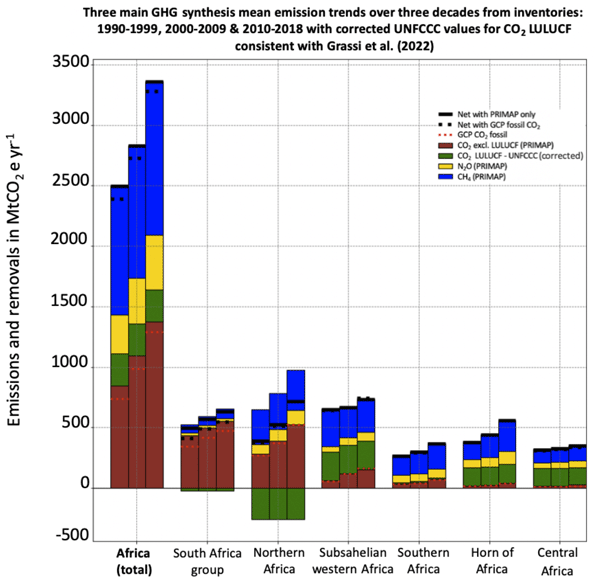
Mounia Mostefaoui, Philippe Ciais, Matthew J. McGrath, Philippe Peylin, Prabir K. Patra, and Yolandi Ernst
Earth Syst. Sci. Data, 16, 245–275, https://doi.org/10.5194/essd-16-245-2024, https://doi.org/10.5194/essd-16-245-2024, 2024
Short summary
Short summary
Our aim is to assess African anthropogenic greenhouse gas emissions and removals by using different data products, including inventories and process-based models, and to compare their relative merits with inversion data coming from satellites. We show a good match among the various estimates in terms of overall trends at a regional level and on a decadal basis, but large differences exist even among similar data types, which is a limit to the possibility of verification of country-reported data.
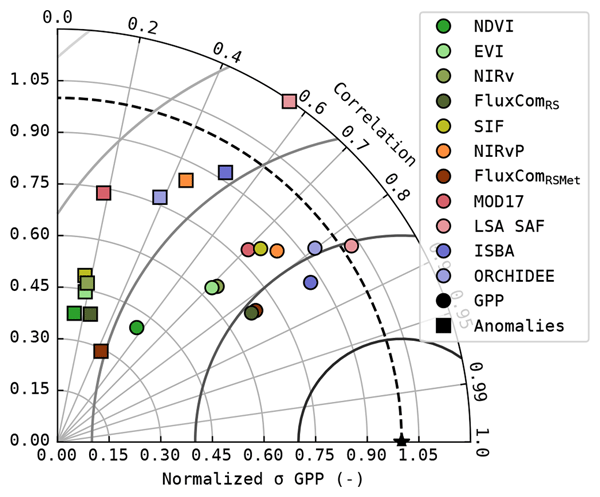
Jan De Pue, Sebastian Wieneke, Ana Bastos, José Miguel Barrios, Liyang Liu, Philippe Ciais, Alirio Arboleda, Rafiq Hamdi, Maral Maleki, Fabienne Maignan, Françoise Gellens-Meulenberghs, Ivan Janssens, and Manuela Balzarolo
Biogeosciences, 20, 4795–4818, https://doi.org/10.5194/bg-20-4795-2023, https://doi.org/10.5194/bg-20-4795-2023, 2023
Short summary
Short summary
The gross primary production (GPP) of the terrestrial biosphere is a key source of variability in the global carbon cycle. To estimate this flux, models can rely on remote sensing data (RS-driven), meteorological data (meteo-driven) or a combination of both (hybrid). An intercomparison of 11 models demonstrated that RS-driven models lack the sensitivity to short-term anomalies. Conversely, the simulation of soil moisture dynamics and stress response remains a challenge in meteo-driven models.
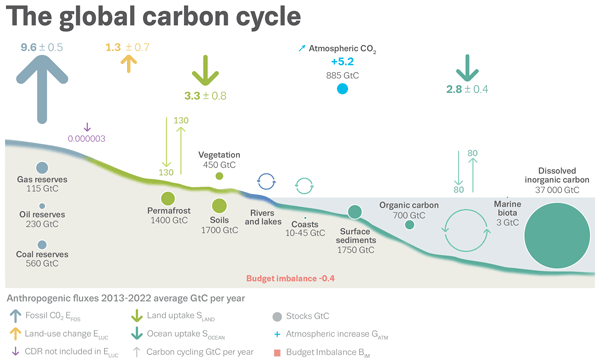
Pierre Friedlingstein, Michael O'Sullivan, Matthew W. Jones, Robbie M. Andrew, Dorothee C. E. Bakker, Judith Hauck, Peter Landschützer, Corinne Le Quéré, Ingrid T. Luijkx, Glen P. Peters, Wouter Peters, Julia Pongratz, Clemens Schwingshackl, Stephen Sitch, Josep G. Canadell, Philippe Ciais, Robert B. Jackson, Simone R. Alin, Peter Anthoni, Leticia Barbero, Nicholas R. Bates, Meike Becker, Nicolas Bellouin, Bertrand Decharme, Laurent Bopp, Ida Bagus Mandhara Brasika, Patricia Cadule, Matthew A. Chamberlain, Naveen Chandra, Thi-Tuyet-Trang Chau, Frédéric Chevallier, Louise P. Chini, Margot Cronin, Xinyu Dou, Kazutaka Enyo, Wiley Evans, Stefanie Falk, Richard A. Feely, Liang Feng, Daniel J. Ford, Thomas Gasser, Josefine Ghattas, Thanos Gkritzalis, Giacomo Grassi, Luke Gregor, Nicolas Gruber, Özgür Gürses, Ian Harris, Matthew Hefner, Jens Heinke, Richard A. Houghton, George C. Hurtt, Yosuke Iida, Tatiana Ilyina, Andrew R. Jacobson, Atul Jain, Tereza Jarníková, Annika Jersild, Fei Jiang, Zhe Jin, Fortunat Joos, Etsushi Kato, Ralph F. Keeling, Daniel Kennedy, Kees Klein Goldewijk, Jürgen Knauer, Jan Ivar Korsbakken, Arne Körtzinger, Xin Lan, Nathalie Lefèvre, Hongmei Li, Junjie Liu, Zhiqiang Liu, Lei Ma, Greg Marland, Nicolas Mayot, Patrick C. McGuire, Galen A. McKinley, Gesa Meyer, Eric J. Morgan, David R. Munro, Shin-Ichiro Nakaoka, Yosuke Niwa, Kevin M. O'Brien, Are Olsen, Abdirahman M. Omar, Tsuneo Ono, Melf Paulsen, Denis Pierrot, Katie Pocock, Benjamin Poulter, Carter M. Powis, Gregor Rehder, Laure Resplandy, Eddy Robertson, Christian Rödenbeck, Thais M. Rosan, Jörg Schwinger, Roland Séférian, T. Luke Smallman, Stephen M. Smith, Reinel Sospedra-Alfonso, Qing Sun, Adrienne J. Sutton, Colm Sweeney, Shintaro Takao, Pieter P. Tans, Hanqin Tian, Bronte Tilbrook, Hiroyuki Tsujino, Francesco Tubiello, Guido R. van der Werf, Erik van Ooijen, Rik Wanninkhof, Michio Watanabe, Cathy Wimart-Rousseau, Dongxu Yang, Xiaojuan Yang, Wenping Yuan, Xu Yue, Sönke Zaehle, Jiye Zeng, and Bo Zheng
Earth Syst. Sci. Data, 15, 5301–5369, https://doi.org/10.5194/essd-15-5301-2023, https://doi.org/10.5194/essd-15-5301-2023, 2023
Short summary
Short summary
The Global Carbon Budget 2023 describes the methodology, main results, and data sets used to quantify the anthropogenic emissions of carbon dioxide (CO2) and their partitioning among the atmosphere, land ecosystems, and the ocean over the historical period (1750–2023). These living datasets are updated every year to provide the highest transparency and traceability in the reporting of CO2, the key driver of climate change.
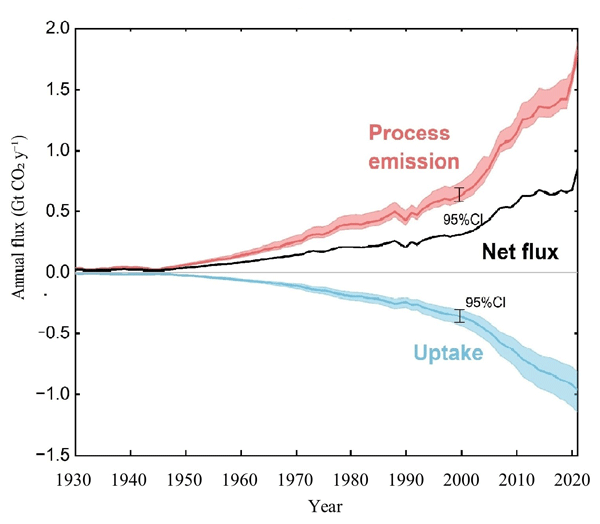
Zi Huang, Jiaoyue Wang, Longfei Bing, Yijiao Qiu, Rui Guo, Ying Yu, Mingjing Ma, Le Niu, Dan Tong, Robbie M. Andrew, Pierre Friedlingstein, Josep G. Canadell, Fengming Xi, and Zhu Liu
Earth Syst. Sci. Data, 15, 4947–4958, https://doi.org/10.5194/essd-15-4947-2023, https://doi.org/10.5194/essd-15-4947-2023, 2023
Short summary
Short summary
This is about global and regional cement process carbon emissions and CO2 uptake calculations from 1930 to 2019. The global cement production is rising to 4.4 Gt, causing processing carbon emission of 1.81 Gt (95% CI: 1.75–1.88 Gt CO2) in 2021. Plus, in 2021, cement’s carbon accumulated uptake (22.9 Gt, 95% CI: 19.6–22.6 Gt CO2) has offset 55.2% of cement process CO2 emissions (41.5 Gt, 95% CI: 38.7–47.1 Gt CO2) since 1930.
Ioannis Cheliotis, Thomas Lauvaux, Jinghui Lian, Theodoros Christoudias, George Georgiou, Alba Badia, Frédéric Chevallier, Pramod Kumar, Yathin Kudupaje, Ruixue Lei, and Philippe Ciais
EGUsphere, https://doi.org/10.5194/egusphere-2023-2487, https://doi.org/10.5194/egusphere-2023-2487, 2023
Preprint withdrawn
Short summary
Short summary
A consistent estimation of CO2 emissions is complicated due to the scarcity of CO2 observations. In this study, we showcase the potential to improve the CO2 emissions estimations from the NO2 concentrations based on the NO2-to-CO2 ratio, which should be constant for a source co-emitting NO2 and CO2, by comparing satellite observations with atmospheric chemistry and transport model simulations for NO2 and CO2. Furthermore, we demonstrate the significance of the chemistry in NO2 simulations.
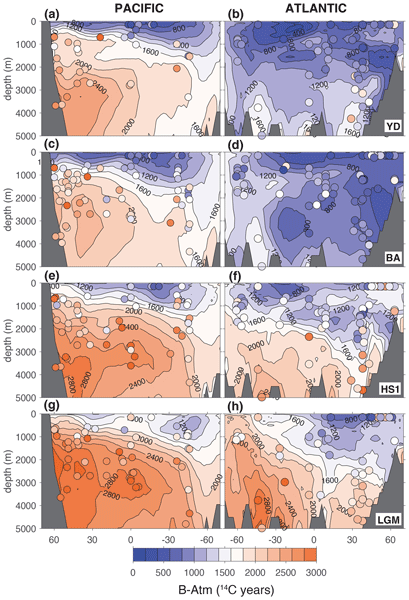
Luke Skinner, Francois Primeau, Aurich Jeltsch-Thömmes, Fortunat Joos, Peter Köhler, and Edouard Bard
Clim. Past, 19, 2177–2202, https://doi.org/10.5194/cp-19-2177-2023, https://doi.org/10.5194/cp-19-2177-2023, 2023
Short summary
Short summary
Radiocarbon is best known as a dating tool, but it also allows us to track CO2 exchange between the ocean and atmosphere. Using decades of data and novel mapping methods, we have charted the ocean’s average radiocarbon ″age” since the last Ice Age. Combined with climate model simulations, these data quantify the ocean’s role in atmospheric CO2 rise since the last Ice Age while also revealing that Earth likely received far more cosmic radiation during the last Ice Age than hitherto believed.
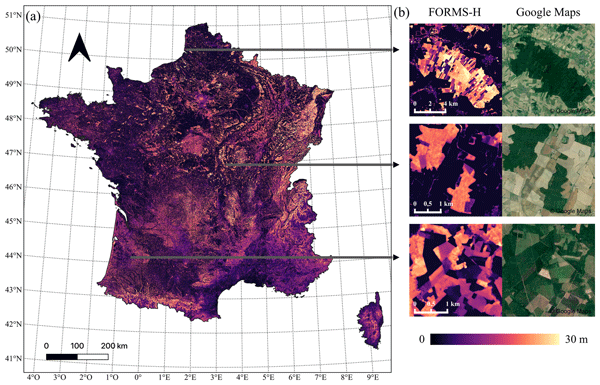
Martin Schwartz, Philippe Ciais, Aurélien De Truchis, Jérôme Chave, Catherine Ottlé, Cedric Vega, Jean-Pierre Wigneron, Manuel Nicolas, Sami Jouaber, Siyu Liu, Martin Brandt, and Ibrahim Fayad
Earth Syst. Sci. Data, 15, 4927–4945, https://doi.org/10.5194/essd-15-4927-2023, https://doi.org/10.5194/essd-15-4927-2023, 2023
Short summary
Short summary
As forests play a key role in climate-related issues, their accurate monitoring is critical to reduce global carbon emissions effectively. Based on open-access remote-sensing sensors, and artificial intelligence methods, we created high-resolution tree height, wood volume, and biomass maps of metropolitan France that outperform previous products. This study, based on freely available data, provides essential information to support climate-efficient forest management policies at a low cost.
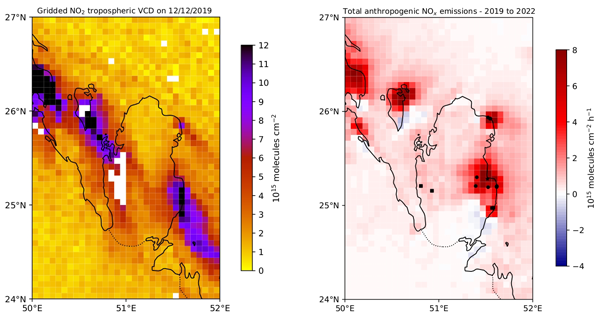
Anthony Rey-Pommier, Frédéric Chevallier, Philippe Ciais, Jonilda Kushta, Theodoros Christoudias, I. Safak Bayram, and Jean Sciare
Atmos. Chem. Phys., 23, 13565–13583, https://doi.org/10.5194/acp-23-13565-2023, https://doi.org/10.5194/acp-23-13565-2023, 2023
Short summary
Short summary
We use four years (2019–2022) of TROPOMI NO2 data to map NOx emissions in Qatar. We estimate average monthly emissions for the country and industrial facilities and derive an emission factor for the power sector. Monthly emissions have a weekly cycle reflecting the social norms in Qatar and an annual cycle consistent with the electricity production by gas-fired power plants. Their mean value is lower than the NOx emissions in global inventories but similar to the emissions reported for 2007.
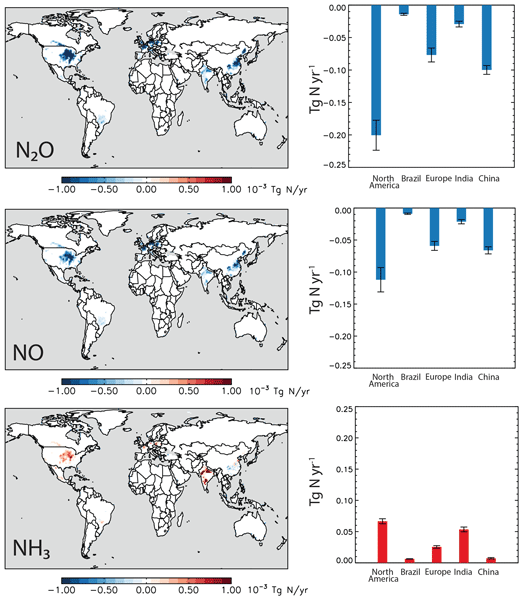
Maria Val Martin, Elena Blanc-Betes, Ka Ming Fung, Euripides P. Kantzas, Ilsa B. Kantola, Isabella Chiaravalloti, Lyla L. Taylor, Louisa K. Emmons, William R. Wieder, Noah J. Planavsky, Michael D. Masters, Evan H. DeLucia, Amos P. K. Tai, and David J. Beerling
Geosci. Model Dev., 16, 5783–5801, https://doi.org/10.5194/gmd-16-5783-2023, https://doi.org/10.5194/gmd-16-5783-2023, 2023
Short summary
Short summary
Enhanced rock weathering (ERW) is a CO2 removal strategy that involves applying crushed rocks (e.g., basalt) to agricultural soils. However, unintended processes within the N cycle due to soil pH changes may affect the climate benefits of C sequestration. ERW could drive changes in soil emissions of non-CO2 GHGs (N2O) and trace gases (NO and NH3) that may affect air quality. We present a new improved N cycling scheme for the land model (CLM5) to evaluate ERW effects on soil gas N emissions.
Christoph Heinze, Thorsten Blenckner, Peter Brown, Friederike Fröb, Anne Morée, Adrian L. New, Cara Nissen, Stefanie Rynders, Isabel Seguro, Yevgeny Aksenov, Yuri Artioli, Timothée Bourgeois, Friedrich Burger, Jonathan Buzan, B. B. Cael, Veli Çağlar Yumruktepe, Melissa Chierici, Christopher Danek, Ulf Dieckmann, Agneta Fransson, Thomas Frölicher, Giovanni Galli, Marion Gehlen, Aridane G. González, Melchor Gonzalez-Davila, Nicolas Gruber, Örjan Gustafsson, Judith Hauck, Mikko Heino, Stephanie Henson, Jenny Hieronymus, I. Emma Huertas, Fatma Jebri, Aurich Jeltsch-Thömmes, Fortunat Joos, Jaideep Joshi, Stephen Kelly, Nandini Menon, Precious Mongwe, Laurent Oziel, Sólveig Ólafsdottir, Julien Palmieri, Fiz F. Pérez, Rajamohanan Pillai Ranith, Juliano Ramanantsoa, Tilla Roy, Dagmara Rusiecka, J. Magdalena Santana Casiano, Yeray Santana-Falcón, Jörg Schwinger, Roland Séférian, Miriam Seifert, Anna Shchiptsova, Bablu Sinha, Christopher Somes, Reiner Steinfeldt, Dandan Tao, Jerry Tjiputra, Adam Ulfsbo, Christoph Völker, Tsuyoshi Wakamatsu, and Ying Ye
Biogeosciences Discuss., https://doi.org/10.5194/bg-2023-182, https://doi.org/10.5194/bg-2023-182, 2023
Revised manuscript not accepted
Short summary
Short summary
For assessing the consequences of human-induced climate change for the marine realm, it is necessary to not only look at gradual changes but also at abrupt changes of environmental conditions. We summarise abrupt changes in ocean warming, acidification, and oxygen concentration as the key environmental factors for ecosystems. Taking these abrupt changes into account requires greenhouse gas emissions to be reduced to a larger extent than previously thought to limit respective damage.
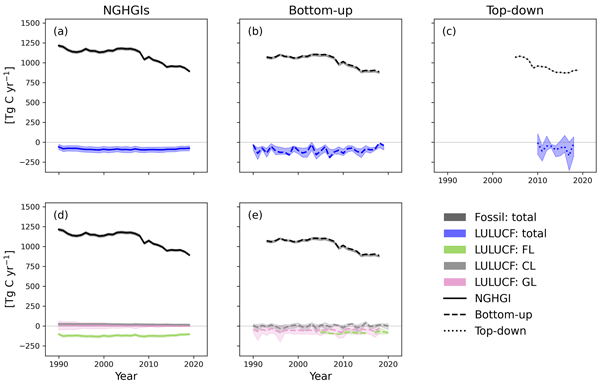
Matthew J. McGrath, Ana Maria Roxana Petrescu, Philippe Peylin, Robbie M. Andrew, Bradley Matthews, Frank Dentener, Juraj Balkovič, Vladislav Bastrikov, Meike Becker, Gregoire Broquet, Philippe Ciais, Audrey Fortems-Cheiney, Raphael Ganzenmüller, Giacomo Grassi, Ian Harris, Matthew Jones, Jürgen Knauer, Matthias Kuhnert, Guillaume Monteil, Saqr Munassar, Paul I. Palmer, Glen P. Peters, Chunjing Qiu, Mart-Jan Schelhaas, Oksana Tarasova, Matteo Vizzarri, Karina Winkler, Gianpaolo Balsamo, Antoine Berchet, Peter Briggs, Patrick Brockmann, Frédéric Chevallier, Giulia Conchedda, Monica Crippa, Stijn N. C. Dellaert, Hugo A. C. Denier van der Gon, Sara Filipek, Pierre Friedlingstein, Richard Fuchs, Michael Gauss, Christoph Gerbig, Diego Guizzardi, Dirk Günther, Richard A. Houghton, Greet Janssens-Maenhout, Ronny Lauerwald, Bas Lerink, Ingrid T. Luijkx, Géraud Moulas, Marilena Muntean, Gert-Jan Nabuurs, Aurélie Paquirissamy, Lucia Perugini, Wouter Peters, Roberto Pilli, Julia Pongratz, Pierre Regnier, Marko Scholze, Yusuf Serengil, Pete Smith, Efisio Solazzo, Rona L. Thompson, Francesco N. Tubiello, Timo Vesala, and Sophia Walther
Earth Syst. Sci. Data, 15, 4295–4370, https://doi.org/10.5194/essd-15-4295-2023, https://doi.org/10.5194/essd-15-4295-2023, 2023
Short summary
Short summary
Accurate estimation of fluxes of carbon dioxide from the land surface is essential for understanding future impacts of greenhouse gas emissions on the climate system. A wide variety of methods currently exist to estimate these sources and sinks. We are continuing work to develop annual comparisons of these diverse methods in order to clarify what they all actually calculate and to resolve apparent disagreement, in addition to highlighting opportunities for increased understanding.
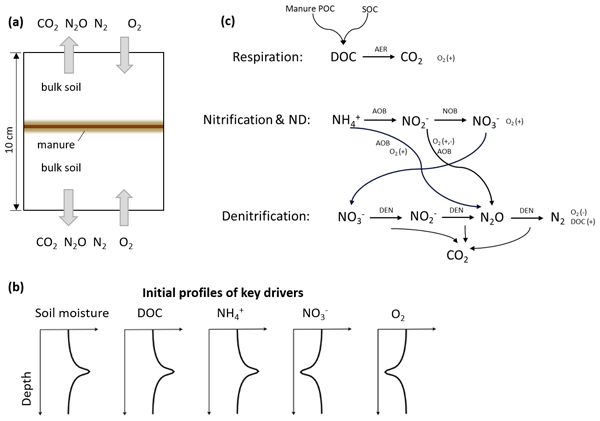
Jie Zhang, Elisabeth Larsen Kolstad, Wenxin Zhang, Iris Vogeler, and Søren O. Petersen
Biogeosciences, 20, 3895–3917, https://doi.org/10.5194/bg-20-3895-2023, https://doi.org/10.5194/bg-20-3895-2023, 2023
Short summary
Short summary
Manure application to agricultural land often results in large and variable N2O emissions. We propose a model with a parsimonious structure to investigate N transformations around such N2O hotspots. The model allows for new detailed insights into the interactions between transport and microbial activities regarding N2O emissions in heterogeneous soil environments. It highlights the importance of solute diffusion to N2O emissions from such hotspots which are often ignored by process-based models.
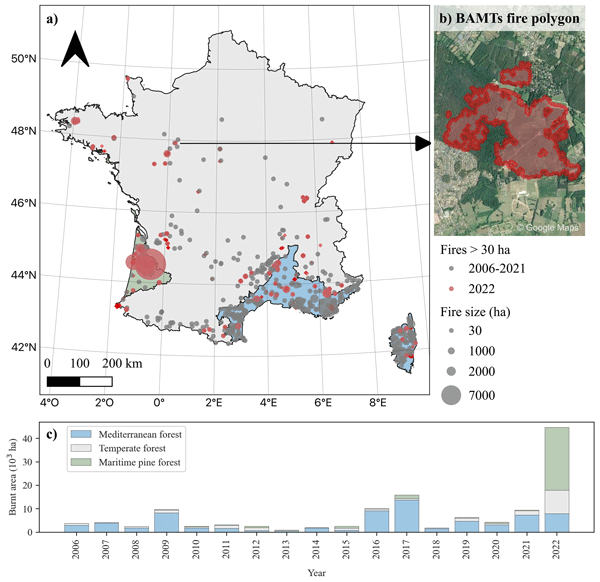
Lilian Vallet, Martin Schwartz, Philippe Ciais, Dave van Wees, Aurelien de Truchis, and Florent Mouillot
Biogeosciences, 20, 3803–3825, https://doi.org/10.5194/bg-20-3803-2023, https://doi.org/10.5194/bg-20-3803-2023, 2023
Short summary
Short summary
This study analyzes the ecological impact of the 2022 summer fire season in France by using high-resolution satellite data. The total biomass loss was 2.553 Mt, equivalent to a 17 % increase of the average natural mortality of all French forests. While Mediterranean forests had a lower biomass loss, there was a drastic increase in burned area and biomass loss over the Atlantic pine forests and temperate forests. This result revisits the distinctiveness of the 2022 fire season.
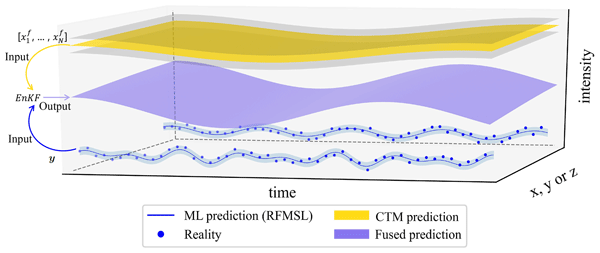
Li Fang, Jianbing Jin, Arjo Segers, Hong Liao, Ke Li, Bufan Xu, Wei Han, Mijie Pang, and Hai Xiang Lin
Geosci. Model Dev., 16, 4867–4882, https://doi.org/10.5194/gmd-16-4867-2023, https://doi.org/10.5194/gmd-16-4867-2023, 2023
Short summary
Short summary
Machine learning models have gained great popularity in air quality prediction. However, they are only available at air quality monitoring stations. In contrast, chemical transport models (CTM) provide predictions that are continuous in the 3D field. Owing to complex error sources, they are typically biased. In this study, we proposed a gridded prediction with high accuracy by fusing predictions from our regional feature selection machine learning prediction (RFSML v1.0) and a CTM prediction.
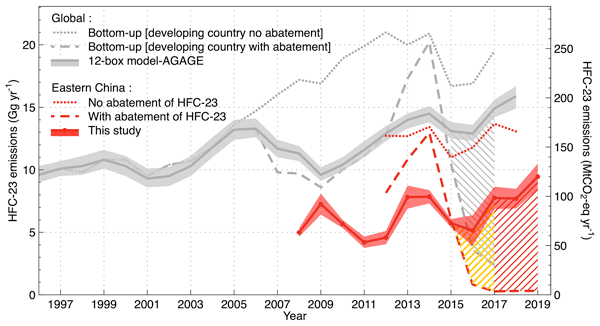
Hyeri Park, Jooil Kim, Haklim Choi, Sohyeon Geum, Yeaseul Kim, Rona L. Thompson, Jens Mühle, Peter K. Salameh, Christina M. Harth, Kieran M. Stanley, Simon O'Doherty, Paul J. Fraser, Peter G. Simmonds, Paul B. Krummel, Ray F. Weiss, Ronald G. Prinn, and Sunyoung Park
Atmos. Chem. Phys., 23, 9401–9411, https://doi.org/10.5194/acp-23-9401-2023, https://doi.org/10.5194/acp-23-9401-2023, 2023
Short summary
Short summary
Based on atmospheric HFC-23 observations, the first estimate of post-CDM HFC-23 emissions in eastern Asia for 2008–2019 shows that these emissions contribute significantly to the global emissions rise. The observation-derived emissions were much larger than the bottom-up estimates expected to approach zero after 2015 due to national abatement activities. These discrepancies could be attributed to unsuccessful factory-level HFC-23 abatement and inaccurate quantification of emission reductions.
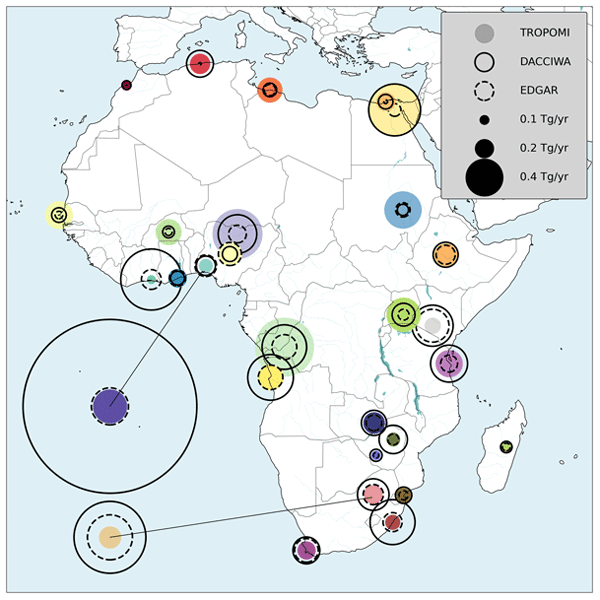
Gijs Leguijt, Joannes D. Maasakkers, Hugo A. C. Denier van der Gon, Arjo J. Segers, Tobias Borsdorff, and Ilse Aben
Atmos. Chem. Phys., 23, 8899–8919, https://doi.org/10.5194/acp-23-8899-2023, https://doi.org/10.5194/acp-23-8899-2023, 2023
Short summary
Short summary
We present a fast method to evaluate carbon monoxide emissions from cities in Africa. Carbon monoxide is important for climate change in an indirect way, as it is linked to ozone, methane, and carbon dioxide. Our measurements are made with a satellite that sees the entire globe every single day. This means that we can check from space whether the current knowledge of emission rates is up to date. We make the comparison and show that the emission rates in northern Africa are underestimated.
Sara M. Defratyka, James L. France, Rebecca E. Fisher, Dave Lowry, Julianne M. Fernandez, Semra Bakkaloglu, Camille Yver-Kwok, Jean-Daniel Paris, Philippe Bousquet, Tim Arnold, Chris Rennick, Jon Helmore, Nigel Yarrow, and Euan G. Nisbet
EGUsphere, https://doi.org/10.5194/egusphere-2023-1490, https://doi.org/10.5194/egusphere-2023-1490, 2023
Preprint archived
Short summary
Short summary
We are focused on verification of δ13CH4 measurements in near-source conditions and we have provided an insight into the impact of chosen calculation methods for determined isotopic signatures. Our study offers a step forward for establishing an unified, robust, and reliable analytical technique to determine δ13CH4 of methane sources. Our recommended analytical approach reduces biases and uncertainties coming from measurement conditions, data clustering and various available fitting methods.
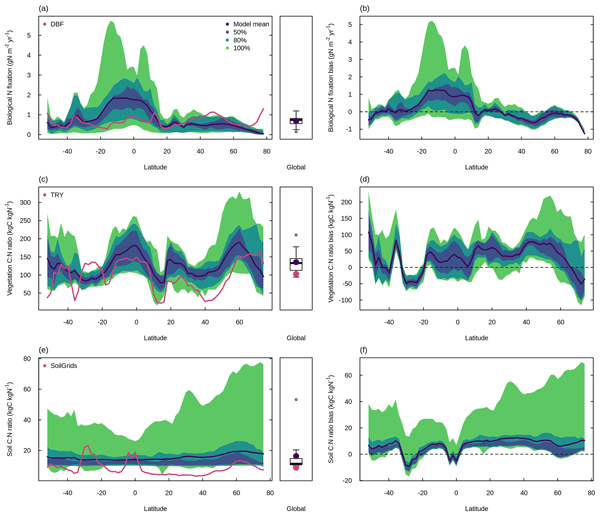
Sian Kou-Giesbrecht, Vivek K. Arora, Christian Seiler, Almut Arneth, Stefanie Falk, Atul K. Jain, Fortunat Joos, Daniel Kennedy, Jürgen Knauer, Stephen Sitch, Michael O'Sullivan, Naiqing Pan, Qing Sun, Hanqin Tian, Nicolas Vuichard, and Sönke Zaehle
Earth Syst. Dynam., 14, 767–795, https://doi.org/10.5194/esd-14-767-2023, https://doi.org/10.5194/esd-14-767-2023, 2023
Short summary
Short summary
Nitrogen (N) is an essential limiting nutrient to terrestrial carbon (C) sequestration. We evaluate N cycling in an ensemble of terrestrial biosphere models. We find that variability in N processes across models is large. Models tended to overestimate C storage per unit N in vegetation and soil, which could have consequences for projecting the future terrestrial C sink. However, N cycling measurements are highly uncertain, and more are necessary to guide the development of N cycling in models.
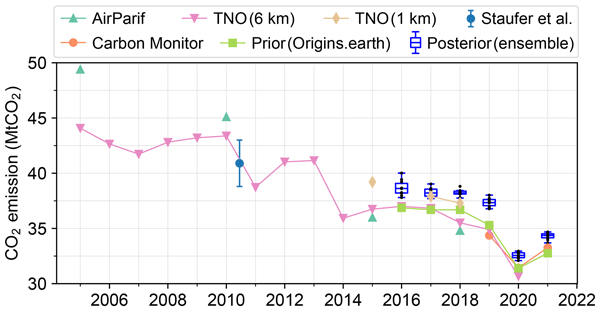
Jinghui Lian, Thomas Lauvaux, Hervé Utard, François-Marie Bréon, Grégoire Broquet, Michel Ramonet, Olivier Laurent, Ivonne Albarus, Mali Chariot, Simone Kotthaus, Martial Haeffelin, Olivier Sanchez, Olivier Perrussel, Hugo Anne Denier van der Gon, Stijn Nicolaas Camiel Dellaert, and Philippe Ciais
Atmos. Chem. Phys., 23, 8823–8835, https://doi.org/10.5194/acp-23-8823-2023, https://doi.org/10.5194/acp-23-8823-2023, 2023
Short summary
Short summary
This study quantifies urban CO2 emissions via an atmospheric inversion for the Paris metropolitan area over a 6-year period from 2016 to 2021. Results show a long-term decreasing trend of about 2 % ± 0.6 % per year in the annual CO2 emissions over Paris. We conclude that our current capacity can deliver near-real-time CO2 emission estimates at the city scale in under a month, and the results agree within 10 % with independent estimates from multiple city-scale inventories.
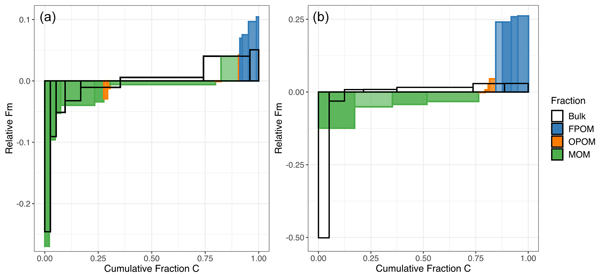
Shane W. Stoner, Marion Schrumpf, Alison Hoyt, Carlos A. Sierra, Sebastian Doetterl, Valier Galy, and Susan Trumbore
Biogeosciences, 20, 3151–3163, https://doi.org/10.5194/bg-20-3151-2023, https://doi.org/10.5194/bg-20-3151-2023, 2023
Short summary
Short summary
Soils store more carbon (C) than any other terrestrial C reservoir, but the processes that control how much C stays in soil, and for how long, are very complex. Here, we used a recent method that involves heating soil in the lab to measure the range of C ages in soil. We found that most C in soil is decades to centuries old, while some stays for much shorter times (days to months), and some is thousands of years old. Such detail helps us to estimate how soil C may react to changing climate.
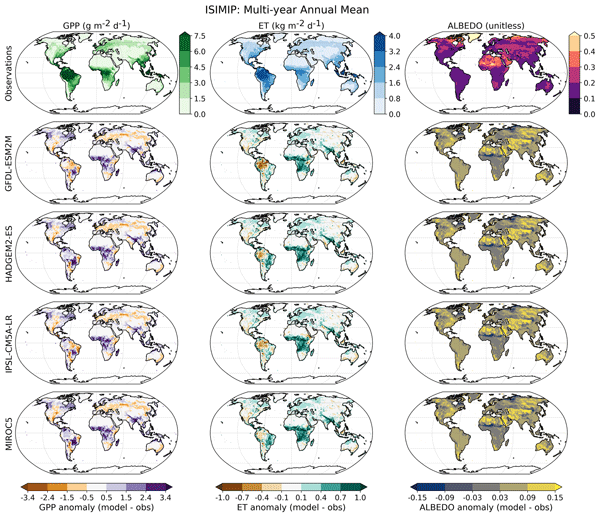
Camilla Mathison, Eleanor Burke, Andrew J. Hartley, Douglas I. Kelley, Chantelle Burton, Eddy Robertson, Nicola Gedney, Karina Williams, Andy Wiltshire, Richard J. Ellis, Alistair A. Sellar, and Chris D. Jones
Geosci. Model Dev., 16, 4249–4264, https://doi.org/10.5194/gmd-16-4249-2023, https://doi.org/10.5194/gmd-16-4249-2023, 2023
Short summary
Short summary
This paper describes and evaluates a new modelling methodology to quantify the impacts of climate change on water, biomes and the carbon cycle. We have created a new configuration and set-up for the JULES-ES land surface model, driven by bias-corrected historical and future climate model output provided by the Inter-Sectoral Impacts Model Intercomparison Project (ISIMIP). This allows us to compare projections of the impacts of climate change across multiple impact models and multiple sectors.
Bo Qu, Alexandre Roy, Joe R. Melton, Jennifer L. Baltzer, Youngryel Ryu, Matteo Detto, and Oliver Sonnentag
EGUsphere, https://doi.org/10.5194/egusphere-2023-1167, https://doi.org/10.5194/egusphere-2023-1167, 2023
Preprint archived
Short summary
Short summary
Accurately simulating photosynthesis and evapotranspiration challenges terrestrial biosphere models across North America’s boreal biome, in part due to uncertain representation of the maximum rate of photosynthetic carboxylation (Vcmax). This study used forest stand scale observations in an optimization framework to improve Vcmax values for representative vegetation types. Several stand characteristics well explained spatial Vcmax variability and were useful to improve boreal forest modelling.
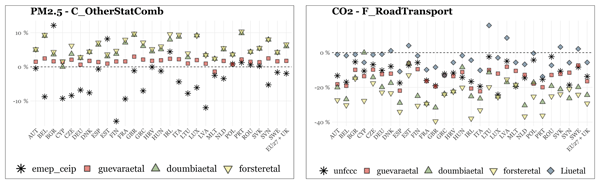
Marc Guevara, Hervé Petetin, Oriol Jorba, Hugo Denier van der Gon, Jeroen Kuenen, Ingrid Super, Claire Granier, Thierno Doumbia, Philippe Ciais, Zhu Liu, Robin D. Lamboll, Sabine Schindlbacher, Bradley Matthews, and Carlos Pérez García-Pando
Atmos. Chem. Phys., 23, 8081–8101, https://doi.org/10.5194/acp-23-8081-2023, https://doi.org/10.5194/acp-23-8081-2023, 2023
Short summary
Short summary
This study provides an intercomparison of European 2020 emission changes derived from official inventories, which are reported by countries under the framework of several international conventions and directives, and non-official near-real-time estimates, the use of which has significantly grown since the COVID-19 outbreak. The results of the work are used to produce recommendations on how best to approach and make use of near-real-time emissions for modelling and monitoring applications.
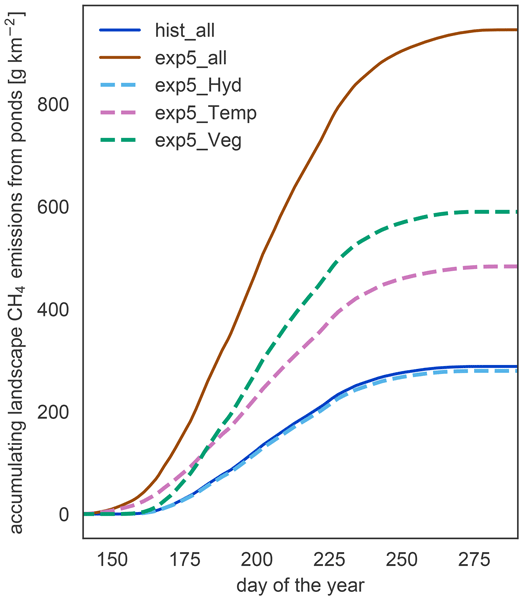
Zoé Rehder, Thomas Kleinen, Lars Kutzbach, Victor Stepanenko, Moritz Langer, and Victor Brovkin
Biogeosciences, 20, 2837–2855, https://doi.org/10.5194/bg-20-2837-2023, https://doi.org/10.5194/bg-20-2837-2023, 2023
Short summary
Short summary
We use a new model to investigate how methane emissions from Arctic ponds change with warming. We find that emissions increase substantially. Under annual temperatures 5 °C above present temperatures, pond methane emissions are more than 3 times higher than now. Most of this increase is caused by an increase in plant productivity as plants provide the substrate microbes used to produce methane. We conclude that vegetation changes need to be included in predictions of pond methane emissions.
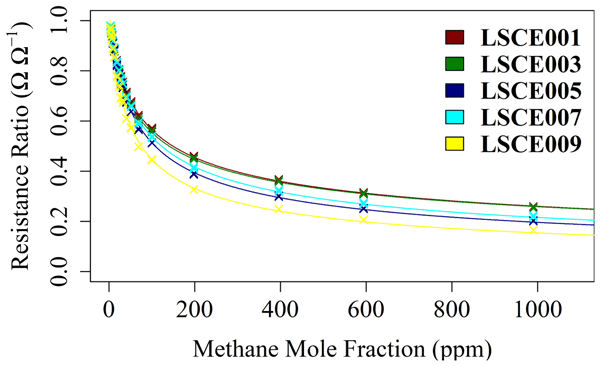
Adil Shah, Olivier Laurent, Luc Lienhardt, Grégoire Broquet, Rodrigo Rivera Martinez, Elisa Allegrini, and Philippe Ciais
Atmos. Meas. Tech., 16, 3391–3419, https://doi.org/10.5194/amt-16-3391-2023, https://doi.org/10.5194/amt-16-3391-2023, 2023
Short summary
Short summary
As methane (CH4) contributes to global warming, more CH4 measurements are required to better characterise source emissions. Hence, we tested a cheap CH4 sensor for 338 d of landfill sampling. We derived an excellent CH4 response model in a stable environment. However, different types of air with the same CH4 level had diverse sensor responses. We characterised temperature and water vapour response but could not replicate field sampling. Thus, other species may cause sensor interactions.
Ye Yuan, Qianlai Zhuang, Bailu Zhao, and Narasinha Shurpali
EGUsphere, https://doi.org/10.5194/egusphere-2023-1047, https://doi.org/10.5194/egusphere-2023-1047, 2023
Preprint archived
Short summary
Short summary
We use a biogeochemistry model to calculate the regional N2O emissions considering the effects of N2O uptake, thawing permafrost, and N deposition. Our simulations show there is an increasing trend in regional net N2O emissions from 1969 to 2019. Annual N2O emissions exhibited big spatial variabilities. Nitrogen deposition leads to a significant increase in emission. Our results suggest that in the future, the pan-Arctic terrestrial ecosystem might act as an even larger N2O.
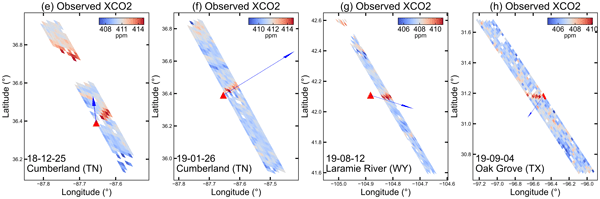
Xiaojuan Lin, Ronald van der A, Jos de Laat, Henk Eskes, Frédéric Chevallier, Philippe Ciais, Zhu Deng, Yuanhao Geng, Xuanren Song, Xiliang Ni, Da Huo, Xinyu Dou, and Zhu Liu
Atmos. Chem. Phys., 23, 6599–6611, https://doi.org/10.5194/acp-23-6599-2023, https://doi.org/10.5194/acp-23-6599-2023, 2023
Short summary
Short summary
Satellite observations provide evidence for CO2 emission signals from isolated power plants. We use these satellite observations to quantify emissions. We found that for power plants with multiple observations, the correlation of estimated and reported emissions is significantly improved compared to a single observation case. This demonstrates that accurate estimation of power plant emissions can be achieved by monitoring from future satellite missions with more frequent observations.
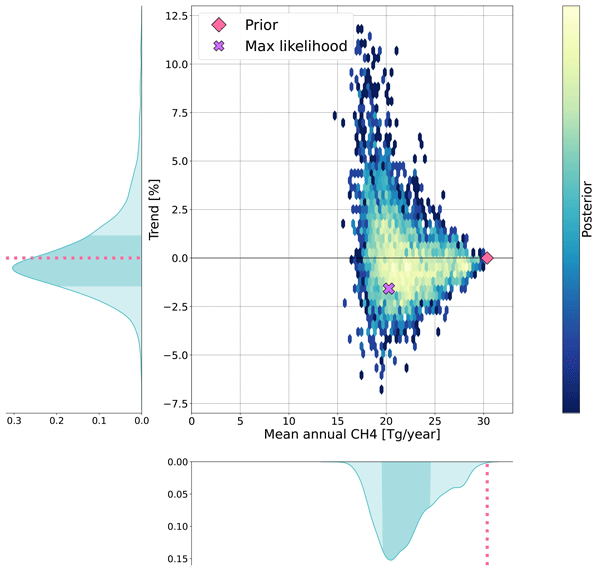
Sophie Wittig, Antoine Berchet, Isabelle Pison, Marielle Saunois, Joël Thanwerdas, Adrien Martinez, Jean-Daniel Paris, Toshinobu Machida, Motoki Sasakawa, Douglas E. J. Worthy, Xin Lan, Rona L. Thompson, Espen Sollum, and Mikhail Arshinov
Atmos. Chem. Phys., 23, 6457–6485, https://doi.org/10.5194/acp-23-6457-2023, https://doi.org/10.5194/acp-23-6457-2023, 2023
Short summary
Short summary
Here, an inverse modelling approach is applied to estimate CH4 sources and sinks in the Arctic from 2008 to 2019. We study the magnitude, seasonal patterns and trends from different sources during recent years. We also assess how the current observation network helps to constrain fluxes. We find that constraints are only significant for North America and, to a lesser extent, West Siberia, where the observation network is relatively dense. We find no clear trend over the period of inversion.
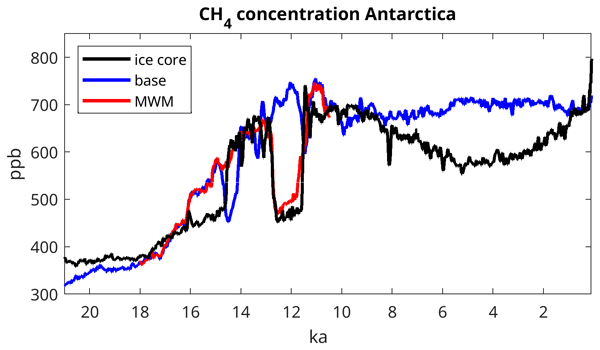
Thomas Kleinen, Sergey Gromov, Benedikt Steil, and Victor Brovkin
Clim. Past, 19, 1081–1099, https://doi.org/10.5194/cp-19-1081-2023, https://doi.org/10.5194/cp-19-1081-2023, 2023
Short summary
Short summary
We modelled atmospheric methane continuously from the last glacial maximum to the present using a state-of-the-art Earth system model. Our model results compare well with reconstructions from ice cores and improve our understanding of a very intriguing period of Earth system history, the deglaciation, when atmospheric methane changed quickly and strongly. Deglacial methane changes are driven by emissions from tropical wetlands, with wetlands in high northern latitudes being secondary.
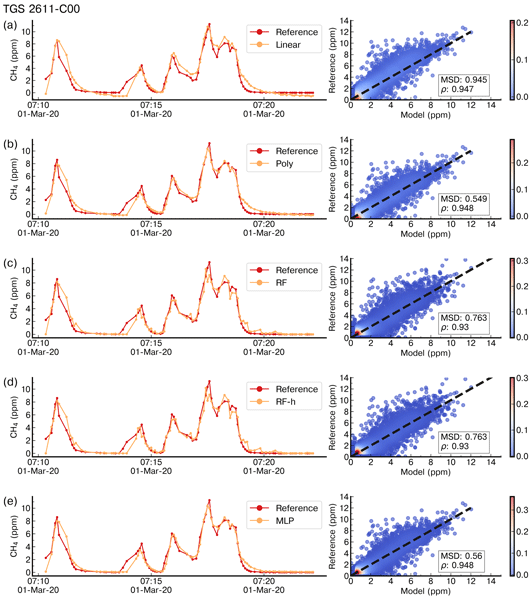
Rodrigo Andres Rivera Martinez, Diego Santaren, Olivier Laurent, Gregoire Broquet, Ford Cropley, Cécile Mallet, Michel Ramonet, Adil Shah, Leonard Rivier, Caroline Bouchet, Catherine Juery, Olivier Duclaux, and Philippe Ciais
Atmos. Meas. Tech., 16, 2209–2235, https://doi.org/10.5194/amt-16-2209-2023, https://doi.org/10.5194/amt-16-2209-2023, 2023
Short summary
Short summary
A network of low-cost sensors is a good alternative to improve the detection of fugitive CH4 emissions. We present the results of four tests conducted with two types of Figaro sensors that were assembled on four chambers in a laboratory experiment: a comparison of five models to reconstruct the CH4 signal, a strategy to reduce the training set size, a detection of age effects in the sensors and a test of the capability to transfer a model between chambers for the same type of sensor.
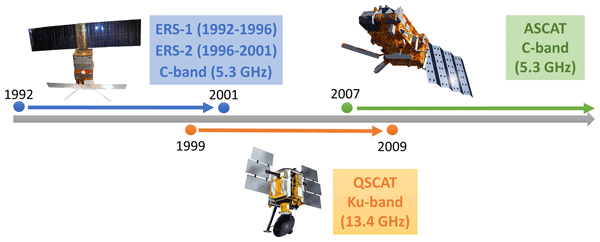
Shengli Tao, Zurui Ao, Jean-Pierre Wigneron, Sassan Saatchi, Philippe Ciais, Jérôme Chave, Thuy Le Toan, Pierre-Louis Frison, Xiaomei Hu, Chi Chen, Lei Fan, Mengjia Wang, Jiangling Zhu, Xia Zhao, Xiaojun Li, Xiangzhuo Liu, Yanjun Su, Tianyu Hu, Qinghua Guo, Zhiheng Wang, Zhiyao Tang, Yi Y. Liu, and Jingyun Fang
Earth Syst. Sci. Data, 15, 1577–1596, https://doi.org/10.5194/essd-15-1577-2023, https://doi.org/10.5194/essd-15-1577-2023, 2023
Short summary
Short summary
We provide the first long-term (since 1992), high-resolution (8.9 km) satellite radar backscatter data set (LHScat) with a C-band (5.3 GHz) signal dynamic for global lands. LHScat was created by fusing signals from ERS (1992–2001; C-band), QSCAT (1999–2009; Ku-band), and ASCAT (since 2007; C-band). LHScat has been validated against independent ERS-2 signals. It could be used in a variety of studies, such as vegetation monitoring and hydrological modelling.

Jagat S. H. Bisht, Prabir K. Patra, Masayuki Takigawa, Takashi Sekiya, Yugo Kanaya, Naoko Saitoh, and Kazuyuki Miyazaki
Geosci. Model Dev., 16, 1823–1838, https://doi.org/10.5194/gmd-16-1823-2023, https://doi.org/10.5194/gmd-16-1823-2023, 2023
Short summary
Short summary
In this study, we estimated CH4 fluxes using an advanced 4D-LETKF method. The system was tested and optimized using observation system simulation experiments (OSSEs), where a known surface emission distribution is retrieved from synthetic observations. The availability of satellite measurements has increased, and there are still many missions focused on greenhouse gas observations that have not yet launched. The technique being referred to has the potential to improve estimates of CH4 fluxes.
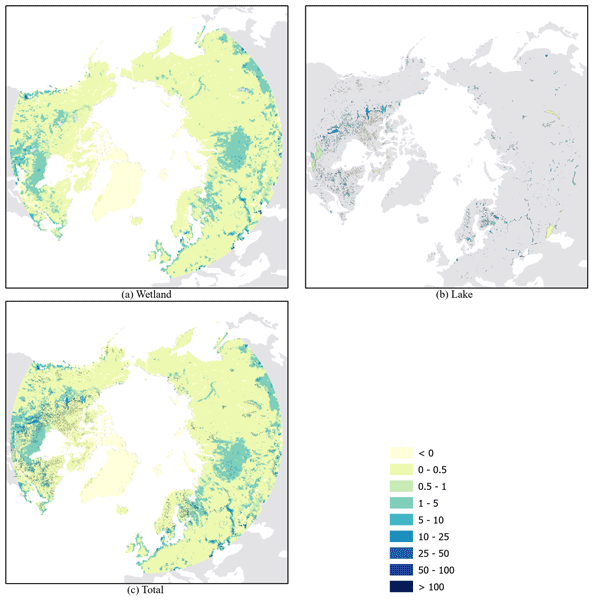
Xiangyu Liu and Qianlai Zhuang
Biogeosciences, 20, 1181–1193, https://doi.org/10.5194/bg-20-1181-2023, https://doi.org/10.5194/bg-20-1181-2023, 2023
Short summary
Short summary
We are among the first to quantify methane emissions from inland water system in the pan-Arctic. The total CH4 emissions are 36.46 Tg CH4 yr−1 during 2000–2015, of which wetlands and lakes were 21.69 Tg yr−1 and 14.76 Tg yr−1, respectively. By using two non-overlap area change datasets with land and lake models, our simulation avoids small lakes being counted twice as both lake and wetland, and it narrows the gap between two different methods used to quantify regional CH4 emissions.
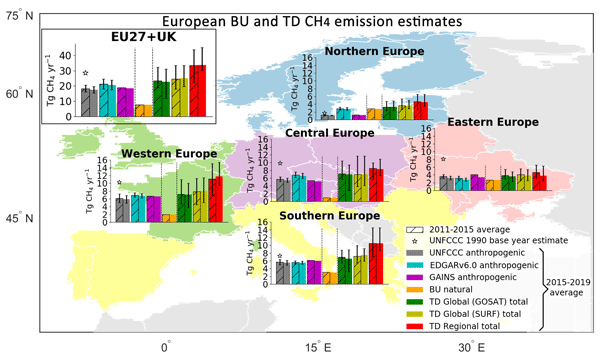
Ana Maria Roxana Petrescu, Chunjing Qiu, Matthew J. McGrath, Philippe Peylin, Glen P. Peters, Philippe Ciais, Rona L. Thompson, Aki Tsuruta, Dominik Brunner, Matthias Kuhnert, Bradley Matthews, Paul I. Palmer, Oksana Tarasova, Pierre Regnier, Ronny Lauerwald, David Bastviken, Lena Höglund-Isaksson, Wilfried Winiwarter, Giuseppe Etiope, Tuula Aalto, Gianpaolo Balsamo, Vladislav Bastrikov, Antoine Berchet, Patrick Brockmann, Giancarlo Ciotoli, Giulia Conchedda, Monica Crippa, Frank Dentener, Christine D. Groot Zwaaftink, Diego Guizzardi, Dirk Günther, Jean-Matthieu Haussaire, Sander Houweling, Greet Janssens-Maenhout, Massaer Kouyate, Adrian Leip, Antti Leppänen, Emanuele Lugato, Manon Maisonnier, Alistair J. Manning, Tiina Markkanen, Joe McNorton, Marilena Muntean, Gabriel D. Oreggioni, Prabir K. Patra, Lucia Perugini, Isabelle Pison, Maarit T. Raivonen, Marielle Saunois, Arjo J. Segers, Pete Smith, Efisio Solazzo, Hanqin Tian, Francesco N. Tubiello, Timo Vesala, Guido R. van der Werf, Chris Wilson, and Sönke Zaehle
Earth Syst. Sci. Data, 15, 1197–1268, https://doi.org/10.5194/essd-15-1197-2023, https://doi.org/10.5194/essd-15-1197-2023, 2023
Short summary
Short summary
This study updates the state-of-the-art scientific overview of CH4 and N2O emissions in the EU27 and UK in Petrescu et al. (2021a). Yearly updates are needed to improve the different respective approaches and to inform on the development of formal verification systems. It integrates the most recent emission inventories, process-based model and regional/global inversions, comparing them with UNFCCC national GHG inventories, in support to policy to facilitate real-time verification procedures.
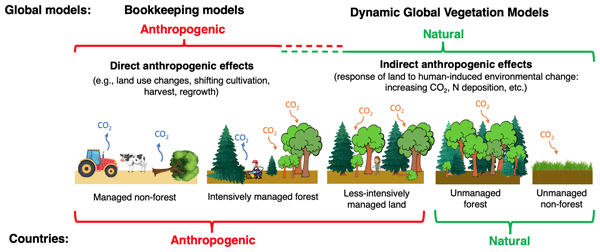
Giacomo Grassi, Clemens Schwingshackl, Thomas Gasser, Richard A. Houghton, Stephen Sitch, Josep G. Canadell, Alessandro Cescatti, Philippe Ciais, Sandro Federici, Pierre Friedlingstein, Werner A. Kurz, Maria J. Sanz Sanchez, Raúl Abad Viñas, Ramdane Alkama, Selma Bultan, Guido Ceccherini, Stefanie Falk, Etsushi Kato, Daniel Kennedy, Jürgen Knauer, Anu Korosuo, Joana Melo, Matthew J. McGrath, Julia E. M. S. Nabel, Benjamin Poulter, Anna A. Romanovskaya, Simone Rossi, Hanqin Tian, Anthony P. Walker, Wenping Yuan, Xu Yue, and Julia Pongratz
Earth Syst. Sci. Data, 15, 1093–1114, https://doi.org/10.5194/essd-15-1093-2023, https://doi.org/10.5194/essd-15-1093-2023, 2023
Short summary
Short summary
Striking differences exist in estimates of land-use CO2 fluxes between the national greenhouse gas inventories and the IPCC assessment reports. These differences hamper an accurate assessment of the collective progress under the Paris Agreement. By implementing an approach that conceptually reconciles land-use CO2 flux from national inventories and the global models used by the IPCC, our study is an important step forward for increasing confidence in land-use CO2 flux estimates.
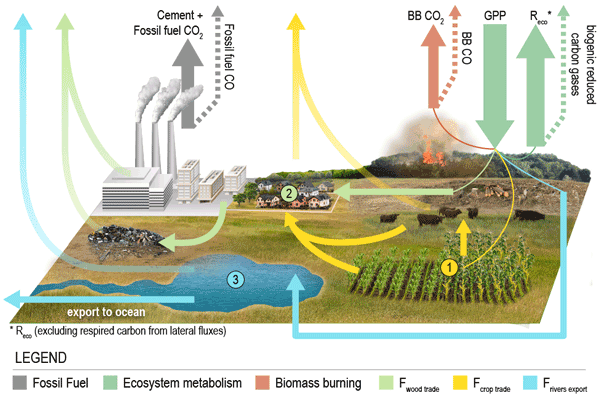
Brendan Byrne, David F. Baker, Sourish Basu, Michael Bertolacci, Kevin W. Bowman, Dustin Carroll, Abhishek Chatterjee, Frédéric Chevallier, Philippe Ciais, Noel Cressie, David Crisp, Sean Crowell, Feng Deng, Zhu Deng, Nicholas M. Deutscher, Manvendra K. Dubey, Sha Feng, Omaira E. García, David W. T. Griffith, Benedikt Herkommer, Lei Hu, Andrew R. Jacobson, Rajesh Janardanan, Sujong Jeong, Matthew S. Johnson, Dylan B. A. Jones, Rigel Kivi, Junjie Liu, Zhiqiang Liu, Shamil Maksyutov, John B. Miller, Scot M. Miller, Isamu Morino, Justus Notholt, Tomohiro Oda, Christopher W. O'Dell, Young-Suk Oh, Hirofumi Ohyama, Prabir K. Patra, Hélène Peiro, Christof Petri, Sajeev Philip, David F. Pollard, Benjamin Poulter, Marine Remaud, Andrew Schuh, Mahesh K. Sha, Kei Shiomi, Kimberly Strong, Colm Sweeney, Yao Té, Hanqin Tian, Voltaire A. Velazco, Mihalis Vrekoussis, Thorsten Warneke, John R. Worden, Debra Wunch, Yuanzhi Yao, Jeongmin Yun, Andrew Zammit-Mangion, and Ning Zeng
Earth Syst. Sci. Data, 15, 963–1004, https://doi.org/10.5194/essd-15-963-2023, https://doi.org/10.5194/essd-15-963-2023, 2023
Short summary
Short summary
Changes in the carbon stocks of terrestrial ecosystems result in emissions and removals of CO2. These can be driven by anthropogenic activities (e.g., deforestation), natural processes (e.g., fires) or in response to rising CO2 (e.g., CO2 fertilization). This paper describes a dataset of CO2 emissions and removals derived from atmospheric CO2 observations. This pilot dataset informs current capabilities and future developments towards top-down monitoring and verification systems.
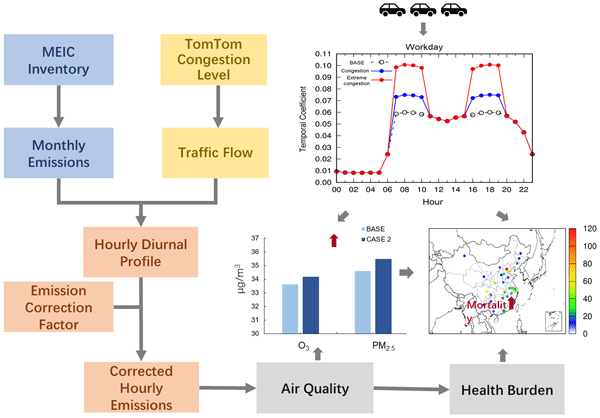
Peng Wang, Ruhan Zhang, Shida Sun, Meng Gao, Bo Zheng, Dan Zhang, Yanli Zhang, Gregory R. Carmichael, and Hongliang Zhang
Atmos. Chem. Phys., 23, 2983–2996, https://doi.org/10.5194/acp-23-2983-2023, https://doi.org/10.5194/acp-23-2983-2023, 2023
Short summary
Short summary
In China, the number of vehicles has jumped significantly in the last decade. This caused severe traffic congestion and aggravated air pollution. In this study, we developed a new temporal allocation approach to quantify the impacts of traffic congestion. We found that traffic congestion worsens air quality and the health burden across China, especially in the urban clusters. More effective and comprehensive vehicle emission control policies should be implemented to improve air quality in China.
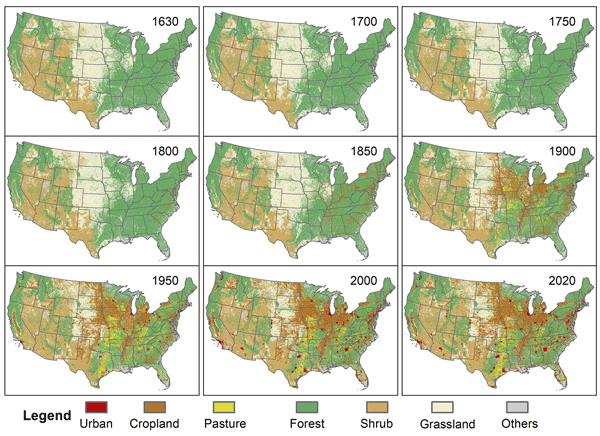
Xiaoyong Li, Hanqin Tian, Chaoqun Lu, and Shufen Pan
Earth Syst. Sci. Data, 15, 1005–1035, https://doi.org/10.5194/essd-15-1005-2023, https://doi.org/10.5194/essd-15-1005-2023, 2023
Short summary
Short summary
We reconstructed land use and land cover (LULC) history for the conterminous United States during 1630–2020 by integrating multi-source data. The results show the widespread expansion of cropland and urban land and the shrinking of natural vegetation in the past four centuries. Forest planting and regeneration accelerated forest recovery since the 1920s. The datasets can be used to assess the LULC impacts on the ecosystem's carbon, nitrogen, and water cycles.
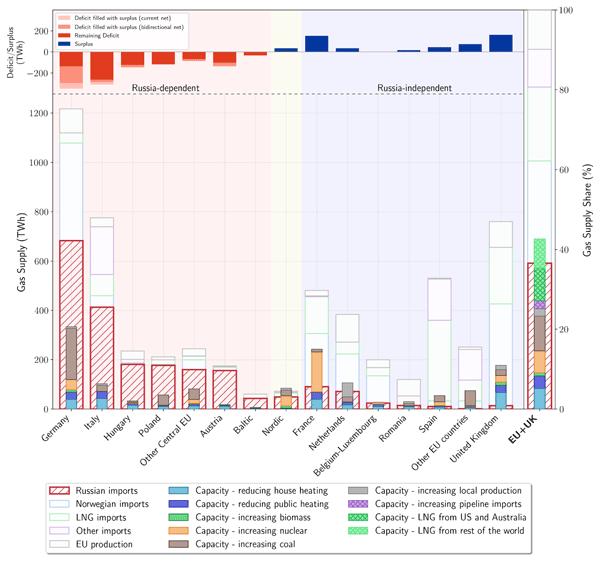
Chuanlong Zhou, Biqing Zhu, Steven J. Davis, Zhu Liu, Antoine Halff, Simon Ben Arous, Hugo de Almeida Rodrigues, and Philippe Ciais
Earth Syst. Sci. Data, 15, 949–961, https://doi.org/10.5194/essd-15-949-2023, https://doi.org/10.5194/essd-15-949-2023, 2023
Short summary
Short summary
Our work aims to analyze sectoral and country-based daily natural gas supply–storage–consumption based on ENTSOG, Eurostat, and multiple datasets in the EU27 and UK. We estimated the magnitude of the Russian gas gap if Russian gas imports were to stop as well as potential short-term solutions to fill this gap. Our datasets could be important in various fields, such as gas/energy consumption and market modeling, carbon emission and climate change research, and policy decision-making.
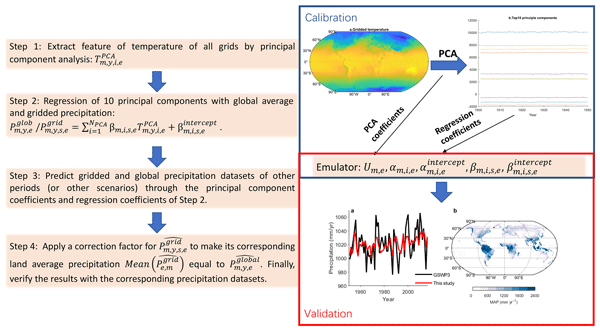
Gang Liu, Shushi Peng, Chris Huntingford, and Yi Xi
Geosci. Model Dev., 16, 1277–1296, https://doi.org/10.5194/gmd-16-1277-2023, https://doi.org/10.5194/gmd-16-1277-2023, 2023
Short summary
Short summary
Due to computational limits, lower-complexity models (LCMs) were developed as a complementary tool for accelerating comprehensive Earth system models (ESMs) but still lack a good precipitation emulator for LCMs. Here, we developed a data-calibrated precipitation emulator (PREMU), a computationally effective way to better estimate historical and simulated precipitation by current ESMs. PREMU has potential applications related to land surface processes and their interactions with climate change.
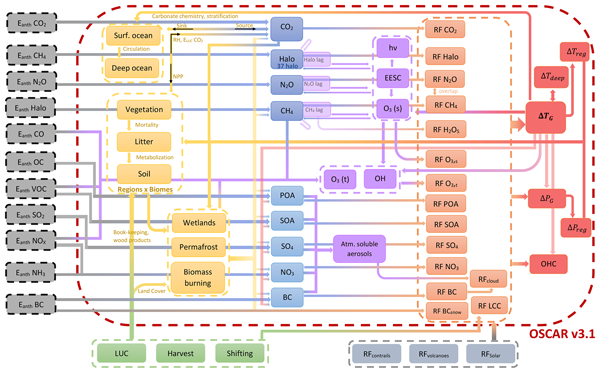
Yann Quilcaille, Thomas Gasser, Philippe Ciais, and Olivier Boucher
Geosci. Model Dev., 16, 1129–1161, https://doi.org/10.5194/gmd-16-1129-2023, https://doi.org/10.5194/gmd-16-1129-2023, 2023
Short summary
Short summary
The model OSCAR is a simple climate model, meaning its representation of the Earth system is simplified but calibrated on models of higher complexity. Here, we diagnose its latest version using a total of 99 experiments in a probabilistic framework and under observational constraints. OSCAR v3.1 shows good agreement with observations, complex Earth system models and emerging properties. Some points for improvements are identified, such as the ocean carbon cycle.
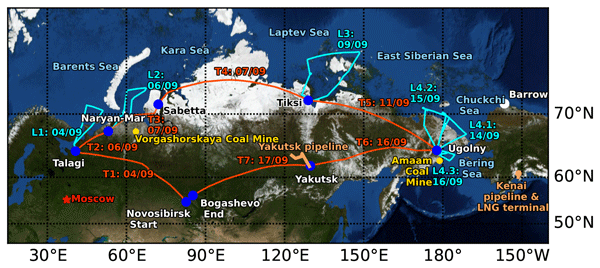
Clément Narbaud, Jean-Daniel Paris, Sophie Wittig, Antoine Berchet, Marielle Saunois, Philippe Nédélec, Boris D. Belan, Mikhail Y. Arshinov, Sergei B. Belan, Denis Davydov, Alexander Fofonov, and Artem Kozlov
Atmos. Chem. Phys., 23, 2293–2314, https://doi.org/10.5194/acp-23-2293-2023, https://doi.org/10.5194/acp-23-2293-2023, 2023
Short summary
Short summary
We measured CH4 and CO2 from aircraft over the Russian Arctic. Analyzing our data with the Lagrangian model FLEXPART, we find a sharp east–west gradient in atmospheric composition. Western Siberia is influenced by strong wetland CH4 emissions, deep CO2 gradient from biospheric uptake, and long-range transport from Europe and North America. Eastern flights document less variability. Over the Arctic Ocean, we find a small influence from marine CH4 emissions compatible with reasonable inventories.
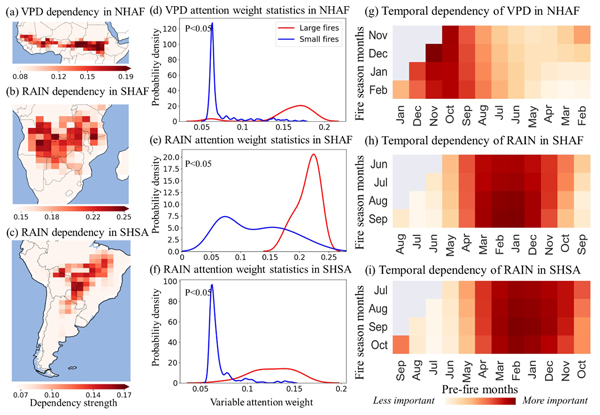
Fa Li, Qing Zhu, William J. Riley, Lei Zhao, Li Xu, Kunxiaojia Yuan, Min Chen, Huayi Wu, Zhipeng Gui, Jianya Gong, and James T. Randerson
Geosci. Model Dev., 16, 869–884, https://doi.org/10.5194/gmd-16-869-2023, https://doi.org/10.5194/gmd-16-869-2023, 2023
Short summary
Short summary
We developed an interpretable machine learning model to predict sub-seasonal and near-future wildfire-burned area over African and South American regions. We found strong time-lagged controls (up to 6–8 months) of local climate wetness on burned areas. A skillful use of such time-lagged controls in machine learning models results in highly accurate predictions of wildfire-burned areas; this will also help develop relevant early-warning and management systems for tropical wildfires.
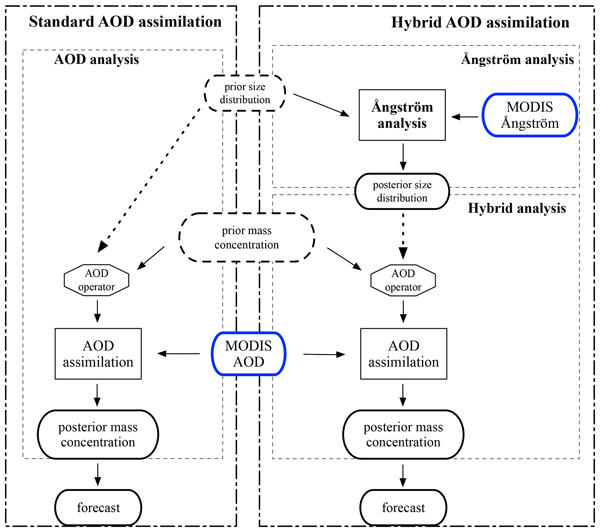
Jianbing Jin, Bas Henzing, and Arjo Segers
Atmos. Chem. Phys., 23, 1641–1660, https://doi.org/10.5194/acp-23-1641-2023, https://doi.org/10.5194/acp-23-1641-2023, 2023
Short summary
Short summary
Aerosol models and satellite retrieval algorithms rely on different aerosol size assumptions. In practice, differences between simulations and observations do not always reflect the difference in aerosol amount. To avoid inconsistencies, we designed a hybrid assimilation approach. Different from a standard aerosol optical depth (AOD) assimilation that directly assimilates AODs, the hybrid one estimates aerosol size parameters by assimilating Ängström observations before assimilating the AODs.
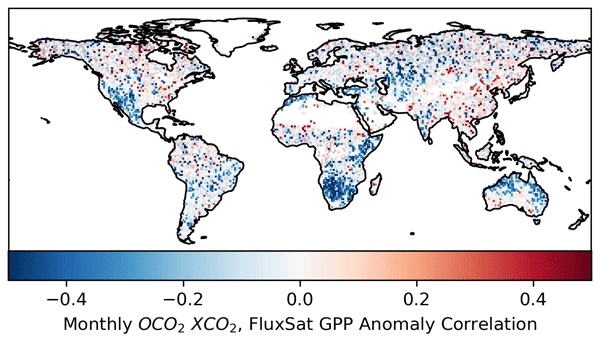
Andrew F. Feldman, Zhen Zhang, Yasuko Yoshida, Abhishek Chatterjee, and Benjamin Poulter
Atmos. Chem. Phys., 23, 1545–1563, https://doi.org/10.5194/acp-23-1545-2023, https://doi.org/10.5194/acp-23-1545-2023, 2023
Short summary
Short summary
We investigate the conditions under which satellite-retrieved column carbon dioxide concentrations directly hold information about surface carbon dioxide fluxes, without the use of inversion models. We show that OCO-2 column carbon dioxide retrievals, available at 1–3 month latency, can be used to directly detect and roughly estimate extreme biospheric CO2 fluxes. As such, these OCO-2 retrievals have value for rapidly monitoring extreme conditions in the terrestrial biosphere.

Rona L. Thompson and Ignacio Pisso
Atmos. Meas. Tech., 16, 235–246, https://doi.org/10.5194/amt-16-235-2023, https://doi.org/10.5194/amt-16-235-2023, 2023
Short summary
Short summary
Atmospheric networks are used for monitoring air quality and greenhouse gases and can provide essential information about the sources and sinks. The design of the network, specifically where to place the observations, is a critical question in order to maximize the information provided while minimizing the cost. Here, a novel method of designing atmospheric networks is presented with two examples, one on monitoring sources of methane and the second on monitoring fossil fuel emissions of CO2.

Yuanhong Zhao, Marielle Saunois, Philippe Bousquet, Xin Lin, Michaela I. Hegglin, Josep G. Canadell, Robert B. Jackson, and Bo Zheng
Atmos. Chem. Phys., 23, 789–807, https://doi.org/10.5194/acp-23-789-2023, https://doi.org/10.5194/acp-23-789-2023, 2023
Short summary
Short summary
The large uncertainties in OH simulated by atmospheric chemistry models hinder accurate estimates of CH4 chemical loss through the bottom-up method. This study presents a new approach based on OH precursor observations and a chemical box model to improve the tropospheric OH distributions simulated by atmospheric chemistry models. Through this approach, both the global OH burden and the corresponding methane chemical loss reach consistency with the top-down method based on MCF inversions.
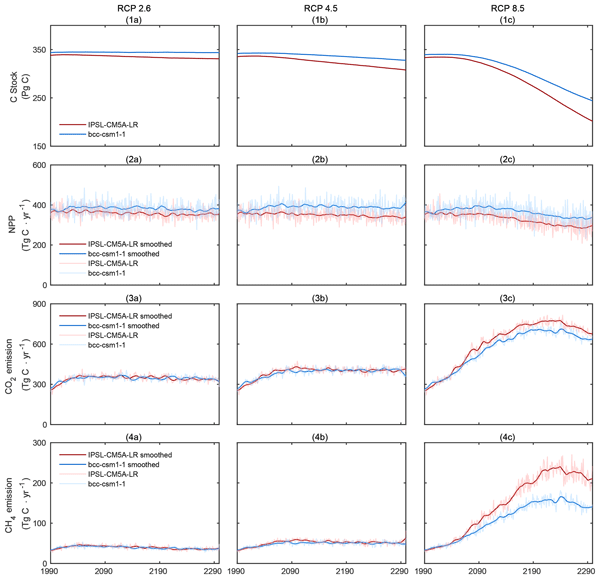
Bailu Zhao and Qianlai Zhuang
Biogeosciences, 20, 251–270, https://doi.org/10.5194/bg-20-251-2023, https://doi.org/10.5194/bg-20-251-2023, 2023
Short summary
Short summary
In this study, we use a process-based model to simulate the northern peatland's C dynamics in response to future climate change during 1990–2300. Northern peatlands are projected to be a C source under all climate scenarios except for the mildest one before 2100 and C sources under all scenarios afterwards.
We find northern peatlands are a C sink until pan-Arctic annual temperature reaches −2.09 to −2.89 °C. This study emphasizes the vulnerability of northern peatlands to climate change.
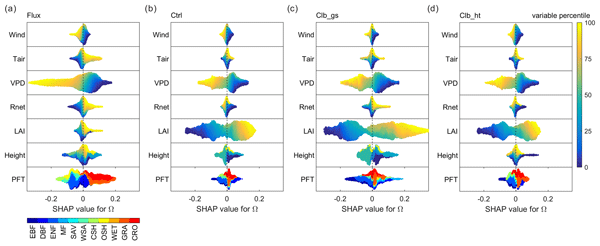
Yuan Zhang, Devaraju Narayanappa, Philippe Ciais, Wei Li, Daniel Goll, Nicolas Vuichard, Martin G. De Kauwe, Laurent Li, and Fabienne Maignan
Geosci. Model Dev., 15, 9111–9125, https://doi.org/10.5194/gmd-15-9111-2022, https://doi.org/10.5194/gmd-15-9111-2022, 2022
Short summary
Short summary
There are a few studies to examine if current models correctly represented the complex processes of transpiration. Here, we use a coefficient Ω, which indicates if transpiration is mainly controlled by vegetation processes or by turbulence, to evaluate the ORCHIDEE model. We found a good performance of ORCHIDEE, but due to compensation of biases in different processes, we also identified how different factors control Ω and where the model is wrong. Our method is generic to evaluate other models.
Yao Gao, Eleanor J. Burke, Sarah E. Chadburn, Maarit Raivonen, Mika Aurela, Lawrence B. Flanagan, Krzysztof Fortuniak, Elyn Humphreys, Annalea Lohila, Tingting Li, Tiina Markkanen, Olli Nevalainen, Mats B. Nilsson, Włodzimierz Pawlak, Aki Tsuruta, Huiyi Yang, and Tuula Aalto
Biogeosciences Discuss., https://doi.org/10.5194/bg-2022-229, https://doi.org/10.5194/bg-2022-229, 2022
Manuscript not accepted for further review
Short summary
Short summary
We coupled a process-based peatland CH4 emission model HIMMELI with a state-of-art land surface model JULES. The performance of the coupled model was evaluated at six northern wetland sites. The coupled model is considered to be more appropriate in simulating wetland CH4 emission. In order to improve the simulated CH4 emission, the model requires better representation of the peat soil carbon and hydrologic processes in JULES and the methane production and transportation processes in HIMMELI.
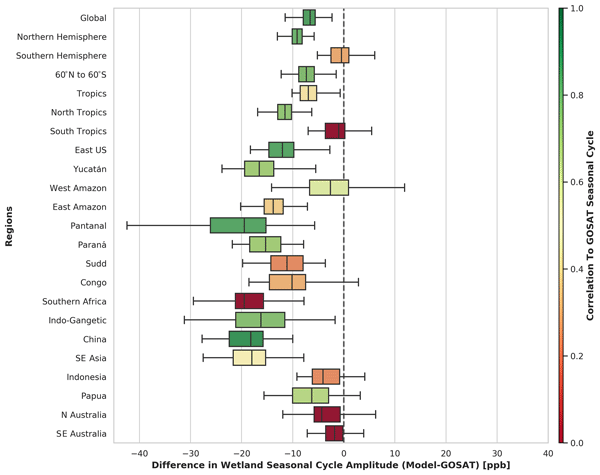
Robert J. Parker, Chris Wilson, Edward Comyn-Platt, Garry Hayman, Toby R. Marthews, A. Anthony Bloom, Mark F. Lunt, Nicola Gedney, Simon J. Dadson, Joe McNorton, Neil Humpage, Hartmut Boesch, Martyn P. Chipperfield, Paul I. Palmer, and Dai Yamazaki
Biogeosciences, 19, 5779–5805, https://doi.org/10.5194/bg-19-5779-2022, https://doi.org/10.5194/bg-19-5779-2022, 2022
Short summary
Short summary
Wetlands are the largest natural source of methane, one of the most important climate gases. The JULES land surface model simulates these emissions. We use satellite data to evaluate how well JULES reproduces the methane seasonal cycle over different tropical wetlands. It performs well for most regions; however, it struggles for some African wetlands influenced heavily by river flooding. We explain the reasons for these deficiencies and highlight how future development will improve these areas.
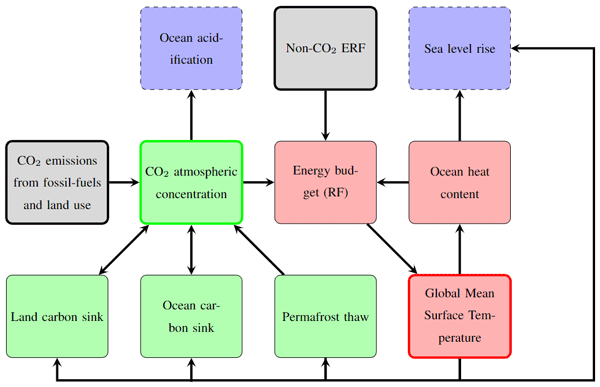
Thomas Bossy, Thomas Gasser, and Philippe Ciais
Geosci. Model Dev., 15, 8831–8868, https://doi.org/10.5194/gmd-15-8831-2022, https://doi.org/10.5194/gmd-15-8831-2022, 2022
Short summary
Short summary
We developed a new simple climate model designed to fill a perceived gap within the existing simple climate models by fulfilling three key requirements: calibration using Bayesian inference, the possibility of coupling with integrated assessment models, and the capacity to explore climate scenarios compatible with limiting climate impacts. Here, we describe the model and its calibration using the latest data from complex CMIP6 models and the IPCC AR6, and we assess its performance.
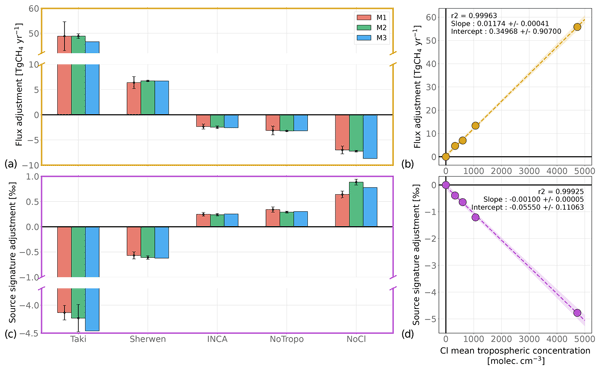
Joël Thanwerdas, Marielle Saunois, Isabelle Pison, Didier Hauglustaine, Antoine Berchet, Bianca Baier, Colm Sweeney, and Philippe Bousquet
Atmos. Chem. Phys., 22, 15489–15508, https://doi.org/10.5194/acp-22-15489-2022, https://doi.org/10.5194/acp-22-15489-2022, 2022
Short summary
Short summary
Atmospheric methane (CH4) concentrations have been rising since 2007, resulting from an imbalance between CH4 sources and sinks. The CH4 budget is generally estimated through top-down approaches using CH4 and δ13C(CH4) observations as constraints. The oxidation by chlorine (Cl) contributes little to the total oxidation of CH4 but strongly influences δ13C(CH4). Here, we compare multiple recent Cl fields and quantify the influence of Cl concentrations on CH4, δ13C(CH4), and CH4 budget estimates.
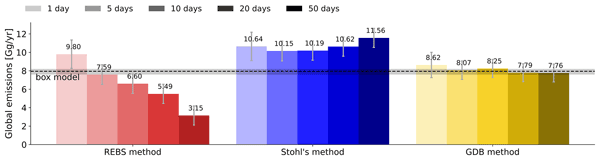
Martin Vojta, Andreas Plach, Rona L. Thompson, and Andreas Stohl
Geosci. Model Dev., 15, 8295–8323, https://doi.org/10.5194/gmd-15-8295-2022, https://doi.org/10.5194/gmd-15-8295-2022, 2022
Short summary
Short summary
In light of recent global warming, we aim to improve methods for modeling greenhouse gas emissions in order to support the successful implementation of the Paris Agreement. In this study, we investigate certain aspects of a Bayesian inversion method that uses computer simulations and atmospheric observations to improve estimates of greenhouse gas emissions. We explore method limitations, discuss problems, and suggest improvements.
Jeffrey Prescott Beem-Miller, Craig Rasmussen, Alison May Hoyt, Marion Schrumpf, Georg Guggenberger, and Susan Trumbore
EGUsphere, https://doi.org/10.5194/egusphere-2022-1083, https://doi.org/10.5194/egusphere-2022-1083, 2022
Preprint withdrawn
Short summary
Short summary
We compared the age of persistent soil organic matter as well as active emissions of carbon dioxide from soils across a gradient of climate and geology. We found that clay minerals are more important than mean annual temperature for both persistent and actively cycling soil carbon, and that they may attenuate the sensitivity of soil organic matter decomposition to temperature. Accounting for geology and soil development could therefore improve estimates of soil carbon stocks and changes.
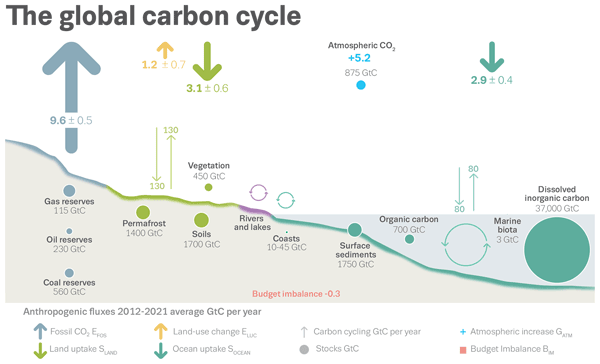
Pierre Friedlingstein, Michael O'Sullivan, Matthew W. Jones, Robbie M. Andrew, Luke Gregor, Judith Hauck, Corinne Le Quéré, Ingrid T. Luijkx, Are Olsen, Glen P. Peters, Wouter Peters, Julia Pongratz, Clemens Schwingshackl, Stephen Sitch, Josep G. Canadell, Philippe Ciais, Robert B. Jackson, Simone R. Alin, Ramdane Alkama, Almut Arneth, Vivek K. Arora, Nicholas R. Bates, Meike Becker, Nicolas Bellouin, Henry C. Bittig, Laurent Bopp, Frédéric Chevallier, Louise P. Chini, Margot Cronin, Wiley Evans, Stefanie Falk, Richard A. Feely, Thomas Gasser, Marion Gehlen, Thanos Gkritzalis, Lucas Gloege, Giacomo Grassi, Nicolas Gruber, Özgür Gürses, Ian Harris, Matthew Hefner, Richard A. Houghton, George C. Hurtt, Yosuke Iida, Tatiana Ilyina, Atul K. Jain, Annika Jersild, Koji Kadono, Etsushi Kato, Daniel Kennedy, Kees Klein Goldewijk, Jürgen Knauer, Jan Ivar Korsbakken, Peter Landschützer, Nathalie Lefèvre, Keith Lindsay, Junjie Liu, Zhu Liu, Gregg Marland, Nicolas Mayot, Matthew J. McGrath, Nicolas Metzl, Natalie M. Monacci, David R. Munro, Shin-Ichiro Nakaoka, Yosuke Niwa, Kevin O'Brien, Tsuneo Ono, Paul I. Palmer, Naiqing Pan, Denis Pierrot, Katie Pocock, Benjamin Poulter, Laure Resplandy, Eddy Robertson, Christian Rödenbeck, Carmen Rodriguez, Thais M. Rosan, Jörg Schwinger, Roland Séférian, Jamie D. Shutler, Ingunn Skjelvan, Tobias Steinhoff, Qing Sun, Adrienne J. Sutton, Colm Sweeney, Shintaro Takao, Toste Tanhua, Pieter P. Tans, Xiangjun Tian, Hanqin Tian, Bronte Tilbrook, Hiroyuki Tsujino, Francesco Tubiello, Guido R. van der Werf, Anthony P. Walker, Rik Wanninkhof, Chris Whitehead, Anna Willstrand Wranne, Rebecca Wright, Wenping Yuan, Chao Yue, Xu Yue, Sönke Zaehle, Jiye Zeng, and Bo Zheng
Earth Syst. Sci. Data, 14, 4811–4900, https://doi.org/10.5194/essd-14-4811-2022, https://doi.org/10.5194/essd-14-4811-2022, 2022
Short summary
Short summary
The Global Carbon Budget 2022 describes the datasets and methodology used to quantify the anthropogenic emissions of carbon dioxide (CO2) and their partitioning among the atmosphere, the land ecosystems, and the ocean. These living datasets are updated every year to provide the highest transparency and traceability in the reporting of CO2, the key driver of climate change.
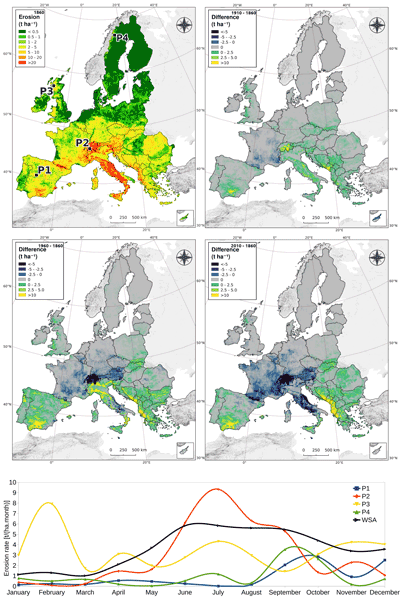
Arthur Nicolaus Fendrich, Philippe Ciais, Emanuele Lugato, Marco Carozzi, Bertrand Guenet, Pasquale Borrelli, Victoria Naipal, Matthew McGrath, Philippe Martin, and Panos Panagos
Geosci. Model Dev., 15, 7835–7857, https://doi.org/10.5194/gmd-15-7835-2022, https://doi.org/10.5194/gmd-15-7835-2022, 2022
Short summary
Short summary
Currently, spatially explicit models for soil carbon stock can simulate the impacts of several changes. However, they do not incorporate the erosion, lateral transport, and deposition (ETD) of soil material. The present work developed ETD formulation, illustrated model calibration and validation for Europe, and presented the results for a depositional site. We expect that our work advances ETD models' description and facilitates their reproduction and incorporation in land surface models.

Yitong Yao, Emilie Joetzjer, Philippe Ciais, Nicolas Viovy, Fabio Cresto Aleina, Jerome Chave, Lawren Sack, Megan Bartlett, Patrick Meir, Rosie Fisher, and Sebastiaan Luyssaert
Geosci. Model Dev., 15, 7809–7833, https://doi.org/10.5194/gmd-15-7809-2022, https://doi.org/10.5194/gmd-15-7809-2022, 2022
Short summary
Short summary
To facilitate more mechanistic modeling of drought effects on forest dynamics, our study implements a hydraulic module to simulate the vertical water flow, change in water storage and percentage loss of stem conductance (PLC). With the relationship between PLC and tree mortality, our model can successfully reproduce the large biomass drop observed under throughfall exclusion. Our hydraulic module provides promising avenues benefiting the prediction for mortality under future drought events.
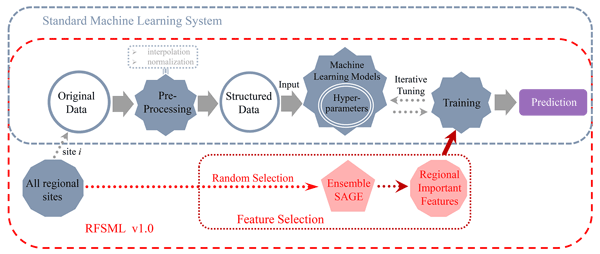
Li Fang, Jianbing Jin, Arjo Segers, Hai Xiang Lin, Mijie Pang, Cong Xiao, Tuo Deng, and Hong Liao
Geosci. Model Dev., 15, 7791–7807, https://doi.org/10.5194/gmd-15-7791-2022, https://doi.org/10.5194/gmd-15-7791-2022, 2022
Short summary
Short summary
This study proposes a regional feature selection-based machine learning system to predict short-term air quality in China. The system has a tool that can figure out the importance of input data for better prediction. It provides large-scale air quality prediction that exhibits improved interpretability, fewer training costs, and higher accuracy compared with a standard machine learning system. It can act as an early warning for citizens and reduce exposure to PM2.5 and other air pollutants.

Hanqin Tian, Zihao Bian, Hao Shi, Xiaoyu Qin, Naiqing Pan, Chaoqun Lu, Shufen Pan, Francesco N. Tubiello, Jinfeng Chang, Giulia Conchedda, Junguo Liu, Nathaniel Mueller, Kazuya Nishina, Rongting Xu, Jia Yang, Liangzhi You, and Bowen Zhang
Earth Syst. Sci. Data, 14, 4551–4568, https://doi.org/10.5194/essd-14-4551-2022, https://doi.org/10.5194/essd-14-4551-2022, 2022
Short summary
Short summary
Nitrogen is one of the critical nutrients for growth. Evaluating the change in nitrogen inputs due to human activity is necessary for nutrient management and pollution control. In this study, we generated a historical dataset of nitrogen input to land at the global scale. This dataset consists of nitrogen fertilizer, manure, and atmospheric deposition inputs to cropland, pasture, and rangeland at high resolution from 1860 to 2019.
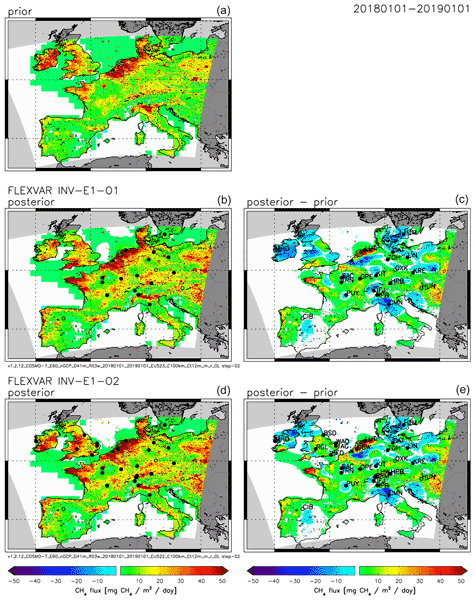
Peter Bergamaschi, Arjo Segers, Dominik Brunner, Jean-Matthieu Haussaire, Stephan Henne, Michel Ramonet, Tim Arnold, Tobias Biermann, Huilin Chen, Sebastien Conil, Marc Delmotte, Grant Forster, Arnoud Frumau, Dagmar Kubistin, Xin Lan, Markus Leuenberger, Matthias Lindauer, Morgan Lopez, Giovanni Manca, Jennifer Müller-Williams, Simon O'Doherty, Bert Scheeren, Martin Steinbacher, Pamela Trisolino, Gabriela Vítková, and Camille Yver Kwok
Atmos. Chem. Phys., 22, 13243–13268, https://doi.org/10.5194/acp-22-13243-2022, https://doi.org/10.5194/acp-22-13243-2022, 2022
Short summary
Short summary
We present a novel high-resolution inverse modelling system, "FLEXVAR", and its application for the inverse modelling of European CH4 emissions in 2018. The new system combines a high spatial resolution of 7 km x 7 km with a variational data assimilation technique, which allows CH4 emissions to be optimized from individual model grid cells. The high resolution allows the observations to be better reproduced, while the derived emissions show overall good consistency with two existing models.
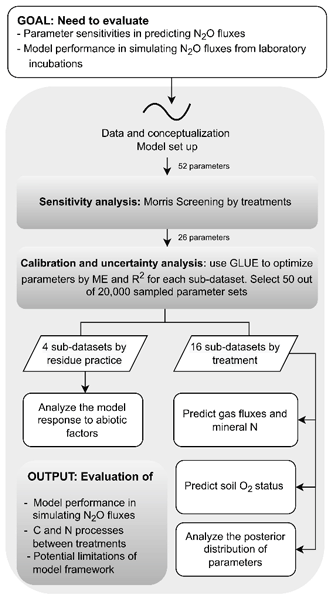
Jie Zhang, Wenxin Zhang, Per-Erik Jansson, and Søren O. Petersen
Biogeosciences, 19, 4811–4832, https://doi.org/10.5194/bg-19-4811-2022, https://doi.org/10.5194/bg-19-4811-2022, 2022
Short summary
Short summary
In this study, we relied on a properly controlled laboratory experiment to test the model’s capability of simulating the dominant microbial processes and the emissions of one greenhouse gas (nitrous oxide, N2O) from agricultural soils. This study reveals important processes and parameters that regulate N2O emissions in the investigated model framework and also suggests future steps of model development, which have implications on the broader communities of ecosystem modelers.
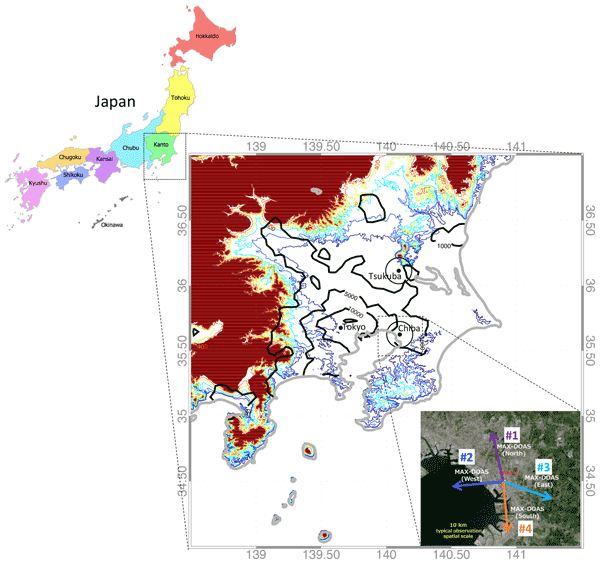
Alessandro Damiani, Hitoshi Irie, Dmitry A. Belikov, Shuei Kaizuka, Hossain Mohammed Syedul Hoque, and Raul R. Cordero
Atmos. Chem. Phys., 22, 12705–12726, https://doi.org/10.5194/acp-22-12705-2022, https://doi.org/10.5194/acp-22-12705-2022, 2022
Short summary
Short summary
We analyzed the variabilities in tropospheric gases and aerosols within the Greater Tokyo Area, Japan. Beyond highlighting air quality changes caused by the pandemic during the lockdown, we found that the degree of weekly cycling of most gases and aerosols was enhanced during the whole of 2020. The changes were unprecedented in recent years and potentially related to coincident reduced mobility in Japan, which, in contrast to other countries, was anomalously low on weekends in 2020.
Mengze Li, Andrea Pozzer, Jos Lelieveld, and Jonathan Williams
Earth Syst. Sci. Data, 14, 4351–4364, https://doi.org/10.5194/essd-14-4351-2022, https://doi.org/10.5194/essd-14-4351-2022, 2022
Short summary
Short summary
We present a northern hemispheric airborne measurement dataset of atmospheric ethane, propane and methane and temporal trends for the time period 2006–2016 in the upper troposphere and lower stratosphere. The growth rates of ethane, methane, and propane in the upper troposphere are -2.24, 0.33, and -0.78 % yr-1, respectively, and in the lower stratosphere they are -3.27, 0.26, and -4.91 % yr-1, respectively, in 2006–2016.
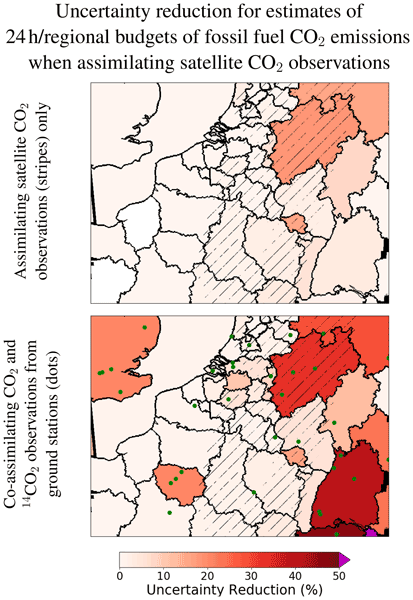
Elise Potier, Grégoire Broquet, Yilong Wang, Diego Santaren, Antoine Berchet, Isabelle Pison, Julia Marshall, Philippe Ciais, François-Marie Bréon, and Frédéric Chevallier
Atmos. Meas. Tech., 15, 5261–5288, https://doi.org/10.5194/amt-15-5261-2022, https://doi.org/10.5194/amt-15-5261-2022, 2022
Short summary
Short summary
Atmospheric inversion at local–regional scales over Europe and pseudo-data assimilation are used to evaluate how CO2 and 14CO2 ground-based measurement networks could complement satellite CO2 imagers to monitor fossil fuel (FF) CO2 emissions. This combination significantly improves precision in the FF emission estimates in areas with a dense network but does not strongly support the separation of the FF from the biogenic signals or the spatio-temporal extrapolation of the satellite information.

Jens Terhaar, Thomas L. Frölicher, and Fortunat Joos
Biogeosciences, 19, 4431–4457, https://doi.org/10.5194/bg-19-4431-2022, https://doi.org/10.5194/bg-19-4431-2022, 2022
Short summary
Short summary
Estimates of the ocean sink of anthropogenic carbon vary across various approaches. We show that the global ocean carbon sink can be estimated by three parameters, two of which approximate the ocean ventilation in the Southern Ocean and the North Atlantic, and one of which approximates the chemical capacity of the ocean to take up carbon. With observations of these parameters, we estimate that the global ocean carbon sink is 10 % larger than previously assumed, and we cut uncertainties in half.
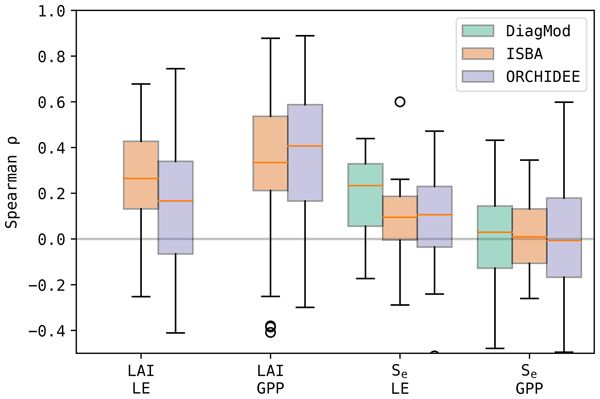
Jan De Pue, José Miguel Barrios, Liyang Liu, Philippe Ciais, Alirio Arboleda, Rafiq Hamdi, Manuela Balzarolo, Fabienne Maignan, and Françoise Gellens-Meulenberghs
Biogeosciences, 19, 4361–4386, https://doi.org/10.5194/bg-19-4361-2022, https://doi.org/10.5194/bg-19-4361-2022, 2022
Short summary
Short summary
The functioning of ecosystems involves numerous biophysical processes which interact with each other. Land surface models (LSMs) are used to describe these processes and form an essential component of climate models. In this paper, we evaluate the performance of three LSMs and their interactions with soil moisture and vegetation. Though we found room for improvement in the simulation of soil moisture and drought stress, the main cause of errors was related to the simulated growth of vegetation.
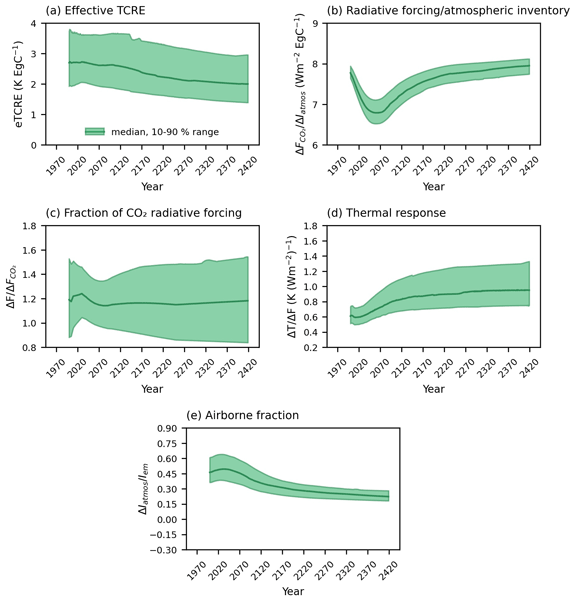
Negar Vakilifard, Richard G. Williams, Philip B. Holden, Katherine Turner, Neil R. Edwards, and David J. Beerling
Biogeosciences, 19, 4249–4265, https://doi.org/10.5194/bg-19-4249-2022, https://doi.org/10.5194/bg-19-4249-2022, 2022
Short summary
Short summary
To remain within the Paris climate agreement, there is an increasing need to develop and implement carbon capture and sequestration techniques. The global climate benefits of implementing negative emission technologies over the next century are assessed using an Earth system model covering a wide range of plausible climate states. In some model realisations, there is continued warming after emissions cease. This continued warming is avoided if negative emissions are incorporated.
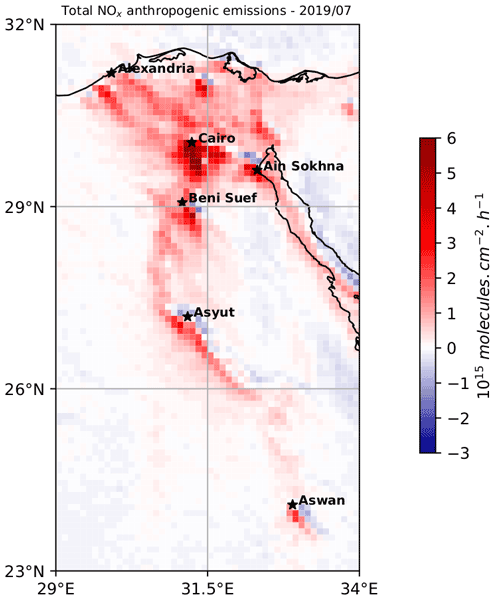
Anthony Rey-Pommier, Frédéric Chevallier, Philippe Ciais, Grégoire Broquet, Theodoros Christoudias, Jonilda Kushta, Didier Hauglustaine, and Jean Sciare
Atmos. Chem. Phys., 22, 11505–11527, https://doi.org/10.5194/acp-22-11505-2022, https://doi.org/10.5194/acp-22-11505-2022, 2022
Short summary
Short summary
Emission inventories for air pollutants can be uncertain in developing countries. In order to overcome these uncertainties, we model nitrogen oxide emissions in Egypt using satellite retrievals. We detect a weekly cycle reflecting Egyptian social norms, an annual cycle consistent with electricity consumption and an activity drop due to the COVID-19 pandemic. However, discrepancies with inventories remain high, illustrating the needs for additional data to improve the potential of our method.
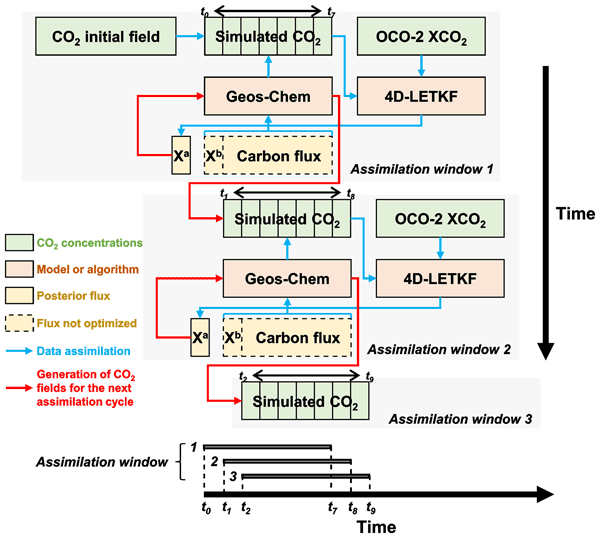
Yawen Kong, Bo Zheng, Qiang Zhang, and Kebin He
Atmos. Chem. Phys., 22, 10769–10788, https://doi.org/10.5194/acp-22-10769-2022, https://doi.org/10.5194/acp-22-10769-2022, 2022
Short summary
Short summary
We developed a Bayesian atmospheric inversion system based on the 4D local ensemble transform Kalman filter (4D-LETKF) algorithm coupled with GEOS-Chem from the latest Orbiting Carbon Observatory-2 (OCO-2) V10r XCO2 retrievals. This is the first adaptation of 4D-LETKF to an OCO-2-based global carbon inversion system. We inferred global gridded carbon fluxes and investigated their magnitudes, variations, and partitioning schemes to understand the global and regional carbon budgets for 2015–2020.
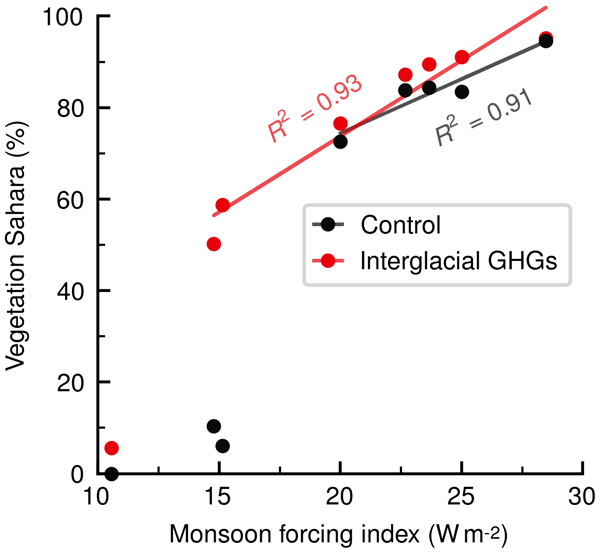
Mateo Duque-Villegas, Martin Claussen, Victor Brovkin, and Thomas Kleinen
Clim. Past, 18, 1897–1914, https://doi.org/10.5194/cp-18-1897-2022, https://doi.org/10.5194/cp-18-1897-2022, 2022
Short summary
Short summary
Using an Earth system model of intermediate complexity, we quantify contributions of the Earth's orbit, greenhouse gases (GHGs) and ice sheets to the strength of Saharan greening during late Quaternary African humid periods (AHPs). Orbital forcing is found as the dominant factor, having a critical threshold and accounting for most of the changes in the vegetation response. However, results suggest that GHGs may influence the orbital threshold and thus may play a pivotal role for future AHPs.
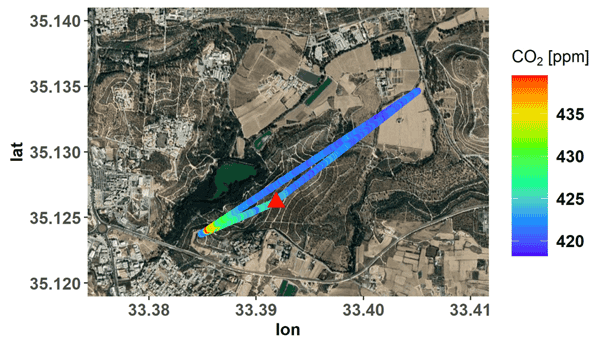
Yunsong Liu, Jean-Daniel Paris, Mihalis Vrekoussis, Panayiota Antoniou, Christos Constantinides, Maximilien Desservettaz, Christos Keleshis, Olivier Laurent, Andreas Leonidou, Carole Philippon, Panagiotis Vouterakos, Pierre-Yves Quéhé, Philippe Bousquet, and Jean Sciare
Atmos. Meas. Tech., 15, 4431–4442, https://doi.org/10.5194/amt-15-4431-2022, https://doi.org/10.5194/amt-15-4431-2022, 2022
Short summary
Short summary
This paper details laboratory-based and field developments of a cost-effective and compacted UAV CO2 sensor system to address the challenge of measuring CO2 with sufficient precision and acquisition frequency. We assess its performance extensively through laboratory and field tests and provide a case study in an urban area (Nicosia, Cyprus). We therefore expect that this portable system will be widely used for measuring CO2 emission and distribution in natural or urban environments.
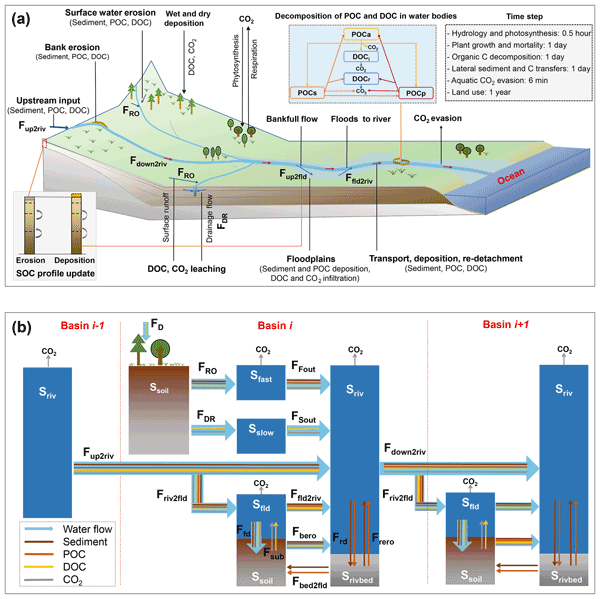
Haicheng Zhang, Ronny Lauerwald, Pierre Regnier, Philippe Ciais, Kristof Van Oost, Victoria Naipal, Bertrand Guenet, and Wenping Yuan
Earth Syst. Dynam., 13, 1119–1144, https://doi.org/10.5194/esd-13-1119-2022, https://doi.org/10.5194/esd-13-1119-2022, 2022
Short summary
Short summary
We present a land surface model which can simulate the complete lateral transfer of sediment and carbon from land to ocean through rivers. Our model captures the water, sediment, and organic carbon discharges in European rivers well. Application of our model in Europe indicates that lateral carbon transfer can strongly change regional land carbon budgets by affecting organic carbon distribution and soil moisture.
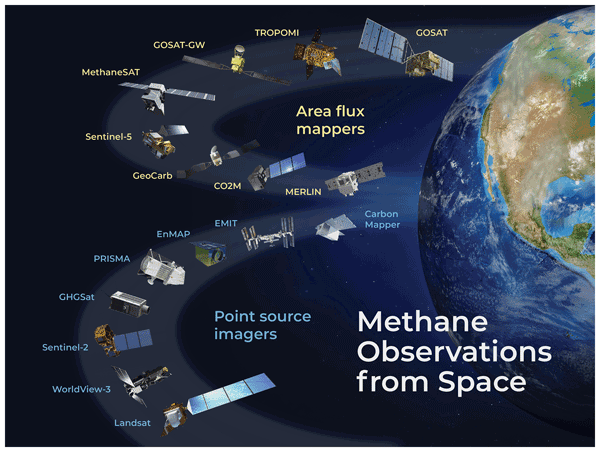
Daniel J. Jacob, Daniel J. Varon, Daniel H. Cusworth, Philip E. Dennison, Christian Frankenberg, Ritesh Gautam, Luis Guanter, John Kelley, Jason McKeever, Lesley E. Ott, Benjamin Poulter, Zhen Qu, Andrew K. Thorpe, John R. Worden, and Riley M. Duren
Atmos. Chem. Phys., 22, 9617–9646, https://doi.org/10.5194/acp-22-9617-2022, https://doi.org/10.5194/acp-22-9617-2022, 2022
Short summary
Short summary
We review the capability of satellite observations of atmospheric methane to quantify methane emissions on all scales. We cover retrieval methods, precision requirements, inverse methods for inferring emissions, source detection thresholds, and observations of system completeness. We show that current instruments already enable quantification of regional and national emissions including contributions from large point sources. Coverage and resolution will increase significantly in coming years.
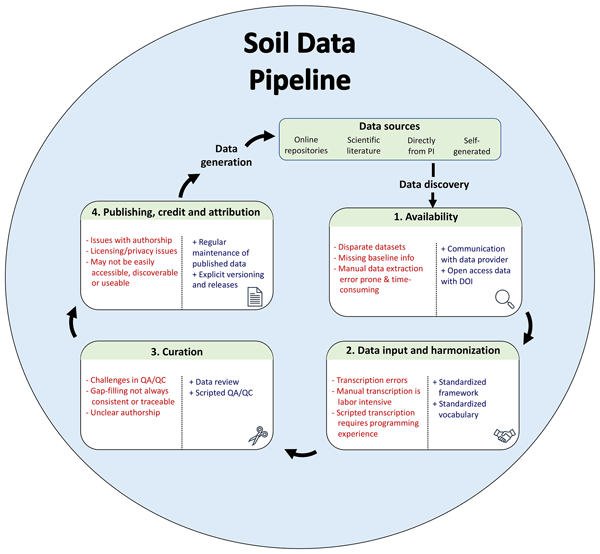
Katherine E. O. Todd-Brown, Rose Z. Abramoff, Jeffrey Beem-Miller, Hava K. Blair, Stevan Earl, Kristen J. Frederick, Daniel R. Fuka, Mario Guevara Santamaria, Jennifer W. Harden, Katherine Heckman, Lillian J. Heran, James R. Holmquist, Alison M. Hoyt, David H. Klinges, David S. LeBauer, Avni Malhotra, Shelby C. McClelland, Lucas E. Nave, Katherine S. Rocci, Sean M. Schaeffer, Shane Stoner, Natasja van Gestel, Sophie F. von Fromm, and Marisa L. Younger
Biogeosciences, 19, 3505–3522, https://doi.org/10.5194/bg-19-3505-2022, https://doi.org/10.5194/bg-19-3505-2022, 2022
Short summary
Short summary
Research data are becoming increasingly available online with tantalizing possibilities for reanalysis. However harmonizing data from different sources remains challenging. Using the soils community as an example, we walked through the various strategies that researchers currently use to integrate datasets for reanalysis. We find that manual data transcription is still extremely common and that there is a critical need for community-supported informatics tools like vocabularies and ontologies.
Ziqi Lin, Yongjiu Dai, Umakant Mishra, Guocheng Wang, Wei Shangguan, Wen Zhang, and Zhangcai Qin
Earth Syst. Sci. Data Discuss., https://doi.org/10.5194/essd-2022-232, https://doi.org/10.5194/essd-2022-232, 2022
Manuscript not accepted for further review
Short summary
Short summary
Spatial soil organic carbon (SOC) data is critical for predictions in carbon climate feedbacks and future climate trends, but no conclusion has yet been reached on which dataset to be used for specific purposes. We evaluated the SOC estimates from five widely used global soil datasets and a regional permafrost dataset, and identify uncertainties of SOC estimates by region, biome, and data sources, hoping to help improve SOC/soil data in the future.
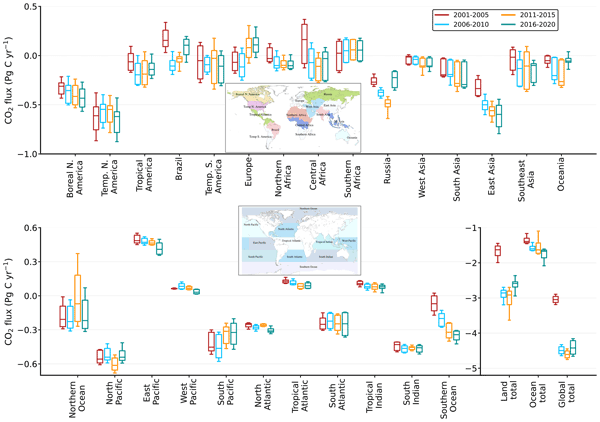
Naveen Chandra, Prabir K. Patra, Yousuke Niwa, Akihiko Ito, Yosuke Iida, Daisuke Goto, Shinji Morimoto, Masayuki Kondo, Masayuki Takigawa, Tomohiro Hajima, and Michio Watanabe
Atmos. Chem. Phys., 22, 9215–9243, https://doi.org/10.5194/acp-22-9215-2022, https://doi.org/10.5194/acp-22-9215-2022, 2022
Short summary
Short summary
This paper is intended to accomplish two goals: (1) quantify mean and uncertainty in non-fossil-fuel CO2 fluxes estimated by inverse modeling and (2) provide in-depth analyses of regional CO2 fluxes in support of emission mitigation policymaking. CO2 flux variability and trends are discussed concerning natural climate variability and human disturbances using multiple lines of evidence.

Joël Thanwerdas, Marielle Saunois, Antoine Berchet, Isabelle Pison, Bruce H. Vaughn, Sylvia Englund Michel, and Philippe Bousquet
Geosci. Model Dev., 15, 4831–4851, https://doi.org/10.5194/gmd-15-4831-2022, https://doi.org/10.5194/gmd-15-4831-2022, 2022
Short summary
Short summary
Estimating CH4 sources by exploiting observations within an inverse modeling framework is a powerful approach. Here, a new system designed to assimilate δ13C(CH4) observations together with CH4 observations is presented. By optimizing both the emissions and associated source signatures of multiple emission categories, this new system can efficiently differentiate the co-located emission categories and provide estimates of CH4 sources that are consistent with isotopic data.

Joe R. Melton, Ed Chan, Koreen Millard, Matthew Fortier, R. Scott Winton, Javier M. Martín-López, Hinsby Cadillo-Quiroz, Darren Kidd, and Louis V. Verchot
Geosci. Model Dev., 15, 4709–4738, https://doi.org/10.5194/gmd-15-4709-2022, https://doi.org/10.5194/gmd-15-4709-2022, 2022
Short summary
Short summary
Peat-ML is a high-resolution global peatland extent map generated using machine learning techniques. Peatlands are important in the global carbon and water cycles, but their extent is poorly known. We generated Peat-ML using drivers of peatland formation including climate, soil, geomorphology, and vegetation data, and we train the model with regional peatland maps. Our accuracy estimation approaches suggest Peat-ML is of similar or higher quality than other available peatland mapping products.
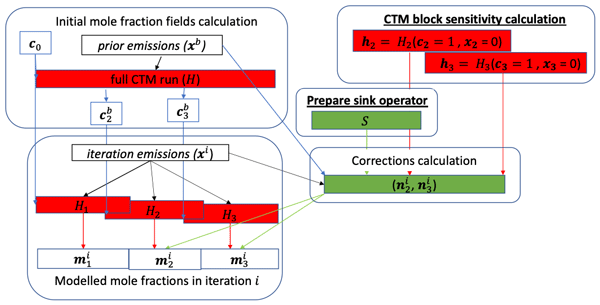
Sudhanshu Pandey, Sander Houweling, and Arjo Segers
Geosci. Model Dev., 15, 4555–4567, https://doi.org/10.5194/gmd-15-4555-2022, https://doi.org/10.5194/gmd-15-4555-2022, 2022
Short summary
Short summary
Inversions are used to calculate methane emissions using atmospheric mole-fraction measurements. Multidecadal inversions are needed to extract information from the long measurement records of methane. However, multidecadal inversion computations can take months to finish. Here, we demonstrate an order of magnitude improvement in wall clock time for an iterative multidecadal inversion by physical parallelization of chemical transport model.
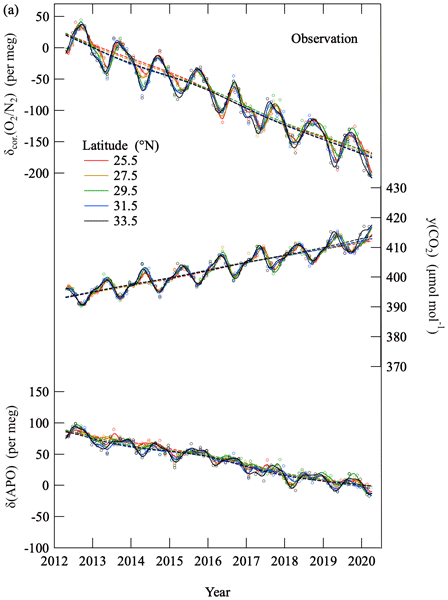
Shigeyuki Ishidoya, Kazuhiro Tsuboi, Yosuke Niwa, Hidekazu Matsueda, Shohei Murayama, Kentaro Ishijima, and Kazuyuki Saito
Atmos. Chem. Phys., 22, 6953–6970, https://doi.org/10.5194/acp-22-6953-2022, https://doi.org/10.5194/acp-22-6953-2022, 2022
Short summary
Short summary
The atmospheric O2 / N2 ratio and CO2 concentration over the western North Pacific are presented. We found significant modification of the seasonal APO cycle in the middle troposphere due to the interhemispheric mixing of air. APO driven by the net marine biological activities indicated annual sea–air O2 flux during El Niño. Terrestrial biospheric and oceanic CO2 uptakes during 2012–2019 were estimated to be 1.8 and 2.8 Pg C a−1, respectively.
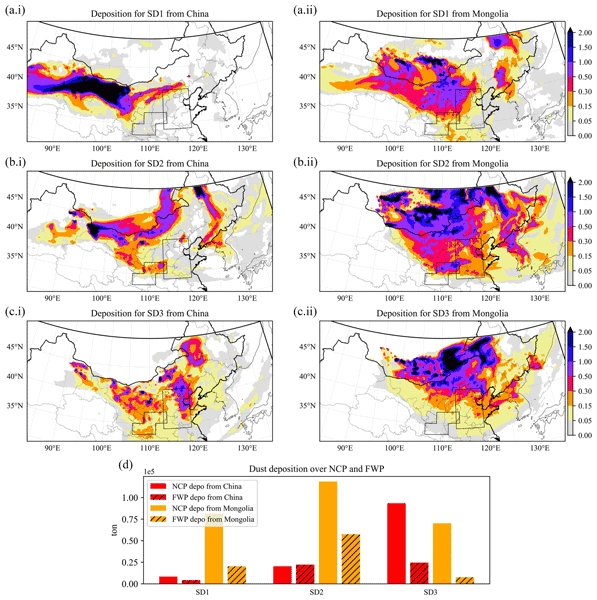
Jianbing Jin, Mijie Pang, Arjo Segers, Wei Han, Li Fang, Baojie Li, Haochuan Feng, Hai Xiang Lin, and Hong Liao
Atmos. Chem. Phys., 22, 6393–6410, https://doi.org/10.5194/acp-22-6393-2022, https://doi.org/10.5194/acp-22-6393-2022, 2022
Short summary
Short summary
Super dust storms reappeared in East Asia last spring after being absent for one and a half decades. Accurate simulation of such super sandstorms is valuable, but challenging due to imperfect emissions. In this study, the emissions of these dust storms are estimated by assimilating multiple observations. The results reveal that emissions originated from both China and Mongolia. However, for northern China, long-distance transport from Mongolia contributes much more dust than Chinese deserts.
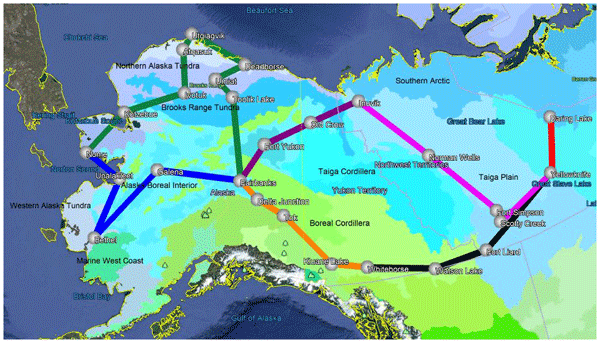
Colm Sweeney, Abhishek Chatterjee, Sonja Wolter, Kathryn McKain, Robert Bogue, Stephen Conley, Tim Newberger, Lei Hu, Lesley Ott, Benjamin Poulter, Luke Schiferl, Brad Weir, Zhen Zhang, and Charles E. Miller
Atmos. Chem. Phys., 22, 6347–6364, https://doi.org/10.5194/acp-22-6347-2022, https://doi.org/10.5194/acp-22-6347-2022, 2022
Short summary
Short summary
The Arctic Carbon Atmospheric Profiles (Arctic-CAP) project demonstrates the utility of aircraft profiles for independent evaluation of model-derived emissions and uptake of atmospheric CO2, CH4, and CO from land and ocean. Comparison with the Goddard Earth Observing System (GEOS) modeling system suggests that fluxes of CO2 are very consistent with observations, while those of CH4 have some regional and seasonal biases, and that CO comparison is complicated by transport errors.
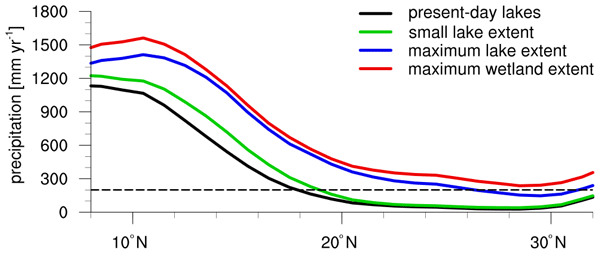
Nora Farina Specht, Martin Claussen, and Thomas Kleinen
Clim. Past, 18, 1035–1046, https://doi.org/10.5194/cp-18-1035-2022, https://doi.org/10.5194/cp-18-1035-2022, 2022
Short summary
Short summary
Palaeoenvironmental records only provide a fragmentary picture of the lake and wetland extent in North Africa during the mid-Holocene. Therefore, we investigate the possible range of mid-Holocene precipitation changes caused by an estimated small and maximum lake extent and a maximum wetland extent. Results show a particularly strong monsoon precipitation response to lakes and wetlands over the Western Sahara and an increased monsoon precipitation when replacing lakes with vegetated wetlands.
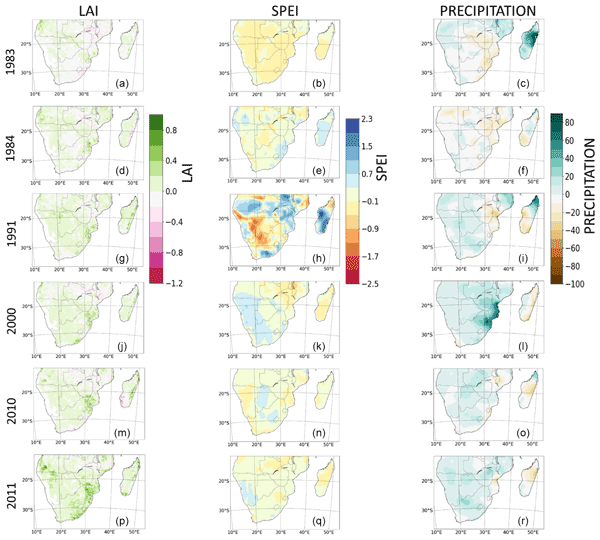
Shakirudeen Lawal, Stephen Sitch, Danica Lombardozzi, Julia E. M. S. Nabel, Hao-Wei Wey, Pierre Friedlingstein, Hanqin Tian, and Bruce Hewitson
Hydrol. Earth Syst. Sci., 26, 2045–2071, https://doi.org/10.5194/hess-26-2045-2022, https://doi.org/10.5194/hess-26-2045-2022, 2022
Short summary
Short summary
To investigate the impacts of drought on vegetation, which few studies have done due to various limitations, we used the leaf area index as proxy and dynamic global vegetation models (DGVMs) to simulate drought impacts because the models use observationally derived climate. We found that the semi-desert biome responds strongly to drought in the summer season, while the tropical forest biome shows a weak response. This study could help target areas to improve drought monitoring and simulation.
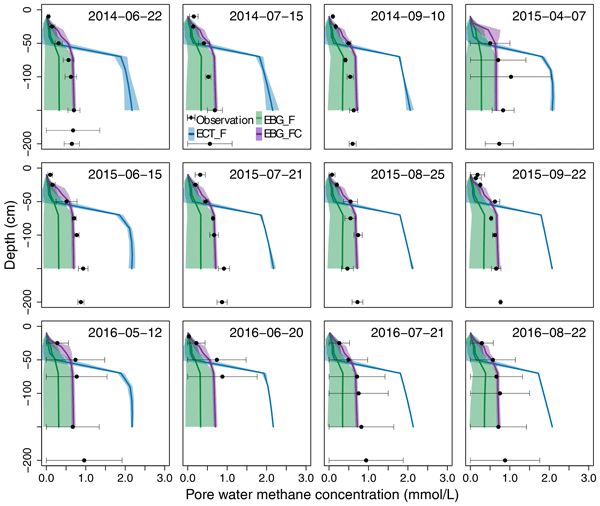
Shuang Ma, Lifen Jiang, Rachel M. Wilson, Jeff P. Chanton, Scott Bridgham, Shuli Niu, Colleen M. Iversen, Avni Malhotra, Jiang Jiang, Xingjie Lu, Yuanyuan Huang, Jason Keller, Xiaofeng Xu, Daniel M. Ricciuto, Paul J. Hanson, and Yiqi Luo
Biogeosciences, 19, 2245–2262, https://doi.org/10.5194/bg-19-2245-2022, https://doi.org/10.5194/bg-19-2245-2022, 2022
Short summary
Short summary
The relative ratio of wetland methane (CH4) emission pathways determines how much CH4 is oxidized before leaving the soil. We found an ebullition modeling approach that has a better performance in deep layer pore water CH4 concentration. We suggest using this approach in land surface models to accurately represent CH4 emission dynamics and response to climate change. Our results also highlight that both CH4 flux and belowground concentration data are important to constrain model parameters.
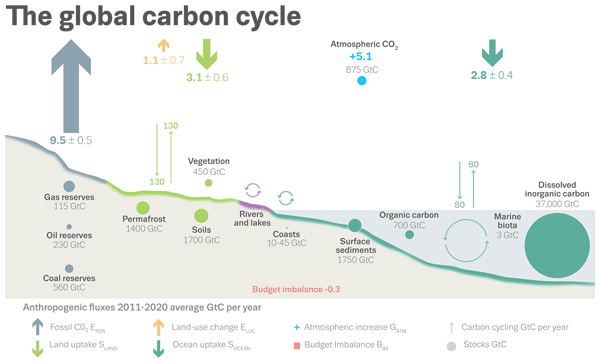
Pierre Friedlingstein, Matthew W. Jones, Michael O'Sullivan, Robbie M. Andrew, Dorothee C. E. Bakker, Judith Hauck, Corinne Le Quéré, Glen P. Peters, Wouter Peters, Julia Pongratz, Stephen Sitch, Josep G. Canadell, Philippe Ciais, Rob B. Jackson, Simone R. Alin, Peter Anthoni, Nicholas R. Bates, Meike Becker, Nicolas Bellouin, Laurent Bopp, Thi Tuyet Trang Chau, Frédéric Chevallier, Louise P. Chini, Margot Cronin, Kim I. Currie, Bertrand Decharme, Laique M. Djeutchouang, Xinyu Dou, Wiley Evans, Richard A. Feely, Liang Feng, Thomas Gasser, Dennis Gilfillan, Thanos Gkritzalis, Giacomo Grassi, Luke Gregor, Nicolas Gruber, Özgür Gürses, Ian Harris, Richard A. Houghton, George C. Hurtt, Yosuke Iida, Tatiana Ilyina, Ingrid T. Luijkx, Atul Jain, Steve D. Jones, Etsushi Kato, Daniel Kennedy, Kees Klein Goldewijk, Jürgen Knauer, Jan Ivar Korsbakken, Arne Körtzinger, Peter Landschützer, Siv K. Lauvset, Nathalie Lefèvre, Sebastian Lienert, Junjie Liu, Gregg Marland, Patrick C. McGuire, Joe R. Melton, David R. Munro, Julia E. M. S. Nabel, Shin-Ichiro Nakaoka, Yosuke Niwa, Tsuneo Ono, Denis Pierrot, Benjamin Poulter, Gregor Rehder, Laure Resplandy, Eddy Robertson, Christian Rödenbeck, Thais M. Rosan, Jörg Schwinger, Clemens Schwingshackl, Roland Séférian, Adrienne J. Sutton, Colm Sweeney, Toste Tanhua, Pieter P. Tans, Hanqin Tian, Bronte Tilbrook, Francesco Tubiello, Guido R. van der Werf, Nicolas Vuichard, Chisato Wada, Rik Wanninkhof, Andrew J. Watson, David Willis, Andrew J. Wiltshire, Wenping Yuan, Chao Yue, Xu Yue, Sönke Zaehle, and Jiye Zeng
Earth Syst. Sci. Data, 14, 1917–2005, https://doi.org/10.5194/essd-14-1917-2022, https://doi.org/10.5194/essd-14-1917-2022, 2022
Short summary
Short summary
The Global Carbon Budget 2021 describes the data sets and methodology used to quantify the emissions of carbon dioxide and their partitioning among the atmosphere, land, and ocean. These living data are updated every year to provide the highest transparency and traceability in the reporting of CO2, the key driver of climate change.
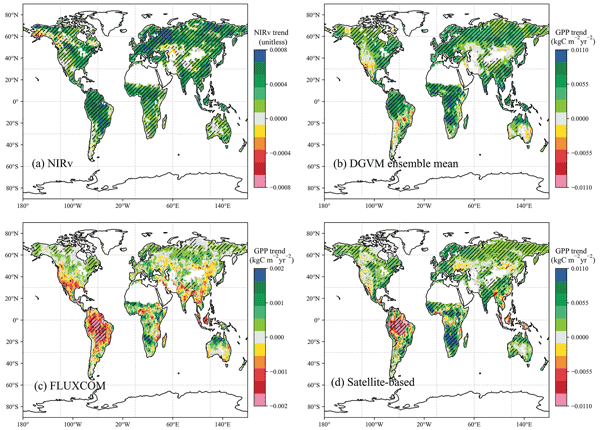
Ruqi Yang, Jun Wang, Ning Zeng, Stephen Sitch, Wenhan Tang, Matthew Joseph McGrath, Qixiang Cai, Di Liu, Danica Lombardozzi, Hanqin Tian, Atul K. Jain, and Pengfei Han
Earth Syst. Dynam., 13, 833–849, https://doi.org/10.5194/esd-13-833-2022, https://doi.org/10.5194/esd-13-833-2022, 2022
Short summary
Short summary
We comprehensively investigate historical GPP trends based on five kinds of GPP datasets and analyze the causes for any discrepancies among them. Results show contrasting behaviors between modeled and satellite-based GPP trends, and their inconsistencies are likely caused by the contrasting performance between satellite-derived and modeled leaf area index (LAI). Thus, the uncertainty in satellite-based GPP induced by LAI undermines its role in assessing the performance of DGVM simulations.
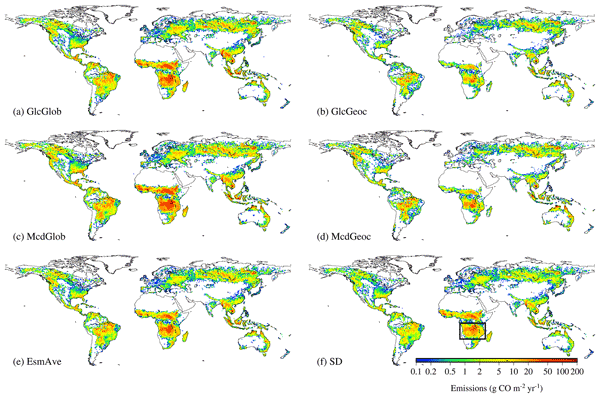
Makoto Saito, Tomohiro Shiraishi, Ryuichi Hirata, Yosuke Niwa, Kazuyuki Saito, Martin Steinbacher, Doug Worthy, and Tsuneo Matsunaga
Biogeosciences, 19, 2059–2078, https://doi.org/10.5194/bg-19-2059-2022, https://doi.org/10.5194/bg-19-2059-2022, 2022
Short summary
Short summary
This study tested combinations of two sources of AGB data and two sources of LCC data and used the same burned area satellite data to estimate BB CO emissions. Our analysis showed large discrepancies in annual mean CO emissions and explicit differences in the simulated CO concentrations among the BB emissions estimates. This study has confirmed that BB emissions estimates are sensitive to the land surface information on which they are based.
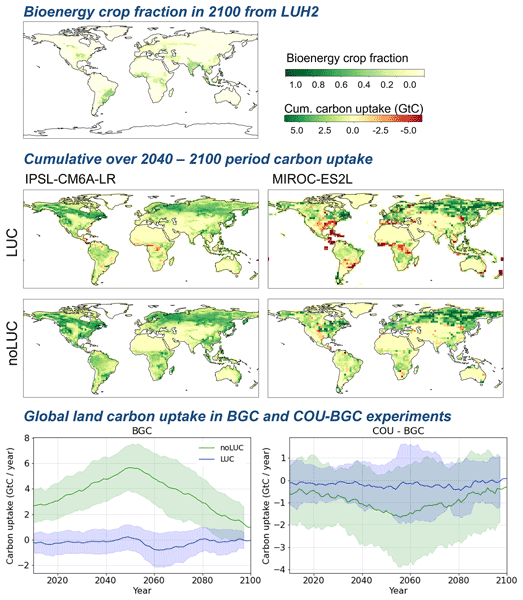
Irina Melnikova, Olivier Boucher, Patricia Cadule, Katsumasa Tanaka, Thomas Gasser, Tomohiro Hajima, Yann Quilcaille, Hideo Shiogama, Roland Séférian, Kaoru Tachiiri, Nicolas Vuichard, Tokuta Yokohata, and Philippe Ciais
Earth Syst. Dynam., 13, 779–794, https://doi.org/10.5194/esd-13-779-2022, https://doi.org/10.5194/esd-13-779-2022, 2022
Short summary
Short summary
The deployment of bioenergy crops for capturing carbon from the atmosphere facilitates global warming mitigation via generating negative CO2 emissions. Here, we explored the consequences of large-scale energy crops deployment on the land carbon cycle. The land-use change for energy crops leads to carbon emissions and loss of future potential increase in carbon uptake by natural ecosystems. This impact should be taken into account by the modeling teams and accounted for in mitigation policies.
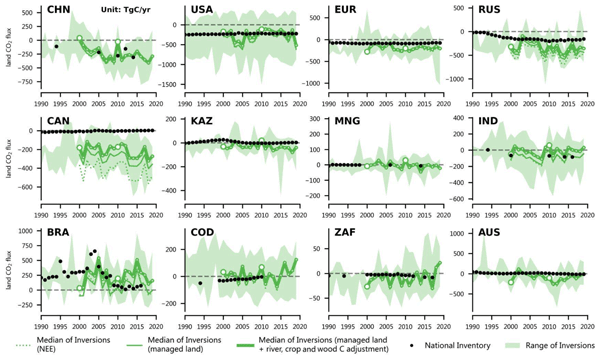
Zhu Deng, Philippe Ciais, Zitely A. Tzompa-Sosa, Marielle Saunois, Chunjing Qiu, Chang Tan, Taochun Sun, Piyu Ke, Yanan Cui, Katsumasa Tanaka, Xin Lin, Rona L. Thompson, Hanqin Tian, Yuanzhi Yao, Yuanyuan Huang, Ronny Lauerwald, Atul K. Jain, Xiaoming Xu, Ana Bastos, Stephen Sitch, Paul I. Palmer, Thomas Lauvaux, Alexandre d'Aspremont, Clément Giron, Antoine Benoit, Benjamin Poulter, Jinfeng Chang, Ana Maria Roxana Petrescu, Steven J. Davis, Zhu Liu, Giacomo Grassi, Clément Albergel, Francesco N. Tubiello, Lucia Perugini, Wouter Peters, and Frédéric Chevallier
Earth Syst. Sci. Data, 14, 1639–1675, https://doi.org/10.5194/essd-14-1639-2022, https://doi.org/10.5194/essd-14-1639-2022, 2022
Short summary
Short summary
In support of the global stocktake of the Paris Agreement on climate change, we proposed a method for reconciling the results of global atmospheric inversions with data from UNFCCC national greenhouse gas inventories (NGHGIs). Here, based on a new global harmonized database that we compiled from the UNFCCC NGHGIs and a comprehensive framework presented in this study to process the results of inversions, we compared their results of carbon dioxide (CO2), methane (CH4), and nitrous oxide (N2O).
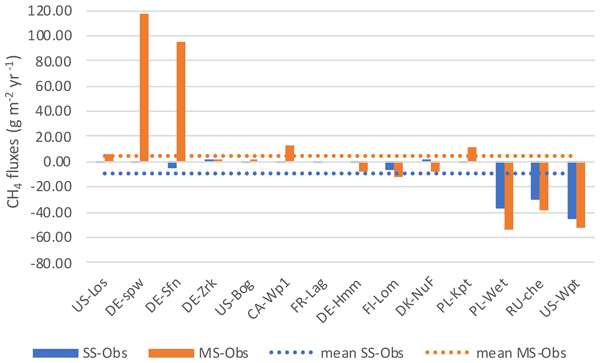
Elodie Salmon, Fabrice Jégou, Bertrand Guenet, Line Jourdain, Chunjing Qiu, Vladislav Bastrikov, Christophe Guimbaud, Dan Zhu, Philippe Ciais, Philippe Peylin, Sébastien Gogo, Fatima Laggoun-Défarge, Mika Aurela, M. Syndonia Bret-Harte, Jiquan Chen, Bogdan H. Chojnicki, Housen Chu, Colin W. Edgar, Eugenie S. Euskirchen, Lawrence B. Flanagan, Krzysztof Fortuniak, David Holl, Janina Klatt, Olaf Kolle, Natalia Kowalska, Lars Kutzbach, Annalea Lohila, Lutz Merbold, Włodzimierz Pawlak, Torsten Sachs, and Klaudia Ziemblińska
Geosci. Model Dev., 15, 2813–2838, https://doi.org/10.5194/gmd-15-2813-2022, https://doi.org/10.5194/gmd-15-2813-2022, 2022
Short summary
Short summary
A methane model that features methane production and transport by plants, the ebullition process and diffusion in soil, oxidation to CO2, and CH4 fluxes to the atmosphere has been embedded in the ORCHIDEE-PEAT land surface model, which includes an explicit representation of northern peatlands. This model, ORCHIDEE-PCH4, was calibrated and evaluated on 14 peatland sites. Results show that the model is sensitive to temperature and substrate availability over the top 75 cm of soil depth.
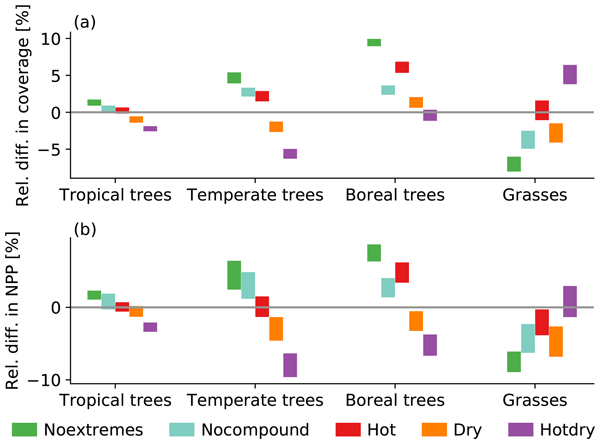
Elisabeth Tschumi, Sebastian Lienert, Karin van der Wiel, Fortunat Joos, and Jakob Zscheischler
Biogeosciences, 19, 1979–1993, https://doi.org/10.5194/bg-19-1979-2022, https://doi.org/10.5194/bg-19-1979-2022, 2022
Short summary
Short summary
Droughts and heatwaves are expected to occur more often in the future, but their effects on land vegetation and the carbon cycle are poorly understood. We use six climate scenarios with differing extreme occurrences and a vegetation model to analyse these effects. Tree coverage and associated plant productivity increase under a climate with no extremes. Frequent co-occurring droughts and heatwaves decrease plant productivity more than the combined effects of single droughts or heatwaves.
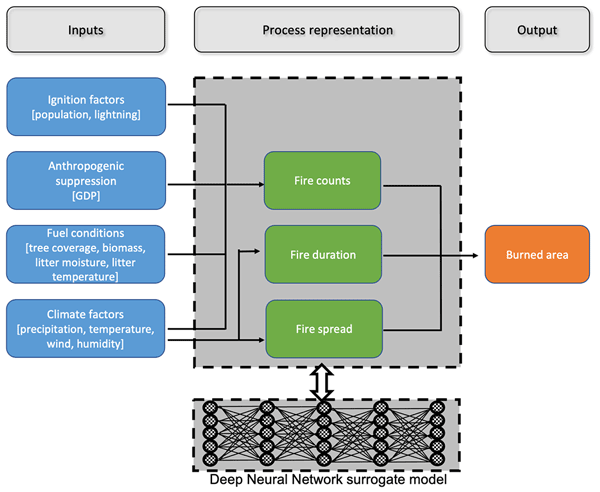
Qing Zhu, Fa Li, William J. Riley, Li Xu, Lei Zhao, Kunxiaojia Yuan, Huayi Wu, Jianya Gong, and James Randerson
Geosci. Model Dev., 15, 1899–1911, https://doi.org/10.5194/gmd-15-1899-2022, https://doi.org/10.5194/gmd-15-1899-2022, 2022
Short summary
Short summary
Wildfire is a devastating Earth system process that burns about 500 million hectares of land each year. It wipes out vegetation including trees, shrubs, and grasses and causes large losses of economic assets. However, modeling the spatial distribution and temporal changes of wildfire activities at a global scale is challenging. This study built a machine-learning-based wildfire surrogate model within an existing Earth system model and achieved high accuracy.
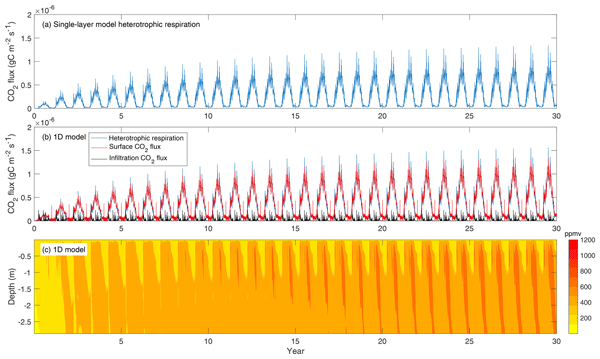
Jinyun Tang, William J. Riley, and Qing Zhu
Geosci. Model Dev., 15, 1619–1632, https://doi.org/10.5194/gmd-15-1619-2022, https://doi.org/10.5194/gmd-15-1619-2022, 2022
Short summary
Short summary
We here describe version 2 of BeTR, a reactive transport model created to help ease the development of biogeochemical capability in Earth system models that are used for quantifying ecosystem–climate feedbacks. We then coupled BeTR-v2 to the Energy Exascale Earth System Model to quantify how different numerical couplings of plants and soils affect simulated ecosystem biogeochemistry. We found that different couplings lead to significant uncertainty that is not correctable by tuning parameters.
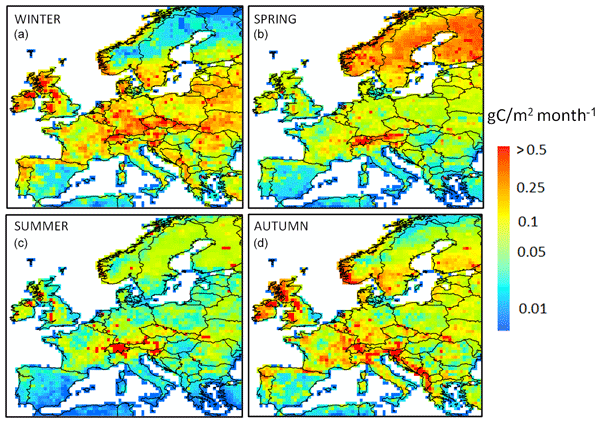
Céline Gommet, Ronny Lauerwald, Philippe Ciais, Bertrand Guenet, Haicheng Zhang, and Pierre Regnier
Earth Syst. Dynam., 13, 393–418, https://doi.org/10.5194/esd-13-393-2022, https://doi.org/10.5194/esd-13-393-2022, 2022
Short summary
Short summary
Dissolved organic carbon (DOC) leaching from soils into river networks is an important component of the land carbon (C) budget, but its spatiotemporal variation is not yet fully constrained. We use a land surface model to simulate the present-day land C budget at the European scale, including leaching of DOC from the soil. We found average leaching of 14.3 Tg C yr−1 (0.6 % of terrestrial net primary production) with seasonal variations. We determine runoff and temperature to be the main drivers.
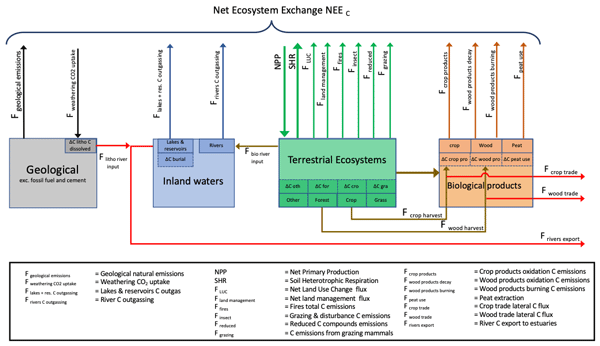
Philippe Ciais, Ana Bastos, Frédéric Chevallier, Ronny Lauerwald, Ben Poulter, Josep G. Canadell, Gustaf Hugelius, Robert B. Jackson, Atul Jain, Matthew Jones, Masayuki Kondo, Ingrid T. Luijkx, Prabir K. Patra, Wouter Peters, Julia Pongratz, Ana Maria Roxana Petrescu, Shilong Piao, Chunjing Qiu, Celso Von Randow, Pierre Regnier, Marielle Saunois, Robert Scholes, Anatoly Shvidenko, Hanqin Tian, Hui Yang, Xuhui Wang, and Bo Zheng
Geosci. Model Dev., 15, 1289–1316, https://doi.org/10.5194/gmd-15-1289-2022, https://doi.org/10.5194/gmd-15-1289-2022, 2022
Short summary
Short summary
The second phase of the Regional Carbon Cycle Assessment and Processes (RECCAP) will provide updated quantification and process understanding of CO2, CH4, and N2O emissions and sinks for ten regions of the globe. In this paper, we give definitions, review different methods, and make recommendations for estimating different components of the total land–atmosphere carbon exchange for each region in a consistent and complete approach.
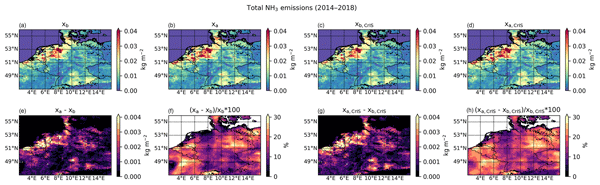
Shelley van der Graaf, Enrico Dammers, Arjo Segers, Richard Kranenburg, Martijn Schaap, Mark W. Shephard, and Jan Willem Erisman
Atmos. Chem. Phys., 22, 951–972, https://doi.org/10.5194/acp-22-951-2022, https://doi.org/10.5194/acp-22-951-2022, 2022
Short summary
Short summary
CrIS NH3 satellite observations are assimilated into the LOTOS-EUROS model using two different methods. In the first method the data are used to fit spatially varying NH3 emission time factors. In the second method a local ensemble transform Kalman filter is used. Compared to in situ observations, combining both methods led to the most significant improvements in the modeled concentrations and deposition, illustrating the usefulness of CrIS NH3 to improve the spatiotemporal distribution of NH3.
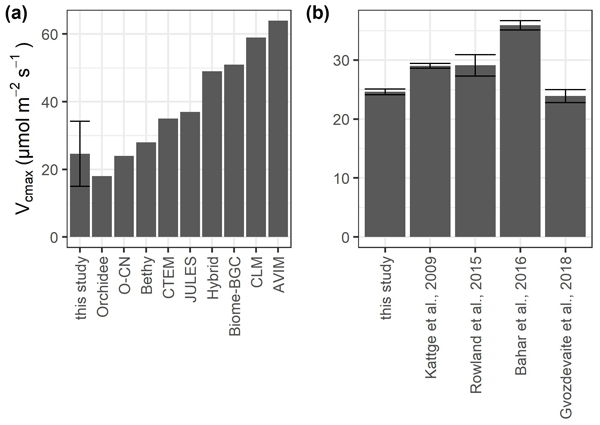
Lore T. Verryckt, Sara Vicca, Leandro Van Langenhove, Clément Stahl, Dolores Asensio, Ifigenia Urbina, Romà Ogaya, Joan Llusià, Oriol Grau, Guille Peguero, Albert Gargallo-Garriga, Elodie A. Courtois, Olga Margalef, Miguel Portillo-Estrada, Philippe Ciais, Michael Obersteiner, Lucia Fuchslueger, Laynara F. Lugli, Pere-Roc Fernandez-Garberí, Helena Vallicrosa, Melanie Verlinden, Christian Ranits, Pieter Vermeir, Sabrina Coste, Erik Verbruggen, Laëtitia Bréchet, Jordi Sardans, Jérôme Chave, Josep Peñuelas, and Ivan A. Janssens
Earth Syst. Sci. Data, 14, 5–18, https://doi.org/10.5194/essd-14-5-2022, https://doi.org/10.5194/essd-14-5-2022, 2022
Short summary
Short summary
We provide a comprehensive dataset of vertical profiles of photosynthesis and important leaf traits, including leaf N and P concentrations, from two 3-year, large-scale nutrient addition experiments conducted in two tropical rainforests in French Guiana. These data present a unique source of information to further improve model representations of the roles of N and P, and other leaf nutrients, in photosynthesis in tropical forests.
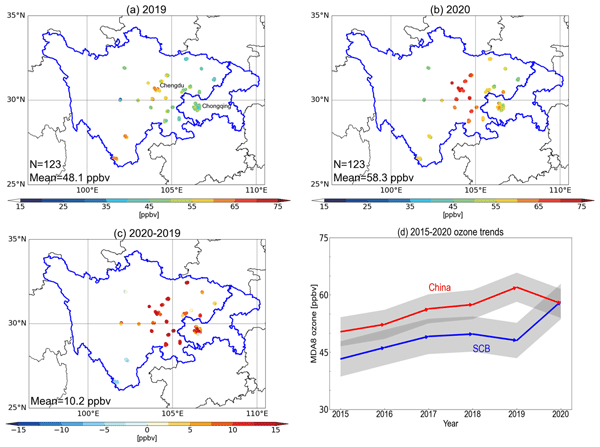
Youwen Sun, Hao Yin, Xiao Lu, Justus Notholt, Mathias Palm, Cheng Liu, Yuan Tian, and Bo Zheng
Atmos. Chem. Phys., 21, 18589–18608, https://doi.org/10.5194/acp-21-18589-2021, https://doi.org/10.5194/acp-21-18589-2021, 2021
Short summary
Short summary
This study uses high-resolution nested-grid GEOS-Chem simulation, the eXtreme Gradient Boosting (XGBoost) machine learning method, and the exposure–response relationship to determine the drivers and evaluate the health risks of the unexpected surface O3 enhancements over the Sichuan Basin in 2020. These unexpected O3 enhancements were induced by meteorological anomalies and caused dramatically high health risks.
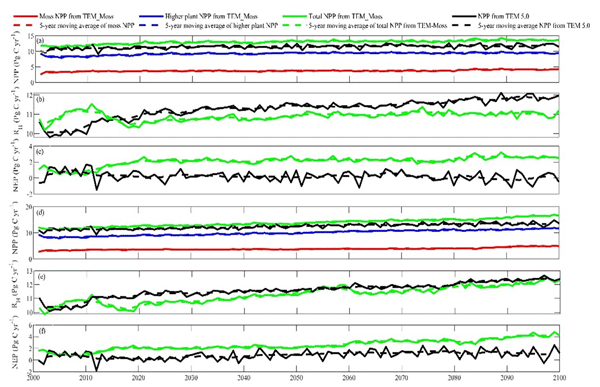
Junrong Zha and Qianlai Zhuang
Biogeosciences, 18, 6245–6269, https://doi.org/10.5194/bg-18-6245-2021, https://doi.org/10.5194/bg-18-6245-2021, 2021
Short summary
Short summary
This study incorporated moss into an extant biogeochemistry model to simulate the role of moss in carbon dynamics in the Arctic. The interactions between higher plants and mosses and their competition for energy, water, and nutrients are considered in our study. We found that, compared with the previous model without moss, the new model estimated a much higher carbon accumulation in the region during the last century and this century.
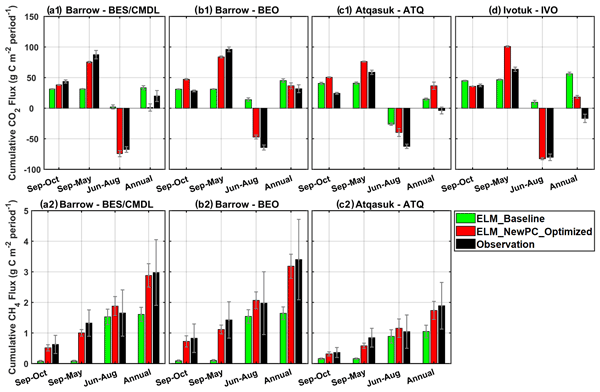
Jing Tao, Qing Zhu, William J. Riley, and Rebecca B. Neumann
The Cryosphere, 15, 5281–5307, https://doi.org/10.5194/tc-15-5281-2021, https://doi.org/10.5194/tc-15-5281-2021, 2021
Short summary
Short summary
We improved the DOE's E3SM land model (ELMv1-ECA) simulations of soil temperature, zero-curtain period durations, cold-season CH4, and CO2 emissions at several Alaskan Arctic tundra sites. We demonstrated that simulated CH4 emissions during zero-curtain periods accounted for more than 50 % of total emissions throughout the entire cold season (Sep to May). We also found that cold-season CO2 emissions largely offset warm-season net uptake currently and showed increasing trends from 1950 to 2017.
Vilma Kangasaho, Aki Tsuruta, Leif Backman, Pyry Mäkinen, Sander Houweling, Arjo Segers, Maarten Krol, Ed Dlugokencky, Sylvia Michel, James White, and Tuula Aalto
Atmos. Chem. Phys. Discuss., https://doi.org/10.5194/acp-2021-843, https://doi.org/10.5194/acp-2021-843, 2021
Revised manuscript not accepted
Short summary
Short summary
Understanding the composition of carbon isotopes can help to better understand the changes in methane budgets. This study investigates how methane sources affect the seasonal cycle of the methane carbon-13 isotope during 2000–2012 using an atmospheric transport model. We found that emissions from both anthropogenic and natural sources contribute. The findings raise a need to revise the magnitudes, proportion, and seasonal cycles of anthropogenic sources and northern wetland emissions.
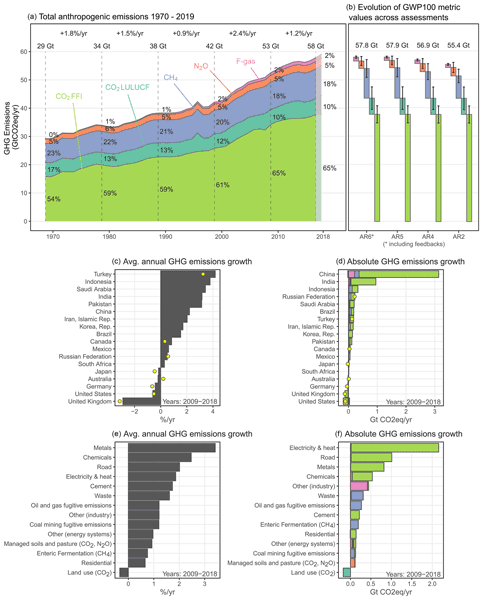
Jan C. Minx, William F. Lamb, Robbie M. Andrew, Josep G. Canadell, Monica Crippa, Niklas Döbbeling, Piers M. Forster, Diego Guizzardi, Jos Olivier, Glen P. Peters, Julia Pongratz, Andy Reisinger, Matthew Rigby, Marielle Saunois, Steven J. Smith, Efisio Solazzo, and Hanqin Tian
Earth Syst. Sci. Data, 13, 5213–5252, https://doi.org/10.5194/essd-13-5213-2021, https://doi.org/10.5194/essd-13-5213-2021, 2021
Short summary
Short summary
We provide a synthetic dataset on anthropogenic greenhouse gas (GHG) emissions for 1970–2018 with a fast-track extension to 2019. We show that GHG emissions continued to rise across all gases and sectors. Annual average GHG emissions growth slowed, but absolute decadal increases have never been higher in human history. We identify a number of data gaps and data quality issues in global inventories and highlight their importance for monitoring progress towards international climate goals.
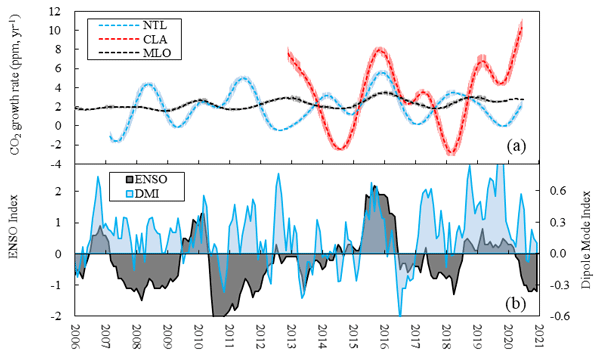
Shohei Nomura, Manish Naja, M. Kawser Ahmed, Hitoshi Mukai, Yukio Terao, Toshinobu Machida, Motoki Sasakawa, and Prabir K. Patra
Atmos. Chem. Phys., 21, 16427–16452, https://doi.org/10.5194/acp-21-16427-2021, https://doi.org/10.5194/acp-21-16427-2021, 2021
Short summary
Short summary
Long-term measurements of greenhouse gases (GHGs) in India and Bangladesh unveiled specific characteristics in their variations in these regions. Plants including rice cultivated in winter and summer strongly affected seasonal variations and levels in CO2 and CH4. Long-term variability of GHGs showed quite different features in their growth rates from those in Mauna Loa. GHG trends in this region seemed to be hardly affected by El Niño–Southern Oscillation (ENSO).
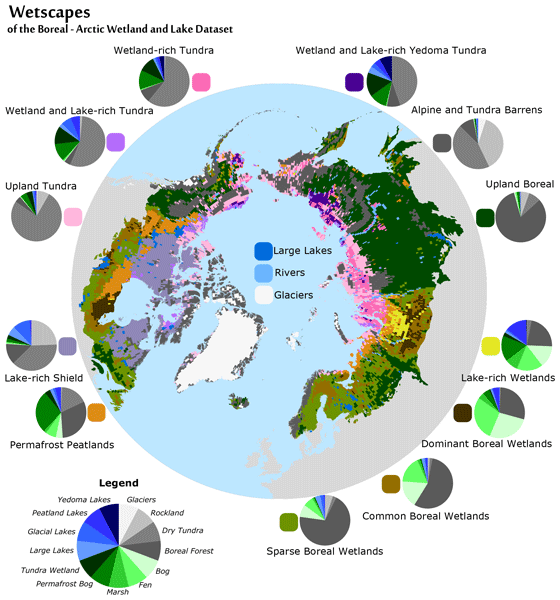
David Olefeldt, Mikael Hovemyr, McKenzie A. Kuhn, David Bastviken, Theodore J. Bohn, John Connolly, Patrick Crill, Eugénie S. Euskirchen, Sarah A. Finkelstein, Hélène Genet, Guido Grosse, Lorna I. Harris, Liam Heffernan, Manuel Helbig, Gustaf Hugelius, Ryan Hutchins, Sari Juutinen, Mark J. Lara, Avni Malhotra, Kristen Manies, A. David McGuire, Susan M. Natali, Jonathan A. O'Donnell, Frans-Jan W. Parmentier, Aleksi Räsänen, Christina Schädel, Oliver Sonnentag, Maria Strack, Suzanne E. Tank, Claire Treat, Ruth K. Varner, Tarmo Virtanen, Rebecca K. Warren, and Jennifer D. Watts
Earth Syst. Sci. Data, 13, 5127–5149, https://doi.org/10.5194/essd-13-5127-2021, https://doi.org/10.5194/essd-13-5127-2021, 2021
Short summary
Short summary
Wetlands, lakes, and rivers are important sources of the greenhouse gas methane to the atmosphere. To understand current and future methane emissions from northern regions, we need maps that show the extent and distribution of specific types of wetlands, lakes, and rivers. The Boreal–Arctic Wetland and Lake Dataset (BAWLD) provides maps of five wetland types, seven lake types, and three river types for northern regions and will improve our ability to predict future methane emissions.
Adrian Chappell, Nicholas Webb, Mark Hennen, Charles Zender, Philippe Ciais, Kerstin Schepanski, Brandon Edwards, Nancy Ziegler, Sandra Jones, Yves Balkanski, Daniel Tong, John Leys, Stephan Heidenreich, Robert Hynes, David Fuchs, Zhenzhong Zeng, Marie Ekström, Matthew Baddock, Jeffrey Lee, and Tarek Kandakji
Geosci. Model Dev. Discuss., https://doi.org/10.5194/gmd-2021-337, https://doi.org/10.5194/gmd-2021-337, 2021
Revised manuscript not accepted
Short summary
Short summary
Dust emissions influence global climate while simultaneously reducing the productive potential and resilience of landscapes to climate stressors, together impacting food security and human health. Our results indicate that tuning dust emission models to dust in the atmosphere has hidden dust emission modelling weaknesses and its poor performance. Our new approach will reduce uncertainty and driven by prognostic albedo improve Earth System Models of aerosol effects on future environmental change.
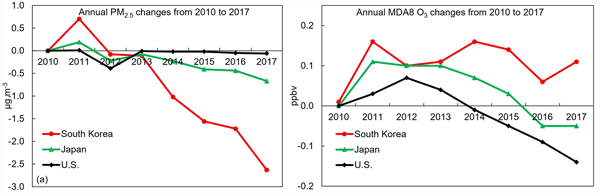
Yuqiang Zhang, Drew Shindell, Karl Seltzer, Lu Shen, Jean-Francois Lamarque, Qiang Zhang, Bo Zheng, Jia Xing, Zhe Jiang, and Lei Zhang
Atmos. Chem. Phys., 21, 16051–16065, https://doi.org/10.5194/acp-21-16051-2021, https://doi.org/10.5194/acp-21-16051-2021, 2021
Short summary
Short summary
In this study, we use a global chemical transport model to simulate the effects on global air quality and human health due to emission changes in China from 2010 to 2017. By performing sensitivity analysis, we found that the air pollution control policies not only decrease the air pollutant concentration but also bring significant co-benefits in air quality to downwind regions. The benefits for the improved air pollution are dominated by PM2.5.

Gaëlle Dufour, Didier Hauglustaine, Yunjiang Zhang, Maxim Eremenko, Yann Cohen, Audrey Gaudel, Guillaume Siour, Mathieu Lachatre, Axel Bense, Bertrand Bessagnet, Juan Cuesta, Jerry Ziemke, Valérie Thouret, and Bo Zheng
Atmos. Chem. Phys., 21, 16001–16025, https://doi.org/10.5194/acp-21-16001-2021, https://doi.org/10.5194/acp-21-16001-2021, 2021
Short summary
Short summary
The IASI observations and the LMDZ-OR-INCA model simulations show negative ozone trends in the Central East China region in the lower free (3–6 km column) and the upper free (6–9 km column) troposphere. Sensitivity studies from the model show that the Chinese anthropogenic emissions contribute to more than 50 % in the trend. The reduction in NOx emissions that has occurred since 2013 in China seems to lead to a decrease in ozone in the free troposphere, contrary to the increase at the surface.
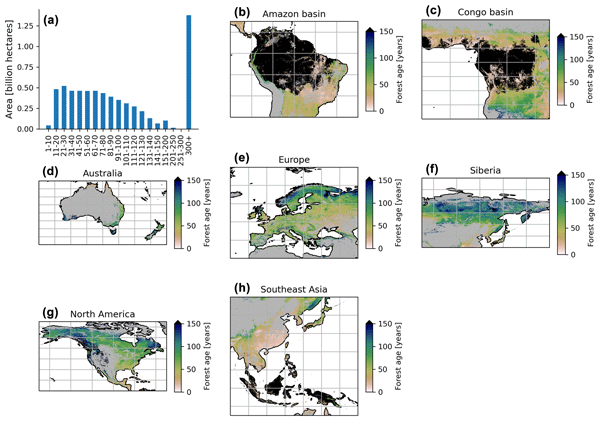
Simon Besnard, Sujan Koirala, Maurizio Santoro, Ulrich Weber, Jacob Nelson, Jonas Gütter, Bruno Herault, Justin Kassi, Anny N'Guessan, Christopher Neigh, Benjamin Poulter, Tao Zhang, and Nuno Carvalhais
Earth Syst. Sci. Data, 13, 4881–4896, https://doi.org/10.5194/essd-13-4881-2021, https://doi.org/10.5194/essd-13-4881-2021, 2021
Short summary
Short summary
Forest age can determine the capacity of a forest to uptake carbon from the atmosphere. Yet, a lack of global diagnostics that reflect the forest stage and associated disturbance regimes hampers the quantification of age-related differences in forest carbon dynamics. In this paper, we introduced a new global distribution of forest age inferred from forest inventory, remote sensing and climate data in support of a better understanding of the global dynamics in the forest water and carbon cycles.
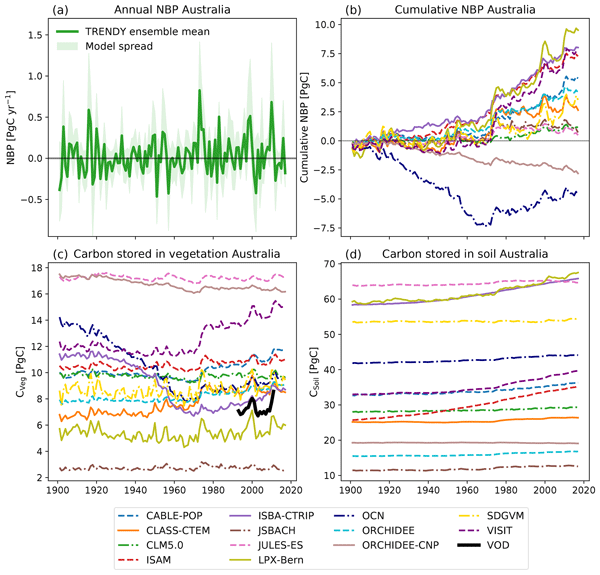
Lina Teckentrup, Martin G. De Kauwe, Andrew J. Pitman, Daniel S. Goll, Vanessa Haverd, Atul K. Jain, Emilie Joetzjer, Etsushi Kato, Sebastian Lienert, Danica Lombardozzi, Patrick C. McGuire, Joe R. Melton, Julia E. M. S. Nabel, Julia Pongratz, Stephen Sitch, Anthony P. Walker, and Sönke Zaehle
Biogeosciences, 18, 5639–5668, https://doi.org/10.5194/bg-18-5639-2021, https://doi.org/10.5194/bg-18-5639-2021, 2021
Short summary
Short summary
The Australian continent is included in global assessments of the carbon cycle such as the global carbon budget, yet the performance of dynamic global vegetation models (DGVMs) over Australia has rarely been evaluated. We assessed simulations by an ensemble of dynamic global vegetation models over Australia and highlighted a number of key areas that lead to model divergence on both short (inter-annual) and long (decadal) timescales.
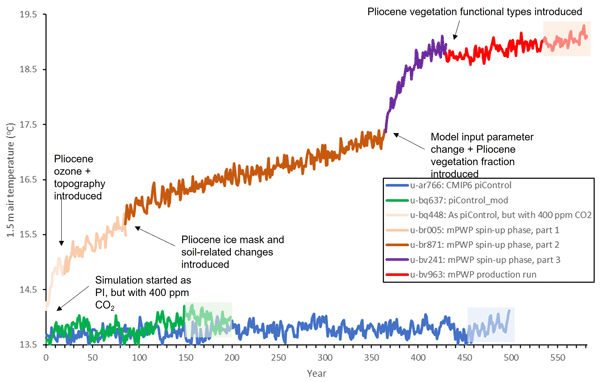
Charles J. R. Williams, Alistair A. Sellar, Xin Ren, Alan M. Haywood, Peter Hopcroft, Stephen J. Hunter, William H. G. Roberts, Robin S. Smith, Emma J. Stone, Julia C. Tindall, and Daniel J. Lunt
Clim. Past, 17, 2139–2163, https://doi.org/10.5194/cp-17-2139-2021, https://doi.org/10.5194/cp-17-2139-2021, 2021
Short summary
Short summary
Computer simulations of the geological past are an important tool to improve our understanding of climate change. We present results from a simulation of the mid-Pliocene (approximately 3 million years ago) using the latest version of the UK’s climate model. The simulation reproduces temperatures as expected and shows some improvement relative to previous versions of the same model. The simulation is, however, arguably too warm when compared to other models and available observations.
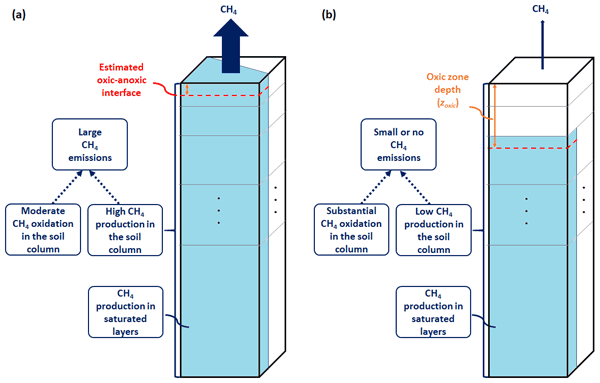
Claude-Michel Nzotungicimpaye, Kirsten Zickfeld, Andrew H. MacDougall, Joe R. Melton, Claire C. Treat, Michael Eby, and Lance F. W. Lesack
Geosci. Model Dev., 14, 6215–6240, https://doi.org/10.5194/gmd-14-6215-2021, https://doi.org/10.5194/gmd-14-6215-2021, 2021
Short summary
Short summary
In this paper, we describe a new wetland methane model (WETMETH) developed for use in Earth system models. WETMETH consists of simple formulations to represent methane production and oxidation in wetlands. We also present an evaluation of the model performance as embedded in the University of Victoria Earth System Climate Model (UVic ESCM). WETMETH is capable of reproducing mean annual methane emissions consistent with present-day estimates from the regional to the global scale.
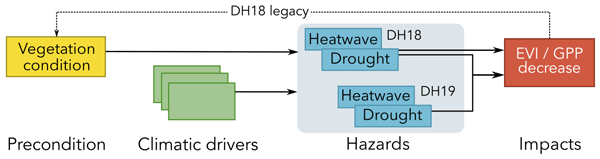
Ana Bastos, René Orth, Markus Reichstein, Philippe Ciais, Nicolas Viovy, Sönke Zaehle, Peter Anthoni, Almut Arneth, Pierre Gentine, Emilie Joetzjer, Sebastian Lienert, Tammas Loughran, Patrick C. McGuire, Sungmin O, Julia Pongratz, and Stephen Sitch
Earth Syst. Dynam., 12, 1015–1035, https://doi.org/10.5194/esd-12-1015-2021, https://doi.org/10.5194/esd-12-1015-2021, 2021
Short summary
Short summary
Temperate biomes in Europe are not prone to recurrent dry and hot conditions in summer. However, these conditions may become more frequent in the coming decades. Because stress conditions can leave legacies for many years, this may result in reduced ecosystem resilience under recurrent stress. We assess vegetation vulnerability to the hot and dry summers in 2018 and 2019 in Europe and find the important role of inter-annual legacy effects from 2018 in modulating the impacts of the 2019 event.
Cited articles
Aalto, T., Tsuruta, A., Mäkelä, J., Müller, J., Tenkanen, M., Burke, E., Chadburn, S., Gao, Y., Mannisenaho, V., Kleinen, T., Lee, H., Leppänen, A., Markkanen, T., Materia, S., Miller, P. A., Peano, D., Peltola, O., Poulter, B., Raivonen, M., Saunois, M., Wårlind, D., and Zaehle, S.: Air temperature and precipitation constraining the modelled wetland methane emissions in a boreal region in northern Europe, Biogeosciences, 22, 323–340, https://doi.org/10.5194/bg-22-323-2025, 2025.
Arora, V. K., Melton, J. R., and Plummer, D.: An assessment of natural methane fluxes simulated by the CLASS-CTEM model, Biogeosciences, 15, 4683–4709, https://doi.org/10.5194/bg-15-4683-2018, 2018.
Balasus, N., Jacob, D. J., Bloom, A. A., East, J. D., Estrada, L. A., Hancock, S. E., He, M., Mooring, T. A., Turner, A. J., and Worden, J. R.: 2019–2024 trends in African livestock and wetland emissions as contributors to the global methane rise, Atmos. Chem. Phys., 26, 4601–4617, https://doi.org/10.5194/acp-26-4601-2026, 2026.
Bansal, S., Post van der Burg, M., Fern, R. R., Jones, J. W., Lo, R., McKenna, O. P., Tangen, B. A., Zhang, Z., and Gleason, R. A.: Large increases in methane emissions expected from North America's largest wetland complex, Sci. Adv., 9, eade1112, https://doi.org/10.1126/sciadv.ade1112, 2023.
Beerling, D. and Woodward, F. I.: Vegetation and the Terrestrial Carbon Cycle: The First 400 Million Years, Cambridge University Press, Cambridge, U.K., New York, NY, 416 pp., ISBN 0-521-80196-6, 2001.
Bernard, J., Salmon, E., Saunois, M., Peng, S., Serrano-Ortiz, P., Berchet, A., Gnanamoorthy, P., Jansen, J., and Ciais, P.: Satellite-based modeling of wetland methane emissions on a global scale (SatWetCH4 1.0), Geosci. Model Dev., 18, 863–883, https://doi.org/10.5194/gmd-18-863-2025, 2025.
Chandra, N., Patra, P. K., Bisht, J. S. H., Ito, A., Umezawa, T., Saigusa, N., Morimoto, S., Aoki, S., Janssens-Maenhout, G., Fujita, R., Takigawa, M., Watanabe, S., Saitoh, N., and Canadell, J. G.: Emissions from the Oil and Gas Sectors, Coal Mining and Ruminant Farming Drive Methane Growth over the Past Three Decades, J. Meteorol. Soc. Jpn. Ser II, 99, 309–337, https://doi.org/10.2151/jmsj.2021-015, 2021.
Chen, T. and Guestrin, C.: XGBoost: A Scalable Tree Boosting System, in: Proceedings of the 22nd ACM SIGKDD International Conference on Knowledge Discovery and Data Mining, arXiv:1603.02754 [cs], 785–794, https://doi.org/10.1145/2939672.2939785, 2016.
Chen, S., Yuan, K., Li, F., Zhu, Q., and Zhuang, Q.: Hysteretic temperature sensitivity in wetland CH4 emission modeling, Agr. Forest Meteorol., 372, 110704, https://doi.org/10.1016/j.agrformet.2025.110704, 2025.
Ciais, P., Zhu, Y., Cai, Y., Lan, X., Michel, S. E., Zheng, B., Zhao, Y., Hauglustaine, D. A., Lin, X., Zhang, Y., Sun, S., Tian, X., Zhao, M., Wang, Y., Chang, J., Dou, X., Liu, Z., Andrew, R., Quinn, C. A., Poulter, B., Ouyang, Z., Yuan, W., Yuan, K., Zhu, Q., Li, F., Pan, N., Tian, H., Yu, X., Rocher-Ros, G., Johnson, M. S., Li, M., Li, M., Feng, D., Raymond, P., Yang, X., Canadell, J. G., Jackson, R. B., Yu, X., Li, Y., Saunois, M., Bousquet, P., and Peng, S.: Why methane surged in the atmosphere during the early 2020s, Science, 391, eadx8262, https://doi.org/10.1126/science.adx8262, 2026.
Copernicus Climate Change Service: ERA5 monthly averaged data on single levels from 1940 to present, Copernicus Climate Change Service (C3S) Climate Data Store (CDS) [data set], https://doi.org/10.24381/cds.f17050d7, 2023.
Crippa, M., Guizzardi, D., Pagani, F., Banja, M., Muntean, M., Schaaf, E., Becker, W., Monforti-Ferrario, F., Quadrelli, R., and Risquez Martin, A.: GHG emissions of all world countries – 2021 Report, Publ. Off. Eur. Union Luxemb., https://doi.org/10.2760/173513, 2021.
Cui, S., Liu, P., Guo, H., Nielsen, C. K., Pullens, J. W. M., Chen, Q., Pugliese, L., and Wu, S.: Wetland hydrological dynamics and methane emissions, Commun. Earth Environ., 5, 470, https://doi.org/10.1038/s43247-024-01635-w, 2024.
East, J. D., Jacob, D. J., Jervis, D., Balasus, N., Estrada, L. A., Hancock, S. E., Sulprizio, M. P., Thomas, J., Wang, X., Chen, Z., Varon, D. J., and Worden, J. R.: Worldwide inference of national methane emissions by inversion of satellite observations with UNFCCC prior estimates, Nat. Commun., 16, 11004, https://doi.org/10.1038/s41467-025-67122-8, 2025.
Espinoza, J.-C., Jimenez, J. C., Marengo, J. A., Schongart, J., Ronchail, J., Lavado-Casimiro, W., and Ribeiro, J. V. M.: The new record of drought and warmth in the Amazon in 2023 related to regional and global climatic features, Sci. Rep., 14, 8107, https://doi.org/10.1038/s41598-024-58782-5, 2024.
Feng, L., Palmer, P. I., Zhu, S., Parker, R. J., and Liu, Y.: Tropical methane emissions explain large fraction of recent changes in global atmospheric methane growth rate, Nat. Commun., 13, 1378, https://doi.org/10.1038/s41467-022-28989-z, 2022.
Feron, S., Malhotra, A., Bansal, S., Fluet-Chouinard, E., McNicol, G., Knox, S. H., Delwiche, K. B., Cordero, R. R., Ouyang, Z., Zhang, Z., Poulter, B., and Jackson, R. B.: Recent increases in annual, seasonal, and extreme methane fluxes driven by changes in climate and vegetation in boreal and temperate wetland ecosystems, Glob. Change Biol., 30, e17131, https://doi.org/10.1111/gcb.17131, 2024.
Gebrechorkos, S. H., Leyland, J., Dadson, S. J., Cohen, S., Slater, L., Wortmann, M., Ashworth, P. J., Bennett, G. L., Boothroyd, R., Cloke, H., Delorme, P., Griffith, H., Hardy, R., Hawker, L., McLelland, S., Neal, J., Nicholas, A., Tatem, A. J., Vahidi, E., Liu, Y., Sheffield, J., Parsons, D. R., and Darby, S. E.: Global-scale evaluation of precipitation datasets for hydrological modelling, Hydrol. Earth Syst. Sci., 28, 3099–3118, https://doi.org/10.5194/hess-28-3099-2024, 2024.
Gedney, N., Huntingford, C., Comyn-Platt, E., and Wiltshire, A.: Significant feedbacks of wetland methane release on climate change and the causes of their uncertainty, Environ. Res. Lett., 14, 084027, https://doi.org/10.1088/1748-9326/ab2726, 2019a.
Gedney, N., Huntingford, C., Comyn-Platt, E., and Wiltshire, A.: Significant feedbacks of wetland methane release on climate change and the causes of their uncertainty, Environ. Res. Lett., 14, 084027, https://doi.org/10.1088/1748-9326/ab2726, 2019b.
Hancock, S. E., Jacob, D. J., Chen, Z., Nesser, H., Davitt, A., Varon, D. J., Sulprizio, M. P., Balasus, N., Estrada, L. A., Cazorla, M., Dawidowski, L., Diez, S., East, J. D., Penn, E., Randles, C. A., Worden, J., Aben, I., Parker, R. J., and Maasakkers, J. D.: Satellite quantification of methane emissions from South American countries: a high-resolution inversion of TROPOMI and GOSAT observations, Atmos. Chem. Phys., 25, 797–817, https://doi.org/10.5194/acp-25-797-2025, 2025.
Hasan, N. A., Chikamoto, Y., and McPhaden, M. J.: The influence of tropical basin interactions on the 2020–2022 double-dip La Niña, Front. Clim., 4, https://doi.org/10.3389/fclim.2022.1001174, 2022.
He, K., Li, W., Zhang, Y., Zeng, A., de Graaf, I. E. M., Aguilos, M., Sun, G., McNulty, S. G., King, J. S., Flanagan, N. E., and Richardson, C. J.: Temperature and Water Levels Collectively Regulate Methane Emissions From Subtropical Freshwater Wetlands, Glob. Biogeochem. Cycles, 39, e2024GB008372, https://doi.org/10.1029/2024GB008372, 2025.
Helbig, M., Waddington, J. M., Alekseychik, P., Amiro, B. D., Aurela, M., Barr, A. G., Black, T. A., Blanken, P. D., Carey, S. K., Chen, J., Chi, J., Desai, A. R., Dunn, A., Euskirchen, E. S., Flanagan, L. B., Forbrich, I., Friborg, T., Grelle, A., Harder, S., Heliasz, M., Humphreys, E. R., Ikawa, H., Isabelle, P.-E., Iwata, H., Jassal, R., Korkiakoski, M., Kurbatova, J., Kutzbach, L., Lindroth, A., Löfvenius, M. O., Lohila, A., Mammarella, I., Marsh, P., Maximov, T., Melton, J. R., Moore, P. A., Nadeau, D. F., Nicholls, E. M., Nilsson, M. B., Ohta, T., Peichl, M., Petrone, R. M., Petrov, R., Prokushkin, A., Quinton, W. L., Reed, D. E., Roulet, N. T., Runkle, B. R. K., Sonnentag, O., Strachan, I. B., Taillardat, P., Tuittila, E.-S., Tuovinen, J.-P., Turner, J., Ueyama, M., Varlagin, A., Wilmking, M., Wofsy, S. C., and Zyrianov, V.: Increasing contribution of peatlands to boreal evapotranspiration in a warming climate, Nat. Clim. Change, 10, 555–560, https://doi.org/10.1038/s41558-020-0763-7, 2020.
Helfter, C., Gondwe, M., Murray-Hudson, M., Makati, A., Lunt, M. F., Palmer, P. I., and Skiba, U.: Phenology is the dominant control of methane emissions in a tropical non-forested wetland, Nat. Commun., 13, 133, https://doi.org/10.1038/s41467-021-27786-4, 2022.
Hersbach, H., Bell, B., Berrisford, P., Hirahara, S., Horányi, A., Muñoz-Sabater, J., Nicolas, J., Peubey, C., Radu, R., Schepers, D., Simmons, A., Soci, C., Abdalla, S., Abellan, X., Balsamo, G., Bechtold, P., Biavati, G., Bidlot, J., Bonavita, M., De Chiara, G., Dahlgren, P., Dee, D., Diamantakis, M., Dragani, R., Flemming, J., Forbes, R., Fuentes, M., Geer, A., Haimberger, L., Healy, S., Hogan, R. J., Hólm, E., Janisková, M., Keeley, S., Laloyaux, P., Lopez, P., Lupu, C., Radnoti, G., de Rosnay, P., Rozum, I., Vamborg, F., Villaume, S., and Thépaut, J.-N.: The ERA5 global reanalysis, Q. J. R. Meteorol. Soc., 146, 1999–2049, https://doi.org/10.1002/qj.3803, 2020.
Hersbach, H., Bell, B., Berrisford, P., Biavati, G., Horányi, A., Muñoz Sabater, J., Nicolas, J., Peubey, C., Radu, R., and Rozum, I.: ERA5 monthly averaged data on pressure levels from 1940 to present, Copernicus Climate Change Service (C3S) Climate Data Store (CDS) [data set], https://doi.org/10.24381/cds.f17050d7, 2023.
Hodson, E. L., Poulter, B., Zimmermann, N. E., Prigent, C., and Kaplan, J. O.: The El Niño–Southern Oscillation and wetland methane interannual variability, Geophys. Res. Lett., 38, https://doi.org/10.1029/2011GL046861, 2011.
Höglund-Isaksson, L., Gómez-Sanabria, A., Klimont, Z., Rafaj, P., and Schöpp, W.: Technical potentials and costs for reducing global anthropogenic methane emissions in the 2050 timeframe – results from the GAINS model, Environ. Res. Commun., 2, 025004, https://doi.org/10.1088/2515-7620/ab7457, 2020.
Hopcroft, P. O., Valdes, P. J., and Beerling, D. J.: Simulating idealized Dansgaard-Oeschger events and their potential impacts on the global methane cycle, Quat. Sci. Rev., 30, 3258–3268, https://doi.org/10.1016/j.quascirev.2011.08.012, 2011.
Hopcroft, P. O., Ramstein, G., Pugh, T. A. M., Hunter, S. J., Murguia-Flores, F., Quiquet, A., Sun, Y., Tan, N., and Valdes, P. J.: Polar amplification of Pliocene climate by elevated trace gas radiative forcing, P. Natl. Acad. Sci. USA, 117, 23401–23407, https://doi.org/10.1073/pnas.2002320117, 2020.
Hyvärinen, S., Tenkanen, M. K., Tsuruta, A., Erkkilä, A., Rautiainen, K., Aaltonen, H., Sasakawa, M., and Aalto, T.: Spring melting season methane emissions in northern high latitude wetlands are governed by the length of the season and presence of permafrost, EGUsphere [preprint], https://doi.org/10.5194/egusphere-2025-2794, 2025.
Ito, A. and Inatomi, M.: Use of a process-based model for assessing the methane budgets of global terrestrial ecosystems and evaluation of uncertainty, Biogeosciences, 9, 759–773, https://doi.org/10.5194/bg-9-759-2012, 2012.
Jackson, R. B., Saunois, M., Martinez, A., Canadell, J. G., Yu, X., Li, M., Poulter, B., Raymond, P. A., Regnier, P., Ciais, P., Davis, S. J., and Patra, P. K.: Human activities now fuel two-thirds of global methane emissions, Environ. Res. Lett., 19, 101002, https://doi.org/10.1088/1748-9326/ad6463, 2024.
Kleinen, T., Brovkin, V., and Schuldt, R. J.: A dynamic model of wetland extent and peat accumulation: results for the Holocene, Biogeosciences, 9, 235–248, https://doi.org/10.5194/bg-9-235-2012, 2012.
Kleinen, T., Mikolajewicz, U., and Brovkin, V.: Terrestrial methane emissions from the Last Glacial Maximum to the preindustrial period, Clim. Past, 16, 575–595, https://doi.org/10.5194/cp-16-575-2020, 2020.
Kleinen, T., Gromov, S., Steil, B., and Brovkin, V.: Atmospheric methane underestimated in future climate projections, Environ. Res. Lett., 16, 094006, https://doi.org/10.1088/1748-9326/ac1814, 2021.
Kleinen, T., Gromov, S., Steil, B., and Brovkin, V.: Atmospheric methane since the last glacial maximum was driven by wetland sources, Clim. Past, 19, 1081–1099, https://doi.org/10.5194/cp-19-1081-2023, 2023.
Knox, S. H., Jackson, R. B., Poulter, B., McNicol, G., Fluet-Chouinard, E., Zhang, Z., Hugelius, G., Bousquet, P., Canadell, J. G., Saunois, M., Papale, D., Chu, H., Keenan, T. F., Baldocchi, D., Torn, M. S., Mammarella, I., Trotta, C., Aurela, M., Bohrer, G., Campbell, D. I., Cescatti, A., Chamberlain, S., Chen, J., Chen, W., Dengel, S., Desai, A. R., Euskirchen, E., Friborg, T., Gasbarra, D., Goded, I., Goeckede, M., Heimann, M., Helbig, M., Hirano, T., Hollinger, D. Y., Iwata, H., Kang, M., Klatt, J., Krauss, K. W., Kutzbach, L., Lohila, A., Mitra, B., Morin, T. H., Nilsson, M. B., Niu, S., Noormets, A., Oechel, W. C., Peichl, M., Peltola, O., Reba, M. L., Richardson, A. D., Runkle, B. R. K., Ryu, Y., Sachs, T., Schäfer, K. V. R., Schmid, H. P., Shurpali, N., Sonnentag, O., Tang, A. C. I., Ueyama, M., Vargas, R., Vesala, T., Ward, E. J., Windham-Myers, L., Wohlfahrt, G., and Zona, D.: FLUXNET-CH4 Synthesis Activity: Objectives, Observations, and Future Directions, B. Am. Meteorol. Soc., https://doi.org/10.1175/BAMS-D-18-0268.1, 2019.
Knox, S. H., Bansal, S., McNicol, G., Schafer, K., Sturtevant, C., Ueyama, M., Valach, A. C., Baldocchi, D., Delwiche, K., Desai, A. R., Euskirchen, E., Liu, J., Lohila, A., Malhotra, A., Melling, L., Riley, W., Runkle, B. R. K., Turner, J., Vargas, R., Zhu, Q., Alto, T., Fluet-Chouinard, E., Goeckede, M., Melton, J. R., Sonnentag, O., Vesala, T., Ward, E., Zhang, Z., Feron, S., Ouyang, Z., Alekseychik, P., Aurela, M., Bohrer, G., Campbell, D. I., Chen, J., Chu, H., Dalmagro, H. J., Goodrich, J. P., Gottschalk, P., Hirano, T., Iwata, H., Jurasinski, G., Kang, M., Koebsch, F., Mammarella, I., Nilsson, M. B., Ono, K., Peichl, M., Peltola, O., Ryu, Y., Sachs, T., Sakabe, A., Sparks, J. P., Tuittila, E.-S., Vourlitis, G. L., Wong, G. X., Windham-Myers, L., Poulter, B., and Jackson, R. B.: Identifying dominant environmental predictors of freshwater wetland methane fluxes across diurnal to seasonal time scales, Glob. Change Biol., 27, 3582–3604, https://doi.org/10.1111/gcb.15661, 2021.
Kursa, M. B. and Rudnicki, W. R.: Feature Selection with the Boruta Package, J. Stat. Softw., 36, 1–13, https://doi.org/10.18637/jss.v036.i11, 2010.
Li, F., Zhu, Q., Yuan, K., Fluet-Chouinard, E., Zhang, X., Wang, J., Knox, S. H., You, H., Chen, M., Li, M., Stern, R., Hoyt, A. M., McNicol, G., Riley, W. J., Peng, S., Poulter, B., Malhotra, A., Cooley, S., Zhang, Z., Hong, S., Chen, Z., Zhu, Z., Raymond, P. A., Ciais, P., and Jackson, R. B.: The underappreciated importance of small wetlands in global methane emissions, Nat. Clim. Change, 1–5, https://doi.org/10.1038/s41558-026-02609-w, 2026b.
Li, M., Kort, E. A., Bloom, A. A., Wu, D., Plant, G., Gerlein-Safdi, C., and Pu, T.: Underestimated Dry Season Methane Emissions from Wetlands in the Pantanal, Environ. Sci. Technol., 58, 3278–3287, https://doi.org/10.1021/acs.est.3c09250, 2024.
Li, M., Li, F., Malhotra, A., Knox, S. H., Stern, R., and Jackson, R. B.: Key Environmental and Ecological Variables of Wetland CH4 and CO2 Fluxes Change With Warming, Earth's Future, 13, e2024EF005751, https://doi.org/10.1029/2024EF005751, 2025.
Li, M., Jackson, R. B., Saunois, M., Ciais, P., Poulter, B., Canadell, J. G., Patra, P. K., Tian, H., Zhang, Z., Fluet-Chouinard, E., Ouyang, Z., Zhang, T., Beerling, D. J., Belikov, D. A., Bousquet, P., Custodio, D., Chandra, N., Dou, X., Gedney, N., Hopcroft, P. O., Hoyt, A. M., Ichii, K., Ito, A., Jain, A. K., Jensen, K., Joos, F., Kleinen, T., Kondo, M., Li, F., Li, T., Liu, X., Maksyutov, S., Malhotra, A., Martinez, A., McDonald, K., Melton, J. R., Miller, P., Müller, J., Niwa, Y., Pan, S., Peng, S., Peng, C., Qin, Z., Raymond, P., Riley, W., Segers, A., Thompson, R. L., Tsuruta, A., Yi, X., Yuan, K., Zhang, W., Zheng, B., Zhu, Q., Zhu, Q., and Zhuang, Q.: Global natural wetland methane emissions (2000–2025) (Version v1), Zenodo [data set], https://doi.org/10.5281/zenodo.18870108, 2026.
Lin, X., Peng, S., Ciais, P., Hauglustaine, D., Lan, X., Liu, G., Ramonet, M., Xi, Y., Yin, Y., Zhang, Z., Bösch, H., Bousquet, P., Chevallier, F., Dong, B., Gerlein-Safdi, C., Halder, S., Parker, R. J., Poulter, B., Pu, T., Remaud, M., Runge, A., Saunois, M., Thompson, R. L., Yoshida, Y., and Zheng, B.: Recent methane surges reveal heightened emissions from tropical inundated areas, Nat. Commun., 15, 10894, https://doi.org/10.1038/s41467-024-55266-y, 2024.
Maksyutov, S., Oda, T., Saito, M., Janardanan, R., Belikov, D., Kaiser, J. W., Zhuravlev, R., Ganshin, A., Valsala, V. K., Andrews, A., Chmura, L., Dlugokencky, E., Haszpra, L., Langenfelds, R. L., Machida, T., Nakazawa, T., Ramonet, M., Sweeney, C., and Worthy, D.: Technical note: A high-resolution inverse modelling technique for estimating surface CO2 fluxes based on the NIES-TM–FLEXPART coupled transport model and its adjoint, Atmos. Chem. Phys., 21, 1245–1266, https://doi.org/10.5194/acp-21-1245-2021, 2021.
McNicol, G., Fluet-Chouinard, E., Ouyang, Z., Knox, S., Zhang, Z., Aalto, T., Bansal, S., Chang, K.-Y., Chen, M., Delwiche, K., Feron, S., Goeckede, M., Liu, J., Malhotra, A., Melton, J. R., Riley, W., Vargas, R., Yuan, K., Ying, Q., Zhu, Q., Alekseychik, P., Aurela, M., Billesbach, D. P., Campbell, D. I., Chen, J., Chu, H., Desai, A. R., Euskirchen, E., Goodrich, J., Griffis, T., Helbig, M., Hirano, T., Iwata, H., Jurasinski, G., King, J., Koebsch, F., Kolka, R., Krauss, K., Lohila, A., Mammarella, I., Nilson, M., Noormets, A., Oechel, W., Peichl, M., Sachs, T., Sakabe, A., Schulze, C., Sonnentag, O., Sullivan, R. C., Tuittila, E.-S., Ueyama, M., Vesala, T., Ward, E., Wille, C., Wong, G. X., Zona, D., Windham-Myers, L., Poulter, B., and Jackson, R. B.: Upscaling Wetland Methane Emissions From the FLUXNET-CH4 Eddy Covariance Network (UpCH4 v1.0): Model Development, Network Assessment, and Budget Comparison, AGU Adv., 4, e2023AV000956, https://doi.org/10.1029/2023AV000956, 2023.
Melton, J. R. and Arora, V. K.: Competition between plant functional types in the Canadian Terrestrial Ecosystem Model (CTEM) v. 2.0, Geosci. Model Dev., 9, 323–361, https://doi.org/10.5194/gmd-9-323-2016, 2016.
Murguia-Flores, F., Jaramillo, V. J., and Gallego-Sala, A.: Assessing methane emissions from tropical wetlands: Uncertainties from natural variability and drivers at the global scale, Global Biogeochem. Cy., 37, e2022GB007601, https://doi.org/10.1029/2022GB007601, 2023.
Nisbet, E. G., Manning, M. R., Dlugokencky, E. J., Michel, S. E., Lan, X., Röckmann, T., Denier van der Gon, H. A. C., Schmitt, J., Palmer, P. I., Dyonisius, M. N., Oh, Y., Fisher, R. E., Lowry, D., France, J. L., White, J. W. C., Brailsford, G., and Bromley, T.: Atmospheric Methane: Comparison Between Methane's Record in 2006–2022 and During Glacial Terminations, Glob. Biogeochem. Cycles, 37, e2023GB007875, https://doi.org/10.1029/2023GB007875, 2023.
Niwa, Y., Ishijima, K., Ito, A., and Iida, Y.: Toward a long-term atmospheric CO2 inversion for elucidating natural carbon fluxes: technical notes of NISMON-CO2 v2021.1, Prog. Earth Planet. Sci., 9, 42, https://doi.org/10.1186/s40645-022-00502-6, 2022.
Niwa, Y., Tohjima, Y., Terao, Y., Saeki, T., Ito, A., Umezawa, T., Yamada, K., Sasakawa, M., Machida, T., Nakaoka, S.-I., Nara, H., Tanimoto, H., Mukai, H., Yoshida, Y., Morimoto, S., Takatsuji, S., Tsuboi, K., Sawa, Y., Matsueda, H., Ishijima, K., Fujita, R., Goto, D., Lan, X., Schuldt, K., Heliasz, M., Biermann, T., Chmura, L., Necki, J., Xueref-Remy, I., and Sferlazzo, D.: Multi-observational estimation of regional and sectoral emission contributions to the persistent high growth rate of atmospheric CH4 for 2020–2022, Atmos. Chem. Phys., 25, 6757–6785, https://doi.org/10.5194/acp-25-6757-2025, 2025.
Parker, R. J., Boesch, H., McNorton, J., Comyn-Platt, E., Gloor, M., Wilson, C., Chipperfield, M. P., Hayman, G. D., and Bloom, A. A.: Evaluating year-to-year anomalies in tropical wetland methane emissions using satellite CH4 observations, Remote Sens. Environ., 211, 261–275, https://doi.org/10.1016/j.rse.2018.02.011, 2018.
Patra, P. K., Takigawa, M., Watanabe, S., Chandra, N., Ishijima, K., and Yamashita, Y.: Improved Chemical Tracer Simulation by MIROC4.0-based Atmospheric Chemistry-Transport Model (MIROC4-ACTM), SOLA, 14, 91–96, https://doi.org/10.2151/sola.2018-016, 2018.
Peng, S., Lin, X., Thompson, R. L., Xi, Y., Liu, G., Hauglustaine, D., Lan, X., Poulter, B., Ramonet, M., Saunois, M., Yin, Y., Zhang, Z., Zheng, B., and Ciais, P.: Wetland emission and atmospheric sink changes explain methane growth in 2020, Nature, 612, 477–482, https://doi.org/10.1038/s41586-022-05447-w, 2022.
Pu, T., Gerlein-Safdi, C., Xiong, Y., Li, M., Kort, E. A., and Bloom, A. A.: Berkeley-RWAWC: A New CYGNSS-Based Watermask Unveils Unique Observations of Seasonal Dynamics in the Tropics, Water Resour. Res., 60, e2024WR037060, https://doi.org/10.1029/2024WR037060, 2024.
Qu, Z., Jacob, D. J., Bloom, A. A., Worden, J. R., Parker, R. J., and Boesch, H.: Inverse modeling of 2010–2022 satellite observations shows that inundation of the wet tropics drove the 2020–2022 methane surge, P. Natl. Acad. Sci. USA, 121, e2402730121, https://doi.org/10.1073/pnas.2402730121, 2024.
Quinn, C. A., Colligan, T., Ward, E. J., East, J. D., Lim, Y., Lee, E., Koster, R. D., and Poulter, B.: Amazonia Wetland Methane Emission Decrease in 2023: Seasonal Forecasting of Global Wetlands Highlights Monitoring Targets in Critical Ecosystems, J. Adv. Model. Earth Syst., 17, e2025MS005510, https://doi.org/10.1029/2025MS005510, 2025.
Riley, W. J., Subin, Z. M., Lawrence, D. M., Swenson, S. C., Torn, M. S., Meng, L., Mahowald, N. M., and Hess, P.: Barriers to predicting changes in global terrestrial methane fluxes: analyses using CLM4Me, a methane biogeochemistry model integrated in CESM, Biogeosciences, 8, 1925–1953, https://doi.org/10.5194/bg-8-1925-2011, 2011.
Ringeval, B., Friedlingstein, P., Koven, C., Ciais, P., de Noblet-Ducoudré, N., Decharme, B., and Cadule, P.: Climate-CH4 feedback from wetlands and its interaction with the climate-CO2 feedback, Biogeosciences, 8, 2137–2157, https://doi.org/10.5194/bg-8-2137-2011, 2011.
Roberts, C. D., Senan, R., Molteni, F., Boussetta, S., Mayer, M., and Keeley, S. P. E.: Climate model configurations of the ECMWF Integrated Forecasting System (ECMWF-IFS cycle 43r1) for HighResMIP, Geosci. Model Dev., 11, 3681–3712, https://doi.org/10.5194/gmd-11-3681-2018, 2018.
Saunois, M., Martinez, A., Poulter, B., Zhang, Z., Raymond, P. A., Regnier, P., Canadell, J. G., Jackson, R. B., Patra, P. K., Bousquet, P., Ciais, P., Dlugokencky, E. J., Lan, X., Allen, G. H., Bastviken, D., Beerling, D. J., Belikov, D. A., Blake, D. R., Castaldi, S., Crippa, M., Deemer, B. R., Dennison, F., Etiope, G., Gedney, N., Höglund-Isaksson, L., Holgerson, M. A., Hopcroft, P. O., Hugelius, G., Ito, A., Jain, A. K., Janardanan, R., Johnson, M. S., Kleinen, T., Krummel, P. B., Lauerwald, R., Li, T., Liu, X., McDonald, K. C., Melton, J. R., Mühle, J., Müller, J., Murguia-Flores, F., Niwa, Y., Noce, S., Pan, S., Parker, R. J., Peng, C., Ramonet, M., Riley, W. J., Rocher-Ros, G., Rosentreter, J. A., Sasakawa, M., Segers, A., Smith, S. J., Stanley, E. H., Thanwerdas, J., Tian, H., Tsuruta, A., Tubiello, F. N., Weber, T. S., van der Werf, G. R., Worthy, D. E. J., Xi, Y., Yoshida, Y., Zhang, W., Zheng, B., Zhu, Q., Zhu, Q., and Zhuang, Q.: Global Methane Budget 2000–2020, Earth Syst. Sci. Data, 17, 1873–1958, https://doi.org/10.5194/essd-17-1873-2025, 2025.
Shu, S., Jain, A. K., and Kheshgi, H. S.: Investigating Wetland and Nonwetland Soil Methane Emissions and Sinks Across the Contiguous United States Using a Land Surface Model, Glob. Biogeochem. Cycles, 34, e2019GB006251, https://doi.org/10.1029/2019GB006251, 2020.
Spahni, R., Wania, R., Neef, L., van Weele, M., Pison, I., Bousquet, P., Frankenberg, C., Foster, P. N., Joos, F., Prentice, I. C., and van Velthoven, P.: Constraining global methane emissions and uptake by ecosystems, Biogeosciences, 8, 1643–1665, https://doi.org/10.5194/bg-8-1643-2011, 2011.
Stavert, A. R., Saunois, M., Canadell, J. G., Poulter, B., Jackson, R. B., Regnier, P., Lauerwald, R., Raymond, P. A., Allen, G. H., Patra, P. K., Bergamaschi, P., Bousquet, P., Chandra, N., Ciais, P., Gustafson, A., Ishizawa, M., Ito, A., Kleinen, T., Maksyutov, S., McNorton, J., Melton, J. R., Müller, J., Niwa, Y., Peng, S., Riley, W. J., Segers, A., Tian, H., Tsuruta, A., Yin, Y., Zhang, Z., Zheng, B., and Zhuang, Q.: Regional trends and drivers of the global methane budget, Glob. Change Biol., 28, 182–200, https://doi.org/10.1111/gcb.15901, 2022.
Stocker, B. D., Spahni, R., and Joos, F.: DYPTOP: a cost-efficient TOPMODEL implementation to simulate sub-grid spatio-temporal dynamics of global wetlands and peatlands, Geosci. Model Dev., 7, 3089–3110, https://doi.org/10.5194/gmd-7-3089-2014, 2014.
Thanwerdas, J., Saunois, M., Berchet, A., Pison, I., Vaughn, B. H., Michel, S. E., and Bousquet, P.: Variational inverse modeling within the Community Inversion Framework v1.1 to assimilate δ13C(CH4) and CH4: a case study with model LMDz-SACS, Geosci. Model Dev., 15, 4831–4851, https://doi.org/10.5194/gmd-15-4831-2022, 2022.
Tian, T., Yang, S., Høyer, J. L., Nielsen-Englyst, P., and Singha, S.: Cooler Arctic surface temperatures simulated by climate models are closer to satellite-based data than the ERA5 reanalysis, Commun. Earth Environ., 5, 111, https://doi.org/10.1038/s43247-024-01276-z, 2024.
Toet, S., Ineson, P., Peacock, S., and Ashmore, M.: Elevated ozone reduces methane emissions from peatland mesocosms, Glob. Change Biol., 17, 288–296, https://doi.org/10.1111/j.1365-2486.2010.02267.x, 2011.
Tsuruta, A., Aalto, T., Backman, L., Hakkarainen, J., van der Laan-Luijkx, I. T., Krol, M. C., Spahni, R., Houweling, S., Laine, M., Dlugokencky, E., Gomez-Pelaez, A. J., van der Schoot, M., Langenfelds, R., Ellul, R., Arduini, J., Apadula, F., Gerbig, C., Feist, D. G., Kivi, R., Yoshida, Y., and Peters, W.: Global methane emission estimates for 2000–2012 from CarbonTracker Europe-CH4 v1.0, Geosci. Model Dev., 10, 1261–1289, https://doi.org/10.5194/gmd-10-1261-2017, 2017.
Tyystjärvi, V., Markkanen, T., Backman, L., Raivonen, M., Leppänen, A., Li, X., Ojanen, P., Minkkinen, K., Hautala, R., Peltoniemi, M., Anttila, J., Laiho, R., Lohila, A., Mäkipää, R., and Aalto, T.: Future methane fluxes of peatlands are controlled by management practices and fluctuations in hydrological conditions due to climatic variability, Biogeosciences, 21, 5745–5771, https://doi.org/10.5194/bg-21-5745-2024, 2024.
Wang, F., Maksyutov, S., Tsuruta, A., Janardanan, R., Ito, A., Sasakawa, M., Machida, T., Morino, I., Yoshida, Y., Kaiser, J. W., Janssens-Maenhout, G., Dlugokencky, E. J., Mammarella, I., Lavric, J. V., and Matsunaga, T.: Methane Emission Estimates by the Global High-Resolution Inverse Model Using National Inventories, Remote Sens., 11, 2489, https://doi.org/10.3390/rs11212489, 2019.
Xu, X., Sharma, P., Shu, S., Lin, T.-S., Ciais, P., Tubiello, F. N., Smith, P., Campbell, N., and Jain, A. K.: Global greenhouse gas emissions from animal-based foods are twice those of plant-based foods, Nat. Food, 2, 724–732, https://doi.org/10.1038/s43016-021-00358-x, 2021.
Yuan, K., Zhu, Q., Li, F., Riley, W. J., Torn, M., Chu, H., McNicol, G., Chen, M., Knox, S., Delwiche, K., Wu, H., Baldocchi, D., Ma, H., Desai, A. R., Chen, J., Sachs, T., Ueyama, M., Sonnentag, O., Helbig, M., Tuittila, E.-S., Jurasinski, G., Koebsch, F., Campbell, D., Schmid, H. P., Lohila, A., Goeckede, M., Nilsson, M. B., Friborg, T., Jansen, J., Zona, D., Euskirchen, E., Ward, E. J., Bohrer, G., Jin, Z., Liu, L., Iwata, H., Goodrich, J., and Jackson, R.: Causality guided machine learning model on wetland CH4 emissions across global wetlands, Agric. For. Meteorol., 324, 109115, https://doi.org/10.1016/j.agrformet.2022.109115, 2022.
Yuan, K., Li, F., McNicol, G., Chen, M., Hoyt, A., Knox, S., Riley, W. J., Jackson, R., and Zhu, Q.: Boreal–Arctic wetland methane emissions modulated by warming and vegetation activity, Nat. Clim. Change, 14, 282–288, https://doi.org/10.1038/s41558-024-01933-3, 2024.
Yvon-Durocher, G., Allen, A. P., Bastviken, D., Conrad, R., Gudasz, C., St-Pierre, A., Thanh-Duc, N., and del Giorgio, P. A.: Methane fluxes show consistent temperature dependence across microbial to ecosystem scales, Nature, 507, 488–491, https://doi.org/10.1038/nature13164, 2014.
Zhang, Z., Zimmermann, N. E., Kaplan, J. O., and Poulter, B.: Modeling spatiotemporal dynamics of global wetlands: comprehensive evaluation of a new sub-grid TOPMODEL parameterization and uncertainties, Biogeosciences, 13, 1387–1408, https://doi.org/10.5194/bg-13-1387-2016, 2016.
Zhang, Z., Zimmermann, N. E., Calle, L., Hurtt, G., Chatterjee, A., and Poulter, B.: Enhanced response of global wetland methane emissions to the 2015–2016 El Niño-Southern Oscillation event, Environ. Res. Lett., 13, 074009, https://doi.org/10.1088/1748-9326/aac939, 2018.
Zhang, X., Xu, X., Jia, G., Poulter, B., and Zhang, Z.: Hiatus of wetland methane emissions associated with recent La Niña episodes in the Asian monsoon region, Clim. Dynam., 54, 4095–4107, 2020.
Zhang, Z., Poulter, B., Feldman, A. F., Ying, Q., Ciais, P., Peng, S., and Li, X.: Recent intensification of wetland methane feedback, Nat. Clim. Change, 13, 430–433, https://doi.org/10.1038/s41558-023-01629-0, 2023.
Zhang, Z., Poulter, B., Melton, J. R., Riley, W. J., Allen, G. H., Beerling, D. J., Bousquet, P., Canadell, J. G., Fluet-Chouinard, E., Ciais, P., Gedney, N., Hopcroft, P. O., Ito, A., Jackson, R. B., Jain, A. K., Jensen, K., Joos, F., Kleinen, T., Knox, S. H., Li, T., Li, X., Liu, X., McDonald, K., McNicol, G., Miller, P. A., Müller, J., Patra, P. K., Peng, C., Peng, S., Qin, Z., Riggs, R. M., Saunois, M., Sun, Q., Tian, H., Xu, X., Yao, Y., Xi, Y., Zhang, W., Zhu, Q., Zhu, Q., and Zhuang, Q.: Ensemble estimates of global wetland methane emissions over 2000–2020, Biogeosciences, 22, 305–321, https://doi.org/10.5194/bg-22-305-2025, 2025.
Zheng, B., Chevallier, F., Ciais, P., Yin, Y., and Wang, Y.: On the Role of the Flaming to Smoldering Transition in the Seasonal Cycle of African Fire Emissions, Geophys. Res. Lett., 45, 11998–12007, https://doi.org/10.1029/2018GL079092, 2018a.
Zheng, B., Chevallier, F., Ciais, P., Yin, Y., Deeter, M. N., Worden, H. M., Wang, Y., Zhang, Q., and He, K.: Rapid decline in carbon monoxide emissions and export from East Asia between years 2005 and 2016, Environ. Res. Lett., 13, 044007, https://doi.org/10.1088/1748-9326/aab2b3, 2018b.
Zheng, B., Chevallier, F., Yin, Y., Ciais, P., Fortems-Cheiney, A., Deeter, M. N., Parker, R. J., Wang, Y., Worden, H. M., and Zhao, Y.: Global atmospheric carbon monoxide budget 2000–2017 inferred from multi-species atmospheric inversions, Earth Syst. Sci. Data, 11, 1411–1436, https://doi.org/10.5194/essd-11-1411-2019, 2019.
Zhu, Q., Peng, C., Ciais, P., Jiang, H., Liu, J., Bousquet, P., Li, S., Chang, J., Fang, X., Zhou, X., Chen, H., Liu, S., Lin, G., Gong, P., Wang, M., Wang, H., Xiang, W., and Chen, J.: Interannual variation in methane emissions from tropical wetlands triggered by repeated El Niño Southern Oscillation, Global Change Biol., 23, 4706–4716, 2017.
Zhu, Q., Yuan, K., Li, F., Riley, W. J., Hoyt, A., Jackson, R., McNicol, G., Chen, M., Knox, S. H., Briner, O., Beerling, D., Gedney, N., Hopcroft, P. O., Ito, A., Jain, A. K., Jensen, K., Kleinen, T., Li, T., Liu, X., McDonald, K. C., Melton, J. R., Miller, P. A., Müller, J., Peng, C., Poulter, B., Qin, Z., Peng, S., Tian, H., Xu, X., Yao, Y., Xi, Y., Zhang, Z., Zhang, W., Zhu, Q., and Zhuang, Q.: Critical needs to close monitoring gaps in pan-tropical wetland CH4 emissions, Environ. Res. Lett., 19, 114046, https://doi.org/10.1088/1748-9326/ad8019, 2024.
Zhu, Q., Jacob, D. J., Yuan, K., Li, F., Runkle, B. R. K., Chen, M., Bloom, A. A., Poulter, B., East, J. D., Riley, W. J., McNicol, G., Worden, J., Frankenberg, C., and Halabisky, M.: Advancements and opportunities to improve bottom–up estimates of global wetland methane emissions, Environ. Res. Lett., 20, 023001, https://doi.org/10.1088/1748-9326/adad02, 2025.
Zona, D., Gioli, B., Commane, R., Lindaas, J., Wofsy, S. C., Miller, C. E., Dinardo, S. J., Dengel, S., Sweeney, C., Karion, A., Chang, R. Y.-W., Henderson, J. M., Murphy, P. C., Goodrich, J. P., Moreaux, V., Liljedahl, A., Watts, J. D., Kimball, J. S., Lipson, D. A., and Oechel, W. C.: Cold season emissions dominate the Arctic tundra methane budget, P. Natl. Acad. Sci. USA, 113, 40–45, https://doi.org/10.1073/pnas.1516017113, 2016.
Editorial statement
This article describes a new methodology to evaluate CH4 emissions from wetlands on a global scale, providing a scalable capacity to frequently update global emission estimates, such as those presented in the Global Carbon Budget.
This article describes a new methodology to evaluate CH4 emissions from wetlands on a global...
Short summary
We proposed a framework that combines machine-learning and climate data to predict global natural vegetated wetland methane emissions for 2000–2025. We found that although total global emissions remained stable in the post-2020s, Northern Hemisphere emissions surged whilst tropical emissions fell. This approach allows us to rapidly monitor emissions and provides early warnings for climate impacts.
We proposed a framework that combines machine-learning and climate data to predict global...


Altmetrics
Final-revised paper
Preprint