Articles | Volume 18, issue 4
https://doi.org/10.5194/essd-18-2549-2026
© Author(s) 2026. This work is distributed under
the Creative Commons Attribution 4.0 License.
the Creative Commons Attribution 4.0 License.
https://doi.org/10.5194/essd-18-2549-2026
© Author(s) 2026. This work is distributed under
the Creative Commons Attribution 4.0 License.
the Creative Commons Attribution 4.0 License.
Data review article
| 
09 Apr 2026
Data review article |
| 09 Apr 2026
| 09 Apr 2026
Differences in anthropogenic greenhouse gas emissions estimates explained
William F. Lamb
CORRESPONDING AUTHOR

Potsdam Institute for Climate Impact Research (PIK), Member of the Leibniz Association, Potsdam, Germany
Priestley Centre for Climate Futures, University of Leeds, Leeds, United Kingdom
Robbie M. Andrew
CICERO Center for International Climate Research, Oslo, Norway
Matthew Jones
Tyndall Centre for Climate Change Research, School of Environmental Sciences, University of East Anglia, Norwich Research Park, Norwich, NR4 7TJ, UK
Zebedee Nicholls
Energy, Climate and Environment Program, International Institute for Applied Systems Analysis (IIASA), Laxenburg, Austria
Climate Resource S Gmbh, Berlin, Germany
School of Geography, Earth and Atmospheric Sciences, The University of Melbourne, Parkville, Victoria, Australia
Glen P. Peters
CICERO Center for International Climate Research, Oslo, Norway
Chris Smith
Department of Water and Climate, Vrije Universiteit Brussel, Brussels, Belgium
Energy, Climate and Environment Program, International Institute for Applied Systems Analysis (IIASA), Laxenburg, Austria
Marielle Saunois
Laboratoire des Sciences du climat et de l'Environnement, LSCE-IPSL (CEA-CNRS-UVSQ), Université Paris-Saclay, 91191 Gif-sur-Yvette, France
Giacomo Grassi
European Commission, Joint Research Centre (JRC), Ispra, Italy
Julia Pongratz
Ludwig-Maximilians-Universität München, Munich, Germany
Steven J. Smith
Center for Global Sustainability, School of Public Policy, University of Maryland, College Park, MD, USA
Francesco N. Tubiello
Statistics Division, Food and Agriculture Organization of the United Nations, Via Terme di Caracalla, Rome 00153 Italy
Monica Crippa
European Commission, Joint Research Centre (JRC), Ispra, Italy
Matthew Gidden
Energy, Climate and Environment Program, International Institute for Applied Systems Analysis (IIASA), Laxenburg, Austria
Center for Global Sustainability, School of Public Policy, University of Maryland, College Park, MD, USA
Pierre Friedlingstein
Faculty of Environment, Science and Economy, University of Exeter, Exeter, EX4 4QF, UK
Laboratoire de Météorologie Dynamique, Institut Pierre-Simon Laplace, CNRS, École Normale Supérieure, Université PSL, Sorbonne Université, École Polytechnique, Paris, France
Jan Minx
Potsdam Institute for Climate Impact Research (PIK), Member of the Leibniz Association, Potsdam, Germany
Priestley Centre for Climate Futures, University of Leeds, Leeds, United Kingdom
Piers M. Forster
Priestley Centre for Climate Futures, University of Leeds, Leeds, United Kingdom
Related authors
Piers M. Forster, Tristram Walsh, Chris Smith, William F. Lamb, Robin Lamboll, Christophe Cassou, Mathias Hauser, Zeke Hausfather, June-Yi Lee, Matthew D. Palmer, Karina von Schuckmann, Aimée B. A. Slangen, Sophie Szopa, Blair Trewin, Jeongeun Yun, Nathan P. Gillett, Stuart Jenkins, H. Damon Matthews, Krishnan Raghavan, Aurélien Ribes, Joeri Rogelj, Debbie Rosen, Xuebin Zhang, Myles Allen, Robbie M. Andrew, Chris Atkinson, Richard A. Betts, Antonio Bombelli, Samantha N. Burgess, Lijing Cheng, Helen E. Claxton, Pierre Friedlingstein, Thomas L. Frölicher, Catia M. Domingues, Thomas Gasser, Catherine H. Gregory, Rachel M. Hoesly, Daniel Huppmann, Masayoshi Ishii, Christopher Kadow, Alexia Karwat, John Kennedy, Rachel E. Killick, Mahesh V. M. Kovilakam, Paul B. Krummel, Xin Lan, Jean-François Lamarque, Aurélien Liné, Belén Martín-Míguez, Didier P. Monselesan, Colin Morice, Jens Mühle, Pino Mussak, Glen P. Peters, Anna Pirani, Julia Pongratz, Matthew Rigby, Robert Rohde, Abhishek Savita, Sonia I. Seneviratne, Steven J. Smith, Ghassan Taha, Caterina Tassone, Peter Thorne, Christopher Wells, Luke M. Western, Guido R. van der Werf, Susan E. Wijffels, Marco Zecchetto, Junting Zhong, Xiao-Ye Zhang, Valérie Masson-Delmotte, and Panmao Zhai
Earth Syst. Sci. Data, 18, 3889–3933, https://doi.org/10.5194/essd-18-3889-2026, https://doi.org/10.5194/essd-18-3889-2026, 2026
Short summary
Short summary
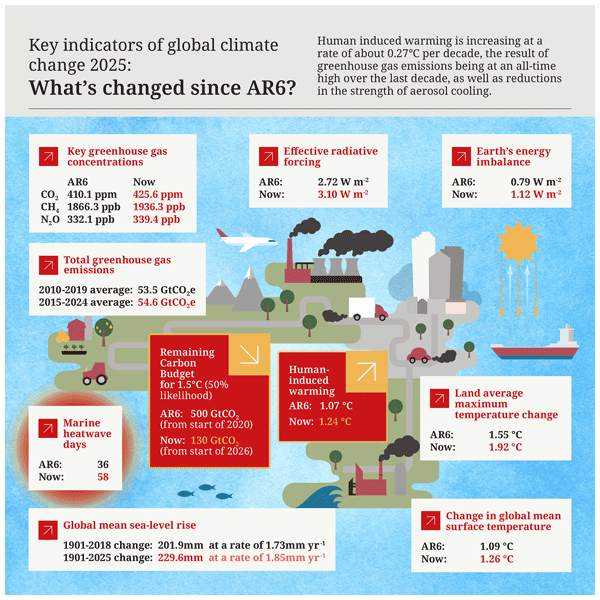
We give our annual update of key climate indicators. Our work quantifies the human contribution to global warming and the pace of climate change. This represents a large effort by the international community akin to an Intergovernmental Panel on Climate Change (IPCC) report.
Piers M. Forster, Chris Smith, Tristram Walsh, William F. Lamb, Robin Lamboll, Bradley Hall, Mathias Hauser, Aurélien Ribes, Debbie Rosen, Nathan P. Gillett, Matthew D. Palmer, Joeri Rogelj, Karina von Schuckmann, Blair Trewin, Myles Allen, Robbie Andrew, Richard A. Betts, Alex Borger, Tim Boyer, Jiddu A. Broersma, Carlo Buontempo, Samantha Burgess, Chiara Cagnazzo, Lijing Cheng, Pierre Friedlingstein, Andrew Gettelman, Johannes Gütschow, Masayoshi Ishii, Stuart Jenkins, Xin Lan, Colin Morice, Jens Mühle, Christopher Kadow, John Kennedy, Rachel E. Killick, Paul B. Krummel, Jan C. Minx, Gunnar Myhre, Vaishali Naik, Glen P. Peters, Anna Pirani, Julia Pongratz, Carl-Friedrich Schleussner, Sonia I. Seneviratne, Sophie Szopa, Peter Thorne, Mahesh V. M. Kovilakam, Elisa Majamäki, Jukka-Pekka Jalkanen, Margreet van Marle, Rachel M. Hoesly, Robert Rohde, Dominik Schumacher, Guido van der Werf, Russell Vose, Kirsten Zickfeld, Xuebin Zhang, Valérie Masson-Delmotte, and Panmao Zhai
Earth Syst. Sci. Data, 16, 2625–2658, https://doi.org/10.5194/essd-16-2625-2024, https://doi.org/10.5194/essd-16-2625-2024, 2024
Short summary
Short summary
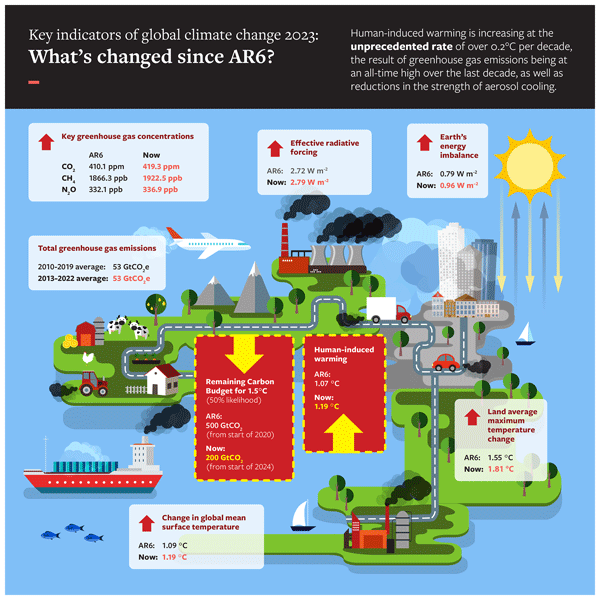
This paper tracks some key indicators of global warming through time, from 1850 through to the end of 2023. It is designed to give an authoritative estimate of global warming to date and its causes. We find that in 2023, global warming reached 1.3 °C and is increasing at over 0.2 °C per decade. This is caused by all-time-high greenhouse gas emissions.
Piers M. Forster, Christopher J. Smith, Tristram Walsh, William F. Lamb, Robin Lamboll, Mathias Hauser, Aurélien Ribes, Debbie Rosen, Nathan Gillett, Matthew D. Palmer, Joeri Rogelj, Karina von Schuckmann, Sonia I. Seneviratne, Blair Trewin, Xuebin Zhang, Myles Allen, Robbie Andrew, Arlene Birt, Alex Borger, Tim Boyer, Jiddu A. Broersma, Lijing Cheng, Frank Dentener, Pierre Friedlingstein, José M. Gutiérrez, Johannes Gütschow, Bradley Hall, Masayoshi Ishii, Stuart Jenkins, Xin Lan, June-Yi Lee, Colin Morice, Christopher Kadow, John Kennedy, Rachel Killick, Jan C. Minx, Vaishali Naik, Glen P. Peters, Anna Pirani, Julia Pongratz, Carl-Friedrich Schleussner, Sophie Szopa, Peter Thorne, Robert Rohde, Maisa Rojas Corradi, Dominik Schumacher, Russell Vose, Kirsten Zickfeld, Valérie Masson-Delmotte, and Panmao Zhai
Earth Syst. Sci. Data, 15, 2295–2327, https://doi.org/10.5194/essd-15-2295-2023, https://doi.org/10.5194/essd-15-2295-2023, 2023
Short summary
Short summary
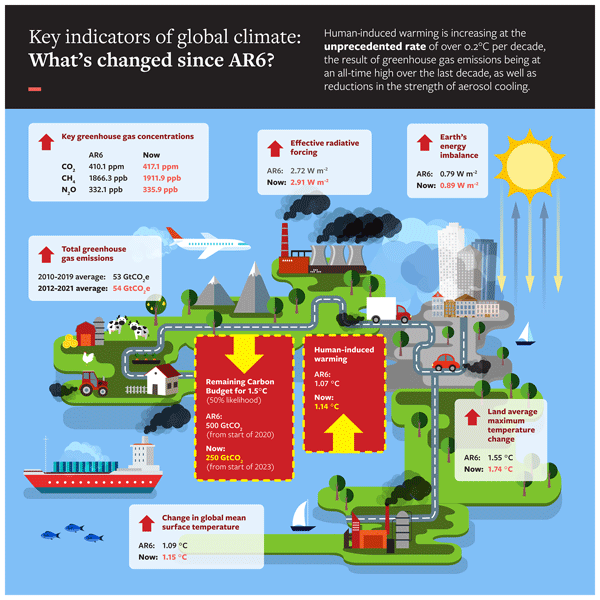
This is a critical decade for climate action, but there is no annual tracking of the level of human-induced warming. We build on the Intergovernmental Panel on Climate Change assessment reports that are authoritative but published infrequently to create a set of key global climate indicators that can be tracked through time. Our hope is that this becomes an important annual publication that policymakers, media, scientists and the public can refer to.
Jan C. Minx, William F. Lamb, Robbie M. Andrew, Josep G. Canadell, Monica Crippa, Niklas Döbbeling, Piers M. Forster, Diego Guizzardi, Jos Olivier, Glen P. Peters, Julia Pongratz, Andy Reisinger, Matthew Rigby, Marielle Saunois, Steven J. Smith, Efisio Solazzo, and Hanqin Tian
Earth Syst. Sci. Data, 13, 5213–5252, https://doi.org/10.5194/essd-13-5213-2021, https://doi.org/10.5194/essd-13-5213-2021, 2021
Short summary
Short summary
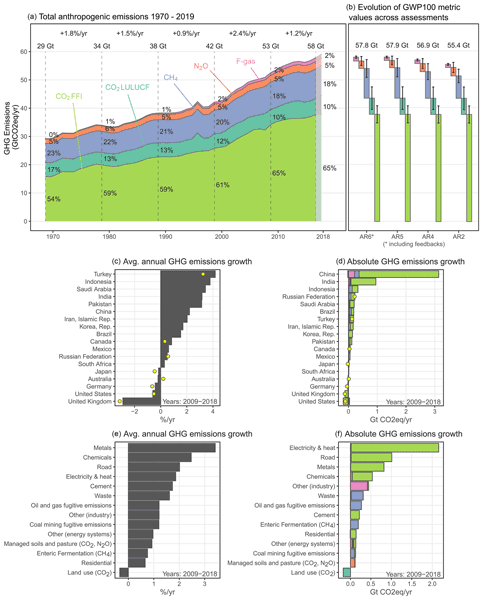
We provide a synthetic dataset on anthropogenic greenhouse gas (GHG) emissions for 1970–2018 with a fast-track extension to 2019. We show that GHG emissions continued to rise across all gases and sectors. Annual average GHG emissions growth slowed, but absolute decadal increases have never been higher in human history. We identify a number of data gaps and data quality issues in global inventories and highlight their importance for monitoring progress towards international climate goals.
William Schoenberg, Benjamin Blanz, Jefferson K. Rajah, Beniamino Callegari, Christopher Wells, Theresia B. Putranti, Francisco Mahu, Maria Molina, Alexandre C. Köberle, Catherine Li, Wanderson Costa, David Collste, Karel Zwetsloot, Jannes Breier, Lennart Ramme, Chris Smith, and Cecilie Mauritzen
EGUsphere, https://doi.org/10.5194/egusphere-2026-5980, https://doi.org/10.5194/egusphere-2026-5980, 2026
This preprint is open for discussion and under review for Geoscientific Model Development (GMD).
Short summary
Short summary
We document an updated global simulation model, FRIDA v3.1, used to explore how climate, society, technology, land and the economy interact over time. The model reproduces historical trends and explores a myriad of possible futures while capturing new links among human decisions, climate impacts and economic change. Results show how changes can create wider effects than anticipated, providing a broader tool for exploring risk, uncertainty and the consequences of policy choices.
Jens Terhaar, Laurent Bopp, Pierre Friedlingstein, Thomas Frölicher, Helene Hollitzer, Tatiana Ilyina, Lester Kwiatkowski, Paul Lerner, Hongmei Li, Anastasia Romanou, Jörg Schwinger, Roland Séférian, and Aaron Wienkers
EGUsphere, https://doi.org/10.5194/egusphere-2026-5757, https://doi.org/10.5194/egusphere-2026-5757, 2026
This preprint is open for discussion and under review for Biogeosciences (BG).
Short summary
Short summary
The ocean absorbs about 30% of CO2 emissions, but how much it will keep absorbing as CO2 levels rise and the climate warms is highly uncertain. Combining climate models with observations, we show models underestimate both the ocean CO2 uptake with increasing atmospheric CO2 and how strongly this uptake weakens with warming, and that the two are linked. Our tighter estimate reduces uncertainty in how much emitted CO2 stays in the atmosphere, and in the warming caused by future emissions.
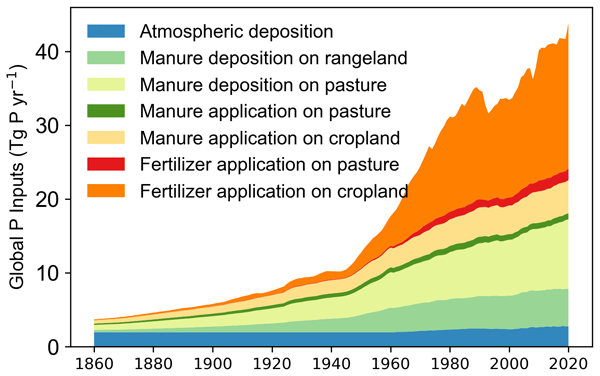
Zihao Bian, Hao Shi, Rui Li, Fei Lun, Francesco N. Tubiello, Nathaniel D. Mueller, Shiyu You, Rong Hao, Jiageng Ma, Longhui Li, Changchun Huang, Bing He, Yuanzhi Yao, and Hanqin Tian
Earth Syst. Sci. Data, 18, 7125–7141, https://doi.org/10.5194/essd-18-7125-2026, https://doi.org/10.5194/essd-18-7125-2026, 2026
Short summary
Short summary
The History of Anthropogenic Phosphorus Inputs (HaPi) provides a dataset of global human-driven phosphorus fluxes to terrestrial biosphere from 1860–2020 at a resolution of 5 arcmin. This comprehensive dataset consists of phosphorus fertilizer/manure application to cropland, manure application/deposition to pasture, manure deposition to rangeland, and atmospheric phosphorus deposition. It supports analyses of nutrient budgets and provides essential forcing data for Earth system models.
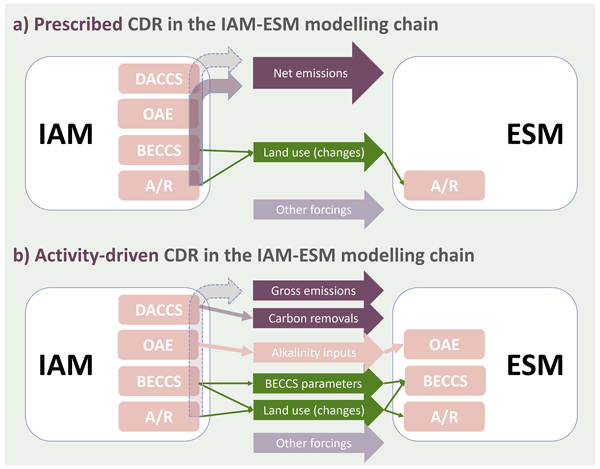
Jörg Schwinger, Leon Merfort, Nico Bauer, Raffaele Bernardello, Momme Butenschön, Timothée Bourgeois, Matthew J. Gidden, Shraddha Gupta, Hanna Lee, Nadine Mengis, Yiannis Moustakis, Helene Muri, Lars Nieradzik, Daniele Peano, Julia Pongratz, Pascal Sauer, Etienne Tourigny, and David Wårlind
Earth Syst. Dynam., 17, 1341–1363, https://doi.org/10.5194/esd-17-1341-2026, https://doi.org/10.5194/esd-17-1341-2026, 2026
Short summary
Short summary
Earth system models can simulate CO2 removal by representing the activity that draws down atmospheric CO2, e.g. growing bioenergy crops for energy production with carbon capture and storage or enhancing the oceans’ alkalinity. We describe a simulation framework, spanning the modeling chain from integrated assessment to Earth system models, that allows separating the intrinsic efficiency of CO2 removal and the overall atmospheric CO2 reduction, the latter being affected by Earth system feedbacks.
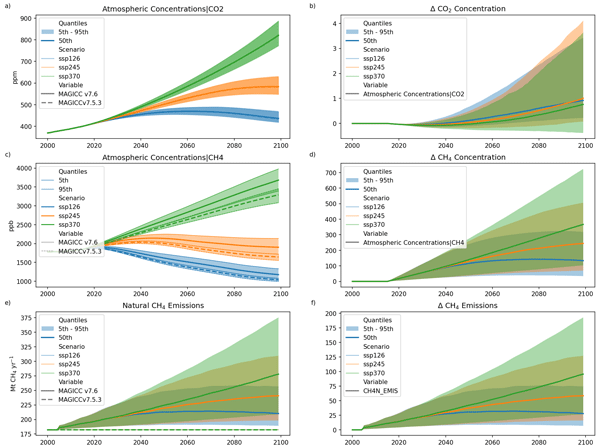
Trevor Sloughter, Zebedee Nicholls, Gang Tang, Thomas Kleinen, Zhen Zhang, and Joeri Rogelj
Geosci. Model Dev., 19, 9063–9076, https://doi.org/10.5194/gmd-19-9063-2026, https://doi.org/10.5194/gmd-19-9063-2026, 2026
Short summary
Short summary
High resolution models of the earth system exhibit some disagreement and uncertainty on future methane emissions from natural sources, in particular wetlands, with some studies predicting wetlands alone could be very significant sources over the 21st century. Modelling these emissions as a response to global temperature is one option for simple models to approximate the climate impact of wetlands. The effect is a small increase in overall temperatures and a widening of the uncertainty range.
Fenjuan Wang, Shamil Maksyutov, Rajesh Janardanan, Dmitry A. Belikov, Prabir K. Patra, Ruosi Liang, Yuzhong Zhang, Ge Ren, Hong Lin, Nicole Montenegro, Antoine Berchet, Marielle Saunois, Adrien Martinez, Sara Hyvärinen, Aki Tsuruta, Samuel Takele Kenea, Miao Liang, Xin Lan, Yukio Terao, M. Kawser Ahmed, Manish Naja, Akihiko Ito, Isamu Morino, Yukio Yoshida, Yu Someya, Tazu Saeki, and Tsuneo Matsunaga
Earth Syst. Sci. Data Discuss., https://doi.org/10.5194/essd-2026-420, https://doi.org/10.5194/essd-2026-420, 2026
Preprint under review for ESSD
Short summary
Short summary
Methane is a potent greenhouse gas driving climate change, yet Asian emissions remain highly uncertain. We conducted the first Methane Inversion inter-Comparison for Asia (MICA) combining seven models to estimate methane across Asia from 2010 to 2021 using satellite and ground data. We found that emissions are generally lower than prior inventories, though some countries underreport. This study provides a comprehensive, transparent dataset to quantify regional methane budgets across Asia.

Francesco N. Tubiello, Anne Branthomme, Griffiths Obli-Laryea, Michelle Piccoli, Nidal Ramadan, Rocio Danica Condor, Nathan Wanner, Rachele Brivio, Örjan Jonsson, Giulia Conchedda, and Anssi Pekkarinen
Earth Syst. Sci. Data, 18, 6799–6813, https://doi.org/10.5194/essd-18-6799-2026, https://doi.org/10.5194/essd-18-6799-2026, 2026
Short summary
Short summary
Estimates of net forest emissions/removals were updated using the 2025 Forest Resources Assessment data, submitted by countries to the Food and Agriculture Organization. Results show that forests acted globally as sinks of atmospheric carbon, despite ongoing losses due to deforestation. Results were consistent with country data independently submitted under the Paris Agreement and with the most recent scientific evidence.
Lucas Ferreira Correa, Sebastian Bathiany, Yiannis Moustakis, and Julia Pongratz
EGUsphere, https://doi.org/10.5194/egusphere-2026-4899, https://doi.org/10.5194/egusphere-2026-4899, 2026
This preprint is open for discussion and under review for Earth System Dynamics (ESD).
Short summary
Short summary
Moisture recycling in the Amazon provides water essential for forest survival, but external pressures threaten this self-sustaining system. Using Earth System Model simulations, we analyzed hydroclimatic stress from deforestation and global warming. We found that 25 % deforestation can significantly stress over 70 % of the forest, increasing to 89 % when combined with 2 °C warming. Our findings show that forest loss and climate change can reinforce each other, raising the risk of forest dieback.
Alexander Nauels, Tessa Möller, Victor Couplet, Robert E. Kopp, Praveen Kumar, Matthias Mengel, Gregory Munday, Zebedee R. J. Nicholls, Lennart Ramme, Aimée B. A. Slangen, Chris Smith, Jennifer H. Weeks, and Tony E. Wong
EGUsphere, https://doi.org/10.5194/egusphere-2026-3874, https://doi.org/10.5194/egusphere-2026-3874, 2026
This preprint is open for discussion and under review for Geoscientific Model Development (GMD).
Short summary
Short summary
Sea levels will keep rising for centuries, so coastal planning needs long-term outlooks. For the first time, we brought together seven simplified models, called emulators, and combined their estimates of future sea level rise to year 2300, including a scenario with strong temperature overshoot before returning to 1.5 °C of warming. The emulators differ most over how much ice Antarctica will lose. Even if global temperatures fall again, extra sea level rise stays locked in for centuries.
Chantelle Burton, Francesca Di Giuseppe, Matthew W. Jones, Douglas I. Kelley, Maria L. F. Barbosa, Joe McNorton, Robert Potts, Carlota Segura-Garcia, John T. Abatzoglou, Iulian Alin Rosu, Niels Andela, Liana O. Anderson, Sally Archibald, Esther Brambleby, Emilio Chuvieco, Andy Ciavarella, Hamish Clarke, Francisco de la Barrera, Carlos M. Di Bella, Enza Di Tomaso, Kebonye Dintwe, Tim S. Doherty, Victoria M. Donovan, Jonathan M. Eden, Paulo M. Fernandes, Lukas Fiedler, Louis Giglio, Olivia Haas, Douglas Hamilton, Stijn Hantson, Sarah Harris, Andrew J. Hartley, Theodore R. Keeping, Crystal A. Kolden, Jean-Luc Kouassi, Elena Kukavskaya, Seppe Lampe, Zhongwei Liu, Guilherme Mataveli, Sarah Meier, Duarte Oom, Mark Parrington, Yuquan Qu, Victor Resco de Dios, Julien Ruffault, Mojtaba Sadegh, Cristina Santín, Fernando Sedano, Jacquelyn K. Shuman, Patrícia S. Silva, Fiona R. Spuler, Carmen B. Steinmann, Veerachai Tanpipat, Miguel Ángel Torres-Vazquez, Marco Turco, Guido R. van der Werf, Dave van Wees, Sander Veraverbeke, Jakob B. Wessel, and Bo Zheng
Earth Syst. Sci. Data Discuss., https://doi.org/10.5194/essd-2026-587, https://doi.org/10.5194/essd-2026-587, 2026
Revised manuscript under review for ESSD
Short summary
Short summary
The third State of Wildfires report examines extreme wildfire events from 2025 to early 2026. It analyses key regional events in Midwestern Canadian Shield Forests, Northwest Iberia, and Chilean Temperate Forests and Matorral, assessing their impacts, drivers, and attributing them to climate change. Climate change greatly increased the likelihood of these fires, and without strong mitigation, such events will become more frequent.
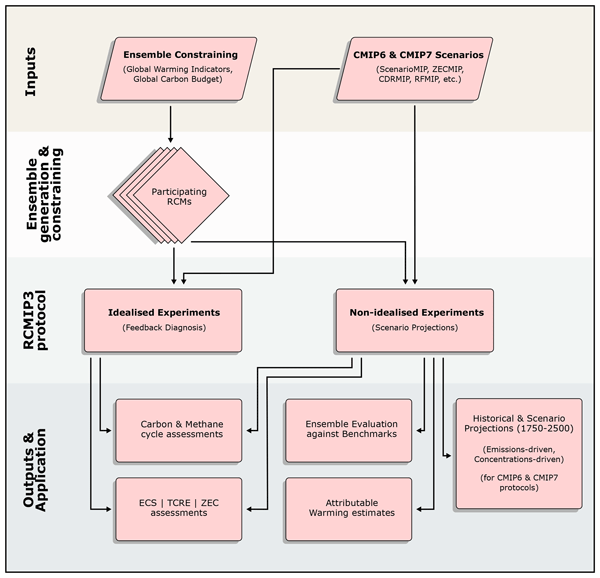
Alejandro Romero-Prieto, Marit Sandstad, Benjamin M. Sanderson, Zebedee R. J. Nicholls, Norman J. Steinert, Thomas Gasser, Camilla Mathison, Jarmo Kikstra, Thomas J. Aubry, Katsumasa Tanaka, Konstantin Weber, and Chris Smith
Geosci. Model Dev., 19, 7111–7133, https://doi.org/10.5194/gmd-19-7111-2026, https://doi.org/10.5194/gmd-19-7111-2026, 2026
Short summary
Short summary
Reduced-complexity models are an important tool in climate science, helping us understand and estimate future climate change. We present the experimental protocol for the next phase of the reduced-complexity model intercomparison project, which aims to compare results from many such models to better understand their behaviour. This knowledge will guide how these models are developed and used in the future, including in the upcoming Intergovernmental Panel on Climate Change (IPCC) assessment report (AR7).
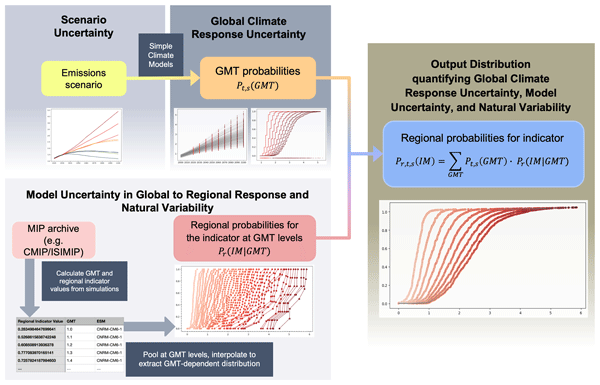
Niklas Schwind, Mahé Perrette, Edward Byers, Annika Högner, Quentin Lejeune, Tessa Möller, Zebedee Nicholls, Peter Pfleiderer, Sarah Schöngart, Michaela Werning, and Carl-Friedrich Schleussner
Geosci. Model Dev., 19, 6797–6828, https://doi.org/10.5194/gmd-19-6797-2026, https://doi.org/10.5194/gmd-19-6797-2026, 2026
Short summary
Short summary
We study how regional climate and climate impact indicators may respond to different emissions scenarios. Their possible outcomes are shaped by uncertainties in future emissions, global warming, regional effects of global warming, and the chaotic climate system. We introduce RIME-X (Rapid Impact Model Emulator Extended), an emulator that combines multiple tools and datasets to estimate probabilistically how any emissions path may influence regional outcomes.
Ida Bagus Mandhara Brasika, Pierre Friedlingstein, Stephen Sitch, Michael O'Sullivan, Maria Carolina Duran-Rojas, Emma W. Littleton, Toby R. Marthews, Timothy Hill, Wei Li, Yidi Xu, Jiaxin Zhou, Xiangzhong Luo, Ruiying Zhao, Yuanchao Fan, Dedy Sukmara, Timer Manurung, Masayuki Kondo, Alexander Knohl, Tejaswini Jaajpera, and Lisma Safitri
EGUsphere, https://doi.org/10.5194/egusphere-2026-3689, https://doi.org/10.5194/egusphere-2026-3689, 2026
This preprint is open for discussion and under review for Geoscientific Model Development (GMD).
Short summary
Short summary
Oil palm is a major crop in Indonesia, but climate models often treat it as generic cropland. We developed a new way to represent oil palm in the Joint UK Land Environment Simulator. This improved how the model captures carbon stored and released by oil-palm plantations. The work helps estimate emissions from land-use change more realistically, supporting better understanding of tropical agriculture, deforestation and climate impacts.
Simone Rossi, Clement Bourgoin, Joana Melo, Guido Ceccherini, Sandro Federici, Monica Crippa, Frederic Achard, René Colditz, Francesco N. Tubiello, Greet Janssens-Maenhout, and Giacomo Grassi
Earth Syst. Sci. Data Discuss., https://doi.org/10.5194/essd-2026-454, https://doi.org/10.5194/essd-2026-454, 2026
Preprint under review for ESSD
Short summary
Short summary
This study adds an important component to the EDGAR Emissions Database by developing a globally consistent dataset of forest-related carbon emissions and removals using satellite data and UN-compliant methods. Results confirm that forests absorb more carbon than deforestation emits but this sink shrinks as wood harvesting rises. The dataset serves as a benchmark for national greenhouse gas inventories and provides critical reference information for areas where official reporting is limited.
Amen Al-Yaari, Chris Smith, Yi Yao, Kjetil S. Aas, L. Ruby Leung, Min-Hui Lo, Sonali McDermid, Larissa Nazarenko, Yadu Pokhrel, Yusuke Satoh, Tokuta Yokohata, and Wim Thiery
EGUsphere, https://doi.org/10.5194/egusphere-2026-4199, https://doi.org/10.5194/egusphere-2026-4199, 2026
Short summary
Short summary
In this study, we use the Irrigation Model Intercomparison Project (IRRMIP) to provide the first multi-model quantification of irrigation-induced effective radiative forcing (ERF) across seven Earth system models over 1902–2014. We find that the global multi-model mean ERF is positive but small (~0.023 W m⁻²). This small global signal masks regional heterogeneity: South Asia and West Central Asia show higher positive ERF (~0.25 W m⁻²), while East Asia shows a negative signal (−0.03 W m⁻²).

Cristina Deidda, Arpita Asha Khanna, Wolfgang Schade, Chris Smith, and Wim Thiery
Nat. Hazards Earth Syst. Sci., 26, 3345–3394, https://doi.org/10.5194/nhess-26-3345-2026, https://doi.org/10.5194/nhess-26-3345-2026, 2026
Short summary
Short summary
Climate extremes like floods, heatwaves, droughts, and wildfires are disrupting Europe’s transport. This study combines a review of past events and future projections to assess current losses and the future exposure of transport infrastructure. Exposure to extremes is projected to rise, but lower emissions can reduce it. Urgent action is needed to reduce emissions and adapt the Trans-European Transport Network to a changing climate.
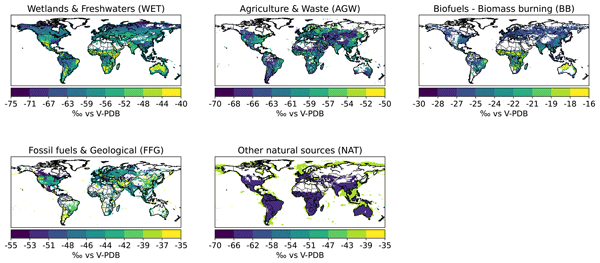
Emeline Tapin, Antoine Berchet, Adrien Martinez, Malika Menoud, Joël Thanwerdas, Xin Lan, Edward Malina, Daniele Gasbarra, and Marielle Saunois
Earth Syst. Sci. Data, 18, 4793–4832, https://doi.org/10.5194/essd-18-4793-2026, https://doi.org/10.5194/essd-18-4793-2026, 2026
Short summary
Short summary
We present global δ¹³C-CH₄ source signature maps (1998–2022) at 1°×1° resolution for five emission sectors and 11 sub-sectors, with quantified uncertainties. Sensitivity experiments with an atmospheric transport model assess how uncertainties in emissions, isotopic signatures, OH sinks, and kinetic isotope effects influence atmospheric δ¹³C-CH₄ and CH₄, providing guidance for isotopic inversions.
Adakudlu Muralidhar, Cecilie Mauritzen, Christopher D. Wells, Benjamin Blanz, William Schoenberg, Beniamino Callegari, Jannes Breier, Jefferson K. Rajah, Lennart Ramme, Andreas Nicolaidis Lindqvist, Alexandre C. Köberle, Axel E. Eriksson, and Chris Smith
EGUsphere, https://doi.org/10.5194/egusphere-2026-3072, https://doi.org/10.5194/egusphere-2026-3072, 2026
This preprint is open for discussion and under review for Earth System Dynamics (ESD).
Short summary
Short summary
Using the integrated assessment model FRIDA v2.1, we examine how climate impacts spread through interconnected human and Earth systems, including the economy, energy, food, water, finance, and behaviour. We find that interacting climate impacts can reduce economic growth strongly than models assuming isolated effects. Financial feedbacks are especially important, and nonlinear climate–society interactions can amplify risks across sectors even without explicit climate tipping points.
Tim Stripp, Zhixuan Guo, Pierre Friedlingstein, Michael O’Sullivan, Stephen Sitch, Ana Bastos, Philippe Ciais, Jefferson Goncalves de Souza, Akihiko Ito, Wei Li, and Lei Ma
EGUsphere, https://doi.org/10.5194/egusphere-2026-3584, https://doi.org/10.5194/egusphere-2026-3584, 2026
Short summary
Short summary
Fire is a key process within the Earth system, yet it is often poorly represented in land carbon cycle models used to estimate how much carbon land ecosystems absorb from the atmosphere. We improved these models by applying long-term burned area data reconstructed from satellite observations. This reduced biases and uncertainty in fire carbon emission estimates and improved estimates of land carbon uptake, implying this method could enhance global and regional carbon budget estimates.
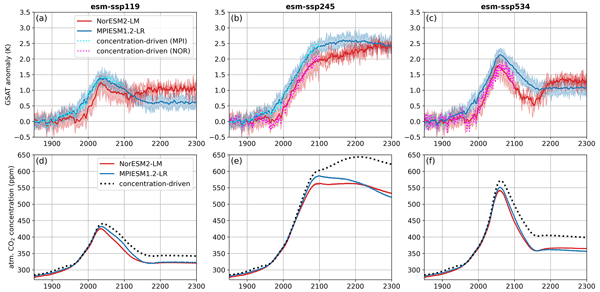
Chris Smith, Lennart Ramme, Christopher D. Wells, Ada Gjermundsen, Hongmei Li, Tatiana Ilyina, Adakudlu Muralidhar, Timothée Bourgeois, Jörg Schwinger, Alejandro Romero-Prieto, Chao Li, and Cecilie Mauritzen
Earth Syst. Dynam., 17, 893–911, https://doi.org/10.5194/esd-17-893-2026, https://doi.org/10.5194/esd-17-893-2026, 2026
Short summary
Short summary
We run two Earth System Models models in CO2 emissions-driven mode to 2300 for three climate scenarios. For climate overshoot scenarios, there is a large residual warming in the 22nd century in one model, despite negative CO2 emissions, related to Southern Ocean heat release. In both models, while global mean surface temperature is largely reversible, other global and regional climate models exhibit hysteresis and irreversibility.
Taro Kunimitsu and Robbie M. Andrew
Earth Syst. Sci. Data Discuss., https://doi.org/10.5194/essd-2026-417, https://doi.org/10.5194/essd-2026-417, 2026
Preprint under review for ESSD
Short summary
Short summary
We present a low-lag dataset of monthly CO2 emissions from fossil fuel consumption and industrial processes in Japan, derived directly from official statistical data. The monthly dataset can be used to estimate the annual emissions a year ahead of the official estimates submitted to the UNFCCC. Such monthly emissions estimates will provide further opportunities for understanding in a timely manner the reasons behind emissions changes, leading to targeted policy changes for climate mitigation.
Piers M. Forster, Tristram Walsh, Chris Smith, William F. Lamb, Robin Lamboll, Christophe Cassou, Mathias Hauser, Zeke Hausfather, June-Yi Lee, Matthew D. Palmer, Karina von Schuckmann, Aimée B. A. Slangen, Sophie Szopa, Blair Trewin, Jeongeun Yun, Nathan P. Gillett, Stuart Jenkins, H. Damon Matthews, Krishnan Raghavan, Aurélien Ribes, Joeri Rogelj, Debbie Rosen, Xuebin Zhang, Myles Allen, Robbie M. Andrew, Chris Atkinson, Richard A. Betts, Antonio Bombelli, Samantha N. Burgess, Lijing Cheng, Helen E. Claxton, Pierre Friedlingstein, Thomas L. Frölicher, Catia M. Domingues, Thomas Gasser, Catherine H. Gregory, Rachel M. Hoesly, Daniel Huppmann, Masayoshi Ishii, Christopher Kadow, Alexia Karwat, John Kennedy, Rachel E. Killick, Mahesh V. M. Kovilakam, Paul B. Krummel, Xin Lan, Jean-François Lamarque, Aurélien Liné, Belén Martín-Míguez, Didier P. Monselesan, Colin Morice, Jens Mühle, Pino Mussak, Glen P. Peters, Anna Pirani, Julia Pongratz, Matthew Rigby, Robert Rohde, Abhishek Savita, Sonia I. Seneviratne, Steven J. Smith, Ghassan Taha, Caterina Tassone, Peter Thorne, Christopher Wells, Luke M. Western, Guido R. van der Werf, Susan E. Wijffels, Marco Zecchetto, Junting Zhong, Xiao-Ye Zhang, Valérie Masson-Delmotte, and Panmao Zhai
Earth Syst. Sci. Data, 18, 3889–3933, https://doi.org/10.5194/essd-18-3889-2026, https://doi.org/10.5194/essd-18-3889-2026, 2026
Short summary
Short summary
We give our annual update of key climate indicators. Our work quantifies the human contribution to global warming and the pace of climate change. This represents a large effort by the international community akin to an Intergovernmental Panel on Climate Change (IPCC) report.
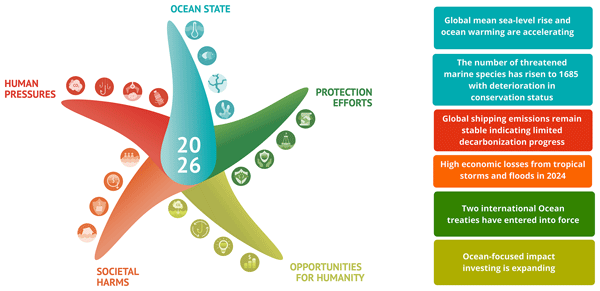
Marina Lévy, Karina von Schuckmann, Mahé Butel, William W. L. Cheung, Joachim Claudet, Thomas L. Frölicher, Patrice Guillotreau, Peter Haugan, Janine Adams, Diva Amon, Tamatoa Bambridge, Cynthia Barzuna, Bruno Blanke, Lijing Cheng, Sanae Chiba, Jorge Cortés, Pierre Friedlingstein, Jean-Pierre Gattuso, Stefan Gelcich, Jessica Gephart, Deborah Greaves, Audrey Hasson, Claire Jolly, Daoji Li, Yunne-Jai Shin, Aimée Slangen, Mere Takoko, Olivier Thébaud, Adrien Vincent, and Patrick Vincent
State Planet, 7-osr10, 1, https://doi.org/10.5194/sp-7-osr10-1-2026, https://doi.org/10.5194/sp-7-osr10-1-2026, 2026
Short summary
Short summary
The Starfish Barometer provides an annual, science-based synthesis of global Ocean-related developments, structured around five interconnected dimensions: the Ocean state, human pressures, societal harms, protection efforts, and opportunities for humanity. It is released each year on World Ocean Day. This article presents the second edition of the Barometer, which shows a growing gap between increasing human pressures on the Ocean and the efforts being made to protect it and drive change.
Adrian I. R. Jäschke, Wolfgang A. Obermeier, Clemens Schwingshackl, Amali A. Amali, Julia Pongratz, and Raphael Ganzenmüller
EGUsphere, https://doi.org/10.5194/egusphere-2026-2682, https://doi.org/10.5194/egusphere-2026-2682, 2026
This preprint is open for discussion and under review for Earth System Dynamics (ESD).
Short summary
Short summary
We provide the first assessment of how potential natural vegetation (PNV) assumptions affect CO2 fluxes from land-use change (FLUC) by combining pollen records and environmental data with machine learning to produce global PNV maps. Using the bookkeeping model BLUE, we find that global cumulative FLUC emissions are 16 % higher than previous estimates, with large regional differences. Our results highlight that PNV is a previously overlooked but substantial uncertainty source in FLUC estimates.
Michael Gregory Windisch, Yann Quilcaille, Camilla Mathison, Claudia Tebaldi, Eleanor Burke, Laila Gohar, Chris Smith, Sarah Schöngart, Abigail Snyder, Siddarth Durga, Kalyn Dorheim, and Sonia Seneviratne
EGUsphere, https://doi.org/10.5194/egusphere-2026-2253, https://doi.org/10.5194/egusphere-2026-2253, 2026
Short summary
Short summary
Creating consistent climate scenarios remains challenging. The computational cost of comprehensive climate models leaves most scenarios without spatial climate outcomes, limiting feedback between climate consequences and scenario assumptions. We apply three spatial emulators to test their potential and current limitations in rapidly translating scenarios into spatial outcomes to identify regional risks, fill gaps in scenario coverage, and feed climate consequences back into scenario assumptions.
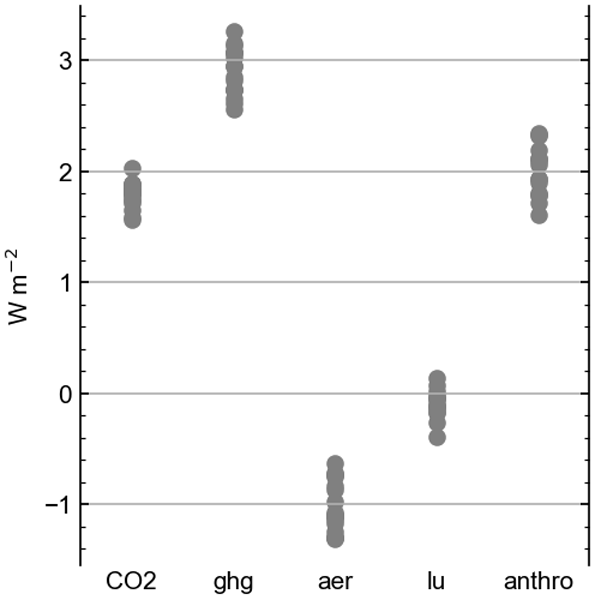
Ryan J. Kramer, Chris Smith, and Timothy Andrews
Geosci. Model Dev., 19, 4447–4466, https://doi.org/10.5194/gmd-19-4447-2026, https://doi.org/10.5194/gmd-19-4447-2026, 2026
Short summary
Short summary
Natural or anthropogenic activities can cause a perturbation in Earth's radiative energy budget known as a radiative forcing, which induces a climate response. Diagnosing radiative forcing and its uncertainty is foundational to understanding past and future climate change. Here we outline the protocol for the second iteration of the Radiative Forcing Model Intercomparison Project (RFMIP2.0), which provides a standardized method for diagnosing radiative forcing across Global Climate Models.
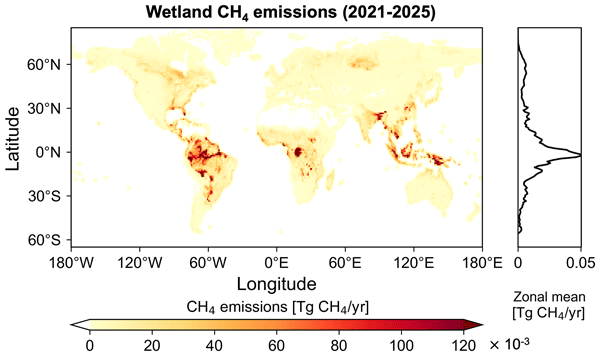
Mengze Li, Robert B. Jackson, Marielle Saunois, Philippe Ciais, Ben Poulter, Josep G. Canadell, Prabir K. Patra, Hanqin Tian, Zhen Zhang, Etienne Fluet-Chouinard, Zutao Ouyang, Ting Zhang, David J. Beerling, Dmitry A. Belikov, Philippe Bousquet, Danilo Custodio, Naveen Chandra, Xinyu Dou, Nicola Gedney, Peter O. Hopcroft, Alison M. Hoyt, Kazuhito Ichii, Akihito Ito, Atul K. Jain, Katherine Jensen, Fortunat Joos, Thomas Kleinen, Masayuki Kondo, Fa Li, Tingting Li, Xiangyu Liu, Shamil Maksyutov, Avni Malhotra, Adrien Martinez, Kyle McDonald, Joe R. Melton, Jurek Müller, Yosuke Niwa, Shufen Pan, Shushi Peng, Changhui Peng, Zhangcai Qin, Peter Raymond, William Riley, Arjo Segers, Rona L. Thompson, Aki Tsuruta, Yi Xi, Kunxiaojia Yuan, Wenxin Zhang, Bo Zheng, Qing Zhu, Qiuan Zhu, and Qianlai Zhuang
Earth Syst. Sci. Data, 18, 3507–3524, https://doi.org/10.5194/essd-18-3507-2026, https://doi.org/10.5194/essd-18-3507-2026, 2026
Short summary
Short summary
We proposed a framework that combines machine-learning and climate data to predict global natural vegetated wetland methane emissions for 2000–2025. We found that although total global emissions remained stable in the post-2020s, Northern Hemisphere emissions surged whilst tropical emissions fell. This approach allows us to rapidly monitor emissions and provides early warnings for climate impacts.
Benjamin M. Sanderson, Marit Sandstad, Alejandro Romero-Prieto, Stuart Jenkins, Charles Koven, Glen Peters, Roland Séfèrian, Andrew H. MacDougall, Ashwin Seshadri, Victor Brovkin, John Dunne, Abigail L. S. Swann, Torben Koenigk, Rosie A. Fisher, David Hohn, Tatiana Ilyina, Chris D. Jones, Hongmei Li, Peter Lawrence, Spencer Liddicoat, Nadine Mengis, Anastasia Romanou, Lori T. Sentman, Chris Smith, Norman J. Steinert, Jerry Tjiputra, and Tilo Ziehn
EGUsphere, https://doi.org/10.5194/egusphere-2026-1875, https://doi.org/10.5194/egusphere-2026-1875, 2026
Short summary
Short summary
When humanity stops emitting carbon dioxide, will temperatures keep rising, stabilize, or fall? Our study reveals in most models, temperatures remain nearly stable, but this hides a balance between the warming in response to radiation imbalance, and the cooling due to uptake of carbon in the land and ocean. Understanding this balance helps refine how much more CO2 we can safely emit.
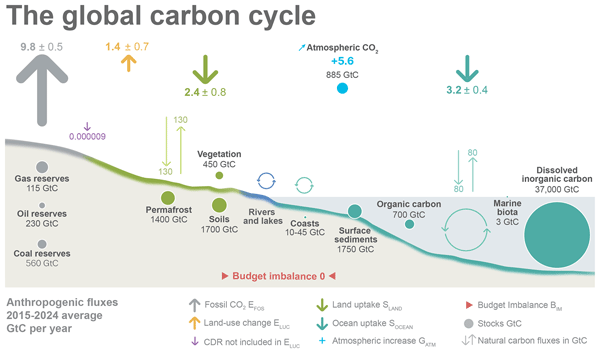
Pierre Friedlingstein, Michael O'Sullivan, Matthew W. Jones, Robbie M. Andrew, Dorothee C. E. Bakker, Judith Hauck, Peter Landschützer, Corinne Le Quéré, Hongmei Li, Ingrid T. Luijkx, Glen P. Peters, Wouter Peters, Julia Pongratz, Clemens Schwingshackl, Stephen Sitch, Josep G. Canadell, Philippe Ciais, Kjetil Aas, Simone R. Alin, Peter Anthoni, Leticia Barbero, Nicholas R. Bates, Nicolas Bellouin, Alice Benoit-Cattin, Carla F. Berghoff, Raffaele Bernardello, Laurent Bopp, Ida Bagus Mandhara Brasika, Matthew A. Chamberlain, Naveen Chandra, Frédéric Chevallier, Louise P. Chini, Nathan O. Collier, Thomas H. Colligan, Margot Cronin, Laique M. Djeutchouang, Xinyu Dou, Matt P. Enright, Kazutaka Enyo, Michael Erb, Wiley Evans, Richard A. Feely, Liang Feng, Daniel J. Ford, Adrianna Foster, Filippa Fransner, Thomas Gasser, Marion Gehlen, Thanos Gkritzalis, Jefferson Goncalves De Souza, Giacomo Grassi, Luke Gregor, Nicolas Gruber, Bertrand Guenet, Özgür Gürses, Kirsty Harrington, Ian Harris, Jens Heinke, George C. Hurtt, Yosuke Iida, Tatiana Ilyina, Akihiko Ito, Andrew R. Jacobson, Atul K. Jain, Tereza Jarníková, Annika Jersild, Fei Jiang, Steve D. Jones, Etsushi Kato, Ralph F. Keeling, Kees Klein Goldewijk, Jürgen Knauer, Yawen Kong, Jan Ivar Korsbakken, Charles Koven, Taro Kunimitsu, Xin Lan, Junjie Liu, Zhiqiang Liu, Zhu Liu, Claire Lo Monaco, Lei Ma, Gregg Marland, Patrick C. McGuire, Galen A. McKinley, Joe R. Melton, Natalie Monacci, Erwan Monier, Eric J. Morgan, David R. Munro, Jens D. Müller, Shin-Ichiro Nakaoka, Lorna R. Nayagam, Yosuke Niwa, Tobias Nutzel, Are Olsen, Abdirahman M. Omar, Naiqing Pan, Sudhanshu Pandey, Denis Pierrot, Zhangcai Qin, Pierre Regnier, Gregor Rehder, Laure Resplandy, Alizée Roobaert, Thais M. Rosan, Christian Rödenbeck, Jörg Schwinger, Ingunn Skjelvan, T. Luke Smallman, Victoria Spada, Mohanan G. Sreeush, Qing Sun, Adrienne J. Sutton, Colm Sweeney, Didier Swingedouw, Roland Séférian, Shintaro Takao, Hiroaki Tatebe, Hanqin Tian, Xiangjun Tian, Bronte Tilbrook, Hiroyuki Tsujino, Francesco Tubiello, Erik van Ooijen, Guido R. van der Werf, Sebastiaan J. van de Velde, Anthony P. Walker, Rik Wanninkhof, Xiaojuan Yang, Wenping Yuan, Xu Yue, and Jiye Zeng
Earth Syst. Sci. Data, 18, 3211–3288, https://doi.org/10.5194/essd-18-3211-2026, https://doi.org/10.5194/essd-18-3211-2026, 2026
Short summary
Short summary
The Global Carbon Budget 2025 describes the methodology, main results, and datasets used to quantify the anthropogenic emissions of carbon dioxide (CO2) and their partitioning among the atmosphere, land ecosystems, and the ocean over the historical period (1750–2025). These living datasets are updated every year to provide the highest transparency and traceability in the reporting of CO2, the key driver of climate change.
Jinkyul Choi, Kazuyuki Miyazaki, Takashi Sekiya, Jinhyeok Yu, Shin-Ya Ogino, Henk Eskes, Pieter Rijdijk, Ryan Bennett, Anke Roiger, Leon Knez, Glenn S. Diskin, Jason A. Miech, Joshua P. DiGangi, Yonghoon Choi, Alessandro Franchin, Changmin Cho, Eric C. Apel, Louisa K. Emmons, Nattamon Maneenoi, Jason M. St. Clair, Reem A. Hannun, Glenn M. Wolfe, Erin Delaria, Abby Sebol, Donald R. Blake, Monica Crippa, Rachel M. Hoesly, Steven J. Smith, Jung-Hun Woo, Le Kuai, and Ronald Macatangay
EGUsphere, https://doi.org/10.5194/egusphere-2026-2380, https://doi.org/10.5194/egusphere-2026-2380, 2026
Short summary
Short summary
Asia produces half of the world's air pollution, yet emission estimates from different sources disagree widely. We assimilated satellite observations of six pollutant species to correct both concentrations and emissions. Aircraft measurements from a 2024 NASA campaign across four Asian countries confirmed the improvements. Our results reveal underreported emissions in some countries, overestimated vegetation emissions, unresolved fire estimates, and weather control on cross-border pollution.
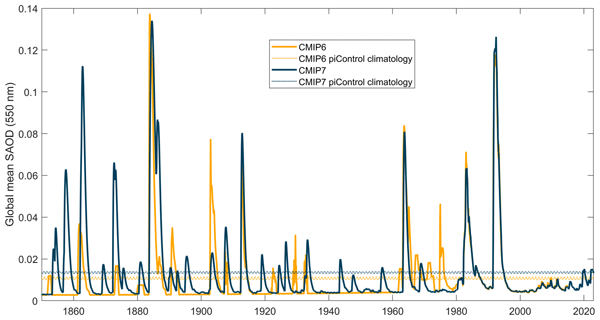
Thomas J. Aubry, Matthew Toohey, Sujan Khanal, Man Mei Chim, Magali Verkerk, Ben Johnson, Anja Schmidt, Mahesh Kovilakam, Michael Sigl, Zebedee Nicholls, Larry Thomason, Vaishali Naik, Landon Rieger, Dominik Stiller, Elisa Ziegler, Paul Durack, and Isabel H. Smith
Geosci. Model Dev., 19, 3725–3756, https://doi.org/10.5194/gmd-19-3725-2026, https://doi.org/10.5194/gmd-19-3725-2026, 2026
Short summary
Short summary
Climate forcings, such as solar radiation or anthropogenic greenhouse gases, are required to run global climate model simulations. Stratospheric aerosols, which mostly originate from large volcanic eruptions, are a key natural forcing. In this paper, we document the stratospheric aerosol forcing dataset that will feed the next generation (CMIP7) of climate models. Our dataset is very different from its predecessor (CMIP6), which might affect simulations of the 1850–2021 climate.
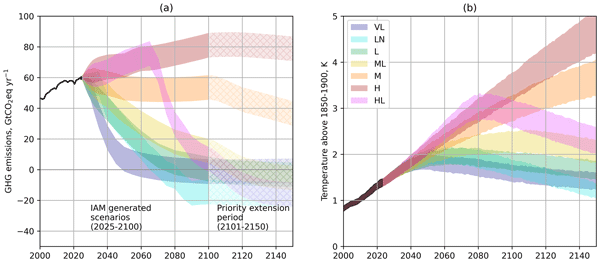
Detlef P. Van Vuuren, Brian C. O'Neill, Claudia Tebaldi, Benjamin M. Sanderson, Louise P. Chini, Pierre Friedlingstein, Tomoko Hasegawa, Keywan Riahi, Bala Govindasamy, Nico Bauer, Veronika Eyring, Cheikh M. N. Fall, Katja Frieler, Matthew J. Gidden, Laila K. Gohar, Annika Högner, Andrew D. Jones, Jarmo Kikstra, Andrew King, Reto Knutti, Elmar Kriegler, Peter Lawrence, Chris Lennard, Jason Lowe, Camilla Mathison, Shahbaz Mehmood, Zebedee Nicholls, Luciana F. Prado, Qiang Zhang, Steven K. Rose, Alex C. Ruane, Marit Sandstad, Carl-Friedrich Schleussner, Roland Seferian, Jana Sillmann, Chris Smith, Anna A. Sörensson, Swapna Panickal, Kaoru Tachiiri, Naomi Vaughan, Saritha S. Vishwanathan, Tokuta Yokohata, Marco Zecchetto, and Tilo Ziehn
Geosci. Model Dev., 19, 2627–2656, https://doi.org/10.5194/gmd-19-2627-2026, https://doi.org/10.5194/gmd-19-2627-2026, 2026
Short summary
Short summary
We propose a set of seven plausible 21st century emission scenarios, and their multi-century extensions, that will be used by the international community of climate modeling centers to produce the next generation of climate projections. These projections will support climate, impact and mitigation researchers, provide information to practitioners to address future risks from climate change, and contribute to policymakers’ considerations of the trade-offs among various levels of mitigation.
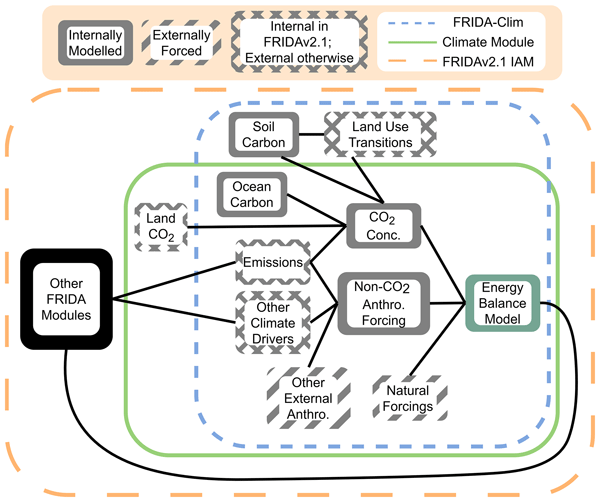
Christopher D. Wells, Lennart Ramme, Chris Smith, Jannes Breier, Adakudlu Muralidhar, Chao Li, Ada Gjermundsen, William Alexander Schoenberg, Benjamin Blanz, and Cecilie Mauritzen
Geosci. Model Dev., 19, 1429–1453, https://doi.org/10.5194/gmd-19-1429-2026, https://doi.org/10.5194/gmd-19-1429-2026, 2026
Short summary
Short summary
Understanding the change in climate that would occur under different future pathways of greenhouse gas emissions and changes in land use is crucial. Here, we develop a new simple climate model to help study this. We reduce the number of inputs so that our model can be connected to a model of the human causes of climate change. This way, we can study the interaction between climate change and society, including climate impacts. Our model broadly agrees with historical observations.
Joana Melo, Simone Rossi, Frédéric Achard, Ramdane Alkama, Josep G. Canadell, Sandro Federici, Pierre Friedlingstein, David Gibbs, Nancy Harris, Viola Heinrich, Michael O’Sullivan, Glen P. Peters, Julia Pongratz, Melissa Rose, Rosa Roman-Cuesta, María J. Sanz, Clemens Schwingshackl, Stephen Sitch, and Giacomo Grassi
Earth Syst. Sci. Data Discuss., https://doi.org/10.5194/essd-2025-631, https://doi.org/10.5194/essd-2025-631, 2026
Preprint under review for ESSD
Short summary
Short summary
We created the LULUCF Data Hub to make information on how land use affects carbon dioxide emissions and removals more transparent and comparable among datasets. We show country-level data from national reports and global sources, allowing users to explore differences and similarities in land-based carbon fluxes. It helps identify where data agree, where they differ, and where more research is needed.
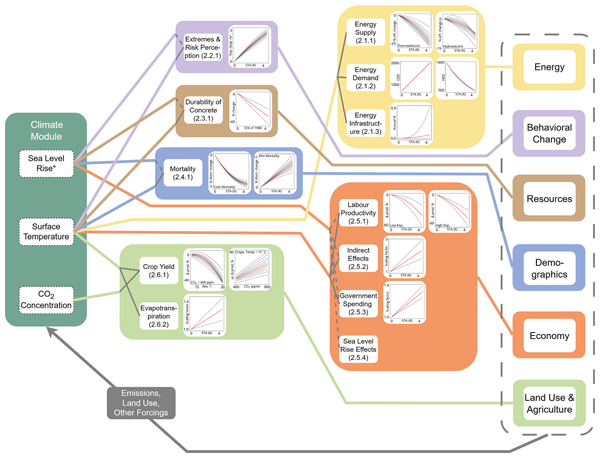
Christopher D. Wells, Benjamin Blanz, Lennart Ramme, Jannes Breier, Beniamino Callegari, Adakudlu Muralidhar, Jefferson K. Rajah, Andreas Nicolaidis Lindqvist, Axel E. Eriksson, William Alexander Schoenberg, Alexandre C. Köberle, Lan Wang-Erlandsson, Cecilie Mauritzen, Martin B. Grimeland, and Chris Smith
Geosci. Model Dev., 19, 1229–1260, https://doi.org/10.5194/gmd-19-1229-2026, https://doi.org/10.5194/gmd-19-1229-2026, 2026
Short summary
Short summary
Computer models built to study future developments of human activity and climate change often exclude the impacts of climate change. Here, we include these effects in a new model. We create functions connecting changes in global temperature, carbon dioxide, and sea level to energy supply and demand, food systems, mortality, economic damages, and other important quantities. Including these effects will allow us to explore their impact on future changes in the human and climate realms.
Peter W. Thorne, John M. Nicklas, John J. Kennedy, Bruce Calvert, Baylor Fox-Kemper, Mark T. Richardson, Adrian Simmons, Ed Hawkins, Robert Rhode, Kathryn Cowtan, Nerilie J. Abram, Axel Andersson, Simon Noone, Phillipe Marbaix, Nathan Lenssen, Dirk Olonscheck, Tristram Walsh, Stephen Outten, Ingo Bethke, Bjorn H. Samset, Chris Smith, Anna Pirani, Jan Fuglestvedt, Lavanya Rajamani, Richard A. Betts, Elizabeth C. Kent, Blair Trewin, Colin Morice, Tim Osborn, Samantha N. Burgess, Oliver Geden, Andrew Parnell, Piers M. Forster, Chris Hewitt, Zeke Hausfather, Valerie Masson-Delmotte, Jochem Marotzke, Nathan Gillett, Sonia I. Seneviratne, Gavin A. Schmidt, Duo Chan, Stefan Brönnimann, Andy Reisinger, Matthew Menne, Maisa Rojas Corradi, Christopher Kadow, Peter Huybers, David B. Stephenson, Emily Wallis, Joeri Rogelj, Andrew Schurer, Karen McKinnon, Panmao Zhai, Fatima Driouech, Wilfran Moufouma Okia, Saeed Vazifehkhah, Sophie Szopa, Christopher J. Merchant, Shoji Hirahara, Masayoshi Ishii, Francois A. Engelbrecht, Qingxiang Li, June-Yi Lee, Alex J. Cannon, Christophe Cassou, Karina von Schuckmann, Amir H. Delju, and Ellie Murtagh
Earth Syst. Sci. Data Discuss., https://doi.org/10.5194/essd-2025-825, https://doi.org/10.5194/essd-2025-825, 2026
Preprint under review for ESSD
Short summary
Short summary
We reassess the basis for determining the present level of long-term global warming. Unbiased estimates of both realised warming and anthropogenic warming are possible that approximate a 20-year retrospective mean. Our resulting estimates of 1.40 [1.23–1.58] °C (realised) and 1.34 [1.18–1.50] °C (anthropogenic) as at end of 2024 highlight the urgency of immediate, far-reaching and sustained climate mitigation actions if we are to meet the long term temperature goal of the Paris Agreement.
Francesco Tubiello, Nidal Ramadan, Giulia Conchedda, Reto Ruedy, Michael Hendrickson, Nathan Lenssen, Cynthia Rosenzweig, and Gavin Schmidt
Earth Syst. Sci. Data Discuss., https://doi.org/10.5194/essd-2025-681, https://doi.org/10.5194/essd-2025-681, 2026
Preprint under review for ESSD
Short summary
Short summary
We use FAO statistics to develop indicators of exposure for 1961–2024. For each region and year, exposure to temperature change of agriculture—rural population, land use area, harvested area, livestock numbers and production value—was defined as the share of regional aggregates over the total. We computed exposure indicators to ΔT > 1.5 °C and ΔT > 2.0 °C. Results help highlight which regions may be most in need of adaptation preparedness.
Benjamin M. Sanderson, Susanne Baur, Carl-Freidrich Schleussner, Glen P. Peters, Shivika Mittal, Marit Sandstad, Steffen Kallbekken, Chris Smith, Sabine Fuss, Bas van Ruijven, Rosie A. Fisher, Joeri Rogelj, Roland Séférian, Bjørn Samset, Norman J. Steinert, Laurent Terray, and Jan Fuglestvedt
EGUsphere, https://doi.org/10.5194/egusphere-2026-28, https://doi.org/10.5194/egusphere-2026-28, 2026
Preprint archived
Short summary
Short summary
Solar Radiation Modification by adding aerosols to the stratosphere could rapidly and temporarily cool the Earth, but this speed creates unprecedented risks. Fast climate responses coupled with political instability create risks of failure to decarbonise, super-rapid climate change, and conflict. Idealized scenarios or conventional modeling tools could lead to systematic ignorance of these risks. We thus introduce a framework outlining what must be represented in future modeling and assessment.
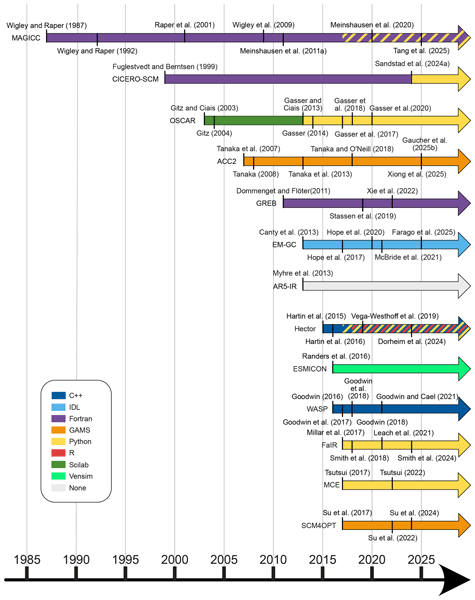
Alejandro Romero-Prieto, Camilla Mathison, and Chris Smith
Geosci. Model Dev., 19, 115–165, https://doi.org/10.5194/gmd-19-115-2026, https://doi.org/10.5194/gmd-19-115-2026, 2026
Short summary
Short summary
Simple Climate Models (SCMs) are widely used tools to explore how Earth's climate may change in the future. In recent decades, the number and types of SCMs have increased significantly, hindering efforts to understand cross-model differences. In this study, we provide an overview of the main principles guiding climate simulation by SCMs, as well as a description of most high-profile SCMs. This work offers a clear reference to support the informed use of these important tools.
Jean-Francois Lamarque, Pierre Friedlingstein, Brian Osias, Steve Strongin, Venkatramani Balaji, Kevin W. Bowman, Josep G. Canadell, Philippe Ciais, Heidi Cullen, Kenneth J. Davis, Scott C. Doney, Kevin R. Gurney, Alicia R. Karspeck, Charles D. Koven, Galen McKinley, Glen P. Peters, Julia Pongratz, Britt Stephens, and Colm Sweeney
EGUsphere, https://doi.org/10.5194/egusphere-2025-6457, https://doi.org/10.5194/egusphere-2025-6457, 2026
Short summary
Short summary
This Perspective highlights requirements to scale the carbon credit market and enable the growth in climate solutions funded through such market. The requirements are on the understanding of the value of the proposed carbon credit projects, and on the availability of a verification system. This verification becomes particularly relevant as the carbon credit market scales to significant impacts on CO2 (or other greenhouse gases), such that attribution to collective actions can be identified.
Nicole Montenegro, Antoine Berchet, Adrien Martinez, Joël Thanwerdas, Phillipe Bousquet, Isabelle Pison, and Marielle Saunois
EGUsphere, https://doi.org/10.5194/egusphere-2025-5923, https://doi.org/10.5194/egusphere-2025-5923, 2025
Short summary
Short summary
Top-down CH₄ flux estimates face substantial uncertainties arising from observational coverage, data and prior errors, and atmospheric transport. In this study, we use Observing System Simulation Experiments (OSSEs) to determine the capability of current observing systems to retrieve surface fluxes of CH₄ and to quantify the magnitude of their associated uncertainties. In situ data provide the strongest constraint, while combined systems inversions further enhance performance.
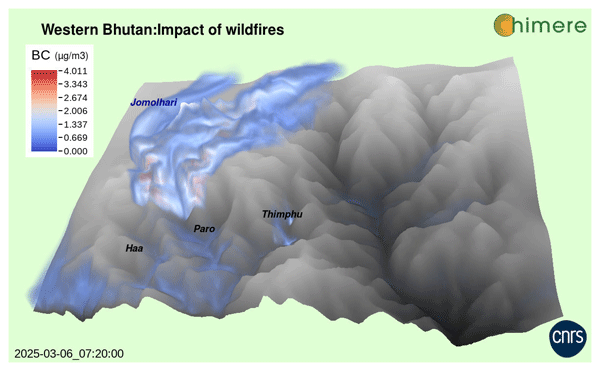
Bertrand Bessagnet, Narayan Thapa, Dikra Prasad Bajgai, Ravi Sahu, Arshini Saikia, Arineh Cholakian, Laurent Menut, Guillaume Siour, Tenzin Wangchuk, Monica Crippa, and Kamala Gurung
Atmos. Chem. Phys., 25, 18675–18696, https://doi.org/10.5194/acp-25-18675-2025, https://doi.org/10.5194/acp-25-18675-2025, 2025
Short summary
Short summary
This study highlights the use of numerical tools at very high resolution to support the Air Quality monitoring strategy in the Himalayan valley which suffer from Air Pollution. For the first time ever, a high resolution simulation is performed in Bhutan showing the high PM2.5 concentrations within the valleys and potential contaminations up to the glaciers enhancing climate related risks.
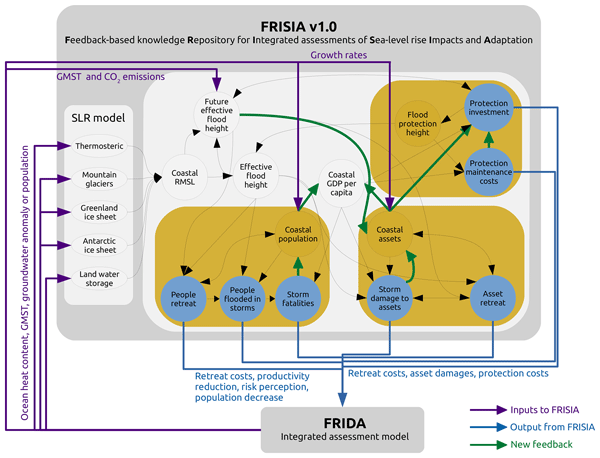
Lennart Ramme, Benjamin Blanz, Christopher Wells, Tony E. Wong, William Schoenberg, Chris Smith, and Chao Li
Geosci. Model Dev., 18, 10017–10052, https://doi.org/10.5194/gmd-18-10017-2025, https://doi.org/10.5194/gmd-18-10017-2025, 2025
Short summary
Short summary
We present FRISIA version 1.0, a model for emulating sea level rise (SLR) and representing SLR impacts and adaptation in integrated assessment models (IAMs). FRISIA includes previously uncaptured coastal socio-economic feedback and a diverse set of impact strains, thereby improving the represenation of SLR impacts in IAMs. Here we describe the baseline behaviour of FRISIA, explore the effects of the additional feedback and showcase the coupling of FRISIA to an IAM.
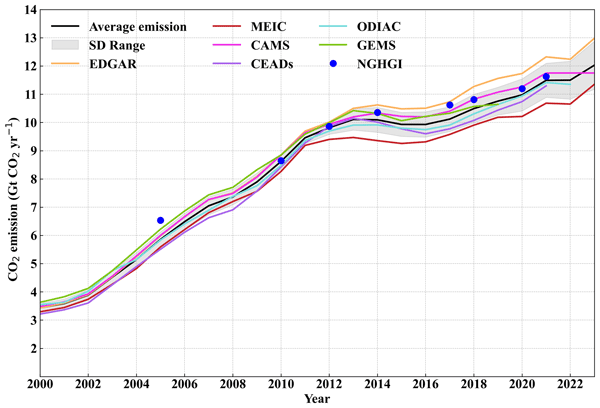
Huirong Yang, Kai Wu, Huizhong Shen, Greet Janssens-Maenhout, Monica Crippa, Diego Guizzardi, and Minqiang Zhou
Atmos. Chem. Phys., 25, 18111–18127, https://doi.org/10.5194/acp-25-18111-2025, https://doi.org/10.5194/acp-25-18111-2025, 2025
Short summary
Short summary
We compare six major anthropogenic CO2 emission inventories in China during the period 2000–2023 to assess emission trends and uncertainties. National emissions show a clear three‑phase pattern, with uncertainties below 5 % (1σ) at the national scale but much higher at the provincial level (10–50 %, 1σ). High-emission regions often have the largest uncertainties. Our findings support more accurate emission estimates and the verification emission reduction policies.
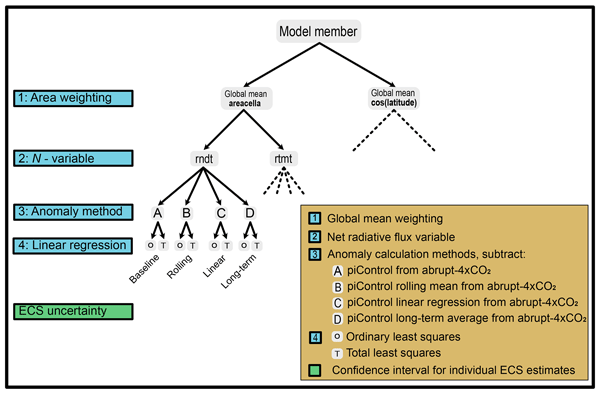
Anna Zehrung, Andrew D. King, Zebedee Nicholls, Mark D. Zelinka, and Malte Meinshausen
Geosci. Model Dev., 18, 9433–9450, https://doi.org/10.5194/gmd-18-9433-2025, https://doi.org/10.5194/gmd-18-9433-2025, 2025
Short summary
Short summary
The Gregory method is a common approach for calculating the equilibrium climate sensitivity (ECS). However, studies which apply this method lack transparency in how model data is processed prior to calculating the ECS, inhibiting replicability. Different choices of global weighting, net radiative flux variable, anomaly calculation, and linear regression fit can affect the ECS estimates. We investigate the impact of these choices and propose a standardised method for future ECS calculations.
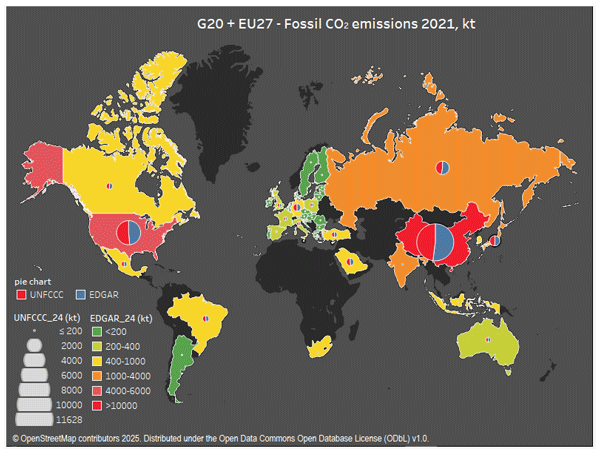
Manjola Banja, Monica Crippa, Diego Guizzardi, Marilena Muntean, Federico Pagani, and Enrico Pisoni
Earth Syst. Sci. Data, 17, 6461–6486, https://doi.org/10.5194/essd-17-6461-2025, https://doi.org/10.5194/essd-17-6461-2025, 2025
Short summary
Short summary
Global efforts to decrease emissions rely on inventories that differ widely in scope and methodology. Alongside national inventories, independent databases provide yearly globally consistent emission inventories. Comparing independent inventories with countries submissions provides clear and consistent track of the real progress. Improvement of emissions inventories, reporting timelines, and statistical systems are essential to ensure reliable and comparable data.
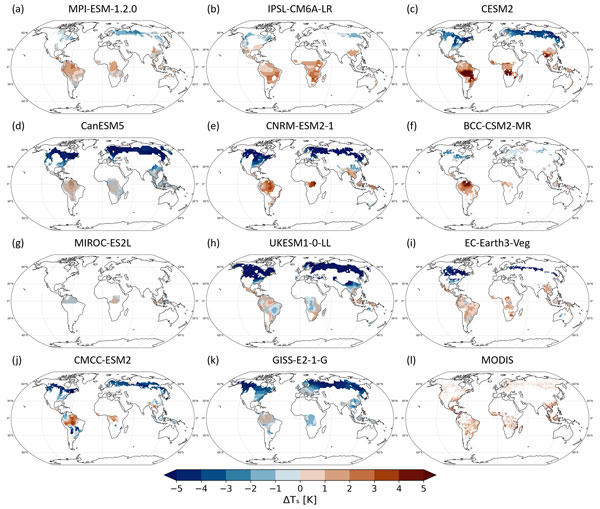
Nikolina Mileva, Julia Pongratz, Vivek K. Arora, Akihiko Ito, Sebastiaan Luyssaert, Sonali S. McDermid, Paul A. Miller, Daniele Peano, Roland Séférian, Yanwu Zhang, and Wolfgang Buermann
Earth Syst. Dynam., 16, 2137–2160, https://doi.org/10.5194/esd-16-2137-2025, https://doi.org/10.5194/esd-16-2137-2025, 2025
Short summary
Short summary
Despite forests being so important for mitigating climate change, there are still uncertainties about how much the changes in forest cover contribute to the cooling/warming of the climate. Climate models and real-world observations often disagree about the magnitude and even the direction of these changes. We constrain climate models scenarios of widespread deforestation with satellite and in-situ data and show that models still have difficulties representing the movement of heat and water.
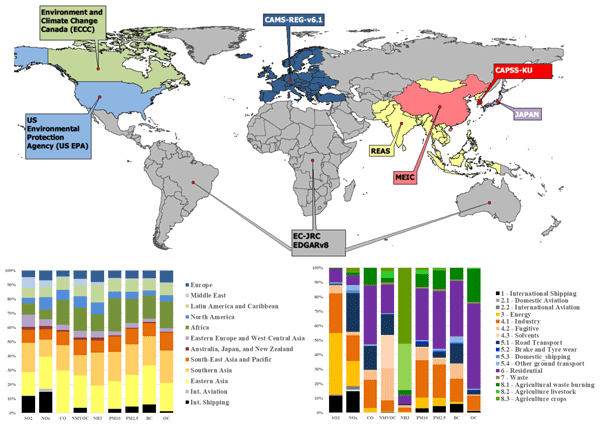
Diego Guizzardi, Monica Crippa, Tim Butler, Terry Keating, Rosa Wu, Jacek Kaminski, Jeroen Kuenen, Junichi Kurokawa, Satoru Chatani, Tazuko Morikawa, George Pouliot, Jacinthe Racine, Michael D. Moran, Zbigniew Klimont, Patrick M. Manseau, Rabab Mashayekhi, Barron H. Henderson, Steven J. Smith, Rachel Hoesly, Marilena Muntean, Manjola Banja, Edwin Schaaf, Federico Pagani, Jung-Hun Woo, Jinseok Kim, Enrico Pisoni, Junhua Zhang, David Niemi, Mourad Sassi, Annie Duhamel, Tabish Ansari, Kristen Foley, Guannan Geng, Yifei Chen, and Qiang Zhang
Earth Syst. Sci. Data, 17, 5915–5950, https://doi.org/10.5194/essd-17-5915-2025, https://doi.org/10.5194/essd-17-5915-2025, 2025
Short summary
Short summary
The global air pollution emission mosaic HTAP_v3.2 is the state-of-the-art inventory to address the evolution of a set of policy-relevant pollutants over the past 2 decades. The mosaic is made harmonising and blending seven regional inventories, gapfilled with the most recent release of the Emissions Database for Global Atmospheric Research. By incorporating the best available local information, the HTAP_v3.2 emission mosaic can be used for policy-relevant studies at regional and global level.

Félix Langot, Cyril Crevoisier, Thomas Lauvaux, Charbel Abdallah, Jérôme Pernin, Xin Lin, Marielle Saunois, Axel Guedj, Thomas Ponthieu, Julien Moyé, Michel Ramonet, Anke Roiger, Klaus-Dirk Gottschaldt, and Alina Fiehn
Atmos. Meas. Tech., 18, 5955–5983, https://doi.org/10.5194/amt-18-5955-2025, https://doi.org/10.5194/amt-18-5955-2025, 2025
Short summary
Short summary
Our study compares outputs from meteorological and atmospheric composition models to data from the MAGIC2021 campaign that took place in Sweden. Our results highlight performance differences among models, revealing strengths and weaknesses of different modelling techniques. We also found that wetland emission inventories overestimated emissions in regional simulations. This work helps to refine methane emission predictions, essential for understanding climate change.
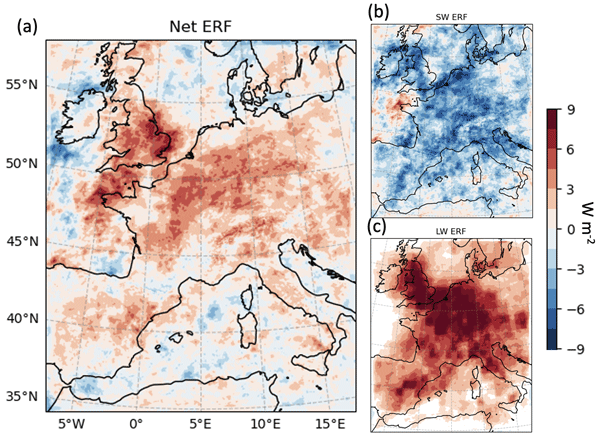
Weiyu Zhang, Paul R. Field, Kwinten Van Weverberg, Piers M. Forster, Cyril J. Morcrette, and Alexandru Rap
Atmos. Chem. Phys., 25, 14153–14166, https://doi.org/10.5194/acp-25-14153-2025, https://doi.org/10.5194/acp-25-14153-2025, 2025
Short summary
Short summary
Contrail cirrus is the largest, yet the most uncertain, aviation climate impact term. A newly implemented contrail cirrus scheme in a double-moment cloud microphysics scheme in climate model realistically reproduces the contrail evolution and provides regional forcing estimates within the range reported by other models. The work highlights the importance of initial contrail characteristics and the need for detailed cloud particle representations in climate model contrail simulations.
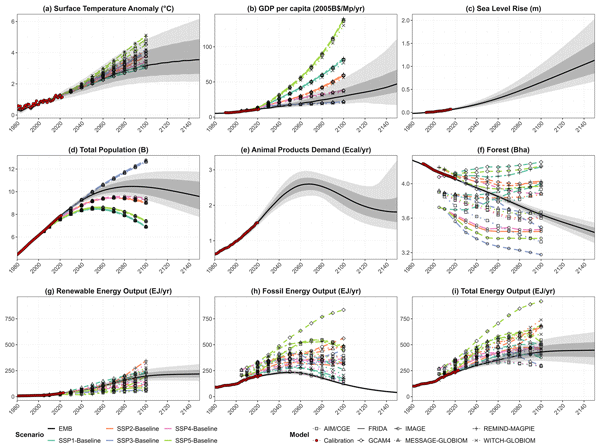
William Schoenberg, Benjamin Blanz, Jefferson K. Rajah, Beniamino Callegari, Christopher Wells, Jannes Breier, Martin B. Grimeland, Andreas Nicolaidis Lindqvist, Lennart Ramme, Chris Smith, Chao Li, Sarah Mashhadi, Adakudlu Muralidhar, and Cecilie Mauritzen
Geosci. Model Dev., 18, 8047–8069, https://doi.org/10.5194/gmd-18-8047-2025, https://doi.org/10.5194/gmd-18-8047-2025, 2025
Short summary
Short summary
The current crop of models assessed by the Intergovernmental Panel on Climate Change to produce their assessment reports lack endogenous process-based representations of climate-driven changes to human activities, limiting understanding of the feedback between climate and humans. FRIDA (Feedback-based knowledge Repository for IntegrateD Assessments) v2.1 integrates these systems and generate results that suggest standard scenarios the shared socioeconomic pathways baseline scenarios may overestimate economic growth, highlighting the importance of feedbacks for realistic projections and informed policymaking.
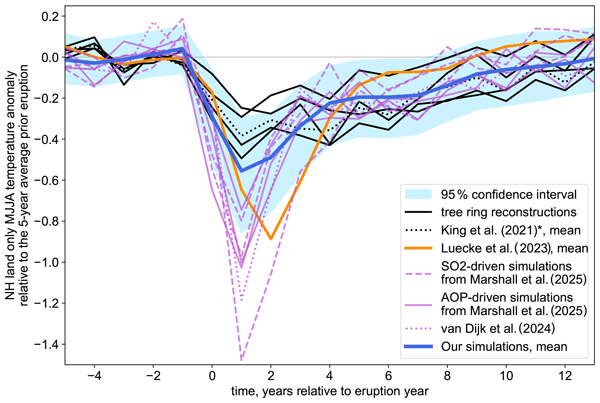
Magali Verkerk, Thomas J. Aubry, Chris Smith, Peter O. Hopcroft, Michael Sigl, Jessica E. Tierney, Kevin Anchukaitis, Matthew Osman, Anja Schmidt, and Matthew Toohey
Clim. Past, 21, 1755–1778, https://doi.org/10.5194/cp-21-1755-2025, https://doi.org/10.5194/cp-21-1755-2025, 2025
Short summary
Short summary
Large volcanic eruptions can trigger global cooling, affecting human societies. Using ice-core records and simple climate model to simulate volcanic effect over the last 8500 years, we show that volcanic eruptions cool the climate by 0.12 °C on average. By comparing model results with temperature recorded by tree rings over the last 1000 years, we demonstrate that our models can predict the large-scale cooling caused by volcanic eruptions and can be used in cases of large eruptions in the future.
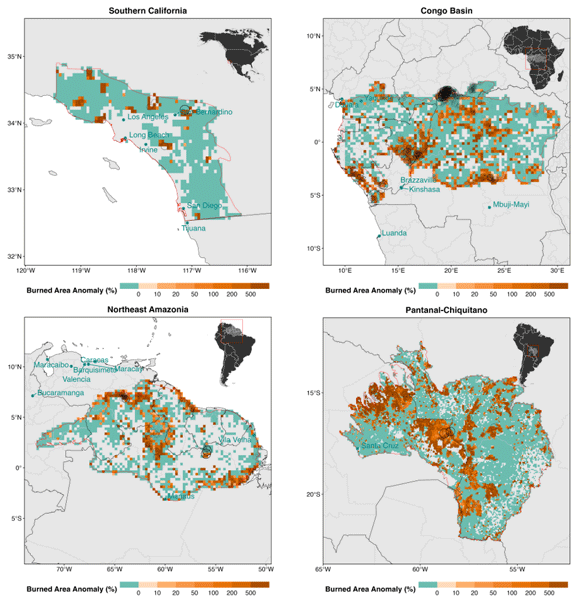
Douglas I. Kelley, Chantelle Burton, Francesca Di Giuseppe, Matthew W. Jones, Maria L. F. Barbosa, Esther Brambleby, Joe R. McNorton, Zhongwei Liu, Anna S. I. Bradley, Katie Blackford, Eleanor Burke, Andrew Ciavarella, Enza Di Tomaso, Jonathan Eden, Igor José M. Ferreira, Lukas Fiedler, Andrew J. Hartley, Theodore R. Keeping, Seppe Lampe, Anna Lombardi, Guilherme Mataveli, Yuquan Qu, Patrícia S. Silva, Fiona R. Spuler, Carmen B. Steinmann, Miguel Ángel Torres-Vázquez, Renata Veiga, Dave van Wees, Jakob B. Wessel, Emily Wright, Bibiana Bilbao, Mathieu Bourbonnais, Cong Gao, Carlos M. Di Bella, Kebonye Dintwe, Victoria M. Donovan, Sarah Harris, Elena A. Kukavskaya, Aya Brigitte N'Dri, Cristina Santín, Galia Selaya, Johan Sjöström, John T. Abatzoglou, Niels Andela, Rachel Carmenta, Emilio Chuvieco, Louis Giglio, Douglas S. Hamilton, Stijn Hantson, Sarah Meier, Mark Parrington, Mojtaba Sadegh, Jesus San-Miguel-Ayanz, Fernando Sedano, Marco Turco, Guido R. van der Werf, Sander Veraverbeke, Liana O. Anderson, Hamish Clarke, Paulo M. Fernandes, and Crystal A. Kolden
Earth Syst. Sci. Data, 17, 5377–5488, https://doi.org/10.5194/essd-17-5377-2025, https://doi.org/10.5194/essd-17-5377-2025, 2025
Short summary
Short summary
The second State of Wildfires report examines extreme wildfire events from 2024 to early 2025. It analyses key regional events in Southern California, Northeast Amazonia, Pantanal–Chiquitano, and the Congo Basin, assessing their drivers and predictability and attributing them to climate change and land use. Seasonal outlooks and decadal projections are provided. Climate change greatly increased the likelihood of these fires, and without strong mitigation, such events will become more frequent.
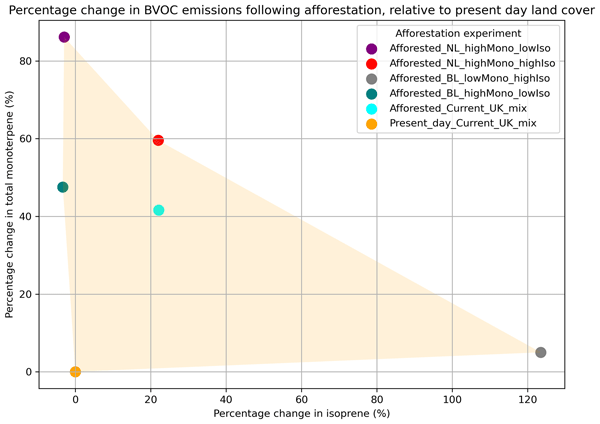
Hazel Mooney, Stephen Arnold, Ben Silver, Piers M. Forster, and Catherine E. Scott
Biogeosciences, 22, 5309–5328, https://doi.org/10.5194/bg-22-5309-2025, https://doi.org/10.5194/bg-22-5309-2025, 2025
Short summary
Short summary
We simulate the potential changes in natural emissions of volatile gases from the land surface in the UK following afforestation from present-day woodland cover of 13 % to 19 % by 2050. We estimate present-day annual UK emissions of isoprene at 39 kt yr−1 and total monoterpenes at 46 kt yr−1, but emissions from afforested experiments show between a 3 % decrease and 123 % increase in emissions, explained by the variation in emissions activity between and within needleleaf and broadleaf trees.
John P. Dunne, Helene T. Hewitt, Julie M. Arblaster, Frédéric Bonou, Olivier Boucher, Tereza Cavazos, Beth Dingley, Paul J. Durack, Birgit Hassler, Martin Juckes, Tomoki Miyakawa, Matt Mizielinski, Vaishali Naik, Zebedee Nicholls, Eleanor O'Rourke, Robert Pincus, Benjamin M. Sanderson, Isla R. Simpson, and Karl E. Taylor
Geosci. Model Dev., 18, 6671–6700, https://doi.org/10.5194/gmd-18-6671-2025, https://doi.org/10.5194/gmd-18-6671-2025, 2025
Short summary
Short summary
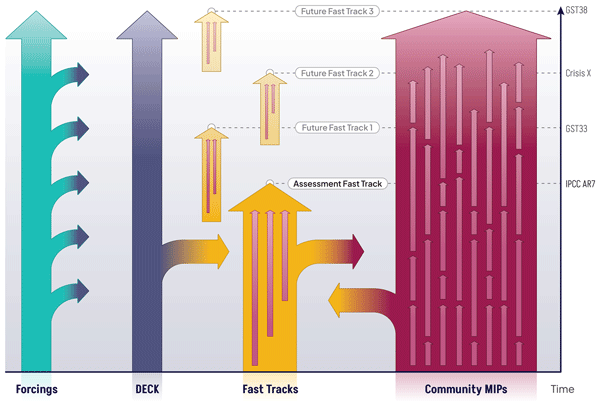
The seventh phase of the Coupled Model Intercomparison Project (CMIP7) coordinates efforts to answer key and timely climate science questions and facilitate delivery of relevant multi-model simulations for prediction and projection; characterization, attribution, and process understanding; and vulnerability, impact, and adaptation analysis. Key to the CMIP7 design are the mandatory Diagnostic, Evaluation and Characterization of Klima and optional Assessment Fast Track experiments.
Olivier Bouriaud, Ernst-Detlef Schulze, Konstantin Gregor, Issam Boukhris, Peter Högberg, Roland Irslinger, Phillip Papastefanou, Julia Pongratz, Anja Rammig, Riccardo Valentini, and Christian Körner
Biogeosciences, 22, 4729–4741, https://doi.org/10.5194/bg-22-4729-2025, https://doi.org/10.5194/bg-22-4729-2025, 2025
Short summary
Short summary
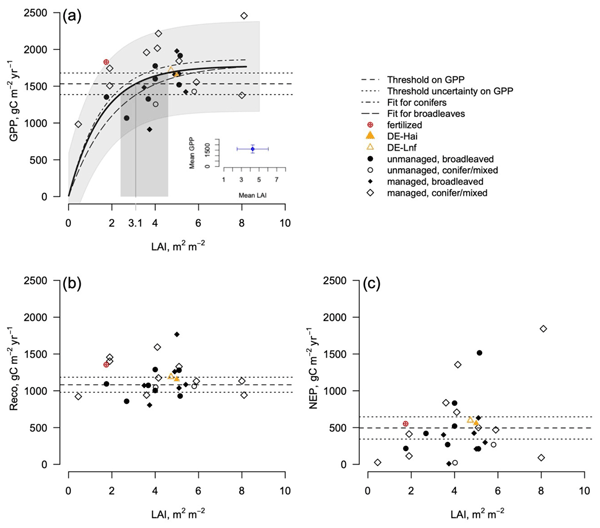
The impact of harvesting on forests' carbon sink capacities is debated. One view is that their sink strength is resilient to harvesting, and the other is that it disrupts these capacities. Our work shows that leaf area index (LAI) has been overlooked in this discussion. We found that temperate forests' carbon uptake is largely insensitive to variations in LAI beyond 4.5 m² m-² but that forests operate at higher levels.
Benjamin M. Sanderson, Victor Brovkin, Rosie A. Fisher, David Hohn, Tatiana Ilyina, Chris D. Jones, Torben Koenigk, Charles Koven, Hongmei Li, David M. Lawrence, Peter Lawrence, Spencer Liddicoat, Andrew H. MacDougall, Nadine Mengis, Zebedee Nicholls, Eleanor O'Rourke, Anastasia Romanou, Marit Sandstad, Jörg Schwinger, Roland Séférian, Lori T. Sentman, Isla R. Simpson, Chris Smith, Norman J. Steinert, Abigail L. S. Swann, Jerry Tjiputra, and Tilo Ziehn
Geosci. Model Dev., 18, 5699–5724, https://doi.org/10.5194/gmd-18-5699-2025, https://doi.org/10.5194/gmd-18-5699-2025, 2025
Short summary
Short summary
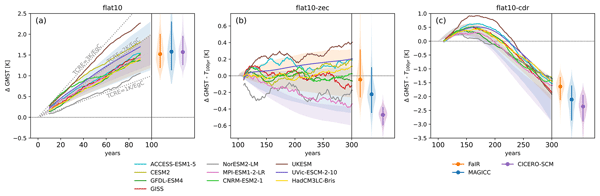
This study investigates how climate models warm in response to simplified carbon emissions trajectories, refining the understanding of climate reversibility and commitment. Metrics are defined for warming response to cumulative emissions and for the cessation of emissions or ramp-down to net-zero and net-negative levels. Results indicate that previous concentration-driven experiments may have overstated the Zero Emissions Commitment due to emissions rates exceeding historical levels.
Paul T. Griffiths, Laura J. Wilcox, Robert J. Allen, Vaishali Naik, Fiona M. O'Connor, Michael Prather, Alex Archibald, Florence Brown, Makoto Deushi, William Collins, Stephanie Fiedler, Naga Oshima, Lee T. Murray, Bjørn H. Samset, Chris Smith, Steven Turnock, Duncan Watson-Parris, and Paul J. Young
Atmos. Chem. Phys., 25, 8289–8328, https://doi.org/10.5194/acp-25-8289-2025, https://doi.org/10.5194/acp-25-8289-2025, 2025
Short summary
Short summary
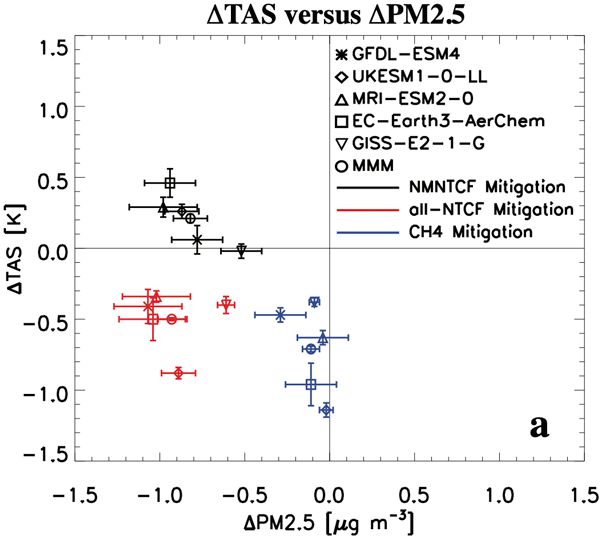
The Aerosol Chemistry Model Intercomparison Project (AerChemMIP) aimed to quantify the climate and air quality impacts of aerosols and chemically reactive gases. We review its contribution to AR6 (Sixth Assessment Report of the Intergovernmental Panel on Climate Change) and the wider understanding of the role of these species in climate and climate change. We identify challenges and provide recommendations to improve the utility and uptake of climate model data, detailed summary tables of CMIP6 models, experiments, and emergent diagnostics.
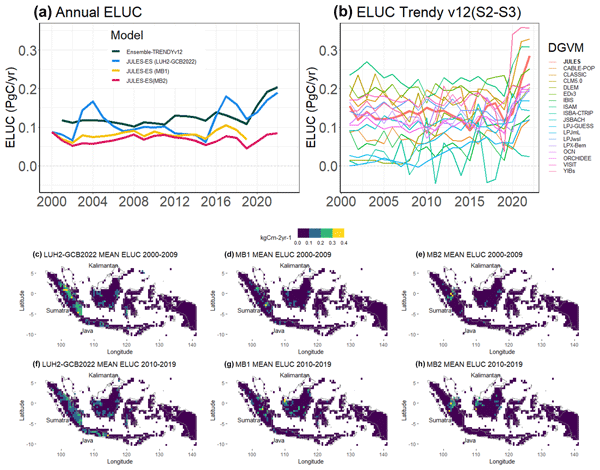
Ida Bagus Mandhara Brasika, Pierre Friedlingstein, Stephen Sitch, Michael O'Sullivan, Maria Carolina Duran-Rojas, Thais Michele Rosan, Kees Klein Goldewijk, Julia Pongratz, Clemens Schwingshackl, Louise P. Chini, and George C. Hurtt
Biogeosciences, 22, 3547–3561, https://doi.org/10.5194/bg-22-3547-2025, https://doi.org/10.5194/bg-22-3547-2025, 2025
Short summary
Short summary
Indonesia is the world's third-highest carbon emitter from land use change. However, there are uncertainties in the carbon emissions of Indonesia. Our best estimate of carbon emissions from land use change in Indonesia is 0.12 ± 0.02 PgC/yr with a steady trend. Despite many uncertainties created by drivers, models, and products, we also found robust agreements between these models and products. All agree that Indonesian carbon emissions from LULCC (land use and land cover change) have had no decreasing trend for the last 2 decades.
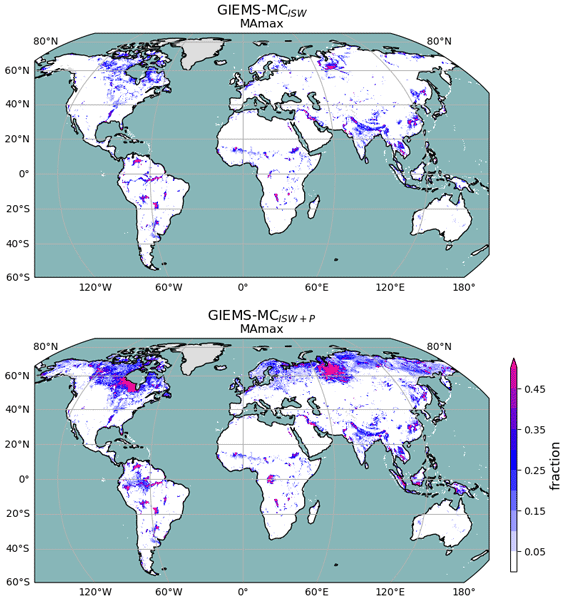
Juliette Bernard, Catherine Prigent, Carlos Jimenez, Etienne Fluet-Chouinard, Bernhard Lehner, Elodie Salmon, Philippe Ciais, Zhen Zhang, Shushi Peng, and Marielle Saunois
Earth Syst. Sci. Data, 17, 2985–3008, https://doi.org/10.5194/essd-17-2985-2025, https://doi.org/10.5194/essd-17-2985-2025, 2025
Short summary
Short summary
Wetlands are responsible for about a third of global emissions of methane, a potent greenhouse gas. We have developed the Global Inundation Extent from Multi-Satellites-MethaneCentric (GIEMS-MC) dataset to represent the dynamics of wetland extent on a global scale (0.25° × 0.25° resolution, monthly time step). This updated resource combines satellite data and existing wetland databases, covering 1992 to 2020. Consistent maps of other methane-emitting surface waters (lakes, rivers, reservoirs, rice paddies) are also provided.
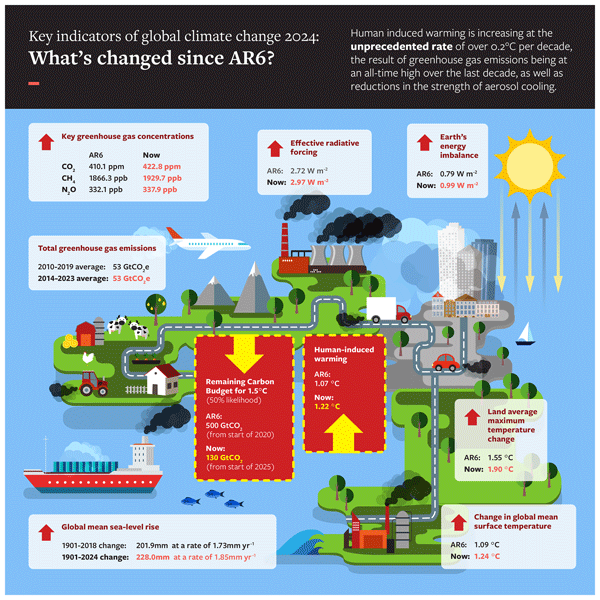
Piers M. Forster, Chris Smith, Tristram Walsh, William F. Lamb, Robin Lamboll, Christophe Cassou, Mathias Hauser, Zeke Hausfather, June-Yi Lee, Matthew D. Palmer, Karina von Schuckmann, Aimée B. A. Slangen, Sophie Szopa, Blair Trewin, Jeongeun Yun, Nathan P. Gillett, Stuart Jenkins, H. Damon Matthews, Krishnan Raghavan, Aurélien Ribes, Joeri Rogelj, Debbie Rosen, Xuebin Zhang, Myles Allen, Lara Aleluia Reis, Robbie M. Andrew, Richard A. Betts, Alex Borger, Jiddu A. Broersma, Samantha N. Burgess, Lijing Cheng, Pierre Friedlingstein, Catia M. Domingues, Marco Gambarini, Thomas Gasser, Johannes Gütschow, Masayoshi Ishii, Christopher Kadow, John Kennedy, Rachel E. Killick, Paul B. Krummel, Aurélien Liné, Didier P. Monselesan, Colin Morice, Jens Mühle, Vaishali Naik, Glen P. Peters, Anna Pirani, Julia Pongratz, Jan C. Minx, Matthew Rigby, Robert Rohde, Abhishek Savita, Sonia I. Seneviratne, Peter Thorne, Christopher Wells, Luke M. Western, Guido R. van der Werf, Susan E. Wijffels, Valérie Masson-Delmotte, and Panmao Zhai
Earth Syst. Sci. Data, 17, 2641–2680, https://doi.org/10.5194/essd-17-2641-2025, https://doi.org/10.5194/essd-17-2641-2025, 2025
Short summary
Short summary
In a rapidly changing climate, evidence-based decision-making benefits from up-to-date and timely information. Here we compile monitoring datasets to track real-world changes over time. To make our work relevant to policymakers, we follow methods from the Intergovernmental Panel on Climate Change (IPCC). Human activities are increasing the Earth's energy imbalance and driving faster sea-level rise compared to the IPCC assessment.
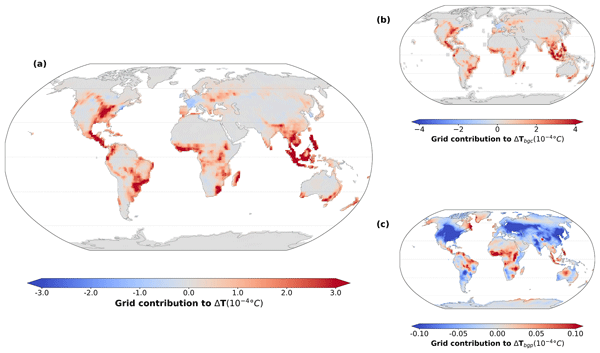
Amali A. Amali, Clemens Schwingshackl, Akihiko Ito, Alina Barbu, Christine Delire, Daniele Peano, David M. Lawrence, David Wårlind, Eddy Robertson, Edouard L. Davin, Elena Shevliakova, Ian N. Harman, Nicolas Vuichard, Paul A. Miller, Peter J. Lawrence, Tilo Ziehn, Tomohiro Hajima, Victor Brovkin, Yanwu Zhang, Vivek K. Arora, and Julia Pongratz
Earth Syst. Dynam., 16, 803–840, https://doi.org/10.5194/esd-16-803-2025, https://doi.org/10.5194/esd-16-803-2025, 2025
Short summary
Short summary
Our study explored the impact of anthropogenic land-use change (LUC) on climate dynamics, focusing on biogeophysical (BGP) and biogeochemical (BGC) effects using data from the Land Use Model Intercomparison Project (LUMIP) and the Coupled Model Intercomparison Project Phase 6 (CMIP6). We found that LUC-induced carbon emissions contribute to a BGC warming of 0.21 °C, with BGC effects dominating globally over BGP effects, which show regional variability. Our findings highlight discrepancies in model simulations and emphasize the need for improved representations of LUC processes.
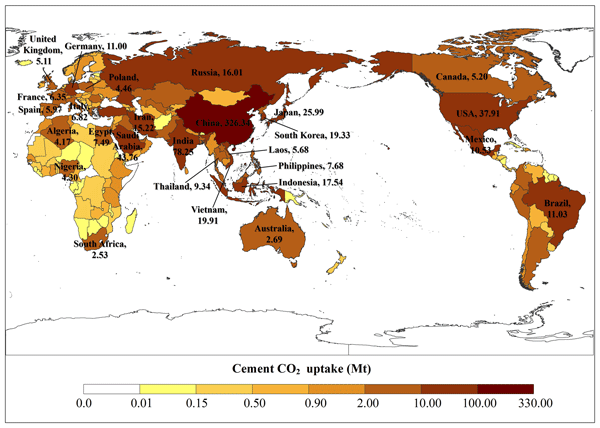
Le Niu, Songbin Wu, Robbie M. Andrew, Zi Shao, Jiaoyue Wang, and Fengming Xi
Earth Syst. Sci. Data, 17, 2231–2247, https://doi.org/10.5194/essd-17-2231-2025, https://doi.org/10.5194/essd-17-2231-2025, 2025
Short summary
Short summary
This study provides an accurate bottom-up quantification of cement carbonation sinks at national and global levels. It shows that the global CO2 uptake by cement materials increased from 7.74 Mt yr-1 in 1928 to 0.84 Gt yr-1 in 2023; for 2024, this value is projected to be 0.86 Gt yr-1. The accumulated CO2 uptake offsets about 46 % of cement process emissions. Dominance with respect to cement carbon uptake has shifted from the USA, Japan, and some European countries to emerging economies such as China and India.
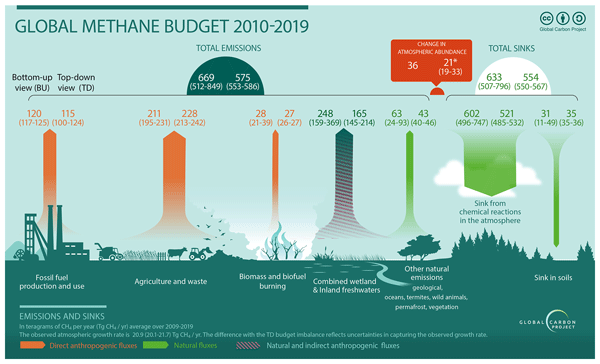
Marielle Saunois, Adrien Martinez, Benjamin Poulter, Zhen Zhang, Peter A. Raymond, Pierre Regnier, Josep G. Canadell, Robert B. Jackson, Prabir K. Patra, Philippe Bousquet, Philippe Ciais, Edward J. Dlugokencky, Xin Lan, George H. Allen, David Bastviken, David J. Beerling, Dmitry A. Belikov, Donald R. Blake, Simona Castaldi, Monica Crippa, Bridget R. Deemer, Fraser Dennison, Giuseppe Etiope, Nicola Gedney, Lena Höglund-Isaksson, Meredith A. Holgerson, Peter O. Hopcroft, Gustaf Hugelius, Akihiko Ito, Atul K. Jain, Rajesh Janardanan, Matthew S. Johnson, Thomas Kleinen, Paul B. Krummel, Ronny Lauerwald, Tingting Li, Xiangyu Liu, Kyle C. McDonald, Joe R. Melton, Jens Mühle, Jurek Müller, Fabiola Murguia-Flores, Yosuke Niwa, Sergio Noce, Shufen Pan, Robert J. Parker, Changhui Peng, Michel Ramonet, William J. Riley, Gerard Rocher-Ros, Judith A. Rosentreter, Motoki Sasakawa, Arjo Segers, Steven J. Smith, Emily H. Stanley, Joël Thanwerdas, Hanqin Tian, Aki Tsuruta, Francesco N. Tubiello, Thomas S. Weber, Guido R. van der Werf, Douglas E. J. Worthy, Yi Xi, Yukio Yoshida, Wenxin Zhang, Bo Zheng, Qing Zhu, Qiuan Zhu, and Qianlai Zhuang
Earth Syst. Sci. Data, 17, 1873–1958, https://doi.org/10.5194/essd-17-1873-2025, https://doi.org/10.5194/essd-17-1873-2025, 2025
Short summary
Short summary
Methane (CH4) is the second most important human-influenced greenhouse gas in terms of climate forcing after carbon dioxide (CO2). A consortium of multi-disciplinary scientists synthesise and update the budget of the sources and sinks of CH4. This edition benefits from important progress in estimating emissions from lakes and ponds, reservoirs, and streams and rivers. For the 2010s decade, global CH4 emissions are estimated at 575 Tg CH4 yr-1, including ~65 % from anthropogenic sources.
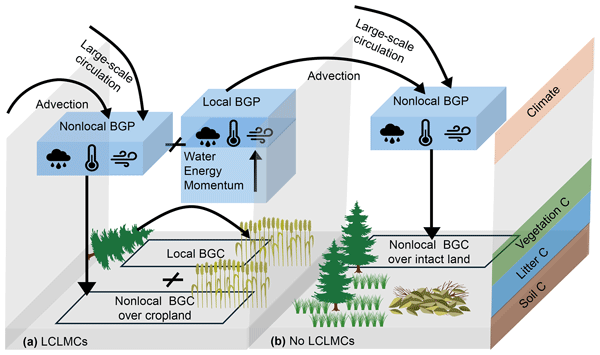
Suqi Guo, Felix Havermann, Steven J. De Hertog, Fei Luo, Iris Manola, Thomas Raddatz, Hongmei Li, Wim Thiery, Quentin Lejeune, Carl-Friedrich Schleussner, David Wårlind, Lars Nieradzik, and Julia Pongratz
Earth Syst. Dynam., 16, 631–666, https://doi.org/10.5194/esd-16-631-2025, https://doi.org/10.5194/esd-16-631-2025, 2025
Short summary
Short summary
Land cover and land management changes (LCLMCs) can alter climate even in intact areas, causing carbon changes in remote areas. This study is the first to assess these effects, finding they substantially alter global carbon dynamics, changing terrestrial stocks by up to dozens of gigatonnes. These results are vital for scientific and policy assessments, given the expected role of LCLMCs in achieving the Paris Agreement's goal to limit global warming below 1.5 °C.
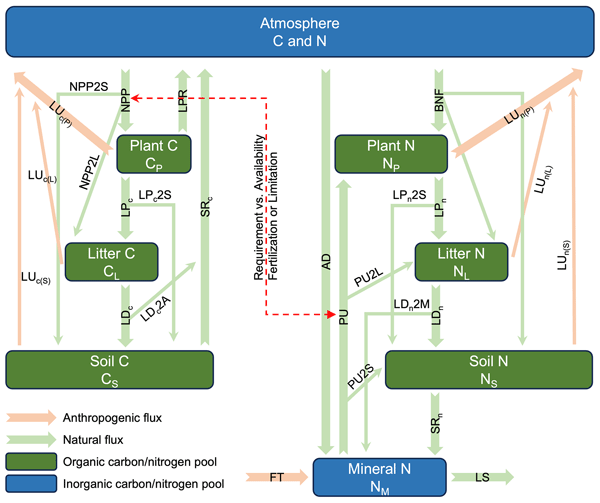
Gang Tang, Zebedee Nicholls, Alexander Norton, Sönke Zaehle, and Malte Meinshausen
Geosci. Model Dev., 18, 2193–2230, https://doi.org/10.5194/gmd-18-2193-2025, https://doi.org/10.5194/gmd-18-2193-2025, 2025
Short summary
Short summary
We studied carbon–nitrogen coupling in Earth system models by developing a global carbon–nitrogen cycle model (CNit v1.0) within the widely used emulator MAGICC. CNit effectively reproduced the global carbon–nitrogen cycle dynamics observed in complex models. Our results show persistent nitrogen limitations on plant growth (net primary production) from 1850 to 2100, suggesting that nitrogen deficiency may constrain future land carbon sequestration.
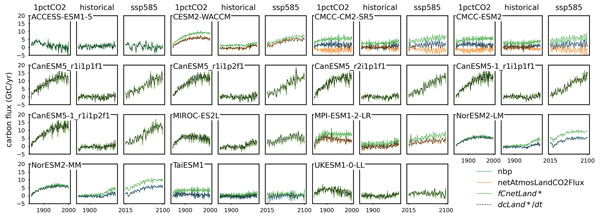
Gang Tang, Zebedee Nicholls, Chris Jones, Thomas Gasser, Alexander Norton, Tilo Ziehn, Alejandro Romero-Prieto, and Malte Meinshausen
Geosci. Model Dev., 18, 2111–2136, https://doi.org/10.5194/gmd-18-2111-2025, https://doi.org/10.5194/gmd-18-2111-2025, 2025
Short summary
Short summary
We analyzed carbon and nitrogen mass conservation in data from various Earth system models. Our findings reveal significant discrepancies between flux and pool size data, where cumulative imbalances can reach hundreds of gigatons of carbon or nitrogen. These imbalances appear primarily due to missing or inconsistently reported fluxes – especially for land-use and fire emissions. To enhance data quality, we recommend that future climate data protocols address this issue at the reporting stage.
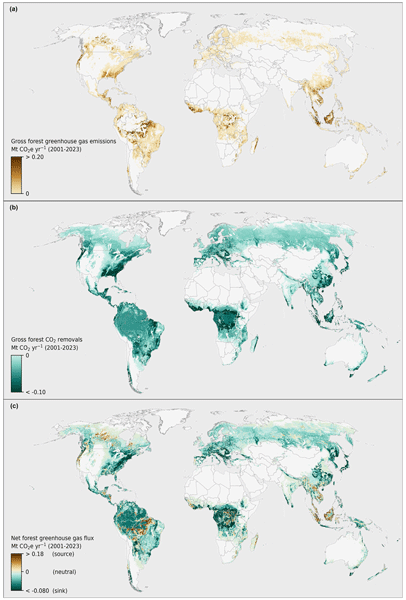
David A. Gibbs, Melissa Rose, Giacomo Grassi, Joana Melo, Simone Rossi, Viola Heinrich, and Nancy L. Harris
Earth Syst. Sci. Data, 17, 1217–1243, https://doi.org/10.5194/essd-17-1217-2025, https://doi.org/10.5194/essd-17-1217-2025, 2025
Short summary
Short summary
Updated global maps of greenhouse gas (GHG) emissions and sequestration by forests from 2001 onwards using satellite-derived data show that forests are strong net carbon sinks, capturing about as much CO2 each year on average as the USA emitted from fossil fuels in 2019. After reclassifying fluxes to countries’ reporting categories for national GHG inventories, we found that roughly two-thirds of the net CO2 flux from forests is anthropogenic and one-third is non-anthropogenic.
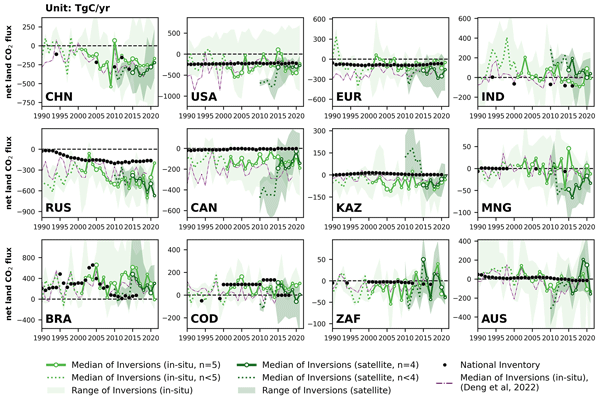
Zhu Deng, Philippe Ciais, Liting Hu, Adrien Martinez, Marielle Saunois, Rona L. Thompson, Kushal Tibrewal, Wouter Peters, Brendan Byrne, Giacomo Grassi, Paul I. Palmer, Ingrid T. Luijkx, Zhu Liu, Junjie Liu, Xuekun Fang, Tengjiao Wang, Hanqin Tian, Katsumasa Tanaka, Ana Bastos, Stephen Sitch, Benjamin Poulter, Clément Albergel, Aki Tsuruta, Shamil Maksyutov, Rajesh Janardanan, Yosuke Niwa, Bo Zheng, Joël Thanwerdas, Dmitry Belikov, Arjo Segers, and Frédéric Chevallier
Earth Syst. Sci. Data, 17, 1121–1152, https://doi.org/10.5194/essd-17-1121-2025, https://doi.org/10.5194/essd-17-1121-2025, 2025
Short summary
Short summary
This study reconciles national greenhouse gas (GHG) inventories with updated atmospheric inversion results to evaluate discrepancies for three principal GHG fluxes at the national level. Compared to our previous study, new satellite-based CO2 inversions were included and an updated mask of managed lands was used, improving agreement for Brazil and Canada. The proposed methodology can be regularly applied as a check to assess the gap between top-down inversions and bottom-up inventories.
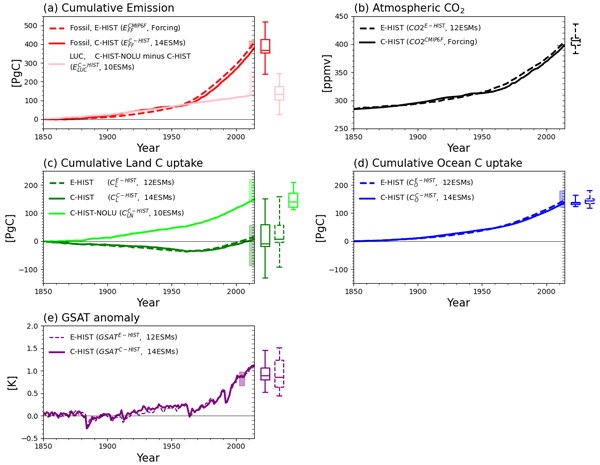
Tomohiro Hajima, Michio Kawamiya, Akihiko Ito, Kaoru Tachiiri, Chris D. Jones, Vivek Arora, Victor Brovkin, Roland Séférian, Spencer Liddicoat, Pierre Friedlingstein, and Elena Shevliakova
Biogeosciences, 22, 1447–1473, https://doi.org/10.5194/bg-22-1447-2025, https://doi.org/10.5194/bg-22-1447-2025, 2025
Short summary
Short summary
This study analyzes atmospheric CO2 concentrations and global carbon budgets simulated by multiple Earth system models, using several types of simulations (CO2 concentration- and emission-driven experiments). We successfully identified problems with regard to the global carbon budget in each model. We also found urgent issues with regard to land use change CO2 emissions that should be solved in the latest generation of models.
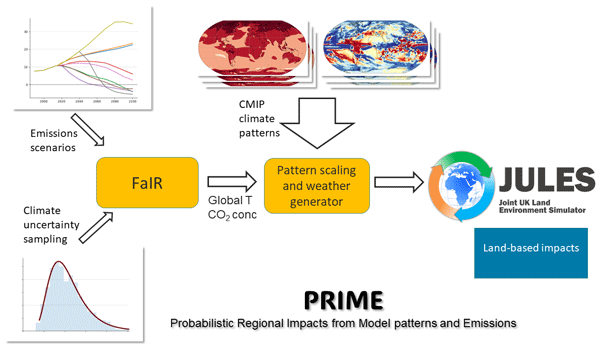
Camilla Mathison, Eleanor J. Burke, Gregory Munday, Chris D. Jones, Chris J. Smith, Norman J. Steinert, Andy J. Wiltshire, Chris Huntingford, Eszter Kovacs, Laila K. Gohar, Rebecca M. Varney, and Douglas McNeall
Geosci. Model Dev., 18, 1785–1808, https://doi.org/10.5194/gmd-18-1785-2025, https://doi.org/10.5194/gmd-18-1785-2025, 2025
Short summary
Short summary
We present PRIME (Probabilistic Regional Impacts from Model patterns and Emissions), which is designed to take new emissions scenarios and rapidly provide regional impact information. PRIME allows large ensembles to be run on multi-centennial timescales, including the analysis of many important variables for impact assessments. Our evaluation shows that PRIME reproduces the climate response for known scenarios, providing confidence in using PRIME for novel scenarios.
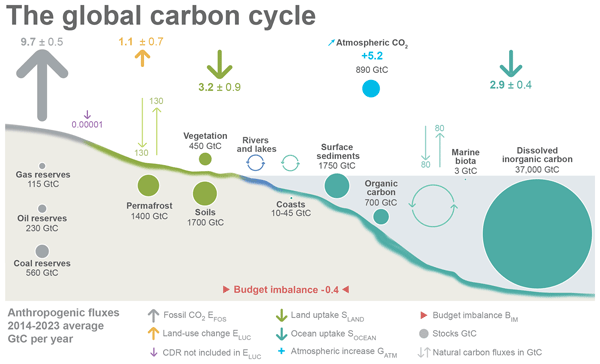
Pierre Friedlingstein, Michael O'Sullivan, Matthew W. Jones, Robbie M. Andrew, Judith Hauck, Peter Landschützer, Corinne Le Quéré, Hongmei Li, Ingrid T. Luijkx, Are Olsen, Glen P. Peters, Wouter Peters, Julia Pongratz, Clemens Schwingshackl, Stephen Sitch, Josep G. Canadell, Philippe Ciais, Robert B. Jackson, Simone R. Alin, Almut Arneth, Vivek Arora, Nicholas R. Bates, Meike Becker, Nicolas Bellouin, Carla F. Berghoff, Henry C. Bittig, Laurent Bopp, Patricia Cadule, Katie Campbell, Matthew A. Chamberlain, Naveen Chandra, Frédéric Chevallier, Louise P. Chini, Thomas Colligan, Jeanne Decayeux, Laique M. Djeutchouang, Xinyu Dou, Carolina Duran Rojas, Kazutaka Enyo, Wiley Evans, Amanda R. Fay, Richard A. Feely, Daniel J. Ford, Adrianna Foster, Thomas Gasser, Marion Gehlen, Thanos Gkritzalis, Giacomo Grassi, Luke Gregor, Nicolas Gruber, Özgür Gürses, Ian Harris, Matthew Hefner, Jens Heinke, George C. Hurtt, Yosuke Iida, Tatiana Ilyina, Andrew R. Jacobson, Atul K. Jain, Tereza Jarníková, Annika Jersild, Fei Jiang, Zhe Jin, Etsushi Kato, Ralph F. Keeling, Kees Klein Goldewijk, Jürgen Knauer, Jan Ivar Korsbakken, Xin Lan, Siv K. Lauvset, Nathalie Lefèvre, Zhu Liu, Junjie Liu, Lei Ma, Shamil Maksyutov, Gregg Marland, Nicolas Mayot, Patrick C. McGuire, Nicolas Metzl, Natalie M. Monacci, Eric J. Morgan, Shin-Ichiro Nakaoka, Craig Neill, Yosuke Niwa, Tobias Nützel, Lea Olivier, Tsuneo Ono, Paul I. Palmer, Denis Pierrot, Zhangcai Qin, Laure Resplandy, Alizée Roobaert, Thais M. Rosan, Christian Rödenbeck, Jörg Schwinger, T. Luke Smallman, Stephen M. Smith, Reinel Sospedra-Alfonso, Tobias Steinhoff, Qing Sun, Adrienne J. Sutton, Roland Séférian, Shintaro Takao, Hiroaki Tatebe, Hanqin Tian, Bronte Tilbrook, Olivier Torres, Etienne Tourigny, Hiroyuki Tsujino, Francesco Tubiello, Guido van der Werf, Rik Wanninkhof, Xuhui Wang, Dongxu Yang, Xiaojuan Yang, Zhen Yu, Wenping Yuan, Xu Yue, Sönke Zaehle, Ning Zeng, and Jiye Zeng
Earth Syst. Sci. Data, 17, 965–1039, https://doi.org/10.5194/essd-17-965-2025, https://doi.org/10.5194/essd-17-965-2025, 2025
Short summary
Short summary
The Global Carbon Budget 2024 describes the methodology, main results, and datasets used to quantify the anthropogenic emissions of carbon dioxide (CO2) and their partitioning among the atmosphere, land ecosystems, and the ocean over the historical period (1750–2024). These living datasets are updated every year to provide the highest transparency and traceability in the reporting of CO2, the key driver of climate change.
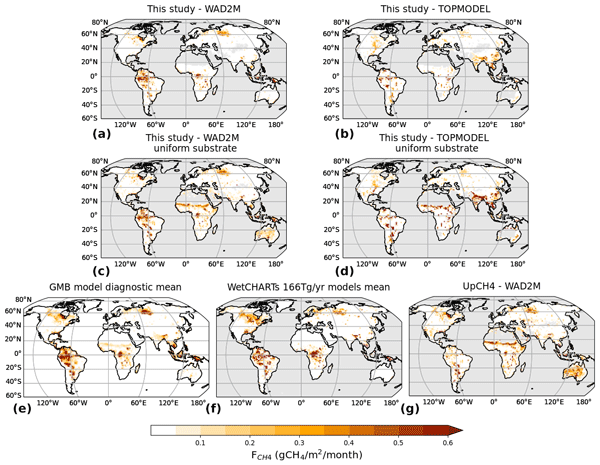
Juliette Bernard, Elodie Salmon, Marielle Saunois, Shushi Peng, Penélope Serrano-Ortiz, Antoine Berchet, Palingamoorthy Gnanamoorthy, Joachim Jansen, and Philippe Ciais
Geosci. Model Dev., 18, 863–883, https://doi.org/10.5194/gmd-18-863-2025, https://doi.org/10.5194/gmd-18-863-2025, 2025
Short summary
Short summary
Despite their importance, uncertainties remain in the evaluation of the drivers of temporal variability of methane emissions from wetlands on a global scale. Here, a simplified global model is developed, taking advantage of advances in remote-sensing data and in situ observations. The model reproduces the large spatial and temporal patterns of emissions, albeit with limitations in the tropics due to data scarcity. This model, while simple, can provide valuable insights into sensitivity analyses.
Gudeta Weldesemayat Sileshi, Edmundo Barrios, Johannes Lehmann, and Francesco Nicola Tubiello
Earth Syst. Sci. Data, 17, 369–391, https://doi.org/10.5194/essd-17-369-2025, https://doi.org/10.5194/essd-17-369-2025, 2025
Short summary
Short summary
Agricultural, fishery, forestry and agro-processing activities produce large quantities of residues, by-products and waste materials every year. Here, we present a global organic matter database (OMD), the first of its kind, consolidating estimates of residues and by-products potentially available for use in a circular bio-economy. It also provides definitions, typologies and methods to aid consistent classification, estimation and reporting of the various residues and by-products.
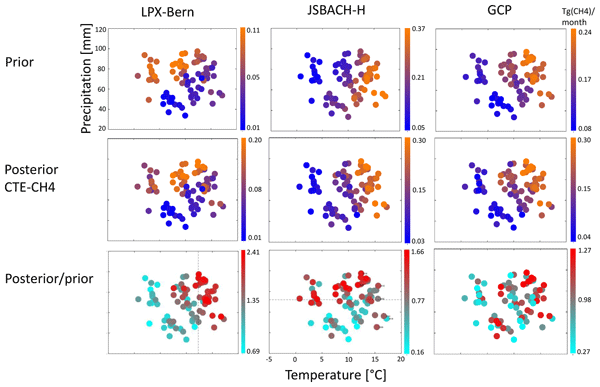
Tuula Aalto, Aki Tsuruta, Jarmo Mäkelä, Jurek Müller, Maria Tenkanen, Eleanor Burke, Sarah Chadburn, Yao Gao, Vilma Mannisenaho, Thomas Kleinen, Hanna Lee, Antti Leppänen, Tiina Markkanen, Stefano Materia, Paul A. Miller, Daniele Peano, Olli Peltola, Benjamin Poulter, Maarit Raivonen, Marielle Saunois, David Wårlind, and Sönke Zaehle
Biogeosciences, 22, 323–340, https://doi.org/10.5194/bg-22-323-2025, https://doi.org/10.5194/bg-22-323-2025, 2025
Short summary
Short summary
Wetland methane responses to temperature and precipitation were studied in a boreal wetland-rich region in northern Europe using ecosystem models, atmospheric inversions, and upscaled flux observations. The ecosystem models differed in their responses to temperature and precipitation and in their seasonality. However, multi-model means, inversions, and upscaled fluxes had similar seasonality, and they suggested co-limitation by temperature and precipitation.
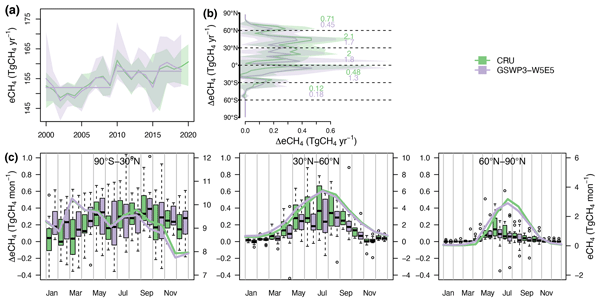
Zhen Zhang, Benjamin Poulter, Joe R. Melton, William J. Riley, George H. Allen, David J. Beerling, Philippe Bousquet, Josep G. Canadell, Etienne Fluet-Chouinard, Philippe Ciais, Nicola Gedney, Peter O. Hopcroft, Akihiko Ito, Robert B. Jackson, Atul K. Jain, Katherine Jensen, Fortunat Joos, Thomas Kleinen, Sara H. Knox, Tingting Li, Xin Li, Xiangyu Liu, Kyle McDonald, Gavin McNicol, Paul A. Miller, Jurek Müller, Prabir K. Patra, Changhui Peng, Shushi Peng, Zhangcai Qin, Ryan M. Riggs, Marielle Saunois, Qing Sun, Hanqin Tian, Xiaoming Xu, Yuanzhi Yao, Yi Xi, Wenxin Zhang, Qing Zhu, Qiuan Zhu, and Qianlai Zhuang
Biogeosciences, 22, 305–321, https://doi.org/10.5194/bg-22-305-2025, https://doi.org/10.5194/bg-22-305-2025, 2025
Short summary
Short summary
This study assesses global methane emissions from wetlands between 2000 and 2020 using multiple models. We found that wetland emissions increased by 6–7 Tg CH4 yr-1 in the 2010s compared to the 2000s. Rising temperatures primarily drove this increase, while changes in precipitation and CO2 levels also played roles. Our findings highlight the importance of wetlands in the global methane budget and the need for continuous monitoring to understand their impact on climate change.
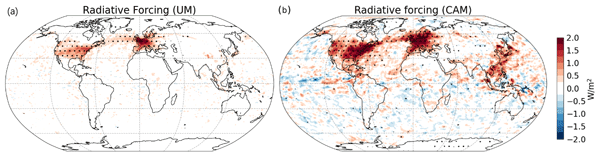
Weiyu Zhang, Kwinten Van Weverberg, Cyril J. Morcrette, Wuhu Feng, Kalli Furtado, Paul R. Field, Chih-Chieh Chen, Andrew Gettelman, Piers M. Forster, Daniel R. Marsh, and Alexandru Rap
Atmos. Chem. Phys., 25, 473–489, https://doi.org/10.5194/acp-25-473-2025, https://doi.org/10.5194/acp-25-473-2025, 2025
Short summary
Short summary
Contrail cirrus is the largest, but also most uncertain, contribution of aviation to global warming. We evaluate, for the first time, the impact of the host climate model on contrail cirrus properties. Substantial differences exist between contrail cirrus formation, persistence, and radiative effects in the host climate models. Reliable contrail cirrus simulations require advanced representation of cloud optical properties and microphysics, which should be better constrained by observations.
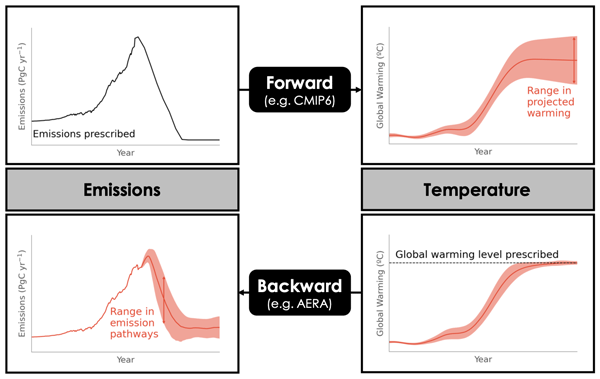
Yona Silvy, Thomas L. Frölicher, Jens Terhaar, Fortunat Joos, Friedrich A. Burger, Fabrice Lacroix, Myles Allen, Raffaele Bernardello, Laurent Bopp, Victor Brovkin, Jonathan R. Buzan, Patricia Cadule, Martin Dix, John Dunne, Pierre Friedlingstein, Goran Georgievski, Tomohiro Hajima, Stuart Jenkins, Michio Kawamiya, Nancy Y. Kiang, Vladimir Lapin, Donghyun Lee, Paul Lerner, Nadine Mengis, Estela A. Monteiro, David Paynter, Glen P. Peters, Anastasia Romanou, Jörg Schwinger, Sarah Sparrow, Eric Stofferahn, Jerry Tjiputra, Etienne Tourigny, and Tilo Ziehn
Earth Syst. Dynam., 15, 1591–1628, https://doi.org/10.5194/esd-15-1591-2024, https://doi.org/10.5194/esd-15-1591-2024, 2024
Short summary
Short summary
The adaptive emission reduction approach is applied with Earth system models to generate temperature stabilization simulations. These simulations provide compatible emission pathways and budgets for a given warming level, uncovering uncertainty ranges previously missing in the Coupled Model Intercomparison Project scenarios. These target-based emission-driven simulations offer a more coherent assessment across models for studying both the carbon cycle and its impacts under climate stabilization.
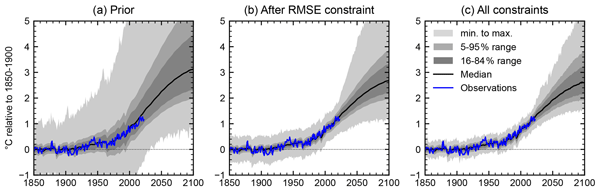
Chris Smith, Donald P. Cummins, Hege-Beate Fredriksen, Zebedee Nicholls, Malte Meinshausen, Myles Allen, Stuart Jenkins, Nicholas Leach, Camilla Mathison, and Antti-Ilari Partanen
Geosci. Model Dev., 17, 8569–8592, https://doi.org/10.5194/gmd-17-8569-2024, https://doi.org/10.5194/gmd-17-8569-2024, 2024
Short summary
Short summary
Climate projections are only useful if the underlying models that produce them are well calibrated and can reproduce observed climate change. We formalise a software package that calibrates the open-source FaIR simple climate model to full-complexity Earth system models. Observations, including historical warming, and assessments of key climate variables such as that of climate sensitivity are used to constrain the model output.
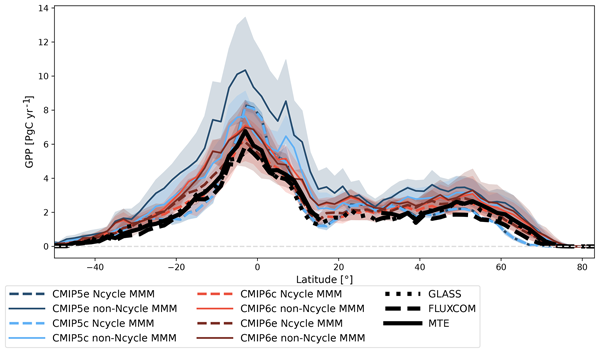
Bettina K. Gier, Manuel Schlund, Pierre Friedlingstein, Chris D. Jones, Colin Jones, Sönke Zaehle, and Veronika Eyring
Biogeosciences, 21, 5321–5360, https://doi.org/10.5194/bg-21-5321-2024, https://doi.org/10.5194/bg-21-5321-2024, 2024
Short summary
Short summary
This study investigates present-day carbon cycle variables in CMIP5 and CMIP6 simulations. Overall, CMIP6 models perform better but also show many remaining biases. A significant improvement in the simulation of photosynthesis in models with a nitrogen cycle is found, with only small differences between emission- and concentration-based simulations. Thus, we recommend using emission-driven simulations in CMIP7 by default and including the nitrogen cycle in all future carbon cycle models.
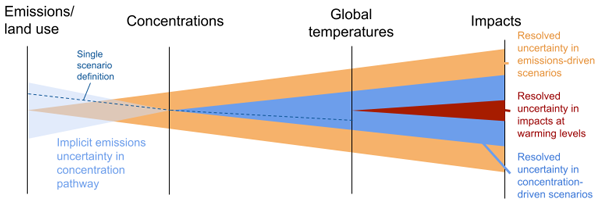
Benjamin M. Sanderson, Ben B. B. Booth, John Dunne, Veronika Eyring, Rosie A. Fisher, Pierre Friedlingstein, Matthew J. Gidden, Tomohiro Hajima, Chris D. Jones, Colin G. Jones, Andrew King, Charles D. Koven, David M. Lawrence, Jason Lowe, Nadine Mengis, Glen P. Peters, Joeri Rogelj, Chris Smith, Abigail C. Snyder, Isla R. Simpson, Abigail L. S. Swann, Claudia Tebaldi, Tatiana Ilyina, Carl-Friedrich Schleussner, Roland Séférian, Bjørn H. Samset, Detlef van Vuuren, and Sönke Zaehle
Geosci. Model Dev., 17, 8141–8172, https://doi.org/10.5194/gmd-17-8141-2024, https://doi.org/10.5194/gmd-17-8141-2024, 2024
Short summary
Short summary
We discuss how, in order to provide more relevant guidance for climate policy, coordinated climate experiments should adopt a greater focus on simulations where Earth system models are provided with carbon emissions from fossil fuels together with land use change instructions, rather than past approaches that have largely focused on experiments with prescribed atmospheric carbon dioxide concentrations. We discuss how these goals might be achieved in coordinated climate modeling experiments.
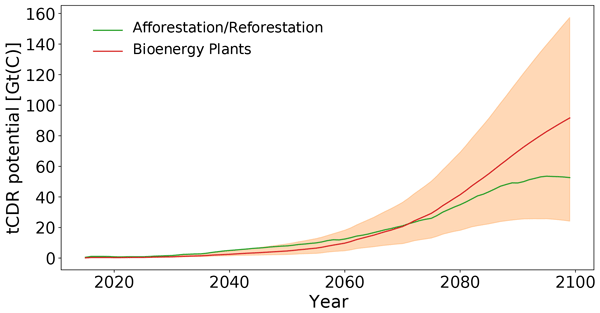
Sabine Egerer, Stefanie Falk, Dorothea Mayer, Tobias Nützel, Wolfgang A. Obermeier, and Julia Pongratz
Biogeosciences, 21, 5005–5025, https://doi.org/10.5194/bg-21-5005-2024, https://doi.org/10.5194/bg-21-5005-2024, 2024
Short summary
Short summary
Using a state-of-the-art land model, we find that bioenergy plants can store carbon more efficiently than forests over long periods in the soil, in geological reservoirs, or by substituting fossil-fuel-based energy. Planting forests is more suitable for reaching climate targets by 2050. The carbon removal potential depends also on local environmental conditions. These considerations have important implications for climate policy, spatial planning, nature conservation, and agriculture.

Colin G. Jones, Fanny Adloff, Ben B. B. Booth, Peter M. Cox, Veronika Eyring, Pierre Friedlingstein, Katja Frieler, Helene T. Hewitt, Hazel A. Jeffery, Sylvie Joussaume, Torben Koenigk, Bryan N. Lawrence, Eleanor O'Rourke, Malcolm J. Roberts, Benjamin M. Sanderson, Roland Séférian, Samuel Somot, Pier Luigi Vidale, Detlef van Vuuren, Mario Acosta, Mats Bentsen, Raffaele Bernardello, Richard Betts, Ed Blockley, Julien Boé, Tom Bracegirdle, Pascale Braconnot, Victor Brovkin, Carlo Buontempo, Francisco Doblas-Reyes, Markus Donat, Italo Epicoco, Pete Falloon, Sandro Fiore, Thomas Frölicher, Neven S. Fučkar, Matthew J. Gidden, Helge F. Goessling, Rune Grand Graversen, Silvio Gualdi, José M. Gutiérrez, Tatiana Ilyina, Daniela Jacob, Chris D. Jones, Martin Juckes, Elizabeth Kendon, Erik Kjellström, Reto Knutti, Jason Lowe, Matthew Mizielinski, Paola Nassisi, Michael Obersteiner, Pierre Regnier, Romain Roehrig, David Salas y Mélia, Carl-Friedrich Schleussner, Michael Schulz, Enrico Scoccimarro, Laurent Terray, Hannes Thiemann, Richard A. Wood, Shuting Yang, and Sönke Zaehle
Earth Syst. Dynam., 15, 1319–1351, https://doi.org/10.5194/esd-15-1319-2024, https://doi.org/10.5194/esd-15-1319-2024, 2024
Short summary
Short summary
We propose a number of priority areas for the international climate research community to address over the coming decade. Advances in these areas will both increase our understanding of past and future Earth system change, including the societal and environmental impacts of this change, and deliver significantly improved scientific support to international climate policy, such as future IPCC assessments and the UNFCCC Global Stocktake.
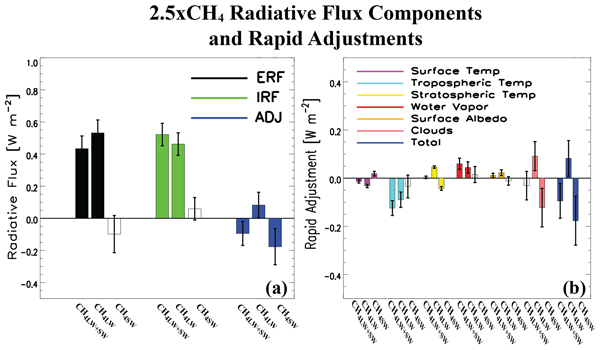
Robert J. Allen, Xueying Zhao, Cynthia A. Randles, Ryan J. Kramer, Bjørn H. Samset, and Christopher J. Smith
Atmos. Chem. Phys., 24, 11207–11226, https://doi.org/10.5194/acp-24-11207-2024, https://doi.org/10.5194/acp-24-11207-2024, 2024
Short summary
Short summary
Present-day methane shortwave absorption mutes 28% (7–55%) of the surface warming associated with its longwave absorption. The precipitation increase associated with the longwave radiative effects of the present-day methane perturbation is also muted by shortwave absorption but not significantly so. Methane shortwave absorption also impacts the magnitude of its climate feedback parameter, largely through the cloud feedback.
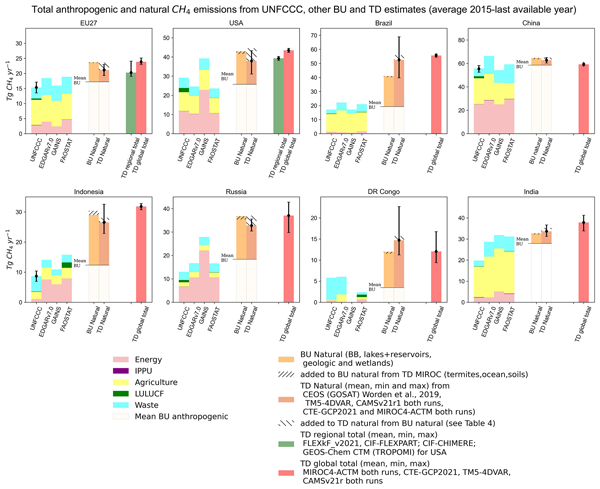
Ana Maria Roxana Petrescu, Glen P. Peters, Richard Engelen, Sander Houweling, Dominik Brunner, Aki Tsuruta, Bradley Matthews, Prabir K. Patra, Dmitry Belikov, Rona L. Thompson, Lena Höglund-Isaksson, Wenxin Zhang, Arjo J. Segers, Giuseppe Etiope, Giancarlo Ciotoli, Philippe Peylin, Frédéric Chevallier, Tuula Aalto, Robbie M. Andrew, David Bastviken, Antoine Berchet, Grégoire Broquet, Giulia Conchedda, Stijn N. C. Dellaert, Hugo Denier van der Gon, Johannes Gütschow, Jean-Matthieu Haussaire, Ronny Lauerwald, Tiina Markkanen, Jacob C. A. van Peet, Isabelle Pison, Pierre Regnier, Espen Solum, Marko Scholze, Maria Tenkanen, Francesco N. Tubiello, Guido R. van der Werf, and John R. Worden
Earth Syst. Sci. Data, 16, 4325–4350, https://doi.org/10.5194/essd-16-4325-2024, https://doi.org/10.5194/essd-16-4325-2024, 2024
Short summary
Short summary
This study provides an overview of data availability from observation- and inventory-based CH4 emission estimates. It systematically compares them and provides recommendations for robust comparisons, aiming to steadily engage more parties in using observational methods to complement their UNFCCC submissions. Anticipating improvements in atmospheric modelling and observations, future developments need to resolve knowledge gaps in both approaches and to better quantify remaining uncertainty.

Marit Sandstad, Borgar Aamaas, Ane Nordlie Johansen, Marianne Tronstad Lund, Glen Philip Peters, Bjørn Hallvard Samset, Benjamin Mark Sanderson, and Ragnhild Bieltvedt Skeie
Geosci. Model Dev., 17, 6589–6625, https://doi.org/10.5194/gmd-17-6589-2024, https://doi.org/10.5194/gmd-17-6589-2024, 2024
Short summary
Short summary
The CICERO-SCM has existed as a Fortran model since 1999 that calculates the radiative forcing and concentrations from emissions and is an upwelling diffusion energy balance model of the ocean that calculates temperature change. In this paper, we describe an updated version ported to Python and publicly available at https://github.com/ciceroOslo/ciceroscm (https://doi.org/10.5281/zenodo.10548720). This version contains functionality for parallel runs and automatic calibration.
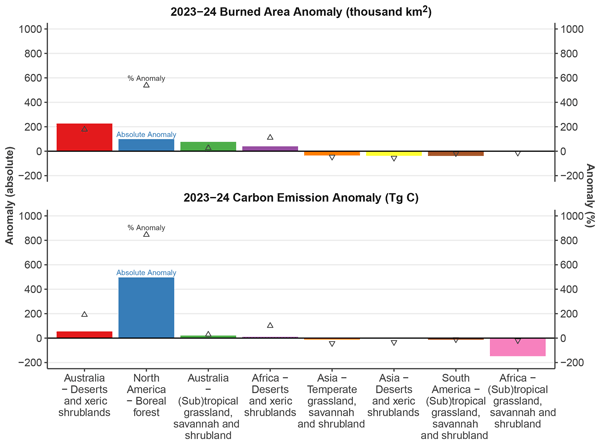
Matthew W. Jones, Douglas I. Kelley, Chantelle A. Burton, Francesca Di Giuseppe, Maria Lucia F. Barbosa, Esther Brambleby, Andrew J. Hartley, Anna Lombardi, Guilherme Mataveli, Joe R. McNorton, Fiona R. Spuler, Jakob B. Wessel, John T. Abatzoglou, Liana O. Anderson, Niels Andela, Sally Archibald, Dolors Armenteras, Eleanor Burke, Rachel Carmenta, Emilio Chuvieco, Hamish Clarke, Stefan H. Doerr, Paulo M. Fernandes, Louis Giglio, Douglas S. Hamilton, Stijn Hantson, Sarah Harris, Piyush Jain, Crystal A. Kolden, Tiina Kurvits, Seppe Lampe, Sarah Meier, Stacey New, Mark Parrington, Morgane M. G. Perron, Yuquan Qu, Natasha S. Ribeiro, Bambang H. Saharjo, Jesus San-Miguel-Ayanz, Jacquelyn K. Shuman, Veerachai Tanpipat, Guido R. van der Werf, Sander Veraverbeke, and Gavriil Xanthopoulos
Earth Syst. Sci. Data, 16, 3601–3685, https://doi.org/10.5194/essd-16-3601-2024, https://doi.org/10.5194/essd-16-3601-2024, 2024
Short summary
Short summary
This inaugural State of Wildfires report catalogues extreme fires of the 2023–2024 fire season. For key events, we analyse their predictability and drivers and attribute them to climate change and land use. We provide a seasonal outlook and decadal projections. Key anomalies occurred in Canada, Greece, and western Amazonia, with other high-impact events catalogued worldwide. Climate change significantly increased the likelihood of extreme fires, and mitigation is required to lessen future risk.
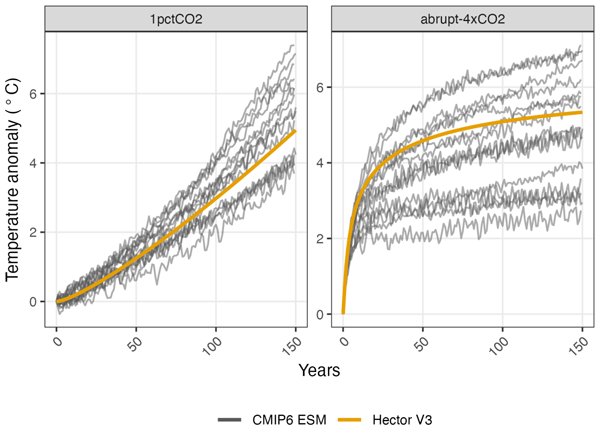
Kalyn Dorheim, Skylar Gering, Robert Gieseke, Corinne Hartin, Leeya Pressburger, Alexey N. Shiklomanov, Steven J. Smith, Claudia Tebaldi, Dawn L. Woodard, and Ben Bond-Lamberty
Geosci. Model Dev., 17, 4855–4869, https://doi.org/10.5194/gmd-17-4855-2024, https://doi.org/10.5194/gmd-17-4855-2024, 2024
Short summary
Short summary
Hector is an easy-to-use, global climate–carbon cycle model. With its quick run time, Hector can provide climate information from a run in a fraction of a second. Hector models on a global and annual basis. Here, we present an updated version of the model, Hector V3. In this paper, we document Hector’s new features. Hector V3 is capable of reproducing historical observations, and its future temperature projections are consistent with those of more complex models.
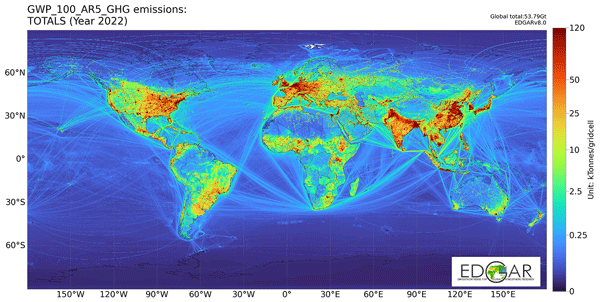
Monica Crippa, Diego Guizzardi, Federico Pagani, Marcello Schiavina, Michele Melchiorri, Enrico Pisoni, Francesco Graziosi, Marilena Muntean, Joachim Maes, Lewis Dijkstra, Martin Van Damme, Lieven Clarisse, and Pierre Coheur
Earth Syst. Sci. Data, 16, 2811–2830, https://doi.org/10.5194/essd-16-2811-2024, https://doi.org/10.5194/essd-16-2811-2024, 2024
Short summary
Short summary
Knowing where emissions occur is essential for planning effective emission reduction measures and atmospheric modelling. Disaggregating national emissions over high-resolution grids requires spatial proxies that contain information on the location of different emission sources. This work incorporates state-of-the-art spatial information to improve the spatial representation of global emissions with the Emissions Database for Global Atmospheric Research (EDGAR).
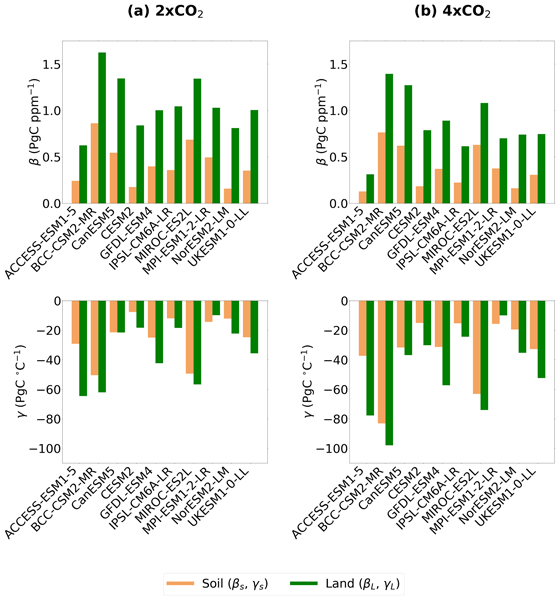
Rebecca M. Varney, Pierre Friedlingstein, Sarah E. Chadburn, Eleanor J. Burke, and Peter M. Cox
Biogeosciences, 21, 2759–2776, https://doi.org/10.5194/bg-21-2759-2024, https://doi.org/10.5194/bg-21-2759-2024, 2024
Short summary
Short summary
Soil carbon is the largest store of carbon on the land surface of Earth and is known to be particularly sensitive to climate change. Understanding this future response is vital to successfully meeting Paris Agreement targets, which rely heavily on carbon uptake by the land surface. In this study, the individual responses of soil carbon are quantified and compared amongst CMIP6 Earth system models used within the most recent IPCC report, and the role of soils in the land response is highlighted.

Hanqin Tian, Naiqing Pan, Rona L. Thompson, Josep G. Canadell, Parvadha Suntharalingam, Pierre Regnier, Eric A. Davidson, Michael Prather, Philippe Ciais, Marilena Muntean, Shufen Pan, Wilfried Winiwarter, Sönke Zaehle, Feng Zhou, Robert B. Jackson, Hermann W. Bange, Sarah Berthet, Zihao Bian, Daniele Bianchi, Alexander F. Bouwman, Erik T. Buitenhuis, Geoffrey Dutton, Minpeng Hu, Akihiko Ito, Atul K. Jain, Aurich Jeltsch-Thömmes, Fortunat Joos, Sian Kou-Giesbrecht, Paul B. Krummel, Xin Lan, Angela Landolfi, Ronny Lauerwald, Ya Li, Chaoqun Lu, Taylor Maavara, Manfredi Manizza, Dylan B. Millet, Jens Mühle, Prabir K. Patra, Glen P. Peters, Xiaoyu Qin, Peter Raymond, Laure Resplandy, Judith A. Rosentreter, Hao Shi, Qing Sun, Daniele Tonina, Francesco N. Tubiello, Guido R. van der Werf, Nicolas Vuichard, Junjie Wang, Kelley C. Wells, Luke M. Western, Chris Wilson, Jia Yang, Yuanzhi Yao, Yongfa You, and Qing Zhu
Earth Syst. Sci. Data, 16, 2543–2604, https://doi.org/10.5194/essd-16-2543-2024, https://doi.org/10.5194/essd-16-2543-2024, 2024
Short summary
Short summary
Atmospheric concentrations of nitrous oxide (N2O), a greenhouse gas 273 times more potent than carbon dioxide, have increased by 25 % since the preindustrial period, with the highest observed growth rate in 2020 and 2021. This rapid growth rate has primarily been due to a 40 % increase in anthropogenic emissions since 1980. Observed atmospheric N2O concentrations in recent years have exceeded the worst-case climate scenario, underscoring the importance of reducing anthropogenic N2O emissions.
Piers M. Forster, Chris Smith, Tristram Walsh, William F. Lamb, Robin Lamboll, Bradley Hall, Mathias Hauser, Aurélien Ribes, Debbie Rosen, Nathan P. Gillett, Matthew D. Palmer, Joeri Rogelj, Karina von Schuckmann, Blair Trewin, Myles Allen, Robbie Andrew, Richard A. Betts, Alex Borger, Tim Boyer, Jiddu A. Broersma, Carlo Buontempo, Samantha Burgess, Chiara Cagnazzo, Lijing Cheng, Pierre Friedlingstein, Andrew Gettelman, Johannes Gütschow, Masayoshi Ishii, Stuart Jenkins, Xin Lan, Colin Morice, Jens Mühle, Christopher Kadow, John Kennedy, Rachel E. Killick, Paul B. Krummel, Jan C. Minx, Gunnar Myhre, Vaishali Naik, Glen P. Peters, Anna Pirani, Julia Pongratz, Carl-Friedrich Schleussner, Sonia I. Seneviratne, Sophie Szopa, Peter Thorne, Mahesh V. M. Kovilakam, Elisa Majamäki, Jukka-Pekka Jalkanen, Margreet van Marle, Rachel M. Hoesly, Robert Rohde, Dominik Schumacher, Guido van der Werf, Russell Vose, Kirsten Zickfeld, Xuebin Zhang, Valérie Masson-Delmotte, and Panmao Zhai
Earth Syst. Sci. Data, 16, 2625–2658, https://doi.org/10.5194/essd-16-2625-2024, https://doi.org/10.5194/essd-16-2625-2024, 2024
Short summary
Short summary
This paper tracks some key indicators of global warming through time, from 1850 through to the end of 2023. It is designed to give an authoritative estimate of global warming to date and its causes. We find that in 2023, global warming reached 1.3 °C and is increasing at over 0.2 °C per decade. This is caused by all-time-high greenhouse gas emissions.
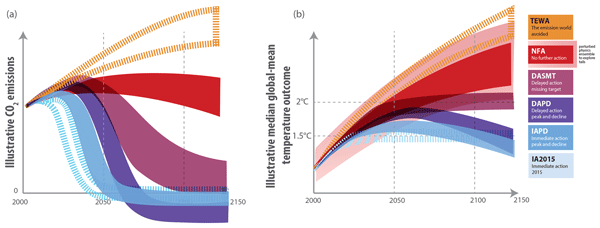
Malte Meinshausen, Carl-Friedrich Schleussner, Kathleen Beyer, Greg Bodeker, Olivier Boucher, Josep G. Canadell, John S. Daniel, Aïda Diongue-Niang, Fatima Driouech, Erich Fischer, Piers Forster, Michael Grose, Gerrit Hansen, Zeke Hausfather, Tatiana Ilyina, Jarmo S. Kikstra, Joyce Kimutai, Andrew D. King, June-Yi Lee, Chris Lennard, Tabea Lissner, Alexander Nauels, Glen P. Peters, Anna Pirani, Gian-Kasper Plattner, Hans Pörtner, Joeri Rogelj, Maisa Rojas, Joyashree Roy, Bjørn H. Samset, Benjamin M. Sanderson, Roland Séférian, Sonia Seneviratne, Christopher J. Smith, Sophie Szopa, Adelle Thomas, Diana Urge-Vorsatz, Guus J. M. Velders, Tokuta Yokohata, Tilo Ziehn, and Zebedee Nicholls
Geosci. Model Dev., 17, 4533–4559, https://doi.org/10.5194/gmd-17-4533-2024, https://doi.org/10.5194/gmd-17-4533-2024, 2024
Short summary
Short summary
The scientific community is considering new scenarios to succeed RCPs and SSPs for the next generation of Earth system model runs to project future climate change. To contribute to that effort, we reflect on relevant policy and scientific research questions and suggest categories for representative emission pathways. These categories are tailored to the Paris Agreement long-term temperature goal, high-risk outcomes in the absence of further climate policy and worlds “that could have been”.
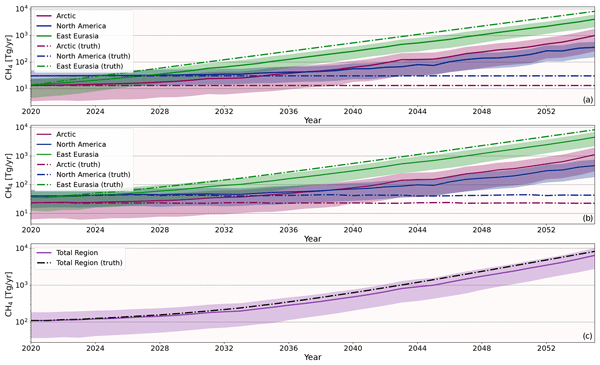
Sophie Wittig, Antoine Berchet, Isabelle Pison, Marielle Saunois, and Jean-Daniel Paris
Atmos. Chem. Phys., 24, 6359–6373, https://doi.org/10.5194/acp-24-6359-2024, https://doi.org/10.5194/acp-24-6359-2024, 2024
Short summary
Short summary
The aim of this work is to analyse how accurately a methane bomb event could be detected with the current and a hypothetically extended stationary observation network in the Arctic. For this, we incorporate synthetically modelled possible future CH4 concentrations based on plausible emission scenarios into an inverse modelling framework. We analyse how well the increase is detected in different Arctic regions and evaluate the impact of additional observation sites in this respect.
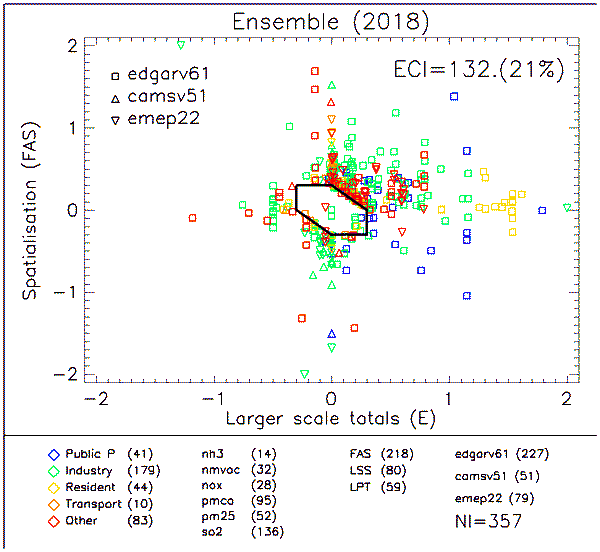
Philippe Thunis, Jeroen Kuenen, Enrico Pisoni, Bertrand Bessagnet, Manjola Banja, Lech Gawuc, Karol Szymankiewicz, Diego Guizardi, Monica Crippa, Susana Lopez-Aparicio, Marc Guevara, Alexander De Meij, Sabine Schindlbacher, and Alain Clappier
Geosci. Model Dev., 17, 3631–3643, https://doi.org/10.5194/gmd-17-3631-2024, https://doi.org/10.5194/gmd-17-3631-2024, 2024
Short summary
Short summary
An ensemble emission inventory is created with the aim of monitoring the status and progress made with the development of EU-wide inventories. This emission ensemble serves as a common benchmark for the screening and allows for the comparison of more than two inventories at a time. Because the emission “truth” is unknown, the approach does not tell which inventory is the closest to reality, but it identifies inconsistencies that require special attention.
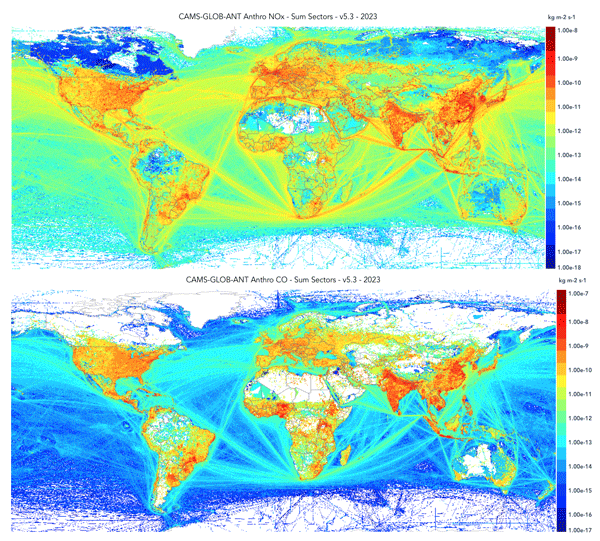
Antonin Soulie, Claire Granier, Sabine Darras, Nicolas Zilbermann, Thierno Doumbia, Marc Guevara, Jukka-Pekka Jalkanen, Sekou Keita, Cathy Liousse, Monica Crippa, Diego Guizzardi, Rachel Hoesly, and Steven J. Smith
Earth Syst. Sci. Data, 16, 2261–2279, https://doi.org/10.5194/essd-16-2261-2024, https://doi.org/10.5194/essd-16-2261-2024, 2024
Short summary
Short summary
Anthropogenic emissions are the result of transportation, power generation, industrial, residential and commercial activities as well as waste treatment and agriculture practices. This work describes the new CAMS-GLOB-ANT gridded inventory of 2000–2023 anthropogenic emissions of air pollutants and greenhouse gases. The methodology to generate the emissions is explained and the datasets are analysed and compared with publicly available global and regional inventories for selected world regions.
Bjorn Stevens, Stefan Adami, Tariq Ali, Hartwig Anzt, Zafer Aslan, Sabine Attinger, Jaana Bäck, Johanna Baehr, Peter Bauer, Natacha Bernier, Bob Bishop, Hendryk Bockelmann, Sandrine Bony, Guy Brasseur, David N. Bresch, Sean Breyer, Gilbert Brunet, Pier Luigi Buttigieg, Junji Cao, Christelle Castet, Yafang Cheng, Ayantika Dey Choudhury, Deborah Coen, Susanne Crewell, Atish Dabholkar, Qing Dai, Francisco Doblas-Reyes, Dale Durran, Ayoub El Gaidi, Charlie Ewen, Eleftheria Exarchou, Veronika Eyring, Florencia Falkinhoff, David Farrell, Piers M. Forster, Ariane Frassoni, Claudia Frauen, Oliver Fuhrer, Shahzad Gani, Edwin Gerber, Debra Goldfarb, Jens Grieger, Nicolas Gruber, Wilco Hazeleger, Rolf Herken, Chris Hewitt, Torsten Hoefler, Huang-Hsiung Hsu, Daniela Jacob, Alexandra Jahn, Christian Jakob, Thomas Jung, Christopher Kadow, In-Sik Kang, Sarah Kang, Karthik Kashinath, Katharina Kleinen-von Königslöw, Daniel Klocke, Uta Kloenne, Milan Klöwer, Chihiro Kodama, Stefan Kollet, Tobias Kölling, Jenni Kontkanen, Steve Kopp, Michal Koran, Markku Kulmala, Hanna Lappalainen, Fakhria Latifi, Bryan Lawrence, June Yi Lee, Quentin Lejeun, Christian Lessig, Chao Li, Thomas Lippert, Jürg Luterbacher, Pekka Manninen, Jochem Marotzke, Satoshi Matsouoka, Charlotte Merchant, Peter Messmer, Gero Michel, Kristel Michielsen, Tomoki Miyakawa, Jens Müller, Ramsha Munir, Sandeep Narayanasetti, Ousmane Ndiaye, Carlos Nobre, Achim Oberg, Riko Oki, Tuba Özkan-Haller, Tim Palmer, Stan Posey, Andreas Prein, Odessa Primus, Mike Pritchard, Julie Pullen, Dian Putrasahan, Johannes Quaas, Krishnan Raghavan, Venkatachalam Ramaswamy, Markus Rapp, Florian Rauser, Markus Reichstein, Aromar Revi, Sonakshi Saluja, Masaki Satoh, Vera Schemann, Sebastian Schemm, Christina Schnadt Poberaj, Thomas Schulthess, Cath Senior, Jagadish Shukla, Manmeet Singh, Julia Slingo, Adam Sobel, Silvina Solman, Jenna Spitzer, Philip Stier, Thomas Stocker, Sarah Strock, Hang Su, Petteri Taalas, John Taylor, Susann Tegtmeier, Georg Teutsch, Adrian Tompkins, Uwe Ulbrich, Pier-Luigi Vidale, Chien-Ming Wu, Hao Xu, Najibullah Zaki, Laure Zanna, Tianjun Zhou, and Florian Ziemen
Earth Syst. Sci. Data, 16, 2113–2122, https://doi.org/10.5194/essd-16-2113-2024, https://doi.org/10.5194/essd-16-2113-2024, 2024
Short summary
Short summary
To manage Earth in the Anthropocene, new tools, new institutions, and new forms of international cooperation will be required. Earth Virtualization Engines is proposed as an international federation of centers of excellence to empower all people to respond to the immense and urgent challenges posed by climate change.
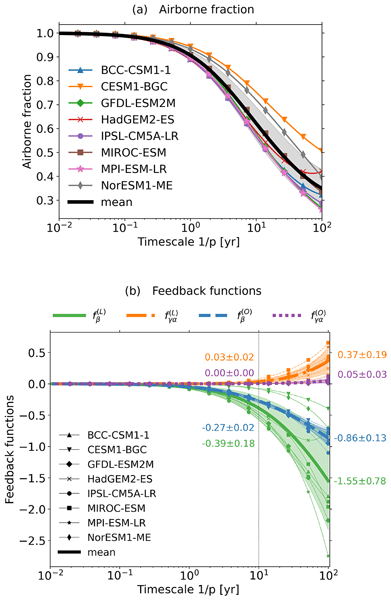
Guilherme L. Torres Mendonça, Julia Pongratz, and Christian H. Reick
Biogeosciences, 21, 1923–1960, https://doi.org/10.5194/bg-21-1923-2024, https://doi.org/10.5194/bg-21-1923-2024, 2024
Short summary
Short summary
We study the timescale dependence of airborne fraction and underlying feedbacks by a theory of the climate–carbon system. Using simulations we show the predictive power of this theory and find that (1) this fraction generally decreases for increasing timescales and (2) at all timescales the total feedback is negative and the model spread in a single feedback causes the spread in the airborne fraction. Our study indicates that those are properties of the system, independently of the scenario.
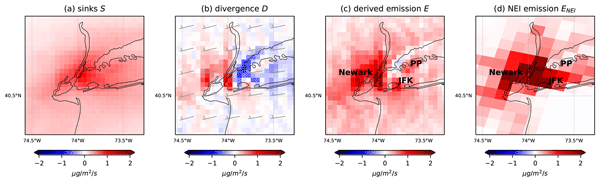
Fei Liu, Steffen Beirle, Joanna Joiner, Sungyeon Choi, Zhining Tao, K. Emma Knowland, Steven J. Smith, Daniel Q. Tong, Siqi Ma, Zachary T. Fasnacht, and Thomas Wagner
Atmos. Chem. Phys., 24, 3717–3728, https://doi.org/10.5194/acp-24-3717-2024, https://doi.org/10.5194/acp-24-3717-2024, 2024
Short summary
Short summary
Using satellite data, we developed a coupled method independent of the chemical transport model to map NOx emissions across US cities. After validating our technique with synthetic data, we charted NOx emissions from 2018–2021 in 39 cities. Our results closely matched EPA estimates but also highlighted some inconsistencies in both magnitude and spatial distribution. This research can help refine strategies for monitoring and managing air quality.
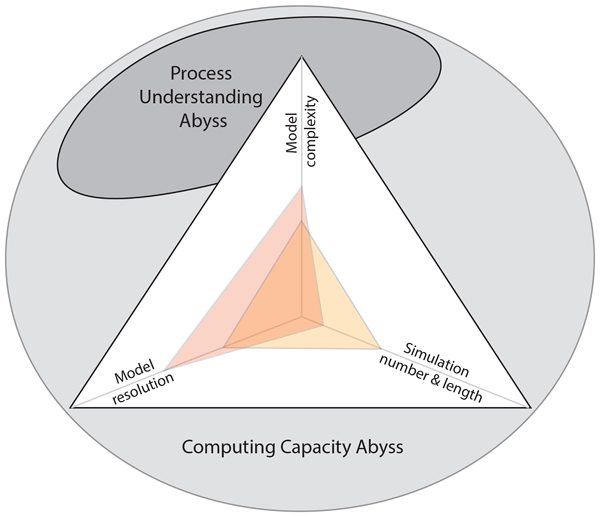
Stephanie Fiedler, Vaishali Naik, Fiona M. O'Connor, Christopher J. Smith, Paul Griffiths, Ryan J. Kramer, Toshihiko Takemura, Robert J. Allen, Ulas Im, Matthew Kasoar, Angshuman Modak, Steven Turnock, Apostolos Voulgarakis, Duncan Watson-Parris, Daniel M. Westervelt, Laura J. Wilcox, Alcide Zhao, William J. Collins, Michael Schulz, Gunnar Myhre, and Piers M. Forster
Geosci. Model Dev., 17, 2387–2417, https://doi.org/10.5194/gmd-17-2387-2024, https://doi.org/10.5194/gmd-17-2387-2024, 2024
Short summary
Short summary
Climate scientists want to better understand modern climate change. Thus, climate model experiments are performed and compared. The results of climate model experiments differ, as assessed in the latest Intergovernmental Panel on Climate Change (IPCC) assessment report. This article gives insights into the challenges and outlines opportunities for further improving the understanding of climate change. It is based on views of a group of experts in atmospheric composition–climate interactions.
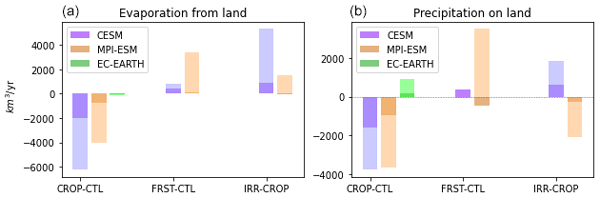
Steven J. De Hertog, Carmen E. Lopez-Fabara, Ruud van der Ent, Jessica Keune, Diego G. Miralles, Raphael Portmann, Sebastian Schemm, Felix Havermann, Suqi Guo, Fei Luo, Iris Manola, Quentin Lejeune, Julia Pongratz, Carl-Friedrich Schleussner, Sonia I. Seneviratne, and Wim Thiery
Earth Syst. Dynam., 15, 265–291, https://doi.org/10.5194/esd-15-265-2024, https://doi.org/10.5194/esd-15-265-2024, 2024
Short summary
Short summary
Changes in land use are crucial to achieve lower global warming. However, despite their importance, the effects of these changes on moisture fluxes are poorly understood. We analyse land cover and management scenarios in three climate models involving cropland expansion, afforestation, and irrigation. Results show largely consistent influences on moisture fluxes, with cropland expansion causing a drying and reduced local moisture recycling, while afforestation and irrigation show the opposite.
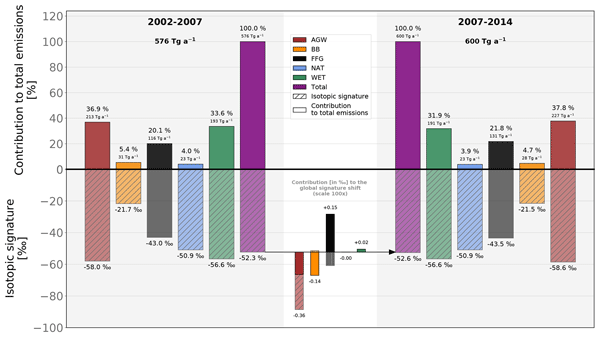
Joël Thanwerdas, Marielle Saunois, Antoine Berchet, Isabelle Pison, and Philippe Bousquet
Atmos. Chem. Phys., 24, 2129–2167, https://doi.org/10.5194/acp-24-2129-2024, https://doi.org/10.5194/acp-24-2129-2024, 2024
Short summary
Short summary
We investigate the causes of the renewed growth of atmospheric methane (CH4) after 2007 using inverse modeling. We use the additional information provided by observations of CH4 isotopic compositions to better differentiate between the emission categories. Accounting for the large uncertainties in source signatures, our results suggest that the post-2007 increase in atmospheric CH4 was caused by similar increases in emissions from (1) fossil fuels and (2) agriculture and waste.
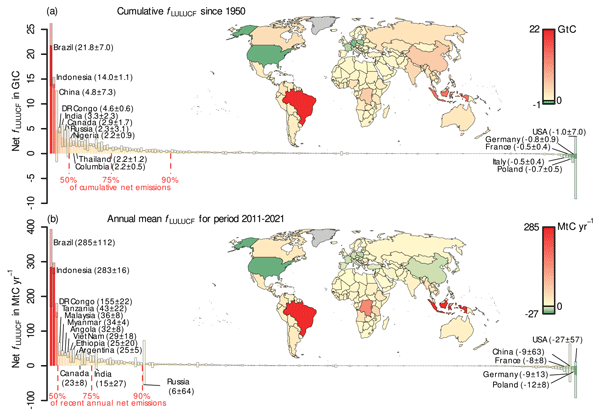
Wolfgang Alexander Obermeier, Clemens Schwingshackl, Ana Bastos, Giulia Conchedda, Thomas Gasser, Giacomo Grassi, Richard A. Houghton, Francesco Nicola Tubiello, Stephen Sitch, and Julia Pongratz
Earth Syst. Sci. Data, 16, 605–645, https://doi.org/10.5194/essd-16-605-2024, https://doi.org/10.5194/essd-16-605-2024, 2024
Short summary
Short summary
We provide and compare country-level estimates of land-use CO2 fluxes from a variety and large number of models, bottom-up estimates, and country reports for the period 1950–2021. Although net fluxes are small in many countries, they are often composed of large compensating emissions and removals. In many countries, the estimates agree well once their individual characteristics are accounted for, but in other countries, including some of the largest emitters, substantial uncertainties exist.
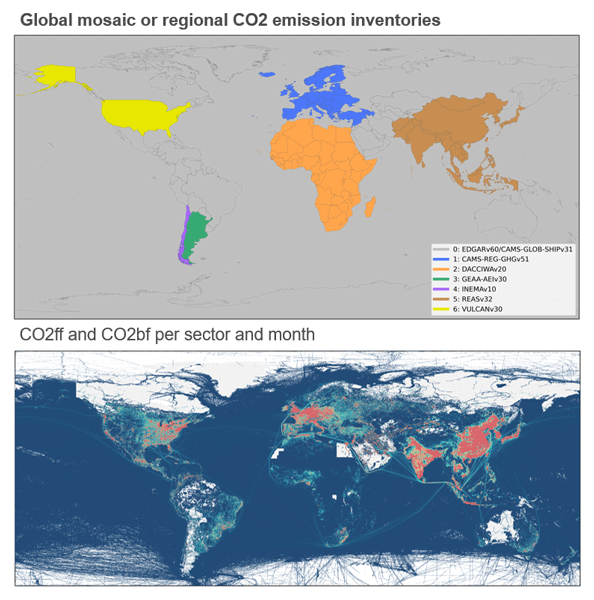
Ruben Urraca, Greet Janssens-Maenhout, Nicolás Álamos, Lucas Berna-Peña, Monica Crippa, Sabine Darras, Stijn Dellaert, Hugo Denier van der Gon, Mark Dowell, Nadine Gobron, Claire Granier, Giacomo Grassi, Marc Guevara, Diego Guizzardi, Kevin Gurney, Nicolás Huneeus, Sekou Keita, Jeroen Kuenen, Ana Lopez-Noreña, Enrique Puliafito, Geoffrey Roest, Simone Rossi, Antonin Soulie, and Antoon Visschedijk
Earth Syst. Sci. Data, 16, 501–523, https://doi.org/10.5194/essd-16-501-2024, https://doi.org/10.5194/essd-16-501-2024, 2024
Short summary
Short summary
CoCO2-MOSAIC 1.0 is a global mosaic of regional bottom-up inventories providing gridded (0.1×0.1) monthly emissions of anthropogenic CO2. Regional inventories include country-specific information and finer spatial resolution than global inventories. CoCO2-MOSAIC provides harmonized access to these datasets and can be considered as a regionally accepted reference to assess the quality of global inventories, as done in the current paper.
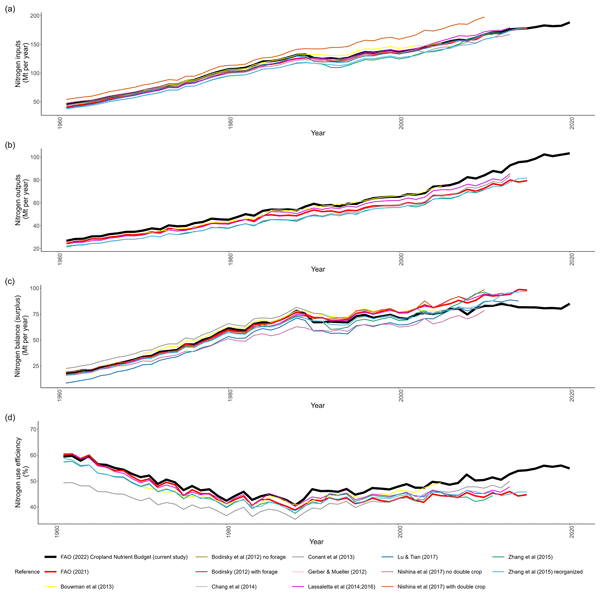
Cameron I. Ludemann, Nathan Wanner, Pauline Chivenge, Achim Dobermann, Rasmus Einarsson, Patricio Grassini, Armelle Gruere, Kevin Jackson, Luis Lassaletta, Federico Maggi, Griffiths Obli-Laryea, Martin K. van Ittersum, Srishti Vishwakarma, Xin Zhang, and Francesco N. Tubiello
Earth Syst. Sci. Data, 16, 525–541, https://doi.org/10.5194/essd-16-525-2024, https://doi.org/10.5194/essd-16-525-2024, 2024
Short summary
Short summary
Nutrient budgets help identify the excess or insufficient use of fertilizers and other nutrient sources in agriculture. They allow the calculation of indicators, such as the nutrient balance (surplus or deficit) and nutrient use efficiency, that help to monitor agricultural productivity and sustainability. This article describes a global cropland nutrient budget that provides data on 205 countries and territories from 1961 to 2020 (data available at https://www.fao.org/faostat/en/#data/ESB).
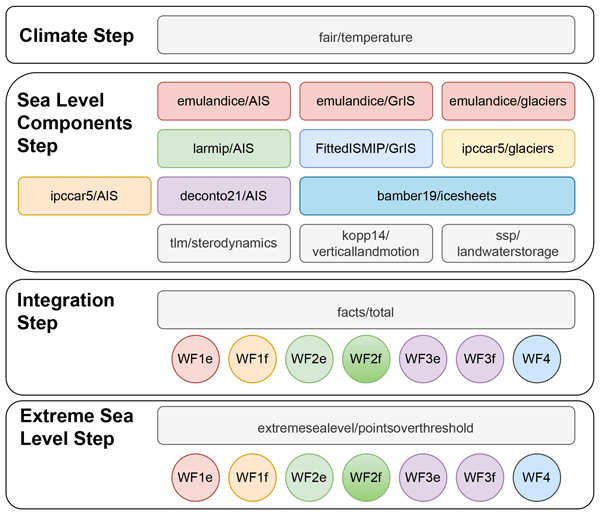
Robert E. Kopp, Gregory G. Garner, Tim H. J. Hermans, Shantenu Jha, Praveen Kumar, Alexander Reedy, Aimée B. A. Slangen, Matteo Turilli, Tamsin L. Edwards, Jonathan M. Gregory, George Koubbe, Anders Levermann, Andre Merzky, Sophie Nowicki, Matthew D. Palmer, and Chris Smith
Geosci. Model Dev., 16, 7461–7489, https://doi.org/10.5194/gmd-16-7461-2023, https://doi.org/10.5194/gmd-16-7461-2023, 2023
Short summary
Short summary
Future sea-level rise projections exhibit multiple forms of uncertainty, all of which must be considered by scientific assessments intended to inform decision-making. The Framework for Assessing Changes To Sea-level (FACTS) is a new software package intended to support assessments of global mean, regional, and extreme sea-level rise. An early version of FACTS supported the development of the IPCC Sixth Assessment Report sea-level projections.
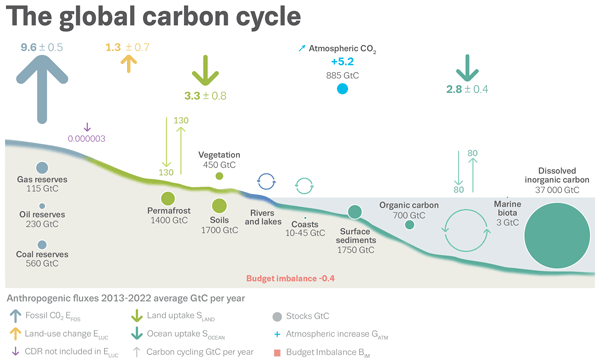
Pierre Friedlingstein, Michael O'Sullivan, Matthew W. Jones, Robbie M. Andrew, Dorothee C. E. Bakker, Judith Hauck, Peter Landschützer, Corinne Le Quéré, Ingrid T. Luijkx, Glen P. Peters, Wouter Peters, Julia Pongratz, Clemens Schwingshackl, Stephen Sitch, Josep G. Canadell, Philippe Ciais, Robert B. Jackson, Simone R. Alin, Peter Anthoni, Leticia Barbero, Nicholas R. Bates, Meike Becker, Nicolas Bellouin, Bertrand Decharme, Laurent Bopp, Ida Bagus Mandhara Brasika, Patricia Cadule, Matthew A. Chamberlain, Naveen Chandra, Thi-Tuyet-Trang Chau, Frédéric Chevallier, Louise P. Chini, Margot Cronin, Xinyu Dou, Kazutaka Enyo, Wiley Evans, Stefanie Falk, Richard A. Feely, Liang Feng, Daniel J. Ford, Thomas Gasser, Josefine Ghattas, Thanos Gkritzalis, Giacomo Grassi, Luke Gregor, Nicolas Gruber, Özgür Gürses, Ian Harris, Matthew Hefner, Jens Heinke, Richard A. Houghton, George C. Hurtt, Yosuke Iida, Tatiana Ilyina, Andrew R. Jacobson, Atul Jain, Tereza Jarníková, Annika Jersild, Fei Jiang, Zhe Jin, Fortunat Joos, Etsushi Kato, Ralph F. Keeling, Daniel Kennedy, Kees Klein Goldewijk, Jürgen Knauer, Jan Ivar Korsbakken, Arne Körtzinger, Xin Lan, Nathalie Lefèvre, Hongmei Li, Junjie Liu, Zhiqiang Liu, Lei Ma, Greg Marland, Nicolas Mayot, Patrick C. McGuire, Galen A. McKinley, Gesa Meyer, Eric J. Morgan, David R. Munro, Shin-Ichiro Nakaoka, Yosuke Niwa, Kevin M. O'Brien, Are Olsen, Abdirahman M. Omar, Tsuneo Ono, Melf Paulsen, Denis Pierrot, Katie Pocock, Benjamin Poulter, Carter M. Powis, Gregor Rehder, Laure Resplandy, Eddy Robertson, Christian Rödenbeck, Thais M. Rosan, Jörg Schwinger, Roland Séférian, T. Luke Smallman, Stephen M. Smith, Reinel Sospedra-Alfonso, Qing Sun, Adrienne J. Sutton, Colm Sweeney, Shintaro Takao, Pieter P. Tans, Hanqin Tian, Bronte Tilbrook, Hiroyuki Tsujino, Francesco Tubiello, Guido R. van der Werf, Erik van Ooijen, Rik Wanninkhof, Michio Watanabe, Cathy Wimart-Rousseau, Dongxu Yang, Xiaojuan Yang, Wenping Yuan, Xu Yue, Sönke Zaehle, Jiye Zeng, and Bo Zheng
Earth Syst. Sci. Data, 15, 5301–5369, https://doi.org/10.5194/essd-15-5301-2023, https://doi.org/10.5194/essd-15-5301-2023, 2023
Short summary
Short summary
The Global Carbon Budget 2023 describes the methodology, main results, and data sets used to quantify the anthropogenic emissions of carbon dioxide (CO2) and their partitioning among the atmosphere, land ecosystems, and the ocean over the historical period (1750–2023). These living datasets are updated every year to provide the highest transparency and traceability in the reporting of CO2, the key driver of climate change.
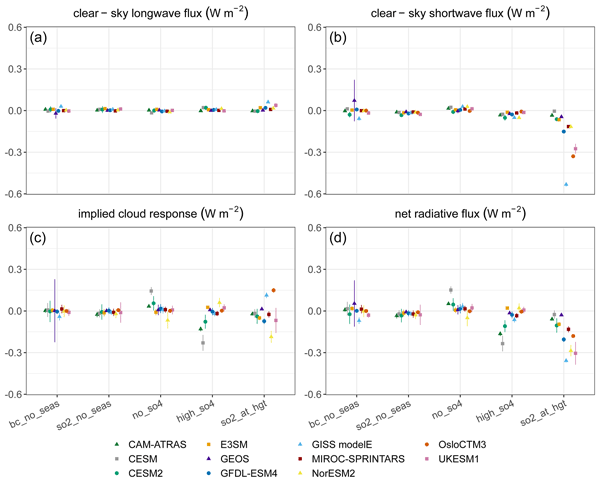
Hamza Ahsan, Hailong Wang, Jingbo Wu, Mingxuan Wu, Steven J. Smith, Susanne Bauer, Harrison Suchyta, Dirk Olivié, Gunnar Myhre, Hitoshi Matsui, Huisheng Bian, Jean-François Lamarque, Ken Carslaw, Larry Horowitz, Leighton Regayre, Mian Chin, Michael Schulz, Ragnhild Bieltvedt Skeie, Toshihiko Takemura, and Vaishali Naik
Atmos. Chem. Phys., 23, 14779–14799, https://doi.org/10.5194/acp-23-14779-2023, https://doi.org/10.5194/acp-23-14779-2023, 2023
Short summary
Short summary
We examine the impact of the assumed effective height of SO2 injection, SO2 and BC emission seasonality, and the assumed fraction of SO2 emissions injected as SO4 on climate and chemistry model results. We find that the SO2 injection height has a large impact on surface SO2 concentrations and, in some models, radiative flux. These assumptions are a
hiddensource of inter-model variability and may be leading to bias in some climate model results.
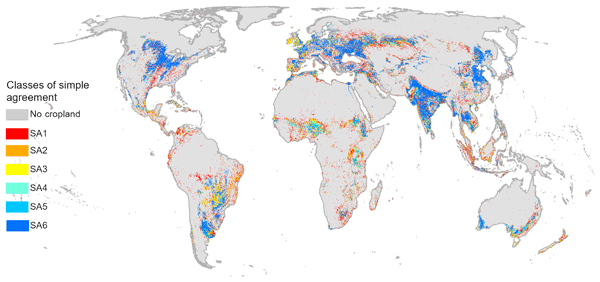
Francesco N. Tubiello, Giulia Conchedda, Leon Casse, Pengyu Hao, Giorgia De Santis, and Zhongxin Chen
Earth Syst. Sci. Data, 15, 4997–5015, https://doi.org/10.5194/essd-15-4997-2023, https://doi.org/10.5194/essd-15-4997-2023, 2023
Short summary
Short summary
We describe a new dataset of cropland area circa the year 2020, with global coverage and country detail. Data are generated from geospatial information on the agreement characteristics of six high-resolution cropland maps. By helping to highlight features of cropland characteristics and underlying causes for agreement across land cover products, the dataset can be used as a tool to help guide future mapping efforts towards improved agricultural monitoring.
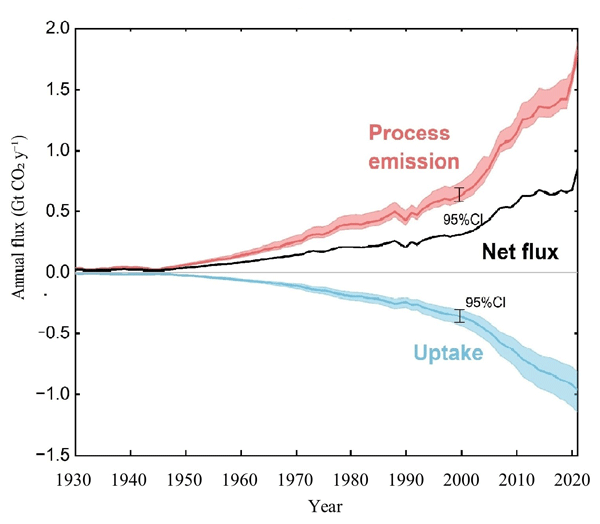
Zi Huang, Jiaoyue Wang, Longfei Bing, Yijiao Qiu, Rui Guo, Ying Yu, Mingjing Ma, Le Niu, Dan Tong, Robbie M. Andrew, Pierre Friedlingstein, Josep G. Canadell, Fengming Xi, and Zhu Liu
Earth Syst. Sci. Data, 15, 4947–4958, https://doi.org/10.5194/essd-15-4947-2023, https://doi.org/10.5194/essd-15-4947-2023, 2023
Short summary
Short summary
This is about global and regional cement process carbon emissions and CO2 uptake calculations from 1930 to 2019. The global cement production is rising to 4.4 Gt, causing processing carbon emission of 1.81 Gt (95% CI: 1.75–1.88 Gt CO2) in 2021. Plus, in 2021, cement’s carbon accumulated uptake (22.9 Gt, 95% CI: 19.6–22.6 Gt CO2) has offset 55.2% of cement process CO2 emissions (41.5 Gt, 95% CI: 38.7–47.1 Gt CO2) since 1930.
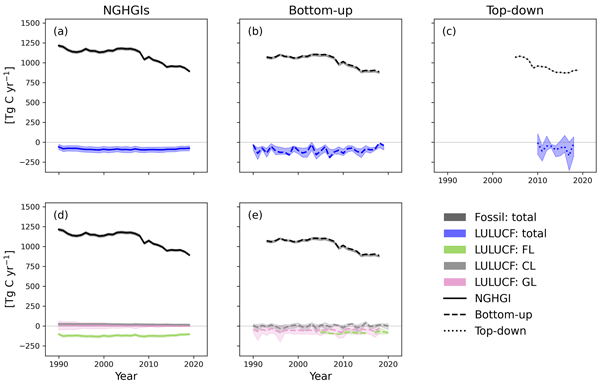
Matthew J. McGrath, Ana Maria Roxana Petrescu, Philippe Peylin, Robbie M. Andrew, Bradley Matthews, Frank Dentener, Juraj Balkovič, Vladislav Bastrikov, Meike Becker, Gregoire Broquet, Philippe Ciais, Audrey Fortems-Cheiney, Raphael Ganzenmüller, Giacomo Grassi, Ian Harris, Matthew Jones, Jürgen Knauer, Matthias Kuhnert, Guillaume Monteil, Saqr Munassar, Paul I. Palmer, Glen P. Peters, Chunjing Qiu, Mart-Jan Schelhaas, Oksana Tarasova, Matteo Vizzarri, Karina Winkler, Gianpaolo Balsamo, Antoine Berchet, Peter Briggs, Patrick Brockmann, Frédéric Chevallier, Giulia Conchedda, Monica Crippa, Stijn N. C. Dellaert, Hugo A. C. Denier van der Gon, Sara Filipek, Pierre Friedlingstein, Richard Fuchs, Michael Gauss, Christoph Gerbig, Diego Guizzardi, Dirk Günther, Richard A. Houghton, Greet Janssens-Maenhout, Ronny Lauerwald, Bas Lerink, Ingrid T. Luijkx, Géraud Moulas, Marilena Muntean, Gert-Jan Nabuurs, Aurélie Paquirissamy, Lucia Perugini, Wouter Peters, Roberto Pilli, Julia Pongratz, Pierre Regnier, Marko Scholze, Yusuf Serengil, Pete Smith, Efisio Solazzo, Rona L. Thompson, Francesco N. Tubiello, Timo Vesala, and Sophia Walther
Earth Syst. Sci. Data, 15, 4295–4370, https://doi.org/10.5194/essd-15-4295-2023, https://doi.org/10.5194/essd-15-4295-2023, 2023
Short summary
Short summary
Accurate estimation of fluxes of carbon dioxide from the land surface is essential for understanding future impacts of greenhouse gas emissions on the climate system. A wide variety of methods currently exist to estimate these sources and sinks. We are continuing work to develop annual comparisons of these diverse methods in order to clarify what they all actually calculate and to resolve apparent disagreement, in addition to highlighting opportunities for increased understanding.
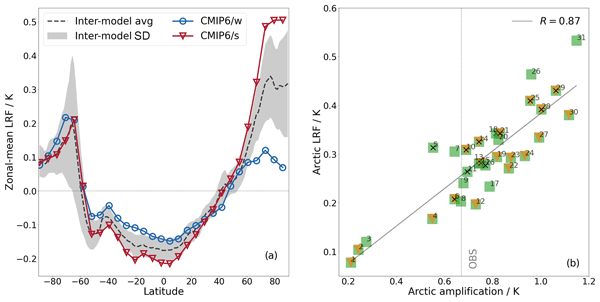
Olivia Linke, Johannes Quaas, Finja Baumer, Sebastian Becker, Jan Chylik, Sandro Dahlke, André Ehrlich, Dörthe Handorf, Christoph Jacobi, Heike Kalesse-Los, Luca Lelli, Sina Mehrdad, Roel A. J. Neggers, Johannes Riebold, Pablo Saavedra Garfias, Niklas Schnierstein, Matthew D. Shupe, Chris Smith, Gunnar Spreen, Baptiste Verneuil, Kameswara S. Vinjamuri, Marco Vountas, and Manfred Wendisch
Atmos. Chem. Phys., 23, 9963–9992, https://doi.org/10.5194/acp-23-9963-2023, https://doi.org/10.5194/acp-23-9963-2023, 2023
Short summary
Short summary
Lapse rate feedback (LRF) is a major driver of the Arctic amplification (AA) of climate change. It arises because the warming is stronger at the surface than aloft. Several processes can affect the LRF in the Arctic, such as the omnipresent temperature inversion. Here, we compare multimodel climate simulations to Arctic-based observations from a large research consortium to broaden our understanding of these processes, find synergy among them, and constrain the Arctic LRF and AA.
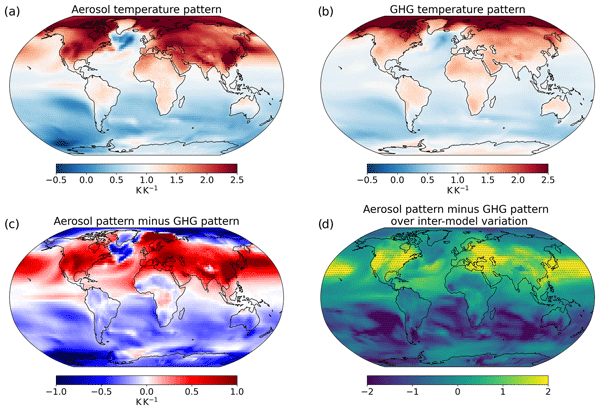
Christopher D. Wells, Lawrence S. Jackson, Amanda C. Maycock, and Piers M. Forster
Earth Syst. Dynam., 14, 817–834, https://doi.org/10.5194/esd-14-817-2023, https://doi.org/10.5194/esd-14-817-2023, 2023
Short summary
Short summary
There are many possibilities for future emissions, with different impacts in different places. Complex models can study these impacts but take a long time to run, even on powerful computers. Simple methods can be used to reduce this time by estimating the complex model output, but these are not perfect. This study looks at the accuracy of one of these techniques, showing that there are limitations to its use, especially for low-emission future scenarios.
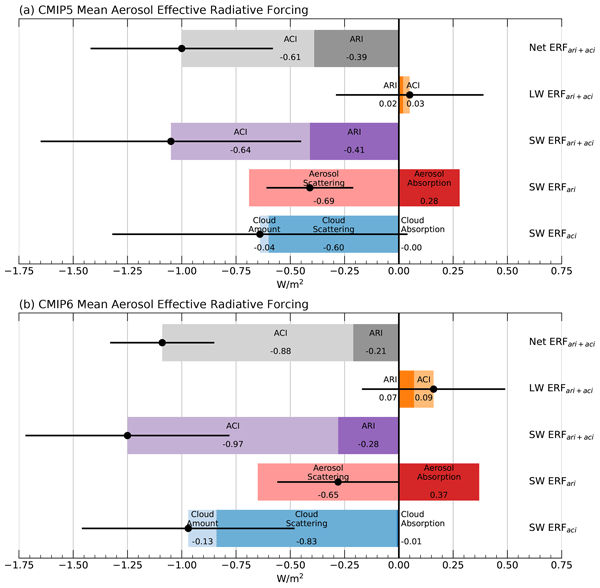
Mark D. Zelinka, Christopher J. Smith, Yi Qin, and Karl E. Taylor
Atmos. Chem. Phys., 23, 8879–8898, https://doi.org/10.5194/acp-23-8879-2023, https://doi.org/10.5194/acp-23-8879-2023, 2023
Short summary
Short summary
The primary uncertainty in how strongly Earth's climate has been perturbed by human activities comes from the unknown radiative impact of aerosol changes. Accurately quantifying these forcings – and their sub-components – in climate models is crucial for understanding the past and future simulated climate. In this study we describe biases in previously published estimates of aerosol radiative forcing in climate models and provide corrected estimates along with code for users to compute them.
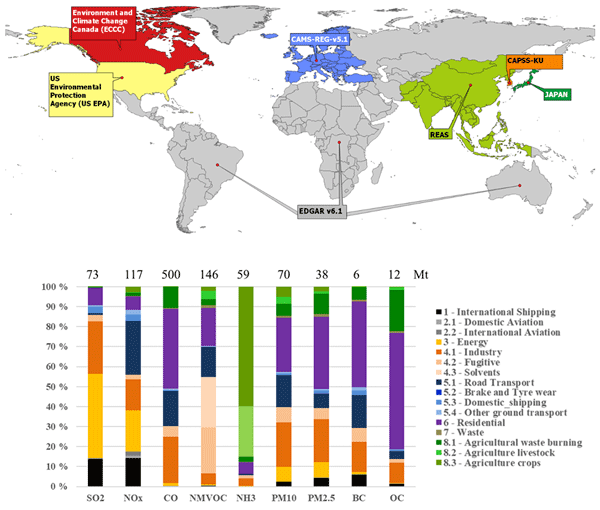
Monica Crippa, Diego Guizzardi, Tim Butler, Terry Keating, Rosa Wu, Jacek Kaminski, Jeroen Kuenen, Junichi Kurokawa, Satoru Chatani, Tazuko Morikawa, George Pouliot, Jacinthe Racine, Michael D. Moran, Zbigniew Klimont, Patrick M. Manseau, Rabab Mashayekhi, Barron H. Henderson, Steven J. Smith, Harrison Suchyta, Marilena Muntean, Efisio Solazzo, Manjola Banja, Edwin Schaaf, Federico Pagani, Jung-Hun Woo, Jinseok Kim, Fabio Monforti-Ferrario, Enrico Pisoni, Junhua Zhang, David Niemi, Mourad Sassi, Tabish Ansari, and Kristen Foley
Earth Syst. Sci. Data, 15, 2667–2694, https://doi.org/10.5194/essd-15-2667-2023, https://doi.org/10.5194/essd-15-2667-2023, 2023
Short summary
Short summary
This study responds to the global and regional atmospheric modelling community's need for a mosaic of air pollutant emissions with global coverage, long time series, spatially distributed data at a high time resolution, and a high sectoral resolution in order to enhance the understanding of transboundary air pollution. The mosaic approach to integrating official regional emission inventories with a global inventory based on a consistent methodology ensures policy-relevant results.
Piers M. Forster, Christopher J. Smith, Tristram Walsh, William F. Lamb, Robin Lamboll, Mathias Hauser, Aurélien Ribes, Debbie Rosen, Nathan Gillett, Matthew D. Palmer, Joeri Rogelj, Karina von Schuckmann, Sonia I. Seneviratne, Blair Trewin, Xuebin Zhang, Myles Allen, Robbie Andrew, Arlene Birt, Alex Borger, Tim Boyer, Jiddu A. Broersma, Lijing Cheng, Frank Dentener, Pierre Friedlingstein, José M. Gutiérrez, Johannes Gütschow, Bradley Hall, Masayoshi Ishii, Stuart Jenkins, Xin Lan, June-Yi Lee, Colin Morice, Christopher Kadow, John Kennedy, Rachel Killick, Jan C. Minx, Vaishali Naik, Glen P. Peters, Anna Pirani, Julia Pongratz, Carl-Friedrich Schleussner, Sophie Szopa, Peter Thorne, Robert Rohde, Maisa Rojas Corradi, Dominik Schumacher, Russell Vose, Kirsten Zickfeld, Valérie Masson-Delmotte, and Panmao Zhai
Earth Syst. Sci. Data, 15, 2295–2327, https://doi.org/10.5194/essd-15-2295-2023, https://doi.org/10.5194/essd-15-2295-2023, 2023
Short summary
Short summary
This is a critical decade for climate action, but there is no annual tracking of the level of human-induced warming. We build on the Intergovernmental Panel on Climate Change assessment reports that are authoritative but published infrequently to create a set of key global climate indicators that can be tracked through time. Our hope is that this becomes an important annual publication that policymakers, media, scientists and the public can refer to.
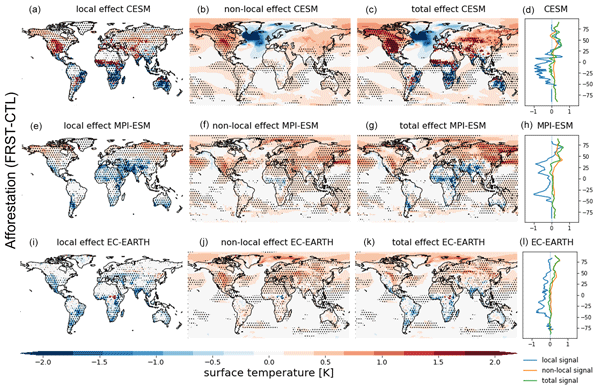
Steven J. De Hertog, Felix Havermann, Inne Vanderkelen, Suqi Guo, Fei Luo, Iris Manola, Dim Coumou, Edouard L. Davin, Gregory Duveiller, Quentin Lejeune, Julia Pongratz, Carl-Friedrich Schleussner, Sonia I. Seneviratne, and Wim Thiery
Earth Syst. Dynam., 14, 629–667, https://doi.org/10.5194/esd-14-629-2023, https://doi.org/10.5194/esd-14-629-2023, 2023
Short summary
Short summary
Land cover and land management changes are important strategies for future land-based mitigation. We investigate the climate effects of cropland expansion, afforestation, irrigation and wood harvesting using three Earth system models. Results show that these have important implications for surface temperature where the land cover and/or management change occur and in remote areas. Idealized afforestation causes global warming, which might offset the cooling effect from enhanced carbon uptake.
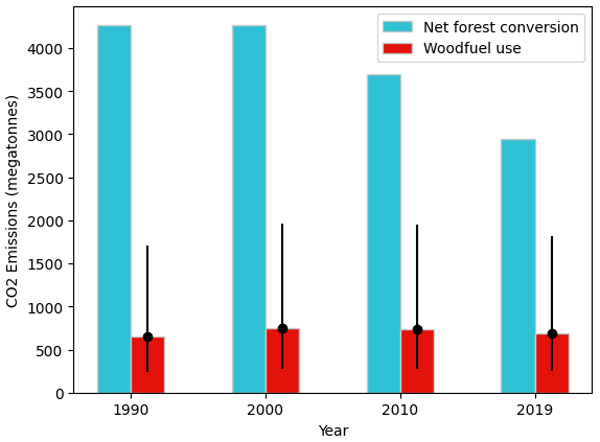
Alessandro Flammini, Hanif Adzmir, Kevin Karl, and Francesco Nicola Tubiello
Earth Syst. Sci. Data, 15, 2179–2187, https://doi.org/10.5194/essd-15-2179-2023, https://doi.org/10.5194/essd-15-2179-2023, 2023
Short summary
Short summary
This paper estimates the share of greenhouse gas (GHG) emissions attributable to non-renewable wood fuel harvesting for use in residential food-related activities. It adds to a growing research base estimating GHG emissions from across the entire agri-food value chain and contributes to the development of the FAOSTAT climate change domain.
Steven J. De Hertog, Carmen E. Lopez-Fabara, Ruud van der Ent, Jessica Keune, Diego G. Miralles, Raphael Portmann, Sebastian Schemm, Felix Havermann, Suqi Guo, Fei Luo, Iris Manola, Quentin Lejeune, Julia Pongratz, Carl-Friedrich Schleussner, Sonia I. Seneviratne, and Wim Thiery
EGUsphere, https://doi.org/10.5194/egusphere-2023-953, https://doi.org/10.5194/egusphere-2023-953, 2023
Preprint archived
Short summary
Short summary
Land cover and management changes can affect the climate and water availability. In this study we use climate model simulations of extreme global land cover changes (afforestation, deforestation) and land management changes (irrigation) to understand the effects on the global water cycle and local to continental water availability. We show that cropland expansion generally leads to higher evaporation and lower amounts of precipitation and afforestation and irrigation expansion to the opposite.
Fiona H. M. Tang, Thu Ha Nguyen, Giulia Conchedda, Leon Casse, Francesco N. Tubiello, and Federico Maggi
Earth Syst. Sci. Data Discuss., https://doi.org/10.5194/essd-2023-130, https://doi.org/10.5194/essd-2023-130, 2023
Preprint withdrawn
Short summary
Short summary
CROPGRIDS is a comprehensive global, geo-referenced dataset that provides information on harvested and crop areas of 173 crops circa the year 2020. This new product provides more recent crop type information for 80 crops, covering about 1.2 billion hectares of crop area globally. CROPGRIDS will facilitate global-scale assessments in various disciplines, including agriculture and resource management, food systems, environmental impact and sustainability analyses, and agroeconomics.
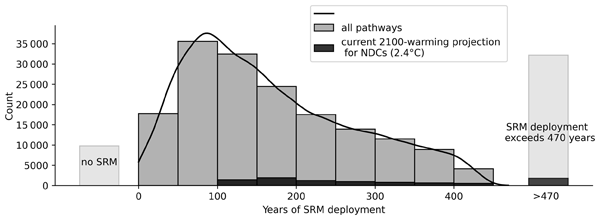
Susanne Baur, Alexander Nauels, Zebedee Nicholls, Benjamin M. Sanderson, and Carl-Friedrich Schleussner
Earth Syst. Dynam., 14, 367–381, https://doi.org/10.5194/esd-14-367-2023, https://doi.org/10.5194/esd-14-367-2023, 2023
Short summary
Short summary
Solar radiation modification (SRM) artificially cools global temperature without acting on the cause of climate change. This study looks at how long SRM would have to be deployed to limit warming to 1.5 °C and how this timeframe is affected by different levels of mitigation, negative emissions and climate uncertainty. None of the three factors alone can guarantee short SRM deployment. Due to their uncertainty at the time of SRM initialization, any deployment risks may be several centuries long.
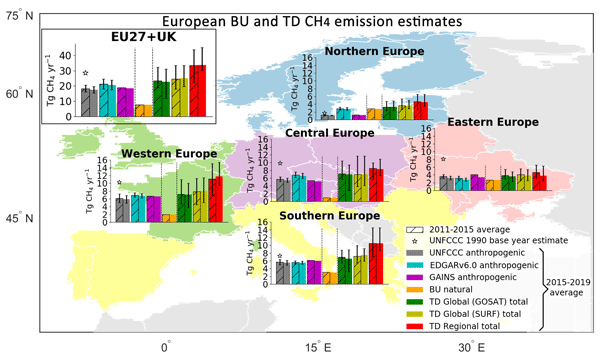
Ana Maria Roxana Petrescu, Chunjing Qiu, Matthew J. McGrath, Philippe Peylin, Glen P. Peters, Philippe Ciais, Rona L. Thompson, Aki Tsuruta, Dominik Brunner, Matthias Kuhnert, Bradley Matthews, Paul I. Palmer, Oksana Tarasova, Pierre Regnier, Ronny Lauerwald, David Bastviken, Lena Höglund-Isaksson, Wilfried Winiwarter, Giuseppe Etiope, Tuula Aalto, Gianpaolo Balsamo, Vladislav Bastrikov, Antoine Berchet, Patrick Brockmann, Giancarlo Ciotoli, Giulia Conchedda, Monica Crippa, Frank Dentener, Christine D. Groot Zwaaftink, Diego Guizzardi, Dirk Günther, Jean-Matthieu Haussaire, Sander Houweling, Greet Janssens-Maenhout, Massaer Kouyate, Adrian Leip, Antti Leppänen, Emanuele Lugato, Manon Maisonnier, Alistair J. Manning, Tiina Markkanen, Joe McNorton, Marilena Muntean, Gabriel D. Oreggioni, Prabir K. Patra, Lucia Perugini, Isabelle Pison, Maarit T. Raivonen, Marielle Saunois, Arjo J. Segers, Pete Smith, Efisio Solazzo, Hanqin Tian, Francesco N. Tubiello, Timo Vesala, Guido R. van der Werf, Chris Wilson, and Sönke Zaehle
Earth Syst. Sci. Data, 15, 1197–1268, https://doi.org/10.5194/essd-15-1197-2023, https://doi.org/10.5194/essd-15-1197-2023, 2023
Short summary
Short summary
This study updates the state-of-the-art scientific overview of CH4 and N2O emissions in the EU27 and UK in Petrescu et al. (2021a). Yearly updates are needed to improve the different respective approaches and to inform on the development of formal verification systems. It integrates the most recent emission inventories, process-based model and regional/global inversions, comparing them with UNFCCC national GHG inventories, in support to policy to facilitate real-time verification procedures.
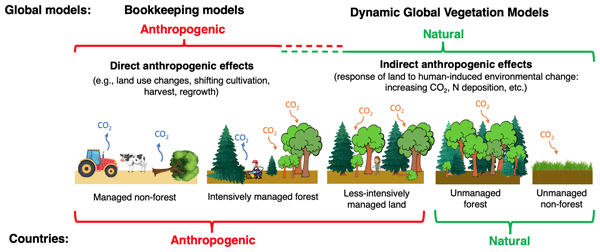
Giacomo Grassi, Clemens Schwingshackl, Thomas Gasser, Richard A. Houghton, Stephen Sitch, Josep G. Canadell, Alessandro Cescatti, Philippe Ciais, Sandro Federici, Pierre Friedlingstein, Werner A. Kurz, Maria J. Sanz Sanchez, Raúl Abad Viñas, Ramdane Alkama, Selma Bultan, Guido Ceccherini, Stefanie Falk, Etsushi Kato, Daniel Kennedy, Jürgen Knauer, Anu Korosuo, Joana Melo, Matthew J. McGrath, Julia E. M. S. Nabel, Benjamin Poulter, Anna A. Romanovskaya, Simone Rossi, Hanqin Tian, Anthony P. Walker, Wenping Yuan, Xu Yue, and Julia Pongratz
Earth Syst. Sci. Data, 15, 1093–1114, https://doi.org/10.5194/essd-15-1093-2023, https://doi.org/10.5194/essd-15-1093-2023, 2023
Short summary
Short summary
Striking differences exist in estimates of land-use CO2 fluxes between the national greenhouse gas inventories and the IPCC assessment reports. These differences hamper an accurate assessment of the collective progress under the Paris Agreement. By implementing an approach that conceptually reconciles land-use CO2 flux from national inventories and the global models used by the IPCC, our study is an important step forward for increasing confidence in land-use CO2 flux estimates.
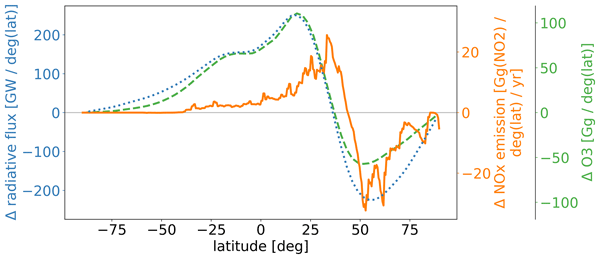
Robin N. Thor, Mariano Mertens, Sigrun Matthes, Mattia Righi, Johannes Hendricks, Sabine Brinkop, Phoebe Graf, Volker Grewe, Patrick Jöckel, and Steven Smith
Geosci. Model Dev., 16, 1459–1466, https://doi.org/10.5194/gmd-16-1459-2023, https://doi.org/10.5194/gmd-16-1459-2023, 2023
Short summary
Short summary
We report on an inconsistency in the latitudinal distribution of aviation emissions between two versions of a data product which is widely used by researchers. From the available documentation, we do not expect such an inconsistency. We run a chemistry–climate model to compute the effect of the inconsistency in emissions on atmospheric chemistry and radiation and find that the radiative forcing associated with aviation ozone is 7.6 % higher when using the less recent version of the data.
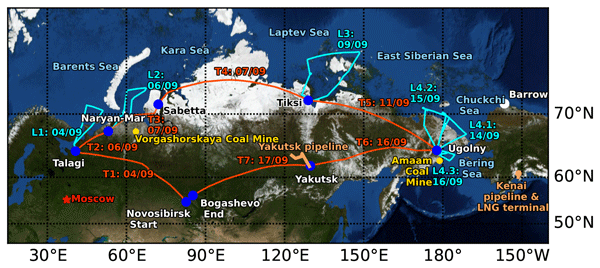
Clément Narbaud, Jean-Daniel Paris, Sophie Wittig, Antoine Berchet, Marielle Saunois, Philippe Nédélec, Boris D. Belan, Mikhail Y. Arshinov, Sergei B. Belan, Denis Davydov, Alexander Fofonov, and Artem Kozlov
Atmos. Chem. Phys., 23, 2293–2314, https://doi.org/10.5194/acp-23-2293-2023, https://doi.org/10.5194/acp-23-2293-2023, 2023
Short summary
Short summary
We measured CH4 and CO2 from aircraft over the Russian Arctic. Analyzing our data with the Lagrangian model FLEXPART, we find a sharp east–west gradient in atmospheric composition. Western Siberia is influenced by strong wetland CH4 emissions, deep CO2 gradient from biospheric uptake, and long-range transport from Europe and North America. Eastern flights document less variability. Over the Arctic Ocean, we find a small influence from marine CH4 emissions compatible with reasonable inventories.
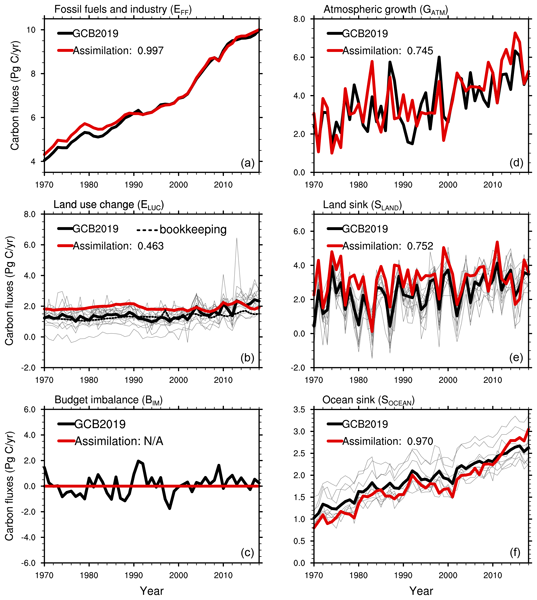
Hongmei Li, Tatiana Ilyina, Tammas Loughran, Aaron Spring, and Julia Pongratz
Earth Syst. Dynam., 14, 101–119, https://doi.org/10.5194/esd-14-101-2023, https://doi.org/10.5194/esd-14-101-2023, 2023
Short summary
Short summary
For the first time, our decadal prediction system based on Max Planck Institute Earth System Model enables prognostic atmospheric CO2 with an interactive carbon cycle. The evolution of CO2 fluxes and atmospheric CO2 growth is reconstructed well by assimilating data products; retrospective predictions show high confidence in predicting changes in the next year. The Earth system predictions provide valuable inputs for understanding the global carbon cycle and informing climate-relevant policy.

Yuanhong Zhao, Marielle Saunois, Philippe Bousquet, Xin Lin, Michaela I. Hegglin, Josep G. Canadell, Robert B. Jackson, and Bo Zheng
Atmos. Chem. Phys., 23, 789–807, https://doi.org/10.5194/acp-23-789-2023, https://doi.org/10.5194/acp-23-789-2023, 2023
Short summary
Short summary
The large uncertainties in OH simulated by atmospheric chemistry models hinder accurate estimates of CH4 chemical loss through the bottom-up method. This study presents a new approach based on OH precursor observations and a chemical box model to improve the tropospheric OH distributions simulated by atmospheric chemistry models. Through this approach, both the global OH burden and the corresponding methane chemical loss reach consistency with the top-down method based on MCF inversions.
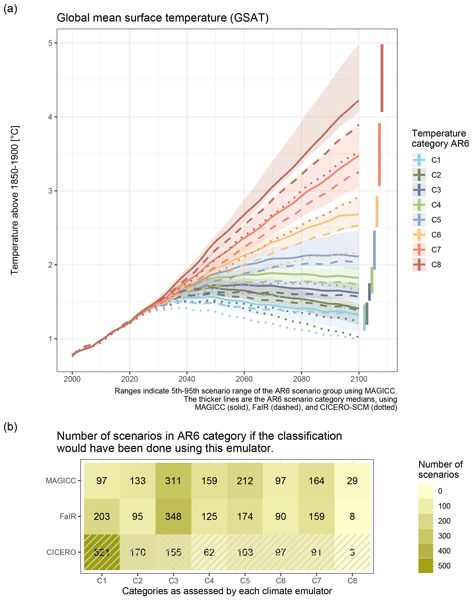
Jarmo S. Kikstra, Zebedee R. J. Nicholls, Christopher J. Smith, Jared Lewis, Robin D. Lamboll, Edward Byers, Marit Sandstad, Malte Meinshausen, Matthew J. Gidden, Joeri Rogelj, Elmar Kriegler, Glen P. Peters, Jan S. Fuglestvedt, Ragnhild B. Skeie, Bjørn H. Samset, Laura Wienpahl, Detlef P. van Vuuren, Kaj-Ivar van der Wijst, Alaa Al Khourdajie, Piers M. Forster, Andy Reisinger, Roberto Schaeffer, and Keywan Riahi
Geosci. Model Dev., 15, 9075–9109, https://doi.org/10.5194/gmd-15-9075-2022, https://doi.org/10.5194/gmd-15-9075-2022, 2022
Short summary
Short summary
Assessing hundreds or thousands of emission scenarios in terms of their global mean temperature implications requires standardised procedures of infilling, harmonisation, and probabilistic temperature assessments. We here present the open-source
climate-assessmentworkflow that was used in the IPCC AR6 Working Group III report. The paper provides key insight for anyone wishing to understand the assessment of climate outcomes of mitigation pathways in the context of the Paris Agreement.
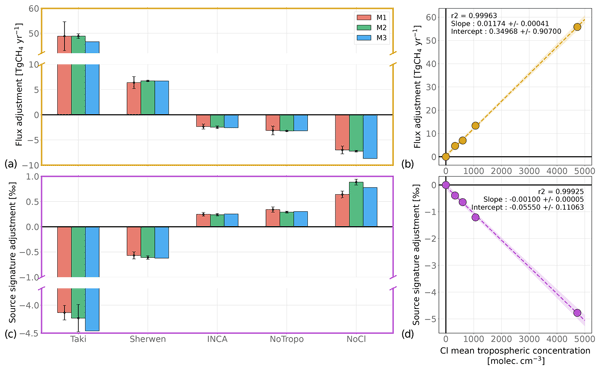
Joël Thanwerdas, Marielle Saunois, Isabelle Pison, Didier Hauglustaine, Antoine Berchet, Bianca Baier, Colm Sweeney, and Philippe Bousquet
Atmos. Chem. Phys., 22, 15489–15508, https://doi.org/10.5194/acp-22-15489-2022, https://doi.org/10.5194/acp-22-15489-2022, 2022
Short summary
Short summary
Atmospheric methane (CH4) concentrations have been rising since 2007, resulting from an imbalance between CH4 sources and sinks. The CH4 budget is generally estimated through top-down approaches using CH4 and δ13C(CH4) observations as constraints. The oxidation by chlorine (Cl) contributes little to the total oxidation of CH4 but strongly influences δ13C(CH4). Here, we compare multiple recent Cl fields and quantify the influence of Cl concentrations on CH4, δ13C(CH4), and CH4 budget estimates.
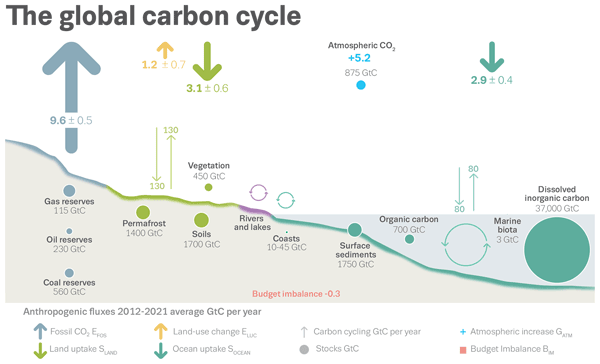
Pierre Friedlingstein, Michael O'Sullivan, Matthew W. Jones, Robbie M. Andrew, Luke Gregor, Judith Hauck, Corinne Le Quéré, Ingrid T. Luijkx, Are Olsen, Glen P. Peters, Wouter Peters, Julia Pongratz, Clemens Schwingshackl, Stephen Sitch, Josep G. Canadell, Philippe Ciais, Robert B. Jackson, Simone R. Alin, Ramdane Alkama, Almut Arneth, Vivek K. Arora, Nicholas R. Bates, Meike Becker, Nicolas Bellouin, Henry C. Bittig, Laurent Bopp, Frédéric Chevallier, Louise P. Chini, Margot Cronin, Wiley Evans, Stefanie Falk, Richard A. Feely, Thomas Gasser, Marion Gehlen, Thanos Gkritzalis, Lucas Gloege, Giacomo Grassi, Nicolas Gruber, Özgür Gürses, Ian Harris, Matthew Hefner, Richard A. Houghton, George C. Hurtt, Yosuke Iida, Tatiana Ilyina, Atul K. Jain, Annika Jersild, Koji Kadono, Etsushi Kato, Daniel Kennedy, Kees Klein Goldewijk, Jürgen Knauer, Jan Ivar Korsbakken, Peter Landschützer, Nathalie Lefèvre, Keith Lindsay, Junjie Liu, Zhu Liu, Gregg Marland, Nicolas Mayot, Matthew J. McGrath, Nicolas Metzl, Natalie M. Monacci, David R. Munro, Shin-Ichiro Nakaoka, Yosuke Niwa, Kevin O'Brien, Tsuneo Ono, Paul I. Palmer, Naiqing Pan, Denis Pierrot, Katie Pocock, Benjamin Poulter, Laure Resplandy, Eddy Robertson, Christian Rödenbeck, Carmen Rodriguez, Thais M. Rosan, Jörg Schwinger, Roland Séférian, Jamie D. Shutler, Ingunn Skjelvan, Tobias Steinhoff, Qing Sun, Adrienne J. Sutton, Colm Sweeney, Shintaro Takao, Toste Tanhua, Pieter P. Tans, Xiangjun Tian, Hanqin Tian, Bronte Tilbrook, Hiroyuki Tsujino, Francesco Tubiello, Guido R. van der Werf, Anthony P. Walker, Rik Wanninkhof, Chris Whitehead, Anna Willstrand Wranne, Rebecca Wright, Wenping Yuan, Chao Yue, Xu Yue, Sönke Zaehle, Jiye Zeng, and Bo Zheng
Earth Syst. Sci. Data, 14, 4811–4900, https://doi.org/10.5194/essd-14-4811-2022, https://doi.org/10.5194/essd-14-4811-2022, 2022
Short summary
Short summary
The Global Carbon Budget 2022 describes the datasets and methodology used to quantify the anthropogenic emissions of carbon dioxide (CO2) and their partitioning among the atmosphere, the land ecosystems, and the ocean. These living datasets are updated every year to provide the highest transparency and traceability in the reporting of CO2, the key driver of climate change.
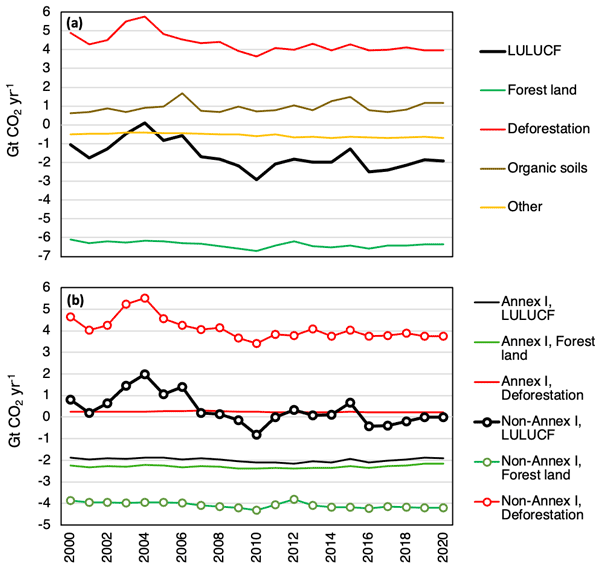
Giacomo Grassi, Giulia Conchedda, Sandro Federici, Raul Abad Viñas, Anu Korosuo, Joana Melo, Simone Rossi, Marieke Sandker, Zoltan Somogyi, Matteo Vizzarri, and Francesco N. Tubiello
Earth Syst. Sci. Data, 14, 4643–4666, https://doi.org/10.5194/essd-14-4643-2022, https://doi.org/10.5194/essd-14-4643-2022, 2022
Short summary
Short summary
Despite increasing attention on the role of land use CO2 fluxes in climate change mitigation, there are large differences in available databases. Here we present the most updated and complete compilation of land use CO2 data based on country submissions to United Nations Framework Convention on Climate Change and explain differences with other datasets. Our dataset brings clarity of land use CO2 fluxes and helps track country progress under the Paris Agreement.

Hanqin Tian, Zihao Bian, Hao Shi, Xiaoyu Qin, Naiqing Pan, Chaoqun Lu, Shufen Pan, Francesco N. Tubiello, Jinfeng Chang, Giulia Conchedda, Junguo Liu, Nathaniel Mueller, Kazuya Nishina, Rongting Xu, Jia Yang, Liangzhi You, and Bowen Zhang
Earth Syst. Sci. Data, 14, 4551–4568, https://doi.org/10.5194/essd-14-4551-2022, https://doi.org/10.5194/essd-14-4551-2022, 2022
Short summary
Short summary
Nitrogen is one of the critical nutrients for growth. Evaluating the change in nitrogen inputs due to human activity is necessary for nutrient management and pollution control. In this study, we generated a historical dataset of nitrogen input to land at the global scale. This dataset consists of nitrogen fertilizer, manure, and atmospheric deposition inputs to cropland, pasture, and rangeland at high resolution from 1860 to 2019.
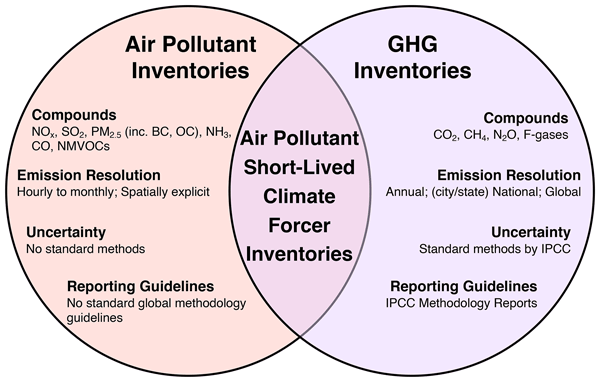
Steven J. Smith, Erin E. McDuffie, and Molly Charles
Atmos. Chem. Phys., 22, 13201–13218, https://doi.org/10.5194/acp-22-13201-2022, https://doi.org/10.5194/acp-22-13201-2022, 2022
Short summary
Short summary
Emissions into the atmosphere of greenhouse gases (GHGs) and air pollutants, quantified in emission inventories, impact human health, ecosystems, and the climate. We review how air pollutant and GHG inventory activities have historically been structured and their different uses and requirements. We discuss the benefits of increasing coordination between air pollutant and GHG inventory development efforts, but also caution that there are differences in appropriate methodologies and applications.

Steven J. De Hertog, Felix Havermann, Inne Vanderkelen, Suqi Guo, Fei Luo, Iris Manola, Dim Coumou, Edouard L. Davin, Gregory Duveiller, Quentin Lejeune, Julia Pongratz, Carl-Friedrich Schleussner, Sonia I. Seneviratne, and Wim Thiery
Earth Syst. Dynam., 13, 1305–1350, https://doi.org/10.5194/esd-13-1305-2022, https://doi.org/10.5194/esd-13-1305-2022, 2022
Short summary
Short summary
Land cover and land management changes are important strategies for future land-based mitigation. We investigate the climate effects of cropland expansion, afforestation, irrigation, and wood harvesting using three Earth system models. Results show that these have important implications for surface temperature where the land cover and/or management change occurs and in remote areas. Idealized afforestation causes global warming, which might offset the cooling effect from enhanced carbon uptake.
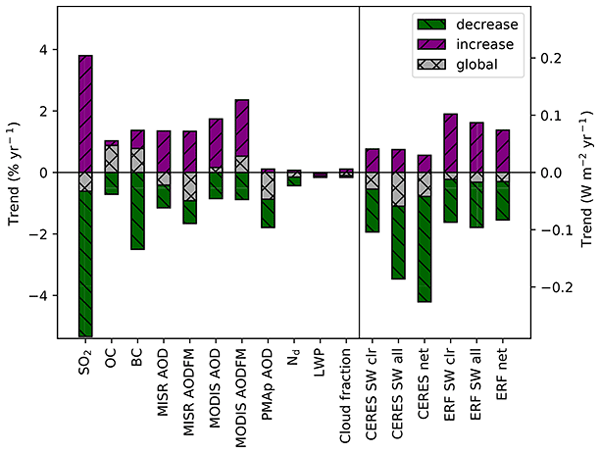
Johannes Quaas, Hailing Jia, Chris Smith, Anna Lea Albright, Wenche Aas, Nicolas Bellouin, Olivier Boucher, Marie Doutriaux-Boucher, Piers M. Forster, Daniel Grosvenor, Stuart Jenkins, Zbigniew Klimont, Norman G. Loeb, Xiaoyan Ma, Vaishali Naik, Fabien Paulot, Philip Stier, Martin Wild, Gunnar Myhre, and Michael Schulz
Atmos. Chem. Phys., 22, 12221–12239, https://doi.org/10.5194/acp-22-12221-2022, https://doi.org/10.5194/acp-22-12221-2022, 2022
Short summary
Short summary
Pollution particles cool climate and offset part of the global warming. However, they are washed out by rain and thus their effect responds quickly to changes in emissions. We show multiple datasets to demonstrate that aerosol emissions and their concentrations declined in many regions influenced by human emissions, as did the effects on clouds. Consequently, the cooling impact on the Earth energy budget became smaller. This change in trend implies a relative warming.
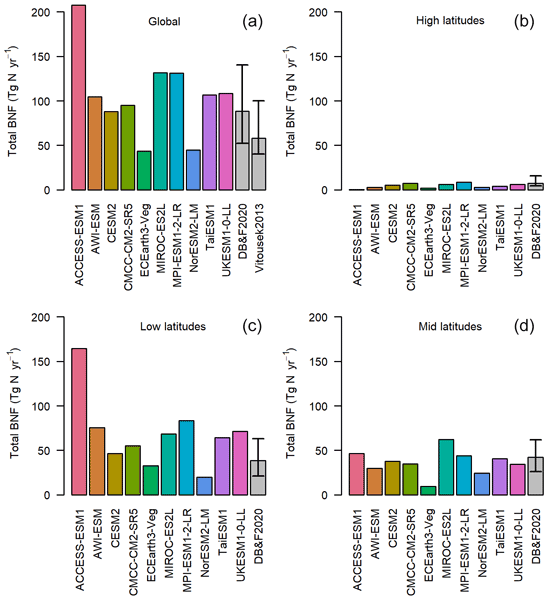
Taraka Davies-Barnard, Sönke Zaehle, and Pierre Friedlingstein
Biogeosciences, 19, 3491–3503, https://doi.org/10.5194/bg-19-3491-2022, https://doi.org/10.5194/bg-19-3491-2022, 2022
Short summary
Short summary
Biological nitrogen fixation is the largest natural input of new nitrogen onto land. Earth system models mainly represent global total terrestrial biological nitrogen fixation within observational uncertainties but overestimate tropical fixation. The model range of increase in biological nitrogen fixation in the SSP3-7.0 scenario is 3 % to 87 %. While biological nitrogen fixation is a key source of new nitrogen, its predictive power for net primary productivity in models is limited.
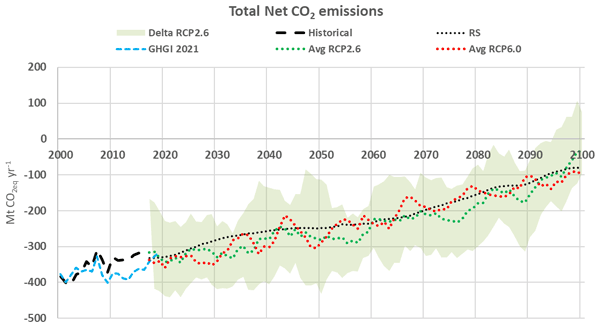
Roberto Pilli, Ramdane Alkama, Alessandro Cescatti, Werner A. Kurz, and Giacomo Grassi
Biogeosciences, 19, 3263–3284, https://doi.org/10.5194/bg-19-3263-2022, https://doi.org/10.5194/bg-19-3263-2022, 2022
Short summary
Short summary
To become carbon neutral by 2050, the European Union (EU27) forest C sink should increase to −450 Mt CO2 yr-1. Our study highlights that under current management practices (i.e. excluding any policy scenario) the forest C sink of the EU27 member states and the UK may decrease to about −250 Mt CO2eq yr-1 in 2050. The expected impacts of future climate change, however, add a considerable uncertainty, potentially nearly doubling or halving the sink associated with forest management.

Joël Thanwerdas, Marielle Saunois, Antoine Berchet, Isabelle Pison, Bruce H. Vaughn, Sylvia Englund Michel, and Philippe Bousquet
Geosci. Model Dev., 15, 4831–4851, https://doi.org/10.5194/gmd-15-4831-2022, https://doi.org/10.5194/gmd-15-4831-2022, 2022
Short summary
Short summary
Estimating CH4 sources by exploiting observations within an inverse modeling framework is a powerful approach. Here, a new system designed to assimilate δ13C(CH4) observations together with CH4 observations is presented. By optimizing both the emissions and associated source signatures of multiple emission categories, this new system can efficiently differentiate the co-located emission categories and provide estimates of CH4 sources that are consistent with isotopic data.
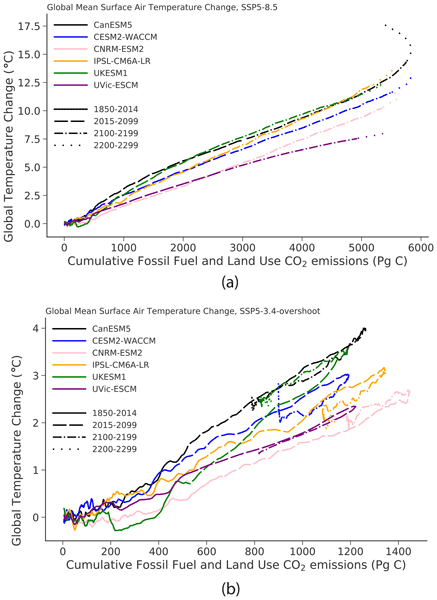
Charles D. Koven, Vivek K. Arora, Patricia Cadule, Rosie A. Fisher, Chris D. Jones, David M. Lawrence, Jared Lewis, Keith Lindsay, Sabine Mathesius, Malte Meinshausen, Michael Mills, Zebedee Nicholls, Benjamin M. Sanderson, Roland Séférian, Neil C. Swart, William R. Wieder, and Kirsten Zickfeld
Earth Syst. Dynam., 13, 885–909, https://doi.org/10.5194/esd-13-885-2022, https://doi.org/10.5194/esd-13-885-2022, 2022
Short summary
Short summary
We explore the long-term dynamics of Earth's climate and carbon cycles under a pair of contrasting scenarios to the year 2300 using six models that include both climate and carbon cycle dynamics. One scenario assumes very high emissions, while the second assumes a peak in emissions, followed by rapid declines to net negative emissions. We show that the models generally agree that warming is roughly proportional to carbon emissions but that many other aspects of the model projections differ.
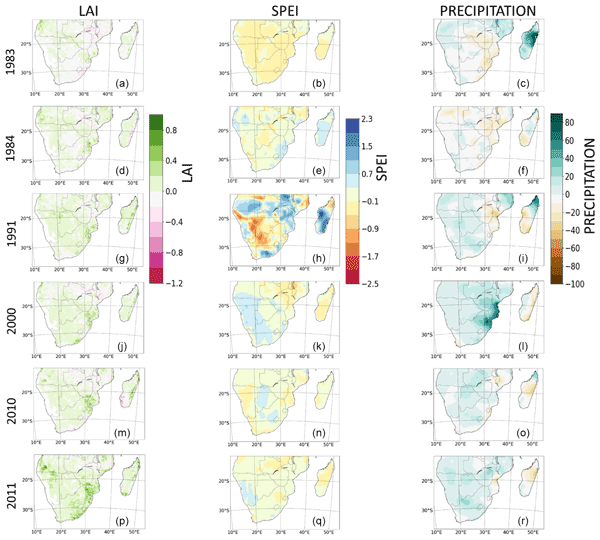
Shakirudeen Lawal, Stephen Sitch, Danica Lombardozzi, Julia E. M. S. Nabel, Hao-Wei Wey, Pierre Friedlingstein, Hanqin Tian, and Bruce Hewitson
Hydrol. Earth Syst. Sci., 26, 2045–2071, https://doi.org/10.5194/hess-26-2045-2022, https://doi.org/10.5194/hess-26-2045-2022, 2022
Short summary
Short summary
To investigate the impacts of drought on vegetation, which few studies have done due to various limitations, we used the leaf area index as proxy and dynamic global vegetation models (DGVMs) to simulate drought impacts because the models use observationally derived climate. We found that the semi-desert biome responds strongly to drought in the summer season, while the tropical forest biome shows a weak response. This study could help target areas to improve drought monitoring and simulation.
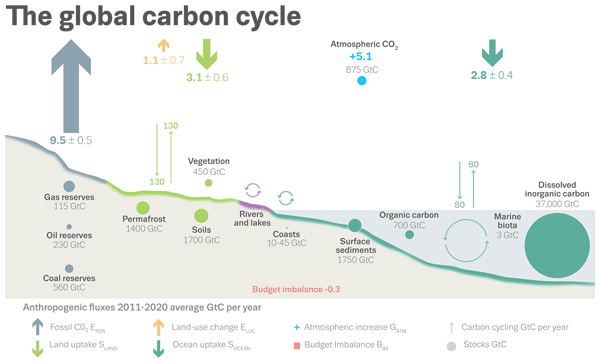
Pierre Friedlingstein, Matthew W. Jones, Michael O'Sullivan, Robbie M. Andrew, Dorothee C. E. Bakker, Judith Hauck, Corinne Le Quéré, Glen P. Peters, Wouter Peters, Julia Pongratz, Stephen Sitch, Josep G. Canadell, Philippe Ciais, Rob B. Jackson, Simone R. Alin, Peter Anthoni, Nicholas R. Bates, Meike Becker, Nicolas Bellouin, Laurent Bopp, Thi Tuyet Trang Chau, Frédéric Chevallier, Louise P. Chini, Margot Cronin, Kim I. Currie, Bertrand Decharme, Laique M. Djeutchouang, Xinyu Dou, Wiley Evans, Richard A. Feely, Liang Feng, Thomas Gasser, Dennis Gilfillan, Thanos Gkritzalis, Giacomo Grassi, Luke Gregor, Nicolas Gruber, Özgür Gürses, Ian Harris, Richard A. Houghton, George C. Hurtt, Yosuke Iida, Tatiana Ilyina, Ingrid T. Luijkx, Atul Jain, Steve D. Jones, Etsushi Kato, Daniel Kennedy, Kees Klein Goldewijk, Jürgen Knauer, Jan Ivar Korsbakken, Arne Körtzinger, Peter Landschützer, Siv K. Lauvset, Nathalie Lefèvre, Sebastian Lienert, Junjie Liu, Gregg Marland, Patrick C. McGuire, Joe R. Melton, David R. Munro, Julia E. M. S. Nabel, Shin-Ichiro Nakaoka, Yosuke Niwa, Tsuneo Ono, Denis Pierrot, Benjamin Poulter, Gregor Rehder, Laure Resplandy, Eddy Robertson, Christian Rödenbeck, Thais M. Rosan, Jörg Schwinger, Clemens Schwingshackl, Roland Séférian, Adrienne J. Sutton, Colm Sweeney, Toste Tanhua, Pieter P. Tans, Hanqin Tian, Bronte Tilbrook, Francesco Tubiello, Guido R. van der Werf, Nicolas Vuichard, Chisato Wada, Rik Wanninkhof, Andrew J. Watson, David Willis, Andrew J. Wiltshire, Wenping Yuan, Chao Yue, Xu Yue, Sönke Zaehle, and Jiye Zeng
Earth Syst. Sci. Data, 14, 1917–2005, https://doi.org/10.5194/essd-14-1917-2022, https://doi.org/10.5194/essd-14-1917-2022, 2022
Short summary
Short summary
The Global Carbon Budget 2021 describes the data sets and methodology used to quantify the emissions of carbon dioxide and their partitioning among the atmosphere, land, and ocean. These living data are updated every year to provide the highest transparency and traceability in the reporting of CO2, the key driver of climate change.
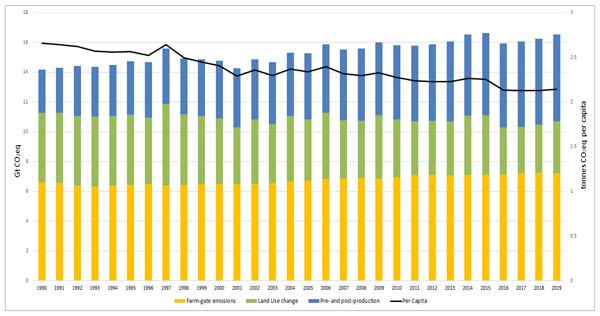
Francesco N. Tubiello, Kevin Karl, Alessandro Flammini, Johannes Gütschow, Griffiths Obli-Laryea, Giulia Conchedda, Xueyao Pan, Sally Yue Qi, Hörn Halldórudóttir Heiðarsdóttir, Nathan Wanner, Roberta Quadrelli, Leonardo Rocha Souza, Philippe Benoit, Matthew Hayek, David Sandalow, Erik Mencos Contreras, Cynthia Rosenzweig, Jose Rosero Moncayo, Piero Conforti, and Maximo Torero
Earth Syst. Sci. Data, 14, 1795–1809, https://doi.org/10.5194/essd-14-1795-2022, https://doi.org/10.5194/essd-14-1795-2022, 2022
Short summary
Short summary
The paper presents results from the new FAOSTAT database on food system emissions, covering all countries over the time series 1990–2019. Results indicate and further clarify – updated to 2019 – the relevance of emissions from crop and livestock production processes within the farm gate; from conversion of natural ecosystems to agriculture, such as deforestation and peat degradation; and from use of fossil fuels for energy and other industrial processes along food supply chains.
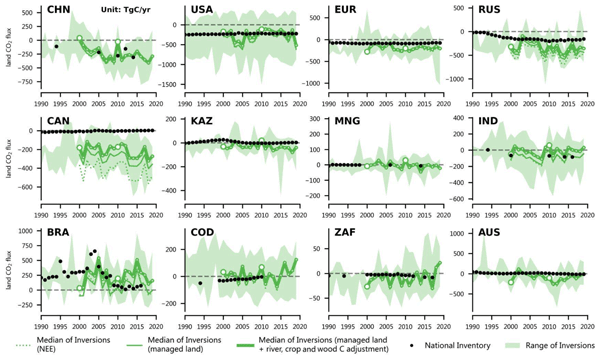
Zhu Deng, Philippe Ciais, Zitely A. Tzompa-Sosa, Marielle Saunois, Chunjing Qiu, Chang Tan, Taochun Sun, Piyu Ke, Yanan Cui, Katsumasa Tanaka, Xin Lin, Rona L. Thompson, Hanqin Tian, Yuanzhi Yao, Yuanyuan Huang, Ronny Lauerwald, Atul K. Jain, Xiaoming Xu, Ana Bastos, Stephen Sitch, Paul I. Palmer, Thomas Lauvaux, Alexandre d'Aspremont, Clément Giron, Antoine Benoit, Benjamin Poulter, Jinfeng Chang, Ana Maria Roxana Petrescu, Steven J. Davis, Zhu Liu, Giacomo Grassi, Clément Albergel, Francesco N. Tubiello, Lucia Perugini, Wouter Peters, and Frédéric Chevallier
Earth Syst. Sci. Data, 14, 1639–1675, https://doi.org/10.5194/essd-14-1639-2022, https://doi.org/10.5194/essd-14-1639-2022, 2022
Short summary
Short summary
In support of the global stocktake of the Paris Agreement on climate change, we proposed a method for reconciling the results of global atmospheric inversions with data from UNFCCC national greenhouse gas inventories (NGHGIs). Here, based on a new global harmonized database that we compiled from the UNFCCC NGHGIs and a comprehensive framework presented in this study to process the results of inversions, we compared their results of carbon dioxide (CO2), methane (CH4), and nitrous oxide (N2O).
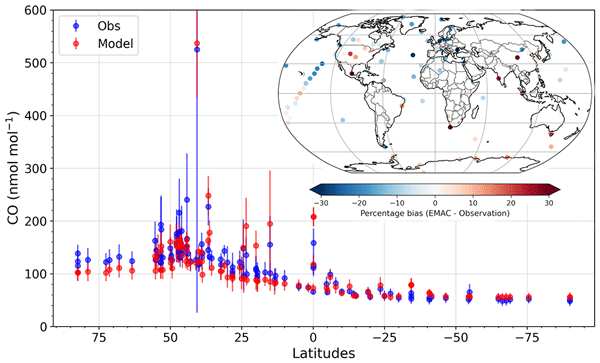
Andrea Pozzer, Simon F. Reifenberg, Vinod Kumar, Bruno Franco, Matthias Kohl, Domenico Taraborrelli, Sergey Gromov, Sebastian Ehrhart, Patrick Jöckel, Rolf Sander, Veronica Fall, Simon Rosanka, Vlassis Karydis, Dimitris Akritidis, Tamara Emmerichs, Monica Crippa, Diego Guizzardi, Johannes W. Kaiser, Lieven Clarisse, Astrid Kiendler-Scharr, Holger Tost, and Alexandra Tsimpidi
Geosci. Model Dev., 15, 2673–2710, https://doi.org/10.5194/gmd-15-2673-2022, https://doi.org/10.5194/gmd-15-2673-2022, 2022
Short summary
Short summary
A newly developed setup of the chemistry general circulation model EMAC (ECHAM5/MESSy for Atmospheric Chemistry) is evaluated here. A comprehensive organic degradation mechanism is used and coupled with a volatility base model.
The results show that the model reproduces most of the tracers and aerosols satisfactorily but shows discrepancies for oxygenated organic gases. It is also shown that this model configuration can be used for further research in atmospheric chemistry.
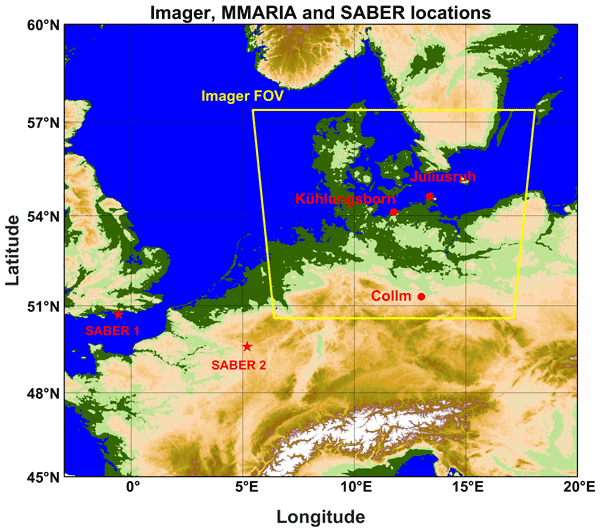
Sumanta Sarkhel, Gunter Stober, Jorge L. Chau, Steven M. Smith, Christoph Jacobi, Subarna Mondal, Martin G. Mlynczak, and James M. Russell III
Ann. Geophys., 40, 179–190, https://doi.org/10.5194/angeo-40-179-2022, https://doi.org/10.5194/angeo-40-179-2022, 2022
Short summary
Short summary
A rare gravity wave event was observed on the night of 25 April 2017 over northern Germany. An all-sky airglow imager recorded an upward-propagating wave at different altitudes in mesosphere with a prominent wave front above 91 km and faintly observed below. Based on wind and satellite-borne temperature profiles close to the event location, we have found the presence of a leaky thermal duct layer in 85–91 km. The appearance of this duct layer caused the wave amplitudes to diminish below 91 km.
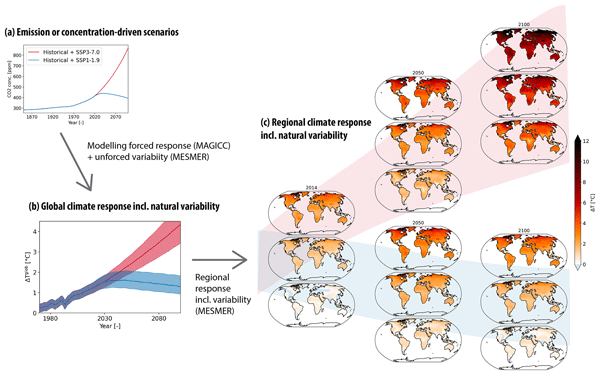
Lea Beusch, Zebedee Nicholls, Lukas Gudmundsson, Mathias Hauser, Malte Meinshausen, and Sonia I. Seneviratne
Geosci. Model Dev., 15, 2085–2103, https://doi.org/10.5194/gmd-15-2085-2022, https://doi.org/10.5194/gmd-15-2085-2022, 2022
Short summary
Short summary
We introduce the first chain of computationally efficient Earth system model (ESM) emulators to translate user-defined greenhouse gas emission pathways into regional temperature change time series accounting for all major sources of climate change projection uncertainty. By combining the global mean emulator MAGICC with the spatially resolved emulator MESMER, we can derive ESM-specific and constrained probabilistic emulations to rapidly provide targeted climate information at the local scale.
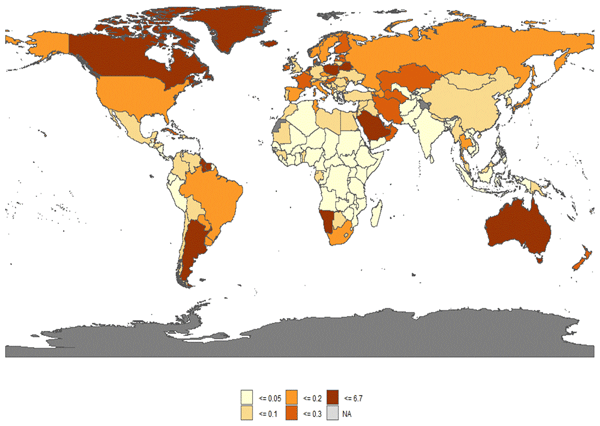
Alessandro Flammini, Xueyao Pan, Francesco Nicola Tubiello, Sally Yue Qiu, Leonardo Rocha Souza, Roberta Quadrelli, Stefania Bracco, Philippe Benoit, and Ralph Sims
Earth Syst. Sci. Data, 14, 811–821, https://doi.org/10.5194/essd-14-811-2022, https://doi.org/10.5194/essd-14-811-2022, 2022
Short summary
Short summary
Fossil-fuel-based energy used in agriculture, for crop and livestock production as well as in fisheries, generates significant amounts of greenhouse gases (GHG), which are typically not accounted for within the agriculture sector of national GHG inventories. Using activity data from UNSD and IEA, we construct a new database of energy use in agriculture and related emissions, covering the period 1970–2019 by country and by fossil fuel type, including emissions from electricity used on the farm.
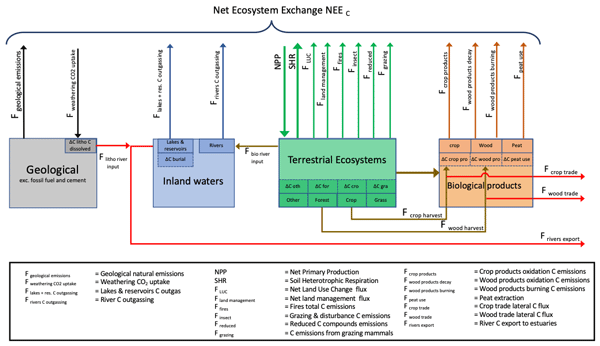
Philippe Ciais, Ana Bastos, Frédéric Chevallier, Ronny Lauerwald, Ben Poulter, Josep G. Canadell, Gustaf Hugelius, Robert B. Jackson, Atul Jain, Matthew Jones, Masayuki Kondo, Ingrid T. Luijkx, Prabir K. Patra, Wouter Peters, Julia Pongratz, Ana Maria Roxana Petrescu, Shilong Piao, Chunjing Qiu, Celso Von Randow, Pierre Regnier, Marielle Saunois, Robert Scholes, Anatoly Shvidenko, Hanqin Tian, Hui Yang, Xuhui Wang, and Bo Zheng
Geosci. Model Dev., 15, 1289–1316, https://doi.org/10.5194/gmd-15-1289-2022, https://doi.org/10.5194/gmd-15-1289-2022, 2022
Short summary
Short summary
The second phase of the Regional Carbon Cycle Assessment and Processes (RECCAP) will provide updated quantification and process understanding of CO2, CH4, and N2O emissions and sinks for ten regions of the globe. In this paper, we give definitions, review different methods, and make recommendations for estimating different components of the total land–atmosphere carbon exchange for each region in a consistent and complete approach.
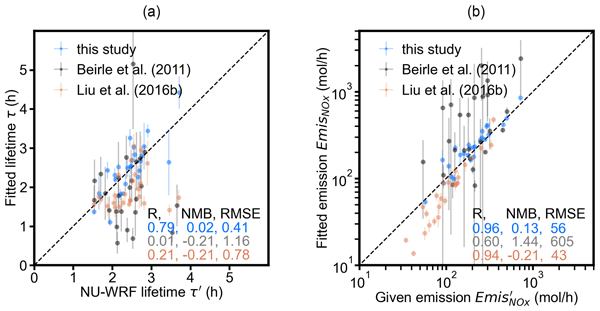
Fei Liu, Zhining Tao, Steffen Beirle, Joanna Joiner, Yasuko Yoshida, Steven J. Smith, K. Emma Knowland, and Thomas Wagner
Atmos. Chem. Phys., 22, 1333–1349, https://doi.org/10.5194/acp-22-1333-2022, https://doi.org/10.5194/acp-22-1333-2022, 2022
Short summary
Short summary
In this work, we present a novel method to infer NOx emissions and lifetimes based on tropospheric NO2 observations together with reanalysis wind fields for cities located in polluted backgrounds. We evaluate the accuracy of the method using synthetic NO2 observations derived from a high-resolution model simulation. Our work provides an estimate for uncertainties in satellite-derived emissions inferred from chemical transport model (CTM)-independent approaches.

István Dunkl, Aaron Spring, Pierre Friedlingstein, and Victor Brovkin
Earth Syst. Dynam., 12, 1413–1426, https://doi.org/10.5194/esd-12-1413-2021, https://doi.org/10.5194/esd-12-1413-2021, 2021
Short summary
Short summary
The variability in atmospheric CO2 is largely controlled by terrestrial carbon fluxes. These land–atmosphere fluxes are predictable for around 2 years, but the mechanisms providing the predictability are not well understood. By decomposing the predictability of carbon fluxes into individual contributors we were able to explain the spatial and seasonal patterns and the interannual variability of CO2 flux predictability.
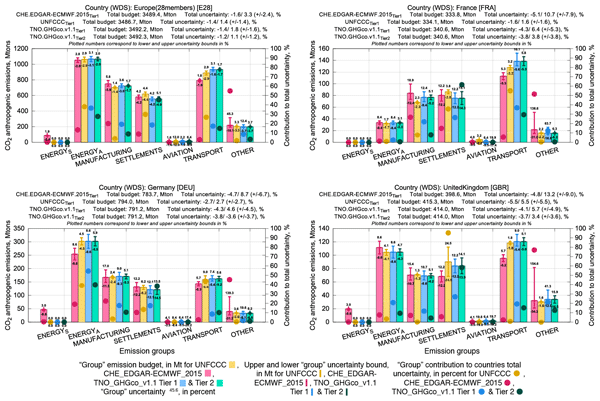
Margarita Choulga, Greet Janssens-Maenhout, Ingrid Super, Efisio Solazzo, Anna Agusti-Panareda, Gianpaolo Balsamo, Nicolas Bousserez, Monica Crippa, Hugo Denier van der Gon, Richard Engelen, Diego Guizzardi, Jeroen Kuenen, Joe McNorton, Gabriel Oreggioni, and Antoon Visschedijk
Earth Syst. Sci. Data, 13, 5311–5335, https://doi.org/10.5194/essd-13-5311-2021, https://doi.org/10.5194/essd-13-5311-2021, 2021
Short summary
Short summary
People worry that growing man-made carbon dioxide (CO2) concentrations lead to climate change. Global models, use of observations, and datasets can help us better understand behaviour of CO2. Here a tool to compute uncertainty in man-made CO2 sources per country per year and month is presented. An example of all sources separated into seven groups (intensive and average energy, industry, humans, ground and air transport, others) is presented. Results will be used to predict CO2 concentrations.
Jan C. Minx, William F. Lamb, Robbie M. Andrew, Josep G. Canadell, Monica Crippa, Niklas Döbbeling, Piers M. Forster, Diego Guizzardi, Jos Olivier, Glen P. Peters, Julia Pongratz, Andy Reisinger, Matthew Rigby, Marielle Saunois, Steven J. Smith, Efisio Solazzo, and Hanqin Tian
Earth Syst. Sci. Data, 13, 5213–5252, https://doi.org/10.5194/essd-13-5213-2021, https://doi.org/10.5194/essd-13-5213-2021, 2021
Short summary
Short summary
We provide a synthetic dataset on anthropogenic greenhouse gas (GHG) emissions for 1970–2018 with a fast-track extension to 2019. We show that GHG emissions continued to rise across all gases and sectors. Annual average GHG emissions growth slowed, but absolute decadal increases have never been higher in human history. We identify a number of data gaps and data quality issues in global inventories and highlight their importance for monitoring progress towards international climate goals.
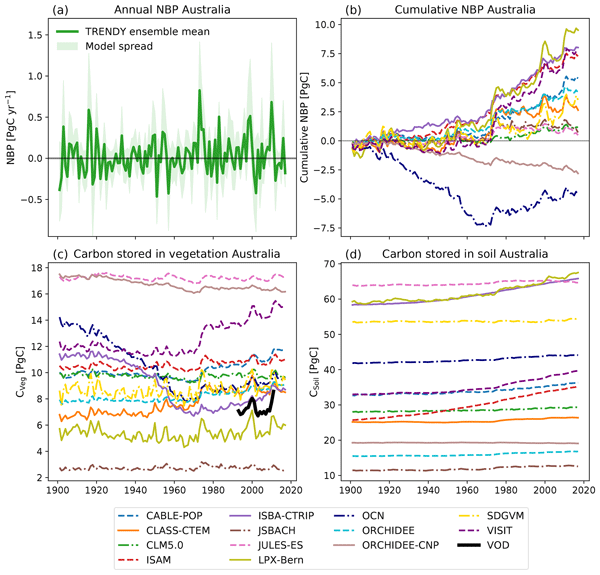
Lina Teckentrup, Martin G. De Kauwe, Andrew J. Pitman, Daniel S. Goll, Vanessa Haverd, Atul K. Jain, Emilie Joetzjer, Etsushi Kato, Sebastian Lienert, Danica Lombardozzi, Patrick C. McGuire, Joe R. Melton, Julia E. M. S. Nabel, Julia Pongratz, Stephen Sitch, Anthony P. Walker, and Sönke Zaehle
Biogeosciences, 18, 5639–5668, https://doi.org/10.5194/bg-18-5639-2021, https://doi.org/10.5194/bg-18-5639-2021, 2021
Short summary
Short summary
The Australian continent is included in global assessments of the carbon cycle such as the global carbon budget, yet the performance of dynamic global vegetation models (DGVMs) over Australia has rarely been evaluated. We assessed simulations by an ensemble of dynamic global vegetation models over Australia and highlighted a number of key areas that lead to model divergence on both short (inter-annual) and long (decadal) timescales.
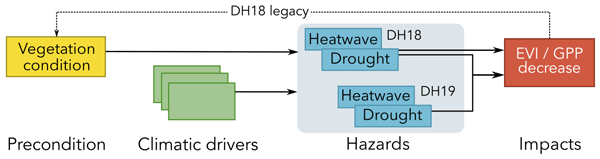
Ana Bastos, René Orth, Markus Reichstein, Philippe Ciais, Nicolas Viovy, Sönke Zaehle, Peter Anthoni, Almut Arneth, Pierre Gentine, Emilie Joetzjer, Sebastian Lienert, Tammas Loughran, Patrick C. McGuire, Sungmin O, Julia Pongratz, and Stephen Sitch
Earth Syst. Dynam., 12, 1015–1035, https://doi.org/10.5194/esd-12-1015-2021, https://doi.org/10.5194/esd-12-1015-2021, 2021
Short summary
Short summary
Temperate biomes in Europe are not prone to recurrent dry and hot conditions in summer. However, these conditions may become more frequent in the coming decades. Because stress conditions can leave legacies for many years, this may result in reduced ecosystem resilience under recurrent stress. We assess vegetation vulnerability to the hot and dry summers in 2018 and 2019 in Europe and find the important role of inter-annual legacy effects from 2018 in modulating the impacts of the 2019 event.
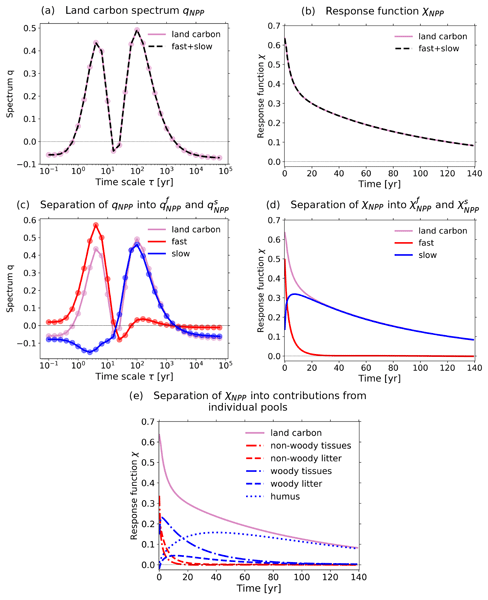
Guilherme L. Torres Mendonça, Julia Pongratz, and Christian H. Reick
Nonlin. Processes Geophys., 28, 533–564, https://doi.org/10.5194/npg-28-533-2021, https://doi.org/10.5194/npg-28-533-2021, 2021
Short summary
Short summary
We apply a new identification method to derive the response functions that characterize the sensitivity of the land carbon cycle to CO2 perturbations in an Earth system model. By means of these response functions, which generalize the usually employed single-valued sensitivities, we can reliably predict the response of the land carbon to weak perturbations. Further, we demonstrate how by this new method one can robustly derive and interpret internal spectra of timescales of the system.

Guilherme L. Torres Mendonça, Julia Pongratz, and Christian H. Reick
Nonlin. Processes Geophys., 28, 501–532, https://doi.org/10.5194/npg-28-501-2021, https://doi.org/10.5194/npg-28-501-2021, 2021
Short summary
Short summary
Linear response functions are a powerful tool to both predict and investigate the dynamics of a system when subjected to small perturbations. In practice, these functions must often be derived from perturbation experiment data. Nevertheless, current methods for this identification require a tailored perturbation experiment, often with many realizations. We present a method that instead derives these functions from a single realization of an experiment driven by any type of perturbation.
Cited articles
Allen, M. R., Frame, D. J., Friedlingstein, P., Gillett, N. P., Grassi, G., Gregory, J. M., Hare, W., House, J., Huntingford, C., Jenkins, S., Jones, C. D., Knutti, R., Lowe, J. A., Matthews, H. D., Meinshausen, M., Meinshausen, N., Peters, G. P., Plattner, G.-K., Raper, S., Rogelj, J., Stott, P. A., Solomon, S., Stocker, T. F., Weaver, A. J., and Zickfeld, K.: Geological Net Zero and the need for disaggregated accounting for carbon sinks, Nature, 638, 343–350, https://doi.org/10.1038/s41586-024-08326-8, 2025.
Andrew, R. M.: A comparison of estimates of global carbon dioxide emissions from fossil carbon sources, Earth Syst. Sci. Data, 12, 1437–1465, https://doi.org/10.5194/essd-12-1437-2020, 2020.
Andrew, R. M.: Global CO2 emissions from cement production, Zenodo [data set], https://doi.org/10.5281/zenodo.14931651, 2025.
BMK: Detailbericht zur Nahzeitprognose der Österreichischen Treibhausgas-Emissionen des Verkehrs 2022, Bundesministerium für Klimaschutz, Umwelt, Energie, Mobilität, Innovation und Technologie (BMK), Vienna, Austria, https://www.umweltbundesamt.at/fileadmin/site/publikationen/rep0872.pdf (last access: 7 April 2026), 2023.
Boehm, S., Jeffery, L., Hecke, J., Schumer, C., Jaeger, J., Fyson, C., Levin, K., Nilsson, A., Naimoli, S., Daly, E., Thwaites, J., Lebling, K., Waite, R., Collis, J., Sims, M., Singh, N., Grier, E., Lamb, W., Castellanos, S., Lee, A., Geffray, M.-C., Santo, R., Balehegn, M., Petroni, M., and Masterson, M.: State of Climate Action 2023, World Resources Institute, https://www.wri.org/research/state-climate-action-2023 (last access: 7 April 2026), 2023.
Byers, Edward, Krey, V., Kriegler, E., Riahi, K., Schaeffer, R., Kikstra, J., Lamboll, R., Nicholls, Z., Sandstad, M., Smith, C., van der Wijst, K., Al Khourdajie, A., Lecocq, F., Portugal-Pereira, J., Saheb, Y., Stromann, A., Winkler, H., Auer, C., Brutschin, E., Gidden, M., Hackstock, P., Harmsen, M., Huppmann, D., Kolp, P., Lepault, C., Lewis, J., Marangoni, G., Müller-Casseres, E., Skeie, R., Werning, M., Calvin, K., Forster, P., Guivarch, C., Hasegawa, T., Meinshausen, M., Peters, G., Rogelj, J., Samset, B., Steinberger, J., Tavoni, M., and van Vuuren, D.: AR6 Scenarios Database hosted by IIASA, Zenodo [data set], https://doi.org/10.5281/zenodo.5886911, 2022.
Canadell, J. G., Kirschbaum, M. U. F., Kurz, W. A., Sanz, M.-J., Schlamadinger, B., and Yamagata, Y.: Factoring out natural and indirect human effects on terrestrial carbon sources and sinks, Environ. Sci. Policy, 10, 370–384, https://doi.org/10.1016/j.envsci.2007.01.009, 2007.
Conchedda, G. and Tubiello, F. N.: Drainage of organic soils and GHG emissions: validation with country data, Earth Syst. Sci. Data, 12, 3113–3137, https://doi.org/10.5194/essd-12-3113-2020, 2020.
Crippa, M., Guizzardi, D., Pagani, F., Banja, M., Muntean, M., Schaaf, E., Becker, W., Monforti-Ferrario, F., Quadrelli, R., Risquez Martin, A., Taghavi-Moharamli, P., Grassi, G., Rossi, S., Brandao De Melo, J., Oom, D., Branco, A., San-Miguel, J., and Vignati, E.: GHG emissions of all world countries, Publications Office of the European Union [data set], https://doi.org/10.2760/4002897, 2024.
Cunningham, C. X., Williamson, G. J., and Bowman, D. M. J. S.: Increasing frequency and intensity of the most extreme wildfires on Earth, Nat. Ecol. Evol., 8, 1420–1425, https://doi.org/10.1038/s41559-024-02452-2, 2024.
Den Elzen, M. G. J., Dafnomilis, I., Forsell, N., Fragkos, P., Fragkiadakis, K., Höhne, N., Kuramochi, T., Nascimento, L., Roelfsema, M., Van Soest, H., and Sperling, F.: Updated nationally determined contributions collectively raise ambition levels but need strengthening further to keep Paris goals within reach, Mitig. Adapt. Strat. Gl., 27, 33, https://doi.org/10.1007/s11027-022-10008-7, 2022.
Deng, Z., Ciais, P., Tzompa-Sosa, Z. A., Saunois, M., Qiu, C., Tan, C., Sun, T., Ke, P., Cui, Y., Tanaka, K., Lin, X., Thompson, R. L., Tian, H., Yao, Y., Huang, Y., Lauerwald, R., Jain, A. K., Xu, X., Bastos, A., Sitch, S., Palmer, P. I., Lauvaux, T., d'Aspremont, A., Giron, C., Benoit, A., Poulter, B., Chang, J., Petrescu, A. M. R., Davis, S. J., Liu, Z., Grassi, G., Albergel, C., Tubiello, F. N., Perugini, L., Peters, W., and Chevallier, F.: Comparing national greenhouse gas budgets reported in UNFCCC inventories against atmospheric inversions, Earth Syst. Sci. Data, 14, 1639–1675, https://doi.org/10.5194/essd-14-1639-2022, 2022.
DESNZ: UK GHG Inventory Improvement: Carbonation of Concrete Emissions Sink Modelling, Department of Energy Security and Net Zero, United Kingdom, London, https://uk-air.defra.gov.uk/library/reports?report_id=1114 (last access: 7 April 2026), 2023.
Energy Institute: Statistical Review of World Energy, Energy Institute [data set], https://www.energyinst.org/statistical-review (last access: 7 April 2026), 2025.
European Commission: EU Climate Action Progress Report 2024, European Commission, Brussels, https://eur-lex.europa.eu/legal-content/EN/TXT/?uri=celex:52024DC0498 (last access: 7 April 2026), 2024.
FAO: Global Forest Resources Assessment 2025, FAO, Rome, Italy, 210 pp., https://doi.org/10.4060/cd6709en, 2025a.
FAO: Greenhouse gas emissions from agrifood systems – Global, regional and country trends, Food and Agriculture Organization of the United Nations, Rome, https://www.fao.org/faostat/en/#data/GT (last access: 7 April 2026), 2025b.
Forster, P., Storelvmo, T., Armour, K., Collins, W., Dufresne, J.-L., Frame, D., Lunt, D. J., Mauritsen, T., Palmer, M. D., Watanabe, M., Wild, M., and Zhang, H.: Chapter 7: The Earth's Energy Budget, Climate Feedbacks and Climate Sensitivity, in: Climate Change 2021: The Physical Science Basis. Contribution of Working Group I to the Sixth Assessment Report of the Intergovernmental Panel on Climate Change, Cambridge University Press, Cambridge, United Kingdom and New York, NY, USA, 923–1054, https://doi.org/10.1017/9781009157896.009, 2021.
Forster, P. M., Smith, C., Walsh, T., Lamb, W. F., Lamboll, R., Hall, B., Hauser, M., Ribes, A., Rosen, D., Gillett, N. P., Palmer, M. D., Rogelj, J., von Schuckmann, K., Trewin, B., Allen, M., Andrew, R., Betts, R. A., Borger, A., Boyer, T., Broersma, J. A., Buontempo, C., Burgess, S., Cagnazzo, C., Cheng, L., Friedlingstein, P., Gettelman, A., Gütschow, J., Ishii, M., Jenkins, S., Lan, X., Morice, C., Mühle, J., Kadow, C., Kennedy, J., Killick, R. E., Krummel, P. B., Minx, J. C., Myhre, G., Naik, V., Peters, G. P., Pirani, A., Pongratz, J., Schleussner, C.-F., Seneviratne, S. I., Szopa, S., Thorne, P., Kovilakam, M. V. M., Majamäki, E., Jalkanen, J.-P., van Marle, M., Hoesly, R. M., Rohde, R., Schumacher, D., van der Werf, G., Vose, R., Zickfeld, K., Zhang, X., Masson-Delmotte, V., and Zhai, P.: Indicators of Global Climate Change 2023: annual update of key indicators of the state of the climate system and human influence, Earth Syst. Sci. Data, 16, 2625–2658, https://doi.org/10.5194/essd-16-2625-2024, 2024.
Friedlingstein, P., Le Quéré, C., O'Sullivan, M., Hauck, J., Landschützer, P., Luijkx, I. T., Li, H., van der Woude, A., Schwingshackl, C., Pongratz, J., Regnier, P., Andrew, R. M., Bakker, D. C. E., Canadell, J. G., Ciais, P., Gasser, T., Jones, M. W., Lan, X., Morgan, E., Olsen, A., Peters, G. P., Peters, W., Sitch, S., and Tian, H.: Emerging climate impact on carbon sinks in a consolidated carbon budget, Nature, 649, 98–103, https://doi.org/10.1038/s41586-025-09802-5, 2026.
Fyson, C. L. and Jeffery, M. L.: Ambiguity in the Land Use Component of Mitigation Contributions Toward the Paris Agreement Goals, Earth's Future, 7, 873–891, https://doi.org/10.1029/2019EF001190, 2019.
Giarola, S., Mittal, S., Vielle, M., Perdana, S., Campagnolo, L., Delpiazzo, E., Bui, H., Kraavi, A. A., Kolpakov, A., Sognnaes, I., Peters, G., Hawkes, A., Köberle, A. C., Grant, N., Gambhir, A., Nikas, A., Doukas, H., Moreno, J., and Van De Ven, D.-J.: Challenges in the harmonisation of global integrated assessment models: A comprehensive methodology to reduce model response heterogeneity, Sci. Total Environ., 783, 146861, https://doi.org/10.1016/j.scitotenv.2021.146861, 2021.
Gidden, M. J., Gasser, T., Grassi, G., Forsell, N., Janssens, I., Lamb, W. F., Minx, J., Nicholls, Z., Steinhauser, J., and Riahi, K.: Aligning climate scenarios to emissions inventories shifts global benchmarks, Nature, 624, 102–108, https://doi.org/10.1038/s41586-023-06724-y, 2023.
Giglio, L., Randerson, J. T., and van der Werf, G. R.: Analysis of daily, monthly, and annual burned area using the fourth-generation global fire emissions database (GFED4), J. Geophys. Res.-Biogeo., 118, 317–328, https://doi.org/10.1002/jgrg.20042, 2013.
Grassi, G., House, J., Dentener, F., Federici, S., den Elzen, M., and Penman, J.: The key role of forests in meeting climate targets requires science for credible mitigation, Nat. Clim. Change, 7, 220–226, https://doi.org/10.1038/nclimate3227, 2017.
Grassi, G., House, J., Kurz, W. A., Cescatti, A., Houghton, R. A., Peters, G. P., Sanz, M. J., Viñas, R. A., Alkama, R., Arneth, A., Bondeau, A., Dentener, F., Fader, M., Federici, S., Friedlingstein, P., Jain, A. K., Kato, E., Koven, C. D., Lee, D., Nabel, J. E. M. S., Nassikas, A. A., Perugini, L., Rossi, S., Sitch, S., Viovy, N., Wiltshire, A., and Zaehle, S.: Reconciling global-model estimates and country reporting of anthropogenic forest CO2 sinks, Nat. Clim. Change, 8, 914–920, https://doi.org/10.1038/s41558-018-0283-x, 2018.
Grassi, G., Stehfest, E., Rogelj, J., van Vuuren, D., Cescatti, A., House, J., Nabuurs, G.-J., Rossi, S., Alkama, R., Abad Viñas, R., Calvin, K., Ceccherini, G., Federici, S., Fujimori, S., Gusti, M., Hasegawa, T., Havlik, P., Humpenoeder, F., Korosuo, A., Perugini, L., Tubiello, F. N., and Popp, A.: Critical adjustment of land mitigation pathways for assessing countries' climate progress, Nat. Clim. Change, 11, 14, https://doi.org/10.1038/s41558-021-01033-6, 2021.
Grassi, G., Conchedda, G., Federici, S., Abad Viñas, R., Korosuo, A., Melo, J., Rossi, S., Sandker, M., Somogyi, Z., Vizzarri, M., and Tubiello, F. N.: Carbon fluxes from land 2000–2020: bringing clarity to countries' reporting, Earth Syst. Sci. Data, 14, 4643–4666, https://doi.org/10.5194/essd-14-4643-2022, 2022.
Grassi, G., Schwingshackl, C., Gasser, T., Houghton, R. A., Sitch, S., Canadell, J. G., Cescatti, A., Ciais, P., Federici, S., Friedlingstein, P., Kurz, W. A., Sanz Sanchez, M. J., Abad Viñas, R., Alkama, R., Bultan, S., Ceccherini, G., Falk, S., Kato, E., Kennedy, D., Knauer, J., Korosuo, A., Melo, J., McGrath, M. J., Nabel, J. E. M. S., Poulter, B., Romanovskaya, A. A., Rossi, S., Tian, H., Walker, A. P., Yuan, W., Yue, X., and Pongratz, J.: Harmonising the land-use flux estimates of global models and national inventories for 2000–2020, Earth Syst. Sci. Data, 15, 1093–1114, https://doi.org/10.5194/essd-15-1093-2023, 2023.
Gütschow, J., Busch, D., and Pflüger, M.: The PRIMAP-hist national historical emissions time series (1750–2024) v2.7, Zenodo [data set], https://doi.org/10.5281/zenodo.17090760, 2025.
GWIS: Global Wildfire Information System, Copernicus Emergency Management Service, Group on Earth Observations [data set], https://gwis.jrc.ec.europa.eu/ (last access: 7 April 2026), 2025.
Harrison, J. A., Prairie, Y. T., Mercier-Blais, S., and Soued, C.: Year-2020 Global Distribution and Pathways of Reservoir Methane and Carbon Dioxide Emissions According to the Greenhouse Gas From Reservoirs (G-res) Model, Global Biogeochem. Cy., 35, e2020GB006888, https://doi.org/10.1029/2020GB006888, 2021.
Hoesly, R., Smith, S. J., Ahsan, H., Prime, N., O'Rourke, P., Crippa, M., Klimont, Z., Guizzardi, D., Feng, L., Harkins, C., McDonald, B. C., and Wang, S.: CEDS v_2025_03_18 Gridded Data 0.5 degree (v_2025_03_18), Zenodo [data set], https://doi.org/10.5281/zenodo.15001544, 2025.
Höglund-Isaksson, L., Gómez-Sanabria, A., Klimont, Z., Rafaj, P., and Schöpp, W.: Technical potentials and costs for reducing global anthropogenic methane emissions in the 2050 timeframe – results from the GAINS model, Environ. Res. Commun., 2, 025004, https://doi.org/10.1088/2515-7620/ab7457, 2020.
Houghton, R. A.: The annual net flux of carbon to the atmosphere from changes in land use 1850–1990*, Tellus B, 51, 298–313, https://doi.org/10.3402/tellusb.v51i2.16288, 1999.
Huang, Z., Wang, J., Bing, L., Qiu, Y., Guo, R., Yu, Y., Ma, M., Niu, L., Tong, D., Andrew, R. M., Friedlingstein, P., Canadell, J. G., Xi, F., and Liu, Z.: Global carbon uptake of cement carbonation accounts 1930–2021, Earth Syst. Sci. Data, 15, 4947–4958, https://doi.org/10.5194/essd-15-4947-2023, 2023.
IAM: The common Integrated Assessment Model (IAM) documentation: https://www.iamcdocumentation.eu/IAMC_wiki, last access: 2 April 2025.
IEA: Greenhouse Gas Emissions from Energy, International Energy Agency (IEA) [data set], https://www.iea.org/data-and-statistics/data-tools/greenhouse-gas-emissions-from-energy-data-explorer (last access: 7 April 2026), 2024.
IPCC: IPCC Guidelines for National Greenhouse Gas Inventories, 1–14, https://www.ipcc-nggip.iges.or.jp/public/2006gl/ (last access: 7 April 2026), 2006.
IPCC: 2019 Refinement to the 2006 IPCC Guidelines for National Greenhouse Gas Inventories, edited by: Calvo Buendia, E., Tanabe, K., Kranjc, A., Baasansuren, J., Fukuda, M., S., N., Osako, A., Pyrozhenko, Y., Shermanau, P., and Federici, S., IPCC, Switzerland, https://www.ipcc-nggip.iges.or.jp/public/2019rf/index.html (last access: 7 April 2026), 2019.
IPCC: Summary for Policymakers, in: Climate Change 2022: Mitigation of Climate Change. Contribution of Working Group III to the Sixth Assessment Report of the Intergovernmental Panel on Climate Change, edited by: Shukla, P. R., Skea, J., Slade, R., Al Khourdajie, A., van Diemen, R., McCollum, D., Pathak, M., Some, S., Vyas, P., Fradera, R., Belkacemi, M., Hasija, A., Lisboa, G., Luz, S., and Malley, J., Cambridge University Press, Cambridge, UK and New York, NY, USA, https://doi.org/10.1017/9781009157926.001, 2022.
IPCC: Report of the IPCC Expert Meeting on Reconciling Anthropogenic Land Use Emissions, edited by: Enoki, T., Hayat, M., Grassi, G., Sanz, M., Rojas, Y., Federici, S., Seneviratne, S., Rupakheti, M., Howden, M., Sukumar, R., Fuglestvedt, J., Itsoua Madzous, G., Krug, T., Romanowskaya, A., and Sturgiss, R., IGES, Japan, https://www.ipcc-nggip.iges.or.jp/public/mtdocs/pdfiles/2407_EM_Land_Report.pdf (last access: 7 April 2026), 2024.
IPCC: Decision IPCC-LXII-8. Scoping of the IPCC Seventh Assessment Report (AR7), Intergovernmental Panel on Climate Change (IPCC), Hangzhou, China, https://www.ipcc.ch/site/assets/uploads/2025/03/Decision-8-Working-Group-Outlines.pdf (last access: 7 April 2026), 2025a.
IPCC: Sixty-second Session of the IPCC (IPCC-62), Fifteenth Session of the IPCC Working Group I (WGI-15), Thirteenth Session of the IPCC Working Group II (WGII-13), and Fifteenth Session of the IPCC Working Group III (WGIII-15) – IPCC, https://www.ipcc.ch/meeting-doc/ipcc-62/ (last access: 7 April 2026), 2025b.
Janardanan, R., Maksyutov, S., Wang, F., Nayagam, L., Sahu, S. K., Mangaraj, P., Saunois, M., Lan, X., and Matsunaga, T.: Country-level methane emissions and their sectoral trends during 2009–2020 estimated by high-resolution inversion of GOSAT and surface observations, Environ. Res. Lett., 19, 034007, https://doi.org/10.1088/1748-9326/ad2436, 2024.
Janssens-Maenhout, G., Crippa, M., Guizzardi, D., Muntean, M., Schaaf, E., Dentener, F., Bergamaschi, P., Pagliari, V., Olivier, J. G. J., Peters, J. A. H. W., van Aardenne, J. A., Monni, S., Doering, U., Petrescu, A. M. R., Solazzo, E., and Oreggioni, G. D.: EDGAR v4.3.2 Global Atlas of the three major greenhouse gas emissions for the period 1970–2012, Earth Syst. Sci. Data, 11, 959–1002, https://doi.org/10.5194/essd-11-959-2019, 2019.
Johnson, M. S., Matthews, E., Bastviken, D., Deemer, B., Du, J., and Genovese, V.: Spatiotemporal Methane Emission From Global Reservoirs, J. Geophys. Res.-Biogeo., 126, e2021JG006305, https://doi.org/10.1029/2021JG006305, 2021.
Johnson, M. S., Matthews, E., Du, J., Genovese, V., and Bastviken, D.: Methane Emission From Global Lakes: New Spatiotemporal Data and Observation-Driven Modeling of Methane Dynamics Indicates Lower Emissions, J. Geophys. Res.-Biogeo., 127, e2022JG006793, https://doi.org/10.1029/2022JG006793, 2022.
Jones, M. W., Abatzoglou, J. T., Veraverbeke, S., Andela, N., Lasslop, G., Forkel, M., Smith, A. J. P., Burton, C., Betts, R. A., Van Der Werf, G. R., Sitch, S., Canadell, J. G., Santín, C., Kolden, C., Doerr, S. H., and Le Quéré, C.: Global and Regional Trends and Drivers of Fire Under Climate Change, Rev. Geophys., 60, e2020RG000726, https://doi.org/10.1029/2020RG000726, 2022.
Jones, M. W., Peters, G. P., Gasser, T., Andrew, R. M., Schwingshackl, C., Gütschow, J., Houghton, R. A., Friedlingstein, P., Pongratz, J., and Le Quéré, C.: National contributions to climate change due to historical emissions of carbon dioxide, methane, and nitrous oxide since 1850, Sci. Data, 10, 155, https://doi.org/10.1038/s41597-023-02041-1, 2023.
Jones, M. W., Veraverbeke, S., Andela, N., Doerr, S. H., Kolden, C., Mataveli, G., Pettinari, M. L., Le Quéré, C., Rosan, T. M., Van Der Werf, G. R., Van Wees, D., and Abatzoglou, J. T.: Global rise in forest fire emissions linked to climate change in the extratropics, Science, 386, eadl5889, https://doi.org/10.1126/science.adl5889, 2024a.
Jones, M. W., Kelley, D. I., Burton, C. A., Di Giuseppe, F., Barbosa, M. L. F., Brambleby, E., Hartley, A. J., Lombardi, A., Mataveli, G., McNorton, J. R., Spuler, F. R., Wessel, J. B., Abatzoglou, J. T., Anderson, L. O., Andela, N., Archibald, S., Armenteras, D., Burke, E., Carmenta, R., Chuvieco, E., Clarke, H., Doerr, S. H., Fernandes, P. M., Giglio, L., Hamilton, D. S., Hantson, S., Harris, S., Jain, P., Kolden, C. A., Kurvits, T., Lampe, S., Meier, S., New, S., Parrington, M., Perron, M. M. G., Qu, Y., Ribeiro, N. S., Saharjo, B. H., San-Miguel-Ayanz, J., Shuman, J. K., Tanpipat, V., van der Werf, G. R., Veraverbeke, S., and Xanthopoulos, G.: State of Wildfires 2023–2024, Earth Syst. Sci. Data, 16, 3601–3685, https://doi.org/10.5194/essd-16-3601-2024, 2024b.
Kaiser, J. W., Heil, A., Andreae, M. O., Benedetti, A., Chubarova, N., Jones, L., Morcrette, J.-J., Razinger, M., Schultz, M. G., Suttie, M., and van der Werf, G. R.: Biomass burning emissions estimated with a global fire assimilation system based on observed fire radiative power, Biogeosciences, 9, 527–554, https://doi.org/10.5194/bg-9-527-2012, 2012.
Kikstra, J. S., Nicholls, Z. R. J., Smith, C. J., Lewis, J., Lamboll, R. D., Byers, E., Sandstad, M., Meinshausen, M., Gidden, M. J., Rogelj, J., Kriegler, E., Peters, G. P., Fuglestvedt, J. S., Skeie, R. B., Samset, B. H., Wienpahl, L., van Vuuren, D. P., van der Wijst, K.-I., Al Khourdajie, A., Forster, P. M., Reisinger, A., Schaeffer, R., and Riahi, K.: The IPCC Sixth Assessment Report WGIII climate assessment of mitigation pathways: from emissions to global temperatures, Geosci. Model Dev., 15, 9075–9109, https://doi.org/10.5194/gmd-15-9075-2022, 2022.
Kloster, S. and Lasslop, G.: Historical and future fire occurrence (1850 to 2100) simulated in CMIP5 Earth System Models, Global Planet. Change, 150, 58–69, https://doi.org/10.1016/j.gloplacha.2016.12.017, 2017.
Korsbakken, J. I., Mittal, S., and Peters, G. P.: D4.4 Broad scenario logic – Update, IAM COMPACT, Zenodo, https://doi.org/10.5281/zenodo.10430891, 2024.
Lamb, W.: Tidy GHG Inventories (0.3), Zenodo [data set], https://doi.org/10.5281/zenodo.14637347, 2025.
Lamb, W. F.: Differences in anthropogenic greenhouse gas emissions estimates explained dataset, Zenodo [data set, code], https://doi.org/10.5281/zenodo.15126539, 2026.
Ma, S., Creed, I. F., and Badiou, P.: New perspectives on temperate inland wetlands as natural climate solutions under different CO2-equivalent metrics, npj Clim. Atmos. Sci., 7, 222, https://doi.org/10.1038/s41612-024-00778-z, 2024.
Meinshausen, M., Lewis, J., McGlade, C., Gütschow, J., Nicholls, Z., Burdon, R., Cozzi, L., and Hackmann, B.: Realization of Paris Agreement pledges may limit warming just below 2 °C, Nature, 604, 304–309, https://doi.org/10.1038/s41586-022-04553-z, 2022.
Melo, J., Rossi, S., Achard, F., Alkama, R., Canadell, J. G., Friedlingstein, P., Gibbs, D., Harris, N., Heinrich, V., O'Sullivan, M., Peters, G., Pongratz, J., Rose, M., Roman-Cuesta, R., Sanz Sanchez, M. J., Schwingshackl, C., Sitch, S., and Grassi, G.: The LULUCF data hub: translating global land use emissions estimates into the national GHG inventory framework (Version 3.0, 2025 NGHGI release) (3.0), Zenodo [data set], https://doi.org/10.5281/zenodo.17153438, 2025.
Minx, J. C., Lamb, W. F., Andrew, R. M., Canadell, J. G., Crippa, M., Döbbeling, N., Forster, P. M., Guizzardi, D., Olivier, J., Peters, G. P., Pongratz, J., Reisinger, A., Rigby, M., Saunois, M., Smith, S. J., Solazzo, E., and Tian, H.: A comprehensive and synthetic dataset for global, regional, and national greenhouse gas emissions by sector 1970–2018 with an extension to 2019, Earth Syst. Sci. Data, 13, 5213–5252, https://doi.org/10.5194/essd-13-5213-2021, 2021.
Mooney, C., Eilperin, J., Butler, D., Muyskens, J., Narayanswamy, A., and Ahmed, N.: Countries' climate pledges built on flawed data, Post investigation finds, Washington Post, https://www.washingtonpost.com/climate-environment/interactive/2021/greenhouse-gas-emissions-pledges-data/ (last access: 7 April 2026), 2021.
Niu, L., Wu, S., Andrew, R. M., Shao, Z., Wang, J., and Xi, F.: Global and national CO2 uptake by cement carbonation from 1928 to 2024, Earth Syst. Sci. Data, 17, 2231–2247, https://doi.org/10.5194/essd-17-2231-2025, 2025.
Obermeier, W. A., Schwingshackl, C., Ganzenmüller, R., Grassi, G., Heinrich, V., Luijkx, I. T., Bastos, A., Ciais, P., Sitch, S., and Pongratz, J.: Differences and uncertainties in land-use CO2 flux estimates, Nat. Rev. Earth Environ., 6, 747–766, https://doi.org/10.1038/s43017-025-00730-6, 2025.
Ogle, S. M., Domke, G., Kurz, W. A., Rocha, M. T., Huffman, T., Swan, A., Smith, J. E., Woodall, C., and Krug, T.: Delineating managed land for reporting national greenhouse gas emissions and removals to the United Nations framework convention on climate change, Carbon Balance Manage., 13, 9, https://doi.org/10.1186/s13021-018-0095-3, 2018.
Pongratz, J., Schwingshackl, C., Bultan, S., Obermeier, W., Havermann, F., and Guo, S.: Land Use Effects on Climate: Current State, Recent Progress, and Emerging Topics, Curr. Clim. Change Rep., 7, 99–120, https://doi.org/10.1007/s40641-021-00178-y, 2021.
Prosperi, P., Bloise, M., Tubiello, F. N., Conchedda, G., Rossi, S., Boschetti, L., Salvatore, M., and Bernoux, M.: New estimates of greenhouse gas emissions from biomass burning and peat fires using MODIS Collection 6 burned areas, Climatic Change, 161, 415–432, https://doi.org/10.1007/s10584-020-02654-0, 2020.
Rocher-Ros, G., Stanley, E. H., Loken, L. C., Casson, N. J., Raymond, P. A., Liu, S., Amatulli, G., and Sponseller, R. A.: Global methane emissions from rivers and streams, Nature, 621, 530–535, https://doi.org/10.1038/s41586-023-06344-6, 2023.
Roman-Cuesta, R. M., Elzen, M. D., Araujo, Z., Forsell, N., Lamb, W. F., McGlynn, E., Melo, J., Rossi, S., Meinshausen, M., Federici, S., Gidden, M., Keramidas, K., Korouso, A., and Grassi, G.: Land remains a blind spot in tracking progress under the Paris Agreement due to lack of data comparability, Commun. Earth Environ., 6, https://doi.org/10.1038/s43247-025-02494-9, 2025.
Saunois, M., Martinez, A., Poulter, B., Zhang, Z., Raymond, P. A., Regnier, P., Canadell, J. G., Jackson, R. B., Patra, P. K., Bousquet, P., Ciais, P., Dlugokencky, E. J., Lan, X., Allen, G. H., Bastviken, D., Beerling, D. J., Belikov, D. A., Blake, D. R., Castaldi, S., Crippa, M., Deemer, B. R., Dennison, F., Etiope, G., Gedney, N., Höglund-Isaksson, L., Holgerson, M. A., Hopcroft, P. O., Hugelius, G., Ito, A., Jain, A. K., Janardanan, R., Johnson, M. S., Kleinen, T., Krummel, P. B., Lauerwald, R., Li, T., Liu, X., McDonald, K. C., Melton, J. R., Mühle, J., Müller, J., Murguia-Flores, F., Niwa, Y., Noce, S., Pan, S., Parker, R. J., Peng, C., Ramonet, M., Riley, W. J., Rocher-Ros, G., Rosentreter, J. A., Sasakawa, M., Segers, A., Smith, S. J., Stanley, E. H., Thanwerdas, J., Tian, H., Tsuruta, A., Tubiello, F. N., Weber, T. S., van der Werf, G. R., Worthy, D. E. J., Xi, Y., Yoshida, Y., Zhang, W., Zheng, B., Zhu, Q., Zhu, Q., and Zhuang, Q.: Global Methane Budget 2000–2020, Earth Syst. Sci. Data, 17, 1873–1958, https://doi.org/10.5194/essd-17-1873-2025, 2025.
Scarpelli, T. R., Jacob, D. J., Grossman, S., Lu, X., Qu, Z., Sulprizio, M. P., Zhang, Y., Reuland, F., Gordon, D., and Worden, J. R.: Updated Global Fuel Exploitation Inventory (GFEI) for methane emissions from the oil, gas, and coal sectors: evaluation with inversions of atmospheric methane observations, Atmos. Chem. Phys., 22, 3235–3249, https://doi.org/10.5194/acp-22-3235-2022, 2022.
Schwingshackl, C., Obermeier, W. A., Bultan, S., Grassi, G., Canadell, J. G., Friedlingstein, P., Gasser, T., Houghton, R. A., Kurz, W. A., Sitch, S., and Pongratz, J.: Differences in land-based mitigation estimates reconciled by separating natural and land-use CO2 fluxes at the country level, One Earth, 5, 1367–1376, https://doi.org/10.1016/j.oneear.2022.11.009, 2022.
Silva Junior, C. H. L., Aragão, L. E. O. C., Anderson, L. O., Fonseca, M. G., Shimabukuro, Y. E., Vancutsem, C., Achard, F., Beuchle, R., Numata, I., Silva, C. A., Maeda, E. E., Longo, M., and Saatchi, S. S.: Persistent collapse of biomass in Amazonian forest edges following deforestation leads to unaccounted carbon losses, Sci. Adv., 6, eaaz8360, https://doi.org/10.1126/sciadv.aaz8360, 2020.
Sitch, S., O'Sullivan, M., Robertson, E., Friedlingstein, P., Albergel, C., Anthoni, P., Arneth, A., Arora, V. K., Bastos, A., Bastrikov, V., Bellouin, N., Canadell, J. G., Chini, L., Ciais, P., Falk, S., Harris, I., Hurtt, G., Ito, A., Jain, A. K., Jones, M. W., Joos, F., Kato, E., Kennedy, D., Klein Goldewijk, K., Kluzek, E., Knauer, J., Lawrence, P. J., Lombardozzi, D., Melton, J. R., Nabel, J. E. M. S., Pan, N., Peylin, P., Pongratz, J., Poulter, B., Rosan, T. M., Sun, Q., Tian, H., Walker, A. P., Weber, U., Yuan, W., Yue, X., and Zaehle, S.: Trends and Drivers of Terrestrial Sources and Sinks of Carbon Dioxide: An Overview of the TRENDY Project, Global Biogeochem. Cy., 38, e2024GB008102, https://doi.org/10.1029/2024GB008102, 2024.
Smith, C., Nicholls, Z. R. J., Armour, K., Collins, W., Forster, P., Meinshausen, M., Palmer, M. D., and Watanabe, M.: The Earth's Energy Budget, Climate Feedbacks and Climate Sensitivity Supplementary Material, in: Climate Change 2021 – The Physical Science Basis: Working Group I Contribution to the Sixth Assessment Report of the Intergovernmental Panel on Climate Change, edited by: Masson-Delmotte, V., Zhai, P., Pirani, A., Connors, S. L., Pean, C., Berger, S., Caud, N., Chen, Y., Goldfarb, L., Gomis, M. I., Huang, M., Leitzell, K., Lonnoy, E., Matthews, J. B. R., Maycock, T. K., Waterfield, T., Yelekçi, O., Yu, R., and Zhou, B., Cambridge University Press, Cambridge, https://doi.org/10.1017/9781009157896, 2021.
Smith, C., Cummins, D. P., Fredriksen, H.-B., Nicholls, Z., Meinshausen, M., Allen, M., Jenkins, S., Leach, N., Mathison, C., and Partanen, A.-I.: fair-calibrate v1.4.1: calibration, constraining, and validation of the FaIR simple climate model for reliable future climate projections, Geosci. Model Dev., 17, 8569–8592, https://doi.org/10.5194/gmd-17-8569-2024, 2024.
Stechemesser, A., Koch, N., Mark, E., Dilger, E., Klösel, P., Menicacci, L., Nachtigall, D., Pretis, F., Ritter, N., Schwarz, M., Vossen, H., and Wenzel, A.: Climate policies that achieved major emission reductions: Global evidence from two decades, Science, 385, 884–892, https://doi.org/10.1126/science.adl6547, 2024.
Tian, H., Pan, N., Thompson, R. L., Canadell, J. G., Suntharalingam, P., Regnier, P., Davidson, E. A., Prather, M., Ciais, P., Muntean, M., Pan, S., Winiwarter, W., Zaehle, S., Zhou, F., Jackson, R. B., Bange, H. W., Berthet, S., Bian, Z., Bianchi, D., Bouwman, A. F., Buitenhuis, E. T., Dutton, G., Hu, M., Ito, A., Jain, A. K., Jeltsch-Thömmes, A., Joos, F., Kou-Giesbrecht, S., Krummel, P. B., Lan, X., Landolfi, A., Lauerwald, R., Li, Y., Lu, C., Maavara, T., Manizza, M., Millet, D. B., Mühle, J., Patra, P. K., Peters, G. P., Qin, X., Raymond, P., Resplandy, L., Rosentreter, J. A., Shi, H., Sun, Q., Tonina, D., Tubiello, F. N., van der Werf, G. R., Vuichard, N., Wang, J., Wells, K. C., Western, L. M., Wilson, C., Yang, J., Yao, Y., You, Y., and Zhu, Q.: Global nitrous oxide budget (1980–2020), Earth Syst. Sci. Data, 16, 2543–2604, https://doi.org/10.5194/essd-16-2543-2024, 2024.
Tibrewal, K., Ciais, P., Saunois, M., Martinez, A., Lin, X., Thanwerdas, J., Deng, Z., Chevallier, F., Giron, C., Albergel, C., Tanaka, K., Patra, P., Tsuruta, A., Zheng, B., Belikov, D., Niwa, Y., Janardanan, R., Maksyutov, S., Segers, A., Tzompa-Sosa, Z. A., Bousquet, P., and Sciare, J.: Assessment of methane emissions from oil, gas and coal sectors across inventories and atmospheric inversions, Commun. Earth Environ., 5, 26, https://doi.org/10.1038/s43247-023-01190-w, 2024.
Tubiello, F., Pekkarinen, A., Branthomme, A., Piccoli, M., Obli-Laryea, G., Ramadan, N., and Conchedda, G.: New FAOSTAT forest emissions and removals estimates: 1990–2025, Earth Syst. Sci. Data Discuss. [preprint], https://doi.org/10.5194/essd-2025-635, in review, 2025.
Tubiello, F. N., Conchedda, G., Wanner, N., Federici, S., Rossi, S., and Grassi, G.: Carbon emissions and removals from forests: new estimates, 1990–2020, Earth Syst. Sci. Data, 13, 1681–1691, https://doi.org/10.5194/essd-13-1681-2021, 2021.
UNEP: Emissions Gap Report 2022: The Closing Window – Climate crisis calls for rapid transformation of societies, United Nations Environment Programme, Nairobi, https://www.unep.org/resources/emissions-gap-report-2022 (last access: 7 April 2026), 2022.
UNEP: Emissions Gap Report 2023: Broken Record – Temperatures hit new highs, yet world fails to cut emissions (again), United Nations Environment Programme, Nairobi, https://doi.org/10.59117/20.500.11822/43922, 2023.
UNEP: Emissions Gap Report 2024: No more hot air … please! With a massive gap between rhetoric and reality, countries draft new climate commitments, United Nations Environment Programme, Nairobi, https://doi.org/10.59117/20.500.11822/46404, 2024.
UNEP and CCAC: Global Methane Assessment: Benefits and Costs of Mitigating Methane Emissions, United Nations Environment Programme and Climate and Clean Air Coalition, Nairobi, https://www.unep.org/resources/report/global-methane-assessment-benefits-and-costs-mitigating-methane-emissions (last access: 7 April 2026), 2021.
UNFCCC: Decision 4/CMA.1, United Nations Framework Convention on Climate Change, Geneva, Switzerland, https://unfccc.int/sites/default/files/resource/4-CMA.1_English.pdf (last access: 7 April 2026), 2018a.
UNFCCC: Decision 18/CMA.1, United Nations Framework Convention on Climate Change, Geneva, Switzerland, https://unfccc.int/resource/tet/0/00mpg.pdf (last access: 7 April 2026), 2018b.
UNFCCC: Decision 5/CMA.3, United Nations Framework Convention on Climate Change, Geneva, Switzerland, https://unfccc.int/sites/default/files/resource/cma3_auv_5_transparency_0.pdf (last access: 7 April 2026), 2022a.
UNFCCC: Nationally determined contributions under the Paris Agreement, Synthesis report by the secretariat, United Nations Framework Convention on Climate Change, Geneva, Switzerland, https://unfccc.int/sites/default/files/resource/cma2022_04.pdf (last access: 7 April 2026), 2022b.
UNFCCC: Synthesis report for the technical assessment component of the first global stocktake, United Nations Framework Convention on Climate Change, https://unfccc.int/sites/default/files/resource/GST_SR_36a_1.pdf (last access: 7 April 2026), 2022c.
UNFCCC: National Inventory Submissions 2025, UNFCCC [data set], https://unfccc.int/ghg-inventories-annex-i-parties/2025 (last access: 7 April 2026), 2025.
USGCRP: Fifth National Climate Assessment, U.S. Global Change Research Program, Washington, DC, USA, https://doi.org/10.7930/NCA5.2023, 2023.
van der Werf, G. R., Randerson, J. T., Giglio, L., van Leeuwen, T. T., Chen, Y., Rogers, B. M., Mu, M., van Marle, M. J. E., Morton, D. C., Collatz, G. J., Yokelson, R. J., and Kasibhatla, P. S.: Global fire emissions estimates during 1997–2016, Earth Syst. Sci. Data, 9, 697–720, https://doi.org/10.5194/essd-9-697-2017, 2017.
van der Werf, G. R., Randerson, J. T., van Wees, D., Chen, Y., Giglio, L., Hall, J., Vernooij, R., Mu, M., Binte Shahid, S., Barsanti, K. C., Yokelson, R., and Morton, D. C.: Landscape fire emissions from the 5th version of the Global Fire Emissions Database (GFED5), Sci. Data, 12, 1870, https://doi.org/10.1038/s41597-025-06127-w, 2025.
Velders, G. J. M., Andersen, S. O., Daniel, J. S., Fahey, D. W., and McFarland, M.: The importance of the Montreal Protocol in protecting climate, P. Natl. Acad. Sci. USA, 104, 4814–4819, https://doi.org/10.1073/pnas.0610328104, 2007.
Velders, G. J. M., Fahey, D. W., Daniel, J. S., Andersen, S. O., and McFarland, M.: Future atmospheric abundances and climate forcings from scenarios of global and regional hydrofluorocarbon (HFC) emissions, Atmos. Environ., 123, 200–209, https://doi.org/10.1016/j.atmosenv.2015.10.071, 2015.
WMO: Scientific Assessment of Ozone Depletion 2022, World Meteorological Organization (WMO), Geneva, Switzerland, https://ozone.unep.org/sites/default/files/2023-02/Scientific-Assessment-of-Ozone-Depletion-2022.pdf (last access: 7 April 2026), 2022.
Yona, L.: Emissions Omissions: Greenhouse Gas Accounting Gaps, Harvard Environmental Law Review, Forthcoming, https://journals.law.harvard.edu/elr/wp-content/uploads/sites/79/2025/09/5_HELR_49.2_Yona_Emissions-Omissions.pdf (last access: 7 April 2026), 2025.
Young, P. J., Harper, A. B., Huntingford, C., Paul, N. D., Morgenstern, O., Newman, P. A., Oman, L. D., Madronich, S., and Garcia, R. R.: The Montreal Protocol protects the terrestrial carbon sink, Nature, 596, 384–388, https://doi.org/10.1038/s41586-021-03737-3, 2021.
Yue, C., Ciais, P., Zhu, D., Wang, T., Peng, S. S., and Piao, S. L.: How have past fire disturbances contributed to the current carbon balance of boreal ecosystems?, Biogeosciences, 13, 675–690, https://doi.org/10.5194/bg-13-675-2016, 2016.
Zhang, Z., Poulter, B., Melton, J. R., Riley, W. J., Allen, G. H., Beerling, D. J., Bousquet, P., Canadell, J. G., Fluet-Chouinard, E., Ciais, P., Gedney, N., Hopcroft, P. O., Ito, A., Jackson, R. B., Jain, A. K., Jensen, K., Joos, F., Kleinen, T., Knox, S. H., Li, T., Li, X., Liu, X., McDonald, K., McNicol, G., Miller, P. A., Müller, J., Patra, P. K., Peng, C., Peng, S., Qin, Z., Riggs, R. M., Saunois, M., Sun, Q., Tian, H., Xu, X., Yao, Y., Xi, Y., Zhang, W., Zhu, Q., Zhu, Q., and Zhuang, Q.: Ensemble estimates of global wetland methane emissions over 2000–2020, Biogeosciences, 22, 305–321, https://doi.org/10.5194/bg-22-305-2025, 2025.
Zhuang, Q., Guo, M., Melack, J. M., Lan, X., Tan, Z., Oh, Y., and Leung, L. R.: Current and Future Global Lake Methane Emissions: A Process-Based Modeling Analysis, J. Geophys. Res.-Biogeo., 128, e2022JG007137, https://doi.org/10.1029/2022JG007137, 2023.
Zou, J., Ziegler, A. D., Chen, D., McNicol, G., Ciais, P., Jiang, X., Zheng, C., Wu, J., Wu, J., Lin, Z., He, X., Brown, L. E., Holden, J., Zhang, Z., Ramchunder, S. J., Chen, A., and Zeng, Z.: Rewetting global wetlands effectively reduces major greenhouse gas emissions, Nat. Geosci., 15, 627–632, https://doi.org/10.1038/s41561-022-00989-0, 2022.
Short summary
This study explores why global greenhouse gas (GHG) emissions estimates vary. Key reasons include different coverage of gases and sectors, varying definitions of anthropogenic land use change emissions, and the Paris Agreement not covering all emission sources. The study highlights three main ways emissions data is reported, each with different objectives and resulting in varying global emission totals. It emphasizes the need for transparency in choosing datasets and setting assessment scopes.
This study explores why global greenhouse gas (GHG) emissions estimates vary. Key reasons...


Altmetrics
Final-revised paper
Preprint