the Creative Commons Attribution 4.0 License.
the Creative Commons Attribution 4.0 License.
 | 11 Nov 2026
State of Wildfires 2025–2026
Chantelle A. Burton

Francesca Di Giuseppe
Matthew W. Jones
Maria L. F. Barbosa
Joe McNorton
Bob Potts
Carlota Segura-Garcia
John T. Abatzoglou
Iulian Alin Rosu
Niels Andela
Liana O. Anderson
Sally Archibald
Esther Brambleby
Emilio Chuvieco
Andrew Ciavarella
Hamish Clarke
Francisco de la Barrera
Carlos M. Di Bella
Enza Di Tomaso
Kebonye Dintwe
Tim S. Doherty
Victoria M. Donovan
Jonathan M. Eden
Paulo M. Fernandes
Lukas Fiedler
Louis Giglio
Olivia Haas
Douglas S. Hamilton
Stijn Hantson
Sarah Harris
Andrew J. Hartley
Theo Keeping
Crystal A. Kolden
Jean-Luc Kouassi
Elena Kukavskaya
Seppe Lampe
Zhongwei Liu
Guilherme Mataveli
Sarah Meier
Duarte Oom
Mark Parrington
Yuquan Qu
Victor Resco de Dios
Julien Ruffault
Mojtaba Sadegh
Cristina Santín
Fernando Sedano
Jacquelyn K. Shuman
Patrícia S. Silva
Fiona R. Spuler
Carmen B. Steinmann
Veerachai Tanpipat
Miguel Ángel Torres-Vazquez
Marco Turco
Guido R. van der Werf
Dave van Wees
Sander Veraverbeke
Jakob B. Wessel
Related authors

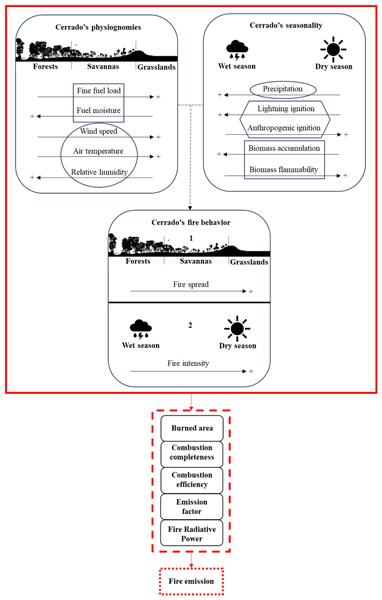
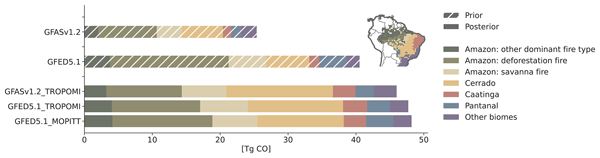
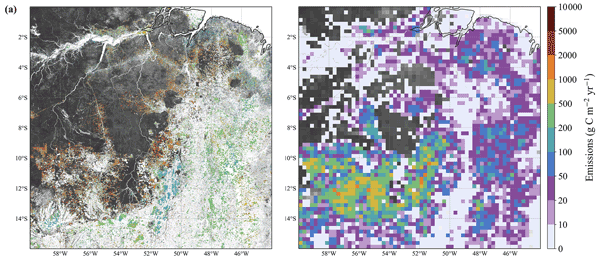
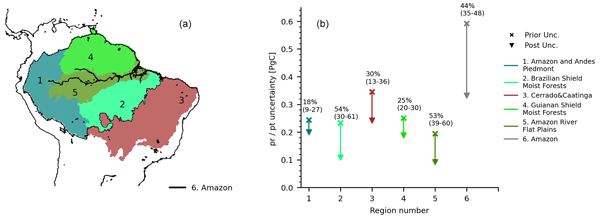
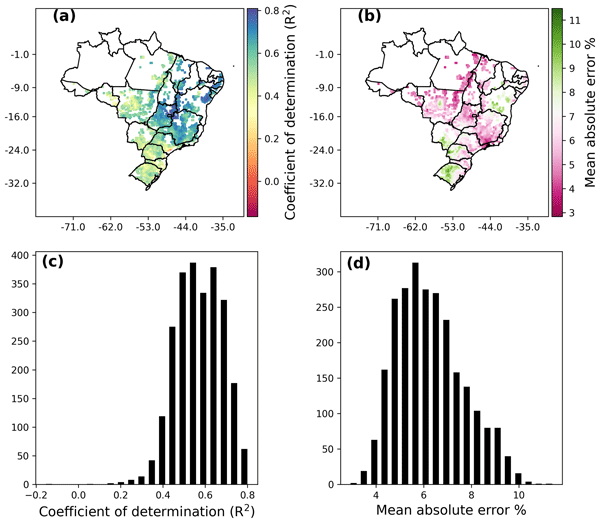
We estimate 2019 Brazilian fire carbon monoxide (CO) emissions using CO retrievals from multiple satellites in a new top-down inversion framework. The retrievals strongly constrain fire emissions and complement existing inventories. National-scale posterior emissions align well with the new Global Fire Emissions Database v5.1, supporting progress in fire emission models. Yet, posterior emissions in the Cerrado and Caatinga are systematically higher than inventories; we discuss potential drivers.

Climate extremes threaten society and ecosystems, making impact understanding critical. Wikimpacts 1.0 provides an automated pipeline processing Wikipedia texts with underexploited information on climate impacts, yielding comprehensive socio-economic impact data for 2726 climate events from 1034–2024. It offers broader storm-related impacts and finer spatial resolution than established databases, showcasing natural language processing's potential to advance climate impact data.



positivetipping points in energy transitions to avoid
negativeEarth system tipping points, do not take into account the entire spectrum of impacts the proposed interventions could have or still rely on narratives that maintain current unsustainable behaviours and marginalize many people. We unpack these ideas in the context of what they mean for the concept of tipping points, using a critical decolonial view from the Global South.