Articles | Volume 18, issue 7
https://doi.org/10.5194/essd-18-4509-2026
© Author(s) 2026. This work is distributed under
the Creative Commons Attribution 4.0 License.
the Creative Commons Attribution 4.0 License.
https://doi.org/10.5194/essd-18-4509-2026
© Author(s) 2026. This work is distributed under
the Creative Commons Attribution 4.0 License.
the Creative Commons Attribution 4.0 License.
Data description article
| 
02 Jul 2026
Data description article |
| 02 Jul 2026
| 02 Jul 2026
A consolidated database of mercury observations for permafrost regions
Christine L. Olson
CORRESPONDING AUTHOR

National Snow and Ice Data Center, Cooperative Institute for Research in Environmental Sciences, University of Colorado Boulder, Boulder, USA
Kevin Schaefer
CORRESPONDING AUTHOR
National Snow and Ice Data Center, Cooperative Institute for Research in Environmental Sciences, University of Colorado Boulder, Boulder, USA
Alyssa Azaroff
Department of Environmental Science, Stockholm University, Stockholm, Sweden
Hélène Angot
Institute of Environmental Geosciences, University of Grenoble Alpes, CNRS, INRAE, IRD, Grenoble INP, IGE, Grenoble, France
Sasiri Bandara
Department of Earth and Atmospheric Sciences, University of Alberta, Edmonton, Alberta, Canada
Thomas A. Douglas
Alaska Projects Office, U.S. Army Cold Regions Research and Engineering Laboratory, Fort Wainwright, Fairbanks, USA
Bo Elberling
Department of Geosciences and Natural Resource Management, University of Copenhagen, Copenhagen, Denmark
Maria Florencia Fahnestock
Department of Earth Sciences, University of New Hampshire, Durham, USA
Xinbin Feng
Institute of Geochemistry, Chinese Academy of Sciences, Guiyang, China
Institute of Mountain Hazards and Environment, Chinese Academy of Sciences, Chengdu, China
Charlotte Haugk
Department of Environmental Science, Stockholm University, Stockholm, Sweden
Gustaf Hugelius
Department of Environmental Science, Stockholm University, Stockholm, Sweden
Erfan Jahangir
Institute of Environmental Geosciences, University of Grenoble Alpes, CNRS, INRAE, IRD, Grenoble INP, IGE, Grenoble, France
Sofi Jonsson
Department of Environmental Science, Stockholm University, Stockholm, Sweden
Shichang Kang
Institute of Mountain Hazards and Environment, Chinese Academy of Sciences, Chengdu, China
University of Chinese Academy of Sciences, Beijing, China
Adam Kirkwood
Department of Geography and Environmental Studies, Carleton University, Ottawa, Canada
Wildlife Conservation Society, Ottawa, Ontario, Canada
Jennifer Korosi
Faculty of Environmental and Urban Change, York University, Toronto, Canada
Igor Lehnherr
Department of Geography, Geomatics and Environment, University of Toronto Mississauga, Mississauga, Canada
Artem Lim
Tomsk State University, Tomsk, Russia
Rinat Manasypov
Tomsk State University, Tomsk, Russia
Dmitriy Moskovchenko
Tyumen Scientific Centre SB RAS, Tyumen, Russia
Mina Nasr
Alberta Environment and Protected Areas, Environment and Protected Areas, Government of Alberta, Edmonton, Canada
Faculty of Arts, Department of Geography, University of Calgary, Calgary, Canada
Daniel Obrist
Division of Agricultural and Natural Resources, University of California, Davis, USA
David Olefeldt
Department of Renewable Resources, University of Alberta, Edmonton, Alberta, Canada
Connor Olson
Cooperative Institute for Research in Environmental Sciences, University of Colorado Boulder, Boulder, USA
Harvard John A. Paulson School of Engineering and Applied Sciences, Harvard University, Cambridge, USA
Oleg Pokrovsky
Géosciences Environnement Toulouse, CNRS/IRD/Université de Toulouse, 31400, France
Laura Sereni
Institute of Environmental Geosciences, University of Grenoble Alpes, CNRS, INRAE, IRD, Grenoble INP, IGE, Grenoble, France
Sarah Shakil
Uppsala University, Uppsala, Sweden
M. Isabel Smith
Department of Earth Sciences, University of Southern California, Los Angeles, USA
Jens Søndergaard
Department of Ecoscience, Aarhus University, Aarhus, Denmark
Jeroen Sonke
Géosciences Environnement Toulouse, CNRS/IRD/Université de Toulouse, 31400, France
Kasia Staniszewska
Department of Earth and Atmospheric Sciences, University of Alberta, Edmonton, Alberta, Canada
Jens Strauss
Alfred Wegener Institute, Helmholtz Centre for Polar and Marine Research, Postdam, Germany
Kyra St. Pierre
Department of Earth and Environmental Sciences, University of Ottawa, Ottawa, Canada
Lauren Thompson
Department of Renewable Resources, University of Alberta, Edmonton, Alberta, Canada
Andrey Yurtaev
University of Tyumen, Tyumen, Russia
Yanxu Zhang
Department of Earth and Environmental Sciences, Tulane University, New Orleans, USA
Scott Zolkos
Woodwell Climate Research Center, Falmouth, USA
Related authors
No articles found.
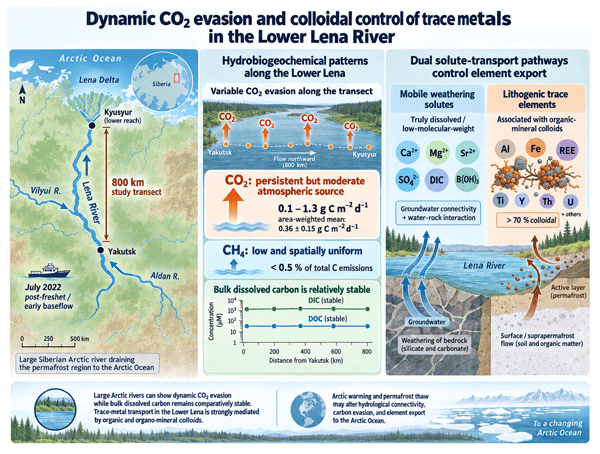
Yuri Ya. Kolesnichenko, Sergey N. Vorobyev, Viktor A. Nikitkin, Oleg V. Dudarev, Denis V. Chernykh, Eduard A. Spivak, Arkadiy V. Kurilenko, Vladimir A. Kholodov, Igor P. Semiletov, and Oleg S. Pokrovsky
Biogeosciences, 23, 6613–6637, https://doi.org/10.5194/bg-23-6613-2026, https://doi.org/10.5194/bg-23-6613-2026, 2026
Short summary
Short summary
We studied 800 kilometers of the lower Lena River in Siberia to understand how this large Arctic river releases climate-warming gases and carries natural elements from frozen landscapes to the ocean. Using boat-based measurements and water samples, we found that CO2 release changes strongly over short distances, while CH4 variations are very small. Most dissolved carbon stayed stable, and many metals were carried by tiny natural particles. Warming and thawing ground may shift these balances.
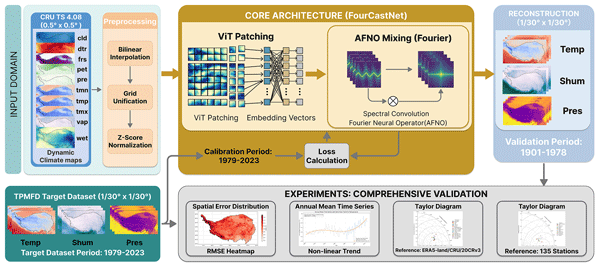
Zheng Jin, Zezhou Chen, Qinglong You, Zhaoxiang Liu, Jintao Zhang, Huan Hu, Ping Chen, Xiang Liu, Zipeng Wang, Kai Wang, Shiguo Lian, and Shichang Kang
Earth Syst. Sci. Data, 18, 6763–6781, https://doi.org/10.5194/essd-18-6763-2026, https://doi.org/10.5194/essd-18-6763-2026, 2026
Short summary
Short summary
This study presents the TPHH (Tibetan Plateau Historical High) dataset, a high-resolution (1/30°) monthly climate dataset for the Tibetan Plateau spanning 1901–2023, featuring 2 m temperature, specific humidity, and surface pressure. By employing a hybrid deep learning framework (FourCastNet), we downscaled coarse historical data through the synergistic mapping of total-field signals and terrain constraints. Validated against independent observations, this physically-consistent dataset bridges the pre-satellite data gap.
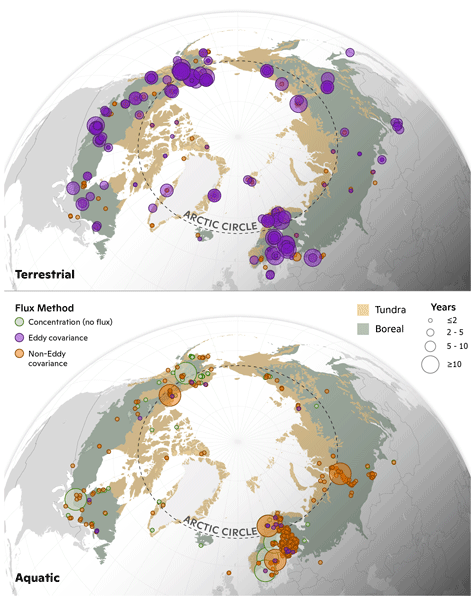
Anna-Maria Virkkala, Isabel Wargowsky, Judith Vogt, McKenzie A. Kuhn, Simran Madaan, Tiffany Windholz, Kyle A. Arndt, Gerard Rocher-Ros, Mathias Göckede, David Olefeldt, Edward A. G. Schuur, David Bastviken, Richard O'Keefe, Brendan M. Rogers, Jennifer D. Watts, Kelcy Kent, Kristoffer Aalstad, Kelly Aho, Joonatan Ala-Könni, Haley Alcock, Inge Althuizen, Christopher D. Arp, Jun Asanuma, Mika Aurela, Sivakiruthika Balathandayuthabani, Katrin Attermeyer, Alan Barr, Maialen Barret, Ochirbat Batkhishig, Christina Biasi, Mats P. Björkman, Andrew Black, Elena Blanc-Betes, Pascal Bodmer, Julia Boike, Abdullah Bolek, Frédéric Bouchard, Ingeborg Bussmann, Lea Cabrol, Eleonora Canfora, Sean Carey, Karel Castro-Morales, Namyi Chae, Andreas Christen, Torben R. Christensen, Casper T. Christiansen, Housen Chu, Graham Clark, Francois Clayer, Patrick Crill, Christopher Cunada, Scott J. Davidson, Joshua F. Dean, Sigrid Dengel, Matteo Detto, Catherine Dieleman, Florent Domine, Egor Dyukarev, Colin Edgar, Bo Elberling, Craig A. Emmerton, Eugenie Euskirchen, Grant Falvo, Thomas Friborg, Michelle Garneau, Mariasilvia Giamberini, Mikhail V. Glagolev, Miquel A. Gonzalez-Meler, Gustaf Granath, Jón Guðmundsson, Konsta Happonen, Yoshinobu Harazono, Lorna Harris, Josh Hashemi, Nicholas Hasson, Janna Heerah, Liam Heffernan, Manuel Helbig, Warren Helgason, Michal Heliasz, Greg Henry, Geert Hensgens, Tetsuya Hiyama, Beth Holmes, Macall Hock, David Holl, Jutta Holst, Thomas Holst, Gabriel Hould-Gosselin, Elyn Humphreys, Jacqueline Hung, Jussi Huotari, Hiroki Ikawa, Danil V. Ilyasov, Mamoru Ishikawa, Go Iwahana, Hiroki Iwata, Marcin Antoni Jackowicz-Korczynski, Joachim Jansen, Järvi Järveoja, Vincent E. J. Jassey, Rasmus Jensen, Katharina Jentzsch, Robert G. Jespersen, Carl-Fredrik Johannesson, Cheristy P. Jones, Anders Jonsson, Ji Young Jung, Sari Juutinen, Evan Kane, Jan Karlsson, Sergey Karsanaev, Kuno Kasak, Julia Kelly, Kasha Kempton, Marcus Klaus, George W. Kling, Natascha Kljun, Jacqueline Knutson, Hideki Kobayashi, John Kochendorfer, Kukka-Maaria Kohonen, Pasi Kolari, Mika Korkiakoski, Aino Korrensalo, Pirkko Kortelainen, Egle Koster, Kajar Koster, Ayumi Kotani, Praveena Krishnan, Juliya Kurbatova, Lars Kutzbach, Min Jung Kwon, Ethan D. Kyzivat, Jessica Lagroix, Theodore Langhorst, Elena Lapshina, Tuula Larmola, Klaus S. Larsen, Isabelle Laurion, Justin Ledman, Hanna Lee, A. Joshua Leffler, Lance Lesack, Anders Lindroth, David Lipson, Annalea Lohila, Efrén López-Blanco, Vincent L. St. Louis, Erik Lundin, Miska Luoto, Takashi Machimura, Marta Magnani, Avni Malhotra, Marja Maljanen, Ivan Mammarella, Elisa Männistö, Luca Belelli Marchesini, Phil Marsh, Pertti J. Martikainen, Maija E. Marushchak, Mikhail Mastepanov, Alex Mavrovic, Trofim Maximov, Christina Minions, Daniel F. Nadeau, Marco Montemayor, Tomoaki Morishita, Patrick Murphy, Erin Nicholls, Mats B. Nilsson, Anastasia Niyazova, Jenni Nordén, Koffi Dodji Noumonvi, Hannu Nykänen, Walter Oechel, Anne Ojala, Tomohiro Okadera, Sujan Pal, Alexey V. Panov, Tim Papakyriakou, Dario Papale, Sang-Jong Park, Frans-Jan W. Parmentier, Gilberto Pastorello, Mike Peacock, Matthias Peichl, Roman Petrov, Kyra St. Pierre, Norbert Pirk, Jessica Plein, Vilmantas Preskienis, Anatoly Prokushkin, Jukka Pumpanen, Hilary A. Rains, Niklas Rakos, Aleksi Räsänen, Helena Rautakoski, Riikka Rinnan, Janne Rinne, Adrian Rocha, Nigel Roulet, Alexandre Roy, Anna Rutgersson, Aleksandr F. Sabrekov, Torsten Sachs, Erik Sahlée, Alejandro Salazar, Henrique Oliveira Sawakuchi, Christopher Schulze, Roger Seco, Armando Sepulveda-Jauregui, Svetlana Serikova, Abbey Serrone, Hanna M. Silvennoinen, Sofie Sjogersten, June Skeeter, Jo Snöälv, Sebastian Sobek, Oliver Sonnentag, Emily H. Stanley, Maria Strack, Lena Strom, Patrick Sullivan, Ryan Sullivan, Anna Sytiuk, Torbern Tagesson, Pierre Taillardat, Julie Talbot, Suzanne E. Tank, Mario Tenuta, Irina Terenteva, Frederic Thalasso, Antoine Thiboult, Halldor Thorgeirsson, Fenix Garcia Tigreros, Margaret Torn, Amy Townsend-Small, Claire Treat, Alain Tremblay, Carlo Trotta, Eeva-Stiina Tuittila, Merritt Turetsky, Masahito Ueyama, Muhammad Umair, Aki Vähä, Lona van Delden, Maarten van Hardenbroek, Andrej Varlagin, Ruth K. Varner, Tarmo Virtanen, Elena Veretennikova, Timo Vesala, Carolina Voigt, Jorien E. Vonk, Robert Wagner, Katey Walter Anthony, Qinxue Wang, Masataka Watanabe, Hailey Webb, Jeffrey M. Welker, Andreas Westergaard-Nielsen, Sebastian Westermann, Jeffrey R. White, Christian Wille, Scott N. Williamson, Scott Zolkos, Donatella Zona, and Susan M. Natali
Earth Syst. Sci. Data, 18, 6357–6409, https://doi.org/10.5194/essd-18-6357-2026, https://doi.org/10.5194/essd-18-6357-2026, 2026
Short summary
Short summary
This dataset includes monthly measurements of carbon dioxide and methane exchange between land, water, and the atmosphere from over 1000 sites in Arctic and boreal regions. It combines measurements from a variety of ecosystems, including wetlands, forests, tundra, lakes, and rivers, gathered by over 260 researchers from 1984–2024. This dataset can be used to improve and reduce uncertainty in carbon budgets in order to strengthen our understanding of climate feedbacks in a warming world.
Qiangqiang Xu, Shichang Kang, Wentao Du, Wei Wu, Zhaofu Hu, Xiaobo He, Bo Cao, and Biwen Xie
EGUsphere, https://doi.org/10.5194/egusphere-2026-4065, https://doi.org/10.5194/egusphere-2026-4065, 2026
This preprint is open for discussion and under review for The Cryosphere (TC).
Short summary
Short summary
Using frequent high-resolution satellite images, we reconstructed repeated drainage from lakes on the surface of Purepu Glacier in 2023 and 2025. The lakes reached similar sizes before drainage, but the 2025 event released much more water and left substantial residual water into 2026. The results show that lake area alone cannot describe drainage hazard and support intensive monitoring during early to mid-July 2026.
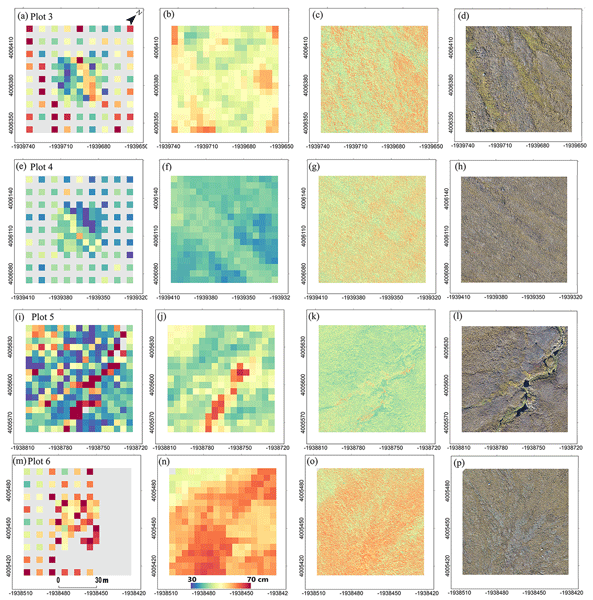
Jinyang Du, K. Arthur Endsley, Kazem Bakian Dogaheh, John S. Kimball, Mahta Moghaddam, Thomas A. Douglas, Asem Melebari, Sepehr Eskandari, Jinhyuk E. Kim, Jane Whitcomb, Yuhuan Zhao, and Sophia Henze
The Cryosphere, 20, 4277–4291, https://doi.org/10.5194/tc-20-4277-2026, https://doi.org/10.5194/tc-20-4277-2026, 2026
Short summary
Short summary
Active layer thickness (ALT) is a sensitive indicator of the thawing Alaskan frozen soil, which may lead to increased greenhouse gas emissions, vegetation changes, and infrastructure damage. This study represents a multi-scale assessment of ALT spatial variations using observations including intensive field sampling, and drone, airborne and satellite remote sensing. Our study allows for improved interpretation of remote sensing and process-based ALT simulations for the changing Arctic.
Man Chen, Philippe Ciais, Gustaf Hugelius, and Filipe Aires
Earth Syst. Sci. Data Discuss., https://doi.org/10.5194/essd-2026-254, https://doi.org/10.5194/essd-2026-254, 2026
Preprint under review for ESSD
Short summary
Short summary
Peatlands are vital carbon stores, yet mapping them consistently across borders is challenging due to varying data quality and definitions. We developed PeatCover, a ~90 m resolution map that harmonizes existing inventories with Earth observation and hydro-topographic data through machine learning. PeatCover provides a spatially coherent dataset that resolves fine landscape structures. These improvements enable refined carbon assessments and methane emission models.
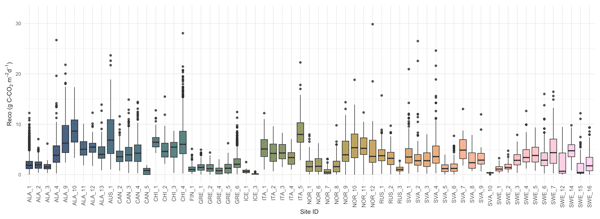
Sarah Schwieger, Jan Dietrich, Mats P. Björkman, Judith M. Sarneel, Bowen Li, Joel White, Inge H. J. Althuizen, Christina Biasi, Robert G. Björk, Hanna Böhner, Brage Bremset Hansen, Michele Carbognani, Giorgio Chiari, Casper T. Christiansen, Elisabeth J. Cooper, Hans Cornelissen, Ludovica D'Imperio, Ellen Dorrepaal, Bo Elberling, Patrick Faubert, Ned Fetcher, T'ai G. W. Forte, Joseph Gaudard, Konstantin Gavazov, Zhen-Huan Guan, Jón Guðmundsson, Siri V. Haugum, Jin-Sheng He, Caitlin Hicks Pries, Mark Hovenden, Simone I. Lang, Gus Jespersen, Ingibjörg S. Jónsdóttir, Ji Young Jung, Olga Khitun, Birgitte Kortegaard Danielsen, Richard Lamprecht, Mathilde Le Moullec, Hanna Lee, Maija E. Marushchak, Anders Michelsen, Tariq Munir, Eero Myrsky, Kevin K. Newsham, Marion Nyberg, Steven F. Oberbauer, Paulo Olivas, Johan Olofsson, Hlynur Óskarsson, Thomas C. Parker, Matteo Petit Bon, Alessandro Petraglia, Emily Pickering Pedersen, Katrine Raundrup, Nynne R. Ravn, Riikka Rinnan, Heidi Rodenhizer, Ingvild Ryde, Alejandro Salazar, Niels M. Schmidt, Ted Schuur, Sofie Sjögersten, Cecilie Skov Nielsen, Sari Stark, Maria Strack, Jianwu Tang, Sylvia Toet, Anne Tolvanen, Maria Väisänen, Richard Van Logtestijn, Vigdis Vandvik, Carolina Voigt, Josefine Walz, Jeffrey M. Welker, Yuanhe Yang, Henni Ylänne, and Sybryn L. Maes
Earth Syst. Sci. Data, 18, 4965–4982, https://doi.org/10.5194/essd-18-4965-2026, https://doi.org/10.5194/essd-18-4965-2026, 2026
Short summary
Short summary
Arctic and alpine tundra ecosystems are warming rapidly, yet measurements of ecosystem CO₂ respiration remain limited. We compile in situ respiration measurements from warming experiments across 64 Arctic and alpine tundra sites. By integrating fluxes with climate, vegetation, and soil data, this database improves understanding and prediction of how tundra carbon cycling responds to climate warming and feeds back to the climate system.
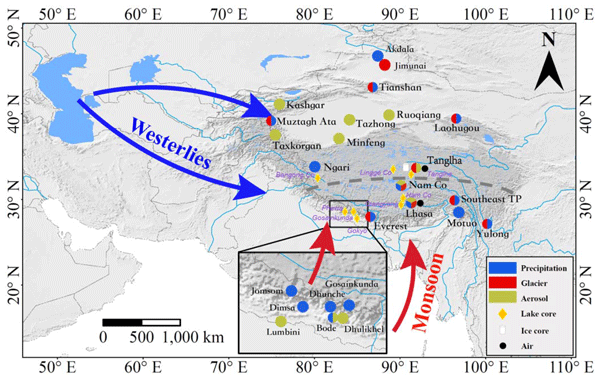
Shichang Kang, Jie Huang, Qianggong Zhang, Junming Guo, Xiufeng Yin, Shiwei Sun, Xuejun Sun, Lekhendra Tripathee, Sabur Abdullaev, Wenjun Tang, Yi Zhang, Xiwen Miao, Liujian Liao, and Lusheng Che
Earth Syst. Sci. Data, 18, 4943–4963, https://doi.org/10.5194/essd-18-4943-2026, https://doi.org/10.5194/essd-18-4943-2026, 2026
Short summary
Short summary
The Third Pole is a critical region for studying global mercury (Hg) cycling due to its extensive cryosphere. This comprehensive dataset-spanning air, aerosols, precipitation, glaciers, soils, surface waters, ice cores, and sediments-was collected through the Atmospheric Pollution and Cryospheric Change program. It reveals spatial and temporal Hg patterns influenced by emissions, transport, and deposition processes. The data support interdisciplinary research on multi-sphere interactions.
Lucia Pérez-Serrano, Sergey V. Loiko, Artem Lim, Laure Gandois, Christine Hatté, Jean-Luc Rols, and Oleg S. Pokrovsky
EGUsphere, https://doi.org/10.5194/egusphere-2026-3058, https://doi.org/10.5194/egusphere-2026-3058, 2026
Short summary
Short summary
Permafrost peatlands under climate change are likely to release elements trapped in frozen layers. We sampled a highly ice-enriched thaw gradient in the arctic tundra. Frozen layers are characterized by a labile, microbial signature opposed to active layer porewaters homogenized through the freeze-thaw seasonal cycles. Permafrost degradation may result into the mobilization of carbon and nutrients through phosphorous consumption before hydrological export.
George Tanski, Michael Fritz, Jorien E. Vonk, Jens Strauss, Léo Chassiot, Vladislav Carnero-Bravo, Jade Falardeau, Kostantin Klein, Parick Lajeunesse, Hugues Lantuit, Niek J. Speetjens, Anne de Vernal, Dustin Whalen, and Anna M. Irrgang
EGUsphere, https://doi.org/10.5194/egusphere-2026-2314, https://doi.org/10.5194/egusphere-2026-2314, 2026
Short summary
Short summary
As the Arctic warms, permafrost coasts erode rapidly, flushing carbon from frozen ground into the sea. We studied a lagoon in the western Canadian Arctic, collecting sediments and analyzing organic carbon content, stable isotopes, and grain size, alongside satellite imagery. Carbon content fell by over 50 % from land to open ocean, while erosion rates quintupled since the 1950s. Arctic lagoons bury, degrade, and export terrestrial carbon, acting as coastal reactors whose role will grow.
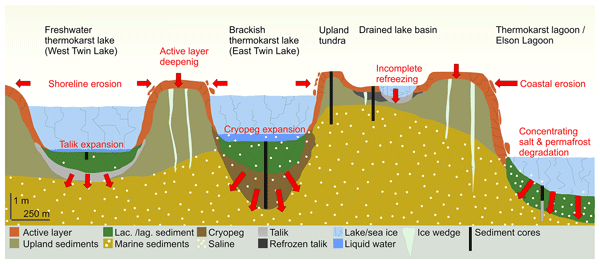
Fabian Seemann, Michael Zech, Maren Jenrich, Guido Grosse, Benjamin M. Jones, Claire Treat, Lutz Schirrmeister, Susanne Liebner, and Jens Strauss
Biogeosciences, 23, 3675–3695, https://doi.org/10.5194/bg-23-3675-2026, https://doi.org/10.5194/bg-23-3675-2026, 2026
Short summary
Short summary
Arctic coastal landscapes, like those in northernmost Alaska, are often characterized by saline permafrost which is prone to thawing. We studied six sediment cores to understand how thawing and salinity affect organic matter breakdown and landscape change. Our results show that salinity accelerates organic matter degradation when permafrost thaws. This highlights the overlooked risk of salinity in shaping Arctic landscapes and carbon mineralization as the climate continues to warm.
Ruth Price, Louis Marelle, Lucas Bastien, Rémy Lapere, Hélène Angot, Benjamin Heutte, Julia Schmale, Jean-Christophe Raut, and Jennie L. Thomas
EGUsphere, https://doi.org/10.5194/egusphere-2026-2369, https://doi.org/10.5194/egusphere-2026-2369, 2026
Short summary
Short summary
Arctic warm air intrusions are extreme events that have dramatic effects on the lower atmosphere and cause surface warming. We used a computer model to simulate a polluted warm air intrusion, isolating the effect of pollution on clouds to understand the net effect on surface warming. We found the net effect on surface warming depends on the underlying surface (ocean vs sea ice), showing the effect of extreme Arctic pollution events can strongly depend on the season and background Arctic climate.
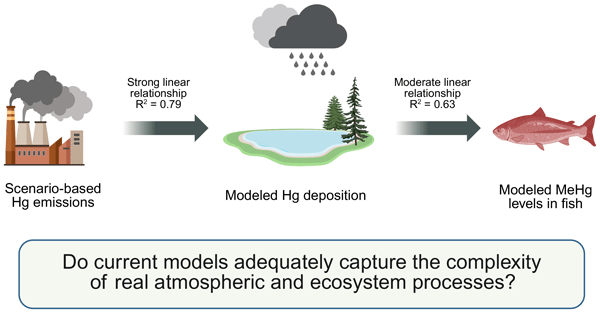
Henna Gull, Ju Hyeon Lee, Hoin Lee, Hélène Angot, and Sae Yun Kwon
Biogeosciences, 23, 3387–3406, https://doi.org/10.5194/bg-23-3387-2026, https://doi.org/10.5194/bg-23-3387-2026, 2026
Short summary
Short summary
Mercury is a global concern that builds up in fish. To understand how future pollution cuts may reduce these levels, we compared published modeling studies. While models predict mercury will decline as pollution decreases, they often overlook mercury already stored in the environment. As a result, recovery may be slower than expected. This work highlights gaps in current tools and supports efforts to improve global pollution control policies.
Fares Mandour, Jazmin Greyeyes-Howell, Renae Shewan, Lauren Thompson, Irene Graham, Mike Low, Matthew Munson, Ryan Connon, Christopher Cunada, Craig Emmerton, and David Olefeldt
EGUsphere, https://doi.org/10.5194/egusphere-2026-2199, https://doi.org/10.5194/egusphere-2026-2199, 2026
Short summary
Short summary
We studied how warming and changing hydrology affected the movement of carbon, nutrients, and mercury from peatland catchments in western Canada. By monitoring 27 streams over five years, we found that warmer streams have higher concentrations during high flows, while colder areas remain unchanged. This suggests that thawing ground (permafrost) will increase the export of these solutes in colder regions, with critical impacts on water quality, ecosystem health, and northern communities.
Hailey Webb, Ethan Pierce, Benjamin W. Abbott, William B. Bowden, Yaping Chen, Yating Chen, Thomas A. Douglas, Joel F. Eklof, Eugénie S. Euskirchen, Moritz Langer, Isla H. Myers-Smith, Irina Overeem, Jens Strauss, Katey Walter Anthony, Kang Wang, Matthew A. Whitley, and Merritt R. Turetsky
Earth Syst. Sci. Data, 18, 3147–3164, https://doi.org/10.5194/essd-18-3147-2026, https://doi.org/10.5194/essd-18-3147-2026, 2026
Short summary
Short summary
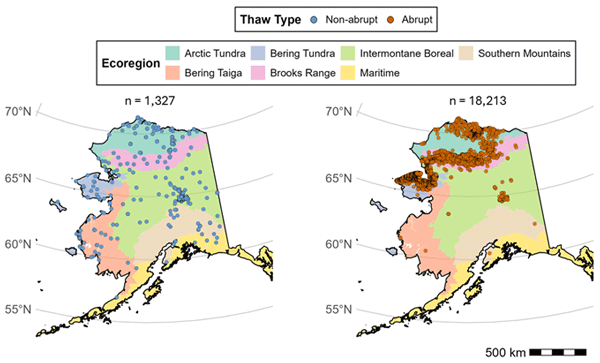
We created a database of 19,540 thawing permafrost sites across Alaska, including both abrupt and non-abrupt thaw features and explored relationships with elevation, slope, and incoming solar radiation. We use the database to show that existing ground ice maps are too coarse to predict abrupt thaw risk. This database can enhance predictions of future thaw and guide planning and adaptation strategies.
Victoria Martin, Cornelia Rottensteiner, Hannes Schmidt, Moritz Mohrlok, Julia Horak, Carolina Urbina-Malo, Julia Wagner, Willeke A'Campo, Luca Durstewitz, Niek Jesse Speetjens, Rachele Lodi, Bela Hausmann, Michael Fritz, Gustaf Hugelius, and Andreas Richter
Biogeosciences, 23, 2761–2785, https://doi.org/10.5194/bg-23-2761-2026, https://doi.org/10.5194/bg-23-2761-2026, 2026
Short summary
Short summary
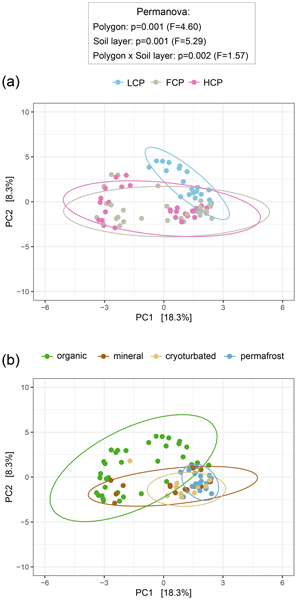
We asked how organic matter pools and microbial communities vary across polygon types and soil layers in Arctic lowland tundra. Low-center polygons had lower microbial abundance, enzyme potential, and organic matter bioavailability. Organic topsoils were microbial hotspots, but thaw may also rapidly mobilize carbon from upper permafrost. Patterns consistently followed gradients in organic matter and redox conditions, offering a practical framework for scaling landscape-scale soil carbon changes.
Julia Wagner, Juliane Wolter, Justine Ramage, Victoria Martin, Andreas Richter, Niek Jesse Speetjens, Jorien E. Vonk, Rachele Lodi, Annett Bartsch, Michael Fritz, Hugues Lantuit, and Gustaf Hugelius
SOIL, 12, 113–132, https://doi.org/10.5194/soil-12-113-2026, https://doi.org/10.5194/soil-12-113-2026, 2026
Short summary
Short summary
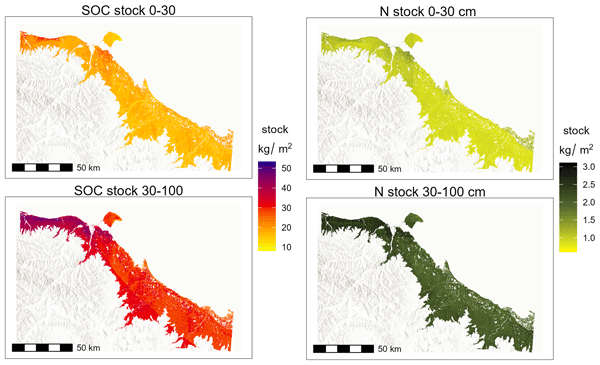
Permafrost soils store vast amounts of organic carbon, key to understanding climate change. This study uses machine learning and combines existing data with new field data to create detailed regional maps of soil carbon and nitrogen stocks for the Yukon coastal plain. The results show how soil properties vary across the landscape highlighting the importance of data selection for accurate predictions. These findings improve carbon storage estimates and may aid regional carbon budget assessments.
Valentina Ekimova, MacKenzie A. Nelson, Taylor Sullivan, Thomas A. Douglas, Howard E. Epstein, and Matthew G. Jull
The Cryosphere, 20, 265–283, https://doi.org/10.5194/tc-20-265-2026, https://doi.org/10.5194/tc-20-265-2026, 2026
Short summary
Short summary
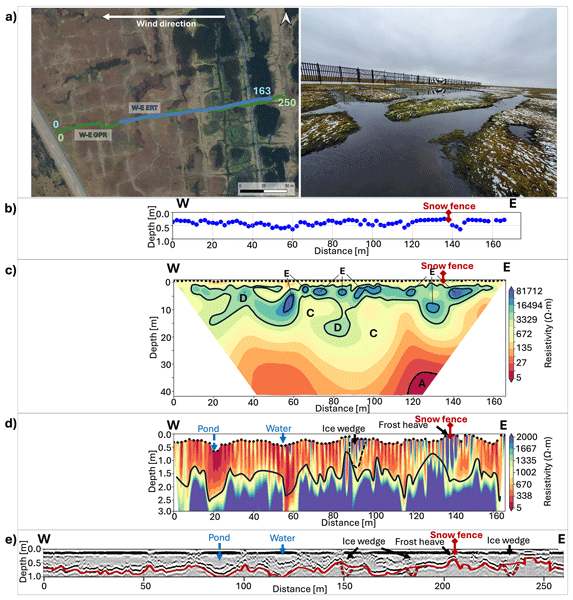
Permafrost beneath Arctic communities is highly sensitive to surface heat and moisture. Geophysics at four Utqiaġvik (Alaska) sites shows that infrastructure – buildings, roads, snow fences – reshapes snow and drainage, redirecting heat and water. Thaw deepens near disturbed ground, while undisturbed, vegetated terrain stays shallower or heaves. Local land use and surface conditions can outweigh regional climate signals, guiding design, maintenance, and risk planning for Arctic infrastructure.
Mélissa Laurent, Mackenzie R. Baysinger, Jörg Schaller, Matthias Lück, Mathias Hoffmann, Torben Windirsch, Ruth H. Ellerbrock, Jens Strauss, and Claire C. Treat
Biogeosciences, 22, 7881–7899, https://doi.org/10.5194/bg-22-7881-2025, https://doi.org/10.5194/bg-22-7881-2025, 2025
Short summary
Short summary
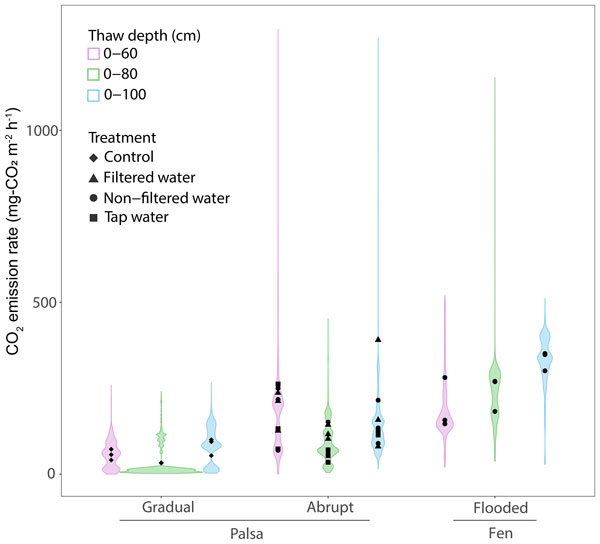
Palsas are peat permafrost mounds underlain by ice-rich permafrost. Due to climate change, they could disappear by the end of the century. When palsas thaw, changes occur in hydrological conditions affecting the carbon (C) cycle. In our study, we simulated permafrost thaw under different water treatments using 1-meter soil columns from a palsa. We measured CH4 and CO2 emissions for 3-month incubation. Our results show that following thaw, flooding the cores leads to increased CO2 emissions.
David Brodylo, Lauren V. Bosche, Ryan R. Busby, Elias J. Deeb, Thomas A. Douglas, and Juha Lemmetyinen
The Cryosphere, 19, 6127–6148, https://doi.org/10.5194/tc-19-6127-2025, https://doi.org/10.5194/tc-19-6127-2025, 2025
Short summary
Short summary
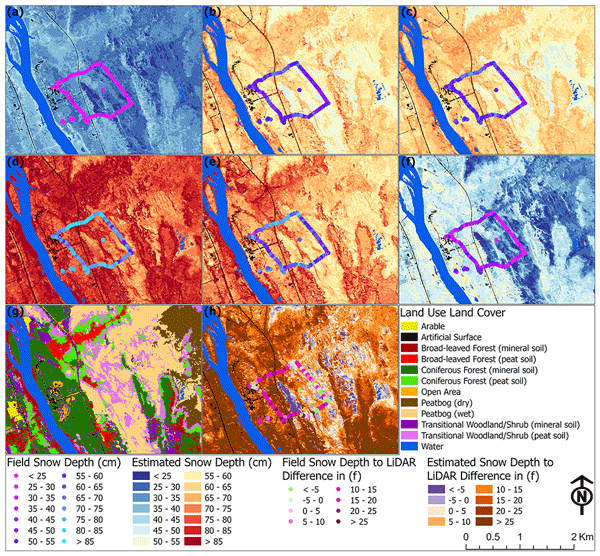
We combined field-based snow depth and snow water equivalent (SWE) measurements, remote sensing data, and machine learning to estimate snow depth and SWE over a 10 km2 local scale area in Sodankylä, Finland. Associations were found for snow depth and SWE with carbon- and mineral-based forest surface soils, alongside dry and wet peatbogs. This approach to upscale field-based snow depth and SWE measurements to a local scale can be used in regions that regularly experience snowfall.
Excellent O. Eboigbe, Nimelan Veerasamy, Abiodun M. Odukoya, Nnamdi C. Anene, Jeroen E. Sonke, Sayuri Sagisaka Méndez, and David S. McLagan
Biogeosciences, 22, 5591–5605, https://doi.org/10.5194/bg-22-5591-2025, https://doi.org/10.5194/bg-22-5591-2025, 2025
Short summary
Short summary
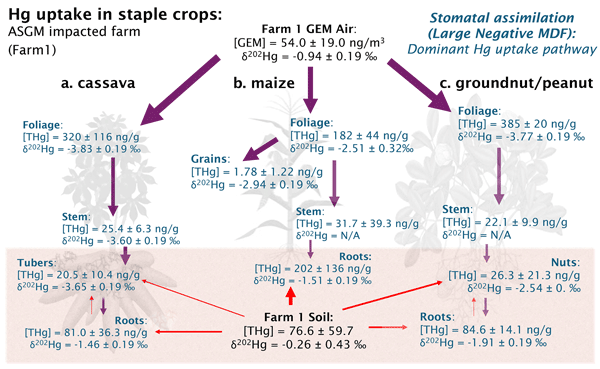
Air, soil, and three common staple crops were assessed at an artisanal and small-scale gold mining (ASGM) processing site, and mercury (Hg) contamination was observed at a farm ≈ 500 m from the processing site. Of the crop tissues examined, foliage had the highest concentrations. Mercury stable isotopes indicate uptake of mercury from the air to the foliage as the dominant uptake pathway. Using typical dietary data for Nigerians, Hg intake from these crops was below reference dose levels and generally safe for consumption.
Jonas O. Sommar, Xinyu Shi, Xueling Tang, Guangyi Sun, Che-Jen Lin, and Xinbin Feng
Atmos. Chem. Phys., 25, 12233–12334, https://doi.org/10.5194/acp-25-12233-2025, https://doi.org/10.5194/acp-25-12233-2025, 2025
Short summary
Short summary
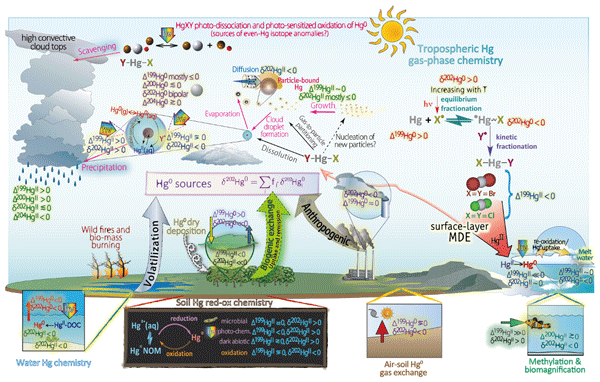
A more thorough understanding of the complex processes involved in the atmospheric Hg cycle has been achieved. The dynamics of the cycle are influenced by a rapid redox chemistry with several oxidation states and effects of multiphase interactions. This review provides a detailed analysis of the atmospheric chemistry of Hg in both the lower and the upper atmosphere, together with a synthesis of the latest kinetic, thermochemical, photochemical, and isotopic fractionation data.
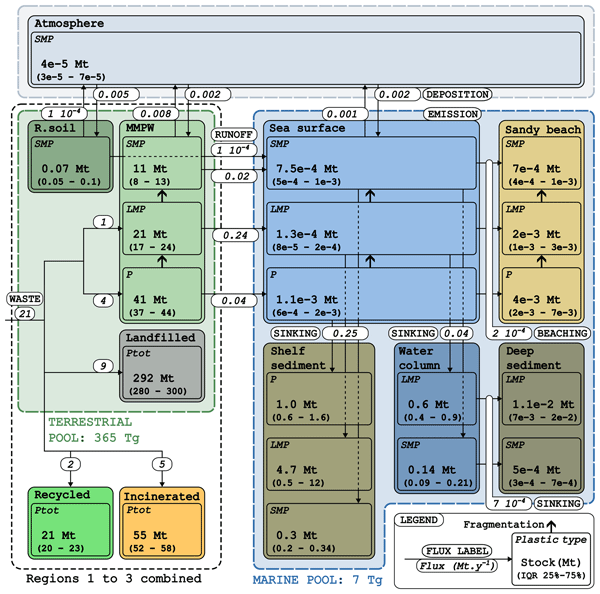
Théo Segur and Jeroen E. Sonke
Biogeosciences, 22, 5139–5156, https://doi.org/10.5194/bg-22-5139-2025, https://doi.org/10.5194/bg-22-5139-2025, 2025
Short summary
Short summary
Our paper provides a quantification of plastic pollution in the Mediterranean region and several policy scenario projections based on OECD (Organisation for Economic Co-operation and Development) data toward 2100. We estimate a 4-fold increase in Mediterranean marine plastic stock by 2060 and that the implementation of terrestrial plastic cleanup can significantly help to reduce plastic pollution transfer from land to sea. Our results provide insight for policymakers, which is needed at the regional scale in the context of the UNEP (United Nations Environment Programme) plastic treaty.
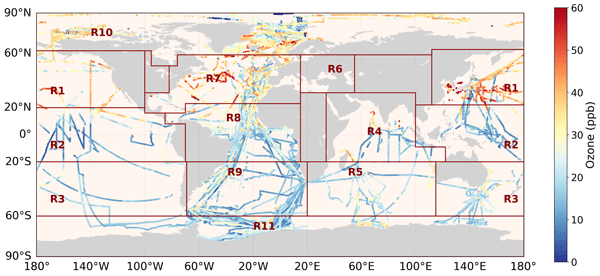
Yugo Kanaya, Roberto Sommariva, Alfonso Saiz-Lopez, Andrea Mazzeo, Theodore K. Koenig, Kaori Kawana, James E. Johnson, Aurélie Colomb, Pierre Tulet, Suzie Molloy, Ian E. Galbally, Rainer Volkamer, Anoop Mahajan, John W. Halfacre, Paul B. Shepson, Julia Schmale, Hélène Angot, Byron Blomquist, Matthew D. Shupe, Detlev Helmig, Junsu Gil, Meehye Lee, Sean C. Coburn, Ivan Ortega, Gao Chen, James Lee, Kenneth C. Aikin, David D. Parrish, John S. Holloway, Thomas B. Ryerson, Ilana B. Pollack, Eric J. Williams, Brian M. Lerner, Andrew J. Weinheimer, Teresa Campos, Frank M. Flocke, J. Ryan Spackman, Ilann Bourgeois, Jeff Peischl, Chelsea R. Thompson, Ralf M. Staebler, Amir A. Aliabadi, Wanmin Gong, Roeland Van Malderen, Anne M. Thompson, Ryan M. Stauffer, Debra E. Kollonige, Juan Carlos Gómez Martin, Masatomo Fujiwara, Katie Read, Matthew Rowlinson, Keiichi Sato, Junichi Kurokawa, Yoko Iwamoto, Fumikazu Taketani, Hisahiro Takashima, Mónica Navarro-Comas, Marios Panagi, and Martin G. Schultz
Earth Syst. Sci. Data, 17, 4901–4932, https://doi.org/10.5194/essd-17-4901-2025, https://doi.org/10.5194/essd-17-4901-2025, 2025
Short summary
Short summary
The first comprehensive dataset of tropospheric ozone over oceans/polar regions is presented, including 77 ship/buoy and 48 aircraft campaign observations (1977–2022, 0–5000 m altitude), supplemented by ozonesonde and surface data. Air masses isolated from land for 72+ hours are systematically selected as essentially oceanic. Among the 11 global regions, they show daytime decreases of 11–16 % in the tropics, while near-zero depletions are rare, unlike in the Arctic, implying different mechanisms.
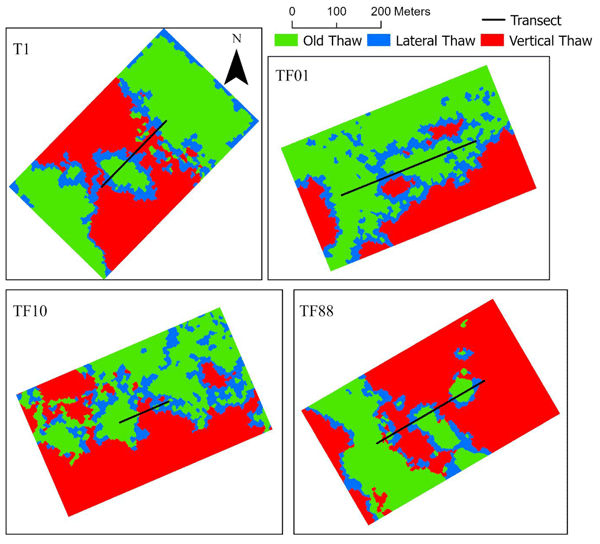
Thomas A. Douglas, M. Torre Jorgenson, Taylor Sullivan, and Caiyun Zhang
The Cryosphere, 19, 3991–4009, https://doi.org/10.5194/tc-19-3991-2025, https://doi.org/10.5194/tc-19-3991-2025, 2025
Short summary
Short summary
Permafrost thaw across Earth's high latitudes is leading to dramatic changes in vegetation and hydrology. We undertook a two-decade-long study on the Tanana Flats near Fairbanks, Alaska, to measure permafrost thaw and associated ground surface subsidence via field-based and remote-sensing techniques. The study identified strengths and limitations of the three methods we used to quantify permafrost thaw degradation.
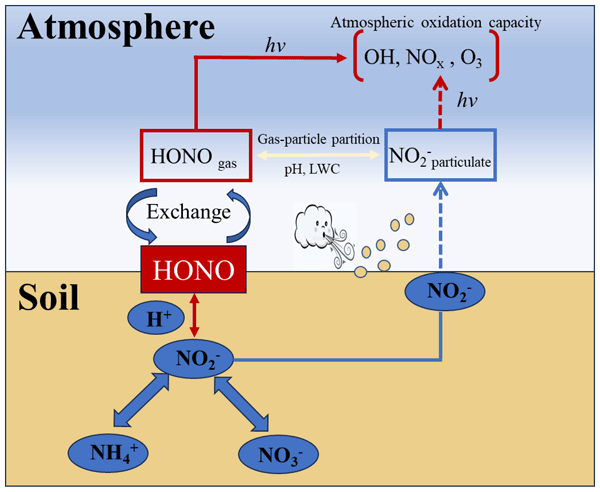
Zhongyi Zhang, Chunxiang Ye, Yichao Wu, Tao Zhou, Pengfei Chen, Shichang Kang, Chong Zhang, Zhuang Jiang, and Lei Geng
Atmos. Chem. Phys., 25, 10625–10641, https://doi.org/10.5194/acp-25-10625-2025, https://doi.org/10.5194/acp-25-10625-2025, 2025
Short summary
Short summary
This study reveals unexpectedly high levels of particulate nitrite at the Base Camp of Mt. Qomolangma, which overwhelmingly exists in coarse mode, and demonstrates that lofted surface soil and long-range transported pollutants contribute to the high levels of nitrite. The high particulate nitrite is likely to participate in atmospheric reactive nitrogen cycling through gas-particle partitioning or photolysis, leading to production of HONO, OH and NO and thereby influencing oxidation chemistry.

Yi Xi, Philippe Ciais, Dan Zhu, Chunjing Qiu, Yuan Zhang, Shushi Peng, Gustaf Hugelius, Simon P. K. Bowring, Daniel S. Goll, and Ying-Ping Wang
Geosci. Model Dev., 18, 6043–6062, https://doi.org/10.5194/gmd-18-6043-2025, https://doi.org/10.5194/gmd-18-6043-2025, 2025
Short summary
Short summary
Including high-latitude deep carbon is critical for projecting future soil carbon emissions, yet it is absent in most land surface models. Here we propose a new carbon accumulation protocol by integrating deep carbon from Yedoma deposits and representing the observed history of peat carbon formation in ORCHIDEE-MICT. Our results show an additional 157 Pg C in present-day Yedoma deposits and a 1–5 m shallower peat depth and 43 % less passive soil carbon in peatlands compared to the conventional protocol.
Koketso M. Molepo, Johannes Bieser, Alkuin M. Koenig, Ian M. Hedgecock, Ralf Ebinghaus, Aurélien Dommergue, Olivier Magand, Hélène Angot, Oleg Travnikov, Lynwill Martin, Casper Labuschagne, Katie Read, and Yann Bertrand
Atmos. Chem. Phys., 25, 9645–9668, https://doi.org/10.5194/acp-25-9645-2025, https://doi.org/10.5194/acp-25-9645-2025, 2025
Short summary
Short summary
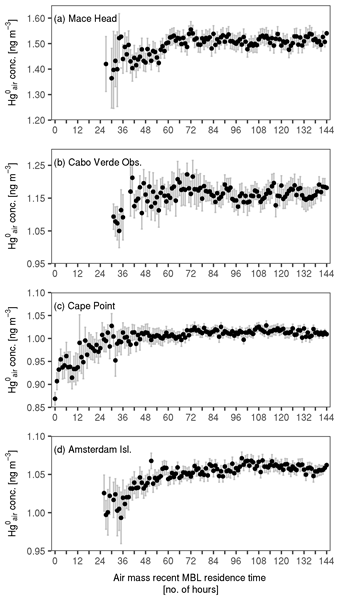
Mercury exchange between the ocean and atmosphere is poorly understood due to limited in situ data. Here, using atmospheric mercury observations from ground-based monitoring stations along with air mass trajectories, we found that atmospheric Hg levels increase with air mass ocean exposure time, matching predictions for ocean Hg emissions. This finding indicates that ocean emissions directly influence atmospheric Hg levels and enables us to estimate these emissions on a global scale.
Anna C. Talucci, Michael M. Loranty, Jean E. Holloway, Brendan M. Rogers, Heather D. Alexander, Natalie Baillargeon, Jennifer L. Baltzer, Logan T. Berner, Amy Breen, Leya Brodt, Brian Buma, Jacqueline Dean, Clement J. F. Delcourt, Lucas R. Diaz, Catherine M. Dieleman, Thomas A. Douglas, Gerald V. Frost, Benjamin V. Gaglioti, Rebecca E. Hewitt, Teresa Hollingsworth, M. Torre Jorgenson, Mark J. Lara, Rachel A. Loehman, Michelle C. Mack, Kristen L. Manies, Christina Minions, Susan M. Natali, Jonathan A. O'Donnell, David Olefeldt, Alison K. Paulson, Adrian V. Rocha, Lisa B. Saperstein, Tatiana A. Shestakova, Seeta Sistla, Oleg Sizov, Andrey Soromotin, Merritt R. Turetsky, Sander Veraverbeke, and Michelle A. Walvoord
Earth Syst. Sci. Data, 17, 2887–2909, https://doi.org/10.5194/essd-17-2887-2025, https://doi.org/10.5194/essd-17-2887-2025, 2025
Short summary
Short summary
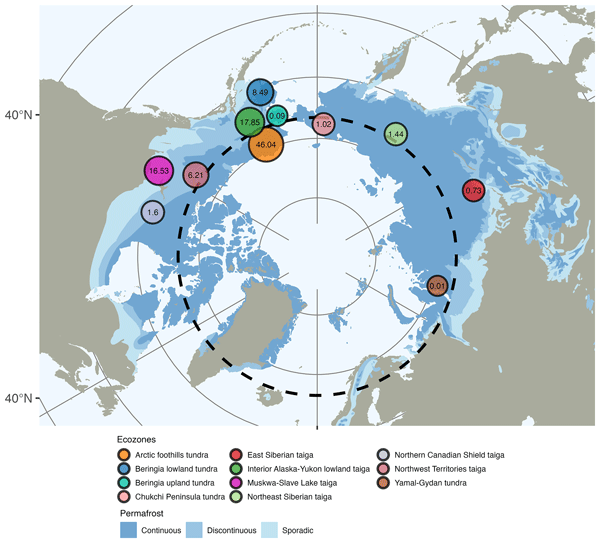
Wildfires have the potential to accelerate permafrost thaw and the associated feedbacks to climate change. We assembled a dataset of permafrost thaw depth measurements from burned and unburned sites contributed by researchers from across the northern high-latitude region. We estimated maximum thaw depth for each measurement, which addresses a key challenge: the ability to assess impacts of wildfire on maximum thaw depth when measurement timing varies.
Frieda P. Giest, Maren Jenrich, Guido Grosse, Benjamin M. Jones, Kai Mangelsdorf, Torben Windirsch, and Jens Strauss
Biogeosciences, 22, 2871–2887, https://doi.org/10.5194/bg-22-2871-2025, https://doi.org/10.5194/bg-22-2871-2025, 2025
Short summary
Short summary
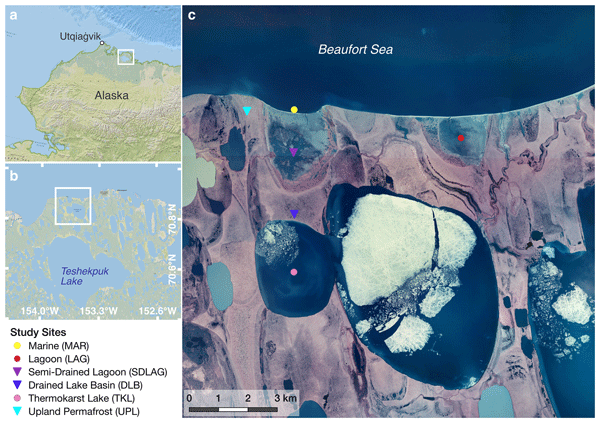
Climate warming causes permafrost to thaw, releasing greenhouse gases and affecting ecosystems. We studied sediments from Arctic coastal landscapes, including land, lakes, lagoons, and the ocean, finding that organic carbon storage and quality vary with landscape features and saltwater influence. Freshwater and land areas store more carbon, while saltwater reduces its quality. These findings improve predictions of Arctic responses to climate change and their impact on global carbon cycling.
Xiankun Li, Marleen Pallandt, Dilip Naidu, Johannes Rousk, Gustaf Hugelius, and Stefano Manzoni
Biogeosciences, 22, 2691–2705, https://doi.org/10.5194/bg-22-2691-2025, https://doi.org/10.5194/bg-22-2691-2025, 2025
Short summary
Short summary
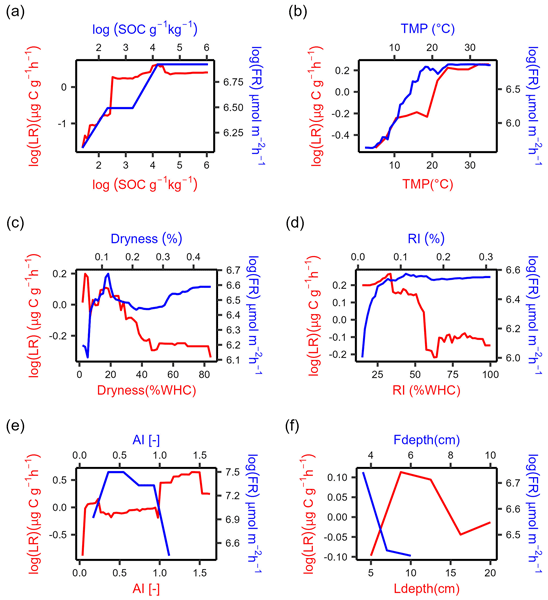
While laboratory studies have identified many drivers and their effects on the carbon emission pulse after rewetting of dry soils, a validation with field data is still missing. Here, we show that the carbon emission pulse in the laboratory and in the field increases with soil organic carbon and temperature, but their trends with pre-rewetting dryness and moisture increment at rewetting differ. We conclude that the laboratory findings can be partially validated.
Bernhard Lehner, Mira Anand, Etienne Fluet-Chouinard, Florence Tan, Filipe Aires, George H. Allen, Philippe Bousquet, Josep G. Canadell, Nick Davidson, Meng Ding, C. Max Finlayson, Thomas Gumbricht, Lammert Hilarides, Gustaf Hugelius, Robert B. Jackson, Maartje C. Korver, Liangyun Liu, Peter B. McIntyre, Szabolcs Nagy, David Olefeldt, Tamlin M. Pavelsky, Jean-Francois Pekel, Benjamin Poulter, Catherine Prigent, Jida Wang, Thomas A. Worthington, Dai Yamazaki, Xiao Zhang, and Michele Thieme
Earth Syst. Sci. Data, 17, 2277–2329, https://doi.org/10.5194/essd-17-2277-2025, https://doi.org/10.5194/essd-17-2277-2025, 2025
Short summary
Short summary
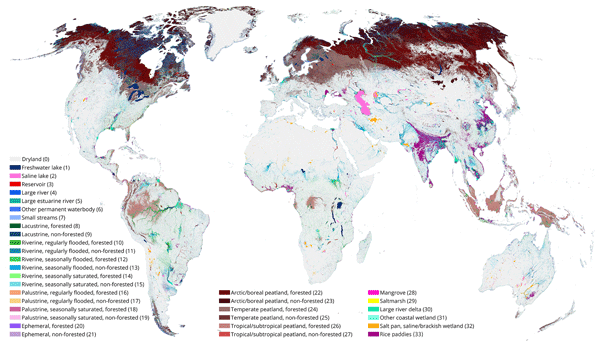
The Global Lakes and Wetlands Database (GLWD) version 2 distinguishes a total of 33 non-overlapping wetland classes, providing a static map of the world’s inland surface waters. It contains cell fractions of wetland extents per class at a grid cell resolution of ~500 m. The total combined extent of all classes including all inland and coastal waterbodies and wetlands of all inundation frequencies – that is, the maximum extent – covers 18.2 × 10⁶ km2, equivalent to 13.4 % of total global land area.
Amelie Stieg, Boris K. Biskaborn, Ulrike Herzschuh, Andreas Marent, Jens Strauss, Dorothee Wilhelms-Dick, Luidmila A. Pestryakova, and Hanno Meyer
Biogeosciences, 22, 2327–2350, https://doi.org/10.5194/bg-22-2327-2025, https://doi.org/10.5194/bg-22-2327-2025, 2025
Short summary
Short summary
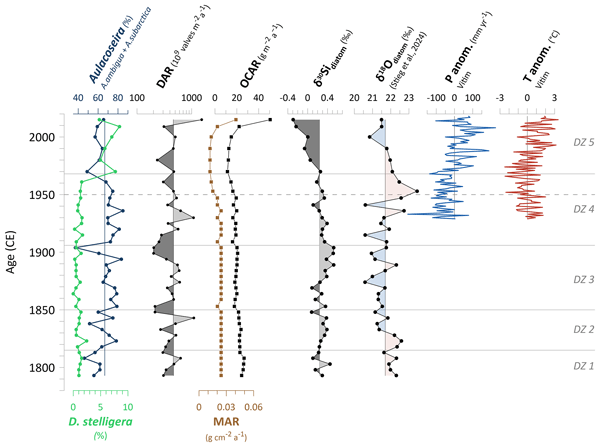
Globally, lake ecosystems have undergone significant shifts since the 1950s due to human activities. This study presents a unique ~220-year sediment record from a remote Siberian boreal lake, providing a multiproxy perspective on climate warming and anthropogenic air pollution. Analyses of diatom assemblages, diatom silicon isotopes, and carbon and nitrogen sediment proxies reveal complex biogeochemical interactions, highlighting anthropogenic influences even on remote water resources.
Ashu Dastoor, Hélène Angot, Johannes Bieser, Flora Brocza, Brock Edwards, Aryeh Feinberg, Xinbin Feng, Benjamin Geyman, Charikleia Gournia, Yipeng He, Ian M. Hedgecock, Ilia Ilyin, Jane Kirk, Che-Jen Lin, Igor Lehnherr, Robert Mason, David McLagan, Marilena Muntean, Peter Rafaj, Eric M. Roy, Andrei Ryjkov, Noelle E. Selin, Francesco De Simone, Anne L. Soerensen, Frits Steenhuisen, Oleg Travnikov, Shuxiao Wang, Xun Wang, Simon Wilson, Rosa Wu, Qingru Wu, Yanxu Zhang, Jun Zhou, Wei Zhu, and Scott Zolkos
Geosci. Model Dev., 18, 2747–2860, https://doi.org/10.5194/gmd-18-2747-2025, https://doi.org/10.5194/gmd-18-2747-2025, 2025
Short summary
Short summary
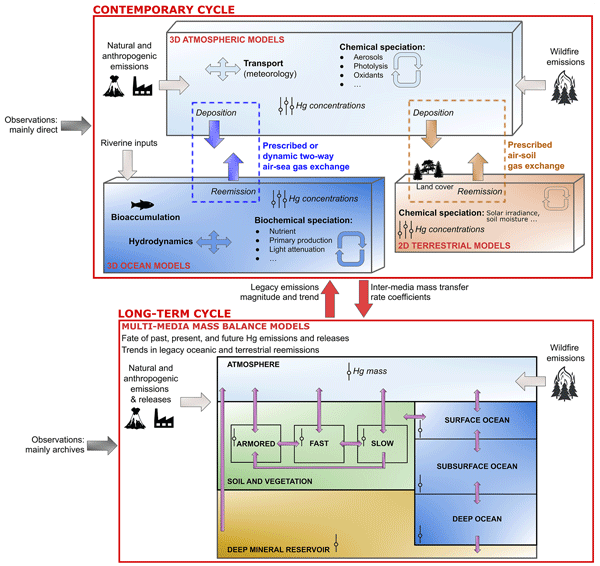
This paper introduces the Multi-Compartment Mercury (Hg) Modeling and Analysis Project (MCHgMAP) aimed at informing the effectiveness evaluations of two multilateral environmental agreements: the Minamata Convention on Mercury and the Convention on Long-Range Transboundary Air Pollution. The experimental design exploits a variety of models (atmospheric, land, oceanic ,and multimedia mass balance models) to assess the short- and long-term influences of anthropogenic Hg releases into the environment.
Aelis Spiller, Cynthia M. Kallenbach, Melanie S. Burnett, David Olefeldt, Christopher Schulze, Roxane Maranger, and Peter M. J. Douglas
SOIL, 11, 371–379, https://doi.org/10.5194/soil-11-371-2025, https://doi.org/10.5194/soil-11-371-2025, 2025
Short summary
Short summary
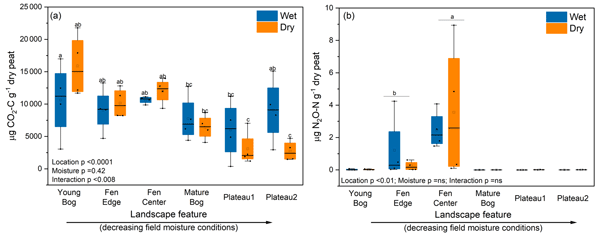
Permafrost peatlands are large reservoirs of carbon. As frozen permafrost thaws, drier peat moisture conditions can arise, affecting the microbial production of climate-warming greenhouse gases like CO2 and N2O. Our study suggests that future peat CO2 and N2O production depends on whether drier peat plateaus thaw into wetter fens or bogs and on their diverging responses of peat respiration to more moisture-limited conditions.
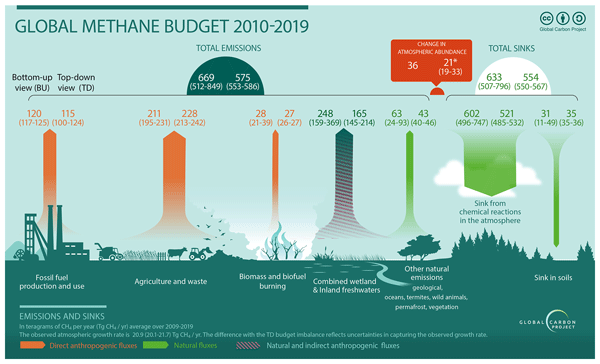
Marielle Saunois, Adrien Martinez, Benjamin Poulter, Zhen Zhang, Peter A. Raymond, Pierre Regnier, Josep G. Canadell, Robert B. Jackson, Prabir K. Patra, Philippe Bousquet, Philippe Ciais, Edward J. Dlugokencky, Xin Lan, George H. Allen, David Bastviken, David J. Beerling, Dmitry A. Belikov, Donald R. Blake, Simona Castaldi, Monica Crippa, Bridget R. Deemer, Fraser Dennison, Giuseppe Etiope, Nicola Gedney, Lena Höglund-Isaksson, Meredith A. Holgerson, Peter O. Hopcroft, Gustaf Hugelius, Akihiko Ito, Atul K. Jain, Rajesh Janardanan, Matthew S. Johnson, Thomas Kleinen, Paul B. Krummel, Ronny Lauerwald, Tingting Li, Xiangyu Liu, Kyle C. McDonald, Joe R. Melton, Jens Mühle, Jurek Müller, Fabiola Murguia-Flores, Yosuke Niwa, Sergio Noce, Shufen Pan, Robert J. Parker, Changhui Peng, Michel Ramonet, William J. Riley, Gerard Rocher-Ros, Judith A. Rosentreter, Motoki Sasakawa, Arjo Segers, Steven J. Smith, Emily H. Stanley, Joël Thanwerdas, Hanqin Tian, Aki Tsuruta, Francesco N. Tubiello, Thomas S. Weber, Guido R. van der Werf, Douglas E. J. Worthy, Yi Xi, Yukio Yoshida, Wenxin Zhang, Bo Zheng, Qing Zhu, Qiuan Zhu, and Qianlai Zhuang
Earth Syst. Sci. Data, 17, 1873–1958, https://doi.org/10.5194/essd-17-1873-2025, https://doi.org/10.5194/essd-17-1873-2025, 2025
Short summary
Short summary
Methane (CH4) is the second most important human-influenced greenhouse gas in terms of climate forcing after carbon dioxide (CO2). A consortium of multi-disciplinary scientists synthesise and update the budget of the sources and sinks of CH4. This edition benefits from important progress in estimating emissions from lakes and ponds, reservoirs, and streams and rivers. For the 2010s decade, global CH4 emissions are estimated at 575 Tg CH4 yr-1, including ~65 % from anthropogenic sources.
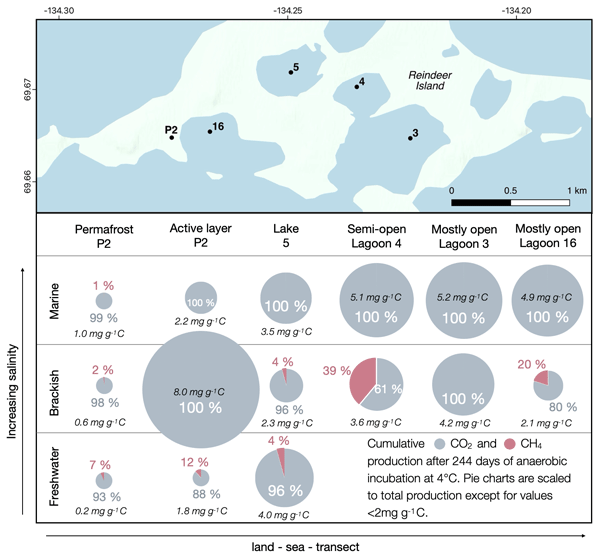
Maren Jenrich, Juliane Wolter, Susanne Liebner, Christian Knoblauch, Guido Grosse, Fiona Giebeler, Dustin Whalen, and Jens Strauss
Biogeosciences, 22, 2069–2086, https://doi.org/10.5194/bg-22-2069-2025, https://doi.org/10.5194/bg-22-2069-2025, 2025
Short summary
Short summary
Climate warming in the Arctic is causing the erosion of permafrost coasts and the transformation of permafrost lakes into lagoons. To understand how this affects greenhouse gas (GHG) emissions, we studied carbon dioxide (CO₂) and methane (CH₄) production in lagoons with varying sea connections. Younger lagoons produce more CH₄, while CO₂ increases under more marine conditions. Flooding of permafrost lowlands due to rising sea levels may lead to higher GHG emissions from Arctic coasts in future.
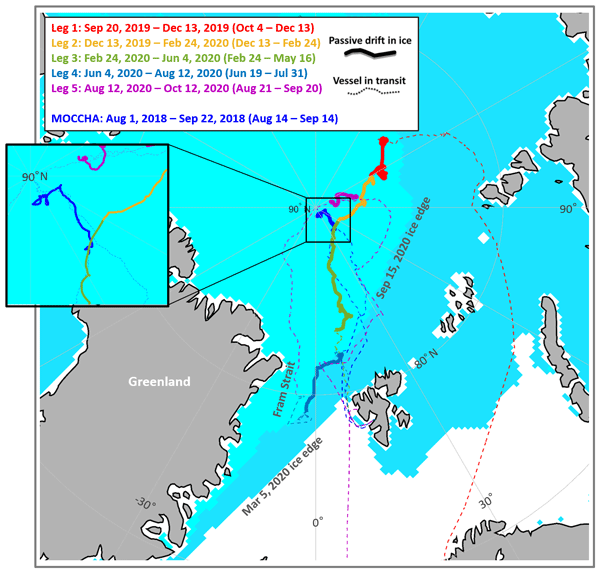
Benjamin Heutte, Nora Bergner, Hélène Angot, Jakob B. Pernov, Lubna Dada, Jessica A. Mirrielees, Ivo Beck, Andrea Baccarini, Matthew Boyer, Jessie M. Creamean, Kaspar R. Daellenbach, Imad El Haddad, Markus M. Frey, Silvia Henning, Tiia Laurila, Vaios Moschos, Tuukka Petäjä, Kerri A. Pratt, Lauriane L. J. Quéléver, Matthew D. Shupe, Paul Zieger, Tuija Jokinen, and Julia Schmale
Atmos. Chem. Phys., 25, 2207–2241, https://doi.org/10.5194/acp-25-2207-2025, https://doi.org/10.5194/acp-25-2207-2025, 2025
Short summary
Short summary
Limited aerosol measurements in the central Arctic hinder our understanding of aerosol–climate interactions in the region. Our year-long observations of aerosol physicochemical properties during the MOSAiC expedition reveal strong seasonal variations in aerosol chemical composition, where the short-term variability is heavily affected by storms in the Arctic. Local wind-generated particles are shown to be an important source of cloud seeds, especially in autumn.
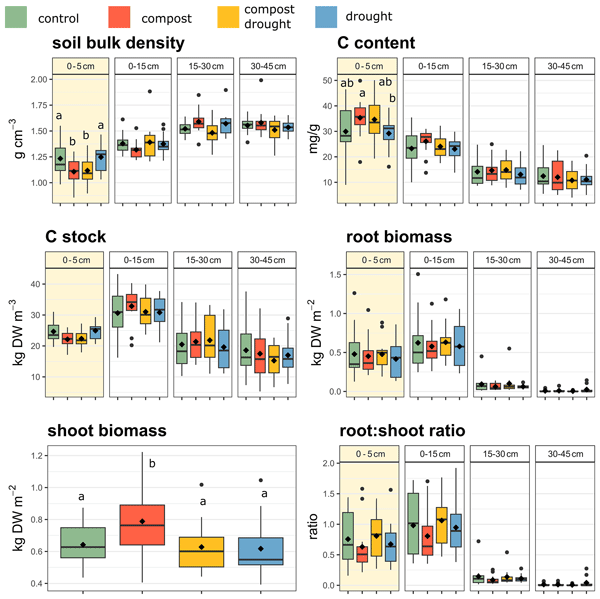
Daniela Guasconi, Sara A. O. Cousins, Stefano Manzoni, Nina Roth, and Gustaf Hugelius
SOIL, 11, 233–246, https://doi.org/10.5194/soil-11-233-2025, https://doi.org/10.5194/soil-11-233-2025, 2025
Short summary
Short summary
This study assesses the effects of experimental drought and soil amendment on soil and vegetation carbon pools at different soil depths. Drought consistently reduced soil moisture and aboveground biomass, while compost increased total soil carbon content and aboveground biomass, and effects were more pronounced in the topsoil. Root biomass was not significantly affected by the treatments. The contrasting response of roots and shoots improves our understanding of ecosystem carbon dynamics.

Artem V. Chupakov, Natalia V. Neverova, Anna A. Chupakova, Svetlana A. Zabelina, Liudmila S. Shirokova, Taissia Ya. Vorobyeva, and Oleg S. Pokrovsky
Biogeosciences, 21, 5725–5743, https://doi.org/10.5194/bg-21-5725-2024, https://doi.org/10.5194/bg-21-5725-2024, 2024
Short summary
Short summary
In the boreal humic waters of a forest lake and bog, the rate of dissolved organic matter photodegradation is 4 times higher than that of biodegradation. However, given the shallow, light-penetrating layer, the biodegradation provides the largest contribution to CO2 emissions from water surfaces. Trace metals were partially removed (1–10 %) during photodegradation and biodegradation via precipitation of Fe(III) hydroxides after destabilization of organoferric colloids and organic complexes.
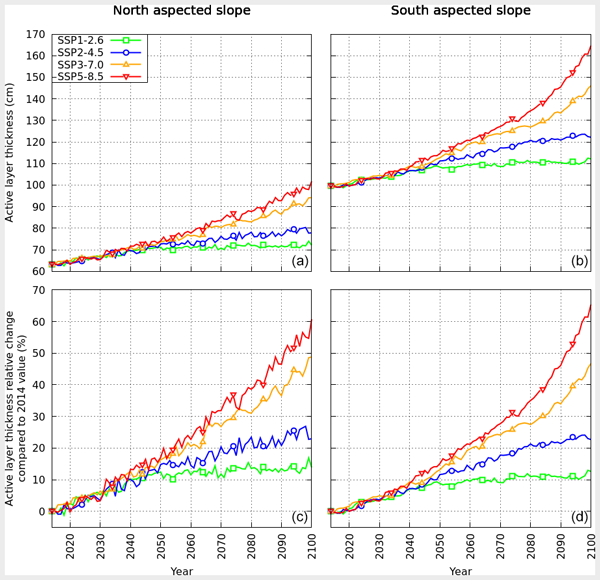
Thibault Xavier, Laurent Orgogozo, Anatoly S. Prokushkin, Esteban Alonso-González, Simon Gascoin, and Oleg S. Pokrovsky
The Cryosphere, 18, 5865–5885, https://doi.org/10.5194/tc-18-5865-2024, https://doi.org/10.5194/tc-18-5865-2024, 2024
Short summary
Short summary
Permafrost (permanently frozen soil at depth) is thawing as a result of climate change. However, estimating its future degradation is particularly challenging due to the complex multi-physical processes involved. In this work, we designed and ran numerical simulations for months on a supercomputer to quantify the impact of climate change in a forested valley of central Siberia. There, climate change could increase the thickness of the seasonally thawed soil layer in summer by up to 65 % by 2100.
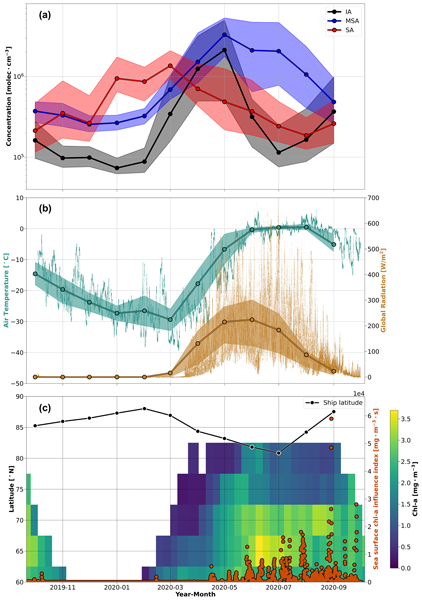
Matthew Boyer, Diego Aliaga, Lauriane L. J. Quéléver, Silvia Bucci, Hélène Angot, Lubna Dada, Benjamin Heutte, Lisa Beck, Marina Duetsch, Andreas Stohl, Ivo Beck, Tiia Laurila, Nina Sarnela, Roseline C. Thakur, Branka Miljevic, Markku Kulmala, Tuukka Petäjä, Mikko Sipilä, Julia Schmale, and Tuija Jokinen
Atmos. Chem. Phys., 24, 12595–12621, https://doi.org/10.5194/acp-24-12595-2024, https://doi.org/10.5194/acp-24-12595-2024, 2024
Short summary
Short summary
We analyze the seasonal cycle and sources of gases that are relevant for the formation of aerosol particles in the central Arctic. Since theses gases can form new particles, they can influence Arctic climate. We show that the sources of these gases are associated with changes in the Arctic environment during the year, especially with respect to sea ice. Therefore, the concentration of these gases will likely change in the future as the Arctic continues to warm.
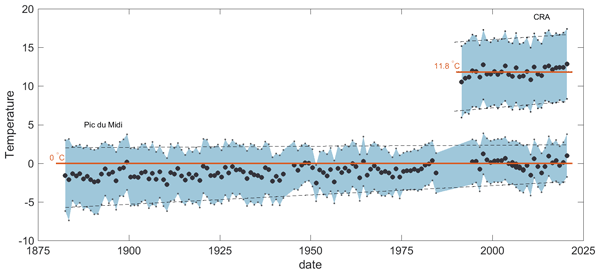
Marie Lothon, François Gheusi, Fabienne Lohou, Véronique Pont, Serge Soula, Corinne Jambert, Solène Derrien, Yannick Bezombes, Emmanuel Leclerc, Gilles Athier, Antoine Vial, Alban Philibert, Bernard Campistron, Frédérique Saïd, Jeroen Sonke, Julien Amestoy, Erwan Bargain, Pierre Bosser, Damien Boulanger, Guillaume Bret, Renaud Bodichon, Laurent Cabanas, Guylaine Canut, Jean-Bernard Estrampes, Eric Gardrat, Zaida Gomez Kuri, Jérémy Gueffier, Fabienne Guesdon, Morgan Lopez, Olivier Masson, Pierre-Yves Meslin, Yves Meyerfeld, Nicolas Pascal, Eric Pique, Michel Ramonet, Felix Starck, and Romain Vidal
Atmos. Meas. Tech., 17, 6265–6300, https://doi.org/10.5194/amt-17-6265-2024, https://doi.org/10.5194/amt-17-6265-2024, 2024
Short summary
Short summary
The Pyrenean Platform for Observation of the Atmosphere (P2OA) is a coupled plain–mountain instrumented platform in southwestern France for the monitoring of climate variables and the study of meteorological processes in a mountainous region. A comprehensive description of this platform is presented for the first time: its instrumentation, the associated dataset, and a meteorological characterization the site. The potential of the P2OA is illustrated through several examples of process studies.
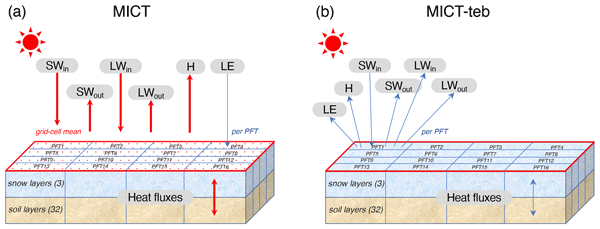
Yi Xi, Chunjing Qiu, Yuan Zhang, Dan Zhu, Shushi Peng, Gustaf Hugelius, Jinfeng Chang, Elodie Salmon, and Philippe Ciais
Geosci. Model Dev., 17, 4727–4754, https://doi.org/10.5194/gmd-17-4727-2024, https://doi.org/10.5194/gmd-17-4727-2024, 2024
Short summary
Short summary
The ORCHIDEE-MICT model can simulate the carbon cycle and hydrology at a sub-grid scale but energy budgets only at a grid scale. This paper assessed the implementation of a multi-tiling energy budget approach in ORCHIDEE-MICT and found warmer surface and soil temperatures, higher soil moisture, and more soil organic carbon across the Northern Hemisphere compared with the original version.
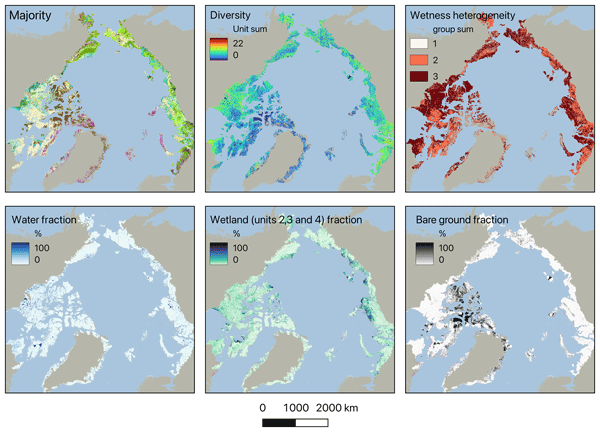
Annett Bartsch, Aleksandra Efimova, Barbara Widhalm, Xaver Muri, Clemens von Baeckmann, Helena Bergstedt, Ksenia Ermokhina, Gustaf Hugelius, Birgit Heim, and Marina Leibman
Hydrol. Earth Syst. Sci., 28, 2421–2481, https://doi.org/10.5194/hess-28-2421-2024, https://doi.org/10.5194/hess-28-2421-2024, 2024
Short summary
Short summary
Wetness gradients and landcover diversity for the entire Arctic tundra have been assessed using a novel satellite-data-based map. Patterns of lakes, wetlands, general soil moisture conditions and vegetation physiognomy are represented at 10 m. About 40 % of the area north of the treeline falls into three units of dry types, with limited shrub growth. Wetter regions have higher landcover diversity than drier regions.
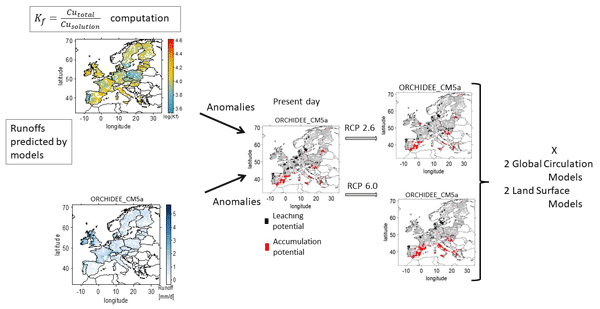
Laura Sereni, Julie-Maï Paris, Isabelle Lamy, and Bertrand Guenet
SOIL, 10, 367–380, https://doi.org/10.5194/soil-10-367-2024, https://doi.org/10.5194/soil-10-367-2024, 2024
Short summary
Short summary
We estimate the tendencies of copper (Cu) export in freshwater or accumulation in soils in Europe for the 21st century and highlight areas of importance for environmental monitoring. We develop a method combining computations of Cu partitioning coefficients between solid and solution phases with runoff data. The surfaces with potential for export or accumulation are roughly constant over the century, but the accumulation potential of Cu increases while leaching potential decreases for 2000–2095.
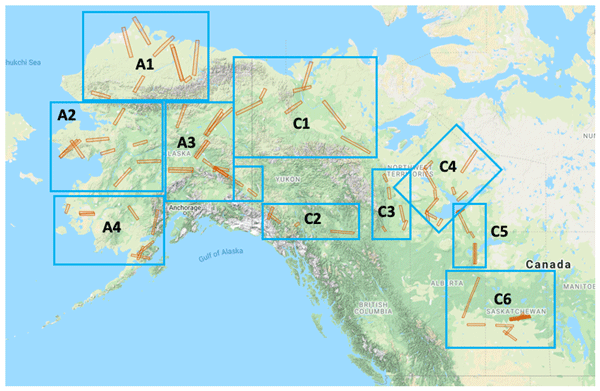
Charles E. Miller, Peter C. Griffith, Elizabeth Hoy, Naiara S. Pinto, Yunling Lou, Scott Hensley, Bruce D. Chapman, Jennifer Baltzer, Kazem Bakian-Dogaheh, W. Robert Bolton, Laura Bourgeau-Chavez, Richard H. Chen, Byung-Hun Choe, Leah K. Clayton, Thomas A. Douglas, Nancy French, Jean E. Holloway, Gang Hong, Lingcao Huang, Go Iwahana, Liza Jenkins, John S. Kimball, Tatiana Loboda, Michelle Mack, Philip Marsh, Roger J. Michaelides, Mahta Moghaddam, Andrew Parsekian, Kevin Schaefer, Paul R. Siqueira, Debjani Singh, Alireza Tabatabaeenejad, Merritt Turetsky, Ridha Touzi, Elizabeth Wig, Cathy J. Wilson, Paul Wilson, Stan D. Wullschleger, Yonghong Yi, Howard A. Zebker, Yu Zhang, Yuhuan Zhao, and Scott J. Goetz
Earth Syst. Sci. Data, 16, 2605–2624, https://doi.org/10.5194/essd-16-2605-2024, https://doi.org/10.5194/essd-16-2605-2024, 2024
Short summary
Short summary
NASA’s Arctic Boreal Vulnerability Experiment (ABoVE) conducted airborne synthetic aperture radar (SAR) surveys of over 120 000 km2 in Alaska and northwestern Canada during 2017, 2018, 2019, and 2022. This paper summarizes those results and provides links to details on ~ 80 individual flight lines. This paper is presented as a guide to enable interested readers to fully explore the ABoVE L- and P-band SAR data.
Chaman Gul, Shichang Kang, Yuanjian Yang, Xinlei Ge, and Dong Guo
EGUsphere, https://doi.org/10.5194/egusphere-2024-1144, https://doi.org/10.5194/egusphere-2024-1144, 2024
Preprint archived
Short summary
Short summary
Long-term variations in upper atmospheric temperature and water vapor in the selected domains of time and space are presented. The temperature during the past two decades showed a cooling trend and water vapor showed an increasing trend and had an inverse relation with temperature in selected domains of space and time. Seasonal temperature variations are distinct, with a summer minimum and a winter maximum. Our results can be an early warning indication for future climate change.
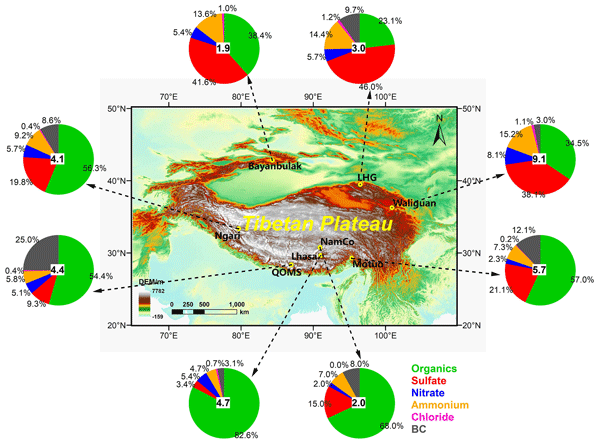
Jianzhong Xu, Xinghua Zhang, Wenhui Zhao, Lixiang Zhai, Miao Zhong, Jinsen Shi, Junying Sun, Yanmei Liu, Conghui Xie, Yulong Tan, Kemei Li, Xinlei Ge, Qi Zhang, and Shichang Kang
Earth Syst. Sci. Data, 16, 1875–1900, https://doi.org/10.5194/essd-16-1875-2024, https://doi.org/10.5194/essd-16-1875-2024, 2024
Short summary
Short summary
A comprehensive aerosol observation project was carried out in the Tibetan Plateau (TP) and its surroundings in recent years to investigate the properties and sources of atmospheric aerosols as well as their regional differences by performing multiple intensive field observations. The release of this dataset can provide basic and systematic data for related research in the atmospheric, cryospheric, and environmental sciences in this unique region.
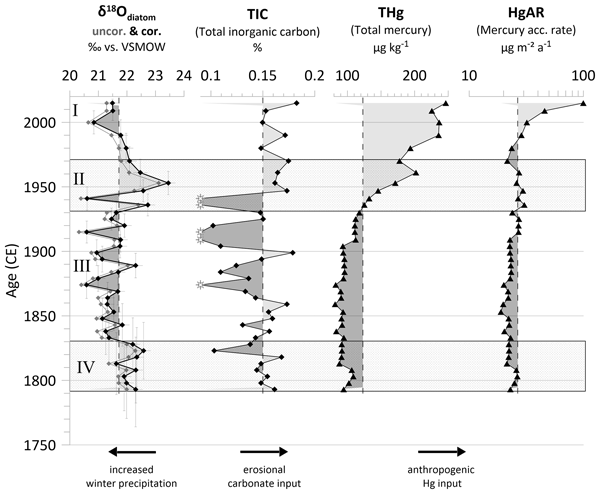
Amelie Stieg, Boris K. Biskaborn, Ulrike Herzschuh, Jens Strauss, Luidmila Pestryakova, and Hanno Meyer
Clim. Past, 20, 909–933, https://doi.org/10.5194/cp-20-909-2024, https://doi.org/10.5194/cp-20-909-2024, 2024
Short summary
Short summary
Siberia is impacted by recent climate warming and experiences extreme hydroclimate events. We present a 220-year-long sub-decadal stable oxygen isotope record of diatoms from Lake Khamra. Our analysis identifies winter precipitation as the key process impacting the isotope variability. Two possible hydroclimatic anomalies were found to coincide with significant changes in lake internal conditions and increased wildfire activity in the region.
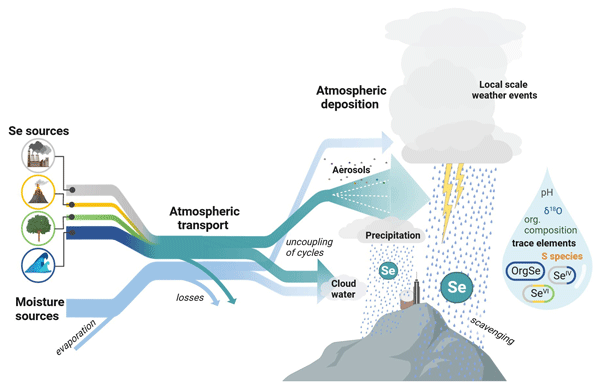
Esther S. Breuninger, Julie Tolu, Iris Thurnherr, Franziska Aemisegger, Aryeh Feinberg, Sylvain Bouchet, Jeroen E. Sonke, Véronique Pont, Heini Wernli, and Lenny H. E. Winkel
Atmos. Chem. Phys., 24, 2491–2510, https://doi.org/10.5194/acp-24-2491-2024, https://doi.org/10.5194/acp-24-2491-2024, 2024
Short summary
Short summary
Atmospheric deposition is an important source of selenium (Se) and other health-relevant trace elements in surface environments. We found that the variability in elemental concentrations in atmospheric deposition reflects not only changes in emission sources but also weather conditions during atmospheric removal. Depending on the sources and if Se is derived more locally or from further away, the Se forms can be different, affecting the bioavailability of Se atmospherically supplied to soils.
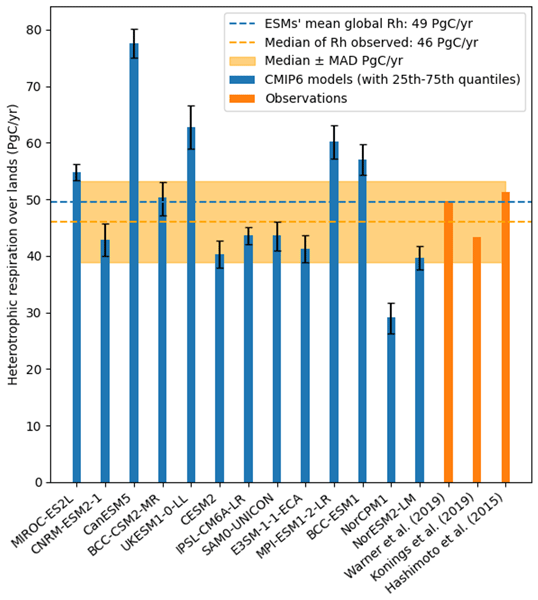
Bertrand Guenet, Jérémie Orliac, Lauric Cécillon, Olivier Torres, Laura Sereni, Philip A. Martin, Pierre Barré, and Laurent Bopp
Biogeosciences, 21, 657–669, https://doi.org/10.5194/bg-21-657-2024, https://doi.org/10.5194/bg-21-657-2024, 2024
Short summary
Short summary
Heterotrophic respiration fluxes are a major flux between surfaces and the atmosphere, but Earth system models do not yet represent them correctly. Here we benchmarked Earth system models against observation-based products, and we identified the important mechanisms that need to be improved in the next-generation Earth system models.
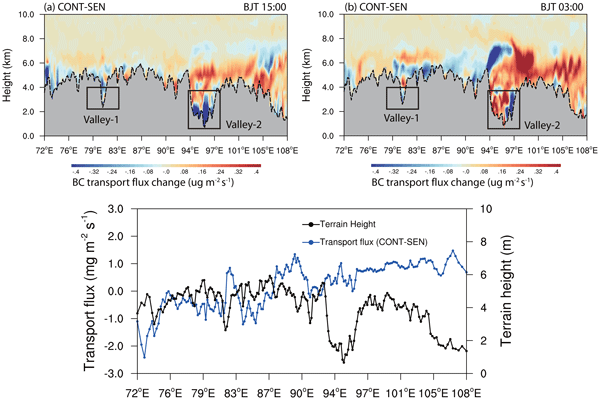
Yuling Hu, Haipeng Yu, Shichang Kang, Junhua Yang, Mukesh Rai, Xiufeng Yin, Xintong Chen, and Pengfei Chen
Atmos. Chem. Phys., 24, 85–107, https://doi.org/10.5194/acp-24-85-2024, https://doi.org/10.5194/acp-24-85-2024, 2024
Short summary
Short summary
The Tibetan Plateau (TP) saw a record-breaking aerosol pollution event from April 20 to May 10, 2016. We studied the impact of aerosol–meteorology feedback on the transboundary transport flux of black carbon (BC) during this severe pollution event. It was found that the aerosol–meteorology feedback decreases the transboundary transport flux of BC from the central and western Himalayas towards the TP. This study is of great significance for the protection of the ecological environment of the TP.
Kevin R. Barry, Thomas C. J. Hill, Marina Nieto-Caballero, Thomas A. Douglas, Sonia M. Kreidenweis, Paul J. DeMott, and Jessie M. Creamean
Atmos. Chem. Phys., 23, 15783–15793, https://doi.org/10.5194/acp-23-15783-2023, https://doi.org/10.5194/acp-23-15783-2023, 2023
Short summary
Short summary
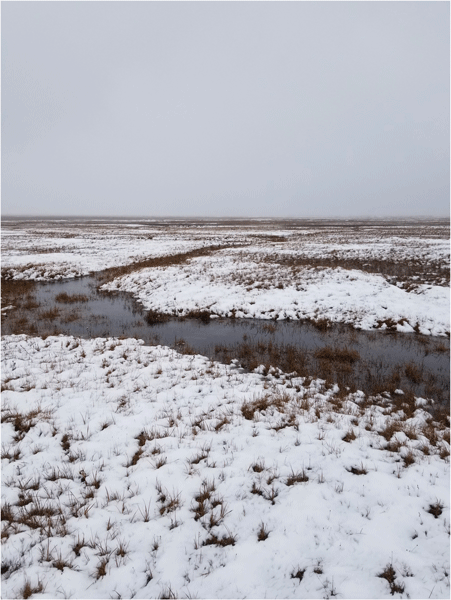
Ice-nucleating particles (INPs) are important for the climate due to their influence on cloud properties. To understand potential land-based sources of them in the Arctic, we carried out a survey near the northernmost point of Alaska, a landscape connected to the permafrost (thermokarst). Permafrost contained high concentrations of INPs, with the largest values near the coast. The thermokarst lakes were found to emit INPs, and the water contained elevated concentrations.
Xiufeng Yin, Dipesh Rupakheti, Guoshuai Zhang, Jiali Luo, Shichang Kang, Benjamin de Foy, Junhua Yang, Zhenming Ji, Zhiyuan Cong, Maheswar Rupakheti, Ping Li, Yuling Hu, and Qianggong Zhang
Atmos. Chem. Phys., 23, 10137–10143, https://doi.org/10.5194/acp-23-10137-2023, https://doi.org/10.5194/acp-23-10137-2023, 2023
Short summary
Short summary
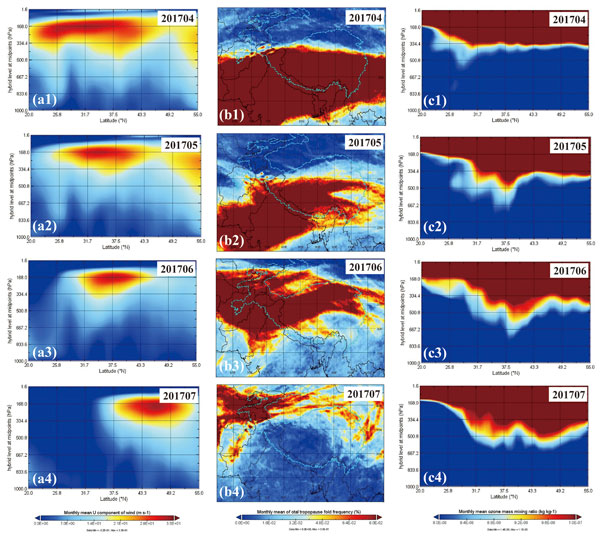
The monthly mean surface ozone concentrations peaked earlier in the south in April and May and later in the north in June and July over the Tibetan Plateau. The migration of monthly surface ozone peaks was coupled with the synchronous movement of tropopause folds and the westerly jet that created conditions conducive to stratospheric ozone intrusion. Stratospheric ozone intrusion significantly contributed to surface ozone across the Tibetan Plateau.
Lukas Rimondini, Thomas Gumbricht, Anders Ahlström, and Gustaf Hugelius
Earth Syst. Sci. Data, 15, 3473–3482, https://doi.org/10.5194/essd-15-3473-2023, https://doi.org/10.5194/essd-15-3473-2023, 2023
Short summary
Short summary
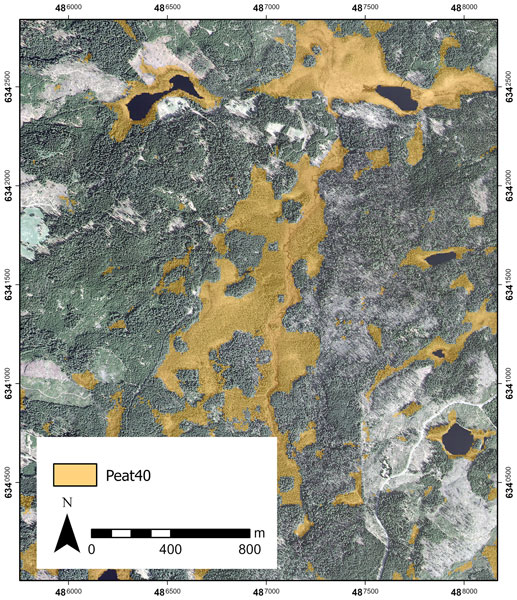
Peatlands have historically sequestrated large amounts of carbon and contributed to atmospheric cooling. However, human activities and climate change may instead turn them into considerable carbon emitters. In this study, we produced high-quality maps showing the extent of peatlands in the forests of Sweden, one of the most peatland-dense countries in the world. The maps are publicly available and may be used to support work promoting sustainable peatland management and combat their degradation.
Boris K. Biskaborn, Amy Forster, Gregor Pfalz, Lyudmila A. Pestryakova, Kathleen Stoof-Leichsenring, Jens Strauss, Tim Kröger, and Ulrike Herzschuh
Biogeosciences, 20, 1691–1712, https://doi.org/10.5194/bg-20-1691-2023, https://doi.org/10.5194/bg-20-1691-2023, 2023
Short summary
Short summary
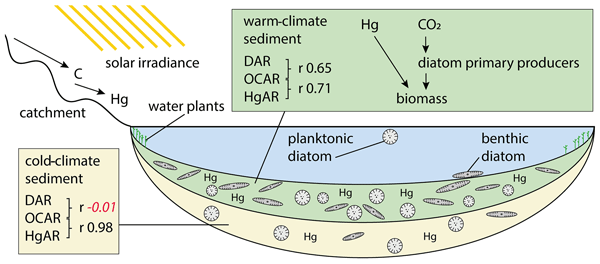
Lake sediment from the Russian Arctic was studied for microalgae and organic matter chemistry dated back to the last glacial 28 000 years. Species and chemistry responded to environmental changes such as the Younger Dryas cold event and the Holocene thermal maximum. Organic carbon accumulation correlated with rates of microalgae deposition only during warm episodes but not during the cold glacial.
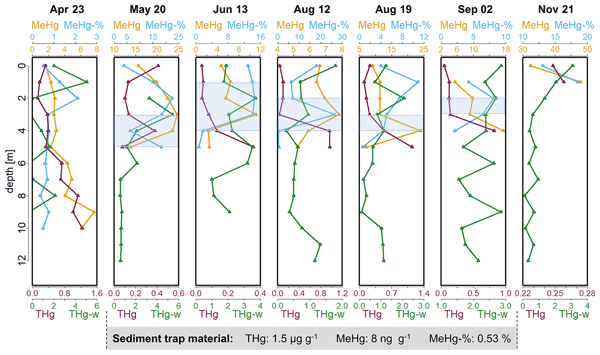
Laura Balzer, Carluvy Baptista-Salazar, Sofi Jonsson, and Harald Biester
Biogeosciences, 20, 1459–1472, https://doi.org/10.5194/bg-20-1459-2023, https://doi.org/10.5194/bg-20-1459-2023, 2023
Short summary
Short summary
Toxic methylmercury (MeHg) in lakes can be enriched in fish and is harmful for humans. Phytoplankton is the entry point for MeHg into the aquatic food chain. We investigated seasonal MeHg concentrations in plankton of a productive lake. Our results show that high amounts of MeHg occur in algae and suspended matter in lakes and that productive lakes are hot spots of MeHg formation, which is mainly controlled by decomposition of algae organic matter and water-phase redox conditions.
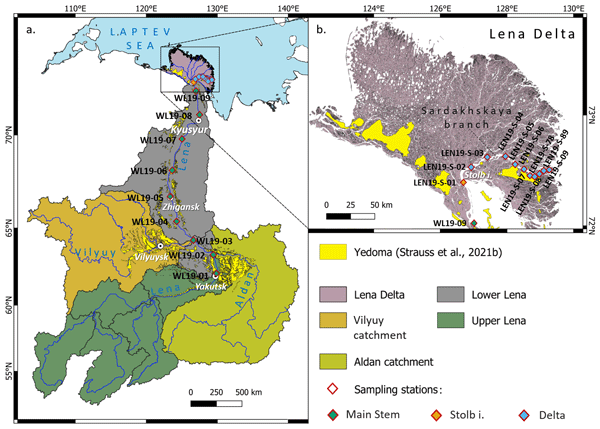
Olga Ogneva, Gesine Mollenhauer, Bennet Juhls, Tina Sanders, Juri Palmtag, Matthias Fuchs, Hendrik Grotheer, Paul J. Mann, and Jens Strauss
Biogeosciences, 20, 1423–1441, https://doi.org/10.5194/bg-20-1423-2023, https://doi.org/10.5194/bg-20-1423-2023, 2023
Short summary
Short summary
Arctic warming accelerates permafrost thaw and release of terrestrial organic matter (OM) via rivers to the Arctic Ocean. We compared particulate organic carbon (POC), total suspended matter, and C isotopes (δ13C and Δ14C of POC) in the Lena delta and Lena River along a ~1600 km transect. We show that the Lena delta, as an interface between the Lena River and the Arctic Ocean, plays a crucial role in determining the qualitative and quantitative composition of OM discharged into the Arctic Ocean.
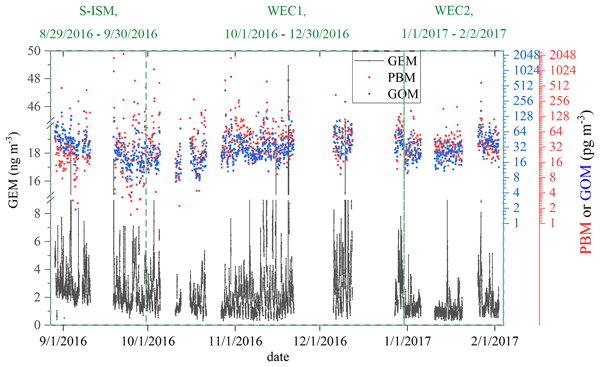
Huiming Lin, Yindong Tong, Long Chen, Chenghao Yu, Zhaohan Chu, Qianru Zhang, Xiufeng Yin, Qianggong Zhang, Shichang Kang, Junfeng Liu, James Schauer, Benjamin de Foy, and Xuejun Wang
Atmos. Chem. Phys., 23, 3937–3953, https://doi.org/10.5194/acp-23-3937-2023, https://doi.org/10.5194/acp-23-3937-2023, 2023
Short summary
Short summary
Lhasa is the largest city in the Tibetan Plateau, and its atmospheric mercury concentrations represent the highest level of pollution in this region. Unexpectedly high concentrations of atmospheric mercury species were found. Combined with the trajectory analysis, the high atmospheric mercury concentrations may have originated from external long-range transport. Local sources, especially special mercury-related sources, are important factors influencing the variability of atmospheric mercury.
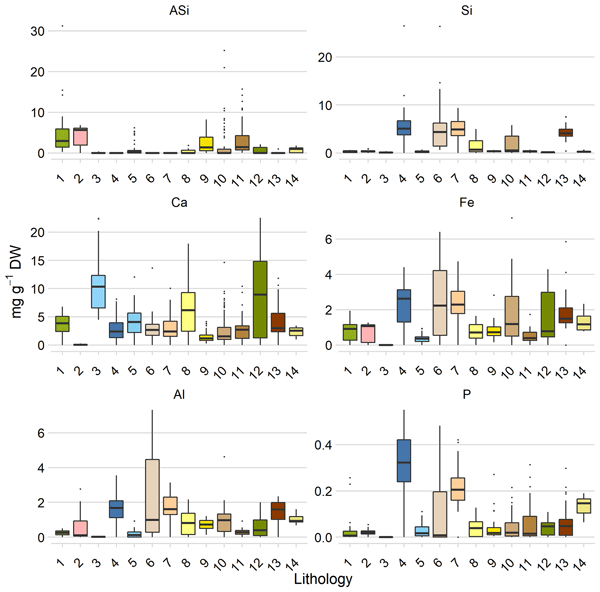
Peter Stimmler, Mathias Goeckede, Bo Elberling, Susan Natali, Peter Kuhry, Nia Perron, Fabrice Lacroix, Gustaf Hugelius, Oliver Sonnentag, Jens Strauss, Christina Minions, Michael Sommer, and Jörg Schaller
Earth Syst. Sci. Data, 15, 1059–1075, https://doi.org/10.5194/essd-15-1059-2023, https://doi.org/10.5194/essd-15-1059-2023, 2023
Short summary
Short summary
Arctic soils store large amounts of carbon and nutrients. The availability of nutrients, such as silicon, calcium, iron, aluminum, phosphorus, and amorphous silica, is crucial to understand future carbon fluxes in the Arctic. Here, we provide, for the first time, a unique dataset of the availability of the abovementioned nutrients for the different soil layers, including the currently frozen permafrost layer. We relate these data to several geographical and geological parameters.
Niek Jesse Speetjens, Gustaf Hugelius, Thomas Gumbricht, Hugues Lantuit, Wouter R. Berghuijs, Philip A. Pika, Amanda Poste, and Jorien E. Vonk
Earth Syst. Sci. Data, 15, 541–554, https://doi.org/10.5194/essd-15-541-2023, https://doi.org/10.5194/essd-15-541-2023, 2023
Short summary
Short summary
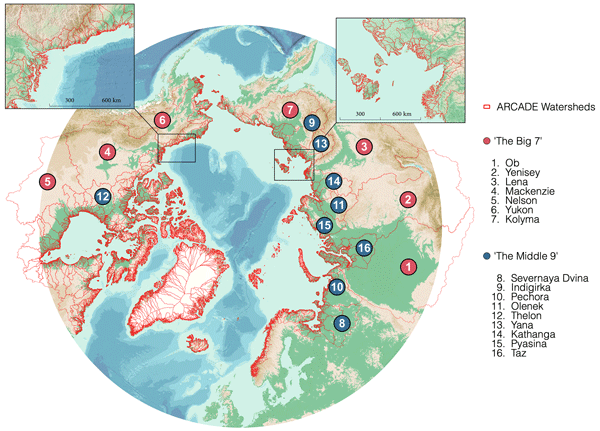
The Arctic is rapidly changing. Outside the Arctic, large databases changed how researchers look at river systems and land-to-ocean processes. We present the first integrated pan-ARctic CAtchments summary DatabasE (ARCADE) (> 40 000 river catchments draining into the Arctic Ocean). It incorporates information about the drainage area with 103 geospatial, environmental, climatic, and physiographic properties and covers small watersheds , which are especially subject to change, at a high resolution
Alkuin M. Koenig, Olivier Magand, Bert Verreyken, Jerome Brioude, Crist Amelynck, Niels Schoon, Aurélie Colomb, Beatriz Ferreira Araujo, Michel Ramonet, Mahesh K. Sha, Jean-Pierre Cammas, Jeroen E. Sonke, and Aurélien Dommergue
Atmos. Chem. Phys., 23, 1309–1328, https://doi.org/10.5194/acp-23-1309-2023, https://doi.org/10.5194/acp-23-1309-2023, 2023
Short summary
Short summary
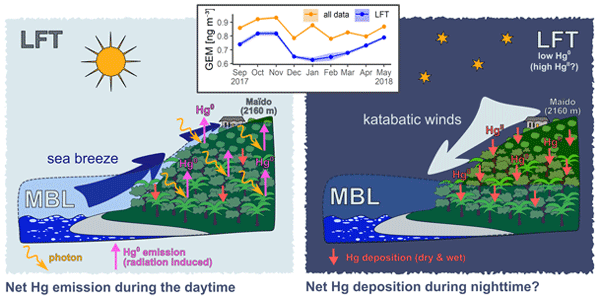
The global distribution of mercury, a potent neurotoxin, depends on atmospheric transport, chemistry, and interactions between the Earth’s surface and the air. Our understanding of these processes is still hampered by insufficient observations. Here, we present new data from a mountain observatory in the Southern Hemisphere. We give insights into mercury concentrations in air masses coming from aloft, and we show that tropical mountain vegetation may be a daytime source of mercury to the air.
Simon Cazaurang, Manuel Marcoux, Oleg S. Pokrovsky, Sergey V. Loiko, Artem G. Lim, Stéphane Audry, Liudmila S. Shirokova, and Laurent Orgogozo
Hydrol. Earth Syst. Sci., 27, 431–451, https://doi.org/10.5194/hess-27-431-2023, https://doi.org/10.5194/hess-27-431-2023, 2023
Short summary
Short summary
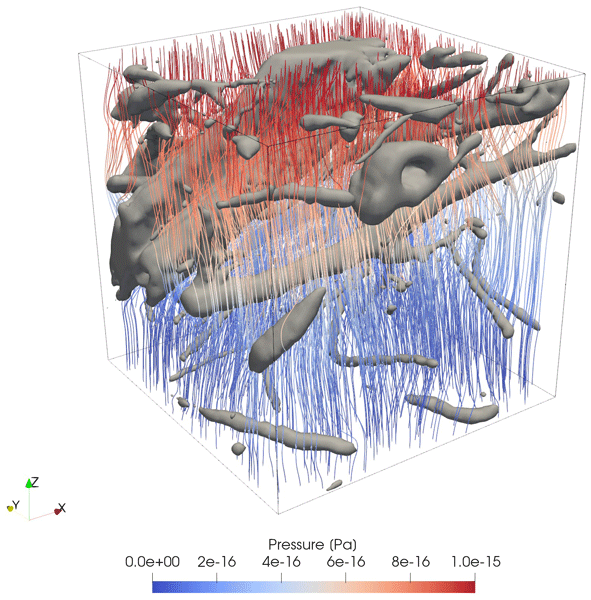
Moss, lichen and peat samples are reconstructed using X-ray tomography. Most samples can be cut down to a representative volume based on porosity. However, only homogeneous samples could be reduced to a representative volume based on hydraulic conductivity. For heterogeneous samples, a devoted pore network model is computed. The studied samples are mostly highly porous and water-conductive. These results must be put into perspective with compressibility phenomena occurring in field tests.
Shaoyong Wang, Xiaobo He, Shichang Kang, Hui Fu, and Xiaofeng Hong
The Cryosphere, 16, 5023–5040, https://doi.org/10.5194/tc-16-5023-2022, https://doi.org/10.5194/tc-16-5023-2022, 2022
Short summary
Short summary
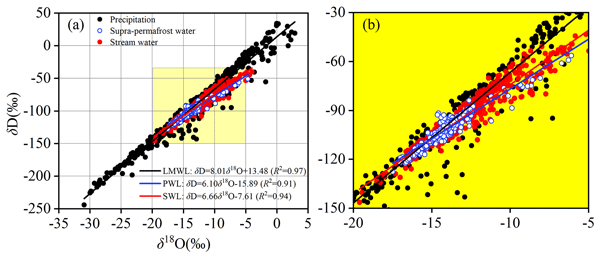
This study used the sine-wave exponential model and long-term water stable isotopic data to estimate water mean residence time (MRT) and its influencing factors in a high-altitude permafrost catchment (5300 m a.s.l.) in the central Tibetan Plateau (TP). MRT for stream and supra-permafrost water was estimated at 100 and 255 d, respectively. Climate and vegetation factors affected the MRT of stream and supra-permafrost water mainly by changing the thickness of the permafrost active layer.
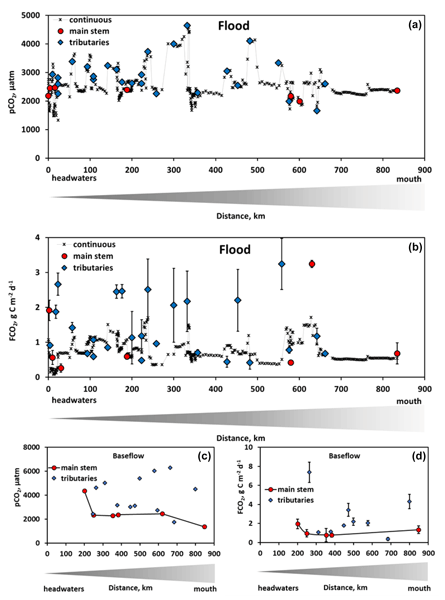
Artem G. Lim, Ivan V. Krickov, Sergey N. Vorobyev, Mikhail A. Korets, Sergey Kopysov, Liudmila S. Shirokova, Jan Karlsson, and Oleg S. Pokrovsky
Biogeosciences, 19, 5859–5877, https://doi.org/10.5194/bg-19-5859-2022, https://doi.org/10.5194/bg-19-5859-2022, 2022
Short summary
Short summary
In order to quantify C transport and emission and main environmental factors controlling the C cycle in Siberian rivers, we investigated the largest tributary of the Ob River, the Ket River basin, by measuring spatial and seasonal variations in carbon CO2 and CH4 concentrations and emissions together with hydrochemical analyses. The obtained results are useful for large-scale modeling of C emission and export fluxes from permafrost-free boreal rivers of an underrepresented region of the world.
Jizu Chen, Wentao Du, Shichang Kang, Xiang Qin, Weijun Sun, Yang Li, Yushuo Liu, Lihui Luo, and Youyan Jiang
The Cryosphere Discuss., https://doi.org/10.5194/tc-2022-179, https://doi.org/10.5194/tc-2022-179, 2022
Preprint withdrawn
Short summary
Short summary
This study developed a dynamic deposition model of light absorbing particles (LAPs), which coupled with a surface energy and mass balance model. Based on the coupled model, we assessed atmospheric deposited BC effect on glacier melting, and quantified global warming and increment of emitted black carbon respective contributions to current accelerated glacier melting.
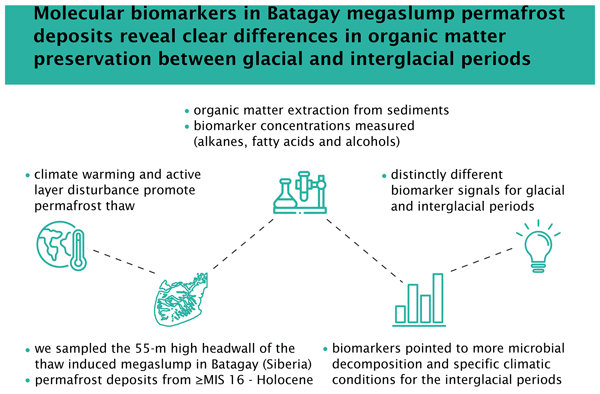
Loeka L. Jongejans, Kai Mangelsdorf, Cornelia Karger, Thomas Opel, Sebastian Wetterich, Jérémy Courtin, Hanno Meyer, Alexander I. Kizyakov, Guido Grosse, Andrei G. Shepelev, Igor I. Syromyatnikov, Alexander N. Fedorov, and Jens Strauss
The Cryosphere, 16, 3601–3617, https://doi.org/10.5194/tc-16-3601-2022, https://doi.org/10.5194/tc-16-3601-2022, 2022
Short summary
Short summary
Large parts of Arctic Siberia are underlain by permafrost. Climate warming leads to permafrost thaw. At the Batagay megaslump, permafrost sediments up to ~ 650 kyr old are exposed. We took sediment samples and analysed the organic matter (e.g. plant remains). We found distinct differences in the biomarker distributions between the glacial and interglacial deposits with generally stronger microbial activity during interglacial periods. Further permafrost thaw enhances greenhouse gas emissions.
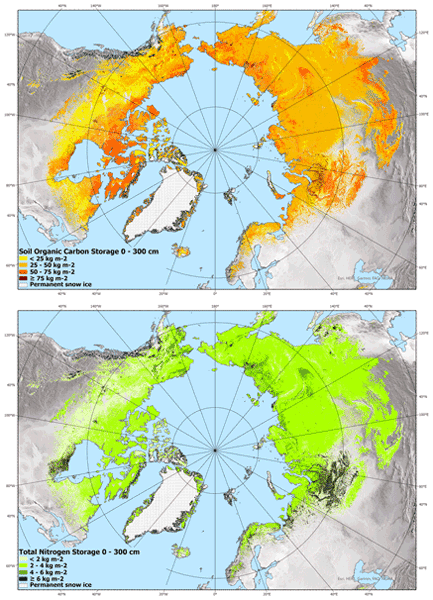
Juri Palmtag, Jaroslav Obu, Peter Kuhry, Andreas Richter, Matthias B. Siewert, Niels Weiss, Sebastian Westermann, and Gustaf Hugelius
Earth Syst. Sci. Data, 14, 4095–4110, https://doi.org/10.5194/essd-14-4095-2022, https://doi.org/10.5194/essd-14-4095-2022, 2022
Short summary
Short summary
The northern permafrost region covers 22 % of the Northern Hemisphere and holds almost twice as much carbon as the atmosphere. This paper presents data from 651 soil pedons encompassing more than 6500 samples from 16 different study areas across the northern permafrost region. We use this dataset together with ESA's global land cover dataset to estimate soil organic carbon and total nitrogen storage up to 300 cm soil depth, with estimated values of 813 Pg for carbon and 55 Pg for nitrogen.
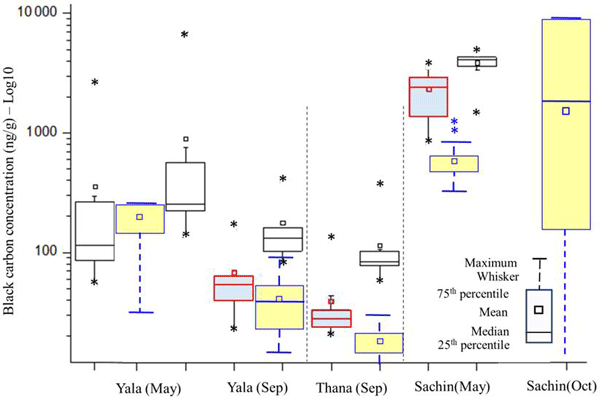
Chaman Gul, Shichang Kang, Siva Praveen Puppala, Xiaokang Wu, Cenlin He, Yangyang Xu, Inka Koch, Sher Muhammad, Rajesh Kumar, and Getachew Dubache
Atmos. Chem. Phys., 22, 8725–8737, https://doi.org/10.5194/acp-22-8725-2022, https://doi.org/10.5194/acp-22-8725-2022, 2022
Short summary
Short summary
This work aims to understand concentrations, spatial variability, and potential source regions of light-absorbing impurities (black carbon aerosols, dust particles, and organic carbon) in the surface snow of central and western Himalayan glaciers and their impact on snow albedo and radiative forcing.
Xinghua Zhang, Wenhui Zhao, Lixiang Zhai, Miao Zhong, Jinsen Shi, Junying Sun, Yanmei Liu, Conghui Xie, Yulong Tan, Kemei Li, Xinlei Ge, Qi Zhang, Shichang Kang, and Jianzhong Xu
Earth Syst. Sci. Data Discuss., https://doi.org/10.5194/essd-2022-211, https://doi.org/10.5194/essd-2022-211, 2022
Manuscript not accepted for further review
Short summary
Short summary
A comprehensive aerosol observation project was carried out in the Tibetan Plateau (TP) in recent years to investigate the properties and sources of atmospheric aerosols as well as their regional differences by performing multiple short-term intensive field observations. The real-time online high-time-resolution (hourly) data of aerosol properties in the different TP region are integrated in a new dataset and can provide supporting for related studies in in the TP.
Niek Jesse Speetjens, George Tanski, Victoria Martin, Julia Wagner, Andreas Richter, Gustaf Hugelius, Chris Boucher, Rachele Lodi, Christian Knoblauch, Boris P. Koch, Urban Wünsch, Hugues Lantuit, and Jorien E. Vonk
Biogeosciences, 19, 3073–3097, https://doi.org/10.5194/bg-19-3073-2022, https://doi.org/10.5194/bg-19-3073-2022, 2022
Short summary
Short summary
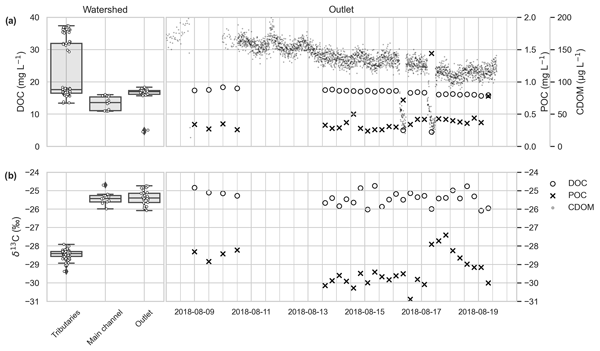
Climate change and warming in the Arctic exceed global averages. As a result, permanently frozen soils (permafrost) which store vast quantities of carbon in the form of dead plant material (organic matter) are thawing. Our study shows that as permafrost landscapes degrade, high concentrations of organic matter are released. Partly, this organic matter is degraded rapidly upon release, while another significant fraction enters stream networks and enters the Arctic Ocean.
Liam Heffernan, Maria A. Cavaco, Maya P. Bhatia, Cristian Estop-Aragonés, Klaus-Holger Knorr, and David Olefeldt
Biogeosciences, 19, 3051–3071, https://doi.org/10.5194/bg-19-3051-2022, https://doi.org/10.5194/bg-19-3051-2022, 2022
Short summary
Short summary
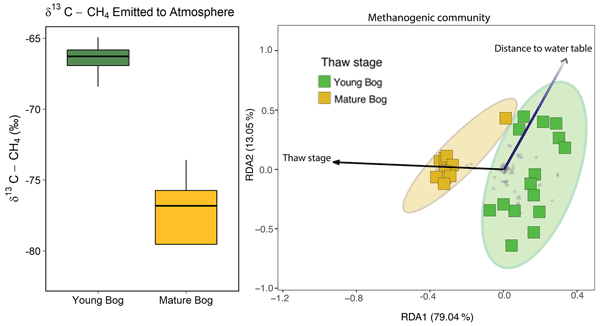
Permafrost thaw in peatlands leads to waterlogged conditions, a favourable environment for microbes producing methane (CH4) and high CH4 emissions. High CH4 emissions in the initial decades following thaw are due to a vegetation community that produces suitable organic matter to fuel CH4-producing microbes, along with warm and wet conditions. High CH4 emissions after thaw persist for up to 100 years, after which environmental conditions are less favourable for microbes and high CH4 emissions.

Ramona J. Heim, Andrey Yurtaev, Anna Bucharova, Wieland Heim, Valeriya Kutskir, Klaus-Holger Knorr, Christian Lampei, Alexandr Pechkin, Dora Schilling, Farid Sulkarnaev, and Norbert Hölzel
Biogeosciences, 19, 2729–2740, https://doi.org/10.5194/bg-19-2729-2022, https://doi.org/10.5194/bg-19-2729-2022, 2022
Short summary
Short summary
Fires will probably increase in Arctic regions due to climate change. Yet, the long-term effects of tundra fires on carbon (C) and nitrogen (N) stocks and cycling are still unclear. We investigated the long-term fire effects on C and N stocks and cycling in soil and aboveground living biomass.
We found that tundra fires did not affect total C and N stocks because a major part of the stocks was located belowground in soils which were largely unaltered by fire.
Matthias Fuchs, Juri Palmtag, Bennet Juhls, Pier Paul Overduin, Guido Grosse, Ahmed Abdelwahab, Michael Bedington, Tina Sanders, Olga Ogneva, Irina V. Fedorova, Nikita S. Zimov, Paul J. Mann, and Jens Strauss
Earth Syst. Sci. Data, 14, 2279–2301, https://doi.org/10.5194/essd-14-2279-2022, https://doi.org/10.5194/essd-14-2279-2022, 2022
Short summary
Short summary
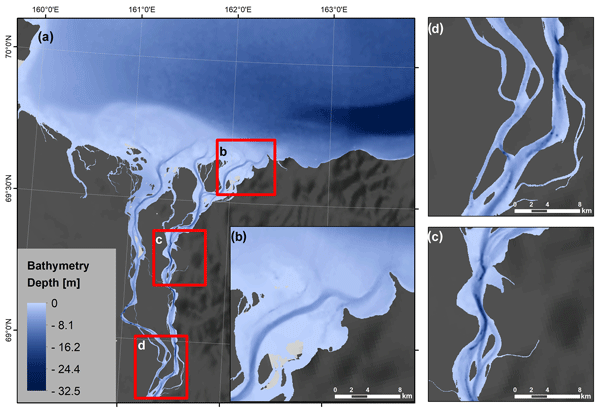
We created digital, high-resolution bathymetry data sets for the Lena Delta and Kolyma Gulf regions in northeastern Siberia. Based on nautical charts, we digitized depth points and isobath lines, which serve as an input for a 50 m bathymetry model. The benefit of this data set is the accurate mapping of near-shore areas as well as the offshore continuation of the main deep river channels. This will improve the estimation of river outflow and the nutrient flux output into the coastal zone.
Yongqin Liu, Pengcheng Fang, Bixi Guo, Mukan Ji, Pengfei Liu, Guannan Mao, Baiqing Xu, Shichang Kang, and Junzhi Liu
Earth Syst. Sci. Data, 14, 2303–2314, https://doi.org/10.5194/essd-14-2303-2022, https://doi.org/10.5194/essd-14-2303-2022, 2022
Short summary
Short summary
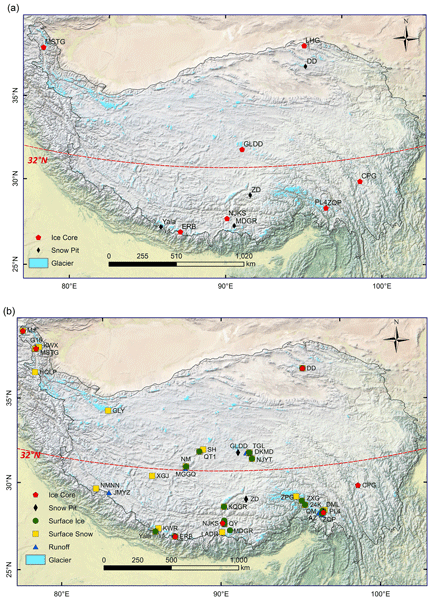
Glaciers are an important pool of microorganisms, organic carbon, and nitrogen. This study constructed the first dataset of microbial abundance and total nitrogen in Tibetan Plateau (TP) glaciers and the first dataset of dissolved organic carbon in ice cores on the TP. These new data could provide valuable information for research on the glacier carbon and nitrogen cycle and help in assessing the potential impacts of glacier retreat due to global warming on downstream ecosystems.

Charlotte Haugk, Loeka L. Jongejans, Kai Mangelsdorf, Matthias Fuchs, Olga Ogneva, Juri Palmtag, Gesine Mollenhauer, Paul J. Mann, P. Paul Overduin, Guido Grosse, Tina Sanders, Robyn E. Tuerena, Lutz Schirrmeister, Sebastian Wetterich, Alexander Kizyakov, Cornelia Karger, and Jens Strauss
Biogeosciences, 19, 2079–2094, https://doi.org/10.5194/bg-19-2079-2022, https://doi.org/10.5194/bg-19-2079-2022, 2022
Short summary
Short summary
Buried animal and plant remains (carbon) from the last ice age were freeze-locked in permafrost. At an extremely fast eroding permafrost cliff in the Lena Delta (Siberia), we found this formerly frozen carbon well preserved. Our results show that ongoing degradation releases substantial amounts of this carbon, making it available for future carbon emissions. This mobilisation at the studied cliff and also similarly eroding sites bear the potential to affect rivers and oceans negatively.
Mukesh Rai, Shichang Kang, Junhua Yang, Maheswar Rupakheti, Dipesh Rupakheti, Lekhendra Tripathee, Yuling Hu, and Xintong Chen
Atmos. Chem. Phys. Discuss., https://doi.org/10.5194/acp-2022-199, https://doi.org/10.5194/acp-2022-199, 2022
Revised manuscript not accepted
Short summary
Short summary
Our study revealed distinctive seasonality with the maximum and minimum aerosol concentrations during the winter and summer seasons respectively. However, interestingly summer high (AOD > 0.8) was observed over South Asia. The highest aerosols are laden over South Asia and East China within 1–2 km, however, aerosol overshooting found up to 10 km due to the deep convection process. Whereas, integrated aerosol transport for OC during spring was found to be 5 times higher than the annual mean.

Sarah Shakil, Suzanne E. Tank, Jorien E. Vonk, and Scott Zolkos
Biogeosciences, 19, 1871–1890, https://doi.org/10.5194/bg-19-1871-2022, https://doi.org/10.5194/bg-19-1871-2022, 2022
Short summary
Short summary
Permafrost thaw-driven landslides in the western Arctic are increasing organic carbon delivered to headwaters of drainage networks in the western Canadian Arctic by orders of magnitude. Through a series of laboratory experiments, we show that less than 10 % of this organic carbon is likely to be mineralized to greenhouse gases during transport in these networks. Rather most of the organic carbon is likely destined for burial and sequestration for centuries to millennia.
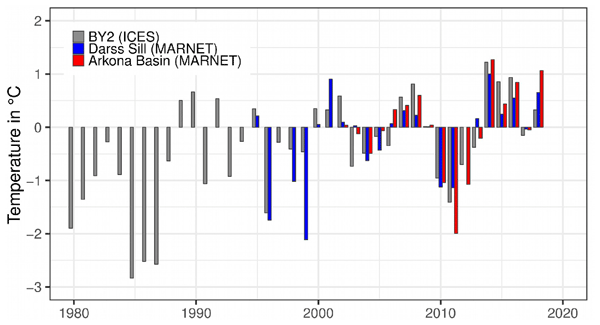
H. E. Markus Meier, Madline Kniebusch, Christian Dieterich, Matthias Gröger, Eduardo Zorita, Ragnar Elmgren, Kai Myrberg, Markus P. Ahola, Alena Bartosova, Erik Bonsdorff, Florian Börgel, Rene Capell, Ida Carlén, Thomas Carlund, Jacob Carstensen, Ole B. Christensen, Volker Dierschke, Claudia Frauen, Morten Frederiksen, Elie Gaget, Anders Galatius, Jari J. Haapala, Antti Halkka, Gustaf Hugelius, Birgit Hünicke, Jaak Jaagus, Mart Jüssi, Jukka Käyhkö, Nina Kirchner, Erik Kjellström, Karol Kulinski, Andreas Lehmann, Göran Lindström, Wilhelm May, Paul A. Miller, Volker Mohrholz, Bärbel Müller-Karulis, Diego Pavón-Jordán, Markus Quante, Marcus Reckermann, Anna Rutgersson, Oleg P. Savchuk, Martin Stendel, Laura Tuomi, Markku Viitasalo, Ralf Weisse, and Wenyan Zhang
Earth Syst. Dynam., 13, 457–593, https://doi.org/10.5194/esd-13-457-2022, https://doi.org/10.5194/esd-13-457-2022, 2022
Short summary
Short summary
Based on the Baltic Earth Assessment Reports of this thematic issue in Earth System Dynamics and recent peer-reviewed literature, current knowledge about the effects of global warming on past and future changes in the climate of the Baltic Sea region is summarised and assessed. The study is an update of the Second Assessment of Climate Change (BACC II) published in 2015 and focuses on the atmosphere, land, cryosphere, ocean, sediments, and the terrestrial and marine biosphere.

Huiming Lin, Yindong Tong, Chenghao Yu, Long Chen, Xiufeng Yin, Qianggong Zhang, Shichang Kang, Lun Luo, James Schauer, Benjamin de Foy, and Xuejun Wang
Atmos. Chem. Phys., 22, 2651–2668, https://doi.org/10.5194/acp-22-2651-2022, https://doi.org/10.5194/acp-22-2651-2022, 2022
Short summary
Short summary
The Tibetan Plateau is known as
The Third Poleand is generally considered to be a clean area owing to its high altitude. However, it may receive be impacted by air pollutants transported from the Indian subcontinent. Pollutants generally enter the Tibetan Plateau in several ways. Among them is the Yarlung Zangbu–Brahmaputra Grand Canyon. In this study, we identified the influence of the Indian summer monsoon on the origin, transport, and behavior of mercury in this area.

Shichang Kang, Yulan Zhang, Pengfei Chen, Junming Guo, Qianggong Zhang, Zhiyuan Cong, Susan Kaspari, Lekhendra Tripathee, Tanguang Gao, Hewen Niu, Xinyue Zhong, Xintong Chen, Zhaofu Hu, Xiaofei Li, Yang Li, Bigyan Neupane, Fangping Yan, Dipesh Rupakheti, Chaman Gul, Wei Zhang, Guangming Wu, Ling Yang, Zhaoqing Wang, and Chaoliu Li
Earth Syst. Sci. Data, 14, 683–707, https://doi.org/10.5194/essd-14-683-2022, https://doi.org/10.5194/essd-14-683-2022, 2022
Short summary
Short summary
The Tibetan Plateau is important to the Earth’s climate. However, systematically observed data here are scarce. To perform more integrated and in-depth investigations of the origins and distributions of atmospheric pollutants and their impacts on cryospheric change, systematic data of black carbon and organic carbon from the atmosphere, glaciers, snow cover, precipitation, and lake sediment cores over the plateau based on the Atmospheric Pollution and Cryospheric Change program are provided.
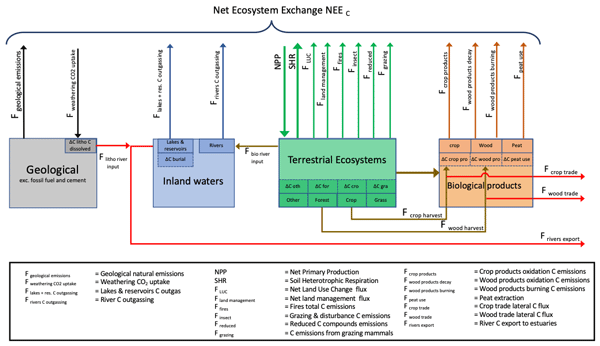
Philippe Ciais, Ana Bastos, Frédéric Chevallier, Ronny Lauerwald, Ben Poulter, Josep G. Canadell, Gustaf Hugelius, Robert B. Jackson, Atul Jain, Matthew Jones, Masayuki Kondo, Ingrid T. Luijkx, Prabir K. Patra, Wouter Peters, Julia Pongratz, Ana Maria Roxana Petrescu, Shilong Piao, Chunjing Qiu, Celso Von Randow, Pierre Regnier, Marielle Saunois, Robert Scholes, Anatoly Shvidenko, Hanqin Tian, Hui Yang, Xuhui Wang, and Bo Zheng
Geosci. Model Dev., 15, 1289–1316, https://doi.org/10.5194/gmd-15-1289-2022, https://doi.org/10.5194/gmd-15-1289-2022, 2022
Short summary
Short summary
The second phase of the Regional Carbon Cycle Assessment and Processes (RECCAP) will provide updated quantification and process understanding of CO2, CH4, and N2O emissions and sinks for ten regions of the globe. In this paper, we give definitions, review different methods, and make recommendations for estimating different components of the total land–atmosphere carbon exchange for each region in a consistent and complete approach.
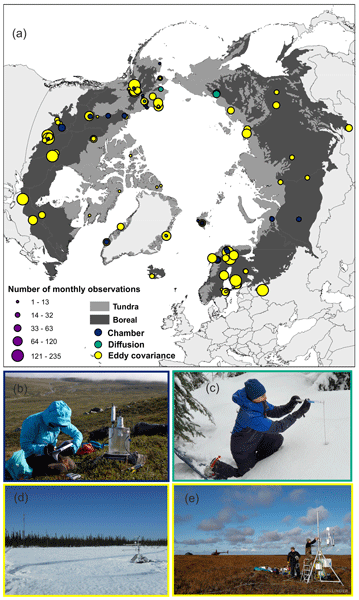
Anna-Maria Virkkala, Susan M. Natali, Brendan M. Rogers, Jennifer D. Watts, Kathleen Savage, Sara June Connon, Marguerite Mauritz, Edward A. G. Schuur, Darcy Peter, Christina Minions, Julia Nojeim, Roisin Commane, Craig A. Emmerton, Mathias Goeckede, Manuel Helbig, David Holl, Hiroki Iwata, Hideki Kobayashi, Pasi Kolari, Efrén López-Blanco, Maija E. Marushchak, Mikhail Mastepanov, Lutz Merbold, Frans-Jan W. Parmentier, Matthias Peichl, Torsten Sachs, Oliver Sonnentag, Masahito Ueyama, Carolina Voigt, Mika Aurela, Julia Boike, Gerardo Celis, Namyi Chae, Torben R. Christensen, M. Syndonia Bret-Harte, Sigrid Dengel, Han Dolman, Colin W. Edgar, Bo Elberling, Eugenie Euskirchen, Achim Grelle, Juha Hatakka, Elyn Humphreys, Järvi Järveoja, Ayumi Kotani, Lars Kutzbach, Tuomas Laurila, Annalea Lohila, Ivan Mammarella, Yojiro Matsuura, Gesa Meyer, Mats B. Nilsson, Steven F. Oberbauer, Sang-Jong Park, Roman Petrov, Anatoly S. Prokushkin, Christopher Schulze, Vincent L. St. Louis, Eeva-Stiina Tuittila, Juha-Pekka Tuovinen, William Quinton, Andrej Varlagin, Donatella Zona, and Viacheslav I. Zyryanov
Earth Syst. Sci. Data, 14, 179–208, https://doi.org/10.5194/essd-14-179-2022, https://doi.org/10.5194/essd-14-179-2022, 2022
Short summary
Short summary
The effects of climate warming on carbon cycling across the Arctic–boreal zone (ABZ) remain poorly understood due to the relatively limited distribution of ABZ flux sites. Fortunately, this flux network is constantly increasing, but new measurements are published in various platforms, making it challenging to understand the ABZ carbon cycle as a whole. Here, we compiled a new database of Arctic–boreal CO2 fluxes to help facilitate large-scale assessments of the ABZ carbon cycle.

Jinlei Chen, Shichang Kang, Wentao Du, Junming Guo, Min Xu, Yulan Zhang, Xinyue Zhong, Wei Zhang, and Jizu Chen
The Cryosphere, 15, 5473–5482, https://doi.org/10.5194/tc-15-5473-2021, https://doi.org/10.5194/tc-15-5473-2021, 2021
Short summary
Short summary
Sea ice is retreating with rapid warming in the Arctic. It will continue and approach the worst predicted pathway released by the IPCC. The irreversible tipping point might show around 2060 when the oldest ice will have completely disappeared. It has a huge impact on human production. Ordinary merchant ships will be able to pass the Northeast Passage and Northwest Passage by the midcentury, and the opening time will advance to the next 10 years for icebreakers with moderate ice strengthening.
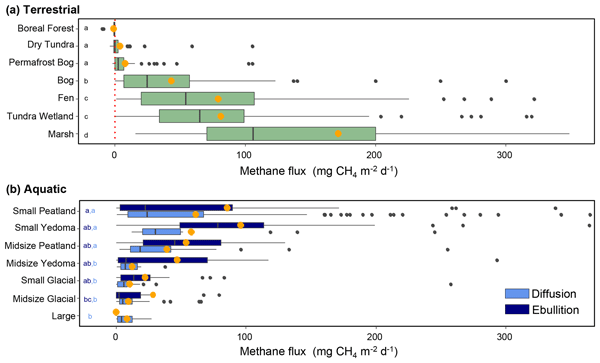
McKenzie A. Kuhn, Ruth K. Varner, David Bastviken, Patrick Crill, Sally MacIntyre, Merritt Turetsky, Katey Walter Anthony, Anthony D. McGuire, and David Olefeldt
Earth Syst. Sci. Data, 13, 5151–5189, https://doi.org/10.5194/essd-13-5151-2021, https://doi.org/10.5194/essd-13-5151-2021, 2021
Short summary
Short summary
Methane (CH4) emissions from the boreal–Arctic region are globally significant, but the current magnitude of annual emissions is not well defined. Here we present a dataset of surface CH4 fluxes from northern wetlands, lakes, and uplands that was built alongside a compatible land cover dataset, sharing the same classifications. We show CH4 fluxes can be split by broad land cover characteristics. The dataset is useful for comparison against new field data and model parameterization or validation.
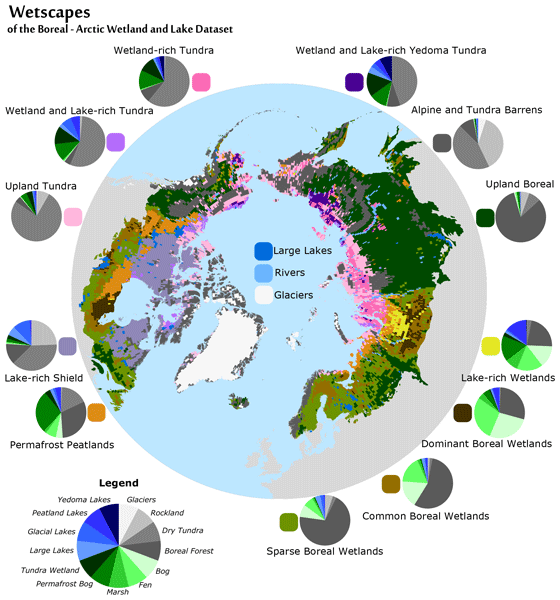
David Olefeldt, Mikael Hovemyr, McKenzie A. Kuhn, David Bastviken, Theodore J. Bohn, John Connolly, Patrick Crill, Eugénie S. Euskirchen, Sarah A. Finkelstein, Hélène Genet, Guido Grosse, Lorna I. Harris, Liam Heffernan, Manuel Helbig, Gustaf Hugelius, Ryan Hutchins, Sari Juutinen, Mark J. Lara, Avni Malhotra, Kristen Manies, A. David McGuire, Susan M. Natali, Jonathan A. O'Donnell, Frans-Jan W. Parmentier, Aleksi Räsänen, Christina Schädel, Oliver Sonnentag, Maria Strack, Suzanne E. Tank, Claire Treat, Ruth K. Varner, Tarmo Virtanen, Rebecca K. Warren, and Jennifer D. Watts
Earth Syst. Sci. Data, 13, 5127–5149, https://doi.org/10.5194/essd-13-5127-2021, https://doi.org/10.5194/essd-13-5127-2021, 2021
Short summary
Short summary
Wetlands, lakes, and rivers are important sources of the greenhouse gas methane to the atmosphere. To understand current and future methane emissions from northern regions, we need maps that show the extent and distribution of specific types of wetlands, lakes, and rivers. The Boreal–Arctic Wetland and Lake Dataset (BAWLD) provides maps of five wetland types, seven lake types, and three river types for northern regions and will improve our ability to predict future methane emissions.
Cited articles
AMAP: AMAP Assessment 2021: Mercury in the Arctic, Arctic Monitoring and Assessment Programme (AMAP), Tromsø, Norway, x+240 pp., 2021.
Azaroff, A., Thompson, L., Haugk, C., Arp, P., Douglas, T., Fahnestock, F., Hugelius, G., Korosi, J., Nasr, M., Natalie, S., Olefeldt, D., Olson, C., Schaefer, K., Saint Pierre, K., Shakil, S., Sunderland, E., Zolkos, S., and Jonsson, S.: Arctic permafrost soil mercury-carbon synthesis dataset, 2004–2025, Dataset version 1, Bolin Centre Database [data set], https://doi.org/10.17043/azaroff-2026-permafrost-mercury-1, 2026.
Basu, N., Abass, K., Dietz, R., Krümmel, E., Rautio, A., and Weihe, P.: The impact of mercury contamination on human health in the Arctic: A state of the science review, Sci. Total Environ., 831, 154793, https://doi.org/10.1016/j.scitotenv.2022.154793, 2022.
Chételat, J., McKinney, M. A., Amyot, M., Dastoor, A., Douglas, T. A., Heimbürger-Boavida, L.-E., Kirk, J., Kahilainen, K. K., Outridge, P. M., Pelletier, N., Skov, H., St. Pierre, K., Vuorenmaa, J., and Wang, F.: Climate change and mercury in the Arctic: Abiotic interactions, Sci. Total Environ., 824, 153715, https://doi.org/10.1016/j.scitotenv.2022.153715, 2022.
Dastoor, A., Angot, H., Bieser, J., Christensen, J. H., Douglas, T. A., Heimbürger-Boavida, L.-E., Jiskra, M., Mason, R. P., McLagan, D. S., Obrist, D., Outridge, P. M., Petrova, M. V., Ryjkov, A., St. Pierre, K. A., Schartup, A. T., Soerensen, A. L., Toyota, K., Travnikov, O., Wilson, S. J., and Zdanowicz, C.: Arctic mercury cycling, Nat. Rev. Earth Environ., 3, 270–286, https://doi.org/10.1038/s43017-022-00269-w, 2022.
Fabre, C., Sonke, J. E., Tananaev, N., and Teisserenc, R.: Organic carbon and mercury exports from pan-Arctic rivers in a thawing permafrost context – A review, Sci. Total Environ., 954, 176713, https://doi.org/10.1016/j.scitotenv.2024.176713, 2024.
Fitzgerald, W. F. and Lamborg, C. H.: 11.4 – Geochemistry of Mercury in the Environment in: Treatise on Geochemistry, Elsevier Ltd., 91–129, https://doi.org/10.1016/B978-0-08-095975-7.00904-9, 2014.
Gartler, S., Scheer, J., Meyer, A., Abass, K., Bartsch, A., Doloisio, N., Falardeau, J., Hugelius, G., Irrgang, A., Haukur Ingimundarson, J., Jungsberg, L., Lantuit, H., Nymand Larsen, J., Lodi, R., Martin, V. S., Mercer, L., Nielsen, D., Overduin, P., Povoroznyuk, O., Rautio, A., Schweitzer, P., Speetjens, N. J., Tomaškovičová, S., Timlin, U., Vanderlinden, J.-P., Vonk, J., Westerveld, L., and Ingeman-Nielsen, T.: A transdisciplinary, comparative analysis reveals key risks from Arctic permafrost thaw, Commun. Earth Environ., 6, 21, https://doi.org/10.1038/s43247-024-01883-w, 2025.
Giest, F. P., Jenrich, M., Grosse, G., Jones, B. M., Mangelsdorf, K., Windirsch, T., and Strauss, J.: Organic carbon, mercury, and sediment characteristics along a land–shore transect in Arctic Alaska, Biogeosciences, 22, 2871–2887, https://doi.org/10.5194/bg-22-2871-2025, 2025.
Gruber, S.: Derivation and analysis of a high-resolution estimate of global permafrost zonation, The Cryosphere, 6, 221–233, https://doi.org/10.5194/tc-6-221-2012, 2012.
Gworek, B., Bemowska-Kalabun, O., Kijenska, M., and Wrzosek-Jakubowska, J.: Mercury in Marine and Oceanic Waters – a Review, Water Air Soil Pollut., 227, https://doi.org/10.1007/s11270-016-3060-3, 2016.
Gworek, B., Dmuchowski, W., and Baczewska-Dąbrowska, A. H.: Mercury in the terrestrial environment: a review, Environ. Sci. Eur., 32, 128, https://doi.org/10.1186/s12302-020-00401-x, 2020.
Horsburgh, J. S., Tarboton, D. G., Piasecki, M., Maidment, D. R., Zaslavsky, I., Valentine, D., and Whitenack, T.: An integrated system for publishing environmental observations data, Environ. Modell. Softw., 24, 879–888, https://doi.org/10.1016/j.envsoft.2009.01.002, 2009.
Jonsson, S., Mastromonaco, M. N., Wang, F., Bravo, A. G., Cairns, W. R. L., Chételat, J., Douglas, T. A., Lescord, G., Ukonmaanaho, L., and Heimbürger-Boavida, L.-E.: Arctic methylmercury cycling, Sci. Total Environ., 850, 157445, https://doi.org/10.1016/j.scitotenv.2022.157445, 2022.
Kang, H., Liu, X., Guo, J., Zhang, Q., Wang, Y., Huang, J., Xu, G., Wu, G., Ge, W., and Kang, S.: Long-term mercury variations in tree rings of the permafrost forest, northeastern China, Sci. China Earth Sci., 65, 1328–1338, https://doi.org/10.1007/s11430-021-9886-1, 2022.
Lim, A. G., Jiskra, M., Sonke, J. E., Loiko, S. V., Kosykh, N., and Pokrovsky, O. S.: A revised pan-Arctic permafrost soil Hg pool based on Western Siberian peat Hg and carbon observations, Biogeosciences, 17, 3083–3097, https://doi.org/10.5194/bg-17-3083-2020, 2020.
Lu, M., Wang, X., Feng, X., and Luo, J.: Spatial distribution and source/ sink characteristic of mercury in the water samples from the Mt. Gongga area in the Tibetan Plateau, Huanjing Huaxue-Environmental Chemistry, 35, 1549–1556, https://doi.org/10.7524/j.issn.0254-6108.2016.08.2015122301, 2016.
MacMillan, G. A., Girard, C., Chételat, J., Laurion, I., and Amyot, M.: High Methylmercury in Arctic and Subarctic Ponds is Related to Nutrient Levels in the Warming Eastern Canadian Arctic, Environ. Sci. Technol., 49, 7743–7753, https://doi.org/10.1021/acs.est.5b00763, 2015.
Obrist, D., Agnan, Y., Jiskra, M., Olson, C. L., Colegrove, D. P., Hueber, J., Moore, C. W., Sonke, J. E., and Helmig, D.: Tundra uptake of atmospheric elemental mercury drives Arctic mercury pollution, Nature, 547, 201–204, https://doi.org/10.1038/nature22997, 2017.
Obu, J., Westermann, S., Bartsch, A., Berdnikov, N., Christiansen, H., Dashtseren, A., Delaloye, R., Elberling, B., Etzelmüller, B., Kholodov, A., Khomutov, A., Kääb, A., Leibman, M., Lewkowicz, A., Panda, S., Romanovsky, V., Way, R., Westergaard-Nielsen, A., Wu, T., Yamkhin, J., and Zou, D.: Northern Hemisphere permafrost map based on TTOP modelling for 2000–2016 at 1 km2 scale, Earth-Sci. Rev., 193, 299–316, https://doi.org/10.1016/j.earscirev.2019.04.023, 2019.
Olson, C. I., Geyman, B., Thackray, C., Krabbenhoft, D., Tate, M., Sunderland, E., and Driscoll, C.: Mercury in soils of the conterminous United States: patterns and pools, Environ. Res. Lett., 17, https://doi.org/10.1088/1748-9326/ac79c2, 2022.
Olson, C. L., Jiskra, M., Biester, H., Chow, J., and Obrist, D.: Mercury in Active-Layer Tundra Soils of Alaska: Concentrations, Pools, Origins, and Spatial Distribution, Global Biogeochem. Cy., 32, 1058–1073, https://doi.org/10.1029/2017GB005840, 2018.
Olson, C. L., Jiskra, M., Sonke, J. E., and Obrist, D.: Mercury in tundra vegetation of Alaska: Spatial and temporal dynamics and stable isotope patterns, Sci. Total Environ., 1502–1512, https://doi.org/10.1016/j.earscirev.2019.04.023, 2019.
Olson, C. L., Schaefer, K., Azaroff, A., Angot, H., Bandara, S., Douglas, T. A., Elberling, B., Fahnestock, M. F., Feng, X., Haugk, C., Hugelius, G., Jahangir, E., Jonsson, S., Kang, S., Kirkwood, A., Korosi, J., Lehnherr, I., Lim, A., Manasypov, R., Moskovchenko, D., Nasr, M., Obrist, D., Olefeldt, D., Olson, C. I., Pokrovsky, O., Sereni, L., Shakil, S., Smith, M. I., Søndergaard, J., Sonke, J., Staniszewska, K., Strauss, J., St. Pierre, K., Thompson, L., Yurtaev, A., Zhang, Y., and Zolkos, S.: A Consolidated Database of Mercury Observations for Permafrost Regions, Zenodo [data set], https://doi.org/10.5281/zenodo.18300989, 2026a.
Olson, C. L., Schaefer, K., Azaroff, A., Angot, H., Bandara, S., Douglas, T. A., Elberling, B., Fahnestock, M. F., Feng, X., Haugk, C., Hugelius, G., Jahangir, E., Jonsson, S., Kang, S., Kirkwood, A., Korosi, J., Lehnherr, I., Lim, A., Manasypov, R., Moskovchenko, D., Nasr, M., Obrist, D., Olefeldt, D., Olson, C. I., Pokrovsky, O., Sereni, L., Shakil, S., Smith, M. I., Søndergaard, J., Sonke, J., Staniszewska, K., Strauss, J., St. Pierre, K., Thompson, L., Yurtaev, A., Zhang, Y., and Zolkos, S.: A Consolidated Database of Mercury Observations for Permafrost Regions (V1.0), Zenodo [data set], https://doi.org/10.5281/zenodo.18483492, 2026b.
Outridge, P. M., Mason, R. P., Wang, F., Guerrero, S., and Heimbürger-Boavida, L. E.: Updated Global and Oceanic Mercury Budgets for the United Nations Global Mercury Assessment 2018, Environ. Sci. Technol., 52, 11466–11477, https://doi.org/10.1021/acs.est.8b01246, 2018.
Schaefer, K., Elshorbany, Y., Jafarov, E., Schuster, P. F., Striegl, R. G., Wickland, K. P., and Sunderland, E. M.: Potential impacts of mercury released from thawing permafrost, Nat. Commun., 11, 4650, https://doi.org/10.1038/s41467-020-18398-5, 2020.
Schuster, P. F., Schaefer, K. M., Aiken, G. R., Antweiler, R. C., Dewild, J. F., Gryziec, J. D., Gusmeroli, A., Hugelius, G., Jafarov, E., Krabbenhoft, D. P., Liu, L., Herman-Mercer, N., Mu, C., Roth, D. A., Schaefer, T., Striegl, R. G., Wickland, K. P., and Zhang, T.: Permafrost Stores a Globally Significant Amount of Mercury, Geophys. Res. Lett., 45, 1463–1471, https://doi.org/10.1002/2017GL075571, 2018.
Sonke, J., Teisserenc, R., Heimbürger-Boavida, L., Petrova, M., Marusczak, N., Le Dantec, T., Chupakov, A., Li, C., Thackray, C., Sunderland, E., Tananaev, N., and Pokrovsky, O.: Eurasian river spring flood observations support net Arctic Ocean mercury export to the atmosphere and Atlantic Ocean, P. Natl. Acad. Sci. USA, 115, E11586–E11594, https://doi.org/10.1073/pnas.1811957115, 2018.
Sonke, J., Angot, H., Zhang, Y., Poulain, A., Björn, E., and Schartup, A.: Global change effects on biogeochemical mercury cycling, Ambio, https://doi.org/10.1007/s13280-023-01855-y, 2023.
St. Pierre, K. A., Zolkos, S., Shakil, S., Tank, S. E., St. Louis, V. L., and Kokelj, S. V.: Unprecedented Increases in Total and Methyl Mercury Concentrations Downstream of Retrogressive Thaw Slumps in the Western Canadian Arctic, Environ. Sci. Technol., 52, 14099–14109, https://doi.org/10.1021/acs.est.8b05348, 2018.
Thompson, L. M., Shewan, R., Mangal, V., Harris, L. I., Cheng, C. H., Braga, L. P. P., Kolmakova, O., Tanentzap, A. J., Knorr, K. H., Kuhn, M. A., Haugk, C., Azaroff, A., Jonsson, S., St. Louis, V. L., Lehnherr, I., Quinton, W. L., Sonnentag, O., and Olefeldt, D.: Production of Methylmercury in Peatlands Following Permafrost Thaw Increases along a Trophic Gradient, Environ. Sci. Technol., 59, 19457–19467, https://doi.org/10.1021/acs.est.5c04510, 2025.
Tian, S., Li, D., Zhang, T., McClelland, J. W., Overeem, I., Lane, S. N., Spencer, R. G. M., Wohl, E., Sha, A., Zhao, Y., Miao, C., Ning, M., Yuan, L., and Ni, J.: Increasing river sediment concentration and flux across the pan-Arctic, Nat. Geosci., 1–8, https://doi.org/10.1038/s41561-026-01960-z, 2026.
Varty, S., Lehnherr, I., St. Pierre, K., Kirk, J., and Wisniewski, V.: Methylmercury Transport and Fate Shows Strong Seasonal and Spatial Variability along a High Arctic Freshwater Hydrologic Continuum, Environ. Sci. Technol., 55, 331–340, https://doi.org/10.1021/acs.est.0c05051, 2021.
Virkkala, A.-M., Natali, S. M., Rogers, B. M., Watts, J. D., Savage, K., Connon, S. J., Mauritz, M., Schuur, E. A. G., Peter, D., Minions, C., Nojeim, J., Commane, R., Emmerton, C. A., Goeckede, M., Helbig, M., Holl, D., Iwata, H., Kobayashi, H., Kolari, P., López-Blanco, E., Marushchak, M. E., Mastepanov, M., Merbold, L., Parmentier, F.-J. W., Peichl, M., Sachs, T., Sonnentag, O., Ueyama, M., Voigt, C., Aurela, M., Boike, J., Celis, G., Chae, N., Christensen, T. R., Bret-Harte, M. S., Dengel, S., Dolman, H., Edgar, C. W., Elberling, B., Euskirchen, E., Grelle, A., Hatakka, J., Humphreys, E., Järveoja, J., Kotani, A., Kutzbach, L., Laurila, T., Lohila, A., Mammarella, I., Matsuura, Y., Meyer, G., Nilsson, M. B., Oberbauer, S. F., Park, S.-J., Petrov, R., Prokushkin, A. S., Schulze, C., St. Louis, V. L., Tuittila, E.-S., Tuovinen, J.-P., Quinton, W., Varlagin, A., Zona, D., and Zyryanov, V. I.: The ABCflux database: Arctic–boreal CO2 flux observations and ancillary information aggregated to monthly time steps across terrestrial ecosystems, Earth Syst. Sci. Data, 14, 179–208, https://doi.org/10.5194/essd-14-179-2022, 2022.
Wohlgemuth, L., Rautio, P., Ahrends, B., Russ, A., Vesterdal, L., Waldner, P., Timmermann, V., Eickenscheidt, N., Fürst, A., Greve, M., Roskams, P., Thimonier, A., Nicolas, M., Kowalska, A., Ingerslev, M., Merilä, P., Benham, S., Iacoban, C., Hoch, G., Alewell, C., and Jiskra, M.: Physiological and climate controls on foliar mercury uptake by European tree species, Biogeosciences, 19, 1335–1353, https://doi.org/10.5194/bg-19-1335-2022, 2022.
Zhang, L., Qian, J.-L., and Planas, D.: Mercury concentration in tree rings of black spruce (Picea mariana Mill. B.S.P.) in boreal Quebec, Canada, Water Air Soil Pollut., 81, 163–173, https://doi.org/10.1007/BF00477263, 1995.
Zhang, Y., Zhang, P., Song, Z., Huang, S., Yuan, T., Wu, P., Shah, V., Liu, M., Chen, L., Wang, X., Zhou, J., and Agnan, Y.: An updated global mercury budget from a coupled atmosphere-land-ocean model: 40 % more re-emissions buffer the effect of primary emission reductions, One Earth, 6, 316–325, https://doi.org/10.1016/j.oneear.2023.02.004, 2023.
Zolkos, S., Krabbenhoft, D. P., Suslova, A., Tank, S. E., McClelland, J. W., Spencer, R. G. M., Shiklomanov, A., Zhulidov, A. V., Gurtovaya, T., Zimov, N., Zimov, S., Mutter, E. A., Kutny, L., Amos, E., and Holmes, R. M.: Mercury Export from Arctic Great Rivers, Environ. Sci. Technol., 54, 4140–4148, https://doi.org/10.1021/acs.est.9b07145, 2020.
Short summary
Permafrost regions store large amounts of mercury, a toxic pollutant that can be released as the ground warms. We combined thousands of measurements from soils, plants, water, and lake sediments into one open database to better understand where mercury is stored and how it moves. The results show clear differences among environments and reveal major data gaps, helping improve future research, monitoring, and decision-making.
Permafrost regions store large amounts of mercury, a toxic pollutant that can be released as the...


Altmetrics
Final-revised paper
Preprint