Articles | Volume 18, issue 6
https://doi.org/10.5194/essd-18-4047-2026
© Author(s) 2026. This work is distributed under
the Creative Commons Attribution 4.0 License.
the Creative Commons Attribution 4.0 License.
https://doi.org/10.5194/essd-18-4047-2026
© Author(s) 2026. This work is distributed under
the Creative Commons Attribution 4.0 License.
the Creative Commons Attribution 4.0 License.
Data description article
| 
15 Jun 2026
Data description article |
| 15 Jun 2026
| 15 Jun 2026
An operational global L-band soil moisture and vegetation optical depth dataset from optimized 40° SMOS brightness temperatures for 2010–2024
Zanpin Xing
Center for Pan-third Pole Environment, Lanzhou University, Lanzhou 730000, China
Key Laboratory of Pan-third Pole Biogeochemical Cycling, Lanzhou 730000, China
Chayu integrated observation and research station of the Xizang Autonomous Region, Xizang, China

Faculty of Geosciences and Engineering, Southwest Jiaotong University, Chengdu 611756, China
Frédéric Frappart
INRAE, Bordeaux Sciences Agro, UMR 1391 ISPA, 33140 Villenave-d'Ornon, France
Gabrielle De Lannoy
Department of Earth and Environmental Sciences, KU Leuven, Heverlee 3001, Belgium
Thomas Jagdhuber
Microwaves and Radar Institute, German Aerospace Center (DLR), 82234 Weßling, Germany
Institute of Geography, University of Augsburg, 86159 Augsburg, Germany
Jian Peng
Department of Remote Sensing, Helmholtz Centre for Environmental Research – UFZ, 04318 Leipzig, Germany
Institute for Earth System Science and Remote Sensing, Leipzig University, 04103 Leipzig, Germany
Lei Fan
Chongqing Jinfo Mountain Karst Ecosystem National Observation and Research Station, School of Geographical Sciences, Southwest University, Chongqing 400715, China
Hongliang Ma
INRAE, UMR 1114 EMMAH, UMT CAPTE, Provence-Alpes-Cote d'Azur, 84000 Avignon, France
Lanka Karthikeyan
Centre of Studies in Resources Engineering, Indian Institute of Technology Bombay, Mumbai 400076, India
Centre for Climate Studies, Indian Institute of Technology Bombay, Mumbai 400076, India
Xiangzhuo Liu
INRAE, Bordeaux Sciences Agro, UMR 1391 ISPA, 33140 Villenave-d'Ornon, France
Mengjia Wang
INRAE, Bordeaux Sciences Agro, UMR 1391 ISPA, 33140 Villenave-d'Ornon, France
School of Geo-Science and Technology, Zhengzhou University, Zhengzhou 450001, China
School of Geographical Sciences, Nanjing University of Information Science & Technology, Nanjing 210044, China
Yongqin Liu
Center for Pan-third Pole Environment, Lanzhou University, Lanzhou 730000, China
Key Laboratory of Pan-third Pole Biogeochemical Cycling, Lanzhou 730000, China
Chayu integrated observation and research station of the Xizang Autonomous Region, Xizang, China
Jean-Pierre Wigneron
INRAE, Bordeaux Sciences Agro, UMR 1391 ISPA, 33140 Villenave-d'Ornon, France
Related authors
Erji Du, Tonghua Wu, Liyun Dai, Youhua Ran, Yufang Min, Lin Zhao, Lingxiao Wang, Jimin Yao, Zhibin Li, Keting Feng, Yao Xiao, Guojie Hu, Defu Zou, Guangyue Liu, Zanpin Xing, Xiaofan Zhu, and Ji Chen
Earth Syst. Sci. Data Discuss., https://doi.org/10.5194/essd-2026-330, https://doi.org/10.5194/essd-2026-330, 2026
Preprint under review for ESSD
Short summary
Short summary
We present the first 90 m resolution dataset of active layer moisture covering the entire permafrost region of the Qinghai–Tibet Plateau. It was produced from 342 field observations (2009–2024) using four machine learning models combined through bias-aware fusion, and is accompanied by an area-of-applicability mask and per-pixel uncertainty estimates. The dataset is freely available at https://doi.org/10.12072/ncdc.permafrost.db7312.2026.
Rémi Madelon, K. Arthur Endsley, John S. Kimball, Gabriëlle J. M. De Lannoy, Oliver Sonnentag, Haley Alcock, Alex Mavrovic, Scott N. Williamson, Vincent Maire, Arnaud Mialon, and Alexandre Roy
Biogeosciences, 23, 6359–6407, https://doi.org/10.5194/bg-23-6359-2026, https://doi.org/10.5194/bg-23-6359-2026, 2026
Short summary
Short summary
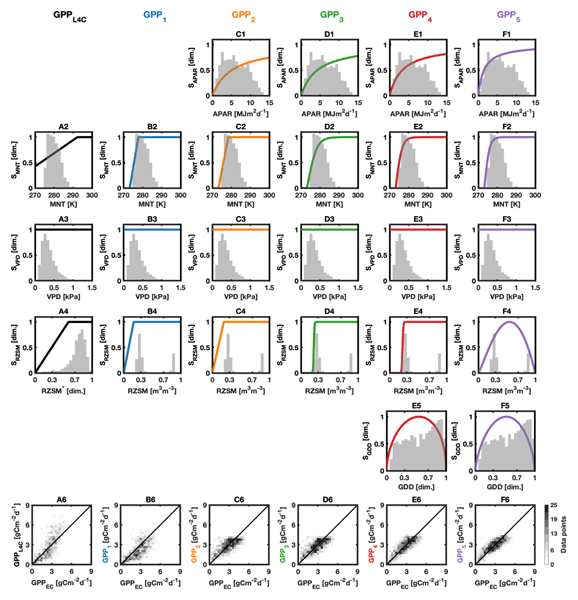
This study aims to improve estimates of carbon dioxide release and uptake in the North American Arctic and subarctic regions. Several modeling approaches were tested, showing that a better representation of sunlight and temperature effects on ecosystems leads to improved estimates. This work provides new perspectives to better assess whether these regions act as sources or sinks of greenhouse gases and how they may influence the climate system by amplifying or slowing global warming.
Xi Liu, Xing Li, Dalei Hao, Jingfeng Xiao, Yanan Zhou, Cenliang Zhao, Zikang Diao, Fuqiang Qu, Shangrong Lin, Xiangzhuo Liu, Zhaoying Zhang, Xinjie Liu, and Helin Zhang
Earth Syst. Sci. Data, 18, 6613–6636, https://doi.org/10.5194/essd-18-6613-2026, https://doi.org/10.5194/essd-18-6613-2026, 2026
Short summary
Short summary
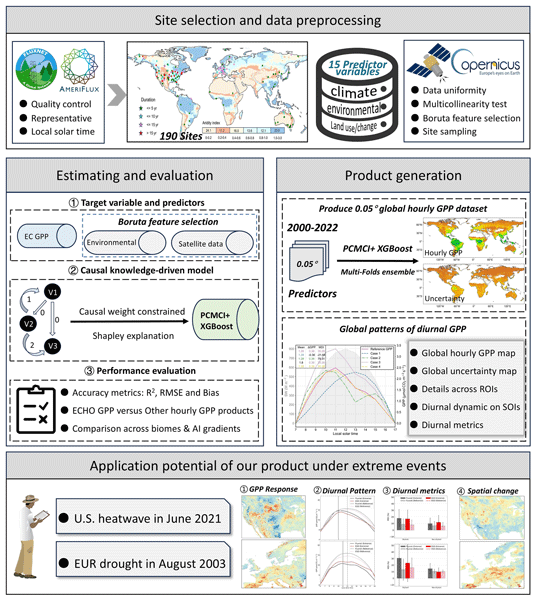
Vegetation photosynthesis, quantified as Gross Primary Productivity (GPP), changes rapidly throughout the day. We developed a global hourly GPP dataset called EGO (Eddy covariance site-based Global hOurly) by combining tower observations with advanced artificial intelligence that accounts for causal effects, outperforms existing hourly GPP products and well captures diurnal photosynthesis dynamics. It will provide a reliable foundation for investigating sub-daily ecosystem processes and benchmarking Earth system models.
Erji Du, Tonghua Wu, Liyun Dai, Youhua Ran, Yufang Min, Lin Zhao, Lingxiao Wang, Jimin Yao, Zhibin Li, Keting Feng, Yao Xiao, Guojie Hu, Defu Zou, Guangyue Liu, Zanpin Xing, Xiaofan Zhu, and Ji Chen
Earth Syst. Sci. Data Discuss., https://doi.org/10.5194/essd-2026-330, https://doi.org/10.5194/essd-2026-330, 2026
Preprint under review for ESSD
Short summary
Short summary
We present the first 90 m resolution dataset of active layer moisture covering the entire permafrost region of the Qinghai–Tibet Plateau. It was produced from 342 field observations (2009–2024) using four machine learning models combined through bias-aware fusion, and is accompanied by an area-of-applicability mask and per-pixel uncertainty estimates. The dataset is freely available at https://doi.org/10.12072/ncdc.permafrost.db7312.2026.
Yao Xiao, Nan Zhou, Guojie Hu, Ren Li, Guangyue Liu, Tonghua Wu, Xiaodong Wu, Defu Zou, Erji Du, Yonghua Zhao, and Lin Zhao
EGUsphere, https://doi.org/10.5194/egusphere-2026-3134, https://doi.org/10.5194/egusphere-2026-3134, 2026
This preprint is open for discussion and under review for The Cryosphere (TC).
Short summary
Short summary
Snow on the Tibetan Plateau is often widespread in winter but usually shallow. We developed a benchmark that evaluates snow-covered area and snow depth together on each model’s native grid. Most CMIP6 models overestimate both variables in winter, especially over the western and high-elevation Plateau. The benchmark helps users choose snow products for cryospheric, hydrological and climate studies.
Xiangfei Li, Jinzhi Tian, Chengzhi Wu, Shuo Wang, and Lin Zhao
EGUsphere, https://doi.org/10.5194/egusphere-2026-4290, https://doi.org/10.5194/egusphere-2026-4290, 2026
Short summary
Short summary
Snow droughts can threaten water supplies, ecosystems, and communities, but studies often use different methods and data, making results hard to compare. We developed an open-source Python tool that combines snow drought detection methods, data download, mapping, and standardized output in one workflow. Tests with global snow data show that the tool identifies annual, monthly, and daily events consistently. This makes snow drought studies easier to repeat, compare, and use in planning.
Pierre Laluet, Jacopo Dari, Louise Busschaert, Zdenko Heyvaert, Gabrielle De Lannoy, Pia Langhans, Sara Modanesi, Christian Massari, Luca Brocca, Carla Saltalippi, Renato Morbidelli, Clément Albergel, and Wouter Dorigo
Earth Syst. Sci. Data, 18, 4833–4853, https://doi.org/10.5194/essd-18-4833-2026, https://doi.org/10.5194/essd-18-4833-2026, 2026
Short summary
Short summary
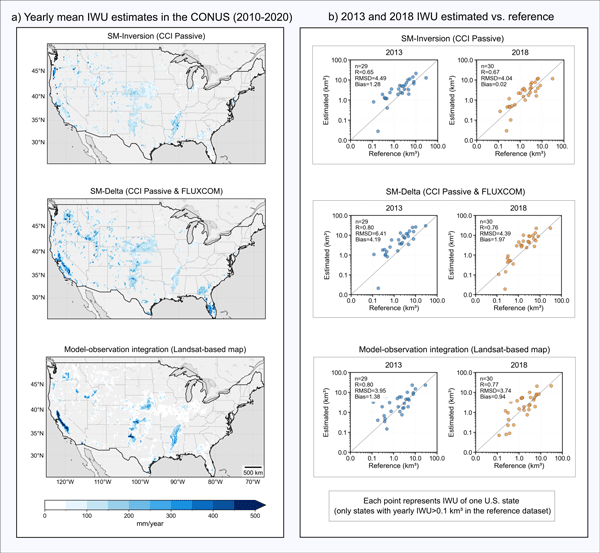
We developed a long-term dataset collection of irrigation water use based on about two decades of satellite observations, three distinct approaches, and many input datasets. The collection provides monthly estimates for major agricultural regions and helps describe how irrigation varies across locations, seasons, and years. It offers a foundation for improving how irrigation is quantified, compared across methods, and integrated into large-scale hydrological and climate studies.
Francesco Avanzi, Hans Lievens, Michael Matiu, Paolo Filippucci, Oscar M. Baez Villanueva, Simone Gabellani, Fabio Delogu, Lorenzo Alfieri, Andrea Libertino, Pere Quintana-Seguì, Diego G. Miralles, Luca Brocca, Christian Massari, and Gabriëlle J. M. De Lannoy
EGUsphere, https://doi.org/10.5194/egusphere-2026-2851, https://doi.org/10.5194/egusphere-2026-2851, 2026
Short summary
Short summary
We developed a new system to map and monitor snow and stored water across large mountain regions using satellite data and computer simulations. Tested in four major European river basins, the system reproduced snow conditions with high accuracy and realistically captured how snow changes with elevation. Because it does not rely on ground measurements, it can help provide consistent information on snow-water resources worldwide, supporting water management and climate adaptation.
Lingxiao Wang, Wei Wan, Lin Zhao, Wei Chen, Chong Wang, Shibo Liu, Guangyue Liu, Yuanwei Wang, Junhao Qu, Defu Zou, Erji Du, Guojie Hu, Yao Xiao, Yonghua Zhao, and Minxuan Xiao
EGUsphere, https://doi.org/10.5194/egusphere-2026-2170, https://doi.org/10.5194/egusphere-2026-2170, 2026
Short summary
Short summary
This study reveals permafrost ground deformation from sub-daily to multi-year timescales at a central Tibetan Plateau supersite using satellite, contact, and non-contact field observations. A new automated system captured five-minute deformation changes, revealing distinct deformation processes during different freeze–thaw stages. The results evaluate different monitoring methods and provide a benchmark for understanding and interpreting permafrost change.
Lucas Boeykens, Devon Dunmire, Jonas-Frederik Jans, Willem Waegeman, Gabriëlle De Lannoy, Ezra Beernaert, Niko E. C. Verhoest, and Hans Lievens
The Cryosphere, 20, 3187–3216, https://doi.org/10.5194/tc-20-3187-2026, https://doi.org/10.5194/tc-20-3187-2026, 2026
Short summary
Short summary
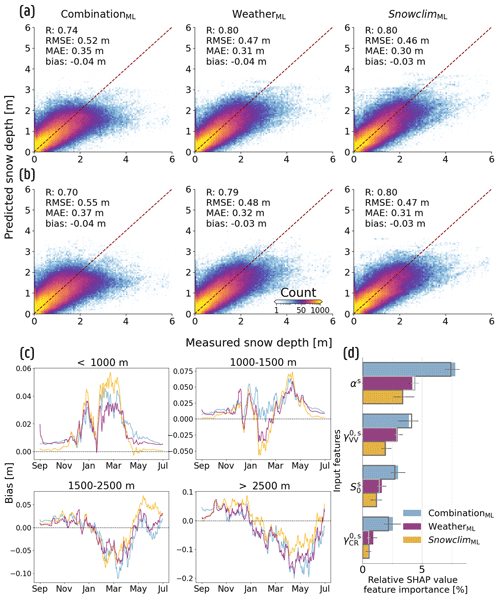
We used AI to better estimate the height of the snowpack present on the ground across the European Alps, by using novel satellite data, complemented by weather information or snow depth estimates from a computer model. We found that both combinations improve the accuracy of our AI-based snow depth estimates, performing almost equally well. This helps us better monitor how much water is stored as snow, which is vital for drinking water, farming, and clean energy production in Europe.
Jinan Shi, Jiaxin Li, Lianru Gao, Siyu Liu, Rasmus Fensholt, Philippe Ciais, Xiaojun Li, Qiangqiang Yuan, Jean-Pierre Wigneron, and Lei Fan
Earth Syst. Sci. Data Discuss., https://doi.org/10.5194/essd-2026-193, https://doi.org/10.5194/essd-2026-193, 2026
Revised manuscript under review for ESSD
Short summary
Short summary
Satellite microwaves help monitor global vegetation, but existing data is too coarse.We enhanced it using higher-resolution information from a biomass map. This produced monthly 5-kilometer resolution data of tropical vegetation optical depth from 2015 to 2021. Our results show the enhanced data accurately captures vegetation dynamics and detects forest disturbances like clearing. By providing this finer-scale dataset, our work supports better local monitoring and protection of ecosystems.
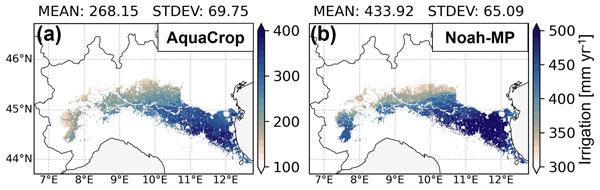
Louise Busschaert, Michel Bechtold, Sara Modanesi, Christian Massari, Dirk Raes, Sujay V. Kumar, and Gabriëlle J. M. De Lannoy
Hydrol. Earth Syst. Sci., 30, 2579–2611, https://doi.org/10.5194/hess-30-2579-2026, https://doi.org/10.5194/hess-30-2579-2026, 2026
Short summary
Short summary
Two models, AquaCrop (crop model) and Noah-MP (land surface model), were compared estimating irrigation in Italy's Po Valley. Noah-MP simulated higher water use (434 mm/yr) than AquaCrop (268 mm/yr), mainly due to extra water losses like runoff. Once losses were accounted for, both aligned with basin-scale reports of around 500 to 600 mm/yr. The study highlights how complex irrigation modeling is, and the need for better observational data to validate results.
Konstantin Schellenberg, Sinikka J. Paulus, Ronald Queck, David Chaparro, Oliver Binks, Maurizio Mencuccini, Sharath S. Paligi, Henrik Hartmann, Christiane Schmullius, Clémence Dubois, and Thomas Jagdhuber
EGUsphere, https://doi.org/10.5194/egusphere-2026-1751, https://doi.org/10.5194/egusphere-2026-1751, 2026
Short summary
Short summary
We evaluated Global Navigation Satellite System (GNSS) signals to monitor forest water storage, helping to close an important observational gap in plant hydraulics and micrometeorology at stand-scale. We show that signal losses in the canopy are strongly linked to three-dimensionally modeled rainfall interception. However, detecting subtle fluxes, such as internal water dynamics, dew and intercepted light rain is inhibited by signal noise, and the hydraulics properties of the ecosystem.
Yann Baehr, Pierre Vanderbecken, Bertrand Bonan, Catherine Robert, Mathieu Regimbeau, François Pimont, Kevyn Raynal, Xiangzhuo Liu, Remi Savazzi, Moncef Garouani, Josiane Mothe, Nemesio Rodriguez-Fernandez, Lionel Jarlan, and Jean-Christophe Calvet
EGUsphere, https://doi.org/10.5194/egusphere-2026-1247, https://doi.org/10.5194/egusphere-2026-1247, 2026
This preprint is open for discussion and under review for Natural Hazards and Earth System Sciences (NHESS).
Short summary
Short summary
This study produced vegetation water content maps to help manage the risk of forest fires in France. Artificial intelligence was used alongside land surface model outputs, satellite data and in situ observations to monitor vegetation stress in real time. The methodology tested has been shown to be robust and spatially consistent.
Andrew F. Feldman, William K. Smith, Alexandra G. Konings, Martin J. Baur, Marvin Browne, David Chaparro, Charles Devine, Jennifer L. Diehl, Arthur Endsley, Thomas Jagdhuber, Kristine M. Larson, Coral del Mar Valle-Rodriguez, Konstantin Schellenberg, Ruxandra-Maria Zotta, and Shawn P. Serbin
EGUsphere, https://doi.org/10.5194/egusphere-2026-1759, https://doi.org/10.5194/egusphere-2026-1759, 2026
Short summary
Short summary
Vegetation water observations from 272 field-based GNSS sensors and satellite-based vegetation optical depth are compared across the western U.S. We find significant positive correlations across the sites and identify common conditions that increase the correlations including less forest cover, more homogeneous vegetation across landscapes, and large seasonal amplitudes. These field-based sensors are thus useful tools to evaluate grass and shrub water stress and validate satellite signals.
Ehsan Modiri, Oldrich Rakovec, Pallav Kumar Shrestha, Almudena García-García, Leandro Avila, Katie Blackford, Elizabeth Cooper, Bram Droppers, Paolo Filippucci, Milan Fischer, Matěj Orság, Pietro Stradiotti, Luca Brocca, Douglas B. Clark, Wouter Dorigo, Stefan Kollet, Jian Peng, Niko Wanders, and Luis Samaniego
EGUsphere, https://doi.org/10.5194/egusphere-2026-1012, https://doi.org/10.5194/egusphere-2026-1012, 2026
Short summary
Short summary
Drought impacts water supply, agriculture, and ecosystems, yet hydrological models often disagree on when and where drought occurs. This study tested whether satellite observations can improve how models represent soil moisture drought in the Rhine River basin. Using several models and major drought events, we show that satellite data improve spatial realism and reveal important differences among models, helping to better understand uncertainty in drought monitoring and early warning.
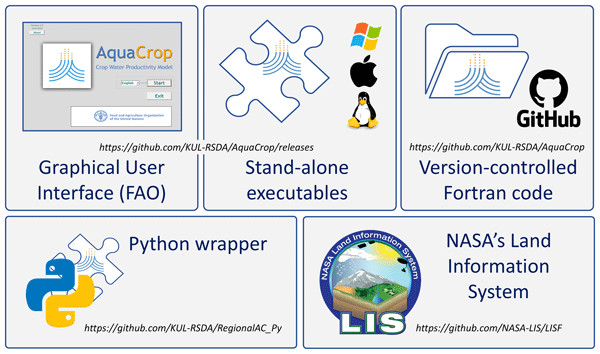
Gabriëlle J. M. De Lannoy, Louise Busschaert, Michel Bechtold, Niccolò Lanfranco, Shannon de Roos, Zdenko Heyvaert, Martynas Bielinis, Jonas Mortelmans, Samuel A. Scherrer, Maxime Van den Bossche, Sujay Kumar, David M. Mocko, Eric Kemp, Lee Heng, Pasquale Steduto, and Dirk Raes
Geosci. Model Dev., 19, 2551–2575, https://doi.org/10.5194/gmd-19-2551-2026, https://doi.org/10.5194/gmd-19-2551-2026, 2026
Short summary
Short summary
The AquaCrop model has been incorporated into the NASA Land Information System, to advance regional crop growth simulations at any spatial resolution, with a range of different input sources for meteorology, soil and crop parameters. This system also facilitates the assimilation of satellite data to update the crop and water conditions during model simulations. We present three exploratory applications to highlight pathways for future research on regional-scale crop estimation.
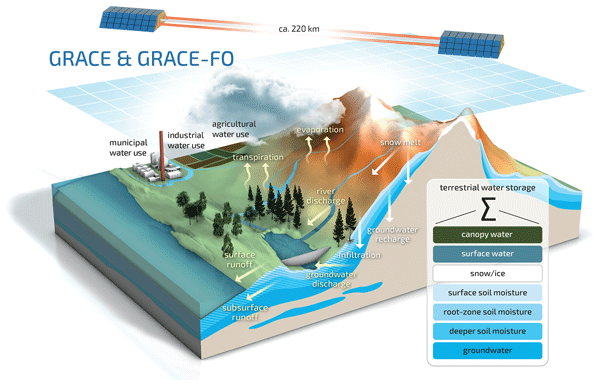
Anne Springer, Gabriëlle De Lannoy, Matthew Rodell, Yorck Ewerdwalbesloh, Helena Gerdener, Mehdi Khaki, Bailing Li, Fupeng Li, Maike Schumacher, Natthachet Tangdamrongsub, Mohammad J. Tourian, Wanshu Nie, and Jürgen Kusche
Hydrol. Earth Syst. Sci., 30, 985–1022, https://doi.org/10.5194/hess-30-985-2026, https://doi.org/10.5194/hess-30-985-2026, 2026
Short summary
Short summary
The GRACE (Gravity Recovery and Climate Experiment) and GRACE Follow-On satellites monitor changes in Earth's water storage by observing gravity variations. By integrating these observations into hydrological models through data assimilation, estimates of groundwater, soil moisture, and hydrological trends are improved, helping to monitor droughts, floods, and human water use. This review highlights recent advances in GRACE data assimilation, identifies key challenges, and discusses future directions with upcoming satellite missions.
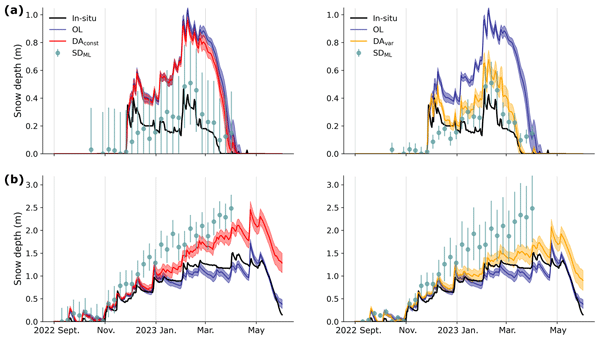
Devon Dunmire, Michel Bechtold, Lucas Boeykens, and Gabriëlle J. M. De Lannoy
The Cryosphere, 20, 609–628, https://doi.org/10.5194/tc-20-609-2026, https://doi.org/10.5194/tc-20-609-2026, 2026
Short summary
Short summary
Snow is vital for society and the climate, yet estimates of snowpack remain uncertain due to observational and modeling limitations. Data assimilation (DA) helps by integrating observations with models. Here, we integrate snow depth retrievals into a physically-based snow model across the European Alps. This work offers advancements for snow data assimilation, such as incorporating a dynamic observational uncertainty, which is essential for forecasting and water resource management.
Yongqin Liu, Songnian Hu, Tao Yu, Yingfeng Luo, Zhihao Zhang, Yuying Chen, Shunchao Guo, Qinglan Sun, Guomei Fan, Linhuan Wu, Juncai Ma, Keshao Liu, Pengfei Liu, Junzhi Liu, Ruyi Dong, and Mukan Ji
Earth Syst. Sci. Data, 17, 5165–5179, https://doi.org/10.5194/essd-17-5165-2025, https://doi.org/10.5194/essd-17-5165-2025, 2025
Short summary
Short summary
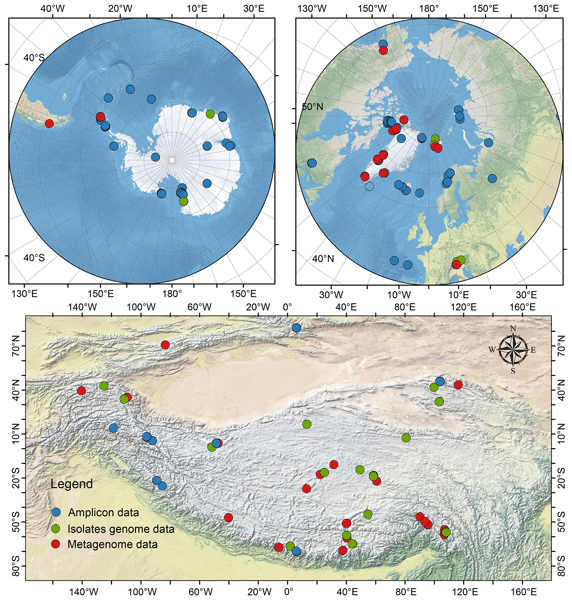
Based on amplicon sequencing, metagenome sequencing, and cultivated genome sequencing, the dataset contains 64,510 bacterial and archaeal species, 62,595,715 unique genes, and 4,501 microbial genomes of bacteria and archaea from glaciers of the Antarctic, Arctic, Tibetan Plateau, and other alpine regions. The data can be useful to ecologists, microbiologists, and policymakers regarding microbial distribution, evolution, and biohazard assessment for glacier microbiome under global climate change.
Jianting Zhao, Lin Zhao, Zhe Sun, Guojie Hu, Defu Zou, Minxuan Xiao, Guangyue Liu, Qiangqiang Pang, Erji Du, Zhibin Li, Xiaodong Wu, Yao Xiao, Lingxiao Wang, and Wenxin Zhang
The Cryosphere, 19, 4211–4236, https://doi.org/10.5194/tc-19-4211-2025, https://doi.org/10.5194/tc-19-4211-2025, 2025
Short summary
Short summary
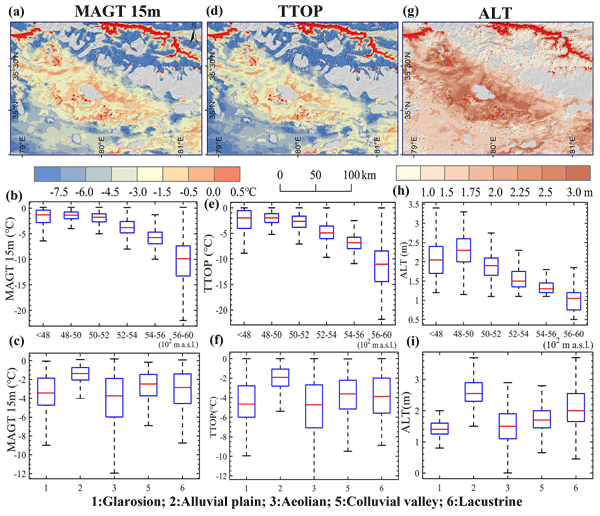
We used the Moving-Grid Permafrost Model (MVPM) to simulate the permafrost thermal regime in West Kunlun (55,669 km², NW Qinghai–Tibet Plateau), driven by remote-sensing-based land surface temperature (LST; 1980–2022). The model showed high accuracy and stability. Despite ongoing warming (+0.40 °C per decade), permafrost extent remained stable, reflecting delayed deep responses. The permafrost thermal regime reveals altitude- and soil-dependent responses to climate change and offers valuable insights into thermal states in data-scarce regions.

Anke Fluhrer, Martin J. Baur, María Piles, Bagher Bayat, Mehdi Rahmati, David Chaparro, Clémence Dubois, Florian M. Hellwig, Carsten Montzka, Angelika Kübert, Marlin M. Mueller, Isabel Augscheller, Francois Jonard, Konstantin Schellenberg, and Thomas Jagdhuber
Biogeosciences, 22, 3721–3746, https://doi.org/10.5194/bg-22-3721-2025, https://doi.org/10.5194/bg-22-3721-2025, 2025
Short summary
Short summary
This study compares established evapotranspiration products in central Europe and evaluates their multi-seasonal performance during wet and drought phases in 2017–2020 together with important soil–plant–atmosphere drivers. Results show that SEVIRI, ERA5-land, and GLEAM perform best compared to ICOS (Integrated Carbon Observation System) measurements. During moisture-limited drought years, ET (evapotranspiration) decreases due to decreasing soil moisture and increasing vapor pressure deficit, while in other years ET is mainly controlled by VPD (vapor pressure deficit).
Defu Zou, Lin Zhao, Guojie Hu, Erji Du, Guangyue Liu, Chong Wang, and Wangping Li
Earth Syst. Sci. Data, 17, 1731–1742, https://doi.org/10.5194/essd-17-1731-2025, https://doi.org/10.5194/essd-17-1731-2025, 2025
Short summary
Short summary
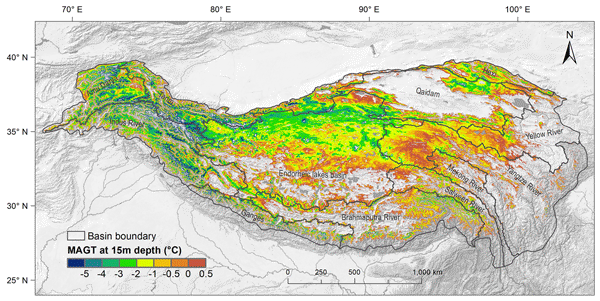
This study provides baseline data of permafrost temperature at 15 m depth on the Qinghai–Tibetan Plateau (QTP) over the period 2010–2019 at a spatial resolution of nearly 1 km, using 231 borehole records and a machine learning method. The average MAGT15 m of the QTP permafrost was −1.85 °C, with 90 % of the values ranging from −5.1 to −0.1 °C and 51.2 % exceeding −1.5 °C. The data can serve as a crucial boundary condition for deeper permafrost assessments and a reference for model simulations.
Paolo Nasta, Günter Blöschl, Heye R. Bogena, Steffen Zacharias, Roland Baatz, Gabriëlle De Lannoy, Karsten H. Jensen, Salvatore Manfreda, Laurent Pfister, Ana M. Tarquis, Ilja van Meerveld, Marc Voltz, Yijian Zeng, William Kustas, Xin Li, Harry Vereecken, and Nunzio Romano
Hydrol. Earth Syst. Sci., 29, 465–483, https://doi.org/10.5194/hess-29-465-2025, https://doi.org/10.5194/hess-29-465-2025, 2025
Short summary
Short summary
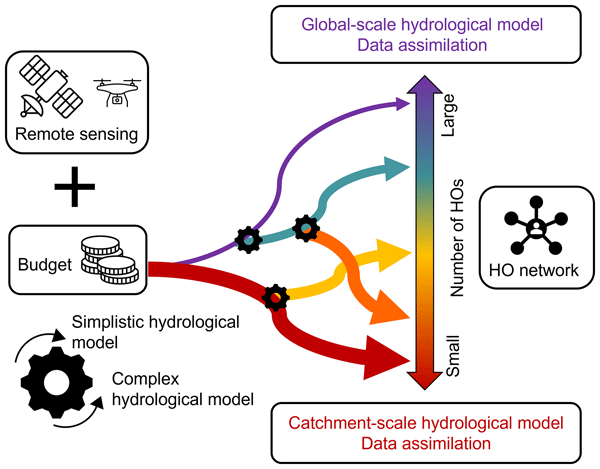
The Unsolved Problems in Hydrology (UPH) initiative has emphasized the need to establish networks of multi-decadal hydrological observatories to tackle catchment-scale challenges on a global scale. This opinion paper provocatively discusses two endmembers of possible future hydrological observatory (HO) networks for a given hypothesized community budget: a comprehensive set of moderately instrumented observatories or, alternatively, a small number of highly instrumented supersites.
Vishnu U. Krishnan, Noemi Vergopolan, Bhupendra Bahadur Singh, Jayaluxmi Indu, and Lanka Karthikeyan
Hydrol. Earth Syst. Sci. Discuss., https://doi.org/10.5194/hess-2024-339, https://doi.org/10.5194/hess-2024-339, 2024
Revised manuscript not accepted
Short summary
Short summary
Soil moisture has high heterogeneity in areas with marginal agricultural farms. Traditional models do not account for these changes. This study implements a new land model for farm-scale soil moisture first time in India. We enhanced it with depth-varying soil properties and identified their importance for estimating soil moisture across depths and seasons. The modified model improves deep-layer soil moisture at 30 m resolution, with temporal changes consistent with coarse-resolution products.
Louise Busschaert, Michel Bechtold, Sara Modanesi, Christian Massari, Dirk Raes, Sujay V. Kumar, and Gabrielle J. M. De Lannoy
EGUsphere, https://doi.org/10.2139/ssrn.4974019, https://doi.org/10.2139/ssrn.4974019, 2024
Preprint archived
Short summary
Short summary
This study estimates irrigation in the Po Valley using AquaCrop and Noah-MP models with sprinkler irrigation. Noah-MP shows higher annual rates than AquaCrop due to more water losses. After adjusting, both align with reported irrigation ranges (500–600 mm/yr). Soil moisture estimates from both models match satellite data, though both have limitations in vegetation and evapotranspiration modeling. The study emphasizes the need for observations to improve irrigation estimates.
Isis Brangers, Hans-Peter Marshall, Gabrielle De Lannoy, Devon Dunmire, Christian Mätzler, and Hans Lievens
The Cryosphere, 18, 3177–3193, https://doi.org/10.5194/tc-18-3177-2024, https://doi.org/10.5194/tc-18-3177-2024, 2024
Short summary
Short summary
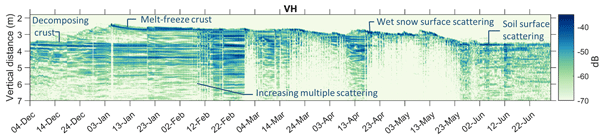
To better understand the interactions between C-band radar waves and snow, a tower-based experiment was set up in the Idaho Rocky Mountains. The reflections were collected in the time domain to measure the backscatter profile from the various snowpack and ground surface layers. The results demonstrate that C-band radar is sensitive to seasonal patterns in snow accumulation but that changes in microstructure, stratigraphy and snow wetness may complicate satellite-based snow depth retrievals.
Jonas Mortelmans, Anne Felsberg, Gabriëlle J. M. De Lannoy, Sander Veraverbeke, Robert D. Field, Niels Andela, and Michel Bechtold
Nat. Hazards Earth Syst. Sci., 24, 445–464, https://doi.org/10.5194/nhess-24-445-2024, https://doi.org/10.5194/nhess-24-445-2024, 2024
Short summary
Short summary
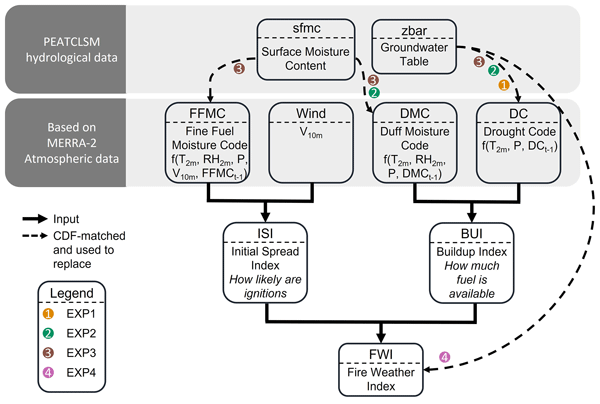
With global warming increasing the frequency and intensity of wildfires in the boreal region, accurate risk assessments are becoming more crucial than ever before. The Canadian Fire Weather Index (FWI) is a renowned system, yet its effectiveness in peatlands, where hydrology plays a key role, is limited. By incorporating groundwater data from numerical models and satellite observations, our modified FWI improves the accuracy of fire danger predictions, especially over summer.
Anne Felsberg, Zdenko Heyvaert, Jean Poesen, Thomas Stanley, and Gabriëlle J. M. De Lannoy
Nat. Hazards Earth Syst. Sci., 23, 3805–3821, https://doi.org/10.5194/nhess-23-3805-2023, https://doi.org/10.5194/nhess-23-3805-2023, 2023
Short summary
Short summary
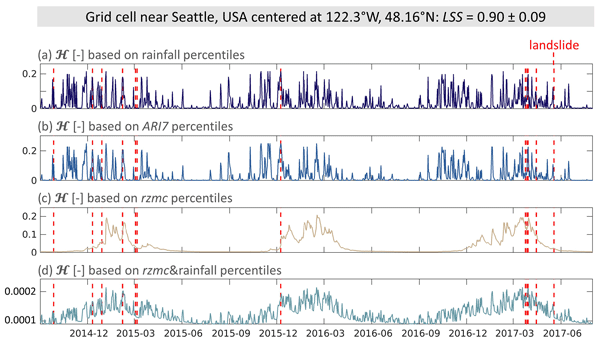
The Probabilistic Hydrological Estimation of LandSlides (PHELS) model combines ensembles of landslide susceptibility and of hydrological predictor variables to provide daily, global ensembles of hazard for hydrologically triggered landslides. Testing different hydrological predictors showed that the combination of rainfall and soil moisture performed best, with the lowest number of missed and false alarms. The ensemble approach allowed the estimation of the associated prediction uncertainty.
Solomon H. Gebrechorkos, Jian Peng, Ellen Dyer, Diego G. Miralles, Sergio M. Vicente-Serrano, Chris Funk, Hylke E. Beck, Dagmawi T. Asfaw, Michael B. Singer, and Simon J. Dadson
Earth Syst. Sci. Data, 15, 5449–5466, https://doi.org/10.5194/essd-15-5449-2023, https://doi.org/10.5194/essd-15-5449-2023, 2023
Short summary
Short summary
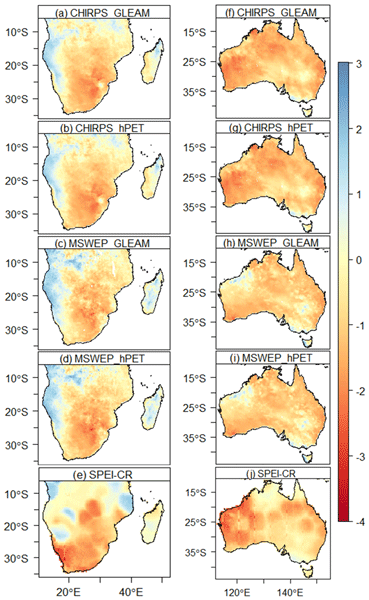
Drought is undeniably one of the most intricate and significant natural hazards with far-reaching consequences for the environment, economy, water resources, agriculture, and societies across the globe. In response to this challenge, we have devised high-resolution drought indices. These indices serve as invaluable indicators for assessing shifts in drought patterns and their associated impacts on a global, regional, and local level facilitating the development of tailored adaptation strategies.
Chenwei Xiao, Sönke Zaehle, Hui Yang, Jean-Pierre Wigneron, Christiane Schmullius, and Ana Bastos
Earth Syst. Dynam., 14, 1211–1237, https://doi.org/10.5194/esd-14-1211-2023, https://doi.org/10.5194/esd-14-1211-2023, 2023
Short summary
Short summary
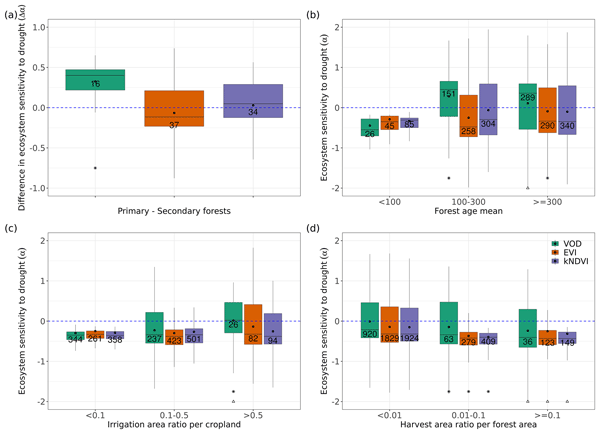
Ecosystem resistance reflects their susceptibility during adverse conditions and can be changed by land management. We estimate ecosystem resistance to drought and temperature globally. We find a higher resistance to drought in forests compared to croplands and an evident loss of resistance to drought when primary forests are converted to secondary forests or they are harvested. Old-growth trees tend to be more resistant in some forests and crops benefit from irrigation during drought periods.
Samuel Scherrer, Gabriëlle De Lannoy, Zdenko Heyvaert, Michel Bechtold, Clement Albergel, Tarek S. El-Madany, and Wouter Dorigo
Hydrol. Earth Syst. Sci., 27, 4087–4114, https://doi.org/10.5194/hess-27-4087-2023, https://doi.org/10.5194/hess-27-4087-2023, 2023
Short summary
Short summary
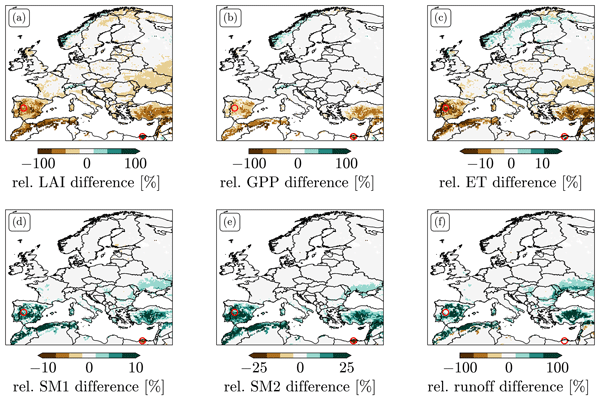
We explored different options for data assimilation (DA) of the remotely sensed leaf area index (LAI). We found strong biases between LAI predicted by Noah-MP and observations. LAI DA that does not take these biases into account can induce unphysical patterns in the resulting LAI and flux estimates and leads to large changes in the climatology of root zone soil moisture. We tested two bias-correction approaches and explored alternative solutions to treating bias in LAI DA.
Martin Schwartz, Philippe Ciais, Aurélien De Truchis, Jérôme Chave, Catherine Ottlé, Cedric Vega, Jean-Pierre Wigneron, Manuel Nicolas, Sami Jouaber, Siyu Liu, Martin Brandt, and Ibrahim Fayad
Earth Syst. Sci. Data, 15, 4927–4945, https://doi.org/10.5194/essd-15-4927-2023, https://doi.org/10.5194/essd-15-4927-2023, 2023
Short summary
Short summary
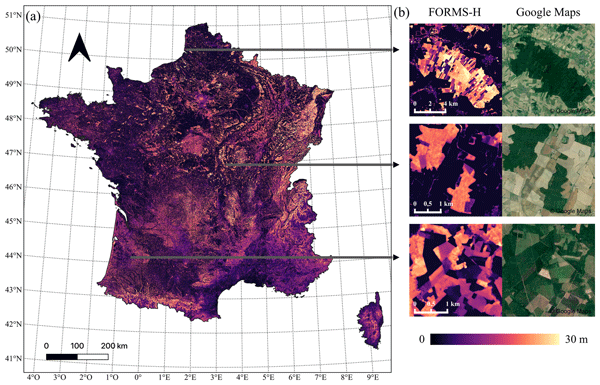
As forests play a key role in climate-related issues, their accurate monitoring is critical to reduce global carbon emissions effectively. Based on open-access remote-sensing sensors, and artificial intelligence methods, we created high-resolution tree height, wood volume, and biomass maps of metropolitan France that outperform previous products. This study, based on freely available data, provides essential information to support climate-efficient forest management policies at a low cost.
Benjamin M. Kitambo, Fabrice Papa, Adrien Paris, Raphael M. Tshimanga, Frederic Frappart, Stephane Calmant, Omid Elmi, Ayan Santos Fleischmann, Melanie Becker, Mohammad J. Tourian, Rômulo A. Jucá Oliveira, and Sly Wongchuig
Earth Syst. Sci. Data, 15, 2957–2982, https://doi.org/10.5194/essd-15-2957-2023, https://doi.org/10.5194/essd-15-2957-2023, 2023
Short summary
Short summary
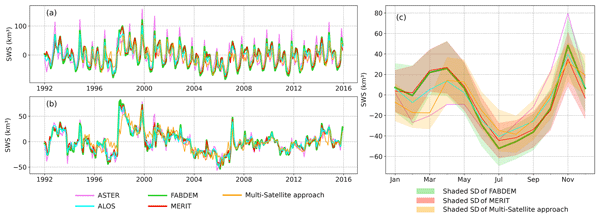
The surface water storage (SWS) in the Congo River basin (CB) remains unknown. In this study, the multi-satellite and hypsometric curve approaches are used to estimate SWS in the CB over 1992–2015. The results provide monthly SWS characterized by strong variability with an annual mean amplitude of ~101 ± 23 km3. The evaluation of SWS against independent datasets performed well. This SWS dataset contributes to the better understanding of the Congo basin’s surface hydrology using remote sensing.
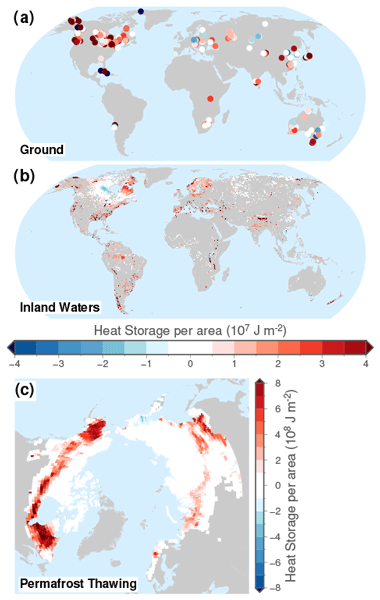
Francisco José Cuesta-Valero, Hugo Beltrami, Almudena García-García, Gerhard Krinner, Moritz Langer, Andrew H. MacDougall, Jan Nitzbon, Jian Peng, Karina von Schuckmann, Sonia I. Seneviratne, Wim Thiery, Inne Vanderkelen, and Tonghua Wu
Earth Syst. Dynam., 14, 609–627, https://doi.org/10.5194/esd-14-609-2023, https://doi.org/10.5194/esd-14-609-2023, 2023
Short summary
Short summary
Climate change is caused by the accumulated heat in the Earth system, with the land storing the second largest amount of this extra heat. Here, new estimates of continental heat storage are obtained, including changes in inland-water heat storage and permafrost heat storage in addition to changes in ground heat storage. We also argue that heat gains in all three components should be monitored independently of their magnitude due to heat-dependent processes affecting society and ecosystems.
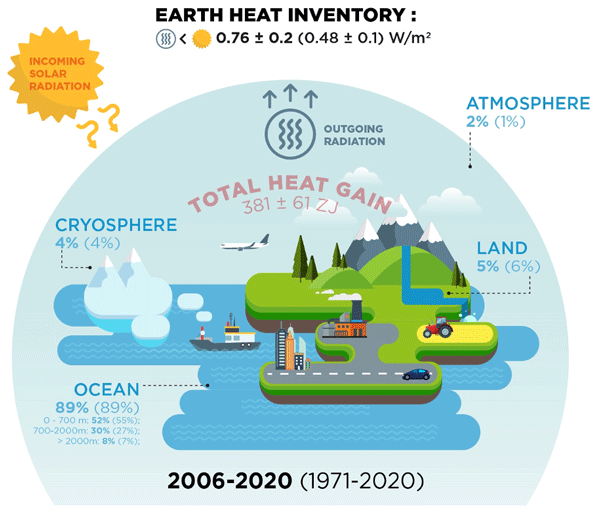
Karina von Schuckmann, Audrey Minière, Flora Gues, Francisco José Cuesta-Valero, Gottfried Kirchengast, Susheel Adusumilli, Fiammetta Straneo, Michaël Ablain, Richard P. Allan, Paul M. Barker, Hugo Beltrami, Alejandro Blazquez, Tim Boyer, Lijing Cheng, John Church, Damien Desbruyeres, Han Dolman, Catia M. Domingues, Almudena García-García, Donata Giglio, John E. Gilson, Maximilian Gorfer, Leopold Haimberger, Maria Z. Hakuba, Stefan Hendricks, Shigeki Hosoda, Gregory C. Johnson, Rachel Killick, Brian King, Nicolas Kolodziejczyk, Anton Korosov, Gerhard Krinner, Mikael Kuusela, Felix W. Landerer, Moritz Langer, Thomas Lavergne, Isobel Lawrence, Yuehua Li, John Lyman, Florence Marti, Ben Marzeion, Michael Mayer, Andrew H. MacDougall, Trevor McDougall, Didier Paolo Monselesan, Jan Nitzbon, Inès Otosaka, Jian Peng, Sarah Purkey, Dean Roemmich, Kanako Sato, Katsunari Sato, Abhishek Savita, Axel Schweiger, Andrew Shepherd, Sonia I. Seneviratne, Leon Simons, Donald A. Slater, Thomas Slater, Andrea K. Steiner, Toshio Suga, Tanguy Szekely, Wim Thiery, Mary-Louise Timmermans, Inne Vanderkelen, Susan E. Wjiffels, Tonghua Wu, and Michael Zemp
Earth Syst. Sci. Data, 15, 1675–1709, https://doi.org/10.5194/essd-15-1675-2023, https://doi.org/10.5194/essd-15-1675-2023, 2023
Short summary
Short summary
Earth's climate is out of energy balance, and this study quantifies how much heat has consequently accumulated over the past decades (ocean: 89 %, land: 6 %, cryosphere: 4 %, atmosphere: 1 %). Since 1971, this accumulated heat reached record values at an increasing pace. The Earth heat inventory provides a comprehensive view on the status and expectation of global warming, and we call for an implementation of this global climate indicator into the Paris Agreement’s Global Stocktake.
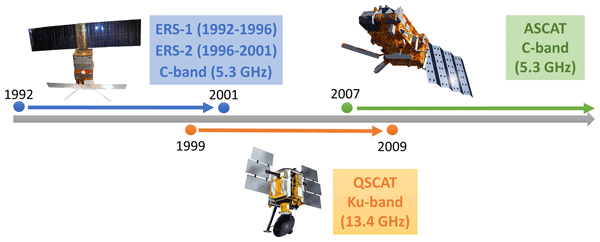
Shengli Tao, Zurui Ao, Jean-Pierre Wigneron, Sassan Saatchi, Philippe Ciais, Jérôme Chave, Thuy Le Toan, Pierre-Louis Frison, Xiaomei Hu, Chi Chen, Lei Fan, Mengjia Wang, Jiangling Zhu, Xia Zhao, Xiaojun Li, Xiangzhuo Liu, Yanjun Su, Tianyu Hu, Qinghua Guo, Zhiheng Wang, Zhiyao Tang, Yi Y. Liu, and Jingyun Fang
Earth Syst. Sci. Data, 15, 1577–1596, https://doi.org/10.5194/essd-15-1577-2023, https://doi.org/10.5194/essd-15-1577-2023, 2023
Short summary
Short summary
We provide the first long-term (since 1992), high-resolution (8.9 km) satellite radar backscatter data set (LHScat) with a C-band (5.3 GHz) signal dynamic for global lands. LHScat was created by fusing signals from ERS (1992–2001; C-band), QSCAT (1999–2009; Ku-band), and ASCAT (since 2007; C-band). LHScat has been validated against independent ERS-2 signals. It could be used in a variety of studies, such as vegetation monitoring and hydrological modelling.

Jianting Zhao, Lin Zhao, Zhe Sun, Fujun Niu, Guojie Hu, Defu Zou, Guangyue Liu, Erji Du, Chong Wang, Lingxiao Wang, Yongping Qiao, Jianzong Shi, Yuxin Zhang, Junqiang Gao, Yuanwei Wang, Yan Li, Wenjun Yu, Huayun Zhou, Zanpin Xing, Minxuan Xiao, Luhui Yin, and Shengfeng Wang
The Cryosphere, 16, 4823–4846, https://doi.org/10.5194/tc-16-4823-2022, https://doi.org/10.5194/tc-16-4823-2022, 2022
Short summary
Short summary
Permafrost has been warming and thawing globally; this is especially true in boundary regions. We focus on the changes and variability in permafrost distribution and thermal dynamics in the northern limit of permafrost on the Qinghai–Tibet Plateau (QTP) by applying a new permafrost model. Unlike previous papers on this topic, our findings highlight a slow, decaying process in the response of permafrost in the QTP to a warming climate, especially regarding areal extent.
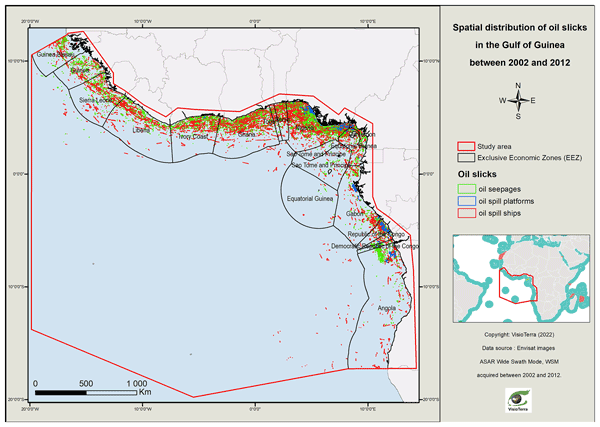
Zhour Najoui, Nellya Amoussou, Serge Riazanoff, Guillaume Aurel, and Frédéric Frappart
Earth Syst. Sci. Data, 14, 4569–4588, https://doi.org/10.5194/essd-14-4569-2022, https://doi.org/10.5194/essd-14-4569-2022, 2022
Short summary
Short summary
Oil spills could have serious repercussions for both the marine environment and ecosystem. The Gulf of Guinea is a very active area with respect to maritime traffic as well as oil and gas exploitation (platforms). As a result, the region is subject to a large number of oil pollution events. This study aims to detect oil slicks in the Gulf of Guinea and analyse their spatial and temporal distribution using satellite data.
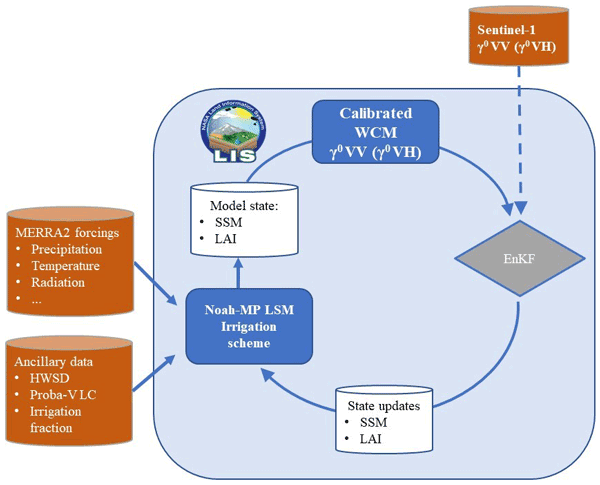
Sara Modanesi, Christian Massari, Michel Bechtold, Hans Lievens, Angelica Tarpanelli, Luca Brocca, Luca Zappa, and Gabriëlle J. M. De Lannoy
Hydrol. Earth Syst. Sci., 26, 4685–4706, https://doi.org/10.5194/hess-26-4685-2022, https://doi.org/10.5194/hess-26-4685-2022, 2022
Short summary
Short summary
Given the crucial impact of irrigation practices on the water cycle, this study aims at estimating irrigation through the development of an innovative data assimilation system able to ingest high-resolution Sentinel-1 radar observations into the Noah-MP land surface model. The developed methodology has important implications for global water resource management and the comprehension of human impacts on the water cycle and identifies main challenges and outlooks for future research.
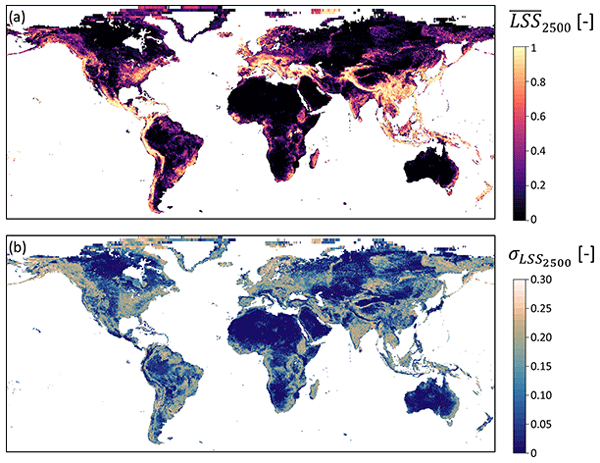
Anne Felsberg, Jean Poesen, Michel Bechtold, Matthias Vanmaercke, and Gabriëlle J. M. De Lannoy
Nat. Hazards Earth Syst. Sci., 22, 3063–3082, https://doi.org/10.5194/nhess-22-3063-2022, https://doi.org/10.5194/nhess-22-3063-2022, 2022
Short summary
Short summary
In this study we assessed global landslide susceptibility at the coarse 36 km spatial resolution of global satellite soil moisture observations to prepare for a subsequent combination of the two. Specifically, we focus therefore on the susceptibility of hydrologically triggered landslides. We introduce ensemble techniques, common in, for example, meteorology but not yet in the landslide community, to retrieve reliable estimates of the total prediction uncertainty.
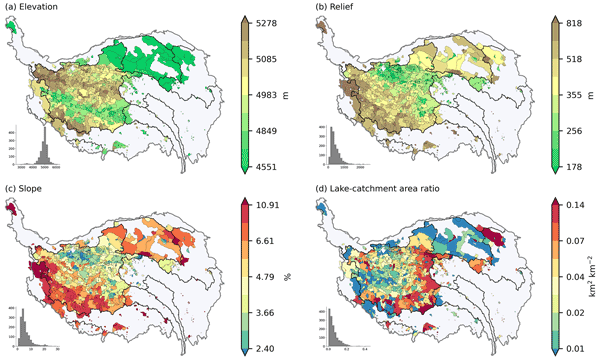
Junzhi Liu, Pengcheng Fang, Yefeng Que, Liang-Jun Zhu, Zheng Duan, Guoan Tang, Pengfei Liu, Mukan Ji, and Yongqin Liu
Earth Syst. Sci. Data, 14, 3791–3805, https://doi.org/10.5194/essd-14-3791-2022, https://doi.org/10.5194/essd-14-3791-2022, 2022
Short summary
Short summary
The management and conservation of lakes should be conducted in the context of catchments because lakes collect water and materials from their upstream catchments. This study constructed the first dataset of lake-catchment characteristics for 1525 lakes with an area from 0.2 to 4503 km2 on the Tibetan Plateau (TP), which provides exciting opportunities for lake studies in a spatially explicit context and promotes the development of landscape limnology on the TP.

Louise Busschaert, Shannon de Roos, Wim Thiery, Dirk Raes, and Gabriëlle J. M. De Lannoy
Hydrol. Earth Syst. Sci., 26, 3731–3752, https://doi.org/10.5194/hess-26-3731-2022, https://doi.org/10.5194/hess-26-3731-2022, 2022
Short summary
Short summary
Increasing amounts of water are used for agriculture. Therefore, we looked into how irrigation requirements will evolve under a changing climate over Europe. Our results show that, by the end of the century and under high emissions, irrigation water will increase by 30 % on average compared to the year 2000. Also, the irrigation requirement is likely to vary more from 1 year to another. However, if emissions are mitigated, these effects are reduced.
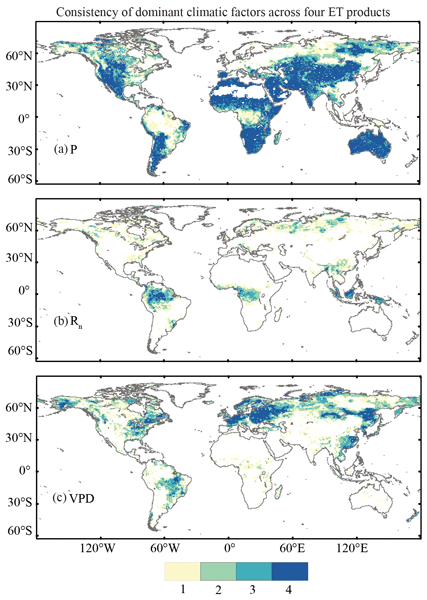
Shijie Li, Guojie Wang, Chenxia Zhu, Jiao Lu, Waheed Ullah, Daniel Fiifi Tawia Hagan, Giri Kattel, and Jian Peng
Hydrol. Earth Syst. Sci., 26, 3691–3707, https://doi.org/10.5194/hess-26-3691-2022, https://doi.org/10.5194/hess-26-3691-2022, 2022
Short summary
Short summary
We found that the precipitation variability dominantly controls global evapotranspiration (ET) in dry climates, while the net radiation has substantial control over ET in the tropical regions, and vapor pressure deficit (VPD) impacts ET trends in boreal mid-latitude climate. The critical role of VPD in controlling ET trends is particularly emphasized due to its influence in controlling the carbon–water–energy cycle.
Lingxiao Wang, Lin Zhao, Huayun Zhou, Shibo Liu, Erji Du, Defu Zou, Guangyue Liu, Yao Xiao, Guojie Hu, Chong Wang, Zhe Sun, Zhibin Li, Yongping Qiao, Tonghua Wu, Chengye Li, and Xubing Li
The Cryosphere, 16, 2745–2767, https://doi.org/10.5194/tc-16-2745-2022, https://doi.org/10.5194/tc-16-2745-2022, 2022
Short summary
Short summary
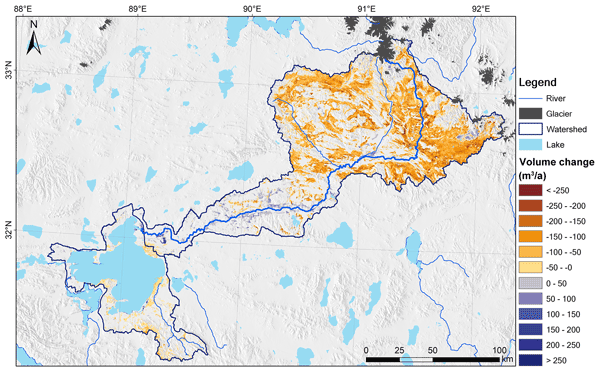
Selin Co has exhibited the greatest increase in water storage among all the lakes on the Tibetan Plateau in the past decades. This study presents the first attempt to quantify the water contribution of ground ice melting to the expansion of Selin Co by evaluating the ground surface deformation since terrain surface settlement provides a
windowto detect the subsurface ground ice melting. Results reveal that ground ice meltwater contributed ~ 12 % of the lake volume increase during 2017–2020.
P. Zeiger, F. Frappart, and J. Darrozes
ISPRS Ann. Photogramm. Remote Sens. Spatial Inf. Sci., V-3-2022, 93–100, https://doi.org/10.5194/isprs-annals-V-3-2022-93-2022, https://doi.org/10.5194/isprs-annals-V-3-2022-93-2022, 2022
Yongqin Liu, Pengcheng Fang, Bixi Guo, Mukan Ji, Pengfei Liu, Guannan Mao, Baiqing Xu, Shichang Kang, and Junzhi Liu
Earth Syst. Sci. Data, 14, 2303–2314, https://doi.org/10.5194/essd-14-2303-2022, https://doi.org/10.5194/essd-14-2303-2022, 2022
Short summary
Short summary
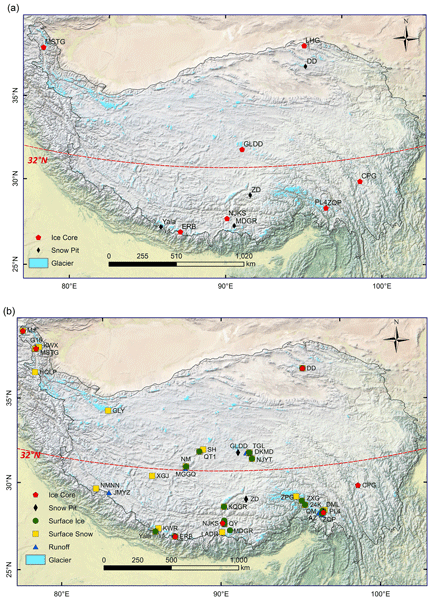
Glaciers are an important pool of microorganisms, organic carbon, and nitrogen. This study constructed the first dataset of microbial abundance and total nitrogen in Tibetan Plateau (TP) glaciers and the first dataset of dissolved organic carbon in ice cores on the TP. These new data could provide valuable information for research on the glacier carbon and nitrogen cycle and help in assessing the potential impacts of glacier retreat due to global warming on downstream ecosystems.
Thomas Jagdhuber, François Jonard, Anke Fluhrer, David Chaparro, Martin J. Baur, Thomas Meyer, and María Piles
Biogeosciences, 19, 2273–2294, https://doi.org/10.5194/bg-19-2273-2022, https://doi.org/10.5194/bg-19-2273-2022, 2022
Short summary
Short summary
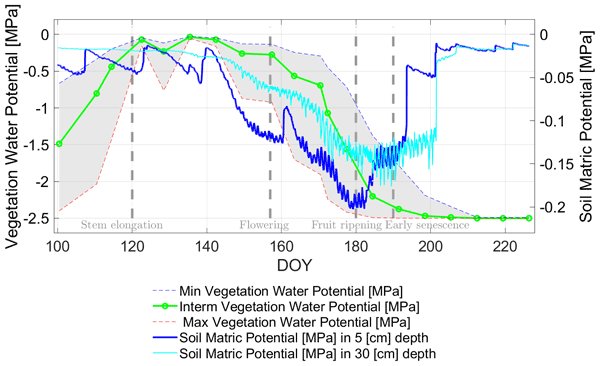
This is a concept study of water dynamics across winter wheat starting from ground-based L-band radiometry in combination with on-site measurements of soil and atmosphere. We research the feasibility of estimating water potentials and seasonal flux rates of water (water uptake from soil and transpiration rates into the atmosphere) within the soil-plant-atmosphere system (SPAS) of a winter wheat field. The main finding is that L-band radiometry can be integrated into field-based SPAS assessment.
Yi Zhao, Zhuotong Nan, Hailong Ji, and Lin Zhao
The Cryosphere, 16, 825–849, https://doi.org/10.5194/tc-16-825-2022, https://doi.org/10.5194/tc-16-825-2022, 2022
Short summary
Short summary
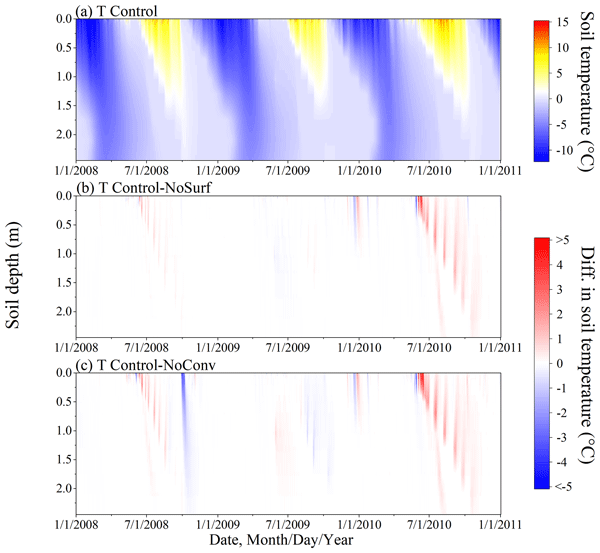
Convective heat transfer (CHT) is important in affecting thermal regimes in permafrost regions. We quantified its thermal impacts by contrasting the simulation results from three scenarios in which the Simultaneous Heat and Water model includes full, partial, and no consideration of CHT. The results show the CHT commonly happens in shallow and middle soil depths during thawing periods and has greater impacts in spring than summer. The CHT has both heating and cooling effects on the active layer.
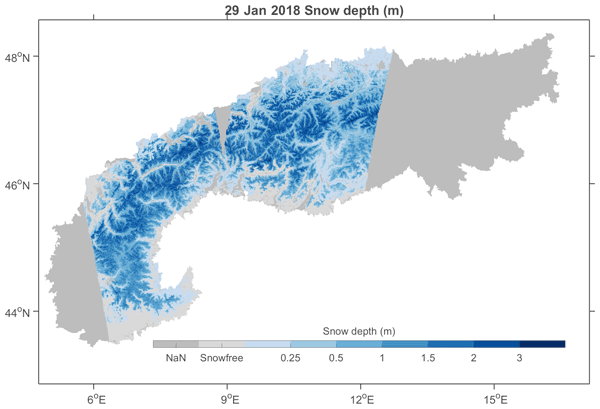
Hans Lievens, Isis Brangers, Hans-Peter Marshall, Tobias Jonas, Marc Olefs, and Gabriëlle De Lannoy
The Cryosphere, 16, 159–177, https://doi.org/10.5194/tc-16-159-2022, https://doi.org/10.5194/tc-16-159-2022, 2022
Short summary
Short summary
Snow depth observations at high spatial resolution from the Sentinel-1 satellite mission are presented over the European Alps. The novel observations can improve our knowledge of seasonal snow mass in areas with complex topography, where satellite-based estimates are currently lacking, and benefit a number of applications including water resource management, flood forecasting, and numerical weather prediction.

Jiao Lu, Guojie Wang, Tiexi Chen, Shijie Li, Daniel Fiifi Tawia Hagan, Giri Kattel, Jian Peng, Tong Jiang, and Buda Su
Earth Syst. Sci. Data, 13, 5879–5898, https://doi.org/10.5194/essd-13-5879-2021, https://doi.org/10.5194/essd-13-5879-2021, 2021
Short summary
Short summary
This study has combined three existing land evaporation (ET) products to obtain a single framework of a long-term (1980–2017) daily ET product at a spatial resolution of 0.25° to define the global proxy ET with lower uncertainties. The merged product is the best at capturing dynamics over different locations and times among all data sets. The merged product performed well over a range of vegetation cover scenarios and also captured the trend of land evaporation over different areas well.
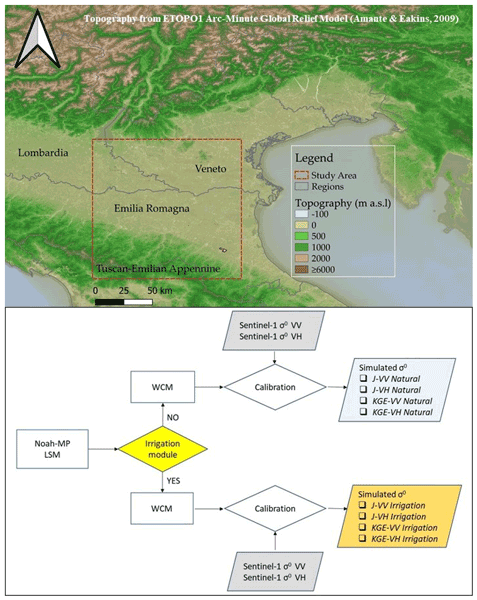
Sara Modanesi, Christian Massari, Alexander Gruber, Hans Lievens, Angelica Tarpanelli, Renato Morbidelli, and Gabrielle J. M. De Lannoy
Hydrol. Earth Syst. Sci., 25, 6283–6307, https://doi.org/10.5194/hess-25-6283-2021, https://doi.org/10.5194/hess-25-6283-2021, 2021
Short summary
Short summary
Worldwide, the amount of water used for agricultural purposes is rising and the quantification of irrigation is becoming a crucial topic. Land surface models are not able to correctly simulate irrigation. Remote sensing observations offer an opportunity to fill this gap as they are directly affected by irrigation. We equipped a land surface model with an observation operator able to transform Sentinel-1 backscatter observations into realistic vegetation and soil states via data assimilation.
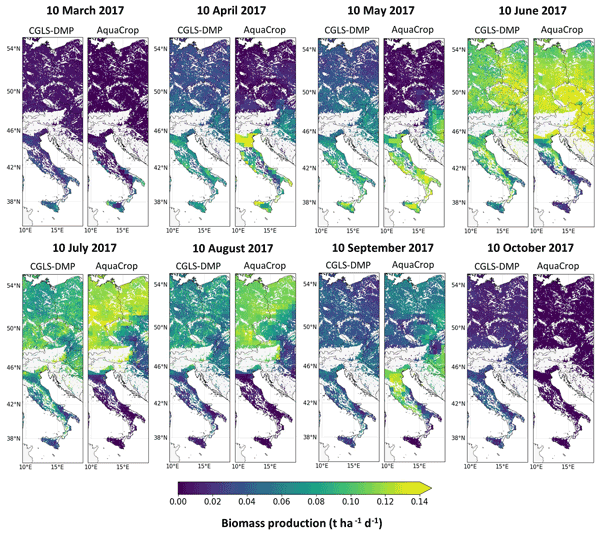
Shannon de Roos, Gabriëlle J. M. De Lannoy, and Dirk Raes
Geosci. Model Dev., 14, 7309–7328, https://doi.org/10.5194/gmd-14-7309-2021, https://doi.org/10.5194/gmd-14-7309-2021, 2021
Short summary
Short summary
A spatially distributed version of the field-scale crop model AquaCrop v6.1 was developed for applications at various spatial scales. Multi-year 1 km simulations over central Europe were evaluated against biomass and surface soil moisture products derived from optical and microwave satellite missions, as well as in situ observations of soil moisture. The regional version of the AquaCrop model provides a suitable setup for subsequent satellite-based data assimilation.
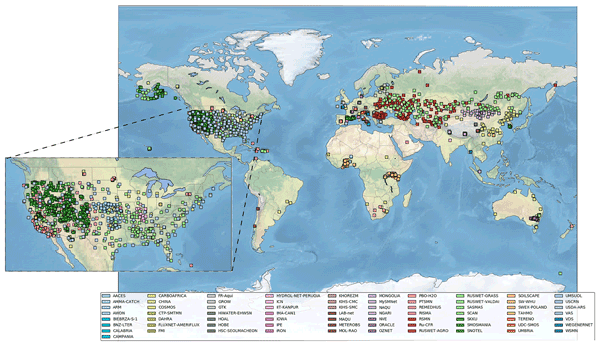
Wouter Dorigo, Irene Himmelbauer, Daniel Aberer, Lukas Schremmer, Ivana Petrakovic, Luca Zappa, Wolfgang Preimesberger, Angelika Xaver, Frank Annor, Jonas Ardö, Dennis Baldocchi, Marco Bitelli, Günter Blöschl, Heye Bogena, Luca Brocca, Jean-Christophe Calvet, J. Julio Camarero, Giorgio Capello, Minha Choi, Michael C. Cosh, Nick van de Giesen, Istvan Hajdu, Jaakko Ikonen, Karsten H. Jensen, Kasturi Devi Kanniah, Ileen de Kat, Gottfried Kirchengast, Pankaj Kumar Rai, Jenni Kyrouac, Kristine Larson, Suxia Liu, Alexander Loew, Mahta Moghaddam, José Martínez Fernández, Cristian Mattar Bader, Renato Morbidelli, Jan P. Musial, Elise Osenga, Michael A. Palecki, Thierry Pellarin, George P. Petropoulos, Isabella Pfeil, Jarrett Powers, Alan Robock, Christoph Rüdiger, Udo Rummel, Michael Strobel, Zhongbo Su, Ryan Sullivan, Torbern Tagesson, Andrej Varlagin, Mariette Vreugdenhil, Jeffrey Walker, Jun Wen, Fred Wenger, Jean Pierre Wigneron, Mel Woods, Kun Yang, Yijian Zeng, Xiang Zhang, Marek Zreda, Stephan Dietrich, Alexander Gruber, Peter van Oevelen, Wolfgang Wagner, Klaus Scipal, Matthias Drusch, and Roberto Sabia
Hydrol. Earth Syst. Sci., 25, 5749–5804, https://doi.org/10.5194/hess-25-5749-2021, https://doi.org/10.5194/hess-25-5749-2021, 2021
Short summary
Short summary
The International Soil Moisture Network (ISMN) is a community-based open-access data portal for soil water measurements taken at the ground and is accessible at https://ismn.earth. Over 1000 scientific publications and thousands of users have made use of the ISMN. The scope of this paper is to inform readers about the data and functionality of the ISMN and to provide a review of the scientific progress facilitated through the ISMN with the scope to shape future research and operations.
Cited articles
Al Bitar, A., Mialon, A., Kerr, Y. H., Cabot, F., Richaume, P., Jacquette, E., Quesney, A., Mahmoodi, A., Tarot, S., Parrens, M., Al-Yaari, A., Pellarin, T., Rodriguez-Fernandez, N., and Wigneron, J.-P.: The global SMOS Level 3 daily soil moisture and brightness temperature maps, Earth Syst. Sci. Data, 9, 293–315, https://doi.org/10.5194/essd-9-293-2017, 2017.
Al-Yaari, A., Wigneron, J. P., Dorigo, W., Colliander, A., Pellarin, T., Hahn, S., Mialon, A., Richaume, P., Fernandez-Moran, R., Fan, L., Kerr, Y. H., and De Lannoy, G.: Assessment and inter-comparison of recently developed/reprocessed microwave satellite soil moisture products using ISMN ground-based measurements, Remote Sens. Environ., 224, 289–303, https://doi.org/10.1016/j.rse.2019.02.008, 2019.
Baur, M. J., Friend, A. D., and Pellegrini, A. F. A.: Widespread and systematic effects of fire on plant–soil water relations, Nat. Geosci., 17, 1115–1120, https://doi.org/10.1038/s41561-024-01563-6, 2024.
Chan, S. K., Bindlish, R., O'Neill, P. E., Njoku, E., Jackson, T., Colliander, A., Chen, F., Burgin, M., Dunbar, S., Piepmeier, J., Yueh, S., Entekhabi, D., Cosh, M. H., Caldwell, T., Walker, J., Wu, X., Berg, A., Rowlandson, T., Pacheco, A., McNairn, H., Thibeault, M., Martinez-Fernandez, J., Gonzalez-Zamora, A., Seyfried, M., Bosch, D., Starks, P., Goodrich, D., Prueger, J., Palecki, M., Small, E. E., Zreda, M., Calvet, J.-C., Crow, W. T., and Kerr, Y.: Assessment of the SMAP Passive Soil Moisture Product, IEEE T. Geosci. Remote Sens., 54, 4994–5007, https://doi.org/10.1109/tgrs.2016.2561938, 2016.
Chan, S. K., Bindlish, R., O'Neill, P., Jackson, T., Njoku, E., Dunbar, S., Chaubell, J., Piepmeier, J., Yueh, S., Entekhabi, D., Colliander, A., Chen, F., Cosh, M. H., Caldwel, T., Walker, J., Berg, A., McNairn, H., Thibeault, M., Martinez-Fernandez, J., Uldall, F., Seyfried, M., Bosch, D., Starks, P., Collins, C. H., Prueger, J., van der Velde, R., Asanuma, J., Palecki, M., Small, E. E., Zreda, M., Calvet, J. C., Crow, W. T., and Kerr, Y.: Development and Assessment of the SMAP Enhanced Passive Soil Moisture Product, Remote Sens. Environ., 204, 931–941, https://doi.org/10.1016/j.rse.2017.08.025, 2018.
Chaparro, D., Duveiller, G., Piles, M., Cescatti, A., Vall-llossera, M., Camps, A., and Entekhabi, D.: Sensitivity of L-band vegetation optical depth to carbon stocks in tropical forests: a comparison to higher frequencies and optical indices, Remote Sens. Environ., 232, https://doi.org/10.1016/j.rse.2019.111303, 2019.
Colliander, A., Reichle, R. H., Crow, W. T., Cosh, M. H., Chen, F., Chan, S., Das, N. N., Bindlish, R., Chaubell, J., Kim, S., Liu, Q., O'Neill, P. E., Dunbar, R. S., Dang, L. B., Kimball, J. S., Jackson, T. J., Al-Jassar, H. K., Asanuma, J., Bhattacharya, B. K., Berg, A. A., Bosch, D. D., Bourgeau-Chavez, L., Caldwell, T., Calvet, J.-C., Collins, C. H., Jensen, K. H., Livingston, S., Lopez-Baeza, E., Martinez-Fernandez, J., McNairn, H., Moghaddam, M., Montzka, C., Notarnicola, C., Pellarin, T., Greimeister-Pfeil, I., Pulliainen, J., Ramos, J. G., Seyfried, M., Starks, P. J., Su, Z., van der Velde, R., Zeng, Y., Thibeault, M., Vreugdenhil, M., Walker, J. P., Zribi, M., Entekhabi, D., and Yueh, S. H.: Validation of Soil Moisture Data Products From the NASA SMAP Mission, IEEE J. Sel. Top. Appl., 15, 364–392, https://doi.org/10.1109/jstars.2021.3124743, 2022.
Colliander, A., Kerr, Y., Wigneron, J. P., Al-Yaari, A., Rodriguez-Fernandez, N., Li, X., Chaubell, J., Richaume, P., Mialon, A., Asanuma, J., Berg, A., Bosch, D. D., Caldwell, T., Cosh, M. H., Holifield Collins, C., Martínez-Fernández, J., McNairn, H., Seyfried, M. S., Starks, P. J., Su, Z., Thibeault, M., and Walker, J. P.: Performance of SMOS Soil Moisture Products over Core Validation Sites, IEEE Geosci. Remote S., 1, https://doi.org/10.1109/lgrs.2023.3272878, 2023.
Cui, Y., Qin, J., Jing, W., and Tan, G.: Applicability evaluation of merged soil moisture in GLDAS and CLDAS products over Qinghai-Tibetan Plateau, Plateau Meteorol., 37, 123–136, https://doi.org/10.7522/j.issn.1000-0534.2017.00035, 2018.
De Lannoy, G. J. M., Reichle, R. H., Peng, J., Kerr, Y., Castro, R., Kim, E. J., and Qing, L.: Converting Between SMOS and SMAP Level-1 Brightness Temperature Observations Over Nonfrozen Land, IEEE Geosci. Remote S., 12, 1908–1912, https://doi.org/10.1109/lgrs.2015.2437612, 2015.
Didan, K.: MODIS/Aqua Vegetation Indices 16-Day L3 Global 1km SIN Grid V061, NASA Land Processes Distributed Active Archive Center, https://doi.org/10.5067/MODIS/MYD13A2.061, 2021.
Dong, J. and Crow, W. T.: An Improved Triple Collocation Analysis Algorithm for Decomposing Autocorrelated and White Soil Moisture Retrieval Errors, J. Geophys. Res.-Atmos., 122, 13081–13094, https://doi.org/10.1002/2017jd027387, 2017.
Dong, J., Crow, W. T., Tobin, K. J., Cosh, M. H., Bosch, D. D., Starks, P. J., Seyfried, M., and Collins, C. H.: Comparison of microwave remote sensing and land surface modeling for surface soil moisture climatology estimation, Remote Sens. Environ., 242, https://doi.org/10.1016/j.rse.2020.111756, 2020.
Dorigo, W., Himmelbauer, I., Aberer, D., Schremmer, L., Petrakovic, I., Zappa, L., Preimesberger, W., Xaver, A., Annor, F., Ardö, J., Baldocchi, D., Bitelli, M., Blöschl, G., Bogena, H., Brocca, L., Calvet, J.-C., Camarero, J. J., Capello, G., Choi, M., Cosh, M. C., van de Giesen, N., Hajdu, I., Ikonen, J., Jensen, K. H., Kanniah, K. D., de Kat, I., Kirchengast, G., Kumar Rai, P., Kyrouac, J., Larson, K., Liu, S., Loew, A., Moghaddam, M., Martínez Fernández, J., Mattar Bader, C., Morbidelli, R., Musial, J. P., Osenga, E., Palecki, M. A., Pellarin, T., Petropoulos, G. P., Pfeil, I., Powers, J., Robock, A., Rüdiger, C., Rummel, U., Strobel, M., Su, Z., Sullivan, R., Tagesson, T., Varlagin, A., Vreugdenhil, M., Walker, J., Wen, J., Wenger, F., Wigneron, J. P., Woods, M., Yang, K., Zeng, Y., Zhang, X., Zreda, M., Dietrich, S., Gruber, A., van Oevelen, P., Wagner, W., Scipal, K., Drusch, M., and Sabia, R.: The International Soil Moisture Network: serving Earth system science for over a decade, Hydrol. Earth Syst. Sci., 25, 5749–5804, https://doi.org/10.5194/hess-25-5749-2021, 2021.
Entekhabi, D., Njoku, E. G., O'Neill, P. E., Kellogg, K. H., Crow, W. T., Edelstein, W. N., Entin, J. K., Goodman, S. D., Jackson, T. J., Johnson, J., Kimball, J., Piepmeier, J. R., Koster, R. D., Martin, N., McDonald, K. C., Moghaddam, M., Moran, S., Reichle, R., Shi, J. C., Spencer, M. W., Thurman, S. W., Tsang, L., and Van Zyl, J.: The Soil Moisture Active Passive (SMAP) Mission, Proc. IEEE, 98, 704–716, https://doi.org/10.1109/jproc.2010.2043918, 2010.
Fan, L., Wigneron, J. P., Ciais, P., Chave, J., Brandt, M., Fensholt, R., Saatchi, S. S., Bastos, A., Al-Yaari, A., Hufkens, K., Qin, Y., Xiao, X., Chen, C., Myneni, R. B., Fernandez-Moran, R., Mialon, A., Rodriguez-Fernandez, N. J., Kerr, Y., Tian, F., and Penuelas, J.: Satellite-observed pantropical carbon dynamics, Nat. Plants, 5, 944–951, https://doi.org/10.1038/s41477-019-0478-9, 2019.
Fan, L., Xing, Z., Lannoy, G. D., Frappart, F., Peng, J., Zeng, J., Li, X., Yang, K., Zhao, T., Shi, J., Ma, H., Wang, M., Liu, X., Yi, C., Ma, M., Tang, X., Wen, J., Chen, X., Wang, C., Wang, L., Wang, G., and Wigneron, J.-P.: Evaluation of satellite and reanalysis estimates of surface and root-zone soil moisture in croplands of Jiangsu Province, China, Remote Sens. Environ., 282, https://doi.org/10.1016/j.rse.2022.113283, 2022a.
Fan, L., Wigneron, J.-P., Ciais, P., Chave, J., Brandt, M., Sitch, S., Yue, C., Bastos, A., Li, X., Qin, Y., Yuan, W., Schepaschenko, D., Mukhortova, L., Li, X., Liu, X., Wang, M., Frappart, F., Xiao, X., Chen, J., Ma, M., Wen, J., Chen, X., Yang, H., van Wees, D., and Fensholt, R.: Siberian carbon sink reduced by forest disturbances, Nat. Geosci., https://doi.org/10.1038/s41561-022-01087-x, 2022b.
Fernandez-Moran, R., Al-Yaari, A., Mialon, A., Mahmoodi, A., Al Bitar, A., De Lannoy, G., Rodriguez-Fernandez, N., Lopez-Baeza, E., Kerr, Y., and Wigneron, J.-P.: SMOS-IC: An Alternative SMOS Soil Moisture and Vegetation Optical Depth Product, Remote Sens., 9, https://doi.org/10.3390/rs9050457, 2017a.
Fernandez-Moran, R., Wigneron, J. P., De Lannoy, G., Lopez-Baeza, E., Parrens, M., Mialon, A., Mahmoodi, A., Al-Yaari, A., Bircher, S., Al Bitar, A., Richaume, P., and Kerr, Y.: A new calibration of the effective scattering albedo and soil roughness parameters in the SMOS SM retrieval algorithm, Int. J. Appl. Earth Obs., 62, 27–38, https://doi.org/10.1016/j.jag.2017.05.013, 2017b.
Frappart, F., Wigneron, J.-P., Li, X., Liu, X., Al-Yaari, A., Fan, L., Wang, M., Moisy, C., Le Masson, E., Aoulad Lafkih, Z., Vallé, C., Ygorra, B., and Baghdadi, N.: Global Monitoring of the Vegetation Dynamics from the Vegetation Optical Depth (VOD): A Review, Remote Sens., 12, https://doi.org/10.3390/rs12182915, 2020.
Friedl, M. and Sulla-Menashe, D.: MODIS/Terra+Aqua Land Cover Type Yearly L3 Global 500m SIN Grid V061 [Data set], NASA Land Processes Distributed Active Archive Center, https://doi.org/10.5067/MODIS/MCD12Q1.061, 2022.
Gao, L., Ebtehaj, A., Chaubell, M. J., Sadeghi, M., Li, X., and Wigneron, J.-P.: Reappraisal of SMAP inversion algorithms for soil moisture and vegetation optical depth, Remote Sens. Environ., 264, https://doi.org/10.1016/j.rse.2021.112627, 2021.
Grant, J. P., Wigneron, J. P., De Jeu, R. A. M., Lawrence, H., Mialon, A., Richaume, P., Al Bitar, A., Drusch, M., van Marle, M. J. E., and Kerr, Y.: Comparison of SMOS and AMSR-E vegetation optical depth to four MODIS-based vegetation indices, Remote Sens. Environ., 172, 87–100, https://doi.org/10.1016/j.rse.2015.10.021, 2016.
Gruber, A., De Lannoy, G., Albergel, C., Al-Yaari, A., Brocca, L., Calvet, J. C., Colliander, A., Cosh, M., Crow, W., Dorigo, W., Draper, C., Hirschi, M., Kerr, Y., Konings, A., Lahoz, W., McColl, K., Montzka, C., Muñoz-Sabater, J., Peng, J., Reichle, R., Richaume, P., Rüdiger, C., Scanlon, T., van der Schalie, R., Wigneron, J. P., and Wagner, W.: Validation practices for satellite soil moisture retrievals: What are (the) errors?, Remote Sens. Environ., 244, https://doi.org/10.1016/j.rse.2020.111806, 2020.
Jackson, T. J.: Measuring surface soil moisture using passive microwave remote sensing, Hydrol. Process., 7, 139–152, 1993.
Kerr, Y. H., Waldteufel, P., Wigneron, J.-P., Delwart, S., Cabot, F., Boutin, J., Escorihuela, M.-J., Font, J., Reul, N., Gruhier, C., Juglea, S. E., Drinkwater, M. R., Hahne, A., Martín-Neira, M., and Mecklenburg, S.: The SMOS Mission: New Tool for Monitoring Key Elements ofthe Global Water Cycle, Proc. IEEE, 98, 666–687, https://doi.org/10.1109/jproc.2010.2043032, 2010.
Kerr, Y. H., Waldteufel, P., Richaume, P., Wigneron, J. P., Ferrazzoli, P., Mahmoodi, A., Al Bitar, A., Cabot, F., Gruhier, C., Juglea, S. E., Leroux, D., Mialon, A., and Delwart, S.: The SMOS Soil Moisture Retrieval Algorithm, IEEE T. Geosci. Remote Sens., 50, 1384–1403, https://doi.org/10.1109/tgrs.2012.2184548, 2012.
Kerr, Y. H., Wigneron, J. P., Al Bitar, A., Mialon, A., and Srivastava, P. K.: Soil Moisture from Space, in: Satellite Soil Moisture Retrieval, Elsevier, 3–27, https://doi.org/10.1016/b978-0-12-803388-3.00001-2, 2016.
Kim, H., Wigneron, J.-P., Kumar, S., Dong, J., Wagner, W., Cosh, M. H., Bosch, D. D., Collins, C. H., Starks, P. J., Seyfried, M., and Lakshmi, V.: Global scale error assessments of soil moisture estimates from microwave-based active and passive satellites and land surface models over forest and mixed irrigated/dryland agriculture regions, Remote Sens. Environ., 251, https://doi.org/10.1016/j.rse.2020.112052, 2020.
Konkathi, P., Li, X., Fernandez-Moran, R., Liu, X., Xing, Z., Frappart, F., Piles, M., Karthikeyan, L., and Wigneron, J.-P.: A novel calibration of global soil roughness effects for SMOS-IC soil moisture and L-VOD products, Remote Sens. Environ., 329, https://doi.org/10.1016/j.rse.2025.114946, 2025.
Li, X., Al-Yaari, A., Schwank, M., Fan, L., Frappart, F., Swenson, J., and Wigneron, J. P.: Compared performances of SMOS-IC soil moisture and vegetation optical depth retrievals based on Tau-Omega and Two-Stream microwave emission models, Remote Sens. Environ., 236, https://doi.org/10.1016/j.rse.2019.111502, 2020.
Li, X., Wigneron, J.-P., Frappart, F., Fan, L., Ciais, P., Fensholt, R., Entekhabi, D., Brandt, M., Konings, A. G., Liu, X., Wang, M., Al-Yaari, A., and Moisy, C.: Global-scale assessment and inter-comparison of recently developed/reprocessed microwave satellite vegetation optical depth products, Remote Sens. Environ., 253, https://doi.org/10.1016/j.rse.2020.112208, 2021.
Li, X., Wigneron, J.-P., Fan, L., Frappart, F., Yueh, S. H., Colliander, A., Ebtehaj, A., Gao, L., Fernandez-Moran, R., Liu, X., Wang, M., Ma, H., Moisy, C., and Ciais, P.: A new SMAP soil moisture and vegetation optical depth product (SMAP-IB): Algorithm, assessment and inter-comparison, Remote Sens. Environ., 271, https://doi.org/10.1016/j.rse.2022.112921, 2022a.
Li, X., Wigneron, J.-P., Frappart, F., Lannoy, G. D., Fan, L., Zhao, T., Gao, L., Tao, S., Ma, H., Peng, Z., Liu, X., Wang, H., Wang, M., Moisy, C., and Ciais, P.: The first global soil moisture and vegetation optical depth product retrieved from fused SMOS and SMAP L-band observations, Remote Sens. Environ., 282, https://doi.org/10.1016/j.rse.2022.113272, 2022b.
Li, X., Ciais, P., Fensholt, R., Chave, J., Sitch, S., Canadell, J. G., Brandt, M., Fan, L., Xiao, X., Tao, S., Wang, H., Albergel, C., Yang, H., Frappart, F., Wang, M., Bastos, A., Maisongrande, P., Qin, Y., Xing, Z., Cui, T., Yu, L., He, L., Zheng, Y., Liu, X., Liu, Y., De Truchis, A., and Wigneron, J. P.: Large live biomass carbon losses from droughts in the northern temperate ecosystems during 2016–2022, Nat. Commun., 16, 4980, https://doi.org/10.1038/s41467-025-59999-2, 2025.
Ma, H., Zeng, J., Chen, N., Zhang, X., Cosh, M. H., and Wang, W.: Satellite surface soil moisture from SMAP, SMOS, AMSR2 and ESA CCI: A comprehensive assessment using global ground-based observations, Remote Sens. Environ., 231, 111215, https://doi.org/10.1016/j.rse.2019.111215, 2019.
Ma, H., Weiss, M., Malik, D., Berthelot, B., Yebra, M., Nolan, R. H., Mialon, A., Zeng, J., Quan, X., Tagesson, H. T., Olioso, A., and Baret, F.: Satellite canopy water content from Sentinel-2, Landsat-8 and MODIS: Principle, algorithm and assessment, Remote Sens. Environ., 326, https://doi.org/10.1016/j.rse.2025.114801, 2025.
Martín-Neira, M., Oliva, R., Corbella, I., Torres, F., Duffo, N., Durán, I., Kainulainen, J., Closa, J., Zurita, A., Cabot, F., Khazaal, A., Anterrieu, E., Barbosa, J., Lopes, G., Tenerelli, J., Díez-García, R., Fauste, J., Martín-Porqueras, F., González-Gambau, V., Turiel, A., Delwart, S., Crapolicchio, R., and Suess, M.: SMOS instrument performance and calibration after six years in orbit, Remote Sens. Environ., 180, 19–39, https://doi.org/10.1016/j.rse.2016.02.036, 2016.
Mialon, A., Coret, L., Kerr, Y. H., Secherre, F., and Wigneron, J. P.: Flagging the Topographic Impact on the SMOS Signal, IEEE T. Geosci. Remote Sens., 46, 689–694, https://doi.org/10.1109/tgrs.2007.914788, 2008.
Mo, T., Choudhury, B., Schmugge, T., Wang, J. R., and Jackson, T.: A model for microwave emission from vegetation-covered fields, J. Geophys. Res.-Oceans, 87, 11229–11237, 1982.
Muñoz-Sabater, J., Dutra, E., Agustí-Panareda, A., Albergel, C., Arduini, G., Balsamo, G., Boussetta, S., Choulga, M., Harrigan, S., Hersbach, H., Martens, B., Miralles, D. G., Piles, M., Rodríguez-Fernández, N. J., Zsoter, E., Buontempo, C., and Thépaut, J.-N.: ERA5-Land: a state-of-the-art global reanalysis dataset for land applications, Earth Syst. Sci. Data, 13, 4349–4383, https://doi.org/10.5194/essd-13-4349-2021, 2021.
Oliva, R., Daganzo, E., Richaume, P., Kerr, Y., Cabot, F., Soldo, Y., Anterrieu, E., Reul, N., Gutierrez, A., Barbosa, J., and Lopes, G.: Status of Radio Frequency Interference (RFI) in the 1400–1427 MHz passive band based on six years of SMOS mission, Remote Sens. Environ., 180, 64–75, https://doi.org/10.1016/j.rse.2016.01.013, 2016.
O'Neill, P. E., Chan, S., Njoku, E. G., Jackson, T., Bindlish, R., and Chaubell, J.: SMAP L3 Radiometer Global Daily 36 km EASE-Grid Soil Moisture, Version 8, Boulder, Colorado USA, NASA National Snow and Ice Data Center Distributed Active Archive Center [data set], https://doi.org/10.5067/OMHVSRGFX38O, 2021.
Peng, J., Tanguy, M., Robinson, E. L., Pinnington, E., Evans, J., Ellis, R., Cooper, E., Hannaford, J., Blyth, E., and Dadson, S.: Estimation and evaluation of high-resolution soil moisture from merged model and Earth observation data in the Great Britain, Remote Sens. Environ., 264, https://doi.org/10.1016/j.rse.2021.112610, 2021.
Peng, Z., Zhao, T., Shi, J., Kerr, Y. H., Rodriguez-Fernandez, N. J., Yao, P., and Che, T.: An RFI-suppressed SMOS L-band multi-angular brightness temperature dataset spanning over a decade (since 2010), Sci. Data, 10, 599, https://doi.org/10.1038/s41597-023-02499-z, 2023.
Peng, Z., Zhao, T., Shi, J., Hu, L., Rodríguez-Fernández, N. J., Wigneron, J.-P., Jackson, T. J., Walker, J. P., Cosh, M. H., Yang, K., Lu, H., Bai, Y., Yao, P., Zheng, J., and Wei, Z.: First mapping of polarization-dependent vegetation optical depth and soil moisture from SMAP L-band radiometry, Remote Sens. Environ., 302, 113970, https://doi.org/10.1016/j.rse.2023.113970, 2024.
Rodell, M., Houser, P. R., Jambor, U., Gottschalck, J., Mitchell, K., Meng, C.-J., Arsenault, K., Cosgrove, B., Radakovick, J., Bosilovich, M., Entin, J. K., Walker, J. P., Lohmann, D., and Toll, D.: THE Global Land Data Assimilation System, B. Am. Meteorol. Soc., 85, 381–394, 2004.
Rodríguez-Fernández, N. J., Aires, F., Richaume, P., Kerr, Y. H., Prigent, C., Kolassa, J., Cabot, F., Jimenez, C., Mahmoodi, A., and Drusch, M.: Soil Moisture Retrieval Using Neural Networks: Application to SMOS, IEEE T. Geosci. Remote Sens., 53, 5991–6007, https://doi.org/10.1109/tgrs.2015.2430845, 2015.
Rodríguez-Fernández, N. J., Mialon, A., Mermoz, S., Bouvet, A., Richaume, P., Al Bitar, A., Al-Yaari, A., Brandt, M., Kaminski, T., Le Toan, T., Kerr, Y. H., and Wigneron, J.-P.: An evaluation of SMOS L-band vegetation optical depth (L-VOD) data sets: high sensitivity of L-VOD to above-ground biomass in Africa, Biogeosciences, 15, 4627–4645, https://doi.org/10.5194/bg-15-4627-2018, 2018.
Saatchi, S. S., Harris, N. L., Brown, S., Lefsky, M., Mitchard, E. T., Salas, W., Zutta, B. R., Buermann, W., Lewis, S. L., Hagen, S., Petrova, S., White, L., Silman, M., and Morel, A.: Benchmark map of forest carbon stocks in tropical regions across three continents, P. Natl. Acad. Sci. USA, 108, 9899–9904, https://doi.org/10.1073/pnas.1019576108, 2011.
Sadri, S., Pan, M., Wada, Y., Vergopolan, N., Sheffield, J., Famiglietti, J. S., Kerr, Y., and Wood, E.: A global near-real-time soil moisture index monitor for food security using integrated SMOS and SMAP, Remote Sens. Environ., 246, https://doi.org/10.1016/j.rse.2020.111864, 2020.
Schmitt, A. U. and Kaleschke, L.: A Consistent Combination of Brightness Temperatures from SMOS and SMAP over Polar Oceans for Sea Ice Applications, Remote Sens., 10, https://doi.org/10.3390/rs10040553, 2018.
Simard, M., Pinto, N., Fisher, J. B., and Baccini, A.: Mapping forest canopy height globally with spaceborne lidar, J. Geophys. Res., 116, https://doi.org/10.1029/2011jg001708, 2011.
Wagner, W., Naeimi, V., Scipal, K., de Jeu, R., and Martínez-Fernández, J.: Soil moisture from operational meteorological satellites, Hydrogeol. J., 15, 121–131, https://doi.org/10.1007/s10040-006-0104-6, 2006.
Wagner, W., Hahn, S., Kidd, R., Melzer, T., Bartalis, Z., Hasenauer, S., Figa-Saldaña, J., de Rosnay, P., Jann, A., Schneider, S., Komma, J., Kubu, G., Brugger, K., Aubrecht, C., Züger, J., Gangkofner, U., Kienberger, S., Brocca, L., Wang, Y., Blöschl, G., Eitzinger, J., and Steinnocher, K.: The ASCAT Soil Moisture Product: A Review of its Specifications, Validation Results, and Emerging Applications, Meteorol. Z., 22, 5–33, https://doi.org/10.1127/0941-2948/2013/0399, 2013.
Wang, H., Wigneron, J.-P., Ciais, P., Yao, Y., Fan, L., Liu, X., Li, X., Green, J. K., Tian, F., Tao, S., Li, W., Frappart, F., Albergel, C., Wang, M., and Li, S.: Seasonal variations in vegetation water content retrieved from microwave remote sensing over Amazon intact forests, Remote Sens. Environ., 285, https://doi.org/10.1016/j.rse.2022.113409, 2023.
Wigneron, J. P., Kerr, Y., Waldteufel, P., Saleh, K., Escorihuela, M. J., Richaume, P., Ferrazzoli, P., de Rosnay, P., Gurney, R., Calvet, J. C., Grant, J. P., Guglielmetti, M., Hornbuckle, B., Mätzler, C., Pellarin, T., and Schwank, M.: L-band Microwave Emission of the Biosphere (L-MEB) Model: Description and calibration against experimental data sets over crop fields, Remote Sens. Environ., 107, 639–655, https://doi.org/10.1016/j.rse.2006.10.014, 2007.
Wigneron, J.-P., Schwank, M., Baeza, E. L., Kerr, Y., Novello, N., Millan, C., Moisy, C., Richaume, P., Mialon, A., Al Bitar, A., Cabot, F., Lawrence, H., Guyon, D., Calvet, J.-C., Grant, J. P., Casal, T., de Rosnay, P., Saleh, K., Mahmoodi, A., Delwart, S., and Mecklenburg, S.: First evaluation of the simultaneous SMOS and ELBARA-II observations in the Mediterranean region, Remote Sens. Environ., 124, 26–37, https://doi.org/10.1016/j.rse.2012.04.014, 2012.
Wigneron, J. P., Jackson, T. J., O'Neill, P., De Lannoy, G., de Rosnay, P., Walker, J. P., Ferrazzoli, P., Mironov, V., Bircher, S., Grant, J. P., Kurum, M., Schwank, M., Munoz-Sabater, J., Das, N., Royer, A., Al-Yaari, A., Al Bitar, A., Fernandez-Moran, R., Lawrence, H., Mialon, A., Parrens, M., Richaume, P., Delwart, S., and Kerr, Y.: Modelling the passive microwave signature from land surfaces: A review of recent results and application to the L-band SMOS & SMAP soil moisture retrieval algorithms, Remote Sens. Environ., 192, 238–262, https://doi.org/10.1016/j.rse.2017.01.024, 2017.
Wigneron, J.-P., Li, X., Frappart, F., Fan, L., Al-Yaari, A., De Lannoy, G., Liu, X., Wang, M., Le Masson, E., and Moisy, C.: SMOS-IC data record of soil moisture and L-VOD: Historical development, applications and perspectives, Remote Sens. Environ., 254, https://doi.org/10.1016/j.rse.2020.112238, 2021.
Wigneron, J.-P., Ciais, P., Li, X., Brandt, M., Canadell, J. G., Tian, F., Wang, H., Bastos, A., Fan, L., Gatica, G., Kashyap, R., Liu, X., Sitch, S., Tao, S., Xiao, X., Yang, H., Espinoza Villar, J. C., Frappart, F., Li, W., Qin, Y., De Truchis, A., and Fensholt, R.: Global carbon balance of the forest: satellite-based L-VOD results over the last decade, Front. Remote Sens., 5, https://doi.org/10.3389/frsen.2024.1338618, 2024.
Xing, Z., Fan, L., Zhao, L., De Lannoy, G., Frappart, F., Peng, J., Li, X., Zeng, J., Al-Yaari, A., Yang, K., Zhao, T., Shi, J., Wang, M., Liu, X., Hu, G., Xiao, Y., Du, E., Li, R., Qiao, Y., Shi, J., Wen, J., Ma, M., and Wigneron, J.-P.: A first assessment of satellite and reanalysis estimates of surface and root-zone soil moisture over the permafrost region of Qinghai-Tibet Plateau, Remote Sens. Environ., 265, https://doi.org/10.1016/j.rse.2021.112666, 2021.
Xing, Z., Li, X., Fan, L., Colliander, A., Frappart, F., de Rosnay, P., Fernandez-Moran, R., Liu, X., Wang, H., Zhao, L., and Wigneron, J.-P.: Assessment of 9 km SMAP soil moisture: Evidence of narrowing the gap between satellite retrievals and model-based reanalysis, Remote Sens. Environ., 296, https://doi.org/10.1016/j.rse.2023.113721, 2023.
Xing, Z., Li, X., and Wigneron, J.-P.: An operational global L-band soil moisture and vegetation optical depth dataset from optimized 40° SMOS brightness temperatures, Zenodo [data set], https://doi.org/10.5281/zenodo.17647385, 2025.
Yi, C., Li, X., Zeng, J., Fan, L., Xie, Z., Gao, L., Xing, Z., Ma, H., Boudah, A., Zhou, H., Zhou, W., Sheng, Y., Dong, T., and Wigneron, J.-P.: Assessment of five SMAP soil moisture products using ISMN ground-based measurements over varied environmental conditions, J. Hydrol., 619, https://doi.org/10.1016/j.jhydrol.2023.129325, 2023.
Zotta, R.-M., Moesinger, L., van der Schalie, R., Vreugdenhil, M., Preimesberger, W., Frederikse, T., de Jeu, R., and Dorigo, W.: VODCA v2: multi-sensor, multi-frequency vegetation optical depth data for long-term canopy dynamics and biomass monitoring, Earth Syst. Sci. Data, 16, 4573–4617, https://doi.org/10.5194/essd-16-4573-2024, 2024.
Short summary
Microwave satellite observations of Earth’s land surface are important for tracking global soil moisture and vegetation water content. We use data from the Soil Moisture and Ocean Salinity satellite to first reduce noise and contamination in microwave signals, then produce more reliable long-term records of these variables. Tests against ground stations and other satellites show that the new record performs better than existing products and supports drought, freeze-thaw, and carbon monitoring.
Microwave satellite observations of Earth’s land surface are important for tracking global soil...


Altmetrics
Final-revised paper
Preprint