Articles | Volume 18, issue 10
https://doi.org/10.5194/essd-18-7345-2026
© Author(s) 2026. This work is distributed under
the Creative Commons Attribution 4.0 License.
the Creative Commons Attribution 4.0 License.
https://doi.org/10.5194/essd-18-7345-2026
© Author(s) 2026. This work is distributed under
the Creative Commons Attribution 4.0 License.
the Creative Commons Attribution 4.0 License.
Data description article
| Highlight paper
| 
06 Oct 2026
Data description article | Highlight paper |
| 06 Oct 2026
| 06 Oct 2026
A global consistent database of plankton and detritus from in situ imaging by the Underwater Vision Profiler 5
Ariadna C. Nocera
CORRESPONDING AUTHOR

Centro para el Estudio de Sistemas Marinos, CCT-CENPAT-CONICET, U9120ACD, Puerto Madryn, Chubut, Argentina
Sorbonne Université, CNRS, Laboratoire d'Océanographie de Villefranche, LOV, 06230 Villefranche-sur-Mer, France
Sorbonne Université, CNRS, Laboratoire d'Océanographie de Villefranche, LOV, 06230 Villefranche-sur-Mer, France
Institut Universitaire de France, Paris, France
Marcel Babin
Département de Biologie, Universite Laval, Québec, Canada
Tristan Biard
Laboratoire d'Océanologie et de Géosciences (LOG), Universite du Littoral Côte d'Opale, Université Lille, CNRS, IRD, UMR 8187, Wimereux, France
Institut Universitaire de France, Paris, France
Julie Coustenoble
Sorbonne Université, CNRS, Laboratoire d'Océanographie de Villefranche, LOV, 06230 Villefranche-sur-Mer, France
François Carlotti
Mediterranean Institute of Oceanography, Aix-Marseille Universite, Université de Toulon, CNRS, IRD, UMR 7294, Marseille, France
Laurent Coppola
Sorbonne Université, CNRS, Laboratoire d'Océanographie de Villefranche, LOV, 06230 Villefranche-sur-Mer, France
Sorbonne Université, CNRS, OSU STAMAR, UAR2017, 4 Place Jussieu, 75252 Paris CEDEX 05, France
Lucas Courchet
Sorbonne Université, CNRS, Institut de la Mer de Villefranche, IMEV, 06230 Villefranche-sur-Mer, France
Laetitia Drago
Sorbonne Université, CNRS, Laboratoire d'Océanographie de Villefranche, LOV, 06230 Villefranche-sur-Mer, France
current address: Laboratoire d'Océanographie et du Climat: Expérimentations et Approches Numériques (LOCEAN-IPSL), Sorbonne Université, UMR 7159 CNRS-IRD-MNHN, Paris, France
Amanda Elineau
Sorbonne Université, CNRS, Laboratoire d'Océanographie de Villefranche, LOV, 06230 Villefranche-sur-Mer, France
Lionel Guidi
Sorbonne Université, CNRS, Laboratoire d'Océanographie de Villefranche, LOV, 06230 Villefranche-sur-Mer, France
Helena Hauss
GEOMAR Helmholtz Centre for Ocean Research Kiel, Kiel, Germany
NORCE Norwegian Research Centre, Bergen, Norway
Laëtitia Jalabert
Sorbonne Université, CNRS, Institut de la Mer de Villefranche, IMEV, 06230 Villefranche-sur-Mer, France
Lee Karp-Boss
School of Marine Sciences, University of Maine, Orono, ME, USA
Rainer Kiko
Sorbonne Université, CNRS, Laboratoire d'Océanographie de Villefranche, LOV, 06230 Villefranche-sur-Mer, France
NORCE Norwegian Research Centre, Bergen, Norway
Manon Laget
Mediterranean Institute of Oceanography, Aix-Marseille Universite, Université de Toulon, CNRS, IRD, UMR 7294, Marseille, France
current address: Department of Oceanography, Dalhousie University, Halifax, Nova Scotia, Canada
Fabien Lombard
Sorbonne Université, CNRS, Laboratoire d'Océanographie de Villefranche, LOV, 06230 Villefranche-sur-Mer, France
Institut Universitaire de France, Paris, France
Andrew McDonnell
College of Fisheries and Ocean Sciences, University of Alaska Fairbanks, Fairbanks, Alaska, USA
Camille Merland
GEOMAR Helmholtz Centre for Ocean Research Kiel, Kiel, Germany
Solène Motreuil
GEOMAR Helmholtz Centre for Ocean Research Kiel, Kiel, Germany
Thelma Panaïotis
Sorbonne Université, CNRS, Laboratoire d'Océanographie de Villefranche, LOV, 06230 Villefranche-sur-Mer, France
current address: National Oceanography Centre, Southampton, UK
Marc Picheral
Sorbonne Université, CNRS, Laboratoire d'Océanographie de Villefranche, LOV, 06230 Villefranche-sur-Mer, France
Andreas Rogge
Alfred-Wegener-Institut, Helmholtz-Zentrum für Polar- und Meeresforschung, Bremerhaven, Germany
Institute of Environmental Physics, University of Bremen, Bremen, Germany
Anya Waite
Department of Oceanography, Dalhousie University, Halifax, Nova Scotia, Canada
Jean-Olivier Irisson
Sorbonne Université, CNRS, Laboratoire d'Océanographie de Villefranche, LOV, 06230 Villefranche-sur-Mer, France
Related authors
No articles found.
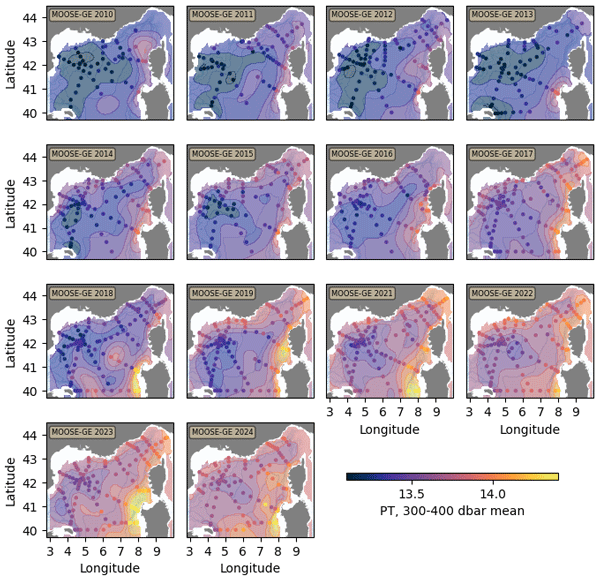
Laurent Coppola, Anthony Bosse, Thibaut Wagener, Dominique Lefevre, Magali Lescot, François Carlotti, Fabien Lombard, Lionel Guidi, Fabrice Not, Xavier Durrieu de Madron, Pascal Conan, Mireille Pujo-Pay, Caroline Ulses, Samuel Somot, Claude Estournel, Emilie Diamond Riquier, Céline Laus, Nathalie Leblond, Matthieu Labaste, Patrice Bretel, Melek Golbol, Stephane Kunesch, Jennifer Sola, Laure Chirurgien, Sandra Nunige, Sarah Romac, and Pierre Testor
Earth Syst. Sci. Data, 18, 5303–5327, https://doi.org/10.5194/essd-18-5303-2026, https://doi.org/10.5194/essd-18-5303-2026, 2026
Short summary
Short summary
The Mediterranean Ocean Observing System for the Environment program investigated the fast-changing northwestern Mediterranean through annual cruises from 2010 to 2024. Using consistent surface-to-seafloor measurements, checked against fixed and autonomous platforms, we find intermediate and deep waters warming and getting saltier, oxygen declining and dissolved carbon rising, indicating progressing acidification. These trends can reshape ecosystems and stress the need for sustained monitoring.
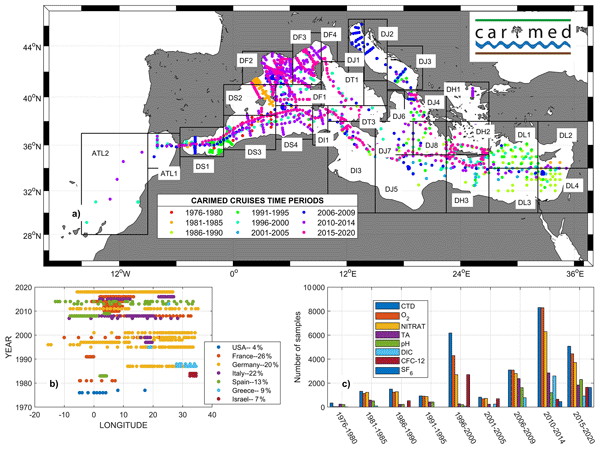
Marta Álvarez, Maribel I. García-Ibáñez, Nico Lange, Alex Kozyr, Antón Velo, Toste Tanhua, Giuseppe Civitarese, Carolina Cantoni, Malek Belgacem, Katrin Schroeder, Rubén Acerbi, Laurent Coppola, Thibaut Wagener, Noelia M. Fajar, Susana Flecha, Michele Giani, Louisa Giannoudi, Elisa F. Guallart, Abed El Rahman Hassoun, Emma I. Huertas, Valeria Ibello, Mehdia A. Keraghel, Férial Louanchi, Anna Luchetta, Fiz F. Pérez, Carsten Schirnick, Ekaterini Souvermezoglou, Lidia Urbini, Montserrat Vidal, and Patrizia Ziveri
Earth Syst. Sci. Data, 18, 4915–4941, https://doi.org/10.5194/essd-18-4915-2026, https://doi.org/10.5194/essd-18-4915-2026, 2026
Short summary
Short summary
CARIMED (CARbon, tracers, and ancillary data In the MEDiterranean Sea) is a high-quality, FAIR (Findability, Accessibility, Interoperability, and Reusability) dataset integrating hydrographic, biogeochemical, and transient tracer data from 46 research cruises (1976–2018) across the Mediterranean Sea. The data underwent rigorous, basin-adapted quality control to remove systematic biases, unifying four decades of fragmented data, delivering two complementary products: the aggregated original cruise data product and the bias-adjusted data synthesis product.
Manuel Vargas-Yáñez, Orens Pasqueron de Fommervault, Emanuela Clementi, Christian Ferrarin, Svitlana Liubertseva, Diego Álvarez-Berastegui, Baptiste Mourre, Salvatore Aronica, Rosa Balbin, Joaquín Ballabrera-Poy, Sana Ben Ismail, Nathaniel Benssousan, Ismail Bessa, Alicia Blanco, Anthony Bosse, Evi Bourma, François Bourrin, Carlo Brandini, Fulvio Capodici, Clara Casals-Baixas, Branko Cermelj, Giuseppe Ciraolo, Pascal Conan, Laurent Coppola, Lorenzo Corgnati, Joaquín del Río, Emilie Diamond Riquier, Lara Diaz-Barroso, Bartolomeo Doronzo, Xavier Durrieu de Madron, Milad Fakhri, Costantine Frangoulis, Claudia Fratianni, Emilio García-Ladona, Jesus García-Lafuente, M. Carmen García-Martínez, Joaquín Garrabou, Josep Gasol, Adam Gauci, Frédéric Gazeau, Gerard Gregory, Abed El Raman Hassoun, Jordi Isern-Fontanet, Dominique Lefevre, Nadia Lo Bue, Guiomar López, Pablo Lorente, Deny Malengros, Ramon Massana, Sinan Mavruk, Stefano Miserocchi, Behzad Mostajir, Laure Mousseau, Francina Moya, Antonio Novellino, Arianna Orasi, Emanuele Organelli, Vicent Ouisse, Tal Ozer, Begoña Pérez-Gómez, Susana Pérez-Rubio, Leonidas Perivoliotis, Georges Petihakis, Anne Petrenko, Sebastien Pinel, Xavier Pitarch, Angela Pomaro, Lucía Quirós-Collazos, Emma Reyes, Simone Sammartino, Anna Sánchez-Vidal, Katrin Schroeder, Stefano Taddei, Elena Tel, Pierre Testor, Marco Torri, Daniela Turk, Laura Ursella, Dimitris Velaoras, Francesca Vidussi, Ivica Vilivić, Enrico Zambiachi, D. Nikolaos Zarokanellos, George Zodiatis, and Vanessa Cardin
EGUsphere, https://doi.org/10.5194/egusphere-2026-2632, https://doi.org/10.5194/egusphere-2026-2632, 2026
Short summary
Short summary
This work compiles current marine observation capabilities in the Mediterranean Sea, making this information accessible to scientists, organizations, stakeholders, and environmental policymakers. It supports initiatives such as Copernicus Marine Service, EMODNet, the European Ocean Pact, and EU directives. It is intended as a living resource to be updated, identifying strengths and gaps in Mediterranean observation systems.
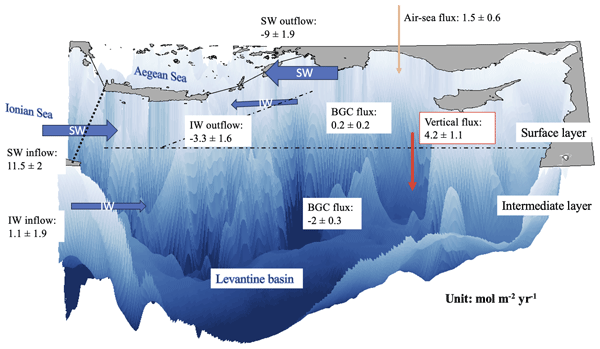
Joelle Habib, Caroline Ulses, Claude Estournel, Milad Fakhri, Patrick Marsaleix, Thierry Moutin, Dominique Lefevre, Mireille Pujo-Pay, Marine Fourrier, Laurent Coppola, Cathy Wimart-Rousseau, and Pascal Conan
Biogeosciences, 23, 2939–2958, https://doi.org/10.5194/bg-23-2939-2026, https://doi.org/10.5194/bg-23-2939-2026, 2026
Short summary
Short summary
The Levantine Basin in the eastern Mediterranean Sea is one of the most nutrient-poor marine regions on Earth. Using a detailed model and observations, we studied how oxygen changes from 2013 to 2020. We found that winter cooling draws oxygen into the sea and moves it to deeper waters, while warmer months release some back. Overall, the basin absorbs more oxygen than it releases, and winter heat loss and circulation patterns strongly control how oxygen is stored and transported.
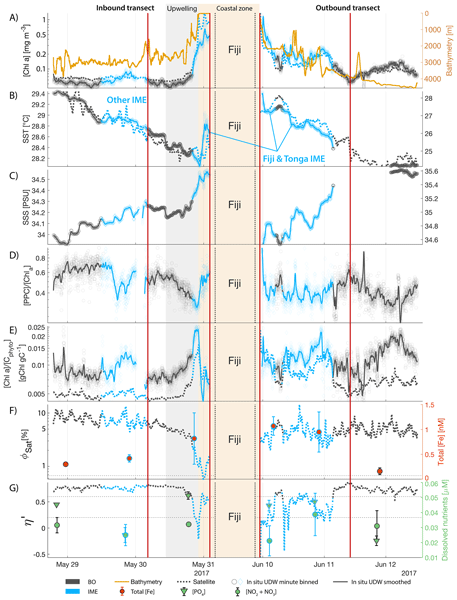
Guillaume Bourdin, Lee Karp-Boss, Fabien Lombard, Gabriel Gorsky, and Emmanuel Boss
Biogeosciences, 23, 2687–2728, https://doi.org/10.5194/bg-23-2687-2026, https://doi.org/10.5194/bg-23-2687-2026, 2026
Short summary
Short summary
Island mass effect (IME) refers to elevated chlorophyll a concentrations around islands, often extending hundreds of kilometers into oligotrophic waters. Using satellite-derived nutrient and iron stress indices and in situ bio-optical data from the Tara Pacific expedition, we show that IMEs are associated with recurring iron and macronutrient enrichments, and changes in phytoplankton community composition relative to the regional background ocean.
Nasrollah Moradi, Lili Hufnagel, Simon Ramondenc, Clara M. Flintrop, Rainer Kiko, Tim Fischer, Helena Hauss, Arne Körtzinger, Gerhard Fischer, and Morten H. Iversen
Biogeosciences, 23, 2179–2203, https://doi.org/10.5194/bg-23-2179-2026, https://doi.org/10.5194/bg-23-2179-2026, 2026
Short summary
Short summary
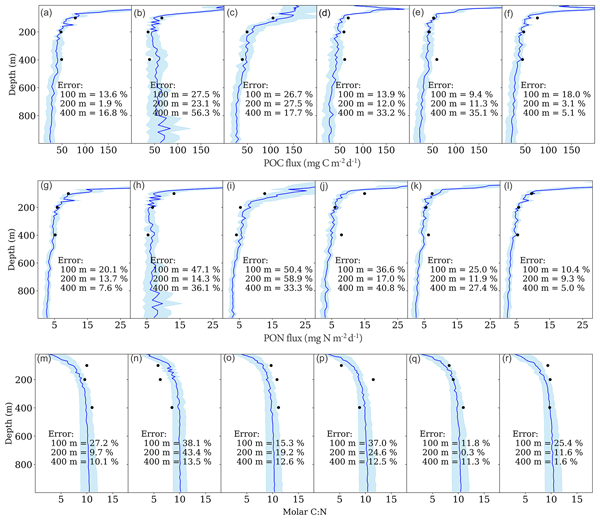
The presented framework advances estimates of particulate organic carbon and nitrogen fluxes in the water column derived from in situ imaging-based particle size distribution data. By accounting for non-sinking particles, depth-dependent degradation, and a dynamic carbon-to-nitrogen ratio that evolves with particle age during settling, it provides a more accurate representation of organic matter export to the deep ocean.
Alexandre Schickele, Hadrien Savioz, Nicolas Gruber, Lionel Guidi, Jean-Olivier Irisson, and Meike Vogt
EGUsphere, https://doi.org/10.1101/2025.10.28.685123, https://doi.org/10.1101/2025.10.28.685123, 2026
Short summary
Short summary
By regulating the ocean nitrogen cycle, microbial plankton recycle nutrients and sustain productivity. Using global genetic data, we mapped where prokaryotes have the potential to carry out key nitrogen transformations. We show that this potential is structured by metabolic requirements, and environmental factors such as oxygen and nutrients concentrations. This reveals how microbial communities shape nitrogen processes and provides new insights to better represent them in global ocean models.
Thelma Panaïotis, Emma Amblard, Guillaume Boniface-Chang, Gabriel Dulac-Arnold, Benjamin Woodward, and Jean-Olivier Irisson
Earth Syst. Sci. Data, 18, 945–967, https://doi.org/10.5194/essd-18-945-2026, https://doi.org/10.5194/essd-18-945-2026, 2026
Short summary
Short summary
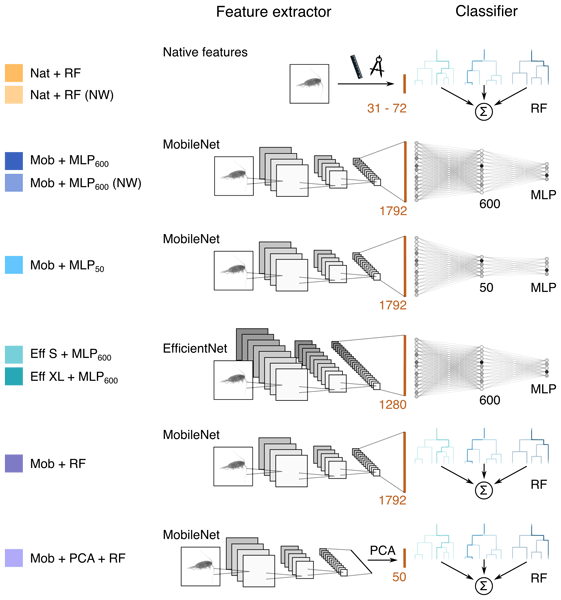
To address the lack of performance benchmark in plankton image classification, we evaluated machine learning methods on six large and realistic datasets. Testing both traditional and more recent convolutional neural networks (deep learning), we find that relatively small deep networks performed best, particularly for uncommon classes, because they extract richer features. Our results indicate that such compact models are sufficient for classifying small grayscale plankton images.
Joelle Habib, Lars Stemmann, Alexandre Accardo, Alberto Baudena, Franz Philip Tuchen, Peter Brandt, and Rainer Kiko
Biogeosciences, 22, 7985–8003, https://doi.org/10.5194/bg-22-7985-2025, https://doi.org/10.5194/bg-22-7985-2025, 2025
Short summary
Short summary
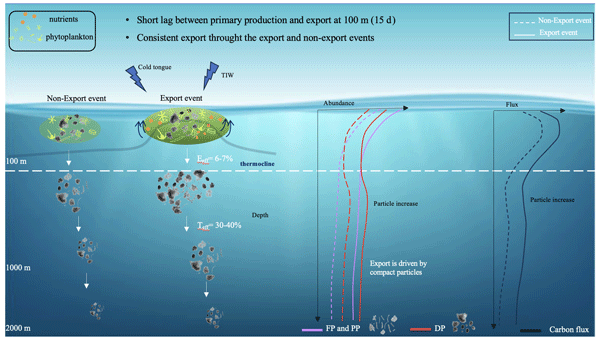
This study investigates how carbon moves from the ocean surface to the depths in the equatorial Atlantic, contributing to long-term carbon storage. Using an Argo float equipped with a camera, we captured two periods with major carbon export events. By identifying particle types and their sinking behaviors, we found that smaller, compact particles are key drivers of carbon transport. Our findings underscore the value of using imaging tools on autonomous platforms in tracking carbon sequestration.
Laetitia Drago, Caroline Cailliau, Patrick Pouline, Béatriz Beker, Laëtitia Jalabert, Jean-Baptiste Romagnan, and Sakina-Dorothée Ayata
Earth Syst. Sci. Data, 17, 6583–6600, https://doi.org/10.5194/essd-17-6583-2025, https://doi.org/10.5194/essd-17-6583-2025, 2025
Short summary
Short summary
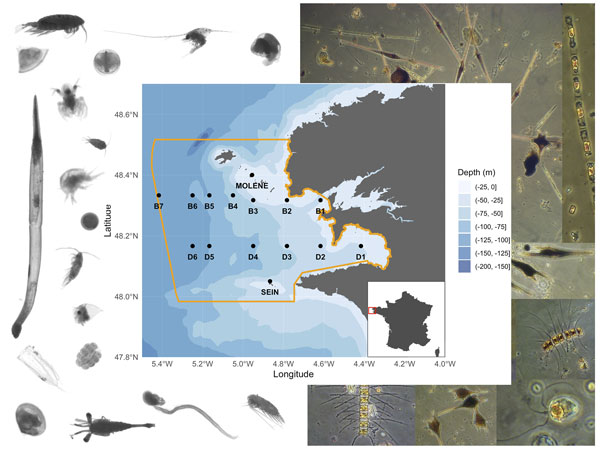
This study presents a long-term monitoring dataset (2010–2023) from the Iroise Marine Natural Park, a French marine protected area in the NE Atlantic. It includes environmental parameters (temperature, salinity), microscopy-based phytoplankton counts, and zooplankton abundances and biovolumes estimated from imaging data. Two transects and three coastal stations were sampled seasonally, capturing spatial–temporal dynamics. This datasets offers new opportunities to study plankton diversity.
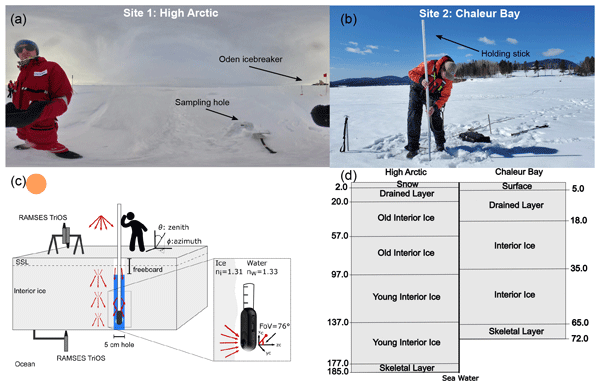
Raphaël Larouche, Bastian Raulier, Christian Katlein, Simon Lambert-Girard, Simon Thibault, and Marcel Babin
The Cryosphere, 19, 4785–4804, https://doi.org/10.5194/tc-19-4785-2025, https://doi.org/10.5194/tc-19-4785-2025, 2025
Short summary
Short summary
We developed a new method to study how light interacts with sea ice using a compact 360° camera. By lowering this camera into drilled holes in ice, we captured detailed light patterns inside different ice layers. Our research revealed how light is absorbed and scattered in both Arctic multi-year ice and thinner, seasonal ice in Quebec. These findings improve our understanding of sea ice structure and its role in the climate system, helping in the representation of sea ice in models.
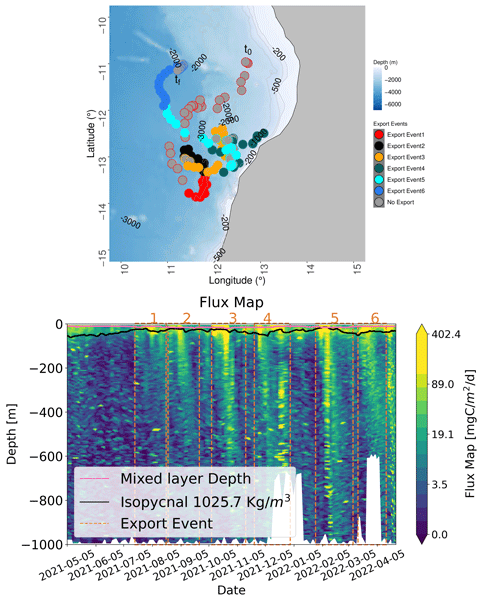
Yawouvi Dodji Soviadan, Miriam Beck, Joelle Habib, Alberto Baudena, Laetitia Drago, Alexandre Accardo, Remi Laxenaire, Sabrina Speich, Peter Brandt, Rainer Kiko, and Stemmann Lars
Biogeosciences, 22, 3485–3501, https://doi.org/10.5194/bg-22-3485-2025, https://doi.org/10.5194/bg-22-3485-2025, 2025
Short summary
Short summary
Key parameters representing the gravity flux in global models are sinking speed and vertical attenuation of exported material. We calculate, for the first time, these parameters in situ in the ocean for six intermittent blooms followed by export events using high-resolution (3 d) time series of 0–1000 m depth profiles from imaging sensors mounted on an Argo float. We show that sinking speed depends not only on size but also on the morphology of the particles, with density being an important property.
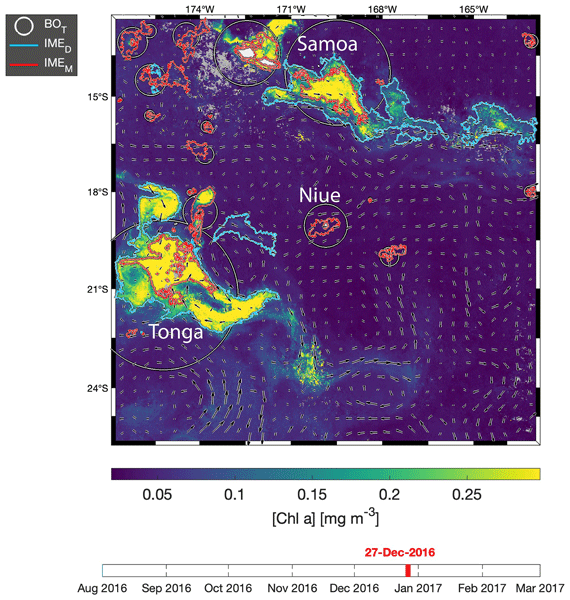
Guillaume Bourdin, Lee Karp-Boss, Fabien Lombard, Gabriel Gorsky, and Emmanuel Boss
Biogeosciences, 22, 3207–3233, https://doi.org/10.5194/bg-22-3207-2025, https://doi.org/10.5194/bg-22-3207-2025, 2025
Short summary
Short summary
Remote islands and atolls create unique oceanic processes that affect the surrounding waters, known as the island mass effect (IME). These processes input nutrients to the ocean surface, leading to an increasing phytoplankton concentration near islands. We combine data from various satellites and modeled currents to better track these changes. This reveals a larger IME impact than previously estimated, suggesting that islands play a more significant role in ocean food chains in subtropical regions.
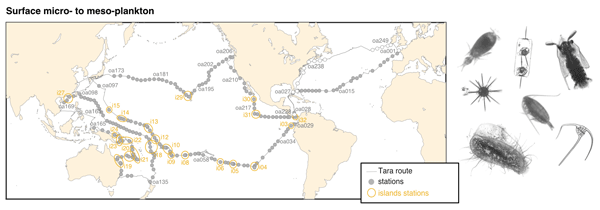
Zoé Mériguet, Guillaume Bourdin, Nathaniel Kristan, Laetitia Jalabert, Olivier Bun, Marc Picheral, Louis Caray-Counil, Juliette Maury, Maria-Luiza Pedrotti, Amanda Elineau, David A. Paz-Garcia, Lee Karp-Boss, Gaby Gorsky, Fabien Lombard, and the Tara Pacific Consortium Coordinators team
Earth Syst. Sci. Data, 17, 2761–2792, https://doi.org/10.5194/essd-17-2761-2025, https://doi.org/10.5194/essd-17-2761-2025, 2025
Short summary
Short summary
This study presents imaging datasets from the Tara Pacific expedition, covering multiple plankton sizes and a wide sampling area in Pacific waters. By sampling both open-ocean and island areas, these data can show how plankton size, diversity and abundance change with different environments. We also highlight the usefulness of high-speed plankton sampling when it is not possible to slow the boat during sailing as well as the value of this technique with respect to extending the sampling coverage and frequency.
Nicolas Metzl, Jonathan Fin, Claire Lo Monaco, Claude Mignon, Samir Alliouane, Bruno Bombled, Jacqueline Boutin, Yann Bozec, Steeve Comeau, Pascal Conan, Laurent Coppola, Pascale Cuet, Eva Ferreira, Jean-Pierre Gattuso, Frédéric Gazeau, Catherine Goyet, Emilie Grossteffan, Bruno Lansard, Dominique Lefèvre, Nathalie Lefèvre, Coraline Leseurre, Sébastien Petton, Mireille Pujo-Pay, Christophe Rabouille, Gilles Reverdin, Céline Ridame, Peggy Rimmelin-Maury, Jean-François Ternon, Franck Touratier, Aline Tribollet, Thibaut Wagener, and Cathy Wimart-Rousseau
Earth Syst. Sci. Data, 17, 1075–1100, https://doi.org/10.5194/essd-17-1075-2025, https://doi.org/10.5194/essd-17-1075-2025, 2025
Short summary
Short summary
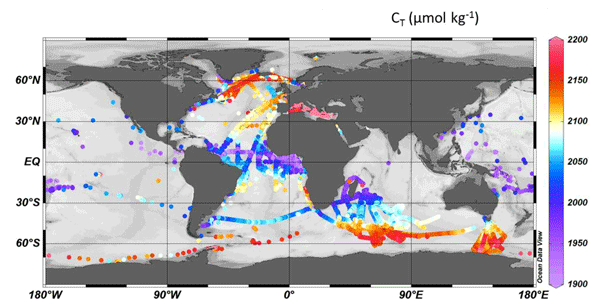
This work presents a new synthesis of 67 000 total alkalinity and total dissolved inorganic carbon observations obtained between 1993 and 2023 in the global ocean, coastal zones, and the Mediterranean Sea. We describe the data assemblage and associated quality control and discuss some potential uses of this dataset. The dataset is provided in a single format and includes the quality flag for each sample.
Alexandre Accardo, Rémi Laxenaire, Alberto Baudena, Sabrina Speich, Rainer Kiko, and Lars Stemmann
Biogeosciences, 22, 1183–1201, https://doi.org/10.5194/bg-22-1183-2025, https://doi.org/10.5194/bg-22-1183-2025, 2025
Short summary
Short summary
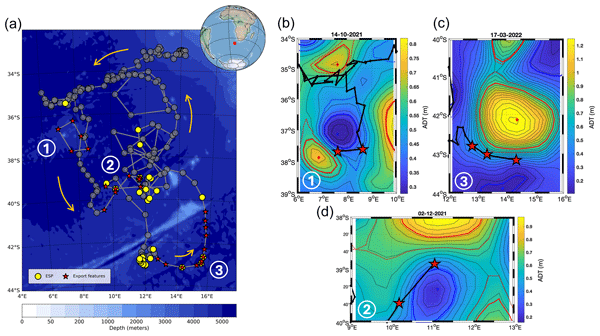
The open ocean helps mitigate climate change by storing CO2 via the biological carbon pump (BCP), which involves processes like organic carbon production at the surface and transferring it to the deep ocean via various pathways. By deploying an autonomous platform, we found significant marine snow accumulation from the surface to the mesopelagic zone in frontal regions between eddies. We suggest that the coupling of hydrodynamics at eddy edges and biological activity may enhance this process.
Riccardo Martellucci, Michele Giani, Elena Mauri, Laurent Coppola, Melf Paulsen, Marine Fourrier, Sara Pensieri, Vanessa Cardin, Carlotta Dentico, Roberto Bozzano, Carolina Cantoni, Anna Lucchetta, Alfredo Izquierdo, Miguel Bruno, and Ingunn Skjelvan
Earth Syst. Sci. Data, 16, 5333–5356, https://doi.org/10.5194/essd-16-5333-2024, https://doi.org/10.5194/essd-16-5333-2024, 2024
Short summary
Short summary
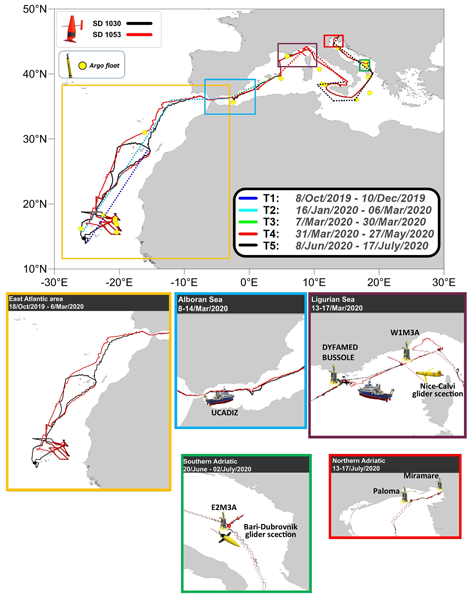
As part of the ATL2MED demonstration experiment, two autonomous surface vehicles undertook a 9-month mission from the northeastern Atlantic to the Adriatic Sea. Biofouling affected the measurement of variables such as conductivity and dissolved oxygen. COVID-19 limited the availability of discrete samples for validation. We present correction methods for salinity and dissolved oxygen. We use model products to correct salinity and apply the Argo floats in-air correction method for oxygen
Claudine Hauri, Brita Irving, Dan Hayes, Ehsan Abdi, Jöran Kemme, Nadja Kinski, and Andrew M. P. McDonnell
Ocean Sci., 20, 1403–1421, https://doi.org/10.5194/os-20-1403-2024, https://doi.org/10.5194/os-20-1403-2024, 2024
Short summary
Short summary
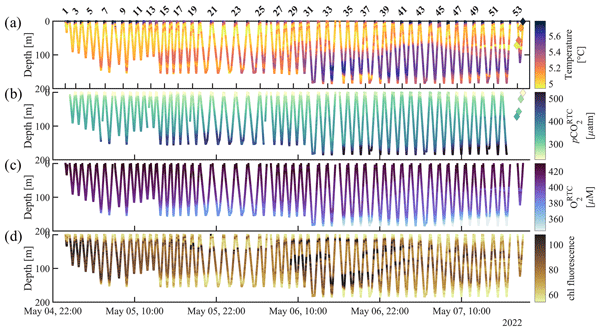
Here, we describe several sea trials with the newly developed CO2 Seaglider in the Gulf of Alaska. Data evaluation with discrete water and underway samples suggests nearly "weather-quality" CO2 data as defined by the Global Ocean Acidification Network.
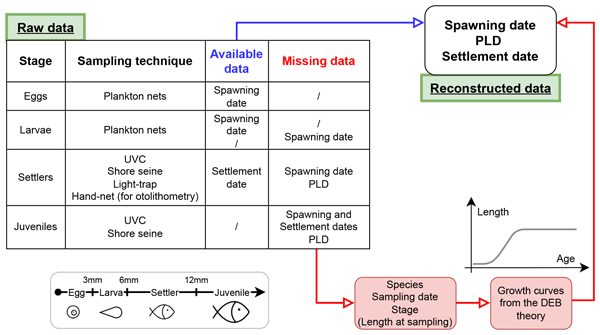
Marine Di Stefano, David Nerini, Itziar Alvarez, Giandomenico Ardizzone, Patrick Astruch, Gotzon Basterretxea, Aurélie Blanfuné, Denis Bonhomme, Antonio Calò, Ignacio Catalan, Carlo Cattano, Adrien Cheminée, Romain Crec'hriou, Amalia Cuadros, Antonio Di Franco, Carlos Diaz-Gil, Tristan Estaque, Robin Faillettaz, Fabiana C. Félix-Hackradt, José Antonio Garcia-Charton, Paolo Guidetti, Loïc Guilloux, Jean-Georges Harmelin, Mireille Harmelin-Vivien, Manuel Hidalgo, Hilmar Hinz, Jean-Olivier Irisson, Gabriele La Mesa, Laurence Le Diréach, Philippe Lenfant, Enrique Macpherson, Sanja Matić-Skoko, Manon Mercader, Marco Milazzo, Tiffany Monfort, Joan Moranta, Manuel Muntoni, Matteo Murenu, Lucie Nunez, M. Pilar Olivar, Jérémy Pastor, Ángel Pérez-Ruzafa, Serge Planes, Nuria Raventos, Justine Richaume, Elodie Rouanet, Erwan Roussel, Sandrine Ruitton, Ana Sabatés, Thierry Thibaut, Daniele Ventura, Laurent Vigliola, Dario Vrdoljak, and Vincent Rossi
Earth Syst. Sci. Data, 16, 3851–3871, https://doi.org/10.5194/essd-16-3851-2024, https://doi.org/10.5194/essd-16-3851-2024, 2024
Short summary
Short summary
We build a compilation of early-life dispersal traits for coastal fish species. The database contains over 110 000 entries collected from 1993 to 2021 in the western Mediterranean. All observations are harmonized to provide information on dates and locations of spawning and settlement, along with pelagic larval durations. When applicable, missing data are reconstructed from dynamic energy budget theory. Statistical analyses reveal sampling biases across taxa, space and time.
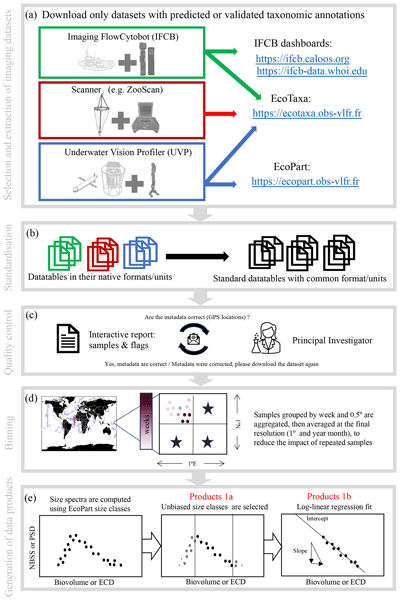
Mathilde Dugenne, Marco Corrales-Ugalde, Jessica Y. Luo, Rainer Kiko, Todd D. O'Brien, Jean-Olivier Irisson, Fabien Lombard, Lars Stemmann, Charles Stock, Clarissa R. Anderson, Marcel Babin, Nagib Bhairy, Sophie Bonnet, Francois Carlotti, Astrid Cornils, E. Taylor Crockford, Patrick Daniel, Corinne Desnos, Laetitia Drago, Amanda Elineau, Alexis Fischer, Nina Grandrémy, Pierre-Luc Grondin, Lionel Guidi, Cecile Guieu, Helena Hauss, Kendra Hayashi, Jenny A. Huggett, Laetitia Jalabert, Lee Karp-Boss, Kasia M. Kenitz, Raphael M. Kudela, Magali Lescot, Claudie Marec, Andrew McDonnell, Zoe Mériguet, Barbara Niehoff, Margaux Noyon, Thelma Panaïotis, Emily Peacock, Marc Picheral, Emilie Riquier, Collin Roesler, Jean-Baptiste Romagnan, Heidi M. Sosik, Gretchen Spencer, Jan Taucher, Chloé Tilliette, and Marion Vilain
Earth Syst. Sci. Data, 16, 2971–2999, https://doi.org/10.5194/essd-16-2971-2024, https://doi.org/10.5194/essd-16-2971-2024, 2024
Short summary
Short summary
Plankton and particles influence carbon cycling and energy flow in marine ecosystems. We used three types of novel plankton imaging systems to obtain size measurements from a range of plankton and particle sizes and across all major oceans. Data were compiled and cross-calibrated from many thousands of images, showing seasonal and spatial changes in particle size structure in different ocean basins. These datasets form the first release of the Pelagic Size Structure database (PSSdb).
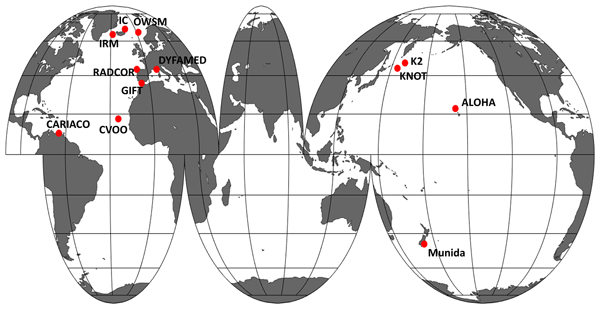
Nico Lange, Björn Fiedler, Marta Álvarez, Alice Benoit-Cattin, Heather Benway, Pier Luigi Buttigieg, Laurent Coppola, Kim Currie, Susana Flecha, Dana S. Gerlach, Makio Honda, I. Emma Huertas, Siv K. Lauvset, Frank Muller-Karger, Arne Körtzinger, Kevin M. O'Brien, Sólveig R. Ólafsdóttir, Fernando C. Pacheco, Digna Rueda-Roa, Ingunn Skjelvan, Masahide Wakita, Angelicque White, and Toste Tanhua
Earth Syst. Sci. Data, 16, 1901–1931, https://doi.org/10.5194/essd-16-1901-2024, https://doi.org/10.5194/essd-16-1901-2024, 2024
Short summary
Short summary
The Synthesis Product for Ocean Time Series (SPOTS) is a novel achievement expanding and complementing the biogeochemical data landscape by providing consistent and high-quality biogeochemical time-series data from 12 ship-based fixed time-series programs. SPOTS covers multiple unique marine environments and time-series ranges, including data from 1983 to 2021. All in all, it facilitates a variety of applications that benefit from the collective value of biogeochemical time-series observations.
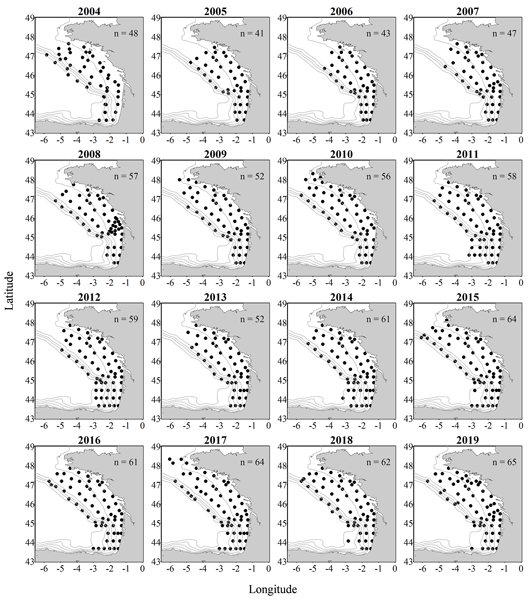
Nina Grandremy, Paul Bourriau, Edwin Daché, Marie-Madeleine Danielou, Mathieu Doray, Christine Dupuy, Bertrand Forest, Laetitia Jalabert, Martin Huret, Sophie Le Mestre, Antoine Nowaczyk, Pierre Petitgas, Philippe Pineau, Justin Rouxel, Morgan Tardivel, and Jean-Baptiste Romagnan
Earth Syst. Sci. Data, 16, 1265–1282, https://doi.org/10.5194/essd-16-1265-2024, https://doi.org/10.5194/essd-16-1265-2024, 2024
Short summary
Short summary
We present two space- and time-resolved zooplankton datasets originating from samples collected in the Bay of Biscay in spring over the 2004–2019 period and imaged with the interoperable imaging systems ZooScan and ZooCAM. These datasets are suited for long-term size-based or combined size- and taxonomy-based ecological studies of zooplankton. The set of sorted images are provided along with a set of morphological descriptors that are useful when machine learning is applied to plankton studies.
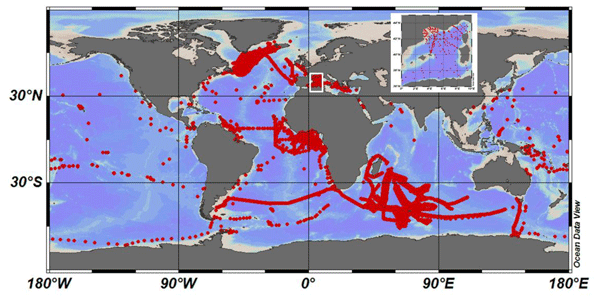
Nicolas Metzl, Jonathan Fin, Claire Lo Monaco, Claude Mignon, Samir Alliouane, David Antoine, Guillaume Bourdin, Jacqueline Boutin, Yann Bozec, Pascal Conan, Laurent Coppola, Frédéric Diaz, Eric Douville, Xavier Durrieu de Madron, Jean-Pierre Gattuso, Frédéric Gazeau, Melek Golbol, Bruno Lansard, Dominique Lefèvre, Nathalie Lefèvre, Fabien Lombard, Férial Louanchi, Liliane Merlivat, Léa Olivier, Anne Petrenko, Sébastien Petton, Mireille Pujo-Pay, Christophe Rabouille, Gilles Reverdin, Céline Ridame, Aline Tribollet, Vincenzo Vellucci, Thibaut Wagener, and Cathy Wimart-Rousseau
Earth Syst. Sci. Data, 16, 89–120, https://doi.org/10.5194/essd-16-89-2024, https://doi.org/10.5194/essd-16-89-2024, 2024
Short summary
Short summary
This work presents a synthesis of 44 000 total alkalinity and dissolved inorganic carbon observations obtained between 1993 and 2022 in the Global Ocean and the Mediterranean Sea at the surface and in the water column. Seawater samples were measured using the same method and calibrated with international Certified Reference Material. We describe the data assemblage, quality control and some potential uses of this dataset.
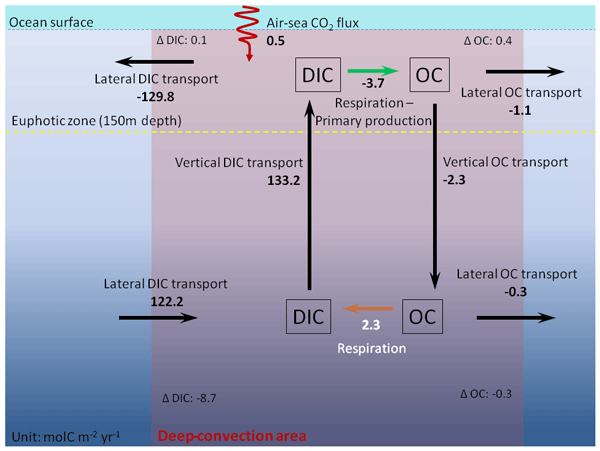
Caroline Ulses, Claude Estournel, Patrick Marsaleix, Karline Soetaert, Marine Fourrier, Laurent Coppola, Dominique Lefèvre, Franck Touratier, Catherine Goyet, Véronique Guglielmi, Fayçal Kessouri, Pierre Testor, and Xavier Durrieu de Madron
Biogeosciences, 20, 4683–4710, https://doi.org/10.5194/bg-20-4683-2023, https://doi.org/10.5194/bg-20-4683-2023, 2023
Short summary
Short summary
Deep convection plays a key role in the circulation, thermodynamics, and biogeochemical cycles in the Mediterranean Sea, considered to be a hotspot of biodiversity and climate change. In this study, we investigate the seasonal and annual budget of dissolved inorganic carbon in the deep-convection area of the northwestern Mediterranean Sea.
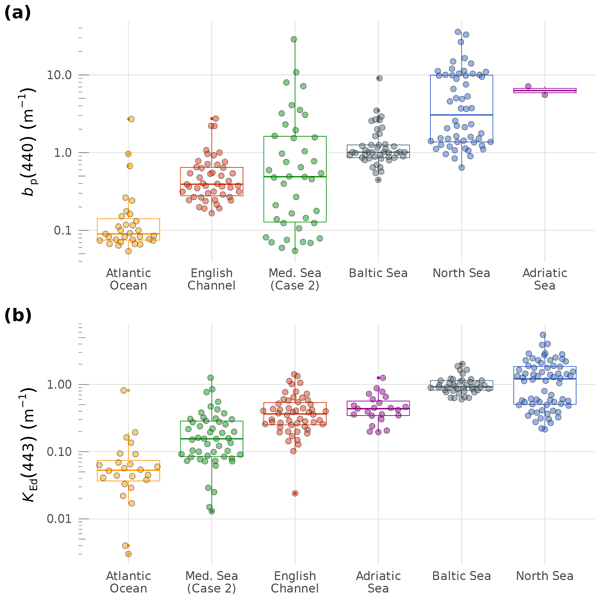
Philippe Massicotte, Marcel Babin, Frank Fell, Vincent Fournier-Sicre, and David Doxaran
Earth Syst. Sci. Data, 15, 3529–3545, https://doi.org/10.5194/essd-15-3529-2023, https://doi.org/10.5194/essd-15-3529-2023, 2023
Short summary
Short summary
The COASTlOOC oceanographic expeditions in 1997 and 1998 studied the relationship between seawater properties and biology and chemistry across the European coasts. The team collected data from 379 stations using ships and helicopters to support the development of ocean color remote-sensing algorithms. This unique and consistent dataset is still used today by researchers.
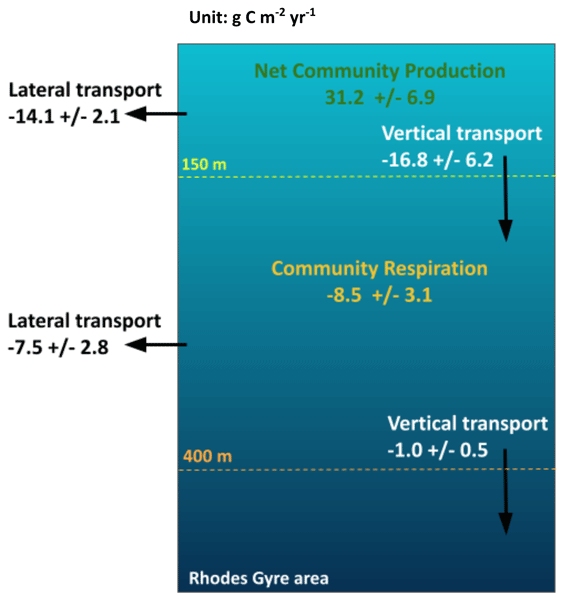
Joelle Habib, Caroline Ulses, Claude Estournel, Milad Fakhri, Patrick Marsaleix, Mireille Pujo-Pay, Marine Fourrier, Laurent Coppola, Alexandre Mignot, Laurent Mortier, and Pascal Conan
Biogeosciences, 20, 3203–3228, https://doi.org/10.5194/bg-20-3203-2023, https://doi.org/10.5194/bg-20-3203-2023, 2023
Short summary
Short summary
The Rhodes Gyre, eastern Mediterranean Sea, is the main Levantine Intermediate Water formation site. In this study, we use a 3D physical–biogeochemical model to investigate the seasonal and interannual variability of organic carbon dynamics in the gyre. Our results show its autotrophic nature and its high interannual variability, with enhanced primary production, downward exports, and onward exports to the surrounding regions during years marked by intense heat losses and deep mixed layers.
Anna Denvil-Sommer, Erik T. Buitenhuis, Rainer Kiko, Fabien Lombard, Lionel Guidi, and Corinne Le Quéré
Geosci. Model Dev., 16, 2995–3012, https://doi.org/10.5194/gmd-16-2995-2023, https://doi.org/10.5194/gmd-16-2995-2023, 2023
Short summary
Short summary
Using outputs of global biogeochemical ocean model and machine learning methods, we demonstrate that it will be possible to identify linkages between surface environmental and ecosystem structure and the export of carbon to depth by sinking organic particles using real observations. It will be possible to use this knowledge to improve both our understanding of ecosystem dynamics and of their functional representation within models.
Martine Lizotte, Bennet Juhls, Atsushi Matsuoka, Philippe Massicotte, Gaëlle Mével, David Obie James Anikina, Sofia Antonova, Guislain Bécu, Marine Béguin, Simon Bélanger, Thomas Bossé-Demers, Lisa Bröder, Flavienne Bruyant, Gwénaëlle Chaillou, Jérôme Comte, Raoul-Marie Couture, Emmanuel Devred, Gabrièle Deslongchamps, Thibaud Dezutter, Miles Dillon, David Doxaran, Aude Flamand, Frank Fell, Joannie Ferland, Marie-Hélène Forget, Michael Fritz, Thomas J. Gordon, Caroline Guilmette, Andrea Hilborn, Rachel Hussherr, Charlotte Irish, Fabien Joux, Lauren Kipp, Audrey Laberge-Carignan, Hugues Lantuit, Edouard Leymarie, Antonio Mannino, Juliette Maury, Paul Overduin, Laurent Oziel, Colin Stedmon, Crystal Thomas, Lucas Tisserand, Jean-Éric Tremblay, Jorien Vonk, Dustin Whalen, and Marcel Babin
Earth Syst. Sci. Data, 15, 1617–1653, https://doi.org/10.5194/essd-15-1617-2023, https://doi.org/10.5194/essd-15-1617-2023, 2023
Short summary
Short summary
Permafrost thaw in the Mackenzie Delta region results in the release of organic matter into the coastal marine environment. What happens to this carbon-rich organic matter as it transits along the fresh to salty aquatic environments is still underdocumented. Four expeditions were conducted from April to September 2019 in the coastal area of the Beaufort Sea to study the fate of organic matter. This paper describes a rich set of data characterizing the composition and sources of organic matter.

Patricia Ayón Dejo, Elda Luz Pinedo Arteaga, Anna Schukat, Jan Taucher, Rainer Kiko, Helena Hauss, Sabrina Dorschner, Wilhelm Hagen, Mariona Segura-Noguera, and Silke Lischka
Biogeosciences, 20, 945–969, https://doi.org/10.5194/bg-20-945-2023, https://doi.org/10.5194/bg-20-945-2023, 2023
Short summary
Short summary
Ocean upwelling regions are highly productive. With ocean warming, severe changes in upwelling frequency and/or intensity and expansion of accompanying oxygen minimum zones are projected. In a field experiment off Peru, we investigated how different upwelling intensities affect the pelagic food web and found failed reproduction of dominant zooplankton. The changes projected could severely impact the reproductive success of zooplankton communities and the pelagic food web in upwelling regions.
Flavienne Bruyant, Rémi Amiraux, Marie-Pier Amyot, Philippe Archambault, Lise Artigue, Lucas Barbedo de Freitas, Guislain Bécu, Simon Bélanger, Pascaline Bourgain, Annick Bricaud, Etienne Brouard, Camille Brunet, Tonya Burgers, Danielle Caleb, Katrine Chalut, Hervé Claustre, Véronique Cornet-Barthaux, Pierre Coupel, Marine Cusa, Fanny Cusset, Laeticia Dadaglio, Marty Davelaar, Gabrièle Deslongchamps, Céline Dimier, Julie Dinasquet, Dany Dumont, Brent Else, Igor Eulaers, Joannie Ferland, Gabrielle Filteau, Marie-Hélène Forget, Jérome Fort, Louis Fortier, Martí Galí, Morgane Gallinari, Svend-Erik Garbus, Nicole Garcia, Catherine Gérikas Ribeiro, Colline Gombault, Priscilla Gourvil, Clémence Goyens, Cindy Grant, Pierre-Luc Grondin, Pascal Guillot, Sandrine Hillion, Rachel Hussherr, Fabien Joux, Hannah Joy-Warren, Gabriel Joyal, David Kieber, Augustin Lafond, José Lagunas, Patrick Lajeunesse, Catherine Lalande, Jade Larivière, Florence Le Gall, Karine Leblanc, Mathieu Leblanc, Justine Legras, Keith Lévesque, Kate-M. Lewis, Edouard Leymarie, Aude Leynaert, Thomas Linkowski, Martine Lizotte, Adriana Lopes dos Santos, Claudie Marec, Dominique Marie, Guillaume Massé, Philippe Massicotte, Atsushi Matsuoka, Lisa A. Miller, Sharif Mirshak, Nathalie Morata, Brivaela Moriceau, Philippe-Israël Morin, Simon Morisset, Anders Mosbech, Alfonso Mucci, Gabrielle Nadaï, Christian Nozais, Ingrid Obernosterer, Thimoté Paire, Christos Panagiotopoulos, Marie Parenteau, Noémie Pelletier, Marc Picheral, Bernard Quéguiner, Patrick Raimbault, Joséphine Ras, Eric Rehm, Llúcia Ribot Lacosta, Jean-François Rontani, Blanche Saint-Béat, Julie Sansoulet, Noé Sardet, Catherine Schmechtig, Antoine Sciandra, Richard Sempéré, Caroline Sévigny, Jordan Toullec, Margot Tragin, Jean-Éric Tremblay, Annie-Pier Trottier, Daniel Vaulot, Anda Vladoiu, Lei Xue, Gustavo Yunda-Guarin, and Marcel Babin
Earth Syst. Sci. Data, 14, 4607–4642, https://doi.org/10.5194/essd-14-4607-2022, https://doi.org/10.5194/essd-14-4607-2022, 2022
Short summary
Short summary
This paper presents a dataset acquired during a research cruise held in Baffin Bay in 2016. We observed that the disappearance of sea ice in the Arctic Ocean increases both the length and spatial extent of the phytoplankton growth season. In the future, this will impact the food webs on which the local populations depend for their food supply and fisheries. This dataset will provide insight into quantifying these impacts and help the decision-making process for policymakers.
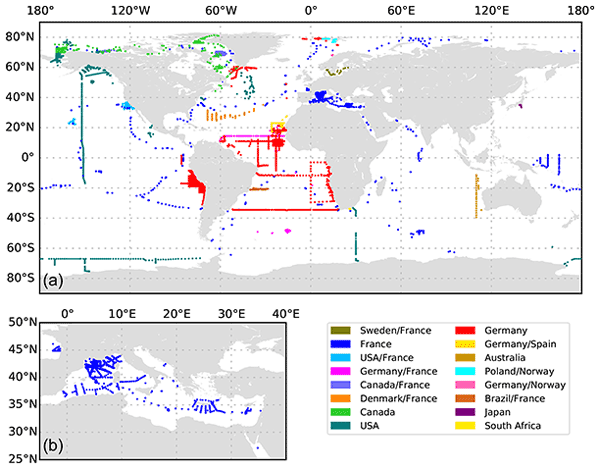
Rainer Kiko, Marc Picheral, David Antoine, Marcel Babin, Léo Berline, Tristan Biard, Emmanuel Boss, Peter Brandt, Francois Carlotti, Svenja Christiansen, Laurent Coppola, Leandro de la Cruz, Emilie Diamond-Riquier, Xavier Durrieu de Madron, Amanda Elineau, Gabriel Gorsky, Lionel Guidi, Helena Hauss, Jean-Olivier Irisson, Lee Karp-Boss, Johannes Karstensen, Dong-gyun Kim, Rachel M. Lekanoff, Fabien Lombard, Rubens M. Lopes, Claudie Marec, Andrew M. P. McDonnell, Daniela Niemeyer, Margaux Noyon, Stephanie H. O'Daly, Mark D. Ohman, Jessica L. Pretty, Andreas Rogge, Sarah Searson, Masashi Shibata, Yuji Tanaka, Toste Tanhua, Jan Taucher, Emilia Trudnowska, Jessica S. Turner, Anya Waite, and Lars Stemmann
Earth Syst. Sci. Data, 14, 4315–4337, https://doi.org/10.5194/essd-14-4315-2022, https://doi.org/10.5194/essd-14-4315-2022, 2022
Short summary
Short summary
The term
marine particlescomprises detrital aggregates; fecal pellets; bacterioplankton, phytoplankton and zooplankton; and even fish. Here, we present a global dataset that contains 8805 vertical particle size distribution profiles obtained with Underwater Vision Profiler 5 (UVP5) camera systems. These data are valuable to the scientific community, as they can be used to constrain important biogeochemical processes in the ocean, such as the flux of carbon to the deep sea.
Gauthier Vérin, Florent Domine, Marcel Babin, Ghislain Picard, and Laurent Arnaud
The Cryosphere, 16, 3431–3449, https://doi.org/10.5194/tc-16-3431-2022, https://doi.org/10.5194/tc-16-3431-2022, 2022
Short summary
Short summary
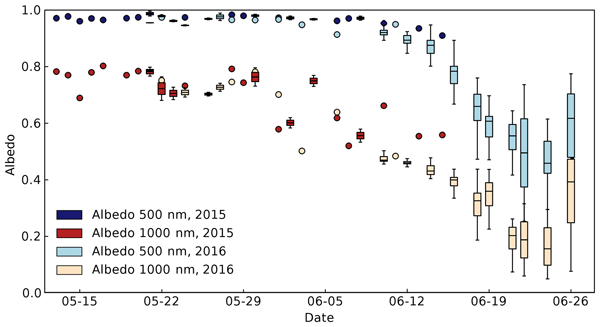
Snow physical properties on Arctic sea ice are monitored during the melt season. As snow grains grow, and the snowpack thickness is reduced, the surface albedo decreases. The extra absorbed energy accelerates melting. Radiative transfer modeling shows that more radiation is then transmitted to the snow–sea-ice interface. A sharp increase in transmitted radiation takes place when the snowpack thins significantly, and this coincides with the initiation of the phytoplankton bloom in the seawater.
Natalia Belkin, Tamar Guy-Haim, Maxim Rubin-Blum, Ayah Lazar, Guy Sisma-Ventura, Rainer Kiko, Arseniy R. Morov, Tal Ozer, Isaac Gertman, Barak Herut, and Eyal Rahav
Ocean Sci., 18, 693–715, https://doi.org/10.5194/os-18-693-2022, https://doi.org/10.5194/os-18-693-2022, 2022
Short summary
Short summary
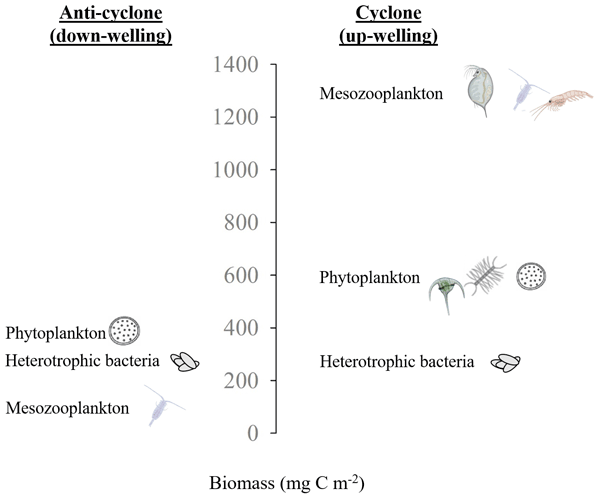
We studied how distinct water circulations that elevate (cyclone) or descend (anticyclone) water from the upper ocean affect the biomass, activity and diversity of planktonic microorganisms in the impoverished eastern Mediterranean. We show that cyclonic and anticyclonic eddies differ in their community composition and production. Moreover, the anticyclone may be a potential bio-invasion and dispersal vector, while the cyclone may serve as a thermal refugee for native species.
Cited articles
Accardo, A., Laxenaire, R., Baudena, A., Speich, S., Kiko, R., and Stemmann, L.: Intense and localized export of selected marine snow types at eddy edges in the South Atlantic Ocean, Biogeosciences, 22, 1183–1201, https://doi.org/10.5194/bg-22-1183-2025, 2025.
Atherden, F., Slomska, A., and Manno, C.: Sediment trap illustrates taxon-specific seasonal signals in Southern Ocean zooplankton, Mar. Biol., 171, 173, https://doi.org/10.1007/s00227-024-04487-2, 2024.
Barth, A. and Stone, J.: Comparison of an in situ imaging device and net-based method to study mesozooplankton communities in an oligotrophic system, Front. Mar. Sci., 9, 898057, https://doi.org/10.3389/fmars.2022.898057, 2022.
Barth, A., Walter, R. K., Robbins, I., and Pasulka, A.: Seasonal and interannual variability of phytoplankton abundance and community composition on the Central Coast of California, Mar. Ecol. Prog.-Ser., 637, 29–43, https://doi.org/10.3354/meps13245, 2020.
Biard, T. and Ohman, M. D.: Vertical niche definition of test-bearing protists (Rhizaria) into the twilight zone revealed by in situ imaging, Limnol. Oceanogr., 65, 2583–2602, https://doi.org/10.1002/lno.11472, 2020.
Biard, T., Stemmann, L., Picheral, M., Mayot, N., Vandromme, P., Hauss, H., Gorsky, G., Guidi, L., Kiko, R., and Not, F.: In situ imaging reveals the biomass of giant protists in the global ocean, Nature, 532, 504–507, https://doi.org/10.1038/nature17652, 2016.
Boyd, P. W., Claustre, H., Levy, M., Siegel, D. A., and Weber, T.: Multi-faceted particle pumps drive carbon sequestration in the ocean, Nature, 568, 327–335, https://doi.org/10.1038/s41586-019-1098-2, 2019.
Calbet, A.: Sampling plankton, in: The Wonders of Marine Plankton, Springer Nature Switzerland, Cham, 131–136, https://doi.org/10.1007/978-3-031-50766-3, 2024.
Christiansen, S., Hoving, H.-J., Schütte, F., Hauss, H., Karstensen, J., Körtzinger, A., Schröder, S.-M., Stemmann, L., Christiansen, B., Picheral, M., Brandt, P., Robison, B., Koch, R., and Kiko, R.: Particulate matter flux interception in oceanic mesoscale eddies by the polychaete Poeobius sp., Limnol. Oceanogr., 63, 2093–2109, https://doi.org/10.1002/lno.10926, 2018.
Claustre, H., Johnson, K. S., and Takeshita, Y.: Observing the global ocean with biogeochemical-Argo, Annu. Rev. Mar. Sci., 12, 23–48, https://doi.org/10.1146/annurev-marine-010419-010956, 2020.
Clayton, S., Alexander, H., Graff, J. R., Poulton, N. J., Thompson, L. R., Benway, H., Boss, E., and Martiny, A.: Bio-GO-SHIP: the time is right to establish global repeat sections of ocean biology, Front. Mar. Sci., 8, 767443, https://doi.org/10.3389/fmars.2021.767443, 2022.
Clements, D. J., Yang, S., Weber, T., McDonnell, A. M. P., Kiko, R., Stemmann, L., and Bianchi, D.: Constraining the particle size distribution of large marine particles in the global ocean with in situ optical observations and supervised learning, Global Biogeochem. Cy., 36, e2021GB007276, https://doi.org/10.1029/2021GB007276, 2022.
Clements, D. J., Yang, S., Weber, T., McDonnell, A. M. P., Kiko, R., Stemmann, L., and Bianchi, D.: New estimate of organic carbon export from optical measurements reveals the role of particle size distribution and export horizon, Global Biogeochem. Cy., 37, e2022GB007633, https://doi.org/10.1029/2022GB007633, 2023.
Constable, A. J., Melbourne-Thomas, J., Corney, S. P., Arrigo, K. R., Barbraud, C., Barnes, D. K. A., Bindoff, N. L., Boyd, P. W., Brandt, A., Costa, D. P., Davidson, A. T., Ducklow, H. W., Emmerson, L., Fukuchi, M., Gutt, J., Hindell, M. A., Hofmann, E. E., Hosie, G. W., Iida, T., Jacob, S., Johnston, N. M., Kawaguchi, S., Kokubun, N., Koubbi, P., Lea, M.-A., Makhado, A., Massom, R. A., Meiners, K., Meredith, M. P., Murphy, E. J., Nicol, S., Reid, K., Richerson, K., Riddle, M. J., Rintoul, S. R., Smith Jr., W. O., Southwell, C., Stark, J. S., Sumner, M., Swadling, K. M., Takahashi, K. T., Trathan, P. N., Welsford, D. C., Weimerskirch, H., Westwood, K. J., Wienecke, B. C., Wolf-Gladrow, D., Wright, S. W., Xavier, J. C., and Ziegler, P.: Climate change and Southern Ocean ecosystems I: how changes in physical habitats directly affect marine biota, Global Change Biol., 20, 3004–3025, https://doi.org/10.1111/gcb.12623, 2014.
Culverhouse, P. F.: Natural object categorization: man versus machine, in: Automated Taxon Identification in Systematics: Theory, Approaches and Applications, edited by: MacLeod, N., CRC Press, Boca Raton, 25–46, https://doi.org/10.1201/9781420008074, 2007.
Culverhouse, P. F., MacLeod, N., Williams, R., Benfield, M. C., Lopes, R. M., and Picheral, M.: An empirical assessment of the consistency of taxonomic identifications, Mar. Biol. Res., 10, 73–84, https://doi.org/10.1080/17451000.2013.810762, 2014.
D'Alelio, D., Libralato, S., Wyatt, T., and Ribera d'Alcalà, M.: Ecological-network models link diversity, structure and function in the plankton food-web, Sci. Rep., 6, 21806, https://doi.org/10.1038/srep21806, 2016.
Dam, H. G. and Baumann, H.: Climate change, zooplankton and fisheries, in: Climate Change Impacts on Fisheries and Aquaculture: A Global Analysis, Vol. 2, edited by: Phillips, B. F. and Pérez-Ramírez, M., John Wiley & Sons, Chichester, 851–874, https://doi.org/10.1002/9781119154051.ch25, 2017.
Davis, C. S., Thwaites, F. T., Gallager, S. M., and Hu, Q.: A three-axis fast-tow digital Video Plankton Recorder for rapid surveys of plankton taxa and hydrography, Limnol. Oceanogr.-Meth., 3, 59–74, https://doi.org/10.4319/lom.2005.3.59, 2005.
Dexter, P. and Summerhayes, C. P.: Ocean observations – the Global Ocean Observing System (GOOS), in: Troubled Waters: Ocean Science and Governance, edited by: Holland, G. and Pugh, D., Cambridge University Press, Cambridge, 161–178, ISBN 978-0-521-76581-7, 2010.
Doney, S. C., Ruckelshaus, M., Duffy, J. E., Barry, J. P., Chan, F., English, C. A., Galindo, H. M., Grebmeier, J. M., Hollowed, A. B., Knowlton, N., Polovina, J., Rabalais, N. N., Sydeman, W. J., and Talley, L. D.: Climate change impacts on marine ecosystems, Annu. Rev. Mar. Sci., 4, 11–37, https://doi.org/10.1146/annurev-marine-041911-111611, 2012.
Drago, L., Panaïotis, T., Irisson, J.-O., Babin, M., Biard, T., Carlotti, F., Coppola, L., Guidi, L., Hauss, H., Karp-Boss, L., Lombard, F., McDonnell, A. M. P., Picheral, M., Rogge, A., Waite, A. M., Stemmann, L., and Kiko, R.: Global distribution of zooplankton biomass estimated by in situ imaging and machine learning, Front. Mar. Sci., 9, 894372, https://doi.org/10.3389/fmars.2022.894372, 2022.
Dugenne, M., Corrales-Ugalde, M., Luo, J. Y., Kiko, R., O'Brien, T. D., Irisson, J.-O., Lombard, F., Stemmann, L., Stock, C., Anderson, C. R., Babin, M., Bhairy, N., Bonnet, S., Carlotti, F., Cornils, A., Crockford, E. T., Daniel, P., Desnos, C., Drago, L., Elineau, A., Fischer, A., Grandrémy, N., Grondin, P.-L., Guidi, L., Guieu, C., Hauss, H., Hayashi, K., Huggett, J. A., Jalabert, L., Karp-Boss, L., Kenitz, K. M., Kudela, R. M., Lescot, M., Marec, C., McDonnell, A., Mériguet, Z., Niehoff, B., Noyon, M., Panaïotis, T., Peacock, E., Picheral, M., Riquier, E., Roesler, C., Romagnan, J.-B., Sosik, H. M., Spencer, G., Taucher, J., Tilliette, C., and Vilain, M.: First release of the Pelagic Size Structure database: global datasets of marine size spectra obtained from plankton imaging devices, Earth Syst. Sci. Data, 16, 2971–2999, https://doi.org/10.5194/essd-16-2971-2024, 2024.
Du Pontavice, H., Gascuel, D., Reygondeau, G., Maureaud, A., and Cheung, W. W. L.: Climate change undermines the global functioning of marine food webs, Global Change Biol., 26, 1306–1318, https://doi.org/10.1111/gcb.14944, 2020.
Dupouy, C., Frouin, R., Tedetti, M., Maillard, M., Rodier, M., Lombard, F., Guidi, L., Picheral, M., Neveux, J., Duhamel, S., Charrière, B., and Sempéré, R.: Diazotrophic Trichodesmium impact on UV–Vis radiance and pigment composition in the western tropical South Pacific, Biogeosciences, 15, 5249–5269, https://doi.org/10.5194/bg-15-5249-2018, 2018.
Fernández-Carrera, A., Kiko, R., Hauss, H., Hamilton, D. S., Achterberg, E. P., Montoya, J. P., Dengler, M., Brandt, P., and Subramaniam, A.: Nitrogen fixation rates in the Guinea Dome and the equatorial upwelling regions in the Atlantic Ocean, Biogeochemistry, 166, 191–210, https://doi.org/10.1007/s10533-023-01089-w, 2023.
Forest, A., Stemmann, L., Picheral, M., Burdorf, L., Robert, D., Fortier, L., and Babin, M.: Size distribution of particles and zooplankton across the shelf-basin system in southeast Beaufort Sea: combined results from an Underwater Vision Profiler and vertical net tows, Biogeosciences, 9, 1301–1320, https://doi.org/10.5194/bg-9-1301-2012, 2012.
Giering, S. L. C., Culverhouse, P. F., Johns, D. G., McQuatters-Gollop, A., and Pitois, S. G.: Are plankton nets a thing of the past? An assessment of in situ imaging of zooplankton for large-scale ecosystem assessment and policy decision-making, Front. Mar. Sci., 9, 986206, https://doi.org/10.3389/fmars.2022.986206, 2022.
Goswami, S. C.: Zooplankton methodology, collection & identification – a field manual, National Institute of Oceanography, Goa, India, 26 pp., http://drs.nio.org/drs/handle/2264/95 (last access: 31 January 2025), 2004.
Guidi, L., Calil, P. H. R., Duhamel, S., Björkman, K. M., Doney, S. C., Jackson, G. A., Li, B., Church, M. J., Tozzi, S., Kolber, Z. S., Richards, K. J., Fong, A. A., Letelier, R. M., Gorsky, G., Stemmann, L., and Karl, D. M.: Does eddy-eddy interaction control surface phytoplankton distribution and carbon export in the North Pacific Subtropical Gyre?, J. Geophys. Res.-Biogeo., 117, G02024, https://doi.org/10.1029/2012JG001984, 2012.
Hauss, H., Christiansen, S., Schütte, F., Kiko, R., Edvam Lima, M., Rodrigues, E., Karstensen, J., Löscher, C. R., Körtzinger, A., and Fiedler, B.: Dead zone or oasis in the open ocean? Zooplankton distribution and migration in low-oxygen modewater eddies, Biogeosciences, 13, 1977–1989, https://doi.org/10.5194/bg-13-1977-2016, 2016.
Hays, G. C., Richardson, A. J., and Robinson, C.: Climate change and marine plankton, Trends Ecol. Evol., 20, 337–344, https://doi.org/10.1016/j.tree.2005.03.004, 2005.
Irisson, J.-O., Ayata, S.-D., Lindsay, D. J., Karp-Boss, L., and Stemmann, L.: Machine learning for the study of plankton and marine snow from images, Annu. Rev. Mar. Sci., 14, 277–301, https://doi.org/10.1146/annurev-marine-041921-013023, 2022.
Karsenti, E., Acinas, S. G., Bork, P., Bowler, C., de Vargas, C., Raes, J., Sullivan, M., Arendt, D., Benzoni, F., Claverie, J.-M., Follows, M., Gorsky, G., Hingamp, P., Iudicone, D., Jaillon, O., Kandels-Lewis, S., Krzic, U., Not, F., Ogata, H., Pesant, S., Reynaud, E. G., Sardet, C., Sieracki, M. E., Speich, S., Velayoudon, D., Weissenbach, J., Wincker, P., and the Tara Oceans Consortium: A holistic approach to marine eco-systems biology, PLoS Biol., 9, e1001177, https://doi.org/10.1371/journal.pbio.1001177, 2011.
Kiko, R., Biastoch, A., Brandt, P., Cravatte, S., Hauss, H., Hummels, R., Kriest, I., Marin, F., McDonnell, A. M. P., Oschlies, A., Picheral, M., Schwarzkopf, F. U., Thurnherr, A. M., and Stemmann, L.: Biological and physical influences on marine snowfall at the equator, Nat. Geosci., 10, 852–858, https://doi.org/10.1038/ngeo3042, 2017.
Kiko, R., Picheral, M., Antoine, D., Babin, M., Berline, L., Biard, T., Boss, E., Brandt, P., Carlotti, F., Christiansen, S., Coppola, L., de la Cruz, L., Diamond-Riquier, E., Durrieu de Madron, X., Elineau, A., Gorsky, G., Guidi, L., Hauss, H., Irisson, J.-O., Karp-Boss, L., Karstensen, J., Kim, D., Lekanoff, R. M., Lombard, F., Lopes, R. M., Marec, C., McDonnell, A. M. P., Niemeyer, D., Noyon, M., O'Daly, S. H., Ohman, M. D., Pretty, J. L., Rogge, A., Searson, S., Shibata, M., Tanaka, Y., Tanhua, T., Taucher, J., Trudnowska, E., Turner, J. S., Waite, A., and Stemmann, L.: A global marine particle size distribution dataset obtained with the Underwater Vision Profiler 5, Earth Syst. Sci. Data, 14, 4315–4337, https://doi.org/10.5194/essd-14-4315-2022, 2022.
Kiko, R., Lopes, R. M., Soviadan, Y. D., and Stemmann, L.: Towards a distributed and operational pelagic imaging network, Ocean Coast. Res., 71, e23058, https://doi.org/10.1590/2675-2824071.23109rk, 2023.
Laget, M., Drago, L., Panaïotis, T., Kiko, R., Stemmann, L., Rogge, A., Llopis-Monferrer, N., Leynaert, A., Irisson, J.-O., and Biard, T.: Global census of the significance of giant mesopelagic protists to the marine carbon and silicon cycles, Nat. Commun., 15, 3341, https://doi.org/10.1038/s41467-024-47651-4, 2024.
Le Quéré, C., Buitenhuis, E. T., Moriarty, R., Alvain, S., Aumont, O., Bopp, L., Chollet, S., Enright, C., Franklin, D. J., Geider, R. J., Harrison, S. P., Hirst, A. G., Larsen, S., Legendre, L., Platt, T., Prentice, I. C., Rivkin, R. B., Sailley, S., Sathyendranath, S., Stephens, N., Vogt, M., and Vallina, S. M.: Role of zooplankton dynamics for Southern Ocean phytoplankton biomass and global biogeochemical cycles, Biogeosciences, 13, 4111–4133, https://doi.org/10.5194/bg-13-4111-2016, 2016.
Llopis Monferrer, N., Biard, T., Sandin, M. M., Lombard, F., Picheral, M., Elineau, A., Guidi, L., Leynaert, A., Tréguer, P. J., and Not, F.: Siliceous Rhizaria abundances and diversity in the Mediterranean Sea assessed by combined imaging and metabarcoding approaches, Front. Mar. Sci., 9, 895995, https://doi.org/10.3389/fmars.2022.895995, 2022.
Lombard, F., Boss, E., Waite, A. M., Vogt, M., Uitz, J., Stemmann, L., Sosik, H. M., Schulz, J., Romagnan, J.-B., Picheral, M., Pearlman, J., Ohman, M. D., Niehoff, B., Möller, K. O., Miloslavich, P., Lara-Lpez, A., Kudela, R., Lopes, R. M., Kiko, R., Karp-Boss, L., Jaffe, J. S., Iversen, M. H., Irisson, J.-O., Fennel, K., Hauss, H., Guidi, L., Gorsky, G., Giering, S. L. C., Gaube, P., Gallager, S., Dubelaar, G., Cowen, R. K., Carlotti, F., Briseño-Avena, C., Berline, L., Benoit-Bird, K., Bax, N., Batten, S., Ayata, S. D., Artigas, L. F., and Appeltans, W.: Globally consistent quantitative observations of planktonic ecosystems, Front. Mar. Sci., 6, 196, https://doi.org/10.3389/fmars.2019.00196, 2019.
Lumini, A. and Nanni, L.: Deep learning and transfer learning features for plankton classification, Ecol. Inform., 51, 33–43, https://doi.org/10.1016/j.ecoinf.2019.02.007, 2019.
Möller, K. O., St. John, M., Temming, A., Floeter, J., Sell, A. F., Herrmann, J.-P., and Möllmann, C.: Marine snow, zooplankton and thin layers: indications of a trophic link from small-scale sampling with the Video Plankton Recorder, Mar. Ecol. Prog.-Ser., 468, 57–69, https://doi.org/10.3354/meps09984, 2012.
Moriarty, R. and O'Brien, T. D.: Distribution of mesozooplankton biomass in the global ocean, Earth Syst. Sci. Data, 5, 45–55, https://doi.org/10.5194/essd-5-45-2013, 2013.
Muller-Karger, F. E., Miloslavich, P., Bax, N. J., Simmons, S., Costello, M. J., Sousa Pinto, I., Canonico, G., Turner, W., Gill, M., Montes, E., Best, B. D., Pearlman, J., Halpin, P., Dunn, D., Benson, A., Martin, C. S., Weatherdon, L. V., Appeltans, W., Provoost, P., Klein, E., Kelble, C. R., Miller, R. J., Chavez, F. P., Iken, K., Chiba, S., Obura, D., Navarro, L. M., Pereira, H. M., Allain, V., Batten, S., Benedetti-Checchi, L., Duffy, J. E., Kudela, R. M., Rebelo, L.-M., Shin, Y., and Geller, G.: Advancing marine biological observations and data requirements of the complementary essential ocean variables (EOVs) and essential biodiversity variables (EBVs) frameworks, Front. Mar. Sci., 5, 211, https://doi.org/10.3389/fmars.2018.00211, 2018.
Nocera, A. C., Stemmann, L., Babin, M., Biard, T., Coustenoble, J., Carlotti, F., Coppola, L., Courchet, L., Drago, L., Elineau, A., Guidi, L., Hauss, H., Jalabert, L., Karp-Boss, L., Kiko, R., Laget, M., Lombard, F., McDonnell, A., Merland, C., Motreuil, S., Panaïotis, T., Picheral, M., Rogge, A., Waite, A., and Irisson, J.-O.: A global consistent database of plankton and detritus from in situ imaging by the Underwater Vision Profiler 5, SEANOE [data set], https://doi.org/10.17882/107583, 2025.
Panaïotis, T., Babin, M., Biard, T., Carlotti, F., Coppola, L., Guidi, L., Hauss, H., Karp-Boss, L., Kiko, R., Lombard, F., McDonnell, A. M. P., Picheral, M., Rogge, A., Waite, A. M., Stemmann, L., and Irisson, J.-O.: Three major mesoplanktonic communities resolved by in situ imaging in the upper 500 m of the global ocean, Global Ecol. Biogeogr., 32, 1991–2005, https://doi.org/10.1111/geb.13741, 2023.
Perhirin, M., Vilgrain, L., Perrin, G., Lalande, C., Picheral, M., Maps, F., and Ayata, S.-D.: Identifying zooplankton fecal pellets from in situ images, J. Plankton Res., 47, fbae078, https://doi.org/10.1093/plankt/fbae078, 2025.
Picheral, M. and Mériguet, Z.: Description of the metadata and data issued from the Zooprocess and UVPapp applications and imported or exported from the Ecotaxa application, Zenodo [data set], https://doi.org/10.5281/zenodo.18165549, 2026.
Picheral, M., Guidi, L., Stemmann, L., Karl, D. M., Iddaoud, G., and Gorsky, G.: The Underwater Vision Profiler 5: An advanced instrument for high spatial resolution studies of particle size spectra and zooplankton, Limnol. Oceanogr.-Meth., 8, 462–473, https://doi.org/10.4319/lom.2010.8.462, 2010.
Picheral, M., Colin, S., and Irisson, J.-O.: EcoTaxa, a tool for the taxonomic classification of images, https://ecotaxa.obs-vlfr.fr (last access: 28 September 2026), 2017.
Picheral, M., Catalano, C., Brousseau, D., Claustre, H., Coppola, L., Leymarie, E., Coindat, J., Dias, F., Fevre, S., Guidi, L., Irisson, J.-O., Legendre, L., Lombard, F., Mortier, L., Penkerch, C., Rogge, A., Schmechtig, C., Thibault, S., Tixier, T., Waite, A., and Stemmann, L.: The Underwater Vision Profiler 6: an imaging sensor of particle size spectra and plankton, for autonomous and cabled platforms, Limnol. Oceanogr.-Meth., 20, 115–129, https://doi.org/10.1002/lom3.10475, 2022.
Rohr, T., Richardson, A. J., Lenton, A., Chamberlain, M. A., and Shadwick, E. H.: Zooplankton grazing is the largest source of uncertainty for marine carbon cycling in CMIP6 models, Commun. Earth Environ., 4, 212, https://doi.org/10.1038/s43247-023-00871-w, 2023.
Sandel, V., Kiko, R., Brandt, P., Dengler, M., Stemmann, L., Vandromme, P., Sommer, U., and Hauss, H.: Nitrogen fuelling of the pelagic food web of the tropical Atlantic, PLoS ONE, 10, e0131258, https://doi.org/10.1371/journal.pone.0131258, 2015.
Siegel, D. A., Burd, A. B., Estapa, M. L., Fields, E., Johnson, L., Passow, U., Romanelli, E., Brzezinski, M. A., Buesseler, K. O., Clevenger, S. J., and Cetinić, I.: Assessing marine snow dynamics during the demise of the North Atlantic spring bloom using in situ particle imagery, Global Biogeochem. Cy., 39, e2025GB008676, https://doi.org/10.1029/2025GB008676, 2025.
Soviadan, Y. D., Dugenne, M., Drago, L., Biard, T., Trudnowska, E., Lombard, F., Romagnan, J.-B., Jamet, J.-L., Kiko, R., Gorsky, G., and Stemmann, L.: Combining in situ and ex situ plankton image data to reconstruct zooplankton (>1 mm) volume and mass distribution in the global ocean, J. Plankton Res., 46, 461–474, https://doi.org/10.1093/plankt/fbae046, 2024.
Soviadan, Y. D., Beck, M., Habib, J., Baudena, A., Drago, L., Accardo, A., Laxenaire, R., Speich, S., Brandt, P., Kiko, R., and Stemmann, L.: Marine snow morphology drives sinking and attenuation in the ocean interior, Biogeosciences, 22, 3485–3501, https://doi.org/10.5194/bg-22-3485-2025, 2025.
Steinberg, D. K. and Landry, M. R.: Zooplankton and the ocean carbon cycle, Annu. Rev. Mar. Sci., 9, 413–444, https://doi.org/10.1146/annurev-marine-010814-015924, 2017.
Stemmann, L. and Boss, E.: Plankton and particle size and packaging: from determining optical properties to driving the biological pump, Annu. Rev. Mar. Sci., 4, 263–290, https://doi.org/10.1146/annurev-marine-120710-100853, 2012.
Stemmann, L., Youngbluth, M., Robert, K., Hosia, A., Picheral, M., Paterson, H., Ibanez, F., Guidi, L., Lombard, F., and Gorsky, G.: Global zoogeography of fragile macrozooplankton in the upper 100–1000 m inferred from the underwater video profiler, ICES J. Mar. Sci., 65, 433–442, https://doi.org/10.1093/icesjms/fsn010, 2008.
Suthers, I. M., Redden, A. M., Bowling, L., Kobayashi, T., and Rissik, D.: Plankton processes and the environment, in: Plankton: A Guide to Their Ecology and Monitoring for Water Quality, 2nd Edn., edited by: Suthers, I. M., Rissik, D., and Richardson, A. J., CSIRO Publishing, Clayton South, Australia, 21–35, ISBN 486308805, 2019.
Titocci, J., Pata, P. R., Durazzano, T., Ayata, S.-D., Clerc, C., Cornils, A., Duffy, P., Greer, A. T., Halsband, C., Heneghan, R. F., Lacoursière-Roussel, A., Lombard, F., Majaneva, S., Pakhomov, E. A., Reis, C., Rist, S., Rommel, A. C., Silva, T., Stemmann, L., Ugwu, K., Basset, A., Rosati, I., Murphy, K. J., and Hunt, B. P. V.: Pathways for converting zooplankton traits to ecological insights are paved with findable, accessible, interoperable, and reusable (FAIR) data practices, ICES J. Mar. Sci., 82, fsaf017, https://doi.org/10.1093/icesjms/fsaf017, 2025.
Trudnowska, E., Lacour, L., Ardyna, M., Rogge, A., Irisson, J.-O., Waite, A. M., Babin, M., and Stemmann, L.: Marine snow morphology illuminates the evolution of phytoplankton blooms and determines their subsequent vertical export, Nat. Commun., 12, 2816, https://doi.org/10.1038/s41467-021-22994-4, 2021.
Trudnowska, E., Dragańska-Deja, K., Sagan, S., and Błachowiak-Samołyk, K.: Cells of matter and life – towards understanding the structuring of particles and plankton patchiness in the Arctic fjords, Front. Mar. Sci., 9, 909457, https://doi.org/10.3389/fmars.2022.909457, 2022.
Turner, J. T.: Zooplankton fecal pellets, marine snow, phytodetritus and the ocean's biological pump, Prog. Oceanogr., 130, 205–248, https://doi.org/10.1016/j.pocean.2014.08.005, 2015.
Vilgrain, L., Maps, F., Picheral, M., Babin, M., Aubry, C., Irisson, J.-O., and Ayata, S.-D.: Trait-based approach using in situ copepod images reveals contrasting ecological patterns across an Arctic ice melt zone, Limnol. Oceanogr., 66, 1155–1167, https://doi.org/10.1002/lno.11672, 2021.
Yebra, L., Puerto, M., Valcárcel-Pérez, N., Putzeys, S., Gómez-Jakobsen, F., García-Gómez, C., and Mercado, J. M.: Spatio-temporal variability of the zooplankton community in the SW Mediterranean 1992–2020: Linkages with environmental drivers, Prog. Oceanogr., 203, 102782, https://doi.org/10.1016/j.pocean.2022.102782, 2022.
Editorial statement
This manuscript presents a commendable effort to assemble and standardize a comprehensive, decade-long (2008–2018) global dataset of plankton and detritus from Underwater Vision Profiler. The resulting archive of approximately eight million validated images is a valuable resource that will support future analyses of plankton biogeography, enhance biogeochemical models, and aid in developing AI-driven image classification methods.
This manuscript presents a commendable effort to assemble and standardize a comprehensive,...
Short summary
Plankton and sinking organic particles (detritus) shape how the ocean stores carbon, but they are difficult to observe worldwide. We present a global, openly available collection of about 8 million images captured by an underwater camera (UVP5) in 3114 profiles from 2008 to 2018 and sorted into 33 categories. Detritus made up 90 % of the objects and copepods were the most common plankton. The dataset can help train machine learning tools and improve ocean ecosystem and climate models.
Plankton and sinking organic particles (detritus) shape how the ocean stores carbon, but they...


Altmetrics
Final-revised paper
Preprint