Articles | Volume 18, issue 8
https://doi.org/10.5194/essd-18-6119-2026
© Author(s) 2026. This work is distributed under
the Creative Commons Attribution 4.0 License.
the Creative Commons Attribution 4.0 License.
https://doi.org/10.5194/essd-18-6119-2026
© Author(s) 2026. This work is distributed under
the Creative Commons Attribution 4.0 License.
the Creative Commons Attribution 4.0 License.
Data description article
| 
26 Aug 2026
Data description article |
| 26 Aug 2026
| 26 Aug 2026
CAMS-REG-UNC-v8.1: a detailed uncertainty product for the gridded CAMS-REG-v8.1 emission inventory
Department of Air Quality and Emissions Research, TNO, P.O. Box 80015, 3508 TA Utrecht, the Netherlands
David Mathas
Department of Air Quality and Emissions Research, TNO, P.O. Box 80015, 3508 TA Utrecht, the Netherlands
Earth Sciences Department, Barcelona Supercomputing Center, Plaça Eusebi Güell 1–3, 08034 Barcelona, Spain
Bastiaan Jonkheid
Department of Air Quality and Emissions Research, TNO, P.O. Box 80015, 3508 TA Utrecht, the Netherlands
Department of Geodata and Information Management, TNO, P.O. Box 80015, 3508 TA Utrecht, the Netherlands
Arjo Segers
Department of Air Quality and Emissions Research, TNO, P.O. Box 80015, 3508 TA Utrecht, the Netherlands
Jeroen Kuenen
Department of Air Quality and Emissions Research, TNO, P.O. Box 80015, 3508 TA Utrecht, the Netherlands
Related authors
Chlöe N. Schooling, Liang Feng, Ingrid Super, and Paul I. Palmer
Atmos. Chem. Phys., 26, 13743–13766, https://doi.org/10.5194/acp-26-13743-2026, https://doi.org/10.5194/acp-26-13743-2026, 2026
Short summary
Short summary
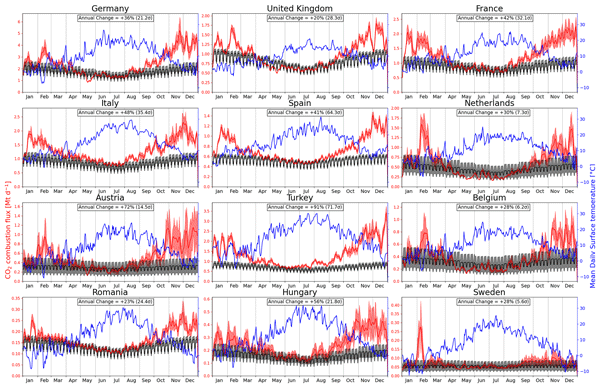
We developed a method to estimate carbon dioxide emissions across Europe using satellite measurements of nitrogen dioxide, which is released alongside fuel combustion. By applying sector-specific ratios, we convert nitrogen dioxide observations into carbon dioxide estimates, revealing stronger seasonal patterns with higher total emissions across Europe, especially in winter. This approach provides more accurate information to monitor human-caused emissions and support climate action.
Daniel Kühbacher, Jia Chen, Patrick Aigner, Mario Ilic, Ingrid Super, and Hugo Denier van der Gon
Geosci. Model Dev., 18, 9967–9990, https://doi.org/10.5194/gmd-18-9967-2025, https://doi.org/10.5194/gmd-18-9967-2025, 2025
Short summary
Short summary
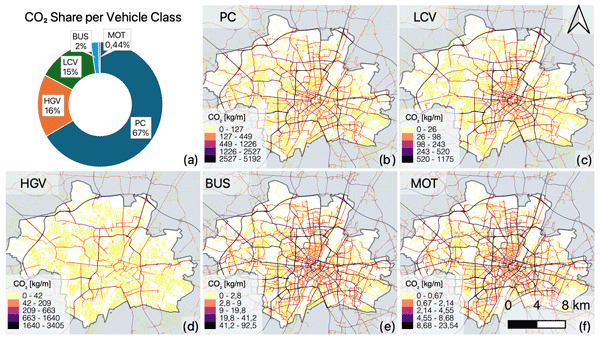
We present DRIVE v1.0, a data-driven framework to estimate road transport emissions, their temporal profiles, and the associated uncertainties. The method was applied to the city of Munich, where we present bottom-up emission estimates for the years 2019 to 2022. The estimates are compared against official municipal reports as well as national and European downscaled inventories.
Ida Storm, Ute Karstens, Claudio D'Onofrio, Alex Vermeulen, Samuel Hammer, Ingrid Super, Theo Glauch, and Wouter Peters
Earth Syst. Sci. Data, 17, 6681–6701, https://doi.org/10.5194/essd-17-6681-2025, https://doi.org/10.5194/essd-17-6681-2025, 2025
Short summary
Short summary
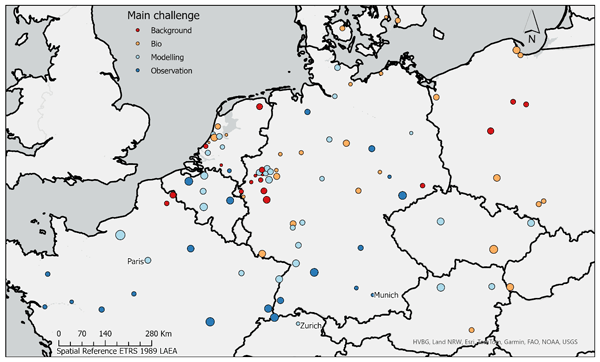
Many cities are committed to ambitious CO2 emission reduction targets, supported by climate action plans. Atmospheric measurements are essential to verify that these efforts lead to the expected reductions. Here, we characterise and compare 96 European cities across 18 metrics, linking them to four major challenges in CO2 emissions monitoring. Our framework includes a tool with additional cities and metrics, as well as "mapbooks" for the 96 cities.
Ingrid Super, Tia Scarpelli, Arjan Droste, and Paul I. Palmer
Geosci. Model Dev., 17, 7263–7284, https://doi.org/10.5194/gmd-17-7263-2024, https://doi.org/10.5194/gmd-17-7263-2024, 2024
Short summary
Short summary
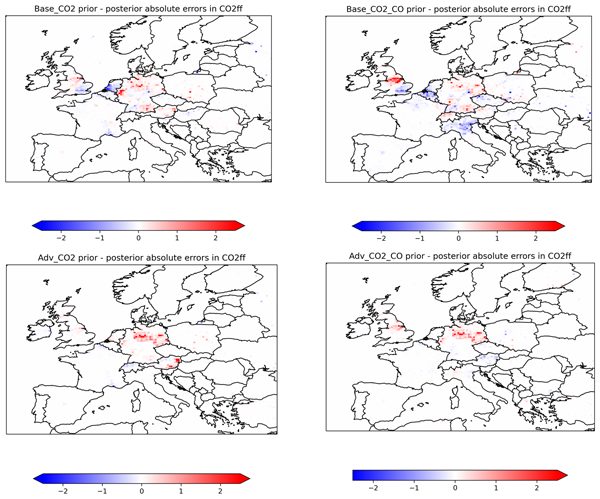
Monitoring greenhouse gas emission reductions requires a combination of models and observations, as well as an initial emission estimate. Each component provides information with a certain level of certainty and is weighted to yield the most reliable estimate of actual emissions. We describe efforts for estimating the uncertainty in the initial emission estimate, which significantly impacts the outcome. Hence, a good uncertainty estimate is key for obtaining reliable information on emissions.
Tia R. Scarpelli, Paul I. Palmer, Mark Lunt, Ingrid Super, and Arjan Droste
Atmos. Chem. Phys., 24, 10773–10791, https://doi.org/10.5194/acp-24-10773-2024, https://doi.org/10.5194/acp-24-10773-2024, 2024
Short summary
Short summary
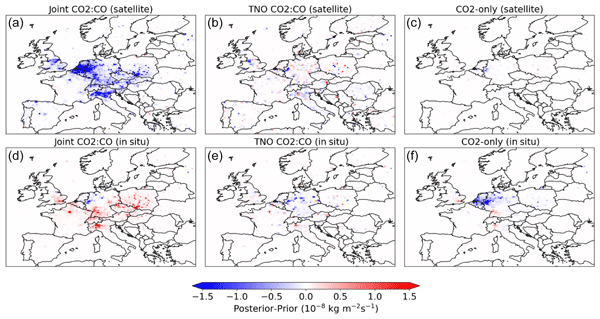
Under the Paris Agreement, countries must track their anthropogenic greenhouse gas emissions. This study describes a method to determine self-consistent estimates for combustion emissions and natural fluxes of CO2 from atmospheric data. We report consistent estimates inferred using this approach from satellite data and ground-based data over Europe, suggesting that satellite data can be used to determine national anthropogenic CO2 emissions for countries where ground-based CO2 data are absent.
Marc Guevara, Hervé Petetin, Oriol Jorba, Hugo Denier van der Gon, Jeroen Kuenen, Ingrid Super, Claire Granier, Thierno Doumbia, Philippe Ciais, Zhu Liu, Robin D. Lamboll, Sabine Schindlbacher, Bradley Matthews, and Carlos Pérez García-Pando
Atmos. Chem. Phys., 23, 8081–8101, https://doi.org/10.5194/acp-23-8081-2023, https://doi.org/10.5194/acp-23-8081-2023, 2023
Short summary
Short summary
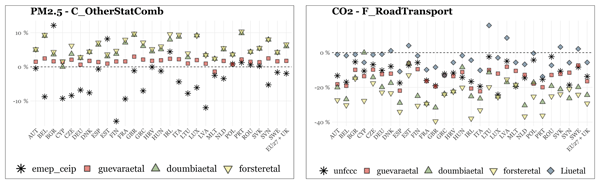
This study provides an intercomparison of European 2020 emission changes derived from official inventories, which are reported by countries under the framework of several international conventions and directives, and non-official near-real-time estimates, the use of which has significantly grown since the COVID-19 outbreak. The results of the work are used to produce recommendations on how best to approach and make use of near-real-time emissions for modelling and monitoring applications.
Auke M. van der Woude, Remco de Kok, Naomi Smith, Ingrid T. Luijkx, Santiago Botía, Ute Karstens, Linda M. J. Kooijmans, Gerbrand Koren, Harro A. J. Meijer, Gert-Jan Steeneveld, Ida Storm, Ingrid Super, Hubertus A. Scheeren, Alex Vermeulen, and Wouter Peters
Earth Syst. Sci. Data, 15, 579–605, https://doi.org/10.5194/essd-15-579-2023, https://doi.org/10.5194/essd-15-579-2023, 2023
Short summary
Short summary
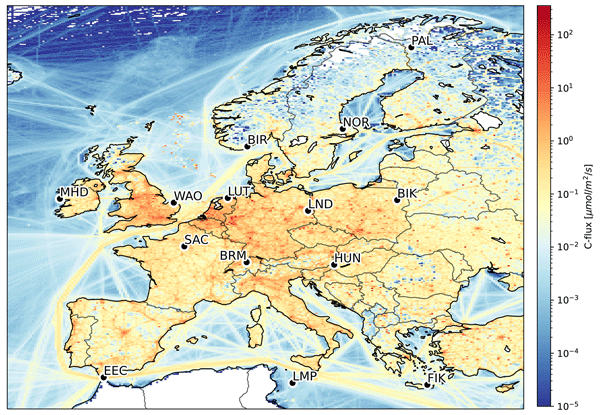
To monitor the progress towards the CO2 emission goals set out in the Paris Agreement, the European Union requires an independent validation of emitted CO2. For this validation, atmospheric measurements of CO2 can be used, together with first-guess estimates of CO2 emissions and uptake. To quickly inform end users, it is imperative that this happens in near real-time. To aid these efforts, we create estimates of European CO2 exchange at high resolution in near real time.
Fabian Maier, Christoph Gerbig, Ingeborg Levin, Ingrid Super, Julia Marshall, and Samuel Hammer
Geosci. Model Dev., 15, 5391–5406, https://doi.org/10.5194/gmd-15-5391-2022, https://doi.org/10.5194/gmd-15-5391-2022, 2022
Short summary
Short summary
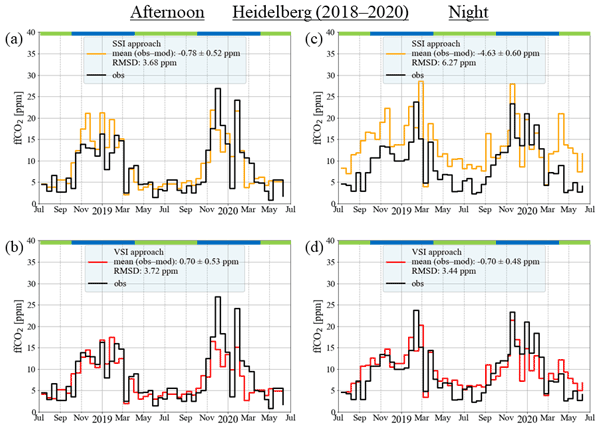
We show that the default representation of point source emissions in WRF–STILT leads to large overestimations when modelling fossil fuel CO2 concentrations for a 30 m high observation site during stable atmospheric conditions. We therefore introduce a novel point source modelling approach in WRF-STILT that takes into account their effective emission heights and results in a much better agreement with observations.
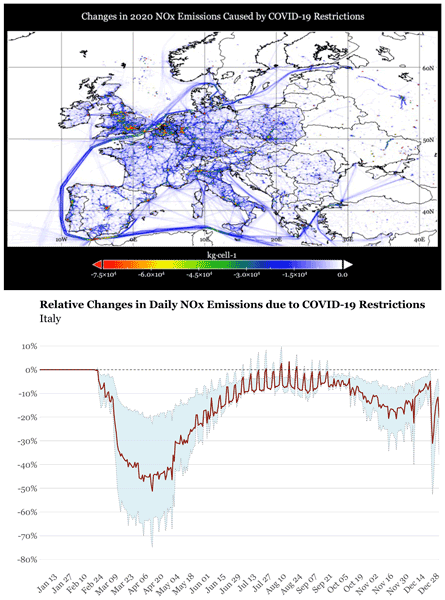
Marc Guevara, Hervé Petetin, Oriol Jorba, Hugo Denier van der Gon, Jeroen Kuenen, Ingrid Super, Jukka-Pekka Jalkanen, Elisa Majamäki, Lasse Johansson, Vincent-Henri Peuch, and Carlos Pérez García-Pando
Earth Syst. Sci. Data, 14, 2521–2552, https://doi.org/10.5194/essd-14-2521-2022, https://doi.org/10.5194/essd-14-2521-2022, 2022
Short summary
Short summary
To control the spread of the COVID-19 disease, European governments implemented mobility restriction measures that resulted in an unprecedented drop in anthropogenic emissions. This work presents a dataset of emission adjustment factors that allows quantifying changes in 2020 European primary emissions per country and pollutant sector at the daily scale. The resulting dataset can be used as input in modelling studies aiming at quantifying the impact of COVID-19 on air quality levels.
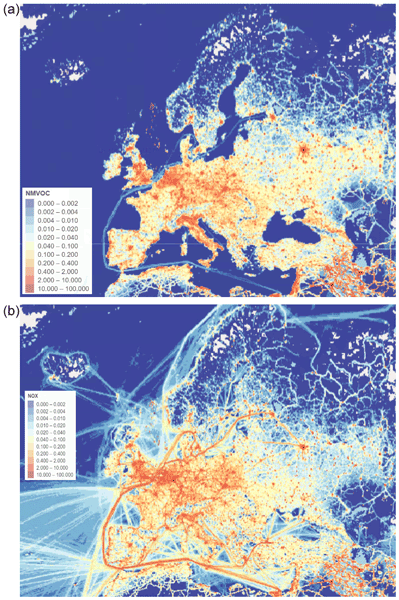
Jeroen Kuenen, Stijn Dellaert, Antoon Visschedijk, Jukka-Pekka Jalkanen, Ingrid Super, and Hugo Denier van der Gon
Earth Syst. Sci. Data, 14, 491–515, https://doi.org/10.5194/essd-14-491-2022, https://doi.org/10.5194/essd-14-491-2022, 2022
Short summary
Short summary
This paper presents an 18-year time series for anthropogenic emissions for the main air pollutants in Europe, distinguishing 15 main source categories. It provides a complete overview of emissions to air and is designed to support air quality modelling. The data build where possible on official country total emissions used in the policy processes, but where necessary alternative data were used. The emission data are spatially distributed at high resolution (~ 6 km x 6 km) in a consistent way.
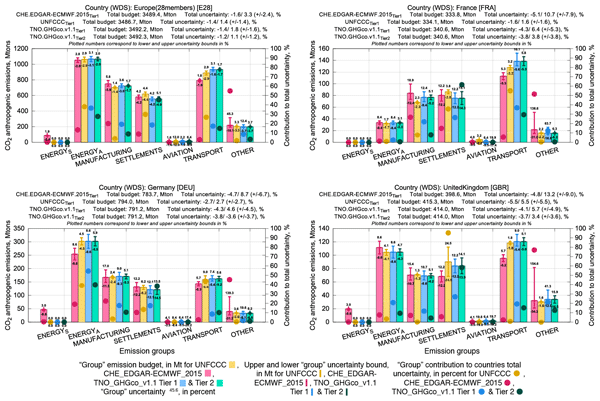
Margarita Choulga, Greet Janssens-Maenhout, Ingrid Super, Efisio Solazzo, Anna Agusti-Panareda, Gianpaolo Balsamo, Nicolas Bousserez, Monica Crippa, Hugo Denier van der Gon, Richard Engelen, Diego Guizzardi, Jeroen Kuenen, Joe McNorton, Gabriel Oreggioni, and Antoon Visschedijk
Earth Syst. Sci. Data, 13, 5311–5335, https://doi.org/10.5194/essd-13-5311-2021, https://doi.org/10.5194/essd-13-5311-2021, 2021
Short summary
Short summary
People worry that growing man-made carbon dioxide (CO2) concentrations lead to climate change. Global models, use of observations, and datasets can help us better understand behaviour of CO2. Here a tool to compute uncertainty in man-made CO2 sources per country per year and month is presented. An example of all sources separated into seven groups (intensive and average energy, industry, humans, ground and air transport, others) is presented. Results will be used to predict CO2 concentrations.
Chlöe N. Schooling, Liang Feng, Ingrid Super, and Paul I. Palmer
Atmos. Chem. Phys., 26, 13743–13766, https://doi.org/10.5194/acp-26-13743-2026, https://doi.org/10.5194/acp-26-13743-2026, 2026
Short summary
Short summary
We developed a method to estimate carbon dioxide emissions across Europe using satellite measurements of nitrogen dioxide, which is released alongside fuel combustion. By applying sector-specific ratios, we convert nitrogen dioxide observations into carbon dioxide estimates, revealing stronger seasonal patterns with higher total emissions across Europe, especially in winter. This approach provides more accurate information to monitor human-caused emissions and support climate action.
Santiago Parraguez Cerda, Johann Rasmus Nüß, Nikos Daskalakis, Arjo Segers, Oliver Schneising, Mihalis Vrekoussis, and Maria Kanakidou
EGUsphere, https://doi.org/10.5194/egusphere-2026-3458, https://doi.org/10.5194/egusphere-2026-3458, 2026
Short summary
Short summary
Our study presents a parametric method for adaptive observation weighting in global CH4 emission inversions, using the spatial and temporal distribution of satellite observations. The approach reduces grid-cell weight variability by ∼20 %, improving the balance of observational influence, especially in remote regions, without added computational cost, and easily applicable to multiple datasets. Global 2019 inversions with TMVar yield consistent posterior emissions and good agreement with TCCON.
Simeng Li, Enrico Dammers, Beatriz Herrera, Arjo Segers, Mark W. Shephard, Martin Van Damme, Lieven Clarisse, Shelley van der Graaf, Roy Wichink Kruit, and Jan Willem Erisman
EGUsphere, https://doi.org/10.5194/egusphere-2026-4245, https://doi.org/10.5194/egusphere-2026-4245, 2026
This preprint is open for discussion and under review for Geoscientific Instrumentation, Methods and Data Systems (GI).
Short summary
Short summary
Ammonia from agriculture can harm ecosystems and air quality, but tracking emissions accurately is difficult. We developed a method combining in situ measurements and satellite observations to estimate ammonia emissions across the Netherlands. In situ measurement captures local detail while satellites provide broad coverage; combining both improves estimates. We also identified where new measurement stations would most improve emission monitoring, helping guide future network design.
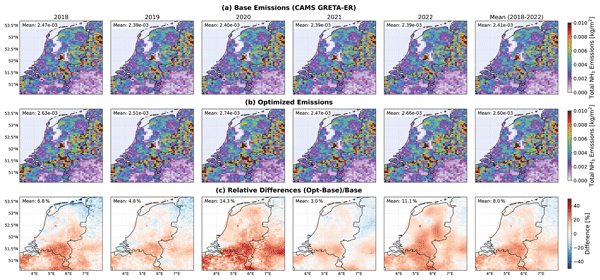
Tyler Wizenberg, Enrico Dammers, Arjo Segers, Mark W. Shephard, Pierre Coheur, Lieven Clarisse, Martin Van Damme, Henk Eskes, Roy Wichink Kruit, Shelley van der Graaf, and Martijn Schaap
Atmos. Chem. Phys., 26, 9589–9623, https://doi.org/10.5194/acp-26-9589-2026, https://doi.org/10.5194/acp-26-9589-2026, 2026
Short summary
Short summary
We combined five years of satellite data on ammonia and nitrogen dioxide concentrations with a regional model to better estimate nitrogen emissions and deposition in the Netherlands. This improved the accuracy of pollution maps and trends, especially in agricultural regions. Our approach helps identify when and where emissions are highest, supporting better air quality management and environmental protection by showing the benefits of using multiple complimentary satellite datasets together.
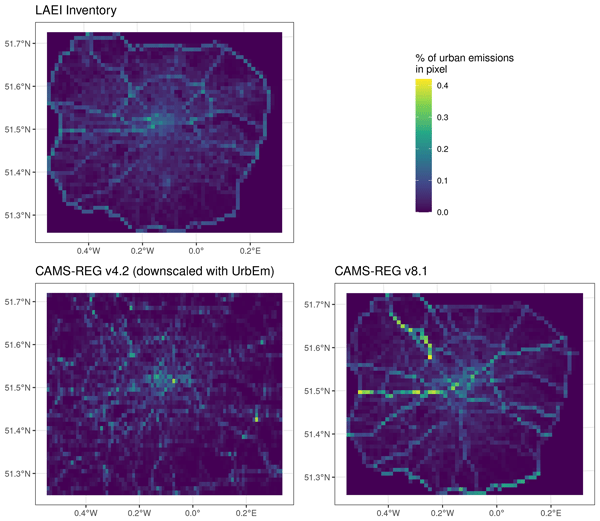
Tilman Leo Hohenberger, Marya el Malki, Antoon Visschedijk, Marc Guevara, Martin Otto Paul Ramacher, Alessandro Marongiu, Guido Giuseppe Lanzani, Giuseppe Fossati, Anu Kousa, Eleni Athanasopoulou, Anastasia Kakouri, and Jeroen Kuenen
Earth Syst. Sci. Data, 18, 3959–3978, https://doi.org/10.5194/essd-18-3959-2026, https://doi.org/10.5194/essd-18-3959-2026, 2026
Short summary
Short summary
Spatial road transport emission data is fundamental for challenges of air pollution and climate change. In the existing European CAMS-REG (Copernicus Atmosphere Service-regional) inventory, several improvement opportunities exist, especially an underestimation in urban centers of ~35 %. We calculate emissions by combining gap-filled road information and emission factors, for the first time giving detailed emissions for most roads in Europe. With this, our dataset is much closer in line with independently combined city inventories.
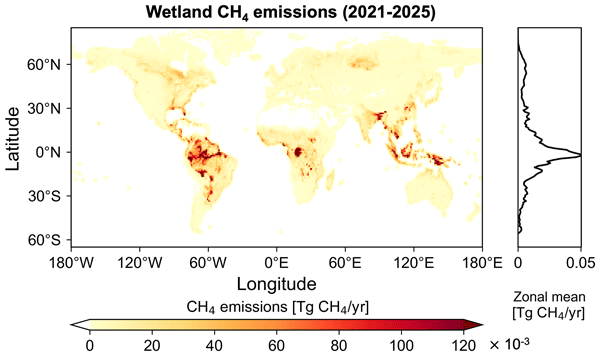
Mengze Li, Robert B. Jackson, Marielle Saunois, Philippe Ciais, Ben Poulter, Josep G. Canadell, Prabir K. Patra, Hanqin Tian, Zhen Zhang, Etienne Fluet-Chouinard, Zutao Ouyang, Ting Zhang, David J. Beerling, Dmitry A. Belikov, Philippe Bousquet, Danilo Custodio, Naveen Chandra, Xinyu Dou, Nicola Gedney, Peter O. Hopcroft, Alison M. Hoyt, Kazuhito Ichii, Akihito Ito, Atul K. Jain, Katherine Jensen, Fortunat Joos, Thomas Kleinen, Masayuki Kondo, Fa Li, Tingting Li, Xiangyu Liu, Shamil Maksyutov, Avni Malhotra, Adrien Martinez, Kyle McDonald, Joe R. Melton, Jurek Müller, Yosuke Niwa, Shufen Pan, Shushi Peng, Changhui Peng, Zhangcai Qin, Peter Raymond, William Riley, Arjo Segers, Rona L. Thompson, Aki Tsuruta, Yi Xi, Kunxiaojia Yuan, Wenxin Zhang, Bo Zheng, Qing Zhu, Qiuan Zhu, and Qianlai Zhuang
Earth Syst. Sci. Data, 18, 3507–3524, https://doi.org/10.5194/essd-18-3507-2026, https://doi.org/10.5194/essd-18-3507-2026, 2026
Short summary
Short summary
We proposed a framework that combines machine-learning and climate data to predict global natural vegetated wetland methane emissions for 2000–2025. We found that although total global emissions remained stable in the post-2020s, Northern Hemisphere emissions surged whilst tropical emissions fell. This approach allows us to rapidly monitor emissions and provides early warnings for climate impacts.
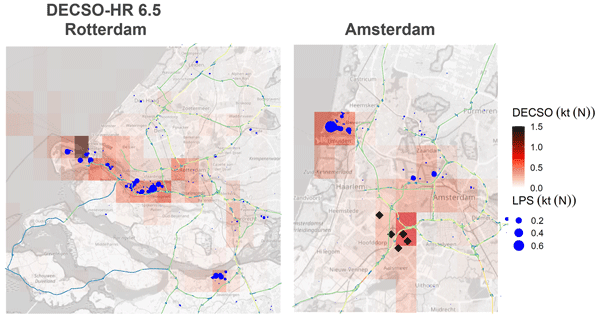
Hannes Witt, Ronald J. van der A, Jieying Ding, Jeroen Kuenen, and Margreet C. van Zanten
Atmos. Chem. Phys., 26, 5237–5248, https://doi.org/10.5194/acp-26-5237-2026, https://doi.org/10.5194/acp-26-5237-2026, 2026
Short summary
Short summary
We present a detailed comparison of NOx emissions from the Dutch national emission inventory with completely independent emission data derived from satellite observations with the DECSO algorithm. We find good agreement in overall emission levels, regional emissions, and the 5-year emission trend. Our results demonstrate the robustness of the national inventory and the satellite-derived emissions and might serve as a use-case for the adoption of similar methods in other countries.
Daniel Kühbacher, Jia Chen, Patrick Aigner, Mario Ilic, Ingrid Super, and Hugo Denier van der Gon
Geosci. Model Dev., 18, 9967–9990, https://doi.org/10.5194/gmd-18-9967-2025, https://doi.org/10.5194/gmd-18-9967-2025, 2025
Short summary
Short summary
We present DRIVE v1.0, a data-driven framework to estimate road transport emissions, their temporal profiles, and the associated uncertainties. The method was applied to the city of Munich, where we present bottom-up emission estimates for the years 2019 to 2022. The estimates are compared against official municipal reports as well as national and European downscaled inventories.
Ida Storm, Ute Karstens, Claudio D'Onofrio, Alex Vermeulen, Samuel Hammer, Ingrid Super, Theo Glauch, and Wouter Peters
Earth Syst. Sci. Data, 17, 6681–6701, https://doi.org/10.5194/essd-17-6681-2025, https://doi.org/10.5194/essd-17-6681-2025, 2025
Short summary
Short summary
Many cities are committed to ambitious CO2 emission reduction targets, supported by climate action plans. Atmospheric measurements are essential to verify that these efforts lead to the expected reductions. Here, we characterise and compare 96 European cities across 18 metrics, linking them to four major challenges in CO2 emissions monitoring. Our framework includes a tool with additional cities and metrics, as well as "mapbooks" for the 96 cities.
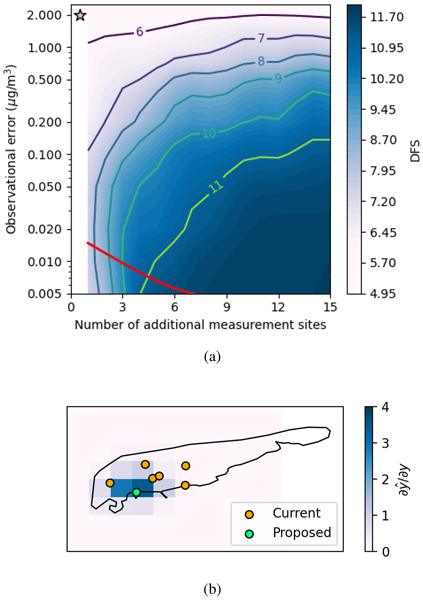
Simeng Li, Enrico Dammers, Arjo Segers, and Jan Willem Erisman
Atmos. Chem. Phys., 25, 15593–15611, https://doi.org/10.5194/acp-25-15593-2025, https://doi.org/10.5194/acp-25-15593-2025, 2025
Short summary
Short summary
Between 2019 and 2022, a notable reduction in livestock numbers has been observed on Schiermonnikoog, a small island in the north of the Netherlands. We have assessed ammonia emissions using real-world measurements on the island, demonstrated emission decrease, and proposed a network to improve emission monitoring.
Diego Guizzardi, Monica Crippa, Tim Butler, Terry Keating, Rosa Wu, Jacek Kaminski, Jeroen Kuenen, Junichi Kurokawa, Satoru Chatani, Tazuko Morikawa, George Pouliot, Jacinthe Racine, Michael D. Moran, Zbigniew Klimont, Patrick M. Manseau, Rabab Mashayekhi, Barron H. Henderson, Steven J. Smith, Rachel Hoesly, Marilena Muntean, Manjola Banja, Edwin Schaaf, Federico Pagani, Jung-Hun Woo, Jinseok Kim, Enrico Pisoni, Junhua Zhang, David Niemi, Mourad Sassi, Annie Duhamel, Tabish Ansari, Kristen Foley, Guannan Geng, Yifei Chen, and Qiang Zhang
Earth Syst. Sci. Data, 17, 5915–5950, https://doi.org/10.5194/essd-17-5915-2025, https://doi.org/10.5194/essd-17-5915-2025, 2025
Short summary
Short summary
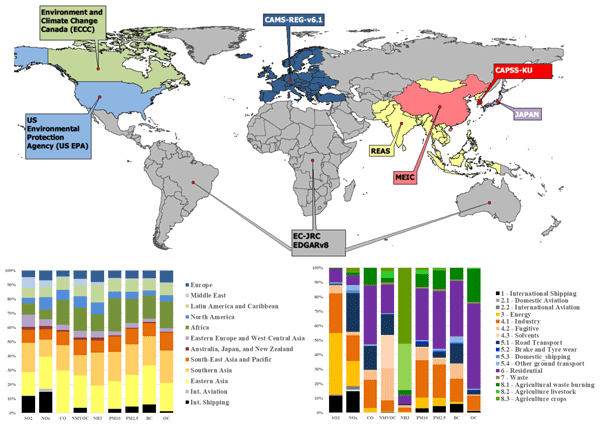
The global air pollution emission mosaic HTAP_v3.2 is the state-of-the-art inventory to address the evolution of a set of policy-relevant pollutants over the past 2 decades. The mosaic is made harmonising and blending seven regional inventories, gapfilled with the most recent release of the Emissions Database for Global Atmospheric Research. By incorporating the best available local information, the HTAP_v3.2 emission mosaic can be used for policy-relevant studies at regional and global level.
Marc Guevara, Augustin Colette, Antoine Guion, Valentin Petiot, Mario Adani, Joaquim Arteta, Anna Benedictow, Robert Bergström, Andrea Bolignano, Paula Camps, Ana C. Carvalho, Jesper Heile Christensen, Florian Couvidat, Ilaria D'Elia, Hugo Denier van der Gon, Gaël Descombes, John Douros, Hilde Fagerli, Yalda Fatahi, Elmar Friese, Lise Frohn, Michael Gauss, Camilla Geels, Risto Hänninen, Kaj Hansen, Oriol Jorba, Jacek W. Kaminski, Rostislav Kouznetsov, Richard Kranenburg, Jeroen Kuenen, Victor Lannuque, Frédérik Meleux, Agnes Nyíri, Yuliia Palamarchuk, Carlos Pérez García-Pando, Lennard Robertson, Felicita Russo, Arjo Segers, Mikhail Sofiev, Joanna Struzewska, Renske Timmermans, Andreas Uppstu, Alvaro Valdebenito, and Zhuyun Ye
Atmos. Chem. Phys., 25, 13245–13278, https://doi.org/10.5194/acp-25-13245-2025, https://doi.org/10.5194/acp-25-13245-2025, 2025
Short summary
Short summary
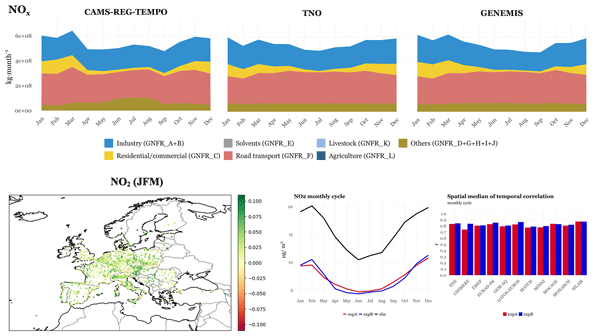
Air quality models require hourly emissions to accurately represent dispersion and physico-chemical processes in the atmosphere. Since emission inventories are typically provided at the annual level, emissions are downscaled to a refined temporal resolution using temporal profiles. This study quantifies the impact of using new anthropogenic temporal profiles on the performance of an European air quality multi-model ensemble. Overall, the findings indicate an improvement of the modelling results.
Augustin Colette, Gaëlle Collin, François Besson, Etienne Blot, Vincent Guidard, Frédérik Meleux, Adrien Royer, Valentin Petiot, Claire Miller, Oihana Fermond, Alizé Jeant, Mario Adani, Joaquim Arteta, Anna Benedictow, Robert Bergström, Dene Bowdalo, Jorgen Brandt, Gino Briganti, Ana C. Carvalho, Jesper Heile Christensen, Florian Couvidat, Ilaria D'Elia, Massimo D'Isidoro, Hugo Denier van der Gon, Gaël Descombes, Enza Di Tomaso, John Douros, Jeronimo Escribano, Henk Eskes, Hilde Fagerli, Yalda Fatahi, Johannes Flemming, Elmar Friese, Lise Frohn, Michael Gauss, Camilla Geels, Guido Guarnieri, Marc Guevara, Antoine Guion, Jonathan Guth, Risto Hänninen, Kaj Hansen, Ulas Im, Ruud Janssen, Marine Jeoffrion, Mathieu Joly, Luke Jones, Oriol Jorba, Evgeni Kadantsev, Michael Kahnert, Jacek W. Kaminski, Rostislav Kouznetsov, Richard Kranenburg, Jeroen Kuenen, Anne Caroline Lange, Joachim Langner, Victor Lannuque, Francesca Macchia, Astrid Manders, Mihaela Mircea, Agnes Nyiri, Miriam Olid, Carlos Pérez García-Pando, Yuliia Palamarchuk, Antonio Piersanti, Blandine Raux, Miha Razinger, Lennard Robertson, Arjo Segers, Martijn Schaap, Pilvi Siljamo, David Simpson, Mikhail Sofiev, Anders Stangel, Joanna Struzewska, Carles Tena, Renske Timmermans, Thanos Tsikerdekis, Svetlana Tsyro, Svyatoslav Tyuryakov, Anthony Ung, Andreas Uppstu, Alvaro Valdebenito, Peter van Velthoven, Lina Vitali, Zhuyun Ye, Vincent-Henri Peuch, and Laurence Rouïl
Geosci. Model Dev., 18, 6835–6883, https://doi.org/10.5194/gmd-18-6835-2025, https://doi.org/10.5194/gmd-18-6835-2025, 2025
Short summary
Short summary
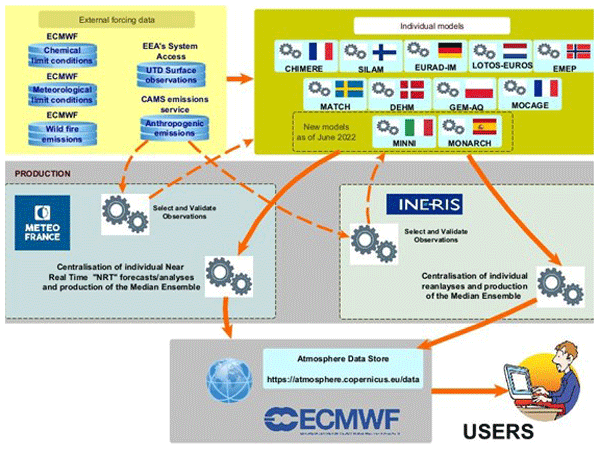
The Copernicus Atmosphere Monitoring Service – Regional Production delivers daily forecasts, analyses, and reanalyses of air quality in Europe. The service relies on a distributed modelling production by 11 leading European modelling teams following stringent requirements with an operational design that has no equivalent in the world. All the products are free, open, and quality-assured and disseminated with a high level of reliability.
Mijie Pang, Jianbing Jin, Ting Yang, Xi Chen, Arjo Segers, Batjargal Buyantogtokh, Yixuan Gu, Jiandong Li, Hai Xiang Lin, Hong Liao, and Wei Han
Geosci. Model Dev., 18, 3781–3798, https://doi.org/10.5194/gmd-18-3781-2025, https://doi.org/10.5194/gmd-18-3781-2025, 2025
Short summary
Short summary
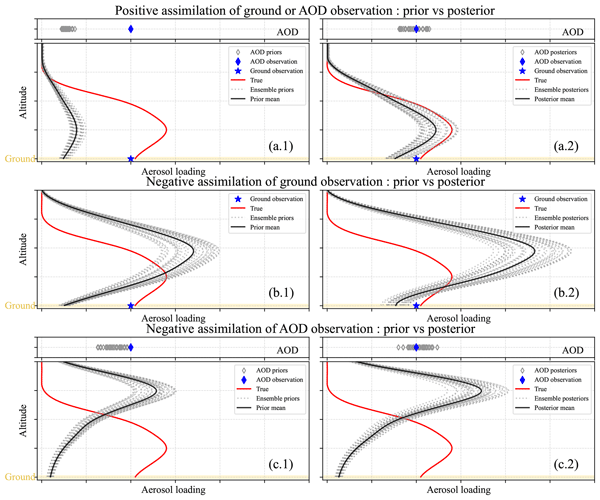
Aerosol data assimilation has gained popularity as it combines the advantages of modelling and observation. However, few studies have addressed the challenges in the prior vertical structure. Different observations are assimilated to examine the sensitivity of assimilation to vertical structure. Results show that assimilation can optimize the dust field in general. However, if the prior introduces an incorrect structure, the assimilation can significantly deteriorate the integrity of the aerosol profile.
Marielle Saunois, Adrien Martinez, Benjamin Poulter, Zhen Zhang, Peter A. Raymond, Pierre Regnier, Josep G. Canadell, Robert B. Jackson, Prabir K. Patra, Philippe Bousquet, Philippe Ciais, Edward J. Dlugokencky, Xin Lan, George H. Allen, David Bastviken, David J. Beerling, Dmitry A. Belikov, Donald R. Blake, Simona Castaldi, Monica Crippa, Bridget R. Deemer, Fraser Dennison, Giuseppe Etiope, Nicola Gedney, Lena Höglund-Isaksson, Meredith A. Holgerson, Peter O. Hopcroft, Gustaf Hugelius, Akihiko Ito, Atul K. Jain, Rajesh Janardanan, Matthew S. Johnson, Thomas Kleinen, Paul B. Krummel, Ronny Lauerwald, Tingting Li, Xiangyu Liu, Kyle C. McDonald, Joe R. Melton, Jens Mühle, Jurek Müller, Fabiola Murguia-Flores, Yosuke Niwa, Sergio Noce, Shufen Pan, Robert J. Parker, Changhui Peng, Michel Ramonet, William J. Riley, Gerard Rocher-Ros, Judith A. Rosentreter, Motoki Sasakawa, Arjo Segers, Steven J. Smith, Emily H. Stanley, Joël Thanwerdas, Hanqin Tian, Aki Tsuruta, Francesco N. Tubiello, Thomas S. Weber, Guido R. van der Werf, Douglas E. J. Worthy, Yi Xi, Yukio Yoshida, Wenxin Zhang, Bo Zheng, Qing Zhu, Qiuan Zhu, and Qianlai Zhuang
Earth Syst. Sci. Data, 17, 1873–1958, https://doi.org/10.5194/essd-17-1873-2025, https://doi.org/10.5194/essd-17-1873-2025, 2025
Short summary
Short summary
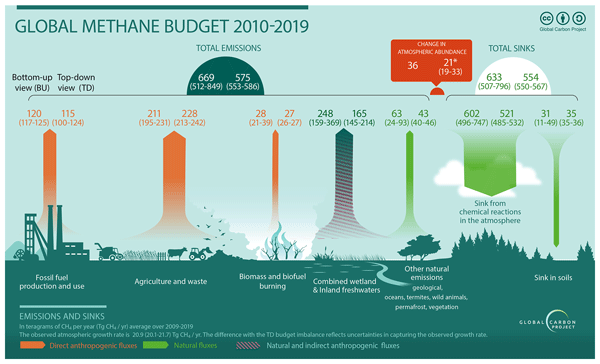
Methane (CH4) is the second most important human-influenced greenhouse gas in terms of climate forcing after carbon dioxide (CO2). A consortium of multi-disciplinary scientists synthesise and update the budget of the sources and sinks of CH4. This edition benefits from important progress in estimating emissions from lakes and ponds, reservoirs, and streams and rivers. For the 2010s decade, global CH4 emissions are estimated at 575 Tg CH4 yr-1, including ~65 % from anthropogenic sources.
Zhu Deng, Philippe Ciais, Liting Hu, Adrien Martinez, Marielle Saunois, Rona L. Thompson, Kushal Tibrewal, Wouter Peters, Brendan Byrne, Giacomo Grassi, Paul I. Palmer, Ingrid T. Luijkx, Zhu Liu, Junjie Liu, Xuekun Fang, Tengjiao Wang, Hanqin Tian, Katsumasa Tanaka, Ana Bastos, Stephen Sitch, Benjamin Poulter, Clément Albergel, Aki Tsuruta, Shamil Maksyutov, Rajesh Janardanan, Yosuke Niwa, Bo Zheng, Joël Thanwerdas, Dmitry Belikov, Arjo Segers, and Frédéric Chevallier
Earth Syst. Sci. Data, 17, 1121–1152, https://doi.org/10.5194/essd-17-1121-2025, https://doi.org/10.5194/essd-17-1121-2025, 2025
Short summary
Short summary
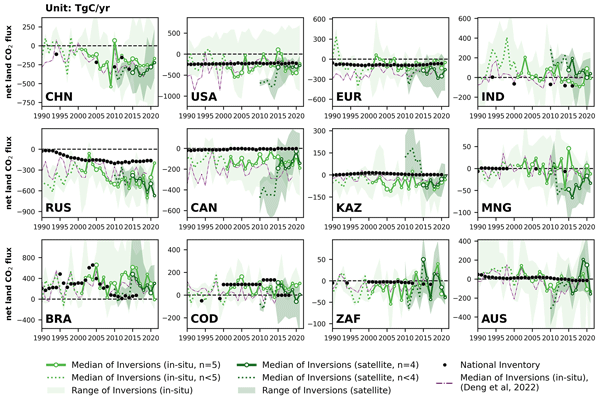
This study reconciles national greenhouse gas (GHG) inventories with updated atmospheric inversion results to evaluate discrepancies for three principal GHG fluxes at the national level. Compared to our previous study, new satellite-based CO2 inversions were included and an updated mask of managed lands was used, improving agreement for Brazil and Canada. The proposed methodology can be regularly applied as a check to assess the gap between top-down inversions and bottom-up inventories.
Gijs Leguijt, Joannes D. Maasakkers, Hugo A. C. Denier van der Gon, Arjo J. Segers, Tobias Borsdorff, Ivar R. van der Velde, and Ilse Aben
Atmos. Chem. Phys., 25, 555–574, https://doi.org/10.5194/acp-25-555-2025, https://doi.org/10.5194/acp-25-555-2025, 2025
Short summary
Short summary
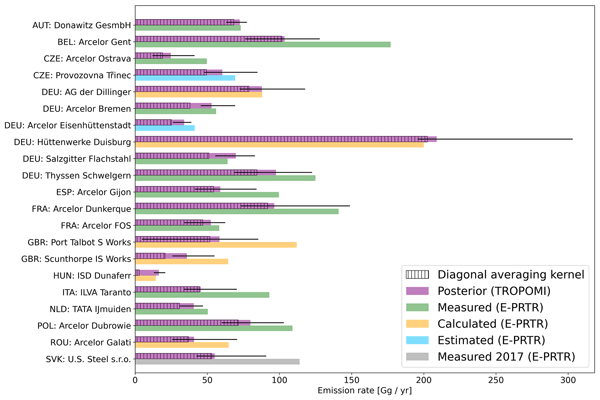
The production of steel coincides with large emissions of greenhouse gases and air pollutants including carbon monoxide. European facilities are required to report their emissions, which are estimated using a variety of methods. We evaluate these estimates using carbon monoxide concentrations measured via satellite. We find generally good agreement between our values and those reported but also identify some uncertainties, showing that satellites can provide insights into these emissions.
Li Fang, Jianbing Jin, Arjo Segers, Ke Li, Ji Xia, Wei Han, Baojie Li, Hai Xiang Lin, Lei Zhu, Song Liu, and Hong Liao
Geosci. Model Dev., 17, 8267–8282, https://doi.org/10.5194/gmd-17-8267-2024, https://doi.org/10.5194/gmd-17-8267-2024, 2024
Short summary
Short summary
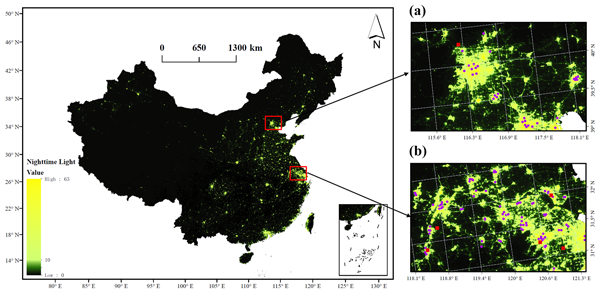
Model evaluations against ground observations are usually unfair. The former simulates mean status over coarse grids and the latter the surrounding atmosphere. To solve this, we proposed the new land-use-based representative (LUBR) operator that considers intra-grid variance. The LUBR operator is validated to provide insights that align with satellite measurements. The results highlight the importance of considering fine-scale urban–rural differences when comparing models and observation.
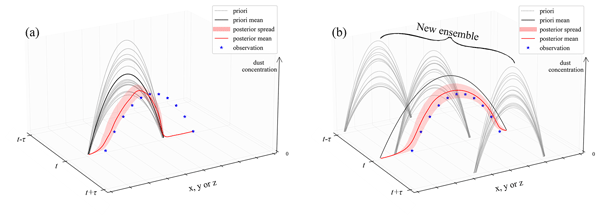
Mijie Pang, Jianbing Jin, Arjo Segers, Huiya Jiang, Wei Han, Batjargal Buyantogtokh, Ji Xia, Li Fang, Jiandong Li, Hai Xiang Lin, and Hong Liao
Geosci. Model Dev., 17, 8223–8242, https://doi.org/10.5194/gmd-17-8223-2024, https://doi.org/10.5194/gmd-17-8223-2024, 2024
Short summary
Short summary
The ensemble Kalman filter (EnKF) improves dust storm forecasts but faces challenges with position errors. The valid time shifting EnKF (VTS-EnKF) addresses this by adjusting for position errors, enhancing accuracy in forecasting dust storms, as proven in tests on 2021 events, even with smaller ensembles and time intervals.
Ingrid Super, Tia Scarpelli, Arjan Droste, and Paul I. Palmer
Geosci. Model Dev., 17, 7263–7284, https://doi.org/10.5194/gmd-17-7263-2024, https://doi.org/10.5194/gmd-17-7263-2024, 2024
Short summary
Short summary
Monitoring greenhouse gas emission reductions requires a combination of models and observations, as well as an initial emission estimate. Each component provides information with a certain level of certainty and is weighted to yield the most reliable estimate of actual emissions. We describe efforts for estimating the uncertainty in the initial emission estimate, which significantly impacts the outcome. Hence, a good uncertainty estimate is key for obtaining reliable information on emissions.
Tia R. Scarpelli, Paul I. Palmer, Mark Lunt, Ingrid Super, and Arjan Droste
Atmos. Chem. Phys., 24, 10773–10791, https://doi.org/10.5194/acp-24-10773-2024, https://doi.org/10.5194/acp-24-10773-2024, 2024
Short summary
Short summary
Under the Paris Agreement, countries must track their anthropogenic greenhouse gas emissions. This study describes a method to determine self-consistent estimates for combustion emissions and natural fluxes of CO2 from atmospheric data. We report consistent estimates inferred using this approach from satellite data and ground-based data over Europe, suggesting that satellite data can be used to determine national anthropogenic CO2 emissions for countries where ground-based CO2 data are absent.
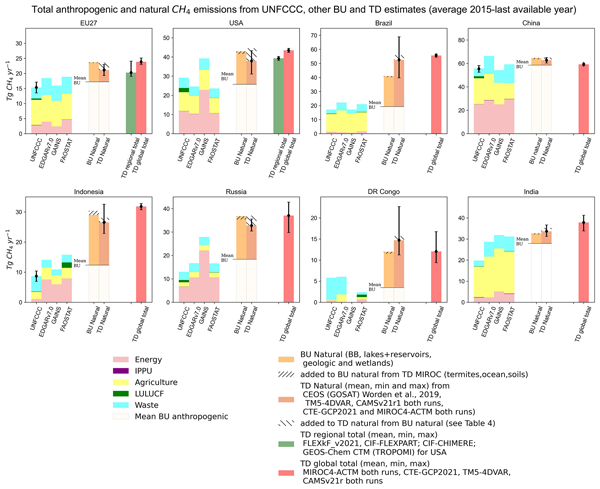
Ana Maria Roxana Petrescu, Glen P. Peters, Richard Engelen, Sander Houweling, Dominik Brunner, Aki Tsuruta, Bradley Matthews, Prabir K. Patra, Dmitry Belikov, Rona L. Thompson, Lena Höglund-Isaksson, Wenxin Zhang, Arjo J. Segers, Giuseppe Etiope, Giancarlo Ciotoli, Philippe Peylin, Frédéric Chevallier, Tuula Aalto, Robbie M. Andrew, David Bastviken, Antoine Berchet, Grégoire Broquet, Giulia Conchedda, Stijn N. C. Dellaert, Hugo Denier van der Gon, Johannes Gütschow, Jean-Matthieu Haussaire, Ronny Lauerwald, Tiina Markkanen, Jacob C. A. van Peet, Isabelle Pison, Pierre Regnier, Espen Solum, Marko Scholze, Maria Tenkanen, Francesco N. Tubiello, Guido R. van der Werf, and John R. Worden
Earth Syst. Sci. Data, 16, 4325–4350, https://doi.org/10.5194/essd-16-4325-2024, https://doi.org/10.5194/essd-16-4325-2024, 2024
Short summary
Short summary
This study provides an overview of data availability from observation- and inventory-based CH4 emission estimates. It systematically compares them and provides recommendations for robust comparisons, aiming to steadily engage more parties in using observational methods to complement their UNFCCC submissions. Anticipating improvements in atmospheric modelling and observations, future developments need to resolve knowledge gaps in both approaches and to better quantify remaining uncertainty.
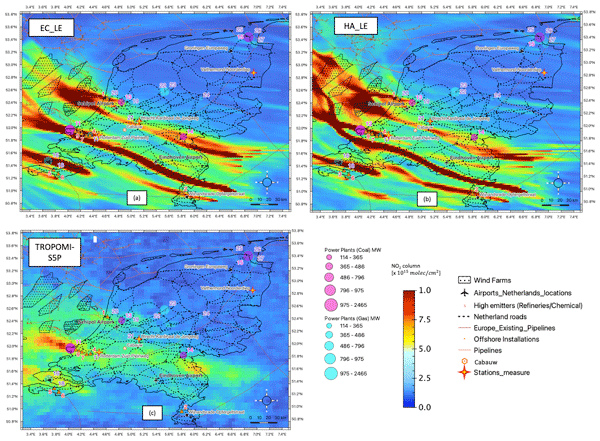
Andrés Yarce Botero, Michiel van Weele, Arjo Segers, Pier Siebesma, and Henk Eskes
Geosci. Model Dev., 17, 3765–3781, https://doi.org/10.5194/gmd-17-3765-2024, https://doi.org/10.5194/gmd-17-3765-2024, 2024
Short summary
Short summary
HARMONIE WINS50 reanalysis data with 0.025° × 0.025° resolution from 2019 to 2021 were coupled with the LOTOS-EUROS Chemical Transport Model. HARMONIE and ECMWF meteorology configurations against Cabauw observations (52.0° N, 4.9° W) were evaluated as simulated NO2 concentrations with ground-level sensors. Differences in crucial meteorological input parameters (boundary layer height, vertical diffusion coefficient) between the hydrostatic and non-hydrostatic models were analysed.
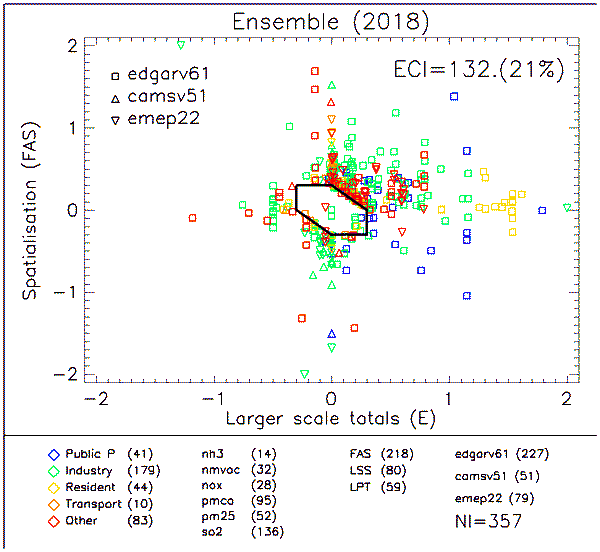
Philippe Thunis, Jeroen Kuenen, Enrico Pisoni, Bertrand Bessagnet, Manjola Banja, Lech Gawuc, Karol Szymankiewicz, Diego Guizardi, Monica Crippa, Susana Lopez-Aparicio, Marc Guevara, Alexander De Meij, Sabine Schindlbacher, and Alain Clappier
Geosci. Model Dev., 17, 3631–3643, https://doi.org/10.5194/gmd-17-3631-2024, https://doi.org/10.5194/gmd-17-3631-2024, 2024
Short summary
Short summary
An ensemble emission inventory is created with the aim of monitoring the status and progress made with the development of EU-wide inventories. This emission ensemble serves as a common benchmark for the screening and allows for the comparison of more than two inventories at a time. Because the emission “truth” is unknown, the approach does not tell which inventory is the closest to reality, but it identifies inconsistencies that require special attention.
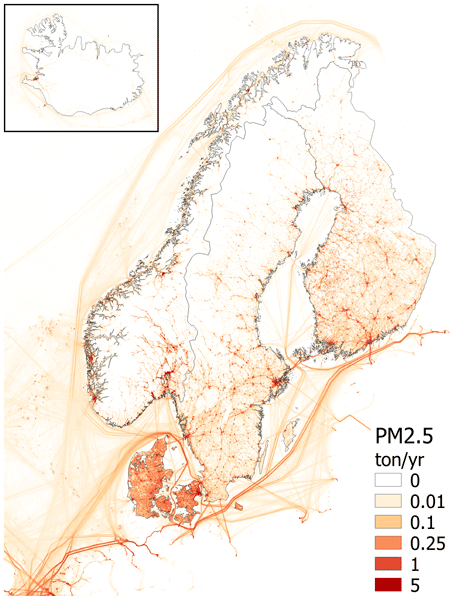
Ville-Veikko Paunu, Niko Karvosenoja, David Segersson, Susana López-Aparicio, Ole-Kenneth Nielsen, Marlene Schmidt Plejdrup, Throstur Thorsteinsson, Dam Thanh Vo, Jeroen Kuenen, Hugo Denier van der Gon, Jukka-Pekka Jalkanen, Jørgen Brandt, and Camilla Geels
Earth Syst. Sci. Data, 16, 1453–1474, https://doi.org/10.5194/essd-16-1453-2024, https://doi.org/10.5194/essd-16-1453-2024, 2024
Short summary
Short summary
Air pollution is an important cause of adverse health effects, even in Nordic countries. To assess their health impacts, emission inventories with high spatial resolution are needed. We studied how national data and methods for the spatial distribution of the emissions compare to a European level inventory. For road transport the methods are well established, but for machinery and off-road emissions the current recommendations for the spatial distribution of these emissions should be improved.
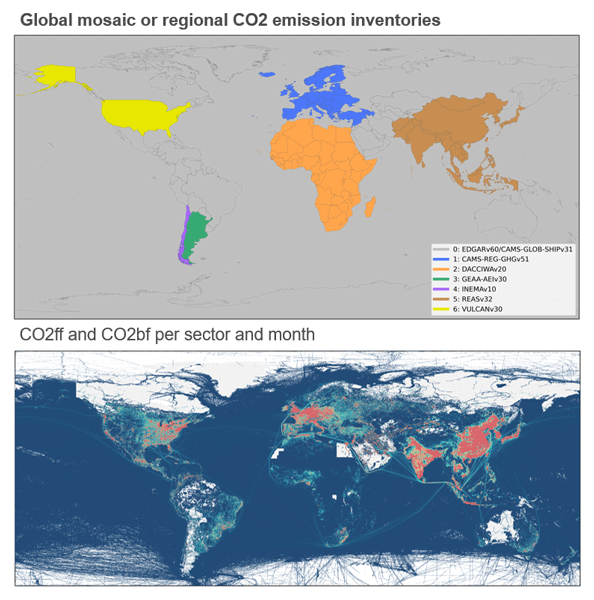
Ruben Urraca, Greet Janssens-Maenhout, Nicolás Álamos, Lucas Berna-Peña, Monica Crippa, Sabine Darras, Stijn Dellaert, Hugo Denier van der Gon, Mark Dowell, Nadine Gobron, Claire Granier, Giacomo Grassi, Marc Guevara, Diego Guizzardi, Kevin Gurney, Nicolás Huneeus, Sekou Keita, Jeroen Kuenen, Ana Lopez-Noreña, Enrique Puliafito, Geoffrey Roest, Simone Rossi, Antonin Soulie, and Antoon Visschedijk
Earth Syst. Sci. Data, 16, 501–523, https://doi.org/10.5194/essd-16-501-2024, https://doi.org/10.5194/essd-16-501-2024, 2024
Short summary
Short summary
CoCO2-MOSAIC 1.0 is a global mosaic of regional bottom-up inventories providing gridded (0.1×0.1) monthly emissions of anthropogenic CO2. Regional inventories include country-specific information and finer spatial resolution than global inventories. CoCO2-MOSAIC provides harmonized access to these datasets and can be considered as a regionally accepted reference to assess the quality of global inventories, as done in the current paper.
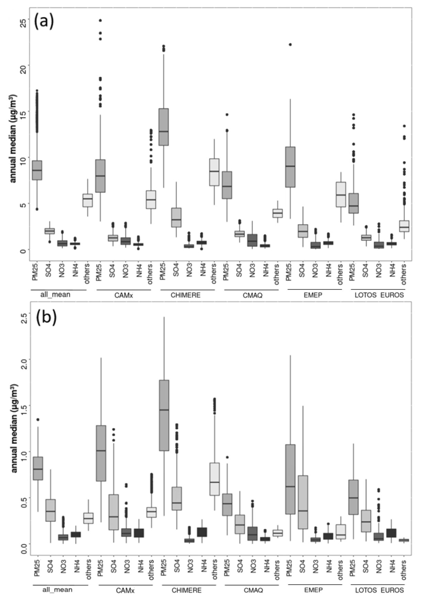
Lea Fink, Matthias Karl, Volker Matthias, Sonia Oppo, Richard Kranenburg, Jeroen Kuenen, Sara Jutterström, Jana Moldanova, Elisa Majamäki, and Jukka-Pekka Jalkanen
Atmos. Chem. Phys., 23, 10163–10189, https://doi.org/10.5194/acp-23-10163-2023, https://doi.org/10.5194/acp-23-10163-2023, 2023
Short summary
Short summary
The Mediterranean Sea is a heavily trafficked shipping area, and air quality monitoring stations in numerous cities along the Mediterranean coast have detected high levels of air pollutants originating from shipping emissions. The current study investigates how existing restrictions on shipping-related emissions to the atmosphere ensure compliance with legislation. Focus was laid on fine particles and particle species, which were simulated with five different chemical transport models.
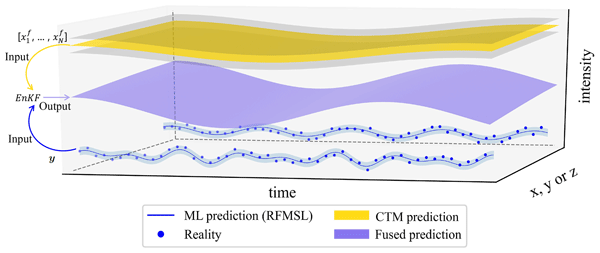
Li Fang, Jianbing Jin, Arjo Segers, Hong Liao, Ke Li, Bufan Xu, Wei Han, Mijie Pang, and Hai Xiang Lin
Geosci. Model Dev., 16, 4867–4882, https://doi.org/10.5194/gmd-16-4867-2023, https://doi.org/10.5194/gmd-16-4867-2023, 2023
Short summary
Short summary
Machine learning models have gained great popularity in air quality prediction. However, they are only available at air quality monitoring stations. In contrast, chemical transport models (CTM) provide predictions that are continuous in the 3D field. Owing to complex error sources, they are typically biased. In this study, we proposed a gridded prediction with high accuracy by fusing predictions from our regional feature selection machine learning prediction (RFSML v1.0) and a CTM prediction.
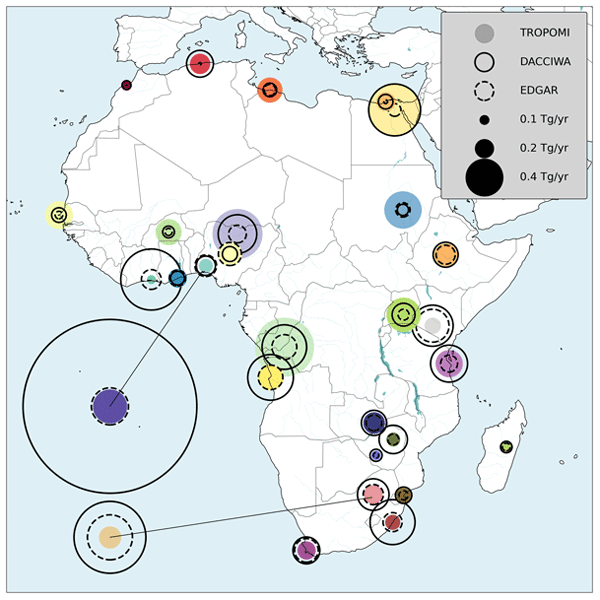
Gijs Leguijt, Joannes D. Maasakkers, Hugo A. C. Denier van der Gon, Arjo J. Segers, Tobias Borsdorff, and Ilse Aben
Atmos. Chem. Phys., 23, 8899–8919, https://doi.org/10.5194/acp-23-8899-2023, https://doi.org/10.5194/acp-23-8899-2023, 2023
Short summary
Short summary
We present a fast method to evaluate carbon monoxide emissions from cities in Africa. Carbon monoxide is important for climate change in an indirect way, as it is linked to ozone, methane, and carbon dioxide. Our measurements are made with a satellite that sees the entire globe every single day. This means that we can check from space whether the current knowledge of emission rates is up to date. We make the comparison and show that the emission rates in northern Africa are underestimated.
Marc Guevara, Hervé Petetin, Oriol Jorba, Hugo Denier van der Gon, Jeroen Kuenen, Ingrid Super, Claire Granier, Thierno Doumbia, Philippe Ciais, Zhu Liu, Robin D. Lamboll, Sabine Schindlbacher, Bradley Matthews, and Carlos Pérez García-Pando
Atmos. Chem. Phys., 23, 8081–8101, https://doi.org/10.5194/acp-23-8081-2023, https://doi.org/10.5194/acp-23-8081-2023, 2023
Short summary
Short summary
This study provides an intercomparison of European 2020 emission changes derived from official inventories, which are reported by countries under the framework of several international conventions and directives, and non-official near-real-time estimates, the use of which has significantly grown since the COVID-19 outbreak. The results of the work are used to produce recommendations on how best to approach and make use of near-real-time emissions for modelling and monitoring applications.
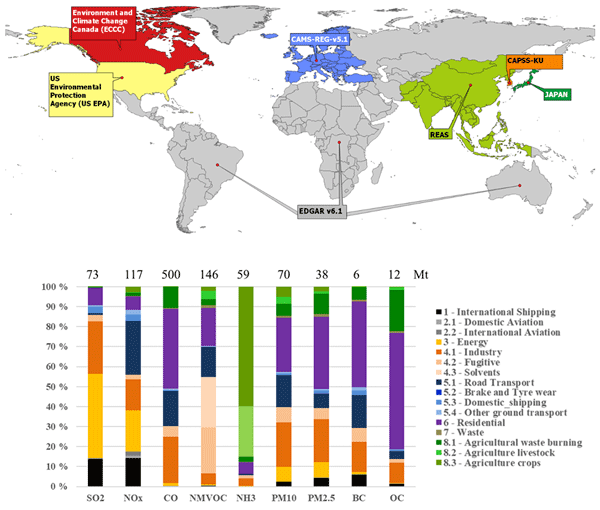
Monica Crippa, Diego Guizzardi, Tim Butler, Terry Keating, Rosa Wu, Jacek Kaminski, Jeroen Kuenen, Junichi Kurokawa, Satoru Chatani, Tazuko Morikawa, George Pouliot, Jacinthe Racine, Michael D. Moran, Zbigniew Klimont, Patrick M. Manseau, Rabab Mashayekhi, Barron H. Henderson, Steven J. Smith, Harrison Suchyta, Marilena Muntean, Efisio Solazzo, Manjola Banja, Edwin Schaaf, Federico Pagani, Jung-Hun Woo, Jinseok Kim, Fabio Monforti-Ferrario, Enrico Pisoni, Junhua Zhang, David Niemi, Mourad Sassi, Tabish Ansari, and Kristen Foley
Earth Syst. Sci. Data, 15, 2667–2694, https://doi.org/10.5194/essd-15-2667-2023, https://doi.org/10.5194/essd-15-2667-2023, 2023
Short summary
Short summary
This study responds to the global and regional atmospheric modelling community's need for a mosaic of air pollutant emissions with global coverage, long time series, spatially distributed data at a high time resolution, and a high sectoral resolution in order to enhance the understanding of transboundary air pollution. The mosaic approach to integrating official regional emission inventories with a global inventory based on a consistent methodology ensures policy-relevant results.
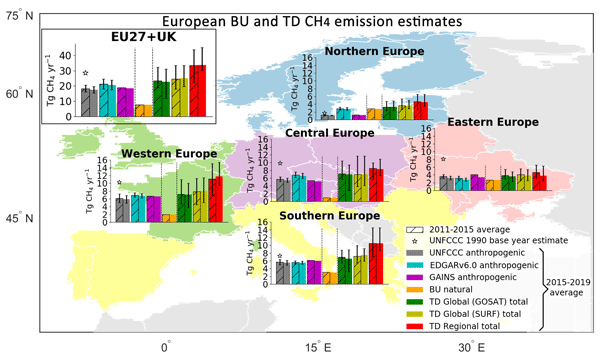
Ana Maria Roxana Petrescu, Chunjing Qiu, Matthew J. McGrath, Philippe Peylin, Glen P. Peters, Philippe Ciais, Rona L. Thompson, Aki Tsuruta, Dominik Brunner, Matthias Kuhnert, Bradley Matthews, Paul I. Palmer, Oksana Tarasova, Pierre Regnier, Ronny Lauerwald, David Bastviken, Lena Höglund-Isaksson, Wilfried Winiwarter, Giuseppe Etiope, Tuula Aalto, Gianpaolo Balsamo, Vladislav Bastrikov, Antoine Berchet, Patrick Brockmann, Giancarlo Ciotoli, Giulia Conchedda, Monica Crippa, Frank Dentener, Christine D. Groot Zwaaftink, Diego Guizzardi, Dirk Günther, Jean-Matthieu Haussaire, Sander Houweling, Greet Janssens-Maenhout, Massaer Kouyate, Adrian Leip, Antti Leppänen, Emanuele Lugato, Manon Maisonnier, Alistair J. Manning, Tiina Markkanen, Joe McNorton, Marilena Muntean, Gabriel D. Oreggioni, Prabir K. Patra, Lucia Perugini, Isabelle Pison, Maarit T. Raivonen, Marielle Saunois, Arjo J. Segers, Pete Smith, Efisio Solazzo, Hanqin Tian, Francesco N. Tubiello, Timo Vesala, Guido R. van der Werf, Chris Wilson, and Sönke Zaehle
Earth Syst. Sci. Data, 15, 1197–1268, https://doi.org/10.5194/essd-15-1197-2023, https://doi.org/10.5194/essd-15-1197-2023, 2023
Short summary
Short summary
This study updates the state-of-the-art scientific overview of CH4 and N2O emissions in the EU27 and UK in Petrescu et al. (2021a). Yearly updates are needed to improve the different respective approaches and to inform on the development of formal verification systems. It integrates the most recent emission inventories, process-based model and regional/global inversions, comparing them with UNFCCC national GHG inventories, in support to policy to facilitate real-time verification procedures.
Auke M. van der Woude, Remco de Kok, Naomi Smith, Ingrid T. Luijkx, Santiago Botía, Ute Karstens, Linda M. J. Kooijmans, Gerbrand Koren, Harro A. J. Meijer, Gert-Jan Steeneveld, Ida Storm, Ingrid Super, Hubertus A. Scheeren, Alex Vermeulen, and Wouter Peters
Earth Syst. Sci. Data, 15, 579–605, https://doi.org/10.5194/essd-15-579-2023, https://doi.org/10.5194/essd-15-579-2023, 2023
Short summary
Short summary
To monitor the progress towards the CO2 emission goals set out in the Paris Agreement, the European Union requires an independent validation of emitted CO2. For this validation, atmospheric measurements of CO2 can be used, together with first-guess estimates of CO2 emissions and uptake. To quickly inform end users, it is imperative that this happens in near real-time. To aid these efforts, we create estimates of European CO2 exchange at high resolution in near real time.
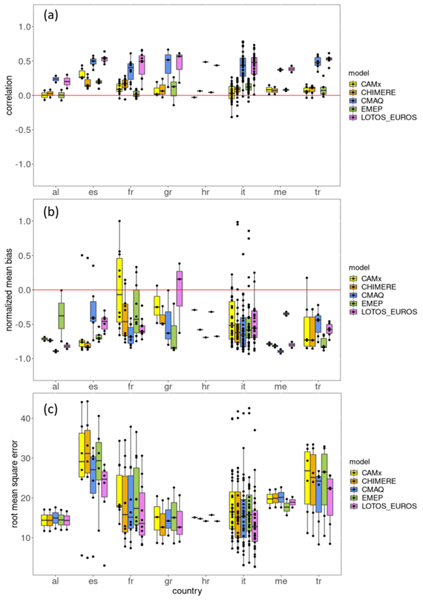
Lea Fink, Matthias Karl, Volker Matthias, Sonia Oppo, Richard Kranenburg, Jeroen Kuenen, Jana Moldanova, Sara Jutterström, Jukka-Pekka Jalkanen, and Elisa Majamäki
Atmos. Chem. Phys., 23, 1825–1862, https://doi.org/10.5194/acp-23-1825-2023, https://doi.org/10.5194/acp-23-1825-2023, 2023
Short summary
Short summary
Potential ship impact on air pollution in the Mediterranean Sea was simulated with five chemistry transport models. An evaluation of the results for NO2 and O3 air concentrations and dry deposition is presented. Emission data, modeled year and domain were the same. Model run outputs were compared to measurements from background stations. We focused on comparing model outputs regarding the concentration of regulatory pollutants and the relative ship impact on total air pollution concentrations.
Jianbing Jin, Bas Henzing, and Arjo Segers
Atmos. Chem. Phys., 23, 1641–1660, https://doi.org/10.5194/acp-23-1641-2023, https://doi.org/10.5194/acp-23-1641-2023, 2023
Short summary
Short summary
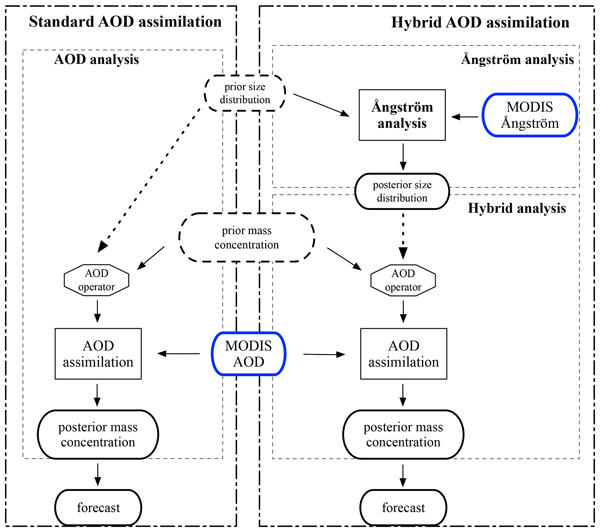
Aerosol models and satellite retrieval algorithms rely on different aerosol size assumptions. In practice, differences between simulations and observations do not always reflect the difference in aerosol amount. To avoid inconsistencies, we designed a hybrid assimilation approach. Different from a standard aerosol optical depth (AOD) assimilation that directly assimilates AODs, the hybrid one estimates aerosol size parameters by assimilating Ängström observations before assimilating the AODs.
Li Fang, Jianbing Jin, Arjo Segers, Hai Xiang Lin, Mijie Pang, Cong Xiao, Tuo Deng, and Hong Liao
Geosci. Model Dev., 15, 7791–7807, https://doi.org/10.5194/gmd-15-7791-2022, https://doi.org/10.5194/gmd-15-7791-2022, 2022
Short summary
Short summary
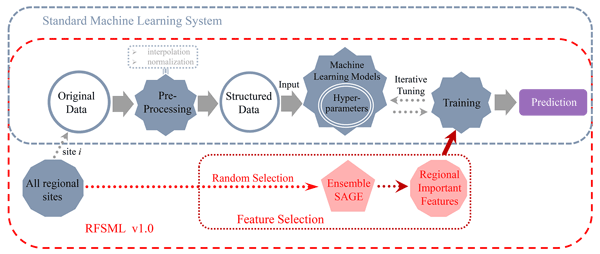
This study proposes a regional feature selection-based machine learning system to predict short-term air quality in China. The system has a tool that can figure out the importance of input data for better prediction. It provides large-scale air quality prediction that exhibits improved interpretability, fewer training costs, and higher accuracy compared with a standard machine learning system. It can act as an early warning for citizens and reduce exposure to PM2.5 and other air pollutants.
Peter Bergamaschi, Arjo Segers, Dominik Brunner, Jean-Matthieu Haussaire, Stephan Henne, Michel Ramonet, Tim Arnold, Tobias Biermann, Huilin Chen, Sebastien Conil, Marc Delmotte, Grant Forster, Arnoud Frumau, Dagmar Kubistin, Xin Lan, Markus Leuenberger, Matthias Lindauer, Morgan Lopez, Giovanni Manca, Jennifer Müller-Williams, Simon O'Doherty, Bert Scheeren, Martin Steinbacher, Pamela Trisolino, Gabriela Vítková, and Camille Yver Kwok
Atmos. Chem. Phys., 22, 13243–13268, https://doi.org/10.5194/acp-22-13243-2022, https://doi.org/10.5194/acp-22-13243-2022, 2022
Short summary
Short summary
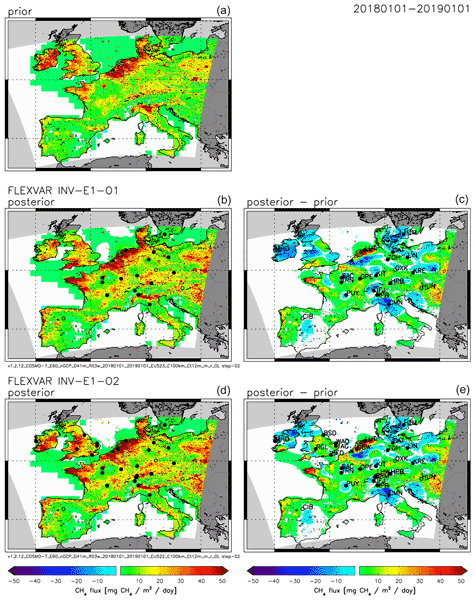
We present a novel high-resolution inverse modelling system, "FLEXVAR", and its application for the inverse modelling of European CH4 emissions in 2018. The new system combines a high spatial resolution of 7 km x 7 km with a variational data assimilation technique, which allows CH4 emissions to be optimized from individual model grid cells. The high resolution allows the observations to be better reproduced, while the derived emissions show overall good consistency with two existing models.
Fabian Maier, Christoph Gerbig, Ingeborg Levin, Ingrid Super, Julia Marshall, and Samuel Hammer
Geosci. Model Dev., 15, 5391–5406, https://doi.org/10.5194/gmd-15-5391-2022, https://doi.org/10.5194/gmd-15-5391-2022, 2022
Short summary
Short summary
We show that the default representation of point source emissions in WRF–STILT leads to large overestimations when modelling fossil fuel CO2 concentrations for a 30 m high observation site during stable atmospheric conditions. We therefore introduce a novel point source modelling approach in WRF-STILT that takes into account their effective emission heights and results in a much better agreement with observations.
Philippe Thunis, Alain Clappier, Enrico Pisoni, Bertrand Bessagnet, Jeroen Kuenen, Marc Guevara, and Susana Lopez-Aparicio
Geosci. Model Dev., 15, 5271–5286, https://doi.org/10.5194/gmd-15-5271-2022, https://doi.org/10.5194/gmd-15-5271-2022, 2022
Short summary
Short summary
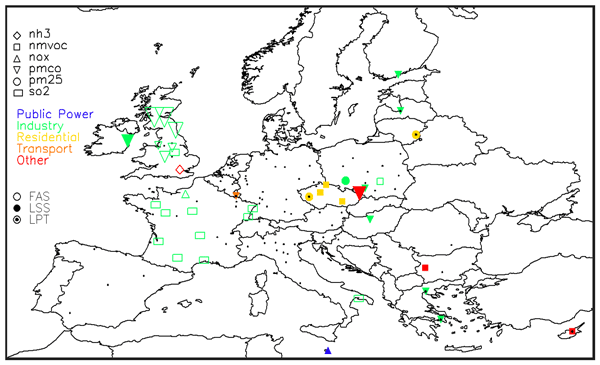
In this work, we propose a screening method to improve the quality of emission inventories, which are responsible for large uncertainties in air-quality modeling. The first step of screening consists of keeping only emission contributions that are relevant enough. In a second step, the method identifies large differences that provide evidence of methodological divergence or errors. We used the approach to compare two versions of the CAMS-REG European-scale inventory over 150 European cities.
Sudhanshu Pandey, Sander Houweling, and Arjo Segers
Geosci. Model Dev., 15, 4555–4567, https://doi.org/10.5194/gmd-15-4555-2022, https://doi.org/10.5194/gmd-15-4555-2022, 2022
Short summary
Short summary
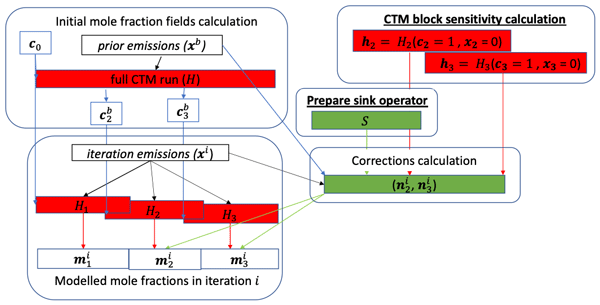
Inversions are used to calculate methane emissions using atmospheric mole-fraction measurements. Multidecadal inversions are needed to extract information from the long measurement records of methane. However, multidecadal inversion computations can take months to finish. Here, we demonstrate an order of magnitude improvement in wall clock time for an iterative multidecadal inversion by physical parallelization of chemical transport model.
Marc Guevara, Hervé Petetin, Oriol Jorba, Hugo Denier van der Gon, Jeroen Kuenen, Ingrid Super, Jukka-Pekka Jalkanen, Elisa Majamäki, Lasse Johansson, Vincent-Henri Peuch, and Carlos Pérez García-Pando
Earth Syst. Sci. Data, 14, 2521–2552, https://doi.org/10.5194/essd-14-2521-2022, https://doi.org/10.5194/essd-14-2521-2022, 2022
Short summary
Short summary
To control the spread of the COVID-19 disease, European governments implemented mobility restriction measures that resulted in an unprecedented drop in anthropogenic emissions. This work presents a dataset of emission adjustment factors that allows quantifying changes in 2020 European primary emissions per country and pollutant sector at the daily scale. The resulting dataset can be used as input in modelling studies aiming at quantifying the impact of COVID-19 on air quality levels.
Jianbing Jin, Mijie Pang, Arjo Segers, Wei Han, Li Fang, Baojie Li, Haochuan Feng, Hai Xiang Lin, and Hong Liao
Atmos. Chem. Phys., 22, 6393–6410, https://doi.org/10.5194/acp-22-6393-2022, https://doi.org/10.5194/acp-22-6393-2022, 2022
Short summary
Short summary
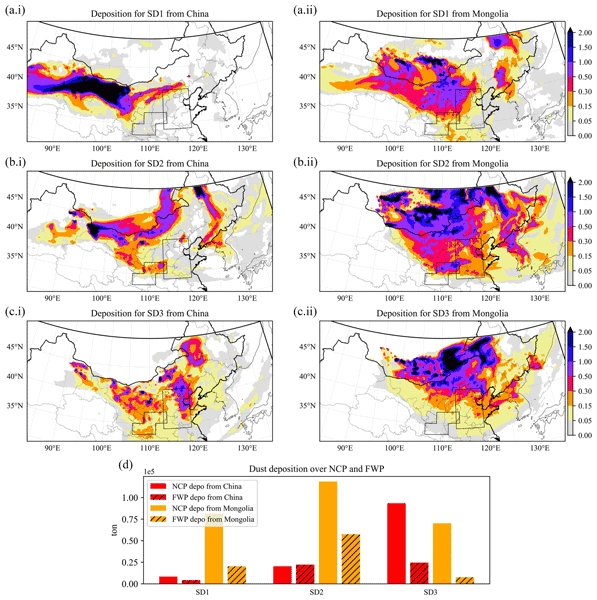
Super dust storms reappeared in East Asia last spring after being absent for one and a half decades. Accurate simulation of such super sandstorms is valuable, but challenging due to imperfect emissions. In this study, the emissions of these dust storms are estimated by assimilating multiple observations. The results reveal that emissions originated from both China and Mongolia. However, for northern China, long-distance transport from Mongolia contributes much more dust than Chinese deserts.
Jeroen Kuenen, Stijn Dellaert, Antoon Visschedijk, Jukka-Pekka Jalkanen, Ingrid Super, and Hugo Denier van der Gon
Earth Syst. Sci. Data, 14, 491–515, https://doi.org/10.5194/essd-14-491-2022, https://doi.org/10.5194/essd-14-491-2022, 2022
Short summary
Short summary
This paper presents an 18-year time series for anthropogenic emissions for the main air pollutants in Europe, distinguishing 15 main source categories. It provides a complete overview of emissions to air and is designed to support air quality modelling. The data build where possible on official country total emissions used in the policy processes, but where necessary alternative data were used. The emission data are spatially distributed at high resolution (~ 6 km x 6 km) in a consistent way.
Shelley van der Graaf, Enrico Dammers, Arjo Segers, Richard Kranenburg, Martijn Schaap, Mark W. Shephard, and Jan Willem Erisman
Atmos. Chem. Phys., 22, 951–972, https://doi.org/10.5194/acp-22-951-2022, https://doi.org/10.5194/acp-22-951-2022, 2022
Short summary
Short summary
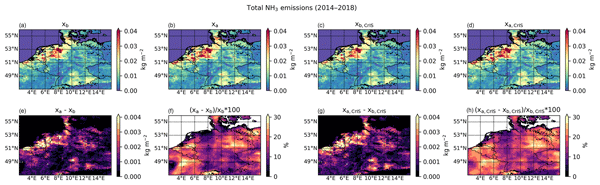
CrIS NH3 satellite observations are assimilated into the LOTOS-EUROS model using two different methods. In the first method the data are used to fit spatially varying NH3 emission time factors. In the second method a local ensemble transform Kalman filter is used. Compared to in situ observations, combining both methods led to the most significant improvements in the modeled concentrations and deposition, illustrating the usefulness of CrIS NH3 to improve the spatiotemporal distribution of NH3.
Margarita Choulga, Greet Janssens-Maenhout, Ingrid Super, Efisio Solazzo, Anna Agusti-Panareda, Gianpaolo Balsamo, Nicolas Bousserez, Monica Crippa, Hugo Denier van der Gon, Richard Engelen, Diego Guizzardi, Jeroen Kuenen, Joe McNorton, Gabriel Oreggioni, and Antoon Visschedijk
Earth Syst. Sci. Data, 13, 5311–5335, https://doi.org/10.5194/essd-13-5311-2021, https://doi.org/10.5194/essd-13-5311-2021, 2021
Short summary
Short summary
People worry that growing man-made carbon dioxide (CO2) concentrations lead to climate change. Global models, use of observations, and datasets can help us better understand behaviour of CO2. Here a tool to compute uncertainty in man-made CO2 sources per country per year and month is presented. An example of all sources separated into seven groups (intensive and average energy, industry, humans, ground and air transport, others) is presented. Results will be used to predict CO2 concentrations.
Vilma Kangasaho, Aki Tsuruta, Leif Backman, Pyry Mäkinen, Sander Houweling, Arjo Segers, Maarten Krol, Ed Dlugokencky, Sylvia Michel, James White, and Tuula Aalto
Atmos. Chem. Phys. Discuss., https://doi.org/10.5194/acp-2021-843, https://doi.org/10.5194/acp-2021-843, 2021
Revised manuscript not accepted
Short summary
Short summary
Understanding the composition of carbon isotopes can help to better understand the changes in methane budgets. This study investigates how methane sources affect the seasonal cycle of the methane carbon-13 isotope during 2000–2012 using an atmospheric transport model. We found that emissions from both anthropogenic and natural sources contribute. The findings raise a need to revise the magnitudes, proportion, and seasonal cycles of anthropogenic sources and northern wetland emissions.
Cited articles
Albarus, I., Fleischmann, G., Aigner, P., Ciais, P., Denier van der Gon, H., Dröge, R., Lian, J., Narvaez Rincon, M. A., Utard, H., and Lauvaux, T.: From political pledges to quantitative mapping of climate mitigation plans: Comparison of two European cities, Carbon Balance Manage., 18, 18, https://doi.org/10.1186/s13021-023-00236-y, 2023.
Andela, N., Kaiser, J. W., Heil, A., van Leeuwen, T. T., Wooster, M. J., van der Werf, G. R., Remy, S., and Schultz, M. G.: Assessment of the Global Fire Assimilation System (GFASv1), ECMWF Technical Memorandum No. 702, https://www.ecmwf.int/sites/default/files/elibrary/2013/7707-assessment-global-fire-assimilation-system-gfasv1.pdf, last access: 5 November 2025.
Andres, R. J., Boden, T. A., and Higdon, D. M.: Gridded uncertainty in fossil fuel carbon dioxide emission maps, a CDIAC example, Atmos. Chem. Phys., 16, 14979–14995, https://doi.org/10.5194/acp-16-14979-2016, 2016.
Archila Bustos, M. F., Hall, O., Niedomysl, T., and Ernstson, U.: A pixel level evaluation of five multitemporal global gridded population datasets: a case study in Sweden, 1990–2015, Popul. Environ., 42, 255–277, https://doi.org/10.1007/s11111-020-00360-8, 2020.
Choulga, M., Janssens-Maenhout, G., Super, I., Solazzo, E., Agusti-Panareda, A., Balsamo, G., Bousserez, N., Crippa, M., Denier van der Gon, H., Engelen, R., Guizzardi, D., Kuenen, J., McNorton, J., Oreggioni, G., and Visschedijk, A.: Global anthropogenic CO2 emissions and uncertainties as a prior for Earth system modelling and data assimilation, Earth Syst. Sci. Data, 13, 5311–5335, https://doi.org/10.5194/essd-13-5311-2021, 2021.
Copernicus: CORINE Land Cover, https://land.copernicus.eu/en/products/corine-land-cover?tab=technical_summary (last access: 23 July 2024), 2024.
Crippa, M., Guizzardi, D., Muntean, M., Schaaf, E., Dentener, F., van Aardenne, J. A., Monni, S., Doering, U., Olivier, J. G. J., Pagliari, V., and Janssens-Maenhout, G.: Gridded emissions of air pollutants for the period 1970–2012 within EDGAR v4.3.2, Earth Syst. Sci. Data, 10, 1987–2013, https://doi.org/10.5194/essd-10-1987-2018, 2018.
Doumbia, T., Granier, C., Elguindi, N., Bouarar, I., Darras, S., Brasseur, G., Gaubert, B., Liu, Y., Shi, X., Stavrakou, T., Tilmes, S., Lacey, F., Deroubaix, A., and Wang, T.: Changes in global air pollutant emissions during the COVID-19 pandemic: a dataset for atmospheric modeling, Earth Syst. Sci. Data, 13, 4191–4206, https://doi.org/10.5194/essd-13-4191-2021, 2021.
Eggleston, H. S., Buendia, L., Miwa, K., Ngara, T., and Tanabe, K. (Eds.): 2006 IPCC Guidelines for National Greenhouse Gas Inventories Prepared by the National Greenhouse Gas Inventories Programme, IGES, Hayama, Japan, ISBN 4-88788-032-4, 2006.
EMEP: Data reported by Parties under LRTAP Convention, https://www.ceip.at/webdab-emission-database/officially-reported-activity-data (last access: 1 August 2023), 2023.
European Commission: Joint Research Centre, Atmospheric monitoring and inverse modelling for verification of greenhouse gas inventories, Publications Office, https://data.europa.eu/doi/10.2760/759928 (last access: 5 November 2025), 2018.
European Environment Agency: EMEP/EEA air pollutant emission inventory guidebook 2019: Technical guidance to prepare national emission inventories, European Environment Agency, Copenhagen, Denmark, https://www.eea.europa.eu/en/analysis/publications/emep-eea-guidebook-2019 (last access: 2 December 2024), 2019.
Gao, W., Balmer, M., and Miller, E. J.: Comparison of MATSim and EMME/2 on Greater Toronto and Hamilton Area Network, Canada, Transp. Res. Rec., 2197, 118–128, https://doi.org/10.3141/2197-14, 2010.
Gately, C. K. and Hutyra, L. R.: Large uncertainties in urban-scale carbon emissions, J. Geophys. Res.-Atmos., 122, 242–260, https://doi.org/10.1002/2017JD027359, 2017.
German, R., Matthews, B., and Ruyssenaars, P.: Inverse modelling as a tool to support national greenhouse gas monitoring in Europe, Eionet Report ETC/CME 4/2021, European Topic Centre on Climate change mitigation and energy, Mol, Belgium, https://www.eionet.europa.eu/etcs/etc-cme/products/etc-cme-reports/etc-cme-report-4-2021-inverse-modelling-as-a-tool-to-support-national-greenhouse-gas-monitoring-in-europe (last access: 5 November 2025), 2021.
Grigoriadis, A., Mamarikas, S., Ioannidis, I., Majamäki, E., Jalkanen, J.-P., and Ntziachristos, L.: Development of exhaust emission factors for vessels: A review and meta-analysis of available data, Atmos. Environ. X, 12, 100142, https://doi.org/10.1016/j.aeaoa.2021.100142, 2021.
Grythe, H., Lopez-Aparicio, S., Vogt, M., Vo Thanh, D., Hak, C., Halse, A. K., Hamer, P., and Santos, G. S.: The MetVed model: development and evaluation of emissions from residential wood combustion at high spatio-temporal resolution in Norway, Atmos. Chem. Phys., 19, 10217–10237, https://doi.org/10.5194/acp-19-10217-2019, 2019.
Gurney, K. R., Liang, J., Patarasuk, R., Song, Y., Huang, J., and Roest, G.: The Vulcan Version 3.0 High‐Resolution Fossil Fuel CO2 Emissions for the United States, J. Geophys. Res.-Atmos., 125, 19, https://doi.org/10.1029/2020JD032974, 2020.
Hogue, S., Marland, E., Andres, R. J., Marland, G., and Woodard, D.: Uncertainty in gridded CO2 emissions estimates, Earth's Future, 4, 225–239, https://doi.org/10.1002/2015EF000343, 2016.
Hutchins, M. G., Colby, J. D., Marland, G., and Marland, E.: A comparison of five high-resolution spatially-explicit, fossil-fuel, carbon dioxide emission inventories for the United States, Mitig. Adapt. Strat. Global Change, 22, 947–972, https://doi.org/10.1007/s11027-016-9709-9, 2017.
Jalkanen, J.-P., Johansson, L., Kukkonen, J., Brink, A., Kalli, J., and Stipa, T.: Extension of an assessment model of ship traffic exhaust emissions for particulate matter and carbon monoxide, Atmos. Chem. Phys., 12, 2641–2659, https://doi.org/10.5194/acp-12-2641-2012, 2012.
Johansson, L., Jalkanen, J.-P., and Kukkonen, J.: Global assessment of shipping emissions in 2015 on a high spatial and temporal resolution, Atmos. Environ., 167, 403–415, https://doi.org/10.1016/j.atmosenv.2017.08.042, 2017.
Keita, S., Liousse, C., Assamoi, E.-M., Doumbia, T., N'Datchoh, E. T., Gnamien, S., Elguindi, N., Granier, C., and Yoboué, V.: African Anthropogenic Emissions Inventory for Gases and Particles from 1990 to 2015, Earth Syst. Sci. Data, 13, 3691–3705, https://doi.org/10.5194/essd-13-3691-2021, 2021.
Kuenen, J., Dellaert, S., Visschedijk, A., Jalkanen, J.-P., Super, I., and Denier Van Der Gon, H.: CAMS-REG-v4: a state-of-the-art high-resolution European emission inventory for air quality modelling, Earth Syst. Sci. Data, 14, 491–515, https://doi.org/10.5194/essd-14-491-2022, 2022.
Kuipers, J. B.: Quaternions and Rotation Sequences: A Primer with Applications to Orbits, Aerospace, and Virtual Reality, Princeton University Press, Princeton, NJ, 371 pp., ISBN 9780691102986, 1999.
Kunik, L., Mallia, D. V., Gurney, K. R., Mendoza, D. L., Oda, T., and Lin, J. C.: Bayesian inverse estimation of urban CO2 emissions: Results from a synthetic data simulation over Salt Lake City, UT, Elem. Sci. Anth., 7, 36, https://doi.org/10.1525/elementa.375, 2019.
Kurokawa, J. and Ohara, T.: Long-Term Historical Trends in Air Pollutant Emissions in Asia: Regional Emission Inventory in ASia (REAS) Version 3, Atmos. Chem. Phys., 20, 12761–12793, https://doi.org/10.5194/acp-20-12761-2020, 2020.
Lauvaux, T., Miles, N. L., Deng, A., Richardson, S. J., Cambaliza, M. O., Davis, K. J., Gaudet, B., Gurney, K. R., Huang, J., O'Keefe, D., Song, Y., Karion, A., Oda, T., Patarasuk, R., Razlivanov, I., Sarmiento, D., Shepson, P., Sweeney, C., Turnbull, J., and Wu, K.: High-resolution atmospheric inversion of urban CO2 emissions during the dormant season of the Indianapolis Flux Experiment (INFLUX), J. Geophys. Res.-Atmos., 121, 5213–5236, https://doi.org/10.1002/2015JD024473, 2016.
Lorente, A., Boersma, K. F., Eskes, H. J., Veefkind, J. P., van Geffen, J. H. G. M., de Zeeuw, M. B., Denier van der Gon, H. A. C., Beirle, S., and Krol, M. C.: Quantification of nitrogen oxides emissions from build-up of pollution over Paris with TROPOMI, Sci. Rep., 9, 20033, https://doi.org/10.1038/s41598-019-56428-5, 2019.
McDuffie, E. E., Smith, S. J., O'Rourke, P., Tibrewal, K., Venkataraman, C., Marais, E. A., Zheng, B., Crippa, M., Brauer, M., and Martin, R. V.: A global anthropogenic emission inventory of atmospheric pollutants from sector- and fuel-specific sources (1970–2017): an application of the Community Emissions Data System (CEDS), Earth Syst. Sci. Data, 12, 3413–3442, https://doi.org/10.5194/essd-12-3413-2020, 2020.
Musollari, S., Pseftogkas, A., Koukouli, M.-E., Manders, A., Segers, A., Garane, K., and Balis, D.: The Spatiotemporal Variability of Ozone and Nitrogen Dioxide in the Po Valley Using In Situ Measurements and Model Simulations, Remote Sens., 17, 1794, https://doi.org/10.3390/rs17101794, 2025.
Oda, T., Bun, R., Kinakh, V., Topylko, P., Halushchak, M., Marland, G., Lauvaux, T., Jonas, M., Maksyutov, S., Nahorski, Z., Lesiv, M., Danylo, O., and Joanna, H.-P.: Errors and uncertainties in a gridded carbon dioxide emissions inventory, Mitig. Adapt. Strateg. Global Change, 24, 1007–1050, https://doi.org/10.1007/s11027-019-09877-2, 2019.
Oliveira, K., Guevara, M., Jorba, O., Petetin, H., Bowdalo, D., Tena, C., Montané Pinto, G., López, F., and Pérez García-Pando, C.: On the uncertainty of anthropogenic aromatic volatile organic compound emissions: model evaluation and sensitivity analysis, Atmos. Chem. Phys., 24, 7137–7177, https://doi.org/10.5194/acp-24-7137-2024, 2024.
Pillai, D., Buchwitz, M., Gerbig, C., Koch, T., Reuter, M., Bovensmann, H., Marshall, J., and Burrows, J. P.: Tracking city CO2 emissions from space using a high-resolution inverse modelling approach: a case study for Berlin, Germany, Atmos. Chem. Phys., 16, 9591–9610, https://doi.org/10.5194/acp-16-9591-2016, 2016.
Press, W. H., Teukolsky, S. A., Vetterling, W. T., and Flannery, B. P.: Numerical Recipes in C, in: The Art of Scientific Computing, 2nd Edn., Cambridge University Press, New York, NY, ISBN 0-521-43064-X, 1992.
Raney, B., Cetin, N., Völlmy, A., Vrtic, M., Axhausen, K., and Nagel, K.: An agent-based microsimulation model of Swiss travel: First results, Netw. Spat. Econ., 3, 23–41, https://doi.org/10.1023/A:1022096916806, 2003.
Robinson, T. P., Wint, G. R. W., Conchedda, G., Van Boeckel, T. P., Ercoli, V., Palamara, E., Cinardi, G., D'Aietti, L., Hay, S. I., and Gilbert, M.: Mapping the Global Distribution of Livestock, PLoS ONE, 9, e96084, https://doi.org/10.1371/journal.pone.0096084, 2014.
Scarpelli, T. R., Palmer, P. I., Lunt, M., Super, I., and Droste, A.: Verifying national inventory-based combustion emissions of CO2 across the UK and mainland Europe using satellite observations of atmospheric CO and CO2, Atmos. Chem. Phys., 24, 10773–10791, https://doi.org/10.5194/acp-24-10773-2024, 2024.
Siouti, E., Skyllakou, K., Patoulias, D., Athanasopoulou, E., Mihalopoulos, N., Kuenen, J., and Pandis, S. N.: High resolution source-resolved PM2.5 spatial distribution and human exposure in a large urban area, Atmos. Environ., 355, 121277, https://doi.org/10.1016/j.atmosenv.2025.121277, 2025.
Super, I., Dellaert, S. N. C., Visschedijk, A. J. H., and Van Der Gon, H. A. C. D.: Uncertainty analysis of a European high-resolution emission inventory of CO2 and CO to support inverse modelling and network design, Atmos. Chem. Phys., 20, 1795–1816, https://doi.org/10.5194/acp-20-1795-2020, 2020.
Super, I., Scarpelli, T., Droste, A., and Palmer, P. I.: Improved definition of prior uncertainties in CO2 and CO fossil fuel fluxes and its impact on multi-species inversion with GEOS-Chem (v12.5), Geosci. Model Dev., 17, 7263–7284, https://doi.org/10.5194/gmd-17-7263-2024, 2024.
Super, I., Mathas, D., Jonkheid, B., Segers, A., and Kuenen, K.: CAMS-REG-UNC-v8.1: A detailed uncertainty product for the gridded CAMS-REG-v8.1 emission inventory (1.0), Zenodo [data set], https://doi.org/10.5281/zenodo.18400810, 2026.
Tenkanen, M. K., Tsuruta, A., Tyystjärvi, V., Törmä, M., Autio, I., Haakana, M., Tuomainen, T., Leppänen, A., Markkanen, T., Raivonen, M., Niinistö, S., Arslan, A. N., and Aalto, T.: Using Atmospheric Inverse Modelling of Methane Budgets with Copernicus Land Water and Wetness Data to Detect Land Use-Related Emissions, Remote Sens., 16, 124, https://doi.org/10.3390/rs16010124, 2024.
Tokaya, J. P., Kranenburg, R., Timmermans, R. M. A., Coenen, P. W. H. G., Kelly, B., Hullegie, J. S., Megaritis, T., and Valastro, G.: The impact of shipping on the air quality in European port cities with a detailed analysis for Rotterdam, Atmos. Environ. X, 23, 100278, https://doi.org/10.1016/j.aeaoa.2024.100278, 2024.
UNFCCC: National Inventory Submissions 2020, https://unfccc.int/ghg-inventories-annex-i-parties/2020 (last access: 31 January 2024), 2024.
Van Brummelen, G.: Heavenly Mathematics: The Forgotten Art of Spherical Trigonometry, Princeton University Press, Princeton, NJ, 216 pp., ISBN 9780691175997, 2017.
Van der A, R. J., Ding, J., and Eskes, H.: Monitoring European anthropogenic NOx emissions from space, Atmos. Chem. Phys., 24, 7523–7534, https://doi.org/10.5194/acp-24-7523-2024, 2024.
Wang, Z., Couvidat, F., and Sartelet, K.: Response of biogenic secondary organic aerosol formation to anthropogenic NOx emission mitigation, Sci. Total Environ., 927, 172142, https://doi.org/10.1016/j.scitotenv.2024.172142, 2024.
Short summary
We present an emission uncertainty estimate to support atmospheric monitoring of greenhouse gas and air pollutant emissions using observations. We find significant uncertainties in country-total emissions and in the spatial distribution of emissions, largely dependent on the pollutant considered. A dataset is provided that lists emission uncertainties for a state-of-the-art European emission inventory.
We present an emission uncertainty estimate to support atmospheric monitoring of greenhouse gas...


Altmetrics
Final-revised paper
Preprint