Articles | Volume 18, issue 7
https://doi.org/10.5194/essd-18-5303-2026
© Author(s) 2026. This work is distributed under
the Creative Commons Attribution 4.0 License.
the Creative Commons Attribution 4.0 License.
https://doi.org/10.5194/essd-18-5303-2026
© Author(s) 2026. This work is distributed under
the Creative Commons Attribution 4.0 License.
the Creative Commons Attribution 4.0 License.
Data description article
| 
22 Jul 2026
Data description article |
| 22 Jul 2026
| 22 Jul 2026
Decadal ocean observations in the Northwestern Mediterranean: insights from the MOOSE-GE cruises
Laurent Coppola
CORRESPONDING AUTHOR

Sorbonne Université, CNRS, OSU STAMAR, UAR2017, 4 place Jussieu, 75252 Paris CEDEX 05, France
Anthony Bosse
Aix Marseille Université, CNRS, IRD, Toulon Université, MIO, Marseille, France
Thibaut Wagener
Aix Marseille Université, CNRS, IRD, Toulon Université, MIO, Marseille, France
Dominique Lefevre
Aix Marseille Université, CNRS, IRD, Toulon Université, MIO, Marseille, France
Magali Lescot
Aix Marseille Université, CNRS, IRD, Toulon Université, MIO, Marseille, France
François Carlotti
Aix Marseille Université, CNRS, IRD, Toulon Université, MIO, Marseille, France
deceased, François Carlotti on 3 January 2026 and Pascal Conan on 5 August 2025
Fabien Lombard
Sorbonne Université, CNRS, Laboratoire d'Océanographie de Villefranche (LOV), 06230 Villefranche-sur-Mer, France
Lionel Guidi
Sorbonne Université, CNRS, Laboratoire d'Océanographie de Villefranche (LOV), 06230 Villefranche-sur-Mer, France
Fabrice Not
Sorbonne Université, CNRS, Station Biologique de Roscoff, AD2M, 29680 Roscoff, France
Xavier Durrieu de Madron
Université de Perpignan Via Domitia, CNRS, CEFREM, Perpignan, France
Pascal Conan
Sorbonne Université, CNRS, OSU STAMAR, UAR2017, 4 place Jussieu, 75252 Paris CEDEX 05, France
deceased, François Carlotti on 3 January 2026 and Pascal Conan on 5 August 2025
Mireille Pujo-Pay
Sorbonne Université, CNRS, Laboratoire d'Océanographie Microbienne (LOMIC), Observatoire Océanologique de Banyuls-sur-Mer, 66650 Banyuls-sur-Mer, France
Caroline Ulses
Université de Toulouse, CNES, CNRS, IRD, LEGOS, Toulouse, France
Samuel Somot
Météo-France, CNRS, Université de Toulouse, CNRM, Toulouse, France
Claude Estournel
Université de Toulouse, CNES, CNRS, IRD, LEGOS, Toulouse, France
Emilie Diamond Riquier
Sorbonne Université, CNRS, OSU STAMAR, UAR2017, 4 place Jussieu, 75252 Paris CEDEX 05, France
Céline Laus
Sorbonne Université, CNRS, OSU STAMAR, UAR2017, 4 place Jussieu, 75252 Paris CEDEX 05, France
Nathalie Leblond
Sorbonne Université, CNRS, Institut de la Mer de Villefranche (IMEV), 06230 Villefranche-sur-Mer, France
Matthieu Labaste
Sorbonne Université, CNRS, IRD, MNHN, LOCEAN, 75005 Paris, France
Patrice Bretel
Sorbonne Université, CNRS, IRD, MNHN, LOCEAN, 75005 Paris, France
Melek Golbol
Sorbonne Université, CNRS, IRD, MNHN, LOCEAN, 75005 Paris, France
Stephane Kunesch
Université de Perpignan Via Domitia, CNRS, CEFREM, Perpignan, France
Jennifer Sola
Université de Perpignan Via Domitia, CNRS, CEFREM, Perpignan, France
Laure Chirurgien
Aix Marseille Université, CNRS, IRD, Toulon Université, MIO, Marseille, France
Sandra Nunige
Aix Marseille Université, CNRS, IRD, Toulon Université, MIO, Marseille, France
Sarah Romac
Sorbonne Université, CNRS, Station Biologique de Roscoff, AD2M, 29680 Roscoff, France
Pierre Testor
Sorbonne Université, CNRS, IRD, MNHN, LOCEAN, 75005 Paris, France
Related authors
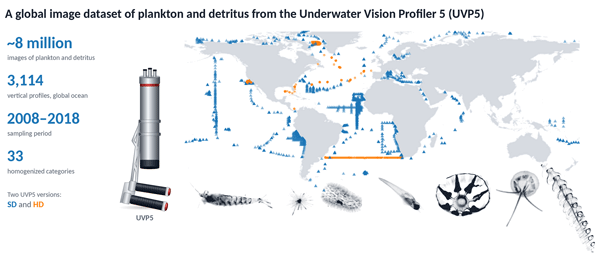
Ariadna C. Nocera, Lars Stemmann, Marcel Babin, Tristan Biard, Julie Coustenoble, François Carlotti, Laurent Coppola, Lucas Courchet, Laetitia Drago, Amanda Elineau, Lionel Guidi, Helena Hauss, Laëtitia Jalabert, Lee Karp-Boss, Rainer Kiko, Manon Laget, Fabien Lombard, Andrew McDonnell, Camille Merland, Solène Motreuil, Thelma Panaïotis, Marc Picheral, Andreas Rogge, Anya Waite, and Jean-Olivier Irisson
Earth Syst. Sci. Data, 18, 7345–7366, https://doi.org/10.5194/essd-18-7345-2026, https://doi.org/10.5194/essd-18-7345-2026, 2026
Short summary
Short summary
Plankton and sinking organic particles (detritus) shape how the ocean stores carbon, but they are difficult to observe worldwide. We present a global, openly available collection of about 8 million images captured by an underwater camera (UVP5) in 3114 profiles from 2008 to 2018 and sorted into 33 categories. Detritus made up 90 % of the objects and copepods were the most common plankton. The dataset can help train machine learning tools and improve ocean ecosystem and climate models.
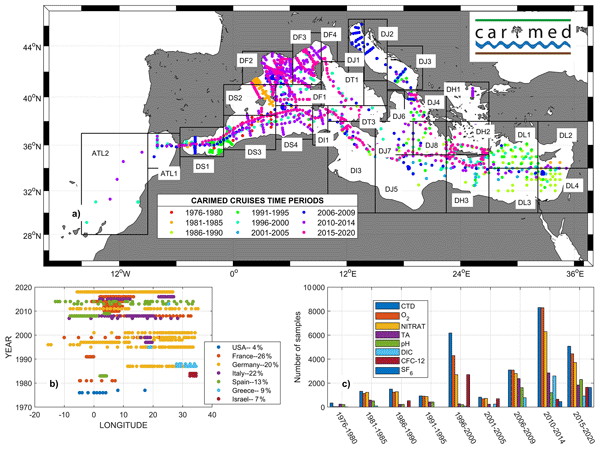
Marta Álvarez, Maribel I. García-Ibáñez, Nico Lange, Alex Kozyr, Antón Velo, Toste Tanhua, Giuseppe Civitarese, Carolina Cantoni, Malek Belgacem, Katrin Schroeder, Rubén Acerbi, Laurent Coppola, Thibaut Wagener, Noelia M. Fajar, Susana Flecha, Michele Giani, Louisa Giannoudi, Elisa F. Guallart, Abed El Rahman Hassoun, Emma I. Huertas, Valeria Ibello, Mehdia A. Keraghel, Férial Louanchi, Anna Luchetta, Fiz F. Pérez, Carsten Schirnick, Ekaterini Souvermezoglou, Lidia Urbini, Montserrat Vidal, and Patrizia Ziveri
Earth Syst. Sci. Data, 18, 4915–4941, https://doi.org/10.5194/essd-18-4915-2026, https://doi.org/10.5194/essd-18-4915-2026, 2026
Short summary
Short summary
CARIMED (CARbon, tracers, and ancillary data In the MEDiterranean Sea) is a high-quality, FAIR (Findability, Accessibility, Interoperability, and Reusability) dataset integrating hydrographic, biogeochemical, and transient tracer data from 46 research cruises (1976–2018) across the Mediterranean Sea. The data underwent rigorous, basin-adapted quality control to remove systematic biases, unifying four decades of fragmented data, delivering two complementary products: the aggregated original cruise data product and the bias-adjusted data synthesis product.
Manuel Vargas-Yáñez, Orens Pasqueron de Fommervault, Emanuela Clementi, Christian Ferrarin, Svitlana Liubertseva, Diego Álvarez-Berastegui, Baptiste Mourre, Salvatore Aronica, Rosa Balbin, Joaquín Ballabrera-Poy, Sana Ben Ismail, Nathaniel Benssousan, Ismail Bessa, Alicia Blanco, Anthony Bosse, Evi Bourma, François Bourrin, Carlo Brandini, Fulvio Capodici, Clara Casals-Baixas, Branko Cermelj, Giuseppe Ciraolo, Pascal Conan, Laurent Coppola, Lorenzo Corgnati, Joaquín del Río, Emilie Diamond Riquier, Lara Diaz-Barroso, Bartolomeo Doronzo, Xavier Durrieu de Madron, Milad Fakhri, Costantine Frangoulis, Claudia Fratianni, Emilio García-Ladona, Jesus García-Lafuente, M. Carmen García-Martínez, Joaquín Garrabou, Josep Gasol, Adam Gauci, Frédéric Gazeau, Gerard Gregory, Abed El Raman Hassoun, Jordi Isern-Fontanet, Dominique Lefevre, Nadia Lo Bue, Guiomar López, Pablo Lorente, Deny Malengros, Ramon Massana, Sinan Mavruk, Stefano Miserocchi, Behzad Mostajir, Laure Mousseau, Francina Moya, Antonio Novellino, Arianna Orasi, Emanuele Organelli, Vicent Ouisse, Tal Ozer, Begoña Pérez-Gómez, Susana Pérez-Rubio, Leonidas Perivoliotis, Georges Petihakis, Anne Petrenko, Sebastien Pinel, Xavier Pitarch, Angela Pomaro, Lucía Quirós-Collazos, Emma Reyes, Simone Sammartino, Anna Sánchez-Vidal, Katrin Schroeder, Stefano Taddei, Elena Tel, Pierre Testor, Marco Torri, Daniela Turk, Laura Ursella, Dimitris Velaoras, Francesca Vidussi, Ivica Vilivić, Enrico Zambiachi, D. Nikolaos Zarokanellos, George Zodiatis, and Vanessa Cardin
EGUsphere, https://doi.org/10.5194/egusphere-2026-2632, https://doi.org/10.5194/egusphere-2026-2632, 2026
Short summary
Short summary
This work compiles current marine observation capabilities in the Mediterranean Sea, making this information accessible to scientists, organizations, stakeholders, and environmental policymakers. It supports initiatives such as Copernicus Marine Service, EMODNet, the European Ocean Pact, and EU directives. It is intended as a living resource to be updated, identifying strengths and gaps in Mediterranean observation systems.
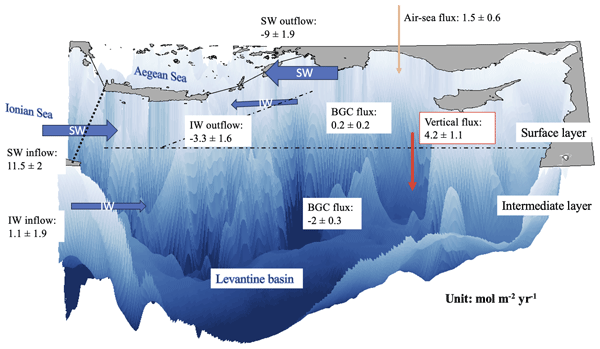
Joelle Habib, Caroline Ulses, Claude Estournel, Milad Fakhri, Patrick Marsaleix, Thierry Moutin, Dominique Lefevre, Mireille Pujo-Pay, Marine Fourrier, Laurent Coppola, Cathy Wimart-Rousseau, and Pascal Conan
Biogeosciences, 23, 2939–2958, https://doi.org/10.5194/bg-23-2939-2026, https://doi.org/10.5194/bg-23-2939-2026, 2026
Short summary
Short summary
The Levantine Basin in the eastern Mediterranean Sea is one of the most nutrient-poor marine regions on Earth. Using a detailed model and observations, we studied how oxygen changes from 2013 to 2020. We found that winter cooling draws oxygen into the sea and moves it to deeper waters, while warmer months release some back. Overall, the basin absorbs more oxygen than it releases, and winter heat loss and circulation patterns strongly control how oxygen is stored and transported.
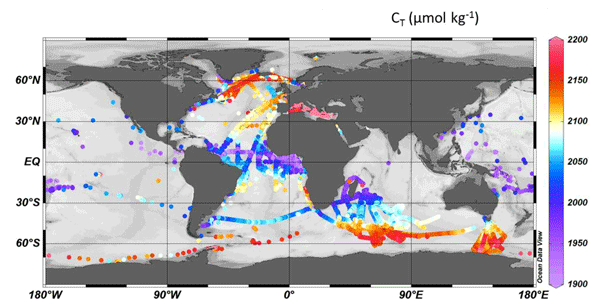
Nicolas Metzl, Jonathan Fin, Claire Lo Monaco, Claude Mignon, Samir Alliouane, Bruno Bombled, Jacqueline Boutin, Yann Bozec, Steeve Comeau, Pascal Conan, Laurent Coppola, Pascale Cuet, Eva Ferreira, Jean-Pierre Gattuso, Frédéric Gazeau, Catherine Goyet, Emilie Grossteffan, Bruno Lansard, Dominique Lefèvre, Nathalie Lefèvre, Coraline Leseurre, Sébastien Petton, Mireille Pujo-Pay, Christophe Rabouille, Gilles Reverdin, Céline Ridame, Peggy Rimmelin-Maury, Jean-François Ternon, Franck Touratier, Aline Tribollet, Thibaut Wagener, and Cathy Wimart-Rousseau
Earth Syst. Sci. Data, 17, 1075–1100, https://doi.org/10.5194/essd-17-1075-2025, https://doi.org/10.5194/essd-17-1075-2025, 2025
Short summary
Short summary
This work presents a new synthesis of 67 000 total alkalinity and total dissolved inorganic carbon observations obtained between 1993 and 2023 in the global ocean, coastal zones, and the Mediterranean Sea. We describe the data assemblage and associated quality control and discuss some potential uses of this dataset. The dataset is provided in a single format and includes the quality flag for each sample.
Riccardo Martellucci, Michele Giani, Elena Mauri, Laurent Coppola, Melf Paulsen, Marine Fourrier, Sara Pensieri, Vanessa Cardin, Carlotta Dentico, Roberto Bozzano, Carolina Cantoni, Anna Lucchetta, Alfredo Izquierdo, Miguel Bruno, and Ingunn Skjelvan
Earth Syst. Sci. Data, 16, 5333–5356, https://doi.org/10.5194/essd-16-5333-2024, https://doi.org/10.5194/essd-16-5333-2024, 2024
Short summary
Short summary
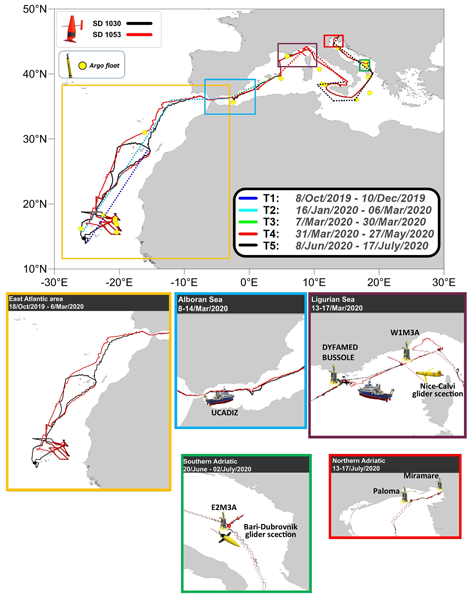
As part of the ATL2MED demonstration experiment, two autonomous surface vehicles undertook a 9-month mission from the northeastern Atlantic to the Adriatic Sea. Biofouling affected the measurement of variables such as conductivity and dissolved oxygen. COVID-19 limited the availability of discrete samples for validation. We present correction methods for salinity and dissolved oxygen. We use model products to correct salinity and apply the Argo floats in-air correction method for oxygen
Nico Lange, Björn Fiedler, Marta Álvarez, Alice Benoit-Cattin, Heather Benway, Pier Luigi Buttigieg, Laurent Coppola, Kim Currie, Susana Flecha, Dana S. Gerlach, Makio Honda, I. Emma Huertas, Siv K. Lauvset, Frank Muller-Karger, Arne Körtzinger, Kevin M. O'Brien, Sólveig R. Ólafsdóttir, Fernando C. Pacheco, Digna Rueda-Roa, Ingunn Skjelvan, Masahide Wakita, Angelicque White, and Toste Tanhua
Earth Syst. Sci. Data, 16, 1901–1931, https://doi.org/10.5194/essd-16-1901-2024, https://doi.org/10.5194/essd-16-1901-2024, 2024
Short summary
Short summary
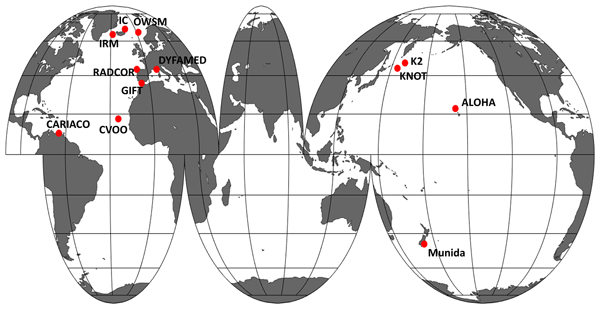
The Synthesis Product for Ocean Time Series (SPOTS) is a novel achievement expanding and complementing the biogeochemical data landscape by providing consistent and high-quality biogeochemical time-series data from 12 ship-based fixed time-series programs. SPOTS covers multiple unique marine environments and time-series ranges, including data from 1983 to 2021. All in all, it facilitates a variety of applications that benefit from the collective value of biogeochemical time-series observations.
Nicolas Metzl, Jonathan Fin, Claire Lo Monaco, Claude Mignon, Samir Alliouane, David Antoine, Guillaume Bourdin, Jacqueline Boutin, Yann Bozec, Pascal Conan, Laurent Coppola, Frédéric Diaz, Eric Douville, Xavier Durrieu de Madron, Jean-Pierre Gattuso, Frédéric Gazeau, Melek Golbol, Bruno Lansard, Dominique Lefèvre, Nathalie Lefèvre, Fabien Lombard, Férial Louanchi, Liliane Merlivat, Léa Olivier, Anne Petrenko, Sébastien Petton, Mireille Pujo-Pay, Christophe Rabouille, Gilles Reverdin, Céline Ridame, Aline Tribollet, Vincenzo Vellucci, Thibaut Wagener, and Cathy Wimart-Rousseau
Earth Syst. Sci. Data, 16, 89–120, https://doi.org/10.5194/essd-16-89-2024, https://doi.org/10.5194/essd-16-89-2024, 2024
Short summary
Short summary
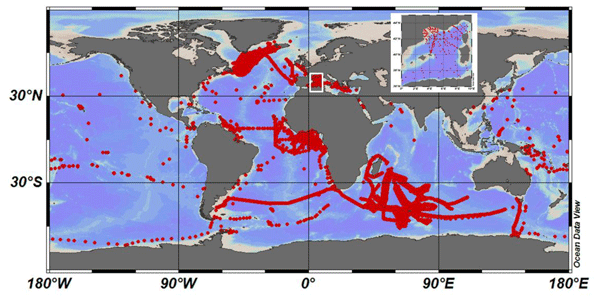
This work presents a synthesis of 44 000 total alkalinity and dissolved inorganic carbon observations obtained between 1993 and 2022 in the Global Ocean and the Mediterranean Sea at the surface and in the water column. Seawater samples were measured using the same method and calibrated with international Certified Reference Material. We describe the data assemblage, quality control and some potential uses of this dataset.
Caroline Ulses, Claude Estournel, Patrick Marsaleix, Karline Soetaert, Marine Fourrier, Laurent Coppola, Dominique Lefèvre, Franck Touratier, Catherine Goyet, Véronique Guglielmi, Fayçal Kessouri, Pierre Testor, and Xavier Durrieu de Madron
Biogeosciences, 20, 4683–4710, https://doi.org/10.5194/bg-20-4683-2023, https://doi.org/10.5194/bg-20-4683-2023, 2023
Short summary
Short summary
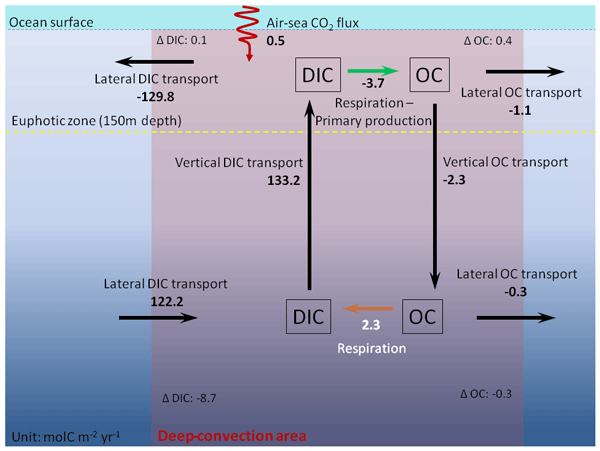
Deep convection plays a key role in the circulation, thermodynamics, and biogeochemical cycles in the Mediterranean Sea, considered to be a hotspot of biodiversity and climate change. In this study, we investigate the seasonal and annual budget of dissolved inorganic carbon in the deep-convection area of the northwestern Mediterranean Sea.
Joelle Habib, Caroline Ulses, Claude Estournel, Milad Fakhri, Patrick Marsaleix, Mireille Pujo-Pay, Marine Fourrier, Laurent Coppola, Alexandre Mignot, Laurent Mortier, and Pascal Conan
Biogeosciences, 20, 3203–3228, https://doi.org/10.5194/bg-20-3203-2023, https://doi.org/10.5194/bg-20-3203-2023, 2023
Short summary
Short summary
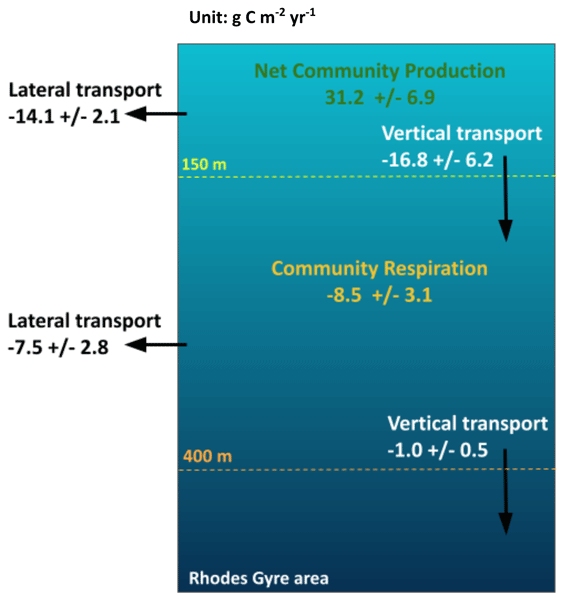
The Rhodes Gyre, eastern Mediterranean Sea, is the main Levantine Intermediate Water formation site. In this study, we use a 3D physical–biogeochemical model to investigate the seasonal and interannual variability of organic carbon dynamics in the gyre. Our results show its autotrophic nature and its high interannual variability, with enhanced primary production, downward exports, and onward exports to the surrounding regions during years marked by intense heat losses and deep mixed layers.
Rainer Kiko, Marc Picheral, David Antoine, Marcel Babin, Léo Berline, Tristan Biard, Emmanuel Boss, Peter Brandt, Francois Carlotti, Svenja Christiansen, Laurent Coppola, Leandro de la Cruz, Emilie Diamond-Riquier, Xavier Durrieu de Madron, Amanda Elineau, Gabriel Gorsky, Lionel Guidi, Helena Hauss, Jean-Olivier Irisson, Lee Karp-Boss, Johannes Karstensen, Dong-gyun Kim, Rachel M. Lekanoff, Fabien Lombard, Rubens M. Lopes, Claudie Marec, Andrew M. P. McDonnell, Daniela Niemeyer, Margaux Noyon, Stephanie H. O'Daly, Mark D. Ohman, Jessica L. Pretty, Andreas Rogge, Sarah Searson, Masashi Shibata, Yuji Tanaka, Toste Tanhua, Jan Taucher, Emilia Trudnowska, Jessica S. Turner, Anya Waite, and Lars Stemmann
Earth Syst. Sci. Data, 14, 4315–4337, https://doi.org/10.5194/essd-14-4315-2022, https://doi.org/10.5194/essd-14-4315-2022, 2022
Short summary
Short summary
The term
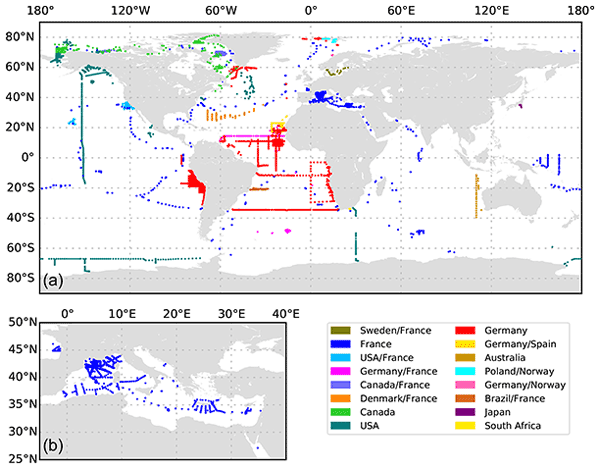
marine particlescomprises detrital aggregates; fecal pellets; bacterioplankton, phytoplankton and zooplankton; and even fish. Here, we present a global dataset that contains 8805 vertical particle size distribution profiles obtained with Underwater Vision Profiler 5 (UVP5) camera systems. These data are valuable to the scientific community, as they can be used to constrain important biogeochemical processes in the ocean, such as the flux of carbon to the deep sea.
Ariadna C. Nocera, Lars Stemmann, Marcel Babin, Tristan Biard, Julie Coustenoble, François Carlotti, Laurent Coppola, Lucas Courchet, Laetitia Drago, Amanda Elineau, Lionel Guidi, Helena Hauss, Laëtitia Jalabert, Lee Karp-Boss, Rainer Kiko, Manon Laget, Fabien Lombard, Andrew McDonnell, Camille Merland, Solène Motreuil, Thelma Panaïotis, Marc Picheral, Andreas Rogge, Anya Waite, and Jean-Olivier Irisson
Earth Syst. Sci. Data, 18, 7345–7366, https://doi.org/10.5194/essd-18-7345-2026, https://doi.org/10.5194/essd-18-7345-2026, 2026
Short summary
Short summary
Plankton and sinking organic particles (detritus) shape how the ocean stores carbon, but they are difficult to observe worldwide. We present a global, openly available collection of about 8 million images captured by an underwater camera (UVP5) in 3114 profiles from 2008 to 2018 and sorted into 33 categories. Detritus made up 90 % of the objects and copepods were the most common plankton. The dataset can help train machine learning tools and improve ocean ecosystem and climate models.
Francesco De Rovere, Giulia Bonino, Ronan McAdam, Enrico Scoccimarro, Samuel Somot, Iván M. Parras-Berrocal, Bodo Ahrens, Vladimir Djurdjevic, Laurent Li, and Simona Masina
Ocean Sci., 22, 2725–2742, https://doi.org/10.5194/os-22-2725-2026, https://doi.org/10.5194/os-22-2725-2026, 2026
Short summary
Short summary
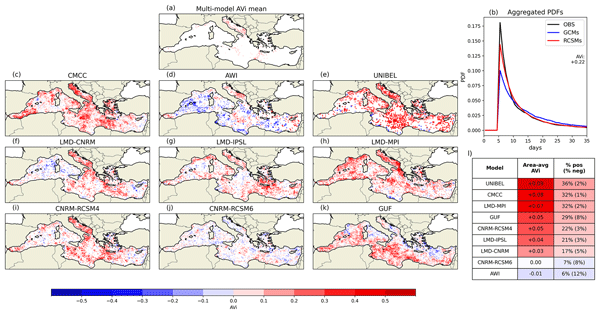
Marine heatwaves in the Mediterranean Sea are intensifying, posing growing threats to marine life and coastal communities. We evaluated if high-resolution regional climate models better capture these extremes compared to the global models driving them. Regional models reliably improve sea surface temperature patterns and marine heatwave duration, but struggle more with heatwave intensity. Higher horizontal resolution alone is not enough, advances in other model components are equally needed.
Amine M'hamdi, Ariane Koch-Larrouy, Anthony Bosse, Isabelle Dadou, Vincent Vantrepotte, and Alex Costa da Silva
EGUsphere, https://doi.org/10.5194/egusphere-2026-4862, https://doi.org/10.5194/egusphere-2026-4862, 2026
Short summary
Short summary
Internal tides are underwater waves that can transport nutrients from deep waters toward the sunlit ocean. Using glider observations off the Amazon shelf, we compared vertical advection and turbulent mixing. Vertical advection supplied more nitrate and silicate on average, while turbulence became important during energetic events. Together, these processes change nutrient supply and balance, potentially influencing phytoplankton communities in the tropical Atlantic.
Marta Álvarez, Maribel I. García-Ibáñez, Nico Lange, Alex Kozyr, Antón Velo, Toste Tanhua, Giuseppe Civitarese, Carolina Cantoni, Malek Belgacem, Katrin Schroeder, Rubén Acerbi, Laurent Coppola, Thibaut Wagener, Noelia M. Fajar, Susana Flecha, Michele Giani, Louisa Giannoudi, Elisa F. Guallart, Abed El Rahman Hassoun, Emma I. Huertas, Valeria Ibello, Mehdia A. Keraghel, Férial Louanchi, Anna Luchetta, Fiz F. Pérez, Carsten Schirnick, Ekaterini Souvermezoglou, Lidia Urbini, Montserrat Vidal, and Patrizia Ziveri
Earth Syst. Sci. Data, 18, 4915–4941, https://doi.org/10.5194/essd-18-4915-2026, https://doi.org/10.5194/essd-18-4915-2026, 2026
Short summary
Short summary
CARIMED (CARbon, tracers, and ancillary data In the MEDiterranean Sea) is a high-quality, FAIR (Findability, Accessibility, Interoperability, and Reusability) dataset integrating hydrographic, biogeochemical, and transient tracer data from 46 research cruises (1976–2018) across the Mediterranean Sea. The data underwent rigorous, basin-adapted quality control to remove systematic biases, unifying four decades of fragmented data, delivering two complementary products: the aggregated original cruise data product and the bias-adjusted data synthesis product.
Flavien Petit, Julia Uitz, Louison Dufour, Collin Roesler, Frédéric Partensky, Laurence Garczarek, Priscillia Gourvil, Céline Dimier, Melek Golbol, Vincenzo Vellucci, David Antoine, Christophe Penkerc'h, Vincent Taillandier, and Hervé Claustre
Biogeosciences, 23, 4561–4582, https://doi.org/10.5194/bg-23-4561-2026, https://doi.org/10.5194/bg-23-4561-2026, 2026
Short summary
Short summary
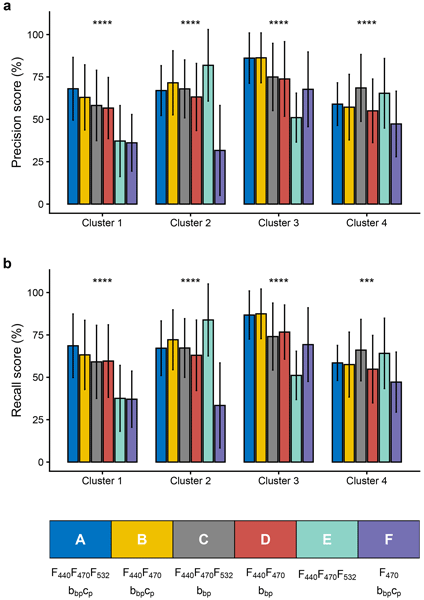
We studied whether ocean sensors can detect changes in microscopic algae communities that influence marine ecosystems and carbon uptake. We combined laboratory experiments and ocean observations to test sensors that measure how algae emit light at different colors when illuminated. We found that combining these light measurements with other optical signals improves the identification of broad community types. This approach could help future ocean floats better track ecosystem change globally.
Mathilde Couteyen Carpaye, David Nerini, Fabrice Garcia, Véronique Lagadec, Sandra Nunige, David Pecqueur, Christophe Salmeron, Léa Buniak, Morgane Didry, Jean-Marc Feuerstein, and Gérald Grégori
EGUsphere, https://doi.org/10.5194/egusphere-2026-3454, https://doi.org/10.5194/egusphere-2026-3454, 2026
Short summary
Short summary
Monitoring of phytoplankton over long periods and at high frequency is challenging. Yet, it is essential because these organisms form the base of marine food webs, and changes in their communities can affect higher trophic levels. Here, we address the challenge of missing biological data by using vertical profiles of temperature and salinity as proxies for environmental conditions influencing nutrient availability and shaping pico- and nanophytoplankton communities at a coastal site.
Manuel Vargas-Yáñez, Orens Pasqueron de Fommervault, Emanuela Clementi, Christian Ferrarin, Svitlana Liubertseva, Diego Álvarez-Berastegui, Baptiste Mourre, Salvatore Aronica, Rosa Balbin, Joaquín Ballabrera-Poy, Sana Ben Ismail, Nathaniel Benssousan, Ismail Bessa, Alicia Blanco, Anthony Bosse, Evi Bourma, François Bourrin, Carlo Brandini, Fulvio Capodici, Clara Casals-Baixas, Branko Cermelj, Giuseppe Ciraolo, Pascal Conan, Laurent Coppola, Lorenzo Corgnati, Joaquín del Río, Emilie Diamond Riquier, Lara Diaz-Barroso, Bartolomeo Doronzo, Xavier Durrieu de Madron, Milad Fakhri, Costantine Frangoulis, Claudia Fratianni, Emilio García-Ladona, Jesus García-Lafuente, M. Carmen García-Martínez, Joaquín Garrabou, Josep Gasol, Adam Gauci, Frédéric Gazeau, Gerard Gregory, Abed El Raman Hassoun, Jordi Isern-Fontanet, Dominique Lefevre, Nadia Lo Bue, Guiomar López, Pablo Lorente, Deny Malengros, Ramon Massana, Sinan Mavruk, Stefano Miserocchi, Behzad Mostajir, Laure Mousseau, Francina Moya, Antonio Novellino, Arianna Orasi, Emanuele Organelli, Vicent Ouisse, Tal Ozer, Begoña Pérez-Gómez, Susana Pérez-Rubio, Leonidas Perivoliotis, Georges Petihakis, Anne Petrenko, Sebastien Pinel, Xavier Pitarch, Angela Pomaro, Lucía Quirós-Collazos, Emma Reyes, Simone Sammartino, Anna Sánchez-Vidal, Katrin Schroeder, Stefano Taddei, Elena Tel, Pierre Testor, Marco Torri, Daniela Turk, Laura Ursella, Dimitris Velaoras, Francesca Vidussi, Ivica Vilivić, Enrico Zambiachi, D. Nikolaos Zarokanellos, George Zodiatis, and Vanessa Cardin
EGUsphere, https://doi.org/10.5194/egusphere-2026-2632, https://doi.org/10.5194/egusphere-2026-2632, 2026
Short summary
Short summary
This work compiles current marine observation capabilities in the Mediterranean Sea, making this information accessible to scientists, organizations, stakeholders, and environmental policymakers. It supports initiatives such as Copernicus Marine Service, EMODNet, the European Ocean Pact, and EU directives. It is intended as a living resource to be updated, identifying strengths and gaps in Mediterranean observation systems.
Erwan Le Roux, Pierre Tandeo, Carlos Granero Belinchon, Melika Baklouti, Julien Le Sommer, Florence Sevault, Samuel Somot, Antoine Doury, and Mahmoud Al Najar
EGUsphere, https://doi.org/10.5194/egusphere-2026-1991, https://doi.org/10.5194/egusphere-2026-1991, 2026
Short summary
Short summary
Projected impacts of climate change are assessed with impact models driven by climate projections. However, impact models can have a high computational cost. Here, we design statistical emulators of impact models based on automatic equation discovery. To our knowledge, this approach is a promising innovation that could pave the way to develop simple and interpretable emulators for various climate impact studies, but also to validate existing knowledge and to understand novel links.
Joelle Habib, Caroline Ulses, Claude Estournel, Milad Fakhri, Patrick Marsaleix, Thierry Moutin, Dominique Lefevre, Mireille Pujo-Pay, Marine Fourrier, Laurent Coppola, Cathy Wimart-Rousseau, and Pascal Conan
Biogeosciences, 23, 2939–2958, https://doi.org/10.5194/bg-23-2939-2026, https://doi.org/10.5194/bg-23-2939-2026, 2026
Short summary
Short summary
The Levantine Basin in the eastern Mediterranean Sea is one of the most nutrient-poor marine regions on Earth. Using a detailed model and observations, we studied how oxygen changes from 2013 to 2020. We found that winter cooling draws oxygen into the sea and moves it to deeper waters, while warmer months release some back. Overall, the basin absorbs more oxygen than it releases, and winter heat loss and circulation patterns strongly control how oxygen is stored and transported.
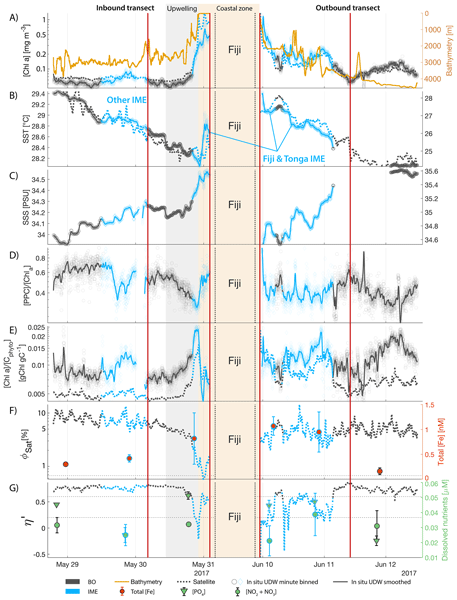
Guillaume Bourdin, Lee Karp-Boss, Fabien Lombard, Gabriel Gorsky, and Emmanuel Boss
Biogeosciences, 23, 2687–2728, https://doi.org/10.5194/bg-23-2687-2026, https://doi.org/10.5194/bg-23-2687-2026, 2026
Short summary
Short summary
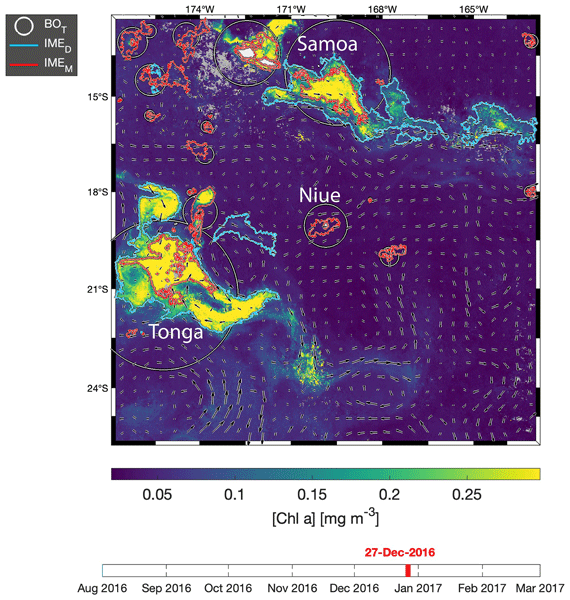
Island mass effect (IME) refers to elevated chlorophyll a concentrations around islands, often extending hundreds of kilometers into oligotrophic waters. Using satellite-derived nutrient and iron stress indices and in situ bio-optical data from the Tara Pacific expedition, we show that IMEs are associated with recurring iron and macronutrient enrichments, and changes in phytoplankton community composition relative to the regional background ocean.
Alexandre Schickele, Hadrien Savioz, Nicolas Gruber, Lionel Guidi, Jean-Olivier Irisson, and Meike Vogt
EGUsphere, https://doi.org/10.1101/2025.10.28.685123, https://doi.org/10.1101/2025.10.28.685123, 2026
Short summary
Short summary
By regulating the ocean nitrogen cycle, microbial plankton recycle nutrients and sustain productivity. Using global genetic data, we mapped where prokaryotes have the potential to carry out key nitrogen transformations. We show that this potential is structured by metabolic requirements, and environmental factors such as oxygen and nutrients concentrations. This reveals how microbial communities shape nitrogen processes and provides new insights to better represent them in global ocean models.

Damien Héron, Thierry Penduff, Jean-Michel Brankart, Pierre Brasseur, Samuel Somot, Robin Waldman, and Romain Pennel
Ocean Sci., 22, 531–547, https://doi.org/10.5194/os-22-531-2026, https://doi.org/10.5194/os-22-531-2026, 2026
Short summary
Short summary
Our study used realistic ocean simulations to determine how much of the Mediterranean’s circulation is due to natural randomness rather than atmospheric forcing. We found that spontaneous ocean variability is strong in several regions and can persist for years or even decades. This randomness influences how well models and observations can capture the Mediterranean’s response to climate change.
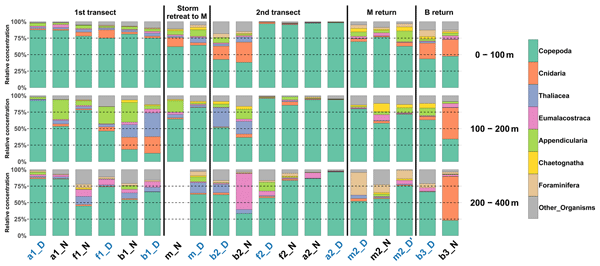
Maxime Duranson, Léo Berline, Loïc Guilloux, Alice Della Penna, Mark D. Ohman, Sven Gastauer, Cédric Cotte, Daniela Bănaru, Théo Garcia, Maristella Berta, Andrea Doglioli, Gérald Gregori, Francesco D'Ovidio, and François Carlotti
Biogeosciences, 23, 363–385, https://doi.org/10.5194/bg-23-363-2026, https://doi.org/10.5194/bg-23-363-2026, 2026
Short summary
Short summary
The zooplankton community was investigated using net sampling across the North Balearic Front at fine resolution. The front mostly acts as a zonal boundary between communities with a copepod dominated community to the north and a more diversified community to the south. The front itself exhibited lower zooplankton concentrations. The main community difference occurred in the 0–100 m layer, while deeper layers were more homogeneous.
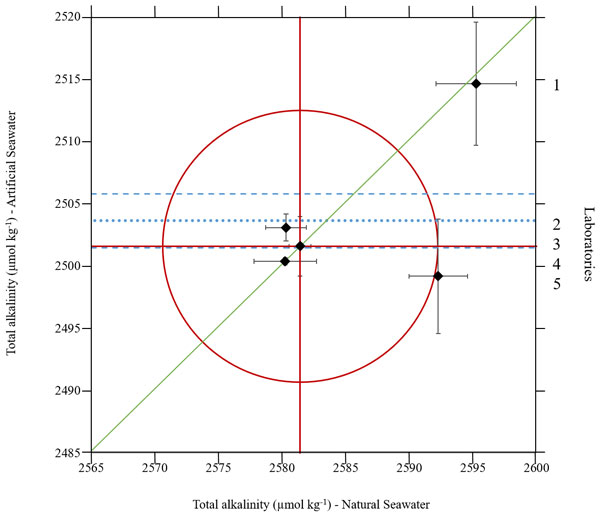
Gaëlle Capitaine, Samir Alliouane, Thierry Cariou, Jonathan Fin, Paola Fisicaro, and Thibaut Wagener
Ocean Sci., 22, 75–99, https://doi.org/10.5194/os-22-75-2026, https://doi.org/10.5194/os-22-75-2026, 2026
Short summary
Short summary
Measuring total alkalinity in seawater is essential for understanding and monitoring the ocean carbonate system. To improve the reliability of these measurements, we developed reference materials and tested them in an inter-laboratory comparison. We also thoroughly quantified, for the first time, the uncertainty of the standard measurement method. These results, as well as the key metrological tools developed, support more accurate long-term monitoring of the ocean carbonate system.
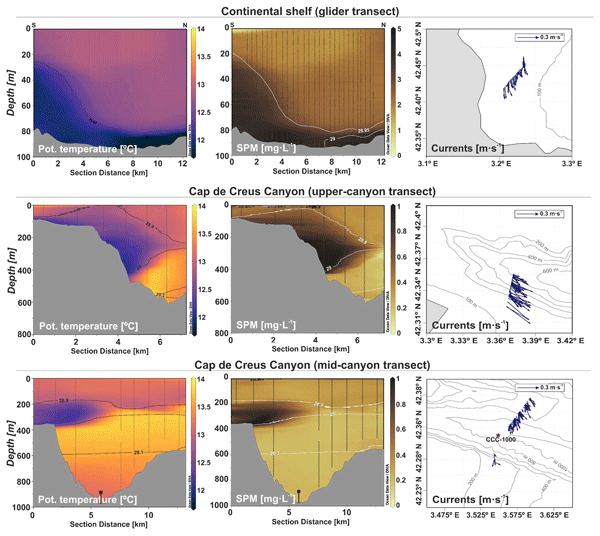
Marta Arjona-Camas, Xavier Durrieu de Madron, François Bourrin, Helena Fos, Anna Sanchez-Vidal, and David Amblas
Ocean Sci., 21, 3195–3219, https://doi.org/10.5194/os-21-3195-2025, https://doi.org/10.5194/os-21-3195-2025, 2025
Short summary
Short summary
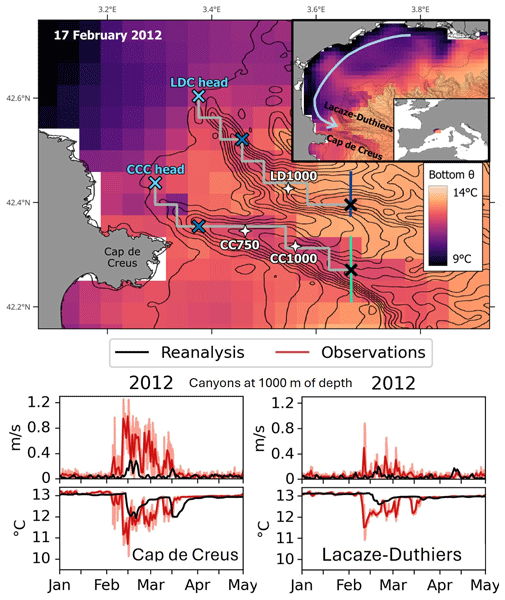
This study examines dense shelf water and sediment transport in the Cap de Creus Canyon during the mild winter of 2021–2022, using multiplatform-observational data and the MedSea Reanalysis product. Results show dense shelf waters on the shelf and upper canyon, contributing to Western Intermediate Water. Dense shelf water transport exhibit marked interannual variability, even under mild winters. MDSWC (mild dense shelf water cascading) events are expected to increase with climate change, favoring intermediate-water formation.
Maxime Arnaud, Anne Petrenko, Jean-Luc Fuda, Caroline Comby, Anthony Bosse, Yann Ourmières, and Stéphanie Barrillon
Ocean Sci., 21, 2829–2847, https://doi.org/10.5194/os-21-2829-2025, https://doi.org/10.5194/os-21-2829-2025, 2025
Short summary
Short summary
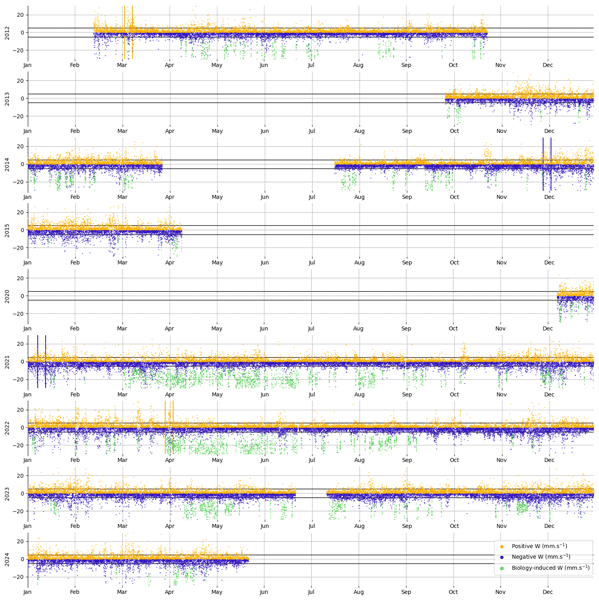
Measuring oceanic vertical velocities accurately is a challenge in today’s physical oceanography. Our work shows intense wind-induced coastal events involving upward or downward water movements that have been detected using an acoustic current profiler. These data has also been validated with other in situ and satellite observations. A brand new method to identify and filter out biology-induced velocities is also presented, giving an interdisciplinary point of view of such coastal processes.
Amine M'hamdi, Ariane Koch-Larrouy, Alex Costa da Silva, Isabelle Dadou, Carina Regina de Macedo, Anthony Bosse, Vincent Vantrepotte, Habib Micaël Aguedjou, Trung-Kien Tran, Pierre Testor, Laurent Mortier, Arnaud Bertrand, Pedro Augusto Mendes de Castro Melo, James Lee, Marcelo Rollnic, and Moacyr Araujo
Ocean Sci., 21, 2873–2894, https://doi.org/10.5194/os-21-2873-2025, https://doi.org/10.5194/os-21-2873-2025, 2025
Short summary
Short summary
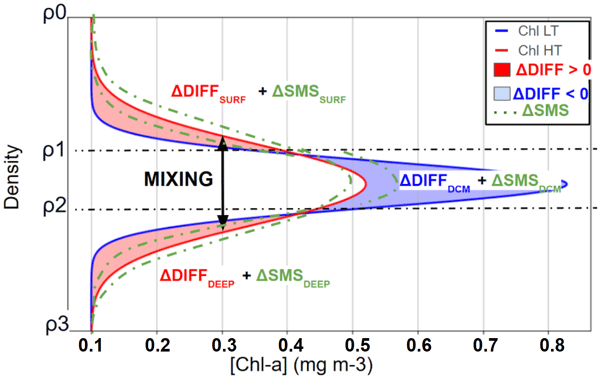
In the ocean off the Amazon shelf, internal waves caused by tides move water layers up and down and mix them. Using an underwater glider and satellites, we found internal tides redistribute chlorophyll from the deep chlorophyll maximum upward to the surface and downward to depth. Turbulent chlorophyll fluxes supply about 38 % of surface chlorophyll, and total chlorophyll increases by 14–29 % during strong tides, potentially affecting the marine food web.
Gillian M. Damerell, Anthony Bosse, and Ilker Fer
Ocean Sci., 21, 2763–2785, https://doi.org/10.5194/os-21-2763-2025, https://doi.org/10.5194/os-21-2763-2025, 2025
Short summary
Short summary
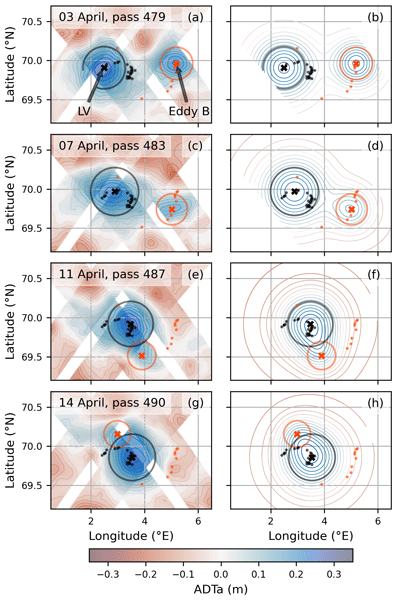
The Lofoten Vortex is an unusual feature in the ocean: a permanent eddy which does not dissipate as most eddies do. We have long thought that other eddies must merge into the vortex in order to maintain its heat content and energetics, but such mergers are very difficult to observe due to their transient, unpredictable nature. For the first time, we have observed a merger using an ocean glider and high-resolution satellite data and can document how the merger affects the properties of the vortex.
Xavier Durrieu de Madron, Paul Blin, Mireille Pujo-Pay, Vincent Taillandier, and Pascal Conan
Ocean Sci., 21, 2705–2726, https://doi.org/10.5194/os-21-2705-2025, https://doi.org/10.5194/os-21-2705-2025, 2025
Short summary
Short summary
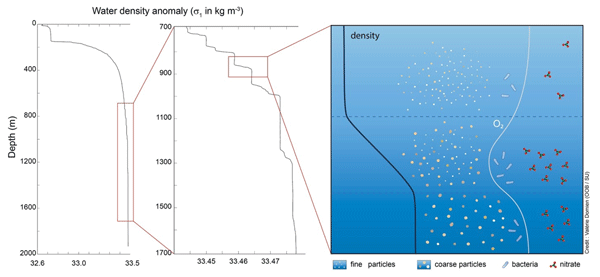
This study investigated the effects of salt fingering on particle and solute distribution in the Tyrrhenian Sea. Density interfaces associated with thermohaline staircases slow the settling of suspended particles and promote aggregation. This affects the particle size distribution and creates nutrient and oxygen gradients, affecting microbial activity and nutrient cycling. The research highlights the potential role of salt fingers in deep ocean biogeochemical processes.
Helena Fos, Jesús Peña-Izquierdo, David Amblas, Marta Arjona-Camas, Laia Romero, Víctor Estella-Pérez, Cristian Florindo-Lopez, Antoni Calafat, Marc Cerdà-Domènech, Pere Puig, Xavier Durrieu de Madron, and Anna Sanchez-Vidal
Ocean Sci., 21, 2169–2178, https://doi.org/10.5194/os-21-2169-2025, https://doi.org/10.5194/os-21-2169-2025, 2025
Short summary
Short summary
Dense shelf water cascading (DSWC) is an oceanographic process where dense shelf water rapidly spills over the shelf edge and cascades into the deep ocean. Using a high-resolution model that incorporates real observations from the water column and sea surface (MedSea Reanalysis), this study compares over 30 years of simulated intense DSWC with actual observations in the NW Mediterranean. We identified all the intense cascading events since 1987, with results closely matching the observations.
Claude Estournel, Tristan Estaque, Caroline Ulses, Quentin-Boris Barral, and Patrick Marsaleix
Ocean Sci., 21, 1487–1503, https://doi.org/10.5194/os-21-1487-2025, https://doi.org/10.5194/os-21-1487-2025, 2025
Short summary
Short summary
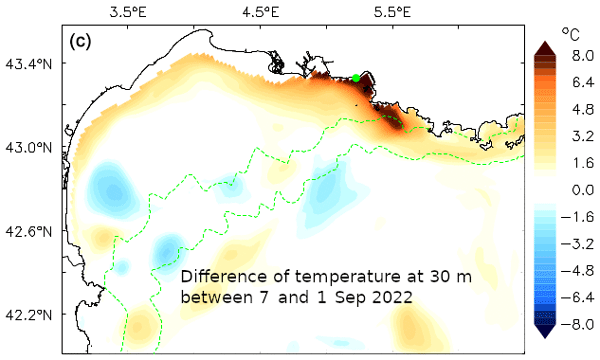
During the summer of 2022 in the eastern Gulf of Lion (NW Mediterranean), exceptionally warm temperatures were observed down to depths of 30 m, along with massive mortality of benthic species. It has been shown that these deep marine heatwaves are linked to southeasterly wind episodes, which induce deep plunges of surface water overheated by the atmospheric heatwave. These events are rare in summer, but their impact on ecosystems is dramatic and will only increase with climate change.
Guillaume Bourdin, Lee Karp-Boss, Fabien Lombard, Gabriel Gorsky, and Emmanuel Boss
Biogeosciences, 22, 3207–3233, https://doi.org/10.5194/bg-22-3207-2025, https://doi.org/10.5194/bg-22-3207-2025, 2025
Short summary
Short summary
Remote islands and atolls create unique oceanic processes that affect the surrounding waters, known as the island mass effect (IME). These processes input nutrients to the ocean surface, leading to an increasing phytoplankton concentration near islands. We combine data from various satellites and modeled currents to better track these changes. This reveals a larger IME impact than previously estimated, suggesting that islands play a more significant role in ocean food chains in subtropical regions.
Zoé Mériguet, Guillaume Bourdin, Nathaniel Kristan, Laetitia Jalabert, Olivier Bun, Marc Picheral, Louis Caray-Counil, Juliette Maury, Maria-Luiza Pedrotti, Amanda Elineau, David A. Paz-Garcia, Lee Karp-Boss, Gaby Gorsky, Fabien Lombard, and the Tara Pacific Consortium Coordinators team
Earth Syst. Sci. Data, 17, 2761–2792, https://doi.org/10.5194/essd-17-2761-2025, https://doi.org/10.5194/essd-17-2761-2025, 2025
Short summary
Short summary
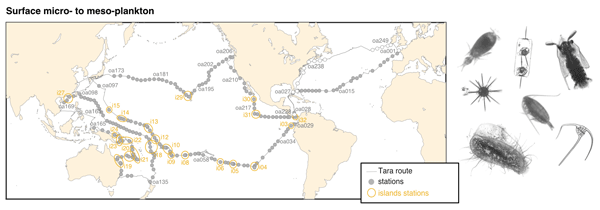
This study presents imaging datasets from the Tara Pacific expedition, covering multiple plankton sizes and a wide sampling area in Pacific waters. By sampling both open-ocean and island areas, these data can show how plankton size, diversity and abundance change with different environments. We also highlight the usefulness of high-speed plankton sampling when it is not possible to slow the boat during sailing as well as the value of this technique with respect to extending the sampling coverage and frequency.
Nicolas Metzl, Jonathan Fin, Claire Lo Monaco, Claude Mignon, Samir Alliouane, Bruno Bombled, Jacqueline Boutin, Yann Bozec, Steeve Comeau, Pascal Conan, Laurent Coppola, Pascale Cuet, Eva Ferreira, Jean-Pierre Gattuso, Frédéric Gazeau, Catherine Goyet, Emilie Grossteffan, Bruno Lansard, Dominique Lefèvre, Nathalie Lefèvre, Coraline Leseurre, Sébastien Petton, Mireille Pujo-Pay, Christophe Rabouille, Gilles Reverdin, Céline Ridame, Peggy Rimmelin-Maury, Jean-François Ternon, Franck Touratier, Aline Tribollet, Thibaut Wagener, and Cathy Wimart-Rousseau
Earth Syst. Sci. Data, 17, 1075–1100, https://doi.org/10.5194/essd-17-1075-2025, https://doi.org/10.5194/essd-17-1075-2025, 2025
Short summary
Short summary
This work presents a new synthesis of 67 000 total alkalinity and total dissolved inorganic carbon observations obtained between 1993 and 2023 in the global ocean, coastal zones, and the Mediterranean Sea. We describe the data assemblage and associated quality control and discuss some potential uses of this dataset. The dataset is provided in a single format and includes the quality flag for each sample.
Riccardo Martellucci, Michele Giani, Elena Mauri, Laurent Coppola, Melf Paulsen, Marine Fourrier, Sara Pensieri, Vanessa Cardin, Carlotta Dentico, Roberto Bozzano, Carolina Cantoni, Anna Lucchetta, Alfredo Izquierdo, Miguel Bruno, and Ingunn Skjelvan
Earth Syst. Sci. Data, 16, 5333–5356, https://doi.org/10.5194/essd-16-5333-2024, https://doi.org/10.5194/essd-16-5333-2024, 2024
Short summary
Short summary
As part of the ATL2MED demonstration experiment, two autonomous surface vehicles undertook a 9-month mission from the northeastern Atlantic to the Adriatic Sea. Biofouling affected the measurement of variables such as conductivity and dissolved oxygen. COVID-19 limited the availability of discrete samples for validation. We present correction methods for salinity and dissolved oxygen. We use model products to correct salinity and apply the Argo floats in-air correction method for oxygen

Colin G. Jones, Fanny Adloff, Ben B. B. Booth, Peter M. Cox, Veronika Eyring, Pierre Friedlingstein, Katja Frieler, Helene T. Hewitt, Hazel A. Jeffery, Sylvie Joussaume, Torben Koenigk, Bryan N. Lawrence, Eleanor O'Rourke, Malcolm J. Roberts, Benjamin M. Sanderson, Roland Séférian, Samuel Somot, Pier Luigi Vidale, Detlef van Vuuren, Mario Acosta, Mats Bentsen, Raffaele Bernardello, Richard Betts, Ed Blockley, Julien Boé, Tom Bracegirdle, Pascale Braconnot, Victor Brovkin, Carlo Buontempo, Francisco Doblas-Reyes, Markus Donat, Italo Epicoco, Pete Falloon, Sandro Fiore, Thomas Frölicher, Neven S. Fučkar, Matthew J. Gidden, Helge F. Goessling, Rune Grand Graversen, Silvio Gualdi, José M. Gutiérrez, Tatiana Ilyina, Daniela Jacob, Chris D. Jones, Martin Juckes, Elizabeth Kendon, Erik Kjellström, Reto Knutti, Jason Lowe, Matthew Mizielinski, Paola Nassisi, Michael Obersteiner, Pierre Regnier, Romain Roehrig, David Salas y Mélia, Carl-Friedrich Schleussner, Michael Schulz, Enrico Scoccimarro, Laurent Terray, Hannes Thiemann, Richard A. Wood, Shuting Yang, and Sönke Zaehle
Earth Syst. Dynam., 15, 1319–1351, https://doi.org/10.5194/esd-15-1319-2024, https://doi.org/10.5194/esd-15-1319-2024, 2024
Short summary
Short summary
We propose a number of priority areas for the international climate research community to address over the coming decade. Advances in these areas will both increase our understanding of past and future Earth system change, including the societal and environmental impacts of this change, and deliver significantly improved scientific support to international climate policy, such as future IPCC assessments and the UNFCCC Global Stocktake.
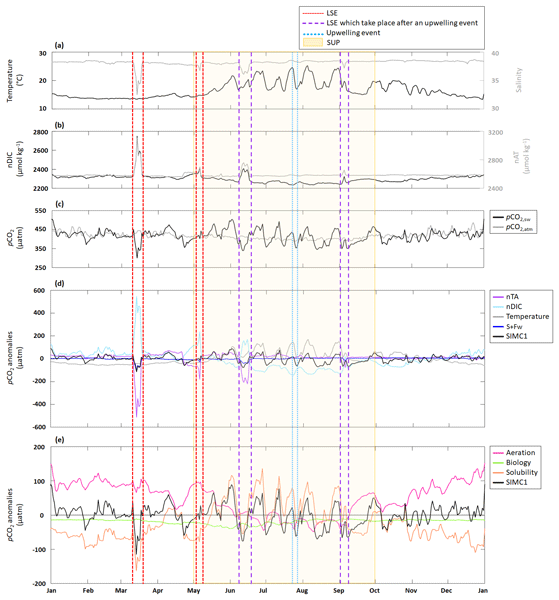
Lucille Barré, Frédéric Diaz, Thibaut Wagener, Camille Mazoyer, Christophe Yohia, and Christel Pinazo
Geosci. Model Dev., 17, 5851–5882, https://doi.org/10.5194/gmd-17-5851-2024, https://doi.org/10.5194/gmd-17-5851-2024, 2024
Short summary
Short summary
The carbonate system is typically studied using measurements, but modeling can contribute valuable insights. Using a biogeochemical model, we propose a new representation of total alkalinity, dissolved inorganic carbon, pCO2, and pH in a highly dynamic Mediterranean coastal area, the Bay of Marseille, a useful addition to measurements. Through a detailed analysis of pCO2 and air–sea CO2 fluxes, we show that variations are strongly impacted by the hydrodynamic processes that affect the bay.
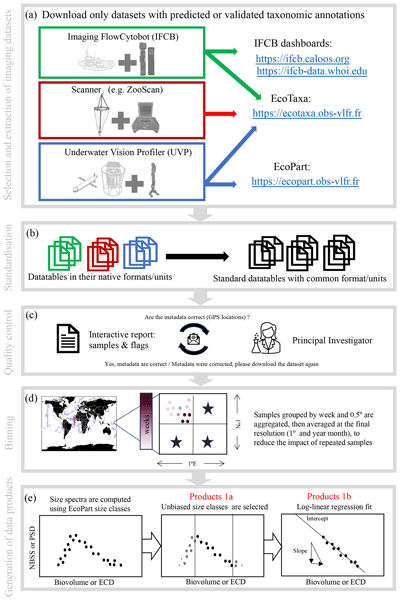
Mathilde Dugenne, Marco Corrales-Ugalde, Jessica Y. Luo, Rainer Kiko, Todd D. O'Brien, Jean-Olivier Irisson, Fabien Lombard, Lars Stemmann, Charles Stock, Clarissa R. Anderson, Marcel Babin, Nagib Bhairy, Sophie Bonnet, Francois Carlotti, Astrid Cornils, E. Taylor Crockford, Patrick Daniel, Corinne Desnos, Laetitia Drago, Amanda Elineau, Alexis Fischer, Nina Grandrémy, Pierre-Luc Grondin, Lionel Guidi, Cecile Guieu, Helena Hauss, Kendra Hayashi, Jenny A. Huggett, Laetitia Jalabert, Lee Karp-Boss, Kasia M. Kenitz, Raphael M. Kudela, Magali Lescot, Claudie Marec, Andrew McDonnell, Zoe Mériguet, Barbara Niehoff, Margaux Noyon, Thelma Panaïotis, Emily Peacock, Marc Picheral, Emilie Riquier, Collin Roesler, Jean-Baptiste Romagnan, Heidi M. Sosik, Gretchen Spencer, Jan Taucher, Chloé Tilliette, and Marion Vilain
Earth Syst. Sci. Data, 16, 2971–2999, https://doi.org/10.5194/essd-16-2971-2024, https://doi.org/10.5194/essd-16-2971-2024, 2024
Short summary
Short summary
Plankton and particles influence carbon cycling and energy flow in marine ecosystems. We used three types of novel plankton imaging systems to obtain size measurements from a range of plankton and particle sizes and across all major oceans. Data were compiled and cross-calibrated from many thousands of images, showing seasonal and spatial changes in particle size structure in different ocean basins. These datasets form the first release of the Pelagic Size Structure database (PSSdb).
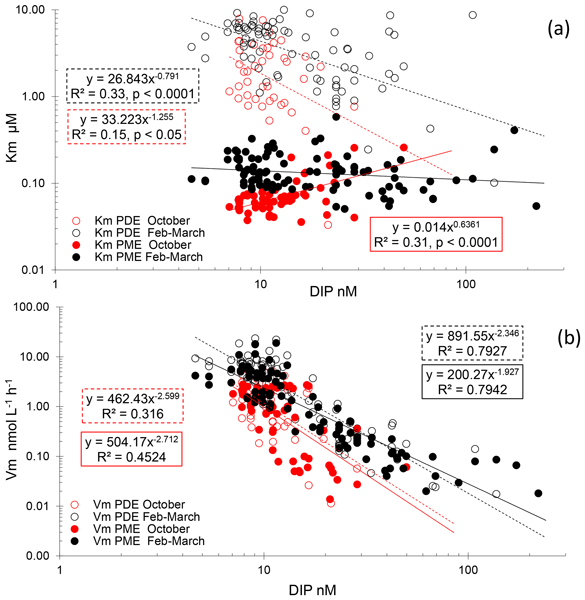
France Van Wambeke, Pascal Conan, Mireille Pujo-Pay, Vincent Taillandier, Olivier Crispi, Alexandra Pavlidou, Sandra Nunige, Morgane Didry, Christophe Salmeron, and Elvira Pulido-Villena
Biogeosciences, 21, 2621–2640, https://doi.org/10.5194/bg-21-2621-2024, https://doi.org/10.5194/bg-21-2621-2024, 2024
Short summary
Short summary
Phosphomonoesterase (PME) and phosphodiesterase (PDE) activities over the epipelagic zone are described in the eastern Mediterranean Sea in winter and autumn. The types of concentration kinetics obtained for PDE (saturation at 50 µM, high Km, high turnover times) compared to those of PME (saturation at 1 µM, low Km, low turnover times) are discussed in regard to the possible inequal distribution of PDE and PME in the size continuum of organic material and accessibility to phosphodiesters.
Nico Lange, Björn Fiedler, Marta Álvarez, Alice Benoit-Cattin, Heather Benway, Pier Luigi Buttigieg, Laurent Coppola, Kim Currie, Susana Flecha, Dana S. Gerlach, Makio Honda, I. Emma Huertas, Siv K. Lauvset, Frank Muller-Karger, Arne Körtzinger, Kevin M. O'Brien, Sólveig R. Ólafsdóttir, Fernando C. Pacheco, Digna Rueda-Roa, Ingunn Skjelvan, Masahide Wakita, Angelicque White, and Toste Tanhua
Earth Syst. Sci. Data, 16, 1901–1931, https://doi.org/10.5194/essd-16-1901-2024, https://doi.org/10.5194/essd-16-1901-2024, 2024
Short summary
Short summary
The Synthesis Product for Ocean Time Series (SPOTS) is a novel achievement expanding and complementing the biogeochemical data landscape by providing consistent and high-quality biogeochemical time-series data from 12 ship-based fixed time-series programs. SPOTS covers multiple unique marine environments and time-series ranges, including data from 1983 to 2021. All in all, it facilitates a variety of applications that benefit from the collective value of biogeochemical time-series observations.
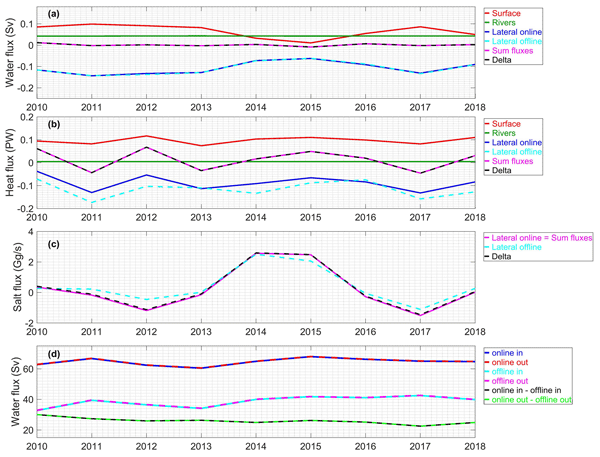
Ngoc B. Trinh, Marine Herrmann, Caroline Ulses, Patrick Marsaleix, Thomas Duhaut, Thai To Duy, Claude Estournel, and R. Kipp Shearman
Geosci. Model Dev., 17, 1831–1867, https://doi.org/10.5194/gmd-17-1831-2024, https://doi.org/10.5194/gmd-17-1831-2024, 2024
Short summary
Short summary
A high-resolution model was built to study the South China Sea (SCS) water, heat, and salt budgets. Model performance is demonstrated by comparison with observations and simulations. Important discards are observed if calculating offline, instead of online, lateral inflows and outflows of water, heat, and salt. The SCS mainly receives water from the Luzon Strait and releases it through the Mindoro, Taiwan, and Karimata straits. SCS surface interocean water exchanges are driven by monsoon winds.
Nicolas Metzl, Jonathan Fin, Claire Lo Monaco, Claude Mignon, Samir Alliouane, David Antoine, Guillaume Bourdin, Jacqueline Boutin, Yann Bozec, Pascal Conan, Laurent Coppola, Frédéric Diaz, Eric Douville, Xavier Durrieu de Madron, Jean-Pierre Gattuso, Frédéric Gazeau, Melek Golbol, Bruno Lansard, Dominique Lefèvre, Nathalie Lefèvre, Fabien Lombard, Férial Louanchi, Liliane Merlivat, Léa Olivier, Anne Petrenko, Sébastien Petton, Mireille Pujo-Pay, Christophe Rabouille, Gilles Reverdin, Céline Ridame, Aline Tribollet, Vincenzo Vellucci, Thibaut Wagener, and Cathy Wimart-Rousseau
Earth Syst. Sci. Data, 16, 89–120, https://doi.org/10.5194/essd-16-89-2024, https://doi.org/10.5194/essd-16-89-2024, 2024
Short summary
Short summary
This work presents a synthesis of 44 000 total alkalinity and dissolved inorganic carbon observations obtained between 1993 and 2022 in the Global Ocean and the Mediterranean Sea at the surface and in the water column. Seawater samples were measured using the same method and calibrated with international Certified Reference Material. We describe the data assemblage, quality control and some potential uses of this dataset.
Caroline Ulses, Claude Estournel, Patrick Marsaleix, Karline Soetaert, Marine Fourrier, Laurent Coppola, Dominique Lefèvre, Franck Touratier, Catherine Goyet, Véronique Guglielmi, Fayçal Kessouri, Pierre Testor, and Xavier Durrieu de Madron
Biogeosciences, 20, 4683–4710, https://doi.org/10.5194/bg-20-4683-2023, https://doi.org/10.5194/bg-20-4683-2023, 2023
Short summary
Short summary
Deep convection plays a key role in the circulation, thermodynamics, and biogeochemical cycles in the Mediterranean Sea, considered to be a hotspot of biodiversity and climate change. In this study, we investigate the seasonal and annual budget of dissolved inorganic carbon in the deep-convection area of the northwestern Mediterranean Sea.
Lucille Barré, Frédéric Diaz, Thibaut Wagener, France Van Wambeke, Camille Mazoyer, Christophe Yohia, and Christel Pinazo
Geosci. Model Dev., 16, 6701–6739, https://doi.org/10.5194/gmd-16-6701-2023, https://doi.org/10.5194/gmd-16-6701-2023, 2023
Short summary
Short summary
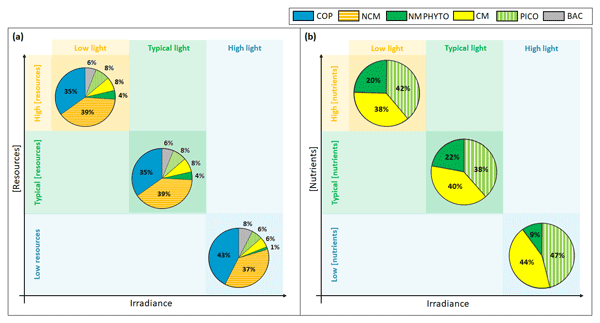
While several studies have shown that mixotrophs play a crucial role in the carbon cycle, the impact of environmental forcings on their dynamics remains poorly investigated. Using a biogeochemical model that considers mixotrophs, we study the impact of light and nutrient concentration on the ecosystem composition in a highly dynamic Mediterranean coastal area: the Bay of Marseille. We show that mixotrophs cope better with oligotrophic conditions compared to strict auto- and heterotrophs.
Joelle Habib, Caroline Ulses, Claude Estournel, Milad Fakhri, Patrick Marsaleix, Mireille Pujo-Pay, Marine Fourrier, Laurent Coppola, Alexandre Mignot, Laurent Mortier, and Pascal Conan
Biogeosciences, 20, 3203–3228, https://doi.org/10.5194/bg-20-3203-2023, https://doi.org/10.5194/bg-20-3203-2023, 2023
Short summary
Short summary
The Rhodes Gyre, eastern Mediterranean Sea, is the main Levantine Intermediate Water formation site. In this study, we use a 3D physical–biogeochemical model to investigate the seasonal and interannual variability of organic carbon dynamics in the gyre. Our results show its autotrophic nature and its high interannual variability, with enhanced primary production, downward exports, and onward exports to the surrounding regions during years marked by intense heat losses and deep mixed layers.
Anna Denvil-Sommer, Erik T. Buitenhuis, Rainer Kiko, Fabien Lombard, Lionel Guidi, and Corinne Le Quéré
Geosci. Model Dev., 16, 2995–3012, https://doi.org/10.5194/gmd-16-2995-2023, https://doi.org/10.5194/gmd-16-2995-2023, 2023
Short summary
Short summary
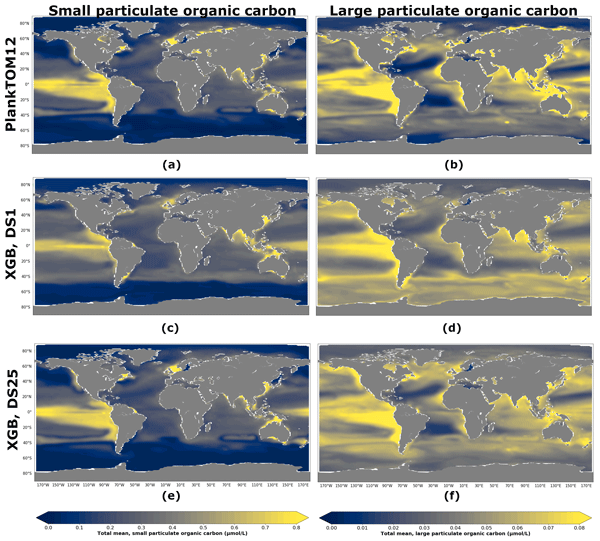
Using outputs of global biogeochemical ocean model and machine learning methods, we demonstrate that it will be possible to identify linkages between surface environmental and ecosystem structure and the export of carbon to depth by sinking organic particles using real observations. It will be possible to use this knowledge to improve both our understanding of ecosystem dynamics and of their functional representation within models.
Thibauld M. Béjard, Andrés S. Rigual-Hernández, José A. Flores, Javier P. Tarruella, Xavier Durrieu de Madron, Isabel Cacho, Neghar Haghipour, Aidan Hunter, and Francisco J. Sierro
Biogeosciences, 20, 1505–1528, https://doi.org/10.5194/bg-20-1505-2023, https://doi.org/10.5194/bg-20-1505-2023, 2023
Short summary
Short summary
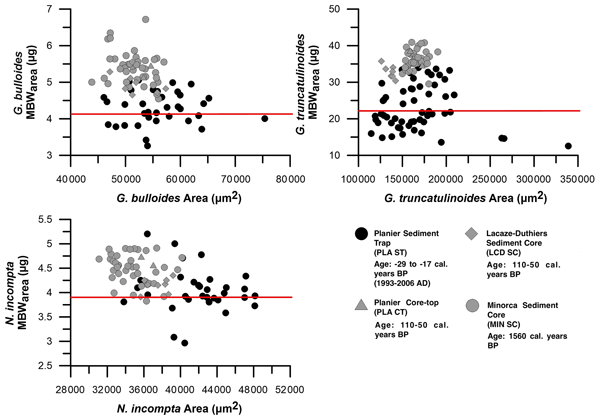
The Mediterranean Sea is undergoing a rapid and unprecedented environmental change. Planktic foraminifera calcification is affected on different timescales. On seasonal and interannual scales, calcification trends differ according to the species and are linked mainly to sea surface temperatures and carbonate system parameters, while comparison with pre/post-industrial assemblages shows that all three species have reduced their calcification between 10 % to 35 % according to the species.
Stéphanie Barrillon, Robin Fuchs, Anne A. Petrenko, Caroline Comby, Anthony Bosse, Christophe Yohia, Jean-Luc Fuda, Nagib Bhairy, Frédéric Cyr, Andrea M. Doglioli, Gérald Grégori, Roxane Tzortzis, Francesco d'Ovidio, and Melilotus Thyssen
Biogeosciences, 20, 141–161, https://doi.org/10.5194/bg-20-141-2023, https://doi.org/10.5194/bg-20-141-2023, 2023
Short summary
Short summary
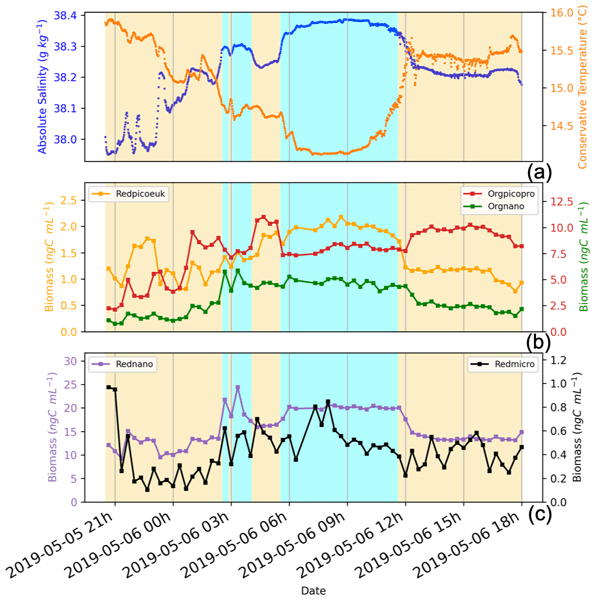
Extreme weather events can have a major impact on ocean physics and biogeochemistry, but their study is challenging. In May 2019, an intense storm occurred in the north-western Mediterranean Sea, during which in situ multi-platform measurements were performed. The results show a strong impact on the surface phytoplankton, highlighting the need for high-resolution measurements coupling physics and biology during these violent events that may become more common in the context of global change.
Rainer Kiko, Marc Picheral, David Antoine, Marcel Babin, Léo Berline, Tristan Biard, Emmanuel Boss, Peter Brandt, Francois Carlotti, Svenja Christiansen, Laurent Coppola, Leandro de la Cruz, Emilie Diamond-Riquier, Xavier Durrieu de Madron, Amanda Elineau, Gabriel Gorsky, Lionel Guidi, Helena Hauss, Jean-Olivier Irisson, Lee Karp-Boss, Johannes Karstensen, Dong-gyun Kim, Rachel M. Lekanoff, Fabien Lombard, Rubens M. Lopes, Claudie Marec, Andrew M. P. McDonnell, Daniela Niemeyer, Margaux Noyon, Stephanie H. O'Daly, Mark D. Ohman, Jessica L. Pretty, Andreas Rogge, Sarah Searson, Masashi Shibata, Yuji Tanaka, Toste Tanhua, Jan Taucher, Emilia Trudnowska, Jessica S. Turner, Anya Waite, and Lars Stemmann
Earth Syst. Sci. Data, 14, 4315–4337, https://doi.org/10.5194/essd-14-4315-2022, https://doi.org/10.5194/essd-14-4315-2022, 2022
Short summary
Short summary
The term
marine particlescomprises detrital aggregates; fecal pellets; bacterioplankton, phytoplankton and zooplankton; and even fish. Here, we present a global dataset that contains 8805 vertical particle size distribution profiles obtained with Underwater Vision Profiler 5 (UVP5) camera systems. These data are valuable to the scientific community, as they can be used to constrain important biogeochemical processes in the ocean, such as the flux of carbon to the deep sea.
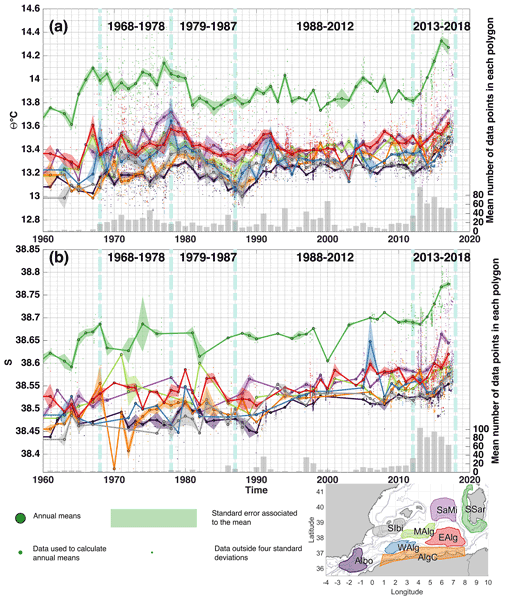
Katia Mallil, Pierre Testor, Anthony Bosse, Félix Margirier, Loic Houpert, Hervé Le Goff, Laurent Mortier, and Ferial Louanchi
Ocean Sci., 18, 937–952, https://doi.org/10.5194/os-18-937-2022, https://doi.org/10.5194/os-18-937-2022, 2022
Short summary
Short summary
Our study documents the circulation in the Algerian Basin of the western Mediterranean Sea using in situ data. It shows that the Algerian Gyres have an impact on the distribution at intermediate depth of Levantine Intermediate Water. They allow a westward transport from the south of Sardinia toward the interior of the Algerian Basin. Temperature and salinity trends of this water mass are also investigated, confirming a recent acceleration of the warming and salinification during the last decade.
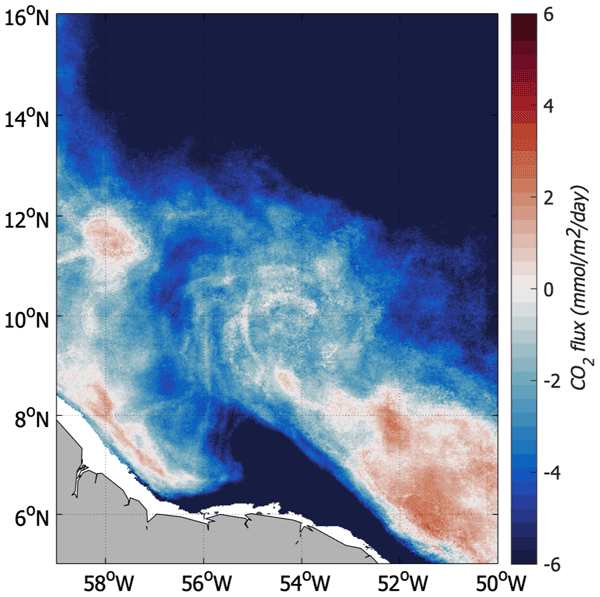
Léa Olivier, Jacqueline Boutin, Gilles Reverdin, Nathalie Lefèvre, Peter Landschützer, Sabrina Speich, Johannes Karstensen, Matthieu Labaste, Christophe Noisel, Markus Ritschel, Tobias Steinhoff, and Rik Wanninkhof
Biogeosciences, 19, 2969–2988, https://doi.org/10.5194/bg-19-2969-2022, https://doi.org/10.5194/bg-19-2969-2022, 2022
Short summary
Short summary
We investigate the impact of the interactions between eddies and the Amazon River plume on the CO2 air–sea fluxes to better characterize the ocean carbon sink in winter 2020. The region is a strong CO2 sink, previously underestimated by a factor of 10 due to a lack of data and understanding of the processes responsible for the variability in ocean carbon parameters. The CO2 absorption is mainly driven by freshwater from the Amazon entrained by eddies and by the winter seasonal cooling.
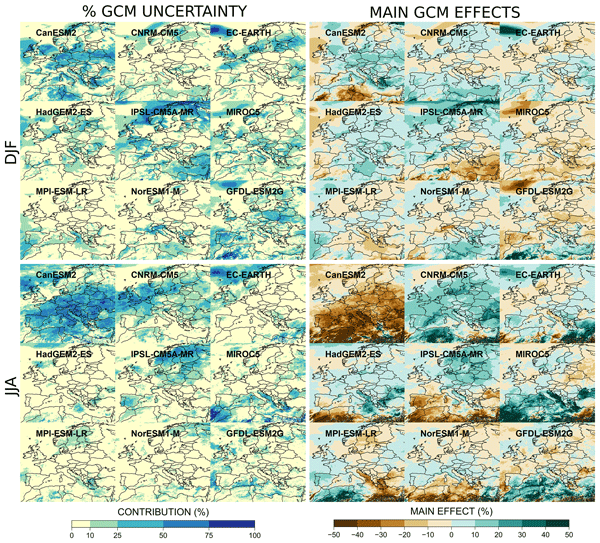
Guillaume Evin, Samuel Somot, and Benoit Hingray
Earth Syst. Dynam., 12, 1543–1569, https://doi.org/10.5194/esd-12-1543-2021, https://doi.org/10.5194/esd-12-1543-2021, 2021
Short summary
Short summary
This research paper proposes an assessment of mean climate change responses and related uncertainties over Europe for mean seasonal temperature and total seasonal precipitation. An advanced statistical approach is applied to a large ensemble of 87 high-resolution EURO-CORDEX projections. For the first time, we provide a comprehensive estimation of the relative contribution of GCMs and RCMs, RCP scenarios, and internal variability to the total variance of a very large ensemble.
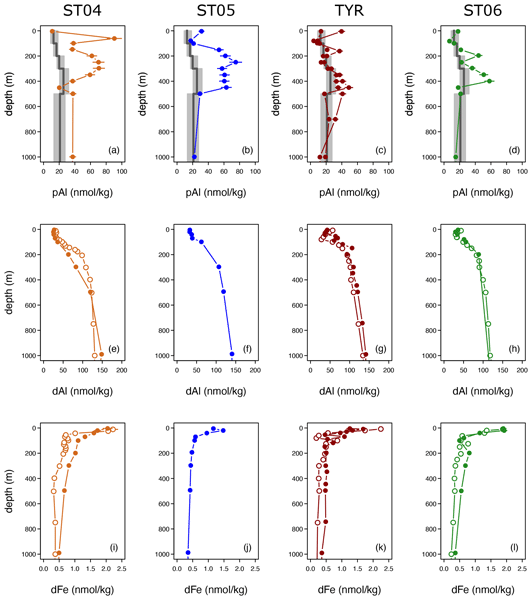
Matthieu Bressac, Thibaut Wagener, Nathalie Leblond, Antonio Tovar-Sánchez, Céline Ridame, Vincent Taillandier, Samuel Albani, Sophie Guasco, Aurélie Dufour, Stéphanie H. M. Jacquet, François Dulac, Karine Desboeufs, and Cécile Guieu
Biogeosciences, 18, 6435–6453, https://doi.org/10.5194/bg-18-6435-2021, https://doi.org/10.5194/bg-18-6435-2021, 2021
Short summary
Short summary
Phytoplankton growth is limited by the availability of iron in about 50 % of the ocean. Atmospheric deposition of desert dust represents a key source of iron. Here, we present direct observations of dust deposition in the Mediterranean Sea. A key finding is that the input of iron from dust primarily occurred in the deep ocean, while previous studies mainly focused on the ocean surface. This new insight will enable us to better represent controls on global marine productivity in models.
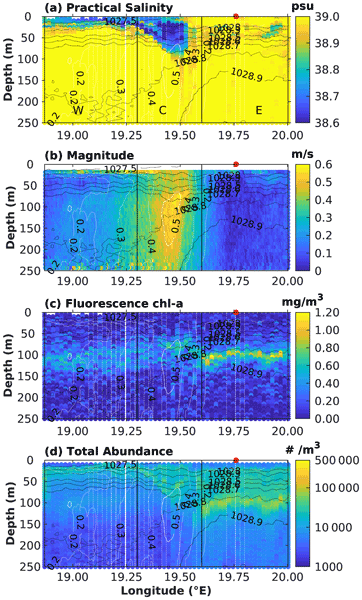
Léo Berline, Andrea Michelangelo Doglioli, Anne Petrenko, Stéphanie Barrillon, Boris Espinasse, Frederic A. C. Le Moigne, François Simon-Bot, Melilotus Thyssen, and François Carlotti
Biogeosciences, 18, 6377–6392, https://doi.org/10.5194/bg-18-6377-2021, https://doi.org/10.5194/bg-18-6377-2021, 2021
Short summary
Short summary
While the Ionian Sea is considered a nutrient-depleted and low-phytoplankton biomass area, it is a crossroad for water mass circulation. In the central Ionian Sea, we observed a strong contrast in particle distribution across a ~100 km long transect. Using remote sensing and Lagrangian simulations, we suggest that this contrast finds its origin in the long-distance transport of particles from the north, west and east of the Ionian Sea, where phytoplankton production was more intense.
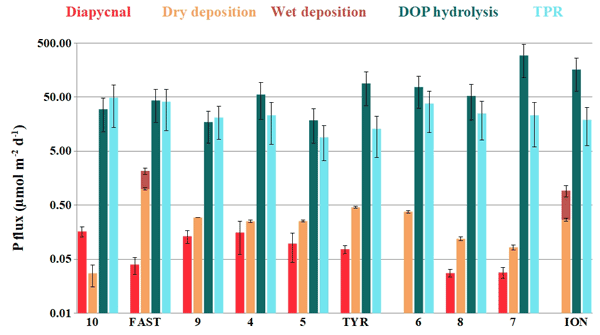
Elvira Pulido-Villena, Karine Desboeufs, Kahina Djaoudi, France Van Wambeke, Stéphanie Barrillon, Andrea Doglioli, Anne Petrenko, Vincent Taillandier, Franck Fu, Tiphanie Gaillard, Sophie Guasco, Sandra Nunige, Sylvain Triquet, and Cécile Guieu
Biogeosciences, 18, 5871–5889, https://doi.org/10.5194/bg-18-5871-2021, https://doi.org/10.5194/bg-18-5871-2021, 2021
Short summary
Short summary
We report on phosphorus dynamics in the surface layer of the Mediterranean Sea. Highly sensitive phosphate measurements revealed vertical gradients above the phosphacline. The relative contribution of diapycnal fluxes to total external supply of phosphate to the mixed layer decreased towards the east, where atmospheric deposition dominated. Taken together, external sources of phosphate contributed little to total supply, which was mainly sustained by enzymatic hydrolysis of organic phosphorus.
Cited articles
Aminot, A. and Kérouel, R.: Dosage automatique des nutriments dans les eaux marines: méthodes en flux continu, Éditions Ifremer, Méthodes d'analyse en milieu marin, 188 pp., ISBN 2-7592-0023-X, 2007.
Astraldi, M., Gasparini, G. P., and Sparnocchia, S.: The Seasonal and Interannual Variability in the Ligurian-Provençal Basin, in: Seasonal and Interannual Variability of the Western Mediterranean Sea, Coastal and Estuarine Studies, Vol. 46, edited by: La Violette, P. E., AGU – American Geophysical Union, Washington, D.C., 93–113, ISBN 978-1-118-66503-9, 1994.
Belgacem, M., Schroeder, K., Barth, A., Troupin, C., Pavoni, B., Raimbault, P., Garcia, N., Borghini, M., and Chiggiato, J.: Climatological distribution of dissolved inorganic nutrients in the western Mediterranean Sea (1981–2017), Earth Syst. Sci. Data, 13, 5915–5949, https://doi.org/10.5194/essd-13-5915-2021, 2021.
Béthoux, J. P. and Gentili, B.: Functioning of the Mediterranean Sea: past and present changes related to freshwater input and climate changes, J. Marine Syst., 18, 33–54, https://doi.org/10.1016/S0924-7963(98)00069-4, 1999.
Béthoux, J. P., Gentili, B., Raunet, J., and Tailliez, D.: Warming trend in the western Mediterranean deep water, Nature, 347, 660–662, https://doi.org/10.1038/347660a0, 1990.
Beuvier, J., Béranger, K., Lebeaupin Brossier, C., Somot, S., Sevault, F., Drillet, Y., Bourdallé-Badie, R., Ferry, N., and Lyard, F.: Spreading of the Western Mediterranean Deep Water after winter 2005: time scales and deep cyclone transport, J. Geophys. Res., 117, C07022, https://doi.org/10.1029/2011JC007679, 2012.
Bosse, A., Testor, P., Houpert, L., Damien, P., Prieur, L., Hayes, D., Taillandier, V., Durrieu de Madron, X., D'Ortenzio, F., Coppola, L., Karstensen, J., and Mortier, L.: Scales and dynamics of submesoscale coherent vortices formed by deep convection in the northwestern Mediterranean Sea, J. Geophys. Res.-Oceans, 121, 7716–7742, https://doi.org/10.1002/2016JC012144, 2016.
Bosse, A., Testor, P., Mayot, N., Prieur, L., D'Ortenzio, F., Mortier, L., Le Goff, H., Gourcuff, C., Coppola, L., Lavigne, H., and Raimbault, P.: A submesoscale coherent vortex in the Ligurian Sea: from dynamical barriers to biological implications, J. Geophys. Res.-Oceans, 122, 6196–6217, https://doi.org/10.1002/2016JC012634, 2017.
Bosse, A., Testor, P., Damien, P., Estournel, C., Marsaleix, P., Mortier, L., Prieur, L., and Taillandier, V.: Wind-forced submesoscale symmetric instability around deep convection in the northwestern Mediterranean Sea, Fluids, 6, 123, https://doi.org/10.3390/fluids6030123, 2021.
Bosse, A., Bretel, P., Le Goff, H., and Testor, P.: MOOSE-GE cruises: lowered and ship ADCP data, SEANOE [data set], https://doi.org/10.17882/99825, 2024a.
Bosse, A., Lenne, J., Testor, P., Lefèvre, D., and Durrieu de Madron, X.: Warming of Western Mediterranean Deep Water in the context of halted deep convection, CIESM Congress 2024, Palermo, Italy, October 2024, HAL-04798803, 2024b.
Bosse, A., Testor, P., Coppola, L., Bretel, P., Dausse, D., Durrieu de Madron, X., Houpert, L., Labaste, M., Le Goff, H., Mortier, L., and D'Ortenzio, F.: LION observatory data, SEANOE [data set], https://doi.org/10.17882/44411, 2025.
Clayton, T. D. and Byrne, R. H.: Spectrophotometric seawater pH measurements: total hydrogen ion concentration scale calibration of m-cresol purple and at-sea results, Deep-Sea Res. Pt. I, 40, 2115–2129, https://doi.org/10.1016/0967-0637(93)90048-8, 1993.
Cocquempot, L., Delacourt, C., Paillet, J., Riou, P., Aucan, J., Castelle, B., Charria, G., Claudet, J., Conan, P., Coppola, L., Hocdé, R., Planes, S., Raimbault, P., Savoye, N., Testut, L., and Vuillemin, R.: Coastal ocean and nearshore observation: a French case study, Front. Mar. Sci., 6, 324, https://doi.org/10.3389/fmars.2019.00324, 2019.
Conan, P., Testor, P., Estournel, C., D'Ortenzio, F., and Pujo-Pay, M.: Preface to the special section: dense water formations in the northwestern Mediterranean: from the physical forcings to the biogeochemical consequences, J. Geophys. Res.-Oceans, 123, 6749–6751, https://doi.org/10.1029/2018JC014301, 2018.
Coppola, L., Bosse, A., and Testor, P.: MOOSE-GE, French Oceanographic Cruises [data set], https://doi.org/10.18142/235, 2010.
Coppola, L., Ntoumas, M., Bozzano, R., Bensi, M., Hartman, S. E., Charcos Llorens, M., Craig, J., Rolin, J.-F., Giovanetti, G., Cano, D., Karstensen, J., Cianca, A., Toma, D., Stasch, C., Pensieri, S., Cardin, V., Tengberg, A., Petihakis, G., and Cristini, L.: Handbook of best practices for open ocean fixed observatories, European Commission, FixO3 Project, 127 pp., https://doi.org/10.25607/OBP-1488, 2016.
Coppola, L., Prieur, L., Taupier-Letage, I., Estournel, C., Testor, P., Lefèvre, D., Belamari, S., LeReste, S., and Taillandier, V.: Observation of oxygen ventilation into deep waters through targeted deployment of multiple Argo-O2 floats in the north-western Mediterranean Sea in 2013, J. Geophys. Res.-Oceans, 122, 6325–6341, https://doi.org/10.1002/2016JC012594, 2017.
Coppola, L., Legendre, L., Lefèvre, D., Prieur, L., Taillandier, V., and Diamond Riquier, E.: Seasonal and inter-annual variations of dissolved oxygen in the northwestern Mediterranean Sea (DYFAMED site), Prog. Oceanogr., 162, 187–201, https://doi.org/10.1016/j.pocean.2018.03.001, 2018.
Coppola, L., Raimbault, P., Mortier, L., and Testor, P.: Monitoring the environment in the northwestern Mediterranean Sea, Eos, 100, https://doi.org/10.1029/2019EO125951, 2019.
Coppola, L., Boutin, J., Gattuso, J.-P., Lefèvre, D., and Metzl, N.: The carbonate system in the Ligurian Sea, in: The Mediterranean Sea in the Era of Global Change 1: 30 Years of Multidisciplinary Study of the Ligurian Sea, edited by: Migon, C., Nival, P., and Sciandra, A., ISTE Science Publishing, London, 79–104, https://doi.org/10.1002/9781119706960.ch4, 2020.
Coppola, L., Diamond Riquier, E., Carval, T., Irisson, J.-O., and Desnos, C.: DYFAMED observatory data, SEANOE [data set], https://doi.org/10.17882/43749, 2025.
Cossarini, G., Lazzari, P., and Solidoro, C.: Spatiotemporal variability of alkalinity in the Mediterranean Sea, Biogeosciences, 12, 1647–1658, https://doi.org/10.5194/bg-12-1647-2015, 2015.
Cramer, W., Guiot, J., Fader, M., Garrabou, J., Gattuso, J.-P., Iglesias, A., Lange, M. A., Lionello, P., Llasat, M. C., Paz, S., Peñuelas, J., Snoussi, M., Toreti, A., Tsimplis, M. N., and Xoplaki, E.: Climate change and interconnected risks to sustainable development in the Mediterranean, Nat. Clim. Change, 8, 972–980, https://doi.org/10.1038/s41558-018-0299-2, 2018.
Darmaraki, S., Somot, S., Sevault, F., Nabat, P., Cabos Narvaez, W. D., Cavicchia, L., Djurdjevic, V., Li, L., Sannino, G., and Sein, D. V.: Future evolution of marine heatwaves in the Mediterranean Sea, Clim. Dynam., 53, 1371–1392, https://doi.org/10.1007/s00382-019-04661-z, 2019.
Dickson, A. G. and Goyet, C. (Eds.): Handbook of methods for the analysis of the various parameters of the carbon dioxide system in sea water, Version 2, ORNL/CDIAC-74, Oak Ridge National Laboratory, Oak Ridge, Tennessee, 198 pp., https://doi.org/10.2172/10107773, 1994.
Dickson, A. G., Sabine, C. L., and Christian, J. R. (Eds.): Guide to best practices for ocean CO2 measurements, PICES Special Publication 3, 191 pp., https://doi.org/10.25607/OBP-1342, 2007.
Dimier, C., Ras, J., Claustre, H., and Uitz, J.: MOOSE_GE cruises: phytoplankton pigments, SEANOE [data set], https://doi.org/10.17882/99865, 2024.
D'Ortenzio, F. and Ribera d'Alcalà, M.: On the trophic regimes of the Mediterranean Sea: a satellite analysis, Biogeosciences, 6, 139–148, https://doi.org/10.5194/bg-6-139-2009, 2009.
Durrieu de Madron, X., Ramondenc, S., Berline, L., Houpert, L., Bosse, A., Martini, S., Guidi, L., Conan, P., Curtil, C., Delsaut, N., Kunesch, S., Ghiglione, J. F., Marsaleix, P., Pujo-Pay, M., Severin, T., Testor, P., Tamburini, C., and the ANTARES Collaboration: Deep sediment resuspension and thick nepheloid layer generation by open-ocean convection, J. Geophys. Res.-Oceans, 122, 2291–2318, https://doi.org/10.1002/2016JC012062, 2017.
Durrieu de Madron, X., Heussner, S., Delsaut, N., Kunesch, S., and Menniti, C.: BILLION observatory data, SEANOE [data set], https://doi.org/10.17882/45980, 2024.
Edmond, J. M.: High precision determination of titration alkalinity and total carbon dioxide content of sea water by potentiometric titration, Deep-Sea Res., 17, 737–750, https://doi.org/10.1016/0011-7471(70)90038-0, 1970.
Escudier, R., Renault, L., Pascual, A., Brasseur, P., Chelton, D., and Beuvier, J.: Eddy properties in the Western Mediterranean Sea from satellite altimetry and a numerical simulation, J. Geophys. Res.-Oceans, 121, 3990–4006, https://doi.org/10.1002/2015JC011371, 2016.
Estournel, C., Testor, P., Damien, P., D'Ortenzio, F., Marsaleix, P., Conan, P., Kessouri, F., Durrieu de Madron, X., Coppola, L., Lellouche, J.-M., Belamari, S., Mortier, L., Ulses, C., Bouin, M.-N., and Prieur, L.: High resolution modeling of dense water formation in the north-western Mediterranean during winter 2012–2013: processes and budget, J. Geophys. Res.-Oceans, 121, 5367–5392, https://doi.org/10.1002/2016JC011935, 2016.
Feliu, G.: Étude de la structure communautaire et du rôle trophique du mésozooplancton en Méditerranée lors de deux campagnes océanographiques de grande échelle PEACETIME et MOOSE en 2017, Ph.D. thesis, Aix-Marseille Université, France, https://doi.org/10.70675/8de410fdzfb09z4413zb12fze956654c8ba6, 2020.
Fourrier, M., Coppola, L., Claustre, H., D'Ortenzio, F., Sauzède, R., and Gattuso, J.-P.: A regional neural network approach to estimate water-column nutrient concentrations and carbonate system variables in the Mediterranean Sea: CANYON-MED, Front. Mar. Sci., 7, 620, https://doi.org/10.3389/fmars.2020.00620, 2020.
Fourrier, M., Coppola, L., D'Ortenzio, F., Migon, C., and Gattuso, J.-P.: Impact of intermittent convection in the northwestern Mediterranean Sea on oxygen content, nutrients, and the carbonate system, J. Geophys. Res.-Oceans, 127, e2022JC018615, https://doi.org/10.1029/2022JC018615, 2022.
Giorgi, F.: Climate change hot-spots, Geophys. Res. Lett., 33, L08707, https://doi.org/10.1029/2006GL025734, 2006.
Guinaldo, T., Voldoire, A., Waldman, R., Saux Picart, S., and Roquet, H.: Response of the sea surface temperature to heatwaves during the France 2022 meteorological summer, Ocean Sci., 19, 629–647, https://doi.org/10.5194/os-19-629-2023, 2023.
Harris, R., Wiebe, P., Lenz, J., Skjoldal, H. R., and Huntley, M. (Eds.): ICES Zooplankton Methodology Manual, Academic Press, London, ISBN 9780123276452, 2000.
Hebden, M. and Buck, J.: SeaDataNet data management protocols for glider data, D.9.14, Version 1.2, SeaDataNet, 33 pp., https://doi.org/10.25607/OBP-1870, 2019.
Heimbürger, L.-E., Lavigne, H., Migon, C., D'Ortenzio, F., Estournel, C., Coppola, L., and Miquel, J.-C.: Temporal variability of vertical export flux at the DYFAMED time-series station (northwestern Mediterranean Sea), Prog. Oceanogr., 119, 59–67, https://doi.org/10.1016/j.pocean.2013.08.005, 2013.
Herrmann, M., Auger, P.-A., Ulses, C., and Estournel, C.: Long-term monitoring of ocean deep convection using multisensors altimetry and ocean color satellite data, J. Geophys. Res.-Oceans, 122, 1457–1475, 2017.
Holmes, R. M., Aminot, A., Kérouel, R., Hooker, B. A., and Peterson, B. J.: A simple and precise method for measuring ammonium in marine and freshwater ecosystems, Can. J. Fish. Aquat. Sci., 56, 1801–1808, https://doi.org/10.1139/f99-128, 1999.
Houpert, L., Durrieu de Madron, X., Testor, P., Bosse, A., D'Ortenzio, F., Bouin, M.-N., Dausse, D., Le Goff, H., Kunesch, S., Labaste, M., Coppola, L., Mortier, L., and Raimbault, P.: Observations of open-ocean deep convection in the northwestern Mediterranean Sea: seasonal and interannual variability of mixing and deep water masses for the 2007–2013 period, J. Geophys. Res.-Oceans, 121, 8139–8171, https://doi.org/10.1002/2016JC011857, 2016.
IPCC: Climate Change 2022: Mitigation of Climate Change. Contribution of Working Group III to the Sixth Assessment Report of the Intergovernmental Panel on Climate Change, Cambridge University Press, Cambridge, UK and New York, NY, USA, https://doi.org/10.1017/9781009157926, 2022.
Irisson, J.-O., Salinas, L., Colin, S., Complex Team, and Picheral, M.: EcoTaxa: a tool to support the taxonomic classification of large datasets through supervised machine learning, SFEcologie 2022, Metz, France, Metz, hal-04026447, 2022.
Ivanovic, R. F., Valdes, P. J., Gregoire, L., Flecker, R., and Gutjahr, M.: Sensitivity of modern climate to the presence, strength and salinity of Mediterranean–Atlantic exchange in a global general circulation model, Clim. Dynam., 42, 859–877, https://doi.org/10.1007/s00382-013-1680-5, 2014.
Jalabert, L., Elineau, A., Brandão, M., and Picheral, M.: Zooscan-Zooprocess user manual and procedures at the Quantitative Imaging Platform of Villefranche-sur-Mer (PIQv) (1.3), Zenodo, https://doi.org/10.5281/zenodo.15114134, 2025a.
Jalabert, L., Lombard, F., and Picheral, M.: FlowCam Zooprocess user manual and procedures at the Quantitative Imaging Platform of Villefranche-sur-Mer (PIQv), Zenodo, https://doi.org/10.5281/zenodo.15113735, 2025b.
Josey, S. A. and Schroeder, K.: Declining winter heat loss threatens continuing ocean convection at a Mediterranean dense water formation site, Environ. Res. Lett., 18, 024005, https://doi.org/10.1088/1748-9326/aca9e4, 2023.
Kassis, D., Nittis, K., and Perivoliotis, L.: Hydrodynamic variability based on the multi-parametric POSEIDON Pylos observatory of the south Ionian Sea, Ocean Sci. Discuss., 10, 883–921, https://doi.org/10.5194/osd-10-883-2013, 2013.
Kermabon, C., Lherminier, P., and Le Bot, P.: CASCADE V7.2: Software for processing, qualifying and visualizing SADCP data, User's guide, https://doi.org/10.13155/100082, 2023.
Kessouri, F., Ulses, C., Estournel, C., Marsaleix, P., Severin, T., Pujo-Pay, M., Caparros, J., Raimbault, P., Pasqueron de Fommervault, O., D'Ortenzio, F., Taillandier, V., Testor, P., and Conan, P.: Nitrogen and phosphorus budgets in the Northwestern Mediterranean deep convection region, J. Geophys. Res.-Oceans, 122, https://doi.org/10.1002/2016JC012665, 2017.
Kessouri, F., Ulses, C., Estournel, C., Marsaleix, P., D'Ortenzio, F., Severin, T., Taillandier, V., and Conan, P.: Vertical mixing effects on phytoplankton dynamics and organic carbon export in the western Mediterranean Sea, J. Geophys. Res.-Oceans, 123, 1647–1669, https://doi.org/10.1002/2016JC012669, 2018.
Kiko, R., Picheral, M., Antoine, D., Babin, M., Berline, L., Biard, T., Boss, E., Brandt, P., Carlotti, F., Christiansen, S., Coppola, L., de la Cruz, L., Diamond-Riquier, E., Durrieu de Madron, X., Elineau, A., Gorsky, G., Guidi, L., Hauss, H., Irisson, J.-O., Karp-Boss, L., Karstensen, J., Kim, D., Lekanoff, R. M., Lombard, F., Lopes, R. M., Marec, C., McDonnell, A. M. P., Niemeyer, D., Noyon, M., O'Daly, S. H., Ohman, M. D., Pretty, J. L., Rogge, A., Searson, S., Shibata, M., Tanaka, Y., Tanhua, T., Taucher, J., Trudnowska, E., Turner, J. S., Waite, A., and Stemmann, L.: A global marine particle size distribution dataset obtained with the Underwater Vision Profiler 5, Earth Syst. Sci. Data, 14, 4315–4337, https://doi.org/10.5194/essd-14-4315-2022, 2022.
Krahmann, G. and Schott, F.: Long-term increases in Western Mediterranean salinities and temperatures: anthropogenic and climatic sources, Geophys. Res. Lett., 25, 4209–4212, 1998.
Krom, M. D., Herut, B., and Mantoura, R. F. C.: Nutrient budget for the Eastern Mediterranean: implications for phosphorus limitation, Limnol. Oceanogr., 49, 1582–1592, https://doi.org/10.4319/lo.2004.49.5.1582, 2004.
Lejeusne, C., Chevaldonné, P., Pergent-Martini, C., Boudouresque, C. F., and Pérez, T.: Climate change effects on a miniature ocean: the highly diverse, highly impacted Mediterranean Sea, Trends Ecol. Evol., 25, 250–260, 2010.
Lescot, M., Lezzoche, N., Laux, L., Romac, S., Guilloux, L., Chevillon, E., Bodson, C., Desnos, C., Elineau, A., Jalabert, L., Llopis Monferrer, N., Mendez Sandin, M., Vannier, T., Vernette, C., Villar, E., Lombard, F., Carlotti, F., Irisson, J.-O., Guidi, L., Bosse, A., Testor, P., Coppola, L., and Not, F.: A holistic perspective on planktonic communities across the Northwestern Mediterranean Sea, Front. Mar. Sci., 13, 1755855, https://doi.org/10.3389/fmars.2026.1755855, 2026.
Liu, X., Patsavas, M. C., and Byrne, R. H.: Purification and characterization of meta-cresol purple for spectrophotometric seawater pH measurements, Environ. Sci. Technol., 45, 4862–4868, https://doi.org/10.1021/es200665d, 2011.
Llopis Monferrer, N., Biard, T., Sandin, M. M., Lombard, F., Picheral, M., Elineau, A., Guidi, L., Leynaert, A., Tréguer, P., and Not, F.: Siliceous Rhizaria abundances and diversity in the Mediterranean Sea assessed by combined imaging and metabarcoding approaches, Front. Mar. Sci., 9, 895995, https://doi.org/10.3389/fmars.2022.895995, 2022.
Many, G., Ulses, C., Estournel, C., and Marsaleix, P.: Particulate organic carbon dynamics in the Gulf of Lion shelf (NW Mediterranean) using a coupled hydrodynamic–biogeochemical model, Biogeosciences, 18, 5513–5538, https://doi.org/10.5194/bg-18-5513-2021, 2021.
Margirier, F., Testor, P., Heslop, E., Mallil, K., Bosse, A., Houpert, L., Mortier, L., Bouin, M. N., Coppola, L., D'Ortenzio, F., Durrieu de Madron, X., Mourre, B., Prieur, L., Raimbault, P., and Taillandier, V.: Abrupt warming and salinification of intermediate waters interplays with decline of deep convection in the Northwestern Mediterranean Sea, Sci. Rep., 10, 20923, 2020.
Marsaleix, P., Auclair, F., Floor, J. W., Herrmann, M. J., Estournel, C., Pairaud, I., and Ulses, C.: Energy conservation issues in sigma-coordinate free-surface ocean models, Ocean Model., 20, 61–89, https://doi.org/10.1016/j.ocemod.2007.07.005, 2008.
Mayot, N., D'Ortenzio, F., Taillandier, V., Prieur, L., de Fommervault, O. P., Claustre, H., Bosse, A., Testor, P., and Conan, P.: Physical and biogeochemical controls of the phytoplankton blooms in North Western Mediterranean Sea: a multiplatform approach over a complete annual cycle (2012–2013 DEWEX experiment), J. Geophys. Res.-Oceans, 122, 9999–10019, 2017.
McTaggart, K. E., Johnson, G. C., Delahoyde, M. C., and Swift, J. H.: Notes on CTD/O2 data acquisition and processing using Sea-Bird hardware and software (as available), in: The GO-SHIP Repeat Hydrography Manual: A Collection of Expert Reports and Guidelines, Version 1, edited by: Hood, E. M., Sabine, C. L., and Sloyan, B. M., IOCCP Report Number 14, ICPO Publication Series Number 134, 10 pp., https://doi.org/10.25607/OBP-1348, 2010.
MedECC: Climate and Environmental Change in the Mediterranean Basin – Current Situation and Risks for the Future, First Mediterranean Assessment Report, edited by: Cramer, W., Guiot, J., and Marini, K., Union for the Mediterranean, Plan Bleu, UNEP/MAP, Marseille, France, 632 pp., ISBN 978-2-9577416-0-1, https://doi.org/10.5281/zenodo.4768833, 2020.
Merlivat, L., Boutin, J., Antoine, D., Beaumont, L., Golbol, M., and Vellucci, V.: Increase of dissolved inorganic carbon and decrease in pH in near-surface waters in the Mediterranean Sea during the past two decades, Biogeosciences, 15, 5653–5662, https://doi.org/10.5194/bg-15-5653-2018, 2018.
Metzl, N., Fin, J., Lo Monaco, C., Mignon, C., Alliouane, S., Antoine, D., Bourdin, G., Boutin, J., Bozec, Y., Conan, P., Coppola, L., Diaz, F., Douville, E., Durrieu de Madron, X., Gattuso, J.-P., Gazeau, F., Golbol, M., Lansard, B., Lefèvre, D., Lefèvre, N., Lombard, F., Louanchi, F., Merlivat, L., Olivier, L., Petrenko, A., Petton, S., Pujo-Pay, M., Rabouille, C., Reverdin, G., Ridame, C., Tribollet, A., Vellucci, V., Wagener, T., and Wimart-Rousseau, C.: A synthesis of ocean total alkalinity and dissolved inorganic carbon measurements from 1993 to 2022: the SNAPO-CO2-v1 dataset, Earth Syst. Sci. Data, 16, 89–120, https://doi.org/10.5194/essd-16-89-2024, 2024.
Millot, C.: Circulation in the Western Mediterranean Sea, J. Marine Syst., 20, 423–442, https://doi.org/10.1016/S0924-7963(98)00078-5, 1999.
Miquel, J.-C., Martín, J., Gasser, B., Rodriguez-y-Baena, A., Toubal, T., and Fowler, S. W.: Dynamics of particle flux and carbon export in the northwestern Mediterranean Sea: a two decade time-series study at the DYFAMED site, Prog. Oceanogr., 91, 461–481, https://doi.org/10.1016/j.pocean.2011.07.018, 2011.
Moon, J.-Y., Lee, K., Tanhua, T., Kress, N., and Kim, I.-N.: Temporal nutrient dynamics in the Mediterranean Sea in response to anthropogenic inputs, Geophys. Res. Lett., 43, 5243–5251, https://doi.org/10.1002/2016GL069483, 2016.
Mourre, B., Clementi, E., Coppini, G., Coppola, L., Korres, G., Novellino, A., Álvarez-Fanjul, E., Daniel, P., Zodiatis, G., Schroeder, K., and Tintoré, J.: Mediterranean observing and forecasting systems, in: Oceanography of the Mediterranean Sea, edited by: Schroeder, K. and Chiggiato, J., Elsevier, 335–386, https://doi.org/10.1016/B978-0-12-823692-5.00001-7, 2023.
Parras-Berrocal, I. M., Vázquez, R., Cabos, W., Sein, D. V., Álvarez, O., Bruno, M., and Izquierdo, A.: Surface and intermediate water changes triggering the future collapse of deep water formation in the North Western Mediterranean, Geophys. Res. Lett., 49, e2021GL095404, https://doi.org/10.1029/2021GL095404, 2022.
Pasqueron de Fommervault, O., Migon, C., D'Ortenzio, F., Ribera d'Alcalà, M., and Coppola, L.: Temporal variability of nutrient concentrations in the northwestern Mediterranean sea (DYFAMED time-series station), Deep-Sea Res. Pt. I, 100, 1–12, https://doi.org/10.1016/j.dsr.2015.02.006, 2015.
Pearlman, J., Bushnell, M., Coppola, L., Karstensen, J., Buttigieg, P. L., Pearlman, F., Simpson, P., Barbier, M., Muller-Karger, F. E., Munoz-Mas, C., Pissierssens, P., Chandler, C., Hermes, J., Heslop, E., Jenkyns, R., Achterberg, E. P., Bensi, M., Bittig, H. C., Blandin, J., Bosch, J., Bourles, B., Bozzano, R., Buck, J. J. H., Burger, E. F., Cano, D., Cardin, V., Charcos Llorens, M., Cianca, A., Chen, H., Cusack, C., Delory, E., Garello, R., Giovanetti, G., Harscoat, V., Hartman, S., Heitsenrether, R., Jirka, S., Lara-Lopez, A., Lantéri, N., Leadbetter, A., Manzella, G., Maso, J., McCurdy, A., Moussat, E., Ntoumas, M., Pensieri, S., Petihakis, G., Pinardi, N., Pouliquen, S., Przeslawski, R., Roden, N. P., Silke, J., Tamburri, M. N., Tang, H., Tanhua, T., Telszewski, M., Testor, P., Thomas, J., Waldmann, C., and Whoriskey, F.: Evolving and sustaining ocean best practices and standards for the next decade, Front. Mar. Sci., 6, 277, https://doi.org/10.3389/fmars.2019.00277, 2019.
Perruchon, A., Zaccomer, H., and Lombard, F.: PlanktoScope protocol for plankton imaging, protocols.io, https://doi.org/10.17504/protocols.io.bp2l6bq3zgqe/v5, 2025.
Picheral, M. and Mériguet, Z.: Description of the metadata and data issued from the Zooprocess and UVPapp applications and imported or exported from the EcoTaxa application, Zenodo, https://doi.org/10.5281/zenodo.15827159, 2025.
Picheral, M., Guidi, L., Stemmann, L., Karl, D. M., Iddaoud, G., and Gorsky, G.: The Underwater Vision Profiler 5: an advanced instrument for high spatial resolution studies of particle size spectra and zooplankton, Limnol. Oceanogr.-Meth., 8, 462–473, https://doi.org/10.4319/lom.2010.8.462, 2010.
Picheral, M., Colin, S., and Irisson, J.-O.: EcoTaxa, a tool for the taxonomic classification of images (Version v2.8.1) [Computer software], Zenodo [code], https://doi.org/10.5281/zenodo.15482365, 2025.
Raimbault, P., Neveux, J., and Lantoine, F.: Dosage rapide de la chlorophylle a et des phéopigments a par fluorimétrie après extraction au méthanol. Comparaison avec la méthode classique d'extraction à l'acétone, Oceanis, 30, 189–205, 2004.
Ruti, P. M., Somot, S., Giorgi, F., Dubois, C., Flaounas, E., Obermann, A., Dell'Aquila, A., Pisacane, G., Harzallah, A., Lombardi, E., Ahrens, B., Akhtar, N., Alias, A., Arsouze, T., Aznar, R., Bastin, S., Bartholy, J., Béranger, K., Beuvier, J., Bouffies-Cloché, S., Brauch, J., Cabos, W., Calmanti, S., Calvet, J.-C., Carillo, A., Conte, D., Coppola, E., Djurdjevic, V., Drobinski, P., Elizalde-Arellano, A., Gaertner, M., Galàn, P., Gallardo, C., Gualdi, S., Goncalves, M., Jorba, O., Jordà, G., L'Heveder, B., Lebeaupin-Brossier, C., Li, L., Liguori, G., Lionello, P., Maciàs, D., Nabat, P., Onol, B., Raikovic, B., Ramage, K., Sevault, F., Sannino, G., Struglia, M. V., Sanna, A., Torma, C., and Vervatis, V.: MED-CORDEX initiative for Mediterranean climate studies, B. Am. Meteorol. Soc., 97, 1187–1208, https://doi.org/10.1175/BAMS-D-14-00176.1, 2016.
Santi, I., Casotti, R., Comtet, T., Cunliffe, M., Koulouri, Y., Macheriotou, L., Not, F., Obst, M., Pavloudi, C., Romac, S., Thiebaut, E., Vanaverbeke, J., and Pade, N.: European Marine Omics Biodiversity Observation Network (EMO BON) Handbook, (Version 1.0), EMBRC-ERIC, Paris, France, 63 pp., https://doi.org/10.25607/OBP-1653, 2021.
Schroeder, K., Chiggiato, J., Bryden, H. L., Borghini, M., and Ben Ismail, S.: Abrupt climate shift in the Western Mediterranean Sea, Sci. Rep., 7, 41721, https://doi.org/10.1038/s41598-017-04455-5, 2017.
Send, U., Font, J., Krahmann, G., Millot, C., Rhein, M., and Tintoré, J.: Recent advances in observing the physical oceanography of the western Mediterranean Sea, Prog. Oceanogr., 44, 37–64, https://doi.org/10.1016/S0079-6611(99)00020-8, 1999.
Somot, S., Sevault, F., and Déqué, M.: Transient climate change scenario simulation of the Mediterranean Sea for the twenty-first century using a high-resolution ocean circulation model, Clim. Dynam., 27, 851–879, https://doi.org/10.1007/s00382-006-0167-z, 2006.
Somot, S., Houpert, L., Sevault, F., Testor, P., Bosse, A., Taupier-Letage, I., Bouin, M. N., Waldman, R., Cassou, C., Sanchez-Gomez, E., Durrieu de Madron, X., Adloff, F., Nabat, P., and Herrmann, M.: Characterizing, modelling and understanding the climate variability of the deep water formation in the North-Western Mediterranean Sea, Clim. Dynam., 51, 1179–1210, https://doi.org/10.1007/s00382-016-3295-0, 2018.
Soto-Navarro, J., Jordà, G., Amores, A., Cabos, W., Somot, S., Sevault, F., Macías, D., Djurdjevic, V., Sannino, G., Li, L., and Sein, D.: Evolution of Mediterranean Sea water properties under climate change scenarios in the Med-CORDEX ensemble, Clim. Dynam., 54, 2135–2165, https://doi.org/10.1007/s00382-019-05105-4, 2020.
Sparnocchia, S., Manzella, G. M. R., and La Violette, P. E.: The interannual and seasonal variability of the MAW and LIW core properties in the Western Mediterranean Sea, in: Seasonal and Interannual Variability of the Western Mediterranean Sea, Coastal and Estuarine Studies, edited by: La Violette, P. E., Vol. 46, AGU, Washington, D.C., 117–134, ISBN 978-1-118-66503-9, 1994.
Stabholz, M., Durrieu de Madron, X., Canals, M., Khripounoff, A., Taupier-Letage, I., Testor, P., Heussner, S., Kerhervé, P., Delsaut, N., Houpert, L., Lastras, G., and Dennielou, B.: Impact of open-ocean convection on particle fluxes and sediment dynamics in the deep margin of the Gulf of Lions, Biogeosciences, 10, 1097–1116, https://doi.org/10.5194/bg-10-1097-2013, 2013.
Testor, P., Bosse, A., Houpert, L., Margirier, F., Mortier, L., Le Goff, H., Dausse, D., Labaste, M., Karstensen, J., Hayes, D., Olita, A., Ribotti, A., Schroeder, K., Chiggiato, J., Onken, R., Heslop, E., Mourre, B., D'Ortenzio, F., Mayot, N., Lavigne, H., de Fommervault, O., Coppola, L., Prieur, L., Taillandier, V., Durrieu de Madron, X., Bourrin, F., Many, G., Damien, P., Estournel, C., Marsaleix, P., Taupier-Letage, I., Raimbault, P., Waldman, R., Bouin, M.-N., Giordani, H., Caniaux, G., Somot, S., Ducrocq, V., and Conan, P.: Multiscale observations of deep convection in the northwestern Mediterranean Sea during winter 2012–2013 using multiple platforms, J. Geophys. Res.-Oceans, 123, 1745–1776, https://doi.org/10.1002/2016JC012671, 2018.
Tintoré, J., Vizoso, G., Casas, B., Heslop, E., Pascual, A., Orfila, A., Ruiz, S., Martínez-Ledesma, M., Torner, M., Cusí, S., Diedrich, A., Balaguer, P., Gómez-Pujol, L., Álvarez-Ellacuria, A., Gómara, S., Sebastian, K., Lora, S., Beltrán, J. P., Renault, L., Juzà, M., Álvarez, D., March, D., Garau, B., Castilla, C., Cañellas, T., Roque, D., Lizarán, I., Pitarch, S., Carrasco, M. A., Lana, A., Mason, E., Escudier, R., Conti, D., Sayol, J. M., Barceló, B., Alemany, F., Reglero, P., Massuti, E., Vélez-Belchí, P., Ruiz, J., Oguz, T., Gómez, M., Álvarez, E., Ansorena, L., and Manriquez, M.: SOCIB: the Balearic Islands Coastal Ocean Observing and Forecasting System responding to science, technology and society needs, Mar. Technol. Soc. J., 47, 101–117, https://doi.org/10.4031/MTSJ.47.1.10, 2013.
Uchida, H., Johnson, G. C., and McTaggart, K. E.: CTD oxygen sensor calibration procedures, in: The GO-SHIP Repeat Hydrography Manual: A Collection of Expert Reports and Guidelines, IOCCP Report No. 14, ICPO Publication Series No. 134, IOCCP, https://doi.org/10.25607/OBP-1344, 2010.
Ulses, C., Auger, P.-A., Soetaert, K., Marsaleix, P., Diaz, F., Coppola, L., Herrmann, M. J., Kessouri, F., and Estournel, C.: Budget of organic carbon in the North-Western Mediterranean open sea over the period 2004–2008 using 3-D coupled physical-biogeochemical modeling, J. Geophys. Res.-Oceans, 121, 7026–7055, https://doi.org/10.1002/2016JC011818., 2016
Ulses, C., Estournel, C., Fourrier, M., Coppola, L., Kessouri, F., Lefèvre, D., and Marsaleix, P.: Oxygen budget of the north-western Mediterranean deep-convection region, Biogeosciences, 18, 937–960, https://doi.org/10.5194/bg-18-937-2021, 2021.
Ulses, C., Estournel, C., Marsaleix, P., Soetaert, K., Fourrier, M., Coppola, L., Lefèvre, D., Touratier, F., Goyet, C., Guglielmi, V., Kessouri, F., Testor, P., and Durrieu de Madron, X.: Seasonal dynamics and annual budget of dissolved inorganic carbon in the northwestern Mediterranean deep-convection region, Biogeosciences, 20, 4683–4710, https://doi.org/10.5194/bg-20-4683-2023, 2023.
Vernette, C., Henry, N., Lecubin, J., de Vargas, C., Hingamp, P., and Lescot, M.: The Ocean Barcode Atlas: a web service to explore the biodiversity and biogeography of marine organisms, Mol. Ecol. Resour., 21, 1347–1358, 2021.
Waldman, R., Somot, S., Herrmann, M., Testor, P., Estournel, C., Sevault, F., Prieur, L., Mortier, L., Coppola, L., Taillandier, V., Conan, P., and Dausse, D.: Estimating dense water volume and its evolution for the year 2012–2013 in the North-western Mediterranean Sea: an Observing System Simulation Experiment approach, J. Geophys. Res.-Oceans, 121, 6696–6716, https://doi.org/10.1002/2016JC011694, 2016.
Waldman, R., Somot, S., Herrmann, M., Bosse, A., Caniaux, G., Estournel, C., Houpert, L., Prieur, L., Sevault, F., and Testor, P.: Modelling of the intense 2012–2013 dense water formation event in the northwestern Mediterranean Sea: evaluation with an ensemble simulation approach, J. Geophys. Res.-Oceans, 122, https://doi.org/10.1002/2016JC012437, 2017.
Waldman, R., Brüggemann, N., Bosse, A., Sevault, F., Somot, S., and Spall, M.: Overturning the Mediterranean thermohaline circulation, Geophys. Res. Lett., 45, 8407–8415, https://doi.org/10.1029/2018GL078502, 2018.
Williams, P. J. leB and Jenkinson, N. W.: A transportable microprocessor-controlled precise Winkler titration suitable for field station and shipboard use, Limnol. Oceanogr., 27, 576–584, https://doi.org/10.4319/lo.1982.27.3.0576, 1982.
Wimart-Rousseau, C., Wagener, T., Bosse, A., Raimbault, P., Coppola, L., Fourrier, M., Ulses, C., and Lefèvre, D.: Assessing seasonal and interannual changes in carbonate chemistry across two time-series sites in the North Western Mediterranean Sea, Front. Mar. Sci., 10, 1281003, https://doi.org/10.3389/fmars.2023.1281003, 2023.
Yao, K. M., Marcou, O., Goyet, C., Guglielmi, V., Touratier, F., and Savy, J.-P.: Time variability of the north-western Mediterranean Sea pH over 1995–2011, Mar. Environ. Res., 116, 51–60, https://doi.org/10.1016/j.marenvres.2016.02.016, 2016.
Short summary
The Mediterranean Ocean Observing System for the Environment program investigated the fast-changing northwestern Mediterranean through annual cruises from 2010 to 2024. Using consistent surface-to-seafloor measurements, checked against fixed and autonomous platforms, we find intermediate and deep waters warming and getting saltier, oxygen declining and dissolved carbon rising, indicating progressing acidification. These trends can reshape ecosystems and stress the need for sustained monitoring.
The Mediterranean Ocean Observing System for the Environment program investigated the...


Altmetrics
Final-revised paper
Preprint