the Creative Commons Attribution 4.0 License.
the Creative Commons Attribution 4.0 License.
 | 09 Sep 2026
Satellite-based inversion of global methane fluxes: capabilities and implications of GOSAT-2 measurements

Yosuke Niwa
Yukio Yoshida
Hiroshi Suto
Kei Shiomi
Akihide Kamei
Fumie Kataoka
Isamu Morino
Hibiki M. Noda
Hirofumi Ohyama
Tazu Saeki
Yu Someya
Hisashi Yashiro
Tsuneo Matsunaga
Related authors
Cities need accurate emission estimates for climate action. We compared five emission inventories over the Greater Tokyo Area using measurements from four sites and an atmospheric transport model. We found that measurements at the four sites show distinct features of the inventories in emission amount and spatial distribution. Site choice is important for evaluating urban emissions. These findings can help improve emission inventories, future urban observations and simulations.
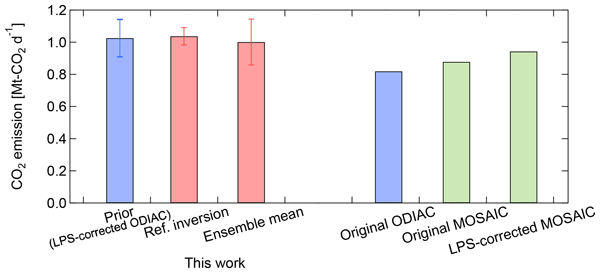
Cities need accurate emission estimates for climate action. We compared five emission inventories over the Greater Tokyo Area using measurements from four sites and an atmospheric transport model. We found that measurements at the four sites show distinct features of the inventories in emission amount and spatial distribution. Site choice is important for evaluating urban emissions. These findings can help improve emission inventories, future urban observations and simulations.
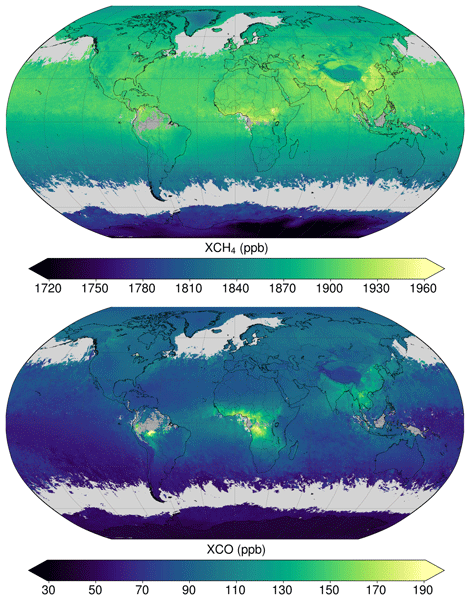
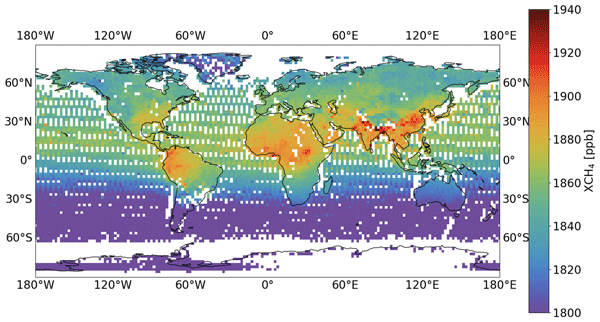
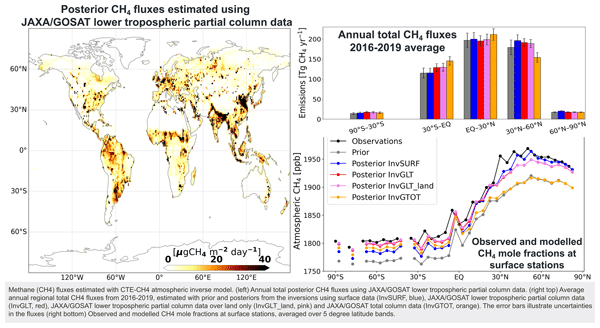
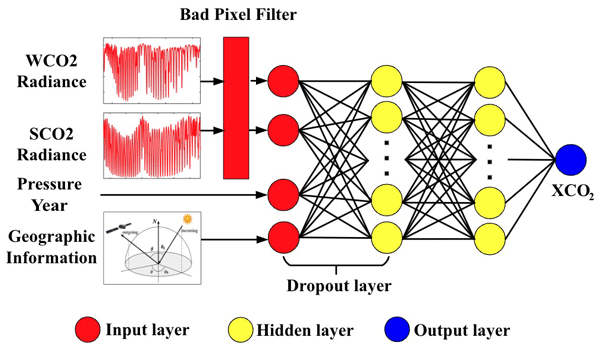
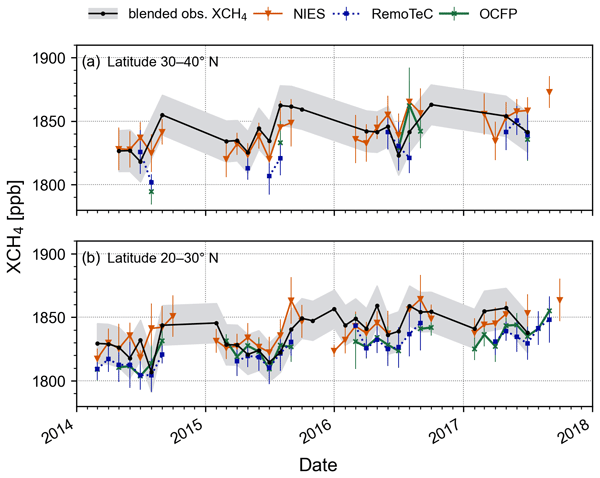
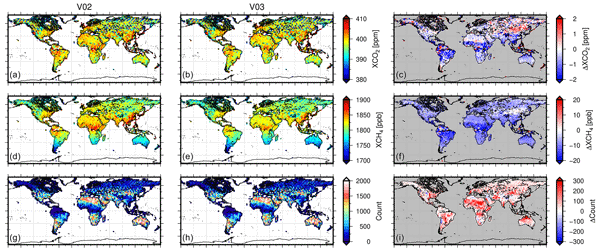
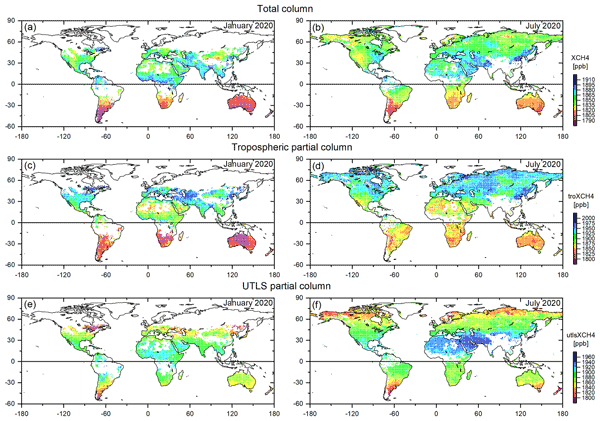
The Greenhouse Gases Observing Satellite-2 (GOSAT-2) is a satellite dedicated to measuring concentrations of greenhouse gases from space. Since its launch, the increase of CH4 and CO2 concentrations in the atmosphere is clear. The datasets obtained from GOSAT-2 are used in the Copernicus atmospheric services to monitor the climate, in light of the Paris Agreement. Here we present robust datasets of these gases from GOSAT-2, including a novel machine learning approach to data quality filtering.