Articles | Volume 18, issue 5
https://doi.org/10.5194/essd-18-3147-2026
© Author(s) 2026. This work is distributed under
the Creative Commons Attribution 4.0 License.
the Creative Commons Attribution 4.0 License.
https://doi.org/10.5194/essd-18-3147-2026
© Author(s) 2026. This work is distributed under
the Creative Commons Attribution 4.0 License.
the Creative Commons Attribution 4.0 License.
Data description article
| 
12 May 2026
Data description article |
| 12 May 2026
| 12 May 2026
A comprehensive database of thawing permafrost locations across Alaska: version 2.0.0
Hailey Webb
CORRESPONDING AUTHOR

Renewable and Sustainable Energy Institute, University of Colorado Boulder, Boulder, CO 80303, USA
Ecology and Evolutionary Biology, University of Colorado Boulder, Boulder, CO 80302, USA
Ethan Pierce
Thayer School of Engineering, Dartmouth College, Hanover, NH 03755, USA
Benjamin W. Abbott
Department of Plant & Wildlife Sciences, Brigham Young University, Provo, UT 84602, USA
William B. Bowden
Rubenstein School of Environment and Natural Resources, University of Vermont, Burlington, VT 05401, USA
Yaping Chen
School of Ecology, Sun Yat-sen University, Shenzhen 518107, China
Yating Chen
College of Geography and Environment, Shandong Normal University, Jinan, 250014, China
Thomas A. Douglas
U.S. Army Cold Regions Research and Engineering Laboratory, Fort Wainwright, AK 99703, USA
Joel F. Eklof
Department of Environmental Studies and Sciences, University of Puget Sound, Tacoma, WA 98416, USA
Department of Civil and Environmental Engineering, University of Washington, Seattle, WA 98195, USA
Eugénie S. Euskirchen
Institute of Arctic Biology, University of Alaska Fairbanks, Fairbanks, AK 99775, USA
Moritz Langer
Department of Earth Sciences, Vrije Universiteit Amsterdam, De Boelelaan 1085, 1081HV Amsterdam, the Netherlands
Alfred Wegener Institute Helmholtz Centre for Polar and Marine Research, Permafrost Research Section, 14473 Potsdam, Germany
Isla H. Myers-Smith
Department of Forest & Conservation Sciences, Faculty of Forestry, University of British Columbia, Vancouver, British Columbia, V6T 1Z4, Canada
Irina Overeem
Institute of Arctic and Alpine Research, University of Colorado Boulder, Boulder, CO 80303, USA
Jens Strauss
Alfred Wegener Institute Helmholtz Centre for Polar and Marine Research, Permafrost Research Section, 14473 Potsdam, Germany
Katey Walter Anthony
Water and Environmental Research Center, University of Alaska Fairbanks, Fairbanks, AK 99775, USA
Kang Wang
School of Geographic Sciences, East China Normal University, Shanghai 200241, People's Republic of China
Matthew A. Whitley
Little Place Labs Ltd, 128 City Road, London EC1V 2NX, United Kingdom
Merritt R. Turetsky
Renewable and Sustainable Energy Institute, University of Colorado Boulder, Boulder, CO 80303, USA
Ecology and Evolutionary Biology, University of Colorado Boulder, Boulder, CO 80302, USA
Related authors
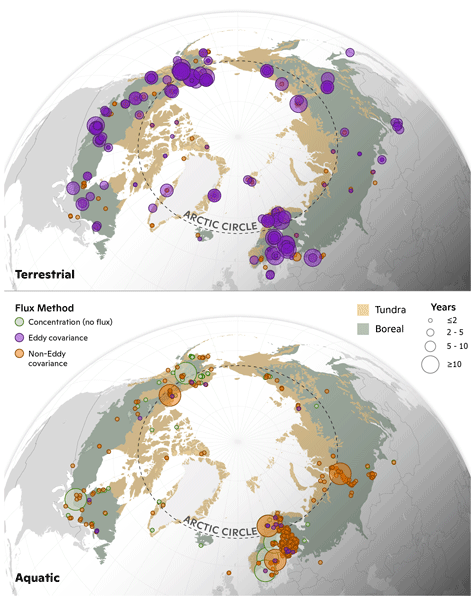
Anna-Maria Virkkala, Isabel Wargowsky, Judith Vogt, McKenzie A. Kuhn, Simran Madaan, Tiffany Windholz, Kyle A. Arndt, Gerard Rocher-Ros, Mathias Göckede, David Olefeldt, Edward A. G. Schuur, David Bastviken, Richard O'Keefe, Brendan M. Rogers, Jennifer D. Watts, Kelcy Kent, Kristoffer Aalstad, Kelly Aho, Joonatan Ala-Könni, Haley Alcock, Inge Althuizen, Christopher D. Arp, Jun Asanuma, Mika Aurela, Sivakiruthika Balathandayuthabani, Katrin Attermeyer, Alan Barr, Maialen Barret, Ochirbat Batkhishig, Christina Biasi, Mats P. Björkman, Andrew Black, Elena Blanc-Betes, Pascal Bodmer, Julia Boike, Abdullah Bolek, Frédéric Bouchard, Ingeborg Bussmann, Lea Cabrol, Eleonora Canfora, Sean Carey, Karel Castro-Morales, Namyi Chae, Andreas Christen, Torben R. Christensen, Casper T. Christiansen, Housen Chu, Graham Clark, Francois Clayer, Patrick Crill, Christopher Cunada, Scott J. Davidson, Joshua F. Dean, Sigrid Dengel, Matteo Detto, Catherine Dieleman, Florent Domine, Egor Dyukarev, Colin Edgar, Bo Elberling, Craig A. Emmerton, Eugenie Euskirchen, Grant Falvo, Thomas Friborg, Michelle Garneau, Mariasilvia Giamberini, Mikhail V. Glagolev, Miquel A. Gonzalez-Meler, Gustaf Granath, Jón Guðmundsson, Konsta Happonen, Yoshinobu Harazono, Lorna Harris, Josh Hashemi, Nicholas Hasson, Janna Heerah, Liam Heffernan, Manuel Helbig, Warren Helgason, Michal Heliasz, Greg Henry, Geert Hensgens, Tetsuya Hiyama, Beth Holmes, Macall Hock, David Holl, Jutta Holst, Thomas Holst, Gabriel Hould-Gosselin, Elyn Humphreys, Jacqueline Hung, Jussi Huotari, Hiroki Ikawa, Danil V. Ilyasov, Mamoru Ishikawa, Go Iwahana, Hiroki Iwata, Marcin Antoni Jackowicz-Korczynski, Joachim Jansen, Järvi Järveoja, Vincent E. J. Jassey, Rasmus Jensen, Katharina Jentzsch, Robert G. Jespersen, Carl-Fredrik Johannesson, Cheristy P. Jones, Anders Jonsson, Ji Young Jung, Sari Juutinen, Evan Kane, Jan Karlsson, Sergey Karsanaev, Kuno Kasak, Julia Kelly, Kasha Kempton, Marcus Klaus, George W. Kling, Natascha Kljun, Jacqueline Knutson, Hideki Kobayashi, John Kochendorfer, Kukka-Maaria Kohonen, Pasi Kolari, Mika Korkiakoski, Aino Korrensalo, Pirkko Kortelainen, Egle Koster, Kajar Koster, Ayumi Kotani, Praveena Krishnan, Juliya Kurbatova, Lars Kutzbach, Min Jung Kwon, Ethan D. Kyzivat, Jessica Lagroix, Theodore Langhorst, Elena Lapshina, Tuula Larmola, Klaus S. Larsen, Isabelle Laurion, Justin Ledman, Hanna Lee, A. Joshua Leffler, Lance Lesack, Anders Lindroth, David Lipson, Annalea Lohila, Efrén López-Blanco, Vincent L. St. Louis, Erik Lundin, Miska Luoto, Takashi Machimura, Marta Magnani, Avni Malhotra, Marja Maljanen, Ivan Mammarella, Elisa Männistö, Luca Belelli Marchesini, Phil Marsh, Pertti J. Martikainen, Maija E. Marushchak, Mikhail Mastepanov, Alex Mavrovic, Trofim Maximov, Christina Minions, Daniel F. Nadeau, Marco Montemayor, Tomoaki Morishita, Patrick Murphy, Erin Nicholls, Mats B. Nilsson, Anastasia Niyazova, Jenni Nordén, Koffi Dodji Noumonvi, Hannu Nykänen, Walter Oechel, Anne Ojala, Tomohiro Okadera, Sujan Pal, Alexey V. Panov, Tim Papakyriakou, Dario Papale, Sang-Jong Park, Frans-Jan W. Parmentier, Gilberto Pastorello, Mike Peacock, Matthias Peichl, Roman Petrov, Kyra St. Pierre, Norbert Pirk, Jessica Plein, Vilmantas Preskienis, Anatoly Prokushkin, Jukka Pumpanen, Hilary A. Rains, Niklas Rakos, Aleksi Räsänen, Helena Rautakoski, Riikka Rinnan, Janne Rinne, Adrian Rocha, Nigel Roulet, Alexandre Roy, Anna Rutgersson, Aleksandr F. Sabrekov, Torsten Sachs, Erik Sahlée, Alejandro Salazar, Henrique Oliveira Sawakuchi, Christopher Schulze, Roger Seco, Armando Sepulveda-Jauregui, Svetlana Serikova, Abbey Serrone, Hanna M. Silvennoinen, Sofie Sjogersten, June Skeeter, Jo Snöälv, Sebastian Sobek, Oliver Sonnentag, Emily H. Stanley, Maria Strack, Lena Strom, Patrick Sullivan, Ryan Sullivan, Anna Sytiuk, Torbern Tagesson, Pierre Taillardat, Julie Talbot, Suzanne E. Tank, Mario Tenuta, Irina Terenteva, Frederic Thalasso, Antoine Thiboult, Halldor Thorgeirsson, Fenix Garcia Tigreros, Margaret Torn, Amy Townsend-Small, Claire Treat, Alain Tremblay, Carlo Trotta, Eeva-Stiina Tuittila, Merritt Turetsky, Masahito Ueyama, Muhammad Umair, Aki Vähä, Lona van Delden, Maarten van Hardenbroek, Andrej Varlagin, Ruth K. Varner, Tarmo Virtanen, Elena Veretennikova, Timo Vesala, Carolina Voigt, Jorien E. Vonk, Robert Wagner, Katey Walter Anthony, Qinxue Wang, Masataka Watanabe, Hailey Webb, Jeffrey M. Welker, Andreas Westergaard-Nielsen, Sebastian Westermann, Jeffrey R. White, Christian Wille, Scott N. Williamson, Scott Zolkos, Donatella Zona, and Susan M. Natali
Earth Syst. Sci. Data, 18, 6357–6409, https://doi.org/10.5194/essd-18-6357-2026, https://doi.org/10.5194/essd-18-6357-2026, 2026
Short summary
Short summary
This dataset includes monthly measurements of carbon dioxide and methane exchange between land, water, and the atmosphere from over 1000 sites in Arctic and boreal regions. It combines measurements from a variety of ecosystems, including wetlands, forests, tundra, lakes, and rivers, gathered by over 260 researchers from 1984–2024. This dataset can be used to improve and reduce uncertainty in carbon budgets in order to strengthen our understanding of climate feedbacks in a warming world.
Hailey Webb, Clifton P. Bueno de Mesquita, Mario E. Muscarella, Catherine M. Dieleman, Eugénie S. Euskirchen, Evan S. Kane, Jason K. Keller, Steven K. Schmidt, Amanda Stromecki, and Merritt R. Turetsky
EGUsphere, https://doi.org/10.5194/egusphere-2026-2809, https://doi.org/10.5194/egusphere-2026-2809, 2026
Short summary
Short summary
This study examines how methane emissions and microorganisms changed across different stages of permafrost thaw in an interior Alaska peatland. Methane emissions and relative abundance of methanogens, particularly hydrogenotrophic taxa, increased as thaw progressed. Our results show that methane oxidation greatly altered isotopic signatures of emitted methane, underscoring the need to integrate multiple variables to understand the entire carbon cycling process in these ecosystems.
Anna-Maria Virkkala, Isabel Wargowsky, Judith Vogt, McKenzie A. Kuhn, Simran Madaan, Tiffany Windholz, Kyle A. Arndt, Gerard Rocher-Ros, Mathias Göckede, David Olefeldt, Edward A. G. Schuur, David Bastviken, Richard O'Keefe, Brendan M. Rogers, Jennifer D. Watts, Kelcy Kent, Kristoffer Aalstad, Kelly Aho, Joonatan Ala-Könni, Haley Alcock, Inge Althuizen, Christopher D. Arp, Jun Asanuma, Mika Aurela, Sivakiruthika Balathandayuthabani, Katrin Attermeyer, Alan Barr, Maialen Barret, Ochirbat Batkhishig, Christina Biasi, Mats P. Björkman, Andrew Black, Elena Blanc-Betes, Pascal Bodmer, Julia Boike, Abdullah Bolek, Frédéric Bouchard, Ingeborg Bussmann, Lea Cabrol, Eleonora Canfora, Sean Carey, Karel Castro-Morales, Namyi Chae, Andreas Christen, Torben R. Christensen, Casper T. Christiansen, Housen Chu, Graham Clark, Francois Clayer, Patrick Crill, Christopher Cunada, Scott J. Davidson, Joshua F. Dean, Sigrid Dengel, Matteo Detto, Catherine Dieleman, Florent Domine, Egor Dyukarev, Colin Edgar, Bo Elberling, Craig A. Emmerton, Eugenie Euskirchen, Grant Falvo, Thomas Friborg, Michelle Garneau, Mariasilvia Giamberini, Mikhail V. Glagolev, Miquel A. Gonzalez-Meler, Gustaf Granath, Jón Guðmundsson, Konsta Happonen, Yoshinobu Harazono, Lorna Harris, Josh Hashemi, Nicholas Hasson, Janna Heerah, Liam Heffernan, Manuel Helbig, Warren Helgason, Michal Heliasz, Greg Henry, Geert Hensgens, Tetsuya Hiyama, Beth Holmes, Macall Hock, David Holl, Jutta Holst, Thomas Holst, Gabriel Hould-Gosselin, Elyn Humphreys, Jacqueline Hung, Jussi Huotari, Hiroki Ikawa, Danil V. Ilyasov, Mamoru Ishikawa, Go Iwahana, Hiroki Iwata, Marcin Antoni Jackowicz-Korczynski, Joachim Jansen, Järvi Järveoja, Vincent E. J. Jassey, Rasmus Jensen, Katharina Jentzsch, Robert G. Jespersen, Carl-Fredrik Johannesson, Cheristy P. Jones, Anders Jonsson, Ji Young Jung, Sari Juutinen, Evan Kane, Jan Karlsson, Sergey Karsanaev, Kuno Kasak, Julia Kelly, Kasha Kempton, Marcus Klaus, George W. Kling, Natascha Kljun, Jacqueline Knutson, Hideki Kobayashi, John Kochendorfer, Kukka-Maaria Kohonen, Pasi Kolari, Mika Korkiakoski, Aino Korrensalo, Pirkko Kortelainen, Egle Koster, Kajar Koster, Ayumi Kotani, Praveena Krishnan, Juliya Kurbatova, Lars Kutzbach, Min Jung Kwon, Ethan D. Kyzivat, Jessica Lagroix, Theodore Langhorst, Elena Lapshina, Tuula Larmola, Klaus S. Larsen, Isabelle Laurion, Justin Ledman, Hanna Lee, A. Joshua Leffler, Lance Lesack, Anders Lindroth, David Lipson, Annalea Lohila, Efrén López-Blanco, Vincent L. St. Louis, Erik Lundin, Miska Luoto, Takashi Machimura, Marta Magnani, Avni Malhotra, Marja Maljanen, Ivan Mammarella, Elisa Männistö, Luca Belelli Marchesini, Phil Marsh, Pertti J. Martikainen, Maija E. Marushchak, Mikhail Mastepanov, Alex Mavrovic, Trofim Maximov, Christina Minions, Daniel F. Nadeau, Marco Montemayor, Tomoaki Morishita, Patrick Murphy, Erin Nicholls, Mats B. Nilsson, Anastasia Niyazova, Jenni Nordén, Koffi Dodji Noumonvi, Hannu Nykänen, Walter Oechel, Anne Ojala, Tomohiro Okadera, Sujan Pal, Alexey V. Panov, Tim Papakyriakou, Dario Papale, Sang-Jong Park, Frans-Jan W. Parmentier, Gilberto Pastorello, Mike Peacock, Matthias Peichl, Roman Petrov, Kyra St. Pierre, Norbert Pirk, Jessica Plein, Vilmantas Preskienis, Anatoly Prokushkin, Jukka Pumpanen, Hilary A. Rains, Niklas Rakos, Aleksi Räsänen, Helena Rautakoski, Riikka Rinnan, Janne Rinne, Adrian Rocha, Nigel Roulet, Alexandre Roy, Anna Rutgersson, Aleksandr F. Sabrekov, Torsten Sachs, Erik Sahlée, Alejandro Salazar, Henrique Oliveira Sawakuchi, Christopher Schulze, Roger Seco, Armando Sepulveda-Jauregui, Svetlana Serikova, Abbey Serrone, Hanna M. Silvennoinen, Sofie Sjogersten, June Skeeter, Jo Snöälv, Sebastian Sobek, Oliver Sonnentag, Emily H. Stanley, Maria Strack, Lena Strom, Patrick Sullivan, Ryan Sullivan, Anna Sytiuk, Torbern Tagesson, Pierre Taillardat, Julie Talbot, Suzanne E. Tank, Mario Tenuta, Irina Terenteva, Frederic Thalasso, Antoine Thiboult, Halldor Thorgeirsson, Fenix Garcia Tigreros, Margaret Torn, Amy Townsend-Small, Claire Treat, Alain Tremblay, Carlo Trotta, Eeva-Stiina Tuittila, Merritt Turetsky, Masahito Ueyama, Muhammad Umair, Aki Vähä, Lona van Delden, Maarten van Hardenbroek, Andrej Varlagin, Ruth K. Varner, Tarmo Virtanen, Elena Veretennikova, Timo Vesala, Carolina Voigt, Jorien E. Vonk, Robert Wagner, Katey Walter Anthony, Qinxue Wang, Masataka Watanabe, Hailey Webb, Jeffrey M. Welker, Andreas Westergaard-Nielsen, Sebastian Westermann, Jeffrey R. White, Christian Wille, Scott N. Williamson, Scott Zolkos, Donatella Zona, and Susan M. Natali
Earth Syst. Sci. Data, 18, 6357–6409, https://doi.org/10.5194/essd-18-6357-2026, https://doi.org/10.5194/essd-18-6357-2026, 2026
Short summary
Short summary
This dataset includes monthly measurements of carbon dioxide and methane exchange between land, water, and the atmosphere from over 1000 sites in Arctic and boreal regions. It combines measurements from a variety of ecosystems, including wetlands, forests, tundra, lakes, and rivers, gathered by over 260 researchers from 1984–2024. This dataset can be used to improve and reduce uncertainty in carbon budgets in order to strengthen our understanding of climate feedbacks in a warming world.
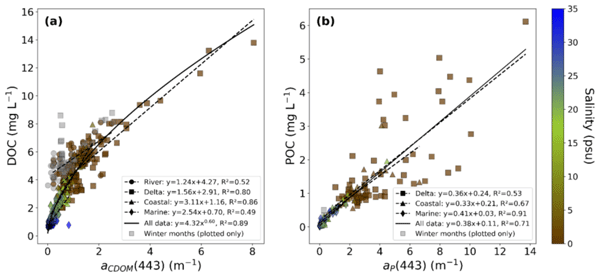
Annabeth McCall, Martin Hieronymi, P. Paul Overduin, Lisa Bröder, Julie Lattaud, Rüdiger Röttgers, Irina Overeem, Anne Morgenstern, Guido Grosse, and Bennet Juhls
Biogeosciences, 23, 5921–5942, https://doi.org/10.5194/bg-23-5921-2026, https://doi.org/10.5194/bg-23-5921-2026, 2026
Short summary
Short summary
This study examines how carbon and sediments move from the Mackenzie River, through its delta, and into the Beaufort Sea. We use data from 2009–2024 and show that major changes in carbon concentrations unfold in low-salinity mixing zones. As the optical properties of the water also shift, satellite estimates of carbon will require more tailored methods. These findings will improve our understanding of Arctic carbon fluxes and influences on the greater Arctic Ocean carbon budget.
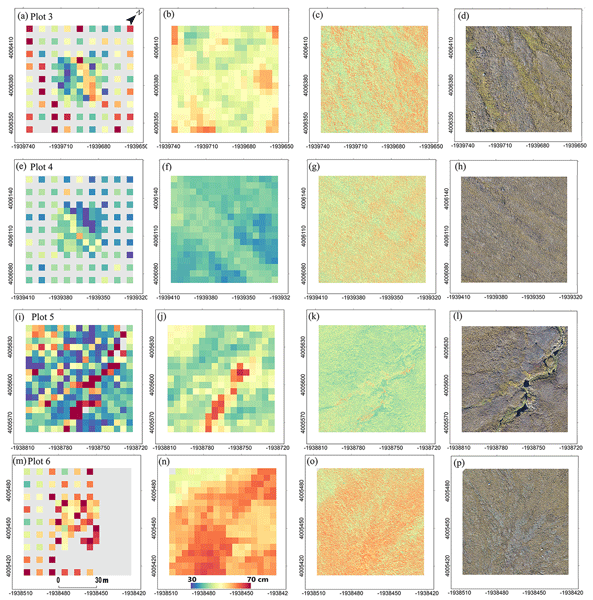
Jinyang Du, K. Arthur Endsley, Kazem Bakian Dogaheh, John S. Kimball, Mahta Moghaddam, Thomas A. Douglas, Asem Melebari, Sepehr Eskandari, Jinhyuk E. Kim, Jane Whitcomb, Yuhuan Zhao, and Sophia Henze
The Cryosphere, 20, 4277–4291, https://doi.org/10.5194/tc-20-4277-2026, https://doi.org/10.5194/tc-20-4277-2026, 2026
Short summary
Short summary
Active layer thickness (ALT) is a sensitive indicator of the thawing Alaskan frozen soil, which may lead to increased greenhouse gas emissions, vegetation changes, and infrastructure damage. This study represents a multi-scale assessment of ALT spatial variations using observations including intensive field sampling, and drone, airborne and satellite remote sensing. Our study allows for improved interpretation of remote sensing and process-based ALT simulations for the changing Arctic.
Kevin S. Rozmiarek, Elijah A. Miller, Irina Overeem, Gregory B. Rieker, and Tyler R. Jones
EGUsphere, https://doi.org/10.5194/egusphere-2026-3109, https://doi.org/10.5194/egusphere-2026-3109, 2026
Short summary
Short summary
Lakes emit large amounts of methane, yet measuring it remains challenging. Using simulations, we tested whether a drone circling a lake measuring methane and wind to enclose a virtual cylinder can recover its emissions. Sampling enough heights mattered most for accuracy; a nearby upwind lake biased estimates low; and short flights beat long ones as the atmosphere shifted. We distill the results into simple design rules for planning real drone-based methane surveys.
Hailey Webb, Clifton P. Bueno de Mesquita, Mario E. Muscarella, Catherine M. Dieleman, Eugénie S. Euskirchen, Evan S. Kane, Jason K. Keller, Steven K. Schmidt, Amanda Stromecki, and Merritt R. Turetsky
EGUsphere, https://doi.org/10.5194/egusphere-2026-2809, https://doi.org/10.5194/egusphere-2026-2809, 2026
Short summary
Short summary
This study examines how methane emissions and microorganisms changed across different stages of permafrost thaw in an interior Alaska peatland. Methane emissions and relative abundance of methanogens, particularly hydrogenotrophic taxa, increased as thaw progressed. Our results show that methane oxidation greatly altered isotopic signatures of emitted methane, underscoring the need to integrate multiple variables to understand the entire carbon cycling process in these ecosystems.
Christine L. Olson, Kevin Schaefer, Alyssa Azaroff, Hélène Angot, Sasiri Bandara, Thomas A. Douglas, Bo Elberling, Maria Florencia Fahnestock, Xinbin Feng, Charlotte Haugk, Gustaf Hugelius, Erfan Jahangir, Sofi Jonsson, Shichang Kang, Adam Kirkwood, Jennifer Korosi, Igor Lehnherr, Artem Lim, Rinat Manasypov, Dmitriy Moskovchenko, Mina Nasr, Daniel Obrist, David Olefeldt, Connor Olson, Oleg Pokrovsky, Laura Sereni, Sarah Shakil, M. Isabel Smith, Jens Søndergaard, Jeroen Sonke, Kasia Staniszewska, Jens Strauss, Kyra St. Pierre, Lauren Thompson, Andrey Yurtaev, Yanxu Zhang, and Scott Zolkos
Earth Syst. Sci. Data, 18, 4509–4522, https://doi.org/10.5194/essd-18-4509-2026, https://doi.org/10.5194/essd-18-4509-2026, 2026
Short summary
Short summary
Permafrost regions store large amounts of mercury, a toxic pollutant that can be released as the ground warms. We combined thousands of measurements from soils, plants, water, and lake sediments into one open database to better understand where mercury is stored and how it moves. The results show clear differences among environments and reveal major data gaps, helping improve future research, monitoring, and decision-making.
George Tanski, Michael Fritz, Jorien E. Vonk, Jens Strauss, Léo Chassiot, Vladislav Carnero-Bravo, Jade Falardeau, Kostantin Klein, Parick Lajeunesse, Hugues Lantuit, Niek J. Speetjens, Anne de Vernal, Dustin Whalen, and Anna M. Irrgang
EGUsphere, https://doi.org/10.5194/egusphere-2026-2314, https://doi.org/10.5194/egusphere-2026-2314, 2026
Short summary
Short summary
As the Arctic warms, permafrost coasts erode rapidly, flushing carbon from frozen ground into the sea. We studied a lagoon in the western Canadian Arctic, collecting sediments and analyzing organic carbon content, stable isotopes, and grain size, alongside satellite imagery. Carbon content fell by over 50 % from land to open ocean, while erosion rates quintupled since the 1950s. Arctic lagoons bury, degrade, and export terrestrial carbon, acting as coastal reactors whose role will grow.
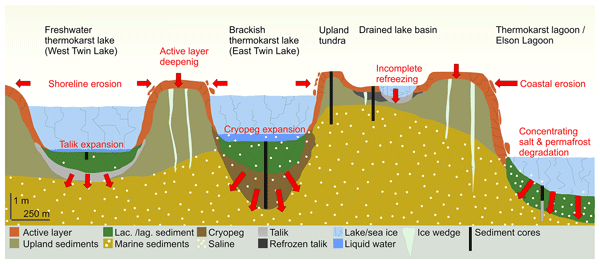
Fabian Seemann, Michael Zech, Maren Jenrich, Guido Grosse, Benjamin M. Jones, Claire Treat, Lutz Schirrmeister, Susanne Liebner, and Jens Strauss
Biogeosciences, 23, 3675–3695, https://doi.org/10.5194/bg-23-3675-2026, https://doi.org/10.5194/bg-23-3675-2026, 2026
Short summary
Short summary
Arctic coastal landscapes, like those in northernmost Alaska, are often characterized by saline permafrost which is prone to thawing. We studied six sediment cores to understand how thawing and salinity affect organic matter breakdown and landscape change. Our results show that salinity accelerates organic matter degradation when permafrost thaws. This highlights the overlooked risk of salinity in shaping Arctic landscapes and carbon mineralization as the climate continues to warm.
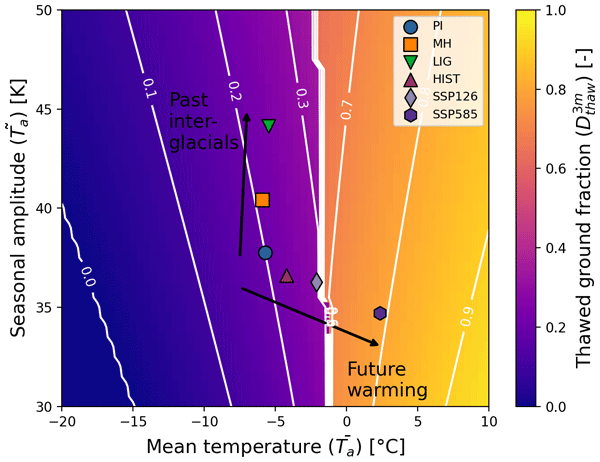
Jan Nitzbon, Moritz Langer, Luca Alexander Müller-Ißberner, Elisabeth Dietze, and Martin Werner
Clim. Past, 22, 377–403, https://doi.org/10.5194/cp-22-377-2026, https://doi.org/10.5194/cp-22-377-2026, 2026
Short summary
Short summary
Using model simulations, we show that the larger temperature seasonality of the mid Holocene and the last interglacial climates led to marked surficial permafrost thaw during warm summers, while cold winters allowed for permafrost persistence at depth. We argue that past interglacial climates have limited suitability as analogues for future permafrost dynamics, for which we anticipate a trajectory of unprecedented thaw magnitude since at least MIS (Marine Isotope Stage) 11c.
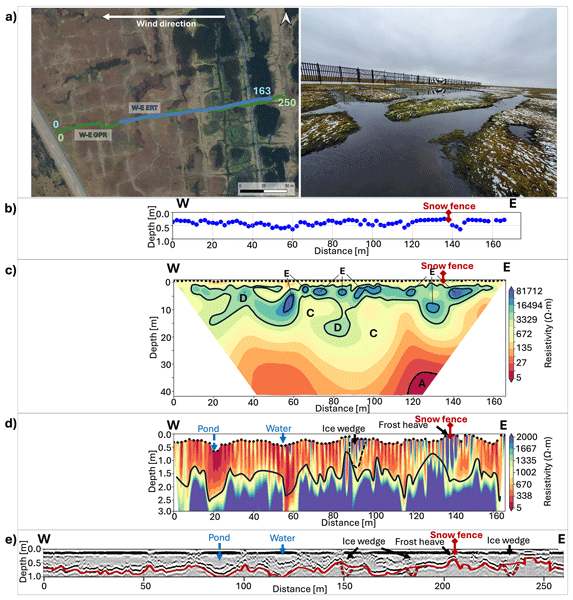
Valentina Ekimova, MacKenzie A. Nelson, Taylor Sullivan, Thomas A. Douglas, Howard E. Epstein, and Matthew G. Jull
The Cryosphere, 20, 265–283, https://doi.org/10.5194/tc-20-265-2026, https://doi.org/10.5194/tc-20-265-2026, 2026
Short summary
Short summary
Permafrost beneath Arctic communities is highly sensitive to surface heat and moisture. Geophysics at four Utqiaġvik (Alaska) sites shows that infrastructure – buildings, roads, snow fences – reshapes snow and drainage, redirecting heat and water. Thaw deepens near disturbed ground, while undisturbed, vegetated terrain stays shallower or heaves. Local land use and surface conditions can outweigh regional climate signals, guiding design, maintenance, and risk planning for Arctic infrastructure.
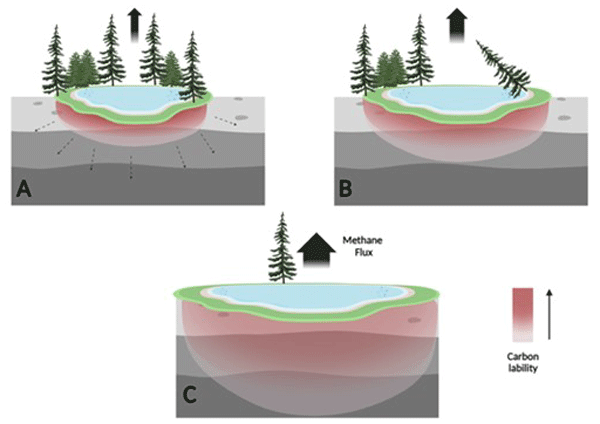
Yarden Gerera, André Pellerin, Efrat Eliani Russak, Katey Walter Anthony, Nicholas Hasson, Yoav Oved Rosenberg, and Orit Sivan
Biogeosciences, 22, 7901–7914, https://doi.org/10.5194/bg-22-7901-2025, https://doi.org/10.5194/bg-22-7901-2025, 2025
Short summary
Short summary
Thermokarst lakes have formed over thousands of years from permafrost thaw in the Arctic. Here, we quantify the change in methane production rates as thermokarst lakes evolve through an incubation-based approach of measuring and comparing methane production rates and organic carbon lability between a more mature thermokarst lake and a young dynamic thermokarst lake. We also show the use of the Rock-Eval analysis of organic carbon along the sediments as a proxy for organic susceptibility for methanogenesis.
Mélissa Laurent, Mackenzie R. Baysinger, Jörg Schaller, Matthias Lück, Mathias Hoffmann, Torben Windirsch, Ruth H. Ellerbrock, Jens Strauss, and Claire C. Treat
Biogeosciences, 22, 7881–7899, https://doi.org/10.5194/bg-22-7881-2025, https://doi.org/10.5194/bg-22-7881-2025, 2025
Short summary
Short summary
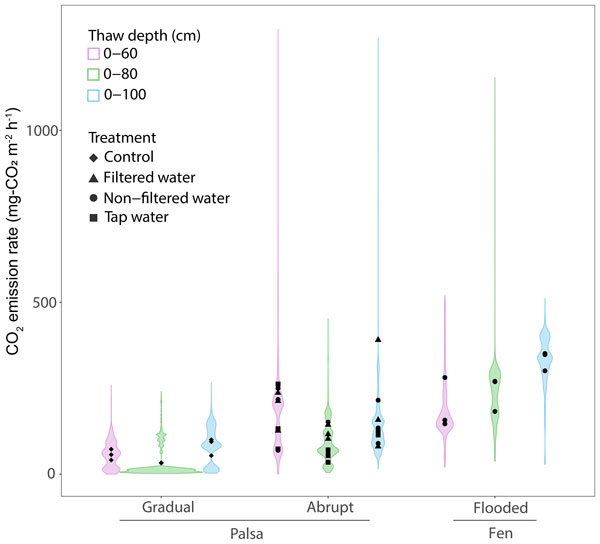
Palsas are peat permafrost mounds underlain by ice-rich permafrost. Due to climate change, they could disappear by the end of the century. When palsas thaw, changes occur in hydrological conditions affecting the carbon (C) cycle. In our study, we simulated permafrost thaw under different water treatments using 1-meter soil columns from a palsa. We measured CH4 and CO2 emissions for 3-month incubation. Our results show that following thaw, flooding the cores leads to increased CO2 emissions.
David Brodylo, Lauren V. Bosche, Ryan R. Busby, Elias J. Deeb, Thomas A. Douglas, and Juha Lemmetyinen
The Cryosphere, 19, 6127–6148, https://doi.org/10.5194/tc-19-6127-2025, https://doi.org/10.5194/tc-19-6127-2025, 2025
Short summary
Short summary
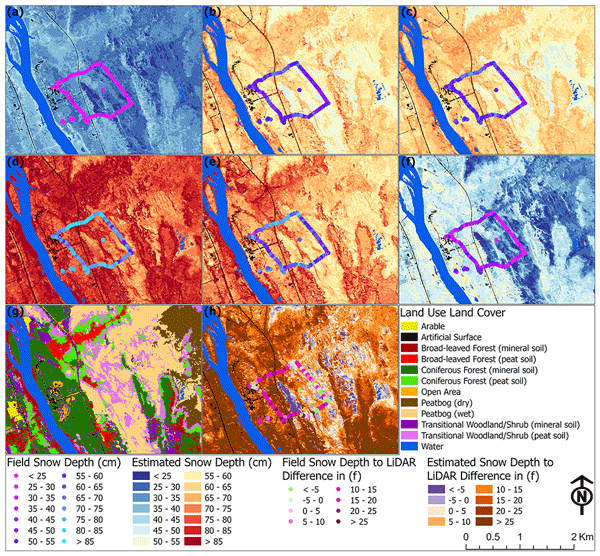
We combined field-based snow depth and snow water equivalent (SWE) measurements, remote sensing data, and machine learning to estimate snow depth and SWE over a 10 km2 local scale area in Sodankylä, Finland. Associations were found for snow depth and SWE with carbon- and mineral-based forest surface soils, alongside dry and wet peatbogs. This approach to upscale field-based snow depth and SWE measurements to a local scale can be used in regions that regularly experience snowfall.
Thomas A. Douglas, M. Torre Jorgenson, Taylor Sullivan, and Caiyun Zhang
The Cryosphere, 19, 3991–4009, https://doi.org/10.5194/tc-19-3991-2025, https://doi.org/10.5194/tc-19-3991-2025, 2025
Short summary
Short summary
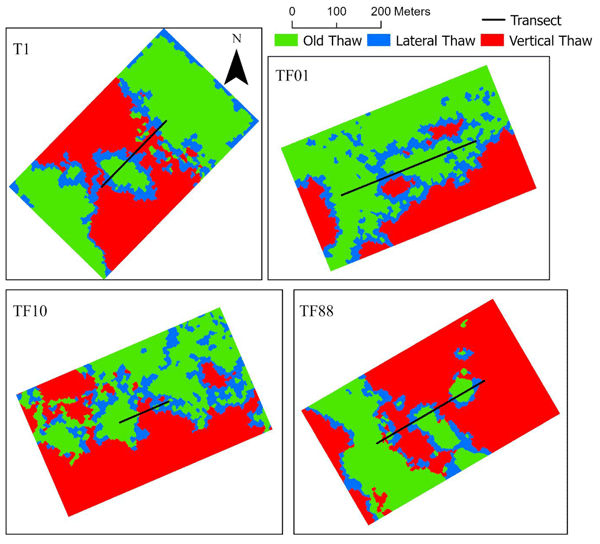
Permafrost thaw across Earth's high latitudes is leading to dramatic changes in vegetation and hydrology. We undertook a two-decade-long study on the Tanana Flats near Fairbanks, Alaska, to measure permafrost thaw and associated ground surface subsidence via field-based and remote-sensing techniques. The study identified strengths and limitations of the three methods we used to quantify permafrost thaw degradation.
Anna C. Talucci, Michael M. Loranty, Jean E. Holloway, Brendan M. Rogers, Heather D. Alexander, Natalie Baillargeon, Jennifer L. Baltzer, Logan T. Berner, Amy Breen, Leya Brodt, Brian Buma, Jacqueline Dean, Clement J. F. Delcourt, Lucas R. Diaz, Catherine M. Dieleman, Thomas A. Douglas, Gerald V. Frost, Benjamin V. Gaglioti, Rebecca E. Hewitt, Teresa Hollingsworth, M. Torre Jorgenson, Mark J. Lara, Rachel A. Loehman, Michelle C. Mack, Kristen L. Manies, Christina Minions, Susan M. Natali, Jonathan A. O'Donnell, David Olefeldt, Alison K. Paulson, Adrian V. Rocha, Lisa B. Saperstein, Tatiana A. Shestakova, Seeta Sistla, Oleg Sizov, Andrey Soromotin, Merritt R. Turetsky, Sander Veraverbeke, and Michelle A. Walvoord
Earth Syst. Sci. Data, 17, 2887–2909, https://doi.org/10.5194/essd-17-2887-2025, https://doi.org/10.5194/essd-17-2887-2025, 2025
Short summary
Short summary
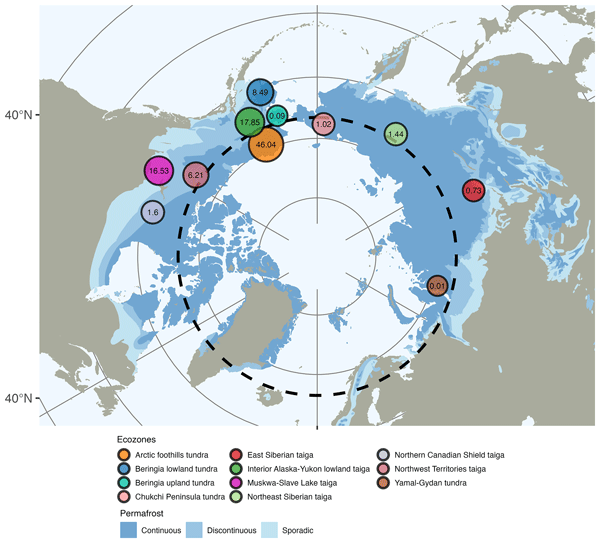
Wildfires have the potential to accelerate permafrost thaw and the associated feedbacks to climate change. We assembled a dataset of permafrost thaw depth measurements from burned and unburned sites contributed by researchers from across the northern high-latitude region. We estimated maximum thaw depth for each measurement, which addresses a key challenge: the ability to assess impacts of wildfire on maximum thaw depth when measurement timing varies.
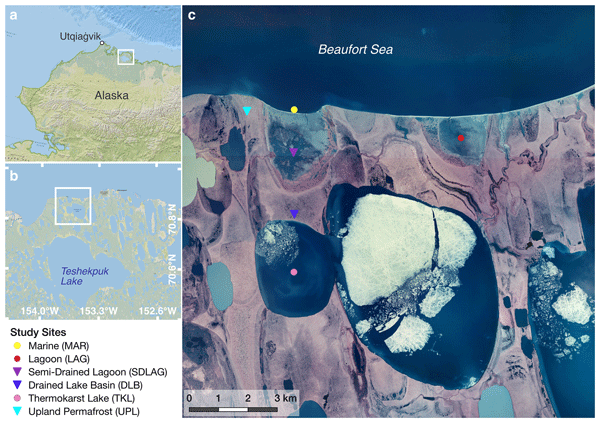
Frieda P. Giest, Maren Jenrich, Guido Grosse, Benjamin M. Jones, Kai Mangelsdorf, Torben Windirsch, and Jens Strauss
Biogeosciences, 22, 2871–2887, https://doi.org/10.5194/bg-22-2871-2025, https://doi.org/10.5194/bg-22-2871-2025, 2025
Short summary
Short summary
Climate warming causes permafrost to thaw, releasing greenhouse gases and affecting ecosystems. We studied sediments from Arctic coastal landscapes, including land, lakes, lagoons, and the ocean, finding that organic carbon storage and quality vary with landscape features and saltwater influence. Freshwater and land areas store more carbon, while saltwater reduces its quality. These findings improve predictions of Arctic responses to climate change and their impact on global carbon cycling.
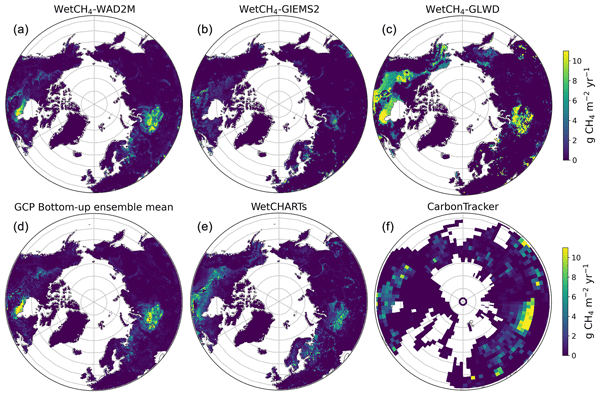
Qing Ying, Benjamin Poulter, Jennifer D. Watts, Kyle A. Arndt, Anna-Maria Virkkala, Lori Bruhwiler, Youmi Oh, Brendan M. Rogers, Susan M. Natali, Hilary Sullivan, Amanda Armstrong, Eric J. Ward, Luke D. Schiferl, Clayton D. Elder, Olli Peltola, Annett Bartsch, Ankur R. Desai, Eugénie Euskirchen, Mathias Göckede, Bernhard Lehner, Mats B. Nilsson, Matthias Peichl, Oliver Sonnentag, Eeva-Stiina Tuittila, Torsten Sachs, Aram Kalhori, Masahito Ueyama, and Zhen Zhang
Earth Syst. Sci. Data, 17, 2507–2534, https://doi.org/10.5194/essd-17-2507-2025, https://doi.org/10.5194/essd-17-2507-2025, 2025
Short summary
Short summary
We present daily methane (CH4) fluxes of northern wetlands at 10 km resolution during 2016–2022 (WetCH4) derived from a novel machine learning framework. We estimated an average annual CH4 emission of 22.8 ± 2.4 Tg CH4 yr−1 (15.7–51.6 Tg CH4 yr−1). Emissions were intensified in 2016, 2020, and 2022, with the largest interannual variation coming from Western Siberia. Continued, all-season tower observations and improved soil moisture products are needed for future improvement of CH4 upscaling.
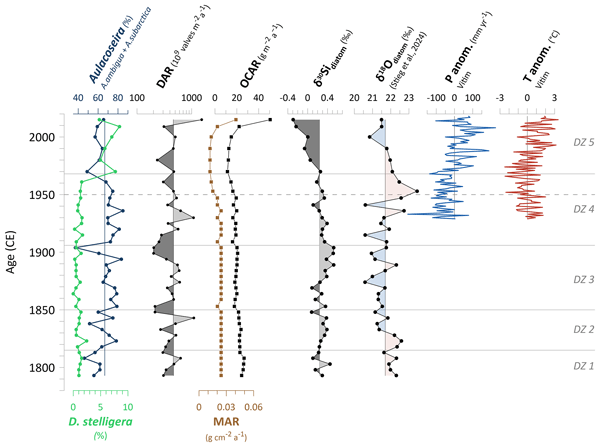
Amelie Stieg, Boris K. Biskaborn, Ulrike Herzschuh, Andreas Marent, Jens Strauss, Dorothee Wilhelms-Dick, Luidmila A. Pestryakova, and Hanno Meyer
Biogeosciences, 22, 2327–2350, https://doi.org/10.5194/bg-22-2327-2025, https://doi.org/10.5194/bg-22-2327-2025, 2025
Short summary
Short summary
Globally, lake ecosystems have undergone significant shifts since the 1950s due to human activities. This study presents a unique ~220-year sediment record from a remote Siberian boreal lake, providing a multiproxy perspective on climate warming and anthropogenic air pollution. Analyses of diatom assemblages, diatom silicon isotopes, and carbon and nitrogen sediment proxies reveal complex biogeochemical interactions, highlighting anthropogenic influences even on remote water resources.
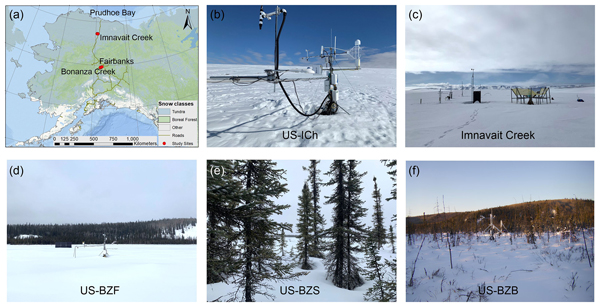
Kelsey A. Stockert, Eugénie S. Euskirchen, and Svetlana L. Stuefer
The Cryosphere, 19, 1739–1755, https://doi.org/10.5194/tc-19-1739-2025, https://doi.org/10.5194/tc-19-1739-2025, 2025
Short summary
Short summary
Sublimation is the hidden portion of the water cycle where snow changes phase directly to water vapor, skipping the liquid state. Though sublimation is difficult to measure, especially in remote regions such as Arctic and subarctic Alaska where this study took place, our measurements confirm that sublimation is a substantial component of the annual water cycle. Results from this research contribute to knowledge of how site conditions affect sublimation rates and the winter hydrologic cycle.
Maren Jenrich, Juliane Wolter, Susanne Liebner, Christian Knoblauch, Guido Grosse, Fiona Giebeler, Dustin Whalen, and Jens Strauss
Biogeosciences, 22, 2069–2086, https://doi.org/10.5194/bg-22-2069-2025, https://doi.org/10.5194/bg-22-2069-2025, 2025
Short summary
Short summary
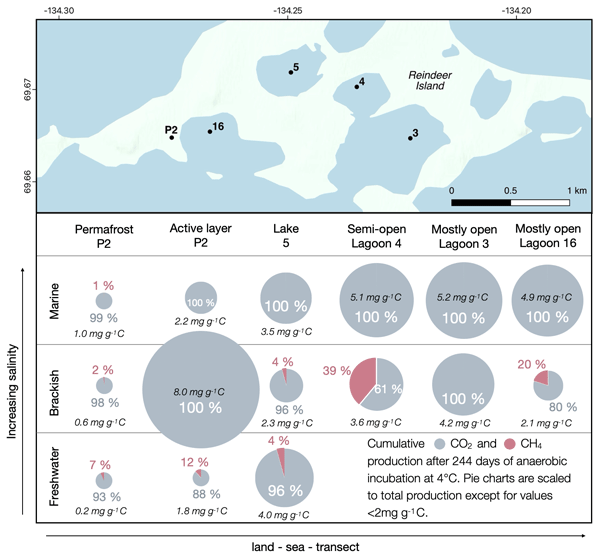
Climate warming in the Arctic is causing the erosion of permafrost coasts and the transformation of permafrost lakes into lagoons. To understand how this affects greenhouse gas (GHG) emissions, we studied carbon dioxide (CO₂) and methane (CH₄) production in lagoons with varying sea connections. Younger lagoons produce more CH₄, while CO₂ increases under more marine conditions. Flooding of permafrost lowlands due to rising sea levels may lead to higher GHG emissions from Arctic coasts in future.
Lucas R. Diaz, Clement J. F. Delcourt, Moritz Langer, Michael M. Loranty, Brendan M. Rogers, Rebecca C. Scholten, Tatiana A. Shestakova, Anna C. Talucci, Jorien E. Vonk, Sonam Wangchuk, and Sander Veraverbeke
Earth Syst. Dynam., 15, 1459–1482, https://doi.org/10.5194/esd-15-1459-2024, https://doi.org/10.5194/esd-15-1459-2024, 2024
Short summary
Short summary
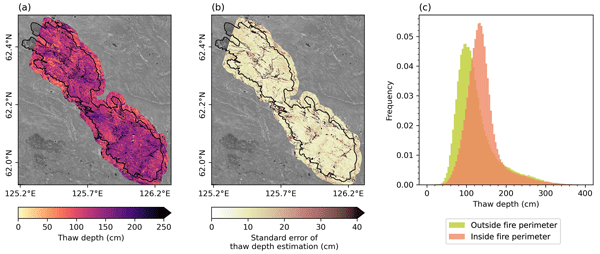
Our study in eastern Siberia investigated how fires affect permafrost thaw depth in larch forests. We found that fire induces deeper thaw, yet this process was mediated by topography and vegetation. By combining field and satellite data, we estimated summer thaw depth across an entire fire scar. This research provides insights into post-fire permafrost dynamics and the use of satellite data for mapping fire-induced permafrost thaw.
Jacob A. Nelson, Sophia Walther, Fabian Gans, Basil Kraft, Ulrich Weber, Kimberly Novick, Nina Buchmann, Mirco Migliavacca, Georg Wohlfahrt, Ladislav Šigut, Andreas Ibrom, Dario Papale, Mathias Göckede, Gregory Duveiller, Alexander Knohl, Lukas Hörtnagl, Russell L. Scott, Jiří Dušek, Weijie Zhang, Zayd Mahmoud Hamdi, Markus Reichstein, Sergio Aranda-Barranco, Jonas Ardö, Maarten Op de Beeck, Dave Billesbach, David Bowling, Rosvel Bracho, Christian Brümmer, Gustau Camps-Valls, Shiping Chen, Jamie Rose Cleverly, Ankur Desai, Gang Dong, Tarek S. El-Madany, Eugenie Susanne Euskirchen, Iris Feigenwinter, Marta Galvagno, Giacomo A. Gerosa, Bert Gielen, Ignacio Goded, Sarah Goslee, Christopher Michael Gough, Bernard Heinesch, Kazuhito Ichii, Marcin Antoni Jackowicz-Korczynski, Anne Klosterhalfen, Sara Knox, Hideki Kobayashi, Kukka-Maaria Kohonen, Mika Korkiakoski, Ivan Mammarella, Mana Gharun, Riccardo Marzuoli, Roser Matamala, Stefan Metzger, Leonardo Montagnani, Giacomo Nicolini, Thomas O'Halloran, Jean-Marc Ourcival, Matthias Peichl, Elise Pendall, Borja Ruiz Reverter, Marilyn Roland, Simone Sabbatini, Torsten Sachs, Marius Schmidt, Christopher R. Schwalm, Ankit Shekhar, Richard Silberstein, Maria Lucia Silveira, Donatella Spano, Torbern Tagesson, Gianluca Tramontana, Carlo Trotta, Fabio Turco, Timo Vesala, Caroline Vincke, Domenico Vitale, Enrique R. Vivoni, Yi Wang, William Woodgate, Enrico A. Yepez, Junhui Zhang, Donatella Zona, and Martin Jung
Biogeosciences, 21, 5079–5115, https://doi.org/10.5194/bg-21-5079-2024, https://doi.org/10.5194/bg-21-5079-2024, 2024
Short summary
Short summary
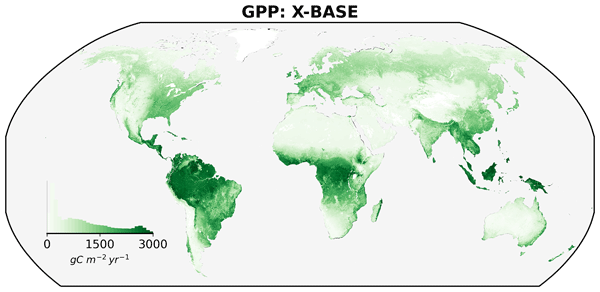
The movement of water, carbon, and energy from the Earth's surface to the atmosphere, or flux, is an important process to understand because it impacts our lives. Here, we outline a method called FLUXCOM-X to estimate global water and CO2 fluxes based on direct measurements from sites around the world. We go on to demonstrate how these new estimates of net CO2 uptake/loss, gross CO2 uptake, total water evaporation, and transpiration from plants compare to previous and independent estimates.
Zehua Chang, Hongkai Gao, Leilei Yong, Kang Wang, Rensheng Chen, Chuntan Han, Otgonbayar Demberel, Batsuren Dorjsuren, Shugui Hou, and Zheng Duan
Hydrol. Earth Syst. Sci., 28, 3897–3917, https://doi.org/10.5194/hess-28-3897-2024, https://doi.org/10.5194/hess-28-3897-2024, 2024
Short summary
Short summary
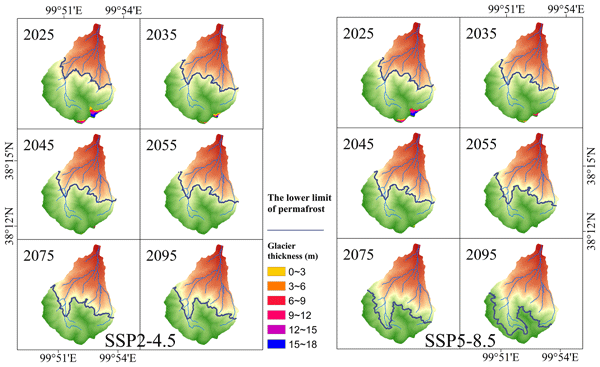
An integrated cryospheric–hydrologic model, FLEX-Cryo, was developed that considers glaciers, snow cover, and frozen soil and their dynamic impacts on hydrology. We utilized it to simulate future changes in cryosphere and hydrology in the Hulu catchment. Our projections showed the two glaciers will melt completely around 2050, snow cover will reduce, and permafrost will degrade. For hydrology, runoff will decrease after the glacier has melted, and permafrost degradation will increase baseflow.
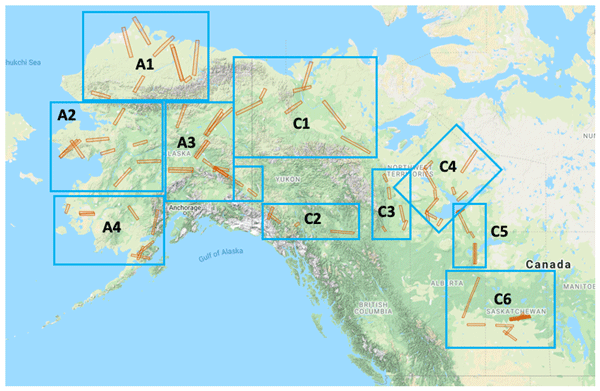
Charles E. Miller, Peter C. Griffith, Elizabeth Hoy, Naiara S. Pinto, Yunling Lou, Scott Hensley, Bruce D. Chapman, Jennifer Baltzer, Kazem Bakian-Dogaheh, W. Robert Bolton, Laura Bourgeau-Chavez, Richard H. Chen, Byung-Hun Choe, Leah K. Clayton, Thomas A. Douglas, Nancy French, Jean E. Holloway, Gang Hong, Lingcao Huang, Go Iwahana, Liza Jenkins, John S. Kimball, Tatiana Loboda, Michelle Mack, Philip Marsh, Roger J. Michaelides, Mahta Moghaddam, Andrew Parsekian, Kevin Schaefer, Paul R. Siqueira, Debjani Singh, Alireza Tabatabaeenejad, Merritt Turetsky, Ridha Touzi, Elizabeth Wig, Cathy J. Wilson, Paul Wilson, Stan D. Wullschleger, Yonghong Yi, Howard A. Zebker, Yu Zhang, Yuhuan Zhao, and Scott J. Goetz
Earth Syst. Sci. Data, 16, 2605–2624, https://doi.org/10.5194/essd-16-2605-2024, https://doi.org/10.5194/essd-16-2605-2024, 2024
Short summary
Short summary
NASA’s Arctic Boreal Vulnerability Experiment (ABoVE) conducted airborne synthetic aperture radar (SAR) surveys of over 120 000 km2 in Alaska and northwestern Canada during 2017, 2018, 2019, and 2022. This paper summarizes those results and provides links to details on ~ 80 individual flight lines. This paper is presented as a guide to enable interested readers to fully explore the ABoVE L- and P-band SAR data.
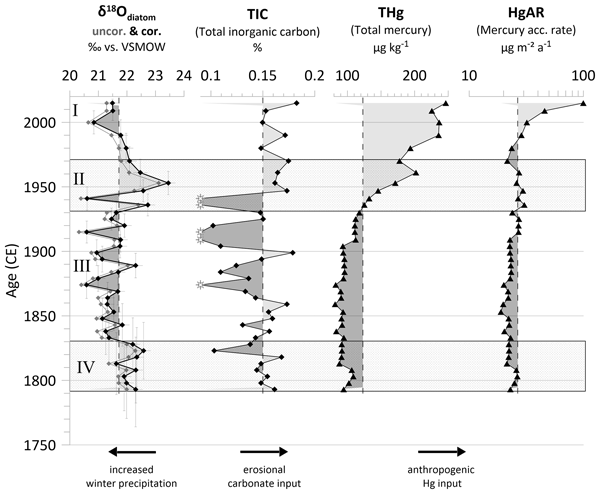
Amelie Stieg, Boris K. Biskaborn, Ulrike Herzschuh, Jens Strauss, Luidmila Pestryakova, and Hanno Meyer
Clim. Past, 20, 909–933, https://doi.org/10.5194/cp-20-909-2024, https://doi.org/10.5194/cp-20-909-2024, 2024
Short summary
Short summary
Siberia is impacted by recent climate warming and experiences extreme hydroclimate events. We present a 220-year-long sub-decadal stable oxygen isotope record of diatoms from Lake Khamra. Our analysis identifies winter precipitation as the key process impacting the isotope variability. Two possible hydroclimatic anomalies were found to coincide with significant changes in lake internal conditions and increased wildfire activity in the region.
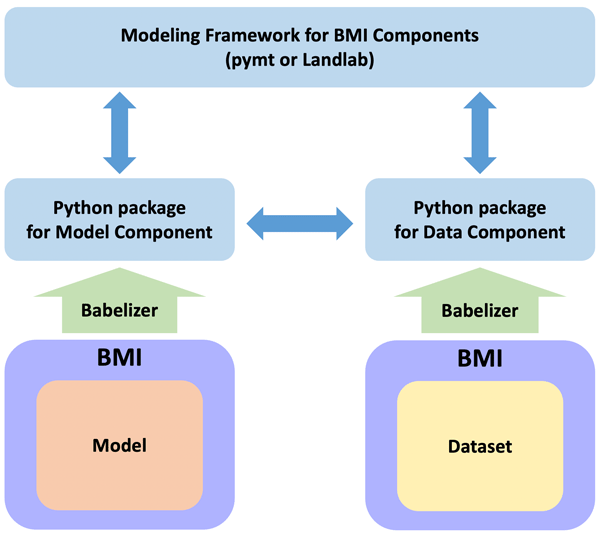
Tian Gan, Gregory E. Tucker, Eric W. H. Hutton, Mark D. Piper, Irina Overeem, Albert J. Kettner, Benjamin Campforts, Julia M. Moriarty, Brianna Undzis, Ethan Pierce, and Lynn McCready
Geosci. Model Dev., 17, 2165–2185, https://doi.org/10.5194/gmd-17-2165-2024, https://doi.org/10.5194/gmd-17-2165-2024, 2024
Short summary
Short summary
This study presents the design, implementation, and application of the CSDMS Data Components. The case studies demonstrate that the Data Components provide a consistent way to access heterogeneous datasets from multiple sources, and to seamlessly integrate them with various models for Earth surface process modeling. The Data Components support the creation of open data–model integration workflows to improve the research transparency and reproducibility.
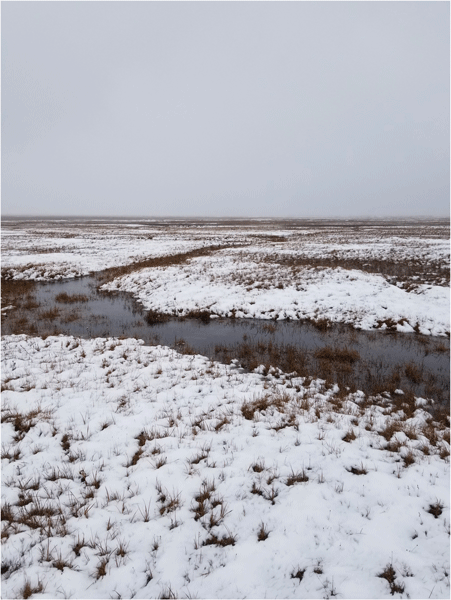
Kevin R. Barry, Thomas C. J. Hill, Marina Nieto-Caballero, Thomas A. Douglas, Sonia M. Kreidenweis, Paul J. DeMott, and Jessie M. Creamean
Atmos. Chem. Phys., 23, 15783–15793, https://doi.org/10.5194/acp-23-15783-2023, https://doi.org/10.5194/acp-23-15783-2023, 2023
Short summary
Short summary
Ice-nucleating particles (INPs) are important for the climate due to their influence on cloud properties. To understand potential land-based sources of them in the Arctic, we carried out a survey near the northernmost point of Alaska, a landscape connected to the permafrost (thermokarst). Permafrost contained high concentrations of INPs, with the largest values near the coast. The thermokarst lakes were found to emit INPs, and the water contained elevated concentrations.
Matthew C. Morriss, Benjamin Lehmann, Benjamin Campforts, George Brencher, Brianna Rick, Leif S. Anderson, Alexander L. Handwerger, Irina Overeem, and Jeffrey Moore
Earth Surf. Dynam., 11, 1251–1274, https://doi.org/10.5194/esurf-11-1251-2023, https://doi.org/10.5194/esurf-11-1251-2023, 2023
Short summary
Short summary
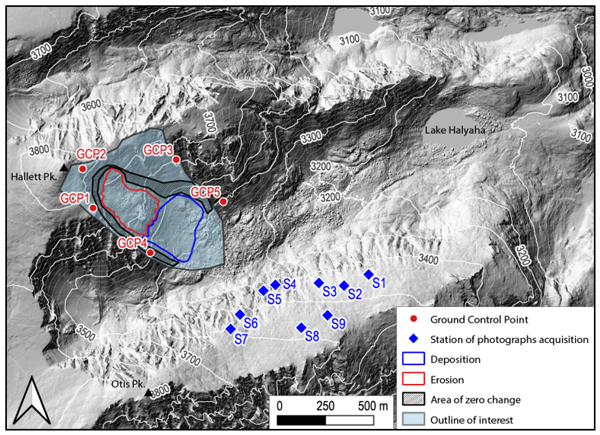
In this paper, we investigate the 28 June 2022 collapse of the Chaos Canyon landslide in Rocky Mountain National Park, Colorado, USA. We find that the landslide was moving prior to its collapse and took place at peak spring snowmelt; temperature modeling indicates the potential presence of permafrost. We hypothesize that this landslide could be part of the broader landscape evolution changes to alpine terrain caused by a warming climate, leading to thawing alpine permafrost.
Stefano Potter, Sol Cooperdock, Sander Veraverbeke, Xanthe Walker, Michelle C. Mack, Scott J. Goetz, Jennifer Baltzer, Laura Bourgeau-Chavez, Arden Burrell, Catherine Dieleman, Nancy French, Stijn Hantson, Elizabeth E. Hoy, Liza Jenkins, Jill F. Johnstone, Evan S. Kane, Susan M. Natali, James T. Randerson, Merritt R. Turetsky, Ellen Whitman, Elizabeth Wiggins, and Brendan M. Rogers
Biogeosciences, 20, 2785–2804, https://doi.org/10.5194/bg-20-2785-2023, https://doi.org/10.5194/bg-20-2785-2023, 2023
Short summary
Short summary
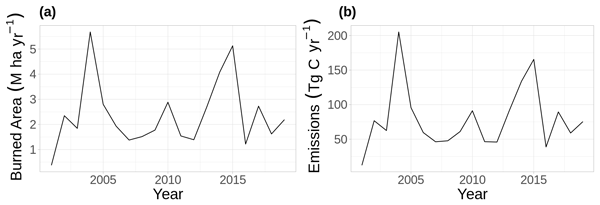
Here we developed a new burned-area detection algorithm between 2001–2019 across Alaska and Canada at 500 m resolution. We estimate 2.37 Mha burned annually between 2001–2019 over the domain, emitting 79.3 Tg C per year, with a mean combustion rate of 3.13 kg C m−2. We found larger-fire years were generally associated with greater mean combustion. The burned-area and combustion datasets described here can be used for local- to continental-scale applications of boreal fire science.
Boris K. Biskaborn, Amy Forster, Gregor Pfalz, Lyudmila A. Pestryakova, Kathleen Stoof-Leichsenring, Jens Strauss, Tim Kröger, and Ulrike Herzschuh
Biogeosciences, 20, 1691–1712, https://doi.org/10.5194/bg-20-1691-2023, https://doi.org/10.5194/bg-20-1691-2023, 2023
Short summary
Short summary
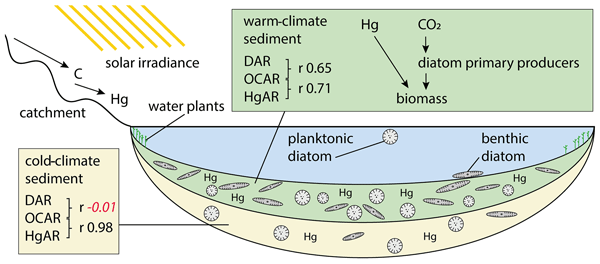
Lake sediment from the Russian Arctic was studied for microalgae and organic matter chemistry dated back to the last glacial 28 000 years. Species and chemistry responded to environmental changes such as the Younger Dryas cold event and the Holocene thermal maximum. Organic carbon accumulation correlated with rates of microalgae deposition only during warm episodes but not during the cold glacial.
Olga Ogneva, Gesine Mollenhauer, Bennet Juhls, Tina Sanders, Juri Palmtag, Matthias Fuchs, Hendrik Grotheer, Paul J. Mann, and Jens Strauss
Biogeosciences, 20, 1423–1441, https://doi.org/10.5194/bg-20-1423-2023, https://doi.org/10.5194/bg-20-1423-2023, 2023
Short summary
Short summary
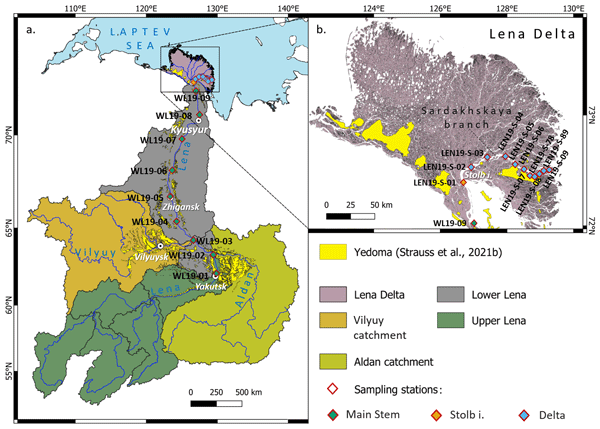
Arctic warming accelerates permafrost thaw and release of terrestrial organic matter (OM) via rivers to the Arctic Ocean. We compared particulate organic carbon (POC), total suspended matter, and C isotopes (δ13C and Δ14C of POC) in the Lena delta and Lena River along a ~1600 km transect. We show that the Lena delta, as an interface between the Lena River and the Arctic Ocean, plays a crucial role in determining the qualitative and quantitative composition of OM discharged into the Arctic Ocean.
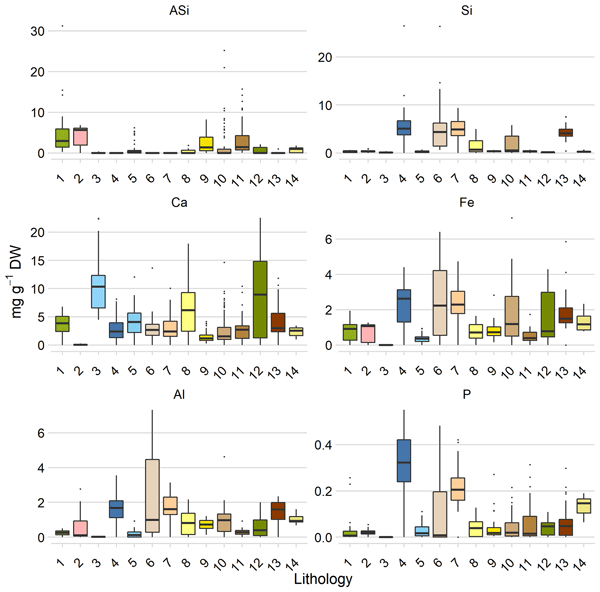
Peter Stimmler, Mathias Goeckede, Bo Elberling, Susan Natali, Peter Kuhry, Nia Perron, Fabrice Lacroix, Gustaf Hugelius, Oliver Sonnentag, Jens Strauss, Christina Minions, Michael Sommer, and Jörg Schaller
Earth Syst. Sci. Data, 15, 1059–1075, https://doi.org/10.5194/essd-15-1059-2023, https://doi.org/10.5194/essd-15-1059-2023, 2023
Short summary
Short summary
Arctic soils store large amounts of carbon and nutrients. The availability of nutrients, such as silicon, calcium, iron, aluminum, phosphorus, and amorphous silica, is crucial to understand future carbon fluxes in the Arctic. Here, we provide, for the first time, a unique dataset of the availability of the abovementioned nutrients for the different soil layers, including the currently frozen permafrost layer. We relate these data to several geographical and geological parameters.

Aobo Liu, John C. Moore, and Yating Chen
Earth Syst. Dynam., 14, 39–53, https://doi.org/10.5194/esd-14-39-2023, https://doi.org/10.5194/esd-14-39-2023, 2023
Short summary
Short summary
Permafrost thaws and releases carbon (C) as the Arctic warms. Most earth system models (ESMs) have poor estimates of C stored now, so their future C losses are much lower than using the permafrost C model with climate inputs from six ESMs. Bias-corrected soil temperatures and plant productivity plus geoengineering lowering global temperatures from a no-mitigation baseline scenario to a moderate emissions level keep C in the soil worth about USD 0–70 (mean 20) trillion in climate damages by 2100.
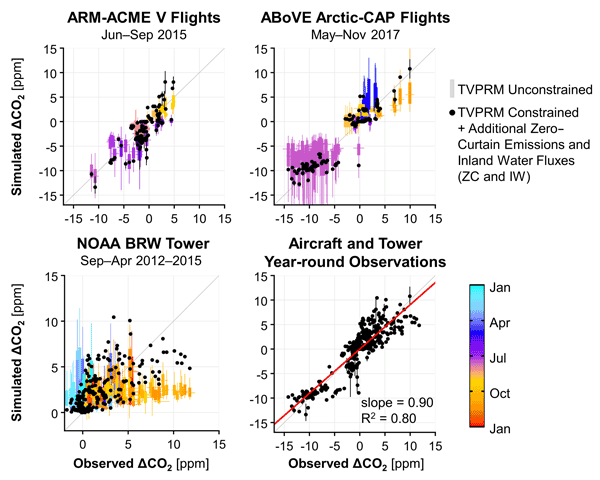
Luke D. Schiferl, Jennifer D. Watts, Erik J. L. Larson, Kyle A. Arndt, Sébastien C. Biraud, Eugénie S. Euskirchen, Jordan P. Goodrich, John M. Henderson, Aram Kalhori, Kathryn McKain, Marikate E. Mountain, J. William Munger, Walter C. Oechel, Colm Sweeney, Yonghong Yi, Donatella Zona, and Róisín Commane
Biogeosciences, 19, 5953–5972, https://doi.org/10.5194/bg-19-5953-2022, https://doi.org/10.5194/bg-19-5953-2022, 2022
Short summary
Short summary
As the Arctic rapidly warms, vast stores of thawing permafrost could release carbon dioxide (CO2) into the atmosphere. We combined observations of atmospheric CO2 concentrations from aircraft and a tower with observed CO2 fluxes from tundra ecosystems and found that the Alaskan North Slope in not a consistent source nor sink of CO2. Our study shows the importance of using both site-level and atmospheric measurements to constrain regional net CO2 fluxes and improve biogenic processes in models.
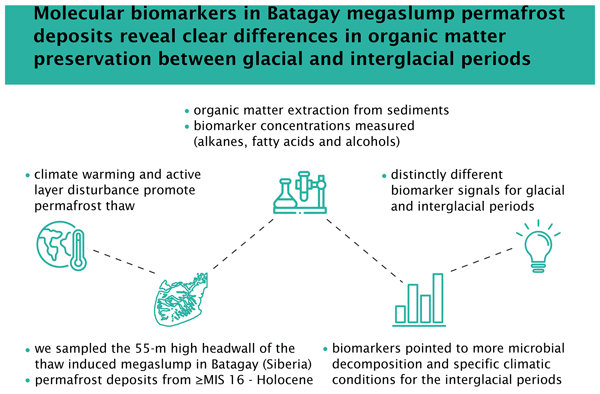
Loeka L. Jongejans, Kai Mangelsdorf, Cornelia Karger, Thomas Opel, Sebastian Wetterich, Jérémy Courtin, Hanno Meyer, Alexander I. Kizyakov, Guido Grosse, Andrei G. Shepelev, Igor I. Syromyatnikov, Alexander N. Fedorov, and Jens Strauss
The Cryosphere, 16, 3601–3617, https://doi.org/10.5194/tc-16-3601-2022, https://doi.org/10.5194/tc-16-3601-2022, 2022
Short summary
Short summary
Large parts of Arctic Siberia are underlain by permafrost. Climate warming leads to permafrost thaw. At the Batagay megaslump, permafrost sediments up to ~ 650 kyr old are exposed. We took sediment samples and analysed the organic matter (e.g. plant remains). We found distinct differences in the biomarker distributions between the glacial and interglacial deposits with generally stronger microbial activity during interglacial periods. Further permafrost thaw enhances greenhouse gas emissions.
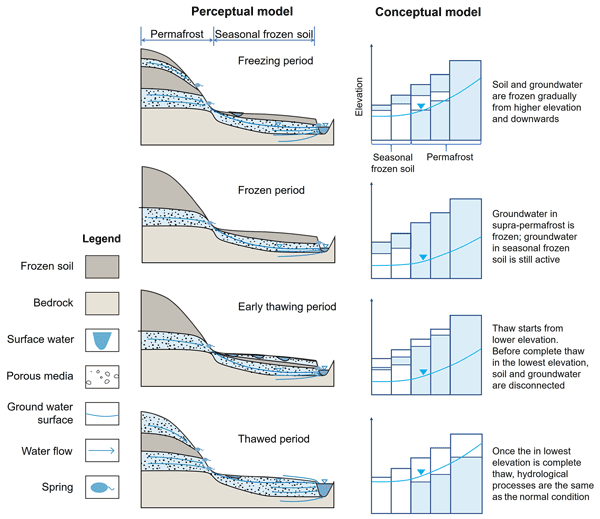
Hongkai Gao, Chuntan Han, Rensheng Chen, Zijing Feng, Kang Wang, Fabrizio Fenicia, and Hubert Savenije
Hydrol. Earth Syst. Sci., 26, 4187–4208, https://doi.org/10.5194/hess-26-4187-2022, https://doi.org/10.5194/hess-26-4187-2022, 2022
Short summary
Short summary
Frozen soil hydrology is one of the 23 unsolved problems in hydrology (UPH). In this study, we developed a novel conceptual frozen soil hydrological model, FLEX-Topo-FS. The model successfully reproduced the soil freeze–thaw process, and its impacts on hydrologic connectivity, runoff generation, and groundwater. We believe this study is a breakthrough for the 23 UPH, giving us new insights on frozen soil hydrology, with broad implications for predicting cold region hydrology in future.
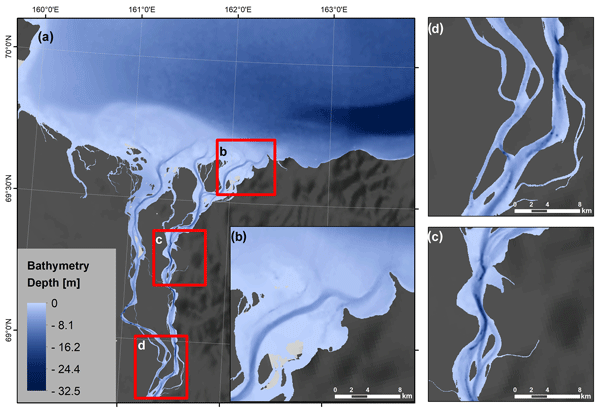
Matthias Fuchs, Juri Palmtag, Bennet Juhls, Pier Paul Overduin, Guido Grosse, Ahmed Abdelwahab, Michael Bedington, Tina Sanders, Olga Ogneva, Irina V. Fedorova, Nikita S. Zimov, Paul J. Mann, and Jens Strauss
Earth Syst. Sci. Data, 14, 2279–2301, https://doi.org/10.5194/essd-14-2279-2022, https://doi.org/10.5194/essd-14-2279-2022, 2022
Short summary
Short summary
We created digital, high-resolution bathymetry data sets for the Lena Delta and Kolyma Gulf regions in northeastern Siberia. Based on nautical charts, we digitized depth points and isobath lines, which serve as an input for a 50 m bathymetry model. The benefit of this data set is the accurate mapping of near-shore areas as well as the offshore continuation of the main deep river channels. This will improve the estimation of river outflow and the nutrient flux output into the coastal zone.

Charlotte Haugk, Loeka L. Jongejans, Kai Mangelsdorf, Matthias Fuchs, Olga Ogneva, Juri Palmtag, Gesine Mollenhauer, Paul J. Mann, P. Paul Overduin, Guido Grosse, Tina Sanders, Robyn E. Tuerena, Lutz Schirrmeister, Sebastian Wetterich, Alexander Kizyakov, Cornelia Karger, and Jens Strauss
Biogeosciences, 19, 2079–2094, https://doi.org/10.5194/bg-19-2079-2022, https://doi.org/10.5194/bg-19-2079-2022, 2022
Short summary
Short summary
Buried animal and plant remains (carbon) from the last ice age were freeze-locked in permafrost. At an extremely fast eroding permafrost cliff in the Lena Delta (Siberia), we found this formerly frozen carbon well preserved. Our results show that ongoing degradation releases substantial amounts of this carbon, making it available for future carbon emissions. This mobilisation at the studied cliff and also similarly eroding sites bear the potential to affect rivers and oceans negatively.
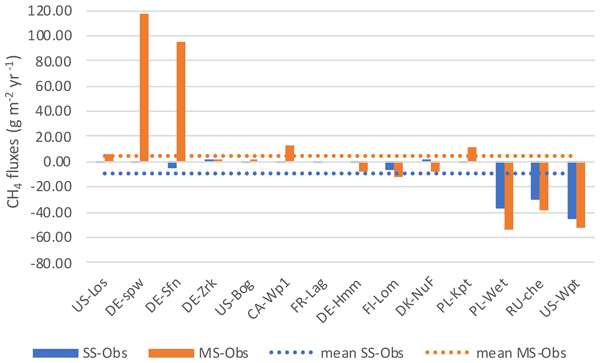
Elodie Salmon, Fabrice Jégou, Bertrand Guenet, Line Jourdain, Chunjing Qiu, Vladislav Bastrikov, Christophe Guimbaud, Dan Zhu, Philippe Ciais, Philippe Peylin, Sébastien Gogo, Fatima Laggoun-Défarge, Mika Aurela, M. Syndonia Bret-Harte, Jiquan Chen, Bogdan H. Chojnicki, Housen Chu, Colin W. Edgar, Eugenie S. Euskirchen, Lawrence B. Flanagan, Krzysztof Fortuniak, David Holl, Janina Klatt, Olaf Kolle, Natalia Kowalska, Lars Kutzbach, Annalea Lohila, Lutz Merbold, Włodzimierz Pawlak, Torsten Sachs, and Klaudia Ziemblińska
Geosci. Model Dev., 15, 2813–2838, https://doi.org/10.5194/gmd-15-2813-2022, https://doi.org/10.5194/gmd-15-2813-2022, 2022
Short summary
Short summary
A methane model that features methane production and transport by plants, the ebullition process and diffusion in soil, oxidation to CO2, and CH4 fluxes to the atmosphere has been embedded in the ORCHIDEE-PEAT land surface model, which includes an explicit representation of northern peatlands. This model, ORCHIDEE-PCH4, was calibrated and evaluated on 14 peatland sites. Results show that the model is sensitive to temperature and substrate availability over the top 75 cm of soil depth.
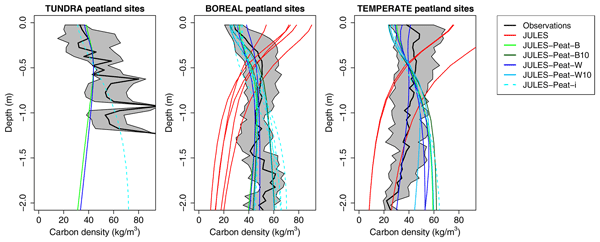
Sarah E. Chadburn, Eleanor J. Burke, Angela V. Gallego-Sala, Noah D. Smith, M. Syndonia Bret-Harte, Dan J. Charman, Julia Drewer, Colin W. Edgar, Eugenie S. Euskirchen, Krzysztof Fortuniak, Yao Gao, Mahdi Nakhavali, Włodzimierz Pawlak, Edward A. G. Schuur, and Sebastian Westermann
Geosci. Model Dev., 15, 1633–1657, https://doi.org/10.5194/gmd-15-1633-2022, https://doi.org/10.5194/gmd-15-1633-2022, 2022
Short summary
Short summary
We present a new method to include peatlands in an Earth system model (ESM). Peatlands store huge amounts of carbon that accumulates very slowly but that can be rapidly destabilised, emitting greenhouse gases. Our model captures the dynamic nature of peat by simulating the change in surface height and physical properties of the soil as carbon is added or decomposed. Thus, we model, for the first time in an ESM, peat dynamics and its threshold behaviours that can lead to destabilisation.

Gregory E. Tucker, Eric W. H. Hutton, Mark D. Piper, Benjamin Campforts, Tian Gan, Katherine R. Barnhart, Albert J. Kettner, Irina Overeem, Scott D. Peckham, Lynn McCready, and Jaia Syvitski
Geosci. Model Dev., 15, 1413–1439, https://doi.org/10.5194/gmd-15-1413-2022, https://doi.org/10.5194/gmd-15-1413-2022, 2022
Short summary
Short summary
Scientists use computer simulation models to understand how Earth surface processes work, including floods, landslides, soil erosion, river channel migration, ocean sedimentation, and coastal change. Research benefits when the software for simulation modeling is open, shared, and coordinated. The Community Surface Dynamics Modeling System (CSDMS) is a US-based facility that supports research by providing community support, computing tools and guidelines, and educational resources.
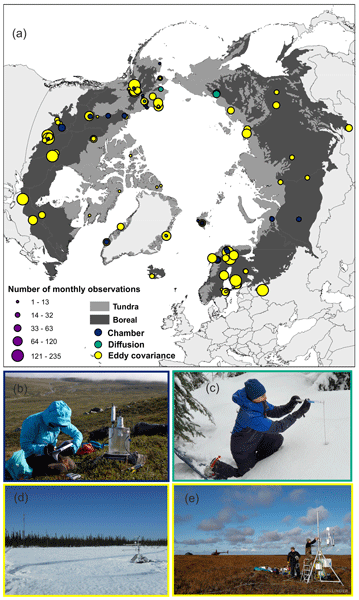
Anna-Maria Virkkala, Susan M. Natali, Brendan M. Rogers, Jennifer D. Watts, Kathleen Savage, Sara June Connon, Marguerite Mauritz, Edward A. G. Schuur, Darcy Peter, Christina Minions, Julia Nojeim, Roisin Commane, Craig A. Emmerton, Mathias Goeckede, Manuel Helbig, David Holl, Hiroki Iwata, Hideki Kobayashi, Pasi Kolari, Efrén López-Blanco, Maija E. Marushchak, Mikhail Mastepanov, Lutz Merbold, Frans-Jan W. Parmentier, Matthias Peichl, Torsten Sachs, Oliver Sonnentag, Masahito Ueyama, Carolina Voigt, Mika Aurela, Julia Boike, Gerardo Celis, Namyi Chae, Torben R. Christensen, M. Syndonia Bret-Harte, Sigrid Dengel, Han Dolman, Colin W. Edgar, Bo Elberling, Eugenie Euskirchen, Achim Grelle, Juha Hatakka, Elyn Humphreys, Järvi Järveoja, Ayumi Kotani, Lars Kutzbach, Tuomas Laurila, Annalea Lohila, Ivan Mammarella, Yojiro Matsuura, Gesa Meyer, Mats B. Nilsson, Steven F. Oberbauer, Sang-Jong Park, Roman Petrov, Anatoly S. Prokushkin, Christopher Schulze, Vincent L. St. Louis, Eeva-Stiina Tuittila, Juha-Pekka Tuovinen, William Quinton, Andrej Varlagin, Donatella Zona, and Viacheslav I. Zyryanov
Earth Syst. Sci. Data, 14, 179–208, https://doi.org/10.5194/essd-14-179-2022, https://doi.org/10.5194/essd-14-179-2022, 2022
Short summary
Short summary
The effects of climate warming on carbon cycling across the Arctic–boreal zone (ABZ) remain poorly understood due to the relatively limited distribution of ABZ flux sites. Fortunately, this flux network is constantly increasing, but new measurements are published in various platforms, making it challenging to understand the ABZ carbon cycle as a whole. Here, we compiled a new database of Arctic–boreal CO2 fluxes to help facilitate large-scale assessments of the ABZ carbon cycle.

Arial J. Shogren, Jay P. Zarnetske, Benjamin W. Abbott, Samuel Bratsman, Brian Brown, Michael P. Carey, Randy Fulweber, Heather E. Greaves, Emma Haines, Frances Iannucci, Joshua C. Koch, Alexander Medvedeff, Jonathan A. O'Donnell, Leika Patch, Brett A. Poulin, Tanner J. Williamson, and William B. Bowden
Earth Syst. Sci. Data, 14, 95–116, https://doi.org/10.5194/essd-14-95-2022, https://doi.org/10.5194/essd-14-95-2022, 2022
Short summary
Short summary
Rapidly sampling multiple points in an entire river network provides a high-resolution snapshot in time that can reveal where nutrients and carbon are being taken up and released. Here, we describe two such datasets of river network chemistry in six Arctic watersheds in northern Alaska. We describe how these repeated snapshots can be used as an indicator of ecosystem response to climate change and to improve predictions of future release of carbon, nutrient, and other solutes.
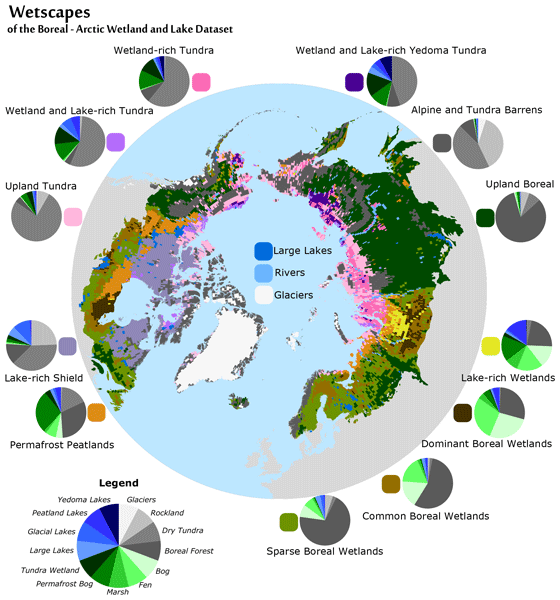
David Olefeldt, Mikael Hovemyr, McKenzie A. Kuhn, David Bastviken, Theodore J. Bohn, John Connolly, Patrick Crill, Eugénie S. Euskirchen, Sarah A. Finkelstein, Hélène Genet, Guido Grosse, Lorna I. Harris, Liam Heffernan, Manuel Helbig, Gustaf Hugelius, Ryan Hutchins, Sari Juutinen, Mark J. Lara, Avni Malhotra, Kristen Manies, A. David McGuire, Susan M. Natali, Jonathan A. O'Donnell, Frans-Jan W. Parmentier, Aleksi Räsänen, Christina Schädel, Oliver Sonnentag, Maria Strack, Suzanne E. Tank, Claire Treat, Ruth K. Varner, Tarmo Virtanen, Rebecca K. Warren, and Jennifer D. Watts
Earth Syst. Sci. Data, 13, 5127–5149, https://doi.org/10.5194/essd-13-5127-2021, https://doi.org/10.5194/essd-13-5127-2021, 2021
Short summary
Short summary
Wetlands, lakes, and rivers are important sources of the greenhouse gas methane to the atmosphere. To understand current and future methane emissions from northern regions, we need maps that show the extent and distribution of specific types of wetlands, lakes, and rivers. The Boreal–Arctic Wetland and Lake Dataset (BAWLD) provides maps of five wetland types, seven lake types, and three river types for northern regions and will improve our ability to predict future methane emissions.
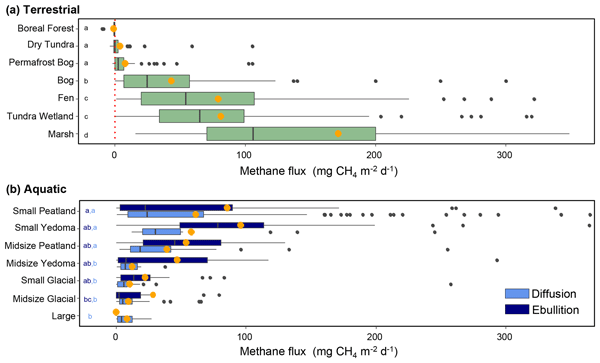
McKenzie A. Kuhn, Ruth K. Varner, David Bastviken, Patrick Crill, Sally MacIntyre, Merritt Turetsky, Katey Walter Anthony, Anthony D. McGuire, and David Olefeldt
Earth Syst. Sci. Data, 13, 5151–5189, https://doi.org/10.5194/essd-13-5151-2021, https://doi.org/10.5194/essd-13-5151-2021, 2021
Short summary
Short summary
Methane (CH4) emissions from the boreal–Arctic region are globally significant, but the current magnitude of annual emissions is not well defined. Here we present a dataset of surface CH4 fluxes from northern wetlands, lakes, and uplands that was built alongside a compatible land cover dataset, sharing the same classifications. We show CH4 fluxes can be split by broad land cover characteristics. The dataset is useful for comparison against new field data and model parameterization or validation.
Cited articles
Abbott, B. and Jones, J.: Soil respiration, water chemistry, and soil gas data for thermokarst features and undisturbed tundra on the North Slope of Alaska, NSF Arctic Data Center, https://doi.org/10.18739/A23T9D71C, 2013.
Andresen, C. G., Lawrence, D. M., Wilson, C. J., McGuire, A. D., Koven, C., Schaefer, K., Jafarov, E., Peng, S., Chen, X., Gouttevin, I., Burke, E., Chadburn, S., Ji, D., Chen, G., Hayes, D., and Zhang, W.: Soil moisture and hydrology projections of the permafrost region – a model intercomparison, The Cryosphere, 14, 445–459, https://doi.org/10.5194/tc-14-445-2020, 2020.
Bäck, H., May, R., Naidu, D. S., and Eikenberry, S.: Effect of methane mitigation on global temperature under a permafrost feedback, Glob. Environ. Change Adv., 2, 100005, https://doi.org/10.1016/j.gecadv.2024.100005, 2024.
Ballinger, T. J., Crawford, A., and Serreze, M. C.: NOAA Arctic Report Card 2025: Surface Air Temperature, NOAA Tech. Rep. OAR ARC 25-02, https://doi.org/10.25923/CJ60-9S07, 2025.
Balser, A. and Jorgenson, M.: Surface and Upper Permafrost Site Properties, Northern Alaska, NSF Arctic Data Center, https://doi.org/10.18739/A2JG7M, 2013.
Bamber, J. L., Oppenheimer, M., Kopp, R. E., Aspinall, W. P., and Cooke, R. M.: Ice sheet contributions to future sea-level rise from structured expert judgment, P. Natl. Acad. Sci., 116, 11195–11200, https://doi.org/10.1073/pnas.1817205116, 2019.
Bigalke, S. and Walsh, J. E.: Future Changes of Snow in Alaska and the Arctic under Stabilized Global Warming Scenarios, Atmosphere, 13, 541, https://doi.org/10.3390/atmos13040541, 2022.
Bowden, W. B., Gooseff, M. N., Balser, A., Green, A., Peterson, B. J., and Bradford, J.: Sediment and nutrient delivery from thermokarst features in the foothills of the North Slope, Alaska: Potential impacts on headwater stream ecosystems, J. Geophys. Res.-Biogeosci., 113, 2007JG000470, https://doi.org/10.1029/2007JG000470, 2008.
Buckeridge, K. M., Shimel, J. P., Mack, M. C., and Schurr, E.: Ecosystem nutrient cycling following thermokarst disturbance, NSF Arctic Data Center, https://doi.org/10.18739/A2V97ZS2J, 2013.
Buckeridge, K. M., McLaren, J. R., Mack, M. C., Schuur, E. A. G., and Schimel, J.: Missing nitrogen source during ecosystem succession within retrogressive thaw slumps in Alaska, Environ. Res. Lett., 18, 065003, https://doi.org/10.1088/1748-9326/acd0c2, 2023.
Chen, Y., Liu, A., and Cheng, X.: A dataset of thermokarst lake drainage events in northern Alaska (2000–2020), Zenodo, https://doi.org/10.5281/ZENODO.4998099, 2021a.
Chen, Y., Lara, M., Jones, B., Frost, G., and Hu, F. S.: Thermokarst acceleration in Arctic tundra driven by climate change and fire disturbance, NSF Arctic Data Center, 1950–2015, https://doi.org/10.18739/A2610VT0G, 2021b.
Douglas, T. A., Hiemstra, C. A., Anderson, J. E., Barbato, R. A., Bjella, K. L., Deeb, E. J., Gelvin, A. B., Nelsen, P. E., Newman, S. D., Saari, S. P., and Wagner, A. M.: Recent degradation of interior Alaska permafrost mapped with ground surveys, geophysics, deep drilling, and repeat airborne lidar, The Cryosphere, 15, 3555–3575, https://doi.org/10.5194/tc-15-3555-2021, 2021.
Edwards, M., Grosse, G., Jones, B. M., and McDowell, P.: The evolution of a thermokarst-lake landscape: Late Quaternary permafrost degradation and stabilization in interior Alaska, Sediment. Geol., 340, 3–14, https://doi.org/10.1016/j.sedgeo.2016.01.018, 2016.
Efron, B. and Tibshirani, R. J.: An Introduction to the Bootstrap, Springer US, Boston, MA, Chapman and Hall/CRC, https://doi.org/10.1201/9780429246593, 1993.
Euskirchen, E. S., Edgar, C. W., Turetsky, M. R., Waldrop, M. P., and Harden, J. W.: Differential response of carbon fluxes to climate in three peatland ecosystems that vary in the presence and stability of permafrost: Carbon fluxes and permafrost thaw, J. Geophys. Res.-Biogeo., 119, 1576–1595, https://doi.org/10.1002/2014JG002683, 2014.
Fu, P. and Rich, P. M.: A geometric solar radiation model with applications in agriculture and forestry, Comput. Electron. Agr., 37, 25–35, https://doi.org/10.1016/S0168-1699(02)00115-1, 2002.
Gagnon, S., Fortier, D., Godin, É., and Veillette, A.: The cryostratigraphy of thermo-erosion gullies in the Canadian High Arctic demonstrates the resilience of permafrost, The Cryosphere, 18, 4743–4763, https://doi.org/10.5194/tc-18-4743-2024, 2024.
Gallant, A. L., Binnian, E. F., Omernik, J., and Shasby, M.: Ecoregions of Alaska: U.S. Geological Survey Professional Paper 1567, Report: iv, 73 pp., Plate: 39.00 x 20.50 inches, https://doi.org/10.3133/pp1567, 1995.
Gibson, C. M., Chasmer, L. E., Thompson, D. K., Quinton, W. L., Flannigan, M. D., and Olefeldt, D.: Wildfire as a major driver of recent permafrost thaw in boreal peatlands, Nat. Commun., 9, 3041, https://doi.org/10.1038/s41467-018-05457-1, 2018.
Gooseff, M.: Ground temperature at and near thermokarst sites around Toolik Lake Field Station, Summer 2009–Summer 2012, NSF Arctic Data Center, https://doi.org/10.18739/A2M89X, 2016.
Gorelick, N., Hancher, M., Dixon, M., Ilyushchenko, S., Thau, D., and Moore, R.: Google Earth Engine: Planetary-scale geospatial analysis for everyone, Remote Sens. Environ., 202, 18–27, https://doi.org/10.1016/j.rse.2017.06.031, 2017.
GTN-P: Global Terrestrial Network for Permafrost metadata for active layer monitoring (CALM) sites, PANGAEA, https://doi.org/10.1594/PANGAEA.842815, 2015a.
GTN-P: Global Terrestrial Network for Permafrost metadata for permafrost boreholes (TSP), PANGAEA, https://doi.org/10.1594/PANGAEA.842820, 2015b.
Harms, T. K., Abbott, B. W., and Jones, J. B.: Thermo-erosion gullies increase nitrogen available for hydrologic export, Biogeochemistry, 117, 299–311, https://doi.org/10.1007/s10533-013-9862-0, 2013.
Harris, S. A., French, H. M., Heginbottom, J. A., Johnston, G. H., Ladanyi, B., Sego, D. C., and van Everdingen, R. O.: Glossary of permafrost and related ground-ice terms, Assoc. Comm. Geotech. Res. Natl. Res. Counc. Can. Ott., 156, 63–64, 1988.
Heginbottom, J., Brown, J., Ferrians, O., and Melnikov, E. S.: Circum-Arctic Map of Permafrost and Ground-Ice Conditions, Version 2, National Snow and Ice Data Center, https://doi.org/10.7265/SKBG-KF16, 2002.
Hinkel, K. M., Sheng, Y., Lenters, J. D., Lyons, E. A., Beck, R. A., Eisner, W. R., and Wang, J.: Thermokarst Lakes on the Arctic Coastal Plain of Alaska: Geomorphic Controls on Bathymetry, Permafrost. Periglac., 23, 218–230, https://doi.org/10.1002/ppp.1744, 2012.
Hjort, J., Streletskiy, D., Doré, G., Wu, Q., Bjella, K., and Luoto, M.: Impacts of permafrost degradation on infrastructure, Nat. Rev. Earth Environ., 3, 24–38, https://doi.org/10.1038/s43017-021-00247-8, 2022.
Hopkins, D. M.: Thaw Lakes and Thaw Sinks in the Imuruk Lake Area, Seward Peninsula, Alaska, J. Geol., 57, 119–131, 1949.
Johnston, C. E., Ewing, S. A., Harden, J. W., Varner, R. K., Wickland, K. P., Koch, J. C., Fuller, C. C., Manies, K., and Jorgenson, M. T.: Effect of permafrost thaw on CO2 and CH4 exchange in a western Alaska peatland chronosequence, Environ. Res. Lett., 9, 085004, https://doi.org/10.1088/1748-9326/9/8/085004, 2014.
Jones, B. and Zuck, C. A.: Fish Creek Watershed Lake Classification, NPRA, Alaska, 2016, U.S. Geological Survey, https://doi.org/10.5066/F7H70CXB, 2016.
Jones, B., Arp, C., Grosse, G., Nitze, I., Lara, M., Whitman, M., Farquharson, L., Kanevskiy, M., Parsekian, A., Breen, A., Ohara, N., Rangel, R., and Hinkel, K.: Historic Lake Drainage on the Western Arctic Coastal Plain in Northern Alaska from Remote Sensing Datasets, 1955–2017, NSF Arctic Data Center, https://doi.org/10.18739/A2DR2P85H, 2019.
Jones, B. M., Baughman, C. A., Romanovsky, V. E., Parsekian, A. D., Babcock, E. L., Stephani, E., Jones, M. C., Grosse, G., and Berg, E. E.: Presence of rapidly degrading permafrost plateaus in south-central Alaska, The Cryosphere, 10, 2673–2692, https://doi.org/10.5194/tc-10-2673-2016, 2016.
Jones, B. M., Schaeffer Tessier, S., Tessier, T., Brubaker, M., Brook, M., Schaeffer, J., Ward Jones, M. K., Grosse, G., Nitze, I., Rettelbach, T., Zavoico, S., Clark, J. A., and Tape, K. D.: Integrating local environmental observations and remote sensing to better understand the life cycle of a thermokarst lake in Arctic Alaska, Arct. Antarct. Alp. Res., 55, 2195518, https://doi.org/10.1080/15230430.2023.2195518, 2023.
Jones, M. C., Booth, R. K., Yu, Z., and Ferry, P.: A 2200-Year Record of Permafrost Dynamics and Carbon Cycling in a Collapse-Scar Bog, Interior Alaska, Ecosystems, 16, 1–19, https://doi.org/10.1007/s10021-012-9592-5, 2013.
Jongejans, L. L., Strauss, J., Lenz, J., Peterse, F., Mangelsdorf, K., Fuchs, M., and Grosse, G.: Table S1: Sedimentological and biogeochemical data of yedoma and thermokarst deposits in Baldwin Peninsula, West-Alaska, PANGAEA, https://doi.org/10.1594/PANGAEA.892306, 2018.
Jorgenson, M., Yoshikawa, K., Kanevskiy, M., Shur, Y., Romanovsky, V., Marchenko, S., Grosse, G., Brown, J., and Jones, B.: Permafrost characteristics of Alaska, Institute of Northern Engineering, University of Alaska Fairbanks, Citation ID: 29801, 2008.
Jorgenson, M. T., Shur, Y. L., and Pullman, E. R.: Abrupt increase in permafrost degradation in Arctic Alaska, Geophys. Res. Lett., 33, L02503, https://doi.org/10.1029/2005GL024960, 2006.
Jorgenson, M. T., Brown, D. R. N., Hiemstra, C. A., Genet, H., Marcot, B. G., Murphy, R. J., and Douglas, T. A.: Drivers of historical and projected changes in diverse boreal ecosystems: fires, thermokarst, riverine dynamics, and humans, Environ. Res. Lett., 17, 045016, https://doi.org/10.1088/1748-9326/ac5c0d, 2022.
Jorgenson, M. T., Douglas, T. A., Shur, Y. L., and Kanevskiy, M. Z.: Mapping the Vulnerability of Boreal Permafrost in Central Alaska in Relation to Thaw Rate, Ground Ice, and Thermokarst Development, J. Geophys. Res.-Earth Surf., 130, e2024JF008030, https://doi.org/10.1029/2024JF008030, 2025.
Jorgenson, T.: Permafrost soil database with information on site, topography, geomorphology, hydrology, soil stratigraphy, soil carbon, ground ice isotopes, and vegetation at thermokarst features near Toolik and Noatak River, 2009–2013, NSF Arctic Data Center, https://doi.org/10.18739/A2CP5C, 2013.
Kallio, A. and Rieger, S.: Recession of Permafrost in a Cultivated Soil of Interior Alaska, Soil Sci. Soc. Am. J., 33, 430–432, https://doi.org/10.2136/sssaj1969.03615995003300030028x, 1969.
Karjalainen, O., Aalto, J., Kanevskiy, M. Z., Luoto, M., and Hjort, J.: Ground ice content predictions for the Northern Hemisphere permafrost region at 1-km resolution, version 1.1 (Version 1.1), Zenodo, https://doi.org/10.5281/ZENODO.7009875, 2022.
Klein, E. S., Yu, Z., and Booth, R. K.: Recent increase in peatland carbon accumulation in a thermokarst lake basin in southwestern Alaska, Palaeogeogr. Palaeocl., 392, 186–195, https://doi.org/10.1016/j.palaeo.2013.09.009, 2013.
Kokelj, S. V. and Jorgenson, M. T.: Advances in Thermokarst Research, Permafrost. Periglac., 24, 108–119, https://doi.org/10.1002/ppp.1779, 2013.
Kreig, R. A. and Reger, R. D.: Air-photo analysis and summary of landform soil properties along the route of the trans-Alaska pipeline system, Alaska Division of Geological & Geophysical Surveys, https://doi.org/10.14509/426, 1982.
Langer, M., Kaiser, S., Oehme, A., and Jacobi, S.: Bathymetry data of thermokarst lakes in the North Slope of Alaska (USA) and Manitoba (Canada) in 2019, PANGAEA, https://doi.org/10.1594/PANGAEA.918918, 2020.
Lenz, J., Jones, B. M., Wetterich, S., Tjallingii, R., Fritz, M., Arp, C. D., Rudaya, N., and Grosse, G.: Bulk sediment parameter of three sediment cores from permafrost lowlands, Alaska Arctic Coastal Plain, PANGAEA, https://doi.org/10.1594/PANGAEA.864814, 2016.
Lewkowicz, A., Wolfe, S., Geological Survey of Canada, Roujanski, V., Tetra Tech Canada, Hoeve, E., HoeveEng Consulting Ltd, O'Neill, B., Geological Survey of Canada, Gruber, S., Carleton University, Roy-Léveillée, P., Université Laval, Brown, N., Carleton University, Koenig, C., BGC Engineering, Brooks, H., BGC Engineering, Rudy, A., Northwest Territories Geological Survey, Bonnaventure, P., University of Lethbridge, Paquette, M., and Stantec: An Illustrated Permafrost Dictionary, Canadian Permafrost Association (CPA), https://doi.org/10.52381/CPA.permafrostdictionary.1, 2024.
Li, B., Heijmans, M. M. P. D., Blok, D., Wang, P., Karsanaev, S. V., Maximov, T. C., Van Huissteden, J., and Berendse, F.: Thaw pond development and initial vegetation succession in experimental plots at a Siberian lowland tundra site, Plant Soil, 420, 147–162, https://doi.org/10.1007/s11104-017-3369-8, 2017.
Liljedahl, A., Hinzman, L., Busey, R., and Yoshikawa, K.: Physical short-term changes after a tussock tundra fire, Seward Peninsula, Alaska, J. Geophys. Res.-Earth Surf., 112, 2006JF000554, https://doi.org/10.1029/2006JF000554, 2007.
Lloyd, A. H., Yoshikawa, K., Fastie, C. L., Hinzman, L., and Fraver, M.: Effects of permafrost degradation on woody vegetation at arctic treeline on the Seward Peninsula, Alaska, Permafrost. Periglac., 14, 93–101, https://doi.org/10.1002/ppp.446, 2003.
Luken, J. O. and Billings, W. D.: Changes in Bryophyte Production Associated with a Thermokarst Erosion Cycle in a Subarctic Bog, Lindbergia, 9, 163–168, 1984.
Mackelprang, R., Saleska, S. R., Jacobsen, C. S., Jansson, J. K., and Taş, N.: Permafrost Meta-Omics and Climate Change, Annu. Rev. Earth Planet. Si., 44, 439–462, https://doi.org/10.1146/annurev-earth-060614-105126, 2016.
McCarty, J. L., Aalto, J., Paunu, V.-V., Arnold, S. R., Eckhardt, S., Klimont, Z., Fain, J. J., Evangeliou, N., Venäläinen, A., Tchebakova, N. M., Parfenova, E. I., Kupiainen, K., Soja, A. J., Huang, L., and Wilson, S.: Reviews and syntheses: Arctic fire regimes and emissions in the 21st century, Biogeosciences, 18, 5053–5083, https://doi.org/10.5194/bg-18-5053-2021, 2021.
McKnight, P. E. and Najab, J.: Mann-Whitney U Test, in: The Corsini Encyclopedia of Psychology, edited by: Weiner, I. B. and Craighead, W. E., Wiley, https://doi.org/10.1002/9780470479216.corpsy0524, 2010.
Myers-Smith, I. H., McGuire, A. D., Harden, J. W., and Chapin, F. S.: Influence of disturbance on carbon exchange in a permafrost collapse and adjacent burned forest, J. Geophys. Res.-Biogeosci., 112, 2007JG000423, https://doi.org/10.1029/2007JG000423, 2007.
Myers-Smith, I. H., Harden, J. W., Wilmking, M., Fuller, C. C., McGuire, A. D., and Chapin, F. S.: Ages and isotopic signatures of peat cores from a boreal landscape, Interior Alaska, PANGAEA, https://doi.org/10.1594/PANGAEA.817460, 2008.
Natali, S. M., Schuur, E. A. G., Mauritz, M., Schade, J. D., Celis, G., Crummer, K. G., Johnston, C., Krapek, J., Pegoraro, E., Salmon, V. G., and Webb, E. E.: Permafrost thaw and soil moisture driving CO2 and CH4 release from upland tundra, J. Geophys. Res.-Biogeosci., 120, 525–537, https://doi.org/10.1002/2014JG002872, 2015.
National Snow and Ice Data Center (NSIDC): Cryosphere Glossary, Cooperative Institute for Research in Environmental Sciences, University of Colorado Boulder, https://nsidc.org/learn/cryosphere-glossary, last access: 24 October 2025.
Nitze, I., Grosse, G., Jones, B. M., Romanovsky, V. E., and Boike, J.: Remote sensing quantifies widespread abundance of permafrost region disturbances across the Arctic and Subarctic, Datasets, PANGAEA, https://doi.org/10.1594/PANGAEA.894755, 2018.
Nitze, I., Cooley, S. W., Duguay, C. R., Jones, B. M., and Grosse, G.: Spatial lake dynamics and lake-ice datasets of the Northern Seward and Baldwin Peninsulas in Alaska, PANGAEA, https://doi.org/10.1594/PANGAEA.922808, 2020a.
Nitze, I., Cooley, S. W., Duguay, C. R., Jones, B. M., and Grosse, G.: The catastrophic thermokarst lake drainage events of 2018 in northwestern Alaska: fast-forward into the future, The Cryosphere, 14, 4279–4297, https://doi.org/10.5194/tc-14-4279-2020, 2020b.
Olefeldt, D., Goswami, S., Grosse, G., Hayes, D., Hugelius, G., Kuhry, P., McGuire, A. D., Romanovsky, V. E., Sannel, A. B. K., Schuur, E. A. G., and Turetsky, M. R.: Circumpolar distribution and carbon storage of thermokarst landscapes, Nat. Commun., 7, 13043, https://doi.org/10.1038/ncomms13043, 2016.
Osterkamp, T. E., Viereck, L., Shur, Y., Jorgenson, M. T., Racine, C., Doyle, A., and Boone, R. D.: Observations of Thermokarst and Its Impact on Boreal Forests in Alaska, U.S.A., Arct. Antarct. Alp. Res., 32, 303–315, https://doi.org/10.1080/15230430.2000.12003368, 2018.
Plug, L. J. and West, J. J.: Thaw lake expansion in a two-dimensional coupled model of heat transfer, thaw subsidence, and mass movement, J. Geophys. Res.-Earth Surf., 114, 2006JF000740, https://doi.org/10.1029/2006JF000740, 2009.
Porter, C., Howat, I., Noh, M.-J., Husby, E., Khuvis, S., Danish, E., Tomko, K., Gardiner, J., Negrete, A., Yadav, B., Klassen, J., Kelleher, C., Cloutier, M., Bakker, J., Enos, J., Arnold, G., Bauer, G., Morin, P., and Polar Geospatial Center: ArcticDEM – Mosaics, Version 4.1 (1.0), Polar Geospatial Center, https://doi.org/10.7910/DVN/3VDC4W, 2023.
Schuur, E. A. G. and Mack, M. C.: Ecological Response to Permafrost Thaw and Consequences for Local and Global Ecosystem Services, Annu. Rev. Ecol. Evol. Syst., 49, 279–301, https://doi.org/10.1146/annurev-ecolsys-121415-032349, 2018.
Schuur, E. A. G., McGuire, A. D., Schädel, C., Grosse, G., Harden, J. W., Hayes, D. J., Hugelius, G., Koven, C. D., Kuhry, P., Lawrence, D. M., Natali, S. M., Olefeldt, D., Romanovsky, V. E., Schaefer, K., Turetsky, M. R., Treat, C. C., and Vonk, J. E.: Climate change and the permafrost carbon feedback, Nature, 520, 171–179, https://doi.org/10.1038/nature14338, 2015.
Schuur, E. A. G., Abbott, B. W., Commane, R., Ernakovich, J., Euskirchen, E., Hugelius, G., Grosse, G., Jones, M., Koven, C., Leshyk, V., Lawrence, D., Loranty, M. M., Mauritz, M., Olefeldt, D., Natali, S., Rodenhizer, H., Salmon, V., Schädel, C., Strauss, J., Treat, C., and Turetsky, M.: Permafrost and Climate Change: Carbon Cycle Feedbacks From the Warming Arctic, Annu. Rev. Env. Resour., 47, 343–371, https://doi.org/10.1146/annurev-environ-012220-011847, 2022.
Stepien, A., Koivurova, T., Gremsperger, A., and Niemi, H.: Arctic Indigenous Peoples and the Challenge of Climate Change, in: Arctic Marine Governance, edited by: Tedsen, E., Cavalieri, S., and Kraemer, R. A., Springer Berlin Heidelberg, Berlin, Heidelberg, 71–99, https://doi.org/10.1007/978-3-642-38595-7_4, 2014.
Strauss, J., Schirrmeister, L., Grosse, G., Fortier, D., Hugelius, G., Knoblauch, C., Romanovsky, V., Schädel, C., Schneider Von Deimling, T., Schuur, E. A. G., Shmelev, D., Ulrich, M., and Veremeeva, A.: Deep Yedoma permafrost: A synthesis of depositional characteristics and carbon vulnerability, Earth-Sci. Rev., 172, 75–86, https://doi.org/10.1016/j.earscirev.2017.07.007, 2017.
Strauss, J., Laboor, S., Schirrmeister, L., Fedorov, A. N., Fortier, D., Froese, D., Fuchs, M., Günther, F., Grigoriev, M., Harden, J., Hugelius, G., Jongejans, L. L., Kanevskiy, M., Kholodov, A., Kunitsky, V., Kraev, G., Lozhkin, A., Rivkina, E., Shur, Y., Siegert, C., Spektor, V., Streletskaya, I., Ulrich, M., Vartanyan, S., Veremeeva, A., Anthony, K. W., Wetterich, S., Zimov, N., and Grosse, G.: Circum-Arctic Map of the Yedoma Permafrost Domain, Front. Earth Sci., 9, 758360, https://doi.org/10.3389/feart.2021.758360, 2021.
Strauss, J., Laboor, S., Schirrmeister, L., Fedorov, A. N., Fortier, D., Froese, D. G., Fuchs, M., Günther, F., Grigoriev, M. N., Harden, J. W., Hugelius, G., Jongejans, L. L., Kanevskiy, M. Z., Kholodov, A. L., Kunitsky, V., Kraev, G., Lozhkin, A. V., Rivkina, E., Shur, Y., Siegert, C., Spektor, V., Streletskaya, I., Ulrich, M., Vartanyan, S. L., Veremeeva, A., Walter Anthony, K. M., Wetterich, S., Zimov, N. S., and Grosse, G.: Database of Ice-Rich Yedoma Permafrost Version 2 (IRYP v2), PANGAEA, https://doi.org/10.1594/PANGAEA.940078, 2022.
Strauss, J., Fuchs, M., Hugelius, G., Miesner, F., Nitze, I., Opfergelt, S., Schuur, E., Treat, C., Turetsky, M., Yang, Y., and Grosse, G.: Organic matter storage and vulnerability in the permafrost domain, in: Encyclopedia of Quaternary Science, Elsevier, 399–410, https://doi.org/10.1016/B978-0-323-99931-1.00164-1, 2025.
Streletskiy, D. A., Clemens, S., Lanckman, J.-P., and Shiklomanov, N. I.: The costs of Arctic infrastructure damages due to permafrost degradation, Environ. Res. Lett., 18, 015006, https://doi.org/10.1088/1748-9326/acab18, 2023.
Swanson, D. K.: Permafrost thaw-related slope failures in Alaska's Arctic National Parks, 1980–2019, Permafrost. Periglac., 32, 392–406, https://doi.org/10.1002/ppp.2098, 2021.
Teufel, B. and Sushama, L.: Abrupt changes across the Arctic permafrost region endanger northern development, Nat. Clim. Change, 9, 858–862, https://doi.org/10.1038/s41558-019-0614-6, 2019.
Turetsky, M. R., Abbott, B. W., Jones, M. C., Walter Anthony, K., Olefeldt, D., Schuur, E. A. G., Koven, C., McGuire, A. D., Grosse, G., Kuhry, P., Hugelius, G., Lawrence, D. M., Gibson, C., and Sannel, A. B. K.: Permafrost collapse is accelerating carbon release, Nature, 569, 32–34, https://doi.org/10.1038/d41586-019-01313-4, 2019.
Turetsky, M. R., Abbott, B. W., Jones, M. C., Anthony, K. W., Olefeldt, D., Schuur, E. A. G., Grosse, G., Kuhry, P., Hugelius, G., Koven, C., Lawrence, D. M., Gibson, C., Sannel, A. B. K., and McGuire, A. D.: Carbon release through abrupt permafrost thaw, Nat. Geosci., 13, 138–143, https://doi.org/10.1038/s41561-019-0526-0, 2020.
Van Soest, M. A. J., Anderson, N. J., and Bullard, J. E.: Arctic soil development under changing climate conditions, CATENA, 254, 108938, https://doi.org/10.1016/j.catena.2025.108938, 2025.
Vincent, W. F.: Arctic Climate Change: Local Impacts, Global Consequences, and Policy Implications, in: The Palgrave Handbook of Arctic Policy and Politics, edited by: Coates, K. S. and Holroyd, C., Springer International Publishing, Cham, 507–526, https://doi.org/10.1007/978-3-030-20557-7_31, 2020.
Walter Anthony, K.: Methane ebullition hotspot point data locations in interior Alaska thermokarst lakes from April 2011 through October 2019, NSF Arctic Data Center, https://doi.org/10.18739/A2NP1WK35, 2020.
Wang, K., Overeem, I., Jafarov, E., Clow, G., Romanovsky, V., Schaefer, K., Urban, F., Cable, W., Piper, M., Schwalm, C., Zhang, T., Kholodov, A., Sousanes, P., Loso, M., Swanson, D., and Hill, K.: A synthesis dataset of near-surface permafrost conditions for Alaska, 1997–2016, NSF Arctic Data Center, https://doi.org/10.18739/A2KG55, 2018a.
Wang, K., Jafarov, E., Overeem, I., Romanovsky, V., Schaefer, K., Clow, G., Urban, F., Cable, W., Piper, M., Schwalm, C., Zhang, T., Kholodov, A., Sousanes, P., Loso, M., and Hill, K.: A synthesis dataset of permafrost-affected soil thermal conditions for Alaska, USA, Earth Syst. Sci. Data, 10, 2311–2328, https://doi.org/10.5194/essd-10-2311-2018, 2018b.
Webb, H., Fuchs, M., Abbott, B. W., Douglas, T. A., Elder, C. D., Ernakovich, J. G., Euskirchen, E. S., Göckede, M., Grosse, G., Hugelius, G., Jones, M. C., Koven, C., Kropp, H., Lathrop, E., Li, W., Loranty, M. M., Natali, S. M., Olefeldt, D., Schädel, C., Schuur, E. A. G., Sonnentag, O., Strauss, J., Virkkala, A.-M., and Turetsky, M. R.: A Review of Abrupt Permafrost Thaw: Definitions, Usage, and a Proposed Conceptual Framework, Curr. Clim. Change Rep., 11, 7, https://doi.org/10.1007/s40641-025-00204-3, 2025a.
Webb, H., Pierce, E., Abbott, B. A., Bowden, W. B., Chen, Y., Chen, Y., Douglas, T. A., Eklof, J. F., Euskirchen, E., Jones, M. C., Langer, M., Myers-Smith, I. H., Overeem, I., Strauss, J., Walter Anthony, K., Wang, K., Whitley, M. A., and Turetsky, M.: The Alaska Permafrost Thaw Database (Version 2.0.0), Zenodo [data set, code], https://doi.org/10.5281/zenodo.16996415, 2025b.
Wendel, J.: Map Reveals Hot Spots for Arctic Greenhouse Gas Emissions, EOS, 97, https://doi.org/10.1029/2016EO061233, 2016.
Whitley, M., Frost, G. V., Jorgenson, M. T., Macander, M. J., Maio, C. V., and Winder, S. G.: Arctic-Boreal Vulnerability Experiment (ABoVE)ABoVE: Permafrost Measurements and Distribution Across the Y-K Delta, Alaska, 2016, ORNL Distributed Active Archive Center, https://doi.org/10.3334/ORNLDAAC/1598, 1 January 2018.
Witharana, C., Udawalpola, M. R., Liljedahl, A. K., Jones, M. K. W., Jones, B. M., Hasan, A., Joshi, D., and Manos, E.: Automated Detection of Retrogressive Thaw Slumps in the High Arctic Using High-Resolution Satellite Imagery, Remote Sens., 14, 4132, https://doi.org/10.3390/rs14174132, 2022.
Yang, Y., Rogers, B. M., Fiske, G., Watts, J., Potter, S., Windholz, T., Mullen, A., Nitze, I., and Natali, S. M.: Mapping retrogressive thaw slumps using deep neural networks, Remote Sens. Environ., 288, 113495, https://doi.org/10.1016/j.rse.2023.113495, 2023.
Yang, Y., Rodenhizer, H., Rogers, B. M., Dean, J., Singh, R., Windholz, T., Poston, A., Potter, S., Zolkos, S., Fiske, G., Watts, J., Huang, L., Witharana, C., Nitze, I., Nesterova, N., Barth, S., Grosse, G., Lantz, T., Runge, A., Lombardo, L., Nicu, I. C., Rubensdotter, L., Makopoulou, E., and Natali, S.: A Collaborative and Scalable Geospatial Data Set for Arctic Retrogressive Thaw Slumps with Data Standards, Sci. Data, 12, 18, https://doi.org/10.1038/s41597-025-04372-7, 2025.
Yoshikawa, K., Bolton, W. R., Romanovsky, V. E., Fukuda, M., and Hinzman, L. D.: Impacts of wildfire on the permafrost in the boreal forests of Interior Alaska, J. Geophys. Res.-Atmos., 107, https://doi.org/10.1029/2001JD000438, 2002.
Short summary
We created a database of 19,540 thawing permafrost sites across Alaska, including both abrupt and non-abrupt thaw features and explored relationships with elevation, slope, and incoming solar radiation. We use the database to show that existing ground ice maps are too coarse to predict abrupt thaw risk. This database can enhance predictions of future thaw and guide planning and adaptation strategies.
We created a database of 19,540 thawing permafrost sites across Alaska, including both abrupt...


Altmetrics
Final-revised paper
Preprint