Articles | Volume 18, issue 4
https://doi.org/10.5194/essd-18-2723-2026
© Author(s) 2026. This work is distributed under
the Creative Commons Attribution 4.0 License.
the Creative Commons Attribution 4.0 License.
https://doi.org/10.5194/essd-18-2723-2026
© Author(s) 2026. This work is distributed under
the Creative Commons Attribution 4.0 License.
the Creative Commons Attribution 4.0 License.
Data description article
| 
20 Apr 2026
Data description article |
| 20 Apr 2026
| 20 Apr 2026
OzRiCa: an Australian riverine carbon database of concentrations, gas fluxes and isotopes
Francesco Ulloa-Cedamanos
CORRESPONDING AUTHOR

Research Institute for the Environment and Livelihoods, Charles Darwin University, Darwin, NT, Australia
Adam T. Rexroade
Research Institute for the Environment and Livelihoods, Charles Darwin University, Darwin, NT, Australia
Yihan Li
Research Institute for the Environment and Livelihoods, Charles Darwin University, Darwin, NT, Australia
Lindsay B. Hutley
Research Institute for the Environment and Livelihoods, Charles Darwin University, Darwin, NT, Australia
Wei Wen Wong
Water Studies, School of Chemistry, Monash University, Melbourne, VIC, Australia
Marcus B. Wallin
Department of Aquatic Sciences and Assessment, Swedish University of Agricultural Sciences, Uppsala, Sweden
Josep G. Canadell
CSIRO Environment, Canberra, ACT, Australia
Anna Lintern
Department of Civil Engineering, Monash University, Clayton, VIC, Australia
Clément Duvert
Research Institute for the Environment and Livelihoods, Charles Darwin University, Darwin, NT, Australia
College of Science and Engineering, James Cook University, Cairns, QLD, Australia
Related authors
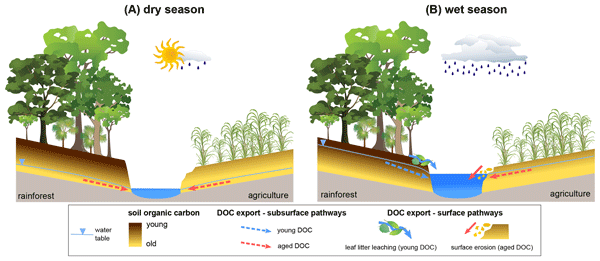
Clément Duvert, Vanessa Solano, Dioni I. Cendón, Francesco Ulloa-Cedamanos, Liza K. McDonough, Robert G. M. Spencer, Niels C. Munksgaard, Lindsay B. Hutley, Jean-Sébastien Moquet, and David E. Butman
Biogeosciences, 23, 1755–1770, https://doi.org/10.5194/bg-23-1755-2026, https://doi.org/10.5194/bg-23-1755-2026, 2026
Short summary
Short summary
This study examines the age and composition of carbon in tropical streams. We find that dissolved organic carbon (DOC) is centuries to millennia old, while dissolved inorganic carbon (DIC) is consistently younger, indicating a decoupling between the two. DOC age varies seasonally, with rainforest streams exporting younger DOC during high flow, while agricultural streams mobilise older DOC. Our results suggest land conversion alters carbon export, potentially worsening with climate change.
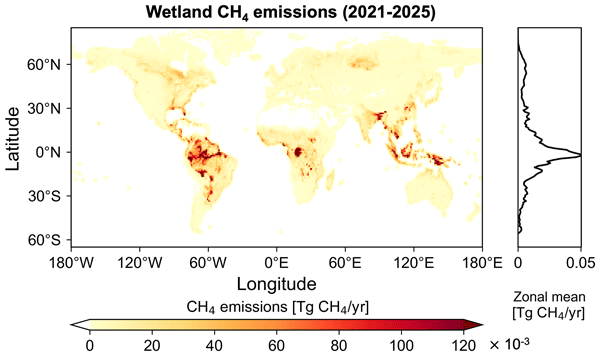
Mengze Li, Robert B. Jackson, Marielle Saunois, Philippe Ciais, Ben Poulter, Josep G. Canadell, Prabir K. Patra, Hanqin Tian, Zhen Zhang, Etienne Fluet-Chouinard, Zutao Ouyang, Ting Zhang, David J. Beerling, Dmitry A. Belikov, Philippe Bousquet, Danilo Custodio, Naveen Chandra, Xinyu Dou, Nicola Gedney, Peter O. Hopcroft, Alison M. Hoyt, Kazuhito Ichii, Akihito Ito, Atul K. Jain, Katherine Jensen, Fortunat Joos, Thomas Kleinen, Masayuki Kondo, Fa Li, Tingting Li, Xiangyu Liu, Shamil Maksyutov, Avni Malhotra, Adrien Martinez, Kyle McDonald, Joe R. Melton, Jurek Müller, Yosuke Niwa, Shufen Pan, Shushi Peng, Changhui Peng, Zhangcai Qin, Peter Raymond, William Riley, Arjo Segers, Rona L. Thompson, Aki Tsuruta, Yi Xi, Kunxiaojia Yuan, Wenxin Zhang, Bo Zheng, Qing Zhu, Qiuan Zhu, and Qianlai Zhuang
Earth Syst. Sci. Data, 18, 3507–3524, https://doi.org/10.5194/essd-18-3507-2026, https://doi.org/10.5194/essd-18-3507-2026, 2026
Short summary
Short summary
We proposed a framework that combines machine-learning and climate data to predict global natural vegetated wetland methane emissions for 2000–2025. We found that although total global emissions remained stable in the post-2020s, Northern Hemisphere emissions surged whilst tropical emissions fell. This approach allows us to rapidly monitor emissions and provides early warnings for climate impacts.
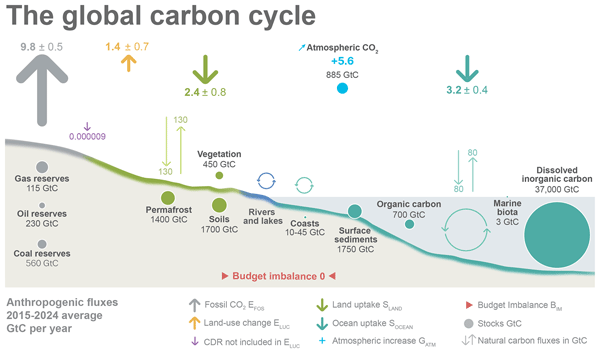
Pierre Friedlingstein, Michael O'Sullivan, Matthew W. Jones, Robbie M. Andrew, Dorothee C. E. Bakker, Judith Hauck, Peter Landschützer, Corinne Le Quéré, Hongmei Li, Ingrid T. Luijkx, Glen P. Peters, Wouter Peters, Julia Pongratz, Clemens Schwingshackl, Stephen Sitch, Josep G. Canadell, Philippe Ciais, Kjetil Aas, Simone R. Alin, Peter Anthoni, Leticia Barbero, Nicholas R. Bates, Nicolas Bellouin, Alice Benoit-Cattin, Carla F. Berghoff, Raffaele Bernardello, Laurent Bopp, Ida Bagus Mandhara Brasika, Matthew A. Chamberlain, Naveen Chandra, Frédéric Chevallier, Louise P. Chini, Nathan O. Collier, Thomas H. Colligan, Margot Cronin, Laique M. Djeutchouang, Xinyu Dou, Matt P. Enright, Kazutaka Enyo, Michael Erb, Wiley Evans, Richard A. Feely, Liang Feng, Daniel J. Ford, Adrianna Foster, Filippa Fransner, Thomas Gasser, Marion Gehlen, Thanos Gkritzalis, Jefferson Goncalves De Souza, Giacomo Grassi, Luke Gregor, Nicolas Gruber, Bertrand Guenet, Özgür Gürses, Kirsty Harrington, Ian Harris, Jens Heinke, George C. Hurtt, Yosuke Iida, Tatiana Ilyina, Akihiko Ito, Andrew R. Jacobson, Atul K. Jain, Tereza Jarníková, Annika Jersild, Fei Jiang, Steve D. Jones, Etsushi Kato, Ralph F. Keeling, Kees Klein Goldewijk, Jürgen Knauer, Yawen Kong, Jan Ivar Korsbakken, Charles Koven, Taro Kunimitsu, Xin Lan, Junjie Liu, Zhiqiang Liu, Zhu Liu, Claire Lo Monaco, Lei Ma, Gregg Marland, Patrick C. McGuire, Galen A. McKinley, Joe R. Melton, Natalie Monacci, Erwan Monier, Eric J. Morgan, David R. Munro, Jens D. Müller, Shin-Ichiro Nakaoka, Lorna R. Nayagam, Yosuke Niwa, Tobias Nutzel, Are Olsen, Abdirahman M. Omar, Naiqing Pan, Sudhanshu Pandey, Denis Pierrot, Zhangcai Qin, Pierre Regnier, Gregor Rehder, Laure Resplandy, Alizée Roobaert, Thais M. Rosan, Christian Rödenbeck, Jörg Schwinger, Ingunn Skjelvan, T. Luke Smallman, Victoria Spada, Mohanan G. Sreeush, Qing Sun, Adrienne J. Sutton, Colm Sweeney, Didier Swingedouw, Roland Séférian, Shintaro Takao, Hiroaki Tatebe, Hanqin Tian, Xiangjun Tian, Bronte Tilbrook, Hiroyuki Tsujino, Francesco Tubiello, Erik van Ooijen, Guido R. van der Werf, Sebastiaan J. van de Velde, Anthony P. Walker, Rik Wanninkhof, Xiaojuan Yang, Wenping Yuan, Xu Yue, and Jiye Zeng
Earth Syst. Sci. Data, 18, 3211–3288, https://doi.org/10.5194/essd-18-3211-2026, https://doi.org/10.5194/essd-18-3211-2026, 2026
Short summary
Short summary
The Global Carbon Budget 2025 describes the methodology, main results, and datasets used to quantify the anthropogenic emissions of carbon dioxide (CO2) and their partitioning among the atmosphere, land ecosystems, and the ocean over the historical period (1750–2025). These living datasets are updated every year to provide the highest transparency and traceability in the reporting of CO2, the key driver of climate change.
Ning Hall, Leith Murray, Sophie Golding-Chan, Riley Herron, Wei Wen Wong, Katherine J. Jeppe, Christopher Barlow, Chris Greening, and Perran L. M. Cook
EGUsphere, https://doi.org/10.5194/egusphere-2026-2113, https://doi.org/10.5194/egusphere-2026-2113, 2026
Preprint archived
Short summary
Short summary
We analysed the chemical compounds most readily available to methane producing bacteria, as well as methane production from these seaweeds and plants. We find that seaweed methane emission potential is strongly related to these compounds, but coastal plants are not, providing a starting point for differentiating and predicting the effects on methane emissions of ongoing changes to coastal ecosystem vegetation caused ocean warming, eutrophication, and ecosystem restoration efforts.
David Bastviken, Blaize A Denfeld, Holger Villwock, Jonathan Schenk, Leif Klemedtsson, Hjalmar Laudon, Niels Aagard Jakobsen, Stefan Bertilsson, Kevin Bishop, William Colom Montero, Silke Langenheder, Amelie Lindgren, Erik Lundin, Niklas Rakos, Johannes Tiwari, Per Weslien, and Marcus B. Wallin
Earth Syst. Sci. Data Discuss., https://doi.org/10.5194/essd-2026-141, https://doi.org/10.5194/essd-2026-141, 2026
Preprint under review for ESSD
Short summary
Short summary
Lakes are significant methane sources, a powerful greenhouse gas, but long-term, consistent measurements are rare. Five lakes within Swedish Infrastructure of Ecosystem Science were monitored during 2016–2022 to better understand how methane emissions vary across space and time. Ebullition was a major flux pathway, and emissions rise with temperature in ways that differed within and between lakes, highlighting the need for coordinated monitoring and temperature-adjusted comparisons.
Clément Duvert, Vanessa Solano, Dioni I. Cendón, Francesco Ulloa-Cedamanos, Liza K. McDonough, Robert G. M. Spencer, Niels C. Munksgaard, Lindsay B. Hutley, Jean-Sébastien Moquet, and David E. Butman
Biogeosciences, 23, 1755–1770, https://doi.org/10.5194/bg-23-1755-2026, https://doi.org/10.5194/bg-23-1755-2026, 2026
Short summary
Short summary
This study examines the age and composition of carbon in tropical streams. We find that dissolved organic carbon (DOC) is centuries to millennia old, while dissolved inorganic carbon (DIC) is consistently younger, indicating a decoupling between the two. DOC age varies seasonally, with rainforest streams exporting younger DOC during high flow, while agricultural streams mobilise older DOC. Our results suggest land conversion alters carbon export, potentially worsening with climate change.
Joana Melo, Simone Rossi, Frédéric Achard, Ramdane Alkama, Josep G. Canadell, Sandro Federici, Pierre Friedlingstein, David Gibbs, Nancy Harris, Viola Heinrich, Michael O’Sullivan, Glen P. Peters, Julia Pongratz, Melissa Rose, Rosa Roman-Cuesta, María J. Sanz, Clemens Schwingshackl, Stephen Sitch, and Giacomo Grassi
Earth Syst. Sci. Data Discuss., https://doi.org/10.5194/essd-2025-631, https://doi.org/10.5194/essd-2025-631, 2026
Preprint under review for ESSD
Short summary
Short summary
We created the LULUCF Data Hub to make information on how land use affects carbon dioxide emissions and removals more transparent and comparable among datasets. We show country-level data from national reports and global sources, allowing users to explore differences and similarities in land-based carbon fluxes. It helps identify where data agree, where they differ, and where more research is needed.
Jean-Francois Lamarque, Pierre Friedlingstein, Brian Osias, Steve Strongin, Venkatramani Balaji, Kevin W. Bowman, Josep G. Canadell, Philippe Ciais, Heidi Cullen, Kenneth J. Davis, Scott C. Doney, Kevin R. Gurney, Alicia R. Karspeck, Charles D. Koven, Galen McKinley, Glen P. Peters, Julia Pongratz, Britt Stephens, and Colm Sweeney
EGUsphere, https://doi.org/10.5194/egusphere-2025-6457, https://doi.org/10.5194/egusphere-2025-6457, 2026
Short summary
Short summary
This Perspective highlights requirements to scale the carbon credit market and enable the growth in climate solutions funded through such market. The requirements are on the understanding of the value of the proposed carbon credit projects, and on the availability of a verification system. This verification becomes particularly relevant as the carbon credit market scales to significant impacts on CO2 (or other greenhouse gases), such that attribution to collective actions can be identified.
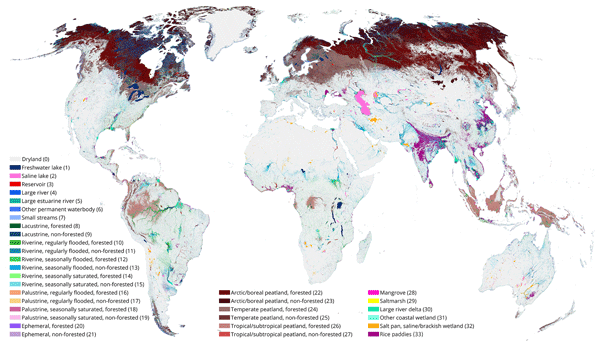
Bernhard Lehner, Mira Anand, Etienne Fluet-Chouinard, Florence Tan, Filipe Aires, George H. Allen, Philippe Bousquet, Josep G. Canadell, Nick Davidson, Meng Ding, C. Max Finlayson, Thomas Gumbricht, Lammert Hilarides, Gustaf Hugelius, Robert B. Jackson, Maartje C. Korver, Liangyun Liu, Peter B. McIntyre, Szabolcs Nagy, David Olefeldt, Tamlin M. Pavelsky, Jean-Francois Pekel, Benjamin Poulter, Catherine Prigent, Jida Wang, Thomas A. Worthington, Dai Yamazaki, Xiao Zhang, and Michele Thieme
Earth Syst. Sci. Data, 17, 2277–2329, https://doi.org/10.5194/essd-17-2277-2025, https://doi.org/10.5194/essd-17-2277-2025, 2025
Short summary
Short summary
The Global Lakes and Wetlands Database (GLWD) version 2 distinguishes a total of 33 non-overlapping wetland classes, providing a static map of the world’s inland surface waters. It contains cell fractions of wetland extents per class at a grid cell resolution of ~500 m. The total combined extent of all classes including all inland and coastal waterbodies and wetlands of all inundation frequencies – that is, the maximum extent – covers 18.2 × 10⁶ km2, equivalent to 13.4 % of total global land area.
Marielle Saunois, Adrien Martinez, Benjamin Poulter, Zhen Zhang, Peter A. Raymond, Pierre Regnier, Josep G. Canadell, Robert B. Jackson, Prabir K. Patra, Philippe Bousquet, Philippe Ciais, Edward J. Dlugokencky, Xin Lan, George H. Allen, David Bastviken, David J. Beerling, Dmitry A. Belikov, Donald R. Blake, Simona Castaldi, Monica Crippa, Bridget R. Deemer, Fraser Dennison, Giuseppe Etiope, Nicola Gedney, Lena Höglund-Isaksson, Meredith A. Holgerson, Peter O. Hopcroft, Gustaf Hugelius, Akihiko Ito, Atul K. Jain, Rajesh Janardanan, Matthew S. Johnson, Thomas Kleinen, Paul B. Krummel, Ronny Lauerwald, Tingting Li, Xiangyu Liu, Kyle C. McDonald, Joe R. Melton, Jens Mühle, Jurek Müller, Fabiola Murguia-Flores, Yosuke Niwa, Sergio Noce, Shufen Pan, Robert J. Parker, Changhui Peng, Michel Ramonet, William J. Riley, Gerard Rocher-Ros, Judith A. Rosentreter, Motoki Sasakawa, Arjo Segers, Steven J. Smith, Emily H. Stanley, Joël Thanwerdas, Hanqin Tian, Aki Tsuruta, Francesco N. Tubiello, Thomas S. Weber, Guido R. van der Werf, Douglas E. J. Worthy, Yi Xi, Yukio Yoshida, Wenxin Zhang, Bo Zheng, Qing Zhu, Qiuan Zhu, and Qianlai Zhuang
Earth Syst. Sci. Data, 17, 1873–1958, https://doi.org/10.5194/essd-17-1873-2025, https://doi.org/10.5194/essd-17-1873-2025, 2025
Short summary
Short summary
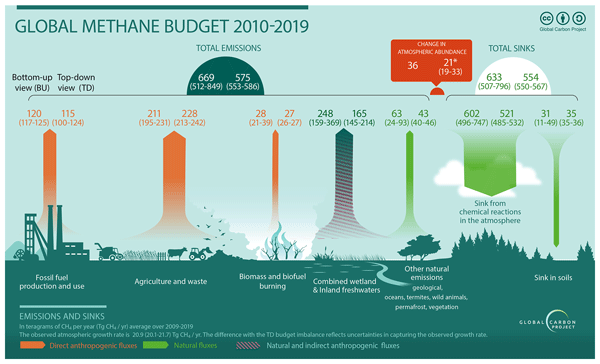
Methane (CH4) is the second most important human-influenced greenhouse gas in terms of climate forcing after carbon dioxide (CO2). A consortium of multi-disciplinary scientists synthesise and update the budget of the sources and sinks of CH4. This edition benefits from important progress in estimating emissions from lakes and ponds, reservoirs, and streams and rivers. For the 2010s decade, global CH4 emissions are estimated at 575 Tg CH4 yr-1, including ~65 % from anthropogenic sources.
Pierre Friedlingstein, Michael O'Sullivan, Matthew W. Jones, Robbie M. Andrew, Judith Hauck, Peter Landschützer, Corinne Le Quéré, Hongmei Li, Ingrid T. Luijkx, Are Olsen, Glen P. Peters, Wouter Peters, Julia Pongratz, Clemens Schwingshackl, Stephen Sitch, Josep G. Canadell, Philippe Ciais, Robert B. Jackson, Simone R. Alin, Almut Arneth, Vivek Arora, Nicholas R. Bates, Meike Becker, Nicolas Bellouin, Carla F. Berghoff, Henry C. Bittig, Laurent Bopp, Patricia Cadule, Katie Campbell, Matthew A. Chamberlain, Naveen Chandra, Frédéric Chevallier, Louise P. Chini, Thomas Colligan, Jeanne Decayeux, Laique M. Djeutchouang, Xinyu Dou, Carolina Duran Rojas, Kazutaka Enyo, Wiley Evans, Amanda R. Fay, Richard A. Feely, Daniel J. Ford, Adrianna Foster, Thomas Gasser, Marion Gehlen, Thanos Gkritzalis, Giacomo Grassi, Luke Gregor, Nicolas Gruber, Özgür Gürses, Ian Harris, Matthew Hefner, Jens Heinke, George C. Hurtt, Yosuke Iida, Tatiana Ilyina, Andrew R. Jacobson, Atul K. Jain, Tereza Jarníková, Annika Jersild, Fei Jiang, Zhe Jin, Etsushi Kato, Ralph F. Keeling, Kees Klein Goldewijk, Jürgen Knauer, Jan Ivar Korsbakken, Xin Lan, Siv K. Lauvset, Nathalie Lefèvre, Zhu Liu, Junjie Liu, Lei Ma, Shamil Maksyutov, Gregg Marland, Nicolas Mayot, Patrick C. McGuire, Nicolas Metzl, Natalie M. Monacci, Eric J. Morgan, Shin-Ichiro Nakaoka, Craig Neill, Yosuke Niwa, Tobias Nützel, Lea Olivier, Tsuneo Ono, Paul I. Palmer, Denis Pierrot, Zhangcai Qin, Laure Resplandy, Alizée Roobaert, Thais M. Rosan, Christian Rödenbeck, Jörg Schwinger, T. Luke Smallman, Stephen M. Smith, Reinel Sospedra-Alfonso, Tobias Steinhoff, Qing Sun, Adrienne J. Sutton, Roland Séférian, Shintaro Takao, Hiroaki Tatebe, Hanqin Tian, Bronte Tilbrook, Olivier Torres, Etienne Tourigny, Hiroyuki Tsujino, Francesco Tubiello, Guido van der Werf, Rik Wanninkhof, Xuhui Wang, Dongxu Yang, Xiaojuan Yang, Zhen Yu, Wenping Yuan, Xu Yue, Sönke Zaehle, Ning Zeng, and Jiye Zeng
Earth Syst. Sci. Data, 17, 965–1039, https://doi.org/10.5194/essd-17-965-2025, https://doi.org/10.5194/essd-17-965-2025, 2025
Short summary
Short summary
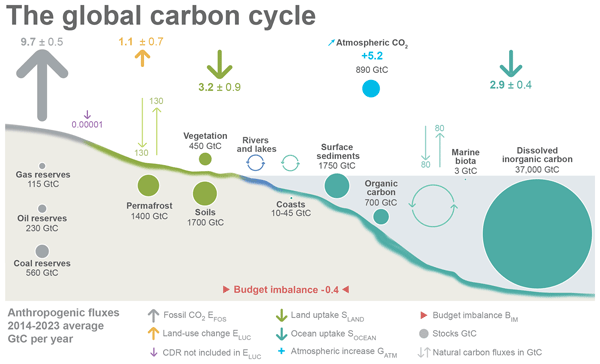
The Global Carbon Budget 2024 describes the methodology, main results, and datasets used to quantify the anthropogenic emissions of carbon dioxide (CO2) and their partitioning among the atmosphere, land ecosystems, and the ocean over the historical period (1750–2024). These living datasets are updated every year to provide the highest transparency and traceability in the reporting of CO2, the key driver of climate change.
Zhen Zhang, Benjamin Poulter, Joe R. Melton, William J. Riley, George H. Allen, David J. Beerling, Philippe Bousquet, Josep G. Canadell, Etienne Fluet-Chouinard, Philippe Ciais, Nicola Gedney, Peter O. Hopcroft, Akihiko Ito, Robert B. Jackson, Atul K. Jain, Katherine Jensen, Fortunat Joos, Thomas Kleinen, Sara H. Knox, Tingting Li, Xin Li, Xiangyu Liu, Kyle McDonald, Gavin McNicol, Paul A. Miller, Jurek Müller, Prabir K. Patra, Changhui Peng, Shushi Peng, Zhangcai Qin, Ryan M. Riggs, Marielle Saunois, Qing Sun, Hanqin Tian, Xiaoming Xu, Yuanzhi Yao, Yi Xi, Wenxin Zhang, Qing Zhu, Qiuan Zhu, and Qianlai Zhuang
Biogeosciences, 22, 305–321, https://doi.org/10.5194/bg-22-305-2025, https://doi.org/10.5194/bg-22-305-2025, 2025
Short summary
Short summary
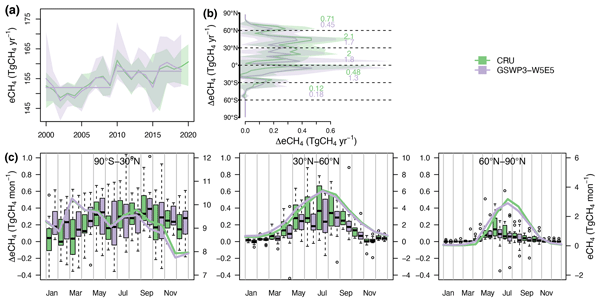
This study assesses global methane emissions from wetlands between 2000 and 2020 using multiple models. We found that wetland emissions increased by 6–7 Tg CH4 yr-1 in the 2010s compared to the 2000s. Rising temperatures primarily drove this increase, while changes in precipitation and CO2 levels also played roles. Our findings highlight the importance of wetlands in the global methane budget and the need for continuous monitoring to understand their impact on climate change.

Hanqin Tian, Naiqing Pan, Rona L. Thompson, Josep G. Canadell, Parvadha Suntharalingam, Pierre Regnier, Eric A. Davidson, Michael Prather, Philippe Ciais, Marilena Muntean, Shufen Pan, Wilfried Winiwarter, Sönke Zaehle, Feng Zhou, Robert B. Jackson, Hermann W. Bange, Sarah Berthet, Zihao Bian, Daniele Bianchi, Alexander F. Bouwman, Erik T. Buitenhuis, Geoffrey Dutton, Minpeng Hu, Akihiko Ito, Atul K. Jain, Aurich Jeltsch-Thömmes, Fortunat Joos, Sian Kou-Giesbrecht, Paul B. Krummel, Xin Lan, Angela Landolfi, Ronny Lauerwald, Ya Li, Chaoqun Lu, Taylor Maavara, Manfredi Manizza, Dylan B. Millet, Jens Mühle, Prabir K. Patra, Glen P. Peters, Xiaoyu Qin, Peter Raymond, Laure Resplandy, Judith A. Rosentreter, Hao Shi, Qing Sun, Daniele Tonina, Francesco N. Tubiello, Guido R. van der Werf, Nicolas Vuichard, Junjie Wang, Kelley C. Wells, Luke M. Western, Chris Wilson, Jia Yang, Yuanzhi Yao, Yongfa You, and Qing Zhu
Earth Syst. Sci. Data, 16, 2543–2604, https://doi.org/10.5194/essd-16-2543-2024, https://doi.org/10.5194/essd-16-2543-2024, 2024
Short summary
Short summary
Atmospheric concentrations of nitrous oxide (N2O), a greenhouse gas 273 times more potent than carbon dioxide, have increased by 25 % since the preindustrial period, with the highest observed growth rate in 2020 and 2021. This rapid growth rate has primarily been due to a 40 % increase in anthropogenic emissions since 1980. Observed atmospheric N2O concentrations in recent years have exceeded the worst-case climate scenario, underscoring the importance of reducing anthropogenic N2O emissions.
Malte Meinshausen, Carl-Friedrich Schleussner, Kathleen Beyer, Greg Bodeker, Olivier Boucher, Josep G. Canadell, John S. Daniel, Aïda Diongue-Niang, Fatima Driouech, Erich Fischer, Piers Forster, Michael Grose, Gerrit Hansen, Zeke Hausfather, Tatiana Ilyina, Jarmo S. Kikstra, Joyce Kimutai, Andrew D. King, June-Yi Lee, Chris Lennard, Tabea Lissner, Alexander Nauels, Glen P. Peters, Anna Pirani, Gian-Kasper Plattner, Hans Pörtner, Joeri Rogelj, Maisa Rojas, Joyashree Roy, Bjørn H. Samset, Benjamin M. Sanderson, Roland Séférian, Sonia Seneviratne, Christopher J. Smith, Sophie Szopa, Adelle Thomas, Diana Urge-Vorsatz, Guus J. M. Velders, Tokuta Yokohata, Tilo Ziehn, and Zebedee Nicholls
Geosci. Model Dev., 17, 4533–4559, https://doi.org/10.5194/gmd-17-4533-2024, https://doi.org/10.5194/gmd-17-4533-2024, 2024
Short summary
Short summary
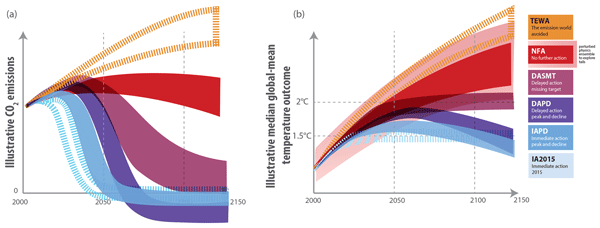
The scientific community is considering new scenarios to succeed RCPs and SSPs for the next generation of Earth system model runs to project future climate change. To contribute to that effort, we reflect on relevant policy and scientific research questions and suggest categories for representative emission pathways. These categories are tailored to the Paris Agreement long-term temperature goal, high-risk outcomes in the absence of further climate policy and worlds “that could have been”.
Stephen Lee, Dylan J. Irvine, Clément Duvert, Gabriel C. Rau, and Ian Cartwright
Hydrol. Earth Syst. Sci., 28, 1771–1790, https://doi.org/10.5194/hess-28-1771-2024, https://doi.org/10.5194/hess-28-1771-2024, 2024
Short summary
Short summary
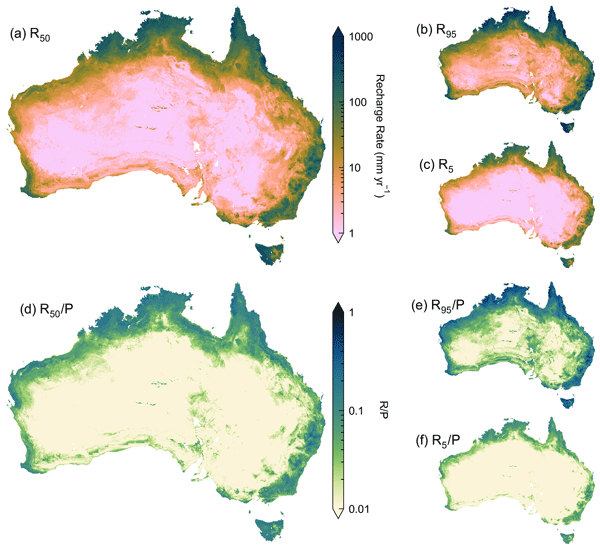
Global groundwater recharge studies collate recharge values estimated using different methods that apply to different timescales. We develop a recharge prediction model, based solely on chloride, to produce a recharge map for Australia. We reveal that climate and vegetation have the most significant influence on recharge variability in Australia. Our recharge rates were lower than other models due to the long timescale of chloride in groundwater. Our method can similarly be applied globally.
Pierre Friedlingstein, Michael O'Sullivan, Matthew W. Jones, Robbie M. Andrew, Dorothee C. E. Bakker, Judith Hauck, Peter Landschützer, Corinne Le Quéré, Ingrid T. Luijkx, Glen P. Peters, Wouter Peters, Julia Pongratz, Clemens Schwingshackl, Stephen Sitch, Josep G. Canadell, Philippe Ciais, Robert B. Jackson, Simone R. Alin, Peter Anthoni, Leticia Barbero, Nicholas R. Bates, Meike Becker, Nicolas Bellouin, Bertrand Decharme, Laurent Bopp, Ida Bagus Mandhara Brasika, Patricia Cadule, Matthew A. Chamberlain, Naveen Chandra, Thi-Tuyet-Trang Chau, Frédéric Chevallier, Louise P. Chini, Margot Cronin, Xinyu Dou, Kazutaka Enyo, Wiley Evans, Stefanie Falk, Richard A. Feely, Liang Feng, Daniel J. Ford, Thomas Gasser, Josefine Ghattas, Thanos Gkritzalis, Giacomo Grassi, Luke Gregor, Nicolas Gruber, Özgür Gürses, Ian Harris, Matthew Hefner, Jens Heinke, Richard A. Houghton, George C. Hurtt, Yosuke Iida, Tatiana Ilyina, Andrew R. Jacobson, Atul Jain, Tereza Jarníková, Annika Jersild, Fei Jiang, Zhe Jin, Fortunat Joos, Etsushi Kato, Ralph F. Keeling, Daniel Kennedy, Kees Klein Goldewijk, Jürgen Knauer, Jan Ivar Korsbakken, Arne Körtzinger, Xin Lan, Nathalie Lefèvre, Hongmei Li, Junjie Liu, Zhiqiang Liu, Lei Ma, Greg Marland, Nicolas Mayot, Patrick C. McGuire, Galen A. McKinley, Gesa Meyer, Eric J. Morgan, David R. Munro, Shin-Ichiro Nakaoka, Yosuke Niwa, Kevin M. O'Brien, Are Olsen, Abdirahman M. Omar, Tsuneo Ono, Melf Paulsen, Denis Pierrot, Katie Pocock, Benjamin Poulter, Carter M. Powis, Gregor Rehder, Laure Resplandy, Eddy Robertson, Christian Rödenbeck, Thais M. Rosan, Jörg Schwinger, Roland Séférian, T. Luke Smallman, Stephen M. Smith, Reinel Sospedra-Alfonso, Qing Sun, Adrienne J. Sutton, Colm Sweeney, Shintaro Takao, Pieter P. Tans, Hanqin Tian, Bronte Tilbrook, Hiroyuki Tsujino, Francesco Tubiello, Guido R. van der Werf, Erik van Ooijen, Rik Wanninkhof, Michio Watanabe, Cathy Wimart-Rousseau, Dongxu Yang, Xiaojuan Yang, Wenping Yuan, Xu Yue, Sönke Zaehle, Jiye Zeng, and Bo Zheng
Earth Syst. Sci. Data, 15, 5301–5369, https://doi.org/10.5194/essd-15-5301-2023, https://doi.org/10.5194/essd-15-5301-2023, 2023
Short summary
Short summary
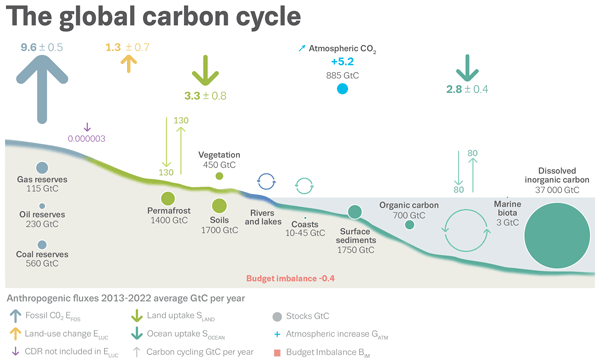
The Global Carbon Budget 2023 describes the methodology, main results, and data sets used to quantify the anthropogenic emissions of carbon dioxide (CO2) and their partitioning among the atmosphere, land ecosystems, and the ocean over the historical period (1750–2023). These living datasets are updated every year to provide the highest transparency and traceability in the reporting of CO2, the key driver of climate change.
Zi Huang, Jiaoyue Wang, Longfei Bing, Yijiao Qiu, Rui Guo, Ying Yu, Mingjing Ma, Le Niu, Dan Tong, Robbie M. Andrew, Pierre Friedlingstein, Josep G. Canadell, Fengming Xi, and Zhu Liu
Earth Syst. Sci. Data, 15, 4947–4958, https://doi.org/10.5194/essd-15-4947-2023, https://doi.org/10.5194/essd-15-4947-2023, 2023
Short summary
Short summary
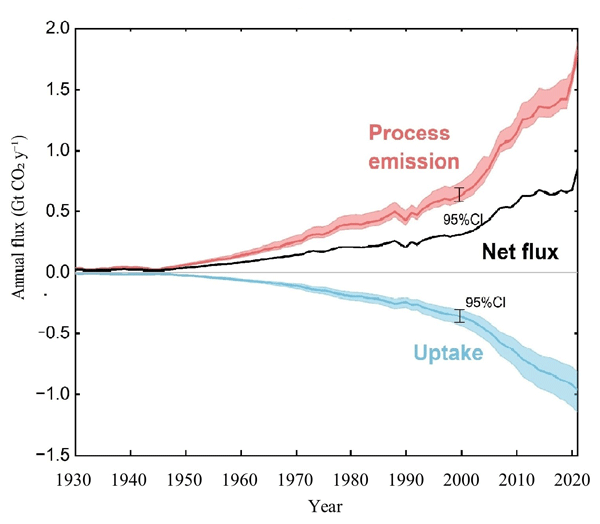
This is about global and regional cement process carbon emissions and CO2 uptake calculations from 1930 to 2019. The global cement production is rising to 4.4 Gt, causing processing carbon emission of 1.81 Gt (95% CI: 1.75–1.88 Gt CO2) in 2021. Plus, in 2021, cement’s carbon accumulated uptake (22.9 Gt, 95% CI: 19.6–22.6 Gt CO2) has offset 55.2% of cement process CO2 emissions (41.5 Gt, 95% CI: 38.7–47.1 Gt CO2) since 1930.
Emily H. Stanley, Luke C. Loken, Nora J. Casson, Samantha K. Oliver, Ryan A. Sponseller, Marcus B. Wallin, Liwei Zhang, and Gerard Rocher-Ros
Earth Syst. Sci. Data, 15, 2879–2926, https://doi.org/10.5194/essd-15-2879-2023, https://doi.org/10.5194/essd-15-2879-2023, 2023
Short summary
Short summary
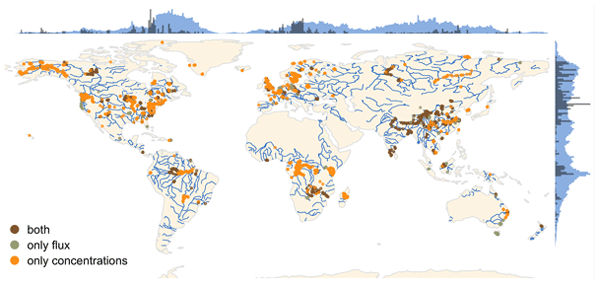
The Global River Methane Database (GRiMeDB) presents CH4 concentrations and fluxes for flowing waters and concurrent measures of CO2, N2O, and several physicochemical variables, plus information about sample locations and methods used to measure gas fluxes. GRiMeDB is intended to increase opportunities to understand variation in fluvial CH4, test hypotheses related to greenhouse gas dynamics, and reduce uncertainty in future estimates of gas emissions from world streams and rivers.
Giacomo Grassi, Clemens Schwingshackl, Thomas Gasser, Richard A. Houghton, Stephen Sitch, Josep G. Canadell, Alessandro Cescatti, Philippe Ciais, Sandro Federici, Pierre Friedlingstein, Werner A. Kurz, Maria J. Sanz Sanchez, Raúl Abad Viñas, Ramdane Alkama, Selma Bultan, Guido Ceccherini, Stefanie Falk, Etsushi Kato, Daniel Kennedy, Jürgen Knauer, Anu Korosuo, Joana Melo, Matthew J. McGrath, Julia E. M. S. Nabel, Benjamin Poulter, Anna A. Romanovskaya, Simone Rossi, Hanqin Tian, Anthony P. Walker, Wenping Yuan, Xu Yue, and Julia Pongratz
Earth Syst. Sci. Data, 15, 1093–1114, https://doi.org/10.5194/essd-15-1093-2023, https://doi.org/10.5194/essd-15-1093-2023, 2023
Short summary
Short summary
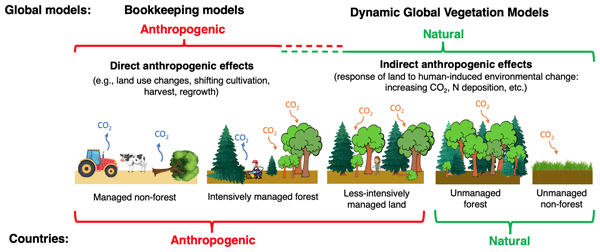
Striking differences exist in estimates of land-use CO2 fluxes between the national greenhouse gas inventories and the IPCC assessment reports. These differences hamper an accurate assessment of the collective progress under the Paris Agreement. By implementing an approach that conceptually reconciles land-use CO2 flux from national inventories and the global models used by the IPCC, our study is an important step forward for increasing confidence in land-use CO2 flux estimates.

Yuanhong Zhao, Marielle Saunois, Philippe Bousquet, Xin Lin, Michaela I. Hegglin, Josep G. Canadell, Robert B. Jackson, and Bo Zheng
Atmos. Chem. Phys., 23, 789–807, https://doi.org/10.5194/acp-23-789-2023, https://doi.org/10.5194/acp-23-789-2023, 2023
Short summary
Short summary
The large uncertainties in OH simulated by atmospheric chemistry models hinder accurate estimates of CH4 chemical loss through the bottom-up method. This study presents a new approach based on OH precursor observations and a chemical box model to improve the tropospheric OH distributions simulated by atmospheric chemistry models. Through this approach, both the global OH burden and the corresponding methane chemical loss reach consistency with the top-down method based on MCF inversions.
Lucía Gutiérrez-Loza, Erik Nilsson, Marcus B. Wallin, Erik Sahlée, and Anna Rutgersson
Biogeosciences, 19, 5645–5665, https://doi.org/10.5194/bg-19-5645-2022, https://doi.org/10.5194/bg-19-5645-2022, 2022
Short summary
Short summary
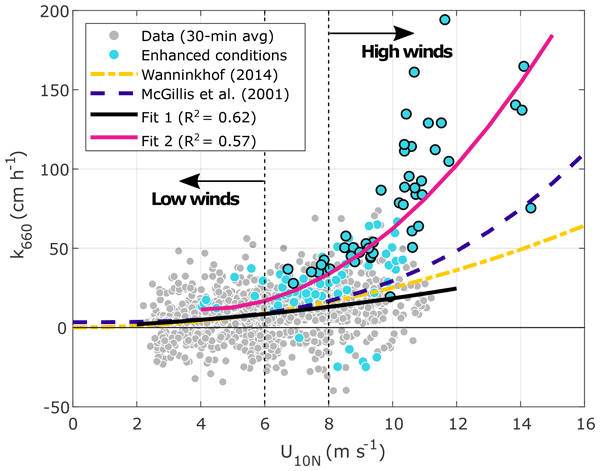
The exchange of CO2 between the ocean and the atmosphere is an essential aspect of the global carbon cycle and is highly relevant for the Earth's climate. In this study, we used 9 years of in situ measurements to evaluate the temporal variability in the air–sea CO2 fluxes in the Baltic Sea. Furthermore, using this long record, we assessed the effect of atmospheric and water-side mechanisms controlling the efficiency of the air–sea CO2 exchange under different wind-speed conditions.
Pierre Friedlingstein, Michael O'Sullivan, Matthew W. Jones, Robbie M. Andrew, Luke Gregor, Judith Hauck, Corinne Le Quéré, Ingrid T. Luijkx, Are Olsen, Glen P. Peters, Wouter Peters, Julia Pongratz, Clemens Schwingshackl, Stephen Sitch, Josep G. Canadell, Philippe Ciais, Robert B. Jackson, Simone R. Alin, Ramdane Alkama, Almut Arneth, Vivek K. Arora, Nicholas R. Bates, Meike Becker, Nicolas Bellouin, Henry C. Bittig, Laurent Bopp, Frédéric Chevallier, Louise P. Chini, Margot Cronin, Wiley Evans, Stefanie Falk, Richard A. Feely, Thomas Gasser, Marion Gehlen, Thanos Gkritzalis, Lucas Gloege, Giacomo Grassi, Nicolas Gruber, Özgür Gürses, Ian Harris, Matthew Hefner, Richard A. Houghton, George C. Hurtt, Yosuke Iida, Tatiana Ilyina, Atul K. Jain, Annika Jersild, Koji Kadono, Etsushi Kato, Daniel Kennedy, Kees Klein Goldewijk, Jürgen Knauer, Jan Ivar Korsbakken, Peter Landschützer, Nathalie Lefèvre, Keith Lindsay, Junjie Liu, Zhu Liu, Gregg Marland, Nicolas Mayot, Matthew J. McGrath, Nicolas Metzl, Natalie M. Monacci, David R. Munro, Shin-Ichiro Nakaoka, Yosuke Niwa, Kevin O'Brien, Tsuneo Ono, Paul I. Palmer, Naiqing Pan, Denis Pierrot, Katie Pocock, Benjamin Poulter, Laure Resplandy, Eddy Robertson, Christian Rödenbeck, Carmen Rodriguez, Thais M. Rosan, Jörg Schwinger, Roland Séférian, Jamie D. Shutler, Ingunn Skjelvan, Tobias Steinhoff, Qing Sun, Adrienne J. Sutton, Colm Sweeney, Shintaro Takao, Toste Tanhua, Pieter P. Tans, Xiangjun Tian, Hanqin Tian, Bronte Tilbrook, Hiroyuki Tsujino, Francesco Tubiello, Guido R. van der Werf, Anthony P. Walker, Rik Wanninkhof, Chris Whitehead, Anna Willstrand Wranne, Rebecca Wright, Wenping Yuan, Chao Yue, Xu Yue, Sönke Zaehle, Jiye Zeng, and Bo Zheng
Earth Syst. Sci. Data, 14, 4811–4900, https://doi.org/10.5194/essd-14-4811-2022, https://doi.org/10.5194/essd-14-4811-2022, 2022
Short summary
Short summary
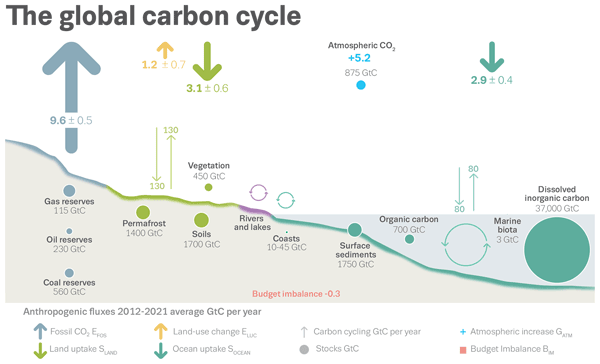
The Global Carbon Budget 2022 describes the datasets and methodology used to quantify the anthropogenic emissions of carbon dioxide (CO2) and their partitioning among the atmosphere, the land ecosystems, and the ocean. These living datasets are updated every year to provide the highest transparency and traceability in the reporting of CO2, the key driver of climate change.
Pierre Friedlingstein, Matthew W. Jones, Michael O'Sullivan, Robbie M. Andrew, Dorothee C. E. Bakker, Judith Hauck, Corinne Le Quéré, Glen P. Peters, Wouter Peters, Julia Pongratz, Stephen Sitch, Josep G. Canadell, Philippe Ciais, Rob B. Jackson, Simone R. Alin, Peter Anthoni, Nicholas R. Bates, Meike Becker, Nicolas Bellouin, Laurent Bopp, Thi Tuyet Trang Chau, Frédéric Chevallier, Louise P. Chini, Margot Cronin, Kim I. Currie, Bertrand Decharme, Laique M. Djeutchouang, Xinyu Dou, Wiley Evans, Richard A. Feely, Liang Feng, Thomas Gasser, Dennis Gilfillan, Thanos Gkritzalis, Giacomo Grassi, Luke Gregor, Nicolas Gruber, Özgür Gürses, Ian Harris, Richard A. Houghton, George C. Hurtt, Yosuke Iida, Tatiana Ilyina, Ingrid T. Luijkx, Atul Jain, Steve D. Jones, Etsushi Kato, Daniel Kennedy, Kees Klein Goldewijk, Jürgen Knauer, Jan Ivar Korsbakken, Arne Körtzinger, Peter Landschützer, Siv K. Lauvset, Nathalie Lefèvre, Sebastian Lienert, Junjie Liu, Gregg Marland, Patrick C. McGuire, Joe R. Melton, David R. Munro, Julia E. M. S. Nabel, Shin-Ichiro Nakaoka, Yosuke Niwa, Tsuneo Ono, Denis Pierrot, Benjamin Poulter, Gregor Rehder, Laure Resplandy, Eddy Robertson, Christian Rödenbeck, Thais M. Rosan, Jörg Schwinger, Clemens Schwingshackl, Roland Séférian, Adrienne J. Sutton, Colm Sweeney, Toste Tanhua, Pieter P. Tans, Hanqin Tian, Bronte Tilbrook, Francesco Tubiello, Guido R. van der Werf, Nicolas Vuichard, Chisato Wada, Rik Wanninkhof, Andrew J. Watson, David Willis, Andrew J. Wiltshire, Wenping Yuan, Chao Yue, Xu Yue, Sönke Zaehle, and Jiye Zeng
Earth Syst. Sci. Data, 14, 1917–2005, https://doi.org/10.5194/essd-14-1917-2022, https://doi.org/10.5194/essd-14-1917-2022, 2022
Short summary
Short summary
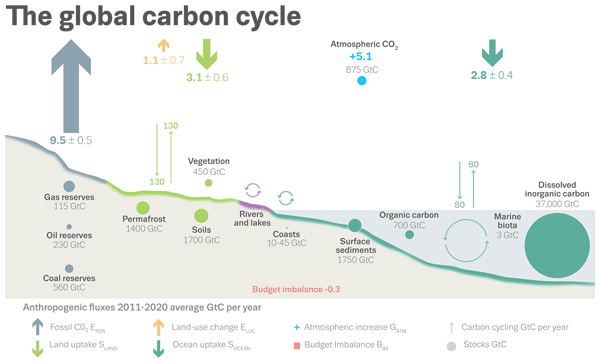
The Global Carbon Budget 2021 describes the data sets and methodology used to quantify the emissions of carbon dioxide and their partitioning among the atmosphere, land, and ocean. These living data are updated every year to provide the highest transparency and traceability in the reporting of CO2, the key driver of climate change.
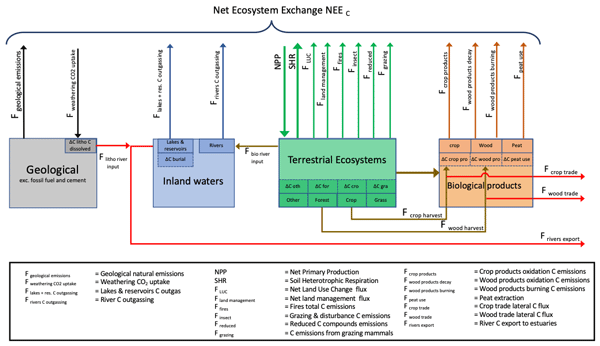
Philippe Ciais, Ana Bastos, Frédéric Chevallier, Ronny Lauerwald, Ben Poulter, Josep G. Canadell, Gustaf Hugelius, Robert B. Jackson, Atul Jain, Matthew Jones, Masayuki Kondo, Ingrid T. Luijkx, Prabir K. Patra, Wouter Peters, Julia Pongratz, Ana Maria Roxana Petrescu, Shilong Piao, Chunjing Qiu, Celso Von Randow, Pierre Regnier, Marielle Saunois, Robert Scholes, Anatoly Shvidenko, Hanqin Tian, Hui Yang, Xuhui Wang, and Bo Zheng
Geosci. Model Dev., 15, 1289–1316, https://doi.org/10.5194/gmd-15-1289-2022, https://doi.org/10.5194/gmd-15-1289-2022, 2022
Short summary
Short summary
The second phase of the Regional Carbon Cycle Assessment and Processes (RECCAP) will provide updated quantification and process understanding of CO2, CH4, and N2O emissions and sinks for ten regions of the globe. In this paper, we give definitions, review different methods, and make recommendations for estimating different components of the total land–atmosphere carbon exchange for each region in a consistent and complete approach.
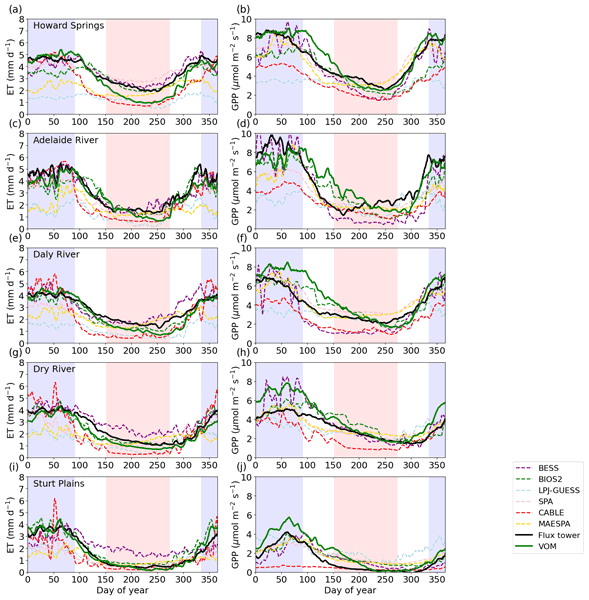
Remko C. Nijzink, Jason Beringer, Lindsay B. Hutley, and Stanislaus J. Schymanski
Hydrol. Earth Syst. Sci., 26, 525–550, https://doi.org/10.5194/hess-26-525-2022, https://doi.org/10.5194/hess-26-525-2022, 2022
Short summary
Short summary
Most models that simulate water and carbon exchanges with the atmosphere rely on information about vegetation, but optimality models predict vegetation properties based on general principles. Here, we use the Vegetation Optimality Model (VOM) to predict vegetation behaviour at five savanna sites. The VOM overpredicted vegetation cover and carbon uptake during the wet seasons but also performed similarly to conventional models, showing that vegetation optimality is a promising approach.
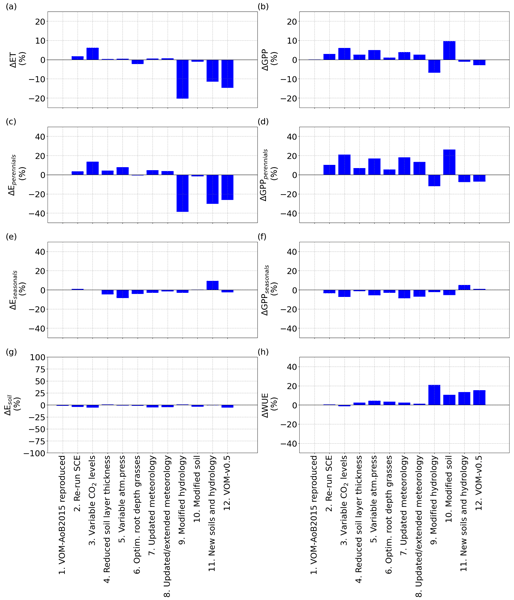
Remko C. Nijzink, Jason Beringer, Lindsay B. Hutley, and Stanislaus J. Schymanski
Geosci. Model Dev., 15, 883–900, https://doi.org/10.5194/gmd-15-883-2022, https://doi.org/10.5194/gmd-15-883-2022, 2022
Short summary
Short summary
The Vegetation Optimality Model (VOM) is a coupled water–vegetation model that predicts vegetation properties rather than determines them based on observations. A range of updates to previous applications of the VOM has been made for increased generality and improved comparability with conventional models. This showed that there is a large effect on the simulated water and carbon fluxes caused by the assumption of deep groundwater tables and updated soil profiles in the model.
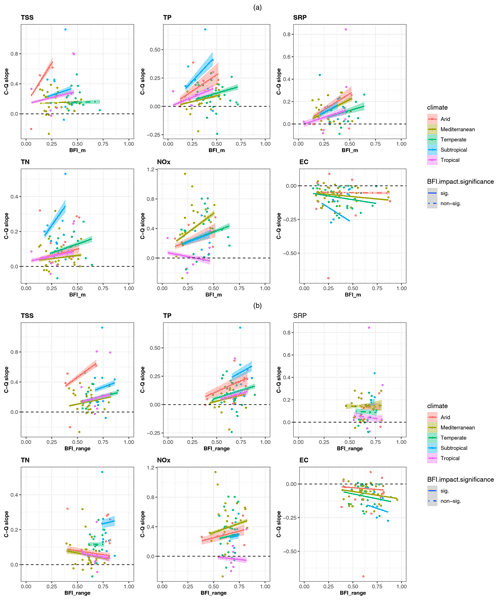
Danlu Guo, Camille Minaudo, Anna Lintern, Ulrike Bende-Michl, Shuci Liu, Kefeng Zhang, and Clément Duvert
Hydrol. Earth Syst. Sci., 26, 1–16, https://doi.org/10.5194/hess-26-1-2022, https://doi.org/10.5194/hess-26-1-2022, 2022
Short summary
Short summary
We investigate the impact of baseflow contribution on concentration–flow (C–Q) relationships across the Australian continent. We developed a novel Bayesian hierarchical model for six water quality variables across 157 catchments that span five climate zones. For sediments and nutrients, the C–Q slope is generally steeper for catchments with a higher median and a greater variability of baseflow contribution, highlighting the key role of variable flow pathways in particulate and solute export.
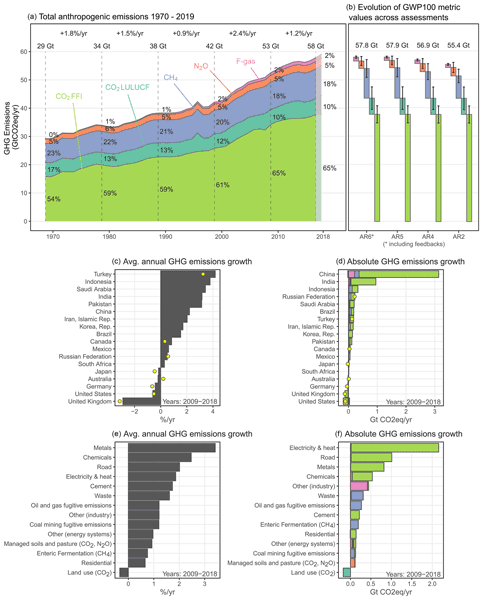
Jan C. Minx, William F. Lamb, Robbie M. Andrew, Josep G. Canadell, Monica Crippa, Niklas Döbbeling, Piers M. Forster, Diego Guizzardi, Jos Olivier, Glen P. Peters, Julia Pongratz, Andy Reisinger, Matthew Rigby, Marielle Saunois, Steven J. Smith, Efisio Solazzo, and Hanqin Tian
Earth Syst. Sci. Data, 13, 5213–5252, https://doi.org/10.5194/essd-13-5213-2021, https://doi.org/10.5194/essd-13-5213-2021, 2021
Short summary
Short summary
We provide a synthetic dataset on anthropogenic greenhouse gas (GHG) emissions for 1970–2018 with a fast-track extension to 2019. We show that GHG emissions continued to rise across all gases and sectors. Annual average GHG emissions growth slowed, but absolute decadal increases have never been higher in human history. We identify a number of data gaps and data quality issues in global inventories and highlight their importance for monitoring progress towards international climate goals.
Cited articles
Abril, G. and Borges, A. V.: Ideas and perspectives: Carbon leaks from flooded land: do we need to replumb the inland water active pipe?, Biogeosciences, 16, 769–784, https://doi.org/10.5194/bg-16-769-2019, 2019.
Abril, G., Bouillon, S., Darchambeau, F., Teodoru, C. R., Marwick, T. R., Tamooh, F., Ochieng Omengo, F., Geeraert, N., Deirmendjian, L., Polsenaere, P., and Borges, A. V.: Technical Note: Large overestimation of pCO2 calculated from pH and alkalinity in acidic, organic-rich freshwaters, Biogeosciences, 12, 67–78, https://doi.org/10.5194/bg-12-67-2015, 2015.
Ågren, A., Buffam, I., Jansson, M., and Laudon, H.: Importance of seasonality and small streams for the landscape regulation of dissolved organic carbon export, J. Geophys. Res.-Biogeo., 112, https://doi.org/10.1029/2006JG000381, 2007.
Aho, K. S., Cawley, K. M., Hensley, R. T., Hall Jr., R. O., Dodds, W. K., and Goodman, K. J.: Gas exchange velocities (k600), gas exchange rates (K600), and hydraulic geometries for streams and rivers derived from the NEON Reaeration field and lab collection data product (DP1.20190.001), Earth Syst. Sci. Data, 16, 5563–5578, https://doi.org/10.5194/essd-16-5563-2024, 2024.
Amiotte Suchet, P. and Probst, J.-L.: Modelling of atmospheric CO2 consumption by chemical weathering of rocks: Application to the Garonne, Congo and Amazon basins, Chem. Geol., 107, 205–210, https://doi.org/10.1016/0009-2541(93)90174-H, 1993.
Andrews, L. F., Wadnerkar, P. D., White, S. A., Chen, X., Correa, R. E., Jeffrey, L. C., and Santos, I. R.: Hydrological, geochemical and land use drivers of greenhouse gas dynamics in eleven sub-tropical streams, Aquat. Sci., 83, 40, https://doi.org/10.1007/s00027-021-00791-x, 2021.
Atkins, M. L., Santos, I. R., and Maher, D. T.: Seasonal exports and drivers of dissolved inorganic and organic carbon, carbon dioxide, methane and δ13C signatures in a subtropical river network, Sci. Total Environ., 575, 545–563, https://doi.org/10.1016/j.scitotenv.2016.09.020, 2017.
Ayat, H., Evans, J. P., Sherwood, S. C., and Soderholm, J.: Intensification of subhourly heavy rainfall, Science, 378, 655–659, https://doi.org/10.1126/science.abn8657, 2022.
Bakalowicz, M.: Géochimie des eaux karstiques et karstification, Ann. Spéléol., 30, 581–589, 1975.
Bargrizan, S., Biswas, T. K., Joehnk, K. D., and Mosley, L. M.: Sustained high CO2 concentrations and fluxes from Australia's largest river system, Mar. Freshw. Res., 73, 540–551, 2022.
Bastien, J. and Demarty, M.: Spatio-temporal variation of gross and diffusive emissions from Australian reservoirs and natural aquatic ecosystems, and estimation of net reservoir emissions, Lakes & Reservoirs: Science, Policy and Management for Sustainable Use, 18, 115–127, https://doi.org/10.1111/lre.12028, 2013.
Bauer, J. E., Cai, W.-J., Raymond, P. A., Bianchi, T. S., Hopkinson, C. S., and Regnier, P. A. G.: The changing carbon cycle of the coastal ocean, Nature, 504, 61–70, https://doi.org/10.1038/nature12857, 2013.
Beck, H. E., Zimmermann, N. E., McVicar, T. R., Vergopolan, N., Berg, A., and Wood, E. F.: Present and future Köppen-Geiger climate classification maps at 1-km resolution, Sci. Data., 5, 180214, https://doi.org/10.1038/sdata.2018.214, 2018.
Berner, R., Lasaga, A., and Garrels, R.: The carbonate-silicate geochemical cycle and its effect on atmospheric carbon dioxide over the past 100 million years, Am. J. Sci., 283, 641–683, https://doi.org/10.2475/ajs.283.7.641, 1983.
Bernhardt, E. S., Savoy, P., Vlah, M. J., Appling, A. P., Koenig, L. E., Hall, R. O., Arroita, M., Blaszczak, J. R., Carter, A. M., Cohen, M., Harvey, J. W., Heffernan, J. B., Helton, A. M., Hosen, J. D., Kirk, L., McDowell, W. H., Stanley, E. H., Yackulic, C. B., and Grimm, N. B.: Light and flow regimes regulate the metabolism of rivers, P. Natl. Acad. Sci. USA, 119, e2121976119, https://doi.org/10.1073/pnas.2121976119, 2022.
Binet, S., Probst, J. L., Batiot, C., Seidel, J. L., Emblanch, C., Peyraube, N., Charlier, J.-B., Bakalowicz, M., and Probst, A.: Global warming and acid atmospheric deposition impacts on carbonate dissolution and CO2 fluxes in French karst hydrosystems: Evidence from hydrochemical monitoring in recent decades, Geochim. Cosmochim. Ac., 270, 184–200, https://doi.org/10.1016/J.GCA.2019.11.021, 2020.
Birkel, C., Duvert, C., Correa, A., Munksgaard, N. C., Maher, D. T., and Hutley, L. B.: Tracer-Aided Modeling in the Low-Relief, Wet-Dry Tropics Suggests Water Ages and DOC Export Are Driven by Seasonal Wetlands and Deep Groundwater, Water Resour. Res., 56, e2019WR026175, https://doi.org/10.1029/2019WR026175, 2020.
Biswas, T. K. and Mosley, L. M.: From Mountain Ranges to Sweeping Plains, in Droughts and Flooding Rains; River Murray Water Quality over the Last Four Decades, Water Resour. Manage., 33, 1087–1101, https://doi.org/10.1007/s11269-018-2168-1, 2019.
Borges, A. V, Darchambeau, F., Teodoru, C. R., Marwick, T. R., Tamooh, F., Geeraert, N., Omengo, F. O., Guérin, F., Lambert, T., Morana, C., Okuku, E., and Bouillon, S.: Globally significant greenhouse-gas emissions from African inland waters, Nat. Geosci., 8, 637–642, https://doi.org/10.1038/ngeo2486, 2015.
Butman, D. and Raymond, P. A.: Significant efflux of carbon dioxide from streams and rivers in the United States, Nat. Geosci., 4, 839–842, https://doi.org/10.1038/ngeo1294, 2011.
Cai, W.-J., Hu, X., Huang, W.-J., Murrell, M. C., Lehrter, J. C., Lohrenz, S. E., Chou, W.-C., Zhai, W., Hollibaugh, J. T., Wang, Y., Zhao, P., Guo, X., Gundersen, K., Dai, M., and Gong, G.-C.: Acidification of subsurface coastal waters enhanced by eutrophication, Nat. Geosci., 4, 766–770, https://doi.org/10.1038/ngeo1297, 2011.
Campeau, A., Wallin, M. B., Giesler, R., Löfgren, S., Mörth, C. M., Schiff, S., Venkiteswaran, J. J., and Bishop, K.: Multiple sources and sinks of dissolved inorganic carbon across Swedish streams, refocusing the lens of stable C isotopes, Sci. Rep., 7, https://doi.org/10.1038/s41598-017-09049-9, 2017.
Canadell, J. G., Monteiro, P. M. S., Costa, M. H., Cotrim da Cunha, L., Cox, P. M., Eliseev, A. V., Henson, S., Ishii, M., Jaccard, S., Koven, C., Lohila, A., Patra, P. K., Piao, S., Rogelj, J., Syampungani, S., Zaehle, S., and Zickfeld, K.: Global Carbon and Other Biogeochemical Cycles and Feedbacks, in: Climate Change 2021: The Physical Science Basis. Contribution of Working Group I to the Sixth Assessment Report of the Intergovernmental Panel on Climate Change, edited by: Masson-Delmotte, V., Zhai, P., Pirani, A., Connors, S. L., Péan, C., Berger, S., Caud, N., Chen, Y., Goldfarb, L., Gomis, M. I., Huang, M., Leitzell, K., Lonnoy, E., Matthews, J. B. R., Maycock, T. K., Waterfield, T., Yelekçi, O., Yu, R., and Zhou, B., Cambridge University Press, Cambridge, 673–816, https://doi.org/10.1017/9781009157896.007, 2023.
Cawley, K., Goodman, K., Weintraub, S., and Parker, S.: NEON user guide to dissolved gases in surface water (DP1.20097.001), National Ecological Observatory Network (NEON), Technical Report, https://data.neonscience.org/api/v0/documents/NEON_dissolvedGasWater_userGuide_vB (last access: 16 April 2026), 2020.
Clayer, F., Thrane, J. E., Ndungu, K., King, A., Dörsch, P., and Rohrlack, T.: Technical note: Preventing CO2 overestimation from mercuric or copper(II) chloride preservation of dissolved greenhouse gases in freshwater samples, Biogeosciences, 21, 1903–1921, https://doi.org/10.5194/bg-21-1903-2024, 2024.
Cole, J. J., Prairie, Y. T., Caraco, N. F., McDowell, W. H., Tranvik, L. J., Striegl, R. G., Duarte, C. M., Kortelainen, P., Downing, J. A., Middelburg, J. J., and Melack, J.: Plumbing the global carbon cycle: Integrating inland waters into the terrestrial carbon budget, Ecosystems, 10, 171–184, https://doi.org/10.1007/s10021-006-9013-8, 2007.
Crossman, S. and Li, O.: Surface Hydrology Lines (National), Geoscience Australia, https://pid.geoscience.gov.au/dataset/ga/83130 (last access: 16 April 2026), 2015.
Deemer, B. R., Harrison, J. A., Li, S., Beaulieu, J. J., DelSontro, T., Barros, N., Bezerra-Neto, J. F., Powers, S. M., dos Santos, M. A., and Vonk, J. A.: Greenhouse Gas Emissions from Reservoir Water Surfaces: A New Global Synthesis, Bioscience, 66, 949–964, https://doi.org/10.1093/biosci/biw117, 2016.
Downing, J. A., Cole, J. J., Duarte, C. M., Middelburg, J. J., Melack, J. M., Prairie, Y. T., Kortelainen, P., Striegl, R. G., McDowell, W. H., and Tranvik, L. J.: Global abundance and size distribution of streams and rivers, Inland Waters, 2, 229–236, https://doi.org/10.5268/IW-2.4.502, 2012.
Drake, T. W., Raymond, P. A., and Spencer, R. G. M.: Terrestrial carbon inputs to inland waters: A current synthesis of estimates and uncertainty, Limnol. Oceanogr. Lett., 3, 132–142, https://doi.org/10.1002/lol2.10055, 2018.
Duvert, C., Hutley, L. B., Beringer, J., Bird, M. I., Birkel, C., Maher, D. T., Northwood, M., Rudge, M., Setterfield, S. A., and Wynn, J. G.: Net landscape carbon balance of a tropical savanna: Relative importance of fire and aquatic export in offsetting terrestrial production, Glob. Chang. Biol, 26, 5899–5913, https://doi.org/10.1111/gcb.15287, 2020a.
Duvert, C., Hutley, L. B., Birkel, C., Rudge, M., Munksgaard, N. C., Wynn, J. G., Setterfield, S. A., Cendón, D. I., and Bird, M. I.: Seasonal Shift From Biogenic to Geogenic Fluvial Carbon Caused by Changing Water Sources in the Wet-Dry Tropics, J. Geophys. Res.-Biogeo., 125, https://doi.org/10.1029/2019JG005384, 2020b.
Duvert, C., Lim, H. S., Irvine, D. J., Bird, M. I., Bass, A. M., Tweed, S. O., Hutley, L. B., and Munksgaard, N. C.: Hydrological processes in tropical Australia: Historical perspective and the need for a catchment observatory network to address future development, J. Hydrol. Reg. Stud., https://doi.org/10.1016/j.ejrh.2022.101194, 2022.
Fabricius, K. E., Logan, M., Weeks, S., and Brodie, J.: The effects of river run-off on water clarity across the central Great Barrier Reef, Mar. Pollut. Bull., 84, 191–200, https://doi.org/10.1016/j.marpolbul.2014.05.012, 2014.
Gallant, J., Wilson, N., Dowling, T., Read, A., and Inskeep, C.: SRTM-derived 1 Second Digital Elevation Models Version 1.0. 1, Geoscience Australia, Canberra, https://pid.geoscience.gov.au/dataset/ga/72759 (last access: 16 April 2026), 2011.
Ganser, G. H. and Hewett, P.: An Accurate Substitution Method for Analyzing Censored Data, J. Occup. Environ. Hyg., 7, 233–244, https://doi.org/10.1080/15459621003609713, 2010.
Gatland, J. R., Santos, I. R., Maher, D. T., Duncan, T. M., and Erler, D. V: Carbon dioxide and methane emissions from an artificially drained coastal wetland during a flood: Implications for wetland global warming potential, J. Geophys. Res.-Biogeo., 119, 1698–1716, https://doi.org/10.1002/2013JG002544, 2014.
Gómez-Gener, L., Rocher-Ros, G., Battin, T., Cohen, M. J., Dalmagro, H. J., Dinsmore, K. J., Drake, T. W., Duvert, C., Enrich-Prast, A., Horgby, Å., Johnson, M. S., Kirk, L., Machado-Silva, F., Marzolf, N. S., McDowell, M. J., McDowell, W. H., Miettinen, H., Ojala, A. K., Peter, H., Pumpanen, J., Ran, L., Riveros-Iregui, D. A., Santos, I. R., Six, J., Stanley, E. H., Wallin, M. B., White, S. A., and Sponseller, R. A.: Global carbon dioxide efflux from rivers enhanced by high nocturnal emissions, Nat. Geosci., 14, 289–294, https://doi.org/10.1038/s41561-021-00722-3, 2021.
Grinham, A., Albert, S., Deering, N., Dunbabin, M., Bastviken, D., Sherman, B., Lovelock, C. E., and Evans, C. D.: The importance of small artificial water bodies as sources of methane emissions in Queensland, Australia, Hydrol. Earth Syst. Sci., 22, 5281–5298, https://doi.org/10.5194/hess-22-5281-2018, 2018.
Hancock, G. R., Turner, L., and Webb, A. A.: Organic carbon export in steep forested catchments – An assessment of scale and disturbance, J. Hydrol., 612, 128011, https://doi.org/10.1016/j.jhydrol.2022.128011, 2022.
Hartmann, J., Lauerwald, R., and Moosdorf, N.: A Brief Overview of the GLObal RIver Chemistry Database, GLORICH, Proc. Earth Planet. Sci., 10, 23–27, https://doi.org/10.1016/j.proeps.2014.08.005, 2014.
Helsel, D. R.: Fabricating data: How substituting values for nondetects can ruin results, and what can be done about it, Chemosphere, 65, 2434–2439, https://doi.org/10.1016/j.chemosphere.2006.04.051, 2006.
Hemingway, J. D., Schefuß, E., Spencer, R. G. M., Dinga, B. J., Eglinton, T. I., McIntyre, C., and Galy, V. V: Hydrologic controls on seasonal and inter-annual variability of Congo River particulate organic matter source and reservoir age, Chem. Geol., 466, 454–465, https://doi.org/10.1016/j.chemgeo.2017.06.034, 2017.
Hope, D., Billett, M. F., and Cresser, M. S.: A review of the export of carbon in river water: Fluxes and processes, Environ. Pollut., 84, 301–324, https://doi.org/10.1016/0269-7491(94)90142-2, 1994.
IPCC: Climate Change 2013: The Physical Science Basis. Contribution of Working Group I to the Fifth Assessment Report of the Intergovernmental Panel on Climate Change, edited by: Stocker, T. F., Qin, D., Plattner, G.-K., Tignor, M., Allen, S. K., Boschung, J., Nauels, A., Xia, Y., Bex, V., and Midgley, P. M., Cambridge University Press, Cambridge, United Kingdom and New York, NY, USA, 1535 pp., https://doi.org/10.1017/CBO9781107415324, 2013.
Jeffrey, L. C., Santos, I. R., Tait, D. R., Makings, U., and Maher, D. T.: Seasonal Drivers of Carbon Dioxide Dynamics in a Hydrologically Modified Subtropical Tidal River and Estuary (Caboolture River, Australia), J. Geophys. Res.-Biogeo., 123, 1827–1849, https://doi.org/10.1029/2017JG004023, 2018.
Jones Jr., J. B., Stanley, E. H., and Mulholland, P. J.: Long-term decline in carbon dioxide supersaturation in rivers across the contiguous United States, Geophys. Res. Lett., 30, https://doi.org/10.1029/2003GL017056, 2003.
Kalka, H.: Polyprotic Acids and Beyond – An Algebraic Approach, Chemistry (Easton), 3, 454–508, https://doi.org/10.3390/chemistry3020034, 2021.
Koschorreck, M., Prairie, Y. T., Kim, J., and Marcé, R.: Technical note: CO2 is not like CH4 – limits of and corrections to the headspace method to analyse pCO2 in fresh water, Biogeosciences, 18, 1619–1627, https://doi.org/10.5194/bg-18-1619-2021, 2021.
Kostoglidis, A., Pattiaratchi, C. B., and Hamilton, D. P.: CDOM and its contribution to the underwater light climate of a shallow, microtidal estuary in south-western Australia, Estuar. Coast Shelf. S., 63, 469–477, https://doi.org/10.1016/j.ecss.2004.11.016, 2005.
Laudon, H., Buttle, J., Carey, S. K., McDonnell, J., McGuire, K., Seibert, J., Shanley, J., Soulsby, C., and Tetzlaff, D.: Cross-regional prediction of long-term trajectory of stream water DOC response to climate change, Geophys. Res. Lett., 39, https://doi.org/10.1029/2012GL053033, 2012.
Lauerwald, R., Regnier, P., Guenet, B., Friedlingstein, P., and Ciais, P.: How Simulations of the Land Carbon Sink Are Biased by Ignoring Fluvial Carbon Transfers: A Case Study for the Amazon Basin, One Earth, 3, 226–236, https://doi.org/10.1016/j.oneear.2020.07.009, 2020.
Lauerwald, R., Allen, G. H., Deemer, B. R., Liu, S., Maavara, T., Raymond, P., Alcott, L., Bastviken, D., Hastie, A., Holgerson, M. A., Johnson, M. S., Lehner, B., Lin, P., Marzadri, A., Ran, L., Tian, H., Yang, X., Yao, Y., and Regnier, P.: Inland Water Greenhouse Gas Budgets for RECCAP2: 1. State-Of-The-Art of Global Scale Assessments, Global Biogeochem. Cy., https://doi.org/10.1029/2022GB007657, 2023.
Li, L.: Watershed Reactive Transport, Rev. Mineral Geochem., 85, 381–418, https://doi.org/10.2138/rmg.2018.85.13, 2019.
Lian, X., Piao, S., Chen, A., Huntingford, C., Fu, B., Li, L. Z. X., Huang, J., Sheffield, J., Berg, A. M., Keenan, T. F., McVicar, T. R., Wada, Y., Wang, X., Wang, T., Yang, Y., and Roderick, M. L.: Multifaceted characteristics of dryland aridity changes in a warming world, Nat. Rev. Earth Environ., 2, 232–250, https://doi.org/10.1038/s43017-021-00144-0, 2021.
Liu, D., Tian, L., Jiang, X., Wu, H., and Yu, S.: Human activities changed organic carbon transport in Chinese rivers during 2004–2018, Water Res., 222, 118872, https://doi.org/10.1016/j.watres.2022.118872, 2022a.
Liu, M., Raymond, P. A., Lauerwald, R., Zhang, Q., Trapp-Müller, G., Davis, K. L., Moosdorf, N., Xiao, C., Middelburg, J. J., Bouwman, A. F., Beusen, A. H. W., Peng, C., Lacroix, F., Tian, H., Wang, J., Li, M., Zhu, Q., Cohen, S., van Hoek, W. J., Li, Y., Li, Y., Yao, Y., and Regnier, P.: Global riverine land-to-ocean carbon export constrained by observations and multi-model assessment, Nat. Geosci., 17, 896–904, https://doi.org/10.1038/s41561-024-01524-z, 2024.
Liu, S., Butman, D. E., and Raymond, P. A.: Evaluating CO calculation error from organic alkalinity and pH measurement error in low ionic strength freshwaters, Limnol. Oceanogr. Meth., 18, 606–622, https://doi.org/10.1002/lom3.10388, 2020.
Liu, S., Dupas, R., Guo, D., Lintern, A., Minaudo, C., Bende-Michl, U., Zhang, K., and Duvert, C.: Controls on Spatial Variability in Mean Concentrations and Export Patterns of River Chemistry Across the Australian Continent, Water Resour. Res., 58, e2022WR032365, https://doi.org/10.1029/2022WR032365, 2022b.
Liu, S., Kuhn, C., Amatulli, G., Aho, K., Butman, D. E., Allen, G. H., Lin, P., Pan, M., Yamazaki, D., Brinkerhoff, C., Gleason, C., Xia, X., and Raymond, P. A.: The importance of hydrology in routing terrestrial carbon to the atmosphere via global streams and rivers, P. Natl. Acad. Sci. USA, 119, 1–9, https://doi.org/10.1073/pnas.2106322119, 2022c.
López-Rojo, N., Datry, T., Peñas, F. J., Singer, G., Lamouroux, N., Barquín, J., Rodeles, A. A., Silverthorn, T., Sarremejane, R., del Campo, R., Estévez, E., Mimeau, L., Boyer, F., Künne, A., Dalvai Ragnoli, M., and Foulquier, A.: Carbon emissions from inland waters may be underestimated: Evidence from European river networks fragmented by drying, Limnol. Oceanogr. Lett., 9, 553–562, https://doi.org/10.1002/lol2.10408, 2024.
Malerba, M. E., de Kluyver, T., Wright, N., Omosalewa, O., and Macreadie, P. I.: Including Methane Emissions from Agricultural Ponds in National Greenhouse Gas Inventories, Environ. Sci. Technol., 58, 8349–8359, https://doi.org/10.1021/acs.est.3c08898, 2024.
Marcé, R., Obrador, B., Gómez-Gener, L., Catalán, N., Koschorreck, M., Arce, M. I., Singer, G., and von Schiller, D.: Emissions from dry inland waters are a blind spot in the global carbon cycle, Earth Sci. Rev., 188, 240–248, https://doi.org/10.1016/j.earscirev.2018.11.012, 2019.
Marx, A., Dusek, J., Jankovec, J., Sanda, M., Vogel, T., van Geldern, R., Hartmann, J., and Barth, J. A. C.: A review of CO2 and associated carbon dynamics in headwater streams: A global perspective, Rev. Geophys., 55, 560–585, https://doi.org/10.1002/2016RG000547, 2017.
Mayorga, E., Aufdenkampe, A. K., Masiello, C. A., Krusche, A. V., Hedges, J. I., Quay, P. D., Richey, J. E., and Brown, T. A.: LBA-ECO CD-06 Isotopic Composition of Carbon Fractions, Amazon Basin River Water, ORNL DAAC, Oak Ridge, Tennessee, USA, ORNL Distributed Active Archive Center [data set], https://doi.org/10.3334/ORNLDAAC/1120, 2012.
Millero, F. J.: Thermodynamics of the carbon dioxide system in the oceans, Geochim. Cosmochim. Ac., 59, 661–677, https://doi.org/10.1016/0016-7037(94)00354-O, 1995.
Moran, M. A., Kujawinski, E. B., Stubbins, A., Fatland, R., Aluwihare, L. I., Buchan, A., Crump, B. C., Dorrestein, P. C., Dyhrman, S. T., Hess, N. J., Howe, B., Longnecker, K., Medeiros, P. M., Niggemann, J., Obernosterer, I., Repeta, D. J., and Waldbauer, J. R.: Deciphering ocean carbon in a changing world, P. Natl. Acad. Sci. USA, 113, 3143–3151, https://doi.org/10.1073/pnas.1514645113, 2016.
Natchimuthu, S., Wallin, M. B., Klemedtsson, L., and Bastviken, D.: Spatio-temporal patterns of stream methane and carbon dioxide emissions in a hemiboreal catchment in Southwest Sweden, Sci. Rep., 7, 39729, https://doi.org/10.1038/srep39729, 2017.
Nelson, P. N., Cotsaris, E., and Oades, J. M.: Nitrogen, Phosphorus, and Organic Carbon in Streams Draining Two Grazed Catchments, J. Environ. Qual., 25, 1221–1229, https://doi.org/10.2134/jeq1996.00472425002500060008x, 1996.
O'Donnell, J. A., Carey, M. P., Koch, J. C., Xu, X., Poulin, B. A., Walker, J., and Zimmerman, C. E.: Permafrost Hydrology Drives the Assimilation of Old Carbon by Stream Food Webs in the Arctic, Ecosystems, 23, 435–453, https://doi.org/10.1007/s10021-019-00413-6, 2020.
Plummer, L. and Busenberg, E.: The solubilities of calcite, aragonite and vaterite in CO2-H2O solutions between 0 and 90 °C, and an evaluation of the aqueous model for the system CaCO3-CO2-H2O, Geochim. Cosmochim., 46, 1011–1040, https://doi.org/10.1016/0016-7037(82)90056-4, 1982.
Qin, C., Xue, Y., Xu, M., Ran, L., Li, D., Wang, G., Cun, D., Wu, B., Fu, X., and Wang, G.: Undervalued dry riverbeds: A key factor in equating intermittent river CO2 emissions to perennial rivers, Water Res., 259, 121859, https://doi.org/10.1016/j.watres.2024.121859, 2024.
Ran, L., Butman, D. E., Battin, T. J., Yang, X., Tian, M., Duvert, C., Hartmann, J., Geeraert, N., and Liu, S.: Substantial decrease in CO2 emissions from Chinese inland waters due to global change, Nat. Commun., 12, 1730, https://doi.org/10.1038/s41467-021-21926-6, 2021.
Raymond, P. A., Zappa, C. J., Butman, D., Bott, T. L., Potter, J., Mulholland, P., Laursen, A. E., McDowell, W. H., and Newbold, D.: Scaling the gas transfer velocity and hydraulic geometry in streams and small rivers, Limnol. Oceanogr., 2, 41–53, https://doi.org/10.1215/21573689-1597669, 2012.
Raymond, P. A., Hartmann, J., Lauerwald, R., Sobek, S., McDonald, C., Hoover, M., Butman, D., Striegl, R., Mayorga, E., Humborg, C., Kortelainen, P., Dürr, H., Meybeck, M., Ciais, P., and Guth, P.: Global carbon dioxide emissions from inland waters, Nature, 503, 355–359, https://doi.org/10.1038/nature12760, 2013.
Regnier, P., Friedlingstein, P., Ciais, P., Mackenzie, F. T., Gruber, N., Janssens, I. A., Laruelle, G. G., Lauerwald, R., Luyssaert, S., Andersson, A. J., Arndt, S., Arnosti, C., Borges, A. V., Dale, A. W., Gallego-Sala, A., Goddéris, Y., Goossens, N., Hartmann, J., Heinze, C., Ilyina, T., Joos, F., Larowe, D. E., Leifeld, J., Meysman, F. J. R., Munhoven, G., Raymond, P. A., Spahni, R., Suntharalingam, P., and Thullner, M.: Anthropogenic perturbation of the carbon fluxes from land to ocean, Nat. Geosci., 6, 597–607, https://doi.org/10.1038/ngeo1830, 2013.
Regnier, P., Resplandy, L., Najjar, R. G., and Ciais, P.: The land-to-ocean loops of the global carbon cycle, Nature, https://doi.org/10.1038/s41586-021-04339-9, 2022.
Rexroade, A. T., Wallin, M. B., Irvine, D. J., Ulloa-Cedamanos, F., Lintern, A., Webb, J. R., Felton, R., and Duvert, C.: Asynchronous greenhouse gas emissions from Australian tropical versus temperate rivers driven by seasonal hydrology, Commun. Earth Environ., in review, 2026.
Richardson, M., Sentlinger, G., Moore, R. D., and Zimmermann, A.: Quantifying the Relation Between Electrical Conductivity and Salt Concentration for Dilution Gauging Via Dry Salt Injection, Confluence: Journal of Watershed Science and Management, 1, https://doi.org/10.22230/jwsm.2017v1n2a1, 2017.
Rocher-Ros, G., Sponseller, R. A., Lidberg, W., Mörth, C. M., and Giesler, R.: Landscape process domains drive patterns of CO2 evasion from river networks, Limnol. Oceanogr. Lett., 4, 87–95, https://doi.org/10.1002/lol2.10108, 2019.
Rocher-Ros, G., Stanley, E. H., Loken, L. C., Casson, N. J., Raymond, P. A., Liu, S., Amatulli, G., and Sponseller, R. A.: Global methane emissions from rivers and streams, Nature, 621, 530–535, https://doi.org/10.1038/s41586-023-06344-6, 2023.
Rohatgi, A.: WebPlotDigitizer, version 5.2, https://automeris.io (last access: 16 April 2026), software, 2024.
Rosentreter, J. A. and Eyre, B. D.: Alkalinity and dissolved inorganic carbon exports from tropical and subtropical river catchments discharging to the Great Barrier Reef, Australia, Hydrol. Process., 34, 1530–1544, https://doi.org/10.1002/hyp.13679, 2020.
Sauquet, E., Shanafield, M., Hammond, J. C., Sefton, C., Leigh, C., and Datry, T.: Classification and trends in intermittent river flow regimes in Australia, northwestern Europe and USA: A global perspective, J. Hydrol., 597, 126170, https://doi.org/10.1016/j.jhydrol.2021.126170, 2021.
Schlesinger, W. H. and Melack, J. M.: Transport of organic carbon in the world's rivers, Tellus, 33, 172–187, https://doi.org/10.3402/tellusa.v33i2.10706, 1981.
Shanafield, M., Blanchette, M., Daly, E., Wells, N., Burrows, R. M., Korbel, K., Rau, G. C., Bourke, S., Wakelin-King, G., Holland, A., Ralph, T., McGrath, G., Robson, B., Fowler, K., Andersen, M. S., Yu, S., Jones, C. S., Waltham, N., Banks, E. W., Flatley, A., Leigh, C., Maxwell, S., Siebers, A., Bond, N., Beesley, L., Hose, G., Iles, J., Cartwright, I., Reid, M., de Castro Tayer, T., and Duvert, C.: Australian non-perennial rivers: Global lessons and research opportunities, J. Hydrol., 634, 130939, https://doi.org/10.1016/j.jhydrol.2024.130939, 2024.
Sheldon, F., Bunn, S. E., Hughes, J. M., Arthington, A. H., Balcombe, S. R., and Fellows, C. S.: Ecological roles and threats to aquatic refugia in arid landscapes: dryland river waterholes, Mar. Freshw. Res., 61, 885–895, https://doi.org/10.1071/MF09239, 2010.
Solano, V., Duvert, C., Hutley, L. B., Cendón, D. I., Maher, D. T., and Birkel, C.: Seasonal Wetlands Make a Relatively Limited Contribution to the Dissolved Carbon Pool of a Lowland Headwater Tropical Stream, J. Geophys. Res.-Biogeo., 129, e2023JG007556, https://doi.org/10.1029/2023JG007556, 2024.
Stanley, E. H., Loken, L. C., Casson, N. J., Oliver, S. K., Sponseller, R. A., Wallin, M. B., Zhang, L., and Rocher-Ros, G.: GRiMeDB: the Global River Methane Database of concentrations and fluxes, Earth Syst. Sci. Data, 15, 2879–2926, https://doi.org/10.5194/essd-15-2879-2023, 2023.
Stein, J. L., Mutchison, M., and Stein, J. A.: National Environmental Stream Attributes v1.1.5. https://pid.geoscience.gov.au/dataset/ga/75066 (last access: 16 April 2026), 2012.
Stets, E. G., Kelly, V. J., and Crawford, C. G.: Long-term trends in alkalinity in large rivers of the conterminous US in relation to acidification, agriculture, and hydrologic modification, Sci. Total Environ., 488–489, 280–289, https://doi.org/10.1016/J.SCITOTENV.2014.04.054, 2014.
Stewart, B., Shanley, J. B., Matt, S., Seybold, E. C., Kincaid, D. W., Vierbicher, A., Cable, B., Hicks, N., Perdrial, J. N., and Li, L.: Illuminating the “Invisible”: Substantial Deep Respiration and Lateral Export of Dissolved Carbon From Beneath Soil, Water Resour. Res., 60, e2023WR035940, https://doi.org/10.1029/2023WR035940, 2024.
Stockmann, U., Adams, M. A., Crawford, J. W., Field, D. J., Henakaarchchi, N., Jenkins, M., Minasny, B., McBratney, A. B., Courcelles, V. de R. de, Singh, K., Wheeler, I., Abbott, L., Angers, D. A., Baldock, J., Bird, M., Brookes, P. C., Chenu, C., Jastrow, J. D., Lal, R., Lehmann, J., O'Donnell, A. G., Parton, W. J., Whitehead, D., and Zimmermann, M.: The knowns, known unknowns and unknowns of sequestration of soil organic carbon, Agr. Ecosyst. Environ., 164, 80–99, https://doi.org/10.1016/j.agee.2012.10.001, 2013.
Stringer, L. C., Mirzabaev, A., Benjaminsen, T. A., Harris, R. M. B., Jafari, M., Lissner, T. K., Stevens, N., and Tirado-von der Pahlen, C.: Climate change impacts on water security in global drylands, One Earth, 4, 851–864, https://doi.org/10.1016/j.oneear.2021.05.010, 2021.
Sturm, K., Yuan, Z., Gibbes, B., Werner, U., and Grinham, A.: Methane and nitrous oxide sources and emissions in a subtropical freshwater reservoir, South East Queensland, Australia, Biogeosciences, 11, 5245–5258, https://doi.org/10.5194/bg-11-5245-2014, 2014.
Telmer, K. and Veizer, J.: Carbon fluxes, pCO2 and substrate weathering in a large northern river basin, Canada: carbon isotope perspectives, Chem. Geol., 159, 61–86, https://doi.org/10.1016/S0009-2541(99)00034-0, 1999.
Ulloa-Cedamanos, F., Probst, J. L., Binet, S., Camboulive, T., Payre-Suc, V., Pautot, C., Bakalowicz, M., Beranger, S., and Probst, A.: A forty-year karstic critical zone survey (baget catchment, pyrenees-france): Lithologic and hydroclimatic controls on seasonal and inter- annual variations of stream water chemical composition, pCO2, and carbonate equilibrium, Water, 12, 1227, https://doi.org/10.3390/W12051227, 2020.
Ulloa-Cedamanos, F., Probst, A., Moussa, I., and Probst, J.-L.: Chemical weathering and CO2 consumption in a multi-lithological karstic critical zone: Long term hydrochemical trends and isotopic survey, Chem. Geol., 585, 120567, https://doi.org/10.1016/j.chemgeo.2021.120567, 2021a.
Ulloa-Cedamanos, F., Probst, A., Dos-Santos, V., Camboulive, T., Granouillac, F., and Probst, J.-L.: Stream hydrochemical response to flood events in a multi-lithological karstic catchment from the Pyrenees Mountains (SW France), Water, 13, 1818, https://doi.org/10.3390/w13131818, 2021b.
Ulloa-Cedamanos, F., Probst, J. L., and Probst, A.: Medium term hydrochemical and CO2 responses to anthropogenic and environmental changes in karst headwater streams, Sci. Total Environ., 957, 177614, https://doi.org/10.1016/j.scitotenv.2024.177614, 2024.
Ulloa-Cedamanos, F., Rexroade, A., Li, Y., Hutley, L., Wong, W. W., Wallin, M., Canadell, J., Lintern, A., and Duvert, C.: OzRiCa: A National Database of Riverine Carbon Measurements Across Australian Streams and Rivers (1966–2024), HydroShare [data set], https://doi.org/10.4211/hs.9aa735254e7e424ca18603c047d02f50, 2026.
Vachon, D., Sponseller, R. A., and Karlsson, J.: Integrating carbon emission, accumulation and transport in inland waters to understand their role in the global carbon cycle, Glob. Change Biol., 27, 719–727, https://doi.org/10.1111/gcb.15448, 2021.
Villalobos, Y., Canadell, J. G., Keller, E. D., Briggs, P. R., Bukosa, B., Giltrap, D. L., Harman, I., Hilton, T. W., Kirschbaum, M. U. F., Lauerwald, R., Liang, L. L., Maavara, T., Mikaloff-Fletcher, S. E., Rayner, P. J., Resplandy, L., Rosentreter, J., Metz, E. M., Serrano, O., and Smith, B.: A Comprehensive Assessment of Anthropogenic and Natural Sources and Sinks of Australasia's Carbon Budget, Global Biogeochem. Cy., 37, https://doi.org/10.1029/2023GB007845, 2023.
Virro, H., Amatulli, G., Kmoch, A., Shen, L., and Uuemaa, E.: GRQA: Global River Water Quality Archive, Earth Syst. Sci. Data, 13, 5483–5507, https://doi.org/10.5194/essd-13-5483-2021, 2021.
Wallin, M. B., Campeau, A., Audet, J., Bastviken, D., Bishop, K., Kokic, J., Laudon, H., Lundin, E., Löfgren, S., Natchimuthu, S., Sobek, S., Teutschbein, C., Weyhenmeyer, G. A., and Grabs, T.: Carbon dioxide and methane emissions of Swedish low-order streams – a national estimate and lessons learnt from more than a decade of observations, Limnol. Oceanogr. Lett., 3, 156–167, https://doi.org/10.1002/lol2.10061, 2018.
Wang, W., Zhong, J., Li, S.-L., Ulloa-Cedamanos, F., Xu, S., Chen, S., Lai, M., and Xu, S.: Constraining the sources and cycling of dissolved inorganic carbon in an alpine river, eastern Qinghai-Tibet Plateau, Sci. Total Environ., 901, 166262, https://doi.org/10.1016/j.scitotenv.2023.166262, 2023.
Xenopoulos, M. A., Barnes, R. T., Boodoo, K. S., Butman, D., Catalán, N., D'Amario, S. C., Fasching, C., Kothawala, D. N., Pisani, O., Solomon, C. T., Spencer, R. G. M., Williams, C. J., and Wilson, H. F.: How humans alter dissolved organic matter composition in freshwater: relevance for the Earth's biogeochemistry, Biogeochemistry, 154, 323–348, https://doi.org/10.1007/s10533-021-00753-3, 2021.
Xu, S., Yue, F.-J., Li, S.-L., Ding, H., Xu, S., Lang, Y.-C., and Liu, C.-Q.: Carbon and nitrogen isotope constraints on source and variation of particulate organic matter in high-latitude agricultural rivers, Northeast China, J. Clean Prod., 321, 128974, https://doi.org/10.1016/j.jclepro.2021.128974, 2021.
Short summary
Rivers and streams play a key role in how carbon moves through the environment, but we know little about this in Australia. To help close this gap, we compile the first national database of carbon data from rivers and streams, combining past studies, government records, and new data. The data show where and when carbon was measured and reveal major gaps in long-term monitoring. This new resource will help scientists understand carbon and water systems across Australia.
Rivers and streams play a key role in how carbon moves through the environment, but we know...


Altmetrics
Final-revised paper
Preprint