Articles | Volume 18, issue 1
https://doi.org/10.5194/essd-18-97-2026
© Author(s) 2026. This work is distributed under
the Creative Commons Attribution 4.0 License.
the Creative Commons Attribution 4.0 License.
https://doi.org/10.5194/essd-18-97-2026
© Author(s) 2026. This work is distributed under
the Creative Commons Attribution 4.0 License.
the Creative Commons Attribution 4.0 License.
Data description article
| 
06 Jan 2026
Data description article |
| 06 Jan 2026
| 06 Jan 2026
Spatially adaptive estimation of multi-layer soil temperature at a daily time-step across China during 2010–2020
Xuetong Wang
College of Natural Resources and Environment, Northwest A&F University, Yangling 712100, China
State Key Laboratory of Soil and Water Conservation and Desertification Control, Northwest A&F University, Yangling 712100, China
Liang He
CORRESPONDING AUTHOR

National Meteorological Center, Beijing, 100081, China
College of Natural Resources and Environment, Northwest A&F University, Yangling 712100, China
State Key Laboratory of Soil and Water Conservation and Desertification Control, Northwest A&F University, Yangling 712100, China
Jiageng Ma
Key Laboratory of Ecosystem Network Observation and Modeling, Institute of Geographic Sciences and Natural Resources Research, Chinese Academy of Sciences, Beijing 100101, PR China
Yu Shi
Institute of Carbon Neutrality, Sino-French Institute for Earth System Science, College of Urban and Environmental Sciences, Peking University, Beijing 100871, China
Qi Tian
College of Natural Resources and Environment, Northwest A&F University, Yangling 712100, China
State Key Laboratory of Soil and Water Conservation and Desertification Control, Northwest A&F University, Yangling 712100, China
Gang Zhao
State Key Laboratory of Soil and Water Conservation and Desertification Control, Northwest A&F University, Yangling 712100, China
College of Soil and Water Conservation Science and Engineering, Northwest A&F University, Yangling, Shaanxi, 712100, China
Jianqiang He
Key Laboratory for Agricultural Soil and Water Engineering in Arid Area of Ministry of Education, Northwest A&F University, Yangling 712100, China
Hao Feng
State Key Laboratory of Soil and Water Conservation and Desertification Control, Northwest A&F University, Yangling 712100, China
State Key Laboratory for Ecological Security of Regions and Cities, Research Center for Eco-Environmental Sciences, Chinese Academy of Sciences, Beijing, 100085, China
College of Resources and Environment, University of Chinese Academy of Sciences, Beijing, 100049, China
Qiang Yu
CORRESPONDING AUTHOR
State Key Laboratory of Soil and Water Conservation and Desertification Control, Northwest A&F University, Yangling 712100, China
Related authors
No articles found.
Wensu Hao, Hanqin Tian, Hao Shi, Xing Yu, Naiqing Pan, Shufen Pan, Francesco N. Tubiello, Wulahati Adalibieke, Martial Bernoux, Philippe Ciais, Federico Maggi, Kazuya Nishina, Aimable Uwizeye, and Feng Zhou
Earth Syst. Sci. Data Discuss., https://doi.org/10.5194/essd-2026-595, https://doi.org/10.5194/essd-2026-595, 2026
Preprint under review for ESSD
Short summary
Short summary
HaNi-Crop dataset presents a long-term global dataset of nitrogen inputs from synthetic fertilizers and animal manure for different crops from 1961 to 2023. Built by combining agricultural statistics with crop distribution information, the dataset reveals how nutrient use has changed over time and provides a valuable resource for improving food production, environmental protection, climate change, and more sustainable agricultural management.
Zihao Bian, Hao Shi, Rui Li, Fei Lun, Francesco N. Tubiello, Nathaniel D. Mueller, Shiyu You, Rong Hao, Jiageng Ma, Longhui Li, Changchun Huang, Bing He, Yuanzhi Yao, and Hanqin Tian
Earth Syst. Sci. Data, 18, 7125–7141, https://doi.org/10.5194/essd-18-7125-2026, https://doi.org/10.5194/essd-18-7125-2026, 2026
Short summary
Short summary
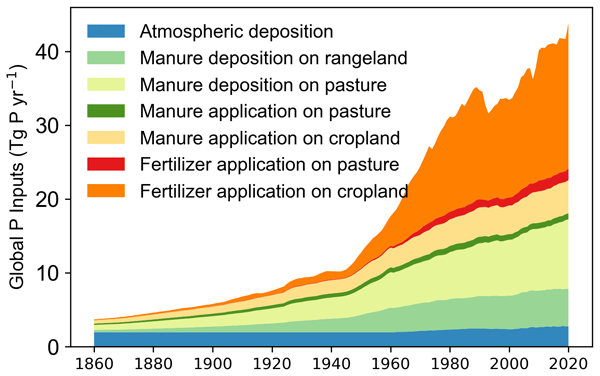
The History of Anthropogenic Phosphorus Inputs (HaPi) provides a dataset of global human-driven phosphorus fluxes to terrestrial biosphere from 1860–2020 at a resolution of 5 arcmin. This comprehensive dataset consists of phosphorus fertilizer/manure application to cropland, manure application/deposition to pasture, manure deposition to rangeland, and atmospheric phosphorus deposition. It supports analyses of nutrient budgets and provides essential forcing data for Earth system models.
Konstantin Gregor, Benjamin F. Meyer, Tillmann Gaida, Victor Justo Vasquez, Karina Bett-Williams, Matthew Forrest, João P. Darela-Filho, Sam Rabin, Marcos Longo, Joe R. Melton, Johan Nord, Peter Anthoni, Vladislav Bastrikov, Thomas Colligan, Christine Delire, Michael C. Dietze, George Hurtt, Akihiko Ito, Lasse T. Keetz, Jürgen Knauer, Johannes Köster, Tzu-Shun Lin, Lei Ma, Marie Minvielle, Stefan Olin, Sebastian Ostberg, Hao Shi, Reiner Schnur, Qing Sun, Peter E. Thornton, and Anja Rammig
Geosci. Model Dev., 19, 2407–2436, https://doi.org/10.5194/gmd-19-2407-2026, https://doi.org/10.5194/gmd-19-2407-2026, 2026
Short summary
Short summary
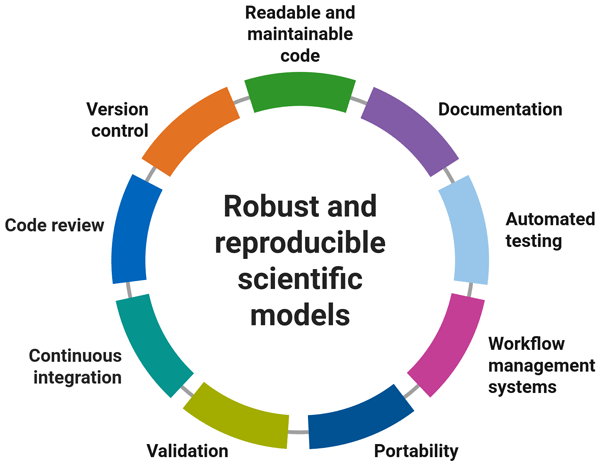
Geoscientific models are crucial for understanding Earth’s processes. However, they sometimes do not adhere to highest software quality standards, and scientific results are often hard to reproduce due to the complexity of the workflows. Here we gather the expertise of 20 modeling groups and software engineers to define best practices for making geoscientific models maintainable, usable, and reproducible. We conclude with an open-source example serving as a reference for modeling communities.
Changwu Cheng, Wenzhao Liu, Rui Chen, Zhaotao Mu, Haixiang Zhou, Xiaoyang Han, Zhi Li, and Hao Feng
EGUsphere, https://doi.org/10.5194/egusphere-2025-5898, https://doi.org/10.5194/egusphere-2025-5898, 2025
Preprint archived
Short summary
Short summary
Our study defines the potential evapotranspiration specifically suited the Budyko framework and explores its use in hydrological modeling. This potential evapotranspiration is deterministic when long-term catchment rainfall and runoff are known, and its two forms are derived from the non-parametric and parametric Budyko models. Converting commonly used potential evapotranspiration into these forms greatly enhances evapotranspiration estimates and supports better assessment of water availability.
Cheng Zhao, Yadong Luo, Xiangyu Chen, Linsen Wu, Zhao Wang, Hao Feng, Qiang Yu, and Jianqiang He
Earth Syst. Sci. Data Discuss., https://doi.org/10.5194/essd-2024-372, https://doi.org/10.5194/essd-2024-372, 2024
Preprint withdrawn
Short summary
Short summary
We firstly produced a dataset of plastic-mulched farmland distributions with a spatial resolution of 10 m for the Loess Plateau of China from 2019 to 2021 (PMF-LP). This dataset demonstrates satisfactory accuracy (F1-score > 0.80) and high consistency with census data. Our dataset provides valuable information for monitoring and mitigating micro-plastic pollution.

Hanqin Tian, Naiqing Pan, Rona L. Thompson, Josep G. Canadell, Parvadha Suntharalingam, Pierre Regnier, Eric A. Davidson, Michael Prather, Philippe Ciais, Marilena Muntean, Shufen Pan, Wilfried Winiwarter, Sönke Zaehle, Feng Zhou, Robert B. Jackson, Hermann W. Bange, Sarah Berthet, Zihao Bian, Daniele Bianchi, Alexander F. Bouwman, Erik T. Buitenhuis, Geoffrey Dutton, Minpeng Hu, Akihiko Ito, Atul K. Jain, Aurich Jeltsch-Thömmes, Fortunat Joos, Sian Kou-Giesbrecht, Paul B. Krummel, Xin Lan, Angela Landolfi, Ronny Lauerwald, Ya Li, Chaoqun Lu, Taylor Maavara, Manfredi Manizza, Dylan B. Millet, Jens Mühle, Prabir K. Patra, Glen P. Peters, Xiaoyu Qin, Peter Raymond, Laure Resplandy, Judith A. Rosentreter, Hao Shi, Qing Sun, Daniele Tonina, Francesco N. Tubiello, Guido R. van der Werf, Nicolas Vuichard, Junjie Wang, Kelley C. Wells, Luke M. Western, Chris Wilson, Jia Yang, Yuanzhi Yao, Yongfa You, and Qing Zhu
Earth Syst. Sci. Data, 16, 2543–2604, https://doi.org/10.5194/essd-16-2543-2024, https://doi.org/10.5194/essd-16-2543-2024, 2024
Short summary
Short summary
Atmospheric concentrations of nitrous oxide (N2O), a greenhouse gas 273 times more potent than carbon dioxide, have increased by 25 % since the preindustrial period, with the highest observed growth rate in 2020 and 2021. This rapid growth rate has primarily been due to a 40 % increase in anthropogenic emissions since 1980. Observed atmospheric N2O concentrations in recent years have exceeded the worst-case climate scenario, underscoring the importance of reducing anthropogenic N2O emissions.
Nannan An, Nan Lu, Weiliang Chen, Yongzhe Chen, Hao Shi, Fuzhong Wu, and Bojie Fu
Earth Syst. Sci. Data, 16, 1771–1810, https://doi.org/10.5194/essd-16-1771-2024, https://doi.org/10.5194/essd-16-1771-2024, 2024
Short summary
Short summary
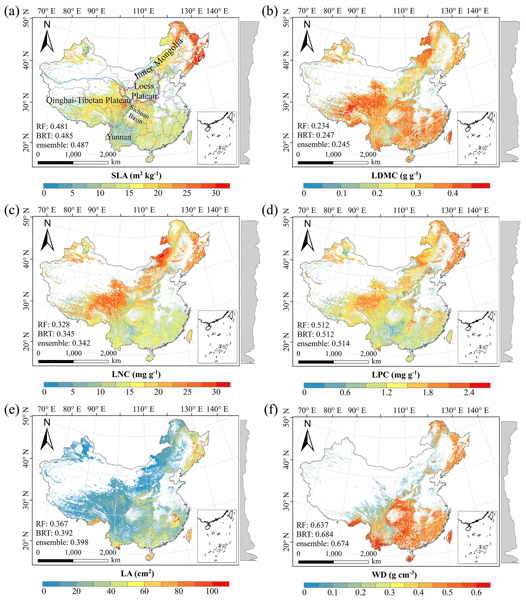
This study generated a spatially continuous plant functional trait dataset (~1 km) in China in combination with field observations, environmental variables and vegetation indices using machine learning methods. Results showed that wood density, leaf P concentration and specific leaf area showed good accuracy with an average R2 of higher than 0.45. This dataset could provide data support for development of Earth system models to predict vegetation distribution and ecosystem functions.
Sihui Yan, Tibin Zhang, Binbin Zhang, Tonggang Zhang, Yu Cheng, Chun Wang, Min Luo, Hao Feng, and Kadambot H. M. Siddique
SOIL, 9, 339–349, https://doi.org/10.5194/soil-9-339-2023, https://doi.org/10.5194/soil-9-339-2023, 2023
Short summary
Short summary
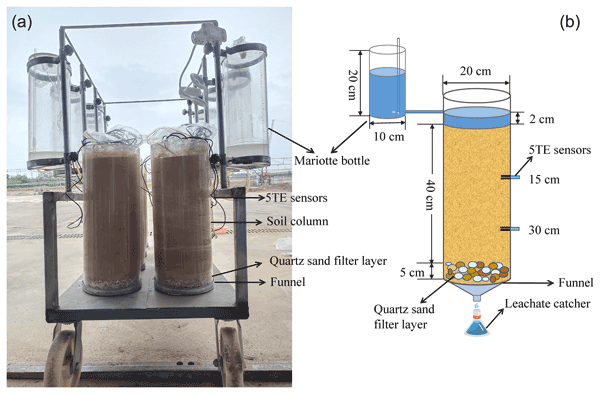
The paper provides some new information about the effects of different relative concentrations of K+ to Na+ at constant electrical conductivity (EC) on soil hydraulic conductivity, salt-leaching efficiency and pore size distribution. In addition to Ca2+ and Mg2+, K+ plays an important role in soil structure stability. These findings can provide a scientific basis and technical support for the sustainable use of saline water and control of soil quality deterioration.
Wenxiu Zhang, Di Liu, Hanqin Tian, Naiqin Pan, Ruqi Yang, Wenhan Tang, Jia Yang, Fei Lu, Buddhi Dayananda, Han Mei, Siyuan Wang, and Hao Shi
Earth Syst. Sci. Data Discuss., https://doi.org/10.5194/essd-2022-428, https://doi.org/10.5194/essd-2022-428, 2022
Manuscript not accepted for further review
Short summary
Short summary
High temporal resolution surface ozone concentration data is still lacking in China, so we used deep learning to generate hourly surface ozone data (HrSOD) during 2005–2020 across China. HrSOD showed that surface O3 in China tended to increase from 2016 to 2019, despite a decrease in 2020. HrSOD had high spatial and temporal accuracies, long time ranges and high temporal resolution, enabling it to be easily converted to various evaluation indicators for ecosystem and human health assessments.

Hanqin Tian, Zihao Bian, Hao Shi, Xiaoyu Qin, Naiqing Pan, Chaoqun Lu, Shufen Pan, Francesco N. Tubiello, Jinfeng Chang, Giulia Conchedda, Junguo Liu, Nathaniel Mueller, Kazuya Nishina, Rongting Xu, Jia Yang, Liangzhi You, and Bowen Zhang
Earth Syst. Sci. Data, 14, 4551–4568, https://doi.org/10.5194/essd-14-4551-2022, https://doi.org/10.5194/essd-14-4551-2022, 2022
Short summary
Short summary
Nitrogen is one of the critical nutrients for growth. Evaluating the change in nitrogen inputs due to human activity is necessary for nutrient management and pollution control. In this study, we generated a historical dataset of nitrogen input to land at the global scale. This dataset consists of nitrogen fertilizer, manure, and atmospheric deposition inputs to cropland, pasture, and rangeland at high resolution from 1860 to 2019.
Cited articles
Abu-Hamdeh, N. H.: Thermal properties of soils as affected by density and water content, Biosyst. Eng., 86, 97–102, 2003.
Akinwande, M. O., Dikko, H. G., and Samson, A.: Variance inflation factor: As a condition for the inclusion of suppressor variable(s) in regression analysis, Open J. Stat., 5, 754–767, https://doi.org/10.4236/ojs.2015.57075, 2015.
Badache, M., Eslami-Nejad, P., Ouzzane, M., Aidoun, Z., and Lamarche, L.: A new modeling approach for improved ground temperature profile determination, Renew. Energy, 85, 436–444, https://doi.org/10.1016/j.renene.2015.06.020, 2016.
Bayatvarkeshi, M., Bhagat, S. K., Mohammadi, K., Kisi, O., Farahani, M., Hasani, A., Deo, R., and Yaseen, Z. M.: Modeling soil temperature using air temperature features in diverse climatic conditions with complementary machine learning models, Comput. Electron. Agric., 185, 106158, https://doi.org/10.1016/j.compag.2021.106158, 2021.
Bond-Lamberty, B., Wang, C., and Gower, S. T.: Spatiotemporal measurement and modeling of stand-level boreal forest soil temperatures, Agric. For. Meteorol., 131, 27–40, https://doi.org/10.1016/j.agrformet.2005.04.008, 2005.
Bright, R. M., Davin, E., O'Halloran, T., Pongratz, J., Zhao, K., and Cescatti, A.: Local temperature response to land cover and management change driven by non-radiative processes, Nat. Clim. Change, 7, 296–302, https://doi.org/10.1038/NCLIMATE3250, 2017.
Cao, R., Chen, Y., Shen, M., Chen, J., Zhou, J., Wang, C., and Yang, W.: A simple method to improve the quality of NDVI time-series data by integrating spatiotemporal information with the Savitzky-Golay filter, Remote Sens. Environ., 217, 244–257, https://doi.org/10.1016/j.rse.2018.08.022, 2018.
Chen, L., Aalto, J., and Luoto, M.: Observed Decrease in Soil and Atmosphere Temperature Coupling in Recent Decades Over Northern Eurasia, Geophys. Res. Lett., 48, e2021GL092500, https://doi.org/10.1029/2021GL092500, 2021a.
Chen, T. and Guestrin, C.: Xgboost: A scalable tree boosting system, in: Proceedings of the 22nd ACM SIGKDD International Conference on Knowledge Discovery and Data Mining, 785–794, https://doi.org/10.1145/2939672.2939785, 2016.
Chen, X., Long, D., Hong, Y., Zeng, C., and Yan, D.: Improved modeling of snow and glacier melting by a progressive two-stage calibration strategy with GRACE and multisource data: How snow and glacier meltwater contributes to the runoff of the Upper Brahmaputra River basin?, Water Resour. Res., 53, 2431–2466, https://doi.org/10.1002/2016WR019656, 2017.
Chen, Y., Cao, R., Chen, J., Liu, L., and Matsushita, B.: A practical approach to reconstruct high-quality Landsat NDVI time-series data by gap filling and the Savitzky–Golay filter, ISPRS J. Photogramm. Remote Sens., 180, 174–190, https://doi.org/10.1016/j.isprsjprs.2021.08.015, 2021b.
Cui, X., Xu, G., He, X., and Luo, D.: Influences of seasonal soil moisture and temperature on vegetation phenology in the Qilian Mountains, Remote Sens., 14, 3645, https://doi.org/10.3390/rs14153645, 2022.
Duan, S.-B., Li, Z.-L., and Leng, P.: A framework for the retrieval of all-weather land surface temperature at a high spatial resolution from polar-orbiting thermal infrared and passive microwave data, Remote Sens. Environ., 195, 107–117, https://doi.org/10.1016/j.rse.2017.04.008, 2017.
Fan, X., Zhang, Y., Shi, K., Peng, J., Liu, Y., Zhou, Y., Liu, Y., Zhu, Q., Song, C., Wan, R., Zhao, X., and Woolway, R. I.: Surging compound drought–heatwaves underrated in global soils, P. Natl. Acad. Sci. USA, 121, e2410294121, https://doi.org/10.1073/pnas.2410294121, 2024.
Farhangmehr, V., Imanian, H., Mohammadian, A., Cobo, J. H., Shirkhani, H., and Payeur, P.: A spatiotemporal CNN-LSTM deep learning model for predicting soil temperature in diverse large-scale regional climates, Sci. Total Environ., 968, 178901, https://doi.org/10.1016/j.scitotenv.2025.178901, 2025.
Farr, T. G., Rosen, P. A., Caro, E., Crippen, R., Duren, R., Hensley, S., Kobrick, M., Paller, M., Rodriguez, E., Roth, L., Seal, D., Shaffer, S., Shimada, J., Umland, J., Werner, M., Oskin, M., Burbank, D., and Alsdorf, D.: The Shuttle Radar Topography Mission, Rev. Geophys., 45, https://doi.org/10.1029/2005RG000183, 2007.
Feng, Y., Cui, N., Hao, W., Gao, L., and Gong, D.: Estimation of soil temperature from meteorological data using different machine learning models, Geoderma, 338, 67–77, https://doi.org/10.1016/j.geoderma.2018.11.044, 2019.
Firozjaei, M. K., Mijani, N., Kiavarz, M., Duan, S.-B., Atkinson, P. M., and Alavipanah, S. K.: A novel surface energy balance-based approach to land surface temperature downscaling, Remote Sens. Environ., 305, 114087, https://doi.org/10.1016/j.rse.2024.114087, 2024.
Gao, Z., Lenschow, D. H., Horton, R., Zhou, M., Wang, L., and Wen, J.: Comparison of two soil temperature algorithms for a bare ground site on the Loess Plateau in China, J. Geophys. Res. Atmos., 113, https://doi.org/10.1029/2008JD010285, 2008.
Hong, F., Zhan, W., Göttsche, F.-M., Liu, Z., Dong, P., Fu, H., Huang, F., and Zhang, X.: A global dataset of spatiotemporally seamless daily mean land surface temperatures: generation, validation, and analysis, Earth Syst. Sci. Data, 14, 3091–3113, https://doi.org/10.5194/essd-14-3091-2022, 2022.
Hu, G., Zhao, L., Wu, X., Li, R., Wu, T., Xie, C., Qiao, Y., Shi, J., Li, W., and Cheng, G.: New Fourier-series-based analytical solution to the conduction–convection equation to calculate soil temperature, determine soil thermal properties, or estimate water flux, Int. J. Heat Mass Transf., 95, 815–823, https://doi.org/10.1016/j.ijheatmasstransfer.2015.11.078, 2016.
Huang, R., Huang, J., Zhang, C., Ma, H., Zhuo, W., Chen, Y., Zhu, D., Wu, Q., and Mansaray, L. R.: Soil temperature estimation at different depths, using remotely-sensed data, J. Integr. Agric., 19, 277–290, https://doi.org/10.1016/S2095-3119(19)62657-2, 2020.
Huete, A., Didan, K., Miura, T., Rodriguez, E. P., Gao, X., and Ferreira, L. G.: Overview of the radiometric and biophysical performance of the MODIS vegetation indices, Remote Sens. Environ., 83, 195–213, https://doi.org/10.1016/S0034-4257(02)00096-2, 2002.
Hursh, A., Ballantyne, A., Cooper, L., Maneta, M., Kimball, J., and Watts, J.: The sensitivity of soil respiration to soil temperature, moisture, and carbon supply at the global scale, Glob. Change Biol., 23, 2090–2103, https://doi.org/10.1111/gcb.13489, 2017.
Imanian, H., Mohammadian, A., Farhangmehr, V., Payeur, P., Goodarzi, D., Hiedra Cobo, J., and Shirkhani, H.: A comparative analysis of deep learning models for soil temperature prediction in cold climates, Theor. Appl. Climatol., 155, 2571–2587, https://doi.org/10.1007/s00704-023-04781-x, 2024.
Jebamalar, A. S., Raja, S., and Bai, S.: Prediction of annual and seasonal soil temperature variation using artificial neural network, Indian J. Radio Space Phys., 41, 48–57, 2012.
Karthikeyan, L. and Mishra, A. K.: Multi-layer high-resolution soil moisture estimation using machine learning over the United States, Remote Sens. Environ., 266, 112706, https://doi.org/10.1016/j.rse.2021.112706, 2021.
Khosravi, K., Golkarian, A., Barzegar, R., Aalami, M. T., Heddam, S., Omidvar, E., Keesstra, S. D., and López-vicente, M.: Multi-step ahead soil temperature forecasting at different depths based on meteorological data: Integrating resampling algorithms and machine learning models, Pedosphere, 33, 479–495, https://doi.org/10.1016/j.pedsph.2022.06.056, 2023.
Kong, D., Zhang, Y., Gu, X., and Wang, D.: A robust method for reconstructing global MODIS EVI time series on the Google Earth Engine, ISPRS J. Photogramm. Remote Sens., 155, 13–24, https://doi.org/10.1016/j.isprsjprs.2019.06.014, 2019.
Kropp, H., Loranty, M. M., Natali, S. M., Kholodov, A. L., Rocha, A. V., Myers-Smith, I., Abbot, B. W., Abermann, J., Blanc-Betes, E., Blok, D., Blume-Werry, G., Boike, J., Breen, A. L., Cahoon, S. M. P., Christiansen, C. T., Douglas, T. A., Epstein, H. E., Frost, G. V., Goeckede, M., Høye, T. T., Mamet, S. D., O'Donnell, J. A., Olefeldt, D., Phoenix, G. K., Salmon, V. G., Sannel, A. B. K., Smith, S. L., Sonnentag, O., Vaughn, L. S., Williams, M., Elberling, B., Gough, L., Hjort, J., Lafleur, P. M., Euskirchen, E. S., Heijmans, M. M., Humphreys, E. R., Iwata, H., Jones, B. M., Jorgenson, M. T., Grünberg, I., Kim, Y., Laundre, J., Mauritz, M., Michelsen, A., Schaepman-Strub, G., Tape, K. D., Ueyama, M., Lee, B.-Y., Langley, K., and Lund, M.: Shallow soils are warmer under trees and tall shrubs across arctic and boreal ecosystems, Environ. Res. Lett., 16, 015001, https://doi.org/10.1088/1748-9326/abc994, 2020.
Lagonigro, R., Oller, R., and Martori, J. C.: AQuadtree: An R package for quadtree anonymization of point data, R. J., 2020.
Lembrechts, J. J., van den Hoogen, J., Aalto, J. et al.: Global maps of soil temperature, Glob. Change Biol., 28, 3110–3144, https://doi.org/10.1111/gcb.16060, 2022.
Li, B., Liang, S., Ma, H., Dong, G., Liu, X., He, T., and Zhang, Y.: Generation of global 1 km all-weather instantaneous and daily mean land surface temperatures from MODIS data, Earth Syst. Sci. Data, 16, 3795–3819, https://doi.org/10.5194/essd-16-3795-2024, 2024a.
Li, N., Wang, L., and Chen, D.: Vegetation greening amplifies shallow soil temperature warming on the Tibetan Plateau, Npj Clim. Atmos. Sci., 7, 1–12, https://doi.org/10.1038/s41612-024-00651-z, 2024b.
Li, Q., Ma, M., Wu, X., and Yang, H.: Snow cover and vegetation-induced decrease in global albedo from 2002 to 2016, J. Geophys. Res. Atmos., 123, 124–138, https://doi.org/10.1002/2017JD027010, 2018.
Li, Q., Zhu, Y., Shangguan, W., Wang, X., Li, L., and Yu, F.: An attention-aware LSTM model for soil moisture and soil temperature prediction, Geoderma, 409, 115651, https://doi.org/10.1016/j.geoderma.2021.115651, 2022.
Li, X., Zhu, Y., Li, Q., Zhao, H., Zhu, J., and Zhang, C.: Interpretable spatio-temporal modeling for soil temperature prediction, Front. For. Glob. Change, 6, 1295731, https://doi.org/10.3389/ffgc.2023.1295731, 2023a.
Li, X., Zhang, L., Wang, X., and Liang, B.: Forecasting greenhouse air and soil temperatures: A multi-step time series approach employing attention-based LSTM network, Comput. Electron. Agric., 217, 108602, https://doi.org/10.1016/j.compag.2023.108602, 2024c.
Li, Y., Zeng, H., Zhang, M., Wu, B., Zhao, Y., Yao, X., Cheng, T., Qin, X., and Wu, F.: A county-level soybean yield prediction framework coupled with XGBoost and multidimensional feature engineering, Int. J. Appl. Earth Obs. Geoinformation, 118, 103269, https://doi.org/10.1016/j.jag.2023.103269, 2023b.
Liu, F., Wu, H., Zhao, Y., Li, D., Yang, J.-L., Song, X., Shi, Z., Zhu, A.-X., and Zhang, G.-L.: Mapping high resolution National Soil Information Grids of China, Sci. Bull., 67, 328–340, https://doi.org/10.1016/j.scib.2021.10.013, 2022.
Liu, X., Li, Z.-L., Duan, S.-B., Leng, P., and Si, M.: Retrieval of global surface soil and vegetation temperatures based on multisource data fusion, Remote Sens. Environ., 318, 114564, https://doi.org/10.1016/j.rse.2024.114564, 2025.
Liu, Y., Liu, X., Fu, Z., Zhang, D., and Liu, L.: Soil temperature dominates forest spring phenology in China, Agric. For. Meteorol., 355, 110141, https://doi.org/10.1016/j.agrformet.2024.110141, 2024.
Lloyd, J. and Taylor, J.: On the temperature dependence of soil respiration, Funct. Ecol., 315–323, https://doi.org/10.2307/2389824, 1994.
Loranty, M. M., Berner, L. T., Goetz, S. J., Jin, Y., and Randerson, J. T.: Vegetation controls on northern high latitude snow-albedo feedback: Observations and CMIP 5 model simulations, Glob. Change Biol., 20, 594–606, https://doi.org/10.1111/gcb.12391, 2014.
Mahanama, S. P. P., Koster, R. D., Reichle, R. H., and Suarez, M. J.: Impact of Subsurface Temperature Variability on Surface Air Temperature Variability: An AGCM Study, J. Hydrometeorol., 9, 804–815, https://doi.org/10.1175/2008JHM949.1, 2008.
Mo, Y., Pepin, N., and Lovell, H.: Understanding temperature variations in mountainous regions: The relationship between satellite-derived land surface temperature and in situ near-surface air temperature, Remote Sens. Environ., 318, 114574, https://doi.org/10.1016/j.rse.2024.114574, 2025.
Mortier, S., Hamedpour, A., Bussmann, B., Wandji, R. P. T., Latré, S., Sigurdsson, B. D., De Schepper, T., and Verdonck, T.: Inferring the relationship between soil temperature and the normalized difference vegetation index with machine learning, Ecol. Inform., 82, 102730, https://doi.org/10.1016/j.ecoinf.2024.102730, 2024.
Muñoz-Sabater, J., Dutra, E., Agustí-Panareda, A., Albergel, C., Arduini, G., Balsamo, G., Boussetta, S., Choulga, M., Harrigan, S., Hersbach, H., Martens, B., Miralles, D. G., Piles, M., Rodríguez-Fernández, N. J., Zsoter, E., Buontempo, C., and Thépaut, J.-N.: ERA5-Land: a state-of-the-art global reanalysis dataset for land applications, Earth Syst. Sci. Data, 13, 4349–4383, https://doi.org/10.5194/essd-13-4349-2021, 2021.
Myers-Smith, I. H., Elmendorf, S. C., Beck, P. S. A., Wilmking, M., Hallinger, M., Blok, D., Tape, K. D., Rayback, S. A., Macias-Fauria, M., Forbes, B. C., Speed, J. D. M., Boulanger-Lapointe, N., Rixen, C., Lévesque, E., Schmidt, N. M., Baittinger, C., Trant, A. J., Hermanutz, L., Collier, L. S., Dawes, M. A., Lantz, T. C., Weijers, S., Jørgensen, R. H., Buchwal, A., Buras, A., Naito, A. T., Ravolainen, V., Schaepman-Strub, G., Wheeler, J. A., Wipf, S., Guay, K. C., Hik, D. S., and Vellend, M.: Climate sensitivity of shrub growth across the tundra biome, Nat. Clim. Change, 5, 887–891, https://doi.org/10.1038/NCLIMATE2697, 2015.
Nahvi, B., Habibi, J., Mohammadi, K., Shamshirband, S., and Al Razgan, O. S.: Using self-adaptive evolutionary algorithm to improve the performance of an extreme learning machine for estimating soil temperature, Comput. Electron. Agric., 124, 150–160, https://doi.org/10.1016/j.compag.2016.03.025, 2016.
Ochsner, T. E., Horton, R., and Ren, T.: A new perspective on soil thermal properties, Soil Sci. Soc. Am. J., 65, 1641–1647, https://doi.org/10.2136/sssaj2001.1641, 2001.
Peng, S., Ciais, P., Krinner, G., Wang, T., Gouttevin, I., McGuire, A. D., Lawrence, D., Burke, E., Chen, X., Decharme, B., Koven, C., MacDougall, A., Rinke, A., Saito, K., Zhang, W., Alkama, R., Bohn, T. J., Delire, C., Hajima, T., Ji, D., Lettenmaier, D. P., Miller, P. A., Moore, J. C., Smith, B., and Sueyoshi, T.: Simulated high-latitude soil thermal dynamics during the past 4 decades, The Cryosphere, 10, 179–192, https://doi.org/10.5194/tc-10-179-2016, 2016.
Rahman, M. H. ur, Ahmad, A., Wajid, A., Hussain, M., Rasul, F., Ishaque, W., Islam, Md. A., Shelia, V., Awais, M., Ullah, A., Wahid, A., Sultana, S. R., Saud, S., Khan, S., Fahad, S., Hussain, M., Hussain, S., and Nasim, W.: Application of CSM-CROPGRO-cotton model for cultivars and optimum planting dates: Evaluation in changing semi-arid climate, Field Crops Res., 238, 139–152, https://doi.org/10.1016/j.fcr.2017.07.007, 2019.
Samet, H.: The quadtree and related hierarchical data structures, ACM Comput. Surv. CSUR, 16, 187–260, 1984.
Shati, F., Prakash, S., Norouzi, H., and Blake, R.: Assessment of differences between near-surface air and soil temperatures for reliable detection of high-latitude freeze and thaw states, Cold Reg. Sci. Technol., 145, 86–92, https://doi.org/10.1016/j.coldregions.2017.10.007, 2018.
Smith, S. L., O'Neill, H. B., Isaksen, K., Noetzli, J., and Romanovsky, V. E.: The changing thermal state of permafrost, Nat. Rev. Earth Environ., 3, 10–23, https://doi.org/10.1038/s43017-021-00240-1, 2022.
Subin, Z. M., Koven, C. D., Riley, W. J., Torn, M. S., Lawrence, D. M., and Swenson, S. C.: Effects of soil moisture on the responses of soil temperatures to climate change in cold regions, J. Climate, 26, 3139–3158, 2013.
Wang, X.: Rotated-quadtree (v1.0.0), Zenodo [code], https://doi.org/10.5281/zenodo.17996349, 2025.
Wan, Z. and Dozier, J.: A generalized split-window algorithm for retrieving land-surface temperature from space, IEEE Trans. Geosci. Remote Sens., 34, 892–905, https://doi.org/10.1109/36.508406, 1996.
Wang, D., Wang, A., and Wang, Z.: A multilayer daily high-resolution gridded homogenized soil temperature over continental China, Int. J. Climatol., 43, 2015–2030, https://doi.org/10.1002/joc.7959, 2023.
Wang, K. and Dickinson, R. E.: Contribution of solar radiation to decadal temperature variability over land, P. Natl. Acad. Sci. USA, 110, 14877–14882, https://doi.org/10.1073/pnas.1311433110, 2013.
Wang, M., Wang, Y., Liu, X., Hou, W., Wang, J., Li, S., Zhao, L., and Hu, Z.: Vapor pressure deficit dominates vegetation productivity during compound drought and heatwave events in China's arid and semi-arid regions: Evidence from multiple vegetation parameters, Ecol. Inform., 88, 103144, https://doi.org/10.1016/j.ecoinf.2025.103144, 2025a.
Wang, Q., Tang, Y., Tong, X., and Atkinson, P. M.: Filling gaps in cloudy landsat LST product by spatial-temporal fusion of multi-scale data, Remote Sens. Environ., 306, 114142, https://doi.org/10.1016/j.rse.2024.114142, 2024.
Wang, X., He, L., Shi, H., and Yu, Q.: Daily multi-layer soil temperature dataset with 1 km resolution in China from 2010 to 2020, National Tibetan Plateau Data Center [data set], https://doi.org/10.11888/Terre.tpdc.302333, 2025b.
Wu, P., Su, Y., Duan, S., Li, X., Yang, H., Zeng, C., Ma, X., Wu, Y., and Shen, H.: A two-step deep learning framework for mapping gapless all-weather land surface temperature using thermal infrared and passive microwave data, Remote Sens. Environ., 277, 113070, https://doi.org/10.1016/j.rse.2022.113070, 2022.
Xing, L., Li, L., Gong, J., Ren, C., Liu, J., and Chen, H.: Daily soil temperatures predictions for various climates in United States using data-driven model, Energy, 160, 430–440, https://doi.org/10.1016/j.energy.2018.07.004, 2018.
Xu, C., Qu, J. J., Hao, X., Zhu, Z., and Gutenberg, L.: Surface soil temperature seasonal variation estimation in a forested area using combined satellite observations and in-situ measurements, Int. J. Appl. Earth Obs. Geoinformation, 91, 102156, https://doi.org/10.1016/j.jag.2020.102156, 2020.
Xu, C., Liao, S., Huang, L., and Xia, J.: Soil temperature estimation at different depths over the central Tibetan Plateau integrating multiple Digital Earth observations and geo-computing, Int. J. Digit. Earth, 16, 4023–4043, https://doi.org/10.1080/17538947.2023.2264267, 2023.
Xu, S., Fu, Q., Li, T., Meng, F., Liu, D., Hou, R., Li, M., and Li, Q.: Spatiotemporal characteristics of the soil freeze-thaw state and its variation under different land use types – A case study in Northeast China, Agric. For. Meteorol., 312, 108737, https://doi.org/10.1016/j.agrformet.2021.108737, 2022.
Yamamoto, Y., Ichii, K., Ryu, Y., Kang, M., and Murayama, S.: Uncertainty quantification in land surface temperature retrieved from Himawari-8/AHI data by operational algorithms, ISPRS J. Photogramm. Remote Sens., 191, 171–187, https://doi.org/10.1016/j.isprsjprs.2022.07.008, 2022.
Yang, K. and Zhang, J.: Evaluation of reanalysis datasets against observational soil temperature data over China, Clim. Dynam., 50, 317–337, https://doi.org/10.1007/s00382-017-3610-4, 2018.
Yang, Q., Xu, M., Liu, H., Wang, J., Liu, L., Chi, Y., and Zheng, Y.: Impact factors and uncertainties of the temperature sensitivity of soil respiration, Shengtai Xuebao, Acta Ecol. Sin., 31, 2301–2311, 2011.
You, W., Huang, C., Hou, J., Zhang, Y., Dou, P., and Han, W.: Reconstruction of MODIS LST Under Cloudy Conditions by Integrating Himawari-8 and AMSR-2 Data Through Deep Forest Method, IEEE Trans. Geosci. Remote Sens., 62, 1–17, https://doi.org/10.1109/TGRS.2024.3388409, 2024.
Zhang, T.: Influence of the seasonal snow cover on the ground thermal regime: An overview, Rev. Geophys., 43, https://doi.org/10.1029/2004RG000157, 2005.
Zhang, Y., Chen, W., Smith, S. L., Riseborough, D. W., and Cihlar, J.: Soil temperature in Canada during the twentieth century: Complex responses to atmospheric climate change, J. Geophys. Res. Atmos., 110, https://doi.org/10.1029/2004JD004910, 2005.
Zhao, T., Liu, S., Xu, J., He, H., Wang, D., Horton, R., and Liu, G.: Comparative analysis of seven machine learning algorithms and five empirical models to estimate soil thermal conductivity, Agric. For. Meteorol., 323, 109080, https://doi.org/10.1016/j.agrformet.2022.109080, 2022.
Short summary
This study integrates ground observations, satellite remote sensing, and reanalysis data, applying machine learning techniques to generate a high-resolution, daily multi-layer soil temperature dataset in China from 2010 to 2020. The dataset accurately captures the spatiotemporal variations in soil temperature at multiple depths, offering valuable scientific insights for agricultural management and ecological research.
This study integrates ground observations, satellite remote sensing, and reanalysis data,...


Altmetrics
Final-revised paper
Preprint