the Creative Commons Attribution 4.0 License.
the Creative Commons Attribution 4.0 License.
 | 04 Sep 2026
GloPINE dataset: model-ready measurements of INP concentrations using PINE instruments

Larissa Lacher
Alexander Böhmländer
Mark D. Tarn
Antoine Canzi
Aidan Pantoya
Evelyn Freney
Kristina Höhler
Pia Bogert
Céline Planche
Ping Tian
Michael Adams
Sarah Barr
David Brus
Nicole Büttner
Martin Daily
Konstantinos Doulgeris
Konstantinos Eleftheriadis
Grant Forster
Romy Fösig
Dimitrios G. Georgakopoulos
Maria I. Gini
A. Gannet Hallar
Radovan Krejci
Elke Ludewig
Mauro Mazzola
Ian B. McCubbin
Athanasios Nenes
Tuukka Petäjä
Joseph Robinson
Franziska Vogel
Paul Zieger
Stephen Arnold
Kenneth S. Carslaw
Naruki Hiranuma
Ottmar Möhler
Benjamin J. Murray
Related authors
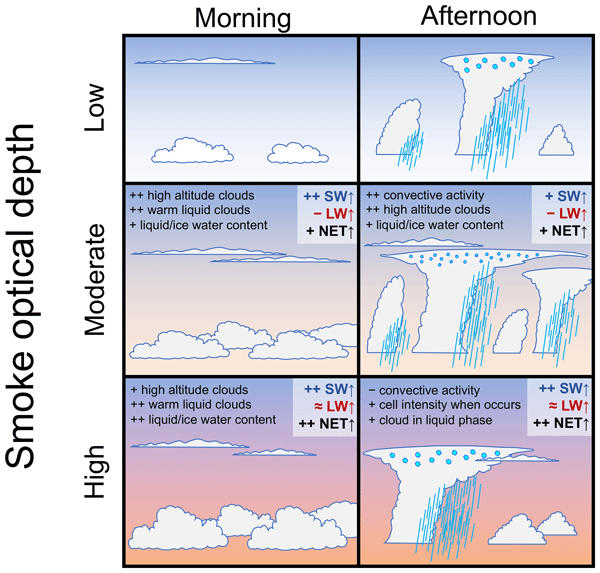
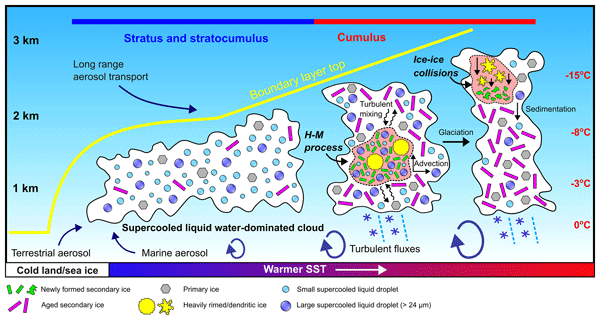

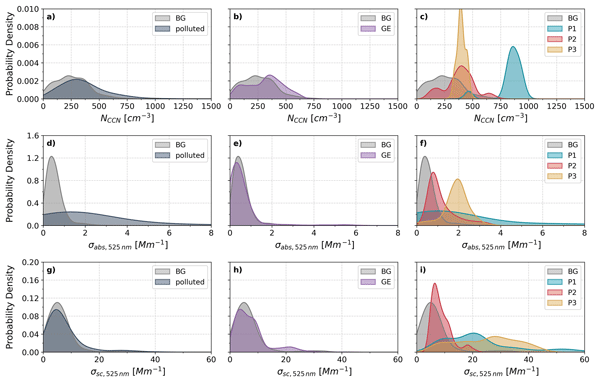
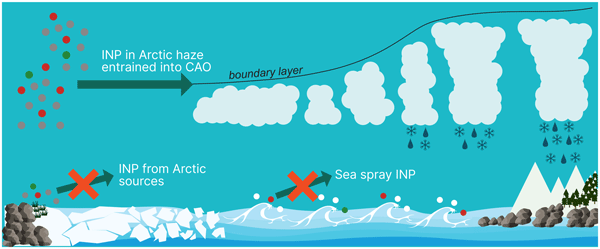
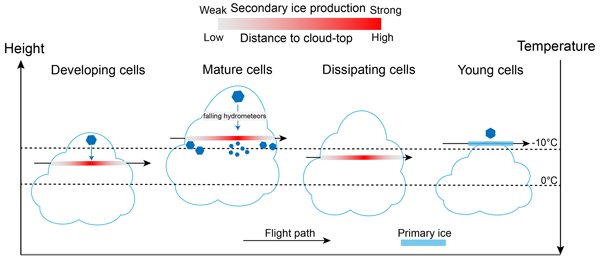
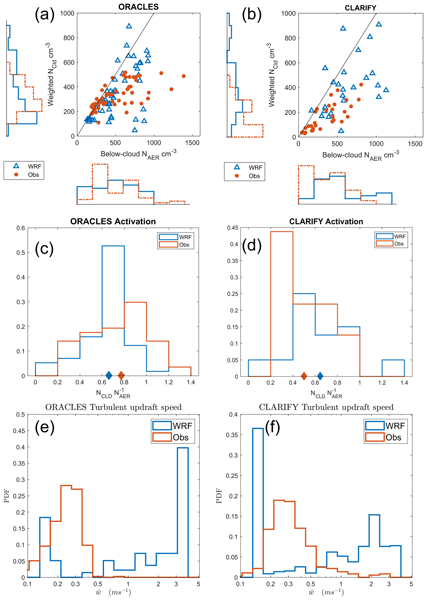
The processes that establish how mixed-phase closed-cell clouds transition to more open cellular structures are poorly known. First-of-its kind aircraft observations document such a transition in the presence of anomalously high aerosol concentrations over the Nordic Seas at cloud temperatures < -15 °C. The reduces the drop size, discouraging riming. Eventually, ice precipitation produces surface cold pools that drive the convective transition, despite strong counteracting surface fluxes.
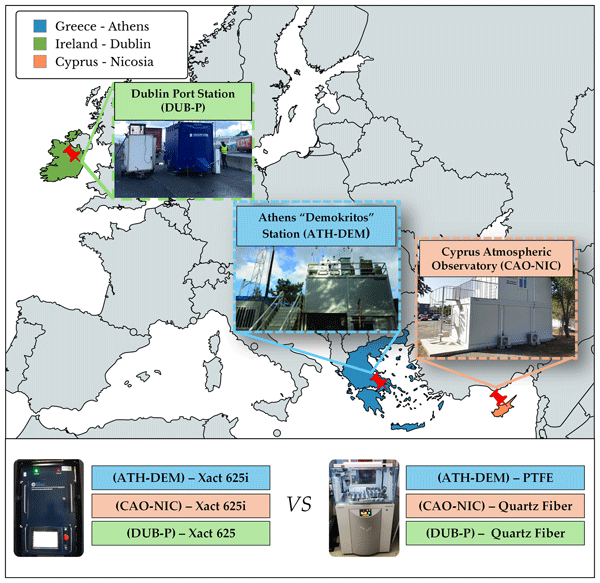
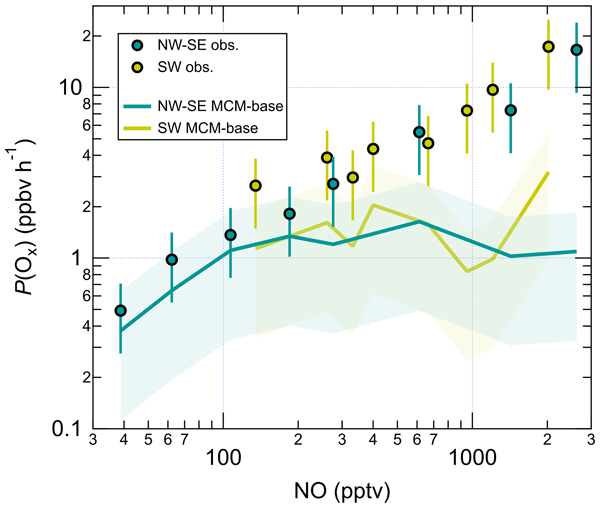
We compared near real-time and benchtop XRF spectrometers measuring trace elements in airborne particles across three European cities. Results show filter material dictates accuracy: Teflon yielded strong inter-instrument agreement, while quartz caused systematic attenuation errors for light elements. Because empirical corrections left residual biases, using optimal substrates—preferably Teflon—is essential for accurately tracking pollution sources.
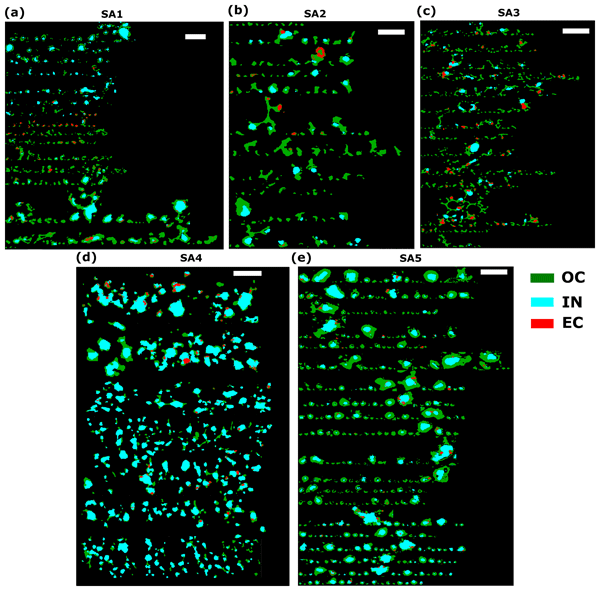
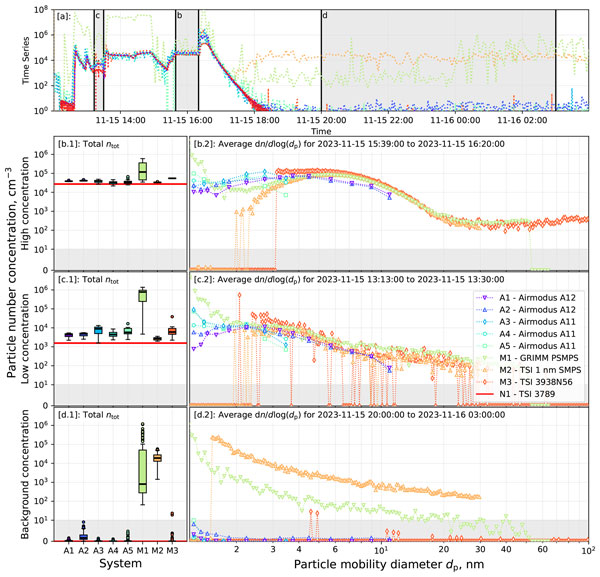


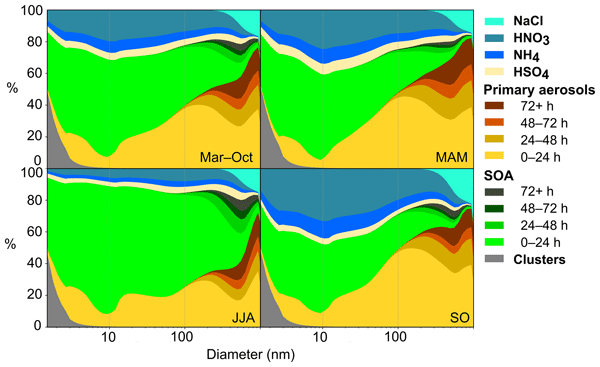
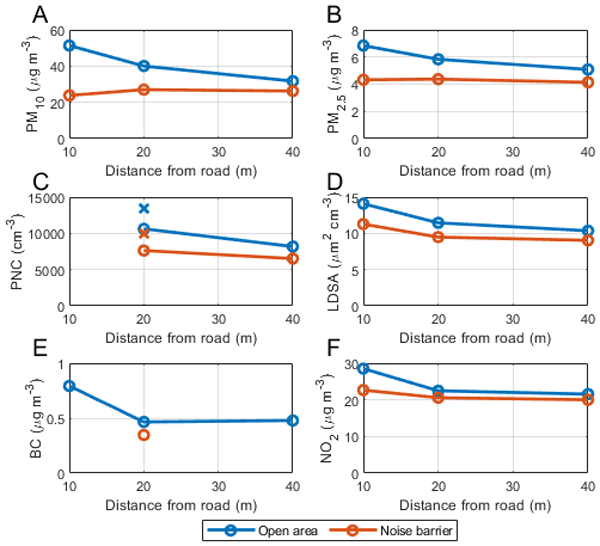
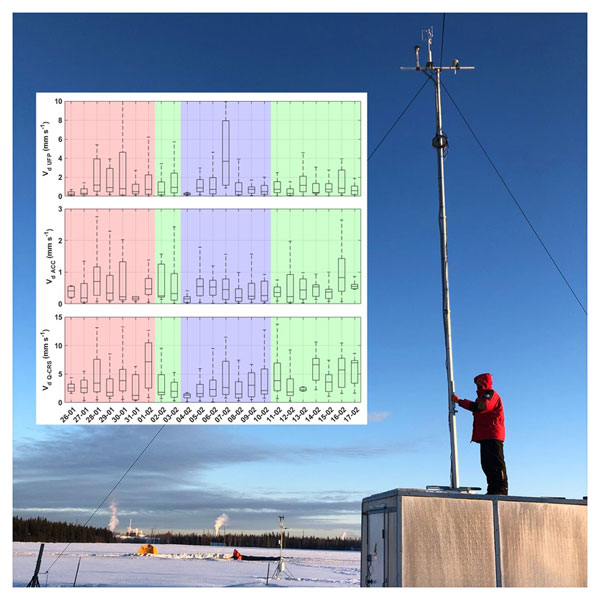
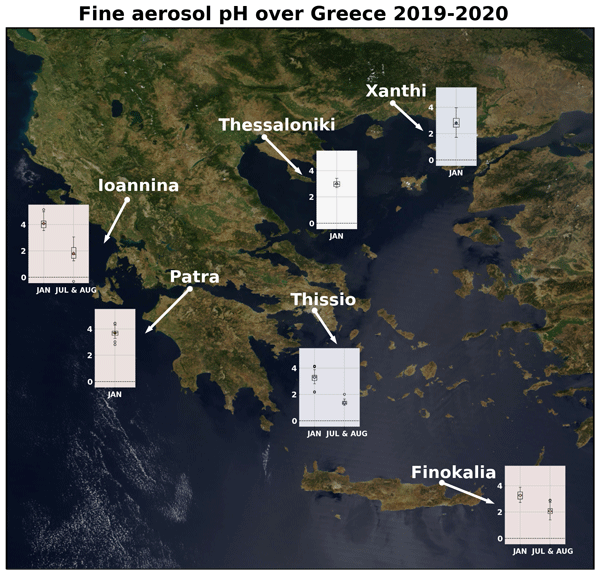
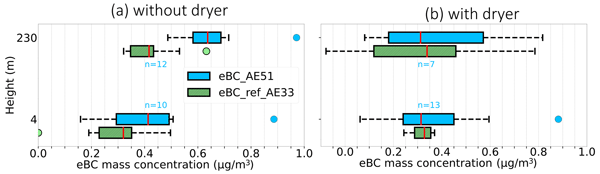
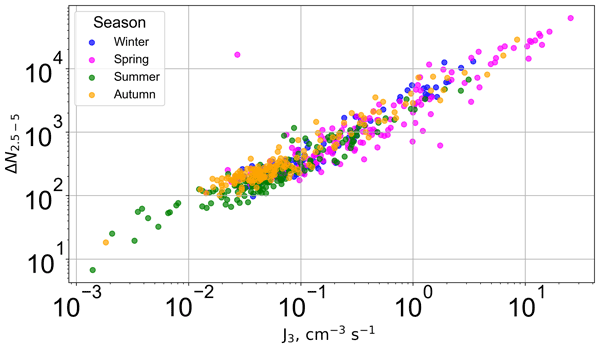
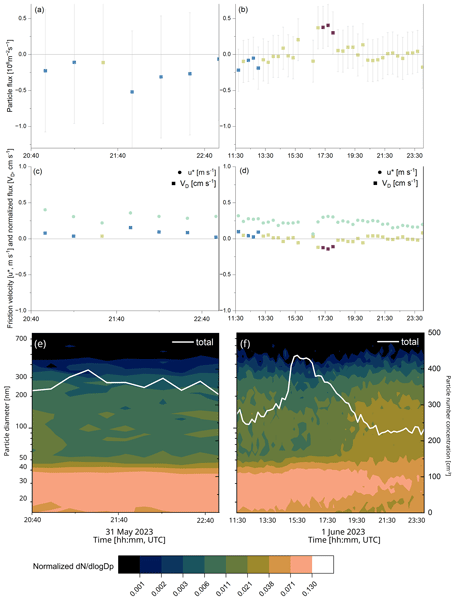

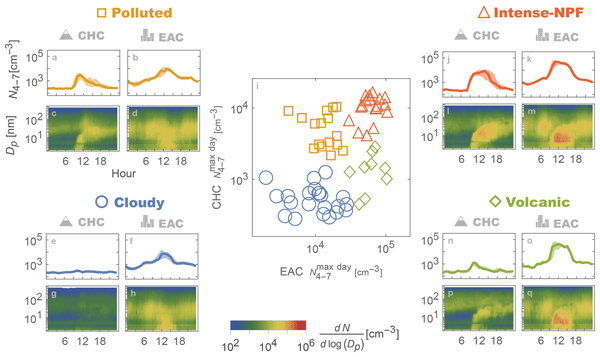
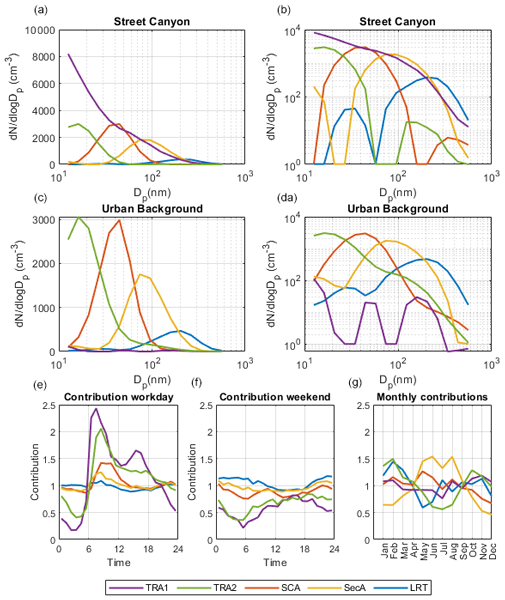
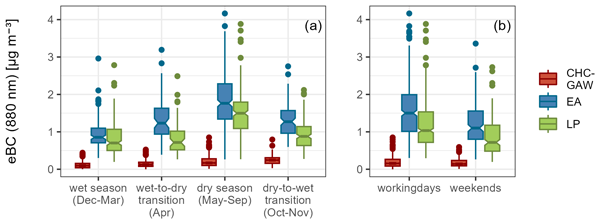
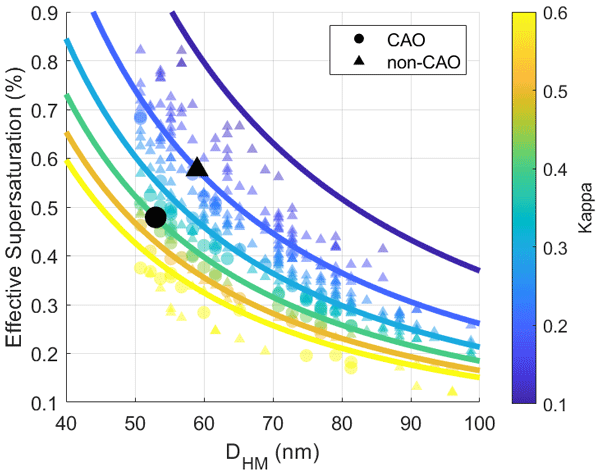
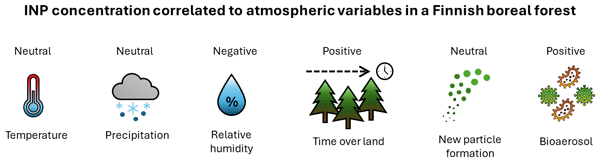

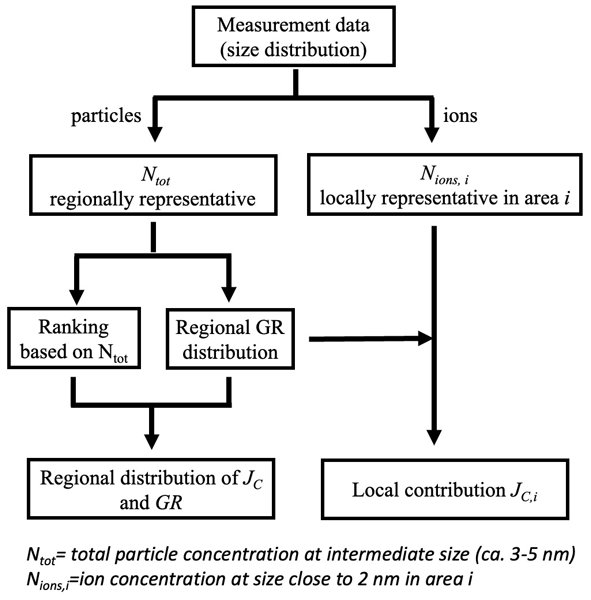
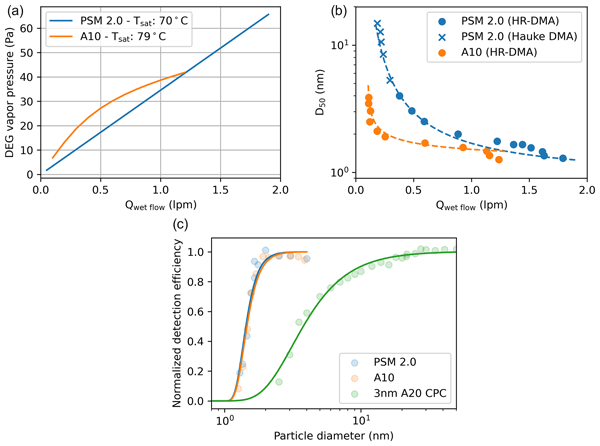
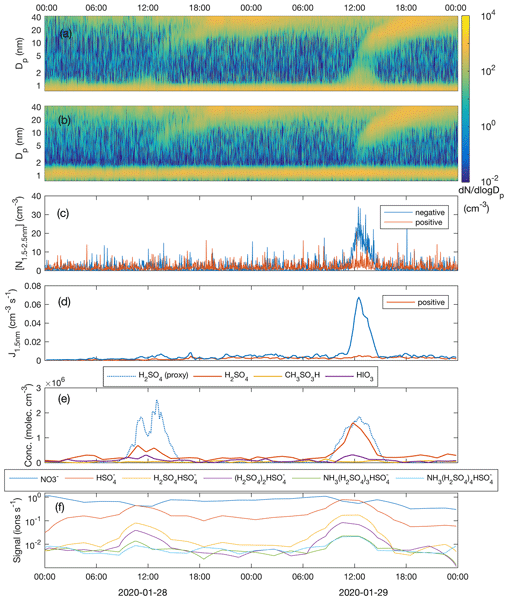
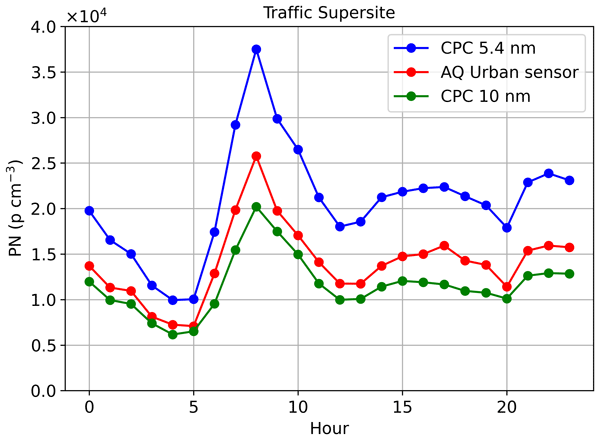
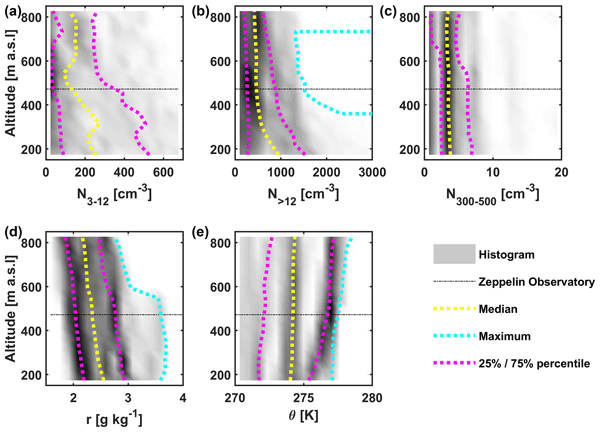
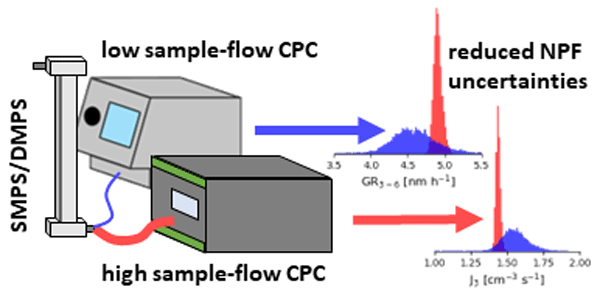
We present a novel version of an aerosol number size distribution instrument, showcasing its capability to measure particle number concentration and particle number size distribution between 1 and 12 nm. Our results show that the instrument agrees well with existing instrumentation and allows for both the accurate measurement of the smallest particles and overlap with more conventional aerosol number size distribution instruments.
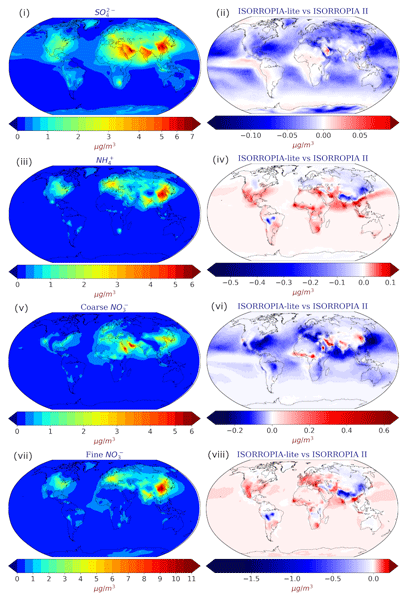
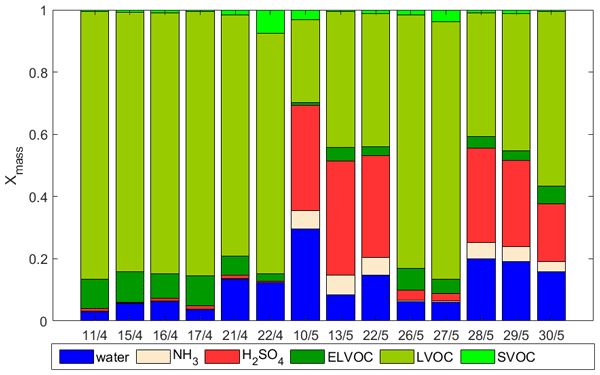
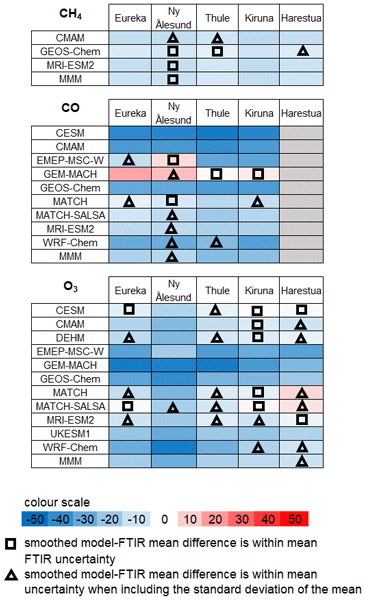
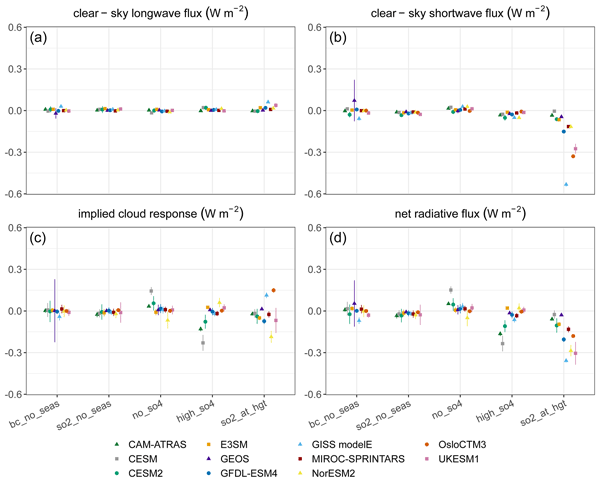
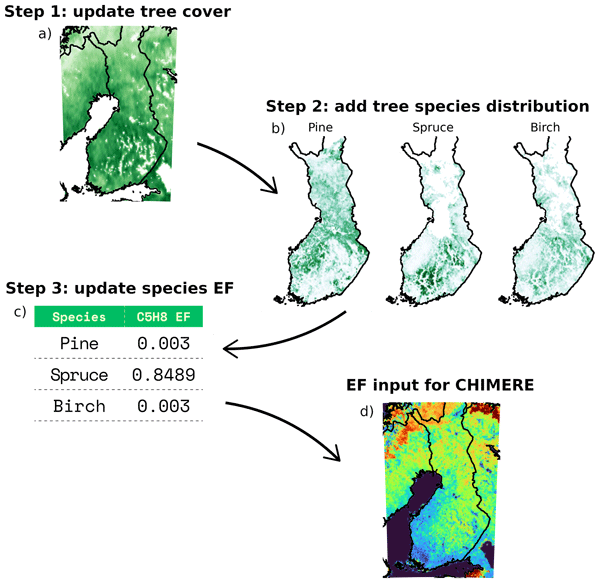
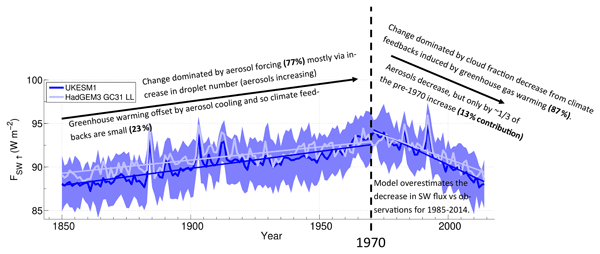
hiddensource of inter-model variability and may be leading to bias in some climate model results.


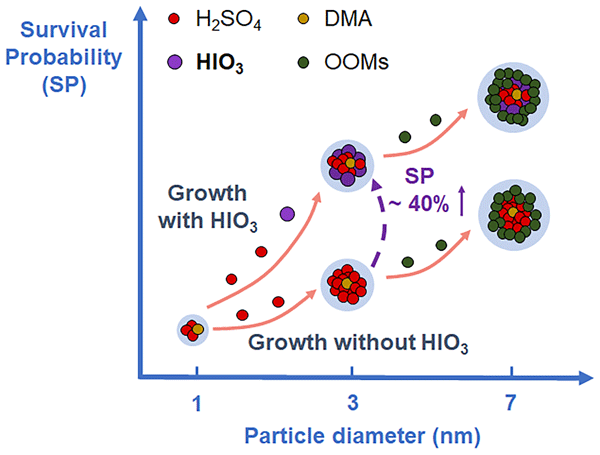
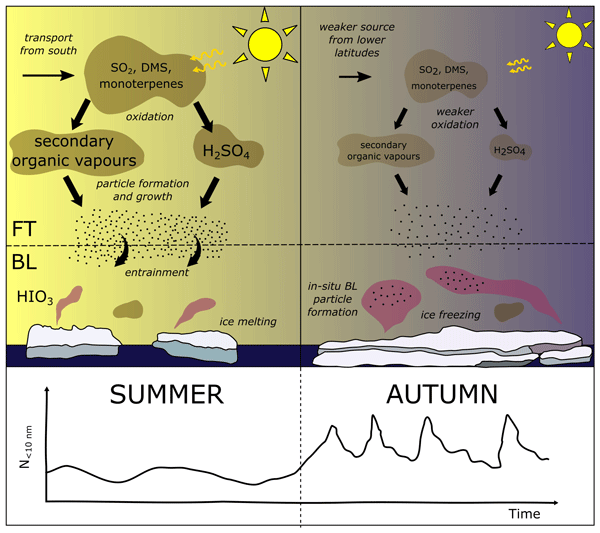
closed loopfor aerosol formation, transport and growth.






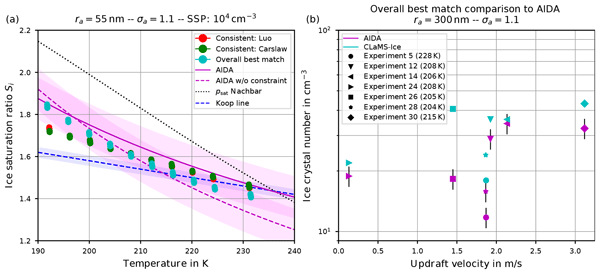
Koop line, predicting the humidity at freezing. However, laboratory measurements suggest that the freezing humidities are above the Koop line, motivating the present study to investigate the influence of different physical parameterizations on the homogeneous freezing with the help of a detailed numerical model.