Articles | Volume 18, issue 10
https://doi.org/10.5194/essd-18-7817-2026
© Author(s) 2026. This work is distributed under
the Creative Commons Attribution 4.0 License.
the Creative Commons Attribution 4.0 License.
https://doi.org/10.5194/essd-18-7817-2026
© Author(s) 2026. This work is distributed under
the Creative Commons Attribution 4.0 License.
the Creative Commons Attribution 4.0 License.
Data description article
| 
29 Oct 2026
Data description article |
| 29 Oct 2026
| 29 Oct 2026
A global eddy-collocated temperature and salinity profile dataset (v1.0): integrating multiplatform in situ observations with satellite-tracking mesoscale eddies
Qingyou He
State Key Laboratory of Tropical Oceanography, South China Sea Institute of Oceanology, Chinese Academy of Sciences, Guangzhou, China
Guangdong Key Lab of Ocean Remote Sensing and Big Data, South China Sea Institute of Oceanology, Chinese Academy of Sciences, Guangzhou, China
Yunchen Liu
State Key Laboratory of Tropical Oceanography, South China Sea Institute of Oceanology, Chinese Academy of Sciences, Guangzhou, China
University of Chinese Academy of Sciences, Beijing, China
Weikang Zhan
State Key Laboratory of Tropical Oceanography, South China Sea Institute of Oceanology, Chinese Academy of Sciences, Guangzhou, China
Guangdong Key Lab of Ocean Remote Sensing and Big Data, South China Sea Institute of Oceanology, Chinese Academy of Sciences, Guangzhou, China
Yinghui He
State Key Laboratory of Tropical Oceanography, South China Sea Institute of Oceanology, Chinese Academy of Sciences, Guangzhou, China
Zhenting Mo
State Key Laboratory of Tropical Oceanography, South China Sea Institute of Oceanology, Chinese Academy of Sciences, Guangzhou, China
University of Chinese Academy of Sciences, Beijing, China
Peiya Zhang
State Key Laboratory of Tropical Oceanography, South China Sea Institute of Oceanology, Chinese Academy of Sciences, Guangzhou, China
University of Chinese Academy of Sciences, Beijing, China
Shuqun Cai
State Key Laboratory of Tropical Oceanography, South China Sea Institute of Oceanology, Chinese Academy of Sciences, Guangzhou, China
University of Chinese Academy of Sciences, Beijing, China
Lijing Cheng
State Key Laboratory of Earth System Numerical Modeling and Application, Institute of Atmospheric Physics, Chinese Academy of Sciences, Beijing, China
Haigang Zhan
CORRESPONDING AUTHOR

State Key Laboratory of Tropical Oceanography, South China Sea Institute of Oceanology, Chinese Academy of Sciences, Guangzhou, China
Guangdong Key Lab of Ocean Remote Sensing and Big Data, South China Sea Institute of Oceanology, Chinese Academy of Sciences, Guangzhou, China
Related authors

Yankun Gong, Xueen Chen, Jiexin Xu, Zhiwu Chen, Qingyou He, Ruixiang Zhao, Xiao-Hua Zhu, and Shuqun Cai
Geosci. Model Dev., 18, 5413–5433, https://doi.org/10.5194/gmd-18-5413-2025, https://doi.org/10.5194/gmd-18-5413-2025, 2025
Short summary
Short summary
A new internal solitary wave (ISW) numerical model in the northern South China Sea (ISWNM-NSCS v2.0) improves ISW predictions by incorporating background currents and inhomogeneous stratifications. Additionally, viscosity and diffusivity coefficients are optimized to maintain stable stratifications, extending the forecasting period. Sensitivity experiments show that ISWNM-NSCS v2.0 significantly enhances predictions of various wave properties.

Zhaokun Wang, Bin Lu, Yi Xin, Takamitsu Ito, Lei Zhou, Lijing Cheng, Yuanlong Li, Xinbing Wang, and Meng Jin
Earth Syst. Sci. Data, 18, 5069–5092, https://doi.org/10.5194/essd-18-5069-2026, https://doi.org/10.5194/essd-18-5069-2026, 2026
Short summary
Short summary
We present Jingwei-Nutrients, a global monthly data product of ocean nitrate, phosphate, and silicate from 1965 to 2023 down to 2000 meters. Built using a multi-task deep learning framework, it combines sparse historical observations with hydrographic information. This continuous record helps scientists understand marine ecosystems and climate change responses. We also provide the Jingwei web platform (https://jingwei.acemap.info) for dynamic data exploration and visualization without coding.
Viktor Gouretski, Lijing Cheng, and Juan Du
Earth Syst. Sci. Data Discuss., https://doi.org/10.5194/essd-2026-416, https://doi.org/10.5194/essd-2026-416, 2026
Preprint under review for ESSD
Short summary
Short summary
This study depicts a three-step quality control procedure applied to the Nansen cast temperature profiles (1873–2025, especially before 1970), including automatic/manual quality control and temperature anomaly quality control. Corrections for depth bias are also suggested with improved vertical interpolation procedure. Based on this dataset we access for the first time the change of the ocean heat content of the upper 2000 m layer over a 100 year time period between 1870s and 2020s.
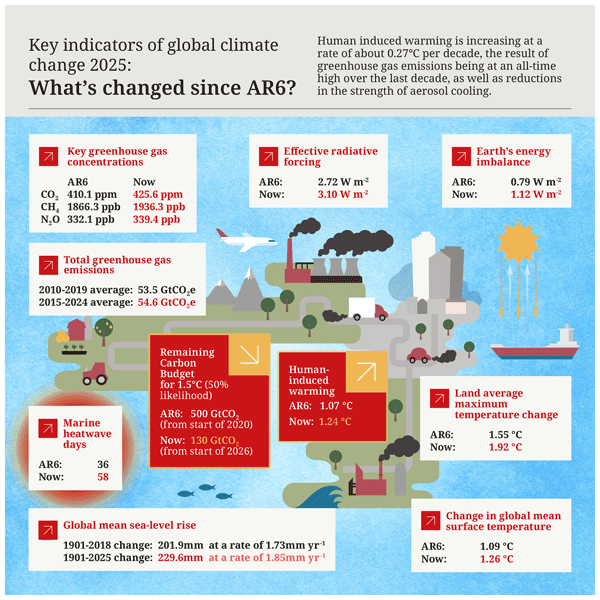
Piers M. Forster, Tristram Walsh, Chris Smith, William F. Lamb, Robin Lamboll, Christophe Cassou, Mathias Hauser, Zeke Hausfather, June-Yi Lee, Matthew D. Palmer, Karina von Schuckmann, Aimée B. A. Slangen, Sophie Szopa, Blair Trewin, Jeongeun Yun, Nathan P. Gillett, Stuart Jenkins, H. Damon Matthews, Krishnan Raghavan, Aurélien Ribes, Joeri Rogelj, Debbie Rosen, Xuebin Zhang, Myles Allen, Robbie M. Andrew, Chris Atkinson, Richard A. Betts, Antonio Bombelli, Samantha N. Burgess, Lijing Cheng, Helen E. Claxton, Pierre Friedlingstein, Thomas L. Frölicher, Catia M. Domingues, Thomas Gasser, Catherine H. Gregory, Rachel M. Hoesly, Daniel Huppmann, Masayoshi Ishii, Christopher Kadow, Alexia Karwat, John Kennedy, Rachel E. Killick, Mahesh V. M. Kovilakam, Paul B. Krummel, Xin Lan, Jean-François Lamarque, Aurélien Liné, Belén Martín-Míguez, Didier P. Monselesan, Colin Morice, Jens Mühle, Pino Mussak, Glen P. Peters, Anna Pirani, Julia Pongratz, Matthew Rigby, Robert Rohde, Abhishek Savita, Sonia I. Seneviratne, Steven J. Smith, Ghassan Taha, Caterina Tassone, Peter Thorne, Christopher Wells, Luke M. Western, Guido R. van der Werf, Susan E. Wijffels, Marco Zecchetto, Junting Zhong, Xiao-Ye Zhang, Valérie Masson-Delmotte, and Panmao Zhai
Earth Syst. Sci. Data, 18, 3889–3933, https://doi.org/10.5194/essd-18-3889-2026, https://doi.org/10.5194/essd-18-3889-2026, 2026
Short summary
Short summary
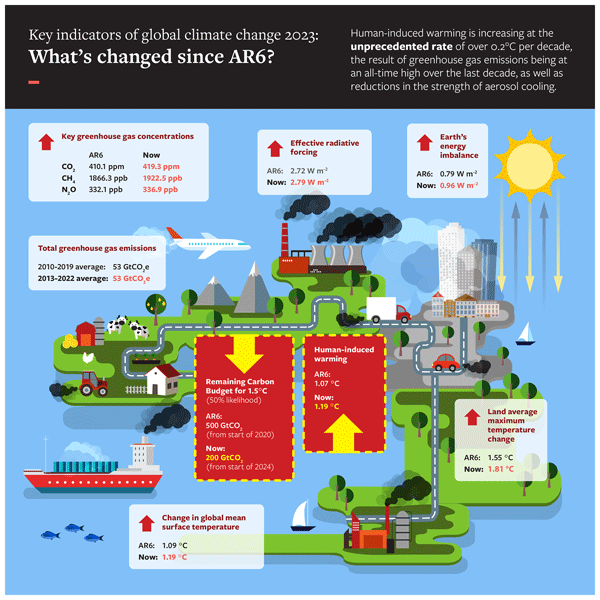
We give our annual update of key climate indicators. Our work quantifies the human contribution to global warming and the pace of climate change. This represents a large effort by the international community akin to an Intergovernmental Panel on Climate Change (IPCC) report.
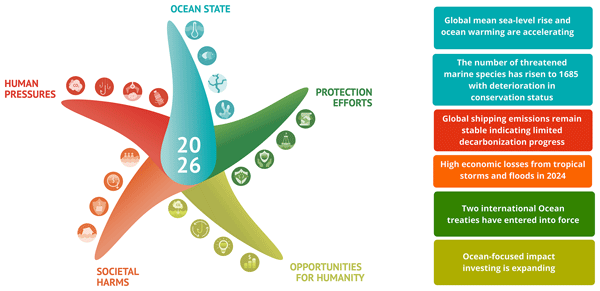
Marina Lévy, Karina von Schuckmann, Mahé Butel, William W. L. Cheung, Joachim Claudet, Thomas L. Frölicher, Patrice Guillotreau, Peter Haugan, Janine Adams, Diva Amon, Tamatoa Bambridge, Cynthia Barzuna, Bruno Blanke, Lijing Cheng, Sanae Chiba, Jorge Cortés, Pierre Friedlingstein, Jean-Pierre Gattuso, Stefan Gelcich, Jessica Gephart, Deborah Greaves, Audrey Hasson, Claire Jolly, Daoji Li, Yunne-Jai Shin, Aimée Slangen, Mere Takoko, Olivier Thébaud, Adrien Vincent, and Patrick Vincent
State Planet, 7-osr10, 1, https://doi.org/10.5194/sp-7-osr10-1-2026, https://doi.org/10.5194/sp-7-osr10-1-2026, 2026
Short summary
Short summary
The Starfish Barometer provides an annual, science-based synthesis of global Ocean-related developments, structured around five interconnected dimensions: the Ocean state, human pressures, societal harms, protection efforts, and opportunities for humanity. It is released each year on World Ocean Day. This article presents the second edition of the Barometer, which shows a growing gap between increasing human pressures on the Ocean and the efforts being made to protect it and drive change.
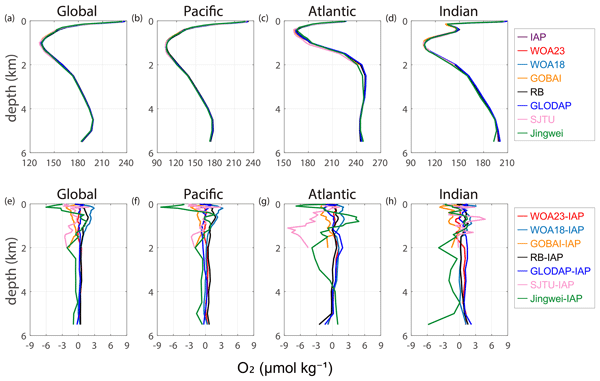
Juan Du, Lijing Cheng, Takamitsu Ito, Hernan E. Garcia, Zhankun Wang, Jonathan D. Sharp, Christopher J. Roach, Shoshiro Minobe, Yuntao Zhou, Bin Lu, Gian Giacomo Navarra, and Seth M. Bushinsky
Ocean Sci., 22, 1483–1499, https://doi.org/10.5194/os-22-1483-2026, https://doi.org/10.5194/os-22-1483-2026, 2026
Short summary
Short summary
This study assesses the spread of mean state and annual cycle of ocean dissolved oxygen by multiple observational gridded data products. A good consistency is validated globally, although substantial local differences exist in areas of strong spatial gradient. Quantifying the discrepancies could give an insight into regions relatively more sensitive to data reconstruction processes and further advance the improvement of oxygen data products.
Yankun Gong, Xueen Chen, Jiexin Xu, Zhiwu Chen, Qingyou He, Ruixiang Zhao, Xiao-Hua Zhu, and Shuqun Cai
Geosci. Model Dev., 18, 5413–5433, https://doi.org/10.5194/gmd-18-5413-2025, https://doi.org/10.5194/gmd-18-5413-2025, 2025
Short summary
Short summary
A new internal solitary wave (ISW) numerical model in the northern South China Sea (ISWNM-NSCS v2.0) improves ISW predictions by incorporating background currents and inhomogeneous stratifications. Additionally, viscosity and diffusivity coefficients are optimized to maintain stable stratifications, extending the forecasting period. Sensitivity experiments show that ISWNM-NSCS v2.0 significantly enhances predictions of various wave properties.
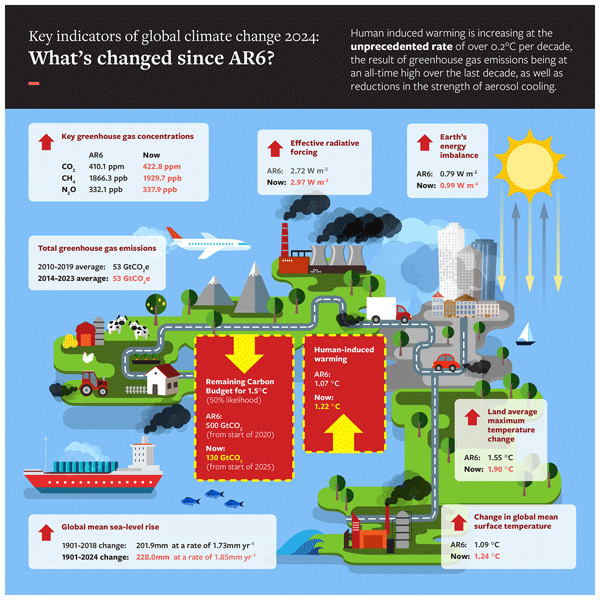
Piers M. Forster, Chris Smith, Tristram Walsh, William F. Lamb, Robin Lamboll, Christophe Cassou, Mathias Hauser, Zeke Hausfather, June-Yi Lee, Matthew D. Palmer, Karina von Schuckmann, Aimée B. A. Slangen, Sophie Szopa, Blair Trewin, Jeongeun Yun, Nathan P. Gillett, Stuart Jenkins, H. Damon Matthews, Krishnan Raghavan, Aurélien Ribes, Joeri Rogelj, Debbie Rosen, Xuebin Zhang, Myles Allen, Lara Aleluia Reis, Robbie M. Andrew, Richard A. Betts, Alex Borger, Jiddu A. Broersma, Samantha N. Burgess, Lijing Cheng, Pierre Friedlingstein, Catia M. Domingues, Marco Gambarini, Thomas Gasser, Johannes Gütschow, Masayoshi Ishii, Christopher Kadow, John Kennedy, Rachel E. Killick, Paul B. Krummel, Aurélien Liné, Didier P. Monselesan, Colin Morice, Jens Mühle, Vaishali Naik, Glen P. Peters, Anna Pirani, Julia Pongratz, Jan C. Minx, Matthew Rigby, Robert Rohde, Abhishek Savita, Sonia I. Seneviratne, Peter Thorne, Christopher Wells, Luke M. Western, Guido R. van der Werf, Susan E. Wijffels, Valérie Masson-Delmotte, and Panmao Zhai
Earth Syst. Sci. Data, 17, 2641–2680, https://doi.org/10.5194/essd-17-2641-2025, https://doi.org/10.5194/essd-17-2641-2025, 2025
Short summary
Short summary
In a rapidly changing climate, evidence-based decision-making benefits from up-to-date and timely information. Here we compile monitoring datasets to track real-world changes over time. To make our work relevant to policymakers, we follow methods from the Intergovernmental Panel on Climate Change (IPCC). Human activities are increasing the Earth's energy imbalance and driving faster sea-level rise compared to the IPCC assessment.
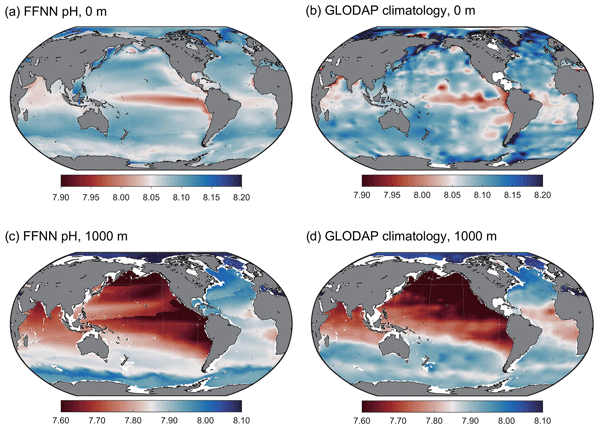
Guorong Zhong, Xuegang Li, Jinming Song, Baoxiao Qu, Fan Wang, Yanjun Wang, Bin Zhang, Lijing Cheng, Jun Ma, Huamao Yuan, Liqin Duan, Ning Li, Qidong Wang, Jianwei Xing, and Jiajia Dai
Earth Syst. Sci. Data, 17, 719–740, https://doi.org/10.5194/essd-17-719-2025, https://doi.org/10.5194/essd-17-719-2025, 2025
Short summary
Short summary
The continuous uptake of atmospheric CO2 by the ocean leads to decreasing seawater pH, which is an ongoing threat to the marine ecosystem. This pH change has been globally documented in the surface ocean, but information is limited below the surface. Here, we present a monthly 1° gridded product of global seawater pH based on a machine learning method and real pH observations. The pH product covers the years from 1992 to 2020 and depths from 0 to 2000 m.
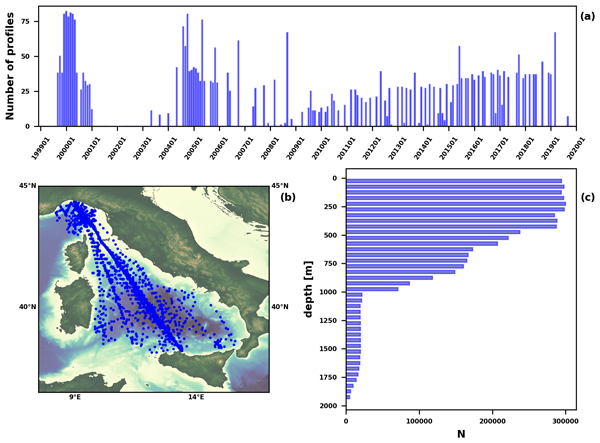
Simona Simoncelli, Franco Reseghetti, Claudia Fratianni, Lijing Cheng, and Giancarlo Raiteri
Earth Syst. Sci. Data, 16, 5531–5561, https://doi.org/10.5194/essd-16-5531-2024, https://doi.org/10.5194/essd-16-5531-2024, 2024
Short summary
Short summary
This data review is about the reprocessing of historical eXpendable BathyThermograp (XBT) profiles from the Ligurian and Tyrrhenian seas over the time period 1999–2019. A new automated quality control analysis has been performed starting from the original raw data and operational log sheets. The data have been formatted and standardized according to the latest community best practices, and all available metadata have been inserted, including calibration information and uncertainty specification.
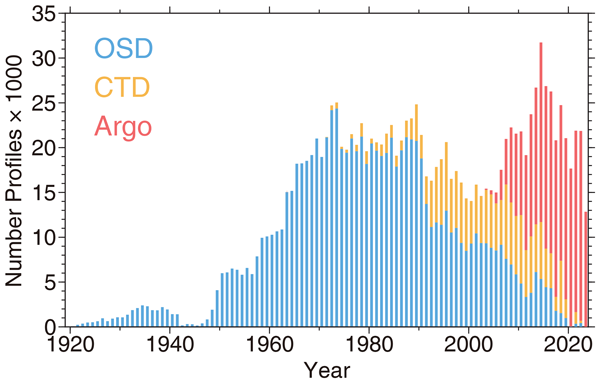
Viktor Gouretski, Lijing Cheng, Juan Du, Xiaogang Xing, Fei Chai, and Zhetao Tan
Earth Syst. Sci. Data, 16, 5503–5530, https://doi.org/10.5194/essd-16-5503-2024, https://doi.org/10.5194/essd-16-5503-2024, 2024
Short summary
Short summary
High-quality observations are crucial to understanding ocean oxygen changes and their impact on marine biota. We developed a quality control procedure to ensure the high quality of the heterogeneous ocean oxygen data archive and to prove data consistency. Oxygen data obtained by means of oxygen sensors on autonomous Argo floats were compared with reference data based on the chemical analysis, and estimates of the residual offsets were obtained.
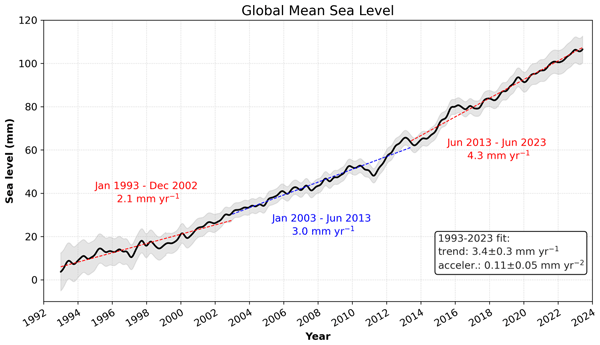
Karina von Schuckmann, Lorena Moreira, Mathilde Cancet, Flora Gues, Emmanuelle Autret, Jonathan Baker, Clément Bricaud, Romain Bourdalle-Badie, Lluis Castrillo, Lijing Cheng, Frederic Chevallier, Daniele Ciani, Alvaro de Pascual-Collar, Vincenzo De Toma, Marie Drevillon, Claudia Fanelli, Gilles Garric, Marion Gehlen, Rianne Giesen, Kevin Hodges, Doroteaciro Iovino, Simon Jandt-Scheelke, Eric Jansen, Melanie Juza, Ioanna Karagali, Thomas Lavergne, Simona Masina, Ronan McAdam, Audrey Minière, Helen Morrison, Tabea Rebekka Panteleit, Andrea Pisano, Marie-Isabelle Pujol, Ad Stoffelen, Sulian Thual, Simon Van Gennip, Pierre Veillard, Chunxue Yang, and Hao Zuo
State Planet, 4-osr8, 1, https://doi.org/10.5194/sp-4-osr8-1-2024, https://doi.org/10.5194/sp-4-osr8-1-2024, 2024
Lijing Cheng, Yuying Pan, Zhetao Tan, Huayi Zheng, Yujing Zhu, Wangxu Wei, Juan Du, Huifeng Yuan, Guancheng Li, Hanlin Ye, Viktor Gouretski, Yuanlong Li, Kevin E. Trenberth, John Abraham, Yuchun Jin, Franco Reseghetti, Xiaopei Lin, Bin Zhang, Gengxin Chen, Michael E. Mann, and Jiang Zhu
Earth Syst. Sci. Data, 16, 3517–3546, https://doi.org/10.5194/essd-16-3517-2024, https://doi.org/10.5194/essd-16-3517-2024, 2024
Short summary
Short summary
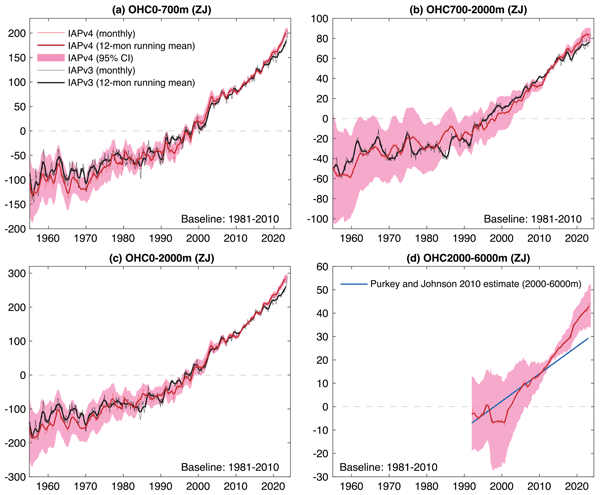
Observational gridded products are essential for understanding the ocean, the atmosphere, and climate change; they support policy decisions and socioeconomic developments. This study provides an update of an ocean subsurface temperature and ocean heat content gridded product, named the IAPv4 data product, which is available for the upper 6000 m (119 levels) since 1940 (more reliable after ~1955) for monthly and 1° × 1° temporal and spatial resolutions.
Piers M. Forster, Chris Smith, Tristram Walsh, William F. Lamb, Robin Lamboll, Bradley Hall, Mathias Hauser, Aurélien Ribes, Debbie Rosen, Nathan P. Gillett, Matthew D. Palmer, Joeri Rogelj, Karina von Schuckmann, Blair Trewin, Myles Allen, Robbie Andrew, Richard A. Betts, Alex Borger, Tim Boyer, Jiddu A. Broersma, Carlo Buontempo, Samantha Burgess, Chiara Cagnazzo, Lijing Cheng, Pierre Friedlingstein, Andrew Gettelman, Johannes Gütschow, Masayoshi Ishii, Stuart Jenkins, Xin Lan, Colin Morice, Jens Mühle, Christopher Kadow, John Kennedy, Rachel E. Killick, Paul B. Krummel, Jan C. Minx, Gunnar Myhre, Vaishali Naik, Glen P. Peters, Anna Pirani, Julia Pongratz, Carl-Friedrich Schleussner, Sonia I. Seneviratne, Sophie Szopa, Peter Thorne, Mahesh V. M. Kovilakam, Elisa Majamäki, Jukka-Pekka Jalkanen, Margreet van Marle, Rachel M. Hoesly, Robert Rohde, Dominik Schumacher, Guido van der Werf, Russell Vose, Kirsten Zickfeld, Xuebin Zhang, Valérie Masson-Delmotte, and Panmao Zhai
Earth Syst. Sci. Data, 16, 2625–2658, https://doi.org/10.5194/essd-16-2625-2024, https://doi.org/10.5194/essd-16-2625-2024, 2024
Short summary
Short summary
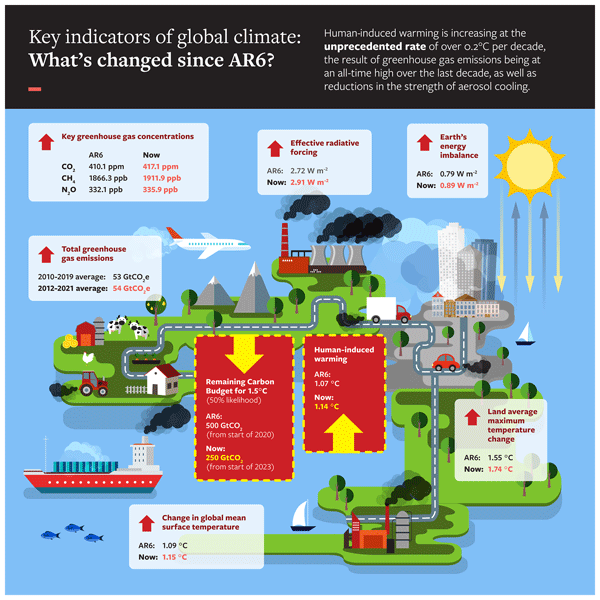
This paper tracks some key indicators of global warming through time, from 1850 through to the end of 2023. It is designed to give an authoritative estimate of global warming to date and its causes. We find that in 2023, global warming reached 1.3 °C and is increasing at over 0.2 °C per decade. This is caused by all-time-high greenhouse gas emissions.
Piers M. Forster, Christopher J. Smith, Tristram Walsh, William F. Lamb, Robin Lamboll, Mathias Hauser, Aurélien Ribes, Debbie Rosen, Nathan Gillett, Matthew D. Palmer, Joeri Rogelj, Karina von Schuckmann, Sonia I. Seneviratne, Blair Trewin, Xuebin Zhang, Myles Allen, Robbie Andrew, Arlene Birt, Alex Borger, Tim Boyer, Jiddu A. Broersma, Lijing Cheng, Frank Dentener, Pierre Friedlingstein, José M. Gutiérrez, Johannes Gütschow, Bradley Hall, Masayoshi Ishii, Stuart Jenkins, Xin Lan, June-Yi Lee, Colin Morice, Christopher Kadow, John Kennedy, Rachel Killick, Jan C. Minx, Vaishali Naik, Glen P. Peters, Anna Pirani, Julia Pongratz, Carl-Friedrich Schleussner, Sophie Szopa, Peter Thorne, Robert Rohde, Maisa Rojas Corradi, Dominik Schumacher, Russell Vose, Kirsten Zickfeld, Valérie Masson-Delmotte, and Panmao Zhai
Earth Syst. Sci. Data, 15, 2295–2327, https://doi.org/10.5194/essd-15-2295-2023, https://doi.org/10.5194/essd-15-2295-2023, 2023
Short summary
Short summary
This is a critical decade for climate action, but there is no annual tracking of the level of human-induced warming. We build on the Intergovernmental Panel on Climate Change assessment reports that are authoritative but published infrequently to create a set of key global climate indicators that can be tracked through time. Our hope is that this becomes an important annual publication that policymakers, media, scientists and the public can refer to.

Yankun Gong, Xueen Chen, Jiexin Xu, Jieshuo Xie, Zhiwu Chen, Yinghui He, and Shuqun Cai
Geosci. Model Dev., 16, 2851–2871, https://doi.org/10.5194/gmd-16-2851-2023, https://doi.org/10.5194/gmd-16-2851-2023, 2023
Short summary
Short summary
Internal solitary waves (ISWs) play crucial roles in mass transport and ocean mixing in the northern South China Sea. Massive numerical investigations have been conducted in this region, but there was no systematic evaluation of a three-dimensional model about precisely simulating ISWs. Here, an ISW forecasting model is employed to evaluate the roles of resolution, tidal forcing and stratification in accurately reproducing wave properties via comparison to field and remote-sensing observations.
Karina von Schuckmann, Audrey Minière, Flora Gues, Francisco José Cuesta-Valero, Gottfried Kirchengast, Susheel Adusumilli, Fiammetta Straneo, Michaël Ablain, Richard P. Allan, Paul M. Barker, Hugo Beltrami, Alejandro Blazquez, Tim Boyer, Lijing Cheng, John Church, Damien Desbruyeres, Han Dolman, Catia M. Domingues, Almudena García-García, Donata Giglio, John E. Gilson, Maximilian Gorfer, Leopold Haimberger, Maria Z. Hakuba, Stefan Hendricks, Shigeki Hosoda, Gregory C. Johnson, Rachel Killick, Brian King, Nicolas Kolodziejczyk, Anton Korosov, Gerhard Krinner, Mikael Kuusela, Felix W. Landerer, Moritz Langer, Thomas Lavergne, Isobel Lawrence, Yuehua Li, John Lyman, Florence Marti, Ben Marzeion, Michael Mayer, Andrew H. MacDougall, Trevor McDougall, Didier Paolo Monselesan, Jan Nitzbon, Inès Otosaka, Jian Peng, Sarah Purkey, Dean Roemmich, Kanako Sato, Katsunari Sato, Abhishek Savita, Axel Schweiger, Andrew Shepherd, Sonia I. Seneviratne, Leon Simons, Donald A. Slater, Thomas Slater, Andrea K. Steiner, Toshio Suga, Tanguy Szekely, Wim Thiery, Mary-Louise Timmermans, Inne Vanderkelen, Susan E. Wjiffels, Tonghua Wu, and Michael Zemp
Earth Syst. Sci. Data, 15, 1675–1709, https://doi.org/10.5194/essd-15-1675-2023, https://doi.org/10.5194/essd-15-1675-2023, 2023
Short summary
Short summary
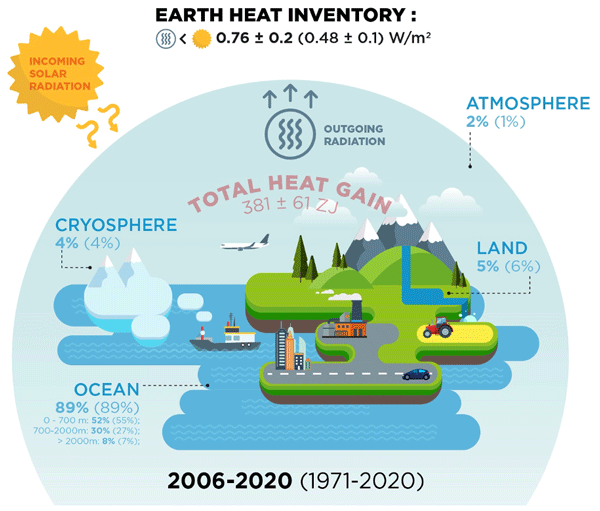
Earth's climate is out of energy balance, and this study quantifies how much heat has consequently accumulated over the past decades (ocean: 89 %, land: 6 %, cryosphere: 4 %, atmosphere: 1 %). Since 1971, this accumulated heat reached record values at an increasing pace. The Earth heat inventory provides a comprehensive view on the status and expectation of global warming, and we call for an implementation of this global climate indicator into the Paris Agreement’s Global Stocktake.
Tian Tian, Lijing Cheng, Gongjie Wang, John Abraham, Wangxu Wei, Shihe Ren, Jiang Zhu, Junqiang Song, and Hongze Leng
Earth Syst. Sci. Data, 14, 5037–5060, https://doi.org/10.5194/essd-14-5037-2022, https://doi.org/10.5194/essd-14-5037-2022, 2022
Short summary
Short summary
A high-resolution gridded dataset is crucial for understanding ocean processes at various spatiotemporal scales. Here we used a machine learning approach and successfully reconstructed a high-resolution (0.25° × 0.25°) ocean subsurface (1–2000 m) salinity dataset for the period 1993–2018 (monthly) by merging in situ salinity profile observations with high-resolution satellite remote-sensing data. This new product could be useful in various applications in ocean and climate fields.
Cited articles
Amos, C. M., Castelao, R. M., and Medeiros, P. M.: Offshore transport of particulate organic carbon in the California Current System by mesoscale eddies, Nat. Commun., 10, 1–8, https://doi.org/10.1038/s41467-019-12783-5, 2019.
Arostegui, M. C., Gaube, P., Woodworth-Jefcoats, P. A., Kobayashi, D. R., and Braun, C. D.: Anticyclonic eddies aggregate pelagic predators in a subtropical gyre, Nature, https://doi.org/10.1038/s41586-022-05162-6, 2022.
Braun, C. D., Gaube, P., Sinclair-Taylor, T. H., Skomal, G. B., and Thorrold, S. R.: Mesoscale eddies release pelagic sharks from thermal constraints to foraging in the ocean twilight zone, P. Natl. Acad. Sci., 116, 17187–17192, https://doi.org/10.1073/pnas.1903067116, 2019.
Braun, C. D., Gaube, P., Della Penna, A., Thorrold, S. R., McDonnell, L. H., Fischer, G. C., Mucientes, G., Queiroz, N., Shivji, M., Sims, D. W., Skomal, G. B., Wetherbee, B., and Arostegui, M. C.: Pelagic sharks target long‐lived, retentive anticyclonic eddies in the Northwest Atlantic Ocean, Limnol. Oceanogr., https://doi.org/10.1002/lno.70260, 2025.
Chaigneau, A., Eldin, G., and Dewitte, B.: Eddy activity in the four major upwelling systems from satellite altimetry (1992–2007), Prog. Oceanogr., 83, 117–123, https://doi.org/10.1016/j.pocean.2009.07.012, 2009.
Chaigneau, A., Le Texier, M., Eldin, G., Grados, C., and Pizarro, O.: Vertical structure of mesoscale eddies in the eastern South Pacific Ocean: A composite analysis from altimetry and Argo profiling floats, J. Geophys. Res., 116, https://doi.org/10.1029/2011jc007134, 2011.
Chelton, D. B., Gaube, P., Schlax, M. G., Early, J. J., and Samelson, R. M.: The influence of nonlinear mesoscale eddies on near-surface oceanic chlorophyll, Science, 334, 328–332, https://doi.org/10.1126/science.1208897, 2011a.
Chelton, D. B., Schlax, M. G., and Samelson, R. M.: Global observations of nonlinear mesoscale eddies, Prog. Oceanogr., 91, 167–216, https://doi.org/10.1016/j.pocean.2011.01.002, 2011b.
Chelton, D. B., Schlax, M. G., Samelson, R. M., and de Szoeke, R. A.: Global observations of large oceanic eddies, Geophys. Res. Lett., 34, https://doi.org/10.1029/2007gl030812, 2007.
Chen, G., Gan, J., Xie, Q., Chu, X., Wang, D., and Hou, Y.: Eddy heat and salt transports in the South China Sea and their seasonal modulations, J. Geophys. Res., 117, https://doi.org/10.1029/2011jc007724, 2012.
Chen, X. and Chen, G.: Effect of mesoscale eddy on thermocline depth over the global ocean: deepen and uplift, Ocean Sci. Discuss. [preprint], https://doi.org/10.5194/os-2020-64, 2020.
Chen, X., Li, H., Cao, C., and Chen, G.: Eddy-induced pycnocline depth displacement over the global ocean, J. Marine Syst., 221, https://doi.org/10.1016/j.jmarsys.2021.103577, 2021.
de Boyer Montégut, C., Madec, G., Fischer, A. S., Lazar, A., and Iudicone, D.: Mixed layer depth over the global ocean: An examination of profile data and a profile-based climatology, J. Geophys. Res., 109, C12003, https://doi.org/10.1029/2004jc002378, 2004.
de Boyer Montégut, C., Mignot, J., Lazar, A., and Cravatte, S.: Control of salinity on the mixed layer depth in the world ocean: 1. General description, J. Geophys. Res.-Oceans, 112, https://doi.org/10.1029/2006JC003953, 2007.
de Marez, C., L'Hégaret, P., Morvan, M., and Carton, X.: On the 3D structure of eddies in the Arabian Sea, Deep-Sea Res. Pt. I, 150, https://doi.org/10.1016/j.dsr.2019.06.003, 2019.
Delcroix, T., Chaigneau, A., Soviadan, D., Boutin, J., and Pegliasco, C.: Eddy‐Induced Salinity Changes in the Tropical Pacific, J. Geophys. Res.-Oceans, 124, 374–389, https://doi.org/10.1029/2018jc014394, 2019.
Dong, C., McWilliams, J. C., Liu, Y., and Chen, D.: Global heat and salt transports by eddy movement, Nat. Commun., 5, 1–6, https://doi.org/10.1038/ncomms4294, 2014.
Dong, D., Brandt, P., Chang, P., Schütte, F., Yang, X., Yan, J., and Zeng, J.: Mesoscale eddies in the northwestern Pacific Ocean: Three‐dimensional eddy structures and heat/salt transports, J. Geophys. Res.-Oceans, 122, 9795–9813, 2017.
Dufau, C., Orsztynowicz, M., Dibarboure, G., Morrow, R., and Le Traon, P. Y.: Mesoscale resolution capability of altimetry: Present and future, J. Geophys. Res.-Oceans, 121, 4910–4927, https://doi.org/10.1002/2015jc010904, 2016.
Ellwood, M. J., Strzepek, R. F., Strutton, P. G., Trull, T. W., Fourquez, M., and Boyd, P. W.: Distinct iron cycling in a Southern Ocean eddy, Nat. Commun., 11, 825, https://doi.org/10.1038/s41467-020-14464-0, 2020.
Ferrari, R. and Wunsch, C.: Ocean Circulation Kinetic Energy: Reservoirs, Sources, and Sinks, Annu. Rev. Fluid Mech., 41, 253–282, https://doi.org/10.1146/annurev.fluid.40.111406.102139, 2009.
Frenger, I., Gruber, N., Knutti, R., and Münnich, M.: Imprint of Southern Ocean eddies on winds, clouds and rainfall, Nat. Geosci., 6, 608–612, https://doi.org/10.1038/ngeo1863, 2013.
Frenger, I., Münnich, M., Gruber, N., and Knutti, R.: Southern Ocean eddy phenomenology, J. Geophys. Res.-Oceans, 120, 7413–7449, https://doi.org/10.1002/2015JC011047, 2015.
Frenger, I., Münnich, M., and Gruber, N.: Imprint of Southern Ocean mesoscale eddies on chlorophyll, Biogeosciences, 15, 4781–4798, https://doi.org/10.5194/bg-15-4781-2018, 2018.
Garcia, H., Boyer, T., Levitus, S., Reagan, J., Mishonov, A., Jiang, L. Q., Wang, Z., Paver, C., Nyadjro, E., Cross, S., Bouchard, C., Hogan, P., Baranova, O., and Locarnini, R.: World Ocean Database 2023: A Foundational Data Resource for and by the Global Ocean and Coastal Communities, Sci. Data, 13, https://doi.org/10.1038/s41597-026-06957-2, 2026.
Gaube, P., Chelton, D. B., Strutton, P. G., and Behrenfeld, M. J.: Satellite observations of chlorophyll, phytoplankton biomass, and Ekman pumping in nonlinear mesoscale eddies, J. Geophys. Res.-Oceans, 118, 6349–6370, https://doi.org/10.1002/2013JC009027, 2013.
Gaube, P., McGillicuddy Jr., D. J., and Moulin, A. J.: Mesoscale Eddies Modulate Mixed Layer Depth Globally, Geophys. Res. Lett., 46, 1505–1512, https://doi.org/10.1029/2018gl080006, 2019.
Gaube, P., McGillicuddy, D. J., Chelton, D. B., Behrenfeld, M. J., and Strutton, P. G.: Regional variations in the influence of mesoscale eddies on near-surface chlorophyll, J. Geophys. Res.-Oceans, 119, 8195–8220, https://doi.org/10.1002/2014JC010111, 2014.
Gulakaram, V. S., Vissa, N. K., and Bhaskaran, P. K.: Characteristics and vertical structure of oceanic mesoscale eddies in the Bay of Bengal, Dynam. Atmos. Oceans, 89, https://doi.org/10.1016/j.dynatmoce.2020.101131, 2020.
Guo, Y. and Timmermans, M. L.: The Role of Ocean Mesoscale Variability in Air‐Sea CO2 Exchange: A Global Perspective, Geophys. Res. Lett., 51, https://doi.org/10.1029/2024gl108373, 2024.
Hasson, A., Farrar, J. T., Boutin, J., Bingham, F., and Lee, T.: Intraseasonal Variability of Surface Salinity in the Eastern Tropical Pacific Associated With Mesoscale Eddies, J. Geophys. Res.-Oceans, 124, 2861–2875, https://doi.org/10.1029/2018jc014175, 2019.
Hausmann, U., McGillicuddy, D. J., and Marshall, J.: Observed mesoscale eddy signatures in Southern Ocean surface mixed‐layer depth, J. Geophys. Res.-Oceans, 122, 617–635, https://doi.org/10.1002/2016JC012225, 2017.
He, Q.: A global eddy-collocated temperature and salinity profile dataset, Zenodo [data set], https://doi.org/10.5281/zenodo.20607854, 2026.
He, Q., Mo, D., Zhan, W., Cai, S., Tang, S., Zha, G., and Zhan, H.: Thermal Imprints of Mesoscale Eddies in the Global Ocean, J. Phys. Oceanogr., 54, 1991–2009, https://doi.org/10.1175/jpo-d-23-0226.1, 2024a.
He, Q., Zhan, H., and Cai, S.: Anticyclonic eddies enhance the winter barrier layer and surface cooling in the Bay of Bengal, J. Geophys. Res.-Oceans, 125, e2020JC016524, https://doi.org/10.1029/2020JC016524, 2020.
He, Q., Zhan, H., Cai, S., He, Y., Huang, G., and Zhan, W.: A new assessment of mesoscale eddies in the South China Sea: Surface features, three-dimensional structures and thermohaline transports, J. Geophys. Res.-Oceans, 123, 4906–4929, https://doi.org/10.1029/2018jc014054, 2018.
He, Q., Zhan, H., Cai, S., and Zhan, W.: Eddy‐Induced Near‐Surface Chlorophyll Anomalies in the Subtropical Gyres: Biomass or Physiology?, Geophys. Res. Lett., 48, e2020GL091975, https://doi.org/10.1029/2020gl091975, 2021.
He, Q., Zhan, H., Shuai, Y., Cai, S., Li, Q. P., Huang, G., and Li, J.: Phytoplankton bloom triggered by an anticyclonic eddy: The combined effect of eddy-Ekman pumping and winter mixing, J. Geophys. Res.-Oceans, 122, 4886–4901, https://doi.org/10.1002/2017JC012763, 2017.
He, Q., Zhan, W., Feng, M., Gong, Y., Cai, S., and Zhan, H.: Common occurrences of subsurface heatwaves and cold spells in ocean eddies, Nature, 634, 1111–1117, https://doi.org/10.1038/s41586-024-08051-2, 2024b.
Ioannou, A., Guez, L., Laxenaire, R., and Speich, S.: Global Assessment of Mesoscale Eddies with TOEddies: Comparison Between Multiple Datasets and Colocation with In Situ Measurements, Remote Sens., 16, https://doi.org/10.3390/rs16224336, 2024.
Jan, S., Mensah, V., Andres, M., Chang, M.-H., and Yang, Y. J.: Eddy-Kuroshio Interactions: Local and Remote Effects, J. Geophys. Res.-Oceans, 122, 9744–9764, https://doi.org/10.1002/2017jc013476, 2017.
Jing, Z., Wang, S., Wu, L., Chang, P., Zhang, Q., Sun, B., Ma, X., Qiu, B., Small, J., Jin, F.,i Chen, Z., Gan, B., Yang, Y., Yang, H., and Wan, X.: Maintenance of mid-latitude oceanic fronts by mesoscale eddies, Sci. Adv., 6, eaba7880, https://doi.org/10.1126/sciadv.aba7880, 2020.
Keppler, L., Eddebbar, Y. A., Gille, S. T., Guisewhite, N., Mazloff, M. R., Tamsitt, V., Verdy, A., and Talley, L. D.: Effects of Mesoscale Eddies on Southern Ocean Biogeochemistry, AGU Adv., 5, e2024AV001355, https://doi.org/10.1029/2024AV001355, 2024.
Klein, P. and Lapeyre, G.: The oceanic vertical pump induced by mesoscale and submesoscale turbulence, Annu. Rev. Mar. Sci., 1, 351–375, https://doi.org/10.1146/annurev.marine.010908.163704, 2009.
Laxenaire, R., Speich, S., Blanke, B., Chaigneau, A., Pegliasco, C., and Stegner, A.: Anticyclonic Eddies Connecting the Western Boundaries of Indian and Atlantic Oceans, J. Geophys. Res.-Oceans, 123, 7651–7677, https://doi.org/10.1029/2018jc014270, 2018.
Laxenaire, R., Speich, S., and Stegner, A.: Evolution of the Thermohaline Structure of One Agulhas Ring Reconstructed from Satellite Altimetry and Argo Floats, J. Geophys. Res.-Oceans, 124, 8969–9003, https://doi.org/10.1029/2018JC014426, 2019.
Laxenaire, R., Speich, S., and Stegner, A.: Agulhas Ring Heat Content and Transport in the South Atlantic Estimated by Combining Satellite Altimetry and Argo Profiling Floats Data, J. Geophys. Res.-Oceans, 125, https://doi.org/10.1029/2019jc015511, 2020.
Li, H., Xu, F., and Wang, G.: Global Mapping of Mesoscale Eddy Vertical Tilt, J. Geophys. Res.-Oceans, 127, https://doi.org/10.1029/2022jc019131, 2022.
Lin, X., Dong, C., Chen, D., Liu, Y., Yang, J., Zou, B., and Guan, Y.: Three-dimensional properties of mesoscale eddies in the South China Sea based on eddy-resolving model output, Deep-Sea Res. Pt. I, 99, 46–64, https://doi.org/10.1016/j.dsr.2015.01.007, 2015.
Liu, T., Abernathey, R., Sinha, A., and Chen, D.: Quantifying Eulerian Eddy Leakiness in an Idealized Model, J. Geophys. Res.-Oceans, 124, 8869–8886, https://doi.org/10.1029/2019jc015576, 2019.
Lv, M., Wang, F., Li, Y., Zhang, Z., and Zhu, Y.: Structure of Sea Surface Temperature Anomaly Induced by Mesoscale Eddies in the North Pacific Ocean, J. Geophys. Res.-Oceans, 127, https://doi.org/10.1029/2021jc017581, 2022.
Martínez-Moreno, J., Hogg, A. M., England, M. H., Constantinou, N. C., Kiss, A. E., and Morrison, A. K.: Global changes in oceanic mesoscale currents over the satellite altimetry record, Nat. Clim. Change, 11, 397–403, https://doi.org/10.1038/s41558-021-01006-9, 2021.
Mason, E., Pascual, A., Gaube, P., Ruiz, S., Pelegrí, J. L., and Delepoulle, A.: Subregional characterization of mesoscale eddies across the Brazil‐Malvinas Confluence, J. Geophys. Res.-Oceans, 122, 3329–3357, https://doi.org/10.1002/2016JC012611, 2017.
McDougall, T. J.: Potential enthalpy: A conservative oceanic variable for evaluating heat content and heat fluxes, J. Phys. Oceanogr., 33, 945–963, 2003.
McGillicuddy Jr., D. J.: Mechanisms of physical-biological-biogeochemical interaction at the oceanic mesoscale, Annu. Rev. Mar. Sci., 8, 125–159, https://doi.org/10.1146/annurev-marine-010814-015606, 2016.
Mishonov, A. V., Boyer, T. P., Baranova, O. K., Bouchard, C. N., Cross, S. L., Garcia, H. E., Locarnini, R. A., Paver, C. R., Reagan, J. R., Wang, Z., Seidov, D., Grodsky, A. I., and Beauchamp, J. G.: World Ocean Database 2023, NOAA atlas NESDIS, 97, https://doi.org/10.25923/z885-h264, 2024.
Mo, D., He, Q., Zhan, W., He, Y., and Zhan, H.: A Global Assessment of Eddy‐Induced Salinity Anomalies and Salt Transport by Eddy Movement, J. Geophys. Res.-Oceans, 129, https://doi.org/10.1029/2023jc020382, 2024.
Moreau, S., Penna, A. D., Llort, J., Patel, R., Langlais, C., Boyd, P. W., Matear, R. J., Phillips, H. E., Trull, T. W., and Tilbrook, B.: Eddy‐induced carbon transport across the Antarctic Circumpolar Current, Global Biogeochem. Cy., https://doi.org/10.1002/2017GB005669, 2017.
Ni, Q., Zhai, X., Jiang, X., and Chen, D.: Abundant Cold Anticyclonic Eddies and Warm Cyclonic Eddies in the Global Ocean, J. Phys. Oceanogr., 51, 2793–2806, https://doi.org/10.1175/jpo-d-21-0010.1, 2021.
Oliver, E. C. J., Benthuysen, J. A., Darmaraki, S., Donat, M. G., Hobday, A. J., Holbrook, N. J., Schlegel, R. W., and Sen Gupta, A.: Marine Heatwaves, Annu. Rev. Mar. Sci., 13, 313–342, https://doi.org/10.1146/annurev-marine-032720-095144, 2021.
Omand, M. M., D'Asaro, E. A., Lee, C. M., Perry, M. J., Briggs, N., Cetinic, I., and Mahadevan, A.: Eddy-driven subduction exports particulate organic carbon from the spring bloom, Science, 348, 222–225, https://doi.org/10.1126/science.1260062, 2015.
Pegliasco, C., Delepoulle, A., Mason, E., Morrow, R., Faugère, Y., and Dibarboure, G.: META3.1exp: a new global mesoscale eddy trajectory atlas derived from altimetry, Earth Syst. Sci. Data, 14, 1087–1107, https://doi.org/10.5194/essd-14-1087-2022, 2022.
Rackow, T., Danilov, S., Goessling, H. F., Hellmer, H. H., Sein, D. V., Semmler, T., Sidorenko, D., and Jung, T.: Delayed Antarctic sea-ice decline in high-resolution climate change simulations, Nat. Commun., 13, 637, https://doi.org/10.1038/s41467-022-28259-y, 2022.
Riser, S. C., Freeland, H. J., Roemmich, D., Wijffels, S., Troisi, A., Belbéoch, M., Gilbert, D., Xu, J., Pouliquen, S., Thresher, A., Le Traon, P., Maze, G., Klein, B., Ravichandran, M., Grant, Fi., Poulain, P., Suga, T., Lim, B., Sterl, A., Sutton, P., Mork, K., Vélez-Belchí, P. J., Ansorge, I., King, B., Turton, J., Baringer, M., and Jayne, S. R.: Fifteen years of ocean observations with the global Argo array, Nat. Clim. Change, 6, 145–153, https://doi.org/10.1038/nclimate2872, 2016.
Samelson, R. M., Schlax, M. G., and Chelton, D. B.: Randomness, symmetry, and scaling of mesoscale eddy life cycles, J. Phys. Oceanogr., 44, 1012–1029, https://doi.org/10.1175/jpo-d-13-0161.1, 2014.
Sarma, V., Jagadeesan, L., Dalabehera, H., Rao, D., Kumar, G., Durgadevi, D., Yadav, K., Behera, S., and Priya, M.: Role of eddies on intensity of oxygen minimum zone in the Bay of Bengal, Cont. Shelf Res., 168, 48–53, https://doi.org/10.1016/j.csr.2018.09.008, 2018.
Sarma, V. V. S. S., Chopra, M., Rao, D. N., Priya, M. M. R., Rajula, G. R., Lakshmi, D. S. R., and Rao, V. D.: Role of eddies on controlling total and size-fractionated primary production in the Bay of Bengal, Cont. Shelf Res., 204, 104186, https://doi.org/10.1016/j.csr.2020.104186, 2020.
Schlegel, R. W., Darmaraki, S., Benthuysen, J. A., Filbee-Dexter, K., and Oliver, E. C. J.: Marine cold-spells, Prog. Oceanogr., 198, 102684, https://doi.org/10.1016/j.pocean.2021.102684, 2021.
Schubert, R., Gula, J., and Biastoch, A.: Submesoscale flows impact Agulhas leakage in ocean simulations, Commun. Earth Environ., 2, https://doi.org/10.1038/s43247-021-00271-y, 2021.
Schütte, F., Karstensen, J., Krahmann, G., Hauss, H., Fiedler, B., Brandt, P., Visbeck, M., and Körtzinger, A.: Characterization of “dead-zone” eddies in the eastern tropical North Atlantic, Biogeosciences, 13, 5865–5881, https://doi.org/10.5194/bg-13-5865-2016, 2016.
Siegelman, L., Klein, P., Rivière, P., Thompson, A. F., Torres, H. S., Flexas, M., and Menemenlis, D.: Enhanced upward heat transport at deep submesoscale ocean fronts, Nat. Geosci., 13, 50–55, https://doi.org/10.1038/s41561-019-0489-1, 2019.
Simoes-Sousa, I., Rocha, C., Tandon, A., and Schmidt, A.: Integrating Global Ocean Profiles and Altimetry-Derived Eddies, Earth Syst. Sci. Data, 18, 1089–1101, https://doi.org/10.5194/essd-18-1089-2026, 2026.
Sun, B., Liu, C., and Wang, F.: Global meridional eddy heat transport inferred from Argo and altimetry observations, Sci. Rep., 9, 1345, https://doi.org/10.1038/s41598-018-38069-2, 2019.
Sun, W., Dong, C., Tan, W., Liu, Y., He, Y., and Wang, J.: Vertical Structure Anomalies of Oceanic Eddies and Eddy-Induced Transports in the South China Sea, Remote Sens., 10, 795, https://doi.org/10.3390/rs10050795, 2018.
Sun, W., Dong, C., Wang, R., Liu, Y., and Yu, K.: Vertical structure anomalies of oceanic eddies in the Kuroshio Extension region, J. Geophys. Res.-Oceans, 122, 1476–1496, https://doi.org/10.1002/2016jc012226, 2017.
Swart, N. C., Gille, S. T., Fyfe, J. C., and Gillett, N. P.: Recent Southern Ocean warming and freshening driven by greenhouse gas emissions and ozone depletion, Nat. Geosci., 11, 836–841, https://doi.org/10.1038/s41561-018-0226-1, 2018.
Tan, Z., Cheng, L., Gouretski, V., Zhang, B., Wang, Y., Li, F., Liu, Z., and Zhu, J.: A new automatic quality control system for ocean profile observations and impact on ocean warming estimate, Deep-Sea Res. Pt. I, 194, https://doi.org/10.1016/j.dsr.2022.103961, 2023.
Tan, Z., Zhu, Y., Cheng, L., Gouretski, V., Pan, Y., Yuan, H., Wang, Z., Li, G., Song, X., Zhang, B., Bao, S., Li, Y., and Zhu, J.: CODC-S: A quality-controlled global ocean salinity profiles dataset, Sci. Data, 12, https://doi.org/10.1038/s41597-025-05172-9, 2025.
Trott, C. B., Subrahmanyam, B., Chaigneau, A., and Roman‐Stork, H. L.: Eddy‐Induced Temperature and Salinity Variability in the Arabian Sea, Geophys. Res. Lett., 46, 2734–2742, https://doi.org/10.1029/2018GL081605, 2019.
Villas Bôas, A. B., Sato, O. T., Chaigneau, A., and Castelão, G. P.: The signature of mesoscale eddies on the air-sea turbulent heat fluxes in the South Atlantic Ocean, Geophys. Res. Lett., 42, 1856–1862, https://doi.org/10.1002/2015gl063105, 2015.
Wang, S., Jing, Z., Wu, L., Sun, S., Chen, Z., Ma, X., and Gan, B.: A more quiescent deep ocean under global warming, Nat. Clim. Change, https://doi.org/10.1038/s41558-024-02075-2, 2024.
Wei, L. and Wang, C.: Unraveling trapping and stirring contributions to eddy‐induced heat transport in the Agulhas leakage region, Limnol. Oceanogr., https://doi.org/10.1002/lno.70266, 2025.
Westen, R. M. v. and Dijkstra, H. A.: Ocean eddies strongly affect global mean sea-level projections, Sci. Adv., 7, eabf1674, https://doi.org/10.1126/sciadv.abf1674, 2021.
Xu, L., Li, P., Xie, S. P., Liu, Q., Liu, C., and Gao, W.: Observing mesoscale eddy effects on mode-water subduction and transport in the North Pacific, Nat. Commun., 7, 10505, https://doi.org/10.1038/ncomms10505, 2016.
Yang, G., Wang, F., Li, Y., and Lin, P.: Mesoscale eddies in the northwestern subtropical Pacific Ocean: Statistical characteristics and three-dimensional structures, J. Geophys. Res.-Oceans, 118, 1906–1925, https://doi.org/10.1002/jgrc.20164, 2013.
Yang, G., Yu, W., Yuan, Y., Zhao, X., Wang, F., Chen, G., Liu, L., and Duan, Y.: Characteristics, vertical structures, and heat/salt transports of mesoscale eddies in the southeastern tropical Indian Ocean, J. Geophys. Res.-Oceans, 120, 6733–6750, https://doi.org/10.1002/2015JC011130, 2015.
Zhan, W., He, Q., Zhang, Y., and Zhan, H.: Anticyclone Eddies Favor the Genesis of Off‐Season Tropical Cyclone in the Western North Pacific, J. Geophys. Res.-Atmos., 128, https://doi.org/10.1029/2022jd036945, 2023.
Zhang, B., Cheng, L., Tan, Z., Gouretski, V., Li, F., Pan, Y., Yuan, H., Ren, H., Reseghetti, F., Zhu, J., and Wang, F.: CODC-v1: a quality-controlled and bias-corrected ocean temperature profile database from 1940–2023, Sci. Data, 11, 666, https://doi.org/10.1038/s41597-024-03494-8, 2024a.
Zhang, W.-Z., Ni, Q., and Xue, H.: Composite eddy structures on both sides of the Luzon Strait and influence factors, Ocean Dynam., https://doi.org/10.1007/s10236-018-1207-z, 2018.
Zhang, Z., Zhang, Y., Wang, W., and Huang, R. X.: Universal structure of mesoscale eddies in the ocean, Geophys. Res. Lett., 40, 3677–3681, https://doi.org/10.1002/grl.50736, 2013.
Zhang, Z., Wang, W., and Qiu, B.: Oceanic mass transport by mesoscale eddies, Science, 345, 322–324, https://doi.org/10.1126/science.1252418, 2014.
Zhang, Z., Tian, J., Qiu, B., Zhao, W., Chang, P., Wu, D., and Wan, X.: Observed 3D structure, generation, and dissipation of oceanic mesoscale eddies in the South China Sea, Sci. Rep., 6, 1–11, https://doi.org/10.1038/srep24349, 2016.
Zhang, Z., Zhang, Y., and Wang, W.: Three‐compartment structure of subsurface‐intensified mesoscale eddies in the ocean, J. Geophys. Res.-Oceans, 122, 1653–1664, https://doi.org/10.1002/2016JC012376, 2017.
Zhang, Z., Wang, G., Wang, H., and Liu, H.: Three-Dimensional Structure of Oceanic Mesoscale Eddies, Ocean-Land-Atmosphere Research, 3, https://doi.org/10.34133/olar.0051, 2024b.
Short summary
We integrated nearly 30 years of global ocean temperature and salinity profile data with satellite mesoscale eddy observations, matching 5.46 million in-situ profiles to adjacent eddies. This dataset enables researchers to characterize the regional three-dimensional eddy structure and investigate how eddies modify ocean thermohaline distributions, alter stratification and mixing, trigger extreme events, drive heat and tracer transport, and respond to climate change.
We integrated nearly 30 years of global ocean temperature and salinity profile data with...


Altmetrics
Final-revised paper
Preprint