Articles | Volume 18, issue 10
https://doi.org/10.5194/essd-18-7751-2026
© Author(s) 2026. This work is distributed under
the Creative Commons Attribution 4.0 License.
the Creative Commons Attribution 4.0 License.
https://doi.org/10.5194/essd-18-7751-2026
© Author(s) 2026. This work is distributed under
the Creative Commons Attribution 4.0 License.
the Creative Commons Attribution 4.0 License.
Data description article
| 
28 Oct 2026
Data description article |
| 28 Oct 2026
| 28 Oct 2026
DETECT: seismological data from multiple dense arrays deployed across the Irpinia fault system in southern Italy
Francesco Scotto di Uccio
CORRESPONDING AUTHOR

Università degli studi di Napoli Federico II – Dipartimento di Fisica “Ettore Pancini”, 80126 Napoli, Italy
Angelo Strollo
GFZ Helmholtz Centre for Geosciences, 14169 Potsdam, Germany
Matteo Picozzi
Università degli studi di Napoli Federico II – Dipartimento di Fisica “Ettore Pancini”, 80126 Napoli, Italy
National Institute of Oceanography and Applied Geophysics – OGS, Trieste, Italy
Dino Bindi
GFZ Helmholtz Centre for Geosciences, 14169 Potsdam, Germany
Antonio Scala
Università degli studi di Napoli Federico II – Dipartimento di Fisica “Ettore Pancini”, 80126 Napoli, Italy
Gaetano Festa
Università degli studi di Napoli Federico II – Dipartimento di Fisica “Ettore Pancini”, 80126 Napoli, Italy
Tony Alfredo Stabile
CNR – Institute of Integrated Methodologies for Earth Observation, Tito (PZ), Italy
Erwan Gueguen
CNR – Institute of Integrated Methodologies for Earth Observation, Tito (PZ), Italy
Guido Maria Adinolfi
Università degli Studi del Sannio, Dipartimento di Scienze e Tecnologie, Benevento, Italy
now at: Università di Torino, Dipartimento di Scienze della Terra, Turin, Italy
Claudio Martino
Istituto Nazionale di Geofisica e Vulcanologia – Osservatorio Vesuviano, Italy
Ortensia Amoroso
University of Salerno, Department of Physics “E. R. Caianiello”, Fisciano (SA), Italy
Raffaella De Matteis
Università degli Studi del Sannio, Dipartimento di Scienze e Tecnologie, Benevento, Italy
Vincenzo Convertito
Istituto Nazionale di Geofisica e Vulcanologia – Osservatorio Vesuviano, Italy
Daniele Spallarossa
University of Genoa, Genoa, Italy
Alessandro Caruso
GFZ Helmholtz Centre for Geosciences, 14169 Potsdam, Germany
Francesco Carotenuto
Università degli studi di Napoli Federico II – Dipartimento di Fisica “Ettore Pancini”, 80126 Napoli, Italy
Simona Colombelli
Università degli studi di Napoli Federico II – Dipartimento di Fisica “Ettore Pancini”, 80126 Napoli, Italy
Grazia De Landro
Università degli studi di Napoli Federico II – Dipartimento di Fisica “Ettore Pancini”, 80126 Napoli, Italy
Gregory De Martino
CNR – Institute of Integrated Methodologies for Earth Observation, Tito (PZ), Italy
Luca Elia
Università degli studi di Napoli Federico II – Dipartimento di Fisica “Ettore Pancini”, 80126 Napoli, Italy
Istituto Nazionale di Geofisica e Vulcanologia – Osservatorio Vesuviano, Italy
Benjamin Heit
GFZ Helmholtz Centre for Geosciences, 14169 Potsdam, Germany
Laura Hillmann
GFZ Helmholtz Centre for Geosciences, 14169 Potsdam, Germany
Antonio Giovanni Iaccarino
Università degli studi di Napoli Federico II – Dipartimento di Fisica “Ettore Pancini”, 80126 Napoli, Italy
now at: Istituto Nazionale di Geofisica e Vulcanologia, Osservatorio Nazionale Terremoti, Rome, Italy
Mauro Palo
Università degli studi di Napoli Federico II – Dipartimento di Fisica “Ettore Pancini”, 80126 Napoli, Italy
Karina Loviknes
GFZ Helmholtz Centre for Geosciences, 14169 Potsdam, Germany
Stefan Mroczek
GFZ Helmholtz Centre for Geosciences, 14169 Potsdam, Germany
Sahar Nazeri
Università degli studi di Napoli Federico II – Dipartimento di Fisica “Ettore Pancini”, 80126 Napoli, Italy
Titouan Muzellec
Università degli studi di Napoli Federico II – Dipartimento di Fisica “Ettore Pancini”, 80126 Napoli, Italy
Ferdinando Napolitano
University of Salerno, Department of Physics “E. R. Caianiello”, Fisciano (SA), Italy
Serena Panebianco
CNR – Institute of Integrated Methodologies for Earth Observation, Tito (PZ), Italy
Raffaele Rea
Università degli studi di Napoli Federico II – Dipartimento di Fisica “Ettore Pancini”, 80126 Napoli, Italy
Rosario Riccio
Istituto Nazionale di Geofisica e Vulcanologia – Osservatorio Vesuviano, Italy
Guido Russo
Università degli studi di Napoli Federico II – Dipartimento di Fisica “Ettore Pancini”, 80126 Napoli, Italy
Vincenzo Serlenga
CNR – Institute of Integrated Methodologies for Earth Observation, Tito (PZ), Italy
Stefania Tarantino
Università degli studi di Napoli Federico II – Dipartimento di Fisica “Ettore Pancini”, 80126 Napoli, Italy
now at: Istituto Nazionale di Geofisica e Vulcanologia, L'Aquila, Italy
Nicola Tragni
CNR – Institute of Integrated Methodologies for Earth Observation, Tito (PZ), Italy
now at: Italferr S.p.A., Rome, Italy
Thomas Zieke
GFZ Helmholtz Centre for Geosciences, 14169 Potsdam, Germany
Jannes Münchmeyer
GFZ Helmholtz Centre for Geosciences, 14169 Potsdam, Germany
Peter Makus
GFZ Helmholtz Centre for Geosciences, 14169 Potsdam, Germany
Alister Trabattoni
École Supérieure d'Électronique de l'Ouest (ESEO), Angers, France
Aldo Zollo
Università degli studi di Napoli Federico II – Dipartimento di Fisica “Ettore Pancini”, 80126 Napoli, Italy
Fabrice Cotton
GFZ Helmholtz Centre for Geosciences, 14169 Potsdam, Germany
Related authors
No articles found.
Mario Valerio Gangemi, Julien Barrière, Alfio Marco Borzì, Andrea Cannata, Flavio Cannavò, Adrien Oth, Stefano Parolai, Matteo Picozzi, Concetto Spampinato, Luca Zini, Giulia Barisione, and Francesco Panzera
Nat. Hazards Earth Syst. Sci., 26, 5133–5150, https://doi.org/10.5194/nhess-26-5133-2026, https://doi.org/10.5194/nhess-26-5133-2026, 2026
Short summary
Short summary
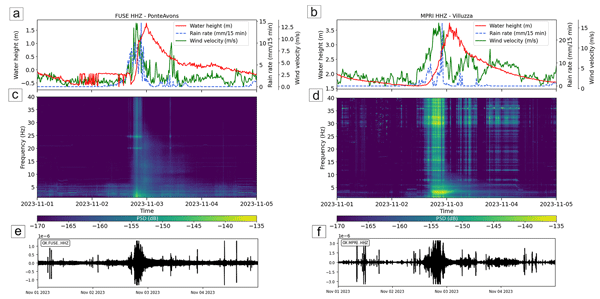
This work presents a multiparametric analysis of hydrological, meteorological, and seismic data to characterize a major flood event in the Tagliamento River (Italy). River-generated seismic noise, related to flow and bedload transport, is detected up to 3 km from the channel. Cross-correlation and polarization analyses of the November 2023 "Ciàran Storm" reveal a clear PSD (Power Spectral Density)–water level relationship with hysteresis.
Maddalena Perrini, Grazia De Landro, Gianluca Gola, Filippo Accomando, Maurizio Fedi, Vanja Kastelic, Pietro Tizzani, Deborah Di Naccio, Michele Matteo Cosimo Carafa, Giuseppe Falcone, Matteo Taroni, Aldo Zollo, and Raffaele Castaldo
Earth Syst. Sci. Data Discuss., https://doi.org/10.5194/essd-2026-513, https://doi.org/10.5194/essd-2026-513, 2026
Preprint under review for ESSD
Short summary
Short summary
We present a freely available three-dimensional model of the Earth’s crust beneath the Southern Apennines, Italy, created by combining geological maps, geophysical observations, laboratory measurements, and borehole data. The dataset is fully documented and openly accessible, allowing researchers to reproduce the model and reuse it for studies of earthquakes, natural resources, geothermal energy, and the geological evolution of the region.
Lucía Escudero, Maurizio Mattesini, Aldo Zollo, Grazia De Landro, Luca Elia, and Elisa Buforn
EGUsphere, https://doi.org/10.5194/egusphere-2026-4270, https://doi.org/10.5194/egusphere-2026-4270, 2026
This preprint is open for discussion and under review for Natural Hazards and Earth System Sciences (NHESS).
Short summary
Short summary
We assessed two methods for real-time earthquake location, RTLoc and MParLoc, to improve earthquake early warning in the Ibero-Maghrebian Region. Using earthquakes recorded between 2011 and 2026, we found that the newer MParLoc method provides more accurate locations during the first stages after earthquake detection, when limited information is available. This improves estimates of expected ground shaking, supports earlier alerts, and enhances emergency response and public safety measures.
Simona Colombelli, Aldo Zollo, Francesco Carotenuto, Alessandro Caruso, Luca Elia, Gaetano Festa, Sergio Gammaldi, Antonio Giovanni Iaccarino, Giovanni Iannaccone, Alberto Mauro, Matteo Picozzi, Giulia Polimanti, Rosario Riccio, Stefania Tarantino, Francesco Cirillo, Andrea Vecchi, and Franco Iacobini
Nat. Hazards Earth Syst. Sci., 26, 299–314, https://doi.org/10.5194/nhess-26-299-2026, https://doi.org/10.5194/nhess-26-299-2026, 2026
Short summary
Short summary
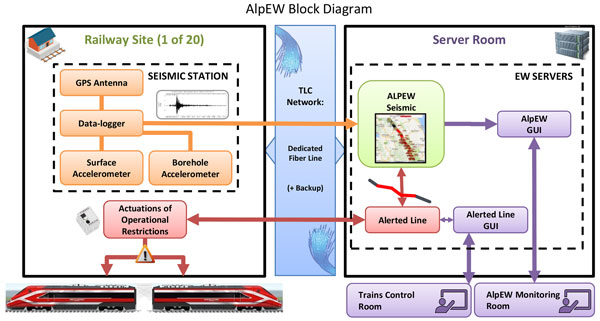
The first Italian Earthquake Early Warning system protects the Naples-Rome high-speed railway by detecting earthquakes in real time and sending alerts within seconds. Using seismic sensors and smart algorithms, it slows or stops trains only where needed, avoiding full-line shutdowns. Directly linked to train control, it boosts safety and minimizes disruption during potentially damaging earthquakes.
Ssu-Ting Lai, Kyaw Moe Oo, Yin Myo Min Htwe, Tin Yi, Htay Htay Than, Oo Than, Zaw Min, Tun Minn Oo, Phyo Maung Maung, Dino Bindi, Fabrice Cotton, Peter L. Evans, Andres Heinloo, Laura Hillmann, Joachim Saul, Christoph Sens-Schönfelder, Angelo Strollo, Frederik Tilmann, Graeme Weatherill, Ming-Hsuan Yen, Riccardo Zaccarelli, Thomas Zieke, and Claus Milkereit
Earth Syst. Sci. Data, 17, 5149–5164, https://doi.org/10.5194/essd-17-5149-2025, https://doi.org/10.5194/essd-17-5149-2025, 2025
Short summary
Short summary
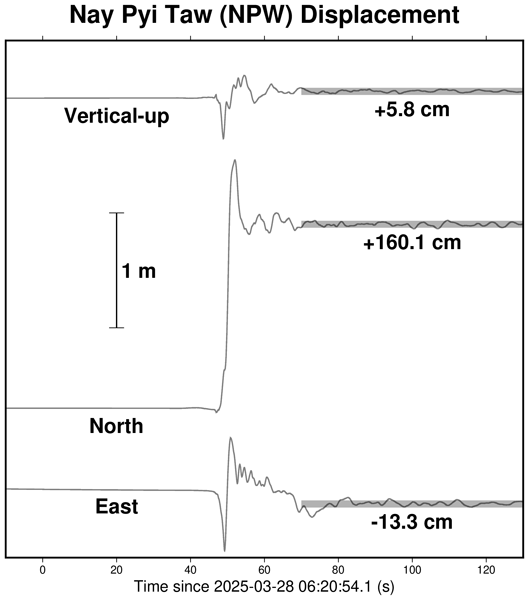
On 28 March 2025, Myanmar was struck by a destructive Mw 7.7 earthquake. We present detailed information on the data and metadata availability for the Naypyitaw station (NPW) in Myanmar, the only local strong-motion station located near the Sagaing Fault that recorded the mainshock without saturation. We also highlight the collaborative effort that made the installation of NPW possible. The high-quality recordings from NPW offer critical insights for seismic hazard assessment in the region.
Leonardo Colavitti, Dino Bindi, Gabriele Tarchini, Davide Scafidi, Matteo Picozzi, and Daniele Spallarossa
Earth Syst. Sci. Data, 17, 3089–3108, https://doi.org/10.5194/essd-17-3089-2025, https://doi.org/10.5194/essd-17-3089-2025, 2025
Short summary
Short summary
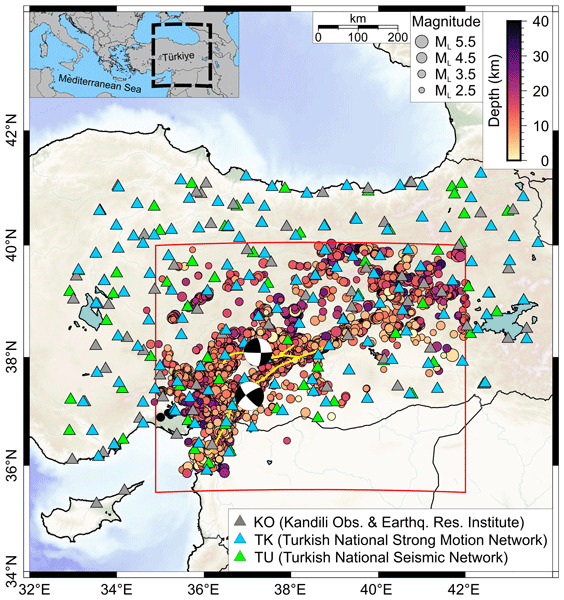
This work describes a dataset of 5 years of earthquakes with magnitude range of 2.0–5.5 from January 2019 along the East Anatolian Fault, Türkiye. All events were located using the non-linear location algorithm, providing reliable horizontal locations and depths. The distributed product includes Fourier amplitude spectra, peak ground acceleration and peak ground velocity; we strongly believe that the creation of high-quality open-source datasets is crucial for any seismological investigation.

Cesare Comina, Guido Maria Adinolfi, Carlo Bertok, Andrea Bertea, Vittorio Giraud, and Pierluigi Pieruccini
Earth Syst. Sci. Data, 17, 2175–2191, https://doi.org/10.5194/essd-17-2175-2025, https://doi.org/10.5194/essd-17-2175-2025, 2025
Short summary
Short summary
Estimates of earthquake ground motion rely on evaluating soil and rock profiles, with shear-wave velocity (Vs) as a key factor. Uncertainty in Vs impacts seismic hazard predictions. Stochastic procedures model this uncertainty but must be calibrated using detailed geological data and Vs databases. This paper provides a new Vs profile database for Piedmont (northwest Italy), integrating geological modelling and geophysical data and supporting similar studies in other regions.
Davide Scafidi, Alfio Viganò, Jacopo Boaga, Valeria Cascone, Simone Barani, Daniele Spallarossa, Gabriele Ferretti, Mauro Carli, and Giancarlo De Marchi
Nat. Hazards Earth Syst. Sci., 24, 1249–1260, https://doi.org/10.5194/nhess-24-1249-2024, https://doi.org/10.5194/nhess-24-1249-2024, 2024
Short summary
Short summary
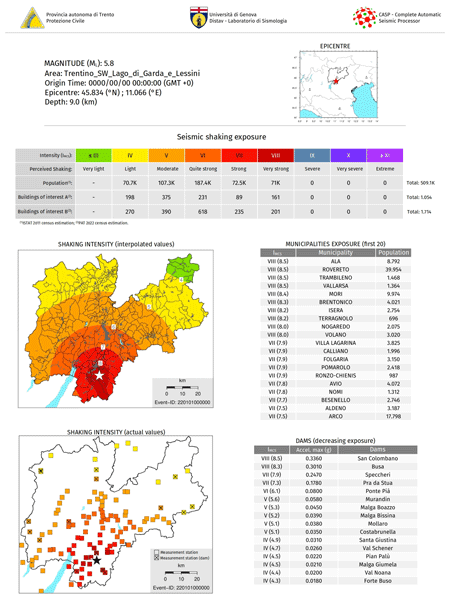
Our paper concerns the use of a dense network of low-cost seismic accelerometers in populated areas to achieve rapid and reliable estimation of exposure maps in Trentino (northeast Italy). These additional data, in conjunction with the automatic monitoring procedure, allow us to obtain dense measurements which only rely on actual recorded data, avoiding the use of ground motion prediction equations. This leads to a more reliable picture of the actual ground shaking.
Karina Loviknes, Fabrice Cotton, and Graeme Weatherill
Nat. Hazards Earth Syst. Sci., 24, 1223–1247, https://doi.org/10.5194/nhess-24-1223-2024, https://doi.org/10.5194/nhess-24-1223-2024, 2024
Short summary
Short summary
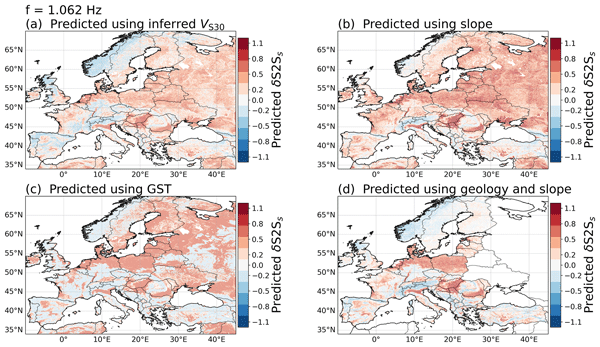
Earthquake ground shaking can be strongly affected by local geology and is often amplified by soft sediments. In this study, we introduce a global geomorphological model for sediment thickness as a protentional parameter for predicting this site amplification. The results show that including geology and geomorphology in site-amplification predictions adds important value and that global or regional models for sediment thickness from fields beyond engineering seismology are worth considering.
Dino Bindi, Riccardo Zaccarelli, Angelo Strollo, Domenico Di Giacomo, Andres Heinloo, Peter Evans, Fabrice Cotton, and Frederik Tilmann
Earth Syst. Sci. Data, 16, 1733–1745, https://doi.org/10.5194/essd-16-1733-2024, https://doi.org/10.5194/essd-16-1733-2024, 2024
Short summary
Short summary
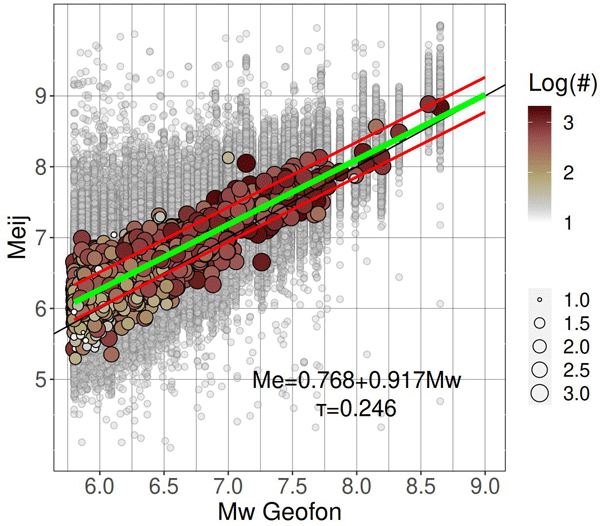
The size of an earthquake is often described by a single number called the magnitude. Among the possible magnitude scales, the seismic moment (Mw) and the radiated energy (Me) scales are based on physical parameters describing the rupture process. Since these two magnitude scales provide complementary information that can be used for seismic hazard assessment and for seismic risk mitigation, we complement the Mw catalog disseminated by the GEOFON Data Centre with Me values.
Maria Vittoria Gargiulo, Ferdinando Napolitano, Ortensia Amoroso, Raffaella Russo, and Paolo Capuano
EGUsphere, https://doi.org/10.5194/egusphere-2022-1231, https://doi.org/10.5194/egusphere-2022-1231, 2022
Preprint archived
Short summary
Short summary
We developed an educational protocol on seismic risk dedicated to high school students combining a seminar with a serious game. By using an evaluation protocol, we managed to assess the impact of our protocol when communicating and teaching the concept of seismic risk on both risk perception and interest in science and geophysics. The results are very encouraging and show that the students perceived the protocol as effective both in the basic concepts of seismology and in risk perception.

Guido Maria Adinolfi, Raffaella De Matteis, Rita de Nardis, and Aldo Zollo
Solid Earth, 13, 65–83, https://doi.org/10.5194/se-13-65-2022, https://doi.org/10.5194/se-13-65-2022, 2022
Short summary
Short summary
We propose a methodology useful to evaluate (1) the reliability of a focal mechanism solution inferred by the inversion of seismological data and (2) the performance of a seismic network, operated to monitor natural or induced seismicity, to assess focal mechanism solutions. As a test case, we studied the focal mechanism reliability by using synthetic data computed for ISNet, a local seismic network monitoring the Irpinia fault system (southern Italy).
Cited articles
Adil, M., Palo, M., Zollo, A., Orefice, A., and Dell'Elce, G.: Using Repeating Microearthquakes to Infer Medium Velocity Variations at Val d'Agri Area (Southern Italy), IEEE J. Select. Top. Appl. Earth Obs. Remote Sens., 19, 2189–2199, https://doi.org/10.1109/JSTARS.2025.3643734, 2025.
Adinolfi, G. M., Cesca, S., Picozzi, M., Heimann, S., and Zollo, A.: Detection of weak seismic sequences based on arrival time coherence and empiric network detectability: an application at a near fault observatory, Geophys. J. Int., 218, 2054–2065, https://doi.org/10.1093/gji/ggz248, 2019.
Amoroso, O., Ascione, A., Mazzoli, S., Virieux, J., and Zollo, A.: Seismic imaging of a fluid storage in the actively extending Apennine mountain belt, southern Italy, Geophys. Res. Lett., 41, 3802–3809, https://doi.org/10.1002/2014GL060070, 2014.
Amoroso, O., Russo, G., De Landro, G., Zollo, A., Garambois, S., Mazzoli, S., Parente, M., and Virieux, J.: From velocity and attenuation tomography to rock physical modeling: Inferences on fluid-driven earthquake processes at the Irpinia fault system in southern Italy, Geophys. Res. Lett., 44, 6752–6760, https://doi.org/10.1002/2016GL072346, 2017.
Bello, S., de Nardis, R., Scarpa, R., Brozzetti, F., Cirillo, D., Ferrarini, F., di Lieto, B., Arrowsmith, R. J., and Lavecchia, G.: Fault Pattern and Seismotectonic Style of the Campania – Lucania 1980 Earthquake (Mw 6.9, Southern Italy): New Multidisciplinary Constraints, Front. Earth Sci., 8, https://doi.org/10.3389/feart.2020.608063, 2021.
Ben-Zion, Y., Vernon, F. L., Ozakin, Y., Zigone, D., Ross, Z. E., Meng, H., White, M., Reyes, J., Hollis, D., and Barklage, M.: Basic data features and results from a spatially dense seismic array on the San Jacinto fault zone, Geophys. J. Int., 202, 370–380, https://doi.org/10.1093/gji/ggv142, 2015.
Bernard, P. and Zollo, A.: The Irpinia (Italy) 1980 earthquake: Detailed analysis of a complex normal faulting, J. Geophys. Res.-Solid, 94, 1631–1647, https://doi.org/10.1029/JB094iB02p01631, 1989.
Beyreuther, M., Barsch, R., Krischer, L., Megies, T., Behr, Y., and Wassermann, J.: ObsPy: A Python Toolbox for Seismology, Seismol. Res. Lett., 81, 530–533, https://doi.org/10.1785/gssrl.81.3.530, 2010.
Bindi, D., Cotton, F., Picozzi, M., and Zollo, A.: The Irpinia seismic Array, GFZ Data Services, Dataset/Seismic Network [data set], https://doi.org/10.14470/MX7576871994, 2021.
Caracausi, A., Buttitta, D., Picozzi, M., Paternoster, M., and Stabile, T. A.: Earthquakes control the impulsive nature of crustal helium degassing to the atmosphere, Commun. Earth Environ., 3, 224, https://doi.org/10.1038/s43247-022-00549-9, 2022.
Chamberlain, C. J., Hopp, C. J., Boese, C. M., Warren-Smith, E., Chambers, D., Chu, S. X., Michailos, K., and Townend, J.: EQcorrscan: Repeating and Near-Repeating Earthquake Detection and Analysis in Python, Seismol. Res. Lett., 89, 173–181, https://doi.org/10.1785/0220170151, 2018.
Chiaraluce, L., Festa, G., Bernard, P., Caracausi, A., Carluccio, I., Clinton, J., Di Stefano, R., Elia, L., Evangelidis, C., Ergintav, S., Jianu, O., Kaviri, G., Marmureanu, A., Sebela, S., and Sokos, E.: The Near Fault Observatory community in Europe: a new resource for faulting and hazard studies, Array, 65, DM316, https://doi.org/10.4401/ag-8778, 2022.
Chiodini, G., Cardellini, C., Amato, A., Boschi, E., Caliro, S., Frondini, F., and Ventura, G.: Carbon dioxide Earth degassing and seismogenesis in central and southern Italy, Geophys. Res. Lett., 31, https://doi.org/10.1029/2004GL019480, 2004.
D'Agostino, N., Silverii, F., Amoroso, O., Convertito, V., Fiorillo, F., Ventafridda, G., and Zollo, A.: Crustal Deformation and Seismicity Modulated by Groundwater Recharge of Karst Aquifers, Geophys. Res. Lett., 45, 12253—12262, https://doi.org/10.1029/2018GL079794, 2018.
De Landro, G., Picozzi, M., Russo, G., Adinolfi, G. M., and Zollo, A.: Seismic networks layout optimization for a high-resolution monitoring of induced micro-seismicity, J. Seismol., 24, 953–966, https://doi.org/10.1007/s10950-019-09880-9, 2020.
De Landro, G., Amoroso, O., Russo, G., D'Agostino, N., Esposito, R., Emolo, A., and Zollo, A.: Decade-long monitoring of seismic velocity changes at the Irpinia fault system (southern Italy) reveals pore pressure pulsations, Sci. Rep., 12, 1247, https://doi.org/10.1038/s41598-022-05365-x, 2022.
DISS Working Group: Database of Individual Seismogenic Sources (DISS), Version 3.3.1: A compilation of potential sources for earthquakes larger than M 5.5 in Italy and surrounding areas, INGV – Istituto Nazionale di Geofisica e Vulcanologia, https://doi.org/10.13127/diss3.3.1, 2025.
Di Luccio, F., Ventura, G., Di Giovambattista, R., Piscini, A., and Cinti, F. R.: Normal faults and thrusts reactivated by deep fluids: The 6 April 2009 M 6.3 L'Aquila earthquake, central Italy, J. Geophys. Res.-Solid, 115, https://doi.org/10.1029/2009JB007190, 2010.
Festa, G., Adinolfi, G. M., Caruso, A., Colombelli, S., De Landro, G., Elia, L., Emolo, A., Picozzi, M., Scala, A., Carotenuto, F., Gammaldi, S., Iaccarino, A. G., Nazeri, S., Riccio, R., Russo, G., Tarantino, S., and Zollo, A.: Insights into Mechanical Properties of the 1980 Irpinia Fault System from the Analysis of a Seismic Sequence, Geosciences, 11, 28, https://doi.org/10.3390/geosciences11010028, 2021.
Gradon, C., Roux, P., Moreau, L., Lecointre, A., and Ben Zion, Y.: Characterization with dense array data of seismic sources in the shallow part of the San Jacinto fault zone, Geophys. J. Int., 224, 1133–1140, https://doi.org/10.1093/gji/ggaa411, 2020.
Heit, B., Cristiano, L., Haberland, C., Tilmann, F., Pesaresi, D., Jia, Y., Hausmann, H., Hemmleb, S., Haxter, M., Zieke, T., Jaeckl, K.-H., Schloemer, A., and Weber, M.: The SWATH-D seismological network in the Eastern Alps, Seismol. Soc. Am., 92, 1592–1609, https://doi.org/10.1785/0220200377, 2021.
Helmholtz Centre Potsdam – GFZ German Research Centre for Geosciences and GEMPA GmbH: The SeisComP seismological software package, GFZ [code], https://doi.org/10.5880/GFZ.2.4.2020.003, 2008.
Iannaccone, G., Zollo, A., Elia, L., Convertito, V., Satriano, C., Martino, C., Festa, G., Lancieri, M., Bobbio, A., Stabile, T. A., Vassallo, M., and Emolo, A: A prototype system for earthquake early-warning and alert management in southern Italy, Bull. Earthq. Eng., 8, 1105–1129, https://doi.org/10.1007/s10518-009-9131-8, 2010.
Improta, L., De Gori, P., and Chiarabba, C.: New insights into crustal structure, Cenozoic magmatism, CO2 degassing, and seismogenesis in the southern Apennines and Irpinia region from local earthquake tomography, J. Geophys. Res.-Solid, 119, 8283–8311, https://doi.org/10.1002/2013JB010890, 2014.
McNamara, D. E. and Buland, R. P.: Ambient Noise Levels in the Continental United States, Bull. Seismol. Soc. Am., 94, 1517–1527, https://doi.org/10.1785/012003001, 2004.
Moratto, L., Panebianco, S., Satriano, C., Stabile, T. A., and Priolo, E.: Using ambient noise k0 estimation to improve microearthquake source parameters assessment in the High Agri Valley, Geophys. J. Int., 242, ggaf191, https://doi.org/10.1093/gji/ggaf191, 2025.
Mousavi, S. M., Sheng, Y., Zhu, W., and Beroza, G. C.: STanford EArthquake Dataset (STEAD): A Global Data Set of Seismic Signals for AI, IEEE Access, 7, 179464–179476, https://doi.org/10.1109/ACCESS.2019.2947848, 2019.
Mousavi, S. M., Ellsworth, W. L., Zhu, W., Chuang, L. Y., and Beroza, G. C.: Earthquake transformer – an attentive deep-learning model for simultaneous earthquake detection and phase picking, Nat. Commun., 11, 3952, https://doi.org/10.1038/s41467-020-17591-w, 2020.
Palo, M., Picozzi, M., De Landro, G., and Zollo, A.: Microseismicity clustering and mechanic properties reveal fault segmentation in southern Italy, Tectonophysics, 856, 229849, https://doi.org/10.1016/j.tecto.2023.229849, 2023.
Panebianco, S., Satriano, C., Vivone, G., Picozzi, M., Strollo, A., and Stabile, T. A.: Automated Detection and Machine Learning-Based Classification of Seismic Tremors Associated With a Non-Volcanic Gas Emission (Mefite d'Ansanto, Southern Italy), Geochem. Geophy. Geosy., 25, e2023GC011286, https://doi.org/10.1029/2023GC011286, 2024.
Peterson, J.: Observations and modeling of seismic background noise, US Geol. Surv. Open-File Rept. 93, 322, 95, US Geological Survey, https://doi.org/10.3133/ofr93322, 1993.
Picozzi, M., Milkereit, C., Fleming, K., Çakti, E., and Zschau, J.: A generalized zero-lag cross-correlation approach for Rapid Earthquake Localization (REL): the example of the Istanbul Megacity Rapid Response System, J. Seismol., 15, 557–578, https://doi.org/10.1007/s10950-011-9232-0, 2011.
Picozzi, M., Bindi, D., Zollo, A., Festa, G., and Spallarossa, D.: Detecting long-lasting transients of earthquake activity on a fault system by monitoring apparent stress, ground motion and clustering, Sci. Rep., 9, 16268, https://doi.org/10.1038/s41598-019-52756-8, 2019.
Picozzi, M., Spallarossa, D., Iaccarino, A. G., and Bindi, D.: Temporal Evolution of Radiated Energy to Seismic Moment Scaling During the Preparatory Phase of the Mw 6.1, 2009 L'Aquila Earthquake (Italy), Geophys. Res. Lett., 49, e2021GL097382, https://doi.org/10.1029/2021GL097382, 2022a.
Picozzi, M., Bindi, D., Festa, G., Cotton, F., Scala, A., and D'Agostino, N.: Spatiotemporal Evolution of Microseismicity Seismic Source Properties at the Irpinia Near-Fault Observatory, Southern Italy, Bull. Seismol. Soc. Am., 112, 226–242, https://doi.org/10.1785/0120210064, 2022b.
Picozzi, M., Cotton, F., Bindi, D., Emolo, A., Maria Adinolfi, G., Spallarossa, D., and Zollo, A.: Spatiotemporal Evolution of Ground-Motion Intensity at the Irpinia Near-Fault Observatory, Southern Italy, Bull. Seismol. Soc. Am., 112, 243–261, https://doi.org/10.1785/0120210153, 2022c.
Rost, S. and Thomas, C.: Improving Seismic Resolution Through Array Processing Techniques, Surv. Geophys., 30, 271–299, https://doi.org/10.1007/s10712-009-9070-6, 2009.
Rovida, A., Locati, M., Camassi, R., Lolli, B., and Gasperini, P.: The Italian earthquake catalogue CPTI15, Bull. Earthq. Eng., 18, 2953–2984, https://doi.org/10.1007/s10518-020-00818-y, 2020.
Rovida, A., Locati, M., Camassi, R., Lolli, B., Gasperini, P., and Antonucci, A.: Catalogo Parametrico dei Terremoti Italiani (CPTI15), versione 4.0, INGV – Istituto Nazionale di Geofisica e Vulcanologia [data set], https://doi.org/10.13127/cpti/cpti15.4, 2022.
Scala, A., Adinolfi, G. M., Picozzi, M., Scotto Di Uccio, F., Festa, G., De Landro, G., Priolo, E., Parolai, S., Riccio, R., and Romanelli, M.: Monitoring the Microseismicity through a Dense Seismic Array and a Similarity Search Detection Technique: Application to the Seismic Monitoring of Collalto Gas-Storage, North Italy, Energies, 15, 3504, https://doi.org/10.3390/en15103504, 2022.
Scotto di Uccio, F., Scala, A., Festa, G., Picozzi, M., and Beroza, G. C.: Comparing and integrating artificial intelligence and similarity search detection techniques: application to seismic sequences in Southern Italy, Geophys. J. Int., 233, 861–874, https://doi.org/10.1093/gji/ggac487, 2023.
Scotto di Uccio, F., Michele, M., Strumia, C., Supino, M., Beroza, G. C., Chiaraluce, L., D'Agostino, N., and Festa, G.: Characterization and Evolution of Seismic Sequences in the Normal Fault Environment of the Southern Apennines, J. Geophys. Res.-Solid, 129, e2023JB028644, https://doi.org/10.1029/2023JB028644, 2024.
Scotto di Uccio, F., Muzellec, T., Scala, A., De Landro, G., Camanni, G., Carotenuto, F., Elia, L., Picozzi, M., Zollo, A., Strumia, C., Beroza, G., and Festa, G.: Enhanced seismic catalog for the seismicity observed during the DETECT experiment, Southern Italy, Zenodo [data set], https://doi.org/10.5281/zenodo.15372023, 2025.
Scotto di Uccio, F., Muzellec, T., Scala, A., De Landro, G., Camanni, G., Carotenuto, F., Elia, L., Picozzi, M., Zollo, A., Strumia, C., Beroza, G. C., and Festa, G.: Enhancing the resolution of microseismicity through dense array monitoring in complex extensional settings, Sci. Rep., 16, 5639, https://doi.org/10.1038/s41598-026-35586-3, 2026.
Stabile, T. A., Satriano, C., Orefice, A., Festa, G., and Zollo, A.: Anatomy of a microearthquake sequence on an active normal fault, Sci. Rep., 2, 410, https://doi.org/10.1038/srep00410, 2012.
Stabile, T. A., Vlček, J., Wcisło, M., and Serlenga, V.: Analysis of the 2016–2018 fluid-injection induced seismicity in the High Agri Valley (southern Italy) from improved detections using template matching, Sci. Rep., 11, 20630, https://doi.org/10.1038/s41598-021-00047-6, 2021.
Strollo, A., Cambaz, D., Clinton, J., Danecek, P., Evangelidis, C. P., Marmureanu, A., Ottemöller, L., Pedersen, H., Sleeman, R., Stammler, K., Armbruster, D., Bienkowski, J., Boukouras, K., Evans, P. L., Fares, M., Neagoe, C., Heimers, S., Heinloo, A., Hoffmann, M., Kaestli, P., Lauciani, V., Michalek, J., Muhire, E. O., Ozer, M., Palangeanu, L., Pardo, C., Quinteros, J., Quintiliani, M., Jara-Salvador, J. A., Schaeffer, J., Schloemer, A., and Triantafyllis, N.: EIDA: The European integrated data archive and service infrastructure within ORFEUS, Seismol. Soc. Am., 92, 1788–1795, https://doi.org/10.1785/0220200413, 2021.
Tarantino, S., Poli, P., D'Agostino, N., Vassallo, M., Festa, G., Ventafridda, G., and Zollo, A.: Non-linear elasticity, earthquake triggering and seasonal hydrological forcing along the Irpinia fault, Southern Italy, Nat. Commun., 15, 9821, https://doi.org/10.1038/s41467-024-54094-4, 2024.
Trani, L., Sleeman, R., Koymans, M., and EIDA team: WFCatalog Web Service Specification, version 0.22, https://www.orfeus-eu.org/documents/WFCatalog_Specification-v0.22.pdf (last access: 14 October 2026), 2016.
Short summary
The DETECT experiment provides a novel dataset to showcase how dense seismic sensor networks can improve monitoring of complex fault systems. This survey aims to collect seismic waveforms near seismic sources to better image faults, understand their behavior between earthquakes, and track changes that may anticipate a larger event. The data collected during the survey offer potential for advancing methodologies in earthquake identification and source characterization.
The DETECT experiment provides a novel dataset to showcase how dense seismic sensor networks can...


Altmetrics
Final-revised paper
Preprint