Articles | Volume 18, issue 1
https://doi.org/10.5194/essd-18-535-2026
© Author(s) 2026. This work is distributed under
the Creative Commons Attribution 4.0 License.
the Creative Commons Attribution 4.0 License.
https://doi.org/10.5194/essd-18-535-2026
© Author(s) 2026. This work is distributed under
the Creative Commons Attribution 4.0 License.
the Creative Commons Attribution 4.0 License.
Data description article
| 
21 Jan 2026
Data description article |
| 21 Jan 2026
| 21 Jan 2026
A satellite-based ice fraction record for small water bodies of the Arctic Coastal Plain (2017 to 2023)
Numerical Terradynamic Simulation Group, University of Montana, Missoula MT, USA
Jinyang Du
CORRESPONDING AUTHOR

Numerical Terradynamic Simulation Group, University of Montana, Missoula MT, USA
John S. Kimball
Numerical Terradynamic Simulation Group, University of Montana, Missoula MT, USA
Xiao Cheng
CORRESPONDING AUTHOR
School of Geospatial Engineering and Science, Sun Yat-sen University, and Southern Marine Science and Engineering Guangdong Laboratory (Zhuhai), Zhuhai 519082, China
J. Patrick Donnelly
Numerical Terradynamic Simulation Group, University of Montana, Missoula MT, USA
Ducks Unlimited Inc., Missoula MT, USA
Jennifer D. Watts
Woodwell Climate Research Center, Falmouth, MA, 02540, USA
Annett Bartsch
b.geos, Industriestrasse 1, 2100 Korneuburg, Austria
Related authors
No articles found.
Tazio Strozzi, Barbara Widhalm, Nina Jones, Julia Boike, Sofia Antonova, Birgit Heim, Sebastian Westermann, Andreas Kääb, and Annett Bartsch
EGUsphere, https://doi.org/10.5194/egusphere-2026-5477, https://doi.org/10.5194/egusphere-2026-5477, 2026
This preprint is open for discussion and under review for Earth Observation (EO).
Short summary
Short summary
Monitoring long-term surface subsidence induced by ground ice thaw across the pan-Arctic is crucial to detect permafrost changes and assess impacts caused by recent atmospheric warming. Using Sentinel-1 satellite radar data, we successfully measured subsidence rates in Siberia’s Lena Delta and found that they vary remarkably among the three main geomorphological units. To enable continuous, large-scale monitoring, satellite data records must maintain coherence from one summer season to the next.
Rémi Madelon, K. Arthur Endsley, John S. Kimball, Gabriëlle J. M. De Lannoy, Oliver Sonnentag, Haley Alcock, Alex Mavrovic, Scott N. Williamson, Vincent Maire, Arnaud Mialon, and Alexandre Roy
Biogeosciences, 23, 6359–6407, https://doi.org/10.5194/bg-23-6359-2026, https://doi.org/10.5194/bg-23-6359-2026, 2026
Short summary
Short summary
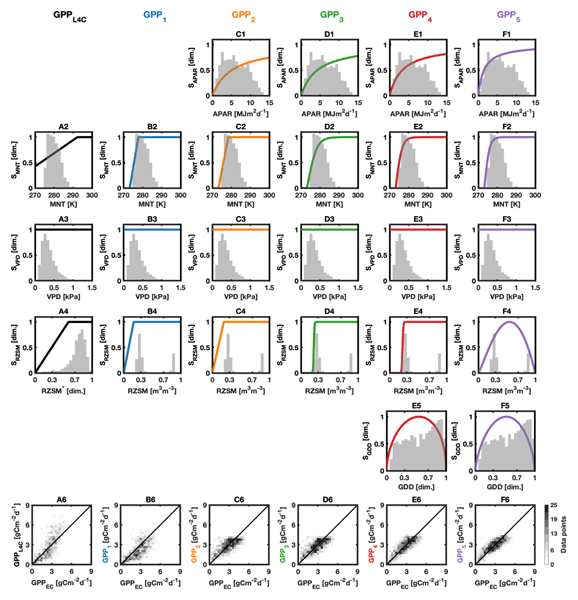
This study aims to improve estimates of carbon dioxide release and uptake in the North American Arctic and subarctic regions. Several modeling approaches were tested, showing that a better representation of sunlight and temperature effects on ecosystems leads to improved estimates. This work provides new perspectives to better assess whether these regions act as sources or sinks of greenhouse gases and how they may influence the climate system by amplifying or slowing global warming.
Lian He, Xinning Peng, Yi Zhou, Fengming Hui, Zhuoqi Chen, Liangbing Chen, Xianwei Wang, and Xiao Cheng
Earth Syst. Sci. Data Discuss., https://doi.org/10.5194/essd-2026-626, https://doi.org/10.5194/essd-2026-626, 2026
Preprint under review for ESSD
Short summary
Short summary
This study presents the SYSU SnowDepth dataset (1978–2025), the longest pan-Arctic snow depth on sea ice record covering both first-year ice and multi-year ice. Derived from passive microwave sensors using a new algorithm incorporating GRV(37/19), snow density, and time factor, it was validated against independent observations. Accuracy was high with root-mean-error-square (RMSE) values ranging from ~3 to 17 cm, offering vital support for climate and sea ice modeling.
Anna-Maria Virkkala, Isabel Wargowsky, Judith Vogt, McKenzie A. Kuhn, Simran Madaan, Tiffany Windholz, Kyle A. Arndt, Gerard Rocher-Ros, Mathias Göckede, David Olefeldt, Edward A. G. Schuur, David Bastviken, Richard O'Keefe, Brendan M. Rogers, Jennifer D. Watts, Kelcy Kent, Kristoffer Aalstad, Kelly Aho, Joonatan Ala-Könni, Haley Alcock, Inge Althuizen, Christopher D. Arp, Jun Asanuma, Mika Aurela, Sivakiruthika Balathandayuthabani, Katrin Attermeyer, Alan Barr, Maialen Barret, Ochirbat Batkhishig, Christina Biasi, Mats P. Björkman, Andrew Black, Elena Blanc-Betes, Pascal Bodmer, Julia Boike, Abdullah Bolek, Frédéric Bouchard, Ingeborg Bussmann, Lea Cabrol, Eleonora Canfora, Sean Carey, Karel Castro-Morales, Namyi Chae, Andreas Christen, Torben R. Christensen, Casper T. Christiansen, Housen Chu, Graham Clark, Francois Clayer, Patrick Crill, Christopher Cunada, Scott J. Davidson, Joshua F. Dean, Sigrid Dengel, Matteo Detto, Catherine Dieleman, Florent Domine, Egor Dyukarev, Colin Edgar, Bo Elberling, Craig A. Emmerton, Eugenie Euskirchen, Grant Falvo, Thomas Friborg, Michelle Garneau, Mariasilvia Giamberini, Mikhail V. Glagolev, Miquel A. Gonzalez-Meler, Gustaf Granath, Jón Guðmundsson, Konsta Happonen, Yoshinobu Harazono, Lorna Harris, Josh Hashemi, Nicholas Hasson, Janna Heerah, Liam Heffernan, Manuel Helbig, Warren Helgason, Michal Heliasz, Greg Henry, Geert Hensgens, Tetsuya Hiyama, Beth Holmes, Macall Hock, David Holl, Jutta Holst, Thomas Holst, Gabriel Hould-Gosselin, Elyn Humphreys, Jacqueline Hung, Jussi Huotari, Hiroki Ikawa, Danil V. Ilyasov, Mamoru Ishikawa, Go Iwahana, Hiroki Iwata, Marcin Antoni Jackowicz-Korczynski, Joachim Jansen, Järvi Järveoja, Vincent E. J. Jassey, Rasmus Jensen, Katharina Jentzsch, Robert G. Jespersen, Carl-Fredrik Johannesson, Cheristy P. Jones, Anders Jonsson, Ji Young Jung, Sari Juutinen, Evan Kane, Jan Karlsson, Sergey Karsanaev, Kuno Kasak, Julia Kelly, Kasha Kempton, Marcus Klaus, George W. Kling, Natascha Kljun, Jacqueline Knutson, Hideki Kobayashi, John Kochendorfer, Kukka-Maaria Kohonen, Pasi Kolari, Mika Korkiakoski, Aino Korrensalo, Pirkko Kortelainen, Egle Koster, Kajar Koster, Ayumi Kotani, Praveena Krishnan, Juliya Kurbatova, Lars Kutzbach, Min Jung Kwon, Ethan D. Kyzivat, Jessica Lagroix, Theodore Langhorst, Elena Lapshina, Tuula Larmola, Klaus S. Larsen, Isabelle Laurion, Justin Ledman, Hanna Lee, A. Joshua Leffler, Lance Lesack, Anders Lindroth, David Lipson, Annalea Lohila, Efrén López-Blanco, Vincent L. St. Louis, Erik Lundin, Miska Luoto, Takashi Machimura, Marta Magnani, Avni Malhotra, Marja Maljanen, Ivan Mammarella, Elisa Männistö, Luca Belelli Marchesini, Phil Marsh, Pertti J. Martikainen, Maija E. Marushchak, Mikhail Mastepanov, Alex Mavrovic, Trofim Maximov, Christina Minions, Daniel F. Nadeau, Marco Montemayor, Tomoaki Morishita, Patrick Murphy, Erin Nicholls, Mats B. Nilsson, Anastasia Niyazova, Jenni Nordén, Koffi Dodji Noumonvi, Hannu Nykänen, Walter Oechel, Anne Ojala, Tomohiro Okadera, Sujan Pal, Alexey V. Panov, Tim Papakyriakou, Dario Papale, Sang-Jong Park, Frans-Jan W. Parmentier, Gilberto Pastorello, Mike Peacock, Matthias Peichl, Roman Petrov, Kyra St. Pierre, Norbert Pirk, Jessica Plein, Vilmantas Preskienis, Anatoly Prokushkin, Jukka Pumpanen, Hilary A. Rains, Niklas Rakos, Aleksi Räsänen, Helena Rautakoski, Riikka Rinnan, Janne Rinne, Adrian Rocha, Nigel Roulet, Alexandre Roy, Anna Rutgersson, Aleksandr F. Sabrekov, Torsten Sachs, Erik Sahlée, Alejandro Salazar, Henrique Oliveira Sawakuchi, Christopher Schulze, Roger Seco, Armando Sepulveda-Jauregui, Svetlana Serikova, Abbey Serrone, Hanna M. Silvennoinen, Sofie Sjogersten, June Skeeter, Jo Snöälv, Sebastian Sobek, Oliver Sonnentag, Emily H. Stanley, Maria Strack, Lena Strom, Patrick Sullivan, Ryan Sullivan, Anna Sytiuk, Torbern Tagesson, Pierre Taillardat, Julie Talbot, Suzanne E. Tank, Mario Tenuta, Irina Terenteva, Frederic Thalasso, Antoine Thiboult, Halldor Thorgeirsson, Fenix Garcia Tigreros, Margaret Torn, Amy Townsend-Small, Claire Treat, Alain Tremblay, Carlo Trotta, Eeva-Stiina Tuittila, Merritt Turetsky, Masahito Ueyama, Muhammad Umair, Aki Vähä, Lona van Delden, Maarten van Hardenbroek, Andrej Varlagin, Ruth K. Varner, Tarmo Virtanen, Elena Veretennikova, Timo Vesala, Carolina Voigt, Jorien E. Vonk, Robert Wagner, Katey Walter Anthony, Qinxue Wang, Masataka Watanabe, Hailey Webb, Jeffrey M. Welker, Andreas Westergaard-Nielsen, Sebastian Westermann, Jeffrey R. White, Christian Wille, Scott N. Williamson, Scott Zolkos, Donatella Zona, and Susan M. Natali
Earth Syst. Sci. Data, 18, 6357–6409, https://doi.org/10.5194/essd-18-6357-2026, https://doi.org/10.5194/essd-18-6357-2026, 2026
Short summary
Short summary
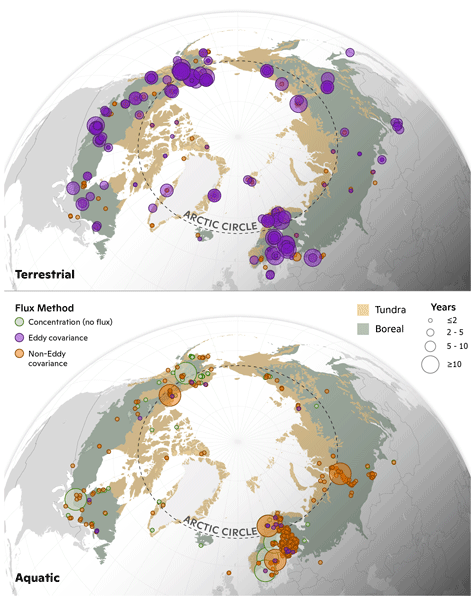
This dataset includes monthly measurements of carbon dioxide and methane exchange between land, water, and the atmosphere from over 1000 sites in Arctic and boreal regions. It combines measurements from a variety of ecosystems, including wetlands, forests, tundra, lakes, and rivers, gathered by over 260 researchers from 1984–2024. This dataset can be used to improve and reduce uncertainty in carbon budgets in order to strengthen our understanding of climate feedbacks in a warming world.
Barbara Widhalm, Annett Bartsch, and Benjamin Jones
The Cryosphere, 20, 4619–4654, https://doi.org/10.5194/tc-20-4619-2026, https://doi.org/10.5194/tc-20-4619-2026, 2026
Short summary
Short summary
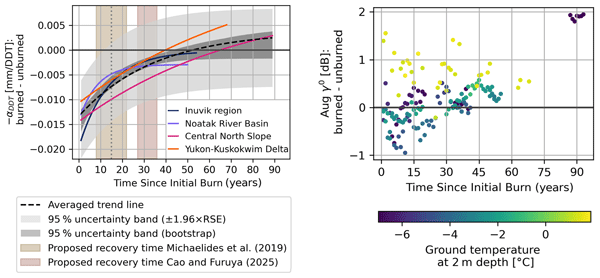
This study examines the impacts of wildfires on permafrost thaw in the Arctic spanning up to ~90 years post-fire and explores the potential of using radar satellite observations to enhance our understanding of environmental change. By assessing diverse high-latitude permafrost landscapes, we show that ground deformation anomalies after fires display similar patterns across regions, while radar backscatter varies depending on predominant ground temperatures.
Jinyang Du, K. Arthur Endsley, Kazem Bakian Dogaheh, John S. Kimball, Mahta Moghaddam, Thomas A. Douglas, Asem Melebari, Sepehr Eskandari, Jinhyuk E. Kim, Jane Whitcomb, Yuhuan Zhao, and Sophia Henze
The Cryosphere, 20, 4277–4291, https://doi.org/10.5194/tc-20-4277-2026, https://doi.org/10.5194/tc-20-4277-2026, 2026
Short summary
Short summary
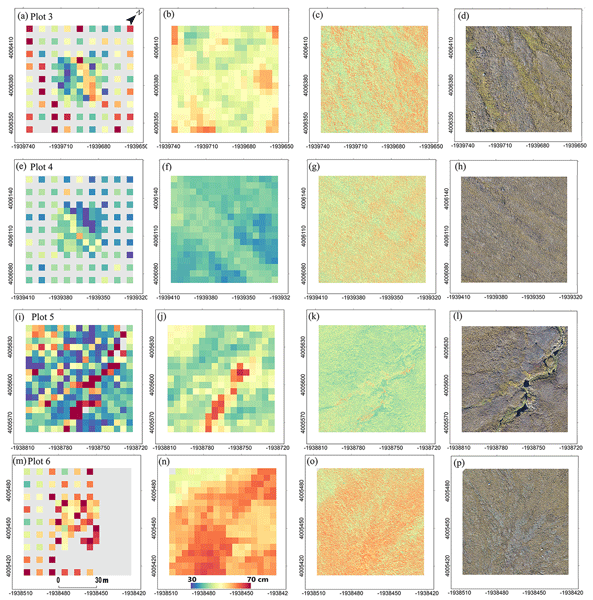
Active layer thickness (ALT) is a sensitive indicator of the thawing Alaskan frozen soil, which may lead to increased greenhouse gas emissions, vegetation changes, and infrastructure damage. This study represents a multi-scale assessment of ALT spatial variations using observations including intensive field sampling, and drone, airborne and satellite remote sensing. Our study allows for improved interpretation of remote sensing and process-based ALT simulations for the changing Arctic.
Shuo Wei, Lei Zheng, Qi Liang, Teng Li, and Xiao Cheng
Earth Syst. Sci. Data Discuss., https://doi.org/10.5194/essd-2026-353, https://doi.org/10.5194/essd-2026-353, 2026
Preprint under review for ESSD
Short summary
Short summary
Supraglacial lakes on Antarctica affect ice stability. Because tracking their rapid changes is difficult, we combined satellite images using artificial intelligence to map these lakes every eight days from 2000 to 2023. We found that most lakes are very short-lived and primarily form near the edges of the ice. This record helps scientists understand fast-melting processes and their impact on future global sea level rise.
Ziyu Yan, Yufang Ye, Georg Heygster, Bin Cheng, Carolina Gabarró, Ferran Hernández-Macià, and Xiao Cheng
EGUsphere, https://doi.org/10.5194/egusphere-2026-1680, https://doi.org/10.5194/egusphere-2026-1680, 2026
Short summary
Short summary
Passive microwave retrieval of snow depth remains constrained by snow and ice conditions. By combining the Snow Microwave Radiative Transfer model with global sensitivity analysis, this study quantifies how snow grain size, density, and sea ice type affect snow depth retrievability across channels. The small grain size of new snow limits retrieval performance and increases its sensitivity to sea ice type, while the use of the 89 GHz channel may help address this limitation.
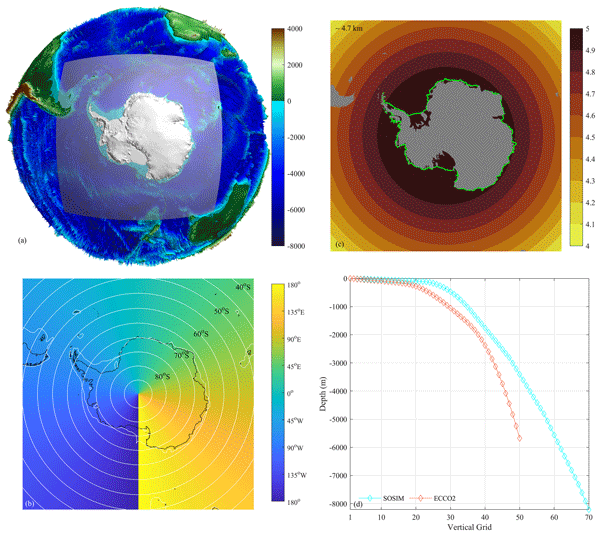
Chengyan Liu, Zhaomin Wang, Dake Chen, Xianxian Han, Hengling Leng, Xi Liang, Liangjun Yan, Xiang Li, Craig Stevens, Andrew McC. Hogg, Kazuya Kusahara, Kaihe Yamazaki, Kay I. Ohshima, Meng Zhou, Xiao Cheng, Dongxiao Wang, Changming Dong, Jiping Liu, Qinghua Yang, Xichen Li, Ruibo Lei, Minghu Ding, Zhaoru Zhang, Dujuan Kang, Di Qi, Tongya Liu, Jihai Dong, Lu An, Ru Chen, Tong Zhang, Xiaoming Hu, Bo Han, Haibo Bi, Qi Shu, Longjiang Mu, Shiming Xu, Hu Yang, Hailong Liu, Tingfeng Dou, Zhixuan Feng, Lei Zheng, Xueyuan Tang, Guitao Shi, Yongqing Cai, Bingrui Li, Yang Wu, Xia Lin, Wenjin Sun, Yu Liu, Kai Yu, Yu Zhang, Weizeng Shao, Xiaoyu Wang, Shaojun Zheng, Chengyi Yuan, Chunxia Zhou, Jian Liu, Yang Liu, Yue Xia, Xiaoyu Pan, Jiabao Zeng, Kechen Liu, Jiahao Fan, Chen Cheng, and Qi Li
Geosci. Model Dev., 19, 2985–3033, https://doi.org/10.5194/gmd-19-2985-2026, https://doi.org/10.5194/gmd-19-2985-2026, 2026
Short summary
Short summary
We developed a high-resolution computer model to simulate how the ocean, sea ice, and ice shelves interact around Antarctica. This helps us understand their critical role in global climate and sea-level rise. Our model successfully captures essential features like major currents and seasonal ice changes. Despite some remaining biases, it provides a useful tool for predicting future changes in this vital and rapidly evolving region.
Valeria Briones, Hélène Genet, Elchin Jafarov, Brendan Rogers, Jennifer Watts, Anna-Maria Virkkala, Annett Bartsch, Benjamin Maglio, Joshua Rady, and Susan Natali
Earth Syst. Sci. Data Discuss., https://doi.org/10.5194/essd-2026-29, https://doi.org/10.5194/essd-2026-29, 2026
Preprint under review for ESSD
Short summary
Short summary
Rapid warming is reshaping Arctic landscapes as frozen ground thaws, affecting ecosystems and climate. To better understand these changes, we created a map showing the distribution of land types such as forests, shrubs, and wetlands across the Arctic and northern regions. We combined several existing maps using computer-based pattern recognition to develop a harmonized circumpolar land cover dataset that maps ecosystems across the Arctic–Boreal region at 1-km resolution for the period 2000–2023.
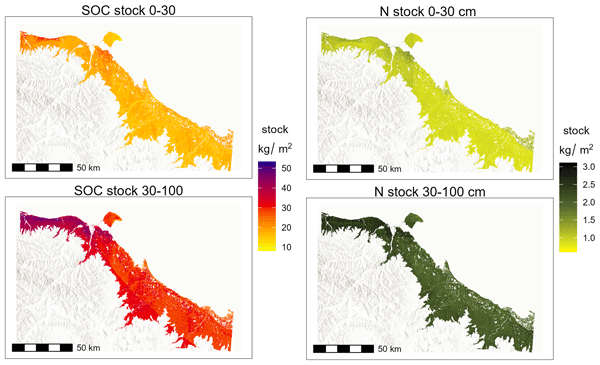
Julia Wagner, Juliane Wolter, Justine Ramage, Victoria Martin, Andreas Richter, Niek Jesse Speetjens, Jorien E. Vonk, Rachele Lodi, Annett Bartsch, Michael Fritz, Hugues Lantuit, and Gustaf Hugelius
SOIL, 12, 113–132, https://doi.org/10.5194/soil-12-113-2026, https://doi.org/10.5194/soil-12-113-2026, 2026
Short summary
Short summary
Permafrost soils store vast amounts of organic carbon, key to understanding climate change. This study uses machine learning and combines existing data with new field data to create detailed regional maps of soil carbon and nitrogen stocks for the Yukon coastal plain. The results show how soil properties vary across the landscape highlighting the importance of data selection for accurate predictions. These findings improve carbon storage estimates and may aid regional carbon budget assessments.
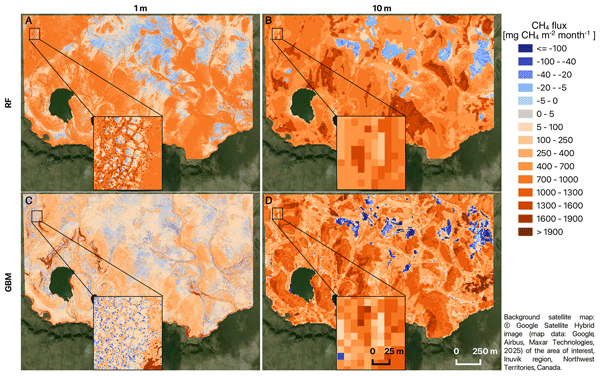
Kseniia Ivanova, Anna-Maria Virkkala, Victor Brovkin, Tobias Stacke, Barbara Widhalm, Annett Bartsch, Carolina Voigt, Oliver Sonnentag, and Mathias Göckede
Biogeosciences, 23, 233–262, https://doi.org/10.5194/bg-23-233-2026, https://doi.org/10.5194/bg-23-233-2026, 2026
Short summary
Short summary
We measured over 13,000 methane fluxes at a site in the Canadian Arctic and linked them with drone and free satellite images. We tested four machine-learning methods and two map scales. Metre-scale maps captured small wet and dry features that strongly affect methane release, while coarser maps blurred them. Different models shifted the monthly methane estimate. This helps choose the right data and tools to map methane, design monitoring networks, and check climate models.
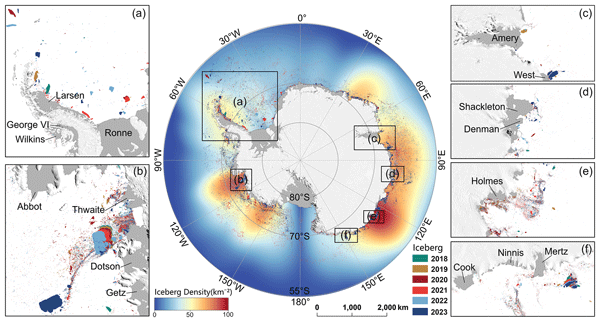
Zilong Chen, Xuying Liu, Zhenfu Guan, Teng Li, Xiao Cheng, Tian Li, Yan Liu, Qi Liang, Lei Zheng, and Jiping Liu
Earth Syst. Sci. Data, 18, 147–166, https://doi.org/10.5194/essd-18-147-2026, https://doi.org/10.5194/essd-18-147-2026, 2026
Short summary
Short summary
Our study uses Google Earth Engine to create a dataset of Antarctic icebergs in the Southern Ocean (south of 55° S) from October 2018 to 2023. The dataset includes icebergs larger than 0.04 km², with details on their locations, sizes, and shapes. It shows significant changes in iceberg number and area, mainly driven by major ice shelf calving events – especially in the Weddell Sea. This resource fills key gaps in understanding iceberg impacts on the ocean and climate.
Annett Bartsch, Rodrigue Tanguy, Helena Bergstedt, Clemens von Baeckmann, Hans Tømmervik, Marc Macias-Fauria, Juha Lemmetyinen, Kimmo Rautiainen, Chiara Gruber, and Bruce C. Forbes
The Cryosphere, 19, 4929–4967, https://doi.org/10.5194/tc-19-4929-2025, https://doi.org/10.5194/tc-19-4929-2025, 2025
Short summary
Short summary
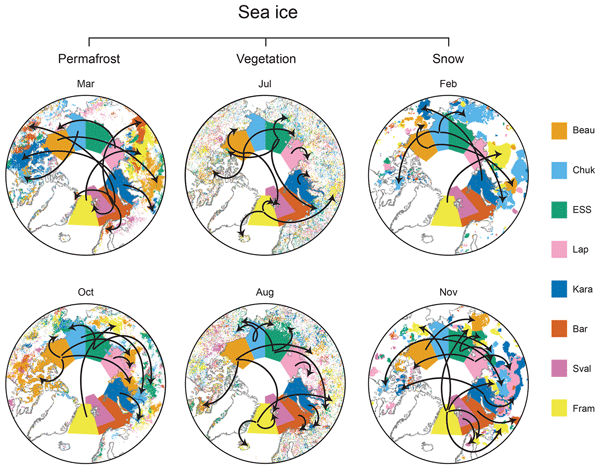
We identified similarities between sea ice dynamics and conditions on land across the Arctic, above 60° N, for 2000–2019. Significant correlations were more common for snow water equivalent and permafrost ground temperature than for the vegetation parameters. Changes across all the different parameters could specifically be determined for eastern Siberia. The results provide a baseline for future studies on common drivers of essential climate variables and causative effects across the Arctic.
Asmat Ullah, Julien Crétat, Gaïa Michel, Olivier Mathieu, Mathieu Thevenot, Andrey Dara, Robert Granat, Zhendong Wu, Clément Bonnefoy-Claudet, Julianne Capelle, Jean Cacot, and John S. Kimball
Biogeosciences, 22, 4135–4162, https://doi.org/10.5194/bg-22-4135-2025, https://doi.org/10.5194/bg-22-4135-2025, 2025
Short summary
Short summary
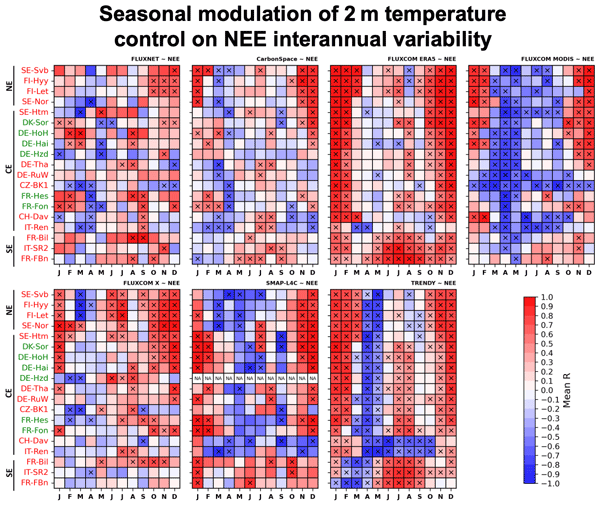
We analyse how climate drives seasonal and interannual CO2 flux variability in European forests using data from 19 sites and both process-based and data-driven models. The impact of climate on the CO2 flux annual cycle is strong and quite similar across Europe. On the other hand, the impact of climate on year-to-year CO2 flux variability depends on the region and the season, with reversed correlations between spring and summer in northern and central Europe.
Caleb G. Pan, Kristofer Lasko, Sean P. Griffin, John S. Kimball, Jinyang Du, Tate G. Meehan, and Peter B. Kirchner
The Cryosphere, 19, 2797–2819, https://doi.org/10.5194/tc-19-2797-2025, https://doi.org/10.5194/tc-19-2797-2025, 2025
Short summary
Short summary
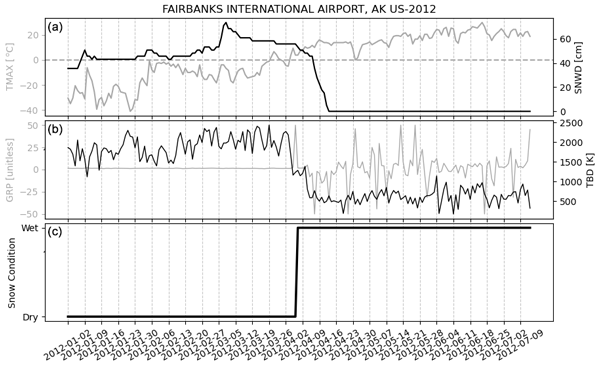
This study examines 35 years of snow cover changes in Alaska’s Yukon River Basin using machine learning to track snowmelt timing and disappearance. Results show snow is melting earlier and disappearing faster due to rising temperatures, highlighting the effects of climate change on water resources, ecosystems, and communities. The findings improve understanding of snow dynamics and provide critical insights for addressing climate-driven challenges in the region.
Elchin E. Jafarov, Hélène Genet, Velimir V. Vesselinov, Valeria Briones, Aiza Kabeer, Andrew L. Mullen, Benjamin Maglio, Tobey Carman, Ruth Rutter, Joy Clein, Chu-Chun Chang, Dogukan Teber, Trevor Smith, Joshua M. Rady, Christina Schädel, Jennifer D. Watts, Brendan M. Rogers, and Susan M. Natali
Geosci. Model Dev., 18, 3857–3875, https://doi.org/10.5194/gmd-18-3857-2025, https://doi.org/10.5194/gmd-18-3857-2025, 2025
Short summary
Short summary
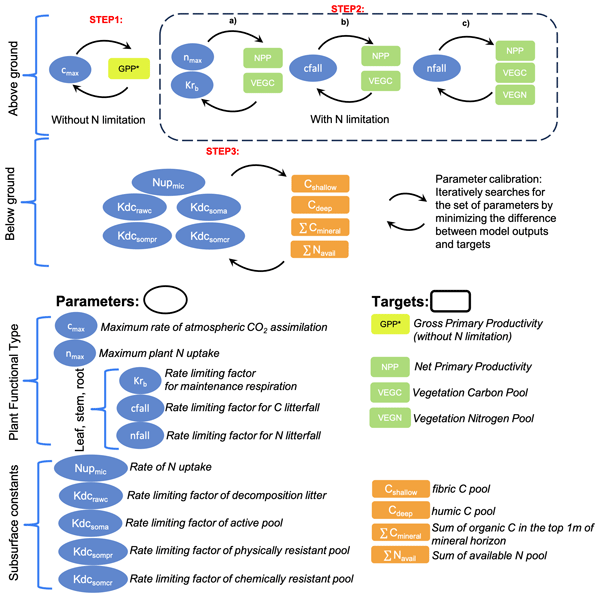
This study improves how we tune ecosystem models to reflect carbon and nitrogen storage in Arctic soils. By comparing model outputs with data from a black spruce forest in Alaska, we developed a clearer, more efficient method of matching observations. This is a key step towards understanding how Arctic ecosystems may respond to warming and release carbon, helping make future climate predictions more reliable.
Qing Ying, Benjamin Poulter, Jennifer D. Watts, Kyle A. Arndt, Anna-Maria Virkkala, Lori Bruhwiler, Youmi Oh, Brendan M. Rogers, Susan M. Natali, Hilary Sullivan, Amanda Armstrong, Eric J. Ward, Luke D. Schiferl, Clayton D. Elder, Olli Peltola, Annett Bartsch, Ankur R. Desai, Eugénie Euskirchen, Mathias Göckede, Bernhard Lehner, Mats B. Nilsson, Matthias Peichl, Oliver Sonnentag, Eeva-Stiina Tuittila, Torsten Sachs, Aram Kalhori, Masahito Ueyama, and Zhen Zhang
Earth Syst. Sci. Data, 17, 2507–2534, https://doi.org/10.5194/essd-17-2507-2025, https://doi.org/10.5194/essd-17-2507-2025, 2025
Short summary
Short summary
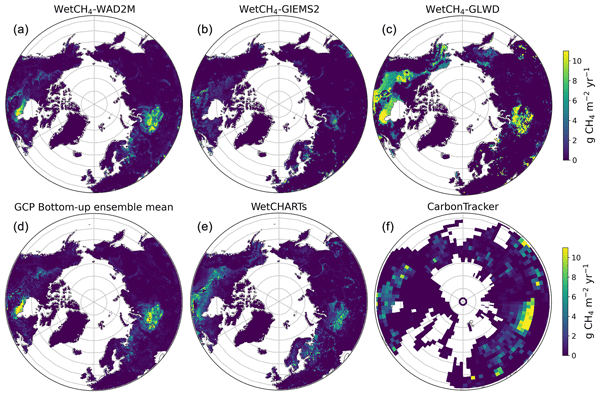
We present daily methane (CH4) fluxes of northern wetlands at 10 km resolution during 2016–2022 (WetCH4) derived from a novel machine learning framework. We estimated an average annual CH4 emission of 22.8 ± 2.4 Tg CH4 yr−1 (15.7–51.6 Tg CH4 yr−1). Emissions were intensified in 2016, 2020, and 2022, with the largest interannual variation coming from Western Siberia. Continued, all-season tower observations and improved soil moisture products are needed for future improvement of CH4 upscaling.
Mingyue Nong, Xuying Liu, Teng Li, Baogang Zhang, Qi Liang, Lei Zheng, Tiancheng Zhao, and Xiao Cheng
EGUsphere, https://doi.org/10.5194/egusphere-2025-1884, https://doi.org/10.5194/egusphere-2025-1884, 2025
Preprint archived
Short summary
Short summary
We extracted nearshore small icebergs in front of Dalk Glacier using UAV high-resolution data and directly obtained geometric parameters of the icebergs and analyzed their distribution patterns. The area/volume relationship of our icebergs aligns with the medium to large icebergs in existing ocean model. The study demonstrates UAVs' effectiveness in polar research and the importance of including all iceberg sizes in ocean modeling for better environmental impact predictions.
Valeria Briones, Hélène Genet, Elchin E. Jafarov, Brendan M. Rogers, Jennifer D. Watts, Anna-Maria Virkkala, Annett Bartsch, Benjamin C. Maglio, Joshua Rady, and Susan M. Natali
Earth Syst. Sci. Data Discuss., https://doi.org/10.5194/essd-2025-226, https://doi.org/10.5194/essd-2025-226, 2025
Manuscript not accepted for further review
Short summary
Short summary
Arctic warming is causing permafrost to thaw, affecting ecosystems and climate. Since land cover, especially vegetation, shapes how permafrost responds, accurate maps are crucial. Using machine learning, we combined existing global and regional datasets to create a hybrid detailed 1-km map of Arctic-Boreal land cover, improving the representation of forests, shrubs, and wetlands across the circumpolar.
Fukai Peng, Xiaoli Deng, Yunzhong Shen, and Xiao Cheng
Earth Syst. Sci. Data, 17, 1441–1460, https://doi.org/10.5194/essd-17-1441-2025, https://doi.org/10.5194/essd-17-1441-2025, 2025
Short summary
Short summary
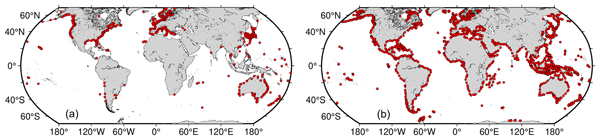
A new reprocessed altimeter coastal sea level dataset, International Altimetry Service 2024 (IAS2024), for monitoring sea level changes along the world’s coastlines is presented. The evaluation and validation results confirm the reliability of this dataset. The altimeter-based virtual stations along the world’s coastlines can be built using this dataset to monitor the coastal sea level changes where tide gauges are unavailable. Therefore, it is beneficial for both oceanographic communities and policymakers.
Barbara Widhalm, Annett Bartsch, Tazio Strozzi, Nina Jones, Artem Khomutov, Elena Babkina, Marina Leibman, Rustam Khairullin, Mathias Göckede, Helena Bergstedt, Clemens von Baeckmann, and Xaver Muri
The Cryosphere, 19, 1103–1133, https://doi.org/10.5194/tc-19-1103-2025, https://doi.org/10.5194/tc-19-1103-2025, 2025
Short summary
Short summary
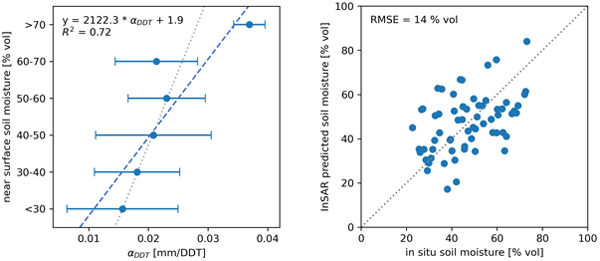
Mapping soil moisture in Arctic permafrost regions is crucial for various activities, but it is challenging with typical satellite methods due to the landscape's diversity. Seasonal freezing and thawing cause the ground to periodically rise and subside. Our research demonstrates that this seasonal ground settlement, measured with Sentinel-1 satellite data, is larger in areas with wetter soils. This method helps to monitor permafrost degradation.
Annett Bartsch, Xaver Muri, Markus Hetzenecker, Kimmo Rautiainen, Helena Bergstedt, Jan Wuite, Thomas Nagler, and Dmitry Nicolsky
The Cryosphere, 19, 459–483, https://doi.org/10.5194/tc-19-459-2025, https://doi.org/10.5194/tc-19-459-2025, 2025
Short summary
Short summary
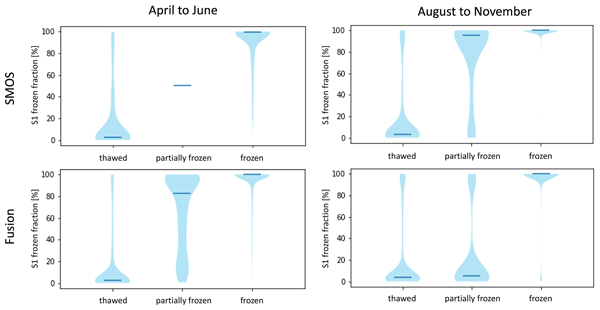
We developed a robust freeze–thaw detection approach, applying a constant threshold to Copernicus Sentinel-1 data that is suitable for tundra regions. All global, coarser-resolution products, tested with the resulting benchmarking dataset, are of value for freeze–thaw retrieval, although differences were found depending on the seasons, particularly during the spring and autumn transition.
Yan Sun, Shaoyin Wang, Xiao Cheng, Teng Li, Chong Liu, Yufang Ye, and Xi Zhao
EGUsphere, https://doi.org/10.5194/egusphere-2024-2760, https://doi.org/10.5194/egusphere-2024-2760, 2025
Preprint archived
Short summary
Short summary
This manuscript proposes to combine semantic segmentation of ice region using a U-Net model and multi-stage detection of ice pixels using the Multi-textRG algorithm to achieve fine ice-water classification. Novel proccessings for the HV/HH polarization ratio and the GLCM textures, as well as the usage of regional growing, largely improve the method accuracy and robustness. The proposed algorithm framework achieved automated sea-ice labelling.
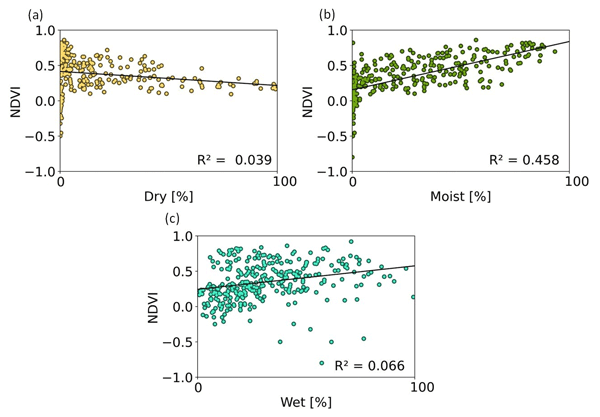
Clemens von Baeckmann, Annett Bartsch, Helena Bergstedt, Aleksandra Efimova, Barbara Widhalm, Dorothee Ehrich, Timo Kumpula, Alexander Sokolov, and Svetlana Abdulmanova
The Cryosphere, 18, 4703–4722, https://doi.org/10.5194/tc-18-4703-2024, https://doi.org/10.5194/tc-18-4703-2024, 2024
Short summary
Short summary
Lakes are common features in Arctic permafrost areas. Land cover change following their drainage needs to be monitored since it has implications for ecology and the carbon cycle. Satellite data are key in this context. We compared a common vegetation index approach with a novel land-cover-monitoring scheme. Land cover information provides specific information on wetland features. We also showed that the bioclimatic gradients play a significant role after drainage within the first 10 years.
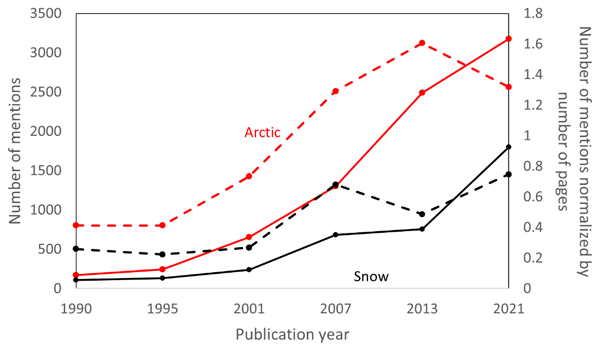
Cecile B. Menard, Sirpa Rasmus, Ioanna Merkouriadi, Gianpaolo Balsamo, Annett Bartsch, Chris Derksen, Florent Domine, Marie Dumont, Dorothee Ehrich, Richard Essery, Bruce C. Forbes, Gerhard Krinner, David Lawrence, Glen Liston, Heidrun Matthes, Nick Rutter, Melody Sandells, Martin Schneebeli, and Sari Stark
The Cryosphere, 18, 4671–4686, https://doi.org/10.5194/tc-18-4671-2024, https://doi.org/10.5194/tc-18-4671-2024, 2024
Short summary
Short summary
Computer models, like those used in climate change studies, are written by modellers who have to decide how best to construct the models in order to satisfy the purpose they serve. Using snow modelling as an example, we examine the process behind the decisions to understand what motivates or limits modellers in their decision-making. We find that the context in which research is undertaken is often more crucial than scientific limitations. We argue for more transparency in our research practice.
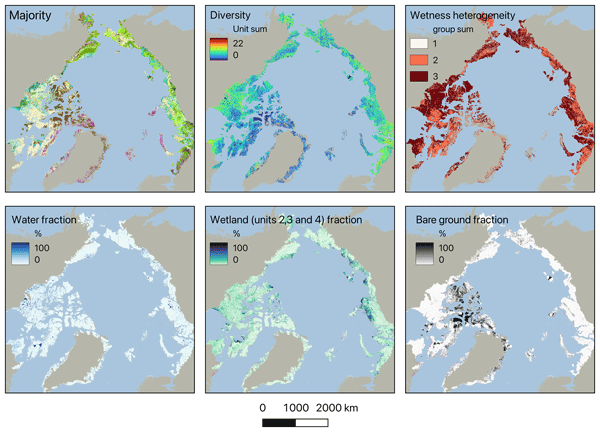
Annett Bartsch, Aleksandra Efimova, Barbara Widhalm, Xaver Muri, Clemens von Baeckmann, Helena Bergstedt, Ksenia Ermokhina, Gustaf Hugelius, Birgit Heim, and Marina Leibman
Hydrol. Earth Syst. Sci., 28, 2421–2481, https://doi.org/10.5194/hess-28-2421-2024, https://doi.org/10.5194/hess-28-2421-2024, 2024
Short summary
Short summary
Wetness gradients and landcover diversity for the entire Arctic tundra have been assessed using a novel satellite-data-based map. Patterns of lakes, wetlands, general soil moisture conditions and vegetation physiognomy are represented at 10 m. About 40 % of the area north of the treeline falls into three units of dry types, with limited shrub growth. Wetter regions have higher landcover diversity than drier regions.
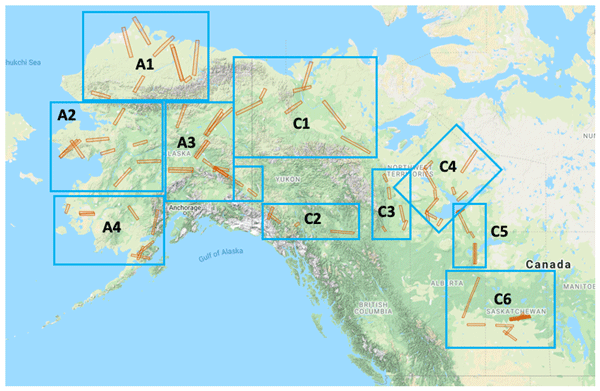
Charles E. Miller, Peter C. Griffith, Elizabeth Hoy, Naiara S. Pinto, Yunling Lou, Scott Hensley, Bruce D. Chapman, Jennifer Baltzer, Kazem Bakian-Dogaheh, W. Robert Bolton, Laura Bourgeau-Chavez, Richard H. Chen, Byung-Hun Choe, Leah K. Clayton, Thomas A. Douglas, Nancy French, Jean E. Holloway, Gang Hong, Lingcao Huang, Go Iwahana, Liza Jenkins, John S. Kimball, Tatiana Loboda, Michelle Mack, Philip Marsh, Roger J. Michaelides, Mahta Moghaddam, Andrew Parsekian, Kevin Schaefer, Paul R. Siqueira, Debjani Singh, Alireza Tabatabaeenejad, Merritt Turetsky, Ridha Touzi, Elizabeth Wig, Cathy J. Wilson, Paul Wilson, Stan D. Wullschleger, Yonghong Yi, Howard A. Zebker, Yu Zhang, Yuhuan Zhao, and Scott J. Goetz
Earth Syst. Sci. Data, 16, 2605–2624, https://doi.org/10.5194/essd-16-2605-2024, https://doi.org/10.5194/essd-16-2605-2024, 2024
Short summary
Short summary
NASA’s Arctic Boreal Vulnerability Experiment (ABoVE) conducted airborne synthetic aperture radar (SAR) surveys of over 120 000 km2 in Alaska and northwestern Canada during 2017, 2018, 2019, and 2022. This paper summarizes those results and provides links to details on ~ 80 individual flight lines. This paper is presented as a guide to enable interested readers to fully explore the ABoVE L- and P-band SAR data.
Yan Sun, Shaoyin Wang, Xiao Cheng, Teng Li, Chong Liu, Yufang Ye, and Xi Zhao
EGUsphere, https://doi.org/10.5194/egusphere-2024-1177, https://doi.org/10.5194/egusphere-2024-1177, 2024
Preprint archived
Short summary
Short summary
Arctic sea ice has rapidly declined due to global warming, leading to extreme weather events. Accurate ice monitoring is vital for understanding and forecasting these impacts. Combining SAR and AMSR2 data with machine learning is efficient but requires sufficient labels. We propose a framework integrating the U-Net model with the Multi-textRG algorithm to achieve ice-water classification at SAR-level resolution and to generate accurate labels for improved U-Net model training.
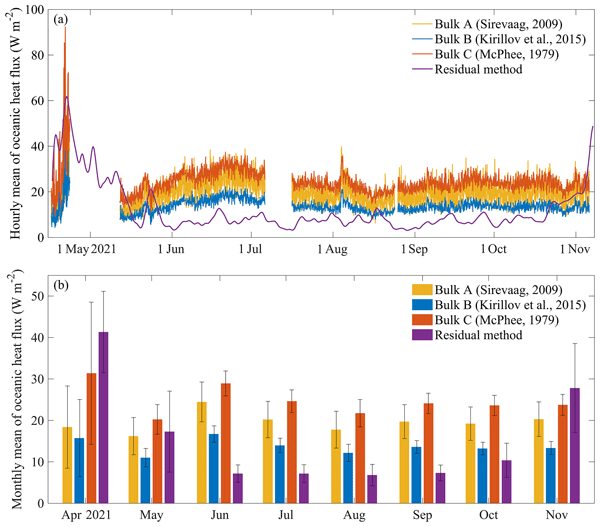
Haihan Hu, Jiechen Zhao, Petra Heil, Zhiliang Qin, Jingkai Ma, Fengming Hui, and Xiao Cheng
The Cryosphere, 17, 2231–2244, https://doi.org/10.5194/tc-17-2231-2023, https://doi.org/10.5194/tc-17-2231-2023, 2023
Short summary
Short summary
The oceanic characteristics beneath sea ice significantly affect ice growth and melting. The high-frequency and long-term observations of oceanic variables allow us to deeply investigate their diurnal and seasonal variation and evaluate their influences on sea ice evolution. The large-scale sea ice distribution and ocean circulation contributed to the seasonal variation of ocean variables, revealing the important relationship between large-scale and local phenomena.
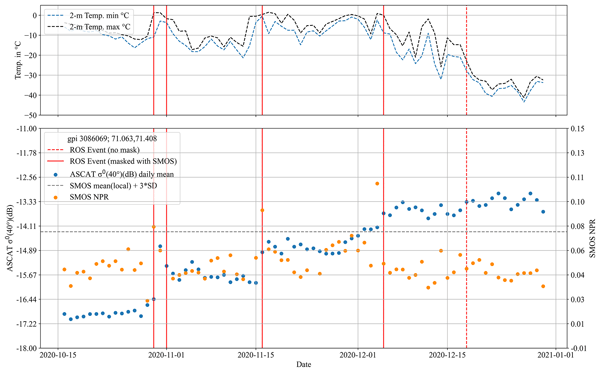
Annett Bartsch, Helena Bergstedt, Georg Pointner, Xaver Muri, Kimmo Rautiainen, Leena Leppänen, Kyle Joly, Aleksandr Sokolov, Pavel Orekhov, Dorothee Ehrich, and Eeva Mariatta Soininen
The Cryosphere, 17, 889–915, https://doi.org/10.5194/tc-17-889-2023, https://doi.org/10.5194/tc-17-889-2023, 2023
Short summary
Short summary
Rain-on-snow (ROS) events occur across many regions of the terrestrial Arctic in mid-winter. In extreme cases ice layers form which affect wildlife, vegetation and soils beyond the duration of the event. The fusion of multiple types of microwave satellite observations is suggested for the creation of a climate data record. Retrieval is most robust in the tundra biome, where records can be used to identify extremes and the results can be applied to impact studies at regional scale.
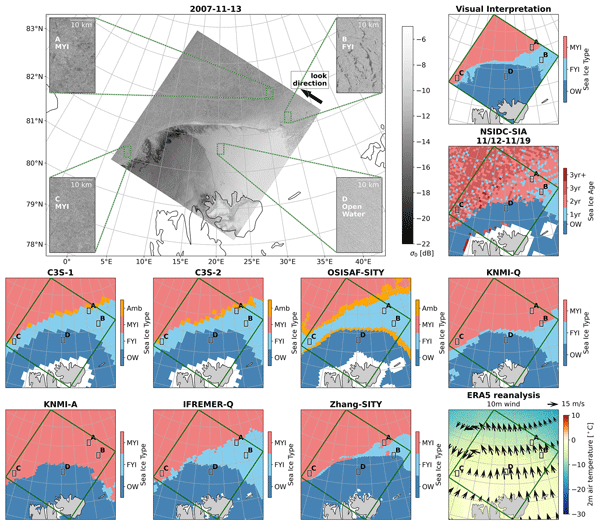
Yufang Ye, Yanbing Luo, Yan Sun, Mohammed Shokr, Signe Aaboe, Fanny Girard-Ardhuin, Fengming Hui, Xiao Cheng, and Zhuoqi Chen
The Cryosphere, 17, 279–308, https://doi.org/10.5194/tc-17-279-2023, https://doi.org/10.5194/tc-17-279-2023, 2023
Short summary
Short summary
Arctic sea ice type (SITY) variation is a sensitive indicator of climate change. This study gives a systematic inter-comparison and evaluation of eight SITY products. Main results include differences in SITY products being significant, with average Arctic multiyear ice extent up to 1.8×10⁶ km2; Ku-band scatterometer SITY products generally performing better; and factors such as satellite inputs, classification methods, training datasets and post-processing highly impacting their performance.
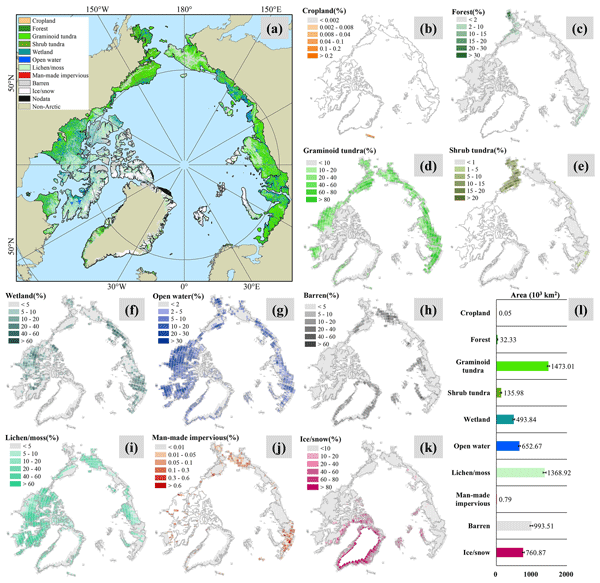
Chong Liu, Xiaoqing Xu, Xuejie Feng, Xiao Cheng, Caixia Liu, and Huabing Huang
Earth Syst. Sci. Data, 15, 133–153, https://doi.org/10.5194/essd-15-133-2023, https://doi.org/10.5194/essd-15-133-2023, 2023
Short summary
Short summary
Rapid Arctic changes are increasingly influencing human society, both locally and globally. Land cover offers a basis for characterizing the terrestrial world, yet spatially detailed information on Arctic land cover is lacking. We employ multi-source data to develop a new land cover map for the circumpolar Arctic. Our product reveals regionally contrasting biome distributions not fully documented in existing studies and thus enhances our understanding of the Arctic’s terrestrial system.
Luke D. Schiferl, Jennifer D. Watts, Erik J. L. Larson, Kyle A. Arndt, Sébastien C. Biraud, Eugénie S. Euskirchen, Jordan P. Goodrich, John M. Henderson, Aram Kalhori, Kathryn McKain, Marikate E. Mountain, J. William Munger, Walter C. Oechel, Colm Sweeney, Yonghong Yi, Donatella Zona, and Róisín Commane
Biogeosciences, 19, 5953–5972, https://doi.org/10.5194/bg-19-5953-2022, https://doi.org/10.5194/bg-19-5953-2022, 2022
Short summary
Short summary
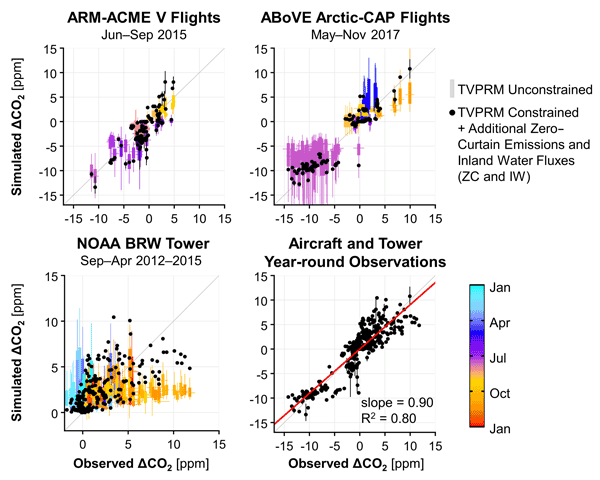
As the Arctic rapidly warms, vast stores of thawing permafrost could release carbon dioxide (CO2) into the atmosphere. We combined observations of atmospheric CO2 concentrations from aircraft and a tower with observed CO2 fluxes from tundra ecosystems and found that the Alaskan North Slope in not a consistent source nor sink of CO2. Our study shows the importance of using both site-level and atmospheric measurements to constrain regional net CO2 fluxes and improve biogenic processes in models.

Qi Liang, Wanxin Xiao, Ian Howat, Xiao Cheng, Fengming Hui, Zhuoqi Chen, Mi Jiang, and Lei Zheng
The Cryosphere, 16, 2671–2681, https://doi.org/10.5194/tc-16-2671-2022, https://doi.org/10.5194/tc-16-2671-2022, 2022
Short summary
Short summary
Using multi-temporal ArcticDEM and ICESat-2 altimetry data, we document changes in surface elevation of a subglacial lake basin from 2012 to 2021. The long-term measurements show that the subglacial lake was recharged by surface meltwater and that a rapid drainage event in late August 2019 induced an abrupt ice velocity change. Multiple factors regulate the episodic filling and drainage of the lake. Our study also reveals ~ 64 % of the surface meltwater successfully descended to the bed.
Anna-Maria Virkkala, Susan M. Natali, Brendan M. Rogers, Jennifer D. Watts, Kathleen Savage, Sara June Connon, Marguerite Mauritz, Edward A. G. Schuur, Darcy Peter, Christina Minions, Julia Nojeim, Roisin Commane, Craig A. Emmerton, Mathias Goeckede, Manuel Helbig, David Holl, Hiroki Iwata, Hideki Kobayashi, Pasi Kolari, Efrén López-Blanco, Maija E. Marushchak, Mikhail Mastepanov, Lutz Merbold, Frans-Jan W. Parmentier, Matthias Peichl, Torsten Sachs, Oliver Sonnentag, Masahito Ueyama, Carolina Voigt, Mika Aurela, Julia Boike, Gerardo Celis, Namyi Chae, Torben R. Christensen, M. Syndonia Bret-Harte, Sigrid Dengel, Han Dolman, Colin W. Edgar, Bo Elberling, Eugenie Euskirchen, Achim Grelle, Juha Hatakka, Elyn Humphreys, Järvi Järveoja, Ayumi Kotani, Lars Kutzbach, Tuomas Laurila, Annalea Lohila, Ivan Mammarella, Yojiro Matsuura, Gesa Meyer, Mats B. Nilsson, Steven F. Oberbauer, Sang-Jong Park, Roman Petrov, Anatoly S. Prokushkin, Christopher Schulze, Vincent L. St. Louis, Eeva-Stiina Tuittila, Juha-Pekka Tuovinen, William Quinton, Andrej Varlagin, Donatella Zona, and Viacheslav I. Zyryanov
Earth Syst. Sci. Data, 14, 179–208, https://doi.org/10.5194/essd-14-179-2022, https://doi.org/10.5194/essd-14-179-2022, 2022
Short summary
Short summary
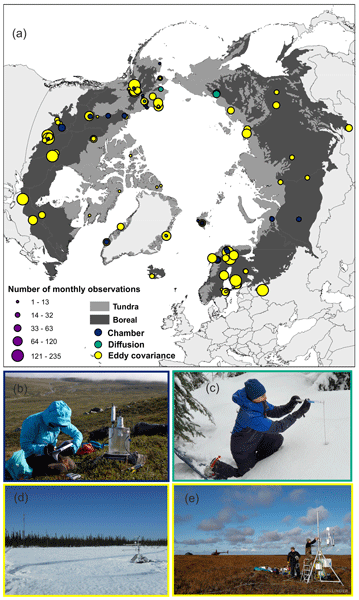
The effects of climate warming on carbon cycling across the Arctic–boreal zone (ABZ) remain poorly understood due to the relatively limited distribution of ABZ flux sites. Fortunately, this flux network is constantly increasing, but new measurements are published in various platforms, making it challenging to understand the ABZ carbon cycle as a whole. Here, we compiled a new database of Arctic–boreal CO2 fluxes to help facilitate large-scale assessments of the ABZ carbon cycle.
Yijing Lin, Yan Liu, Zhitong Yu, Xiao Cheng, Qiang Shen, and Liyun Zhao
The Cryosphere Discuss., https://doi.org/10.5194/tc-2021-325, https://doi.org/10.5194/tc-2021-325, 2021
Preprint withdrawn
Short summary
Short summary
We introduce an uncertainty analysis framework for comprehensively and systematically quantifying the uncertainties of the Antarctic mass balance using the Input and Output Method. It is difficult to use the previous strategies employed in various methods and the available data to achieve the goal of estimation accuracy. The dominant cause of the future uncertainty is the ice thickness data gap. The interannual variability of ice discharge caused by velocity and thickness is also nonnegligible.
David Olefeldt, Mikael Hovemyr, McKenzie A. Kuhn, David Bastviken, Theodore J. Bohn, John Connolly, Patrick Crill, Eugénie S. Euskirchen, Sarah A. Finkelstein, Hélène Genet, Guido Grosse, Lorna I. Harris, Liam Heffernan, Manuel Helbig, Gustaf Hugelius, Ryan Hutchins, Sari Juutinen, Mark J. Lara, Avni Malhotra, Kristen Manies, A. David McGuire, Susan M. Natali, Jonathan A. O'Donnell, Frans-Jan W. Parmentier, Aleksi Räsänen, Christina Schädel, Oliver Sonnentag, Maria Strack, Suzanne E. Tank, Claire Treat, Ruth K. Varner, Tarmo Virtanen, Rebecca K. Warren, and Jennifer D. Watts
Earth Syst. Sci. Data, 13, 5127–5149, https://doi.org/10.5194/essd-13-5127-2021, https://doi.org/10.5194/essd-13-5127-2021, 2021
Short summary
Short summary
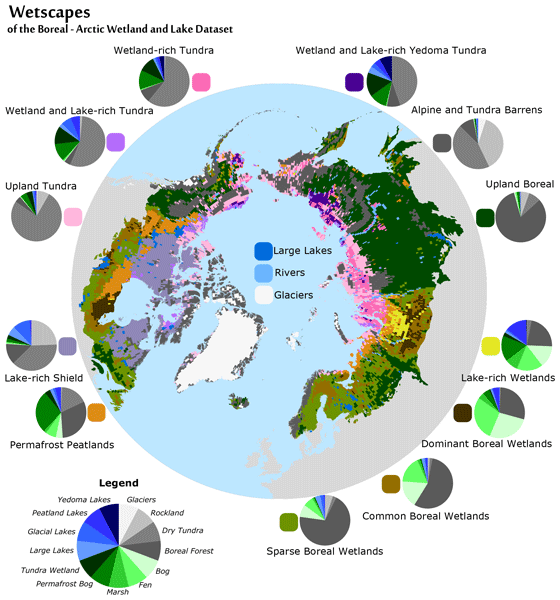
Wetlands, lakes, and rivers are important sources of the greenhouse gas methane to the atmosphere. To understand current and future methane emissions from northern regions, we need maps that show the extent and distribution of specific types of wetlands, lakes, and rivers. The Boreal–Arctic Wetland and Lake Dataset (BAWLD) provides maps of five wetland types, seven lake types, and three river types for northern regions and will improve our ability to predict future methane emissions.
Cited articles
Adrian, R., O'Reilly, C. M., Zagarese, H., Baines, S. B., Hessen, D. O., Keller, W., Livingstone, D. M., Sommaruga, R., Straile, D., and Van Donk, E.: Lakes as sentinels of climate change, Limnol. Oceanogr., 54, 2283–2297, https://doi.org/10.4319/lo.2009.54.6_part_2.2283, 2009.
Antonova, S., Duguay, C. R., Kääb, A., Heim, B., Langer, M., Westermann, S., and Boike, J.: Monitoring bedfast ice and ice phenology in lakes of the Lena river delta using TerraSAR-X backscatter and coherence time series, Remote Sens., 8, 903, https://doi.org/10.3390/rs8110903, 2016.
Arp, C. and Cherry, J.: River and lake ice phenology data for Alaska and Northwest Canada from 1882 to 2021, Arct. Data Cent. [data set], https://doi.org/10.18739/A28W38388, 2022.
Arp, C. D., Jones, B. M., Lu, Z., and Whitman, M. S.: Shifting balance of thermokarst lake ice regimes across the Arctic Coastal Plain of northern Alaska, Geophys. Res. Lett., 39, https://doi.org/10.1029/2012GL052518, 2012.
Arp, C. D., Jones, B. M., and Grosse, G.: Recent lake ice-out phenology within and among lake districts of Alaska, USA, Limnol. Oceanogr., 58, 2013–2028, https://doi.org/10.4319/lo.2013.58.6.2013, 2013.
Belgiu, M. and Drăguţ, L.: Random forest in remote sensing: A review of applications and future directions, ISPRS J. Photogramm. Remote Sens., 114, 24–31, https://doi.org/10.1016/j.isprsjprs.2016.01.011, 2016.
Benson, B., Magnuson, J., and Sharma, S.: Global lake and river ice phenology database, Digit. media, https://doi.org/10.7265/N5W66HP8, 2000.
Brown, C. F., Brumby, S. P., Guzder-Williams, B., Birch, T., Hyde, S. B., Mazzariello, J., Czerwinski, W., Pasquarella, V. J., Haertel, R., and Ilyushchenko, S.: Dynamic World, Near real-time global 10 m land use land cover mapping, Sci. Data, 9, 251, https://doi.org/10.1038/s41597-022-01307-4, 2022.
Brown, L. C. and Duguay, C. R.: The response and role of ice cover in lake-climate interactions, https://doi.org/10.1177/0309133310375653, 2010.
Caldwell, T. J., Chandra, S., Feher, K., Simmons, J. B., and Hogan, Z.: Ecosystem response to earlier ice break-up date: Climate-driven changes to water temperature, lake-habitat-specific production, and trout habitat and resource use, Glob. Chang. Biol., 26, 5475–5491, https://doi.org/10.1111/gcb.15258, 2020.
Carrea, L., Crétaux, J.-F., Liu, X., Wu, Y., Bergé-Nguyen, M., Calmettes, B., Duguay, C., Jiang, D., Merchant, C. J., Mueller, D., Selmes, N., Simis, S., Spyrakos, E., Stelzer, K., Warren, M., Yesou, H., and Zhang, D.: ESA Lakes Climate Change Initiative (Lakes_cci): Lake products, Version 2.1, https://doi.org/10.5285/7FC9DF8070D34CACAB8092E45EF276F1, 2024.
Culpepper, J., Jakobsson, E., Weyhenmeyer, G. A., Hampton, S. E., Obertegger, U., Shchapov, K., Woolway, R. I., and Sharma, S.: Lake ice quality in a warming world, Nat. Rev. Earth Environ., 5, 671–685, https://doi.org/10.1038/s43017-024-00590-6, 2024.
Du, J., Kimball, J. S., Jones, L. A., and Watts, J. D.: Implementation of satellite based fractional water cover indices in the pan-Arctic region using AMSR-E and MODIS, Remote Sens. Environ., 184, 469–481, 2016.
Du, J., Kimball, J. S., Duguay, C., Kim, Y., and Watts, J. D.: Satellite microwave assessment of Northern Hemisphere lake ice phenology from 2002 to 2015, The Cryosphere, 11, 47–63, https://doi.org/10.5194/tc-11-47-2017, 2017.
Du, J., Watts, J. D., Jiang, L., Lu, H., Cheng, X., Duguay, C., Farina, M., Qiu, Y., Kim, Y., and Kimball, J. S.: Remote sensing of environmental changes in cold regions: Methods, achievements and challenges, Remote Sens., 11, 1952, https://doi.org/10.3390/rs11161952, 2019.
Engram, M., Arp, C. D., Jones, B. M., Ajadi, O. A., and Meyer, F. J.: Analyzing floating and bedfast lake ice regimes across Arctic Alaska using 25 years of space-borne SAR imagery, Remote Sens. Environ., 209, 660–676, https://doi.org/10.1016/j.rse.2018.02.022, 2018.
Grant, L., Vanderkelen, I., Gudmundsson, L., Tan, Z., Perroud, M., Stepanenko, V. M., Debolskiy, A. V, Droppers, B., Janssen, A. B. G., and Woolway, R. I.: Attribution of global lake systems change to anthropogenic forcing, Nat. Geosci., 14, 849–854, https://doi.org/10.1038/s41561-021-00833-x, 2021.
Hori, Y., Cheng, V. Y. S., Gough, W. A., Jien, J. Y., and Tsuji, L. J. S.: Implications of projected climate change on winter road systems in Ontario's Far North, Canada, Clim. Change, 148, 109–122, https://doi.org/10.1007/s10584-018-2178-2, 2018.
Huang, L., Timmermann, A., Lee, S.-S., Rodgers, K. B., Yamaguchi, R., and Chung, E.-S.: Emerging unprecedented lake ice loss in climate change projections, Nat. Commun., 13, 5798, https://doi.org/10.1038/s41467-022-33495-3, 2022.
Jamison, H. C., Brockett, L. D., and McIntosh, R. A.: Prudhoe Bay – A 10 year perspective, https://doi.org/10.1306/M30410C14, 1980.
Kang, K.-K., Duguay, C. R., and Howell, S. E. L.: Estimating ice phenology on large northern lakes from AMSR-E: algorithm development and application to Great Bear Lake and Great Slave Lake, Canada, The Cryosphere, 6, 235–254, https://doi.org/10.5194/tc-6-235-2012, 2012.
Kellogg, K., Hoffman, P., Standley, S., Shaffer, S., Rosen, P., Edelstein, W., Dunn, C., Baker, C., Barela, P., and Shen, Y.: NASA-ISRO synthetic aperture radar (NISAR) mission, in: 2020 IEEE Aerospace Conference, 1–21, https://doi.org/10.1109/AERO47225.2020.9172638, 2020.
Koyama, C. N., Watanabe, M., Hayashi, M., Ogawa, T., and Shimada, M.: Mapping the spatial-temporal variability of tropical forests by ALOS-2 L-band SAR big data analysis, Remote Sens. Environ., 233, 111372, https://doi.org/10.1016/j.rse.2019.111372, 2019.
Lee, J.-S. and Pottier, E.: Polarimetric radar imaging: from basics to applications, CRC press, https://doi.org/10.1201/9781420054989, 2017.
Lehner, B., Anand, M., Fluet-Chouinard, E., Tan, F., Aires, F., Allen, G. H., Bousquet, P., Canadell, J. G., Davidson, N., Ding, M., Finlayson, C. M., Gumbricht, T., Hilarides, L., Hugelius, G., Jackson, R. B., Korver, M. C., Liu, L., McIntyre, P. B., Nagy, S., Olefeldt, D., Pavelsky, T. M., Pekel, J.-F., Poulter, B., Prigent, C., Wang, J., Worthington, T. A., Yamazaki, D., Zhang, X., and Thieme, M.: Mapping the world's inland surface waters: an upgrade to the Global Lakes and Wetlands Database (GLWD v2), Earth Syst. Sci. Data, 17, 2277–2329, https://doi.org/10.5194/essd-17-2277-2025, 2025.
Lin, H., Du, J., and Kimball, J. S.: A satellite-based ice fraction record for small water bodies of the Arctic Coastal Plain (2017 to 2023) – Dataset and code, Zenodo [data set, code], https://doi.org/10.5281/zenodo.17051864, 2025.
Mahmud, M. S., Nandan, V., Singha, S., Howell, S. E. L., Geldsetzer, T., Yackel, J., and Montpetit, B.: C-and L-band SAR signatures of Arctic sea ice during freeze-up, Remote Sens. Environ., 279, 113129, https://doi.org/10.1016/j.rse.2022.113129, 2022.
Matthews, E., Johnson, M. S., Genovese, V., Du, J., and Bastviken, D.: Methane emission from high latitude lakes: methane-centric lake classification and satellite-driven annual cycle of emissions, Sci. Rep., 10, 12465, https://doi.org/10.1038/s41598-020-68246-1, 2020.
Maxwell, A. E., Warner, T. A., and Fang, F.: Implementation of machine-learning classification in remote sensing: An applied review, Int. J. Remote Sens., 39, 2784–2817, https://doi.org/10.1080/01431161.2018.1433343, 2018.
Mladenova, I. E., Jackson, T. J., Bindlish, R., and Hensley, S.: Incidence angle normalization of radar backscatter data, IEEE Trans. Geosci. Remote Sens., 51, 1791–1804, https://doi.org/10.1109/TGRS.2012.2205264, 2012.
Mullen, A. L., Watts, J. D., Rogers, B. M., Carroll, M. L., Elder, C. D., Noomah, J., Williams, Z., Caraballo-Vega, J. A., Bredder, A., and Rickenbaugh, E.: Using high-resolution satellite imagery and deep learning to track dynamic seasonality in small water bodies, Geophys. Res. Lett., 50, e2022GL102327, https://doi.org/10.1029/2022GL102327, 2023.
Murfitt, J. and Duguay, C. R.: Assessing the performance of methods for monitoring ice phenology of the world's largest high Arctic lake using high-density time series analysis of Sentinel-1 data, Remote Sens., 12, 382, https://doi.org/10.3390/rs12030382, 2020.
Murfitt, J. and Duguay, C. R.: 50 years of lake ice research from active microwave remote sensing: Progress and prospects, Remote Sens. Environ., 264, 112616, https://doi.org/10.1016/j.rse.2021.112616, 2021.
Murfitt, J., Duguay, C., Picard, G., and Lemmetyinen, J.: Forward modelling of synthetic-aperture radar (SAR) backscatter during lake ice melt conditions using the Snow Microwave Radiative Transfer (SMRT) model, The Cryosphere, 18, 869–888, https://doi.org/10.5194/tc-18-869-2024, 2024.
Orru, K., Kangur, K., Kangur, P., Ginter, K., and Kangur, A.: Recreational ice fishing on the large Lake Peipsi: socioeconomic importance, variability of ice-cover period, and possible implications for fish stocks., Est. J. Ecol., 63, https://doi.org/10.3176/eco.2014.4.06, 2014.
Pekel, J. F., Cottam, A., Gorelick, N., and Belward, A. S.: High-resolution mapping of global surface water and its long-term changes, Nature, 540, 418–422, https://doi.org/10.1038/nature20584, 2016.
Pi, X., Luo, Q., Feng, L., Xu, Y., Tang, J., Liang, X., Ma, E., Cheng, R., Fensholt, R., and Brandt, M.: Mapping global lake dynamics reveals the emerging roles of small lakes, Nat. Commun., 13, 5777, https://doi.org/10.1038/s41467-022-33239-3, 2022.
Prowse, T., Alfredsen, K., Beltaos, S., Bonsal, B., Duguay, C., Korhola, A., McNamara, J., Vincent, W. F., Vuglinsky, V., and Weyhenmeyer, G. A.: Arctic freshwater ice and its climatic role, Ambio, 40, 46–52, https://doi.org/10.1007/s13280-011-0214-9, 2011.
Rantanen, M., Karpechko, A. Y., Lipponen, A., Nordling, K., Hyvärinen, O., Ruosteenoja, K., Vihma, T., and Laaksonen, A.: The Arctic has warmed nearly four times faster than the globe since 1979, Commun. Earth Environ., 3, 168, https://doi.org/10.1038/s43247-022-00498-3, 2022.
Sharma, S., Blagrave, K., Magnuson, J. J., O'Reilly, C. M., Oliver, S., Batt, R. D., Magee, M. R., Straile, D., Weyhenmeyer, G. A., and Winslow, L.: Widespread loss of lake ice around the Northern Hemisphere in a warming world, Nat. Clim. Chang., 9, 227–231, https://doi.org/10.1038/s41558-018-0393-5, 2019.
Sharma, S., Meyer, M. F., Culpepper, J., Yang, X., Hampton, S., Berger, S. A., Brousil, M. R., Fradkin, S. C., Higgins, S. N., and Jankowski, K. J.: Integrating perspectives to understand lake ice dynamics in a changing world, J. Geophys. Res. Biogeosciences, 125, e2020JG005799, https://doi.org/10.1029/2020JG005799, 2020.
Sharma, S., Filazzola, A., Nguyen, T., Imrit, M. A., Blagrave, K., Bouffard, D., Daly, J., Feldman, H., Feldsine, N., and Hendricks-Franssen, H.-J.: Long-term ice phenology records spanning up to 578 years for 78 lakes around the Northern Hemisphere, Sci. Data, 9, 318, https://doi.org/10.1038/s41597-022-01391-6, 2022.
Simpson, C. E., Arp, C. D., Sheng, Y., Carroll, M. L., Jones, B. M., and Smith, L. C.: Landsat-derived bathymetry of lakes on the Arctic Coastal Plain of northern Alaska, Earth Syst. Sci. Data, 13, 1135–1150, https://doi.org/10.5194/essd-13-1135-2021, 2021.
Šmejkalová, T., Edwards, M. E., and Dash, J.: Arctic lakes show strong decadal trend in earlier spring ice-out, Sci. Rep., 6, 38449, https://doi.org/10.1038/srep38449, 2016.
Smith, L. C., Sheng, Y., and MacDonald, G. M.: A first pan-Arctic assessment of the influence of glaciation, permafrost, topography and peatlands on northern hemisphere lake distribution, Permafr. Periglac. Process., 18, 201–208, https://doi.org/10.1002/ppp.581, 2007.
Soh, L.-K. and Tsatsoulis, C.: Texture analysis of SAR sea ice imagery using gray level co-occurrence matrices, IEEE Trans. Geosci. Remote Sens., 37, 780–795, https://doi.org/10.1109/36.752194, 1999.
Stonevicius, E., Uselis, G., and Grendaite, D.: Ice detection with Sentinel-1 SAR backscatter threshold in long sections of temperate climate rivers, Remote Sens., 14, 1627, https://doi.org/10.3390/rs14071627, 2022.
Sun, W.: River ice breakup timing prediction through stacking multi-type model trees, Sci. Total Environ., 644, 1190–1200, https://doi.org/10.1016/j.scitotenv.2018.07.001, 2018.
Surdu, C. M., Duguay, C. R., Pour, H. K., and Brown, L. C.: Ice freeze-up and break-up detection of shallow lakes in Northern Alaska with spaceborne SAR, Remote Sens., 7, 6133–6159, https://doi.org/10.3390/rs70506133, 2015.
Thornton, P. E., Shrestha, R., Thornton, M., Kao, S.-C., Wei, Y., and Wilson, B. E.: Gridded daily weather data for North America with comprehensive uncertainty quantification, Sci. Data, 8, 190, https://doi.org/10.1038/s41597-021-00973-0, 2021.
Tom, M., Aguilar, R., Imhof, P., Leinss, S., Baltsavias, E., and Schindler, K.: Lake ice detection from Sentinel-1 SAR with deep learning, arXiv [preprint], https://doi.org/10.48550/arXiv.2002.07040, 2020.
Wang, W., Lee, X., Xiao, W., Liu, S., Schultz, N., Wang, Y., Zhang, M., and Zhao, L.: Global lake evaporation accelerated by changes in surface energy allocation in a warmer climate, Nat. Geosci., 11, 410–414, https://doi.org/10.1038/s41561-018-0114-8, 2018.
Wang, X., Feng, L., Qi, W., Cai, X., Zheng, Y., Gibson, L., Tang, J., Song, X., Liu, J., and Zheng, C.: Continuous loss of global lake ice across two centuries revealed by satellite observations and numerical modeling, Geophys. Res. Lett., 49, e2022GL099022, https://doi.org/10.1029/2022GL099022, 2022.
Webb, E. E., Liljedahl, A. K., Cordeiro, J. A., Loranty, M. M., Witharana, C., and Lichstein, J. W.: Permafrost thaw drives surface water decline across lake-rich regions of the Arctic, Nat. Climate Change, 12, 841–846, https://doi.org/10.1038/s41558-022-01455-w, 2022.
Weyhenmeyer, G. A., Livingstone, D. M., Meili, M., Jensen, O., Benson, B., and Magnuson, J. J.: Large geographical differences in the sensitivity of ice-covered lakes and rivers in the Northern Hemisphere to temperature changes, Glob. Chang. Biol., 17, 268–275, https://doi.org/10.1111/j.1365-2486.2010.02249.x, 2011.
Wik, M., Varner, R. K., Anthony, K. W., MacIntyre, S., and Bastviken, D.: Climate-sensitive northern lakes and ponds are critical components of methane release, Nat. Geosci., 9, 99–105, https://doi.org/10.1038/ngeo2578, 2016.
Woo, M. K. and Heron, R.: Freeze-up and break-up of ice cover on small arctic lakes, North. Lakes Rivers, 22, 56–62, 1989.
Woolway, R. I., Kraemer, B. M., Lenters, J. D., Merchant, C. J., O'Reilly, C. M., and Sharma, S.: Global lake responses to climate change, Nat. Rev. Earth Environ., 1, 388–403, https://doi.org/10.1038/s43017-020-0067-5, 2020.
Yang, X., Pavelsky, T. M., and Allen, G. H.: The past and future of global river ice, Nature, 577, 69–73, https://doi.org/10.1038/s41586-019-1848-1, 2020.
Zhang, S., Pavelsky, T. M., Arp, C. D., and Yang, X.: Remote sensing of lake ice phenology in Alaska, Environ. Res. Lett., 16, 64007, https://doi.org/10.1088/1748-9326/abf965, 2021.
Short summary
Ice cover on small water bodies is highly sensitive to climate change and influences ecosystems, water, and the carbon cycle. We produced a satellite-based ice fraction dataset for small water bodies on the Arctic Coastal Plain from 2017 to 2023. The dataset captures freeze-up and break-up timing and reveals spatial variability. It will support studies of climate–ice interactions and improve models of water and carbon processes.
Ice cover on small water bodies is highly sensitive to climate change and influences ecosystems,...


Altmetrics
Final-revised paper
Preprint