Articles | Volume 18, issue 7
https://doi.org/10.5194/essd-18-4855-2026
© Author(s) 2026. This work is distributed under
the Creative Commons Attribution 4.0 License.
the Creative Commons Attribution 4.0 License.
https://doi.org/10.5194/essd-18-4855-2026
© Author(s) 2026. This work is distributed under
the Creative Commons Attribution 4.0 License.
the Creative Commons Attribution 4.0 License.
Data description article
| 
13 Jul 2026
Data description article |
| 13 Jul 2026
| 13 Jul 2026
Recent summer soil moisture drying in Switzerland based on measurements from the SwissSMEX network
Martin Hirschi
CORRESPONDING AUTHOR

ETH Zurich, Institute for Atmospheric and Climate Science, Universitätstrasse 16, 8092 Zürich, Switzerland
Dominik Michel
ETH Zurich, Institute for Atmospheric and Climate Science, Universitätstrasse 16, 8092 Zürich, Switzerland
Dominik L. Schumacher
ETH Zurich, Institute for Atmospheric and Climate Science, Universitätstrasse 16, 8092 Zürich, Switzerland
Wolfgang Preimesberger
TU Wien, Department of Geodesy and Geoinformation, Wiedner Hauptstrasse 8–10, 1040 Vienna, Austria
Sonia I. Seneviratne
ETH Zurich, Institute for Atmospheric and Climate Science, Universitätstrasse 16, 8092 Zürich, Switzerland
Related authors
Martin Hirschi, Pietro Stradiotti, Bas Crezee, Wouter Dorigo, and Sonia I. Seneviratne
Hydrol. Earth Syst. Sci., 29, 397–425, https://doi.org/10.5194/hess-29-397-2025, https://doi.org/10.5194/hess-29-397-2025, 2025
Short summary
Short summary
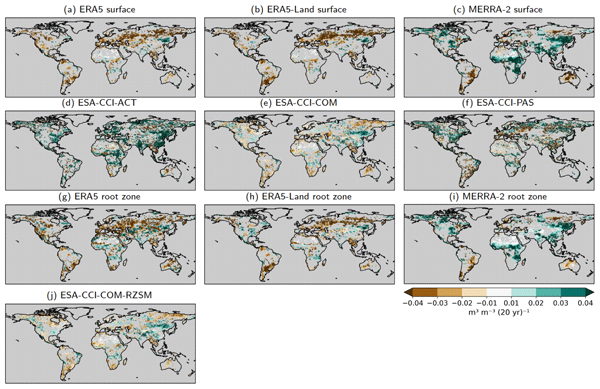
We investigate the potential of long-term satellite and reanalysis products for characterising soil drying by analysing their 2000–2022 soil moisture trends and their representation of agroecological drought events of this period. Soil moisture trends are globally diverse and partly contradictory between products. This also affects the products' drought-detection capacity. Based on the best-estimate products, consistent soil drying is observed over more than 40 % of the land area covered.
Dominik L. Schumacher, Mariam Zachariah, Friederike Otto, Clair Barnes, Sjoukje Philip, Sarah Kew, Maja Vahlberg, Roop Singh, Dorothy Heinrich, Julie Arrighi, Maarten van Aalst, Mathias Hauser, Martin Hirschi, Verena Bessenbacher, Lukas Gudmundsson, Hiroko K. Beaudoing, Matthew Rodell, Sihan Li, Wenchang Yang, Gabriel A. Vecchi, Luke J. Harrington, Flavio Lehner, Gianpaolo Balsamo, and Sonia I. Seneviratne
Earth Syst. Dynam., 15, 131–154, https://doi.org/10.5194/esd-15-131-2024, https://doi.org/10.5194/esd-15-131-2024, 2024
Short summary
Short summary
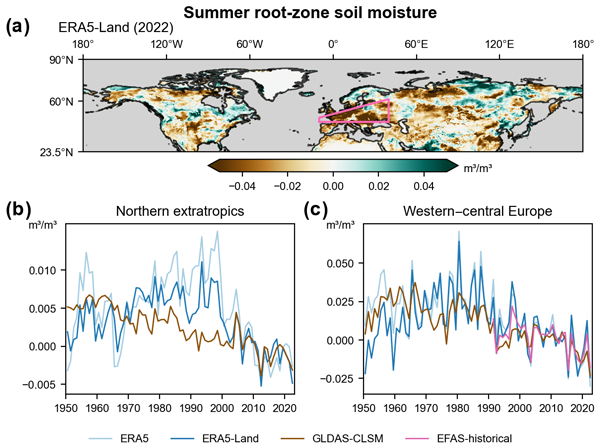
The 2022 summer was accompanied by widespread soil moisture deficits, including an unprecedented drought in Europe. Combining several observation-based estimates and models, we find that such an event has become at least 5 and 20 times more likely due to human-induced climate change in western Europe and the northern extratropics, respectively. Strong regional warming fuels soil desiccation; hence, projections indicate even more potent future droughts as we progress towards a 2 °C warmer world.
Simon Scheiter, Jinfeng Chang, Philippe Ciais, Marie Dury, Louis Francois, Matthew Forrest, Alexandra Henrot, Christopher P. O. Reyer, Sonia Seneviratne, Jörg Steinkamp, Wim Thiery, Wenfang Xu, and Thomas Hickler
Biogeosciences, 23, 6409–6430, https://doi.org/10.5194/bg-23-6409-2026, https://doi.org/10.5194/bg-23-6409-2026, 2026
Short summary
Short summary
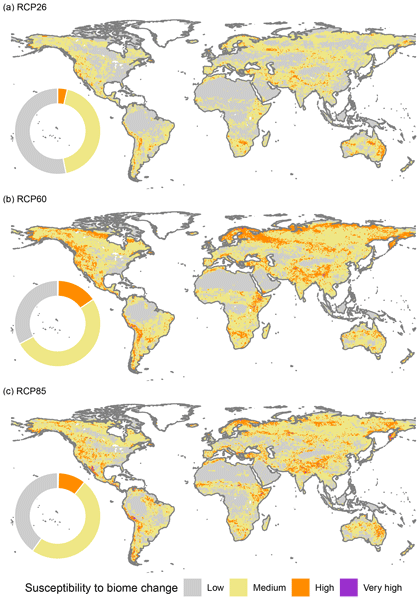
We show how climate change may reshape the world's major biomes, such as forests, grasslands, and tundra. Therefore, we combined dynamic vegetation models, machine learning and observation-based biome maps. We found that many biomes are likely to shift polewards as temperatures rise. Even under low-emission scenarios, large areas could change. These results help identify regions most susceptible to climate change and support global efforts to protect and manage natural ecosystems in the future.
Yann Yasser Haddad, Elena Raycheva, Jonas Savelsberg, Petra Sieber, Lukas Gudmundsson, and Sonia I. Seneviratne
Earth Syst. Sci. Data Discuss., https://doi.org/10.5194/essd-2026-448, https://doi.org/10.5194/essd-2026-448, 2026
Preprint under review for ESSD
Short summary
Short summary
Hydropower is vital for the energy transition, but planning is hard without knowing where the water flowing through its infrastructure comes from. We introduce an open-access dataset detailing the hydropower infrastructure and connecting it to its local hydrological basins. The water inflows into reservoirs and run-of-river power plants are estimated using this tool, revealing large regional differences. This dataset can directly inform reliable and resilient energy transition planning.
Matthias Cuntz, Stephan Thober, Anne Verhoef, Yijian Zeng, Aaron Boone, Agnès Ducharne, Sujan Koirala, David M. Lawrence, Philipp de Vrese, Carsten Montzka, Sonia I. Seneviratne, Harry Vereecken, Dani Or, Salma Tafasca, Naoki Mizukami, Rich Ellis, Patrick C. McGuire, and Lukas Gudmundsson
EGUsphere, https://doi.org/10.5194/egusphere-2026-4223, https://doi.org/10.5194/egusphere-2026-4223, 2026
Preprint archived
Short summary
Short summary
Land surface models (LSMs) are essential tools to analyze future climate change. Here we pushed state-of-the-art LSMs out of their comfort zone revealing hidden connections between processes encoded into the models. The LSMs reacted differently due to complex, sometimes counter-intuitive interactions of different water fluxes. We identified surface runoff and soil evaporation as the two main reasons behind model differences, which should be improved by using more mechanistic descriptions.
Victoria M. Bauer, Mathias Hauser, Yann Quilcaille, Sarah Schöngart, Lukas Gudmundsson, and Sonia I. Seneviratne
Geosci. Model Dev., 19, 5669–5688, https://doi.org/10.5194/gmd-19-5669-2026, https://doi.org/10.5194/gmd-19-5669-2026, 2026
Short summary
Short summary
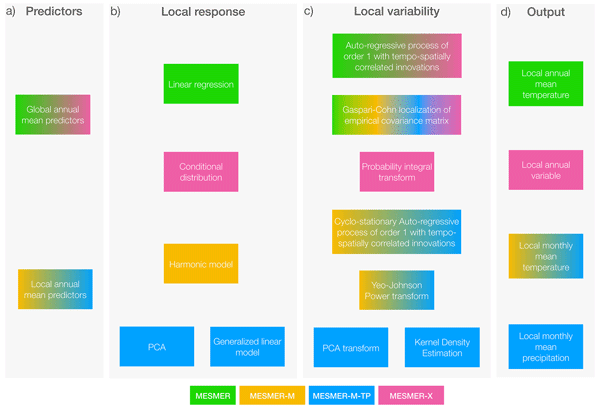
MESMER is a Python-based climate emulator that provides spatially resolved realizations of multiple climate variables. Version 1.0.0 of MESMER consolidates previous emulation methods into one numerically stable, well-documented, and user-friendly software package. It can generate large ensembles of annual and monthly mean temperatures, as well as several climate extreme indicators, within minutes. The software is shared together with pre-calibrated parameters to enable broad community adoption.
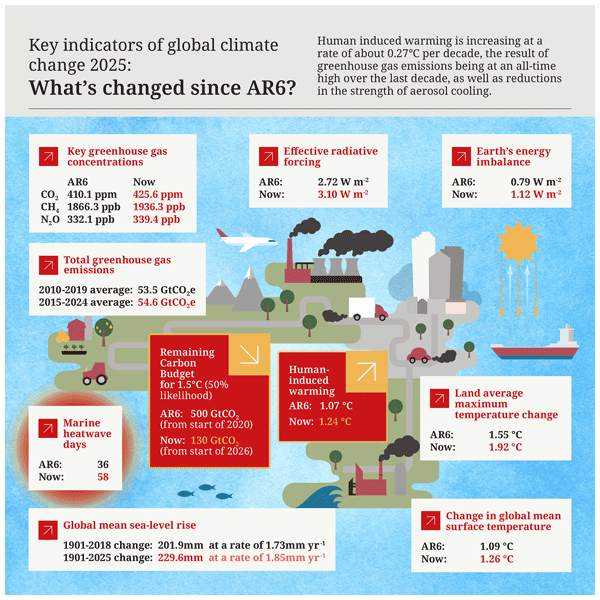
Piers M. Forster, Tristram Walsh, Chris Smith, William F. Lamb, Robin Lamboll, Christophe Cassou, Mathias Hauser, Zeke Hausfather, June-Yi Lee, Matthew D. Palmer, Karina von Schuckmann, Aimée B. A. Slangen, Sophie Szopa, Blair Trewin, Jeongeun Yun, Nathan P. Gillett, Stuart Jenkins, H. Damon Matthews, Krishnan Raghavan, Aurélien Ribes, Joeri Rogelj, Debbie Rosen, Xuebin Zhang, Myles Allen, Robbie M. Andrew, Chris Atkinson, Richard A. Betts, Antonio Bombelli, Samantha N. Burgess, Lijing Cheng, Helen E. Claxton, Pierre Friedlingstein, Thomas L. Frölicher, Catia M. Domingues, Thomas Gasser, Catherine H. Gregory, Rachel M. Hoesly, Daniel Huppmann, Masayoshi Ishii, Christopher Kadow, Alexia Karwat, John Kennedy, Rachel E. Killick, Mahesh V. M. Kovilakam, Paul B. Krummel, Xin Lan, Jean-François Lamarque, Aurélien Liné, Belén Martín-Míguez, Didier P. Monselesan, Colin Morice, Jens Mühle, Pino Mussak, Glen P. Peters, Anna Pirani, Julia Pongratz, Matthew Rigby, Robert Rohde, Abhishek Savita, Sonia I. Seneviratne, Steven J. Smith, Ghassan Taha, Caterina Tassone, Peter Thorne, Christopher Wells, Luke M. Western, Guido R. van der Werf, Susan E. Wijffels, Marco Zecchetto, Junting Zhong, Xiao-Ye Zhang, Valérie Masson-Delmotte, and Panmao Zhai
Earth Syst. Sci. Data, 18, 3889–3933, https://doi.org/10.5194/essd-18-3889-2026, https://doi.org/10.5194/essd-18-3889-2026, 2026
Short summary
Short summary
We give our annual update of key climate indicators. Our work quantifies the human contribution to global warming and the pace of climate change. This represents a large effort by the international community akin to an Intergovernmental Panel on Climate Change (IPCC) report.
Michael Gregory Windisch, Yann Quilcaille, Camilla Mathison, Claudia Tebaldi, Eleanor Burke, Laila Gohar, Chris Smith, Sarah Schöngart, Abigail Snyder, Siddarth Durga, Kalyn Dorheim, and Sonia Seneviratne
EGUsphere, https://doi.org/10.5194/egusphere-2026-2253, https://doi.org/10.5194/egusphere-2026-2253, 2026
Short summary
Short summary
Creating consistent climate scenarios remains challenging. The computational cost of comprehensive climate models leaves most scenarios without spatial climate outcomes, limiting feedback between climate consequences and scenario assumptions. We apply three spatial emulators to test their potential and current limitations in rapidly translating scenarios into spatial outcomes to identify regional risks, fill gaps in scenario coverage, and feed climate consequences back into scenario assumptions.
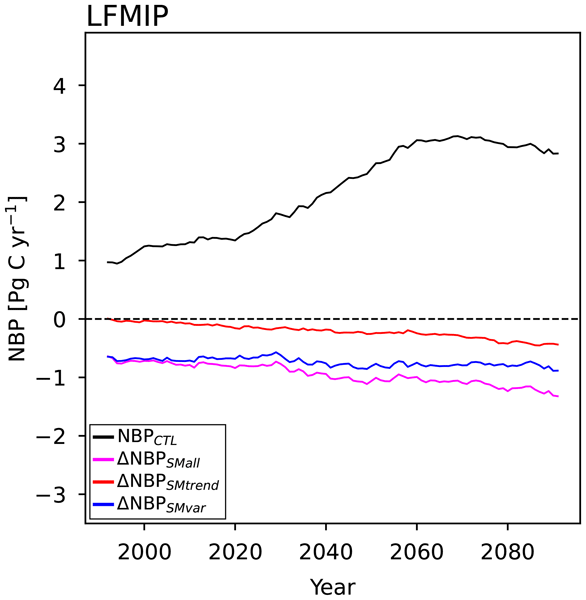
Lea Maria Gabele, Petra Sieber, Laibao Liu, and Sonia I. Seneviratne
Biogeosciences, 23, 2729–2746, https://doi.org/10.5194/bg-23-2729-2026, https://doi.org/10.5194/bg-23-2729-2026, 2026
Short summary
Short summary
We investigate how soil moisture influences the future land carbon sink using dedicated experiments from the latest generation of Earth system models. Our results show that soil moisture strongly reduces land carbon uptake, mainly through soil moisture–atmosphere coupling. However, models disagree on the magnitude of SM impacts. The study emphasises that improving the representation of plant water stress in models is essential to reduce uncertainties in carbon cycle projections.

Hao Pan, Lukas Gudmundsson, Mathias Hauser, Jonas Schwaab, Yann Quilcaille, and Sonia I. Seneviratne
Nonlin. Processes Geophys., 33, 73–83, https://doi.org/10.5194/npg-33-73-2026, https://doi.org/10.5194/npg-33-73-2026, 2026
Short summary
Short summary
Existing regional climate model (RCM) emulators mainly provide deterministic emulations, while internal RCM variability is typically not represented. We develop MESMER-RCM, a probabilistic RCM emulator for annual 2-m temperature, using a simple and physically interpretable approach. We demonstrate its ability to emulate both RCM trends and internal variability in a high-dimensional spatial setting, where existing approaches typically struggle.
Peter W. Thorne, John M. Nicklas, John J. Kennedy, Bruce Calvert, Baylor Fox-Kemper, Mark T. Richardson, Adrian Simmons, Ed Hawkins, Robert Rhode, Kathryn Cowtan, Nerilie J. Abram, Axel Andersson, Simon Noone, Phillipe Marbaix, Nathan Lenssen, Dirk Olonscheck, Tristram Walsh, Stephen Outten, Ingo Bethke, Bjorn H. Samset, Chris Smith, Anna Pirani, Jan Fuglestvedt, Lavanya Rajamani, Richard A. Betts, Elizabeth C. Kent, Blair Trewin, Colin Morice, Tim Osborn, Samantha N. Burgess, Oliver Geden, Andrew Parnell, Piers M. Forster, Chris Hewitt, Zeke Hausfather, Valerie Masson-Delmotte, Jochem Marotzke, Nathan Gillett, Sonia I. Seneviratne, Gavin A. Schmidt, Duo Chan, Stefan Brönnimann, Andy Reisinger, Matthew Menne, Maisa Rojas Corradi, Christopher Kadow, Peter Huybers, David B. Stephenson, Emily Wallis, Joeri Rogelj, Andrew Schurer, Karen McKinnon, Panmao Zhai, Fatima Driouech, Wilfran Moufouma Okia, Saeed Vazifehkhah, Sophie Szopa, Christopher J. Merchant, Shoji Hirahara, Masayoshi Ishii, Francois A. Engelbrecht, Qingxiang Li, June-Yi Lee, Alex J. Cannon, Christophe Cassou, Karina von Schuckmann, Amir H. Delju, and Ellie Murtagh
Earth Syst. Sci. Data Discuss., https://doi.org/10.5194/essd-2025-825, https://doi.org/10.5194/essd-2025-825, 2026
Preprint under review for ESSD
Short summary
Short summary
We reassess the basis for determining the present level of long-term global warming. Unbiased estimates of both realised warming and anthropogenic warming are possible that approximate a 20-year retrospective mean. Our resulting estimates of 1.40 [1.23–1.58] °C (realised) and 1.34 [1.18–1.50] °C (anthropogenic) as at end of 2024 highlight the urgency of immediate, far-reaching and sustained climate mitigation actions if we are to meet the long term temperature goal of the Paris Agreement.
Andreas Güntner, Ehsan Sharifi, Julian Haas, Eva Boergens, Feifei Cao, Christoph Dahle, Neda Darbeheshti, Henryk Dobslaw, Inés Dussaillant, Wouter Dorigo, Frank Flechtner, Adrian Jäggi, Miriam Kosmale, Martin Lasser, Kari Luojus, Ulrich Meyer, Adam Pasik, Wolfgang Preimersberger, Claudia Ruz Vargas, and Michael Zemp
Earth Syst. Sci. Data Discuss., https://doi.org/10.5194/essd-2025-797, https://doi.org/10.5194/essd-2025-797, 2026
Revised manuscript accepted for ESSD
Short summary
Short summary
We provide a data set that illustrates how the amount of water that is stored in the subsurface as groundwater varies in time over the continents of the Earth. A main source of the data are observations with satellites that weigh the changing amount of water by its mass attraction effect. The data allow for assessing how groundwater as the most important freshwater resource for mankind and ecosystems is affected by climate variability, climate change and withdrawal by human activities.
Stefanie Börsig, Dominik L. Schumacher, and Sonia I. Seneviratne
EGUsphere, https://doi.org/10.5194/egusphere-2025-4968, https://doi.org/10.5194/egusphere-2025-4968, 2025
Short summary
Short summary
This study presents a framework aligning regional climate projections with IPCC-constrained global warming trajectories and current-generation global climate model regional responses. We adjust regional simulations while preserving cross-variable consistency and spatial coherence. Applied to European weather extremes, we update existing high-resolution climate projections to ensure consistency with IPCC latest assessment report estimates and underlying global climate models.
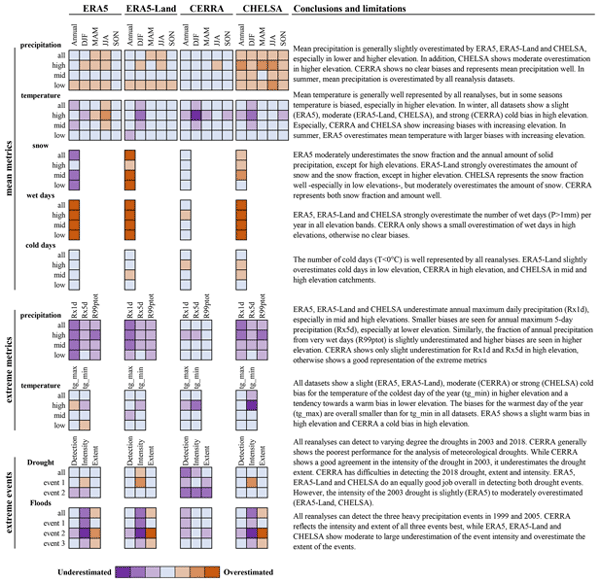
Raul R. Wood, Joren Janzing, Amber van Hamel, Jonas Götte, Dominik L. Schumacher, and Manuela I. Brunner
Hydrol. Earth Syst. Sci., 29, 4153–4178, https://doi.org/10.5194/hess-29-4153-2025, https://doi.org/10.5194/hess-29-4153-2025, 2025
Short summary
Short summary
Continuous and high-quality meteorological datasets are crucial to study extreme hydro-climatic events. We here conduct a comprehensive spatio-temporal evaluation of precipitation and temperature for four climate reanalysis datasets, focusing on mean and extreme metrics, variability, trends, and the representation of droughts and floods over Switzerland. Our analysis shows that all datasets have some merit when limitations are considered, and that one dataset performs better than the others.
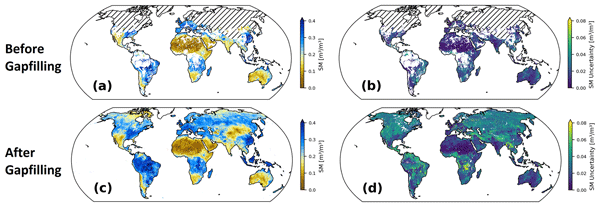
Wolfgang Preimesberger, Pietro Stradiotti, and Wouter Dorigo
Earth Syst. Sci. Data, 17, 4305–4329, https://doi.org/10.5194/essd-17-4305-2025, https://doi.org/10.5194/essd-17-4305-2025, 2025
Short summary
Short summary
We introduce the official ESA CCI Soil Moisture GAPFILLED climate data record. A univariate interpolation algorithm is applied to predict missing data points without relying on ancillary variables. The dataset includes gap-free uncertainty estimates for all predictions and was validated with independent in situ reference measurements. Our data record is recommended for applications which require global long-term gap-free satellite soil moisture data.
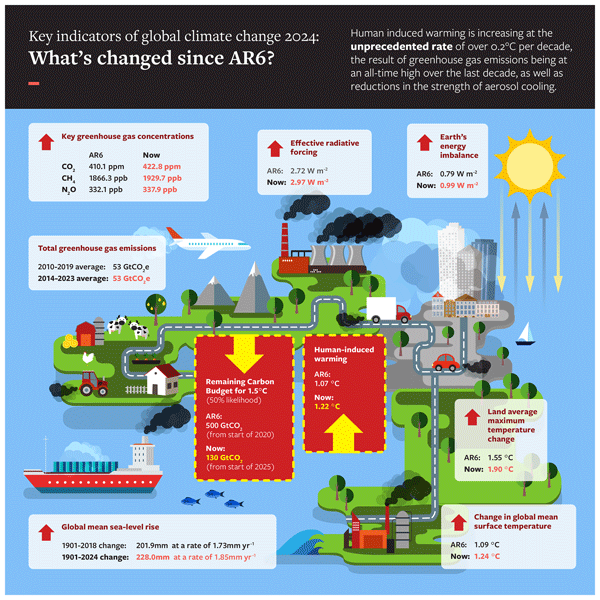
Piers M. Forster, Chris Smith, Tristram Walsh, William F. Lamb, Robin Lamboll, Christophe Cassou, Mathias Hauser, Zeke Hausfather, June-Yi Lee, Matthew D. Palmer, Karina von Schuckmann, Aimée B. A. Slangen, Sophie Szopa, Blair Trewin, Jeongeun Yun, Nathan P. Gillett, Stuart Jenkins, H. Damon Matthews, Krishnan Raghavan, Aurélien Ribes, Joeri Rogelj, Debbie Rosen, Xuebin Zhang, Myles Allen, Lara Aleluia Reis, Robbie M. Andrew, Richard A. Betts, Alex Borger, Jiddu A. Broersma, Samantha N. Burgess, Lijing Cheng, Pierre Friedlingstein, Catia M. Domingues, Marco Gambarini, Thomas Gasser, Johannes Gütschow, Masayoshi Ishii, Christopher Kadow, John Kennedy, Rachel E. Killick, Paul B. Krummel, Aurélien Liné, Didier P. Monselesan, Colin Morice, Jens Mühle, Vaishali Naik, Glen P. Peters, Anna Pirani, Julia Pongratz, Jan C. Minx, Matthew Rigby, Robert Rohde, Abhishek Savita, Sonia I. Seneviratne, Peter Thorne, Christopher Wells, Luke M. Western, Guido R. van der Werf, Susan E. Wijffels, Valérie Masson-Delmotte, and Panmao Zhai
Earth Syst. Sci. Data, 17, 2641–2680, https://doi.org/10.5194/essd-17-2641-2025, https://doi.org/10.5194/essd-17-2641-2025, 2025
Short summary
Short summary
In a rapidly changing climate, evidence-based decision-making benefits from up-to-date and timely information. Here we compile monitoring datasets to track real-world changes over time. To make our work relevant to policymakers, we follow methods from the Intergovernmental Panel on Climate Change (IPCC). Human activities are increasing the Earth's energy imbalance and driving faster sea-level rise compared to the IPCC assessment.
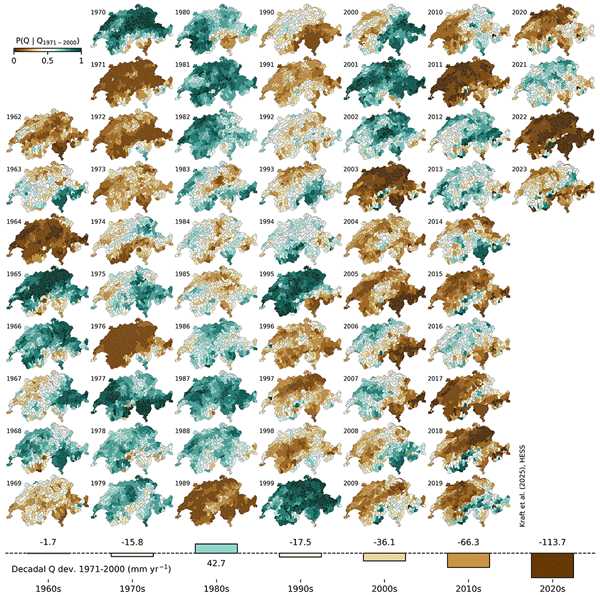
Basil Kraft, Michael Schirmer, William H. Aeberhard, Massimiliano Zappa, Sonia I. Seneviratne, and Lukas Gudmundsson
Hydrol. Earth Syst. Sci., 29, 1061–1082, https://doi.org/10.5194/hess-29-1061-2025, https://doi.org/10.5194/hess-29-1061-2025, 2025
Short summary
Short summary
This study reconstructs daily runoff in Switzerland (1962–2023) using a deep-learning model, providing a spatially contiguous dataset on a medium-sized catchment grid. The model outperforms traditional hydrological methods, revealing shifts in Swiss water resources, including more frequent dry years and declining summer runoff. The reconstruction is publicly available.
Martin Hirschi, Pietro Stradiotti, Bas Crezee, Wouter Dorigo, and Sonia I. Seneviratne
Hydrol. Earth Syst. Sci., 29, 397–425, https://doi.org/10.5194/hess-29-397-2025, https://doi.org/10.5194/hess-29-397-2025, 2025
Short summary
Short summary
We investigate the potential of long-term satellite and reanalysis products for characterising soil drying by analysing their 2000–2022 soil moisture trends and their representation of agroecological drought events of this period. Soil moisture trends are globally diverse and partly contradictory between products. This also affects the products' drought-detection capacity. Based on the best-estimate products, consistent soil drying is observed over more than 40 % of the land area covered.
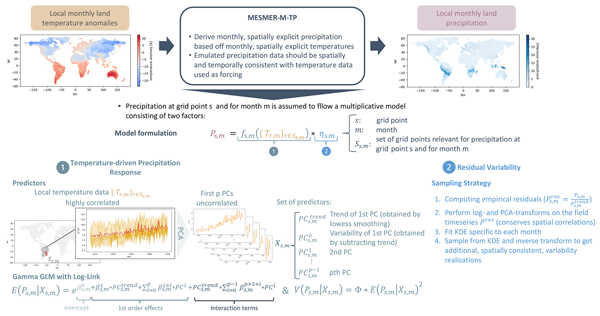
Sarah Schöngart, Lukas Gudmundsson, Mathias Hauser, Peter Pfleiderer, Quentin Lejeune, Shruti Nath, Sonia Isabelle Seneviratne, and Carl-Friedrich Schleussner
Geosci. Model Dev., 17, 8283–8320, https://doi.org/10.5194/gmd-17-8283-2024, https://doi.org/10.5194/gmd-17-8283-2024, 2024
Short summary
Short summary
Precipitation and temperature are two of the most impact-relevant climatic variables. Yet, projecting future precipitation and temperature data under different emission scenarios relies on complex models that are computationally expensive. In this study, we propose a method that allows us to generate monthly means of local precipitation and temperature at low computational costs. Our modelling framework is particularly useful for all downstream applications of climate model data.

Ruxandra-Maria Zotta, Leander Moesinger, Robin van der Schalie, Mariette Vreugdenhil, Wolfgang Preimesberger, Thomas Frederikse, Richard de Jeu, and Wouter Dorigo
Earth Syst. Sci. Data, 16, 4573–4617, https://doi.org/10.5194/essd-16-4573-2024, https://doi.org/10.5194/essd-16-4573-2024, 2024
Short summary
Short summary
VODCA v2 is a dataset providing vegetation indicators for long-term ecosystem monitoring. VODCA v2 comprises two products: VODCA CXKu, spanning 34 years of observations (1987–2021), suitable for monitoring upper canopy dynamics, and VODCA L (2010–2021), for above-ground biomass monitoring. VODCA v2 has lower noise levels than the previous product version and provides valuable insights into plant water dynamics and biomass changes, even in areas where optical data are limited.
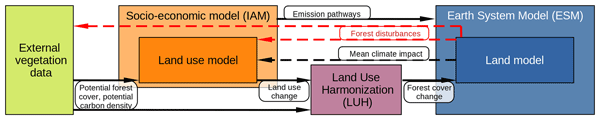
Felix Jäger, Jonas Schwaab, Yann Quilcaille, Michael Windisch, Jonathan Doelman, Stefan Frank, Mykola Gusti, Petr Havlik, Florian Humpenöder, Andrey Lessa Derci Augustynczik, Christoph Müller, Kanishka Balu Narayan, Ryan Sebastian Padrón, Alexander Popp, Detlef van Vuuren, Michael Wögerer, and Sonia Isabelle Seneviratne
Earth Syst. Dynam., 15, 1055–1071, https://doi.org/10.5194/esd-15-1055-2024, https://doi.org/10.5194/esd-15-1055-2024, 2024
Short summary
Short summary
Climate change mitigation strategies developed with socioeconomic models rely on the widespread (re)planting of trees to limit global warming below 2°. However, most of these models neglect climate-driven shifts in forest damage like fires. By assessing existing mitigation scenarios, we show the exposure of projected forestation areas to fire-promoting weather conditions. Our study highlights the problem of ignoring climate-driven shifts in forest damage and ways to address it.
Malte Meinshausen, Carl-Friedrich Schleussner, Kathleen Beyer, Greg Bodeker, Olivier Boucher, Josep G. Canadell, John S. Daniel, Aïda Diongue-Niang, Fatima Driouech, Erich Fischer, Piers Forster, Michael Grose, Gerrit Hansen, Zeke Hausfather, Tatiana Ilyina, Jarmo S. Kikstra, Joyce Kimutai, Andrew D. King, June-Yi Lee, Chris Lennard, Tabea Lissner, Alexander Nauels, Glen P. Peters, Anna Pirani, Gian-Kasper Plattner, Hans Pörtner, Joeri Rogelj, Maisa Rojas, Joyashree Roy, Bjørn H. Samset, Benjamin M. Sanderson, Roland Séférian, Sonia Seneviratne, Christopher J. Smith, Sophie Szopa, Adelle Thomas, Diana Urge-Vorsatz, Guus J. M. Velders, Tokuta Yokohata, Tilo Ziehn, and Zebedee Nicholls
Geosci. Model Dev., 17, 4533–4559, https://doi.org/10.5194/gmd-17-4533-2024, https://doi.org/10.5194/gmd-17-4533-2024, 2024
Short summary
Short summary
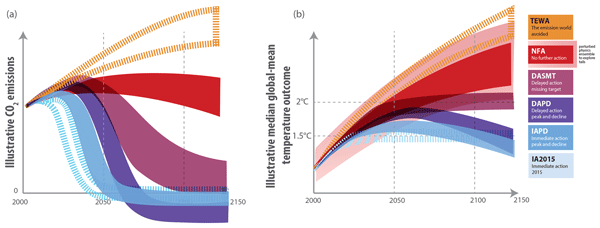
The scientific community is considering new scenarios to succeed RCPs and SSPs for the next generation of Earth system model runs to project future climate change. To contribute to that effort, we reflect on relevant policy and scientific research questions and suggest categories for representative emission pathways. These categories are tailored to the Paris Agreement long-term temperature goal, high-risk outcomes in the absence of further climate policy and worlds “that could have been”.
Piers M. Forster, Chris Smith, Tristram Walsh, William F. Lamb, Robin Lamboll, Bradley Hall, Mathias Hauser, Aurélien Ribes, Debbie Rosen, Nathan P. Gillett, Matthew D. Palmer, Joeri Rogelj, Karina von Schuckmann, Blair Trewin, Myles Allen, Robbie Andrew, Richard A. Betts, Alex Borger, Tim Boyer, Jiddu A. Broersma, Carlo Buontempo, Samantha Burgess, Chiara Cagnazzo, Lijing Cheng, Pierre Friedlingstein, Andrew Gettelman, Johannes Gütschow, Masayoshi Ishii, Stuart Jenkins, Xin Lan, Colin Morice, Jens Mühle, Christopher Kadow, John Kennedy, Rachel E. Killick, Paul B. Krummel, Jan C. Minx, Gunnar Myhre, Vaishali Naik, Glen P. Peters, Anna Pirani, Julia Pongratz, Carl-Friedrich Schleussner, Sonia I. Seneviratne, Sophie Szopa, Peter Thorne, Mahesh V. M. Kovilakam, Elisa Majamäki, Jukka-Pekka Jalkanen, Margreet van Marle, Rachel M. Hoesly, Robert Rohde, Dominik Schumacher, Guido van der Werf, Russell Vose, Kirsten Zickfeld, Xuebin Zhang, Valérie Masson-Delmotte, and Panmao Zhai
Earth Syst. Sci. Data, 16, 2625–2658, https://doi.org/10.5194/essd-16-2625-2024, https://doi.org/10.5194/essd-16-2625-2024, 2024
Short summary
Short summary
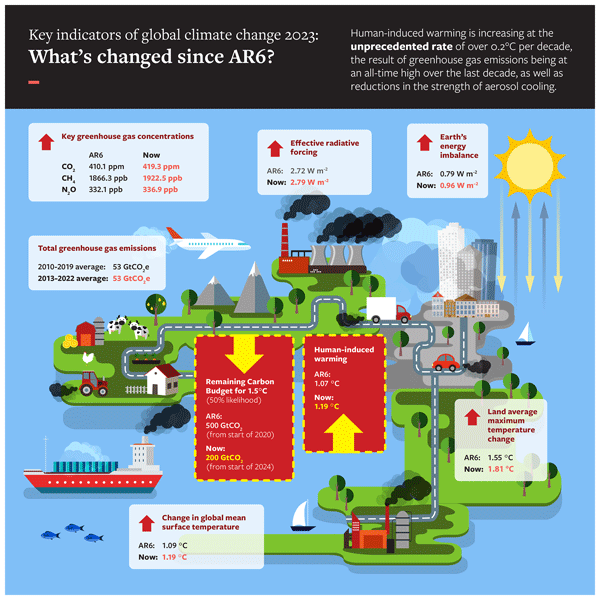
This paper tracks some key indicators of global warming through time, from 1850 through to the end of 2023. It is designed to give an authoritative estimate of global warming to date and its causes. We find that in 2023, global warming reached 1.3 °C and is increasing at over 0.2 °C per decade. This is caused by all-time-high greenhouse gas emissions.
Steven J. De Hertog, Carmen E. Lopez-Fabara, Ruud van der Ent, Jessica Keune, Diego G. Miralles, Raphael Portmann, Sebastian Schemm, Felix Havermann, Suqi Guo, Fei Luo, Iris Manola, Quentin Lejeune, Julia Pongratz, Carl-Friedrich Schleussner, Sonia I. Seneviratne, and Wim Thiery
Earth Syst. Dynam., 15, 265–291, https://doi.org/10.5194/esd-15-265-2024, https://doi.org/10.5194/esd-15-265-2024, 2024
Short summary
Short summary
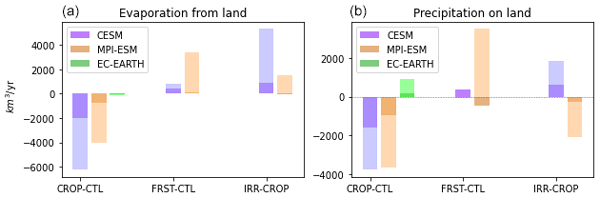
Changes in land use are crucial to achieve lower global warming. However, despite their importance, the effects of these changes on moisture fluxes are poorly understood. We analyse land cover and management scenarios in three climate models involving cropland expansion, afforestation, and irrigation. Results show largely consistent influences on moisture fluxes, with cropland expansion causing a drying and reduced local moisture recycling, while afforestation and irrigation show the opposite.
Dominik L. Schumacher, Mariam Zachariah, Friederike Otto, Clair Barnes, Sjoukje Philip, Sarah Kew, Maja Vahlberg, Roop Singh, Dorothy Heinrich, Julie Arrighi, Maarten van Aalst, Mathias Hauser, Martin Hirschi, Verena Bessenbacher, Lukas Gudmundsson, Hiroko K. Beaudoing, Matthew Rodell, Sihan Li, Wenchang Yang, Gabriel A. Vecchi, Luke J. Harrington, Flavio Lehner, Gianpaolo Balsamo, and Sonia I. Seneviratne
Earth Syst. Dynam., 15, 131–154, https://doi.org/10.5194/esd-15-131-2024, https://doi.org/10.5194/esd-15-131-2024, 2024
Short summary
Short summary
The 2022 summer was accompanied by widespread soil moisture deficits, including an unprecedented drought in Europe. Combining several observation-based estimates and models, we find that such an event has become at least 5 and 20 times more likely due to human-induced climate change in western Europe and the northern extratropics, respectively. Strong regional warming fuels soil desiccation; hence, projections indicate even more potent future droughts as we progress towards a 2 °C warmer world.
Yann Quilcaille, Lukas Gudmundsson, and Sonia I. Seneviratne
Earth Syst. Dynam., 14, 1333–1362, https://doi.org/10.5194/esd-14-1333-2023, https://doi.org/10.5194/esd-14-1333-2023, 2023
Short summary
Short summary
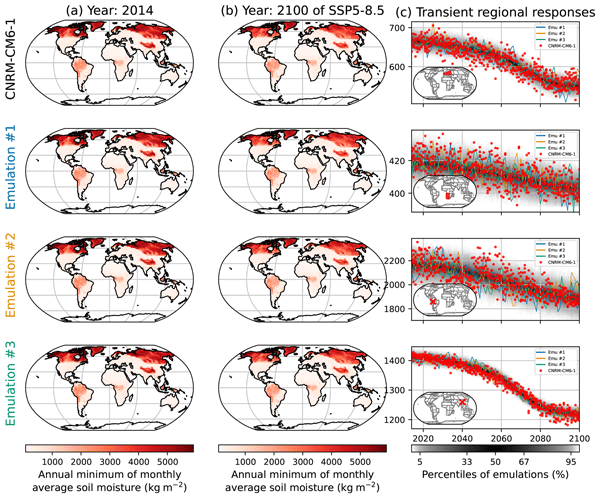
Climate models are powerful tools, but they have high computational costs, hindering their use in exploring future climate extremes. We demonstrate MESMER-X, the only existing emulator for spatial climate extremes (heatwaves, fires, droughts) that mimics all of their relevant properties. Thanks to its negligible computational cost, MESMER-X may greatly accelerate the exploration of future climate extremes or enable the integration of climate extremes in economic and financial models.
Adam Pasik, Alexander Gruber, Wolfgang Preimesberger, Domenico De Santis, and Wouter Dorigo
Geosci. Model Dev., 16, 4957–4976, https://doi.org/10.5194/gmd-16-4957-2023, https://doi.org/10.5194/gmd-16-4957-2023, 2023
Short summary
Short summary
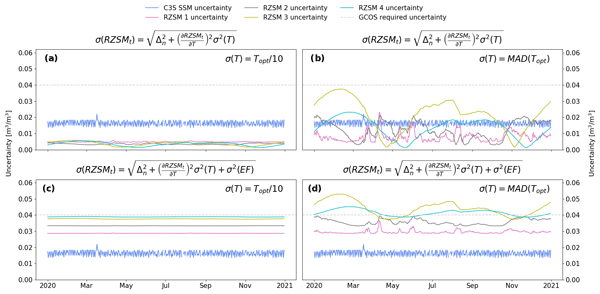
We apply the exponential filter (EF) method to satellite soil moisture retrievals to estimate the water content in the unobserved root zone globally from 2002–2020. Quality assessment against an independent dataset shows satisfactory results. Error characterization is carried out using the standard uncertainty propagation law and empirically estimated values of EF model structural uncertainty and parameter uncertainty. This is followed by analysis of temporal uncertainty variations.
Shruti Nath, Lukas Gudmundsson, Jonas Schwaab, Gregory Duveiller, Steven J. De Hertog, Suqi Guo, Felix Havermann, Fei Luo, Iris Manola, Julia Pongratz, Sonia I. Seneviratne, Carl F. Schleussner, Wim Thiery, and Quentin Lejeune
Geosci. Model Dev., 16, 4283–4313, https://doi.org/10.5194/gmd-16-4283-2023, https://doi.org/10.5194/gmd-16-4283-2023, 2023
Short summary
Short summary
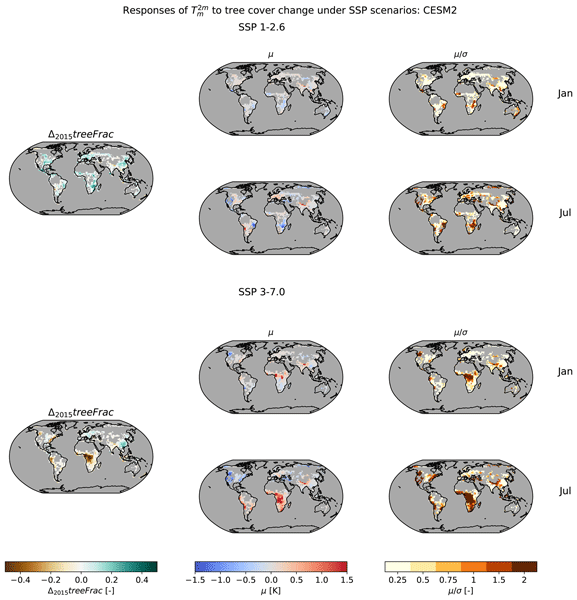
Tree cover changes play a significant role in climate mitigation and adaptation. Their regional impacts are key in informing national-level decisions and prioritising areas for conservation efforts. We present a first step towards exploring these regional impacts using a simple statistical device, i.e. emulator. The emulator only needs to train on climate model outputs representing the maximal impacts of aff-, re-, and deforestation, from which it explores plausible in-between outcomes itself.
Piers M. Forster, Christopher J. Smith, Tristram Walsh, William F. Lamb, Robin Lamboll, Mathias Hauser, Aurélien Ribes, Debbie Rosen, Nathan Gillett, Matthew D. Palmer, Joeri Rogelj, Karina von Schuckmann, Sonia I. Seneviratne, Blair Trewin, Xuebin Zhang, Myles Allen, Robbie Andrew, Arlene Birt, Alex Borger, Tim Boyer, Jiddu A. Broersma, Lijing Cheng, Frank Dentener, Pierre Friedlingstein, José M. Gutiérrez, Johannes Gütschow, Bradley Hall, Masayoshi Ishii, Stuart Jenkins, Xin Lan, June-Yi Lee, Colin Morice, Christopher Kadow, John Kennedy, Rachel Killick, Jan C. Minx, Vaishali Naik, Glen P. Peters, Anna Pirani, Julia Pongratz, Carl-Friedrich Schleussner, Sophie Szopa, Peter Thorne, Robert Rohde, Maisa Rojas Corradi, Dominik Schumacher, Russell Vose, Kirsten Zickfeld, Valérie Masson-Delmotte, and Panmao Zhai
Earth Syst. Sci. Data, 15, 2295–2327, https://doi.org/10.5194/essd-15-2295-2023, https://doi.org/10.5194/essd-15-2295-2023, 2023
Short summary
Short summary
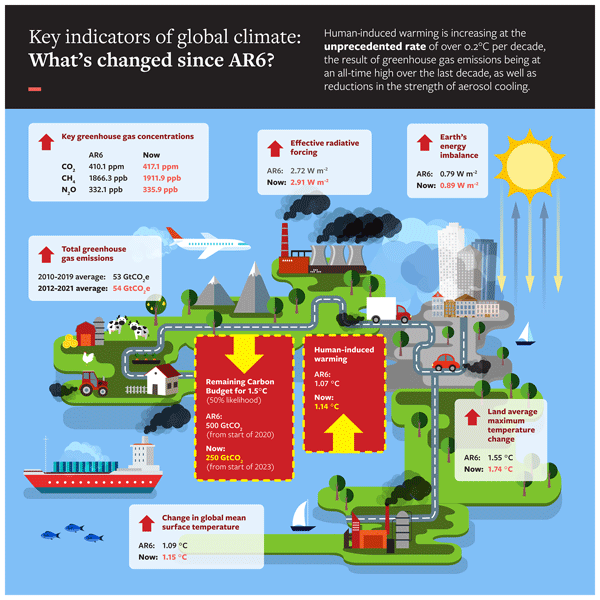
This is a critical decade for climate action, but there is no annual tracking of the level of human-induced warming. We build on the Intergovernmental Panel on Climate Change assessment reports that are authoritative but published infrequently to create a set of key global climate indicators that can be tracked through time. Our hope is that this becomes an important annual publication that policymakers, media, scientists and the public can refer to.
Steven J. De Hertog, Felix Havermann, Inne Vanderkelen, Suqi Guo, Fei Luo, Iris Manola, Dim Coumou, Edouard L. Davin, Gregory Duveiller, Quentin Lejeune, Julia Pongratz, Carl-Friedrich Schleussner, Sonia I. Seneviratne, and Wim Thiery
Earth Syst. Dynam., 14, 629–667, https://doi.org/10.5194/esd-14-629-2023, https://doi.org/10.5194/esd-14-629-2023, 2023
Short summary
Short summary
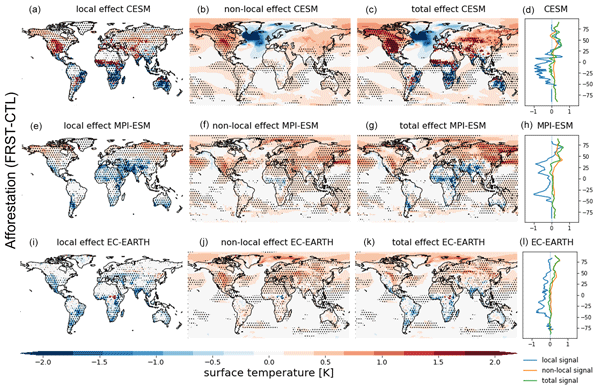
Land cover and land management changes are important strategies for future land-based mitigation. We investigate the climate effects of cropland expansion, afforestation, irrigation and wood harvesting using three Earth system models. Results show that these have important implications for surface temperature where the land cover and/or management change occur and in remote areas. Idealized afforestation causes global warming, which might offset the cooling effect from enhanced carbon uptake.
Yann Quilcaille, Fulden Batibeniz, Andreia F. S. Ribeiro, Ryan S. Padrón, and Sonia I. Seneviratne
Earth Syst. Sci. Data, 15, 2153–2177, https://doi.org/10.5194/essd-15-2153-2023, https://doi.org/10.5194/essd-15-2153-2023, 2023
Short summary
Short summary
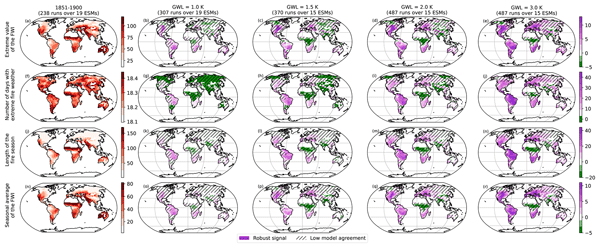
We present a new database of four annual fire weather indicators over 1850–2100 and over all land areas. In a 3°C warmer world with respect to preindustrial times, the mean fire weather would increase on average by at least 66% in both intensity and duration and even triple for 1-in-10-year events. The dataset is a freely available resource for fire danger studies and beyond, highlighting that the best course of action would require limiting global warming as much as possible.
Steven J. De Hertog, Carmen E. Lopez-Fabara, Ruud van der Ent, Jessica Keune, Diego G. Miralles, Raphael Portmann, Sebastian Schemm, Felix Havermann, Suqi Guo, Fei Luo, Iris Manola, Quentin Lejeune, Julia Pongratz, Carl-Friedrich Schleussner, Sonia I. Seneviratne, and Wim Thiery
EGUsphere, https://doi.org/10.5194/egusphere-2023-953, https://doi.org/10.5194/egusphere-2023-953, 2023
Preprint archived
Short summary
Short summary
Land cover and management changes can affect the climate and water availability. In this study we use climate model simulations of extreme global land cover changes (afforestation, deforestation) and land management changes (irrigation) to understand the effects on the global water cycle and local to continental water availability. We show that cropland expansion generally leads to higher evaporation and lower amounts of precipitation and afforestation and irrigation expansion to the opposite.
Francisco José Cuesta-Valero, Hugo Beltrami, Almudena García-García, Gerhard Krinner, Moritz Langer, Andrew H. MacDougall, Jan Nitzbon, Jian Peng, Karina von Schuckmann, Sonia I. Seneviratne, Wim Thiery, Inne Vanderkelen, and Tonghua Wu
Earth Syst. Dynam., 14, 609–627, https://doi.org/10.5194/esd-14-609-2023, https://doi.org/10.5194/esd-14-609-2023, 2023
Short summary
Short summary
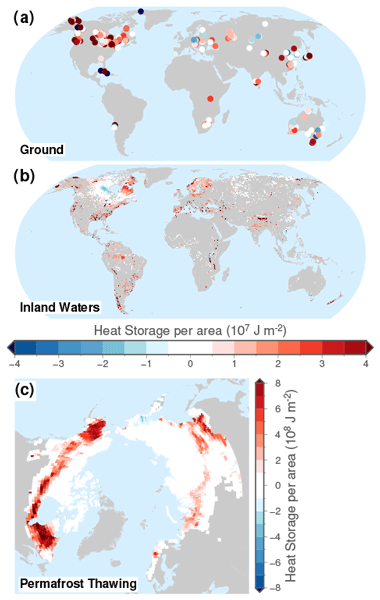
Climate change is caused by the accumulated heat in the Earth system, with the land storing the second largest amount of this extra heat. Here, new estimates of continental heat storage are obtained, including changes in inland-water heat storage and permafrost heat storage in addition to changes in ground heat storage. We also argue that heat gains in all three components should be monitored independently of their magnitude due to heat-dependent processes affecting society and ecosystems.
Fulden Batibeniz, Mathias Hauser, and Sonia Isabelle Seneviratne
Earth Syst. Dynam., 14, 485–505, https://doi.org/10.5194/esd-14-485-2023, https://doi.org/10.5194/esd-14-485-2023, 2023
Short summary
Short summary
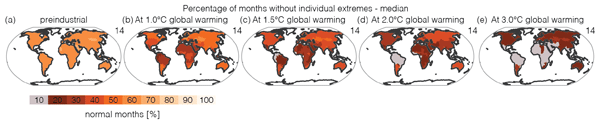
We study single and concurrent heatwaves, droughts, precipitation, and wind extremes. Globally, these extremes become more frequent and affect larger land areas under future warming, with several countries experiencing extreme events every single month. Concurrent heatwaves–droughts (precipitation–wind) are projected to increase the most in mid–high-latitude countries (tropics). Every mitigation action to avoid further warming will reduce the number of people exposed to extreme weather events.
Karina von Schuckmann, Audrey Minière, Flora Gues, Francisco José Cuesta-Valero, Gottfried Kirchengast, Susheel Adusumilli, Fiammetta Straneo, Michaël Ablain, Richard P. Allan, Paul M. Barker, Hugo Beltrami, Alejandro Blazquez, Tim Boyer, Lijing Cheng, John Church, Damien Desbruyeres, Han Dolman, Catia M. Domingues, Almudena García-García, Donata Giglio, John E. Gilson, Maximilian Gorfer, Leopold Haimberger, Maria Z. Hakuba, Stefan Hendricks, Shigeki Hosoda, Gregory C. Johnson, Rachel Killick, Brian King, Nicolas Kolodziejczyk, Anton Korosov, Gerhard Krinner, Mikael Kuusela, Felix W. Landerer, Moritz Langer, Thomas Lavergne, Isobel Lawrence, Yuehua Li, John Lyman, Florence Marti, Ben Marzeion, Michael Mayer, Andrew H. MacDougall, Trevor McDougall, Didier Paolo Monselesan, Jan Nitzbon, Inès Otosaka, Jian Peng, Sarah Purkey, Dean Roemmich, Kanako Sato, Katsunari Sato, Abhishek Savita, Axel Schweiger, Andrew Shepherd, Sonia I. Seneviratne, Leon Simons, Donald A. Slater, Thomas Slater, Andrea K. Steiner, Toshio Suga, Tanguy Szekely, Wim Thiery, Mary-Louise Timmermans, Inne Vanderkelen, Susan E. Wjiffels, Tonghua Wu, and Michael Zemp
Earth Syst. Sci. Data, 15, 1675–1709, https://doi.org/10.5194/essd-15-1675-2023, https://doi.org/10.5194/essd-15-1675-2023, 2023
Short summary
Short summary
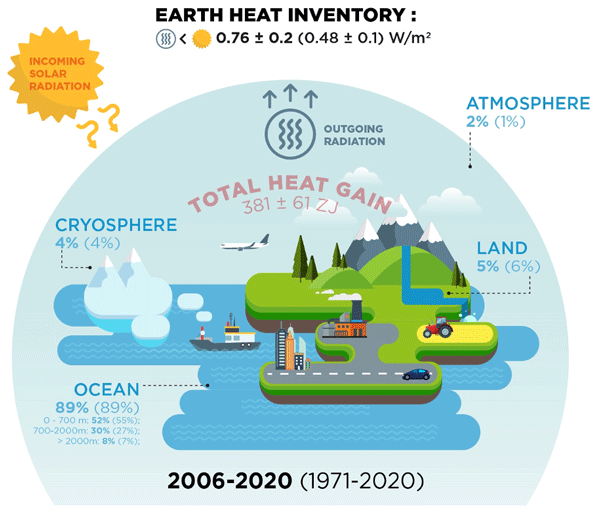
Earth's climate is out of energy balance, and this study quantifies how much heat has consequently accumulated over the past decades (ocean: 89 %, land: 6 %, cryosphere: 4 %, atmosphere: 1 %). Since 1971, this accumulated heat reached record values at an increasing pace. The Earth heat inventory provides a comprehensive view on the status and expectation of global warming, and we call for an implementation of this global climate indicator into the Paris Agreement’s Global Stocktake.
Sjoukje Y. Philip, Sarah F. Kew, Geert Jan van Oldenborgh, Faron S. Anslow, Sonia I. Seneviratne, Robert Vautard, Dim Coumou, Kristie L. Ebi, Julie Arrighi, Roop Singh, Maarten van Aalst, Carolina Pereira Marghidan, Michael Wehner, Wenchang Yang, Sihan Li, Dominik L. Schumacher, Mathias Hauser, Rémy Bonnet, Linh N. Luu, Flavio Lehner, Nathan Gillett, Jordis S. Tradowsky, Gabriel A. Vecchi, Chris Rodell, Roland B. Stull, Rosie Howard, and Friederike E. L. Otto
Earth Syst. Dynam., 13, 1689–1713, https://doi.org/10.5194/esd-13-1689-2022, https://doi.org/10.5194/esd-13-1689-2022, 2022
Short summary
Short summary
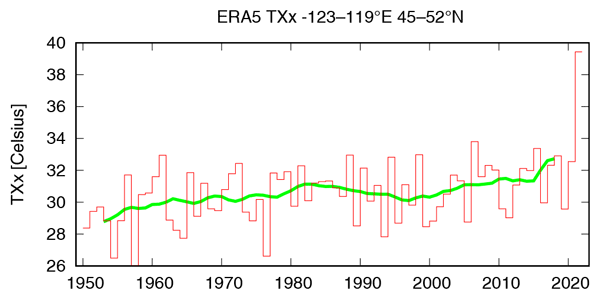
In June 2021, the Pacific Northwest of the US and Canada saw record temperatures far exceeding those previously observed. This attribution study found such a severe heat wave would have been virtually impossible without human-induced climate change. Assuming no nonlinear interactions, such events have become at least 150 times more common, are about 2 °C hotter and will become even more common as warming continues. Therefore, adaptation and mitigation are urgently needed to prepare society.

Ryan S. Padrón, Lukas Gudmundsson, Laibao Liu, Vincent Humphrey, and Sonia I. Seneviratne
Biogeosciences, 19, 5435–5448, https://doi.org/10.5194/bg-19-5435-2022, https://doi.org/10.5194/bg-19-5435-2022, 2022
Short summary
Short summary
The answer to how much carbon land ecosystems are projected to remove from the atmosphere until 2100 is different for each Earth system model. We find that differences across models are primarily explained by the annual land carbon sink dependence on temperature and soil moisture, followed by the dependence on CO2 air concentration, and by average climate conditions. Our insights on why each model projects a relatively high or low land carbon sink can help to reduce the underlying uncertainty.

Steven J. De Hertog, Felix Havermann, Inne Vanderkelen, Suqi Guo, Fei Luo, Iris Manola, Dim Coumou, Edouard L. Davin, Gregory Duveiller, Quentin Lejeune, Julia Pongratz, Carl-Friedrich Schleussner, Sonia I. Seneviratne, and Wim Thiery
Earth Syst. Dynam., 13, 1305–1350, https://doi.org/10.5194/esd-13-1305-2022, https://doi.org/10.5194/esd-13-1305-2022, 2022
Short summary
Short summary
Land cover and land management changes are important strategies for future land-based mitigation. We investigate the climate effects of cropland expansion, afforestation, irrigation, and wood harvesting using three Earth system models. Results show that these have important implications for surface temperature where the land cover and/or management change occurs and in remote areas. Idealized afforestation causes global warming, which might offset the cooling effect from enhanced carbon uptake.
Kathrin Wehrli, Fei Luo, Mathias Hauser, Hideo Shiogama, Daisuke Tokuda, Hyungjun Kim, Dim Coumou, Wilhelm May, Philippe Le Sager, Frank Selten, Olivia Martius, Robert Vautard, and Sonia I. Seneviratne
Earth Syst. Dynam., 13, 1167–1196, https://doi.org/10.5194/esd-13-1167-2022, https://doi.org/10.5194/esd-13-1167-2022, 2022
Short summary
Short summary
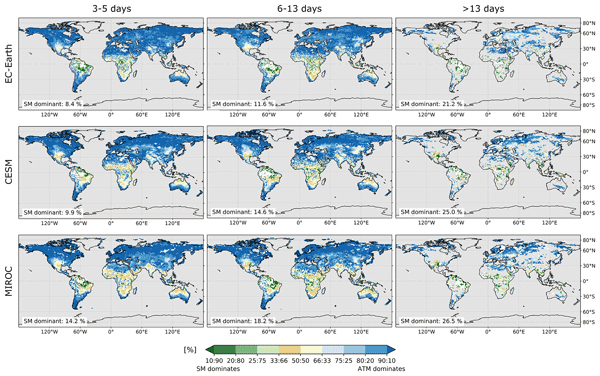
The ExtremeX experiment was designed to unravel the contribution of processes leading to the occurrence of recent weather and climate extremes. Global climate simulations are carried out with three models. The results show that in constrained experiments, temperature anomalies during heatwaves are well represented, although climatological model biases remain. Further, a substantial contribution of both atmospheric circulation and soil moisture to heat extremes is identified.
Fei Luo, Frank Selten, Kathrin Wehrli, Kai Kornhuber, Philippe Le Sager, Wilhelm May, Thomas Reerink, Sonia I. Seneviratne, Hideo Shiogama, Daisuke Tokuda, Hyungjun Kim, and Dim Coumou
Weather Clim. Dynam., 3, 905–935, https://doi.org/10.5194/wcd-3-905-2022, https://doi.org/10.5194/wcd-3-905-2022, 2022
Short summary
Short summary
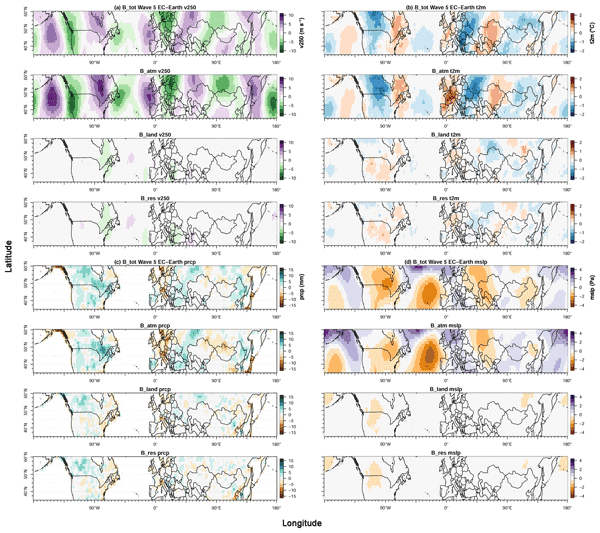
Recent studies have identified the weather systems in observational data, where wave patterns with high-magnitude values that circle around the whole globe in either wavenumber 5 or wavenumber 7 are responsible for the extreme events. In conclusion, we find that the climate models are able to reproduce the large-scale atmospheric circulation patterns as well as their associated surface variables such as temperature, precipitation, and sea level pressure.

Verena Bessenbacher, Sonia Isabelle Seneviratne, and Lukas Gudmundsson
Geosci. Model Dev., 15, 4569–4596, https://doi.org/10.5194/gmd-15-4569-2022, https://doi.org/10.5194/gmd-15-4569-2022, 2022
Short summary
Short summary
Earth observations have many missing values. They are often filled using information from spatial and temporal contexts that mostly ignore information from related observed variables. We propose the gap-filling method CLIMFILL that additionally uses information from related variables. We test CLIMFILL using gap-free reanalysis data of variables related to soil–moisture climate interactions. CLIMFILL creates estimates for the missing values that recover the original dependence structure.
Shruti Nath, Quentin Lejeune, Lea Beusch, Sonia I. Seneviratne, and Carl-Friedrich Schleussner
Earth Syst. Dynam., 13, 851–877, https://doi.org/10.5194/esd-13-851-2022, https://doi.org/10.5194/esd-13-851-2022, 2022
Short summary
Short summary
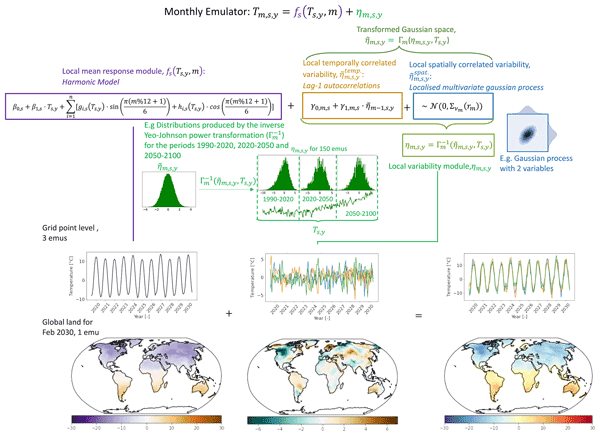
Uncertainty within climate model projections on inter-annual timescales is largely affected by natural climate variability. Emulators are valuable tools for approximating climate model runs, allowing for easy exploration of such uncertainty spaces. This study takes a first step at building a spatially resolved, monthly temperature emulator that takes local yearly temperatures as the sole input, thus providing monthly temperature distributions which are of critical value to impact assessments.
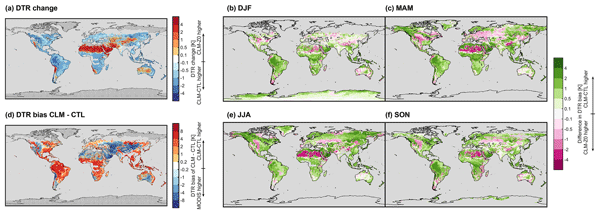
Ronny Meier, Edouard L. Davin, Gordon B. Bonan, David M. Lawrence, Xiaolong Hu, Gregory Duveiller, Catherine Prigent, and Sonia I. Seneviratne
Geosci. Model Dev., 15, 2365–2393, https://doi.org/10.5194/gmd-15-2365-2022, https://doi.org/10.5194/gmd-15-2365-2022, 2022
Short summary
Short summary
We revise the roughness of the land surface in the CESM climate model. Guided by observational data, we increase the surface roughness of forests and decrease that of bare soil, snow, ice, and crops. These modifications alter simulated temperatures and wind speeds at and above the land surface considerably, in particular over desert regions. The revised model represents the diurnal variability of the land surface temperature better compared to satellite observations over most regions.
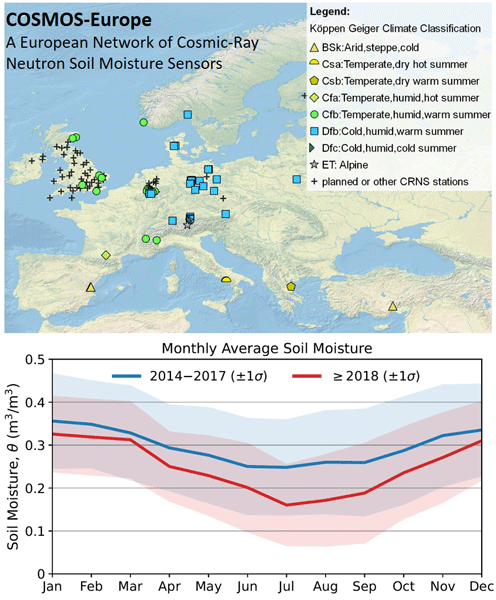
Heye Reemt Bogena, Martin Schrön, Jannis Jakobi, Patrizia Ney, Steffen Zacharias, Mie Andreasen, Roland Baatz, David Boorman, Mustafa Berk Duygu, Miguel Angel Eguibar-Galán, Benjamin Fersch, Till Franke, Josie Geris, María González Sanchis, Yann Kerr, Tobias Korf, Zalalem Mengistu, Arnaud Mialon, Paolo Nasta, Jerzy Nitychoruk, Vassilios Pisinaras, Daniel Rasche, Rafael Rosolem, Hami Said, Paul Schattan, Marek Zreda, Stefan Achleitner, Eduardo Albentosa-Hernández, Zuhal Akyürek, Theresa Blume, Antonio del Campo, Davide Canone, Katya Dimitrova-Petrova, John G. Evans, Stefano Ferraris, Félix Frances, Davide Gisolo, Andreas Güntner, Frank Herrmann, Joost Iwema, Karsten H. Jensen, Harald Kunstmann, Antonio Lidón, Majken Caroline Looms, Sascha Oswald, Andreas Panagopoulos, Amol Patil, Daniel Power, Corinna Rebmann, Nunzio Romano, Lena Scheiffele, Sonia Seneviratne, Georg Weltin, and Harry Vereecken
Earth Syst. Sci. Data, 14, 1125–1151, https://doi.org/10.5194/essd-14-1125-2022, https://doi.org/10.5194/essd-14-1125-2022, 2022
Short summary
Short summary
Monitoring of increasingly frequent droughts is a prerequisite for climate adaptation strategies. This data paper presents long-term soil moisture measurements recorded by 66 cosmic-ray neutron sensors (CRNS) operated by 24 institutions and distributed across major climate zones in Europe. Data processing followed harmonized protocols and state-of-the-art methods to generate consistent and comparable soil moisture products and to facilitate continental-scale analysis of hydrological extremes.
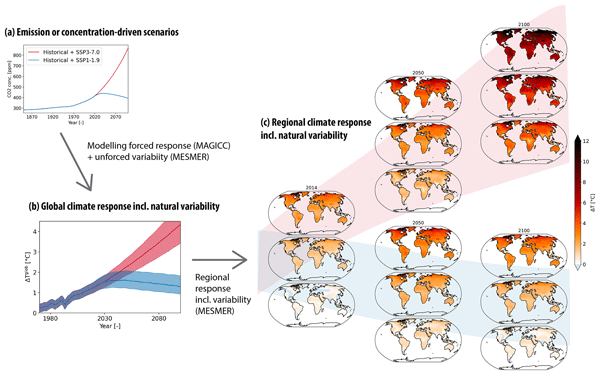
Lea Beusch, Zebedee Nicholls, Lukas Gudmundsson, Mathias Hauser, Malte Meinshausen, and Sonia I. Seneviratne
Geosci. Model Dev., 15, 2085–2103, https://doi.org/10.5194/gmd-15-2085-2022, https://doi.org/10.5194/gmd-15-2085-2022, 2022
Short summary
Short summary
We introduce the first chain of computationally efficient Earth system model (ESM) emulators to translate user-defined greenhouse gas emission pathways into regional temperature change time series accounting for all major sources of climate change projection uncertainty. By combining the global mean emulator MAGICC with the spatially resolved emulator MESMER, we can derive ESM-specific and constrained probabilistic emulations to rapidly provide targeted climate information at the local scale.
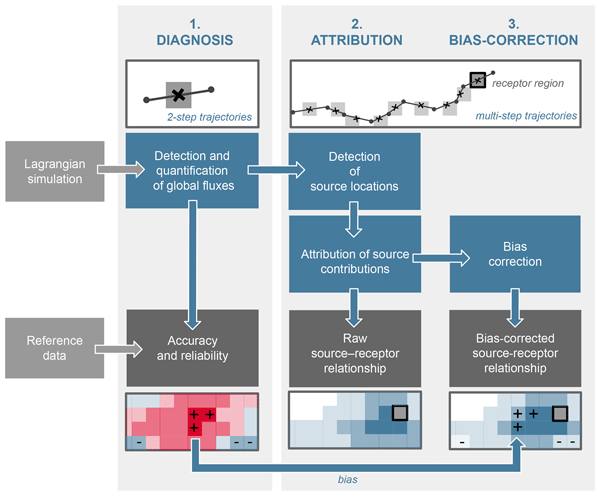
Jessica Keune, Dominik L. Schumacher, and Diego G. Miralles
Geosci. Model Dev., 15, 1875–1898, https://doi.org/10.5194/gmd-15-1875-2022, https://doi.org/10.5194/gmd-15-1875-2022, 2022
Short summary
Short summary
Air transports moisture and heat, shaping the weather we experience. When and where was this air moistened and warmed by the surface? To address this question, atmospheric models trace the history of air parcels in space and time. However, their uncertainties remain unexplored, which hinders their utility and application. Here, we present a framework that sheds light on these uncertainties. Our approach sets a new standard in the assessment of atmospheric moisture and heat trajectories.
Aine M. Gormley-Gallagher, Sebastian Sterl, Annette L. Hirsch, Sonia I. Seneviratne, Edouard L. Davin, and Wim Thiery
Earth Syst. Dynam., 13, 419–438, https://doi.org/10.5194/esd-13-419-2022, https://doi.org/10.5194/esd-13-419-2022, 2022
Short summary
Short summary
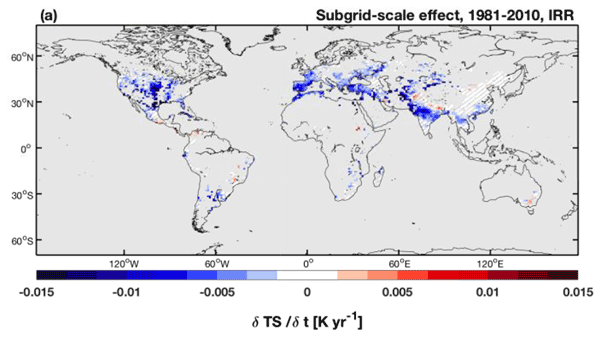
Our results show that agricultural management can impact the local climate and highlight the need to evaluate land management in climate models. We use regression analysis on climate simulations and observations to assess irrigation and conservation agriculture impacts on warming trends. This allowed us to distinguish between the effects of land management and large-scale climate forcings such as rising CO2 concentrations and thus gain insight into the impacts under different climate regimes.
Wouter Dorigo, Irene Himmelbauer, Daniel Aberer, Lukas Schremmer, Ivana Petrakovic, Luca Zappa, Wolfgang Preimesberger, Angelika Xaver, Frank Annor, Jonas Ardö, Dennis Baldocchi, Marco Bitelli, Günter Blöschl, Heye Bogena, Luca Brocca, Jean-Christophe Calvet, J. Julio Camarero, Giorgio Capello, Minha Choi, Michael C. Cosh, Nick van de Giesen, Istvan Hajdu, Jaakko Ikonen, Karsten H. Jensen, Kasturi Devi Kanniah, Ileen de Kat, Gottfried Kirchengast, Pankaj Kumar Rai, Jenni Kyrouac, Kristine Larson, Suxia Liu, Alexander Loew, Mahta Moghaddam, José Martínez Fernández, Cristian Mattar Bader, Renato Morbidelli, Jan P. Musial, Elise Osenga, Michael A. Palecki, Thierry Pellarin, George P. Petropoulos, Isabella Pfeil, Jarrett Powers, Alan Robock, Christoph Rüdiger, Udo Rummel, Michael Strobel, Zhongbo Su, Ryan Sullivan, Torbern Tagesson, Andrej Varlagin, Mariette Vreugdenhil, Jeffrey Walker, Jun Wen, Fred Wenger, Jean Pierre Wigneron, Mel Woods, Kun Yang, Yijian Zeng, Xiang Zhang, Marek Zreda, Stephan Dietrich, Alexander Gruber, Peter van Oevelen, Wolfgang Wagner, Klaus Scipal, Matthias Drusch, and Roberto Sabia
Hydrol. Earth Syst. Sci., 25, 5749–5804, https://doi.org/10.5194/hess-25-5749-2021, https://doi.org/10.5194/hess-25-5749-2021, 2021
Short summary
Short summary
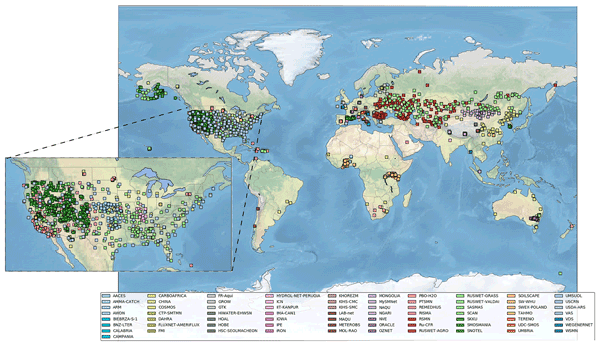
The International Soil Moisture Network (ISMN) is a community-based open-access data portal for soil water measurements taken at the ground and is accessible at https://ismn.earth. Over 1000 scientific publications and thousands of users have made use of the ISMN. The scope of this paper is to inform readers about the data and functionality of the ISMN and to provide a review of the scientific progress facilitated through the ISMN with the scope to shape future research and operations.
Cited articles
Albergel, C., Rüdiger, C., Pellarin, T., Calvet, J.-C., Fritz, N., Froissard, F., Suquia, D., Petitpa, A., Piguet, B., and Martin, E.: From near-surface to root-zone soil moisture using an exponential filter: an assessment of the method based on in-situ observations and model simulations, Hydrol. Earth Syst. Sci., 12, 1323–1337, https://doi.org/10.5194/hess-12-1323-2008, 2008.
BAFU: Hitze und Trockenheit im Sommer 2015: Auswirkungen auf Mensch und Umwelt, Bundesamt für Umwelt BAFU, Berne, Umwelt-Zustand 1629, 108 pp., 2016.
BAFU: Drought: monitoring, forecasting and warning: https://www.bafu.admin.ch/bafu/en/home/topics/water/extreme-events/drought-monitoring-forecasting-and-warning.html (last access: 31 March 2025), 2024.
Balsamo, G., Viterbo, P., Beljaars, A., van den Hurk, B., Hirschi, M., Betts, A. K., and Scipal, K.: A Revised Hydrology for the ECMWF Model: Verification from Field Site to Terrestrial Water Storage and Impact in the Integrated Forecast System, J. Hydrometeorol., 10, 623–643, https://doi.org/10.1175/2008jhm1068.1, 2009.
Brouwer, C., Prins, K., and Heibloem, M.: Irrigation Water Management: Irrigation Scheduling, FAO, https://www.fao.org/4/t7202e/t7202e00.htm (last access: 2 July 2026), 1989.
Brunner, M. I., Liechti, K., and Zappa, M.: Extremeness of recent drought events in Switzerland: dependence on variable and return period choice, Nat. Hazards Earth Syst. Sci., 19, 2311–2323, https://doi.org/10.5194/nhess-19-2311-2019, 2019.
C3S: ERA5-Land monthly averaged data from 1950 to present, Copernicus Climate Change Service (C3S) Climate Data Store (CDS) [data set], https://doi.org/10.24381/cds.68d2bb30, 2022.
C3S and WMO: Soil moisture, in: European State of the Climate 2024, WMO, Geneva, 39–41, https://doi.org/10.24381/14j9-s541, 2025.
Calanca, P.: Climate change and drought occurrence in the Alpine region: How severe are becoming the extremes?, Global Planet Change, 57, 151–160, https://doi.org/10.1016/j.gloplacha.2006.11.001, 2007.
CH2018: CH2018 – Climate Scenarios for Switzerland, National Centre for Climate Services, Zürich, Technical Report, 271 pp., https://www.nccs.admin.ch/nccs/de/home/klimawandel-und-auswirkungen/schweizer-klimaszenarien/technical-report.html (last access: 2 July 2026), 2018.
Domínguez-Niño, J. M., Bogena, H. R., Huisman, J. A., Schilling, B., and Casadesús, J.: On the Accuracy of Factory-Calibrated Low-Cost Soil Water Content Sensors, Sensors, 19, 3101, https://doi.org/10.3390/s19143101, 2019.
Dorigo, W., Wagner, W., Albergel, C., Albrecht, F., Balsamo, G., Brocca, L., Chung, D., Ertl, M., Forkel, M., Gruber, A., Haas, E., Hamer, P. D., Hirschi, M., Ikonen, J., de Jeu, R., Kidd, R., Lahoz, W., Liu, Y. Y., Miralles, D., Mistelbauer, T., Nicolai-Shaw, N., Parinussa, R., Pratola, C., Reimer, C., van der Schalie, R., Seneviratne, S. I., Smolander, T., and Lecomte, P.: ESA CCI Soil Moisture for improved Earth system understanding: State-of-the art and future directions, Remote Sens. Environ., 203, 185–215, https://doi.org/10.1016/j.rse.2017.07.001, 2017.
Dorigo, W., Preimesberger, W., Hahn, S., Van der Schalie, R., De Jeu, R., Kidd, R., Rodriguez-Fernandez, N., Hirschi, M., Stradiotti, P., Frederikse, T., Gruber, A., and Duchemin, D.: ESA Soil Moisture Climate Change Initiative (Soil_Moisture_cci): PASSIVE product, Version 09.1, NERC EDS Centre for Environmental Data Analysis [data set], https://doi.org/10.5285/ca55ac11fc814b0d95e68a34a10539c1, 2024.
Dorigo, W., Preimesberger, W., Lems, J., Frederikse, T., and Dostalova, A.: Soil moisture gridded data from 1978 to present (v202505), Climate Data Store [data set], https://doi.org/10.24381/cds.d7782f18, 2025.
Gruber, A., Scanlon, T., van der Schalie, R., Wagner, W., and Dorigo, W.: Evolution of the ESA CCI Soil Moisture climate data records and their underlying merging methodology, Earth Syst. Sci. Data, 11, 717–739, https://doi.org/10.5194/essd-11-717-2019, 2019.
Hersbach, H., Bell, B., Berrisford, P., Hirahara, S., Horányi, A., Muñoz-Sabater, J., Nicolas, J., Peubey, C., Radu, R., Schepers, D., Simmons, A., Soci, C., Abdalla, S., Abellan, X., Balsamo, G., Bechtold, P., Biavati, G., Bidlot, J., Bonavita, M., De Chiara, G., Dahlgren, P., Dee, D., Diamantakis, M., Dragani, R., Flemming, J., Forbes, R., Fuentes, M., Geer, A., Haimberger, L., Healy, S., Hogan, R. J., Hólm, E., Janisková, M., Keeley, S., Laloyaux, P., Lopez, P., Lupu, C., Radnoti, G., de Rosnay, P., Rozum, I., Vamborg, F., Villaume, S., and Thépaut, J.-N.: The ERA5 Global Reanalysis, Q. J. Roy. Meteor. Soc., 146, 1999–2049, https://doi.org/10.1002/qj.3803, 2020.
Hirschi, M., Michel, D., Mittelbach, H., Rösch, M., and Seneviratne, S. I.: SwissSMEX soil moisture data (Hirschi et al. 2026, ESSD), ETH Zurich [data set], https://doi.org/10.3929/ethz-b-000743711, 2025a.
Hirschi, M., Stradiotti, P., Crezee, B., Dorigo, W., and Seneviratne, S. I.: Potential of long-term satellite observations and reanalysis products for characterising soil drying: trends and drought events, Hydrol. Earth Syst. Sci., 29, 397–425, https://doi.org/10.5194/hess-29-397-2025, 2025b.
Hupet, F., Bogaert, P., and Vanclooster, M.: Quantifying the local-scale uncertainty of estimated actual evapotranspiration, Hydrol. Process., 18, 3415–3434, https://doi.org/10.1002/hyp.1504, 2004.
Kendall, M. G.: Rank Correlation Methods, Griffin, London, ISBN 978-0-8526419-9-6, 1975.
Mann, H. B.: Nonparametric Tests against Trend, Econometrica, 13, 245–259, https://doi.org/10.2307/1907187, 1945.
MeteoSchweiz: Klimabulletin Jahr 2011, MeteoSwiss, Zürich, 12 pp., https://www.meteoschweiz.admin.ch/service-und-publikationen/publikationen/berichte-und-bulletins/2012/klimabulletin-jahr-2011.html (last access: 2 July 2026), 2012.
MeteoSchweiz: Hitze und Trockenheit im Sommerhalbjahr 2018 – eine klimatologische Übersicht, MeteoSwiss, Zürich, Fachbericht MeteoSchweiz 272, 38 pp., https://www.meteoschweiz.admin.ch/service-und-publikationen/publikationen/berichte-und-bulletins/2018/hitze-und-trockenheit-im-sommerhalbjahr-2018-eine-klimatologische-uebersicht.html (last access: 2 July 2026), 2018.
MeteoSwiss and ETH Zurich: Climate CH2025 – Scientific Report, Federal Office of Meteorology and Climatology MeteoSwiss, Zurich, https://doi.org/10.18751/climate/scenarios/ch2025/sr/1.0/, 2025.
Michel, D., Hirschi, M., Buri, R., and Seneviratne, S. I.: Updating the SwissSMEX soil moisture monitoring network infrastructure to secure the continuity of the long-term data series and ensure the data quality, Final report GCOS-CH supported activities, ETH Zurich, https://doi.org/10.3929/ethz-b-000713939, 2022a.
Michel, D., Hirschi, M., Buri, R., Wittneben, B., and Seneviratne, S. I.: Enhancing cross-disciplinary process understanding and scientific exploitation of soil moisture and land evaporation ECV measurements in Switzerland (SMiLE-ECV-CH), Final report GCOS-CH supported activities, ETH Zurich, https://doi.org/10.3929/ethz-b-000713937, 2022b.
Mittelbach, H.: Soil moisture in Switzerland: Analyses from the Swiss Soil Moisture Experiment, ETH Zurich, 133 pp., https://doi.org/10.3929/ethz-a-007142621, 2011.
Mittelbach, H. and Seneviratne, S. I.: A new perspective on the spatio-temporal variability of soil moisture: temporal dynamics versus time-invariant contributions, Hydrol. Earth Syst. Sci., 16, 2169–2179, https://doi.org/10.5194/hess-16-2169-2012, 2012.
Mittelbach, H., Casini, F., Lehner, I., Teuling, A. J., and Seneviratne, S. I.: Soil moisture monitoring for climate research: Evaluation of a low-cost sensor in the framework of the Swiss Soil Moisture Experiment (SwissSMEX) campaign, J. Geophys. Res., 116, D05111, https://doi.org/10.1029/2010JD014907, 2011.
Mittelbach, H., Lehner, I., and Seneviratne, S. I.: Comparison of four soil moisture sensor types under field conditions in Switzerland, J. Hydrol., 430–431, 39–49, https://doi.org/10.1016/j.jhydrol.2012.01.041, 2012.
Muñoz-Sabater, J., Dutra, E., Agustí-Panareda, A., Albergel, C., Arduini, G., Balsamo, G., Boussetta, S., Choulga, M., Harrigan, S., Hersbach, H., Martens, B., Miralles, D. G., Piles, M., Rodríguez-Fernández, N. J., Zsoter, E., Buontempo, C., and Thépaut, J.-N.: ERA5-Land: a state-of-the-art global reanalysis dataset for land applications, Earth Syst. Sci. Data, 13, 4349–4383, https://doi.org/10.5194/essd-13-4349-2021, 2021.
Orth, R., Zscheischler, J., and Seneviratne, S. I.: Record dry summer in 2015 challenges precipitation projections in Central Europe, Sci. Rep.-Uk, 6, 28334, https://doi.org/10.1038/srep28334, 2016.
Pasik, A., Gruber, A., Preimesberger, W., De Santis, D., and Dorigo, W.: Uncertainty estimation for a new exponential-filter-based long-term root-zone soil moisture dataset from Copernicus Climate Change Service (C3S) surface observations, Geosci. Model Dev., 16, 4957–4976, https://doi.org/10.5194/gmd-16-4957-2023, 2023.
Pohlert, T.: trend: Non-Parametric Trend Tests and Change-Point Detection, https://doi.org/10.32614/CRAN.package.trend, 2020.
Preimesberger, W., Stradiotti, P., and Dorigo, W.: ESA CCI Soil Moisture GAPFILLED: an independent global gap-free satellite climate data record with uncertainty estimates, Earth Syst. Sci. Data, 17, 4305–4329, https://doi.org/10.5194/essd-17-4305-2025, 2025.
Preimesberger, W., Lems, J., Hirschi, M., and Dorigo, W. A.: C3S SM PASSIVE Daily Gap-filled Root-Zone Soil Moisture from merged multi-satellite observations (Version v2), TU Wien [data set], https://doi.org/10.48436/9j8ad-z2q11, 2026.
Scherrer, S. C., Hirschi, M., Spirig, C., Maurer, F., and Kotlarski, S.: Trends and drivers of recent summer drying in Switzerland, Environmental Research Communications, 4, 025004, https://doi.org/10.1088/2515-7620/ac4fb9, 2022.
Schumacher, D. L., Zachariah, M., Otto, F., Barnes, C., Philip, S., Kew, S., Vahlberg, M., Singh, R., Heinrich, D., Arrighi, J., van Aalst, M., Hauser, M., Hirschi, M., Bessenbacher, V., Gudmundsson, L., Beaudoing, H. K., Rodell, M., Li, S., Yang, W., Vecchi, G. A., Harrington, L. J., Lehner, F., Balsamo, G., and Seneviratne, S. I.: Detecting the human fingerprint in the summer 2022 western–central European soil drought, Earth Syst. Dynam., 15, 131–154, https://doi.org/10.5194/esd-15-131-2024, 2024.
Sen, P. K.: Estimates of the Regression Coefficient Based on Kendall's Tau, J. Am. Stat. Assoc., 63, 1379–1389, https://doi.org/10.2307/2285891, 1968.
Theil, H.: A rank-invariant method of linear and polynomial regression analysis, Proc. Konink Nederl. Akad. Wetensch. Ser. A Math. Sci., 53, 386–392 (part I), 521–525 (part II), 1397–1412 (part III), 1950.
Tuszynski, J.: caTools: Tools: Moving Window Statistics, GIF, Base64, ROC AUC, etc., https://doi.org/10.32614/CRAN.package.caTools, 2021.
Wagner, W., Lemoine, G., and Rott, H.: A method for estimating soil moisture from ERS scatterometer and soil data, Remote Sens. Environ., 70, 191–207, https://doi.org/10.1016/S0034-4257(99)00036-X, 1999.
Short summary
Drier summers and more frequent droughts were experienced in Switzerland in the last two decades. We present a comprehensive set of in situ soil moisture measurements from the Swiss Soil Moisture Experiment (SwissSMEX) network, covering the period 2010–2025. We document recent measures that have been taken to secure the network and its long-term time series. We use this curated data to analyse reported drying trends.
Drier summers and more frequent droughts were experienced in Switzerland in the last two...


Altmetrics
Final-revised paper
Preprint