Articles | Volume 18, issue 6
https://doi.org/10.5194/essd-18-3959-2026
© Author(s) 2026. This work is distributed under
the Creative Commons Attribution 4.0 License.
the Creative Commons Attribution 4.0 License.
https://doi.org/10.5194/essd-18-3959-2026
© Author(s) 2026. This work is distributed under
the Creative Commons Attribution 4.0 License.
the Creative Commons Attribution 4.0 License.
Data description article
| 
10 Jun 2026
Data description article |
| 10 Jun 2026
| 10 Jun 2026
Link-based European road transport emissions for CAMS-REG v8.1 and a comparison to city inventories
Tilman Leo Hohenberger
Air Quality and Emissions Research, TNO, Princetonlaan 6, 3584 CB Utrecht, the Netherlands
Marya el Malki
Air Quality and Emissions Research, TNO, Princetonlaan 6, 3584 CB Utrecht, the Netherlands
Antoon Visschedijk
Air Quality and Emissions Research, TNO, Princetonlaan 6, 3584 CB Utrecht, the Netherlands
Marc Guevara
Barcelona Supercomputing Center, Barcelona, 08034, Spain
Martin Otto Paul Ramacher
Helmholtz-Zentrum Hereon, Max-Planck-Str. 1, 21502 Geesthacht, Germany
Alessandro Marongiu
ARPA Lombardia, Environmental Protection Agency of Lombardia Region, 20124 Milano, Italy
Guido Giuseppe Lanzani
ARPA Lombardia, Environmental Protection Agency of Lombardia Region, 20124 Milano, Italy
Giuseppe Fossati
ARPA Lombardia, Environmental Protection Agency of Lombardia Region, 20124 Milano, Italy
Anu Kousa
Helsinki Region Environmental Services Authority, Ilmalantori 1, 00240 Helsinki, Finland
Eleni Athanasopoulou
National Observatory of Athens, Vas. Pavlou & I. Metaxa, Penteli 15 236, Greece
Anastasia Kakouri
National Observatory of Athens, Vas. Pavlou & I. Metaxa, Penteli 15 236, Greece

Air Quality and Emissions Research, TNO, Princetonlaan 6, 3584 CB Utrecht, the Netherlands
Related authors
No articles found.
Ingrid Super, David Mathas, Bastiaan Jonkheid, Arjo Segers, and Jeroen Kuenen
Earth Syst. Sci. Data, 18, 6119–6137, https://doi.org/10.5194/essd-18-6119-2026, https://doi.org/10.5194/essd-18-6119-2026, 2026
Short summary
Short summary
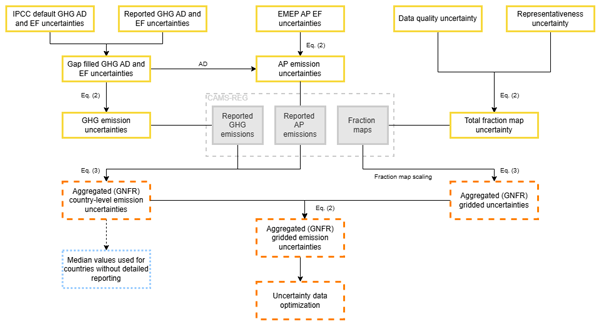
We present an emission uncertainty estimate to support atmospheric monitoring of greenhouse gas and air pollutant emissions using observations. We find significant uncertainties in country-total emissions and in the spatial distribution of emissions, largely dependent on the pollutant considered. A dataset is provided that lists emission uncertainties for a state-of-the-art European emission inventory.
Pascal Simon, Martin Otto Paul Ramacher, Stefan Hagemann, Volker Matthias, Hanna Joerss, and Johannes Bieser
Earth Syst. Sci. Data, 18, 5713–5737, https://doi.org/10.5194/essd-18-5713-2026, https://doi.org/10.5194/essd-18-5713-2026, 2026
Short summary
Short summary
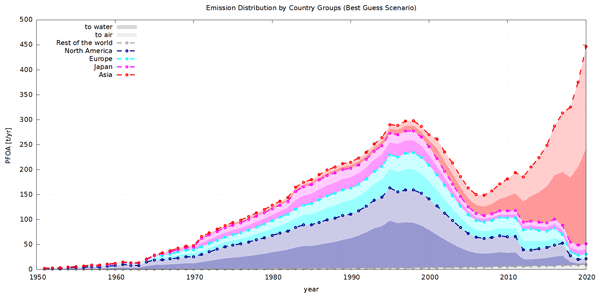
Per- and Polyfluorinated Alkyl Substances (PFAS) constitute a group of often toxic, persistent, and bioaccumulative substances. We constructed a global Emissions model and inventory based on multiple datasets for 23 widely used PFAS. The model computes temporally and spatially resolved model ready emissions distinguishing between emissions to air and emissions to water covering the time span from 1950 up until 2020 on an annual basis to be used for chemistry transport modelling.
Marc Guevara, Carles Tena, Paula Camps, Kevin Oliveira, Johanna Gehlen, Angie Albarracin, Paula Castesana, Oscar Collado, Laura Herrero, Oliver Legarreta, Ivan Lombardich, Carmen Piñero-Megías, Luca Rizza, Jessica Slater, Artur Viñas, Francesca Macchia, Gilbert Montane, Oriol Jorba, and Carlos Pérez García-Pando
EGUsphere, https://doi.org/10.5194/egusphere-2026-4146, https://doi.org/10.5194/egusphere-2026-4146, 2026
This preprint is open for discussion and under review for Geoscientific Model Development (GMD).
Short summary
Short summary
We present the High-Elective Resolution Modelling Emission System delta version (HERMES_Δ), an open-source and flexible emission processing tool that allows making official national inventories fit for air quality and greenhouse gas modelling needs. HERMES_Δ converts raw inventories into gridded, vertically discretised, hourly and speciated emission numerical datasets to make them usable for model simulations. The use of HERMES_Δ is exemplified by processing the Spanish official inventories.
Hiram Meza-Landero, Julia Bruckert, Ronny Petrik, Pascal Simon, Elena Mikheeva, Heike Vogel, Volker Matthias, Johannes Bieser, and Martin Otto Paul Ramacher
Geosci. Model Dev., 19, 6587–6626, https://doi.org/10.5194/gmd-19-6587-2026, https://doi.org/10.5194/gmd-19-6587-2026, 2026
Short summary
Short summary
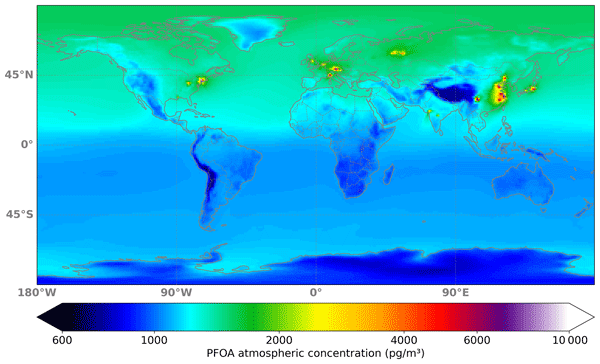
To understand how persistent hazardous industrial chemicals travel through the air and are deposited back on Earth's surface, we created a new computer model that combines meteorology and chemistry in clouds and clean air. Using the most recent global emissions data, this model represents the trajectory and changes of these chemicals, matching patterns in many areas and overlooking others. The work seeks to improve global monitoring and modeling of hazardous chemicals.
Kimmo Teinilä, Teemu Lepistö, Jarkko V. Niemi, Harri Portin, Anssi Julkunen, Anu Kousa, Joel Kuula, Hanna E. Manninen, Pasi Aalto, Tuukka Petäjä, Topi Rönkkö, Erkka Saukko, and Hilkka Timonen
Atmos. Meas. Tech., 19, 4505–4516, https://doi.org/10.5194/amt-19-4505-2026, https://doi.org/10.5194/amt-19-4505-2026, 2026
Short summary
Short summary
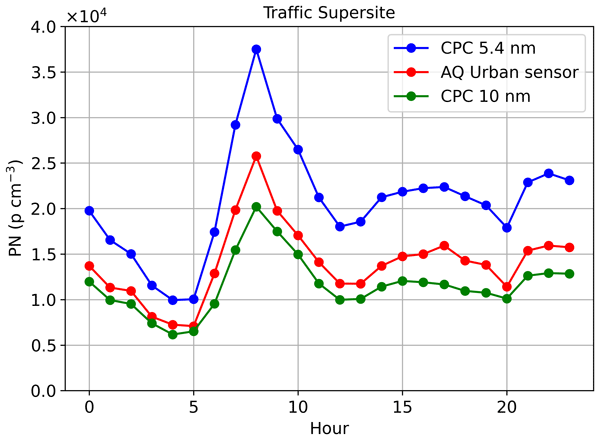
Particle number concentrations were measured with condensation particle counters and diffusion-based sensors at two different urban environments in Helsinki in 2022. The measurement sites were traffic related and background urban sites. The aim of the study was to investigate suitability of using diffusion-based sensors in urban air quality monitoring to obtain particle number concentrations and challenges related to this.
Lauri K. Savolainen, Teemu Lepistö, Heidi Hellén, Henna Lintusaari, Milja Jäppi, Jarkko V. Niemi, Kimmo Teinilä, Minna Aurela, Markus Lampimäki, Anu Kousa, Janne Lampilahti, Katrianne Lehtipalo, Tuukka Petäjä, Miikka Dal Maso, Hanna E. Manninen, Hilkka Timonen, and Topi Rönkkö
EGUsphere, https://doi.org/10.5194/egusphere-2026-1692, https://doi.org/10.5194/egusphere-2026-1692, 2026
Short summary
Short summary
The study investigates vehicle fleet emissions of road traffic. Despite technological advances, road traffic is still an important pollution source in urban areas, especially when considering unregulated, but health-relevant, emerging pollutants. We report fuel consumption normalized vehicle fleet emission factors for various regulated and unregulated air pollutants. Also, we show that road traffic has inverse and indirect effects on urban aerosol which are not generally well understood.
Hannes Witt, Ronald J. van der A, Jieying Ding, Jeroen Kuenen, and Margreet C. van Zanten
Atmos. Chem. Phys., 26, 5237–5248, https://doi.org/10.5194/acp-26-5237-2026, https://doi.org/10.5194/acp-26-5237-2026, 2026
Short summary
Short summary
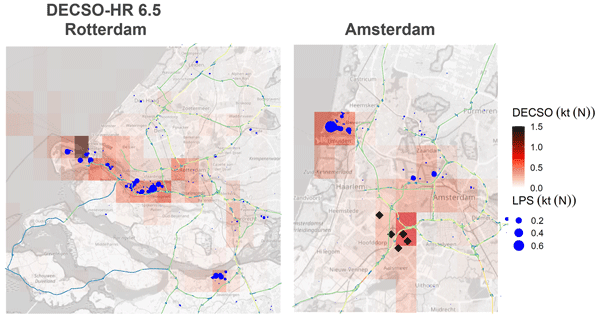
We present a detailed comparison of NOx emissions from the Dutch national emission inventory with completely independent emission data derived from satellite observations with the DECSO algorithm. We find good agreement in overall emission levels, regional emissions, and the 5-year emission trend. Our results demonstrate the robustness of the national inventory and the satellite-derived emissions and might serve as a use-case for the adoption of similar methods in other countries.
Gerrit Kuhlmann, Erik Franciscus Maria Koene, Chloe Natasha Schooling, Paul Ian Palmer, Òscar Collado López, and Marc Guevara
Atmos. Chem. Phys., 26, 4405–4421, https://doi.org/10.5194/acp-26-4405-2026, https://doi.org/10.5194/acp-26-4405-2026, 2026
Short summary
Short summary
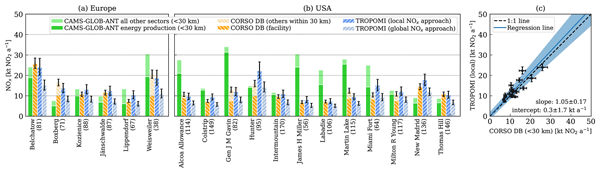
We used satellite measurements of nitrogen dioxide (NO2) to estimate top-down nitrogen oxide (NOx) emissions from power plants in Europe and the United States. Our study shows that these observations can track seasonal and short-term changes in emissions and agree well with bottom-up estimates. This approach offers a promising way to monitor NOx and indirectly carbon dioxide (CO2) emissions, supporting anthropogenic emissions monitoring systems.
Sami D. Harni, Lasse Johansson, Jarkko V. Niemi, Ville Silvonen, Juan Andrés Casquero-Vera, Anu Kousa, Krista Luoma, Viet Le, David Brus, Konstantinos Doulgeris, Topi Rönkkö, Hanna E. Manninen, Tuukka Petäjä, and Hilkka Timonen
Atmos. Chem. Phys., 25, 18719–18738, https://doi.org/10.5194/acp-25-18719-2025, https://doi.org/10.5194/acp-25-18719-2025, 2025
Short summary
Short summary
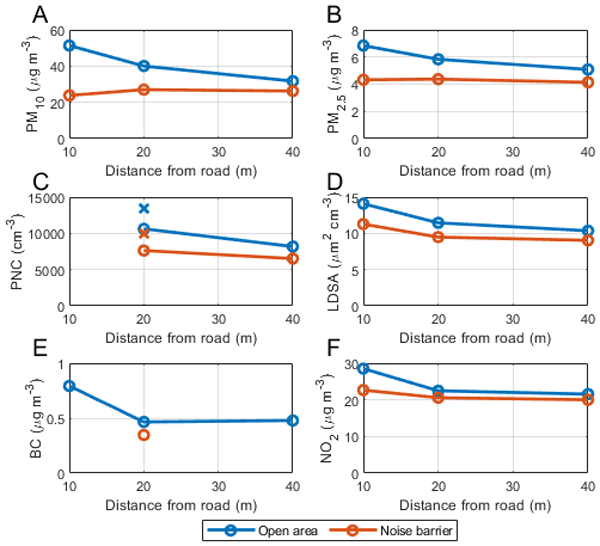
A three-month-long measurement campaign was conducted at Espoo, Finland, in spring 2023. The measurement campaign studied the effect of the noise barrier on pollutant concentration gradients on the side of a major highway. The studied pollutants included PM10, PM2.5, lung deposited surface area (LDSA), particle number concentration (PNC), NO2, and black carbon (BC). The noise barrier was found to be effective in reducing, especially the concentration of particulate pollutants.
Diego Guizzardi, Monica Crippa, Tim Butler, Terry Keating, Rosa Wu, Jacek Kaminski, Jeroen Kuenen, Junichi Kurokawa, Satoru Chatani, Tazuko Morikawa, George Pouliot, Jacinthe Racine, Michael D. Moran, Zbigniew Klimont, Patrick M. Manseau, Rabab Mashayekhi, Barron H. Henderson, Steven J. Smith, Rachel Hoesly, Marilena Muntean, Manjola Banja, Edwin Schaaf, Federico Pagani, Jung-Hun Woo, Jinseok Kim, Enrico Pisoni, Junhua Zhang, David Niemi, Mourad Sassi, Annie Duhamel, Tabish Ansari, Kristen Foley, Guannan Geng, Yifei Chen, and Qiang Zhang
Earth Syst. Sci. Data, 17, 5915–5950, https://doi.org/10.5194/essd-17-5915-2025, https://doi.org/10.5194/essd-17-5915-2025, 2025
Short summary
Short summary
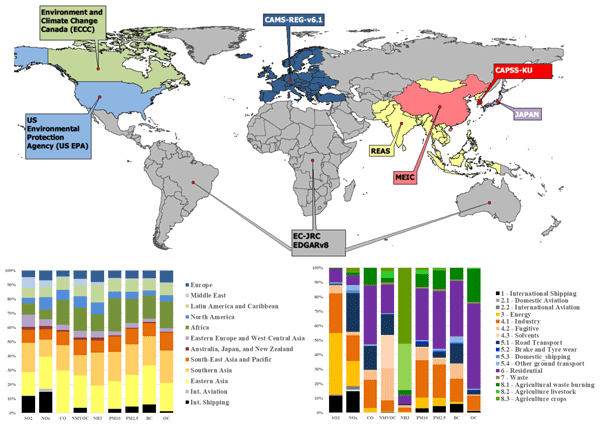
The global air pollution emission mosaic HTAP_v3.2 is the state-of-the-art inventory to address the evolution of a set of policy-relevant pollutants over the past 2 decades. The mosaic is made harmonising and blending seven regional inventories, gapfilled with the most recent release of the Emissions Database for Global Atmospheric Research. By incorporating the best available local information, the HTAP_v3.2 emission mosaic can be used for policy-relevant studies at regional and global level.
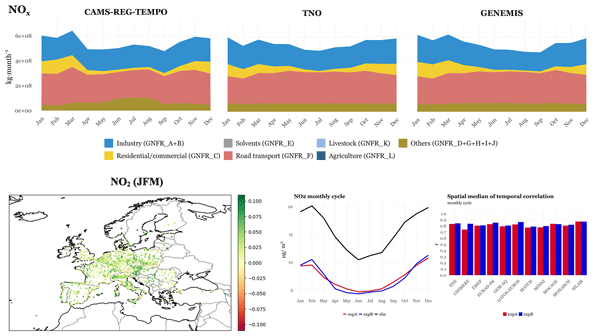
Marc Guevara, Augustin Colette, Antoine Guion, Valentin Petiot, Mario Adani, Joaquim Arteta, Anna Benedictow, Robert Bergström, Andrea Bolignano, Paula Camps, Ana C. Carvalho, Jesper Heile Christensen, Florian Couvidat, Ilaria D'Elia, Hugo Denier van der Gon, Gaël Descombes, John Douros, Hilde Fagerli, Yalda Fatahi, Elmar Friese, Lise Frohn, Michael Gauss, Camilla Geels, Risto Hänninen, Kaj Hansen, Oriol Jorba, Jacek W. Kaminski, Rostislav Kouznetsov, Richard Kranenburg, Jeroen Kuenen, Victor Lannuque, Frédérik Meleux, Agnes Nyíri, Yuliia Palamarchuk, Carlos Pérez García-Pando, Lennard Robertson, Felicita Russo, Arjo Segers, Mikhail Sofiev, Joanna Struzewska, Renske Timmermans, Andreas Uppstu, Alvaro Valdebenito, and Zhuyun Ye
Atmos. Chem. Phys., 25, 13245–13278, https://doi.org/10.5194/acp-25-13245-2025, https://doi.org/10.5194/acp-25-13245-2025, 2025
Short summary
Short summary
Air quality models require hourly emissions to accurately represent dispersion and physico-chemical processes in the atmosphere. Since emission inventories are typically provided at the annual level, emissions are downscaled to a refined temporal resolution using temporal profiles. This study quantifies the impact of using new anthropogenic temporal profiles on the performance of an European air quality multi-model ensemble. Overall, the findings indicate an improvement of the modelling results.
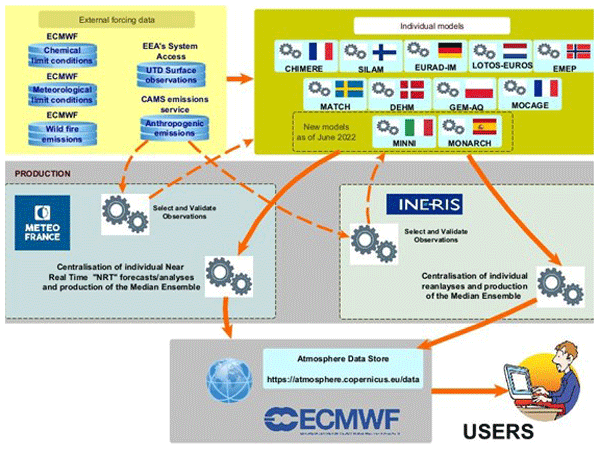
Augustin Colette, Gaëlle Collin, François Besson, Etienne Blot, Vincent Guidard, Frédérik Meleux, Adrien Royer, Valentin Petiot, Claire Miller, Oihana Fermond, Alizé Jeant, Mario Adani, Joaquim Arteta, Anna Benedictow, Robert Bergström, Dene Bowdalo, Jorgen Brandt, Gino Briganti, Ana C. Carvalho, Jesper Heile Christensen, Florian Couvidat, Ilaria D'Elia, Massimo D'Isidoro, Hugo Denier van der Gon, Gaël Descombes, Enza Di Tomaso, John Douros, Jeronimo Escribano, Henk Eskes, Hilde Fagerli, Yalda Fatahi, Johannes Flemming, Elmar Friese, Lise Frohn, Michael Gauss, Camilla Geels, Guido Guarnieri, Marc Guevara, Antoine Guion, Jonathan Guth, Risto Hänninen, Kaj Hansen, Ulas Im, Ruud Janssen, Marine Jeoffrion, Mathieu Joly, Luke Jones, Oriol Jorba, Evgeni Kadantsev, Michael Kahnert, Jacek W. Kaminski, Rostislav Kouznetsov, Richard Kranenburg, Jeroen Kuenen, Anne Caroline Lange, Joachim Langner, Victor Lannuque, Francesca Macchia, Astrid Manders, Mihaela Mircea, Agnes Nyiri, Miriam Olid, Carlos Pérez García-Pando, Yuliia Palamarchuk, Antonio Piersanti, Blandine Raux, Miha Razinger, Lennard Robertson, Arjo Segers, Martijn Schaap, Pilvi Siljamo, David Simpson, Mikhail Sofiev, Anders Stangel, Joanna Struzewska, Carles Tena, Renske Timmermans, Thanos Tsikerdekis, Svetlana Tsyro, Svyatoslav Tyuryakov, Anthony Ung, Andreas Uppstu, Alvaro Valdebenito, Peter van Velthoven, Lina Vitali, Zhuyun Ye, Vincent-Henri Peuch, and Laurence Rouïl
Geosci. Model Dev., 18, 6835–6883, https://doi.org/10.5194/gmd-18-6835-2025, https://doi.org/10.5194/gmd-18-6835-2025, 2025
Short summary
Short summary
The Copernicus Atmosphere Monitoring Service – Regional Production delivers daily forecasts, analyses, and reanalyses of air quality in Europe. The service relies on a distributed modelling production by 11 leading European modelling teams following stringent requirements with an operational design that has no equivalent in the world. All the products are free, open, and quality-assured and disseminated with a high level of reliability.
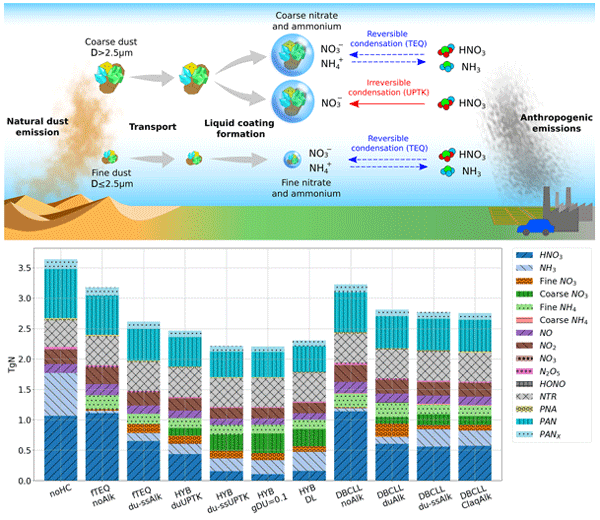
Rubén Soussé Villa, Oriol Jorba, María Gonçalves Ageitos, Dene Bowdalo, Marc Guevara, and Carlos Pérez García-Pando
Atmos. Chem. Phys., 25, 4719–4753, https://doi.org/10.5194/acp-25-4719-2025, https://doi.org/10.5194/acp-25-4719-2025, 2025
Short summary
Short summary
Desert dust forms nitrate coatings as it travels through the atmosphere. However, current models that predict this process vary greatly due to different methods and inaccuracies. We examined how nitrate forms in a global model, focusing on how gases condense on dust, the lifespan of different particles, and the impact of alkalinity. Our findings show that models work best when they consider reversible gas condensation with alkalinity. This should lead to better estimates of climate impacts.
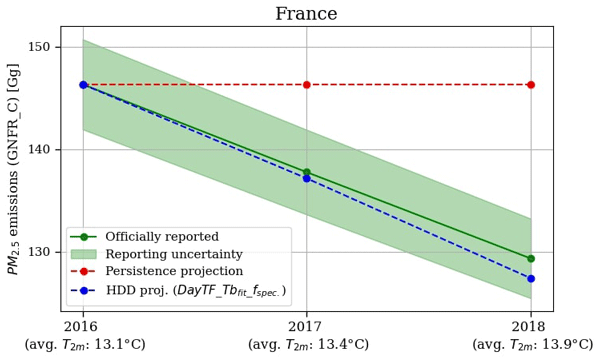
Antoine Guion, Florian Couvidat, Marc Guevara, and Augustin Colette
Atmos. Chem. Phys., 25, 2807–2827, https://doi.org/10.5194/acp-25-2807-2025, https://doi.org/10.5194/acp-25-2807-2025, 2025
Short summary
Short summary
The residential sector can cause high background levels of pollutants and pollution peaks in winter. Its emissions are dominated by space heating and show strong daily variations linked to changes in outside temperature. Using heating degree days, we provide country- and species-dependent parameters for the distribution of these emissions, improving the performance of the CHIMERE air quality model. This also allows annual residential emissions to be projected before official publications.
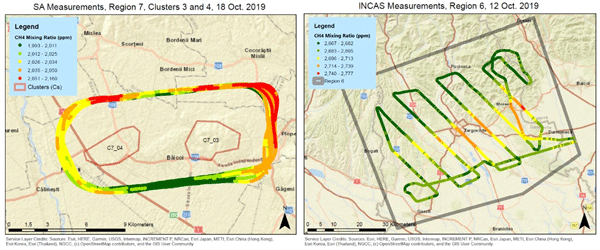
Hossein Maazallahi, Foteini Stavropoulou, Samuel Jonson Sutanto, Michael Steiner, Dominik Brunner, Mariano Mertens, Patrick Jöckel, Antoon Visschedijk, Hugo Denier van der Gon, Stijn Dellaert, Nataly Velandia Salinas, Stefan Schwietzke, Daniel Zavala-Araiza, Sorin Ghemulet, Alexandru Pana, Magdalena Ardelean, Marius Corbu, Andreea Calcan, Stephen A. Conley, Mackenzie L. Smith, and Thomas Röckmann
Atmos. Chem. Phys., 25, 1497–1511, https://doi.org/10.5194/acp-25-1497-2025, https://doi.org/10.5194/acp-25-1497-2025, 2025
Short summary
Short summary
This article presents insights from airborne in situ measurements collected during the ROmanian Methane Emissions from Oil and gas (ROMEO) campaign supported by two models. Results reveal Romania's oil and gas methane emissions were significantly under-reported to the United Nations Framework Convention on Climate Change (UNFCCC) in 2019. A large underestimation was also found in the Emissions Database for Global Atmospheric Research (EDGAR) v7.0 for the study domain in the same year.
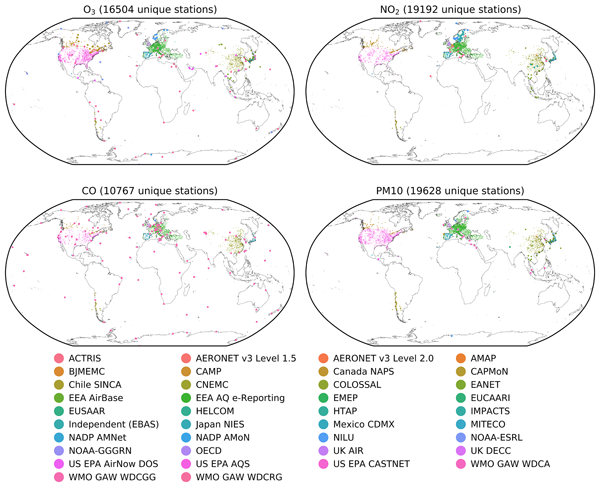
Dene Bowdalo, Sara Basart, Marc Guevara, Oriol Jorba, Carlos Pérez García-Pando, Monica Jaimes Palomera, Olivia Rivera Hernandez, Melissa Puchalski, David Gay, Jörg Klausen, Sergio Moreno, Stoyka Netcheva, and Oksana Tarasova
Earth Syst. Sci. Data, 16, 4417–4495, https://doi.org/10.5194/essd-16-4417-2024, https://doi.org/10.5194/essd-16-4417-2024, 2024
Short summary
Short summary
GHOST (Globally Harmonised Observations in Space and Time) represents one of the biggest collections of harmonised measurements of atmospheric composition at the surface. In total, 7 275 148 646 measurements from 1970 to 2023, from 227 different components, and from 38 reporting networks are compiled, parsed, and standardised. Components processed include gaseous species, total and speciated particulate matter, and aerosol optical properties.
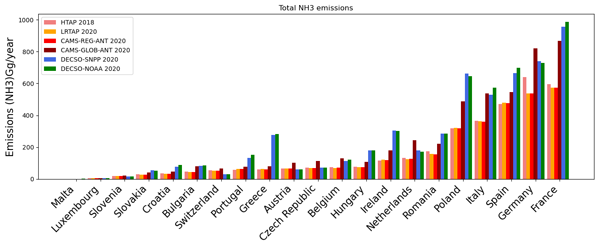
Jieying Ding, Ronald van der A, Henk Eskes, Enrico Dammers, Mark Shephard, Roy Wichink Kruit, Marc Guevara, and Leonor Tarrason
Atmos. Chem. Phys., 24, 10583–10599, https://doi.org/10.5194/acp-24-10583-2024, https://doi.org/10.5194/acp-24-10583-2024, 2024
Short summary
Short summary
Here we applied the existing Daily Emissions Constrained by Satellite Observations (DECSO) inversion algorithm to NH3 observations from the CrIS satellite instrument to estimate NH3 emissions. As NH3 in the atmosphere is influenced by NOx, we implemented DECSO to estimate NOx and NH3 emissions simultaneously. The emissions are derived over Europe for 2020 at a spatial resolution of 0.2° using daily observations from CrIS and TROPOMI. Results are compared to bottom-up emission inventories.
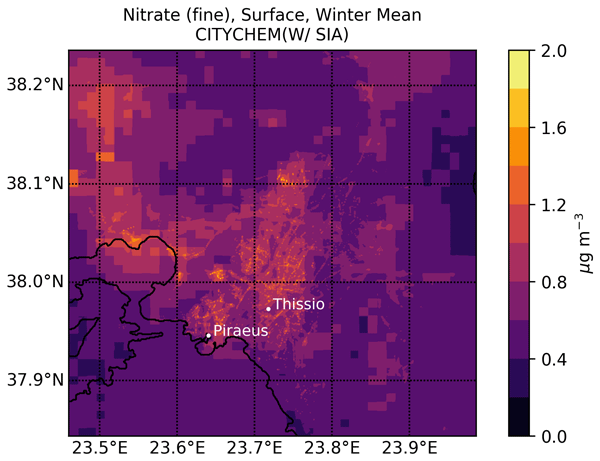
Stelios Myriokefalitakis, Matthias Karl, Kim A. Weiss, Dimitris Karagiannis, Eleni Athanasopoulou, Anastasia Kakouri, Aikaterini Bougiatioti, Eleni Liakakou, Iasonas Stavroulas, Georgios Papangelis, Georgios Grivas, Despina Paraskevopoulou, Orestis Speyer, Nikolaos Mihalopoulos, and Evangelos Gerasopoulos
Atmos. Chem. Phys., 24, 7815–7835, https://doi.org/10.5194/acp-24-7815-2024, https://doi.org/10.5194/acp-24-7815-2024, 2024
Short summary
Short summary
A state-of-the-art thermodynamic model has been coupled with the city-scale chemistry transport model EPISODE–CityChem to investigate the equilibrium between the inorganic gas and aerosol phases over the greater Athens area, Greece. The simulations indicate that the formation of nitrates in an urban environment is significantly affected by local nitrogen oxide emissions, as well as ambient temperature, relative humidity, photochemical activity, and the presence of non-volatile cations.
Kevin Oliveira, Marc Guevara, Oriol Jorba, Hervé Petetin, Dene Bowdalo, Carles Tena, Gilbert Montané Pinto, Franco López, and Carlos Pérez García-Pando
Atmos. Chem. Phys., 24, 7137–7177, https://doi.org/10.5194/acp-24-7137-2024, https://doi.org/10.5194/acp-24-7137-2024, 2024
Short summary
Short summary
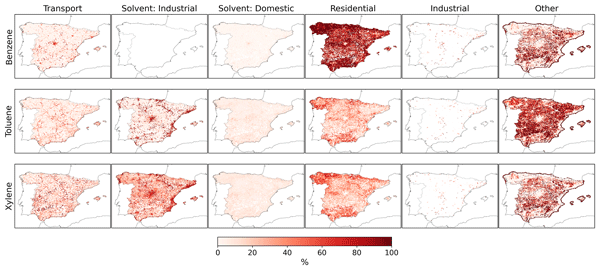
In this work, we assess and evaluate benzene, toluene, and xylene primary emissions and air quality levels in Spain by combining observations, emission inventories, and air quality modelling techniques. The comparison between modelled and observed levels allows identifying uncertainty sources within the emission input. This contributes to improving air quality models' performance when simulating these compounds, leading to better support for the design of effective pollution control strategies.
Philippe Thunis, Jeroen Kuenen, Enrico Pisoni, Bertrand Bessagnet, Manjola Banja, Lech Gawuc, Karol Szymankiewicz, Diego Guizardi, Monica Crippa, Susana Lopez-Aparicio, Marc Guevara, Alexander De Meij, Sabine Schindlbacher, and Alain Clappier
Geosci. Model Dev., 17, 3631–3643, https://doi.org/10.5194/gmd-17-3631-2024, https://doi.org/10.5194/gmd-17-3631-2024, 2024
Short summary
Short summary
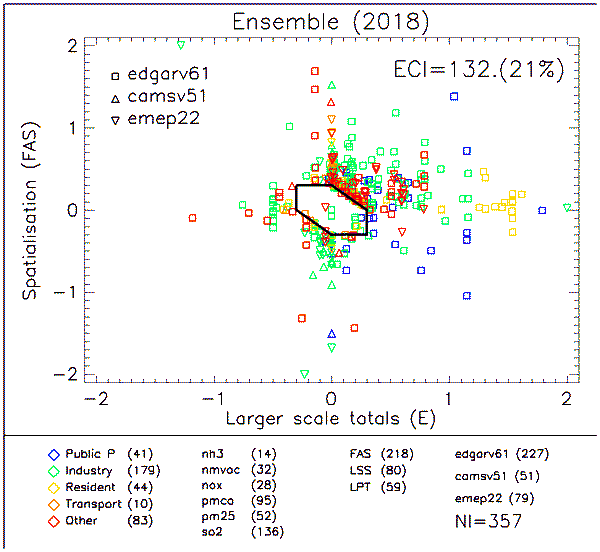
An ensemble emission inventory is created with the aim of monitoring the status and progress made with the development of EU-wide inventories. This emission ensemble serves as a common benchmark for the screening and allows for the comparison of more than two inventories at a time. Because the emission “truth” is unknown, the approach does not tell which inventory is the closest to reality, but it identifies inconsistencies that require special attention.
Antonin Soulie, Claire Granier, Sabine Darras, Nicolas Zilbermann, Thierno Doumbia, Marc Guevara, Jukka-Pekka Jalkanen, Sekou Keita, Cathy Liousse, Monica Crippa, Diego Guizzardi, Rachel Hoesly, and Steven J. Smith
Earth Syst. Sci. Data, 16, 2261–2279, https://doi.org/10.5194/essd-16-2261-2024, https://doi.org/10.5194/essd-16-2261-2024, 2024
Short summary
Short summary
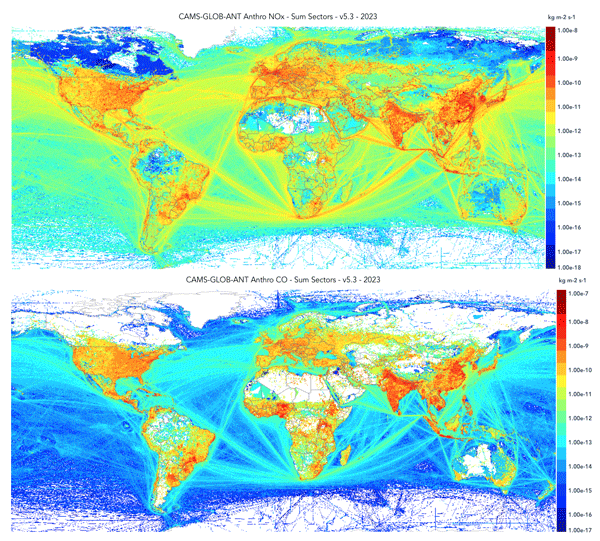
Anthropogenic emissions are the result of transportation, power generation, industrial, residential and commercial activities as well as waste treatment and agriculture practices. This work describes the new CAMS-GLOB-ANT gridded inventory of 2000–2023 anthropogenic emissions of air pollutants and greenhouse gases. The methodology to generate the emissions is explained and the datasets are analysed and compared with publicly available global and regional inventories for selected world regions.
Ville-Veikko Paunu, Niko Karvosenoja, David Segersson, Susana López-Aparicio, Ole-Kenneth Nielsen, Marlene Schmidt Plejdrup, Throstur Thorsteinsson, Dam Thanh Vo, Jeroen Kuenen, Hugo Denier van der Gon, Jukka-Pekka Jalkanen, Jørgen Brandt, and Camilla Geels
Earth Syst. Sci. Data, 16, 1453–1474, https://doi.org/10.5194/essd-16-1453-2024, https://doi.org/10.5194/essd-16-1453-2024, 2024
Short summary
Short summary
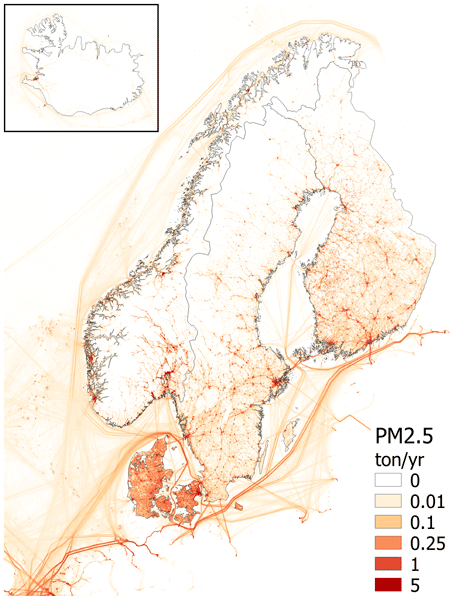
Air pollution is an important cause of adverse health effects, even in Nordic countries. To assess their health impacts, emission inventories with high spatial resolution are needed. We studied how national data and methods for the spatial distribution of the emissions compare to a European level inventory. For road transport the methods are well established, but for machinery and off-road emissions the current recommendations for the spatial distribution of these emissions should be improved.
Leena Kangas, Jaakko Kukkonen, Mari Kauhaniemi, Kari Riikonen, Mikhail Sofiev, Anu Kousa, Jarkko V. Niemi, and Ari Karppinen
Atmos. Chem. Phys., 24, 1489–1507, https://doi.org/10.5194/acp-24-1489-2024, https://doi.org/10.5194/acp-24-1489-2024, 2024
Short summary
Short summary
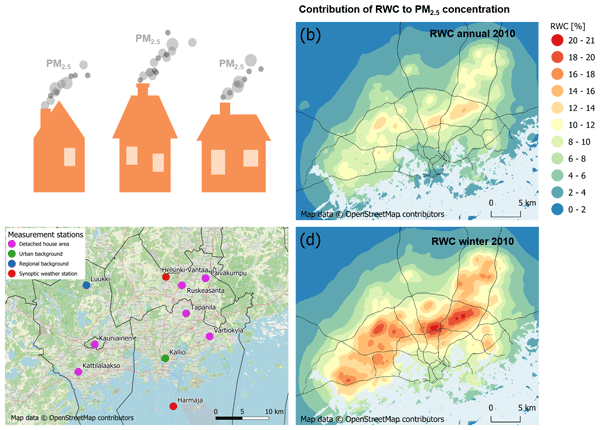
Residential wood combustion is a major source of fine particulate matter. This study has evaluated the contribution of residential wood combustion to fine particle concentrations and its year-to-year and seasonal variation in te Helsinki metropolitan area. The average concentrations attributed to wood combustion in winter were up to 10- or 15-fold compared to summer. Wood combustion caused 12 % to 14 % of annual fine particle concentrations. In winter, the contribution ranged from 16 % to 21 %.
Ruben Urraca, Greet Janssens-Maenhout, Nicolás Álamos, Lucas Berna-Peña, Monica Crippa, Sabine Darras, Stijn Dellaert, Hugo Denier van der Gon, Mark Dowell, Nadine Gobron, Claire Granier, Giacomo Grassi, Marc Guevara, Diego Guizzardi, Kevin Gurney, Nicolás Huneeus, Sekou Keita, Jeroen Kuenen, Ana Lopez-Noreña, Enrique Puliafito, Geoffrey Roest, Simone Rossi, Antonin Soulie, and Antoon Visschedijk
Earth Syst. Sci. Data, 16, 501–523, https://doi.org/10.5194/essd-16-501-2024, https://doi.org/10.5194/essd-16-501-2024, 2024
Short summary
Short summary
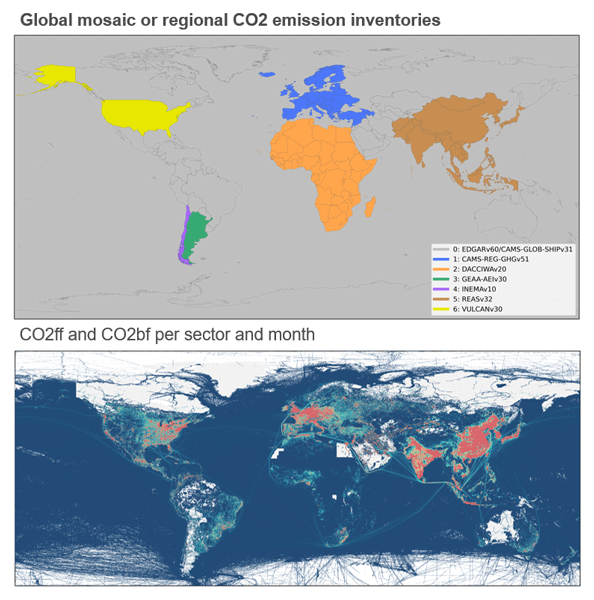
CoCO2-MOSAIC 1.0 is a global mosaic of regional bottom-up inventories providing gridded (0.1×0.1) monthly emissions of anthropogenic CO2. Regional inventories include country-specific information and finer spatial resolution than global inventories. CoCO2-MOSAIC provides harmonized access to these datasets and can be considered as a regionally accepted reference to assess the quality of global inventories, as done in the current paper.
Marc Guevara, Santiago Enciso, Carles Tena, Oriol Jorba, Stijn Dellaert, Hugo Denier van der Gon, and Carlos Pérez García-Pando
Earth Syst. Sci. Data, 16, 337–373, https://doi.org/10.5194/essd-16-337-2024, https://doi.org/10.5194/essd-16-337-2024, 2024
Short summary
Short summary
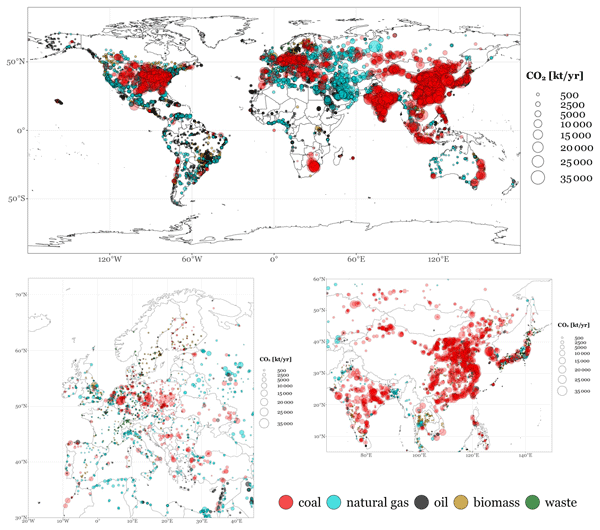
A global dataset of emissions from thermal power plants was created for the year 2018. The resulting catalogue reports annual emissions of CO2 and co-emitted species (NOx, CO, SO2 and CH4) for more than 16000 individual facilities at their exact geographical locations. Information on the temporal and vertical distributions of the emissions is also provided at the facility level. The dataset is intended to support current and future satellite emission monitoring and inverse modelling efforts.
Lea Fink, Matthias Karl, Volker Matthias, Sonia Oppo, Richard Kranenburg, Jeroen Kuenen, Sara Jutterström, Jana Moldanova, Elisa Majamäki, and Jukka-Pekka Jalkanen
Atmos. Chem. Phys., 23, 10163–10189, https://doi.org/10.5194/acp-23-10163-2023, https://doi.org/10.5194/acp-23-10163-2023, 2023
Short summary
Short summary
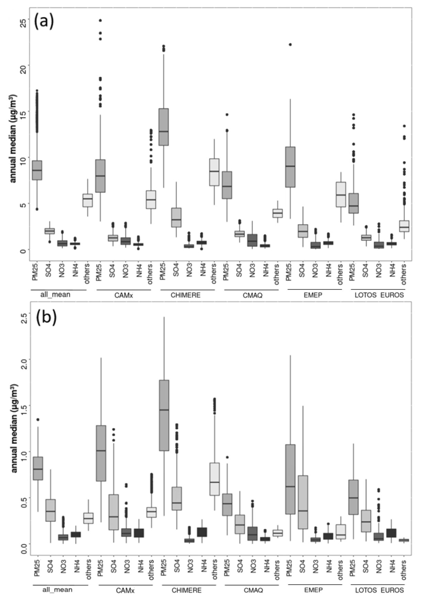
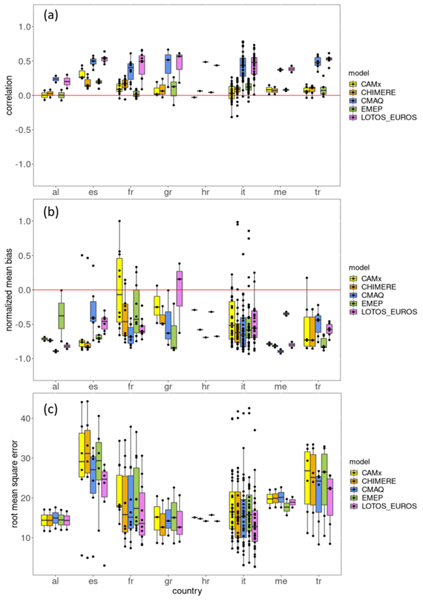
The Mediterranean Sea is a heavily trafficked shipping area, and air quality monitoring stations in numerous cities along the Mediterranean coast have detected high levels of air pollutants originating from shipping emissions. The current study investigates how existing restrictions on shipping-related emissions to the atmosphere ensure compliance with legislation. Focus was laid on fine particles and particle species, which were simulated with five different chemical transport models.
Marc Guevara, Hervé Petetin, Oriol Jorba, Hugo Denier van der Gon, Jeroen Kuenen, Ingrid Super, Claire Granier, Thierno Doumbia, Philippe Ciais, Zhu Liu, Robin D. Lamboll, Sabine Schindlbacher, Bradley Matthews, and Carlos Pérez García-Pando
Atmos. Chem. Phys., 23, 8081–8101, https://doi.org/10.5194/acp-23-8081-2023, https://doi.org/10.5194/acp-23-8081-2023, 2023
Short summary
Short summary
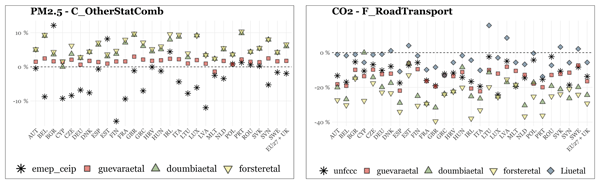
This study provides an intercomparison of European 2020 emission changes derived from official inventories, which are reported by countries under the framework of several international conventions and directives, and non-official near-real-time estimates, the use of which has significantly grown since the COVID-19 outbreak. The results of the work are used to produce recommendations on how best to approach and make use of near-real-time emissions for modelling and monitoring applications.
Monica Crippa, Diego Guizzardi, Tim Butler, Terry Keating, Rosa Wu, Jacek Kaminski, Jeroen Kuenen, Junichi Kurokawa, Satoru Chatani, Tazuko Morikawa, George Pouliot, Jacinthe Racine, Michael D. Moran, Zbigniew Klimont, Patrick M. Manseau, Rabab Mashayekhi, Barron H. Henderson, Steven J. Smith, Harrison Suchyta, Marilena Muntean, Efisio Solazzo, Manjola Banja, Edwin Schaaf, Federico Pagani, Jung-Hun Woo, Jinseok Kim, Fabio Monforti-Ferrario, Enrico Pisoni, Junhua Zhang, David Niemi, Mourad Sassi, Tabish Ansari, and Kristen Foley
Earth Syst. Sci. Data, 15, 2667–2694, https://doi.org/10.5194/essd-15-2667-2023, https://doi.org/10.5194/essd-15-2667-2023, 2023
Short summary
Short summary
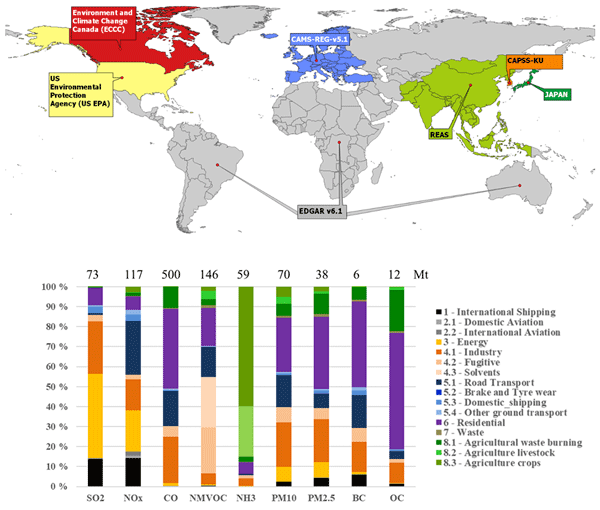
This study responds to the global and regional atmospheric modelling community's need for a mosaic of air pollutant emissions with global coverage, long time series, spatially distributed data at a high time resolution, and a high sectoral resolution in order to enhance the understanding of transboundary air pollution. The mosaic approach to integrating official regional emission inventories with a global inventory based on a consistent methodology ensures policy-relevant results.
Alvaro Criado, Jan Mateu Armengol, Hervé Petetin, Daniel Rodriguez-Rey, Jaime Benavides, Marc Guevara, Carlos Pérez García-Pando, Albert Soret, and Oriol Jorba
Geosci. Model Dev., 16, 2193–2213, https://doi.org/10.5194/gmd-16-2193-2023, https://doi.org/10.5194/gmd-16-2193-2023, 2023
Short summary
Short summary
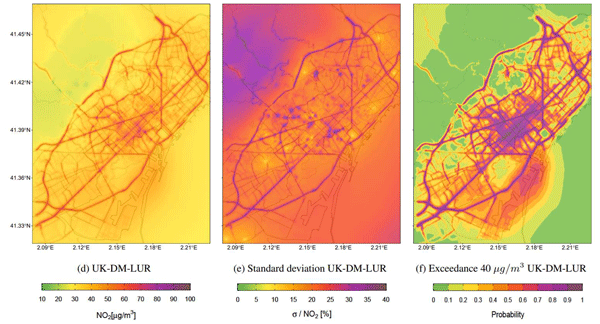
This work aims to derive and evaluate a general statistical post-processing tool specifically designed for the street scale that can be applied to any urban air quality system. Our data fusion methodology corrects NO2 fields based on continuous hourly observations and experimental campaigns. This study enables us to obtain exceedance probability maps of air quality standards. In 2019, 13 % of the Barcelona area had a 70 % or higher probability of exceeding the annual legal NO2 limit of 40 µg/m3.

Hervé Petetin, Marc Guevara, Steven Compernolle, Dene Bowdalo, Pierre-Antoine Bretonnière, Santiago Enciso, Oriol Jorba, Franco Lopez, Albert Soret, and Carlos Pérez García-Pando
Atmos. Chem. Phys., 23, 3905–3935, https://doi.org/10.5194/acp-23-3905-2023, https://doi.org/10.5194/acp-23-3905-2023, 2023
Short summary
Short summary
This study analyses the potential of the TROPOMI space sensor for monitoring the variability of NO2 pollution over the Iberian Peninsula. A reduction of NO2 levels is observed during the weekend and in summer, especially over most urbanized areas, in agreement with surface observations. An enhancement of NO2 is found during summer with TROPOMI over croplands, potentially related to natural soil NO emissions, which illustrates the outstanding value of TROPOMI for complementing surface networks.
Sanna Saarikoski, Heidi Hellén, Arnaud P. Praplan, Simon Schallhart, Petri Clusius, Jarkko V. Niemi, Anu Kousa, Toni Tykkä, Rostislav Kouznetsov, Minna Aurela, Laura Salo, Topi Rönkkö, Luis M. F. Barreira, Liisa Pirjola, and Hilkka Timonen
Atmos. Chem. Phys., 23, 2963–2982, https://doi.org/10.5194/acp-23-2963-2023, https://doi.org/10.5194/acp-23-2963-2023, 2023
Short summary
Short summary
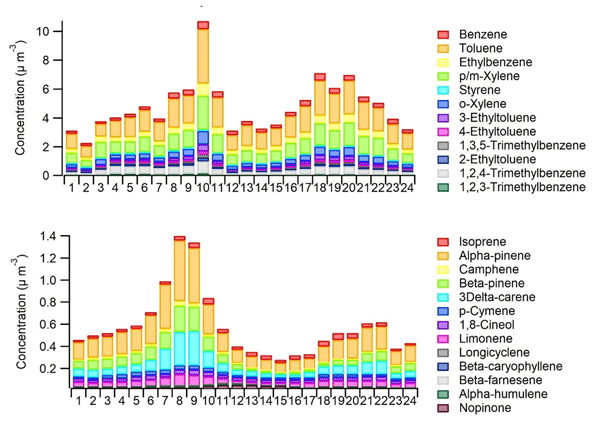
This study elucidates properties and sources of volatile organic compounds (VOCs) and organic aerosol (OA) in a traffic environment. Anthropogenic VOCs (aVOCs) were clearly higher than biogenic VOCs (bVOCs), but bVOCs produced a larger portion of oxidation products. OA consisted mostly of oxygenated OA, representing secondary OA (SOA). SOA was partly associated with bVOCs, but it was also related to long-range transport. Primary OA originated mostly from traffic.
Lea Fink, Matthias Karl, Volker Matthias, Sonia Oppo, Richard Kranenburg, Jeroen Kuenen, Jana Moldanova, Sara Jutterström, Jukka-Pekka Jalkanen, and Elisa Majamäki
Atmos. Chem. Phys., 23, 1825–1862, https://doi.org/10.5194/acp-23-1825-2023, https://doi.org/10.5194/acp-23-1825-2023, 2023
Short summary
Short summary
Potential ship impact on air pollution in the Mediterranean Sea was simulated with five chemistry transport models. An evaluation of the results for NO2 and O3 air concentrations and dry deposition is presented. Emission data, modeled year and domain were the same. Model run outputs were compared to measurements from background stations. We focused on comparing model outputs regarding the concentration of regulatory pollutants and the relative ship impact on total air pollution concentrations.
Hervé Petetin, Dene Bowdalo, Pierre-Antoine Bretonnière, Marc Guevara, Oriol Jorba, Jan Mateu Armengol, Margarida Samso Cabre, Kim Serradell, Albert Soret, and Carlos Pérez Garcia-Pando
Atmos. Chem. Phys., 22, 11603–11630, https://doi.org/10.5194/acp-22-11603-2022, https://doi.org/10.5194/acp-22-11603-2022, 2022
Short summary
Short summary
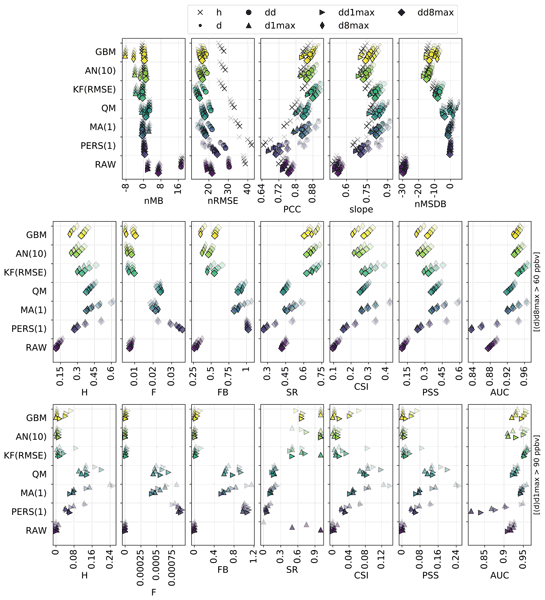
This study investigates the extent to which ozone forecasts provided by the Copernicus Atmospheric Monitoring Service (CAMS) can be improved using surface observations and state-of-the-art statistical methods. Through a case study over the Iberian Peninsula in 2018–2019, it unambiguously demonstrates the value of these methods for improving the raw CAMS O3 forecasts while at the same time highlighting the complexity of improving the detection of the highest O3 concentrations.
Philippe Thunis, Alain Clappier, Enrico Pisoni, Bertrand Bessagnet, Jeroen Kuenen, Marc Guevara, and Susana Lopez-Aparicio
Geosci. Model Dev., 15, 5271–5286, https://doi.org/10.5194/gmd-15-5271-2022, https://doi.org/10.5194/gmd-15-5271-2022, 2022
Short summary
Short summary
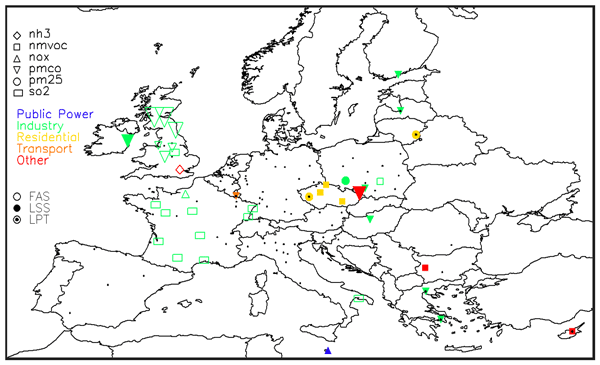
In this work, we propose a screening method to improve the quality of emission inventories, which are responsible for large uncertainties in air-quality modeling. The first step of screening consists of keeping only emission contributions that are relevant enough. In a second step, the method identifies large differences that provide evidence of methodological divergence or errors. We used the approach to compare two versions of the CAMS-REG European-scale inventory over 150 European cities.
Marc Guevara, Hervé Petetin, Oriol Jorba, Hugo Denier van der Gon, Jeroen Kuenen, Ingrid Super, Jukka-Pekka Jalkanen, Elisa Majamäki, Lasse Johansson, Vincent-Henri Peuch, and Carlos Pérez García-Pando
Earth Syst. Sci. Data, 14, 2521–2552, https://doi.org/10.5194/essd-14-2521-2022, https://doi.org/10.5194/essd-14-2521-2022, 2022
Short summary
Short summary
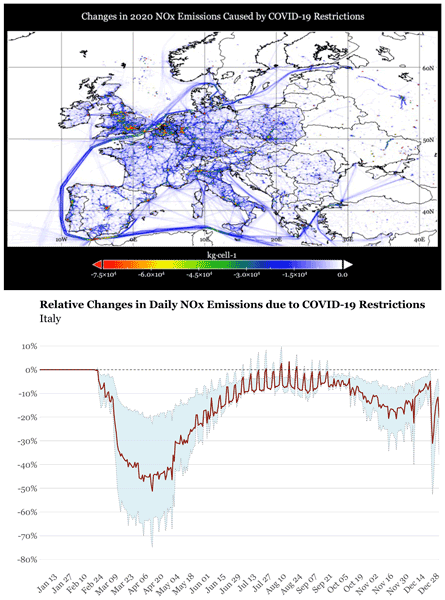
To control the spread of the COVID-19 disease, European governments implemented mobility restriction measures that resulted in an unprecedented drop in anthropogenic emissions. This work presents a dataset of emission adjustment factors that allows quantifying changes in 2020 European primary emissions per country and pollutant sector at the daily scale. The resulting dataset can be used as input in modelling studies aiming at quantifying the impact of COVID-19 on air quality levels.
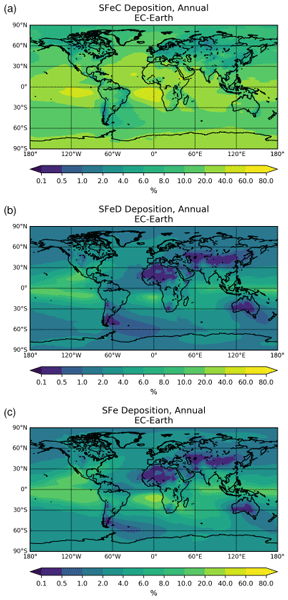
Stelios Myriokefalitakis, Elisa Bergas-Massó, María Gonçalves-Ageitos, Carlos Pérez García-Pando, Twan van Noije, Philippe Le Sager, Akinori Ito, Eleni Athanasopoulou, Athanasios Nenes, Maria Kanakidou, Maarten C. Krol, and Evangelos Gerasopoulos
Geosci. Model Dev., 15, 3079–3120, https://doi.org/10.5194/gmd-15-3079-2022, https://doi.org/10.5194/gmd-15-3079-2022, 2022
Short summary
Short summary
We here describe the implementation of atmospheric multiphase processes in the EC-Earth Earth system model. We provide global budgets of oxalate, sulfate, and iron-containing aerosols, along with an analysis of the links among atmospheric composition, aqueous-phase processes, and aerosol dissolution, supported by comparison to observations. This work is a first step towards an interactive calculation of the deposition of bioavailable atmospheric iron coupled to the model’s ocean component.
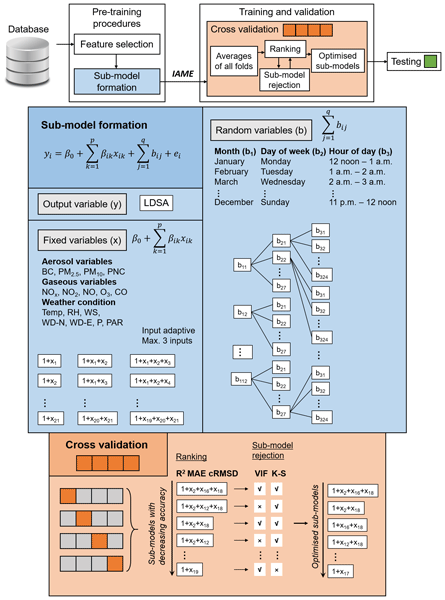
Pak Lun Fung, Martha A. Zaidan, Jarkko V. Niemi, Erkka Saukko, Hilkka Timonen, Anu Kousa, Joel Kuula, Topi Rönkkö, Ari Karppinen, Sasu Tarkoma, Markku Kulmala, Tuukka Petäjä, and Tareq Hussein
Atmos. Chem. Phys., 22, 1861–1882, https://doi.org/10.5194/acp-22-1861-2022, https://doi.org/10.5194/acp-22-1861-2022, 2022
Short summary
Short summary
We developed an input-adaptive mixed-effects model, which was automatised to select the best combination of input variables, including up to three fixed effect variables and three time indictors as random effect variables. We tested the model to estimate lung-deposited surface area (LDSA), which correlates well with human health. The results show the inclusion of time indicators improved the sensitivity and the accuracy of the model so that it could serve as a network of virtual sensors.
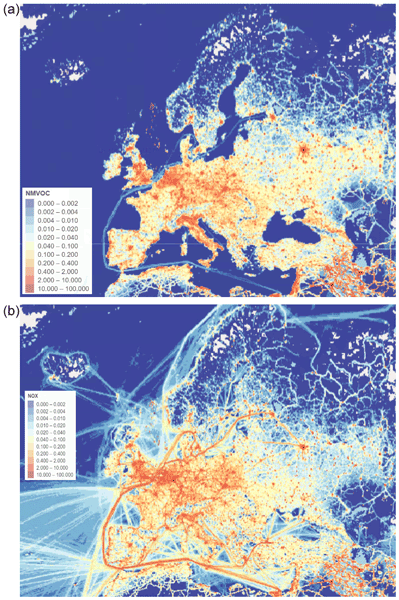
Jeroen Kuenen, Stijn Dellaert, Antoon Visschedijk, Jukka-Pekka Jalkanen, Ingrid Super, and Hugo Denier van der Gon
Earth Syst. Sci. Data, 14, 491–515, https://doi.org/10.5194/essd-14-491-2022, https://doi.org/10.5194/essd-14-491-2022, 2022
Short summary
Short summary
This paper presents an 18-year time series for anthropogenic emissions for the main air pollutants in Europe, distinguishing 15 main source categories. It provides a complete overview of emissions to air and is designed to support air quality modelling. The data build where possible on official country total emissions used in the policy processes, but where necessary alternative data were used. The emission data are spatially distributed at high resolution (~ 6 km x 6 km) in a consistent way.
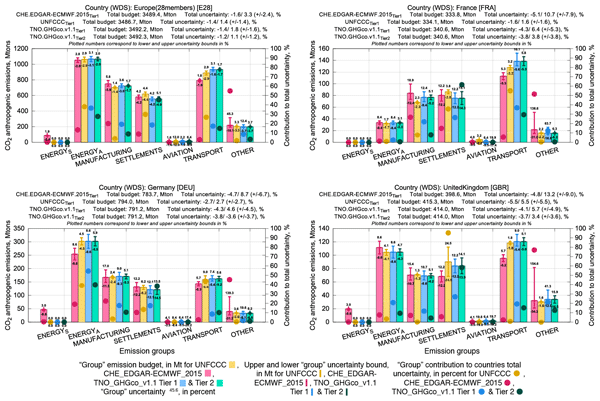
Margarita Choulga, Greet Janssens-Maenhout, Ingrid Super, Efisio Solazzo, Anna Agusti-Panareda, Gianpaolo Balsamo, Nicolas Bousserez, Monica Crippa, Hugo Denier van der Gon, Richard Engelen, Diego Guizzardi, Jeroen Kuenen, Joe McNorton, Gabriel Oreggioni, and Antoon Visschedijk
Earth Syst. Sci. Data, 13, 5311–5335, https://doi.org/10.5194/essd-13-5311-2021, https://doi.org/10.5194/essd-13-5311-2021, 2021
Short summary
Short summary
People worry that growing man-made carbon dioxide (CO2) concentrations lead to climate change. Global models, use of observations, and datasets can help us better understand behaviour of CO2. Here a tool to compute uncertainty in man-made CO2 sources per country per year and month is presented. An example of all sources separated into seven groups (intensive and average energy, industry, humans, ground and air transport, others) is presented. Results will be used to predict CO2 concentrations.
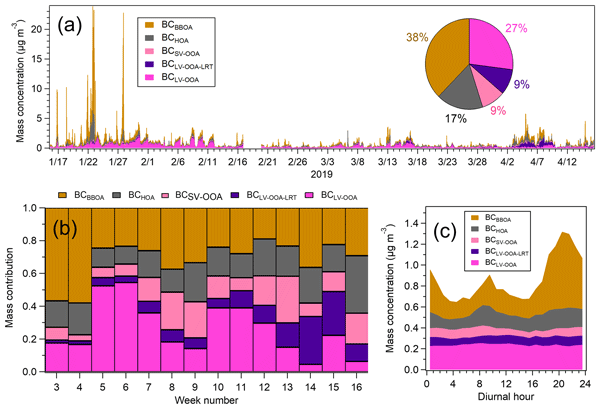
Sanna Saarikoski, Jarkko V. Niemi, Minna Aurela, Liisa Pirjola, Anu Kousa, Topi Rönkkö, and Hilkka Timonen
Atmos. Chem. Phys., 21, 14851–14869, https://doi.org/10.5194/acp-21-14851-2021, https://doi.org/10.5194/acp-21-14851-2021, 2021
Short summary
Short summary
This study presents the main sources of black carbon (BC) at two urban environments. The largest fraction of BC originated from biomass burning at the residential site (38 %) and from vehicular emissions (57 %) in the street canyon. Also, a significant fraction of BC was associated with urban background or long-range transport. The data are needed by modelers and authorities when assessing climate and air quality impact of BC as well as directing the emission legislation and mitigation actions.
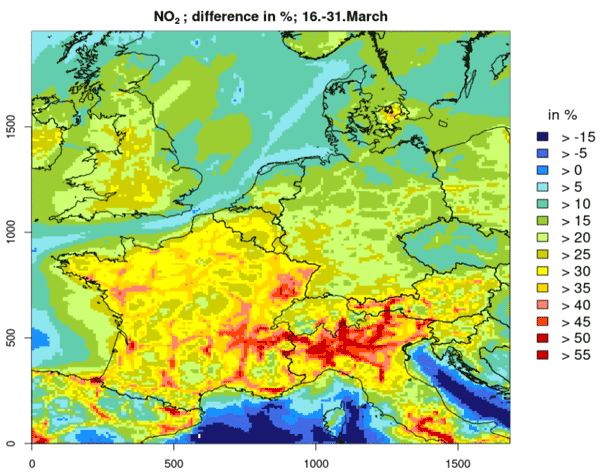
Volker Matthias, Markus Quante, Jan A. Arndt, Ronny Badeke, Lea Fink, Ronny Petrik, Josefine Feldner, Daniel Schwarzkopf, Eliza-Maria Link, Martin O. P. Ramacher, and Ralf Wedemann
Atmos. Chem. Phys., 21, 13931–13971, https://doi.org/10.5194/acp-21-13931-2021, https://doi.org/10.5194/acp-21-13931-2021, 2021
Short summary
Short summary
COVID-19 lockdown measures in spring 2020 led to cleaner air in central Europe. Densely populated areas benefitted mainly from largely reduced NO2 concentrations, while rural areas experienced lower reductions in NO2 but also lower ozone concentrations. Very low particulate matter (PM) concentrations in parts of Europe were not an effect of lockdown measures. Model simulations show that modified weather conditions are more significant for ozone and PM than severe traffic emission reductions.
Cited articles
Achebak, H., Garatachea, R., Pay, M. T., Jorba, O., Guevara, M., Pérez García-Pando, C., and Ballester, J.: Geographic sources of ozone air pollution and mortality burden in Europe, Nat. Med., 30, 1732–1738, https://doi.org/10.1038/s41591-024-02976-x, 2024. a
Airparif: Paris Emissions 2019, https://www.airparif.fr/surveiller-la-pollution (last access: 19 February 2025), 2025. a
Antonczak, B., Fay, M., Chawla, A., and Rowangould, G.: Estimated Roadway Segment Traffic Data by Vehicle Class for the United States: A Machine Learning Approach, arXiv [preprint], https://doi.org/10.48550/arXiv.2502.05161, 2025. a
Apronti, D., Ksaibati, K., Gerow, K., and Hepner, J. J.: Estimating traffic volume on Wyoming low volume roads using linear and logistic regression methods, Journal of Traffic and Transportation Engineering (English Edition), 3, 493–506, https://doi.org/10.1016/j.jtte.2016.02.004, 2016. a
Arpa Emilia-Romagna: Inventario regionale emissioni in atmosfera (INEMAR) – Dati Arpae, https://dati.arpae.it/dataset/inventario-emissioni-aria-inemar (last access: 30 April 2025), 2025. a
Baffoe-Twum, E., Asa, E., and Awuku, B.: Estimation of annual average daily traffic (AADT) data for low-volume roads: a systematic literature review and meta-analysis, Emerald Open Research, 1, https://doi.org/10.1108/EOR-05-2023-0010, 2023. a, b, c, d
Barnes, J. H., Chatterton, T. J., and Longhurst, J. W. S.: Emissions vs exposure: Increasing injustice from road traffic-related air pollution in the United Kingdom, Transport. Res. D-Tr. E., 73, 56–66, https://doi.org/10.1016/j.trd.2019.05.012, 2019. a
Barth, M. and Boriboonsomsin, K.: Real-World CO2 Impacts of Traffic Congestion, Transportation Research Record, https://doi.org/10.3141/2058-20, 2008. a
Bhaduri, B., Bright, E., Coleman, P., and Dobson, J.: LandScan, Geoinformatics, 5, 34–37, 2002. a
Chang, Y., van Strien, M. J., Zohner, C. M., Ghazoul, J., and Kleinschroth, F.: Effects of climate, socioeconomic development, and greening governance on enhanced greenness under urban densification, Resour. Conserv. Recy., 206, 107624, https://doi.org/10.1016/j.resconrec.2024.107624, 2024. a
Chen, Y.: A New Methodology of Spatial Cross-Correlation Analysis, PLOS ONE, 10, e0126158, https://doi.org/10.1371/journal.pone.0126158, 2015. a, b
Colette, A., Collin, G., Besson, F., Blot, E., Guidard, V., Meleux, F., Royer, A., Petiot, V., Miller, C., Fermond, O., Jeant, A., Adani, M., Arteta, J., Benedictow, A., Bergström, R., Bowdalo, D., Brandt, J., Briganti, G., Carvalho, A. C., Christensen, J. H., Couvidat, F., D'Elia, I., D'Isidoro, M., Denier van der Gon, H., Descombes, G., Di Tomaso, E., Douros, J., Escribano, J., Eskes, H., Fagerli, H., Fatahi, Y., Flemming, J., Friese, E., Frohn, L., Gauss, M., Geels, C., Guarnieri, G., Guevara, M., Guion, A., Guth, J., Hänninen, R., Hansen, K., Im, U., Janssen, R., Jeoffrion, M., Joly, M., Jones, L., Jorba, O., Kadantsev, E., Kahnert, M., Kaminski, J. W., Kouznetsov, R., Kranenburg, R., Kuenen, J., Lange, A. C., Langner, J., Lannuque, V., Macchia, F., Manders, A., Mircea, M., Nyiri, A., Olid, M., Pérez García-Pando, C., Palamarchuk, Y., Piersanti, A., Raux, B., Razinger, M., Robertson, L., Segers, A., Schaap, M., Siljamo, P., Simpson, D., Sofiev, M., Stangel, A., Struzewska, J., Tena, C., Timmermans, R., Tsikerdekis, T., Tsyro, S., Tyuryakov, S., Ung, A., Uppstu, A., Valdebenito, A., van Velthoven, P., Vitali, L., Ye, Z., Peuch, V.-H., and Rouïl, L.: Copernicus Atmosphere Monitoring Service – Regional Air Quality Production System v1.0, Geosci. Model Dev., 18, 6835–6883, https://doi.org/10.5194/gmd-18-6835-2025, 2025. a
Copernicus: Corine Land Cover, https://land.copernicus.eu/en/products/corine-land-cover (last access: 13 March 2025), 2018. a
Cornell Local Roads Program: Basics of a Good Road, New York LTAP Center, CLRP No. 14-04, 2014. a
Das, S. and Tsapakis, I.: Interpretable machine learning approach in estimating traffic volume on low-volume roadways, International Journal of Transportation Science and Technology, 9, 76–88, https://doi.org/10.1016/j.ijtst.2019.09.004, 2020. a, b
Demetriou, D.: Uncertainty of OpenStreetMap data for the road network in Cyprus, Fourth International Conference on Remote Sensing and Geoinformation of the Environment, p. 968806, https://doi.org/10.1117/12.2239612, 2016. a
Denier van der Gon, H., Gauss, M., Granier, C., Arellano, S., Benedictow, A., Darras, S., Dellaert, S., Guevara, M., Jalkanen, J.-P., Krueger, K., Kuenen, J., Liaskoni, M., Liousse, C., Markova, J., Prieto Perez, A., Quack, B., Simpson, D., Sindelarova, K., and Soulie, A.: Documentation of CAMS emission inventory products, Copernicus Atmosphere Monitoring Service, https://doi.org/10.24380/Q2SI-TI6I, 2023. a, b
EEA: Sustainability of Europe's mobility systems 2024, https://www.eea.europa.eu/en/analysis/publications/sustainability-of-europes-mobility-systems (last access: 20 February 2026), 2024. a
El-Harbawi, M.: Air quality modelling, simulation, and computational methods: a review, Environ. Rev., 21, 149–179, 2013. a
EMEP Centre of Inventories and Predictions: Air pollutant emissions data viewer, https://www.eea.europa.eu/en/topics/in-depth/air-pollution/air-pollutant-emissions-data-viewer-1990-2023 (last access: 18 June 2025), 2023. a
Eurostat: Urban-rural Europe – demographic developments in cities, https://ec.europa.eu/eurostat/statistics-explained/index.php?title=Urban-rural_Europe_-_demographic_developments_in_cities (last access: 20 June 2025), 2024. a
Finnish Meteorological Institute: Homepage, https://en.ilmatieteenlaitos.fi/ (last access: 19 February 2025), 2025. a
Franco, V., Kousoulidou, M., Muntean, M., Ntziachristos, L., Hausberger, S., and Dilara, P.: Road vehicle emission factors development: A review, Atmos. Environ., 70, 84–97, https://doi.org/10.1016/j.atmosenv.2013.01.006, 2013. a
Fu, X., Xiang, S., Liu, Y., Liu, J., Yu, J., Mauzerall, D. L., and Tao, S.: High-resolution simulation of local traffic-related NOx dispersion and distribution in a complex urban terrain, Environ. Pollut., 263, 114390, https://doi.org/10.1016/j.envpol.2020.114390, 2020. a
Geilenkirchen, G., Bolech, M., Hulskotte, J., Dellaert, S., Ligterink, N., and van Eijk, E.: Methods for calculating the emissions of transport in the Netherlands, Tech. rep., Rijksinstituut voor Volksgezondheid en Milieu RIVM, https://doi.org/10.21945/RIVM-2024-0023, 2024. a
Grange, S. K., Farren, N. J., Vaughan, A. R., Rose, R. A., and Carslaw, D. C.: Strong temperature dependence for light-duty diesel vehicle NOx emissions, Environ. Sci. Technol., 53, 6587–6596, 2019. a
Greater London Authority: London Atmospheric Emissions Inventory (LAEI) 2019, https://data.london.gov.uk/dataset/london-atmospheric-emissions-inventory--laei--2019 (last access: 1 May 2025), 2023. a
Gu, Y., Wong, T. W., Law, C., Dong, G. H., Ho, K. F., Yang, Y., and Yim, S. H. L.: Impacts of sectoral emissions in China and the implications: air quality, public health, crop production, and economic costs, Environ. Res. Lett., 13, 084008, https://doi.org/10.1088/1748-9326/aad138, 2018. a
Guevara, M., Tena, C., Porquet, M., Jorba, O., and Pérez García-Pando, C.: HERMESv3, a stand-alone multi-scale atmospheric emission modelling framework – Part 2: The bottom–up module, Geosci. Model Dev., 13, 873–903, https://doi.org/10.5194/gmd-13-873-2020, 2020. a
Gulia, S., Shiva Nagendra, S., Khare, M., and Khanna, I.: Urban air quality management-A review, Atmos. Pollut. Res., 6, 286–304, https://doi.org/10.5094/APR.2015.033, 2015. a
Gurram, S., Stuart, A. L., and Pinjari, A. R.: Agent-based modeling to estimate exposures to urban air pollution from transportation: Exposure disparities and impacts of high-resolution data, Computers, Environment and Urban Systems, 75, 22–34, https://doi.org/10.1016/j.compenvurbsys.2019.01.002, 2019. a, b
Han, D. C.: Prediction of Traffic Volume Based on Deep Learning Model for AADT Correction, Appl. Sci., 14, 9436, https://doi.org/10.3390/app14209436, 2024. a, b
Hohenberger, T. L., el Malki, M., Ramacher, M. O. P., Guevara, M., and Kuenen, J.: Spatial distribution road transport emissions for CAMS-REG v8.1, Zenodo [data set], https://doi.org/10.5281/zenodo.15688722, 2025. a, b
Hopke, P. K., Feng, Y., and Dai, Q.: Source apportionment of particle number concentrations: A global review, Sci. Total Environ., 819, 153104, https://doi.org/10.1016/j.scitotenv.2022.153104, 2022. a
Int Panis, L., Broekx, S., and Liu, R.: Modelling instantaneous traffic emission and the influence of traffic speed limits, Sci. Total Environ., 371, 270–285, https://doi.org/10.1016/j.scitotenv.2006.08.017, 2006. a
Isakov, V., Touma, J. S., Burke, J., Lobdell, D. T., Palma, T., Rosenbaum, A., and kÖzkaynak, H.: Combining regional-and local-scale air quality models with exposure models for use in environmental health studies, J. Air Waste Manage., 59, 461–472, 2009. a
Ishwaran, H. and Lu, M.: Standard errors and confidence intervals for variable importance in random forest regression, classification, and survival, Stat. Med., 38, 558–582, https://doi.org/10.1002/sim.7803, 2019. a
Jedlicka, K., Hajek, P., Cada, V., Martolos, J., Stastny, J., Beran, D., Kolovsky, F., and Kozhukh, D.: Open transport map – Routable OpenStreetMap, in: 2016 IST-Africa Week Conference, 1–11, IEEE, Durban, South Africa, ISBN 978-1-905824-55-7, https://doi.org/10.1109/ISTAFRICA.2016.7530657, 2016. a, b, c
Kadaverugu, R., Sharma, A., Matli, C., and Biniwale, R.: High resolution urban air quality modeling by coupling CFD and mesoscale models: A review, Asia-Pac. J. Atmos. Sci., 55, 539–556, 2019. a
Karl, M., Ramacher, M. O. P., Oppo, S., Lanzi, L., Majamäki, E., Jalkanen, J.-P., Lanzafame, G. M., Temime-Roussel, B., Le Berre, L., and D'Anna, B.: Measurement and Modeling of Ship-Related Ultrafine Particles and Secondary Organic Aerosols in a Mediterranean Port City, Toxics, 11, 771, https://doi.org/10.3390/toxics11090771, 2023. a, b
Karl, M., Acksen, S., Chaudhary, R., and Ramacher, M. O. P.: Forecasting system for urban air quality with automatic correction and web service for public dissemination, International Journal of Digital Earth, 17, 1–22, https://doi.org/10.1080/17538947.2024.2359569, 2024. a, b, c
Kelly, B.: Google distance matrix API using OSM, GitHub, https://github.com/BlaiseKelly/google_speeds (last access: 28 February 2026), 2025. a
Khomenko, S., Pisoni, E., Thunis, P., Bessagnet, B., Cirach, M., Iungman, T., Barboza, E. P., Khreis, H., Mueller, N., Tonne, C., de Hoogh, K., Hoek, G., Chowdhury, S., Lelieveld, J., and Nieuwenhuijsen, M.: Spatial and sector-specific contributions of emissions to ambient air pollution and mortality in European cities: a health impact assessment, The Lancet Public Health, 8, e546–e558, https://doi.org/10.1016/S2468-2667(23)00106-8, 2023. a
Kuenen, J., Dellaert, S., Visschedijk, A., Jalkanen, J.-P., Super, I., and Denier van der Gon, H.: CAMS-REG-v4: a state-of-the-art high-resolution European emission inventory for air quality modelling, Earth Syst. Sci. Data, 14, 491–515, https://doi.org/10.5194/essd-14-491-2022, 2022. a, b, c, d, e, f
Kuik, F., Kerschbaumer, A., Lauer, A., Lupascu, A., von Schneidemesser, E., and Butler, T. M.: Top–down quantification of NOx emissions from traffic in an urban area using a high-resolution regional atmospheric chemistry model, Atmos. Chem. Phys., 18, 8203–8225, https://doi.org/10.5194/acp-18-8203-2018, 2018. a, b, c, d
Li, M., Yu, L., Zhai, Z., He, W., and Song, G.: Development of emission factors for an urban road network based on speed distributions, J. Transp. Eng., 142, 04016036, https://doi.org/10.1061/(ASCE)TE.1943-5436.0000858, 2016. a
Li, X., Gu, D., Hohenberger, T. L., Fung, Y. H., Fung, J. C., Lau, A. K., and Liang, Z.: Dynamic quantification of on-road emissions in Hong Kong: impact from traffic congestion and fleet composition variation, Atmos. Environ., 313, 120059, https://doi.org/10.1016/j.atmosenv.2023.120059, 2023. a
Macbeth, A. G.: A National Road Hierarchy – Are We Ready?, IPENZ Transportation Conference, 2007. a
Marongiu, A., Distefano, G. G., Moretti, M., Petrosino, F., Fossati, G., Collalto, A. G., and Angelino, E.: Machine Learning Approach for Local Atmospheric Emission Predictions, Air, 2, 380–401, https://doi.org/10.3390/air2040022, 2024. a, b, c
Moradi, M., Roche, S., and Mostafavi, M. A.: Exploring five indicators for the quality of OpenStreetMap road networks: a case study of Québec, Canada, Geomatica, 75, 1–31, https://doi.org/10.1139/geomat-2021-0012, 2021. a
National Atmospheric Emissions Inventory: The UK National Atmospheric Emissions Inventory (NAEI) | National Atmospheric Emissions Inventory, http://naei.energysecurity.gov.uk/ (last access: 30 April 2025), 2025. a
Navarro-Barboza, H., Pandolfi, M., Guevara, M., Enciso, S., Tena, C., Via, M., Yus-Díez, J., Reche, C., Pérez, N., Alastuey, A., Querol, X., and Jorba, O.: Uncertainties in source allocation of carbonaceous aerosols in a Mediterranean region, Environ. Int., 183, 108252, https://doi.org/10.1016/j.envint.2023.108252, 2024. a, b
Nieuwenhuijsen, M. J.: Urban and transport planning, environmental exposures and health-new concepts, methods and tools to improve health in cities, Environ. Health, 15, S38, https://doi.org/10.1186/s12940-016-0108-1, 2016. a
Ntziachristos, L., Gkatzoflias, D., Kouridis, C., and Samaras, Z.: COPERT: a European road transport emission inventory model, in: Information Technologies in Environmental Engineering: Proceedings of the 4th International ICSC Symposium Thessaloniki, Greece, 28–29 May 2009, 491–504, Springer, https://doi.org/10.1007/978-3-540-88351-7_37, 2009. a, b
OpenStreetMap contributors: Open Street Map, https://www.openstreetmap.org (last access: 13 March 2025), 2023. a
Pesaresi, M., Schiavina, M., Politis, P., Freire, S., Krasnodębska, K., Uhl, J. H., Carioli, A., Corbane, C., Dijkstra, L., Florio, P., Friedrich, H. K., Gao, J., Leyk, S., Lu, L., Maffenini, L., Mari-Rivero, I., Melchiorri, M., Syrris, V., Van Den Hoek, J., and Kemper, T.: Advances on the Global Human Settlement Layer by joint assessment of Earth Observation and population survey data, Int. J. Digit. Earth, 17, 2390454, https://doi.org/10.1080/17538947.2024.2390454, 2024. a
Pültz, J., Thürkow, M., Banzhaf, S., and Schaap, M.: Nitrogen Dioxide Source Attribution for Urban and Regional Background Locations Across Germany, Atmosphere, 16, 312, https://doi.org/10.3390/atmos16030312, 2025. a, b, c
Pulugurtha, S. S. and Mathew, S.: Modeling AADT on local functionally classified roads using land use, road density, and nearest nonlocal road data, J. Transp. Geogr., 93, 103071, https://doi.org/10.1016/j.jtrangeo.2021.103071, 2021. a, b
Ramacher, M. O. P., Kakouri, A., Speyer, O., Feldner, J., Karl, M., Timmermans, R., Denier Van Der Gon, H., Kuenen, J., Gerasopoulos, E., and Athanasopoulou, E.: The UrbEm Hybrid Method to Derive High-Resolution Emissions for City-Scale Air Quality Modeling, Atmosphere, 12, 1404, https://doi.org/10.3390/atmos12111404, 2021. a, b, c
Ramacher, M. O. P., Badeke, R., Fink, L., Quante, M., Karl, M., Oppo, S., Lenartz, F., Dury, M., and Matthias, V.: Assessing the effects of significant activity changes on urban-scale air quality across three European cities, 22, 100264, https://doi.org/10.1016/j.aeaoa.2024.100264, 2025. a
Razali, N. A. M., Shamsaimon, N., Ishak, K. K., Ramli, S., Amran, M. F. M., and Sukardi, S.: Gap, techniques and evaluation: traffic flow prediction using machine learning and deep learning, Journal of Big Data, 8, 152, https://doi.org/10.1186/s40537-021-00542-7, 2021. a
Samland, M., Badeke, R., Grawe, D., and Matthias, V.: Variability of aerosol particle concentrations from tyre and brake wear emissions in an urban area, Atmos. Environ. X, 24, 100304, https://doi.org/10.1016/j.aeaoa.2024.100304, 2024. a
Santiago, J. L., Borge, R., Sanchez, B., Quaassdorff, C., Paz, D. D. L., Martilli, A., Rivas, E., and Martín, F.: Estimates of pedestrian exposure to atmospheric pollution using high-resolution modelling in a real traffic hot-spot, Sci. Total Environ., 755, 142475, https://doi.org/10.1016/j.scitotenv.2020.142475, 2021. a
Sekuła, P., Marković, N., Vander Laan, Z., and Sadabadi, K. F.: Estimating historical hourly traffic volumes via machine learning and vehicle probe data: A Maryland case study, Transport. Res. C-Emer., 97, 147–158, https://doi.org/10.1016/j.trc.2018.10.012, 2018. a, b, c, d
Sharma, S., Lingras, P., Xu, F., and Kilburn, P.: Application of neural networks to estimate AADT on low-volume roads, J. Transp. Eng., 127, 426–432, 2001. a
Shen, Y., De Hoogh, K., Schmitz, O., Gulliver, J., Vienneau, D., Vermeulen, R., Hoek, G., and Karssenberg, D.: Europe-wide high-spatial resolution air pollution models are improved by including traffic flow estimates on all roads, Atmos. Environ., 335, 120719, https://doi.org/10.1016/j.atmosenv.2024.120719, 2024. a, b
Skoulidou, I., Koukouli, M.-E., Manders, A., Segers, A., Karagkiozidis, D., Gratsea, M., Balis, D., Bais, A., Gerasopoulos, E., Stavrakou, T., van Geffen, J., Eskes, H., and Richter, A.: Evaluation of the LOTOS-EUROS NO2 simulations using ground-based measurements and S5P/TROPOMI observations over Greece, Atmos. Chem. Phys., 21, 5269–5288, https://doi.org/10.5194/acp-21-5269-2021, 2021. a, b
Smit, R., Smokers, R., and Rabé, E.: A new modelling approach for road traffic emissions: VERSIT+, Transport. Res. D-Tr. E., 12, 414–422, 2007. a
Sun, X. and Das, S.: Developing a method for estimating AADT on all Louisiana roads, Tech. rep., Louisiana Transportation Research Center, FHWA/LA.14/548, 2015. a
Tang, F. and Ishwaran, H.: Random forest missing data algorithms, Stat. Anal. Data Min., 10, 363–377, https://doi.org/10.1002/sam.11348, 2017. a
Thunis, P., Pisoni, E., Sajani, S., Monforti, F., Bessagnet, B., Vignati, E., and de Meij, A.: Urban PM2.5 Atlas. Air Quality in European Cities – 2023 Report, JRC, https://doi.org/10.2760/63641, 2023. a
Treiber, M., Kesting, A., and Thiemann, C.: How Much does Traffic Congestion Increase Fuel Consumption and Emissions? Applying a Fuel Consumption Model to the NGSIM Trajectory Data, Annual Meeting of the Transportation Research Board, 87th Annual Meeting of the Transportation Research Board, 08-2715, 2007. a
Trombetti, M., Pisoni, E., and Lavalle, C.: Downscaling methodology to produce a high resolution gridded emission inventory to support local/city level air quality policies, Office for Official Publications of the European Communities, Luxembourg EUR, 28428, https://doi.org/10.2760/51058, 2017. a
Valencia, V. H., Levin, G., and Ketzel, M.: Downscaling global anthropogenic emissions for high-resolution urban air quality studies, Atmos. Pollut. Res., 13, 101516, https://doi.org/10.1016/j.apr.2022.101516, 2022. a
Venter, Z. S., Figari, H., Krange, O., and Gundersen, V.: Environmental justice in a very green city: Spatial inequality in exposure to urban nature, air pollution and heat in Oslo, Norway, Sci. Total Environ., 858, 160193, https://doi.org/10.1016/j.scitotenv.2022.160193, 2023. a
Wen, Y., Wu, R., Zhou, Z., Zhang, S., Yang, S., Wallington, T. J., Shen, W., Tan, Q., Deng, Y., and Wu, Y.: A data-driven method of traffic emissions mapping with land use random forest models, Appl. Energ., 305, 117916, https://doi.org/10.1016/j.apenergy.2021.117916, 2022. a, b
World Health Organization: WHO global air quality guidelines: particulate matter (PM2.5 and PM10), ozone, nitrogen dioxide, sulfur dioxide and carbon monoxide, World Health Organization, ISBN 978-92-4-003422-8, 2021. a
Xue, H., Jiang, S., and Liang, B.: A Study on the Model of Traffic Flow and Vehicle Exhaust Emission, Math. Probl. Eng., 2013, 1–6, https://doi.org/10.1155/2013/736285, 2013. a
Yang, D., Zhang, S., Niu, T., Wang, Y., Xu, H., Zhang, K. M., and Wu, Y.: High-resolution mapping of vehicle emissions of atmospheric pollutants based on large-scale, real-world traffic datasets, Atmos. Chem. Phys., 19, 8831–8843, https://doi.org/10.5194/acp-19-8831-2019, 2019. a, b
Zanaga, D., Van De Kerchove, R., Daems, D., De Keersmaecker, W., Brockmann, C., Kirches, G., Wevers, J., Cartus, O., Santoro, M., Fritz, S., Lesiv, M., Herold, M., Tsendbayar, N., Xu, P., Ramoino, F., and Arino, O.: ESA WorldCover 10 m 2021 v200, Zenodo, https://doi.org/10.5281/zenodo.7254221, 2022. a
Short summary
Spatial road transport emission data is fundamental for challenges of air pollution and climate change. In the existing European CAMS-REG (Copernicus Atmosphere Service-regional) inventory, several improvement opportunities exist, especially an underestimation in urban centers of ~35 %. We calculate emissions by combining gap-filled road information and emission factors, for the first time giving detailed emissions for most roads in Europe. With this, our dataset is much closer in line with independently combined city inventories.
Spatial road transport emission data is fundamental for challenges of air pollution and climate...


Altmetrics
Final-revised paper
Preprint