Articles | Volume 18, issue 6
https://doi.org/10.5194/essd-18-3779-2026
© Author(s) 2026. This work is distributed under
the Creative Commons Attribution 4.0 License.
https://doi.org/10.5194/essd-18-3779-2026
© Author(s) 2026. This work is distributed under
the Creative Commons Attribution 4.0 License.
A physically consistent soil thickness map of the Qinghai–Tibet Plateau derived from coupled erosion mechanisms

Lihua Chen
Yangtze River Delta Urban Wetland Ecosystem National Field Scientific Observation and Research Station, School of Environment and Geographic Sciences, Shanghai Normal University, Shanghai 200234, China
Key Laboratory of Ministry of Education on Virtual Geographic Environment, Nanjing Normal University, Nanjing 210023, China
Xingyu Ding
Hangzhou No. 14 High School Qingshanhu, Hangzhou 311300, China
Yangtze River Delta Urban Wetland Ecosystem National Field Scientific Observation and Research Station, School of Environment and Geographic Sciences, Shanghai Normal University, Shanghai 200234, China
Key Laboratory of Ministry of Education on Virtual Geographic Environment, Nanjing Normal University, Nanjing 210023, China
Fujun Niu
Yangtze River Delta Urban Wetland Ecosystem National Field Scientific Observation and Research Station, School of Environment and Geographic Sciences, Shanghai Normal University, Shanghai 200234, China
Keting Feng
Institute of Earth Environment, Chinese Academy of Sciences, Xi'an 710061, China
Yangtze River Delta Urban Wetland Ecosystem National Field Scientific Observation and Research Station, School of Environment and Geographic Sciences, Shanghai Normal University, Shanghai 200234, China
Key Laboratory of Ministry of Education on Virtual Geographic Environment, Nanjing Normal University, Nanjing 210023, China
Jiangsu Center for Collaborative Innovation in Geographical Information Resource Development and Application, Nanjing 210023, China
Related authors
No articles found.
Jiwei Xu, Shuping Zhao, Zhuotong Nan, Fujun Niu, and Yaonan Zhang
Geosci. Model Dev., 19, 2919–2943, https://doi.org/10.5194/gmd-19-2919-2026, https://doi.org/10.5194/gmd-19-2919-2026, 2026
Short summary
Short summary
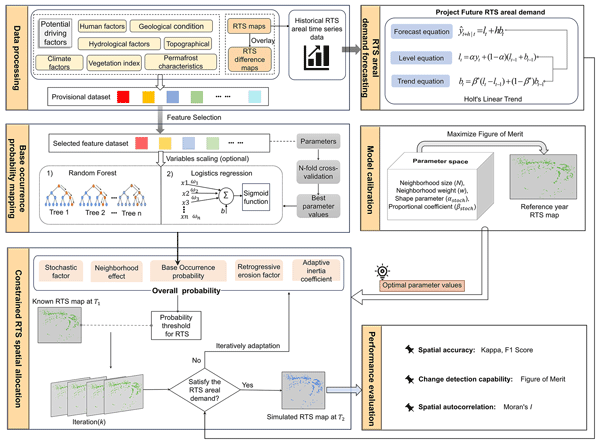
Permafrost is warming, causing more ground collapses known as retrogressive thaw slumps that damage ecosystems and infrastructure. We created a new computer model to predict how these slumps grow and spread over time. By combining satellite data, statistics, and rules that mimic natural erosion, the model can reproduce changes with high accuracy. This helps scientists and planners better forecast future permafrost hazards.
Yuhong Chen, Zhuotong Nan, Wenbiao Tian, Yi Zhao, Shuping Zhao, Dongkai Yang, Guifei Jing, and Fujun Niu
EGUsphere, https://doi.org/10.5194/egusphere-2026-345, https://doi.org/10.5194/egusphere-2026-345, 2026
Short summary
Short summary
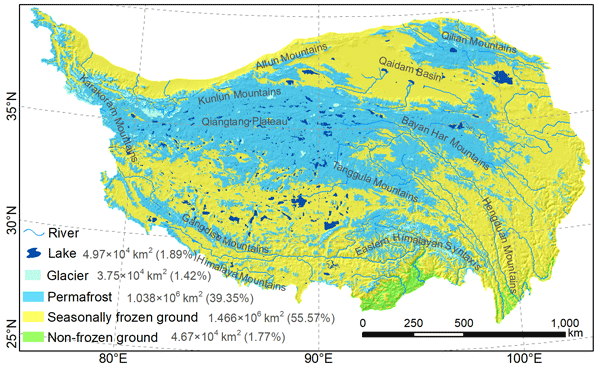
This study presents a 1-km permafrost map of the Qinghai-Tibet Plateau for 2020, generated via a frost number model and space-for-time substitution. Permafrost covers 1.038×10⁶ km² (39.35 %), a 1.82 % decline since 2010, while seasonally frozen ground covers 1.466×10⁶ km² (55.57 %). Validated against boreholes, the map achieves 0.84 accuracy (Kappa= 0.58). This map offers a critical, up-to-date baseline for cryospheric research.
Wenbiao Tian, Hu Yu, Shuping Zhao, Yuhe Cao, Wenjun Yi, Jiwei Xu, and Zhuotong Nan
Geosci. Model Dev., 19, 57–72, https://doi.org/10.5194/gmd-19-57-2026, https://doi.org/10.5194/gmd-19-57-2026, 2026
Short summary
Short summary
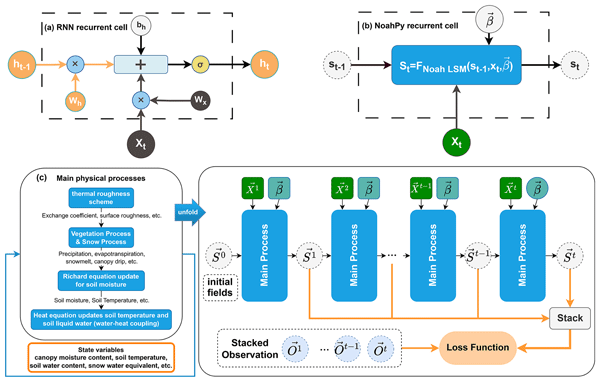
Accurately predicting how permafrost will thaw with land surface models is a grand challenge in Earth science. We created a new computer model by rebuilding a traditional physics model to work with artificial intelligence. Our results show this new approach is much faster and more reliable for tuning model parameters with data. This provides a better tool to build the next generation of climate models and improve predictions of permafrost's future.
Zetao Cao, Zhuotong Nan, Jianan Hu, Yuhong Chen, and Yaonan Zhang
Earth Syst. Sci. Data, 15, 3905–3930, https://doi.org/10.5194/essd-15-3905-2023, https://doi.org/10.5194/essd-15-3905-2023, 2023
Short summary
Short summary
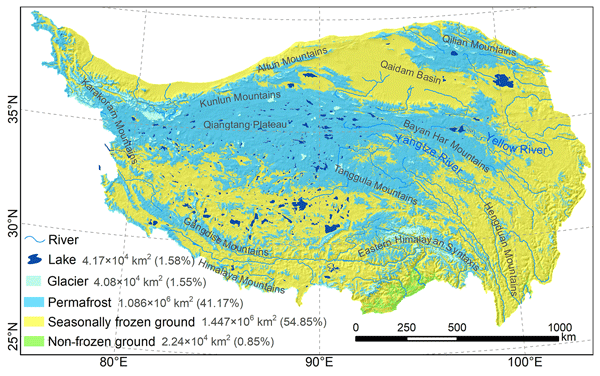
This study provides a new 2010 permafrost distribution map of the Qinghai–Tibet Plateau (QTP), using an effective mapping approach based entirely on satellite temperature data, well constrained by survey-based subregion maps, and considering the effects of local factors. The map shows that permafrost underlies about 41 % of the total QTP. We evaluated it with borehole observations and other maps, and all evidence indicates that this map has excellent accuracy.
Yi Zhao, Zhuotong Nan, Hailong Ji, and Lin Zhao
The Cryosphere, 16, 825–849, https://doi.org/10.5194/tc-16-825-2022, https://doi.org/10.5194/tc-16-825-2022, 2022
Short summary
Short summary
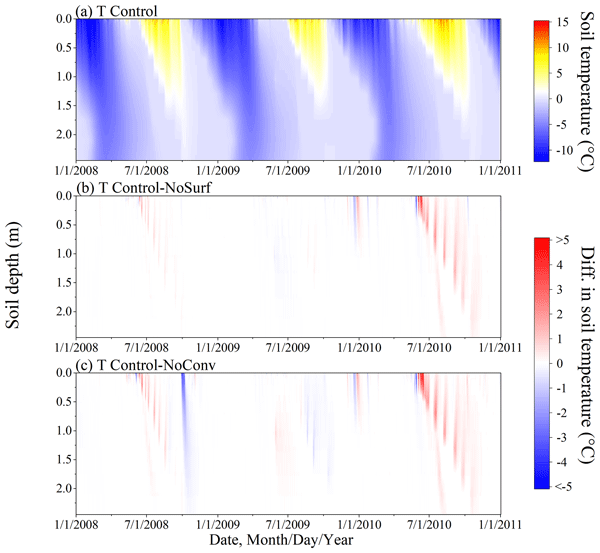
Convective heat transfer (CHT) is important in affecting thermal regimes in permafrost regions. We quantified its thermal impacts by contrasting the simulation results from three scenarios in which the Simultaneous Heat and Water model includes full, partial, and no consideration of CHT. The results show the CHT commonly happens in shallow and middle soil depths during thawing periods and has greater impacts in spring than summer. The CHT has both heating and cooling effects on the active layer.
Cited articles
Berhe, A. A., Barnes, R. T., Six, J., and Marín-Spiotta, E.: Role of Soil Erosion in Biogeochemical Cycling of Essential Elements: Carbon, Nitrogen, and Phosphorus, Annu. Rev. Earth Planet. Sci., 46, 521–548, https://doi.org/10.1146/annurev-earth-082517-010018, 2018.
Cao, Z., Nan, Z., Hu, J., Chen, Y., and Zhang, Y.: A new 2010 permafrost distribution map over the Qinghai–Tibet Plateau based on subregion survey maps: A benchmark for regional permafrost modeling, Earth Syst. Sci. Data, 15, 3905–3930, https://doi.org/10.5194/essd-15-3905-2023, 2023.
Chen, L., Liu, L., Qin, S., Yang, G., Fang, K., Zhu, B., Kuzyakov, Y., Chen, P., Xu, Y., and Yang, Y.: Regulation of priming effect by soil organic matter stability over a broad geographic scale, Nat. Commun., 10, https://doi.org/10.1038/s41467-019-13119-z, 2019.
Chen, L., Ding, X., Zhao, S., and Nan, Z.: Dataset associated with the paper “A physically consistent soil thickness map of the Qinghai–Tibet Plateau derived from coupled erosion mechanisms”, figshare [dataset], https://doi.org/10.6084/m9.figshare.30925358, 2025.
Dietrich, W. E., Reiss, R., Hsu, M. L., and Montgomery, D. R.: A process-based model for colluvial soil depth and shallow landsliding using digital elevation data, Hydrol. Process., 9, 383–400, https://doi.org/10.1002/hyp.3360090311, 1995.
Ding, J., Wang, T., Piao, S., Smith, P., Zhang, G., Yan, Z., Ren, S., Liu, D., Wang, S., Chen, S., Dai, F., He, J., Li, Y., Liu, Y., Mao, J., Arain, A., Tian, H., Shi, X., Yang, Y., Zeng, N., and Zhao, L.: The paleoclimatic footprint in the soil carbon stock of the Tibetan permafrost region, Nat. Commun., 10, 4195, https://doi.org/10.1038/s41467-019-12214-5, 2019.
Ding, L., Zhou, J., Wang, W., and Ma, J.: Dataset of 0.01° Surface Air Temperature over Tibetan Plateau (1979–2018), National Tibetan Plateau Data Center [data set], https://doi.org/10.11888/Meteoro.tpdc.270339, 2022.
Dixon, J. L., Heimsath, A. M., Kaste, J., and Amundson, R.: Climate-driven processes of hillslope weathering, Geology, 37, 975–978, https://doi.org/10.1130/G30045A.1, 2009.
Duan, Q. Y., Gupta, V. K., and Sorooshian, S.: Shuffled complex evolution approach for effective and efficient global minimization, J. Optimiz. Theory Appl., 76, 501–521, https://doi.org/10.1007/BF00939380, 1993.
Fryrear, D. W., Bilbro, J. D., Saleh, A., Schomberg, H., Stout, J. E., and Zobeck, T. M.: RWEQ: Improved wind erosion technology, J. Soil Water Conserv., 55, 183–189, https://doi.org/10.1080/00224561.2000.12436392, 2000.
Fu, Z. Y., Li, Z. X., Cai, C. F., Shi, Z. H., Xu, Q. X., and Wang, X. Y.: Soil thickness effect on hydrological and erosion characteristics under sloping lands: A hydropedological perspective, Geoderma, 167–168, 41–53, https://doi.org/10.1016/j.geoderma.2011.08.013, 2011.
Gabet, E. J. and Mudd, S. M.: A theoretical model coupling chemical weathering rates with denudation rates, Geology, 37, 151–154, https://doi.org/10.1130/G25270A.1, 2009.
Guo, B., Zhou, Y., Zhu, J., Liu, W., Wang, F., Wang, L., and Jiang, L.: An estimation method of soil freeze-thaw erosion in the Qinghai–Tibet Plateau, Nat. Hazards, 78, 1843–1857, https://doi.org/10.1007/s11069-015-1808-5, 2015a.
Guo, J., Zhou, J., Zou, Q., Liu, Y., and Song, L.: A Novel Multi-Objective Shuffled Complex Differential Evolution Algorithm with Application to Hydrological Model Parameter Optimization, Water Resour. Manage., 27, 2923–2946, https://doi.org/10.1007/s11269-013-0324-1, 2013.
Guo, W., Liu, S., Xu, J., Wu, L., Shangguan, D., Yao, X., Wei, J., Bao, W., Yu, P., and Liu, Q.: The second Chinese glacier inventory: data, methods and results, J. Glaciol., 61, 357–372, https://doi.org/10.3189/2015JoG14J209, 2015b.
Gupta, K., Satyam, N., and Segoni, S.: A comparative study of empirical and machine learning approaches for soil thickness mapping in the Joshimath region (India), Catena, 241, 108024, https://doi.org/10.1016/j.catena.2024.108024, 2024.
Hall, K., Thorn, C. E., Matsuoka, N., and Prick, A.: Weathering in cold regions: Some thoughts and perspective, Prog. Phys. Geogr., 26, 577–603, https://doi.org/10.1191/0309133302pp353ra, 2002.
Hickey, R., Smith, A., and Jankowski, P.: Slope length calculations from a DEM within ARC/INFO grid, Comput. Environ. Urban Syst., 18, 365–380, https://doi.org/10.1016/0198-9715(94)90017-5, 1994.
Huang, B. and Lu, S.: Soil Series of China-Yunnan, Science Press, Beijing, China, ISBN 978-7-5088-5704-6, 2020.
Huang, Z.: Extensions to the k-means algorithm for clustering large data sets with categorical values, Data Min. Knowl. Discov., 2, 283–304, https://doi.org/10.1023/A:1009769707641, 1998.
Jordan, M. I. and Mitchell, T. M.: Machine learning: Trends, perspectives, and prospects, Science, 349, 255–260, https://doi.org/10.1126/science.aaa8415, 2015.
Ke, L., Lei, N., Zhang, S., Yin, C., Lu, Y., Wang, L., Tan, Q., Zhao, Y., and Wang, Q.: Estimation of blue carbon stock in the Liaohe Estuary wetland based on soil thickness and multi-scenario modeling, Ecol. Indic., 171, 113201, https://doi.org/10.1016/j.ecolind.2025.113201, 2025.
Korup, O. and Montgomery, D. R.: Tibetan plateau river incision inhibited by glacial stabilization of the Tsangpo gorge, Nature, 455, 786–789, https://doi.org/10.1038/nature07322, 2008.
Li, D., Zhao, X., and Zhang, G.: Soil Series of China-Qinghai, Science Press, Beijing, China, ISBN 978-7-5088-5702-2, 2020.
Li, J. and Heap, A. D.: A review of comparative studies of spatial interpolation methods in environmental sciences: Performance and impact factors, Ecol. Inform., 6, 228–241, https://doi.org/10.1016/j.ecoinf.2010.12.003, 2011.
Li, X.: Comprehensive data set of Cryosphere in the Qinghai Tibet Plateau, National Cryosphere Desert Data Center [data set], https://doi.org/10.12072/ncdc.westdc.db3894.2023, 2020.
Li, X., Jin, R., Pan, X. D., Zhang, T. J., and Guo, J. W.: Changes in the near-surface soil freeze-thaw cycle on the Qinghai–Tibetan Plateau, Int. J. Appl. Earth Obs. Geoinf., 17, 33–42, https://doi.org/10.1016/j.jag.2011.12.002, 2012.
Liu, F., Wu, H., Zhao, Y., Li, D., Yang, J., Song, X., Shi, Z., Zhu, A., and Zhang, G.: Mapping high resolution national soil information grids of China, Sci. Bull., 67, 328–340, https://doi.org/10.1016/j.scib.2021.10.013, 2021.
Liu, J., Chen, X., Lin, H., Liu, H., and Song, H.: A simple geomorphic-based analytical model for predicting the spatial distribution of soil thickness in headwater hillslopes and catchments, Water Resour. Res., 49, 7733–7746, https://doi.org/10.1002/2013WR013834, 2013.
Luo, J., Niu, F., Lin, Z., Liu, M., Yin, G., and Gao, Z.: Inventory and Frequency of Retrogressive Thaw Slumps in Permafrost Region of the Qinghai–Tibet Plateau, Geophys. Res. Lett., 49, https://doi.org/10.1029/2022GL099829, 2022.
Montgomery, D. R.: Valley formation by fluvial and glacial erosion, Geology, 30, 1047–1050, https://doi.org/10.1130/0091-7613(2002)030<1047:Vfbfag>2.0.Co;2, 2002.
Moreno, M., Levachkine, S., Torres, M., and Quintero, R.: Geomorphometric Analysis of Raster Image Data to detect Terrain Ruggedness and Drainage Density, Prog. Pattern Recog. Speech Image Anal., 643–650, https://doi.org/10.1007/978-3-540-24586-5_79, 2003.
Pan, G., Wang, L., Yin, F., Geng, Q., Li, G., and Zhu, D.: Researches on geological-tectonic evolution of Tibetan Plateau: A review, recent advances, and directions in the future, Sediment. Geol. Tethyan Geol., 42, 151–175, https://doi.org/10.19826/j.cnki.1009-3850.2022.05004, 2022.
Pan, X. and Shi, J.: National Second Soil Census Typical Soil Profile Database (1980–1996), National Earth System Science Data Center [data set], https://doi.org/10.11666/00003.ver1.db, 2015.
Pelletier, J. D. and Rasmussen, C.: Quantifying the climatic and tectonic controls on hillslope steepness and erosion rate, Lithosphere, 1, 73–80, https://doi.org/10.1130/L3.1, 2009a.
Pelletier, J. D. and Rasmussen, C.: Geomorphically based predictive mapping of soil thickness in upland watersheds, Water Resour. Res., 45, https://doi.org/10.1029/2008WR007319, 2009b.
Pelletier, J. D., Barron-Gafford, G. A., Breshears, D. D., Brooks, P. D., Chorover, J., Durcik, M., Harman, C. J., Huxman, T. E., Lohse, K. A., Lybrand, R., Meixner, T., McIntosh, J. C., Papuga, S. A., Rasmussen, C., Schaap, M., Swetnam, T. L., and Troch, P. A.: Coevolution of nonlinear trends in vegetation, soils, and topography with elevation and slope aspect: A case study in the sky islands of southern Arizona, J. Geophys. Res.-Earth, 118, 741–758, https://doi.org/10.1002/jgrf.20046, 2013.
Peng, S.: 1-km monthly precipitation dataset for China (1901–2024), National Earth System Science Data Center [data set], https://doi.org/10.12041/geodata.192891852410344.ver1.db, 2025.
Phillips, J. D.: The convenient fiction of steady-state soil thickness, Geoderma, 156, 389–398, https://doi.org/10.1016/j.geoderma.2010.03.008, 2010.
Piao, S., Zhang, X., Wang, T., Liang, E., Wang, S., Zhu, J., and Niu, B.: Responses and feedback of the Tibetan Plateau's alpine ecosystem to climate change, Chinese Sci. Bull., 64, 2842–2855, https://doi.org/10.1360/TB-2019-0074, 2019.
Rasmussen, C. and Tabor, N. J.: Applying a quantitative pedogenic energy model across a range of environmental gradients, Soil Sci. Soc. Am. J., 71, 1719–1729, https://doi.org/10.2136/sssaj2007.0051, 2007.
Rasmussen, C., Southard, R. J., and Horwath, W. R.: Modeling energy inputs to predict pedogenic environments using regional environmental databases, Soil Sci. Soc. Am. J., 69, 1266–1274, https://doi.org/10.2136/sssaj2003.0283, 2005.
Renard, K. G., Foster, G. R., Yoder, D. C., and McCool, D. K.: RUSLE revisited: Status, questions, answers, and the future, J. Soil Water Conserv., 49, 213–220, https://doi.org/10.1080/00224561.1994.12456855, 1994.
Roering, J. J.: How well can hillslope evolution models “explain” topography? Simulating soil transport and production with high-resolution topographic data, Geol. Soc. Am. Bull., 120, 1248–1262, https://doi.org/10.1130/B26283.1, 2008.
Roering, J. J., Kirchner, J. W., and Dietrich, W. E.: Evidence for nonlinear, diffusive sediment transport on hillslopes and implications for landscape morphology, Water Resour. Res., 35, 853–870, https://doi.org/10.1029/1998WR900090, 1999.
Rosin, N. A., Mello, D. C. d., Bonfatti, B. R., Hartemink, A. E., Ferreira, T. O., Silvero, N. E. Q., Poppiel, R. R., Mendes, W. d. S., Veloso, G. V., Francelino, M. R., Alves, M. R., Falcioni, R., and Demattê, J. A. M.: Mapping soil thickness using a mechanistic model and machine learning approaches, Catena, 249, 108621, https://doi.org/10.1016/j.catena.2024.108621, 2025.
Rühlmann, J., Körschens, M., and Graefe, J.: A new approach to calculate the particle density of soils considering properties of the soil organic matter and the mineral matrix, Geoderma, 130, 272–283, https://doi.org/10.1016/j.geoderma.2005.01.024, 2006.
Schürz, C., Mehdi, B., Kiesel, J., Schulz, K., and Herrnegger, M.: A systematic assessment of uncertainties in large-scale soil loss estimation from different representations of USLE input factors – a case study for Kenya and Uganda, Hydrol. Earth Syst. Sci., 24, 4463–4489, https://doi.org/10.5194/hess-24-4463-2020, 2020.
Shangguan, W., Dai, Y. J., Liu, B. Y., Zhu, A. X., Duan, Q. Y., Wu, L. Z., Ji, D. Y., Ye, A. Z., Yuan, H., Zhang, Q., Chen, D. D., Chen, M., Chu, J. T., Dou, Y. J., Guo, J. X., Li, H. Q., Li, J. J., Liang, L., Liang, X., Liu, H. P., Liu, S. Y., Miao, C. Y., and Zhang, Y. Z.: A China data set of soil properties for land surface modeling, J. Adv. Model. Earth Syst., 5, 212–224, https://doi.org/10.1002/jame.20026, 2013.
Shangguan, W., Hengl, T., Mendes de Jesus, J., Yuan, H., and Dai, Y.: Mapping the global depth to bedrock for land surface modeling, J. Adv. Model. Earth Syst., 9, 65–88, https://doi.org/10.1002/2016ms000686, 2017.
Smith, P., Cotrufo, M. F., Rumpel, C., Paustian, K., Kuikman, P. J., Elliott, J. A., McDowell, R., Griffiths, R. I., Asakawa, S., Bustamante, M., House, J. I., Sobocká, J., Harper, R., Pan, G., West, P. C., Gerber, J. S., Clark, J. M., Adhya, T., Scholes, R. J., and Scholes, M. C.: Biogeochemical cycles and biodiversity as key drivers of ecosystem services provided by soils, Soil, 1, 665–685, https://doi.org/10.5194/soil-1-665-2015, 2015.
Sun, Y., Liu, S., Shi, F., An, Y., Li, M., and Liu, Y.: Spatio-temporal variations and coupling of human activity intensity and ecosystem services based on the four-quadrant model on the Qinghai–Tibet Plateau, Sci. Total Environ., 743, https://doi.org/10.1016/j.scitotenv.2020.140721, 2020.
Teng, H., Liang, Z., Chen, S., Liu, Y., Viscarra Rossel, R. A., Chappell, A., Yu, W., and Shi, Z.: Current and future assessments of soil erosion by water on the Tibetan Plateau based on RUSLE and CMIP5 climate models, Sci. Total Environ., 635, 673–686, https://doi.org/10.1016/j.scitotenv.2018.04.146, 2018.
Teng, Y. M., Zhan, J. Y., Liu, W., Sun, Y. X., Agyemang, F. B., Liang, L., and Li, Z. H.: Spatiotemporal dynamics and drivers of wind erosion on the Qinghai–Tibet Plateau, China, Ecol. Indic., 123, https://doi.org/10.1016/j.ecolind.2021.107340, 2021.
Vrugt, J. A., Gupta, H. V., Bouten, W., and Sorooshian, S.: A Shuffled Complex Evolution Metropolis algorithm for optimization and uncertainty assessment of hydrologic model parameters, Water Resour. Res., 39, https://doi.org/10.1029/2002wr001642, 2003.
Wang, W., Zhao, Y., Zhang, T., Wang, R., Wei, Z., Sun, Q., and Wu, J.: Regional soil thickness mapping based on stratified sampling of optimally selected covariates, Geoderma, 400, https://doi.org/10.1016/j.geoderma.2021.115092, 2021.
Wang, Y., Lv, W., Xue, K., Wang, S., Zhang, L., Hu, R., Zeng, H., Xu, X., Li, Y., Jiang, L., Hao, Y., Du, J., Sun, J., Dorji, T., Piao, S., Wang, C., Luo, C., Zhang, Z., Chang, X., Zhang, M., Hu, Y., Wu, T., Wang, J., Li, B., Liu, P., Zhou, Y., Wang, A., Dong, S., Zhang, X., Gao, Q., Zhou, H., Shen, M., Wilkes, A., Miehe, G., Zhao, X., and Niu, H.: Grassland changes and adaptive management on the Qinghai–Tibetan Plateau, Nat. Rev. Earth Environ., 3, 668–683, https://doi.org/10.1038/s43017-022-00330-8, 2022.
Wei, P., Du, J., Bahadur, A., Zhang, H., Wang, S., Wu, T., and Chen, S.: Soil erosion and risk assessment on the Qinghai–Tibetan Plateau, Commun. Earth Environ., 6, 365, https://doi.org/10.1038/s43247-025-02355-5, 2025.
Wu, K., Wu, H., and Ju, B.: Soil Series of China-Xijiang, Science Press, Beijing, China, ISBN 978-7-5088-5717-3, 2020.
Xiao, T., Segoni, S., Liang, X., Yin, K., and Casagli, N.: Generating soil thickness maps by means of geomorphological-empirical approach and random forest algorithm in Wanzhou County, Three Gorges Reservoir, Geosci. Front., 14, hhttps://doi.org/10.1016/j.gsf.2022.101514, 2023.
Xu, E.: Land use of the Tibet Plateau in 2015 (Version 1.0), National Tibetan Plateau Data Center [data set], https://doi.org/10.11888/Geogra.tpdc.270198, 2019.
Yamashita, N., Ohnuki, Y., Iwahashi, J., and Imaya, A.: National-scale mapping of soil-thickness probability in hilly and mountainous areas of Japan using legacy and modern soil survey, Geoderma, 446, https://doi.org/10.1016/j.geoderma.2024.116896, 2024.
Yang, J. and Zhang, G.: Soil Series of China-Gansu, Science Press, Beijing, China, ISBN 978-7-5088-5891-3, 2020.
Yang, Y., Fang, J., Fay, P. A., Bell, J. E., and Ji, C.: Rain use efficiency across a precipitation gradient on the Tibetan Plateau, Geophys. Res. Lett., 37, https://doi.org/10.1029/2010GL043920, 2010.
Yu, Y., You, Q., Zhang, Y., Jin, Z., Kang, S., and Zhai, P.: Integrated warm-wet trends over the Tibetan Plateau in recent decades, J. Hydrol., 639, https://doi.org/10.1016/j.jhydrol.2024.131599, 2024.
Yuan, D.: Soil Series of China-Sichuan, Science Press, Beijing, China, ISBN 978-7-5088-5707-7, 2020.
Zhang, G., Yao, T., Chen, W., Zheng, G., Shum, C., Yang, K., Piao, S., Sheng, Y., Yi, S., and Li, J.: Regional differences of lake evolution across China during 1960s–2015 and its natural and anthropogenic causes, Remote Sens. Environ., 221, 386–404, https://doi.org/10.1016/j.rse.2018.11.038, 2019.
Zhang, J., Wang, S., Fu, Z. Y., Wang, F., Wang, K. L., and Chen, H. S.: Soil thickness influences the control effect of micro-topography on subsurface runoff generation in the karst hillslope critical zone, Catena, 239, https://doi.org/10.1016/j.catena.2024.107957, 2024a.
Zhang, Q., Yuan, R., Singh, V. P., Xu, C. Y., Fan, K., Shen, Z., Wang, G., and Zhao, J.: Dynamic vulnerability of ecological systems to climate changes across the Qinghai–Tibet Plateau, China, Ecol. Indic., 134, https://doi.org/10.1016/j.ecolind.2021.108483, 2022.
Zhang, S., E, C., Ji, X., Li, P., Peng, Q., Zhang, Z., and Zhang, Q.: Soil Genesis of Alluvial Parent Material in the Qinghai Lake Basin (NE Qinghai–Tibet Plateau) Revealed Using Optically Stimulated Luminescence Dating, Atmosphere, 15, 1066, https://doi.org/10.3390/atmos15091066, 2024b.
Zhao, W., Cheng, Y., Jian, J., Jiao, J., Cheng, C., Li, J., and Chen, T.: Water erosion changes on the Qinghai–Tibet Plateau and its response to climate variability and human activities during 1982–2015, Catena, 229, 107207, https://doi.org/10.1016/j.catena.2023.107207, 2023.
Zhao, Y. and Li, D.: Soil Series of China–Xizang, Science Press, Beijing, China, ISBN 978-7-5088-5890-6, 2020.
Zhu, J.: Dataset of Normalized Difference Vegetation Index over Tibetan Plateau From 2001 to 2020, National Tibetan Plateau Data Center [data set], https://doi.org/10.5067/MODIS/MOD13A2.006, 2022.
Short summary
This study presents a high-resolution (1 km) physically-based solum thickness dataset for the Qinghai–Tibet Plateau. Grounded in a mechanistic mass-balance model that couples climate weathering with multi-process erosion, the data resolve geomorphological patterns and offer superior accuracy over conventional statistical products. This dataset provides essential model parameter for hydrological, ecological, and cryosphere models, facilitating more reliable assessments under a changing climate.
This study presents a high-resolution (1 km) physically-based solum thickness dataset for the...
Altmetrics
Final-revised paper
Preprint