Articles | Volume 17, issue 12
https://doi.org/10.5194/essd-17-6871-2025
© Author(s) 2025. This work is distributed under
the Creative Commons Attribution 4.0 License.
the Creative Commons Attribution 4.0 License.
https://doi.org/10.5194/essd-17-6871-2025
© Author(s) 2025. This work is distributed under
the Creative Commons Attribution 4.0 License.
the Creative Commons Attribution 4.0 License.
Data description article
| 
08 Dec 2025
Data description article |
| 08 Dec 2025
| 08 Dec 2025
Long-term land–atmosphere energy and water exchange observational dataset over central Tibetan Plateau
Haipeng Yu
Nagqu Plateau Climate and Environment Observation and Research Station of Tibet Autonomous Region, State Key Laboratory of Cryospheric Science and Frozen Soil Engineering, Northwest Institute of Eco-Environment and Resources, Chinese Academy of Sciences, Lanzhou 730000, China
Guantian Wang
Tianjin Meteorological Observatory, Tianjin 300202, China
Zeyong Hu
CORRESPONDING AUTHOR

Nagqu Plateau Climate and Environment Observation and Research Station of Tibet Autonomous Region, State Key Laboratory of Cryospheric Science and Frozen Soil Engineering, Northwest Institute of Eco-Environment and Resources, Chinese Academy of Sciences, Lanzhou 730000, China
Yaoming Ma
Land-Atmosphere Interaction and Its Climatic Effects Group, State Key Laboratory of Tibetan Plateau Earth System, Environment and Resources, National Observation and Research Station for Qomolongma Special Atmospheric Processes and Environmental Changes, Institute of Tibetan Plateau Research, Chinese Academy of Sciences, Beijing 100101, China
Maoshan Li
School of Atmospheric Sciences, Plateau Atmosphere and Environment Key Laboratory of Sichuan Province, Chengdu Plain Urban Meteorology and Environment Observation and Research Station of Sichuan Province, Chengdu University of Information Technology, Chengdu 610225, China
Weiqiang Ma
Land-Atmosphere Interaction and Its Climatic Effects Group, State Key Laboratory of Tibetan Plateau Earth System, Environment and Resources, National Observation and Research Station for Qomolongma Special Atmospheric Processes and Environmental Changes, Institute of Tibetan Plateau Research, Chinese Academy of Sciences, Beijing 100101, China
Lianglei Gu
Nagqu Plateau Climate and Environment Observation and Research Station of Tibet Autonomous Region, State Key Laboratory of Cryospheric Science and Frozen Soil Engineering, Northwest Institute of Eco-Environment and Resources, Chinese Academy of Sciences, Lanzhou 730000, China
Fanglin Sun
Nagqu Plateau Climate and Environment Observation and Research Station of Tibet Autonomous Region, State Key Laboratory of Cryospheric Science and Frozen Soil Engineering, Northwest Institute of Eco-Environment and Resources, Chinese Academy of Sciences, Lanzhou 730000, China
Hongchun Gao
Nagqu Plateau Climate and Environment Observation and Research Station of Tibet Autonomous Region, State Key Laboratory of Cryospheric Science and Frozen Soil Engineering, Northwest Institute of Eco-Environment and Resources, Chinese Academy of Sciences, Lanzhou 730000, China
Shujin Wang
Nagqu Plateau Climate and Environment Observation and Research Station of Tibet Autonomous Region, State Key Laboratory of Cryospheric Science and Frozen Soil Engineering, Northwest Institute of Eco-Environment and Resources, Chinese Academy of Sciences, Lanzhou 730000, China
Fuquan Lu
Nagqu Plateau Climate and Environment Observation and Research Station of Tibet Autonomous Region, State Key Laboratory of Cryospheric Science and Frozen Soil Engineering, Northwest Institute of Eco-Environment and Resources, Chinese Academy of Sciences, Lanzhou 730000, China
University of Chinese Academy of Sciences, Beijing 100049, China
Related authors
Yerong Gao, Suosuo Li, Haipeng Yu, Shaoying Wang, Yongjie Pan, and Zongming Li
EGUsphere, https://doi.org/10.5194/egusphere-2025-5170, https://doi.org/10.5194/egusphere-2025-5170, 2025
Preprint archived
Short summary
Short summary
This study revealed the temporal variations of carbon fluxes, water flux, and water use efficiency (WUE) in alpine meadows across daily, monthly—seasonal, and inter-annual timescales. Confirmed that the driving factors of carbon-water coupling are different at different time scales. Quantified the alpine meadow as a multi-year carbon sink, providing a basis for predicting grassland ecosystem responses to future climate change on the Tibetan Plateau.
Yuling Hu, Haipeng Yu, Shichang Kang, Junhua Yang, Mukesh Rai, Xiufeng Yin, Xintong Chen, and Pengfei Chen
Atmos. Chem. Phys., 24, 85–107, https://doi.org/10.5194/acp-24-85-2024, https://doi.org/10.5194/acp-24-85-2024, 2024
Short summary
Short summary
The Tibetan Plateau (TP) saw a record-breaking aerosol pollution event from April 20 to May 10, 2016. We studied the impact of aerosol–meteorology feedback on the transboundary transport flux of black carbon (BC) during this severe pollution event. It was found that the aerosol–meteorology feedback decreases the transboundary transport flux of BC from the central and western Himalayas towards the TP. This study is of great significance for the protection of the ecological environment of the TP.

Binbin Wang, Yaoming Ma, Zeyong Hu, Xuan Li, Weiqiang Ma, Xuelong Chen, Cunbo Han, Zhipeng Xie, Yuyang Wang, Maoshan Li, Bin Ma, Xingdong Shi, Weimo Li, and Zhengling Cai
Earth Syst. Sci. Data, 18, 1147–1164, https://doi.org/10.5194/essd-18-1147-2026, https://doi.org/10.5194/essd-18-1147-2026, 2026
Short summary
Short summary
This study reveals distinct patterns in water, heat, and carbon exchange over the Tibetan Plateau. Heat transfer peaks in spring, while water vapor release is highest in summer. Most stations act as carbon sinks, but one in a forested valley is a carbon source, likely due to vegetation loss and human activity. The findings highlight the strong connections between water, heat, and carbon fluxes, offering valuable insights into climate change and weather forecasting.
Yerong Gao, Suosuo Li, Haipeng Yu, Shaoying Wang, Yongjie Pan, and Zongming Li
EGUsphere, https://doi.org/10.5194/egusphere-2025-5170, https://doi.org/10.5194/egusphere-2025-5170, 2025
Preprint archived
Short summary
Short summary
This study revealed the temporal variations of carbon fluxes, water flux, and water use efficiency (WUE) in alpine meadows across daily, monthly—seasonal, and inter-annual timescales. Confirmed that the driving factors of carbon-water coupling are different at different time scales. Quantified the alpine meadow as a multi-year carbon sink, providing a basis for predicting grassland ecosystem responses to future climate change on the Tibetan Plateau.
Cunbo Han, Yaoming Ma, Weiqiang Ma, Fanglin Sun, Yunshuai Zhang, Wei Hu, Hanying Xu, Chunhui Duan, and Zhenhua Xi
EGUsphere, https://doi.org/10.5194/egusphere-2025-4642, https://doi.org/10.5194/egusphere-2025-4642, 2025
Preprint archived
Short summary
Short summary
Wind speed spectra analysis is very important for understanding boundary layer turbulence characteristics, atmospheric numerical model development, and wind energy assessment. However, wind speed spectra studies in mountainous areas are extremely scarce. In this study, using a 15-year time series of wind speed observed by a PBL tower and eddy-covariance tower at a site on the north slope of Mt. Everest, we investigated the characteristics of wind speed and wind speed spectrum.
Minqiang Zhou, Yilong Wang, Minzheng Duan, Xiangjun Tian, Jinzhi Ding, Jianrong Bi, Yaoming Ma, Weiqiang Ma, and Zhenhua Xi
Atmos. Meas. Tech., 18, 4311–4324, https://doi.org/10.5194/amt-18-4311-2025, https://doi.org/10.5194/amt-18-4311-2025, 2025
Short summary
Short summary
The Qinghai–Tibetan Plateau is a key system that impacts the global carbon balance. This study presents the greenhouse gas (GHG) mole fraction measurement campaign in May 2022 at Mt. Qomolangma station, including ground-based remote sensing and in situ measurements. The GHG measurements are carried out in this region for the first time and used for satellite validation.
Cunbo Han, Yaoming Ma, Weiqiang Ma, Fanglin Sun, Yunshuai Zhang, Wei Hu, Hanying Xu, Chunhui Duan, and Zhenhua Xi
EGUsphere, https://doi.org/10.5194/egusphere-2024-1963, https://doi.org/10.5194/egusphere-2024-1963, 2024
Preprint archived
Short summary
Short summary
Wind speed spectra analysis is very important for understanding boundary layer turbulence characteristics, atmospheric numerical model development, and wind energy assessment. However, wind speed spectra studies in mountainous areas are extremely scarce. In this study, using a 15-year time series of wind speed observed by a PBL tower and eddy-covariance tower at a site on the north slope of Mt. Everest, we investigated the characteristics of wind speed and wind speed spectrum.
Yaoming Ma, Zhipeng Xie, Yingying Chen, Shaomin Liu, Tao Che, Ziwei Xu, Lunyu Shang, Xiaobo He, Xianhong Meng, Weiqiang Ma, Baiqing Xu, Huabiao Zhao, Junbo Wang, Guangjian Wu, and Xin Li
Earth Syst. Sci. Data, 16, 3017–3043, https://doi.org/10.5194/essd-16-3017-2024, https://doi.org/10.5194/essd-16-3017-2024, 2024
Short summary
Short summary
Current models and satellites struggle to accurately represent the land–atmosphere (L–A) interactions over the Tibetan Plateau. We present the most extensive compilation of in situ observations to date, comprising 17 years of data on L–A interactions across 12 sites. This quality-assured benchmark dataset provides independent validation to improve models and remote sensing for the region, and it enables new investigations of fine-scale L–A processes and their mechanistic drivers.
Ling Yuan, Xuelong Chen, Yaoming Ma, Cunbo Han, Binbin Wang, and Weiqiang Ma
Earth Syst. Sci. Data, 16, 775–801, https://doi.org/10.5194/essd-16-775-2024, https://doi.org/10.5194/essd-16-775-2024, 2024
Short summary
Short summary
Accurately monitoring and understanding the spatial–temporal variability of evapotranspiration (ET) components over the Tibetan Plateau (TP) remains difficult. Here, 37 years (1982–2018) of monthly ET component data for the TP was produced, and the data are consistent with measurements. The annual average ET for the TP was about 0.93 (± 0.037) × 103 Gt yr−1. The rate of increase of the ET was around 0.96 mm yr−1. The increase in the ET can be explained by warming and wetting of the climate.
Yuling Hu, Haipeng Yu, Shichang Kang, Junhua Yang, Mukesh Rai, Xiufeng Yin, Xintong Chen, and Pengfei Chen
Atmos. Chem. Phys., 24, 85–107, https://doi.org/10.5194/acp-24-85-2024, https://doi.org/10.5194/acp-24-85-2024, 2024
Short summary
Short summary
The Tibetan Plateau (TP) saw a record-breaking aerosol pollution event from April 20 to May 10, 2016. We studied the impact of aerosol–meteorology feedback on the transboundary transport flux of black carbon (BC) during this severe pollution event. It was found that the aerosol–meteorology feedback decreases the transboundary transport flux of BC from the central and western Himalayas towards the TP. This study is of great significance for the protection of the ecological environment of the TP.
Peizhen Li, Lei Zhong, Yaoming Ma, Yunfei Fu, Meilin Cheng, Xian Wang, Yuting Qi, and Zixin Wang
Atmos. Chem. Phys., 23, 9265–9285, https://doi.org/10.5194/acp-23-9265-2023, https://doi.org/10.5194/acp-23-9265-2023, 2023
Short summary
Short summary
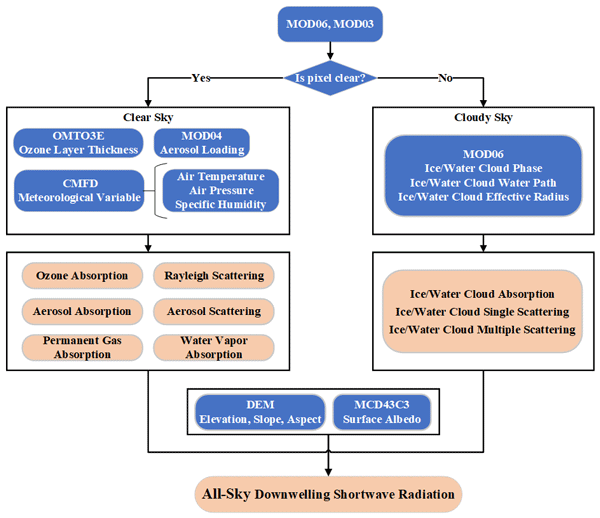
In this paper, all-sky downwelling shortwave radiation (DSR) over the entire Tibetan Plateau (TP) at a spatial resolution of 1 km was estimated using an improved parameterization scheme. The influence of topography and different radiative attenuations were comprehensively taken into account. The derived DSR showed good agreement with in situ measurements. The accuracy was better than six other DSR products. The derived DSR also provided more reasonable and detailed spatial patterns.
Pei Zhang, Donghai Zheng, Rogier van der Velde, Jun Wen, Yaoming Ma, Yijian Zeng, Xin Wang, Zuoliang Wang, Jiali Chen, and Zhongbo Su
Earth Syst. Sci. Data, 14, 5513–5542, https://doi.org/10.5194/essd-14-5513-2022, https://doi.org/10.5194/essd-14-5513-2022, 2022
Short summary
Short summary
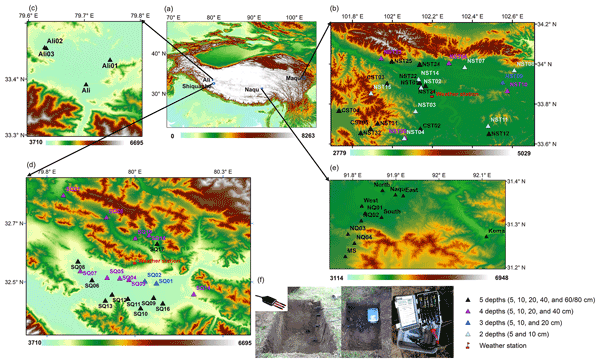
Soil moisture and soil temperature (SMST) are important state variables for quantifying the heat–water exchange between land and atmosphere. Yet, long-term, regional-scale in situ SMST measurements at multiple depths are scarce on the Tibetan Plateau (TP). The presented dataset would be valuable for the evaluation and improvement of long-term satellite- and model-based SMST products on the TP, enhancing the understanding of TP hydrometeorological processes and their response to climate change.
Maoshan Li, Wei Fu, Na Chang, Ming Gong, Pei Xu, Yaoming Ma, Zeyong Hu, Yaoxian Yang, and Fanglin Sun
Atmos. Chem. Phys. Discuss., https://doi.org/10.5194/acp-2022-257, https://doi.org/10.5194/acp-2022-257, 2022
Revised manuscript not accepted
Short summary
Short summary
Compared with the plain area, the land-atmosphere interaction on the Tibetan Plateau (TP) is intense and complex, which affects the structure of the boundary layer. The observed height of the convective boundary layer on the TP under the influence of the southern branch of the westerly wind was higher than that during the Asian monsoon season. The height of the boundary layer was positively correlated with the sensible heat flux and negatively correlated with latent heat flux.

Yunshuai Zhang, Qian Huang, Yaoming Ma, Jiali Luo, Chan Wang, Zhaoguo Li, and Yan Chou
Atmos. Chem. Phys., 21, 15949–15968, https://doi.org/10.5194/acp-21-15949-2021, https://doi.org/10.5194/acp-21-15949-2021, 2021
Short summary
Short summary
The source region of the Yellow River has an important role in issues related to water resources, ecological environment, and climate changes in China. We utilized large eddy simulation to understand whether the surface heterogeneity promotes or inhibits the boundary-layer turbulence, the great contribution of the thermal circulations induced by surface heterogeneity to the water and heat exchange between land/lake and air. Moreover, the turbulence in key locations is characterized.
Cited articles
Bian, L., Gao, Z., Ma, Y., Koike, T., Ma, Y., Li, Y., Sun, J., Hu, Z., and Xu, X.: Seasonal Variation in Turbulent Fluxes over Tibetan Plateau and Its Surrounding Areas: Research Note, J. Meteorol. Soc. Jpn., 90C, 157–171, 2012.
Chen, B., Chao, W., and Liu, X.: Enhanced climatic warming in the Tibetan plateau due to doubling CO2: A model study, Clim. Dynam., 20, 401–413, 2003.
Ciwangdunzhu, C., Du, J., and Danzengcuojie, D.: Spatial-temporal Change of Consecutive Dry Days in Changtang National Nature Reserve of Tibet During 1971–2017, Chin. Agricult. Sci. Bull., 34, 118–122, 2018.
Curio, J. and Scherer, D.: Seasonality and spatial variability of dynamic precipitation controls on the Tibetan Plateau, Earth Syst. Dynam., 7, 767–782, https://doi.org/10.5194/esd-7-767-2016, 2016.
Deng, M., Meng, X., Lu, Y., Li, Z., Zhao, L., Hu, Z., Chen, H., Shang, L., Wang, S., and Li, Q.: Impact and sensitivity analysis of soil water and heat transfer parameterizations in Community Land Surface Model on the Tibetan Plateau, J. Adv. Model. Earth Syst., 13, e2021MS002670, https://doi.org/10.1029/2021MS002670, 2021.
Duan, A. and Xiao, Z.: Does the climate warming hiatus exist over the Tibetan Plateau?, Sci. Rep., 5, 13711, https://doi.org/10.1038/srep13711, 2015.
Fan, X., Li, Y., and Li, L.: Synoptic-Scale Effects of Atmospheric Heat Source over Key Areas of the Tibetan Plateau on Its Downstream Rainfall in Summer, J. Climate, 36, 3647–3666, 2023.
Fu, C., Hu, Z., Yang, Y., Deng, M., Yu, H., Lu, S., Wu, D., and Fan, W.: Responses of Soil Freeze-Thaw Processes to Climate on the Tibetan Plateau from 1980 to 2016, Remote Sens., 14, 5907, https://doi.org/10.3390/rs14235907, 2022.
Gu, L., Yao, J., Hu, Z., and Zhao, L.: Comparison of the surface energy budget between regions of seasonally frozen ground and permafrost on the Tibetan Plateau, Atmos. Res., 153, 553–564, 2015.
Gu, L., Yao, J., Hu, Z., Ma, Y., Sun, F., Yu, H., Wang, S., Yang, Y., Guo, R., and Qin, Y.: Characteristics of the atmospheric boundary layer's structure and heating (cooling) rate in summer over the Northern Tibetan Plateau, Atmos. Res., 269, 106045, https://doi.org/10.1016/j.atmosres.2022.106045, 2022.
Guo, Y., Zhang, Y., Ma, Y., and Ma, N.: Surface heat source intensity and surface water/energy balance in Shuanghu, northern Tibetan Plateau, Acta Geogr. Sin., 69, 983–992, 2014.
He, H., Hu, Z., Xun, X., Hao, L., Gu, L., Sun, J., and Xu, L.: The variation characteristics of surface radiation in wetlands on the northern Tibetan Plateau, Acta Energ. Solar. Sin., 31, 561–567, 2010.
Hu, Z., Gu, L., Sun, F., and Wang, S.: Dataset of meteorological elements of Nagqu Station of Plateau Climate and Environment (2014–2017), National Tibetan Plateau/Third Pole Environment Data Center [data set], https://doi.org/10.11888/Meteoro.tpdc.270010, 2019.
Huang, F. and Ma, W.: Analysis of Long-Term Meteorological Observation for Weather and Climate Fundamental Data over the Northern Tibetan Plateau, Adv. Meteorol., 2016, 4878353, https://doi.org/10.1155/2016/4878353, 2016.
Immerzeel, W., Van Beek, L., and Bierkens, M.: Climate change will affect the Asian water towers, Science, 328, 1382–1385, 2010.
Immerzeel, W., Lutz, A., Andrade, M., Bahl, A., Biemans, H., Bolch, T., Hyde, S., Brumby, S., Davies, B., Elmore, A., Emmer, A., Feng, M., Fernández, A., Haritashya, U., Kargel, J., Koppes, M., Kraaijenbrink, P., Kulkarni, A., Mayewski, P., Nepal, S., Pacheco, P., Painter, T., Pellicciotti, F., Rajaram, H., Rupper, S., Sinisalo, A., Shrestha, A., Viviroli, D., Wada, Y., Xiao, C., Yao, T., and Baillie, J.: Importance and vulnerability of the world's water towers, Nature, 577, 364–369, 2020.
Jin, H., He, R., Cheng, G., Wu, Q., Wang, S., Lü, L., and Chang, X.: Changes in frozen ground in the Source Area of the Yellow River on the Qinghai–Tibet Plateau, China, and their eco-environmental impacts, Environ. Res. Lett., 4, 045206, https://doi.org/10.1088/1748-9326/4/4/045206, 2009.
Kang, S., Xu, Y., You, Q., Flügel, W., Pepin, N., and Yao, T.: Review of climate and cryospheric change in the Tibetan Plateau, Environ. Res. Lett., 5, 015101, https://doi.org/10.1088/1748-9326/5/1/015101, 2010.
Lei, Y., Yao, T., Bird, B., Yang, K., Zhai, J., and Sheng, Y.: Coherent lake growth on the central Tibetan Plateau since the 1970s: Characterization and attribution, J. Hydrol., 483, 61–67, 2013.
Lei, Y., Yang, K., Wang, B., Sheng, Y., Bird, B., Zhang, G., and Tian, L.: Response of inland lake dynamics over the Tibetan Plateau to climate change, Climatic Change, 125, 281–290, 2014.
Li, G., Chen, H., Xu, M., Zhao, C., Zhong, L., Li, R., Fu, Y., and Gao, Y.: Impacts of topographic complexity on modeling moisture transport and precipitation over the Tibetan Plateau in summer, Adv. Atmos. Sci., 39, 1151–1166, 2022.
Li, M., Babel, W., Chen, X., Zhang, L., Sun, F., Wang, B., Ma, Y., Hu, Z., and Foken, T.: A 3-year dataset of sensible and latent heat fluxes from the Tibetan Plateau, derived using eddy covariance measurements, Theor. Appl. Climatol., 122, 457–469, 2015.
Li, M., Su, Z., Ma, Y., Chen, X., Zhang, L., and Hu, Z.: Characteristics of land–atmosphere energy and turbulent fluxes over the plateau steppe in central Tibetan Plateau, Sci. Cold Arid Reg., 8, 103–115, 2016.
Li, L., Liu, Q., Zhang, Y., Liu, L., Ding, M., and Gu, C.: Spatial distribution and variation of precipitation in the Qiangtang Plateau, Geogr. Res., 36, 2047–2060, 2017.
Li, W., Guo, W., Qiu, B., Xue, Y., Hsu, P., and Wei, J.: Influence of Tibetan Plateau snow cover on East Asian atmospheric circulation at medium-range time scales, Nat. Commun., 9, 4243, https://doi.org/10.1038/s41467-018-06762-5, 2018.
Li, Y. and Hu, Z.: A Study on Parameterization of Surface Albedo over Grassland Surface in the Northern Tibetan Plateau, Adv. Atmos. Sci., 26, 161–168, 2009.
Liu, H., Hu, Z., Yang, Y., Wang, Y., Sun, G., and Huang, R.: Simulation of the freezing-thawing processes at Nagqu Area over Qinghai-Xizang Plateau, Plateau Meteorol., 34, 676–683, 2015.
Liu, X. and Chen, B.: Climatic warming in the Tibetan Plateau during recent decades, Int. J. Climatol., 20, 1729–1742, 2000.
Liu, X., Cheng, Z., Yan, L., and Yin, Z.: Elevation dependency of recent and future minimum surface air temperature trends in the Tibetan Plateau and its surroundings, Global Planet. Change, 68, 164–174, 2009.
Ma, W., Ma, Y., Li, M., Hu, Z., Zhong, L., Su, Z., Ishikawa, H., and Wang, J.: Estimating surface fluxes over the north Tibetan Plateau area with ASTER imagery, Hydrol. Earth Syst. Sci., 13, 57–67, https://doi.org/10.5194/hess-13-57-2009, 2009.
Ma, Y., Zhong, L., Su, Z., Ishikawa, H., Menenti, M., and Koike, T.: Determination of regional distributions and seasonal variations of land surface heat fluxes from Landsat-7 Enhanced Thematic Mapper data over the central Tibetan Plateau area, J. Geophys. Res.-Atmos., 111, https://doi.org/10.1029/2005JD006742, 2006.
Ma, Y., Zhu, Z., Zhong, L., Wang, B., Han, C., Wang, Z., Wang, Y., Lu, L., Amatya, P., Ma, W., and Hu, Z.: Combining MODIS, AVHRR and in situ data for evapotranspiration estimation over heterogeneous landscape of the Tibetan Plateau, Atmospheric Chemistry and Physics, 14, 1507–1515, https://doi.org/10.5194/acp-14-1507-2014, 2014.
Ma, Y., Wang, Y., and Han, C.: Regionalization of land surface heat fluxes over the heterogeneous landscape: from the Tibetan Plateau to the Third Pole region, Int. J. Remote Sens., 39, 5872–5890, 2018.
Ma, Y., Yao, T., Zhong, L., Wang, B., Xu, X., Hu, Z., Ma, W., Sun, F., Han, C., Li, M., Chen, X., Wang, J., Li, Y., Gu, L., Xie, Z., Liu, L., Sun, G., Wang, S., Zhou, D., Zuo, H., Xu, C., Liu, X., Wang, Y., and Wang, Z.: Comprehensive study of energy and water exchange over the Tibetan Plateau: A review and perspective: From GAME/Tibet and CAMP/Tibet to TORP, TPEORP, and TPEITORP, Earth-Sci. Rev., 237, 104312, https://doi.org/10.1016/j.earscirev.2023.104312, 2023.
Ma, Y., Xie, Z., Chen, Y., Liu, S., Che, T., Xu, Z., Shang, L., He, X., Meng, X., Ma, W., Xu, B., Zhao, H., Wang, J., Wu, G., and Li, X.: Dataset of spatially extensive long-term quality-assured land–atmosphere interactions over the Tibetan Plateau, Earth Syst. Sci. Data, 16, 3017–3043, https://doi.org/10.5194/essd-16-3017-2024, 2024.
Qiu, J.: China: the third pole, Nature, 454, 393–397, 2008.
Shen, M., Piao, S., Jeong, S., Zhou, L., Zeng, Z., Ciais, P., Chen, D., Huang, M., Jin, C., Li, L., Li, Y., Myneni, R., Yang, K., Zhang, G., Zhang, Y., and Yao, T.: Evaporative cooling over the Tibetan Plateau induced by vegetation growth, P. Natl. Acad. Sci. USA, 112, 9299–9304, 2015.
Shen, Y. and Xiong, A.: Validation and comparison of a new gauge-based precipitation analysis over mainland China, Int. J. Climatol., 36, 252–265, 2016.
Song, C., You, S., Ke, L., Liu, G., and Zhong, X.: Phenological variation of typical vegetation types in northern Tibet and its response to climate changes, Acta Ecol. Sin., 04, 41–51, 2012.
Su, Y., Zhang, Y., Shang, L., Wang, S., Hu, G., Song, M., and Zhou, K.: Root-induced alterations in soil hydrothermal properties in alpine meadows of the Qinghai-Tibet Plateau, Rhizosphere, 20, 100451, https://doi.org/10.1016/j.rhisph.2021.100451, 2021.
Sun, C., Xu, X., Wang, P., Yang, D., Zhang, S., Wang, C., and Cai, W.: The warming and wetting ecological environment changes over the Qinghai-Tibetan Plateau and the driving effect of the Asian summer monsoon, J. Trop. Meteorol., 28, 95–108, 2022.
Sun, G., Hu, Z., Ma, Y., Xie, Z., Wang, J., and Yang, S.: Simulation analysis of local land atmosphere coupling in rainy season over a typical underlying surface in the Tibetan Plateau, Hydrol. Earth Syst. Sci., 24, 5937–5951, https://doi.org/10.5194/hess-24-5937-2020, 2020a.
Sun, G., Hu, Z., Ma, Y., Xie, Z., Yang, S., and Wang, J.: Analysis of local land–atmosphere coupling in rainy season over a typical underlying surface in Tibetan Plateau based on field measurements and ERA5, Atmos. Res., 243, 105025, https://doi.org/10.1016/j.atmosres.2020.105025, 2020b.
Sun, G., Hu, Z., Ma, Y., Xie, Z., Sun, F., Wang, J., and Yang, S.: Analysis of local land atmosphere coupling characteristics over Tibetan Plateau in the dry and rainy seasons using observational data and ERA5, Sci. Total Environ., 774, 145138, https://doi.org/10.1016/j.scitotenv.2021.145138, 2021.
Sun, J., Qin, X., and Yang, J.: The response of vegetation dynamics of the different alpine grassland types to temperature and precipitation on the Tibetan Plateau, Environ. Monit. Assess., 188, 20, https://doi.org/10.1007/s10661-015-5014-4, 2016.
Sun, J., Yang, K., Guo, W., Wang, Y., He, J., and Lu, H.: Why has the inner Tibetan Plateau become wetter since the mid-1990s?, J. Climate, 33, 8507–8522, 2020.
Ueno, K., Sugimoto, S., Tsutsui, H., Taniguchi, K., Hu, Z., and Wu, S.: Role Of Patchy Snow Cover On The Planetary Boundary Layer Structure During Late Winter Observed In The Central Tibetan Plateau, J. Meteorol. Soc. Jpn., 90c, 145–155, 2012.
Wang, G., Hu, Z., Yu, H., Sun, G., Niu, R., and Wang, X.: Land-atmosphere coupling characteristics in summer based on microwave radiometer data at Nagqu site of Tibetan Plateau, Atmos. Res., 320, 108074, https://doi.org/10.7522/j.issn.1000-0534.2023.00020, 2025.
Wang, S., Hu, Z., Gu, L., and Sun, F.: Comprehensive observation data set of multi-sphere land–atmosphere interaction at 8 sites in the westerly zone and monsoon zone from 2018 to 2022 National Tibetan Plateau/Third Pole, Environment Data Center [data set], https://doi.org/10.11888/Atmos.tpdc.300325, 2023a.
Wang, Y., Liu, X., Lv, M., and Zhang, Z.: Mechanisms and influencing factors of hydrothermal processes in active layer soils on the Qinghai-Tibet Plateau under freeze–thaw action, Catena, 220, 106694, https://doi.org/10.1016/j.catena.2022.106694, 2023b.
Wu, G., Liu, Y., Zhang, Q., Duan, A., Wang, T., Wan, R., Liu, X., Li, W., Wang, Z., and Liang, X.: The influence of mechanical and thermal forcing by the Tibetan Plateau on Asian climate, J. Hydrometeorol., 8, 770–789, 2007.
Wu, G., Liu, Y., He, B., Bao, Q., Duan, A., and Jin, F.: Thermal Controls on the Asian Summer Monsoon, Sci. Rep., 2, 404, https://doi.org/10.1038/srep00404, 2012.
Xie, J., Yu, Y., Liu, C., and Ge, J.: Characteristics of Surface Sensible Heat Flux over the Qinghai-Tibetan Plateau and Its Response to Climate Change, Plateau Meteorol., 37, 28–42, 2018.
Xie, Z., Ma, W., Ma, Y., Hu, Z., Sun, G., Han, Y., Hu, W., Su, R., and Fan, Y.: Decision tree-based detection of blowing snow events in the European Alps, Hydrol. Earth Syst. Sci., 25, 3783–3804, https://doi.org/10.5194/hess-25-3783-2021, 2021.
Xie, Z., Ma, Y., Ma, W., Hu, Z., and Sun, G.: Comparison of varied complexity parameterizations in estimating blowing snow occurrences, J. Hydrol., 619, 129291, https://doi.org/10.1016/j.jhydrol.2023.129291, 2023.
Yang, K., Koike, T., Fujii, H., Tamagawa, K., and Hirose, N.: Improvement of Surface Flux Parameterizations with a Turbulence-Related Length, Q.. J. Roy. Meteorol. Soc., 128, 2073–2087, 2002.
Yang, K., He, J., Tang, W., Qin, J., and Cheng, C.: On downward shortwave and longwave radiations over high altitude regions: Observation and modeling in the Tibetan Plateau, Agr. Forest Meteorol., 150, 38–46, 2010.
Yang, K., Ye, B., Zhou, D., Wu, B., Foken, T., Qin, J., and Zhou, Z.: Response of hydrological cycle to recent climate changes in the Tibetan Plateau, Climatic Change, 109, 517–534, 2011.
Yang, K., Wu, H., Qin, J., Lin, C., Tang, W., and Chen, Y.: Recent climate changes over the Tibetan Plateau and their impacts on energy and water cycle: A review, Global Planet. Change, 112, 79–91, 2014.
Yao, T., Thompson, L., Yang, W., Yu, W., Gao, Y., Guo, X., Yang, X., Duan, K., Zhao, H., Xu, B., Pu, J., Lu, A., Xiang, Y., Kattel, D., and Joswiak, D.: Different glacier status with atmospheric circulations in Tibetan Plateau and surroundings, Nat. Clim. Change, 2, 663–667, 2012.
Zhang, G., Luo, W., Chen, W., and Zheng, G.: A robust but variable lake expansion on the Tibetan Plateau, Sci. Bull., 64, 1306–1309, 2019a.
Zhang, T., Wang, T., Krinner, G., Wang, X., Gasser, T., Peng, S., Piao, S., and Yao, T.: The weakening relationship between Eurasian spring snow cover and Indian summer monsoon rainfall, Sci. Adv., 5, eaau8932, https://doi.org/10.1126/sciadv.aau8932, 2019b.
Zhao, Y., Xu, X., Liu, L., Zhang, R., Xu, H., Wang, Y., and Li, J.: Effects of convection over the Tibetan Plateau on rainstorms downstream of the Yangtze River Basin, Atmos. Res., 219, 24–35, 2019.
Zhong, L., Zou, M., Ma, Y., Huang, Z., Xu, K., Wang, X., Ge, N., and Cheng, M.: Estimation of downwelling shortwave and longwave radiation in the Tibetan Plateau under all-sky conditions, J. Geophys. Res.-Atmos., 124, 11086–11102, 2019.
Zou, M., Zhong, L., Ma, Y., Hu, Y., and Feng, L.: Estimation of actual evapotranspiration in the Nagqu river basin of the Tibetan Plateau, Theor. Appl. Climatol., 132, 1039–1047, 2018.
Short summary
The Nagqu Observation Network, located in Central Tibetan Plateau (CTP), has functioned as the primary source of land-atmosphere interaction observations and published a near-surface meteorological observational dataset which spans a period of nine years (2014–2022) with hourly temporal resolution. This dataset will contribute to the understanding of the mechanism of land-atmosphere interactions on the TP and support comprehensive research of the energy-water cycle and climate change.
The Nagqu Observation Network, located in Central Tibetan Plateau (CTP), has functioned as the...


Altmetrics
Final-revised paper
Preprint