Articles | Volume 18, issue 11
https://doi.org/10.5194/essd-18-8229-2026
© Author(s) 2026. This work is distributed under
the Creative Commons Attribution 4.0 License.
the Creative Commons Attribution 4.0 License.
https://doi.org/10.5194/essd-18-8229-2026
© Author(s) 2026. This work is distributed under
the Creative Commons Attribution 4.0 License.
the Creative Commons Attribution 4.0 License.
Data description article
| 
11 Nov 2026
Data description article |
| 11 Nov 2026
| 11 Nov 2026
The MAESTRO turbulence dataset derived from the SAFIRE ATR42 aircraft
Louis Jaffeux
CORRESPONDING AUTHOR

Laboratoire d'Aérologie, University of Toulouse, CNRS, UPS, Toulouse, France
Marie Lothon
CORRESPONDING AUTHOR
Laboratoire d'Aérologie, University of Toulouse, CNRS, UPS, Toulouse, France
Fleur Couvreux
CNRM, Météo-France, Toulouse, France
Dominique Bouniol
CNRM, Météo-France, Toulouse, France
Grégoire Cayez
SAFIRE, CNRS, Météo-France, Toulouse, France
Lilian Joly
AEROLAB, CNRS, Reims Champagne Ardenne University, Reims, France
Jérémie Burgalat
AEROLAB, CNRS, Reims Champagne Ardenne University, Reims, France
Cyrille De Saint Leger
SAFIRE, CNRS, Météo-France, Toulouse, France
Hubert Bellec
SAFIRE, CNRS, Météo-France, Toulouse, France
Olivier Henry
SAFIRE, CNRS, Météo-France, Toulouse, France
Dyaa Chbib
SAFIRE, CNRS, Météo-France, Toulouse, France
Tetyana Jiang
SAFIRE, CNRS, Météo-France, Toulouse, France
Vergez Gilles
SAFIRE, CNRS, Météo-France, Toulouse, France
Sandrine Bony
LMD/IPSL, CNRS, Sorbonne University, Paris, France
Related authors

Louis Jaffeux, Jan Breiner, Pierre Coutris, and Alfons Schwarzenböck
Atmos. Meas. Tech., 18, 2311–2331, https://doi.org/10.5194/amt-18-2311-2025, https://doi.org/10.5194/amt-18-2311-2025, 2025
Short summary
Short summary
Airborne cloud observation relies on high-frequency black-and-white-image information. The study presents automatic shape recognition tools developed with machine learning techniques and adapted for this type of image. Applied on a recent field campaign, these tools produce morphology-specific size distributions that can be compared across four instruments covering different size ranges. The analysis show that the tools are performing well and are consistent across the different instruments.
Anne-Claire Billault-Roux, Paraskevi Georgakaki, Josué Gehring, Louis Jaffeux, Alfons Schwarzenboeck, Pierre Coutris, Athanasios Nenes, and Alexis Berne
Atmos. Chem. Phys., 23, 10207–10234, https://doi.org/10.5194/acp-23-10207-2023, https://doi.org/10.5194/acp-23-10207-2023, 2023
Short summary
Short summary
Secondary ice production plays a key role in clouds and precipitation. In this study, we analyze radar measurements from a snowfall event in the Jura Mountains. Complex signatures are observed, which reveal that ice crystals were formed through various processes. An analysis of multi-sensor data suggests that distinct ice multiplication processes were taking place. Both the methods used and the insights gained through this case study contribute to a better understanding of snowfall microphysics.
Anne-Claire Billault-Roux, Gionata Ghiggi, Louis Jaffeux, Audrey Martini, Nicolas Viltard, and Alexis Berne
Atmos. Meas. Tech., 16, 911–940, https://doi.org/10.5194/amt-16-911-2023, https://doi.org/10.5194/amt-16-911-2023, 2023
Short summary
Short summary
Better understanding and modeling snowfall properties and processes is relevant to many fields, ranging from weather forecasting to aircraft safety. Meteorological radars can be used to gain insights into the microphysics of snowfall. In this work, we propose a new method to retrieve snowfall properties from measurements of radars with different frequencies. It relies on an original deep-learning framework, which incorporates knowledge of the underlying physics, i.e., electromagnetic scattering.
Louis Jaffeux, Alfons Schwarzenböck, Pierre Coutris, and Christophe Duroure
Atmos. Meas. Tech., 15, 5141–5157, https://doi.org/10.5194/amt-15-5141-2022, https://doi.org/10.5194/amt-15-5141-2022, 2022
Short summary
Short summary
Optical array probes are instruments used aboard research aircraft to capture 2D images of ice or water particles in clouds. This study presents a new tool using innovative machine learning, called convolutional neural networks, designed to identify the shape of imaged ice particles for two of these imagers, namely 2DS and PIP. Such a tool will be a very strong asset for understanding cloud microphysics. Beyond traditional evaluation metrics, human inspections were performed of unknown data.
Giovanni Biagioli, Alexis Aubel, Riwal Plougonven, and Sandrine Bony
EGUsphere, https://doi.org/10.5194/egusphere-2026-4254, https://doi.org/10.5194/egusphere-2026-4254, 2026
Short summary
Short summary
Atmospheric waves produce many effects, such as regularly spaced clouds. One such event was sampled by a research aircraft in a recent campaign, as part of a larger wave collection spanning 500 km. The wave left a clear imprint on wind and temperature measurements. We characterize the waves and explain their surprising extent and persistence: the environment created a waveguide from 5–10 km altitude. We then build an easy-to-calculate metric aggregating factors conducive to waveguide emergence.
Rubel Chandra Das, Jean-Paul Vernier, Amit Kumar Pandit, David A. Peterson, Michael D. Fromm, George Kablick, Nicolas Dumelie, Lilian Joly, and James Flaten
EGUsphere, https://doi.org/10.5194/egusphere-2026-3536, https://doi.org/10.5194/egusphere-2026-3536, 2026
Short summary
Short summary
Fire-driven storm clouds can lift wildfire smoke high into the atmosphere, where it can travel far from the fire. We studied North American events from 2013 to 2023 using transport calculations and satellite observations. Smoke pathways depend on fire location, season, and injection height: Canadian events often travel toward the Atlantic and Europe, while United States events more often affect lower-latitude regions. These results can aid air quality, climate, aviation, and field planning.
Helene Marie Gloeckner, Theresa Mieslinger, Nina Robbins-Blanch, Geet George, Lukas Kluft, Tobias Kölling, Sandrine Bony, Julia Miriam Windmiller, and Bjorn Stevens
Earth Syst. Sci. Data, 18, 4425–4450, https://doi.org/10.5194/essd-18-4425-2026, https://doi.org/10.5194/essd-18-4425-2026, 2026
Short summary
Short summary
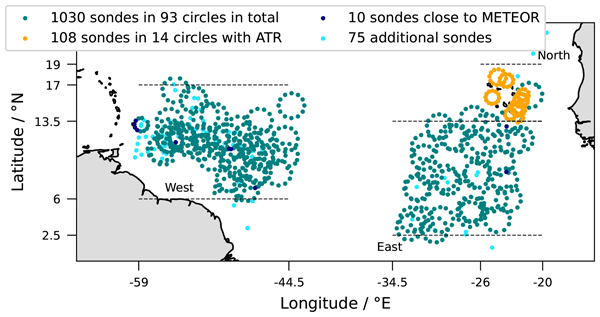
As part of the ORCESTRA (Organized Convection and EarthCARE Studies over the Tropical Atlantic) measurement field campaign in August and September 2024, 1191 dropsondes were deployed over the tropical Atlantic. They measure temperature, humidity, and horizontal winds throughout the atmosphere. Here, we present the resulting datasets, which contain different levels of quality controls as well as derived vertical winds. The data will help to understand processes within the tropical rain belt in the Atlantic.
Corinna Kloss, Gwenaël Berthet, Pasquale Sellitto, Irene Bartolome Garcia, Emmanuel Briaud, Rubel Chandra Das, Stéphane Chevrier, Nicolas Dumelié, Lilian Joly, Thomas Lecas, Pauline Marbach, Felix Ploeger, Jean-Baptiste Renard, Jean-Paul Vernier, Frank G. Wienhold, and Michaela I. Hegglin
Atmos. Chem. Phys., 26, 8981–8997, https://doi.org/10.5194/acp-26-8981-2026, https://doi.org/10.5194/acp-26-8981-2026, 2026
Short summary
Short summary
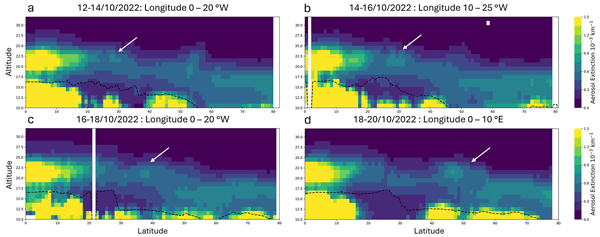
In October 2022, we detected volcanic particles in the stratosphere over France, linked to the January 2022 Hunga eruption in the South Pacific. Found between 17 and 23 km altitude, they were traced back to the tropics using trajectory simulations and satellite data. Their optical properties matched those in the Southern Hemisphere. The particles spread across the Northern Hemisphere, reflecting sunlight and slightly cooling the surface – a small but non-negligible effect.
Jean-Paul Vernier, Nicolas Dumelie, Amit Kumar Pandit, Gwenael Berthet, Lilian Joly, Giovanni de Souza, Eduardo Landulfo, Demilson Quintao, Bruno Biazon, Ravi Kiran, Vankat Ratnam, James Flaten, Rubel Das, David Paraiseau, Frank Wienhold, and Yaowei Li
EGUsphere, https://doi.org/10.5194/egusphere-2026-3280, https://doi.org/10.5194/egusphere-2026-3280, 2026
Short summary
Short summary
Stratospheric aerosols, from volcanoes, wildfires, pollution, and space debris, impact climate and atmospheric chemistry. A new lightweight, 500g particle counter – measures aerosol sizes (0.3–10 µm) with high accuracy. Validated against leading instruments, it has tracked volcanic plumes and smoke globally since 2018. Now used in the BalNeO network, its data is publicly available for research.
Marius Winkler, Marius Rixen, Florent Beucher, Fleur Couvreux, Chaehyeon C. Nam, Philippe Peyrillé, Hauke Schmidt, Hans Segura, Karl-Hermann Wieners, Ezri Alkilani-Brown, Abdou Aziz Coly, Giovanni Biagioli, Michael M. Bell, Ester Brito, Emma Chauvin, Julie Capo, Delián Colón-Burgos, Akeem Dawes, Jose Carlos da Luz, Zekican Demiralay, Vincent Douet, Vincent Ducastin, Clarisse Dufaux, Jean-Louis Dufresne, Florence Favot, Thomas Fiolleau, Emilie Fons, Geet George, Helene M. Gloeckner, Suelly Gonçalves, Laurent Gouttesoulard, Lennéa Hayo, Wei-Ting Hsiao, Sarah Kennison, Michael Kopelman, Tsung-Yung Lee, Enora Le Gall, Mateo Lovato, Emily Luschen, Nicolas Maury, Brett McKim, Louis Netz, Diouf Ousseynou, Karsten Peters-von Gehlen, Chavez Pope, Basile Poujol, Niwde Rivera Maldonado, Nina Robbins-Blanch, Nicolas Rochetin, Daniel Rowe, Paula Romero Jure, James H. Ruppert Jr., Jairo Segura Bermudez, Jarrett C. Starr, Martin Stelzner, Connor Stoll, Macintyre Syrett, Abraham Tekoe, Jeremie Trules, Colin Welty, Daniel Klocke, Raphaela Vogel, Sandrine Bony, Allison A. Wing, and Bjorn Stevens
Earth Syst. Sci. Data, 18, 1833–1854, https://doi.org/10.5194/essd-18-1833-2026, https://doi.org/10.5194/essd-18-1833-2026, 2026
Short summary
Short summary
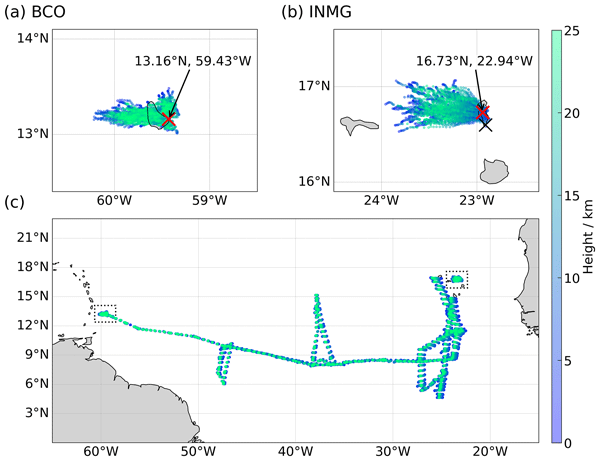
The RAPSODI dataset compiles 624 radiosonde profiles collected during the 2024 ORCESTRA campaign across the tropical Atlantic: from Cape Verde (INMG), the R/V Meteor, and the Barbados Cloud Observatory. It provides high-resolution temperature, humidity, wind, and pressure data to study convection, tropical waves, and ITCZ dynamics. Data are quality-controlled and openly available in Zarr format via IPFS.
Hazel Vernier, Demilson Quintao, Bruno Biazon, Eduardo Landulfo, Giovanni Souza, Amanda Santos, Fabio Lopes, Alex Mendes, José da Matta, Pinheiro Damaris, Benoit Grosslin, Maria Paulete, Maria de Fátima Andrade, Neeraj Rastogi, Akhil Raj, Hongyu Liu, Mahesh Kovilakam, Suvarna Fadnavis, Frank Wienhold, Mathieu Colombier, Chris Boone, Gwenael Berthet, Nicolas Dumelie, Lilian Joly, and Jean-Paul Vernier
EGUsphere, https://doi.org/10.5194/egusphere-2025-6226, https://doi.org/10.5194/egusphere-2025-6226, 2026
Preprint archived
Short summary
Short summary
This paper shows unique balloon measurements from Brazil within the Hunga volcanic plume eight months after the eruption. The chemical analysis of samples collected reveal new insights on volcanic aerosol composition and suggest the presence of marine aerosols.
Sandrine Bony, Basile Poujol, Brett McKim, Nicolas Rochetin, Marie Lothon, Julia Windmiller, Nicolas Maury, Clarisse Dufaux, Louis Jaffeux, Patrick Chazette, and Julien Delanoë
Atmos. Chem. Phys., 25, 17331–17362, https://doi.org/10.5194/acp-25-17331-2025, https://doi.org/10.5194/acp-25-17331-2025, 2025
Short summary
Short summary
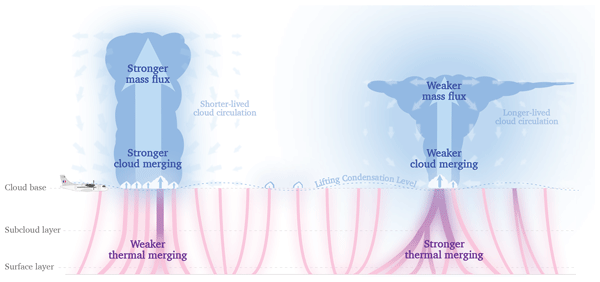
Space photographs of the Earth show that clouds form diverse, common but poorly understood cloud patterns. The analysis of observations gathered from research aircraft over the tropical ocean shows that the merging of thermals and clouds in the first kilometer of the atmosphere plays a key role in controlling the size, depth and spacing of clouds. This reveals a fundamental process through which clouds interact with each other and with their environment.
Jean-Marcel Rivonirina, Thierry Portafaix, Solofoarisoa Rakotoniaina, Béatrice Morel, Chao Tang, Kévin Lamy, Marie Lothon, Tom Toulouse, Olivier Liandrat, Solofo Rakotondraompiana, and Hassan Bencherif
Ann. Geophys., 43, 651–666, https://doi.org/10.5194/angeo-43-651-2025, https://doi.org/10.5194/angeo-43-651-2025, 2025
Short summary
Short summary
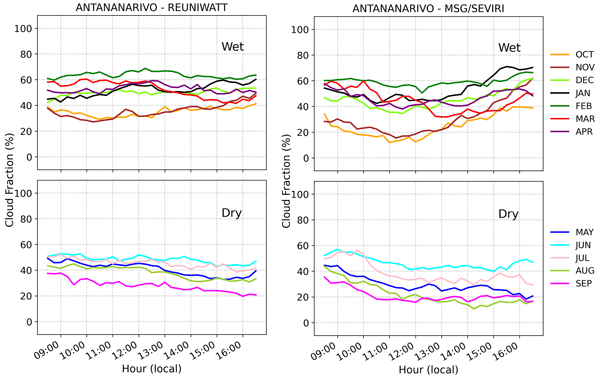
The lack of ground observation instruments and the vast ocean coverage make the Southwest Indian Ocean (SWIO) region difficult to access and poorly studied. For gathering ground-based camera information, satellite measurements have been used with the primary goal of characterizing both sites Saint-Denis of Reunion Island and Antananarivo Madagascar in terms of cloudiness. This study shows the particularity of each site and enhances our understanding of cloud properties, particularly in the SWIO.
Sullivan Carbone, Emmanuel D. Riviere, Mélanie Ghysels, Jérémie Burgalat, Georges Durry, Nadir Amarouche, Aurélien Podglajen, and Albert Hertzog
Atmos. Chem. Phys., 25, 10603–10623, https://doi.org/10.5194/acp-25-10603-2025, https://doi.org/10.5194/acp-25-10603-2025, 2025
Short summary
Short summary
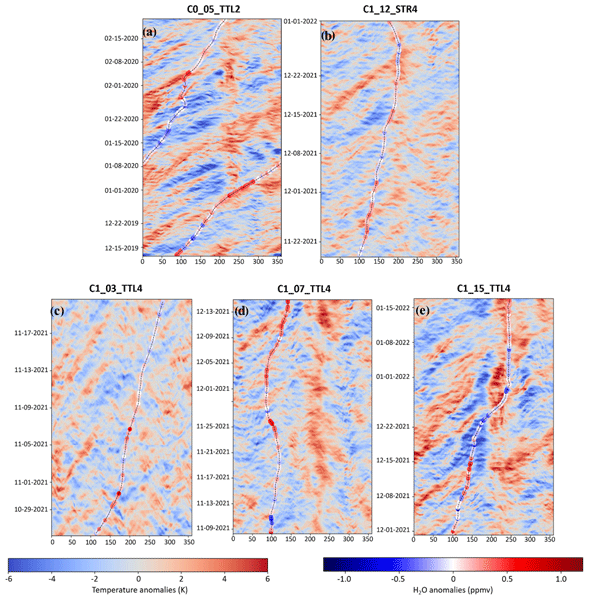
During the first two Strateole 2 campaigns, instruments were flown under super-pressure balloons at between 18 and 20 km altitude for several weeks at the Equator and performed in situ measurements of water vapour. This article describes the methodology used to quantify the modulation of water vapour by atmospheric waves and deep convective cases. This methodology allows us to bring to light the influence of atmospheric waves and extreme deep convection on the observed water vapour anomalies.
Mary Rose Mangan, Jordi Vilà-Guerau de Arellano, Bart J. H. van Stratum, Marie Lothon, Guylaine Canut-Rocafort, and Oscar K. Hartogensis
Atmos. Chem. Phys., 25, 8959–8981, https://doi.org/10.5194/acp-25-8959-2025, https://doi.org/10.5194/acp-25-8959-2025, 2025
Short summary
Short summary
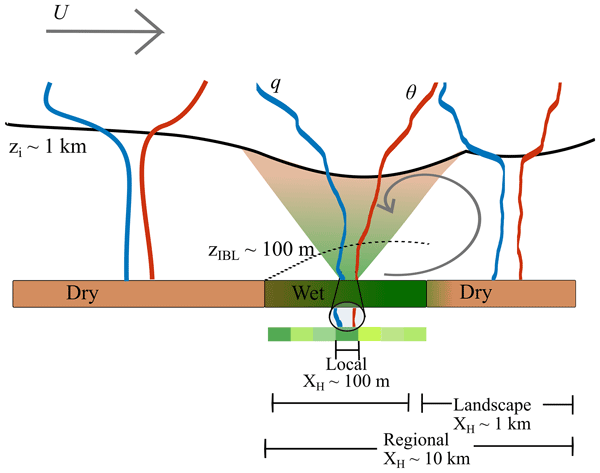
Using observations and high-resolution turbulence modeling, we examine the influence of irrigation-driven surface heterogeneity on the atmospheric boundary layer (ABL). We use a multi-scale approach for characterizing surface heterogeneity to explore how its influence on the ABL within a grid cell would change with higher-resolution models. We find that the height of the ABL is variable across short distances and that the surface heterogeneity is felt least strongly in the middle of the ABL.
Louis Jaffeux, Jan Breiner, Pierre Coutris, and Alfons Schwarzenböck
Atmos. Meas. Tech., 18, 2311–2331, https://doi.org/10.5194/amt-18-2311-2025, https://doi.org/10.5194/amt-18-2311-2025, 2025
Short summary
Short summary
Airborne cloud observation relies on high-frequency black-and-white-image information. The study presents automatic shape recognition tools developed with machine learning techniques and adapted for this type of image. Applied on a recent field campaign, these tools produce morphology-specific size distributions that can be compared across four instruments covering different size ranges. The analysis show that the tools are performing well and are consistent across the different instruments.
Maurin Zouzoua, Sophie Bastin, Fabienne Lohou, Marie Lothon, Marjolaine Chiriaco, Mathilde Jome, Cécile Mallet, Laurent Barthes, and Guylaine Canut
Geosci. Model Dev., 18, 3211–3239, https://doi.org/10.5194/gmd-18-3211-2025, https://doi.org/10.5194/gmd-18-3211-2025, 2025
Short summary
Short summary
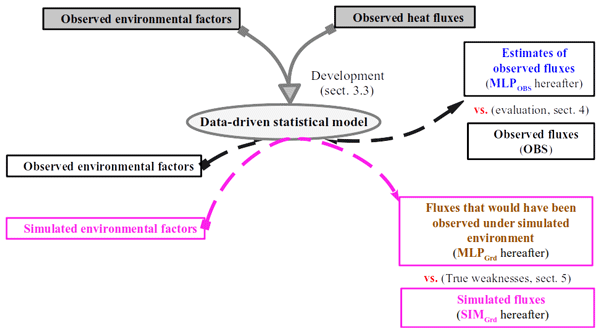
This study proposes using a statistical model to freeze errors due to differences in environmental forcing when evaluating the surface turbulent heat fluxes from numerical simulations with observations. The statistical model is first built with observations and then applied to the simulated environment to generate possibly observed fluxes. This novel method provides insight into differently evaluating the numerical formulation of turbulent heat fluxes with a long period of observational data.
Hazel Vernier, Demilson Quintão, Bruno Biazon, Eduardo Landulfo, Giovanni Souza, V. Amanda Santos, J. S. Fabio Lopes, C. P. Alex Mendes, A. S. José da Matta, K. Pinheiro Damaris, Benoit Grosslin, P. M. P. Maria Jorge, Maria de Fátima Andrade, Neeraj Rastogi, Akhil Raj, Hongyu Liu, Mahesh Kovilakam, Suvarna Fadnavis, Frank G. Wienhold, Mathieu Colombier, D. Chris Boone, Gwenael Berthet, Nicolas Dumelie, Lilian Joly, and Jean-Paul Vernier
EGUsphere, https://doi.org/10.5194/egusphere-2025-924, https://doi.org/10.5194/egusphere-2025-924, 2025
Preprint withdrawn
Short summary
Short summary
The eruption of Hunga Tonga-Hunga Ha'apai injected large amounts of water vapor and sea salt into the stratosphere, altering traditional views of volcanic aerosols. Using balloon-borne samplers, we collected aerosol samples and found high levels of sea salt and calcium, suggesting sulfate depletion due to gypsum formation. These findings highlight the need to consider sea salt in climate models to better predict volcanic impacts on the atmosphere and climate.
Lilian Vallet, Charbel Abdallah, Thomas Lauvaux, Lilian Joly, Michel Ramonet, Philippe Ciais, Morgan Lopez, Irène Xueref-Remy, and Florent Mouillot
Biogeosciences, 22, 213–242, https://doi.org/10.5194/bg-22-213-2025, https://doi.org/10.5194/bg-22-213-2025, 2025
Short summary
Short summary
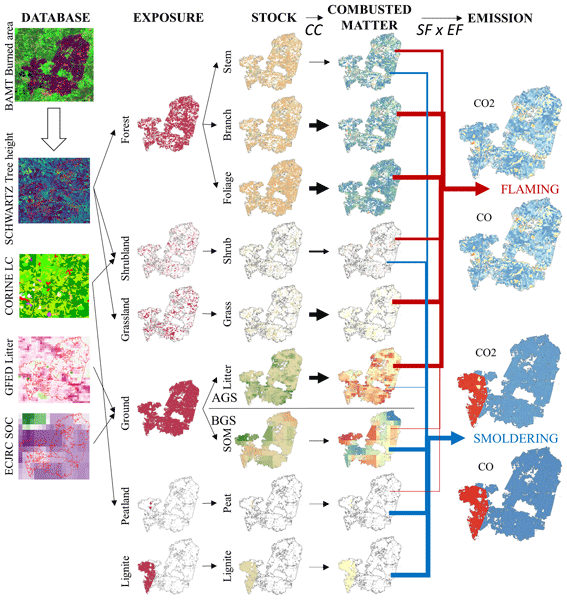
The 2022 fire season had a huge impact on European temperate forest, with several large fires exhibiting prolonged soil combustion reported. We analyzed CO and CO2 concentration recorded at nearby atmospheric towers, revealing intense smoldering combustion. We refined a fire emission model to incorporate this process. We estimated 7.95 Mteq CO2 fire emission, twice the global estimate. Fires contributed to 1.97 % of France's annual carbon footprint, reducing forest carbon sink by 30 % this year.
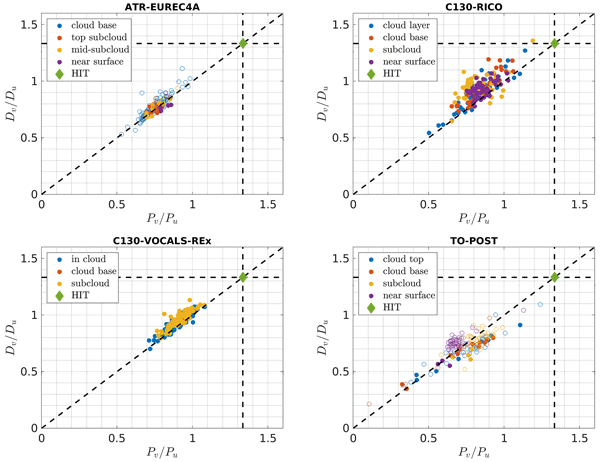
Jakub L. Nowak, Marie Lothon, Donald H. Lenschow, and Szymon P. Malinowski
Atmos. Meas. Tech., 18, 93–114, https://doi.org/10.5194/amt-18-93-2025, https://doi.org/10.5194/amt-18-93-2025, 2025
Short summary
Short summary
According to classical theory, the ratio of turbulence statistics corresponding to transverse and longitudinal wind velocity components equals 4/3 in the inertial range of scales. We analyse a large number of measurements obtained with three research aircraft during four field experiments in different locations and show that the observed ratios are almost always significantly smaller. We discuss potential reasons for this disagreement, but the actual explanation remains to be determined.
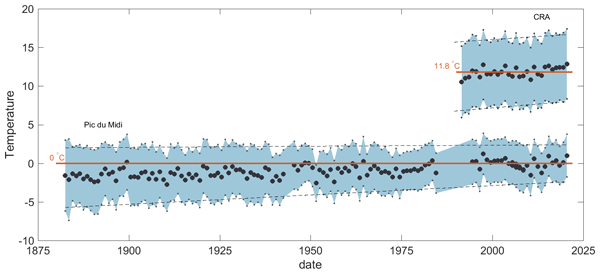
Marie Lothon, François Gheusi, Fabienne Lohou, Véronique Pont, Serge Soula, Corinne Jambert, Solène Derrien, Yannick Bezombes, Emmanuel Leclerc, Gilles Athier, Antoine Vial, Alban Philibert, Bernard Campistron, Frédérique Saïd, Jeroen Sonke, Julien Amestoy, Erwan Bargain, Pierre Bosser, Damien Boulanger, Guillaume Bret, Renaud Bodichon, Laurent Cabanas, Guylaine Canut, Jean-Bernard Estrampes, Eric Gardrat, Zaida Gomez Kuri, Jérémy Gueffier, Fabienne Guesdon, Morgan Lopez, Olivier Masson, Pierre-Yves Meslin, Yves Meyerfeld, Nicolas Pascal, Eric Pique, Michel Ramonet, Felix Starck, and Romain Vidal
Atmos. Meas. Tech., 17, 6265–6300, https://doi.org/10.5194/amt-17-6265-2024, https://doi.org/10.5194/amt-17-6265-2024, 2024
Short summary
Short summary
The Pyrenean Platform for Observation of the Atmosphere (P2OA) is a coupled plain–mountain instrumented platform in southwestern France for the monitoring of climate variables and the study of meteorological processes in a mountainous region. A comprehensive description of this platform is presented for the first time: its instrumentation, the associated dataset, and a meteorological characterization the site. The potential of the P2OA is illustrated through several examples of process studies.
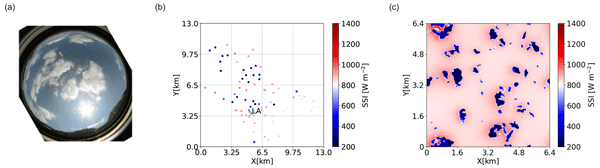
Zili He, Quentin Libois, Najda Villefranque, Hartwig Deneke, Jonas Witthuhn, and Fleur Couvreux
Atmos. Chem. Phys., 24, 11391–11408, https://doi.org/10.5194/acp-24-11391-2024, https://doi.org/10.5194/acp-24-11391-2024, 2024
Short summary
Short summary
This study uses observations and simulations to analyze how cumulus clouds affect spacial solar radiation variability on the ground. Results show that the simulations reproduce the observations well and improve understanding of cloud impacts on radiation. The research also indicates that a few strategically placed sensors, capitalizing on measurement timing, can effectively measure these variations, aiding in the development of detailed weather prediction models.
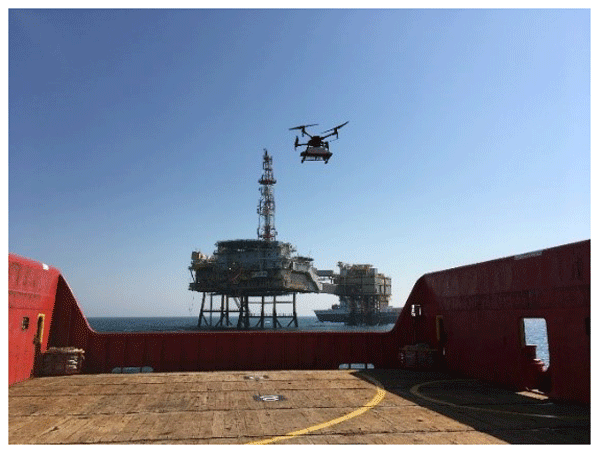
Jean-Louis Bonne, Ludovic Donnat, Grégory Albora, Jérémie Burgalat, Nicolas Chauvin, Delphine Combaz, Julien Cousin, Thomas Decarpenterie, Olivier Duclaux, Nicolas Dumelié, Nicolas Galas, Catherine Juery, Florian Parent, Florent Pineau, Abel Maunoury, Olivier Ventre, Marie-France Bénassy, and Lilian Joly
Atmos. Meas. Tech., 17, 4471–4491, https://doi.org/10.5194/amt-17-4471-2024, https://doi.org/10.5194/amt-17-4471-2024, 2024
Short summary
Short summary
We present a top-down approach to quantify CO2 and CH4 emissions at the scale of an industrial site, based on a mass balance model relying on atmospheric concentrations measurements from a new sensor embarked on board uncrewed aircraft vehicles (UAVs). We present a laboratory characterization of our sensor and a field validation of our quantification method, together with field application to the monitoring of two real-world offshore oil and gas platforms.
Alban Philibert, Marie Lothon, Julien Amestoy, Pierre-Yves Meslin, Solène Derrien, Yannick Bezombes, Bernard Campistron, Fabienne Lohou, Antoine Vial, Guylaine Canut-Rocafort, Joachim Reuder, and Jennifer K. Brooke
Atmos. Meas. Tech., 17, 1679–1701, https://doi.org/10.5194/amt-17-1679-2024, https://doi.org/10.5194/amt-17-1679-2024, 2024
Short summary
Short summary
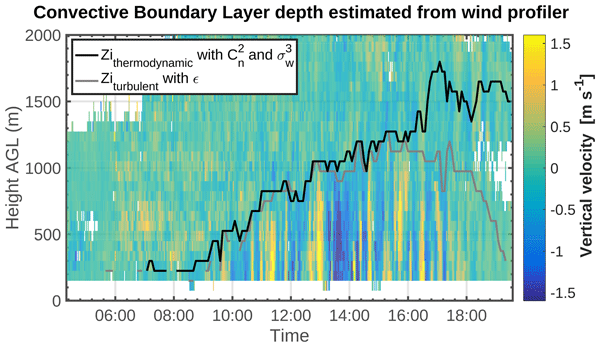
We present a new algorithm, CALOTRITON, for the retrieval of the convective boundary layer depth with ultra-high-frequency radar measurements. CALOTRITON is partly based on the principle that the top of the convective boundary layer is associated with an inversion and a decrease in turbulence. It is evaluated using ceilometer and radiosonde data. It is able to qualify the complexity of the vertical structure of the low troposphere and detect internal or residual layers.
Jérémy Gueffier, François Gheusi, Marie Lothon, Véronique Pont, Alban Philibert, Fabienne Lohou, Solène Derrien, Yannick Bezombes, Gilles Athier, Yves Meyerfeld, Antoine Vial, and Emmanuel Leclerc
Atmos. Chem. Phys., 24, 287–316, https://doi.org/10.5194/acp-24-287-2024, https://doi.org/10.5194/acp-24-287-2024, 2024
Short summary
Short summary
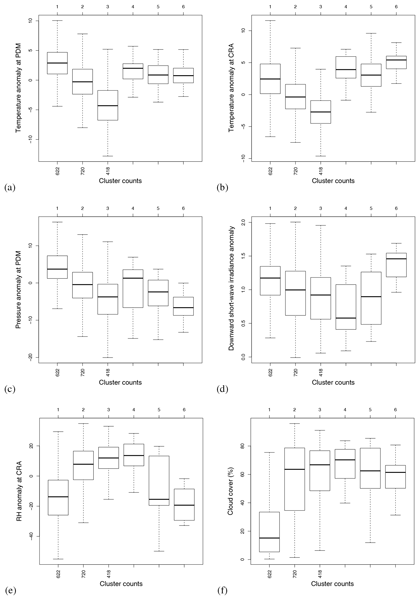
This study investigates the link between weather regime and atmospheric composition at a Pyrenean observatory. Five years of meteorological data were synchronized on a daily basis and then, using a clustering method, separated into six groups of observation days, with most showing marked characteristics of different weather regimes (fair and disturbed weather, winter windstorms, foehn). Statistical differences in gas and particle concentrations appeared between the groups and are discussed.
Leonie Villiger, Marina Dütsch, Sandrine Bony, Marie Lothon, Stephan Pfahl, Heini Wernli, Pierre-Etienne Brilouet, Patrick Chazette, Pierre Coutris, Julien Delanoë, Cyrille Flamant, Alfons Schwarzenboeck, Martin Werner, and Franziska Aemisegger
Atmos. Chem. Phys., 23, 14643–14672, https://doi.org/10.5194/acp-23-14643-2023, https://doi.org/10.5194/acp-23-14643-2023, 2023
Short summary
Short summary
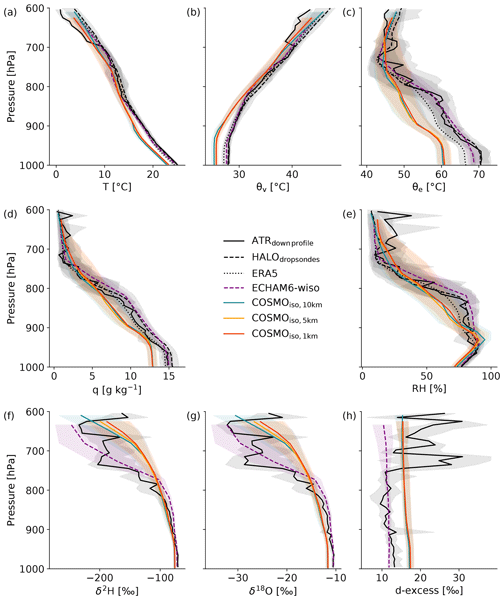
This study evaluates three numerical simulations performed with an isotope-enabled weather forecast model and investigates the coupling between shallow trade-wind cumulus clouds and atmospheric circulations on different scales. We show that the simulations reproduce key characteristics of shallow trade-wind clouds as observed during the field experiment EUREC4A and that the spatial distribution of stable-water-vapour isotopes is shaped by the overturning circulation associated with these clouds.
Zhiqiang Cui, Alan Blyth, Ralph Burton, Sandrine Bony, Steven Böing, Alan Gadian, and Leif Denby
EGUsphere, https://doi.org/10.5194/egusphere-2023-1999, https://doi.org/10.5194/egusphere-2023-1999, 2023
Preprint archived
Short summary
Short summary
Cumulus clouds near Barbados can influence how much heat and energy reaches the Earth's surface. A cluster of clouds resembling a flower is presented. Satellite images, dropsonde data, and weather data are used to understand how this cloud system developed. A significant feature was the appearance of a large area of rain at the centre of the cloud system during its later stages. The paper also studied the environmental conditions around the cloud system.
Anne-Claire Billault-Roux, Paraskevi Georgakaki, Josué Gehring, Louis Jaffeux, Alfons Schwarzenboeck, Pierre Coutris, Athanasios Nenes, and Alexis Berne
Atmos. Chem. Phys., 23, 10207–10234, https://doi.org/10.5194/acp-23-10207-2023, https://doi.org/10.5194/acp-23-10207-2023, 2023
Short summary
Short summary
Secondary ice production plays a key role in clouds and precipitation. In this study, we analyze radar measurements from a snowfall event in the Jura Mountains. Complex signatures are observed, which reveal that ice crystals were formed through various processes. An analysis of multi-sensor data suggests that distinct ice multiplication processes were taking place. Both the methods used and the insights gained through this case study contribute to a better understanding of snowfall microphysics.
Anne-Claire Billault-Roux, Gionata Ghiggi, Louis Jaffeux, Audrey Martini, Nicolas Viltard, and Alexis Berne
Atmos. Meas. Tech., 16, 911–940, https://doi.org/10.5194/amt-16-911-2023, https://doi.org/10.5194/amt-16-911-2023, 2023
Short summary
Short summary
Better understanding and modeling snowfall properties and processes is relevant to many fields, ranging from weather forecasting to aircraft safety. Meteorological radars can be used to gain insights into the microphysics of snowfall. In this work, we propose a new method to retrieve snowfall properties from measurements of radars with different frequencies. It relies on an original deep-learning framework, which incorporates knowledge of the underlying physics, i.e., electromagnetic scattering.
Adriana Bailey, Franziska Aemisegger, Leonie Villiger, Sebastian A. Los, Gilles Reverdin, Estefanía Quiñones Meléndez, Claudia Acquistapace, Dariusz B. Baranowski, Tobias Böck, Sandrine Bony, Tobias Bordsdorff, Derek Coffman, Simon P. de Szoeke, Christopher J. Diekmann, Marina Dütsch, Benjamin Ertl, Joseph Galewsky, Dean Henze, Przemyslaw Makuch, David Noone, Patricia K. Quinn, Michael Rösch, Andreas Schneider, Matthias Schneider, Sabrina Speich, Bjorn Stevens, and Elizabeth J. Thompson
Earth Syst. Sci. Data, 15, 465–495, https://doi.org/10.5194/essd-15-465-2023, https://doi.org/10.5194/essd-15-465-2023, 2023
Short summary
Short summary
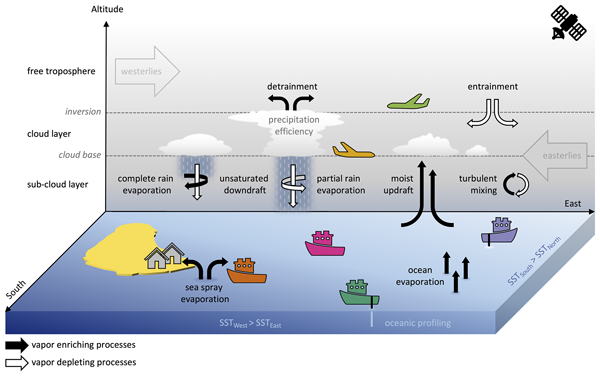
One of the novel ways EUREC4A set out to investigate trade wind clouds and their coupling to the large-scale circulation was through an extensive network of isotopic measurements in water vapor, precipitation, and seawater. Samples were taken from the island of Barbados, from aboard two aircraft, and from aboard four ships. This paper describes the full collection of EUREC4A isotopic in situ data and guides readers to complementary remotely sensed water vapor isotope ratios.
Louis Jaffeux, Alfons Schwarzenböck, Pierre Coutris, and Christophe Duroure
Atmos. Meas. Tech., 15, 5141–5157, https://doi.org/10.5194/amt-15-5141-2022, https://doi.org/10.5194/amt-15-5141-2022, 2022
Short summary
Short summary
Optical array probes are instruments used aboard research aircraft to capture 2D images of ice or water particles in clouds. This study presents a new tool using innovative machine learning, called convolutional neural networks, designed to identify the shape of imaged ice particles for two of these imagers, namely 2DS and PIP. Such a tool will be a very strong asset for understanding cloud microphysics. Beyond traditional evaluation metrics, human inspections were performed of unknown data.
Sandrine Bony, Marie Lothon, Julien Delanoë, Pierre Coutris, Jean-Claude Etienne, Franziska Aemisegger, Anna Lea Albright, Thierry André, Hubert Bellec, Alexandre Baron, Jean-François Bourdinot, Pierre-Etienne Brilouet, Aurélien Bourdon, Jean-Christophe Canonici, Christophe Caudoux, Patrick Chazette, Michel Cluzeau, Céline Cornet, Jean-Philippe Desbios, Dominique Duchanoy, Cyrille Flamant, Benjamin Fildier, Christophe Gourbeyre, Laurent Guiraud, Tetyana Jiang, Claude Lainard, Christophe Le Gac, Christian Lendroit, Julien Lernould, Thierry Perrin, Frédéric Pouvesle, Pascal Richard, Nicolas Rochetin, Kevin Salaün, Alfons Schwarzenboeck, Guillaume Seurat, Bjorn Stevens, Julien Totems, Ludovic Touzé-Peiffer, Gilles Vergez, Jessica Vial, Leonie Villiger, and Raphaela Vogel
Earth Syst. Sci. Data, 14, 2021–2064, https://doi.org/10.5194/essd-14-2021-2022, https://doi.org/10.5194/essd-14-2021-2022, 2022
Short summary
Short summary
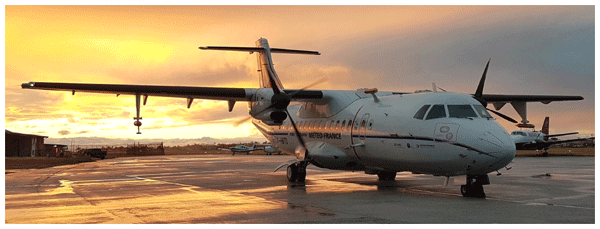
The French ATR42 research aircraft participated in the EUREC4A international field campaign that took place in 2020 over the tropical Atlantic, east of Barbados. We present the extensive instrumentation of the aircraft, the research flights and the different measurements. We show that the ATR measurements of humidity, wind, aerosols and cloudiness in the lower atmosphere are robust and consistent with each other. They will make it possible to advance understanding of cloud–climate interactions.
Carlos Alberti, Frank Hase, Matthias Frey, Darko Dubravica, Thomas Blumenstock, Angelika Dehn, Paolo Castracane, Gregor Surawicz, Roland Harig, Bianca C. Baier, Caroline Bès, Jianrong Bi, Hartmut Boesch, André Butz, Zhaonan Cai, Jia Chen, Sean M. Crowell, Nicholas M. Deutscher, Dragos Ene, Jonathan E. Franklin, Omaira García, David Griffith, Bruno Grouiez, Michel Grutter, Abdelhamid Hamdouni, Sander Houweling, Neil Humpage, Nicole Jacobs, Sujong Jeong, Lilian Joly, Nicholas B. Jones, Denis Jouglet, Rigel Kivi, Ralph Kleinschek, Morgan Lopez, Diogo J. Medeiros, Isamu Morino, Nasrin Mostafavipak, Astrid Müller, Hirofumi Ohyama, Paul I. Palmer, Mahesh Pathakoti, David F. Pollard, Uwe Raffalski, Michel Ramonet, Robbie Ramsay, Mahesh Kumar Sha, Kei Shiomi, William Simpson, Wolfgang Stremme, Youwen Sun, Hiroshi Tanimoto, Yao Té, Gizaw Mengistu Tsidu, Voltaire A. Velazco, Felix Vogel, Masataka Watanabe, Chong Wei, Debra Wunch, Marcia Yamasoe, Lu Zhang, and Johannes Orphal
Atmos. Meas. Tech., 15, 2433–2463, https://doi.org/10.5194/amt-15-2433-2022, https://doi.org/10.5194/amt-15-2433-2022, 2022
Short summary
Short summary
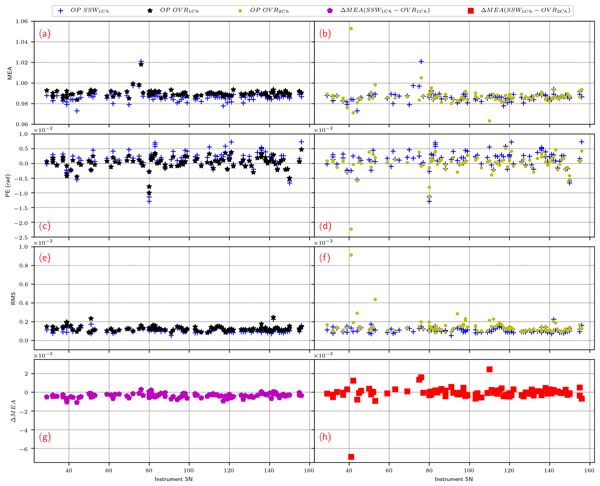
Space-borne greenhouse gas missions require ground-based validation networks capable of providing fiducial reference measurements. Here, considerable refinements of the calibration procedures for the COllaborative Carbon Column Observing Network (COCCON) are presented. Laboratory and solar side-by-side procedures for the characterization of the spectrometers have been refined and extended. Revised calibration factors for XCO2, XCO and XCH4 are provided, incorporating 47 new spectrometers.
Nicolas Maury, Gregory C. Roberts, Fleur Couvreux, Titouan Verdu, Pierre Narvor, Najda Villefranque, Simon Lacroix, and Gautier Hattenberger
Atmos. Meas. Tech., 15, 335–352, https://doi.org/10.5194/amt-15-335-2022, https://doi.org/10.5194/amt-15-335-2022, 2022
Short summary
Short summary
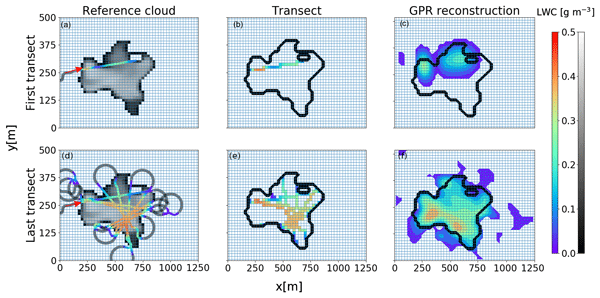
The paper aims to use large-eddy simulations of cumulus clouds to design a sampling strategy that allows following cumulus clouds with remotely piloted aircraft (RPA) and documenting the cloud spatial heterogeneities. Different possible explorations by RPA are investigated, and the use of Gaussian process regression permits the reconstruction of liquid water content (LWC) distribution with only one RPA.
Heike Konow, Florian Ewald, Geet George, Marek Jacob, Marcus Klingebiel, Tobias Kölling, Anna E. Luebke, Theresa Mieslinger, Veronika Pörtge, Jule Radtke, Michael Schäfer, Hauke Schulz, Raphaela Vogel, Martin Wirth, Sandrine Bony, Susanne Crewell, André Ehrlich, Linda Forster, Andreas Giez, Felix Gödde, Silke Groß, Manuel Gutleben, Martin Hagen, Lutz Hirsch, Friedhelm Jansen, Theresa Lang, Bernhard Mayer, Mario Mech, Marc Prange, Sabrina Schnitt, Jessica Vial, Andreas Walbröl, Manfred Wendisch, Kevin Wolf, Tobias Zinner, Martin Zöger, Felix Ament, and Bjorn Stevens
Earth Syst. Sci. Data, 13, 5545–5563, https://doi.org/10.5194/essd-13-5545-2021, https://doi.org/10.5194/essd-13-5545-2021, 2021
Short summary
Short summary
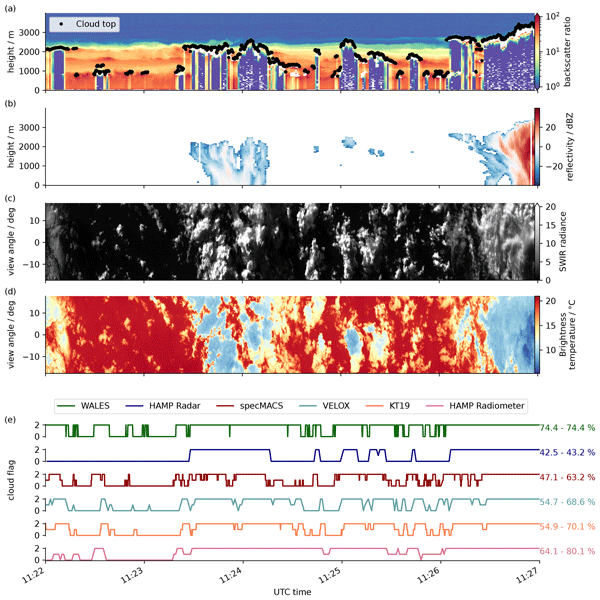
The German research aircraft HALO took part in the research campaign EUREC4A in January and February 2020. The focus area was the tropical Atlantic east of the island of Barbados. We describe the characteristics of the 15 research flights, provide auxiliary information, derive combined cloud mask products from all instruments that observe clouds on board the aircraft, and provide code examples that help new users of the data to get started.
Cited articles
Asiyabi, R. M., Ghorbanian, A., Tameh, S. N., Amani, M., Jin, S., and Mohammadzadeh, A.: Synthetic aperture radar (SAR) for ocean: A review, IEEE J. Sel. Top. Appl., 16, 9106–9138, 2023. a
Atlas, D.: Footprints of storms on the sea: A view from spaceborne synthetic aperture radar, J. Geophys. Res.-Oceans, 99, 7961–7969, 1994. a
Ballantyne, A. and Moss, J.: Fine wire thermocouple measurements of fluctuating temperature, Combust. Sci. Technol., 17, 63–72, 1977. a
Bell, M.: Collaborative Research: AGS-FIRP Track 2-Process Investigation of Clouds and Convective Organization over the atLantic Ocean (PICCOLO), NSF Award Number 2331202, Directorate for Geosciences, 23, 31202, 2024. a
Bernard-Trottolo, S.: Diagnostic de la présence de structures cohérentes au sein de la couche limite atmosphérique: campagnes TRAC98 et MAP99, PhD thesis, Toulouse III, 2001. a
Bony, S.: MAESTRO-2024_SAFIRE-ATR42_SAFIRE_FAST Temperature and Humidity Fast Observation 25HZ Aeris [data set], https://doi.org/10.25326/738, 2024a. a
Bony, S.: MAESTRO-2024_SAFIRE-ATR42_SAFIRE_CORE_TDYN Thermodynamic and dynamic data 1HZ, Aeris [data set], https://doi.org/10.25326/744, 2024b. a
Bony, S. and Dufresne, J.-L.: Marine boundary layer clouds at the heart of tropical cloud feedback uncertainties in climate models, Geophys. Res. Lett., 32, https://doi.org/10.1029/2005GL023851, 2005. a
Bony, S. and Stevens, B.: Measuring area-averaged vertical motions with dropsondes, J. Atmos. Sci., 76, 767–783, 2019. a
Bony, S., Stevens, B., Ament, F., Bigorre, S., Chazette, P., Crewell, S., Delanoë, J., Emanuel, K., Farrell, D., Flamant, C., Gross, S., Hirsch, L., Karstensen, J., Mayer, B., Nuijens, L., Ruppert, J. H., Sandu, I., Siebesma, P., Speich, S., Szczap, F., Totems, J., Vogel, R., Wendisch, M., and Wirth, M.: EUREC 4 A: A field campaign to elucidate the couplings between clouds, convection and circulation, Surv. Geophys., 38, 1529–1568, 2017. a
Bony, S., Schulz, H., Vial, J., and Stevens, B.: Sugar, Gravel, Fish, and Flowers: Dependence of Mesoscale Patterns of Trade-Wind Clouds on Environmental Conditions, Geophys. Res. Lett., 47, e2019GL085988, https://doi.org/10.1029/2019GL085988, 2020. a
Bony, S., Lothon, M., Delanoë, J., Coutris, P., Etienne, J.-C., Aemisegger, F., Albright, A. L., André, T., Bellec, H., Baron, A., Bourdinot, J.-F., Brilouet, P.-E., Bourdon, A., Canonici, J.-C., Caudoux, C., Chazette, P., Cluzeau, M., Cornet, C., Desbios, J.-P., Duchanoy, D., Flamant, C., Fildier, B., Gourbeyre, C., Guiraud, L., Jiang, T., Lainard, C., Le Gac, C., Lendroit, C., Lernould, J., Perrin, T., Pouvesle, F., Richard, P., Rochetin, N., Salaün, K., Schwarzenboeck, A., Seurat, G., Stevens, B., Totems, J., Touzé-Peiffer, L., Vergez, G., Vial, J., Villiger, L., and Vogel, R.: EUREC4A observations from the SAFIRE ATR42 aircraft, Earth Syst. Sci. Data, 14, 2021–2064, https://doi.org/10.5194/essd-14-2021-2022, 2022. a, b
Bony, S., Poujol, B., McKim, B., Rochetin, N., Lothon, M., Windmiller, J., Maury, N., Dufaux, C., Jaffeux, L., Chazette, P., and Delanoë, J.: Evidence for the role of thermal and cloud merging in mesoscale convective organization, Atmos. Chem. Phys., 25, 17331–17362, https://doi.org/10.5194/acp-25-17331-2025, 2025. a
Brilouet, P.-E., Lothon, M., Etienne, J.-C., Richard, P., Bony, S., Lernoult, J., Bellec, H., Vergez, G., Perrin, T., Delanoë, J., Jiang, T., Pouvesle, F., Lainard, C., Cluzeau, M., Guiraud, L., Medina, P., and Charoy, T.: The EUREC4A turbulence dataset derived from the SAFIRE ATR 42 aircraft, Earth Syst. Sci. Data, 13, 3379–3398, https://doi.org/10.5194/essd-13-3379-2021, 2021. a, b, c, d
Brilouet, P.-E., Bouniol, D., Couvreux, F., Ayet, A., Granero-Belinchon, C., Lothon, M., and Mouche, A.: Trade wind boundary layer turbulence and shallow precipitating convection: New insights combining SAR images, satellite brightness temperature, and airborne in situ measurements, Geophys. Res. Lett., 50, e2022GL102180, https://doi.org/10.1029/2022GL102180, 2023. a
Brown, E. N., Friehe, C., and Lenschow, D.: The use of pressure fluctuations on the nose of an aircraft for measuring air motion, J. Appl. Meteorol. Clim., 22, 171–180, 1983. a
Dauhut, T., Couvreux, F., Bouniol, D., Beucher, F., Volkmer, L., Pörtge, V., Schäfer, M., Ayet, A., Brilouet, P.-E., Jacob, M., and Wirth, M.: Flower trade-wind clouds are shallow mesoscale convective systems, Q. J. Roy. Meteor. Soc., 149, 325–347, https://doi.org/10.1002/qj.4409, 2023. a
Delanoë, J., Protat, A., Jourdan, O., Pelon, J., Papazzoni, M., Dupuy, R., Gayet, J.-F., and Jouan, C.: Comparison of airborne in situ, airborne radar–lidar, and spaceborne radar–lidar retrievals of polar ice cloud properties sampled during the POLARCAT campaign, J. Atmos. Ocean. Tech., 30, 57–73, 2013. a
Derrien, M. and Le Gléau, H.: MSG/SEVIRI cloud mask and type from SAFNWC, Int. J. Remote Sens., 26, 4707–4732, 2005. a
George, G., Stevens, B., Bony, S., Pincus, R., Fairall, C., Schulz, H., Kölling, T., Kalen, Q. T., Klingebiel, M., Konow, H., Lundry, A., Prange, M., and Radtke, J.: JOANNE: Joint dropsonde Observations of the Atmosphere in tropical North atlaNtic meso-scale Environments, Earth Syst. Sci. Data, 13, 5253–5272, https://doi.org/10.5194/essd-13-5253-2021, 2021. a
Groß, S., Ewald, F., Stevens, B., Wirth, M., Dekoutsidis, G., Ehrlich, A., Kouklaki, D., Krüger, K., Rosenburg, S., Volkmer, L., von Bismark, J., Hirsch, L., Luebke, A. E., Marinou, E., Mayer, B., Pinol Sole, M., Wendisch, M., Windmiller, J., Amiridis, V., Koopman, R., Kubota, T., and Rapp, M.: Persistent EarthCARE underflight studies of the ITCZ and organized convection (PERCUSION): Contribution to EarthCARE Validation, EGUsphere [preprint], https://doi.org/10.5194/egusphere-2026-112, 2026. a
Jaffeux, L. and Lothon, M.: MAESTRO_2024_Turbulence_Dataset, Aeris [data set], https://doi.org/10.25326/812#v7.0, 2025. a, b
Janssens, M., Vilà-Guerau de Arellano, J., Scheffer, M., Antonissen, C., Siebesma, A. P., and Glassmeier, F.: Cloud patterns in the trades have four interpretable dimensions, Geophys. Res. Lett., 48, e2020GL091001, https://doi.org/10.1029/2020GL091001, 2021. a
Jansson, F., Janssens, M., Grönqvist, J. H., Siebesma, A. P., Glassmeier, F., Attema, J., Azizi, V., Satoh, M., Sato, Y., Schulz, H., and Kölling, T.: Cloud botany: Shallow cumulus clouds in an ensemble of idealized large-domain large-eddy simulations of the trades, J. Adv. Model. Earth Sy., 15, e2023MS003796, https://doi.org/10.1029/2023MS003796, 2023. a
Jen-La Plante, I., Ma, Y., Nurowska, K., Gerber, H., Khelif, D., Karpinska, K., Kopec, M. K., Kumala, W., and Malinowski, S. P.: Physics of Stratocumulus Top (POST): turbulence characteristics, Atmos. Chem. Phys., 16, 9711–9725, https://doi.org/10.5194/acp-16-9711-2016, 2016. a
Joly, L., Maamary, R., Decarpenterie, T., Cousin, J., Dumelié, N., Chauvin, N., Legain, D., Tzanos, D., and Durry, G.: Atmospheric Measurements by Ultra-Light SpEctrometer (AMULSE) Dedicated to Vertical Profile in Situ Measurements of Carbon Dioxide (CO2) Under Weather Balloons: Instrumental Development and Field Application, Sensors, 16, 1609, https://doi.org/10.3390/s16101609, 2016. a
Kolmogorov, A. N.: The local structure of turbulence in incompressible viscous fluid for very large Reynolds numbers, P. Roy. Soc. Lond. A-Mat., 434, 9–13, 1991. a
Konsta, D., Dufresne, J.-L., Chepfer, H., Vial, J., Koshiro, T., Kawai, H., Bodas-Salcedo, A., Roehrig, R., Watanabe, M., and Ogura, T.: Low-level marine tropical clouds in six CMIP6 models are too few, too bright but also too compact and too homogeneous, Geophys. Res. Lett., 49, e2021GL097593, https://doi.org/10.1029/2021GL097593, 2022. a
Kudryavtsev, V., Akimov, D., Johannessen, J., and Chapron, B.: On radar imaging of current features: 1. Model and comparison with observations, J. Geophys. Res.-Oceans, 110, https://doi.org/10.1029/2004JC002505, 2005. a
LeMone, M. A. and Pennell, W. T.: The relationship of trade wind cumulus distribution to subcloud layer fluxes and structure, Mon. Weather Rev., 104, 524–539, 1976. a
Malinowski, S. P., Gerber, H., Jen-La Plante, I., Kopec, M. K., Kumala, W., Nurowska, K., Chuang, P. Y., Khelif, D., and Haman, K. E.: Physics of Stratocumulus Top (POST): turbulent mixing across capping inversion, Atmos. Chem. Phys., 13, 12171–12186, https://doi.org/10.5194/acp-13-12171-2013, 2013. a
Mallaun, C., Giez, A., and Baumann, R.: Calibration of 3-D wind measurements on a single-engine research aircraft, Atmos. Meas. Tech., 8, 3177–3196, https://doi.org/10.5194/amt-8-3177-2015, 2015. a
Nowak, J. L., Siebert, H., Szodry, K.-E., and Malinowski, S. P.: Coupled and decoupled stratocumulus-topped boundary layers: turbulence properties, Atmos. Chem. Phys., 21, 10965–10991, https://doi.org/10.5194/acp-21-10965-2021, 2021. a
Schulz, H. and Stevens, B.: Evaluating large-domain, hecto-meter, large-eddy simulations of trade-wind clouds using EUREC4A data, J. Adv. Model. Earth Sy., 15, e2023MS003648, 2023. a
Schulz, H., Eastman, R., and Stevens, B.: Characterization and evolution of organized shallow convection in the downstream North Atlantic trades, J. Geophys. Res.-Atmos., 126, e2021JD034575, https://doi.org/10.1029/2021JD034575, 2021. a
Shaw, W. J. and Businger, J. A.: Intermittency and the organization of turbulence in the near-neutral marine atmospheric boundary layer, J. Atmos. Sci., 42, 2563–2584, 1985. a
Sreenivasan, K. R.: On the universality of the Kolmogorov constant, Phys. Fluids, 7, 2778–2784, 1995. a
Stevens, B., Bony, S., Brogniez, H., Hentgen, L., Hohenegger, C., Kiemle, C., L'Ecuyer, T. S., Naumann, A. K., Schulz, H., Siebesma, P. A., Vial, J., Winker, D. M., and Zuidema, P.: Sugar, gravel, fish and flowers: Mesoscale cloud patterns in the trade winds, Q. J. Roy. Meteor. Soc., 146, 141–152, https://doi.org/10.1002/qj.3662, 2020. a
Stevens, B., Bony, S., David, R., Delanoë, J., Gross, S., Klocke, D., Windmiller, J., Wing, A., and Wu, Y.: Orcestra: Organized convection and earthcare studies over the tropical Atlantic, Tellus, https://doi.org/10.16993/tellus.4123, 2025. a
Wacławczyk, M., Ma, Y.-F., Kopeć, J. M., and Malinowski, S. P.: Novel approaches to estimating the turbulent kinetic energy dissipation rate from low- and moderate-resolution velocity fluctuation time series, Atmos. Meas. Tech., 10, 4573–4585, https://doi.org/10.5194/amt-10-4573-2017, 2017. a
Wacławczyk, M., Gozingan, A. S., Nzotungishaka, J., Mohammadi, M., and P. Malinowski, S.: Comparison of different techniques to calculate properties of atmospheric turbulence from low-resolution data, Atmosphere, 11, 199, https://doi.org/10.3390/atmos11020199, 2020. a
Warner, C., Simpson, J., Martin, D., Suchman, D., Mosher, F., and Reinking, R.: Shallow convection on day 261 of GATE/mesoscale arcs, Mon. Weather Rev., 107, 1617–1635, 1979. a
Wehr, T., Kubota, T., Tzeremes, G., Wallace, K., Nakatsuka, H., Ohno, Y., Koopman, R., Rusli, S., Kikuchi, M., Eisinger, M., Tanaka, T., Taga, M., Deghaye, P., Tomita, E., and Bernaerts, D.: The EarthCARE mission – science and system overview, Atmos. Meas. Tech., 16, 3581–3608, https://doi.org/10.5194/amt-16-3581-2023, 2023. a
Winkler, M., Rixen, M., Beucher, F., Couvreux, F., Nam, C. C., Peyrillé, P., Schmidt, H., Segura, H., Wieners, K.-H., Alkilani-Brown, E., Coly, A. A., Biagioli, G., Bell, M. M., Brito, E., Chauvin, E., Capo, J., Colón-Burgos, D., Dawes, A., da Luz, J. C., Demiralay, Z., Douet, V., Ducastin, V., Dufaux, C., Dufresne, J.-L., Favot, F., Fiolleau, T., Fons, E., George, G., Gloeckner, H. M., Gonçalves, S., Gouttesoulard, L., Hayo, L., Hsiao, W.-T., Kennison, S., Kopelman, M., Lee, T.-Y., Le Gall, E., Lovato, M., Luschen, E., Maury, N., McKim, B., Netz, L., Ousseynou, D., Peters-von Gehlen, K., Pope, C., Poujol, B., Rivera Maldonado, N., Robbins-Blanch, N., Rochetin, N., Rowe, D., Romero Jure, P., Ruppert Jr., J. H., Segura Bermudez, J., Starr, J. C., Stelzner, M., Stoll, C., Syrett, M., Tekoe, A., Trules, J., Welty, C., Klocke, D., Vogel, R., Bony, S., Wing, A. A., and Stevens, B.: RAPSODI: radiosonde atmospheric profiles from ship and island platforms during ORCESTRA, collected to Decipher the ITCZ, Earth Syst. Sci. Data, 18, 1833–1854, https://doi.org/10.5194/essd-18-1833-2026, 2026. a
Wyngaard, J. and Coté, O.: The budgets of turbulent kinetic energy and temperature variance in the atmospheric surface layer, J. Atmos. Sci., 28, 190–201, 1971. a
Zilitinkevich, S. S., Hunt, J., Esau, I. N., Grachev, A., Lalas, D., Akylas, E., Tombrou, M., Fairall, C., Fernando, H., Baklanov, A., and Joffre, S. M.: The influence of large convective eddies on the surface-layer turbulence, Q. J. Roy. Meteor. Soc., 132, 1426–1456, https://doi.org/10.1256/qj.05.79, 2006. a
Short summary
A new dataset from the MAESTRO airborne campaign over the tropical Atlantic near Cabo Verde offers detailed turbulence measurements of temperature, moisture, and wind. The data was processed exploiting exceptional instrumental redundancy to provide best quality turbulence statistics and ensure their reliability. This resource can benefit weather and climate models by providing a clearer picture of how turbulence below clouds influences their formation and organization.
A new dataset from the MAESTRO airborne campaign over the tropical Atlantic near Cabo Verde...


Altmetrics
Final-revised paper
Preprint