Articles | Volume 18, issue 10
https://doi.org/10.5194/essd-18-7515-2026
© Author(s) 2026. This work is distributed under
the Creative Commons Attribution 4.0 License.
the Creative Commons Attribution 4.0 License.
https://doi.org/10.5194/essd-18-7515-2026
© Author(s) 2026. This work is distributed under
the Creative Commons Attribution 4.0 License.
the Creative Commons Attribution 4.0 License.
Data description article
| 
15 Oct 2026
Data description article |
| 15 Oct 2026
| 15 Oct 2026
A standardized permafrost ground temperature collection for Canada 2025
Olivia Meier-Legault
CORRESPONDING AUTHOR

Department of Geography and Environmental Studies, Carleton University, Ottawa, Canada
Department of Geography and Environmental Studies, Carleton University, Ottawa, Canada
NSERC PermafrostNet, Ottawa, Canada
Larry Adjun
Nunavut Parks and Special Places, Government of Nunavut, Kugluktuk, NU, Canada
Michel Allard
Université Laval, Québec, Canada
Centre d'études nordiques, Université Laval, Québec, Canada
Alejandro Alvarez
Department of Earth and Atmospheric Sciences, University of Alberta, Edmonton, Canada
Maude Auclair
Department of Geography and Environmental Studies, Wilfrid Laurier University, Waterloo, Canada
Alex Bevington
Department of Geography, Earth, and Environmental Sciences, University of Northern British Columbia, Prince George, Canada
British Columbia Ministry of Forests, Lands, Natural Resource Operations and Rural Development, Prince George, Canada
Samuel Bilodeau
Université Laval, Québec, Canada
William Cable
Alfred Wegener Institute, Helmholtz Centre for Polar and Marine Research, Potsdam, Germany
Olivia Carpino
Department of Geography and Environmental Studies, Wilfrid Laurier University, Waterloo, Canada
Department of Geography and Environmental Studies, Trent University, Peterborough, Canada
Ariane Castagner
Department of Geography and Environmental Studies, Carleton University, Ottawa, Canada
Geological Survey of Canada – Northern Division, Natural Resources Canada, Ottawa, Canada
Lin Chen
State Key Laboratory of Cryospheric Science and Frozen Soil Engineering, Cold and Arid Regions Environmental and Engineering Research Institute, Chinese Academy of Sciences, Lanzhou, China
Alexandre Chiasson
Department of Earth and Atmospheric Sciences, University of Alberta, Edmonton, Canada
Northwest Territories Geological Survey, Yellowknife, Canada
Ryan Connon
Government of the Northwest Territories, Yellowknife, Canada
Stephanie Coulombe
Polar Knowledge Canada, Government of Canada, Cambridge Bay, Nunavut, Canada
Jeffrey Crompton
Geological Survey of Canada – Pacific Division, Natural Resources Canada, Vancouver, Canada
Derek Cronmiller
Yukon Geological Survey, Whitehorse, Canada
Gautier Davesne
WSP Canada Inc., Montréal, Canada
Mason Dominico
Department of Geography and Environmental Studies, Wilfrid Laurier University, Waterloo, Canada
Marc-André Ducharme
Université Laval, Québec, Canada
Timothy Ensom
Department of Geography and Environmental Studies, Wilfrid Laurier University, Waterloo, Canada
Northwest Territories Geological Survey, Yellowknife, Canada
Louise Farquharson
University of Alaska Fairbanks, Fairbanks, USA
Vanessa Foord
British Columbia Ministry of Forests, Lands, Natural Resource Operations and Rural Development, Prince George, Canada
Daniel Fortier
Department of Geography, Université de Montréal, Montréal, Canada
Philippe Fortier
Université Laval, Québec, Canada
Centre d'études nordiques, Université Laval, Québec, Canada
Duane Froese
Department of Earth and Atmospheric Sciences, University of Alberta, Edmonton, Canada
Samuel Gagnon
Département de Biologie, Chimie et Géographie, Université du Québec à Rimouski, Rimouski, Canada
Francis Gauthier
Département de Biologie, Chimie et Géographie, Université du Québec à Rimouski, Rimouski, Canada
Marten Geertsema
Department of Geography, Earth, and Environmental Sciences, University of Northern British Columbia, Prince George, Canada
Etienne Godin
Department of Geography, Université de Montréal, Montréal, Canada
Galina Jonat
Department of Geography and Environmental Studies, Carleton University, Ottawa, Canada
Steven V. Kokelj
Northwest Territories Geological Survey, Yellowknife, Canada
Michelle Landry
Department of Earth and Atmospheric Sciences, University of Alberta, Edmonton, Canada
Antoni Lewkowicz
Department of Geography, University of Ottawa, Ottawa, Canada
Panya Lipovsky
Yukon Geological Survey, Whitehorse, Canada
Emmanuel L'Hérault
Université Laval, Québec, Canada
Centre d'études nordiques, Université Laval, Québec, Canada
Hannah Macdonell
Environment and Climate Change Canada, Ottawa, Canada
Lancelot Massé
Département de Biologie, Chimie et Géographie, Université du Québec à Rimouski, Rimouski, Canada
Dmitry Nicolsky
University of Alaska Fairbanks, Fairbanks, USA
Moya Painter
Yukon Geological Survey, Whitehorse, Canada
Leesee Papatsie
Nunavut Parks and Special Places, Government of Nunavut, Kugluktuk, NU, Canada
Parks Canada, Nunavut, Canada
Victor Pozsgay
Department of Geography and Environmental Studies, Carleton University, Ottawa, Canada
William Quinton
Department of Geography and Environmental Studies, Wilfrid Laurier University, Waterloo, Canada
Vladimir Romanovsky
University of Alaska Fairbanks, Fairbanks, USA
Ashley C. A. Rudy
Northwest Territories Geological Survey, Yellowknife, Canada
Denis Sarrazin
Université Laval, Québec, Canada
Centre d'études nordiques, Université Laval, Québec, Canada
Emilie Stewart-Jones
Yukon Geological Survey, Whitehorse, Canada
Donald Walker
University of Alaska Fairbanks, Fairbanks, USA
Thomas Wright
University of Alaska Fairbanks, Fairbanks, USA
Joseph Young
Department of Earth and Atmospheric Sciences, University of Alberta, Edmonton, Canada
Department of Geography and Environmental Studies, Wilfrid Laurier University, Waterloo, Canada
Stephan Gruber
Department of Geography and Environmental Studies, Carleton University, Ottawa, Canada
Related authors
No articles found.
Maëlle Villani, Louise M. Farquharson, Vladimir E. Romanovsky, and Sophie Opfergelt
EGUsphere, https://doi.org/10.5194/egusphere-2026-5453, https://doi.org/10.5194/egusphere-2026-5453, 2026
This preprint is open for discussion and under review for Biogeosciences (BG).
Short summary
Short summary
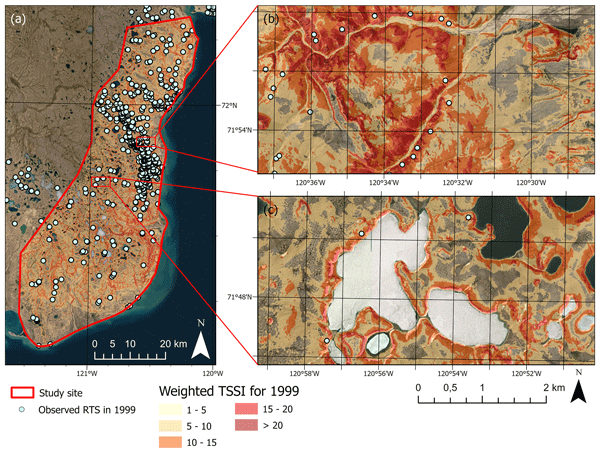
Taliks, unfrozen ground within permafrost, sustain year-round biogeochemical processes, mobilizing carbon, nutrients, and contaminants through lateral and open taliks, while closed and isolated taliks confine reactions locally. In this manuscript, we argue that taliks represent a critical and overlooked driver of Arctic and sub-Arctic biogeochemical processes. We put forward three testable hypotheses to advance the study of talik biogeochemical functioning and we propose a related road map.
Juditha Aga, Antoni G. Lewkowicz, and Sebastian Westermann
The Cryosphere, 20, 5225–5245, https://doi.org/10.5194/tc-20-5225-2026, https://doi.org/10.5194/tc-20-5225-2026, 2026
Short summary
Short summary
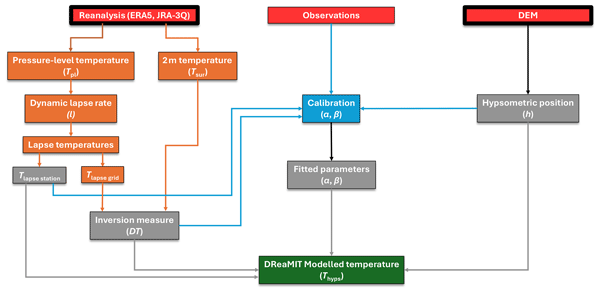
In this study, we explore the influence of a warming climate on landslides in ice-rich permafrost slopes. Using climate, terrain and soil data, we built a model that simulates permafrost thaw and its impact on slope stability over time. We tested the model on Banks Island, Canada, and it reproduced years with many new landslide observations and identified the most susceptible slopes. The model can also be applied to other permafrost regions, and to both past and future climate conditions.
Victor Pozsgay, Nick Noad, Philip Bonnaventure, and Stephan Gruber
Geosci. Model Dev., 19, 7197–7215, https://doi.org/10.5194/gmd-19-7197-2026, https://doi.org/10.5194/gmd-19-7197-2026, 2026
Short summary
Short summary
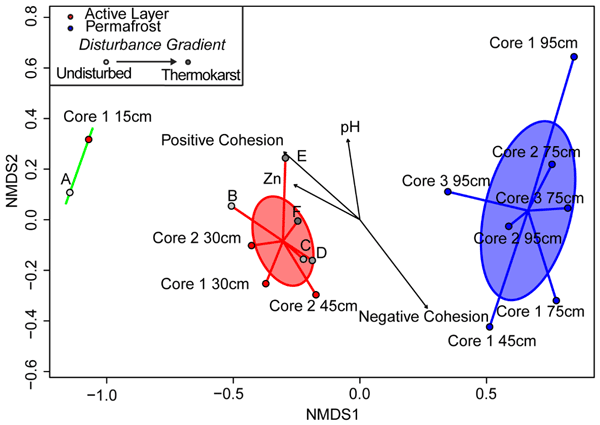
Surface-based temperature inversions occur when cold air becomes trapped near the ground beneath a layer of warmer air. This study combines field data, analysis, and modelling to develop DReaMIT, a model that captures the timing and strength of inversions across northern mountain terrain. The model's transferability beyond the valleys where it was developed makes it valuable globally to cold-region researchers for mapping and modelling permafrost and assessing climate change impacts.
Patrick Neuberger, Alireza Saidi-Mehrabad, Duane Froese, and Brian Lanoil
Biogeosciences, 23, 5239–5253, https://doi.org/10.5194/bg-23-5239-2026, https://doi.org/10.5194/bg-23-5239-2026, 2026
Short summary
Short summary
Permafrost is at increased risk of thaw due to climate change and anthropogenic disturbances. As permafrost thaws, the microbiomes within these systems may become more active and change in composition, releasing greenhouse gases such as CO2 and CH4. In this study, we determined that permafrost thaw caused by road construction caused permafrost microbiomes to become more similar to surface soils, which has implications for greenhouse gas modelling.
Eric Pohl, Christophe Grenier, Antoine Séjourné, Frédéric Bouchard, Emmanuel Léger, Albane Saintenoy, Pavel Konstantinov, Amélie Cuynet, Catherine Ottlé, Christine Hatté, Aurélie Noret, Kensheri Danilov, Kirill Bazhin, Ivan Khristoforov, Daniel Fortier, Alexander Fedorov, and Emmanuel Mouche
Earth Syst. Sci. Data, 18, 3525–3557, https://doi.org/10.5194/essd-18-3525-2026, https://doi.org/10.5194/essd-18-3525-2026, 2026
Short summary
Short summary
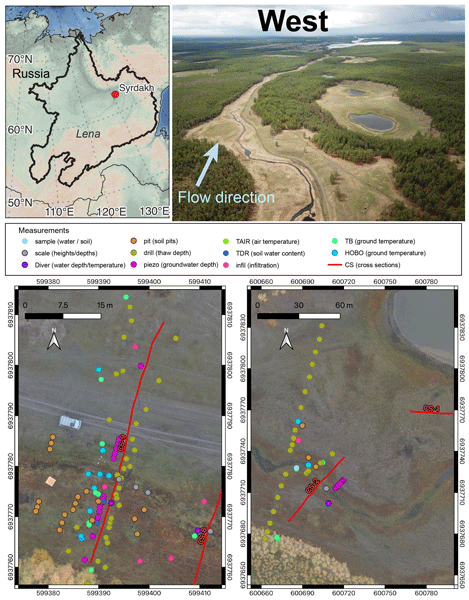
Permafrost is widespread in the Northern Hemisphere and is thawing due to climate warming, impacting energy and mass transfers. Small streams emerge alongside lakes when ice in the ground melts away, potentially accelerating thawing and biogeochemical activity in a positive feedback cycle. This study provides a comprehensive dataset on such a little-studied stream, including thermally and hydrologically important variables essential for improving numerical models.
Fares Mandour, Jazmin Greyeyes-Howell, Renae Shewan, Lauren Thompson, Irene Graham, Mike Low, Matthew Munson, Ryan Connon, Christopher Cunada, Craig Emmerton, and David Olefeldt
EGUsphere, https://doi.org/10.5194/egusphere-2026-2199, https://doi.org/10.5194/egusphere-2026-2199, 2026
Short summary
Short summary
We studied how warming and changing hydrology affected the movement of carbon, nutrients, and mercury from peatland catchments in western Canada. By monitoring 27 streams over five years, we found that warmer streams have higher concentrations during high flows, while colder areas remain unchanged. This suggests that thawing ground (permafrost) will increase the export of these solutes in colder regions, with critical impacts on water quality, ecosystem health, and northern communities.
Madeleine C. Garibaldi, Philip P. Bonnaventure, Robert G. Way, Alexandre Bevington, Sharon L. Smith, Scott F. Lamoureux, Jean E. Holloway, Antoni G. Lewkowicz, and Hannah Ackerman
The Cryosphere, 20, 2375–2392, https://doi.org/10.5194/tc-20-2375-2026, https://doi.org/10.5194/tc-20-2375-2026, 2026
Short summary
Short summary
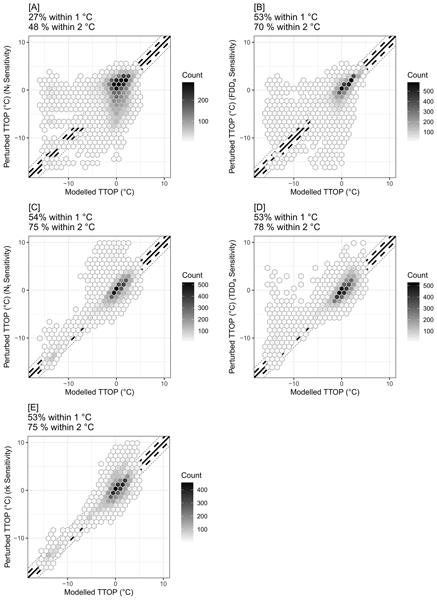
We assessed the sensitivity of a simple permafrost model to changes in parameter values using measured data across northern Canada. We altered the value of one parameter at a time to assess the changes in the resulting temperature. The model was most sensitive to changes in the freezing season parameters and least sensitive to changes in the thawing parameters. However, the importance of specific parameters varied across Canada. The findings of this study can aid in development of future models.
Xiaohang Ji, Eileen Martin, Ming Xiao, Ahmad Tourei, Dmitry Nicolsky, and Anne Jensen
EGUsphere, https://doi.org/10.5194/egusphere-2026-1809, https://doi.org/10.5194/egusphere-2026-1809, 2026
Short summary
Short summary
We studied how frozen ground near Arctic buildings and roads is changing by measuring temperatures continuously along a two-kilometer cable buried in the ground. We found that ground near infrastructure stays warmer than nearby tundra, and that temperatures also vary greatly over short distances. Using these measurements, we built a model to fill missing data and project future warming. The results help improve prediction of ground instability in a warming Arctic.
Gabrielle K. F. Hatten, Steven V. Kokelj, Sophie Opfergelt, Duane G. Froese, Alejandro Alvarez, Joseph M. Young, and Suzanne E. Tank
EGUsphere, https://doi.org/10.5194/egusphere-2026-1844, https://doi.org/10.5194/egusphere-2026-1844, 2026
Short summary
Short summary
Sorption of organic matter (OM) to recently thawed permafrost sediments can critically alter OM fate. Using 32 sediment samples from a suite of diverse permafrost landscapes, we show that organo-mineral interactions “sort” dissolved OM, enriching the aquatic matrix in labile compounds and increasing biodegradation via shifts in OM composition and nutrient release. Sorption potential varied across and within regions and was tied to sediment characteristics, dictated by landscape history.
Nicholas Brown and Stephan Gruber
The Cryosphere, 20, 1771–1796, https://doi.org/10.5194/tc-20-1771-2026, https://doi.org/10.5194/tc-20-1771-2026, 2026
Short summary
Short summary
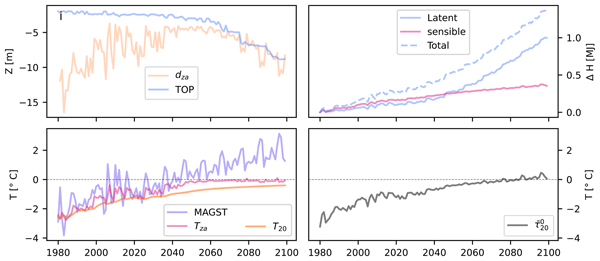
This study improves how we track changes in permafrost by testing new ways to use ground temperature data. A set of five simple but powerful metrics was found to give a clearer picture of thawing than current methods. The results also show that the depth where sensors are placed can strongly affect measured warming rates. These findings help make permafrost monitoring more accurate and support better planning for a changing climate.
Emma G. Gregory, Ryan Connon, Anna Coles, Jurjen van der Sluijs, and Élise Devoie
EGUsphere, https://doi.org/10.22541/essoar.176990551.14497994/v1, https://doi.org/10.22541/essoar.176990551.14497994/v1, 2026
Preprint archived
Short summary
Short summary
In northern regions, snowmelt is an important water source and can have a major influence on droughts and flooding. This study examines changes in snowpack volume in Canada's largest river basin. Our results show that some areas are receiving more snow and some areas are receiving less. A comparison between manual measurements and model outputs shows that the model performs well. This means that the model outputs can be used to improve research and monitoring within the Northwest Territories.
Alexandre R. Bevington, Brian Menounos, and Mark Ednie
The Cryosphere, 20, 811–833, https://doi.org/10.5194/tc-20-811-2026, https://doi.org/10.5194/tc-20-811-2026, 2026
Short summary
Short summary
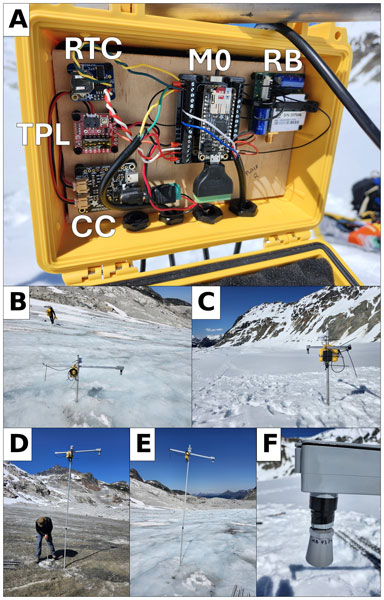
We developed automated "smart stakes" to study how quickly glaciers melt during hot weather. The low-cost devices were installed on Place Glacier in British Columbia and sent data by satellite in 2024. We show that just three heat periods caused more than half of the glacier's total summer melt, even though these events lasted only one-third of the melt season. This system provided measurements that would be impossible with traditional methods and we show that the data can improved melt models.
Francis Gauthier, Jacob Laliberté, and Francis Meloche
Nat. Hazards Earth Syst. Sci., 25, 5033–5053, https://doi.org/10.5194/nhess-25-5033-2025, https://doi.org/10.5194/nhess-25-5033-2025, 2025
Short summary
Short summary
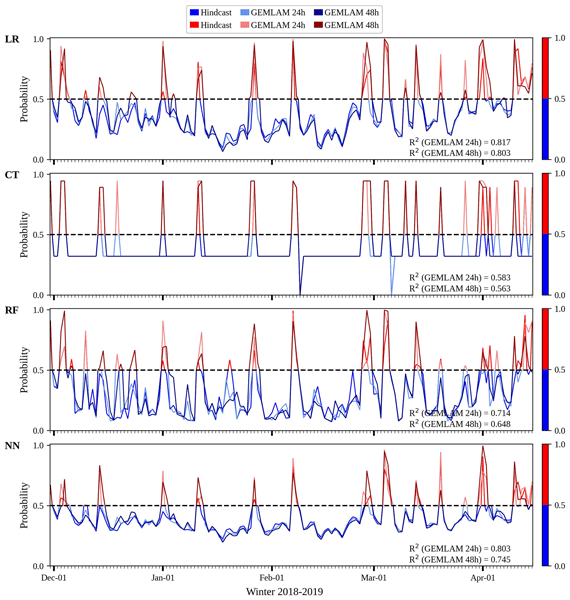
This study uses 4 different machine learning (ML) methods to forecast snow avalanches in northern Gaspésie using Québec's Ministry of Transportation avalanche records, and meteorological data. Comparing unsupervised and expert-driven models, results show similar prediction accuracy. Logistic Regression and Random Forest models perform well in real-time forecasting over 24–48 h. Findings suggest ML can enhance avalanche hazard anticipation and support operational decision-making.
Bin Cao and Stephan Gruber
The Cryosphere, 19, 4525–4532, https://doi.org/10.5194/tc-19-4525-2025, https://doi.org/10.5194/tc-19-4525-2025, 2025
Short summary
Short summary
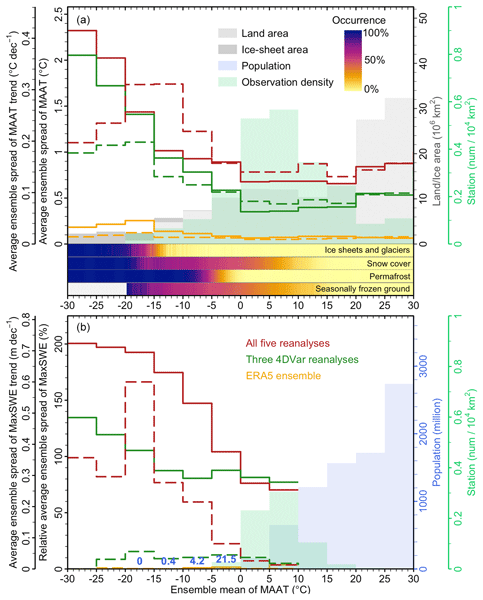
The climate-driven changes in cold regions have an outsized importance for local resilient communities and for global climate through teleconnections. We show that reanalyses are less accurate in cold regions compared to other more populated regions, coincident with the low density of observations. Our findings likely point to similar gaps in our knowledge and capabilities of climate research and services in cold regions.
Mahya Roustaei, Joel Pumple, Jordan Harvey, and Duane Froese
The Cryosphere, 19, 4259–4275, https://doi.org/10.5194/tc-19-4259-2025, https://doi.org/10.5194/tc-19-4259-2025, 2025
Short summary
Short summary
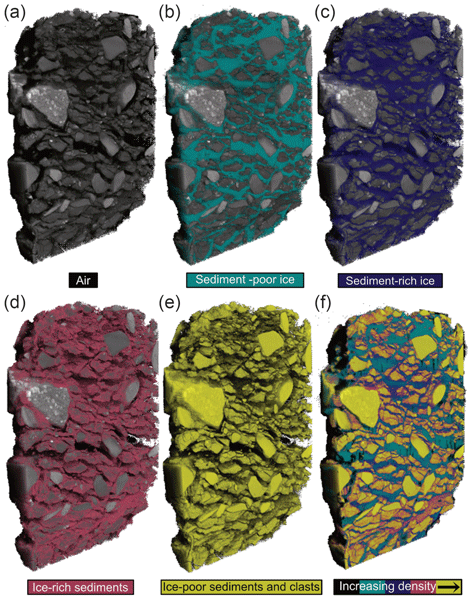
This study investigated the application of CT (computed tomography) scanning to tackle the limitations of traditional destructive methods in characterizing permafrost cores. Five different permafrost cores were scanned at resolutions of 65 and 25 μm with new calibration method. The identification of different materials from CT images showed air (gas), ice (excess and pore), and sediments using an Otsu segmentation method. The results were validated by a destructive (cuboid) and a non-destructive method.
Alexandre Lhosmot, Gabriel Hould Gosselin, Manuel Helbig, Julien Fouché, Youngryel Ryu, Matteo Detto, Ryan Connon, William Quinton, Tim Moore, and Oliver Sonnentag
Hydrol. Earth Syst. Sci., 29, 4871–4892, https://doi.org/10.5194/hess-29-4871-2025, https://doi.org/10.5194/hess-29-4871-2025, 2025
Short summary
Short summary
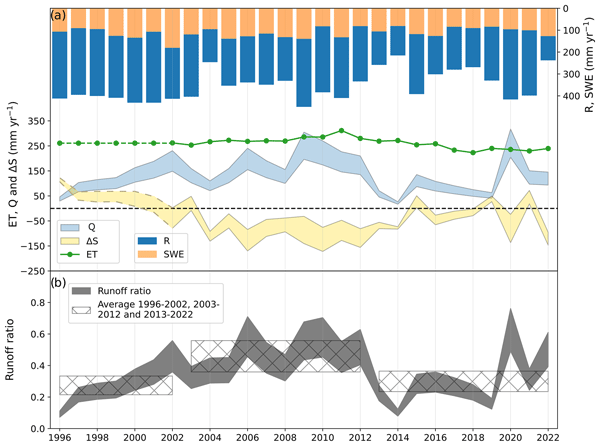
Thawing permafrost changes how water is stored and moves across landscapes. We measured water inputs and outputs in a basin with thawing peatland complexes and three sub-basins. In addition to yearly changes in precipitation and evapotranspiration, we found that hydrological responses are shaped by thaw-driven landscape connectivity. These findings highlight the need for long-term monitoring of ecosystem service shifts.
Niccolò Tubini and Stephan Gruber
EGUsphere, https://doi.org/10.5194/egusphere-2025-2649, https://doi.org/10.5194/egusphere-2025-2649, 2025
Short summary
Short summary
This research introduces a new model for simulating how melting ground ice in permafrost reshapes the land surface over time. It shows that small differences in soil and the depth where ice is found can cause large differences in how the ground sinks or rises. This helps improves our ability to predict future impacts on terrain, ecosystems, and infrastructure as the climate warms.
Hosein Fereydooni, Stephan Gruber, David Stillman, and Derek Cronmiller
EGUsphere, https://doi.org/10.5194/egusphere-2025-1801, https://doi.org/10.5194/egusphere-2025-1801, 2025
Preprint archived
Short summary
Short summary
Detecting ground ice in permafrost is crucial for climate research and infrastructure, but traditional methods often struggle to distinguish it. This study examines the dielectric properties of ground ice as a unique fingerprint. Field measurements were taken at two Yukon permafrost sites: a retrogressive thaw slump and a pingo. Comparing these with electrical resistivity and impedance results, we found relaxation time is a more reliable indicator for ground ice detection.
Eunji Byun, Fereidoun Rezanezhad, Stephanie Slowinski, Christina Lam, Saraswati Bhusal, Stephanie Wright, William L. Quinton, Kara L. Webster, and Philippe Van Cappellen
SOIL, 11, 309–321, https://doi.org/10.5194/soil-11-309-2025, https://doi.org/10.5194/soil-11-309-2025, 2025
Short summary
Short summary
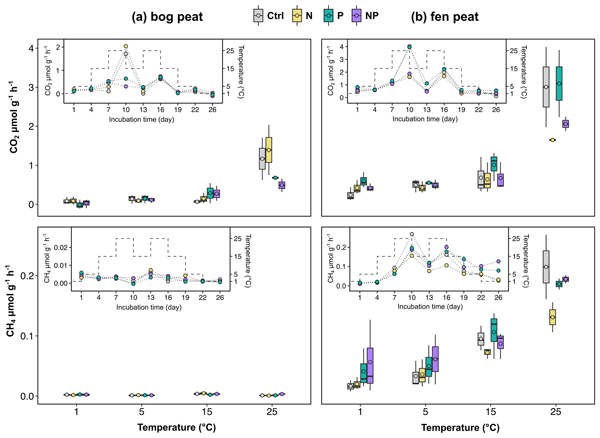
To investigate how added nutrient nitrogen (N) and phosphorus (P) affect subarctic peatlands, we sampled peat soils from bog and fen type peatlands in the Northwest Territories, Canada, and measured CO2 and CH4 production rates by means of laboratory incubations. Our short-term experiments show that changes in nutrient concentrations in soil water can significantly affect microbial carbon cycling, suggesting the necessity of additional considerations of wildfire and permafrost thaw impacts on peatland carbon storage.
Benjamin J. Stoker, Helen E. Dulfer, Chris R. Stokes, Victoria H. Brown, Christopher D. Clark, Colm Ó Cofaigh, David J. A. Evans, Duane Froese, Sophie L. Norris, and Martin Margold
The Cryosphere, 19, 869–910, https://doi.org/10.5194/tc-19-869-2025, https://doi.org/10.5194/tc-19-869-2025, 2025
Short summary
Short summary
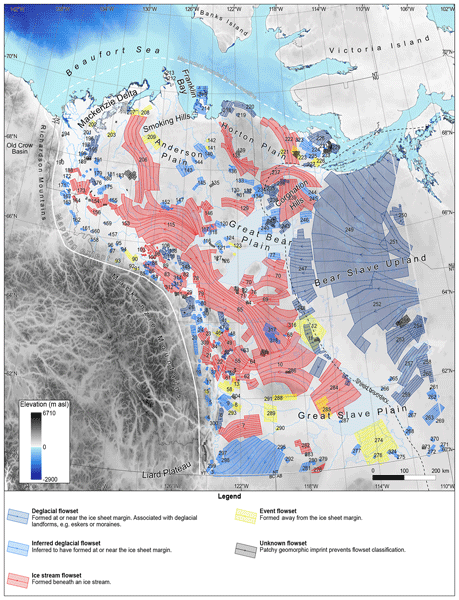
The retreat of the northwestern Laurentide Ice Sheet allows us to investigate how the ice drainage network evolves over millennial timescales and understand the influence of climate forcing, glacial lakes and the underlying geology on the rate of deglaciation. We reconstruct the changes in ice flow at 500-year intervals and identify rapid reorganisations of the drainage network, including variations in ice streaming that we link to climatically driven changes in the ice sheet surface slope.
Annett Bartsch, Xaver Muri, Markus Hetzenecker, Kimmo Rautiainen, Helena Bergstedt, Jan Wuite, Thomas Nagler, and Dmitry Nicolsky
The Cryosphere, 19, 459–483, https://doi.org/10.5194/tc-19-459-2025, https://doi.org/10.5194/tc-19-459-2025, 2025
Short summary
Short summary
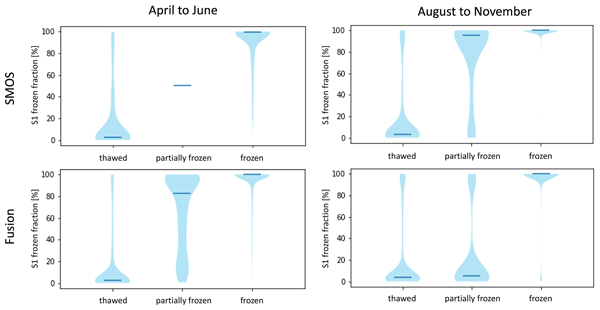
We developed a robust freeze–thaw detection approach, applying a constant threshold to Copernicus Sentinel-1 data that is suitable for tundra regions. All global, coarser-resolution products, tested with the resulting benchmarking dataset, are of value for freeze–thaw retrieval, although differences were found depending on the seasons, particularly during the spring and autumn transition.
Samuel Gagnon, Daniel Fortier, Étienne Godin, and Audrey Veillette
The Cryosphere, 18, 4743–4763, https://doi.org/10.5194/tc-18-4743-2024, https://doi.org/10.5194/tc-18-4743-2024, 2024
Short summary
Short summary
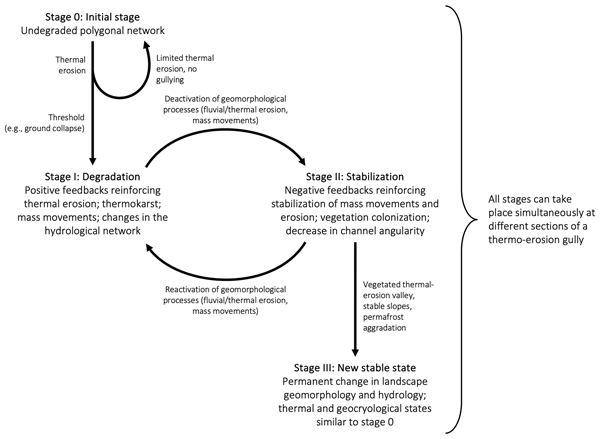
Thermo-erosion gullies (TEGs) are one of the most common forms of abrupt permafrost degradation. While their inception has been examined in several studies, the processes of their stabilization remain poorly documented. For this study, we investigated two TEGs in the Canadian High Arctic. We found that, while the formation of a TEG leaves permanent geomorphological scars in landscapes, in the long term, permafrost can recover to conditions similar to those pre-dating the initial disturbance.
Xiaoran Zhu, Dong Chen, Maruko Kogure, Elizabeth Hoy, Logan T. Berner, Amy L. Breen, Abhishek Chatterjee, Scott J. Davidson, Gerald V. Frost, Teresa N. Hollingsworth, Go Iwahana, Randi R. Jandt, Anja N. Kade, Tatiana V. Loboda, Matt J. Macander, Michelle Mack, Charles E. Miller, Eric A. Miller, Susan M. Natali, Martha K. Raynolds, Adrian V. Rocha, Shiro Tsuyuzaki, Craig E. Tweedie, Donald A. Walker, Mathew Williams, Xin Xu, Yingtong Zhang, Nancy French, and Scott Goetz
Earth Syst. Sci. Data, 16, 3687–3703, https://doi.org/10.5194/essd-16-3687-2024, https://doi.org/10.5194/essd-16-3687-2024, 2024
Short summary
Short summary
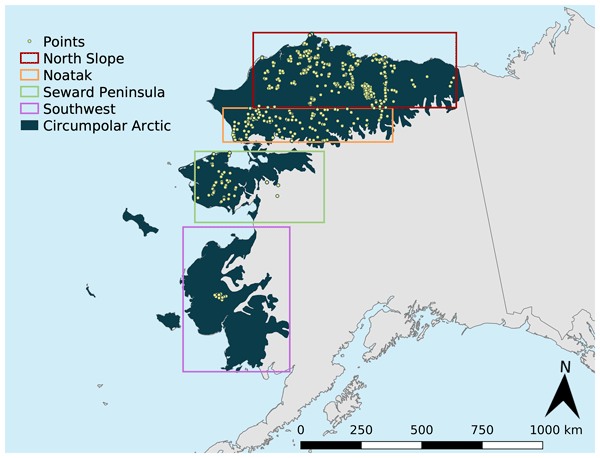
The Arctic tundra is experiencing widespread physical and biological changes, largely in response to warming, yet scientific understanding of tundra ecology and change remains limited due to relatively limited accessibility and studies compared to other terrestrial biomes. To support synthesis research and inform future studies, we created the Synthesized Alaskan Tundra Field Dataset (SATFiD), which brings together field datasets and includes vegetation, active-layer, and fire properties.
Madeleine-Zoé Corbeil-Robitaille, Éliane Duchesne, Daniel Fortier, Christophe Kinnard, and Joël Bêty
Biogeosciences, 21, 3401–3423, https://doi.org/10.5194/bg-21-3401-2024, https://doi.org/10.5194/bg-21-3401-2024, 2024
Short summary
Short summary
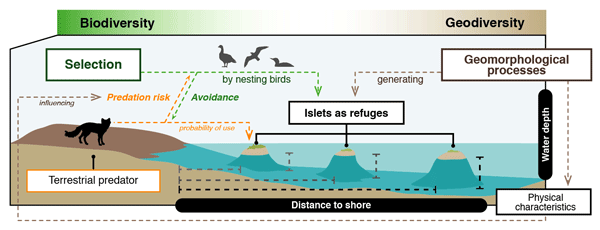
In the Arctic tundra, climate change is transforming the landscape, and this may impact wildlife. We focus on three nesting bird species and the islets they select as refuges from their main predator, the Arctic fox. A geomorphological process, ice-wedge polygon degradation, was found to play a key role in creating these refuges. This process is likely to affect predator–prey dynamics in the Arctic tundra, highlighting the connections between nature's physical and ecological systems.

Frederieke Miesner, William Lambert Cable, Pier Paul Overduin, and Julia Boike
The Cryosphere, 18, 2603–2611, https://doi.org/10.5194/tc-18-2603-2024, https://doi.org/10.5194/tc-18-2603-2024, 2024
Short summary
Short summary
The temperature in the sediment below Arctic lakes determines the stability of the permafrost and microbial activity. However, measurements are scarce because of the remoteness. We present a robust and portable device to fill this gap. Test campaigns have demonstrated its utility in a range of environments during winter and summer. The measured temperatures show a great variability within and across locations. The data can be used to validate models and estimate potential emissions.
Sophie L. Norris, Martin Margold, David J. A. Evans, Nigel Atkinson, and Duane G. Froese
The Cryosphere, 18, 1533–1559, https://doi.org/10.5194/tc-18-1533-2024, https://doi.org/10.5194/tc-18-1533-2024, 2024
Short summary
Short summary
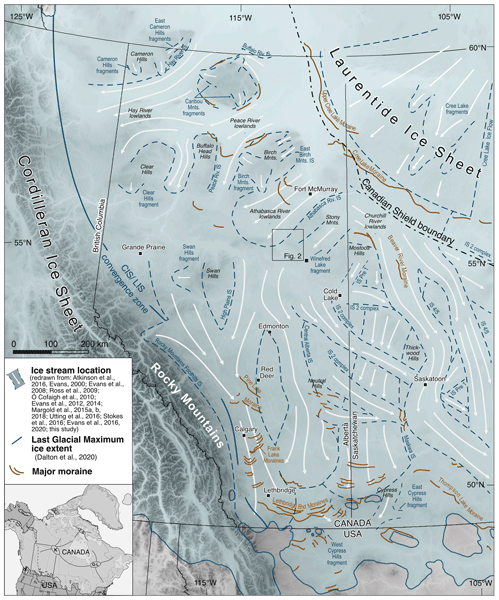
Associated with climate change between the Last Glacial Maximum and the current interglacial period, we reconstruct the behaviour of the southwestern Laurentide Ice Sheet, which covered the Canadian Prairies, using detailed landform mapping. Our reconstruction depicts three shifts in the ice sheet’s dynamics. We suggest these changes resulted from ice sheet thinning triggered by abrupt climatic change. However, we show that regional lithology and topography also play an important role.
Francis Meloche, Francis Gauthier, and Alexandre Langlois
The Cryosphere, 18, 1359–1380, https://doi.org/10.5194/tc-18-1359-2024, https://doi.org/10.5194/tc-18-1359-2024, 2024
Short summary
Short summary
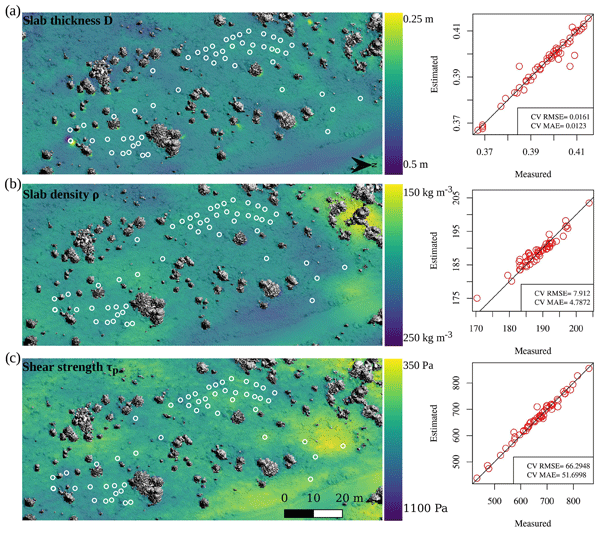
Snow avalanches are a dangerous natural hazard. Backcountry recreationists and avalanche practitioners try to predict avalanche hazard based on the stability of snow cover. However, snow cover is variable in space, and snow stability observations can vary within several meters. We measure the snow stability several times on a small slope to create high-resolution maps of snow cover stability. These results help us to understand the snow variation for scientists and practitioners.
Florent Domine, Denis Sarrazin, Daniel F. Nadeau, Georg Lackner, and Maria Belke-Brea
Earth Syst. Sci. Data, 16, 1523–1541, https://doi.org/10.5194/essd-16-1523-2024, https://doi.org/10.5194/essd-16-1523-2024, 2024
Short summary
Short summary
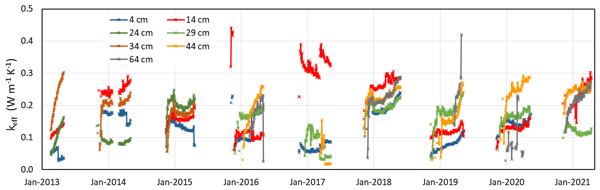
The forest–tundra ecotone is the transition region between the boreal forest and Arctic tundra. It spans over 13 000 km across the Arctic and is evolving rapidly because of climate change. We provide extensive data sets of two sites 850 m apart, one in tundra and one in forest in this ecotone for use in various models. Data include meteorological and flux data and unique snow and soil physics data.
Joel Pumple, Alistair Monteath, Jordan Harvey, Mahya Roustaei, Alejandro Alvarez, Casey Buchanan, and Duane Froese
The Cryosphere, 18, 489–503, https://doi.org/10.5194/tc-18-489-2024, https://doi.org/10.5194/tc-18-489-2024, 2024
Short summary
Short summary
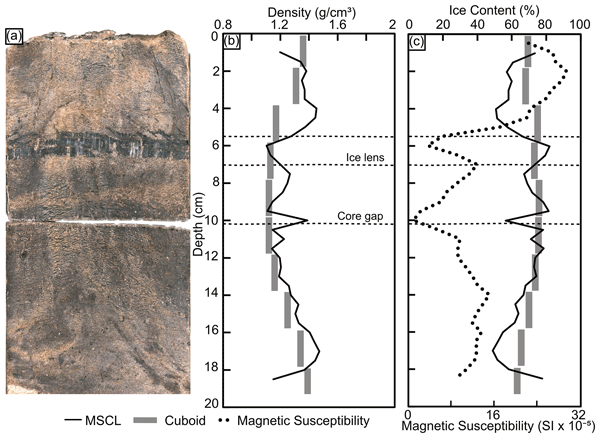
Ice content is a critical variable in the context of thawing permafrost, and permafrost cores provide a means to measure the characteristics of frozen ground; however, these measurements are typically destructive and time intensive. Multi-sensor core logging (MSCL) provides a fast, non-destructive method to image permafrost cores, measure bulk density, and estimate ice content. The use of MSCL will improve existing digital permafrost archives by adding high-quality and reproducible data.
Eliot Sicaud, Daniel Fortier, Jean-Pierre Dedieu, and Jan Franssen
Hydrol. Earth Syst. Sci., 28, 65–86, https://doi.org/10.5194/hess-28-65-2024, https://doi.org/10.5194/hess-28-65-2024, 2024
Short summary
Short summary
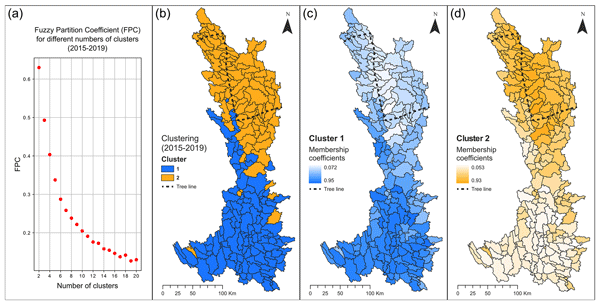
For vast northern watersheds, hydrological data are often sparse and incomplete. Our study used remote sensing and clustering to produce classifications of the George River watershed (GRW). Results show two types of subwatersheds with different hydrological behaviors. The GRW experienced a homogenization of subwatershed types likely due to an increase in vegetation productivity, which could explain the measured decline of 1 % (~0.16 km3 y−1) in the George River’s discharge since the mid-1970s.
Jennika Hammar, Inge Grünberg, Steven V. Kokelj, Jurjen van der Sluijs, and Julia Boike
The Cryosphere, 17, 5357–5372, https://doi.org/10.5194/tc-17-5357-2023, https://doi.org/10.5194/tc-17-5357-2023, 2023
Short summary
Short summary
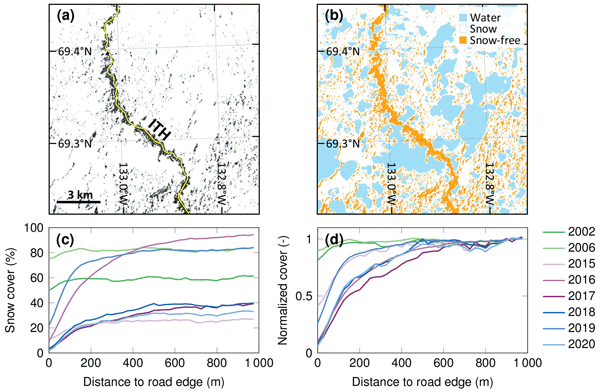
Roads on permafrost have significant environmental effects. This study assessed the Inuvik to Tuktoyaktuk Highway (ITH) in Canada and its impact on snow accumulation, albedo and snowmelt timing. Our findings revealed that snow accumulation increased by up to 36 m from the road, 12-day earlier snowmelt within 100 m due to reduced albedo, and altered snowmelt patterns in seemingly undisturbed areas. Remote sensing aids in understanding road impacts on permafrost.
Jurjen van der Sluijs, Steven V. Kokelj, and Jon F. Tunnicliffe
The Cryosphere, 17, 4511–4533, https://doi.org/10.5194/tc-17-4511-2023, https://doi.org/10.5194/tc-17-4511-2023, 2023
Short summary
Short summary
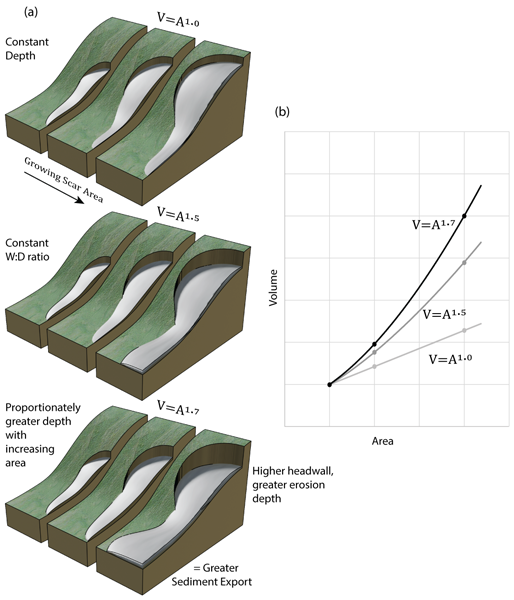
There is an urgent need to obtain size and erosion estimates of climate-driven landslides, such as retrogressive thaw slumps. We evaluated surface interpolation techniques to estimate slump erosional volumes and developed a new inventory method by which the size and activity of these landslides are tracked through time. Models between slump area and volume reveal non-linear intensification, whereby model coefficients improve our understanding of how permafrost landscapes may evolve over time.
Nathan Alec Conroy, Jeffrey M. Heikoop, Emma Lathrop, Dea Musa, Brent D. Newman, Chonggang Xu, Rachael E. McCaully, Carli A. Arendt, Verity G. Salmon, Amy Breen, Vladimir Romanovsky, Katrina E. Bennett, Cathy J. Wilson, and Stan D. Wullschleger
The Cryosphere, 17, 3987–4006, https://doi.org/10.5194/tc-17-3987-2023, https://doi.org/10.5194/tc-17-3987-2023, 2023
Short summary
Short summary
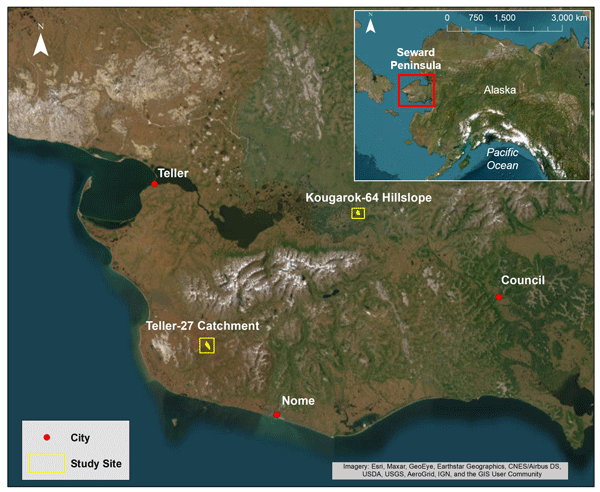
This study combines field observations, non-parametric statistical analyses, and thermodynamic modeling to characterize the environmental causes of the spatial variability in soil pore water solute concentrations across two Arctic catchments with varying extents of permafrost. Vegetation type, soil moisture and redox conditions, weathering and hydrologic transport, and mineral solubility were all found to be the primary drivers of the existing spatial variability of some soil pore water solutes.
Tom Birien and Francis Gauthier
Nat. Hazards Earth Syst. Sci., 23, 343–360, https://doi.org/10.5194/nhess-23-343-2023, https://doi.org/10.5194/nhess-23-343-2023, 2023
Short summary
Short summary
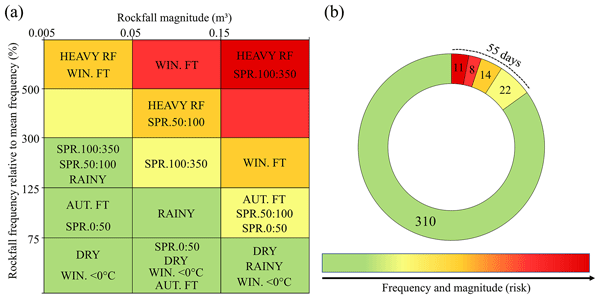
On highly fractured rockwalls such as those found in northern Gaspésie, most rockfalls are triggered by weather conditions. This study highlights that in winter, rockfall frequency is 12 times higher during a superficial thaw than during a cold period in which temperature remains below 0 °C. In summer, rockfall frequency is 22 times higher during a heavy rainfall event than during a mainly dry period. This knowledge could be used to implement a risk management strategy.
Benjamin J. Stoker, Martin Margold, John C. Gosse, Alan J. Hidy, Alistair J. Monteath, Joseph M. Young, Niall Gandy, Lauren J. Gregoire, Sophie L. Norris, and Duane Froese
The Cryosphere, 16, 4865–4886, https://doi.org/10.5194/tc-16-4865-2022, https://doi.org/10.5194/tc-16-4865-2022, 2022
Short summary
Short summary
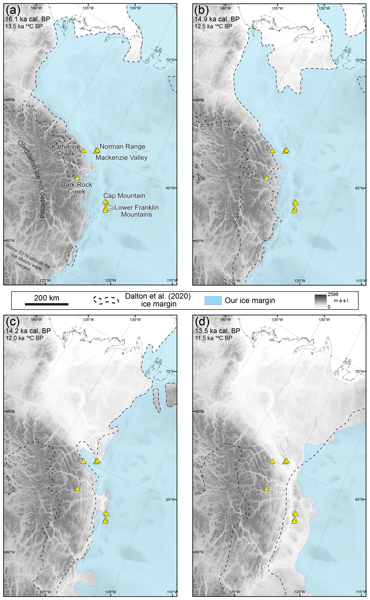
The Laurentide Ice Sheet was the largest ice sheet to grow and disappear in the Northern Hemisphere during the last glaciation. In northwestern Canada, it covered the Mackenzie Valley, blocking the migration of fauna and early humans between North America and Beringia and altering the drainage systems. We reconstruct the timing of ice sheet retreat in this region and the implications for the migration of early humans into North America, the drainage of glacial lakes, and past sea level rise.
Alessandro Cicoira, Samuel Weber, Andreas Biri, Ben Buchli, Reynald Delaloye, Reto Da Forno, Isabelle Gärtner-Roer, Stephan Gruber, Tonio Gsell, Andreas Hasler, Roman Lim, Philippe Limpach, Raphael Mayoraz, Matthias Meyer, Jeannette Noetzli, Marcia Phillips, Eric Pointner, Hugo Raetzo, Cristian Scapozza, Tazio Strozzi, Lothar Thiele, Andreas Vieli, Daniel Vonder Mühll, Vanessa Wirz, and Jan Beutel
Earth Syst. Sci. Data, 14, 5061–5091, https://doi.org/10.5194/essd-14-5061-2022, https://doi.org/10.5194/essd-14-5061-2022, 2022
Short summary
Short summary
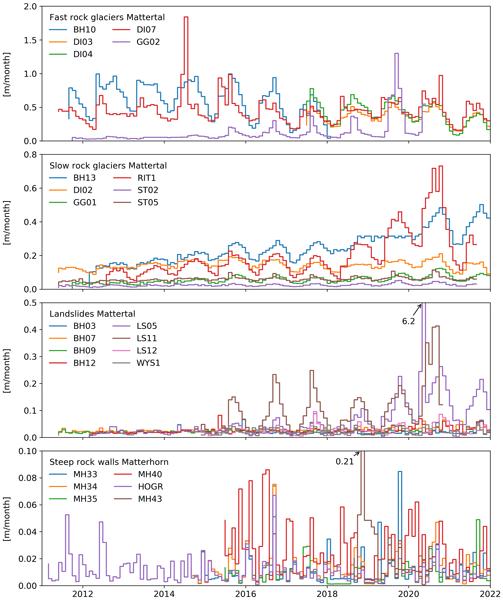
This paper documents a monitoring network of 54 positions, located on different periglacial landforms in the Swiss Alps: rock glaciers, landslides, and steep rock walls. The data serve basic research but also decision-making and mitigation of natural hazards. It is the largest dataset of its kind, comprising over 209 000 daily positions and additional weather data.
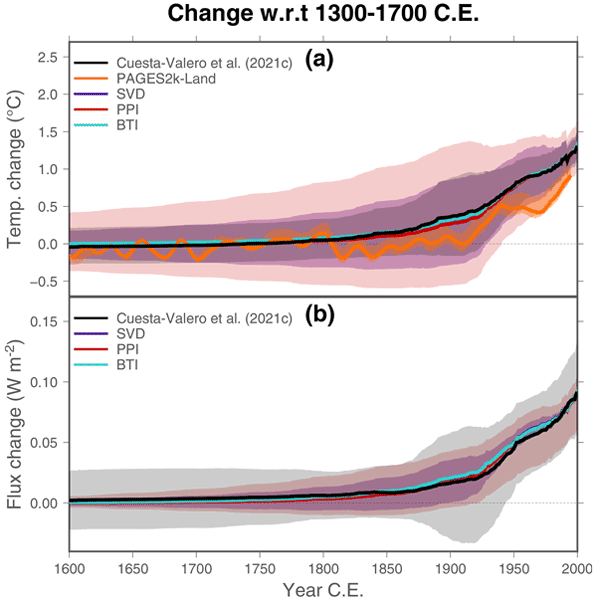
Francisco José Cuesta-Valero, Hugo Beltrami, Stephan Gruber, Almudena García-García, and J. Fidel González-Rouco
Geosci. Model Dev., 15, 7913–7932, https://doi.org/10.5194/gmd-15-7913-2022, https://doi.org/10.5194/gmd-15-7913-2022, 2022
Short summary
Short summary
Inversions of subsurface temperature profiles provide past long-term estimates of ground surface temperature histories and ground heat flux histories at timescales of decades to millennia. Theses estimates complement high-frequency proxy temperature reconstructions and are the basis for studying continental heat storage. We develop and release a new bootstrap method to derive meaningful confidence intervals for the average surface temperature and heat flux histories from any number of profiles.
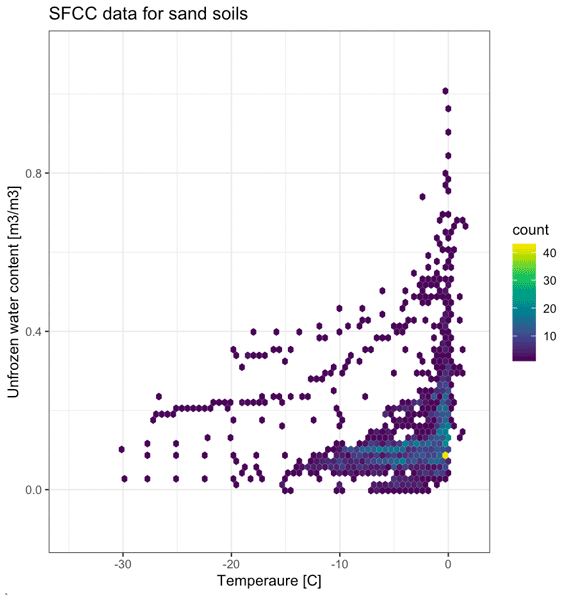
Élise G. Devoie, Stephan Gruber, and Jeffrey M. McKenzie
Earth Syst. Sci. Data, 14, 3365–3377, https://doi.org/10.5194/essd-14-3365-2022, https://doi.org/10.5194/essd-14-3365-2022, 2022
Short summary
Short summary
Soil freezing characteristic curves (SFCCs) relate the temperature of a soil to its ice content. SFCCs are needed in all physically based numerical models representing freezing and thawing soils, and they affect the movement of water in the subsurface, biogeochemical processes, soil mechanics, and ecology. Over a century of SFCC data exist, showing high variability in SFCCs based on soil texture, water content, and other factors. This repository summarizes all available SFCC data and metadata.

Stéphanie Coulombe, Daniel Fortier, Frédéric Bouchard, Michel Paquette, Simon Charbonneau, Denis Lacelle, Isabelle Laurion, and Reinhard Pienitz
The Cryosphere, 16, 2837–2857, https://doi.org/10.5194/tc-16-2837-2022, https://doi.org/10.5194/tc-16-2837-2022, 2022
Short summary
Short summary
Buried glacier ice is widespread in Arctic regions that were once covered by glaciers and ice sheets. In this study, we investigated the influence of buried glacier ice on the formation of Arctic tundra lakes on Bylot Island, Nunavut. Our results suggest that initiation of deeper lakes was triggered by the melting of buried glacier ice. Given future climate projections, the melting of glacier ice permafrost could create new aquatic ecosystems and strongly modify existing ones.
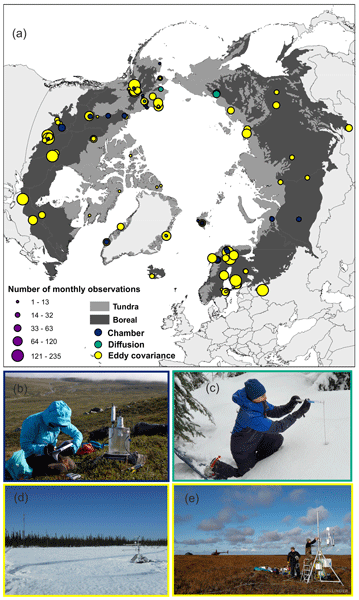
Anna-Maria Virkkala, Susan M. Natali, Brendan M. Rogers, Jennifer D. Watts, Kathleen Savage, Sara June Connon, Marguerite Mauritz, Edward A. G. Schuur, Darcy Peter, Christina Minions, Julia Nojeim, Roisin Commane, Craig A. Emmerton, Mathias Goeckede, Manuel Helbig, David Holl, Hiroki Iwata, Hideki Kobayashi, Pasi Kolari, Efrén López-Blanco, Maija E. Marushchak, Mikhail Mastepanov, Lutz Merbold, Frans-Jan W. Parmentier, Matthias Peichl, Torsten Sachs, Oliver Sonnentag, Masahito Ueyama, Carolina Voigt, Mika Aurela, Julia Boike, Gerardo Celis, Namyi Chae, Torben R. Christensen, M. Syndonia Bret-Harte, Sigrid Dengel, Han Dolman, Colin W. Edgar, Bo Elberling, Eugenie Euskirchen, Achim Grelle, Juha Hatakka, Elyn Humphreys, Järvi Järveoja, Ayumi Kotani, Lars Kutzbach, Tuomas Laurila, Annalea Lohila, Ivan Mammarella, Yojiro Matsuura, Gesa Meyer, Mats B. Nilsson, Steven F. Oberbauer, Sang-Jong Park, Roman Petrov, Anatoly S. Prokushkin, Christopher Schulze, Vincent L. St. Louis, Eeva-Stiina Tuittila, Juha-Pekka Tuovinen, William Quinton, Andrej Varlagin, Donatella Zona, and Viacheslav I. Zyryanov
Earth Syst. Sci. Data, 14, 179–208, https://doi.org/10.5194/essd-14-179-2022, https://doi.org/10.5194/essd-14-179-2022, 2022
Short summary
Short summary
The effects of climate warming on carbon cycling across the Arctic–boreal zone (ABZ) remain poorly understood due to the relatively limited distribution of ABZ flux sites. Fortunately, this flux network is constantly increasing, but new measurements are published in various platforms, making it challenging to understand the ABZ carbon cycle as a whole. Here, we compiled a new database of Arctic–boreal CO2 fluxes to help facilitate large-scale assessments of the ABZ carbon cycle.
Cited articles
Allard, M., Sarrazin, D., and l'Hérault, E.: Températures du sol dans des forages et près de la surface dans le nord-est du Canada, v. 1.6.0 (1998–2023), D8, Nordicana [data set], https://doi.org/10.5885/45291SL-34F28A9491014AFD, 2024. a
Arsenault, R., Bazile, R., Ouellet Dallaire, C., and Brissette, F.: CANOPEX: A Canadian hydrometeorological watershed database, Hydrol. Process., 30, 2734–2736, https://doi.org/10.1002/hyp.10880, 2016. a
Bavay, M., Fiddes, J., and Godøy, Ø.: Automatic data standardization for the Global Cryosphere Watch Data Portal, Data Sci. J., 19, https://doi.org/10.5334/dsj-2020-006, 2020. a, b
Biskaborn, B. K., Lanckman, J.-P., Lantuit, H., Elger, K., Streletskiy, D. A., Cable, W. L., and Romanovsky, V. E.: The new database of the Global Terrestrial Network for Permafrost (GTN-P), Earth Syst. Sci. Data, 7, 245–259, https://doi.org/10.5194/essd-7-245-2015, 2015. a, b, c, d
Biskaborn, B. K., Smith, S. L., Noetzli, J., Matthes, H., Vieira, G., Streletskiy, D. A., Schoeneich, P., Romanovsky, V. E., Lewkowicz, A. G., Abramov, A., Allard, M., Boike, J., Cable, W. L., Christiansen, H. H., Delaloye, R., Diekmann, B., Drozdov, D., Etzelmüller, B., Grosse, G., Guglielmin, M., Ingeman-Nielsen, T., Isaksen, K., Ishikawa, M., Johansson, M., Johannsson, H., Joo, A., Kaverin, D., Kholodov, A., Konstantinov, P., Kröger, T., Lambiel, C., Lanckman, J.-P., Luo, D., Malkova, G., Meiklejohn, I., Moskalenko, N., Oliva, M., Phillips, M., Ramos, M., Sannel, A. B. K., Sergeev, D., Seybold, C., Skryabin, P., Vasiliev, A., Wu, Q., Yoshikawa, K., Zheleznyak, M., and Lantuit, H.: Permafrost is warming at a global scale, Nat. Commun., 10, 264, https://doi.org/10.1038/s41467-018-08240-4, 2019. a
Boeckli, L., Brenning, A., Gruber, S., and Noetzli, J.: A statistical approach to modelling permafrost distribution in the European Alps or similar mountain ranges, The Cryosphere, 6, 125–140, https://doi.org/10.5194/tc-6-125-2012, 2012. a
Boike, J., Chadburn, S., Martin, J., Zwieback, S., Althuizen, I. H., Anselm, N., Cai, L., Coulombe, S., Lee, H., Liljedahl, A. K., Schneebeli, M., Sjöberg, Y., Smith, N., Smith, S. L., Streletskiy, D. A., Stuenzi, S. M., Westermann, S., and Wilcox, E. J.: Standardized monitoring of permafrost thaw: a user-friendly, multiparameter protocol, Arctic Science, 8, 153–182, https://doi.org/10.1139/as-2021-0007, 2022. a
Brown, N.: PermafrostNet ERDDAP metadata profile, Zenodo, https://doi.org/10.5281/ZENODO.18112261, 2026. a
Brown, N. and Gruber, S.: Beyond MAGT: learning more from permafrost thermal monitoring data with additional metrics, The Cryosphere, 20, 1771–1796, https://doi.org/10.5194/tc-20-1771-2026, 2026. a, b, c
Brown, N., Gruber, S., Pulsifer, P., and Stewart-Jones, E.: Permafrost Data Workshop 2020: Final Report, Tech. rep., Carleton University, Ottawa, https://doi.org/10.22215/pn/10120001, 2020. a
Brown, N., Stewart-Jones, E., Riddick, J., Meier-Legault, O., Kokelj, S., Karunaratne, K., and Gruber, S.: Air and ground temperature, air humidity and site characterization data from the Canadian Shield taiga near Yellowknife, Northwest Territories, Canada, v. 1.0 (2016–2021), D108, Nordicana [data set], https://doi.org/10.5885/45810XD-C9F549F3E93040BD, 2022. a, b
Brown, N., Gruber, S., Pulsifer, P., and Hayes, A.: A prototype field-to-publication data system for a multi-variable permafrost observation network, Environ. Modell. Softw., 175, 106006, https://doi.org/10.1016/j.envsoft.2024.106006, 2024. a, b, c, d
Brown, N., Gao, A., and Parker, R.: tempcf: cleaning and filtering for ground temperature data, Zenodo, https://doi.org/10.5281/zenodo.17469293, 2025. a, b
Brown, R. J. E.: Influence of vegetation on permafrost, in: Permafrost International Conference, 20–25, Building Research Advisory Board at Purdue University, Collection/Collection: NRC Publications Archive/Archives des publications du CNRC, https://nrc-publications.canada.ca/eng/view/object/?id=4c989143-5d15-4404-9363-db1742108798 (last access: 21 July 2026), 1963. a
Cao, B., Gruber, S., Zheng, D., and Li, X.: The ERA5-Land soil temperature bias in permafrost regions, The Cryosphere, 14, 2581–2595, https://doi.org/10.5194/tc-14-2581-2020, 2020. a
CEN (Centre d'études nordiques): Données des stations climatiques de la région de Whapmagoostui-Kuujjuarapik au Nunavik, Québec, Canada, v. 1.5 (1987–2019), D4, Nordicana [data set], https://doi.org/10.5885/45057SL-EADE4434146946A7, 2020a. a
CEN (Centre d'études nordiques): Données des stations climatiques de la région du Lac à l'Eau claire au Nunavik, Québec, Canada, v. 1.1 (1986–2019), D57, Nordicana [data set], https://doi.org/10.5885/45475SL-5A33FE09B0494D92, 2020b. a
CEN (Centre d'études nordiques): Données des stations climatiques de la région de Salluit au Nunavik, Québec, Canada, v. 1.7.0 (1987–2023), D3, Nordicana [data set], https://doi.org/10.5885/45048SL-4708BCCDFA124359, 2024a. a
CEN (Centre d'études nordiques): Données des stations climatiques de la région de la rivière Boniface au Nunavik, Québec, Canada, v. 1.4.0 (1988–2022), D7, Nordicana [data set], https://doi.org/10.5885/45129SL-DBDA2A77C0094963, 2024b. a
CEN (Centre d'études nordiques): Données des stations climatiques d'Umiujaq au Nunavik, Québec, Canada, v. 1.9.0 (1997–2023), D9, Nordicana [data set], https://doi.org/10.5885/45120SL-067305A53E914AF0, 2024c. a
Christensen, G., Dafoe, A., Miguel, E., Moore, D. A., and Rose, A. K.: A study of the impact of data sharing on article citations using journal policies as a natural experiment, PLOS ONE, 14, e0225883, https://doi.org/10.1371/journal.pone.0225883, 2019. a
CIHR-NSERC-SSHRC: Tri-Agency Research Data Management Policy, Government of Canada: Canadian Institutes of Health Research (CIHR), Natural Sciences and Engineering Research Council of Canada (NSERC), Social Sciences and Humanities Research Council of Canada (SSHRC), https://science.gc.ca/site/science/en/interagency-research-funding/policies-and-guidelines/research-data-management/tri-agency-research-data-management-policy (last access: 27 October 2025), 2021. a
Colavizza, G., Cadwallader, L., LaFlamme, M., Dozot, G., Lecorney, S., Rappo, D., and Hrynaszkiewicz, I.: An analysis of the effects of sharing research data, code, and preprints on citations, PLoS ONE, 19, https://doi.org/10.1371/journal.pone.0311493, 2024. a
Connon, R. and Quinton, W.: Permafrost ground temperature report: Scotty Creek Research Station, Northwest Territories, NWT Open Report 2019-007, Northwest Territories Geological Survey, https://doi.org/10.46887/2019-007, 2020. a
Cox, S. J., Gonzalez-Beltran, A. N., Magagna, B., and Marinescu, M. C.: Ten simple rules for making a vocabulary FAIR, PLoS Comput. Biol., 17, 1–15, https://doi.org/10.1371/journal.pcbi.1009041, 2021. a
Cremonese, E., Gruber, S., Phillips, M., Pogliotti, P., Boeckli, L., Noetzli, J., Suter, C., Bodin, X., Crepaz, A., Kellerer-Pirklbauer, A., Lang, K., Letey, S., Mair, V., Morra di Cella, U., Ravanel, L., Scapozza, C., Seppi, R., and Zischg, A.: Brief Communication: “An inventory of permafrost evidence for the European Alps”, The Cryosphere, 5, 651–657, https://doi.org/10.5194/tc-5-651-2011, 2011. a
Deng, J., Dong, W., Socher, R., Li, L., Li, K., and Fei-Fei, L.: ImageNet: a large-scale hierarchical image database, in: 2009 IEEE Conference on Computer Vision and Pattern Recognition (CVPR), Institute of Electrical and Electronics Engineers (IEEE), 248–255, https://doi.org/10.1109/CVPR.2009.5206848, 2009. a
Devoie, É. G., Gruber, S., and McKenzie, J. M.: A repository of measured soil freezing characteristic curves: 1921 to 2021, Earth Syst. Sci. Data, 14, 3365–3377, https://doi.org/10.5194/essd-14-3365-2022, 2022. a
Duchesne, C., Morse, P. D., Wolfe, S. A., and Kokelj, S. V.: Report on 2010-2015 permafrost thermal investigations in the Yellowknife area, Northwest Territories, Tech. Rep. Open File 8093, Geological Survey of Canada, https://doi.org/10.4095/299189, 2016. a
Duchesne, C., Smith, S., Chartrand, J., and Parker, R.: Daily ground temperatures from selected sites between 2006–2018 in the Mackenzie Valley, Northwest Territories, Canada, Mendeley Data [data set], https://doi.org/10.17632/w6jypmm87c.1, 2025. a, b
Eaton, B., Gregory, J., Drach, B., Taylor, K., Hankin, S., Caron, J., Signell, R., Bentley, P., Rappa, G., Höck, H., Pamment, A., Juckes, M., Raspaud, M., Horne, R., Whiteaker, T., Blodgett, D., Zender, C., and Lee, D.: NetCDF Climate and Forecast (CF) metadata conventions v1.8, http://cfconventions.org/Data/cf-conventions/cf-conventions-1.8/cf-conventions.html (last access: 21 July 2026), 2020. a
Ensom, T., Kokelj, S. V., and Kamo McHugh, K.: Permafrost ground temperature report: Inuvik to Tuktoyaktuk Highway stream crossing and alignment sites, Northwest Territories, NWT Open Report 2019-014, Northwest Territories Geological Survey, https://doi.org/10.46887/2019-014, 2020. a, b
Fiddes, J., Endrizzi, S., and Gruber, S.: Large-area land surface simulations in heterogeneous terrain driven by global data sets: application to mountain permafrost, The Cryosphere, 9, 411–426, https://doi.org/10.5194/tc-9-411-2015, 2015. a
Fortier, D. and Chen, L.: Températures au sol de la sous-base et du sol de remblai à Beaver Creek, Yukon – tronçon expérimental routier 2008-2018, v. 1.0 (2008–2018), D68, Nordicana [data set], https://doi.org/10.5885/45642CE-6883D8FF051E4E4B, 2020. a
Fortier, D. and Chen, L.: Température du sol sous remblai non atténué et en milieu naturel le long de la Alaska Highway au Beaver Creek – tronçon expérimental routier, Yukon, Canada (1997–2007), v. 1.0 (1997–2007), D102, Nordicana [data set], https://doi.org/10.5885/45789CE-B06C83701915428A, 2022a. a
Fortier, D. and Chen, L.: Température du sol sous remblai non atténué le long de la Alaska Highway au Beaver Creek - tronçon expérimental routier, Yukon, Canada (2008–2018), v. 1.0 (2008–2018), D103, Nordicana [data set], https://doi.org/10.5885/45792CE-4ED6653E854B44F1, 2022b. a
Fortier, D. and Davesne, G.: Le régime d'enneigement et de température d'une plaque glace permanente, île Ward Hunt, Nunavut, Canada, v. 1.0 (2017–2019), D91, Nordicana [data set], https://doi.org/10.5885/45720CE-0F556C84D96948F7, 2021. a
Fortier, D., Sliger, M., Gagnon, S., and Rioux, K.: Température du sol et de l'air sous deux abris le long de la Alaska Highway au Beaver Creek Road Experimental Site, Yukon, Canada, v. 1.0 (2008–2019), D89, Nordicana [data set], https://doi.org/10.5885/45708CE-073B968F9A2B496E, 2021a. a
Fortier, D., Sliger, M., Gagnon, S., and Rioux, K.: Température du sol en milieu naturel le long de la Alaska Highway au Beaver Creek Road Experimental Site, Yukon, Canada, v. 1.0 (2008–2020), D94, Nordicana [data set], https://doi.org/10.5885/45738CE-D75F3C9342D34C83, 2021b. a
Fortier, P. and Lemieux, J.-M.: Données de teneur en eau volumétrique et de température du sol, vallée Tasiapik, Nunavik, Canada (2014–2021), D109, Nordicana [data set], https://doi.org/10.5885/45774CE-134B067EE2A54B11, 2023. a
Fortier, P., Lemieux, J.-M., and Sarrazin, D.: Données de flux de chaleur et de température à la surface du sol, vallée Tasiapik, Nunavik, Canada (2014–2021), v. 1.0 (2014–2021), D111, Nordicana [data set], https://doi.org/10.5885/45780CE-5B08A469E16041D5, 2023. a, b
Fortier, P., Fortier, R., Allard, M., Lemieux, J.-M., and Sarrazin, D.: Subsurface ground temperature data from an instrumented permafrost mound, Tasiapik Valley, Umiujaq, Nunavik, Québec, Canada (2001–2024), Borealis [data set], https://doi.org/10.5683/SP3/QSRW0I, 2025. a, b, c
Goodrich, L. E.: The influence of snow cover on the ground thermal regime, Can. Geotech. J., 19, 421–432, https://doi.org/10.1139/t82-047, 1982. a
Government of Yukon: Yukon permafrost database, https://service.yukon.ca/permafrost, last access: 18 September 2025. a
Gruber, S., Brown, N., Stewart-Jones, E., Karunaratne, K., Riddick, J., Peart, C., Subedi, R., and Kokelj, S.: Température de l'air et du sol, humidité de l'air et données de caractérisation des sites dans une région de toundra du bouclier canadien, Lac de Gras, Territoires du Nord-Ouest, Canada, v. 1.0 (2015–2017), D39, Nordicana [data set], https://doi.org/10.5885/45561XD-2C7AB3DCF3D24AD8, 2018. a, b, c, d, e, f, g, h
Gruber, S., Hayley, J., Karunaratne, K., King, J., MacLean, T., Marshall, S., and Moore, D.: Considerations toward a vision and strategy for permafrost knowledge in Canada, Arctic Science, https://doi.org/10.1139/as-2023-0016, 2023. a
Harp, D. R., Atchley, A. L., Painter, S. L., Coon, E. T., Wilson, C. J., Romanovsky, V. E., and Rowland, J. C.: Effect of soil property uncertainties on permafrost thaw projections: a calibration-constrained analysis, The Cryosphere, 10, 341–358, https://doi.org/10.5194/tc-10-341-2016, 2016. a
Hasler, A., Gruber, S., and Beutel, J.: Kinematics of steep bedrock permafrost, J. Geophys. Res., 117, F01016, https://doi.org/10.1029/2011JF001981, 2012. a
Hassell, D., Gregory, J., Blower, J., Lawrence, B. N., and Taylor, K. E.: A data model of the Climate and Forecast metadata conventions (CF-1.6) with a software implementation (cf-python v2.1), Geosci. Model Dev., 10, 4619–4646, https://doi.org/10.5194/gmd-10-4619-2017, 2017. a
Heginbottom, J. A., Dubreuil, M. A., and Harker, P. T.: Canada, permafrost, Natural Resources Canada, https://doi.org/10.4095/294672, 1995. a, b
Herring, T., Lewkowicz, A. G., Chiasson, A., Wang, Y., Way, R. G., Young, J. M., Froese, D., Smith, S. L., Andersen, B., Bellehumeur-Génier, O., Bevington, A. R., Bonnaventure, P. P., Duguay, M. A., Etzelmüller, B., Gooseff, M. N., Godsey, S. E., and Miceli, C. M.: The Canadian permafrost electrical resistivity survey (CPERS) database: 15 years of permafrost resistivity data, Arctic Science, 10, 850–856, https://doi.org/10.1139/as-2023-0058, 2024. a, b
Intergovernmental Oceanographic Commission of UNESCO: Ocean Data Standards, Vol. 4: Technology for SeaDataNet controlled vocabularies for describing marine and oceanographic datasets – a joint proposal by SeaDataNet and ODIP projects, IOC Manuals and Guides 54, Vol. 4, IODE/UNESCO, Ostend, Belgium, https://unesdoc.unesco.org/ark:/48223/pf0000187831 (last access: 21 July 2026), 2019. a
Karunaratne, K., Relf, C., and Talwar, S.: Working collaboratively to improve permafrost data availability for Canada, in: GeoManitoba 2025: 78th Annual CGS Conference & 9th Canadian Permafrost Conference, Winnipeg, Manitoba, Canada, presented at the RBC Convention Centre, The Canadian Geotechnical Society, 2025. a, b
Kugluktuk Permafrost Research Team: Température du sol à Kugluktuk, Nunavut, Canada, v. 1.1.0 (2019–2023), D120, Nordicana [data set], https://doi.org/10.5885/45852CE-5C9390F6248C47D1, 2023. a, b, c, d
Lange, S., Grünberg, I., Bornemann, N., Lehr, C., Cable, W., and Boike, J.: Permafrost long term observatories of the Alfred-Wegener-Institute, Zenodo, https://doi.org/10.5281/ZENODO.4786984, 2021. a
Laurie, M.: Workshop report: toward a Canadian permafrost network, Tech. rep., NSERC PermafrostNet, Ottawa, Canada, https://doi.org/10.22215/pn/10117001, 2017. a, b
Leadbetter, A. M., Lowry, R. K., and Clements, D. O.: Putting meaning into NETMAR – the open service network for marine environmental data, Int. J. Digit. Earth, 7, 811–828, https://doi.org/10.1080/17538947.2013.781243, 2014. a
Lewkowicz, A., O'Neill, H., Wolfe, S., Roy-Léveillée, P., Roujanski, V. E., Hoeve, E., Gruber, S., Brooks, H., Rudy, A., Koenig, C., Brown, N., and Bonnaventure, P.: Glossary of permafrost science and engineering, University of Toronto Press, Canadian Permafrost Association, https://doi.org/10.3138/cpa-gpse, 2025. a, b
Lin, T., Maire, M., Belongie, S., Hays, J., Perona, P., Ramanan, D., Dollár, P., and Zitnick, C. L.: Microsoft COCO: Common Objects in Context, in: Computer Vision – ECCV 2014, vol. 8693 of Lecture Notes in Computer Science, 740–755, Springer, https://doi.org/10.1007/978-3-319-10602-1_48, 2014. a
Macdonell, H. G.: A statistical ranking framework for ground temperature simulations in permafrost environments, Master's thesis, Carleton University, https://doi.org/10.22215/etd/2025-16379, 2025. a
Meier-Legault, O., Brown, N., Gruber, S., Adjun, L., Allard, M., Alvarez, A., Atatahak, G., Auclair, M., Bevington, A., Bilodeau, S., Cable, W., Carpino, O., Castagner, A., Chen, L., Chiasson, A., Connon, R., Coulombe, S., Crompton, J., Cronmiller, D., Davesne, G., Dominico, M., Ducharme, M.-A., Ensom, T., Farquharson, L., Foord, V., Fortier, D., Fortier, P., Froese, D., Gagnon, S., Gauthier, F., Geertsema, M., Godin, E., Jonat, G., Kokelj, S. V., Landry, M., Lewkowicz, A., Lipovsky, P., L’Hérault, E., Macdonell, H., Massé, L., Nicolsky, D., Painter, M., Papatsie, L., Pozsgay, V., Quinton, W., Romanovsky, V., Rudy, A. C., Sarrazin, D., Stewart-Jones, E., Walker, D., Wright, T., and Young, J.: A standardized permafrost ground temperature collection for Canada 2025, Zenodo [data set], https://doi.org/10.5281/zenodo.18022924, 2025. a, b, c
Melton, J. R. and Arora, V. K.: Competition between plant functional types in the Canadian Terrestrial Ecosystem Model (CTEM) v. 2.0, Geosci. Model Dev., 9, 323–361, https://doi.org/10.5194/gmd-9-323-2016, 2016. a
Melton, J. R., Verseghy, D. L., Sospedra-Alfonso, R., and Gruber, S.: Improving permafrost physics in the coupled Canadian Land Surface Scheme (v.3.6.2) and Canadian Terrestrial Ecosystem Model (v.2.1) (CLASS-CTEM), Geosci. Model Dev., 12, 4443–4467, https://doi.org/10.5194/gmd-12-4443-2019, 2019. a
Mohammadi, Z. and Hayley, J. L.: Compilation and analysis of thaw settlement test results: implications for prediction tools and stress–strain characterization in permafrost, Earth Syst. Sci. Data, 17, 3921–3947, https://doi.org/10.5194/essd-17-3921-2025, 2025. a
Northwest Territories Permafrost Database Technical Working Group: Guide to producing a ground temperature report, NWT Open Report 2017-008, Northwest Territories Geological Survey, https://doi.org/10.46887/2017-008, 2019. a
Pastorello, G., Trotta, C., Canfora, E., Chu, H., Christianson, D., Cheah, Y.-W., Poindexter, C., Chen, J., Elbashandy, A., Humphrey, M., Isaac, P., Polidori, D., Reichstein, M., Ribeca, A., van Ingen, C., Vuichard, N., Zhang, L., Amiro, B., Ammann, C., Arain, M. A., Ardö, J., Arkebauer, T., Arndt, S. K., Arriga, N., Aubinet, M., Aurela, M., Baldocchi, D., Barr, A., Beamesderfer, E., Marchesini, L. B., Bergeron, O., Beringer, J., Bernhofer, C., Berveiller, D., Billesbach, D., Black, T. A., Blanken, P. D., Bohrer, G., Boike, J., Bolstad, P. V., Bonal, D., Bonnefond, J.-M., Bowling, D. R., Bracho, R., Brodeur, J., Brümmer, C., Buchmann, N., Burban, B., Burns, S. P., Buysse, P., Cale, P., Cavagna, M., Cellier, P., Chen, S., Chini, I., Christensen, T. R., Cleverly, J., Collalti, A., Consalvo, C., Cook, B. D., Cook, D., Coursolle, C., Cremonese, E., Curtis, P. S., D’Andrea, E., da Rocha, H., Dai, X., Davis, K. J., Cinti, B. D., Grandcourt, A. d., Ligne, A. D., De Oliveira, R. C., Delpierre, N., Desai, A. R., Di Bella, C. M., Tommasi, P. d., Dolman, H., Domingo, F., Dong, G., Dore, S., Duce, P., Dufrêne, E., Dunn, A., Dušek, J., Eamus, D., Eichelmann, U., ElKhidir, H. A. M., Eugster, W., Ewenz, C. M., Ewers, B., Famulari, D., Fares, S., Feigenwinter, I., Feitz, A., Fensholt, R., Filippa, G., Fischer, M., Frank, J., Galvagno, M., Gharun, M., Gianelle, D., Gielen, B., Gioli, B., Gitelson, A., Goded, I., Goeckede, M., Goldstein, A. H., Gough, C. M., Goulden, M. L., Graf, A., Griebel, A., Gruening, C., Grünwald, T., Hammerle, A., Han, S., Han, X., Hansen, B. U., Hanson, C., Hatakka, J., He, Y., Hehn, M., Heinesch, B., Hinko-Najera, N., Hörtnagl, L., Hutley, L., Ibrom, A., Ikawa, H., Jackowicz-Korczynski, M., Janouš, D., Jans, W., Jassal, R., Jiang, S., Kato, T., Khomik, M., Klatt, J., Knohl, A., Knox, S., Kobayashi, H., Koerber, G., Kolle, O., Kosugi, Y., Kotani, A., Kowalski, A., Kruijt, B., Kurbatova, J., Kutsch, W. L., Kwon, H., Launiainen, S., Laurila, T., Law, B., Leuning, R., Li, Y., Liddell, M., Limousin, J.-M., Lion, M., Liska, A. J., Lohila, A., López-Ballesteros, A., López-Blanco, E., Loubet, B., Loustau, D., Lucas-Moffat, A., Lüers, J., Ma, S., Macfarlane, C., Magliulo, V., Maier, R., Mammarella, I., Manca, G., Marcolla, B., Margolis, H. A., Marras, S., Massman, W., Mastepanov, M., Matamala, R., Matthes, J. H., Mazzenga, F., McCaughey, H., McHugh, I., McMillan, A. M. S., Merbold, L., Meyer, W., Meyers, T., Miller, S. D., Minerbi, S., Moderow, U., Monson, R. K., Montagnani, L., Moore, C. E., Moors, E., Moreaux, V., Moureaux, C., Munger, J. W., Nakai, T., Neirynck, J., Nesic, Z., Nicolini, G., Noormets, A., Northwood, M., Nosetto, M., Nouvellon, Y., Novick, K., Oechel, W., Olesen, J. E., Ourcival, J.-M., Papuga, S. A., Parmentier, F.-J., Paul-Limoges, E., Pavelka, M., Peichl, M., Pendall, E., Phillips, R. P., Pilegaard, K., Pirk, N., Posse, G., Powell, T., Prasse, H., Prober, S. M., Rambal, S., Rannik, U., Raz-Yaseef, N., Rebmann, C., Reed, D., Dios, V. R. d., Restrepo-Coupe, N., Reverter, B. R., Roland, M., Sabbatini, S., Sachs, T., Saleska, S. R., Sánchez-Cañete, E. P., Sanchez-Mejia, Z. M., Schmid, H. P., Schmidt, M., Schneider, K., Schrader, F., Schroder, I., Scott, R. L., Sedlák, P., Serrano-Ortíz, P., Shao, C., Shi, P., Shironya, I., Siebicke, L., Šigut, L., Silberstein, R., Sirca, C., Spano, D., Steinbrecher, R., Stevens, R. M., Sturtevant, C., Suyker, A., Tagesson, T., Takanashi, S., Tang, Y., Tapper, N., Thom, J., Tomassucci, M., Tuovinen, J.-P., Urbanski, S., Valentini, R., van der Molen, M., van Gorsel, E., van Huissteden, K., Varlagin, A., Verfaillie, J., Vesala, T., Vincke, C., Vitale, D., Vygodskaya, N., Walker, J. P., Walter-Shea, E., Wang, H., Weber, R., Westermann, S., Wille, C., Wofsy, S., Wohlfahrt, G., Wolf, S., Woodgate, W., Li, Y., Zampedri, R., Zhang, J., Zhou, G., Zona, D., Agarwal, D., Biraud, S., Torn, M., and Papale, D.: The FLUXNET2015 dataset and the ONEFlux processing pipeline for eddy covariance data, Sci. Data, 7, https://doi.org/10.1038/s41597-020-0534-3, 2020. a
Phillips, M. R., Duchesne, C., Smith, S. L., and Chartrand, J.: Daily ground temperatures between 2008–2014 in Nunavut, Canada, Mendeley Data [data set], https://doi.org/10.17632/3fwyr9j9rs.1, 2025. a, b
Qian, B., Gregorich, E. G., Gameda, S., Hopkins, D. W., and Wang, X. L.: Observed soil temperature trends associated with climate change in Canada, J. Geophys. Res.-Atmos., 116, https://doi.org/10.1029/2010JD015012, 2011. a
Riseborough, D. W. and Burgess, M. M.: Measurement interval and the accurate assessment of ground temperature trends, Permafrost Periglac., 7, 321–335, https://doi.org/10.1002/(sici)1099-1530(199610)7:4<321::aid-ppp233>3.0.co;2-j, 1996. a
Romanovsky, V., Kholodov, A., Dolgikh, K., Hasson, N., and Lane, T.: Thermal state of permafrost in North America – continuously observed ground temperatures, 2017–2018, Arctic Data Center [data set], https://doi.org/10.18739/A2D795976, 2019a. a
Romanovsky, V., Kolodov, A., Hasson, N., Nicolsky, D., and Wright, T.: Thermal state of permafrost in North America – continuously observed ground temperatures, 2016–2017, Arctic Data Center [data set], https://doi.org/10.18739/A24J09X6N, 2019b. a
Romanovsky, V., Kolodov, A., Hasson, N., Nicolsky, D., and Wright, T.: Thermal state of permafrost in North America – continuously observed ground temperatures, 2015–2016, Arctic Data Center [data set], https://doi.org/10.18739/A28911R1W, 2019c. a
Romanovsky, V., Kholodov, A., Hasson, N., Nicolsky, D., and Wright, T.: Thermal state of permafrost in North America – continuously observed ground temperatures, 2018–2019, Arctic Data Center [data set], https://doi.org/10.18739/A2W37KW4J, 2020. a
Romanovsky, V., Kholodov, A., Nicolsky, D., and Wright, T.: Thermal state of permafrost in North America – continuously observed ground temperatures, 2019–2020, Arctic Data Center [data set], https://doi.org/10.18739/A29G5GF47, 2021. a
Romanovsky, V., Kholodov, A., Nicolsky, D., and Wright, T.: Thermal state of permafrost in North America – continuously observed ground temperatures, 2020-2021, Arctic Data Center [data set], https://doi.org/10.18739/A2F47GV9K, 2022a. a
Romanovsky, V., Kholodov, A., Nicolsky, D., and Wright, T.: Thermal state of permafrost in North America – continuously observed ground temperatures, 2021–2022, Arctic Data Center [data set], https://doi.org/10.18739/A2TD9N93H, 2022b. a
Romanovsky, V., Kholodov, A., Nicolsky, D., and Wright, T.: Thermal state of permafrost in North America – continuously observed ground temperatures, Canada & United States, 2022–2023, Arctic Data Center [data set], https://doi.org/10.18739/A2513TX7M, 2023. a
Romanovsky, V., Kholodov, A., Nicolsky, D., and Wright, T.: Thermal state of permafrost in North America – continuously observed ground temperatures, Canada & United States, 2023–2024, Arctic Data Center [data set], https://doi.org/10.18739/A2K35MG41, 2024. a
Rudy, A. C., Kokelj, S. V., and Ensom, T.: Permafrost ground temperature report: Inuvik to Tuktoyaktuk Highway embankment sites, Northwest Territories, NWT Open Report 2019-016, Northwest Territories Geological Survey, https://doi.org/10.46887/2019-016, 2020a. a
Rudy, A. C., Kokelj, S. V., Morse, P. D., and Ensom, T.: Permafrost ground temperature report: Inuvik to Tuktoyaktuk Highway Sentinel sites, NWT Open Report 2019-017, Northwest Territories Geological Survey, https://doi.org/10.46887/2019-017, 2020b. a
Schmid, M.-O., Gubler, S., Fiddes, J., and Gruber, S.: Inferring snowpack ripening and melt-out from distributed measurements of near-surface ground temperatures, The Cryosphere, 6, 1127–1139, https://doi.org/10.5194/tc-6-1127-2012, 2012. a
Sessa, R. and Dolman, H.: Terrestrial essential climate variables for climate change assessment, mitigation and adaptation, Tech. rep., Food and Agriculture Organization of the United Nations, Rome, Italy, https://openknowledge.fao.org/handle/20.500.14283/i0197e (last access: 21 July 2026), 2008. a
Sladen, W. E., Morse, P. D., and Wolfe, S. A.: Report on 2012-2017 shallow ground thermal investigations on the Tibbitt to Contwoyto Winter Road portages, Northwest Territories, Tech. Rep. Open File 8274, Geological Survey of Canada, https://doi.org/10.4095/306454, 2018. a
Smith, S. L., O'Neill, H. B., Isaksen, K., Noetzli, J., and Romanovsky, V. E.: The changing thermal state of permafrost, Nature Reviews Earth and Environment, https://doi.org/10.1038/s43017-021-00240-1, 2022. a
Smith, S. W.: The Scientist and Engineer's Guide to Digital Signal Processing, California Technical Publishing, San Diego, CA, 2nd edn., ISBN 0-9660176-7-6, http://www.dspguide.com (last access: 21 July 2026), 1999. a
Stewart-Jones, E., Castagner, A., Subedi, R., Knecht, T., MacDonald, S., Macdonnell, H., Jonat, G., Meier-Legault, O., Brown, N., and Gruber, S.: Température de l'air et du sol, humidité de l'air et données de caractérisation des sites dans une région de taïga du bouclier canadien, Kennady Lake, Territoires du Nord-Ouest, Canada, v. 1.0 (2017–2021), D123, Nordicana [data set], https://doi.org/10.5885/45804XD-592E48652C5840F9, 2023. a, b, c
Tedersoo, L., Arika, T., Anslan, S., and Bahram, M.: Data sharing practices and data availability upon request differ across scientific disciplines, Sci. Data, 8, 192, https://doi.org/10.1038/s41597-021-00981-0, 2021. a
Verhey, C., Minch, M., and Payne, K.: Polar federated search: new infrastructure to support the polar community, Polar Sci., 36, 100947, https://doi.org/10.1016/j.polar.2023.100947, 2023. a
Wilkinson, M. D., Dumontier, M., Aalbersberg, I. J., Appleton, G., Axton, M., Baak, A., Blomberg, N., Boiten, J.-W., da Silva Santos, L. B., Bourne, P. E., Bouwman, J., Brookes, A. J., Clark, T., Crosas, M., Dillo, I., Dumon, O., Edmunds, S., Evelo, C. T., Finkers, R., Gonzalez-Beltran, A., Gray, A. J., Groth, P., Goble, C., Grethe, J. S., Heringa, J., 't Hoen, P. A., Hooft, R., Kuhn, T., Kok, R., Kok, J., Lusher, S. J., Martone, M. E., Mons, A., Packer, A. L., Persson, B., Rocca-Serra, P., Roos, M., van Schaik, R., Sansone, S.-A., Schultes, E., Sengstag, T., Slater, T., Strawn, G., Swertz, M. A., Thompson, M., van der Lei, J., van Mulligen, E., Velterop, J., Waagmeester, A., Wittenburg, P., Wolstencroft, K., Zhao, J., and Mons, B.: The FAIR Guiding Principles for scientific data management and stewardship, Sci. Data, 3, 160018, https://doi.org/10.1038/sdata.2016.18, 2016. a
Wirz, V., Gruber, S., Purves, R. S., Beutel, J., Gärtner-Roer, I., Gubler, S., and Vieli, A.: Short-term velocity variations at three rock glaciers and their relationship with meteorological conditions, Earth Surf. Dynam., 4, 103–123, https://doi.org/10.5194/esurf-4-103-2016, 2016. a
Short summary
Ground temperature data is vital for permafrost and climate research yet data is often fragmented. We created a standardized collection of ground temperatures from over 900 sites across Canada. From 42 published and unpublished sources, we manually verified, cleaned and standardized data with a new software tool. This dataset supports permafrost research on a nationwide scale and can help improve models by acting as a reliable benchmark.
Ground temperature data is vital for permafrost and climate research yet data is often...


Altmetrics
Final-revised paper
Preprint