Articles | Volume 18, issue 10
https://doi.org/10.5194/essd-18-7181-2026
© Author(s) 2026. This work is distributed under
the Creative Commons Attribution 4.0 License.
the Creative Commons Attribution 4.0 License.
https://doi.org/10.5194/essd-18-7181-2026
© Author(s) 2026. This work is distributed under
the Creative Commons Attribution 4.0 License.
the Creative Commons Attribution 4.0 License.
Data description article
| 
30 Sep 2026
Data description article |
| 30 Sep 2026
| 30 Sep 2026
Marine Heat Waves and Cold Spells – Multiple Analysis/Definitions (MHW-MAD): A Multi-Definition Global Marine Heatwave Database from Satellite Sea Surface Temperature Data

Danish Meteorological Institute (DMI), Copenhagen, Denmark
Nishka Dasgupta
Danish Meteorological Institute (DMI), Copenhagen, Denmark
Ronan McAdam
CMCC Foundation – Euro-Mediterranean Centre on Climate Change, Bologna, Italy
Mark R. Payne
Danish Meteorological Institute (DMI), Copenhagen, Denmark
Roshin P. Raj
Nansen Environmental and Remote Sensing Center, and Bjerknes Centre for Climate Research, Bergen, Norway
Giulia Bonino
CMCC Foundation – Euro-Mediterranean Centre on Climate Change, Bologna, Italy
Sourav Chatterjee
National Centre for Polar and Ocean Research (NCPOR), Goa, India
Centre for Climate Change Research, Indian Institute of Tropical Meteorology (IITM), Ministry of Earth Sciences, Pune, India
Vincent Combes
Institut Mediterrani d'Estudis Avançats, IMEDEA (CSIC-UIB), Esporles, Spain
Dimitra Denaxa
Hellenic Centre for Marine Research (HCMR), Athens, Greece
Francesco De Rovere
CMCC Foundation – Euro-Mediterranean Centre on Climate Change, Bologna, Italy
Pia Englyst
Danish Meteorological Institute (DMI), Copenhagen, Denmark
Veera Haapaniemi
Finnish Meteorological Institute (FMI), Helsinki, Finland
Paul Hargous
Institut Mediterrani d'Estudis Avançats, IMEDEA (CSIC-UIB), Esporles, Spain
Jacob Høyer
Danish Meteorological Institute (DMI), Copenhagen, Denmark
K. Ajith Joseph
Nansen Environmental Research Centre India (NERCI), Kochi, India
Beatriz Lopes
+ATLANTIC CoLAB, Matosinhos, Portugal
Ana Oliveira
+ATLANTIC CoLAB, Matosinhos, Portugal
João Paixão
+ATLANTIC CoLAB, Matosinhos, Portugal
Fabiola Silva
+ATLANTIC CoLAB, Matosinhos, Portugal
Saradhy Surendran
Nansen Environmental Research Centre India (NERCI), Kochi, India
Kerala University of Fisheries and Ocean Studies (KUFOS), Kochi, India
Artemis Zegna-Rata
Laboratoire de Météorologie Dynamique (LMD), Paris, France
Steffen M. Olsen
Danish Meteorological Institute (DMI), Copenhagen, Denmark
Related authors

Asta C. Heidemann, Alexander Hayward, Philipp Assmy, Atreya Basu, Astrid Bracher, Giulia Castellani, Giacomo Ditullio, Katarzyna Dragańska-Deja, Amane Fujiwara, Glaucia Moreira Fragoso, Jacob Høyer, Jiwoon Hwang, Morten Iversen, Anabel von Jackowski, Thomas Juul-Pedersen, Piotr Kowalczuk, Youngju Lee, Maria A. van Leeuwe, Atsushi Matsuoka, Alenya Merz, Christopher John Mundy, Else Ostermann, Ilka Peeken, Matt Pinkerton, Joanna Stoń-Egiert, Jacqueline Stefels, Antonia U. Thielecke, Gaëlle Veyssiere, Hongyan Xi, Eun Jin Yang, and Rafael Gonçalves-Araujo
Earth Syst. Sci. Data, 18, 5505–5529, https://doi.org/10.5194/essd-18-5505-2026, https://doi.org/10.5194/essd-18-5505-2026, 2026
Short summary
Short summary
Algal pigments are widely used to quantify algal biomass and composition. These organisms form the basis of marine food webs and are vital for the wider ecosystem. Here, we present a pan-Arctic dataset of algal pigments, containing 10 798 measurements collected between 2000 and 2024. This publicly available dataset represents an international collaborative effort and provides an important resource for assessing environmental change and advancing future Arctic ecological and modelling studies.
Vincenzo de Toma, Andrea Storto, Ronan McAdam, Antonietta Capotondi, and Chunxue Yang
EGUsphere, https://doi.org/10.5194/egusphere-2026-5747, https://doi.org/10.5194/egusphere-2026-5747, 2026
This preprint is open for discussion and under review for Ocean Science (OS).
Short summary
Short summary
Marine heatwaves, prolonged spells of unusually warm seawater, can harm marine life and the people who depend on it, yet we know little about what happens beneath the surface. We compared three reconstructions of past ocean conditions and found they reliably capture famous surface events seen by satellites. Warm water often extends 100 to 150 metres down, and events reaching deeper last longer. Our results show that combining several products adds value to the results.
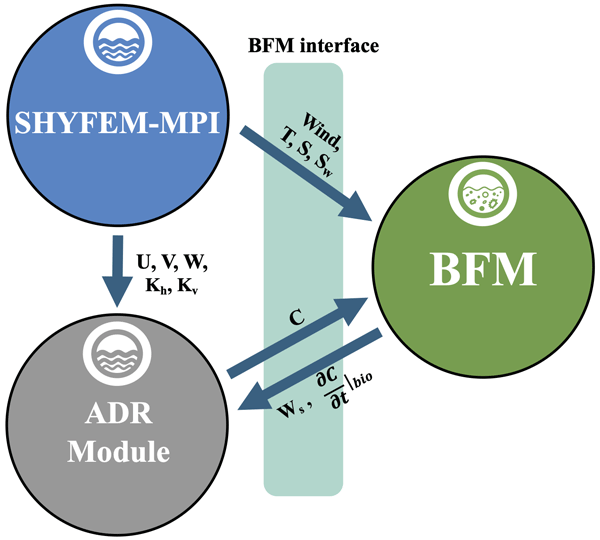
Jacopo Alessandri, Giulia Bonino, Tomas Lovato, Momme Butenschön, Lorenzo Mentaschi, Giorgia Verri, Ivan Federico, and Nadia Pinardi
Geosci. Model Dev., 19, 9301–9324, https://doi.org/10.5194/gmd-19-9301-2026, https://doi.org/10.5194/gmd-19-9301-2026, 2026
Short summary
Short summary
Coastal seas are strongly shaped by complex coastlines, shallow depths, and inputs from rivers, which influence marine life and water quality. This study introduces a new high-resolution modelling system that combines ocean circulation and marine ecosystem processes on unstructured grids. Applied to the northern Adriatic Sea, the model realistically captures seasonal changes in key biogeochemical variables, offering improved tools to support coastal environmental management.
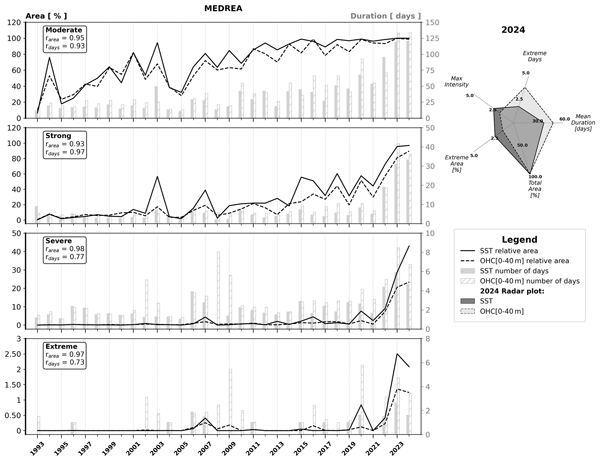
Leonardo Lima, Rafael Gomes de Menezes, Ehsan Sadighrad, Ronan McAdam, Filipe Costa, Pietro Miraglio, Mehmet Ilicak, Eric Jansen, Ali Aydogdu, Francesco Maicu, and Emanuela Clementi
State Planet, 7-osr10, 5, https://doi.org/10.5194/sp-7-osr10-5-2026, https://doi.org/10.5194/sp-7-osr10-5-2026, 2026
Short summary
Short summary
As climate change intensifies, marine heatwaves (MHWs), periods of unusually high ocean temperatures, threaten ecosystems and communities. This study analyzes MHWs in the Mediterranean and Black Seas, examining surface temperatures and ocean heat content in the upper 0–40 m to capture subsurface warming. Findings highlight the need to monitor both surface and subsurface conditions for a comprehensive understanding and better management considering ongoing warming trends in both seas.
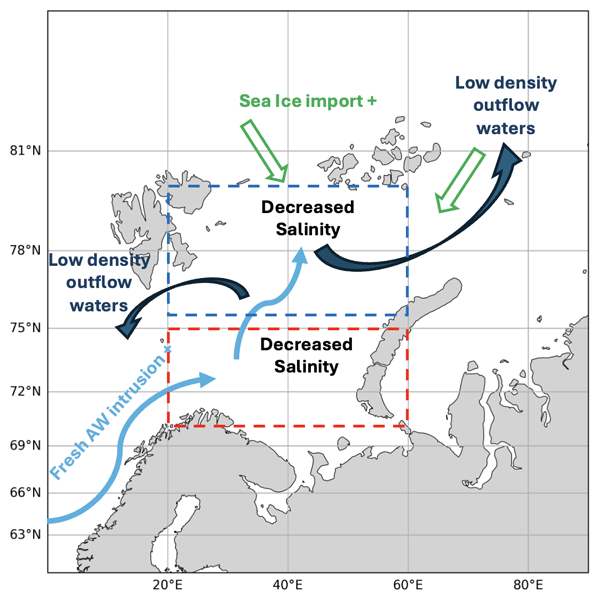
Roshin P. Raj, Vidar S. Lien, Sourav Chatterjee, Saradhy Surendran, Antonio Bonaduce, and Laurent Bertino
State Planet, 7-osr10, 6, https://doi.org/10.5194/sp-7-osr10-6-2026, https://doi.org/10.5194/sp-7-osr10-6-2026, 2026
Short summary
Short summary
Dense water formed and exiting from the Barents Sea constitutes an important part of the global ocean circulation. Considering the significant impact of salinity changes in dense water formation, we investigate the salinity changes in the Barents Sea during the past 3 decades. Our results highlight the recent freshening and its drivers in the northern and southern Barents Sea and show its impact on the density of the waters exiting the Barents Sea.
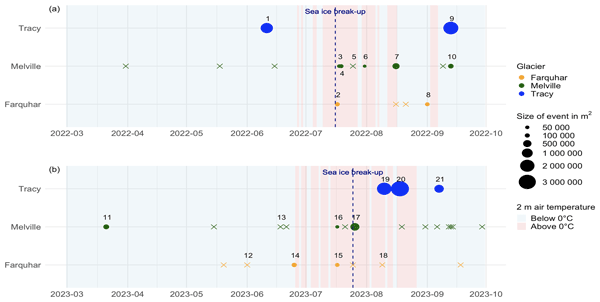
Sofie Hedetoft, Olivia Bang Brinck, Ruth Mottram, Andrea M. U. Gierisch, Steffen Malskær Olsen, Martin Olesen, Nicolaj Hansen, Anders Anker Bjørk, Erik Loebel, Anne Solgaard, and Peter Thejll
The Cryosphere, 20, 5071–5098, https://doi.org/10.5194/tc-20-5071-2026, https://doi.org/10.5194/tc-20-5071-2026, 2026
Short summary
Short summary
Iceberg mélange is the jumble of icebergs in front of some glaciers that calve into the sea. Some studies suggest mélange might help to control the retreat of glaciers. We studied 3 glaciers in NW Greenland where we used GPS sensors and satellites to track ice movement. We found that glaciers push forward and calve all year, including when mélange and landfast sea ice are present, suggesting mélange is not important in supporting glaciers, but may influence the seasonal calving cycle.
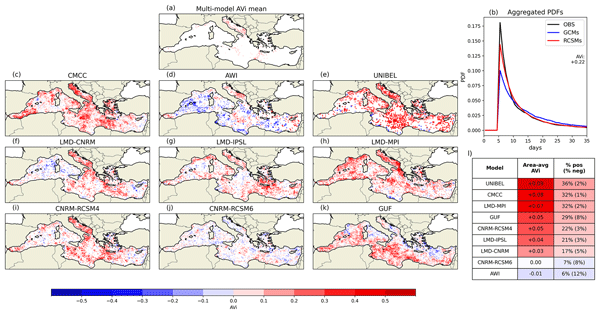
Francesco De Rovere, Giulia Bonino, Ronan McAdam, Enrico Scoccimarro, Samuel Somot, Iván M. Parras-Berrocal, Bodo Ahrens, Vladimir Djurdjevic, Laurent Li, and Simona Masina
Ocean Sci., 22, 2725–2742, https://doi.org/10.5194/os-22-2725-2026, https://doi.org/10.5194/os-22-2725-2026, 2026
Short summary
Short summary
Marine heatwaves in the Mediterranean Sea are intensifying, posing growing threats to marine life and coastal communities. We evaluated if high-resolution regional climate models better capture these extremes compared to the global models driving them. Regional models reliably improve sea surface temperature patterns and marine heatwave duration, but struggle more with heatwave intensity. Higher horizontal resolution alone is not enough, advances in other model components are equally needed.
Anna Pedersen, Steffen M. Olsen, and Carolin R. Löscher
EGUsphere, https://doi.org/10.5194/egusphere-2026-5131, https://doi.org/10.5194/egusphere-2026-5131, 2026
This preprint is open for discussion and under review for Ocean Science (OS).
Short summary
Short summary
High Arctic fjords are changing rapidly with climate warming, but their response remains poorly understood. We studied seasonal changes in the waters of Inglefield Bredning, northwest Greenland, to understand how nutrients reach the surface and support life. We found that deep waters store heat and nutrients, but strong layering limits their transfer upward. Glacier activity may locally increase nutrient supply. Future productivity will depend on how warming alters these processes.
Andrea M. U. Gierisch, Bogi Hansen, Karin Margretha. H. Larsen, and Steffen M. Olsen
EGUsphere, https://doi.org/10.5194/egusphere-2026-5283, https://doi.org/10.5194/egusphere-2026-5283, 2026
This preprint is open for discussion and under review for Ocean Science (OS).
Short summary
Short summary
Around the Faroe Islands there is a submarine ridge, which interferes with the large-scale northward flow of warm Atlantic water and the southward flow of cold deep waters. To improve the simulation of these water flows in an ocean model we increase the grid resolution locally in the region of the ridge. Compared to observations, the water flow becomes more realistic and the cold water sinks deeper. Possibly, the same approach could improve the ocean circulation also in climate models.
Ronan McAdam, Antonella Sanna, Giulia Bonino, and Enrico Scoccimarro
EGUsphere, https://doi.org/10.5194/egusphere-2026-5138, https://doi.org/10.5194/egusphere-2026-5138, 2026
This preprint is open for discussion and under review for Ocean Science (OS).
Short summary
Short summary
Wind-driven upwelling brings nutrient-rich water to the surface, supporting rich ecosystems and fisheries. In 2025, the Gulf of Panama's upwelling collapsed, causing unusually warm water with little chlorophyll. We tested whether seasonal forecasts could have predicted this event. Forecasts captured the weak winds and warm temperatures a season ahead. This shows seasonal forecasting can give early warning of upwelling collapse, helping coastal communities and authorities prepare.
Dimitra Denaxa, Charikleia L.G. Oikonomou, and Gerasimos Korres
State Planet Discuss., https://doi.org/10.5194/sp-2026-14, https://doi.org/10.5194/sp-2026-14, 2026
Preprint under review for SP
Short summary
Short summary
This study examines how wave storms in the Mediterranean Sea have changed over the past four decades. It finds that long-term changes are generally small and vary across the basin, while year-to-year variations strongly affect the observed trends. Comparisons with independent models and observations show consistent results, increasing confidence in the findings. The study improves understanding of extreme wave conditions and provides an updated picture of Mediterranean wave storm variability.
Francesco Maicu, Seimur Shirinov, Charikleia L. G. Oikonomou, Vitalii Sharmar, Lucia Gualtieri, Anna Chiara Goglio, Ehsan Sadighrad, Dimitra Denaxa, Aimie Moulin, Bethany McDonagh, Salvatore Causio, Emanuela Clementi, Gerasimos Korres, Ivan Federico, and Enrico Scoccimarro
State Planet Discuss., https://doi.org/10.5194/sp-2026-12, https://doi.org/10.5194/sp-2026-12, 2026
Preprint under review for SP
Short summary
Short summary
In January 2026, an exceptional storm brought record waves, flooding, and strong currents to the Mediterranean Sea. To understand its coastal impact, we combined data from Europe's ocean monitoring service with a detailed coastal computer model, tracking the storm from open sea to shore. We found unusually high waves, raised sea levels, and strong changes in currents and saltiness. Combining wide-area forecasts with local models improves flood prediction, supporting earlier coastal warning.
Cristina Martí-Solana, Simón Ruiz, Vincent Combes, Bàrbara Barceló-Llull, Maxime Ballarotta, and Ananda Pascual
State Planet Discuss., https://doi.org/10.5194/sp-2026-11, https://doi.org/10.5194/sp-2026-11, 2026
Preprint under review for SP
Short summary
Short summary
The Southern Ocean helps regulate Earth's climate, and its winds have strengthened for decades, raising the question of whether the current circling Antarctica is speeding up. Using twenty-five years of satellite data, we find little evidence of this. Much of the extra wind energy seems absorbed by small swirling currents, which show signs of intensifying, while current speed and position appear fairly stable. This suggests the ocean may continue absorbing heat and carbon as winds strengthen.
Alejandro Blazquez, Benoit Meyssignac, Robin Fraudeau, Michael Ablain, Jonathan Bamber, Antonio Bonaduce, Marie Bouih, Anny Cazenave, Thorben Döhne, Ines Dussaillant, Ramiro Ferrari, Martin Horwath, Nicolas Kolodziejczyk, Hugo Lecomte, Stephanie Leroux, William Llovel, Daniele Melini, Erwan Oulhen, Thierry Penduff, Roshin P. Raj, Giorgio Spada, Marius Schlaak, Papasarafianou Stamatia, Andrea Storto, Chunxue Yang, and Sarah Connors
Earth Syst. Sci. Data Discuss., https://doi.org/10.5194/essd-2026-627, https://doi.org/10.5194/essd-2026-627, 2026
Preprint under review for ESSD
Short summary
Short summary
Closing the sea‑level budget on annual and longer time scales is a cornerstone of physical oceanography because sea‑level rise is one of the best indicators of climate change, and a closed budget shows we have identified and quantified all major drivers. We examined it from 1993 to 2022, finding an accelerated rise that matched ice melt and warm water until 2015. Afterwards an unexplained gap appears. Better deep‑ocean observations and refined gravity processing are needed to close the budget.
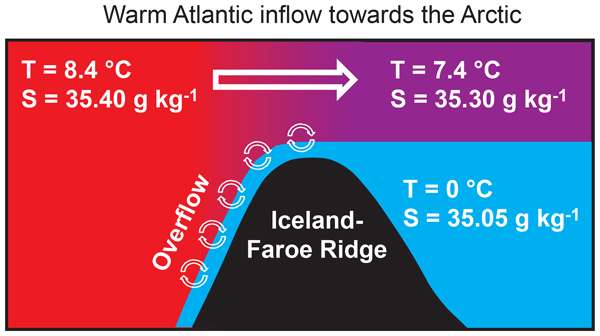
Guðrið Eriksdóttir, Bogi Hansen, Karin Margretha H. Larsen, Steffen M. Olsen, Andrea M. U. Gierisch, and Sólveig Rósa Ólafsdóttir
Ocean Sci., 22, 2405–2423, https://doi.org/10.5194/os-22-2405-2026, https://doi.org/10.5194/os-22-2405-2026, 2026
Short summary
Short summary
The Atlantic inflow across the Iceland-Faroe Ridge carries almost half of the warm water towards the Arctic. This study explores the modifications of the Atlantic water on its way to and across this underwater ridge. While crossing the ridge, the water is strongly cooled and freshened, which can reduce the ability for deep-water formation. Understanding these processes is important for improving ocean and climate models so more realistic forecasts can be made in a warming climate.
Asta C. Heidemann, Alexander Hayward, Philipp Assmy, Atreya Basu, Astrid Bracher, Giulia Castellani, Giacomo Ditullio, Katarzyna Dragańska-Deja, Amane Fujiwara, Glaucia Moreira Fragoso, Jacob Høyer, Jiwoon Hwang, Morten Iversen, Anabel von Jackowski, Thomas Juul-Pedersen, Piotr Kowalczuk, Youngju Lee, Maria A. van Leeuwe, Atsushi Matsuoka, Alenya Merz, Christopher John Mundy, Else Ostermann, Ilka Peeken, Matt Pinkerton, Joanna Stoń-Egiert, Jacqueline Stefels, Antonia U. Thielecke, Gaëlle Veyssiere, Hongyan Xi, Eun Jin Yang, and Rafael Gonçalves-Araujo
Earth Syst. Sci. Data, 18, 5505–5529, https://doi.org/10.5194/essd-18-5505-2026, https://doi.org/10.5194/essd-18-5505-2026, 2026
Short summary
Short summary
Algal pigments are widely used to quantify algal biomass and composition. These organisms form the basis of marine food webs and are vital for the wider ecosystem. Here, we present a pan-Arctic dataset of algal pigments, containing 10 798 measurements collected between 2000 and 2024. This publicly available dataset represents an international collaborative effort and provides an important resource for assessing environmental change and advancing future Arctic ecological and modelling studies.
Achref Othmani, Annette Samuelsen, Jiping Xie, Laurent Bertino, Fabio Mangini, and Roshin Pappukutty Raj
EGUsphere, https://doi.org/10.5194/egusphere-2026-1520, https://doi.org/10.5194/egusphere-2026-1520, 2026
Short summary
Short summary
We developed a high-resolution (6–10 km) HYCOM-CICE configuration to better understand ocean and sea ice conditions in the Arctic and North Atlantic from 2009 to 2019. By comparing the model with available datasets, we found it reliably captures major patterns and seasonal changes. This can support forecasting, helping improve environmental monitoring and decision-making in regions sensitive to climate change.
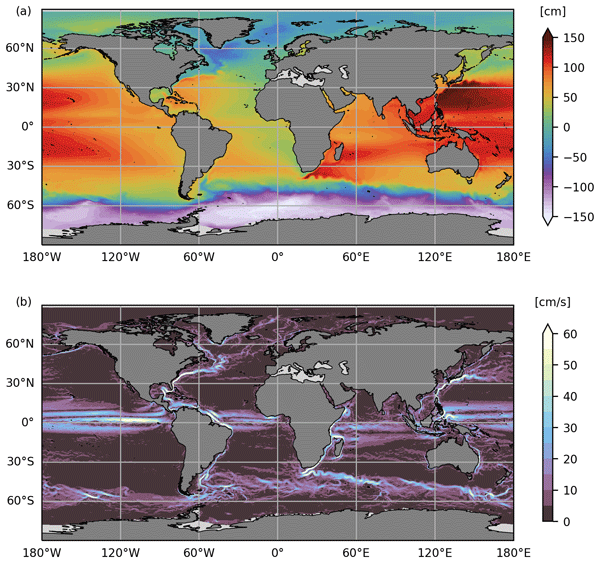
Solène Jousset, Sandrine Mulet, Eric Greiner, John Wilkin, Lien Vidar, Léon Chafik, Roshin Raj, Antonio Bonaduce, Nicolas Picot, and Gérald Dibarboure
Earth Syst. Sci. Data, 18, 2285–2303, https://doi.org/10.5194/essd-18-2285-2026, https://doi.org/10.5194/essd-18-2285-2026, 2026
Short summary
Short summary
Satellite altimetry has revolutionized ocean observation, making it possible to track sea level with very good spatio-temporal coverage. However, only sea level anomalies are retrieved; to monitor the entire ocean signal, mean dynamic topography (MDT) must be added to these anomalies. In this study, an evaluation of the CNES-CLS22 MDT shows significant improvements in the Arctic. Over the globe, this new solution represents an incremental update to previous CNES-CLS18 MDT.
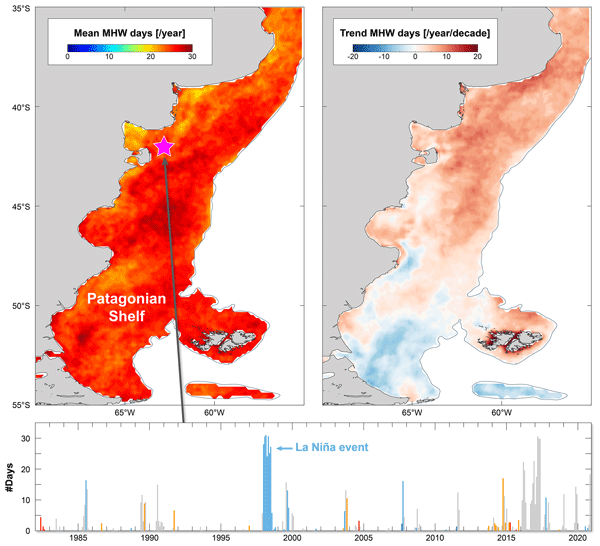
Ana L. Delgado, Vincent Combes, and Gotzon Basterretxea
Ocean Sci., 22, 961–978, https://doi.org/10.5194/os-22-961-2026, https://doi.org/10.5194/os-22-961-2026, 2026
Short summary
Short summary
Marine heatwaves are becoming more common and can disrupt life in the sea, yet little was known about them on the Patagonian Shelf, one of the world's most productive marine regions. We found they occur about twice a year and are increasing in the north as the ocean warms. Climate variability such as La Niña can intensify them, highlighting growing risks for marine ecosystems.

Paul Hargous, Vincent Combes, Bàrbara Barceló-Llull, and Ananda Pascual
Ocean Sci., 22, 549–564, https://doi.org/10.5194/os-22-549-2026, https://doi.org/10.5194/os-22-549-2026, 2026
Short summary
Short summary
Over the last three decades, satellites have revealed rising activity of swirling ocean currents in the Mediterranean Sea. We show that the strength of this increase depends strongly on how satellite data are combined. Products that merge many satellites may give the impression of stronger changes simply because coverage improved over time. This work underlines the importance of using stable and consistent data sets to track long-term changes in ocean variability.
Dimitra Denaxa, Gerasimos Korres, Sofia Darmaraki, and Maria Hatzaki
State Planet, 6-osr9, 10, https://doi.org/10.5194/sp-6-osr9-10-2025, https://doi.org/10.5194/sp-6-osr9-10-2025, 2025
Short summary
Short summary
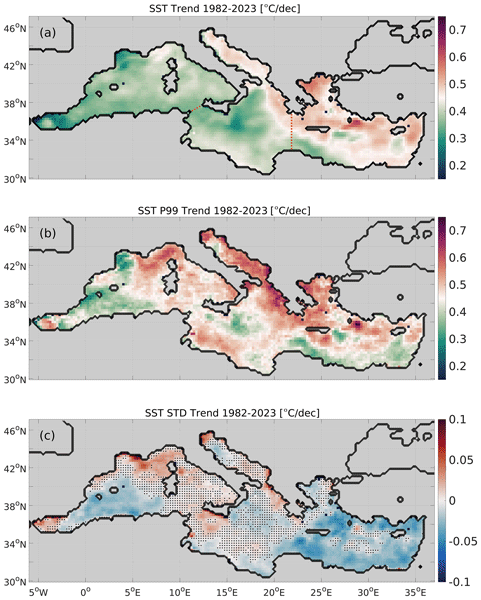
The Mediterranean Sea experiences a basin-wide increase in sea surface temperature (SST) and extreme SST occurrences. Stronger warming trends are found in the eastern basin, where a decrease in SST variability is also observed. Our findings on the origin of marine heatwave (MHW) trends in the basin suggest that the mean SST warming drives the long-term trends for most MHW properties across the basin, except for mean MHW intensity, where interannual variability emerges as the dominant driver.
Anna Pedersen, Carolin R. Löscher, and Steffen M. Olsen
Biogeosciences, 22, 5009–5029, https://doi.org/10.5194/bg-22-5009-2025, https://doi.org/10.5194/bg-22-5009-2025, 2025
Short summary
Short summary
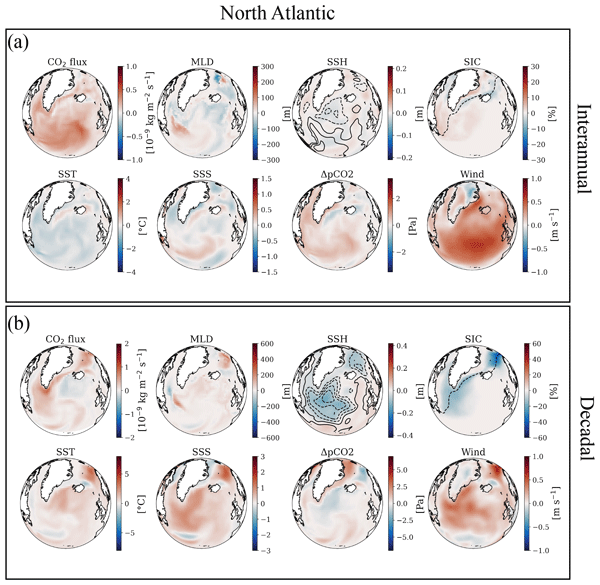
The North Atlantic plays a crucial role in absorbing atmospheric CO2, but its air–sea CO2 flux varies across time and space. Using historical climate model simulations, we investigate how physical and oceanic processes drive the variability. Our results show that sea ice, temperature, salinity, wind stress, and ocean circulation shape CO2 exchange, with short-term fluctuations playing a dominant role. Understanding these complex interactions is key to predicting future ocean carbon uptake.
Franck Eitel Kemgang Ghomsi, Muharrem Hilmi Erkoç, Roshin P. Raj, Atinç Pirti, Antonio Bonaduce, Babatunde J. Abiodun, and Julienne Stroeve
Int. Arch. Photogramm. Remote Sens. Spatial Inf. Sci., XLVIII-M-6-2025, 393–397, https://doi.org/10.5194/isprs-archives-XLVIII-M-6-2025-393-2025, https://doi.org/10.5194/isprs-archives-XLVIII-M-6-2025-393-2025, 2025
Guisella Gacitúa, Jacob Lorentsen Høyer, Sten Schmidl Søbjærg, Hoyeon Shi, Sotirios Skarpalezos, Ioanna Karagali, Emy Alerskans, and Craig Donlon
Geosci. Instrum. Method. Data Syst., 13, 373–391, https://doi.org/10.5194/gi-13-373-2024, https://doi.org/10.5194/gi-13-373-2024, 2024
Short summary
Short summary
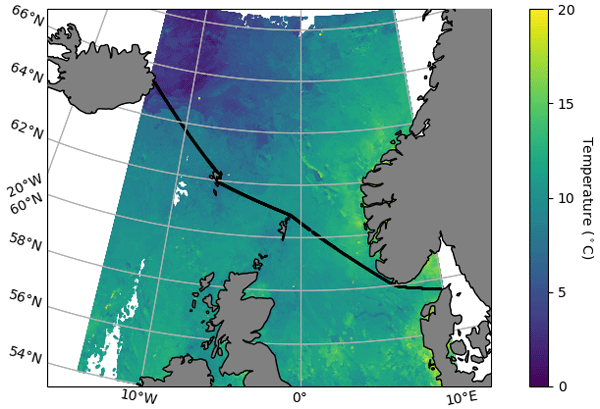
In spring 2021, a study compared sea surface temperature (SST) measurements from thermal infrared (IR) and passive microwave (PMW) radiometers on a ferry between Denmark and Iceland. The goal was to reduce atmospheric effects and directly compare IR and PMW measurements. A method was developed to convert PMW data to match IR data, with uncertainties analysed in the process. The findings provide insights to improve SST inter-comparisons and enhance the synergy between IR and PMW observations.
Karina von Schuckmann, Lorena Moreira, Mathilde Cancet, Flora Gues, Emmanuelle Autret, Ali Aydogdu, Lluis Castrillo, Daniele Ciani, Andrea Cipollone, Emanuela Clementi, Gianpiero Cossarini, Alvaro de Pascual-Collar, Vincenzo De Toma, Marion Gehlen, Rianne Giesen, Marie Drevillon, Claudia Fanelli, Kevin Hodges, Simon Jandt-Scheelke, Eric Jansen, Melanie Juza, Ioanna Karagali, Priidik Lagemaa, Vidar Lien, Leonardo Lima, Vladyslav Lyubartsev, Ilja Maljutenko, Simona Masina, Ronan McAdam, Pietro Miraglio, Helen Morrison, Tabea Rebekka Panteleit, Andrea Pisano, Marie-Isabelle Pujol, Urmas Raudsepp, Roshin Raj, Ad Stoffelen, Simon Van Gennip, Pierre Veillard, and Chunxue Yang
State Planet, 4-osr8, 2, https://doi.org/10.5194/sp-4-osr8-2-2024, https://doi.org/10.5194/sp-4-osr8-2-2024, 2024
Vidar S. Lien, Roshin P. Raj, and Sourav Chatterjee
State Planet, 4-osr8, 8, https://doi.org/10.5194/sp-4-osr8-8-2024, https://doi.org/10.5194/sp-4-osr8-8-2024, 2024
Short summary
Short summary
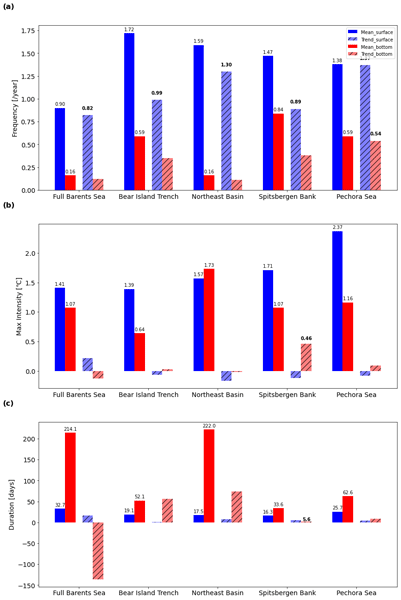
We find that major marine heatwaves are rather coherent throughout the Barents Sea, but surface marine heatwaves occur more frequently while heatwaves on the ocean floor have a longer duration. Moreover, we investigate the sensitivity to the choice of climatological average length when calculating marine heatwave statistics. Our results indicate that severe marine heatwaves may become more frequent in the future Barents Sea due to ongoing climate change.
Ronan McAdam, Giulia Bonino, Emanuela Clementi, and Simona Masina
State Planet, 4-osr8, 13, https://doi.org/10.5194/sp-4-osr8-13-2024, https://doi.org/10.5194/sp-4-osr8-13-2024, 2024
Short summary
Short summary
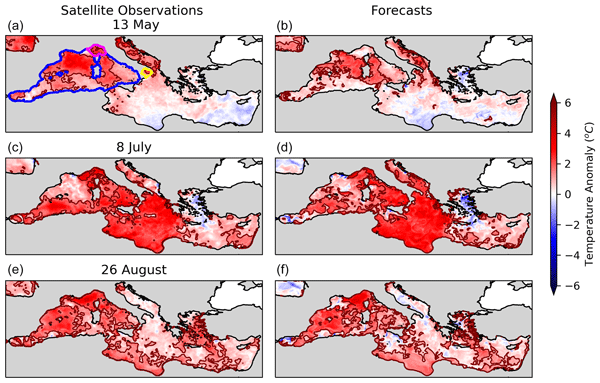
In the summer of 2022, a regional short-term forecasting system was able to predict the onset, spread, peaks, and decay of a record-breaking marine heatwave in the Mediterranean Sea up to 10 d in advance. Satellite data show that the event was record-breaking in terms of basin-wide intensity and duration. This study demonstrates the potential of state-of-the-art forecasting systems to provide early warning of marine heatwaves for marine activities (e.g. conservation and aquaculture).
Dimitra Denaxa, Gerasimos Korres, Giulia Bonino, Simona Masina, and Maria Hatzaki
State Planet, 4-osr8, 11, https://doi.org/10.5194/sp-4-osr8-11-2024, https://doi.org/10.5194/sp-4-osr8-11-2024, 2024
Short summary
Short summary
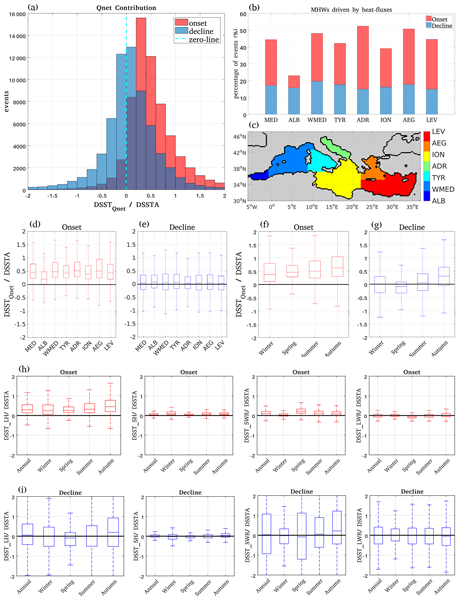
We investigate the air–sea heat flux during marine heatwaves (MHWs) in the Mediterranean Sea. Surface heat flux drives 44 % of the onset and only 17 % of the declining MHW phases, suggesting a key role of oceanic processes. Heat flux is more important in warmer months and onset phases, with latent heat dominating. Shorter events show a weaker heat flux contribution. In most cases, mixed layer shoaling occurs over the entire MHW duration, followed by vertical mixing after the MHW end day.
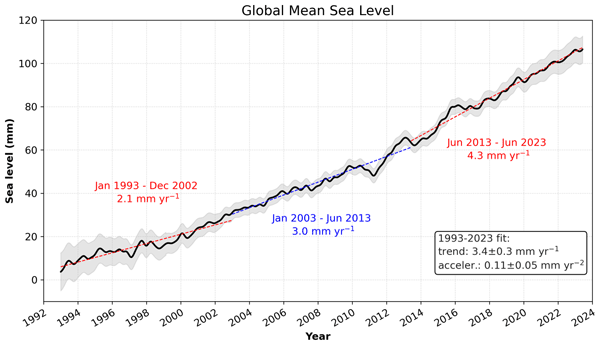
Karina von Schuckmann, Lorena Moreira, Mathilde Cancet, Flora Gues, Emmanuelle Autret, Jonathan Baker, Clément Bricaud, Romain Bourdalle-Badie, Lluis Castrillo, Lijing Cheng, Frederic Chevallier, Daniele Ciani, Alvaro de Pascual-Collar, Vincenzo De Toma, Marie Drevillon, Claudia Fanelli, Gilles Garric, Marion Gehlen, Rianne Giesen, Kevin Hodges, Doroteaciro Iovino, Simon Jandt-Scheelke, Eric Jansen, Melanie Juza, Ioanna Karagali, Thomas Lavergne, Simona Masina, Ronan McAdam, Audrey Minière, Helen Morrison, Tabea Rebekka Panteleit, Andrea Pisano, Marie-Isabelle Pujol, Ad Stoffelen, Sulian Thual, Simon Van Gennip, Pierre Veillard, Chunxue Yang, and Hao Zuo
State Planet, 4-osr8, 1, https://doi.org/10.5194/sp-4-osr8-1-2024, https://doi.org/10.5194/sp-4-osr8-1-2024, 2024
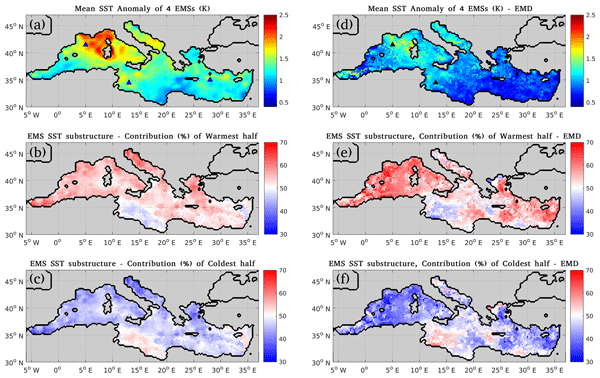
Dimitra Denaxa, Gerasimos Korres, Emmanouil Flaounas, and Maria Hatzaki
Ocean Sci., 20, 433–461, https://doi.org/10.5194/os-20-433-2024, https://doi.org/10.5194/os-20-433-2024, 2024
Short summary
Short summary
This study explores extreme marine summers (EMSs) in the Mediterranean Sea using sea surface temperature (SST) data. EMSs arise mainly due to the warmest summer days being unusually warm. Air–sea heat fluxes drive EMSs in northern regions, where also enhanced marine heatwave conditions are found during EMSs. Long-term SST changes lead to warmer EMSs while not affecting the way daily SST values are organized during EMSs. Findings enhance comprehension of anomalously warm conditions in the basin.
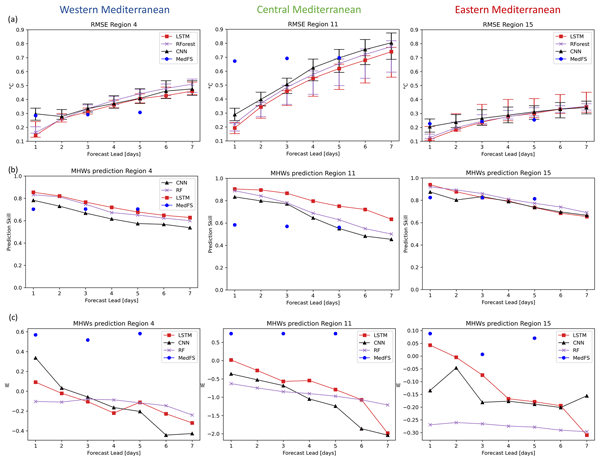
Giulia Bonino, Giuliano Galimberti, Simona Masina, Ronan McAdam, and Emanuela Clementi
Ocean Sci., 20, 417–432, https://doi.org/10.5194/os-20-417-2024, https://doi.org/10.5194/os-20-417-2024, 2024
Short summary
Short summary
This study employs machine learning to predict marine heatwaves (MHWs) in the Mediterranean Sea. MHWs have far-reaching impacts on society and ecosystems. Using data from ESA and ECMWF, the research develops accurate prediction models for sea surface temperature (SST) and MHWs across the region. Notably, machine learning methods outperform existing forecasting systems, showing promise in early MHW predictions. The study also highlights the importance of solar radiation as a predictor of SST.
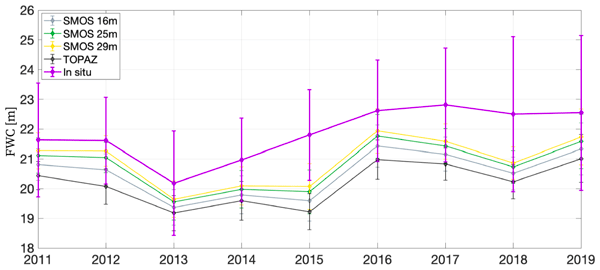
Marta Umbert, Eva De Andrés, Maria Sánchez, Carolina Gabarró, Nina Hoareau, Veronica González-Gambau, Aina García-Espriu, Estrella Olmedo, Roshin P. Raj, Jiping Xie, and Rafael Catany
Ocean Sci., 20, 279–291, https://doi.org/10.5194/os-20-279-2024, https://doi.org/10.5194/os-20-279-2024, 2024
Short summary
Short summary
Satellite retrievals of sea surface salinity (SSS) offer insights into freshwater changes in the Arctic Ocean. This study evaluates freshwater content in the Beaufort Gyre using SMOS and reanalysis data, revealing underestimation with reanalysis alone. Incorporating satellite SSS measurements improves freshwater content estimation, especially near ice-melting areas. Adding remotely sensed salinity aids in monitoring Arctic freshwater content and in understanding its impact on global climate.
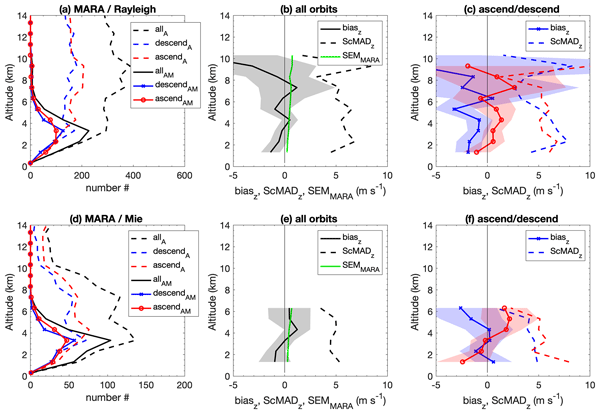
Sheila Kirkwood, Evgenia Belova, Peter Voelger, Sourav Chatterjee, and Karathazhiyath Satheesan
Atmos. Meas. Tech., 16, 4215–4227, https://doi.org/10.5194/amt-16-4215-2023, https://doi.org/10.5194/amt-16-4215-2023, 2023
Short summary
Short summary
We compared 2 years of wind measurements by the Aeolus satellite with winds from two wind-profiler radars in Arctic Sweden and coastal Antarctica. Biases are similar in magnitude to results from other locations. They are smaller than in earlier studies due to more comparison points and improved criteria for data rejection. On the other hand, the standard deviation is somewhat higher because of degradation of the Aeolus lidar.
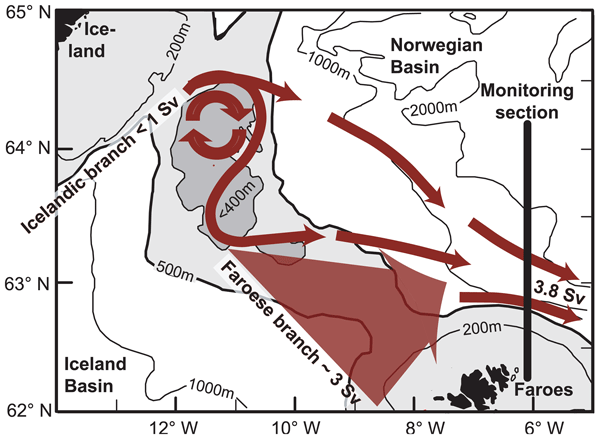
Bogi Hansen, Karin M. H. Larsen, Hjálmar Hátún, Steffen M. Olsen, Andrea M. U. Gierisch, Svein Østerhus, and Sólveig R. Ólafsdóttir
Ocean Sci., 19, 1225–1252, https://doi.org/10.5194/os-19-1225-2023, https://doi.org/10.5194/os-19-1225-2023, 2023
Short summary
Short summary
Based on in situ observations combined with sea level anomaly (SLA) data from satellite altimetry, volume as well as heat (relative to 0 °C) transport of the Iceland–Faroe warm-water inflow towards the Arctic (IF inflow) increased from 1993 to 2021. The reprocessed SLA data released in December 2021 represent observed variations accurately. The IF inflow crosses the Iceland–Faroe Ridge in two branches, with retroflection in between. The associated coupling to overflow reduces predictability.
Leonardo Lima, Salvatore Causio, Mehmet Ilicak, Ronan McAdam, and Eric Jansen
State Planet Discuss., https://doi.org/10.5194/sp-2023-19, https://doi.org/10.5194/sp-2023-19, 2023
Revised manuscript not accepted
Short summary
Short summary
Recent studies have revealed an increase in the ocean temperature and heat content in the Black Sea, where the research on marine heat waves (MHWs) is still incipient. Our study reveals long-lasting MHWs and interesting connections between surface and subsurface MHWs in the Black Sea. Our analysis is a starting point to create a monitoring system of MHWs for the Black Sea.
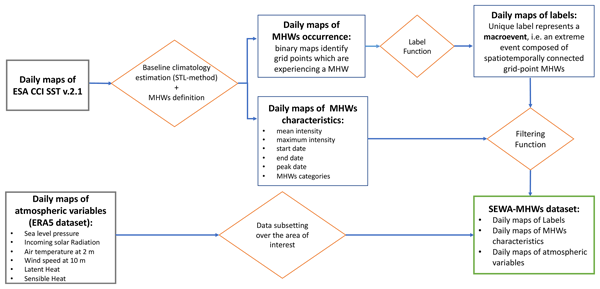
Giulia Bonino, Simona Masina, Giuliano Galimberti, and Matteo Moretti
Earth Syst. Sci. Data, 15, 1269–1285, https://doi.org/10.5194/essd-15-1269-2023, https://doi.org/10.5194/essd-15-1269-2023, 2023
Short summary
Short summary
We present a unique observational dataset of marine heat wave (MHW) macroevents and their characteristics over southern Europe and western Asian (SEWA) basins in the SEWA-MHW dataset. This dataset is the first effort in the literature to archive extremely hot sea surface temperature macroevents. The advantages of the availability of SEWA-MHWs are avoiding the waste of computational resources to detect MHWs and building a consistent framework which would increase comparability among MHW studies.
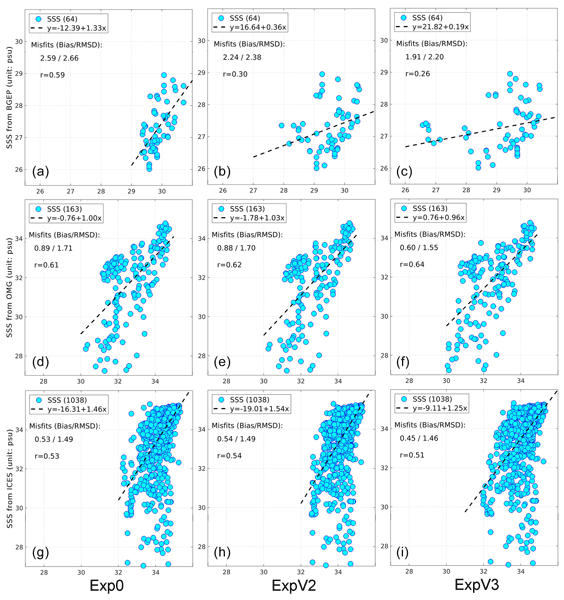
Jiping Xie, Roshin P. Raj, Laurent Bertino, Justino Martínez, Carolina Gabarró, and Rafael Catany
Ocean Sci., 19, 269–287, https://doi.org/10.5194/os-19-269-2023, https://doi.org/10.5194/os-19-269-2023, 2023
Short summary
Short summary
Sea ice melt, together with other freshwater sources, has effects on the Arctic environment. Sea surface salinity (SSS) plays a key role in representing water mixing. Recently the satellite SSS from SMOS was developed in the Arctic region. In this study, we first evaluate the impact of assimilating these satellite data in an Arctic reanalysis system. It shows that SSS errors are reduced by 10–50 % depending on areas, encouraging its use in a long-time reanalysis to monitor the Arctic water cycle.
Vidar S. Lien and Roshin P. Raj
State Planet Discuss., https://doi.org/10.5194/sp-2022-13, https://doi.org/10.5194/sp-2022-13, 2022
Preprint withdrawn
Short summary
Short summary
Dense overflow water entering the North Atlantic from the Nordic Seas forms the northern limb of the Atlantic Meridional Overturning Circulation. The formation of dense water in the Nordic Seas is sensitive to the properties of the northward flowing Atlantic Water entering the Nordic Seas to the south. We find that the unprecedented freshwater anomaly in the North Atlantic recent years caused the dense water formed in the Barents Sea to have the lowest density in recorded history.
Charikleia L. G. Oikonomou, Dimitra Denaxa, and Gerasimos Korres
State Planet Discuss., https://doi.org/10.5194/sp-2022-16, https://doi.org/10.5194/sp-2022-16, 2022
Preprint withdrawn
Short summary
Short summary
We explore the wave energy resource within the Mediterranean basin, along with the dominant wave regime. Results suggest that although the basin is not characterised by high energy potential, it could serve as a deployment zone for low-power devices due to low peak period variability and high site accessibility levels. Results suggest that further research is required to determine the dominant wave regime, as the high contribution of swell partitions hints the occurrence of mixed sea states.
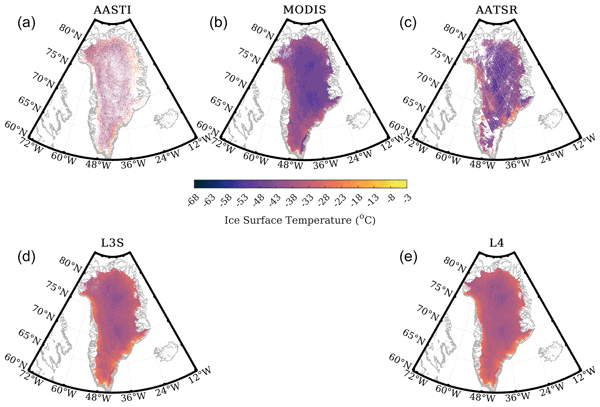
Ioanna Karagali, Magnus Barfod Suhr, Ruth Mottram, Pia Nielsen-Englyst, Gorm Dybkjær, Darren Ghent, and Jacob L. Høyer
The Cryosphere, 16, 3703–3721, https://doi.org/10.5194/tc-16-3703-2022, https://doi.org/10.5194/tc-16-3703-2022, 2022
Short summary
Short summary
Ice surface temperature (IST) products were used to develop the first multi-sensor, gap-free Level 4 (L4) IST product of the Greenland Ice Sheet (GIS) for 2012, when a significant melt event occurred. For the melt season, mean IST was −15 to −1 °C, and almost the entire GIS experienced at least 1 to 5 melt days. Inclusion of the L4 IST to a surface mass budget (SMB) model improved simulated surface temperatures during the key onset of the melt season, where biases are typically large.

Giulia Bonino, Doroteaciro Iovino, Laurent Brodeau, and Simona Masina
Geosci. Model Dev., 15, 6873–6889, https://doi.org/10.5194/gmd-15-6873-2022, https://doi.org/10.5194/gmd-15-6873-2022, 2022
Short summary
Short summary
The sea surface temperature (SST) is highly influenced by the transfer of energy driven by turbulent air–sea fluxes (TASFs). In the NEMO ocean general circulation model, TASFs are computed by means of bulk formulas. Bulk formulas require the choice of a given bulk parameterization, which influences the magnitudes of the TASFs. Our results show that parameterization-related SST differences are primarily sensitive to the wind stress differences across parameterizations.
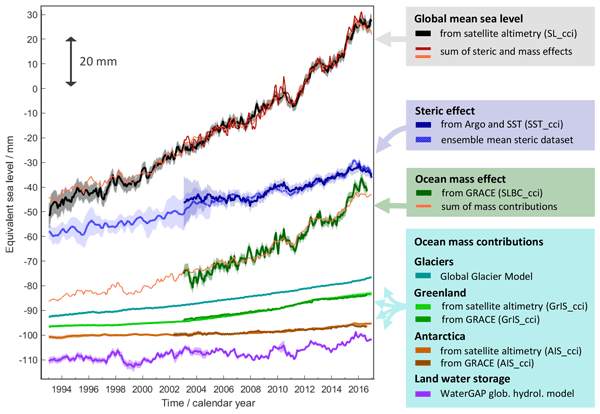
Martin Horwath, Benjamin D. Gutknecht, Anny Cazenave, Hindumathi Kulaiappan Palanisamy, Florence Marti, Ben Marzeion, Frank Paul, Raymond Le Bris, Anna E. Hogg, Inès Otosaka, Andrew Shepherd, Petra Döll, Denise Cáceres, Hannes Müller Schmied, Johnny A. Johannessen, Jan Even Øie Nilsen, Roshin P. Raj, René Forsberg, Louise Sandberg Sørensen, Valentina R. Barletta, Sebastian B. Simonsen, Per Knudsen, Ole Baltazar Andersen, Heidi Ranndal, Stine K. Rose, Christopher J. Merchant, Claire R. Macintosh, Karina von Schuckmann, Kristin Novotny, Andreas Groh, Marco Restano, and Jérôme Benveniste
Earth Syst. Sci. Data, 14, 411–447, https://doi.org/10.5194/essd-14-411-2022, https://doi.org/10.5194/essd-14-411-2022, 2022
Short summary
Short summary
Global mean sea-level change observed from 1993 to 2016 (mean rate of 3.05 mm yr−1) matches the combined effect of changes in water density (thermal expansion) and ocean mass. Ocean-mass change has been assessed through the contributions from glaciers, ice sheets, and land water storage or directly from satellite data since 2003. Our budget assessments of linear trends and monthly anomalies utilise new datasets and uncertainty characterisations developed within ESA's Climate Change Initiative.
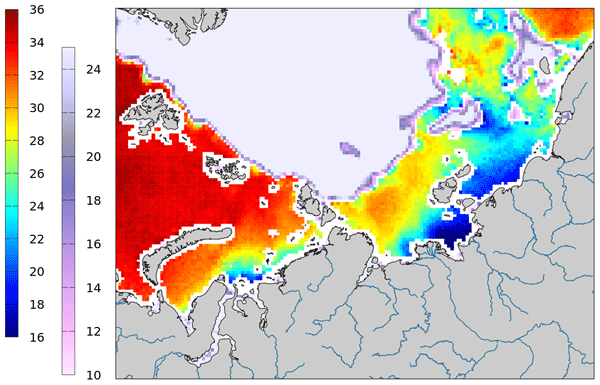
Justino Martínez, Carolina Gabarró, Antonio Turiel, Verónica González-Gambau, Marta Umbert, Nina Hoareau, Cristina González-Haro, Estrella Olmedo, Manuel Arias, Rafael Catany, Laurent Bertino, Roshin P. Raj, Jiping Xie, Roberto Sabia, and Diego Fernández
Earth Syst. Sci. Data, 14, 307–323, https://doi.org/10.5194/essd-14-307-2022, https://doi.org/10.5194/essd-14-307-2022, 2022
Short summary
Short summary
Measuring salinity from space is challenging since the sensitivity of the brightness temperature to sea surface salinity is low, but the retrieval of SSS in cold waters is even more challenging. In 2019, the ESA launched a specific initiative called Arctic+Salinity to produce an enhanced Arctic SSS product with better quality and resolution than the available products. This paper presents the methodologies used to produce the new enhanced Arctic SMOS SSS product.
Cited articles
Amaya, D. J., Jacox, M. G., Fewings, M. R., Saba, V. S., Stuecker, M. F., Rykaczewski, R. R., Ross, A. C., Stock, C. A., Capotondi, A., Petrik, C. M., Bograd, S. J., Alexander, M. A., Cheng, W., Hermann, A. J., Kearney, K. A., and Powell, B. S.: Marine heatwaves need clear definitions so coastal communities can adapt, Nature, 616, 29–32, https://doi.org/10.1038/d41586-023-00924-2, 2023.
Bond, N. A., Cronin, M. F., Freeland, H. J., and Mantua, N. J.: Causes and impacts of the 2014 warm anomaly in the NE Pacific, Geophys. Res. Lett., 42, 3414–3420, https://doi.org/10.1002/2015GL063306, 2015.
Donlon, C. J., Martin, M. J., Stark, J. D., Roberts-Jones, J., Fiedler, E., and Wimmer, W.: The Operational Sea Surface Temperature and Sea Ice Analysis (OSTIA) system, Remote Sens. Environ., 116, 140–158, https://doi.org/10.1016/j.rse.2010.10.017, 2012.
Embury, O., Merchant, C. J., Good, S. A., Rayner, N. A., Høyer, J. L., Atkinson, C., Block, T., Alerskans, E., Pearson, K. J., Worsfold, M., McCarroll, N., and Donlon, C.: Satellite-based time-series of sea-surface temperature since 1980 for climate applications, Sci. Data, 11, 326, https://doi.org/10.1038/s41597-024-03147-w, 2024.
Farchadi, N., McDonnell, L. H., Ryan, S., Lewison, R. L., and Braun, C. D.: Marine heatwaves are in the eye of the beholder, Nat. Clim. Change, 15, 236–239, https://doi.org/10.1038/s41558-025-02257-6, 2025.
Frölicher, T. L., Fischer, E. M., and Gruber, N.: Marine heatwaves under global warming, Nature, 560, 360–364, https://doi.org/10.1038/s41586-018-0383-9, 2018.
Garrabou, J., Gómez-Gras, D., Ledoux, J.-B., Linares, C., Bensoussan, N., López-Sendino, P., Bazairi, H., Espinosa, F., Ramdani, M., Grimes, S., Benabdi, M., Ben Souissi, J., Soufi, E., Khamassi, F., Ghanem, R., Ocaña, O., Ramos-Esplà, A., Izquierdo, A., Anton, I., Rubio-Portillo, E., Barbera, C., Cebrian, E., Marbà, N., Hendriks, I. E., Duarte, C. M., Deudero, S., Díaz, D., Vázquez-Luis, M., Alvarez, E., Hereu, B., Kersting, D. K., Gori, A., Viladrich, N., Sartoretto, S., Pairaud, I., Ruitton, S., Pergent, G., Pergent-Martini, C., Rouanet, E., Teixidó, N., Gattuso, J.-P., Fraschetti, S., Rivetti, I., Azzurro, E., Cerrano, C., Ponti, M., Turicchia, E., Bavestrello, G., Cattaneo-Vietti, R., Bo, M., Bertolino, M., Montefalcone, M., Chimienti, G., Grech, D., Rilov, G., Tuney Kizilkaya, I., Kizilkaya, Z., Topçu, N. E., Gerovasileiou, V., Sini, M., Bakran-Petricioli, T., Kipson, S., and Harmelin, J. G.: Collaborative database to track mass mortality events in the Mediterranean Sea, Front. Mar. Sci., 6, 707, https://doi.org/10.3389/fmars.2019.00707, 2019.
Gonzalez, S., Sandvik, A. D., Jensen, M. F., Albretsen, J., Sandø, A. B., Ingvaldsen, R. B., Hjøllo, S. S., and Vikebø, F.: Drivers of the summer 2024 marine heatwave and record salmon lice outbreak in northern Norway, Commun. Earth Environ., 6, 639, https://doi.org/10.1038/s43247-025-02618-1, 2025.
Good, S. A. and Embury, O.: ESA Sea Surface Temperature Climate Change Initiative (SST_cci): Level 4 Analysis product, version 3.0, NERC EDS Centre for Environmental Data Analysis [data set], https://doi.org/10.5285/4a9654136a7148e39b7feb56f8bb02d2, 2024.
Good, S. A., Fiedler, E., Mao, C., Martin, M. J., Maycock, A., Reid, R., Roberts-Jones, J., Searle, T., Waters, J., While, J., and Worsfold, M.: The current configuration of the OSTIA system for operational production of foundation sea surface temperature and ice concentration analyses, Remote Sens., 12, 720, https://doi.org/10.3390/rs12040720, 2020.
Hayward, A., Dasgupta, N., McAdam, R., Payne, M. R., Raj, R., Bonino, G., Chatterjee, S., Combes, V., Denaxa, D., De Rovere, F., Englyst, P., Haapaniemi, V., Hargous, P., Høyer, J., Joseph, K. A., Lopes, B., Oliveira, A., Paixão, J., Silva, F., Surendran, S., Zegna-Rata, A., and Olsen, S.: Marine Heat Waves and Cold Spells – Multiple Analysis/Definitions (MHW-MAD), Zenodo [data set], https://doi.org/10.5281/zenodo.21835325, 2026.
Hayward, A., Wright, S. W., Carroll, D., Law, C. S., Wongpan, P., Gutiérrez-Rodriguez, A., and Pinkerton, M. H.: Antarctic phytoplankton communities restructure under shifting sea-ice regimes, Nat. Clim. Change, 15, 889–896, https://doi.org/10.1038/s41558-025-02379-x, 2025.
Hobday, A. J., Alexander, L. V., Perkins, S. E., Smale, D. A., Straub, S. C., Oliver, E. C. J., Benthuysen, J. A., Burrows, M. T., Donat, M. G., Feng, M., Holbrook, N. J., Moore, P. J., Scannell, H. A., Sen Gupta, A., and Wernberg, T.: A hierarchical approach to defining marine heatwaves, Prog. Oceanogr., 141, 227–238, https://doi.org/10.1016/j.pocean.2015.12.014, 2016.
Hobday, A. J., Oliver, E. C. J., Sen Gupta, A., Benthuysen, J. A., Burrows, M. T., Donat, M. G., Holbrook, N. J., Moore, P. J., Thomsen, M. S., Wernberg, T., and Smale, D. A.: Categorizing and naming marine heatwaves, Oceanography, 31, 162–173, https://doi.org/10.5670/oceanog.2018.205, 2018.
Lien, V. S., Raj, R. P., and Chatterjee, S.: Surface and bottom marine heatwave characteristics in the Barents Sea: a model study, in: 8th edition of the Copernicus Ocean State Report (OSR8), edited by: von Schuckmann, K., Moreira, L., Grégoire, M., Marcos, M., Staneva, J., Brasseur, P., Garric, G., Lionello, P., Karstensen, J., and Neukermans, G., Copernicus Publications, State Planet, 4-osr8, 8, https://doi.org/10.5194/sp-4-osr8-8-2024, 2024.
Lonhart, S. I., Jeppesen, R., Beas-Luna, R., Crooks, J. A., and Raimondi, P. T.: Shifts in the distribution and abundance of coastal marine species along the eastern Pacific Ocean during marine heatwaves from 2013 to 2018, Mar. Biodivers. Rec., 12, 13, https://doi.org/10.1186/s41200-019-0171-8, 2019.
Nielsen-Englyst, P., Høyer, J. L., Karagali, I., Kolbe, W. M., Tonboe, R. T., and Pedersen, L. T.: Impact of microwave observations on the estimation of Arctic sea surface temperatures. Remote Sens. Environ., 301, 113949, https://doi.org/10.1016/j.rse.2023.113949, 2024.
Oliver, E. C. J., Donat, M. G., Burrows, M. T., Moore, P. J., Smale, D. A., Alexander, L. V., Benthuysen, J. A., Feng, M., Sen Gupta, A., Hobday, A. J., Holbrook, N. J., Perkins-Kirkpatrick, S. E., Scannell, H. A., Straub, S. C., and Wernberg, T.: Longer and more frequent marine heatwaves over the past century, Nat. Commun., 9, 1324, https://doi.org/10.1038/s41467-018-03732-9, 2018.
Pecuchet, L., Mohamed, B., Hayward, A., Alvera-Azcárate, A., Dörr, J., Filbee-Dexter, K., Kuletz, K. J., Luis, K., Manizza, M., Miller, C. E., Stæhr, P. A. U., Szymkowiak, M., and Wernberg, T.: Arctic and Subarctic marine heatwaves and their ecological impacts, Front. Environ. Sci., 13, 1473890, https://doi.org/10.3389/fenvs.2025.1473890, 2025.
Purich, A. and Doddridge, E. W.: Record low Antarctic sea ice coverage indicates a new sea ice state, Commun. Earth Environ., 4, 314, https://doi.org/10.1038/s43247-023-00961-9, 2023.
Renner, H. M., Jones, T., Byrd, G. V., Hinke, J. T., and Kaler, R. S. A.: Widespread seabird mortality linked to a marine heatwave, Science, 384, 747–752, https://doi.org/10.1126/science.adq4330, 2024.
Roberts, S. D., Van Ruth, P. D., Wilkinson, C., Bastianello, S. S., and Bansemer, M. S.: Marine heatwave, harmful algae blooms and an extensive fish kill event during 2013 in South Australia, Frontiers in Marine Science, 6, 610, https://doi.org/10.3389/fmars.2019.00610, 2019.
Schlegel, R. W., Oliver, E. C. J., Hobday, A. J., and Smit, A. J.: Detecting marine heatwaves with sub-optimal data, Front. Mar. Sci., 6, 737, https://doi.org/10.3389/fmars.2019.00737, 2019.
Smale, D. A., Wernberg, T., Oliver, E. C. J., Thomsen, M., Harvey, B. P., Straub, S. C., Burrows, M. T., Alexander, L. V., Benthuysen, J. A., Donat, M. G., Feng, M., Hobday, A. J., Holbrook, N. J., Perkins-Kirkpatrick, S. E., Scannell, H. A., Sen Gupta, A., Payne, B. L., and Moore, P. J.: Marine heatwaves threaten global biodiversity and the provision of ecosystem services, Nat. Clim. Change, 9, 306–312, https://doi.org/10.1038/s41558-019-0412-1, 2019.
Smith, K. E., Oliver, E. C. J., Smale, D. A., Wernberg, T., and Payne, B. L.: Baseline matters: challenges and implications of different marine heatwave baselines, Prog. Oceanogr., 231, 103404, https://doi.org/10.1016/j.pocean.2024.103404, 2025.
Stroeve, J., Holland, M. M., Meier, W., Scambos, T., and Serreze, M.: Arctic sea ice decline: faster than forecast, Geophys. Res. Lett., 34, L09501, https://doi.org/10.1029/2007GL029703, 2007.
Wernberg, T., Bennett, S., Babcock, R. C., de Bettignies, T., Cure, K., Depczynski, M., Dufois, F., Fromont, J., Fulton, C. J., Hovey, R. K., Harvey, E. S., Holmes, T. H., Kendrick, G. A., Radford, B., Santana-Garcon, J., Saunders, B. J., Smale, D. A., Thomsen, M. S., Tuckett, C. A., Tuya, F., Vanderklift, M. A., and Wilson, S.: Climate-driven regime shift of a temperate marine ecosystem, Science, 353, 169–172, https://doi.org/10.1126/science.aad8745, 2016.
World Meteorological Organization (WMO): Guidelines on the definition and characterization of extreme weather and climate events, WMO-No. 1310, WMO, Geneva, Switzerland, https://library.wmo.int/records/item/58396-guide lines-onthe-definition-and-characterization-of-extreme-weather-and-climate-events (last access: 18 August 2026), 2023.
Yang, C., Leonelli, F. E., Marullo, S., Artale, V., Beggs, H., Buongiorno Nardelli, B., Chin, T. M., De Toma, V., Good, S., Huang, B., Merchant, C. J., Sakurai, T., Santoleri, R., Vazquez-Cuervo, J., Zhang, H.-M., and Pisano, A.: Sea surface temperature intercomparison in the framework of the Copernicus Climate Change Service (C3S), J. Climate, 34, 5257–5283, https://doi.org/10.1175/JCLI-D-20-0793.1, 2021.
Short summary
We present a global marine heatwave and cold spell dataset (1982–2024) based on satellite sea surface temperature. The dataset applies multiple definitions in parallel, varying baselines, thresholds, detrending, and event durations. It enables consistent comparisons of marine heatwave characterisation across methods and supports climate monitoring, and ecological impact studies.
We present a global marine heatwave and cold spell dataset (1982–2024) based on satellite sea...


Altmetrics
Final-revised paper
Preprint