Articles | Volume 18, issue 8
https://doi.org/10.5194/essd-18-6191-2026
© Author(s) 2026. This work is distributed under
the Creative Commons Attribution 4.0 License.
the Creative Commons Attribution 4.0 License.
https://doi.org/10.5194/essd-18-6191-2026
© Author(s) 2026. This work is distributed under
the Creative Commons Attribution 4.0 License.
the Creative Commons Attribution 4.0 License.
Data description article
| Highlight paper
| 
28 Aug 2026
Data description article | Highlight paper |
| 28 Aug 2026
| 28 Aug 2026
Integrated dataset of atmospheric bioaerosols over east Asia
Zhongwei Huang
Key Laboratory of Semi-Arid Climate Changes with the Ministry of Education, College of Atmospheric Sciences, Lanzhou University, Lanzhou, 730000, China
Collaborative Innovation Center for Western Ecological Safety, Lanzhou University, Lanzhou, 730000, China
Wenjin Zhang
Key Laboratory of Semi-Arid Climate Changes with the Ministry of Education, College of Atmospheric Sciences, Lanzhou University, Lanzhou, 730000, China
Qing Dong
Key Laboratory of Semi-Arid Climate Changes with the Ministry of Education, College of Atmospheric Sciences, Lanzhou University, Lanzhou, 730000, China
Teruya Maki
Department of Life Science, Faculty of Science and Engineering, Kindai University, Higashiosaka, Osaka, Japan
Yongkai Wang
Key Laboratory of Semi-Arid Climate Changes with the Ministry of Education, College of Atmospheric Sciences, Lanzhou University, Lanzhou, 730000, China
Yuanzong Ji
Key Laboratory of Semi-Arid Climate Changes with the Ministry of Education, College of Atmospheric Sciences, Lanzhou University, Lanzhou, 730000, China
Fanli Xue
Key Laboratory of Semi-Arid Climate Changes with the Ministry of Education, College of Atmospheric Sciences, Lanzhou University, Lanzhou, 730000, China
Xuefei Huo
Key Laboratory of Semi-Arid Climate Changes with the Ministry of Education, College of Atmospheric Sciences, Lanzhou University, Lanzhou, 730000, China
Da Lu
Key Laboratory of Semi-Arid Climate Changes with the Ministry of Education, College of Atmospheric Sciences, Lanzhou University, Lanzhou, 730000, China
Dongdong Wang
Key Laboratory of Semi-Arid Climate Changes with the Ministry of Education, College of Atmospheric Sciences, Lanzhou University, Lanzhou, 730000, China
Jinsen Shi
Key Laboratory of Semi-Arid Climate Changes with the Ministry of Education, College of Atmospheric Sciences, Lanzhou University, Lanzhou, 730000, China
Collaborative Innovation Center for Western Ecological Safety, Lanzhou University, Lanzhou, 730000, China
Jianrong Bi
Key Laboratory of Semi-Arid Climate Changes with the Ministry of Education, College of Atmospheric Sciences, Lanzhou University, Lanzhou, 730000, China
Collaborative Innovation Center for Western Ecological Safety, Lanzhou University, Lanzhou, 730000, China

Key Laboratory of Semi-Arid Climate Changes with the Ministry of Education, College of Atmospheric Sciences, Lanzhou University, Lanzhou, 730000, China
Collaborative Innovation Center for Western Ecological Safety, Lanzhou University, Lanzhou, 730000, China
Related authors
Zikai Lin, Tian Zhou, Zhengpeng Li, Yonghong Gu, Dongsheng Wu, Ping Zhou, Keyu Zhang, Qili Gao, Xingran Li, Zhongwei Huang, Jianrong Bi, Lili Yang, and Lina Wang
Atmos. Chem. Phys., 26, 11111–11133, https://doi.org/10.5194/acp-26-11111-2026, https://doi.org/10.5194/acp-26-11111-2026, 2026
Short summary
Short summary
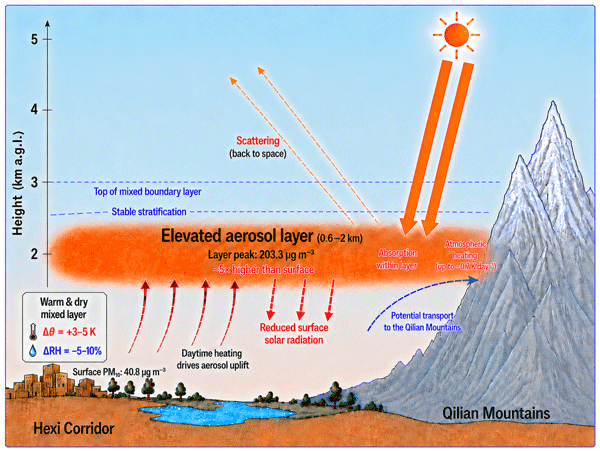
This study examined high-altitude airborne particles over the Hexi Corridor using field observations. Such particles commonly accumulate 0.6–2 km aloft. Dunhuang features natural dust, while Minqin is dominated by human pollutants. Upper-level pollution is five times higher than that on the ground. These trapped particles warm the air and may accelerate glacier melting. This work suggests that high-altitude pollution should not be overlooked to better protect fragile local environments.
Guangyao Dai, Songhua Wu, Wenrui Long, Jiqiao Liu, Yuan Xie, Kangwen Sun, Fanqian Meng, Xiaoquan Song, Zhongwei Huang, and Weibiao Chen
Atmos. Meas. Tech., 17, 1879–1890, https://doi.org/10.5194/amt-17-1879-2024, https://doi.org/10.5194/amt-17-1879-2024, 2024
Short summary
Short summary
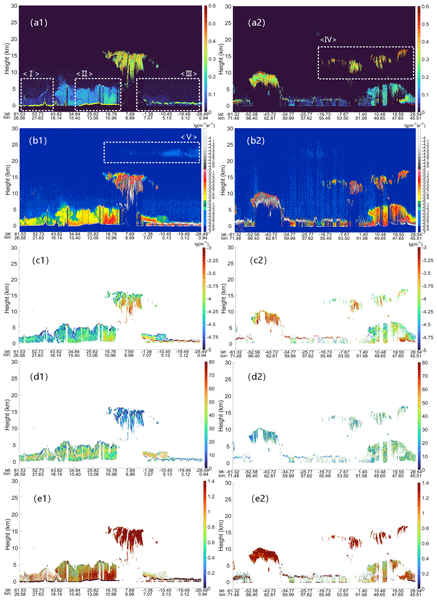
An overview is given of the main algorithms applied to derive the aerosol and cloud optical property product of the Aerosol and Carbon Detection Lidar (ACDL), which is capable of globally profiling aerosol and cloud optical properties with high accuracy. The paper demonstrates the observational capabilities of ACDL for aerosol and cloud vertical structure and global distribution through two optical property product measurement cases and global aerosol optical depth profile observations.
Qiantao Liu, Zhongwei Huang, Jiqiao Liu, Weibiao Chen, Qingqing Dong, Songhua Wu, Guangyao Dai, Meishi Li, Wuren Li, Ze Li, Xiaodong Song, and Yuan Xie
Atmos. Meas. Tech., 17, 1403–1417, https://doi.org/10.5194/amt-17-1403-2024, https://doi.org/10.5194/amt-17-1403-2024, 2024
Short summary
Short summary
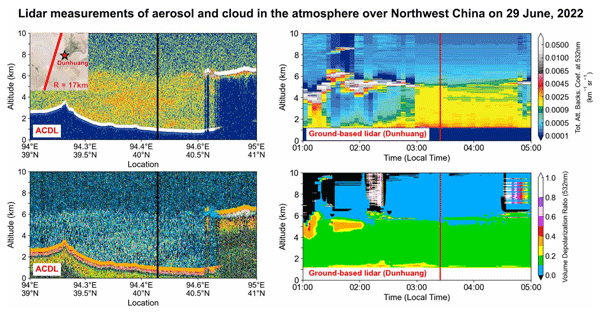
The achieved results revealed that the ACDL observations were in good agreement with the ground-based lidar measurements during dust events. The heights of cloud top and bottom from these two measurements were well matched and comparable. This study proves that the ACDL provides reliable observations of aerosol and cloud in the presence of various climatic conditions, which helps to further evaluate the impacts of aerosol on climate and the environment, as well as on the ecosystem in the future.
Honglin Pan, Jianping Huang, Jiming Li, Zhongwei Huang, Minzhong Wang, Ali Mamtimin, Wen Huo, Fan Yang, Tian Zhou, and Kanike Raghavendra Kumar
Earth Syst. Sci. Data, 16, 1185–1207, https://doi.org/10.5194/essd-16-1185-2024, https://doi.org/10.5194/essd-16-1185-2024, 2024
Short summary
Short summary
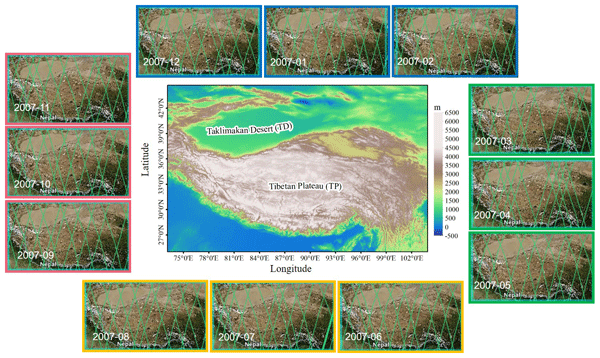
We applied several correction procedures and rigorously checked for data quality constraints during the long observation period spanning almost 14 years (2007–2020). Nevertheless, some uncertainties remain, mainly due to technical constraints and limited documentation of the measurements. Even though not completely accurate, this strategy is expected to at least reduce the inaccuracy of the computed characteristic value of aerosol optical parameters.
Shikuan Jin, Yingying Ma, Zhongwei Huang, Jianping Huang, Wei Gong, Boming Liu, Weiyan Wang, Ruonan Fan, and Hui Li
Atmos. Chem. Phys., 23, 8187–8210, https://doi.org/10.5194/acp-23-8187-2023, https://doi.org/10.5194/acp-23-8187-2023, 2023
Short summary
Short summary
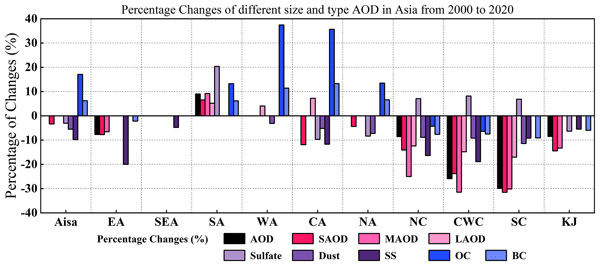
To better understand the Asian aerosol environment, we studied distributions and trends of aerosol with different sizes and types. Over the past 2 decades, dust, sulfate, and sea salt aerosol decreased by 5.51 %, 3.07 %, and 9.80 %, whereas organic carbon and black carbon aerosol increased by 17.09 % and 6.23 %, respectively. The increase in carbonaceous aerosols was a feature of Asia. An exception is found in East Asia, where the carbonaceous aerosols reduced, owing largely to China's efforts.
Zikai Lin, Tian Zhou, Zhengpeng Li, Yonghong Gu, Dongsheng Wu, Ping Zhou, Keyu Zhang, Qili Gao, Xingran Li, Zhongwei Huang, Jianrong Bi, Lili Yang, and Lina Wang
Atmos. Chem. Phys., 26, 11111–11133, https://doi.org/10.5194/acp-26-11111-2026, https://doi.org/10.5194/acp-26-11111-2026, 2026
Short summary
Short summary
This study examined high-altitude airborne particles over the Hexi Corridor using field observations. Such particles commonly accumulate 0.6–2 km aloft. Dunhuang features natural dust, while Minqin is dominated by human pollutants. Upper-level pollution is five times higher than that on the ground. These trapped particles warm the air and may accelerate glacier melting. This work suggests that high-altitude pollution should not be overlooked to better protect fragile local environments.
Hongxiang Yu, Li Guang, Benjamin Walter, Jianping Huang, Ning Huang, and Michael Lehning
The Cryosphere, 19, 5389–5402, https://doi.org/10.5194/tc-19-5389-2025, https://doi.org/10.5194/tc-19-5389-2025, 2025
Short summary
Short summary
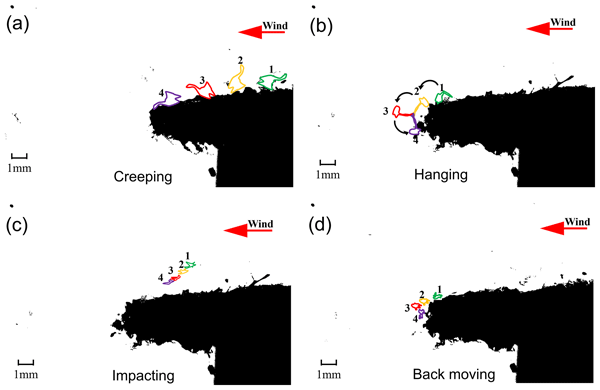
Cornices are overhanging snow accumulations that form on mountain crests. Using wind-tunnel experiments and high-speed photography, the study tracks particle trajectories around cornices and finds distinct differences between edge and surface deposition. A static adhesion model for edge deposition was developed and validated to predict how particle size and shape affect adhesion. The work clarifies the microdynamics of early cornice growth and provides a foundation for avalanche modeling.
Minqiang Zhou, Yilong Wang, Minzheng Duan, Xiangjun Tian, Jinzhi Ding, Jianrong Bi, Yaoming Ma, Weiqiang Ma, and Zhenhua Xi
Atmos. Meas. Tech., 18, 4311–4324, https://doi.org/10.5194/amt-18-4311-2025, https://doi.org/10.5194/amt-18-4311-2025, 2025
Short summary
Short summary
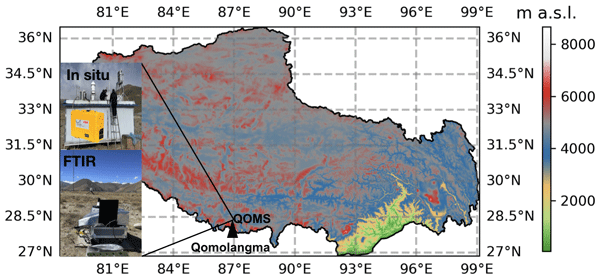
The Qinghai–Tibetan Plateau is a key system that impacts the global carbon balance. This study presents the greenhouse gas (GHG) mole fraction measurement campaign in May 2022 at Mt. Qomolangma station, including ground-based remote sensing and in situ measurements. The GHG measurements are carried out in this region for the first time and used for satellite validation.
Yuxin Zhao, Jiming Li, Deyu Wen, Yarong Li, Yuan Wang, and Jianping Huang
Atmos. Chem. Phys., 24, 9435–9457, https://doi.org/10.5194/acp-24-9435-2024, https://doi.org/10.5194/acp-24-9435-2024, 2024
Short summary
Short summary
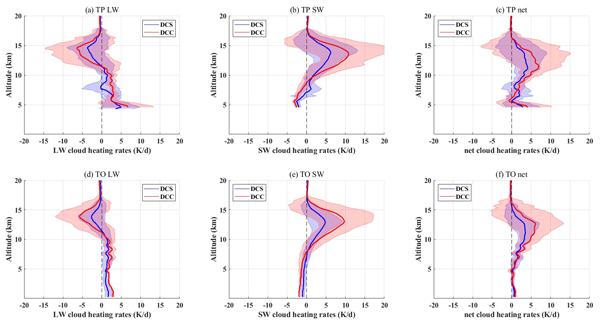
This study identifies deep convection systems (DCSs), including deep convection cores and anvils, over the Tibetan Plateau (TP) and tropical Indian Ocean (TO). The DCSs over the TP are less frequent, showing narrower and thinner cores and anvils compared to those over the TO. TP DCSs show a stronger longwave cloud radiative effect at the surface and in the low-level atmosphere. Distinct aerosol–cloud–precipitation interaction is found in TP DCSs, probably due to the cold cloud bases.
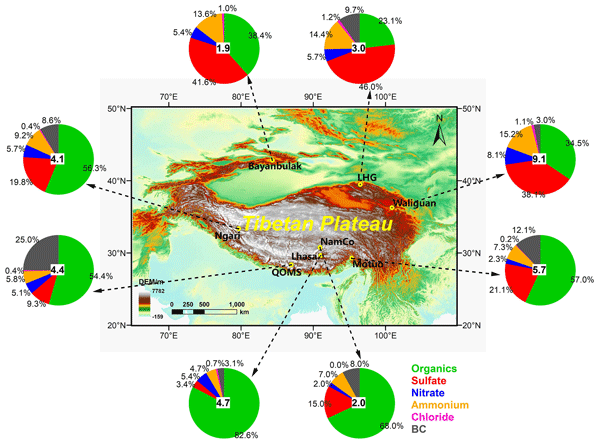
Jianzhong Xu, Xinghua Zhang, Wenhui Zhao, Lixiang Zhai, Miao Zhong, Jinsen Shi, Junying Sun, Yanmei Liu, Conghui Xie, Yulong Tan, Kemei Li, Xinlei Ge, Qi Zhang, and Shichang Kang
Earth Syst. Sci. Data, 16, 1875–1900, https://doi.org/10.5194/essd-16-1875-2024, https://doi.org/10.5194/essd-16-1875-2024, 2024
Short summary
Short summary
A comprehensive aerosol observation project was carried out in the Tibetan Plateau (TP) and its surroundings in recent years to investigate the properties and sources of atmospheric aerosols as well as their regional differences by performing multiple intensive field observations. The release of this dataset can provide basic and systematic data for related research in the atmospheric, cryospheric, and environmental sciences in this unique region.
Guangyao Dai, Songhua Wu, Wenrui Long, Jiqiao Liu, Yuan Xie, Kangwen Sun, Fanqian Meng, Xiaoquan Song, Zhongwei Huang, and Weibiao Chen
Atmos. Meas. Tech., 17, 1879–1890, https://doi.org/10.5194/amt-17-1879-2024, https://doi.org/10.5194/amt-17-1879-2024, 2024
Short summary
Short summary
An overview is given of the main algorithms applied to derive the aerosol and cloud optical property product of the Aerosol and Carbon Detection Lidar (ACDL), which is capable of globally profiling aerosol and cloud optical properties with high accuracy. The paper demonstrates the observational capabilities of ACDL for aerosol and cloud vertical structure and global distribution through two optical property product measurement cases and global aerosol optical depth profile observations.
Qiantao Liu, Zhongwei Huang, Jiqiao Liu, Weibiao Chen, Qingqing Dong, Songhua Wu, Guangyao Dai, Meishi Li, Wuren Li, Ze Li, Xiaodong Song, and Yuan Xie
Atmos. Meas. Tech., 17, 1403–1417, https://doi.org/10.5194/amt-17-1403-2024, https://doi.org/10.5194/amt-17-1403-2024, 2024
Short summary
Short summary
The achieved results revealed that the ACDL observations were in good agreement with the ground-based lidar measurements during dust events. The heights of cloud top and bottom from these two measurements were well matched and comparable. This study proves that the ACDL provides reliable observations of aerosol and cloud in the presence of various climatic conditions, which helps to further evaluate the impacts of aerosol on climate and the environment, as well as on the ecosystem in the future.
Honglin Pan, Jianping Huang, Jiming Li, Zhongwei Huang, Minzhong Wang, Ali Mamtimin, Wen Huo, Fan Yang, Tian Zhou, and Kanike Raghavendra Kumar
Earth Syst. Sci. Data, 16, 1185–1207, https://doi.org/10.5194/essd-16-1185-2024, https://doi.org/10.5194/essd-16-1185-2024, 2024
Short summary
Short summary
We applied several correction procedures and rigorously checked for data quality constraints during the long observation period spanning almost 14 years (2007–2020). Nevertheless, some uncertainties remain, mainly due to technical constraints and limited documentation of the measurements. Even though not completely accurate, this strategy is expected to at least reduce the inaccuracy of the computed characteristic value of aerosol optical parameters.
Shikuan Jin, Yingying Ma, Zhongwei Huang, Jianping Huang, Wei Gong, Boming Liu, Weiyan Wang, Ruonan Fan, and Hui Li
Atmos. Chem. Phys., 23, 8187–8210, https://doi.org/10.5194/acp-23-8187-2023, https://doi.org/10.5194/acp-23-8187-2023, 2023
Short summary
Short summary
To better understand the Asian aerosol environment, we studied distributions and trends of aerosol with different sizes and types. Over the past 2 decades, dust, sulfate, and sea salt aerosol decreased by 5.51 %, 3.07 %, and 9.80 %, whereas organic carbon and black carbon aerosol increased by 17.09 % and 6.23 %, respectively. The increase in carbonaceous aerosols was a feature of Asia. An exception is found in East Asia, where the carbonaceous aerosols reduced, owing largely to China's efforts.
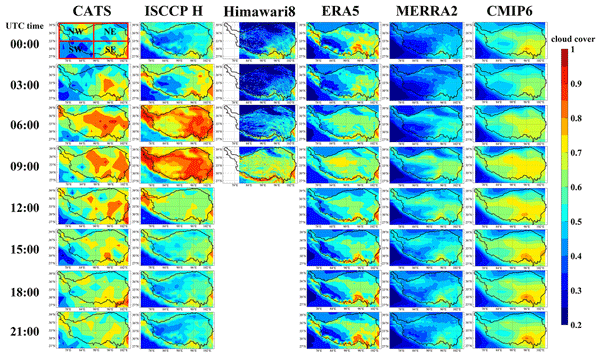
Yuxin Zhao, Jiming Li, Lijie Zhang, Cong Deng, Yarong Li, Bida Jian, and Jianping Huang
Atmos. Chem. Phys., 23, 743–769, https://doi.org/10.5194/acp-23-743-2023, https://doi.org/10.5194/acp-23-743-2023, 2023
Short summary
Short summary
Diurnal variations of clouds play an important role in the radiative budget and precipitation. Based on satellite observations, reanalysis, and CMIP6 outputs, the diurnal variations in total cloud cover and cloud vertical distribution over the Tibetan Plateau are explored. The diurnal cycle of cirrus is a key focus and found to have different characteristics from those found in the tropics. The relationship between the diurnal cycle of cirrus and meteorological factors is also discussed.
Xinghua Zhang, Wenhui Zhao, Lixiang Zhai, Miao Zhong, Jinsen Shi, Junying Sun, Yanmei Liu, Conghui Xie, Yulong Tan, Kemei Li, Xinlei Ge, Qi Zhang, Shichang Kang, and Jianzhong Xu
Earth Syst. Sci. Data Discuss., https://doi.org/10.5194/essd-2022-211, https://doi.org/10.5194/essd-2022-211, 2022
Manuscript not accepted for further review
Short summary
Short summary
A comprehensive aerosol observation project was carried out in the Tibetan Plateau (TP) in recent years to investigate the properties and sources of atmospheric aerosols as well as their regional differences by performing multiple short-term intensive field observations. The real-time online high-time-resolution (hourly) data of aerosol properties in the different TP region are integrated in a new dataset and can provide supporting for related studies in in the TP.
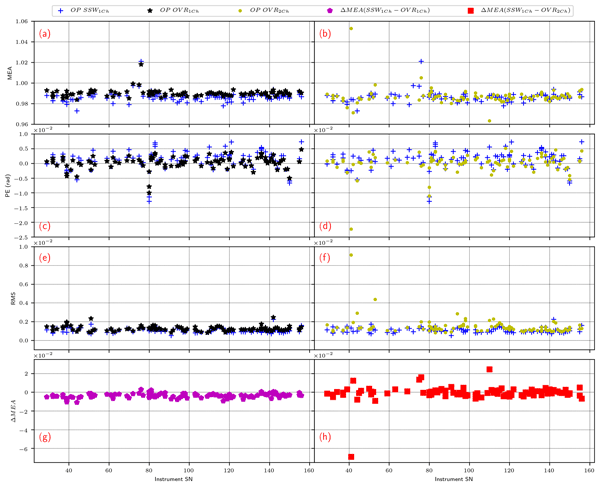
Carlos Alberti, Frank Hase, Matthias Frey, Darko Dubravica, Thomas Blumenstock, Angelika Dehn, Paolo Castracane, Gregor Surawicz, Roland Harig, Bianca C. Baier, Caroline Bès, Jianrong Bi, Hartmut Boesch, André Butz, Zhaonan Cai, Jia Chen, Sean M. Crowell, Nicholas M. Deutscher, Dragos Ene, Jonathan E. Franklin, Omaira García, David Griffith, Bruno Grouiez, Michel Grutter, Abdelhamid Hamdouni, Sander Houweling, Neil Humpage, Nicole Jacobs, Sujong Jeong, Lilian Joly, Nicholas B. Jones, Denis Jouglet, Rigel Kivi, Ralph Kleinschek, Morgan Lopez, Diogo J. Medeiros, Isamu Morino, Nasrin Mostafavipak, Astrid Müller, Hirofumi Ohyama, Paul I. Palmer, Mahesh Pathakoti, David F. Pollard, Uwe Raffalski, Michel Ramonet, Robbie Ramsay, Mahesh Kumar Sha, Kei Shiomi, William Simpson, Wolfgang Stremme, Youwen Sun, Hiroshi Tanimoto, Yao Té, Gizaw Mengistu Tsidu, Voltaire A. Velazco, Felix Vogel, Masataka Watanabe, Chong Wei, Debra Wunch, Marcia Yamasoe, Lu Zhang, and Johannes Orphal
Atmos. Meas. Tech., 15, 2433–2463, https://doi.org/10.5194/amt-15-2433-2022, https://doi.org/10.5194/amt-15-2433-2022, 2022
Short summary
Short summary
Space-borne greenhouse gas missions require ground-based validation networks capable of providing fiducial reference measurements. Here, considerable refinements of the calibration procedures for the COllaborative Carbon Column Observing Network (COCCON) are presented. Laboratory and solar side-by-side procedures for the characterization of the spectrometers have been refined and extended. Revised calibration factors for XCO2, XCO and XCH4 are provided, incorporating 47 new spectrometers.

Jingyu Yao, Zhongming Gao, Jianping Huang, Heping Liu, and Guoyin Wang
Atmos. Chem. Phys., 21, 15589–15603, https://doi.org/10.5194/acp-21-15589-2021, https://doi.org/10.5194/acp-21-15589-2021, 2021
Short summary
Short summary
Gap-filling usually accounts for a large source of uncertainties in the annual CO2 fluxes, though gap-filling CO2 fluxes is challenging at dryland sites due to small fluxes. Using data collected from a semiarid site, four machine learning methods are evaluated with different lengths of artificial gaps. The artificial neural network and random forest methods outperform the other methods. With these methods, uncertainties in the annual CO2 flux at this site are estimated to be within 16 g C m−2.
Cited articles
Alfaro-Perez, C., Barberá-Riera, M., de Llanos, R., and Delgado-Saborit, J. M.: Systematic review and meta-analysis of methodological approaches for characterising airborne SARS-CoV-2 RNA for environmental surveillance, NPJ Climate and Atmospheric Science, 8, https://doi.org/10.1038/s41612-025-01180-z, 2025.
Araujo, D. S. A., Enquist, B. J., Frazier, A. E., Merow, C., Roehrdanz, P. R., Moulatlet, G. M., Zvoleff, A., Song, L., Maitner, B., and Nikolopoulos, E. I.: Global Future Drought Layers Based on Downscaled CMIP6 Models and Multiple Socioeconomic Pathways, Scientific Data, 12, https://doi.org/10.1038/s41597-025-04612-w, 2025.
Archer, S. D. J., Lee, K. C., Caruso, T., Alcami, A., Araya, J. G., Cary, S. C., Cowan, D. A., Etchebehere, C., Gantsetseg, B., Gomez-Silva, B., Hartery, S., Hogg, I. D., Kansour, M. K., Lawrence, T., Lee, C. K., Lee, P. K. H., Leopold, M., Leung, M. H. Y., Maki, T., McKay, C. P., Al Mailem, D. M., Ramond, J.-B., Rastrojo, A., Šantl-Temkiv, T., Sun, H. J., Tong, X., Vandenbrink, B., Warren-Rhodes, K. A., and Pointing, S. B.: Contribution of soil bacteria to the atmosphere across biomes, Sci. Total Environ., 871, https://doi.org/10.1016/j.scitotenv.2023.162137, 2023.
Balvočiūtė, M. and Huson, D. H.: SILVA, RDP, Greengenes, NCBI and OTT — how do these taxonomies compare?, BMC Genomics, 18, https://doi.org/10.1186/s12864-017-3501-4, 2017.
Boifot, K. O., Skogan, G., and Dybwad, M.: Sampling efficiency and nucleic acid stability during long-term sampling with different bioaerosol samplers, Environ. Monit. Assess., 196, 577, https://doi.org/10.1007/s10661-024-12735-7, 2024.
Bulski, K.: Bioaerosols at plants processing materials of plant origin – a review, Environ. Sci. Pollut. R., 27, 27507–27514, https://doi.org/10.1007/s11356-020-09121-4, 2020.
Cavicchioli, R., Ripple, W. J., Timmis, K. N., Azam, F., Bakken, L. R., Baylis, M., Behrenfeld, M. J., Boetius, A., Boyd, P. W., Classen, A. T., Crowther, T. W., Danovaro, R., Foreman, C. M., Huisman, J., Hutchins, D. A., Jansson, J. K., Karl, D. M., Koskella, B., Mark Welch, D. B., Martiny, J. B. H., Moran, M. A., Orphan, V. J., Reay, D. S., Remais, J. V., Rich, V. I., Singh, B. K., Stein, L. Y., Stewart, F. J., Sullivan, M. B., van Oppen, M. J. H., Weaver, S. C., Webb, E. A., and Webster, N. S.: Scientists' warning to humanity: microorganisms and climate change, Nat. Rev. Microbiol., 17, 569–586, https://doi.org/10.1038/s41579-019-0222-5, 2019.
Chen, L., Schepanski, K., Zhang, K., Crocker, A. J., Xuan, C., and Wilson, P. A.: Atmospheric forcing of dust source activation across East Asia, Atmos. Chem. Phys., 26, 7523–7538, https://doi.org/10.5194/acp-26-7523-2026, 2026.
Clasen, L. A., Detheridge, A. P., Scullion, J., and Griffith, G. W.: Soil stabilisation for DNA metabarcoding of plants and fungi. Implications for sampling at remote locations or via third-parties, Metabarcoding and Metagenomics, 4, https://doi.org/10.3897/mbmg.4.58365, 2020.
Després, V. R., Huffman, J. A., Burrows, S. M., Hoose, C., Safatov, A. S., Buryak, G., Fröhlich-Nowoisky, J., Elbert, W., Andreae, M. O., Pöschl, U., and Jaenicke, R.: Primary biological aerosol particles in the atmosphere: a review, Tellus B, 64, https://doi.org/10.3402/tellusb.v64i0.15598, 2012.
Drautz-Moses, D. I., Luhung, I., Gusareva, E. S., Kee, C., Gaultier, N. E., Premkrishnan, B. N. V., Lee, C. F., Leong, S. T., Park, C., Yap, Z. H., Heinle, C. E., Lau, K. J. X., Purbojati, R. W., Lim, S. B. Y., Lim, Y. H., Kutmutia, S. K., Aung, N. W., Oliveira, E. L., Ng, S. G., Dacanay, J., Ang, P. N., Spence, S., Phung, W. J., Wong, A., Kennedy, R. J., Kalsi, N., Sasi, S. P., Chandrasekaran, L., Uchida, A., Junqueira, A. C. M., Kim, H. L., Hankers, R., Feuerle, T., Corsmeier, U., and Schuster, S. C.: Vertical stratification of the air microbiome in the lower troposphere, P. Natl. Acad. Sci. USA, 119, https://doi.org/10.1073/pnas.2117293119, 2022.
Du, P., Du, R., Ren, W., Lu, Z., and Fu, P.: Seasonal variation characteristic of inhalable microbial communities in PM2.5 in Beijing city, China, Sci. Total Environ., 610–611, 308–315, https://doi.org/10.1016/j.scitotenv.2017.07.097, 2018.
Eberl, L. and Vandamme, P.: Members of the genus Burkholderia: good and bad guys, F1000Research, 5, https://doi.org/10.12688/f1000research.8221.1, 2016.
Eriksen, E., Afanou, A. K., Madsen, A. M., Straumfors, A., and Graff, P.: An assessment of occupational exposure to bioaerosols in automated versus manual waste sorting plants, Environ. Res., 218, https://doi.org/10.1016/j.envres.2022.115040, 2023.
Esmaeel, Q., Miotto, L., Rondeau, M., Leclere, V., Clement, C., Jacquard, C., Sanchez, L., and Barka, E. A.: Paraburkholderia phytofirmans PsJN-Plants Interaction: From Perception to the Induced Mechanisms, Front. Microbiol., 9, 2093, https://doi.org/10.3389/fmicb.2018.02093, 2018.
Estillore, A. D., Trueblood, J. V., and Grassian, V. H.: Atmospheric chemistry of bioaerosols: heterogeneous and multiphase reactions with atmospheric oxidants and other trace gases, Chem. Sci., 7, 6604–6616, https://doi.org/10.1039/c6sc02353c, 2016.
Fang, H., Chen, Y., Huang, L., and He, G.: Analysis of biofilm bacterial communities under different shear stresses using size-fractionated sediment, Sci. Rep., 7, 1299, https://doi.org/10.1038/s41598-017-01446-4, 2017.
Ferguson, R. M. W., Garcia‐Alcega, S., Coulon, F., Dumbrell, A. J., Whitby, C., and Colbeck, I.: Bioaerosol biomonitoring: Sampling optimization for molecular microbial ecology, Mol. Ecol. Resour., 19, 672–690, https://doi.org/10.1111/1755-0998.13002, 2019.
Fröhlich-Nowoisky, J., Kampf, C. J., Weber, B., Huffman, J. A., Pöhlker, C., Andreae, M. O., Lang-Yona, N., Burrows, S. M., Gunthe, S. S., Elbert, W., Su, H., Hoor, P., Thines, E., Hoffmann, T., Després, V. R., and Pöschl, U.: Bioaerosols in the Earth system: Climate, health, and ecosystem interactions, Atmos. Res., 182, 346–376, https://doi.org/10.1016/j.atmosres.2016.07.018, 2016.
García-Solache, M. and Rice, L. B.: The Enterococcus: a Model of Adaptability to Its Environment, Clin. Microbiol. Rev., 32, https://doi.org/10.1128/cmr.00058-18, 2019.
Gashi, N., Szőke, Z., Fauszt, P., Dávid, P., Mikolás, M., Gál, F., Stündl, L., Remenyik, J., and Paholcsek, M.: Bioaerosols in Agriculture: A Comprehensive Approach for Sustainable Crop Health and Environmental Balance, Agronomy, 15, https://doi.org/10.3390/agronomy15051003, 2025.
Gelaro, R., McCarty, W., Suárez, M. J., Todling, R., Molod, A., Takacs, L., Randles, C. A., Darmenov, A., Bosilovich, M. G., Reichle, R., Wargan, K., Coy, L., Cullather, R., Draper, C., Akella, S., Buchard, V., Conaty, A., da Silva, A. M., Gu, W., Kim, G.-K., Koster, R., Lucchesi, R., Merkova, D., Nielsen, J. E., Partyka, G., Pawson, S., Putman, W., Rienecker, M., Schubert, S. D., Sienkiewicz, M., and Zhao, B.: The Modern-Era Retrospective Analysis for Research and Applications, Version 2 (MERRA-2), J. Climate, 30, 5419–5454, https://doi.org/10.1175/jcli-d-16-0758.1, 2017.
Giles, M. E., Caul, S., King, D., Mitchell, S., Sim, A., Neilson, R., and Paterson, E.: Grass variety selection of microbial community composition is associated with differences in soil CO2 emissions, Appl. Soil Ecol., 190, https://doi.org/10.1016/j.apsoil.2023.104968, 2023.
Guo, J., Lv, M., Liu, Z., Qin, T., Qiu, H., Zhang, L., Lu, J., Hu, L., Yang, W., and Zhou, D.: Comprehensive performance evaluation of six bioaerosol samplers based on an aerosol wind tunnel, Environ. Int., 183, 108402, https://doi.org/10.1016/j.envint.2023.108402, 2024.
Hofmann, W.: Modelling inhaled particle deposition in the human lung – A review, J. Aerosol Sci., 42, 693–724, https://doi.org/10.1016/j.jaerosci.2011.05.007, 2011.
Hoose, C. and Möhler, O.: Heterogeneous ice nucleation on atmospheric aerosols: a review of results from laboratory experiments, Atmos. Chem. Phys., 12, 9817–9854, https://doi.org/10.5194/acp-12-9817-2012, 2012.
Huang, Z., Yu, X., Liu, Q., Maki, T., Alam, K., Wang, Y., Xue, F., Tang, S., Du, P., Dong, Q., Wang, D., and Huang, J.: Bioaerosols in the atmosphere: A comprehensive review on detection methods, concentration and influencing factors, Sci. Total Environ., 912, https://doi.org/10.1016/j.scitotenv.2023.168818, 2024a.
Huang, Z., Dong, Q., Xue, F., Qi, J., Yu, X., Maki, T., Du, P., Gu, Q., Tang, S., Shi, J., Bi, J., Zhou, T., and Huang, J.: Large-Scale Dust–Bioaerosol Field Observations in East Asia, B. Am. Meteorol. Soc., 105, E501–E517, https://doi.org/10.1175/bams-d-23-0108.1, 2024b.
Huang, Z., Wang, Y., Zhou, T., Ji, Y., Bi, J., Shi, J., Wen, H., and Huang, J.: Raman-Polarization-Fluorescence Spectroscopic Lidar for Real-Time Detection of Humic-like Substance Profiles, Environ. Sci. Technol., 59, 7235–7245, https://doi.org/10.1021/acs.est.5c00028, 2025.
Huang, Z., Zhang, W., Dong, Q., Maki, T., Wang, Y., Ji, Y., Xue, F., Huo, X., Lu, D., Wang, D., Shi, J., Bi, J., and Huang, J.: Integrated dataset of atmospheric bioaerosols over east Asia, Zenodo [data set], https://doi.org/10.5281/zenodo.21337360, 2026.
Jabeen, R., Kizhisseri, M. I., Mayanaik, S. N., and Mohamed, M. M.: Bioaerosol assessment in indoor and outdoor environments: a case study from India, Sci. Rep., 13, https://doi.org/10.1038/s41598-023-44315-z, 2023.
Jeong, S. Y. and Kim, T. G.: Comparison of five membrane filters to collect bioaerosols for airborne microbiome analysis, J. Appl. Microbiol., 131, 780–790, https://doi.org/10.1111/jam.14972, 2021.
Jiang, X., Wang, C., Guo, J., Hou, J., Guo, X., Zhang, H., Tan, J., Li, M., Li, X., and Zhu, H.: Global Meta-analysis of Airborne Bacterial Communities and Associations with Anthropogenic Activities, Environ. Sci. Technol., 56, 9891–9902, https://doi.org/10.1021/acs.est.1c07923, 2022.
Jin, J., Pang, M., Segers, A., Han, W., Fang, L., Li, B., Feng, H., Lin, H. X., and Liao, H.: Inverse modeling of the 2021 spring super dust storms in East Asia, Atmos. Chem. Phys., 22, 6393–6410, https://doi.org/10.5194/acp-22-6393-2022, 2022.
Karstens, L., Asquith, M., Davin, S., Fair, D., Gregory, W. T., Wolfe, A. J., Braun, J., and McWeeney, S.: Controlling for Contaminants in Low-Biomass 16S rRNA Gene Sequencing Experiments, mSystems, 4, https://doi.org/10.1128/mSystems.00290-19, 2019.
Kepner, R. L. and Pratt, J. R.: Use of fluorochromes for direct enumeration of total bacteria in environmental samples: past and present, Microbiol. Rev., 58, 603–615, https://doi.org/10.1128/mr.58.4.603-615.1994, 1994.
Kulmala, M., Kokkonen, T., Ezhova, E., Baklanov, A., Mahura, A., Mammarella, I., Bäck, J., Lappalainen, H. K., Tyuryakov, S., Kerminen, V.-M., Zilitinkevich, S., and Petäjä, T.: Aerosols, Clusters, Greenhouse Gases, Trace Gases and Boundary-Layer Dynamics: on Feedbacks and Interactions, Bound.-Lay. Meteorol., 186, 475–503, https://doi.org/10.1007/s10546-022-00769-8, 2023.
Lang, Y., Zhang, J., Zhao, J., Gong, Y., Han, T., Deng, X., and Liu, Y.: Mechanisms and quantification: How anthropogenic aerosols weaken the East Asian summer monsoon, NPJ Climate and Atmospheric Science, 8, https://doi.org/10.1038/s41612-025-00903-6, 2025.
Larsen, P., Birtel, J., Walser, J.-C., Pichon, S., Bürgmann, H., and Matthews, B.: Estimating Bacterial Diversity for Ecological Studies: Methods, Metrics, and Assumptions, Plos One, 10, https://doi.org/10.1371/journal.pone.0125356, 2015.
Li, J., Zuraimi, S., Schiavon, S., Wan, M. P., Xiong, J., and Tham, K. W.: Diurnal trends of indoor and outdoor fluorescent biological aerosol particles in a tropical urban area, Sci. Total Environ., 848, 157811, https://doi.org/10.1016/j.scitotenv.2022.157811, 2022.
Lin, L. and Ju, F.: Evaluation of different 16S rRNA gene hypervariable regions and reference databases for profiling engineered microbiota structure and functional guilds in a swine wastewater treatment plant, Interface Focus, 13, 20230012, https://doi.org/10.1098/rsfs.2023.0012, 2023.
Liu, T., Zhang, J., Cao, J., Zheng, H., Zhan, C., Liu, H., Zhang, L., Xiao, K., Liu, S., Xiang, D., and Zhang, D.: Identification of coexistence of biological and non-biological aerosol particles with DAPI (4′,6-diamidino-2-phenylindole) stain, Particuology, 72, 49–57, https://doi.org/10.1016/j.partic.2022.02.009, 2023.
Loos, D., Filho, A. P. d. C., Dutilh, B. E., Barber, A. E., and Panagiotou, G.: A global survey of host, aquatic, and soil microbiomes reveals shared abundance and genomic features between bacterial and fungal generalists, Cell Rep., 43, https://doi.org/10.1016/j.celrep.2024.114046, 2024.
Lu, C., Xiao, Z., Li, H., Han, R., Sun, A., Xiang, Q., Zhu, Z., Li, G., Yang, X., Zhu, Y.-G., and Chen, Q.-L.: Aboveground plants determine the exchange of pathogens within air-phyllosphere-soil continuum in urban greenspaces, J. Hazard. Mater., 465, https://doi.org/10.1016/j.jhazmat.2023.133149, 2024.
Machado, R. A. R., Loulou, A., Bhat, A. H., Mastore, M., Terrettaz, C., Brivio, M. F., and Kallel, S.: Acinetobacter nematophilus sp. nov., Alcaligenes nematophilus sp. nov., Enterobacter nematophilus sp. nov., and Kaistia nematophila sp. nov., Isolated from Soil-Borne Nematodes and Proposal for the Elevation of Alcaligenes faecalis subsp. faecalis, Alcaligenes faecalis subsp. parafaecalis, and Alcaligenes faecalis subsp. phenolicus to the Species Level, Taxonomy, 3, 148–168, https://doi.org/10.3390/taxonomy3010012, 2023.
Mainelis, G.: Bioaerosol sampling: Classical approaches, advances, and perspectives, Aerosol Sci. Tech., 54, 496–519, https://doi.org/10.1080/02786826.2019.1671950, 2019.
Maki, T., Susuki, S., Kobayashi, F., Kakikawa, M., Tobo, Y., Yamada, M., Higashi, T., Matsuki, A., Hong, C., Hasegawa, H., and Iwasaka, Y.: Phylogenetic analysis of atmospheric halotolerant bacterial communities at high altitude in an Asian dust (KOSA) arrival region, Suzu City, Sci. Total Environ., 408, 4556–4562, https://doi.org/10.1016/j.scitotenv.2010.04.002, 2010.
Maki, T., Hara, K., Yamada, M., Kobayashi, F., Hasegawa, H., and Iwasaka, Y.: Epifluorescent Microscopic Observation of Aerosol, Earozoru Kenkyu, 28, 201–207, https://doi.org/10.11203/jar.28.201, 2013.
Maki, T., Puspitasari, F., Hara, K., Yamada, M., Kobayashi, F., Hasegawa, H., and Iwasaka, Y.: Variations in the structure of airborne bacterial communities in a downwind area during an Asian dust (Kosa) event, Sci. Total Environ., 488–489, 75–84, https://doi.org/10.1016/j.scitotenv.2014.04.044, 2014.
Maki, T., Lee, K. C., Kawai, K., Onishi, K., Hong, C. S., Kurosaki, Y., Shinoda, M., Kai, K., Iwasaka, Y., Archer, S. D. J., Lacap‐Bugler, D. C., Hasegawa, H., and Pointing, S. B.: Aeolian Dispersal of Bacteria Associated With Desert Dust and Anthropogenic Particles Over Continental and Oceanic Surfaces, J. Geophys. Res.-Atmos., 124, 5579–5588, https://doi.org/10.1029/2018jd029597, 2019.
Mantoani, M. C., Guerra, L. C. C., Andrade, M. F., Dias, M. A. F. S., Dias, P. L. S., Rodrigues, F., Silva, D. M. C., Filho, V. B. D., Rudke, A. P., Martins, J. A., Martins, L. D., Torezan, J. M. D., Brancalion, P. H. S., Guillemot, J., Campoe, O. C., Phillips, V., Carotenuto, F., Šantl-Temkiv, T., Morris, C. E., and Gonçalves, F. L. T.: Land-use patterns and fungal bioaerosols in the Brazilian Atlantic Forest biome, Discover Environment, 2, https://doi.org/10.1007/s44274-024-00049-x, 2024.
Mbareche, H., Veillette, M., Bilodeau, G. J., Duchaine, C., and Schaffner, D. W.: Bioaerosol Sampler Choice Should Consider Efficiency and Ability of Samplers To Cover Microbial Diversity, Appl. Environ. Microb., 84, https://doi.org/10.1128/aem.01589-18, 2018.
Meinander, O., Dagsson-Waldhauserova, P., Amosov, P., Aseyeva, E., Atkins, C., Baklanov, A., Baldo, C., Barr, S. L., Barzycka, B., Benning, L. G., Cvetkovic, B., Enchilik, P., Frolov, D., Gassó, S., Kandler, K., Kasimov, N., Kavan, J., King, J., Koroleva, T., Krupskaya, V., Kulmala, M., Kusiak, M., Lappalainen, H. K., Laska, M., Lasne, J., Lewandowski, M., Luks, B., McQuaid, J. B., Moroni, B., Murray, B., Möhler, O., Nawrot, A., Nickovic, S., O’Neill, N. T., Pejanovic, G., Popovicheva, O., Ranjbar, K., Romanias, M., Samonova, O., Sanchez-Marroquin, A., Schepanski, K., Semenkov, I., Sharapova, A., Shevnina, E., Shi, Z., Sofiev, M., Thevenet, F., Thorsteinsson, T., Timofeev, M., Umo, N. S., Uppstu, A., Urupina, D., Varga, G., Werner, T., Arnalds, O., and Vukovic Vimic, A.: Newly identified climatically and environmentally significant high-latitude dust sources, Atmos. Chem. Phys., 22, 11889–11930, https://doi.org/10.5194/acp-22-11889-2022, 2022.
Mescioglu, E., Paytan, A., Mitchell, B. W., and Griffin, D. W.: Efficiency of bioaerosol samplers: a comparison study, Aerobiologia, 37, 447–459, https://doi.org/10.1007/s10453-020-09686-0, 2021.
Morris, C. E., Conen, F., Alex Huffman, J., Phillips, V., Pöschl, U., and Sands, D. C.: Bioprecipitation: a feedback cycle linking Earth history, ecosystem dynamics and land use through biological ice nucleators in the atmosphere, Glob. Change Biol., 20, 341–351, https://doi.org/10.1111/gcb.12447, 2013.
Mostajir, B., Dolan, J. R., and Rassoulzadegan, F.: A simple method for the quantification of a class of labile marine pico- and nano-sized detritus: DAPI Yellow Particles (DYP), Aquat. Microb. Ecol., 9, 259–266, https://doi.org/10.3354/ame009259, 1995.
Mu, F., Li, Y., Lu, R., Qi, Y., Xie, W., and Bai, W.: Source identification of airborne bacteria in the mountainous area and the urban areas, Atmos. Res., 231, https://doi.org/10.1016/j.atmosres.2019.104676, 2020.
Nagarajan, V., Tsai, H.-C., Chen, J.-S., Koner, S., Kumar, R. S., Chao, H.-C., and Hsu, B.-M.: Systematic assessment of mineral distribution and diversity of microbial communities and its interactions in the Taiwan subduction zone of mud volcanoes, Environ. Res., 216, https://doi.org/10.1016/j.envres.2022.114536, 2023.
Nie, C., Qiu, Y., Pei, T., and Qin, Y.: Specific Sources Exert Influence on the Community Structures of Bioaerosols, Aerobiology, 2, 72–84, https://doi.org/10.3390/aerobiology2040006, 2024.
Onyango, L. A. and Alreshidi, M. M.: Adaptive Metabolism in Staphylococci: Survival and Persistence in Environmental and Clinical Settings, Journal of Pathogens, 2018, 1–11, https://doi.org/10.1155/2018/1092632, 2018.
Pedrosa-Silva, F. and Venancio, T. M.: Comparative Genomics Reveals Novel Species and Insights into the Biotechnological Potential, Virulence, and Resistance of Alcaligenes, Genes, 14, https://doi.org/10.3390/genes14091783, 2023.
Péguilhan, R., Rossi, F., Joly, M., Nasr, E., Batut, B., Enault, F., Ervens, B., and Amato, P.: Clouds influence the functioning of airborne microorganisms, Biogeosciences, 22, 1257–1275, https://doi.org/10.5194/bg-22-1257-2025, 2025.
Petersson Sjögren, M., Alsved, M., Šantl-Temkiv, T., Bjerring Kristensen, T., and Löndahl, J.: Measurement report: Atmospheric fluorescent bioaerosol concentrations measured during 18 months in a coniferous forest in the south of Sweden, Atmos. Chem. Phys., 23, 4977–4992, https://doi.org/10.5194/acp-23-4977-2023, 2023.
Pin, L., Eiler, A., Fazi, S., and Friberg, N.: Two different approaches of microbial community structure characterization in riverine epilithic biofilms under multiple stressors conditions: Developing molecular indicators, Mol. Ecol. Resour., 21, 1200–1215, https://doi.org/10.1111/1755-0998.13341, 2021.
Pogner, C. E., Antunes, C., Apangu, G. P., Bruffaerts, N., Celenk, S., Cristofori, A., Gonzalez Roldan, N., Grinn-Gofron, A., Lara, B., Lika, M., Magyar, D., Martinez-Bracero, M., Muggia, L., Muyshondt, B., O'Connor, D., Pallavicini, A., Marcha Penha, M. A., Perez-Badia, R., Ribeiro, H., Rodrigues Costa, A., Tischner, Z., Xhetani, M., and Ambelas Skjoth, C.: Airborne DNA: State of the art – Established methods and missing pieces in the molecular genetic detection of airborne microorganisms, viruses and plant particles, Sci. Total Environ., 957, 177439, https://doi.org/10.1016/j.scitotenv.2024.177439, 2024a.
Qi, H., Gao, X., Lei, J., Meng, X., and Hu, Z.: Transforming desertification patterns in Asia: Evaluating trends, drivers, and climate change impacts from 1990 to 2022, Ecol. Indic., 161, https://doi.org/10.1016/j.ecolind.2024.111948, 2024.
Qi, J., Huang, Z., Maki, T., Kang, S., Guo, J., Liu, K., and Liu, Y.: Airborne bacterial communities over the Tibetan and Mongolian Plateaus: variations and their possible sources, Atmos. Res., 247, https://doi.org/10.1016/j.atmosres.2020.105215, 2021.
Qi, J., Huang, Z., Xue, F., Gao, Z., Maki, T., Zhang, Z., Liu, K., Ji, M., and Liu, Y.: Aridification alters the diversity of airborne bacteria in drylands of China, Atmos. Environ., 315, https://doi.org/10.1016/j.atmosenv.2023.120135, 2023.
Ramakodi, M. P.: Influence of 16S rRNA reference databases in amplicon-based environmental microbiome research, Biotechnol. Lett., 44, 523–533, https://doi.org/10.1007/s10529-022-03233-2, 2022.
Robinson, J. M., Cando-Dumancela, C., Antwis, R. E., Cameron, R., Liddicoat, C., Poudel, R., Weinstein, P., and Breed, M. F.: Exposure to airborne bacteria depends upon vertical stratification and vegetation complexity, Sci. Rep., 11, https://doi.org/10.1038/s41598-021-89065-y, 2021.
Safatov, A. S., Andreeva, I. S., Buryak, G. A., Olkin, S. E., Reznikova, I. K., Belan, B. D., Panchenko, M. V., and Simonenkov, D. V.: Long-Term Studies of Biological Components of Atmospheric Aerosol: Trends and Variability, Atmosphere, 13, https://doi.org/10.3390/atmos13050651, 2022.
Sajjad, B., Hussain, S., Rasool, K., Hassan, M., and Almomani, F.: Comprehensive insights into advances in ambient bioaerosols sampling, analysis and factors influencing bioaerosols composition, Environ. Pollut., 336, https://doi.org/10.1016/j.envpol.2023.122473, 2023.
Samake, A., Uzu, G., Martins, J. M. F., Calas, A., Vince, E., Parat, S., and Jaffrezo, J. L.: The unexpected role of bioaerosols in the Oxidative Potential of PM, Sci. Rep., 7, https://doi.org/10.1038/s41598-017-11178-0, 2017.
Šantl-Temkiv, T., Sikoparija, B., Maki, T., Carotenuto, F., Amato, P., Yao, M., Morris, C. E., Schnell, R., Jaenicke, R., Pöhlker, C., DeMott, P. J., Hill, T. C. J., and Huffman, J. A.: Bioaerosol field measurements: Challenges and perspectives in outdoor studies, Aerosol Sci. Tech., 54, 520–546, https://doi.org/10.1080/02786826.2019.1676395, 2019.
Shammi, M., Rahman, M. M., and Tareq, S. M.: Distribution of Bioaerosols in Association With Particulate Matter: A Review on Emerging Public Health Threat in Asian Megacities, Frontiers in Environmental Science, 9, https://doi.org/10.3389/fenvs.2021.698215, 2021.
Sharma, B., Singh, B. N., Dwivedi, P., and Rajawat, M. V. S.: Interference of Climate Change on Plant-Microbe Interaction: Present and Future Prospects, Frontiers in Agronomy, 3, https://doi.org/10.3389/fagro.2021.725804, 2022.
Su, S.-B., Hashim, J. H., and Yan, C.-h.: Applications of Environmental Epidemiology in Addressing Public Health Challenges in East Asia, BioMed Res. Int., 2015, 1–2, https://doi.org/10.1155/2015/462426, 2015.
Tang, K., Huang, Z., Huang, J., Maki, T., Zhang, S., Shimizu, A., Ma, X., Shi, J., Bi, J., Zhou, T., Wang, G., and Zhang, L.: Characterization of atmospheric bioaerosols along the transport pathway of Asian dust during the Dust-Bioaerosol 2016 Campaign, Atmos. Chem. Phys., 18, 7131–7148, https://doi.org/10.5194/acp-18-7131-2018, 2018.
Tignat-Perrier, R., Dommergue, A., Thollot, A., Keuschnig, C., Magand, O., Vogel, T. M., and Larose, C.: Global airborne microbial communities controlled by surrounding landscapes and wind conditions, Sci. Rep., 9, https://doi.org/10.1038/s41598-019-51073-4, 2019.
Tseng, W.-L., Chen, Y.-C., Wang, Y.-C., Tseng, H.-Y., and Hsu, H.-H.: Compound spatial extremes of heatwaves and downstream air pollution events in East Asia, Atmos. Res., 312, https://doi.org/10.1016/j.atmosres.2024.107772, 2024.
Uetake, J., Tobo, Y., Uji, Y., Hill, T. C. J., DeMott, P. J., Kreidenweis, S. M., and Misumi, R.: Seasonal Changes of Airborne Bacterial Communities Over Tokyo and Influence of Local Meteorology, Front. Microbiol., 10, https://doi.org/10.3389/fmicb.2019.01572, 2019.
Van Leuken, J. P. G., Swart, A. N., Havelaar, A. H., Van Pul, A., Van der Hoek, W., and Heederik, D.: Atmospheric dispersion modelling of bioaerosols that are pathogenic to humans and livestock – A review to inform risk assessment studies, Microbial Risk Analysis, 1, 19–39, https://doi.org/10.1016/j.mran.2015.07.002, 2016.
Vermote, E. and Program, N. C.: NOAA Climate Data Record (CDR) of AVHRR Normalized Difference Vegetation Index (NDVI), Version 5 (Temporal subset: March 2011–August 2021), NOAA National Centers for Environmental Information [data set], https://doi.org/10.7289/V5ZG6QH9, 2019.
Xie, W., Li, Y., Bai, W., Hou, J., Ma, T., Zeng, X., Zhang, L., and An, T.: The source and transport of bioaerosols in the air: A review, Front. Env. Sci. Eng., 15, https://doi.org/10.1007/s11783-020-1336-8, 2020.
Xu, F., Bento, V. A., Qu, Y., and Wang, Q.: Projections of Global Drought and Their Climate Drivers Using CMIP6 Global Climate Models, Water, 15, https://doi.org/10.3390/w15122272, 2023.
Xue, F., Huang, Z., Huo, X., Dong, Q., Li, Z., and Gu, Q.: The Diversity of Airborne Bacteria Over the Tibet Plateau Decreased by Taklimakan Dust, Geophys. Res. Lett., 52, https://doi.org/10.1029/2024gl111830, 2024.
Yu, T., Xiaole, P., Yujie, J., Yuting, Z., Weijie, Y., Hang, L., Shandong, L., and Zifa, W.: East Asia dust storms in spring 2021: Transport mechanisms and impacts on China, Atmos. Res., 290, https://doi.org/10.1016/j.atmosres.2023.106773, 2023.
Zawadowicz, M. A., Froyd, K. D., Perring, A. E., Murphy, D. M., Spracklen, D. V., Heald, C. L., Buseck, P. R., and Cziczo, D. J.: Model-measurement consistency and limits of bioaerosol abundance over the continental United States, Atmos. Chem. Phys., 19, 13859–13870, https://doi.org/10.5194/acp-19-13859-2019, 2019.
Zhai, H., Yao, J., Wang, G., and Tang, X.: Study of the Effect of Vegetation on Reducing Atmospheric Pollution Particles, Remote Sens., 14, https://doi.org/10.3390/rs14051255, 2022.
Zhang, J., Li, G., Shi, L., Huang, N., and Shao, Y.: Impact of turbulence on aeolian particle entrainment: results from wind-tunnel experiments, Atmos. Chem. Phys., 22, 9525–9535, https://doi.org/10.5194/acp-22-9525-2022, 2022a.
Zhang, L., Liu, T., Zhang, J., Zhu, B., Xiang, D., Zhao, X., and Liu, X.: Bioaerosol Seasonal Variation and Contribution to Airborne Particulate Matter in Huangshi City of Central China, Atmosphere, 13, https://doi.org/10.3390/atmos13060909, 2022b.
Zhou, S., Xu, Z., Chen, Y., Zhao, M., Li, Y., and Yan, K.: Anthropogenic air pollutants strongly interact with natural aerosols over the eastern China seas: key processes, size distributions, and seasonalities, Atmos. Chem. Phys., 25, 13597–13619, https://doi.org/10.5194/acp-25-13597-2025, 2025.
Zhou, T., Zhou, X., Yang, Z., Córdoba-Jabonero, C., Wang, Y., Huang, Z., Da, P., Luo, Q., Zhang, Z., Shi, J., Bi, J., and Alikhodja, H.: Transboundary transport of non-east and East Asian dust observed at Dunhuang, northwest China, Atmos. Environ., 318, https://doi.org/10.1016/j.atmosenv.2023.120197, 2024.
Zhou, Y. and Wang, J.: The Composition and Assembly of Soil Microbial Communities Differ across Vegetation Cover Types of Urban Green Spaces, Sustainability, 15, https://doi.org/10.3390/su151713105, 2023.
Editorial statement
This Data description paper provides an integrated bioaerosol dataset based on a large-scale dust–bioaerosol field campaign conducted across 45 stations in East Asia. It uses unified sampling and analytical methods in sites across China, Japan, South Korea, and Mongolia. Moreover, the in situ data are key to determining relationships with widely-used satellite products. It is a unique dataset of high value to the community and high potential reusability.
This Data description paper provides an integrated bioaerosol dataset based on a large-scale...
Short summary
Bioaerosols exert significant influences on climate, the environment, ecosystems, and public health. This study establishes an integrated bioaerosol dataset across East Asia using unified sampling and analytical methods. It was found that bioaerosol concentrations are negatively correlated with local Normalized Difference Vegetation Index (NDVI), and their relationship with atmospheric temperature is nonlinear. The α-diversity indices were negatively correlated with NDVI.
Bioaerosols exert significant influences on climate, the environment, ecosystems, and public...


Altmetrics
Final-revised paper
Preprint