Articles | Volume 18, issue 1
https://doi.org/10.5194/essd-18-551-2026
© Author(s) 2026. This work is distributed under
the Creative Commons Attribution 4.0 License.
https://doi.org/10.5194/essd-18-551-2026
© Author(s) 2026. This work is distributed under
the Creative Commons Attribution 4.0 License.
Normalized difference vegetation index maps of pure pixels over China for estimation of fractional vegetation cover

Tian Zhao
State Key Laboratory of Remote Sensing and Digital Earth, Faculty of Geographical Science, Beijing Normal University, Beijing 100875, China
Beijing Engineering Research Center for Global Land Remote Sensing Products, Faculty of Geographical Science, Beijing Normal University, Beijing 100875, China
Wanjuan Song
State Key Laboratory of Remote Sensing and Digital Earth, Aerospace Information Research Institute, Chinese Academy of Sciences, Beijing 100101, China
Xihan Mu
CORRESPONDING AUTHOR
State Key Laboratory of Remote Sensing and Digital Earth, Faculty of Geographical Science, Beijing Normal University, Beijing 100875, China
Beijing Engineering Research Center for Global Land Remote Sensing Products, Faculty of Geographical Science, Beijing Normal University, Beijing 100875, China
Yun Xie
State Key Laboratory of Earth Surface Processes and Resource Ecology, Faculty of Geographical Science, Beijing Normal University, Beijing 100875, China
College of Arts and Sciences, Beijing Normal University, Zhuhai 519087, China
Yuanyuan Wang
Key Laboratory of Radiometric Calibration and Validation for Environmental Satellites, National Satellite Meteorological Center (National Center for Space Weather), Beijing 100875, China
Hangqi Ren
State Key Laboratory of Remote Sensing and Digital Earth, Faculty of Geographical Science, Beijing Normal University, Beijing 100875, China
Beijing Engineering Research Center for Global Land Remote Sensing Products, Faculty of Geographical Science, Beijing Normal University, Beijing 100875, China
Donghui Xie
State Key Laboratory of Remote Sensing and Digital Earth, Faculty of Geographical Science, Beijing Normal University, Beijing 100875, China
Beijing Engineering Research Center for Global Land Remote Sensing Products, Faculty of Geographical Science, Beijing Normal University, Beijing 100875, China
Guangjian Yan
State Key Laboratory of Remote Sensing and Digital Earth, Faculty of Geographical Science, Beijing Normal University, Beijing 100875, China
Beijing Engineering Research Center for Global Land Remote Sensing Products, Faculty of Geographical Science, Beijing Normal University, Beijing 100875, China
Related authors
No articles found.
Yueli Chen, Yun Xie, Xingwu Duan, and Minghu Ding
Earth Syst. Sci. Data, 17, 1265–1274, https://doi.org/10.5194/essd-17-1265-2025, https://doi.org/10.5194/essd-17-1265-2025, 2025
Short summary
Short summary
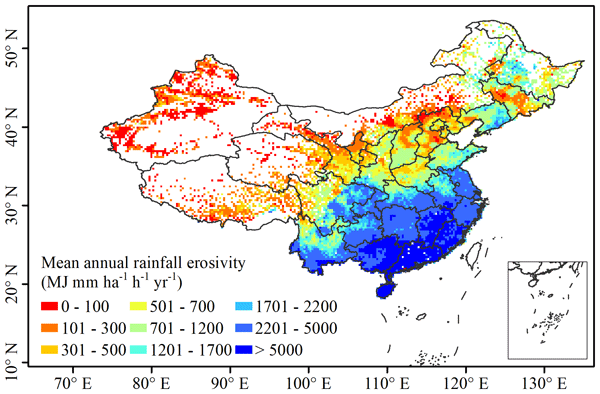
Rainfall erosivity maps are crucial for identifying key areas of water erosion. Due to the limited historical precipitation data, there are certain biases in rainfall erosivity estimates in China. This study develops a new rainfall erosivity map for mainland China using 1 min precipitation data from 60 129 weather stations, revealing that areas exceeding 4000 MJ mm ha−1 h−1yr−1 of annual rainfall erosivity are mainly concentrated in southern China and on the southern Tibetan Plateau.
Yuanyuan Xiao, Shuiqing Yin, Bofu Yu, Conghui Fan, Wenting Wang, and Yun Xie
Hydrol. Earth Syst. Sci., 27, 4563–4577, https://doi.org/10.5194/hess-27-4563-2023, https://doi.org/10.5194/hess-27-4563-2023, 2023
Short summary
Short summary
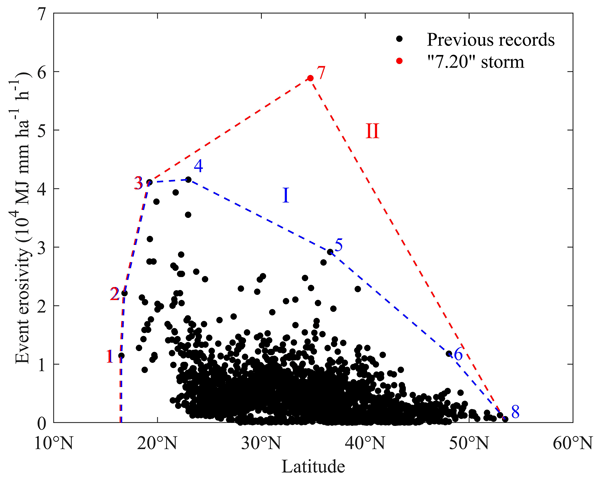
An exceptionally heavy rainfall event occurred on 20 July 2021 in central China (the 7.20 storm). The storm presents a rare opportunity to examine the extreme rainfall erosivity. The storm, with an average recurrence interval of at least 10 000 years, was the largest in terms of its rainfall erosivity on record over the past 70 years in China. The study suggests that extreme erosive events can occur anywhere in eastern China and are not necessarily concentrated in low latitudes.
Congcong Qiao, Song Liu, Juan Huo, Xihan Mu, Ping Wang, Shengjie Jia, Xuehua Fan, and Minzheng Duan
Atmos. Meas. Tech., 16, 1539–1549, https://doi.org/10.5194/amt-16-1539-2023, https://doi.org/10.5194/amt-16-1539-2023, 2023
Short summary
Short summary
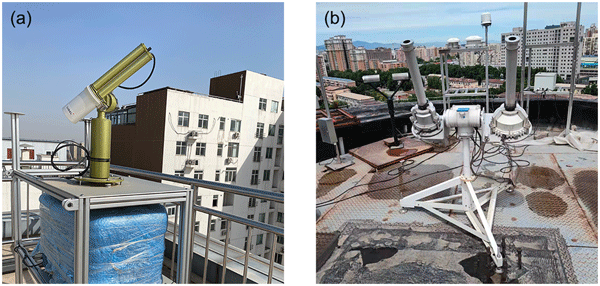
We established a spectral-fitting method to derive precipitable water vapor (PWV) and aerosol optical depth based on a strict radiative transfer theory by the spectral measurements of direct sun from EKO MS711 and MS712 spectroradiometers. The retrievals were compared with that of the colocated CE-318 photometer; the results showed a high degree of consistency. In the PWV inversion, a strong water vapor absorption band around 1370 nm is introduced to retrieve PWV in a relatively dry atmosphere.
Yueli Chen, Xingwu Duan, Minghu Ding, Wei Qi, Ting Wei, Jianduo Li, and Yun Xie
Earth Syst. Sci. Data, 14, 2681–2695, https://doi.org/10.5194/essd-14-2681-2022, https://doi.org/10.5194/essd-14-2681-2022, 2022
Short summary
Short summary
We reconstructed the first annual rainfall erosivity dataset for the Tibetan Plateau in China. The dataset covers 71 years in a 0.25° grid. The reanalysis precipitation data are employed in combination with the densely spaced in situ precipitation observations to generate the dataset. The dataset can supply fundamental data for quantifying the water erosion, and extend our knowledge of the rainfall-related hazard prediction on the Tibetan Plateau.
Tianyu Yue, Shuiqing Yin, Yun Xie, Bofu Yu, and Baoyuan Liu
Earth Syst. Sci. Data, 14, 665–682, https://doi.org/10.5194/essd-14-665-2022, https://doi.org/10.5194/essd-14-665-2022, 2022
Short summary
Short summary
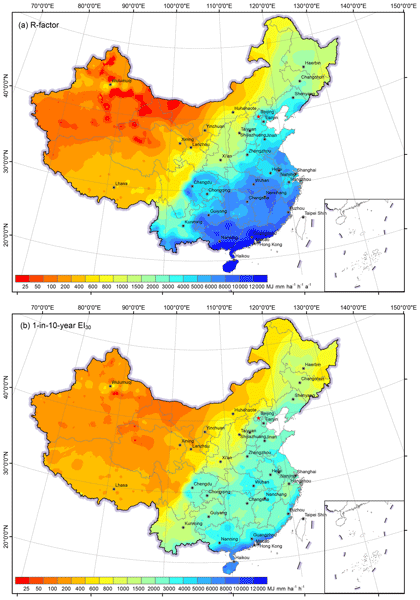
This paper provides new rainfall erosivity maps over mainland China based on hourly data from 2381 stations (available at https://doi.org/10.12275/bnu.clicia.rainfallerosivity.CN.001). The improvement from the previous work was also assessed. The improvement in the R-factor map occurred mainly in the western region, because of an increase in the number of stations and an increased temporal resolution from daily to hourly data.
Cited articles
Asrar, G., Fuchs, M., Kanemasu, E., and Hatfield, J.: Estimating absorbed photosynthetic radiation and leaf area index from spectral reflectance in wheat, Agronomy Journal, 76, 300–306, https://doi.org/10.2134/agronj1984.00021962007600020029x, 1984.
Baret, F., Hagolle, O., Geiger, B., Bicheron, P., Miras, B., Huc, M., Berthelot, B., Niño, F., Weiss, M., Samain, O., Roujean, J. L., and Leroy, M.: LAI, fAPAR and fCover CYCLOPES global products derived from VEGETATION: Part 1: Principles of the algorithm, Remote Sensing of Environment, 110, 275–286, https://doi.org/10.1016/j.rse.2007.02.018, 2007.
Baret, F., Weiss, M., Lacaze, R., Camacho, F., Makhmara, H., Pacholcyzk, P., and Smets, B.: GEOV1: LAI and FAPAR essential climate variables and FCOVER global time series capitalizing over existing products. Part 1: Principles of development and production, Remote Sensing of Environment, 137, 299–309, https://doi.org/10.1016/j.rse.2012.12.027, 2013.
Chen, J., Menges, C., and Leblanc, S.: Global mapping of foliage clumping index using multi-angular satellite data, Remote Sensing of Environment, 97, 447–457, https://doi.org/10.1016/j.rse.2005.05.003, 2005.
Chen, J., Chen, J., Liao, A., Cao, X., Chen, L., Chen, X., Peng, S., Han, G., Zhang, H., and He, C.: Concepts and key techniques for 30 m global land cover mapping, Acta Geodaetica et Cartographica Sinica, 43, 551–557, https://doi.org/10.13485/j.cnki.11-2089.2014.0089, 2014.
Chen, J., Chen, J., Liao, A., Cao, X., Chen, L., Chen, X., He, C., Han, G., Peng, S., and Lu, M.: Global land cover mapping at 30 m resolution: A POK-based operational approach, ISPRS Journal of Photogrammetry and Remote Sensing, 103, 7–27, https://doi.org/10.1016/j.isprsjprs.2014.09.002, 2015.
Choudhury, B. J., Ahmed, N. U., Idso, S. B., Reginato, R. J., and Daughtry, C.: Relations between evaporation coefficients and vegetation indices studied by model simulations, Remote Sensing of Environment, 50, 1–17, https://doi.org/10.1016/0034-4257(94)90090-6, 1994.
Cochrane, M. A. and Souza Jr., C. M.: Linear mixture model classification of burned forests in the eastern Amazon, International Journal of Remote Sensing, 19, 3433–3440, https://doi.org/10.1080/014311698214109, 1998.
Deardorff, J. W.: Efficient prediction of ground surface temperature and moisture, with inclusion of a layer of vegetation, Journal of Geophysical Research-Oceans, 83, https://doi.org/10.1029/JC083iC04p01889, 1978.
Deering, D.: Structure analysis and classification of boreal forests using airborne hyperspectral BRDF data from ASAS, Remote Sensing of Environment, 69, 281–295, https://doi.org/10.1016/S0034-4257(99)00032-2, 1999.
DiMiceli, C., Carroll, M., Sohlberg, R., Huang, C., Hansen, M., and Townshend, J.: Annual global automated MODIS vegetation continuous fields (MOD44B) at 250 m spatial resolution for data years beginning day 65, 2000–2010, collection 5 percent tree cover [data set], University of Maryland, https://doi.org/10.5067/MODIS/MOD44B.006, 2011.
Diner, D. J., Asner, G. P., Davies, R., Knyazikhin, Y., Muller, J.-P., Nolin, A. W., Pinty, B., Schaaf, C. B., and Stroeve, J.: New directions in earth observing: Scientific applications of multiangle remote sensing, Bulletin of the American Meteorological Society, 80, 2209–2228, https://doi.org/10.1175/1520-0477(1999)080<2209:NDIEOS>2.0.CO;2, 1999.
Ding, Y., Zheng, X., Zhao, K., Xin, X., and Liu, H.: Quantifying the impact of NDVIsoil determination methods and NDVIsoil variability on the estimation of fractional vegetation cover in Northeast China, Remote Sensing, 8, 29, https://doi.org/10.3390/rs8010029, 2016.
Donohue, R. J. and Renzullo, L. J.: An assessment of the accuracy of satellite-derived woody and grass foliage cover estimates for Australia, Australian Journal of Botany, 73, https://doi.org/10.1071/BT24060, 2025.
Donohue, R. J., Hume, I., Roderick, M. L., McVicar, T. R., Beringer, J., Hutley, L. B., Gallant, J. C., Austin, J. M., Van Gorsel, E., and Cleverly, J. R.: Evaluation of the remote-sensing-based DIFFUSE model for estimating photosynthesis of vegetation, Remote Sensing of Environment, 155, 349–365, https://doi.org/10.1016/j.rse.2014.09.007, 2014.
Donohue, R. J., Lawes, R. A., Mata, G., Gobbett, D., and Ouzman, J.: Towards a national, remote-sensing-based model for predicting field-scale crop yield, Field Crops Research, 227, 79–90, https://doi.org/10.1016/j.fcr.2018.08.005, 2018.
Eriksson, H. M., Eklundh, L., Kuusk, A., and Nilson, T.: Impact of understory vegetation on forest canopy reflectance and remotely sensed LAI estimates, Remote Sensing of Environment, 103, 408–418, https://doi.org/10.1016/j.rse.2006.04.005, 2006.
Escadafal, R. and Huete, A.: Influence of the viewing geometry on the spectral properties (high resolution visible and NIR) of selected soils from Arizona, Proceedings of the 5th International Colloquium, Physical Measurements and Signatures in Remote Sensing, 401–404, https://doi.org/10.1016/0034-4257(89)90013-8, 1991.
Fernández-Guisuraga, J. M., Verrelst, J., Calvo, L., and Suárez-Seoane, S.: Hybrid inversion of radiative transfer models based on high spatial resolution satellite reflectance data improves fractional vegetation cover retrieval in heterogeneous ecological systems after fire, Remote Sensing of Environment, 255, 112304, https://doi.org/10.1016/j.rse.2021.112304, 2021.
Gan, M., Deng, J., Zheng, X., Hong, Y., and Wang, K.: Monitoring Urban Greenness Dynamics Using Multiple Endmember Spectral Mixture Analysis, PLOS ONE, 9, https://doi.org/10.1371/journal.pone.0112202, 2014.
Gao, L., Wang, X., Johnson, B. A., Tian, Q., Wang, Y., Verrelst, J., Mu, X., and Gu, X.: Remote sensing algorithms for estimation of fractional vegetation cover using pure vegetation index values: A review, ISPRS Journal of Photogrammetry and Remote Sensing, 159, 364–377, https://doi.org/10.1016/j.isprsjprs.2019.11.018, 2020.
García-Haro, F. J., Sommer, S., and Kemper, T.: A new tool for variable multiple endmember spectral mixture analysis (VMESMA), International Journal of Remote Sensing, 26, 2135–2162, https://doi.org/10.1080/01431160512331337817, 2005.
Garrity, D. and Bindraban, P.: A globally distributed soil spectral library visible near infrared diffuse reflectance spectra, World Agroforestry Centre and ISRIC – World Soil Information [dataset], The World Agroforestry Centre (ICRAF) and ISRIC – World Soil Information, 2006.
Gitelson, A. A., Kaufman, Y. J., Stark, R., and Rundquist, D.: Novel algorithms for remote estimation of vegetation fraction, Remote Sensing of Environment, 80, 76–87, https://doi.org/10.1016/S0034-4257(01)00289-9, 2002.
Goel, N. S. and Strebel, D. E.: Simple Beta Distribution Representation of Leaf Orientation in Vegetation Canopies, Agronomy Journal, 76, 800, https://doi.org/10.2134/agronj1984.00021962007600050021x, 1984.
Guan, K., Wood, E. F., and Caylor, K. K.: Multi-sensor derivation of regional vegetation fractional cover in Africa, Remote Sensing of Environment, 124, 653–665, https://doi.org/10.1016/j.rse.2012.06.005, 2012.
Gutman, G. and Ignatov, A.: Satellite-derived green vegetation fraction for the use in numerical weather prediction models, Advances in Space Research, 19, 477–480, https://doi.org/10.1080/014311698215333, 1997.
Gutman, G. and Ignatov, A.: The derivation of the green vegetation fraction from NOAA/AVHRR data for use in numerical weather prediction models, International Journal of Remote Sensing, 19, 1533–1543, https://doi.org/10.1080/014311698215333, 1998.
He, L., Chen, J. M., Pisek, J., Schaaf, C. B. and Strahler, A. H.: Global clumping index map derived from the MODIS BRDF product, Remote Sensing of Environment, 119, 118–130, https://doi.org/10.1016/j.rse.2011.12.008, 2012.
Hirano, Y., Yasuoka, Y., and Ichinose, T.: Urban climate simulation by incorporating satellite-derived vegetation cover distribution into a mesoscale meteorological model, Theoretical & Applied Climatology, 79, 175–184, https://doi.org/10.1007/s00704-004-0069-0, 2004.
Jensen, J. R.: Remote Sensing of the Environment: An Earth Resource Perspective, Prentice Hall, Upper Saddle River, New Jersey, 333–377, ISBN 978-1-29202-170-6, 2000.
Jia, K., Liang, S., Liu, S., Li, Y., Xiao, Z., Yao, Y., Jiang, B., Zhao, X., Wang, X., Xu, S., and Cui, J.: Global Land Surface Fractional Vegetation Cover Estimation Using General Regression Neural Networks From MODIS Surface Reflectance, IEEE Transactions on Geoscience and Remote Sensing, 53, 4787–4796, https://doi.org/10.1109/TGRS.2015.2409563, 2015.
Jia, K., Li, Y., Liang, S., Wei, X., and Yao, Y.: Combining estimation of green vegetation fraction in an arid region from Landsat 7 ETM+ data, Remote Sensing, 9, 1121, https://doi.org/10.3390/rs9111121, 2017.
Jiao, Q., Zhang, B., Liu, L., Li, Z., Yue, Y., and Hu, Y.: Assessment of spatio-temporal variations in vegetation recovery after the Wenchuan earthquake using Landsat data, Natural Hazards, 70, 1309–1326, https://doi.org/10.1007/s11069-013-0875-8, 2014.
Jiapaer, G., Chen, X., and Bao, A.: A comparison of methods for estimating fractional vegetation cover in arid regions, Agricultural and Forest Meteorology, 151, 1698–1710, https://doi.org/10.1016/j.agrformet.2011.07.004, 2011.
Jun, C., Ban, Y., and Li, S.: China: Open access to Earth land-cover map, Nature, 514, https://doi.org/10.1038/514434c, 2014.
Leblanc, S. G., Chen, J. M., Miller, J. R., and Freemantle, J.: Compact Airborne Spectrographic Imager (CASI) Used for Mapping LAI of Cropland, Journal of Geophysical Research-Atmospheres, 104, 27945–27958, https://doi.org/10.1029/1999JD900098, 1999.
Li, G., Jing, Y., Wu, Y., and Zhang, F.: Improvement of two evapotranspiration estimation models using a linear spectral mixture model over a small agricultural watershed, Water, 10, 474, https://doi.org/10.3390/w10040474, 2018a.
Li, L., Mu, X., Macfarlane, C., Song, W., Chen, J., Yan, K., and Yan, G.: A half-Gaussian fitting method for estimating fractional vegetation cover of corn crops using unmanned aerial vehicle images, Agricultural and Forest Meteorology, 262, 379–390, https://doi.org/10.1016/j.dib.2021.106784, 2018b.
Li, X., Liu, S., Ma, M., Xiao, Q., Liu, Q., Jin, R., Che, T., Wang, W., Qi, Y., Li, H., Zhu, G., Guo, J., Ran, Y., Wen, J., and Wang, S.: HiWATER: An Integrated Remote Sensing Experiment on Hydrological and Ecological Processes in the Heihe River Basin, Advances in Earth Science, 27, 481–498, https://doi.org/10.11867/j.issn.1001-8166.2012.05.0481, 2012.
Li, X., Zhang, X., Zhang, L., and Wu, B.: Rainfall and Vegetation Coupling Index for soil erosion risk mapping, Journal of Soil and Water Conservation, 69, 213–220, https://doi.org/10.2489/jswc.69.3.213, 2014.
Liu, L., Zhang, X., Gao, Y., Chen, X., Shuai, X., and Mi, J.: Finer-resolution mapping of global land cover: Recent developments, consistency analysis, and prospects, Journal of Remote Sensing, https://doi.org/10.34133/2021/5289697, 2021.
Lu, D., Moran, E., and Batistella, M.: Linear mixture model applied to Amazonian vegetation classification, Remote Sensing of Environment, 87, 456–469, https://doi.org/10.1016/j.rse.2002.06.001, 2003.
Matsui, T., Lakshmi, V., and Small, E. E.: The effects of satellite-derived vegetation cover variability on simulated land–atmosphere interactions in the NAMS, Journal of Climate, 18, 21–40, https://doi.org/10.1175/JCLI3254.1, 2005.
Mölders, N. and Olson, M. A.: Impact of urban effects on precipitation in high latitudes, Journal of Hydrometeorology, 5, 409–429, https://doi.org/10.1175/1525-7541(2004)005<0409:IOUEOP>2.0.CO;2, 2004.
Montandon, L. and Small, E.: The impact of soil reflectance on the quantification of the green vegetation fraction from NDVI, Remote Sensing of Environment, 112, 1835–1845, https://doi.org/10.1016/j.rse.2007.09.007, 2008.
Mu, X., Huang, S., and Chen, Y.: HiWATER: Dataset of Fractional Vegetation Cover in the middle reaches of the Heihe River Basin, National Tibetan Plateau Data Center, Third Pole Environment Data Center [data set], https://cstr.cn/18406.11.hiwater.043.2013.db (last access: 2 December 2025), 2013.
Mu, X., Hu, M., Song, W., Ruan, G., Ge, Y., Wang, J., Huang, S., and Yan, G.: Evaluation of sampling methods for validation of remotely sensed fractional vegetation cover, Remote Sensing, 7, 16164–16182, https://doi.org/10.3390/rs71215817, 2015.
Mu, X., Song, W., Zhan, G., Mcvicar, T. R., Donohue, R. J., and Yan, G.: Fractional vegetation cover estimation by using multi-angle vegetation index, Remote Sensing of Environment, 216, 44–56, https://doi.org/10.1016/j.rse.2018.06.022, 2018.
Mu, X., Zhao, T., Ruan, G., Song, J., Wang, J., Yan, G., Mcvicar, T. R., Yan, K., Gao, Z., and Liu, Y.: High spatial resolution and high temporal frequency (30-m/15-day) fractional vegetation cover estimation over China using multiple remote sensing datasets: Method development and validation, Journal of Meteorological Research, 35, 128–147, https://doi.org/10.1007/s13351-021-0017-2, 2021.
Mu, X., Yang, Y., Xu, H., Guo, Y., Lai, Y., McVicar, T. R., Xie, D., and Yan, G.: Improvement of NDVI mixture model for fractional vegetation cover estimation with consideration of shaded vegetation and soil components, Remote Sensing of Environment, 314, 114409, https://doi.org/10.1016/j.rse.2024.114409, 2024.
Naqvi, H. R., Mallick, J., Devi, L. M., and Siddiqui, M. A.: Multi-temporal annual soil loss risk mapping employing Revised Universal Soil Loss Equation (RUSLE) model in Nun Nadi Watershed, Uttrakhand (India), Arabian Journal of Geosciences, 6, 4045–4056, https://doi.org/10.1007/s12517-012-0661-z, 2013.
National Geomatics Center of China: GlobeLand30 Land Cover Dataset (2020), National Earth System Science Data Center, National Science & Technology Infrastructure of China [data set], https://doi.org/10.12041/geodata.140236667788805.ver1.db, 2018.
Nilson, T.: A theoretical analysis of the frequency of gaps in plant stands, Agricultural Meteorology, 8, 25–38, https://doi.org/10.1016/0002-1571(71)90092-6, 1971.
Oleson, K., Emery, W., and Maslanik, J.: Evaluating land surface parameters in the Biosphere-Atmosphere Transfer Scheme using remotely sensed data sets, Journal of Geophysical Research-Atmospheres, 105, 7275–7293, https://doi.org/10.1029/1999JD901041, 2000.
Roujean, J.-L., Leroy, M., and Deschamps, P.-Y.: A bidirectional reflectance model of the Earth's surface for the correction of remote sensing data, Journal of Geophysical Research-Atmospheres, 97, 20455–20468, https://doi.org/10.1029/92JD01411, 1992.
Schaaf, C. B., Gao, F., Strahler, A. H., Lucht, W., Li, X., Tsang, T., Strugnell, N. C., Zhang, X., Jin, Y., and Muller, J.-P.: First operational BRDF, albedo nadir reflectance products from MODIS, Remote Sensing of Environment, 83, 135–148, https://doi.org/10.1016/S0034-4257(02)00091-3, 2002.
Song, W., Mu, X., Yan, G., and Huang, S.: Extracting the Green Fractional Vegetation Cover from Digital Images Using a Shadow-Resistant Algorithm (SHAR-LABFVC), Remote Sensing, 7, 10425, https://doi.org/10.3390/rs70810425, 2015.
Song, W., Mu, X., Ruan, G., Gao, Z., Li, L., and Yan, G.: Estimating fractional vegetation cover and the vegetation index of bare soil and highly dense vegetation with a physically based method, International Journal of Applied Earth Observation and Geoinformation, 58, 168–176, https://doi.org/10.1016/j.jag.2017.01.015, 2017.
Song, W., Mu, X., McVicar, T. R., Knyazikhin, Y., Liu, X., Wang, L., Niu, Z., and Yan, G.: Global quasi-daily fractional vegetation cover estimated from the DSCOVR EPIC directional hotspot dataset, Remote Sensing of Environment, 269, 112835, https://doi.org/10.1016/j.rse.2021.112835, 2022a.
Song, W., Zhao, T., Mu, X., Zhong, B., Zhao, J., Yan, G., Wang, L., and Niu, Z.: Using a vegetation index-based mixture model to estimate fractional vegetation cover products by jointly using multiple satellite data: Method and feasibility analysis, Forests, 13, 691, https://doi.org/10.3390/f13050691, 2022b.
Tian, J., Su, S., Tian, Q., Zhan, W., Xi, Y., and Wang, N.: A novel spectral index for estimating fractional cover of non-photosynthetic vegetation using near-infrared bands of Sentinel satellite, International Journal of Applied Earth Observation and Geoinformation, 101, 102361, https://doi.org/10.1016/j.jag.2021.102361, 2021.
Verrelst, J., Schaepman, M. E., Koetz, B., and Kneubühler, M.: Angular sensitivity analysis of vegetation indices derived from CHRIS/PROBA data, Remote Sensing of Environment, 112, 2341–2353, https://doi.org/10.1016/j.rse.2007.11.001, 2008.
Wang, C. and Qi, J.: Biophysical estimation in tropical forests using JERS-1 VNIR imagery. I: Leaf area index, International Journal of Remote Sensing, 29, 6811–6826, https://doi.org/10.1080/01431160802270115, 2008.
Weiss, M., Baret, F., Smith, G., Jonckheere, I., and Coppin, P.: Review of methods for in situ leaf area index (LAI) determination: Part II. Estimation of LAI, errors and sampling, Agricultural and Forest Meteorology, 121, 37–53, https://doi.org/10.1016/j.agrformet.2003.08.001, 2004.
Weiss, M., Baret, F., Garrigues, S., and Lacaze, R.: LAI and fAPAR CYCLOPES global products derived from VEGETATION. Part 2: validation and comparison with MODIS collection 4 products, Remote Sensing of Environment, 110, 317–331, https://doi.org/10.1016/j.rse.2007.03.001, 2007.
Wu, D., Wu, H., Zhao, X., Zhou, T., Tang, B., Zhao, W., and Jia, K.: Evaluation of Spatiotemporal Variations of Global Fractional Vegetation Cover Based on GIMMS NDVI Data from 1982 to 2011, Remote Sensing, 6, 4217, https://doi.org/10.3390/rs6054217, 2014.
Xiao, J. and Moody, A.: A comparison of methods for estimating fractional green vegetation cover within a desert-to-upland transition zone in central New Mexico, USA, Remote Sensing of Environment, 98, 237–250, https://doi.org/10.1016/j.rse.2005.07.011, 2005.
Xiao, Z., Wang, T., Liang, S., and Sun, R.: Estimating the Fractional Vegetation Cover from GLASS Leaf Area Index Product, Remote Sensing, 8, 337, https://doi.org/10.3390/rs8040337, 2016.
Xie, M., Wang, Y., and Fu, M.: An Overview and Perspective about Causative Factors of Surface Urban Heat Island Effects, Progress in Geography, 30, 35–41, https://doi.org/10.11820/dlkxjz.2011.01.004, 2011.
Yang, H. and Yang, Z.: A modified land surface temperature split window retrieval algorithm and its applications over China, Global and Planetary Change, 52, 207–215, https://doi.org/10.1016/j.gloplacha.2006.02.015, 2006.
Zeng, X., Dickinson, R. E., Walker, A., Shaikh, M., DeFries, R. S., and Qi, J.: Derivation and evaluation of global 1-km fractional vegetation cover data for land modeling, Journal of Applied Meteorology, 39, 826–839, https://doi.org/10.1175/1520-0450(2000)039<0826:DAEOGK>2.0.CO;2, 2000.
Zhang, Y., Odeh, I., and Ramadan, E.: Assessment of land surface temperature in relation to landscape metrics and fractional vegetation cover in an urban/peri-urban region using Landsat data, International Journal for Remote Sensing, 34, 168–189, https://doi.org/10.1080/01431161.2012.712227, 2013.
Zhao, T., Mu, X., Song, W., Liu, Y., Xie, Y., Zhong, B., Xie, D., Jiang, L., and Yan, G.: Mapping Spatially Seamless Fractional Vegetation Cover over China at a 30-m Resolution and Semimonthly Intervals in 2010–2020 Based on Google Earth Engine, Journal of Remote Sensing, 3, 0101, https://doi.org/10.34133/remotesensing.0101, 2023.
Zhao, T., Song, W., Mu, X., Xie, Y., Xie, D., and Yan, G.: Normalized Difference Vegetation Index Maps of Pure Pixels over China for Estimation of Fractional Vegetation Cover (2014) (1.0.0), Zenodo [data set], https://doi.org/10.5281/zenodo.15720622, 2024a.
Zhao, T., Song, W., Mu, X., Xie, Y., Xie, D., and Yan, G.: 30 m Normalized Difference Vegetation Index Maps of Pure Pixels over China for Estimation of Fractional Vegetation Cover (2014, 2018, 2022) (1.0.0), Zenodo [data set], https://doi.org/10.5281/zenodo.17463344, 2024b.
Zhao, T., Song, W., Mu, X., Xie, Y., Xie, D., and Yan, G.: 500 m Normalized Difference Vegetation Index Maps of Pure Pixels over China for Estimation of Fractional Vegetation Cover (2014) (1.0.0), Zenodo [data set], https://doi.org/10.5281/zenodo.15597968, 2024c.
Short summary
Our research aimed to provide reliable data for measuring fractional vegetation cover, essential for understanding climate patterns and ecological health. We used the MultiVI algorithm, which employs satellite images from various angles to enhance accuracy. Our method outperformed traditional statistical methods compared to field measurements, enabling precise large-scale mapping of vegetation cover for improved environmental monitoring and planning.
Our research aimed to provide reliable data for measuring fractional vegetation cover, essential...
Altmetrics
Final-revised paper
Preprint