Articles | Volume 18, issue 1
https://doi.org/10.5194/essd-18-55-2026
© Author(s) 2026. This work is distributed under
the Creative Commons Attribution 4.0 License.
the Creative Commons Attribution 4.0 License.
https://doi.org/10.5194/essd-18-55-2026
© Author(s) 2026. This work is distributed under
the Creative Commons Attribution 4.0 License.
the Creative Commons Attribution 4.0 License.
Data description article
| 
05 Jan 2026
Data description article |
| 05 Jan 2026
| 05 Jan 2026
Development of the long-term harmonized multi-satellite SIF (LHSIF) dataset at 0.05° resolution (1995–2024)
Chu Zou
State Key Laboratory of Efficient Utilization of Arable Land in Northern China, National Hulunber Grassland Ecosystem Observation and Research Station, Institute of Agricultural Resources and Regional Planning, Chinese Academy of Agricultural Sciences, Beijing 100081, China
Key Laboratory of Digital Earth Science, Aerospace Information Research Institute, Chinese Academy of Sciences, Beijing, 100094, China
International Research Center of Big Data for Sustainable Development Goals, Beijing 100094, China
Shanshan Du
Key Laboratory of Digital Earth Science, Aerospace Information Research Institute, Chinese Academy of Sciences, Beijing, 100094, China
International Research Center of Big Data for Sustainable Development Goals, Beijing 100094, China
Xinjie Liu
Key Laboratory of Digital Earth Science, Aerospace Information Research Institute, Chinese Academy of Sciences, Beijing, 100094, China
International Research Center of Big Data for Sustainable Development Goals, Beijing 100094, China

Key Laboratory of Digital Earth Science, Aerospace Information Research Institute, Chinese Academy of Sciences, Beijing, 100094, China
University of Chinese Academy of Sciences, Beijing 100049, China
International Research Center of Big Data for Sustainable Development Goals, Beijing 100094, China
Related authors
Dianrun Zhao, Shanshan Du, Chu Zou, Longfei Tian, Meng Fan, Yulu Du, and Liangyun Liu
Atmos. Meas. Tech., 18, 3647–3667, https://doi.org/10.5194/amt-18-3647-2025, https://doi.org/10.5194/amt-18-3647-2025, 2025
Short summary
Short summary
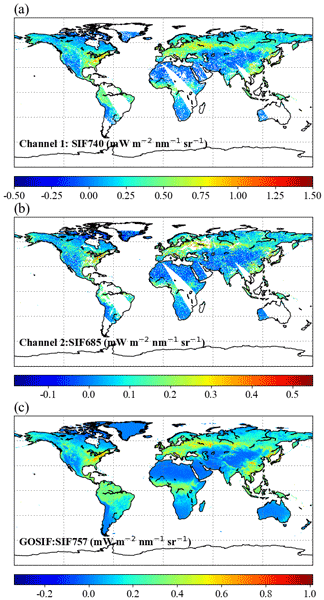
TanSat-2 is designed for global carbon monitoring, offering high-resolution dual-band observations of solar-induced chlorophyll fluorescence – a key indicator of photosynthesis. Simulations show its data processing can retrieve fluorescence with high accuracy. These results suggest TanSat-2 will enhance global tracking of the carbon cycle and vegetation health, providing valuable insights for climate change research.
Chu Zou, Shanshan Du, Xinjie Liu, and Liangyun Liu
Earth Syst. Sci. Data, 16, 2789–2809, https://doi.org/10.5194/essd-16-2789-2024, https://doi.org/10.5194/essd-16-2789-2024, 2024
Short summary
Short summary
To obtain a temporally consistent satellite solar-induced chlorophyll fluorescence
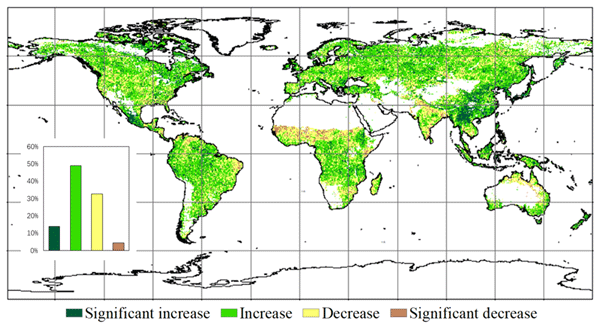
(SIF) product (TCSIF), we corrected for time degradation of GOME-2A using a pseudo-invariant method. After the correction, the global SIF grew by 0.70 % per year from 2007 to 2021, and 62.91 % of vegetated regions underwent an increase in SIF. The dataset is a promising tool for monitoring global vegetation variation and will advance our understanding of vegetation's photosynthetic activities at a global scale.
(SIF) product (TCSIF), we corrected for time degradation of GOME-2A using a pseudo-invariant method. After the correction, the global SIF grew by 0.70 % per year from 2007 to 2021, and 62.91 % of vegetated regions underwent an increase in SIF. The dataset is a promising tool for monitoring global vegetation variation and will advance our understanding of vegetation's photosynthetic activities at a global scale.
Rong Shang, Shengwei Xu, Ziyi Yang, Xudong Lin, Lingyun Fan, Keyan Fang, Mingzhu Xu, Anxin Ding, Yulin Yan, Yunjian Liang, Chenningya Song, Wenjie Chen, Jiaorong Qian, Annan Zhang, Jing Heng, Siyu Chen, Xiao Zhang, Liangyun Liu, Wang Li, Licong Dai, Zhongmin Hu, and Jing M. Chen
Earth Syst. Sci. Data Discuss., https://doi.org/10.5194/essd-2026-705, https://doi.org/10.5194/essd-2026-705, 2026
Preprint under review for ESSD
Short summary
Short summary
This study created a Reference sample dataset of Stable, Disturbed and Forestated forests (RSDF) in China from1986 to 2025 with 12,991 samples. All samples were visually annotated using satellite imagery and forest records with strict quality checks. Nearly 80 % remained stable, and forest disturbance was most frequent in eastern and southern China. Over 95 % of samples received high confidence. This public dataset supports tracking forest change and assessing its effects on carbon storage.
Julien Lamour, Shawn P. Serbin, Alistair Rogers, Kelvin T. Acebron, Elizabeth Ainsworth, Loren P. Albert, Michael Alonzo, Jeremiah Anderson, Owen K. Atkin, Nicolas Barbier, Mallory L. Barnes, Carl J. Bernacchi, Ninon Besson, Angela C. Burnett, Joshua S. Caplan, Jérôme Chave, Alexander W. Cheesman, Ilona Clocher, Onoriode Coast, Sabrina Coste, Holly Croft, Boya Cui, Clément Dauvissat, Kenneth J. Davidson, Christopher Doughty, Kim S. Ely, John R. Evans, Jean-Baptiste Féret, Iolanda Filella, Claire Fortunel, Peng Fu, Robert T. Furbank, Maquelle Garcia, Bruno O. Gimenez, Kaiyu Guan, Zhengfei Guo, David Heckmann, Patrick Heuret, Marney Isaac, Shan Kothari, Etsushi Kumagai, Thu Ya Kyaw, Liangyun Liu, Lingli Liu, Shuwen Liu, Joan Llusià, Troy Magney, Isabelle Maréchaux, Adam R. Martin, Katherine Meacham-Hensold, Christopher M. Montes, Romà Ogaya, Joy Ojo, Regison Oliveira, Alain Paquette, Josep Peñuelas, Antonia Debora Placido, Juan M. Posada, Xiaojin Qian, Heidi J. Renninger, Milagros Rodriguez-Caton, Andrés Rojas-González, Urte Schlüter, Giacomo Sellan, Courtney M. Siegert, Viridiana Silva-Perez, Guangqin Song, Charles D. Southwick, Daisy C. Souza, Clément Stahl, Yanjun Su, Leeladarshini Sujeeun, To-Chia Ting, Vicente Vasquez, Amrutha Vijayakumar, Marcelo Vilas-Boas, Diane R. Wang, Sheng Wang, Han Wang, Jing Wang, Xin Wang, Andreas P. M. Weber, Christopher Y. S. Wong, Jin Wu, Fengqi Wu, Shengbiao Wu, Zhengbing Yan, Dedi Yang, and Yingyi Zhao
Earth Syst. Sci. Data, 18, 245–265, https://doi.org/10.5194/essd-18-245-2026, https://doi.org/10.5194/essd-18-245-2026, 2026
Short summary
Short summary
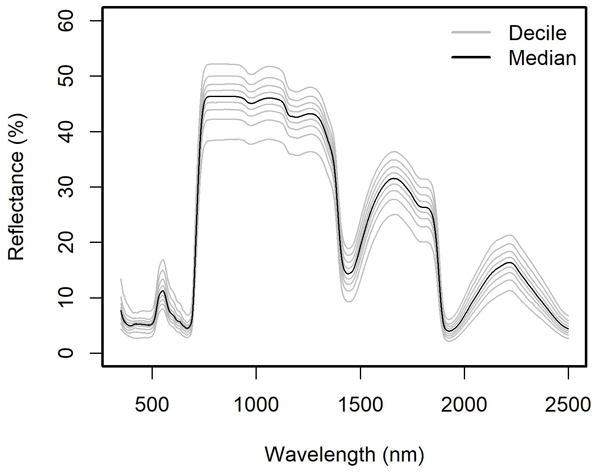
We present the Global Spectra-Trait Initiative (GSTI), a collaborative repository of paired leaf hyperspectral and gas exchange measurements from diverse ecosystems. This repository provides a unique source of information for creating hyperspectral models for predicting photosynthetic traits and associated leaf traits in terrestrial plants.
Yu Mao, Weimin Ju, Hengmao Wang, Liangyun Liu, Haikun Wang, Shuzhuang Feng, Mengwei Jia, and Fei Jiang
Atmos. Chem. Phys., 25, 14187–14204, https://doi.org/10.5194/acp-25-14187-2025, https://doi.org/10.5194/acp-25-14187-2025, 2025
Short summary
Short summary
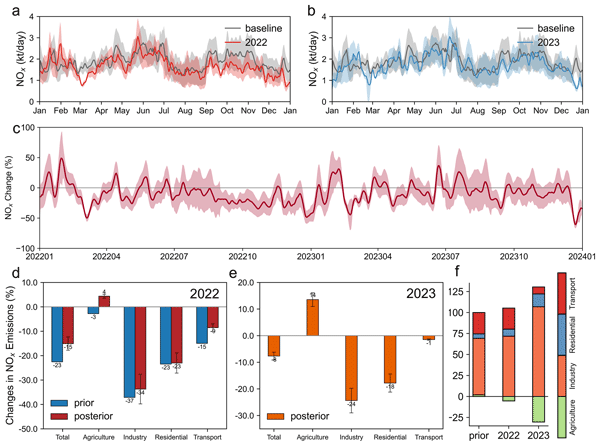
The Russia-Ukraine war caused significant NOx emission reductions in Ukraine, exceeding COVID-19 impacts. Using TROPOMI data, we found a 15% drop in 2022 and 8% in 2023, with Eastern Ukraine (frontline) seeing declines of 29% and 17%. Industry emissions fell most (34% in 2022), while war-related NOx partially offset reductions (8-10%). Emissions closely tracked military actions, revealing conflict’s disruptive effects on socio-economic activity and air pollution.
Xiao Zhang, Liangyun Liu, Tingting Zhao, Wenhan Zhang, Linlin Guan, Ming Bai, and Xidong Chen
Earth Syst. Sci. Data, 17, 4039–4062, https://doi.org/10.5194/essd-17-4039-2025, https://doi.org/10.5194/essd-17-4039-2025, 2025
Short summary
Short summary
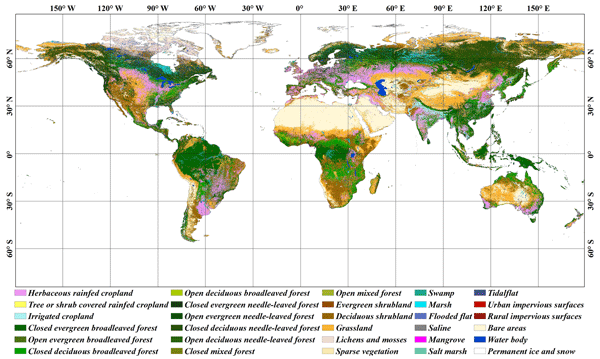
This work describes a novel global 10 m land-cover dataset with a fine classification system, which contains 30 land-cover subcategories and achieves sufficient performance on a global scale.
Dianrun Zhao, Shanshan Du, Chu Zou, Longfei Tian, Meng Fan, Yulu Du, and Liangyun Liu
Atmos. Meas. Tech., 18, 3647–3667, https://doi.org/10.5194/amt-18-3647-2025, https://doi.org/10.5194/amt-18-3647-2025, 2025
Short summary
Short summary
TanSat-2 is designed for global carbon monitoring, offering high-resolution dual-band observations of solar-induced chlorophyll fluorescence – a key indicator of photosynthesis. Simulations show its data processing can retrieve fluorescence with high accuracy. These results suggest TanSat-2 will enhance global tracking of the carbon cycle and vegetation health, providing valuable insights for climate change research.
Rong Shang, Xudong Lin, Jing M. Chen, Yunjian Liang, Keyan Fang, Mingzhu Xu, Yulin Yan, Weimin Ju, Guirui Yu, Nianpeng He, Li Xu, Liangyun Liu, Jing Li, Wang Li, Jun Zhai, and Zhongmin Hu
Earth Syst. Sci. Data, 17, 3219–3241, https://doi.org/10.5194/essd-17-3219-2025, https://doi.org/10.5194/essd-17-3219-2025, 2025
Short summary
Short summary
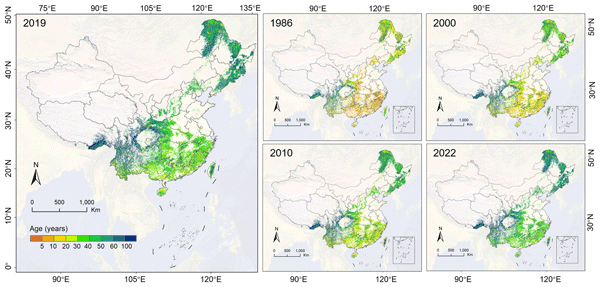
Forest age is critical for carbon cycle modeling and effective forest management. Existing datasets, however, have low spatial resolutions or limited temporal coverage. This study introduces China's annual forest age dataset (CAFA), spanning 1986–2022 at a 30 m resolution. By tracking forest disturbances, we annually update ages. Validation shows small errors for disturbed forests and larger errors for undisturbed forests. CAFA can enhance carbon cycle modeling and forest management in China.
Bernhard Lehner, Mira Anand, Etienne Fluet-Chouinard, Florence Tan, Filipe Aires, George H. Allen, Philippe Bousquet, Josep G. Canadell, Nick Davidson, Meng Ding, C. Max Finlayson, Thomas Gumbricht, Lammert Hilarides, Gustaf Hugelius, Robert B. Jackson, Maartje C. Korver, Liangyun Liu, Peter B. McIntyre, Szabolcs Nagy, David Olefeldt, Tamlin M. Pavelsky, Jean-Francois Pekel, Benjamin Poulter, Catherine Prigent, Jida Wang, Thomas A. Worthington, Dai Yamazaki, Xiao Zhang, and Michele Thieme
Earth Syst. Sci. Data, 17, 2277–2329, https://doi.org/10.5194/essd-17-2277-2025, https://doi.org/10.5194/essd-17-2277-2025, 2025
Short summary
Short summary
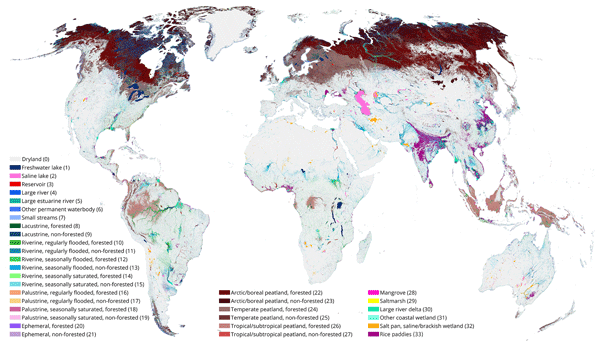
The Global Lakes and Wetlands Database (GLWD) version 2 distinguishes a total of 33 non-overlapping wetland classes, providing a static map of the world’s inland surface waters. It contains cell fractions of wetland extents per class at a grid cell resolution of ~500 m. The total combined extent of all classes including all inland and coastal waterbodies and wetlands of all inundation frequencies – that is, the maximum extent – covers 18.2 × 10⁶ km2, equivalent to 13.4 % of total global land area.
Chu Zou, Shanshan Du, Xinjie Liu, and Liangyun Liu
Earth Syst. Sci. Data, 16, 2789–2809, https://doi.org/10.5194/essd-16-2789-2024, https://doi.org/10.5194/essd-16-2789-2024, 2024
Short summary
Short summary
To obtain a temporally consistent satellite solar-induced chlorophyll fluorescence
(SIF) product (TCSIF), we corrected for time degradation of GOME-2A using a pseudo-invariant method. After the correction, the global SIF grew by 0.70 % per year from 2007 to 2021, and 62.91 % of vegetated regions underwent an increase in SIF. The dataset is a promising tool for monitoring global vegetation variation and will advance our understanding of vegetation's photosynthetic activities at a global scale.
(SIF) product (TCSIF), we corrected for time degradation of GOME-2A using a pseudo-invariant method. After the correction, the global SIF grew by 0.70 % per year from 2007 to 2021, and 62.91 % of vegetated regions underwent an increase in SIF. The dataset is a promising tool for monitoring global vegetation variation and will advance our understanding of vegetation's photosynthetic activities at a global scale.
Liangyun Liu and Xiao Zhang
ISPRS Ann. Photogramm. Remote Sens. Spatial Inf. Sci., X-2-2024, 137–143, https://doi.org/10.5194/isprs-annals-X-2-2024-137-2024, https://doi.org/10.5194/isprs-annals-X-2-2024-137-2024, 2024
Xiao Zhang, Tingting Zhao, Hong Xu, Wendi Liu, Jinqing Wang, Xidong Chen, and Liangyun Liu
Earth Syst. Sci. Data, 16, 1353–1381, https://doi.org/10.5194/essd-16-1353-2024, https://doi.org/10.5194/essd-16-1353-2024, 2024
Short summary
Short summary
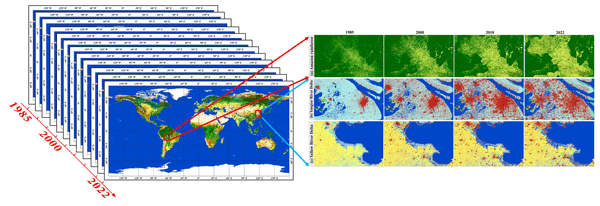
This work describes GLC_FCS30D, the first global 30 m land-cover dynamics monitoring dataset, which contains 35 land-cover subcategories and covers the period of 1985–2022 in 26 time steps (its maps are updated every 5 years before 2000 and annually after 2000).
Xiao Zhang, Liangyun Liu, Tingting Zhao, Xidong Chen, Shangrong Lin, Jinqing Wang, Jun Mi, and Wendi Liu
Earth Syst. Sci. Data, 15, 265–293, https://doi.org/10.5194/essd-15-265-2023, https://doi.org/10.5194/essd-15-265-2023, 2023
Short summary
Short summary
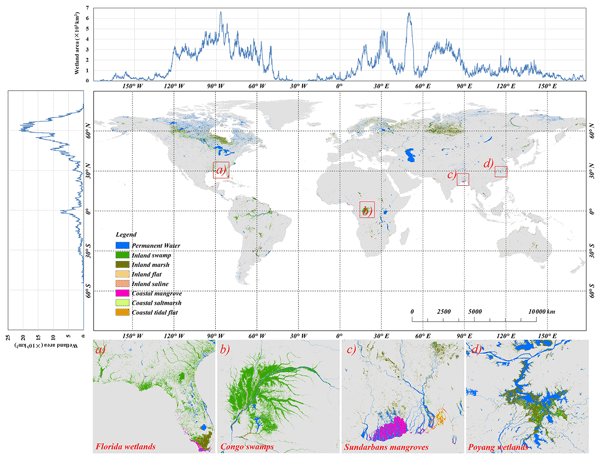
An accurate global 30 m wetland dataset that can simultaneously cover inland and coastal zones is lacking. This study proposes a novel method for wetland mapping and generates the first global 30 m wetland map with a fine classification system (GWL_FCS30), including five inland wetland sub-categories (permanent water, swamp, marsh, flooded flat and saline) and three coastal wetland sub-categories (mangrove, salt marsh and tidal flats).
Xiaojin Qian, Liangyun Liu, Xidong Chen, Xiao Zhang, Siyuan Chen, and Qi Sun
Earth Syst. Sci. Data Discuss., https://doi.org/10.5194/essd-2022-277, https://doi.org/10.5194/essd-2022-277, 2022
Manuscript not accepted for further review
Short summary
Short summary
Leaf chlorophyll content (LCC) is an important plant physiological trait and a proxy for leaf photosynthetic capacity. We generated a global LCC dataset from ENVISAT MERIS and Sentinel-3 OLCI satellite data for the period 2003–2012 to 2018–2020 using a physically-based radiative transfer modeling approach. This new LCC dataset spanning nearly 20 years will provide a valuable opportunity for the monitoring of vegetation growth and terrestrial carbon cycle modeling on a global scale.
Xidong Chen, Liangyun Liu, Xiao Zhang, Junsheng Li, Shenglei Wang, Yuan Gao, and Jun Mi
Hydrol. Earth Syst. Sci., 26, 3517–3536, https://doi.org/10.5194/hess-26-3517-2022, https://doi.org/10.5194/hess-26-3517-2022, 2022
Short summary
Short summary
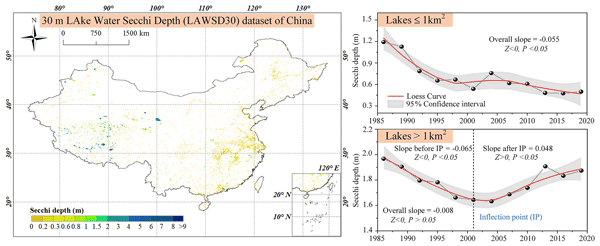
A 30 m LAke Water Secchi Depth (LAWSD30) dataset of China was first developed for 1985–2020, and national-scale water clarity estimations of lakes in China over the past 35 years were analyzed. Lake clarity in China exhibited a significant downward trend before the 21st century, but improved after 2000. The developed LAWSD30 dataset and the evaluation results can provide effective guidance for water preservation and restoration.
Xiao Zhang, Liangyun Liu, Tingting Zhao, Yuan Gao, Xidong Chen, and Jun Mi
Earth Syst. Sci. Data, 14, 1831–1856, https://doi.org/10.5194/essd-14-1831-2022, https://doi.org/10.5194/essd-14-1831-2022, 2022
Short summary
Short summary
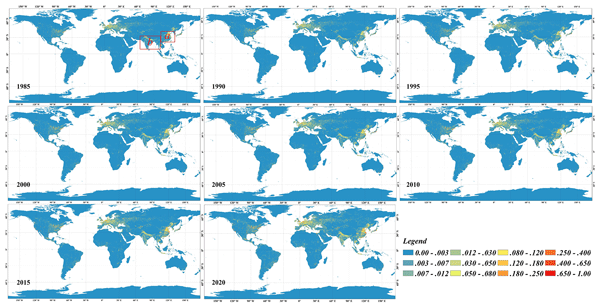
Accurately mapping impervious-surface dynamics has great scientific significance and application value for research on urban sustainable development, the assessment of anthropogenic carbon emissions and global ecological-environment modeling. In this study, a novel and accurate global 30 m impervious surface dynamic dataset (GISD30) for 1985 to 2020 was produced using the spectral-generalization method and time-series Landsat imagery on the Google Earth Engine cloud computing platform.
Cited articles
Abatzoglou, J. T., Dobrowski, S. Z., Parks, S. A., and Hegewisch, K. C.: TerraClimate, a high-resolution global dataset of monthly climate and climatic water balance from 1958–2015, Scientific Data, 5, 170191, https://doi.org/10.1038/sdata.2017.191, 2018.
Anav, A., Friedlingstein, P., Beer, C., Ciais, P., Harper, A., Jones, C., Murray-Tortarolo, G., Papale, D., Parazoo, N. C., Peylin, P., Piao, S., Sitch, S., Viovy, N., Wiltshire, A., and Zhao, M.: Spatiotemporal patterns of terrestrial gross primary production: A review, Reviews of Geophysics, 53, 785–818, https://doi.org/10.1002/2015RG000483, 2015.
Angal, A., Xiong, X., Choi, T., Chander, G., Mishra, N., and Helder, D. L.: Impact of Terra MODIS Collection 6 on long-term trending comparisons with Landsat 7 ETM+ reflective solar bands, Remote sensing letters, 4, 873–881, 2013.
Bacour, C., Maignan, F., Peylin, P., MacBean, N., Bastrikov, V., Joiner, J., Köhler, P., Guanter, L., and Frankenberg, C.: Differences Between OCO-2 and GOME-2 SIF Products From a Model-Data Fusion Perspective, Journal of Geophysical Research: Biogeosciences, 124, 3143–3157, https://doi.org/10.1029/2018JG004938, 2019.
Badgley, G., Field, C. B., and Berry, J. A.: Canopy near-infrared reflectance and terrestrial photosynthesis, Science Advances, 3, e1602244, https://doi.org/10.1126/sciadv.1602244, 2017.
Beck, H. E., McVicar, T. R., Vergopolan, N., Berg, A., Lutsko, N. J., Dufour, A., Zeng, Z., Jiang, X., van Dijk, A. I. J. M., and Miralles, D. G.: High-resolution (1 km) Köppen-Geiger maps for 1901–2099 based on constrained CMIP6 projections, Scientific Data, 10, 724, https://doi.org/10.1038/s41597-023-02549-6, 2023.
Beer, C., Reichstein, M., Tomelleri, E., Ciais, P., Jung, M., Carvalhais, N., Rödenbeck, C., Arain, M. A., Baldocchi, D., Bonan, G. B., Bondeau, A., Cescatti, A., Lasslop, G., Lindroth, A., Lomas, M., Luyssaert, S., Margolis, H., Oleson, K. W., Roupsard, O., Veenendaal, E., Viovy, N., Williams, C., Woodward, F. I., and Papale, D.: Terrestrial Gross Carbon Dioxide Uptake: Global Distribution and Covariation with Climate, Science, 329, 834–838, https://doi.org/10.1126/science.1184984, 2010.
Berry, J. A., Frankenberg, C., Wennberg, P., Baker, I., Bowman, K. W., Castro-Contreas, S., Cendrero-Mateo, M. P., Damm, A., Drewry, D., and Ehlmann, B.: New methods for measurement of photosynthesis from space, Geophys. Res. Lett., 38, L17706, https://doi.org/10.26206/9NJP-CG56, 2012.
Burrows, J. P., Weber, M., Buchwitz, M., Rozanov, V., Ladstätter-Weißenmayer, A., Richter, A., DeBeek, R., Hoogen, R., Bramstedt, K., Eichmann, K.-U., Eisinger, M., and Perner, D.: The Global Ozone Monitoring Experiment (GOME): Mission Concept and First Scientific Results, Journal of the Atmospheric Sciences, 56, 151–175, https://doi.org/10.1175/1520-0469(1999)056<0151:TGOMEG>2.0.CO;2, 1999.
Byrd, R. H., Lu, P., Nocedal, J., and Zhu, C.: A Limited Memory Algorithm for Bound Constrained Optimization, SIAM Journal on Scientific Computing, 16, 1190–1208, https://doi.org/10.1137/0916069, 1995.
Chen, R., Liu, L., Liu, X., and Rascher, U.: CMLR: A Mechanistic Global GPP Dataset Derived from TROPOMIS SIF Observations, Journal of Remote Sensing, 4, 0127, https://doi.org/10.34133/remotesensing.0127, 2024.
Chen, S., Liu, L., Sui, L., Liu, X., and Ma, Y.: An improved spatially downscaled solar-induced chlorophyll fluorescence dataset from the TROPOMI product, Scientific Data, 12, 135, https://doi.org/10.1080/22797254.2022.2028579, 2025.
Chen, X., Huang, Y., Nie, C., Zhang, S., Wang, G., Chen, S., and Chen, Z.: A long-term reconstructed TROPOMI solar-induced fluorescence dataset using machine learning algorithms, Scientific Data, 9, 427, https://doi.org/10.1038/s41597-022-01520-1, 2022.
Damm, A., Guanter, L., Paul-Limoges, E., van der Tol, C., Hueni, A., Buchmann, N., Eugster, W., Ammann, C., and Schaepman, M. E.: Far-red sun-induced chlorophyll fluorescence shows ecosystem-specific relationships to gross primary production: An assessment based on observational and modeling approaches, Remote Sensing of Environment, 166, 91–105, https://doi.org/10.1016/j.rse.2015.06.004, 2015.
Du, S., Liu, X., Chen, J., Duan, W., and Liu, L.: Addressing validation challenges for TROPOMI solar-induced chlorophyll fluorescence products using tower-based measurements and an NIRv-scaled approach, Remote Sensing of Environment, 290, 113547, https://doi.org/10.1016/j.rse.2023.113547, 2023.
Duveiller, G. and Cescatti, A.: Spatially downscaling sun-induced chlorophyll fluorescence leads to an improved temporal correlation with gross primary productivity, Remote Sensing of Environment, 182, 72–89, https://doi.org/10.1016/j.rse.2016.04.027, 2016.
Duveiller, G., Filipponi, F., Walther, S., Köhler, P., Frankenberg, C., Guanter, L., and Cescatti, A.: A spatially downscaled sun-induced fluorescence global product for enhanced monitoring of vegetation productivity, Earth Syst. Sci. Data, 12, 1101–1116, https://doi.org/10.5194/essd-12-1101-2020, 2020.
Fang, J., Lian, X., Ryu, Y., Jeong, S., Jiang, C., and Gentine, P.: Reconstruction of a long-term spatially contiguous solar-induced fluorescence (LCSIF) over 1982–2022, arXiv [preprint], https://doi.org/10.48550/arXiv.2311.14987, 2023.
Frankenberg, C., Fisher, J. B., Worden, J., Badgley, G., Saatchi, S. S., Lee, J.-E., Toon, G. C., Butz, A., Jung, M., Kuze, A., and Yokota, T.: New global observations of the terrestrial carbon cycle from GOSAT: Patterns of plant fluorescence with gross primary productivity, Geophysical Research Letters, 38, https://doi.org/10.1029/2011GL048738, 2011.
Friedl, M. and Sulla-Menashe, D.: MODIS/Terra+ Aqua land cover type yearly L3 Global 0.05 Deg CMG V061, NASA EOSDIS Land Processes Distributed Active Archive Center (DAAC) [data set], https://doi.org/10.5067/MODIS/MCD12C1.061, 2022.
Gentine, P. and Alemohammad, S. H.: Reconstructed Solar-Induced Fluorescence: A Machine Learning Vegetation Product Based on MODIS Surface Reflectance to Reproduce GOME-2 Solar-Induced Fluorescence, Geophysical Research Letters, 45, 3136–3146, https://doi.org/10.1002/2017GL076294, 2018.
Guanter, L., Frankenberg, C., Dudhia, A., Lewis, P. E., Gómez-Dans, J., Kuze, A., Suto, H., and Grainger, R. G.: Retrieval and global assessment of terrestrial chlorophyll fluorescence from GOSAT space measurements, Remote Sensing of Environment, 121, 236–251, https://doi.org/10.1016/j.rse.2012.02.006, 2012.
Guanter, L., Zhang, Y., Jung, M., Joiner, J., Voigt, M., Berry, J. A., Frankenberg, C., Huete, A. R., Zarco-Tejada, P., Lee, J. E., Moran, M. S., Ponce-Campos, G., Beer, C., Camps-Valls, G., Buchmann, N., Gianelle, D., Klumpp, K., Cescatti, A., Baker, J. M., and Griffis, T. J.: Global and time-resolved monitoring of crop photosynthesis with chlorophyll fluorescence, Proc. Natl. Acad. Sci. USA, 111, E1327–1333, https://doi.org/10.1073/pnas.1320008111, 2014.
Hahne, A., Lefebvre, A., and Callies, J.: Global ozone monitoring experiment on board ERS-2, Environmental Sensing '92, SPIE, https://doi.org/10.1117/12.140233, 1993.
Hong, Z., Hu, Y., Cui, C., Yang, X., Tao, C., Luo, W., Zhang, W., Li, L., and Meng, L.: An Operational Downscaling Method of Solar-Induced Chlorophyll Fluorescence (SIF) for Regional Drought Monitoring, Agriculture, 12, 547, https://doi.org/10.3390/agriculture12040547, 2022.
Hu, J., Liu, L., Guo, J., Du, S., and Liu, X.: Upscaling Solar-Induced Chlorophyll Fluorescence from an Instantaneous to Daily Scale Gives an Improved Estimation of the Gross Primary Productivity, Remote Sensing, 10, 1663, 2018.
Hussain, M. and Mahmud, I.: pyMannKendall: a python package for non parametric Mann Kendall family of trend tests, Journal of open source software, 4, 1556, https://doi.org/10.21105/joss.01556, 2019.
Jeong, S., Ryu, Y., Gentine, P., Lian, X., Fang, J., Li, X., Dechant, B., Kong, J., Choi, W., Jiang, C., Keenan, T. F., Harrison, S. P., and Prentice, I. C.: Persistent global greening over the last four decades using novel long-term vegetation index data with enhanced temporal consistency, Remote Sensing of Environment, 311, 114282, https://doi.org/10.1016/j.rse.2024.114282, 2024.
Joiner, J., Yoshida, Y., Vasilkov, A. P., Yoshida, Y., Corp, L. A., and Middleton, E. M.: First observations of global and seasonal terrestrial chlorophyll fluorescence from space, Biogeosciences, 8, 637–651, https://doi.org/10.5194/bg-8-637-2011, 2011.
Joiner, J., Guanter, L., Lindstrot, R., Voigt, M., Vasilkov, A. P., Middleton, E. M., Huemmrich, K. F., Yoshida, Y., and Frankenberg, C.: Global monitoring of terrestrial chlorophyll fluorescence from moderate-spectral-resolution near-infrared satellite measurements: methodology, simulations, and application to GOME-2, Atmos. Meas. Tech., 6, 2803–2823, https://doi.org/10.5194/amt-6-2803-2013, 2013.
Joiner, J., Yoshida, Y., Koehler, P., Frankenberg, C., and Parazoo, N. C.: L2 Daily Solar-Induced Fluorescence (SIF) from ERS-2 GOME, 1995–2003, ORNL DAAC [data set], https://doi.org/10.3334/ORNLDAAC/1758, 2019.
Joiner, J., Yoshida, Y., Koehler, P., Frankenberg, C., and Parazoo, N. C.: L2 Solar-Induced Fluorescence (SIF) from SCIAMACHY, 2003–2012, ORNL DAAC [data set], https://doi.org/10.3334/ORNLDAAC/1871, 2021.
Ju, W. and Zhou, Y.: Global Daily GPP Simulation Dataset from 1981 to 2019, National Ecosystem Science Data Center [data set], https://doi.org/10.12199/nesdc.ecodb.2016YFA0600200.02.001., 2021.
Khakurel, P., Leigh, L., Kaewmanee, M., and Pinto, C. T.: Extended pseudo invariant calibration site-based trend-to-trend cross-calibration of optical satellite sensors, Remote Sensing, 13, 1545, https://doi.org/10.3390/rs13081545, 2021.
Köhler, P., Guanter, L., and Joiner, J.: A linear method for the retrieval of sun-induced chlorophyll fluorescence from GOME-2 and SCIAMACHY data, Atmos. Meas. Tech., 8, 2589–2608, https://doi.org/10.5194/amt-8-2589-2015, 2015.
Koren, G., van Schaik, E., Araújo, A. C., Boersma, K. F., Gärtner, A., Killaars, L., Kooreman, M. L., Kruijt, B., van der Laan-Luijkx, I. T., von Randow, C., Smith, N. E., and Peters, W.: Widespread reduction in sun-induced fluorescence from the Amazon during the 2015/2016 El Niño, Philosophical Transactions of the Royal Society B: Biological Sciences, 373, 20170408, https://doi.org/10.1098/rstb.2017.0408, 2018.
Li, X. and Xiao, J.: A Global, 0.05-Degree Product of Solar-Induced Chlorophyll Fluorescence Derived from OCO-2, MODIS, and Reanalysis Data, Remote Sensing, 11, 517, https://doi.org/10.3390/rs11050517, 2019.
Li, X., Xiao, J., and He, B.: Chlorophyll fluorescence observed by OCO-2 is strongly related to gross primary productivity estimated from flux towers in temperate forests, Remote Sensing of Environment, 204, 659–671, https://doi.org/10.1016/j.rse.2017.09.034, 2018.
Lu, X., Cai, G., Zhang, X., Yu, H., Zhang, Q., Wang, X., Zhou, Y., and Su, Y.: Research on downscaling method of the enhanced TROPOMI solar-induced chlorophyll fluorescence data, Geocarto International, 39, 2354417, https://doi.org/10.1080/10106049.2024.2354417, 2024.
Ma, Y., Liu, L., Liu, X., and Chen, J.: An improved downscaled sun-induced chlorophyll fluorescence (DSIF) product of GOME-2 dataset, European journal of remote sensing, 55, 168–180, https://doi.org/10.1080/22797254.2022.2028579, 2022.
Markham, B. L. and Helder, D. L.: Forty-year calibrated record of earth-reflected radiance from Landsat: A review, Remote Sensing of Environment, 122, 30–40, https://doi.org/10.1016/j.rse.2011.06.026, 2012.
Mishra, N., Haque, M. O., Leigh, L., Aaron, D., Helder, D., and Markham, B.: Radiometric Cross Calibration of Landsat 8 Operational Land Imager (OLI) and Landsat 7 Enhanced Thematic Mapper Plus (ETM+), Remote Sensing, 6, 12619–12638, 2014.
Mohammed, G. H., Colombo, R., Middleton, E. M., Rascher, U., van der Tol, C., Nedbal, L., Goulas, Y., Pérez-Priego, O., Damm, A., Meroni, M., Joiner, J., Cogliati, S., Verhoef, W., Malenovský, Z., Gastellu-Etchegorry, J.-P., Miller, J. R., Guanter, L., Moreno, J., Moya, I., Berry, J. A., Frankenberg, C., and Zarco-Tejada, P. J.: Remote sensing of solar-induced chlorophyll fluorescence (SIF) in vegetation: 50 years of progress, Remote Sensing of Environment, 231, 111–177, https://doi.org/10.1016/j.rse.2019.04.030, 2019.
OCO-2/OCO-3 Science Team, Payne, V., and Chatterjee, A.: OCO-2 Level 2 bias-corrected solar-induced fluorescence and other select fields from the IMAP-DOAS algorithm aggregated as daily files, Goddard Earth Sciences Data and Information Services Center (GES DISC) [data set], https://doi.org/10.5067/OTRE7KQS8AU8, 2020.
Parazoo, N. C., Frankenberg, C., Köhler, P., Joiner, J., Yoshida, Y., Magney, T., Sun, Y., and Yadav, V.: Towards a Harmonized Long-term Spaceborne Record of Far-red Solar-induced Fluorescence, Journal of Geophysical Research: Biogeosciences, 124, https://doi.org/10.1029/2019JG005289 2019.
Pastorello, G., Trotta, C., Canfora, E., et al.: The FLUXNET2015 dataset and the ONEFlux processing pipeline for eddy covariance data, Scientific Data, 7, 225, https://doi.org/10.1038/s41597-020-0534-3, 2020.
Porcar-Castell, A., Tyystjärvi, E., Atherton, J., Tol, C., Flexas, J., Pfündel, E., Moreno, J., Frankenberg, C., and Berry, J.: Linking chlorophyll a fluorescence to photosynthesis for remote sensing applications: Mechanisms and challenges, Journal of experimental botany, 65, https://doi.org/10.1093/jxb/eru191, 2014.
Rascher, U., Alonso, L., Burkart, A., Cilia, C., Cogliati, S., Colombo, R., Damm, A., Drusch, M., Guanter, L., Hanus, J., Hyvärinen, T., Julitta, T., Jussila, J., Kataja, K., Kokkalis, P., Kraft, S., Kraska, T., Matveeva, M., Moreno, J., Muller, O., Panigada, C., Pikl, M., Pinto, F., Prey, L., Pude, R., Rossini, M., Schickling, A., Schurr, U., Schüttemeyer, D., Verrelst, J., and Zemek, F.: Sun-induced fluorescence – a new probe of photosynthesis: First maps from the imaging spectrometer HyPlant, Global Change Biology, 21, 4673–4684, https://doi.org/10.1111/gcb.13017, 2015.
Ryu, Y., Jiang, C., Kobayashi, H., and Detto, M.: MODIS-derived global land products of shortwave radiation and diffuse and total photosynthetically active radiation at 5 km resolution from 2000, Remote Sensing of Environment, 204, 812–825, 2018.
Ryu, Y., Berry, J. A., and Baldocchi, D. D.: What is global photosynthesis? History, uncertainties and opportunities, Remote Sensing of Environment, 223, 95–114, https://doi.org/10.1016/j.rse.2019.01.016, 2019.
Schaaf, C. and Wang, Z.: MODIS/Terra+Aqua BRDF/Albedo Nadir BRDF-Adjusted Ref Daily L3 Global 0.05Deg CMG V061, NASA Land Processes Distributed Active Archive Center [data set], https://doi.org/10.5067/MODIS/MCD43C4.061, 2021.
Shekhar, A., Chen, J., Bhattacharjee, S., Buras, A., Castro, A. O., Zang, C. S., and Rammig, A.: Capturing the Impact of the 2018 European Drought and Heat across Different Vegetation Types Using OCO-2 Solar-Induced Fluorescence, Remote Sensing, 12, https://doi.org/10.3390/rs12193249, 2020.
Sun, Y., Fu, R., Dickinson, R., Joiner, J., Frankenberg, C., Gu, L., Xia, Y., and Fernando, N.: Drought onset mechanisms revealed by satellite solar-induced chlorophyll fluorescence: Insights from two contrasting extreme events, Journal of Geophysical Research: Biogeosciences, 120, 2427–2440, https://doi.org/10.1002/2015JG003150, 2015.
Sun, Y., Frankenberg, C., Wood, J. D., Schimel, D. S., Jung, M., Guanter, L., Drewry, D. T., Verma, M., Porcar-Castell, A., Griffis, T. J., Gu, L., Magney, T. S., Köhler, P., Evans, B., and Yuen, K.: OCO-2 advances photosynthesis observation from space via solar-induced chlorophyll fluorescence, Science, 358, eaam5747, https://doi.org/10.1126/science.aam5747, 2017.
Tao, S., Chen, J. M., Zhang, Z., Zhang, Y., Ju, W., Zhu, T., Wu, L., Wu, Y., and Kang, X.: A high-resolution satellite-based solar-induced chlorophyll fluorescence dataset for China from 2000 to 2022, Scientific Data, 11, 1286, 10.1038/s41597-024-04101-6, 2024.
Tavora, J., Jiang, B., Kiffney, T., Bourdin, G., Gray, P. C., de Carvalho, L. S., Hesketh, G., Schild, K. M., Faria de Sousa, L., Brady, D. C., and Boss, E.: Recipes for the Derivation of Water Quality Parameters Using the High-Spatial-Resolution Data from Sensors on Board Sentinel-2A, Sentinel-2B, Landsat-5, Landsat-7, Landsat-8, and Landsat-9 Satellites, Journal of Remote Sensing, 3, 0049, https://doi.org/10.34133/remotesensing.0049, 2023.
van Schaik, E., Kooreman, M. L., Stammes, P., Tilstra, L. G., Tuinder, O. N. E., Sanders, A. F. J., Verstraeten, W. W., Lang, R., Cacciari, A., Joiner, J., Peters, W., and Boersma, K. F.: Improved SIFTER v2 algorithm for long-term GOME-2A satellite retrievals of fluorescence with a correction for instrument degradation, Atmos. Meas. Tech., 13, 4295–4315, https://doi.org/10.5194/amt-13-4295-2020, 2020.
Verma, M., Friedl, M. A., Law, B. E., Bonal, D., Kiely, G., Black, T. A., Wohlfahrt, G., Moors, E. J., Montagnani, L., Marcolla, B., Toscano, P., Varlagin, A., Roupsard, O., Cescatti, A., Arain, M. A., and D'Odorico, P.: Improving the performance of remote sensing models for capturing intra- and inter-annual variations in daily GPP: An analysis using global FLUXNET tower data, Agricultural and Forest Meteorology, 214–215, 416–429, https://doi.org/10.1016/j.agrformet.2015.09.005, 2015.
Verma, M., Schimel, D., Evans, B., Frankenberg, C., Beringer, J., Drewry, D. T., Magney, T., Marang, I., Hutley, L., Moore, C., and Eldering, A.: Effect of environmental conditions on the relationship between solar-induced fluorescence and gross primary productivity at an OzFlux grassland site, Journal of Geophysical Research: Biogeosciences, 122, 716–733, https://doi.org/10.1002/2016JG003580, 2017.
Wang, S., Zhang, Y., Ju, W., Wu, M., Liu, L., He, W., and Peñuelas, J.: Temporally corrected long-term satellite solar-induced fluorescence leads to improved estimation of global trends in vegetation photosynthesis during 1995–2018, ISPRS Journal of Photogrammetry and Remote Sensing, 194, 222–234, https://doi.org/10.1016/j.isprsjprs.2022.10.018, 2022.
Wen, J., Köhler, P., Duveiller, G., Parazoo, N. C., Magney, T. S., Hooker, G., Yu, L., Chang, C. Y., and Sun, Y.: A framework for harmonizing multiple satellite instruments to generate a long-term global high spatial-resolution solar-induced chlorophyll fluorescence (SIF), Remote Sensing of Environment, 239, 111644, https://doi.org/10.1016/j.rse.2020.111644, 2020.
Yang, J., Tian, H., Pan, S., Chen, G., Zhang, B., and Dangal, S.: Amazon drought and forest response: Largely reduced forest photosynthesis but slightly increased canopy greenness during the extreme drought of 2015/2016, Global Change Biology, 24, 1919–1934, https://doi.org/10.1111/gcb.14056, 2018.
Yang, X., Tang, J., Mustard, J. F., Lee, J.-E., Rossini, M., Joiner, J., Munger, J. W., Kornfeld, A., and Richardson, A. D.: Solar-induced chlorophyll fluorescence that correlates with canopy photosynthesis on diurnal and seasonal scales in a temperate deciduous forest, Geophysical Research Letters, 42, 2977–2987, https://doi.org/10.1002/2015GL063201, 2015.
Yoshida, Y., Joiner, J., Tucker, C., Berry, J., Lee, J.-E., Walker, G., Reichle, R., Koster, R., Lyapustin, A., and Wang, Y.: The 2010 Russian drought impact on satellite measurements of solar-induced chlorophyll fluorescence: Insights from modeling and comparisons with parameters derived from satellite reflectances, Remote Sensing of Environment, 166, 163–177, https://doi.org/10.1016/j.rse.2015.06.008, 2015.
Zhang, Y. and Peñuelas, J.: Combining Solar-Induced Chlorophyll Fluorescence and Optical Vegetation Indices to Better Understand Plant Phenological Responses to Global Change, Journal of Remote Sensing, 3, 0085, https://doi.org/10.34133/remotesensing.0085, 2023.
Zhang, Y., Guanter, L., Berry, J. A., van der Tol, C., Yang, X., Tang, J., and Zhang, F.: Model-based analysis of the relationship between sun-induced chlorophyll fluorescence and gross primary production for remote sensing applications, Remote Sensing of Environment, 187, 145–155, https://doi.org/10.1016/j.rse.2016.10.016, 2016.
Zhang, Y., Joiner, J., Gentine, P., and Zhou, S.: Reduced solar-induced chlorophyll fluorescence from GOME-2 during Amazon drought caused by dataset artifacts, Global Change Biology, 24, 2229–2230, https://doi.org/10.1111/gcb.14134, 2018a.
Zhang, Y., Joiner, J., Alemohammad, S. H., Zhou, S., and Gentine, P.: A global spatially contiguous solar-induced fluorescence (CSIF) dataset using neural networks, Biogeosciences, 15, 5779–5800, https://doi.org/10.5194/bg-15-5779-2018, 2018b.
Zhang, Y., Zhang, Q., Liu, L., Zhang, Y., Wang, S., Ju, W., Zhou, G., Zhou, L., Tang, J., Zhu, X., Wang, F., Huang, Y., Zhang, Z., Qiu, B., Zhang, X., Wang, S., Huang, C., Tang, X., and Zhang, J.: ChinaSpec: A Network for Long-Term Ground-Based Measurements of Solar-Induced Fluorescence in China, Journal of Geophysical Research: Biogeosciences, 126, e2020JG006042, https://doi.org/10.1029/2020JG006042, 2021.
Zhang, Z., Zhang, Y., Joiner, J., and Migliavacca, M.: Angle matters: Bidirectional effects impact the slope of relationship between gross primary productivity and sun-induced chlorophyll fluorescence from Orbiting Carbon Observatory-2 across biomes, Global Change Biology, 24, 5017–5020, https://doi.org/10.1111/gcb.14427, 2018c.
Zheng, X., Zhao, W., Zhu, Z., Wang, Z., Zheng, Y., and Li, D.: Characterization and Evaluation of Global Solar-Induced Chlorophyll Fluorescence Products: Estimation of Gross Primary Productivity and Phenology, Journal of Remote Sensing, 4, 0173, https://doi.org/10.34133/remotesensing.0173, 2024.
Zhu, W., Xie, Z., Zhao, C., Zheng, Z., Qiao, K., Peng, D., and Fu, Y. H.: Remote sensing of terrestrial gross primary productivity: a review of advances in theoretical foundation, key parameters and methods, GIScience & Remote Sensing, 61, 2318846, https://doi.org/10.1080/15481603.2024.2318846, 2024.
Zou, C., Du, S., Liu, X., and Liu, L.: TCSIF: a temporally consistent global Global Ozone Monitoring Experiment-2A (GOME-2A) solar-induced chlorophyll fluorescence dataset with the correction of sensor degradation, Earth Syst. Sci. Data, 16, 2789–2809, https://doi.org/10.5194/essd-16-2789-2024, 2024.
Zou, C., Liu, L., Du, S., and Liu, X.: LHSIF: the Long-Term Harmonized Multi-Satellite SIF dataset with a resolution of 0.05° spanning 1995 to 2024, Zenodo [data set], https://doi.org/10.5281/zenodo.16394372, 2025.
Short summary
Understanding plant sunlight absorption is crucial for tracking global ecosystem health. We developed a 1995–2024 dataset that enhances satellite-based plant activity measurements by resolving data inconsistencies and improving resolution. Using advanced modeling, we harmonized signals from multiple satellites, cutting errors by 49 %. This offers clearer global photosynthesis trends, aiding climate research and vegetation monitoring.
Understanding plant sunlight absorption is crucial for tracking global ecosystem health. We...


Altmetrics
Final-revised paper
Preprint