Articles | Volume 18, issue 7
https://doi.org/10.5194/essd-18-4965-2026
© Author(s) 2026. This work is distributed under
the Creative Commons Attribution 4.0 License.
the Creative Commons Attribution 4.0 License.
https://doi.org/10.5194/essd-18-4965-2026
© Author(s) 2026. This work is distributed under
the Creative Commons Attribution 4.0 License.
the Creative Commons Attribution 4.0 License.
Data description article
| Highlight paper
| 
16 Jul 2026
Data description article | Highlight paper |
| 16 Jul 2026
| 16 Jul 2026
TundraFlux: a database of ecosystem respiration with biotic and abiotic metadata from Arctic and alpine tundra warming experiments
Sarah Schwieger
CORRESPONDING AUTHOR

Climate Impacts Research Centre, Department of Ecology and Environmental Science, Umeå University, Abisko, Sweden
Department of Ecology, Environment and Geoscience, Umeå University, Umeå, Sweden
Jan Dietrich
Climate Impacts Research Centre, Department of Ecology and Environmental Science, Umeå University, Abisko, Sweden
Department of Ecology, Environment and Geoscience, Umeå University, Umeå, Sweden
Mats P. Björkman
Department of Biological and Environmental Sciences, University of Gothenburg, Box 463, 405 30 Gothenburg, Sweden
Gothenburg Global Biodiversity Centre, 405 30 Gothenburg, Sweden
Judith M. Sarneel
Department of Ecology, Environment and Geoscience, Umeå University, Umeå, Sweden
Bowen Li
Department of Biological and Environmental Sciences, University of Gothenburg, Box 463, 405 30 Gothenburg, Sweden
Joel White
Department of Biological and Environmental Sciences, University of Gothenburg, Box 463, 405 30 Gothenburg, Sweden
Inge H. J. Althuizen
NORCE Research AS, Bergen, Norway
Bjerknes Centre for Climate Research, University of Bergen, Bergen, Norway
Christina Biasi
University of Eastern Finland, Department of Environmental and Biological Sciences, P.O. Box 1627, 70211 Kuopio, Finland
University of Innsbruck, Department of Ecology. Sternwartestraße 15, 6020 Innsbruck, Austria
Robert G. Björk
Gothenburg Global Biodiversity Centre, 405 30 Gothenburg, Sweden
Department of Earth Sciences, University of Gothenburg, 405 30 Gothenburg, Sweden
Hanna Böhner
Department of Arctic and Marine Biology, UiT – the Arctic University of Norway, 9037 Tromsø, Norway
Brage Bremset Hansen
Department of Terrestrial Ecology, Norwegian Institute for Nature Research, Trondheim, Norway
Gjærevoll Centre for Biodiversity Foresight Analysis, Norwegian University of Science and Technology, Høgskoleringen 5, 7491 Trondheim, Norway
Michele Carbognani
Department of Chemistry, Life Sciences and Environmental Sustainability, University of Parma, Parma, Italy
Giorgio Chiari
Department of Chemistry, Life Sciences and Environmental Sustainability, University of Parma, Parma, Italy
Casper T. Christiansen
Terrestrial Ecology Section, Department of Biology, University of Copenhagen, Copenhagen, Denmark
Center for Permafrost, Department of Geosciences and Natural Resource Management, University of Copenhagen, Copenhagen, Denmark
Elisabeth J. Cooper
Department of Arctic and Marine Biology, UiT – the Arctic University of Norway, 9037 Tromsø, Norway
Hans Cornelissen
Amsterdam Institute for Life and Environment (A-LIFE), Vrije Universiteit, Amsterdam, the Netherlands
Ludovica D'Imperio
Center for Permafrost, Department of Geosciences and Natural Resource Management, University of Copenhagen, Copenhagen, Denmark
Department of Biotechnology and Biomedicine, Technical University of Denmark, Kgs. Lyngby, Denmark
Ellen Dorrepaal
Climate Impacts Research Centre, Department of Ecology and Environmental Science, Umeå University, Abisko, Sweden
Department of Ecology, Environment and Geoscience, Umeå University, Umeå, Sweden
Bo Elberling
Center for Permafrost, Department of Geosciences and Natural Resource Management, University of Copenhagen, Copenhagen, Denmark
Patrick Faubert
Carbone boréal, Département des sciences fondamentales, Université du Québec à Chicoutimi, 555 boulevard de l'Université, Chicoutimi, QC, G7H 2B1, Canada
Ned Fetcher
Institute for Environmental Science and Sustainability, Wilkes University, Wilkes-Barre, PA 18766, USA
T'ai G. W. Forte
Department of Chemistry, Life Sciences and Environmental Sustainability, University of Parma, Parma, Italy
Joseph Gaudard
Department of Biological Sciences and Bjerknes Centre for Climate Research, University of Bergen, Bergen, Norway
Konstantin Gavazov
Swiss Federal Institute for Forest, Snow and Landscape Research WSL, Lausanne, Switzerland
Climate Impacts Research Centre, Department of Ecology and Environmental Science, Umeå University, Abisko, Sweden
Zhen-Huan Guan
State Key Laboratory of Herbage Improvement and Grassland Agro-Ecosystems, and College of Pastoral Agriculture Science and Technology, Lanzhou University, Lanzhou 730000, China
Jón Guðmundsson
Agricultural University of Iceland, Árleyni 22, 112 Reykjavik, Iceland
Siri V. Haugum
The Heathland Centre, Alver, Norway
Jin-Sheng He
Institute of Ecology, College of Urban and Environmental Sciences, Key Laboratory for Earth Surface Processes of the Ministry of Education, Peking University, Beijing 100871, China
State Key Laboratory of Herbage Improvement and Grassland Agro-Ecosystems, and College of Pastoral Agriculture Science and Technology, Lanzhou University, Lanzhou 730000, China
Caitlin Hicks Pries
Department of Biological Sciences, Dartmouth College, Hanover, NH 03755, USA
Mark Hovenden
Biological Sciences, School of Natural Sciences, University of Tasmania, Hobart, Tasmania, Australia
Australian Mountain Research Facility, Canberra, Australia
Simone I. Lang
Department of Arctic Biology, The University Centre in Svalbard, P.O. Box 156, 9171 Longyearbyen, Norway
Gus Jespersen
Department of Arctic Biology, The University Centre in Svalbard, P.O. Box 156, 9171 Longyearbyen, Norway
Ingibjörg S. Jónsdóttir
University of Iceland, Life and Environmental Sciences, Sturlugata 2, 102 Reykjavik, Iceland
Ji Young Jung
Division of Life Sciences, Korea Polar Research Institute, Incheon, South Korea
Olga Khitun
Department of Biological and Environmental Sciences, University of Gothenburg, Box 463, 405 30 Gothenburg, Sweden
Birgitte Kortegaard Danielsen
Center for Permafrost, Department of Geosciences and Natural Resource Management, University of Copenhagen, Copenhagen, Denmark
Richard Lamprecht
University of Eastern Finland, Department of Environmental and Biological Sciences, P.O. Box 1627, 70211 Kuopio, Finland
Mathilde Le Moullec
Greenland Institute of Natural Resources, Kivioq 2, 3900 Nuuk, Greenland
Department of Biology, Norwegian University of Science and Technology, Høgskoleringen 5, 7491 Trondheim, Norway
Hanna Lee
Department of Biology, NTNU Norwegian University of Science and Technology, Trondheim, Norway
Maija E. Marushchak
University of Eastern Finland, Department of Environmental and Biological Sciences, P.O. Box 1627, 70211 Kuopio, Finland
Anders Michelsen
Terrestrial Ecology Section, Department of Biology, University of Copenhagen, Copenhagen, Denmark
Tariq Munir
Department of Geography, University of Calgary, Alberta, Canada
Eero Myrsky
Arctic Centre, University of Lapland, Rovaniemi, Finland
University of Helsinki, Helsinki, Finland
Kevin K. Newsham
British Antarctic Survey, NERC, High Cross, Madingley Road, Cambridge, CB3 0ET, UK
Marion Nyberg
Biological Sciences, School of Natural Sciences, University of Tasmania, Hobart, Tasmania, Australia
Steven F. Oberbauer
Department of Biological Sciences, Florida International University, Miami, FL, USA
Institute of Environment, Florida International University, Miami, FL, USA
Paulo Olivas
Department of Earth and Environment, Florida International University, Miami, FL, USA
Institute of Environment, Florida International University, Miami, FL, USA
Johan Olofsson
Department of Ecology, Environment and Geoscience, Umeå University, Umeå, Sweden
Hlynur Óskarsson
Agricultural University of Iceland, Árleyni 22, 112 Reykjavik, Iceland
Thomas C. Parker
Ecological Sciences, The James Hutton Institute, Aberdeen, Scotland, AB15 8QH, UK
Matteo Petit Bon
Department of Applied Ecology – College of Agriculture and Life Sciences, North Carolina State University, Raleigh, North Carolina, NC 27695, USA
Alessandro Petraglia
Department of Chemistry, Life Sciences and Environmental Sustainability, University of Parma, Parma, Italy
Emily Pickering Pedersen
Climate Impacts Research Centre, Department of Ecology and Environmental Science, Umeå University, Abisko, Sweden
Terrestrial Ecology Section, Department of Biology, University of Copenhagen, Copenhagen, Denmark
Katrine Raundrup
Greenland Institute of Natural Resources, Kivioq 2, 3900 Nuuk, Greenland
Nynne R. Ravn
Terrestrial Ecology Section, Department of Biology, University of Copenhagen, Copenhagen, Denmark
Riikka Rinnan
Center for Volatile Interactions, Department of Biology, University of Copenhagen, Copenhagen, Denmark
Heidi Rodenhizer
Center for Ecosystem Science and Society, Northern Arizona University, Flagstaff, AZ, USA
Woodwell Climate Research Center, Falmouth, MA, USA
Ingvild Ryde
Terrestrial Ecology Section, Department of Biology, University of Copenhagen, Copenhagen, Denmark
Center for Permafrost, Department of Geosciences and Natural Resource Management, University of Copenhagen, Copenhagen, Denmark
Alejandro Salazar
Agricultural University of Iceland, Árleyni 22, 112 Reykjavik, Iceland
Niels M. Schmidt
Department of Ecoscience, Aarhus University, Roskilde, Denmark
Ted Schuur
Center for Ecosystem Science and Society, Northern Arizona University, Flagstaff, AZ, USA
Department of Biological Sciences, Northern Arizona University, Flagstaff, AZ, USA
Sofie Sjögersten
School of Biosciences, University of Nottingham, Sutton Bonington Campus, LE12 5ND, Loughborough, UK
Cecilie Skov Nielsen
SEGES Innovation P/S, Agro Food Park 15, Aarhus, Denmark
Center for Permafrost, Department of Geosciences and Natural Resource Management, University of Copenhagen, Copenhagen, Denmark
Sari Stark
Department of Arctic Biology, University Centre in Svalbard, P.O. Box 156, Longyearbyen, Norway
Maria Strack
Department of Geography and Environmental Management, University of Waterloo, Waterloo, ON, Canada
Jianwu Tang
The Ecosystems Center, Marine Biological Laboratory, Woods Hole, Massachusetts, USA
deceased
Sylvia Toet
Department of Biology, University of York, York, UK
Anne Tolvanen
Natural Resources Institute Finland, Helsinki, Finland
Maria Väisänen
Water, Energy and Environmental Engineering Research Unit, University of Oulu, Oulu, Finland
Richard Van Logtestijn
Amsterdam Institute for Life and Environment (A-LIFE), Vrije Universiteit, Amsterdam, the Netherlands
Vigdis Vandvik
Department of Biological Sciences and Bjerknes Centre for Climate Research, University of Bergen, Bergen, Norway
Carolina Voigt
University of Eastern Finland, Department of Environmental and Biological Sciences, P.O. Box 1627, 70211 Kuopio, Finland
Permafrost Research Section, Alfred Wegener Institute Helmholtz Centre for Polar and Marine Research, 14473 Potsdam, Germany
University of Hamburg, Department of Earth System Sciences, Allende-Platz 2, 20146 Hamburg, Germany
Josefine Walz
Climate Impacts Research Centre, Department of Ecology and Environmental Science, Umeå University, Abisko, Sweden
Jeffrey M. Welker
Department of Biological Sciences University of Alaska Anchorage, USA
Ecology and Genetics Research Unit, University of Oulu Finland, Oulu, Fijnland
University of the Arctic, Rovaniemi, Finland
Yuanhe Yang
State Key Laboratory of Forage Breeding-by-Design and Utilization, Beijing, China
Key Laboratory of Vegetation and Environmental Change, Institute of Botany, Chinese Academy of Sciences, Beijing, China
Henni Ylänne
School of Forest Sciences, University of Eastern Finland, Joensuu, Finland
Sybryn L. Maes
Climate Impacts Research Centre, Department of Ecology and Environmental Science, Umeå University, Abisko, Sweden
Forest Ecology and Management Group (FORECOMAN), Department of Earth and Environmental Sciences, KU Leuven, Leuven, Belgium
Related authors
No articles found.
Jiawen Zhu, Linyang Guo, Matvey V. Debolskiy, Kjetil S. Aas, Lei Cai, Fang Li, Sebastian Westermann, and Hanna Lee
EGUsphere, https://doi.org/10.5194/egusphere-2026-4332, https://doi.org/10.5194/egusphere-2026-4332, 2026
This preprint is open for discussion and under review for Geoscientific Model Development (GMD).
Short summary
Short summary
Frozen ground across the Arctic stores large amounts of carbon and supports fragile ecosystems. We improved a computer model to include excess ice and compared it with two other model setups. All showed that this excess ice can slow warming at first, but their estimates of excess ice loss, soil change, and plant growth differed greatly. Better comparisons between models are needed to improve predictions of Arctic change and its effects on the global climate.
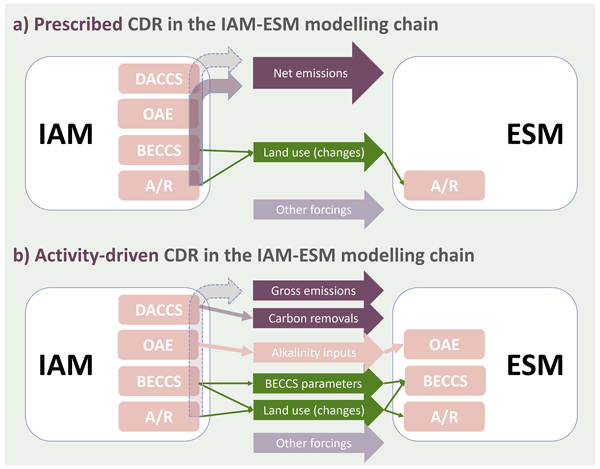
Jörg Schwinger, Leon Merfort, Nico Bauer, Raffaele Bernardello, Momme Butenschön, Timothée Bourgeois, Matthew J. Gidden, Shraddha Gupta, Hanna Lee, Nadine Mengis, Yiannis Moustakis, Helene Muri, Lars Nieradzik, Daniele Peano, Julia Pongratz, Pascal Sauer, Etienne Tourigny, and David Wårlind
Earth Syst. Dynam., 17, 1341–1363, https://doi.org/10.5194/esd-17-1341-2026, https://doi.org/10.5194/esd-17-1341-2026, 2026
Short summary
Short summary
Earth system models can simulate CO2 removal by representing the activity that draws down atmospheric CO2, e.g. growing bioenergy crops for energy production with carbon capture and storage or enhancing the oceans’ alkalinity. We describe a simulation framework, spanning the modeling chain from integrated assessment to Earth system models, that allows separating the intrinsic efficiency of CO2 removal and the overall atmospheric CO2 reduction, the latter being affected by Earth system feedbacks.
Richard E. Lamprecht, Kateřina Diáková, Carolina Voigt, Henri M. P. Siljanen, Hana Šantrůčková, Pertti J. Martikainen, Christina Biasi, and Maija E. Marushchak
EGUsphere, https://doi.org/10.5194/egusphere-2026-5330, https://doi.org/10.5194/egusphere-2026-5330, 2026
Short summary
Short summary
We studied carbon and nitrogen mineralization and greenhouse gas production in a subarctic palsa mire, sensitive to climate warming and permafrost thaw. We conducted a factorial incubation experiment, where we were looked at the effect of temperature, oxygen and peat characteristics on these processes. We found that the upper permafrost contained a highly labile carbon and nitrogen pool, supporting high CO2 production and N mineralization, both associated with low temperature sensitivities.
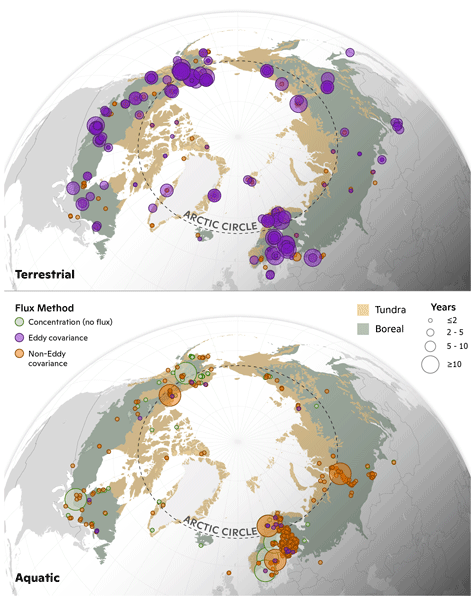
Anna-Maria Virkkala, Isabel Wargowsky, Judith Vogt, McKenzie A. Kuhn, Simran Madaan, Tiffany Windholz, Kyle A. Arndt, Gerard Rocher-Ros, Mathias Göckede, David Olefeldt, Edward A. G. Schuur, David Bastviken, Richard O'Keefe, Brendan M. Rogers, Jennifer D. Watts, Kelcy Kent, Kristoffer Aalstad, Kelly Aho, Joonatan Ala-Könni, Haley Alcock, Inge Althuizen, Christopher D. Arp, Jun Asanuma, Mika Aurela, Sivakiruthika Balathandayuthabani, Katrin Attermeyer, Alan Barr, Maialen Barret, Ochirbat Batkhishig, Christina Biasi, Mats P. Björkman, Andrew Black, Elena Blanc-Betes, Pascal Bodmer, Julia Boike, Abdullah Bolek, Frédéric Bouchard, Ingeborg Bussmann, Lea Cabrol, Eleonora Canfora, Sean Carey, Karel Castro-Morales, Namyi Chae, Andreas Christen, Torben R. Christensen, Casper T. Christiansen, Housen Chu, Graham Clark, Francois Clayer, Patrick Crill, Christopher Cunada, Scott J. Davidson, Joshua F. Dean, Sigrid Dengel, Matteo Detto, Catherine Dieleman, Florent Domine, Egor Dyukarev, Colin Edgar, Bo Elberling, Craig A. Emmerton, Eugenie Euskirchen, Grant Falvo, Thomas Friborg, Michelle Garneau, Mariasilvia Giamberini, Mikhail V. Glagolev, Miquel A. Gonzalez-Meler, Gustaf Granath, Jón Guðmundsson, Konsta Happonen, Yoshinobu Harazono, Lorna Harris, Josh Hashemi, Nicholas Hasson, Janna Heerah, Liam Heffernan, Manuel Helbig, Warren Helgason, Michal Heliasz, Greg Henry, Geert Hensgens, Tetsuya Hiyama, Beth Holmes, Macall Hock, David Holl, Jutta Holst, Thomas Holst, Gabriel Hould-Gosselin, Elyn Humphreys, Jacqueline Hung, Jussi Huotari, Hiroki Ikawa, Danil V. Ilyasov, Mamoru Ishikawa, Go Iwahana, Hiroki Iwata, Marcin Antoni Jackowicz-Korczynski, Joachim Jansen, Järvi Järveoja, Vincent E. J. Jassey, Rasmus Jensen, Katharina Jentzsch, Robert G. Jespersen, Carl-Fredrik Johannesson, Cheristy P. Jones, Anders Jonsson, Ji Young Jung, Sari Juutinen, Evan Kane, Jan Karlsson, Sergey Karsanaev, Kuno Kasak, Julia Kelly, Kasha Kempton, Marcus Klaus, George W. Kling, Natascha Kljun, Jacqueline Knutson, Hideki Kobayashi, John Kochendorfer, Kukka-Maaria Kohonen, Pasi Kolari, Mika Korkiakoski, Aino Korrensalo, Pirkko Kortelainen, Egle Koster, Kajar Koster, Ayumi Kotani, Praveena Krishnan, Juliya Kurbatova, Lars Kutzbach, Min Jung Kwon, Ethan D. Kyzivat, Jessica Lagroix, Theodore Langhorst, Elena Lapshina, Tuula Larmola, Klaus S. Larsen, Isabelle Laurion, Justin Ledman, Hanna Lee, A. Joshua Leffler, Lance Lesack, Anders Lindroth, David Lipson, Annalea Lohila, Efrén López-Blanco, Vincent L. St. Louis, Erik Lundin, Miska Luoto, Takashi Machimura, Marta Magnani, Avni Malhotra, Marja Maljanen, Ivan Mammarella, Elisa Männistö, Luca Belelli Marchesini, Phil Marsh, Pertti J. Martikainen, Maija E. Marushchak, Mikhail Mastepanov, Alex Mavrovic, Trofim Maximov, Christina Minions, Daniel F. Nadeau, Marco Montemayor, Tomoaki Morishita, Patrick Murphy, Erin Nicholls, Mats B. Nilsson, Anastasia Niyazova, Jenni Nordén, Koffi Dodji Noumonvi, Hannu Nykänen, Walter Oechel, Anne Ojala, Tomohiro Okadera, Sujan Pal, Alexey V. Panov, Tim Papakyriakou, Dario Papale, Sang-Jong Park, Frans-Jan W. Parmentier, Gilberto Pastorello, Mike Peacock, Matthias Peichl, Roman Petrov, Kyra St. Pierre, Norbert Pirk, Jessica Plein, Vilmantas Preskienis, Anatoly Prokushkin, Jukka Pumpanen, Hilary A. Rains, Niklas Rakos, Aleksi Räsänen, Helena Rautakoski, Riikka Rinnan, Janne Rinne, Adrian Rocha, Nigel Roulet, Alexandre Roy, Anna Rutgersson, Aleksandr F. Sabrekov, Torsten Sachs, Erik Sahlée, Alejandro Salazar, Henrique Oliveira Sawakuchi, Christopher Schulze, Roger Seco, Armando Sepulveda-Jauregui, Svetlana Serikova, Abbey Serrone, Hanna M. Silvennoinen, Sofie Sjogersten, June Skeeter, Jo Snöälv, Sebastian Sobek, Oliver Sonnentag, Emily H. Stanley, Maria Strack, Lena Strom, Patrick Sullivan, Ryan Sullivan, Anna Sytiuk, Torbern Tagesson, Pierre Taillardat, Julie Talbot, Suzanne E. Tank, Mario Tenuta, Irina Terenteva, Frederic Thalasso, Antoine Thiboult, Halldor Thorgeirsson, Fenix Garcia Tigreros, Margaret Torn, Amy Townsend-Small, Claire Treat, Alain Tremblay, Carlo Trotta, Eeva-Stiina Tuittila, Merritt Turetsky, Masahito Ueyama, Muhammad Umair, Aki Vähä, Lona van Delden, Maarten van Hardenbroek, Andrej Varlagin, Ruth K. Varner, Tarmo Virtanen, Elena Veretennikova, Timo Vesala, Carolina Voigt, Jorien E. Vonk, Robert Wagner, Katey Walter Anthony, Qinxue Wang, Masataka Watanabe, Hailey Webb, Jeffrey M. Welker, Andreas Westergaard-Nielsen, Sebastian Westermann, Jeffrey R. White, Christian Wille, Scott N. Williamson, Scott Zolkos, Donatella Zona, and Susan M. Natali
Earth Syst. Sci. Data, 18, 6357–6409, https://doi.org/10.5194/essd-18-6357-2026, https://doi.org/10.5194/essd-18-6357-2026, 2026
Short summary
Short summary
This dataset includes monthly measurements of carbon dioxide and methane exchange between land, water, and the atmosphere from over 1000 sites in Arctic and boreal regions. It combines measurements from a variety of ecosystems, including wetlands, forests, tundra, lakes, and rivers, gathered by over 260 researchers from 1984–2024. This dataset can be used to improve and reduce uncertainty in carbon budgets in order to strengthen our understanding of climate feedbacks in a warming world.
Wasi Hashmi, Maija E. Marushchak, Paula Martinez-Risco Martinez, Jenie Gil, and Lukas Kohl
EGUsphere, https://doi.org/10.5194/egusphere-2026-5050, https://doi.org/10.5194/egusphere-2026-5050, 2026
Short summary
Short summary
Tracking how nitrogen moves through soil is vital for environmental science, but traditional testing equipment is very expensive. We tested a newer, cheaper laser technology to see if it could accurately measure high levels of tracked/labelled nitrogen in soil. By comparing over two hundred samples against the expensive standard method, we proved that the cheaper laser tool is just as precise and accurate. This provides researchers worldwide with a reliable, affordable way to study soil.
Signe Hillerup Larsen, Kirsty Langley, Daniel A. Rudd, Mikhail Mastepanov, Niels Martin Schmidt, Arno C. Hammann, Andreas Westergaard-Nielsen, Efrén Lopéz-Blanco, and Torben R. Christensen
EGUsphere, https://doi.org/10.5194/egusphere-2026-3962, https://doi.org/10.5194/egusphere-2026-3962, 2026
Short summary
Short summary
Snow cover shapes Arctic ecosystems by controlling for example when plants flower and glaciers melt. Using 26 years of daily satellite images over Greenland, we found high year-to-year variability and no systematic change in the length of the snow-free season at three long-term ecosystem monitoring sites. Thus, detecting the effects of climate change on snow cover and the ecosystems depending on it requires longer monitoring records, underscoring the value of continued long-term observation.
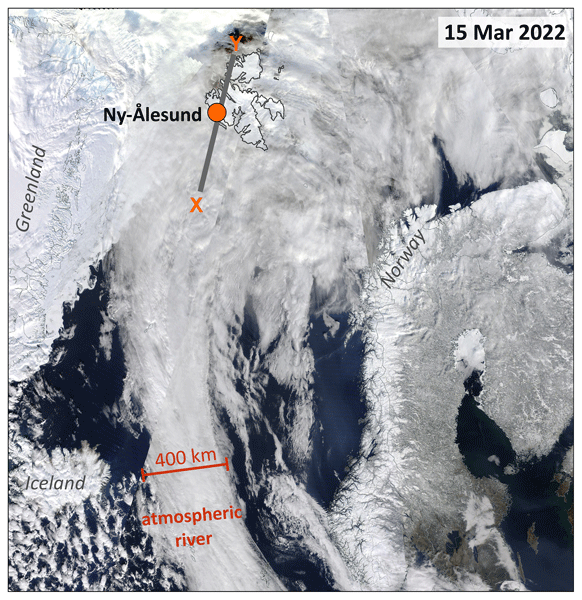
Hannah Bailey, Jason E. Box, Ben G. Kopec, Valtteri Hyöky, Hannu Marttila, Jeffrey M. Welker, Jack Kohler, Dmitry V. Divine, and Alun Hubbard
The Cryosphere, 20, 4421–4436, https://doi.org/10.5194/tc-20-4421-2026, https://doi.org/10.5194/tc-20-4421-2026, 2026
Short summary
Short summary
Atmospheric rivers (ARs) are narrow corridors of intense heat and moisture that can deliver extreme weather to the Arctic. We investigate a record March 2022 event in Svalbard using measurements of air and precipitation to track its origin and evolution. While the AR brought unusual winter rain and snow melt, it also delivered substantial snowfall that partially offset glacier mass loss. These findings show that the impacts of ARs on Arctic glaciers are more complex than typically reported.
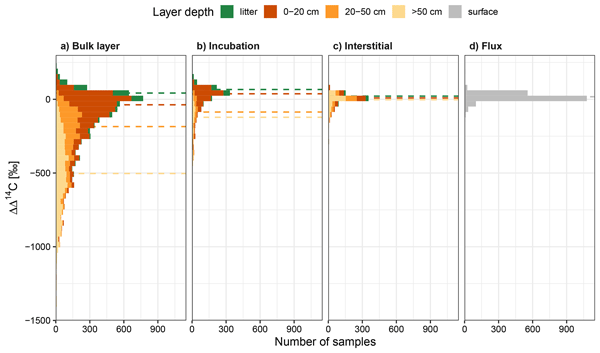
Sophie F. von Fromm, R. Scott Winton, Derrick R. Vaughn, Jennifer C. Bowen, Susan Trumbore, Kateřina Jandová, Julie Shahan, Olga Vindušková, Shane W. Stoner, Maedeh Chitsaz, Avni Malhotra, Adrian A. Wackett, Alison M. Hoyt, Katherine Heckman, Katerina Georgiou, Daniel Wasner, Luisa Isabell Minich, Katherine E. Grant, Caitlin E. Hicks Pries, Karis J. McFarlane, Anna Abramova, Corey Lawrence, and Jeffrey Beem-Miller
Earth Syst. Sci. Data, 18, 5793–5815, https://doi.org/10.5194/essd-18-5793-2026, https://doi.org/10.5194/essd-18-5793-2026, 2026
Short summary
Short summary
Here we present the updated International Soil Radiocarbon Database version 2, which compiles radiocarbon data from over 500 studies at 1700 locations worldwide. The database provides various soil radiocarbon measurements to improve our understanding of factors that influence the age distributions of carbon in soils. While we have made progress expanding the database and improving its structure, important gaps remain in tropical regions, deep soils, and certain measurement types.
Victoria R. Dutch, Nick Rutter, Muhammad Waqas Khan, Alex Mavrovic, Alexandre Roy, Sevi Modestou, Oliver Sonnentag, Carolina Voigt, Philip Marsh, and Paul J. Mann
EGUsphere, https://doi.org/10.5194/egusphere-2026-3835, https://doi.org/10.5194/egusphere-2026-3835, 2026
This preprint is open for discussion and under review for Biogeosciences (BG).
Short summary
Short summary
We use low-cost CO2 sensors to measure the release of CO2 from an Arctic tundra environment in two winters. We find CO2 emissions to be positive across a range of snow depths and different vegetation types. The winter-to-spring transition influences the release of CO2, with warming temperatures allowing more CO2 to be released, similar to other data from across the Arctic. We show our low-cost sensors may be used to investigate processes controlling CO2 release at high temporal resolution.
Louis A. Mielke, Thomas C. Parker, Lorna E. Street, Karina E. Clemmensen, Nina Lindstrom Friggens, Mark H. Garnett, Iain P. Hartley, David Johnson, Jens-Arne Subke, and Philip A. Wookey
EGUsphere, https://doi.org/10.5194/egusphere-2026-3803, https://doi.org/10.5194/egusphere-2026-3803, 2026
Short summary
Short summary
As the Arctic warms and grows greener, plants should absorb more carbon. But our new study found a contradiction; plant roots and associated organisms actually accelerate the breakdown of ancient peat soils. By tracking carbon in birch and willow ecosystems, we discovered that peat decomposes 36 % faster when roots are present. Instead of storing carbon, 'Arctic greening' could release a massive amount of carbon, accelerating a positive feedback to climate change.
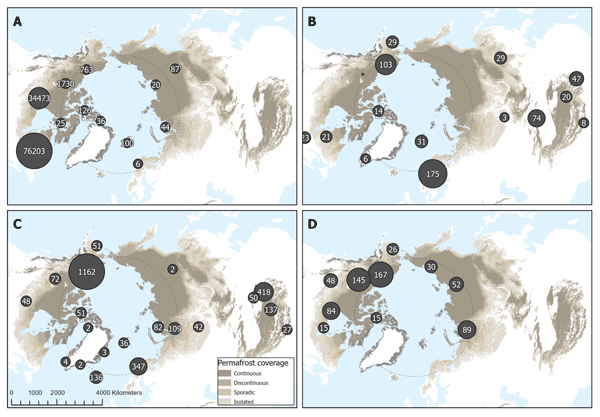
Christine L. Olson, Kevin Schaefer, Alyssa Azaroff, Hélène Angot, Sasiri Bandara, Thomas A. Douglas, Bo Elberling, Maria Florencia Fahnestock, Xinbin Feng, Charlotte Haugk, Gustaf Hugelius, Erfan Jahangir, Sofi Jonsson, Shichang Kang, Adam Kirkwood, Jennifer Korosi, Igor Lehnherr, Artem Lim, Rinat Manasypov, Dmitriy Moskovchenko, Mina Nasr, Daniel Obrist, David Olefeldt, Connor Olson, Oleg Pokrovsky, Laura Sereni, Sarah Shakil, M. Isabel Smith, Jens Søndergaard, Jeroen Sonke, Kasia Staniszewska, Jens Strauss, Kyra St. Pierre, Lauren Thompson, Andrey Yurtaev, Yanxu Zhang, and Scott Zolkos
Earth Syst. Sci. Data, 18, 4509–4522, https://doi.org/10.5194/essd-18-4509-2026, https://doi.org/10.5194/essd-18-4509-2026, 2026
Short summary
Short summary
Permafrost regions store large amounts of mercury, a toxic pollutant that can be released as the ground warms. We combined thousands of measurements from soils, plants, water, and lake sediments into one open database to better understand where mercury is stored and how it moves. The results show clear differences among environments and reveal major data gaps, helping improve future research, monitoring, and decision-making.
Ben Keane, Emanuel Blei, Simon Gibson-Poole, Phil Ineson, James I. L. Morison, Mike Perks, Elena Vanguelova, Matt Wilkinson, Mat Williams, Georgios Xenakis, Sirwan Yamulki, and Sylvia Toet
EGUsphere, https://doi.org/10.5194/egusphere-2026-3659, https://doi.org/10.5194/egusphere-2026-3659, 2026
Short summary
Short summary
Forests can release carbon dioxide (CO2) and other greenhouse gases, nitrous oxide and methane when harvested. We asked which areas in the landscape emitted the most gases after harvest? One third of CO2 emitted was from litter decomposition; ditches were the largest source of methane, and nitrous oxide was produced in drier areas. Our results suggest that keeping forest soils wet after felling will reduce the emissions of greenhouse gases from the landscape
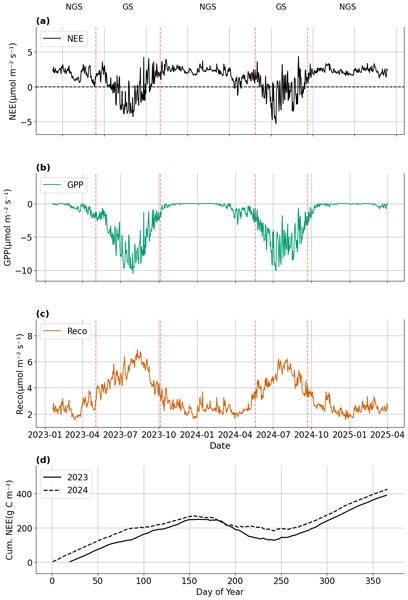
Asra Salimi, Bjarni D. Sigurdsson, Brynhildur Bjarnadottir, Chenxin Feng, Hlynur Óskarsson, and Ivan Mammarella
Biogeosciences, 23, 4011–4035, https://doi.org/10.5194/bg-23-4011-2026, https://doi.org/10.5194/bg-23-4011-2026, 2026
Short summary
Short summary
This study investigates the carbon balance of a drained unmanaged peatland in Iceland. By measuring greenhouse gases for two years using eddy covariance system, it was found that this site releases less carbon dioxide than currently estimated by international guidelines. Despite a very warm year, increased plant growth balanced out higher soil emissions, keeping the total carbon loss stable. This study shows that winter emissions are crucial and year-round monitoring is vital for accuracy.
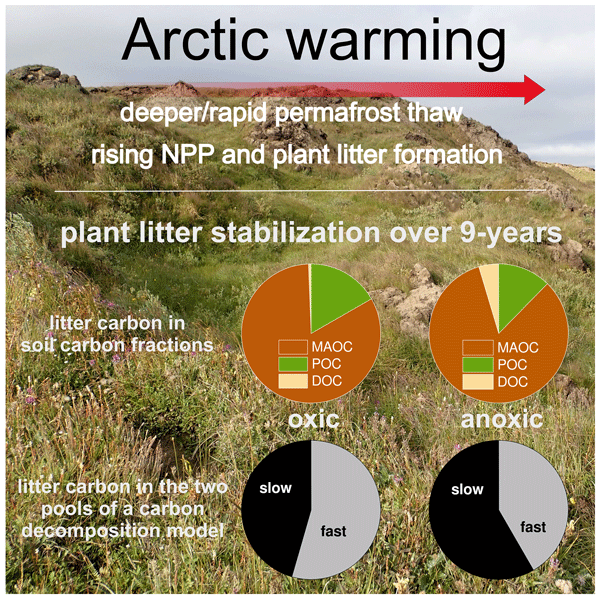
Christian Knoblauch, Christian Beer, and Carolina Voigt
Biogeosciences, 23, 3615–3635, https://doi.org/10.5194/bg-23-3615-2026, https://doi.org/10.5194/bg-23-3615-2026, 2026
Short summary
Short summary
Carbon release from thawing permafrost receives ample attention since it may cause rising greenhouse gas concentrations in the atmosphere. However, we demonstrate through a 9-year lasting incubation experiment that thawing permafrost stabilizes a substantial amount of fresh plant litter carbon from increasing plant productivity for decades. Although litter carbon is faster decomposed than the permafrost carbon it may contribute to the build-up of organic carbon in thawing permafrost soils.
Fernando Montaño-López, Ravi Kukkadapu, Sean R. Schaefer, Jessica Gilman Ernakovich, and Caitlin Hicks Pries
EGUsphere, https://doi.org/10.5194/egusphere-2026-2641, https://doi.org/10.5194/egusphere-2026-2641, 2026
This preprint is open for discussion and under review for Biogeosciences (BG).
Short summary
Short summary
Permafrost is known to store large amounts of organic carbon. By analyzing Arctic permafrost soils with specialized mineral measurements, we discovered an overlooked form of inorganic carbon locked in an iron mineral called siderite. This mineral was missing from thawed surface soils, suggesting it may break down and release carbon as permafrost thaws. Our findings open new opportunities to study this hidden inorganic carbon and how it changes as permafrost thaws.
Shaakir Dar, Olga Silantyeva, Pertti Ala-aho, Benjamin Walter, John Hult, Valtteri Hyöky, Jeffrey Welker, and Hannu Marttila
EGUsphere, https://doi.org/10.5194/egusphere-2026-2589, https://doi.org/10.5194/egusphere-2026-2589, 2026
Short summary
Short summary
Snow can lose water directly to the air, but this process also changes the natural chemical fingerprints stored in snow. We used controlled wind-tunnel experiments with different snow types and airflow conditions to test why these changes vary. We found that wind controls how much snow is lost, but snow structure controls how strongly its fingerprints change. This means climate, water, and ice-record studies may misread snow signals if they ignore snow structure.
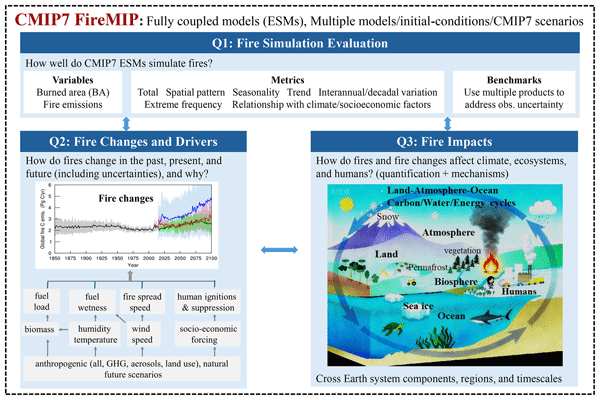
Fang Li, David M. Lawrence, Brendan M. Rogers, Chantelle Burton, Huilin Huang, Yiquan Jiang, Johannes W. Kaiser, Matthew Kasoar, Hanna Lee, Ruby Leung, Lars Nieradzik, Aihui Wang, Daniel S. Ward, Ligeer Ce, Yangchun Li, Zhongda Lin, Apostolos Voulgarakis, and Yongkang Xue
Geosci. Model Dev., 19, 3989–4007, https://doi.org/10.5194/gmd-19-3989-2026, https://doi.org/10.5194/gmd-19-3989-2026, 2026
Short summary
Short summary
Extreme fire events are increasing, and fires are projected to rise across most regions, posing growing risks to ecosystems and society. As a key Earth system process, fire is now modeled in most Earth System Models (ESMs). FireMIP (Fire Modeling Intercomparison Project) within CMIP7 will evaluate fire simulations in state‑of‑the‑art ESMs, project future fire changes, and provide quantitative, process‑based understanding of fire's role in the Earth system.
Esther Karin Bender, Matvey Debolskiy, Kjetil Aas, Sebastian Westermann, Fang Li, Jiawen Zhu, and Hanna Lee
EGUsphere, https://doi.org/10.5194/egusphere-2026-1039, https://doi.org/10.5194/egusphere-2026-1039, 2026
Short summary
Short summary
This paper introduces a new method to represent ice-rich permafrost soils in the Community Land Model used for climate prediction. The approach includes key processes previously missing, enabling simulation of rapid thaw events from ground-ice melt. It improves representation of soil temperature, hydrology, and landscape dynamics, leading to more accurate future greenhouse-gas estimates.
Tamara Emmerichs, Fabrice Lacroix, Victor Brovkin, Sönke Zaehle, Cheng Gong, Yu Zhu, Sofie Sjogersten, Carolina Voigt, Klaus Steenberg Larsen, and Eeva-Stiina Tuitila
EGUsphere, https://doi.org/10.5194/egusphere-2026-1514, https://doi.org/10.5194/egusphere-2026-1514, 2026
Short summary
Short summary
Shrubs use water and carbon differently and are expanding in warming tundra and grasslands, yet global models lack accuracy. We added two shrub types to a vegetation model including soil nutrients and carbon exchange. Half of the modeled shrubs showed good performance whereas their growth is 40 % higher as at grasses. Deciduous shrubs reduce nitrogen more than evergreens. Including shrubs improves Arctic carbon cycle predictions, revealing nitrogen limits cause underestimation in global models.
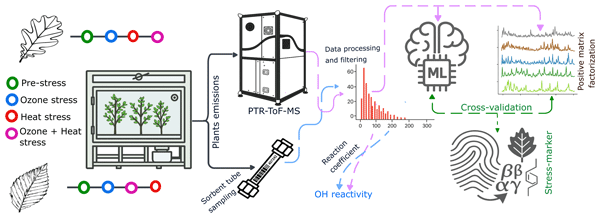
Biplob Dey, Toke Due Sjøgren, Peeyush Khare, Georgios I. Gkatzelis, Yizhen Wu, Sindhu Vasireddy, Martin Schultz, Alexander Knohl, Riikka Rinnan, Thorsten Hohaus, and Eva Y. Pfannerstill
Biogeosciences, 23, 1423–1457, https://doi.org/10.5194/bg-23-1423-2026, https://doi.org/10.5194/bg-23-1423-2026, 2026
Short summary
Short summary
Trees release reactive gases that affect air quality and climate. We studied how these emissions from European beech and English oak change under realistic scenarios of combined and single heat and ozone stress. Heat increased emissions, while ozone reduced most of them. When stressors were combined, the effects were complex and varied by species. Machine learning identified key stress-related compounds. Our findings show that future tree stress may alter air quality and climate interactions.
Jeffrey Beem-Miller, William J. Riley, Peter B. Reich, Michael W. I. Schmidt, Yuxuan Bai, Raimundo Bermudez Villanueva, Zach Brown, Abad Chabbi, Susan E. Crow, Wenxu Dong, Serita D. Frey, Paul J. Hanson, Kai Jensen, Melissa A. Knorr, Emma Lathrop, Avni Malhotra, Patrick Megonigal, Adrienne Nicotra, Andrew Nottingham, Genevieve L. Noyce, Roy L. Rich, Heidi Rodenhizer, Agustín Sarquis, Andreas Schindlbacher, Edward A. G. Schuur, Zheng Shi, Artur Stefanski, Viktoria Unger, Tana E. Wood, Yuanhe Yang, Zhijie Yang, Jizhong Zhou, Biao Zhu, and Margaret S. Torn
Earth Syst. Sci. Data Discuss., https://doi.org/10.5194/essd-2026-23, https://doi.org/10.5194/essd-2026-23, 2026
Revised manuscript accepted for ESSD
Short summary
Short summary
The Soil Warming to Depth Data Integration Effort (SWEDDIE) synthesizes data from deep soil warming experiments around the world (n = 23), offering new insight into warming responses of both surface and subsoils. We demonstrate that variation in soil warming with depth is driven largely by warming methodology, while soil moisture changes due to warming differ by ecosystem. This work serves a foundation for future syntheses with SWEDDIE.
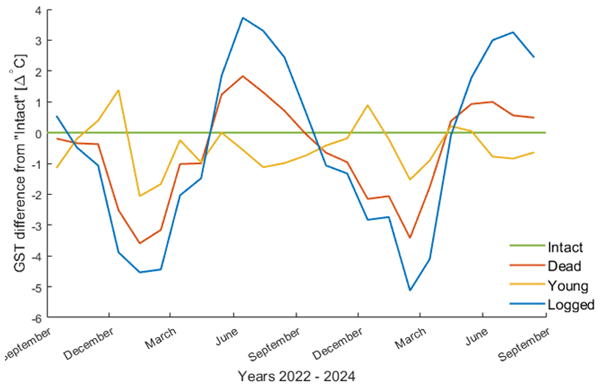
Robin B. Zweigel, Dashtseren Avirmed, Khurelbaatar Temuujin, Clare Webster, Hanna Lee, and Sebastian Westermann
The Cryosphere, 20, 1001–1023, https://doi.org/10.5194/tc-20-1001-2026, https://doi.org/10.5194/tc-20-1001-2026, 2026
Short summary
Short summary
Two years of data along a forest disturbance gradient in Mongolia show a larger annual ground surface temperature range in dead and logged forests than intact forest, while the range is dampened in stands of young regrowth. Compared to intact forest, mean annual ground surface temperatures are 0.5 °C colder in dead and logged forest and dense stands of young regrowth. This is linked to differences in vegetation and surface cover due to the disturbance and patterns in livestock activity.
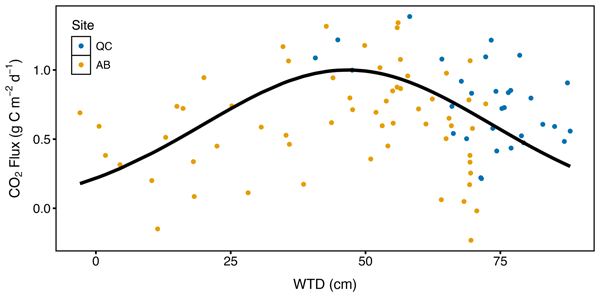
Miranda L. Hunter, Ian B. Strachan, Paul Moore, Sara Knox, and Maria Strack
Biogeosciences, 23, 793–810, https://doi.org/10.5194/bg-23-793-2026, https://doi.org/10.5194/bg-23-793-2026, 2026
Short summary
Short summary
Peatlands are a globally important land cover due to their role as a carbon sink, though peat extraction for horticultural use converts them to net sources. Through ecosystem scale measurements at peat extraction sites, this study found that carbon dioxide interannual variability is driven by water table position.
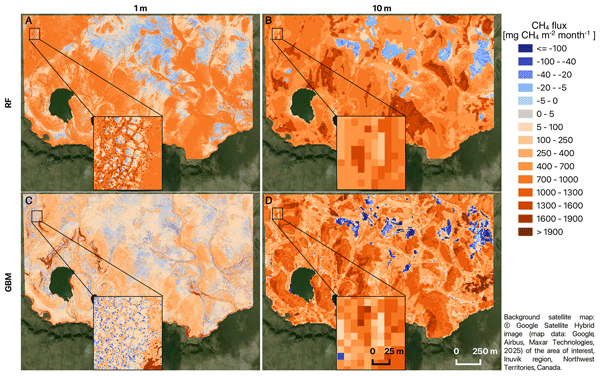
Kseniia Ivanova, Anna-Maria Virkkala, Victor Brovkin, Tobias Stacke, Barbara Widhalm, Annett Bartsch, Carolina Voigt, Oliver Sonnentag, and Mathias Göckede
Biogeosciences, 23, 233–262, https://doi.org/10.5194/bg-23-233-2026, https://doi.org/10.5194/bg-23-233-2026, 2026
Short summary
Short summary
We measured over 13,000 methane fluxes at a site in the Canadian Arctic and linked them with drone and free satellite images. We tested four machine-learning methods and two map scales. Metre-scale maps captured small wet and dry features that strongly affect methane release, while coarser maps blurred them. Different models shifted the monthly methane estimate. This helps choose the right data and tools to map methane, design monitoring networks, and check climate models.
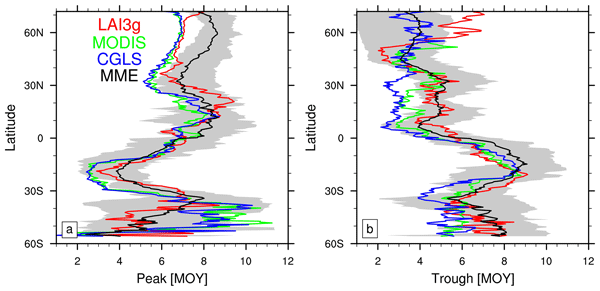
Daniele Peano, Deborah Hemming, Christine Delire, Yuanchao Fan, Hanna Lee, Stefano Materia, Julia E. M. S. Nabel, Taejin Park, David Wårlind, Andy Wiltshire, and Sönke Zaehle
Biogeosciences, 22, 7117–7135, https://doi.org/10.5194/bg-22-7117-2025, https://doi.org/10.5194/bg-22-7117-2025, 2025
Short summary
Short summary
Earth System Models are the principal tools for scientists to study past, present, and future climate changes. This work investigates the ability of a set of them to represent the observed changes in vegetation, which are vital to estimating the impact of future climate mitigation and adaptation strategies. This study highlights the main limitations in correctly representing vegetation variability. These tools still need further development to improve our understanding of future changes.
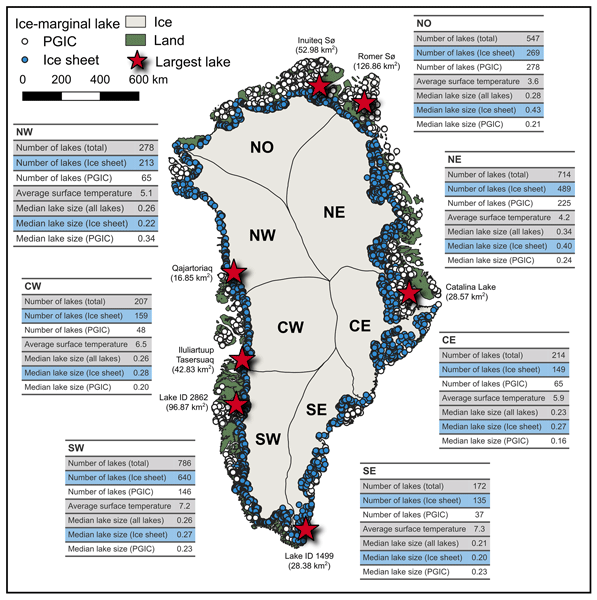
Penelope How, Dorthe Petersen, Kristian K. Kjeldsen, Katrine Raundrup, Nanna B. Karlsson, Alexandra Messerli, Anja Rutishauser, Jonathan L. Carrivick, James M. Lea, Robert S. Fausto, Andreas P. Ahlstrøm, and Signe B. Andersen
Earth Syst. Sci. Data, 17, 6331–6351, https://doi.org/10.5194/essd-17-6331-2025, https://doi.org/10.5194/essd-17-6331-2025, 2025
Short summary
Short summary
We mapped 2918 ice-marginal lakes across Greenland (2016–2023), revealing changes in size, abundance and temperature. This open dataset improves understanding of terrestrial water storage, glacier dynamics, and Arctic ecology, supporting research on sea level rise, glacier-lake interactions, and sustainable resource planning including hydropower development under Greenland’s climate commitments.
Oluwabamise Lanre Afolabi, Hongxing He, and Maria Strack
EGUsphere, https://doi.org/10.5194/egusphere-2025-1368, https://doi.org/10.5194/egusphere-2025-1368, 2025
Short summary
Short summary
Our study completed an uncertainty analysis of a modelling experiment for multi-decade biophysical conditions (e.g., plant processes and hydrology) and carbon (C) flux simulations at a temperate swamp in Southern Ontario, Canada. The adopted uncertainty analysis technique (GLUE) improved the modelling outcomes of our study. Consequently, the findings of this research will help inform decision making on future C flux modelling experiments and peatland C management in temperate swamps.
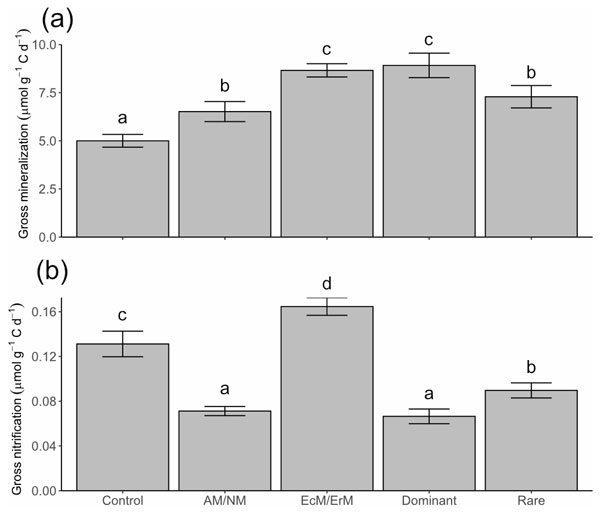
Aurora Patchett, Louise Rütting, Tobias Rütting, Samuel Bodé, Sara Hallin, Jaanis Juhanson, C. Florian Stange, Mats P. Björkman, Pascal Boeckx, Gunhild Rosqvist, and Robert G. Björk
Biogeosciences, 22, 6841–6860, https://doi.org/10.5194/bg-22-6841-2025, https://doi.org/10.5194/bg-22-6841-2025, 2025
Short summary
Short summary
This study explores how different types of fungi and plant species affect nitrogen cycling in Arctic soils. By removing certain plants, we found that fungi associated with shrubs speed up nitrogen processes more than those with grasses. Dominant plant species enhance nitrogen recycling, while rare species increase nitrogen loss. These findings help predict how Arctic ecosystems respond to climate change, highlighting the importance of fungi and plant diversity in regulating ecosystem processes.
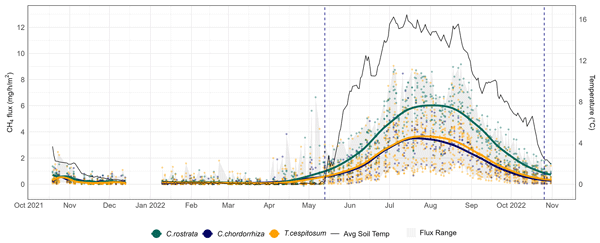
Eeva Järvi-Laturi, Teemu Tahvanainen, Eero Koskinen, Efrén López-Blanco, Juho Lämsä, Hannu Marttila, Mikhail Mastepanov, Riku Paavola, Maria Väisänen, and Torben R. Christensen
Biogeosciences, 22, 6343–6367, https://doi.org/10.5194/bg-22-6343-2025, https://doi.org/10.5194/bg-22-6343-2025, 2025
Short summary
Short summary
Our research investigates how plant community composition influences methane emissions in a northern boreal rich fen. We measured methane fluxes year-round using manual chambers across 36 plots. Our findings suggest that sedges, particularly Carex rostrata, significantly impact the fluxes throughout the year. This study enhances our understanding of vegetation-driven methane emissions, providing valuable insights for predicting future changes in peatland methane emissions.
Maud Henrion, Sophie Opfergelt, Maëlle Villani, Philippe Roux, Djim Verleene, Eléonore du Bois d'Aische, Maxime Thomas, Gilles Denis, Edward A. G. Schuur, François Jonard, Veerle Vanacker, Kristof Van Oost, and Sébastien Lambot
EGUsphere, https://doi.org/10.5194/egusphere-2025-4667, https://doi.org/10.5194/egusphere-2025-4667, 2025
Preprint archived
Short summary
Short summary
Taliks play an important role in permafrost degradation. This study used Ground-penetrating radar to map taliks in Alaska, focusing on water tracks. The method successfully detected taliks and determined their upper depth. These were more frequent, shallower, and thicker under water tracks. This study showed that water tracks are hotspots for talik formation, with major implications for winter water flow in permafrost landscapes.
Thomas C. Parker, Chris Evans, Martin G. Evans, Miriam Glendell, Richard Grayson, Joseph Holden, Changjia Li, Pengfei Li, and Rebekka R. E. Artz
Biogeosciences, 22, 6057–6066, https://doi.org/10.5194/bg-22-6057-2025, https://doi.org/10.5194/bg-22-6057-2025, 2025
Short summary
Short summary
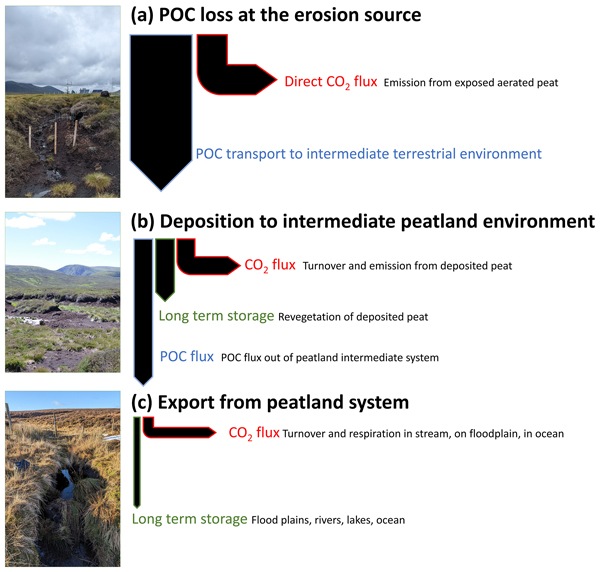
Many peatlands around the world are eroding and causing carbon losses to the atmosphere and to freshwater systems. To accurately report emissions from peatlands we need to understand how much of the eroded peat is converted to CO2 once exposed to the atmosphere. We need more direct measurements of this process and a better understanding of the environmental conditions that peat is exposed to after it erodes. This information will help quantify the emissions savings from peatland restoration.
Tiago Silva, Brandon Samuel Whitley, Elisabeth Machteld Biersma, Jakob Abermann, Katrine Raundrup, Natasha de Vere, Toke Thomas Høye, Verena Haring, and Wolfgang Schöner
Biogeosciences, 22, 4601–4626, https://doi.org/10.5194/bg-22-4601-2025, https://doi.org/10.5194/bg-22-4601-2025, 2025
Short summary
Short summary
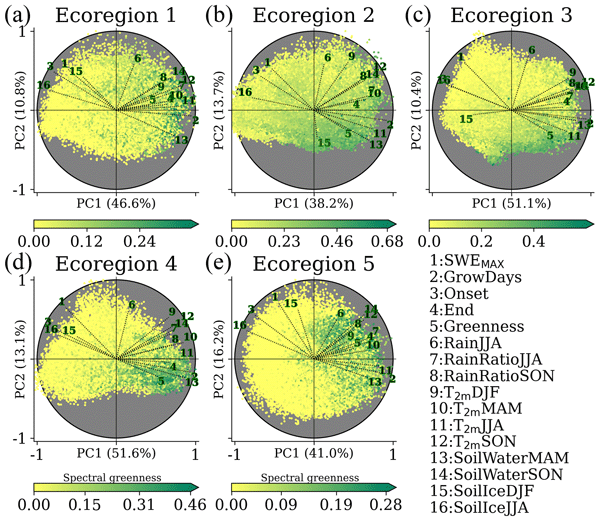
Ecosystems in Greenland have experienced significant changes over recent decades. We show the consistency of a high-resolution polar-adapted reanalysis product to represent bio-climatic factors influencing ecological processes. Our results describe the relevance/interaction between snowmelt and soil water content before the growing season onset, infer how the thermal growing season relates to changes in spectral greenness, and describe regions of ongoing changes in vegetation distribution.
Nathalie Ylenia Triches, Jan Engel, Abdullah Bolek, Timo Vesala, Maija E. Marushchak, Anna-Maria Virkkala, Martin Heimann, and Mathias Göckede
Atmos. Meas. Tech., 18, 3407–3424, https://doi.org/10.5194/amt-18-3407-2025, https://doi.org/10.5194/amt-18-3407-2025, 2025
Short summary
Short summary
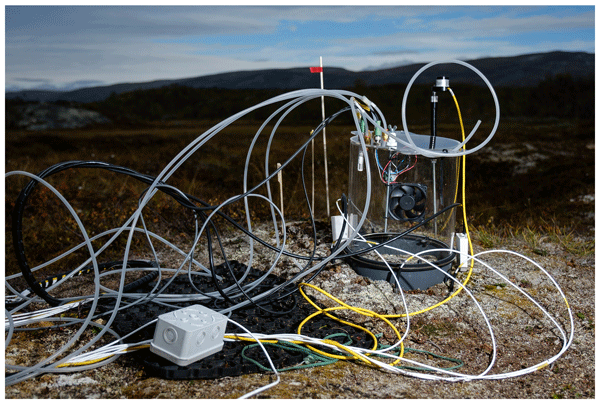
This study explores nitrous oxide (N2O) fluxes from a nutrient-poor sub-Arctic peatland. N2O is a potent greenhouse gas; understanding its fluxes is essential for addressing global warming. Using a new instrument and flux chambers, we introduce a system to reliably detect low N2O fluxes and provide recommendations on chamber closure times and flux calculation methods to better quantify N2O fluxes. We encourage researchers to further investigate N2O fluxes in low-nutrient environments.
Shaakir Shabir Dar, Eric Klein, Pertti Ala-aho, Hannu Marttila, Sonja Wahl, and Jeffrey Welker
EGUsphere, https://doi.org/10.5194/egusphere-2025-2724, https://doi.org/10.5194/egusphere-2025-2724, 2025
Preprint archived
Short summary
Short summary
Using laser based instruments, we observed snow turning directly to vapor inside the pack and at its surface. In cold, calm weather vapor moves slowly upward; on warmer, windy days air pushes vapor deeper into the snow. These dynamics control snow loss and must be included in hydrological and climate models.
Binghong Han, Jian Bi, Shengli Tao, Tong Yang, Yongli Tang, Mengshuai Ge, Hao Wang, Zhenong Jin, Jinwei Dong, Zhibiao Nan, and Jin-Sheng He
Earth Syst. Sci. Data, 17, 2933–2952, https://doi.org/10.5194/essd-17-2933-2025, https://doi.org/10.5194/essd-17-2933-2025, 2025
Short summary
Short summary
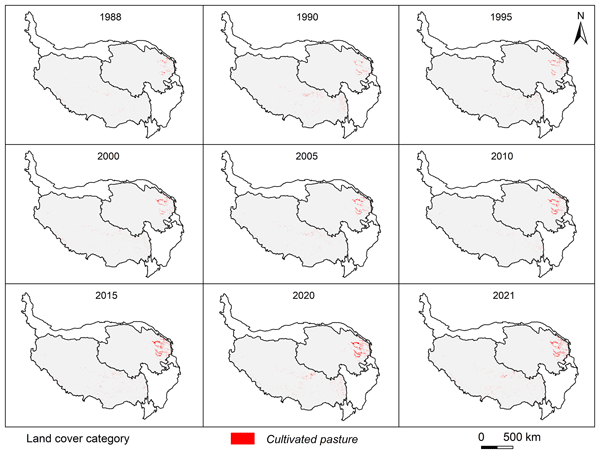
The Tibetan Plateau is an important pastoral area where cultivated pastures play an increasingly important role. However, little is known about the spatial distribution of the cultivated pastures due to the difficulty in distinguishing them from natural grasslands with remote sensing. For the first time, we have mapped the cultivated pastures on the plateau at a resolution of 30 m with decent accuracy. This dataset is valuable to scientists, policymakers, conservationists, and pastoralists.
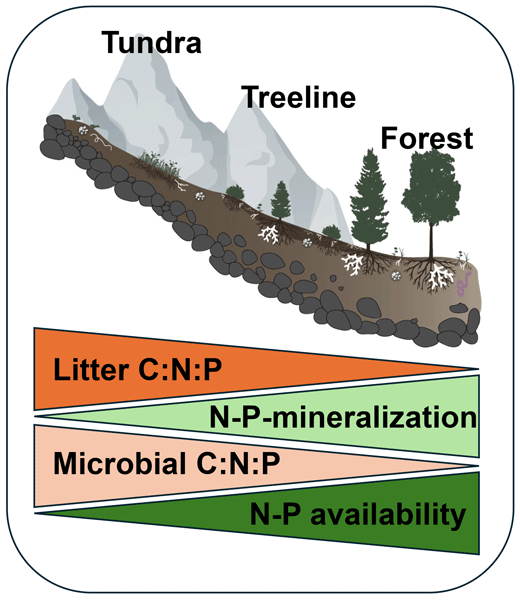
Frank Hagedorn, Josephine Imboden, Pavel A. Moiseev, Decai Gao, Emmanuel Frossard, Patrick Schleppi, Daniel Christen, Konstantin Gavazov, and Jasmin Fetzer
Biogeosciences, 22, 2959–2977, https://doi.org/10.5194/bg-22-2959-2025, https://doi.org/10.5194/bg-22-2959-2025, 2025
Short summary
Short summary
At treeline, plant species change abruptly from low-stature plants in tundra to trees in forests. Our study documents that from tundra towards forest, the litter layer becomes strongly enriched in nutrients. We show that these litter quality changes alter nutrient processing by soil microbes and increase nutrient release during decomposition in forests compared to tundra. The associated improvement in nutrient availability in forests potentially stimulates tree growth and treeline shifts.
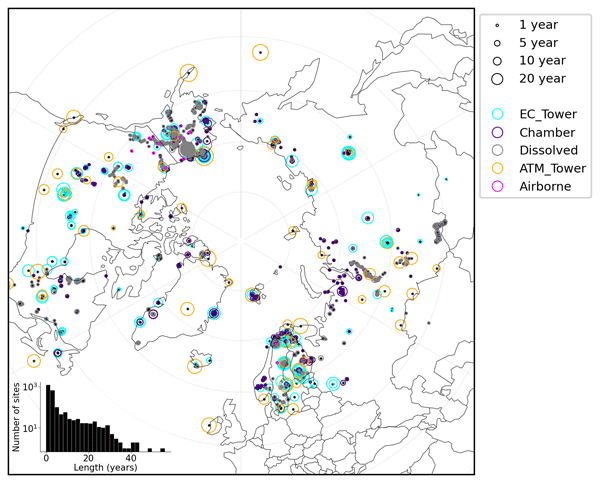
Judith Vogt, Martijn M. T. A. Pallandt, Luana S. Basso, Abdullah Bolek, Kseniia Ivanova, Mark Schlutow, Gerardo Celis, McKenzie Kuhn, Marguerite Mauritz, Edward A. G. Schuur, Kyle Arndt, Anna-Maria Virkkala, Isabel Wargowsky, and Mathias Göckede
Earth Syst. Sci. Data, 17, 2553–2573, https://doi.org/10.5194/essd-17-2553-2025, https://doi.org/10.5194/essd-17-2553-2025, 2025
Short summary
Short summary
We present a meta-dataset of greenhouse gas observations in the Arctic and boreal regions, including information on sites where greenhouse gases have been measured using different measurement techniques. We provide a novel repository of metadata to facilitate synthesis efforts for regions undergoing rapid environmental change. The meta-dataset shows where measurements are missing and will be updated as new measurements are published.
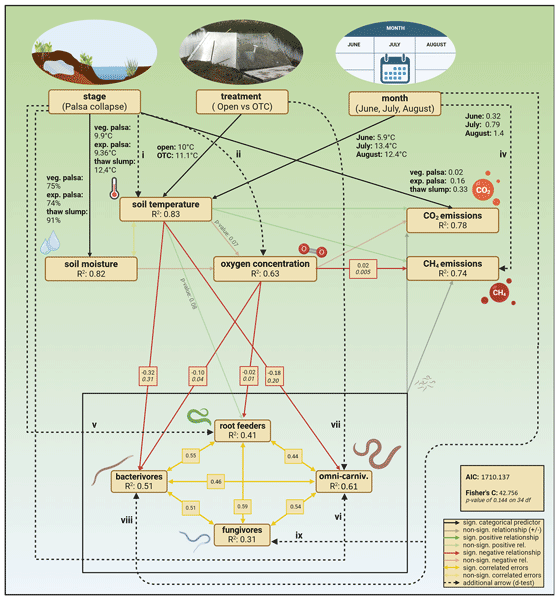
Ruben Van Daele, Hanna Lee, Inge Althuizen, and Martijn L. Vandegehuchte
Web Ecol., 25, 121–135, https://doi.org/10.5194/we-25-121-2025, https://doi.org/10.5194/we-25-121-2025, 2025
Short summary
Short summary
We studied the impact of climate change on nematodes in a palsa peatland in Norway. This ecosystem, crucial for carbon storage, is rapidly changing due to warming and permafrost thaw. We found that intact palsas host more nematode populations, but warming reduces their numbers, particularly bacterivores and omni-carnivores. Additionally, fungivores became more dominant over the summer. These changes may alter nutrient cycles, highlighting the need to study nematodes in fragile Arctic ecosystems.
Oluwabamise Lanre Afolabi, He Hongxing, and Maria Strack
EGUsphere, https://doi.org/10.5194/egusphere-2024-4049, https://doi.org/10.5194/egusphere-2024-4049, 2025
Preprint archived
Short summary
Short summary
This modelling study elucidated the multi-decade carbon dynamics of a temperate swamp peatland and the important biotic and abiotic interactions and feedbacks that drive the carbon biogeochemical cycle of this ecosystem which is currently lacking. The carbon balance of the swamp reflected the strong relationship between the swamp’s carbon flux and controlling biotic processes, hydrological and thermal conditions that imprinted on carbon assimilation and losses at different time scales.
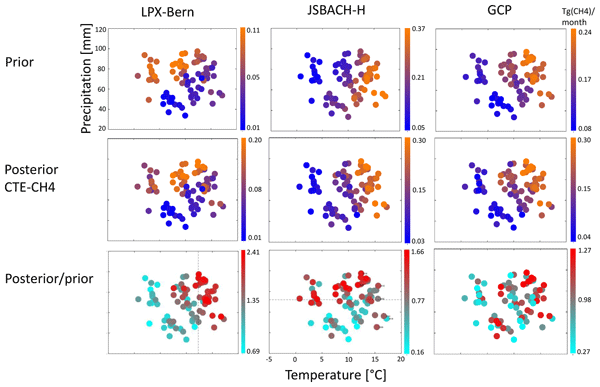
Tuula Aalto, Aki Tsuruta, Jarmo Mäkelä, Jurek Müller, Maria Tenkanen, Eleanor Burke, Sarah Chadburn, Yao Gao, Vilma Mannisenaho, Thomas Kleinen, Hanna Lee, Antti Leppänen, Tiina Markkanen, Stefano Materia, Paul A. Miller, Daniele Peano, Olli Peltola, Benjamin Poulter, Maarit Raivonen, Marielle Saunois, David Wårlind, and Sönke Zaehle
Biogeosciences, 22, 323–340, https://doi.org/10.5194/bg-22-323-2025, https://doi.org/10.5194/bg-22-323-2025, 2025
Short summary
Short summary
Wetland methane responses to temperature and precipitation were studied in a boreal wetland-rich region in northern Europe using ecosystem models, atmospheric inversions, and upscaled flux observations. The ecosystem models differed in their responses to temperature and precipitation and in their seasonality. However, multi-model means, inversions, and upscaled fluxes had similar seasonality, and they suggested co-limitation by temperature and precipitation.
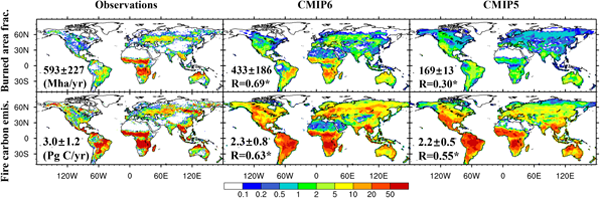
Fang Li, Xiang Song, Sandy P. Harrison, Jennifer R. Marlon, Zhongda Lin, L. Ruby Leung, Jörg Schwinger, Virginie Marécal, Shiyu Wang, Daniel S. Ward, Xiao Dong, Hanna Lee, Lars Nieradzik, Sam S. Rabin, and Roland Séférian
Geosci. Model Dev., 17, 8751–8771, https://doi.org/10.5194/gmd-17-8751-2024, https://doi.org/10.5194/gmd-17-8751-2024, 2024
Short summary
Short summary
This study provides the first comprehensive assessment of historical fire simulations from 19 Earth system models in phase 6 of the Coupled Model Intercomparison Project (CMIP6). Most models reproduce global totals, spatial patterns, seasonality, and regional historical changes well but fail to simulate the recent decline in global burned area and underestimate the fire response to climate variability. CMIP6 simulations address three critical issues of phase-5 models.
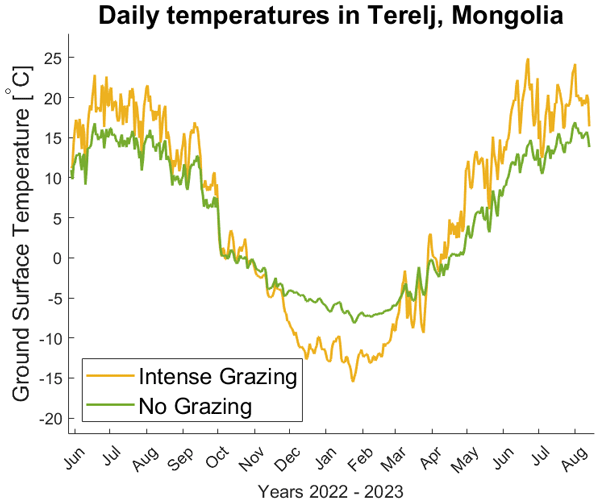
Robin Benjamin Zweigel, Avirmed Dashtseren, Khurelbaatar Temuujin, Anarmaa Sharkhuu, Clare Webster, Hanna Lee, and Sebastian Westermann
Biogeosciences, 21, 5059–5077, https://doi.org/10.5194/bg-21-5059-2024, https://doi.org/10.5194/bg-21-5059-2024, 2024
Short summary
Short summary
Intense grazing at grassland sites removes vegetation, reduces the snow cover, and inhibits litter layers from forming. Grazed sites generally have a larger annual ground surface temperature amplitude than ungrazed sites, but the net effect depends on effects in the transitional seasons. Our results also suggest that seasonal use of pastures can reduce ground temperatures, which can be a strategy to protect currently degrading grassland permafrost.
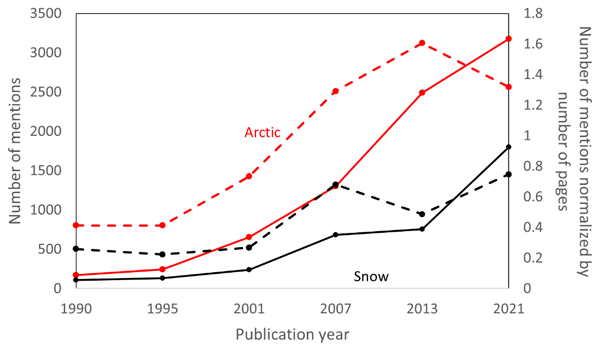
Cecile B. Menard, Sirpa Rasmus, Ioanna Merkouriadi, Gianpaolo Balsamo, Annett Bartsch, Chris Derksen, Florent Domine, Marie Dumont, Dorothee Ehrich, Richard Essery, Bruce C. Forbes, Gerhard Krinner, David Lawrence, Glen Liston, Heidrun Matthes, Nick Rutter, Melody Sandells, Martin Schneebeli, and Sari Stark
The Cryosphere, 18, 4671–4686, https://doi.org/10.5194/tc-18-4671-2024, https://doi.org/10.5194/tc-18-4671-2024, 2024
Short summary
Short summary
Computer models, like those used in climate change studies, are written by modellers who have to decide how best to construct the models in order to satisfy the purpose they serve. Using snow modelling as an example, we examine the process behind the decisions to understand what motivates or limits modellers in their decision-making. We find that the context in which research is undertaken is often more crucial than scientific limitations. We argue for more transparency in our research practice.
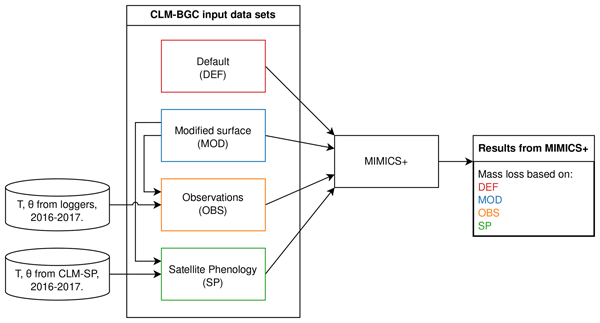
Elin Ristorp Aas, Inge Althuizen, Hui Tang, Sonya Geange, Eva Lieungh, Vigdis Vandvik, and Terje Koren Berntsen
Biogeosciences, 21, 3789–3817, https://doi.org/10.5194/bg-21-3789-2024, https://doi.org/10.5194/bg-21-3789-2024, 2024
Short summary
Short summary
We used a soil model to replicate two litterbag decomposition experiments to examine the implications of climate, litter quality, and soil microclimate representation. We found that macroclimate was more important than litter quality for modeled mass loss. By comparing different representations of soil temperature and moisture we found that using observed data did not improve model results. We discuss causes for this and suggest possible improvements to both the model and experimental design.
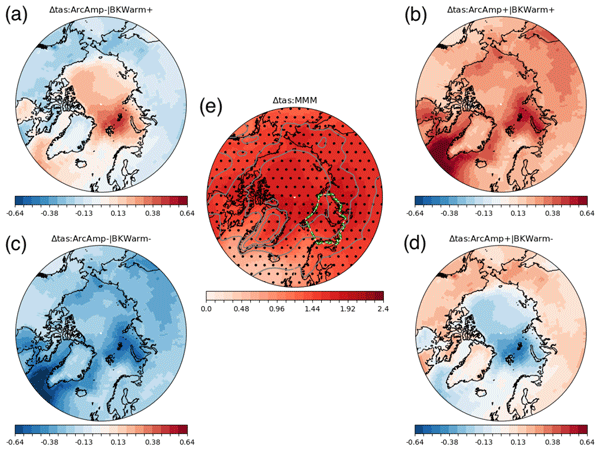
Xavier J. Levine, Ryan S. Williams, Gareth Marshall, Andrew Orr, Lise Seland Graff, Dörthe Handorf, Alexey Karpechko, Raphael Köhler, René R. Wijngaard, Nadine Johnston, Hanna Lee, Lars Nieradzik, and Priscilla A. Mooney
Earth Syst. Dynam., 15, 1161–1177, https://doi.org/10.5194/esd-15-1161-2024, https://doi.org/10.5194/esd-15-1161-2024, 2024
Short summary
Short summary
While the most recent climate projections agree that the Arctic is warming, differences remain in how much and in other climate variables such as precipitation. This presents a challenge for stakeholders who need to develop mitigation and adaptation strategies. We tackle this problem by using the storyline approach to generate four plausible and actionable realisations of end-of-century climate change for the Arctic, spanning its most likely range of variability.
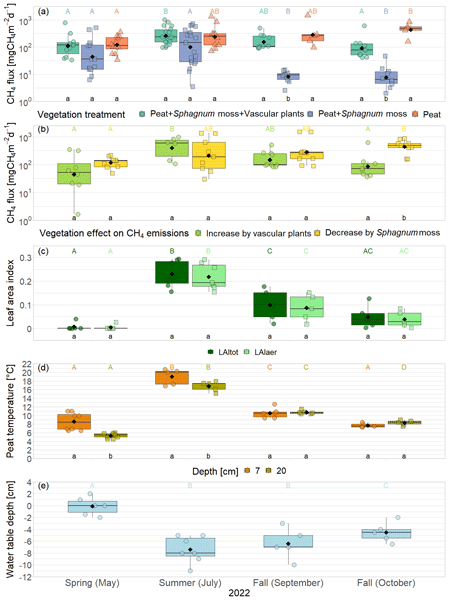
Katharina Jentzsch, Elisa Männistö, Maija E. Marushchak, Aino Korrensalo, Lona van Delden, Eeva-Stiina Tuittila, Christian Knoblauch, and Claire C. Treat
Biogeosciences, 21, 3761–3788, https://doi.org/10.5194/bg-21-3761-2024, https://doi.org/10.5194/bg-21-3761-2024, 2024
Short summary
Short summary
During cold seasons, methane release from northern wetlands is important but often underestimated. We studied a boreal bog to understand methane emissions in spring and fall. At cold temperatures, methane release decreases due to lower production rates, but efficient methane transport through plant structures, decaying plants, and the release of methane stored in the pore water keep emissions ongoing. Understanding these seasonal processes can improve models for methane release in cold climates.

Gabriel Pereira Freitas, Ben Kopec, Kouji Adachi, Radovan Krejci, Dominic Heslin-Rees, Karl Espen Yttri, Alun Hubbard, Jeffrey M. Welker, and Paul Zieger
Atmos. Chem. Phys., 24, 5479–5494, https://doi.org/10.5194/acp-24-5479-2024, https://doi.org/10.5194/acp-24-5479-2024, 2024
Short summary
Short summary
Bioaerosols can participate in ice formation within clouds. In the Arctic, where global warming manifests most, they may become more important as their sources prevail for longer periods of the year. We have directly measured bioaerosols within clouds for a full year at an Arctic mountain site using a novel combination of cloud particle sampling and single-particle techniques. We show that bioaerosols act as cloud seeds and may influence the presence of ice within clouds.
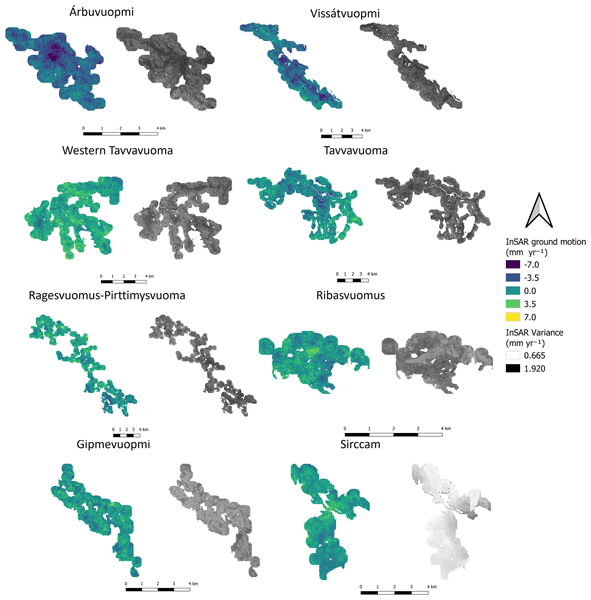
Samuel Valman, Matthias B. Siewert, Doreen Boyd, Martha Ledger, David Gee, Betsabé de la Barreda-Bautista, Andrew Sowter, and Sofie Sjögersten
The Cryosphere, 18, 1773–1790, https://doi.org/10.5194/tc-18-1773-2024, https://doi.org/10.5194/tc-18-1773-2024, 2024
Short summary
Short summary
Climate warming is thawing permafrost that makes up palsa (frost mound) peatlands, risking ecosystem collapse and carbon release as methane. We measure this regional degradation using radar satellite technology to examine ground elevation changes and show how terrain roughness measurements can be used to estimate local permafrost damage. We find that over half of Sweden's largest palsa peatlands are degrading, with the worse impacts to the north linked to increased winter precipitation.
Moein Mellat, Amy R. Macfarlane, Camilla F. Brunello, Martin Werner, Martin Schneebeli, Ruzica Dadic, Stefanie Arndt, Kaisa-Riikka Mustonen, Jeffrey M. Welker, and Hanno Meyer
EGUsphere, https://doi.org/10.5194/egusphere-2024-719, https://doi.org/10.5194/egusphere-2024-719, 2024
Preprint archived
Short summary
Short summary
Our research, utilizing data from the Arctic MOSAiC expedition, reveals how snow on Arctic sea ice changes due to weather conditions. By analyzing snow samples collected over a year, we found differences in snow layers that tell us about their origins and how they've been affected by the environment. We discovered variations in snow and vapour that reflect the influence of weather patterns and surface processes like wind and sublimation.
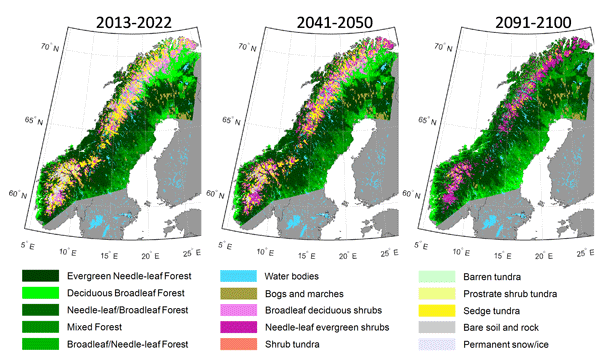
Fredrik Lagergren, Robert G. Björk, Camilla Andersson, Danijel Belušić, Mats P. Björkman, Erik Kjellström, Petter Lind, David Lindstedt, Tinja Olenius, Håkan Pleijel, Gunhild Rosqvist, and Paul A. Miller
Biogeosciences, 21, 1093–1116, https://doi.org/10.5194/bg-21-1093-2024, https://doi.org/10.5194/bg-21-1093-2024, 2024
Short summary
Short summary
The Fennoscandian boreal and mountain regions harbour a wide range of ecosystems sensitive to climate change. A new, highly resolved high-emission climate scenario enabled modelling of the vegetation development in this region at high resolution for the 21st century. The results show dramatic south to north and low- to high-altitude shifts of vegetation zones, especially for the open tundra environments, which will have large implications for nature conservation, reindeer husbandry and forestry.
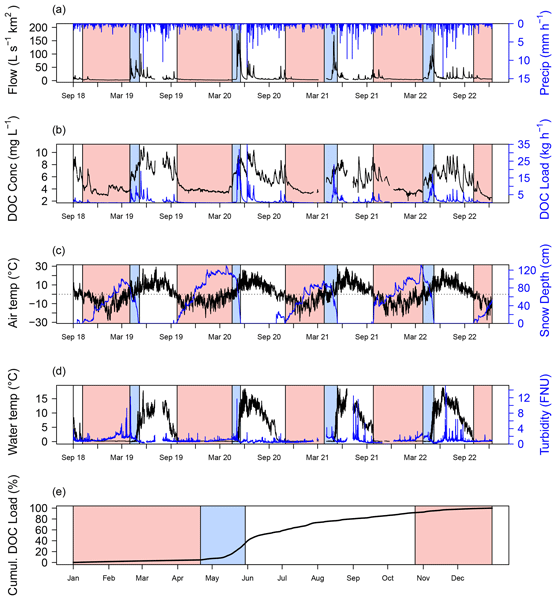
Danny Croghan, Pertti Ala-Aho, Jeffrey Welker, Kaisa-Riikka Mustonen, Kieran Khamis, David M. Hannah, Jussi Vuorenmaa, Bjørn Kløve, and Hannu Marttila
Hydrol. Earth Syst. Sci., 28, 1055–1070, https://doi.org/10.5194/hess-28-1055-2024, https://doi.org/10.5194/hess-28-1055-2024, 2024
Short summary
Short summary
The transport of dissolved organic carbon (DOC) from land into streams is changing due to climate change. We used a multi-year dataset of DOC and predictors of DOC in a subarctic stream to find out how transport of DOC varied between seasons and between years. We found that the way DOC is transported varied strongly seasonally, but year-to-year differences were less apparent. We conclude that the mechanisms of transport show a higher degree of interannual consistency than previously thought.
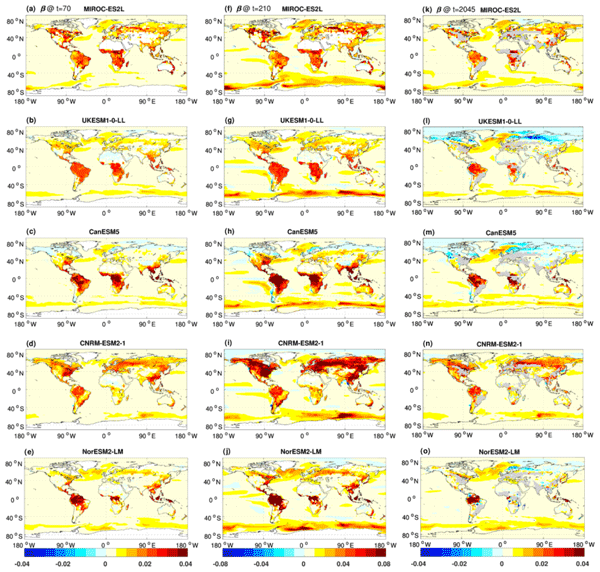
Ali Asaadi, Jörg Schwinger, Hanna Lee, Jerry Tjiputra, Vivek Arora, Roland Séférian, Spencer Liddicoat, Tomohiro Hajima, Yeray Santana-Falcón, and Chris D. Jones
Biogeosciences, 21, 411–435, https://doi.org/10.5194/bg-21-411-2024, https://doi.org/10.5194/bg-21-411-2024, 2024
Short summary
Short summary
Carbon cycle feedback metrics are employed to assess phases of positive and negative CO2 emissions. When emissions become negative, we find that the model disagreement in feedback metrics increases more strongly than expected from the assumption that the uncertainties accumulate linearly with time. The geographical patterns of such metrics over land highlight that differences in response between tropical/subtropical and temperate/boreal ecosystems are a major source of model disagreement.
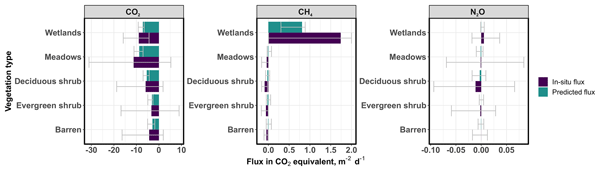
Anna-Maria Virkkala, Pekka Niittynen, Julia Kemppinen, Maija E. Marushchak, Carolina Voigt, Geert Hensgens, Johanna Kerttula, Konsta Happonen, Vilna Tyystjärvi, Christina Biasi, Jenni Hultman, Janne Rinne, and Miska Luoto
Biogeosciences, 21, 335–355, https://doi.org/10.5194/bg-21-335-2024, https://doi.org/10.5194/bg-21-335-2024, 2024
Short summary
Short summary
Arctic greenhouse gas (GHG) fluxes of CO2, CH4, and N2O are important for climate feedbacks. We combined extensive in situ measurements and remote sensing data to develop machine-learning models to predict GHG fluxes at a 2 m resolution across a tundra landscape. The analysis revealed that the system was a net GHG sink and showed widespread CH4 uptake in upland vegetation types, almost surpassing the high wetland CH4 emissions at the landscape scale.
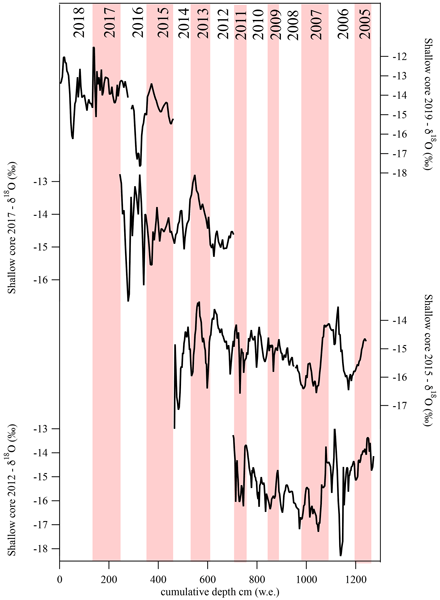
Andrea Spolaor, Federico Scoto, Catherine Larose, Elena Barbaro, Francois Burgay, Mats P. Bjorkman, David Cappelletti, Federico Dallo, Fabrizio de Blasi, Dmitry Divine, Giuliano Dreossi, Jacopo Gabrieli, Elisabeth Isaksson, Jack Kohler, Tonu Martma, Louise S. Schmidt, Thomas V. Schuler, Barbara Stenni, Clara Turetta, Bartłomiej Luks, Mathieu Casado, and Jean-Charles Gallet
The Cryosphere, 18, 307–320, https://doi.org/10.5194/tc-18-307-2024, https://doi.org/10.5194/tc-18-307-2024, 2024
Short summary
Short summary
We evaluate the impact of the increased snowmelt on the preservation of the oxygen isotope (δ18O) signal in firn records recovered from the top of the Holtedahlfonna ice field located in the Svalbard archipelago. Thanks to a multidisciplinary approach we demonstrate a progressive deterioration of the isotope signal in the firn core. We link the degradation of the δ18O signal to the increased occurrence and intensity of melt events associated with the rapid warming occurring in the archipelago.
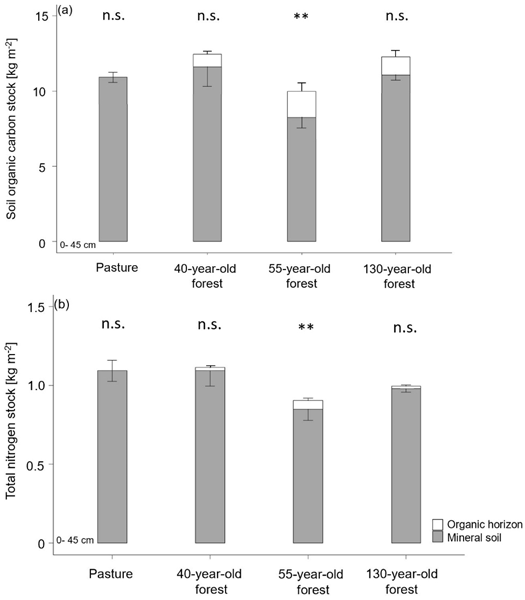
Tatjana C. Speckert, Jeannine Suremann, Konstantin Gavazov, Maria J. Santos, Frank Hagedorn, and Guido L. B. Wiesenberg
SOIL, 9, 609–621, https://doi.org/10.5194/soil-9-609-2023, https://doi.org/10.5194/soil-9-609-2023, 2023
Short summary
Short summary
Soil organic carbon (SOC) is key player in the global carbon cycle. Afforestation on pastures potentially alters organic matter input and SOC sequestration. We investigated the effects of a Picea abies L. afforestation sequence (0 to 130 years) on a former subalpine pasture on SOC stocks and dynamics. We found no difference in the SOC stock after 130 years of afforestation and thus no additional SOC sequestration. SOC composition was altered due to a modified SOC input following afforestation.
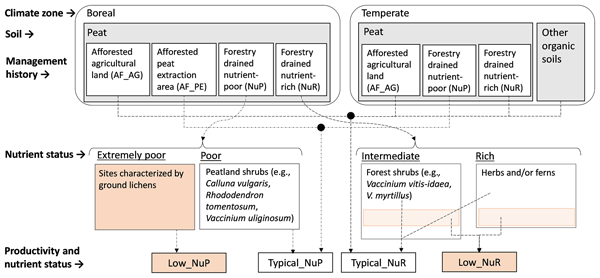
Jyrki Jauhiainen, Juha Heikkinen, Nicholas Clarke, Hongxing He, Lise Dalsgaard, Kari Minkkinen, Paavo Ojanen, Lars Vesterdal, Jukka Alm, Aldis Butlers, Ingeborg Callesen, Sabine Jordan, Annalea Lohila, Ülo Mander, Hlynur Óskarsson, Bjarni D. Sigurdsson, Gunnhild Søgaard, Kaido Soosaar, Åsa Kasimir, Brynhildur Bjarnadottir, Andis Lazdins, and Raija Laiho
Biogeosciences, 20, 4819–4839, https://doi.org/10.5194/bg-20-4819-2023, https://doi.org/10.5194/bg-20-4819-2023, 2023
Short summary
Short summary
The study looked at published data on drained organic forest soils in boreal and temperate zones to revisit current Tier 1 default emission factors (EFs) provided by the IPCC Wetlands Supplement. We examined the possibilities of forming more site-type specific EFs and inspected the potential relevance of environmental variables for predicting annual soil greenhouse gas balances by statistical models. The results have important implications for EF revisions and national emission reporting.
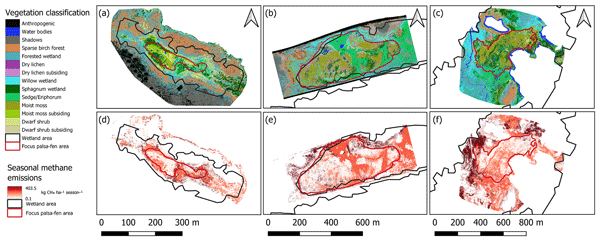
Sofie Sjögersten, Martha Ledger, Matthias Siewert, Betsabé de la Barreda-Bautista, Andrew Sowter, David Gee, Giles Foody, and Doreen S. Boyd
Biogeosciences, 20, 4221–4239, https://doi.org/10.5194/bg-20-4221-2023, https://doi.org/10.5194/bg-20-4221-2023, 2023
Short summary
Short summary
Permafrost thaw in Arctic regions is increasing methane emissions, but quantification is difficult given the large and remote areas impacted. We show that UAV data together with satellite data can be used to extrapolate emissions across the wider landscape as well as detect areas at risk of higher emissions. A transition of currently degrading areas to fen type vegetation can increase emission by several orders of magnitude, highlighting the importance of quantifying areas at risk.
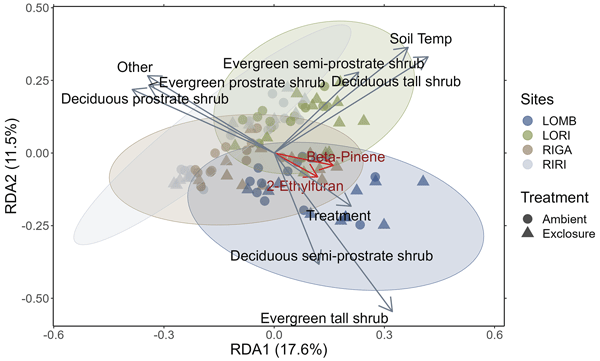
Cole G. Brachmann, Tage Vowles, Riikka Rinnan, Mats P. Björkman, Anna Ekberg, and Robert G. Björk
Biogeosciences, 20, 4069–4086, https://doi.org/10.5194/bg-20-4069-2023, https://doi.org/10.5194/bg-20-4069-2023, 2023
Short summary
Short summary
Herbivores change plant communities through grazing, altering the amount of CO2 and plant-specific chemicals (termed VOCs) emitted. We tested this effect by excluding herbivores and studying the CO2 and VOC emissions. Herbivores reduced CO2 emissions from a meadow community and altered VOC composition; however, community type had the strongest effect on the amount of CO2 and VOCs released. Herbivores can mediate greenhouse gas emissions, but the effect is marginal and community dependent.
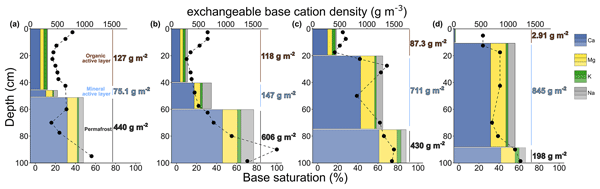
Elisabeth Mauclet, Maëlle Villani, Arthur Monhonval, Catherine Hirst, Edward A. G. Schuur, and Sophie Opfergelt
Earth Syst. Sci. Data, 15, 3891–3904, https://doi.org/10.5194/essd-15-3891-2023, https://doi.org/10.5194/essd-15-3891-2023, 2023
Short summary
Short summary
Permafrost ecosystems are limited in nutrients for vegetation development and constrain the biological activity to the active layer. Upon Arctic warming, permafrost degradation exposes organic and mineral soil material that may directly influence the capacity of the soil to retain key nutrients for vegetation growth and development. Here, we demonstrate that the average total exchangeable nutrient density (Ca, K, Mg, and Na) is more than 2 times higher in the permafrost than in the active layer.
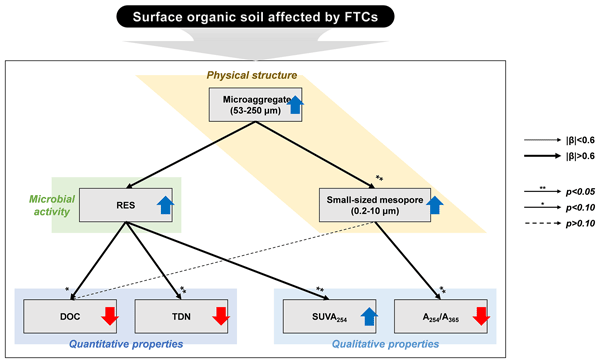
You Jin Kim, Jinhyun Kim, and Ji Young Jung
The Cryosphere, 17, 3101–3114, https://doi.org/10.5194/tc-17-3101-2023, https://doi.org/10.5194/tc-17-3101-2023, 2023
Short summary
Short summary
This study demonstrated the response of organic soils in the Arctic tundra to freeze–thaw cycles (FTCs), focusing on the quantitative and qualitative characteristics of dissolved organic carbon (DOC). The highlights found in this study are as follows: (i) FTCs altered DOC properties without decreasing soil microbial activities, and (ii) soil aggregate distribution influenced by FTCs changed DOC characteristics by enhancing microbial activities and altering specific-sized soil pore proportion.
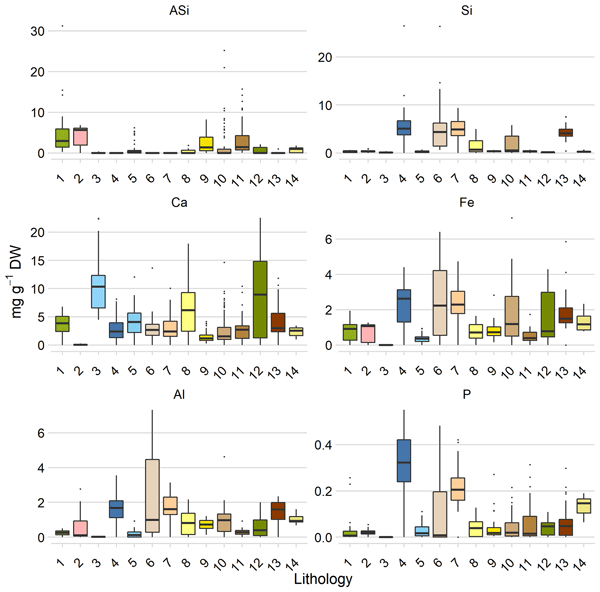
Peter Stimmler, Mathias Goeckede, Bo Elberling, Susan Natali, Peter Kuhry, Nia Perron, Fabrice Lacroix, Gustaf Hugelius, Oliver Sonnentag, Jens Strauss, Christina Minions, Michael Sommer, and Jörg Schaller
Earth Syst. Sci. Data, 15, 1059–1075, https://doi.org/10.5194/essd-15-1059-2023, https://doi.org/10.5194/essd-15-1059-2023, 2023
Short summary
Short summary
Arctic soils store large amounts of carbon and nutrients. The availability of nutrients, such as silicon, calcium, iron, aluminum, phosphorus, and amorphous silica, is crucial to understand future carbon fluxes in the Arctic. Here, we provide, for the first time, a unique dataset of the availability of the abovementioned nutrients for the different soil layers, including the currently frozen permafrost layer. We relate these data to several geographical and geological parameters.
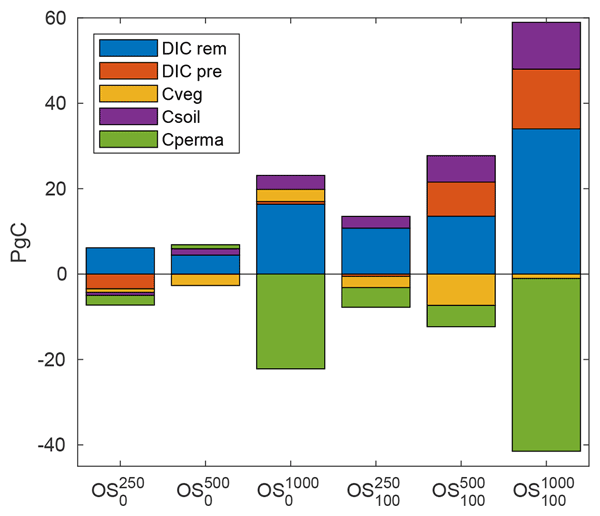
Jörg Schwinger, Ali Asaadi, Norman Julius Steinert, and Hanna Lee
Earth Syst. Dynam., 13, 1641–1665, https://doi.org/10.5194/esd-13-1641-2022, https://doi.org/10.5194/esd-13-1641-2022, 2022
Short summary
Short summary
We test whether climate change can be partially reversed if CO2 is removed from the atmosphere to compensate for too large past and near-term emissions by using idealized model simulations of overshoot pathways. On a timescale of 100 years, we find a high degree of reversibility if the overshoot size remains small, and we do not find tipping points even for intense overshoots. We caution that current Earth system models are most likely not able to skilfully model tipping points in ecosystems.
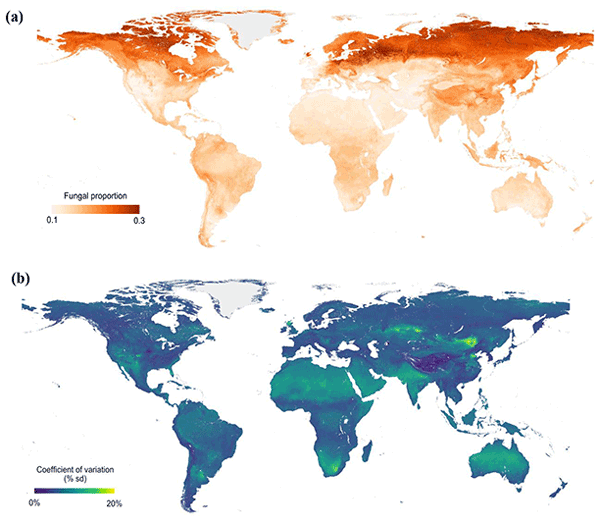
Kailiang Yu, Johan van den Hoogen, Zhiqiang Wang, Colin Averill, Devin Routh, Gabriel Reuben Smith, Rebecca E. Drenovsky, Kate M. Scow, Fei Mo, Mark P. Waldrop, Yuanhe Yang, Weize Tang, Franciska T. De Vries, Richard D. Bardgett, Peter Manning, Felipe Bastida, Sara G. Baer, Elizabeth M. Bach, Carlos García, Qingkui Wang, Linna Ma, Baodong Chen, Xianjing He, Sven Teurlincx, Amber Heijboer, James A. Bradley, and Thomas W. Crowther
Earth Syst. Sci. Data, 14, 4339–4350, https://doi.org/10.5194/essd-14-4339-2022, https://doi.org/10.5194/essd-14-4339-2022, 2022
Short summary
Short summary
We used a global-scale dataset for the surface topsoil (>3000 distinct observations of abundance of soil fungi versus bacteria) to generate the first quantitative map of soil fungal proportion across terrestrial ecosystems. We reveal striking latitudinal trends. Fungi dominated in regions with low mean annual temperature (MAT) and net primary productivity (NPP) and bacteria dominated in regions with high MAT and NPP.
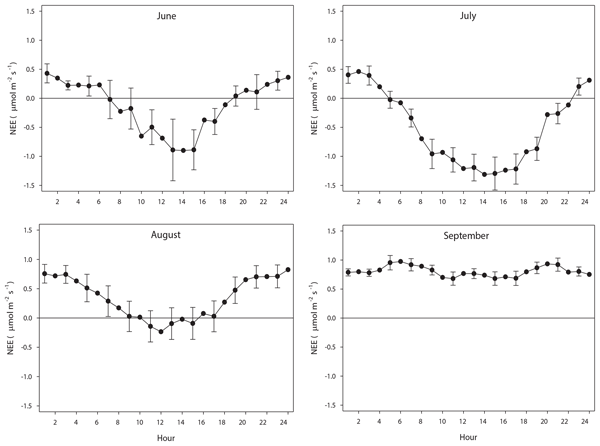
Anders Lindroth, Norbert Pirk, Ingibjörg S. Jónsdóttir, Christian Stiegler, Leif Klemedtsson, and Mats B. Nilsson
Biogeosciences, 19, 3921–3934, https://doi.org/10.5194/bg-19-3921-2022, https://doi.org/10.5194/bg-19-3921-2022, 2022
Short summary
Short summary
We measured the fluxes of carbon dioxide and methane between a moist moss tundra and the atmosphere on Svalbard in order to better understand how such ecosystems are affecting the climate and vice versa. We found that the system was a small sink of carbon dioxide and a small source of methane. These fluxes are small in comparison with other tundra ecosystems in the high Arctic. Analysis of temperature sensitivity showed that respiration was more sensitive than photosynthesis above about 6 ℃.
Selena Georgiou, Edward T. A. Mitchard, Bart Crezee, Paul I. Palmer, Greta C. Dargie, Sofie Sjögersten, Corneille E. N. Ewango, Ovide B. Emba, Joseph T. Kanyama, Pierre Bola, Jean-Bosco N. Ndjango, Nicholas T. Girkin, Yannick E. Bocko, Suspense A. Ifo, and Simon L. Lewis
EGUsphere, https://doi.org/10.5194/egusphere-2022-580, https://doi.org/10.5194/egusphere-2022-580, 2022
Preprint archived
Short summary
Short summary
Two major vegetation types, hardwood trees and palms, overlay the Central Congo Basin peatland complex, each dominant in different locations. We investigated the influence of terrain and climatological variables on their distribution, using a regression model, and found elevation and seasonal rainfall and temperature contribute significantly. There are indications of an optimal range of net water input for palm swamp to dominate, above and below which hardwood swamp dominates.
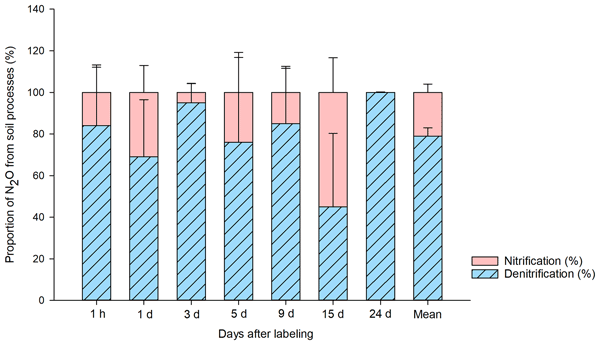
Jenie Gil, Maija E. Marushchak, Tobias Rütting, Elizabeth M. Baggs, Tibisay Pérez, Alexander Novakovskiy, Tatiana Trubnikova, Dmitry Kaverin, Pertti J. Martikainen, and Christina Biasi
Biogeosciences, 19, 2683–2698, https://doi.org/10.5194/bg-19-2683-2022, https://doi.org/10.5194/bg-19-2683-2022, 2022
Short summary
Short summary
N2O emissions from permafrost soils represent up to 11.6 % of total N2O emissions from natural soils, and their contribution to the global N2O budget will likely increase due to climate change. A better understanding of N2O production from permafrost soil is needed to evaluate the role of arctic ecosystems in the global N2O budget. By studying microbial N2O production processes in N2O hotspots in permafrost peatlands, we identified denitrification as the dominant source of N2O in these surfaces.
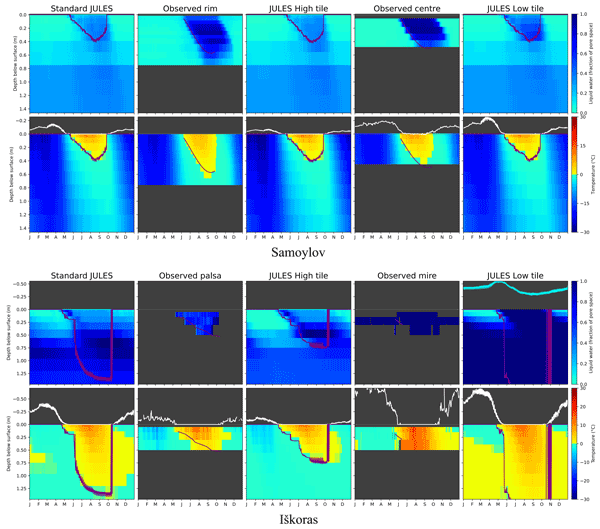
Noah D. Smith, Eleanor J. Burke, Kjetil Schanke Aas, Inge H. J. Althuizen, Julia Boike, Casper Tai Christiansen, Bernd Etzelmüller, Thomas Friborg, Hanna Lee, Heather Rumbold, Rachael H. Turton, Sebastian Westermann, and Sarah E. Chadburn
Geosci. Model Dev., 15, 3603–3639, https://doi.org/10.5194/gmd-15-3603-2022, https://doi.org/10.5194/gmd-15-3603-2022, 2022
Short summary
Short summary
The Arctic has large areas of small mounds that are caused by ice lifting up the soil. Snow blown by wind gathers in hollows next to these mounds, insulating them in winter. The hollows tend to be wetter, and thus the soil absorbs more heat in summer. The warm wet soil in the hollows decomposes, releasing methane. We have made a model of this, and we have tested how it behaves and whether it looks like sites in Scandinavia and Siberia. Sometimes we get more methane than a model without mounds.
Elisabeth Mauclet, Yannick Agnan, Catherine Hirst, Arthur Monhonval, Benoît Pereira, Aubry Vandeuren, Maëlle Villani, Justin Ledman, Meghan Taylor, Briana L. Jasinski, Edward A. G. Schuur, and Sophie Opfergelt
Biogeosciences, 19, 2333–2351, https://doi.org/10.5194/bg-19-2333-2022, https://doi.org/10.5194/bg-19-2333-2022, 2022
Short summary
Short summary
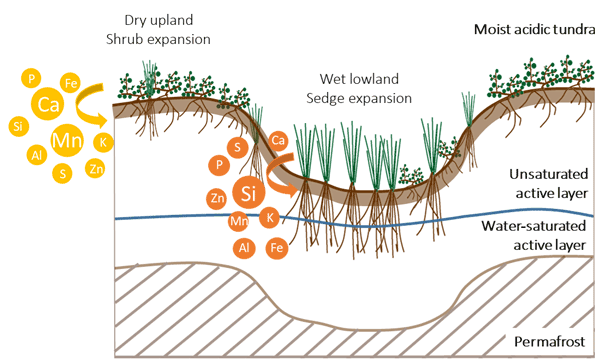
Arctic warming and permafrost degradation largely affect tundra vegetation. Wetter lowlands show an increase in sedges, whereas drier uplands favor shrub expansion. Here, we demonstrate that the difference in the foliar elemental composition of typical tundra vegetation species controls the change in local foliar elemental stock and potential mineral element cycling through litter production upon a shift in tundra vegetation.
Hannah Ming Siu Vickers, Priscilla Mooney, Eirik Malnes, and Hanna Lee
The Cryosphere Discuss., https://doi.org/10.5194/tc-2022-57, https://doi.org/10.5194/tc-2022-57, 2022
Manuscript not accepted for further review
Short summary
Short summary
Rain-on-snow (ROS) events are becoming more frequent as a result of a warming climate, and can have significant impacts on nature and society. Accurate representation of ROS events is need to identify where impacts are greatest both now and in the future. We compare rain-on-snow climatologies from a climate model, ground and satellite radar observations and show how different methods can lead to contrasting conclusions and interpretation of the results should take into account their limitations.
Jon Cranko Page, Martin G. De Kauwe, Gab Abramowitz, Jamie Cleverly, Nina Hinko-Najera, Mark J. Hovenden, Yao Liu, Andy J. Pitman, and Kiona Ogle
Biogeosciences, 19, 1913–1932, https://doi.org/10.5194/bg-19-1913-2022, https://doi.org/10.5194/bg-19-1913-2022, 2022
Short summary
Short summary
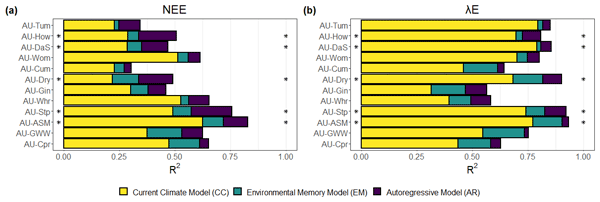
Although vegetation responds to climate at a wide range of timescales, models of the land carbon sink often ignore responses that do not occur instantly. In this study, we explore the timescales at which Australian ecosystems respond to climate. We identified that carbon and water fluxes can be modelled more accurately if we include environmental drivers from up to a year in the past. The importance of antecedent conditions is related to ecosystem aridity but is also influenced by other factors.
Sarah E. Chadburn, Eleanor J. Burke, Angela V. Gallego-Sala, Noah D. Smith, M. Syndonia Bret-Harte, Dan J. Charman, Julia Drewer, Colin W. Edgar, Eugenie S. Euskirchen, Krzysztof Fortuniak, Yao Gao, Mahdi Nakhavali, Włodzimierz Pawlak, Edward A. G. Schuur, and Sebastian Westermann
Geosci. Model Dev., 15, 1633–1657, https://doi.org/10.5194/gmd-15-1633-2022, https://doi.org/10.5194/gmd-15-1633-2022, 2022
Short summary
Short summary
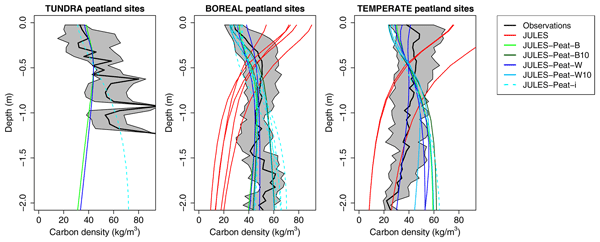
We present a new method to include peatlands in an Earth system model (ESM). Peatlands store huge amounts of carbon that accumulates very slowly but that can be rapidly destabilised, emitting greenhouse gases. Our model captures the dynamic nature of peat by simulating the change in surface height and physical properties of the soil as carbon is added or decomposed. Thus, we model, for the first time in an ESM, peat dynamics and its threshold behaviours that can lead to destabilisation.
Martijn M. T. A. Pallandt, Jitendra Kumar, Marguerite Mauritz, Edward A. G. Schuur, Anna-Maria Virkkala, Gerardo Celis, Forrest M. Hoffman, and Mathias Göckede
Biogeosciences, 19, 559–583, https://doi.org/10.5194/bg-19-559-2022, https://doi.org/10.5194/bg-19-559-2022, 2022
Short summary
Short summary
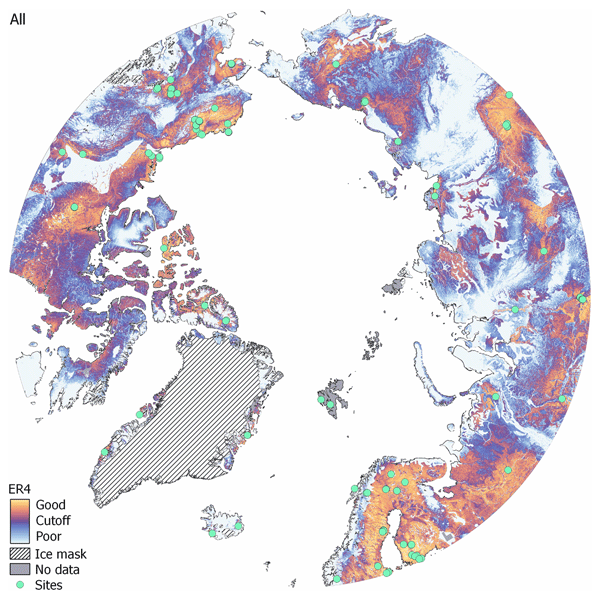
Thawing of Arctic permafrost soils could trigger the release of vast amounts of carbon to the atmosphere, thus enhancing climate change. Our study investigated how well the current network of eddy covariance sites to monitor greenhouse gas exchange at local scales captures pan-Arctic flux patterns. We identified large coverage gaps, e.g., in Siberia, but also demonstrated that a targeted addition of relatively few sites can significantly improve network performance.
Anna-Maria Virkkala, Susan M. Natali, Brendan M. Rogers, Jennifer D. Watts, Kathleen Savage, Sara June Connon, Marguerite Mauritz, Edward A. G. Schuur, Darcy Peter, Christina Minions, Julia Nojeim, Roisin Commane, Craig A. Emmerton, Mathias Goeckede, Manuel Helbig, David Holl, Hiroki Iwata, Hideki Kobayashi, Pasi Kolari, Efrén López-Blanco, Maija E. Marushchak, Mikhail Mastepanov, Lutz Merbold, Frans-Jan W. Parmentier, Matthias Peichl, Torsten Sachs, Oliver Sonnentag, Masahito Ueyama, Carolina Voigt, Mika Aurela, Julia Boike, Gerardo Celis, Namyi Chae, Torben R. Christensen, M. Syndonia Bret-Harte, Sigrid Dengel, Han Dolman, Colin W. Edgar, Bo Elberling, Eugenie Euskirchen, Achim Grelle, Juha Hatakka, Elyn Humphreys, Järvi Järveoja, Ayumi Kotani, Lars Kutzbach, Tuomas Laurila, Annalea Lohila, Ivan Mammarella, Yojiro Matsuura, Gesa Meyer, Mats B. Nilsson, Steven F. Oberbauer, Sang-Jong Park, Roman Petrov, Anatoly S. Prokushkin, Christopher Schulze, Vincent L. St. Louis, Eeva-Stiina Tuittila, Juha-Pekka Tuovinen, William Quinton, Andrej Varlagin, Donatella Zona, and Viacheslav I. Zyryanov
Earth Syst. Sci. Data, 14, 179–208, https://doi.org/10.5194/essd-14-179-2022, https://doi.org/10.5194/essd-14-179-2022, 2022
Short summary
Short summary
The effects of climate warming on carbon cycling across the Arctic–boreal zone (ABZ) remain poorly understood due to the relatively limited distribution of ABZ flux sites. Fortunately, this flux network is constantly increasing, but new measurements are published in various platforms, making it challenging to understand the ABZ carbon cycle as a whole. Here, we compiled a new database of Arctic–boreal CO2 fluxes to help facilitate large-scale assessments of the ABZ carbon cycle.
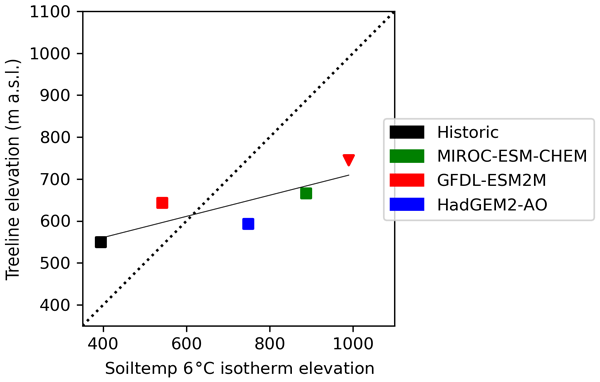
Adrian Gustafson, Paul A. Miller, Robert G. Björk, Stefan Olin, and Benjamin Smith
Biogeosciences, 18, 6329–6347, https://doi.org/10.5194/bg-18-6329-2021, https://doi.org/10.5194/bg-18-6329-2021, 2021
Short summary
Short summary
We performed model simulations of vegetation change for a historic period and a range of climate change scenarios at a high spatial resolution. Projected treeline advance continued at the same or increased rates compared to our historic simulation. Temperature isotherms advanced faster than treelines, revealing a lag in potential vegetation shifts that was modulated by nitrogen availability. At the year 2100 projected treelines had advanced by 45–195 elevational metres depending on the scenario.
Cited articles
Aalto, J., Tyystjärvi, V., Niittynen, P., Kemppinen, J., Rissanen, T., Gregow, H., and Luoto, M.: Microclimate temperature variations from boreal forests to the tundra, Agr. Forest Meteorol., 323, 109037, https://doi.org/10.1016/j.agrformet.2022.109037, 2022.
Abbott, B. W. and Jones, J. B.: Permafrost collapse alters soil carbon stocks, respiration, CH4, and N2O in upland tundra, Glob. Change Biol., 21, 4570–4587, https://doi.org/10.1111/gcb.13069, 2015.
Assmann, J. J., Myers-Smith, I. H., Kerby, J. T., Cunliffe, A. M., and Daskalova, G. N.: Drone data reveal heterogeneity in tundra greenness and phenology not captured by satellites, Environ. Res. Lett., 15, 125002, https://doi.org/10.1088/1748-9326/abbf7d, 2020.
Barichivich, J., Briffa, K. R., Myneni, R. B., Osborn, T. J., Melvin, T. M., Ciais, P., Piao, S., and Tucker, C.: Large-scale variations in the vegetation growing season and annual cycle of atmospheric CO 2 at high northern latitudes from 1950 to 2011, Glob. Change Biol., 19, 3167–3183, https://doi.org/10.1111/gcb.12283, 2013.
Bjorkman, A., Criado, M., Myers-Smith, I., Ravolainen, V., Jonsdottir, I., Westergaard, K., Lawler, J., Aronsson, M., Bennett, B., Gardfjell, H., Heidmarsson, S., Stewart, L., and Normand, S.: Status and trends in Arctic vegetation: Evidence from experimental warming and long-term monitoring, AMBIO, 49, 678–692, https://doi.org/10.1007/s13280-019-01161-6, 2020.
Björkman, M. P., Morgner, E., Björk, R. G., Cooper, E. J., Elberling, B., and Klemedtsson, L.: A comparison of annual and seasonal carbon dioxide effluxes between sub-Arctic Sweden and High-Arctic Svalbard, Polar Res., 29, 75–84, https://doi.org/10.3402/polar.v29i1.6051, 2010.
Bond-Lamberty, B., Wang, C., and Gower, S. T.: A global relationship between the heterotrophic and autotrophic components of soil respiration?, Glob. Change Biol., 10, 1756–1766, https://doi.org/10.1111/j.1365-2486.2004.00816.x, 2004.
Bond-Lamberty, B., Christianson, D. S., Malhotra, A., Pennington, S. C., Sihi, D., AghaKouchak, A., Anjileli, H., Altaf Arain, M., Armesto, J. J., Ashraf, S., Ataka, M., Baldocchi, D., Andrew Black, T., Buchmann, N., Carbone, M. S., Chang, S.-C., Crill, P., Curtis, P. S., Davidson, E. A., Desai, A. R., Drake, J. E., El-Madany, T. S., Gavazzi, M., Görres, C.-M., Gough, C. M., Goulden, M., Gregg, J., Gutiérrez del Arroyo, O., He, J.-S., Hirano, T., Hopple, A., Hughes, H., Järveoja, J., Jassal, R., Jian, J., Kan, H., Kaye, J., Kominami, Y., Liang, N., Lipson, D., Macdonald, C. A., Maseyk, K., Mathes, K., Mauritz, M., Mayes, M. A., McNulty, S., Miao, G., Migliavacca, M., Miller, S., Miniat, C. F., Nietz, J. G., Nilsson, M. B., Noormets, A., Norouzi, H., O'Connell, C. S., Osborne, B., Oyonarte, C., Pang, Z., Peichl, M., Pendall, E., Perez-Quezada, J. F., Phillips, C. L., Phillips, R. P., Raich, J. W., Renchon, A. A., Ruehr, N. K., Sánchez-Cañete, E. P., Saunders, M., Savage, K. E., Schrumpf, M., Scott, R. L., Seibt, U., Silver, W. L., Sun, W., Szutu, D., Takagi, K., Takagi, M., Teramoto, M., Tjoelker, M. G., Trumbore, S., Ueyama, M., Vargas, R., Varner, R. K., Verfaillie, J., Vogel, C., Wang, J., Winston, G., Wood, T. E., Wu, J., Wutzler, T., Zeng, J., Zha, T., Zhang, Q., and Zou, J.: COSORE: A community database for continuous soil respiration and other soil-atmosphere greenhouse gas flux data, Glob. Change Biol., 26, 7268–7283, https://doi.org/10.1111/gcb.15353, 2020.
Borken, W., Savage, K., Davidson, E. A., and Trumbore, S. E.: Effects of experimental drought on soil respiration and radiocarbon efflux from a temperate forest soil, Global Change Biol., 12, 177–193, https://doi.org/10.1111/j.1365-2486.2005.001058.x, 2006.
Choi, G. J. and Kang, H.: Heterogeneity in meta-analyses: an unavoidable challenge worth exploring, Korean J. Anesthesiol., 78, 301–314, https://doi.org/10.4097/kja.25001, 2025.
Collins, C. G., Elmendorf, S. C., Hollister, R. D., Henry, G. H. R., Clark, K., Bjorkman, A. D., Myers-Smith, I. H., Prevéy, J. S., Ashton, I. W., Assmann, J. J., Alatalo, J. M., Carbognani, M., Chisholm, C., Cooper, E. J., Forrester, C., Jónsdóttir, I. S., Klanderud, K., Kopp, C. W., Livensperger, C., Mauritz, M., May, J. L., Molau, U., Oberbauer, S. F., Ogburn, E., Panchen, Z. A., Petraglia, A., Post, E., Rixen, C., Rodenhizer, H., Schuur, E. A. G., Semenchuk, P., Smith, J. G., Steltzer, H., Totland, Ø., Walker, M. D., Welker, J. M., and Suding, K. N.: Experimental warming differentially affects vegetative and reproductive phenology of tundra plants, Nat. Commun., 12, 3442, https://doi.org/10.1038/s41467-021-23841-2, 2021.
Cooper, E. J.: Warmer Shorter Winters Disrupt Arctic Terrestrial Ecosystems, Annu. Rev. Ecol. Evol. S., 45, 271–295, https://doi.org/10.1146/annurev-ecolsys-120213-091620, 2014.
Cox, P. M., Betts, R. A., Jones, C. D., Spall, S. A., and Totterdell, I. J.: Acceleration of global warming due to carbon-cycle feedbacks in a coupled climate model, Nature, 408, 184–187, https://doi.org/10.1038/35041539, 2000.
Davidson, E. A., Janssens, I. A., and Luo, Y.: On the variability of respiration in terrestrial ecosystems: moving beyond Q10, Glob. Change Biol., 12, 154–164, https://doi.org/10.1111/j.1365-2486.2005.01065.x, 2006.
Dorrepaal, E., Toet, S., van Logtestijn, R. S. P., Swart, E., van de Weg, M. J., Callaghan, T. V., and Aerts, R.: Carbon respiration from subsurface peat accelerated by climate warming in the subarctic, Nature, 460, 616–619, https://doi.org/10.1038/nature08216, 2009.
Ernakovich, J. G., Hopping, K. A., Berdanier, A. B., Simpson, R. T., Kachergis, E. J., Steltzer, H., and Wallenstein, M. D.: Predicted responses of arctic and alpine ecosystems to altered seasonality under climate change, Glob. Change Biol., 20, 3256–3269, https://doi.org/10.1111/gcb.12568, 2014.
Fahnestock, J. T., Jones, M. H., Brooks, P. D., Walker, D. A., and Welker, J. M.: Winter and early spring CO2 efflux from tundra communities of northern Alaska, J. Geophys. Res.-Atmos., 103, 29023–29027, https://doi.org/10.1029/98JD00805, 1998.
Fahnestock, J. T., Jones, M. H., and Welker, J. M.: Wintertime CO2 efflux from Arctic soils: Implications for annual carbon budgets, Global. Biogeochem. Cy., 13, 775–779, https://doi.org/10.1029/1999GB900006, 1999.
Friggens, N. L., Hugelius, G., Kokelj, S. V., Murton, J. B., Phoenix, G. K., and Hartley, I. P.: Positive rhizosphere priming accelerates carbon release from permafrost soils, Nat. Commun., 16, 3576, https://doi.org/10.1038/s41467-025-58845-9, 2025.
Frossard, A., De Maeyer, L., Adamczyk, M., Svenning, M., Verleyen, E., and Frey, B.: Microbial carbon use and associated changes in microbial community structure in high-Arctic tundra soils under elevated temperature, Soil Biol. Biochem., 162, 108419, https://doi.org/10.1016/j.soilbio.2021.108419, 2021.
García Criado, M., Myers-Smith, I. H., Bjorkman, A. D., Elmendorf, S. C., Normand, S., Aastrup, P., Aerts, R., Alatalo, J. M., Baeten, L., Björk, R. G., Björkman, M. P., Boulanger-Lapointe, N., Butler, E. E., Cooper, E. J., Cornelissen, J. H. C., Daskalova, G. N., Fadrique, B., Forbes, B. C., Henry, G. H. R., Hollister, R. D., Høye, T. T., Jacobsen, I. B. D., Jägerbrand, A. K., Jónsdóttir, I. S., Kaarlejärvi, E., Khitun, O., Klanderud, K., Kolari, T. H. M., Lang, S. I., Lecomte, N., Lenoir, J., Macek, P., Messier, J., Michelsen, A., Molau, U., Muscarella, R., Nielsen, M.-L., Petit Bon, M., Post, E., Raundrup, K., Rinnan, R., Rixen, C., Ryde, I., Serra-Diaz, J. M., Schaepman-Strub, G., Schmidt, N. M., Schrodt, F., Sjögersten, S., Steinbauer, M. J., Stewart, L., Strandberg, B., Tolvanen, A., Tweedie, C. E., and Vellend, M.: Plant diversity dynamics over space and time in a warming Arctic, Nature, 642, 653–661, https://doi.org/10.1038/s41586-025-08946-8, 2025.
Gomez-Casanovas, N., Matamala, R., Cook, D. R., and Gonzalez-Meler, M. A.: Net ecosystem exchange modifies the relationship between the autotrophic and heterotrophic components of soil respiration with abiotic factors in prairie grasslands, Global Change Biol., 18, 2532–2545, https://doi.org/10.1111/j.1365-2486.2012.02721.x, 2012.
Gorham, E.: Northern Peatlands: Role in the Carbon Cycle and Probable Responses to Climatic Warming, Ecol. Appl., 1, 182–195, https://doi.org/10.2307/1941811, 1991.
Grogan, P.: Cold season respiration across a low arctic landscape: the influence of vegetation type, snow depth, and interannual climatic variation, Arct. Antarct. Alp. Res., 44, 446–456, https://doi.org/10.1657/1938-4246-44.4.446, 2012.
Gudasz, C., Karlsson, J., and Bastviken, D.: When does temperature matter for ecosystem respiration?, Environ. Res. Commun., 3, 121001, https://doi.org/10.1088/2515-7620/ac3b9f, 2021.
Hassol, S. J.: Impacts of a Warming Arctic: Arctic Climate Impact Assessment. With Arctic Climate Impact Assessment, Arctic Monitoring and Assessment Programme, Program for the Conservation of Arctic Flora and Fauna, and International Arctic Science Committee, Cambridge University Press, ISBN 978-0-521-61778-9, 2004.
Henry, G. H. R. and Molau, U.: Tundra plants and climate change: the International Tundra Experiment (ITEX), Glob. Change Biol., 3, 1–9, https://doi.org/10.1111/j.1365-2486.1997.gcb132.x, 1997.
Hermesdorf, L., Liu, Y., Michelsen, A., Westergaard-Nielsen, A., Mortensen, L. H., Jepsen, M. S., Sigsgaard, C., and Elberling, B.: Long-term changes in the daytime growing season carbon dioxide exchange following increased temperature and snow cover in arctic tundra, Glob. Change Biol., 30, e17087, https://doi.org/10.1111/gcb.17087, 2024.
Hicks Pries, C. E., Schuur, E. A. G., and Crummer, K. G.: Thawing permafrost increases old soil and autotrophic respiration in tundra: Partitioning ecosystem respiration using δ13C and ?14C, Glob. Change Biol., 19, 649–661, https://doi.org/10.1111/gcb.12058, 2013.
Hollesen, J., Buchwal, A., Rachlewicz, G., Hansen, B. U., Hansen, M. O., Stecher, O., and Elberling, B.: Winter warming as an important co-driver for Betula nana growth in western Greenland during the past century, Glob. Change Biol., 21, 2410–2423, https://doi.org/10.1111/gcb.12913, 2015.
Hollister, R. D., Webber, P. J., and Tweedie, C. E.: The response of Alaskan arctic tundra to experimental warming: differences between short- and long-term responses, Glob. Change Biol., 11, 525–536, https://doi.org/10.1111/j.1365-2486.2005.00926.x, 2005.
Hollister, R. D., Elphinstone, C., Henry, G. H. R., Bjorkman, A. D., Klanderud, K., Björk, R. G., Björkman, M. P., Bokhorst, S., Carbognani, M., Cooper, E. J., Dorrepaal, E., Elmendorf, S. C., Fetcher, N., Gallois, E. C., Guðmundsson, J., Healey, N. C., Jónsdóttir, I. S., Klarenberg, I. J., Oberbauer, S. F., Macek, P., May, J. L., Mereghetti, A., Molau, U., Petraglia, A., Rinnan, R., Rixen, C., and Wookey, P. A.: A review of open top chamber (OTC) performance across the ITEX Network, Arctic Sci., 9, 331–344, https://doi.org/10.1139/as-2022-0030, 2023.
Hugelius, G., Loisel, J., Chadburn, S., Jackson, R. B., Jones, M., MacDonald, G., Marushchak, M., Olefeldt, D., Packalen, M., Siewert, M. B., Treat, C., Turetsky, M., Voigt, C., and Yu, Z.: Large stocks of peatland carbon and nitrogen are vulnerable to permafrost thaw, P. Natl. Acad. Sci. USA, 117, 20438–20446, https://doi.org/10.1073/pnas.1916387117, 2020.
Jones, M. H., Fahnestock, J. T., and Welker, J. M.: Early and Late Winter CO2 Efflux from Arctic Tundra in the Kuparuk River Watershed, Alaska, U. S. A., Arct. Antarct. Alp. Res., 31, 187–190, https://doi.org/10.1080/15230430.1999.12003296, 1999.
Jónsdóttir, I. S., Halbritter, A. H., Christiansen, C. T., Althuizen, I. H. J., Haugum, S. V., Henn, J. J., Björnsdóttir, K., Maitner, B. S., Malhi, Y., Michaletz, S. T., Roos, R. E., Klanderud, K., Lee, H., Enquist, B. J., and Vandvik, V.: Intraspecific trait variability is a key feature underlying high Arctic plant community resistance to climate warming, Ecol. Monogr., 93, e1555, https://doi.org/10.1002/ecm.1555, 2023.
Karhu, K., Auffret, M. D., Dungait, J. A. J., Hopkins, D. W., Prosser, J. I., Singh, B. K., Subke, J.-A., Wookey, P. A., Ågren, G. I., Sebastià, M.-T., Gouriveau, F., Bergkvist, G., Meir, P., Nottingham, A. T., Salinas, N., and Hartley, I. P.: Temperature sensitivity of soil respiration rates enhanced by microbial community response, Nature, 513, 81–84, https://doi.org/10.1038/nature13604, 2014.
Knoblauch, C., Beer, C., Schuett, A., Sauerland, L., Liebner, S., Steinhof, A., Rethemeyer, J., Grigoriev, M. N., Faguet, A., and Pfeiffer, E.-M.: Carbon Dioxide and Methane Release Following Abrupt Thaw of Pleistocene Permafrost Deposits in Arctic Siberia, J. Geophys. Res. Biogeo., 126, e2021JG006543, https://doi.org/10.1029/2021JG006543, 2021.
Kropp, H., Loranty, M. M., Natali, S. M., Kholodov, A. L., Rocha, A. V., Myers-Smith, I., Abbot, B. W., Abermann, J., Blanc-Betes, E., Blok, D., Blume-Werry, G., Boike, J., Breen, A. L., Cahoon, S. M. P., Christiansen, C. T., Douglas, T. A., Epstein, H. E., Frost, G. V., Goeckede, M., Høye, T. T., Mamet, S. D., O'Donnell, J. A., Olefeldt, D., Phoenix, G. K., Salmon, V. G., Sannel, A. B. K., Smith, S. L., Sonnentag, O., Vaughn, L. S., Williams, M., Elberling, B., Gough, L., Hjort, J., Lafleur, P. M., Euskirchen, E. S., Heijmans, M. M., Humphreys, E. R., Iwata, H., Jones, B. M., Jorgenson, M. T., Grünberg, I., Kim, Y., Laundre, J., Mauritz, M., Michelsen, A., Schaepman-Strub, G., Tape, K. D., Ueyama, M., Lee, B.-Y., Langley, K., and Lund, M.: Shallow soils are warmer under trees and tall shrubs across Arctic and Boreal ecosystems, Environ. Res. Lett., 16, 015001, https://doi.org/10.1088/1748-9326/abc994, 2020.
Leffler, A. J., Klein, E. S., Oberbauer, S. F., and Welker, J. M.: Coupled long-term summer warming and deeper snow alters species composition and stimulates gross primary productivity in tussock tundra, Oecologia, 181, 287–297, https://doi.org/10.1007/s00442-015-3543-8, 2016.
Leffler, A. J., Serrone, A., Bolek, A., Rocha, A. V., Korrensalo, A., Vähä, A., Tremblay, A., Barr, A., Salazar, A., Sabrekov, A. F., Rasanen, A., Mavrovic, A., Roy, A., Panov, A. V., Townsend-Small, A., Niyazova, A., Prokushkin, A., Jonsson, A., Lindroth, A., Christen, A., Westergaard-Nielsen, A., Varlagin, A., Black, T. A., Rutgersson, A., Sytiuk, A., Virkkala, A.-M., Lohila, A., Ojala, A., Thiboult, A., Sepulveda-Jauregui, A., Malhotra, A., Kotani, A., Holmes, B., Elberling, B., Rogers, B., Johannesson, C., Trotta, C., Voigt, C., Christiansen, C. T., Dieleman, C., Jones, C. P., Wille, C., Biasi, C., Minions, C., Cunada, C., Arp, C. D., Schulze, C., Treat, C., Edgar, C., Emmerton, C. A., Nadeau, D. F., Ilyasov, D. V., Papale, D., Bastviken, D., Holl, D., Lipson, D., Olefeldt, D., Zona, D., Schuur, T., Tuittila, E. S., López-Blanco, E., Koster, E., Dyukarev, E., Blanc-Betes, E., Lapshina, E., Veretennikova, E., Canfora, E., Männisto, E., Humphreys, E., Stanley, E. H., Lundin, E., Sahlée, E., Nicholls, E., Kyzivat, E. D., Euskirchen, S. E., Kane, E. S., Tigreros, F. G., Domine, F., Clayer, F., Parmentier, F., Bouchard, F., Thalasso, F., Hould-Gosselin, G., Hensgens, G., Kling, G. W., Rocher-Ros, G., Pastorello, G., Iwahana, G., Clark, G., Falvo, G., Henry, G., Granath, G., Webb, H., Alcock, H., Thorgeirsson, H., Lee, H., Silvennoinen, H. M., Nykanen, H., Rautakoski, H., et al.: Arctic-Boreal Vulnerability Experiment (ABoVE)ABCFlux v2: Arctic-Boreal CO2 and CH4 In-situ Flux and Environmental Data, NASA, https://doi.org/10.3334/ORNLDAAC/2448, 2025.
Lewkowicz, A. G. and Way, R. G.: Extremes of summer climate trigger thousands of thermokarst landslides in a High Arctic environment, Nat. Commun., 10, 1329, https://doi.org/10.1038/s41467-019-09314-7, 2019.
Leys, C., Ley, C., Klein, O., Bernard, P., and Licata, L.: Detecting outliers: Do not use standard deviation around the mean, use absolute deviation around the median, J. Exp. Social Psychol., 49, 764–766, https://doi.org/10.1016/j.jesp.2013.03.013, 2013.
López-Blanco, E., Topp-Jørgensen, E., Christensen, T. R., Rasch, M., Skov, H., Arndal, M. F., Bret-Harte, M. S., Callaghan, T. V., and Schmidt, N. M.: Towards an increasingly biased view on Arctic change, Nat. Clim. Change, 14, 152–155, https://doi.org/10.1038/s41558-023-01903-1, 2024.
Lu, M., Zhou, X., Yang, Q., Li, H., Luo, Y., Fang, C., Chen, J., Yang, X., and Li, B.: Responses of ecosystem carbon cycle to experimental warming: a meta-analysis, Ecology, 94, 726–738, https://doi.org/10.1890/12-0279.1, 2013.
Maes, S. L., Dietrich, J., Midolo, G., Schwieger, S., Kummu, M., Vandvik, V., Aerts, R., Althuizen, I. H. J., Biasi, C., Björk, R. G., Böhner, H., Carbognani, M., Chiari, G., Christiansen, C. T., Clemmensen, K. E., Cooper, E. J., Cornelissen, J. H. C., Elberling, B., Faubert, P., Fetcher, N., Forte, T. G. W., Gaudard, J., Gavazov, K., Guan, Z., Guðmundsson, J., Gya, R., Hallin, S., Hansen, B. B., Haugum, S. V., He, J.-S., Hicks Pries, C., Hovenden, M. J., Jalava, M., Jónsdóttir, I. S., Juhanson, J., Jung, J. Y., Kaarlejärvi, E., Kwon, M. J., Lamprecht, R. E., Le Moullec, M., Lee, H., Marushchak, M. E., Michelsen, A., Munir, T. M., Myrsky, E. M., Nielsen, C. S., Nyberg, M., Olofsson, J., Óskarsson, H., Parker, T. C., Pedersen, E. P., Petit Bon, M., Petraglia, A., Raundrup, K., Ravn, N. M. R., Rinnan, R., Rodenhizer, H., Ryde, I., Schmidt, N. M., Schuur, E. A. G., Sjögersten, S., Stark, S., Strack, M., Tang, J., Tolvanen, A., Töpper, J. P., Väisänen, M. K., Van Logtestijn, R. S. P., Voigt, C., Walz, J., Weedon, J. T., Yang, Y., Ylänne, H., Björkman, M. P., Sarneel, J. M., and Dorrepaal, E.: Environmental drivers of increased ecosystem respiration in a warming tundra, Nature, 629, 105–113, https://doi.org/10.1038/s41586-024-07274-7, 2024.
Magnússon, R. Í., Sass-Klaassen, U., Limpens, J., Karsanaev, S. V., Ras, S., van Huissteden, K., Blok, D., and Heijmans, M. M. P. D.: Spatiotemporal variability in precipitation-growth association of Betula nana in the Siberian lowland tundra, J. Ecol., 111, 1882–1904, https://doi.org/10.1111/1365-2745.14165, 2023.
Mahecha, M. D., Reichstein, M., Carvalhais, N., Lasslop, G., Lange, H., Seneviratne, S. I., Vargas, R., Ammann, C., Arain, M. A., Cescatti, A., Janssens, I. A., Migliavacca, M., Montagnani, L., and Richardson, A. D.: Global Convergence in the Temperature Sensitivity of Respiration at Ecosystem Level, Science, 329, 838–840, https://doi.org/10.1126/science.1189587, 2010.
Marion, G. M., Henry, G. H. R., Freckman, D. W., Johnstone, J., Jones, G., Jones, M. H., Lévesque, E., Molau, U., Mølgaard, P., Parsons, A. N., J. Svoboda, and Virginia, R. A.: Open-top designs for manipulating field temperature in high-latitude ecosystems, Glob. Change Biol., 3, 20–32, https://doi.org/10.1111/j.1365-2486.1997.gcb136.x, 1997.
Metcalfe, D. B., Hermans, T. D. G., Ahlstrand, J., Becker, M., Berggren, M., Björk, R. G., Björkman, M. P., Blok, D., Chaudhary, N., Chisholm, C., Classen, A. T., Hasselquist, N. J., Jonsson, M., Kristensen, J. A., Kumordzi, B. B., Lee, H., Mayor, J. R., Prevéy, J., Pantazatou, K., Rousk, J., Sponseller, R. A., Sundqvist, M. K., Tang, J., Uddling, J., Wallin, G., Zhang, W., Ahlström, A., Tenenbaum, D. E., and Abdi, A. M.: Patchy field sampling biases understanding of climate change impacts across the Arctic, Nat. Ecol. Evol., 2, 1443–1448, https://doi.org/10.1038/s41559-018-0612-5, 2018.
Morgner, E., Elberling, B., Strebel, D., and Cooper, E. J.: The importance of winter in annual ecosystem respiration in the High Arctic: effects of snow depth in two vegetation types, Polar Res., 29, 58–74, https://doi.org/10.3402/polar.v29i1.6052, 2010.
Muhr, J. and Borken, W.: Delayed recovery of soil respiration after wetting of dry soil further reduces C losses from a Norway spruce forest soil, J. Geophys. Res., 114, 2009JG000998, https://doi.org/10.1029/2009JG000998, 2009.
Myers-Smith, I. H., Grabowski, M. M., Thomas, H. J. D., Angers-Blondin, S., Daskalova, G. N., Bjorkman, A. D., Cunliffe, A. M., Assmann, J. J., Boyle, J. S., McLeod, E., McLeod, S., Joe, R., Lennie, P., Arey, D., Gordon, R. R., and Eckert, C. D.: Eighteen years of ecological monitoring reveals multiple lines of evidence for tundra vegetation change, Ecol. Monogr., 89, e01351, https://doi.org/10.1002/ecm.1351, 2019.
Myers-Smith, I. H., Kerby, J. T., Phoenix, G. K., Bjerke, J. W., Howard E. Epstein, Assmann, J. J., John, C., Andreu-Hayles, L., Angers-Blondin, S., Beck, P. S. A., Berner, L. T., Bhatt, U. S., Bjorkman, A. D., Blok, D., Bryn, A., Christiansen, C. T., Cornelissen, J. H. C., Cunliffe, A. M., Elmendorf, S. C., Forbes, B. C., Goetz, S. J., Hollister, R. D., de Jong, R., Loranty, M. M., Macias-Fauria, M., Maseyk, K., Normand, S., Olofsson, J., Parker, T. C., Parmentier, F.-J. W., Post, E., Schaepman-Strub, G., Stordal, F., Sullivan, P. F., Thomas, H. J. D., Tømmervik, H., Treharne, R., Tweedie, C. E., Walker, D. A., Wilmking, M., and Wipf, S.: Complexity revealed in the greening of the Arctic, Nat. Clim. Change, 10, 106–117, https://doi.org/10.1038/s41558-019-0688-1, 2020.
Natali, S. M., Watts, J. D., Rogers, B. M., Potter, S., Ludwig, S. M., Selbmann, A.-K., Sullivan, P. F., Abbott, B. W., Arndt, K. A., Birch, L., Björkman, M. P., Bloom, A. A., Celis, G., Christensen, T. R., Christiansen, C. T., Commane, R., Cooper, E. J., Crill, P., Czimczik, C., Davydov, S., Du, J., Egan, J. E., Elberling, B., Euskirchen, E. S., Friborg, T., Genet, H., Göckede, M., Goodrich, J. P., Grogan, P., Helbig, M., Jafarov, E. E., Jastrow, J. D., Kalhori, A. A. M., Kim, Y., Kimball, J. S., Kutzbach, L., Lara, M. J., Larsen, K. S., Lee, B.-Y., Liu, Z., Loranty, M. M., Lund, M., Lupascu, M., Madani, N., Malhotra, A., Matamala, R., McFarland, J., McGuire, A. D., Michelsen, A., Minions, C., Oechel, W. C., Olefeldt, D., Parmentier, F.-J. W., Pirk, N., Poulter, B., Quinton, W., Rezanezhad, F., Risk, D., Sachs, T., Schaefer, K., Schmidt, N. M., Schuur, E. A. G., Semenchuk, P. R., Shaver, G., Sonnentag, O., Starr, G., Treat, C. C., Waldrop, M. P., Wang, Y., Welker, J., Wille, C., Xu, X., Zhang, Z., Zhuang, Q., and Zona, D.: Large loss of CO2 in winter observed across the northern permafrost region, Nat. Clim. Change, 9, 852–857, https://doi.org/10.1038/s41558-019-0592-8, 2019.
Niittynen, P.: snowman: an open-source R package for automated 30-m snow and ice cover mapping using the Landsat archive, EGUsphere, 1–0, https://doi.org/10.31223/X5FF32, 2026.
Niu, S., Chen, W., Liáng, L. L., Sierra, C. A., Xia, J., Wang, S., Heskel, M., Patel, K. F., Bond-Lamberty, B., Wang, J., Yvon-Durocher, G., Kirschbaum, M. U. F., Atkin, O. K., Huang, Y., Yu, G., and Luo, Y.: Temperature responses of ecosystem respiration, Nat. Rev. Earth Environ., 5, 559–571, https://doi.org/10.1038/s43017-024-00569-3, 2024.
Oberbauer, S., Starr, G., and Pop, E.: Effects of extended growing season and soil warming on carbon dioxide and methane exchange of tussock tundra in Alaska, J. Geophys. Res.-Atmos., 103, 29075–29082, https://doi.org/10.1029/98JD00522, 1998.
Olefeldt, D., Goswami, S., Grosse, G., Hayes, D., Hugelius, G., Kuhry, P., McGuire, A. D., Romanovsky, V. E., Sannel, A. B. K., Schuur, E. A. G., and Turetsky, M. R.: Circumpolar distribution and carbon storage of thermokarst landscapes, Nat. Commun., 7, 13043, https://doi.org/10.1038/ncomms13043, 2016.
Park, S.-W., Mun, J.-H., Lee, H., Steinert, N. J., An, S.-I., Shin, J., and Kug, J.-S.: Continued permafrost ecosystem carbon loss under net-zero and negative emissions, Sci. Adv., 11, eadn8819, https://doi.org/10.1126/sciadv.adn8819, 2025.
Pattison, R. R. and Welker, J. M.: Differential ecophysiological response of deciduous shrubs and a graminoid to long-term experimental snow reductions and additions in moist acidic tundra, Northern Alaska, Oecologia, 174, 339–350, https://doi.org/10.1007/s00442-013-2777-6, 2014.
Rantanen, M., Karpechko, A. Y., Lipponen, A., Nordling, K., Hyvärinen, O., Ruosteenoja, K., Vihma, T., and Laaksonen, A.: The Arctic has warmed nearly four times faster than the globe since 1979, Commun. Earth Environ., 3, 1–10, https://doi.org/10.1038/s43247-022-00498-3, 2022.
R Core Team: R: A Language and Environment for Statistical Computing, R Foundation for Statistical Computing, Vienna, Austria, https://www.R-project.org/ (last access: 13 July 2026), 2025.
Rixen, C., Høye, T. T., Macek, P., Aerts, R., Alatalo, J. M., Anderson, J. T., Arnold, P. A., Barrio, I. C., Bjerke, J. W., Björkman, M. P., Blok, D., Blume-Werry, G., Boike, J., Bokhorst, S., Carbognani, M., Christiansen, C. T., Convey, P., Cooper, E. J., Cornelissen, J. H. C., Coulson, S. J., Dorrepaal, E., Elberling, B., Elmendorf, S. C., Elphinstone, C., Forte, T. G. W., Frei, E. R., Geange, S. R., Gehrmann, F., Gibson, C., Grogan, P., Halbritter, A. H., Harte, J., Henry, G. H. R., Inouye, D. W., Irwin, R. E., Jespersen, G., Jónsdóttir, I. S., Jung, J. Y., Klinges, D. H., Kudo, G., Lämsä, J., Lee, H., Lembrechts, J. J., Lett, S., Lynn, J. S., Mann, H. M. R., Mastepanov, M., Morse, J., Myers-Smith, I. H., Olofsson, J., Paavola, R., Petraglia, A., Phoenix, G. K., Semenchuk, P., Siewert, M. B., Slatyer, R., Spasojevic, M. J., Suding, K., Sullivan, P., Thompson, K. L., Väisänen, M., Vandvik, V., Venn, S., Walz, J., Way, R., Welker, J. M., Wipf, S., and Zong, S.: Winters are changing: snow effects on Arctic and alpine tundra ecosystems, Arctic Sci., 8, 572–608, https://doi.org/10.1139/as-2020-0058, 2022.
Rustad, L., Campbell, J., Marion, G., Norby, R., Mitchell, M., Hartley, A., Cornelissen, J., Gurevitch, J., and GCTE-NEWS: A meta-analysis of the response of soil respiration, net nitrogen mineralization, and aboveground plant growth to experimental ecosystem warming, Oecologia, 126, 543–562, https://doi.org/10.1007/s004420000544, 2001.
Sarneel, J. M., Sundqvist, M. K., Molau, U., Björkman, M. P., and Alatalo, J. M.: Decomposition rate and stabilization across six tundra vegetation types exposed to > 20 years of warming, Sci. Total Environ., 724, 138304, https://doi.org/10.1016/j.scitotenv.2020.138304, 2020.
Schädel, C., Koven, C. D., Lawrence, D. M., Celis, G., Garnello, A. J., Hutchings, J., Mauritz, M., Natali, S. M., Pegoraro, E., Rodenhizer, H., Salmon, V. G., Taylor, M. A., Webb, E. E., Wieder, W. R., and Schuur, E. A.: Divergent patterns of experimental and model-derived permafrost ecosystem carbon dynamics in response to Arctic warming, Environ. Res. Lett., 13, 105002, https://doi.org/10.1088/1748-9326/aae0ff, 2018.
Schimel, J. P., Bilbrough, C., and Welker, J. M.: Increased snow depth affects microbial activity and nitrogen mineralization in two Arctic tundra communities, Soil Biol. Biochem., 36, 217–227, https://doi.org/10.1016/j.soilbio.2003.09.008, 2004.
Schimel, J. P., Fahnestock, J., Michaelson, G., Mikan, C., Ping, C.-L., Romanovsky, V. E., and Welker, J.: Cold-season Production of CO2 in Arctic Soils: Can Laboratory and Field Estimates Be Reconciled through a Simple Modeling Approach?, Arct. Antarct. Alp. Res., 38, 249–256, https://doi.org/10.1657/1523-0430(2006)38[249:CPOCIA]2.0.CO;2, 2006.
Schuur, E., Bockheim, J., Canadell, J. G., Euskirchen, E., Field, C. B., Goryachkin, S. V., Hagemann, S., Kuhry, P., Lafleur, P. M., Lee, H., Mazhitova, G., Nelson, F. E., Rinke, A., Romanovsky, V. E., Shiklomanov, N., Tarnocai, C., Venevsky, S., Vogel, J. G., and Zimov, S. A.: Vulnerability of Permafrost Carbon to Climate Change: Implications for the Global Carbon Cycle, BioScience, 58, 701–714, https://doi.org/10.1641/B580807, 2008.
Schuur, E. A. G., McGuire, A. D., Schädel, C., Grosse, G., Harden, J. W., Hayes, D. J., Hugelius, G., Koven, C. D., Kuhry, P., Lawrence, D. M., Natali, S. M., Olefeldt, D., Romanovsky, V. E., Schaefer, K., Turetsky, M. R., Treat, C. C., and Vonk, J. E.: Climate change and the permafrost carbon feedback, Nature, 520, 171–179, https://doi.org/10.1038/nature14338, 2015.
Schuur, E. A. G., Abbott, B. W., Commane, R., Ernakovich, J., Euskirchen, E., Hugelius, G., Grosse, G., Jones, M., Koven, C., Leshyk, V., Lawrence, D., Loranty, M. M., Mauritz, M., Olefeldt, D., Natali, S., Rodenhizer, H., Salmon, V., Schädel, C., Strauss, J., Treat, C., and Turetsky, M.: Permafrost and Climate Change: Carbon Cycle Feedbacks From the Warming Arctic, Annu. Rev. Env. Resour., 47, 343–371, https://doi.org/10.1146/annurev-environ-012220-011847, 2022.
Schwieger, S.: TundraFlux: A database of ecosystem respiration with biotic and abiotic metadata from Arctic and alpine tundra warming experiments (v1.0.0) [Data set], Zenodo [code and data set], https://doi.org/10.5281/zenodo.17976235, 2026a.
Schwieger, S.: TundraFlux_Database, GitHub repository, GitHub [code], https://github.com/SarahSchwieger/TundraFlux_Database (last access: 13 July 2026), 2026b.
Schwieger, S., Dorrepaal, E., Petit Bon, M., Vandvik, V., le Roux, E., Strack, M., Yang, Y., Venn, S., van den Hoogen, J., Valiño, F., Thomas, H. J. D., te Beest, M., Suzuki, S., Petraglia, A., Myers-Smith, I. H., Munir, T. M., Michelsen, A., Løkken, J. O., Li, Q., Koike, T., Klanderud, K., Karr, E. H., Jónsdóttir, I. S., Hollister, R. D., Hofgaard, A., Hassan, I. A., Genxu, W., Filippova, N., Crowther, T. W., Clark, K., Christiansen, C. T., Casanova-Katny, A., Carbognani, M., Bokhorst, S., Björnsdóttir, K., Asplund, J., Althuizen, I., Alonso, R., Alatalo, J., Agathokleous, E., Aerts, R., and Sarneel, J. M.: Environmental Conditions Modulate Warming Effects on Plant Litter Decomposition Globally, Ecol. Lett., 28, e70026, https://doi.org/10.1111/ele.70026, 2025.
Semenchuk, P. R., Christiansen, C. T., Grogan, P., Elberling, B., and Cooper, E. J.: Long-term experimentally deepened snow decreases growing-season respiration in a low- and high-arctic tundra ecosystem, J. Geophys. Res.-Biogeo., 121, 1236–1248, https://doi.org/10.1002/2015JG003251, 2016.
Shukla, P. R., Skeg, J., Calvo Buendia, E., Masson-Delmotte, V., Pörtner, H.-O., Roberts, D. C., Zhai, P., Slade, R., Connors, S., van Diemen, S., Ferrat, M., Haughey, E., Luz, S., Pathak, M., Petzold, J., Portugal Pereira, J., Vyas, P., Huntley, E., Kissick, K., Belkacemi, M., and Malley, J.: Climate Change and Land: an IPCC special report on climate change, desertification, land degradation, sustainable land management, food security, and greenhouse gas fluxes in terrestrial ecosystems, Cambridge University Press, Cambridge, UK and New York, NY, USA, https://doi.org/10.1017/9781009157988.001, 2019.
Slatyer, R. A., Umbers, K. D. L., and Arnold, P. A.: Ecological responses to variation in seasonal snow cover, Conserv. Biol., 36, e13727, https://doi.org/10.1111/cobi.13727, 2022.
Sulman, B. N., Moore, J. A. M., Abramoff, R., Averill, C., Kivlin, S., Georgiou, K., Sridhar, B., Hartman, M. D., Wang, G., Wieder, W. R., Bradford, M. A., Luo, Y., Mayes, M. A., Morrison, E., Riley, W. J., Salazar, A., Schimel, J. P., Tang, J., and Classen, A. T.: Multiple models and experiments underscore large uncertainty in soil carbon dynamics, Biogeochemistry, 141, 109–123, https://doi.org/10.1007/s10533-018-0509-z, 2018.
Swindles, G. T., Morris, P. J., Mullan, D., Watson, E. J., Turner, T. E., Roland, T. P., Amesbury, M. J., Kokfelt, U., Schoning, K., Pratte, S., Gallego-Sala, A., Charman, D. J., Sanderson, N., Garneau, M., Carrivick, J. L., Woulds, C., Holden, J., Parry, L., and Galloway, J. M.: The long-term fate of permafrost peatlands under rapid climate warming, Sci. Rep., 5, 17951, https://doi.org/10.1038/srep17951, 2015.
Tarnocai, C., Canadell, J. G., Schuur, E. a. G., Kuhry, P., Mazhitova, G., and Zimov, S.: Soil organic carbon pools in the northern circumpolar permafrost region, Global. Biogeochem. Cy., 23, https://doi.org/10.1029/2008GB003327, 2009.
Tingley, M. P. and Huybers, P.: Recent temperature extremes at high northern latitudes unprecedented in the past 600 years, Nature, 496, 201–205, https://doi.org/10.1038/nature11969, 2013.
Van Sundert, K., Leuzinger, S., Bader, M. K. -F., Chang, S. X., De Kauwe, M. G., Dukes, J. S., Langley, J. A., Ma, Z., Mariën, B., Reynaert, S., Ru, J., Song, J., Stocker, B., Terrer, C., Thoresen, J., Vanuytrecht, E., Wan, S., Yue, K., and Vicca, S.: When things get MESI: The Manipulation Experiments Synthesis Initiative—A coordinated effort to synthesize terrestrial global change experiments, Glob. Change Biol., 29, 1922–1938, https://doi.org/10.1111/gcb.16585, 2023.
Virkkala, A.-M., Abdi, A. M., Luoto, M., and Metcalfe, D. B.: Identifying multidisciplinary research gaps across Arctic terrestrial gradients, Environ. Res. Lett., 14, 124061, https://doi.org/10.1088/1748-9326/ab4291, 2019.
Virkkala, A.-M., Aalto, J., Rogers, B. M., Tagesson, T., Treat, C. C., Natali, S. M., Watts, J. D., Potter, S., Lehtonen, A., Mauritz, M., Schuur, E. A. G., Kochendorfer, J., Zona, D., Oechel, W., Kobayashi, H., Humphreys, E., Goeckede, M., Iwata, H., Lafleur, P. M., Euskirchen, E. S., Bokhorst, S., Marushchak, M., Martikainen, P. J., Elberling, B., Voigt, C., Biasi, C., Sonnentag, O., Parmentier, F.-J. W., Ueyama, M., Celis, G., St.Louis, V. L., Emmerton, C. A., Peichl, M., Chi, J., Järveoja, J., Nilsson, M. B., Oberbauer, S. F., Torn, M. S., Park, S.-J., Dolman, H., Mammarella, I., Chae, N., Poyatos, R., López-Blanco, E., Christensen, T. R., Kwon, M. J., Sachs, T., Holl, D., and Luoto, M.: Statistical upscaling of ecosystem CO2 fluxes across the terrestrial tundra and boreal domain: Regional patterns and uncertainties, Glob. Change Biol., 27, 4040–4059, https://doi.org/10.1111/gcb.15659, 2021.
Virkkala, A.-M., Natali, S. M., Rogers, B. M., Watts, J. D., Savage, K., Connon, S. J., Mauritz, M., Schuur, E. A. G., Peter, D., Minions, C., Nojeim, J., Commane, R., Emmerton, C. A., Goeckede, M., Helbig, M., Holl, D., Iwata, H., Kobayashi, H., Kolari, P., López-Blanco, E., Marushchak, M. E., Mastepanov, M., Merbold, L., Parmentier, F.-J. W., Peichl, M., Sachs, T., Sonnentag, O., Ueyama, M., Voigt, C., Aurela, M., Boike, J., Celis, G., Chae, N., Christensen, T. R., Bret-Harte, M. S., Dengel, S., Dolman, H., Edgar, C. W., Elberling, B., Euskirchen, E., Grelle, A., Hatakka, J., Humphreys, E., Järveoja, J., Kotani, A., Kutzbach, L., Laurila, T., Lohila, A., Mammarella, I., Matsuura, Y., Meyer, G., Nilsson, M. B., Oberbauer, S. F., Park, S.-J., Petrov, R., Prokushkin, A. S., Schulze, C., St. Louis, V. L., Tuittila, E.-S., Tuovinen, J.-P., Quinton, W., Varlagin, A., Zona, D., and Zyryanov, V. I.: The ABCflux database: Arctic–boreal CO2 flux observations and ancillary information aggregated to monthly time steps across terrestrial ecosystems, Earth Syst. Sci. Data, 14, 179–208, https://doi.org/10.5194/essd-14-179-2022, 2022.
Virkkala, A.-M., Niittynen, P., Kemppinen, J., Marushchak, M. E., Voigt, C., Hensgens, G., Kerttula, J., Happonen, K., Tyystjärvi, V., Biasi, C., Hultman, J., Rinne, J., and Luoto, M.: High-resolution spatial patterns and drivers of terrestrial ecosystem carbon dioxide, methane, and nitrous oxide fluxes in the tundra, Biogeosciences, 21, 335–355, https://doi.org/10.5194/bg-21-335-2024, 2024.
Vogel, J., Schuur, E. A. G., Trucco, C., and Lee, H.: Response of CO2 exchange in a tussock tundra ecosystem to permafrost thaw and thermokarst development, J. Geophys. Res. Biogeo., 114, 2008JG000901, https://doi.org/10.1029/2008JG000901, 2009.
Wagner, J. and Hugelius, G.: Comparing Multiscale Object-Based Image Analysis and Deep Learning for High-Resolution Classification of Ice Wedge Polygon Tundra, Can. J. Remote Sens., 52, 2654952, https://doi.org/10.1080/07038992.2026.2654952, 2026.
Weedon, J. T., A. Kowalchuk, G., Aerts, R., van Hal, J., van Logtestijn, R., Taş, N., F. M. Röling, W., and M. van Bodegom, P.: Summer warming accelerates sub-arctic peatland nitrogen cycling without changing enzyme pools or microbial community structure, Glob. Change Biol., 18, 138–150, https://doi.org/10.1111/j.1365-2486.2011.02548.x, 2012.
Wei, B., Zhang, D., Voigt, C., Zhou, W., Bai, Y., Zheng, Z., Xie, Y., Zhao, C., Wang, F., Huang, L., Yang, G., Kou, D., Peng, Y., Luo, Y., Peñuelas, J., and Yang, Y.: Progressive decline in soil nitrogen stocks with warming in a Tibetan permafrost ecosystem, Nat. Geosci., 18, 997–1004, https://doi.org/10.1038/s41561-025-01786-1, 2025.
Welker, J. M., Molau, U., Parsons, A. N., Robinson, C. H., and Wookey, P. A.: Responses of Dryas octopetala to ITEX environmental manipulations: a synthesis with circumpolar comparisons, Glob. Change Biol., 3, 61–73, https://doi.org/10.1111/j.1365-2486.1997.gcb143.x, 1997.
Welker, J. M., Brown, K. B., and Fahnestock, J. T.: CO2 Flux in Arctic and Alpine Dry Tundra: Comparative Field Responses Under Ambient and Experimentally Warmed Conditions, Arct. Antarct. Alp. Res., 31, 272–277, https://doi.org/10.1080/15230430.1999.12003309, 1999.
Welker, J. M., Fahnestock, J. T., and Jones, M. H.: Annual CO2 Flux in Dry and Moist Arctic Tundra: Field Responses to Increases in Summer Temperatures and Winter Snow Depth, Climatic Change, 44, 139–150, https://doi.org/10.1023/A:1005555012742, 2000.
Welker, J. M., Fahnestock, J. T., Henry, G. H. R., O'Dea, K. W., and Chimner, R. A.: CO2 exchange in three Canadian High Arctic ecosystems: response to long-term experimental warming, Glob. Change Biol., 10, 1981–1995, https://doi.org/10.1111/j.1365-2486.2004.00857.x, 2004.
Wells, J., Schaedel, C., Riley, W. J., Tao, J., Mekonnen, Z. A., Lawrence, D. M., Swenson, S. C., Schuur, E., Huntzinger, D. N., Poe, J. M., Maes, S., Dietrich, J., Schwieger, S., and Dorrepaal, E.: State-of-the-Arctic: Confronting State-of-the-Art Carbon Cycle Models with Pan-Arctic Warming Responses, AGU Fall Meeting Abstracts, ADS Bibcode: 2023AGUFM.B51C..03W, B51C-03, 2023.
Wilson, S. D. and Nilsson, C.: Arctic alpine vegetation change over 20 years, Glob. Change Biol., 15, 1676–1684, https://doi.org/10.1111/j.1365-2486.2009.01896.x, 2009.
Zimov, S. A., Schuur, E. A. G., and Chapin, F. S.: Permafrost and the Global Carbon Budget, Science, 312, 1612–1613, https://doi.org/10.1126/science.1128908, 2006.
Zona, D., Gioli, B., Commane, R., Lindaas, J., Wofsy, S. C., Miller, C. E., Dinardo, S. J., Dengel, S., Sweeney, C., Karion, A., Chang, R. Y.-W., Henderson, J. M., Murphy, P. C., Goodrich, J. P., Moreaux, V., Liljedahl, A., Watts, J. D., Kimball, J. S., Lipson, D. A., and Oechel, W. C.: Cold season emissions dominate the Arctic tundra methane budget, P. Natl. Acad. Sci. USA, 113, 40–45, https://doi.org/10.1073/pnas.1516017113, 2016.
Editorial statement
I approved the justification of handling topic editor.
Short summary
Arctic and alpine tundra ecosystems are warming rapidly, yet measurements of ecosystem CO₂ respiration remain limited. We compile in situ respiration measurements from warming experiments across 64 Arctic and alpine tundra sites. By integrating fluxes with climate, vegetation, and soil data, this database improves understanding and prediction of how tundra carbon cycling responds to climate warming and feeds back to the climate system.
Arctic and alpine tundra ecosystems are warming rapidly, yet measurements of ecosystem CO₂...


Altmetrics
Final-revised paper
Preprint