Articles | Volume 18, issue 5
https://doi.org/10.5194/essd-18-3587-2026
© Author(s) 2026. This work is distributed under
the Creative Commons Attribution 4.0 License.
the Creative Commons Attribution 4.0 License.
https://doi.org/10.5194/essd-18-3587-2026
© Author(s) 2026. This work is distributed under
the Creative Commons Attribution 4.0 License.
the Creative Commons Attribution 4.0 License.
Data description article
| 
26 May 2026
Data description article |
| 26 May 2026
| 26 May 2026
A Reanalysis-Based Global Tropical Cyclone Tracks Dataset for the Twentieth Century (RGTracks-20C)
Guiling Ye
School of Atmospheric Sciences, Key Laboratory of Tropical Atmosphere-Ocean System, Ministry of Education, Sun Yat-sen University, and Southern Marine Science and Engineering Guangdong Laboratory (Zhuhai), Zhuhai, China
Hunan Institute of Advanced Technology, Changsha, China
Jeremy Cheuk-Hin Leung
CORRESPONDING AUTHOR

Hunan Institute of Advanced Technology, Changsha, China
Wenjie Dong
CORRESPONDING AUTHOR
School of Atmospheric Sciences, Key Laboratory of Tropical Atmosphere-Ocean System, Ministry of Education, Sun Yat-sen University, and Southern Marine Science and Engineering Guangdong Laboratory (Zhuhai), Zhuhai, China
Ralf Toumi
Department of Physics, Imperial College London, London, UK
Jianjun Xu
Shenzhen Institute, Guangdong Ocean University, Shenzhen, China
Weijing Li
National Climate Center, China Meteorological Administration, Beijing, China
Weihong Qian
Department of Atmospheric and Oceanic Sciences, Peking University, Beijing, China
Hoiio Kong
Faculty of Data Science, City University of Macau, Macau, China
Banglin Zhang
Hunan Institute of Advanced Technology, Changsha, China
College of Atmospheric Science, Lanzhou University, Lanzhou, China
Key Laboratory of High Impact Weather (Special), China Meteorological Administration, Changsha, China
Related authors
No articles found.
Dorothy Heinrich, Erin Coughlan de Perez, Leanne Archer, Nadia Bloemendaal, Kevin I. Hodges, Helen Hooker, Theodore G. Shepherd, Nathan Sparks, Ralf Toumi, and Elisabeth Stephens
EGUsphere, https://doi.org/10.5194/egusphere-2026-2758, https://doi.org/10.5194/egusphere-2026-2758, 2026
Short summary
Short summary
An unprecedented tropical cyclone (TC) can turn into a disaster if it is unforeseen. In this work, we explore different TC datasets to identify simulated events that could be unprecedented. We look at whether these scenarios could be considered be plausible and how different these would be from past records, and illustrate with examples. We highlight that there is a wealth of scenarios that could be used by disaster managers to imagine and prepare for unprecedented events.
Yijun Huang, Qi Zhang, Hoiio Kong, Chan-Seng Wong, Huan Zhao, and Ting Shu
EGUsphere, https://doi.org/10.5194/egusphere-2026-3243, https://doi.org/10.5194/egusphere-2026-3243, 2026
Preprint archived
Short summary
Short summary
We develop a new model that learns cloud processes directly from large amounts of weather simulation data. Our model uses two complementary learning strategies: one that detects local cloud patterns at different scales, and another that tracks how processes at one altitude influence those above and below. This approach can be built into weather forecast systems to provide more reliable precipitation forecasts, especially for severe storms that matter most for public safety and water management.
Kun Liu, Daosheng Xu, Fei Zheng, Juanxiong He, Chun Li, Jeremy Cheuk-Hin Leung, Mingyang Zhang, Dingchi Zhao, Quanjun He, Yuewei Zhang, Yi Li, and Banglin Zhang
Geosci. Model Dev., 19, 2279–2297, https://doi.org/10.5194/gmd-19-2279-2026, https://doi.org/10.5194/gmd-19-2279-2026, 2026
Short summary
Short summary
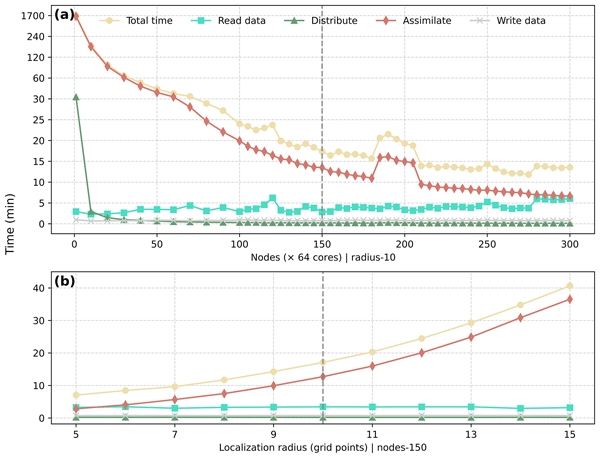
The Singular Value Decomposition-three Dimensional Ensemble Variational data assimilation scheme is applied for the first time in the Tropical Regional Atmospheric Model System. With optimized three-dimensional perturbation generation and parallel strategies, computational costs were greatly reduced. Results indicate that the optimized scheme maintains reasonable accuracy while achieving much higher efficiency, suggesting good potential for practical forecasting use.
Ben Clarke, Sihan Li, Ralf Toumi, and Nathan Sparks
EGUsphere, https://doi.org/10.5194/egusphere-2025-6337, https://doi.org/10.5194/egusphere-2025-6337, 2026
Preprint archived
Short summary
Short summary
Super Typhoon Odette made landfall in the Philippines as a category 5 tropical cyclone on 16th December 2021. It was the second costliest typhoon on record for the Philippines up until 2021. In this study, the influence of climate change on the extreme rainfall and high winds of this storm are assessed using three different methods. Both extreme rainfall and wind speeds due to storms like Odette have become much more likely and intense, albeit with wide uncertainties on the rainfall.
Wenjun Liang, Simon Frederick Barnard Tett, Lijuan Li, Coralia Cartis, Danya Xu, Wenjie Dong, and Junjie Huang
Geosci. Model Dev., 18, 9293–9318, https://doi.org/10.5194/gmd-18-9293-2025, https://doi.org/10.5194/gmd-18-9293-2025, 2025
Short summary
Short summary
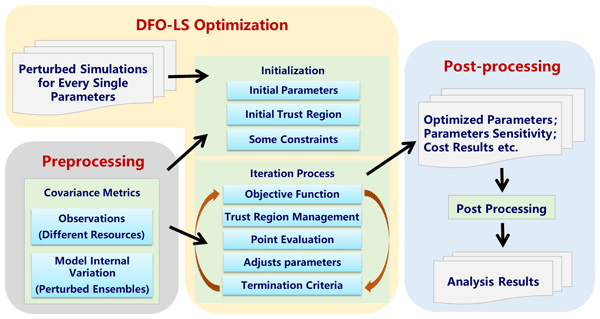
Predicting climate accurately is challenging due to uncertainties in model parameters. This study introduced an automated approach to refine key parameters, focusing on processes like cloud formation and atmospheric circulation. Testing adjustments to 10 and 20 parameters improved the model’s accuracy and stability, reducing errors in long-term simulations. This faster, more reliable method enhances climate models, supporting better future predictions and aiding global decision-making.
Ben Clarke, Sihan Li, Ralf Toumi, and Nathan Sparks
EGUsphere, https://doi.org/10.5194/egusphere-2025-665, https://doi.org/10.5194/egusphere-2025-665, 2025
Preprint archived
Short summary
Short summary
In December 2021, Super Typhoon Odette brought high winds and heavy rainfall to the central Philippines. The Philippines is one of the most exposed nations globally to tropical cyclones, so the influence of climate change on such events is of huge societal importance. This study combines several methods in extreme event attribution to investigate this, finding that the likelihood of a disaster like Odette in the Philippines has roughly doubled due to current warming.
Duofan Zheng, Shao-Yi Lee, Wenting Lin, Qi Ran, and Wenjie Dong
EGUsphere, https://doi.org/10.5194/egusphere-2024-2415, https://doi.org/10.5194/egusphere-2024-2415, 2024
Preprint archived
Short summary
Short summary
Three Asia-centric configurations of CAM-SE with different resolution were set up in Western Pacific region. A typhoon track algorithm was developed to extract the tracks of typhoons generated by the simulations. We found that the 0.25° regionally-refined configuration of CAM-SE could produce cost-efficient yet appropriate extreme typhoon statistics for the use of climate studies.
Shanshan Ouyang, Tao Deng, Run Liu, Jingyang Chen, Guowen He, Jeremy Cheuk-Hin Leung, Nan Wang, and Shaw Chen Liu
Atmos. Chem. Phys., 22, 10751–10767, https://doi.org/10.5194/acp-22-10751-2022, https://doi.org/10.5194/acp-22-10751-2022, 2022
Short summary
Short summary
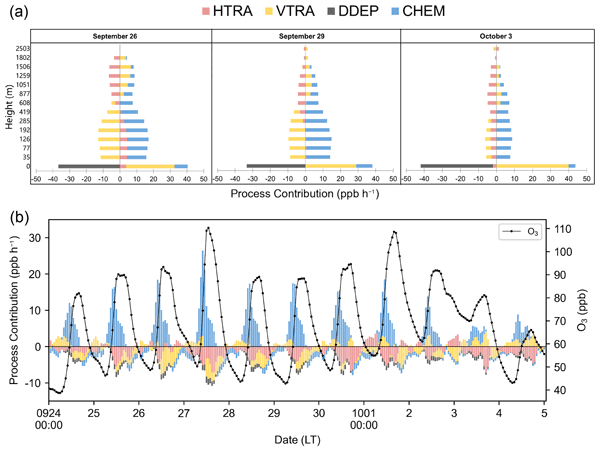
A record-breaking severe O3 pollution episode occurred under the influence of a Pacific subtropical high followed by Typhoon Mitag in the Pearl River Delta (PRD) in early Autumn 2019. Through WRF-CMAQ model simulations, we propose that the enhanced photochemical production of O3 during the episode is a major cause of the most severe O3 pollution year since the official O3 observation started in the PRD in 2006.

Hanqing Xu, Zhan Tian, Laixiang Sun, Qinghua Ye, Elisa Ragno, Jeremy Bricker, Ganquan Mao, Jinkai Tan, Jun Wang, Qian Ke, Shuai Wang, and Ralf Toumi
Nat. Hazards Earth Syst. Sci., 22, 2347–2358, https://doi.org/10.5194/nhess-22-2347-2022, https://doi.org/10.5194/nhess-22-2347-2022, 2022
Short summary
Short summary
A hydrodynamic model and copula methodology were used to set up a joint distribution of the peak water level and the inland rainfall during tropical cyclone periods, and to calculate the marginal contributions of the individual drivers. The results indicate that the relative sea level rise has significantly amplified the peak water level. The astronomical tide is the leading driver, followed by the contribution from the storm surge.
Wenbin Sun, Yang Yang, Liya Chao, Wenjie Dong, Boyin Huang, Phil Jones, and Qingxiang Li
Earth Syst. Sci. Data, 14, 1677–1693, https://doi.org/10.5194/essd-14-1677-2022, https://doi.org/10.5194/essd-14-1677-2022, 2022
Short summary
Short summary
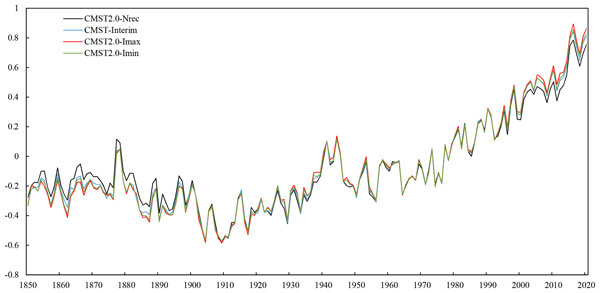
The new China global Merged Surface Temperature CMST 2.0 is the updated version of CMST-Interim used in the IPCC's AR6. The updated dataset is described in this study, containing three versions: CMST2.0 – Nrec, CMST2.0 – Imax, and CMST2.0 – Imin. The reconstructed datasets significantly improve data coverage, especially in the high latitudes in the Northern Hemisphere, thus increasing the long-term trends at global, hemispheric, and regional scales since 1850.
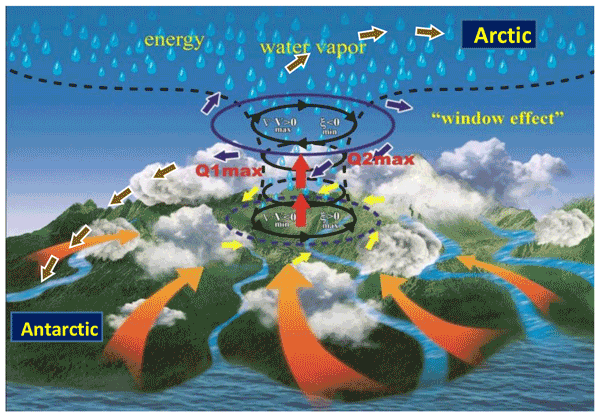
Xiangde Xu, Chan Sun, Deliang Chen, Tianliang Zhao, Jianjun Xu, Shengjun Zhang, Juan Li, Bin Chen, Yang Zhao, Hongxiong Xu, Lili Dong, Xiaoyun Sun, and Yan Zhu
Atmos. Chem. Phys., 22, 1149–1157, https://doi.org/10.5194/acp-22-1149-2022, https://doi.org/10.5194/acp-22-1149-2022, 2022
Short summary
Short summary
A vertical transport window of tropospheric vapor exists on the Tibetan Plateau (TP). The TP's thermal forcing drives the vertical transport
windowof vapor in the troposphere. The effects of the TP's vertical transport window of vapor are of importance in global climate change.
Cited articles
Aarons, Z. S., Camargo, S. J., Strong, J. D. O., and Murakami, H.: Tropical cyclone characteristics in the MERRA-2 reanalysis and AMIP simulations, Earth Space Sci., 8, e2020EA001415, https://doi.org/10.1029/2020EA001415, 2021.
Bell, S. S., Chand, S. S., Tory, K. J., and Turville, C.: Statistical Assessment of the OWZ tropical cyclone tracking scheme in ERA-Interim, J. Climate, 31, 2217–2232, https://doi.org/10.1175/JCLI-D-17-0548.1, 2018.
Bhatia, K. T., Vecchi, G. A., Knutson, T. R., Murakami, H., Kossin, J., Dixon, K. W., and Whitlock, C. E.: Recent increases in tropical cyclone intensification rates, Nat. Commun., 10, 635, https://doi.org/10.1038/s41467-019-08471-z, 2019.
Blake, E. S., Landsea, C., and Gibney, E. J.: The deadliest, costliest, and most intense United States tropical cyclones from 1851 to 2010 (and other frequently requested hurricane facts), https://repository.library.noaa.gov/view/noaa/6929 (last access: 12 December 2024), 2011.
Bloemendaal, N., de Moel, H., Martinez, A. B., Muis, S., Haigh, I. D., van der Wiel, K., Haarsma, R. J., Ward, P. J., Roberts, M. J., Dullaart, J. C. M., and Aerts, J. C. J. H.: A globally consistent local-scale assessment of future tropical cyclone risk, Science Advances, 8, eabm8438, https://doi.org/10.1126/sciadv.abm8438, 2022.
Bourdin, S., Fromang, S., Dulac, W., Cattiaux, J., and Chauvin, F.: Intercomparison of Four Tropical Cyclones Detection Algorithms on ERA5 – Code and Data (Version v2), Zenodo [code, data set], https://doi.org/10.5281/zenodo.7193463, 2022.
Bourdin, S., Fromang, S., Dulac, W., Cattiaux, J., and Chauvin, F.: Intercomparison of four algorithms for detecting tropical cyclones using ERA5, Geosci. Model Dev., 15, 6759–6786, https://doi.org/10.5194/gmd-15-6759-2022, 2022.
Chan, J. C. L.: Frequency and intensity of landfalling tropical cyclones in East Asia: Past variations and future projections, Meteorology, 2, 171–190, https://doi.org/10.3390/meteorology2020012, 2023.
Chan, K. T. F.: Are global tropical cyclones moving slower in a warming climate?, Environ. Res. Lett., 14, 104015, https://doi.org/10.1088/1748-9326/ab4031, 2019.
Chan, K. T. F., Zhang, K., Wu, Y., and Chan, J. C. L.: Publisher Correction: Landfalling hurricane track modes and decay, Nature, 608, E14–E14, https://doi.org/10.1038/s41586-022-05078-1, 2022a.
Chan, K. T. F., Chan, J. C. L., Zhang, K., and Wu, Y.: Uncertainties in tropical cyclone landfall decay, NPJ Clim. Atmos. Sci., 5, 1–8, https://doi.org/10.1038/s41612-022-00320-z, 2022b.
Chand, S. S., Walsh, K. J. E., Camargo, S. J., Kossin, J. P., Tory, K. J., Wehner, M. F., Chan, J. C. L., Klotzbach, P. J., Dowdy, A. J., Bell, S. S., Ramsay, H. A., and Murakami, H.: Declining tropical cyclone frequency under global warming, Nat. Clim. Change, 12, 655–661, https://doi.org/10.1038/s41558-022-01388-4, 2022.
Chang, E. K. M. and Guo, Y.: Is the number of North Atlantic tropical cyclones significantly underestimated prior to the availability of satellite observations?, Geophys. Res. Lett., 34, L14801, https://doi.org/10.1029/2007GL030169, 2007.
Chavas, D. R., Reed, K. A., and Knaff, J. A.: Physical understanding of the tropical cyclone wind-pressure relationship, Nat. Commun., 8, 1360, https://doi.org/10.1038/s41467-017-01546-9, 2017.
Cid, A., Camus, P., Castanedo, S., Méndez, F. J., and Medina, R.: Global reconstructed daily surge levels from the 20th Century Reanalysis (1871–2010), Global Planet. Change, 148, 9–21, https://doi.org/10.1016/j.gloplacha.2016.11.006, 2017.
Compo, G. P., Slivinski, L. C., Whitaker, J. S., Sardeshmukh, P. D., McColl, C., Brohan, P., Allan, R., Yin, X., Vose, R., Spencer, L. J., Ashcroft, L., Bronnimann, S., Brunet, M., Camuffo, D., Cornes, R., Cram, T. A., Crouthamel, R., Dominguez-Castro, F., Freeman, J. E., Gergis, J., Giese, B. S., Hawkins, E. Jones, P. D., Jourdain, S., Kaplan, A., Kennedy, J., Kubota, H., Blancq, F. L., Lee, T., Lorrey, A., Luterbacher, J., Maugeri, M., Mock, C. J., Moore, K., Przybylak, R., Pudmenzky, C., Reason, C., Slonosky, V. C., Tinz, B., Titchner, H., Trewin, B., Valente, M. A., Wang, X. L., Wilkinson, C., Wood, K., and Wyszynski, P.: The International Surface Pressure Databank version 4. Research Data Archive at the National Center for Atmospheric Research, Computational and Information Systems Laboratory, http://rda.ucar.edu/datasets/ds132.2/ (last access: 12 December 2024), 2019.
Compo, G. P., Whitaker, J. S., Sardeshmukh, P. D., Matsui, N., Allan, R. J., Yin, X., Gleason, B. E., Vose, R. S., Rutledge, G., Bessemoulin, P., Brönnimann, S., Brunet, M., Crouthamel, R. I., Grant, A. N., Groisman, P. Y., Jones, P. D., Kruk, M. C., Kruger, A. C., Marshall, G. J., Maugeri, M., Mok, H. Y., Nordli, Ø., Ross, T. F., Trigo, R. M., Wang, X. L., Woodruff, S. D., and Worley, S. J.: The Twentieth Century Reanalysis Project, Q. J. Roy. Meteor. Soc., 137, 1–28, https://doi.org/10.1002/qj.776, 2011.
Cram, T. A., Compo, G. P., Yin, X., Allan, R. J., McColl, C., Vose, R. S., Whitaker, J. S., Matsui, N., Ashcroft, L., Auchmann, R., Bessemoulin, P., Brandsma, T., Brohan, P., Brunet, M., Comeaux, J., Crouthamel, R., Gleason Jr., B. E., Groisman, P. Y., Hersbach, H., Jones, P. D., Jónsson, T., Jourdain, S., Kelly, G., Knapp, K. R., Kruger, A., Kubota, H., Lentini, G., Lorrey, A., Lott, N., Lubker, S. J., Luterbacher, J., Marshall, G. J., Maugeri, M., Mock, C. J., Mok, H. Y., Nordli, Ø., Rodwell, M. J., Ross, T. F., Schuster, D., Srnec, L., Valente, M. A., Vizi, Z., Wang, X. L., Westcott, N., Woollen, J. S., and Worley, S. J.: The International Surface Pressure Databank version 2, Geosci. Data J., 2, 31–46, https://doi.org/10.1002/gdj3.25, 2015.
Dinan, T.: Projected increases in hurricane damage in the United States: The role of climate change and coastal development, Ecol. Econ., 138, 186–198, https://doi.org/10.1016/j.ecolecon.2017.03.034, 2017.
Emanuel, K.: The Hurricane–Climate Connection, B. Am. Meteorol. Soc., 89, ES10–ES20, https://doi.org/10.1175/BAMS-89-5-Emanuel, 2008.
Emanuel, K.: Tropical cyclone activity downscaled from NOAA-CIRES Reanalysis, 1908–1958, J. Adv. Model. Earth Sy., 2, https://doi.org/10.3894/JAMES.2010.2.1, 2010.
Emanuel, K.: Will global warming make hurricane forecasting more difficult?, B. Am. Meteorol. Soc., 98, 495–501, https://doi.org/10.1175/BAMS-D-16-0134.1, 2017.
Emanuel, K.: 100 Years of progress in tropical cyclone research, Meteor. Mon., 59, 15.1–15.68, https://doi.org/10.1175/AMSMONOGRAPHS-D-18-0016.1, 2018.
Emanuel, K.: Atlantic tropical cyclones downscaled from climate reanalyses show increasing activity over past 150 years, Nat. Commun., 12, 7027, https://doi.org/10.1038/s41467-021-27364-8, 2021.
Emanuel, K.: Limitations of reanalyses for detecting tropical cyclone trends, Nat. Clim. Change, 14, 143–145, https://doi.org/10.1038/s41558-023-01879-y, 2024.
Faranda, D., Messori, G., Bourdin, S., Vrac, M., Thao, S., Riboldi, J., Fromang, S., and Yiou, P.: Correcting biases in tropical cyclone intensities in low-resolution datasets using dynamical systems metrics, Clim. Dynam., https://doi.org/10.1007/s00382-023-06794-8, 2023.
Flaounas, E., Aragão, L., Bernini, L., Dafis, S., Doiteau, B., Flocas, H., Gray, S. L., Karwat, A., Kouroutzoglou, J., Lionello, P., Miglietta, M. M., Pantillon, F., Pasquero, C., Patlakas, P., Picornell, M. Á., Porcù, F., Priestley, M. D. K., Reale, M., Roberts, M. J., Saaroni, H., Sandler, D., Scoccimarro, E., Sprenger, M., and Ziv, B.: A composite approach to produce reference datasets for extratropical cyclone tracks: application to Mediterranean cyclones, Weather Clim. Dynam., 4, 639–661, https://doi.org/10.5194/wcd-4-639-2023, 2023.
Fu, D., Chang, P., Patricola, C. M., Saravanan, R., Liu, X., and Beck, H. E.: Central American mountains inhibit eastern North Pacific seasonal tropical cyclone activity, Nat. Commun., 12, 4422, https://doi.org/10.1038/s41467-021-24657-w, 2021.
Gergis, J., Ashcroft, L., and Whetton, P.: A historical perspective on Australian temperature extremes, Clim. Dynam., 55, 843–868, https://doi.org/10.1007/s00382-020-05298-z, 2020.
Han, Y. and Ullrich, P. A.: The System for Classification of Low-Pressure Systems (SyCLoPS): An All-In-One objective framework for large-scale data sets, J. Geophys. Res.-Atmos., 130, e2024JD041287, https://doi.org/10.1029/2024JD041287, 2025.
Hassanzadeh, P., Lee, C.-Y., Nabizadeh, E., Camargo, S. J., Ma, D., and Yeung, L. Y.: Effects of climate change on the movement of future landfalling Texas tropical cyclones, Nat. Commun., 11, 3319, https://doi.org/10.1038/s41467-020-17130-7, 2020.
Hoarau, K., Bernard, J., and Chalonge, L.: Intense tropical cyclone activities in the northern Indian Ocean, Int. J. Climatol., 32, 1935–1945, https://doi.org/10.1002/joc.2406, 2012.
Hodges, K., Cobb, A., and Vidale, P. L.: How well are tropical cyclones represented in reanalysis datasets?, J. Climate, 30, 5243–5264, https://doi.org/10.1175/JCLI-D-16-0557.1, 2017.
Horn, M., Walsh, K., Zhao, M., Camargo, S. J., Scoccimarro, E., Murakami, H., Wang, H., Ballinger, A., Kumar, A., Shaevitz, D. A., Jonas, J. A., and Oouchi, K.: Tracking scheme dependence of simulated tropical cyclone response to idealized climate simulations, J. Climate, 27, 9197–9213, https://doi.org/10.1175/JCLI-D-14-00200.1, 2014.
Kalnay, E., Kanamitsu, M., Kistler, R., Collins, W., Deaven, D., Gandin, L., Iredell, M., Saha, S., White, G., Woollen, J., Zhu, Y., Chelliah, M., Ebisuzaki, W., Higgins, W., Janowiak, J., Mo, K. C., Ropelewski, C., Wang, J., Leetmaa, A., Reynolds, R., Jenne, R., and Joseph, D.: The NCEP/NCAR 40-Year Reanalysis Project, B. Am. Meteorol. Soc., 77, 437–472, https://doi.org/10.1175/1520-0477(1996)077<0437:TNYRP>2.0.CO;2, 1996.
Klotzbach, P. J. and Landsea, C. W.: Extremely intense hurricanes: Revisiting Webster et al. (2005) after 10 Years, J. Climate, 28, 7621–7629, https://doi.org/10.1175/JCLI-D-15-0188.1, 2015.
Klotzbach, P. J., Bell, M. M., Bowen, S. G., Gibney, E. J., Knapp, K. R., and Schreck, C. J.: Surface pressure a more skillful predictor of normalized hurricane damage than maximum sustained wind, B. Am. Meteorol. Soc., 101, E830–E846, https://doi.org/10.1175/BAMS-D-19-0062.1, 2020.
Knapp, K. R., Kruk, M. C., Levinson, D. H., Diamond, H. J., and Neumann, C. J.: The International Best Track Archive for Climate Stewardship (IBTrACS): Unifying Tropical cyclone data, B. Am. Meteorol. Soc., 91, 363–376, https://doi.org/10.1175/2009BAMS2755.1, 2010.
Knapp, K. R., Diamond, H. J., Kossin, J. P., Kruk, M. C., and Schreck, C. J. I.: International best track archive for climate stewardship (IBTrACS) project, version 4, NOAA National Centers for Environmental Information [data set], https://doi.org/10.25921/82ty-9e16, 2018.
Knutson, T., Camargo, S. J., Chan, J. C. L., Emanuel, K., Ho, C.-H., Kossin, J., Mohapatra, M., Satoh, M., Sugi, M., Walsh, K., and Wu, L.: Tropical cyclones and climate change assessment: part i: Detection and attribution, B. Am. Meteorol. Soc., 100, 1987–2007, https://doi.org/10.1175/BAMS-D-18-0189.1, 2019.
Knutson, T., Camargo, S. J., Chan, J. C. L., Emanuel, K., Ho, C.-H., Kossin, J., Mohapatra, M., Satoh, M., Sugi, M., Walsh, K., and Wu, L.: Tropical cyclones and climate change assessment: Part II: Projected response to anthropogenic warming, B. Am. Meteorol. Soc., 101, E303–E322, https://doi.org/10.1175/BAMS-D-18-0194.1, 2020.
Knutson, T. R., McBride, J. L., Chan, J., Emanuel, K., Holland, G., Landsea, C., Held, I., Kossin, J. P., Srivastava, A. K., and Sugi, M.: Tropical cyclones and climate change, Nat. Geosci., 3, 157–163, https://doi.org/10.1038/ngeo779, 2010.
Knutson, T. R., Sirutis, J. J., Zhao, M., Tuleya, R. E., Bender, M., Vecchi, G. A., Villarini, G., and Chavas, D.: Global projections of intense tropical cyclone activity for the Late Twenty-First Century from dynamical downscaling of CMIP5/RCP4.5 scenarios, J. Climate, 28, 7203–7224, https://doi.org/10.1175/JCLI-D-15-0129.1, 2015.
Kossin, J. P., Knapp, K. R., Olander, T. L., and Velden, C. S.: Global increase in major tropical cyclone exceedance probability over the past four decades, P. Natl. Acad. Sci. USA, 117, 11975–11980, https://doi.org/10.1073/pnas.1920849117, 2020.
Kunze, S.: Unraveling the effects of tropical cyclones on economic sectors worldwide: Direct and indirect impacts, Environ. Resour. Econ., 78, 545–569, https://doi.org/10.1007/s10640-021-00541-5, 2021.
Lai, Y., Li, J., Gu, X., Chen, Y. D., Kong, D., Gan, T. Y., Liu, M., Li, Q., and Wu, G.: Greater flood risks in response to slowdown of tropical cyclones over the coast of China, P. Natl. Acad. Sci. USA, 117, 14751–14755, https://doi.org/10.1073/pnas.1918987117, 2020.
Laloyaux, P., de Boisseson, E., Balmaseda, M., Bidlot, J.-R., Broennimann, S., Buizza, R., Dalhgren, P., Dee, D., Haimberger, L., Hersbach, H., Kosaka, Y., Martin, M., Poli, P., Rayner, N., Rustemeier, E., and Schepers, D.: CERA-20C: A coupled reanalysis of the Twentieth Century, J. Adv. Model. Earth Sy., 10, 1172–1195, https://doi.org/10.1029/2018MS001273, 2018.
Landsea, C.: Counting Atlantic tropical cyclones back to 1900, Eos Transactions American Geophysical Union, 88, 197–202, https://doi.org/10.1029/2007EO180001, 2007.
Landsea, C. W., Harper, B. A., Hoarau, K., and Knaff, J. A.: Can we detect trends in extreme tropical cyclones?, Science, 313, 452–454, https://doi.org/10.1126/science.1128448, 2006.
Landsea, C. W., Glenn, D. A., Bredemeyer, W., Chenoweth, M., Ellis, R., Gamache, J., Hufstetler, L., Mock, C., Perez, R., Prieto, R., S¨¢nchez-Sesma, J., Thomas, D., and Woolcock, L.: A Reanalysis of the 1911–20 Atlantic hurricane database, J. Climate, 21, 2138–2168, https://doi.org/10.1175/2007JCLI1119.1, 2008.
Landsea, C. W., Vecchi, G. A., Bengtsson, L., and Knutson, T. R.: Impact of Duration Thresholds on Atlantic tropical cyclone counts, J. Climate, 23, 2508–2519, https://doi.org/10.1175/2009JCLI3034.1, 2010.
Lanzante, J. R.: Uncertainties in tropical-cyclone translation speed, Nature, 570, E6–E15, https://doi.org/10.1038/s41586-019-1223-2, 2019.
Lee, R., Chen, L., and Ren, G.: A comparison of East-Asia landfall tropical cyclone in recent reanalysis datasets–before and after satellite era, Front. Earth Sci., 10, 1026945, https://doi.org/10.3389/feart.2022.1026945, 2023.
Lee, T.-C., Knutson, T. R., Nakaegawa, T., Ying, M., and Cha, E. J.: Third assessment on impacts of climate change on tropical cyclones in the Typhoon Committee Region – Part I: Observed changes, detection and attribution, Trop. Cyclone Res. Rev., 9, 1–22, https://doi.org/10.1016/j.tcrr.2020.03.001, 2020.
Lenzen, M., Malik, A., Kenway, S., Daniels, P., Lam, K. L., and Geschke, A.: Economic damage and spillovers from a tropical cyclone, Nat. Hazards Earth Syst. Sci., 19, 137–151, https://doi.org/10.5194/nhess-19-137-2019, 2019.
Leung, J. C.-H., Qian, W., Zhang, P., and Zhang, B.: Geopotential-based Multivariate MJO Index: extending RMM-like indices to pre-satellite era, Clim. Dynam., 59, 609–631, https://doi.org/10.1007/s00382-022-06142-2, 2022.
Li, J., Tian, Q., Shen, Z., Xu, Y., Yan, Z., Li, M., Zhu, C., Xue, J., Lin, Z., Yang, Y., and Zeng, L.: Fidelity of global tropical cyclone activity in a new reanalysis dataset (CRA40), Meteorol. Appl., 31, e70009, https://doi.org/10.1002/met.70009, 2024.
Li, Y., Tang, Y., Li, X., Song, X., and Wang, Q.: Recent increase in the potential threat of western North Pacific tropical cyclones, NPJ Clim. Atmos. Sci., 6, 1–8, https://doi.org/10.1038/s41612-023-00379-2, 2023.
Malakar, P., Kesarkar, A. p., Bhate, J. N., Singh, V., and Deshamukhya, A.: Comparison of reanalysis data sets to comprehend the evolution of tropical cyclones over North Indian Ocean, Earth Space Sci., 7, e2019EA000978, https://doi.org/10.1029/2019EA000978, 2020.
Mann, M. E., Sabbatelli, T. A., and Neu, U.: Evidence for a modest undercount bias in early historical Atlantic tropical cyclone counts, Geophys. Res. Lett, 34, L22707, https://doi.org/10.1029/2007GL031781, 2007.
Mitchell, C. L.: The West Indian hurricane of September 10–20, 1928, Mon. Weather Rev., 56, 347–350, https://doi.org/10.1175/1520-0493(1928)56<347:TWIHOS>2.0.CO;2, 1928.
Moon, I.-J., Kim, S.-H., and Chan, J. C. L.: Climate change and tropical cyclone trend, Nature, 570, E3–E5, https://doi.org/10.1038/s41586-019-1222-3, 2019.
Moon, M., Ha, K.-J., Kim, D., Ho, C.-H., Park, D.-S. R., Chu, J.-E., Lee, S.-S., and Chan, J. C. L.: Rainfall strength and area from landfalling tropical cyclones over the North Indian and western North Pacific oceans under increased CO2 conditions, Weather Clim. Extrem., 41, 100581, https://doi.org/10.1016/j.wace.2023.100581, 2023.
Moore, G. W. K. and Babij, M.: Iceland's Great Frost Winter of 1917/1918 and its representation in reanalyses of the twentieth century, Q. J. Roy. Meteor. Soc., 143, 508–520, https://doi.org/10.1002/qj.2939, 2017.
Murakami, H.: Tropical cyclones in reanalysis data sets, Geophys. Res. Lett., 41, 2133–2141, https://doi.org/10.1002/2014GL059519, 2014.
Murakami, H. and Wang, B.: Patterns and frequency of projected future tropical cyclone genesis are governed by dynamic effects, Commun. Earth Environ., 3, 1–10, https://doi.org/10.1038/s43247-022-00410-z, 2022.
Noy, I.: The socio-economics of cyclones, Nat. Clim. Change, 6, 343–345, https://doi.org/10.1038/nclimate2975, 2016.
Parker, W. S.: Reanalyses and Observations: What's the difference?, B. Am. Meteorol. Soc., 97, 1565–1572, https://doi.org/10.1175/BAMS-D-14-00226.1, 2016.
Pimm, S. L., Davis, G. E., Loope, L., Roman, C. T., Smith, T. J., and Tilmant, J. T.: Hurricane Andrew, BioScience, 44, 224–229, https://doi.org/10.2307/1312226, 1994.
Qin, L., Zhu, L., Liu, B., Li, Z., Tian, Y., Mitchell, G., Shen, S., Xu, W., and Chen, J.: Global expansion of tropical cyclone precipitation footprint, Nat. Commun., 15, 4824, https://doi.org/10.1038/s41467-024-49115-1, 2024.
Raavi, P. H. and Walsh, K. J. E.: Basinwise statistical analysis of factors limiting tropical storm formation from an initial tropical circulation, J. Geophys. Res.-Atmos., 125, e2019JD032006, https://doi.org/10.1029/2019JD032006, 2020a.
Raavi, P. H. and Walsh, K. J. E.: Sensitivity of tropical cyclone formation to resolution-dependent and independent tracking schemes in High-Resolution Climate Model simulations, Earth Space Sci., 7, e2019EA000906, https://doi.org/10.1029/2019EA000906, 2020b.
Roberts, M. J., Camp, J., Seddon, J., Vidale, P. L., Hodges, K., Vanni¨¨re, B., Mecking, J., Haarsma, R., Bellucci, A., Scoccimarro, E., Caron, L.-P., Chauvin, F., Terray, L., Valcke, S., Moine, M.-P., Putrasahan, D., Roberts, C. D., Senan, R., Zarzycki, C., Ullrich, P., Yamada, Y., Mizuta, R., Kodama, C., Fu, D., Zhang, Q., Danabasoglu, G., Rosenbloom, N., Wang, H., and Wu, L.: Projected Future Changes in Tropical Cyclones Using the CMIP6 HighResMIP Multimodel Ensemble. Geophys. Res. Lett., 47, e2020GL088662, https://doi.org/10.1029/2020GL088662
Schreck, C. J., Knapp, K. R., and Kossin, J. P.: The impact of best track discrepancies on global tropical cyclone climatologies using IBTrACS, Mon. Weather Rev., 142, 3881–3899, https://doi.org/10.1175/MWR-D-14-00021.1, 2014.
Sharmila, S. and Walsh, K. J. E.: Recent poleward shift of tropical cyclone formation linked to Hadley cell expansion, Nat. Clim. Change, 8, 730–736, https://doi.org/10.1038/s41558-018-0227-5, 2018.
Slivinski, L. C.: Historical Reanalysis: What, How, and Why?, J. Adv. Model. Earth Sy., 10, 1736–1739, https://doi.org/10.1029/2018MS001434, 2018.
Slivinski, L. C., Compo, G. P., Whitaker, J. S., Sardeshmukh, P. D., Giese, B. S., McColl, C., Allan, R., Yin, X., Vose, R., Titchner, H., Kennedy, J., Spencer, L. J., Ashcroft, L., Brönnimann, S., Brunet, M., Camuffo, D., Cornes, R., Cram, T. A., Crouthamel, R., Domínguez-Castro, F., Freeman, J. E., Gergis, J., Hawkins, E., Jones, P. D., Jourdain, S., Kaplan, A., Kubota, H., Blancq, F. L., Lee, T.-C., Lorrey, A., Luterbacher, J., Maugeri, M., Mock, C. J., Moore, G. W. K., Przybylak, R., Pudmenzky, C., Reason, C., Slonosky, V. C., Smith, C. A., Tinz, B., Trewin, B., Valente, M. A., Wang, X. L., Wilkinson, C., Wood, K., and Wyszyński, P.: Towards a more reliable historical reanalysis: Improvements for version 3 of the Twentieth Century Reanalysis system, Q. J. Roy. Meteor. Soc., 145, 2876–2908, https://doi.org/10.1002/qj.3598, 2019.
Slivinski, L. C., Compo, G. P., Sardeshmukh, P. D., Whitaker, J. S., McColl, C., Allan, R. J., Brohan, P., Yin, X., Smith, C. A., Spencer, L. J., Vose, R. S., Rohrer, M., Conroy, R. P., Schuster, D. C., Kennedy, J. J., Ashcroft, L., Bö, S., Brunet, M., Camuffo, D., Cornes, R., Cram, T. A., Domínguez-Castro, F., Freeman, J. E., Gergis, J., Hawkins, E., Jones, P. D., Kubota, H., Lee, T. C., Lorrey, A. M., Luterbacher, J., Mock, C. J., Przybylak, R. K., Pudmenzky, C., Slonosky, V. C., Tinz, B., Trewin, B., Wang, X. L., Wilkinson, C., Wood, K., and Wyszyński, P.: An evaluation of the performance of the Twentieth Century Reanalysis Version 3, J. Climate, 34, 1417–1438, https://doi.org/10.1175/JCLI-D-20-0505.1, 2021.
Sparks, N. and Toumi, R.: The impact of global warming on U.S. hurricane landfall: a storyline approach, Environ. Res. Lett., 20, 114006, https://doi.org/10.1088/1748-9326/ae0956, 2025.
Torn, R. D. and Snyder, C.: Uncertainty of tropical cyclone best-track information, Weather Forecast., 27, 715–729, https://doi.org/10.1175/WAF-D-11-00085.1, 2012.
Tory, K. J., Dare, R. A., Davidson, N. E., McBride, J. L., and Chand, S. S.: The importance of low-deformation vorticity in tropical cyclone formation, Atmos. Chem. Phys., 13, 2115–2132, https://doi.org/10.5194/acp-13-2115-2013, 2013.
Truchelut, R. E. and Hart, R. E.: Quantifying the possible existence of undocumented Atlantic warm-core cyclones in NOAA/CIRES 20th Century Reanalysis data, Geophys. Res. Lett, 38, L08811, https://doi.org/10.1029/2011GL046756, 2011.
Truchelut, R. E., Hart, R. E., and Luthman, B.: Global identification of previously undetected Pre-satellite-era tropical cyclone candidates in NOAA/CIRES Twentieth-Century Reanalysis Data, J. Appl. Meteorol. Clim., 52, 2243–2259, https://doi.org/10.1175/JAMC-D-12-0276.1, 2013.
Tu, S., Xu, J., Chan, J. C. L., Huang, K., Xu, F., and Chiu, L. S.: Recent global decrease in the inner-core rain rate of tropical cyclones, Nat. Commun., 12, 1948, https://doi.org/10.1038/s41467-021-22304-y, 2021.
Tu, S., Chan, J. C. L., Xu, J., Zhong, Q., Zhou, W., and Zhang, Y.: Increase in tropical cyclone rain rate with translation speed, Nat. Commun., 13, 7325, https://doi.org/10.1038/s41467-022-35113-8, 2022.
Ullrich, P. A., Zarzycki, C. M., McClenny, E. E., Pinheiro, M. C., Stansfield, A. M., and Reed, K. A.: TempestExtremes v2.1: a community framework for feature detection, tracking, and analysis in large datasets, Geosci. Model Dev., 14, 5023–5048, https://doi.org/10.5194/gmd-14-5023-2021, 2021.
Vecchi, G. A., and T. R. Knutson.: On Estimates of Historical North Atlantic Tropical Cyclone Activity. J. Climate, 21, 3580–3600, https://doi.org/10.1175/2008JCLI2178.1, 2008.
Wang, S. and Toumi, R.: More tropical cyclones are striking coasts with major intensities at landfall, Sci. Rep., 12, 5236, https://doi.org/10.1038/s41598-022-09287-6, 2022.
Wang, X. L., Feng, Y., and Swail, V.: North Atlantic wave height trends as reconstructed from the 20th century reanalysis, Geophys. Res. Lett., 39, L18705, https://doi.org/10.1029/2012GL053381, 2012.
Yamaguchi, M., Chan, J. C. L., Moon, I.-J., Yoshida, K., and Mizuta, R.: Global warming changes tropical cyclone translation speed, Nat. Commun., 11, 47, https://doi.org/10.1038/s41467-019-13902-y, 2020.
Ye, G., Jeremy Cheuk-Hin, L., Dong, W., Xu, J., Li, W., Qian, W., Kong, H., and Zhang, B.: A Reanalysis-Based Global Tropical Cyclone Tracks Dataset for the Twentieth Century (RGTracks-20C), Zenodo [data set], https://doi.org/10.5281/zenodo.14411917, 2024a.
Ye, G., Leung, J., Dong, W., Xu, J., Li, W., Qian, W., Kong, H., and Zhang, B.: Reanalysis-Based Global Tropical Cyclone Tracks Dataset for the Twentieth Century (RGTracks-20C), Zenodo [data set], https://doi.org/10.5281/zenodo.8410596, 2024b.
Yeasmin, A., Chand, S., and Sultanova, N.: Reconstruction of tropical cyclone and depression proxies for the South Pacific since the 1850s, Weather Clim. Extrem., 39, 100543, https://doi.org/10.1016/j.wace.2022.100543, 2023.
Ying, M., Zhang, W., Yu, H., Lu, X., Feng, J., Fan, Y., Zhu, Y., and Chen, D.: An overview of the China meteorological administration tropical cyclone database, J. Atmos. Ocean. Tech., 31, 287–301, https://doi.org/10.1175/JTECH-D-12-00119.1, 2014.
Yoshida, K., Sugi, M., Mizuta, R., Murakami, H., and Ishii, M.: Future changes in tropical cyclone activity in high-resolution large-ensemble simulations, Geophys. Res. Lett., 44, 9910–9917, https://doi.org/10.1002/2017GL075058, 2017.
Zarzycki, C. M. and Ullrich, P. A.: Assessing sensitivities in algorithmic detection of tropical cyclones in climate data, Geophys. Res. Lett., 44, 1141–1149, https://doi.org/10.1002/2016GL071606, 2017.
Zhang, B., Zhang, R., Pinker, R. T., Feng, Y., Nie, C., and Guan, Y.: Changes of tropical cyclone activity in a warming world are sensitive to sea surface temperature environment, Environ. Res. Lett., 14, 124052, https://doi.org/10.1088/1748-9326/ab5ada, 2019.
Zhang, G.: Warming-induced contraction of tropical convection delays and reduces tropical cyclone formation, Nat. Commun., 14, 6274, https://doi.org/10.1038/s41467-023-41911-5, 2023.
Zhang, X., Duan, Y., Wang, Y., Wei, N., and Hu, H.: A high-resolution simulation of Supertyphoon Rammasun (2014) – Part I: Model verification and surface energetics analysis, Adv. Atmos. Sci., 34, 757–770, https://doi.org/10.1007/s00376-017-6255-7, 2017.
Zhao, M. and Held, I. M.: An analysis of the effect of global warming on the intensity of Atlantic hurricanes using a GCM with statistical refinement, J. Climate, 23, 6382–6393, https://doi.org/10.1175/2010JCLI3837.1, 2010.
Zhu, L. and Quiring, S. M.: Exposure to precipitation from tropical cyclones has increased over the continental United States from 1948 to 2019, Commun. Earth Environ., 3, 312, https://doi.org/10.1038/s43247-022-00639-8, 2022.
Short summary
Historical observational records of tropical cyclones (TCs) are incomplete, especially before the satellite era. We created a global TC dataset from reanalysis data covering 1850 to 2014. The dataset matches recent storm patterns well and can provide useful extra information on storm tracks and strength when older records are missing, helping improve our understanding of past tropical cyclone activity.
Historical observational records of tropical cyclones (TCs) are incomplete, especially before...


Altmetrics
Final-revised paper
Preprint