Articles | Volume 18, issue 5
https://doi.org/10.5194/essd-18-3109-2026
© Author(s) 2026. This work is distributed under
the Creative Commons Attribution 4.0 License.
the Creative Commons Attribution 4.0 License.
https://doi.org/10.5194/essd-18-3109-2026
© Author(s) 2026. This work is distributed under
the Creative Commons Attribution 4.0 License.
the Creative Commons Attribution 4.0 License.
Data review article
| 
11 May 2026
Data review article |
| 11 May 2026
| 11 May 2026
State-of-the-art hydrological datasets exhibit low water balance consistency globally
Hao Huang
School of Environmental Science and Engineering, Southern University of Science and Technology, Shenzhen, China

School of Environmental Science and Engineering, Southern University of Science and Technology, Shenzhen, China
Yellow River Research Institute, North China University of Water Resources and Electric Power, Zhengzhou, China
Aifang Chen
School of Environment and Civil Engineering, Dongguan University of Technology, Dongguan, China
Melissa Ruiz-Vásquez
Max Planck Institute for Biogeochemistry, Jena, Germany
Faculty of Environment and Natural Resources, University of Freiburg, Freiburg, Germany
René Orth
Faculty of Environment and Natural Resources, University of Freiburg, Freiburg, Germany
Related authors
No articles found.
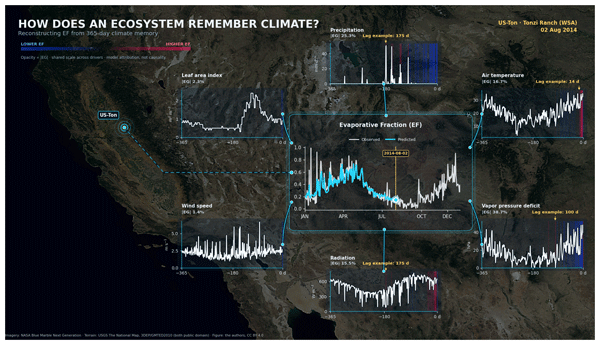
Wenli Zhao, Alexander J. Winkler, Markus Reichstein, Rene Orth, and Pierre Gentine
Hydrol. Earth Syst. Sci., 30, 5373–5394, https://doi.org/10.5194/hess-30-5373-2026, https://doi.org/10.5194/hess-30-5373-2026, 2026
Short summary
Short summary
We used explainable machine learning that incorporates memory effects to study how plants respond to weather and drought. Using data from 90 sites worldwide, we show that memory plays a key role in regulating plant water stress. Forests and savannas rely on longer past conditions than grasslands, reflecting differences in rooting depth and water use. These insights improve our ability to anticipate ecosystem vulnerability as droughts intensify.
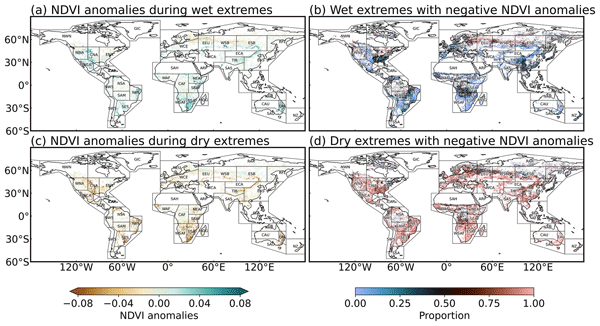
Xueyan Cheng, Chunhui Zhan, Martin G. De Kauwe, Anke Hildebrandt, and Rene Orth
Biogeosciences, 23, 5117–5131, https://doi.org/10.5194/bg-23-5117-2026, https://doi.org/10.5194/bg-23-5117-2026, 2026
Short summary
Short summary
Using long-term satellite greenness data and a machine-learning attribution approach, we assessed vegetation responses to wet and dry soil moisture extremes and identified their dominant drivers. Dry extremes caused widespread negative greenness anomalies mainly controlled by pre-extreme conditions and seasonal timing, while wet extremes showed more heterogeneous responses additionally shaped by climate and topography, highlighting contrasting ecosystem sensitivity to hydrological extremes.
Josephin Kroll, Ruth Stephan, Andrew F. Feldman, Diego G. Miralles, and Rene Orth
EGUsphere, https://doi.org/10.5194/egusphere-2025-4391, https://doi.org/10.5194/egusphere-2025-4391, 2025
Short summary
Short summary
In this study, we investigate contributors to and trends in the co-occurrence of heat and dryness. We find radiation, representing the atmospheric forcing, inducing high temperatures during dryness. For the persistence of heat, evaporation as the land contribution and the consequent effect on sensible heat flux becomes more important. While the co-occurrence of high temperatures and dryness shows a strong increase over 1980–2010, the atmospheric and land contributions show no clear trend.
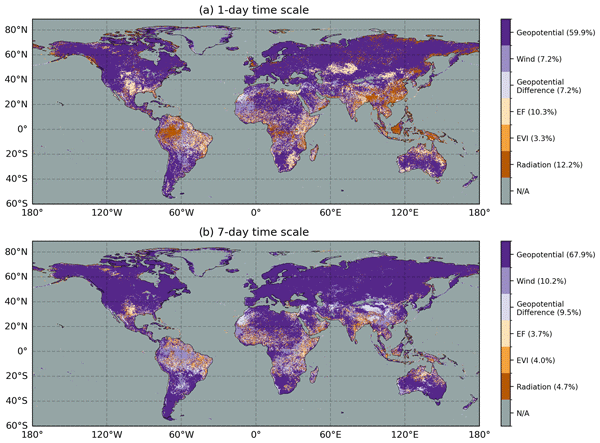
Yigit Uckan, Melissa Ruiz-Vásquez, Kelley De Polt, and René Orth
Earth Syst. Dynam., 16, 869–889, https://doi.org/10.5194/esd-16-869-2025, https://doi.org/10.5194/esd-16-869-2025, 2025
Short summary
Short summary
We analyze drivers of hot temperature extremes, focusing on both atmospheric and land-surface factors. Using observation-based data and an analogue-based approach, we find that geopotential height at 500 hPa is the most significant driver worldwide at daily and weekly timescales. Surface net radiation and evaporative fraction play relevant roles at the daily scale and wind at the weekly timescale. The driver influence varies by region, related to differences in climate regimes and land cover.
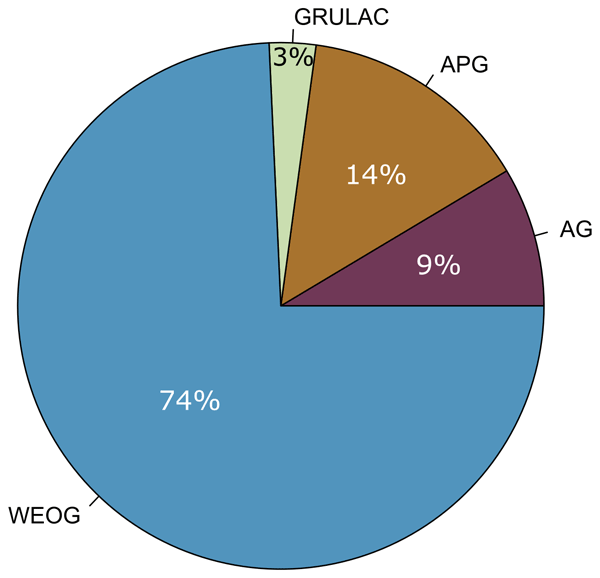
Friedrich J. Bohn, Ana Bastos, Romina Martin, Anja Rammig, Niak Sian Koh, Giles B. Sioen, Bram Buscher, Louise Carver, Fabrice DeClerck, Moritz Drupp, Robert Fletcher, Matthew Forrest, Alexandros Gasparatos, Alex Godoy-Faúndez, Gregor Hagedorn, Martin C. Hänsel, Jessica Hetzer, Thomas Hickler, Cornelia B. Krug, Stasja Koot, Xiuzhen Li, Amy Luers, Shelby Matevich, H. Damon Matthews, Ina C. Meier, Mirco Migliavacca, Awaz Mohamed, Sungmin O, David Obura, Ben Orlove, Rene Orth, Laura Pereira, Markus Reichstein, Lerato Thakholi, Peter H. Verburg, and Yuki Yoshida
Biogeosciences, 22, 2425–2460, https://doi.org/10.5194/bg-22-2425-2025, https://doi.org/10.5194/bg-22-2425-2025, 2025
Short summary
Short summary
An interdisciplinary collaboration of 36 international researchers from 35 institutions highlights recent findings in biosphere research. Within eight themes, they discuss issues arising from climate change and other anthropogenic stressors and highlight the co-benefits of nature-based solutions and ecosystem services. Based on an analysis of these eight topics, we have synthesized four overarching insights.
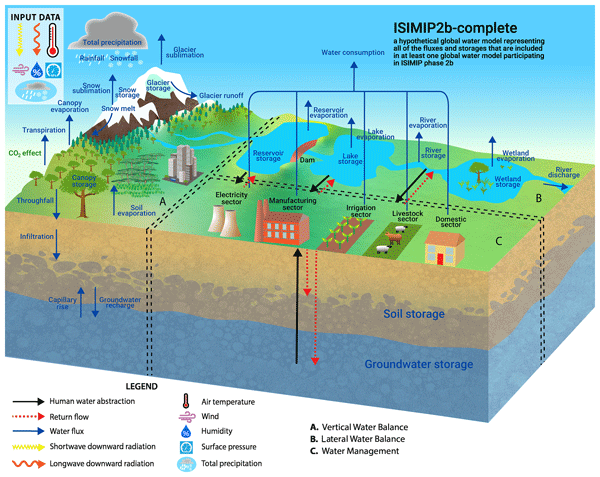
Hannes Müller Schmied, Simon Newland Gosling, Marlo Garnsworthy, Laura Müller, Camelia-Eliza Telteu, Atiq Kainan Ahmed, Lauren Seaby Andersen, Julien Boulange, Peter Burek, Jinfeng Chang, He Chen, Lukas Gudmundsson, Manolis Grillakis, Luca Guillaumot, Naota Hanasaki, Aristeidis Koutroulis, Rohini Kumar, Guoyong Leng, Junguo Liu, Xingcai Liu, Inga Menke, Vimal Mishra, Yadu Pokhrel, Oldrich Rakovec, Luis Samaniego, Yusuke Satoh, Harsh Lovekumar Shah, Mikhail Smilovic, Tobias Stacke, Edwin Sutanudjaja, Wim Thiery, Athanasios Tsilimigkras, Yoshihide Wada, Niko Wanders, and Tokuta Yokohata
Geosci. Model Dev., 18, 2409–2425, https://doi.org/10.5194/gmd-18-2409-2025, https://doi.org/10.5194/gmd-18-2409-2025, 2025
Short summary
Short summary
Global water models contribute to the evaluation of important natural and societal issues but are – as all models – simplified representation of reality. So, there are many ways to calculate the water fluxes and storages. This paper presents a visualization of 16 global water models using a standardized visualization and the pathway towards this common understanding. Next to academic education purposes, we envisage that these diagrams will help researchers, model developers, and data users.
Wenli Zhao, Alexander J. Winkler, Markus Reichstein, Rene Orth, and Pierre Gentine
EGUsphere, https://doi.org/10.5194/egusphere-2025-365, https://doi.org/10.5194/egusphere-2025-365, 2025
Preprint archived
Short summary
Short summary
We developed a machine learning model that accounts for the memory effects of soil moisture and vegetation to predict Evaporative Fraction (EF) without relying on soil moisture as a direct input. The model accurately predicts EF during dry periods for the unseen sites, highlighting the key of meteorological memory effects. The learned memory effect related to rooting depth and soil water holding capacity could potentially serve as proxies for assessing the plant water stress.
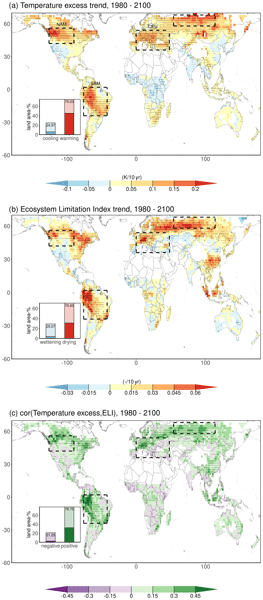
Jasper M. C. Denissen, Adriaan J. Teuling, Sujan Koirala, Markus Reichstein, Gianpaolo Balsamo, Martha M. Vogel, Xin Yu, and René Orth
Earth Syst. Dynam., 15, 717–734, https://doi.org/10.5194/esd-15-717-2024, https://doi.org/10.5194/esd-15-717-2024, 2024
Short summary
Short summary
Heat extremes have severe implications for human health and ecosystems. Heat extremes are mostly introduced by large-scale atmospheric circulation but can be modulated by vegetation. Vegetation with access to water uses solar energy to evaporate water into the atmosphere. Under dry conditions, water may not be available, suppressing evaporation and heating the atmosphere. Using climate projections, we show that regionally less water is available for vegetation, intensifying future heat extremes.
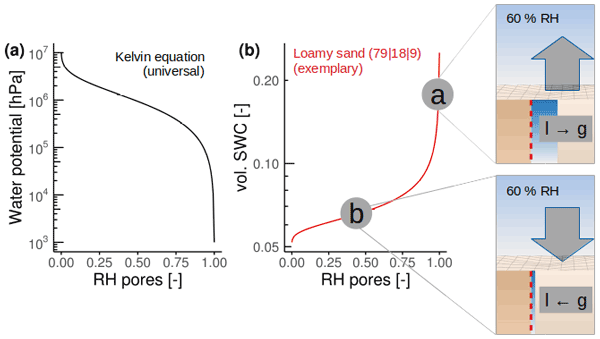
Sinikka J. Paulus, Rene Orth, Sung-Ching Lee, Anke Hildebrandt, Martin Jung, Jacob A. Nelson, Tarek Sebastian El-Madany, Arnaud Carrara, Gerardo Moreno, Matthias Mauder, Jannis Groh, Alexander Graf, Markus Reichstein, and Mirco Migliavacca
Biogeosciences, 21, 2051–2085, https://doi.org/10.5194/bg-21-2051-2024, https://doi.org/10.5194/bg-21-2051-2024, 2024
Short summary
Short summary
Porous materials are known to reversibly trap water from the air, even at low humidity. However, this behavior is poorly understood for soils. In this analysis, we test whether eddy covariance is able to measure the so-called adsorption of atmospheric water vapor by soils. We find that this flux occurs frequently during dry nights in a Mediterranean ecosystem, while EC detects downwardly directed vapor fluxes. These results can help to map moisture uptake globally.
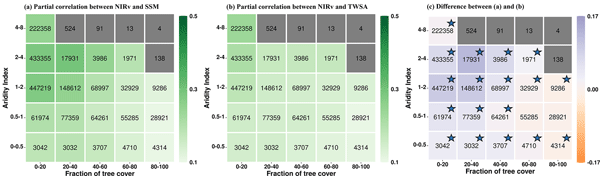
Prajwal Khanal, Anne J. Hoek Van Dijke, Timo Schaffhauser, Wantong Li, Sinikka J. Paulus, Chunhui Zhan, and René Orth
Biogeosciences, 21, 1533–1547, https://doi.org/10.5194/bg-21-1533-2024, https://doi.org/10.5194/bg-21-1533-2024, 2024
Short summary
Short summary
Water availability is essential for vegetation functioning, but the depth of vegetation water uptake is largely unknown due to sparse ground measurements. This study correlates vegetation growth with soil moisture availability globally to infer vegetation water uptake depth using only satellite-based data. We find that the vegetation water uptake depth varies across climate regimes and vegetation types and also changes during dry months at a global scale.
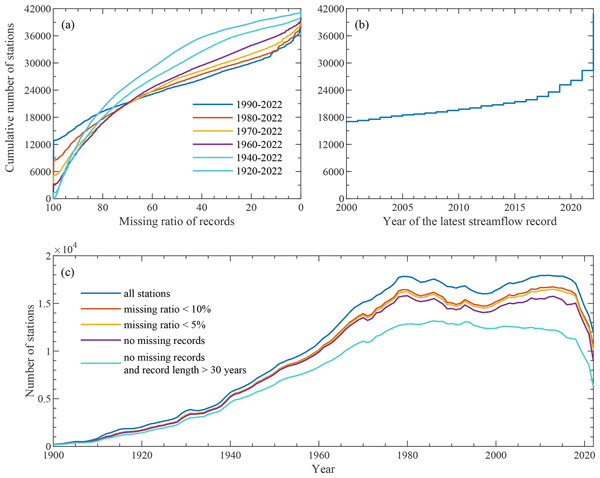
Xinyu Chen, Liguang Jiang, Yuning Luo, and Junguo Liu
Earth Syst. Sci. Data, 15, 4463–4479, https://doi.org/10.5194/essd-15-4463-2023, https://doi.org/10.5194/essd-15-4463-2023, 2023
Short summary
Short summary
River flow is experiencing changes under the impacts of climate change and human activities. For example, flood events are occurring more often and are more destructive in many places worldwide. To deal with such issues, hydrologists endeavor to understand the features of extreme events as well as other hydrological changes. One key approach is analyzing flow characteristics, represented by hydrological indices. Building such a comprehensive global large-sample dataset is essential.
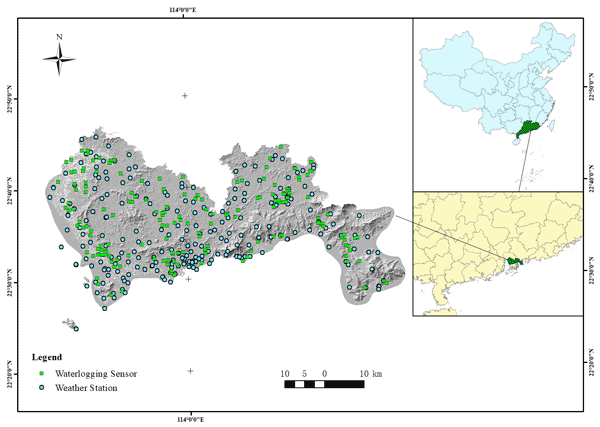
Zongjia Zhang, Jun Liang, Yujue Zhou, Zhejun Huang, Jie Jiang, Junguo Liu, and Lili Yang
Nat. Hazards Earth Syst. Sci., 22, 4139–4165, https://doi.org/10.5194/nhess-22-4139-2022, https://doi.org/10.5194/nhess-22-4139-2022, 2022
Short summary
Short summary
An innovative multi-strategy-mode waterlogging-prediction framework for predicting waterlogging depth is proposed in the paper. The framework selects eight regression algorithms for comparison and tests the prediction accuracy and robustness of the model under different prediction strategies. Ultimately, the accuracy of predicting water depth after 30 min can exceed 86.1 %. This can aid decision-making in terms of issuing early warning information and determining emergency responses in advance.
Manal Lam'barki, Wantong Li, Sungmin O, Chunhui Zhan, and Rene Orth
Hydrol. Earth Syst. Sci. Discuss., https://doi.org/10.5194/hess-2022-404, https://doi.org/10.5194/hess-2022-404, 2022
Manuscript not accepted for further review
Short summary
Short summary
We investigate the main drivers of high river flows in near-natural European catchments. While there are a lot of previous research in this area, the understanding of the relative relevance of high flow drivers other than precipitation is understudied. We find that the secondary drivers of high river flows are very diverse and become more relevant for more extreme events. This illustrates the necessity of flood management by considering a multitude of drivers in the context of climate change.
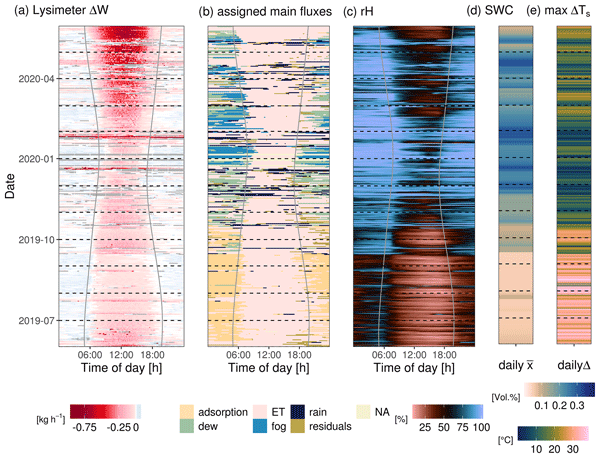
Sinikka Jasmin Paulus, Tarek Sebastian El-Madany, René Orth, Anke Hildebrandt, Thomas Wutzler, Arnaud Carrara, Gerardo Moreno, Oscar Perez-Priego, Olaf Kolle, Markus Reichstein, and Mirco Migliavacca
Hydrol. Earth Syst. Sci., 26, 6263–6287, https://doi.org/10.5194/hess-26-6263-2022, https://doi.org/10.5194/hess-26-6263-2022, 2022
Short summary
Short summary
In this study, we analyze small inputs of water to ecosystems such as fog, dew, and adsorption of vapor. To measure them, we use a scaling system and later test our attribution of different water fluxes to weight changes. We found that they occur frequently during 1 year in a dry summer ecosystem. In each season, a different flux seems dominant, but they all mainly occur during the night. Therefore, they could be important for the biosphere because rain is unevenly distributed over the year.
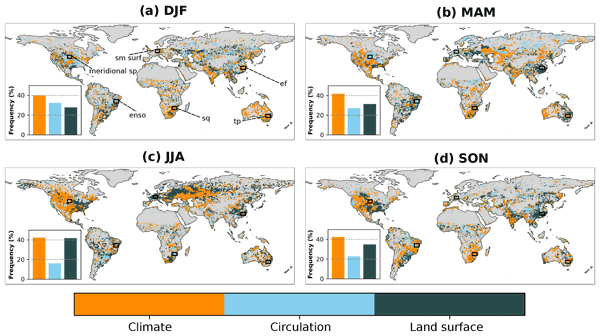
Melissa Ruiz-Vásquez, Sungmin O, Alexander Brenning, Randal D. Koster, Gianpaolo Balsamo, Ulrich Weber, Gabriele Arduini, Ana Bastos, Markus Reichstein, and René Orth
Earth Syst. Dynam., 13, 1451–1471, https://doi.org/10.5194/esd-13-1451-2022, https://doi.org/10.5194/esd-13-1451-2022, 2022
Short summary
Short summary
Subseasonal forecasts facilitate early warning of extreme events; however their predictability sources are not fully explored. We find that global temperature forecast errors in many regions are related to climate variables such as solar radiation and precipitation, as well as land surface variables such as soil moisture and evaporative fraction. A better representation of these variables in the forecasting and data assimilation systems can support the accuracy of temperature forecasts.

Hanqin Tian, Zihao Bian, Hao Shi, Xiaoyu Qin, Naiqing Pan, Chaoqun Lu, Shufen Pan, Francesco N. Tubiello, Jinfeng Chang, Giulia Conchedda, Junguo Liu, Nathaniel Mueller, Kazuya Nishina, Rongting Xu, Jia Yang, Liangzhi You, and Bowen Zhang
Earth Syst. Sci. Data, 14, 4551–4568, https://doi.org/10.5194/essd-14-4551-2022, https://doi.org/10.5194/essd-14-4551-2022, 2022
Short summary
Short summary
Nitrogen is one of the critical nutrients for growth. Evaluating the change in nitrogen inputs due to human activity is necessary for nutrient management and pollution control. In this study, we generated a historical dataset of nitrogen input to land at the global scale. This dataset consists of nitrogen fertilizer, manure, and atmospheric deposition inputs to cropland, pasture, and rangeland at high resolution from 1860 to 2019.
Xin Yu, René Orth, Markus Reichstein, Michael Bahn, Anne Klosterhalfen, Alexander Knohl, Franziska Koebsch, Mirco Migliavacca, Martina Mund, Jacob A. Nelson, Benjamin D. Stocker, Sophia Walther, and Ana Bastos
Biogeosciences, 19, 4315–4329, https://doi.org/10.5194/bg-19-4315-2022, https://doi.org/10.5194/bg-19-4315-2022, 2022
Short summary
Short summary
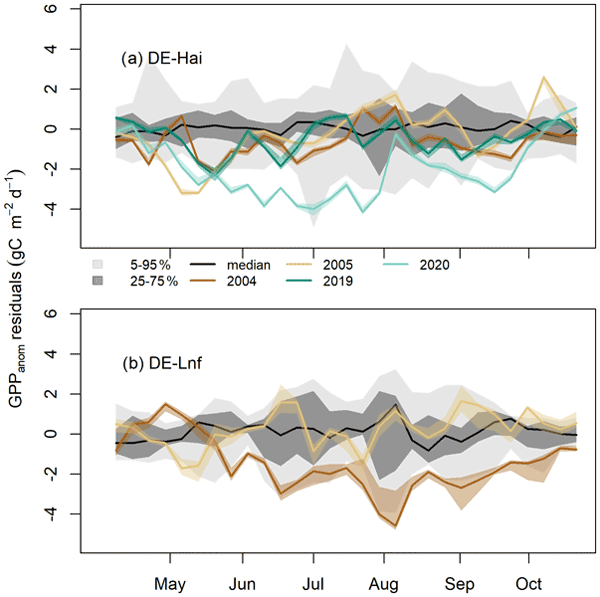
Identifying drought legacy effects is challenging because they are superimposed on variability driven by climate conditions in the recovery period. We develop a residual-based approach to quantify legacies on gross primary productivity (GPP) from eddy covariance data. The GPP reduction due to legacy effects is comparable to the concurrent effects at two sites in Germany, which reveals the importance of legacy effects. Our novel methodology can be used to quantify drought legacies elsewhere.
Philip J. Ward, James Daniell, Melanie Duncan, Anna Dunne, Cédric Hananel, Stefan Hochrainer-Stigler, Annegien Tijssen, Silvia Torresan, Roxana Ciurean, Joel C. Gill, Jana Sillmann, Anaïs Couasnon, Elco Koks, Noemi Padrón-Fumero, Sharon Tatman, Marianne Tronstad Lund, Adewole Adesiyun, Jeroen C. J. H. Aerts, Alexander Alabaster, Bernard Bulder, Carlos Campillo Torres, Andrea Critto, Raúl Hernández-Martín, Marta Machado, Jaroslav Mysiak, Rene Orth, Irene Palomino Antolín, Eva-Cristina Petrescu, Markus Reichstein, Timothy Tiggeloven, Anne F. Van Loon, Hung Vuong Pham, and Marleen C. de Ruiter
Nat. Hazards Earth Syst. Sci., 22, 1487–1497, https://doi.org/10.5194/nhess-22-1487-2022, https://doi.org/10.5194/nhess-22-1487-2022, 2022
Short summary
Short summary
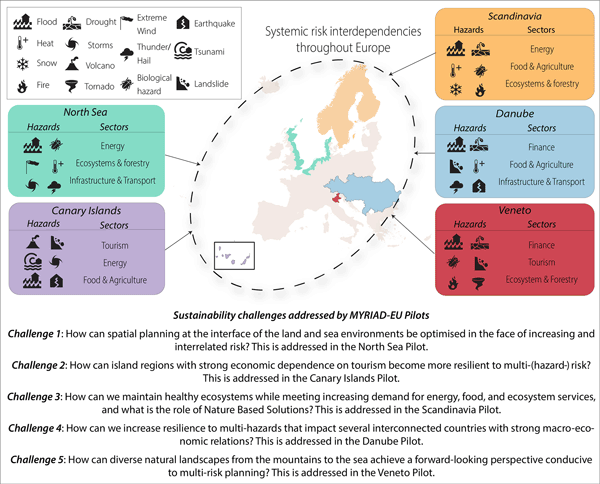
The majority of natural-hazard risk research focuses on single hazards (a flood, a drought, a volcanic eruption, an earthquake, etc.). In the international research and policy community it is recognised that risk management could benefit from a more systemic approach. In this perspective paper, we argue for an approach that addresses multi-hazard, multi-risk management through the lens of sustainability challenges that cut across sectors, regions, and hazards.
Josephin Kroll, Jasper M. C. Denissen, Mirco Migliavacca, Wantong Li, Anke Hildebrandt, and Rene Orth
Biogeosciences, 19, 477–489, https://doi.org/10.5194/bg-19-477-2022, https://doi.org/10.5194/bg-19-477-2022, 2022
Short summary
Short summary
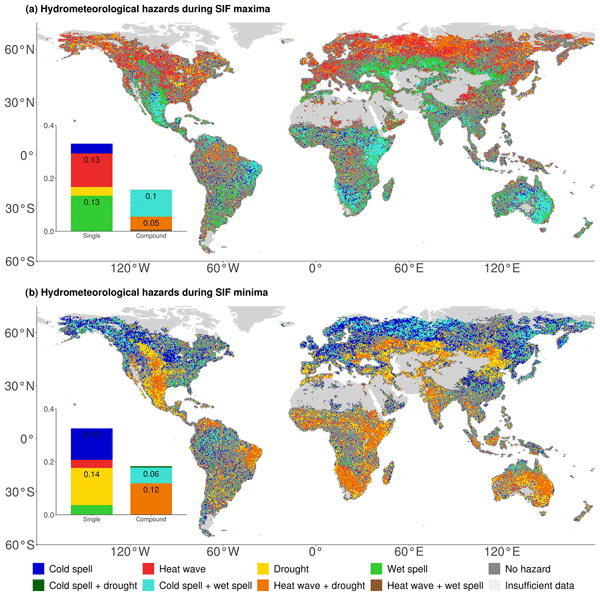
Plant growth relies on having access to energy (solar radiation) and water (soil moisture). This energy and water availability is impacted by weather extremes, like heat waves and droughts, which will occur more frequently in response to climate change. In this context, we analysed global satellite data to detect in which regions extreme plant growth is controlled by energy or water. We find that extreme plant growth is associated with temperature- or soil-moisture-related extremes.
Ana Bastos, René Orth, Markus Reichstein, Philippe Ciais, Nicolas Viovy, Sönke Zaehle, Peter Anthoni, Almut Arneth, Pierre Gentine, Emilie Joetzjer, Sebastian Lienert, Tammas Loughran, Patrick C. McGuire, Sungmin O, Julia Pongratz, and Stephen Sitch
Earth Syst. Dynam., 12, 1015–1035, https://doi.org/10.5194/esd-12-1015-2021, https://doi.org/10.5194/esd-12-1015-2021, 2021
Short summary
Short summary
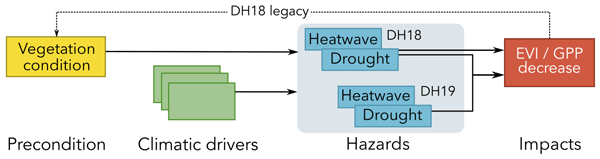
Temperate biomes in Europe are not prone to recurrent dry and hot conditions in summer. However, these conditions may become more frequent in the coming decades. Because stress conditions can leave legacies for many years, this may result in reduced ecosystem resilience under recurrent stress. We assess vegetation vulnerability to the hot and dry summers in 2018 and 2019 in Europe and find the important role of inter-annual legacy effects from 2018 in modulating the impacts of the 2019 event.
Cited articles
Abolafia-Rosenzweig, R., Pan, M., Zeng, J. L., and Livneh, B.: Remotely sensed ensembles of the terrestrial water budget over major global river basins: An assessment of three closure techniques, Remote Sens. Environ., 252, https://doi.org/10.1016/j.rse.2020.112191, 2021.
Adler, R. F., Sapiano, M., Huffman, G. J., Wang, J., Gu, G., Bolvin, D., Chiu, L., Schneider, U., Becker, A., Nelkin, E., Xie, P., Ferraro, R., and Shin, D. B.: The Global Precipitation Climatology Project (GPCP) Monthly Analysis (New Version 2.3) and a Review of 2017 Global Precipitation, Atmosphere, 9, https://doi.org/10.3390/atmos9040138, 2018.
Adler, R., Wang, J., Sapiano, M., Huffman, G., Bolvin, D., Nelkin, E., and NOAA CDR Program: Global Precipitation Climatology Project (GPCP) Climate Data Record (CDR), Version 1.3 (Daily), NSF National Center for Atmospheric Research [data set], https://doi.org/10.5065/ZGJD-9B02, 2020.
Alijanian, M., Rakhshandehroo, G. R., Mishra, A. K., and Dehghani, M.: Evaluation of satellite rainfall climatology using CMORPH, PERSIANN-CDR, PERSIANN, TRMM, MSWEP over Iran, Int. J. Climatol., 37, 4896–4914, https://doi.org/10.1002/joc.5131, 2017.
Asadieh, B. and Krakauer, N. Y.: Global trends in extreme precipitation: climate models versus observations, Hydrol. Earth Syst. Sci., 19, 877–891, https://doi.org/10.5194/hess-19-877-2015, 2015.
Ashouri, H., Hsu, K. L., Sorooshian, S., Braithwaite, D. K., Knapp, K. R., Cecil, L. D., Nelson, B. R., and Prat, O. P.: PERSIANN-CDR Daily Precipitation Climate Data Record from Multisatellite Observations for Hydrological and Climate Studies, B. Am. Meteorol. Soc., 96, 69–83, https://doi.org/10.1175/Bams-D-13-00068.1, 2015.
Barlow, M., Gutowski, W. J., Gyakum, J. R., Katz, R. W., Lim, Y.-K., Schumacher, R. S., Wehner, M. F., Agel, L., Bosilovich, M., Collow, A., Gershunov, A., Grotjahn, R., Leung, R., Milrad, S., and Min, S.-K.: North American extreme precipitation events and related large-scale meteorological patterns: a review of statistical methods, dynamics, modeling, and trends, Clim. Dynam., 53, 6835–6875, https://doi.org/10.1007/s00382-019-04958-z, 2019.
Beck, H. E., Wood, E. F., Pan, M., Fisher, C. K., Miralles, D. G., van Dijk, A. I. J. M., McVicar, T. R., and Adler, R. F.: MSWEP V2 Global 3-Hourly 0.1 degrees Precipitation: Methodology and Quantitative Assessment, B. Ame. Meteorol. Soc., 100, 473–502, https://doi.org/10.1175/Bams-D-17-0138.1, 2019.
Bormann, K. J., Brown, R. D., Derksen, C., and Painter, T. H.: Estimating snow-cover trends from space, Nat. Clim. Change, 8, 923–927, https://doi.org/10.1038/s41558-018-0318-3, 2018.
Chen, M. Y., Xie, P. P., Janowiak, J. E., and Arkin, P. A.: Global land precipitation: A 50-yr monthly analysis based on gauge observations, J. Hydrometeorol., 3, 249–266, https://doi.org/10.1175/1525-7541(2002)003<0249:GLPAYM>2.0.CO;2, 2002.
Cleophas, F., Isidore, F., Musta, B., Mohd Ali, B. N., Mahali, M., Zahari, N. Z., and Bidin, K.: Effect of soil physical properties on soil infiltration rates, J. Phys., 2314, https://doi.org/10.1088/1742-6596/2314/1/012020, 2022.
Denissen, J. M. C., Teuling, A. J., Pitman, A. J., Koirala, S., Migliavacca, M., Li, W. T., Reichstein, M., Winkler, A. J., Zhan, C. H., and Orth, R.: Widespread shift from ecosystem energy to water limitation with climate change, Nat. Clim. Change, 12, 677–684, https://doi.org/10.1038/s41558-022-01403-8, 2022.
Do, H. X., Gudmundsson, L., Leonard, M., and Westra, S.: The Global Streamflow Indices and Metadata Archive (GSIM) – Part 1: The production of a daily streamflow archive and metadata, Earth Syst. Sci. Data, 10, 765–785, https://doi.org/10.5194/essd-10-765-2018, 2018.
Dorigo, W., Himmelbauer, I., Aberer, D., Schremmer, L., Petrakovic, I., Zappa, L., Preimesberger, W., Xaver, A., Annor, F., Ardö, J., Baldocchi, D., Bitelli, M., Blöschl, G., Bogena, H., Brocca, L., Calvet, J.-C., Camarero, J. J., Capello, G., Choi, M., Cosh, M. C., van de Giesen, N., Hajdu, I., Ikonen, J., Jensen, K. H., Kanniah, K. D., de Kat, I., Kirchengast, G., Kumar Rai, P., Kyrouac, J., Larson, K., Liu, S., Loew, A., Moghaddam, M., Martínez Fernández, J., Mattar Bader, C., Morbidelli, R., Musial, J. P., Osenga, E., Palecki, M. A., Pellarin, T., Petropoulos, G. P., Pfeil, I., Powers, J., Robock, A., Rüdiger, C., Rummel, U., Strobel, M., Su, Z., Sullivan, R., Tagesson, T., Varlagin, A., Vreugdenhil, M., Walker, J., Wen, J., Wenger, F., Wigneron, J. P., Woods, M., Yang, K., Zeng, Y., Zhang, X., Zreda, M., Dietrich, S., Gruber, A., van Oevelen, P., Wagner, W., Scipal, K., Drusch, M., and Sabia, R.: The International Soil Moisture Network: serving Earth system science for over a decade, Hydrol. Earth Syst. Sci., 25, 5749–5804, https://doi.org/10.5194/hess-25-5749-2021, 2021.
Dormann, C. F., Elith, J., Bacher, S., Buchmann, C., Carl, G., Carré, G., Marquéz, J. R. G., Gruber, B., Lafourcade, B., Leitão, P. J., Münkemüller, T., McClean, C., Osborne, P. E., Reineking, B., Schröder, B., Skidmore, A. K., Zurell, D., and Lautenbach, S.: Collinearity: a review of methods to deal with it and a simulation study evaluating their performance, Ecography, 36, 27–46, https://doi.org/10.1111/j.1600-0587.2012.07348.x, 2012.
Dosio, A., Pinto, I., Lennard, C., Sylla, M. B., Jack, C., and Nikulin, G.: What can we know about recent past precipitation over Africa? Daily characteristics of African precipitation from a large ensemble of observational products for model evaluation, Earth Space Sci., 8, https://doi.org/10.1029/2020EA001466, 2021.
Douville, H., Raghavan, K., Renwick, J., Allan, R. P., Arias, P. A., Barlow, M., Cerezo-Mota, R., Cherchi, A., Gan, T., and Gergis, J.: Water cycle changes, Climate change 2021: The physical science basis, Contribution of working group I to 45 the sixth assessment report of the intergovernmental panel on climate change, 1055–1210, https://doi.org/10.1017/9781009157896.010, 2021.
Fallah, A., O, S., and Orth, R.: Climate-dependent propagation of precipitation uncertainty into the water cycle, Hydrol. Earth Syst. Sci., 24, 3725–3735, https://doi.org/10.5194/hess-24-3725-2020, 2020.
Fisher, J. B., Tu, K. P., and Baldocchi, D. D.: Global estimates of the land-atmosphere water flux based on monthly AVHRR and ISLSCP-II data, validated at 16 FLUXNET sites, Remote Sens. Environ., 112, 901–919, https://doi.org/10.1016/j.rse.2007.06.025, 2008.
Freedman, F. R., Pitts, K. L., and Bridger, A. F. C.: Evaluation of CMIP climate model hydrological output for the Mississippi River Basin using GRACE satellite observations, J. Hydrol., 519, 3566–3577, https://doi.org/10.1016/j.jhydrol.2014.10.036, 2014.
Funk, C., Peterson, P., Landsfeld, M., Pedreros, D., Verdin, J., Shukla, S., Husak, G., Rowland, J., Harrison, L., Hoell, A., and Michaelsen, J.: The climate hazards infrared precipitation with stations-a new environmental record for monitoring extremes, Sci. Data, 2, https://doi.org/10.1038/sdata.2015.66, 2015.
Gebrechorkos, S. H., Leyland, J., Dadson, S. J., Cohen, S., Slater, L., Wortmann, M., Ashworth, P. J., Bennett, G. L., Boothroyd, R., Cloke, H., Delorme, P., Griffith, H., Hardy, R., Hawker, L., McLelland, S., Neal, J., Nicholas, A., Tatem, A. J., Vahidi, E., Liu, Y., Sheffield, J., Parsons, D. R., and Darby, S. E.: Global-scale evaluation of precipitation datasets for hydrological modelling, Hydrol. Earth Syst. Sci., 28, 3099–3118, https://doi.org/10.5194/hess-28-3099-2024, 2024.
Gelaro, R., McCarty, W., Suarez, M. J., Todling, R., Molod, A., Takacs, L., Randles, C., Darmenov, A., Bosilovich, M. G., Reichle, R., Wargan, K., Coy, L., Cullather, R., Draper, C., Akella, S., Buchard, V., Conaty, A., da Silva, A., Gu, W., Kim, G. K., Koster, R., Lucchesi, R., Merkova, D., Nielsen, J. E., Partyka, G., Pawson, S., Putman, W., Rienecker, M., Schubert, S. D., Sienkiewicz, M., and Zhao, B.: The Modern-Era Retrospective Analysis for Research and Applications, Version 2 (MERRA-2), J. Climate, 30, 5419–5454, https://doi.org/10.1175/JCLI-D-16-0758.1, 2017.
Ghiggi, G., Humphrey, V., Seneviratne, S. I., and Gudmundsson, L.: GRUN: an observation-based global gridded runoff dataset from 1902 to 2014, Earth Syst. Sci. Data, 11, 1655–1674, https://doi.org/10.5194/essd-11-1655-2019, 2019a.
Ghiggi, G., Gudmundsson, L., and Humphrey, V.: G-RUN: Global Runoff Reconstruction, figshare [data set], https://doi.org/10.6084/m9.figshare.9228176.v2, 2019.
Gong, P., Li, X. C., Wang, J., Bai, Y. Q., Cheng, B., Hu, T. Y., Liu, X. P., Xu, B., Yang, J., Zhang, W., and Zhou, Y. Y.: Annual maps of global artificial impervious area (GAIA) between 1985 and 2018, Remote Sens. Environ., 236, https://doi.org/10.1016/j.rse.2019.111510, 2020.
Greve, P., Orlowsky, B., Mueller, B., Sheffield, J., Reichstein, M., and Seneviratne, S. I.: Global assessment of trends in wetting and drying over land, Nat. Geosci., 7, 716–721, https://doi.org/10.1038/ngeo2247, 2014.
Gruber, A., Scanlon, T., van der Schalie, R., Wagner, W., and Dorigo, W.: Evolution of the ESA CCI Soil Moisture climate data records and their underlying merging methodology, Earth Syst. Sci. Data, 11, 717–739, https://doi.org/10.5194/essd-11-717-2019, 2019.
Han, J., Liu, Z., Woods, R., McVicar, T. R., Yang, D., Wang, T., Hou, Y., Guo, Y., Li, C., and Yang, Y.: Streamflow seasonality in a snow-dwindling world, Nature, 629, 1075–1081, https://doi.org/10.1038/s41586-024-07299-y, 2024.
Hansen, M. and Song, X.: Vegetation Continuous Fields (VCF) Yearly Global 0.05 Deg, NASA Land Processes Distributed Active Archive Center [data set], https://doi.org/10.5067/MEaSUREs/VCF/VCF5KYR.001, 2018.
Harris, I., Osborn, T. J., Jones, P., and Lister, D.: Version 4 of the CRU TS monthly high-resolution gridded multivariate climate dataset, Sci. Data, 7, 109, https://doi.org/10.1038/s41597-020-0453-3, 2020.
Hersbach, H., Bell, B., Berrisford, P., Hirahara, S., Horányi, A., Muñoz-Sabater, J., Nicolas, J., Peubey, C., Radu, R., Schepers, D., Simmons, A., Soci, C., Abdalla, S., Abellan, X., Balsamo, G., Bechtold, P., Biavati, G., Bidlot, J., Bonavita, M., De Chiara, G., Dahlgren, P., Dee, D., Diamantakis, M., Dragani, R., Flemming, J., Forbes, R., Fuentes, M., Geer, A., Haimberger, L., Healy, S., Hogan, R. J., Hólm, E., Janisková, M., Keeley, S., Laloyaux, P., Lopez, P., Lupu, C., Radnoti, G., de Rosnay, P., Rozum, I., Vamborg, F., Villaume, S., and Thépaut, J. N.: The ERA5 global reanalysis, Q. J. Roy. Meteor. Soc., 146, 1999–2049, https://doi.org/10.1002/qj.3803, 2020.
Hersbach, H., Bell, B., Berrisford, P., Biavati, G., Horányi, A., Muñoz Sabater, J., Nicolas, J., Peubey, C., Radu, R., Rozum, I., Schepers, D., Simmons, A., Soci, C., Dee, D., and Thépaut, J.-N.: ERA5 hourly data on single levels from 1940 to present, Copernicus Climate Change Service (C3S) Climate Data Store (CDS) [data set], https://doi.org/10.24381/cds.adbb2d47, 2023.
Hirschi, M., Stradiotti, P., Crezee, B., Dorigo, W., and Seneviratne, S. I.: Potential of long-term satellite observations and reanalysis products for characterising soil drying: trends and drought events, Hydrol. Earth Syst. Sci., 29, 397–425, https://doi.org/10.5194/hess-29-397-2025, 2025.
Huang, H.: HowHuang/WaterBalanceConsistency: v1.0 (v1.0), Zenodo [code], https://doi.org/10.5281/zenodo.19468433, 2026.
Huffman, G. J., Adler, R. F., Morrissey, M. M., Bolvin, D. T., Curtis, S., Joyce, R., McGavock, B., and Susskind, J.: Global precipitation at one-degree daily resolution from multisatellite observations, J. Hydrometeorol., 2, 36–50, https://doi.org/10.1175/1525-7541(2001)002<0036:Gpaodd>2.0.Co;2, 2001.
Huffman, G. J., Stocker, E. F., Bolvin, D. T., Nelkin, E. J., and Tan, J.: GPM IMERG Final Precipitation L3 1 day 0.1 degree x 0.1 degree V07, Goddard Earth Sciences Data and Information Services Center (GES DISC) [data set], https://doi.org/10.5067/GPM/IMERGDF/DAY/07, 2023.
Japan Meteorological Agency: JRA-55: Japanese 55-year Reanalysis, Monthly Means and Variances, NSF National Center for Atmospheric Research [data set], https://doi.org/10.5065/D60G3H5B, 2013.
Jaramillo, F. and Destouni, G.: Local flow regulation and irrigation raise global human water consumption and footprint, Science, 350, 1248–1251, https://doi.org/10.1126/science.aad1010, 2015.
Kanamitsu, M., Ebisuzaki, W., Woollen, J., Yang, S. K., Hnilo, J. J., Fiorino, M., and Potter, G. L.: NCEP-DOE AMIP-II reanalysis (R-2), B. Am. Meteorol. Soc., 83, 1631–1643, https://doi.org/10.1175/Bams-83-11-1631(2002)083<1631:Nar>2.3.Co;2, 2002.
Kistler, R., Kalnay, E., Collins, W., Saha, S., White, G., Woollen, J., Chelliah, M., Ebisuzaki, W., Kanamitsu, M., Kousky, V., van den Dool, H., Jenne, R., and Fiorino, M.: The NCEP-NCAR 50-year reanalysis: Monthly means CD-ROM and documentation, B. Am. Meteorol. Soc., 82, 247–267, https://doi.org/10.1175/1520-0477(2001)082<0247:Tnnyrm>2.3.Co;2, 2001.
Kulesa, A., Krzywinski, M., Blainey, P., and Altman, N.: Sampling distributions and the bootstrap, Nat. Meth., 12, 477–478, https://doi.org/10.1038/nmeth.3414, 2015.
La Barbera, P., Lanza, L., and Stagi, L.: Tipping bucket mechanical errors and their influence on rainfall statistics and extremes, Water Sci. Technol., 45, 1–9, 2002.
Lanza, L. G., Cauteruccio, A., and Stagnaro, M.: Rain gauge measurements, in: Rainfall, Elsevier, 77–108, https://doi.org/10.1016/B978-0-12-822544-8.00002-0, 2022.
Laviola, S., Levizzani, V., Cattani, E., and Kidd, C.: The 183-WSL fast rain rate retrieval algorithm. Part II: Validation using ground radar measurements, Atmos. Res., 134, 77–86, https://doi.org/10.1016/j.atmosres.2013.07.013, 2013.
Legates, D. R. and Willmott, C. J.: Mean seasonal and spatial variability in gauge-corrected, global precipitation, Int. J. Climatol., 10, 111–127, https://doi.org/10.1002/joc.3370100202, 1990.
Li, B., Rodell, M., Sheffield, J., Wood, E., and Sutanudjaja, E.: Long-term, non-anthropogenic groundwater storage changes simulated by three global-scale hydrological models, Sci. Rep., 9, 10746, https://doi.org/10.1038/s41598-019-47219-z, 2019.
Li, W., Migliavacca, M., Forkel, M., Denissen, J. M. C., Reichstein, M., Yang, H., Duveiller, G., Weber, U., and Orth, R.: Widespread increasing vegetation sensitivity to soil moisture, Nat. Commun., 13, 3959, https://doi.org/10.1038/s41467-022-31667-9, 2022.
Li, W., Reichstein, M., O, S., May, C., Destouni, G., Migliavacca, M., Kraft, B., Weber, U., and Orth, R.: Contrasting Drought Propagation Into the Terrestrial Water Cycle Between Dry and Wet Regions, Earth's Future, 11, e2022EF003441, https://doi.org/10.1029/2022ef003441, 2023a.
Li, W., Pacheco-Labrador, J., Migliavacca, M., Miralles, D., Hoek van Dijke, A., Reichstein, M., Forkel, M., Zhang, W., Frankenberg, C., Panwar, A., Zhang, Q., Weber, U., Gentine, P., and Orth, R.: Widespread and complex drought effects on vegetation physiology inferred from space, Nat.e Commun., 14, 4640, https://doi.org/10.1038/s41467-023-40226-9, 2023b.
Markonis, Y., Godoy, M. R. V., Pradhan, R. K., Pratap, S., Thomson, J. R., Hanel, M., Paschalis, A., Nikolopoulos, E., and Papalexiou, S. M.: Spatial partitioning of terrestrial precipitation reveals varying dataset agreement across different environments, Commun. Earth Environ., 5, https://doi.org/10.1038/s43247-024-01377-9, 2024.
Maurer, E. P. and Hidalgo, H. G.: Utility of daily vs. monthly large-scale climate data: an intercomparison of two statistical downscaling methods, Hydrol. Earth Syst. Sci., 12, 551–563, https://doi.org/10.5194/hess-12-551-2008, 2008.
McCabe, M. F., Rodell, M., Alsdorf, D. E., Miralles, D. G., Uijlenhoet, R., Wagner, W., Lucieer, A., Houborg, R., Verhoest, N. E. C., Franz, T. E., Shi, J., Gao, H., and Wood, E. F.: The future of Earth observation in hydrology, Hydrol. Earth Syst. Sci., 21, 3879–3914, https://doi.org/10.5194/hess-21-3879-2017, 2017.
Mehta, P., Siebert, S., Kummu, M., Deng, Q., Ali, T., Marston, L., Xie, W., and Davis, K. F.: Half of twenty-first century global irrigation expansion has been in water-stressed regions, Nature Water, 2, 254–261, https://doi.org/10.1038/s44221-024-00206-9, 2024.
Mekonnen, M. M. and Hoekstra, A. Y.: Four billion people facing severe water scarcity, Sci. Adv., 2, e1500323, https://doi.org/10.1126/sciadv.1500323, 2016.
Miguez-Macho, G. and Fan, Y.: A global humidity index with lateral hydrologic flows, Nature, 644, 413–419, https://doi.org/10.1038/s41586-025-09359-3, 2025.
Miralles, D. G., Bonte, O., Koppa, A., Baez-Villanueva, O. M., Tronquo, E., Zhong, F., Beck, H. E., Hulsman, P., Dorigo, W., Verhoest, N. E. C., and Haghdoost, S.: GLEAM4: global land evaporation and soil moisture dataset at 0.1 resolution from 1980 to near present, Sci. Data, 12, 416, https://doi.org/10.1038/s41597-025-04610-y, 2025.
Mishra, A. K. and Coulibaly, P.: Developments in hydrometric network design: A review, Rev. Geophys., 47, https://doi.org/10.1029/2007rg000243, 2009.
Mudryk, L., Santolaria-Otín, M., Krinner, G., Ménégoz, M., Derksen, C., Brutel-Vuilmet, C., Brady, M., and Essery, R.: Historical Northern Hemisphere snow cover trends and projected changes in the CMIP6 multi-model ensemble, The Cryosphere, 14, 2495–2514, https://doi.org/10.5194/tc-14-2495-2020, 2020.
Muñoz Sabater, J.: ERA5-Land hourly data from 1950 to present, Copernicus Climate Change Service (C3S) Climate Data Store (CDS) [data set], https://doi.org/10.24381/cds.e2161bac, 2019.
Muñoz-Sabater, J., Dutra, E., Agustí-Panareda, A., Albergel, C., Arduini, G., Balsamo, G., Boussetta, S., Choulga, M., Harrigan, S., Hersbach, H., Martens, B., Miralles, D. G., Piles, M., Rodríguez-Fernández, N. J., Zsoter, E., Buontempo, C., and Thépaut, J.-N.: ERA5-Land: a state-of-the-art global reanalysis dataset for land applications, Earth Syst. Sci. Data, 13, 4349–4383, https://doi.org/10.5194/essd-13-4349-2021, 2021.
Nachtergaele, F., van Velthuizen, H., Verelst, L., Wiberg, D., Henry, M., Chiozza, F., Yigini, Y., Aksoy, E., Batjes, N., and Boateng, E.: Harmonized world soil database version 2.0, FAO, https://doi.org/10.4060/cc3823en, 2023.
Nelson, J. A., Walther, S., Jung, M., Gans, F., Kraft, B., Weber, U., Hamdi, Z., Duveiller, G., and Zhang, W.: FLUXCOM-X-BASE, https://doi.org/10.18160/5NZG-JMJE, 2023.
Nelson, J. A., Walther, S., Gans, F., Kraft, B., Weber, U., Novick, K., Buchmann, N., Migliavacca, M., Wohlfahrt, G., Šigut, L., Ibrom, A., Papale, D., Göckede, M., Duveiller, G., Knohl, A., Hörtnagl, L., Scott, R. L., Dušek, J., Zhang, W., Hamdi, Z. M., Reichstein, M., Aranda-Barranco, S., Ardö, J., Op de Beeck, M., Billesbach, D., Bowling, D., Bracho, R., Brümmer, C., Camps-Valls, G., Chen, S., Cleverly, J. R., Desai, A., Dong, G., El-Madany, T. S., Euskirchen, E. S., Feigenwinter, I., Galvagno, M., Gerosa, G. A., Gielen, B., Goded, I., Goslee, S., Gough, C. M., Heinesch, B., Ichii, K., Jackowicz-Korczynski, M. A., Klosterhalfen, A., Knox, S., Kobayashi, H., Kohonen, K.-M., Korkiakoski, M., Mammarella, I., Gharun, M., Marzuoli, R., Matamala, R., Metzger, S., Montagnani, L., Nicolini, G., O'Halloran, T., Ourcival, J.-M., Peichl, M., Pendall, E., Ruiz Reverter, B., Roland, M., Sabbatini, S., Sachs, T., Schmidt, M., Schwalm, C. R., Shekhar, A., Silberstein, R., Silveira, M. L., Spano, D., Tagesson, T., Tramontana, G., Trotta, C., Turco, F., Vesala, T., Vincke, C., Vitale, D., Vivoni, E. R., Wang, Y., Woodgate, W., Yepez, E. A., Zhang, J., Zona, D., and Jung, M.: X-BASE: the first terrestrial carbon and water flux products from an extended data-driven scaling framework, FLUXCOM-X, Biogeosciences, 21, 5079–5115, https://doi.org/10.5194/bg-21-5079-2024, 2024.
Nogueira, M., Boussetta, S., Balsamo, G., Albergel, C., Trigo, I. F., Johannsen, F., Miralles, D. G., and Dutra, E.: Upgrading Land-Cover and Vegetation Seasonality in the ECMWF Coupled System: Verification With FLUXNET Sites, METEOSAT Satellite Land Surface Temperatures, and ERA5 Atmospheric Reanalysis, J. Geophys. Res.-Atmos., 126, e2020JD034163, https://doi.org/10.1029/2020JD034163, 2021.
O, S. and Orth, R.: Global soil moisture data derived through machine learning trained with in-situ measurements, Sci. Data, 8, 170, https://doi.org/10.1038/s41597-021-00964-1, 2021a.
O, S. and Orth, R.: Global soil moisture from in situ measurements using machine learning – SoMo.ml, figshare [data set], https://doi.org/10.6084/m9.figshare.c.5142185.v1, 2021b.
O'Gorman, P. A.: Contrasting responses of mean and extreme snowfall to climate change, Nature, 512, 416–418, https://doi.org/10.1038/nature13625, 2014.
Oki, T. and Kanae, S.: Global hydrological cycles and world water resources, Science, 313, 1068–1072, https://doi.org/10.1126/science.1128845, 2006.
Pan, S., Pan, N., Tian, H., Friedlingstein, P., Sitch, S., Shi, H., Arora, V. K., Haverd, V., Jain, A. K., Kato, E., Lienert, S., Lombardozzi, D., Nabel, J. E. M. S., Ottlé, C., Poulter, B., Zaehle, S., and Running, S. W.: Evaluation of global terrestrial evapotranspiration using state-of-the-art approaches in remote sensing, machine learning and land surface modeling, Hydrol. Earth Syst. Sci., 24, 1485–1509, https://doi.org/10.5194/hess-24-1485-2020, 2020.
Reichle, R. H., Liu, Q., Koster, R. D., Crow, W. T., De Lannoy, G. J. M., Kimball, J. S., Ardizzone, J. V., Bosch, D., Colliander, A., Cosh, M., Kolassa, J., Mahanama, S. P., Prueger, J., Starks, P., and Walker, J. P.: Version 4 of the SMAP Level-4 Soil Moisture Algorithm and Data Product, J. Adv. Model. Earth Sy., 11, 3106–3130, https://doi.org/10.1029/2019ms001729, 2019.
Rodell, M., Houser, P. R., Jambor, U., Gottschalck, J., Mitchell, K., Meng, C. J., Arsenault, K., Cosgrove, B., Radakovich, J., Bosilovich, M., Entin, J. K., Walker, J. P., Lohmann, D., and Toll, D.: The Global Land Data Assimilation System, B. Am. Meteorol. Soc., 85, 381-394, https://doi.org/10.1175/bams-85-3-381, 2004.
Rui, H., Beaudoing, H., and Loeser, C.: README Document for NASA GLDAS Version 2 Data Products, https://docserver.gesdisc.eosdis.nasa.gov/public/project/hydrology/README_GLDAS2.pdf (last access: July 2024), 2022.
Ruiz-Vásquez, M., O, S., Brenning, A., Koster, R. D., Balsamo, G., Weber, U., Arduini, G., Bastos, A., Reichstein, M., and Orth, R.: Exploring the relationship between temperature forecast errors and Earth system variables, Earth Syst. Dynam., 13, 1451–1471, https://doi.org/10.5194/esd-13-1451-2022, 2022.
Ruiz-Vásquez, M., O, S., Arduini, G., Boussetta, S., Brenning, A., Bastos, A., Koirala, S., Balsamo, G., Reichstein, M., and Orth, R.: Impact of Updating Vegetation Information on Land Surface Model Performance, J. Geophys. Res.-Atmos., 128, https://doi.org/10.1029/2023jd039076, 2023.
Running, S., Mu, Q., Zhao, M., and Moreno, A.: MODIS/Terra Net Evapotranspiration Gap-Filled 8-Day L4 Global 500m SIN Grid V061, NASA Land Processes Distributed Active Archive Center [data set], https://doi.org/10.5067/MODIS/MOD16A2GF.061, 2021.
Schneider, U., Hänsel, S., Finger, P., Rustemeier, E., and Ziese, M.: GPCC Full Data Monthly Product Version 2022 at 0.25°: Monthly Land-Surface Precipitation from Rain-Gauges built on GTS-based and Historical Data, Global Precipitation Climatology Centre [data set], https://doi.org/10.5676/DWD_GPCC/FD_M_V2022_025, 2022.
Slivinski, L. C., Compo, G. P., Sardeshmukh, P. D., Whitaker, J. S., McColl, C., Allan, R. J., Brohan, P., Yin, X., Smith, C. A., Spencer, L. J., Vose, R. S., Rohrer, M., Conroy, R. P., Schuster, D. C., Kennedy, J. J., Ashcroft, L., Brönnimann, S., Brunet, M., Camuffo, D., Cornes, R., Cram, T. A., Domínguez-Castro, F., Freeman, J. E., Gergis, J., Hawkins, E., Jones, P. D., Kubota, H., Lee, T. C., Lorrey, A. M., Luterbacher, J., Mock, C. J., Przybylak, R. K., Pudmenzky, C., Slonosky, V. C., Tinz, B., Trewin, B., Wang, X. L., Wilkinson, C., and Wood, K.: An Evaluation of the Performance of the Twentieth Century Reanalysis Version 3, J. Climate, 34, 1417–1438, https://doi.org/10.1175/Jcli-D-20-0505.1, 2021.
Sun, Q. H., Miao, C. Y., Duan, Q. Y., Ashouri, H., Sorooshian, S., and Hsu, K. L.: A Review of Global Precipitation Data Sets: Data Sources, Estimation, and Intercomparisons, Rev. Geophys., 56, 79–107, https://doi.org/10.1002/2017rg000574, 2018.
Tang, G. Q., Clark, M. P., and Papalexiou, S. M.: EM-Earth The Ensemble Meteorological Dataset for Planet Earth, B. Am. Meteorol. Soc., 103, E996–E1018, https://doi.org/10.1175/Bams-D-21-0106.1, 2022a.
Tang, G., Clark, M., and Papalexiou, S.: EM-Earth: The Ensemble Meteorological Dataset for Planet Earth, Federated Research Data Repository [data set], https://doi.org/10.20383/102.0547, 2022b.
Tang, R. L., Peng, Z., Liu, M., Li, Z. L., Jiang, Y. Z., Hu, Y. X., Huang, L. X., Wang, Y. Z., Wang, J. R., Jia, L., Zheng, C. L., Zhang, Y. Q., Zhang, K., Yao, Y. J., Chen, X. L., Xiong, Y. J., Zeng, Z. Z., and Fisher, J. B.: Spatial-temporal patterns of land surface evapotranspiration from global products, Remote Sens. Environ., 304, https://doi.org/10.1016/j.rse.2024.114066, 2024.
Vargas Godoy, M. R., Markonis, Y., Thomson, J. R., Simões Ballarin, A., Perri, S., Miao, C., Sun, Q., Hanel, M., Papalexiou, S. M., Kummerow, C., Oki, T., and Molini, A.: Which Precipitation Dataset to Choose for Hydrological Studies of the Terrestrial Water Cycle?, B. Am. Meteorol. Soc., 106, E2000–E2016, https://doi.org/10.1175/bams-d-24-0306.1, 2025.
Wang, H., Liu, J., Klaar, M., Chen, A., Gudmundsson, L., and Holden, J.: Anthropogenic climate change has influenced global river flow seasonality, Science, 383, 1009–1014, https://doi.org/10.1126/science.adi9501, 2024.
Wang-Erlandsson, L., Tobian, A., van der Ent, R. J., Fetzer, I., te Wierik, S., Porkka, M., Staal, A., Jaramillo, F., Dahlmann, H., Singh, C., Greve, P., Gerten, D., Keys, P. W., Gleeson, T., Cornell, S. E., Steffen, W., Bai, X. M., and Rockstrom, J.: A planetary boundary for green water, Nat. Rev. Earth Environ., 3, 380–392, https://doi.org/10.1038/s43017-022-00287-8, 2022.
Xie, P. P. and Arkin, P. A.: Global precipitation: A 17-year monthly analysis based on gauge observations, satellite estimates, and numerical model outputs, B. Am. Meteorol. Soc., 78, 2539–2558, https://doi.org/10.1175/1520-0477(1997)078<2539:Gpayma>2.0.Co;2, 1997.
Xie, P. P., Chen, M., and Shi, W.: CPC unified gauge-based analysis of global daily precipitation, 24th Conf. on Hydrology, Atlanta, GA, Amer. Meteor. Soc., https://ams.confex.com/ams/90annual/techprogram/paper_163676.htm (last access: June 2024), 2010.
Xie, P. P., Joyce, R., Wu, S. R., Yoo, S. H., Yarosh, Y., Sun, F. Y., and Lin, R.: Reprocessed, Bias-Corrected CMORPH Global High-Resolution Precipitation Estimates from 1998, J. Hydrometeorol., 18, 1617–1641, https://doi.org/10.1175/Jhm-D-16-0168.1, 2017.
Yang, Y. T., Roderick, M. L., Guo, H., Miralles, D. G., Zhang, L., Fatichi, S., Luo, X. Z., Zhang, Y. Q., McVicar, T. R., Tu, Z. Y., Keenan, T. F., Fisher, J. B., Gan, R., Zhang, X. Z., Piao, S. L., Zhang, B. Q., and Yang, D. W.: Evapotranspiration on a greening Earth, Nat. Rev. Earth Environ., 4, 626–641, https://doi.org/10.1038/s43017-023-00464-3, 2023.
Yao, Y. J., Liang, S. L., Li, X. L., Hong, Y., Fisher, J. B., Zhang, N. N., Chen, J. Q., Cheng, J., Zhao, S. H., Zhang, X. T., Jiang, B., Sun, L., Jia, K., Wang, K. C., Chen, Y., Mu, Q. Z., and Feng, F.: Bayesian multimodel estimation of global terrestrial latent heat flux from eddy covariance, meteorological, and satellite observations, J. Geophys. Res.-Atmos., 119, 4521–4545, https://doi.org/10.1002/2013jd020864, 2014.
Zarei, M. and Destouni, G.: A global multi catchment and multi dataset synthesis for water fluxes and storage changes on land, Sci. Data, 11, 1333, https://doi.org/10.1038/s41597-024-04203-1, 2024.
Zeri, M., Costa, J., Urbano, D., Cuartas, L., Ivo, A., Marengo, J., and Alvala, R.: A soil moisture dataset over the Brazilian semiarid region, Mendeley Data Version, 2, https://doi.org/10.17632/xrk5rfcpvg.2, 2020.
Zhang, W. X., Zhou, T. J., and Wu, P. L.: Anthropogenic amplification of precipitation variability over the past century, Science, 385, 427-432, https://doi.org/10.1126/science.adp0212, 2024a.
Zhang, Y., Pan, M., and Wood, E. F.: On Creating Global Gridded Terrestrial Water Budget Estimates from Satellite Remote Sensing, in: Remote Sensing and Water Resources, Space Sciences Series of ISSI, 59-78, https://doi.org/10.1007/978-3-319-32449-4_4, 2016.
Zhang, Y. Q., Kong, D. D., Gan, R., Chiew, F. H. S., McVicar, T. R., Zhang, Q., and Yang, Y. T.: Coupled estimation of 500 m and 8-day resolution global evapotranspiration and gross primary production in 2002–2017, Remote Sens. Environ., 222, 165–182, https://doi.org/10.1016/j.rse.2018.12.031, 2019.
Zhang, Y. Q., Kong, D. D., and Xu, Z. W.: PML_V2 global evapotranspiration and gross primary production (2000.02-2023.12), Zenodo [data set], https://doi.org/10.5281/zenodo.10647617, 2024b.
Short summary
Hydrological research benefits from a growing number and diversity of datasets. However, the consistency across the increasing suite of datasets is unclear, limiting the comparability of findings derived from different datasets and variables. We find overall low consistency of numerous state-of-the-art precipitation, evapotranspiration, runoff, and soil moisture datasets in terms of the water balance. Meanwhile, the water balance consistency varies across space, sources, variables, and time.
Hydrological research benefits from a growing number and diversity of datasets. However, the...


Altmetrics
Final-revised paper
Preprint