Articles | Volume 18, issue 3
https://doi.org/10.5194/essd-18-2285-2026
© Author(s) 2026. This work is distributed under
the Creative Commons Attribution 4.0 License.
the Creative Commons Attribution 4.0 License.
https://doi.org/10.5194/essd-18-2285-2026
© Author(s) 2026. This work is distributed under
the Creative Commons Attribution 4.0 License.
the Creative Commons Attribution 4.0 License.
Data review article
| 
27 Mar 2026
Data review article |
| 27 Mar 2026
| 27 Mar 2026
New global mean dynamic topography CNES-CLS-22 combining drifters, hydrography profiles and high frequency radar data

CLS, Ramonville Saint Agne, 31250, France
Sandrine Mulet
CLS, Ramonville Saint Agne, 31250, France
Eric Greiner
CLS, Ramonville Saint Agne, 31250, France
John Wilkin
Institute of Marine and Coastal Sciences, Rutgers University, New Brunswick, New Jersey, USA
Lien Vidar
Institute of Marine Research, Bergen, Norway
Léon Chafik
Department of Meteorology and Bolin Centre for Climate Research, Stockholm University, Stockholm, Sweden
Roshin Raj
Nansen Environmental and Remote Sensing Center, Bjerknes Centre for Climate Research, Bergen, Norway
Antonio Bonaduce
Nansen Environmental and Remote Sensing Center, Bjerknes Centre for Climate Research, Bergen, Norway
Nicolas Picot
CNES, Ramonville Saint Agne, 31520, France
Gérald Dibarboure
CNES, Ramonville Saint Agne, 31520, France
Related authors
No articles found.
Bjorn Backeberg, Jemma Johnson, Natalia Aleksandrova, Cornelis Slobbe, Fabio Mangini, Marcello Passaro, Sanne Muis, Pavel Ditmar, Antonio Bonaduce, Gundula Winter, and Michael Hart-Davis
EGUsphere, https://doi.org/10.5194/egusphere-2026-3916, https://doi.org/10.5194/egusphere-2026-3916, 2026
This preprint is open for discussion and under review for Natural Hazards and Earth System Sciences (NHESS).
Short summary
Short summary
Coastal cities face growing flood risk from rising seas and storms. Scientists estimate dangerous water levels using satellite measurements of sea level and computer models of ocean behaviour, but the two are often combined inconsistently. We reviewed this research and found the real challenge is not merging the data, but making sure both methods measure the same thing, the same way. Solving this could lead to more reliable, consistent flood-risk estimates for coastal communities worldwide.
Ana Claudia Parracho, Patricia Zunino, Michela Sammartino, Jacqueline Boutin, Eric Greiner, Bruno Buongiorno Nardelli, and Nicolas Kolodziejczyk
State Planet, 7-osr10, 12, https://doi.org/10.5194/sp-7-osr10-12-2026, https://doi.org/10.5194/sp-7-osr10-12-2026, 2026
Short summary
Short summary
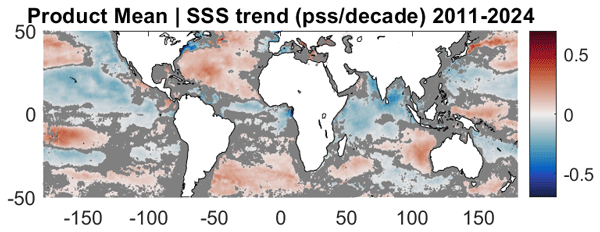
We compared six global sea surface salinity datasets and found consistent trends between them. Many regions follow the known pattern of fresh areas getting fresher and salty areas saltier, with a growing contrast between the North Atlantic and North Pacific. However, comparison with longer-term data shows that short-term trends are strongly shaped by natural climate variability, especially in the Pacific.
Roshin P. Raj, Vidar S. Lien, Sourav Chatterjee, Saradhy Surendran, Antonio Bonaduce, and Laurent Bertino
State Planet, 7-osr10, 6, https://doi.org/10.5194/sp-7-osr10-6-2026, https://doi.org/10.5194/sp-7-osr10-6-2026, 2026
Short summary
Short summary
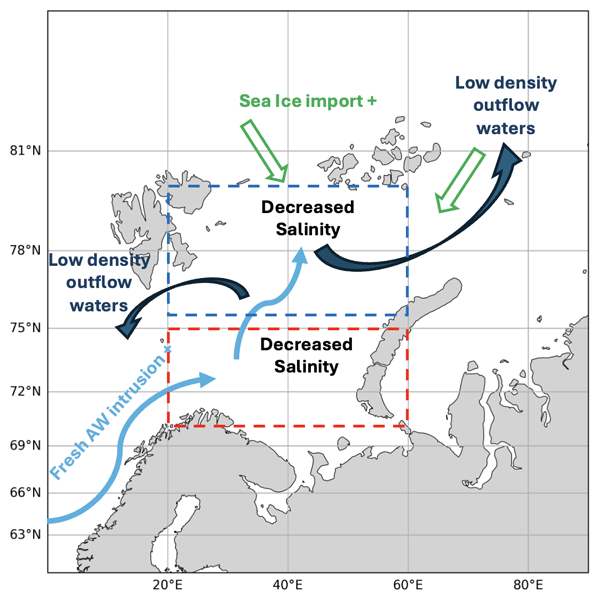
Dense water formed and exiting from the Barents Sea constitutes an important part of the global ocean circulation. Considering the significant impact of salinity changes in dense water formation, we investigate the salinity changes in the Barents Sea during the past 3 decades. Our results highlight the recent freshening and its drivers in the northern and southern Barents Sea and show its impact on the density of the waters exiting the Barents Sea.
Alex Hayward, Nishka Dasgupta, Ronan McAdam, Mark R. Payne, Roshin P. Raj, Giulia Bonino, Sourav Chatterjee, Vincent Combes, Dimitra Denaxa, Francesco De Rovere, Pia Englyst, Veera Haapaniemi, Paul Hargous, Jacob Høyer, K. Ajith Joseph, Beatriz Lopes, Ana Oliveira, João Paixão, Fabiola Silva, Saradhy Surendran, Artemis Zegna-Rata, and Steffen M. Olsen
Earth Syst. Sci. Data, 18, 7181–7197, https://doi.org/10.5194/essd-18-7181-2026, https://doi.org/10.5194/essd-18-7181-2026, 2026
Short summary
Short summary
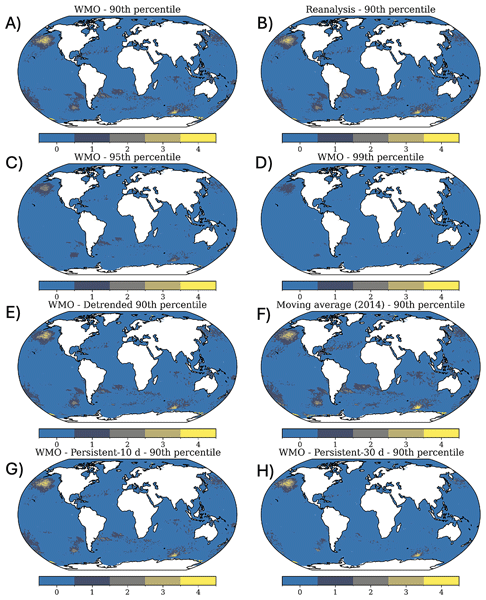
We present a global marine heatwave and cold spell dataset (1982–2024) based on satellite sea surface temperature. The dataset applies multiple definitions in parallel, varying baselines, thresholds, detrending, and event durations. It enables consistent comparisons of marine heatwave characterisation across methods and supports climate monitoring, and ecological impact studies.
Juliette Gamot, Antoine Delepoulle, Francesco Nencioli, Marie-Isabelle Pujol, and Gerald Dibarboure
Earth Syst. Sci. Data, 18, 7043–7070, https://doi.org/10.5194/essd-18-7043-2026, https://doi.org/10.5194/essd-18-7043-2026, 2026
Short summary
Short summary
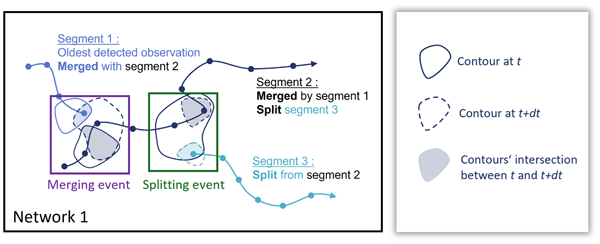
Mesoscale eddies are rotating ocean features that play a key role in transporting heat, salt, and biological material. This study presents a new global dataset derived from satellite observations to track these eddies and identify when they merge or split. By organizing them into interaction networks, we show that such events are frequent and strongly influence eddy evolution, leading to a more realistic description of ocean circulation.
Michael G. Hart-Davis, Blanca E. Torunski, Antonio Bonaduce, Torbjørn Taskjelle, and Johnny A. Johannessen
EGUsphere, https://doi.org/10.5194/egusphere-2026-5493, https://doi.org/10.5194/egusphere-2026-5493, 2026
This preprint is open for discussion and under review for Ocean Science (OS).
Short summary
Short summary
Observations are of fundamental importance for researching ocean variability. For tidal research, tide gauges have enabled a deep understanding of the physical mechanisms driving tides, as well as how they vary across the coastal oceans. In this manuscript, we assess the tides of Norway from a dense network of tide gauges that have been deployed by the Norwegian Mapping Authority. We dive into tidal components, tidal datums, and validation of global ocean tide models.
Joseph K. Ansong, Brian K. Arbic, Romain Bourdalle-Badié, Clément Bricaud, Jérôme Chanut, Dimitris Menemenlis, Richard D. Ray, Michael Schindelegger, Alan J. Wallcraft, He Wang, Alistair J. Adcroft, Frédéric Briol, Maarten C. Buijsman, Loren Carrère, Eric P. Chassignet, Gerald Dibarboure, Robert W. Hallberg, Christopher N. Hill, Ariane Koch-Larrouy, Florent Lyard, Matthew R. Mazloff, An T. Nguyen, Nicolas Picot, Rui M. Ponte, and Jay F. Shriver
EGUsphere, https://doi.org/10.5194/egusphere-2026-5064, https://doi.org/10.5194/egusphere-2026-5064, 2026
This preprint is open for discussion and under review for Ocean Science (OS).
Short summary
Short summary
We assess how well four high-resolution global ocean models reproduce surface and internal tides compared with satellite observations. Some models produce internal tides that are too strong, but including energy loss over rough seafloor improves their accuracy. Longer model records and higher resolution also improve agreement with observations. We further identify errors in the tidal forcing of widely used MITgcm simulations that reduce the accuracy of their simulated tides.
Alejandro Blazquez, Benoit Meyssignac, Robin Fraudeau, Michael Ablain, Jonathan Bamber, Antonio Bonaduce, Marie Bouih, Anny Cazenave, Thorben Döhne, Ines Dussaillant, Ramiro Ferrari, Martin Horwath, Nicolas Kolodziejczyk, Hugo Lecomte, Stephanie Leroux, William Llovel, Daniele Melini, Erwan Oulhen, Thierry Penduff, Roshin P. Raj, Giorgio Spada, Marius Schlaak, Papasarafianou Stamatia, Andrea Storto, Chunxue Yang, and Sarah Connors
Earth Syst. Sci. Data Discuss., https://doi.org/10.5194/essd-2026-627, https://doi.org/10.5194/essd-2026-627, 2026
Preprint under review for ESSD
Short summary
Short summary
Closing the sea‑level budget on annual and longer time scales is a cornerstone of physical oceanography because sea‑level rise is one of the best indicators of climate change, and a closed budget shows we have identified and quantified all major drivers. We examined it from 1993 to 2022, finding an accelerated rise that matched ice melt and warm water until 2015. Afterwards an unexplained gap appears. Better deep‑ocean observations and refined gravity processing are needed to close the budget.
Noémie Lalau, Michaël Ablain, Thomas Vaujour, François Boy, Gerald Dibarboure, and Alejandro Egido
Ocean Sci., 22, 2491–2501, https://doi.org/10.5194/os-22-2491-2026, https://doi.org/10.5194/os-22-2491-2026, 2026
Short summary
Short summary
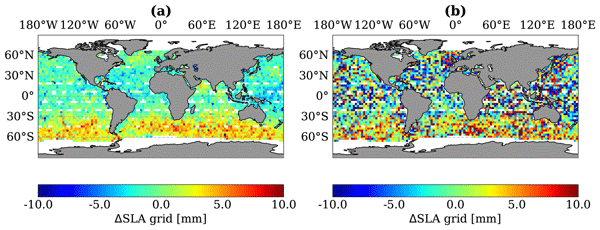
We investigated how to maintain continuous sea level measurements between current Sentinel-3 constellation and the upcoming Sentinel-3 Next Generation Topography mission. Because of new satellite designs, a 4-hour delay will exists between observations during the calibration phase. By simulating this time lag, we found that, despite increased uncertainty, reliable calibration is possible. Extending this phase to one year ensures a stable, long-term record for climate and ocean monitoring.
Silvana Gonzalez, Mari F. Jensen, Ingrid A. Johnsen, Randi Ingvaldsen, Jon Albretsen, Lars Asplin, Anne Sandvik, Vidar S. Lien, Solfrid Sætre Hjøllo, and Anne Britt Sandø
State Planet Discuss., https://doi.org/10.5194/sp-2026-2, https://doi.org/10.5194/sp-2026-2, 2026
Revised manuscript accepted for SP
Short summary
Short summary
Marine heatwaves occurrence is increasing, especially in northern oceans. In summer 2025, western/central Norway had the most intense event on record, with sea temperatures up to 22 °C. This event was shallow and developed quickly. It was mainly driven by unusual weather: strong solar radiation, weak winds, warm air, and persistent high pressure over Scandinavia. The occurrence of these rapid-forming events has important implications for predictability and adaptation.
Gwenael Jestin, Sara Fleury, Matthias Raynal, Marta Alves, Fanny Piras, Anaëlle Treboutte, François Boy, Inès Benabdillah, Louise Yu, and Gérald Dibarboure
EGUsphere, https://doi.org/10.5194/egusphere-2026-2569, https://doi.org/10.5194/egusphere-2026-2569, 2026
This preprint is open for discussion and under review for The Cryosphere (TC).
Short summary
Short summary
With its wide swath of 120 km, the SWOT altimeter offers unrivalled spatial and temporal coverage of the polar oceans. But frozen oceans are difficult to study because the ice cover only reveals the open ocean through cracks and polynyas. Whether studying the ice or the ocean, leads and floes must be distinguished. This classification is now available in the CNES L3 product at a resolution of 250 m. This paper outlines the methodology and improvements of the derived ice concentration maps.
Sayantani Ojha, Joakim Kjellsson, Torge Martin, Léon Chafik, Eric Maisonnave, and Wonsun Park
EGUsphere, https://doi.org/10.5194/egusphere-2026-1481, https://doi.org/10.5194/egusphere-2026-1481, 2026
Short summary
Short summary
We study how model resolution affects the climate of the North Atlantic Ocean, with a focus on heat transport. Using a new climate model that improves interactions between the ocean and atmosphere, we compare simulations with different resolutions. Higher ocean resolution improves sea surface temperature and ocean circulation. Increasing both ocean and atmospheric resolution produces a more realistic balance of heat transport due to matching grid resolutions.
Achref Othmani, Annette Samuelsen, Jiping Xie, Laurent Bertino, Fabio Mangini, and Roshin Pappukutty Raj
EGUsphere, https://doi.org/10.5194/egusphere-2026-1520, https://doi.org/10.5194/egusphere-2026-1520, 2026
Short summary
Short summary
We developed a high-resolution (6–10 km) HYCOM-CICE configuration to better understand ocean and sea ice conditions in the Arctic and North Atlantic from 2009 to 2019. By comparing the model with available datasets, we found it reliably captures major patterns and seasonal changes. This can support forecasting, helping improve environmental monitoring and decision-making in regions sensitive to climate change.
Shaun A. Eisner, James A. Carton, Leon Chafik, and Lars H. Smedsrud
Ocean Sci., 22, 1073–1084, https://doi.org/10.5194/os-22-1073-2026, https://doi.org/10.5194/os-22-1073-2026, 2026
Short summary
Short summary
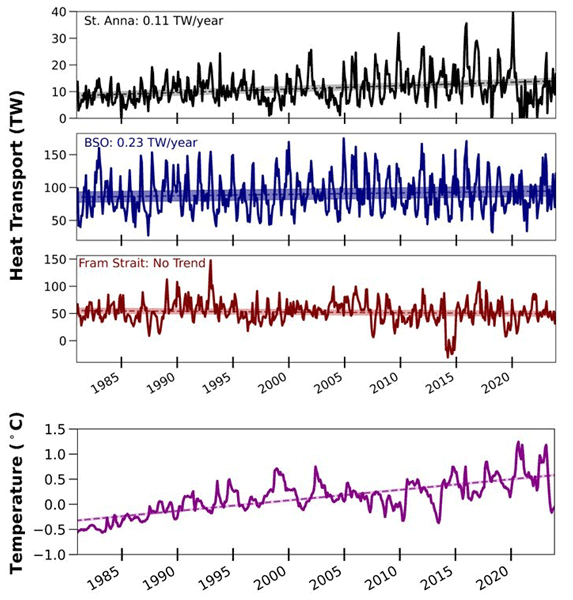
The Barents Sea is a major route for Atlantic Water to enter the Arctic. Cold air cools incoming Atlantic Water before it exits to the Arctic through the St. Anna Trough. We derive the first long-term estimate of the heat leaving the Barents Sea through St. Anna Trough. The heat leaving has increased since 1980, but only by half as much as the increase in heat entering. Finally, we present evidence for a previously proposed "ocean feedback" mechanism to help cool inflowing Atlantic Water.
Jean H. M. Roger, Yannice Faugère, Hélène Hébert, Antoine Delepoulle, and Gérald Dibarboure
Nat. Hazards Earth Syst. Sci., 26, 943–954, https://doi.org/10.5194/nhess-26-943-2026, https://doi.org/10.5194/nhess-26-943-2026, 2026
Short summary
Short summary
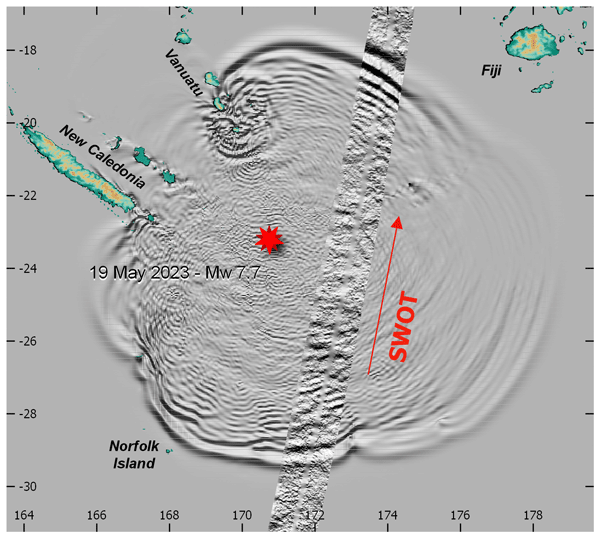
Deployed in 2022, the SWOT (Surface Water Ocean Topography) satellite was flying over the Southwest Pacific on 19 May 2023 when it recorded the tsunami triggered by a magnitude 7.7 earthquake south of the Vanuatu arc. For the very first time, it provided a 2D image of a tsunami wavefield along a straight path. Comparison with numerical tsunami simulations reveals good phase agreement between the modeled wavefield and the SWOT record, but the simulated amplitudes are lower than the measurements.
Cécile Kocha, Marine Liévin, Yann Pageot, Clémence Rubin, Victor Quet, Franck Octau, Marie-Isabelle Pujol, Pierre Prandi, Sabine Philipps, Gerald Dibarboure, Isabelino Denis, Carolina Nogueira Loddo, and François Bignalet-Cazalet
Earth Syst. Sci. Data Discuss., https://doi.org/10.5194/essd-2025-604, https://doi.org/10.5194/essd-2025-604, 2026
Revised manuscript under review for ESSD
Short summary
Short summary
30 years of satellite altimetry data were reprocessed in 2024, using state-of-the-art research algorithms and models. The so-called DT-2024 sea level dataset provides a homogenous and consistent set of observations from 15 satellites and 5 climate reference altimeters. This new dataset is shown to improve mesoscale quality and consistency, particularly over coastal and polar areas, as well as the long-term stability for climate research.
Clément Ubelmann, J. Thomas Farrar, Bertrand Chapron, Lucile Gaultier, Laura Gomez-Navarro, Marie-Hélène Rio, and Gérald Dibarboure
Ocean Sci., 21, 2915–2928, https://doi.org/10.5194/os-21-2915-2025, https://doi.org/10.5194/os-21-2915-2025, 2025
Short summary
Short summary
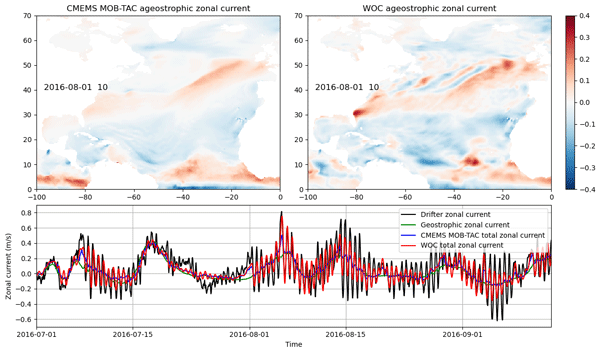
This study models wind-driven ocean currents using observed wind stress and an empirically estimated impulse response function based on drifting buoys. By convolving this function with wind forcing from ERA5, the estimates align well with independent observations across latitudes. Additionally, the response function serves as a valuable indicator of subsurface properties.
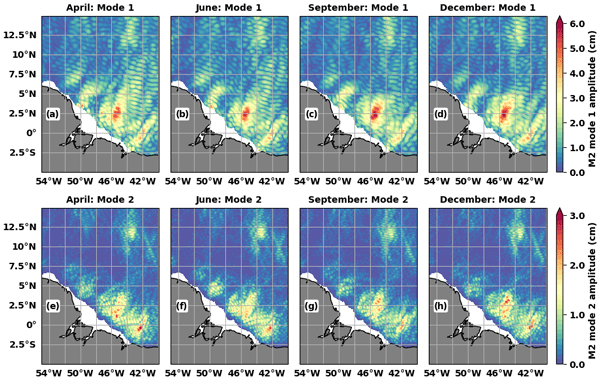
Michel Tchilibou, Simon Barbot, Loren Carrere, Ariane Koch-Larrouy, Gérald Dibarboure, and Clément Ubelmann
Ocean Sci., 21, 1469–1486, https://doi.org/10.5194/os-21-1469-2025, https://doi.org/10.5194/os-21-1469-2025, 2025
Short summary
Short summary
MIOST24 (Multivariate Inversion of Ocean Surface Topography 2024) annual and monthly internal tide (IT) atlases, based on 25 years of altimetry data and an updated wavelength database, are presented for the Indo-Philippine archipelago and the Amazon shelf. The atlases show monthly IT variability and a better correction of IT in altimetry data than with MIOST22 (MIOST 2022) and HRET (High-Resolution Empirical Tide). The results support the development of a global MIOST24.
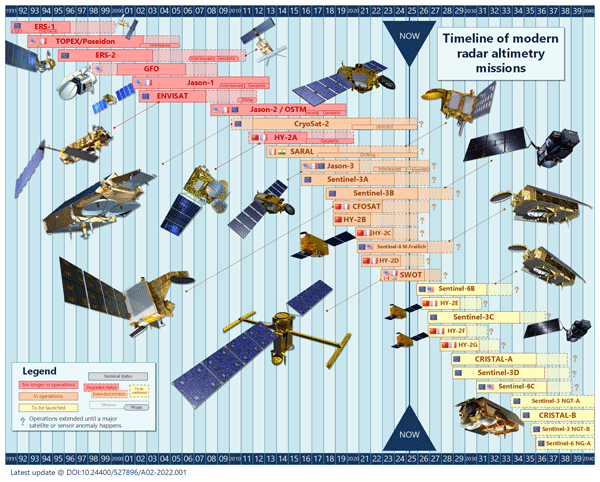
Pierre-Yves Le Traon, Gérald Dibarboure, Jean-Michel Lellouche, Marie-Isabelle Pujol, Mounir Benkiran, Marie Drevillon, Yann Drillet, Yannice Faugère, and Elisabeth Remy
Ocean Sci., 21, 1329–1347, https://doi.org/10.5194/os-21-1329-2025, https://doi.org/10.5194/os-21-1329-2025, 2025
Short summary
Short summary
By providing all weather, global, and real-time observations of sea level, a key variable to constrain ocean analysis and forecasting systems, satellite altimetry has had a profound impact on the development of operational oceanography. This paper provides an overview of the development and evolution of satellite altimetry and operational oceanography over the past 20 years from the launch of Jason-1 in 2001 to the launch of SWOT (Surface Water and Ocean Topography) in 2022.
Hélène Etienne, Clément Ubelmann, Fabrice Ardhuin, and Gérald Dibarboure
EGUsphere, https://doi.org/10.5194/egusphere-2025-2890, https://doi.org/10.5194/egusphere-2025-2890, 2025
Preprint archived
Short summary
Short summary
This study analyzes near-inertial oscillations (NIOs) in ocean surface currents using drifter data and the LLC2160 ocean-atmosphere model. It finds that NIOs have a typical spatial decorrelation scale around 100 km, varying with latitude. The model accurately captures these patterns, supporting the ODYSEA concept mission's goal to measure surface currents via Doppler radar and reduce NIO-related data aliasing for better ocean monitoring.
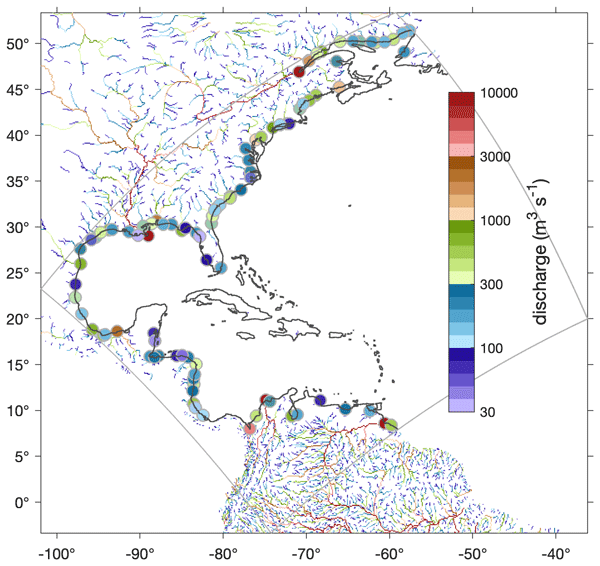
Pascal Matte, John Wilkin, and Joanna Staneva
State Planet, 5-opsr, 19, https://doi.org/10.5194/sp-5-opsr-19-2025, https://doi.org/10.5194/sp-5-opsr-19-2025, 2025
Short summary
Short summary
Rivers, vital to the Earth's system, connect the ocean with the land, governing hydrological and biogeochemical contributions and influencing processes like upwelling and mixing. This paper reviews methods to represent river runoff in operational ocean forecasting systems, from coarse-resolution models to coastal coupling approaches. It discusses river data sources and examines how river forcing is treated in global to coastal operational systems, highlighting challenges and future directions.
Franck Eitel Kemgang Ghomsi, Muharrem Hilmi Erkoç, Roshin P. Raj, Atinç Pirti, Antonio Bonaduce, Babatunde J. Abiodun, and Julienne Stroeve
Int. Arch. Photogramm. Remote Sens. Spatial Inf. Sci., XLVIII-M-6-2025, 393–397, https://doi.org/10.5194/isprs-archives-XLVIII-M-6-2025-393-2025, https://doi.org/10.5194/isprs-archives-XLVIII-M-6-2025-393-2025, 2025
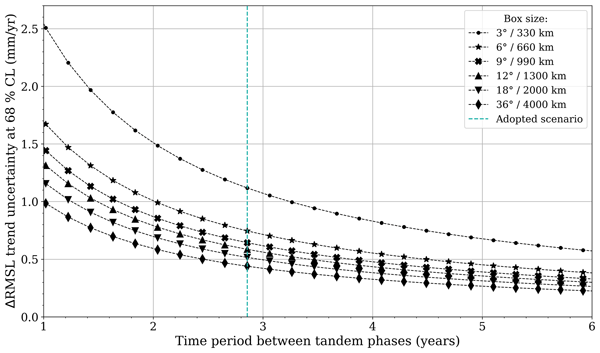
Michaël Ablain, Noémie Lalau, Benoit Meyssignac, Robin Fraudeau, Anne Barnoud, Gérald Dibarboure, Alejandro Egido, and Craig Donlon
Ocean Sci., 21, 343–358, https://doi.org/10.5194/os-21-343-2025, https://doi.org/10.5194/os-21-343-2025, 2025
Short summary
Short summary
This study proposes a novel cross-validation method to assess the instrumental stability in sea level trends. The method involves implementing a second tandem flight phase between two successive altimeter missions a few years after the first phase. The trend in systematic instrumental differences made during the two tandem phases can be estimated below ± 0.1 mm yr-1 (16–84 % confidence level) on a global scale for time intervals between the tandem phases of 4 years or more.
Michel Tchilibou, Loren Carrere, Florent Lyard, Clément Ubelmann, Gérald Dibarboure, Edward D. Zaron, and Brian K. Arbic
Ocean Sci., 21, 325–342, https://doi.org/10.5194/os-21-325-2025, https://doi.org/10.5194/os-21-325-2025, 2025
Short summary
Short summary
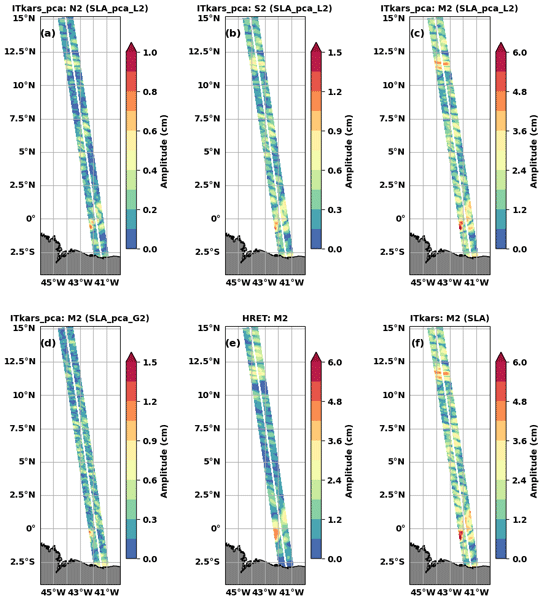
Sea level observations along the swaths of the new SWOT (Surface Water and Ocean Topography) mission were used to characterize internal tides at three semidiurnal frequencies off the Amazon shelf in the tropical Atlantic during the SWOT calibration/validation period. The atlases were derived using harmonic analysis and principal component analysis. The SWOT-derived internal tide atlas outperforms the reference atlas previously used to correct SWOT observations.
Gerald Dibarboure, Cécile Anadon, Frédéric Briol, Emeline Cadier, Robin Chevrier, Antoine Delepoulle, Yannice Faugère, Alice Laloue, Rosemary Morrow, Nicolas Picot, Pierre Prandi, Marie-Isabelle Pujol, Matthias Raynal, Anaelle Tréboutte, and Clément Ubelmann
Ocean Sci., 21, 283–323, https://doi.org/10.5194/os-21-283-2025, https://doi.org/10.5194/os-21-283-2025, 2025
Short summary
Short summary
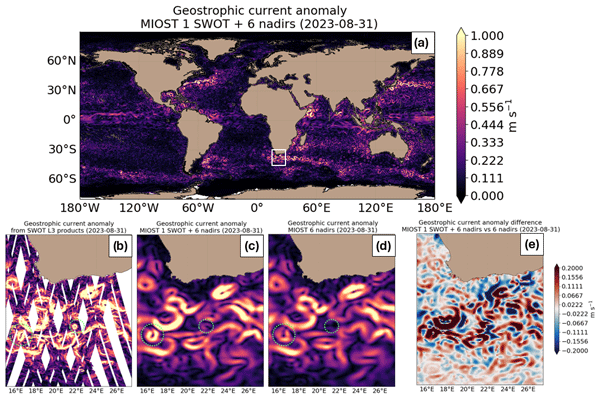
The Surface Water and Ocean Topography (SWOT) mission delivers unprecedented swath-altimetry products. In this paper, we describe how we extended the Level-3 algorithms to handle SWOT’s unique swath-altimeter data. We also illustrate and discuss the benefits, relevance, and limitations of Level-3 swath-altimeter products for various research domains.
Maxime Ballarotta, Clément Ubelmann, Valentin Bellemin-Laponnaz, Florian Le Guillou, Guillaume Meda, Cécile Anadon, Alice Laloue, Antoine Delepoulle, Yannice Faugère, Marie-Isabelle Pujol, Ronan Fablet, and Gérald Dibarboure
Ocean Sci., 21, 63–80, https://doi.org/10.5194/os-21-63-2025, https://doi.org/10.5194/os-21-63-2025, 2025
Short summary
Short summary
The Surface Water and Ocean Topography (SWOT) mission provides unprecedented swath altimetry data. This study examines SWOT's impact on mapping systems, showing a moderate effect with the current nadir altimetry constellation and a stronger impact with a reduced one. Integrating SWOT with dynamic mapping techniques improves the resolution of satellite-derived products, offering promising solutions for studying and monitoring sea-level variability at finer scales.
José A. Jiménez, Gundula Winter, Antonio Bonaduce, Michael Depuydt, Giulia Galluccio, Bart van den Hurk, H. E. Markus Meier, Nadia Pinardi, Lavinia G. Pomarico, and Natalia Vazquez Riveiros
State Planet, 3-slre1, 3, https://doi.org/10.5194/sp-3-slre1-3-2024, https://doi.org/10.5194/sp-3-slre1-3-2024, 2024
Short summary
Short summary
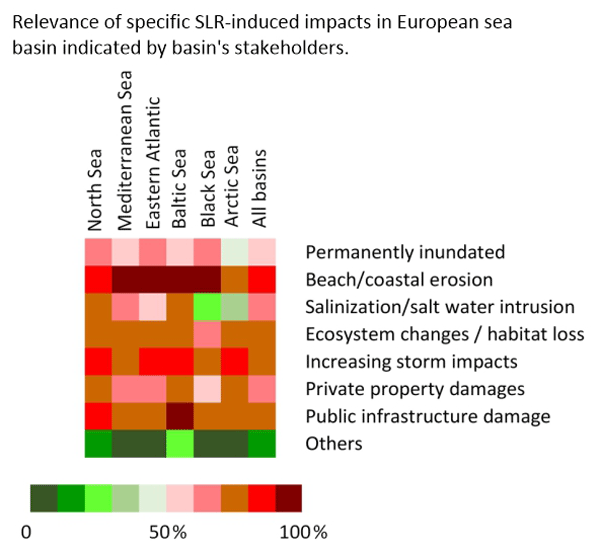
The Knowledge Hub on Sea Level Rise (SLR) has done a scoping study involving stakeholders from government and academia to identify gaps and needs in SLR information, impacts, and policies across Europe. Gaps in regional SLR projections and uncertainties were found, while concerns were raised about shoreline erosion and emerging problems like saltwater intrusion and ineffective adaptation plans. The need for improved communication to make better decisions on SLR adaptation was highlighted.
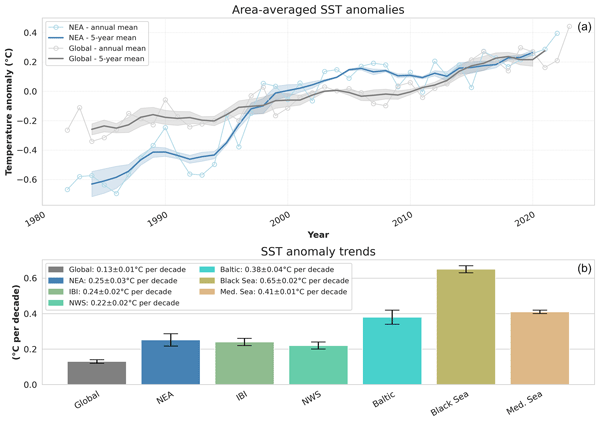
Karina von Schuckmann, Lorena Moreira, Mathilde Cancet, Flora Gues, Emmanuelle Autret, Ali Aydogdu, Lluis Castrillo, Daniele Ciani, Andrea Cipollone, Emanuela Clementi, Gianpiero Cossarini, Alvaro de Pascual-Collar, Vincenzo De Toma, Marion Gehlen, Rianne Giesen, Marie Drevillon, Claudia Fanelli, Kevin Hodges, Simon Jandt-Scheelke, Eric Jansen, Melanie Juza, Ioanna Karagali, Priidik Lagemaa, Vidar Lien, Leonardo Lima, Vladyslav Lyubartsev, Ilja Maljutenko, Simona Masina, Ronan McAdam, Pietro Miraglio, Helen Morrison, Tabea Rebekka Panteleit, Andrea Pisano, Marie-Isabelle Pujol, Urmas Raudsepp, Roshin Raj, Ad Stoffelen, Simon Van Gennip, Pierre Veillard, and Chunxue Yang
State Planet, 4-osr8, 2, https://doi.org/10.5194/sp-4-osr8-2-2024, https://doi.org/10.5194/sp-4-osr8-2-2024, 2024
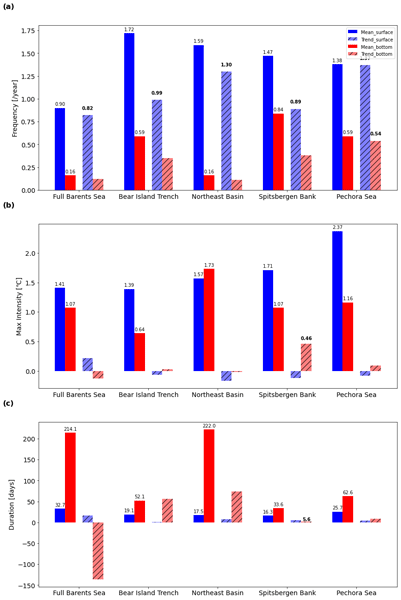
Vidar S. Lien, Roshin P. Raj, and Sourav Chatterjee
State Planet, 4-osr8, 8, https://doi.org/10.5194/sp-4-osr8-8-2024, https://doi.org/10.5194/sp-4-osr8-8-2024, 2024
Short summary
Short summary
We find that major marine heatwaves are rather coherent throughout the Barents Sea, but surface marine heatwaves occur more frequently while heatwaves on the ocean floor have a longer duration. Moreover, we investigate the sensitivity to the choice of climatological average length when calculating marine heatwave statistics. Our results indicate that severe marine heatwaves may become more frequent in the future Barents Sea due to ongoing climate change.
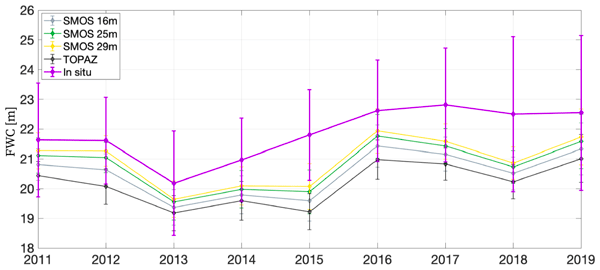
Marta Umbert, Eva De Andrés, Maria Sánchez, Carolina Gabarró, Nina Hoareau, Veronica González-Gambau, Aina García-Espriu, Estrella Olmedo, Roshin P. Raj, Jiping Xie, and Rafael Catany
Ocean Sci., 20, 279–291, https://doi.org/10.5194/os-20-279-2024, https://doi.org/10.5194/os-20-279-2024, 2024
Short summary
Short summary
Satellite retrievals of sea surface salinity (SSS) offer insights into freshwater changes in the Arctic Ocean. This study evaluates freshwater content in the Beaufort Gyre using SMOS and reanalysis data, revealing underestimation with reanalysis alone. Incorporating satellite SSS measurements improves freshwater content estimation, especially near ice-melting areas. Adding remotely sensed salinity aids in monitoring Arctic freshwater content and in understanding its impact on global climate.
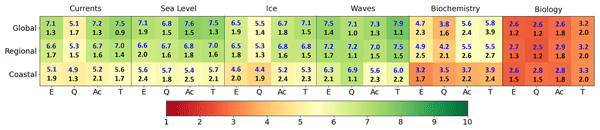
Stefania A. Ciliberti, Enrique Alvarez Fanjul, Jay Pearlman, Kirsten Wilmer-Becker, Pierre Bahurel, Fabrice Ardhuin, Alain Arnaud, Mike Bell, Segolene Berthou, Laurent Bertino, Arthur Capet, Eric Chassignet, Stefano Ciavatta, Mauro Cirano, Emanuela Clementi, Gianpiero Cossarini, Gianpaolo Coro, Stuart Corney, Fraser Davidson, Marie Drevillon, Yann Drillet, Renaud Dussurget, Ghada El Serafy, Katja Fennel, Marcos Garcia Sotillo, Patrick Heimbach, Fabrice Hernandez, Patrick Hogan, Ibrahim Hoteit, Sudheer Joseph, Simon Josey, Pierre-Yves Le Traon, Simone Libralato, Marco Mancini, Pascal Matte, Angelique Melet, Yasumasa Miyazawa, Andrew M. Moore, Antonio Novellino, Andrew Porter, Heather Regan, Laia Romero, Andreas Schiller, John Siddorn, Joanna Staneva, Cecile Thomas-Courcoux, Marina Tonani, Jose Maria Garcia-Valdecasas, Jennifer Veitch, Karina von Schuckmann, Liying Wan, John Wilkin, and Romane Zufic
State Planet, 1-osr7, 2, https://doi.org/10.5194/sp-1-osr7-2-2023, https://doi.org/10.5194/sp-1-osr7-2-2023, 2023
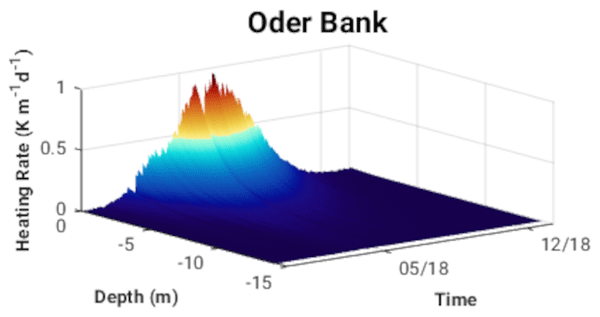
Bronwyn E. Cahill, Piotr Kowalczuk, Lena Kritten, Ulf Gräwe, John Wilkin, and Jürgen Fischer
Biogeosciences, 20, 2743–2768, https://doi.org/10.5194/bg-20-2743-2023, https://doi.org/10.5194/bg-20-2743-2023, 2023
Short summary
Short summary
We quantify the impact of optically significant water constituents on surface heating rates and thermal energy fluxes in the western Baltic Sea. During productive months in 2018 (April to September) we found that the combined effect of coloured
dissolved organic matter and particulate absorption contributes to sea surface heating of between 0.4 and 0.9 K m−1 d−1 and a mean loss of heat (ca. 5 W m−2) from the sea to the atmosphere. This may be important for regional heat balance budgets.

Oscar Vergara, Rosemary Morrow, Marie-Isabelle Pujol, Gérald Dibarboure, and Clément Ubelmann
Ocean Sci., 19, 363–379, https://doi.org/10.5194/os-19-363-2023, https://doi.org/10.5194/os-19-363-2023, 2023
Short summary
Short summary
Recent advances allow us to observe the ocean from space with increasingly higher detail, challenging our knowledge of the ocean's surface height signature. We use a statistical approach to determine the spatial scale at which the sea surface height signal is no longer dominated by geostrophic turbulence but in turn becomes dominated by wave-type motions. This information helps us to better use the data provided by ocean-observing satellites and to gain knowledge on climate-driving processes.
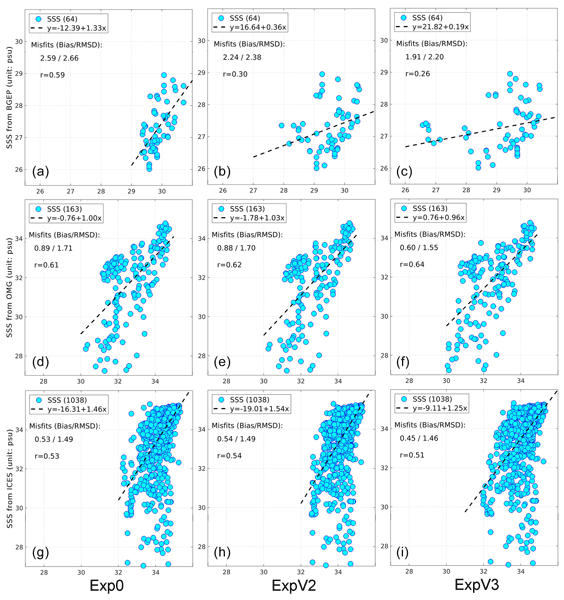
Jiping Xie, Roshin P. Raj, Laurent Bertino, Justino Martínez, Carolina Gabarró, and Rafael Catany
Ocean Sci., 19, 269–287, https://doi.org/10.5194/os-19-269-2023, https://doi.org/10.5194/os-19-269-2023, 2023
Short summary
Short summary
Sea ice melt, together with other freshwater sources, has effects on the Arctic environment. Sea surface salinity (SSS) plays a key role in representing water mixing. Recently the satellite SSS from SMOS was developed in the Arctic region. In this study, we first evaluate the impact of assimilating these satellite data in an Arctic reanalysis system. It shows that SSS errors are reduced by 10–50 % depending on areas, encouraging its use in a long-time reanalysis to monitor the Arctic water cycle.
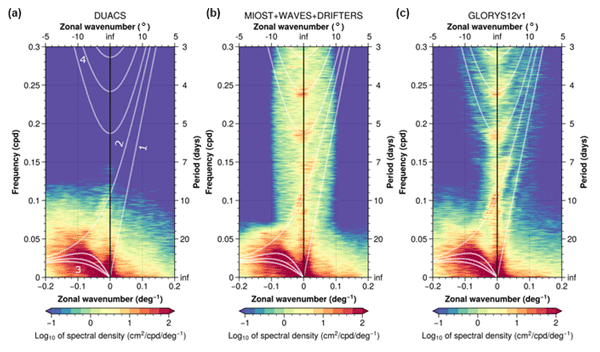
Maxime Ballarotta, Clément Ubelmann, Pierre Veillard, Pierre Prandi, Hélène Etienne, Sandrine Mulet, Yannice Faugère, Gérald Dibarboure, Rosemary Morrow, and Nicolas Picot
Earth Syst. Sci. Data, 15, 295–315, https://doi.org/10.5194/essd-15-295-2023, https://doi.org/10.5194/essd-15-295-2023, 2023
Short summary
Short summary
We present a new gridded sea surface height and current dataset produced by combining observations from nadir altimeters and drifting buoys. This product is based on a multiscale and multivariate mapping approach that offers the possibility to improve the physical content of gridded products by combining the data from various platforms and resolving a broader spectrum of ocean surface dynamic than in the current operational mapping system. A quality assessment of this new product is presented.
Vidar S. Lien, Angelika H. H. Renner, Mari S. Myksvoll, Johnny A. Johannessen, Jeremy Cook, Helene Spurkeland, and Ronald Toppe
State Planet Discuss., https://doi.org/10.5194/sp-2022-12, https://doi.org/10.5194/sp-2022-12, 2022
Preprint withdrawn
Short summary
Short summary
The One Ocean Expedition, a part of the United Nations Ocean Decade, is a sailing voyage where a traditional tall ship equipped with state-of-the-art ocean observation technology is circumnavigating the globe with a crew consisting of students, scientists, trainees and professionals. The focus for the expedition is awareness raising and education through showcasing ocean science using a traditional tall ship as a platform.
Vidar S. Lien and Roshin P. Raj
State Planet Discuss., https://doi.org/10.5194/sp-2022-13, https://doi.org/10.5194/sp-2022-13, 2022
Preprint withdrawn
Short summary
Short summary
Dense overflow water entering the North Atlantic from the Nordic Seas forms the northern limb of the Atlantic Meridional Overturning Circulation. The formation of dense water in the Nordic Seas is sensitive to the properties of the northward flowing Atlantic Water entering the Nordic Seas to the south. We find that the unprecedented freshwater anomaly in the North Atlantic recent years caused the dense water formed in the Barents Sea to have the lowest density in recorded history.
Marie-Isabelle Pujol, Stéphanie Dupuy, Oscar Vergara, Antonio Sánchez-Román, Yannice Faugère, Pierre Prandi, Mei-Ling Dabat, Quentin Dagneaux, Marine Lievin, Emeline Cadier, Gérald Dibarboure, and Nicolas Picot
Earth Syst. Sci. Data Discuss., https://doi.org/10.5194/essd-2022-292, https://doi.org/10.5194/essd-2022-292, 2022
Manuscript not accepted for further review
Short summary
Short summary
An altimeter sea level along-track level-3 product with a 5 Hz (~1.2 km) sampling is proposed. It takes advantage of recent advances in radar altimeter processing, and improvements made to different stages of the processing chain. Compared to the conventional 1 Hz (~7 km) product, it significantly improves the observability of the short wavelength signal in open ocean and near coast areas (> 5 km). It also contributes to improving high resolution numerical model outputs via data assimilation.
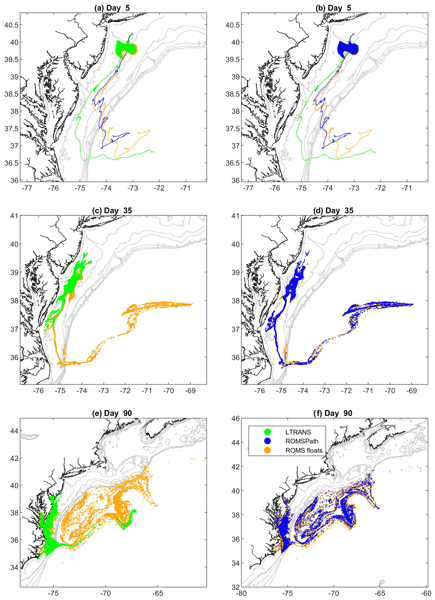
Elias J. Hunter, Heidi L. Fuchs, John L. Wilkin, Gregory P. Gerbi, Robert J. Chant, and Jessica C. Garwood
Geosci. Model Dev., 15, 4297–4311, https://doi.org/10.5194/gmd-15-4297-2022, https://doi.org/10.5194/gmd-15-4297-2022, 2022
Short summary
Short summary
ROMSPath is an offline particle tracking model tailored for use with output from Regional Ocean Modeling System (ROMS) simulations. It is an update to an established system, the Lagrangian TRANSport (LTRANS) model, including a number of improvements. These include a modification of the model coordinate system which improved accuracy and numerical efficiency, and added functionality for nested grids and Stokes drift.
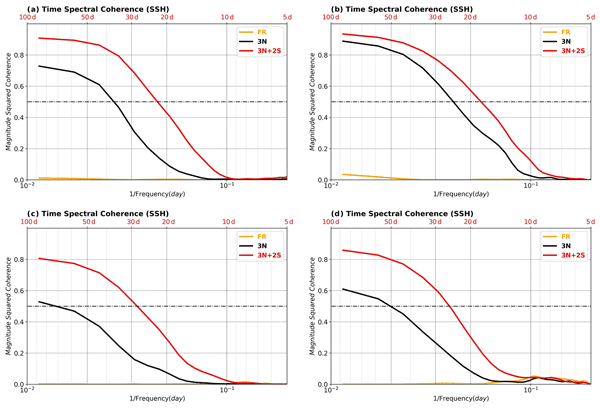
Mounir Benkiran, Pierre-Yves Le Traon, and Gérald Dibarboure
Ocean Sci., 18, 609–625, https://doi.org/10.5194/os-18-609-2022, https://doi.org/10.5194/os-18-609-2022, 2022
Short summary
Short summary
The SSH analysis and 7 d forecast error will be globally reduced by almost 50 %. Surface current forecast errors should be equivalent to today’s surface current analysis errors or alternatively will be improved (variance error reduction) by 30 % at the surface and 50 % for 300 m depth.
The resolution capabilities will be drastically improved and will be closer to 100 km wavelength as opposed to today where they are above 250 km (on average).
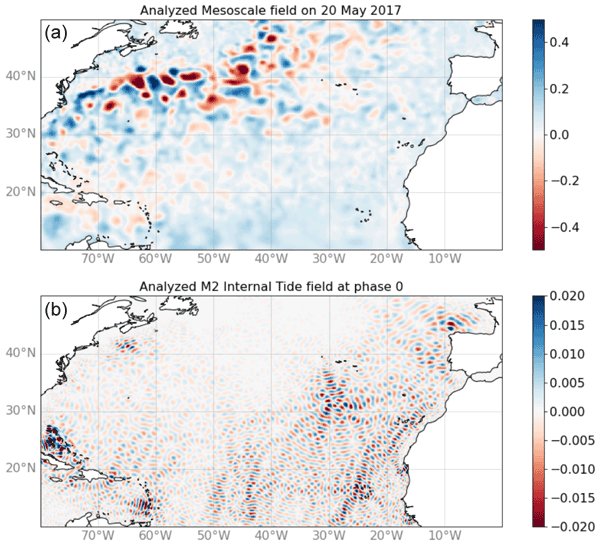
Clément Ubelmann, Loren Carrere, Chloé Durand, Gérald Dibarboure, Yannice Faugère, Maxime Ballarotta, Frédéric Briol, and Florent Lyard
Ocean Sci., 18, 469–481, https://doi.org/10.5194/os-18-469-2022, https://doi.org/10.5194/os-18-469-2022, 2022
Short summary
Short summary
The signature of internal tides has become an important component for high-resolution altimetry over oceans. Several studies have proposed some solutions to resolve part of these internal tides based on the altimetry record. Following these studies, we propose here a new inversion approach aimed to mitigate aliasing with other dynamics. After a description of the methodology, the solution for the main tidal components has been successfully validated against independent observations.
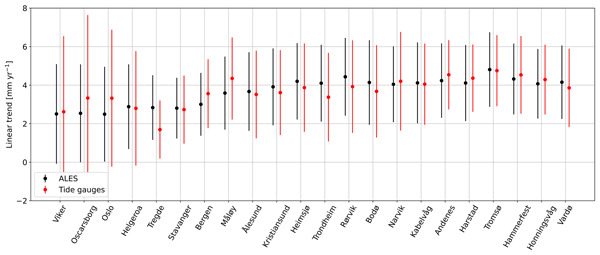
Fabio Mangini, Léon Chafik, Antonio Bonaduce, Laurent Bertino, and Jan Even Ø. Nilsen
Ocean Sci., 18, 331–359, https://doi.org/10.5194/os-18-331-2022, https://doi.org/10.5194/os-18-331-2022, 2022
Short summary
Short summary
We validate the recent ALES-reprocessed coastal satellite altimetry dataset along the Norwegian coast between 2003 and 2018. We find that coastal altimetry and conventional altimetry products perform similarly along the Norwegian coast. However, the agreement with tide gauges slightly increases in terms of trends when we use the ALES coastal altimetry data. We then use the ALES dataset and hydrographic stations to explore the steric contribution to the Norwegian sea-level anomaly.

Cori Pegliasco, Antoine Delepoulle, Evan Mason, Rosemary Morrow, Yannice Faugère, and Gérald Dibarboure
Earth Syst. Sci. Data, 14, 1087–1107, https://doi.org/10.5194/essd-14-1087-2022, https://doi.org/10.5194/essd-14-1087-2022, 2022
Short summary
Short summary
The new global Mesoscale Eddy Trajectory Atlases (META3.1exp) provide eddy identification and trajectories from altimetry maps. These atlases comprise an improvement to and continuation of the historical META2.0 product. Changes in the detection parameters and tracking were tested by comparing the eddies from the different datasets. In particular, the eddy contours available in META3.1exp are an asset for multi-disciplinary studies.
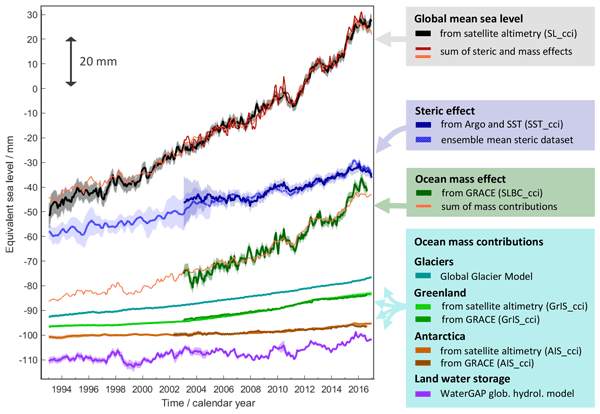
Martin Horwath, Benjamin D. Gutknecht, Anny Cazenave, Hindumathi Kulaiappan Palanisamy, Florence Marti, Ben Marzeion, Frank Paul, Raymond Le Bris, Anna E. Hogg, Inès Otosaka, Andrew Shepherd, Petra Döll, Denise Cáceres, Hannes Müller Schmied, Johnny A. Johannessen, Jan Even Øie Nilsen, Roshin P. Raj, René Forsberg, Louise Sandberg Sørensen, Valentina R. Barletta, Sebastian B. Simonsen, Per Knudsen, Ole Baltazar Andersen, Heidi Ranndal, Stine K. Rose, Christopher J. Merchant, Claire R. Macintosh, Karina von Schuckmann, Kristin Novotny, Andreas Groh, Marco Restano, and Jérôme Benveniste
Earth Syst. Sci. Data, 14, 411–447, https://doi.org/10.5194/essd-14-411-2022, https://doi.org/10.5194/essd-14-411-2022, 2022
Short summary
Short summary
Global mean sea-level change observed from 1993 to 2016 (mean rate of 3.05 mm yr−1) matches the combined effect of changes in water density (thermal expansion) and ocean mass. Ocean-mass change has been assessed through the contributions from glaciers, ice sheets, and land water storage or directly from satellite data since 2003. Our budget assessments of linear trends and monthly anomalies utilise new datasets and uncertainty characterisations developed within ESA's Climate Change Initiative.
Justino Martínez, Carolina Gabarró, Antonio Turiel, Verónica González-Gambau, Marta Umbert, Nina Hoareau, Cristina González-Haro, Estrella Olmedo, Manuel Arias, Rafael Catany, Laurent Bertino, Roshin P. Raj, Jiping Xie, Roberto Sabia, and Diego Fernández
Earth Syst. Sci. Data, 14, 307–323, https://doi.org/10.5194/essd-14-307-2022, https://doi.org/10.5194/essd-14-307-2022, 2022
Short summary
Short summary
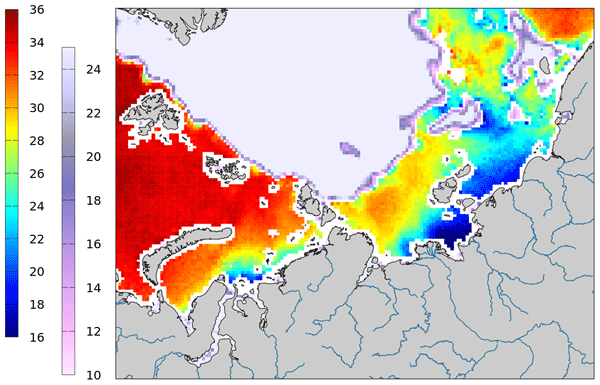
Measuring salinity from space is challenging since the sensitivity of the brightness temperature to sea surface salinity is low, but the retrieval of SSS in cold waters is even more challenging. In 2019, the ESA launched a specific initiative called Arctic+Salinity to produce an enhanced Arctic SSS product with better quality and resolution than the available products. This paper presents the methodologies used to produce the new enhanced Arctic SMOS SSS product.
Pierre Prandi, Jean-Christophe Poisson, Yannice Faugère, Amandine Guillot, and Gérald Dibarboure
Earth Syst. Sci. Data, 13, 5469–5482, https://doi.org/10.5194/essd-13-5469-2021, https://doi.org/10.5194/essd-13-5469-2021, 2021
Short summary
Short summary
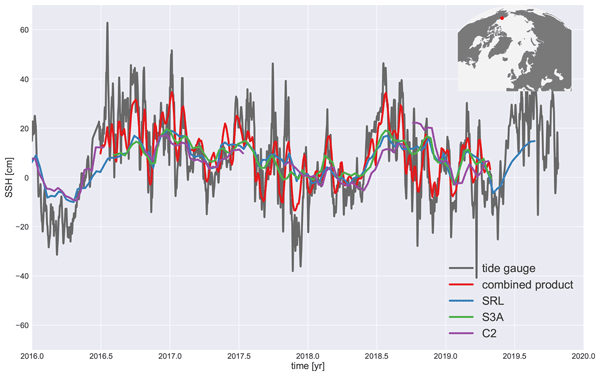
We investigate how mapping sea level in the Arctic Ocean can benefit from combining data from three satellite radar altimeters: CryoSat-2, Sentinel-3A and SARAL/AltiKa. A dedicated processing for SARAL/AltiKa provides a baseline for the cross-referencing of CryoSat-2 and Sentinel-3A before mapping. We show that by combining measurements coming from three missions, we are able to increase the resolution of gridded sea level fields in the ice-covered Arctic Ocean.
Cited articles
Arhan, M. and Colin De Verdière, A.: Dynamics of eddy motions in the eastern North Atlantic, J. Phys. Oceanogr., 15, 153–170, https://doi.org/10.1175/1520-0485(1985)015%3C0153:DOEMIT%3E2.0.CO;2, 1985.
Berx, B., Hansen, B., Østerhus, S., Larsen, K. M., Sherwin, T., and Jochumsen, K.: Combining in situ measurements and altimetry to estimate volume, heat and salt transport variability through the Faroe–Shetland Channel, Ocean Sci., 9, 639–654, https://doi.org/10.5194/os-9-639-2013, 2013.
Bingham, R. J., Haines, K., and Hughes, C. W.: Calculating the ocean's mean dynamic topography from a mean sea surface and a geoid, J. Atmos.Ocean. Tech., 25, 1808–1822, https://doi.org/10.1175/2008JTECHO568.1, 2008.
Bretherton, F. P., Davis, R. E., and Fandry, C. B.: A technique for objective analysis and design of oceanographic experiments applied to MODE-73, Deep-Sea Res. Ocean. Abstr., 559–582, https://doi.org/10.1016/0011-7471(76)90001-2, 1976.
Bruinsma, S. L., Förste, C., Abrikosov, O., Lemoine, J.-M., Marty, J.-C., Mulet, S., Rio, M.-H., and Bonvalot, S.: ESA's satellite-only gravity field model via the direct approach based on all GOCE data, Geophys. Res. Lett., 41, 7508–7514, https://doi.org/10.1002/2014GL062045, 2014.
Caballero, A., Mulet, S., Ayoub, N., Manso-Narvarte, I., Davila, X., Boone, C., Toublanc, F., and Rubio, A.: Integration of HF Radar Observations for an Enhanced Coastal Mean Dynamic Topography, Front. Mar. Sci., 7, https://doi.org/10.3389/fmars.2020.588713, 2020.
Chafik, L.: The response of the circulation in the Faroe-Shetland Channel to the North Atlantic Oscillation, Tellus Dyn. Meteorol. Oceanogr., 64, https://doi.org/10.3402/tellusa.v64i0.18423, 2012.
Chafik, L., Nilsson, J., Skagseth, Ø., and Lundberg, P.: On the flow of Atlantic water and temperature anomalies in the Nordic Seas toward the Arctic Ocean, J. Geophys. Res.-Oceans, 120, 7897–7918, https://doi.org/10.1002/2015JC011012, 2015.
Chafik, L., Hátún, H., Kjellsson, J., Larsen, K. M. H., Rossby, T., and Berx, B.: Discovery of an unrecognized pathway carrying overflow waters toward the Faroe Bank Channel, Nat. Commun., 11, 3721, https://doi.org/10.1038/s41467-020-17426-8, 2020.
Chafik, L., Nilsson, J., Rossby, T., and Kondetharayil Soman, A.: The Faroe-Shetland Channel Jet: Structure, Variability, and Driving Mechanisms, J. Geophys. Res.-Oceans, 128, e2022JC019083, https://doi.org/10.1029/2022JC019083, 2023.
Childers, K. H., Flagg, C. N., Rossby, T., and Schrum, C.: Directly measured currents and estimated transport pathways of Atlantic Water between 59.5° N and the Iceland–Faroes–Scotland Ridge, Tellus Dyn. Meteorol. Oceanogr., 67, https://doi.org/10.3402/tellusa.v67.28067, 2015.
Dmitrenko, I. A., Rudels, B., Kirillov, S. A., Aksenov, Y. O., Lien, V. S., Ivanov, V. V., Schauer, U., Polyakov, I. V., Coward, A., and Barber, D. G.: Atlantic water flow into the Arctic Ocean through the St. Anna Trough in the northern Kara Sea: ATLANTIC WATER FLOW TO THE ARCTIC OCEAN, J. Geophys. Res.-Oceans, 120, 5158–5178, https://doi.org/10.1002/2015JC010804, 2015.
Faugère, Y., Taburet, G., Ballarotta, M., Pujol, I., Legeais, J. F., Maillard, G., Durand, C., Dagneau, Q., Lievin, M., Sanchez Roman, A., and Dibarboure, G.: DUACS DT2021: 28 years of reprocessed sea level altimetry products, EGU General As sembly 2022, Vienna, Austria, 23–27 May 2022, EGU22-7479, https://doi.org/10.5194/egusphere-egu22-7479, 2022.
Förste, C., Bruinsma, S. L., Abrikosov, O., Lemoine, J.-M., Marty, J. C., Flechtner, F., Balmino, G., Barthelmes, F., and Biancale, R.: EIGEN-6C4 The latest combined global gravity field model including GOCE data up to degree and order 2190 of GFZ Potsdam and GRGS Toulouse, GFZ Data Services [data set], https://doi.org/10.5880/ICGEM.2015.1, 2014.
Fu, L.-L., Alsdorf, D., Morrow, R., Rodriguez, E., and Mognard, N.: SWOT: The Surface Water and Ocean Topography Mission wide-swath altimetric measurement of water elevation on Earth, Tech. Rep., JPL 12-05, Pasadena, CA, 2012.
Gammelsrød, T., Leikvin, Ø., Lien, V., Budgell, W. P., Loeng, H., and Maslowski, W.: Mass and heat transports in the NE Barents Sea: Observations and models, J. Marine Syst., 75, 56–69, 2009.
Hamon, M., Greiner, E., Traon, P.-Y. L., and Remy, E.: Impact of Multiple Altimeter Data and Mean Dynamic Topography in a Global Analysis and Forecasting System, J. Atmos. Ocean. Tech., 36, 1255–1266, https://doi.org/10.1175/JTECH-D-18-0236.1, 2019.
Hansen, B. and Østerhus, S.: North Atlantic–Nordic Seas exchanges, Prog. Oceanogr., 45, 109–208, https://doi.org/10.1016/S0079-6611(99)00052-X, 2000.
Helland-Hansen, B. and Nansen, F.: The Norwegian Sea: its physical oceanography based upon the Norwegian researches 1900–1904, Det Mallingske bogtrykkeri, ISSN 0802-5584, 1909.
Hersbach, H., Bell, B., Berrisford, P., Biavati, G., Horányi, A., Muñoz Sabater, J., Nicolas, J., Peubey, C., Radu, R., Rozum, I., Schepers, D., Simmons, A., Soci, C., Dee, P., and Thépaut, J.-N.: ERA5 hourly data on single levels from 1979 to present, Copernicus Climate Change Service (C3S) Climate Data Store (CDS) [data set], https://doi.org/10.24381/cds.adbb2d47, 2018.
Johannessen, J. A., Raj, R. P., Nilsen, J. E. Ø., Pripp, T., Knudsen, P., Counillon, F., Stammer, D., Bertino, L., Andersen, O. B., Serra, N., and Koldunov, N.: Toward Improved Estimation of the Dynamic Topography and Ocean Circulation in the High Latitude and Arctic Ocean: The Importance of GOCE, in: The Earth's Hydrological Cycle, vol. 46, edited by: Bengtsson, L., Bonnet, R.-M., Calisto, M., Destouni, G., Gurney, R., Johannessen, J., Kerr, Y., Lahoz, W. A., and Rast, M., Springer Netherlands, Dordrecht, 661–679, https://doi.org/10.1007/978-94-017-8789-5_9, 2014.
Jousset, S.: Mean Dynamic Topography MDT CNES_CLS 2022 (Version 2022), CNES [data set], https://doi.org/10.24400/527896/A01-2023.003, 2023.
Knudsen, P., Andersen, O. B., Maximenko, N., and Hafner, J.: The DTUUH22MDT combined mean dynamic topography model, OSTST2022, Venise, Italia, https://doi.org/10.24400/527896/a03-2022.3613, 2022.
Kvas, A., Brockmann, J. M., Krauss, S., Schubert, T., Gruber, T., Meyer, U., Mayer-Gürr, T., Schuh, W.-D., Jäggi, A., and Pail, R.: GOCO06s – a satellite-only global gravity field model, Earth Syst. Sci. Data, 13, 99–118, https://doi.org/10.5194/essd-13-99-2021, 2021.
Lebedev, K. V., Yoshinari, H., Maximenko, N. A., and Hacker, P. W.: Velocity data assessed from trajectories of Argo floats at parking level and at the sea surface, IPRC Tech. Note, 4, 1–16, https://doi.org/10.1175/2007JPO3768.1, 2007.
Lentz, S. J.: Observations and a model of the mean circulation over the Middle Atlantic Bight continental shelf, J. Phys. Oceanogr., 38, 1203–1221, 2008.
Le Traon, P.-Y. and Dibarboure, G.: Mesoscale mapping capabilities of multiple-satellite altimeter missions, J. Atmos. Ocean. Tech., 16, 1208–1223, https://doi.org/10.1175/1520-0426(1999)016%3C1208:MMCOMS%3E2.0.CO;2, 1999.
Lien, V. S. and Trofimov, A. G.: Formation of Barents Sea Branch Water in the north-eastern Barents Sea, Polar Res., 32, 18905, https://doi.org/10.3402/polar.v32i0.18905, 2013.
Lumpkin, R. and Johnson, G. C.: Global ocean surface velocities from drifters: Mean, variance, El Niño–Southern Oscillation response, and seasonal cycle, J. Geophys. Res.-Oceans, 118, 2992–3006, https://doi.org/10.1002/jgrc.20210, 2013.
Meyer, A., Sundfjord, A., Fer, I., Provost, C., Villacieros Robineau, N., Koenig, Z., Onarheim, I. H., Smedsrud, L. H., Duarte, P., Dodd, P. A., Graham, R. M., Schmidtko, S., and Kauko, H. M.: Winter to summer oceanographic observations in the Arctic Ocean north of Svalbard, J. Geophys. Res.-Oceans, 122, 6218–6237, https://doi.org/10.1002/2016JC012391, 2017.
Mohn, H.: The Norwegian Deep-Sea Expedition, Nature, 16, 110–111, https://doi.org/10.1038/016110b0, 1877.
Mulet, S., Rio, M.-H., Etienne, H., Artana, C., Cancet, M., Dibarboure, G., Feng, H., Husson, R., Picot, N., Provost, C., and Strub, P. T.: The new CNES-CLS18 global mean dynamic topography, Ocean Sci., 17, 789–808, https://doi.org/10.5194/os-17-789-2021, 2021.
Osadchiev, A., Viting, K., Frey, D., Demeshko, D., Dzhamalova, A., Nurlibaeva, A., Gordey, A., Krechik, V., Spivak, E., Semiletov, I., and Stepanova, N.: Structure and Circulation of Atlantic Water Masses in the St. Anna Trough in the Kara Sea, Front. Mar. Sci., 9, https://doi.org/10.3389/fmars.2022.915674, 2022.
Pail, R., Bruinsma, S., Migliaccio, F., Förste, C., Goiginger, H., Schuh, W.-D., Höck, E., Reguzzoni, M., Brockmann, J. M., and Abrikosov, O.: First GOCE gravity field models derived by three different approaches, J. Geod., 85, 819, https://doi.org/10.1007/s00190-011-0467-x, 2011.
Pegliasco, C., Chaigneau, A., Morrow, R., and Dumas, F.: Detection and tracking of mesoscale eddies in the Mediterranean Sea: A comparison between the Sea Level Anomaly and the Absolute Dynamic Topography fields, Adv. Space Res., https://doi.org/10.1016/j.asr.2020.03.039, 2020.
Poulain, P.-M., Warn-Varnas, A., and Niiler, P. P.: Near-surface circulation of the Nordic seas as measured by Lagrangian drifters, J. Geophys. Res.-Oceans, 101, 18237–18258, https://doi.org/10.1029/96JC00506, 1996.
Raj, R. P., Chafik, L., Nilsen, J. E. Ø., Eldevik, T., and Halo, I.: The Lofoten Vortex of the Nordic Seas, Deep-Sea Res. Pt. I, 96, 1–14, https://doi.org/10.1016/j.dsr.2014.10.011, 2015.
Raj, R. P., Johannessen, J. A., Eldevik, T., Nilsen, J. E. Ø., and Halo, I.: Quantifying mesoscale eddies in the Lofoten Basin, J. Geopys. Res.-Oceans, 121, 4503–4521, https://doi.org/10.1002/2016JC011637, 2016.
Raj, R. P., Nilsen, J. E. Ø., Johannessen, J. A., Furevik, T., Andersen, O. B., and Bertino, L.: Quantifying Atlantic Water transport to the Nordic Seas by remote sensing, Remote Sens. Environ., 216, 758–769, https://doi.org/10.1016/j.rse.2018.04.055, 2018.
Raj, R. P., Halo, I., Chatterjee, S., Belonenko, T., Bakhoday-Paskyabi, M., Bashmachnikov, I., Fedorov, A., and Xie, J.: Interaction Between Mesoscale Eddies and the Gyre Circulation in the Lofoten Basin, J. Geopys. Res.-Oceans,, 125, e2020JC016102, https://doi.org/10.1029/2020JC016102, 2020.
Rio, M.-H.: Absolute Dynamic Topography from Altimetry: Status and Prospects in the Upcoming GOCE Era, in: Oceanography from Space: Revisited, edited by: Barale, V., Gower, J. F. R., and Alberotanza, L., Springer Netherlands, Dordrecht, 165–179, https://doi.org/10.1007/978-90-481-8681-5_10, 2010.
Rio, M.-H. and Hernandez, F.: A mean dynamic topography computed over the world ocean from altimetry, in situ measurements, and a geoid model, J. Geophys. Res.-Oceans, 109, https://doi.org/10.1029/2003JC002226, 2004.
Rio, M. H., Guinehut, S., and Larnicol, G.: New CNES-CLS09 global mean dynamic topography computed from the combination of GRACE data, altimetry, and in situ measurements, J. Geophys. Res.-Oceans, 116, https://doi.org/10.1029/2010JC006505, 2011.
Rio, M.-H., Pascual, A., Poulain, P.-M., Menna, M., Barceló, B., and Tintoré, J.: Computation of a new mean dynamic topography for the Mediterranean Sea from model outputs, altimeter measurements and oceanographic in situ data, Ocean Sci., 10, 731–744, https://doi.org/10.5194/os-10-731-2014, 2014a.
Rio, M.-H., Mulet, S., and Picot, N.: Beyond GOCE for the ocean circulation estimate: Synergetic use of altimetry, gravimetry, and in situ data provides new insight into geostrophic and Ekman currents, Geophys. Res. Lett., 41, 8918–8925, https://doi.org/10.1002/2014GL061773, 2014b.
Rio, M.-H., Poulain, P.-M., Pascual, A., Mauri, E., Larnicol, G., and Santoleri, R.: A mean dynamic topography of the Mediterranean Sea computed from altimetric data, in-situ measurements and a general circulation model, J. Marine Syst., 65, 484–508, https://doi.org/10.1016/j.jmarsys.2005.02.006, 2007.
Roarty, H., Glenn, S., Brodie, J., Nazzaro, L., Smith, M., Handel, E., Kohut, J., Updyke, T., Atkinson, L., Boicourt, W., Brown, W., Seim, H., Muglia, M., Wang, H., and Gong, D.: Annual and Seasonal Surface Circulation Over the Mid-Atlantic Bight Continental Shelf Derived From a Decade of High Frequency Radar Observations, J. Geophys. Res.-Oceans, 125, e2020JC016368, https://doi.org/10.1029/2020JC016368, 2020.
Rossby, T. and Flagg, C. N.: Direct measurement of volume flux in the Faroe-Shetland Channel and over the Iceland-Faroe Ridge, Geophys. Res. Lett., 39, https://doi.org/10.1029/2012GL051269, 2012.
Rossby, T., Flagg, C., Chafik, L., Harden, B., and Søiland, H.: A Direct Estimate of Volume, Heat, and Freshwater Exchange Across the Greenland-Iceland-Faroe-Scotland Ridge, J. Geophys. Res.-Oceans, 123, 7139–7153, https://doi.org/10.1029/2018JC014250, 2018.
Rudels, B.: Arctic Ocean circulation, processes and water masses: A description of observations and ideas with focus on the period prior to the International Polar Year 2007–2009, Prog. Oceanogr., 132, 22–67, 2015.
Schaeffer, P., Pujol, M.-I., Veillard, P., Faugere, Y., Dagneaux, Q., Dibarboure, G., and Picot, N.: The CNES CLS 2022 Mean Sea Surface: Short Wavelength Improvements from CryoSat-2 and SARAL/AltiKa High-Sampled Altimeter Data, Remote Sens., 15, 2910, https://doi.org/10.3390/rs15112910, 2023.
Schauer, U., Loeng, H., Rudels, B., Ozhigin, V. K., and Dieck, W.: Atlantic water flow through the Barents and Kara Seas, Deep-Sea Res., 49, 2281–2298, 2002.
Szekely, T., Gourrion, J., Pouliquen, S., and Reverdin, G.: CORA, Coriolis Ocean Dataset for Reanalysis, SEANOE [data set], https://doi.org/10.17882/46219, 2023.
Wilkin, J., Levin, J., Moore, A., Arango, H., López, A., and Hunter, E.: A data-assimilative model reanalysis of the US Mid Atlantic Bight and Gulf of Maine: Configuration and comparison to observations and global ocean models, Prog. Oceanogr., 209, 102919, https://doi.org/10.1016/j.pocean.2022.102919, 2022.
Zhang, W. G., Gawarkiewicz, G. G., McGillicuddy Jr, D. J., and Wilkin, J. L.: Climatological mean circulation at the New England shelf break, J. Phys. Oceanogr., 41, 1874–1893, 2011.
Zingerle, P., Pail, R., Gruber, T., and Oikonomidou, X.: The combined global gravity field model XGM2019e, J. Geodesy, 94, 66, https://doi.org/10.1007/s00190-020-01398-0, 2020.
Short summary
Satellite altimetry has revolutionized ocean observation, making it possible to track sea level with very good spatio-temporal coverage. However, only sea level anomalies are retrieved; to monitor the entire ocean signal, mean dynamic topography (MDT) must be added to these anomalies. In this study, an evaluation of the CNES-CLS22 MDT shows significant improvements in the Arctic. Over the globe, this new solution represents an incremental update to previous CNES-CLS18 MDT.
Satellite altimetry has revolutionized ocean observation, making it possible to track sea level...


Altmetrics
Final-revised paper
Preprint