Articles | Volume 18, issue 1
https://doi.org/10.5194/essd-18-147-2026
© Author(s) 2026. This work is distributed under
the Creative Commons Attribution 4.0 License.
the Creative Commons Attribution 4.0 License.
https://doi.org/10.5194/essd-18-147-2026
© Author(s) 2026. This work is distributed under
the Creative Commons Attribution 4.0 License.
the Creative Commons Attribution 4.0 License.
Data description article
| 
06 Jan 2026
Data description article |
| 06 Jan 2026
| 06 Jan 2026
A six-year circum-Antarctic icebergs dataset (2018–2023)
Zilong Chen
School of Geospatial Engineering and Science, Sun Yat-sen University, Southern Marine Science and Engineering Guangdong Laboratory (Zhuhai), Zhuhai 51908, China
Key Laboratory of Comprehensive Observation of Polar Environment (Sun Yat-sen University), Ministry of Education, Zhuhai 519082, China
Xuying Liu
Institute of Artificial Intelligence, Shaoxing University, Shaoxing 312000, China
Zhenfu Guan
School of Geospatial Engineering and Science, Sun Yat-sen University, Southern Marine Science and Engineering Guangdong Laboratory (Zhuhai), Zhuhai 51908, China
State Key Laboratory of Remote Sensing and Digital Earth, College of Global Change and Earth System Science, Beijing Normal University, Beijing 100875, China

School of Geospatial Engineering and Science, Sun Yat-sen University, Southern Marine Science and Engineering Guangdong Laboratory (Zhuhai), Zhuhai 51908, China
Key Laboratory of Comprehensive Observation of Polar Environment (Sun Yat-sen University), Ministry of Education, Zhuhai 519082, China
Xiao Cheng
CORRESPONDING AUTHOR
School of Geospatial Engineering and Science, Sun Yat-sen University, Southern Marine Science and Engineering Guangdong Laboratory (Zhuhai), Zhuhai 51908, China
Key Laboratory of Comprehensive Observation of Polar Environment (Sun Yat-sen University), Ministry of Education, Zhuhai 519082, China
Bristol Glaciology Centre, School of Geographical Sciences, University of Bristol, Bristol BS8 1SS, UK
State Key Laboratory of Remote Sensing and Digital Earth, College of Global Change and Earth System Science, Beijing Normal University, Beijing 100875, China
School of Geospatial Engineering and Science, Sun Yat-sen University, Southern Marine Science and Engineering Guangdong Laboratory (Zhuhai), Zhuhai 51908, China
Key Laboratory of Comprehensive Observation of Polar Environment (Sun Yat-sen University), Ministry of Education, Zhuhai 519082, China
Lei Zheng
School of Geospatial Engineering and Science, Sun Yat-sen University, Southern Marine Science and Engineering Guangdong Laboratory (Zhuhai), Zhuhai 51908, China
Key Laboratory of Comprehensive Observation of Polar Environment (Sun Yat-sen University), Ministry of Education, Zhuhai 519082, China
Jiping Liu
School of Atmospheric Sciences, Sun Yat-sen University, Zhuhai 51908, China
Related authors
No articles found.
Hang Wang, Hu Yang, Xiaoxu Shi, Jiping Liu, Gerrit Lohmann, Jiawang Wu, Jun Tian, Francisco W. Cruz, Jianbo Cheng, and Dake Chen
EGUsphere, https://doi.org/10.5194/egusphere-2026-5495, https://doi.org/10.5194/egusphere-2026-5495, 2026
This preprint is open for discussion and under review for Climate of the Past (CP).
Short summary
Short summary
Geological records of past Saharan climate are often incomplete and difficult to date, while long climate simulations require extensive computing. We therefore developed an efficient empirical model from 30 climate simulations and records of Earth's orbit, carbon dioxide and sea level. It provides a practical way to study long-term Saharan climate change and can guide future simulations, field sampling and the dating of geological and archaeological records.
Lian He, Xinning Peng, Yi Zhou, Fengming Hui, Zhuoqi Chen, Liangbing Chen, Xianwei Wang, and Xiao Cheng
Earth Syst. Sci. Data Discuss., https://doi.org/10.5194/essd-2026-626, https://doi.org/10.5194/essd-2026-626, 2026
Preprint under review for ESSD
Short summary
Short summary
This study presents the SYSU SnowDepth dataset (1978–2025), the longest pan-Arctic snow depth on sea ice record covering both first-year ice and multi-year ice. Derived from passive microwave sensors using a new algorithm incorporating GRV(37/19), snow density, and time factor, it was validated against independent observations. Accuracy was high with root-mean-error-square (RMSE) values ranging from ~3 to 17 cm, offering vital support for climate and sea ice modeling.
Siran Chen, Jiping Liu, and Xianxian Han
Ocean Sci., 22, 2691–2709, https://doi.org/10.5194/os-22-2691-2026, https://doi.org/10.5194/os-22-2691-2026, 2026
Short summary
Short summary
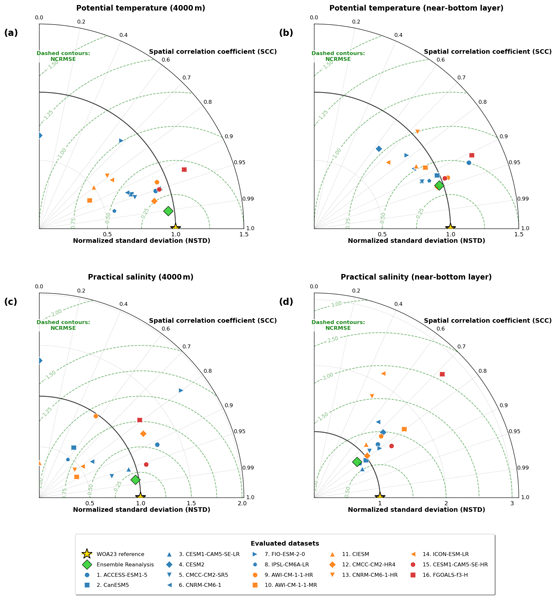
Antarctic Bottom Water influences global ocean circulation, heat storage, and carbon uptake. We compared an observational atlas, an ocean reconstruction, and 16 climate models by separating this water into three regional types. The reconstruction matched the observed large-scale patterns well, but many climate models showed substantial regional temperature and salinity errors. Correcting average biases improved some models, although errors in spatial structure remained.
An Yi, Jiping Liu, Ian Renfrew, Chaoyuan Yang, Changming Dong, Xiangzhou Song, and Qinghua Yang
Earth Syst. Sci. Data Discuss., https://doi.org/10.5194/essd-2026-476, https://doi.org/10.5194/essd-2026-476, 2026
Preprint under review for ESSD
Short summary
Short summary
This dataset quantifies the critical but overlooked role of sea spray in Southern Ocean air-sea heat exchange. We present a new gridded dataset of spray-mediated latent and sensible heat fluxes incorporating a full spray microphysical model, where spray generation depends on wind and wave states. Results show spray can double turbulent heat fluxes during extreme cyclones compared to bulk algorithms. This data is vital for understanding the Southern Ocean's impact on the global energy budget.
Xiaoxu Shi, Xiya Liu, Jiping Liu, Martin Werner, Hu Yang, Francisco W. Cruz, Chaoyuan Yang, and Gerrit Lohmann
EGUsphere, https://doi.org/10.5194/egusphere-2026-3894, https://doi.org/10.5194/egusphere-2026-3894, 2026
This preprint is open for discussion and under review for Climate of the Past (CP).
Short summary
Short summary
Cave stalagmites record the oxygen isotope of past rainfall and are used to reconstruct how monsoons changed, but due to the complexity of isotope impacting factors, what these records tell us is debated. We performed a 8300-year simulation with an isotope-enabled climate model, and show that rainfall amount is the key stable driver across global monsoons, while temperature and moisture pathways vary with region and time. Single-site records are noisy, but regional averages recover the signal.
Leyue Tang, Jonathan L. Bamber, Tian Li, and Gang Qiao
Earth Syst. Sci. Data Discuss., https://doi.org/10.5194/essd-2026-414, https://doi.org/10.5194/essd-2026-414, 2026
Revised manuscript under review for ESSD
Short summary
Short summary
Many Antarctic ice shelves are thinning and retreating, threatening future sea-level rise. Surface damage indicates structural weakening, but long-term records are scarce. We created a multi-decadal surface damage record for nine representative Antarctic ice shelves using satellite imagery and deep learning. The dataset shows that Pine Island, Thwaites and Larsen B have experienced the most significant damage changes since 1999, providing valuable insights into ice shelf stability.
Shuo Wei, Lei Zheng, Qi Liang, Teng Li, and Xiao Cheng
Earth Syst. Sci. Data Discuss., https://doi.org/10.5194/essd-2026-353, https://doi.org/10.5194/essd-2026-353, 2026
Preprint under review for ESSD
Short summary
Short summary
Supraglacial lakes on Antarctica affect ice stability. Because tracking their rapid changes is difficult, we combined satellite images using artificial intelligence to map these lakes every eight days from 2000 to 2023. We found that most lakes are very short-lived and primarily form near the edges of the ice. This record helps scientists understand fast-melting processes and their impact on future global sea level rise.
Fengguan Gu, Changwei Liu, Bo Han, Qinghua Yang, and Jiping Liu
EGUsphere, https://doi.org/10.5194/egusphere-2026-2179, https://doi.org/10.5194/egusphere-2026-2179, 2026
Short summary
Short summary
Snow strongly affects how sea ice grows and melts by insulating the ice and reflecting sunlight. Using observations from a year-long Arctic expedition, we evaluated how models represent snow movement by wind. We found that ignoring snow redistribution leads to too much snow, while improved methods better match observations. Adjusting key parameters further improves results. This work helps make sea ice models more accurate and reliable for climate studies.
Ziyu Yan, Yufang Ye, Georg Heygster, Bin Cheng, Carolina Gabarró, Ferran Hernández-Macià, and Xiao Cheng
EGUsphere, https://doi.org/10.5194/egusphere-2026-1680, https://doi.org/10.5194/egusphere-2026-1680, 2026
Short summary
Short summary
Passive microwave retrieval of snow depth remains constrained by snow and ice conditions. By combining the Snow Microwave Radiative Transfer model with global sensitivity analysis, this study quantifies how snow grain size, density, and sea ice type affect snow depth retrievability across channels. The small grain size of new snow limits retrieval performance and increases its sensitivity to sea ice type, while the use of the 89 GHz channel may help address this limitation.
Ruitang Yang, Lizz Ultee, Kristoffer Aalstad, Matvey V. Debolskiy, Regine Hock, Patrick Schmitt, David Rounce, and Tian Li
EGUsphere, https://doi.org/10.5194/egusphere-2026-1081, https://doi.org/10.5194/egusphere-2026-1081, 2026
This preprint is open for discussion and under review for Geoscientific Model Development (GMD).
Short summary
Short summary
We present a new framework to model frontal ablation of marine-terminating glaciers by linking two global glacier models with a simple physics-based calving scheme and Bayesian calibration. Applied to 71 Svalbard glaciers (2000–2019) and projected to 2100, it reproduces seasonal front changes but overestimates ablation due to uncertain geometry and velocity. This efficient approach can improve regional to global simulations.
Chengyan Liu, Zhaomin Wang, Dake Chen, Xianxian Han, Hengling Leng, Xi Liang, Liangjun Yan, Xiang Li, Craig Stevens, Andrew McC. Hogg, Kazuya Kusahara, Kaihe Yamazaki, Kay I. Ohshima, Meng Zhou, Xiao Cheng, Dongxiao Wang, Changming Dong, Jiping Liu, Qinghua Yang, Xichen Li, Ruibo Lei, Minghu Ding, Zhaoru Zhang, Dujuan Kang, Di Qi, Tongya Liu, Jihai Dong, Lu An, Ru Chen, Tong Zhang, Xiaoming Hu, Bo Han, Haibo Bi, Qi Shu, Longjiang Mu, Shiming Xu, Hu Yang, Hailong Liu, Tingfeng Dou, Zhixuan Feng, Lei Zheng, Xueyuan Tang, Guitao Shi, Yongqing Cai, Bingrui Li, Yang Wu, Xia Lin, Wenjin Sun, Yu Liu, Kai Yu, Yu Zhang, Weizeng Shao, Xiaoyu Wang, Shaojun Zheng, Chengyi Yuan, Chunxia Zhou, Jian Liu, Yang Liu, Yue Xia, Xiaoyu Pan, Jiabao Zeng, Kechen Liu, Jiahao Fan, Chen Cheng, and Qi Li
Geosci. Model Dev., 19, 2985–3033, https://doi.org/10.5194/gmd-19-2985-2026, https://doi.org/10.5194/gmd-19-2985-2026, 2026
Short summary
Short summary
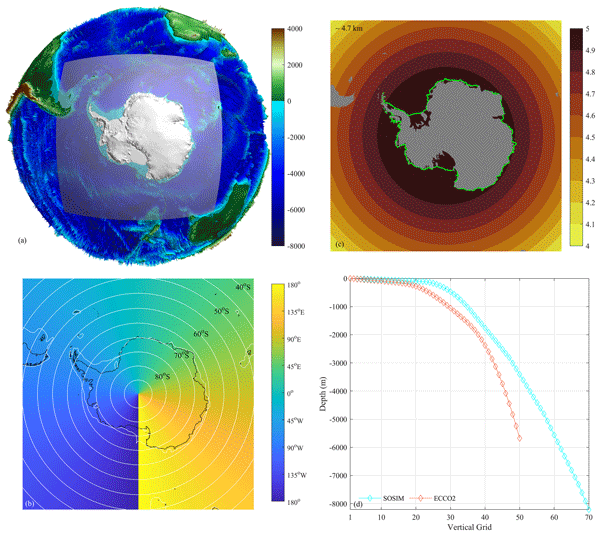
We developed a high-resolution computer model to simulate how the ocean, sea ice, and ice shelves interact around Antarctica. This helps us understand their critical role in global climate and sea-level rise. Our model successfully captures essential features like major currents and seasonal ice changes. Despite some remaining biases, it provides a useful tool for predicting future changes in this vital and rapidly evolving region.
Fan Gao, Qiang Shen, Hansheng Wang, Tong Zhang, Liming Jiang, Yan Liu, C. K. Shum, Yan An, and Xu Zhang
The Cryosphere, 20, 1947–1965, https://doi.org/10.5194/tc-20-1947-2026, https://doi.org/10.5194/tc-20-1947-2026, 2026
Short summary
Short summary
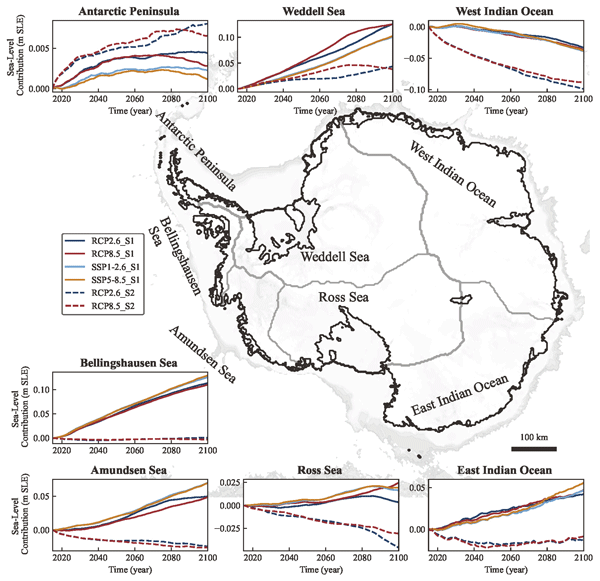
Basal ice-shelf melting critically impacts Antarctic ice sheet evolution. Our testing of two melting schemes showed starkly diverging projections despite near-identical initial states, especially for West Antarctica. By 2100, the predicted sea-level contributions differed by 57%. Initial setup changes hidden sub-ice properties (e.g., friction, temperature), modifying ice flow. Accurately representing melt and refining setup are thus essential to reduce projections uncertainty.
Whyjay Zheng, Wesley Van Wychen, Tian Li, and Tsutomu Yamanokuchi
The Cryosphere, 20, 1699–1714, https://doi.org/10.5194/tc-20-1699-2026, https://doi.org/10.5194/tc-20-1699-2026, 2026
Short summary
Short summary
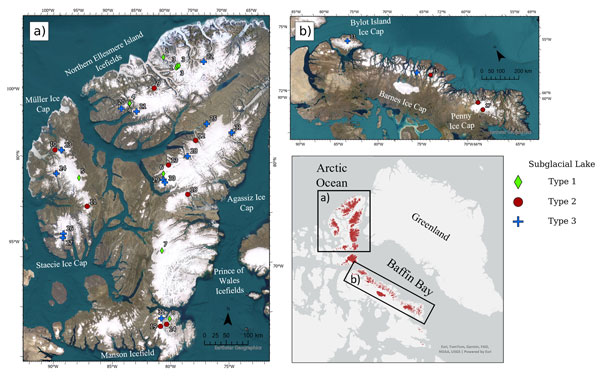
We identify lakes beneath the glaciers in the Canadian Arctic using satellite measurements over a decade, increasing the number of known subglacial lakes in this area from 2 to 37. These lakes are recharged by billions of cubic meters of water, and the draining of these lakes can lower the ice elevation by more than 100 m. We find three types of subglacial lakes, two of which are primarily located in the Canadian Arctic. When glaciers lose their ice quickly, these lakes become active.
Chao-Yuan Yang, Fengguan Gu, Jiping Liu, Annette Rinke, Hu Yang, and Xiaoxu Shi
EGUsphere, https://doi.org/10.5194/egusphere-2026-362, https://doi.org/10.5194/egusphere-2026-362, 2026
Short summary
Short summary
Accurately exchanging energy between the atmosphere and the ocean-ice systems through surface heat fluxes is crucial for climate modelling. We present an improved version of Coupled Arctic Prediction System (CAPS) by revising flux coupling for conservation of heat. Our results show that the model with improved flux coupling can better simulate sea ice conditions during the period of Multidisciplinary drifting Observatory for the Study of Arctic Climate (MOSAiC).
Hong Lin, Jinyang Du, John S. Kimball, Xiao Cheng, J. Patrick Donnelly, Jennifer D. Watts, and Annett Bartsch
Earth Syst. Sci. Data, 18, 535–549, https://doi.org/10.5194/essd-18-535-2026, https://doi.org/10.5194/essd-18-535-2026, 2026
Short summary
Short summary
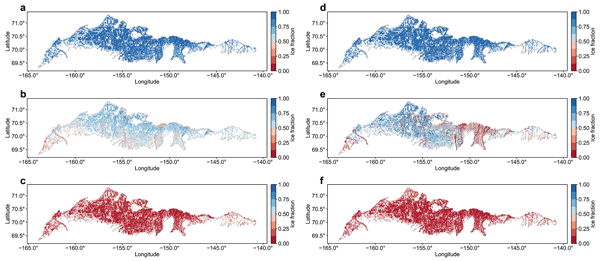
Ice cover on small water bodies is highly sensitive to climate change and influences ecosystems, water, and the carbon cycle. We produced a satellite-based ice fraction dataset for small water bodies on the Arctic Coastal Plain from 2017 to 2023. The dataset captures freeze-up and break-up timing and reveals spatial variability. It will support studies of climate–ice interactions and improve models of water and carbon processes.
Ziying Yang, Jiping Liu, Mirong Song, Yongyun Hu, Qinghua Yang, Ke Fan, Rune Grand Graversen, and Lu Zhou
The Cryosphere, 19, 6381–6402, https://doi.org/10.5194/tc-19-6381-2025, https://doi.org/10.5194/tc-19-6381-2025, 2025
Short summary
Short summary
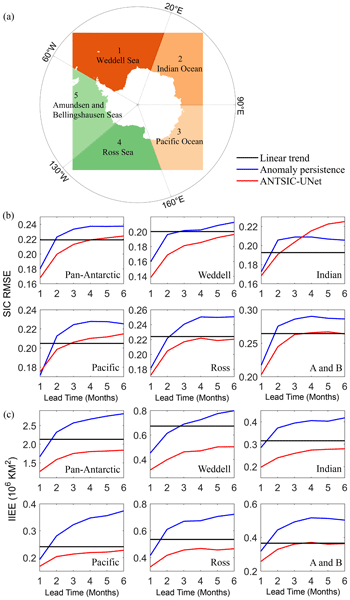
Antarctic sea ice has changed rapidly in recent years. Here we developed a deep learning model trained by multiple climate variables for extended seasonal Antarctic sea ice prediction. Our model shows high predictive skills up to 6 months in advance, particularly in predicting extreme events. It also shows skillful predictions at the sea ice edge and year-to-year sea ice changes. Variable importance analyses suggest what variables are more important for prediction at different lead times.
Bertie W. J. Miles, Tian Li, and Robert G. Bingham
The Cryosphere, 19, 4027–4043, https://doi.org/10.5194/tc-19-4027-2025, https://doi.org/10.5194/tc-19-4027-2025, 2025
Short summary
Short summary
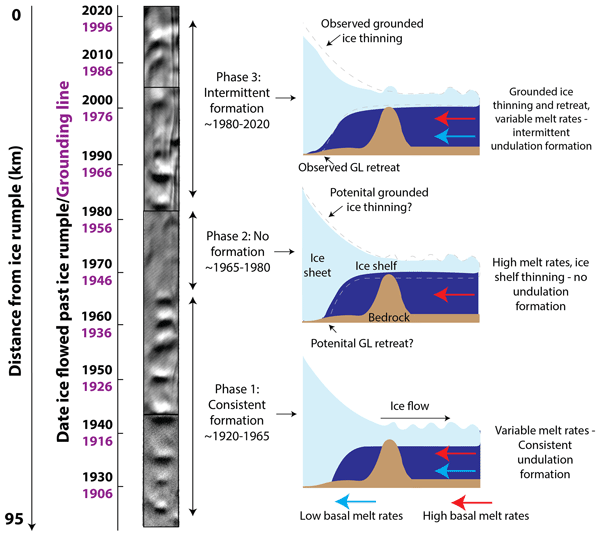
Totten Glacier, East Antarctica's largest mass-loss source, has thinned since at least the 1990s. No sustained acceleration has occurred since 1973, but earlier grounding-line retreat suggests prior loss. A ~20-year gap in surface undulations implies a mid-20th-century warm period that may have triggered ongoing loss. Collapse of a nearby ice shelf supports this. Current ~30-year satellite records are too short to capture full decadal melt-rate variability.
Mingyue Nong, Xuying Liu, Teng Li, Baogang Zhang, Qi Liang, Lei Zheng, Tiancheng Zhao, and Xiao Cheng
EGUsphere, https://doi.org/10.5194/egusphere-2025-1884, https://doi.org/10.5194/egusphere-2025-1884, 2025
Preprint archived
Short summary
Short summary
We extracted nearshore small icebergs in front of Dalk Glacier using UAV high-resolution data and directly obtained geometric parameters of the icebergs and analyzed their distribution patterns. The area/volume relationship of our icebergs aligns with the medium to large icebergs in existing ocean model. The study demonstrates UAVs' effectiveness in polar research and the importance of including all iceberg sizes in ocean modeling for better environmental impact predictions.
Fukai Peng, Xiaoli Deng, Yunzhong Shen, and Xiao Cheng
Earth Syst. Sci. Data, 17, 1441–1460, https://doi.org/10.5194/essd-17-1441-2025, https://doi.org/10.5194/essd-17-1441-2025, 2025
Short summary
Short summary
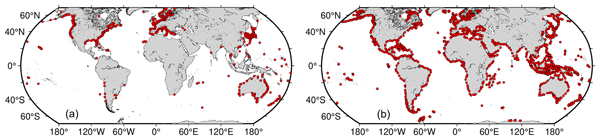
A new reprocessed altimeter coastal sea level dataset, International Altimetry Service 2024 (IAS2024), for monitoring sea level changes along the world’s coastlines is presented. The evaluation and validation results confirm the reliability of this dataset. The altimeter-based virtual stations along the world’s coastlines can be built using this dataset to monitor the coastal sea level changes where tide gauges are unavailable. Therefore, it is beneficial for both oceanographic communities and policymakers.
Yan Sun, Shaoyin Wang, Xiao Cheng, Teng Li, Chong Liu, Yufang Ye, and Xi Zhao
EGUsphere, https://doi.org/10.5194/egusphere-2024-2760, https://doi.org/10.5194/egusphere-2024-2760, 2025
Preprint archived
Short summary
Short summary
This manuscript proposes to combine semantic segmentation of ice region using a U-Net model and multi-stage detection of ice pixels using the Multi-textRG algorithm to achieve fine ice-water classification. Novel proccessings for the HV/HH polarization ratio and the GLCM textures, as well as the usage of regional growing, largely improve the method accuracy and robustness. The proposed algorithm framework achieved automated sea-ice labelling.

Chenhui Ning, Shiming Xu, Yan Zhang, Xuantong Wang, Zhihao Fan, and Jiping Liu
Geosci. Model Dev., 17, 6847–6866, https://doi.org/10.5194/gmd-17-6847-2024, https://doi.org/10.5194/gmd-17-6847-2024, 2024
Short summary
Short summary
Sea ice models are mainly based on non-moving structured grids, which is different from buoy measurements that follow the ice drift. To facilitate Lagrangian analysis, we introduce online tracking of sea ice in Community Ice CodE (CICE). We validate the sea ice tracking with buoys and evaluate the sea ice deformation in high-resolution simulations, which show multi-fractal characteristics. The source code is openly available and can be used in various scientific and operational applications.
Yan Sun, Shaoyin Wang, Xiao Cheng, Teng Li, Chong Liu, Yufang Ye, and Xi Zhao
EGUsphere, https://doi.org/10.5194/egusphere-2024-1177, https://doi.org/10.5194/egusphere-2024-1177, 2024
Preprint archived
Short summary
Short summary
Arctic sea ice has rapidly declined due to global warming, leading to extreme weather events. Accurate ice monitoring is vital for understanding and forecasting these impacts. Combining SAR and AMSR2 data with machine learning is efficient but requires sufficient labels. We propose a framework integrating the U-Net model with the Multi-textRG algorithm to achieve ice-water classification at SAR-level resolution and to generate accurate labels for improved U-Net model training.
Chao-Yuan Yang, Jiping Liu, and Dake Chen
The Cryosphere, 18, 1215–1239, https://doi.org/10.5194/tc-18-1215-2024, https://doi.org/10.5194/tc-18-1215-2024, 2024
Short summary
Short summary
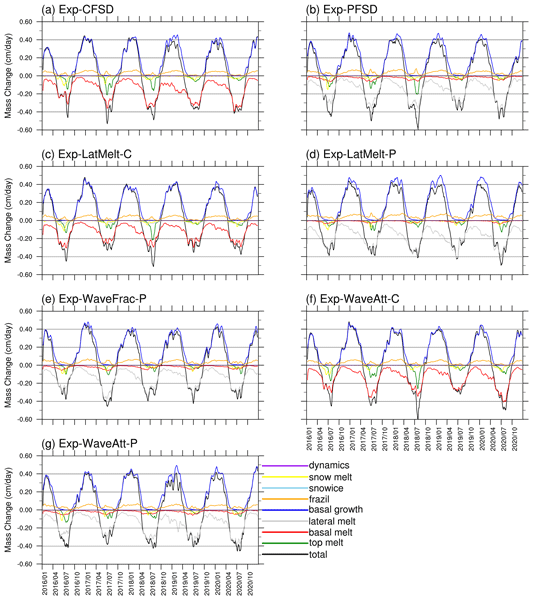
We present a new atmosphere–ocean–wave–sea ice coupled model to study the influences of ocean waves on Arctic sea ice simulation. Our results show (1) smaller ice-floe size with wave breaking increases ice melt, (2) the responses in the atmosphere and ocean to smaller floe size partially reduce the effect of the enhanced ice melt, (3) the limited oceanic energy is a strong constraint for ice melt enhancement, and (4) ocean waves can indirectly affect sea ice through the atmosphere and the ocean.
Tian Li, Konrad Heidler, Lichao Mou, Ádám Ignéczi, Xiao Xiang Zhu, and Jonathan L. Bamber
Earth Syst. Sci. Data, 16, 919–939, https://doi.org/10.5194/essd-16-919-2024, https://doi.org/10.5194/essd-16-919-2024, 2024
Short summary
Short summary
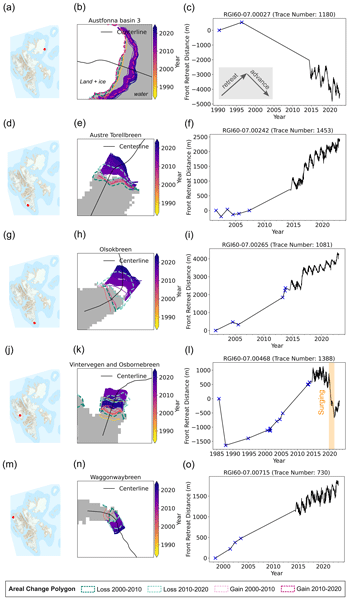
Our study uses deep learning to produce a new high-resolution calving front dataset for 149 marine-terminating glaciers in Svalbard from 1985 to 2023, containing 124 919 terminus traces. This dataset offers insights into understanding calving mechanisms and can help improve glacier frontal ablation estimates as a component of the integrated mass balance assessment.
Xiaoxu Shi, Martin Werner, Hu Yang, Roberta D'Agostino, Jiping Liu, Chaoyuan Yang, and Gerrit Lohmann
Clim. Past, 19, 2157–2175, https://doi.org/10.5194/cp-19-2157-2023, https://doi.org/10.5194/cp-19-2157-2023, 2023
Short summary
Short summary
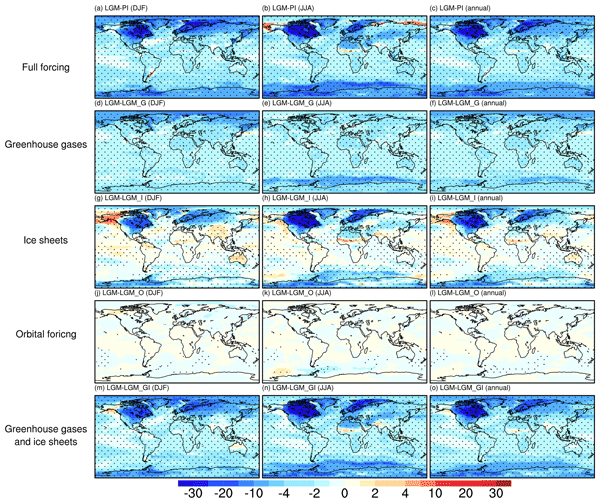
The Last Glacial Maximum (LGM) marks the most recent extremely cold and dry time period of our planet. Using AWI-ESM, we quantify the relative importance of Earth's orbit, greenhouse gases (GHG) and ice sheets (IS) in determining the LGM climate. Our results suggest that both GHG and IS play important roles in shaping the LGM temperature. Continental ice sheets exert a major control on precipitation, atmospheric dynamics, and the intensity of El Niño–Southern Oscillation.
Haihan Hu, Jiechen Zhao, Petra Heil, Zhiliang Qin, Jingkai Ma, Fengming Hui, and Xiao Cheng
The Cryosphere, 17, 2231–2244, https://doi.org/10.5194/tc-17-2231-2023, https://doi.org/10.5194/tc-17-2231-2023, 2023
Short summary
Short summary
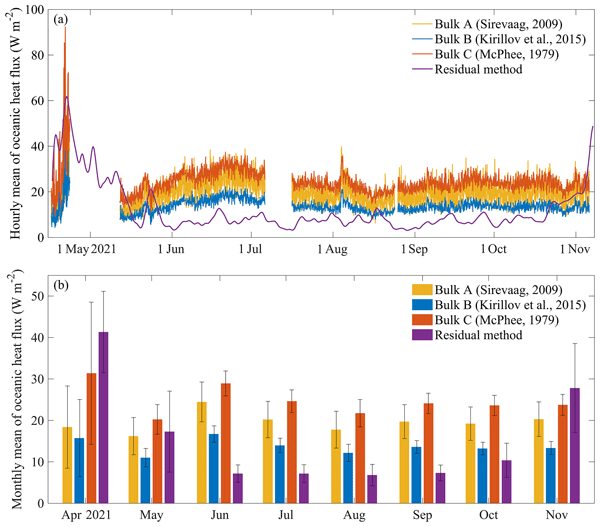
The oceanic characteristics beneath sea ice significantly affect ice growth and melting. The high-frequency and long-term observations of oceanic variables allow us to deeply investigate their diurnal and seasonal variation and evaluate their influences on sea ice evolution. The large-scale sea ice distribution and ocean circulation contributed to the seasonal variation of ocean variables, revealing the important relationship between large-scale and local phenomena.
Tian Li, Geoffrey J. Dawson, Stephen J. Chuter, and Jonathan L. Bamber
The Cryosphere, 17, 1003–1022, https://doi.org/10.5194/tc-17-1003-2023, https://doi.org/10.5194/tc-17-1003-2023, 2023
Short summary
Short summary
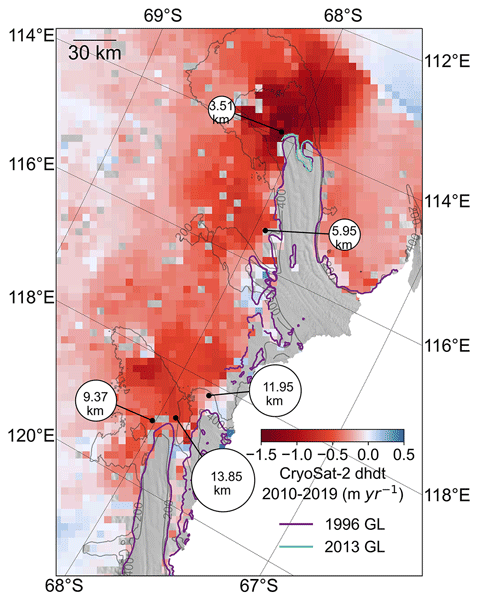
The Totten and Moscow University glaciers in East Antarctica have the potential to make a significant contribution to future sea-level rise. We used a combination of different satellite measurements to show that the grounding lines have been retreating along the fast-flowing ice streams across these two glaciers. We also found two tide-modulated ocean channels that might open new pathways for the warm ocean water to enter the ice shelf cavity.
Yufang Ye, Yanbing Luo, Yan Sun, Mohammed Shokr, Signe Aaboe, Fanny Girard-Ardhuin, Fengming Hui, Xiao Cheng, and Zhuoqi Chen
The Cryosphere, 17, 279–308, https://doi.org/10.5194/tc-17-279-2023, https://doi.org/10.5194/tc-17-279-2023, 2023
Short summary
Short summary
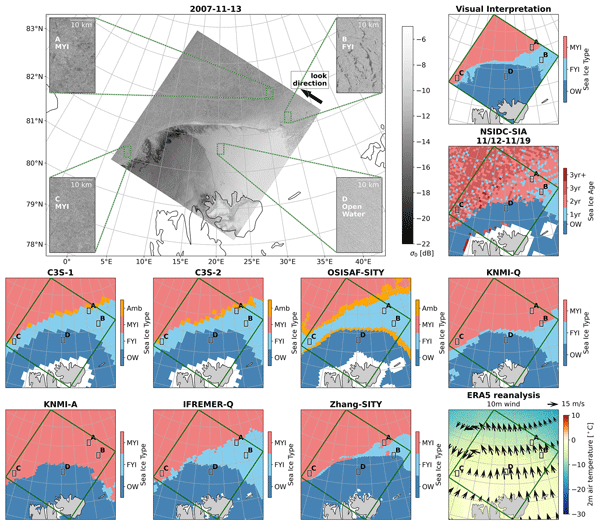
Arctic sea ice type (SITY) variation is a sensitive indicator of climate change. This study gives a systematic inter-comparison and evaluation of eight SITY products. Main results include differences in SITY products being significant, with average Arctic multiyear ice extent up to 1.8×10⁶ km2; Ku-band scatterometer SITY products generally performing better; and factors such as satellite inputs, classification methods, training datasets and post-processing highly impacting their performance.
Chong Liu, Xiaoqing Xu, Xuejie Feng, Xiao Cheng, Caixia Liu, and Huabing Huang
Earth Syst. Sci. Data, 15, 133–153, https://doi.org/10.5194/essd-15-133-2023, https://doi.org/10.5194/essd-15-133-2023, 2023
Short summary
Short summary
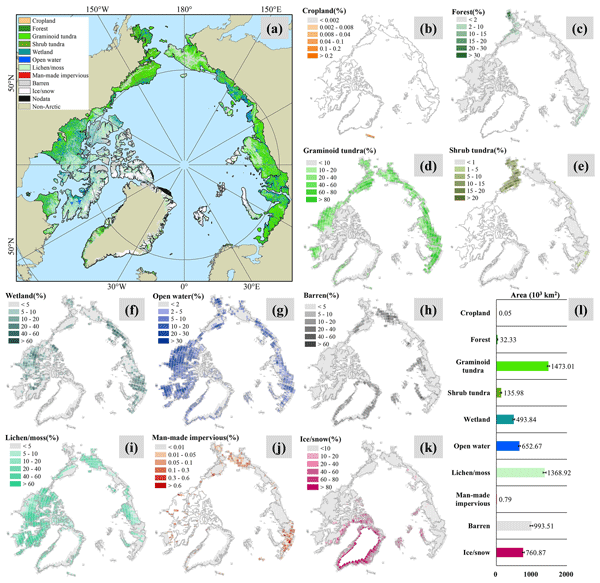
Rapid Arctic changes are increasingly influencing human society, both locally and globally. Land cover offers a basis for characterizing the terrestrial world, yet spatially detailed information on Arctic land cover is lacking. We employ multi-source data to develop a new land cover map for the circumpolar Arctic. Our product reveals regionally contrasting biome distributions not fully documented in existing studies and thus enhances our understanding of the Arctic’s terrestrial system.

Qi Liang, Wanxin Xiao, Ian Howat, Xiao Cheng, Fengming Hui, Zhuoqi Chen, Mi Jiang, and Lei Zheng
The Cryosphere, 16, 2671–2681, https://doi.org/10.5194/tc-16-2671-2022, https://doi.org/10.5194/tc-16-2671-2022, 2022
Short summary
Short summary
Using multi-temporal ArcticDEM and ICESat-2 altimetry data, we document changes in surface elevation of a subglacial lake basin from 2012 to 2021. The long-term measurements show that the subglacial lake was recharged by surface meltwater and that a rapid drainage event in late August 2019 induced an abrupt ice velocity change. Multiple factors regulate the episodic filling and drainage of the lake. Our study also reveals ~ 64 % of the surface meltwater successfully descended to the bed.
Tian Li, Geoffrey J. Dawson, Stephen J. Chuter, and Jonathan L. Bamber
Earth Syst. Sci. Data, 14, 535–557, https://doi.org/10.5194/essd-14-535-2022, https://doi.org/10.5194/essd-14-535-2022, 2022
Short summary
Short summary
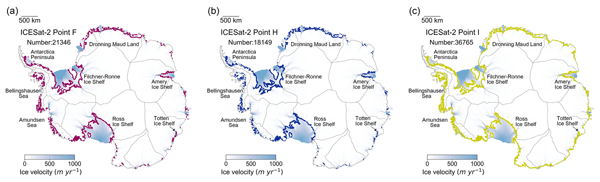
Accurate knowledge of the Antarctic grounding zone is important for mass balance calculation, ice sheet stability assessment, and ice sheet model projections. Here we present the first ICESat-2-derived high-resolution grounding zone product of the Antarctic Ice Sheet, including three important boundaries. This new data product will provide more comprehensive insights into ice sheet instability, which is valuable for both the cryosphere and sea level science communities.
Yijing Lin, Yan Liu, Zhitong Yu, Xiao Cheng, Qiang Shen, and Liyun Zhao
The Cryosphere Discuss., https://doi.org/10.5194/tc-2021-325, https://doi.org/10.5194/tc-2021-325, 2021
Preprint withdrawn
Short summary
Short summary
We introduce an uncertainty analysis framework for comprehensively and systematically quantifying the uncertainties of the Antarctic mass balance using the Input and Output Method. It is difficult to use the previous strategies employed in various methods and the available data to achieve the goal of estimation accuracy. The dominant cause of the future uncertainty is the ice thickness data gap. The interannual variability of ice discharge caused by velocity and thickness is also nonnegligible.
Cited articles
Achanta, R., Shaji, A., Smith, K., Lucchi, A., Fua, P., and Süsstrunk, S.: SLIC Superpixels Compared to State-of-the-Art Superpixel Methods, IEEE Transactions on Pattern Analysis and Machine Intelligence, 34, 2274–2282, https://doi.org/10.1109/TPAMI.2012.120, 2012. a
Amani, M., Ghorbanian, A., Ahmadi, S. A., Kakooei, M., Moghimi, A., Mirmazloumi, S. M., Moghaddam, S. H. A., Mahdavi, S., Ghahremanloo, M., Parsian, S., Wu, Q., and Brisco, B.: Google Earth Engine Cloud Computing Platform for Remote Sensing Big Data Applications: A Comprehensive Review, IEEE Journal of Selected Topics in Applied Earth Observations and Remote Sensing, 13, 5326–5350, https://doi.org/10.1109/JSTARS.2020.3021052, 2020. a
Barbat, M. M., Rackow, T., Hellmer, H. H., Wesche, C., and Mata, M. M.: Three Years of Near-Coastal Antarctic Iceberg Distribution From a Machine Learning Approach Applied to SAR Imagery, Journal of Geophysical Research: Oceans, 124, 6658–6672, https://doi.org/10.1029/2019JC015205, 2019a. a, b
Barbat, M. M., Wesche, C., Werhli, A. V., and Mata, M. M.: An adaptive machine learning approach to improve automatic iceberg detection from SAR images, ISPRS Journal of Photogrammetry and Remote Sensing, 156, 247–259, https://doi.org/10.1016/j.isprsjprs.2019.08.015, 2019b. a
Barbat, M. M., Rackow, T., Wesche, C., Hellmer, H. H., and Mata, M. M.: Automated iceberg tracking with a machine learning approach applied to SAR imagery: A Weddell sea case study, ISPRS Journal of Photogrammetry and Remote Sensing, 172, 189–206, https://doi.org/10.1016/j.isprsjprs.2020.12.006, 2021. a
Benn, D. I. and Åström, J. A.: Calving glaciers and ice shelves, Advances in Physics: X, 3, 1513819, https://doi.org/10.1080/23746149.2018.1513819, 2018. a
Bigg, G. R., Cropper, T. E., O'Neill, C. K., Arnold, A. K., Fleming, A. H., Marsh, R., Ivchenko, V., Fournier, N., Osborne, M., and Stephens, R.: A model for assessing iceberg hazard, Natural Hazards, 92, 1113–1136, https://doi.org/10.1007/s11069-018-3243-x, 2018. a
Braakmann-Folgmann, A., Shepherd, A., Gerrish, L., Izzard, J., and Ridout, A.: Observing the disintegration of the A68A iceberg from space, Remote Sensing of Environment, 270, 112855, https://doi.org/10.1016/j.rse.2021.112855, 2022. a
Budge, J. S. and Long, D. G.: A Comprehensive Database for Antarctic Iceberg Tracking Using Scatterometer Data, IEEE Journal of Selected Topics in Applied Earth Observations and Remote Sensing, 11, 434–442, https://doi.org/10.1109/JSTARS.2017.2784186, 2018. a, b
Collares, L. L., Mata, M. M., Kerr, R., Arigony-Neto, J., and Barbat, M. M.: Iceberg drift and ocean circulation in the northwestern Weddell Sea, Antarctica, Deep Sea Research Part II: Topical Studies in Oceanography, 149, 10–24, https://doi.org/10.1016/j.dsr2.2018.02.014, 2018. a
Deakin, K. A., Christie, F. D. W., Boxall, K., and Willis, I. C.: Oscillatory response of Larsen C Ice Shelf flow to the calving of iceberg A-68, Journal of Glaciology, 70, e61, https://doi.org/10.1017/jog.2023.102, 2024. a
Depoorter, M. A., Bamber, J. L., Griggs, J. A., Lenaerts, J. T. M., Ligtenberg, S. R. M., Van Den Broeke, M. R., and Moholdt, G.: Calving fluxes and basal melt rates of Antarctic ice shelves, Nature, 502, 89–92, https://doi.org/10.1038/nature12567, 2013. a
Dowdeswell, J. and Bamber, J.: Keel depths of modern Antarctic icebergs and implications for sea-floor scouring in the geological record, Marine Geology, 243, 120–131, https://doi.org/10.1016/j.margeo.2007.04.008, 2007. a, b
Drinkwater, M. R., Hosseinmostafa, R., and Gogineni, P.: C-band backscatter measurements of winter sea-ice in the Weddell Sea, Antarctica, International Journal of Remote Sensing, 16, 3365–3389, https://doi.org/10.1080/01431169508954635, 1995. a
Duprat, L. P. A. M., Bigg, G. R., and Wilton, D. J.: Enhanced Southern Ocean marine productivity due to fertilization by giant icebergs, Nature Geoscience, 9, 219–221, https://doi.org/10.1038/ngeo2633, 2016. a
Ferdous, M. S., McGuire, P., Power, D., Johnson, T., and Collins, M.: A comparison of numerically modelled iceberg backscatter signatures with sentinel-1 C-band synthetic aperture radar acquisitions, Canadian Journal of Remote Sensing, 44, 232–242, https://doi.org/10.1080/07038992.2018.1495554, 2018. a
Gladstone, R. M., Bigg, G. R., and Nicholls, K. W.: Iceberg trajectory modeling and meltwater injection in the Southern Ocean, Journal of Geophysical Research: Oceans, 106, 19903–19915, https://doi.org/10.1029/2000JC000347, 2001. a, b
Gorelick, N., Hancher, M., Dixon, M., Ilyushchenko, S., Thau, D., and Moore, R.: Google Earth Engine: Planetary-scale geospatial analysis for everyone, Remote Sensing of Environment, 202, 18–27, https://doi.org/10.1016/j.rse.2017.06.031, 2017. a
Hamley, T. C. and Budd, W. F.: Antarctic Iceberg Distribution and Dissolution, Journal of Glaciology, 32, 242–251, https://doi.org/10.3189/S0022143000015574, 1986. a
Hammond, M. D. and Jones, D. C.: Freshwater flux from ice sheet melting and iceberg calving in the Southern Ocean, Geoscience Data Journal, 3, 60–62, https://doi.org/10.1002/gdj3.43, 2016. a
Haralick, R. M., Shanmugam, K., and Dinstein, I.: Textural Features for Image Classification, IEEE Transactions on Systems, Man, and Cybernetics, SMC-3, 610–621, https://doi.org/10.1109/TSMC.1973.4309314, 1973. a
Karvonen, J., Gegiuc, A., Niskanen, T., Montonen, A., Buus-Hinkler, J., and Rinne, E.: Iceberg Detection in Dual-Polarized C-Band SAR Imagery by Segmentation and Nonparametric CFAR (SnP-CFAR), IEEE Transactions on Geoscience and Remote Sensing, 60, 1–12, https://doi.org/10.1109/TGRS.2021.3070312, 2022. a
Koo, Y., Xie, H., Mahmoud, H., Iqrah, J. M., and Ackley, S. F.: Automated detection and tracking of medium-large icebergs from Sentinel-1 imagery using Google Earth Engine, Remote Sensing of Environment, 296, 113731, https://doi.org/10.1016/j.rse.2023.113731, 2023. a, b
Li, T., Shokr, M., Liu, Y., Cheng, X., Li, T., Wang, F., and Hui, F.: Monitoring the tabular icebergs C28A and C28B calved from the Mertz Ice Tongue using radar remote sensing data, Remote Sensing of Environment, 216, 615–625, https://doi.org/10.1016/j.rse.2018.07.028, 2018. a
Lin, H., Cheng, X., Li, T., Shi, Q., Liang, Q., Meng, X., Wang, S., and Zheng, L.: Assessing the degree of impact from iceberg activities on penguin colonies of Clarence Island, Acta Oceanologica Sinica, 43, 105–109, https://doi.org/10.1007/s13131-024-2355-2, 2024. a
Liu, X., Cheng, X., Liang, Q., Li, T., Peng, F., Chi, Z., and He, J.: Grounding event of iceberg D28 and its interactions with seabed topography, Remote Sensing, 14, 154, https://doi.org/10.3390/rs14010154, 2021. a
Liu, X.-Y. and Chen, Z.-L.: A 6 year circum-Antarctic icebergs dataset (2018–2023) [data set], https://doi.org/10.5281/zenodo.17165466, 2025. a
Liu, Y., Moore, J. C., Cheng, X., Gladstone, R. M., Bassis, J. N., Liu, H., Wen, J., and Hui, F.: Ocean-driven thinning enhances iceberg calving and retreat of Antarctic ice shelves, Proceedings of the National Academy of Sciences, 112, 3263–3268, https://doi.org/10.1073/pnas.1415137112, 2015. a
Long, D. G., Ballantyn, J., and Bertoia, C.: Is the number of Antarctic icebergs really increasing?, Eos, Transactions American Geophysical Union, 83, 469–474, https://doi.org/10.1029/2002EO000330, 2002. a
Mazur, A., Wåhlin, A., and Krȩżel, A.: An object-based SAR image iceberg detection algorithm applied to the Amundsen Sea, Remote Sensing of Environment, 189, 67–83, https://doi.org/10.1016/j.rse.2016.11.013, 2017. a, b
Orheim, O., Giles, A. B., Jacka, T. H. J., and Moholdt, G.: Quantifying dissolution rates of Antarctic icebergs in open water, Annals of Glaciology, 64, 170–180, https://doi.org/10.1017/aog.2023.26, 2023. a, b, c
Parkinson, C. L. and Cavalieri, D. J.: Antarctic sea ice variability and trends, 1979–2010, The Cryosphere, 6, 871–880, https://doi.org/10.5194/tc-6-871-2012, 2012. a
Qadir, M., Smakhtin, V., Koo-Oshima, S., and Guenther, E. (Eds.): Unconventional Water Resources, Springer International Publishing, Cham, ISBN 978-3-030-90145-5, 978-3-030-90146-2, https://doi.org/10.1007/978-3-030-90146-2, 2022. a
Qi, M., Liu, Y., Liu, J., Cheng, X., Lin, Y., Feng, Q., Shen, Q., and Yu, Z.: A 15 year circum-Antarctic iceberg calving dataset derived from continuous satellite observations, Earth Syst. Sci. Data, 13, 4583–4601, https://doi.org/10.5194/essd-13-4583-2021, 2021. a
Rignot, E., Jacobs, S., Mouginot, J., and Scheuchl, B.: Ice-Shelf Melting Around Antarctica, Science, 341, 266–270, https://doi.org/10.1126/science.1235798, 2013. a
Smith, K. L., Robison, B. H., Helly, J. J., Kaufmann, R. S., Ruhl, H. A., Shaw, T. J., Twining, B. S., and Vernet, M.: Free-Drifting Icebergs: Hot Spots of Chemical and Biological Enrichment in the Weddell Sea, Science, 317, 478–482, https://doi.org/10.1126/science.1142834, 2007. a
Stern, A. A., Adcroft, A., and Sergienko, O.: The effects of Antarctic iceberg calving-size distribution in a global climate model, Journal of Geophysical Research: Oceans, 121, 5773–5788, https://doi.org/10.1002/2016JC011835, 2016. a, b, c, d
Stuart, K. and Long, D.: Iceberg size and orientation estimation using SeaWinds, Cold Regions Science and Technology, 69, 39–51, https://doi.org/10.1016/j.coldregions.2011.07.006, 2011a. a
Stuart, K. and Long, D.: Tracking large tabular icebergs using the SeaWinds Ku-band microwave scatterometer, Deep Sea Research Part II: Topical Studies in Oceanography, 58, 1285–1300, https://doi.org/10.1016/j.dsr2.2010.11.004, 2011b. a
Tournadre, J., Girard-Ardhuin, F., and Legrésy, B.: Antarctic icebergs distributions, 2002–2010, Journal of Geophysical Research: Oceans, 117, 2011JC007441, https://doi.org/10.1029/2011JC007441, 2012. a
Tournadre, J., Bouhier, N., Girard-Ardhuin, F., and Rémy, F.: Large icebergs characteristics from altimeter waveforms analysis, Journal of Geophysical Research: Oceans, 120, 1954–1974, https://doi.org/10.1002/2014JC010502, 2015. a, b
Tournadre, J., Bouhier, N., Girard-Ardhuin, F., and Rémy, F.: Antarctic icebergs distributions 1992–2014, Journal of Geophysical Research: Oceans, 121, 327–349, https://doi.org/10.1002/2015JC011178, 2016. a, b
Wesche, C. and Dierking, W.: Iceberg signatures and detection in SAR images in two test regions of the Weddell Sea, Antarctica, Journal of Glaciology, 58, 325–339, https://doi.org/10.3189/2012J0G11J020, 2012. a
Wesche, C. and Dierking, W.: Near-coastal circum-Antarctic iceberg size distributions determined from Synthetic Aperture Radar images, Remote Sensing of Environment, 156, 561–569, https://doi.org/10.1016/j.rse.2014.10.025, 2015. a, b, c
Wu, S.-Y. and Hou, S.: Impact of icebergs on net primary productivity in the Southern Ocean, The Cryosphere, 11, 707–722, https://doi.org/10.5194/tc-11-707-2017, 2017. a
Xu, L., Yan, Q., Xia, Y., and Jia, J.: Structure extraction from texture via relative total variation, ACM Transactions on Graphics, 31, 1–10, https://doi.org/10.1145/2366145.2366158, 2012. a
Zhou, Z.-H.: Ensemble methods: foundations and algorithms, CRC Press, https://doi.org/10.1201/b12207, 2012. a
Short summary
Our study uses Google Earth Engine to create a dataset of Antarctic icebergs in the Southern Ocean (south of 55° S) from October 2018 to 2023. The dataset includes icebergs larger than 0.04 km², with details on their locations, sizes, and shapes. It shows significant changes in iceberg number and area, mainly driven by major ice shelf calving events – especially in the Weddell Sea. This resource fills key gaps in understanding iceberg impacts on the ocean and climate.
Our study uses Google Earth Engine to create a dataset of Antarctic icebergs in the Southern...


Altmetrics
Final-revised paper
Preprint