Articles | Volume 18, issue 2
https://doi.org/10.5194/essd-18-1147-2026
© Author(s) 2026. This work is distributed under
the Creative Commons Attribution 4.0 License.
the Creative Commons Attribution 4.0 License.
https://doi.org/10.5194/essd-18-1147-2026
© Author(s) 2026. This work is distributed under
the Creative Commons Attribution 4.0 License.
the Creative Commons Attribution 4.0 License.
Data description article
| 
10 Feb 2026
Data description article |
| 10 Feb 2026
| 10 Feb 2026
Quantifying the spatial-seasonal patterns of land–atmosphere water, heat and CO2 flux exchange over the Tibetan Plateau from an observational perspective

State Key Laboratory of Tibetan Plateau Earth System, Environment and Resources (TPESER), Institute of Tibetan Plateau Research, Chinese Academy of Sciences, Beijing 100101, China
College of Earth and Planetary Sciences, University of Chinese Academy of Sciences, Beijing 100049, China
National Observation and Research Station for Qomolongma Special Atmospheric Processes and Environmental Changes, Dingri 858200, China
Kathmandu Center of Research and Education, Chinese Academy of Sciences, Beijing 100101, China
China-Pakistan Joint Research Center on Earth Sciences, Chinese Academy of Sciences, 45320 Islamabad, Pakistan
State Key Laboratory of Tibetan Plateau Earth System, Environment and Resources (TPESER), Institute of Tibetan Plateau Research, Chinese Academy of Sciences, Beijing 100101, China
College of Earth and Planetary Sciences, University of Chinese Academy of Sciences, Beijing 100049, China
College of Hydraulic & Environmental Engineering, China Three Gorges University, Yichang 443002, China
College of Atmospheric Science, Lanzhou University, Lanzhou 730000, China
National Observation and Research Station for Qomolongma Special Atmospheric Processes and Environmental Changes, Dingri 858200, China
Kathmandu Center of Research and Education, Chinese Academy of Sciences, Beijing 100101, China
China-Pakistan Joint Research Center on Earth Sciences, Chinese Academy of Sciences, 45320 Islamabad, Pakistan
Zeyong Hu
Key Laboratory of Land Surface Process and Climate Change in Cold and Arid Regions, Northwest Institute of Eco-Environment and Resources, Chinese Academy of Sciences, Lanzhou 730000, China
Xuan Li
State Key Laboratory of Tibetan Plateau Earth System, Environment and Resources (TPESER), Institute of Tibetan Plateau Research, Chinese Academy of Sciences, Beijing 100101, China
Weiqiang Ma
State Key Laboratory of Tibetan Plateau Earth System, Environment and Resources (TPESER), Institute of Tibetan Plateau Research, Chinese Academy of Sciences, Beijing 100101, China
College of Earth and Planetary Sciences, University of Chinese Academy of Sciences, Beijing 100049, China
College of Atmospheric Science, Lanzhou University, Lanzhou 730000, China
National Observation and Research Station for Qomolongma Special Atmospheric Processes and Environmental Changes, Dingri 858200, China
Kathmandu Center of Research and Education, Chinese Academy of Sciences, Beijing 100101, China
China-Pakistan Joint Research Center on Earth Sciences, Chinese Academy of Sciences, 45320 Islamabad, Pakistan
Xuelong Chen
State Key Laboratory of Tibetan Plateau Earth System, Environment and Resources (TPESER), Institute of Tibetan Plateau Research, Chinese Academy of Sciences, Beijing 100101, China
College of Earth and Planetary Sciences, University of Chinese Academy of Sciences, Beijing 100049, China
National Observation and Research Station for Qomolongma Special Atmospheric Processes and Environmental Changes, Dingri 858200, China
Kathmandu Center of Research and Education, Chinese Academy of Sciences, Beijing 100101, China
China-Pakistan Joint Research Center on Earth Sciences, Chinese Academy of Sciences, 45320 Islamabad, Pakistan
Cunbo Han
State Key Laboratory of Tibetan Plateau Earth System, Environment and Resources (TPESER), Institute of Tibetan Plateau Research, Chinese Academy of Sciences, Beijing 100101, China
College of Earth and Planetary Sciences, University of Chinese Academy of Sciences, Beijing 100049, China
National Observation and Research Station for Qomolongma Special Atmospheric Processes and Environmental Changes, Dingri 858200, China
Kathmandu Center of Research and Education, Chinese Academy of Sciences, Beijing 100101, China
China-Pakistan Joint Research Center on Earth Sciences, Chinese Academy of Sciences, 45320 Islamabad, Pakistan
Zhipeng Xie
State Key Laboratory of Tibetan Plateau Earth System, Environment and Resources (TPESER), Institute of Tibetan Plateau Research, Chinese Academy of Sciences, Beijing 100101, China
College of Earth and Planetary Sciences, University of Chinese Academy of Sciences, Beijing 100049, China
National Observation and Research Station for Qomolongma Special Atmospheric Processes and Environmental Changes, Dingri 858200, China
Kathmandu Center of Research and Education, Chinese Academy of Sciences, Beijing 100101, China
China-Pakistan Joint Research Center on Earth Sciences, Chinese Academy of Sciences, 45320 Islamabad, Pakistan
Yuyang Wang
College of Grassland Science and Technology, China Agricultural University, Beijing 100193, China
Maoshan Li
School of Atmospheric Sciences, Chengdu University of Information Technology, Chengdu 610225, China
Bin Ma
State Key Laboratory of Tibetan Plateau Earth System, Environment and Resources (TPESER), Institute of Tibetan Plateau Research, Chinese Academy of Sciences, Beijing 100101, China
National Observation and Research Station for Qomolongma Special Atmospheric Processes and Environmental Changes, Dingri 858200, China
Kathmandu Center of Research and Education, Chinese Academy of Sciences, Beijing 100101, China
China-Pakistan Joint Research Center on Earth Sciences, Chinese Academy of Sciences, 45320 Islamabad, Pakistan
Xingdong Shi
State Key Laboratory of Tibetan Plateau Earth System, Environment and Resources (TPESER), Institute of Tibetan Plateau Research, Chinese Academy of Sciences, Beijing 100101, China
College of Atmospheric Science, Lanzhou University, Lanzhou 730000, China
State Key Laboratory of Tibetan Plateau Earth System, Environment and Resources (TPESER), Institute of Tibetan Plateau Research, Chinese Academy of Sciences, Beijing 100101, China
College of Atmospheric Science, Lanzhou University, Lanzhou 730000, China
Zhengling Cai
State Key Laboratory of Tibetan Plateau Earth System, Environment and Resources (TPESER), Institute of Tibetan Plateau Research, Chinese Academy of Sciences, Beijing 100101, China
College of Atmospheric Science, Lanzhou University, Lanzhou 730000, China
Related authors
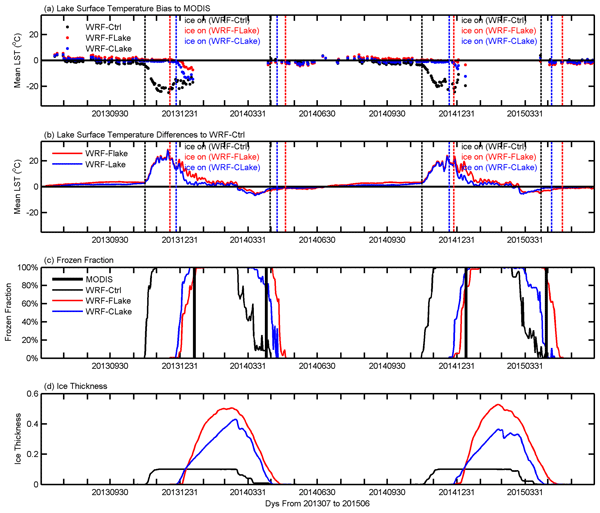
Xu Zhou, Binbin Wang, Xiaogang Ma, Zhu La, and Kun Yang
The Cryosphere, 18, 4589–4605, https://doi.org/10.5194/tc-18-4589-2024, https://doi.org/10.5194/tc-18-4589-2024, 2024
Short summary
Short summary
The simulation of the ice phenology of Nam Co by WRF is investigated. Compared with the default model, improving the key lake schemes, such as water surface roughness length for heat fluxes and the shortwave radiation transfer for lake ice, can better simulate the lake ice phenology. The still existing errors in the spatial patterns of lake ice phenology imply that challenges still exist in modelling key lake and non-lake physics such as grid-scale water circulation and snow-related processes.
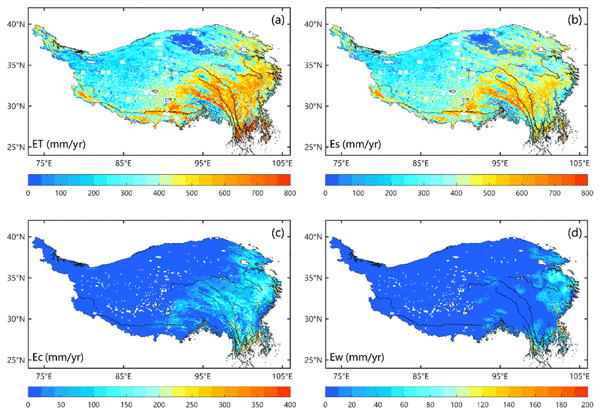
Ling Yuan, Xuelong Chen, Yaoming Ma, Cunbo Han, Binbin Wang, and Weiqiang Ma
Earth Syst. Sci. Data, 16, 775–801, https://doi.org/10.5194/essd-16-775-2024, https://doi.org/10.5194/essd-16-775-2024, 2024
Short summary
Short summary
Accurately monitoring and understanding the spatial–temporal variability of evapotranspiration (ET) components over the Tibetan Plateau (TP) remains difficult. Here, 37 years (1982–2018) of monthly ET component data for the TP was produced, and the data are consistent with measurements. The annual average ET for the TP was about 0.93 (± 0.037) × 103 Gt yr−1. The rate of increase of the ET was around 0.96 mm yr−1. The increase in the ET can be explained by warming and wetting of the climate.
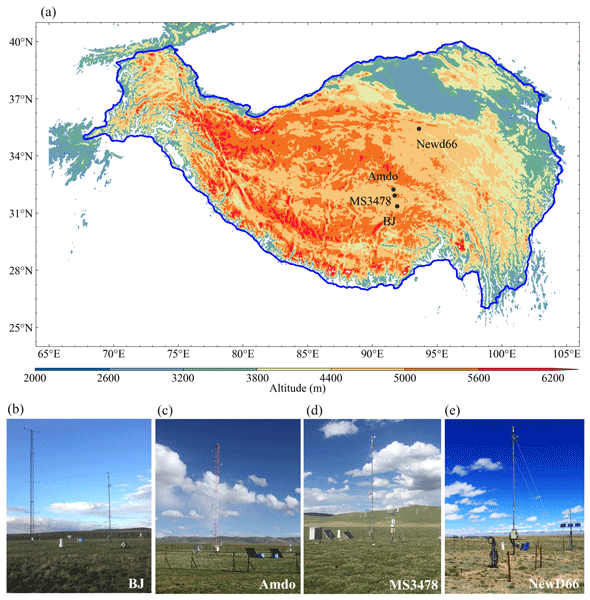
Haipeng Yu, Guantian Wang, Zeyong Hu, Yaoming Ma, Maoshan Li, Weiqiang Ma, Lianglei Gu, Fanglin Sun, Hongchun Gao, Shujin Wang, and Fuquan Lu
Earth Syst. Sci. Data, 17, 6871–6888, https://doi.org/10.5194/essd-17-6871-2025, https://doi.org/10.5194/essd-17-6871-2025, 2025
Short summary
Short summary
The Nagqu Observation Network, located in Central Tibetan Plateau (CTP), has functioned as the primary source of land-atmosphere interaction observations and published a near-surface meteorological observational dataset which spans a period of nine years (2014–2022) with hourly temporal resolution. This dataset will contribute to the understanding of the mechanism of land-atmosphere interactions on the TP and support comprehensive research of the energy-water cycle and climate change.
Changlong Li, Lan Cuo, Yongxin Zhang, Xuefeng Zhang, Xuan Li, Mei Hou, Aihui Wang, and Liqiao Liang
EGUsphere, https://doi.org/10.5194/egusphere-2025-4849, https://doi.org/10.5194/egusphere-2025-4849, 2025
Preprint archived
Short summary
Short summary
We developed a novel snow simulation framework and applied it over the Tibetan and Pamir Plateaus to study snow mass components. The analysis reveals that in 1962–2019 sublimation and evaporation dominate the snow budget, leading to snow contributing more to atmospheric water vapor than to water resources annually. Snow components exhibit spatially varying but regionally declining trends. Climate factors also show regionally varying effects. This framework can be applied to other alpine regions.
Cunbo Han, Yaoming Ma, Weiqiang Ma, Fanglin Sun, Yunshuai Zhang, Wei Hu, Hanying Xu, Chunhui Duan, and Zhenhua Xi
EGUsphere, https://doi.org/10.5194/egusphere-2025-4642, https://doi.org/10.5194/egusphere-2025-4642, 2025
Preprint archived
Short summary
Short summary
Wind speed spectra analysis is very important for understanding boundary layer turbulence characteristics, atmospheric numerical model development, and wind energy assessment. However, wind speed spectra studies in mountainous areas are extremely scarce. In this study, using a 15-year time series of wind speed observed by a PBL tower and eddy-covariance tower at a site on the north slope of Mt. Everest, we investigated the characteristics of wind speed and wind speed spectrum.
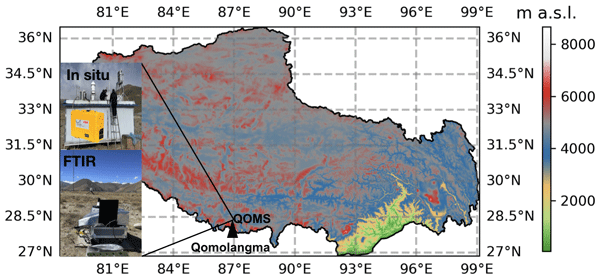
Minqiang Zhou, Yilong Wang, Minzheng Duan, Xiangjun Tian, Jinzhi Ding, Jianrong Bi, Yaoming Ma, Weiqiang Ma, and Zhenhua Xi
Atmos. Meas. Tech., 18, 4311–4324, https://doi.org/10.5194/amt-18-4311-2025, https://doi.org/10.5194/amt-18-4311-2025, 2025
Short summary
Short summary
The Qinghai–Tibetan Plateau is a key system that impacts the global carbon balance. This study presents the greenhouse gas (GHG) mole fraction measurement campaign in May 2022 at Mt. Qomolangma station, including ground-based remote sensing and in situ measurements. The GHG measurements are carried out in this region for the first time and used for satellite validation.
Xu Zhou, Binbin Wang, Xiaogang Ma, Zhu La, and Kun Yang
The Cryosphere, 18, 4589–4605, https://doi.org/10.5194/tc-18-4589-2024, https://doi.org/10.5194/tc-18-4589-2024, 2024
Short summary
Short summary
The simulation of the ice phenology of Nam Co by WRF is investigated. Compared with the default model, improving the key lake schemes, such as water surface roughness length for heat fluxes and the shortwave radiation transfer for lake ice, can better simulate the lake ice phenology. The still existing errors in the spatial patterns of lake ice phenology imply that challenges still exist in modelling key lake and non-lake physics such as grid-scale water circulation and snow-related processes.
Cunbo Han, Yaoming Ma, Weiqiang Ma, Fanglin Sun, Yunshuai Zhang, Wei Hu, Hanying Xu, Chunhui Duan, and Zhenhua Xi
EGUsphere, https://doi.org/10.5194/egusphere-2024-1963, https://doi.org/10.5194/egusphere-2024-1963, 2024
Preprint archived
Short summary
Short summary
Wind speed spectra analysis is very important for understanding boundary layer turbulence characteristics, atmospheric numerical model development, and wind energy assessment. However, wind speed spectra studies in mountainous areas are extremely scarce. In this study, using a 15-year time series of wind speed observed by a PBL tower and eddy-covariance tower at a site on the north slope of Mt. Everest, we investigated the characteristics of wind speed and wind speed spectrum.
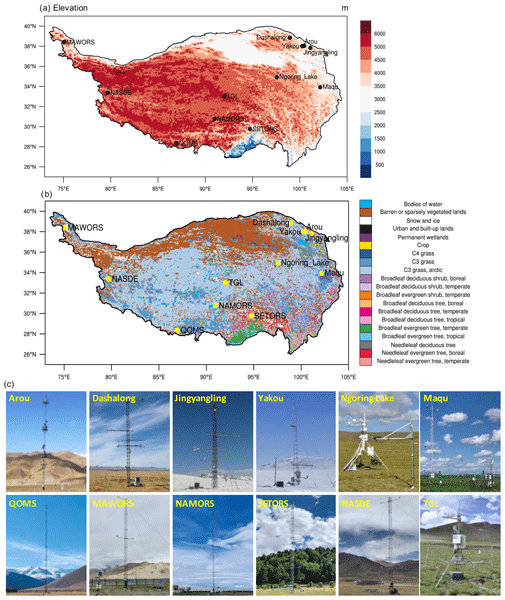
Yaoming Ma, Zhipeng Xie, Yingying Chen, Shaomin Liu, Tao Che, Ziwei Xu, Lunyu Shang, Xiaobo He, Xianhong Meng, Weiqiang Ma, Baiqing Xu, Huabiao Zhao, Junbo Wang, Guangjian Wu, and Xin Li
Earth Syst. Sci. Data, 16, 3017–3043, https://doi.org/10.5194/essd-16-3017-2024, https://doi.org/10.5194/essd-16-3017-2024, 2024
Short summary
Short summary
Current models and satellites struggle to accurately represent the land–atmosphere (L–A) interactions over the Tibetan Plateau. We present the most extensive compilation of in situ observations to date, comprising 17 years of data on L–A interactions across 12 sites. This quality-assured benchmark dataset provides independent validation to improve models and remote sensing for the region, and it enables new investigations of fine-scale L–A processes and their mechanistic drivers.
Ling Yuan, Xuelong Chen, Yaoming Ma, Cunbo Han, Binbin Wang, and Weiqiang Ma
Earth Syst. Sci. Data, 16, 775–801, https://doi.org/10.5194/essd-16-775-2024, https://doi.org/10.5194/essd-16-775-2024, 2024
Short summary
Short summary
Accurately monitoring and understanding the spatial–temporal variability of evapotranspiration (ET) components over the Tibetan Plateau (TP) remains difficult. Here, 37 years (1982–2018) of monthly ET component data for the TP was produced, and the data are consistent with measurements. The annual average ET for the TP was about 0.93 (± 0.037) × 103 Gt yr−1. The rate of increase of the ET was around 0.96 mm yr−1. The increase in the ET can be explained by warming and wetting of the climate.
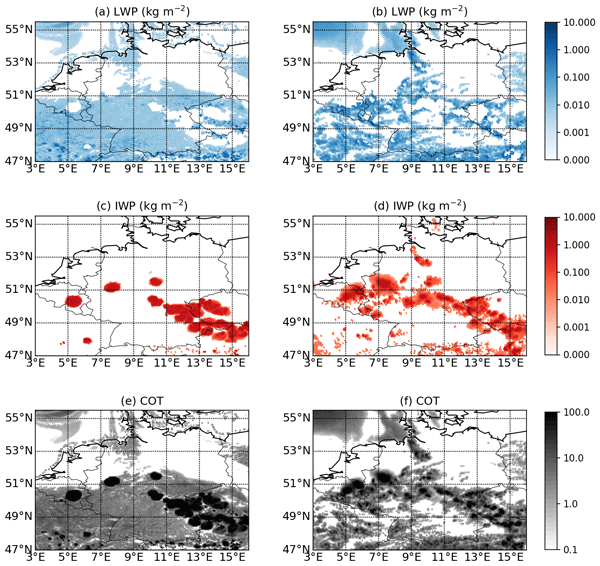
Cunbo Han, Corinna Hoose, Martin Stengel, Quentin Coopman, and Andrew Barrett
Atmos. Chem. Phys., 23, 14077–14095, https://doi.org/10.5194/acp-23-14077-2023, https://doi.org/10.5194/acp-23-14077-2023, 2023
Short summary
Short summary
Cloud phase has been found to significantly impact cloud thermodynamics and Earth’s radiation budget, and various factors influence it. This study investigates the sensitivity of the cloud-phase distribution to the ice-nucleating particle concentration and thermodynamics. Multiple simulation experiments were performed using the ICON model at the convection-permitting resolution of 1.2 km. Simulation results were compared to two different retrieval products based on SEVIRI measurements.
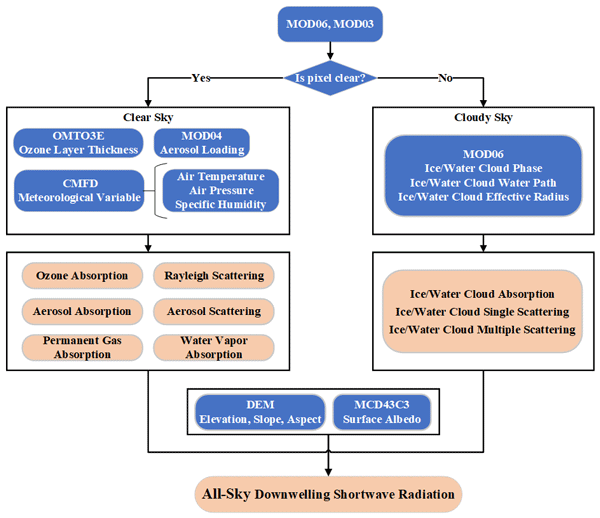
Peizhen Li, Lei Zhong, Yaoming Ma, Yunfei Fu, Meilin Cheng, Xian Wang, Yuting Qi, and Zixin Wang
Atmos. Chem. Phys., 23, 9265–9285, https://doi.org/10.5194/acp-23-9265-2023, https://doi.org/10.5194/acp-23-9265-2023, 2023
Short summary
Short summary
In this paper, all-sky downwelling shortwave radiation (DSR) over the entire Tibetan Plateau (TP) at a spatial resolution of 1 km was estimated using an improved parameterization scheme. The influence of topography and different radiative attenuations were comprehensively taken into account. The derived DSR showed good agreement with in situ measurements. The accuracy was better than six other DSR products. The derived DSR also provided more reasonable and detailed spatial patterns.
Yuyang Wang, Jinzhi Ding, and Shilong Piao
The Cryosphere Discuss., https://doi.org/10.5194/tc-2023-125, https://doi.org/10.5194/tc-2023-125, 2023
Manuscript not accepted for further review
Short summary
Short summary
Shallow soil layers experienced significant warming from 1981 to 2021, with decreasing rates at greater depths. Snow-cover days and downward longwave radiation were significant factors influencing soil warming rates. Magnitude and depth-dependent variation of permafrost profile warming are influenced by multiple factors, including local climate, lithology, and elevation.
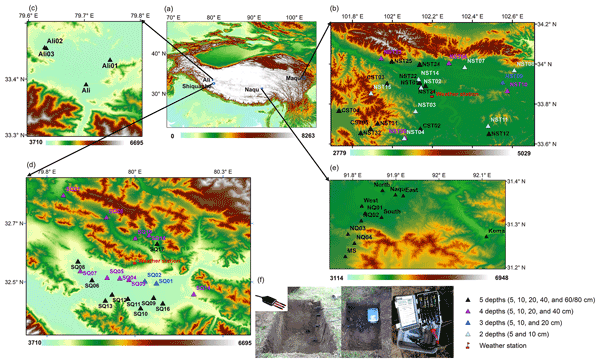
Pei Zhang, Donghai Zheng, Rogier van der Velde, Jun Wen, Yaoming Ma, Yijian Zeng, Xin Wang, Zuoliang Wang, Jiali Chen, and Zhongbo Su
Earth Syst. Sci. Data, 14, 5513–5542, https://doi.org/10.5194/essd-14-5513-2022, https://doi.org/10.5194/essd-14-5513-2022, 2022
Short summary
Short summary
Soil moisture and soil temperature (SMST) are important state variables for quantifying the heat–water exchange between land and atmosphere. Yet, long-term, regional-scale in situ SMST measurements at multiple depths are scarce on the Tibetan Plateau (TP). The presented dataset would be valuable for the evaluation and improvement of long-term satellite- and model-based SMST products on the TP, enhancing the understanding of TP hydrometeorological processes and their response to climate change.
Maoshan Li, Wei Fu, Na Chang, Ming Gong, Pei Xu, Yaoming Ma, Zeyong Hu, Yaoxian Yang, and Fanglin Sun
Atmos. Chem. Phys. Discuss., https://doi.org/10.5194/acp-2022-257, https://doi.org/10.5194/acp-2022-257, 2022
Revised manuscript not accepted
Short summary
Short summary
Compared with the plain area, the land-atmosphere interaction on the Tibetan Plateau (TP) is intense and complex, which affects the structure of the boundary layer. The observed height of the convective boundary layer on the TP under the influence of the southern branch of the westerly wind was higher than that during the Asian monsoon season. The height of the boundary layer was positively correlated with the sensible heat flux and negatively correlated with latent heat flux.

Yunshuai Zhang, Qian Huang, Yaoming Ma, Jiali Luo, Chan Wang, Zhaoguo Li, and Yan Chou
Atmos. Chem. Phys., 21, 15949–15968, https://doi.org/10.5194/acp-21-15949-2021, https://doi.org/10.5194/acp-21-15949-2021, 2021
Short summary
Short summary
The source region of the Yellow River has an important role in issues related to water resources, ecological environment, and climate changes in China. We utilized large eddy simulation to understand whether the surface heterogeneity promotes or inhibits the boundary-layer turbulence, the great contribution of the thermal circulations induced by surface heterogeneity to the water and heat exchange between land/lake and air. Moreover, the turbulence in key locations is characterized.
Cited articles
André, J. C., Goutorbe, J. P., and Perrier, A.: HAPEX – MOBILHY: A Hydrologic Atmospheric Experiment the Study of Water Budget and Evaporation Flux at the Climatic Scale, Bulletin of the American Meteorological Society, 67, 138–144, https://doi.org/10.1175/1520-0477-67.2.138, 1986.
Baldocchi, D.: Measuring fluxes of trace gases and energy between ecosystems and the atmosphere – the state and future of the eddy covariance method, Global Change Biology, 20, 3600–3609, https://doi.org/10.1111/gcb.12649, 2014.
Bei, N., Zhao, L., Wu, J., Li, X., Feng, T., and Li, G.: Impacts of sea-land and mountain-valley circulations on the air pollution in Beijing-Tianjin-Hebei (BTH): A case study, Environmental Pollution, 234, 429–438, https://doi.org/10.1016/j.envpol.2017.11.066, 2018.
Chen, X., Cao, D., Liu, Y., Xu, X., and Ma, Y.: An observational view of rainfall characteristics and evaluation of ERA5 diurnal cycle in the Yarlung Tsangbo Grand Canyon, China, Quarterly Journal of the Royal Meteorological Society, 149, 1459–1472, https://doi.org/10.1002/qj.4468, 2023.
Duan, A. and Xiao, Z.: Does the climate warming hiatus exist over the Tibetan Plateau?, Scientific Reports, 5, 13711, https://doi.org/10.1038/srep13711, 2015.
Foken, T.: The energy balance closure problem: An overview, Ecological Applications, 18, 1351–1367, https://doi.org/10.1890/06-0922.1, 2008.
Gatti, L. V., Basso, L. S., Miller, J. B., Gloor, M., Gatti Domingues, L., Cassol, H. L. G., Tejada, G., Aragão, L. E. O. C., Nobre, C., Peters, W., Marani, L., Arai, E., Sanches, A. H., Corrêa, S. M., Anderson, L., von Randow, C., Correia, C. S. C., Crispim, S. P., and Neves, R. A. L.: Amazonia as a carbon source linked to deforestation and climate change, Nature, 595, 388–393, https://doi.org/10.1038/s41586-021-03629-6, 2021.
Gentine, P., Massmann, A., Lintner, B. R., Hamed Alemohammad, S., Fu, R., Green, J. K., Kennedy, D., and Vilà-Guerau de Arellano, J.: Land–atmosphere interactions in the tropics – a review, Hydrol. Earth Syst. Sci., 23, 4171–4197, https://doi.org/10.5194/hess-23-4171-2019, 2019.
Gerken, T., Biermann, T., Babel, W., Herzog, M., Ma, Y., Foken, T., and Graf, H. F.: A modelling investigation into lake-breeze development and convection triggering in the Nam Co Lake basin, Tibetan Plateau, Theoretical and Applied Climatology, 117, 149–167, https://doi.org/10.1007/s00704-013-0987-9, 2014.
Goutorbe, J. P., Lebel, T., Dolman, A. J., Gash, J. H. C., Kabat, P., Kerr, Y. H., Monteny, B., Prince, S. D., Stricker, J. N. M., Tinga, A., and Wallace, J. S.: An overview of HAPEX-Sahel: a study in climate and desertification, Journal of Hydrology, 188–189, 4–17, https://doi.org/10.1016/S0022-1694(96)03308-2, 1997.
Halldin, S., Gryning, S. E., Gottschalk, L., Jochum, A., Lundin, L. C., and Van de Griend, A. A.: Energy, water and carbon exchange in a boreal forest landscape – NOPEX experiences, Agricultural and Forest Meteorology, 98–99, 5–29, https://doi.org/10.1016/S0168-1923(99)00148-3, 1999.
Huang, J., Zhou, X., Wu, G., Xu, X., Zhao, Q., Liu, Y., Duan, A., Xie, Y., Ma, Y., Zhao, P., Yang, S., Yang, K., Yang, H., Bian, J., Fu, Y., Ge, J., Liu, Y., Wu, Q., Yu, H., Wang, B., Bao, Q., and Qie, K.: Global Climate Impacts of Land-Surface and Atmospheric Processes Over the Tibetan Plateau, Reviews of Geophysics, 61, e2022RG000771, https://doi.org/10.1029/2022RG000771, 2023.
Li, G., Yu, Z., Wang, W., Ju, Q., and Chen, X.: Analysis of the spatial Distribution of precipitation and topography with GPM data in the Tibetan Plateau, Atmospheric Research, 247, 105259, https://doi.org/10.1016/j.atmosres.2020.105259, 2021a.
Li, L., Zhang, R., Wu, P., Wen, M., and Duan, J.: Roles of Tibetan Plateau vortices in the heavy rainfall over southwestern China in early July 2018, Atmospheric Research, 245, 105059, https://doi.org/10.1016/j.atmosres.2020.105059, 2020.
Li, P., Furtado, K., Zhou, T., Chen, H., and Li, J.: Convection-permitting modelling improves simulated precipitation over the central and eastern Tibetan Plateau, Quarterly Journal of the Royal Meteorological Society, 147, 341–362, https://doi.org/10.1002/qj.3921, 2021b.
Liu, S., Li, X., Xu, Z., Che, T., Xiao, Q., Ma, M., Liu, Q., Jin, R., Guo, J., Wang, L., Wang, W., Qi, Y., Li, H., Xu, T., Ran, Y., Hu, X., Shi, S., Zhu, Z., Tan, J., Zhang, Y., and Ren, Z.: The Heihe Integrated Observatory Network: A Basin-Scale Land Surface Processes Observatory in China, Vadose Zone Journal, 17, 180072, https://doi.org/10.2136/vzj2018.04.0072, 2018.
Lü, D., Chen, Z., Wang, G., Chen, J., Ji, J., Li, Y., and Chen, H.: Inner Mongolia Semi-Arid Grassland Soil-Vegetation-Atmosphere Interaction, Climatic and Environmental Research, 2, 199–209, https://doi.org/10.3878/j.issn.1006-9585.1997.03.01, 1997.
Ma, N. and Zhang, Y.: Increasing Tibetan Plateau terrestrial evapotranspiration primarily driven by precipitation, Agricultural and Forest Meteorology, 317, 108887, https://doi.org/10.1016/j.agrformet.2022.108887, 2022.
Ma, Y., Fan, S., Ishikawa, H., Tsukamoto, O., Yao, T., Koike, T., Zuo, H., Hu, Z., and Su, Z.: Diurnal and inter-monthly variation of land surface heat fluxes over the central Tibetan Plateau area, Theoretical and Applied Climatology, 80, 259–273, https://doi.org/10.1007/s00704-004-0104-1, 2005.
Ma, Y., Kang, S., Zhu, L., Xu, B., Tian, L., and Yao, T.: Tibetan observation and research platform: Atmosphere-Land Interaction over a Heterogeneous Landscape, Bulletin of the American Meteorological Society, 89, 1487–1492, 2008.
Ma, Y., Wang, Y., and Han, C.: Regionalization of land surface heat fluxes over the heterogeneous landscape: from the Tibetan Plateau to the Third Pole region, International Journal of Remote Sensing, 39, 5872–5890, https://doi.org/10.1080/01431161.2018.1508923, 2018.
Ma, Y., Hu, Z., Xie, Z., Ma, W., Wang, B., Chen, X., Li, M., Zhong, L., Sun, F., Gu, L., Han, C., Zhang, L., Liu, X., Ding, Z., Sun, G., Wang, S., Wang, Y., and Wang, Z.: A long-term (2005–2016) dataset of hourly integrated land–atmosphere interaction observations on the Tibetan Plateau, Earth Syst. Sci. Data, 12, 2937–2957, https://doi.org/10.5194/essd-12-2937-2020, 2020.
Ma, Y., Yao, T., Zhong, L., Wang, B., Xu, X., Hu, Z., Ma, W., Sun, F., Han, C., Li, M., Chen, X., Wang, J., Li, Y., Gu, L., Xie, Z., Liu, L., Sun, G., Wang, S., Zhou, D., Zuo, H., and Wang, Z.: Comprehensive study of energy and water exchange over the Tibetan Plateau: A review and perspective: From GAME/Tibet and CAMP/Tibet to TORP, TPEORP, and TPEITORP, Earth-Science Reviews, 237, 104312, https://doi.org/10.1016/j.earscirev.2023.104312, 2023.
Ma, Y., Xie, Z., Chen, Y., Liu, S., Che, T., Xu, Z., Shang, L., He, X., Meng, X., Ma, W., Xu, B., Zhao, H., Wang, J., Wu, G., and Li, X.: Dataset of spatially extensive long-term quality-assured land–atmosphere interactions over the Tibetan Plateau, Earth Syst. Sci. Data, 16, 3017–3043, https://doi.org/10.5194/essd-16-3017-2024, 2024.
Massman, W. J. and Lee, X.: Eddy covariance flux corrections and uncertainties in long-term studies of carbon and energy exchanges, Agricultural and Forest Meteorology, 113, 121–144, https://doi.org/10.1016/S0168-1923(02)00105-3, 2002.
Mauder, M. and Foken, T.: Impact of post-field data processing on eddy covariance flux estimates and energy balance closure, Meteorologische Zeitschrift, 15, 597–609, https://doi.org/10.1127/0941-2948/2006/0167, 2006.
Mauder, M., Cuntz, M., Drüe, C., Graf, A., Rebmann, C., Schmid, H. P., Schmidt, M., and Steinbrecher, R.: A strategy for quality and uncertainty assessment of long-term eddy-covariance measurements, Agricultural and Forest Meteorology, 169, 122–135, https://doi.org/10.1016/j.agrformet.2012.09.006, 2013.
Mauder, M., Foken, T., and Cuxart, J.: Surface-Energy-Balance Closure over Land: A Review, Boundary-Layer Meteorology, 177, 395–426, https://doi.org/10.1007/s10546-020-00529-6, 2020.
Mills, M. B., Malhi, Y., Ewers, R. M., Kho, L. K., Teh, Y. A., Both, S., Burslem, D. F. R. P., Majalap, N., Nilus, R., Huasco, W. H., Cruz, R., Pillco, M. M., Turner, E. C., Reynolds, G., and Riutta, T.: Tropical forests post-logging are a persistent net carbon source to the atmosphere, Proceedings of the National Academy of Sciences, 120, e2214462120, https://doi.org/10.1073/pnas.2214462120, 2023.
Oku, Y., Ishikawa, H., Haginoya, S., and Ma, Y.: Recent Trends in Land Surface Temperature on the Tibetan Plateau, Journal of Climate, 19, 2995–3003, https://doi.org/10.1175/JCLI3811.1, 2006.
Pan, Y., Birdsey, R. A., Phillips, O. L., Houghton, R. A., Fang, J., Kauppi, P. E., Keith, H., Kurz, W. A., Ito, A., Lewis, S. L., Nabuurs, G. J., Shvidenko, A., Hashimoto, S., Lerink, B., Schepaschenko, D., Castanho, A., and Murdiyarso, D.: The enduring world forest carbon sink, Nature, 631, 563–569, https://doi.org/10.1038/s41586-024-07602-x, 2024.
Qi, Y., Wei, D., Zhao, H., and Wang, X.: Carbon Sink of a Very High Marshland on the Tibetan Plateau, Journal of Geophysical Research: Biogeosciences, 126, e2020JG006235, https://doi.org/10.1029/2020JG006235, 2021.
Santanello Jr., J. A., Dirmeyer, P. A., Ferguson, C. R., Findell, K. L., Tawfik, A. B., Berg, A., Ek, M., Gentine, P., Guillod, B. P., van Heerwaarden, C., Roundy, J., and Wulfmeyer, V.: Land–Atmosphere Interactions: The LoCo Perspective, Bulletin of the American Meteorological Society, 99, 1253–1272, https://doi.org/10.1175/BAMS-D-17-0001.1, 2018.
Sellers, P., Hall, F., Margolis, H., Kelly, B., Baldocchi, D., den Hartog, G., Cihlar, J., Ryan, M. G., Goodison, B., Crill, P., Ranson, K. J., Lettenmaier, D., and Wickland, D. E.: The Boreal Ecosystem–Atmosphere Study (BOREAS): An Overview and Early Results from the 1994 Field Year, Bulletin of the American Meteorological Society, 76, 1549–1577, https://doi.org/10.1175/1520-0477(1995)076<1549:TBESAO>2.0.CO;2, 1995.
Sellers, P. J., Hall, F. G., Asrar, G., Strebel, D. E., and Murphy, R. E.: An overview of the First International Satellite Land Surface Climatology Project (ISLSCP) Field Experiment (FIFE), Journal of Geophysical Research: Atmospheres, 97, 18345–18371, https://doi.org/10.1029/92JD02111, 1992.
Seo, Y.-W. and Ha, K.-J.: Changes in land–atmosphere coupling increase compound drought and heatwaves over northern East Asia, npj Climate and Atmospheric Science, 5, 100, https://doi.org/10.1038/s41612-022-00325-8, 2022.
Suni, T., Guenther, A., Hansson, H. C., Kulmala, M., Andreae, M. O., Arneth, A., Artaxo, P., Blyth, E., Brus, M., Ganzeveld, L., Kabat, P., de Noblet-Ducoudré, N., Reichstein, M., Reissell, A., Rosenfeld, D., and Seneviratne, S.: The significance of land–atmosphere interactions in the Earth system – iLEAPS achievements and perspectives, Anthropocene, 12, 69–84, https://doi.org/10.1016/j.ancene.2015.12.001, 2015.
Turetsky, M. R., Abbott, B. W., Jones, M. C., Anthony, K. W., Olefeldt, D., Schuur, E. A. G., Grosse, G., Kuhry, P., Hugelius, G., Koven, C., Lawrence, D. M., Gibson, C., Sannel, A. B. K., and McGuire, A. D.: Carbon release through abrupt permafrost thaw, Nature Geoscience, 13, 138–143, https://doi.org/10.1038/s41561-019-0526-0, 2020.
Twine, T. E., Kustas, W. P., Norman, J. M., Cook, D. R., Houser, P. R., Meyers, T. P., Prueger, J. H., Starks, P. J., and Wesely, M. L.: Correcting eddy-covariance flux underestimates over a grassland, Agricultural and Forest Meteorology, 103, 279–300, https://doi.org/10.1016/S0168-1923(00)00123-4, 2000.
Wang, B. and Ma, Y.: Meteorological variables and eddy fluxes at 15 land–atmosphere interaction stations over the Tibetan Plateau (May 2021 to July 2023), National Tibetan Plateau/Third Pole Environment Data Center [data set], https://doi.org/10.11888/Atmos.tpdc.302428, 2025.
Wang, B., Ma, Y., Ma, W., and Su, Z.: Physical controls on half-hourly, daily, and monthly turbulent flux and energy budget over a high-altitude small lake on the Tibetan Plateau, Journal of Geophysical Research: Atmospheres, 122, 2289–2303, https://doi.org/10.1002/2016JD026109, 2017.
Wang, S. and Ma, Y.: Characteristics of Land-Atmosphere Interaction Parameters over the Tibetan Plateau, Journal of Hydrometeorology, 12, 702–708, https://doi.org/10.1175/2010JHM1275.1, 2011.
Wang, Y., Xiao, J., Ma, Y., Luo, Y., Hu, Z., Li, F., Li, Y., Gu, L., Li, Z., and Yuan, L.: Carbon fluxes and environmental controls across different alpine grassland types on the Tibetan Plateau, Agricultural and Forest Meteorology, 311, 108694, https://doi.org/10.1016/j.agrformet.2021.108694, 2021.
Wang, Y., Xiao, J., Ma, Y., Ding, J., Chen, X., Ding, Z., and Luo, Y.: Persistent and enhanced carbon sequestration capacity of alpine grasslands on Earth's Third Pole, Science Advances, 9, https://doi.org/10.1126/sciadv.ade6875, 2023.
Wei, D., Qi, Y., Ma, Y., Wang, X., Ma, W., Gao, T., Huang, L., Zhao, H., Zhang, J., and Wang, X.: Plant uptake of CO2 outpaces losses from permafrost and plant respiration on the Tibetan Plateau, Proceedings of the National Academy of Sciences, 118, e2015283118, https://doi.org/10.1073/pnas.2015283118, 2021.
Wilson, K., Goldstein, A., Falge, E., Aubinet, M., Baldocchi, D., Berbigier, P., Bernhofer, C., Ceulemans, R., Dolman, H., Field, C., Grelle, A., Ibrom, A., Law, B. E., Kowalski, A., Meyers, T., Moncrieff, J., Monson, R., Oechel, W., Tenhunen, J., Valentini, R., and Verma, S.: Energy balance closure at FLUXNET sites, Agricultural and Forest Meteorology, 113, 223–243, https://doi.org/10.1016/S0168-1923(02)00109-0, 2002.
Wu, G. and Zhang, Y.: Tibetan Plateau Forcing and the Timing of the Monsoon Onset over South Asia and the South China Sea, Monthly Weather Review, 126, 913–927, https://doi.org/10.1175/1520-0493(1998)126<0913:TPFATT>2.0.CO;2, 1998.
Wu, G., Zhou, X., Xu, X., Huang, J., Duan, A., Yang, S., Hu, W., Ma, Y., Liu, Y., Bian, J., Fu, Y., Yang, H., Zhao, P., Zhong, L., and Ma, W.: An Integrated Research Plan for the Tibetan Plateau Land–Air Coupled System and Its Impacts on the Global Climate, Bulletin of the American Meteorological Society, 104, E158–E177, https://doi.org/10.1175/BAMS-D-21-0293.1, 2023.
Wutzler, T., Lucas-Moffat, A., Migliavacca, M., Knauer, J., Sickel, K., Šigut, L., Menzer, O., and Reichstein, M.: Basic and extensible post-processing of eddy covariance flux data with REddyProc, Biogeosciences, 15, 5015–5030, https://doi.org/10.5194/bg-15-5015-2018, 2018.
Xie, Z., Wang, L., Jia, B., and Yuan, X.: Measuring and modeling the impact of a severe drought on terrestrial ecosystem CO2 and water fluxes in a subtropical forest, Journal of Geophysical Research: Biogeosciences, 121, 2576–2587, https://doi.org/10.1002/2016JG003437, 2016.
Xu, X. and Chen, L.: Advances of the Study on Tibetan Plateau Experiment of Atmospheric Sciences, Journal of Applied Meteorological Science, 17, 756–772, https://doi.org/10.11898/1001-7313.20060613, 2006.
Yang, K., Koike, T., Ishikawa, H., Kim, J., Li, X., Liu, H., Liu, S., Ma, Y., and Wang, J.: Turbulent Flux Transfer over Bare-Soil Surfaces: Characteristics and Parameterization, Journal of Applied Meteorology and Climatology, 47, 276–290, https://doi.org/10.1175/2007JAMC1547.1, 2008.
Yang, K., Chen, Y., Lazhu, Zhan, C., Ling, X., Zhou, X., Jiang, Y., Yao, X., Lu, H., Ma, X., Ouyang, L., Pan, W., Ren, Y., Shao, C., Tian, J., Wang, Y., Yang, H., Yue, S., Zhang, K., Zhao, D., Zhao, L., Zhou, J., and Zou, M.: Cross-sectional rainfall observation on the central-western Tibetan Plateau in the warm season: System design and preliminary results, Science China Earth Sciences, 66, 1015–1030, https://doi.org/10.1007/s11430-022-1081-4, 2023.
Yao, N., Ma, Y., Wang, B., Zou, J., Sun, J., and Xie, Z.: A comparative study of the land–atmosphere energy and water exchanges over the Tibetan Plateau and the Yangtze River Region, Atmospheric and Oceanic Science Letters, 17, 100447, https://doi.org/10.1016/j.aosl.2023.100447, 2024.
Ye, D. and Wu, G.: The role of the heat source of the Tibetan Plateau in the general circulation, Meteorology and Atmospheric Physics, 67, 181–198, https://doi.org/10.1007/BF01277509, 1998.
Yu, G., Chen, Z., and Wang, Y.: Carbon, water and energy fluxes of terrestrial ecosystems in China, Agricultural and Forest Meteorology, 346, 109890, https://doi.org/10.1016/j.agrformet.2024.109890, 2024.
Yuan, L., Ma, Y., Chen, X., Wang, Y., and Li, Z.: An Enhanced MOD16 Evapotranspiration Model for the Tibetan Plateau During the Unfrozen Season, Journal of Geophysical Research: Atmospheres, 126, https://doi.org/10.1029/2020JD032787, 2021.
Yuan, L., Chen, X., Ma, Y., Han, C., Wang, B., and Ma, W.: Long-term monthly 0.05° terrestrial evapotranspiration dataset (1982–2018) for the Tibetan Plateau, Earth Syst. Sci. Data, 16, 775–801, https://doi.org/10.5194/essd-16-775-2024, 2024.
Zhang, C., Qin, D.-H., and Zhai, P.-M.: Amplification of warming on the Tibetan Plateau, Advances in Climate Change Research, 14, 493–501, https://doi.org/10.1016/j.accre.2023.07.004, 2023.
Zhang, Y., Wagner, N., Goergen, K., and Kollet, S.: Summer evapotranspiration-cloud feedbacks in land–atmosphere interactions over Europe, Climate Dynamics, 62, 10767–10783, https://doi.org/10.1007/s00382-024-07475-w, 2024.
Zhao, L., Li, Y., Zhao, X., Xu, S., Tang, Y., Yu, G., Gu, S., Du, M., and Wang, Q.: Comparative study of the net exchange of CO2 in 3 types of vegetation ecosystems on the Qinghai-Tibetan Plateau, Chinese Science Bulletin, 50, 1767–1774, https://doi.org/10.1360/04wd0316, 2005.
Zhong, L., Ma, Y., Hu, Z., Fu, Y., Hu, Y., Wang, X., Cheng, M., and Ge, N.: Estimation of hourly land surface heat fluxes over the Tibetan Plateau by the combined use of geostationary and polar-orbiting satellites, Atmos. Chem. Phys., 19, 5529–5541, https://doi.org/10.5194/acp-19-5529-2019, 2019.
Zhu, L., Meng, Z., Zhang, F., and Markowski, P. M.: The influence of sea- and land-breeze circulations on the diurnal variability in precipitation over a tropical island, Atmos. Chem. Phys., 17, 13213–13232, https://doi.org/10.5194/acp-17-13213-2017, 2017.
Short summary
This study reveals distinct patterns in water, heat, and carbon exchange over the Tibetan Plateau. Heat transfer peaks in spring, while water vapor release is highest in summer. Most stations act as carbon sinks, but one in a forested valley is a carbon source, likely due to vegetation loss and human activity. The findings highlight the strong connections between water, heat, and carbon fluxes, offering valuable insights into climate change and weather forecasting.
This study reveals distinct patterns in water, heat, and carbon exchange over the Tibetan...


Altmetrics
Final-revised paper
Preprint