Articles | Volume 17, issue 12
https://doi.org/10.5194/essd-17-7331-2025
© Author(s) 2025. This work is distributed under
the Creative Commons Attribution 4.0 License.
the Creative Commons Attribution 4.0 License.
https://doi.org/10.5194/essd-17-7331-2025
© Author(s) 2025. This work is distributed under
the Creative Commons Attribution 4.0 License.
the Creative Commons Attribution 4.0 License.
Data description article
| 
19 Dec 2025
Data description article |
| 19 Dec 2025
| 19 Dec 2025
A long-term dataset of debris-flow and hydrometeorological observations from 1961 to 2024 in Jiangjia Ravine, China
Key Laboratory of Mountain Hazards and Engineering Resilience, Institute of Mountain Hazards and Environment, Chinese Academy of Sciences, Chengdu 610213, China

Key Laboratory of Mountain Hazards and Engineering Resilience, Institute of Mountain Hazards and Environment, Chinese Academy of Sciences, Chengdu 610213, China
National Cryosphere Desert Data Center, Lanzhou 730000, China
Peng Cui
Key Laboratory of Mountain Hazards and Engineering Resilience, Institute of Mountain Hazards and Environment, Chinese Academy of Sciences, Chengdu 610213, China
Lijun Su
Key Laboratory of Mountain Hazards and Engineering Resilience, Institute of Mountain Hazards and Environment, Chinese Academy of Sciences, Chengdu 610213, China
Gordon G. D. Zhou
Key Laboratory of Mountain Hazards and Engineering Resilience, Institute of Mountain Hazards and Environment, Chinese Academy of Sciences, Chengdu 610213, China
Kaiheng Hu
Key Laboratory of Mountain Hazards and Engineering Resilience, Institute of Mountain Hazards and Environment, Chinese Academy of Sciences, Chengdu 610213, China
Fangqiang Wei
Chongqing Institute of Green and Intelligent Technology, Chinese Academy of Sciences, Chongqing 400714, China
Yong Hong
Key Laboratory of Mountain Hazards and Engineering Resilience, Institute of Mountain Hazards and Environment, Chinese Academy of Sciences, Chengdu 610213, China
Guoqiang Ou
Key Laboratory of Mountain Hazards and Engineering Resilience, Institute of Mountain Hazards and Environment, Chinese Academy of Sciences, Chengdu 610213, China
Jun Zhang
Key Laboratory of Mountain Hazards and Engineering Resilience, Institute of Mountain Hazards and Environment, Chinese Academy of Sciences, Chengdu 610213, China
Zhicheng Kang
Key Laboratory of Mountain Hazards and Engineering Resilience, Institute of Mountain Hazards and Environment, Chinese Academy of Sciences, Chengdu 610213, China
deceased
Xiaojun Guo
Key Laboratory of Mountain Hazards and Engineering Resilience, Institute of Mountain Hazards and Environment, Chinese Academy of Sciences, Chengdu 610213, China
Wei Zhong
Key Laboratory of Mountain Hazards and Engineering Resilience, Institute of Mountain Hazards and Environment, Chinese Academy of Sciences, Chengdu 610213, China
Xiaoyu Li
Key Laboratory of Mountain Hazards and Engineering Resilience, Institute of Mountain Hazards and Environment, Chinese Academy of Sciences, Chengdu 610213, China
Yaonan Zhang
National Cryosphere Desert Data Center, Lanzhou 730000, China
Northwest Institute of Eco-Environment and Resources, Chinese Academy of Sciences, Lanzhou 730000, China
Chao Shi
School of Civil and Environmental Engineering, Nanyang Technological University, 639798, Singapore
Hui Tang
Earth Surface Process Modelling, German Research Centre for Geosciences (GFZ), Potsdam, Germany
Related authors
Haiguang Cheng, Kaiheng Hu, Shuang Liu, Xiaopeng Zhang, Hao Li, Qiyuan Zhang, Lan Ning, Manish Raj Gouli, Pu Li, Anna Yang, Peng Zhao, Junyu Liu, and Li Wei
Earth Syst. Sci. Data, 17, 1573–1593, https://doi.org/10.5194/essd-17-1573-2025, https://doi.org/10.5194/essd-17-1573-2025, 2025
Short summary
Short summary
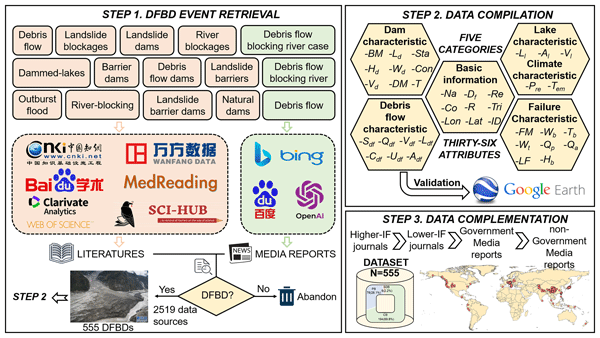
After reviewing 2519 literature and media reports, we compiled the first comprehensive global dataset of 555 debris flow barrier dams (DFBDs) from 1800 to 2023. Our dataset meticulously documents 38 attributes of DFBDs, and we have utilized Google Earth for validation. Additionally, we discussed the applicability of landslide dam stability and peak-discharge models to DFBDs. This dataset offers a rich foundation of data for future studies on DFBDs.
Li Wei, Kaiheng Hu, Shuang Liu, Lan Ning, Xiaopeng Zhang, Qiyuan Zhang, and Md. Abdur Rahim
Nat. Hazards Earth Syst. Sci., 24, 4179–4197, https://doi.org/10.5194/nhess-24-4179-2024, https://doi.org/10.5194/nhess-24-4179-2024, 2024
Short summary
Short summary
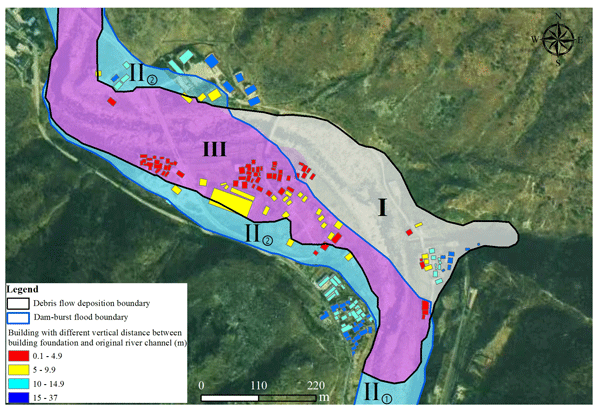
The damage patterns of the buildings were classified into three types: (I) buried by primary debris flow, (II) inundated by secondary dam-burst flood, and (III) sequentially buried by debris flow and inundated by dam-burst flood. The threshold of the impact pressures in Zones (II) and (III) where vulnerability is equal to 1 is 84 kPa and 116 kPa, respectively. Heavy damage occurs at an impact pressure greater than 50 kPa, while slight damage occurs below 30 kPa.
Xiaoqian Fu, Jiansheng Hao, Peng Cui, Yan Wang, and Guoqing Chen
EGUsphere, https://doi.org/10.5194/egusphere-2026-4540, https://doi.org/10.5194/egusphere-2026-4540, 2026
Short summary
Short summary
Avalanches threaten mountain roads and communities, yet forecasting their occurrence remains difficult. Using two years of field observations from the southeastern Tibetan Plateau, we quantified how snowfall, snowmelt, and pre-event snowpack conditions affect avalanche probability. Results show that including snowpack information improves forecasts beyond weather-based models, particularly for wet-snow avalanches, supporting more reliable mountain avalanche warnings.
Jun Zhang, Yong Li, Xiaojun Guo, Dongri Song, and Jens M. Turowski
EGUsphere, https://doi.org/10.5194/egusphere-2026-3226, https://doi.org/10.5194/egusphere-2026-3226, 2026
This preprint is open for discussion and under review for Natural Hazards and Earth System Sciences (NHESS).
Short summary
Short summary
Debris flows often move as multiple surges, like pulses of muddy water. Scientists have struggled to predict their overall behavior. By analyzing global data, we discovered hidden statistical laws governing how surges evolve and organize. We used these rules to build a computer model that recreates real surge sequences and predicts their size and frequency. This work provides a powerful new tool for assessing debris-flow hazards and improving early warning systems.
Lei Feng and Dongri Song
Nat. Hazards Earth Syst. Sci., 26, 2903–2919, https://doi.org/10.5194/nhess-26-2903-2026, https://doi.org/10.5194/nhess-26-2903-2026, 2026
Short summary
Short summary
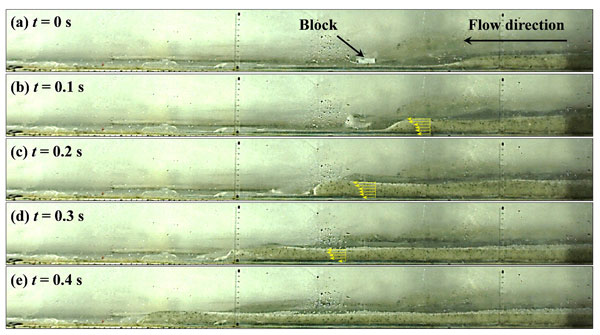
Accurate prediction of the relocated position of buildings (and the trapped victims) within debris-flow and landslide deposits is challenging. We elucidate the complicated physical mechanisms associated with the movement of building fragments within debris flows. A set of analytical models considering the physical mechanisms is further established. These findings provide reference for post-disaster emergency rescue by enabling positioning of buried structures.
Jiwei Xu, Shuping Zhao, Zhuotong Nan, Fujun Niu, and Yaonan Zhang
Geosci. Model Dev., 19, 2919–2943, https://doi.org/10.5194/gmd-19-2919-2026, https://doi.org/10.5194/gmd-19-2919-2026, 2026
Short summary
Short summary
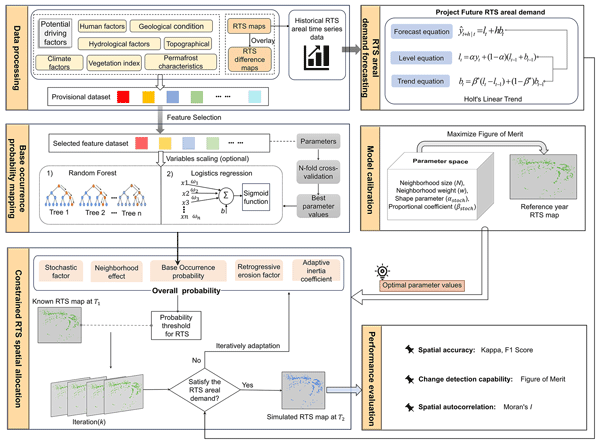
Permafrost is warming, causing more ground collapses known as retrogressive thaw slumps that damage ecosystems and infrastructure. We created a new computer model to predict how these slumps grow and spread over time. By combining satellite data, statistics, and rules that mimic natural erosion, the model can reproduce changes with high accuracy. This helps scientists and planners better forecast future permafrost hazards.

Muhammad Hasan and Lijun Su
Hydrol. Earth Syst. Sci., 30, 1309–1332, https://doi.org/10.5194/hess-30-1309-2026, https://doi.org/10.5194/hess-30-1309-2026, 2026
Short summary
Short summary
Permeability is a crucial hydraulic parameter extensively utilized in groundwater research. Until now, permeability has only been determined using borehole experiments. However, conventional approaches possess numerous limitations and still cannot estimate permeability at large depths. This research uses geophysical methods for the first time to assess 2D and 3D permeability across extensive areas at significant depths in extremely heterogeneous hard rock.
Lili Wang and Yaonan Zhang
EGUsphere, https://doi.org/10.5194/egusphere-2026-333, https://doi.org/10.5194/egusphere-2026-333, 2026
Preprint archived
Short summary
Short summary
This study develops a feed-forward fully connected neural network to model glacier-wide annual mass balance using multi-temporal climate, albedo, and topographic data under extremely limited sample conditions. Through feature selection and regularization, the model mitigates overfitting, outperforms a Random Forest benchmark, and shows robust spatial and temporal generalization. The proposed framework enables regional glacier mass-balance estimation in data-scarce high-altitude and cold regions.
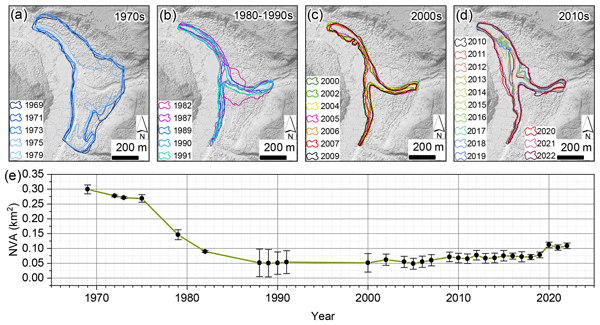
Kaiheng Hu, Hao Li, Shuang Liu, Li Wei, Xiaopeng Zhang, Limin Zhang, Bo Zhang, and Manish Raj Gouli
Earth Surf. Dynam., 13, 1281–1305, https://doi.org/10.5194/esurf-13-1281-2025, https://doi.org/10.5194/esurf-13-1281-2025, 2025
Short summary
Short summary
This paper shows how glacier-related sediment supply changes in response to earthquakes and climate warming at a catchment in the eastern Himalayas using several decades of aerial imagery and high-resolution UAV data. The results highlight the importance of debris-flow-driven extreme sediment delivery on landscape change in High Mountain Asia that have undergone substantial climate warming. This study is helpful for a better understanding of future risk of periglacial debris flows.
Haiguang Cheng, Kaiheng Hu, Shuang Liu, Xiaopeng Zhang, Hao Li, Qiyuan Zhang, Lan Ning, Manish Raj Gouli, Pu Li, Anna Yang, Peng Zhao, Junyu Liu, and Li Wei
Earth Syst. Sci. Data, 17, 1573–1593, https://doi.org/10.5194/essd-17-1573-2025, https://doi.org/10.5194/essd-17-1573-2025, 2025
Short summary
Short summary
After reviewing 2519 literature and media reports, we compiled the first comprehensive global dataset of 555 debris flow barrier dams (DFBDs) from 1800 to 2023. Our dataset meticulously documents 38 attributes of DFBDs, and we have utilized Google Earth for validation. Additionally, we discussed the applicability of landslide dam stability and peak-discharge models to DFBDs. This dataset offers a rich foundation of data for future studies on DFBDs.
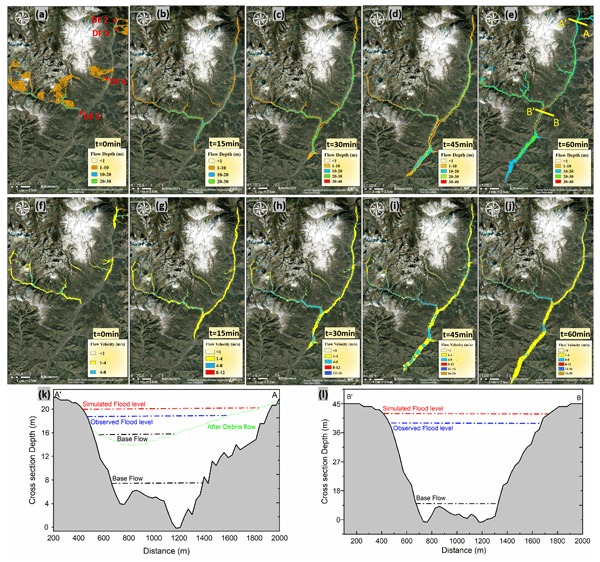
Nazir Ahmed Bazai, Mehtab Alam, Peng Cui, Wang Hao, Adil Poshad Khan, Muhammad Waseem, Yao Shunyu, Muhammad Ramzan, Li Wanhong, and Tashfain Ahmed
Nat. Hazards Earth Syst. Sci., 25, 1071–1093, https://doi.org/10.5194/nhess-25-1071-2025, https://doi.org/10.5194/nhess-25-1071-2025, 2025
Short summary
Short summary
The 2022 monsoon in Pakistan's Swat River basin brought record rainfall, exceeding averages by 7–8%, triggering catastrophic debris flows and floods. Key factors include extreme rainfall, deforestation, and steep slopes. Fieldwork, remote sensing, and simulations highlight land degradation's role in intensifying floods. Recommendations include reforestation, early warning systems, and land use reforms to protect communities and reduce future risks
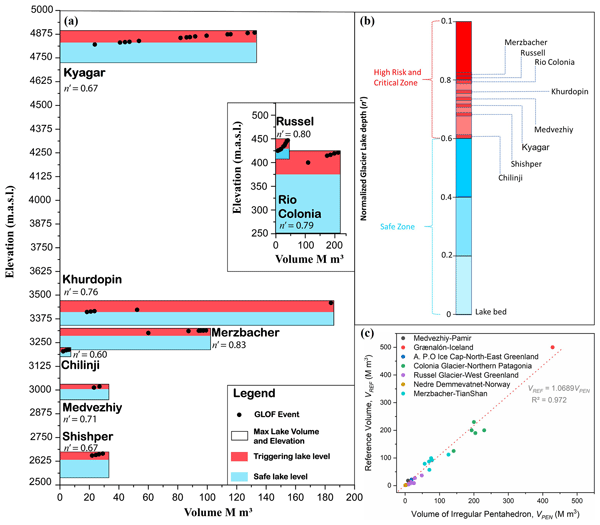
Nazir Ahmed Bazai, Paul A. Carling, Peng Cui, Wang Hao, Zhang Guotao, Liu Dingzhu, and Javed Hassan
The Cryosphere, 18, 5921–5938, https://doi.org/10.5194/tc-18-5921-2024, https://doi.org/10.5194/tc-18-5921-2024, 2024
Short summary
Short summary
We explored the growing threat of glacier lake outburst floods (GLOFs) driven by glacier surges in the Karakoram. Using advanced remote sensing and field data, we identified key lake volumes and depths that indicate potential GLOFs. Our findings improve early warning systems by providing rapid methods to assess lake volumes in remote areas. This research seeks to protect vulnerable communities and contribute to global efforts in predicting and mitigating catastrophic flood risks.
Li Wei, Kaiheng Hu, Shuang Liu, Lan Ning, Xiaopeng Zhang, Qiyuan Zhang, and Md. Abdur Rahim
Nat. Hazards Earth Syst. Sci., 24, 4179–4197, https://doi.org/10.5194/nhess-24-4179-2024, https://doi.org/10.5194/nhess-24-4179-2024, 2024
Short summary
Short summary
The damage patterns of the buildings were classified into three types: (I) buried by primary debris flow, (II) inundated by secondary dam-burst flood, and (III) sequentially buried by debris flow and inundated by dam-burst flood. The threshold of the impact pressures in Zones (II) and (III) where vulnerability is equal to 1 is 84 kPa and 116 kPa, respectively. Heavy damage occurs at an impact pressure greater than 50 kPa, while slight damage occurs below 30 kPa.
Yan Yan, Cheng Zeng, Renhe Wang, Yifei Cui, Sheng Hu, Xinglu Wang, and Hui Tang
EGUsphere, https://doi.org/10.5194/egusphere-2024-2977, https://doi.org/10.5194/egusphere-2024-2977, 2024
Preprint archived
Short summary
Short summary
Debris flow monitoring and early warning is one of the most effective means of disaster prevention. We hope to provide a simple, economical and practical monitoring method for debris flow monitoring and analysis by combining seismic signals and infrared images. This method provides a basis for real-time monitoring, analysis, early warning and hazard assessment of debris flows based on seismic signals.
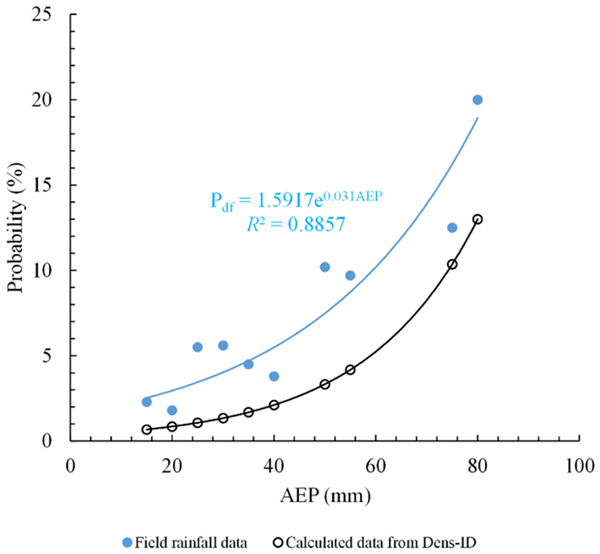
Shaojie Zhang, Xiaohu Lei, Hongjuan Yang, Kaiheng Hu, Juan Ma, Dunlong Liu, and Fanqiang Wei
Hydrol. Earth Syst. Sci., 28, 2343–2355, https://doi.org/10.5194/hess-28-2343-2024, https://doi.org/10.5194/hess-28-2343-2024, 2024
Short summary
Short summary
Antecedent effective precipitation (AEP) plays an important role in debris flow formation, but the relationship between AEP and the debris flow occurrence (Pdf) is still not quantified. We used numerical calculation and the Monte Carlo integration method to solve this issue. The relationship between Pdf and AEP can be described by the piecewise function, and debris flow is a small-probability event comparing to rainfall frequency because the maximum Pdf in Jiangjia Gully is only 15.88 %.
Kaiheng Hu, Manish Raj Gouli, Hao Li, Yong Nie, Yifan Shu, Shuang Liu, Pu Li, and Xiaopeng Zhang
EGUsphere, https://doi.org/10.5194/egusphere-2024-884, https://doi.org/10.5194/egusphere-2024-884, 2024
Preprint archived
Short summary
Short summary
An integrated approach comprising a field survey, remote sensing, and hydrodynamic modeling was applied to investigate the Rijieco Glacial Lake Outburst Flood (GLOF) in 1991. The flood caused devastating ecological consequences, like sedimentation and the expansion of an inland lake, which has not yet recovered after three decades. The results help understand the ecological impacts of outburst floods on the Tibetan inland lake system and make future flood hazard assessments more robust.
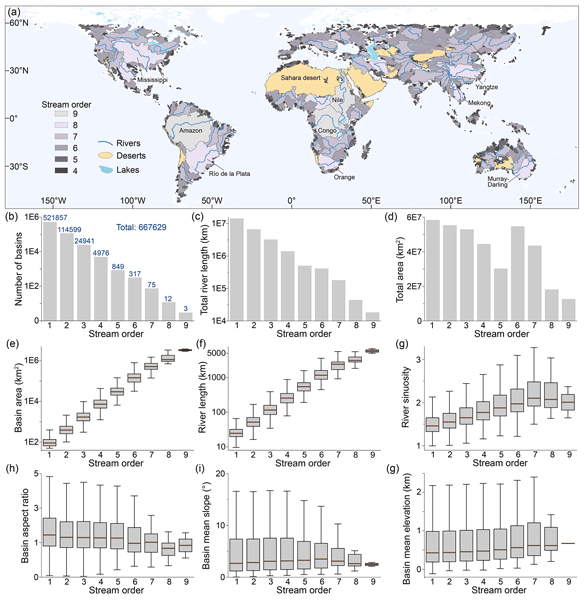
Chuanqi He, Ci-Jian Yang, Jens M. Turowski, Richard F. Ott, Jean Braun, Hui Tang, Shadi Ghantous, Xiaoping Yuan, and Gaia Stucky de Quay
Earth Syst. Sci. Data, 16, 1151–1166, https://doi.org/10.5194/essd-16-1151-2024, https://doi.org/10.5194/essd-16-1151-2024, 2024
Short summary
Short summary
The shape of drainage basins and rivers holds significant implications for landscape evolution processes and dynamics. We used a global 90 m resolution topography to obtain ~0.7 million drainage basins with sizes over 50 km2. Our dataset contains the spatial distribution of drainage systems and their morphological parameters, supporting fields such as geomorphology, climatology, biology, ecology, hydrology, and natural hazards.
Yan Yan, Cheng Zeng, Yifei Cui, Sheng Hu, Xinglu Wang, and Hui Tang
EGUsphere, https://doi.org/10.5194/egusphere-2023-2015, https://doi.org/10.5194/egusphere-2023-2015, 2023
Preprint archived
Short summary
Short summary
We aim to explore the basic parameters, development process, and magnitude of debris flows based on seismic signal analysis combined with other information recorded in real time during the formation and development of three debris flows in Wenchuan, China. The study provides a theoretical basis and a case study exemplar for the reconstruction of the debris flow process and peak velocity estimation using debris flow seismology.
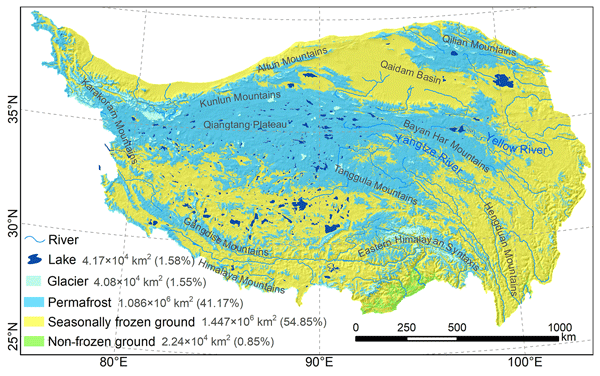
Zetao Cao, Zhuotong Nan, Jianan Hu, Yuhong Chen, and Yaonan Zhang
Earth Syst. Sci. Data, 15, 3905–3930, https://doi.org/10.5194/essd-15-3905-2023, https://doi.org/10.5194/essd-15-3905-2023, 2023
Short summary
Short summary
This study provides a new 2010 permafrost distribution map of the Qinghai–Tibet Plateau (QTP), using an effective mapping approach based entirely on satellite temperature data, well constrained by survey-based subregion maps, and considering the effects of local factors. The map shows that permafrost underlies about 41 % of the total QTP. We evaluated it with borehole observations and other maps, and all evidence indicates that this map has excellent accuracy.
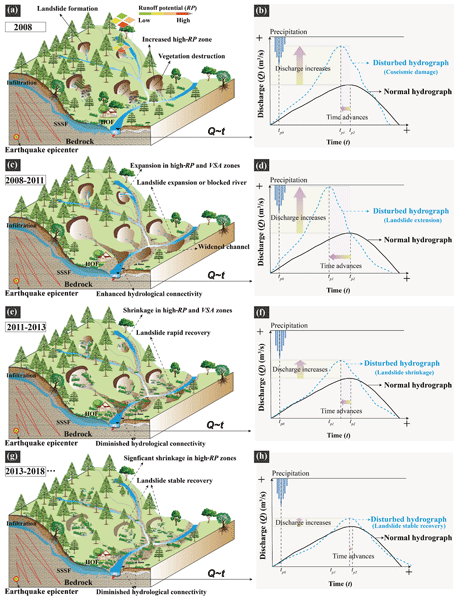
Guotao Zhang, Peng Cui, Carlo Gualtieri, Nazir Ahmed Bazai, Xueqin Zhang, and Zhengtao Zhang
Hydrol. Earth Syst. Sci., 27, 3005–3020, https://doi.org/10.5194/hess-27-3005-2023, https://doi.org/10.5194/hess-27-3005-2023, 2023
Short summary
Short summary
This study used identified stormflow thresholds as a diagnostic tool to characterize abrupt variations in catchment emergent patterns pre- and post-earthquake. Earthquake-induced landslides with spatial heterogeneity and temporally undulating recovery increase the hydrologic nonstationary; thus, large post-earthquake floods are more likely to occur. This study contributes to mitigation and adaptive strategies for unpredictable hydrologic regimes triggered by abrupt natural disturbances.
Shaojie Zhang, Hongjuan Yang, Dunlong Liu, Kaiheng Hu, and Fangqiang Wei
Hydrol. Earth Syst. Sci. Discuss., https://doi.org/10.5194/hess-2022-57, https://doi.org/10.5194/hess-2022-57, 2022
Manuscript not accepted for further review
Short summary
Short summary
We use a numerical model to find that the relationships of AEP-α and AEP-β can be respectively described by the specific function. The I-D threshold curve can regularly move in the I-D coordinate system rather than a conventional threshold curve stay the same regardless of AEP variation. This work is helpful to understand the influence mechanism of AEP on I-D threshold curve and are beneficial to improve the prediction capacity of the I-D threshold.
Cited articles
Aaron, J., Spielmann, R., McArdell, B. W., and Graf, C.: High-frequency 3D LiDAR measurements of a debris flow: A novel method to investigate the dynamics of full-scale events in the field, Geophys. Res. Lett., 50, e2022GL102373, https://doi.org/10.1029/2022GL102373, 2023.
Abancó, C., Hürlimann, M., and Moya, J.: Analysis of the ground vibration generated by debris flows and other torrential processes at the Rebaixader monitoring site (Central Pyrenees, Spain), Nat. Hazards Earth Syst. Sci., 14, 929–943, https://doi.org/10.5194/nhess-14-929-2014, 2014.
Arattano, M. and Marchi, L.: Systems and sensors for debris-flow monitoring and warning, Sensors, 8, 2436–2452, https://doi.org/10.3390/s8042436, 2008.
Bel, C., Navratil, O., Liébault, F., Fontaine, F., Bellot, H., and Laigle, D.: Monitoring debris flow propagation in steep erodible channels, in: Engineering geology for society and territory, vol. 3, edited by: Lollino, G., Arattano, M., Rinaldi, M., Giustolisi, O., Marechal, J.-C., and Grant, G. E., Springer International Publishing, 103–107, https://doi.org/10.1007/978-3-319-09054-2_20, 2015.
Berger, C., McArdell, B., and Schlunegger, F.: Direct measurement of channel erosion by debris flows, Illgraben, Switzerland, J. Geophys. Res., 116, F01002, https://doi.org/10.1029/2010JF001722, 2011.
Berti, M., Genevois, R., Simoni, A., and Tecca, P. R.: Field observations of a debris flow event in the Dolomites, Geomorphology, 29, 265–274, https://doi.org/10.1016/S0169-555X(99)00018-5, 1999.
Berti, M., Genevois, R., La Husen, R., Simoni, A., and Tecca, P. R.: Debris flow monitoring in the Acquabona watershed on the Dolomites (Italian Alps), Phys. Chem. Earth, 25, 707–715, https://doi.org/10.1016/S1464-1909(00)00090-3, 2000.
Blasone, G., Cavalli, M., and Cazorzi, F.: Debris-flow monitoring and geomorphic change detection combining laser scanning and fast photogrammetric surveys in the Moscardo catchment (Eastern Italian Alps), In: Engineering geology for society and territory, vol. 3, edited by: Lollino, G., Arattano, M., Rinaldi, M., Giustolisi, O., Marechal, J., and Grant, G. E., Springer, 51–54, https://doi.org/10.1007/978-3-319-09054-2_10, 2015.
Cassar, C., Nicolas, M., and Pouliquen, O.: Submarine granular flows down inclined planes, Phys. Fluids, 17, 103301, https://doi.org/10.1063/1.2069864, 2005.
Chen, G. X., Wang, J. K., Wang, H. L.: Debris Flow Prevention and Control, China Railway Publishing House, 71–80, ISBN 15043 6443, https://pdfyl.ertongbook.com/85/34869821.pdf (last access: 20 November 2025) 1983.
Chen, J., He, Y. P., and Wei, F. Q.: Debris flow erosion and deposition in Jiangjia gully, Yunnan, China, Environ. Geol., 48, 771–777, https://doi.org/10.1007/s00254-005-0017-z, 2005.
Chen, J. W.: A Preliminary Analysis of the Relation Between Debris Flow and Rainstorm at Jiangjia Gully of Dongchuan in Yunnan, Memoris of Lanzhou Institute of Glaciology and Cryopedology, Chinese Academy of Science, 4, 88–96, https://doi.org/10.3133/pp1671, 1985.
Chen, N. S., Yang, C. L., Zhou, W., Wei, F. Q., Li, Z. L., Han, D., and Hu, G. S.: A new total volume model of debris flows with intermittent surges: based on the observations at Jiangjia Valley, southwest China, Nat. Hazards, 56, 37–57, https://doi.org/10.1007/s11069-010-9548-z, 2011.
Chen, Q., Song, D., Chen, X., and Zhong, W.: Visco-collisional scaling law of flow resistance and its application in debris-flow mobility, J. Geophys. Res.-Earth, 128, e2022JF006712, https://doi.org/10.1029/2022JF006712, 2023.
Chen, Q., Song, D., Chen, X., Feng, L., Li, X., Zhao, W., and Zhang, Y.: The erosion pattern and hidden momentum in debris-flow surges revealed by simple hydraulic jump equations, Water Resour. Res., 60, e2023WR036090, https://doi.org/10.1029/2023WR036090, 2024.
Chen, Q., Song, D., Wei, L., Jiang, H, Tang, H., and Wang, Y.: The nocturnal occurrence of debris flows: evidence from western China, npj Natural Hazards, 2, 1–15, https://doi.org/10.1038/s44304-025-00114-2, 2025.
Coe, J., Kean, J., McCoy, S., Staley, D., and Wasklewicz, T.: Chalk Creek Valley: Colorado's natural debris-flow laboratory, Geol. Soc. Am. Field Guides, 18, 95–117, https://doi.org/10.1130/2010.0018(05), 2010.
Comiti, F., Marchi, L., Macconi, P., Arattano, M., Bertoldi, G., Borga, M., Brardinoni, F., Cavalli, M., D'Agostino, V., Penna, D., and Theule, J.: A new monitoring station for debris flows in the European Alps: first observations in the Gadria basin, Nat. Hazards, 73, 1175–1198, https://doi.org/10.1007/s11069-014-1088-5, 2014.
Coviello, V., Arattano, M., and Turconi, L.: Detecting torrential processes from a distance with a seismic monitoring network, Nat. Hazards 78, 2055–2080 https://doi.org/10.1007/s11069-015-1819-2, 2015.
Cui, P., Chen, X. Q., Wang, Y. Y., Hu, K. H., and Li, Y.: Jiangjia Ravine debris flows in south-western China, in: Debris-flow hazards and related phenomena, edited by: Jakob, M. and Hungr, O., Springer, Berlin, https://link.springer.com/chapter/10.1007/3-540-27129-5_22 (last access: 25 September 2025), 2005.
Du, J., Zhou, G. G. D., Tang, H., Turowski, J. M., and Cui, K. F. E.: Classification of stream, hyperconcentrated, and debris flow using dimensional analysis and machine learning, Water Resour. Res., 59, e2022WR033242, https://doi.org/10.1029/2022WR033242, 2023.
Fan, X., Scaringi, G., Domènech, G., Yang, F., Guo, X., Dai, L., He, C., Xu, Q., and Huang, R.: Two multi-temporal datasets that track the enhanced landsliding after the 2008 Wenchuan earthquake, Earth Syst. Sci. Data, 11, 35–55, https://doi.org/10.5194/essd-11-35-2019, 2019.
Fang, Y. C., Wang, D. J., He, S. T., Lan, H. J., and Chang, S. Q.: Characteristics of debris flow erosion and deposition at Jiangjia Gully, Dongchuan, Yunnan Province, China for 2003–2014, Mountain Research, 36, 907–916, https://doi.org/10.16089/j.cnki.1008-2786.000386, 2018.
Fuchs, S., Ornetsmüller, C., and Totschnig, R.: Spatial scan statistics in vulnerability assessment: an application to mountain hazards, Nat. Hazards, 64, 2129–2151, https://doi.org/10.1007/s11069-011-0081-5, 2012.
Gao, Y. C., Chen, N. S., Hu, G. S., and Deng, M. F.: Magnitude-frequency relationship of debris flows in the Jiangjia Gully, China, J. Mt. Sci., 16, https://doi.org/10.1007/s11629-018-4877-6, 2019.
Genevois, R., Tecca, P., Breti, M., and Simoni, A.: Debris-flow in the dolomites: experimental data from a monitoring system, in: Debris-flow hazards mitigation: mechanics, prediction, and assessment, Proceedings of the 2nd international conference, edited by: Wieczorek, G. F. and Naeser, N. D., Balkema Press, Taipei, Taiwan, Rotterdam, 283–291, 16–18, https://www.mendeley.com/catalogue/8c98474c-a214-34cc-98ef-f3ad22bd9643/ (last access: 25 September 2025), 2000.
Guo, X. J., Su, F. H., Hong, Y., and Zou, Q.: Characteristics of hydrogen and oxygen isotopes in rainy season precipitation in Jiangjiagou Watershed, Research of Soil and Water Conservation, 19, 82–85, 2012.
Guo, X. J., Li, Y., Cui, P., Yan, H., and Zhuang, J. Q.: Intermittent viscous debris flow formation in Jiangjia Gully from the perspectives of hydrological processes and material supply, J. Hydrol., 589, 125184, https://doi.org/10.1016/j.jhydrol.2020.125184, 2020.
Guo, X. J., Li, Y., Chen, X. C., Zhang, J., and Sun, Y. Q.: Variation of debris flow/flood formation conditions at the watershed scale in the Wenchuan Earthquake area, Landslides, 18, 1–17, https://doi.org/10.1007/s10346-021-01644-2, 2021.
Guo, X. J., Li, Y., Yao, Y. J., Liu, D. C., and Zhang, J.: A Pareto-Poisson process model for intermittent debris flow surges developing from slope failures, Eng. Geol., 314, 106998, https://doi.org/10.1016/j.enggeo.2023.106998, 2023.
Hirschberg, J., Fatichi, S., Bennett, G. L., McArdell, B. W., Peleg, N., Lane, S. N., Schlunegger, F., and Molnar, P.: Climate change impacts on sediment yield and debris flow activity in an Alpine catchment, J. Geophys. Res.-Earth, 126, e2020JF005739, https://doi.org/10.1029/2020JF005739, 2021.
Hirschberg, J., McArdell, B. W., and Mirus, B. B.: Volumetric Water Content Measurements at Illgraben 2022, EnviDat [data set], https://doi.org/10.16904/envidat.489, 2024.
Hu, K. H., Hu, C., Li, Y., and Cui, P.: Characteristics and mechanism of debris-flow surges at Jiangjia Ravine, in: 5th international conference on debris-flow hazards mitigation: mechanics, prediction and assessment, edited by: Genevois, R., Hamilton, D. L., and Prestininzi, A., 211–217, https://doi.org/10.4408/IJEGE.2011-03.B-025, 2011a.
Hu, K. H., Wei, F. Q., and Li, Y.: Real-time measurement and preliminary analysis of debris-flow impact force at Jiangjia Ravine, China, Earth Surf. Proc. Land., 36, 1268–1278, https://doi.org/10.1002/esp.2155, 2011b.
Hu, K. H., Mi, T., and Li, Y: The Influence of Flow Width on Mean Velocity of Debris Flows in Wide Open Channel, Journal of Hydraulic Engineering, 139, 65–69, https://doi.org/10.1061/(ASCE)HY.1943-7900.0000648, 2013.
Hübl, J. and Kaitna, R.: Sediment delivery from the Lattenbach catchment by debris floods and debris flows, EGU General Assembly, 2–7 May 2010, Vienna, Austria, 10585, https://docslib.org/doc/7009467/sediment-delivery-from-the-lattenbach-catchment-to-the-river-sanna-by-debris-floods-and-debris-flows (last access: 25 September 2025), 2010.
Hübl, J. and Mikoš, M.: Practice guidelines on monitoring and warning technology for debris flows, in: Landslide Dynamics: ISDR-ICL Landslide Interactive Teaching Tools, edited by: Sassa, K., Guzzetti, F., Yamagishi, H., Arbanas, Ž., Casagli, N., McSaveney, M., and Dang, K., Springer Nature, 567–585, https://doi.org/10.1007/978-3-319-57774-6_41, 2018.
Hübl, J. and Moser, M.: Risk management in Lattenbach: a case study from Austria, in: Monitoring. Simulation, prevention and remediation of dense and debris flows, edited by: Lorenzi, G., Brebbia, C., and Emmanouloudis, D., WIT Press, Southamption, 333–342, https://doi.org/10.2495/DEB060321, 2006.
Hübl, J., Schimmel, A., and Koschuch, R.: Monitoring of debris flows with an improved system setup at the lattenbach catchment, austria, Springer, Cham, https://doi.org/10.1007/978-3-319-53485-5_53, 2017.
Hürlimann, M., Abancó, C., and Moya, J.: Experiences of Debris-Flow Monitoring and Warning at Catchment Scale in the Pyrenees, Landslide Science and Practice: Early Warning, Instrumentation and Monitoring, 2, 153–159, https://doi.org/10.1007/978-3-642-31445-2_20, 2013.
Hürlimann, M., Coviello, V., Bel, C., Guo, X. J., Berti, M., Graf, C., Hübl, J., Miyata, S., Smith, J. B., and Yin, H. Y.: Debris-flow monitoring and warning: Review and examples, Earth-Sci. Rev., 199, 102981, https://doi.org/10.1016/j.earscirev.2019.102981, 2019.
Ikeda, A., Itoh, T., and Mizuyama, T.: Study of debris flow peak discharge at Kamikamihorizawa Creek, in: 8th International Conference on Debris Flow Hazard Mitigation (DFHM8), E3S Web of Conferences, 415, 03012, https://doi.org/10.1051/e3sconf/202341503012, 2023.
Iverson, R. M.: The physics of debris flows, Rev. Geophys., 35, 245–296, https://doi.org/10.1029/97RG00426, 1997.
Iverson, R. M., Logan, M., Lahusen, R. G., and Berti, M.: The perfect debris flow? Aggregated results from 28 large-scale experiments, J. Geophys. Res., 115, https://doi.org/10.1029/2009JF001514, 2010.
Jiang, H., Chen, X. Q., Li, Y. P., Chen, J. G., Wei, L., and Zhang, Y. B.: Seasonal dynamics of soil microbiome in response to dry-wet alternation along the Jinsha River Dry-hot Valley, BMC Microbiol., 24, 496, https://doi.org/10.1186/s12866-024-03662-1, 2024.
Kaitna, R., Dietrich, W. E., and Hsu, L.: Surface slopes, velocity profiles and fluid pressure in coarse-grained debris flows saturated with water and mud, J. Fluid Mech., 741, 377–403, https://doi.org/10.1017/jfm.2013.675, 2014.
Kang, Z. C.: An analysis of maximum discharge of viscous debris flow at Jiangjia Gully of Dongchuan in Yunnan, in: Memoirs of Lanzhou Institute of Glaciology and Cryop edology, Chinese Academy of Sciences, Science Press, Beijing, 108–118, ISBN 13031 2795, 1984.
Kang, Z. C.: Velocity research of debris flow and it's calculation method in China, Mountain Research, 5, 247–259, https://doi.org/10.16089/j.cnki.1008-2786.1987.04.012, 1987.
Kang, Z. C.: Motion Characteristics of Debris Flow at Jiangjia Gully, Yunnan Province, China, International Research and Training Center on Erosion and Sedimentation (IRTCES), 1–38, http://ir.imde.ac.cn/handle/131551/5023 (last access: 25 September 2025), 1990.
Kang, Z. C.: Topographic Change in the Stream Channel by Viscous Debris Flow, in: Annuals of disasters prevention Research Institution, 40th edn., Kyoto University, 167–172, ISBN 7-03-013800-7, 1997.
Kang, Z. C., Li, Z. F., Ma, A. N., and Luo, J. T.: Research on Debris Flows in China, Science Press, Beijing, ISBN 7-03-013800-7, 2004.
Kang, Z. C., Cui, P., Wei, F. Q., and He, S. F.: Data collection of kinematic observation of debris flows in Jiangjia Ravine, Dongchuan, Yunnan (1961–1984), Science Press, Beijing, ISBN 7-03-017351-1, 2006.
Kang, Z. C., Cui, P., Wei, F. Q., and He, S. F.: Data collection of kinematic observation of debris flows in Jiangjia Ravine, Dongchuan, Yunnan (1995–2000), Science Press, Beijing, ISBN 7-03-019067-X, 2007.
Kean, J. W., McCoy, S. W., Tucker, G. E., Staley, D. M., and Coe, J. A.: Runoff-generated debris flows: observations and modeling of surge initiation, magnitude, and frequency, J. Geophys. Res.-Earth, 118, 2190–2207, https://doi.org/10.1002/jgrf.20148, 2013.
Kwan, J. S. H.: Supplementary technical guidance on design of rigid debris-resisting barriers, GEO Report No. 270, Geotechnical Engineering Office, HKSAR Government, https://www.cedd.gov.hk/filemanager/eng/content_486/er270links.pdf (last access: 25 September 2025), 2012.
LaHusen, R.: Debris-flow instrumentation. in: Debris- Flow Hazards and Related Phenomena, edited by: Jakob, M. and Hungr, O., Springer, Berlin, 291–304, ISBN 9783540207269, 2005.
Lapillonne, S., Fontaine, F., Liebault, F., Richefeu, V., and Piton, G.: Debris-flow surges of a very active alpine torrent: a field database, Nat. Hazards Earth Syst. Sci., 23, 1241–1256, https://doi.org/10.5194/nhess-23-1241-2023, 2023.
Li, J. and Wu, J. N.: An Analysis on the Formation Condition of Debris Flows in the Jingjia Gully, Dongchuan, Yunna, in: Collected Papers on Debris Flows, Chongqing Branch of Science and Technology Press, 26–29, http://ir.imde.ac.cn/handle/131551/26980 (last access: 20 November 2025), 1981.
Li, J., Yuan, J., Bi, C., and Luo, D.: The main features of the mudflow in Jiang-Jia Ravine, Z. Geomorphol., 27, 325–341 https://doi.org/10.1127/zfg/27/1983/325, 1983.
Li, Y., Liu, J. J., Hu, K. H., and Su, P. C.: Probability distribution of measured debris-flow velocity in Jiangjia Gully, Yunnan Province, China, Nat. Hazards, 60, 689–701, https://doi.org/10.1007/s11069-011-0033-0, 2012.
Li, Y., Zhou, X. J., Su, P. C., Kong, Y. D., and Liu, J. J.: A scaling distribution for grain composition of debris flow, Geomorphology, 192, 30–42, https://doi.org/10.1016/j.geomorph.2013.03.015, 2013.
Li, Y., Liu, J. J., Su, F. H., Xie, J., and Wang, B. L.: Relationship between grain composition and debris flow characteristics: a case study of the Jiangjia Gully in China, Landslides, 12, https://doi.org/10.1007/s10346-014-0475-z, 2014.
Liu, D. C., Jia, Y., He, Y. Y., Shao, J., Xiang, B., Liang, M., Wang, F. M., and Guo, C. C.: Spatial-temporal characteristics of sediment transport by intermittent surges, Landslides, 1–17, https://doi.org/10.1007/s10346-023-02025-7, 2023.
Liu, J. J., Li, Y., Su, P. C., and Cheng, Z. L.: Magnitude-frequency relations in debris flow, Environ. Geol., 55, 1345–1354, https://doi.org/10.1007/s11629-018-4877-6, 2008.
Liu, J. J., Li, Y., Su, P. C., Cheng, Z. L., and Cui, P.: Temporal variation of intermittent surges of debris flow, J. Hydrol., 365, 322–328, https://doi.org/10.1016/j.jhydrol.2008.12.005, 2009.
Liu, K. F. and Wei, S. C.: Real-time debris flow monitoring and automated warning system, J. Mt. Sci., 21, 4050–4061, https://doi.org/10.1007/s11629-024-9269-5, 2024.
Marchi, L. and Crema, S.: Data on debris-flow volumes in northeastern Italy, PANGAEA [data set], https://doi.org/10.1594/PANGAEA.896595, 2018.
Marchi, L., Arattano, M., and Deganutti, A. M.: Ten years of debris-flow monitoring in the Morcardo Torrent (Italian Alps), Geomorphology, 46, 1–17, https://doi.org/10.1016/S0169-555X(01)00162-3, 2002.
Marchi, L., Cazorzi, F., Arattano, M., Cucchiaro, S., Cavalli, M., and Crema, S.: Debris flows recorded in the Moscardo catchment (Italian Alps) between 1990 and 2019, Nat. Hazards Earth Syst. Sci., 21, 87–97, https://doi.org/10.5194/nhess-21-87-2021, 2021.
McArdell, B. W. and Hirschberg, J.: Debris-flow volumes at the Illgraben 2000–2017, EnviDat [data set], https://doi.org/10.16904/envidat.173, 2020.
McArdell, B. W., Bartelt, P., and Kowalski, J.: Field observations of basal forces and fluid pore pressure in a debris flow, Geophys. Res. Lett., 34, L07406, https://doi.org/10.1029/2006GL029183, 2007.
McArdell, B. W., Hirschberg, J., Graf, C., Boss, S., and Badoux, A.: Illgraben debris-flow characteristics 2019–2022, EnviDat [data set], https://doi.org/10.16904/envidat.378, 2023.
McCoy, S. W., Kean, J. W., Coe, J. A., Staley, D. M., Wasklewicz, T. A., and Tucker, G. E.: Evolution of a natural debris flow: in situ measurements of flow dynamics, video imagery, and terrestrial laser scanning, Geology, 38, 735–738, https://doi.org/10.1130/G30928.1, 2010.
McCoy, S. W., Coe, J. A., Kean, J. W., Tucker, G. E., Staley, D. M., and Wasklewicz, T. A.: Observations of debris flows at Chalk Cliffs, Colorado, USA: Part 1, In situ measurements of flow dynamics, tracer particle movement and video imagery from the summer of 2009, Ital. J. Eng. Geol. Environ., https://doi.org/10.4408/IJEGE.2011-03.B-078, 2011.
McCoy, S. W., Coe, J. A., Kean, J. W., Tucker, G. E., Staley, D. M., and Wasklewicz, T. A.: Sediment entrainment by debris flows: In situ measurements from the headwaters of a steep catchment, J. Geophys. Res., 117, F03016, https://doi.org/10.1029/2011JF002278, 2012.
Meng, X., Johnson, C. G., and Gray, J. M. N. T.: Formation of dry granular fronts and watery tails in debris flows, J. Fluid Mech., 943, A19, https://doi.org/10.1017/jfm.2022.400, 2022.
Mitchell, A., Jacquemart, M., Hübl, J., Kaitna, R., and Graf, C.: Debris flow discharge hydrographs from Dorfbach & Spreitgraben, Switzerland, and Lattenbach, Austria, PANGAEA [data set], https://doi.org/10.1594/PANGAEA.943970, 2022.
Nagl, G., Hübl, J., and Kaitna, R.: Velocity profiles and basal stresses in natural debris flows, Earth Surf. Proc. Land., 45, 1764–1776, https://doi.org/10.1002/esp.4844, 2020.
Navratil, O., Liébault, F., Bellot, H., Travaglini, E., Theule, J., Chambon, G., and Laigle, D.: High-frequency monitoring of debris-flows propagation in the Réal Torrent, Southern French Alps, Geomorphology, 201, https://doi.org/10.1016/j.geomorph.2013.06.017, 2013.
Okano, K., Suwa, H., and Kanno, T.: Characterization of debris flows by rainstorm condition at a torrent on the Mount Yakedake volcano, Japan, Geomorphology, 136, 88–94, https://doi.org/10.1016/j.geomorph.2011.04.006, 2012.
Ortuño, M, Guinau, M., Calvet, J., Furdada, G., Bordonau, J., Ruiz, A., and Camafort, M.: Potential of airborne LiDAR data analysis to detect subtle landforms of slope failure: Portainé, Central Pyrenees, Geomorphology, 295, 364–382, https://doi.org/10.1016/j.geomorph.2017.07.015, 2017.
Pierson, T. C.: Flow behavior of channelized debris flows, Mount St. Helens, Washington, in: Hillslope processes, edited by: Abrahms, A. D., Allen & Unwin, Boston, 269–296, https://doi.org/10.4324/9781003028840-13, 1986.
Raffaele, S. and Jordan, A.: A new method for detailed discharge and volume measurements of debris flows based on high-frequency 3D LiDAR point clouds; Illgraben, Switzerland, Eng. Geol., 329, 107386, https://doi.org/10.1016/j.enggeo.2023.107386, 2024.
Scott, K. M. and Wang, Y. Y.: Debris flows: geologic process and hazard; illustrated by a surge sequence at Jiangjia Ravine, Yunnan, China, Reston, VA, http://nsl.imde.ac.cn/en/publ/article_2020/202310/P020250911337941672444.pdf (last access: 25 September 2025), 2004.
Song, D. R., Chen, X. Q., Gordon, G. D. Zhou, Lu, X. Q., Cheng, G. W., and Chen, Q.: Impact dynamics of debris flow against rigid obstacle in laboratory experiments, Eng. Geol., 291, 106211, https://doi.org/10.1016/j.enggeo.2021.106211, 2021.
Song, D. R., Chen, X. Q., Sadeghi, H., Zhong, W., Hu, H., and Liu, W.: Impact behavior of dense debris flows regulated by pore-pressure feedback, J. Geophys. Res.-Earth, 128, e2023JF007074, https://doi.org/10.1029/2023JF007074, 2023.
Song, D. R., Zhong, W., Li, X. Y., and Wei, L.: Debris-flow kinematic data at Jiangjia Ravine, Dongchuan, Yunnan, China, from 1961 to 2024, National Cryosphere Desert Data Center [data set], https://doi.org/10.12072/ncdc.ddfors.db6803.2025, 2025a.
Song, D. R., Zhong, W., Li, X. Y., and Wei, L.: Seismic data of debris flow at Jiangjia Ravine, Yunnan, China, from 2023 to 2024, National Cryosphere Desert Data Center [data set], https://doi.org/10.12072/ncdc.ddfors.db6804.2025, 2025b.
Song, D. R., Zhong, W., Li, X. Y., and Wei, L.: Particle size distribution of debris flows at Jiangjia Ravine, Dongchuan, Yunnan, China, in 1965, 1966, 1974, 1975, 1982, and from 2003 to 2024, National Cryosphere Desert Data Center [data set], https://doi.org/10.12072/ncdc.ddfors.db6721.2025, 2025c.
Song, D. R., Zhong, W., Li, X. Y., and Wei, L.: Rheological data of debris-flow slurry at Jiangjia Ravine, Yunnan, China, from 2003 to 2024, National Cryosphere Desert Data Center [data set], https://doi.org/10.12072/ncdc.ddfors.db6720.2025, 2025d.
Song, D. R., Zhong, W., Li, X. Y., and Wei, L.: Video of debris flows that occurred in 2023 and 2024 at Jiangjia Ravine, Dongchuan, Yunnan, China, National Cryosphere Desert Data Center [data set], https://doi.org/10.12072/ncdc.ddfors.db6807.2025, 2025e.
Song, D. R., Zhong, W., Li, X. Y., and Wei, L.: Cross-sectional measurement data at Jiangjia Ravine, Yunnan, China, National Cryosphere Desert Data Center [data set], https://doi.org/10.12072/ncdc.ddfors.db6719.2025, 2025f.
Song, D. R., Zhong, W., Li, X. Y., and Wei, L.: Meteorological data at Jiangjia Ravine and Xiaojiang River Catchment, Yunnan, China, National Cryosphere Desert Data Center [data set], https://doi.org/10.12072/ncdc.ddfors.db6805.2025, 2025g.
Song, D. R., Zhong, W., Li, X. Y., and Wei, L.: Rainfall data at Jiangjiag Ravine and Xiaojiang River Catchment, Yunnan, China, National Cryosphere Desert Data Center [data set], https://doi.org/10.12072/ncdc.ddfors.db6716.2025, 2025h.
Song, D. R., Zhong, W., Li, X. Y., and Wei, L.: Soil moisture and temperature data at Jiangjia Ravine, Yunnan, China, from 2017 to 2024, National Cryosphere Desert Data Center [data set], https://doi.org/10.12072/ncdc.ddfors.db6718.2025, 2025i.
Song, D. R., Zhong, W., Li, X. Y., and Wei, L.: Sediment concentration and grain size distribution of runoff water sample at Jiangjia Ravine and Xiangjiang River, National Cryosphere Desert Data Center [data set], https://doi.org/10.12072/ncdc.ddfors.db6802.2025, 2025j.
Song, D. R., Zhong, W., Li, X. Y., and Wei, L.: Observation data at runoff plots at Jiangjia Ravine, Yunnan, China, National Cryosphere Desert Data Center [data set], https://doi.org/10.12072/ncdc.ddfors.db6806.2025, 2025k.
Suwa, H., Okunishi, K., and Sakai, M.: Motion, debris size and scale of debris flows in a valley on Mount Yakedake, Japan, in: Proc. international symposium, Yokohama, IAHS Publ., 217, 239–248, 1993.
Suwa, H., Okano, K., and Kanno, T.: Forty years of debris-flow monitoring at Kamikamihorizawa Creek, Mount Yakedake, Japan, in: Proceedings of the 5th International Conference on Debris Flow Hazards Mitigation, Mechanics, Prediction and Assessment, edited by: Genevois, R., Hamilton, D. L., and Prestininzi, A., 605–613, https://doi.org/10.4408/IJEGE.2011-03.B-066, 2011.
Theule, J. I., Liébault, F., Laigle, D., and Loye, A., and Jaboyedoff, M.: Channel scour and fill by debris flows and bedload transport, Geomorphology, 243, 92–105, https://doi.org/10.1016/j.geomorph.2015.05.003, 2015.
Theule, J. I., Crema, S., Marchi, L., Cavalli, M., and Comiti, F.: Exploiting LSPIV to assess debris-flow velocities in the field, Nat. Hazards Earth Syst. Sci., 18, 1–13, https://doi.org/10.5194/nhess-18-1-2018, 2018.
Tian, M., Hu, K. H., Ma, C., and Lei, F. H.: Effect of Bed Sediment Entrainment on Debris-Flow Resistance, J. Hydraul. Eng., 140, 115–120, https://doi.org/10.1061/(ASCE)HY.1943-7900.0000805, 2014.
Tobler, D., Kull, I., Jacquemart, M., and Haehlen, N.: Hazard Management in a Debris Flow Affected Area: Case Study from Spreitgraben, Switzerland. in: Landslide Science for a Safer Geoenvironment, edited by: Sassa, K., Canuti, P., Yin, Y., Springer, Cham, https://doi.org/10.1007/978-3-319-04996-0_5, 2014.
Victoriano, A., Brasington, J., Guinau, M., Furdada, G., Cabré, M., and Moysset, M.: Geomorphic impact and assessment of flexible barriers using multi-temporal LiDAR data: the Portainé mountain catchment (Pyrenees), Eng. Geol. 237, 168–180, https://doi.org/10.1016/j.enggeo.2018.02.016, 2018.
Wang, B., Li, Y., Liu, D. C., and Liu, J. J.: Debris flow density determined by grain composition, Landslides, 15, 1205–1213, https://doi.org/10.1007/s10346-017-0912-x, 2018.
Wang, L., Chang, M., Le, J., Xiang, L. L., and Ni, Z.: Two multi-temporal datasets to track debris flow after the 2008 Wenchuan earthquake, Scientific Data, 9, 525, 1–9, https://doi.org/10.1038/s41597-022-01658-y, 2022.
Wei, L. and Hu, K. H.: Study on sediment transporting characteristics of intermittent debris flows in Jiangjia Ravine, Journal of Natural Disasters, 23, 53–60, https://doi.org/10.13577/j.jnd.2014.0208, 2014.
Wei, L., Hu, K. H., Li, X. Y., and Yan, C. D.: Inter-annual Variation of the Morphology of Debris Flow Channel in Jiangjia Gully, Journal of Yangtze River Scientific Research Institute, 34, 57–62, https://doi.org/10.11988/ckyyb.20160528, 2017.
Willi, C., Graf, C., Deubelbeiss, Y., and Keiler, M.: Methods for detecting channel bed surface changes in a mountain torrent – experiences from the Dorfbach torrent, Geogr. Helv., 70, 265–279, https://doi.org/10.5194/gh-70-265-2015, 2015.
Wu, J. S.: Fluid state of debris flow in the Jiangjia Ravine, Mountain Research, 5, 237–246, 1987.
Wu, J. S., Kang, Z. C., and Tian, L. Q.: Observation and Research on Debris Flows in Jiangjia Ravine, Yunnan, Science Press, Beijing, ISBN 7-03-001370-0, 1990.
Yang, H. J., Zhang, S. J., Hu, K. H., Wei, F. Q., Wang, K., and Liu, S.: Field observation of debris-flow activities in the initiation area of the Jiangjia Gully, Yunnan Province, China, J. Mt. Sci., 19, 1602–1617, https://doi.org/10.1007/s11629-021-7292-3, 2022.
Yang, H. J., Zhang, S. J., Hu, K. H., Wei, F. Q., and Liu, Y. H.: Evaluation of rainfall threshold models for debris flow initiation in the Jiangjia Gully, Yunnan Province, China, J. Mt. Sci., 21, 1799–1813, https://doi.org/10.1007/s11629-023-8507-6, 2024.
Yin, H. Y., Huang, C. J., Chen, C. Y., Fang, Y. M., Lee, B. J., and Chou, T. Y.: The present development of debris flow monitoring technology in Taiwan-a case study presentation, in: 5th International Conference on Debris-Flow Hazards Mitigation, Casa Editrice Universita La Sapienza, Padua, edited by: Genevois, R., Hamilton, D., and Prestininzi, A., 623–631, https://doi.org/10.4408/IJEGE.2011-03.B-068, 2011.
Zhang, J. and Xiong, G.: Data collection of kinematic observation of debris flows in Jiangjia Ravine, Dongchuan, Yunnan (1987–1994), Science Press, Beijing, ISBN 7-03-004379-7, 1997.
Zhang, M., Li, Y., Cui, Y. F., Wu, Z., Xue, Y., Cheng, J. Y., Jiang, H., Li, Y., Guo, J. Nie, J. Y., Wang, G. D., and Luo, A.: Unity of terrestrial and extraterrestrial soils in granular configuration, Earth Planet. Sc. Lett., 654, 119239, https://doi.org/10.1016/j.epsl.2025.119239, 2025.
Zhang, S., Lei, X., Yang, H., Hu, K., Ma, J., Liu, D., and Wei, F.: Investigation of the functional relationship between antecedent rainfall and the probability of debris flow occurrence in Jiangjia Gully, China, Hydrol. Earth Syst. Sci., 28, 2343–2355, https://doi.org/10.5194/hess-28-2343-2024, 2024.
Zhang, S. C.: A comprehensive approach to the observation and prevention of debris flows in China, Nat. Hazards, 7, 1–23, 1993.
Zhang, S. C., Hong, Y., and Yu, B.: Detecting infrasound emission of debris flow for warning purposes, in: International Symposium Interpraevent, Riva, Trient, 359–360, https://xueshu.baidu.com/ndscholar/browse/detail?paperid=75311f8ca3d14f559be1d68adc6d0a29 (last access: 25 September 2025), 2004.
Zhang, S. J., Xia, M. Y., Li, L., Yang, H. J., Liu, D. L., and Wei, F. Q.: Quantify the effect of antecedent effective precipitation on rainfall intensity-duration threshold of debris flow, Landslides, 20, 1719–1730, https://doi.org/10.1007/s10346-023-02066-y, 2023.
Zhuang, J. Q., Cui, P., Wang, G. H., Chen, X. Q., Iqbal, J., and Guo, X. J.: Rainfall thresholds for the occurrence of debris flows in Jiangjia Gully, Yunnan Province, China, Eng. Geol., 195, 335–346, https://doi.org/10.1016/j.enggeo.2015.06.006, 2015.
Short summary
This research presents a unique 64-year (1961–2024) debris-flow dataset for Jiangjia Ravine, Dongchuan, Yunnan, China. The dataset includes detailed measurements of debris-flow kinematic parameters (velocity, depth, and discharge), physical–mechanical properties (particle size, yield stress, and viscosity), seismic data, and hydrometeorological records (e.g., minute-by-minute rainfall and soil moisture). The dataset is publicly accessible via the National Cryosphere Desert Data Center (NCDC).
This research presents a unique 64-year (1961–2024) debris-flow dataset for Jiangjia Ravine,...


Altmetrics
Final-revised paper
Preprint