Articles | Volume 18, issue 10
https://doi.org/10.5194/essd-18-7199-2026
© Author(s) 2026. This work is distributed under
the Creative Commons Attribution 4.0 License.
the Creative Commons Attribution 4.0 License.
https://doi.org/10.5194/essd-18-7199-2026
© Author(s) 2026. This work is distributed under
the Creative Commons Attribution 4.0 License.
the Creative Commons Attribution 4.0 License.
Data description article
| 
01 Oct 2026
Data description article |
| 01 Oct 2026
| 01 Oct 2026
The WoKaS-Iso database: workflow for a global compilation of oxygen-18 and deuterium records in karst springs and cave drip water for enhanced understanding of karst systems
Yining Zang
CORRESPONDING AUTHOR

Institute of Groundwater Management, Technical University of Dresden, 01069 Dresden, Germany
ANSTO, New Illawarra Road, Lucas Heights, NSW 2234, Australia
School of Biological, Earth and Environmental Sciences, UNSW Sydney, Sydney, NSW 2052, Australia
Kei Yoshimura
Institute of Industrial Science, The University of Tokyo, Kashiwa, Japan
Japan Atmosphere and Ocean Research Institute, The University of Tokyo, Kashiwa, Japan
Jayson Gabriel Pinza
ECOSPHERE Research Group, University of Antwerp, Universiteitsplein 1C, 2610 Antwerp, Belgium
Division of Soil and Water Management, KU Leuven, Celestijnenlaan 200E, 3001 Leuven, Belgium
Fengbo Zhang
Ningbo River Management Center, Ningbo Water Resources Bureau, Ningbo 315000, China
Kübra Özdemir Çallı
Institute of Groundwater Management, Technical University of Dresden, 01069 Dresden, Germany
Xiaojun Mei
Merchant Marine College, Shanghai Maritime University, Shanghai 201306, China
Admin Husic
Department of Civil and Environmental Engineering, Virginia Tech, Blacksburg, 24061, USA
Alena Gessert
Institute of Geography, Faculty of Sciences, University of P. J. Šafárik, 040 01 Košice, Slovakia
Andrej Stroj
Croatian Geological Survey, Sachsova 2, 10000 Zagreb, Croatia
Bartolomé Andreo
Department of Geology and Centre of Hydrogeology at the University of Malaga, 29071 Malaga, Spain
Bernard Ladouche
BRGM, Univ Montpellier, Montpellier, France
G-EAU, Univ Montpellier, AgroParisTech, BRGM, CIRAD, INRAE, Institut Agro, IRD, Montpellier, France
Christine Stumpp
Institute of Soil Physics and Rural Water Management, Department of Landscape, Water and Infrastructure, BOKU University, Vienna, Austria
Diana Mance
Faculty of Physics, University of Rijeka, 51000 Rijeka, Croatia
Eleni Zagana
Laboratory of Hydrogeology, Department of Geology, Faculty of Natural Sciences, University of Patras, 26504 Patras, Greece
Fen Huang
Key Laboratory of Karst Dynamics, MNR and GZAR, Institute of Karst Geology, Chinese Academy of Geological Sciences, Guilin 541004, China
Giuseppe Sappa
Department of Civil, Constructional and Environmental Engineering (DICEA), Sapienza University of Rome, 00184 Rome, Italy
Harald Kunstmann
Institute of Meteorology and Climate Research, Karlsruhe Institute of Technology, Campus Alpin, 82467 Garmisch-Partenkirchen, Germany
Institute of Geography, University of Augsburg, 86135 Augsburg, Germany
Heike Brielmann
Environment Agency Austria, Groundwater Unit, Spittelauer Laende 5, 1090 Vienna, Austria
Hong Zhou
School of Environmental Studies & Institute of Geological Survey, China University of Geosciences, Wuhan 430074, Hubei, China
Huaying Wu
Key Laboratory of Karst Dynamics, MNR and GZAR, Institute of Karst Geology, Chinese Academy of Geological Sciences, Guilin 541004, China
Jakob Garvelmann
Institute of Meteorology and Climate Research, Karlsruhe Institute of Technology, Campus Alpin, 82467 Garmisch-Partenkirchen, Germany
Boden & grundwasser Allgäu GmbH, 87527 Sonthofen, Germany
James Berglund
Department of Civil and Environmental Engineering, University of Wisconsin – Platteville, Platteville, Wisconsin, USA
Jean-Baptiste Charlier
BRGM, Univ Montpellier, Montpellier, France
G-EAU, Univ Montpellier, AgroParisTech, BRGM, CIRAD, INRAE, Institut Agro, IRD, Montpellier, France
Jens Lange
Hydrology, University of Freiburg, 79098 Freiburg, Germany
Juan Antonio Barberá Fornell
Department of Geology and Centre of Hydrogeology at the University of Malaga, 29071 Malaga, Spain
Junbing Pu
Chongqing Key Laboratory of Carbon Cycle and Carbon Regulation of Mountain Ecosystem, School of Geography and Tourism, Chongqing Normal University, Chongqing 401331, China
Konstantina Katsanou
Department of Water Resources and Ecosystems, IHE Delft Institute for Water Education, Delft, the Netherlands
Kun Ren
Key Laboratory of Karst Dynamics, MNR and GZAR, Institute of Karst Geology, Chinese Academy of Geological Sciences, Guilin 541004, China
Laura Toran
Department of Earth and Environmental Science, Temple University, Philadelphia, Pennsylvania, USA
Laurence Gill
Department of Civil, Structural and Environmental Engineering, Trinity College Dublin, Dublin, Ireland
Maria Filippini
Department of Biological, Geological and Environmental Sciences – BiGeA, Alma Mater Studiorum, University of Bologna, Via Selmi 3, 40126 Bologna, Italy
Martin Kralik
Department of Environmental Geosciences, Center for Microbiology and Environmental Systems Science, University of Vienna, 1090 Vienna, Austria
Matías Mudarra Martínez
Department of Geology and Centre of Hydrogeology at the University of Malaga, 29071 Malaga, Spain
Min Zhao
State Key Laboratory of Environmental Geochemistry (SKLEG), Institute of Geochemistry, Chinese Academy of Sciences (CAS), Guiyang, China
Mingming Luo
School of Environmental Studies & Institute of Geological Survey, China University of Geosciences, Wuhan 430074, Hubei, China
Nico Goldscheider
Institute of Applied Geosciences, Karlsruhe Institute of Technology, 76131 Karlsruhe, Germany
Nikolaos Lambrakis
Laboratory of Hydrogeology, Department of Geology, Faculty of Natural Sciences, University of Patras, 26504 Patras, Greece
Pantaleone De Vita
Department of Earth, Environmental and Resources Sciences (DiSTAR), University of Naples Federico II, Naples, Italy
Qiong Xiao
Key Laboratory of Karst Dynamics, MNR and GZAR, Institute of Karst Geology, Chinese Academy of Geological Sciences, Guilin 541004, China
Shi Yu
Key Laboratory of Karst Dynamics, MNR and GZAR, Institute of Karst Geology, Chinese Academy of Geological Sciences, Guilin 541004, China
Silvia Iacurto
Department of Civil, Constructional and Environmental Engineering (DICEA), Sapienza University of Rome, 00184 Rome, Italy
Silvio Coda
Department of Earth, Environmental and Resources Sciences (DiSTAR), University of Naples Federico II, Naples, Italy
Ted McCormack
Geological Survey Ireland, Booterstown Avenue, Booterstown, Blackrock, Ireland
Vincenzo Allocca
Department of Earth, Environmental and Resources Sciences (DiSTAR), University of Naples Federico II, Naples, Italy
W. George Darling
British Geological Survey, Wallingford, OX10 8BB, United Kingdom
Walter D'Alessandro
Istituto Nazionale di Geofisica e Vulcanologia – Sezione di Palermo, Via La Malfa 153, 90146 Palermo, Italy
Xulei Guo
School of Environmental Studies & Institute of Geological Survey, China University of Geosciences, Wuhan 430074, Hubei, China
Yundi Hu
School of Geography and Environmental Science, Guizhou Normal University, Guiyang 550001, People's Republic of China
Zhijun Wang
Faculty of Arts and Sciences, Beijing Normal University, Zhuhai 519087, China
Eva Kaminsky
Karst and Cave Group, Geological Paleontological Department, Natural History Museum, Vienna, Austria
Institute of Soil Physics and Rural Water Management, Department of Landscape, Water and Infrastructure, BOKU University, Vienna, Austria
Jiří Faimon
Department of Geological Sciences, Faculty of Science, Masaryk University, Brno, Czech Republic
Czech Geological Survey, Brno Branch, Brno, Czech Republic
Marek Lang
Department of Geological Sciences, Faculty of Science, Masaryk University, Brno, Czech Republic
Pavel Pracný
Department of Geological Sciences, Faculty of Science, Masaryk University, Brno, Czech Republic
Aurel Persoiu
Emil Racoviță Institute of Speleology, Romanian Academy, 400006 Cluj-Napoca, Romania
Stable Isotope Laboratory, Stefan cel Mare University, 720229 Suceava, Romania
School of Geology, Department of Physical Geography, Aristotle University of Thessaloniki, 54636 Thessaloniki, Greece
Andreas Hartmann
Institute of Groundwater Management, Technical University of Dresden, 01069 Dresden, Germany
Related authors
Pauline C. Treble, Yining Zang, Nikita Kaushal, István G. Hatvani, Péter Tanos, Zoltan Kern, Andy Baker, Andreas Hartmann, Franziska A. Lechleitner, Bryce Belanger, Bruna Daudt de Oliveira, Will Sinclair, Dana F. C. Riechelmann, András Hidas, Kei Yoshimura, Laia Comas-Bru, and the SISAL working group members
Earth Syst. Sci. Data Discuss., https://doi.org/10.5194/essd-2026-31, https://doi.org/10.5194/essd-2026-31, 2026
Revised manuscript under review for ESSD
Short summary
Short summary
Water dripping from cave ceilings is studied to understand how water moves from the surface to the cave. This has applications for palaeoclimate, groundwater and cave conservation studies. We present a new database containing water isotope measurements for drip water and rainfall at 75 cave locations globally. The database is a SISAL working group initiative (Speleothem Isotopes Synthesis and AnaLysis) and complements cave speleothem databases previously constructed by SISAL.
Pauline Thinius, Felix Joger, Tanja Liesch, and Nico Goldscheider
EGUsphere, https://doi.org/10.5194/egusphere-2026-5402, https://doi.org/10.5194/egusphere-2026-5402, 2026
This preprint is open for discussion and under review for Hydrology and Earth System Sciences (HESS).
Short summary
Short summary
Karst spring catchments are difficult to delineate because underground drainage does not necessarily follow surface topography. We developed an automated method to approximate catchments using widely available data. Applied to 63 Alpine springs, it better represents catchment characteristics than using only the spring location. The results show that catchment representation can affect discharge modelling and provide a practical alternative where expert delineations are unavailable.
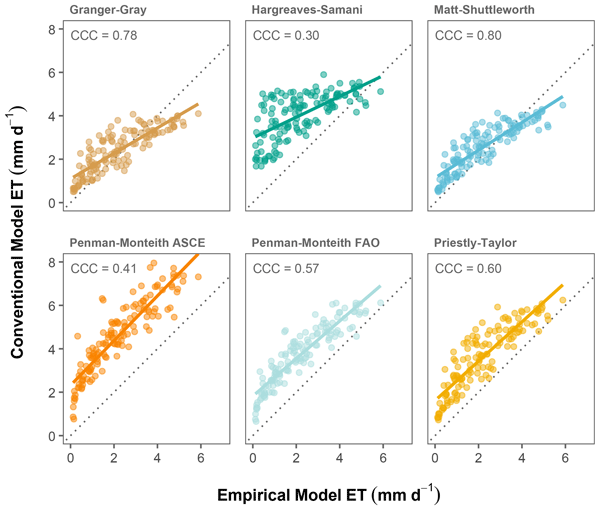
Joshua S. Caplan, Martin Bouda, Allyson B. Salisbury, Michael Alonzo, Jonathan E. Nyquist, Laura Toran, and Sasha W. Eisenman
Hydrol. Earth Syst. Sci., 30, 6075–6093, https://doi.org/10.5194/hess-30-6075-2026, https://doi.org/10.5194/hess-30-6075-2026, 2026
Short summary
Short summary
We sought to test and improve the modeling tools used to quantify evapotranspiration (ET) in urban bioretention basins, where plant size and shade vary widely. Using direct measurements and spatially detailed data from a basin in Philadelphia, we found that common models often produce ET estimates that differ substantially from empirical estimates. Simple corrections to standard models greatly improve agreement, helping cities better predict green stormwater infrastructure performance.
Immanuel Frenzel, Tristan Schröder, Britta Kattenstroth, Barbara Herbstritt, Jonas Pyschik, Michael Müller, and Jens Lange
EGUsphere, https://doi.org/10.5194/egusphere-2026-4811, https://doi.org/10.5194/egusphere-2026-4811, 2026
This preprint is open for discussion and under review for Hydrology and Earth System Sciences (HESS).
Short summary
Short summary
Rain carries the man-made chemical TFA into forests, where it doesn't break down. We sampled water moving sideways through a forested slope in the Black Forest. Fresh autumn leaves hold the most TFA, and the soil water carried far more than the rain did. If earlier rain has already rinsed the soil, TFA just gets diluted. If not, a pulse comes through; bigger storms give longer, multi-peaked signals. TFA keeps a memory of what came before the storm; usual water tracers don't.
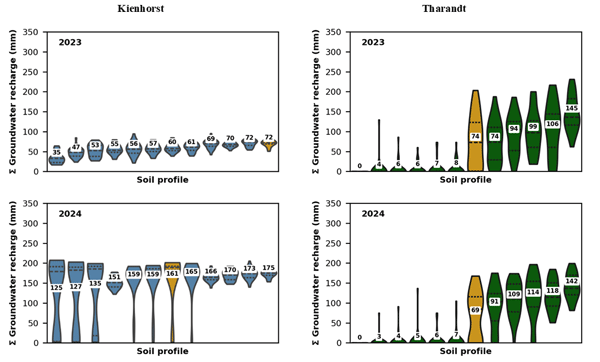
Thomas Fichtner, Yuly Juliana Aguilar Avila, Katja Ehrenberg, Stefan Seeger, Martin Maier, Stephan Raspe, and Andreas Hartmann
Hydrol. Earth Syst. Sci., 30, 5711–5734, https://doi.org/10.5194/hess-30-5711-2026, https://doi.org/10.5194/hess-30-5711-2026, 2026
Short summary
Short summary
The study examines how spatial soil moisture variability affects Soil-Vegetation-Atmosphere Transfer (SVAT) model calibration and groundwater recharge estimates in forest ecosystems. It is demonstrated that model-inherent uncertainties outweight the influence of soil moisture variability. The results indicate that reliable groundwater recharge can be achieved using data from three to eleven profiles, offering practical guidance for efficient monitoring and calibration.
Felix Joger, Pauline Thinius, Zhao Chen, Andreas Hartmann, Nico Goldscheider, Tanja Liesch, Gerhard Schubert, and Stefan Broda
Earth Syst. Sci. Data Discuss., https://doi.org/10.5194/essd-2026-707, https://doi.org/10.5194/essd-2026-707, 2026
Preprint under review for ESSD
Short summary
Short summary
Karst aquifers are important water sources in the Alps, but comparable spring discharge data have been lacking. We created ALPAKAS, the first large-sample benchmark dataset dedicated to karst springs across the wider Alpine region. It provides 242 daily and 183 hourly harmonized and quality-controlled discharge records, along with catchment delineations, meteorological time series, catchment attributes, and karst-specific indices. The dataset supports comparative analyses and model benchmarking.
Tamara Leins, Nikolai Späth, Jan Seibert, Francesca Pianosi, Christian Reinhardt-Imjela, and Andreas Hartmann
EGUsphere, https://doi.org/10.5194/egusphere-2026-4470, https://doi.org/10.5194/egusphere-2026-4470, 2026
This preprint is open for discussion and under review for Hydrology and Earth System Sciences (HESS).
Short summary
Short summary
In this study, we found large uncertainties in the simulation of Subsurface Stormflow (SSF) in a lumped hydrological model using only discharge data for parameter estimation. High-flow-based parameter estimation could extract some additional information, but SSF-specific data remain necessary to achieve more realistic SSF simulations. Occurrence uncertainty dominated total SSF uncertainty, suggesting proxy data on SSF occurrence could already substantially reduce SSF simulation uncertainties.
Yikun Jia, Junbing Pu, Zaihua Liu, Qiufang He, Xinlu Su, Tao Zhang, Jianhong Li, and Sibo Zeng
EGUsphere, https://doi.org/10.5194/egusphere-2026-4596, https://doi.org/10.5194/egusphere-2026-4596, 2026
Short summary
Short summary
We studied carbon storage in alkaline lakes. We monitored microbes, nutrients, and carbon over seasons in a reservoir. Stratification changed networks: layering converted labile to resistant carbon, mixing also increased stable carbon. Calcium trapped phosphorus, limiting nutrients and raising resistant carbon. Thus, layering and microbial teamwork stabilize carbon. Our findings help predict climate impacts on lake carbon sinks and guide management.
Wenpeng Xie, Hongmei Li, and Kei Yoshimura
EGUsphere, https://doi.org/10.5194/egusphere-2026-4009, https://doi.org/10.5194/egusphere-2026-4009, 2026
Short summary
Short summary
This study develops a new way to calibrate land surface models by combining a machine-learning surrogate with automated parameter estimation. Tested across 20 ecosystem sites, the method improved simulations of sensible and latent heat while greatly reducing the need for repeated full-model runs. It also checks whether the surrogate is reliable and whether calibrated parameters remain physically plausible, making the calibration process more transparent and scalable.
Konstantin Ilgen, Dirk Schindler, and Jens Lange
Earth Syst. Sci. Data Discuss., https://doi.org/10.5194/essd-2026-177, https://doi.org/10.5194/essd-2026-177, 2026
Preprint under review for ESSD
Short summary
Short summary
Floating solar panels are increasingly installed on lakes, but their effects on water temperatures are not well understood. We analysed detailed measurements from three European lakes with floating solar systems. The results show that temperature changes depend strongly on climate, lake conditions, and system design. Sun shading and reduced wind are key drivers. These findings help improve environmental assessments and support responsible planning of floating solar projects.
Simon Seelig, Magdalena Seelig, Matevž Vremec, Martin Masten, Thomas Wagner, Karl Krainer, Michael Avian, Klaus Haslinger, Heike Brielmann, Albrecht Leis, Markus Ribis, Maria Obwegs, Matthias Hausleber, Rudolf Philippitsch, Richild Mauthner-Weber, Ernst Überreiter, and Gerfried Winkler
EGUsphere, https://doi.org/10.5194/egusphere-2026-3664, https://doi.org/10.5194/egusphere-2026-3664, 2026
Short summary
Short summary
Modeling 21st-century climate impacts across 15 nested Austrian catchments, this study shows how shifting snow-to-rain regimes interact with subsurface storage. Because alpine headwaters lack the aquifer capacity to buffer earlier snowmelt and summer deficits, they drive cascading shifts downstream. Ultimately, the loss of cryospheric storage forces a flashier, precipitation-coupled regime across the network, amplifying high flows but mitigating winter low flows.
Luitpold Hingerl, Samuel Guug, Jan Bliefernicht, Hawwa Kadum, Souleymane Sy, Windmanagda Sawadogo, Emmanuel Quansah, Francis E. Oussou, Leonard Amekudzi, Seyni Salack, Belko Abdul-Aziz Diallo, Michael Ayamba, Emmanuel Ramde, Rainer Steinbrecher, Frank Neidli, and Harald Kunstmann
Earth Syst. Sci. Data Discuss., https://doi.org/10.5194/essd-2026-379, https://doi.org/10.5194/essd-2026-379, 2026
Preprint under review for ESSD
Short summary
Short summary
This paper presents a long-term environmental observation dataset from six sites in Burkina Faso and Ghana, providing measurements of exchanges of carbon, water, and energy between ecosystems and the atmosphere. The data were collected across different land-use types and processed using a consistent workflow to ensure quality and comparability. The openly available dataset supports climate research, environmental monitoring, and improved understanding of environmental change in West Africa.
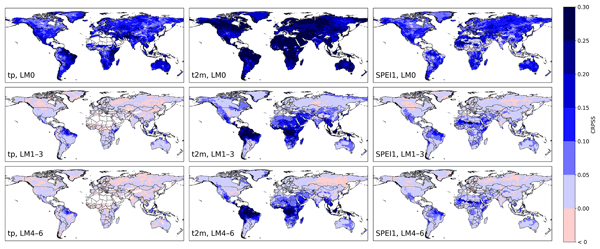
Jan N. Weber, Christof Lorenz, Tanja C. Schober, Rebecca Wiegels, and Harald Kunstmann
Earth Syst. Sci. Data, 18, 5259–5282, https://doi.org/10.5194/essd-18-5259-2026, https://doi.org/10.5194/essd-18-5259-2026, 2026
Short summary
Short summary
Seasonal forecasts can support drought preparedness but are often limited by systematic biases. We present a global Bias-Corrected and Spatially Disaggregated (BCSD) reference dataset based on the European Centre for Medium-Range Weather Forecasts (ECMWF) Seasonal Forecasting System 5 (SEAS5) and observational data. It provides 0.25° global land forecasts from 1981 onward for improved drought and climate-impact applications and is openly available via the World Data Center for Climate.
Jozef Šupinský, Aurel Perşoiu, Michaela Nováková, Michal Gallay, and Ján Kaňuk
EGUsphere, https://doi.org/10.5194/egusphere-2026-3512, https://doi.org/10.5194/egusphere-2026-3512, 2026
Short summary
Short summary
Rapid loss of cave ice demands reliable quantification of volumetric change, yet irregular geometry, limited access, and dynamic melt surfaces make this challenging. We present a transferable terrestrial laser scanning workflow, from noise assessment through surface reconstruction to three-dimensional change and error propagation, robust under suboptimal acquisition. At Scărișoara Ice Cave, Romania, it revealed a loss of 1521 cubic metres in three years, controlled by morphology and drip water.
Aurel Perșoiu, Renata Feher, Carmen-Andreea Bădăluță, Marius-Victor Bîrsan, Dana-Magdalena Micu, Oliver Kracht, Christos Pennos, Ferenc L. Forray, Sandu Boengiu, George Murătoreanu, Alexandru Onaca, Vlad-Alexandru Amihăesei, Mihaela Borcan, Emilia Pantea, Florin Zăinescu, and Oleg Bogdevici
Earth Syst. Sci. Data Discuss., https://doi.org/10.5194/essd-2026-212, https://doi.org/10.5194/essd-2026-212, 2026
Revised manuscript under review for ESSD
Short summary
Short summary
Based on data collected in Eastern Europe, we show that topography modulates the role of large-scale atmospheric circulation patterns and moisture sources in determining the δ18O and δ2H of precipitation, with topography and evaporative loss being the main factors behind the variability of the same parameters in river waters.
Saaya Hamamoto, Yoshinori Iizuka, Takuro Aizawa, Kaoru Kawakami, Mai Matsumoto, Sumito Matoba, Hayoung Bong, Kei Yoshimura, Atsushi Okazaki, Laura Jasmin Dietrich, Hans Christian Steen-Larsen, and Ryu Uemura
EGUsphere, https://doi.org/10.5194/egusphere-2026-3602, https://doi.org/10.5194/egusphere-2026-3602, 2026
Short summary
Short summary
We developed a new 150-year age scale for an ice core from southeast Greenland by matching its oxygen-isotope variations with climate-model simulations. The record resolves changes over several months and shows that snowfall remained nearly evenly distributed through the seasons from 1871 to 2020. This stability suggests that the regional balance of atmospheric circulation and moisture transport changed little at this site despite recent Arctic warming.
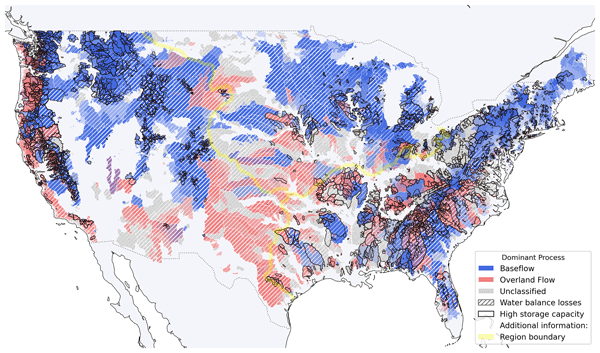
Ryoko Araki, Anne Holt, John C. Hammond, Admin Husic, Gemma Coxon, and Hilary K. McMillan
Hydrol. Earth Syst. Sci., 30, 3647–3673, https://doi.org/10.5194/hess-30-3647-2026, https://doi.org/10.5194/hess-30-3647-2026, 2026
Short summary
Short summary
We mapped dominant hydrologic processes across the United States by analyzing observed streamflow dynamics. Using random forest models and interpretable machine learning techniques, we predicted processes in data-scarce regions and identified key drivers such as climate, soil and geology, land cover, topography, and human influence. The resulting maps of dominant processes and their drivers reveal strong regional patterns that guide hydrologic model selection and water resource management.
Pauline C. Treble, Yining Zang, Nikita Kaushal, István G. Hatvani, Péter Tanos, Zoltan Kern, Andy Baker, Andreas Hartmann, Franziska A. Lechleitner, Bryce Belanger, Bruna Daudt de Oliveira, Will Sinclair, Dana F. C. Riechelmann, András Hidas, Kei Yoshimura, Laia Comas-Bru, and the SISAL working group members
Earth Syst. Sci. Data Discuss., https://doi.org/10.5194/essd-2026-31, https://doi.org/10.5194/essd-2026-31, 2026
Revised manuscript under review for ESSD
Short summary
Short summary
Water dripping from cave ceilings is studied to understand how water moves from the surface to the cave. This has applications for palaeoclimate, groundwater and cave conservation studies. We present a new database containing water isotope measurements for drip water and rainfall at 75 cave locations globally. The database is a SISAL working group initiative (Speleothem Isotopes Synthesis and AnaLysis) and complements cave speleothem databases previously constructed by SISAL.
Süleyman Selim Çallı, Kübra Özdemir Çallı, Brahim Akdim, Bruno Arfib, Aleksey Benderev, Sandra Beranger, Avi Burg, Onur Can, Jean-Baptiste Charlier, Mehmet Çelik, Arda Melih Çetin, Fehdi Chemseddine, Miroslava Deliyska, Lucio Di Matteo, Marco Dionigi, Romeo Eftimi, Jutta Eybl, Davide Fronzi, Nico Goldscheider, Ergin Gökkaya, Jorge Jodar, Herve Jourde, Eva Kaminsky, Konstantina Katsanou, Alireza Kavousi, Melike Kaya, David Labat, Tanja Liesch, Peter Malik, Christian Massari, Cyril Mayaud, Naomi Mazzilli, Pavel Pracny, Natasa Ravbar, Nathan Rispal, Simon Seelig, Vianney Sivelle, Marc Steinmann, Daniela Valigi, Gerfried Winkler, Ahmet Kemal Yahşi, and Andreas Hartmann
Earth Syst. Sci. Data Discuss., https://doi.org/10.5194/essd-2026-281, https://doi.org/10.5194/essd-2026-281, 2026
Revised manuscript under review for ESSD
Short summary
Short summary
Karst groundwater systems are vital but highly sensitive to climate change. Their complex underground flow makes them hard to manage without good data, so we gathered 118 high-quality records of spring discharge across Mediterranean mountain ranges. With an average of 19 years of data – including one nearly century-long record – this collection provides the detailed information needed to better predict water availability and protect these vulnerable groundwater sources.
Melanie Vital, Edison Jara, Andrew John Wade, Janie Masse-Dufresne, Aurel Persoiu, Marjan Temovski, Zarina Saidaliyeva, Polona Vreča, Luzmila Dàvila Roller, Maria Shahgedanova, Tao Pu, Francisco Fernandoy, Lee Jeonghoon, Bakhriddin Nishonov, Edson Ramirez, and Yuliya Vystavna
Earth Syst. Sci. Data Discuss., https://doi.org/10.5194/essd-2026-173, https://doi.org/10.5194/essd-2026-173, 2026
Revised manuscript under review for ESSD
Short summary
Short summary
We created the first global collection of water measurements from glacier‑influenced rivers, lakes, snow, and ice to understand how melting glaciers shape water supplies. By combining data from many regions, we show clear patterns linked to climate and elevation. This work helps scientists and water managers better predict future water availability as glaciers continue to shrink.
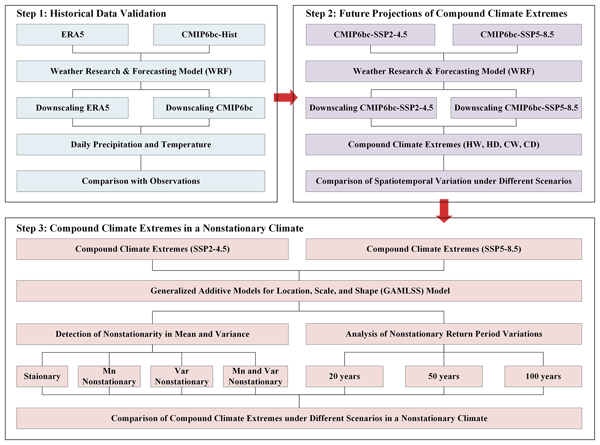
Yinchi Zhang, Wanling Xu, Chao Deng, Shao Sun, Miaomiao Ma, Jianhui Wei, Ying Chen, Yi Wang, Lu Gao, and Harald Kunstmann
Nat. Hazards Earth Syst. Sci., 26, 2031–2050, https://doi.org/10.5194/nhess-26-2031-2026, https://doi.org/10.5194/nhess-26-2031-2026, 2026
Short summary
Short summary
Most studies of compound extremes assume stationary climate conditions. Here, we combine high-resolution regional climate modeling with non-stationary statistical methods to assess future changes in compound extremes over southeastern China. Our results demonstrate that non-stationary models more accurately capture shifts in the evolution of these events, suggesting that conventional approaches may systematically underestimate future risks.
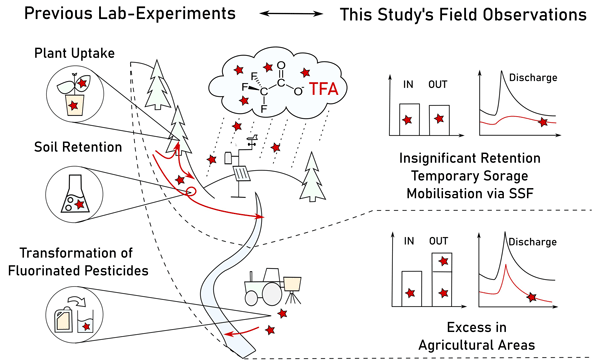
Immanuel Frenzel, Dario Nöltge, Finnian Freeling, Michael Müller, and Jens Lange
Hydrol. Earth Syst. Sci., 30, 1969–1997, https://doi.org/10.5194/hess-30-1969-2026, https://doi.org/10.5194/hess-30-1969-2026, 2026
Short summary
Short summary
We studied trifluoroacetate (TFA) in a German river catchment. TFA from rain was not permanently retained in soils or plants and can be mobilized by heavy rain, meaning soils and plants may hold more TFA than rivers or rainfall indicate. In areas with precipitation input only, TFA served as a new tracer for determining actual evapotranspiration. The agricultural area showed higher TFA in surface and groundwater, suggesting that agriculture increases TFA pollution.
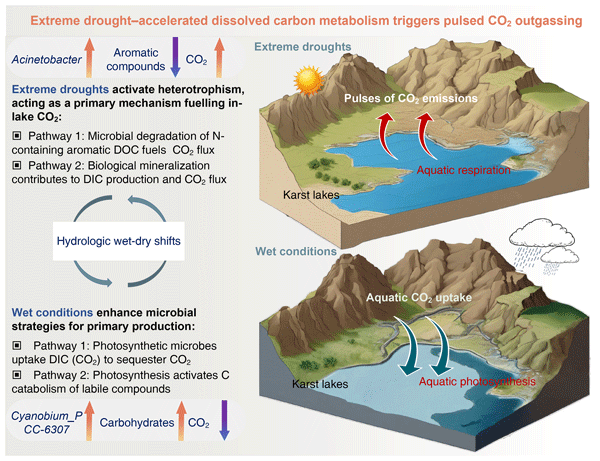
Maofei Ni, Weijun Luo, Junbing Pu, Guangneng Zeng, Jinxiao Long, Jia Chen, Jing Zhang, Xiaodan Wang, and Zhikang Wang
Hydrol. Earth Syst. Sci., 30, 1381–1395, https://doi.org/10.5194/hess-30-1381-2026, https://doi.org/10.5194/hess-30-1381-2026, 2026
Short summary
Short summary
We captured an extreme drought and subsequent wet period, showing microbiomes track time-varying dissolved carbon metabolism and modulate carbon dioxide flux. Particularly, the drought boosts heterotrophs, accelerating dissolved organic carbon respiration and carbon dioxide emission. The biological carbon pump induces priming: rapid labile dissolved organic carbon loss but recalcitrant dissolved organic carbon accumulation, causing pulsed carbon dioxide after photosynthetic peaks.
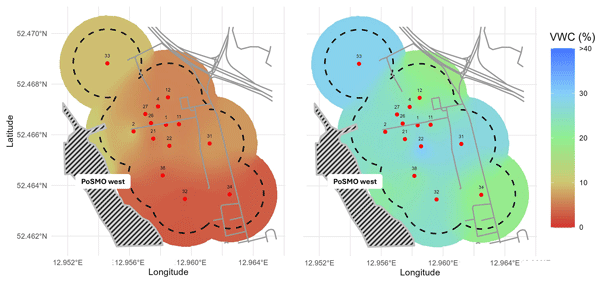
Peter M. Grosse, Elodie Marret, Lena Scheiffele, Katya Dimitrova Petrova, Till Francke, Daniel Altdorff, Maik Heistermann, Merlin Schiel, Carsten Neumann, Daniel Scheffler, Mehdi Saberioon, Matthias Kunz, Jonas Marach, Marcel Reginatto, Miroslav Zboril, Anna Balenzano, Daniel Rasche, Christine Stumpp, Benjamin Trost, and Sascha E. Oswald
Earth Syst. Sci. Data, 18, 1703–1727, https://doi.org/10.5194/essd-18-1703-2026, https://doi.org/10.5194/essd-18-1703-2026, 2026
Short summary
Short summary
This data paper describes a comprehensive collection of soil moisture and related data from an extensive cosmic-ray neutron sensing (CRNS) network at an agricultural research site in north-east Germany. The data set comprises not only soil moisture observations at different spatio-temporal scales, but also a wealth of accompanying data that provide the context to interpret soil moisture dynamics within a broader hydrological and environmental framework.
Hatice Türk, Christine Stumpp, Markus Hrachowitz, Peter Strauss, Günter Blöschl, and Michael Stockinger
Hydrol. Earth Syst. Sci., 30, 1053–1076, https://doi.org/10.5194/hess-30-1053-2026, https://doi.org/10.5194/hess-30-1053-2026, 2026
Short summary
Short summary
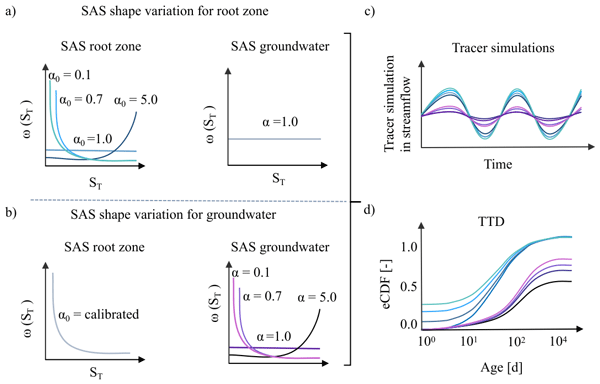
This study shows that streamflow isotope data in a catchment-scale isotope-based transport model were sufficient to isolate preferential flow in the unsaturated zone but insufficient to isolate the preferential release of young groundwater, as isotope signals were strongly damped by large passive groundwater storage. As a result, groundwater age-selection assumptions affected estimates of long transit times, making it difficult to quantify the fraction of stream water older than 100 days.
Georgina Falster, Gab Abramowitz, Sanaa Hobeichi, Catherine Hughes, Pauline Treble, Nerilie J. Abram, Michael I. Bird, Alexandre Cauquoin, Bronwyn Dixon, Russell Drysdale, Chenhui Jin, Niels Munksgaard, Bernadette Proemse, Jonathan J. Tyler, Martin Werner, and Carol V. Tadros
Hydrol. Earth Syst. Sci., 30, 289–315, https://doi.org/10.5194/hess-30-289-2026, https://doi.org/10.5194/hess-30-289-2026, 2026
Short summary
Short summary
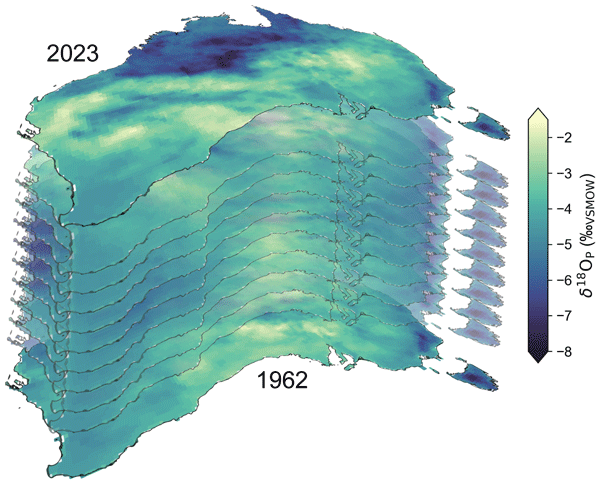
We used a random forest approach to produce estimates of monthly precipitation stable isotope variability from 1962–2023, at high resolution across the entire Australian continent. Comprehensive skill and sensitivity testing shows that our random forest models skilfully predict precipitation isotope values in places and times that observations are not available. We make all outputs freely available, facilitating use in fields from ecology and hydrology to archaeology and forensic science.
Robert Reinecke, Tanjila Akhter, Annemarie Bäthge, Ricarda Dietrich, Sebastian Gnann, Simon N. Gosling, Danielle Grogan, Andreas Hartmann, Stefan Kollet, Rohini Kumar, Richard Lammers, Sida Liu, Yan Liu, Nils Moosdorf, Bibi Naz, Sara Nazari, Chibuike Orazulike, Yadu Pokhrel, Jacob Schewe, Mikhail Smilovic, Maryna Strokal, Wim Thiery, Yoshihide Wada, Shan Zuidema, and Inge de Graaf
Geosci. Model Dev., 19, 523–542, https://doi.org/10.5194/gmd-19-523-2026, https://doi.org/10.5194/gmd-19-523-2026, 2026
Short summary
Short summary
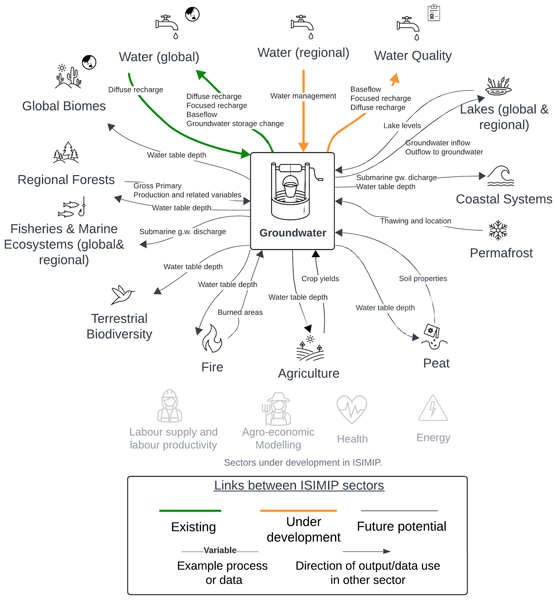
Here we describe a collaborative effort to improve predictions of how climate change will affect groundwater. The ISIMIP (The Inter-Sectoral Impact Model Intercomparison Project) groundwater sector combines multiple global groundwater models to capture a range of possible outcomes and reduce uncertainty. Initial comparisons reveal significant differences between models in key metrics like water table depth and recharge rates, highlighting the need for structured model intercomparisons.
Marco M. Lehmann, Josie Geris, Ilja van Meerveld, Daniele Penna, Youri Rothfuss, Matteo Verdone, Pertti Ala-Aho, Matyas Arvai, Alise Babre, Philippe Balandier, Fabian Bernhard, Lukrecija Butorac, Simon D. Carrière, Natalie C. Ceperley, Zuosinan Chen, Alicia Correa, Haoyu Diao, David Dubbert, Maren Dubbert, Fabio Ercoli, Marius G. Floriancic, Alligin Ghazoul, Teresa E. Gimeno, Damien Gounelle, Frank Hagedorn, Christophe Hissler, Frédéric Huneau, Alberto Iraheta, Tamara Jakovljević, Nerantzis Kazakis, Zoltan Kern, Laura Kinzinger, Karl Knaebel, Johannes Kobler, Jiri Kocum, Charlotte Koeber, Gerbrand Koren, Angelika Kübert, Dawid Kupka, Samuel Le Gall, Aleksi Lehtonen, Thomas Leydier, Philippe Malagoli, Francesca Sofia Manca di Villahermosa, Chiara Marchina, Núria Martínez-Carreras, Nicolas Martin-StPaul, Hannu Marttila, Aline Meyer Oliveira, Gael Monvoisin, Natalie Orlowski, Kadi Palmik-Das, Aurel Persoiu, Andrei Popa, Egor Prikaziuk, Cécile Quantin, Katja T. Rinne-Garmston, Clara Rohde, Martin Sanda, Matthias Saurer, Daniel Schulz, Michael P. Stockinger, Christine Stumpp, Jean-Stéphane Vénisse, Lukas Vlcek, Stylianos Voudouris, Björn Weeser, Mark E. Wilkinson, Giulia Zuecco, and Katrin Meusburger
Earth Syst. Sci. Data, 17, 6129–6147, https://doi.org/10.5194/essd-17-6129-2025, https://doi.org/10.5194/essd-17-6129-2025, 2025
Short summary
Short summary
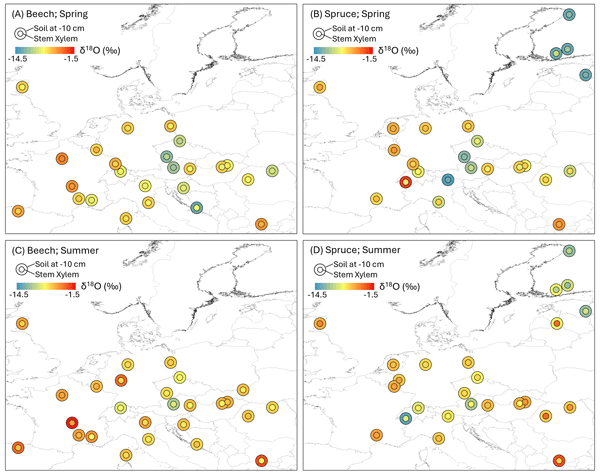
This study describes a unique large-scale isotope dataset to study water dynamics in European forests. Researchers collected data from 40 beech and spruce forest sites in spring and summer 2023, using a standardized method to ensure consistency. The results show that water sources for trees change between seasons and vary by tree species. This large dataset offers valuable information for understanding plant water use, improving ecohydrological models, and mapping water cycles across Europe.
Atsushi Okazaki, Diego S. Carrió, Quentin Dalaiden, Jarrah Harrison-Lofthouse, Shunji Kotsuki, and Kei Yoshimura
Clim. Past, 21, 1801–1819, https://doi.org/10.5194/cp-21-1801-2025, https://doi.org/10.5194/cp-21-1801-2025, 2025
Short summary
Short summary
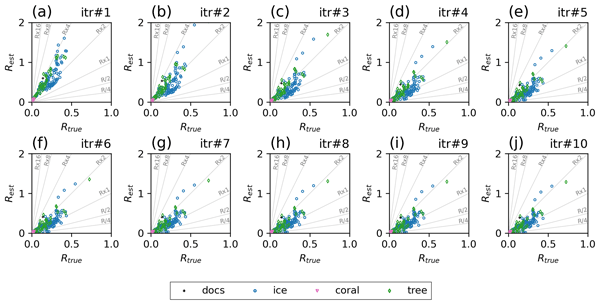
Data assimilation (DA) has been used to reconstruct paleoclimate fields. DA integrates model simulations and climate proxies based on their error sizes. Consequently, error information is vital for DA to function optimally. This study estimated observation errors using "innovation statistics" and demonstrated that DA with estimated errors outperformed previous studies.
Theresa Blume, Peter Chifflard, Stefan Achleitner, Andreas Hartmann, Stefan Hergarten, Luisa Hopp, Bernhard Kohl, Florian Leese, Ilja van Meerveld, Christian Reinhardt-Imjela, and Markus Weiler
EGUsphere, https://doi.org/10.5194/egusphere-2025-4424, https://doi.org/10.5194/egusphere-2025-4424, 2025
Short summary
Short summary
Subsurface stormflow (SSF) is one of the least studied and therefore least understood runoff generation processes because detecting and quantifying SSF is extremely challenging. We present an ongoing concerted experimental effort to systematically investigate SSF across four catchments using a variety of methods covering different spatial scales. Centerpiece of this effort is the construction of 12 large trenches to capture and monitor SSF.
Admin Husic, John Hammond, Adam N. Price, and Joshua K. Roundy
Hydrol. Earth Syst. Sci., 29, 4457–4472, https://doi.org/10.5194/hess-29-4457-2025, https://doi.org/10.5194/hess-29-4457-2025, 2025
Short summary
Short summary
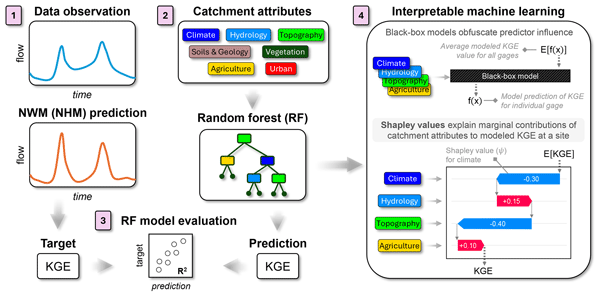
We used interpretable machine learning to evaluate the accuracy of two continental-scale hydrologic models. We analyzed a suite of catchment attributes and found that soil water content had the biggest impact on model performance, especially in dry areas. Key thresholds for variables like precipitation and road density were identified, which could guide future improvements in these models. Our findings highlight the potential of data-driven methods to inform process-based models.
Ling Zhang, Lu Li, Zhongshi Zhang, Joël Arnault, Stefan Sobolowski, Xiaoling Chen, Jianzhong Lu, Anthony Musili Mwanthi, Pratik Kad, Mohammed Abdullahi Hassan, Tanja Portele, Harald Kunstmann, and Zhengkang Zuo
Hydrol. Earth Syst. Sci., 29, 4109–4132, https://doi.org/10.5194/hess-29-4109-2025, https://doi.org/10.5194/hess-29-4109-2025, 2025
Short summary
Short summary
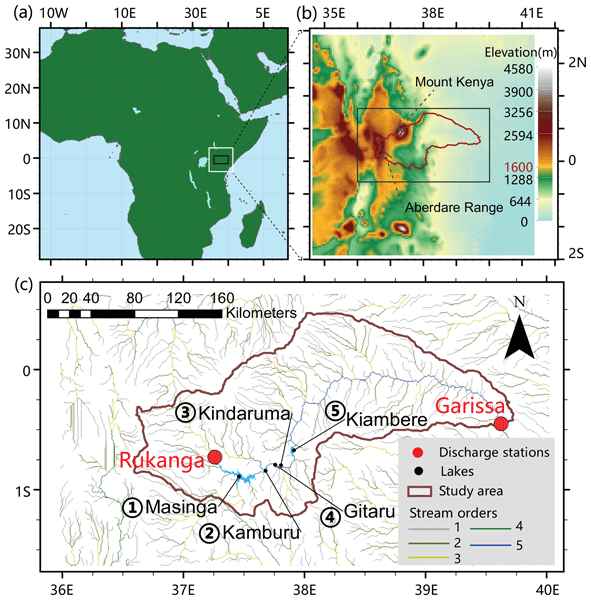
To address challenges related to unreliable hydrological simulations, we present an enhanced hydrological simulation with a refined climate model and a more comprehensive hydrological model. The model with the two parts outperforms that without, especially in migrating bias in peak flow and dry-season flow. Our findings highlight the enhanced hydrological simulation capability, with the refined climate and lake module contributing 24 % and 76 % improvement, respectively.
Hatice Türk, Christine Stumpp, Markus Hrachowitz, Karsten Schulz, Peter Strauss, Günter Blöschl, and Michael Stockinger
Hydrol. Earth Syst. Sci., 29, 3935–3956, https://doi.org/10.5194/hess-29-3935-2025, https://doi.org/10.5194/hess-29-3935-2025, 2025
Short summary
Short summary
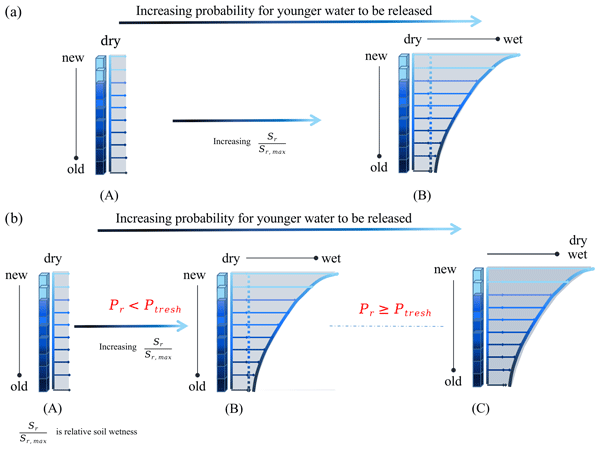
Using advances in transit time estimation and tracer data, we tested if fast-flow transit times are controlled solely by soil moisture or if they are also controlled by precipitation intensity. We used soil-moisture-dependent and precipitation-intensity-conditional transfer functions. We showed that a significant portion of event water bypasses the soil matrix through fast flow paths (overland flow, tile drains, preferential-flow paths) in dry soil conditions for both low- and high-intensity precipitation.
Wenpeng Xie, Hongmei Li, and Kei Yoshimura
EGUsphere, https://doi.org/10.5194/egusphere-2025-3301, https://doi.org/10.5194/egusphere-2025-3301, 2025
Preprint archived
Short summary
Short summary
Forecasts of land–air heat and moisture exchange often depend on experts manually adjusting settings, causing inconsistencies. We developed a deep learning method that automatically calibrates these simulations using observations from twenty sites, reducing average errors by fifteen percent. It kept high accuracy at new forest locations while showing more variability at farms. This tool enables faster, more reliable forecasts without manual tuning.
Aixala Gaillard, Robert van Geldern, Johannes Arthur Christopher Barth, and Christine Stumpp
Hydrol. Earth Syst. Sci., 29, 3853–3863, https://doi.org/10.5194/hess-29-3853-2025, https://doi.org/10.5194/hess-29-3853-2025, 2025
Short summary
Short summary
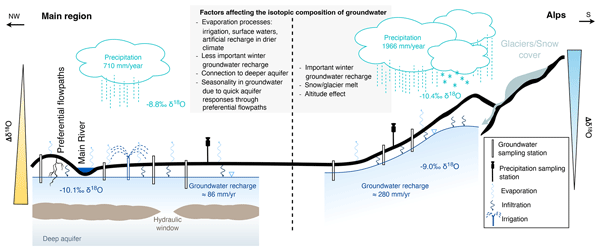
We produced a new interpolated map of stable isotopes in groundwater in southern Germany and compared it to local precipitation. Interestingly, discrepancies were found between two components of the hydrological cycle, highlighting different recharge patterns and evaporation processes in the northern and southern part of the study area. This research provides insights into understanding different groundwater recharge patterns on a large scale and eventually for groundwater management.
Markus Giese, Yvan Caballero, Andreas Hartmann, and Jean-Baptiste Charlier
Hydrol. Earth Syst. Sci., 29, 3037–3054, https://doi.org/10.5194/hess-29-3037-2025, https://doi.org/10.5194/hess-29-3037-2025, 2025
Short summary
Short summary
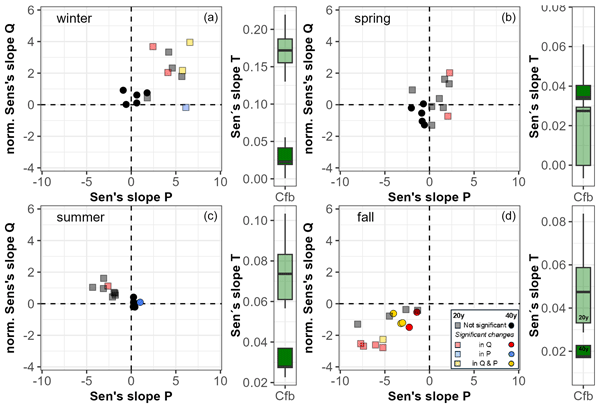
Karst springs respond quickly to environmental changes, making them crucial to understanding climate impacts on groundwater. This study analyses long-term trends in precipitation, temperature, and discharge from more than 50 springs across Europe. Results show that while historical discharge trends align with those of rivers, recent changes are driven by rising temperatures rather than precipitation. These findings highlight climate-driven shifts in groundwater recharge and storage processes.
Pia Ebeling, Andreas Musolff, Rohini Kumar, Andreas Hartmann, and Jan H. Fleckenstein
Hydrol. Earth Syst. Sci., 29, 2925–2950, https://doi.org/10.5194/hess-29-2925-2025, https://doi.org/10.5194/hess-29-2925-2025, 2025
Short summary
Short summary
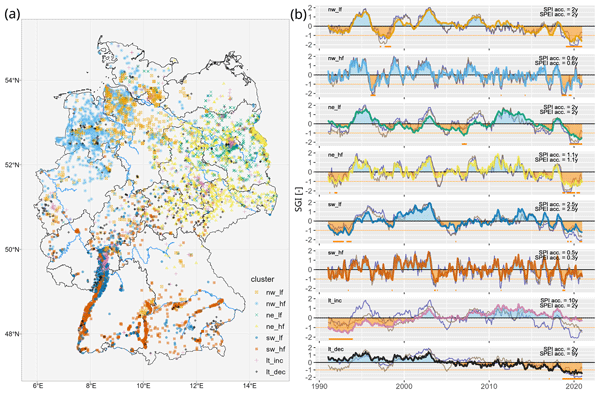
Groundwater is a crucial resource at risk due to droughts. To understand drought effects on groundwater levels in Germany, we grouped 6626 wells into six regional and two national patterns. Weather explained half of the level variations with varied response times. Shallow groundwater responds fast and is more vulnerable to short droughts (a few months). Dampened deep heads buffer short droughts but suffer from long droughts and recoveries. Two nationwide trend patterns were linked to human water use.
Calla N. Gould-Whaley, Russell N. Drysdale, Pauline C. Treble, Jan-Hendrik May, Stacey C. Priestley, John C. Hellstrom, Christopher R. Vardanega, and Clare C. Buswell
Clim. Past, 21, 857–876, https://doi.org/10.5194/cp-21-857-2025, https://doi.org/10.5194/cp-21-857-2025, 2025
Short summary
Short summary
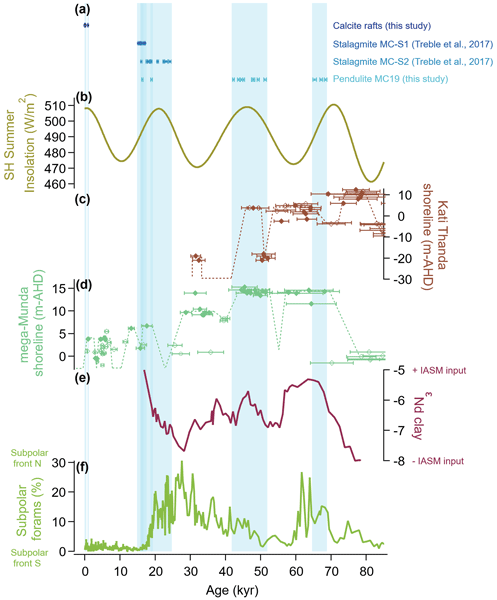
Climate change is causing enhanced aridity across many regions of the globe, leading to increased reliance on groundwater resources. We need to understand how groundwater recharge behaves in arid regions over long timescales; unfortunately, arid landscapes tend to preserve very little evidence of their climatic past. We present evidence to suggest that carbonate formations that grow in groundwater can be used as archives of past groundwater recharge in Australia's arid zone.
Ningpeng Dong, Haoran Hao, Mingxiang Yang, Jianhui Wei, Shiqin Xu, and Harald Kunstmann
Hydrol. Earth Syst. Sci., 29, 2023–2042, https://doi.org/10.5194/hess-29-2023-2025, https://doi.org/10.5194/hess-29-2023-2025, 2025
Short summary
Short summary
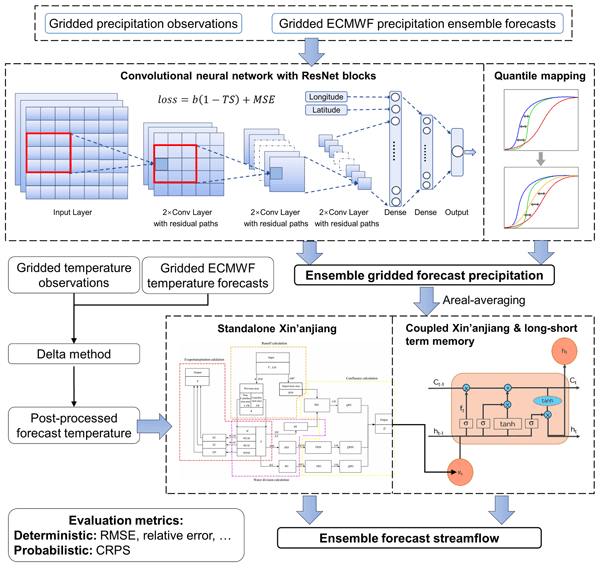
Hydrometeorological forecasting is crucial for managing water resources and mitigating extreme weather events, yet current long-term forecast products are often embedded with uncertainties. We develop a deep-learning-based modelling framework to improve 30 d rainfall and streamflow forecasts by combining advanced neural networks and physical models. With the flow forecast error reduced by up to 33 %, the framework has the potential to enhance water management and disaster prevention.
Mariana Gomez, Maximilian Nölscher, Andreas Hartmann, and Stefan Broda
Hydrol. Earth Syst. Sci., 28, 4407–4425, https://doi.org/10.5194/hess-28-4407-2024, https://doi.org/10.5194/hess-28-4407-2024, 2024
Short summary
Short summary
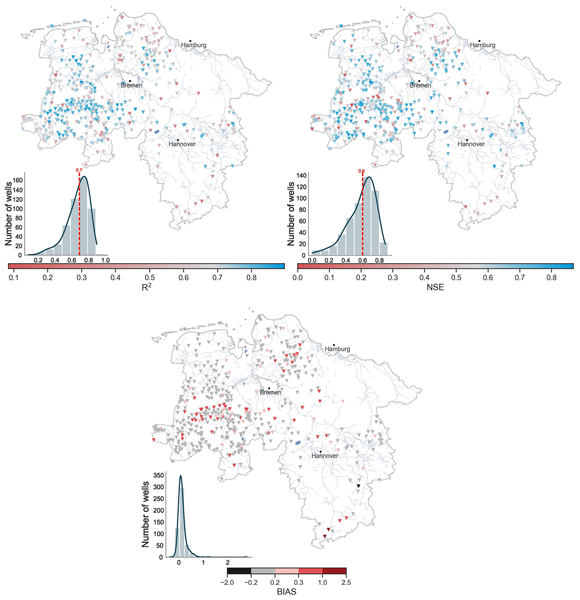
To understand the impact of external factors on groundwater level modelling using a 1-D convolutional neural network (CNN) model, we train, validate, and tune individual CNN models for 505 wells distributed across Lower Saxony, Germany. We then evaluate the performance of these models against available geospatial and time series features. This study provides new insights into the relationship between these factors and the accuracy of groundwater modelling.
Matthias Schneider, Kinya Toride, Farahnaz Khosrawi, Frank Hase, Benjamin Ertl, Christopher J. Diekmann, and Kei Yoshimura
Atmos. Meas. Tech., 17, 5243–5259, https://doi.org/10.5194/amt-17-5243-2024, https://doi.org/10.5194/amt-17-5243-2024, 2024
Short summary
Short summary
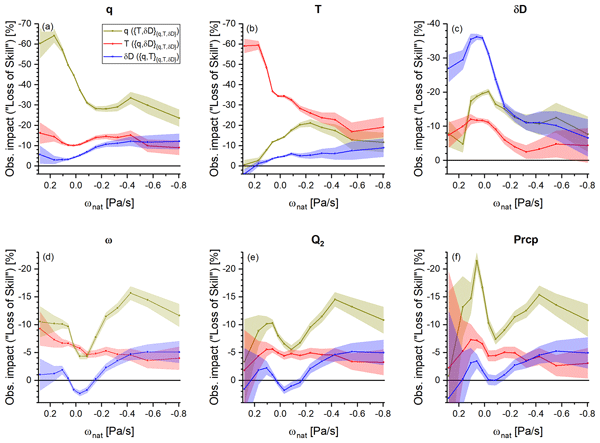
Despite its importance for extreme weather and climate feedbacks, atmospheric convection is not well constrained. This study assesses the potential of novel tropospheric water vapour isotopologue satellite observations for improving the analyses of convective events. We find that the impact of the isotopologues is small for stable atmospheric conditions but significant for unstable conditions, which have the strongest societal impacts (e.g. storms and flooding).
Marius G. Floriancic, Michael P. Stockinger, James W. Kirchner, and Christine Stumpp
Hydrol. Earth Syst. Sci., 28, 3675–3694, https://doi.org/10.5194/hess-28-3675-2024, https://doi.org/10.5194/hess-28-3675-2024, 2024
Short summary
Short summary
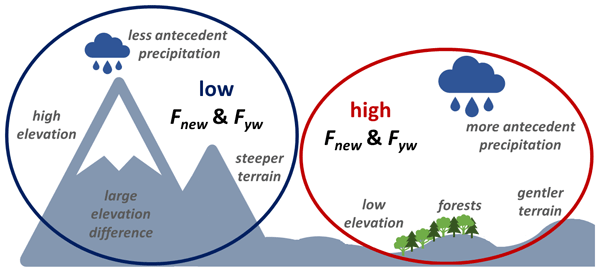
The Alps are a key water resource for central Europe, providing water for drinking, agriculture, and hydropower production. To assess water availability in streams, we need to understand how much streamflow is derived from old water stored in the subsurface versus more recent precipitation. We use tracer data from 32 Alpine streams and statistical tools to assess how much recent precipitation can be found in Alpine rivers and how this amount is related to catchment properties and climate.
Mariana P. Silva, Mark G. Healy, and Laurence Gill
Biogeosciences, 21, 3143–3163, https://doi.org/10.5194/bg-21-3143-2024, https://doi.org/10.5194/bg-21-3143-2024, 2024
Short summary
Short summary
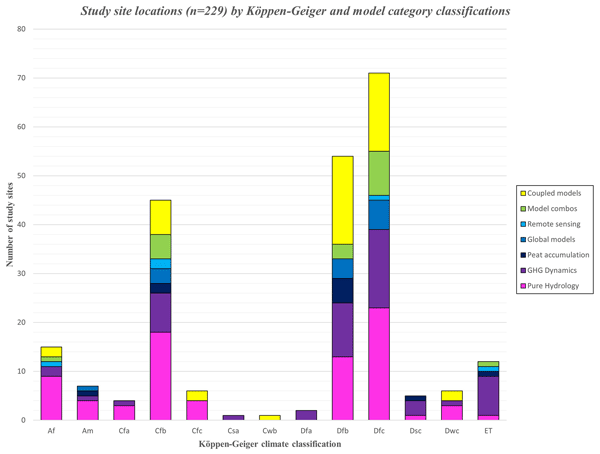
Peatland restoration combats climate change and protects ecosystem health in many northern regions. This review gathers data about models used on northern peatlands to further envision their application in the specific scenario of restoration. A total of 211 papers were included in the review: location trends for peatland modelling were catalogued, and key themes in model outputs were highlighted. Valuable context is provided for future efforts in modelling the peatland restoration process.
Andreas Wunsch, Tanja Liesch, and Nico Goldscheider
Hydrol. Earth Syst. Sci., 28, 2167–2178, https://doi.org/10.5194/hess-28-2167-2024, https://doi.org/10.5194/hess-28-2167-2024, 2024
Short summary
Short summary
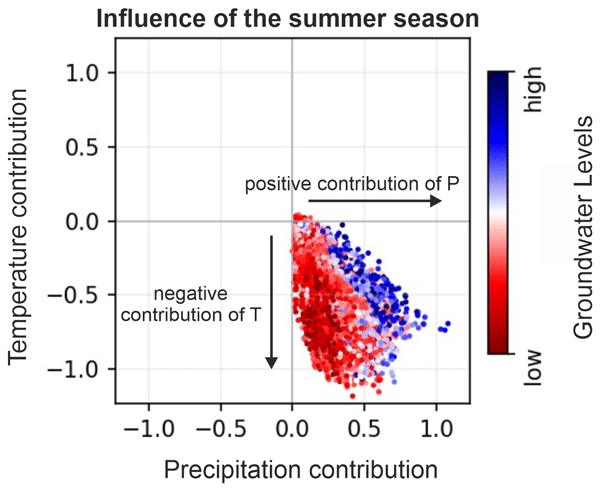
Seasons have a strong influence on groundwater levels, but relationships are complex and partly unknown. Using data from wells in Germany and an explainable machine learning approach, we showed that summer precipitation is the key factor that controls the severeness of a low-water period in fall; high summer temperatures do not per se cause stronger decreases. Preceding winters have only a minor influence on such low-water periods in general.
Nikita Kaushal, Franziska A. Lechleitner, Micah Wilhelm, Khalil Azennoud, Janica C. Bühler, Kerstin Braun, Yassine Ait Brahim, Andy Baker, Yuval Burstyn, Laia Comas-Bru, Jens Fohlmeister, Yonaton Goldsmith, Sandy P. Harrison, István G. Hatvani, Kira Rehfeld, Magdalena Ritzau, Vanessa Skiba, Heather M. Stoll, József G. Szűcs, Péter Tanos, Pauline C. Treble, Vitor Azevedo, Jonathan L. Baker, Andrea Borsato, Sakonvan Chawchai, Andrea Columbu, Laura Endres, Jun Hu, Zoltán Kern, Alena Kimbrough, Koray Koç, Monika Markowska, Belen Martrat, Syed Masood Ahmad, Carole Nehme, Valdir Felipe Novello, Carlos Pérez-Mejías, Jiaoyang Ruan, Natasha Sekhon, Nitesh Sinha, Carol V. Tadros, Benjamin H. Tiger, Sophie Warken, Annabel Wolf, Haiwei Zhang, and SISAL Working Group members
Earth Syst. Sci. Data, 16, 1933–1963, https://doi.org/10.5194/essd-16-1933-2024, https://doi.org/10.5194/essd-16-1933-2024, 2024
Short summary
Short summary
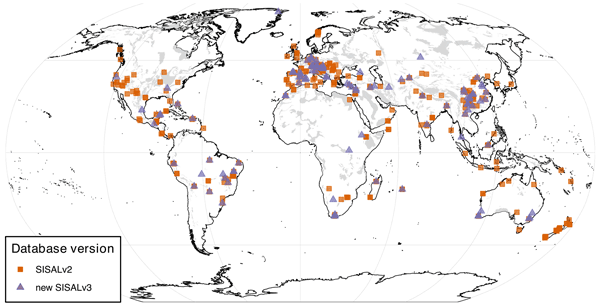
Speleothems are a popular, multi-proxy climate archive that provide regional to global insights into past hydroclimate trends with precise chronologies. We present an update to the SISAL (Speleothem Isotopes
Synthesis and AnaLysis) database, SISALv3, which, for the first time, contains speleothem trace element records, in addition to an update to the stable isotope records available in previous versions of the database, cumulatively providing data from 365 globally distributed sites.
Synthesis and AnaLysis) database, SISALv3, which, for the first time, contains speleothem trace element records, in addition to an update to the stable isotope records available in previous versions of the database, cumulatively providing data from 365 globally distributed sites.
Sandra Lanini, Bernard Ladouche, Benoit Dewandel, Melissande Ibba, Vincent Bailly-Comte, and Marie Genevier
Proc. IAHS, 385, 275–279, https://doi.org/10.5194/piahs-385-275-2024, https://doi.org/10.5194/piahs-385-275-2024, 2024
Short summary
Short summary
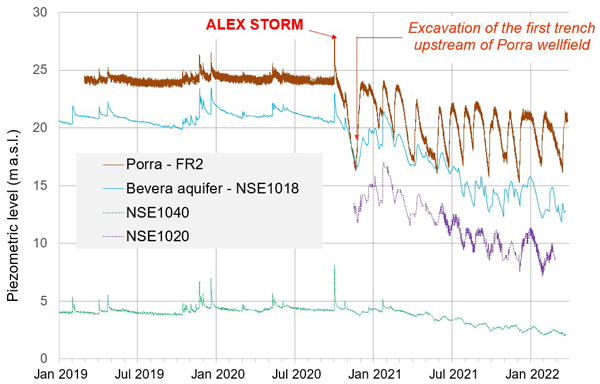
A monitoring network has been implemented to improve the understanding of the functioning of the Roya River alluvial aquifer. Data analysis proved the predominant role of surface water in the recharge of the aquifer. Following the storm Alex in October 2020, a general decrease of the piezometric levels was observed. It is explained by the changes in the river morphology and in the riverbed granulometry which limit the aquifer recharge by river water infiltration.
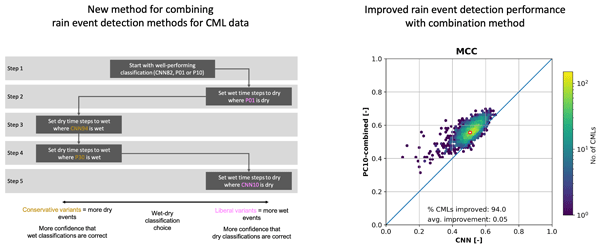
Maximilian Graf, Andreas Wagner, Julius Polz, Llorenç Lliso, José Alberto Lahuerta, Harald Kunstmann, and Christian Chwala
Atmos. Meas. Tech., 17, 2165–2182, https://doi.org/10.5194/amt-17-2165-2024, https://doi.org/10.5194/amt-17-2165-2024, 2024
Short summary
Short summary
Commercial microwave links (CMLs) can be used for rainfall retrieval. The detection of rainy periods in their attenuation time series is a crucial processing step. We investigate the usage of rainfall data from MSG SEVIRI for this task, compare this approach with existing methods, and introduce a novel combined approach. The results show certain advantages for SEVIRI-based methods, particularly for CMLs where existing methods perform poorly. Our novel combination yields the best performance.
Patrick Olschewski, Qi Sun, Jianhui Wei, Yu Li, Zhan Tian, Laixiang Sun, Joël Arnault, Tanja C. Schober, Brian Böker, Harald Kunstmann, and Patrick Laux
Hydrol. Earth Syst. Sci. Discuss., https://doi.org/10.5194/hess-2024-95, https://doi.org/10.5194/hess-2024-95, 2024
Revised manuscript not accepted
Short summary
Short summary
There are indications that typhoon intensities may increase under global warming. However, further research on these projections and their uncertainties is necessary. We study changes in typhoon intensity under SSP5-8.5 for seven events affecting the Pearl River Delta using Pseudo-Global Warming and a storyline approach based on 16 CMIP6 models. Results show intensified wind speed, sea level pressure drop and precipitation levels for six events with amplified increases for individual storylines.
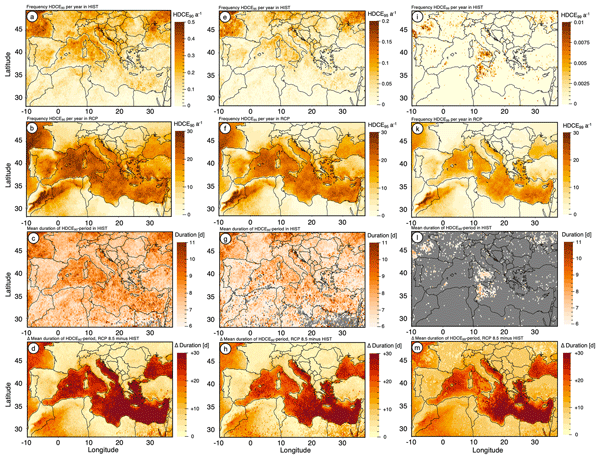
Patrick Olschewski, Mame Diarra Bousso Dieng, Hassane Moutahir, Brian Böker, Edwin Haas, Harald Kunstmann, and Patrick Laux
Nat. Hazards Earth Syst. Sci., 24, 1099–1134, https://doi.org/10.5194/nhess-24-1099-2024, https://doi.org/10.5194/nhess-24-1099-2024, 2024
Short summary
Short summary
We applied a multivariate and dependency-preserving bias correction method to climate model output for the Greater Mediterranean Region and investigated potential changes in false-spring events (FSEs) and heat–drought compound events (HDCEs). Results project an increase in the frequency of FSEs in middle and late spring as well as increases in frequency, intensity, and duration for HDCEs. This will potentially aggravate the risk of crop loss and failure and negatively impact food security.
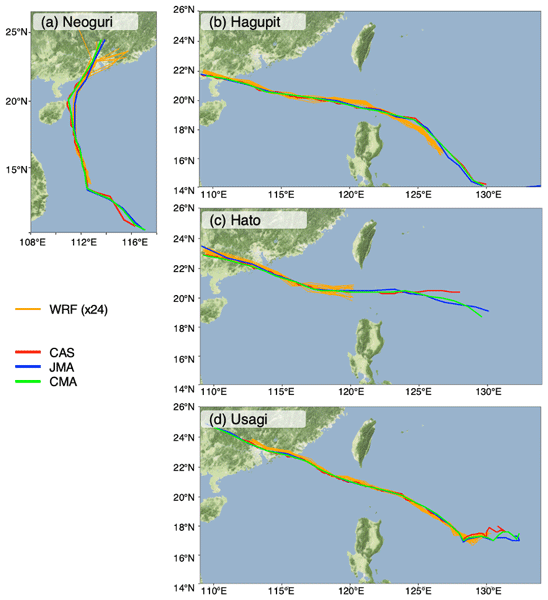
Qi Sun, Patrick Olschewski, Jianhui Wei, Zhan Tian, Laixiang Sun, Harald Kunstmann, and Patrick Laux
Hydrol. Earth Syst. Sci., 28, 761–780, https://doi.org/10.5194/hess-28-761-2024, https://doi.org/10.5194/hess-28-761-2024, 2024
Short summary
Short summary
Tropical cyclones (TCs) often cause high economic loss due to heavy winds and rainfall, particularly in densely populated regions such as the Pearl River Delta (China). This study provides a reference to set up regional climate models for TC simulations. They contribute to a better TC process understanding and assess the potential changes and risks of TCs in the future. This lays the foundation for hydrodynamical modelling, from which the cities' disaster management and defence could benefit.
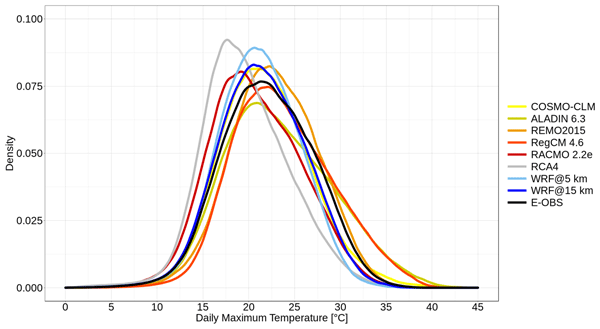
Dragan Petrovic, Benjamin Fersch, and Harald Kunstmann
Nat. Hazards Earth Syst. Sci., 24, 265–289, https://doi.org/10.5194/nhess-24-265-2024, https://doi.org/10.5194/nhess-24-265-2024, 2024
Short summary
Short summary
The influence of model resolution and settings on the reproduction of heat waves in Germany between 1980–2009 is analyzed. Outputs from a high-resolution model with settings tailored to the target region are compared to those from coarser-resolution models with more general settings. Neither the increased resolution nor the tailored model settings are found to add significant value to the heat wave simulation. The models exhibit a large spread, indicating that the choice of model can be crucial.
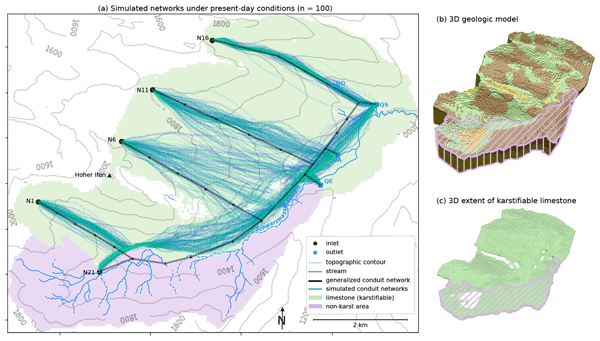
Chloé Fandel, Ty Ferré, François Miville, Philippe Renard, and Nico Goldscheider
Hydrol. Earth Syst. Sci., 27, 4205–4215, https://doi.org/10.5194/hess-27-4205-2023, https://doi.org/10.5194/hess-27-4205-2023, 2023
Short summary
Short summary
From the surface, it is hard to tell where underground cave systems are located. We developed a computer model to create maps of the probable cave network in an area, based on the geologic setting. We then applied our approach in reverse: in a region where an old cave network was mapped, we used modeling to test what the geologic setting might have been like when the caves formed. This is useful because understanding past cave formation can help us predict where unmapped caves are located today.
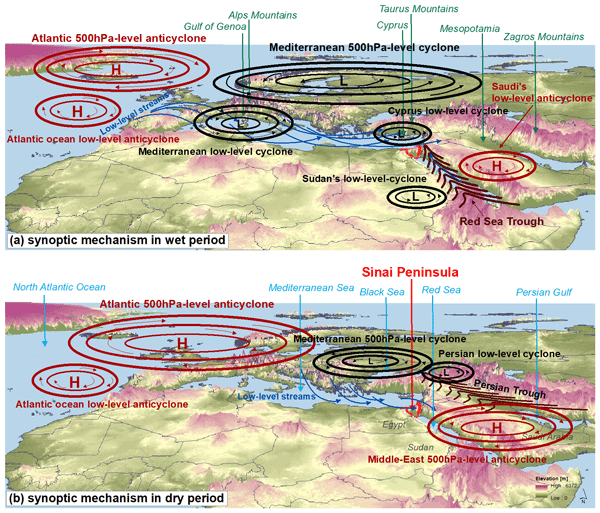
Mohsen Soltani, Bert Hamelers, Abbas Mofidi, Christopher G. Fletcher, Arie Staal, Stefan C. Dekker, Patrick Laux, Joel Arnault, Harald Kunstmann, Ties van der Hoeven, and Maarten Lanters
Earth Syst. Dynam., 14, 931–953, https://doi.org/10.5194/esd-14-931-2023, https://doi.org/10.5194/esd-14-931-2023, 2023
Short summary
Short summary
The temporal changes and spatial patterns in precipitation events do not show a homogeneous tendency across the Sinai Peninsula. Mediterranean cyclones accompanied by the Red Sea and Persian troughs are responsible for the majority of Sinai's extreme rainfall events. Cyclone tracking captures 156 cyclones (rainfall ≥10 mm d-1) either formed within or transferred to the Mediterranean basin precipitating over Sinai.
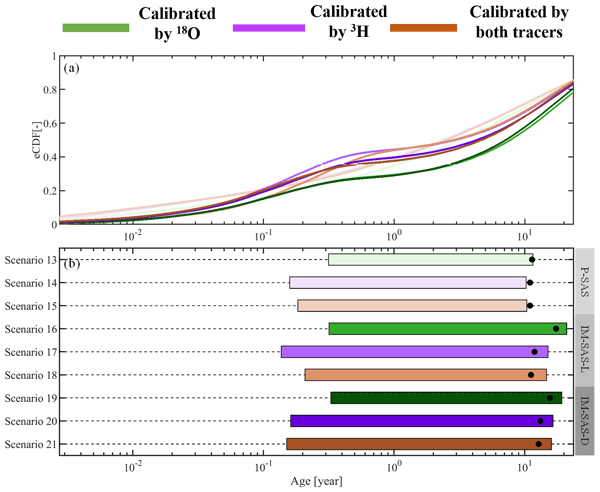
Siyuan Wang, Markus Hrachowitz, Gerrit Schoups, and Christine Stumpp
Hydrol. Earth Syst. Sci., 27, 3083–3114, https://doi.org/10.5194/hess-27-3083-2023, https://doi.org/10.5194/hess-27-3083-2023, 2023
Short summary
Short summary
This study shows that previously reported underestimations of water ages are most likely not due to the use of seasonally variable tracers. Rather, these underestimations can be largely attributed to the choices of model approaches which rely on assumptions not frequently met in catchment hydrology. We therefore strongly advocate avoiding the use of this model type in combination with seasonally variable tracers and instead adopting StorAge Selection (SAS)-based or comparable model formulations.
Daniele Lepore, Edoardo Bucchignani, Myriam Montesarchio, Vincenzo Allocca, Delia Cusano, and Pantaleone De Vita
EGUsphere, https://doi.org/10.5194/egusphere-2023-1505, https://doi.org/10.5194/egusphere-2023-1505, 2023
Preprint withdrawn
Short summary
Short summary
This study focused on reconstructing climate scenarios for the principal climatological and hydrogeological variables for the principal aquifer systems of southern Italy. What sets this research apart is the introduction of a new methodology to analyze and correct data from Regional Climate Models (RCMs), distinguishing it from other studies and revealed the potential of RCMs in predicting future groundwater recharge processes scenarios.
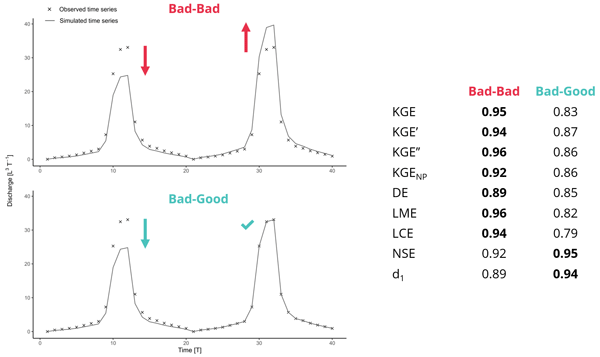
Guillaume Cinkus, Naomi Mazzilli, Hervé Jourde, Andreas Wunsch, Tanja Liesch, Nataša Ravbar, Zhao Chen, and Nico Goldscheider
Hydrol. Earth Syst. Sci., 27, 2397–2411, https://doi.org/10.5194/hess-27-2397-2023, https://doi.org/10.5194/hess-27-2397-2023, 2023
Short summary
Short summary
The Kling–Gupta Efficiency (KGE) is a performance criterion extensively used to evaluate hydrological models. We conduct a critical study on the KGE and its variant to examine counterbalancing errors. Results show that, when assessing a simulation, concurrent over- and underestimation of discharge can lead to an overall higher criterion score without an associated increase in model relevance. We suggest that one carefully choose performance criteria and use scaling factors.
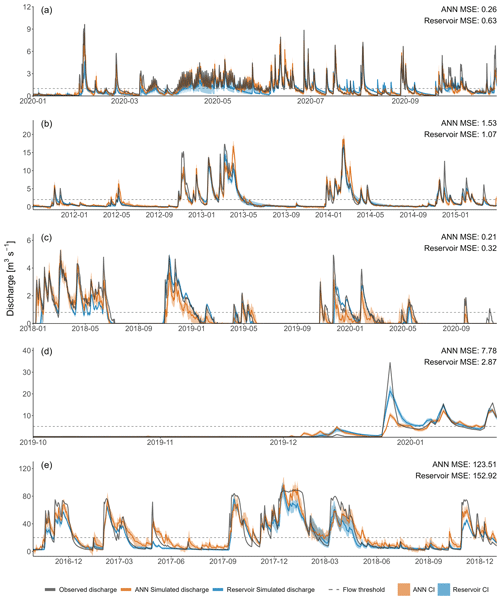
Guillaume Cinkus, Andreas Wunsch, Naomi Mazzilli, Tanja Liesch, Zhao Chen, Nataša Ravbar, Joanna Doummar, Jaime Fernández-Ortega, Juan Antonio Barberá, Bartolomé Andreo, Nico Goldscheider, and Hervé Jourde
Hydrol. Earth Syst. Sci., 27, 1961–1985, https://doi.org/10.5194/hess-27-1961-2023, https://doi.org/10.5194/hess-27-1961-2023, 2023
Short summary
Short summary
Numerous modelling approaches can be used for studying karst water resources, which can make it difficult for a stakeholder or researcher to choose the appropriate method. We conduct a comparison of two widely used karst modelling approaches: artificial neural networks (ANNs) and reservoir models. Results show that ANN models are very flexible and seem great for reproducing high flows. Reservoir models can work with relatively short time series and seem to accurately reproduce low flows.
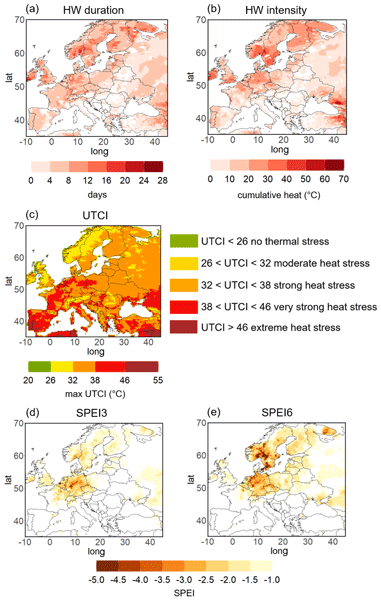
Efi Rousi, Andreas H. Fink, Lauren S. Andersen, Florian N. Becker, Goratz Beobide-Arsuaga, Marcus Breil, Giacomo Cozzi, Jens Heinke, Lisa Jach, Deborah Niermann, Dragan Petrovic, Andy Richling, Johannes Riebold, Stella Steidl, Laura Suarez-Gutierrez, Jordis S. Tradowsky, Dim Coumou, André Düsterhus, Florian Ellsäßer, Georgios Fragkoulidis, Daniel Gliksman, Dörthe Handorf, Karsten Haustein, Kai Kornhuber, Harald Kunstmann, Joaquim G. Pinto, Kirsten Warrach-Sagi, and Elena Xoplaki
Nat. Hazards Earth Syst. Sci., 23, 1699–1718, https://doi.org/10.5194/nhess-23-1699-2023, https://doi.org/10.5194/nhess-23-1699-2023, 2023
Short summary
Short summary
The objective of this study was to perform a comprehensive, multi-faceted analysis of the 2018 extreme summer in terms of heat and drought in central and northern Europe, with a particular focus on Germany. A combination of favorable large-scale conditions and locally dry soils were related with the intensity and persistence of the events. We also showed that such extremes have become more likely due to anthropogenic climate change and might occur almost every year under +2 °C of global warming.
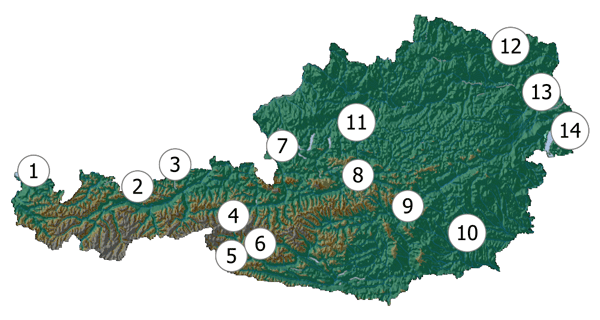
Marleen Schübl, Giuseppe Brunetti, Gabriele Fuchs, and Christine Stumpp
Hydrol. Earth Syst. Sci., 27, 1431–1455, https://doi.org/10.5194/hess-27-1431-2023, https://doi.org/10.5194/hess-27-1431-2023, 2023
Short summary
Short summary
Estimating groundwater recharge through the unsaturated zone is a difficult task that is fundamentally associated with uncertainties. One of the few methods available is inverse modeling based on soil water measurements. Here, we used a nested sampling algorithm within a Bayesian probabilistic framework to assess model uncertainties at 14 sites in Austria. Further, we analyzed simulated recharge rates to identify factors influencing groundwater recharge rates and their temporal variability.
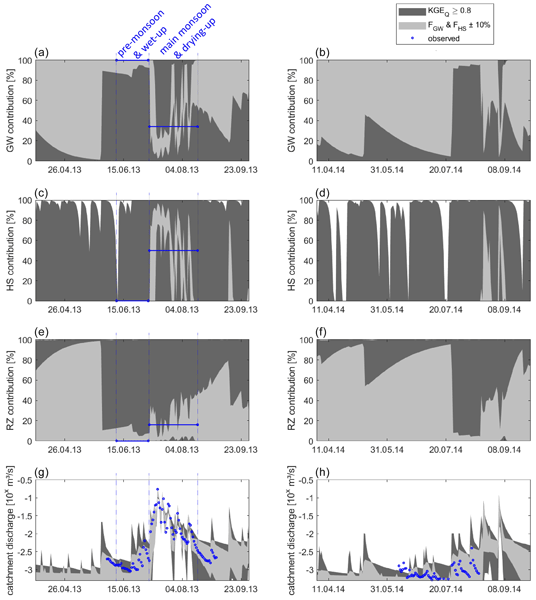
Andreas Hartmann, Jean-Lionel Payeur-Poirier, and Luisa Hopp
Hydrol. Earth Syst. Sci., 27, 1325–1341, https://doi.org/10.5194/hess-27-1325-2023, https://doi.org/10.5194/hess-27-1325-2023, 2023
Short summary
Short summary
We advance our understanding of including information derived from environmental tracers into hydrological modeling. We present a simple approach that integrates streamflow observations and tracer-derived streamflow contributions for model parameter estimation. We consider multiple observed streamflow components and their variation over time to quantify the impact of their inclusion for streamflow prediction at the catchment scale.
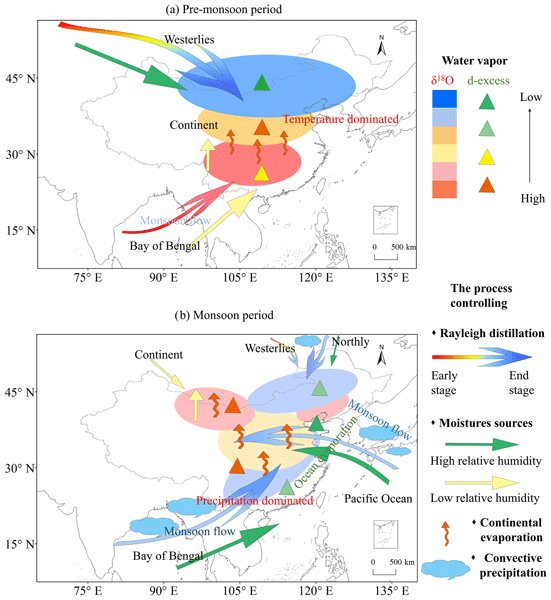
Di Wang, Lide Tian, Camille Risi, Xuejie Wang, Jiangpeng Cui, Gabriel J. Bowen, Kei Yoshimura, Zhongwang Wei, and Laurent Z. X. Li
Atmos. Chem. Phys., 23, 3409–3433, https://doi.org/10.5194/acp-23-3409-2023, https://doi.org/10.5194/acp-23-3409-2023, 2023
Short summary
Short summary
To better understand the spatial and temporal distribution of vapor isotopes, we present two vehicle-based spatially continuous snapshots of the near-surface vapor isotopes in China during the pre-monsoon and monsoon periods. These observations are explained well by different moisture sources and processes along the air mass trajectories. Our results suggest that proxy records need to be interpreted in the context of regional systems and sources of moisture.
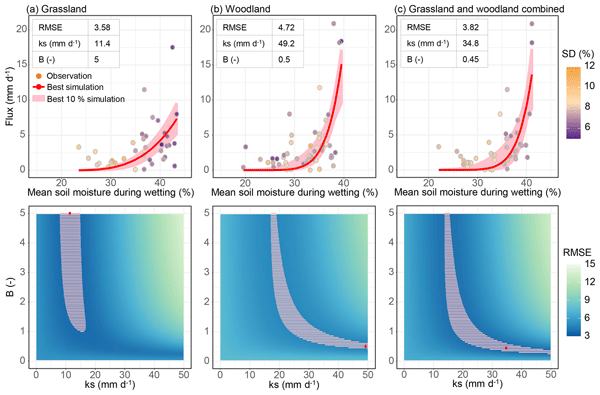
Romane Berthelin, Tunde Olarinoye, Michael Rinderer, Matías Mudarra, Dominic Demand, Mirjam Scheller, and Andreas Hartmann
Hydrol. Earth Syst. Sci., 27, 385–400, https://doi.org/10.5194/hess-27-385-2023, https://doi.org/10.5194/hess-27-385-2023, 2023
Short summary
Short summary
Karstic recharge processes have mainly been explored using discharge analysis despite the high influence of the heterogeneous surface on hydrological processes. In this paper, we introduce an event-based method which allows for recharge estimation from soil moisture measurements. The method was tested at a karst catchment in Germany but can be applied to other karst areas with precipitation and soil moisture data available. It will allow for a better characterization of karst recharge processes.
Farahnaz Khosrawi, Kinya Toride, Kei Yoshimura, Christopher Diekmann, Benjamin Ertl, Frank Hase, and Matthias Schneider
EGUsphere, https://doi.org/10.5194/egusphere-2022-1408, https://doi.org/10.5194/egusphere-2022-1408, 2022
Preprint withdrawn
Short summary
Short summary
We assess with an Observation System Simulation Experiment the potential of mid-tropospheric water isotopologue data for constraining uncertainties in meteorological analysis fields in the tropics. Our assimilation experiments indicate that isotopologue observations have the potential to reduce the uncertainties of diabatic heating rates and precipitation in the tropics and in consequence offer potential for improving meteorological analysis in the tropical regions.
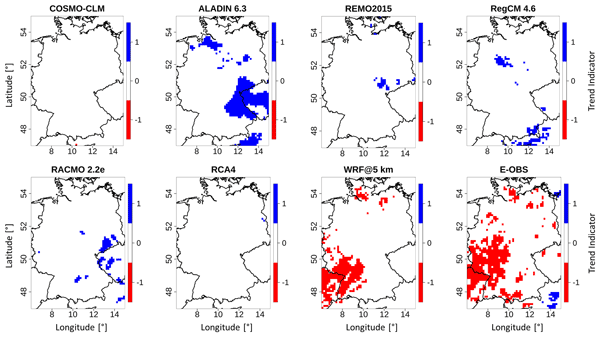
Dragan Petrovic, Benjamin Fersch, and Harald Kunstmann
Nat. Hazards Earth Syst. Sci., 22, 3875–3895, https://doi.org/10.5194/nhess-22-3875-2022, https://doi.org/10.5194/nhess-22-3875-2022, 2022
Short summary
Short summary
The influence of model resolution and settings on drought reproduction in Germany between 1980–2009 is investigated here. Outputs from a high-resolution model with settings tailored to the target region are compared to those from coarser-resolution models with more general settings. Gridded observational data sets serve as reference. Regarding the reproduction of drought characteristics, all models perform on a similar level, while for trends, only the modified model produces reliable outputs.
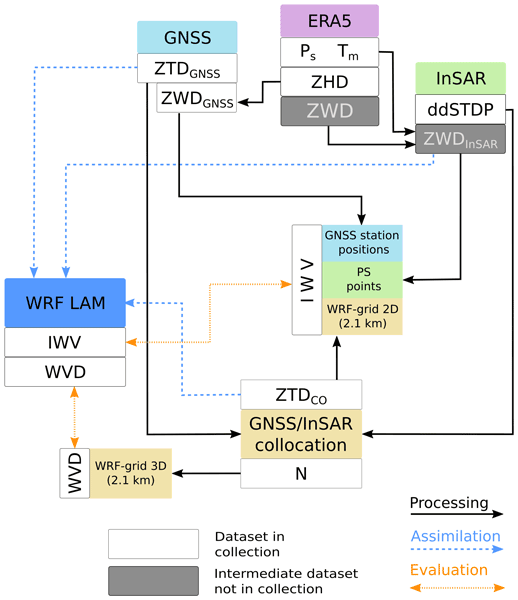
Benjamin Fersch, Andreas Wagner, Bettina Kamm, Endrit Shehaj, Andreas Schenk, Peng Yuan, Alain Geiger, Gregor Moeller, Bernhard Heck, Stefan Hinz, Hansjörg Kutterer, and Harald Kunstmann
Earth Syst. Sci. Data, 14, 5287–5307, https://doi.org/10.5194/essd-14-5287-2022, https://doi.org/10.5194/essd-14-5287-2022, 2022
Short summary
Short summary
In this study, a comprehensive multi-disciplinary dataset for tropospheric water vapor was developed. Geodetic, photogrammetric, and atmospheric modeling and data fusion techniques were used to obtain maps of water vapor in a high spatial and temporal resolution. It could be shown that regional weather simulations for different seasons benefit from assimilating these maps and that the combination of the different observation techniques led to positive synergies.
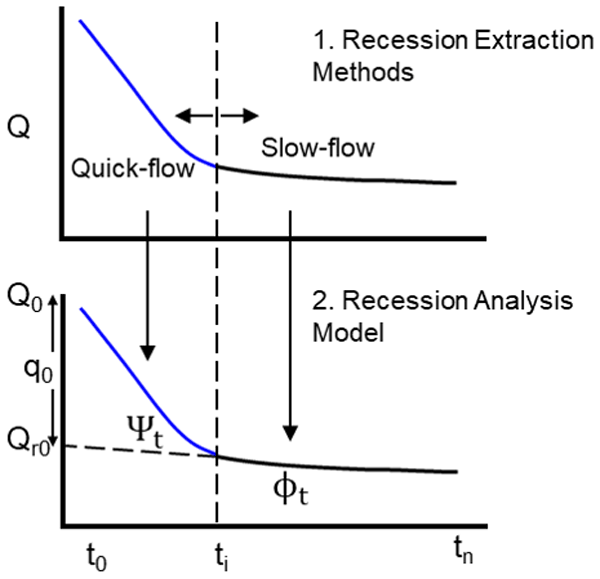
Tunde Olarinoye, Tom Gleeson, and Andreas Hartmann
Hydrol. Earth Syst. Sci., 26, 5431–5447, https://doi.org/10.5194/hess-26-5431-2022, https://doi.org/10.5194/hess-26-5431-2022, 2022
Short summary
Short summary
Analysis of karst spring recession is essential for management of groundwater. In karst, recession is dominated by slow and fast components; separating these components is by manual and subjective approaches. In our study, we tested the applicability of automated streamflow recession extraction procedures for a karst spring. Results showed that, by simple modification, streamflow extraction methods can identify slow and fast components: derived recession parameters are within reasonable ranges.
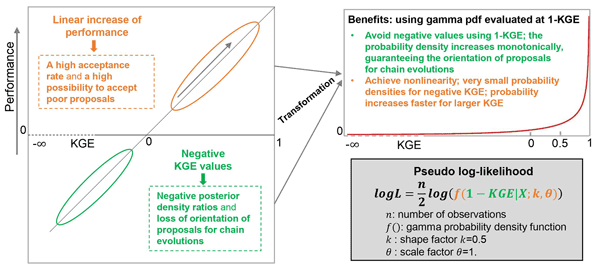
Yan Liu, Jaime Fernández-Ortega, Matías Mudarra, and Andreas Hartmann
Hydrol. Earth Syst. Sci., 26, 5341–5355, https://doi.org/10.5194/hess-26-5341-2022, https://doi.org/10.5194/hess-26-5341-2022, 2022
Short summary
Short summary
We adapt the informal Kling–Gupta efficiency (KGE) with a gamma distribution to apply it as an informal likelihood function in the DiffeRential Evolution Adaptive Metropolis DREAM(ZS) method. Our adapted approach performs as well as the formal likelihood function for exploring posterior distributions of model parameters. The adapted KGE is superior to the formal likelihood function for calibrations combining multiple observations with different lengths, frequencies and units.
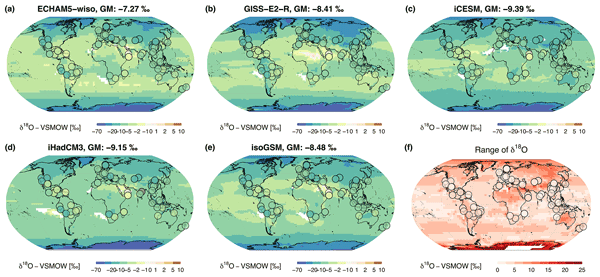
Janica C. Bühler, Josefine Axelsson, Franziska A. Lechleitner, Jens Fohlmeister, Allegra N. LeGrande, Madhavan Midhun, Jesper Sjolte, Martin Werner, Kei Yoshimura, and Kira Rehfeld
Clim. Past, 18, 1625–1654, https://doi.org/10.5194/cp-18-1625-2022, https://doi.org/10.5194/cp-18-1625-2022, 2022
Short summary
Short summary
We collected and standardized the output of five isotope-enabled simulations for the last millennium and assess differences and similarities to records from a global speleothem database. Modeled isotope variations mostly arise from temperature differences. While lower-resolution speleothems do not capture extreme changes to the extent of models, they show higher variability on multi-decadal timescales. As no model excels in all comparisons, we advise a multi-model approach where possible.
Saheba Bhatnagar, Mahesh Kumar Sha, Laurence Gill, Bavo Langerock, and Bidisha Ghosh
Biogeosciences Discuss., https://doi.org/10.5194/bg-2022-88, https://doi.org/10.5194/bg-2022-88, 2022
Revised manuscript not accepted
Short summary
Short summary
Different land types emit a different quantity of methane, with wetlands being one of the largest sources of methane emissions, contributing to climate change. This study finds variations in land types using the methane total column data from Sentinel 5-precursor satellite with a machine learning algorithm. The variations in land types were identified with high confidence, demonstrating that the methane emissions from the wetland and other land types substantially affect the total column.
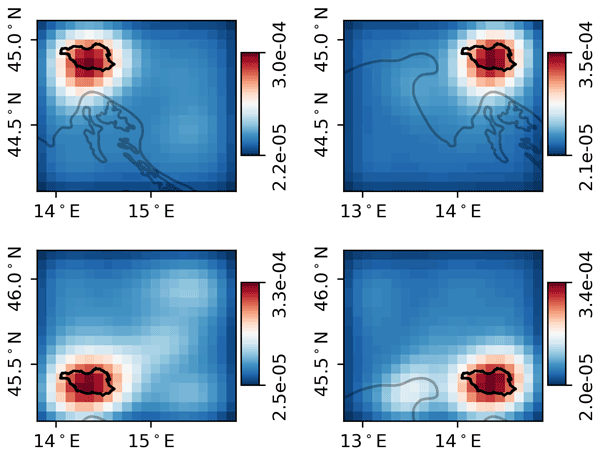
Andreas Wunsch, Tanja Liesch, Guillaume Cinkus, Nataša Ravbar, Zhao Chen, Naomi Mazzilli, Hervé Jourde, and Nico Goldscheider
Hydrol. Earth Syst. Sci., 26, 2405–2430, https://doi.org/10.5194/hess-26-2405-2022, https://doi.org/10.5194/hess-26-2405-2022, 2022
Short summary
Short summary
Modeling complex karst water resources is difficult enough, but often there are no or too few climate stations available within or close to the catchment to deliver input data for modeling purposes. We apply image recognition algorithms to time-distributed, spatially gridded meteorological data to simulate karst spring discharge. Our models can also learn the approximate catchment location of a spring independently.
Yong Chang, Benjamin Mewes, and Andreas Hartmann
Hydrol. Earth Syst. Sci. Discuss., https://doi.org/10.5194/hess-2022-77, https://doi.org/10.5194/hess-2022-77, 2022
Preprint withdrawn
Short summary
Short summary
This study presents a work to investigate the feasibility of using EC to predict the discharge in a typical karst catchment. We found that the spring discharge can be well predicted by EC in storms using LSTM (Long Short Term Memory) model, while the prediction has relatively large uncertainties in small recharge events. To establish a roust LSTM model for long-term discharge prediction from EC in ungauged catchments, the random or fixed-interval discharge monitoring strategy is recommended.
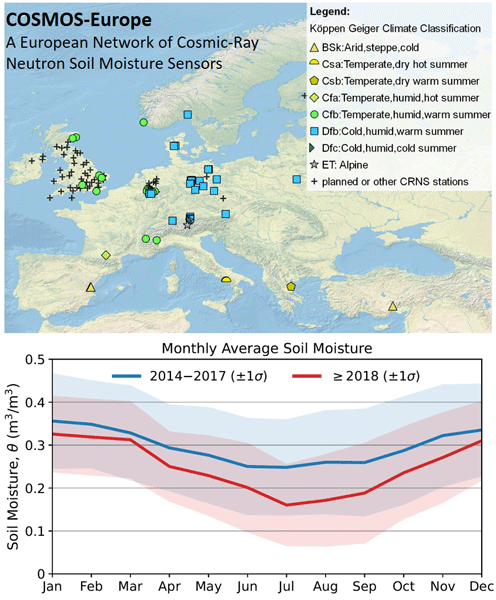
Heye Reemt Bogena, Martin Schrön, Jannis Jakobi, Patrizia Ney, Steffen Zacharias, Mie Andreasen, Roland Baatz, David Boorman, Mustafa Berk Duygu, Miguel Angel Eguibar-Galán, Benjamin Fersch, Till Franke, Josie Geris, María González Sanchis, Yann Kerr, Tobias Korf, Zalalem Mengistu, Arnaud Mialon, Paolo Nasta, Jerzy Nitychoruk, Vassilios Pisinaras, Daniel Rasche, Rafael Rosolem, Hami Said, Paul Schattan, Marek Zreda, Stefan Achleitner, Eduardo Albentosa-Hernández, Zuhal Akyürek, Theresa Blume, Antonio del Campo, Davide Canone, Katya Dimitrova-Petrova, John G. Evans, Stefano Ferraris, Félix Frances, Davide Gisolo, Andreas Güntner, Frank Herrmann, Joost Iwema, Karsten H. Jensen, Harald Kunstmann, Antonio Lidón, Majken Caroline Looms, Sascha Oswald, Andreas Panagopoulos, Amol Patil, Daniel Power, Corinna Rebmann, Nunzio Romano, Lena Scheiffele, Sonia Seneviratne, Georg Weltin, and Harry Vereecken
Earth Syst. Sci. Data, 14, 1125–1151, https://doi.org/10.5194/essd-14-1125-2022, https://doi.org/10.5194/essd-14-1125-2022, 2022
Short summary
Short summary
Monitoring of increasingly frequent droughts is a prerequisite for climate adaptation strategies. This data paper presents long-term soil moisture measurements recorded by 66 cosmic-ray neutron sensors (CRNS) operated by 24 institutions and distributed across major climate zones in Europe. Data processing followed harmonized protocols and state-of-the-art methods to generate consistent and comparable soil moisture products and to facilitate continental-scale analysis of hydrological extremes.
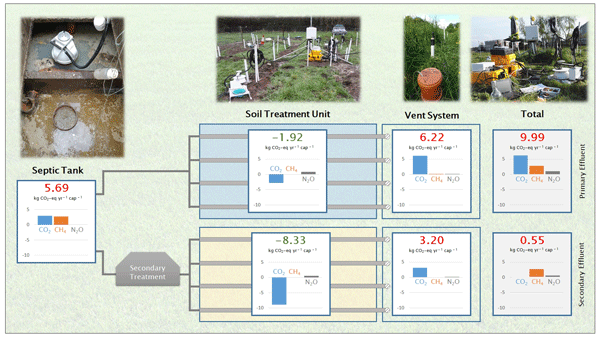
Jan Knappe, Celia Somlai, and Laurence W. Gill
Biogeosciences, 19, 1067–1085, https://doi.org/10.5194/bg-19-1067-2022, https://doi.org/10.5194/bg-19-1067-2022, 2022
Short summary
Short summary
Two domestic on-site wastewater treatment systems have been monitored for greenhouse gas (carbon dioxide, methane and nitrous oxide) emissions coming from the process units, soil and vent pipes. This has enabled the net greenhouse gas per person to be quantified for the first time, as well as the impact of pre-treatment on the effluent before being discharged to soil. These decentralised wastewater treatment systems serve approx. 20 % of the population in both Europe and the United States.
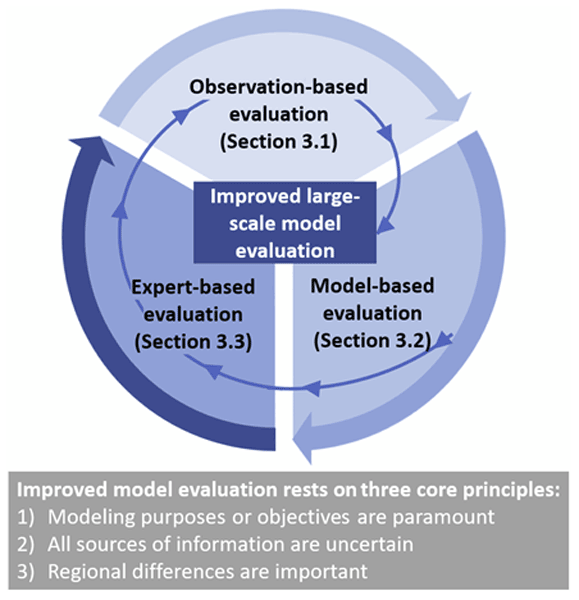
Tom Gleeson, Thorsten Wagener, Petra Döll, Samuel C. Zipper, Charles West, Yoshihide Wada, Richard Taylor, Bridget Scanlon, Rafael Rosolem, Shams Rahman, Nurudeen Oshinlaja, Reed Maxwell, Min-Hui Lo, Hyungjun Kim, Mary Hill, Andreas Hartmann, Graham Fogg, James S. Famiglietti, Agnès Ducharne, Inge de Graaf, Mark Cuthbert, Laura Condon, Etienne Bresciani, and Marc F. P. Bierkens
Geosci. Model Dev., 14, 7545–7571, https://doi.org/10.5194/gmd-14-7545-2021, https://doi.org/10.5194/gmd-14-7545-2021, 2021
Short summary
Short summary
Groundwater is increasingly being included in large-scale (continental to global) land surface and hydrologic simulations. However, it is challenging to evaluate these simulations because groundwater is
hiddenunderground and thus hard to measure. We suggest using multiple complementary strategies to assess the performance of a model (
model evaluation).
Cited articles
Allen, S. T., Jasechko, S., Berghuijs, W. R., Welker, J. M., Goldsmith, G. R., and Kirchner, J. W.: Global sinusoidal seasonality in precipitation isotopes, Hydrol. Earth Syst. Sci., 23, 3423–3436, https://doi.org/10.5194/hess-23-3423-2019, 2019.
Andreo, B., Liñán, C., Carrasco, F., Jiménez de Cisneros, C., Caballero, F., and Mudry, J.: Influence of rainfall quantity on the isotopic composition (18O and 2H) of water in mountainous areas: application for groundwater research in the Yunquera-Nieves karst aquifers (S Spain), Appl. Geochem., 19, 561–574, https://doi.org/10.1016/j.apgeochem.2003.08.002, 2004.
Bakalowicz, M.: Karst groundwater: A challenge for new resources, Hydrogeol. J., 13, 148–160, https://doi.org/10.1007/S10040-004-0402-9, 2005.
Baker, A., Hartmann, A., Duan, W., Hankin, S., Comas-Bru, L., Cuthbert, M. O., Treble, P. C., Banner, J., Genty, D., Baldini, L. M., Bartolomé, M., Moreno, A., Pérez-Mejías, C., and Werner, M.: Global analysis reveals climatic controls on the oxygen isotope composition of cave drip water, Nat. Commun., 10, 2984, https://doi.org/10.1038/s41467-019-11027-w, 2019.
Beck, H. E., van Dijk, A. I. J. M., Levizzani, V., Schellekens, J., Miralles, D. G., Martens, B., and de Roo, A.: MSWEP: 3-hourly 0.25° global gridded precipitation (1979–2015) by merging gauge, satellite, and reanalysis data, Hydrol. Earth Syst. Sci., 21, 589–615, https://doi.org/10.5194/hess-21-589-2017, 2017.
Beck, H. E., Pan, M., Roy, T., Weedon, G. P., Pappenberger, F., van Dijk, A. I. J. M., Huffman, G. J., Adler, R. F., and Wood, E. F.: Daily evaluation of 26 precipitation datasets using Stage-IV gauge-radar data for the CONUS, Hydrol. Earth Syst. Sci., 23, 207–224, https://doi.org/10.5194/hess-23-207-2019, 2019a.
Beck, H. E., Wood, E. F., Pan, M., Fisher, C. K., Miralles, D. G., van Dijk, A. I. J. M., McVicar, T. R., and Adler, R. F.: MSWEP V2 Global 3-Hourly 0.1° Precipitation: Methodology and Quantitative Assessment, B. Am. Meteorol. Soc., 100, 473–500, https://doi.org/10.1175/BAMS-D-17-0138.1, 2019b.
Birkel, C. and Soulsby, C.: Advancing tracer-aided rainfall–runoff modelling: a review of progress, problems and unrealised potential, Hydrol. Process., 29, 5227–5240, https://doi.org/10.1002/HYP.10594, 2015.
Bong, H., Cauquoin, A., Okazaki, A., Chang, E.-C., Werner, M., Wei, Z., Yeo, N., and Yoshimura, K.: Process-based intercomparison of water isotope-enabled models and reanalysis nudging effects, J. Geophys. Res.-Atmos., 129, e2023JD038719, https://doi.org/10.1029/2023JD038719, 2024.
Bowen, G. J.: Gridded maps of the isotopic composition of meteoric waters, WaterIsotopes.org, https://wateriso.utah.edu/waterisotopes/pages/data_access/ArcGrids.html (last access: 29 September 2026), 2026.
Bowen, G. J. and Revenaugh, J.: Interpolating the isotopic composition of modern meteoric precipitation, Water Resour. Res., 39, 1299, https://doi.org/10.1029/2003WR002086, 2003.
Bowen, G. J. and Wilkinson, B.: Spatial distribution of δ18O in meteoric precipitation, Geology, 30, 315–318, https://doi.org/10.1130/0091-7613(2002)030<0315:SDOOIM>2.0.CO;2, 2002.
Bowen, G. J., Wassenaar, L. I., and Hobson, K. A.: Global application of stable hydrogen and oxygen isotopes to wildlife forensics, Oecologia, 143, 337–348, https://doi.org/10.1007/S00442-004-1813-Y, 2005.
Bradley, C., Baker, A., Jex, C. N., and Leng, M. J.: Hydrological uncertainties in the modelling of cave drip-water δ18O and the implications for stalagmite palaeoclimate reconstructions, Quaternary Sci. Rev., 29, 2201–2214, https://doi.org/10.1016/J.QUASCIREV.2010.05.017, 2010.
Chen, Z., Auler, A. S., Bakalowicz, M., Drew, D., Griger, F., Hartmann, J., Jiang, G., Moosdorf, N., Richts, A., Stevanovic, Z., Veni, G., and Goldscheider, N.: The World Karst Aquifer Mapping project: concept, mapping procedure and map of Europe, Hydrogeol. J., 25, 771–785, https://doi.org/10.1007/s10040-016-1519-3, 2017.
etopo5: https://pubs.usgs.gov/of/1998/of98-801/bathy/metadata/etopo5.htm, last access: 9 April 2025.
Frank, S., Goeppert, N., and Goldscheider, N.: Improved understanding of dynamic water and mass budgets of high-alpine karst systems obtained from studying a well-defined catchment area, Hydrol. Process, 35, e14033, https://doi.org/10.1002/HYP.14033, 2021.
Giese, M., Caballero, Y., Hartmann, A., and Charlier, J.-B.: Trends in long-term hydrological data from European karst areas: insights for groundwater recharge evaluation, Hydrol. Earth Syst. Sci., 29, 3037–3054, https://doi.org/10.5194/hess-29-3037-2025, 2025.
Goldscheider, N. and Drew, D.: Methods in karst hydrogeology, Int. Contrib. Hydrogeol., 264 pp., ISBN 978-0-415-42873-6, 2007.
Goldscheider, N., Chen, Z., Auler, A. S., Bakalowicz, M., Broda, S., Drew, D., Hartmann, J., Jiang, G., Moosdorf, N., Stevanović, Z., and Veni, G.: Global distribution of carbonate rocks and karst water resources, Hydrogeol. J., 28, 1661–1677, https://doi.org/10.1007/s10040-020-02139-5, 2020.
Hartmann, A. and Baker, A.: Modelling karst vadose zone hydrology and its relevance for paleoclimate reconstruction, Earth-Sci. Rev., 172, 178–192, https://doi.org/10.1016/J.EARSCIREV.2017.08.001, 2017.
Hartmann, A., Kralik, M., Humer, F., Lange, J., and Weiler, M.: Identification of a karst system's intrinsic hydrodynamic parameters: Upscaling from single springs to the whole aquifer, Environ. Earth Sci., 65, 2377–2389, https://doi.org/10.1007/s12665-011-1033-9, 2012.
Hartmann, A., Wagener, T., Rimmer, A., Lange, J., Brielmann, H., and Weiler, M.: Testing the realism of model structures to identify karst system processes using water quality and quantity signatures, Water Resour. Res., 49, 3345–3358, https://doi.org/10.1002/wrcr.20229, 2013.
Hartmann, A., Goldscheider, N., Wagener, T., Lange, J., and Weiler, M.: Karst water resources in a changing world: Review of hydrological modeling approaches, Rev. Geophys., 52, 218–242, https://doi.org/10.1002/2013RG000443, 2014.
Hartmann, A., Jasechko, S., Gleeson, T., Wada, Y., Andreo, B., Barberá, J. A., Brielmann, H., Bouchaou, L., Charlier, J., Darling, W. G., Filippini, M., Garvelmann, J., Goldscheider, N., Kralik, M., Kunstmann, H., Ladouche, B., Lange, J., Lucianetti, G., Martín, J. F., Mudarra, M., Sánchez, D., Stumpp, C., Zagana, E., and Wagener, T.: Risk of groundwater contamination widely underestimated because of fast flow into aquifers, P. Natl. Acad. Sci. USA, 118, e2024492118, https://doi.org/10.1073/pnas.2024492118, 2021.
Hersbach, H., Bell, B., Berrisford, P., Hirahara, S., Horányi, A., Muñoz-Sabater, J., Nicolas, J., Peubey, C., Radu, R., Schepers, D., Simmons, A., Soci, C., Abdalla, S., Abellan, X., Balsamo, G., Bechtold, P., Biavati, G., Bidlot, J., Bonavita, M., De Chiara, G., Dahlgren, P., Dee, D., Diamantakis, M., Dragani, R., Flemming, J., Forbes, R., Fuentes, M., Geer, A., Haimberger, L., Healy, S., Hogan, R. J., Hólm, E., Janisková, M., Keeley, S., Laloyaux, P., Lopez, P., Lupu, C., Radnoti, G., de Rosnay, P., Rozum, I., Vamborg, F., Villaume, S., and Thépaut, J. N.: The ERA5 global reanalysis, Q. J. Roy. Meteor. Soc., 146, 1999–2049, https://doi.org/10.1002/qj.3803, 2020.
Hersbach, H., Bell, B., Berrisford, P., Biavati, G., Horányi, A., Muñoz-Sabater, J., Nicolas, J., Peubey, C., Radu, R., Rozum, I., Schepers, D., Simmons, A., Soci, C., Dee, D., and Thépaut, J.-N.: Copernicus Climate Change Service, Climate Data Store, (2023): ERA5 hourly data on single levels from 1940 to present, Copernicus Climate Change Service (C3S) Climate Data Store (CDS), https://doi.org/10.24381/cds.adbb2d47, 2023.
Hulsman, P., Keune, J., Koppa, A., Schellekens, J., and Miralles, D. G.: Incorporating Plant Access to Groundwater in Existing Global, Satellite-Based Evaporation Estimates, Water Resour. Res., 59, https://doi.org/10.1029/2022WR033731, 2023.
IAEA/WMO: Global Network of Isotopes in Precipitation, The GNIP Database, https://nucleus.iaea.org/wiser (last access: 17 June 2026), 2015.
Jourde, H., Massei, N., Mazzilli, N., Binet, S., Batiot-Guilhe, C., Labat, D., Steinmann, M., Bailly-Comte, V., Seidel, J. L., Arfib, B., Charlier, J. B., Guinot, V., Jardani, A., Fournier, M., Aliouache, M., Babic, M., Bertrand, C., Brunet, P., Boyer, J. F., Bricquet, J. P., Camboulive, T., Carrière, S. D., Celle-Jeanton, H., Chalikakis, K., Chen, N., Cholet, C., Clauzon, V., Soglio, L. D., Danquigny, C., Défargue, C., Denimal, S., Emblanch, C., Hernandez, F., Gillon, M., Gutierrez, A., Sanchez, L. H., Hery, M., Houillon, N., Johannet, A., Jouves, J., Jozja, N., Ladouche, B., Leonardi, V., Lorette, G., Loup, C., Marchand, P., de Montety, V., Muller, R., Ollivier, C., Sivelle, V., Lastennet, R., Lecoq, N., Maréchal, J. C., Perotin, L., Perrin, J., Petre, M. A., Peyraube, N., Pistre, S., Plagnes, V., Probst, A., Probst, J. L., Simler, R., Stefani, V., Valdes-Lao, D., Viseur, S., and Wang, X.: SNO KARST: A French Network of Observatories for the Multidisciplinary Study of Critical Zone Processes in Karst Watersheds and Aquifers. Vadose Zone J., 17, 180094, https://doi.org/10.2136/vzj2018.04.0094, 2018.
Kanamitsu, M., Kumar, A., Juang, H. H., Schemm, J., Wang, W., Yang, F., Hong, S., Peng, P., Chen, W., Moorthi, S., and Ji, M.: NCEP dynamical seasonal forecast system 2000, B. Am. Meteorol. Soc., 83, 1019–1038, https://doi.org/10.1175/1520-0477(2002)083<1019:NDSFS>2.3.CO;2, 2002a.
Kanamitsu, M., Ebisuzaki, W., Woollen, J., Yang, S., Hnilo, J. J., Fiorino, M., and Potter, G. L.: NCEP–DOE AMIP-II Reanalysis (R-2), B. Am. Meteorol. Soc., 83, 1631–1643, https://doi.org/10.1175/BAMS-83-11-1631, 2002b.
Kaushal, N., Lechleitner, F. A., Wilhelm, M., Azennoud, K., Bühler, J. C., Braun, K., Ait Brahim, Y., Baker, A., Burstyn, Y., Comas-Bru, L., Fohlmeister, J., Goldsmith, Y., Harrison, S. P., Hatvani, I. G., Rehfeld, K., Ritzau, M., Skiba, V., Stoll, H. M., Szűcs, J. G., Tanos, P., Treble, P. C., Azevedo, V., Baker, J. L., Borsato, A., Chawchai, S., Columbu, A., Endres, L., Hu, J., Kern, Z., Kimbrough, A., Koç, K., Markowska, M., Martrat, B., Masood Ahmad, S., Nehme, C., Novello, V. F., Pérez-Mejías, C., Ruan, J., Sekhon, N., Sinha, N., Tadros, C. V., Tiger, B. H., Warken, S., Wolf, A., Zhang, H., and SISAL Working Group members: SISALv3: a global speleothem stable isotope and trace element database, Earth Syst. Sci. Data, 16, 1933–1963, https://doi.org/10.5194/essd-16-1933-2024, 2024.
Koppa, A., Rains, D., Hulsman, P., Poyatos, R., and Miralles, D. G.: A deep learning-based hybrid model of global terrestrial evaporation, Nat. Commun., 13, https://doi.org/10.1038/s41467-022-29543-7, 2022.
Labat, D., Sivakumar, B., and Mangin, A.: Evidence for deterministic chaos in long-term high-resolution karstic streamflow time series, Stoch. Env. Res. Risk A., 30, 2189–2196, https://doi.org/10.1007/s00477-015-1175-5, 2016.
Li, G., Chen, X., Zhang, Z., Wang, L., and Soulsby, C.: Effects of passive-storage conceptualization on modeling hydrological function and isotope dynamics in the flow system of a cockpit karst landscape, Hydrol. Earth Syst. Sci., 26, 5515–5534, https://doi.org/10.5194/hess-26-5515-2022, 2022.
Li, R., Zhu, G., Chen, L., Qi, X., Lu, S., Meng, G., Wang, Y., Li, W., Zheng, Z., Yang, J., and Gun, Y.: Global Stable Isotope Dataset for Surface Water, Earth Syst. Sci. Data, 17, 2135–2145, https://doi.org/10.5194/essd-17-2135-2025, 2025.
Liu, J., Shangguan, D., Liu, S., Ding, Y., Wang, S., and Wang, X.: Evaluation and comparison of CHIRPS and MSWEP daily-precipitation products in the Qinghai-Tibet Plateau during the period of 1981–2015, Atmos. Res., 230, 104634, https://doi.org/10.1016/J.ATMOSRES.2019.104634, 2019.
Liu, Y. and Yamanaka, T.: Tracing groundwater recharge sources in a mountain–plain transitional area using stable isotopes and hydrochemistry, J. Hydrol., 464–465, 116–126, https://doi.org/10.1016/j.jhydrol.2012.06.053, 2012.
Martens, B., Miralles, D. G., Lievens, H., van der Schalie, R., de Jeu, R. A. M., Fernández-Prieto, D., Beck, H. E., Dorigo, W. A., and Verhoest, N. E. C.: GLEAM v3: satellite-based land evaporation and root-zone soil moisture, Geosci. Model Dev., 10, 1903–1925, https://doi.org/10.5194/gmd-10-1903-2017, 2017.
Mayer-Anhalt, L., Birkel, C., Sánchez-Murillo, R., and Schulz, S.: Tracer-aided modelling reveals quick runoff generation and young streamflow ages in a tropical rainforest catchment, Hydrol. Process., 36, e14508, https://doi.org/10.1002/hyp.14508, 2022.
McDermott, F.: Palaeo-climate reconstruction from stable isotope variations in speleothems: a review, Quaternary Sci. Rev., 23, 901–918, https://doi.org/10.1016/j.quascirev.2003.06.021, 2004.
McDermott, F., Schwarcz, H., and Rowe, P. J.: Isotopes in speleothems, in: Isotopes in Palaeoenvironmental Research, Developments in Paleoenvironmental Research, vol. 10, edited by: Leng, M. J., Springer, Dordrecht, the Netherlands, 127–144, https://doi.org/10.1007/1-4020-2504-1, 2006.
McDonnell, J. J., McGuire, K., Aggarwal, P., Beven, K. J., Biondi, D., Destouni, G., Dunn, S., James, A., Kirchner, J., Kraft, P., Lyon, S., Maloszewski, P., Newman, B., Pfister, L., Rinaldo, A., Rodhe, A., Sayama, T., Seibert, J., Solomon, K., Soulsby, C., Stewart, M., Tetzlaff, D., Tobin, C., Troch, P., Weiler, M., Western, A., Wörman, A., and Wrede, S.: How old is streamwater? Open questions in catchment transit time conceptualization, modelling and analysis, Hydrol. Process., 24, 1745–1754, https://doi.org/10.1002/hyp.7796, 2010.
Miralles, D. G., Holmes, T. R. H., De Jeu, R. A. M., Gash, J. H., Meesters, A. G. C. A., and Dolman, A. J.: Global land-surface evaporation estimated from satellite-based observations, Hydrol. Earth Syst. Sci., 15, 453–469, https://doi.org/10.5194/hess-15-453-2011, 2011.
Miralles, D. G., Bonte, O., Koppa, A., Baez-Villanueva, O. M., Tronquo, E., Zhong, F., Beck, H. E., Hulsman, P., Dorigo, W., Verhoest, N. E. C., and Haghdoost, S.: GLEAM4: global land evaporation and soil moisture dataset at 0.1° resolution from 1980 to near present, Sci. Data, 12, 416, https://doi.org/10.1038/s41597-025-04610-y, 2025.
Nan, Y., He, Z., Tian, F., Wei, Z., and Tian, L.: Can we use precipitation isotope outputs of isotopic general circulation models to improve hydrological modeling in large mountainous catchments on the Tibetan Plateau?, Hydrol. Earth Syst. Sci., 25, 6151–6172, https://doi.org/10.5194/hess-25-6151-2021, 2021.
Olarinoye, T., Gleeson, T., Marx, V., Seeger, S., Adinehvand, R., Allocca, V., Andreo, B., Apaéstegui, J., Apolit, C., Arfib, B., Auler, A., Barberá, J. A., Batiot-Guilhe, C., Bechtel, T., Binet, S., Bittner, D., Blatnik, M., Bolger, T., Brunet, P., Charlier, J. B., Chen, Z., Chiogna, G., Coxon, G., De Vita, P., Doummar, J., Epting, J., Fournier, M., Goldscheider, N., Gunn, J., Guo, F., Guyot, J. L., Howden, N., Huggenberger, P., Hunt, B., Jeannin, P. Y., Jiang, G., Jones, G., Jourde, H., Karmann, I., Koit, O., Kordilla, J., Labat, D., Ladouche, B., Liso, I. S., Liu, Z., Massei, N., Mazzilli, N., Mudarra, M., Parise, M., Pu, J., Ravbar, N., Sanchez, L. H., Santo, A., Sauter, M., Sivelle, V., Skoglund, R. Ø., Stevanovic, Z., Wood, C., Worthington, S., and Hartmann, A.: Global karst springs hydrograph dataset for research and management of the world's fastest-flowing groundwater, Sci. Data, 7, https://doi.org/10.1038/s41597-019-0346-5, 2020.
Pape, J. R., Banner, J. L., Mack, L. E., Musgrove, M. L., and Guilfoyle, A.: Controls on oxygen isotope variability in precipitation and cave drip waters, central Texas, USA, J. Hydrol., 385, 203–215, https://doi.org/10.1016/j.jhydrol.2010.02.021, 2010.
Priestley, S. C., Treble, P. C., Griffiths, A. D., Baker, A., Abram, N. J., and Meredith, K. T.: Caves demonstrate decrease in rainfall recharge of southwest Australian groundwater is unprecedented for the last 800 years, Commun. Earth Environ., 4, 206, https://doi.org/10.1038/S43247-023-00858-7, 2023.
Rohatgi, A.: WebPlotDigitizer, version 4.6, https://apps.automeris.io/wpd4/ (last access: 29 September 2026), 2023.
Rusjan, S., Sapač, K., Petrič, M., Lojen, S., and Bezak, N.: Identifying the hydrological behavior of a complex karst system using stable isotopes, J. Hydrol., 577, https://doi.org/10.1016/j.jhydrol.2019.123956, 2019.
Staudinger, M., Seeger, S., Herbstritt, B., Stoelzle, M., Seibert, J., Stahl, K., and Weiler, M.: The CH-IRP data set: a decade of fortnightly data on δ2H and δ18O in streamflow and precipitation in Switzerland, Earth Syst. Sci. Data, 12, 3057–3066, https://doi.org/10.5194/essd-12-3057-2020, 2020.
Stevanović, Z.: Karst waters in potable water supply: a global scale overview, Environ. Earth Sci., 78, 662, https://doi.org/10.1007/s12665-019-8670-9, 2019.
Treble, P. C., Baker, A., Abram, N. J., Hellstrom, J. C., Crawford, J., Gagan, M. K., Borsato, A., Griffiths, A. D., Bajo, P., Markowska, M., Priestley, S. C., Hankin, S., and Paterson, D.: Ubiquitous karst hydrological control on speleothem oxygen isotope variability in a global study, Commun. Earth Environ., 3, 29, https://doi.org/10.1038/s43247-022-00347-3, 2022.
Treble, P. C., Zang, Y., Kaushal, N., Hatvani, I. G., Tanos, P., Kern, Z., Baker, A., Hartmann, A., Lechleitner, F. A., Belanger, B., Daudt de Oliveira, B., Sinclair, W., Riechelmann, D. F. C., Hidas, A., Yoshimura, K., Comas-Bru, L., and the SISAL working group members: SISAL_monv1: a global database of cave monitoring observations, Earth Syst. Sci. Data Discuss. [preprint], https://doi.org/10.5194/essd-2026-31, in review, 2026.
Tremaine, D. M., Froelich, P. N., and Wang, Y.: Speleothem calcite farmed in situ: modern calibration of δ18O and δ13C paleoclimate proxies in a continuously monitored natural cave system, Geochim. Cosmochim. Ac., 75, 4929–4950, https://doi.org/10.1016/j.gca.2011.06.005, 2011.
Turner, S. L., Korevaar, E., Cumpston, M. S., Kanukula, R., Forbes, A. B., and McKenzie, J. E.: Effect estimates can be accurately calculated with data digitally extracted from interrupted time series graphs, Res. Synth. Methods, 14, 622–638, https://doi.org/10.1002/jrsm.1646, 2023.
van der Mierden, S., Spineli, L. M., Talbot, S. R., Yiannakou, C., Zentrich, E., Weegh, N., Struve, B., zur Brügge, T. F., Bleich, A., and Leenaars, C. H. C.: Extracting data from graphs: a case study on animal research with implications for meta-analyses, Res. Synth. Methods, 12, 701–710, https://doi.org/10.1002/jrsm.1481, 2021.
Wang, Z., Su, Q., Wang, S., Gao, Z., and Liu, J.: Coupling hydrochemistry and stable isotopes (δ2H and δ18O) to identify the major factors affecting the hydrochemical evolution of groundwater in the Western Yellow Sea Coast, China, Appl. Geochem., 138, 105221, https://doi.org/10.1016/j.apgeochem.2022.105221, 2022.
Yoshimura, K., Kanamitsu, M., Noone, D., and Oki, T.: Historical isotope simulation using Reanalysis atmospheric data, J. Geophys. Res.-Atmos., 113, D19108, https://doi.org/10.1029/2008JD010074, 2008.
Zang, Y.: The WoKaS-Iso database: workflow for a global compilation of oxygen-18 and deuterium records in karst springs and cave drip water for enhanced understanding of karst systems, OPARA [data set], https://doi.org/10.25532/OPARA-909, 2025.
Zhang, Z., Chen, X., Cheng, Q., and Soulsby, C.: Storage dynamics, hydrological connectivity and flux ages in a karst catchment: conceptual modelling using stable isotopes, Hydrol. Earth Syst. Sci., 23, 51–71, https://doi.org/10.5194/hess-23-51-2019, 2019.
Zhong, F., Jiang, S., van Dijk, A. I. J. M., Ren, L., Schellekens, J., and Miralles, D. G.: Revisiting large-scale interception patterns constrained by a synthesis of global experimental data, Hydrol. Earth Syst. Sci., 26, 5647–5667, https://doi.org/10.5194/hess-26-5647-2022, 2022.
Short summary
We developed the first global database of water from karst springs and cave drips that records different forms of oxygen and hydrogen, which naturally trace how rainwater moves through rocks. By gathering and checking thousands of measurements from around the globe and linking them with flow and rainfall data, the database provides a comprehensive view of water movement, allows scientists to compare regions, understand groundwater processes, and support sustainable water management worldwide.
We developed the first global database of water from karst springs and cave drips that records...


Altmetrics
Final-revised paper
Preprint