Articles | Volume 18, issue 1
https://doi.org/10.5194/essd-18-691-2026
© Author(s) 2026. This work is distributed under
the Creative Commons Attribution 4.0 License.
the Creative Commons Attribution 4.0 License.
https://doi.org/10.5194/essd-18-691-2026
© Author(s) 2026. This work is distributed under
the Creative Commons Attribution 4.0 License.
the Creative Commons Attribution 4.0 License.
Data description article
| 
28 Jan 2026
Data description article |
| 28 Jan 2026
| 28 Jan 2026
QUADICA v2: extending the large-sample data set for water QUAlity, DIscharge and Catchment Attributes in Germany

Department of Hydrogeology, Helmholtz Centre for Environmental Research-UFZ, Leipzig, 04318, Germany
Alexander Hubig
Department of Hydrogeology, Helmholtz Centre for Environmental Research-UFZ, Leipzig, 04318, Germany
Alexander Wachholz
Department of Inland Surface Waters, German Environment Agency-UBA, Dessau, 06844, Germany
Ulrike Scharfenberger
Department Aquatic Ecosystems Analysis and Management, Helmholtz Centre for Environmental Research-UFZ, Magdeburg, 39114, Germany
Sarah Haug
Department of Hydrogeology, Helmholtz Centre for Environmental Research-UFZ, Leipzig, 04318, Germany
Tam Nguyen
Department of Hydrogeology, Helmholtz Centre for Environmental Research-UFZ, Leipzig, 04318, Germany
Fanny Sarrazin
Université Paris-Saclay, INRAE, UR HYCAR, 92160 Antony, France
Masooma Batool
Department of Computational Hydrosystems, Helmholtz Centre for Environmental Research-UFZ, Leipzig, 04318, Germany
Andreas Musolff
Department of Hydrogeology, Helmholtz Centre for Environmental Research-UFZ, Leipzig, 04318, Germany
Rohini Kumar
Department of Computational Hydrosystems, Helmholtz Centre for Environmental Research-UFZ, Leipzig, 04318, Germany
Related authors

Tam V. Nguyen, Rohini Kumar, José L. J. Ledesma, Pia Ebeling, Jan H. Fleckenstein, and Andreas Musolff
Hydrol. Earth Syst. Sci., 30, 5749–5768, https://doi.org/10.5194/hess-30-5749-2026, https://doi.org/10.5194/hess-30-5749-2026, 2026
Short summary
Short summary
Lumped and landscape-explicit dissolved organic carbon (DOC) models are commonly calibrated using stream DOC concentrations, while internal DOC dynamics in different model compartments are not given enough attention. Our study shows that stream DOC alone is insufficient to constrain internal DOC dynamics. Applying models calibrated in this way under changing boundary conditions may therefore lead to unrealistic results.
Jean-Paul Brede, Pia Ebeling, Jens Kiesel, and Ralf Loritz
EGUsphere, https://doi.org/10.5194/egusphere-2026-3604, https://doi.org/10.5194/egusphere-2026-3604, 2026
Short summary
Short summary
Predicting river water quality is challenging because measurements are sparse and irregular. We trained artificial-intelligence models on 408 German rivers to forecast river flow and six water-quality variables together. A more flexible training approach lets one model predict different variables from whatever data are available, pointing toward unified environmental models.
Alexander Hubig, Pia Ebeling, and Andreas Musolff
EGUsphere, https://doi.org/10.5194/egusphere-2026-3240, https://doi.org/10.5194/egusphere-2026-3240, 2026
This preprint is open for discussion and under review for Hydrology and Earth System Sciences (HESS).
Short summary
Short summary
Reports of riverine algal blooms during recent droughts imply a link between low-flow conditions and eutrophication impacts. Here, we present evidence from observations of total phosphorus, chlorophyll a, and discharge that anomalously low discharge relates to anomalously high chlorophyll a per total phosphorus across multiple sites as well as more frequent algal blooms. The increased risk of algal blooms highlight the challenges for future river management under intensifying drought conditions.
Alexander Hubig, Pia Ebeling, Daniel Graeber, Ulrike Scharfenberger, and Andreas Musolff
EGUsphere, https://doi.org/10.5194/egusphere-2026-830, https://doi.org/10.5194/egusphere-2026-830, 2026
Short summary
Short summary
This study investigates seasonal eutrophication patterns in rivers using chlorophyll a and total phosphorus concentration data from 133 monitoring sites in Germany. We identified five archetypal seasonal patterns explained by distinct seasonal dynamics of nutrients and physical drivers and by properties of the upstream catchment and river network. These patterns highlight critical locations and periods of phytoplankton blooms and implications for eutrophication management.
Pia Ebeling, Andreas Musolff, Rohini Kumar, Andreas Hartmann, and Jan H. Fleckenstein
Hydrol. Earth Syst. Sci., 29, 2925–2950, https://doi.org/10.5194/hess-29-2925-2025, https://doi.org/10.5194/hess-29-2925-2025, 2025
Short summary
Short summary
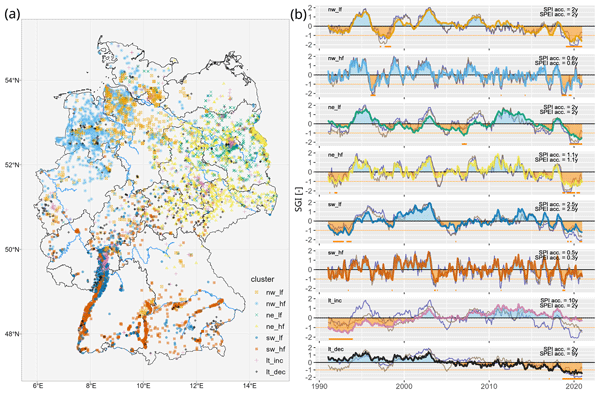
Groundwater is a crucial resource at risk due to droughts. To understand drought effects on groundwater levels in Germany, we grouped 6626 wells into six regional and two national patterns. Weather explained half of the level variations with varied response times. Shallow groundwater responds fast and is more vulnerable to short droughts (a few months). Dampened deep heads buffer short droughts but suffer from long droughts and recoveries. Two nationwide trend patterns were linked to human water use.
Ralf Loritz, Alexander Dolich, Eduardo Acuña Espinoza, Pia Ebeling, Björn Guse, Jonas Götte, Sibylle K. Hassler, Corina Hauffe, Ingo Heidbüchel, Jens Kiesel, Mirko Mälicke, Hannes Müller-Thomy, Michael Stölzle, and Larisa Tarasova
Earth Syst. Sci. Data, 16, 5625–5642, https://doi.org/10.5194/essd-16-5625-2024, https://doi.org/10.5194/essd-16-5625-2024, 2024
Short summary
Short summary
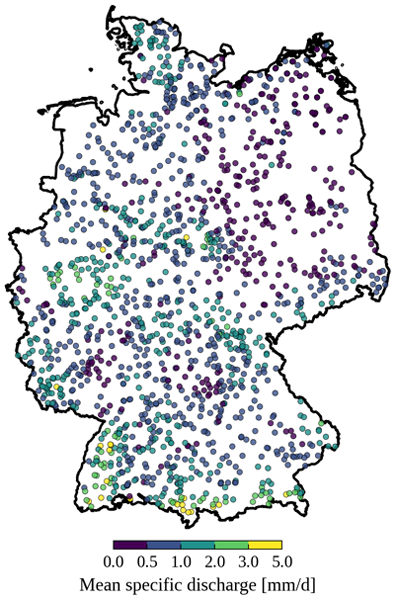
The CAMELS-DE dataset features data from 1582 streamflow gauges across Germany, with records spanning from 1951 to 2020. This comprehensive dataset, which includes time series of up to 70 years (median 46 years), enables advanced research on water flow and environmental trends and supports the development of hydrological models.
Pia Ebeling, Rohini Kumar, Stefanie R. Lutz, Tam Nguyen, Fanny Sarrazin, Michael Weber, Olaf Büttner, Sabine Attinger, and Andreas Musolff
Earth Syst. Sci. Data, 14, 3715–3741, https://doi.org/10.5194/essd-14-3715-2022, https://doi.org/10.5194/essd-14-3715-2022, 2022
Short summary
Short summary
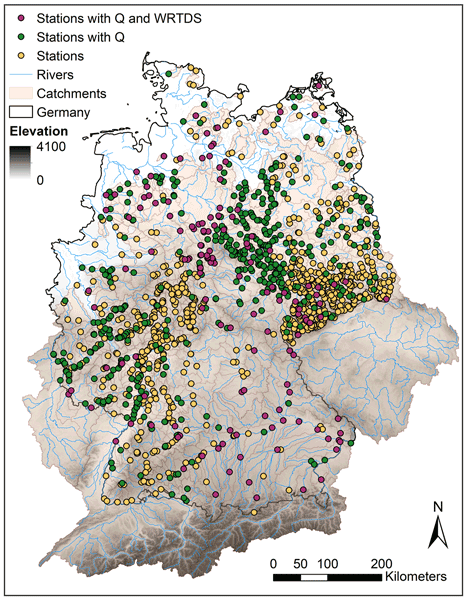
Environmental data are critical for understanding and managing ecosystems, including the mitigation of water quality degradation. To increase data availability, we present the first large-sample water quality data set (QUADICA) of riverine macronutrient concentrations combined with water quantity, meteorological, and nutrient forcing data as well as catchment attributes. QUADICA covers 1386 German catchments to facilitate large-sample data-driven and modeling water quality assessments.
Matteo Rosales, Fanny J. Sarrazin, Frédéric Hendrickx, and Vazken Andréassian
EGUsphere, https://doi.org/10.5194/egusphere-2026-5491, https://doi.org/10.5194/egusphere-2026-5491, 2026
This preprint is open for discussion and under review for Hydrology and Earth System Sciences (HESS).
Short summary
Short summary
To shed new light on the enduring problem of long-term water balance non-closure, we hypothesize that the spatial variability of non-closure can help us untangle its many causes and extract the contribution of the climate forcing biases. To test the idea, we analyse the low-frequency variability of the water balance anomaly over 3614 near-natural gauged catchments across Europe. The study paves the way for hydrologically-grounded corrections of the forcing variables in large-scale models.
Tam V. Nguyen, Rohini Kumar, José L. J. Ledesma, Pia Ebeling, Jan H. Fleckenstein, and Andreas Musolff
Hydrol. Earth Syst. Sci., 30, 5749–5768, https://doi.org/10.5194/hess-30-5749-2026, https://doi.org/10.5194/hess-30-5749-2026, 2026
Short summary
Short summary
Lumped and landscape-explicit dissolved organic carbon (DOC) models are commonly calibrated using stream DOC concentrations, while internal DOC dynamics in different model compartments are not given enough attention. Our study shows that stream DOC alone is insufficient to constrain internal DOC dynamics. Applying models calibrated in this way under changing boundary conditions may therefore lead to unrealistic results.
Paul Zarpas, Maria-Helena Ramos, Gaëlle Tallec, Denis Allard, and Fanny J. Sarrazin
EGUsphere, https://doi.org/10.5194/egusphere-2026-4287, https://doi.org/10.5194/egusphere-2026-4287, 2026
This preprint is open for discussion and under review for Hydrology and Earth System Sciences (HESS).
Short summary
Short summary
Long-term information on irrigation water withdrawal is crucial to understand how agriculture affects water resources, but observations are often too short. We developed a statistical model to reconstruct annual irrigation water withdrawal in France from 2000 to 2022 at the catchment scale using a national database. The reconstructed time series reveal widespread increases in irrigation water withdrawal and provide a basis for water management and climate change impact studies.
José L. J. Ledesma, Paul D. Burkhardt, Susana Bernal, and Andreas Musolff
EGUsphere, https://doi.org/10.5194/egusphere-2026-4221, https://doi.org/10.5194/egusphere-2026-4221, 2026
Short summary
Short summary
We compared more than 200 rainfall events in four small forested river basins, from Mediterranean Spain to Germany and Sweden. Rainfall amount and prior wetness controlled how strongly streams and nearby groundwater responded, but the timing and connection between them differed among climates. These differences help explain when water and dissolved substances are mobilised and how headwater environments may respond to a changing climate.
Jean-Paul Brede, Pia Ebeling, Jens Kiesel, and Ralf Loritz
EGUsphere, https://doi.org/10.5194/egusphere-2026-3604, https://doi.org/10.5194/egusphere-2026-3604, 2026
Short summary
Short summary
Predicting river water quality is challenging because measurements are sparse and irregular. We trained artificial-intelligence models on 408 German rivers to forecast river flow and six water-quality variables together. A more flexible training approach lets one model predict different variables from whatever data are available, pointing toward unified environmental models.
Alexander Hubig, Pia Ebeling, and Andreas Musolff
EGUsphere, https://doi.org/10.5194/egusphere-2026-3240, https://doi.org/10.5194/egusphere-2026-3240, 2026
This preprint is open for discussion and under review for Hydrology and Earth System Sciences (HESS).
Short summary
Short summary
Reports of riverine algal blooms during recent droughts imply a link between low-flow conditions and eutrophication impacts. Here, we present evidence from observations of total phosphorus, chlorophyll a, and discharge that anomalously low discharge relates to anomalously high chlorophyll a per total phosphorus across multiple sites as well as more frequent algal blooms. The increased risk of algal blooms highlight the challenges for future river management under intensifying drought conditions.
Katja Frieler, Stefan Lange, Jacob Schewe, Matthias Mengel, Simon Treu, Christian Otto, Jan Volkholz, Christopher P. O. Reyer, Stefanie Heinicke, Colin Jones, Julia L. Blanchard, Cheryl S. Harrison, Colleen M. Petrik, Tyler D. Eddy, Kelly Ortega-Cisneros, Camilla Novaglio, Ryan Heneghan, Derek P. Tittensor, Olivier Maury, Matthias Büchner, Thomas Vogt, Dánnell Quesada-Chacón, Kerry Emanuel, Chia-Ying Lee, Suzana J. Camargo, Linn Hamester, Jonas Jägermeyr, Sam Rabin, Jochen Klar, Iliusi D. Vega del Valle, Lisa Novak, Inga J. Sauer, Gitta Lasslop, Sarah Chadburn, Eleanor Burke, Angela Gallego-Sala, Noah Smith, Jinfeng Chang, Stijn Hantson, Chantelle Burton, Anne Gädeke, Fang Li, Simon N. Gosling, Hannes Müller Schmied, Fred Hattermann, Thomas Hickler, Rafael Marcé, Don Pierson, Wim Thiery, Daniel Mercado-Bettín, Robert Ladwig, Ana Isabel Ayala, Matthew Forrest, Michel Bechtold, Robert Reinecke, Inge de Graaf, Jed O. Kaplan, Alexander Koch, Matthieu Lengaigne, Rohini Kumar, and Maryna Strokal
Geosci. Model Dev., 19, 4095–4135, https://doi.org/10.5194/gmd-19-4095-2026, https://doi.org/10.5194/gmd-19-4095-2026, 2026
Short summary
Short summary
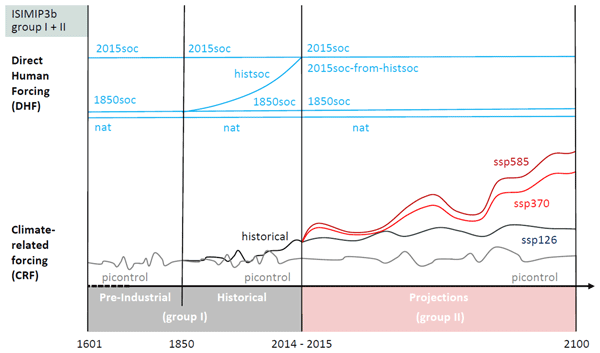
This paper describes the experiments and data sets necessary to run historic and future impact projections, and the underlying assumptions of future climate change as defined by the 3rd round of the ISIMIP Project (Inter-sectoral Impactmodel Intercomparison Project, isimip.org). ISIMIP provides a framework for cross-sectorally consistent climate impact simulations to contribute to a comprehensive and consistent picture of the world under different climate-change scenarios.
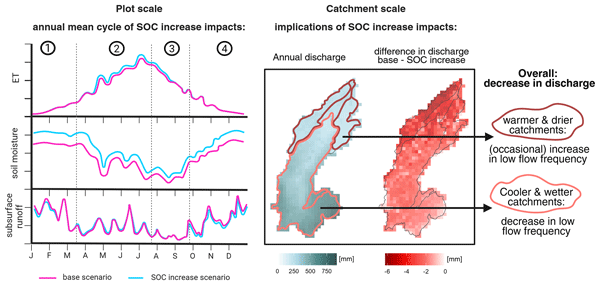
Malve Heinz, Annelie Holzkämper, Rohini Kumar, Sélène Ledain, Pascal Horton, and Bettina Schaefli
Hydrol. Earth Syst. Sci., 30, 2879–2911, https://doi.org/10.5194/hess-30-2879-2026, https://doi.org/10.5194/hess-30-2879-2026, 2026
Short summary
Short summary
Droughts increasingly threaten agriculture. Improving soils to store more water, for example by increasing soil organic carbon, can help. We simulated this in a Swiss catchment and found that more soil carbon slightly increased soil water storage and evapotranspiration, modestly reduced floods, and shortened periods with very little streamflow. However in warmer, drier areas, these periods with little streamflow could sometimes last longer.
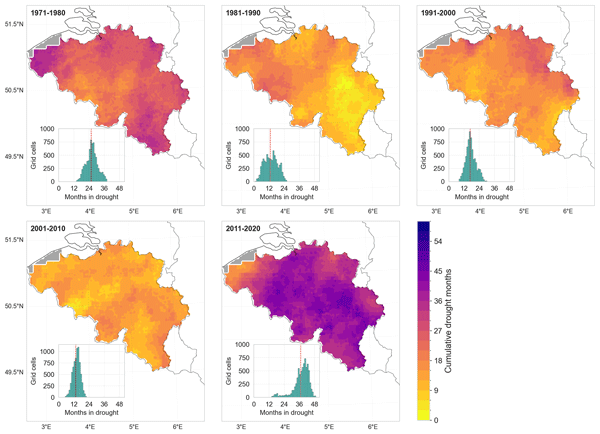
Katoria Lekarkar, Oldrich Rakovec, Rohini Kumar, Stefaan Dondeyne, and Ann van Griensven
Hydrol. Earth Syst. Sci., 30, 2817–2835, https://doi.org/10.5194/hess-30-2817-2026, https://doi.org/10.5194/hess-30-2817-2026, 2026
Short summary
Short summary
Belgium has faced intense droughts in recent years, causing major losses across sectors. To assess their rarity, we used a hydrological model to reconstruct fifty years of soil moisture in the country. We show that 2011–2020 experienced the most severe droughts since 1971, with nearly 30% of the decade under drought. We also show that rainfall-based indicators underestimate soil moisture droughts, so including soil-moisture monitoring can give decision-makers a clearer picture of drought risks.
Alexander Hubig, Pia Ebeling, Daniel Graeber, Ulrike Scharfenberger, and Andreas Musolff
EGUsphere, https://doi.org/10.5194/egusphere-2026-830, https://doi.org/10.5194/egusphere-2026-830, 2026
Short summary
Short summary
This study investigates seasonal eutrophication patterns in rivers using chlorophyll a and total phosphorus concentration data from 133 monitoring sites in Germany. We identified five archetypal seasonal patterns explained by distinct seasonal dynamics of nutrients and physical drivers and by properties of the upstream catchment and river network. These patterns highlight critical locations and periods of phytoplankton blooms and implications for eutrophication management.
Sadaf Nasreen, Oldrich Rakovec, Rohini Kumar, Manuela I. Brunner, Ujjwal Singh, Petr Maca, Yannis Markonis, and Martin Hanel
EGUsphere, https://doi.org/10.5194/egusphere-2026-973, https://doi.org/10.5194/egusphere-2026-973, 2026
Short summary
Short summary
European droughts threaten water and agriculture, but how distinct drought processes will change under warming is uncertain. We examine seven mechanisms across Europe using 1971 to 2000 observations and 2070 to 2099 projections. Changes are regional: the Mediterranean shifts to longer, more severe droughts, while Northern and Western Central Europe often improve. Temperature-driven mechanisms, especially rain to snow transitions, respond most, guiding targeted adaptation.
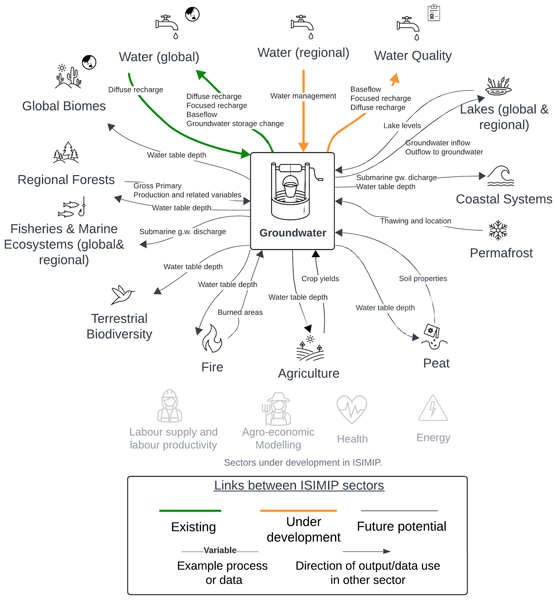
Robert Reinecke, Tanjila Akhter, Annemarie Bäthge, Ricarda Dietrich, Sebastian Gnann, Simon N. Gosling, Danielle Grogan, Andreas Hartmann, Stefan Kollet, Rohini Kumar, Richard Lammers, Sida Liu, Yan Liu, Nils Moosdorf, Bibi Naz, Sara Nazari, Chibuike Orazulike, Yadu Pokhrel, Jacob Schewe, Mikhail Smilovic, Maryna Strokal, Wim Thiery, Yoshihide Wada, Shan Zuidema, and Inge de Graaf
Geosci. Model Dev., 19, 523–542, https://doi.org/10.5194/gmd-19-523-2026, https://doi.org/10.5194/gmd-19-523-2026, 2026
Short summary
Short summary
Here we describe a collaborative effort to improve predictions of how climate change will affect groundwater. The ISIMIP (The Inter-Sectoral Impact Model Intercomparison Project) groundwater sector combines multiple global groundwater models to capture a range of possible outcomes and reduce uncertainty. Initial comparisons reveal significant differences between models in key metrics like water table depth and recharge rates, highlighting the need for structured model intercomparisons.
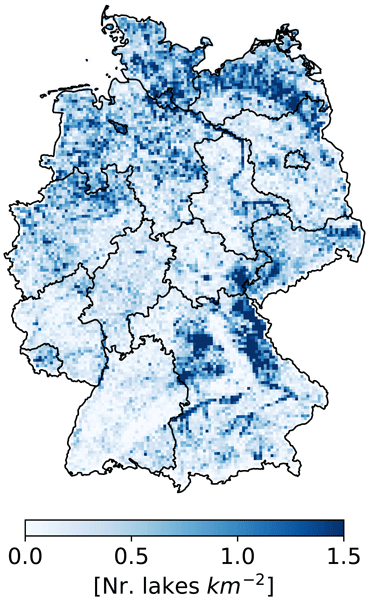
Alexander Wachholz, Susanne I. Schmidt, Jens Arle, and Jeanette Völker
Earth Syst. Sci. Data, 18, 117–129, https://doi.org/10.5194/essd-18-117-2026, https://doi.org/10.5194/essd-18-117-2026, 2026
Short summary
Short summary
Small lakes and ponds provide many functions for the environment. Because of their size they are often not considered in scientific studies. We collected all the information on those lakes and ponds for Germany and combined it to a database. We described the ponds in detail, for example how deep they might by, how much water they can store or if they are connected to rivers. We found more than 260.000 lakes and ponds in Germany.
Vishal Thakur, Yannis Markonis, Rohini Kumar, Johanna Ruth Thomson, Mijael Rodrigo Vargas Godoy, Martin Hanel, and Oldrich Rakovec
Hydrol. Earth Syst. Sci., 29, 4395–4416, https://doi.org/10.5194/hess-29-4395-2025, https://doi.org/10.5194/hess-29-4395-2025, 2025
Short summary
Short summary
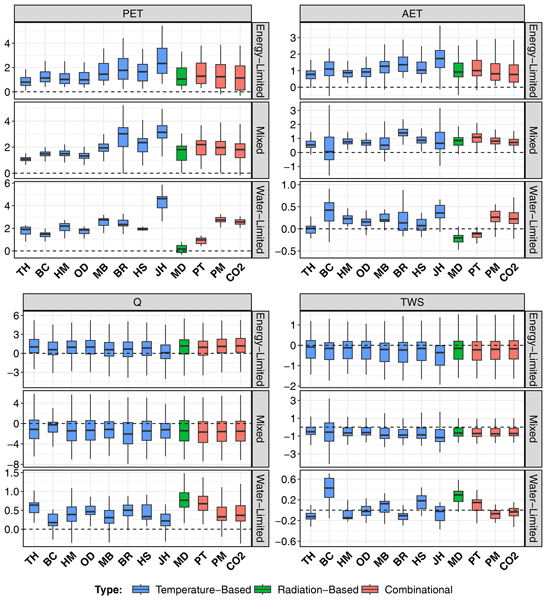
Understanding the changes in water movement in earth is crucial for everyone. To quantify this water movement there are several techniques. We examined how different methods of estimating evaporation impact predictions of various types of water movement across Europe. We found that, while these methods generally agree on whether changes are increasing or decreasing, they differ in magnitude. This means selecting the right evaporation method is crucial for accurate predictions of water movement.
Jan Řehoř, Rudolf Brázdil, Oldřich Rakovec, Martin Hanel, Milan Fischer, Rohini Kumar, Jan Balek, Markéta Poděbradská, Vojtěch Moravec, Luis Samaniego, Yannis Markonis, and Miroslav Trnka
Hydrol. Earth Syst. Sci., 29, 3341–3358, https://doi.org/10.5194/hess-29-3341-2025, https://doi.org/10.5194/hess-29-3341-2025, 2025
Short summary
Short summary
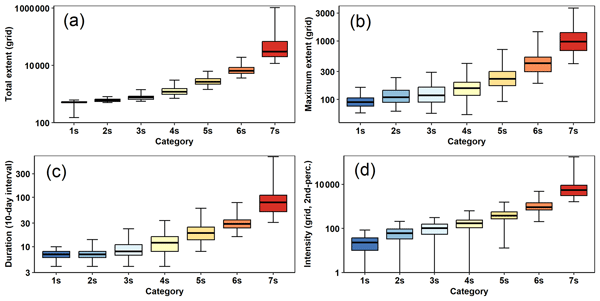
We present a robust method for identification and classification of global land drought events (GLDEs) based on soil moisture. Two models were used to calculate soil moisture and delimit soil drought over global land from 1980–2022, with clusters of 775 and 630 GLDEs. Using four spatiotemporal and three motion-related characteristics, we categorized GLDEs into seven severity and seven dynamic categories. The frequency of GLDEs has generally increased in recent decades.
Pia Ebeling, Andreas Musolff, Rohini Kumar, Andreas Hartmann, and Jan H. Fleckenstein
Hydrol. Earth Syst. Sci., 29, 2925–2950, https://doi.org/10.5194/hess-29-2925-2025, https://doi.org/10.5194/hess-29-2925-2025, 2025
Short summary
Short summary
Groundwater is a crucial resource at risk due to droughts. To understand drought effects on groundwater levels in Germany, we grouped 6626 wells into six regional and two national patterns. Weather explained half of the level variations with varied response times. Shallow groundwater responds fast and is more vulnerable to short droughts (a few months). Dampened deep heads buffer short droughts but suffer from long droughts and recoveries. Two nationwide trend patterns were linked to human water use.
Vinh Ngoc Tran, Tam V. Nguyen, Jongho Kim, and Valeriy Y. Ivanov
EGUsphere, https://doi.org/10.5194/egusphere-2025-769, https://doi.org/10.5194/egusphere-2025-769, 2025
Preprint archived
Short summary
Short summary
Our research questions whether machine learning models for predicting streamflow need to be trained on data from multiple basins at once. We compared three approaches: a global model trained on thousands of basins, regional models using hundreds of basins, and individual single-basin models. We found that regional and single-basin models often performed better than the global model. This suggests we should judge models by their actual performance rather than their training approach.
Hannes Müller Schmied, Simon Newland Gosling, Marlo Garnsworthy, Laura Müller, Camelia-Eliza Telteu, Atiq Kainan Ahmed, Lauren Seaby Andersen, Julien Boulange, Peter Burek, Jinfeng Chang, He Chen, Lukas Gudmundsson, Manolis Grillakis, Luca Guillaumot, Naota Hanasaki, Aristeidis Koutroulis, Rohini Kumar, Guoyong Leng, Junguo Liu, Xingcai Liu, Inga Menke, Vimal Mishra, Yadu Pokhrel, Oldrich Rakovec, Luis Samaniego, Yusuke Satoh, Harsh Lovekumar Shah, Mikhail Smilovic, Tobias Stacke, Edwin Sutanudjaja, Wim Thiery, Athanasios Tsilimigkras, Yoshihide Wada, Niko Wanders, and Tokuta Yokohata
Geosci. Model Dev., 18, 2409–2425, https://doi.org/10.5194/gmd-18-2409-2025, https://doi.org/10.5194/gmd-18-2409-2025, 2025
Short summary
Short summary
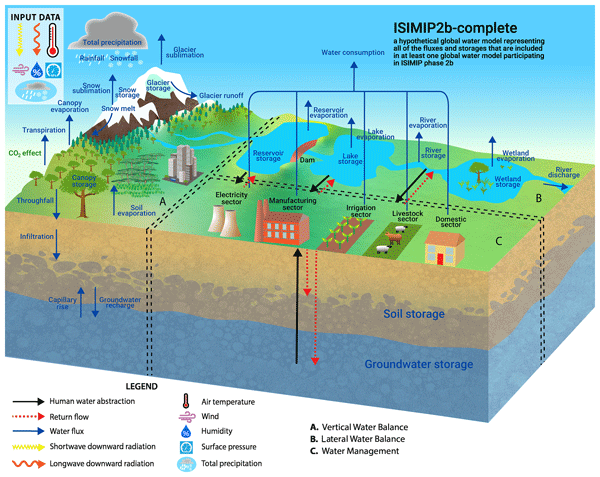
Global water models contribute to the evaluation of important natural and societal issues but are – as all models – simplified representation of reality. So, there are many ways to calculate the water fluxes and storages. This paper presents a visualization of 16 global water models using a standardized visualization and the pathway towards this common understanding. Next to academic education purposes, we envisage that these diagrams will help researchers, model developers, and data users.
Masooma Batool, Fanny J. Sarrazin, and Rohini Kumar
Earth Syst. Sci. Data, 17, 881–916, https://doi.org/10.5194/essd-17-881-2025, https://doi.org/10.5194/essd-17-881-2025, 2025
Short summary
Short summary
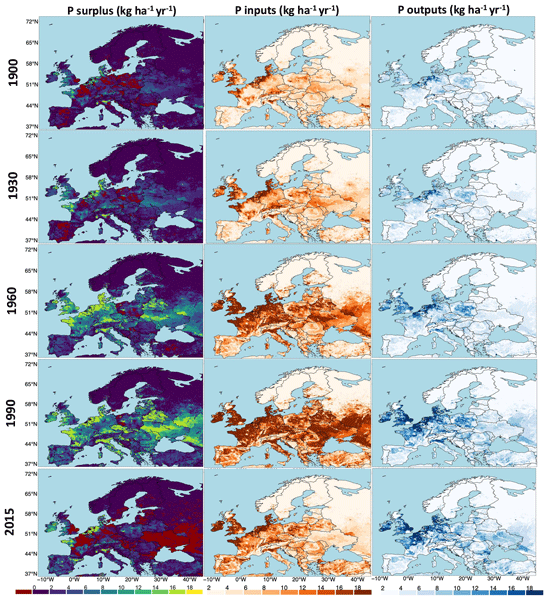
Our paper presents a reconstruction and analysis of the gridded P surplus in European landscapes from 1850 to 2019 at a 5 arcmin resolution. By utilizing 48 different estimates, we account for uncertainties in major components of the P surplus. Our findings highlight substantial historical changes, with the total P surplus in the EU 27 tripling over 170 years. Our dataset enables flexible aggregation at various spatial scales, providing critical insights for land and water management strategies.
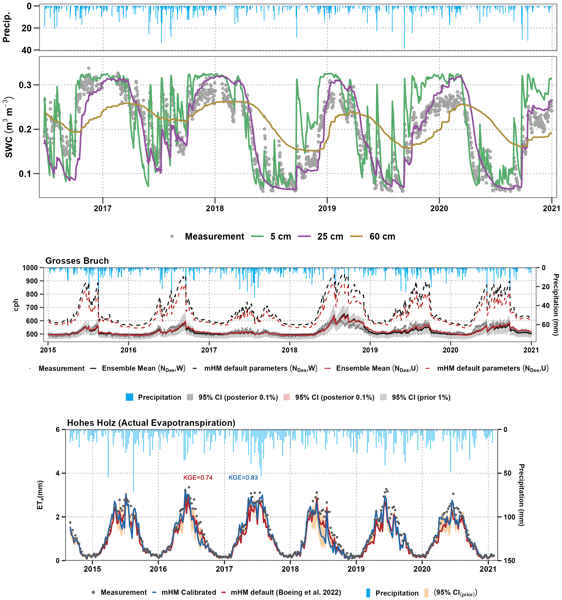
Eshrat Fatima, Rohini Kumar, Sabine Attinger, Maren Kaluza, Oldrich Rakovec, Corinna Rebmann, Rafael Rosolem, Sascha E. Oswald, Luis Samaniego, Steffen Zacharias, and Martin Schrön
Hydrol. Earth Syst. Sci., 28, 5419–5441, https://doi.org/10.5194/hess-28-5419-2024, https://doi.org/10.5194/hess-28-5419-2024, 2024
Short summary
Short summary
This study establishes a framework to incorporate cosmic-ray neutron measurements into the mesoscale Hydrological Model (mHM). We evaluate different approaches to estimate neutron counts within the mHM using the Desilets equation, with uniformly and non-uniformly weighted average soil moisture, and the physically based code COSMIC. The data improved not only soil moisture simulations but also the parameterisation of evapotranspiration in the model.
Ralf Loritz, Alexander Dolich, Eduardo Acuña Espinoza, Pia Ebeling, Björn Guse, Jonas Götte, Sibylle K. Hassler, Corina Hauffe, Ingo Heidbüchel, Jens Kiesel, Mirko Mälicke, Hannes Müller-Thomy, Michael Stölzle, and Larisa Tarasova
Earth Syst. Sci. Data, 16, 5625–5642, https://doi.org/10.5194/essd-16-5625-2024, https://doi.org/10.5194/essd-16-5625-2024, 2024
Short summary
Short summary
The CAMELS-DE dataset features data from 1582 streamflow gauges across Germany, with records spanning from 1951 to 2020. This comprehensive dataset, which includes time series of up to 70 years (median 46 years), enables advanced research on water flow and environmental trends and supports the development of hydrological models.
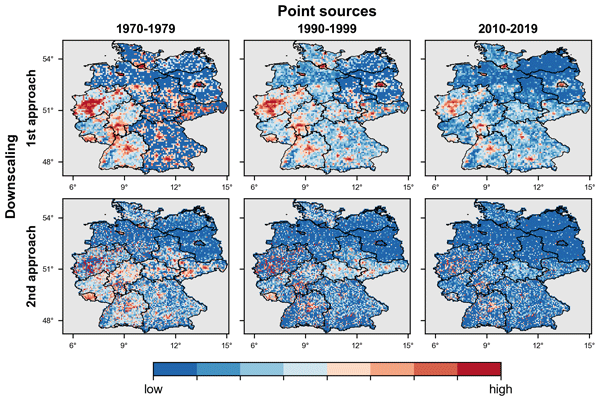
Fanny J. Sarrazin, Sabine Attinger, and Rohini Kumar
Earth Syst. Sci. Data, 16, 4673–4708, https://doi.org/10.5194/essd-16-4673-2024, https://doi.org/10.5194/essd-16-4673-2024, 2024
Short summary
Short summary
Nitrogen (N) and phosphorus (P) contamination of water bodies is a long-term issue due to the long history of N and P inputs to the environment and their persistence. Here, we introduce a long-term and high-resolution dataset of N and P inputs from wastewater (point sources) for Germany, combining data from different sources and conceptual understanding. We also account for uncertainties in modelling choices, thus facilitating robust long-term and large-scale water quality studies.
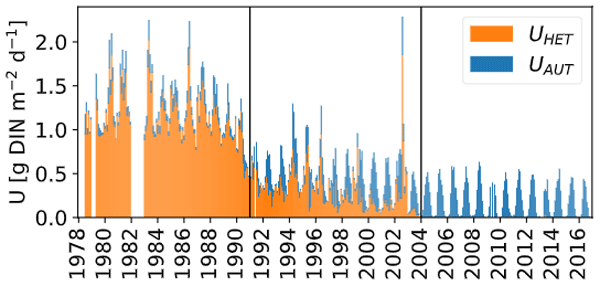
Alexander Wachholz, James W. Jawitz, and Dietrich Borchardt
Biogeosciences, 21, 3537–3550, https://doi.org/10.5194/bg-21-3537-2024, https://doi.org/10.5194/bg-21-3537-2024, 2024
Short summary
Short summary
Human activities are rivers' main source of nitrogen, causing eutrophication and other hazards. However, rivers can serve as a natural defense mechanism against this by retaining nitrogen. We show that the Elbe River retains more nitrogen during times of high pollution. With improvements in water quality, less nitrogen is retained. We explain this with changed algal and bacterial activities, which correspond to pollution and have many implications for the river and adjacent ecosystems.
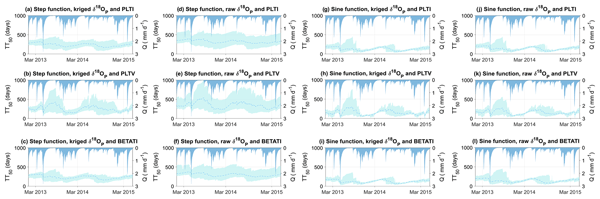
Arianna Borriero, Rohini Kumar, Tam V. Nguyen, Jan H. Fleckenstein, and Stefanie R. Lutz
Hydrol. Earth Syst. Sci., 27, 2989–3004, https://doi.org/10.5194/hess-27-2989-2023, https://doi.org/10.5194/hess-27-2989-2023, 2023
Short summary
Short summary
We analyzed the uncertainty of the water transit time distribution (TTD) arising from model input (interpolated tracer data) and structure (StorAge Selection, SAS, functions). We found that uncertainty was mainly associated with temporal interpolation, choice of SAS function, nonspatial interpolation, and low-flow conditions. It is important to characterize the specific uncertainty sources and their combined effects on TTD, as this has relevant implications for both water quantity and quality.
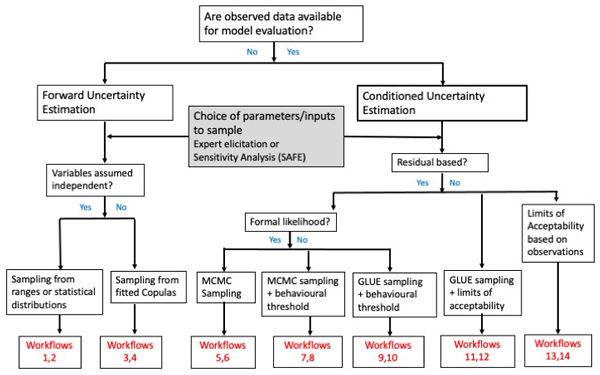
Trevor Page, Paul Smith, Keith Beven, Francesca Pianosi, Fanny Sarrazin, Susana Almeida, Liz Holcombe, Jim Freer, Nick Chappell, and Thorsten Wagener
Hydrol. Earth Syst. Sci., 27, 2523–2534, https://doi.org/10.5194/hess-27-2523-2023, https://doi.org/10.5194/hess-27-2523-2023, 2023
Short summary
Short summary
This publication provides an introduction to the CREDIBLE Uncertainty Estimation (CURE) toolbox. CURE offers workflows for a variety of uncertainty estimation methods. One of its most important features is the requirement that all of the assumptions on which a workflow analysis depends be defined. This facilitates communication with potential users of an analysis. An audit trail log is produced automatically from a workflow for future reference.
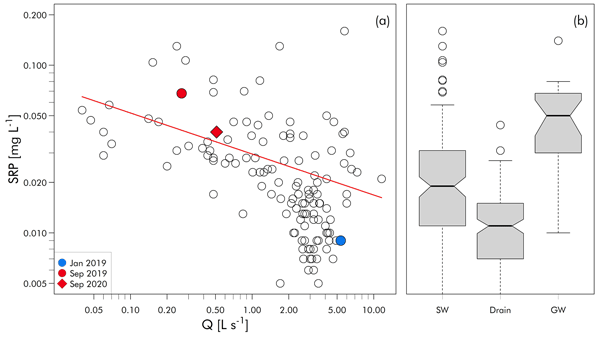
Michael Rode, Jörg Tittel, Frido Reinstorf, Michael Schubert, Kay Knöller, Benjamin Gilfedder, Florian Merensky-Pöhlein, and Andreas Musolff
Hydrol. Earth Syst. Sci., 27, 1261–1277, https://doi.org/10.5194/hess-27-1261-2023, https://doi.org/10.5194/hess-27-1261-2023, 2023
Short summary
Short summary
Agricultural catchments show elevated phosphorus (P) concentrations during summer low flow. In an agricultural stream, we found that phosphorus in groundwater was a major source of stream water phosphorus during low flow, and stream sediments derived from farmland are unlikely to have increased stream phosphorus concentrations during low water. We found no evidence that riparian wetlands contributed to soluble reactive (SR) P loads. Agricultural phosphorus was largely buffered in the soil zone.
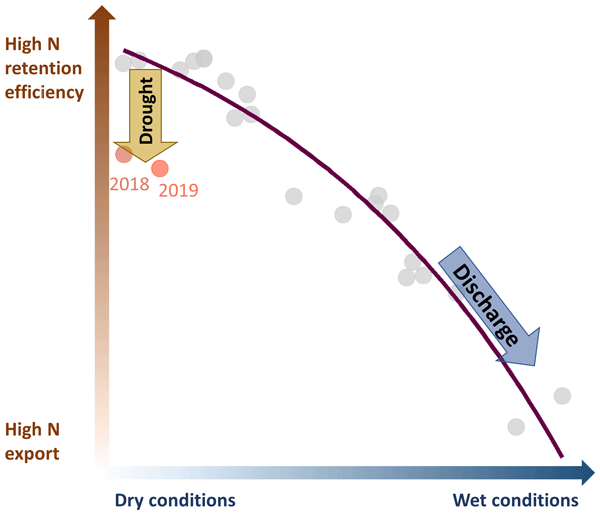
Carolin Winter, Tam V. Nguyen, Andreas Musolff, Stefanie R. Lutz, Michael Rode, Rohini Kumar, and Jan H. Fleckenstein
Hydrol. Earth Syst. Sci., 27, 303–318, https://doi.org/10.5194/hess-27-303-2023, https://doi.org/10.5194/hess-27-303-2023, 2023
Short summary
Short summary
The increasing frequency of severe and prolonged droughts threatens our freshwater resources. While we understand drought impacts on water quantity, its effects on water quality remain largely unknown. Here, we studied the impact of the unprecedented 2018–2019 drought in Central Europe on nitrate export in a heterogeneous mesoscale catchment in Germany. We show that severe drought can reduce a catchment's capacity to retain nitrogen, intensifying the internal pollution and export of nitrate.
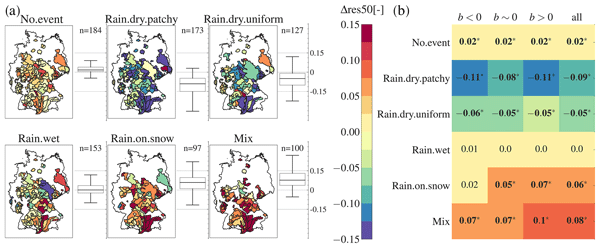
Felipe A. Saavedra, Andreas Musolff, Jana von Freyberg, Ralf Merz, Stefano Basso, and Larisa Tarasova
Hydrol. Earth Syst. Sci., 26, 6227–6245, https://doi.org/10.5194/hess-26-6227-2022, https://doi.org/10.5194/hess-26-6227-2022, 2022
Short summary
Short summary
Nitrate contamination of rivers from agricultural sources is a challenge for water quality management. During runoff events, different transport paths within the catchment might be activated, generating a variety of responses in nitrate concentration in stream water. Using nitrate samples from 184 German catchments and a runoff event classification, we show that hydrologic connectivity during runoff events is a key control of nitrate transport from catchments to streams in our study domain.
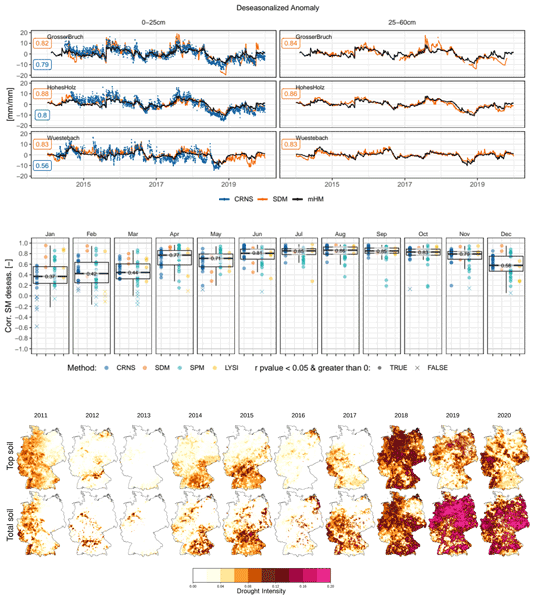
Friedrich Boeing, Oldrich Rakovec, Rohini Kumar, Luis Samaniego, Martin Schrön, Anke Hildebrandt, Corinna Rebmann, Stephan Thober, Sebastian Müller, Steffen Zacharias, Heye Bogena, Katrin Schneider, Ralf Kiese, Sabine Attinger, and Andreas Marx
Hydrol. Earth Syst. Sci., 26, 5137–5161, https://doi.org/10.5194/hess-26-5137-2022, https://doi.org/10.5194/hess-26-5137-2022, 2022
Short summary
Short summary
In this paper, we deliver an evaluation of the second generation operational German drought monitor (https://www.ufz.de/duerremonitor) with a state-of-the-art compilation of observed soil moisture data from 40 locations and four different measurement methods in Germany. We show that the expressed stakeholder needs for higher resolution drought information at the one-kilometer scale can be met and that the agreement of simulated and observed soil moisture dynamics can be moderately improved.
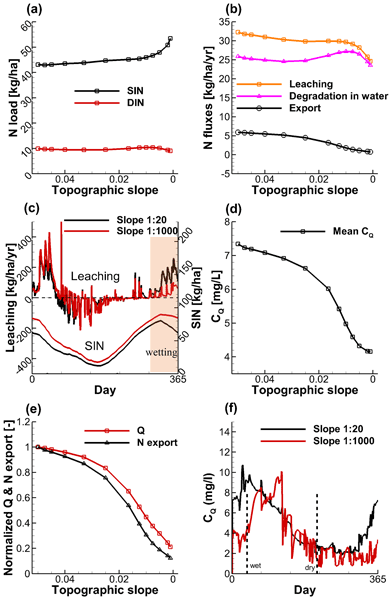
Jie Yang, Qiaoyu Wang, Ingo Heidbüchel, Chunhui Lu, Yueqing Xie, Andreas Musolff, and Jan H. Fleckenstein
Hydrol. Earth Syst. Sci., 26, 5051–5068, https://doi.org/10.5194/hess-26-5051-2022, https://doi.org/10.5194/hess-26-5051-2022, 2022
Short summary
Short summary
We assessed the effect of catchment topographic slopes on the nitrate export dynamics in terms of the nitrogen mass fluxes and concentration level using a coupled surface–subsurface model. We found that flatter landscapes tend to retain more nitrogen mass in the soil and export less nitrogen mass to the stream, explained by the reduced leaching and increased potential of degradation in flat landscapes. We emphasized that stream water quality is potentially less vulnerable in flatter landscapes.
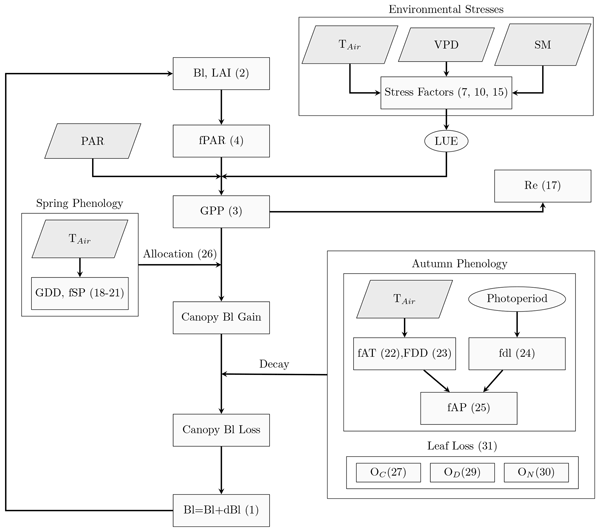
Bahar Bahrami, Anke Hildebrandt, Stephan Thober, Corinna Rebmann, Rico Fischer, Luis Samaniego, Oldrich Rakovec, and Rohini Kumar
Geosci. Model Dev., 15, 6957–6984, https://doi.org/10.5194/gmd-15-6957-2022, https://doi.org/10.5194/gmd-15-6957-2022, 2022
Short summary
Short summary
Leaf area index (LAI) and gross primary productivity (GPP) are crucial components to carbon cycle, and are closely linked to water cycle in many ways. We develop a Parsimonious Canopy Model (PCM) to simulate GPP and LAI at stand scale, and show its applicability over a diverse range of deciduous broad-leaved forest biomes. With its modular structure, the PCM is able to adapt with existing data requirements, and run in either a stand-alone mode or as an interface linked to hydrologic models.
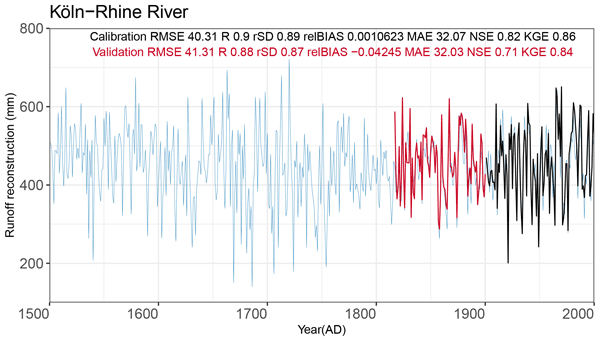
Sadaf Nasreen, Markéta Součková, Mijael Rodrigo Vargas Godoy, Ujjwal Singh, Yannis Markonis, Rohini Kumar, Oldrich Rakovec, and Martin Hanel
Earth Syst. Sci. Data, 14, 4035–4056, https://doi.org/10.5194/essd-14-4035-2022, https://doi.org/10.5194/essd-14-4035-2022, 2022
Short summary
Short summary
This article presents a 500-year reconstructed annual runoff dataset for several European catchments. Several data-driven and hydrological models were used to derive the runoff series using reconstructed precipitation and temperature and a set of proxy data. The simulated runoff was validated using independent observed runoff data and documentary evidence. The validation revealed a good fit between the observed and reconstructed series for 14 catchments, which are available for further analysis.
Pia Ebeling, Rohini Kumar, Stefanie R. Lutz, Tam Nguyen, Fanny Sarrazin, Michael Weber, Olaf Büttner, Sabine Attinger, and Andreas Musolff
Earth Syst. Sci. Data, 14, 3715–3741, https://doi.org/10.5194/essd-14-3715-2022, https://doi.org/10.5194/essd-14-3715-2022, 2022
Short summary
Short summary
Environmental data are critical for understanding and managing ecosystems, including the mitigation of water quality degradation. To increase data availability, we present the first large-sample water quality data set (QUADICA) of riverine macronutrient concentrations combined with water quantity, meteorological, and nutrient forcing data as well as catchment attributes. QUADICA covers 1386 German catchments to facilitate large-sample data-driven and modeling water quality assessments.
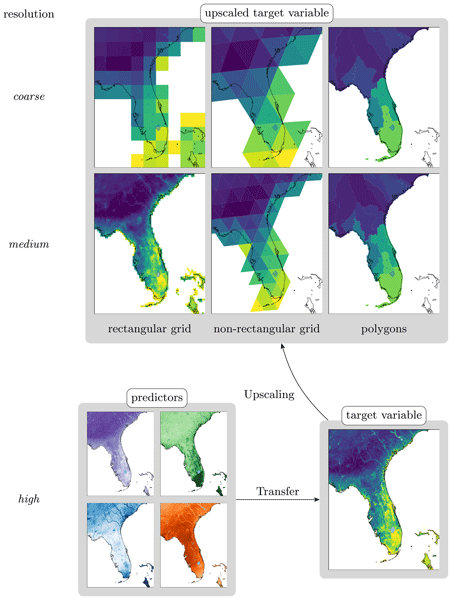
Robert Schweppe, Stephan Thober, Sebastian Müller, Matthias Kelbling, Rohini Kumar, Sabine Attinger, and Luis Samaniego
Geosci. Model Dev., 15, 859–882, https://doi.org/10.5194/gmd-15-859-2022, https://doi.org/10.5194/gmd-15-859-2022, 2022
Short summary
Short summary
The recently released multiscale parameter regionalization (MPR) tool enables
environmental modelers to efficiently use extensive datasets for model setups.
It flexibly ingests the datasets using user-defined data–parameter relationships
and rescales parameter fields to given model resolutions. Modern
land surface models especially benefit from MPR through increased transparency and
flexibility in modeling decisions. Thus, MPR empowers more sound and robust
simulations of the Earth system.
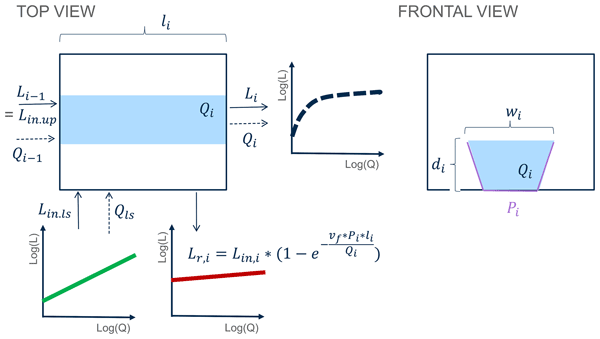
Joni Dehaspe, Fanny Sarrazin, Rohini Kumar, Jan H. Fleckenstein, and Andreas Musolff
Hydrol. Earth Syst. Sci., 25, 6437–6463, https://doi.org/10.5194/hess-25-6437-2021, https://doi.org/10.5194/hess-25-6437-2021, 2021
Short summary
Short summary
Increased nitrate concentrations in surface waters can compromise river ecosystem health. As riverine nitrate uptake is hard to measure, we explore how low-frequency nitrate concentration and discharge observations (that are widely available) can help to identify (in)efficient uptake in river networks. We find that channel geometry and water velocity rather than the biological uptake capacity dominate the nitrate-discharge pattern at the outlet. The former can be used to predict uptake.
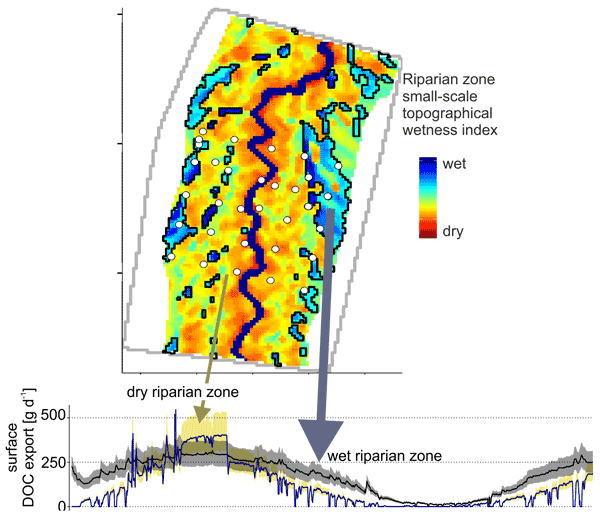
Benedikt J. Werner, Oliver J. Lechtenfeld, Andreas Musolff, Gerrit H. de Rooij, Jie Yang, Ralf Gründling, Ulrike Werban, and Jan H. Fleckenstein
Hydrol. Earth Syst. Sci., 25, 6067–6086, https://doi.org/10.5194/hess-25-6067-2021, https://doi.org/10.5194/hess-25-6067-2021, 2021
Short summary
Short summary
Export of dissolved organic carbon (DOC) from riparian zones (RZs) is an important yet poorly understood component of the catchment carbon budget. This study chemically and spatially classifies DOC source zones within a RZ of a small catchment to assess DOC export patterns. Results highlight that DOC export from only a small fraction of the RZ with distinct DOC composition dominates overall DOC export. The application of a spatial, topographic proxy can be used to improve DOC export models.
Cited articles
Addor, N., Newman, A. J., Mizukami, N., and Clark, M. P.: The CAMELS data set: catchment attributes and meteorology for large-sample studies, Hydrol. Earth Syst. Sci., 21, 5293–5313, https://doi.org/10.5194/hess-21-5293-2017, 2017.
Alvarez-Garreton, C., Mendoza, P. A., Boisier, J. P., Addor, N., Galleguillos, M., Zambrano-Bigiarini, M., Lara, A., Puelma, C., Cortes, G., Garreaud, R., McPhee, J., and Ayala, A.: The CAMELS-CL dataset: catchment attributes and meteorology for large sample studies – Chile dataset, Hydrol. Earth Syst. Sci., 22, 5817–5846, https://doi.org/10.5194/hess-22-5817-2018, 2018.
Bach, M., Breuer, L., Frede, H. G., Huisman, J. A., Otte, A., and Waldhardt, R.: Accuracy and congruency of three different digital land-use maps, Landscape Urban Plan., 78, 289–299, https://doi.org/10.1016/j.landurbplan.2005.09.004, 2006.
Bach, M. and Frede, H.-G.: Agricultural nitrogen, phosphorus and potassium balances in Germany – Methodology and trends 1970 to 1995, Z. Pflanz. Bodenkunde, 161, 385–393, https://doi.org/10.1002/jpln.1998.3581610406, 1998.
Ballabio, C., Lugato, E., Fernández-Ugalde, O., Orgiazzi, A., Jones, A., Borrelli, P., Montanarella, L., and Panagos, P.: Mapping LUCAS topsoil chemical properties at European scale using Gaussian process regression, Geoderma, 355, 113912, https://doi.org/10.1016/j.geoderma.2019.113912, 2019.
Bartnicki, J. and Benedictow, A.: Atmospheric Deposition of Nitrogen to OSPAR Convention waters in the period 1995–2014, EMEP/MSC-W Technical Report, 1/2007, Meteorological Synthesizing Centre-West (MSC-W), Norwegian Meteorological Institute, Oslo, https://emep.int/publ/reports/2017/MSCW_technical_1_2017.pdf (last access: 11 August 2022), 2017.
Bartnicki, J. and Fagerli, H.: Atmospheric Nitrogen in the OSPAR Convention Area in the Period 1990–2004. Summary Report for the OSPAR Convention, EMEP/MSC-W Technical Report, 4/2006, Meteorological Synthesizing Centre-West (MSC-W) of EMEP, Oslo, https://www.ospar.org/documents?v=7064 (last access: 12 August 2022), 2006.
Batool, M., Sarrazin, F. J., Attinger, S., Basu, N. B., Van Meter, K., and Kumar, R.: Long-term annual soil nitrogen surplus across Europe (1850–2019), Scientific Data, 9, 612, https://doi.org/10.1038/s41597-022-01693-9, 2022.
Batool, M., Sarrazin, F. J., and Kumar, R.: Century-long reconstruction of gridded phosphorus surplus across Europe (1850–2019), Earth Syst. Sci. Data, 17, 881–916, https://doi.org/10.5194/essd-17-881-2025, 2025.
Behrendt, H., Huber, P., Opitz, D., Schmoll, O., Scholz, G., and Uebe, R.: Nutrient emissions into river basins of Germany, UBA-Texte, 75/99, https://www.umweltbundesamt.de/en/publikationen/naehrstoffbilanzierung-flussgebiete-deutschlands (last access: 8 August 2022), 1999.
Behrendt, H., Bach, M., Kunkel, R., Opitz, D., Pagenkopf, W.-G., Scholz, G., and Wendland, F.: Nutrient Emissions into River Basins of Germany on the Basis of a Harmonized Procedure UBA-Texte, 82/03, https://www.umweltbundesamt.de/en/publikationen/nutrient-emissions-into-river-basins-of-germany-on (last access: 9 August 2022), 2003.
Beven, K. J. and Kirkby, M. J.: A physically based, variable contributing area model of basin hydrology/Un modèle à base physique de zone d’appel variable de l’hydrologie du bassin versant, Hydrol. Sci. B., 24, 43–69, https://doi.org/10.1080/02626667909491834, 1979.
BGR: Bodenübersichtskarte der Bundesrepublik Deutschland 1:250.000 (BUEK250). Soil map of Germany 1:250,000, Federal Institute for Geosciences and Natural Resources (BGR) [data set], https://produktcenter.bgr.de/terraCatalog/Start.do (last access: 9 August 2022), 2018.
BGR and UNESCO (Eds.): International Hydrogeological Map of Europe 1:1 500 000 (IHME1500), Digital map data v1.1 [data set], http://www.bgr.bund.de/ihme1500/ (last access: 9 August 2022), 2014.
BMU (Bundesministerium Für Umwelt) (Ed.): Hydrologischer Atlas von Deutschland, Datenquelle: Hydrologischer Atlas von Deutschland/BfG, 2000, Bonn, Berlin, https://geoportal.bafg.de/mapapps/resources/apps/HAD/index.html (last access: 9 August 2022), 2000.
Center for International Earth Science Information Network – CIESIN – Columbia University: Gridded Population of the World, Version 4 (GPWv4): Population Density, Revision 10, NASA Socioeconomic Data and Applications Center (SEDAC) [data set], https://doi.org/10.7927/H4DZ068D, 2017.
Chagas, V. B. P., Chaffe, P. L. B., Addor, N., Fan, F. M., Fleischmann, A. S., Paiva, R. C. D., and Siqueira, V. A.: CAMELS-BR: hydrometeorological time series and landscape attributes for 897 catchments in Brazil, Earth Syst. Sci. Data, 12, 2075–2096, https://doi.org/10.5194/essd-12-2075-2020, 2020.
Cleveland, C. C., Townsend, A. R., Schimel, D. S., Fisher, H., Howarth, R. W., Hedin, L. O., Perakis, S. S., Latty, E. F., Von Fischer, J. C., Elseroad, A., and Wasson, M. F.: Global patterns of terrestrial biological nitrogen (N2) fixation in natural ecosystems, Global Biogeochem. Cy., 13, 623–645, https://doi.org/10.1029/1999GB900014, 1999.
Cornes, R. C., van der Schrier, G., van den Besselaar, E. J. M., and Jones, P. D.: An Ensemble Version of the E-OBS Temperature and Precipitation Data Sets, J. Geophys. Res.-Atmos., 123, 9391–9409, https://doi.org/10.1029/2017jd028200, 2018.
Coxon, G., Addor, N., Bloomfield, J. P., Freer, J., Fry, M., Hannaford, J., Howden, N. J. K., Lane, R., Lewis, M., Robinson, E. L., Wagener, T., and Woods, R.: CAMELS-GB: hydrometeorological time series and landscape attributes for 671 catchments in Great Britain, Earth Syst. Sci. Data, 12, 2459–2483, https://doi.org/10.5194/essd-12-2459-2020, 2020.
De Jager, A. and Vogt, J.: Rivers and Catchments of Europe – Catchment Characterisation Model (CCM) (2.1), European Commission, Joint Research Centre (JRC) [data set], http://data.europa.eu/89h/fe1878e8-7541-4c66-8453-afdae7469221 (last access: 9 August 2022), 2007.
Dolich, A., Maharjan, A., Mälicke, M., Manoj, J. A., and Loritz, R.: Caravan-DE: Caravan extension Germany – German dataset for large-sample hydrology (v1.0.1), Zenodo [data set], https://doi.org/10.5281/zenodo.13983616, 2024.
Do Nascimento, T. V. M., Höge, M., Schönenberger, U., Pool, S., Siber, R., Kauzlaric, M., Staudinger, M., Horton, P., Floriancic, M. G., Storck, F. R., Rinta, P., Seibert, J., and Fenicia, F.: Swiss data quality: augmenting CAMELS-CH with isotopes, water quality, agricultural and atmospheric data, Scientific Data, 12, 1283, https://doi.org/10.1038/s41597-025-05625-1, 2025.
Dupas, R., Lintern, A., Musolff, A., Winter, C., Fovet, O., and Durand, P.: Water quality responses to hydrological droughts can be predicted from long-term concentration–discharge relationships, Environmental Research: Water, 1, https://doi.org/10.1088/3033-4942/adb906, 2025.
Ebeling, P., Kumar, R., Weber, M., Knoll, L., Fleckenstein, J. H., and Musolff, A.: Archetypes and Controls of Riverine Nutrient Export Across German Catchments, Water Resour. Res., 57, e2020WR028134, https://doi.org/10.1029/2020WR028134, 2021a.
Ebeling, P., Dupas, R., Abbott, B., Kumar, R., Ehrhardt, S., Fleckenstein, J. H., and Musolff, A.: Long-Term Nitrate Trajectories Vary by Season in Western European Catchments, Global Biogeochem. Cy., 35, e2021GB007050, https://doi.org/10.1029/2021GB007050, 2021b.
Ebeling, P., Kumar, R., Lutz, S. R., Nguyen, T., Sarrazin, F., Weber, M., Büttner, O., Attinger, S., and Musolff, A.: QUADICA: water QUAlity, DIscharge and Catchment Attributes for large-sample studies in Germany, Earth Syst. Sci. Data, 14, 3715–3741, https://doi.org/10.5194/essd-14-3715-2022, 2022.
Ebeling, P., Kumar, R., Musolff, A., Nguyen, T., Hubig, A., Haug, S., Scharfenberger, U., Batool, M., Wachholz, A., and Sarrazin, F.: QUADICA v2 – water quality, discharge and catchment attributes for large-sample studies in Germany, HydroShare [data set], https://doi.org/10.4211/hs.c2866cd416b94ca386deb5758834311f, 2025.
Ebeling, P., Van Nguyen, T., Kumar, R., Musolff, A., Schulz, C., Lange, R., and Bumberger, J.: Water Quality Monitor, https://web.app.ufz.de/gdi/wq-monitor/en, last access: 16 January 2026.
EC: Council Directive 91/676/EEC of 12 December 1991 concerning the protection of waters against pollution caused by nitrates from agricultural sources, Official Journal of the European Communities, http://data.europa.eu/eli/dir/1991/676/oj (last access: 9 August 2022), 1991.
EEA: DEM over Europe from the GMES RDA project (EUDEM, resolution 25 m) – version 1, European Environment Agency [data set], https://www.eea.europa.eu/data-and-maps/data/eu-dem (last access: 9 August 2022), 2013.
EEA: CORINE Land Cover 2012 v18.5, European Environment Agency [data set], https://land.copernicus.eu/pan-european/corine-land-cover/clc-2012 (last access: 11 August 2022), 2016.
EEA: Waterbase – UWWTD: Urban Waste Water Treatment Directive – reported data (v5), European Environment Agency [data set], https://www.eea.europa.eu/data-and-maps/data/waterbase-uwwtd-urban-waste-water-treatment-directive-5 (last access: 9 August 2022), 2017.
EEA: CORINE Land Cover 2018 (raster 100 m), Europe, 6-yearly – version 2020_20u1, May 2020 European Environment Agency [data set], https://doi.org/10.2909/960998c1-1870-4e82-8051-6485205ebbac, 2019a.
EEA: EU-Hydro – River Network Database (v1), European Environment Agency (EEA) [data set], https://doi.org/10.2909/393359a7-7ebd-4a52-80ac-1a18d5f3db9c, 2019b.
EEA: EU-Hydro River Network Database 2006–2012 (vector), Europe – version 1.3 (version 1.3), European Environment Agency (EEA), Copernicus Land Monitoring Service [data set], https://doi.org/10.2909/393359a7-7ebd-4a52-80ac-1a18d5f3db9c, 2020.
Ehrhardt, S., Ebeling, P., Dupas, R., Kumar, R., Fleckenstein, J. H., and Musolff, A.: Nitrate Transport and Retention in Western European Catchments Are Shaped by Hydroclimate and Subsurface Properties, Water Resour. Res., 57, e2020WR029469, https://doi.org/10.1029/2020WR029469, 2021.
FAO/IIASA/ISRIC/ISSCAS/JRC: Harmonized World Soil Database (version 1.2), FAO, Rome, Italy and IIASA, Laxenburg, Austria [data set], https://webarchive.iiasa.ac.at/Research/LUC/External-World-soil-database/HTML/ (last access: 11 August 2022), 2012.
Fernandez, N., Cohen, M. J., and Jawitz, J. W.: ChemLotUS: A Benchmark Data Set of Lotic Chemistry Across US River Networks, Water Resour. Res., 61, e2024WR039355, https://doi.org/10.1029/2024WR039355, 2025.
Fowler, K. J. A., Acharya, S. C., Addor, N., Chou, C., and Peel, M. C.: CAMELS-AUS: hydrometeorological time series and landscape attributes for 222 catchments in Australia, Earth Syst. Sci. Data, 13, 3847–3867, https://doi.org/10.5194/essd-13-3847-2021, 2021.
Gupta, H. V., Perrin, C., Blöschl, G., Montanari, A., Kumar, R., Clark, M., and Andréassian, V.: Large-sample hydrology: a need to balance depth with breadth, Hydrol. Earth Syst. Sci., 18, 463–477, https://doi.org/10.5194/hess-18-463-2014, 2014.
Häußermann, U., Klement, L., Breuer, L., Ullrich, A., Wechsung, G., and Bach, M.: Nitrogen soil surface budgets for districts in Germany 1995 to 2017, Environmental Sciences Europe, 32, 109, https://doi.org/10.1186/s12302-020-00382-x, 2020.
Heudorfer, B., Gupta, H. V., and Loritz, R.: Are Deep Learning Models in Hydrology Entity Aware?, Geophysical Research Letters, 52, https://doi.org/10.1029/2024gl113036, 2025.
Hirsch, R. M. and De Cicco, L. A.: User Guide to Exploration and Graphics for RivEr Trends (EGRET) and dataRetrieval: R Packages for Hydrologic Data, U.S. Geological Survey Techniques and Methods book 4, chap. A10, 93, https://doi.org/10.3133/tm4A10, 2015.
Hirsch, R. M., Moyer, D. L., and Archfield, S. A.: Weighted Regressions on Time, Discharge, and Season (WRTDS), with an Application to Chesapeake Bay River Inputs, JAWRA Journal of the American Water Resources Association, 46, 857–880, https://doi.org/10.1111/j.1752-1688.2010.00482.x, 2010.
Knoll, L., Breuer, L., and Bach, M.: Nation-wide estimation of groundwater redox conditions and nitrate concentrations through machine learning, Environ. Res. Lett., 15, 064004, https://doi.org/10.1088/1748-9326/ab7d5c, 2020.
Kratzert, F., Klotz, D., Brenner, C., Schulz, K., and Herrnegger, M.: Rainfall–runoff modelling using Long Short-Term Memory (LSTM) networks, Hydrol. Earth Syst. Sci., 22, 6005–6022, https://doi.org/10.5194/hess-22-6005-2018, 2018.
Kratzert, F., Nearing, G., Addor, N., Erickson, T., Gauch, M., Gilon, O., Gudmundsson, L., Hassidim, A., Klotz, D., Nevo, S., Shalev, G., and Matias, Y.: Caravan – A global community dataset for large-sample hydrology, Scientific Data, 10, 61, https://doi.org/10.1038/s41597-023-01975-w, 2023.
Livneh, B., Kumar, R., and Samaniego, L.: Influence of soil textural properties on hydrologic fluxes in the Mississippi river basin, Hydrol. Process., 29, 4638–4655, https://doi.org/10.1002/hyp.10601, 2015.
Loritz, R., Dolich, A., Acuña Espinoza, E., Ebeling, P., Guse, B., Götte, J., Hassler, S. K., Hauffe, C., Heidbüchel, I., Kiesel, J., Mälicke, M., Müller-Thomy, H., Stölzle, M., and Tarasova, L.: CAMELS-DE: hydro-meteorological time series and attributes for 1582 catchments in Germany, Earth Syst. Sci. Data, 16, 5625–5642, https://doi.org/10.5194/essd-16-5625-2024, 2024.
Minasny, B., McBratney, A. B., Brough, D. M., and Jacquier, D.: Models relating soil pH measurements in water and calcium chloride that incorporate electrolyte concentration, European Journal of Soil Science, 62, 728–732, https://doi.org/10.1111/j.1365-2389.2011.01386.x, 2011.
Minaudo, C., Abonyi, A., Alcaraz, C., Diamond, J., Howden, N. J. K., Rode, M., Romero, E., Thieu, V., Worrall, F., Zhang, Q., and Benito, X.: OLIGOTREND, a global database of multi-decadal chlorophyll a and water quality time series for rivers, lakes, and estuaries, Earth Syst. Sci. Data, 17, 3411–3430, https://doi.org/10.5194/essd-17-3411-2025, 2025.
Musolff, A.: WQQDB – water quality and quantity data base Germany: metadata, HydroShare [data set], https://doi.org/10.4211/hs.a42addcbd59a466a9aa56472dfef8721, 2020.
Musolff, A., Fleckenstein, J. H., Opitz, M., Büttner, O., Kumar, R., and Tittel, J.: Spatio-temporal controls of dissolved organic carbon stream water concentrations, J. Hydrol., 566, 205–215, https://doi.org/10.1016/j.jhydrol.2018.09.011, 2018.
Musolff, A., Ebeling, P., Wachholz, A., Hubig, A., and Scharfenberger, U.: WQQDB2: water quality and quantity data base Germany version 2, Helmholtz-Zentrum für Umweltforschung [data set], https://www.ufz.de/record/dmp/archive/16457/ (last access: 16 January 2026), 2026.
Nguyen, T. V., Sarrazin, F. J., Ebeling, P., Musolff, A., Fleckenstein, J. H., and Kumar, R.: Toward Understanding of Long-Term Nitrogen Transport and Retention Dynamics Across German Catchments, Geophysical Research Letters, 49, e2022GL100278, https://doi.org/10.1029/2022GL100278, 2022.
Panagos, P., Köningner, J., Ballabio, C., Liakos, L., Muntwyler, A., Borrelli, P., and Lugato, E.: Improving the phosphorus budget of European agricultural soils, Science of The Total Environment, 853, 158706, https://doi.org/10.1016/j.scitotenv.2022.158706, 2022.
Pflugmacher, D., Rabe, A., Peters, M., and Hostert, P.: Pan-European land cover map of 2015 based on Landsat and LUCAS data, PANGAEA [data set], https://doi.org/10.1594/PANGAEA.896282, 2018.
Rakovec, O., Samaniego, L., Hari, V., Markonis, Y., Moravec, V., Thober, S., Hanel, M., and Kumar, R.: The 2018–2020 Multi-Year Drought Sets a New Benchmark in Europe, Earth's Future, 10, e2021EF002394, https://doi.org/10.1029/2021EF002394, 2022.
Saavedra, F. A., Musolff, A., von Freyberg, J., Merz, R., Basso, S., and Tarasova, L.: Disentangling scatter in long-term concentration–discharge relationships: the role of event types, Hydrol. Earth Syst. Sci., 26, 6227–6245, https://doi.org/10.5194/hess-26-6227-2022, 2022.
Saavedra, F., Musolff, A., Von Freyberg, J., Merz, R., Knöller, K., Müller, C., Brunner, M., and Tarasova, L.: Winter post-droughts amplify extreme nitrate concentrations in German rivers, Environmental Research Letters, 19, 024007, https://doi.org/10.1088/1748-9326/ad19ed, 2024.
Saha, G. K., Rahmani, F., Shen, C., Li, L., and Cibin, R.: A deep learning-based novel approach to generate continuous daily stream nitrate concentration for nitrate data-sparse watersheds, Sci. Total Environ., 878, 162930, https://doi.org/10.1016/j.scitotenv.2023.162930, 2023.
Samaniego, L., Kumar, R., and Attinger, S.: Multiscale parameter regionalization of a grid-based hydrologic model at the mesoscale, Water Resour. Res., 46, W05523, https://doi.org/10.1029/2008WR007327, 2010.
Sarrazin, F. J., Kumar, R., Basu, N. B., Musolff, A., Weber, M., Van Meter, K. J., and Attinger, S.: Characterizing Catchment-Scale Nitrogen Legacies and Constraining Their Uncertainties, Water Resour. Res., 58, e2021WR031587, https://doi.org/10.1029/2021WR031587, 2022.
Sarrazin, F. J., Attinger, S., and Kumar, R.: Gridded dataset of nitrogen and phosphorus point sources from wastewater in Germany (1950–2019), Earth Syst. Sci. Data, 16, 4673–4708, https://doi.org/10.5194/essd-16-4673-2024, 2024.
Shangguan, W., Hengl, T., Mendes de Jesus, J., Yuan, H., and Dai, Y.: Mapping the global depth to bedrock for land surface modeling, J. Adv. Model. Earth Sy., 9, 65–88, https://doi.org/10.1002/2016ms000686, 2017.
Sterle, G., Perdrial, J., Kincaid, D. W., Underwood, K. L., Rizzo, D. M., Haq, I. U., Li, L., Lee, B. S., Adler, T., Wen, H., Middleton, H., and Harpold, A. A.: CAMELS-Chem: augmenting CAMELS (Catchment Attributes and Meteorology for Large-sample Studies) with atmospheric and stream water chemistry data, Hydrol. Earth Syst. Sci., 28, 611–630, https://doi.org/10.5194/hess-28-611-2024, 2024.
Van Meter, K. J. and Basu, N. B.: Catchment legacies and time lags: a parsimonious watershed model to predict the effects of legacy storage on nitrogen export, PLoS One, 10, e0125971, https://doi.org/10.1371/journal.pone.0125971, 2015.
Van Meter, K. J., Basu, N. B., and Van Cappellen, P.: Two centuries of nitrogen dynamics: Legacy sources and sinks in the Mississippi and Susquehanna River Basins, Global Biogeochem. Cy., 31, 2–23, https://doi.org/10.1002/2016GB005498, 2017.
Vigiak, O., Grizzetti, B., Zanni, M., Aloe, A., Dorati, C., Bouraoui, F., and Pistocchi, A.: Domestic waste emissions to European freshwaters in the 2010s (v. 1.0), European Commission, Joint Research Centre (JRC) [data set], https://data.jrc.ec.europa.eu/dataset/0ae64ac2-64da-4c5e-8bab-ce928897c1fb (last access: 9 August 2022), 2019.
Vigiak, O., Grizzetti, B., Zanni, M., Aloe, A., Dorati, C., Bouraoui, F., and Pistocchi, A.: Domestic waste emissions to European waters in the 2010s, Sci. Data, 7, 33, https://doi.org/10.1038/s41597-020-0367-0, 2020.
Virro, H., Amatulli, G., Kmoch, A., Shen, L., and Uuemaa, E.: GRQA: Global River Water Quality Archive, Earth Syst. Sci. Data, 13, 5483–5507, https://doi.org/10.5194/essd-13-5483-2021, 2021.
Wachholz, A., Dehaspe, J., Ebeling, P., Kumar, R., Musolff, A., Saavedra, F., Winter, C., Yang, S., and Graeber, D.: Stoichiometry on the edge – Humans induce strong imbalances of reactive
WMO: Manual on Low-flow Estimation and Prediction, Operational Hydrology Report (OHR), Volume No. 50, Series Volume No. 1029, World Meteorological Organization, ISBN 978-92-63-11029-9, https://library.wmo.int/doc_num.php?explnum_id=7699 (last access: 9 August 2022), 2008.
Winter, C., Nguyen, T. V., Musolff, A., Lutz, S. R., Rode, M., Kumar, R., and Fleckenstein, J. H.: Droughts can reduce the nitrogen retention capacity of catchments, Hydrol. Earth Syst. Sci., 27, 303–318, https://doi.org/10.5194/hess-27-303-2023, 2023.
Yan, K., Wang, J., Peng, R., Yang, K., Chen, X., Yin, G., Dong, J., Weiss, M., Pu, J., and Myneni, R. B.: HiQ-LAI: a high-quality reprocessed MODIS leaf area index dataset with better spatiotemporal consistency from 2000 to 2022, Earth Syst. Sci. Data, 16, 1601–1622, https://doi.org/10.5194/essd-16-1601-2024, 2024.
Zarei, E., Noori, R., Jun, C., Bateni, S. M., Kianmehr, P., and Zhu, S.: A Comprehensive Water Chemistry Dataset for Iranian Rivers, Scientific Data, 12, 1646, https://doi.org/10.1038/s41597-025-05932-7, 2025.
Zhi, W., Feng, D., Tsai, W.-P., Sterle, G., Harpold, A., Shen, C., and Li, L.: From Hydrometeorology to River Water Quality: Can a Deep Learning Model Predict Dissolved Oxygen at the Continental Scale?, Environmental Science and Technology, 55, 2357–2368, https://doi.org/10.1021/acs.est.0c06783, 2021.
Zhi, W., Ouyang, W., Shen, C., and Li, L.: Temperature outweighs light and flow as the predominant driver of dissolved oxygen in US rivers, Nature Water, 1, 249–260, https://doi.org/10.1038/s44221-023-00038-z, 2023.
Zink, M., Kumar, R., Cuntz, M., and Samaniego, L.: A high resolution dataset of water fluxes and states for Germany accounting for parametric uncertainty, Hydrol. Earth Syst. Sci., 21, 1769–1790, https://doi.org/10.5194/hess-21-1769-2017, 2017.
Short summary
The updated river water quality data set for Germany offers longer records, new variables such as water temperature and oxygen, and time series of pollution sources, and it adds more stations with both water quality and flow data. These improvements provide clearer insights into how stream water quality changes over time and how human activities affect aquatic ecosystems.
The updated river water quality data set for Germany offers longer records, new variables such...


Altmetrics
Final-revised paper
Preprint