Articles | Volume 18, issue 9
https://doi.org/10.5194/essd-18-6613-2026
© Author(s) 2026. This work is distributed under
the Creative Commons Attribution 4.0 License.
the Creative Commons Attribution 4.0 License.
https://doi.org/10.5194/essd-18-6613-2026
© Author(s) 2026. This work is distributed under
the Creative Commons Attribution 4.0 License.
the Creative Commons Attribution 4.0 License.
Data description article
| 
09 Sep 2026
Data description article |
| 09 Sep 2026
| 09 Sep 2026
EGO: a global 0.05° hourly GPP dataset for monitoring diurnal photosynthesis dynamics
School of Geography and Planning, Sun Yat-sen University, Guangzhou 510006, China

School of Geography and Planning, Sun Yat-sen University, Guangzhou 510006, China
Dalei Hao
Atmospheric, Climate, & Earth Sciences Division, Pacific Northwest National Laboratory, 902 Battelle Blvd, Richland, WA 99354, USA
Jingfeng Xiao
Earth Systems Research Center, Institute for the Study of Earth, Oceans, and Space, University of New Hampshire, Durham, NH 03824, USA
Yanan Zhou
School of Geography and Planning, Sun Yat-sen University, Guangzhou 510006, China
Cenliang Zhao
School of Geography and Planning, Sun Yat-sen University, Guangzhou 510006, China
Zikang Diao
School of Geography and Planning, Sun Yat-sen University, Guangzhou 510006, China
Fuqiang Qu
School of Geography and Planning, Sun Yat-sen University, Guangzhou 510006, China
Shangrong Lin
School of Geography and Planning, Sun Yat-sen University, Guangzhou 510006, China
Xiangzhuo Liu
INRAE, Bordeaux Sciences Agro, UMR 1391 ISPA, Villenave-d'Ornon, France
Zhaoying Zhang
International Institute for Earth System Sciences, Jiangsu Center for Collaborative Innovation in Geographical Information Resource Development and Application, Nanjing University, Nanjing, Jiangsu 210023, China
Xinjie Liu
Key Laboratory of Digital Earth Science, Aerospace Information Research Institute, Chinese Academy of Sciences, Beijing 100094, China
Helin Zhang
Research Institute of Agriculture and Life Sciences, Seoul National University, Seoul 08826, Republic of Korea
Related authors
No articles found.
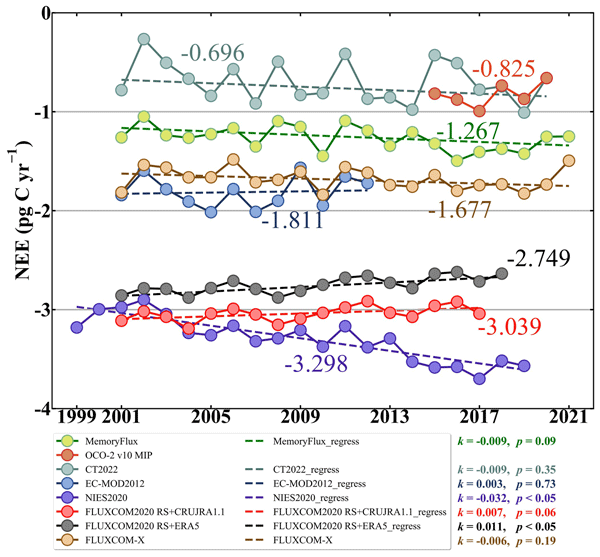
Chengcheng Huang, Wei He, Brendan Byrne, Ngoc Tu Nguyen, Jingfeng Xiao, Hua Yang, Philippe Ciais, Songhan Wang, Xing Li, Han Ma, Peipei Xu, Mengyao Zhao, Hui Chen, and Weimin Ju
Earth Syst. Sci. Data, 18, 7367–7390, https://doi.org/10.5194/essd-18-7367-2026, https://doi.org/10.5194/essd-18-7367-2026, 2026
Short summary
Short summary
We created MemoryFlux, a new dataset that showed how ecosystems across North America absorbed and released carbon from 2001 to 2021. Using a deep-learning approach trained on historical climate and environmental conditions, we improved estimates of land carbon exchange and captured carbon anomalies associated with major droughts and floods. MemoryFlux provides a more reliable view of carbon cycling and improves our understanding of how ecosystems respond to a changing climate.
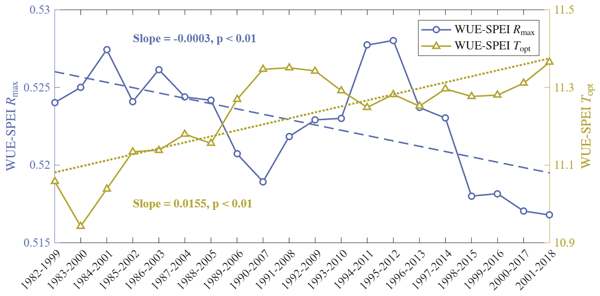
Zijun Wang, Rong Wu, Yangyang Liu, Zhaoying Zhang, Zhongming Wen, Zhenqian Wang, Stephen Sitch, and Wenping Yuan
Hydrol. Earth Syst. Sci., 30, 4985–5004, https://doi.org/10.5194/hess-30-4985-2026, https://doi.org/10.5194/hess-30-4985-2026, 2026
Short summary
Short summary
The coupling between water use efficiency (WUE) and drought remains unclear. This study first incorporates the optimal drought timescale at which WUE responds to drought. The results show that optimal drought timescale has gradually lengthened, indicating a weakening WUE-drought coupling, mainly driven by CO₂ fertilization, with surface soil moisture as the most important hydrothermal factor. This study provides new insights into assessing WUE responses to drought.
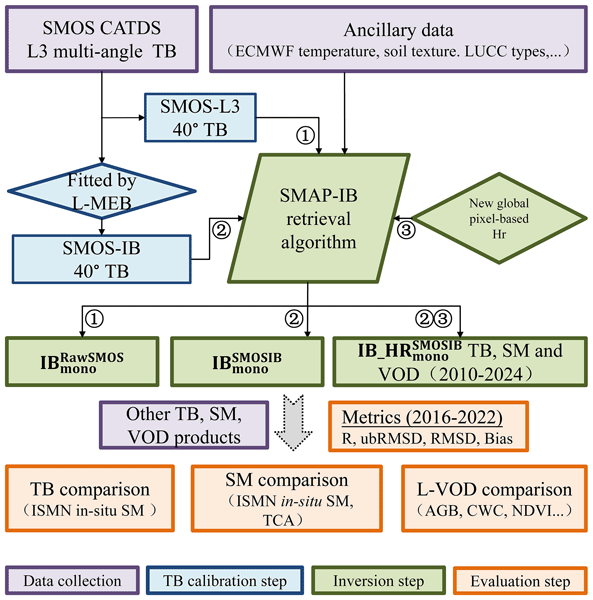
Zanpin Xing, Xiaojun Li, Frédéric Frappart, Gabrielle De Lannoy, Thomas Jagdhuber, Jian Peng, Lei Fan, Hongliang Ma, Lanka Karthikeyan, Xiangzhuo Liu, Mengjia Wang, Lin Zhao, Yongqin Liu, and Jean-Pierre Wigneron
Earth Syst. Sci. Data, 18, 4047–4073, https://doi.org/10.5194/essd-18-4047-2026, https://doi.org/10.5194/essd-18-4047-2026, 2026
Short summary
Short summary
Microwave satellite observations of Earth’s land surface are important for tracking global soil moisture and vegetation water content. We use data from the Soil Moisture and Ocean Salinity satellite to first reduce noise and contamination in microwave signals, then produce more reliable long-term records of these variables. Tests against ground stations and other satellites show that the new record performs better than existing products and supports drought, freeze-thaw, and carbon monitoring.
Yann Baehr, Pierre Vanderbecken, Bertrand Bonan, Catherine Robert, Mathieu Regimbeau, François Pimont, Kevyn Raynal, Xiangzhuo Liu, Remi Savazzi, Moncef Garouani, Josiane Mothe, Nemesio Rodriguez-Fernandez, Lionel Jarlan, and Jean-Christophe Calvet
EGUsphere, https://doi.org/10.5194/egusphere-2026-1247, https://doi.org/10.5194/egusphere-2026-1247, 2026
This preprint is open for discussion and under review for Natural Hazards and Earth System Sciences (NHESS).
Short summary
Short summary
This study produced vegetation water content maps to help manage the risk of forest fires in France. Artificial intelligence was used alongside land surface model outputs, satellite data and in situ observations to monitor vegetation stress in real time. The methodology tested has been shown to be robust and spatially consistent.
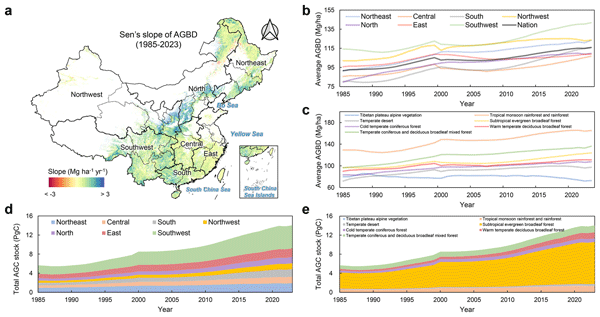
Yaotong Cai, Peng Zhu, Xing Li, Xiaoping Liu, Yuhe Chen, Qianhui Shen, Xiaocong Xu, Honghui Zhang, Sheng Nie, Cheng Wang, Jia Wang, Bingjie Li, Changjiang Wu, and Haoming Zhuang
Earth Syst. Sci. Data, 17, 6993–7018, https://doi.org/10.5194/essd-17-6993-2025, https://doi.org/10.5194/essd-17-6993-2025, 2025
Short summary
Short summary
China’s forests play a crucial role in storing carbon and mitigating climate change, yet long-term high-resolution data on their biomass have been limited. We developed a 30 m annual forest aboveground biomass dataset from 1985 to 2023 using satellite data and deep learning. Our results reveal significant biomass gains, regional variations, and the impact of forest policies. This dataset provides valuable insights for climate research, conservation planning, and sustainable forest management.
Liang Feng, Paul I. Palmer, Luke Smallman, Jingfeng Xiao, Paolo Cristofanelli, Ove Hermansen, John Lee, Casper Labuschagne, Simonetta Montaguti, Steffen M. Noe, Stephen M. Platt, Xinrong Ren, Martin Steinbacher, and Irène Xueref-Remy
Atmos. Chem. Phys., 25, 13053–13076, https://doi.org/10.5194/acp-25-13053-2025, https://doi.org/10.5194/acp-25-13053-2025, 2025
Short summary
Short summary
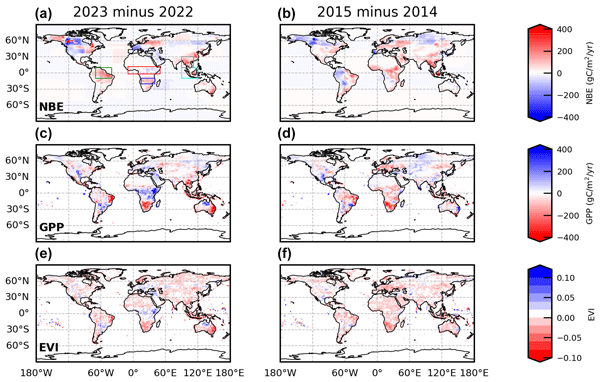
The year 2023 saw unexpectedly large global atmospheric CO2 growth. Satellite data reveal a role for increased tropical emissions. Larger emissions over eastern Brazil can be explained by warmer temperatures, which has led to exceptional drought, while hydrological changes play more of a role in emission increases elsewhere in the tropics. Broadly, we find that this situation continues into 2024.
Hu Zhang, Jing Li, Chenpeng Gu, Li Guan, Xiaohan Wang, Faisal Mumtaz, Yadong Dong, Jing Zhao, Qinhuo Liu, Shangrong Lin, and Wentao Yu
Earth Syst. Sci. Data Discuss., https://doi.org/10.5194/essd-2025-42, https://doi.org/10.5194/essd-2025-42, 2025
Manuscript not accepted for further review
Short summary
Short summary
The 10m-resolution MuSyQ Global LCC has high accuracy in the validation using the ground measurements and can describe more spatial details compared with the current low-resolution LCC product, suggesting its potential in crop and forestry monitoring. We developed an online application that allows users to independently select regions of interest, time ranges, and spatial-temporal resolutions to generate their customized LCC products.
Xufeng Wang, Tao Che, Jingfeng Xiao, Tonghong Wang, Junlei Tan, Yang Zhang, Zhiguo Ren, Liying Geng, Haibo Wang, Ziwei Xu, Shaomin Liu, and Xin Li
Earth Syst. Sci. Data, 17, 1329–1346, https://doi.org/10.5194/essd-17-1329-2025, https://doi.org/10.5194/essd-17-1329-2025, 2025
Short summary
Short summary
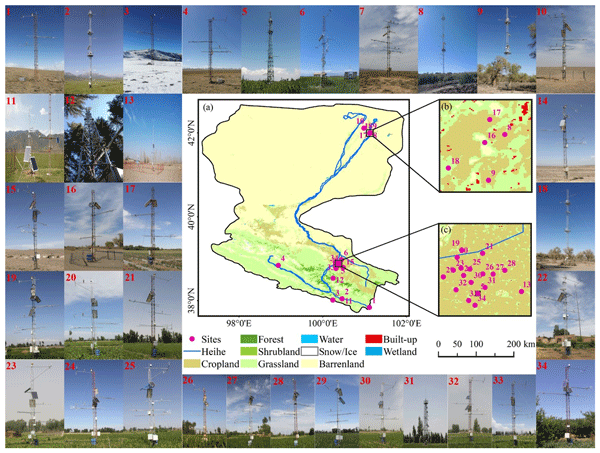
In this study, carbon flux and auxiliary meteorological data are post-processed to create an analysis-ready dataset for 34 sites across six ecosystems in the Heihe River basin. Overall, 18 sites have multi-year observations, while 16 were observed only during the 2012 growing season, totaling 1513 site months. This dataset can be used to explore carbon exchange, assess ecosystem responses to climate change, support upscaling studies, and evaluate carbon cycle models.
Huilin Huang, Yun Qian, Gautam Bisht, Jiali Wang, Tirthankar Chakraborty, Dalei Hao, Jianfeng Li, Travis Thurber, Balwinder Singh, Zhao Yang, Ye Liu, Pengfei Xue, William J. Sacks, Ethan Coon, and Robert Hetland
Geosci. Model Dev., 18, 1427–1443, https://doi.org/10.5194/gmd-18-1427-2025, https://doi.org/10.5194/gmd-18-1427-2025, 2025
Short summary
Short summary
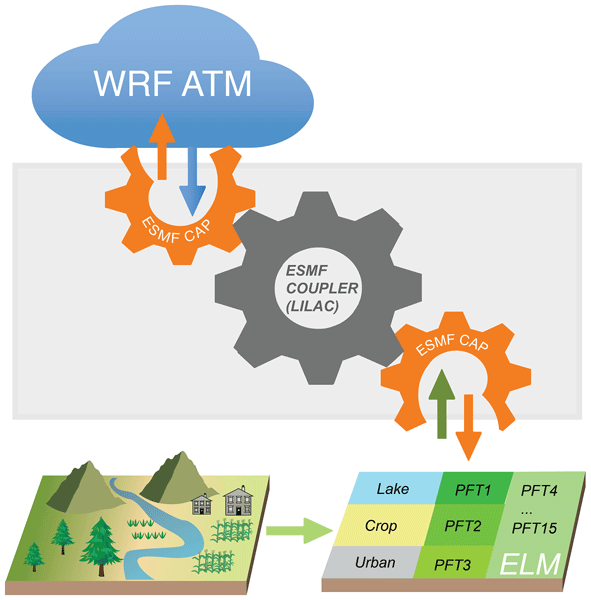
We integrate the E3SM Land Model (ELM) with the WRF model through the Lightweight Infrastructure for Land Atmosphere Coupling (LILAC) Earth System Modeling Framework (ESMF). This framework includes a top-level driver, LILAC, for variable communication between WRF and ELM and ESMF caps for ELM initialization, execution, and finalization. The LILAC–ESMF framework maintains the integrity of the ELM's source code structure and facilitates the transfer of future ELM model developments to WRF-ELM.
Yi Liu, Jingfeng Xiao, Xing Li, and Yue Li
Hydrol. Earth Syst. Sci., 29, 1241–1258, https://doi.org/10.5194/hess-29-1241-2025, https://doi.org/10.5194/hess-29-1241-2025, 2025
Short summary
Short summary
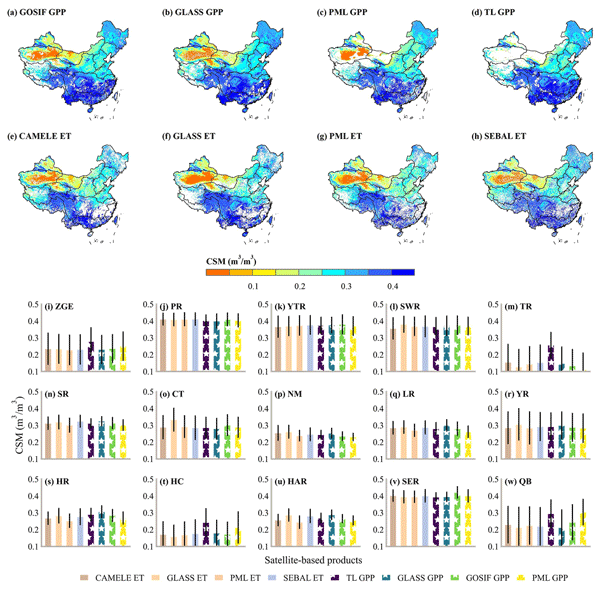
This work demonstrates that multi-source satellite-based water and carbon fluxes can capture critical soil moisture at a large spatial scale. In particular, grassland and clay with critical soil moisture higher than average soil moisture may be in a state of water limitation for long periods. Increased water demand could expose western grassland to more vulnerability.
Mana Gharun, Ankit Shekhar, Jingfeng Xiao, Xing Li, and Nina Buchmann
Biogeosciences, 21, 5481–5494, https://doi.org/10.5194/bg-21-5481-2024, https://doi.org/10.5194/bg-21-5481-2024, 2024
Short summary
Short summary
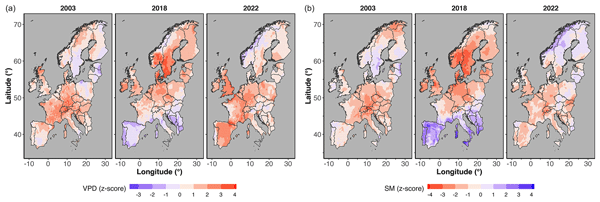
In 2022, Europe's forests faced unprecedented dry conditions. Our study aimed to understand how different forest types respond to extreme drought. Using meteorological data and satellite imagery, we compared 2022 with two previous extreme years, 2003 and 2018. Despite less severe drought in 2022, forests showed a 30 % greater decline in photosynthesis compared to 2018 and 60 % more than 2003. This suggests an alarming level of vulnerability of forests across Europe to more frequent droughts.
Lingcheng Li, Gautam Bisht, Dalei Hao, and L. Ruby Leung
Earth Syst. Sci. Data, 16, 2007–2032, https://doi.org/10.5194/essd-16-2007-2024, https://doi.org/10.5194/essd-16-2007-2024, 2024
Short summary
Short summary
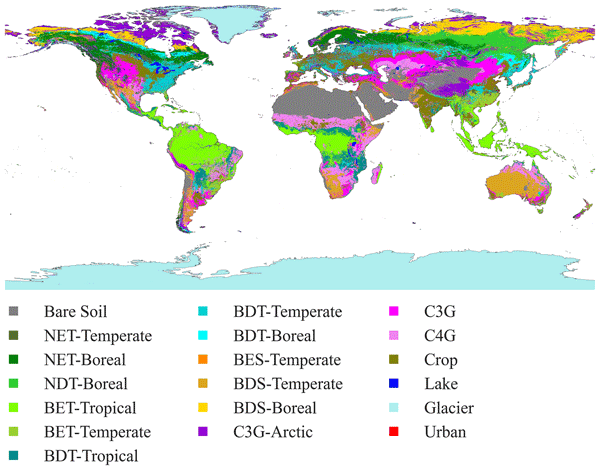
This study fills a gap to meet the emerging needs of kilometer-scale Earth system modeling by developing global 1 km land surface parameters for land use, vegetation, soil, and topography. Our demonstration simulations highlight the substantial impacts of these parameters on spatial variability and information loss in water and energy simulations. Using advanced explainable machine learning methods, we identified influential factors driving spatial variability and information loss.
Han Qiu, Gautam Bisht, Lingcheng Li, Dalei Hao, and Donghui Xu
Geosci. Model Dev., 17, 143–167, https://doi.org/10.5194/gmd-17-143-2024, https://doi.org/10.5194/gmd-17-143-2024, 2024
Short summary
Short summary
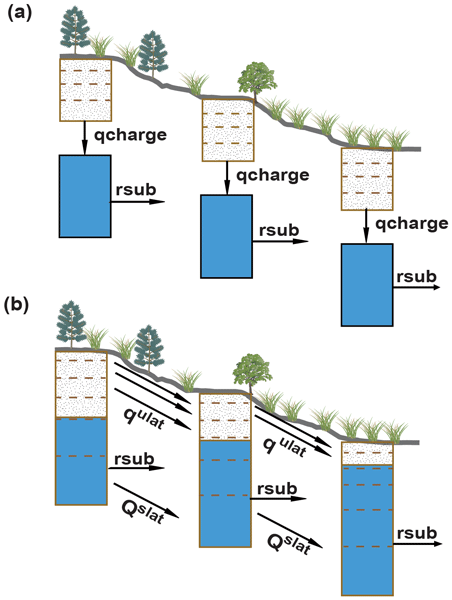
We developed and validated an inter-grid-cell lateral groundwater flow model for both saturated and unsaturated zone in the ELMv2.0 framework. The developed model was benchmarked against PFLOTRAN, a 3D subsurface flow and transport model and showed comparable performance with PFLOTRAN. The developed model was also applied to the Little Washita experimental watershed. The spatial pattern of simulated groundwater table depth agreed well with the global groundwater table benchmark dataset.
Shanlei Sun, Zaoying Bi, Jingfeng Xiao, Yi Liu, Ge Sun, Weimin Ju, Chunwei Liu, Mengyuan Mu, Jinjian Li, Yang Zhou, Xiaoyuan Li, Yibo Liu, and Haishan Chen
Earth Syst. Sci. Data, 15, 4849–4876, https://doi.org/10.5194/essd-15-4849-2023, https://doi.org/10.5194/essd-15-4849-2023, 2023
Short summary
Short summary
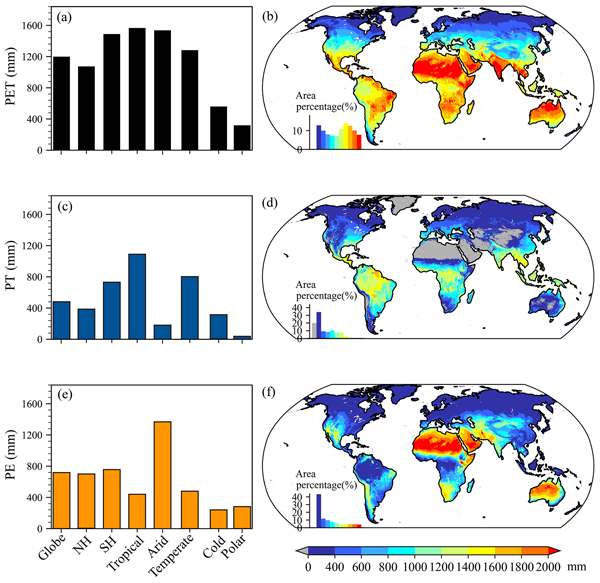
Based on various existing datasets, we comprehensively considered spatiotemporal differences in land surfaces and CO2 effects on plant stomatal resistance to parameterize the Shuttleworth–Wallace model, and we generated a global 5 km ensemble mean monthly potential evapotranspiration (PET) dataset (including potential transpiration PT and soil evaporation PE) during 1982–2015. The new dataset may be used by academic communities and various agencies to conduct various studies.
Shengli Tao, Zurui Ao, Jean-Pierre Wigneron, Sassan Saatchi, Philippe Ciais, Jérôme Chave, Thuy Le Toan, Pierre-Louis Frison, Xiaomei Hu, Chi Chen, Lei Fan, Mengjia Wang, Jiangling Zhu, Xia Zhao, Xiaojun Li, Xiangzhuo Liu, Yanjun Su, Tianyu Hu, Qinghua Guo, Zhiheng Wang, Zhiyao Tang, Yi Y. Liu, and Jingyun Fang
Earth Syst. Sci. Data, 15, 1577–1596, https://doi.org/10.5194/essd-15-1577-2023, https://doi.org/10.5194/essd-15-1577-2023, 2023
Short summary
Short summary
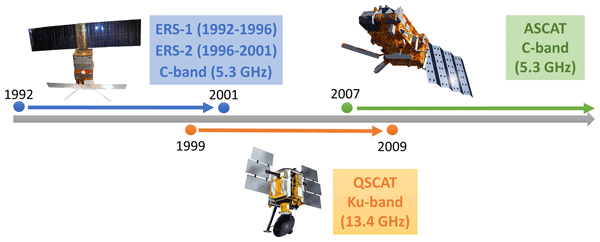
We provide the first long-term (since 1992), high-resolution (8.9 km) satellite radar backscatter data set (LHScat) with a C-band (5.3 GHz) signal dynamic for global lands. LHScat was created by fusing signals from ERS (1992–2001; C-band), QSCAT (1999–2009; Ku-band), and ASCAT (since 2007; C-band). LHScat has been validated against independent ERS-2 signals. It could be used in a variety of studies, such as vegetation monitoring and hydrological modelling.
Dalei Hao, Gautam Bisht, Karl Rittger, Timbo Stillinger, Edward Bair, Yu Gu, and L. Ruby Leung
The Cryosphere, 17, 673–697, https://doi.org/10.5194/tc-17-673-2023, https://doi.org/10.5194/tc-17-673-2023, 2023
Short summary
Short summary
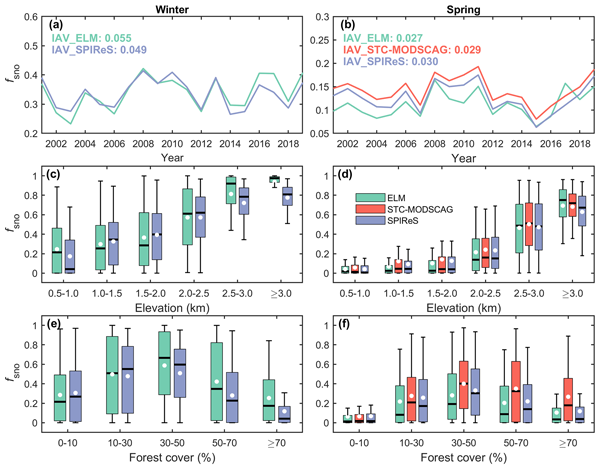
We comprehensively evaluated the snow simulations in E3SM land model over the western United States in terms of spatial patterns, temporal correlations, interannual variabilities, elevation gradients, and change with forest cover of snow properties and snow phenology. Our study underscores the need for diagnosing model biases and improving the model representations of snow properties and snow phenology in mountainous areas for more credible simulation and future projection of mountain snowpack.
Xiao Zhang, Liangyun Liu, Tingting Zhao, Xidong Chen, Shangrong Lin, Jinqing Wang, Jun Mi, and Wendi Liu
Earth Syst. Sci. Data, 15, 265–293, https://doi.org/10.5194/essd-15-265-2023, https://doi.org/10.5194/essd-15-265-2023, 2023
Short summary
Short summary
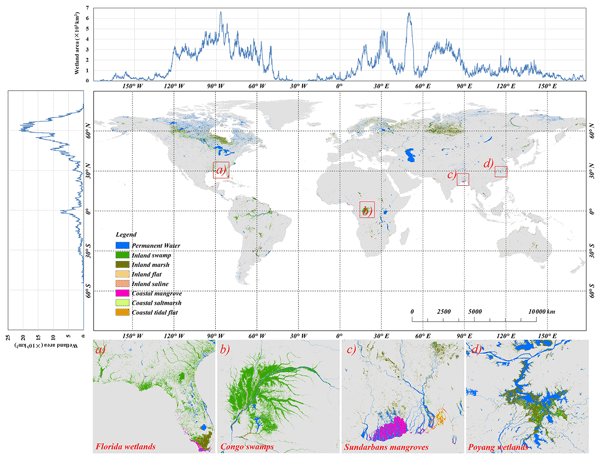
An accurate global 30 m wetland dataset that can simultaneously cover inland and coastal zones is lacking. This study proposes a novel method for wetland mapping and generates the first global 30 m wetland map with a fine classification system (GWL_FCS30), including five inland wetland sub-categories (permanent water, swamp, marsh, flooded flat and saline) and three coastal wetland sub-categories (mangrove, salt marsh and tidal flats).
Han Qiu, Dalei Hao, Yelu Zeng, Xuesong Zhang, and Min Chen
Earth Syst. Dynam., 14, 1–16, https://doi.org/10.5194/esd-14-1-2023, https://doi.org/10.5194/esd-14-1-2023, 2023
Short summary
Short summary
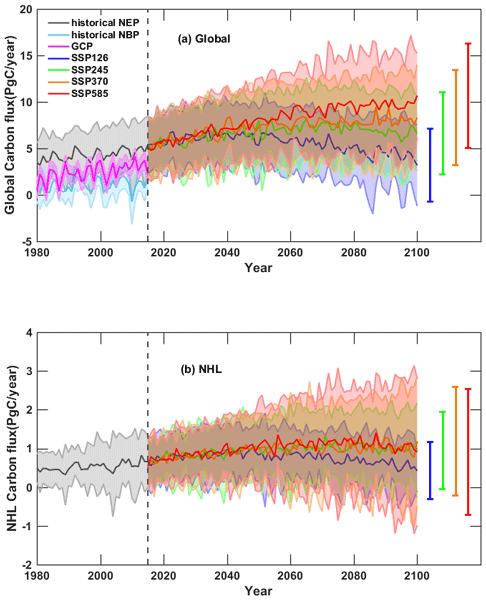
The carbon cycling in terrestrial ecosystems is complex. In our analyses, we found that both the global and the northern-high-latitude (NHL) ecosystems will continue to have positive net ecosystem production (NEP) in the next few decades under four global change scenarios but with large uncertainties. NHL ecosystems will experience faster climate warming but steadily contribute a small fraction of the global NEP. However, the relative uncertainty of NHL NEP is much larger than the global values.
Dalei Hao, Gautam Bisht, Karl Rittger, Edward Bair, Cenlin He, Huilin Huang, Cheng Dang, Timbo Stillinger, Yu Gu, Hailong Wang, Yun Qian, and L. Ruby Leung
Geosci. Model Dev., 16, 75–94, https://doi.org/10.5194/gmd-16-75-2023, https://doi.org/10.5194/gmd-16-75-2023, 2023
Short summary
Short summary
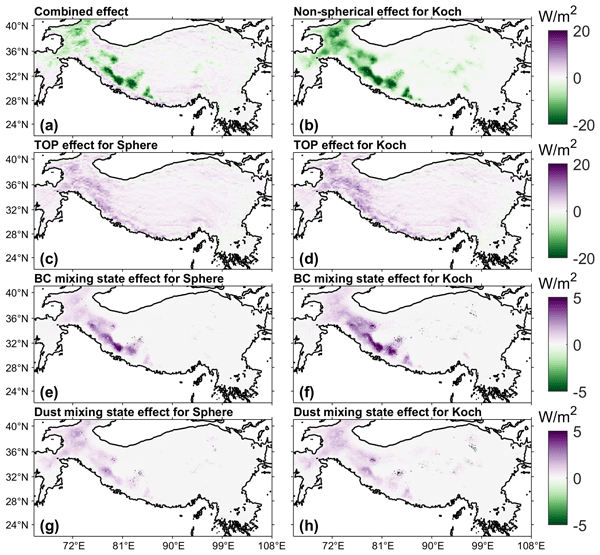
Snow with the highest albedo of land surface plays a vital role in Earth’s surface energy budget and water cycle. This study accounts for the impacts of snow grain shape and mixing state of light-absorbing particles with snow on snow albedo in the E3SM land model. The findings advance our understanding of the role of snow grain shape and mixing state of LAP–snow in land surface processes and offer guidance for improving snow simulations and radiative forcing estimates in Earth system models.
Sinan Li, Li Zhang, Jingfeng Xiao, Rui Ma, Xiangjun Tian, and Min Yan
Hydrol. Earth Syst. Sci., 26, 6311–6337, https://doi.org/10.5194/hess-26-6311-2022, https://doi.org/10.5194/hess-26-6311-2022, 2022
Short summary
Short summary
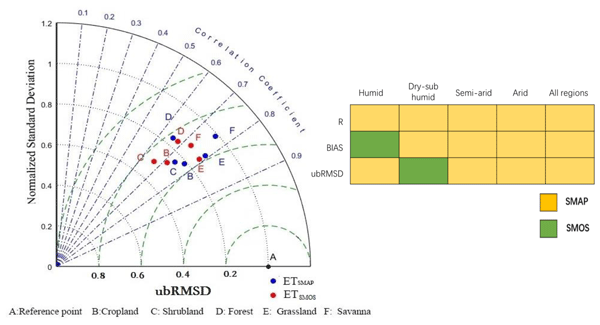
Accurate estimation for global GPP and ET is important in climate change studies. In this study, the GLASS LAI, SMOS, and SMAP datasets were assimilated jointly and separately in a coupled model. The results show that the performance of joint assimilation for GPP and ET is better than that of separate assimilation. The joint assimilation in water-limited regions performed better than in humid regions, and the global assimilation results had higher accuracy than other products.
Brendan Byrne, Junjie Liu, Yonghong Yi, Abhishek Chatterjee, Sourish Basu, Rui Cheng, Russell Doughty, Frédéric Chevallier, Kevin W. Bowman, Nicholas C. Parazoo, David Crisp, Xing Li, Jingfeng Xiao, Stephen Sitch, Bertrand Guenet, Feng Deng, Matthew S. Johnson, Sajeev Philip, Patrick C. McGuire, and Charles E. Miller
Biogeosciences, 19, 4779–4799, https://doi.org/10.5194/bg-19-4779-2022, https://doi.org/10.5194/bg-19-4779-2022, 2022
Short summary
Short summary
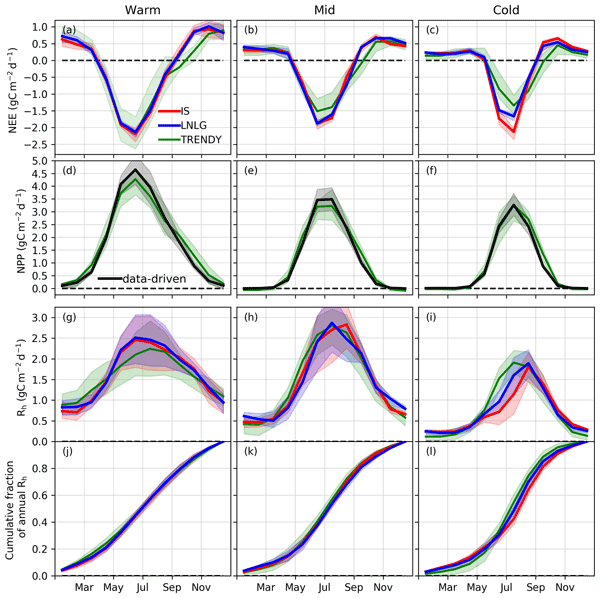
Plants draw CO2 from the atmosphere during the growing season, while respiration releases CO2 to the atmosphere throughout the year, driving seasonal variations in atmospheric CO2 that can be observed by satellites, such as the Orbiting Carbon Observatory 2 (OCO-2). Using OCO-2 XCO2 data and space-based constraints on plant growth, we show that permafrost-rich northeast Eurasia has a strong seasonal release of CO2 during the autumn, hinting at an unexpectedly large respiration signal from soils.
Rui Ma, Jingfeng Xiao, Shunlin Liang, Han Ma, Tao He, Da Guo, Xiaobang Liu, and Haibo Lu
Geosci. Model Dev., 15, 6637–6657, https://doi.org/10.5194/gmd-15-6637-2022, https://doi.org/10.5194/gmd-15-6637-2022, 2022
Short summary
Short summary
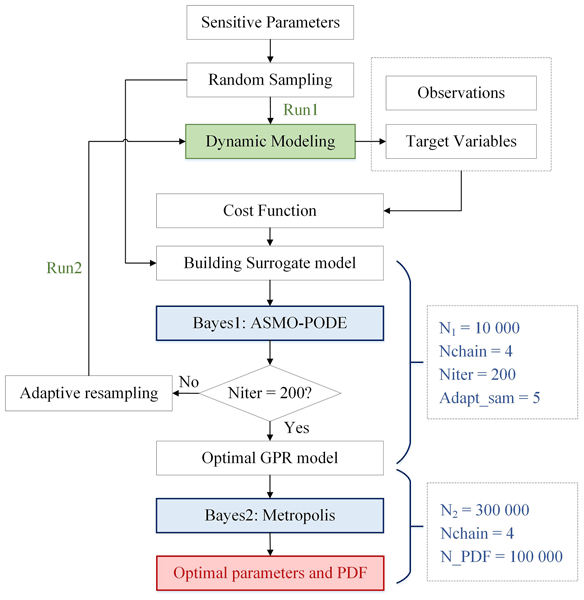
Parameter optimization can improve the accuracy of modeled carbon fluxes. Few studies conducted pixel-level parameterization because it requires a high computational cost. Our paper used high-quality spatial products to optimize parameters at the pixel level, and also used the machine learning method to improve the speed of optimization. The results showed that there was significant spatial variability of parameters and we also improved the spatial pattern of carbon fluxes.
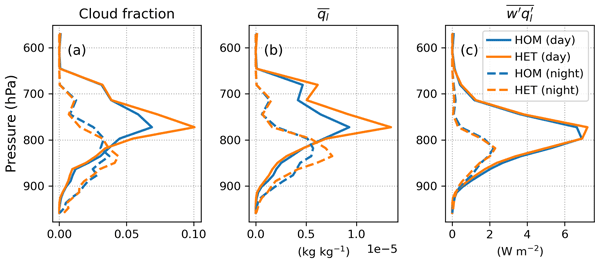
Meng Huang, Po-Lun Ma, Nathaniel W. Chaney, Dalei Hao, Gautam Bisht, Megan D. Fowler, Vincent E. Larson, and L. Ruby Leung
Geosci. Model Dev., 15, 6371–6384, https://doi.org/10.5194/gmd-15-6371-2022, https://doi.org/10.5194/gmd-15-6371-2022, 2022
Short summary
Short summary
The land surface in one grid cell may be diverse in character. This study uses an explicit way to account for that subgrid diversity in a state-of-the-art Earth system model (ESM) and explores its implications for the overlying atmosphere. We find that the shallow clouds are increased significantly with the land surface diversity. Our work highlights the importance of accurately representing the land surface and its interaction with the atmosphere in next-generation ESMs.
Jing Fang, Xing Li, Jingfeng Xiao, Xiaodong Yan, Bolun Li, and Feng Liu
Earth Syst. Sci. Data Discuss., https://doi.org/10.5194/essd-2021-452, https://doi.org/10.5194/essd-2021-452, 2022
Revised manuscript not accepted
Short summary
Short summary
The dataset provided the vegetation photosynthetic phenology instead of traditional phenology to represent plant seasonal activities. This dataset had the latest period (2001–2020) and a fine spatial resolution (0.05 degree). Our phenology metrics revealed the spatial-temporal patterns of the multiple growing seasons in the Northern Hemisphere. The dataset will facilitate various research such as developing models, evaluating phenology shifts, and monitoring climate change worldwide.
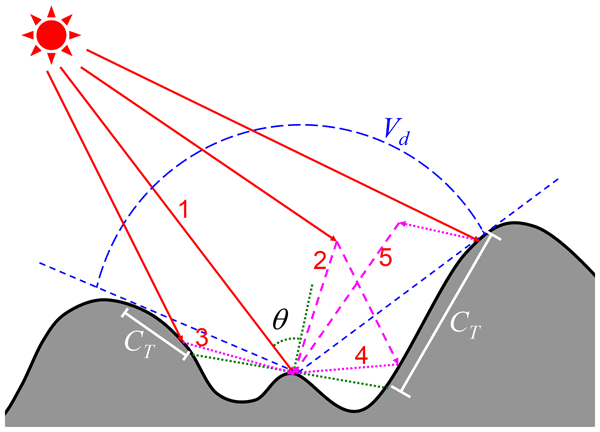
Dalei Hao, Gautam Bisht, Yu Gu, Wei-Liang Lee, Kuo-Nan Liou, and L. Ruby Leung
Geosci. Model Dev., 14, 6273–6289, https://doi.org/10.5194/gmd-14-6273-2021, https://doi.org/10.5194/gmd-14-6273-2021, 2021
Short summary
Short summary
Topography exerts significant influence on the incoming solar radiation at the land surface. This study incorporated a well-validated sub-grid topographic parameterization in E3SM land model (ELM) version 1.0. The results demonstrate that sub-grid topography has non-negligible effects on surface energy budget, snow cover, and surface temperature over the Tibetan Plateau and that the ELM simulations are sensitive to season, elevation, and spatial scale.
Cited articles
Anav, A., Friedlingstein, P., Beer, C., Ciais, P., Harper, A., Jones, C., Murray-Tortarolo, G., Papale, D., Parazoo, N. C., Peylin, P., Piao, S., Sitch, S., Viovy, N., Wiltshire, A., and Zhao, M.: Spatiotemporal patterns of terrestrial gross primary production: a review, Rev. Geophys., 53, 785–818, https://doi.org/10.1002/2015RG000483, 2015.
Baldocchi, D., Falge, E., Gu, L. H., Olson, R., Hollinger, D., Running, S., Anthoni, P., Bernhofer, C., Davis, K., Evans, R., Fuentes, J., Goldstein, A., Katul, G., Law, B., Lee, X. H., Malhi, Y., Meyers, T., Munger, W., Oechel, W., U, K., Pilegaard, K., Schmid, H. P., Valentini, R., Verma, S., Vesala, T., Wilson, K., and Wofsy, S.: Fluxnet: a new tool to study the temporal and spatial variability of ecosystem-scale carbon dioxide , water vapor , and energy flux densities, Bull. Amer. Meteorol. Soc., 82, 2415–2434, https://doi.org/10.1175/1520-0477(2001)082<2415:FANTTS>2.3.CO;2, 2001.
Beer, C., Reichstein, M., Tomelleri, E., Ciais, P., Jung, M., Carvalhais, N., Roedenbeck, C., Arain, M. A., Baldocchi, D., Bonan, G. B., Bondeau, A., Cescatti, A., Lasslop, G., Lindroth, A., Lomas, M., Luyssaert, S., Margolis, H., Oleson, K. W., Roupsard, O., Veenendaal, E., Viovy, N., Williams, C., Woodward, F. I., and Papale, D.: Terrestrial gross carbon dioxide uptake: global distribution and covariation with climate, Science, 329, 834–838, https://doi.org/10.1126/science.1184984, 2010.
Bodesheim, P., Jung, M., Gans, F., Mahecha, M. D., and Reichstein, M.: Upscaled diurnal cycles of land–atmosphere fluxes: a new global half-hourly data product, Earth Syst. Sci. Data, 10, 1327–1365, https://doi.org/10.5194/essd-10-1327-2018, 2018.
Boucher, O., Servonnat, J., Albright, A. L., Aumont, O., Balkanski, Y., Bastrikov, V., Bekki, S., Bonnet, R., Bony, S., Bopp, L., Braconnot, P., Brockmann, P., Cadule, P., Caubel, A., Cheruy, F., Codron, F., Cozic, A., Cugnet, D., D'Andrea, F., Davini, P., de Lavergne, C., Denvil, S., Deshayes, J., Devilliers, M., Ducharne, A., Dufresne, J., Dupont, E., Ethe, C., Fairhead, L., Falletti, L., Flavoni, S., Foujols, M., Gardoll, S., Gastineau, G., Ghattas, J., Grandpeix, J., Guenet, B., Guez, L. E., Guilyardi, E., Guimberteau, M., Hauglustaine, D., Hourdin, F., Idelkadi, A., Joussaume, S., Kageyama, M., Khodri, M., Krinner, G., Lebas, N., Levavasseur, G., Levy, C., Li, L., Lott, F., Lurton, T., Luyssaert, S., Madec, G., Madeleine, J., Maignan, F., Marchand, M., Marti, O., Mellul, L., Meurdesoif, Y., Mignot, J., Musat, I., Ottle, C., Peylin, P., Planton, Y., Polcher, J., Rio, C., Rochetin, N., Rousset, C., Sepulchre, P., Sima, A., Swingedouw, D., Thieblemont, R., Traore, A. K., Vancoppenolle, M., Vial, J., Vialard, J., Viovy, N., and Vuichard, N.: Presentation and evaluation of the IPSL-CM6a-LR climate model, J. Adv. Model. Earth Syst., 12, 52, https://doi.org/10.1029/2019MS002010, 2020.
Cao, J., Wang, R., Chen, J. M., Yang, M., Cheng, Z., and Miao, G.: Quantifying topographic effects on carbon and water fluxes over mountainous areas, J. Geophys. Res.-Biogeosci., 130, 20, https://doi.org/10.1029/2025JG008878, 2025.
Chen, H. W., Zhang, L. N., Zhang, F., Davis, K. J., Lauvaux, T., Pal, S., Gaudet, B., and Digangi, J. P.: Evaluation of regional CO2 mole fractions in the ECMWF CAMS real-time atmospheric analysis and NOAA CarbonTracker near-real-time reanalysis with airborne observations from ACT-america field campaigns, J. Geophys. Res.-Atmos., 124, 8119–8133, https://doi.org/10.1029/2018JD029992, 2019.
Chu, H., Luo, X., Ouyang, Z., Chan, W. S., Dengel, S., Biraud, S. C., Torn, M. S., Metzger, S., Kumar, J., Arain, M. A., Arkebauer, T. J., Baldocchi, D., Bernacchi, C., Billesbach, D., Black, T. A., Blanken, P. D., Bohrer, G., Bracho, R., Brown, S., Brunsell, N. A., Chen, J., Chen, X., Clark, K., Desai, A. R., Duman, T., Durden, D., Fares, S., Forbrich, I., Gamon, J. A., Gough, C. M., Griffis, T., Helbig, M., Hollinger, D., Humphreys, E., Ikawa, H., Iwata, H., Ju, Y., Knowles, J. F., Knox, S. H., Kobayashi, H., Kolb, T., Law, B., Lee, X., Litvak, M., Liu, H., Munger, J. W., Noormets, A., Novick, K., Oberbauer, S. F., Oechel, W., Oikawa, P., Papuga, S. A., Pendall, E., Prajapati, P., Prueger, J., Quinton, W. L., Richardson, A. D., Russell, E. S., Scott, R. L., Starr, G., Staeebler, R., Stoy, P. C., Stuart-Haëntjens, E., Sonnentag, O., Sullivan, R. C., Suyker, A., Ueyama, M., Vargas, R., Wood, J. D., and Zona, D.: Representativeness of eddy-covariance flux footprints for areas surrounding AmeriFlux sites, Agr. Forest Meteorol., 301–302, 108350, https://doi.org/10.1016/j.agrformet.2021.108350, 2021.
Chu, H., Christianson, D. S., Cheah, Y., Pastorello, G., O'Brien, F., Geden, J., Ngo, S., Hollowgrass, R., Leibowitz, K., Beekwilder, N. F., Sandesh, M., Dengel, S., Chan, S. W., Santos, A., Delwiche, K., Yi, K., Buechner, C., Baldocchi, D., Papale, D., Keenan, T. F., Biraud, S. C., Agarwal, D. A., and Torn, M. S.: AmeriFlux BASE data pipeline to support network growth and data sharing, Sci. Data, 10, 13, https://doi.org/10.1038/s41597-023-02531-2, 2023.
Deng, Z., Chen, J., Wang, S., Li, T., Huang, K., Gu, P., Peng, H., and Chen, Z.: Response of vegetation photosynthesis to the 2022 drought in yangtze river basin by diurnal orbiting carbon observatory-2/3 satellite observations, J. Remote Sens., 5, 19, https://doi.org/10.34133/remotesensing.0445, 2025.
Galytska, E., Weigel, K., Handorf, D., Jaiser, R., Koehler, R., Runge, J., and Eyring, V.: Evaluating causal arctic-midlatitude teleconnections in CMIP6, J. Geophys. Res.-Atmos., 128, 25, https://doi.org/10.1029/2022JD037978, 2023.
Garcia-Leon, D., Casanueva, A., Standardi, G., Burgstall, A., Flouris, A. D., and Nybo, L.: Current and projected regional economic impacts of heatwaves in europe, Nat. Commun., 12, 10, https://doi.org/10.1038/s41467-021-26050-z, 2021.
Goulden, M. L., Miller, S. D., Rocha, H. D., Menton, M. C., de Freitas, H. C., Figueira, A., and de Sousa, C.: Diel and seasonal patterns of tropical forest CO2 exchange, Ecol. Appl., 14, S42–S54, https://doi.org/10.1890/02-6008, 2004.
Green, J. K., Seneviratne, S. I., Berg, A. M., Findell, K. L., Hagemann, S., Lawrence, D. M., and Gentine, P.: Large influence of soil moisture on long-term terrestrial carbon uptake, Nature, 565, 476–479, https://doi.org/10.1038/s41586-018-0848-x, 2019.
Han, Q., Zeng, Y., Wang, Y., Alidoost, F., Nattino, F., Liu, Y., and Su, B.: FluxHourly: global long-term hourly 9 km terrestrial water-energy-carbon fluxes, Earth Syst. Sci. Data, 17, 7101–7117, https://doi.org/10.5194/essd-17-7101-2025, 2025.
Hao, D., Bisht, G., Huang, M., Ma, P., Tesfa, T., Lee, W., Gu, Y., and Leung, L. R.: Impacts of sub-grid topographic representations on surface energy balance and boundary conditions in the e3SM land model: a case study in sierra nevada, J. Adv. Model. Earth Syst., 14, 21, https://doi.org/10.1029/2021MS002862, 2022.
Hou, H., Zhou, B., Pei, F., Hu, G., Su, Z., Zeng, Y., Zhang, H., Gao, Y., Luo, M., and Li, X.: Future land use/land cover change has nontrivial and potentially dominant impact on global gross primary productivity, Earth Future, 10, 20, https://doi.org/10.1029/2021EF002628, 2022.
Huete, A., Didan, K., Miura, T., Rodriguez, E. P., Gao, X., and Ferreira, L. G.: Overview of the radiometric and biophysical performance of the MODIS vegetation indices, Remote Sens. Environ., 83, 195–213, https://doi.org/10.1016/S0034-4257(02)00096-2, 2002.
Ichii, K., Ueyama, M., Kondo, M., Saigusa, N., Kim, J., Alberto, M. C., Ardoe, J., Euskirchen, E. S., Kang, M., Hirano, T., Joiner, J., Kobayashi, H., Marchesini, L. B., Merbold, L., Miyata, A., Saitoh, T. M., Takagi, K., Varlagin, A., Bret-Harte, M. S., Kitamura, K., Kosugi, Y., Kotani, A., Kumar, K., Li, S., Machimura, T., Matsuura, Y., Mizoguchi, Y., Ohta, T., Mukherjee, S., Yanagi, Y., Yasuda, Y., Zhang, Y., and Zhao, F.: New data-driven estimation of terrestrial CO2 fluxes in asia using a standardized database of eddy covariance measurements, remote sensing data, and support vector regression, J. Geophys. Res.-Biogeosci., 122, 767–795, https://doi.org/10.1002/2016JG003640, 2017.
Ishaque, K. and Salam, Z.: A deterministic particle swarm optimization maximum power point tracker for photovoltaic system under partial shading condition, IEEE Trans. Ind. Electron., 60, 3195–3206, https://doi.org/10.1109/TIE.2012.2200223, 2013.
Jeong, S., Ryu, Y., Dechant, B., Li, X., Kong, J., Choi, W., Kang, M., Yeom, J., Lim, J., Jang, K., and Chun, J.: Tracking diurnal to seasonal variations of gross primary productivity using a geostationary satellite, GK-2a advanced meteorological imager, Remote Sens. Environ., 284, 16, https://doi.org/10.1016/j.rse.2022.113365, 2023.
Jiang, Y., Smerdon, J. E., Seager, R., Wang, G., Cook, B. I., Zheng, C., Mankin, J. S., and Williams, A. P.: The influence of land-surface conditions on the 2020-2021 western US drought, Water Resour. Res., 61, 21, https://doi.org/10.1029/2024WR038124, 2025.
Jung, M., Reichstein, M., Schwalm, C. R., Huntingford, C., Sitch, S., Ahlstrom, A., Arneth, A., Camps-Valls, G., Ciais, P., Friedlingstein, P., Gans, F., Ichii, K., Ain, A. K. J., Kato, E., Papale, D., Poulter, B., Raduly, B., Rodenbeck, C., Tramontana, G., Viovy, N., Wang, Y., Weber, U., Zaehle, S., and Zeng, N.: Compensatory water effects link yearly global land CO2 sink changes to temperature, Nature, 541, 516–520, https://doi.org/10.1038/nature20780, 2017.
Kang, Y., Bassiouni, M., Gaber, M., Lu, X., and Keenan, T. F.: CEDAR-GPP: spatiotemporally upscaled estimates of gross primary productivity incorporating CO2 fertilization, Earth Syst. Sci. Data, 17, 3009–3046, https://doi.org/10.5194/essd-17-3009-2025, 2025.
Keenan, T. F. and Williams, C. A.: The terrestrial carbon sink, Annu. Rev. Environ. Resour, 43, 219–243, https://doi.org/10.1146/annurev-environ-102017-030204, 2018.
Keenan, T. F., Migliavacca, M., Papale, D., Baldocchi, D., Reichstein, M., Torn, M., Wutzler, T., and Lawrence Berkeley National Laboratory Lbnl, B. C. U. S.: Widespread inhibition of daytime ecosystem respiration, Nat. Ecol. Evol., 3, 407–415, https://doi.org/10.1038/s41559-019-0809-2, 2019.
Khan, A. M., Stoy, P. C., Joiner, J., Baldocchi, D., Verfaillie, J., Chen, M., and Otkin, J. A.: The diurnal dynamics of gross primary productivity using observations from the advanced baseline imager on the geostationary operational environmental satellite-r series at an oak savanna ecosystem, J. Geophys. Res.-Biogeosci., 127, 28, https://doi.org/10.1029/2021JG006701, 2022.
Koppa, A., Keune, J., Schumacher, D. L., Michaelides, K., Singer, M., Seneviratne, S. I., and Miralles, D. G.: Dryland self-expansion enabled by land-atmosphere feedbacks, Science, 385, 967–972, https://doi.org/10.1126/science.adn6833, 2024.
Kretschmer, M., Adams, S., Arribas, A., Prudden, R., Robinson, N., Saggioro, E., and Shepherd, T. G.: Quantifying causal pathways of teleconnections, Bull. Amer. Meteorol. Soc., 102, E2247–E2263, https://doi.org/10.1175/BAMS-D-20-0117.1, 2021.
Krich, C., Runge, J., Miralles, D. G., Migliavacca, M., Perez-Priego, O., El-Madany, T., Carrara, A., and Mahecha, M. D.: Estimating causal networks in biosphere–atmosphere interaction with the PCMCI approach, Biogeosciences, 17, 1033–1061, https://doi.org/10.5194/bg-17-1033-2020, 2020.
Kursa, M. B. and Rudnicki, W. R.: Feature selection with the boruta package, J. Stat. Softw., 36, 1–13, https://doi.org/10.18637/jss.v036.i11, 2010.
Leng, J., Chen, J. M., Li, W., Luo, X., Xu, M., Liu, J., Wang, R., Rogers, C., Li, B., and Yan, Y.: Global datasets of hourly carbon and water fluxes simulated using a satellite-based process model with dynamic parameterizations, Earth Syst. Sci. Data, 16, 1283–1300, https://doi.org/10.5194/essd-16-1283-2024, 2024.
Li, X., Xiao, J., Fisher, J. B., and Baldocchi, D. D.: Ecostress estimates gross primary production with fine spatial resolution for different times of day from the international space station, Remote Sens. Environ., 258, 13, https://doi.org/10.1016/j.rse.2021.112360, 2021.
Li, X., Ryu, Y., Xiao, J., Dechant, B., Liu, J., Li, B., Jeong, S., and Gentine, P.: New-generation geostationary satellite reveals widespread midday depression in dryland photosynthesis during 2020 western US heatwave, Sci. Adv., 9, 14, https://doi.org/10.1126/sciadv.adi0775, 2023.
Lin, C., Gentine, P., Frankenberg, C., Zhou, S., Kennedy, D., and Li, X.: Evaluation and mechanism exploration of the diurnal hysteresis of ecosystem fluxes, Agric. For. Meteorol., 278, 14, https://doi.org/10.1016/j.agrformet.2019.107642, 2019.
Liu, J., Wang, Q., Zhan, W., Lian, X., and Gentine, P.: When and where soil dryness matters to ecosystem photosynthesis, Nat. Plants, 11, 23, https://doi.org/10.1038/s41477-025-02024-7, 2025b.
Liu, X. and Li, X.: EGO: a global 0.05° hourly GPP dataset for monitoring diurnal photosynthesis dynamics, Zenodo [data set], https://doi.org/10.5281/zenodo.18253238, 2026.
Liu, Y., Penuelas, J., Cescatti, A., Zhang, Y., and Zhang, Z.: Atmospheric dryness dominates afternoon depression of global terrestrial photosynthesis, Geophys. Res. Lett., 51, 12, https://doi.org/10.1029/2024GL110954, 2024.
Liu, Y., Zhao, D., Zhang, Y., and Zhang, Z.: Global 0.1-degree monthly mean hourly total canopy solar-induced chlorophyll fluorescence dataset derived from random forest, Remote Sens., 17, 24, https://doi.org/10.3390/rs17203429, 2025a.
Muñoz-Sabater, J., Dutra, E., Agustí-Panareda, A., Albergel, C., Arduini, G., Balsamo, G., Boussetta, S., Choulga, M., Harrigan, S., Hersbach, H., Martens, B., Miralles, D. G., Piles, M., Rodríguez-Fernández, N. J., Zsoter, E., Buontempo, C., and Thépaut, J.-N.: ERA5-Land: a state-of-the-art global reanalysis dataset for land applications, Earth Syst. Sci. Data, 13, 4349–4383, https://doi.org/10.5194/essd-13-4349-2021, 2021.
Nathaniel, J., Liu, J., and Gentine, P.: MetaFlux: meta-learning global carbon fluxes from sparse spatiotemporal observations, Sci. Data, 10, 15, https://doi.org/10.1038/s41597-023-02349-y, 2023.
Nelson, J. A., Walther, S., Gans, F., Kraft, B., Weber, U., Novick, K., Buchmann, N., Migliavacca, M., Wohlfahrt, G., Šigut, L., Ibrom, A., Papale, D., Göckede, M., Duveiller, G., Knohl, A., Hörtnagl, L., Scott, R. L., Dušek, J., Zhang, W., Hamdi, Z. M., Reichstein, M., Aranda-Barranco, S., Ardö, J., Op de Beeck, M., Billesbach, D., Bowling, D., Bracho, R., Brümmer, C., Camps-Valls, G., Chen, S., Cleverly, J. R., Desai, A., Dong, G., El-Madany, T. S., Euskirchen, E. S., Feigenwinter, I., Galvagno, M., Gerosa, G. A., Gielen, B., Goded, I., Goslee, S., Gough, C. M., Heinesch, B., Ichii, K., Jackowicz-Korczynski, M. A., Klosterhalfen, A., Knox, S., Kobayashi, H., Kohonen, K.-M., Korkiakoski, M., Mammarella, I., Gharun, M., Marzuoli, R., Matamala, R., Metzger, S., Montagnani, L., Nicolini, G., O'Halloran, T., Ourcival, J.-M., Peichl, M., Pendall, E., Ruiz Reverter, B., Roland, M., Sabbatini, S., Sachs, T., Schmidt, M., Schwalm, C. R., Shekhar, A., Silberstein, R., Silveira, M. L., Spano, D., Tagesson, T., Tramontana, G., Trotta, C., Turco, F., Vesala, T., Vincke, C., Vitale, D., Vivoni, E. R., Wang, Y., Woodgate, W., Yepez, E. A., Zhang, J., Zona, D., and Jung, M.: X-BASE: the first terrestrial carbon and water flux products from an extended data-driven scaling framework, FLUXCOM-X, Biogeosciences, 21, 5079–5115, https://doi.org/10.5194/bg-21-5079-2024, 2024.
Novick, K. A., Ficklin, D. L., Grossiord, C., Konings, A. G., Martinez-Vilalta, J., Sadok, W., Trugman, A. T., Williams, A. P., Wright, A. J., Abatzoglou, J. T., Dannenberg, M. P., Gentine, P., Guan, K., Johnston, M. R., Lowman, L. E. L., Moore, D. J. P., and Mcdowell, N. G.: The impacts of rising vapour pressure deficit in natural and managed ecosystems, Plant Cell. Environ., 47, 3561–3589, https://doi.org/10.1111/pce.14846, 2024.
Pei, Y., Dong, J., Zhang, Y., Yang, J., Wu, S., Gay, B. A., He, B., and Xiao, X.: Sensitivity of dryland plant water availability to changes in carbon and water fluxes, J. Hydrol., 662, 11, https://doi.org/10.1016/j.jhydrol.2025.133966, 2025.
Qin, Y., Wang, D., Cao, Y., Cai, X., Liang, S., Beck, H. E., and Zeng, Z.: Sub-grid representation of vegetation cover in land surface schemes improves the modeling of how climate responds to deforestation, Geophys. Res. Lett., 50, 10, https://doi.org/10.1029/2023GL104164, 2023.
Ranjbar, S., Desai, A. R., Hoffman, S., Zahn, E., Bou Zeid, E., and Stoy, P. C.: Constrained carbon partitioning: a self‐trained physics‐informed machine learning model refines GPP estimates from eddy covariance measurements, Glob. Change Biol., 32, https://doi.org/10.1111/gcb.70886, 2026.
Robinson, N. P., Allred, B. W., Smith, W. K., Jones, M. O., Moreno, A., Erickson, T. A., Naugle, D. E., and Running, S. W.: Terrestrial primary production for the conterminous United States derived from landsat 30 m and MODIS 250 m, Remote Sens. Ecol. Conserv., 4, 264–280, https://doi.org/10.1002/rse2.74, 2018.
Runge, J., Bathiany, S., Bollt, E., Camps-Valls, G., Coumou, D., Deyle, E., Glymour, C., Kretschmer, M., Mahecha, M. D., Munoz-Mari, J., van Nes, E. H., Peters, J., Quax, R., Reichstein, M., Scheffer, M., Schoelkopf, B., Spirtes, P., Sugihara, G., Sun, J., Zhang, K., and Zscheischler, J.: Inferring causation from time series in earth system sciences, Nat. Commun., 10, 13, https://doi.org/10.1038/s41467-019-10105-3, 2019a.
Runge, J., Nowack, P., Kretschmer, M., Flaxman, S., and Sejdinovic, D.: Detecting and quantifying causal associations in large nonlinear time series datasets, Sci. Adv., 5, 15, https://doi.org/10.1126/sciadv.aau4996, 2019b.
Runge, J., Gerhardus, A., Varando, G., Eyring, V., and Camps-Valls, G.: Causal inference for time series, Nat. Rev. Earth Environ., 4, 487–505, https://doi.org/10.1038/s43017-023-00431-y, 2023.
Ryu, Y., Berry, J. A., and Baldocchi, D. D.: What is global photosynthesis? History, uncertainties and opportunities, Remote Sens. Environ., 223, 95–114, https://doi.org/10.1016/j.rse.2019.01.016, 2019.
Schimel, D. S., House, J. I., Hibbard, K. A., Bousquet, P., Ciais, P., Peylin, P., Braswell, B. H., Apps, M. J., Baker, D., Bondeau, A., Canadell, J., Churkina, G., Cramer, W., Denning, A. S., Field, C. B., Friedlingstein, P., Goodale, C., Heimann, M., Houghton, R. A., Melillo, J. M., Moore, B., Murdiyarso, D., Noble, I., Pacala, S. W., Prentice, I. C., Raupach, M. R., Rayner, P. J., Scholes, R. J., Steffen, W. L., and Wirth, C.: Recent patterns and mechanisms of carbon exchange by terrestrial ecosystems, Nature, 414, 169–172, https://doi.org/10.1038/35102500, 2001.
Seferian, R., Nabat, P., Michou, M., Saint-Martin, D., Voldoire, A., Colin, J., Decharme, B., Delire, C., Berthet, S., Chevallier, M., Senesi, S., Franchisteguy, L., Vial, J., Mallet, M., Joetzjer, E., Geoffroy, O., Gueremy, J., Moine, M., Msadek, R., Ribes, A., Rocher, M., Roehrig, R., Salas-Y-Melia, D., Sanchez, E., Terray, L., Valcke, S., Waldman, R., Aumont, O., Bopp, L., Deshayes, J., Ethe, C., and Madec, G.: Evaluation of CNRM earth system model, CNRM-ESM2-1: role of earth system processes in present-day and future climate, J. Adv. Model. Earth Syst., 11, 4182–4227, https://doi.org/10.1029/2019MS001791, 2019.
Stavros, E. N., Schimel, D., Pavlick, R., Serbin, S., Swann, A., Duncanson, L., Fisher, J. B., Fassnacht, F., Ustin, S., Dubayah, R., Schweiger, A., and Wennberg, P.: ISS observations offer insights into plant function, Nat. Ecol. Evol., 1, 4, https://doi.org/10.1038/s41559-017-0194, 2017.
Taylor, T. E., Eldering, A., Merrelli, A., Kiel, M., Somkuti, P., Cheng, C., Rosenberg, R., Fisher, B., Crisp, D., Basilio, R., Bennett, M., Cervantes, D., Chang, A., Dang, L., Frankenberg, C., Haemmerle, V. R., Keller, G. R., Kurosu, T., Laughner, J. L., Lee, R., Marchetti, Y., Nelson, R. R., O'Dell, C. W., Osterman, G., Pavlick, R., Roehl, C., Schneider, R., Spiers, G., To, C., Wells, C., Wennberg, P. O., Yelamanchili, A., and Yu, S.: OCO-3 early mission operations and initial (vearly) XCO2 and SIF retrievals, Remote Sens. Environ., 251, 27, https://doi.org/10.1016/j.rse.2020.112032, 2020.
Urbanski, S., Barford, C., Wofsy, S., Kucharik, C., Pyle, E., Budney, J., Mckain, K., Fitzjarrald, D., Czikowsky, M., and Munger, J. W.: Factors controlling CO2 exchange on timescales from hourly to decadal at harvard forest, J. Geophys. Res.-Biogeosci., 112, https://doi.org/10.1029/2006JG000293, 2007.
Voldoire, A., Saint-Martin, D., Sénési, S., Decharme, B., Alias, A., Chevallier, M., Colin, J., Guérémy, J. F., Michou, M., Moine, M. P., Nabat, P., Roehrig, R., Mélia, D., Séférian, R., Valcke, S., Beau, I., Belamari, S., Berthet, S., Cassou, C., Cattiaux, J., Deshayes, J., Douville, H., Ethé, C., Franchistéguy, L., Geoffroy, O., Lévy, C., Madec, G., Meurdesoif, Y., Msadek, R., Ribes, A., Sanchez-Gomez, E., Terray, L., and Waldman, R.: Evaluation of CMIP6 DECK experiments with CNRM-CM6-1, J. Adv. Model. Earth Syst., 11, 2177–2213, https://doi.org/10.1029/2019MS001683, 2019.
Wang, B., Yue, X., Zhou, H., Lu, X., and Zhu, J.: Enhanced ecosystem water-use efficiency under the more diffuse radiation conditions, Glob. Biogeochem. Cycle, 37, 14, https://doi.org/10.1029/2022GB007606, 2023.
Wang, J.: Global daily 1 km gapless XCO2 ( 2003–2023 ) derived from multi-satellite observations and a spatiotemporal deep learning framework, Environ. Impact Assess. Rev., 117, 22, https://doi.org/10.1016/j.eiar.2025.108146, 2026.
Wei, S., Fang, H., Schaaf, C. B., He, L., and Chen, J. M.: Global 500 m clumping index product derived from MODIS BRDF data (2001–2017), Remote Sens. Environ., 232, 15, https://doi.org/10.1016/j.rse.2019.111296, 2019.
Wilson, K. B., Baldocchi, D., Falge, E., Aubinet, M., Berbigier, P., Bernhofer, C., Dolman, H., Field, C., Goldstein, A., Granier, A., Hollinger, D., Katul, G., Law, B. E., Meyers, T., Moncrieff, J., Monson, R., Tenhunen, J., Valentini, R., Verma, S., and Wofsy, S.: Diurnal centroid of ecosystem energy and carbon fluxes at FLUXNET sites, J. Geophys. Res.-Atmos., 108, 13, https://doi.org/10.1029/2001JD001349, 2003.
Wofsy, S. C., Goulden, M. L., Munger, J. W., Fan, S. M., Bakwin, P. S., Daube, B. C., Bassow, S. L., and Bazzaz, F. A.: Net exchange of CO2 in a mid-latitude forest, Science, 260, 1314–1317, https://doi.org/10.1126/science.260.5112.1314, 1993.
Xiao, J., Chevallier, F., Gomez, C., Guanter, L., Hicke, J. A., Huete, A. R., Ichii, K., Ni, W., Pang, Y., Rahman, A. F., Sun, G., Yuan, W., Zhang, L., and Zhang, X.: Remote sensing of the terrestrial carbon cycle: a review of advances over 50 years, Remote Sens. Environ., 233, 37, https://doi.org/10.1016/j.rse.2019.111383, 2019.
Xiao, J., Fisher, J. B., Hashimoto, H., Ichii, K., and Parazoo, N. C.: Emerging satellite observations for diurnal cycling of ecosystem processes, Nat. Plants, 7, 877–887, https://doi.org/10.1038/s41477-021-00952-8, 2021.
Xiao, J., Baldocchi, D., Ichii, K., Li, F., and Papale, D.: Insights into terrestrial carbon and water cycling from the global eddy covariance network, Nat. Rev. Earth Environ., 20, https://doi.org/10.1038/s43017-025-00743-1, 2025.
Yuan, K., Zhu, Q., Li, F., Riley, W. J., Torn, M., Chu, H., Mcnicol, G., Chen, M., Knox, S., Delwiche, K., Wu, H., Baldocchi, D., Ma, H., Desai, A. R., Chen, J., Sachs, T., Ueyama, M., Sonnentag, O., Helbig, M., Tuittila, E., Jurasinski, G., Koebsch, F., Campbell, D., Schmid, H. P., Lohila, A., Goeckede, M., Nilsson, M. B., Friborg, T., Jansen, J., Zona, D., Euskirchen, E., Ward, E. J., Bohrer, G., Jin, Z., Liu, L., Iwata, H., Goodrich, J., and Jackson, R.: Causality guided machine learning model on wetland CH4 emissions across global wetlands, Agric. For. Meteorol., 324, 10, https://doi.org/10.1016/j.agrformet.2022.109115, 2022.
Yuan, K., Li, F., Mcnicol, G., Chen, M., Hoyt, A., Knox, S., Riley, W. J., Jackson, R., and Zhu, Q.: Boreal-arctic wetland methane emissions modulated by warming and vegetation activity, Nat. Clim. Chang., 14, 10, https://doi.org/10.1038/s41558-024-01933-3, 2024.
Zeng, Y., Hao, D., Huete, A., Dechant, B., Berry, J., Chen, J. M., Joiner, J., Frankenberg, C., Bond-Lamberty, B., Ryu, Y., Xiao, J., Asrar, G. R., and Chen, M.: Optical vegetation indices for monitoring terrestrial ecosystems globally, Nat. Rev. Earth Environ., 3, 477–493, https://doi.org/10.1038/s43017-022-00298-5, 2022.
Zhang, Y., Feng, X., Zhou, C., Sun, C., Leng, X., and Fu, B.: Aridity threshold of ecological restoration mitigated atmospheric drought via land-atmosphere coupling in drylands, Commun. Earth Environ., 5, 11, https://doi.org/10.1038/s43247-024-01555-9, 2024.
Zhang, Z., Cescatti, A., Wang, Y., Gentine, P., Xiao, J., Guanter, L., Huete, A. R., Wu, J., Chen, J. M., Ju, W., Penuelas, J., and Zhang, Y.: Large diurnal compensatory effects mitigate the response of amazonian forests to atmospheric warming and drying, Sci. Adv., 9, 15, https://doi.org/10.1126/sciadv.abq4974, 2023a.
Zhang, Z., Guanter, L., Porcar-Castell, A., Rossini, M., Labrador, J. P., and Zhang, Y.: Global modeling diurnal gross primary production from OCO-3 solar-induced chlorophyll fluorescence, Remote Sens. Environ., 285, 15, https://doi.org/10.1016/j.rse.2022.113383, 2023b.
Zhang, Z., Lu, L., Zhao, Y., Wang, Y., Wei, D., Wu, X., and Ma, X.: Recent advances in using chinese earth observation satellites for remote sensing of vegetation, ISPRS-J. Photogramm. Remote Sens., 195, 393–407, https://doi.org/10.1016/j.isprsjprs.2022.12.006, 2023c.
Zhao, C. and Zhu, W.: Vegetation structure and phenology primarily shape the spatiotemporal pattern of ecosystem respiration, Commun. Earth Environ., 6, 15, https://doi.org/10.1038/s43247-025-02240-1, 2025.
Zhao, C., Zhu, W., Chen, L., and Xie, Z.: Causality constrained machine learning framework enhances the reliability and spatiotemporal generalization in ecosystem respiration estimation, Agric. For. Meteorol., 372, 16, https://doi.org/10.1016/j.agrformet.2025.110718, 2025.
Zhao, M. S., Heinsch, F. A., Nemani, R. R., and Running, S. W.: Improvements of the MODIS terrestrial gross and net primary production global data set, Remote Sens. Environ., 95, 164–176, https://doi.org/10.1016/j.rse.2004.12.011, 2005.
Zhu, Z. and Zhu, X.: Increasing midday depression of mangrove photosynthesis with heat and drought stresses, Agric. For. Meteorol., 362, 9, https://doi.org/10.1016/j.agrformet.2024.110372, 2025.
Zomer, R. J., Xu, J., and Trabucco, A.: Version 3 of the global aridity index and potential evapotranspiration database, Sci. Data, 9, 15, https://doi.org/10.1038/s41597-022-01493-1, 2022.
Short summary
Vegetation photosynthesis, quantified as Gross Primary Productivity (GPP), changes rapidly throughout the day. We developed a global hourly GPP dataset called EGO (Eddy covariance site-based Global hOurly) by combining tower observations with advanced artificial intelligence that accounts for causal effects, outperforms existing hourly GPP products and well captures diurnal photosynthesis dynamics. It will provide a reliable foundation for investigating sub-daily ecosystem processes and benchmarking Earth system models.
Vegetation photosynthesis, quantified as Gross Primary Productivity (GPP), changes rapidly...


Altmetrics
Final-revised paper
Preprint