Articles | Volume 18, issue 1
https://doi.org/10.5194/essd-18-655-2026
© Author(s) 2026. This work is distributed under
the Creative Commons Attribution 4.0 License.
https://doi.org/10.5194/essd-18-655-2026
© Author(s) 2026. This work is distributed under
the Creative Commons Attribution 4.0 License.
Spatiotemporal mapping of invasive yellow sweetclover blooms using Sentinel-2 and high-resolution drone imagery
Sakshi Saraf
CORRESPONDING AUTHOR
Department of Biology, University of South Dakota, Vermillion, SD 57069, USA
Ranjeet John
Department of Biology, University of South Dakota, Vermillion, SD 57069, USA
Department of Sustainability and Environment, University of South Dakota, Vermillion, SD 57069, USA
Venkatesh Kolluru
Department of Sustainability and Environment, University of South Dakota, Vermillion, SD 57069, USA
Khushboo Jain
Department of Sustainability and Environment, University of South Dakota, Vermillion, SD 57069, USA
Geoffrey M. Henebry
Department of Geography, Environment, and Spatial Sciences, Michigan State University, East Lansing, MI 48824, USA
Center for Global Change and Earth Observations, Michigan State University, East Lansing, MI 48823, USA
Jiquan Chen
Department of Geography, Environment, and Spatial Sciences, Michigan State University, East Lansing, MI 48824, USA
Center for Global Change and Earth Observations, Michigan State University, East Lansing, MI 48823, USA
Raffaele Lafortezza
Department of Soil, Plant and Food Sciences (DISSPA), University of Bari “Aldo Moro”, Via Amendola 165/A, 70126, Bari, Italy
Related authors
No articles found.
Hamidreza Omidvar, Ting Sun, Sue Grimmond, Dave Bilesbach, Andrew Black, Jiquan Chen, Zexia Duan, Zhiqiu Gao, Hiroki Iwata, and Joseph P. McFadden
Geosci. Model Dev., 15, 3041–3078, https://doi.org/10.5194/gmd-15-3041-2022, https://doi.org/10.5194/gmd-15-3041-2022, 2022
Short summary
Short summary
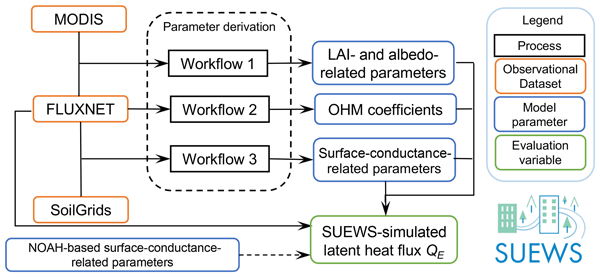
This paper extends the applicability of the SUEWS to extensive pervious areas outside cities. We derived various parameters such as leaf area index, albedo, roughness parameters and surface conductance for non-urban areas. The relation between LAI and albedo is also explored. The methods and parameters discussed can be used for both online and offline simulations. Using appropriate parameters related to non-urban areas is essential for assessing urban–rural differences.
Elodie Salmon, Fabrice Jégou, Bertrand Guenet, Line Jourdain, Chunjing Qiu, Vladislav Bastrikov, Christophe Guimbaud, Dan Zhu, Philippe Ciais, Philippe Peylin, Sébastien Gogo, Fatima Laggoun-Défarge, Mika Aurela, M. Syndonia Bret-Harte, Jiquan Chen, Bogdan H. Chojnicki, Housen Chu, Colin W. Edgar, Eugenie S. Euskirchen, Lawrence B. Flanagan, Krzysztof Fortuniak, David Holl, Janina Klatt, Olaf Kolle, Natalia Kowalska, Lars Kutzbach, Annalea Lohila, Lutz Merbold, Włodzimierz Pawlak, Torsten Sachs, and Klaudia Ziemblińska
Geosci. Model Dev., 15, 2813–2838, https://doi.org/10.5194/gmd-15-2813-2022, https://doi.org/10.5194/gmd-15-2813-2022, 2022
Short summary
Short summary
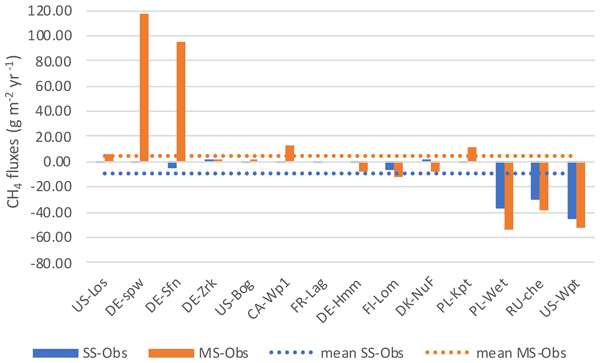
A methane model that features methane production and transport by plants, the ebullition process and diffusion in soil, oxidation to CO2, and CH4 fluxes to the atmosphere has been embedded in the ORCHIDEE-PEAT land surface model, which includes an explicit representation of northern peatlands. This model, ORCHIDEE-PCH4, was calibrated and evaluated on 14 peatland sites. Results show that the model is sensitive to temperature and substrate availability over the top 75 cm of soil depth.
G. Henebry, M. Tomaszewska, M. Zhumanova, A. Mambetov, S. Orunbaev, and Z. Kulenbekov
Int. Arch. Photogramm. Remote Sens. Spatial Inf. Sci., XLVI-1-W1-2021, 23–30, https://doi.org/10.5194/isprs-archives-XLVI-1-W1-2021-23-2022, https://doi.org/10.5194/isprs-archives-XLVI-1-W1-2021-23-2022, 2022
Kyle B. Delwiche, Sara Helen Knox, Avni Malhotra, Etienne Fluet-Chouinard, Gavin McNicol, Sarah Feron, Zutao Ouyang, Dario Papale, Carlo Trotta, Eleonora Canfora, You-Wei Cheah, Danielle Christianson, Ma. Carmelita R. Alberto, Pavel Alekseychik, Mika Aurela, Dennis Baldocchi, Sheel Bansal, David P. Billesbach, Gil Bohrer, Rosvel Bracho, Nina Buchmann, David I. Campbell, Gerardo Celis, Jiquan Chen, Weinan Chen, Housen Chu, Higo J. Dalmagro, Sigrid Dengel, Ankur R. Desai, Matteo Detto, Han Dolman, Elke Eichelmann, Eugenie Euskirchen, Daniela Famulari, Kathrin Fuchs, Mathias Goeckede, Sébastien Gogo, Mangaliso J. Gondwe, Jordan P. Goodrich, Pia Gottschalk, Scott L. Graham, Martin Heimann, Manuel Helbig, Carole Helfter, Kyle S. Hemes, Takashi Hirano, David Hollinger, Lukas Hörtnagl, Hiroki Iwata, Adrien Jacotot, Gerald Jurasinski, Minseok Kang, Kuno Kasak, John King, Janina Klatt, Franziska Koebsch, Ken W. Krauss, Derrick Y. F. Lai, Annalea Lohila, Ivan Mammarella, Luca Belelli Marchesini, Giovanni Manca, Jaclyn Hatala Matthes, Trofim Maximov, Lutz Merbold, Bhaskar Mitra, Timothy H. Morin, Eiko Nemitz, Mats B. Nilsson, Shuli Niu, Walter C. Oechel, Patricia Y. Oikawa, Keisuke Ono, Matthias Peichl, Olli Peltola, Michele L. Reba, Andrew D. Richardson, William Riley, Benjamin R. K. Runkle, Youngryel Ryu, Torsten Sachs, Ayaka Sakabe, Camilo Rey Sanchez, Edward A. Schuur, Karina V. R. Schäfer, Oliver Sonnentag, Jed P. Sparks, Ellen Stuart-Haëntjens, Cove Sturtevant, Ryan C. Sullivan, Daphne J. Szutu, Jonathan E. Thom, Margaret S. Torn, Eeva-Stiina Tuittila, Jessica Turner, Masahito Ueyama, Alex C. Valach, Rodrigo Vargas, Andrej Varlagin, Alma Vazquez-Lule, Joseph G. Verfaillie, Timo Vesala, George L. Vourlitis, Eric J. Ward, Christian Wille, Georg Wohlfahrt, Guan Xhuan Wong, Zhen Zhang, Donatella Zona, Lisamarie Windham-Myers, Benjamin Poulter, and Robert B. Jackson
Earth Syst. Sci. Data, 13, 3607–3689, https://doi.org/10.5194/essd-13-3607-2021, https://doi.org/10.5194/essd-13-3607-2021, 2021
Short summary
Short summary
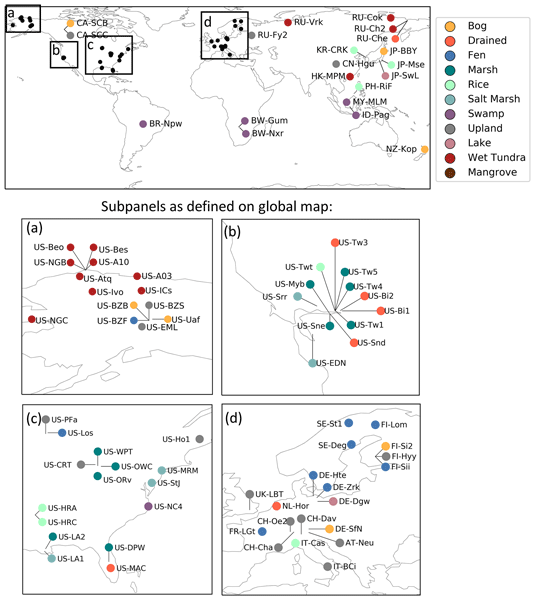
Methane is an important greenhouse gas, yet we lack knowledge about its global emissions and drivers. We present FLUXNET-CH4, a new global collection of methane measurements and a critical resource for the research community. We use FLUXNET-CH4 data to quantify the seasonality of methane emissions from freshwater wetlands, finding that methane seasonality varies strongly with latitude. Our new database and analysis will improve wetland model accuracy and inform greenhouse gas budgets.
Cited articles
Agnew, W., Uresk, D. W., and Hansen, R. M.: Flora and Fauna Associated with Prairie Dog Colonies and Adjacent Ungrazed Mixed-grass Prairie in Western South Dakota, Journal of Range Management, 39, 135–139, https://doi.org/10.2307/3899285, 1986.
Alvarez-Taboada, F., Araújo-Paredes, C., and Julián-Pelaz, J.: Mapping of the Invasive Species Hakea sericea Using Unmanned Aerial Vehicle (UAV) and WorldView-2 Imagery and an Object-Oriented Approach, Remote Sens., 9, 913, https://doi.org/10.3390/rs9090913, 2017.
Baena, S., Moat, J., Whaley, O., and Boyd, D.: Identifying species from the air: UAVs and the very high resolution challenge for plant conservation, PLoS One, 12, e0188714, https://doi.org/10.1371/journal.pone.0188714, 2017.
Barrett, B.: Snow Data Assimilation System (SNODAS) Data Products at NSIDC, Version 1, Center, Natl. Oper. Hydrol. Remote Sens., https://doi.org/10.7265/N5TB14TC, 2004.
Baumann, E., Beierkuhnlein, C., Preitauer, A., Schmid, K., and Rudner, M.: Evaluating remote sensing data as a tool to minimize spatial autocorrelation in in-situ vegetation sampling, Erdkunde, 79, 25–40, https://doi.org/10.3112/erdkunde.2025.01.02, 2025.
Bernath-Plaisted, J. S., Ribic, C. A., Hills, W. B., Townsend, P. A., and Zuckerberg, B.: Microclimate complexity in temperate grasslands: implications for conservation and management under climate change, Environ. Res. Lett., 18, https://doi.org/10.1088/1748-9326/acd4d3, 2023.
Bradley, B. A.: Remote detection of invasive plants: a review of spectral, textural and phenological approaches, Biol. Invasions, 16, 1411–1425, https://doi.org/10.1007/s10530-013-0578-9, 2014.
Breiman, L., Friedman, J. H., Olshen, R. A., and Stone, C.: Classification And Regression Trees, Wadsworth International Group, Belmont, CA, USA, https://doi.org/10.1201/9781315139470, 1984.
Brooks, M. L., D'Antonio, C. M., Richardson, D. M., Grace, J. B., Keeley, J. E., DiTomaso, J. M., Hobbs, R. J., Pellant, M., and Pyke, D.: Effects of invasive alien plants on fire regimes, Bioscience, 54, 677–688, https://doi.org/10.1641/0006-3568(2004)054[0677:EOIAPO]2.0.CO;2, 2004.
Chaney, N. W., Minasny, B., Herman, J. D., Nauman, T. W., Brungard, C. W., Morgan, C. L. S., McBratney, A. B., Wood, E. F., and Yimam, Y.: POLARIS Soil Properties: 30-m Probabilistic Maps of Soil Properties Over the Contiguous United States, Water Resour. Res., 55, 2916–2938, https://doi.org/10.1029/2018WR022797, 2019.
Chávez, R. O., Moreira-Muñoz, A., Galleguillos, M., Olea, M., Aguayo, J., Latín, A., Aguilera-Betti, I., Muñoz, A. A., and Manríquez, H.: GIMMS NDVI time series reveal the extent, duration, and intensity of “blooming desert” events in the hyper-arid Atacama Desert, Northern Chile, Int. J. Appl. Earth Obs. Geoinf., 76, 193–203, https://doi.org/10.1016/j.jag.2018.11.013, 2019.
Chen, F. and Weber, K. T.: Assessing the impact of seasonal precipitation and temperature on vegetation in a grass-dominated rangeland, Rangel. J., 36, 185–190, 2014.
Cleland, E. E., Collins, S. L., Dickson, T. L., Farrer, E. C., Gross, K. L., Gherardi, L. A., Hallett, L. M., Hobbs, R. J., Hsu, J. S., Turnbull, L., and Suding, K. N.: Sensitivity of grassland plant community composition to spatial vs. temporal variation in precipitation, Ecology, 94, 1687–1696, https://doi.org/10.1890/12-1006.1, 2013.
Colomina, I. and Molina, P.: Unmanned aerial systems for photogrammetry and remote sensing: A review, ISPRS J. Photogramm. Remote Sens., 92, 79–97, https://doi.org/10.1016/j.isprsjprs.2014.02.013, 2014.
D'Antonio, C. M. and Vitousek, P. M.: Biological Invasions by Exotic Grasses, the Grass/Fire Cycle, and Global Change, Annu. Rev. Ecol. Syst., 23, 63–87, 1992.
Dahal, D., Boyte, S. P., and Oimoen, M. J.: Predicting Exotic Annual Grass Abundance in Rangelands of the Western United States Using Various Precipitation Scenarios, Rangel. Ecol. Manag., 90, 221–230, https://doi.org/10.1016/j.rama.2023.04.011, 2023.
Dewitz, J.: National Land Cover Database (NLCD) 2019 Products, US Geol. Surv. Sioux Falls, SD, USA, https://doi.org/10.5066/P9KZCM54, 2021.
Dubuis, A., Pottier, J., Rion, V., Pellissier, L., Theurillat, J. P., and Guisan, A.: Predicting spatial patterns of plant species richness: A comparison of direct macroecological and species stacking modelling approaches, Divers. Distrib., 17, 1122–1131, https://doi.org/10.1111/j.1472-4642.2011.00792.x, 2011.
Fore, S. R.: The Impact of Land Use and Land Cover Change on Vegetation, Ecosystem Dynamics, and Conservation in the Northern Great Plains, The University of North Dakota PP – United States – North Dakota, United States – North Dakota, 493 pp., https://commons.und.edu/theses/ (last access: 3 December 2024), 2024.
Gao, B.: NDWI – A normalized difference water index for remote sensing of vegetation liquid water from space, Remote Sens. Environ., 58, 257–266, https://doi.org/10.1016/S0034-4257(96)00067-3, 1996.
Gascon, F., Bouzinac, C., Thépaut, O., Jung, M., Francesconi, B., Louis, J., Lonjou, V., Lafrance, B., Massera, S., Gaudel-Vacaresse, A., Languille, F., Alhammoud, B., Viallefont, F., Pflug, B., Bieniarz, J., Clerc, S., Pessiot, L., Trémas, T., Cadau, E., De Bonis, R., Isola, C., Martimort, P., and Fernandez, V.: Copernicus Sentinel-2A calibration and products validation status, Remote Sens., 9, https://doi.org/10.3390/rs9060584, 2017.
Gaskin, J. F., Espeland, E., Johnson, C. D., Larson, D. L., Mangold, J. M., McGee, R. A., Milner, C., Paudel, S., Pearson, D. E., Perkins, L. B., Prosser, C. W., Runyon, J. B., Sing, S. E., Sylvain, Z. A., Symstad, A. J., and Tekiela, D. R.: Managing invasive plants on Great Plains grasslands: A discussion of current challenges, Rangel. Ecol. Manag., 78, 235–249, https://doi.org/10.1016/j.rama.2020.04.003, 2021.
Gränzig, T., Fassnacht, F. E., Kleinschmit, B., and Förster, M.: Mapping the fractional coverage of the invasive shrub Ulex europaeus with multi-temporal Sentinel-2 imagery utilizing UAV orthoimages and a new spatial optimization approach, Int. J. Appl. Earth Obs. Geoinf., 96, https://doi.org/10.1016/j.jag.2020.102281, 2021.
Gucker, C. L.: Melilotus alba, M. officinalis, U.S. Dep. Agric. For. Serv. Rocky Mt. Res. Station. Fire Sci. Lab., https://www.fs.usda.gov/database/feis/plants/forb/melspp/all.html (last access: 3 January 2026), 2009.
Guyon, I., Weston, J., Barnhill, S., and Vapnik, V.: Gene Selection for Cancer Classification using Support Vector Machines, Mach. Learn., 46, 389–422, https://doi.org/10.1023/A:1012487302797, 2002.
Hall, D. K., Riggs, G. A., and Román, M. O: MODIS snow products collection 6 user guide, National Snow and Ice Data Center (NSIDC), Boulder, CO, USA, 66 pp., https://nsidc.org/data/mod10a1/versions/6 (last access: 3 January 2026), 2015.
He, B., Huang, L., Liu, J., Wang, H., Lű, A., Jiang, W., and Chen, Z.: The observed cooling effect of desert blooms based on high-resolution Moderate Resolution Imaging Spectroradiometer products, Earth Sp. Sci., 4, 247–256, https://doi.org/10.1002/2016EA000238, 2017.
Hendrickson, J. R., Sedivec, K. K., Toledo, D., and Printz, J.: Challenges Facing Grasslands inthe Northern Great Plains and North Central Region, Rangelands, 41, 23–29, https://doi.org/10.1016/j.rala.2018.11.002, 2019.
Horstrand, P., Guerra, R., Rodríguez, A., Díaz, M., López, S., and López, J. F.: A UAV Platform Based on a Hyperspectral Sensor for Image Capturing and On-Board Processing, IEEE Access, 7, 66919–66938, https://doi.org/10.1109/ACCESS.2019.2913957, 2019.
Jaksic, F. M.: Ecological effects of El Niño in terrestrial ecosystems of western South America, Ecography (Cop.), 24, 241–250, https://doi.org/10.1111/j.1600-0587.2001.tb00196.x, 2001.
John, R., Chen, J., Giannico, V., Park, H., Xiao, J., Shirkey, G., Ouyang, Z., Shao, C., Lafortezza, R., and Qi, J.: Grassland canopy cover and aboveground biomass in Mongolia and Inner Mongolia: Spatiotemporal estimates and controlling factors, Remote Sens. Environ., 213, 34–48, https://doi.org/10.1016/j.rse.2018.05.002, 2018.
Johnson, J. R. and Larson, G. E.: Grassland plants of South Dakota and the Northern Great Plains, Research Bulletin 764, South Dakota Agricultural Experiment Station, South Dakota State University, Brookings, SD, USA, 764 pp., https://openprairie.sdstate.edu/agexperimentsta_bulletins/764/ (last access: 3 January 2026), 1999.
Josso, P., Hall, A., Williams, C., Le Bas, T., Lusty, P., and Murton, B.: Application of random-forest machine learning algorithm for mineral predictive mapping of Fe-Mn crusts in the World Ocean, Ore Geol. Rev., 162, 105671, https://doi.org/10.1016/j.oregeorev.2023.105671, 2023.
Jurjević, L., Gašparović, M., Milas, A. S., and Balenović, I.: Impact of UAS Image Orientation on Accuracy of Forest Inventory Attributes, Remote Sens., 12, https://doi.org/10.3390/rs12030404, 2020.
Kan, H., Teng, W., Chen, C., Zhang, G., and Pang, Z.: Establishment of alien invasive plant, yellow sweet clover (Melilotus officinalis) at a complex ecosystem distributed with farmlands and wasted lands, Research Square [preprint], https://doi.org/10.21203/rs.3.rs-2933552/v1, 2023.
Kattenborn, T., Lopatin, J., Förster, M., Braun, A. C., and Fassnacht, F. E.: UAV data as alternative to field sampling to map woody invasive species based on combined Sentinel-1 and Sentinel-2 data, Remote Sens. Environ., 227, 61–73, https://doi.org/10.1016/j.rse.2019.03.025, 2019.
Klebesadel, L. J.: Extreme Northern Acclimatization in Biennial Yellow Sweetclover (Melilotus officinalis) at the Arctic Circle, School of Agriculture and Land Resources Management, Agricultural and Forestry Experiment Station Bulletin, School of Agriculture and Land Resources Management, University of Alaska Fairbanks, Fairbanks, AK, USA, https://scholarworks.alaska.edu/handle/11122/7819 (last access: 3 January 2026), 1992.
Kuhn, M.: A Short Introduction to the caret Package, R Found. Stat. Comput., https://cran.r-project.org/web/packages/caret/vignettes/caret.html (last access: 3 January 2026), 2015.
Landis, J. R. and Koch, G. G.: The Measurement of Observer Agreement for Categorical Data, Biometrics, 33, 159, https://doi.org/10.2307/2529310, 1977.
Langholz, J.: Global Trends in Private Protected Areas and their Implications for the Northern Great Plains Source: Great Plains, Gt. Plains Res., 20, 9–16, 2010.
Larson, E. R., Graham, B. M., Achury, R., Coon, J. J., Daniels, M. K., Gambrell, D. K., Jonasen, K. L., King, G. D., LaRacuente, N., Perrin-Stowe, T. I. N., Reed, E. M., Rice, C. J., Ruzi, S. A., Thairu, M. W., Wilson, J. C., and Suarez, A. V: From eDNA to citizen science: emerging tools for the early detection of invasive species, Front. Ecol. Environ., 18, 194–202, https://doi.org/10.1002/fee.2162, 2020.
Latimer, A. M., Wu, S., Gelfand, A. E., and Silander Jr., J. A.: Building Statistical Models To Analyze Species Distributions, Ecol. Appl., 16, 33–50, https://doi.org/10.1890/04-0609, 2006.
Li, L.-Y. and Tsai, C.-C.: Accessing online learning material: Quantitative behavior patterns and their effects on motivation and learning performance, Comput. Educ., 114, https://doi.org/10.1016/j.compedu.2017.07.007, 2017.
Liu, X., Kounadi, O., and Zurita-Milla, R.: Incorporating Spatial Autocorrelation in Machine Learning Models Using Spatial Lag and Eigenvector Spatial Filtering Features, Journal of Geo-Information, 11, 242, https://doi.org/10.3390/ijgi11040242, 2022.
Luo, K., Jahufer, M. Z. Z., Wu, F., Di, H., Zhang, D., Meng, X., Zhang, J., and Wang, Y.: Genotypie variation in a breeding population of yellow sweet clover (Melilotus officinalis), Front. Plant Sci., 7, 1–10, https://doi.org/10.3389/fpls.2016.00972, 2016.
Martínez-Harms, J., Guerrero, P., Martinez-Harms, M., Poblete, N., González, K., Stavenga, D., and Vorobyev, M.: Mechanisms of flower coloring and eco-evolutionary implications of massive blooming events in the Atacama Desert, Front. Ecol. Evol., 10, https://doi.org/10.3389/fevo.2022.957318, 2022.
Martins, J., Richardson, D. M., Henriques, R., Marchante, E., Marchante, H., Alves, P., Gaertner, M., Honrado, J. P., and Vicente, J. R.: A multi-scale modelling framework to guide management of plant invasions in a transboundary context, For. Ecosyst., 3, https://doi.org/10.1186/s40663-016-0073-8, 2016.
Mayr, S., Kuenzer, C., Gessner, U., Klein, I., and Rutzinger, M.: Validation of Earth Observation Time-Series: A Review for Large-Area and Temporally Dense Land Surface Products, Remote Sens., 11, 2616, https://doi.org/10.3390/rs11222616, 2019.
MicaSense Inc.: RedEdge-MX Multispectral Camera, https://micasense.com/rededge-mx/ (last access: 15 August 2025), 2015.
Moran, P. A. P.: Notes on Continuous Stochastic Phenomena, Biometrika, 37, 17–29, 1950.
Mouta, N., Silva, R., Pinto, E. M., Vaz, A. S., Alonso, J. M., Gonçalves, J. F., Honrado, J., and Vicente, J. R.: Sentinel-2 Time Series and Classifier Fusion to Map an Aquatic Invasive Plant Species along a River – The Case of Water-Hyacinth, Remote Sens., 15, https://doi.org/10.3390/rs15133248, 2023.
Müllerová, J., Brůna, J., Bartaloš, T., Dvořák, P., Vítková, M., and Pyšek, P.: Timing Is Important: Unmanned Aircraft vs. Satellite Imagery in Plant Invasion Monitoring, Front. Plant Sci., 8, 1–13, https://doi.org/10.3389/fpls.2017.00887, 2017.
Owensby, C. E. and Launchbaugh, J. L.: Controlling prairie threeawn (Aristida oligantha Michx.) in central and eastern Kansas with fall burning, J. Range Manag., 30, 337–339, 1977.
Padró, J.-C., Muñoz, F.-J., Planas, J., and Pons, X.: Comparison of four UAV georeferencing methods for environmental monitoring purposes focusing on the combined use with airborne and satellite remote sensing platforms, Int. J. Appl. Earth Obs. Geoinf., 75, 130–140, https://doi.org/10.1016/j.jag.2018.10.018, 2019.
Paul, M., Rajib, A., and Ahiablame, L.: Spatial and Temporal Evaluation of Hydrological Response to Climate and Land Use Change in Three South Dakota Watersheds, JAWRA J. Am. Water Resour. Assoc., 53, https://doi.org/10.1111/1752-1688.12483, 2016.
Pix4D S.A.: Pix4Dmapper, Version 4.8, https://www.pix4d.com (last access: 3 January 2026), 2022.
Preston, T. M., Johnston, A. N., Ebenhoch, K. G., and Diehl, R. H.: Beyond presence mapping: predicting fractional cover of non-native vegetation in Sentinel-2 imagery using an ensemble of MaxEnt models, Remote Sens. Ecol. Conserv., 9, 512–526, https://doi.org/10.1002/rse2.325, 2023.
Rai, P. and Singh, J. S.: Invasive alien plant species: Their impact on environment, ecosystem services and human health, Ecol. Indic., 20 pp., https://doi.org/10.1016/j.ecolind.2019.106020, 2020.
Rakotoarivony, M. N. A., Gholizadeh, H., Hammond, W. M., Hassani, K., Joshi, O., Hamilton, R. G., Fuhlendorf, S. D., Trowbridge, A. M., and Adams, H. D.: Detecting the invasive Lespedeza cuneata in grasslands using commercial small satellite imagery, Int. J. Remote Sens., 44, 6802–6824, https://doi.org/10.1080/01431161.2023.2275321, 2023.
Reinhart, K. O., Rinella, M. J., Waterman, R. C., Petersen, M. K., and Vermeire, L. T.: Testing rangeland health theory in the Northern Great Plains, J. Appl. Ecol., 56, 319–329, 2019.
Rigge, M., Homer, C., Cleeves, L., Meyer, D. K., Bunde, B., Shi, H., Xian, G., Schell, S., and Bobo, M.: Quantifying Western U.S. Rangelands as Fractional Components with Multi-Resolution Remote Sensing and In Situ Data, Remote Sensing, 12, 412, https://doi.org/10.3390/rs12030412, 2020.
Sanderson, M., Liebig, M., Hendrickson, J. R., Kronberg, S., Toledo, D., Derner, J., and Reeves, J.: Long-term agroecosystem research on northern Great Plains mixed grass prairie near Mandan, North Dakota, Can. J. Plant Sci., 95, 150810114732003, https://doi.org/10.4141/CJPS-2015-117, 2015.
Saraf, S., John, R., Goljani Amirkhiz, R., Kolluru, V., Jain, K., Rigge, M., Giannico, V., Boyte, S., Chen, J., Henebry, G., Jarchow, M., and Lafortezza, R.: Biophysical drivers for predicting the distribution and abundance of invasive yellow sweetclover in the Northern Great Plains, Landsc. Ecol., 38, 1463–1479, https://doi.org/10.1007/s10980-023-01613-1, 2023.
Saraf, S., John, R., Kolluru, V., Jain, K., Henebry, G., Chen, J., and Lafortezza, R.: Spatiotemporal mapping of invasive yellow sweetclover blooms using Sentinel-2 and high-resolution drone imagery, figshare [code and data set], https://doi.org/10.6084/m9.figshare.29270759.v1, 2025.
Spiess, J., McGranahan, D., Geaumont, B., Sedivec, K., Lakey, M., Berti, M., Hovick, T., and Limb, R.: Patch-Burning Buffers Forage Resources and Livestock Performance to Mitigate Drought in the Northern Great Plains, Rangel. Ecol. Manag., 73, https://doi.org/10.1016/j.rama.2020.03.003, 2020.
Steen, V. A., Tingley, M. W., Paton, P. W. C., and Elphick, C. S.: Spatial thinning and class balancing: Key choices lead to variation in the performance of species distribution models with citizen science data, Methods Ecol. Evol., 12, 216–226, https://doi.org/10.1111/2041-210X.13525, 2021.
Stohlgren, T. J., Ma, P., Kumar, S., Rocca, M., Morisette, J. T., Jarnevich, C. S., and Benson, N.: Ensemble habitat mapping of invasive plant species, Risk Anal., 30, 224–235, https://doi.org/10.1111/j.1539-6924.2009.01343.x, 2010.
Strashok, O., Ziemiańska, M., and Strashok, V.: Evaluation and Correlation of Sentinel-2 NDVI and NDMI in Kyiv (2017–2021), J. Ecol. Eng., 23, 212–218, https://doi.org/10.12911/22998993/151884, 2022.
Sulik, J. J. and Long, D. S.: Spectral considerations for modeling yield of canola, Remote Sens. Environ., 184, 161–174, https://doi.org/10.1016/j.rse.2016.06.016, 2016.
Thornton, M. M., Shrestha, R., Wei, Y., Thornton, P. E., and Kao, S.-C.: Daymet: Monthly Climate Summaries on a 1-km Grid for North America, Version 4 R1, ORNL DAAC [data set], https://doi.org/10.3334/ORNLDAAC/2131, 2022.
Trimble Inc.: Trimble Catalyst DA2 GNSS receiver kit, Trimble Inc., Sunnyvale, CA, USA, https://geospatial.trimble.com/products-and-solutions/trimble-catalyst (last access: 23 August 2025), 2025.
Turkington, R. A., Cavers, P. B., and Rempel, E.: The Biology of Canadian Weeds.: 29. Melilotus alba Desr. and M. officinalis (L.) Lam., Can. J. Plant Sci., 58, 523–537, https://doi.org/10.4141/cjps78-078, 1978.
Turner, D. and Wallace, L.: Direct Georeferencing of Ultrahigh-Resolution UAV Imagery, IEEE Trans. Geosci. Remote Sens., 52, https://doi.org/10.1109/TGRS.2013.2265295, 2013.
Van Rees, C. B., Hand, B. K., Carter, S. C., Bargeron, C., Cline, T. J., Daniel, W., Ferrante, J. A., Gaddis, K., Hunter, M. E., Jarnevich, C. S., McGeoch, M. A., Morisette, J. T., Neilson, M. E., Roy, H. E., Rozance, M. A., Sepulveda, A., Wallace, R. D., Whited, D., Wilcox, T., Kimball, J. S., and Luikart, G.: A framework to integrate innovations in invasion science for proactive management, Biol. Rev., 97, 1712–1735, https://doi.org/10.1111/brv.12859, 2022.
Van Riper, L. C. and Larson, D. L.: Role of invasive Melilotus officinalis in two native plant communities, Plant Ecol., 200, 129–139, https://doi.org/10.1007/s11258-008-9438-6, 2009.
Varner, C.: Invasive Flora of the West Coast: British Columbia and the Pacific Northwest, University of Washington Press, Seattle, WA, USA, 224 pp., ISBN 13 978-0295750996, 2022.
Vidiella, P. E., Armesto, J. J., and Gutiérrez, J. R.: Vegetation changes and sequential flowering after rain in the southern Atacama Desert, J. Arid Environ., 43, 449–458, https://doi.org/10.1006/jare.1999.0565, 1999.
Winkler, D. E. and Brooks, E.: Tracing Extremes across Iconic Desert Landscapes: Socio-Ecological and Cultural Responses to Climate Change, Water Scarcity, and Wildflower Superblooms, Hum. Ecol., 48, 211–223, https://doi.org/10.1007/s10745-020-00145-5, 2020.
Wolf, J. J., Beatty, S. W., and Carey, G.: Invasion by Sweet Clover (Melilotus) in Montane Grasslands, Rocky Mountain National Park, Ann. Assoc. Am. Geogr., 93, 531–543, https://doi.org/10.1111/1467-8306.9303001, 2003.
Wolter, K. M.: The Jackknife Method BT – Introduction to Variance Estimation, edited by: Wolter, K. M., Springer, New York, New York, NY, 151–193, https://doi.org/10.1007/978-0-387-35099-8_4, 2007.
Wurtz, T. L., Macander, M. J., and Spellman, B. T.: Spread of Invasive Plants From Roads to River Systems in Alaska: A Network Model, U S For. Serv. Pacific Northwest Res. Stn. Gen. Tech. Rep. PNW-GTR, 699–708, https://www.fs.usda.gov/treesearch/pubs/37046 (last access: 3 January 2026), 2010.
Zar, J. H.: Spearman rank correlation, Encyclopedia of Biostatistics, edited by: Armitage, P. and Colton, T., Wiley, https://doi.org/10.1002/0470011815.b2a15075, 2005
Zhang, Z., Bao, T., Hautier, Y., Yang, J., Liu, Z., and Qing, H.: Microclimate complexity in temperate grasslands: implications for conservation and management under climate change, Ecol. Evol., 12, e9385, https://doi.org/10.1002/ece3.9385, 2022.
Short summary
We developed the maps to identify the spread of an invasive plant, yellow sweetclover, in western South Dakota from 2016 to 2023 using satellite and drone imagery. Our study reveals that the plant blooms widely during wet years and is often found near roads and moist areas. The percent cover maps developed using field data, drone images, and machine learning models would help land managers detect and control this invasive species, protecting Northern Great Plains grasslands.
We developed the maps to identify the spread of an invasive plant, yellow sweetclover, in...
Altmetrics
Final-revised paper
Preprint