Articles | Volume 18, issue 8
https://doi.org/10.5194/essd-18-5951-2026
© Author(s) 2026. This work is distributed under
the Creative Commons Attribution 4.0 License.
the Creative Commons Attribution 4.0 License.
https://doi.org/10.5194/essd-18-5951-2026
© Author(s) 2026. This work is distributed under
the Creative Commons Attribution 4.0 License.
the Creative Commons Attribution 4.0 License.
Data description article
| 
24 Aug 2026
Data description article |
| 24 Aug 2026
| 24 Aug 2026
Decadal surge of water-surface solar in China's Yangtze Delta: A high-fidelity SAR-optical fusion inventory (2015–2024)
Yue Yan
School of Environmental Science and Engineering, Southern University of Science and Technology, Shenzhen 518055, China
Xin Jiang
CORRESPONDING AUTHOR

School of Environmental Science and Engineering, Southern University of Science and Technology, Shenzhen 518055, China
Sihuan Wei
Zhejiang Key Laboratory of Industrial Intelligence and Digital Twin, Eastern Institute of Technology, Ningbo, Zhejiang, China
Department of Building Environment and Energy Engineering, The Hong Kong Polytechnic University, Kowloon, Hong Kong SAR, China
International Centre of Urban Energy Nexus, The Hong Kong Polytechnic University, Kowloon, Hong Kong SAR, China
Yubin Jin
Zhejiang Key Laboratory of Industrial Intelligence and Digital Twin, Eastern Institute of Technology, Ningbo, Zhejiang, China
Department of Computing, The Hong Kong Polytechnic University, Hong Kong SAR, China
Xinyu Zou
School of Environmental Science and Engineering, Southern University of Science and Technology, Shenzhen 518055, China
Junwei Liu
International Centre of Urban Energy Nexus, The Hong Kong Polytechnic University, Kowloon, Hong Kong SAR, China
Yaotong Cai
School of Environmental Science and Engineering, Southern University of Science and Technology, Shenzhen 518055, China
Jianhuai Ye
School of Environmental Science and Engineering, Southern University of Science and Technology, Shenzhen 518055, China
Zhilin Guo
School of Environmental Science and Engineering, Southern University of Science and Technology, Shenzhen 518055, China
Zhenzhong Zeng
CORRESPONDING AUTHOR
School of Environmental Science and Engineering, Southern University of Science and Technology, Shenzhen 518055, China
Related authors
No articles found.
Andres Barrio-Martin, Carlos Calvo-Sancho, Nuria P. Plaza-Martin, Cesar Azorin-Molina, Andreas F. Prein, Tim R. McVicar, Sergio M. Vicente-Serrano, Luis Gimeno, Raquel Nieto, Zhenzhong Zeng, Ana Morata, and Deliang Chen
EGUsphere, https://doi.org/10.5194/egusphere-2026-5202, https://doi.org/10.5194/egusphere-2026-5202, 2026
This preprint is open for discussion and under review for Natural Hazards and Earth System Sciences (NHESS).
Short summary
Short summary
We identified the atmospheric conditions that distinguish ordinary thunderstorms from four severe weather hazards, highlighting numerical proxies for their modelling in the Mediterranean. Severe winds occur in warm, unstable air (summer) or with strong mid-level winds (other seasons); tornadoes are favored by instability near the ground; large hail occurs when instability and strong winds combine; and short-duration heavy precipitation is favored by high moisture and slow-moving thunderstorms.
Yin Zhang, Jinghao Zhai, Yaling Zeng, Shao Shi, Baohua Cai, Ke Yang, Yu Yan, Xin Yuan, Tianlong Hu, Chen Wang, Tzung-May Fu, Lei Zhu, Huizhong Shen, Jianhuai Ye, and Xin Yang
Atmos. Chem. Phys., 26, 12197–12210, https://doi.org/10.5194/acp-26-12197-2026, https://doi.org/10.5194/acp-26-12197-2026, 2026
Short summary
Short summary
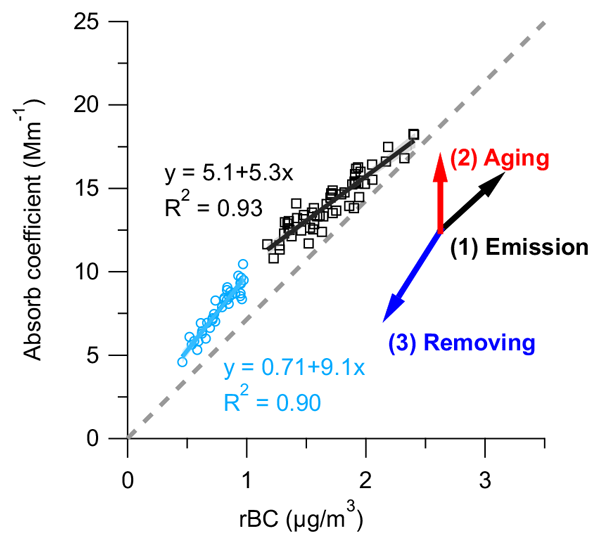
Black carbon warms our climate, but its atmospheric changes remain unclear. We measured individual urban particles with advanced instruments to track this process. We found that black carbon ages through distinct chemical reactions at night versus sunlight-driven processes during the day. Both pathways coat the particles, significantly increasing their ability to absorb light. This helps accurately predict their warming effects.
Baohua Cai, Yuanlong Huang, Wenqing Jiang, Yanchen Li, Yali Li, Jinghao Zhai, Yaling Zeng, Jianhuai Ye, Huizhong Shen, Chen Wang, Lei Zhu, Tzung-May Fu, Qi Zhang, and Xin Yang
Atmos. Chem. Phys., 26, 5713–5725, https://doi.org/10.5194/acp-26-5713-2026, https://doi.org/10.5194/acp-26-5713-2026, 2026
Short summary
Short summary
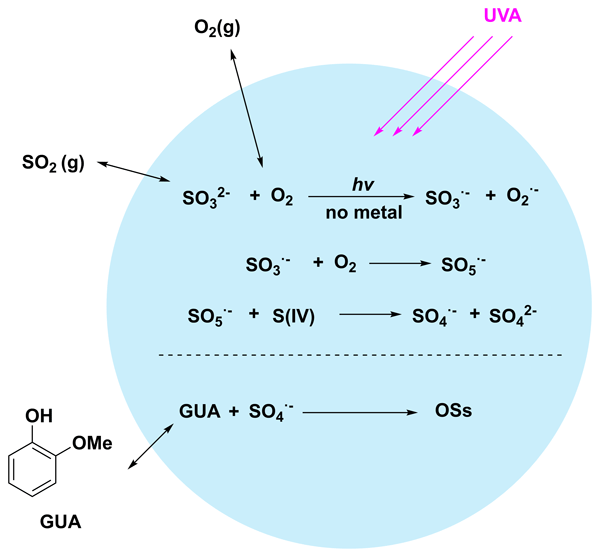
This study reveals a novel Ultraviolet A-driven, metal-free mechanism for aqueous-phase tetravalent sulfur (S(IV)) oxidation that leads to organosulfates formation, addressing a critical knowledge gap in atmospheric sulfur and organic aerosol chemistry and highlighting a previously overlooked photochemical pathway with broad environmental implications.
Dukun Chen, Weifeng Su, Shaojie Jiang, Honglong Yang, Chunsheng Zhang, Shutong Jiang, Dongyang Chang, Yuxin Liang, Hao Wang, Xin Yang, Tzung-May Fu, Zhenzhong Zeng, Lei Zhu, Huizhong Shen, Chen Wang, and Jianhuai Ye
Atmos. Chem. Phys., 26, 3607–3620, https://doi.org/10.5194/acp-26-3607-2026, https://doi.org/10.5194/acp-26-3607-2026, 2026
Short summary
Short summary
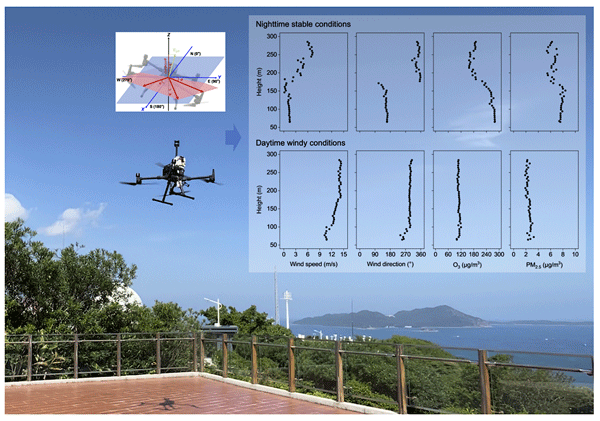
This research presents a sensor-free method to transform UAVs (unmanned aerial vehicles) into precise wind measurement platforms by calibrating their flight dynamics against wind. The approach quantifies how wind tilts the aircraft, enabling accurate estimation of wind speed and direction without additional sensors. This provides a low-cost, high-resolution monitoring of complex wind patterns, with applications in pollution tracking, air quality modeling, and operational safety in the emerging low-altitude economy.
Yaotong Cai, Baoni Li, Xiaoye Liu, Xin Jiang, Yakun Zhu, Shuxin Luo, Yingzuo Qin, Shudi Xie, Jianhuai Ye, Huizhong Shen, Zhilin Guo, Xiaoping Liu, and Zhenzhong Zeng
Earth Syst. Sci. Data Discuss., https://doi.org/10.5194/essd-2026-78, https://doi.org/10.5194/essd-2026-78, 2026
Preprint under review for ESSD
Short summary
Short summary
Persistent clouds and small farm sizes in Southeast Asia have historically hindered accurate mapping. We combined satellite imagery with advanced artificial intelligence to produce the first 10-meter annual cropland map for the region (2019–2024). Achieving over 92 % accuracy, our dataset reveals three to four times more farming on steep slopes than previously reported, providing a vital baseline for monitoring food security and deforestation risks.
Yuguang Zhu, Zhilin Guo, Sichen Wan, Kewei Chen, Yushan Wang, Zhenzhong Zeng, Huizhong Shen, Jianhuai Ye, and Chunmiao Zheng
Hydrol. Earth Syst. Sci., 30, 693–708, https://doi.org/10.5194/hess-30-693-2026, https://doi.org/10.5194/hess-30-693-2026, 2026
Short summary
Short summary
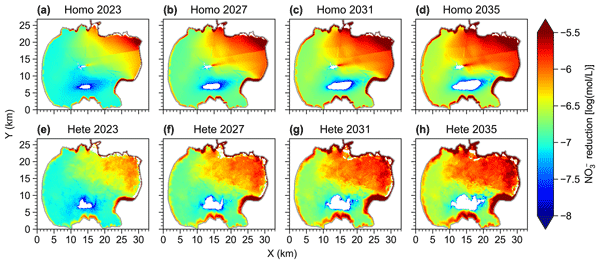
Long-term overuse of groundwater has lowered water levels and increased pollution in parts of northern China. We studied whether adding river water back into the ground can restore groundwater and reduce nitrate pollution. Using computer simulations based on field data, we found that recharge can significantly raise water levels and lower nitrate levels, mainly by dilution rather than natural removal processes.
Jinghao Zhai, Yujie Zhang, Baohua Cai, Yaling Zeng, Jingyi Zhang, Jianhuai Ye, Chen Wang, Tzung-May Fu, Lei Zhu, Huizhong Shen, and Xin Yang
Atmos. Chem. Phys., 26, 623–633, https://doi.org/10.5194/acp-26-623-2026, https://doi.org/10.5194/acp-26-623-2026, 2026
Short summary
Short summary
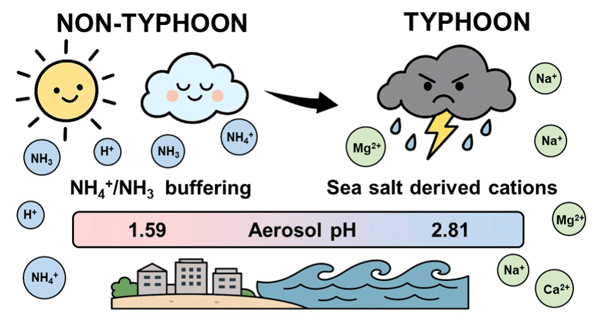
This work investigates the regulation of aerosol acidity in a coastal megacity under contrasting meteorological regimes. By integrating field observations with thermodynamic modeling, we show that ammonia and aerosol water dominate acidity control under typical conditions, whereas sea-salt cations prevail during typhoons. These findings reveal that extreme weather can alter the governing mechanisms of aerosol acidity, with implications for air quality and climate evaluation.
Yaotong Cai, Peng Zhu, Xing Li, Xiaoping Liu, Yuhe Chen, Qianhui Shen, Xiaocong Xu, Honghui Zhang, Sheng Nie, Cheng Wang, Jia Wang, Bingjie Li, Changjiang Wu, and Haoming Zhuang
Earth Syst. Sci. Data, 17, 6993–7018, https://doi.org/10.5194/essd-17-6993-2025, https://doi.org/10.5194/essd-17-6993-2025, 2025
Short summary
Short summary
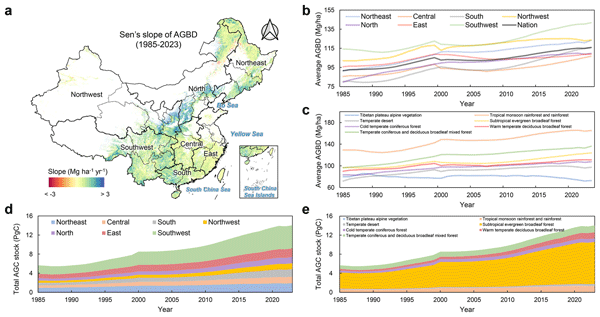
China’s forests play a crucial role in storing carbon and mitigating climate change, yet long-term high-resolution data on their biomass have been limited. We developed a 30 m annual forest aboveground biomass dataset from 1985 to 2023 using satellite data and deep learning. Our results reveal significant biomass gains, regional variations, and the impact of forest policies. This dataset provides valuable insights for climate research, conservation planning, and sustainable forest management.
Jinghao Zhai, Yin Zhang, Pengfei Liu, Yujie Zhang, Antai Zhang, Yaling Zeng, Baohua Cai, Jingyi Zhang, Chunbo Xing, Honglong Yang, Xiaofei Wang, Jianhuai Ye, Chen Wang, Tzung-May Fu, Lei Zhu, Huizhong Shen, Shu Tao, and Xin Yang
Atmos. Chem. Phys., 25, 7959–7972, https://doi.org/10.5194/acp-25-7959-2025, https://doi.org/10.5194/acp-25-7959-2025, 2025
Short summary
Short summary
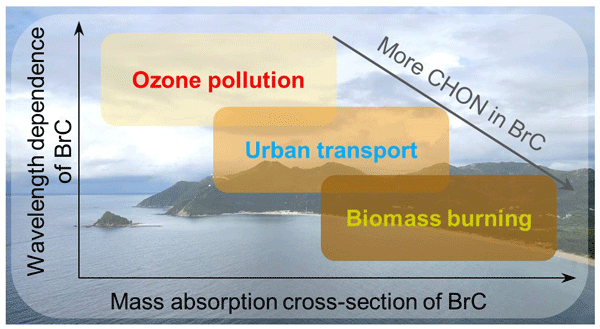
Our study shows that the optical properties of brown carbon depend on its source. Brown carbon from ozone pollution had the weakest light absorption but the strongest wavelength dependence, while biomass burning brown carbon showed the strongest absorption and the weakest wavelength dependence. Nitrogen-containing organic carbon compounds were identified as key light absorbers. These results improve understanding of brown carbon sources and help refine climate models.

Shao Shi, Jinghao Zhai, Xin Yang, Yechun Ruan, Yuanlong Huang, Xujian Chen, Antai Zhang, Jianhuai Ye, Guomao Zheng, Baohua Cai, Yaling Zeng, Yixiang Wang, Chunbo Xing, Yujie Zhang, Tzung-May Fu, Lei Zhu, Huizhong Shen, and Chen Wang
Atmos. Chem. Phys., 24, 7001–7012, https://doi.org/10.5194/acp-24-7001-2024, https://doi.org/10.5194/acp-24-7001-2024, 2024
Short summary
Short summary
The determination of ions in the mass spectra of individual particles remains uncertain. We have developed a standard-free mass calibration algorithm applicable to more than 98 % of ambient particles. With our algorithm, ions with ~ 0.05 Th mass difference could be determined. Therefore, many more atmospheric species could be determined and involved in the source apportionment of aerosols, the study of chemical reaction mechanisms, and the analysis of single-particle mixing states.
Yi Liu, Lihong Zhou, Yingzuo Qin, Cesar Azorin-Molina, Cheng Shen, Rongrong Xu, and Zhenzhong Zeng
Atmos. Meas. Tech., 17, 1123–1131, https://doi.org/10.5194/amt-17-1123-2024, https://doi.org/10.5194/amt-17-1123-2024, 2024
Short summary
Short summary
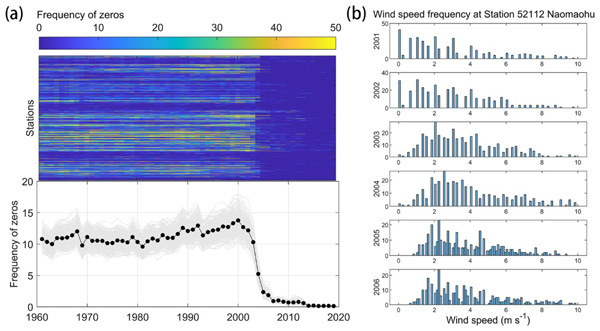
Our research analyzed China's wind speed data and addressed inconsistencies caused by factors like equipment changes and station relocations. After improving data quality, China's recent wind speed decrease reduced by 41 %, revealing an increasing trend. This emphasizes the importance of rigorous data processing for accurate trend assessments in various research fields.
Feng Yang and Zhenzhong Zeng
Earth Syst. Sci. Data, 15, 4011–4021, https://doi.org/10.5194/essd-15-4011-2023, https://doi.org/10.5194/essd-15-4011-2023, 2023
Short summary
Short summary
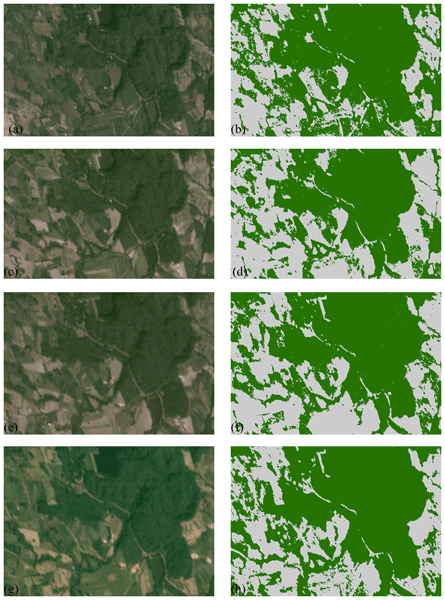
We generated a 4.77 m resolution annual tree cover map product for Southeast Asia (SEA) for 2016–2021 using Planet-NICFI and Sentinel-1 imagery. Maps were created with good accuracy and high consistency during 2016–2021. The baseline maps at 4.77 m can be converted to forest cover maps for SEA at various resolutions to meet different users’ needs. Our products can help resolve rounding errors in forest cover mapping by counting isolated trees and monitoring long, narrow forest cover removal.
Bingjie Li, Xiaocong Xu, Xiaoping Liu, Qian Shi, Haoming Zhuang, Yaotong Cai, and Da He
Earth Syst. Sci. Data, 15, 2347–2373, https://doi.org/10.5194/essd-15-2347-2023, https://doi.org/10.5194/essd-15-2347-2023, 2023
Short summary
Short summary
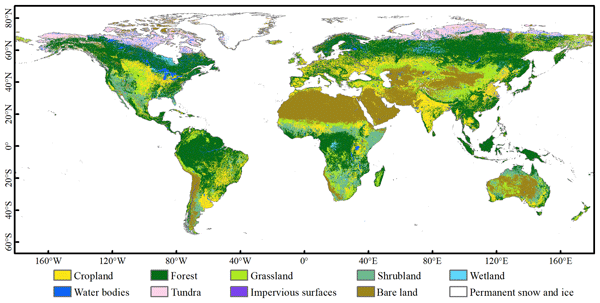
A global land cover map with fine spatial resolution is important for climate and environmental studies, food security, or biodiversity conservation. In this study, we developed an improved global land cover map in 2015 with 30 m resolution (GLC-2015) by fusing the existing land cover products based on the Dempster–Shafer theory of evidence on the Google Earth Engine platform. The GLC-2015 performed well, with an OA of 79.5 % (83.6 %) assessed with the global point-based (patch-based) samples.
Y. Cai, Q. Shi, and X. Liu
Int. Arch. Photogramm. Remote Sens. Spatial Inf. Sci., XLVIII-3-W1-2022, 1–6, https://doi.org/10.5194/isprs-archives-XLVIII-3-W1-2022-1-2022, https://doi.org/10.5194/isprs-archives-XLVIII-3-W1-2022-1-2022, 2022
Adrian Chappell, Nicholas Webb, Mark Hennen, Charles Zender, Philippe Ciais, Kerstin Schepanski, Brandon Edwards, Nancy Ziegler, Sandra Jones, Yves Balkanski, Daniel Tong, John Leys, Stephan Heidenreich, Robert Hynes, David Fuchs, Zhenzhong Zeng, Marie Ekström, Matthew Baddock, Jeffrey Lee, and Tarek Kandakji
Geosci. Model Dev. Discuss., https://doi.org/10.5194/gmd-2021-337, https://doi.org/10.5194/gmd-2021-337, 2021
Revised manuscript not accepted
Short summary
Short summary
Dust emissions influence global climate while simultaneously reducing the productive potential and resilience of landscapes to climate stressors, together impacting food security and human health. Our results indicate that tuning dust emission models to dust in the atmosphere has hidden dust emission modelling weaknesses and its poor performance. Our new approach will reduce uncertainty and driven by prognostic albedo improve Earth System Models of aerosol effects on future environmental change.
Cited articles
Armstrong, A., Page, T., Thackeray, S. J., Hernandez, R. R., and Jones, I. D.: Integrating environmental understanding into freshwater floatovoltaic deployment using an effects hierarchy and decision trees, Environ. Res. Lett., 15, 114055, https://doi.org/10.1088/1748-9326/abbf7b, 2020.
Bai, B., Xiong, S., Ma, X., and Liao, X.: Assessment of floating solar photovoltaic potential in China, Renew. Energy, 220, 119572, https://doi.org/10.1016/j.renene.2023.119572, 2024.
Belgiu, M. and Drăguţ, L.: Random forest in remote sensing: A review of applications and future directions, ISPRS J. Photogramm. Remote Sens., 114, 24–31, https://doi.org/10.1016/j.isprsjprs.2016.01.011, 2016.
Bogdanov, D., Ram, M., Aghahosseini, A., Gulagi, A., Oyewo, A. S., Child, M., Caldera, U., Sadovskaia, K., Farfan, J., De Souza Noel Simas Barbosa, L., Fasihi, M., Khalili, S., Traber, T., and Breyer, C.: Low-cost renewable electricity as the key driver of the global energy transition towards sustainability, Energy, 227, 120467, https://doi.org/10.1016/j.energy.2021.120467, 2021.
Capellán-Pérez, I., De Castro, C., and Arto, I.: Assessing vulnerabilities and limits in the transition to renewable energies: Land requirements under 100 % solar energy scenarios, Renew. Sustain. Energy Rev., 77, 760–782, https://doi.org/10.1016/j.rser.2017.03.137, 2017.
Château, P.-A., Wunderlich, R. F., Wang, T.-W., Lai, H.-T., Chen, C.-C., and Chang, F.-J.: Mathematical modeling suggests high potential for the deployment of floating photovoltaic on fish ponds, Sci. Total Environ., 687, 654–666, https://doi.org/10.1016/j.scitotenv.2019.05.420, 2019.
Chen, D., Peng, Q., Lu, J., Huang, P., Liu, Y., and Peng, F.: Assessing effect of water photovoltaics on nearby water surface temperature using remote sensing techniques, Adv. Space Res., 75, 138–147, https://doi.org/10.1016/j.asr.2024.08.040, 2025.
Chen, L.-C., Zhu, Y., Papandreou, G., Schroff, F., and Adam, H.: Encoder–decoder with atrous separable convolution for semantic image segmentation, in: Computer Vision – ECCV 2018, edited by: Ferrari, V., Hebert, M., Sminchisescu, C., and Weiss, Y., Lecture Notes in Computer Science, vol. 11211, Springer, Cham, Switzerland, 833–851, https://doi.org/10.1007/978-3-030-01234-2_49, 2018.
Chen, Y., Zhou, J., Ge, Y., and Dong, J.: Uncovering the rapid expansion of photovoltaic power plants in China from 2010 to 2022 using satellite data and deep learning, Remote Sens. Environ., 305, 114100, https://doi.org/10.1016/j.rse.2024.114100, 2024.
Chen, Z., Kang, Y., Sun, Z., Wu, F., and Zhang, Q.: Extraction of photovoltaic plants using machine learning methods: A case study of the pilot energy city of Golmud, China, Remote Sens., 14, 2697, https://doi.org/10.3390/rs14112697, 2022.
Chu, H.-J. and He, Y.-C.: Remote sensing water quality inversion using sparse representation: Chlorophyll-a retrieval from Sentinel-2 MSI data, Remote Sens. Appl. Soc. Environ., 31, 101006, https://doi.org/10.1016/j.rsase.2023.101006, 2023.
Essak, L. and Ghosh, A.: Floating photovoltaics: A review, Clean Technol., 4, 752–769, https://doi.org/10.3390/cleantechnol4030046, 2022.
Exley, G., Armstrong, A., Page, T., and Jones, I. D.: Floating photovoltaics could mitigate climate change impacts on water body temperature and stratification, Sol. Energy, 219, 24–33, https://doi.org/10.1016/j.solener.2021.01.076, 2021.
Feng, Q., Niu, B., Ren, Y., Su, S., Wang, J., Shi, H., Yang, J., and Han, M.: A 10-m national-scale map of ground-mounted photovoltaic power stations in China of 2020, Sci. Data, 11, 198, https://doi.org/10.1038/s41597-024-02994-x, 2024.
Forester, E., Levin, M. O., Thorne, J. H., Armstrong, A., Pasquale, G., Di Blasi, M. L. V., Scott, T. A., and Hernandez, R. R.: Siting considerations for floating solar photovoltaic energy: A systematic review, Renew. Sustain. Energy Rev., 211, 115360, https://doi.org/10.1016/j.rser.2025.115360, 2025.
General Office of the Ministry of Water Resources of the People's Republic of China: Notice on further strengthening the management of construction projects within river and lake management scope, Ban He Hu [2020] No. 177, Ministry of Water Resources of the People's Republic of China, Beijing, China, http://www.mwr.gov.cn/zwgk/gknr/202510/t20251001_2079778.html (last access: 1 April 2026), 2020.
Gorelick, N., Hancher, M., Dixon, M., Ilyushchenko, S., Thau, D., and Moore, R.: Google Earth Engine: Planetary-scale geospatial analysis for everyone, Remote Sens. Environ., 202, 18–27, https://doi.org/10.1016/j.rse.2017.06.031, 2017.
Haralick, R. M., Shanmugam, K., and Dinstein, I.: Textural features for image classification, IEEE Trans. Syst. Man Cybern., SMC-3, 610–621, https://doi.org/10.1109/TSMC.1973.4309314, 1973.
Hirayama, H., Sharma, R. C., Tomita, M., and Hara, K.: Evaluating multiple classifier system for the reduction of salt-and-pepper noise in the classification of very-high-resolution satellite images, Int. J. Remote Sens., 40, 2542–2557, https://doi.org/10.1080/01431161.2018.1528400, 2019.
International Energy Agency (IEA): Global Energy Review 2025, IEA, Paris, France, https://www.iea.org/reports/global-energy-review-2025 (last access: 1 April 2026), 2025.
Iqra, K. J. G. and Javed, M.: Small object detection in diverse application landscapes: A survey, Multimed. Tools Appl., 83, 88645–88680, https://doi.org/10.1007/s11042-024-18866-w, 2024.
Jin, Y., Hu, S., Ziegler, A. D., Gibson, L., Campbell, J. E., Xu, R., Chen, D., Zhu, K., Zheng, Y., Ye, B., Ye, F., and Zeng, Z.: Energy production and water savings from floating solar photovoltaics on global reservoirs, Nat. Sustain., 6, 865–874, https://doi.org/10.1038/s41893-023-01089-6, 2023.
Kruitwagen, L., Story, K. T., Friedrich, J., Byers, L., Skillman, S., and Hepburn, C.: A global inventory of photovoltaic solar energy generating units, Nature, 598, 604–610, https://doi.org/10.1038/s41586-021-03957-7, 2021.
Lehner, B., Liermann, C. R., Revenga, C., Vörösmarty, C., Fekete, B., Crouzet, P., Döll, P., Endejan, M., Frenken, K., Magome, J., Nilsson, C., Robertson, J. C., Rödel, R., Sindorf, N., and Wisser, D.: High-resolution mapping of the world's reservoirs and dams for sustainable river-flow management, Front. Ecol. Environ., 9, 494–502, https://doi.org/10.1890/100125, 2011.
Ma, C. and Liu, Z.: Water-surface photovoltaics: Performance, utilization, and interactions with water eco-environment, Renew. Sustain. Energy Rev., 167, 112823, https://doi.org/10.1016/j.rser.2022.112823, 2022.
Messager, M. L., Lehner, B., Grill, G., Nedeva, I., and Schmitt, O.: Estimating the volume and age of water stored in global lakes using a geo-statistical approach, Nat. Commun., 7, 13603, https://doi.org/10.1038/ncomms13603, 2016.
Mulligan, M., van Soesbergen, A., and Sáenz, L.: GOODD, a global dataset of more than 38,000 georeferenced dams, Sci. Data, 7, 31, https://doi.org/10.1038/s41597-020-0362-5, 2020.
Nobre, R., Boulêtreau, S., Colas, F., Azemar, F., Tudesque, L., Parthuisot, N., Favriou, P., and Cucherousset, J.: Potential ecological impacts of floating photovoltaics on lake biodiversity and ecosystem functioning, Renew. Sustain. Energy Rev., 188, 113852, https://doi.org/10.1016/j.rser.2023.113852, 2023.
Ortiz, A., Negandhi, D., Mysorekar, S. R., Nagaraju, S. K., Kiesecker, J., Robinson, C., Bhatia, P., Khurana, A., Wang, J., Oviedo, F., and Ferres, J. L.: An artificial intelligence dataset for solar energy locations in India, Sci. Data, 9, 497, https://doi.org/10.1038/s41597-022-01499-9, 2022.
Pouran, H. M., Padilha Campos Lopes, M., Nogueira, T., Alves Castelo Branco, D., and Sheng, Y.: Environmental and technical impacts of floating photovoltaic plants as an emerging clean energy technology, iScience, 25, 105253, https://doi.org/10.1016/j.isci.2022.105253, 2022.
Pringle, A. M., Handler, R. M., and Pearce, J. M.: Aquavoltaics: Synergies for dual use of water area for solar photovoltaic electricity generation and aquaculture, Renew. Sustain. Energy Rev., 80, 572–584, https://doi.org/10.1016/j.rser.2017.05.191, 2017.
Robinson, C., Ortiz, A., Kim, A., Dodhia, R., Zolli, A., Nagaraju, S. K., Oakleaf, J., Kiesecker, J., and Lavista Ferres, J. M.: Global Renewables Watch: A temporal dataset of solar and wind energy derived from satellite imagery, arXiv [preprint], https://doi.org/10.48550/arXiv.2503.14860, 2025.
Ronneberger, O., Fischer, P., and Brox, T.: U-Net: Convolutional networks for biomedical image segmentation, in: Medical Image Computing and Computer-Assisted Intervention – MICCAI 2015, edited by: Navab, N., Hornegger, J., Wells, W. M., and Frangi, A. F., Lecture Notes in Computer Science, vol. 9351, Springer, Cham, Switzerland, 234–241, https://doi.org/10.1007/978-3-319-24574-4_28, 2015.
Sahu, A., Yadav, N., and Sudhakar, K.: Floating photovoltaic power plant: A review, Renew. Sustain. Energy Rev., 66, 815–824, https://doi.org/10.1016/j.rser.2016.08.051, 2016.
Shi, W., Yan, C., Ren, Z., Yuan, Z., Liu, Y., Zheng, S., Li, X., and Han, X.: Review on the development of marine floating photovoltaic systems, Ocean Eng., 286, 115560, https://doi.org/10.1016/j.oceaneng.2023.115560, 2023.
Valerio, F., Godinho, S., Ferraz, G., Pita, R., Gameiro, J., Silva, B., Marques, A. T., and Silva, J. P.: Multi-temporal remote sensing of inland surface waters: A fusion of Sentinel-1 & Sentinel-2 data applied to small seasonal ponds in semiarid environments, Int. J. Appl. Earth Obs. Geoinf., 135, 104283, https://doi.org/10.1016/j.jag.2024.104283, 2024.
van de Ven, D.-J., Capellán-Pérez, I., Arto, I., Cazcarro, I., De Castro, C., Patel, P., and Gonzalez-Eguino, M.: The potential land requirements and related land use change emissions of solar energy, Sci. Rep., 11, 2907, https://doi.org/10.1038/s41598-021-82042-5, 2021.
Wang, J., Walter, B. A., Yao, F., Song, C., Ding, M., Maroof, A. S., Zhu, J., Fan, C., McAlister, J. M., Sikder, S., Sheng, Y., Allen, G. H., Crétaux, J.-F., and Wada, Y.: GeoDAR: georeferenced global dams and reservoirs dataset for bridging attributes and geolocations, Earth Syst. Sci. Data, 14, 1869–1899, https://doi.org/10.5194/essd-14-1869-2022, 2022a.
Wang, L., Bie, W., Li, H., Liao, T., Ding, X., Wu, G., and Fei, T.: Small water body detection and water quality variations with changing human activity intensity in Wuhan, Remote Sens., 14, 200, https://doi.org/10.3390/rs14010200, 2022b.
Wei, S., Chen, Y., and Zeng, Z.: An unexpectedly large proportion of photovoltaic facilities installed on cropland, The Innovation Energy, 2, 100070, https://doi.org/10.59717/j.xinn-energy.2024.100070, 2025.
Woolway, R. I., Zhao, G., Rocha, S. M. G., Thackeray, S. J., and Armstrong, A.: Decarbonization potential of floating solar photovoltaics on lakes worldwide, Nat. Water, 2, 566–576, https://doi.org/10.1038/s44221-024-00251-4, 2024.
Xia, Z., Li, Y., Guo, X., and Chen, R.: High-resolution mapping of water photovoltaic development in China through satellite imagery, Int. J. Appl. Earth Obs. Geoinf., 107, 102707, https://doi.org/10.1016/j.jag.2022.102707, 2022.
Xia, Z., Li, Y., Guo, S., Chen, R., Zhang, W., Zhang, P., and Du, P.: Mapping global water-surface photovoltaics with satellite images, Renew. Sustain. Energy Rev., 187, 113760, https://doi.org/10.1016/j.rser.2023.113760, 2023.
Xu, C., Xie, D., Gu, C., Zhao, P., Wang, X., and Wang, Y.: Sustainable development pathways for energies in Yangtze River Delta urban agglomeration, Sci. Rep., 13, 18135, https://doi.org/10.1038/s41598-023-44727-x, 2023.
Yan, Y., Jiang, X., Wei, S., Jin, Y., Zou, X., Liu, J., Cai, Y., Ye, J., Guo, Z., and Zeng, Z.: Yangtze River Delta Water-Surface Photovoltaics Dataset (2015–2024), Zenodo [data set], https://doi.org/10.5281/zenodo.17484488, 2025.
Zhang, H., Tian, P., Zhong, J., Liu, Y., and Li, J.: Mapping photovoltaic panels in coastal China using Sentinel-1 and Sentinel-2 images and Google Earth Engine, Remote Sens., 15, 3712, https://doi.org/10.3390/rs15153712, 2023.
Zhang, X., Zeraatpisheh, M., Rahman, M. M., Wang, S., and Xu, M.: Texture is important in improving the accuracy of mapping photovoltaic power plants: A case study of Ningxia Autonomous Region, China, Remote Sens., 13, 3909, https://doi.org/10.3390/rs13193909, 2021.
Zhang, X., Xu, M., Wang, S., Huang, Y., and Xie, Z.: Mapping photovoltaic power plants in China using Landsat, random forest, and Google Earth Engine, Earth Syst. Sci. Data, 14, 3743–3755, https://doi.org/10.5194/essd-14-3743-2022, 2022.
Short summary
Floating solar is growing rapidly in China, but its long-term development remains poorly documented. We created a decade-long map of floating solar installations in the Yangtze River Delta using satellite observations and visual verification. The mapped area increased from 17.4 square kilometers in 2015 to 145.4 square kilometers in 2024. This dataset supports renewable energy planning and future studies of environmental changes related to floating solar expansion.
Floating solar is growing rapidly in China, but its long-term development remains poorly...


Altmetrics
Final-revised paper
Preprint