Articles | Volume 18, issue 8
https://doi.org/10.5194/essd-18-5939-2026
© Author(s) 2026. This work is distributed under
the Creative Commons Attribution 4.0 License.
the Creative Commons Attribution 4.0 License.
https://doi.org/10.5194/essd-18-5939-2026
© Author(s) 2026. This work is distributed under
the Creative Commons Attribution 4.0 License.
the Creative Commons Attribution 4.0 License.
Data description article
| 
21 Aug 2026
Data description article |
| 21 Aug 2026
| 21 Aug 2026
Correction of the Observatoire Haute Provence electrochemical concentration cell (ECC) ozonesonde long-term data record over the 2002–2007 period
Sachiko Okamoto
CORRESPONDING AUTHOR

LATMOS, Sorbonne Université, Université Versailles St-Quentin, CNRS/INSU, Paris, France
now at: National Institute for Environmental Studies, Tsukuba, 350-8506, Japan
Gérard Ancellet
CORRESPONDING AUTHOR
LATMOS, Sorbonne Université, Université Versailles St-Quentin, CNRS/INSU, Paris, France
Sophie Godin-Beekmann
LATMOS, Sorbonne Université, Université Versailles St-Quentin, CNRS/INSU, Paris, France
Renaud Bodichon
IPSL, Sorbonne Université, Université Versailles St-Quentin, CNRS/INSU, Paris, France
Related authors
Sachiko Okamoto, Juan Cuesta, Gaëlle Dufour, Maxim Eremenko, Kazuyuki Miyazaki, Cathy Boonne, Hiroshi Tanimoto, Jeff Peischl, and Chelsea Thompson
Atmos. Chem. Phys., 26, 4685–4709, https://doi.org/10.5194/acp-26-4685-2026, https://doi.org/10.5194/acp-26-4685-2026, 2026
Short summary
Short summary
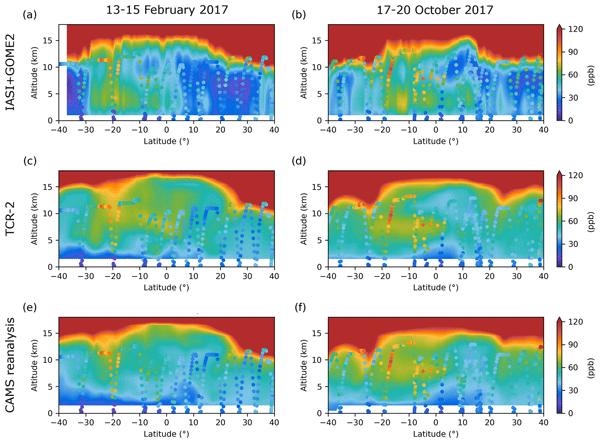
We analyse the distribution of tropospheric ozone over the Atlantic during February and October 2017 using a multispectral satellite synergism called IASI+GOME2, two chemistry reanalysis products and in situ airborne measurements. It reveals that a significant overestimation of two chemistry reanalysis products of lowermost troposphere ozone over the Atlantic in the Northern Hemisphere due to the overestimations of ozone precursors from anthropogenic sources from North America.
Yange Deng, Hiroshi Tanimoto, Kohei Ikeda, Sohiko Kameyama, Sachiko Okamoto, Jinyoung Jung, Young Jun Yoon, Eun Jin Yang, and Sung-Ho Kang
Atmos. Chem. Phys., 24, 6339–6357, https://doi.org/10.5194/acp-24-6339-2024, https://doi.org/10.5194/acp-24-6339-2024, 2024
Short summary
Short summary
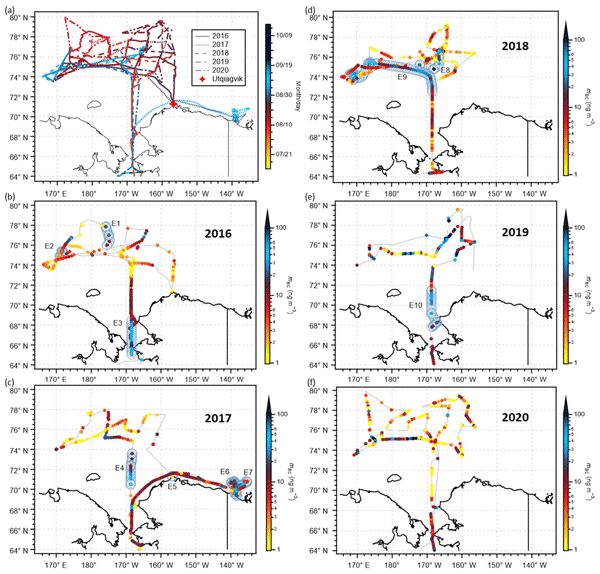
Black carbon (BC) aerosols play important roles in Arctic climate change, yet they are not well understood because of limited observational data. We observed BC mass concentrations (mBC) in the western Arctic Ocean during summer and early autumn 2016–2020. The mean mBC in 2019 was much higher than in other years. Biomass burning was likely the dominant BC source. Boreal fire BC transport occurring near the surface and/or in the mid-troposphere contributed to high-BC events in the Arctic Ocean.
Sachiko Okamoto, Juan Cuesta, Matthias Beekmann, Gaëlle Dufour, Maxim Eremenko, Kazuyuki Miyazaki, Cathy Boonne, Hiroshi Tanimoto, and Hajime Akimoto
Atmos. Chem. Phys., 23, 7399–7423, https://doi.org/10.5194/acp-23-7399-2023, https://doi.org/10.5194/acp-23-7399-2023, 2023
Short summary
Short summary
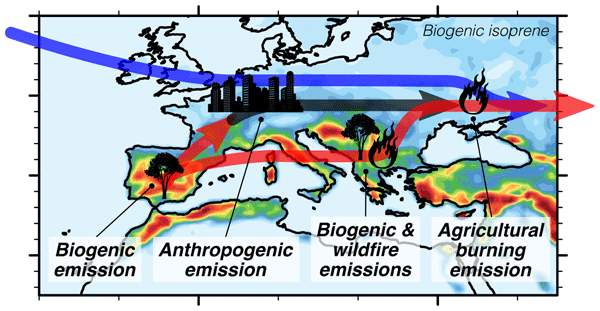
We present a detailed analysis of the daily evolution of the lowermost tropospheric ozone documented by IASI+GOME2 multispectral satellite observations and that of its precursors from TCR-2 tropospheric chemistry reanalysis. It reveals that the ozone outbreak across Europe in July 2017 was produced during favorable condition for photochemical production of ozone and was associated with multiple sources of ozone precursors: biogenic, anthropogenic, and biomass burning emissions.
Joris Weinzaepflen, François Ravetta, Stéphane Victori, Gérard Ancellet, Cristelle Cailteau-Fischbach, Vincent Mariage, Frédéric Delahaye, Frédéric Gérôme, and Fetah Benabid
EGUsphere, https://doi.org/10.5194/egusphere-2026-2631, https://doi.org/10.5194/egusphere-2026-2631, 2026
Short summary
Short summary
This study presents a compact ozone lidar designed to monitor ozone in the lower atmosphere over urban areas. The instrument uses a new optical fiber technology to generate ultraviolet laser light while reducing size and enabling more autonomous operation compared with existing instruments. First measurements in Paris successfully captured ozone variations up to nearly two kilometers altitude, demonstrating the potential of compact lidar systems for continuous urban air quality monitoring.
Eddy Poncet, Sergey Khaykin, Sophie Godin-Beekmann, and Thierry Leblanc
EGUsphere, https://doi.org/10.5194/egusphere-2026-4358, https://doi.org/10.5194/egusphere-2026-4358, 2026
Short summary
Short summary
High particles in the atmosphere affect climate and the ozone layer, so measurements from a new European-Japanese satellite, EarthCARE (launched 2024), need checking. We compared its laser data with a trusted instrument on the International Space Station and two ground stations, in clear, volcanic and wildfire conditions. A method using the satellite's raw signal stayed accurate even when particles were scarce, unlike the standard product, so we recommend it for reliable long-term monitoring.
Louis Mirallie, Eliane Maillard Barras, Caroline Jonas, Corinne Vigouroux, Roeland Van Malderen, Irina Petropavlovskikh, Sophie Godin-Beekmann, Thierry Leblanc, Wolfgang Steinbrecht, Antoine Vadès, Rolf Ruefenacht, Alexander Haefele, Gunter Stober, Peter Effertz, Julian Gröbner, Gerard Ancellet, María Cazorla, Petra Duff, Matthias M. Frey, Michael Gill, James W. Hannigan, Nicholas Jones, Rigel Kivi, Raphael Köhler, Bogumil Kois, Debra E. Kollonige, Emmanuel Mahieu, Glen McConville, Johan Mellqvist, Gary Morris, Isao Murata, Tomoo Nagahama, Gerald E. Nedoluha, Shin-Ya Ogino, Richard Querel, Ryan M. Stauffer, Wolfgang Stremme, Kimberly Strong, Ralf Sussmann, Anne M. Thompson, and Yana Virolainen
Atmos. Chem. Phys., 26, 10303–10330, https://doi.org/10.5194/acp-26-10303-2026, https://doi.org/10.5194/acp-26-10303-2026, 2026
Short summary
Short summary
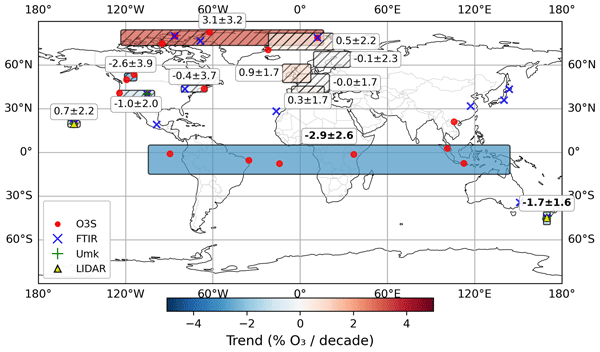
We present regional Bayesian composites of ground-based ozone partial column records. Defining coherent regions using a CAMS (Copernicus Atmosphere Monitoring Service) representativeness study, we merge five instrument types using the BASIC (Ball et al., 2017) algorithm, reducing trend uncertainties by 9.4 % compared to a weighted mean. Results confirm upper stratospheric recovery, predominantly negative middle stratospheric trends, while lower stratospheric trends remain mostly non-significant.
Irina Petropavlovskikh, Martine De Mazière, Anne M. Thompson, Jeannette D. Wild, James W. Hannigan, Henry B. Selkirk, Reem A. Hannun, Wolfgang Steinbrecht, Jean-Christopher Lambert, Roeland Van Malderen, Elizabeth Asher, Raul R. Cordero, Sophie Godin-Beekmann, Daan Hubert, Sergey Khaykin, Karin Kreher, Thierry Leblanc, Emmanuel Mahieu, Eliane Maillard Barras, Glen McConville, Gerald Nedoluha, Ivan Ortega, Alberto Redondas Marrero, Gunther Seckmeyer, Ryan M. Stauffer, Sarah A. Strode, Kim Strong, Takafumi Sugita, Michel Van Roozendael, Voltaire Velazco, Corinne Vigouroux, and Bärbel Vogel
Atmos. Chem. Phys., 26, 8637–8675, https://doi.org/10.5194/acp-26-8637-2026, https://doi.org/10.5194/acp-26-8637-2026, 2026
Short summary
Short summary
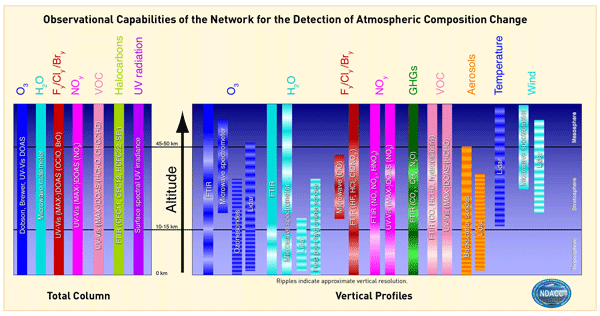
This introduction to the special issue "Achievements and perspectives of the Network for the Detection of Atmospheric Composition Change after 35 years of operation” provides an overview of important research findings achieved under the NDACC objectives. The future of NDACC is discussed in the light of the evolution of the scientific questions, evolving collaborations with partners and Cooperating Networks, and the current landscape of gaps in satellite and ground-based observations.
Viktoria F. Sofieva, Monika E. Szelag, Natalya A. Kramarova, Robert Damadeo, Wolfgang Steinbrecht, Irina Petropavlovskikh, Corinne Vigouroux, Eliane Maillard Barras, Daniel Zawada, Kleareti Tourpali, Stacey M. Frith, Jeannette D. Wild, Sean M. Davis, Carlo Arosio, Mark Weber, Alexei Rozanov, Brian Auffarth, Lucien Froidevaux, Ryan Fuller, Doug Degenstein, Kimberlee Dube, Peter Effertz, Thierry Leblanc, Gérard Ancellet, Sophie Godin-Beekmann, Glen McConville, Richard Querel, Dan Smale, Marie-Renee DeBacker, Emmanuel Mahieu, and Ralf Sussmann
Atmos. Chem. Phys., 26, 7387–7405, https://doi.org/10.5194/acp-26-7387-2026, https://doi.org/10.5194/acp-26-7387-2026, 2026
Short summary
Short summary
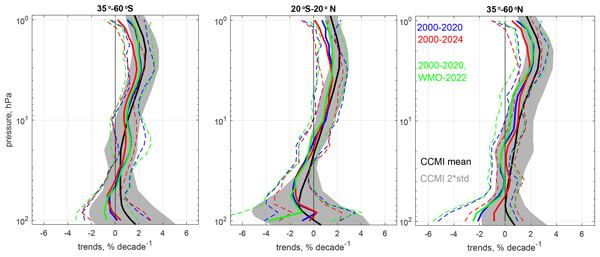
We present an updated evaluation of stratospheric ozone profile trends in the 60°S–60°N latitude range using long-term ground-based and satellite climate data records, as well as simulations by chemistry-climate models. Analyses confirm the statistically significant positive ozone trends in the upper stratosphere of ~1–3 % decade-1. The trends are close to zero in the middle stratosphere, and mostly negative in the lower stratosphere, but they are not statistically significant.
Sachiko Okamoto, Juan Cuesta, Gaëlle Dufour, Maxim Eremenko, Kazuyuki Miyazaki, Cathy Boonne, Hiroshi Tanimoto, Jeff Peischl, and Chelsea Thompson
Atmos. Chem. Phys., 26, 4685–4709, https://doi.org/10.5194/acp-26-4685-2026, https://doi.org/10.5194/acp-26-4685-2026, 2026
Short summary
Short summary
We analyse the distribution of tropospheric ozone over the Atlantic during February and October 2017 using a multispectral satellite synergism called IASI+GOME2, two chemistry reanalysis products and in situ airborne measurements. It reveals that a significant overestimation of two chemistry reanalysis products of lowermost troposphere ozone over the Atlantic in the Northern Hemisphere due to the overestimations of ozone precursors from anthropogenic sources from North America.
Sergey Khaykin, Michaël Sicard, Thierry Leblanc, Tetsu Sakai, Nickolay Balugin, Gwenaël Berthet, Stëphane Chevrier, Fernando Chouza, Artem Feofilov, Dominique Gantois, Sophie Godin-Beekmann, Arezki Haddouche, Yoshitaka Jin, Isamu Morino, Nicolas Kadygrov, Thomas Lecas, Ben Liley, Richard Querel, Ghasssan Taha, and Vladimir Yushkov
Atmos. Chem. Phys., 26, 607–622, https://doi.org/10.5194/acp-26-607-2026, https://doi.org/10.5194/acp-26-607-2026, 2026
Short summary
Short summary
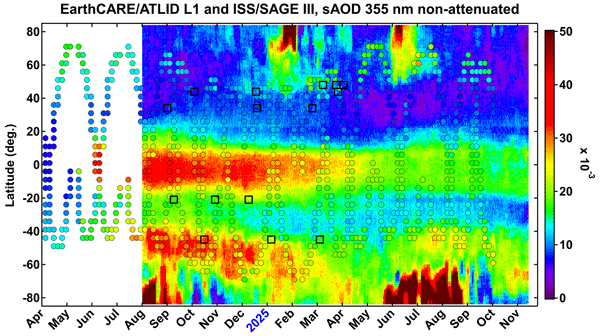
In April 2024, the Ruang volcano in Indonesia sent large amounts of gas and particles high into the atmosphere, which then spread worldwide. Using the new European EarthCARE satellite and its advanced laser instrument ATLID (Atmospheric LIDar), together with ground and balloon observations, we tracked how these particles doubled levels in the tropics and spread into both hemispheres. The study shows ATLID’s power to reveal how eruptions can affect climate, clouds, and ozone for more than a year.
Sergey Khaykin, Slimane Bekki, Sophie Godin-Beekmann, Michael D. Fromm, Philippe Goloub, Qiaoyun Hu, Béatrice Josse, Alexandra Laeng, Mehdi Meziane, David A. Peterson, Sophie Pelletier, and Valérie Thouret
Atmos. Chem. Phys., 25, 14551–14571, https://doi.org/10.5194/acp-25-14551-2025, https://doi.org/10.5194/acp-25-14551-2025, 2025
Short summary
Short summary
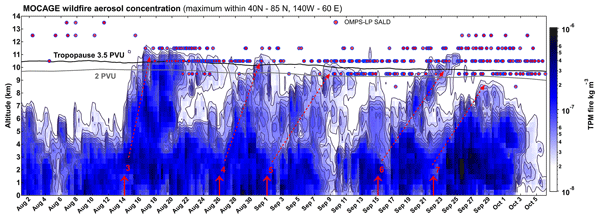
In 2023, massive wildfires in Canada injected huge amounts of smoke into the atmosphere. Surprisingly, despite their intensity, the smoke did not rise very high but lingered at flight cruising altitudes, causing widespread pollution. This study shows how two different pathways lifted smoke into the lower stratosphere and reveals new insights into how wildfires affect air quality and climate, challenging what we thought we knew about fire and atmospheric impacts.
Gaëlle Dufour, Maxim Eremenko, Juan Cuesta, Gérard Ancellet, Michael Gill, Eliane Maillard Barras, and Roeland Van Malderen
Atmos. Meas. Tech., 18, 5049–5070, https://doi.org/10.5194/amt-18-5049-2025, https://doi.org/10.5194/amt-18-5049-2025, 2025
Short summary
Short summary
Tropospheric ozone from the three Infrared Atmospheric Sounding Interferometer (IASI) instruments is very consistent (<1 %). The validation against homogenized ozone sondes reveals an overall good agreement with slight biases (3 %–6 %) in tropospheric ozone and a possible temporal drift, but this is difficult to assess due to the limited number of sites. No specific trends are estimated for the tropospheric ozone column for the period 2008–2022, but persistent negative trends are observed in the lower troposphere.
Tristan Millet, Hassan Bencherif, Thierry Portafaix, Nelson Bègue, Alexandre Baron, Valentin Duflot, Cathy Clerbaux, Pierre-François Coheur, Andrea Pazmiño, Michaël Sicard, Anne Boynard, Jean-Marc Metzger, Guillaume Payen, Nicolas Marquestaut, and Sophie Godin-Beekmann
Atmos. Chem. Phys., 25, 10887–10905, https://doi.org/10.5194/acp-25-10887-2025, https://doi.org/10.5194/acp-25-10887-2025, 2025
Short summary
Short summary
On 15 January 2022, the Hunga volcano erupted, releasing sulfur dioxide and water vapor into the stratosphere, impacting ozone levels over the Indian Ocean. Satellite data show the presence of a transient ozone depletion event related to the water vapor anomalies and sulfate aerosol clouds. Ozone reduction was confined to two distinct layers. On 21 January, the fifth percentile of total and stratospheric column ozone anomalies reached −18.6 and −14.5 DU, respectively.
Irina Petropavlovskikh, Jeannette D. Wild, Kari Abromitis, Peter Effertz, Koji Miyagawa, Lawrence E. Flynn, Eliane Maillard Barras, Robert Damadeo, Glen McConville, Bryan Johnson, Patrick Cullis, Sophie Godin-Beekmann, Gerard Ancellet, Richard Querel, Roeland Van Malderen, and Daniel Zawada
Atmos. Chem. Phys., 25, 2895–2936, https://doi.org/10.5194/acp-25-2895-2025, https://doi.org/10.5194/acp-25-2895-2025, 2025
Short summary
Short summary
Observational records show that stratospheric ozone is recovering in accordance with the implementation of the Montreal Protocol and its amendments. Natural ozone variability complicates the detection of small trends. This study optimizes a statistical model fit in ground-station-based observational records by adding parameters that interpret seasonal and long-term changes in atmospheric circulation and airmass mixing, which reduces uncertainties in detecting the stratospheric ozone recovery.
Gérard Ancellet, Camille Viatte, Anne Boynard, François Ravetta, Jacques Pelon, Cristelle Cailteau-Fischbach, Pascal Genau, Julie Capo, Axel Roy, and Philippe Nédélec
Atmos. Chem. Phys., 24, 12963–12983, https://doi.org/10.5194/acp-24-12963-2024, https://doi.org/10.5194/acp-24-12963-2024, 2024
Short summary
Short summary
Characterization of ozone pollution in urban areas benefited from a measurement campaign in summer 2022 in the Paris region. The analysis is based on 21 d of lidar and aircraft observations. The main objective is an analysis of the sensitivity of ozone pollution to the micrometeorological processes in the urban atmospheric boundary layer and the transport of regional pollution. The paper also discusses to what extent satellite observations can track observed ozone plumes.
Dominique Gantois, Guillaume Payen, Michaël Sicard, Valentin Duflot, Nelson Bègue, Nicolas Marquestaut, Thierry Portafaix, Sophie Godin-Beekmann, Patrick Hernandez, and Eric Golubic
Earth Syst. Sci. Data, 16, 4137–4159, https://doi.org/10.5194/essd-16-4137-2024, https://doi.org/10.5194/essd-16-4137-2024, 2024
Short summary
Short summary
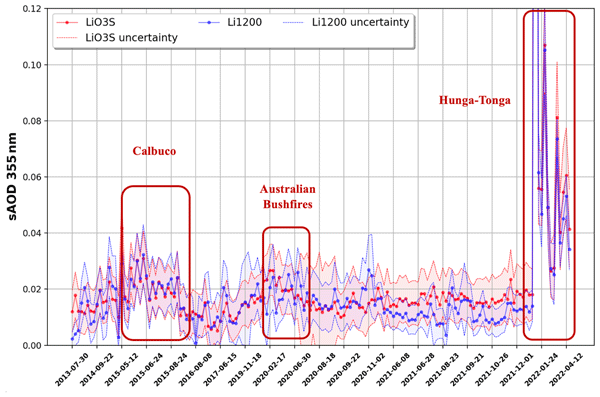
We describe three instruments that have been measuring interactions between aerosols (particles of various origin) and light over Réunion Island since 2012. Aerosols directly or indirectly influence the temperature in the atmosphere and can interact with clouds. Details are given on how we derived aerosol properties from our measurements and how we assessed the quality of our data before sharing them with the scientific community. A good correlation was found between the three instruments.
Arno Keppens, Serena Di Pede, Daan Hubert, Jean-Christopher Lambert, Pepijn Veefkind, Maarten Sneep, Johan De Haan, Mark ter Linden, Thierry Leblanc, Steven Compernolle, Tijl Verhoelst, José Granville, Oindrila Nath, Ann Mari Fjæraa, Ian Boyd, Sander Niemeijer, Roeland Van Malderen, Herman G. J. Smit, Valentin Duflot, Sophie Godin-Beekmann, Bryan J. Johnson, Wolfgang Steinbrecht, David W. Tarasick, Debra E. Kollonige, Ryan M. Stauffer, Anne M. Thompson, Angelika Dehn, and Claus Zehner
Atmos. Meas. Tech., 17, 3969–3993, https://doi.org/10.5194/amt-17-3969-2024, https://doi.org/10.5194/amt-17-3969-2024, 2024
Short summary
Short summary
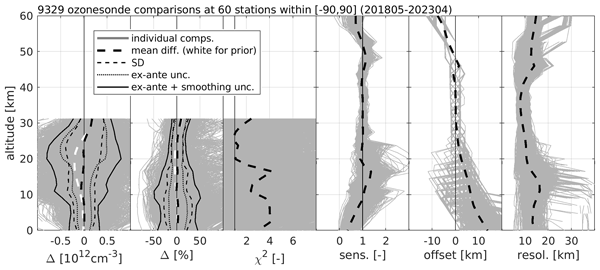
The Sentinel-5P satellite operated by the European Space Agency has carried the TROPOspheric Monitoring Instrument (TROPOMI) around the Earth since October 2017. This mission also produces atmospheric ozone profile data which are described in detail for May 2018 to April 2023. Independent validation using ground-based reference measurements demonstrates that the operational ozone profile product mostly fully and at least partially complies with all mission requirements.
Jayanarayanan Kuttippurath, Gopalakrishna Pillai Gopikrishnan, Rolf Müller, Sophie Godin-Beekmann, and Jerome Brioude
Atmos. Chem. Phys., 24, 6743–6756, https://doi.org/10.5194/acp-24-6743-2024, https://doi.org/10.5194/acp-24-6743-2024, 2024
Short summary
Short summary
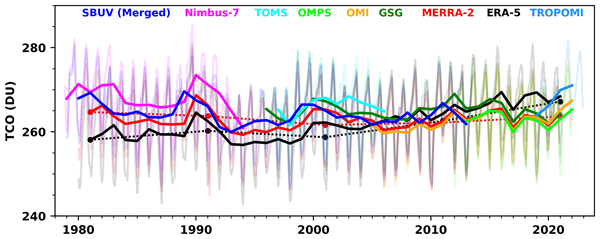
The current understanding and observational evidence do not provide any support for the possibility of an ozone hole occurring outside Antarctica today with respect to the present-day stratospheric halogen levels.
Yange Deng, Hiroshi Tanimoto, Kohei Ikeda, Sohiko Kameyama, Sachiko Okamoto, Jinyoung Jung, Young Jun Yoon, Eun Jin Yang, and Sung-Ho Kang
Atmos. Chem. Phys., 24, 6339–6357, https://doi.org/10.5194/acp-24-6339-2024, https://doi.org/10.5194/acp-24-6339-2024, 2024
Short summary
Short summary
Black carbon (BC) aerosols play important roles in Arctic climate change, yet they are not well understood because of limited observational data. We observed BC mass concentrations (mBC) in the western Arctic Ocean during summer and early autumn 2016–2020. The mean mBC in 2019 was much higher than in other years. Biomass burning was likely the dominant BC source. Boreal fire BC transport occurring near the surface and/or in the mid-troposphere contributed to high-BC events in the Arctic Ocean.
Andrea Pazmiño, Florence Goutail, Sophie Godin-Beekmann, Alain Hauchecorne, Jean-Pierre Pommereau, Martyn P. Chipperfield, Wuhu Feng, Franck Lefèvre, Audrey Lecouffe, Michel Van Roozendael, Nis Jepsen, Georg Hansen, Rigel Kivi, Kimberly Strong, and Kaley A. Walker
Atmos. Chem. Phys., 23, 15655–15670, https://doi.org/10.5194/acp-23-15655-2023, https://doi.org/10.5194/acp-23-15655-2023, 2023
Short summary
Short summary
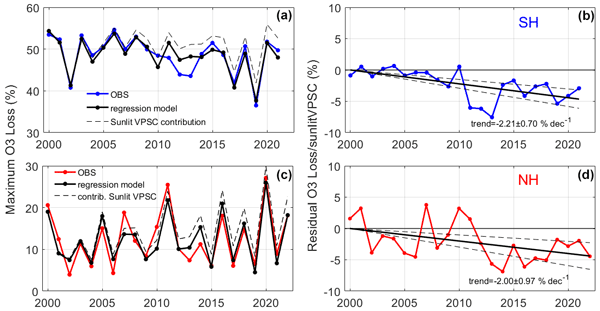
The vortex-averaged ozone loss over the last 3 decades is evaluated for both polar regions using the passive ozone tracer of the chemical transport model TOMCAT/SLIMCAT and total ozone observations from the SAOZ network and MSR2 reanalysis. Three metrics were developed to compute ozone trends since 2000. The study confirms the ozone recovery in the Antarctic and shows a potential sign of quantitative detection of ozone recovery in the Arctic that needs to be robustly confirmed in the future.
Tristan Millet, Hassan Bencherif, Thierry Portafaix, Nelson Bègue, Alexandre Baron, Valentin Duflot, Michaël Sicard, Jean-Marc Metzger, Guillaume Payen, Nicolas Marquestaut, and Sophie Godin-Beekmann
EGUsphere, https://doi.org/10.5194/egusphere-2023-2645, https://doi.org/10.5194/egusphere-2023-2645, 2023
Preprint withdrawn
Short summary
Short summary
The eruption of the Hunga Tonga volcano in January 2022 released substantial amounts of aerosols, sulfur dioxide, and water vapor into the stratosphere. Satellite and ground instruments followed the displacement of the volcanic aerosol plume and its impact on ozone levels over the Indian Ocean. Ozone data reveal the presence of a persistent ozone mini-hole structure from 17 January to 22 January, with most ozone depletion occurring within the ozone layer at the location of the aerosol plume.
Sachiko Okamoto, Juan Cuesta, Matthias Beekmann, Gaëlle Dufour, Maxim Eremenko, Kazuyuki Miyazaki, Cathy Boonne, Hiroshi Tanimoto, and Hajime Akimoto
Atmos. Chem. Phys., 23, 7399–7423, https://doi.org/10.5194/acp-23-7399-2023, https://doi.org/10.5194/acp-23-7399-2023, 2023
Short summary
Short summary
We present a detailed analysis of the daily evolution of the lowermost tropospheric ozone documented by IASI+GOME2 multispectral satellite observations and that of its precursors from TCR-2 tropospheric chemistry reanalysis. It reveals that the ozone outbreak across Europe in July 2017 was produced during favorable condition for photochemical production of ozone and was associated with multiple sources of ozone precursors: biogenic, anthropogenic, and biomass burning emissions.
Sophie Godin-Beekmann, Niramson Azouz, Viktoria F. Sofieva, Daan Hubert, Irina Petropavlovskikh, Peter Effertz, Gérard Ancellet, Doug A. Degenstein, Daniel Zawada, Lucien Froidevaux, Stacey Frith, Jeannette Wild, Sean Davis, Wolfgang Steinbrecht, Thierry Leblanc, Richard Querel, Kleareti Tourpali, Robert Damadeo, Eliane Maillard Barras, René Stübi, Corinne Vigouroux, Carlo Arosio, Gerald Nedoluha, Ian Boyd, Roeland Van Malderen, Emmanuel Mahieu, Dan Smale, and Ralf Sussmann
Atmos. Chem. Phys., 22, 11657–11673, https://doi.org/10.5194/acp-22-11657-2022, https://doi.org/10.5194/acp-22-11657-2022, 2022
Short summary
Short summary
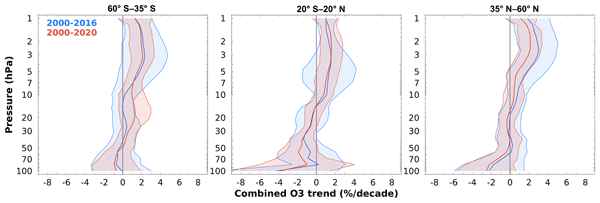
An updated evaluation up to 2020 of stratospheric ozone profile long-term trends at extrapolar latitudes based on satellite and ground-based records is presented. Ozone increase in the upper stratosphere is confirmed, with significant trends at most latitudes. In this altitude region, a very good agreement is found with trends derived from chemistry–climate model simulations. Observed and modelled trends diverge in the lower stratosphere, but the differences are non-significant.
Boris D. Belan, Gerard Ancellet, Irina S. Andreeva, Pavel N. Antokhin, Viktoria G. Arshinova, Mikhail Y. Arshinov, Yurii S. Balin, Vladimir E. Barsuk, Sergei B. Belan, Dmitry G. Chernov, Denis K. Davydov, Alexander V. Fofonov, Georgii A. Ivlev, Sergei N. Kotel'nikov, Alexander S. Kozlov, Artem V. Kozlov, Katharine Law, Andrey V. Mikhal'chishin, Igor A. Moseikin, Sergei V. Nasonov, Philippe Nédélec, Olesya V. Okhlopkova, Sergei E. Ol'kin, Mikhail V. Panchenko, Jean-Daniel Paris, Iogannes E. Penner, Igor V. Ptashnik, Tatyana M. Rasskazchikova, Irina K. Reznikova, Oleg A. Romanovskii, Alexander S. Safatov, Denis E. Savkin, Denis V. Simonenkov, Tatyana K. Sklyadneva, Gennadii N. Tolmachev, Semyon V. Yakovlev, and Polina N. Zenkova
Atmos. Meas. Tech., 15, 3941–3967, https://doi.org/10.5194/amt-15-3941-2022, https://doi.org/10.5194/amt-15-3941-2022, 2022
Short summary
Short summary
The change of the global climate is most pronounced in the Arctic, where the air temperature increases faster than the global average. This is associated with an increase in the concentration of greenhouse gases in the atmosphere. It is important to study how the air composition in the Arctic changes in the changing climate. Thus this integrated experiment was carried out to measure the composition of the troposphere in the Russian sector of the Arctic from on board the aircraft laboratory.
Gérard Ancellet, Sophie Godin-Beekmann, Herman G. J. Smit, Ryan M. Stauffer, Roeland Van Malderen, Renaud Bodichon, and Andrea Pazmiño
Atmos. Meas. Tech., 15, 3105–3120, https://doi.org/10.5194/amt-15-3105-2022, https://doi.org/10.5194/amt-15-3105-2022, 2022
Short summary
Short summary
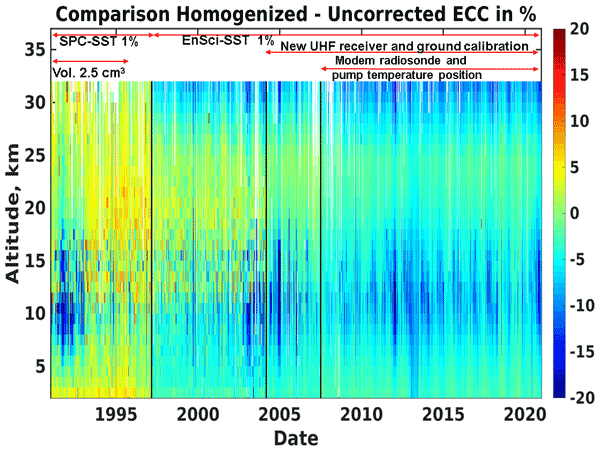
The 1991–2021 Observatoire de Haute Provence electrochemical concentration cell (ECC) ozonesonde data have been homogenized according to the recommendations of the Ozonesonde Data Quality Assessment panel. Comparisons with ground-based instruments also measuring ozone at the same station (lidar, surface measurements) and with colocated satellite observations show the benefits of this homogenization. Remaining differences between ECC and other observations in the stratosphere are also discussed.

Nora Mettig, Mark Weber, Alexei Rozanov, John P. Burrows, Pepijn Veefkind, Anne M. Thompson, Ryan M. Stauffer, Thierry Leblanc, Gerard Ancellet, Michael J. Newchurch, Shi Kuang, Rigel Kivi, Matthew B. Tully, Roeland Van Malderen, Ankie Piters, Bogumil Kois, René Stübi, and Pavla Skrivankova
Atmos. Meas. Tech., 15, 2955–2978, https://doi.org/10.5194/amt-15-2955-2022, https://doi.org/10.5194/amt-15-2955-2022, 2022
Short summary
Short summary
Vertical ozone profiles from combined spectral measurements in the UV and IR spectral ranges were retrieved by using data from TROPOMI/S5P and CrIS/Suomi-NPP. The vertical resolution and accuracy of the ozone profiles are improved by combining both wavelength ranges compared to retrievals limited to UV or IR spectral data only. The advancement of our TOPAS algorithm for combined measurements is required because in the UV-only retrieval the vertical resolution in the troposphere is very limited.
Audrey Lecouffe, Sophie Godin-Beekmann, Andrea Pazmiño, and Alain Hauchecorne
Atmos. Chem. Phys., 22, 4187–4200, https://doi.org/10.5194/acp-22-4187-2022, https://doi.org/10.5194/acp-22-4187-2022, 2022
Short summary
Short summary
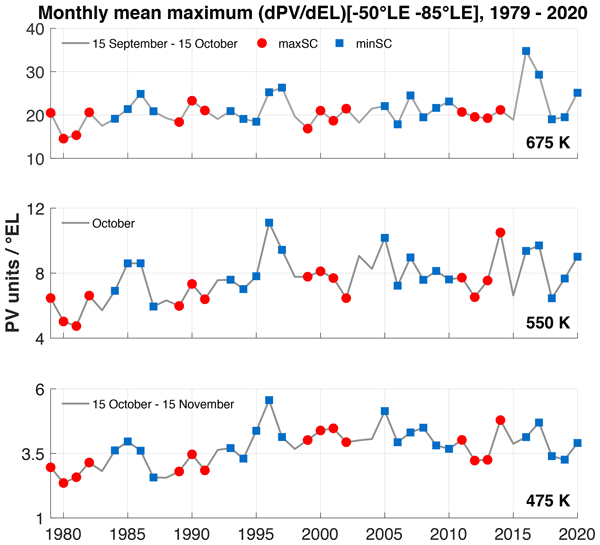
This study uses a model developped at LATMOS (France) to analyze the behavior of the Antarctic polar vortex from 1979 to 2020 at 675 K, 550 K, and 475 K isentropic levels. We found that the vortex edge intensity is stronger during the September–October–November period, while its edge position is less extended during this period. The polar vortex is stronger and lasts longer during solar minimum years. Breakup dates of the polar vortex are linked to the ozone hole and maximum wind speed.
Thibault Vaillant de Guélis, Gérard Ancellet, Anne Garnier, Laurent C.-Labonnote, Jacques Pelon, Mark A. Vaughan, Zhaoyan Liu, and David M. Winker
Atmos. Meas. Tech., 15, 1931–1956, https://doi.org/10.5194/amt-15-1931-2022, https://doi.org/10.5194/amt-15-1931-2022, 2022
Short summary
Short summary
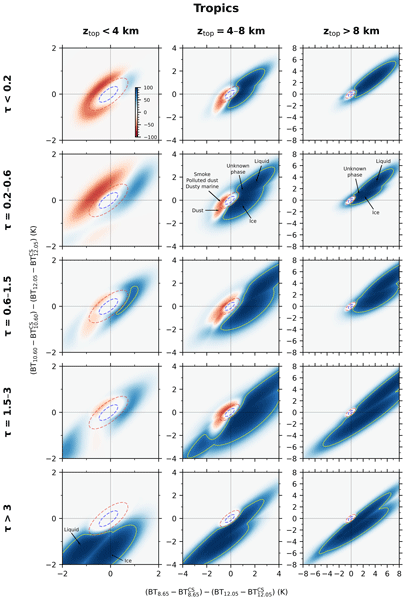
A new IIR-based cloud and aerosol discrimination (CAD) algorithm is developed using the IIR brightness temperature differences for cloud and aerosol features confidently identified by the CALIOP version 4 CAD algorithm. IIR classifications agree with the majority of V4 cloud identifications, reduce the ambiguity in a notable fraction of
not confidentV4 cloud classifications, and correct a few V4 misclassifications of cloud layers identified as dense dust or elevated smoke layers by CALIOP.
Irina Petropavlovskikh, Koji Miyagawa, Audra McClure-Beegle, Bryan Johnson, Jeannette Wild, Susan Strahan, Krzysztof Wargan, Richard Querel, Lawrence Flynn, Eric Beach, Gerard Ancellet, and Sophie Godin-Beekmann
Atmos. Meas. Tech., 15, 1849–1870, https://doi.org/10.5194/amt-15-1849-2022, https://doi.org/10.5194/amt-15-1849-2022, 2022
Short summary
Short summary
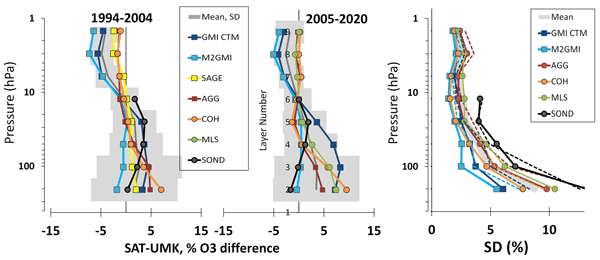
The Montreal Protocol and its amendments assure the recovery of the stratospheric ozone layer that protects the Earth from harmful ultraviolet radiation. To monitor ozone recovery, multiple satellites and ground-based observational platforms collect ozone data. The changes in instruments can influence the continuation of the ozone data. We discuss a method to remove instrumental artifacts from ozone records to improve the internal consistency among multiple observational records.
Andrea Pazmiño, Matthias Beekmann, Florence Goutail, Dmitry Ionov, Ariane Bazureau, Manuel Nunes-Pinharanda, Alain Hauchecorne, and Sophie Godin-Beekmann
Atmos. Chem. Phys., 21, 18303–18317, https://doi.org/10.5194/acp-21-18303-2021, https://doi.org/10.5194/acp-21-18303-2021, 2021
Short summary
Short summary
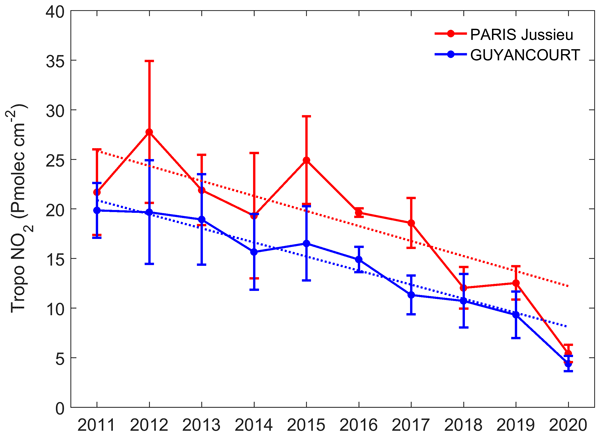
UV-Visible Système d'Analyse par Observations Zénithales (SAOZ) NO2 tropospheric columns were evaluated to quantify the impact of the lockdown in limiting the COVID-19 propagation. Meteorological conditions and NO2 trends were considered. The negative anomaly in tropospheric columns in 2020, attributed to the lockdown (17 March–10 May and related emissions reductions), was 56 % at Paris and 46 % at a suburban site. A similar anomaly was found in the Airparif data of surface concentrations.
Cited articles
Ancellet, G.: Tropospheric O3 profiles data using ECC ozonesonde measurements at the OHP, Aeris [data set], https://doi.org/10.25326/293, 2021. a
Ancellet, G. and Godin-Beekmann, S.: O3 profiles data using 2025-corrected ECC ozonesonde measurements at OHP, ACTRIS Dataset [data set], https://doi.org/10.25326/855, 2025. a, b, c
Ancellet, G., Godin-Beekmann, S., Smit, H. G. J., Stauffer, R. M., Van Malderen, R., Bodichon, R., and Pazmiño, A.: Homogenization of the Observatoire de Haute Provence electrochemical concentration cell (ECC) ozonesonde data record: comparison with lidar and satellite observations, Atmos. Meas. Tech., 15, 3105–3120, https://doi.org/10.5194/amt-15-3105-2022, 2022. a, b, c, d, e, f, g, h, i, j, k, l, m
Godin-Beekmann, S.: Stratospheric ozone data profiles using LIDAR (DIAL) measurements at OHP, Aeris [data set], https://doi.org/10.25326/292, 2021. a
Godin-Beekmann, S., Porteneuve, J., and Garnier, A.: Systematic DIAL lidar monitoring of the stratospheric ozone vertical distribution at Observatoire de Haute-Provence (43.92°N, 5.71°E), J. Environ. Monit., 5, 57–67, https://doi.org/10.1039/B205880D, 2003. a
Godin-Beekmann, S., Azouz, N., Sofieva, V. F., Hubert, D., Petropavlovskikh, I., Effertz, P., Ancellet, G., Degenstein, D. A., Zawada, D., Froidevaux, L., Frith, S., Wild, J., Davis, S., Steinbrecht, W., Leblanc, T., Querel, R., Tourpali, K., Damadeo, R., Maillard Barras, E., Stübi, R., Vigouroux, C., Arosio, C., Nedoluha, G., Boyd, I., Van Malderen, R., Mahieu, E., Smale, D., and Sussmann, R.: Updated trends of the stratospheric ozone vertical distribution in the 60° S–60° N latitude range based on the LOTUS regression model , Atmos. Chem. Phys., 22, 11657–11673, https://doi.org/10.5194/acp-22-11657-2022, 2022. a, b
Komhyr, W.: Electrochemical concentration cells for gas analysis, Ann. Geophys., 25, 203–210, 1969. a
Komhyr, W. D., Barnes, R. A., Brothers, G. B., Lathrop, J. A., and Opperman, D. P.: Electrochemical concentration cell ozonesonde performance evaluation during STOIC 1989, J. Geophys. Res.-Atmos., 100, 9231–9244, https://doi.org/10.1029/94JD02175, 1995. a
Lin, M., Fiore, A. M., Horowitz, L. W., Langford, A. O., Oltmans, S. J., Tarasick, D., and Rieder, H. E.: Climate variability modulates western US ozone air quality in spring via deep stratospheric intrusions, Nat. Commun., 6, 7105–7115, https://doi.org/10.1038/ncomms8105, 2015. a
Livesey, N., Read, W., Wagner, P., Froidevaux, L., Santee, M., Schwartz, M., Lambert, A., Millán Valle, L., Pumphrey, H., Manney, G., Fuller, R., Jarnot, R., Knosp, B., and Lay, R.: Earth Observing System (EOS) Aura Microwave Limb Sounder (MLS) Version 5.0x Level 2 and 3 data quality and description document, https://mls.jpl.nasa.gov/data/v5-0_data_quality_document.pdf (last access: 21 July 2026), 2022. a
McPeters, R. D. and Labow, G. J.: Climatology 2011: An MLS and sonde derived ozone climatology for satellite retrieval algorithms, J. Geophys. Res.-Atmos., 117, https://doi.org/10.1029/2011JD017006, 2012. a
Nair, P. J., Godin-Beekmann, S., Pazmiño, A., Hauchecorne, A., Ancellet, G., Petropavlovskikh, I., Flynn, L. E., and Froidevaux, L.: Coherence of long-term stratospheric ozone vertical distribution time series used for the study of ozone recovery at a northern mid-latitude station, Atmos. Chem. Phys., 11, 4957–4975, https://doi.org/10.5194/acp-11-4957-2011, 2011. a
Petropavlovskikh, I., Wild, J. D., Abromitis, K., Effertz, P., Miyagawa, K., Flynn, L. E., Maillard Barras, E., Damadeo, R., McConville, G., Johnson, B., Cullis, P., Godin-Beekmann, S., Ancellet, G., Querel, R., Van Malderen, R., and Zawada, D.: Ozone trends in homogenized Umkehr, ozonesonde, and COH overpass records, Atmos. Chem. Phys., 25, 2895–2936, https://doi.org/10.5194/acp-25-2895-2025, 2025. a, b
Riese, M., Ploeger, F., Rap, A., Vogel, B., Konopka, P., Dameris, M., and Forster, P.: Impact of uncertainties in atmospheric mixing on simulated UTLS composition and related radiative effects, J. Geophys. Res.-Atmos., 117, https://doi.org/10.1029/2012JD017751, 2012. a
Schwartz, M., Froidevaux, L., Livesey, N., Read, W., and Fuller, R.: MLS/Aura Level 2 Ozone (O3) Mixing Ratio on Assorted Grids V005 [Dataset], NASA Goddard Earth Sciences Data and Information Services Center (DAAC) [data set], https://doi.org/10.5067/AURA/MLS/DATA2516, 2021. a, b
Smit, H. and Thompson, A.: GAW report 268 Ozonesonde Measurement Principles and Best Operational Practices: ASOPOS 2.0 (Assessment of Standard Operating Procedures for Ozonesondes), https://library.wmo.int/records/item/57720-ozonesonde-measurement-principles-and-best-operational-practices (last access: 21 July 2026), 2021. a, b, c, d
Smit, H., Oltmans, S., Deshler, T., Tarasick, D., Johnson, B., Schmidlin, F., Stuebi, R., and Davies, J.: SI2N/O3S-DQA activity: Guidelines for homogenization of ozone sonde data, Activity as part of SPARC-IGACO-IOC Assessment (SI2N) “Past Changes In The Vertical Distribution Of Ozone Assessment”, https://acd-ext.gsfc.nasa.gov/anonftp/acd/shadoz/nletter/O3S-DQA-GuidelinesHomogenization-V2-19November2012.pdf (last access: 21 July 2026), 2012. a, b
Stauffer, R. M., Thompson, A. M., Kollonige, D. E., Tarasick, D. W., Van Malderen, R., Smit, H. G. J., Vömel, H., Morris, G. A., Johnson, B. J., Cullis, P. D., Stübi, R., Davies, J., and Yan, M. M.: An Examination of the Recent Stability of Ozonesonde Global Network Data, Earth Space Sci., 9, e2022EA002459, https://doi.org/10.1029/2022EA002459, 2022. a
Steinbrecht, W., Froidevaux, L., Fuller, R., Wang, R., Anderson, J., Roth, C., Bourassa, A., Degenstein, D., Damadeo, R., Zawodny, J., Frith, S., McPeters, R., Bhartia, P., Wild, J., Long, C., Davis, S., Rosenlof, K., Sofieva, V., Walker, K., Rahpoe, N., Rozanov, A., Weber, M., Laeng, A., von Clarmann, T., Stiller, G., Kramarova, N., Godin-Beekmann, S., Leblanc, T., Querel, R., Swart, D., Boyd, I., Hocke, K., Kämpfer, N., Maillard Barras, E., Moreira, L., Nedoluha, G., Vigouroux, C., Blumenstock, T., Schneider, M., García, O., Jones, N., Mahieu, E., Smale, D., Kotkamp, M., Robinson, J., Petropavlovskikh, I., Harris, N., Hassler, B., Hubert, D., and Tummon, F.: An update on ozone profile trends for the period 2000 to 2016, Atmos. Chem. Phys., 17, 10675–10690, https://doi.org/10.5194/acp-17-10675-2017, 2017. a, b
Sterling, C. W., Johnson, B. J., Oltmans, S. J., Smit, H. G. J., Jordan, A. F., Cullis, P. D., Hall, E. G., Thompson, A. M., and Witte, J. C.: Homogenizing and estimating the uncertainty in NOAA's long-term vertical ozone profile records measured with the electrochemical concentration cell ozonesonde, Atmos. Meas. Tech., 11, 3661–3687, https://doi.org/10.5194/amt-11-3661-2018, 2018. a
Tarasick, D. W., Davies, J., Smit, H. G. J., and Oltmans, S. J.: A re-evaluated Canadian ozonesonde record: measurements of the vertical distribution of ozone over Canada from 1966 to 2013, Atmos. Meas. Tech., 9, 195–214, https://doi.org/10.5194/amt-9-195-2016, 2016. a
Van Malderen, R., Allaart, M. A. F., De Backer, H., Smit, H. G. J., and De Muer, D.: On instrumental errors and related correction strategies of ozonesondes: possible effect on calculated ozone trends for the nearby sites Uccle and De Bilt, Atmos. Meas. Tech., 9, 3793–3816, https://doi.org/10.5194/amt-9-3793-2016, 2016. a
Van Malderen, R., De Muer, D., De Backer, H., Poyraz, D., Verstraeten, W. W., De Bock, V., Delcloo, A. W., Mangold, A., Laffineur, Q., Allaart, M., Fierens, F., and Thouret, V.: Fifty years of balloon-borne ozone profile measurements at Uccle, Belgium: a short history, the scientific relevance, and the achievements in understanding the vertical ozone distribution, Atmos. Chem. Phys., 21, 12385–12411, https://doi.org/10.5194/acp-21-12385-2021, 2021. a
Wilcoxon, F.: Individual Comparisons by Ranking Methods, Biometrics Bull., 1, 80–83, https://doi.org/10.2307/3001968, 1945. a
Wing, R., Steinbrecht, W., Godin-Beekmann, S., McGee, T. J., Sullivan, J. T., Sumnicht, G., Ancellet, G., Hauchecorne, A., Khaykin, S., and Keckhut, P.: Intercomparison and evaluation of ground- and satellite-based stratospheric ozone and temperature profiles above Observatoire de Haute-Provence during the Lidar Validation NDACC Experiment (LAVANDE), Atmos. Meas. Tech., 13, 5621–5642, https://doi.org/10.5194/amt-13-5621-2020, 2020. a
Witte, J. C., Thompson, A. M., Smit, H. G. J., Fujiwara, M., Posny, F., Coetzee, G. J. R., Northam, E. T., Johnson, B. J., Sterling, C. W., Mohamad, M., Ogino, S.-Y., Jordan, A., and da Silva, F. R.: First reprocessing of Southern Hemisphere ADditional OZonesondes (SHADOZ) profile records (1998–2015): 1. Methodology and evaluation, J. Geophys. Res.-Atmos., 122, 6611–6636, https://doi.org/10.1002/2016JD026403, 2017. a
Witte, J. C., Thompson, A. M., Smit, H. G. J., Vömel, H., Posny, F., and Stübi, R.: First Reprocessing of Southern Hemisphere ADditional OZonesondes Profile Records: 3. Uncertainty in Ozone Profile and Total Column, J. Geophys. Res.-Atmos., 123, 3243–3268, https://doi.org/10.1002/2017JD027791, 2018. a
WMO: GAW report 278 Scientific Assessment of Ozone Depletion: 2022, Science report, World Meteorological Organization (WMO) and National Oceanic Atmospheric Administration (NOAA) and National Aeronautics Space Administration (NASA) and European Commission, https://ozone.unep.org/sites/default/files/2023-02/Scientific-Assessment-of-Ozone-Depletion-2022.pdf (last access: 21 July 2026), 2023. a
Short summary
The ozone sounding data from the electrochemical concentration cell (ECC) at the Haute Provence Observatory (OHP) for the period 1991–2020 were homogenized in 2022 using the recommendations of the ECC data quality assessment committee. Comparisons with lidar and satellite observations show that the ECC pump temperature measurements for the period 2002–2007 need to be corrected in addition to the 2022 homogenization. This correction improves the consistency of the ECC ozone dataset at the OHP.
The ozone sounding data from the electrochemical concentration cell (ECC) at the Haute Provence...


Altmetrics
Final-revised paper
Preprint