Articles | Volume 18, issue 8
https://doi.org/10.5194/essd-18-5713-2026
© Author(s) 2026. This work is distributed under
the Creative Commons Attribution 4.0 License.
the Creative Commons Attribution 4.0 License.
https://doi.org/10.5194/essd-18-5713-2026
© Author(s) 2026. This work is distributed under
the Creative Commons Attribution 4.0 License.
the Creative Commons Attribution 4.0 License.
Data description article
| 
03 Aug 2026
Data description article |
| 03 Aug 2026
| 03 Aug 2026
POPE: an annual global half degree emission inventory for PFAS 1950–2020
Pascal Simon
CORRESPONDING AUTHOR

Institute of Coastal Research, Helmholtz-Centre Hereon, Max-Planck-Straße 1, Geesthacht, 21502, Germany
Martin Otto Paul Ramacher
Institute of Coastal Research, Helmholtz-Centre Hereon, Max-Planck-Straße 1, Geesthacht, 21502, Germany
Stefan Hagemann
Institute of Coastal Research, Helmholtz-Centre Hereon, Max-Planck-Straße 1, Geesthacht, 21502, Germany
Volker Matthias
Institute of Coastal Research, Helmholtz-Centre Hereon, Max-Planck-Straße 1, Geesthacht, 21502, Germany
Hanna Joerss
Institute of Coastal Research, Helmholtz-Centre Hereon, Max-Planck-Straße 1, Geesthacht, 21502, Germany
Johannes Bieser
Institute of Coastal Research, Helmholtz-Centre Hereon, Max-Planck-Straße 1, Geesthacht, 21502, Germany
Related authors
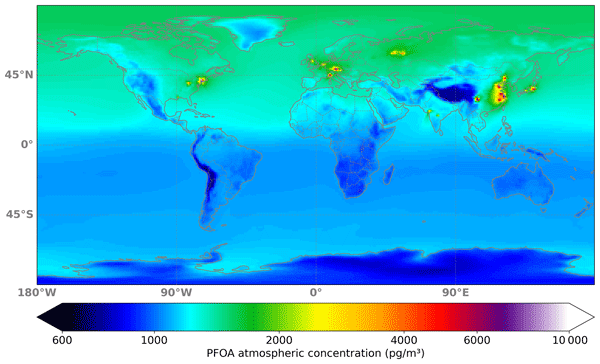
Hiram Meza-Landero, Julia Bruckert, Ronny Petrik, Pascal Simon, Elena Mikheeva, Heike Vogel, Volker Matthias, Johannes Bieser, and Martin Otto Paul Ramacher
Geosci. Model Dev., 19, 6587–6626, https://doi.org/10.5194/gmd-19-6587-2026, https://doi.org/10.5194/gmd-19-6587-2026, 2026
Short summary
Short summary
To understand how persistent hazardous industrial chemicals travel through the air and are deposited back on Earth's surface, we created a new computer model that combines meteorology and chemistry in clouds and clean air. Using the most recent global emissions data, this model represents the trajectory and changes of these chemicals, matching patterns in many areas and overlooking others. The work seeks to improve global monitoring and modeling of hazardous chemicals.
Hermann Bange, Carolin Löscher, Damian Arévalo-Martínez, Stefano Bonaglia, Hanna Farnelid, Bo Gustafsson, Dana Hellemann, Jenny Hieronymus, Peeter Laas, Christian Lønborg, Natalie Loick-Wilde, Volker Matthias, Joseph Montoya, Sofia Saraiva, Vibe Schourup-Kristensen, Beata Szymczycha, Germo Väli, Maren Voss, Mindaugas Zilius, and Malin Olofsson
EGUsphere, https://doi.org/10.5194/egusphere-2026-5940, https://doi.org/10.5194/egusphere-2026-5940, 2026
This preprint is open for discussion and under review for Biogeosciences (BG).
Short summary
Short summary
The nitrogen cycle of the Baltic Sea has received considerable attention over the past five decades mainly due to the ongoing expansion of oxygen-free zones. Here we present a summary of the present state of the nitrogen cycle in the Baltic Sea, identify open research questions and suggest a way forward to address the open questions with the aim to reduce uncertainties in projections of the future nitrogen cycle which, in turn, can advance and help management measures for ecosystem restoration.
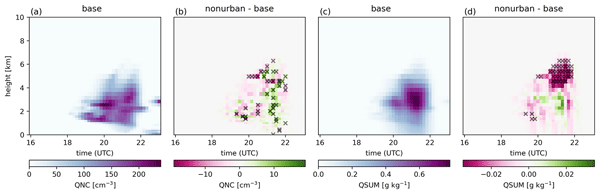
Friederike Keil, Markus Quante, Bernd Heinold, and Volker Matthias
Atmos. Chem. Phys., 26, 11561–11582, https://doi.org/10.5194/acp-26-11561-2026, https://doi.org/10.5194/acp-26-11561-2026, 2026
Short summary
Short summary
Using model simulations, we studied convective weather events to see how urban aerosol emissions influence cloud microphysics and precipitation. By tracing urban air volumes from convective clouds back to their emission sources, we could isolate the effects of emissions. The results show that urban emissions affect precipitation differently depending on the meteorological situation, highlighting the complex and case-dependent role of cities in shaping local rainfall.
Hiram Meza-Landero, Julia Bruckert, Ronny Petrik, Pascal Simon, Elena Mikheeva, Heike Vogel, Volker Matthias, Johannes Bieser, and Martin Otto Paul Ramacher
Geosci. Model Dev., 19, 6587–6626, https://doi.org/10.5194/gmd-19-6587-2026, https://doi.org/10.5194/gmd-19-6587-2026, 2026
Short summary
Short summary
To understand how persistent hazardous industrial chemicals travel through the air and are deposited back on Earth's surface, we created a new computer model that combines meteorology and chemistry in clouds and clean air. Using the most recent global emissions data, this model represents the trajectory and changes of these chemicals, matching patterns in many areas and overlooking others. The work seeks to improve global monitoring and modeling of hazardous chemicals.
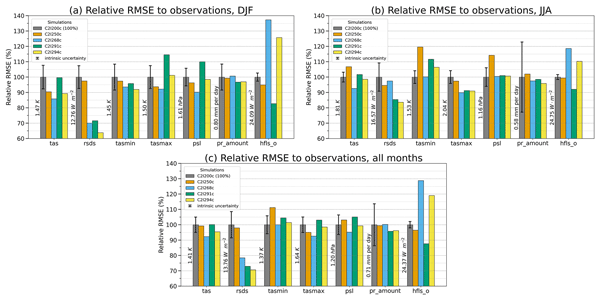
Beate Geyer, Angelo Campanale, Evgenii Churiulin, Hendrik Feldmann, Klaus Goergen, Stefan Hagemann, Ha Thi Minh Ho-Hagemann, Muhammed Muhshif Karadan, Klaus Keuler, Pavel Khain, Divyaja Lawand, Patrick Ludwig, Vera Maurer, Sergei Petrov, Stefan Poll, Christopher Purr, Emmanuele Russo, Martina Schubert-Frisius, Jan-Peter Schulz, Shweta Singh, Christian Steger, Heimo Truhetz, and Andreas Will
Geosci. Model Dev., 19, 5439–5490, https://doi.org/10.5194/gmd-19-5439-2026, https://doi.org/10.5194/gmd-19-5439-2026, 2026
Short summary
Short summary
Complex models in environmental science typically have a lot of tuning parameters, which has to be set by the users depending on the application. This study presents a new method of objective tuning of a huge number of parameters, by combining expert judgement with automated tuning called Linear Meta-Model optimisation (LiMMo). The method is successfully applied to the regional climate model named ICON (Icosahedral Non-hydrostatic)-CLM (Climate Limited-area Modelling) over Europe.
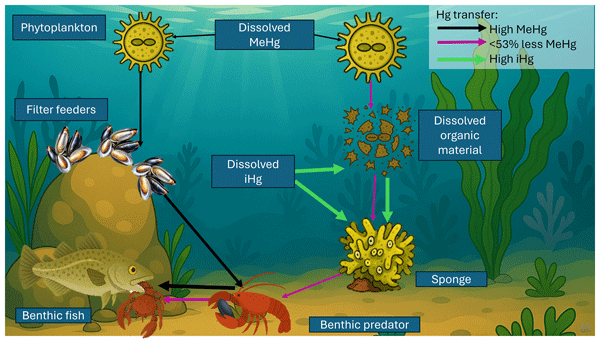
David J. Amptmeijer, Ulrike Hanz, Corinna Schrum, and Johannes Bieser
Biogeosciences, 23, 4057–4081, https://doi.org/10.5194/bg-23-4057-2026, https://doi.org/10.5194/bg-23-4057-2026, 2026
Short summary
Short summary
Sponges have unusually low methylmercury (MeHg) and high inorganic mercury (iHg) bioaccumulation compared to other macrobenthos. This pattern has been attributed to MeHg demethylation by symbiotic bacteria. Our model demonstrates an alternative explanation that dissolved organic matter (DOM) consumption by sponges can increase iHg and decrease MeHg levels. Low MeHg in sponges at the food web base may further limit MeHg bioaccumulation in higher trophic levels.
Friederike Keil, Markus Quante, Bernd Heinold, and Volker Matthias
EGUsphere, https://doi.org/10.5194/egusphere-2026-2934, https://doi.org/10.5194/egusphere-2026-2934, 2026
Short summary
Short summary
Using simulations of two differing rain events, we investigated how sensitive convective precipitation is to urban emission levels by varying emission strengths across a wide range. Low emissions produce only modest effects, but high levels can trigger systematic changes, including substantial increases in ice content and precipitation intensity accompanied by spatial and temporal shifts. The magnitude of these responses depends critically on the prevailing meteorological conditions.
Tilman Leo Hohenberger, Marya el Malki, Antoon Visschedijk, Marc Guevara, Martin Otto Paul Ramacher, Alessandro Marongiu, Guido Giuseppe Lanzani, Giuseppe Fossati, Anu Kousa, Eleni Athanasopoulou, Anastasia Kakouri, and Jeroen Kuenen
Earth Syst. Sci. Data, 18, 3959–3978, https://doi.org/10.5194/essd-18-3959-2026, https://doi.org/10.5194/essd-18-3959-2026, 2026
Short summary
Short summary
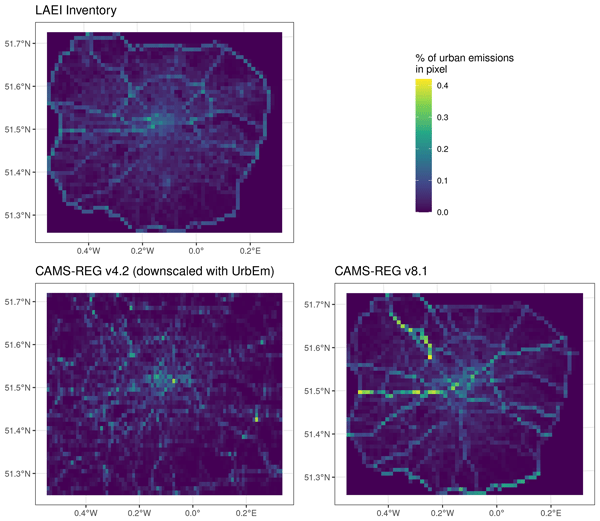
Spatial road transport emission data is fundamental for challenges of air pollution and climate change. In the existing European CAMS-REG (Copernicus Atmosphere Service-regional) inventory, several improvement opportunities exist, especially an underestimation in urban centers of ~35 %. We calculate emissions by combining gap-filled road information and emission factors, for the first time giving detailed emissions for most roads in Europe. With this, our dataset is much closer in line with independently combined city inventories.
David J. Amptmeijer, Elena Mikheeva, Ute Daewel, Johannes Bieser, and Corinna Schrum
Biogeosciences, 22, 7929–7960, https://doi.org/10.5194/bg-22-7929-2025, https://doi.org/10.5194/bg-22-7929-2025, 2025
Short summary
Short summary
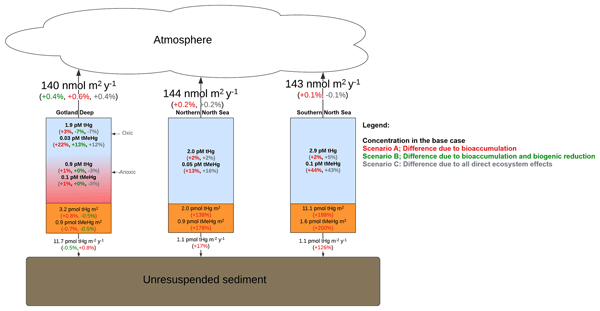
We integrate bioaccumulation and biotic Hg transformations into a coupled ecosystem–mercury model to assess their effect on marine Hg cycling. Bioaccumulation increases methylmercury levels, especially in productive coastal waters, and alters Hg exchange between the Baltic and North Seas. These results highlight strong ecosystem feedbacks on marine Hg dynamics.
Wolfgang A. Müller, Stephan Lorenz, Trang V. Pham, Andrea Schneidereit, Renate Brokopf, Victor Brovkin, Nils Brüggemann, Fatemeh Chegini, Dietmar Dommenget, Kristina Fröhlich, Barbara Früh, Veronika Gayler, Helmuth Haak, Stefan Hagemann, Moritz Hanke, Tatiana Ilyina, Johann Jungclaus, Martin Köhler, Peter Korn, Luis Kornblueh, Clarissa A. Kroll, Julian Krüger, Karel Castro-Morales, Ulrike Niemeier, Holger Pohlmann, Iuliia Polkova, Roland Potthast, Thomas Riddick, Manuel Schlund, Tobias Stacke, Roland Wirth, Dakuan Yu, and Jochem Marotzke
Geosci. Model Dev., 18, 9385–9415, https://doi.org/10.5194/gmd-18-9385-2025, https://doi.org/10.5194/gmd-18-9385-2025, 2025
Short summary
Short summary
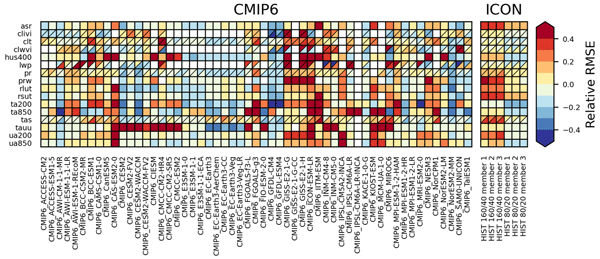
We provide a new Earth System model configuration framed into the ICON architecture, which provides the baseline for the next generation of climate predictions and projections (hereafter ICON XPP). Two resolutions of ICON XPP are presented that show high runtime performances making it suitable to run long integrations and large-ensemble experiments. ICON XPP similarly perform to CMIP6-class of climate models making it a good basis for climate forecasts and projections, and climate research.
David J. Amptmeijer, Andrea Padilla, Sofia Modesti, Corinna Schrum, and Johannes Bieser
Biogeosciences, 22, 7483–7503, https://doi.org/10.5194/bg-22-7483-2025, https://doi.org/10.5194/bg-22-7483-2025, 2025
Short summary
Short summary
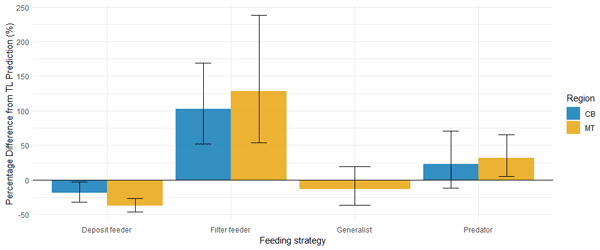
This paper combines a literature review with a 1D Hg speciation and bioaccumulation model to assess how feeding strategy affects inorganic and methylmercury at the base of marine food webs. We find filter feeders have higher MeHg, while suspension feeders have very low MeHg, highlighting feeding strategy as a key driver of MeHg variability.
David J. Amptmeijer and Johannes Bieser
Biogeosciences, 22, 7425–7440, https://doi.org/10.5194/bg-22-7425-2025, https://doi.org/10.5194/bg-22-7425-2025, 2025
Short summary
Short summary
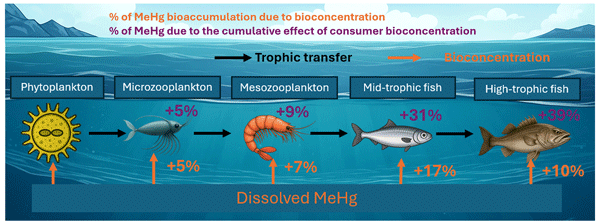
The mercury (Hg) form of most concern is monomethylmercury (MMHg⁺) due to its neurotoxicity and ability to bioaccumulate in seafood. Bioaccumulation in seafood occurs via bioconcentration (direct uptake) and biomagnification (trophic transfer). Our study separates these processes, showing that bioconcentration increases MMHg⁺ in high trophic level fish by 15 % per level, contributing 28–49 % of MMHg⁺ in Atlantic cod. These findings can be used to inform efficient Hg modeling strategies.
Koketso M. Molepo, Johannes Bieser, Alkuin M. Koenig, Ian M. Hedgecock, Ralf Ebinghaus, Aurélien Dommergue, Olivier Magand, Hélène Angot, Oleg Travnikov, Lynwill Martin, Casper Labuschagne, Katie Read, and Yann Bertrand
Atmos. Chem. Phys., 25, 9645–9668, https://doi.org/10.5194/acp-25-9645-2025, https://doi.org/10.5194/acp-25-9645-2025, 2025
Short summary
Short summary
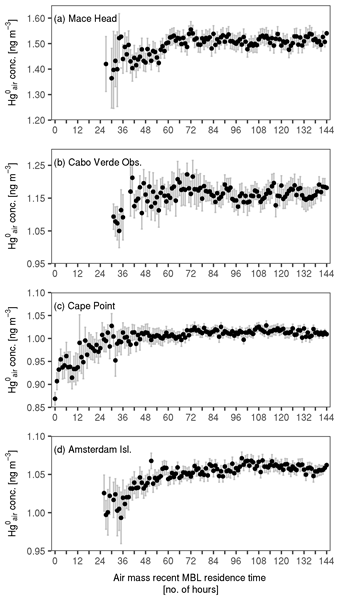
Mercury exchange between the ocean and atmosphere is poorly understood due to limited in situ data. Here, using atmospheric mercury observations from ground-based monitoring stations along with air mass trajectories, we found that atmospheric Hg levels increase with air mass ocean exposure time, matching predictions for ocean Hg emissions. This finding indicates that ocean emissions directly influence atmospheric Hg levels and enables us to estimate these emissions on a global scale.
Ashu Dastoor, Hélène Angot, Johannes Bieser, Flora Brocza, Brock Edwards, Aryeh Feinberg, Xinbin Feng, Benjamin Geyman, Charikleia Gournia, Yipeng He, Ian M. Hedgecock, Ilia Ilyin, Jane Kirk, Che-Jen Lin, Igor Lehnherr, Robert Mason, David McLagan, Marilena Muntean, Peter Rafaj, Eric M. Roy, Andrei Ryjkov, Noelle E. Selin, Francesco De Simone, Anne L. Soerensen, Frits Steenhuisen, Oleg Travnikov, Shuxiao Wang, Xun Wang, Simon Wilson, Rosa Wu, Qingru Wu, Yanxu Zhang, Jun Zhou, Wei Zhu, and Scott Zolkos
Geosci. Model Dev., 18, 2747–2860, https://doi.org/10.5194/gmd-18-2747-2025, https://doi.org/10.5194/gmd-18-2747-2025, 2025
Short summary
Short summary
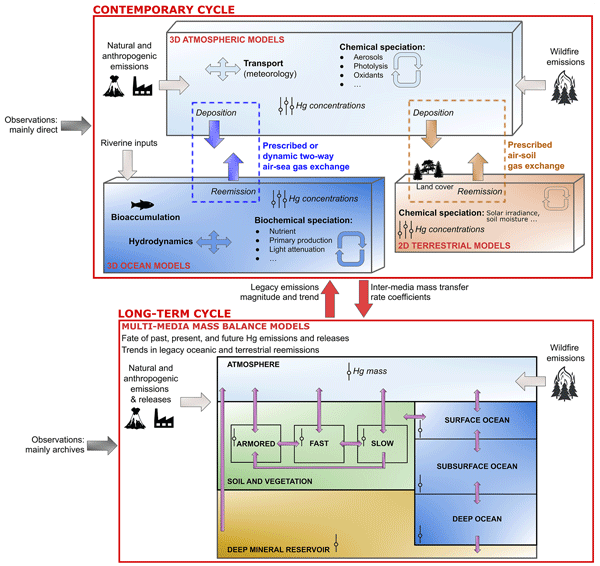
This paper introduces the Multi-Compartment Mercury (Hg) Modeling and Analysis Project (MCHgMAP) aimed at informing the effectiveness evaluations of two multilateral environmental agreements: the Minamata Convention on Mercury and the Convention on Long-Range Transboundary Air Pollution. The experimental design exploits a variety of models (atmospheric, land, oceanic ,and multimedia mass balance models) to assess the short- and long-term influences of anthropogenic Hg releases into the environment.
Alberto Elizalde, Gibran Romero-Mujalli, Tobias Stacke, and Stefan Hagemann
EGUsphere, https://doi.org/10.5194/egusphere-2024-3645, https://doi.org/10.5194/egusphere-2024-3645, 2025
Preprint archived
Short summary
Short summary
This study examines phosphorus land-to-sea transport in Europe, exploring changes over time and predicting future trends under various scenarios. It integrates human and environmental factors, offering a comprehensive analysis. Our findings show how global warming-induced rainfall patterns affect phosphorus levels. While pollution reduction policies are helpful, population growth, land-use changes, and increased rainfall could lead to higher phosphorus levels in the future.
Stefan Hagemann, Thao Thi Nguyen, and Ha Thi Minh Ho-Hagemann
Ocean Sci., 20, 1457–1478, https://doi.org/10.5194/os-20-1457-2024, https://doi.org/10.5194/os-20-1457-2024, 2024
Short summary
Short summary
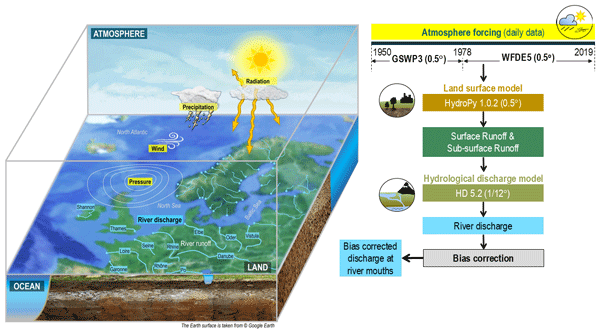
We have developed a methodology for the bias correction of simulated river runoff to force ocean models in which low, medium, and high discharges are corrected once separated at the coast. We show that the bias correction generally leads to an improved representation of river runoff in Europe. The methodology is suitable for model regions with a sufficiently high coverage of discharge observations, and it can be applied to river runoff based on climate hindcasts or climate change simulations.
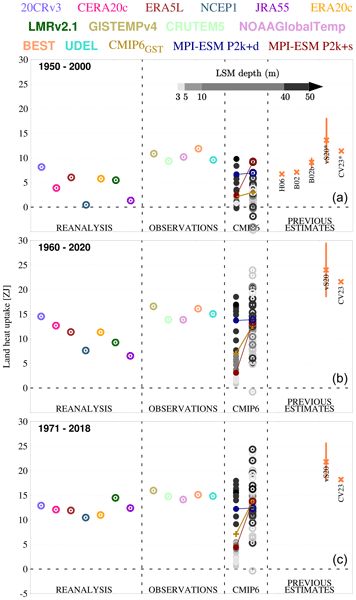
Félix García-Pereira, Jesús Fidel González-Rouco, Camilo Melo-Aguilar, Norman Julius Steinert, Elena García-Bustamante, Philip de Vrese, Johann Jungclaus, Stephan Lorenz, Stefan Hagemann, Francisco José Cuesta-Valero, Almudena García-García, and Hugo Beltrami
Earth Syst. Dynam., 15, 547–564, https://doi.org/10.5194/esd-15-547-2024, https://doi.org/10.5194/esd-15-547-2024, 2024
Short summary
Short summary
According to climate model estimates, the land stored 2 % of the system's heat excess in the last decades, while observational studies show it was around 6 %. This difference stems from these models using land components that are too shallow to constrain land heat uptake. Deepening the land component does not affect the surface temperature. This result can be used to derive land heat uptake estimates from different sources, which are much closer to previous observational reports.
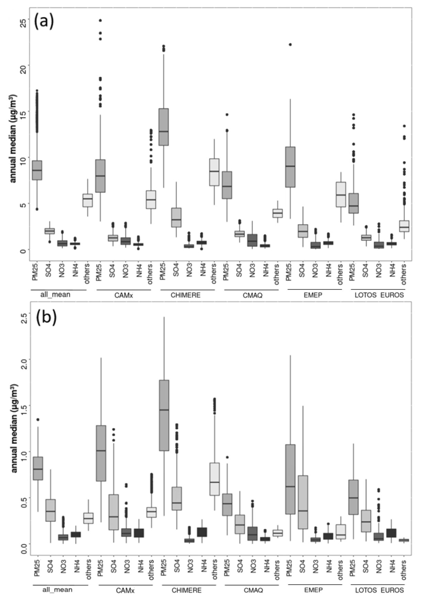
Lea Fink, Matthias Karl, Volker Matthias, Sonia Oppo, Richard Kranenburg, Jeroen Kuenen, Sara Jutterström, Jana Moldanova, Elisa Majamäki, and Jukka-Pekka Jalkanen
Atmos. Chem. Phys., 23, 10163–10189, https://doi.org/10.5194/acp-23-10163-2023, https://doi.org/10.5194/acp-23-10163-2023, 2023
Short summary
Short summary
The Mediterranean Sea is a heavily trafficked shipping area, and air quality monitoring stations in numerous cities along the Mediterranean coast have detected high levels of air pollutants originating from shipping emissions. The current study investigates how existing restrictions on shipping-related emissions to the atmosphere ensure compliance with legislation. Focus was laid on fine particles and particle species, which were simulated with five different chemical transport models.
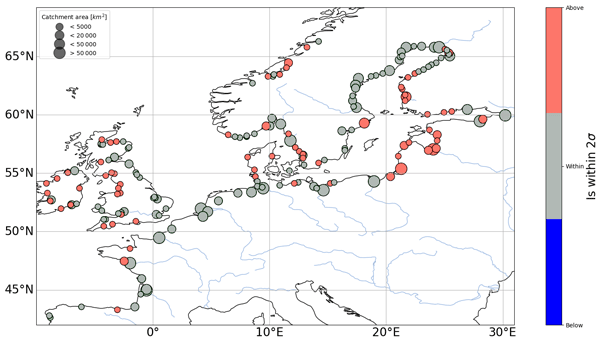
Philipp Heinrich, Stefan Hagemann, Ralf Weisse, Corinna Schrum, Ute Daewel, and Lidia Gaslikova
Nat. Hazards Earth Syst. Sci., 23, 1967–1985, https://doi.org/10.5194/nhess-23-1967-2023, https://doi.org/10.5194/nhess-23-1967-2023, 2023
Short summary
Short summary
High seawater levels co-occurring with high river discharges have the potential to cause destructive flooding. For the past decades, the number of such compound events was larger than expected by pure chance for most of the west-facing coasts in Europe. Additionally rivers with smaller catchments showed higher numbers. In most cases, such events were associated with a large-scale weather pattern characterized by westerly winds and strong rainfall.

Johannes Bieser, David J. Amptmeijer, Ute Daewel, Joachim Kuss, Anne L. Soerensen, and Corinna Schrum
Geosci. Model Dev., 16, 2649–2688, https://doi.org/10.5194/gmd-16-2649-2023, https://doi.org/10.5194/gmd-16-2649-2023, 2023
Short summary
Short summary
MERCY is a 3D model to study mercury (Hg) cycling in the ocean. Hg is a highly harmful pollutant regulated by the UN Minamata Convention on Mercury due to widespread human emissions. These emissions eventually reach the oceans, where Hg transforms into the even more toxic and bioaccumulative pollutant methylmercury. MERCY predicts the fate of Hg in the ocean and its buildup in the food chain. It is the first model to consider Hg accumulation in fish, a major source of Hg exposure for humans.
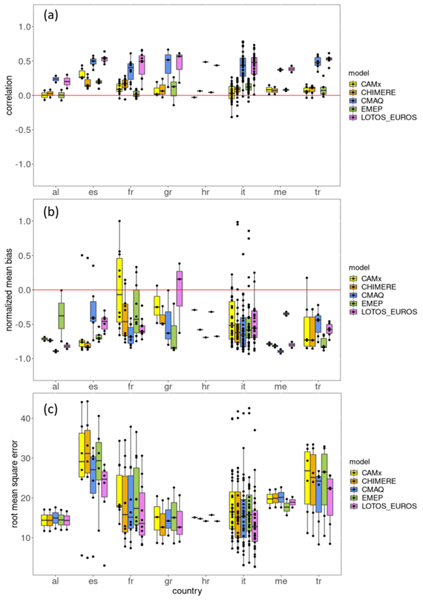
Lea Fink, Matthias Karl, Volker Matthias, Sonia Oppo, Richard Kranenburg, Jeroen Kuenen, Jana Moldanova, Sara Jutterström, Jukka-Pekka Jalkanen, and Elisa Majamäki
Atmos. Chem. Phys., 23, 1825–1862, https://doi.org/10.5194/acp-23-1825-2023, https://doi.org/10.5194/acp-23-1825-2023, 2023
Short summary
Short summary
Potential ship impact on air pollution in the Mediterranean Sea was simulated with five chemistry transport models. An evaluation of the results for NO2 and O3 air concentrations and dry deposition is presented. Emission data, modeled year and domain were the same. Model run outputs were compared to measurements from background stations. We focused on comparing model outputs regarding the concentration of regulatory pollutants and the relative ship impact on total air pollution concentrations.
Ronny Badeke, Volker Matthias, Matthias Karl, and David Grawe
Geosci. Model Dev., 15, 4077–4103, https://doi.org/10.5194/gmd-15-4077-2022, https://doi.org/10.5194/gmd-15-4077-2022, 2022
Short summary
Short summary
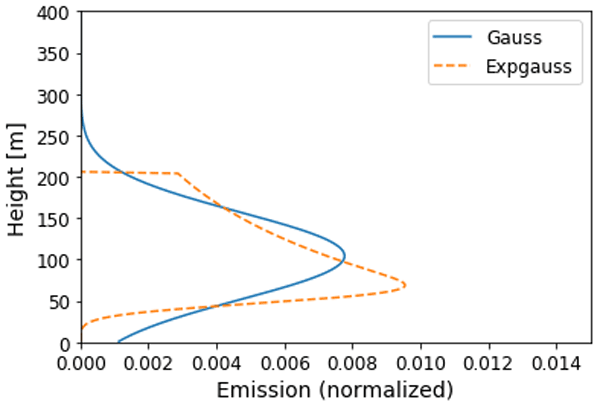
For air quality modeling studies, it is very important to distribute pollutants correctly into the model system. This has not yet been done for shipping pollution in great detail. We studied the effects of different vertical distributions of shipping pollutants on the urban air quality and derived advanced formulas for it. These formulas take weather conditions and ship-specific parameters like the exhaust gas temperature into account.
Danilo Custódio, Katrine Aspmo Pfaffhuber, T. Gerard Spain, Fidel F. Pankratov, Iana Strigunova, Koketso Molepo, Henrik Skov, Johannes Bieser, and Ralf Ebinghaus
Atmos. Chem. Phys., 22, 3827–3840, https://doi.org/10.5194/acp-22-3827-2022, https://doi.org/10.5194/acp-22-3827-2022, 2022
Short summary
Short summary
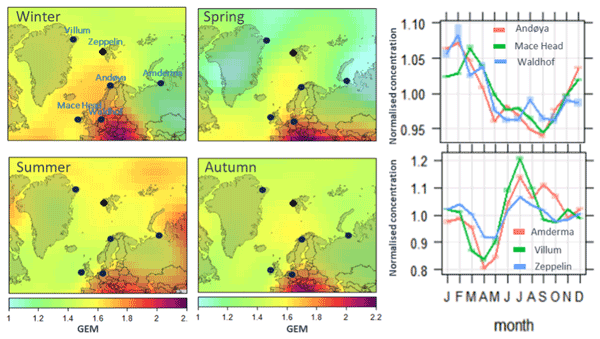
As a poison in the air that we breathe and the food that we eat, mercury is a human health concern for society as a whole. In that regard, this work deals with monitoring and modelling mercury in the environment, improving wherewithal, identifying the strength of the different components at play, and interpreting information to support the efforts that seek to safeguard public health.
Tobias Stacke and Stefan Hagemann
Geosci. Model Dev., 14, 7795–7816, https://doi.org/10.5194/gmd-14-7795-2021, https://doi.org/10.5194/gmd-14-7795-2021, 2021
Short summary
Short summary
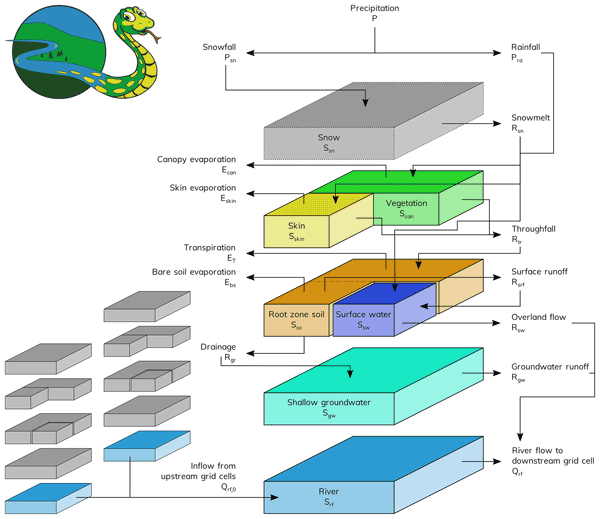
HydroPy is a new version of an established global hydrology model. It was rewritten from scratch and adapted to a modern object-oriented infrastructure to facilitate its future development and application. With this study, we provide a thorough documentation and evaluation of our new model. At the same time, we open our code base and publish the model's source code in a public software repository. In this way, we aim to contribute to increasing transparency and reproducibility in science.
Cited articles
Ahrens, L.: Polyfluoroalkyl Compounds in the Marine Environment – Investigations on their Distribution in Surface Water and Temporal Trends in Harbor Seals, Leuphana Universität Lüneburg, https://doi.org/10.48548/pubdata-292, 2009. a, b
Ahrens, L., Norström, K., Viktor, T., Cousins, A. P., and Josefsson, S.: Stockholm Arlanda Airport as a source of per- and polyfluoroalkyl substances to water, sediment and fish, Chemosphere, 129, 33–38, https://doi.org/10.1016/j.chemosphere.2014.03.136, 2015. a, b, c, d
Armitage, J., Cousins, I. T., Buck, R. C., Prevedouros, K., Russell, M. H., Macleod, M., and Korzeniowski, S. H.: Modeling global-scale fate and transport of perfluorooctanoate emitted from direct sources, Environmental science & technology, 40, 6969–6975, https://doi.org/10.1021/ES0614870, 2006. a
Armitage, J. M., Macleod, M., and Cousins, I. T.: Modeling the global fate and transport of perfluorooctanoic acid (PFOA) and perfluorooctanoate (PFO) Emitted from direct sources using a multispecies mass balance model, Environmental Science and Technology, 43, 1134–1140, https://doi.org/10.1021/es802900n, 2009. a, b, c
Bieser, J. and Ramacher, M. O. P.: Multi-compartment Chemistry Transport Models, Springer Proceedings in Complexity, 119–123, https://doi.org/10.1007/978-3-662-63760-9_18, 2021. a
Bieser, J., Aulinger, A., Matthias, V., Quante, M., and Builtjes, P.: SMOKE for Europe – adaptation, modification and evaluation of a comprehensive emission model for Europe, Geosci. Model Dev., 4, 47–68, https://doi.org/10.5194/gmd-4-47-2011, 2011. a
Boitsov, S., Bruvold, A., Hanssen, L., Jensen, H. K., and Ali, A.: Per- and polyfluoroalkyl substances (PFAS) in surface sediments of the North-east Atlantic Ocean: A non-natural PFAS background, Environmental Advances, 16, https://doi.org/10.1016/j.envadv.2024.100545, 2024. a
Brandsma, S. H., Koekkoek, J. C., van Velzen, M. J., and de Boer, J.: The PFOA substitute GenX detected in the environment near a fluoropolymer manufacturing plant in the Netherlands, Chemosphere, 220, 493–500, https://doi.org/10.1016/J.CHEMOSPHERE.2018.12.135, 2019. a
Brennan, N. M., Evans, A. T., Fritz, M. K., Peak, S. A., and von Holst, H. E.: Trends in the regulation of per-and polyfluoroalkyl substances (PFAS): A scoping review, International Journal of Environmental Research and Public Health, 18, https://doi.org/10.3390/ijerph182010900, 2021a. a
Brennan, N. M., Evans, A. T., Fritz, M. K., Peak, S. A., and von Holst, H. E.: Trends in the regulation of per-and polyfluoroalkyl substances (PFAS): A scoping review, International Journal of Environmental Research and Public Health, 18, 10900, https://doi.org/10.3390/IJERPH182010900, 2021b. a
Buck, R. C., Franklin, J., Berger, U., Conder, J. M., Cousins, I. T., Voogt, P. D., Jensen, A. A., Kannan, K., Mabury, S. A., and van Leeuwen, S. P.: Perfluoroalkyl and polyfluoroalkyl substances in the environment: Terminology, classification, and origins, Integrated Environmental Assessment and Management, 7, 513–541, https://doi.org/10.1002/ieam.258, 2011. a, b
Chambers, J.: Hybrid gridded demographic data for the world, 1950–2020, Zenodo, https://doi.org/10.5281/ZENODO.3768003, 2020. a, b, c, d
Conder, J. M., Hoke, R. A., De Wolf, W., Russell, M. H., and Buck, R. C.: Are PFCAs bioaccumulative? A critical review and comparison with regulatory criteria and persistent lipophilic compounds, Environmental Science and Technology, 42, 995–1003, https://doi.org/10.1021/ES070895G, 2008. a
Cousins, I. T., Kong, D., and Vestergren, R.: Reconciling measurement and modelling studies of the sources and fate of perfluorinated carboxylates, Environmental Chemistry, 8, 339–354, https://doi.org/10.1071/EN10144, 2011. a, b
Cousins, I. T., Dewitt, J. C., Glüge, J., Goldenman, G., Herzke, D., Lohmann, R., Ng, C. A., Scheringer, M., and Wang, Z.: The high persistence of PFAS is sufficient for their management as a chemical class, Environmental Science: Processes and Impacts, 22, 2307–2312, https://doi.org/10.1039/d0em00355g, 2020. a
Cucchi, M., Weedon, G. P., Amici, A., Bellouin, N., Lange, S., Müller Schmied, H., Hersbach, H., and Buontempo, C.: WFDE5: bias-adjusted ERA5 reanalysis data for impact studies, Earth Syst. Sci. Data, 12, 2097–2120, https://doi.org/10.5194/essd-12-2097-2020, 2020. a, b
Dalmijn, J., Glüge, J., Scheringer, M., and Cousins, I. T.: Emission inventory of PFASs and other fluorinated organic substances for the fluoropolymer production industry in Europe, Environmental Science: Processes and Impacts, 26, 269–287, https://doi.org/10.1039/d3em00426k, 2023. a, b, c, d
De Silva, A. O., Armitage, J. M., Bruton, T. A., Dassuncao, C., Heiger-Bernays, W., Hu, X. C., Kärrman, A., Kelly, B., Ng, C., Robuck, A., Sun, M., Webster, T. F., and Sunderland, E. M.: PFAS Exposure Pathways for Humans and Wildlife: A Synthesis of Current Knowledge and Key Gaps in Understanding, Environmental Toxicology and Chemistry, 40, 631–657, https://doi.org/10.1002/ETC.4935, 2021. a
Dirmeyer, P. A., Gao, X., Zhao, M., Guo, Z., Oki, T., and Hanasaki, N.: GSWP-2: Multimodel Analysis and Implications for Our Perception of the Land Surface, Bulletin of the American Meteorological Society, 87, 1381–1398, https://doi.org/10.1175/BAMS-87-10-1381, 2006. a, b
EC: Proposal COM/2022/540 for a Directive of the European Parliament and of the Council amending Directive 2000/60/EC establishing a framework for Community action in the field of water policy, Directive 2006/118/EC on the protection of groundwater against pollution and deterioration and Directive 2008/105/EC on environmental quality standards in the field of water policy, European Commission, 2022. a, b
Filipovic, M., Berger, U., and McLachlan, M. S.: Mass balance of perfluoroalkyl acids in the Baltic sea, Environmental Science and Technology, 47, 4088–4095, https://doi.org/10.1021/es400174y, 2013a. a
Filipovic, M., Berger, U., and McLachlan, M. S.: Mass balance of perfluoroalkyl acids in the Baltic sea, Environmental Science and Technology, 47, 4088–4095, https://doi.org/10.1021/es400174y, 2013b. a
Filipovic, M., Woldegiorgis, A., Norström, K., Bibi, M., Lindberg, M., and Österås, A. H.: Historical usage of aqueous film forming foam: A case study of the widespread distribution of perfluoroalkyl acids from a military airport to groundwater, lakes, soils and fish, Chemosphere, 129, 39–45, https://doi.org/10.1016/j.chemosphere.2014.09.005, 2015. a, b, c, d
Filipovic, M., Berger, U., and Mclachlan, M. S.: SUPPORTING INFORMATION Mass balance of perfluoroalkyl acids in the Baltic Sea, Environmental Science & Technology, https://doi.org/10.1021/es400174y, 2013. a
Galloway, J. E., Moreno, A. V., Lindstrom, A. B., Strynar, M. J., Newton, S., May, A. A., May, A. A., Weavers, L. K., and Weavers, L. K.: Evidence of Air Dispersion: HFPO-DA and PFOA in Ohio and West Virginia Surface Water and Soil near a Fluoropolymer Production Facility, Environmental Science and Technology, 54, 7175–7184, https://doi.org/10.1021/acs.est.9b07384, 2020. a, b
Gebbink, W. A. and van Leeuwen, S. P.: Environmental contamination and human exposure to PFASs near a fluorochemical production plant: Review of historic and current PFOA and GenX contamination in the Netherlands, Environment International, https://doi.org/10.1016/j.envint.2020.105583, 2020. a
Glüge, J., Scheringer, M., Cousins, I. T., Dewitt, J. C., Goldenman, G., Herzke, D., Lohmann, R., Ng, C. A., Trier, X., and Wang, Z.: An overview of the uses of per- And polyfluoroalkyl substances (PFAS), Environmental Science: Processes and Impacts, 22, 2345–2373, https://doi.org/10.1039/d0em00291g, 2020. a, b, c, d, e, f
Goldenman, G., Fernandes, M., Holland, M., Tugran, T., Nordin, A., Schoumacher, C., and McNeill, A.: The cost of inaction, TemaNord, Nordic Council of Ministers, Copenhagen, ISBN 9789289360654, https://doi.org/10.6027/TN2019-516, 2019. a
Guelfo, J. L., Korzeniowski, S., Mills, M. A., Anderson, J., Anderson, R. H., Arblaster, J. A., Conder, J. M., Cousins, I. T., Dasu, K., Henry, B. J., Lee, L. S., Liu, J., McKenzie, E. R., and Willey, J.: Environmental Sources, Chemistry, Fate, and Transport of Per- and Polyfluoroalkyl Substances: State of the Science, Key Knowledge Gaps, and Recommendations Presented at the August 2019 SETAC Focus Topic Meeting, Environmental Toxicology and Chemistry, 40, 3234–3260, https://doi.org/10.1002/ETC.5182, 2021. a
Hagemann, S. and Dümenil, L.: A parametrization of the lateral waterflow for the global scale, Climate Dynamics, 14, 17–31, https://doi.org/10.1007/S003820050205, 1998. a
Hagemann, S. and Dümenil Gates, L.: Validation of the hydrological cycle of ECMWF and NCEP reanalyses using the MPI hydrological discharge model, Journal of Geophysical Research: Atmospheres, 106, 1503–1510, https://doi.org/10.1029/2000JD900568, 2001. a
Hagemann, S. and Stacke, T.: Complementing ERA5 and E-OBS with high-resolution river discharge over Europe, Oceanologia, https://doi.org/10.1016/J.OCEANO.2022.07.003, 2022. a, b
Hagemann, S., Stacke, T., and Ho-Hagemann, H. T.: High Resolution Discharge Simulations Over Europe and the Baltic Sea Catchment, Frontiers in Earth Science, 8, 12, https://doi.org/10.3389/FEART.2020.00012, 2020. a, b, c
Hale, R. L., Grimm, N. B., Vörösmarty, C. J., and Fekete, B.: Nitrogen and phosphorus fluxes from watersheds of the northeast U.S. from 1930 to 2000: Role of anthropogenic nutrient inputs, infrastructure, and runoff, Global Biogeochemical Cycles, 29, 341–356, https://doi.org/10.1002/2014GB004909, 2015. a, b, c, d, e
Hamid, H. and Li, L.: Role of wastewater treatment plant (WWTP) in environmental cycling of poly- and perfluoroalkyl (PFAS) compounds, Ecocycles, 2, https://doi.org/10.19040/ecocycles.v2i2.62, 2016. a
Hepburn, E., Madden, C., Szabo, D., Coggan, T. L., Clarke, B., and Currell, M.: Contamination of groundwater with per- and polyfluoroalkyl substances (PFAS) from legacy landfills in an urban re-development precinct, Environmental Pollution, 248, 101–113, https://doi.org/10.1016/J.ENVPOL.2019.02.018, 2019. a
Holland, R., Khan, M. A. H., Chhantyal-Pun, R., Orr-Ewing, A. J., Percival, C. J., Taatjes, C. A., and Shallcross, D. E.: Investigating the atmospheric sources and sinks of perfluorooctanoic acid using a global chemistry transport model, Atmosphere, 11, 1–13, https://doi.org/10.3390/ATMOS11040407, 2020. a
ICPDR: Joint Danube Survey 3: Overview Map, ICPDR, p. 1, 2003. a
Jin, Y. H., Liu, W., Sato, I., Nakayama, S. F., Sasaki, K., Saito, N., and Tsuda, S.: PFOS and PFOA in environmental and tap water in China, Chemosphere, 77, 605–611, https://doi.org/10.1016/J.CHEMOSPHERE.2009.08.058, 2009. a, b, c
Kannan, K., Corsolini, S., Falandysz, J., Oehme, G., Focardi, S., and Giesy, J. P.: Perfluorooctanesulfonate and related fluorinated hydrocarbons in marine mammals, fishes, and birds from coasts of the Baltic and the Mediterranean Seas, Environmental Science and Technology, 36, 3210–3216, https://doi.org/10.1021/es020519q, 2002. a
Kirk, M., Smurthwaite, K., Bräunig, J., Trevenar, S., Lucas, R., Lal, A., Korda, R., Clements, A., Mueller, J., and Armstrong, B. P.: The PFAS health study systematic literature review, Canberra: The Australian National University, http://nceph.anu.edu.au/ (last access: June 2025), 2018. a
Kuenen, J., Dellaert, S., Visschedijk, A., Jalkanen, J. P., Super, I., and Denier Van Der Gon, H.: CAMS-REG-v4: a state-of-the-art high-resolution European emission inventory for air quality modelling, Earth System Science Data, 14, 491–515, https://doi.org/10.5194/ESSD-14-491-2022, 2022. a
Kummu, M., Taka, M., and Guillaume, J. H.: Gridded global datasets for Gross Domestic Product and Human Development Index over 1990–2015, Scientific Data, 5, 1–16, https://doi.org/10.1038/sdata.2018.4, 2018. a, b, c, d
Lang, J. R., Allred, B. M. K., Field, J. A., Levis, J. W., and Barlaz, M. A.: National Estimate of Per- and Polyfluoroalkyl Substance (PFAS) Release to U.S. Municipal Landfill Leachate, Environmental Science and Technology, 51, 2197–2205, https://doi.org/10.1021/acs.est.6b05005, 2017. a
Langenbach, B., Wilson, M., Zhang, T., Kim, U.-J., and Pilar Martinez Moral, M.: Per- and Polyfluoroalkyl Substances (PFAS): Significance and Considerations within the Regulatory Framework of the USA, International Journal of Environmental Research and Public Health, 18, 11142, https://doi.org/10.3390/IJERPH182111142, 2021. a
Lim, T. C., Wang, B., Huang, J., Deng, S., and Yu, G.: Emission inventory for PFOS in China: Review of past methodologies and suggestions, TheScientificWorldJournal, 11, 1963–1980, https://doi.org/10.1100/2011/868156, 2011. a
Lindim, C., Cousins, I. T., and Vangils, J.: Estimating emissions of PFOS and PFOA to the Danube River catchment and evaluating them using a catchment-scale chemical transport and fate model, Environmental Pollution, 207, 97–106, https://doi.org/10.1016/j.envpol.2015.08.050, 2015a. a, b, c
Lindim, C., Cousins, I. T., and Vangils, J.: Estimating emissions of PFOS and PFOA to the Danube River catchment and evaluating them using a catchment-scale chemical transport and fate model, Environmental Pollution, 207, 97–106, https://doi.org/10.1016/J.ENVPOL.2015.08.050, 2015b. a
Liška, I., Wagner, F., Sengl, M., Deutsch, K., and Slobodník, J.: Joint Danube Survey 3: A Comprehensive Analysis of Danube Water Quality, ICPDR Secretariat at UN OPice, ISBN 9783200037953, http://www.danubesurvey.org/results (last access: February 2025), 2015. a
Loos, R., Gawlik, B. M., Locoro, G., Rimaviciute, E., Contini, S., and Bidoglio, G.: EU-wide survey of polar organic persistent pollutants in European river waters, Environmental Pollution, 157, 561–568, https://doi.org/10.1016/j.envpol.2008.09.020, 2009. a, b
Martin, J. W., Mabury, S. A., Solomon, K. R., and Muir, D. C.: Dietary accumulation of perfluorinated acids in juvenile rainbow trout (Oncorhynchus mykiss), Environmental Toxicology and Chemistry, 22, 189–195, https://doi.org/10.1002/ETC.5620220125, 2003. a
Matthias, V., Arndt, J. A., Aulinger, A., Bieser, J., Denier van der Gon, H., Kranenburg, R., Kuenen, J., Neumann, D., Pouliot, G., and Quante, M.: Modeling emissions for three-dimensional atmospheric chemistry transport models, Journal of the Air & Waste Management Association, 68, 763–800, https://doi.org/10.1080/10962247.2018.1424057, 2018. a, b
Michigan Department of Environmental Quality Water Resources Division: River Raisin Surface Water PFAS Follow-up Investigation, September 2019. a
Munoz, G., Liu, J., Vo Duy, S., and Sauvé, S.: Analysis of F-53B, Gen-X, ADONA, and emerging fluoroalkylether substances in environmental and biomonitoring samples: A review, Trends in Environmental Analytical Chemistry, 23, e00066, https://doi.org/10.1016/J.TEAC.2019.E00066, 2019. a, b
OECD: Results of Survey on Production and Use of PFOS, PFAS, and PFOA, Related Substances and Products/Mixtures Containing These Substances, Proceedings of the ENVIRONMENT DIRECTORATE The Joint Meeting of the Chemicals Committee and Working Party on Chemicals, Pesticides and Biotechnology, ENV/JM/MONO(2006), p. 36, http://www.oecd.org/officialdocuments/publicdisplaydocumentpdf/?doclanguage=en&cote=env/jm/mono(2005)1 (last access: April 2025), 2004. a, b
OECD: Substance Information Data-Sheet (SIDS), Assessment Profile for Perfluorooctanoic Acid (PFOA), Ammonium Perfluorooctanoate (APFO), SIDS Initial Assessment Meeting, p. 5, https://hpvchemicals.oecd.org/UI/handler.axd?id=1f391916-96ba-46f6-a7ce-c96712da3b7e (last access: April 2025), 2006. a
OECD: PFCs: Outcome of the 2009 Survey. Survey on the production, use and release of PFOS, PFAS, PFOA PFCA, their related substances and products/mixtures containing these substances, p. 61, http://www.oecd.org/officialdocuments/publicdisplaydocumentpdf/?cote=env/jm/mono(2011)1&doclanguage=en (last access: April 2025), 2011. a
Paustenbach, D. J., Panko, J. M., Scott, P. K., and Unice, K. M.: A methodology for estimating human exposure to perfluorooctanoic acid (PFOA): A retrospective exposure assessment of a community (1951–2003), Journal of Toxicology and Environmental Health – Part A: Current Issues, 70, 28–57, https://doi.org/10.1080/15287390600748815, 2007a. a, b, c, d, e, f, g
Paustenbach, D. J., Panko, J. M., Scott, P. K., and Unice, K. M.: A methodology for estimating human exposure to perfluorooctanoic acid (PFOA): A retrospective exposure assessment of a community (1951–2003), Journal of Toxicology and Environmental Health – Part A: Current Issues, 70, 28–57, https://doi.org/10.1080/15287390600748815, 2007b. a
Pétré, M. A., Salk, K. R., Stapleton, H. M., Ferguson, P. L., Tait, G., Obenour, D. R., Knappe, D. R., and Genereux, D. P.: Per- and polyfluoroalkyl substances (PFAS) in river discharge: Modeling loads upstream and downstream of a PFAS manufacturing plant in the Cape Fear watershed, North Carolina, Science of The Total Environment, 831, 154763, https://doi.org/10.1016/J.SCITOTENV.2022.154763, 2022. a, b, c, d, e, f
Pickard, H. M., Ruyle, B. J., Thackray, C. P., Chovancova, A., Dassuncao, C., Becanova, J., Vojta, S., Lohmann, R., and Sunderland, E. M.: PFAS and Precursor Bioaccumulation in Freshwater Recreational Fish: Implications for Fish Advisories, Environmental Science and Technology, 56, 15573–15583, https://doi.org/10.1021/acs.est.2c03734, 2022. a, b
Post, G. B., Cohn, P. D., and Cooper, K. R.: Perfluorooctanoic acid (PFOA), an emerging drinking water contaminant: A critical review of recent literature, Environmental Research, 116, 93–117, https://doi.org/10.1016/j.envres.2012.03.007, 2012. a
Scheringer, M., Trier, X., Cousins, I. T., de Voogt, P., Fletcher, T., Wang, Z., and Webster, T. F.: Helsingør Statement on poly- and perfluorinated alkyl substances (PFASs), Chemosphere, 114, 337–339, https://doi.org/10.1016/J.CHEMOSPHERE.2014.05.044, 2014. a
Shin, H. M., Vieira, V. M., Ryan, P. B., Detwiler, R., Sanders, B., Steenland, K., and Bartell, S. M.: Environmental fate and transport modeling for perfluorooctanoic acid emitted from the Washington works facility in West Virginia, Environmental Science and Technology, 45, 1435–1442, https://doi.org/10.1021/es102769t, 2011. a
Simon, P.: POPE model and data v2.0, Zenodo [code, data set], https://doi.org/10.5281/zenodo.12783504, 2024. a, b, c, d
Stemmler, I. and Lammel, G.: Pathways of PFOA to the Arctic: variabilities and contributions of oceanic currents and atmospheric transport and chemistry sources, Atmos. Chem. Phys., 10, 9965–9980, https://doi.org/10.5194/acp-10-9965-2010, 2010. a
Sun, M., Arevalo, E., Strynar, M., Lindstrom, A., Richardson, M., Kearns, B., Pickett, A., Smith, C., and Knappe, D. R.: Legacy and Emerging Perfluoroalkyl Substances Are Important Drinking Water Contaminants in the Cape Fear River Watershed of North Carolina, Environmental Science and Technology Letters, 3, 415–419, https://doi.org/10.1021/acs.estlett.6b00398, 2016. a, b, c, d
Thackray, C. P. and Selin, N. E.: Uncertainty and variability in atmospheric formation of PFCAs from fluorotelomer precursors, Atmos. Chem. Phys., 17, 4585–4597, https://doi.org/10.5194/acp-17-4585-2017, 2017. a, b
Vierke, L., Staude, C., Biegel-Engler, A., Drost, W., and Schulte, C.: Perfluorooctanoic acid (PFOA)-main concerns and regulatory developments in Europe from an environmental point of view, Environmental Sciences Europe, 24, 1–11, https://doi.org/10.1186/2190-4715-24-16, 2012. a
Wang, Z., Cousins, I. T., Scheringer, M., and Hungerbühler, K.: Fluorinated alternatives to long-chain perfluoroalkyl carboxylic acids (PFCAs), perfluoroalkane sulfonic acids (PFSAs) and their potential precursors, Environment International, 60, 242–248, https://doi.org/10.1016/J.ENVINT.2013.08.021, 2013. a
Wang, Z., Cousins, I. T., Scheringer, M., Buck, R. C., and Hungerbühler, K.: Global emission inventories for C4–C14 perfluoroalkyl carboxylic acid (PFCA) homologues from 1951 to 2030, Part I: Production and emissions from quantifiable sources, https://doi.org/10.1016/j.envint.2014.04.013, 2014a. a, b, c, d, e, f, g, h, i, j, k, l, m, n, o, p, q, r, s, t
Wang, Z., Cousins, I. T., Scheringer, M., Buck, R. C., and Hungerbühler, K.: Global emission inventories for C4–C14 perfluoroalkyl carboxylic acid (PFCA) homologues from 1951 to 2030, part II: The remaining pieces of the puzzle, Environment International, 69, 166–176, https://doi.org/10.1016/j.envint.2014.04.006, 2014b. a, b, c, d, e
Wang, Z., Boucher, J. M., Scheringer, M., Cousins, I. T., and Hungerbühler, K.: Toward a Comprehensive Global Emission Inventory of C4–C10 Perfluoroalkanesulfonic Acids (PFSAs) and Related Precursors: Focus on the Life Cycle of C8-Based Products and Ongoing Industrial Transition, Environmental Science and Technology, 51, 4482–4493, https://doi.org/10.1021/acs.est.6b06191, 2017a. a
Wang, Z., Dewitt, J. C., Higgins, C. P., and Cousins, I. T.: A Never-Ending Story of Per- and Polyfluoroalkyl Substances (PFASs)?, Environmental Science and Technology, 51, 2508–2518, https://doi.org/10.1021/ACS.EST.6B04806, 2017b. a
Xu, B., Liu, S., Zhou, J. L., Zheng, C., Weifeng, J., Chen, B., Zhang, T., and Qiu, W.: PFAS and their substitutes in groundwater: Occurrence, transformation and remediation, Journal of Hazardous Materials, 412, 125159, https://doi.org/10.1016/j.jhazmat.2021.125159, 2021. a
Yarwood, G., Kemball-Cook, S., Keinath, M., Waterland, R. L., Korzeniowski, S. H., Buck, R. C., Russell, M. H., and Washburn, S. T.: High-resolution atmospheric modeling of fluorotelomer alcohols and perfluorocarboxylic acids in the North American troposphere, Environmental Science and Technology, 41, 5756–5762, https://doi.org/10.1021/ES0708971, 2007. a
Zarȩbska, M., Bajkacz, S., and Hordyjewicz-Baran, Z.: Assessment of legacy and emerging PFAS in the Oder River: Occurrence, distribution, and sources, Environmental research, 251, https://doi.org/10.1016/J.ENVRES.2024.118608, 2024. a
Short summary
Per- and Polyfluorinated Alkyl Substances (PFAS) constitute a group of often toxic, persistent, and bioaccumulative substances. We constructed a global Emissions model and inventory based on multiple datasets for 23 widely used PFAS. The model computes temporally and spatially resolved model ready emissions distinguishing between emissions to air and emissions to water covering the time span from 1950 up until 2020 on an annual basis to be used for chemistry transport modelling.
Per- and Polyfluorinated Alkyl Substances (PFAS) constitute a group of often toxic, persistent,...


Altmetrics
Final-revised paper
Preprint