Articles | Volume 18, issue 7
https://doi.org/10.5194/essd-18-5259-2026
© Author(s) 2026. This work is distributed under
the Creative Commons Attribution 4.0 License.
the Creative Commons Attribution 4.0 License.
https://doi.org/10.5194/essd-18-5259-2026
© Author(s) 2026. This work is distributed under
the Creative Commons Attribution 4.0 License.
the Creative Commons Attribution 4.0 License.
Data description article
| 
22 Jul 2026
Data description article |
| 22 Jul 2026
| 22 Jul 2026
SEAS5-BCSD: a bias-corrected and downscaled global seasonal forecast reference dataset for 1981–2024

Karlsruhe Institute of Technology, Campus Alpin, Institute of Meteorology and Climate Research IMKIFU, 82467 Garmisch-Partenkirchen, Germany
Institute of Geography, University of Augsburg, 86159 Augsburg, Germany
Christof Lorenz
Karlsruhe Institute of Technology, Campus Alpin, Institute of Meteorology and Climate Research IMKIFU, 82467 Garmisch-Partenkirchen, Germany
Tanja C. Schober
Karlsruhe Institute of Technology, Campus Alpin, Institute of Meteorology and Climate Research IMKIFU, 82467 Garmisch-Partenkirchen, Germany
Rebecca Wiegels
Karlsruhe Institute of Technology, Campus Alpin, Institute of Meteorology and Climate Research IMKIFU, 82467 Garmisch-Partenkirchen, Germany
Harald Kunstmann
Karlsruhe Institute of Technology, Campus Alpin, Institute of Meteorology and Climate Research IMKIFU, 82467 Garmisch-Partenkirchen, Germany
Institute of Geography, University of Augsburg, 86159 Augsburg, Germany
Center for Climate Resilience, University of Augsburg, 86159 Augsburg, Germany
Related authors
No articles found.
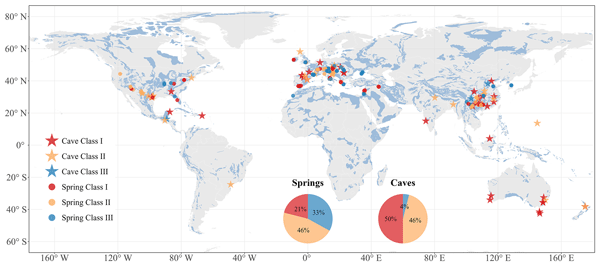
Yining Zang, Pauline C. Treble, Kei Yoshimura, Jayson Gabriel Pinza, Fengbo Zhang, Kübra Özdemir Çallı, Xiaojun Mei, Admin Husic, Alena Gessert, Andrej Stroj, Bartolomé Andreo, Bernard Ladouche, Christine Stumpp, Diana Mance, Eleni Zagana, Fen Huang, Giuseppe Sappa, Harald Kunstmann, Heike Brielmann, Hong Zhou, Huaying Wu, Jakob Garvelmann, James Berglund, Jean-Baptiste Charlier, Jens Lange, Juan Antonio Barberá Fornell, Junbing Pu, Konstantina Katsanou, Kun Ren, Laura Toran, Laurence Gill, Maria Filippini, Martin Kralik, Matías Mudarra Martínez, Min Zhao, Mingming Luo, Nico Goldscheider, Nikolaos Lambrakis, Pantaleone De Vita, Qiong Xiao, Shi Yu, Silvia Iacurto, Silvio Coda, Ted McCormack, Vincenzo Allocca, W. George Darling, Walter D'Alessandro, Xulei Guo, Yundi Hu, Zhijun Wang, Eva Kaminsky, Jiří Faimon, Marek Lang, Pavel Pracný, Aurel Persoiu, and Andreas Hartmann
Earth Syst. Sci. Data, 18, 7199–7225, https://doi.org/10.5194/essd-18-7199-2026, https://doi.org/10.5194/essd-18-7199-2026, 2026
Short summary
Short summary
We developed the first global database of water from karst springs and cave drips that records different forms of oxygen and hydrogen, which naturally trace how rainwater moves through rocks. By gathering and checking thousands of measurements from around the globe and linking them with flow and rainfall data, the database provides a comprehensive view of water movement, allows scientists to compare regions, understand groundwater processes, and support sustainable water management worldwide.
Luitpold Hingerl, Samuel Guug, Jan Bliefernicht, Hawwa Kadum, Souleymane Sy, Windmanagda Sawadogo, Emmanuel Quansah, Francis E. Oussou, Leonard Amekudzi, Seyni Salack, Belko Abdul-Aziz Diallo, Michael Ayamba, Emmanuel Ramde, Rainer Steinbrecher, Frank Neidli, and Harald Kunstmann
Earth Syst. Sci. Data Discuss., https://doi.org/10.5194/essd-2026-379, https://doi.org/10.5194/essd-2026-379, 2026
Preprint under review for ESSD
Short summary
Short summary
This paper presents a long-term environmental observation dataset from six sites in Burkina Faso and Ghana, providing measurements of exchanges of carbon, water, and energy between ecosystems and the atmosphere. The data were collected across different land-use types and processed using a consistent workflow to ensure quality and comparability. The openly available dataset supports climate research, environmental monitoring, and improved understanding of environmental change in West Africa.
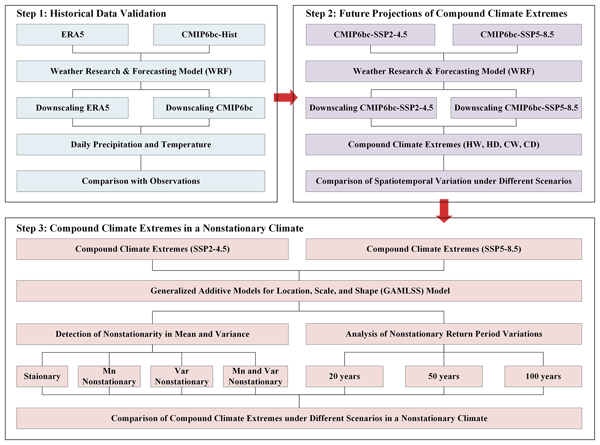
Yinchi Zhang, Wanling Xu, Chao Deng, Shao Sun, Miaomiao Ma, Jianhui Wei, Ying Chen, Yi Wang, Lu Gao, and Harald Kunstmann
Nat. Hazards Earth Syst. Sci., 26, 2031–2050, https://doi.org/10.5194/nhess-26-2031-2026, https://doi.org/10.5194/nhess-26-2031-2026, 2026
Short summary
Short summary
Most studies of compound extremes assume stationary climate conditions. Here, we combine high-resolution regional climate modeling with non-stationary statistical methods to assess future changes in compound extremes over southeastern China. Our results demonstrate that non-stationary models more accurately capture shifts in the evolution of these events, suggesting that conventional approaches may systematically underestimate future risks.
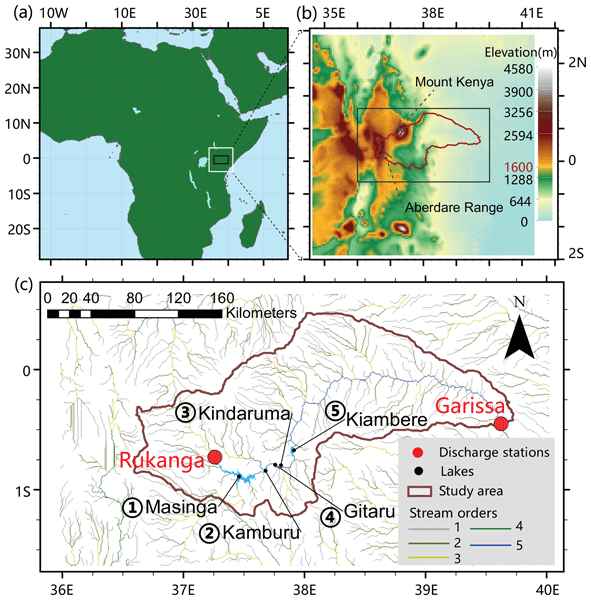
Ling Zhang, Lu Li, Zhongshi Zhang, Joël Arnault, Stefan Sobolowski, Xiaoling Chen, Jianzhong Lu, Anthony Musili Mwanthi, Pratik Kad, Mohammed Abdullahi Hassan, Tanja Portele, Harald Kunstmann, and Zhengkang Zuo
Hydrol. Earth Syst. Sci., 29, 4109–4132, https://doi.org/10.5194/hess-29-4109-2025, https://doi.org/10.5194/hess-29-4109-2025, 2025
Short summary
Short summary
To address challenges related to unreliable hydrological simulations, we present an enhanced hydrological simulation with a refined climate model and a more comprehensive hydrological model. The model with the two parts outperforms that without, especially in migrating bias in peak flow and dry-season flow. Our findings highlight the enhanced hydrological simulation capability, with the refined climate and lake module contributing 24 % and 76 % improvement, respectively.
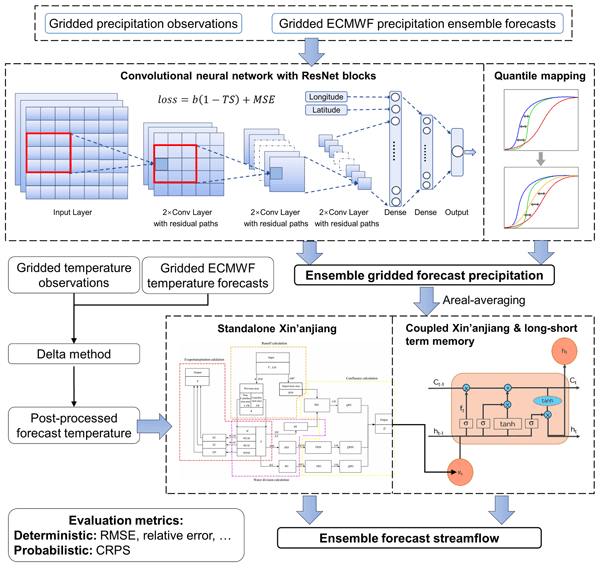
Ningpeng Dong, Haoran Hao, Mingxiang Yang, Jianhui Wei, Shiqin Xu, and Harald Kunstmann
Hydrol. Earth Syst. Sci., 29, 2023–2042, https://doi.org/10.5194/hess-29-2023-2025, https://doi.org/10.5194/hess-29-2023-2025, 2025
Short summary
Short summary
Hydrometeorological forecasting is crucial for managing water resources and mitigating extreme weather events, yet current long-term forecast products are often embedded with uncertainties. We develop a deep-learning-based modelling framework to improve 30 d rainfall and streamflow forecasts by combining advanced neural networks and physical models. With the flow forecast error reduced by up to 33 %, the framework has the potential to enhance water management and disaster prevention.
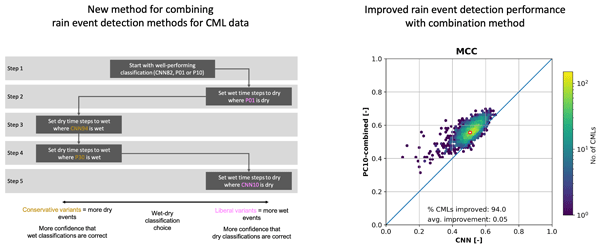
Maximilian Graf, Andreas Wagner, Julius Polz, Llorenç Lliso, José Alberto Lahuerta, Harald Kunstmann, and Christian Chwala
Atmos. Meas. Tech., 17, 2165–2182, https://doi.org/10.5194/amt-17-2165-2024, https://doi.org/10.5194/amt-17-2165-2024, 2024
Short summary
Short summary
Commercial microwave links (CMLs) can be used for rainfall retrieval. The detection of rainy periods in their attenuation time series is a crucial processing step. We investigate the usage of rainfall data from MSG SEVIRI for this task, compare this approach with existing methods, and introduce a novel combined approach. The results show certain advantages for SEVIRI-based methods, particularly for CMLs where existing methods perform poorly. Our novel combination yields the best performance.
Patrick Olschewski, Qi Sun, Jianhui Wei, Yu Li, Zhan Tian, Laixiang Sun, Joël Arnault, Tanja C. Schober, Brian Böker, Harald Kunstmann, and Patrick Laux
Hydrol. Earth Syst. Sci. Discuss., https://doi.org/10.5194/hess-2024-95, https://doi.org/10.5194/hess-2024-95, 2024
Revised manuscript not accepted
Short summary
Short summary
There are indications that typhoon intensities may increase under global warming. However, further research on these projections and their uncertainties is necessary. We study changes in typhoon intensity under SSP5-8.5 for seven events affecting the Pearl River Delta using Pseudo-Global Warming and a storyline approach based on 16 CMIP6 models. Results show intensified wind speed, sea level pressure drop and precipitation levels for six events with amplified increases for individual storylines.
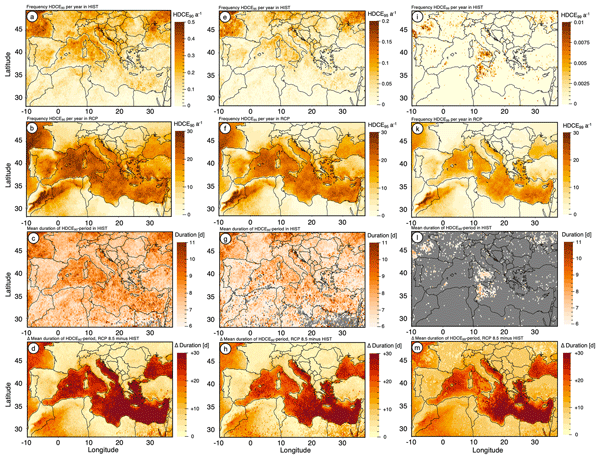
Patrick Olschewski, Mame Diarra Bousso Dieng, Hassane Moutahir, Brian Böker, Edwin Haas, Harald Kunstmann, and Patrick Laux
Nat. Hazards Earth Syst. Sci., 24, 1099–1134, https://doi.org/10.5194/nhess-24-1099-2024, https://doi.org/10.5194/nhess-24-1099-2024, 2024
Short summary
Short summary
We applied a multivariate and dependency-preserving bias correction method to climate model output for the Greater Mediterranean Region and investigated potential changes in false-spring events (FSEs) and heat–drought compound events (HDCEs). Results project an increase in the frequency of FSEs in middle and late spring as well as increases in frequency, intensity, and duration for HDCEs. This will potentially aggravate the risk of crop loss and failure and negatively impact food security.
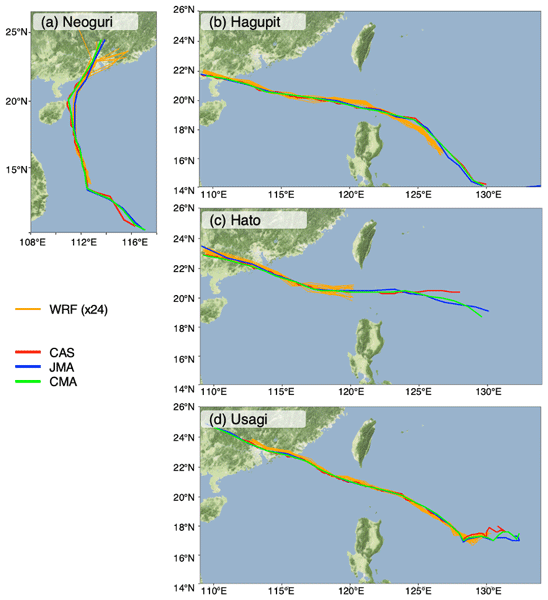
Qi Sun, Patrick Olschewski, Jianhui Wei, Zhan Tian, Laixiang Sun, Harald Kunstmann, and Patrick Laux
Hydrol. Earth Syst. Sci., 28, 761–780, https://doi.org/10.5194/hess-28-761-2024, https://doi.org/10.5194/hess-28-761-2024, 2024
Short summary
Short summary
Tropical cyclones (TCs) often cause high economic loss due to heavy winds and rainfall, particularly in densely populated regions such as the Pearl River Delta (China). This study provides a reference to set up regional climate models for TC simulations. They contribute to a better TC process understanding and assess the potential changes and risks of TCs in the future. This lays the foundation for hydrodynamical modelling, from which the cities' disaster management and defence could benefit.
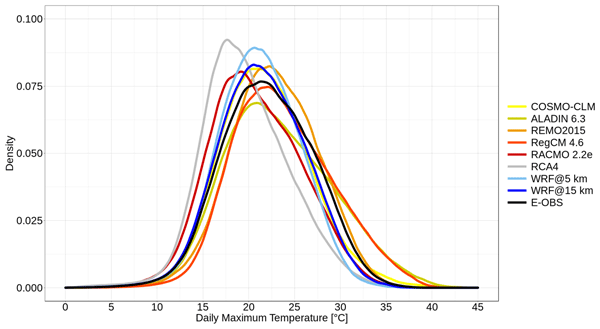
Dragan Petrovic, Benjamin Fersch, and Harald Kunstmann
Nat. Hazards Earth Syst. Sci., 24, 265–289, https://doi.org/10.5194/nhess-24-265-2024, https://doi.org/10.5194/nhess-24-265-2024, 2024
Short summary
Short summary
The influence of model resolution and settings on the reproduction of heat waves in Germany between 1980–2009 is analyzed. Outputs from a high-resolution model with settings tailored to the target region are compared to those from coarser-resolution models with more general settings. Neither the increased resolution nor the tailored model settings are found to add significant value to the heat wave simulation. The models exhibit a large spread, indicating that the choice of model can be crucial.
Mohsen Soltani, Bert Hamelers, Abbas Mofidi, Christopher G. Fletcher, Arie Staal, Stefan C. Dekker, Patrick Laux, Joel Arnault, Harald Kunstmann, Ties van der Hoeven, and Maarten Lanters
Earth Syst. Dynam., 14, 931–953, https://doi.org/10.5194/esd-14-931-2023, https://doi.org/10.5194/esd-14-931-2023, 2023
Short summary
Short summary
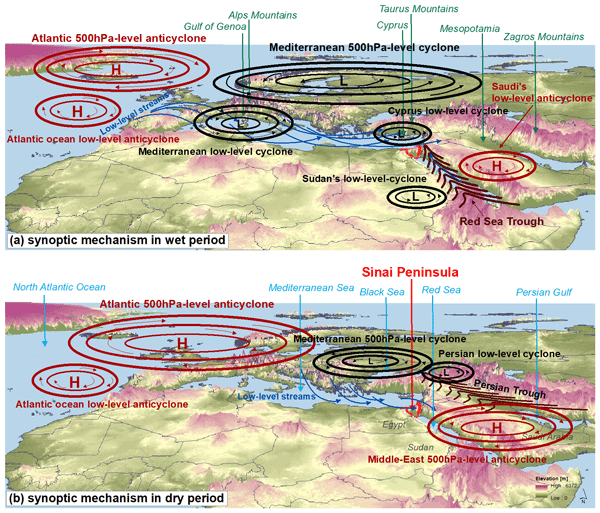
The temporal changes and spatial patterns in precipitation events do not show a homogeneous tendency across the Sinai Peninsula. Mediterranean cyclones accompanied by the Red Sea and Persian troughs are responsible for the majority of Sinai's extreme rainfall events. Cyclone tracking captures 156 cyclones (rainfall ≥10 mm d-1) either formed within or transferred to the Mediterranean basin precipitating over Sinai.
Efi Rousi, Andreas H. Fink, Lauren S. Andersen, Florian N. Becker, Goratz Beobide-Arsuaga, Marcus Breil, Giacomo Cozzi, Jens Heinke, Lisa Jach, Deborah Niermann, Dragan Petrovic, Andy Richling, Johannes Riebold, Stella Steidl, Laura Suarez-Gutierrez, Jordis S. Tradowsky, Dim Coumou, André Düsterhus, Florian Ellsäßer, Georgios Fragkoulidis, Daniel Gliksman, Dörthe Handorf, Karsten Haustein, Kai Kornhuber, Harald Kunstmann, Joaquim G. Pinto, Kirsten Warrach-Sagi, and Elena Xoplaki
Nat. Hazards Earth Syst. Sci., 23, 1699–1718, https://doi.org/10.5194/nhess-23-1699-2023, https://doi.org/10.5194/nhess-23-1699-2023, 2023
Short summary
Short summary
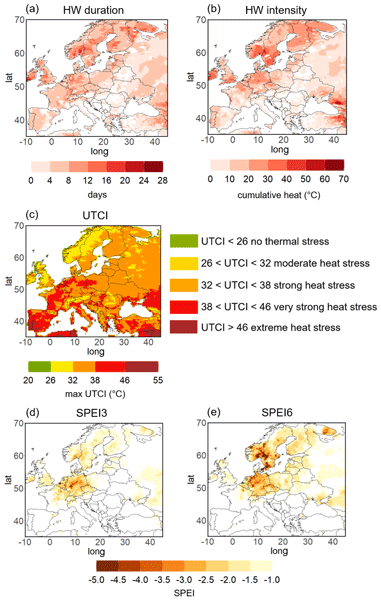
The objective of this study was to perform a comprehensive, multi-faceted analysis of the 2018 extreme summer in terms of heat and drought in central and northern Europe, with a particular focus on Germany. A combination of favorable large-scale conditions and locally dry soils were related with the intensity and persistence of the events. We also showed that such extremes have become more likely due to anthropogenic climate change and might occur almost every year under +2 °C of global warming.
Dragan Petrovic, Benjamin Fersch, and Harald Kunstmann
Nat. Hazards Earth Syst. Sci., 22, 3875–3895, https://doi.org/10.5194/nhess-22-3875-2022, https://doi.org/10.5194/nhess-22-3875-2022, 2022
Short summary
Short summary
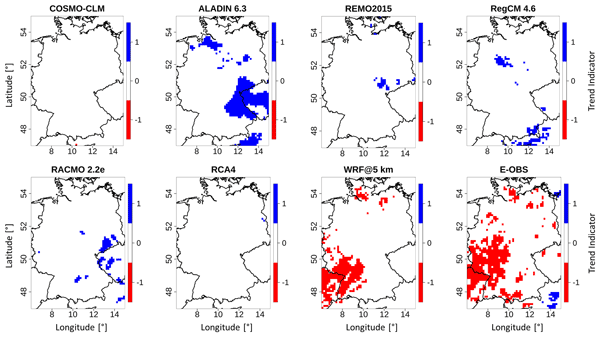
The influence of model resolution and settings on drought reproduction in Germany between 1980–2009 is investigated here. Outputs from a high-resolution model with settings tailored to the target region are compared to those from coarser-resolution models with more general settings. Gridded observational data sets serve as reference. Regarding the reproduction of drought characteristics, all models perform on a similar level, while for trends, only the modified model produces reliable outputs.
Benjamin Fersch, Andreas Wagner, Bettina Kamm, Endrit Shehaj, Andreas Schenk, Peng Yuan, Alain Geiger, Gregor Moeller, Bernhard Heck, Stefan Hinz, Hansjörg Kutterer, and Harald Kunstmann
Earth Syst. Sci. Data, 14, 5287–5307, https://doi.org/10.5194/essd-14-5287-2022, https://doi.org/10.5194/essd-14-5287-2022, 2022
Short summary
Short summary
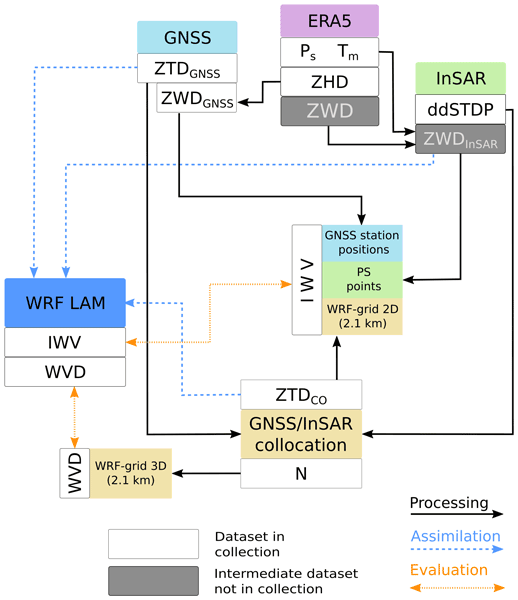
In this study, a comprehensive multi-disciplinary dataset for tropospheric water vapor was developed. Geodetic, photogrammetric, and atmospheric modeling and data fusion techniques were used to obtain maps of water vapor in a high spatial and temporal resolution. It could be shown that regional weather simulations for different seasons benefit from assimilating these maps and that the combination of the different observation techniques led to positive synergies.
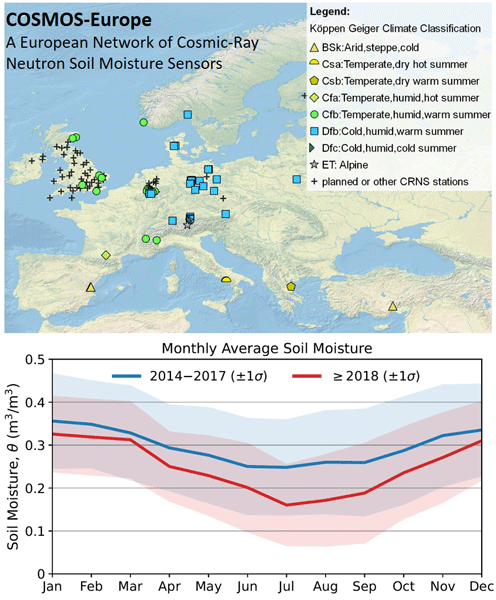
Heye Reemt Bogena, Martin Schrön, Jannis Jakobi, Patrizia Ney, Steffen Zacharias, Mie Andreasen, Roland Baatz, David Boorman, Mustafa Berk Duygu, Miguel Angel Eguibar-Galán, Benjamin Fersch, Till Franke, Josie Geris, María González Sanchis, Yann Kerr, Tobias Korf, Zalalem Mengistu, Arnaud Mialon, Paolo Nasta, Jerzy Nitychoruk, Vassilios Pisinaras, Daniel Rasche, Rafael Rosolem, Hami Said, Paul Schattan, Marek Zreda, Stefan Achleitner, Eduardo Albentosa-Hernández, Zuhal Akyürek, Theresa Blume, Antonio del Campo, Davide Canone, Katya Dimitrova-Petrova, John G. Evans, Stefano Ferraris, Félix Frances, Davide Gisolo, Andreas Güntner, Frank Herrmann, Joost Iwema, Karsten H. Jensen, Harald Kunstmann, Antonio Lidón, Majken Caroline Looms, Sascha Oswald, Andreas Panagopoulos, Amol Patil, Daniel Power, Corinna Rebmann, Nunzio Romano, Lena Scheiffele, Sonia Seneviratne, Georg Weltin, and Harry Vereecken
Earth Syst. Sci. Data, 14, 1125–1151, https://doi.org/10.5194/essd-14-1125-2022, https://doi.org/10.5194/essd-14-1125-2022, 2022
Short summary
Short summary
Monitoring of increasingly frequent droughts is a prerequisite for climate adaptation strategies. This data paper presents long-term soil moisture measurements recorded by 66 cosmic-ray neutron sensors (CRNS) operated by 24 institutions and distributed across major climate zones in Europe. Data processing followed harmonized protocols and state-of-the-art methods to generate consistent and comparable soil moisture products and to facilitate continental-scale analysis of hydrological extremes.
Cited articles
Ahmed, J. S., Buizza, R., Dell'Acqua, M., Demissie, T., and Pè, M. E.: Evaluation of ERA5 and CHIRPS rainfall estimates against observations across Ethiopia, Meteorol. Atmos. Phys., 136, https://doi.org/10.1038/sdata.2018.214, 2024. a
Ballarin, A. S., Sone, J. S., Gesualdo, G. C., Schwamback, D., Reis, A., Almagro, A., and Wendland, E. C.: CLIMBra – climate change dataset for Brazil, Scientific Data, 10, https://doi.org/10.1038/s41597-023-01956-z, 2023. a
Bandhauer, M., Isotta, F., Lakatos, M., Lussana, C., Båserud, L., Izsák, B., Szentes, O., Tveito, O. E., and Frei, C.: Evaluation of daily precipitation analyses in E-OBS (v19.0e) and ERA5 by comparison to regional high-resolution datasets in European regions, Int. J. Climatol., 42, 727–747, https://doi.org/10.1002/joc.7269, 2021. a
Beck, H., Zimmermann, N. E., McVicar, T. R., Vergopolan, N., Berg, A., and Wood, E. F.: Present and future Köppen-Geiger climate classification maps at 1-km resolution, Nature Scientific Data, 5, https://doi.org/10.1038/sdata.2018.214, 2018. a
Beck, H., van Dijk, A. I. J. M., Larraondo, P. R., McVicar, T. R., Pan, M., Dutra, E., and Miralles, D. G.: MSWX: global 3-hourly 0.1° bias-corrected meteorological data including near-real-time updates and forecast ensembles, B. Am. Meteorol. Soc., 103, https://doi.org/10.1175/BAMS-D-21-0145.1, 2022. a
Boé, J., Terray, L., Habets, F., and Martin, E.: Statistical and dynamical downscaling of the Seine basin climate for hydro-meteorological studies, Int. J. Climatol., 27, 1643–1655, https://doi.org/10.1002/joc.1602, 2007. a, b, c, d
Brier, G. W.: Verification of forecasts expressed in terms of probability, Mon. Weather Rev., 78, 1–3, https://doi.org/10.1175/1520-0493(1950)078<0001:VOFEIT>2.0.CO;2, 1950. a, b
Cannon, A. J., Sobie, S. R., and Murdock, T. Q.: Bias correction of GCM precipitation by quantile mapping: how well do methods preserve changes in quantiles and extremes?, J. Climate, 28, 6938–6959, https://doi.org/10.1175/JCLI-D-14-00754.1, 2015. a
Cloke, H. L. and Pappenberger, F.: Ensemble flood forecasting: a review, J. Hydrol., 375, 613–626, https://doi.org/10.1016/j.jhydrol.2009.06.005, 2009. a
Crespi, A., Petitta, M., Marson, P., Viel, C., and Grigis, L.: Verification and bias adjustment of ECMWF SEAS5 seasonal forecasts over Europe for climate service applications, Climate, 9, https://doi.org/10.3390/cli9120181, 2021. a
Di Capua, G. and Rahmstorf, S.: Extreme weather in a changing climate, Environ. Res. Lett., 18, https://doi.org/10.1088/1748-9326/acfb23, 2023. a
Doblas-Reyes, F. J., Andreu-Burillo, I., Chikamoto, Y., García-Serrano, J., Guemas, V., Kimoto, M., Mochizuki, T., Rodrigues, L. R. L., and van Oldenborgh, G. J.: Initialized near-term regional climate change prediction, Nat. Commun., 4, https://doi.org/10.1038/ncomms2704, 2013a. a
Doblas-Reyes, F. J., García-Serrano, J., Lienert, F., Pinto Biescas, A., and Rodrigues, L. R. L.: Seasonal climate predictability and forecasting: status and prospects, WIREs Clim. Change, 4, 245–268, https://doi.org/10.1002/wcc.217, 2013b. a
Eden, J. M., Widmann, M., Grawe, D., and Rast, S.: Skill, correction, and downscaling of GCM-simulated precipitation, J. Climate, 25, 3970–3984, https://doi.org/10.1175/JCLI-D-11-00254.1, 2012. a
Fröhlich, K., Dobrynin, M., Isensee, K., Gessner, C., Paxian, A., Pohlmann, H., Haak, H., Brune, S., Früh, B., and Baehr, J.: The German Climate Forecast System: GCFS, J. Adv. Model. Earth Sy., 13, https://doi.org/10.1029/2020MS002101, 2021. a
Geiger, T., Detring, I., and Dahyann, A.: Global seasonal forecast skill data for heat-impact related indicators using the German Climate Forecast System (GCFS) v2.1, Zenodo [code], https://doi.org/10.5281/zenodo.14103378, 2024. a
Gergel, D. R., Malevich, S. B., McCusker, K. E., Tenezakis, E., Delgado, M. T., Fish, M. A., and Kopp, R. E.: Global Downscaled Projections for Climate Impacts Research (GDPCIR): preserving quantile trends for modeling future climate impacts, Geosci. Model Dev., 17, 191–227, https://doi.org/10.5194/gmd-17-191-2024, 2024. a
Golian, S. and Murphy, C.: Evaluating bias-correction methods for seasonal dynamical precipitation forecasts, J. Hydrometeorol., 23, 1350–1363, https://doi.org/10.1175/JHM-D-22-0049.1, 2022. a
Gonzalez, C., Bachmann, M., Jose-Luis, B.-B., Rizzoli, P., and Zink, M.: A fully automatic algorithm for editing the TanDEM-X Global DEM, Remote Sens.-Basel, 12, https://doi.org/10.3390/rs12233961, 2020. a
Gonzalez-Aparicio, I. and Hidalgo, J.: Dynamically based future daily and seasonal temperature scenarios analysis for the northern Iberian Peninsula, Int. J. Climatol., 32, 1825–1833, https://doi.org/10.1002/joc.2397, 2011. a
Gudmundsson, L., Bremnes, J. B., Haugen, J. E., and Engen-Skaugen, T.: Technical Note: Downscaling RCM precipitation to the station scale using statistical transformations – a comparison of methods, Hydrol. Earth Syst. Sci., 16, 3383–3390, https://doi.org/10.5194/hess-16-3383-2012, 2012. a
Hao, Z., Singh, V. P., and Xia, Y.: Seasonal drought prediction: advances, challenges, and future prospects, Rev. Geophys., 56, 108–141, https://doi.org/10.1002/2016RG000549, 2018. a
Hersbach, H.: Decomposition of the continuous ranked probability score for ensemble prediction systems, Weather Forecast., 15, 559–570, https://doi.org/10.1175/1520-0434(2000)015<0559:DOTCRP>2.0.CO;2, 2000. a
Hersbach, H., Bell, B., Berrisford, P., Hirahara, S., Horányi, A., Muñoz-Sabater, J., Nicolas, J., Peubey, C., Radu, R., Schepers, D., Simmons, A., Soci, C., Abdalla, S., Abellan, X., Balsamo, G., Bechtold, P., Biavati, G., Bidlot, J., Bonavita, M., De Chiara, G., Dahlgren, P., Dee, D., Diamantakis, M., Dragani, R., Flemming, J., Forbes, R., Fuentes, M., Geer, A., Haimberger, L., Healy, S., Hogan, R. J., Hólm, E., Janisková, M., Keeley, S., Laloyaux, P., Lopez, P., Lupu, C., Radnoti, G., de Rosnay, P., Rozum, I., Vamborg, F., Villaume, S., and Thépaut, J.-N.: The ERA5 global reanalysis, Q. J. Roy. Meteor. Soc., 146, 1999–2049, https://doi.org/10.1002/qj.3803, 2020. a
Holthuijzen, M., Beckage, B., Clemins, P. J., Higdon, D., and Winter, J. M.: Robust bias-correction of precipitation extremes using a novel hybrid empirical quantile-mapping method, Theor. Appl. Climatol., 149, 863–882, https://doi.org/10.1007/s00704-022-04035-2, 2022. a
Hudson, D., Alves, O., Hendon, H. H., Lim, E.-P., Liu, G., Luo, J.-J., MacLachlan, C., Marshall, A. G., Shi, L., Wang, G., Wedd, R., Young, G., Zhao, M., and Zhou, X.: ACCESS-S1 The new Bureau of Meteorology multi-week to seasonal prediction system, Journal of Southern Hemisphere Earthy System Science, 67, 132–159, https://doi.org/10.1071/ES17009, 2017. a
Johnson, S. J., Stockdale, T. N., Ferranti, L., Balmaseda, M. A., Molteni, F., Magnusson, L., Tietsche, S., Decremer, D., Weisheimer, A., Balsamo, G., Keeley, S. P. E., Mogensen, K., Zuo, H., and Monge-Sanz, B. M.: SEAS5: the new ECMWF seasonal forecast system, Geosci. Model Dev., 12, 1087–1117, https://doi.org/10.5194/gmd-12-1087-2019, 2019. a, b, c
Krishnamurthy, V.: Predictability of weather and climate, Earth and Space Science, 6, 1043–1056, https://doi.org/10.1029/2019EA000586, 2019. a
Lavers, D. A., Simmons, A., Vamborg, F., and Rodwell, M. J.: An evaluation of ERA5 precipitation for climate monitoring, Q. J. Roy. Meteor. Soc., 148, 3152–3165, https://doi.org/10.1002/qj.4351, 2022. a, b
Lorenz, C., Portele, T. C., Laux, P., and Kunstmann, H.: Bias-corrected and spatially disaggregated seasonal forecasts: a long-term reference forecast product for the water sector in semi-arid regions, Earth Syst. Sci. Data, 13, 2701–2722, https://doi.org/10.5194/essd-13-2701-2021, 2021. a, b, c, d, e, f, g
Lorenz, C., Wiegels, R., Chwala, C., Fersch, B., Weber, J. N., Sawadogo, W., Portele, T. C., and Borkenhagen, C.: PyCast-S2S: A Python Framework for Subseasonal-to-Seasonal Forecast Post-Processing, software, Version 0.8.0, Zenodo [code], https://doi.org/10.5281/zenodo.16926092, 2025. a
MacLachlan, C., Arribas, A., Peterson, K. A., Maidens, A., Fereday, D., Scaife, A., Gordon, M., Vellinga, M., Williams, A., Comer, R., Camp, J., Xavier, P., and Madec, G.: Global Seasonal forecast system version 5 (GloSea5): a high-resolution seasonal forecast system, Q. J. Roy. Meteor. Soc., 141, 1072–1084, https://doi.org/10.1002/qj.2396, 2014. a
Manrique-Suñén, A., Gonzalez-Reviriego, N., Torralba, V., Cortesi, N., and Doblas-Reyes, F. J.: Choices in the verification of S2S forecasts and their implications for climate services, Mon. Weather Rev., 148, 3995–4008, https://doi.org/10.1175/MWR-D-20-0067.1, 2020. a
Maraun, D.: Bias correction, quantile mapping, and downscaling: revisiting the inflation issue, J. Climate, 26, 2137–2143, https://doi.org/10.1175/JCLI-D-12-00821.1, 2013. a, b
Marzban, C.: The ROC curve and the area under it as performance measures, Weather Forecast., 19, 1106–1114, https://doi.org/10.1175/825.1, 2004. a
Materia, S., Borrelli, A., Bellucci, A., Alessandri, A., Di Pietro, P., Athanasiadis, P., Navarra, A., and Gualdi, S.: Impact of atmosphere and land surface initial conditions on seasonal forecasts of global surface temperature, J. Climate, 27, 9253–9271, https://doi.org/10.1175/JCLI-D-14-00163.1, 2014. a
Nogueira, M.: Inter-comparison of ERA-5, ERA-interim and GPCP rainfall over the last 40 years: Process-based analysis of systematic and random differences, J. Hydrol., 583, https://doi.org/10.1016/j.jhydrol.2020.124632, 2020. a
Portele, T. C., Lorenz, C., Dibrani, B., Laux, P., Bliefernicht, J., and Kunstmann, H.: Seasonal forecasts offer economic benefit for hydrological decision making in semi-arid regions, Nature Sicentific Reports, 11, https://doi.org/10.1038/s41598-021-89564-y, 2021. a, b, c
Rajczak, J., Kotlarski, S., and Schär, C.: Does quantile mapping of simulated precipitation correct for biases in transition probabilities and spell lengths?, J. Climate, 29, 1605–1615, https://doi.org/10.1175/JCLI-D-15-0162.1, 2016. a
Themeßl, M. J., Gobiet, A., and Heinrich, G.: Empirical-statistical downscaling and error correction of regional climate models and its impact on the climate change signal, Climatic Change, 112, 449–468, https://doi.org/10.1007/s10584-011-0224-4, 2012. a, b, c
Thrasher, B., Maurer, E. P., McKellar, C., and Duffy, P. B.: Technical Note: Bias correcting climate model simulated daily temperature extremes with quantile mapping, Hydrol. Earth Syst. Sci., 16, 3309–3314, https://doi.org/10.5194/hess-16-3309-2012, 2012. a, b
Tóth, Z., Talagrand, O., Candille, G., and Zhu, Y.: Probability and ensemble forecasts, in: Forecast Verification: A Practitioner's Guide in Atmospheric Science, edited by: Jolliffe, I. T. and Stephenson, D. B., John Wiley and Sons, Chichester, UK, 137–163, https://doi.org/10.1002/9781119960003, 2003. a
United Nations Convention to Combat Desertification: Drought in Numbers 2022, https://www.unccd.int/sites/default/files/2022-05/Drought%20in%20Numbers.pdf (last access: 31 March 2025), 2022. a
Uttarwar, S. B., Napoli, A., Avesani, D., and Majone, B.: Elevation-driven biases in seasonal weather forecasts: insights from the Alpine region, Phys. Chem. Earth, 139, https://doi.org/10.1016/j.pce.2025.103957, 2025. a
Vicente-Serrano, S. M., Begueria, S., and López-Moreno, J. I.: A multiscalar drought index sensitive to global warming: the standardized precipitation evapotranspiration index, J. Climate, 23, 1696–1718, https://doi.org/10.1175/2009JCLI2909.1, 2010. a, b
Vitart, F., Ardilouze, C., Bonet, A., Brookshaw, A., Chen, M., Codorean, C., Déqué, M., Ferranti, L., Fucile, E., Fuentes, M., Hendon, H., Hodgson, J., Kang, H.-S., Kumar, A., Lin, H., Liu, G., Liu, X., Malguzzi, P., Mallas, I., Manoussakis, M., Mastrangelo, D., MacLachlan, C., McLean, P., Minami, A., Mladek, R., Nakazawa, T., Najm, S., Nie, Y., Rixen, M., Robertson, A. W., Ruti, P., Sun, C., Takaya, Y., Tolstykh, M., Venuti, F., Waliser, D., Woolnough, S., Wu, T., Won, D.-J., Xiao, H., Zaripov, R., and Zhang, L.: The Subseasonal to Seasonal (S2S) prediction project database, B. Am. Meteorol. Soc., 98, 163–173, https://doi.org/10.1175/BAMS-D-16-0017.1, 2017. a
Volosciuk, C., Maraun, D., Vrac, M., and Widmann, M.: A combined statistical bias correction and stochastic downscaling method for precipitation, Hydrol. Earth Syst. Sci., 21, 1693–1719, https://doi.org/10.5194/hess-21-1693-2017, 2017. a
Wang, Q., Shao, Y., Song, Y., Schepen, A., Robertson, D. E., Ryu, D., and Pappenberger, F.: An evaluation of ECMWF SEAS5 seasonal climate forecasts for Australia using a new forecast calibration algorithm, Environ. Modell. Softw., 122, https://doi.org/10.1016/j.envsoft.2019.104550, 2019. a
Weber, J. N., Lorenz, C., Portele, T. C., and Kunstmann, H.: Seasonal forecasts for Germany: enhancing the predictive capability of global SEAS5 ensemble forecasts using bias correction, Hydrol. Wasserbewirts., 67, 90–109, https://doi.org/10.5675/HyWa_2023.2_2, 2023. a, b
Weber, J. N., Lorenz, C., Schober, T. C., and Kunstmann, H.: Global Bias-corrected Seasonal Forecast (SEAS5-BCSD) Archive 1981 To 2024 For Precipitation And Temperature, version 1.0, World Data Center for Climate (WDCC) [data set], https://doi.org/10.26050/WDCC/SEAS5-BCSD, 2026. a, b
Wood, A. W., Leung, L., Sridhar, V., and Lettenmaier, D.: Hydrologic implications of dynamical and statistical approaches to downscaling climate model outputs, Climatic Change, 62, 189–216, https://doi.org/10.1023/B:CLIM.0000013685.99609.9e, 2004. a
Xu, J., Ma, Z., Yan, S., and Peng, J.: Do ERA5 and ERA5-land precipitation estimates outperform satellite-based precipitation products? A comprehensive comparison between state-of-the-art model-based and satellite-based precipitation products over mainland China, J. Hydrol., 605, https://doi.org/10.1016/j.jhydrol.2021.127353, 2022. a
Yin, G., Yoshikane, T., Kaneko, R., and Yoshimura, K.: Improving global subseasonal to seasonal precipitation forecasts using a support vector machine-based method, J. Geophys. Res.-Atmos., 128, https://doi.org/10.1029/2023JD038929, 2023. a
Zamora, R. A., Zaitchik, B. F., Rodell, M., Getirana, A., Kumar, S., Arsenault, K., and Gutmann, E.: Contribution of meteorological downscaling to skill and precision of seasonal drought forecasts, J. Hydrometeorol., 22, 2009–2031, https://doi.org/10.1175/JHM-D-20-0259.1, 2021. a
Short summary
Seasonal forecasts can support drought preparedness but are often limited by systematic biases. We present a global Bias-Corrected and Spatially Disaggregated (BCSD) reference dataset based on the European Centre for Medium-Range Weather Forecasts (ECMWF) Seasonal Forecasting System 5 (SEAS5) and observational data. It provides 0.25° global land forecasts from 1981 onward for improved drought and climate-impact applications and is openly available via the World Data Center for Climate.
Seasonal forecasts can support drought preparedness but are often limited by systematic biases....


Altmetrics
Final-revised paper
Preprint