Articles | Volume 18, issue 7
https://doi.org/10.5194/essd-18-5069-2026
© Author(s) 2026. This work is distributed under
the Creative Commons Attribution 4.0 License.
the Creative Commons Attribution 4.0 License.
https://doi.org/10.5194/essd-18-5069-2026
© Author(s) 2026. This work is distributed under
the Creative Commons Attribution 4.0 License.
the Creative Commons Attribution 4.0 License.
Data description article
| 
20 Jul 2026
Data description article |
| 20 Jul 2026
| 20 Jul 2026
Jingwei-Nutrients: a global spatiotemporal reconstruction of ocean nutrients (1965–2023) using multi-task deep learning
Zhaokun Wang
School of Information Science and Electronic Engineering, Shanghai Jiao Tong University, Shanghai 200240, China

School of Information Science and Electronic Engineering, Shanghai Jiao Tong University, Shanghai 200240, China
Yi Xin
School of Information Science and Electronic Engineering, Shanghai Jiao Tong University, Shanghai 200240, China
Takamitsu Ito
School of Earth and Atmospheric Sciences, Georgia Institute of Technology, Atlanta, GA 30332, USA
School of Oceanography, Shanghai Jiao Tong University, Shanghai 200030, China
Lijing Cheng
State Key Laboratory of Earth System Numerical Modeling and Application, Institute of Atmospheric Physics, Chinese Academy of Sciences, Beijing 100029, China
Yuanlong Li
Key Laboratory of Ocean Observation and Forecasting and Key Laboratory of Ocean Circulation and Waves, Institute of Oceanology, Chinese Academy of Sciences, Qingdao 266071, China
Xinbing Wang
School of Information Science and Electronic Engineering, Shanghai Jiao Tong University, Shanghai 200240, China
Meng Jin
CORRESPONDING AUTHOR
School of Artificial Intelligence, Shanghai Jiao Tong University, Shanghai 200240, China
Related authors
No articles found.
Viktor Gouretski, Lijing Cheng, and Juan Du
Earth Syst. Sci. Data Discuss., https://doi.org/10.5194/essd-2026-416, https://doi.org/10.5194/essd-2026-416, 2026
Revised manuscript under review for ESSD
Short summary
Short summary
This study depicts a three-step quality control procedure applied to the Nansen cast temperature profiles (1873–2025, especially before 1970), including automatic/manual quality control and temperature anomaly quality control. Corrections for depth bias are also suggested with improved vertical interpolation procedure. Based on this dataset we access for the first time the change of the ocean heat content of the upper 2000 m layer over a 100 year time period between 1870s and 2020s.
Yumi Abe, Takamitsu Ito, Amanda H. V. Timmerman, Christopher T. Reinhard, and Joseph P. Montoya
Biogeosciences, 23, 3871–3885, https://doi.org/10.5194/bg-23-3871-2026, https://doi.org/10.5194/bg-23-3871-2026, 2026
Short summary
Short summary
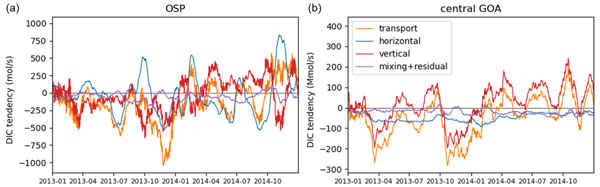
Marine heatwaves are defined by periods of unusually high sea temperature. Although warmer seawater usually reduces the ocean’s ability to absorb carbon dioxide, observations in the Gulf of Alaska showed a surprising drop in carbon dioxide during the 2014–2015 “Blob” heatwave. Using an ocean biogeochemical model, we found that this decline resulted from reduced dissolved inorganic carbon caused by weakened physical supply in winter 2013, just before the Blob began.
Piers M. Forster, Tristram Walsh, Chris Smith, William F. Lamb, Robin Lamboll, Christophe Cassou, Mathias Hauser, Zeke Hausfather, June-Yi Lee, Matthew D. Palmer, Karina von Schuckmann, Aimée B. A. Slangen, Sophie Szopa, Blair Trewin, Jeongeun Yun, Nathan P. Gillett, Stuart Jenkins, H. Damon Matthews, Krishnan Raghavan, Aurélien Ribes, Joeri Rogelj, Debbie Rosen, Xuebin Zhang, Myles Allen, Robbie M. Andrew, Chris Atkinson, Richard A. Betts, Antonio Bombelli, Samantha N. Burgess, Lijing Cheng, Helen E. Claxton, Pierre Friedlingstein, Thomas L. Frölicher, Catia M. Domingues, Thomas Gasser, Catherine H. Gregory, Rachel M. Hoesly, Daniel Huppmann, Masayoshi Ishii, Christopher Kadow, Alexia Karwat, John Kennedy, Rachel E. Killick, Mahesh V. M. Kovilakam, Paul B. Krummel, Xin Lan, Jean-François Lamarque, Aurélien Liné, Belén Martín-Míguez, Didier P. Monselesan, Colin Morice, Jens Mühle, Pino Mussak, Glen P. Peters, Anna Pirani, Julia Pongratz, Matthew Rigby, Robert Rohde, Abhishek Savita, Sonia I. Seneviratne, Steven J. Smith, Ghassan Taha, Caterina Tassone, Peter Thorne, Christopher Wells, Luke M. Western, Guido R. van der Werf, Susan E. Wijffels, Marco Zecchetto, Junting Zhong, Xiao-Ye Zhang, Valérie Masson-Delmotte, and Panmao Zhai
Earth Syst. Sci. Data, 18, 3889–3933, https://doi.org/10.5194/essd-18-3889-2026, https://doi.org/10.5194/essd-18-3889-2026, 2026
Short summary
Short summary
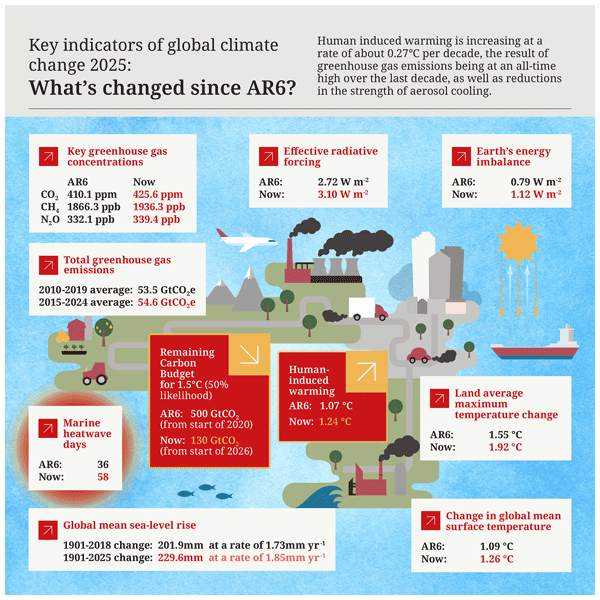
We give our annual update of key climate indicators. Our work quantifies the human contribution to global warming and the pace of climate change. This represents a large effort by the international community akin to an Intergovernmental Panel on Climate Change (IPCC) report.
Marina Lévy, Karina von Schuckmann, Mahé Butel, William W. L. Cheung, Joachim Claudet, Thomas L. Frölicher, Patrice Guillotreau, Peter Haugan, Janine Adams, Diva Amon, Tamatoa Bambridge, Cynthia Barzuna, Bruno Blanke, Lijing Cheng, Sanae Chiba, Jorge Cortés, Pierre Friedlingstein, Jean-Pierre Gattuso, Stefan Gelcich, Jessica Gephart, Deborah Greaves, Audrey Hasson, Claire Jolly, Daoji Li, Yunne-Jai Shin, Aimée Slangen, Mere Takoko, Olivier Thébaud, Adrien Vincent, and Patrick Vincent
State Planet, 7-osr10, 1, https://doi.org/10.5194/sp-7-osr10-1-2026, https://doi.org/10.5194/sp-7-osr10-1-2026, 2026
Short summary
Short summary
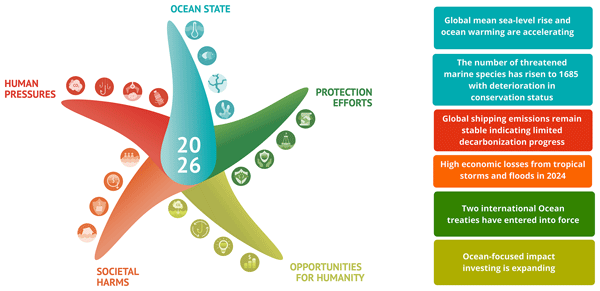
The Starfish Barometer provides an annual, science-based synthesis of global Ocean-related developments, structured around five interconnected dimensions: the Ocean state, human pressures, societal harms, protection efforts, and opportunities for humanity. It is released each year on World Ocean Day. This article presents the second edition of the Barometer, which shows a growing gap between increasing human pressures on the Ocean and the efforts being made to protect it and drive change.
Juan Du, Lijing Cheng, Takamitsu Ito, Hernan E. Garcia, Zhankun Wang, Jonathan D. Sharp, Christopher J. Roach, Shoshiro Minobe, Yuntao Zhou, Bin Lu, Gian Giacomo Navarra, and Seth M. Bushinsky
Ocean Sci., 22, 1483–1499, https://doi.org/10.5194/os-22-1483-2026, https://doi.org/10.5194/os-22-1483-2026, 2026
Short summary
Short summary
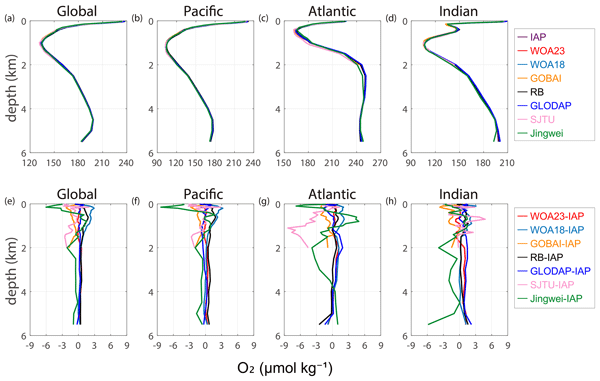
This study assesses the spread of mean state and annual cycle of ocean dissolved oxygen by multiple observational gridded data products. A good consistency is validated globally, although substantial local differences exist in areas of strong spatial gradient. Quantifying the discrepancies could give an insight into regions relatively more sensitive to data reconstruction processes and further advance the improvement of oxygen data products.
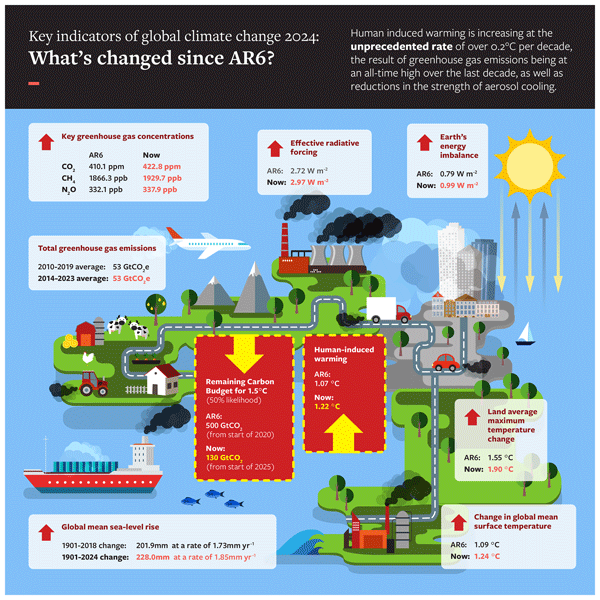
Piers M. Forster, Chris Smith, Tristram Walsh, William F. Lamb, Robin Lamboll, Christophe Cassou, Mathias Hauser, Zeke Hausfather, June-Yi Lee, Matthew D. Palmer, Karina von Schuckmann, Aimée B. A. Slangen, Sophie Szopa, Blair Trewin, Jeongeun Yun, Nathan P. Gillett, Stuart Jenkins, H. Damon Matthews, Krishnan Raghavan, Aurélien Ribes, Joeri Rogelj, Debbie Rosen, Xuebin Zhang, Myles Allen, Lara Aleluia Reis, Robbie M. Andrew, Richard A. Betts, Alex Borger, Jiddu A. Broersma, Samantha N. Burgess, Lijing Cheng, Pierre Friedlingstein, Catia M. Domingues, Marco Gambarini, Thomas Gasser, Johannes Gütschow, Masayoshi Ishii, Christopher Kadow, John Kennedy, Rachel E. Killick, Paul B. Krummel, Aurélien Liné, Didier P. Monselesan, Colin Morice, Jens Mühle, Vaishali Naik, Glen P. Peters, Anna Pirani, Julia Pongratz, Jan C. Minx, Matthew Rigby, Robert Rohde, Abhishek Savita, Sonia I. Seneviratne, Peter Thorne, Christopher Wells, Luke M. Western, Guido R. van der Werf, Susan E. Wijffels, Valérie Masson-Delmotte, and Panmao Zhai
Earth Syst. Sci. Data, 17, 2641–2680, https://doi.org/10.5194/essd-17-2641-2025, https://doi.org/10.5194/essd-17-2641-2025, 2025
Short summary
Short summary
In a rapidly changing climate, evidence-based decision-making benefits from up-to-date and timely information. Here we compile monitoring datasets to track real-world changes over time. To make our work relevant to policymakers, we follow methods from the Intergovernmental Panel on Climate Change (IPCC). Human activities are increasing the Earth's energy imbalance and driving faster sea-level rise compared to the IPCC assessment.
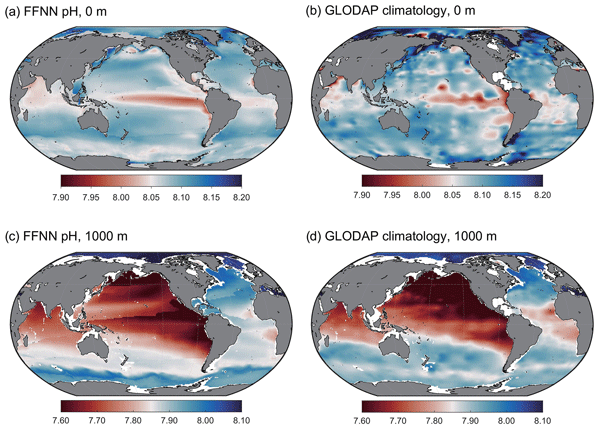
Guorong Zhong, Xuegang Li, Jinming Song, Baoxiao Qu, Fan Wang, Yanjun Wang, Bin Zhang, Lijing Cheng, Jun Ma, Huamao Yuan, Liqin Duan, Ning Li, Qidong Wang, Jianwei Xing, and Jiajia Dai
Earth Syst. Sci. Data, 17, 719–740, https://doi.org/10.5194/essd-17-719-2025, https://doi.org/10.5194/essd-17-719-2025, 2025
Short summary
Short summary
The continuous uptake of atmospheric CO2 by the ocean leads to decreasing seawater pH, which is an ongoing threat to the marine ecosystem. This pH change has been globally documented in the surface ocean, but information is limited below the surface. Here, we present a monthly 1° gridded product of global seawater pH based on a machine learning method and real pH observations. The pH product covers the years from 1992 to 2020 and depths from 0 to 2000 m.
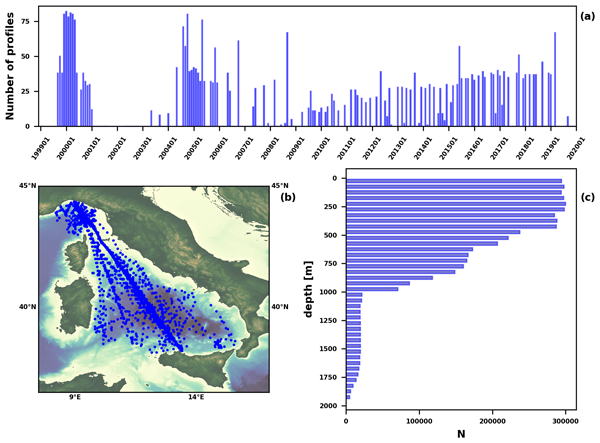
Simona Simoncelli, Franco Reseghetti, Claudia Fratianni, Lijing Cheng, and Giancarlo Raiteri
Earth Syst. Sci. Data, 16, 5531–5561, https://doi.org/10.5194/essd-16-5531-2024, https://doi.org/10.5194/essd-16-5531-2024, 2024
Short summary
Short summary
This data review is about the reprocessing of historical eXpendable BathyThermograp (XBT) profiles from the Ligurian and Tyrrhenian seas over the time period 1999–2019. A new automated quality control analysis has been performed starting from the original raw data and operational log sheets. The data have been formatted and standardized according to the latest community best practices, and all available metadata have been inserted, including calibration information and uncertainty specification.
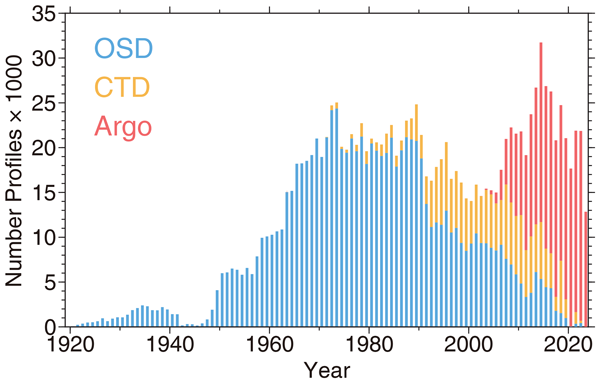
Viktor Gouretski, Lijing Cheng, Juan Du, Xiaogang Xing, Fei Chai, and Zhetao Tan
Earth Syst. Sci. Data, 16, 5503–5530, https://doi.org/10.5194/essd-16-5503-2024, https://doi.org/10.5194/essd-16-5503-2024, 2024
Short summary
Short summary
High-quality observations are crucial to understanding ocean oxygen changes and their impact on marine biota. We developed a quality control procedure to ensure the high quality of the heterogeneous ocean oxygen data archive and to prove data consistency. Oxygen data obtained by means of oxygen sensors on autonomous Argo floats were compared with reference data based on the chemical analysis, and estimates of the residual offsets were obtained.
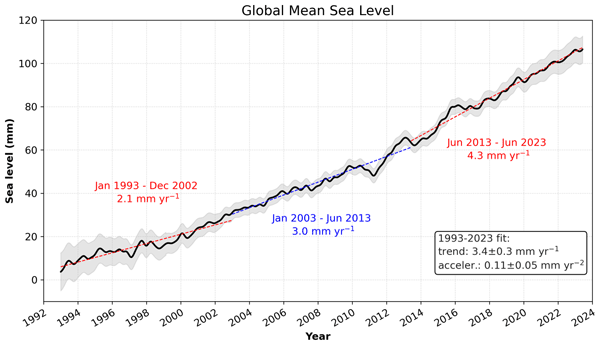
Karina von Schuckmann, Lorena Moreira, Mathilde Cancet, Flora Gues, Emmanuelle Autret, Jonathan Baker, Clément Bricaud, Romain Bourdalle-Badie, Lluis Castrillo, Lijing Cheng, Frederic Chevallier, Daniele Ciani, Alvaro de Pascual-Collar, Vincenzo De Toma, Marie Drevillon, Claudia Fanelli, Gilles Garric, Marion Gehlen, Rianne Giesen, Kevin Hodges, Doroteaciro Iovino, Simon Jandt-Scheelke, Eric Jansen, Melanie Juza, Ioanna Karagali, Thomas Lavergne, Simona Masina, Ronan McAdam, Audrey Minière, Helen Morrison, Tabea Rebekka Panteleit, Andrea Pisano, Marie-Isabelle Pujol, Ad Stoffelen, Sulian Thual, Simon Van Gennip, Pierre Veillard, Chunxue Yang, and Hao Zuo
State Planet, 4-osr8, 1, https://doi.org/10.5194/sp-4-osr8-1-2024, https://doi.org/10.5194/sp-4-osr8-1-2024, 2024
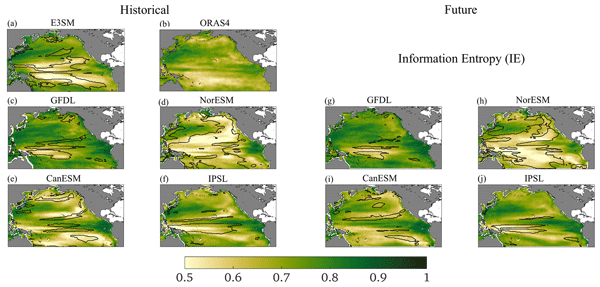
Lyuba Novi, Annalisa Bracco, Takamitsu Ito, and Yohei Takano
Biogeosciences, 21, 3985–4005, https://doi.org/10.5194/bg-21-3985-2024, https://doi.org/10.5194/bg-21-3985-2024, 2024
Short summary
Short summary
We explored the relationship between oxygen and stratification in the North Pacific Ocean using a combination of data mining and machine learning. We used isopycnic potential vorticity (IPV) as an indicator to quantify ocean ventilation and analyzed its predictability, a strong O2–IPV connection, and predictability for IPV in the tropical Pacific. This opens new routes for monitoring ocean O2 through few observational sites co-located with more abundant IPV measurements in the tropical Pacific.
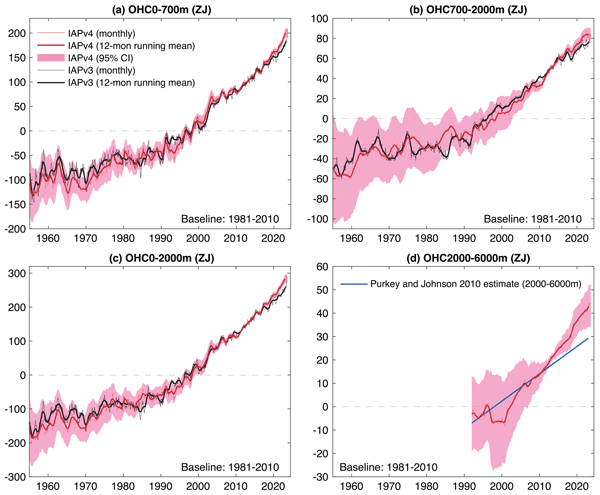
Lijing Cheng, Yuying Pan, Zhetao Tan, Huayi Zheng, Yujing Zhu, Wangxu Wei, Juan Du, Huifeng Yuan, Guancheng Li, Hanlin Ye, Viktor Gouretski, Yuanlong Li, Kevin E. Trenberth, John Abraham, Yuchun Jin, Franco Reseghetti, Xiaopei Lin, Bin Zhang, Gengxin Chen, Michael E. Mann, and Jiang Zhu
Earth Syst. Sci. Data, 16, 3517–3546, https://doi.org/10.5194/essd-16-3517-2024, https://doi.org/10.5194/essd-16-3517-2024, 2024
Short summary
Short summary
Observational gridded products are essential for understanding the ocean, the atmosphere, and climate change; they support policy decisions and socioeconomic developments. This study provides an update of an ocean subsurface temperature and ocean heat content gridded product, named the IAPv4 data product, which is available for the upper 6000 m (119 levels) since 1940 (more reliable after ~1955) for monthly and 1° × 1° temporal and spatial resolutions.
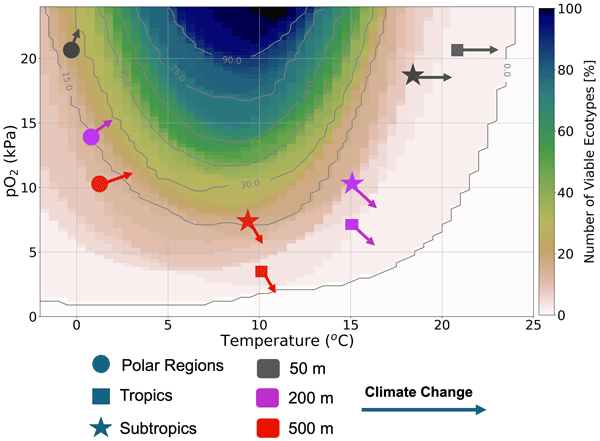
Precious Mongwe, Matthew Long, Takamitsu Ito, Curtis Deutsch, and Yeray Santana-Falcón
Biogeosciences, 21, 3477–3490, https://doi.org/10.5194/bg-21-3477-2024, https://doi.org/10.5194/bg-21-3477-2024, 2024
Short summary
Short summary
We use a collection of measurements that capture the physiological sensitivity of organisms to temperature and oxygen and a CESM1 large ensemble to investigate how natural climate variations and climate warming will impact the ability of marine heterotrophic marine organisms to support habitats in the future. We find that warming and dissolved oxygen loss over the next several decades will reduce the volume of ocean habitats and will increase organisms' vulnerability to extremes.
Piers M. Forster, Chris Smith, Tristram Walsh, William F. Lamb, Robin Lamboll, Bradley Hall, Mathias Hauser, Aurélien Ribes, Debbie Rosen, Nathan P. Gillett, Matthew D. Palmer, Joeri Rogelj, Karina von Schuckmann, Blair Trewin, Myles Allen, Robbie Andrew, Richard A. Betts, Alex Borger, Tim Boyer, Jiddu A. Broersma, Carlo Buontempo, Samantha Burgess, Chiara Cagnazzo, Lijing Cheng, Pierre Friedlingstein, Andrew Gettelman, Johannes Gütschow, Masayoshi Ishii, Stuart Jenkins, Xin Lan, Colin Morice, Jens Mühle, Christopher Kadow, John Kennedy, Rachel E. Killick, Paul B. Krummel, Jan C. Minx, Gunnar Myhre, Vaishali Naik, Glen P. Peters, Anna Pirani, Julia Pongratz, Carl-Friedrich Schleussner, Sonia I. Seneviratne, Sophie Szopa, Peter Thorne, Mahesh V. M. Kovilakam, Elisa Majamäki, Jukka-Pekka Jalkanen, Margreet van Marle, Rachel M. Hoesly, Robert Rohde, Dominik Schumacher, Guido van der Werf, Russell Vose, Kirsten Zickfeld, Xuebin Zhang, Valérie Masson-Delmotte, and Panmao Zhai
Earth Syst. Sci. Data, 16, 2625–2658, https://doi.org/10.5194/essd-16-2625-2024, https://doi.org/10.5194/essd-16-2625-2024, 2024
Short summary
Short summary
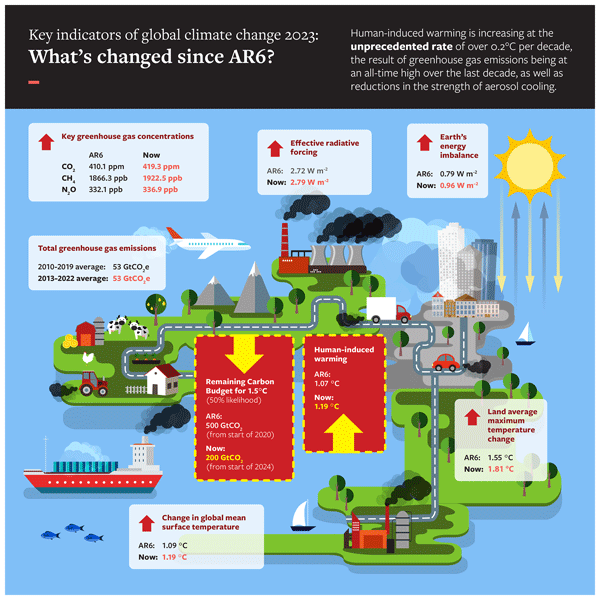
This paper tracks some key indicators of global warming through time, from 1850 through to the end of 2023. It is designed to give an authoritative estimate of global warming to date and its causes. We find that in 2023, global warming reached 1.3 °C and is increasing at over 0.2 °C per decade. This is caused by all-time-high greenhouse gas emissions.
Takamitsu Ito, Hernan E. Garcia, Zhankun Wang, Shoshiro Minobe, Matthew C. Long, Just Cebrian, James Reagan, Tim Boyer, Christopher Paver, Courtney Bouchard, Yohei Takano, Seth Bushinsky, Ahron Cervania, and Curtis A. Deutsch
Biogeosciences, 21, 747–759, https://doi.org/10.5194/bg-21-747-2024, https://doi.org/10.5194/bg-21-747-2024, 2024
Short summary
Short summary
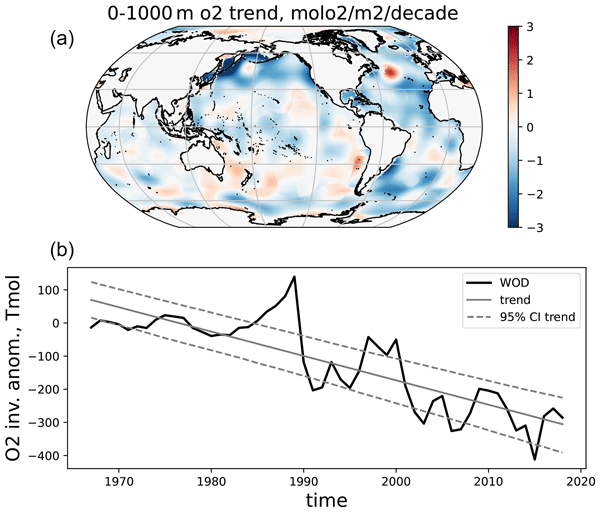
This study aims to estimate how much oceanic oxygen has been lost and its uncertainties. One major source of uncertainty comes from the statistical gap-filling methods. Outputs from Earth system models are used to generate synthetic observations where oxygen data are extracted from the model output at the location and time of historical oceanographic cruises. Reconstructed oxygen trend is approximately two-thirds of the true trend.
Piers M. Forster, Christopher J. Smith, Tristram Walsh, William F. Lamb, Robin Lamboll, Mathias Hauser, Aurélien Ribes, Debbie Rosen, Nathan Gillett, Matthew D. Palmer, Joeri Rogelj, Karina von Schuckmann, Sonia I. Seneviratne, Blair Trewin, Xuebin Zhang, Myles Allen, Robbie Andrew, Arlene Birt, Alex Borger, Tim Boyer, Jiddu A. Broersma, Lijing Cheng, Frank Dentener, Pierre Friedlingstein, José M. Gutiérrez, Johannes Gütschow, Bradley Hall, Masayoshi Ishii, Stuart Jenkins, Xin Lan, June-Yi Lee, Colin Morice, Christopher Kadow, John Kennedy, Rachel Killick, Jan C. Minx, Vaishali Naik, Glen P. Peters, Anna Pirani, Julia Pongratz, Carl-Friedrich Schleussner, Sophie Szopa, Peter Thorne, Robert Rohde, Maisa Rojas Corradi, Dominik Schumacher, Russell Vose, Kirsten Zickfeld, Valérie Masson-Delmotte, and Panmao Zhai
Earth Syst. Sci. Data, 15, 2295–2327, https://doi.org/10.5194/essd-15-2295-2023, https://doi.org/10.5194/essd-15-2295-2023, 2023
Short summary
Short summary
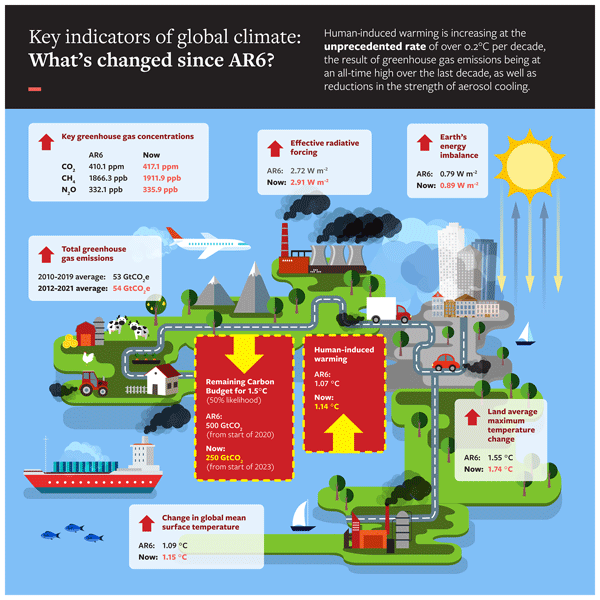
This is a critical decade for climate action, but there is no annual tracking of the level of human-induced warming. We build on the Intergovernmental Panel on Climate Change assessment reports that are authoritative but published infrequently to create a set of key global climate indicators that can be tracked through time. Our hope is that this becomes an important annual publication that policymakers, media, scientists and the public can refer to.
Karina von Schuckmann, Audrey Minière, Flora Gues, Francisco José Cuesta-Valero, Gottfried Kirchengast, Susheel Adusumilli, Fiammetta Straneo, Michaël Ablain, Richard P. Allan, Paul M. Barker, Hugo Beltrami, Alejandro Blazquez, Tim Boyer, Lijing Cheng, John Church, Damien Desbruyeres, Han Dolman, Catia M. Domingues, Almudena García-García, Donata Giglio, John E. Gilson, Maximilian Gorfer, Leopold Haimberger, Maria Z. Hakuba, Stefan Hendricks, Shigeki Hosoda, Gregory C. Johnson, Rachel Killick, Brian King, Nicolas Kolodziejczyk, Anton Korosov, Gerhard Krinner, Mikael Kuusela, Felix W. Landerer, Moritz Langer, Thomas Lavergne, Isobel Lawrence, Yuehua Li, John Lyman, Florence Marti, Ben Marzeion, Michael Mayer, Andrew H. MacDougall, Trevor McDougall, Didier Paolo Monselesan, Jan Nitzbon, Inès Otosaka, Jian Peng, Sarah Purkey, Dean Roemmich, Kanako Sato, Katsunari Sato, Abhishek Savita, Axel Schweiger, Andrew Shepherd, Sonia I. Seneviratne, Leon Simons, Donald A. Slater, Thomas Slater, Andrea K. Steiner, Toshio Suga, Tanguy Szekely, Wim Thiery, Mary-Louise Timmermans, Inne Vanderkelen, Susan E. Wjiffels, Tonghua Wu, and Michael Zemp
Earth Syst. Sci. Data, 15, 1675–1709, https://doi.org/10.5194/essd-15-1675-2023, https://doi.org/10.5194/essd-15-1675-2023, 2023
Short summary
Short summary
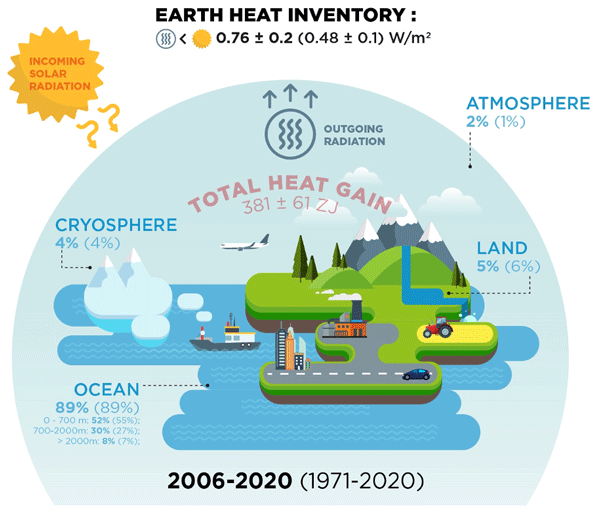
Earth's climate is out of energy balance, and this study quantifies how much heat has consequently accumulated over the past decades (ocean: 89 %, land: 6 %, cryosphere: 4 %, atmosphere: 1 %). Since 1971, this accumulated heat reached record values at an increasing pace. The Earth heat inventory provides a comprehensive view on the status and expectation of global warming, and we call for an implementation of this global climate indicator into the Paris Agreement’s Global Stocktake.
Tian Tian, Lijing Cheng, Gongjie Wang, John Abraham, Wangxu Wei, Shihe Ren, Jiang Zhu, Junqiang Song, and Hongze Leng
Earth Syst. Sci. Data, 14, 5037–5060, https://doi.org/10.5194/essd-14-5037-2022, https://doi.org/10.5194/essd-14-5037-2022, 2022
Short summary
Short summary
A high-resolution gridded dataset is crucial for understanding ocean processes at various spatiotemporal scales. Here we used a machine learning approach and successfully reconstructed a high-resolution (0.25° × 0.25°) ocean subsurface (1–2000 m) salinity dataset for the period 1993–2018 (monthly) by merging in situ salinity profile observations with high-resolution satellite remote-sensing data. This new product could be useful in various applications in ocean and climate fields.
Cited articles
Argo: Argo float data and metadata from Global Data Assembly Centre (Argo GDAC), SEANOE [data set] https://doi.org/10.17882/42182, 2026.
Ascani, F., Richards, K. J., Firing, E., Grant, S., Johnson, K. S., Jia, Y., Lukas, R., and Bidigare, R. R.: Physical and biological controls of nitrate concentrations in the upper subtropical North Pacific Ocean, Deep-Sea Res. Pt. II, 93, 119–134, https://doi.org/10.1016/j.dsr2.2013.01.034, 2013.
Behrenfeld, M. J., O'Malley, R. T., Siegel, D. A., McClain, C. R., Sarmiento, J. L., Feldman, G. C., Milligan, A. J., Falkowski, P. G., Letelier, R. M., and Boss, E. S.: Climate-driven trends in contemporary ocean productivity, Nature, 444, 752–755, https://doi.org/10.1038/nature05317, 2006.
Benitez-Nelson, C. R., Bidigare, R. R., Dickey, T. D., Landry, M. R., Leonard, C. L., Brown, S. L., Nencioli, F., Rii, Y. M., Maiti, K., Becker, J. W., Bibby, T. S., Black, W., Cai, W.-J., Carlson, C. A., Chen, F., Kuwahara, V. S., Mahaffey, C., McAndrew, P. M., Quay, P. D., Rappé, M. S., Selph, K. E., Simmons, M. P., and Yang, E. J.: Mesoscale Eddies Drive Increased Silica Export in the Subtropical Pacific Ocean, Science, 316, 1017–1021, https://doi.org/10.1126/science.1136221, 2007.
Bi, K., Xie, L., Zhang, H., Chen, X., Gu, X., and Tian, Q.: Accurate medium-range global weather forecasting with 3D neural networks, Nature, 619, 533–538, https://doi.org/10.1038/s41586-023-06185-3, 2023.
Bittig, H. C., Steinhoff, T., Claustre, H., Fiedler, B., Williams, N. L., Sauzède, R., Körtzinger, A., and Gattuso, J.-P.: An alternative to static climatologies: Robust estimation of open ocean CO2 variables and nutrient concentrations from T, S, and O2 data using Bayesian neural networks, Front. Mar. Sci., 5, 328, https://doi.org/10.3389/fmars.2018.00328, 2018.
Boyd, P. W., Jickells, T., Law, C. S., Blain, S., Boyle, E. A., Buesseler, K. O., Coale, K. H., Cullen, J. J., de Baar, H. J. W., Follows, M., Harvey, M., Lancelot, C., Levasseur, M., Owens, N. P. J., Pollard, R., Rivkin, R. B., Sarmiento, J., Schoemann, V., Smetacek, V., Takeda, S., Tsuda, A., Turner, S., and Watson, A. J.: Mesoscale iron enrichment experiments 1993–2005: Synthesis and future directions, Science, 315, 612–617, https://doi.org/10.1126/science.1131669, 2007.
Boyer, T. P., Baranova, O. K., Coleman, C., Garcia, H. E., Grodsky, A., Locarnini, R. A., Mishonov, A. V., Paver, C. R., Reagan, J. R., Seidov, D., Smolyar, I. V., Weathers, K. W., and Zweng, M. M.: World Ocean Database 2018, A. V. Mishonov, Technical Editor, NOAA Atlas NESDIS 87, 2018.
Broecker, W. S.: The great ocean conveyor, Oceanography, 4, 79–89, https://doi.org/10.5670/oceanog.1991.07, 1991.
Broullón, D., Pérez, F. F., Velo, A., Hoppema, M., Olsen, A., Takahashi, T., Key, R. M., Tanhua, T., González-Dávila, M., Jeansson, E., Kozyr, A., and van Heuven, S. M. A. C.: A global monthly climatology of total alkalinity: a neural network approach, Earth Syst. Sci. Data, 11, 1109–1127, https://doi.org/10.5194/essd-11-1109-2019, 2019.
Browning, T. J. and Moore, C. M.: Global analysis of ocean phytoplankton nutrient limitation reveals high prevalence of co-limitation, Nat. Commun., 14, 5014, https://doi.org/10.1038/s41467-023-40774-0, 2023.
Carter, B. R., Bittig, H. C., Fassbender, A. J., Sharp, J. D., Takeshita, Y., Xu, Y.-Y., Álvarez, M., Wanninkhof, R., Feely, R. A., and Barbero, L.: New and updated global empirical seawater property estimation routines, Limnol. Oceanogr. Meth., 19, 785–809, https://doi.org/10.1002/lom3.10461, 2021.
Chavez, F. P. and Messié, M.: A comparison of eastern boundary upwelling ecosystems, Prog. Oceanogr., 83, 80–96, https://doi.org/10.1016/j.pocean.2009.07.032, 2009.
Cheng, L., Trenberth, K. E., Fasullo, J., Boyer, T., Abraham, J., and Zhu, J.: Improved estimates of ocean heat content from 1960 to 2015, Sci. Adv., 3, e1601545, https://doi.org/10.1126/sciadv.1601545, 2017.
Claustre, H., Johnson, K. S., and Takeshita, Y.: Observing the global ocean with biogeochemical-Argo, Annu. Rev. Mar. Sci., 12, 23–48, https://doi.org/10.1146/annurev-marine-010419-010956, 2020.
Deutsch, C. and Weber, T.: Nutrient Ratios as a Tracer and Driver of Ocean Biogeochemistry, Annu. Rev. Mar. Sci., 4, 113–141, https://doi.org/10.1146/annurev-marine-120709-142821, 2012.
Du, C., Zheng, N., Kao, S.-J., Dai, M., Cao, Z., Shi, D., Li, Q., Wang, H., Luo, X., and Li, X.: A historical nutrient dataset (1895–2024) for the North Pacific: reconstructed from machine learning and hydrographic observations, Earth Syst. Sci. Data, 18, 2951–2969, https://doi.org/10.5194/essd-18-2951-2026, 2026.
Fasham, M. J. R. (Ed.): Ocean Biogeochemistry: The Role of the Ocean Carbon Cycle in Global Change, Springer, Berlin, Heidelberg, https://doi.org/10.1007/978-3-642-55844-3, 2003.
Garcia, H. E., Weathers, K. W., Paver, C. R., Smolyar, I. V., Boyer, T. P., Locarnini, R. A., Zweng, M. M., Mishonov, A. V., Baranova, O. K., Seidov, D., and Reagan, J. R.: World Ocean Atlas 2018, Volume 4: Dissolved Inorganic Nutrients (phosphate, nitrate and nitrate+nitrite, silicate), A. Mishonov Technical Ed., NOAA Atlas NESDIS 84, 35 pp., https://doi.org/10.25923/ng6j-ey81, 2018.
Garcia, H. E., Bouchard, C., Cross, S. L., Paver, C. R., Wang, Z., Reagan, J. R., Boyer, T. P., Locarnini, R. A., Mishonov, A. V., Baranova, O. K., Seidov, D., and Dukhovskoy, D.: World Ocean Atlas 2023, Volume 4: Dissolved Inorganic Nutrients (phosphate, nitrate, and silicate), A. Mishonov, Tech. Ed., NOAA Atlas NESDIS 92, https://doi.org/10.25923/39qw-7j08, 2024a.
Garcia, H. E., Wang, Z., Bouchard, C., Cross, S. L., Paver, C. R., Reagan, J. R., Boyer, T. P., Locarnini, R. A., Mishonov, A. V., Baranova, O. K., Seidov, D., and Dukhovskoy, D.: World Ocean Atlas 2023, Volume 3: Dissolved Oxygen, Apparent Oxygen Utilization, and Oxygen Saturation, A. Mishonov, Tech. Ed., NOAA Atlas NESDIS 91, https://doi.org/10.25923/rb67-ns53, 2024b.
Garcia, H. E., Boyer, T. P., Levitus, S., Reagan, J. R., Mishonov, A. V., Jiang, L.-Q., Wang, Z., Paver, C. R., Nyadjro, E., Cross, S., Bouchard, C., Hogan, P., Baranova, O. K., and Locarnini, R. A.: World Ocean Database 2023: A foundational data resource for and by the global ocean and coastal communities, Sci. Data, 13, 613, https://doi.org/10.1038/s41597-026-06957-2, 2026.
Good, S. A., Martin, M. J., and Rayner, N. A.: EN4: Quality controlled ocean temperature and salinity profiles and monthly objective analyses with uncertainty estimates, J. Geophys. Res.-Oceans, 118, 6704–6716, https://doi.org/10.1002/2013JC009067, 2013.
Gouretski, V. and Reseghetti, F.: On depth and temperature biases in bathythermograph data: Development of a new correction scheme based on analysis of a global ocean database, Deep-Sea Res. Pt. I, 57, 812–833, https://doi.org/10.1016/j.dsr.2010.03.011, 2010.
Gregor, L., Lebehot, A. D., Kok, S., and Scheel Monteiro, P. M.: A comparative assessment of the uncertainties of global surface ocean CO2 estimates using a machine-learning ensemble (CSIR-ML6 version 2019a) – have we hit the wall?, Geosci. Model Dev., 12, 5113–5136, https://doi.org/10.5194/gmd-12-5113-2019, 2019.
Ito, T., Minobe, S., Long, M. C., and Deutsch, C.: Upper ocean O2 trends: 1958–2015, Geophys. Res. Lett., 44, 4214–4223, https://doi.org/10.1002/2017GL073613, 2017.
Ito, T., Cervania, A., Cross, K., Ainchwar, S., and Delawalla, S.: Mapping dissolved oxygen concentrations by combining shipboard and Argo observations using machine learning algorithms, J. Geophys. Res.-Mach. Learn. Comput., 1, e2024JH000272, https://doi.org/10.1029/2024JH000272, 2024.
Ito, T., Garcia, H. E., Wang, Z., Cheng, L., Du, J., Roach, C. J., Zhou, Y., Sharp, J. D., Lauvset, S. K., Minobe, S., Bushinsky, S., Lu, B., and Navarra, G.: Assessing the observational uncertainties of dissolved oxygen climatology and seasonal cycle through a coordinated intercomparison project, Global Biogeochem. Cy., 39, e2025GB008751, https://doi.org/10.1029/2025GB008751, 2025.
Jeandel, C., Ruiz-Pino, D., Gasser, B., Etcheber, H., Brunet, C., Poisson, A., and Cronis, S.: KERFIX, a time-series station in the Southern Ocean: a presentation, J. Marine Syst., 17, 555–569, https://doi.org/10.1016/S0924-7963(98)00064-5, 1998.
Karl, D. M. and Lukas, R.: The Hawaii Ocean Time-series (HOT) program: Background, rationale and implementation, Deep-Sea Res. Pt. II, 43, 129–156, https://doi.org/10.1016/0967-0645(96)00005-7, 1996.
Kendall, A., Gal, Y., and Cipolla, R.: Multi-Task Learning Using Uncertainty to Weigh Losses for Scene Geometry and Semantics, in: Proceedings of the IEEE Conference on Computer Vision and Pattern Recognition (CVPR), 7482–7491, https://doi.org/10.1109/CVPR.2018.00781, 2018.
Keppler, L., Landschützer, P., Gruber, N., Lauvset, S. K., and Stemmler, I.: Seasonal carbon dynamics in the near-global ocean, Global Biogeochem. Cy., 34, e2020GB006571, https://doi.org/10.1029/2020GB006571, 2020.
Lam, R., Sanchez-Gonzalez, A., Willson, M., Wirnsberger, P., Fortunato, M., Alet, F., Ravuri, S., Ewalds, T., Eaton-Rosen, Z., Hu, W., Merose, A., Hoyer, S., Holland, G., Vinyals, O., Stott, J., Pritzel, A., Mohamed, S., and Battaglia, P.: Learning skillful medium-range global weather forecasting, Science, 382, 1416–1421, https://doi.org/10.1126/science.adi2336, 2023.
Landschützer, P., Gruber, N., and Bakker, D. C. E.: Decadal variations and trends of the global ocean carbon sink, Global Biogeochem. Cy., 30, 1396–1417, https://doi.org/10.1002/2015GB005359, 2016.
Lauvset, S. K., Lange, N., Tanhua, T., Bittig, H. C., Olsen, A., Kozyr, A., Alin, S., Álvarez, M., Azetsu-Scott, K., Barbero, L., Becker, S., Brown, P. J., Carter, B. R., da Cunha, L. C., Feely, R. A., Hoppema, M., Humphreys, M. P., Ishii, M., Jeansson, E., Jiang, L.-Q., Jones, S. D., Lo Monaco, C., Murata, A., Müller, J. D., Pérez, F. F., Pfeil, B., Schirnick, C., Steinfeldt, R., Suzuki, T., Tilbrook, B., Ulfsbo, A., Velo, A., Woosley, R. J., and Key, R. M.: GLODAPv2.2022: the latest version of the global interior ocean biogeochemical data product, Earth Syst. Sci. Data, 14, 5543–5572, https://doi.org/10.5194/essd-14-5543-2022, 2022.
Levitus, S.: Climatological Atlas of the World Ocean, NOAA Professional Paper 13, US Government Printing Office, Washington, D.C., 173 pp., 1982.
Liu, J., Wang, H., Mou, J., Peñuelas, J., Delgado-Baquerizo, M., Martiny, A. C., Zhou, G., Hutchins, D. A., Inomura, K., Lomas, M. W., Fakhraee, M., Pellegrini, A., Kohler, T. J., Deutsch, C. A., Planavsky, N., Lapointe, B., Zhang, Y., Li, Y., Zhou, J., Zhang, Y., Sun, S., Li, Y., Zhang, W., Cao, J., and Chen, J.: Global-scale shifts in marine ecological stoichiometry over the past 50 years, Nat. Geosci., 18, 769–778, https://doi.org/10.1038/s41561-025-01735-y, 2025.
Locarnini, R. A., Mishonov, A. V., Baranova, O. K., Boyer, T. P., Zweng, M. M., Garcia, H. E., Reagan, J. R., Seidov, D., Weathers, K. W., Paver, C. R., and Smolyar, I. V.: World Ocean Atlas 2018, Volume 1: Temperature, A. Mishonov Technical Ed., NOAA Atlas NESDIS 81, 52 pp., https://doi.org/10.25923/e5rn-9711, 2018.
Locarnini, R. A., Boyer, T. P., Mishonov, A. V., Reagan, J. R., Zweng, M. M., Baranova, O. K., Garcia, H. E., Seidov, D., Weathers, K. W., Paver, C. R., and Smolyar, I. V.: World Ocean Atlas 2018, Volume 5: Density, A. Mishonov, Technical Editor, NOAA Atlas NESDIS 85, 41 pp., https://doi.org/10.25923/xnf9-9s53, 2019.
Longhurst, A. R.: Ecological Geography of the Sea, 2nd Edn., Academic Press, Burlington, MA, 560 pp., https://doi.org/10.1016/B978-0-12-455521-1.X5000-1, 2007.
Lu, B., Zhao, Z., Han, L., Gan, X., Zhou, Y., Zhou, L., Fu, L., Wang, X., Zhou, C., and Zhang, J.: OxyGenerator: Reconstructing global ocean deoxygenation over a century with deep learning, in: Proceedings of the 41st International Conference on Machine Learning, Proceedings of Machine Learning Research, 235, 33219–33242, 2024.
Marshall, J. and Speer, K.: Closure of the meridional overturning circulation through Southern Ocean upwelling, Nat. Geosci., 5, 171–180, https://doi.org/10.1038/ngeo1391, 2012.
Mishonov, A. V., Boyer, T. P., Baranova, O. K., Bouchard, C. N., Cross, S., Garcia, H. E., Locarnini, R. A., Paver, C. R., Reagan, J. R., Wang, Z., Seidov, D., Grodsky, A. I., and Beauchamp, J. G.: World Ocean Database 2023, NOAA Atlas NESDIS 97, 206 pp., https://doi.org/10.25923/z885-h264, 2024.
Moore, C. M., Mills, M. M., Arrigo, K. R., Berman-Frank, I., Bopp, L., Boyd, P. W., Galbraith, E. D., Geider, R. J., Guieu, C., Jaccard, S. L., Jickells, T. D., Lenton, T. M., Mahowald, N. M., Marañón, E., Marinov, I., Moore, J. K., Nakatsuka, T., Oschlies, A., Saito, M. A., Thingstad, T., Tsuda, A., and Ulloa, O.: Processes and patterns of oceanic nutrient limitation, Nat. Geosci., 6, 701–710, https://doi.org/10.1038/ngeo1765, 2013.
Olsen, A., Key, R. M., van Heuven, S., Lauvset, S. K., Velo, A., Lin, X., Schirnick, C., Kozyr, A., Tanhua, T., Hoppema, M., Jutterström, S., Steinfeldt, R., Jeansson, E., Ishii, M., Pérez, F. F., and Suzuki, T.: The Global Ocean Data Analysis Project version 2 (GLODAPv2) – an internally consistent data product for the world ocean, Earth Syst. Sci. Data, 8, 297–323, https://doi.org/10.5194/essd-8-297-2016, 2016.
Paulmier, A. and Ruiz-Pino, D.: Oxygen minimum zones (OMZs) in the modern ocean, Prog. Oceanogr., 80, 113–128, https://doi.org/10.1016/j.pocean.2008.08.001, 2009.
Reagan, J. R., Zweng, M. M., Seidov, D., Boyer, T. P., Locarnini, R. A., Mishonov, A. V., Baranova, O. K., Garcia, H. E., Weathers, K. W., Paver, C. R., Smolyar, I. V., and Tyler, R. H.: World Ocean Atlas 2018, Volume 6: Conductivity, NOAA Atlas NESDIS 86, 38 pp., https://doi.org/10.25923/wjeq-s877, 2019.
Redfield, A. C.: On the proportions of organic derivatives in sea water and their relation to the composition of plankton, in: James Johnstone Memorial Volume, edited by: Daniel, R. J., University Press of Liverpool, Liverpool, 176–192, 1934.
Reichstein, M., Camps-Valls, G., Stevens, B., Jung, M., Denzler, J., Carvalhais, N., and Prabhat: Deep learning and process understanding for data-driven Earth system science, Nature, 566, 195–204, https://doi.org/10.1038/s41586-019-0912-1, 2019.
Roemmich, D., Alford, M. H., Claustre, H., Johnson, K., King, B., Moum, J., Oke, P., Owens, W. B., Pouliquen, S., Purkey, S., Scanderbeg, M., Suga, T., Wijffels, S., Zilberman, N., Bakker, D., Baringer, M., Belbeoch, M., Bittig, H. C., Boss, E., Calil, P., Carse, F., Carval, T., Chai, F., Conchubhair, D. Ó., d'Ortenzio, F., Dall'Olmo, G., Desbruyeres, D., Fennel, K., Fer, I., Ferrari, R., Forget, G., Freeland, H., Fujiki, T., Gehlen, M., Greenan, B., Hallberg, R., Hibiya, T., Hosoda, S., Jayne, S., Jochum, M., Johnson, G. C., Kang, K., Kolodziejczyk, N., Körtzinger, A., Le Traon, P.-Y., Lenn, Y.-D., Maze, G., Mork, K. A., Morris, T., Nagai, T., Nash, J., Naveira Garabato, A., Olsen, A., Pattabhi, R. R., Prakash, S., Riser, S., Schmechtig, C., Schmid, C., Shroyer, E., Sterl, A., Sutton, P., Talley, L., Tanhua, T., Thierry, V., Thomalla, S., Toole, J., Troisi, A., Trull, T. W., Turton, J., Velez-Belchi, P. J., Walczowski, W., Wang, H., Wanninkhof, R., Waterhouse, A. F., Waterman, S., Watson, A., Wilson, C., Wong, A. P. S., Xu, J., and Yasuda, I.: On the Future of Argo: A Global, Full-Depth, Multi-Disciplinary Array, Front. Mar. Sci., 6, 439, https://doi.org/10.3389/fmars.2019.00439, 2019.
Sarmiento, J. L. and Gruber, N.: Ocean Biogeochemical Dynamics, Princeton University Press, Princeton, NJ, 526 pp., https://doi.org/10.1515/9781400849079, 2006.
Sauzède, R., Bittig, H. C., Claustre, H., Pasqueron de Fommervault, O., Gattuso, J.-P., Legendre, L., and Johnson, K. S.: Estimates of water-column nutrient concentrations and carbonate system parameters in the global ocean: A novel approach based on neural networks, Front. Mar. Sci., 4, 128, https://doi.org/10.3389/fmars.2017.00128, 2017.
Siedler, G., Church, J., and Gould, J. (Eds.): Ocean Circulation and Climate: Observing and Modelling the Global Ocean, Academic Press, San Diego, CA, 716 pp., https://doi.org/10.1016/S0074-6142(01)X8034-0, 2001.
Sigman, D. M. and Hain, M. P.: The Biological Productivity of the Ocean, Nat. Educ. Knowl., 3, 21, https://www.nature.com/scitable/knowledge/library/the-biological-productivity-of-the-ocean-70631104/ (last access: 16 July 2026), 2012.
Sloyan, B. M., Wanninkhof, R., Kramp, M., Johnson, G. C., Talley, L. D., Tanhua, T., McDonagh, E., Cusack, C., O'Rourke, E., McGovern, E., Katsumata, K., Diggs, S., Hummon, J., Ishii, M., Azetsu-Scott, K., Boss, E., Ansorge, I., Perez, F. F., Mercier, H., Williams, M. J. M., Anderson, L., Lee, J. H., Murata, A., Kouketsu, S., Jeansson, E., Hoppema, M., and Campos, E.: The Global Ocean Ship-Based Hydrographic Investigations Program (GO-SHIP): A Platform for Integrated Multidisciplinary Ocean Science, Front. Mar. Sci., 6, 445, https://doi.org/10.3389/fmars.2019.00445, 2019.
Sonnewald, M., Lguensat, R., Jones, D. C., Dueben, P. D., Brajard, J., and Balaji, V.: Bridging observations, theory and numerical simulation of the ocean using machine learning, Environ. Res. Lett., 16, 073008, https://doi.org/10.1088/1748-9326/ac0eb0, 2021.
Sundararaman, H. K. K. and Shanmugam, P.: Estimates of the global ocean surface dissolved oxygen and macronutrients from satellite data, Remote Sens. Environ., 311, 114243, https://doi.org/10.1016/j.rse.2024.114243, 2024.
Talley, L. D.: Closure of the global overturning circulation through the Indian, Pacific, and Southern Oceans: Schematics and transports, Oceanography, 26, 80–97, https://doi.org/10.5670/oceanog.2013.07, 2013.
Tréguer, P., Bowler, C., Moriceau, B., Dutkiewicz, S., Gehlen, M., Aumont, O., Bittner, L., Dugdale, R., Finkel, Z., Iudicone, D., Jahn, O., Guidi, L., Lasbleiz, M., Leblanc, K., Levy, M., and Pondaven, P.: Influence of diatom diversity on the ocean biological carbon pump, Nat. Geosci., 11, 27–37, https://doi.org/10.1038/s41561-017-0028-x, 2018.
Vandenhende, S., Georgoulis, S., Van Gansbeke, W., Proesmans, M., Dai, D., and Van Gool, L.: Multi-task learning for dense prediction tasks: A survey, IEEE Trans. Pattern Anal. Mach. Intell., 44, 3614–3633, https://doi.org/10.1109/TPAMI.2021.3054719, 2022.
Vaswani, A., Shazeer, N., Parmar, N., Uszkoreit, J., Jones, L., Gomez, A. N., Kaiser, Ł., and Polosukhin, I.: Attention Is All You Need, Adv. Neur. In., 30, 5998–6008, https://doi.org/10.48550/arXiv.1706.03762, 2017.
Wang, Z., Lu, B., Xin, Y., Ito, T., Zhou, L., Cheng, L., Li, Y., Wang, X., Zhou, C., and Jin, M.: Jingwei-Nutrients: A global spatiotemporal reconstruction of ocean nutrients (1965–2023) using multi-task deep learning, Zenodo [data set], https://doi.org/10.5281/zenodo.21066027, 2026.
Yu, T., Kumar, S., Gupta, A., Levine, S., Hausman, K., and Finn, C.: Gradient Surgery for Multi-Task Learning, Adv. Neur. In., 33, 5824–5836, https://doi.org/10.48550/arXiv.2001.06782, 2020.
Yu, X., Guo, H., Zhang, J., Ma, Y., Wang, X., Liu, G., Xing, M., Xu, N., and Seka, A. M.: A continual-learning-based multilayer perceptron for improved reconstruction of three-dimensional nitrate concentrations, Earth Syst. Sci. Data, 17, 2735–2759, https://doi.org/10.5194/essd-17-2735-2025, 2025.
Zanna, L., Khatiwala, S., Gregory, J. M., Ison, J., and Heimbach, P.: Global reconstruction of historical ocean heat storage and transport, P. Natl. Acad. Sci. USA, 116, 1126–1131, https://doi.org/10.1073/pnas.1808838115, 2019.
Zweng, M. M., Reagan, J. R., Seidov, D., Boyer, T. P., Locarnini, R. A., Garcia, H. E., Mishonov, A. V., Baranova, O. K., Weathers, K. W., Paver, C. R., and Smolyar, I. V.: World Ocean Atlas 2018, Volume 2: Salinity, A. Mishonov, Technical Ed., NOAA Atlas NESDIS 82, 50 pp., https://doi.org/10.25923/9pgv-1224, 2018.
Short summary
We present Jingwei-Nutrients, a global monthly data product of ocean nitrate, phosphate, and silicate from 1965 to 2023 down to 2000 meters. Built using a multi-task deep learning framework, it combines sparse historical observations with hydrographic information. This continuous record helps scientists understand marine ecosystems and climate change responses. We also provide the Jingwei web platform (https://jingwei.acemap.info) for dynamic data exploration and visualization without coding.
We present Jingwei-Nutrients, a global monthly data product of ocean nitrate, phosphate, and...


Altmetrics
Final-revised paper
Preprint