Articles | Volume 18, issue 7
https://doi.org/10.5194/essd-18-4943-2026
© Author(s) 2026. This work is distributed under
the Creative Commons Attribution 4.0 License.
the Creative Commons Attribution 4.0 License.
https://doi.org/10.5194/essd-18-4943-2026
© Author(s) 2026. This work is distributed under
the Creative Commons Attribution 4.0 License.
the Creative Commons Attribution 4.0 License.
Data description article
| 
16 Jul 2026
Data description article |
| 16 Jul 2026
| 16 Jul 2026
Mercury dataset over the Third Pole
Shichang Kang
CORRESPONDING AUTHOR

State Key Laboratory of Cryospheric Science and Frozen Soil Engineering, Northwest Institute of Eco-Environment and Resources, Chinese Academy of Sciences, Lanzhou 730000, China
Institute of Mountain Hazards and Environment, Chinese Academy of Sciences, Chengdu 610213, China
University of Chinese Academy of Sciences, Beijing 100049, China
Jie Huang
CORRESPONDING AUTHOR
State Key Laboratory of Cryospheric Science and Frozen Soil Engineering, Northwest Institute of Eco-Environment and Resources, Chinese Academy of Sciences, Lanzhou 730000, China
University of Chinese Academy of Sciences, Beijing 100049, China
Qianggong Zhang
State Key Laboratory of Tibetan Plateau Earth System, Environment and Resources, Institute of Tibetan Plateau Research, Chinese Academy of Sciences, Beijing 100101, China
University of Chinese Academy of Sciences, Beijing 100049, China
Junming Guo
State Key Laboratory of Cryospheric Science and Frozen Soil Engineering, Northwest Institute of Eco-Environment and Resources, Chinese Academy of Sciences, Lanzhou 730000, China
Xiufeng Yin
State Key Laboratory of Cryospheric Science and Frozen Soil Engineering, Northwest Institute of Eco-Environment and Resources, Chinese Academy of Sciences, Lanzhou 730000, China
Shiwei Sun
State Key Laboratory of Cryospheric Science and Frozen Soil Engineering, Northwest Institute of Eco-Environment and Resources, Chinese Academy of Sciences, Lanzhou 730000, China
Xuejun Sun
School of Environmental and Resource Sciences, Shanxi University, Taiyuan 030006, China
Lekhendra Tripathee
Environment Agency, Newcastle NE4 7AR, United Kingdom
Sabur Abdullaev
Physical Technical Institute of the Academy of Sciences of Tajikistan, Dushanbe 734063, Tajikistan
Wenjun Tang
State Key Laboratory of Tibetan Plateau Earth System, Environment and Resources, Institute of Tibetan Plateau Research, Chinese Academy of Sciences, Beijing 100101, China
Yi Zhang
State Key Laboratory of Tibetan Plateau Earth System, Environment and Resources, Institute of Tibetan Plateau Research, Chinese Academy of Sciences, Beijing 100101, China
University of Chinese Academy of Sciences, Beijing 100049, China
Xiwen Miao
State Key Laboratory of Cryospheric Science and Frozen Soil Engineering, Northwest Institute of Eco-Environment and Resources, Chinese Academy of Sciences, Lanzhou 730000, China
Key Laboratory of Western China's Environmental Systems (Ministry of Education), College of Earth and Environmental Sciences, Lanzhou University, Lanzhou 730000, China
Liujian Liao
State Key Laboratory of Cryospheric Science and Frozen Soil Engineering, Northwest Institute of Eco-Environment and Resources, Chinese Academy of Sciences, Lanzhou 730000, China
University of Chinese Academy of Sciences, Beijing 100049, China
Lusheng Che
State Key Laboratory of Cryospheric Science and Frozen Soil Engineering, Northwest Institute of Eco-Environment and Resources, Chinese Academy of Sciences, Lanzhou 730000, China
University of Chinese Academy of Sciences, Beijing 100049, China
Related authors
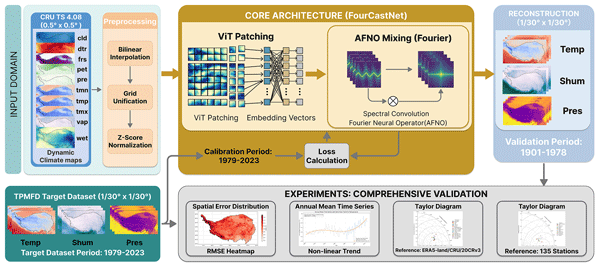
Zheng Jin, Zezhou Chen, Qinglong You, Zhaoxiang Liu, Jintao Zhang, Huan Hu, Ping Chen, Xiang Liu, Zipeng Wang, Kai Wang, Shiguo Lian, and Shichang Kang
Earth Syst. Sci. Data, 18, 6763–6781, https://doi.org/10.5194/essd-18-6763-2026, https://doi.org/10.5194/essd-18-6763-2026, 2026
Short summary
Short summary
This study presents the TPHH (Tibetan Plateau Historical High) dataset, a high-resolution (1/30°) monthly climate dataset for the Tibetan Plateau spanning 1901–2023, featuring 2 m temperature, specific humidity, and surface pressure. By employing a hybrid deep learning framework (FourCastNet), we downscaled coarse historical data through the synergistic mapping of total-field signals and terrain constraints. Validated against independent observations, this physically-consistent dataset bridges the pre-satellite data gap.
Qiangqiang Xu, Shichang Kang, Wentao Du, Wei Wu, Zhaofu Hu, Xiaobo He, Bo Cao, and Biwen Xie
EGUsphere, https://doi.org/10.5194/egusphere-2026-4065, https://doi.org/10.5194/egusphere-2026-4065, 2026
Short summary
Short summary
Using frequent high-resolution satellite images, we reconstructed repeated drainage from lakes on the surface of Purepu Glacier in 2023 and 2025. The lakes reached similar sizes before drainage, but the 2025 event released much more water and left substantial residual water into 2026. The results show that lake area alone cannot describe drainage hazard and support intensive monitoring during early to mid-July 2026.
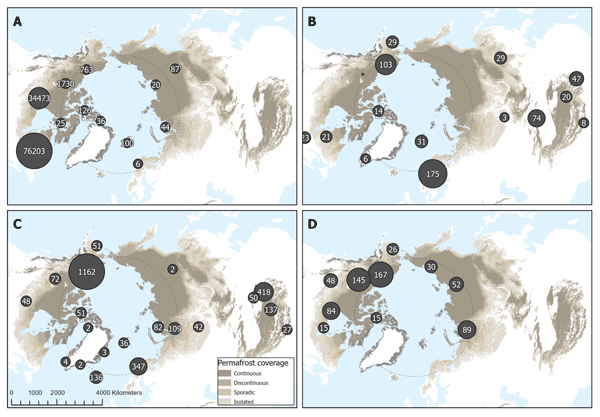
Christine L. Olson, Kevin Schaefer, Alyssa Azaroff, Hélène Angot, Sasiri Bandara, Thomas A. Douglas, Bo Elberling, Maria Florencia Fahnestock, Xinbin Feng, Charlotte Haugk, Gustaf Hugelius, Erfan Jahangir, Sofi Jonsson, Shichang Kang, Adam Kirkwood, Jennifer Korosi, Igor Lehnherr, Artem Lim, Rinat Manasypov, Dmitriy Moskovchenko, Mina Nasr, Daniel Obrist, David Olefeldt, Connor Olson, Oleg Pokrovsky, Laura Sereni, Sarah Shakil, M. Isabel Smith, Jens Søndergaard, Jeroen Sonke, Kasia Staniszewska, Jens Strauss, Kyra St. Pierre, Lauren Thompson, Andrey Yurtaev, Yanxu Zhang, and Scott Zolkos
Earth Syst. Sci. Data, 18, 4509–4522, https://doi.org/10.5194/essd-18-4509-2026, https://doi.org/10.5194/essd-18-4509-2026, 2026
Short summary
Short summary
Permafrost regions store large amounts of mercury, a toxic pollutant that can be released as the ground warms. We combined thousands of measurements from soils, plants, water, and lake sediments into one open database to better understand where mercury is stored and how it moves. The results show clear differences among environments and reveal major data gaps, helping improve future research, monitoring, and decision-making.
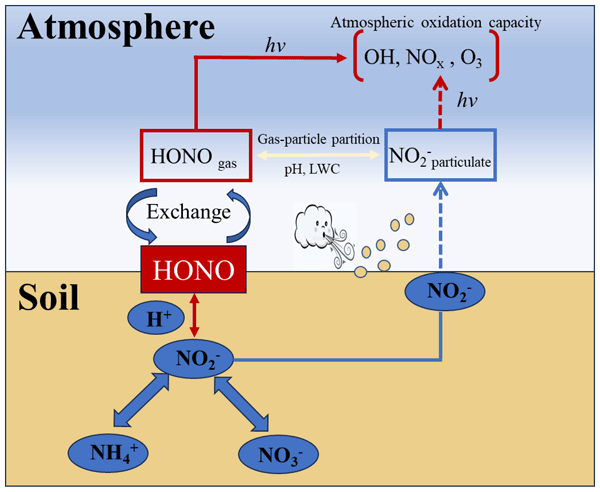
Zhongyi Zhang, Chunxiang Ye, Yichao Wu, Tao Zhou, Pengfei Chen, Shichang Kang, Chong Zhang, Zhuang Jiang, and Lei Geng
Atmos. Chem. Phys., 25, 10625–10641, https://doi.org/10.5194/acp-25-10625-2025, https://doi.org/10.5194/acp-25-10625-2025, 2025
Short summary
Short summary
This study reveals unexpectedly high levels of particulate nitrite at the Base Camp of Mt. Qomolangma, which overwhelmingly exists in coarse mode, and demonstrates that lofted surface soil and long-range transported pollutants contribute to the high levels of nitrite. The high particulate nitrite is likely to participate in atmospheric reactive nitrogen cycling through gas-particle partitioning or photolysis, leading to production of HONO, OH and NO and thereby influencing oxidation chemistry.
Chaman Gul, Shichang Kang, Yuanjian Yang, Xinlei Ge, and Dong Guo
EGUsphere, https://doi.org/10.5194/egusphere-2024-1144, https://doi.org/10.5194/egusphere-2024-1144, 2024
Preprint archived
Short summary
Short summary
Long-term variations in upper atmospheric temperature and water vapor in the selected domains of time and space are presented. The temperature during the past two decades showed a cooling trend and water vapor showed an increasing trend and had an inverse relation with temperature in selected domains of space and time. Seasonal temperature variations are distinct, with a summer minimum and a winter maximum. Our results can be an early warning indication for future climate change.
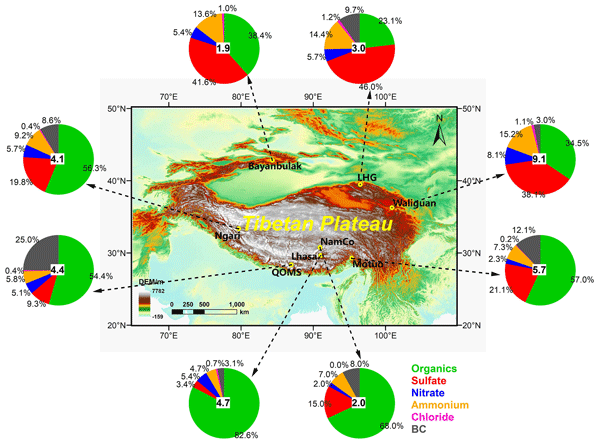
Jianzhong Xu, Xinghua Zhang, Wenhui Zhao, Lixiang Zhai, Miao Zhong, Jinsen Shi, Junying Sun, Yanmei Liu, Conghui Xie, Yulong Tan, Kemei Li, Xinlei Ge, Qi Zhang, and Shichang Kang
Earth Syst. Sci. Data, 16, 1875–1900, https://doi.org/10.5194/essd-16-1875-2024, https://doi.org/10.5194/essd-16-1875-2024, 2024
Short summary
Short summary
A comprehensive aerosol observation project was carried out in the Tibetan Plateau (TP) and its surroundings in recent years to investigate the properties and sources of atmospheric aerosols as well as their regional differences by performing multiple intensive field observations. The release of this dataset can provide basic and systematic data for related research in the atmospheric, cryospheric, and environmental sciences in this unique region.
Yuling Hu, Haipeng Yu, Shichang Kang, Junhua Yang, Mukesh Rai, Xiufeng Yin, Xintong Chen, and Pengfei Chen
Atmos. Chem. Phys., 24, 85–107, https://doi.org/10.5194/acp-24-85-2024, https://doi.org/10.5194/acp-24-85-2024, 2024
Short summary
Short summary
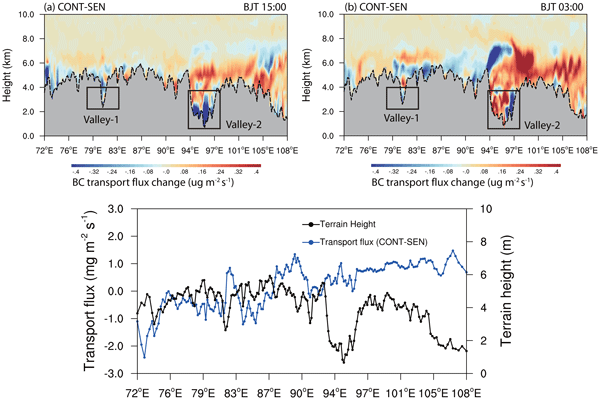
The Tibetan Plateau (TP) saw a record-breaking aerosol pollution event from April 20 to May 10, 2016. We studied the impact of aerosol–meteorology feedback on the transboundary transport flux of black carbon (BC) during this severe pollution event. It was found that the aerosol–meteorology feedback decreases the transboundary transport flux of BC from the central and western Himalayas towards the TP. This study is of great significance for the protection of the ecological environment of the TP.
Xiufeng Yin, Dipesh Rupakheti, Guoshuai Zhang, Jiali Luo, Shichang Kang, Benjamin de Foy, Junhua Yang, Zhenming Ji, Zhiyuan Cong, Maheswar Rupakheti, Ping Li, Yuling Hu, and Qianggong Zhang
Atmos. Chem. Phys., 23, 10137–10143, https://doi.org/10.5194/acp-23-10137-2023, https://doi.org/10.5194/acp-23-10137-2023, 2023
Short summary
Short summary
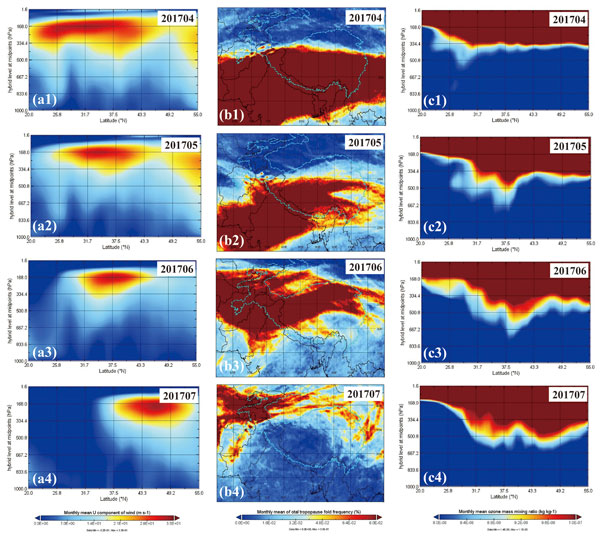
The monthly mean surface ozone concentrations peaked earlier in the south in April and May and later in the north in June and July over the Tibetan Plateau. The migration of monthly surface ozone peaks was coupled with the synchronous movement of tropopause folds and the westerly jet that created conditions conducive to stratospheric ozone intrusion. Stratospheric ozone intrusion significantly contributed to surface ozone across the Tibetan Plateau.
Huiming Lin, Yindong Tong, Long Chen, Chenghao Yu, Zhaohan Chu, Qianru Zhang, Xiufeng Yin, Qianggong Zhang, Shichang Kang, Junfeng Liu, James Schauer, Benjamin de Foy, and Xuejun Wang
Atmos. Chem. Phys., 23, 3937–3953, https://doi.org/10.5194/acp-23-3937-2023, https://doi.org/10.5194/acp-23-3937-2023, 2023
Short summary
Short summary
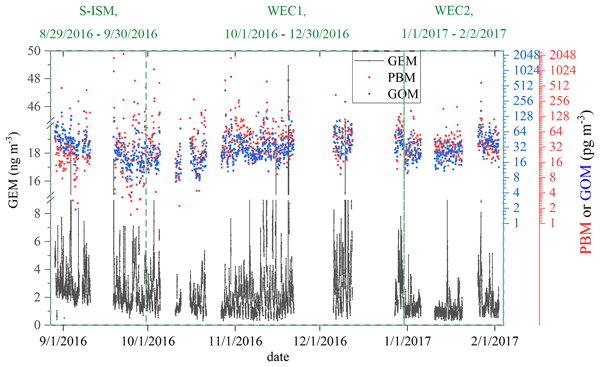
Lhasa is the largest city in the Tibetan Plateau, and its atmospheric mercury concentrations represent the highest level of pollution in this region. Unexpectedly high concentrations of atmospheric mercury species were found. Combined with the trajectory analysis, the high atmospheric mercury concentrations may have originated from external long-range transport. Local sources, especially special mercury-related sources, are important factors influencing the variability of atmospheric mercury.
Shaoyong Wang, Xiaobo He, Shichang Kang, Hui Fu, and Xiaofeng Hong
The Cryosphere, 16, 5023–5040, https://doi.org/10.5194/tc-16-5023-2022, https://doi.org/10.5194/tc-16-5023-2022, 2022
Short summary
Short summary
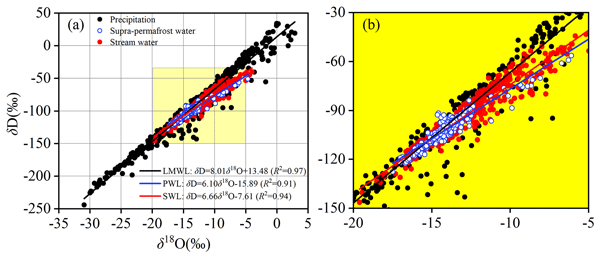
This study used the sine-wave exponential model and long-term water stable isotopic data to estimate water mean residence time (MRT) and its influencing factors in a high-altitude permafrost catchment (5300 m a.s.l.) in the central Tibetan Plateau (TP). MRT for stream and supra-permafrost water was estimated at 100 and 255 d, respectively. Climate and vegetation factors affected the MRT of stream and supra-permafrost water mainly by changing the thickness of the permafrost active layer.
Jizu Chen, Wentao Du, Shichang Kang, Xiang Qin, Weijun Sun, Yang Li, Yushuo Liu, Lihui Luo, and Youyan Jiang
The Cryosphere Discuss., https://doi.org/10.5194/tc-2022-179, https://doi.org/10.5194/tc-2022-179, 2022
Preprint withdrawn
Short summary
Short summary
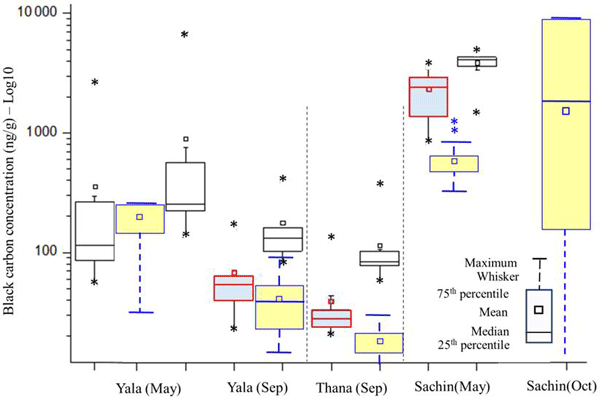
This study developed a dynamic deposition model of light absorbing particles (LAPs), which coupled with a surface energy and mass balance model. Based on the coupled model, we assessed atmospheric deposited BC effect on glacier melting, and quantified global warming and increment of emitted black carbon respective contributions to current accelerated glacier melting.
Chaman Gul, Shichang Kang, Siva Praveen Puppala, Xiaokang Wu, Cenlin He, Yangyang Xu, Inka Koch, Sher Muhammad, Rajesh Kumar, and Getachew Dubache
Atmos. Chem. Phys., 22, 8725–8737, https://doi.org/10.5194/acp-22-8725-2022, https://doi.org/10.5194/acp-22-8725-2022, 2022
Short summary
Short summary
This work aims to understand concentrations, spatial variability, and potential source regions of light-absorbing impurities (black carbon aerosols, dust particles, and organic carbon) in the surface snow of central and western Himalayan glaciers and their impact on snow albedo and radiative forcing.
Xinghua Zhang, Wenhui Zhao, Lixiang Zhai, Miao Zhong, Jinsen Shi, Junying Sun, Yanmei Liu, Conghui Xie, Yulong Tan, Kemei Li, Xinlei Ge, Qi Zhang, Shichang Kang, and Jianzhong Xu
Earth Syst. Sci. Data Discuss., https://doi.org/10.5194/essd-2022-211, https://doi.org/10.5194/essd-2022-211, 2022
Manuscript not accepted for further review
Short summary
Short summary
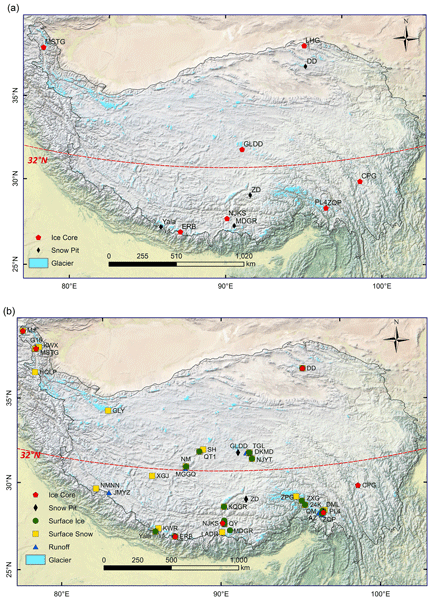
A comprehensive aerosol observation project was carried out in the Tibetan Plateau (TP) in recent years to investigate the properties and sources of atmospheric aerosols as well as their regional differences by performing multiple short-term intensive field observations. The real-time online high-time-resolution (hourly) data of aerosol properties in the different TP region are integrated in a new dataset and can provide supporting for related studies in in the TP.
Yongqin Liu, Pengcheng Fang, Bixi Guo, Mukan Ji, Pengfei Liu, Guannan Mao, Baiqing Xu, Shichang Kang, and Junzhi Liu
Earth Syst. Sci. Data, 14, 2303–2314, https://doi.org/10.5194/essd-14-2303-2022, https://doi.org/10.5194/essd-14-2303-2022, 2022
Short summary
Short summary
Glaciers are an important pool of microorganisms, organic carbon, and nitrogen. This study constructed the first dataset of microbial abundance and total nitrogen in Tibetan Plateau (TP) glaciers and the first dataset of dissolved organic carbon in ice cores on the TP. These new data could provide valuable information for research on the glacier carbon and nitrogen cycle and help in assessing the potential impacts of glacier retreat due to global warming on downstream ecosystems.
Mukesh Rai, Shichang Kang, Junhua Yang, Maheswar Rupakheti, Dipesh Rupakheti, Lekhendra Tripathee, Yuling Hu, and Xintong Chen
Atmos. Chem. Phys. Discuss., https://doi.org/10.5194/acp-2022-199, https://doi.org/10.5194/acp-2022-199, 2022
Revised manuscript not accepted
Short summary
Short summary
Our study revealed distinctive seasonality with the maximum and minimum aerosol concentrations during the winter and summer seasons respectively. However, interestingly summer high (AOD > 0.8) was observed over South Asia. The highest aerosols are laden over South Asia and East China within 1–2 km, however, aerosol overshooting found up to 10 km due to the deep convection process. Whereas, integrated aerosol transport for OC during spring was found to be 5 times higher than the annual mean.

Huiming Lin, Yindong Tong, Chenghao Yu, Long Chen, Xiufeng Yin, Qianggong Zhang, Shichang Kang, Lun Luo, James Schauer, Benjamin de Foy, and Xuejun Wang
Atmos. Chem. Phys., 22, 2651–2668, https://doi.org/10.5194/acp-22-2651-2022, https://doi.org/10.5194/acp-22-2651-2022, 2022
Short summary
Short summary
The Tibetan Plateau is known as
The Third Poleand is generally considered to be a clean area owing to its high altitude. However, it may receive be impacted by air pollutants transported from the Indian subcontinent. Pollutants generally enter the Tibetan Plateau in several ways. Among them is the Yarlung Zangbu–Brahmaputra Grand Canyon. In this study, we identified the influence of the Indian summer monsoon on the origin, transport, and behavior of mercury in this area.

Shichang Kang, Yulan Zhang, Pengfei Chen, Junming Guo, Qianggong Zhang, Zhiyuan Cong, Susan Kaspari, Lekhendra Tripathee, Tanguang Gao, Hewen Niu, Xinyue Zhong, Xintong Chen, Zhaofu Hu, Xiaofei Li, Yang Li, Bigyan Neupane, Fangping Yan, Dipesh Rupakheti, Chaman Gul, Wei Zhang, Guangming Wu, Ling Yang, Zhaoqing Wang, and Chaoliu Li
Earth Syst. Sci. Data, 14, 683–707, https://doi.org/10.5194/essd-14-683-2022, https://doi.org/10.5194/essd-14-683-2022, 2022
Short summary
Short summary
The Tibetan Plateau is important to the Earth’s climate. However, systematically observed data here are scarce. To perform more integrated and in-depth investigations of the origins and distributions of atmospheric pollutants and their impacts on cryospheric change, systematic data of black carbon and organic carbon from the atmosphere, glaciers, snow cover, precipitation, and lake sediment cores over the plateau based on the Atmospheric Pollution and Cryospheric Change program are provided.

Jinlei Chen, Shichang Kang, Wentao Du, Junming Guo, Min Xu, Yulan Zhang, Xinyue Zhong, Wei Zhang, and Jizu Chen
The Cryosphere, 15, 5473–5482, https://doi.org/10.5194/tc-15-5473-2021, https://doi.org/10.5194/tc-15-5473-2021, 2021
Short summary
Short summary
Sea ice is retreating with rapid warming in the Arctic. It will continue and approach the worst predicted pathway released by the IPCC. The irreversible tipping point might show around 2060 when the oldest ice will have completely disappeared. It has a huge impact on human production. Ordinary merchant ships will be able to pass the Northeast Passage and Northwest Passage by the midcentury, and the opening time will advance to the next 10 years for icebreakers with moderate ice strengthening.
Cristofer Jimenez, Albert Ansmann, Friederike Lipken, Julian Hofer, Alexandra Chudnovsky, Holger Baars, Volker Freudenthaler, Ronny Engelmann, Dietrich Althausen, Sabur Abdullozoda, Shohina Kh. Khalifaeva, Patric Seifert, and Ulla Wandinger
EGUsphere, https://doi.org/10.5194/egusphere-2026-5108, https://doi.org/10.5194/egusphere-2026-5108, 2026
This preprint is open for discussion and under review for Atmospheric Chemistry and Physics (ACP).
Short summary
Short summary
For the first time, a multiyear observational data set on the impact of fresh and aged (contaminated, hygroscopic) dust particles on cloud droplet formation processes is presented. The observations were performed at Dushanbe, Tajikistan, in the heart of the well known dust belt. A clear impact of hygroscopic dust particles on droplet formation during the dust season (April to October) was found, in agreement with respective global modeling results.
Zheng Jin, Zezhou Chen, Qinglong You, Zhaoxiang Liu, Jintao Zhang, Huan Hu, Ping Chen, Xiang Liu, Zipeng Wang, Kai Wang, Shiguo Lian, and Shichang Kang
Earth Syst. Sci. Data, 18, 6763–6781, https://doi.org/10.5194/essd-18-6763-2026, https://doi.org/10.5194/essd-18-6763-2026, 2026
Short summary
Short summary
This study presents the TPHH (Tibetan Plateau Historical High) dataset, a high-resolution (1/30°) monthly climate dataset for the Tibetan Plateau spanning 1901–2023, featuring 2 m temperature, specific humidity, and surface pressure. By employing a hybrid deep learning framework (FourCastNet), we downscaled coarse historical data through the synergistic mapping of total-field signals and terrain constraints. Validated against independent observations, this physically-consistent dataset bridges the pre-satellite data gap.
Julian Hofer, Holger Baars, Zhenping Yin, Andi Klamt, Martin Radenz, Leonard König, Athena A. Floutsi, Cristofer Jimenez, Moritz Haarig, Dietrich Althausen, Benedikt Gast, Håvard S. Buholdt, Nathan Skupin, Jonas Neumann, Sabur F. Abdullozoda, Abduvosit N. Makhmudov, Johannes Bühl, Ronny Engelmann, Ulla Wandinger, and Albert Ansmann
EGUsphere, https://doi.org/10.5194/egusphere-2026-3928, https://doi.org/10.5194/egusphere-2026-3928, 2026
This preprint is open for discussion and under review for Atmospheric Measurement Techniques (AMT).
Short summary
Short summary
A comparison of manually and automatically analyzed lidar profiles of aerosol optical properties is presented. The manual analysis was performed using a custom software in multiple analyses steps based on visual inspection of the lidar signals. The automatic analysis was performed using an automatic processing chain. The comparison shows good agreement and demonstrates the suitability of the automatic retrievals for various applications of aerosol optical property profiles.
Qiangqiang Xu, Shichang Kang, Wentao Du, Wei Wu, Zhaofu Hu, Xiaobo He, Bo Cao, and Biwen Xie
EGUsphere, https://doi.org/10.5194/egusphere-2026-4065, https://doi.org/10.5194/egusphere-2026-4065, 2026
Short summary
Short summary
Using frequent high-resolution satellite images, we reconstructed repeated drainage from lakes on the surface of Purepu Glacier in 2023 and 2025. The lakes reached similar sizes before drainage, but the 2025 event released much more water and left substantial residual water into 2026. The results show that lake area alone cannot describe drainage hazard and support intensive monitoring during early to mid-July 2026.
Georg Holger Müller, Athena Augusta Floutsi, Julian Hofer, Ronny Engelmann, Dietrich Althausen, Ulla Wandinger, Martin Radenz, Moritz Haarig, Sabur Fuzailovich Abdullaev, Shohina Kh. Khalifaeva, Albert Ansmann, and Holger Baars
EGUsphere, https://doi.org/10.5194/egusphere-2026-3390, https://doi.org/10.5194/egusphere-2026-3390, 2026
Short summary
Short summary
A five-year dataset of lidar measurements from Dushanbe, Tajikistan, was analyzed to investigate the annual dust cycle and intraanual variability in the region. The dataset consists of automatically processed data, including the separation of the dust and non-dust particle backscatter coefficient and enabling the calculation of monthly and seasonal dust mass concentration within the atmosphere. The study highlights the importance of continuous lidar measurements in the Central Asian region.
Christine L. Olson, Kevin Schaefer, Alyssa Azaroff, Hélène Angot, Sasiri Bandara, Thomas A. Douglas, Bo Elberling, Maria Florencia Fahnestock, Xinbin Feng, Charlotte Haugk, Gustaf Hugelius, Erfan Jahangir, Sofi Jonsson, Shichang Kang, Adam Kirkwood, Jennifer Korosi, Igor Lehnherr, Artem Lim, Rinat Manasypov, Dmitriy Moskovchenko, Mina Nasr, Daniel Obrist, David Olefeldt, Connor Olson, Oleg Pokrovsky, Laura Sereni, Sarah Shakil, M. Isabel Smith, Jens Søndergaard, Jeroen Sonke, Kasia Staniszewska, Jens Strauss, Kyra St. Pierre, Lauren Thompson, Andrey Yurtaev, Yanxu Zhang, and Scott Zolkos
Earth Syst. Sci. Data, 18, 4509–4522, https://doi.org/10.5194/essd-18-4509-2026, https://doi.org/10.5194/essd-18-4509-2026, 2026
Short summary
Short summary
Permafrost regions store large amounts of mercury, a toxic pollutant that can be released as the ground warms. We combined thousands of measurements from soils, plants, water, and lake sediments into one open database to better understand where mercury is stored and how it moves. The results show clear differences among environments and reveal major data gaps, helping improve future research, monitoring, and decision-making.
Holger Baars, Moritz Haarig, Leonard König, Athena A. Floutsi, Elizaveta Basharova, Julian Hofer, Henriette Gebauer, Ronny Engelmann, Dietrich Althausen, Annett Skupin, Benedikt Gast, Felix Fritzsch, Kevin Ohneiser, Cristofer Jimenez, Tom Gaudek, Martin Radenz, Håvard Buholdt, Birgit Heese, Andi Klamt, Patric Seifert, David P. Donovan, Gerd-Jan van Zadelhoff, Sabur F. Abdullaev, Shohina K. Khalifaeva, Dilovar F. Nozirov, and Ulla Wandinger
Atmos. Meas. Tech., 19, 3831–3864, https://doi.org/10.5194/amt-19-3831-2026, https://doi.org/10.5194/amt-19-3831-2026, 2026
Short summary
Short summary
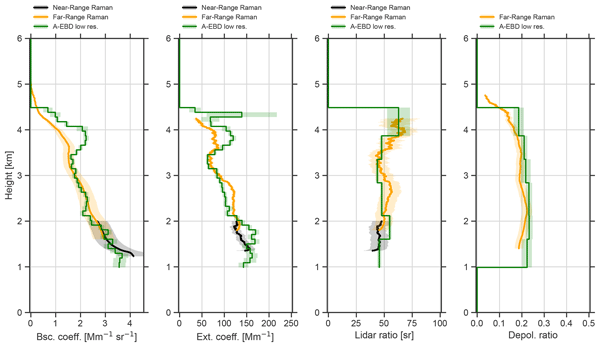
The satellite mission EarthCARE (Earth Cloud, Aerosol, and Radiation Explorer) was launched in May 2024 and has 4 unique instruments on board. We used ground-based PollyNET/ACTRIS (Aerosol, Clouds and Trace gases Research Infrastructure) profiling data to discuss the quality of EarthCARE’s lidar products based on case studies from different geographic locations. Our investigations revealed that the space-borne lidar instrument has remarkable profiling capabilities but currently also still some limitations, however, not preventing first scientific studies when quality checking the data intensively.
Zhongyi Zhang, Chunxiang Ye, Yichao Wu, Tao Zhou, Pengfei Chen, Shichang Kang, Chong Zhang, Zhuang Jiang, and Lei Geng
Atmos. Chem. Phys., 25, 10625–10641, https://doi.org/10.5194/acp-25-10625-2025, https://doi.org/10.5194/acp-25-10625-2025, 2025
Short summary
Short summary
This study reveals unexpectedly high levels of particulate nitrite at the Base Camp of Mt. Qomolangma, which overwhelmingly exists in coarse mode, and demonstrates that lofted surface soil and long-range transported pollutants contribute to the high levels of nitrite. The high particulate nitrite is likely to participate in atmospheric reactive nitrogen cycling through gas-particle partitioning or photolysis, leading to production of HONO, OH and NO and thereby influencing oxidation chemistry.
Xin Xi, Jun Wang, Zhendong Lu, Andrew M. Sayer, Jaehwa Lee, Robert C. Levy, Yujie Wang, Alexei Lyapustin, Hongqing Liu, Istvan Laszlo, Changwoo Ahn, Omar Torres, Sabur Abdullaev, James Limbacher, and Ralph A. Kahn
Atmos. Chem. Phys., 25, 7403–7429, https://doi.org/10.5194/acp-25-7403-2025, https://doi.org/10.5194/acp-25-7403-2025, 2025
Short summary
Short summary
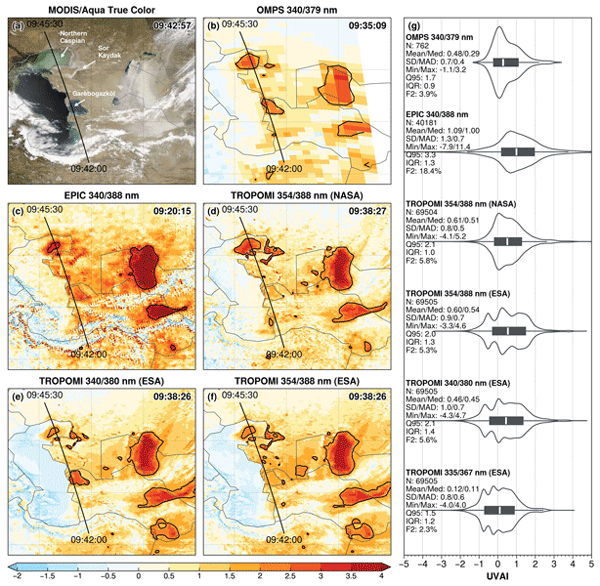
The Aralkum Desert is challenging for aerosol retrieval due to its bright, heterogeneous, and dynamic surfaces and the lack of in situ constraints on aerosol properties. The performance and consistency of satellite algorithms in observing Aralkum-generated saline dust remain unknown. This study compares multisensor UVAI (ultraviolet aerosol index), AOD (aerosol optical depth), and ALH (aerosol layer height) products and reveals inconsistencies and potential biases over the Aral Sea basin.
Jinlong Cui, Qianggong Zhang, Qing Yang, Fuyuan Mai, Shengnan Li, Mingyue Li, Jie Wang, Xuejun Sun, and Yindong Tong
EGUsphere, https://doi.org/10.5194/egusphere-2024-3688, https://doi.org/10.5194/egusphere-2024-3688, 2025
Preprint archived
Short summary
Short summary
Recent studies have highlighted the role of water temperature in modulating community composition and distance decay patterns, with patterns increasing with lake age, suggesting enhanced symbiotic relationships and ecosystem function. These findings improve understanding of the impacts of climate change on stability and ecosystem function in high-lying lakes.
Chaman Gul, Shichang Kang, Yuanjian Yang, Xinlei Ge, and Dong Guo
EGUsphere, https://doi.org/10.5194/egusphere-2024-1144, https://doi.org/10.5194/egusphere-2024-1144, 2024
Preprint archived
Short summary
Short summary
Long-term variations in upper atmospheric temperature and water vapor in the selected domains of time and space are presented. The temperature during the past two decades showed a cooling trend and water vapor showed an increasing trend and had an inverse relation with temperature in selected domains of space and time. Seasonal temperature variations are distinct, with a summer minimum and a winter maximum. Our results can be an early warning indication for future climate change.
Jianzhong Xu, Xinghua Zhang, Wenhui Zhao, Lixiang Zhai, Miao Zhong, Jinsen Shi, Junying Sun, Yanmei Liu, Conghui Xie, Yulong Tan, Kemei Li, Xinlei Ge, Qi Zhang, and Shichang Kang
Earth Syst. Sci. Data, 16, 1875–1900, https://doi.org/10.5194/essd-16-1875-2024, https://doi.org/10.5194/essd-16-1875-2024, 2024
Short summary
Short summary
A comprehensive aerosol observation project was carried out in the Tibetan Plateau (TP) and its surroundings in recent years to investigate the properties and sources of atmospheric aerosols as well as their regional differences by performing multiple intensive field observations. The release of this dataset can provide basic and systematic data for related research in the atmospheric, cryospheric, and environmental sciences in this unique region.
Yuling Hu, Haipeng Yu, Shichang Kang, Junhua Yang, Mukesh Rai, Xiufeng Yin, Xintong Chen, and Pengfei Chen
Atmos. Chem. Phys., 24, 85–107, https://doi.org/10.5194/acp-24-85-2024, https://doi.org/10.5194/acp-24-85-2024, 2024
Short summary
Short summary
The Tibetan Plateau (TP) saw a record-breaking aerosol pollution event from April 20 to May 10, 2016. We studied the impact of aerosol–meteorology feedback on the transboundary transport flux of black carbon (BC) during this severe pollution event. It was found that the aerosol–meteorology feedback decreases the transboundary transport flux of BC from the central and western Himalayas towards the TP. This study is of great significance for the protection of the ecological environment of the TP.
Da Lu, Hao Li, Mengke Tian, Guochen Wang, Xiaofei Qin, Na Zhao, Juntao Huo, Fan Yang, Yanfen Lin, Jia Chen, Qingyan Fu, Yusen Duan, Xinyi Dong, Congrui Deng, Sabur F. Abdullaev, and Kan Huang
Atmos. Chem. Phys., 23, 13853–13868, https://doi.org/10.5194/acp-23-13853-2023, https://doi.org/10.5194/acp-23-13853-2023, 2023
Short summary
Short summary
Environmental conditions during dust are usually not favorable for secondary aerosol formation. However in this study, an unusual dust event was captured in a Chinese mega-city and showed “anomalous” meteorology and a special dust backflow transport pathway. The underlying formation mechanisms of secondary aerosols are probed in the context of this special dust event. This study shows significant implications for the varying dust aerosol chemistry in the future changing climate.
Xiufeng Yin, Dipesh Rupakheti, Guoshuai Zhang, Jiali Luo, Shichang Kang, Benjamin de Foy, Junhua Yang, Zhenming Ji, Zhiyuan Cong, Maheswar Rupakheti, Ping Li, Yuling Hu, and Qianggong Zhang
Atmos. Chem. Phys., 23, 10137–10143, https://doi.org/10.5194/acp-23-10137-2023, https://doi.org/10.5194/acp-23-10137-2023, 2023
Short summary
Short summary
The monthly mean surface ozone concentrations peaked earlier in the south in April and May and later in the north in June and July over the Tibetan Plateau. The migration of monthly surface ozone peaks was coupled with the synchronous movement of tropopause folds and the westerly jet that created conditions conducive to stratospheric ozone intrusion. Stratospheric ozone intrusion significantly contributed to surface ozone across the Tibetan Plateau.
Athena Augusta Floutsi, Holger Baars, Ronny Engelmann, Dietrich Althausen, Albert Ansmann, Stephanie Bohlmann, Birgit Heese, Julian Hofer, Thomas Kanitz, Moritz Haarig, Kevin Ohneiser, Martin Radenz, Patric Seifert, Annett Skupin, Zhenping Yin, Sabur F. Abdullaev, Mika Komppula, Maria Filioglou, Elina Giannakaki, Iwona S. Stachlewska, Lucja Janicka, Daniele Bortoli, Eleni Marinou, Vassilis Amiridis, Anna Gialitaki, Rodanthi-Elisavet Mamouri, Boris Barja, and Ulla Wandinger
Atmos. Meas. Tech., 16, 2353–2379, https://doi.org/10.5194/amt-16-2353-2023, https://doi.org/10.5194/amt-16-2353-2023, 2023
Short summary
Short summary
DeLiAn is a collection of lidar-derived aerosol intensive optical properties for several aerosol types, namely the particle linear depolarization ratio, the extinction-to-backscatter ratio (lidar ratio) and the Ångström exponent. The data collection is based on globally distributed, long-term, ground-based, multiwavelength, Raman and polarization lidar measurements and currently covers two wavelengths, 355 and 532 nm, for 13 aerosol categories ranging from basic aerosol types to mixtures.
Huiming Lin, Yindong Tong, Long Chen, Chenghao Yu, Zhaohan Chu, Qianru Zhang, Xiufeng Yin, Qianggong Zhang, Shichang Kang, Junfeng Liu, James Schauer, Benjamin de Foy, and Xuejun Wang
Atmos. Chem. Phys., 23, 3937–3953, https://doi.org/10.5194/acp-23-3937-2023, https://doi.org/10.5194/acp-23-3937-2023, 2023
Short summary
Short summary
Lhasa is the largest city in the Tibetan Plateau, and its atmospheric mercury concentrations represent the highest level of pollution in this region. Unexpectedly high concentrations of atmospheric mercury species were found. Combined with the trajectory analysis, the high atmospheric mercury concentrations may have originated from external long-range transport. Local sources, especially special mercury-related sources, are important factors influencing the variability of atmospheric mercury.
Shaoyong Wang, Xiaobo He, Shichang Kang, Hui Fu, and Xiaofeng Hong
The Cryosphere, 16, 5023–5040, https://doi.org/10.5194/tc-16-5023-2022, https://doi.org/10.5194/tc-16-5023-2022, 2022
Short summary
Short summary
This study used the sine-wave exponential model and long-term water stable isotopic data to estimate water mean residence time (MRT) and its influencing factors in a high-altitude permafrost catchment (5300 m a.s.l.) in the central Tibetan Plateau (TP). MRT for stream and supra-permafrost water was estimated at 100 and 255 d, respectively. Climate and vegetation factors affected the MRT of stream and supra-permafrost water mainly by changing the thickness of the permafrost active layer.
Jizu Chen, Wentao Du, Shichang Kang, Xiang Qin, Weijun Sun, Yang Li, Yushuo Liu, Lihui Luo, and Youyan Jiang
The Cryosphere Discuss., https://doi.org/10.5194/tc-2022-179, https://doi.org/10.5194/tc-2022-179, 2022
Preprint withdrawn
Short summary
Short summary
This study developed a dynamic deposition model of light absorbing particles (LAPs), which coupled with a surface energy and mass balance model. Based on the coupled model, we assessed atmospheric deposited BC effect on glacier melting, and quantified global warming and increment of emitted black carbon respective contributions to current accelerated glacier melting.
Xiaoxi Zhao, Kan Huang, Joshua S. Fu, and Sabur F. Abdullaev
Atmos. Chem. Phys., 22, 10389–10407, https://doi.org/10.5194/acp-22-10389-2022, https://doi.org/10.5194/acp-22-10389-2022, 2022
Short summary
Short summary
Long-range transport of Asian dust to the Arctic was considered an important source of Arctic air pollution. Different transport routes to the Arctic had divergent effects on the evolution of aerosol properties. Depositions of long-range-transported dust particles can reduce the Arctic surface albedo considerably. This study implied that the ubiquitous long-transport dust from China exerted considerable aerosol indirect effects on the Arctic and may have potential biogeochemical significance.
Chaman Gul, Shichang Kang, Siva Praveen Puppala, Xiaokang Wu, Cenlin He, Yangyang Xu, Inka Koch, Sher Muhammad, Rajesh Kumar, and Getachew Dubache
Atmos. Chem. Phys., 22, 8725–8737, https://doi.org/10.5194/acp-22-8725-2022, https://doi.org/10.5194/acp-22-8725-2022, 2022
Short summary
Short summary
This work aims to understand concentrations, spatial variability, and potential source regions of light-absorbing impurities (black carbon aerosols, dust particles, and organic carbon) in the surface snow of central and western Himalayan glaciers and their impact on snow albedo and radiative forcing.
Xinghua Zhang, Wenhui Zhao, Lixiang Zhai, Miao Zhong, Jinsen Shi, Junying Sun, Yanmei Liu, Conghui Xie, Yulong Tan, Kemei Li, Xinlei Ge, Qi Zhang, Shichang Kang, and Jianzhong Xu
Earth Syst. Sci. Data Discuss., https://doi.org/10.5194/essd-2022-211, https://doi.org/10.5194/essd-2022-211, 2022
Manuscript not accepted for further review
Short summary
Short summary
A comprehensive aerosol observation project was carried out in the Tibetan Plateau (TP) in recent years to investigate the properties and sources of atmospheric aerosols as well as their regional differences by performing multiple short-term intensive field observations. The real-time online high-time-resolution (hourly) data of aerosol properties in the different TP region are integrated in a new dataset and can provide supporting for related studies in in the TP.
Yongqin Liu, Pengcheng Fang, Bixi Guo, Mukan Ji, Pengfei Liu, Guannan Mao, Baiqing Xu, Shichang Kang, and Junzhi Liu
Earth Syst. Sci. Data, 14, 2303–2314, https://doi.org/10.5194/essd-14-2303-2022, https://doi.org/10.5194/essd-14-2303-2022, 2022
Short summary
Short summary
Glaciers are an important pool of microorganisms, organic carbon, and nitrogen. This study constructed the first dataset of microbial abundance and total nitrogen in Tibetan Plateau (TP) glaciers and the first dataset of dissolved organic carbon in ice cores on the TP. These new data could provide valuable information for research on the glacier carbon and nitrogen cycle and help in assessing the potential impacts of glacier retreat due to global warming on downstream ecosystems.
Mukesh Rai, Shichang Kang, Junhua Yang, Maheswar Rupakheti, Dipesh Rupakheti, Lekhendra Tripathee, Yuling Hu, and Xintong Chen
Atmos. Chem. Phys. Discuss., https://doi.org/10.5194/acp-2022-199, https://doi.org/10.5194/acp-2022-199, 2022
Revised manuscript not accepted
Short summary
Short summary
Our study revealed distinctive seasonality with the maximum and minimum aerosol concentrations during the winter and summer seasons respectively. However, interestingly summer high (AOD > 0.8) was observed over South Asia. The highest aerosols are laden over South Asia and East China within 1–2 km, however, aerosol overshooting found up to 10 km due to the deep convection process. Whereas, integrated aerosol transport for OC during spring was found to be 5 times higher than the annual mean.
Huiming Lin, Yindong Tong, Chenghao Yu, Long Chen, Xiufeng Yin, Qianggong Zhang, Shichang Kang, Lun Luo, James Schauer, Benjamin de Foy, and Xuejun Wang
Atmos. Chem. Phys., 22, 2651–2668, https://doi.org/10.5194/acp-22-2651-2022, https://doi.org/10.5194/acp-22-2651-2022, 2022
Short summary
Short summary
The Tibetan Plateau is known as
The Third Poleand is generally considered to be a clean area owing to its high altitude. However, it may receive be impacted by air pollutants transported from the Indian subcontinent. Pollutants generally enter the Tibetan Plateau in several ways. Among them is the Yarlung Zangbu–Brahmaputra Grand Canyon. In this study, we identified the influence of the Indian summer monsoon on the origin, transport, and behavior of mercury in this area.
Shichang Kang, Yulan Zhang, Pengfei Chen, Junming Guo, Qianggong Zhang, Zhiyuan Cong, Susan Kaspari, Lekhendra Tripathee, Tanguang Gao, Hewen Niu, Xinyue Zhong, Xintong Chen, Zhaofu Hu, Xiaofei Li, Yang Li, Bigyan Neupane, Fangping Yan, Dipesh Rupakheti, Chaman Gul, Wei Zhang, Guangming Wu, Ling Yang, Zhaoqing Wang, and Chaoliu Li
Earth Syst. Sci. Data, 14, 683–707, https://doi.org/10.5194/essd-14-683-2022, https://doi.org/10.5194/essd-14-683-2022, 2022
Short summary
Short summary
The Tibetan Plateau is important to the Earth’s climate. However, systematically observed data here are scarce. To perform more integrated and in-depth investigations of the origins and distributions of atmospheric pollutants and their impacts on cryospheric change, systematic data of black carbon and organic carbon from the atmosphere, glaciers, snow cover, precipitation, and lake sediment cores over the plateau based on the Atmospheric Pollution and Cryospheric Change program are provided.
Jinlei Chen, Shichang Kang, Wentao Du, Junming Guo, Min Xu, Yulan Zhang, Xinyue Zhong, Wei Zhang, and Jizu Chen
The Cryosphere, 15, 5473–5482, https://doi.org/10.5194/tc-15-5473-2021, https://doi.org/10.5194/tc-15-5473-2021, 2021
Short summary
Short summary
Sea ice is retreating with rapid warming in the Arctic. It will continue and approach the worst predicted pathway released by the IPCC. The irreversible tipping point might show around 2060 when the oldest ice will have completely disappeared. It has a huge impact on human production. Ordinary merchant ships will be able to pass the Northeast Passage and Northwest Passage by the midcentury, and the opening time will advance to the next 10 years for icebreakers with moderate ice strengthening.
Cited articles
Beckers, F. and Rinklebe, J.: Cycling of mercury in the environment: Sources, fate, and human health implications: A review, Crit. Rev. Env. Sci. Tec., 47, 693–794, https://doi.org/10.1080/10643389.2017.1326277, 2017.
Bergquist, B. A. and Blum, J. D.: Mass-dependent and-independent fractionation of Hg isotopes by photoreduction in aquatic systems, Science, 318, 417–420, https://doi.org/10.1126/science.1148050, 2007.
Blum, J. D., Sherman, L. S., and Johnson, M. W.: Mercury isotopes in earth and environmental sciences, Annu. Rev. Earth Planet. Sci. 42, 249–269, https://doi.org/10.1146/annurev-earth-050212-124107, 2014.
Chen, D., Xu, B., Yao, T., Guo, Z., Cui, P., Chen, F., Zhang, R., Zhang, X., Zhang, Y., Fan, J., Hou, Z., and Zhang, T.: Assessment of past, present and future environmental changes on the Tibetan Plateau, Chin. Sci. Bull., 60, 3025–3035, https://doi.org/10.1360/N972014-01370, 2015.
de Foy, B., Tong, Y., Yin, X., Zhang, W., Kang, S., Zhang, Q., Zhang, G., Wang, X., and Schauer, J. J.: First field-based atmospheric observation of the reduction of reactive mercury driven by sunlight, Atmos. Environ., 134, 27–39, https://doi.org/10.1016/j.atmosenv.2016.03.028, 2016.
Driscoll, C. T., Mason, R. P., Chan, H. M., Jacob, D. J., and Pirrone, N.: Mercury as a global pollutant: sources, pathways, and effects, Environ. Sci. Technol., 47, 4967–4983, https://doi.org/10.1021/es305071v, 2013.
Grandjean, P., Satoh, H., Murata, K., and Eto, K.: Adverse effects of methylmercury: Environmental health research implications, Environ. Health Persp., 118, 1137–1145, https://doi.org/10.1289/ehp.0901757, 2010.
Guo, J., Kang, S., Huang, J., Zhang, Q., Rupakheti, M., Sun, S., Tripathee, L., Rupakheti, D., Panday, A. K., and Sillanpää, M.: Characterizations of atmospheric particulate-bound mercury in the Kathmandu Valley of Nepal, South Asia, Sci. Total Environ., 579, 1240–1248, https://doi.org/10.1016/j.scitotenv.2016.11.110, 2017.
Guo, J., Sharma, C. M., Tripathee, L., Kang, S., Fu, X., Huang, J., Shrestha, K. L., and Chen, P.: Source identification of atmospheric particle-bound mercury in the Himalayan foothills through non-isotopic and isotope analyses, Environ. Pollut., 286, 117317, https://doi.org/10.1016/j.envpol.2021.117317, 2021.
Guo, J., Tripathee, L., Kang, S., Zhang, Q., Huang, J., Mani Sharma, C., Chen, P., Paudyal, R., and Rupakheti, D.: Atmospheric particle-bound mercury in the northern Indo-Gangetic Plain region: Insights into sources from mercury isotope analysis and influencing factors, Geosci. Front., 13, 101274, https://doi.org/10.1016/j.gsf.2021.101274, 2022.
Huang, J., Kang, S., Zhang, Q., Yan, H., Guo, J., Jenkins, M. G., Zhang, G., and Wang, K.: Wet deposition of mercury at a remote site in the Tibetan Plateau: Concentrations, speciation, and fluxes, Atmos. Environ., 62, 540–550, https://doi.org/10.1016/j.atmosenv.2012.09.003, 2012a.
Huang, J., Kang, S., Zhang, Q., Jenkins, M., Guo, J., Zhang, G., and Wang, K.: Spatial distribution and magnification processes of mercury in snow from high-elevation glaciers in the Tibetan Plateau, Atmos. Environ., 46, 140–146, https://doi.org/10.1016/j.atmosenv.2011.10.008, 2012b.
Huang, J., Kang, S., Wang, S., Wang, L., Zhang, Q., Guo, J., Wang, K., Zhang, G., and Tripathee, L.: Wet deposition of mercury at Lhasa, the capital city of Tibet, Sci. Total Environ. 447, 123–132, https://doi.org/10.1016/j.scitotenv.2013.01.003, 2013.
Huang, J., Kang, S., Guo, J., Sillanpää, M., Zhang, Q., Qin, X., Du, W., and Tripathee, L.: Mercury distribution and variation on a high-elevation mountain glacier on the northern boundary of the Tibetan Plateau, Atmos. Environ., 96, 27–36, https://doi.org/10.1016/j.atmosenv.2014.07.023, 2014b.
Huang, J., Kang, S., Zhang, Q., Guo, J., Sillanpää, M., Wang, Y., Sun, S., Sun, X., and Tripathee, L.: Characterizations of wet mercury deposition on a remote high-elevation site in the southeastern Tibetan Plateau, Environ. Pollut., 206, 518–526, https://doi.org/10.1016/j.envpol.2015.07.024, 2015.
Huang, J., Kang, S., Guo, J., Zhang, Q., Cong, Z., Sillanpää, M., Zhang, G., Sun, S., and Tripathee, L.: Atmospheric particulate mercury in Lhasa city, Tibetan Plateau, Atmos. Environ., 142, 433–441, https://doi.org/10.1016/j.atmosenv.2016.08.021, 2016.
Huang, J., Kang, S., Ma, M., Guo, J., Cong, Z., Dong, Z., Yin, R., Xu, J., Tripathee, L., Ram, K., and Wang, F.: Accumulation of atmospheric mercury in glacier cryoconite over western China, Environ. Sci. Technol., 53, 6632–6639, https://doi.org/10.1021/acs.est.8b06575, 2019.
Huang, J., Kang, S., Yin, R., Ram, K., Liu, X., Lu, H., Guo, J., Chen, S., and Tripathee, L.: Desert dust as a significant carrier of atmospheric mercury, Environ. Pollut., 267, 115442, https://doi.org/10.1016/j.envpol.2020.115442, 2020a.
Huang, J., Kang, S., Yin, R., Guo, J., Lepak, R., Mika, S., Tripathee, L., and Sun, S.: Mercury isotopes in frozen soils reveal transboundary atmospheric mercury deposition over the Himalayas and Tibetan Plateau, Environ. Pollut., 256, 113432, https://doi.org/10.1016/j.envpol.2019.113432, 2020b.
Huang, J., Kang, S., Yin, R., Lin, M., Guo, J., Ram, K., Li, C., Sharma, C., Tripathee, L., Sun, S., and Wang, F.: Decoupling natural and anthropogenic mercury and lead transport from South Asia to the Himalayas. Environ. Sci. Technol., 54, 5429–5436, 2020c.
Huang, J., Kang, S., Wang, L., Liu, K., Ram, K., Sillanpää, M., Tang, W., Guo, J., Zhang, Q., Ma, M., Tripathee, L., and Wang, F.: Anthropogenic and natural drivers of seesaw-like spatial patterns in precipitation mercury over western China, Environ. Pollut., 307, 119525, https://doi.org/10.1016/j.envpol.2022.119525, 2022.
Huang, J., Kang, S., Feng, X., Tang, W., Ram, K., Guo, J., Zhang, Q., Sharma, C. M., Li, C., Tripathee, L., and Wang, F.: Northward extent of atmospheric mercury transboundary transport to the Himalayas and Tibetan Plateau Region, Geophys. Res. Lett., 50, e2022GL100948, https://doi.org/10.1029/2022GL100948, 2023.
Huang, J., Zhang, Y., Kang, S., Tang, W., Liu, J., Liu, K., Wang, L., Guo, J., Tripathee, L., and Zhao, W.: Unexpectedly high wet mercury deposition observed in the Yarlung Tsangpo Grand canyon, Appl. Geochem., 175, 106175, https://doi.org/10.1016/j.apgeochem.2024.106175, 2024.
Huang, Q., Liu, Y., Chen, J., Feng, X., Huang, W., Yuan, S., Cai, H., and Fu, X.: An improved dual-stage protocol to pre-concentrate mercury from airborne particles for precise isotopic measurement, J. Anal. At. Spectrom., 30, 957–966, https://doi.org/10.1039/C4JA00438H, 2015.
Immerzeel, W. W., Van Beek, L. P., and Bierkens, M. F.: Climate change will affect the Asian water towers, Science, 328, 1382–1385, https://doi.org/10.1126/science.1183188, 2010.
Kang, S., Xu, Y., You, Q., Flügel, W. A., Pepin, N., and Yao, T.: Review of climate and cryospheric change in the Tibetan Plateau, Environ. Res. Lett., 5, 015101, https://doi.org/10.1088/1748-9326/5/1/015101, 2010.
Kang, S., Huang, J., Wang, F., Zhang, Q., Zhang, Y., Li, C., Wang, L., Chen, P., Sharma, C. M., and Li, Q.: Atmospheric mercury depositional chronology reconstructed from lake sediments and ice core in the Himalayas and Tibetan Plateau, Environ. Sci. Technol., 50, 2859–2869, https://doi.org/10.1021/acs.est.5b04172, 2016.
Kang, S., Zhang, Q., Qian, Y., Ji, Z., Li, C., Cong, Z., Zhang, Y., Guo, J., Du, W., Huang, J., You, Q., Panday, A. K., Rupakheti, M., Chen, D., Gustafsson, Ö., Thiemens, M. H., and Qin, D.: Linking atmospheric pollution to cryospheric change in the Third Pole region: current progress and future prospects, Natl. Sci. Rev., 6, 796–809, https://doi.org/10.1093/nsr/nwz031, 2019.
Kang, S., Huang, J., Zhang, Q., Guo, J., Yin, X., Sun, S., and Sun, X.: Mercury Dataset of the Third Pole (2010–2023), National Cryosphere Desert Data Center [data set], https://doi.org/10.12072/ncdc.qzkk.db6654.2024, 2024.
Kessler, R.: The Minamata Convention on Mercury: a first step toward protecting future generations. Environ. Health Persp., 121, A304–A309, https://doi.org/10.1289/ehp.121-A304, 2013.
Kim, K. H., Kabir, E., and Jahan, S. A.: A review on the distribution of Hg in the environment and its human health impacts, J. Hazard. Mater., 306, 376–385, https://doi.org/10.1016/j.jhazmat.2015.11.031, 2016.
Li, C., Zhang, Q., Kang, S., Liu, Y., Huang, J., Liu, X., Guo, J., Wang, K., and Cong, Z.: Distribution and enrichment of mercury in Tibetan lake waters and their relations with the natural environment, Environ. Sci. Pollut. Res., 22, 12490–12500, https://doi.org/10.1007/s11356-015-4498-3, 2015.
Lin, C.-J., Pan, L., Streets, D. G., Shetty, S. K., Jang, C., Feng, X., Chu, H.-W., and Ho, T. C.: Estimating mercury emission outflow from East Asia using CMAQ-Hg, Atmos. Chem. Phys., 10, 1853–1864, https://doi.org/10.5194/acp-10-1853-2010, 2010.
Loewen, M., Kang, S., Armstrong, D., Zhang, Q., Tomy, G., and Wang, F.: Atmospheric transport of mercury to the Tibetan Plateau, Environ. Sci. Technol., 41, 7632–7638, https://doi.org/10.1021/es0710398, 2007.
Mergler, D., Anderson, H. A., Chan, L. H. M., Mahaffey, K. R., Murray, M., Sakamoto, M., and Stern, A. H.: Methylmercury exposure and health effects in humans: a worldwide concern, Ambio, 36, 3–11, https://doi.org/10.1579/0044-7447(2007)36[3:meahei]2.0.co;2, 2007.
Paudyal, R., Kang, S., Huang, J., Tripathee, L., Zhang, Q., Li, X., Guo, J., Sun, S., He, X., and Sillanpää, M.: Insights into mercury deposition and spatiotemporal variation in the glacier and melt water from the central Tibetan Plateau, Sci. Total Environ., 599–600, 2046–2053, https://doi.org/10.1016/j.scitotenv.2017.05.145, 2017.
Paudyal, R., Kang, S., Tripathee, L., Guo, J., Sharma, C. M., Huang, J., Niu, H., Sun, S., and Pu, T.: Concentration, spatiotemporal distribution, and sources of mercury in Mt. Yulong, a remote site in southeastern Tibetan Plateau, Environ. Sci. Pollut. Res., 26, 16457–16469, https://doi.org/10.1007/s11356-019-05005-4, 2019.
Pu, T., Kong, Y., Kang, S., Wang, S., Guo, J., Jia, J., Wu, K., Shi, X., Wang, K., Sun, S., and Li, W.: Mercury export from a glacier-fed river of Mt. Meili, southeastern Tibetan Plateau, J. Hazard. Mater., 477, 135306, https://doi.org/10.1016/j.jhazmat.2024.135306, 2024.
Selin, H., Keane, S. E., Wang, S., Selin, N. E., Davis, K., and Bally, D.: Linking science and policy to support the implementation of the Minamata Convention on Mercury, Ambio, 47, 198–215, https://doi.org/10.1007/s13280-017-1003-x, 2018.
Sprovieri, F., Pirrone, N., Bencardino, M., D'Amore, F., Carbone, F., Cinnirella, S., Mannarino, V., Landis, M., Ebinghaus, R., Weigelt, A., Brunke, E.-G., Labuschagne, C., Martin, L., Munthe, J., Wängberg, I., Artaxo, P., Morais, F., Barbosa, H. D. M. J., Brito, J., Cairns, W., Barbante, C., Diéguez, M. D. C., Garcia, P. E., Dommergue, A., Angot, H., Magand, O., Skov, H., Horvat, M., Kotnik, J., Read, K. A., Neves, L. M., Gawlik, B. M., Sena, F., Mashyanov, N., Obolkin, V., Wip, D., Feng, X. B., Zhang, H., Fu, X., Ramachandran, R., Cossa, D., Knoery, J., Marusczak, N., Nerentorp, M., and Norstrom, C.: Atmospheric mercury concentrations observed at ground-based monitoring sites globally distributed in the framework of the GMOS network, Atmos. Chem. Phys., 16, 11915–11935, https://doi.org/10.5194/acp-16-11915-2016, 2016.
Sun, R., Enrico, M., Heimbürger, L. E., Scott, C., and Sonke, J. E.: A double-stage tube furnace-acid-trapping protocol for the pre-concentration of mercury from solid samples for isotopic analysis, Anal. Bioanal. Chem., 405, 6771–6781, https://doi.org/10.1007/s00216-013-7152-2, 2013.
Sun, R., Sun, G., Kwon, S. Y., Feng, X., Kang, S., Zhang, Q., Huang, J., and Yin, R.: Mercury biogeochemistry over the Tibetan Plateau: An overview, Crit. Rev. Environ. Sci. Technol., 1–26, https://doi.org/10.1080/10643389.2020.1733894, 2020a.
Sun, S., Kang, S., Huang, J., Li, C., Guo, J., Zhang, Q., Sun, X., and Tripathee, L.: Distribution and transportation of mercury from glacier to lake in the Qiangyong Glacier Basin, southern Tibetan Plateau, China, J. Environ. Sci., 44, 213–223, https://doi.org/10.1016/j.jes.2015.09.017, 2016.
Sun, S., Ma, M., He, X., Obrist, D., Zhang, Q., Yin, X., Sun, T., Huang, J., Guo, J., Kang, S., and Qin, D.: Vegetation mediated mercury flux and atmospheric mercury in the alpine permafrost region of the central Tibetan Plateau, Environ. Sci. Technol., 54, 6043–6052, https://doi.org/10.1021/acs.est.9b06636, 2020b.
Sun, X., Wang, K., Kang, S., Guo, J., Zhang, G., Huang, J., Cong, Z., Sun, S., and Zhang, Q.: The role of melting alpine glaciers in mercury export and transport: An intensive sampling campaign in the Qugaqie Basin, inland Tibetan Plateau, Environ. Pollut., 220, 936–945, https://doi.org/10.1016/j.envpol.2016.10.079, 2017.
Sun, X., Zhang, Q., Kang, S., Guo, J., Li, X., Yu, Z., Zhang, G., Qu, D., Huang, J., Cong, Z., and Wu, G.: Mercury speciation and distribution in a glacierized mountain environment and their relevance to environmental risks in the inland Tibetan Plateau, Sci. Total Environ., 631–632, 270–278, https://doi.org/10.1016/j.scitotenv.2018.03.012, 2018.
Sun, X., Zhang, Q., Li, M., Kandel, K., Rawat, B., Pandey, A., Guo, J., Kang, S., Pant, R. R., Cong, Z., and Zhang, F.: Mercury variation and export in trans-Himalayan rivers: Insights from field observations in the Koshi River, Sci. Total Environ., 738, 139836, https://doi.org/10.1016/j.scitotenv.2020.139836, 2020c.
Sun, X., Zhang, Q., Zhang, G., Li, M., Li, S., Guo, J., Dong, H., Zhou, Y., Kang, S., Wang, X., and Shi, J.: Melting Himalayas and mercury export: Results of continuous observations from the Rongbuk Glacier on Mt. Everest and future insights, Water Res., 218, 118474, https://doi.org/10.1016/j.watres.2022.118474, 2022.
Sun, X., Zhang, Q., Li, M., Wang, J., Lu, Z., Guo, J., Kang, S., and Shi, J.: Insight into the relationships between total suspended particles and mercury in meltwater in a typical glacierized basin in the inland Tibetan Plateau, J. Hazard. Mater., 452, 131250, https://doi.org/10.1016/j.jhazmat.2023.131250, 2023.
Tian, L., Yao, T., MacClune, K., White, J. W. C., Schilla, A., Vaughn, B., Vachon, R., and Ichiyanagi, K.: Stable isotopic variations in west China: A consideration of moisture sources, J. Geophys. Res., 112, D10112, https://doi.org/10.1029/2006JD007718, 2007.
Tong, Y., Yin, X., Lin, H., Buduo, Danzeng, Wang, H., Deng, C., Chen, L., Li, J., Zhang, W., Schauer, J. J., Kang, S., Zhang, G., Bu, X., Wang, X., and Zhang, Q.: Recent decline of atmospheric mercury recorded by androsace tapete on the Tibetan Plateau, Environ. Sci. Technol., 50, 13224–13231, https://doi.org/10.1021/acs.est.6b04632, 2016.
Tripathee, L., Guo, J., Kang, S., Paudyal, R., Huang, J., Sharma, C. M., Zhang, Q., Rupakheti, D., Chen, P., Sharma Ghimire, P., and Gyawali, A.: Concentration and risk assessments of mercury along the elevation gradient in soils of Langtang Himalayas, Nepal, Hum. Ecol. Risk Assess., 1–12, https://doi.org/10.1080/10807039.2018.1459180, 2018.
Tripathee, L., Guo, J., Kang, S., Paudyal, R., Huang, J., Sharma, C. M., Zhang, Q., Chen, P., Ghimire, P. S., and Sigdel, M.: Spatial and temporal distribution of total mercury in atmospheric wet precipitation at four sites from the Nepal-Himalayas, Sci. Total Environ., 655, 1207–1217, https://doi.org/10.1016/j.scitotenv.2018.11.338, 2019.
Tripathee, L., Guo, J., Kang, S., Paudyal, R., Sharma, C. M., Huang, J., Chen, P., Sharma Ghimire, P., Sigdel, M., and Sillanpää, M.: Measurement of mercury, other trace elements and major ions in wet deposition at Jomsom: The semi-arid mountain valley of the Central Himalaya, Atmos. Res., 234, 104691, https://doi.org/10.1016/j.atmosres.2019.104691, 2020.
Wang, J., Sun, X., Li, M., Li, S., Guo, J., and Zhang, Q.: Seasonal Variation and relationship between mercury and suspended particulate matter in Hailuogou glacier meltwater runoff, Earth Environ., 50, 320–327, 2022 (in Chinese with English abstract).
Wang, J., Guo, J., Sun, X., Li, M., Liu, Y., Lu, Z., Kang, S., and Zhang, Q.: Co-analysis of total suspended particles and discharge reveals the dynamic of mercury input into glacier meltwater runoff in the northern Tibetan Plateau. Sci. Total Environ., 954, 176458, https://doi.org/10.1016/j.scitotenv.2024.176458, 2024.
Wang, L., Wang, S., Zhang, L., Wang, Y., Zhang, Y., Nielsen, C., McElroy, M. B., and Hao, J.: Source apportionment of atmospheric mercury pollution in China using the GEOS-Chem model, Environ. Pollut., 190, 166–175, https://doi.org/10.1016/j.envpol.2014.03.011, 2014.
Yang, M., Nelson, F. E., Shiklomanov, N. I., Guo, D., and Wan, G.: Permafrost degradation and its environmental effects on the Tibetan Plateau: A review of recent research, Earth-Sci. Rev., 103, 31–44, https://doi.org/10.1016/j.earscirev.2010.07.002, 2010.
Yang, Z., Guo, J., Sun, S., Ni, D., Chen, P., Rupakheti, D., Kang, H., Abdullaev, S. F., Abdyzhapar uulu, S., and Kang, S.: Spatial distribution and risk assessments of mercury in topsoils of Central Asia, Geosci. Front., 14, 101585, https://doi.org/10.1016/j.gsf.2023.101585, 2023.
Yao, T., Masson-Delmotte, V., Gao, J., Yu, W., Yang, X., Risi, C., Sturm, C., Werner, M., Zhao, H., He, Y., Ren, W., Tian, L., Shi, C., and Hou, S.: A review of climatic controls on δ18O in precipitation over the Tibetan Plateau: Observations and simulations, Rev. Geophys., 51, 525–548, https://doi.org/10.1002/rog.20023, 2013.
Yao, T., Xue, Y., Chen, D., Chen, F., Thompson, L., Cui, P., Koike, T., Lau, W. K.-M., Lettenmaier, D., Mosbrugger, V., Zhang, R., Xu, B., Dozier, J., Gillespie, T., Gu, Y., Kang, S., Piao, S., Sugimoto, S., Ueno, K., Wang, L., Wang, W., Zhang, F., Sheng, Y., Guo, W., Ailikun, Yang, X., Ma, Y., Shen, S. S. P., Su, Z., Chen, F., Liang, S., Liu, Y., Singh, V. P., Yang, K., Yang, D., Zhao, X., Qian, Y., Zhang, Y., and Li, Q.: Recent Third Pole's rapid warming accompanies cryospheric melt and water cycle intensification and interactions between monsoon and environment: Multidisciplinary approach with observations, modeling, and analysis, B. Am. Meteorol. Soc., 100, 423–444, https://doi.org/10.1175/BAMS-D-17-0057.1, 2019.
Yao, T., Bolch, T., Chen, D., Gao, J., Immerzeel, W., Piao, S., Su, F., Thompson, L., Wada, Y., Wang, L., Wang, T., Wu, G., Xu, B., Yang, W., Zhang, G., and Zhao, P.: The imbalance of the Asian water tower, Nat. Rev. Earth Environ., 3, 618–632, https://doi.org/10.1038/s43017-022-00299-4, 2022.
Yin, R., Krabbenhoft, D. P., Bergquist, B. A., Zheng, W., Lepak, R. F., and Hurley, J. P.: Effects of mercury and thallium concentrations on high precision determination of mercury isotopic composition by Neptune Plus multiple collector inductively coupled plasma mass spectrometry, J. Anal. Atom. Spectrom., 31, 2060–2068, https://doi.org/10.1039/C6JA00107F, 2016a.
Yin, R., Feng, X., Hurley, J. P., Krabbenhoft, D. P., Lepak, R. F., Kang, S., Yang, H., and Li, X.: Historical records of mercury stable isotopes in sediments of Tibetan lakes, Sci. Rep., 6, 23332, https://doi.org/10.1038/srep23332, 2016b.
Yin, X., Kang, S., de Foy, B., Ma, Y., Tong, Y., Zhang, W., Wang, X., Zhang, G., and Zhang, Q.: Multi-year monitoring of atmospheric total gaseous mercury at a remote high-altitude site (Nam Co, 4730 m a.s.l.) in the inland Tibetan Plateau region, Atmos. Chem. Phys., 18, 10557–10574, https://doi.org/10.5194/acp-18-10557-2018, 2018.
Yin, X., Zhou, W., Su, Y., Tang, C., Guo, J., Liu, Z., Wang, Y., Zhang, X., Rupakheti, D., and Kang, S.: Spatial distribution and risk assessment of mercury in soils over the Tibetan Plateau, Sci. Total Environ., 954, 176652, https://doi.org/10.1016/j.scitotenv.2024.176652, 2024.
You, Q., Cai, Z., Pepin, N., Chen, D., Ahrens, B., Jiang, Z., Wu, F., Kang, S., Zhang, R., Wu, T., Wang, P., Li, M., Zuo, Z., Gao, Y., Zhai, P., and Zhang, Y.: Warming amplification over the Arctic Pole and Third Pole: Trends, mechanisms and consequences, Earth Sci. Rev., 217, 103625, https://doi.org/10.1016/j.earscirev.2021.103625, 2021.
Zhang, Q., Huang, J., Wang, F., Loewen, M., Xu, J., Armstrong, D., Li, C., Zhang, Y., and Kang, S.: Mercury distribution and deposition in glacier snow over western China, Environ. Sci. Technol., 46, 5404–5413, https://doi.org/10.1021/es300166x, 2012.
Zhang, Y., Jacob, D. J., Horowitz, H. M., Chen, L., Amos, H. M., Krabbenhoft, D. P., Slemr, F., St. Louis, V. L., and Sunderland, E. M.: Observed decrease in atmospheric mercury explained by global decline in anthropogenic emissions, P. Natl. Acad. Sci. USA, 113, 526, https://doi.org/10.1073/pnas.1516312113, 2016.
Zheng, W., Kang, S. C., Feng, X. B., Zhang, Q. G., and Li, C. L.: Mercury speciation and spatial distribution in surface waters of the Yarlung Zangbo River, Tibet, Chin. Sci. Bull., 55, 2697–2703, https://doi.org/10.1007/s11434-010-4001-y, 2010.
Short summary
The Third Pole is a critical region for studying global mercury (Hg) cycling due to its extensive cryosphere. This comprehensive dataset-spanning air, aerosols, precipitation, glaciers, soils, surface waters, ice cores, and sediments-was collected through the Atmospheric Pollution and Cryospheric Change program. It reveals spatial and temporal Hg patterns influenced by emissions, transport, and deposition processes. The data support interdisciplinary research on multi-sphere interactions.
The Third Pole is a critical region for studying global mercury (Hg) cycling due to its...


Altmetrics
Final-revised paper
Preprint