Articles | Volume 18, issue 7
https://doi.org/10.5194/essd-18-4725-2026
© Author(s) 2026. This work is distributed under
the Creative Commons Attribution 4.0 License.
the Creative Commons Attribution 4.0 License.
https://doi.org/10.5194/essd-18-4725-2026
© Author(s) 2026. This work is distributed under
the Creative Commons Attribution 4.0 License.
the Creative Commons Attribution 4.0 License.
Data description article
| 
08 Jul 2026
Data description article |
| 08 Jul 2026
| 08 Jul 2026
The first decadal-scale ground-based microwave radiometer dataset in China: brightness temperature and thermodynamic profiles from Xianghe (2013–2022)
Yueyuan Gong
Laboratory of Middle Atmosphere and Global Environment Observation (LAGEO), Institute of Atmospheric Physics, Chinese Academy of Sciences, Beijing 100029, China
College of Earth and Planetary Sciences, University of Chinese Academy of Sciences, Beijing, China
Wenying He
CORRESPONDING AUTHOR

Laboratory of Middle Atmosphere and Global Environment Observation (LAGEO), Institute of Atmospheric Physics, Chinese Academy of Sciences, Beijing 100029, China
College of Earth and Planetary Sciences, University of Chinese Academy of Sciences, Beijing, China
Disong Fu
CORRESPONDING AUTHOR
State Key Laboratory of Atmospheric Environment and Extreme Meteorology, Institute of Atmospheric Physics, Chinese Academy of Sciences, Beijing 100029, China
Xiang'ao Xia
Laboratory of Middle Atmosphere and Global Environment Observation (LAGEO), Institute of Atmospheric Physics, Chinese Academy of Sciences, Beijing 100029, China
College of Earth and Planetary Sciences, University of Chinese Academy of Sciences, Beijing, China
Hongrong Shi
State Key Laboratory of Atmospheric Environment and Extreme Meteorology, Institute of Atmospheric Physics, Chinese Academy of Sciences, Beijing 100029, China
Weidong Nan
Xianghe Observatory of Whole Atmosphere, Institute of Atmospheric Physics, Chinese Academy of Sciences, Xianghe 065400, China
Pucai Wang
Laboratory of Middle Atmosphere and Global Environment Observation (LAGEO), Institute of Atmospheric Physics, Chinese Academy of Sciences, Beijing 100029, China
College of Earth and Planetary Sciences, University of Chinese Academy of Sciences, Beijing, China
Hongbin Chen
Laboratory of Middle Atmosphere and Global Environment Observation (LAGEO), Institute of Atmospheric Physics, Chinese Academy of Sciences, Beijing 100029, China
College of Earth and Planetary Sciences, University of Chinese Academy of Sciences, Beijing, China
Related authors
No articles found.
Zhiwen Wang, Yun Chen, Dazhi Yang, Hongrong Shi, Yanbo Shen, and Xiang'ao Xia
Atmos. Meas. Tech., 19, 5567–5585, https://doi.org/10.5194/amt-19-5567-2026, https://doi.org/10.5194/amt-19-5567-2026, 2026
Short summary
Short summary
Quality control of ground-based solar radiation measurements is essential for climate and energy research. The current tests apply a global rule that is often too loose, missing anomalies, or too strict in polar regions, rejecting valid data. Using 75 stations, this study identifies seven radiation climates and configures regime-specific quality-control limits. The new limits better match local conditions, retaining valid polar data while restoring sensitivity in aerosol-polluted regions
Jun Zhu, Yingying Wang, Xu Yue, Huizheng Che, Xiangao Xia, Xiaofei Lu, Chenguang Tian, and Hong Liao
Atmos. Chem. Phys., 26, 5679–5696, https://doi.org/10.5194/acp-26-5679-2026, https://doi.org/10.5194/acp-26-5679-2026, 2026
Short summary
Short summary
The radiative forcing (RF) of PM2.5 heavy pollution, its influencing factors and importance to precipitation in the Bohai Rim regions (China) during 2014–2023 is analyzed. The results show that the variations in PM2.5 and RF values under different temperature profiles are not consistent. Pollution RFs were as important as vertical winds to the total precipitation. The results may improve understanding of the radiative effect of pollution and provide some assistance in precipitation forecasting.
Jiaxin Wang, Sieglinde Callewaert, Minqiang Zhou, Filip Desmet, Sébastien Conil, Michel Ramonet, Pucai Wang, and Martine De Mazière
Atmos. Chem. Phys., 26, 3541–3565, https://doi.org/10.5194/acp-26-3541-2026, https://doi.org/10.5194/acp-26-3541-2026, 2026
Short summary
Short summary
We used a regional atmospheric transport model to simulate carbon dioxide mole fractions over Western Europe. The results show the importance of anthropogenic emission configurations, particularly near large emission sources, as well as the necessity of improving biogenic flux simulations. These findings contribute to enhancing the accuracy of carbon dioxide modeling and carbon budget inversions.
Gaia Pinardi, Martina M. Friedrich, Corinne Vigouroux, Bavo Langerock, Isabelle De Smedt, Caroline Fayt, Christian Hermans, Steffen Beirle, Thomas Wagner, Minqiang Zhou, Ting Wang, Pucai Wang, Martine De Mazière, and Michel Van Roozendael
Atmos. Meas. Tech., 19, 1259–1291, https://doi.org/10.5194/amt-19-1259-2026, https://doi.org/10.5194/amt-19-1259-2026, 2026
Short summary
Short summary
We evaluate ground-based remote-sensing measurements of formaldehyde from three techniques at a suburban site in China. A systematic −20 % bias in Multi-AXis Differential Optical Absorption Spectroscopy compared to direct-sun ultraviolet and infrared data is linked to limited sensitivity above a few kilometers and simplified vertical profiles assumptions. Using model-based priors and accounting for vertical sensitivity removes these differences, improving consistency for satellite validation.
Sieglinde Callewaert, Minqiang Zhou, Bavo Langerock, Pucai Wang, Ting Wang, Emmanuel Mahieu, and Martine De Mazière
Atmos. Chem. Phys., 26, 899–921, https://doi.org/10.5194/acp-26-899-2026, https://doi.org/10.5194/acp-26-899-2026, 2026
Short summary
Short summary
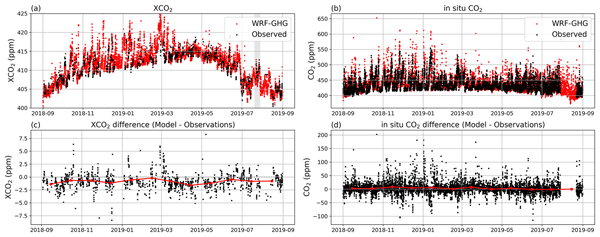
We investigated changes in carbon dioxide levels at a suburban site in China using ground-based measurements, remote sensing, and an atmospheric model. The model matched many observed patterns but showed nighttime and background errors. We identified the main human and natural sources and sinks, offering insights to improve future greenhouse gas monitoring and climate modelling.
Yun Chen, Dazhi Yang, Chunlin Huang, Hongrong Shi, Adam R. Jensen, Xiang'ao Xia, Yves-Marie Saint-Drenan, Christian A. Gueymard, Martin János Mayer, and Yanbo Shen
Atmos. Meas. Tech., 18, 7315–7336, https://doi.org/10.5194/amt-18-7315-2025, https://doi.org/10.5194/amt-18-7315-2025, 2025
Short summary
Short summary
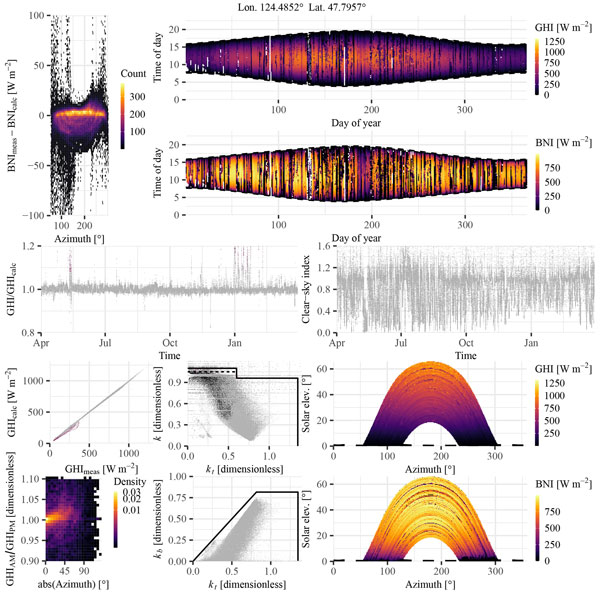
We tested two satellite-based irradiance datasets against both high- and low-accuracy ground-based measurements. The dataset is unique: it includes irradiance measurements from a new research-grade monitoring station in a rare climate, along with new satellite data from China's Fengyun-4B geostationary satellite. Findings suggest that using low-accuracy measurements as a reference for validation can be risky.
Danyang Wang, Wenying He, Yongheng Bi, Xiangao Xia, and Hongbin Chen
EGUsphere, https://doi.org/10.5194/egusphere-2025-4233, https://doi.org/10.5194/egusphere-2025-4233, 2025
Preprint archived
Short summary
Short summary
Snow forms in two ways: by droplets freezing onto snowflakes (riming) or by snowflakes sticking together (aggregation). These processes often overlap and are hard to tell apart with standard radar. We developed a new radar method using three wavelengths to track how signals change with height, allowing us to distinguish riming and aggregation. It captures subtle changes that older methods miss, providing a clearer picture of how snow forms and leading to more accurate snowfall forecasts.
Sieglinde Callewaert, Minqiang Zhou, Bavo Langerock, Pucai Wang, Ting Wang, Emmanuel Mahieu, and Martine De Mazière
Atmos. Chem. Phys., 25, 9519–9544, https://doi.org/10.5194/acp-25-9519-2025, https://doi.org/10.5194/acp-25-9519-2025, 2025
Short summary
Short summary
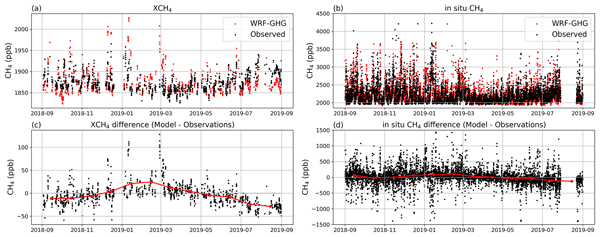
We used an atmospheric transport model and satellite data to study CH4 observations in Xianghe, China. Our study shows the key source sectors that influence the concentrations and their respective importance. Furthermore, meteorological factors such as wind direction are discussed. This research highlights the challenges in accurately simulating these kinds of measurements and helps us to better understand CH4 variability in the region.
Pengfei Han, Ning Zeng, Bo Yao, Wen Zhang, Weijun Quan, Pucai Wang, Ting Wang, Minqiang Zhou, Qixiang Cai, Yuzhong Zhang, Ruosi Liang, Wanqi Sun, and Shengxiang Liu
Atmos. Chem. Phys., 25, 4965–4988, https://doi.org/10.5194/acp-25-4965-2025, https://doi.org/10.5194/acp-25-4965-2025, 2025
Short summary
Short summary
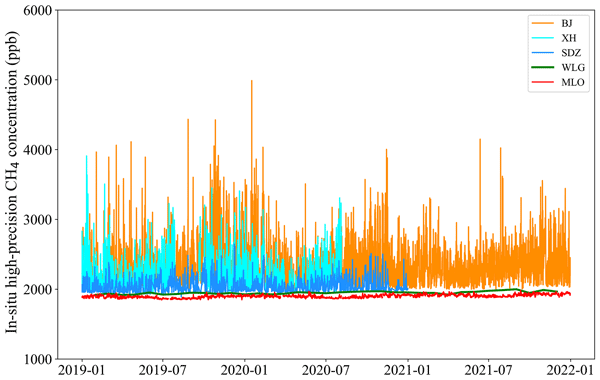
Methane (CH4) is a potent greenhouse gas. Northern China contributes a large proportion of CH4 emissions, yet large observation gaps exist. Here we compiled a comprehensive dataset, which is publicly available, that includes ground-based, satellite-based, inventory, and modeling results to show the CH4 concentrations, enhancements, and spatial–temporal variations. The data can benefit the research community and policy-makers for future observations, atmospheric inversions, and policy-making.
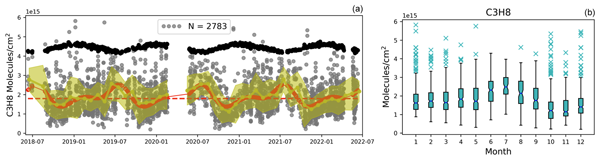
Minqiang Zhou, Pucai Wang, Bart Dils, Bavo Langerock, Geoff Toon, Christian Hermans, Weidong Nan, Qun Cheng, and Martine De Mazière
Atmos. Meas. Tech., 17, 6385–6396, https://doi.org/10.5194/amt-17-6385-2024, https://doi.org/10.5194/amt-17-6385-2024, 2024
Short summary
Short summary
Solar absorption spectra near 2967 cm−1 recorded by a ground-based FTIR with a high spectral resolution of 0.0035 cm-1 are applied to retrieve C3H8 columns for the first time in Xianghe, China, within the NDACC-IRWG. The mean and standard deviation of the C3H8 columns are 1.80 ± 0.81 (1σ) × 1015 molec. cm-2. Good correlations are found between C3H8 and other non-methane hydrocarbons, such as C2H6 (R = 0.84) and C2H2 (R = 0.79), as well as between C3H8 and CO (R = 0.72).
Xinran Xia, Rubin Jiang, Min Min, Shengli Wu, Peng Zhang, and Xiangao Xia
Earth Syst. Sci. Data Discuss., https://doi.org/10.5194/essd-2024-395, https://doi.org/10.5194/essd-2024-395, 2024
Revised manuscript not accepted
Short summary
Short summary
Based on the MicroWave Radiation Imager aboard FY-3 series satellites, we developed a global terrestrial precipitable water vapor dataset from 2012 to 2020. This dataset overcomes the limitations of infrared observations and provides accurate, all-weather PWV data ,spanning all types of land surface. Researchers are expected to leverage it to explore the role of water vapor in weather patterns, refine precipitation forecasting, and validate climate simulations.
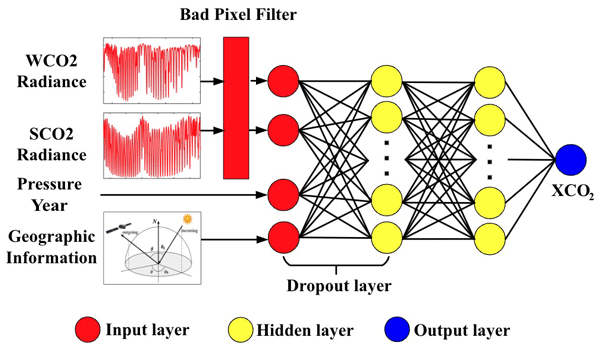
Fengxin Xie, Tao Ren, Changying Zhao, Yuan Wen, Yilei Gu, Minqiang Zhou, Pucai Wang, Kei Shiomi, and Isamu Morino
Atmos. Meas. Tech., 17, 3949–3967, https://doi.org/10.5194/amt-17-3949-2024, https://doi.org/10.5194/amt-17-3949-2024, 2024
Short summary
Short summary
This study demonstrates a new machine learning approach to efficiently and accurately estimate atmospheric carbon dioxide levels from satellite data. Rather than using traditional complex physics-based retrieval methods, neural network models are trained on simulated data to rapidly predict CO2 concentrations directly from satellite spectral measurements.
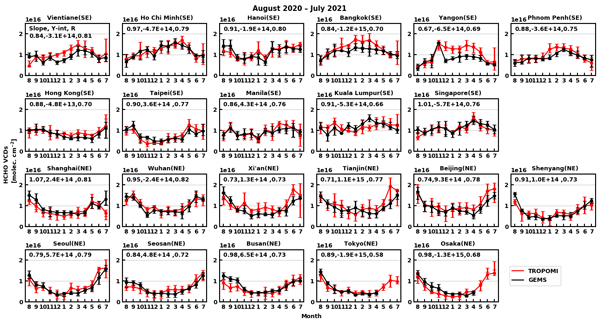
Gitaek T. Lee, Rokjin J. Park, Hyeong-Ahn Kwon, Eunjo S. Ha, Sieun D. Lee, Seunga Shin, Myoung-Hwan Ahn, Mina Kang, Yong-Sang Choi, Gyuyeon Kim, Dong-Won Lee, Deok-Rae Kim, Hyunkee Hong, Bavo Langerock, Corinne Vigouroux, Christophe Lerot, Francois Hendrick, Gaia Pinardi, Isabelle De Smedt, Michel Van Roozendael, Pucai Wang, Heesung Chong, Yeseul Cho, and Jhoon Kim
Atmos. Chem. Phys., 24, 4733–4749, https://doi.org/10.5194/acp-24-4733-2024, https://doi.org/10.5194/acp-24-4733-2024, 2024
Short summary
Short summary
This study evaluates the Geostationary Environment Monitoring Spectrometer (GEMS) HCHO product by comparing its vertical column densities (VCDs) with those of TROPOMI and ground-based observations. Based on some sensitivity tests, obtaining radiance references under clear-sky conditions significantly improves HCHO retrieval quality. GEMS HCHO VCDs captured seasonal and diurnal variations well during the first year of observation, showing consistency with TROPOMI and ground-based observations.
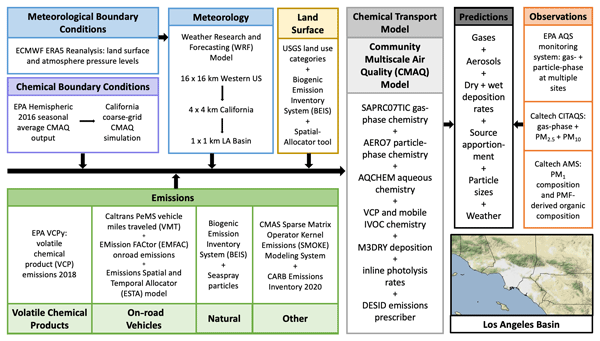
Elyse A. Pennington, Yuan Wang, Benjamin C. Schulze, Karl M. Seltzer, Jiani Yang, Bin Zhao, Zhe Jiang, Hongru Shi, Melissa Venecek, Daniel Chau, Benjamin N. Murphy, Christopher M. Kenseth, Ryan X. Ward, Havala O. T. Pye, and John H. Seinfeld
Atmos. Chem. Phys., 24, 2345–2363, https://doi.org/10.5194/acp-24-2345-2024, https://doi.org/10.5194/acp-24-2345-2024, 2024
Short summary
Short summary
To assess the air quality in Los Angeles (LA), we improved the CMAQ model by using dynamic traffic emissions and new secondary organic aerosol schemes to represent volatile chemical products. Source apportionment demonstrates that the urban areas of the LA Basin and vicinity are NOx-saturated, with the largest sensitivity of O3 to changes in volatile organic compounds in the urban core. The improvement and remaining issues shed light on the future direction of the model development.
Wenying He, Hongbin Chen, Hongyong Yu, Jun Li, Jidong Pan, Shuqing Ma, Xuefen Zhang, Rang Guo, Bingke Zhao, Xi Chen, Xiangao Xia, and Kaicun Wang
Atmos. Meas. Tech., 17, 135–144, https://doi.org/10.5194/amt-17-135-2024, https://doi.org/10.5194/amt-17-135-2024, 2024
Short summary
Short summary
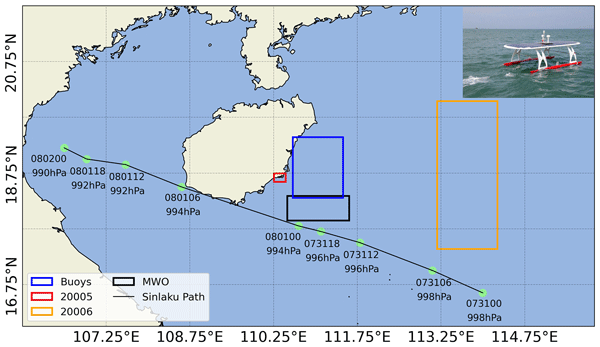
The Marine Weather Observer (MWO) system completed a long-term observation, actively approaching the center of Typhoon Sinlaku on 24 July–2 August 2020, over the South China Sea. The in situ observations were evaluated through comparison with buoy observations during the evolution of Typhoon Sinlaku. As a mobile observation station, MWO has shown its unique advantages over traditional observation methods, and the results preliminarily demonstrate the reliable observation capability of MWO.
Sieglinde Callewaert, Minqiang Zhou, Bavo Langerock, Pucai Wang, Ting Wang, Emmanuel Mahieu, and Martine De Mazière
EGUsphere, https://doi.org/10.5194/egusphere-2023-2103, https://doi.org/10.5194/egusphere-2023-2103, 2023
Preprint archived
Short summary
Short summary
We used an atmospheric transport model and satellite data to study greenhouse gas observations at Xianghe, China. Our study shows the key source sectors that influence the concentrations and their respective importance. Furthermore, meteorological factors such as wind direction are discussed. This research highlights the challenges in accurately simulating these kind of measurements and helps us to better understand greenhouse gas variability in the region.
Yuhang Zhang, Jintai Lin, Jhoon Kim, Hanlim Lee, Junsung Park, Hyunkee Hong, Michel Van Roozendael, Francois Hendrick, Ting Wang, Pucai Wang, Qin He, Kai Qin, Yongjoo Choi, Yugo Kanaya, Jin Xu, Pinhua Xie, Xin Tian, Sanbao Zhang, Shanshan Wang, Siyang Cheng, Xinghong Cheng, Jianzhong Ma, Thomas Wagner, Robert Spurr, Lulu Chen, Hao Kong, and Mengyao Liu
Atmos. Meas. Tech., 16, 4643–4665, https://doi.org/10.5194/amt-16-4643-2023, https://doi.org/10.5194/amt-16-4643-2023, 2023
Short summary
Short summary
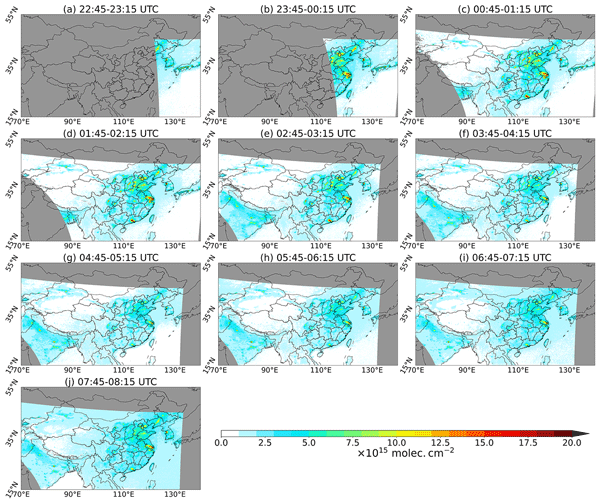
Our tropospheric NO2 vertical column density product with high spatiotemporal resolution is based on the Geostationary Environment Monitoring Spectrometer (GEMS) and named POMINO–GEMS. Strong hotspot signals and NO2 diurnal variations are clearly seen. Validations with multiple satellite products and ground-based, mobile car and surface measurements exhibit the overall great performance of the POMINO–GEMS product, indicating its capability for application in environmental studies.
Ruosi Liang, Yuzhong Zhang, Wei Chen, Peixuan Zhang, Jingran Liu, Cuihong Chen, Huiqin Mao, Guofeng Shen, Zhen Qu, Zichong Chen, Minqiang Zhou, Pucai Wang, Robert J. Parker, Hartmut Boesch, Alba Lorente, Joannes D. Maasakkers, and Ilse Aben
Atmos. Chem. Phys., 23, 8039–8057, https://doi.org/10.5194/acp-23-8039-2023, https://doi.org/10.5194/acp-23-8039-2023, 2023
Short summary
Short summary
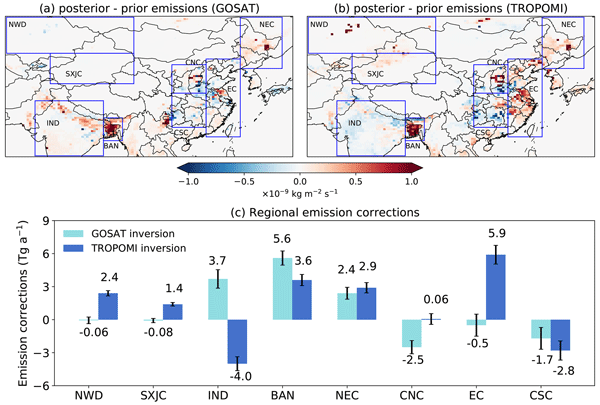
We compare and evaluate East Asian methane emissions inferred from different satellite observations (GOSAT and TROPOMI). The results show discrepancies over northern India and eastern China. Independent ground-based observations are more consistent with TROPOMI-derived emissions in northern India and GOSAT-derived emissions in eastern China.
Minqiang Zhou, Bavo Langerock, Pucai Wang, Corinne Vigouroux, Qichen Ni, Christian Hermans, Bart Dils, Nicolas Kumps, Weidong Nan, and Martine De Mazière
Atmos. Meas. Tech., 16, 273–293, https://doi.org/10.5194/amt-16-273-2023, https://doi.org/10.5194/amt-16-273-2023, 2023
Short summary
Short summary
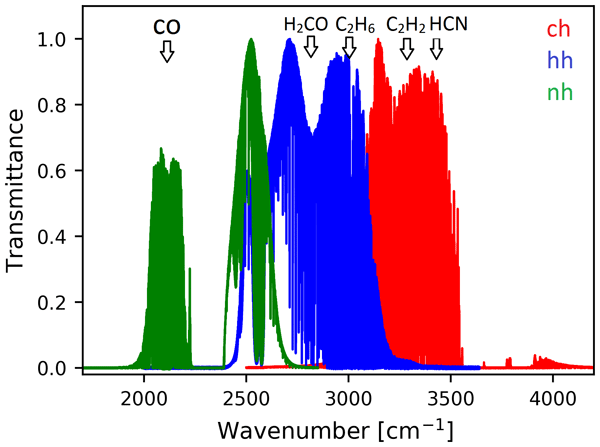
The ground-based FTIR measurements at Xianghe provide carbon monoxide (CO), acetylene (C2H2), ethane (C2H6), formaldehyde (H2CO), and hydrogen cyanide (HCN) total columns between June 2018 and November 2021. The retrieval strategies, information, and uncertainties of these five important trace gases are presented and discussed. This study provides insight into the time series, variations, and correlations of these five species in northern China.
Minqiang Zhou, Bavo Langerock, Pucai Wang, Corinne Vigouroux, Qichen Ni, Christian Hermans, Bart Dils, Nicolas Kumps, Weidong Nan, and Martine De Mazière
Atmos. Chem. Phys. Discuss., https://doi.org/10.5194/acp-2022-354, https://doi.org/10.5194/acp-2022-354, 2022
Revised manuscript not accepted
Short summary
Short summary
The ground-based FTIR measurements at Xianghe provide carbon monoxide (CO), acetylene (C2H2), ethane (C2H6), formaldehyde (H2CO), and hydrogen cyanide (HCN) total columns between June 2018 and November 2021. The retrieval strategies, retrieval information, and uncertainties of these five important trace gases are presented and discussed. This study provides an insight into the time series, variations, and correlations of these five species in North China.
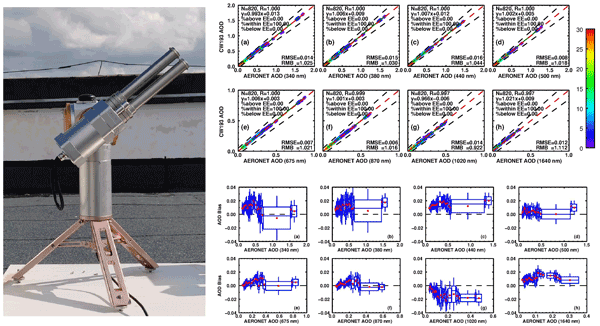
Yu Zheng, Huizheng Che, Yupeng Wang, Xiangao Xia, Xiuqing Hu, Xiaochun Zhang, Jun Zhu, Jibiao Zhu, Hujia Zhao, Lei Li, Ke Gui, and Xiaoye Zhang
Atmos. Meas. Tech., 15, 2139–2158, https://doi.org/10.5194/amt-15-2139-2022, https://doi.org/10.5194/amt-15-2139-2022, 2022
Short summary
Short summary
Ground-based observations of aerosols and aerosol data verification is important for satellite and climate model modification. Here we present an evaluation of aerosol microphysical, optical and radiative properties measured using a multiwavelength photometer with a highly integrated design and smart control performance. The validation of this product is discussed in detail using AERONET as a reference. This work contributes to reducing AOD uncertainties in China and combating climate change.
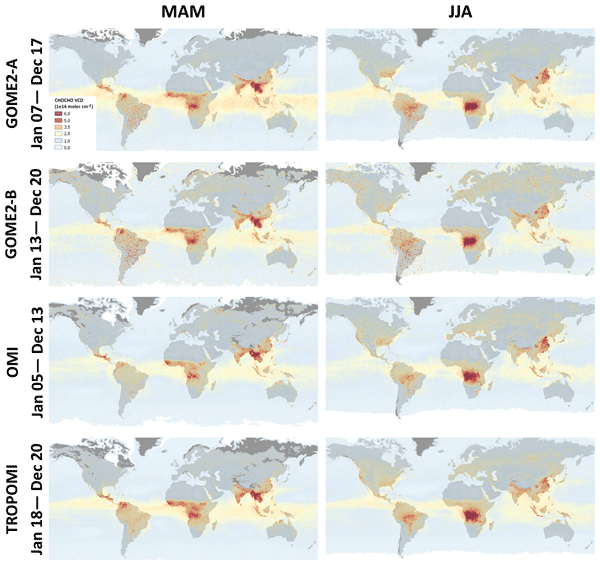
Christophe Lerot, François Hendrick, Michel Van Roozendael, Leonardo M. A. Alvarado, Andreas Richter, Isabelle De Smedt, Nicolas Theys, Jonas Vlietinck, Huan Yu, Jeroen Van Gent, Trissevgeni Stavrakou, Jean-François Müller, Pieter Valks, Diego Loyola, Hitoshi Irie, Vinod Kumar, Thomas Wagner, Stefan F. Schreier, Vinayak Sinha, Ting Wang, Pucai Wang, and Christian Retscher
Atmos. Meas. Tech., 14, 7775–7807, https://doi.org/10.5194/amt-14-7775-2021, https://doi.org/10.5194/amt-14-7775-2021, 2021
Short summary
Short summary
Global measurements of glyoxal tropospheric columns from the satellite instrument TROPOMI are presented. Such measurements can contribute to the estimation of atmospheric emissions of volatile organic compounds. This new glyoxal product has been fully characterized with a comprehensive error budget, with comparison with other satellite data sets as well as with validation based on independent ground-based remote sensing glyoxal observations.
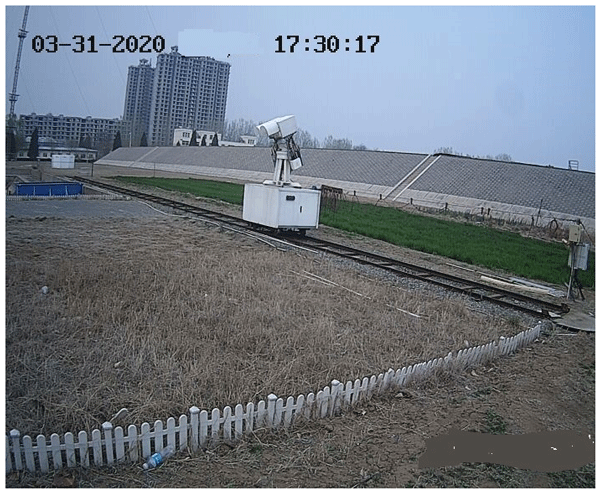
Wenying He, Hongbin Chen, Yuejian Xuan, Jun Li, Minzheng Duan, and Weidong Nan
Atmos. Meas. Tech., 14, 7069–7078, https://doi.org/10.5194/amt-14-7069-2021, https://doi.org/10.5194/amt-14-7069-2021, 2021
Short summary
Short summary
Large microwave surface emissivities (ε) cause difficulties in widely using satellite microwave data over land. Usually, ground-based radiometers are fixed to a scan field to obtain the temporal evolution of ε over a single land-cover area. To obtain the long-term temporal evolution of ε over different land-cover surfaces simultaneously, we developed a ground mobile observation system to enhance in situ ε observations and presented some preliminary results.
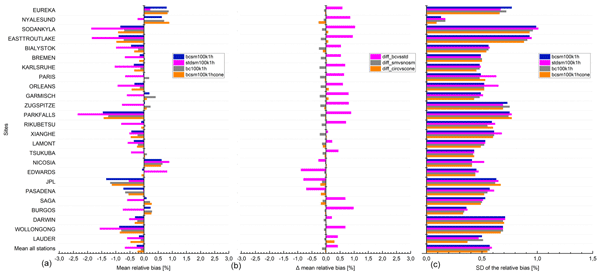
Mahesh Kumar Sha, Bavo Langerock, Jean-François L. Blavier, Thomas Blumenstock, Tobias Borsdorff, Matthias Buschmann, Angelika Dehn, Martine De Mazière, Nicholas M. Deutscher, Dietrich G. Feist, Omaira E. García, David W. T. Griffith, Michel Grutter, James W. Hannigan, Frank Hase, Pauli Heikkinen, Christian Hermans, Laura T. Iraci, Pascal Jeseck, Nicholas Jones, Rigel Kivi, Nicolas Kumps, Jochen Landgraf, Alba Lorente, Emmanuel Mahieu, Maria V. Makarova, Johan Mellqvist, Jean-Marc Metzger, Isamu Morino, Tomoo Nagahama, Justus Notholt, Hirofumi Ohyama, Ivan Ortega, Mathias Palm, Christof Petri, David F. Pollard, Markus Rettinger, John Robinson, Sébastien Roche, Coleen M. Roehl, Amelie N. Röhling, Constantina Rousogenous, Matthias Schneider, Kei Shiomi, Dan Smale, Wolfgang Stremme, Kimberly Strong, Ralf Sussmann, Yao Té, Osamu Uchino, Voltaire A. Velazco, Corinne Vigouroux, Mihalis Vrekoussis, Pucai Wang, Thorsten Warneke, Tyler Wizenberg, Debra Wunch, Shoma Yamanouchi, Yang Yang, and Minqiang Zhou
Atmos. Meas. Tech., 14, 6249–6304, https://doi.org/10.5194/amt-14-6249-2021, https://doi.org/10.5194/amt-14-6249-2021, 2021
Short summary
Short summary
This paper presents, for the first time, Sentinel-5 Precursor methane and carbon monoxide validation results covering a period from November 2017 to September 2020. For this study, we used global TCCON and NDACC-IRWG network data covering a wide range of atmospheric and surface conditions across different terrains. We also show the influence of a priori alignment, smoothing uncertainties and the sensitivity of the validation results towards the application of advanced co-location criteria.
Minqiang Zhou, Bavo Langerock, Corinne Vigouroux, Bart Dils, Christian Hermans, Nicolas Kumps, Weidong Nan, Jean-Marc Metzger, Emmanuel Mahieu, Ting Wang, Pucai Wang, and Martine De Mazière
Atmos. Meas. Tech., 14, 6233–6247, https://doi.org/10.5194/amt-14-6233-2021, https://doi.org/10.5194/amt-14-6233-2021, 2021
Short summary
Short summary
NO is a key active trace gas in the atmosphere, which affects the atmospheric environment and human health. In this study, we show that the tropospheric and stratospheric NO partial columns can be observed from the ground-based FTIR measurements at a polluted site (Xianghe, China), but only stratospheric NO partial columns can be observed at a background site (Maïdo, Reunion Island). The variations in the NO observed by the FTIR measurements at the two sites are analyzed and discussed.
Cited articles
Bedoya-Velásquez, A. E., Navas-Guzmán, F., De Arruda Moreira, G., Román, R., Cazorla, A., Ortiz-Amezcua, P., Benavent-Oltra, J. A., Alados-Arboledas, L., Olmo-Reyes, F. J., Foyo-Moreno, I., Montilla-Rosero, E., Hoyos, C. D., and Guerrero-Rascado, J. L.: Seasonal analysis of the atmosphere during five years by using microwave radiometry over a mid-latitude site, Atmos. Res., 218, 78–89, https://doi.org/10.1016/j.atmosres.2018.11.014, 2019.
Cimini, D., Nelson, M., Güldner, J., and Ware, R.: Forecast indices from a ground-based microwave radiometer for operational meteorology, Atmos. Meas. Tech., 8, 315–333, https://doi.org/10.5194/amt-8-315-2015, 2015.
Cimini, D., Haeffelin, M., Kotthaus, S., Löhnert, U., Martinet, P., O'Connor, E., Walden, C., Coen, M. C., and Preissler, J.: Towards the profiling of the atmospheric boundary layer at European scale – introducing the COST Action PROBE, Bull. Atmos. Sci. Technol., 1, 23–42, https://doi.org/10.1007/s42865-020-00003-8, 2020.
De Angelis, F., Cimini, D., Löhnert, U., Caumont, O., Haefele, A., Pospichal, B., Martinet, P., Navas-Guzmán, F., Klein-Baltink, H., Dupont, J.-C., and Hocking, J.: Long-term observations minus background monitoring of ground-based brightness temperatures from a microwave radiometer network, Atmos. Meas. Tech., 10, 3947–3961, https://doi.org/10.5194/amt-10-3947-2017, 2017.
Fu, D., Zhu, J., Xia, X., Xia, Y., Shi, H., Fan, X., Li, L., Xiao, X., and Han, X.: Enhanced boundary layer thermodynamics profiles retrieval from ground-based microwave radiometers with surface and pseudo-tower constraints, IEEE T. Geosci. Remote Sens., 64, 1–11, https://doi.org/10.1109/TGRS.2025.3647672, 2026.
Fu, X. and Tan, J.: Quality control of temperature and humidity profile retrievals from ground-based microwave radiometer, J. Appl. Meteor. Sci., 28, 209–217, https://doi.org/10.11898/1001-7313.20170208, 2017.
Gong, Y., He, W., Fu, D., Xia, X., Shi, H., Nan, W., Wang, P., and Chen, H.: The first decadal-scale ground-based microwave radiometer dataset in China: Brightness temperature and thermodynamic profiles from Xianghe (2013–2022), Zenodo [data set], https://doi.org/10.5281/zenodo.20178914, 2025.
Guo, J., Chen, X., Su, T., Liu, L., Zheng, Y., Chen, D., Li, J., Xu, H., Lv, Y., He, B., Li, Y., Hu, X.-M., Ding, A., and Zhai, P.: The climatology of lower tropospheric temperature inversions in China from radiosonde measurements: roles of black carbon, local meteorology, and large-scale subsidence, J. Climate, 33, 9327–9350, https://doi.org/10.1175/JCLI-D-19-0278.1, 2020.
Guo, Y., Du, L., and Lyu, G.: SAR target detection based on domain adaptive faster R-CNN with small training data size, Remote Sens., 13, 4202, https://doi.org/10.3390/rs13214202, 2021.
He, M., Wang, D., Ding, W., Wan, Y., Chen, Y., and Zhang, Y.: A validation of Fengyun4A temperature and humidity profile products by radiosonde observations, Remote Sens., 11, 2039, https://doi.org/10.3390/rs11172039, 2019.
He, W., Cheng, Y., Zou, R., Wang, P., Chen, H., Li, J., and Xia, X.: Radiative transfer model simulations for ground-based microwave radiometers in north China, Remote Sens., 13, 5161, https://doi.org/10.3390/rs13245161, 2021.
Hersbach, H., Bell, B., Berrisford, P., Hirahara, S., Horányi, A., Muñoz-Sabater, J., Nicolas, J., Peubey, C., Radu, R., Schepers, D., Simmons, A., Soci, C., Abdalla, S., Abellan, X., Balsamo, G., Bechtold, P., Biavati, G., Bidlot, J., Bonavita, M., De Chiara, G., Dahlgren, P., Dee, D., Diamantakis, M., Dragani, R., Flemming, J., Forbes, R., Fuentes, M., Geer, A., Haimberger, L., Healy, S., Hogan, R. J., Hólm, E., Janisková, M., Keeley, S., Laloyaux, P., Lopez, P., Lupu, C., Radnoti, G., De Rosnay, P., Rozum, I., Vamborg, F., Villaume, S., and Thépaut, J.: The ERA5 global reanalysis, Q. J. Roy. Meteor. Soc., 146, 1999–2049, https://doi.org/10.1002/qj.3803, 2020.
Hewison, T. J.: 1D-VAR retrieval of temperature and humidity profiles from a ground-based microwave radiometer, IEEE T. Geosci. Remote Sens., 45, 2163–2168, https://doi.org/10.1109/tgrs.2007.898091, 2007.
Hou, X., Han, Y., Hu, X., and Weng, F.: Verification of Fengyun-3D MWTS and MWHS Calibration Accuracy Using GPS Radio Occultation Data, J. Meteorol. Res., 33, 695–704, https://doi.org/10.1007/s13351-019-8208-9, 2019.
Huang, Z., Xu, G., Wang, X., and Tang, Y.: Applications of Ground-based Microwave Radiation Data to Short-term Rainstorm and Potential Forecast, J. Appl. Meteor. Sci., 24, 576–584, 2013.
Lai, Y., Li, L., Wang, H., Zhang, H., Xia, Y., Wei, T., and Meng, L.: Variation Characteristics and Influencing Factors of Atmospheric Convective Boundary Layer Height over Beijing Region in the Past 30 Years, Meteorological Monthly, 50, 1417–1428, https://doi.org/10.7519/j.issn.1000-0526.2024.080101, 2024.
Li, J., Chen, H., Li, Z., Wang, P., Fan, X., He, W., and Zhang, J.: Analysis of low-level temperature inversions and their effects on aerosols in the lower atmosphere, Adv. Atmos. Sci., 36, 1235–1250, https://doi.org/10.1007/s00376-019-9018-9, 2019.
Liljegren, J. C., Boukabara, S.-A., Cady-Pereira, K., and Clough, S. A.: The effect of the half-width of the 22-GHz water vapor line on retrievals of temperature and water vapor profiles with a 12-channel microwave radiometer, IEEE T. Geosci. Remote Sens., 43, 1102–1108, https://doi.org/10.1109/TGRS.2004.839593, 2005.
Liu, G.: A fast and accurate model for microwave radiance calculations, J. Meteorol. Soc. Jpn. II, 76, 335–343, https://doi.org/10.2151/jmsj1965.76.2_335, 1998.
Liu, Y., Chen, X., Ma, Y., Cao, D., Sun, F., Xu, X., and Zhang, Q.: Application of ground-based microwave radiometers to optimize the estimation method of cloud liquid water on the Tibetan Plateau, Adv. Atmos. Sci., https://doi.org/10.1007/s00376-025-4416-7, 2025.
Löhnert, U. and Crewell, S.: Accuracy of cloud liquid water path from ground-based microwave radiometry 1. Dependency on cloud model statistics, Radio Sci., 38, 2002RS002654, https://doi.org/10.1029/2002RS002654, 2003.
Löhnert, U. and Maier, O.: Operational profiling of temperature using ground-based microwave radiometry at Payerne: prospects and challenges, Atmos. Meas. Tech., 5, 1121–1134, https://doi.org/10.5194/amt-5-1121-2012, 2012.
Maahn, M., Turner, D. D., Löhnert, U., Posselt, D. J., Ebell, K., Mace, G. G., and Comstock, J. M.: Optimal estimation retrievals and their uncertainties, B. Am. Meteorol. Soc., 101, E1512–E1523, https://doi.org/10.1175/BAMS-D-19-0027.1, 2020.
Madhulatha, A., Rajeevan, M., Venkat Ratnam, M., Bhate, J., and Naidu, C. V.: Nowcasting severe convective activity over southeast India using ground-based microwave radiometer observations, J. Geophys. Res.-Atmos., 118, 1–13, https://doi.org/10.1029/2012JD018174, 2013.
Malmgren-Hansen, D., Laparra, V., Aasbjerg Nielsen, A., and Camps-Valls, G.: Statistical retrieval of atmospheric profiles with deep convolutional neural networks, ISPRS J. Photogramm. Remote Sens., 158, 231–240, https://doi.org/10.1016/j.isprsjprs.2019.10.002, 2019.
Martinet, P., Dabas, A., Donier, J.-M., Douffet, T., Garrouste, O., and Guillot, R.: 1D-Var temperature retrievals from microwave radiometer and convective scale model, Tellus A, 67, 27925, https://doi.org/10.3402/tellusa.v67.27925, 2015.
Navas-Guzmán, F., Kämpfer, N., and Haefele, A.: Validation of brightness and physical temperature from two scanning microwave radiometers in the 60 GHz O2 band using radiosonde measurements, Atmos. Meas. Tech., 9, 4587–4600, https://doi.org/10.5194/amt-9-4587-2016, 2016.
Rodgers, C. D.: Inverse methods for atmospheric sounding: theory and practice, World Scientific, Singapore, [River Edge, N.J.], 240 pp., ISBN: 978-981-02-2740-1, 2000.
Rose, T., Crewell, S., Löhnert, U., and Simmer, C.: A network suitable microwave radiometer for operational monitoring of the cloudy atmosphere, Atmos. Res., 75, 183–200, https://doi.org/10.1016/j.atmosres.2004.12.005, 2005.
Rosenkranz, P. W.: Water vapor microwave continuum absorption: a comparison of measurements and models, Radio Sci., 33, 919–928, https://doi.org/10.1029/98RS01182, 1998.
Rüfenacht, R., Haefele, A., Pospichal, B., Cimini, D., Bircher-Adrot, S., Turp, M., and Sugier, J.: EUMETNET opens to microwave radiometers for operational thermodynamical profiling in Europe, Bull. Atmos. Sci. Technol., 2, s42865-021-00033-w, https://doi.org/10.1007/s42865-021-00033-w, 2021.
Temimi, M., Fonseca, R. M., Nelli, N. R., Valappil, V. K., Weston, M. J., Thota, M. S., Wehbe, Y., and Yousef, L.: On the analysis of ground-based microwave radiometer data during fog conditions, Atmos. Res., 231, 104652, https://doi.org/10.1016/j.atmosres.2019.104652, 2020.
Thomas, G., Martinet, P., Brousseau, P., Chambon, P., Georgis, J.-F., Hervo, M., Huet, T., Löhnert, U., Orlandi, E., and Unger, V.: Assimilation of ground-based microwave radiometer temperature observations into a convective-scale NWP model for fog forecast improvement, Q. J. Roy. Meteor. Soc., 151, e4893, https://doi.org/10.1002/qj.4893, 2025.
Trent, T., Siddans, R., Kerridge, B., Schröder, M., Scott, N. A., and Remedios, J.: Evaluation of tropospheric water vapour and temperature profiles retrieved from MetOp-A by the Infrared and Microwave Sounding scheme, Atmos. Meas. Tech., 16, 1503–1526, https://doi.org/10.5194/amt-16-1503-2023, 2023.
Turner, D. D., Clough, S. A., Liljegren, J. C., Clothiaux, E. E., Cady-Pereira, K. E., and Gaustad, K. L.: Retrieving Liquid Water Path and Precipitable Water Vapor From the Atmospheric Radiation Measurement (ARM) Microwave Radiometers, IEEE T. Geosci. Remote Sens., 45, 3680–3690, https://doi.org/10.1109/TGRS.2007.903703, 2007.
Turner, D. D., Cadeddu, M. P., Lohnert, U., Crewell, S., and Vogelmann, A. M.: Modifications to the water vapor continuum in the microwave suggested by ground-based 150-GHz observations, IEEE T. Geosci. Remote Sens., 47, 3326–3337, https://doi.org/10.1109/TGRS.2009.2022262, 2009.
Wei, J., Shi, Y., Ren, Y., Li, Q., Qiao, Z., Cao, J., Ayantobo, O. O., Yin, J., and Wang, G.: Application of Ground-Based Microwave Radiometer in Retrieving Meteorological Characteristics of Tibet Plateau, Remote Sens., 13, 2527, https://doi.org/10.3390/rs13132527, 2021.
Xin, J., Wang, Y., Pan, Y., Ji, D., Liu, Z., Wen, T., Wang, Y., Li, X., Sun, Y., Sun, J., Wang, P., Wang, G., Wang, X., Cong, Z., Song, T., Hu, B., Wang, L., Tang, G., Gao, W., Guo, Y., Miao, H., Tian, S., and Wang, L.: The Campaign on Atmospheric Aerosol Research Network of China: CARE-China, B. Am. Meteorol. Soc., 96, 1137–1155, https://doi.org/10.1175/BAMS-D-14-00039.1, 2015.
Xu, G.: A Review of Remote Sensing of Atmospheric Profiles and Cloud Properties by Ground-Based Microwave Radiometers in Central China, Remote Sens., 16, 966, https://doi.org/10.3390/rs16060966, 2024.
Zhang, C., Zhao, D., Gao, Y., Song, Z., Zhao, B., and Wang, G.: Increasing summertime low-level cloud cover associated with increasing vegetation in China from 2003 to 2022, Environ. Res. Lett., 19, 124061, https://doi.org/10.1088/1748-9326/ad8cee, 2024a.
Zhang, L., Liu, M., He, W., Xia, X., Yu, H., Li, S., and Li, J.: Ground passive microwave remote sensing of atmospheric profiles using WRF simulations and machine learning techniques, J. Meteorol. Res., 38, 680–692, https://doi.org/10.1007/s13351-024-4004-2, 2024b.
Zhang, X., Wang, Z., Mao, J., Wang, Z., Zhang, D., and Tao, F.: Experiments on improving temperature and humidity profile retrieval for ground-based microwave radiometer, J. Appl. Meteor. Sci., 31, 385–396, https://doi.org/10.11898/1001-7313.20200401, 2020.
Zhao, Y., Zhou, D., and Yan, H.: An improved retrieval method of atmospheric parameter profiles based on the BP neural network, Atmos. Res., 213, 389–397, https://doi.org/10.1016/j.atmosres.2018.06.025, 2018.
Zhou, X., Zhang, C., Li, Y., Sun, J., Chen, Z., and Li, L.: Concurrence of Temperature and Humidity Inversions in Winter in Qingdao, China, Geophys. Res. Lett., 51, e2024GL108350, https://doi.org/10.1029/2024GL108350, 2024.
Zhu, L., Bao, Y., Lu, Q., Fan, S., Petropoulos, G. P., Mao, J., Li, Y., and Li, X.: A Method for Retrieving Thermodynamic Atmospheric Profiles Using Microwave Radiometers of Meteorological Observation Networks, IEEE T. Geosci. Remote Sens., 60, 1–11, https://doi.org/10.1109/TGRS.2022.3208939, 2022.
Zou, R., He, W., Wang, P., Mao, J., Chen, H., Li, J., Nan, W., and Chang, Y.: Assessment of Radiative Transfer Models Based on Observed Brightness Temperature from Ground-Based Microwave Radiometer, Chinese J. Atmos. Sci., 45, 605–616, https://doi.org/10.3878/j.issn.1006-9895.2008.20134, 2021.
Short summary
We built China's first ten-year record from a ground-based microwave sensor that tracks temperature and humidity above Xianghe. After checking data quality and separating clear, cloudy, and rainy periods, we produced reliable one- to ten-minute data for 2013-2022. Improved methods reduced errors in temperature and humidity estimates. The record shows that winter cold air is often trapped near the ground, especially during heavy fine-particle pollution, supporting weather and air-quality studies.
We built China's first ten-year record from a ground-based microwave sensor that tracks...


Altmetrics
Final-revised paper
Preprint