Articles | Volume 18, issue 7
https://doi.org/10.5194/essd-18-4593-2026
© Author(s) 2026. This work is distributed under
the Creative Commons Attribution 4.0 License.
the Creative Commons Attribution 4.0 License.
https://doi.org/10.5194/essd-18-4593-2026
© Author(s) 2026. This work is distributed under
the Creative Commons Attribution 4.0 License.
the Creative Commons Attribution 4.0 License.
Data description article
| 
06 Jul 2026
Data description article |
| 06 Jul 2026
| 06 Jul 2026
A four-decade global Lagrangian air-parcel trajectory dataset for atmospheric moisture and heat analysis
Victoria M. H. Deman
CORRESPONDING AUTHOR

Hydro-Climate Extremes Lab (H-CEL), Ghent University, Ghent, Belgium
Damián Insua-Costa
Hydro-Climate Extremes Lab (H-CEL), Ghent University, Ghent, Belgium
Jessica Keune
European Centre for Medium-Range Weather Forecasts, Bonn, Germany
Akash Koppa
Department of Geography and Environmental Science, University of Reading, Reading, United Kingdom
Diego G. Miralles
Hydro-Climate Extremes Lab (H-CEL), Ghent University, Ghent, Belgium
Related authors
Damián Insua-Costa, Marc Lemus-Cánovas, Martín Senande-Rivera, Victoria M. H. Deman, João L. Geirinhas, and Diego G. Miralles
EGUsphere, https://doi.org/10.5194/egusphere-2026-3044, https://doi.org/10.5194/egusphere-2026-3044, 2026
Short summary
Short summary
Extreme event attribution (EEA) relies on climate models that approximate reality. These models capture global-mean warming well, but their skill degrades at the regional scales EEA depends on, where they can misrepresent its magnitude and structure. We show that this bias propagates into EEA: for the 2024 Valencia floods, the attributed rainfall triples when CMIP6-based warming is replaced by an observation-constrained estimate, highlighting the need for observationally grounded attribution.
Siwei Chen, Yue-Ping Xu, Yuxue Guo, Changmin Du, Xinting Yu, Haiting Gu, and Akash Koppa
EGUsphere, https://doi.org/10.5194/egusphere-2026-5551, https://doi.org/10.5194/egusphere-2026-5551, 2026
This preprint is open for discussion and under review for Hydrology and Earth System Sciences (HESS).
Short summary
Short summary
Plants trade water for carbon, but whether drought makes this trade more or less efficient has been disputed. Using global satellite and model data, we show that over half of vegetated land responds in two stages. Efficiency first rises as drought sets in, because water loss falls faster than carbon gain, then reverses once drought grows extreme. A rising efficiency is therefore temporary coping, not lasting resilience, and marks how close ecosystems are to losing carbon uptake.
Francesco Avanzi, Hans Lievens, Michael Matiu, Paolo Filippucci, Oscar M. Baez Villanueva, Simone Gabellani, Fabio Delogu, Lorenzo Alfieri, Andrea Libertino, Pere Quintana-Seguì, Diego G. Miralles, Luca Brocca, Christian Massari, and Gabriëlle J. M. De Lannoy
EGUsphere, https://doi.org/10.5194/egusphere-2026-2851, https://doi.org/10.5194/egusphere-2026-2851, 2026
Short summary
Short summary
We developed a new system to map and monitor snow and stored water across large mountain regions using satellite data and computer simulations. Tested in four major European river basins, the system reproduced snow conditions with high accuracy and realistically captured how snow changes with elevation. Because it does not rely on ground measurements, it can help provide consistent information on snow-water resources worldwide, supporting water management and climate adaptation.
Johanna Ruth Thomson, Yannis Markonis, Riya Dutta, Simone Fatichi, Martin Hanel, Akash Koppa, Petr Máca, Vishal Thakur, Mijael Rodrigo Vargas Godoy, and Athanasios Paschalis
Earth Syst. Sci. Data Discuss., https://doi.org/10.5194/essd-2026-334, https://doi.org/10.5194/essd-2026-334, 2026
Revised manuscript under review for ESSD
Short summary
Short summary
We compared 14 global datasets of evapotranspiration, the movement of water from land to the atmosphere, to examine how estimates of recent change differ across products. Most datasets suggest increasing evapotranspiration since 2000, but many disagree on where changes occur, how large they are, and even whether trends are positive or negative. We also introduce a framework that classifies the roles datasets play within ensembles, helping users better understand uncertainty and dataset behavior.
Damián Insua-Costa, Marc Lemus-Cánovas, Martín Senande-Rivera, Victoria M. H. Deman, João L. Geirinhas, and Diego G. Miralles
EGUsphere, https://doi.org/10.5194/egusphere-2026-3044, https://doi.org/10.5194/egusphere-2026-3044, 2026
Short summary
Short summary
Extreme event attribution (EEA) relies on climate models that approximate reality. These models capture global-mean warming well, but their skill degrades at the regional scales EEA depends on, where they can misrepresent its magnitude and structure. We show that this bias propagates into EEA: for the 2024 Valencia floods, the attributed rainfall triples when CMIP6-based warming is replaced by an observation-constrained estimate, highlighting the need for observationally grounded attribution.
Oscar M. Baez-Villanueva, Alfredo Crespo-Otero, Sara Modanesi, Pierre Laluet, Sergio Vicente-Serrano, Jaap Schellekens, Jacopo Dari, Hylke E. Beck, Wouter Dorigo, Christian Massari, Chiara Corbari, Joppe Massant, Kwint Delbare, Olivier Bonte, Aaron Boone, Diego Fernández-Prieto, and Diego G. Miralles
EGUsphere, https://doi.org/10.5194/egusphere-2026-1856, https://doi.org/10.5194/egusphere-2026-1856, 2026
Short summary
Short summary
We developed a new method to estimate daily land evaporation at high resolution across the Iberian Peninsula, explicitly accounting for irrigation. By combining satellite and meteorological data, we show that irrigation can strongly increase evaporation in agricultural areas. The results better match ground observations and improve understanding of water use. This approach can support farming decisions and water management at the regional scale, and will be extended to global applications.
Josephin Kroll, Ruth Stephan, Andrew F. Feldman, Diego G. Miralles, and Rene Orth
EGUsphere, https://doi.org/10.5194/egusphere-2025-4391, https://doi.org/10.5194/egusphere-2025-4391, 2025
Short summary
Short summary
In this study, we investigate contributors to and trends in the co-occurrence of heat and dryness. We find radiation, representing the atmospheric forcing, inducing high temperatures during dryness. For the persistence of heat, evaporation as the land contribution and the consequent effect on sensible heat flux becomes more important. While the co-occurrence of high temperatures and dryness shows a strong increase over 1980–2010, the atmospheric and land contributions show no clear trend.
Alfredo Crespo-Otero, Damián Insua-Costa, Emilio Hernández-García, Cristóbal López, and Gonzalo Míguez-Macho
Earth Syst. Dynam., 16, 1483–1501, https://doi.org/10.5194/esd-16-1483-2025, https://doi.org/10.5194/esd-16-1483-2025, 2025
Short summary
Short summary
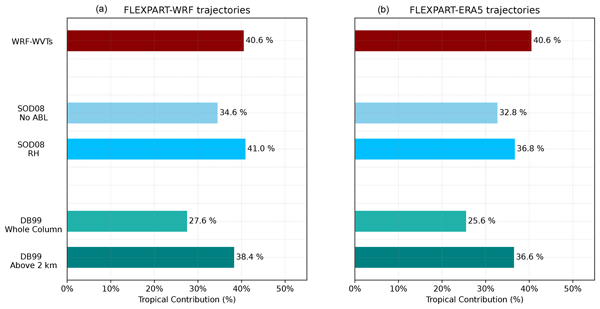
We evaluated two Lagrangian moisture tracking tools for computing moisture sources in precipitation events related to atmospheric rivers (ARs) and compared them against the Weather Research and Forecasting (WRF) model with water vapor tracers. Our results show that both tools (the Sodemann et al., 2008, and Dirmeyer and Brubaker, 1999, methodologies) present a systematic underestimation of remote sources. Implementing simple physics-based changes substantially improved both methods, narrowing the disparities among all approaches.
Marc Lemus-Canovas, Sergi Gonzalez-Herrero, Laura Trapero, Anna Albalat, Damian Insua-Costa, Martin Senande-Rivera, and Gonzalo Miguez-Macho
Nat. Hazards Earth Syst. Sci., 25, 2503–2518, https://doi.org/10.5194/nhess-25-2503-2025, https://doi.org/10.5194/nhess-25-2503-2025, 2025
Short summary
Short summary
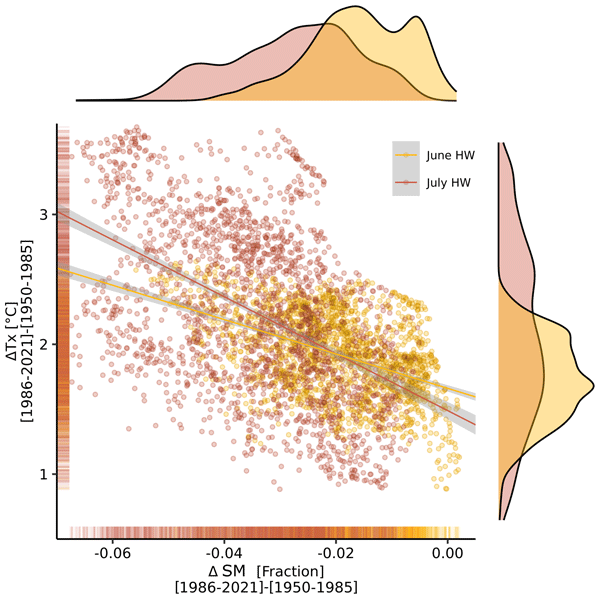
This study investigates the intense heatwaves of 2022 in the Pyrenees. The interplay of the synoptic circulation with the complex topography and the pre-existing soil moisture deficits played an important role in driving the spatial variability of their temperature anomalies. Moreover, human-driven climate change has made these heatwaves more severe compared to the past. This research helps us better understand how climate change affects extreme weather in mountainous regions.
Oscar M. Baez-Villanueva, Mauricio Zambrano-Bigiarini, Diego G. Miralles, Hylke E. Beck, Jonatan F. Siegmund, Camila Alvarez-Garreton, Koen Verbist, René Garreaud, Juan Pablo Boisier, and Mauricio Galleguillos
Hydrol. Earth Syst. Sci., 28, 1415–1439, https://doi.org/10.5194/hess-28-1415-2024, https://doi.org/10.5194/hess-28-1415-2024, 2024
Short summary
Short summary
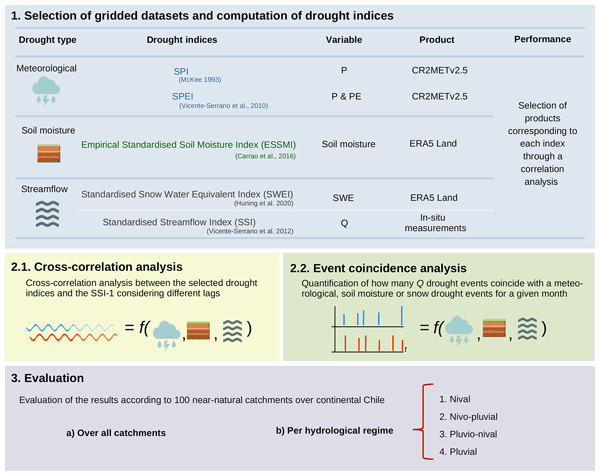
Various drought indices exist, but there is no consensus on which index to use to assess streamflow droughts. This study addresses meteorological, soil moisture, and snow indices along with their temporal scales to assess streamflow drought across hydrologically diverse catchments. Using data from 100 Chilean catchments, findings suggest that there is not a single drought index that can be used for all catchments and that snow-influenced areas require drought indices with larger temporal scales.
Steven J. De Hertog, Carmen E. Lopez-Fabara, Ruud van der Ent, Jessica Keune, Diego G. Miralles, Raphael Portmann, Sebastian Schemm, Felix Havermann, Suqi Guo, Fei Luo, Iris Manola, Quentin Lejeune, Julia Pongratz, Carl-Friedrich Schleussner, Sonia I. Seneviratne, and Wim Thiery
Earth Syst. Dynam., 15, 265–291, https://doi.org/10.5194/esd-15-265-2024, https://doi.org/10.5194/esd-15-265-2024, 2024
Short summary
Short summary
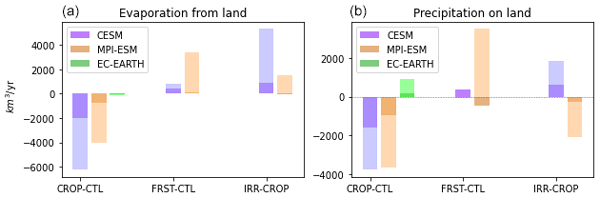
Changes in land use are crucial to achieve lower global warming. However, despite their importance, the effects of these changes on moisture fluxes are poorly understood. We analyse land cover and management scenarios in three climate models involving cropland expansion, afforestation, and irrigation. Results show largely consistent influences on moisture fluxes, with cropland expansion causing a drying and reduced local moisture recycling, while afforestation and irrigation show the opposite.
Dominik Rains, Isabel Trigo, Emanuel Dutra, Sofia Ermida, Darren Ghent, Petra Hulsman, Jose Gómez-Dans, and Diego G. Miralles
Earth Syst. Sci. Data, 16, 567–593, https://doi.org/10.5194/essd-16-567-2024, https://doi.org/10.5194/essd-16-567-2024, 2024
Short summary
Short summary
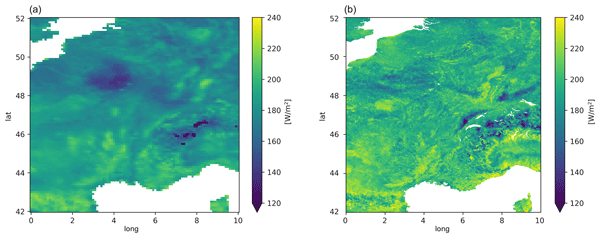
Land surface temperature and surface net radiation are vital inputs for many land surface and hydrological models. However, current remote sensing datasets of these variables come mostly at coarse resolutions, and the few high-resolution datasets available have large gaps due to cloud cover. Here, we present a continuous daily product for both variables across Europe for 2018–2019 obtained by combining observations from geostationary as well as polar-orbiting satellites.
Solomon H. Gebrechorkos, Jian Peng, Ellen Dyer, Diego G. Miralles, Sergio M. Vicente-Serrano, Chris Funk, Hylke E. Beck, Dagmawi T. Asfaw, Michael B. Singer, and Simon J. Dadson
Earth Syst. Sci. Data, 15, 5449–5466, https://doi.org/10.5194/essd-15-5449-2023, https://doi.org/10.5194/essd-15-5449-2023, 2023
Short summary
Short summary
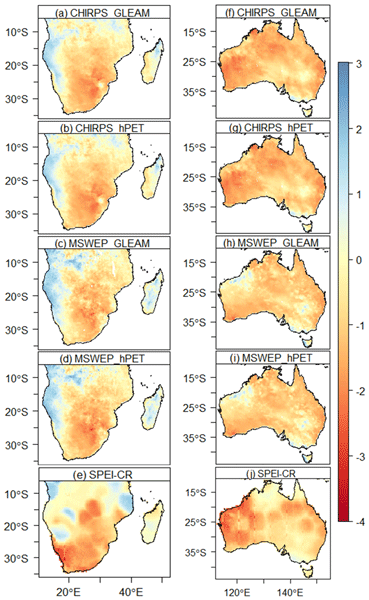
Drought is undeniably one of the most intricate and significant natural hazards with far-reaching consequences for the environment, economy, water resources, agriculture, and societies across the globe. In response to this challenge, we have devised high-resolution drought indices. These indices serve as invaluable indicators for assessing shifts in drought patterns and their associated impacts on a global, regional, and local level facilitating the development of tailored adaptation strategies.
Steven J. De Hertog, Carmen E. Lopez-Fabara, Ruud van der Ent, Jessica Keune, Diego G. Miralles, Raphael Portmann, Sebastian Schemm, Felix Havermann, Suqi Guo, Fei Luo, Iris Manola, Quentin Lejeune, Julia Pongratz, Carl-Friedrich Schleussner, Sonia I. Seneviratne, and Wim Thiery
EGUsphere, https://doi.org/10.5194/egusphere-2023-953, https://doi.org/10.5194/egusphere-2023-953, 2023
Preprint archived
Short summary
Short summary
Land cover and management changes can affect the climate and water availability. In this study we use climate model simulations of extreme global land cover changes (afforestation, deforestation) and land management changes (irrigation) to understand the effects on the global water cycle and local to continental water availability. We show that cropland expansion generally leads to higher evaporation and lower amounts of precipitation and afforestation and irrigation expansion to the opposite.
Hao Li, Baoying Shan, Liu Liu, Lei Wang, Akash Koppa, Feng Zhong, Dongfeng Li, Xuanxuan Wang, Wenfeng Liu, Xiuping Li, and Zongxue Xu
Hydrol. Earth Syst. Sci., 26, 6399–6412, https://doi.org/10.5194/hess-26-6399-2022, https://doi.org/10.5194/hess-26-6399-2022, 2022
Short summary
Short summary
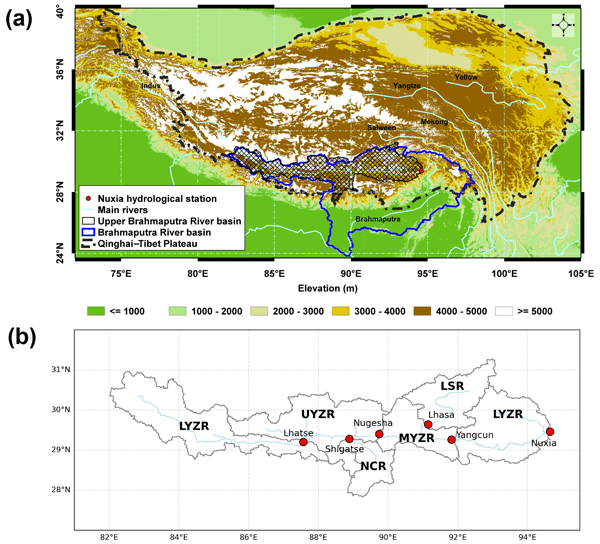
This study examines changes in water yield by determining turning points in the direction of yield changes and highlights that regime shifts in historical water yield occurred in the Upper Brahmaputra River basin, both the climate and cryosphere affect the magnitude of water yield increases, climate determined the declining trends in water yield, and meltwater has the potential to alleviate the water shortage. A repository for all source files is made available.
Feng Zhong, Shanhu Jiang, Albert I. J. M. van Dijk, Liliang Ren, Jaap Schellekens, and Diego G. Miralles
Hydrol. Earth Syst. Sci., 26, 5647–5667, https://doi.org/10.5194/hess-26-5647-2022, https://doi.org/10.5194/hess-26-5647-2022, 2022
Short summary
Short summary
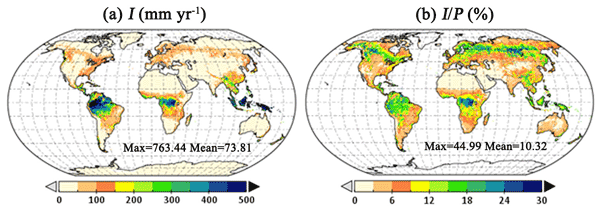
A synthesis of rainfall interception data from past field campaigns is performed, including 166 forests and 17 agricultural plots distributed worldwide. These site data are used to constrain and validate an interception model that considers sub-grid heterogeneity and vegetation dynamics. A global, 40-year (1980–2019) interception dataset is generated at a daily temporal and 0.1° spatial resolution. This dataset will serve as a benchmark for future investigations of the global hydrological cycle.
Lorenzo Alfieri, Francesco Avanzi, Fabio Delogu, Simone Gabellani, Giulia Bruno, Lorenzo Campo, Andrea Libertino, Christian Massari, Angelica Tarpanelli, Dominik Rains, Diego G. Miralles, Raphael Quast, Mariette Vreugdenhil, Huan Wu, and Luca Brocca
Hydrol. Earth Syst. Sci., 26, 3921–3939, https://doi.org/10.5194/hess-26-3921-2022, https://doi.org/10.5194/hess-26-3921-2022, 2022
Short summary
Short summary
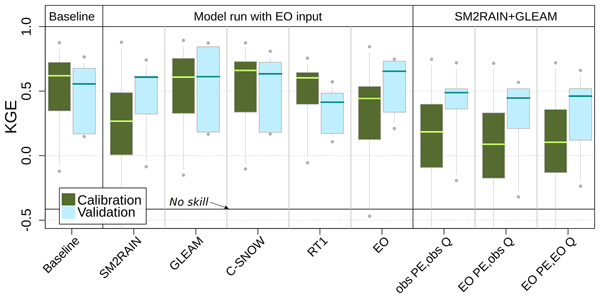
This work shows advances in high-resolution satellite data for hydrology. We performed hydrological simulations for the Po River basin using various satellite products, including precipitation, evaporation, soil moisture, and snow depth. Evaporation and snow depth improved a simulation based on high-quality ground observations. Interestingly, a model calibration relying on satellite data skillfully reproduces observed discharges, paving the way to satellite-driven hydrological applications.
Jessica Keune, Dominik L. Schumacher, and Diego G. Miralles
Geosci. Model Dev., 15, 1875–1898, https://doi.org/10.5194/gmd-15-1875-2022, https://doi.org/10.5194/gmd-15-1875-2022, 2022
Short summary
Short summary
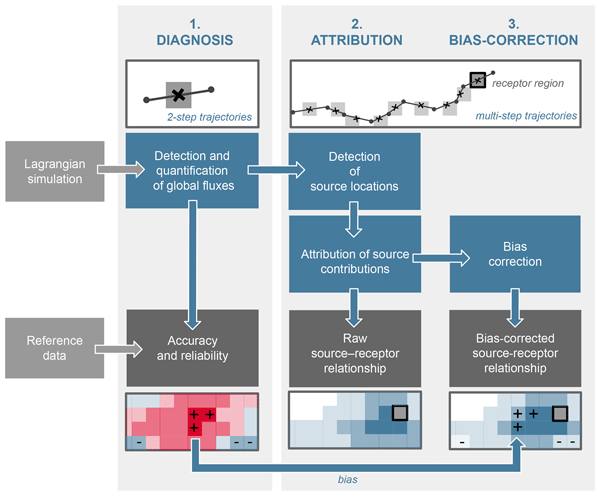
Air transports moisture and heat, shaping the weather we experience. When and where was this air moistened and warmed by the surface? To address this question, atmospheric models trace the history of air parcels in space and time. However, their uncertainties remain unexplored, which hinders their utility and application. Here, we present a framework that sheds light on these uncertainties. Our approach sets a new standard in the assessment of atmospheric moisture and heat trajectories.
Sara Cloux, Daniel Garaboa-Paz, Damián Insua-Costa, Gonzalo Miguez-Macho, and Vicente Pérez-Muñuzuri
Hydrol. Earth Syst. Sci., 25, 6465–6477, https://doi.org/10.5194/hess-25-6465-2021, https://doi.org/10.5194/hess-25-6465-2021, 2021
Short summary
Short summary
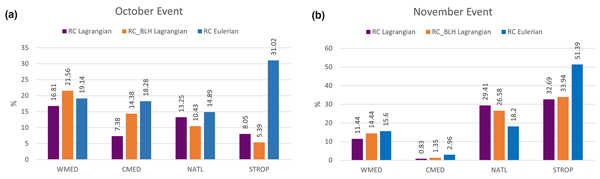
We examine the performance of a widely used Lagrangian method for moisture tracking by comparing it with a highly accurate Eulerian tool, both operating on the same WRF atmospheric model fields. Although the Lagrangian approach is very useful for a qualitative analysis of moisture sources, it has important limitations in quantifying the contribution of individual sources to precipitation. These drawbacks should be considered by other authors in the future so as to not draw erroneous conclusions.
Cited articles
Aemisegger, F., Pfahl, S., Sodemann, H., Lehner, I., Seneviratne, S. I., and Wernli, H.: Deuterium excess as a proxy for continental moisture recycling and plant transpiration, Atmos. Chem. Phys., 14, 4029–4054, https://doi.org/10.5194/acp-14-4029-2014, 2014. a
Arnault, J., Knoche, R., Wei, J., and Kunstmann, H.: Evaporation tagging and atmospheric water budget analysis with WRF: A regional precipitation recycling study for West Africa, Water Resour. Res., 52, 1544–1567, 2016. a
Bakels, L., Tatsii, D., Tipka, A., Thompson, R., Dütsch, M., Blaschek, M., Seibert, P., Baier, K., Bucci, S., Cassiani, M., Eckhardt, S., Groot Zwaaftink, C., Henne, S., Kaufmann, P., Lechner, V., Maurer, C., Mulder, M. D., Pisso, I., Plach, A., Subramanian, R., Vojta, M., and Stohl, A.: FLEXPART version 11: improved accuracy, efficiency, and flexibility, Geosci. Model Dev., 17, 7595–7627, https://doi.org/10.5194/gmd-17-7595-2024, 2024. a, b, c, d, e, f, g
Barriopedro, D., García-Herrera, R., Ordónez, C., Miralles, D. G., and Salcedo-Sanz, S.: Heat waves: Physical understanding and scientific challenges, Rev. Geophys, 61, e2022RG000780, https://doi.org/10.1029/2022RG000780, 2023. a
Budyko, M. I.: Climate and Life, Academic, New York, ISBN 0-12-139450 6, 1974. a
Budyko, M. I. and Drozdov, O. A.: Zakonomernosti vlagooborota v tmosphere (regularities of the hydrologic cycle in the atmosphere), Izv. Akad. Nauk SSSR Ser. Geogr., 4, 5–14, 1953. a
Burde, G. I., Zangvil, A., and Lamb, P. J.: Estimating the role of local evaporation in precipitation for a two-dimensional region, J. Climate, 9, 1328–1338, 1996. a
Cloux, S., Garaboa-Paz, D., Insua-Costa, D., Miguez-Macho, G., and Pérez-Muñuzuri, V.: Extreme precipitation events in the Mediterranean area: contrasting two different models for moisture source identification, Hydrol. Earth Syst. Sci., 25, 6465–6477, https://doi.org/10.5194/hess-25-6465-2021, 2021. a, b, c
Dansgaard, W.: The O18-abundance in fresh water, Geochim. Cosmochim. Ac., 6, 241–260, 1954. a
Dee, D. P., Uppala, S. M., Simmons, A. J., Berrisford, P., Poli, P., Kobayashi, S., Andrae, U., Balmaseda, M. A., Balsamo, G., Bauer, D. P., Bechtold, P., Beljaars, A. C. M., van de Berg, L., Bidlot, J., Bormann, N., Delsol, C., Dragani, R., Fuentes, M., Geer, A. J., Haimberger, L., Healy, S. B., Hersbach, H., Hólm, E. V., Isaksen, L., Kållberg, P., Köhler, M. Matricardi, M., McNally, A. P., Monge-Sanz, B. M., Morcrette, J.-J., Park, B.-K., Peubey, C., de Rosnay, P., Tavolato, C., Thépaut, J.-N., Vitart, F.: The ERA-Interim reanalysis: Configuration and performance of the data assimilation system, Q. J. Roy. Meteor. Soc., 137, 553–597, 2011. a
Deman, V. M. H., Insua-Costa, D., and Miralles, D. G.: FLEXPART v11 Global Trajectory Dataset (1979–2024), Zenodo [data set], https://doi.org/10.5281/zenodo.17952362, 2025. a, b
Dirmeyer, P. A. and Brubaker, K. L.: Contrasting evaporative moisture sources during the drought of 1988 and the flood of 1993, J. Geophys. Res.-Atmos., 104, 19383–19397, 1999. a
Dirmeyer, P. A. and Brubaker, K. L.: Characterization of the global hydrologic cycle from a back-trajectory analysis of atmospheric water vapor, J. Hydrometeorol., 8, 20–37, 2007. a
Dirmeyer, P. A., Brubaker, K. L., and DelSole, T.: Import and export of atmospheric water vapor between nations, J. Hydrol., 365, 11–22, 2009. a
Donat, M. G., Angélil, O., and Ukkola, A. M.: Intensification of precipitation extremes in the world's humid and water-limited regions, Environ. Res. Lett., 14, 065003, https://doi.org/10.1088/1748-9326/ab1c8e, 2019. a
Eltahir, E. A. B. and Bras, R. L.: Precipitation recycling in the Amazon basin, Q. J. Roy. Meteor. Soc., 120, 861–880, 1994. a
Gimeno, L., Stohl, A., Trigo, R. M., Dominguez, F., Yoshimura, K., Yu, L., Drumond, A., Durán-Quesada, A. M., and Nieto, R.: Oceanic and terrestrial sources of continental precipitation, Rev. Geophys, 50, https://doi.org/10.1029/2012RG000389, 2012. a, b
Gimeno, L., Nieto, R., and Sorí, R.: The growing importance of oceanic moisture sources for continental precipitation, npj Clim. Atmos. Sci., 3, 27, https://doi.org/10.1038/s41612-020-00133-y, 2020a. a
Gimeno, L., Vázquez, M., Eiras-Barca, J., Sori, R., Stojanovic, M., Algarra, I., Nieto, R., Ramos, A. M., Duran-Quesada, A. M., and Dominguez, F.: Recent progress on the sources of continental precipitation as revealed by moisture transport analysis, Earth-Sci. Rev., 201, 103070, https://doi.org/10.1016/j.earscirev.2019.103070, 2020b. a, b, c, d
Goessling, H. F. and Reick, C. H.: What do moisture recycling estimates tell us? Exploring the extreme case of non-evaporating continents, Hydrol. Earth Syst. Sci., 15, 3217–3235, https://doi.org/10.5194/hess-15-3217-2011, 2011. a
Gui, K. and Zhou, T.: Soil moisture feedback amplified the earlier onset of the record-breaking three-day consecutive heatwave in 2023 in North China, Earths Future, 13, e2024EF005561, https://doi.org/10.1029/2024EF005561, 2025. a, b
Hersbach, H., Bell, B., Berrisford, P., Hirahara, S., Horányi, A., Muñoz-Sabater, J., Nicolas, J., Peubey, C., Radu, R., Schepers, D., Simmons, A., Soci, C., Abdalla, S., Abellan, X., Balsamo, G., Bechtold, P., Biavati, G., Bidlot, J., Bonavita, M., De Chiara, G., Dahlgren, P., Dee, D., Diamantakis, M., Dragani, R., Flemming, J., Forbes, R., Fuentes, M., Geer, A., Haimberger, L., Healy, S., Hogan, R. J., Hólm, E., Janisková, M., Keeley, S., Laloyaux, P., Lopez, P., Lupu, C., Radnoti, G., de Rosnay, P., Rozum, I., Vamborg, F., Villaume, S., and Thépaut, J.-N.: The ERA5 global reanalysis, Q. J. Roy. Meteor. Soc., 146, 1999–2049, 2020. a, b, c
Horton, R. M., Mankin, J. S., Lesk, C., Coffel, E., and Raymond, C.: A review of recent advances in research on extreme heat events, Current Climate Change Reports, 2, 242–259, 2016. a
Insua-Costa, D. and Miguez-Macho, G.: A new moisture tagging capability in the Weather Research and Forecasting model: formulation, validation and application to the 2014 Great Lake-effect snowstorm, Earth Syst. Dynam., 9, 167–185, https://doi.org/10.5194/esd-9-167-2018, 2018. a, b
Insua-Costa, D., Senande-Rivera, M., Llasat, M. C., and Miguez-Macho, G.: The central role of forests in the 2021 European floods, Environ. Res. Lett., 17, 064053, https://doi.org/10.1088/1748-9326/ac6f6b, 2022. a
Insua-Costa, D., Deman, V. M. H., and Miralles, D. G.: Heat And MoiSture Tracking framEwoRk version 2.0 (HAMSTER v2) (2.0.0), Zenodo [code], https://doi.org/10.5281/zenodo.20181215, 2026. a
IPCC: Chapter 8: Water Cycle Changes, in: Climate Change 2021: The Physical Science Basis. Contribution of Working Group I to the Sixth Assessment Report of the Intergovernmental Panel on Climate Change, edited by: Masson-Delmotte, V., Zhai, P., Pirani, A., Connors, S. L., Péan, C., Berger, S., Caud, N., Chen, Y., Goldfarb, L., Gomis, M. I., Huang, M., Leitzell, K., Lonnoy, E., Matthews, J. B. R., Maycock, T. K., Waterfield, T., Yelekçi, O., Yu, R., and Zhou, B., Cambridge University Press, Cambridge, United Kingdom and New York, NY, USA, 1055–1210, https://doi.org/10.1017/9781009157896.010, 2021. a
Jouzel, J., Delaygue, G., Landais, A., Masson-Delmotte, V., Risi, C., and Vimeux, F.: Water isotopes as tools to document oceanic sources of precipitation, Water Resour. Res., 49, 7469–7486, 2013. a
Kalverla, P., Benedict, I., Weijenborg, C., and van der Ent, R. J.: Atmospheric moisture tracking with WAM2layers v3, Geosci. Model Dev., 18, 4335–4352, https://doi.org/10.5194/gmd-18-4335-2025, 2025. a, b
Keys, P. W., van der Ent, R. J., Gordon, L. J., Hoff, H., Nikoli, R., and Savenije, H. H. G.: Analyzing precipitationsheds to understand the vulnerability of rainfall dependent regions, Biogeosciences, 9, 733–746, https://doi.org/10.5194/bg-9-733-2012, 2012. a
Knoche, H. R. and Kunstmann, H.: Tracking atmospheric water pathways by direct evaporation tagging: A case study for West Africa, J. Geophys. Res.-Atmos., 118, 12–345, 2013. a
Koppa, A., Keune, J., Schumacher, D. L., Michaelides, K., Singer, M., Seneviratne, S. I., and Miralles, D. G.: Dryland self-expansion enabled by land–atmosphere feedbacks, Science, 385, 967–972, 2024. a
Lettau, H., Lettau, K., and Molion, L. C. B.: Amazonia's hydrologic cycle and the role of atmospheric recycling in assessing deforestation effects, Mon. Weather Rev., 107, 227–238, 1979. a
Li, H., Keune, J., Gou, Q., Holgate, C. M., and Miralles, D.: Heat and moisture anomalies during crop failure events in the Southeastern Australian wheat belt, Earths Future, 12, e2023EF003901, https://doi.org/10.1029/2023EF003901, 2024a. a, b
Li, Y., Wang, C., Tang, Q., Yao, S., Sun, B., Peng, H., and Xiao, S.: Unraveling the discrepancies between Eulerian and Lagrangian moisture tracking models in monsoon- and westerly-dominated basins of the Tibetan Plateau, Atmos. Chem. Phys., 24, 10741–10758, https://doi.org/10.5194/acp-24-10741-2024, 2024b. a, b
Link, A., van der Ent, R., Berger, M., Eisner, S., and Finkbeiner, M.: The fate of land evaporation – a global dataset, Earth Syst. Sci. Data, 12, 1897–1912, https://doi.org/10.5194/essd-12-1897-2020, 2020. a
McVicar, T. R., Roderick, M. L., Donohue, R. J., Li, L. T., Van Niel, T. G., Thomas, A., Grieser, J., Jhajharia, D., Himri, Y., Mahowald, N. M., Mescherskaya, A. V., Kruger, A. C., Rehman, S., and Dinpashoh, Y.: Global review and synthesis of trends in observed terrestrial near-surface wind speeds: Implications for evaporation, J. Hydrol., 416, 182–205, 2012. a
Miltenberger, A. K., Pfahl, S., and Wernli, H.: An online trajectory module (version 1.0) for the nonhydrostatic numerical weather prediction model COSMO, Geosci. Model Dev., 6, 1989–2004, https://doi.org/10.5194/gmd-6-1989-2013, 2013. a
Miralles, D. G., Teuling, A. J., Van Heerwaarden, C. C., and Vilà-Guerau de Arellano, J.: Mega-heatwave temperatures due to combined soil desiccation and atmospheric heat accumulation, Nat. Geosci., 7, 345–349, 2014. a
Miralles, D. G., Gentine, P., Seneviratne, S. I., and Teuling, A. J.: Land–atmospheric feedbacks during droughts and heatwaves: state of the science and current challenges, Ann. N. Y. Acad. Sci., 1436, 19–35, 2019. a
Mohr, S., Ehret, U., Kunz, M., Ludwig, P., Caldas-Alvarez, A., Daniell, J. E., Ehmele, F., Feldmann, H., Franca, M. J., Gattke, C., Hundhausen, M., Knippertz, P., Küpfer, K., Mühr, B., Pinto, J. G., Quinting, J., Schäfer, A. M., Scheibel, M., Seidel, F., and Wisotzky, C.: A multi-disciplinary analysis of the exceptional flood event of July 2021 in central Europe – Part 1: Event description and analysis, Nat. Hazards Earth Syst. Sci., 23, 525–551, https://doi.org/10.5194/nhess-23-525-2023, 2023. a, b, c
Mu, Y., Evans, J. P., Taschetto, A. S., and Holgate, C.: Refining the Lagrangian approach for moisture source identification through sensitivity testing of assumptions using BTrIMS1.1, Geosci. Model Dev., 19, 1367–1385, https://doi.org/10.5194/gmd-19-1367-2026, 2026. a
Papritz, L., Aemisegger, F., and Wernli, H.: Sources and transport pathways of precipitating waters in cold-season deep North Atlantic cyclones, J. Atmos. Sci., 78, 3349–3368, 2021. a
Pérez-Alarcón, A., Coll-Hidalgo, P., Fernández-Alvarez, J. C., Trigo, R. M., Nieto, R., and Gimeno, L.: Impacts of tropical cyclones on the global water budget, npj Clim. Atmos. Sci., 6, 212, https://doi.org/10.1038/s41612-023-00546-5, 2023. a
Pérez-Alarcón, A., Fernández-Alvarez, J. C., Nieto, R., and Gimeno, L.: LATTIN: A Python-based tool for Lagrangian atmospheric moisture and heat tracking, Software Impacts, 20, 100638, https://doi.org/10.1016/j.simpa.2024.100638, 2024. a
Pérez-Alarcón, A., Vázquez, M., Trigo, R. M., Nieto, R., and Gimeno, L.: Towards an understanding of uncertainties in the Lagrangian analysis of moisture sources for tropical cyclone precipitation through a study case, Atmos. Res., 314, 107822, https://doi.org/10.1016/j.atmosres.2024.107822, 2025. a
Pisso, I., Sollum, E., Grythe, H., Kristiansen, N. I., Cassiani, M., Eckhardt, S., Arnold, D., Morton, D., Thompson, R. L., Groot Zwaaftink, C. D., Evangeliou, N., Sodemann, H., Haimberger, L., Henne, S., Brunner, D., Burkhart, J. F., Fouilloux, A., Brioude, J., Philipp, A., Seibert, P., and Stohl, A.: The Lagrangian particle dispersion model FLEXPART version 10.4, Geosci. Model Dev., 12, 4955–4997, https://doi.org/10.5194/gmd-12-4955-2019, 2019. a
Quinting, J. F. and Reeder, M. J.: Southeastern Australian heat waves from a trajectory viewpoint, Mon. Weather Rev., 145, 4109–4125, 2017. a
Röthlisberger, M. and Papritz, L.: Quantifying the physical processes leading to atmospheric hot extremes at a global scale, Nat. Geosci., 16, 210–216, 2023. a
Savenije, H. H. G.: New definitions for moisture recycling and the relationship with land-use changes in the Sahel, J. Hydrol., 167, 57–78, 1995. a
Schär, C., Lüthi, D., Beyerle, U., and Heise, E.: The soil–precipitation feedback: A process study with a regional climate model, J. Climate, 12, 722–741, 1999. a
Shao, S., Zeng, X.-M., Wang, N., Ullah, I., and Lv, H.: Attribution of moisture sources for summer precipitation in the upstream catchment of the Three Gorges dam, J. Hydrometeorol., 25, 353–369, 2024. a
Soci, C., Hersbach, H., Simmons, A., Poli, P., Bell, B., Berrisford, P., Horányi, A., Muñoz-Sabater, J., Nicolas, J., Radu, R., Schepers, D., Villaume, S., Haimberger, L., Woollen, J., Buontempo, C., and Thépaut, J.-N.: The ERA5 global reanalysis from 1940 to 2022, Q. J. Roy. Meteor. Soc., 150, 4014–4048, 2024. a
Sodemann, H., Schwierz, C., and Wernli, H.: Interannual variability of Greenland winter precipitation sources: Lagrangian moisture diagnostic and North Atlantic Oscillation influence, J. Geophys. Res.-Atmos., 113, https://doi.org/10.1029/2007JD008503, 2008. a, b
Sodemann, H., Wernli, H., and Schwierz, C.: Sources of water vapour contributing to the Elbe flood in August 2002—A tagging study in a mesoscale model, Q. J. Roy. Meteor. Soc., 135, 205–223, 2009. a
Staal, A. and Koren, G.: Comment on ‘The central role of forests in the 2021 European floods’, Environ. Res. Lett., 18, 048002, https://doi.org/10.1088/1748-9326/acc260, 2023. a
Staal, A., Meijer, P., Nyasulu, M. K., Tuinenburg, O. A., and Dekker, S. C.: Global terrestrial moisture recycling in Shared Socioeconomic Pathways, Earth Syst. Dynam., 16, 215–238, https://doi.org/10.5194/esd-16-215-2025, 2025. a
Stein, A. F., Draxler, R. R., Rolph, G. D., Stunder, B. J. B., Cohen, M. D., and Ngan, F.: NOAA's HYSPLIT atmospheric transport and dispersion modeling system, B. Am. Meteorol. Soc., 96, 2059–2077, 2015. a
te Wierik, S. A., Cammeraat, E. L., Gupta, J., and Artzy-Randrup, Y. A.: Reviewing the impact of land use and land-use change on moisture recycling and precipitation patterns, Water Resour. Res., 57, e2020WR029234, https://doi.org/10.1029/2020WR029234, 2021. a
Tipka, A., Haimberger, L., and Seibert, P.: Flex_extract v7.1.2 – a software package to retrieve and prepare ECMWF data for use in FLEXPART, Geosci. Model Dev., 13, 5277–5310, https://doi.org/10.5194/gmd-13-5277-2020, 2020. a, b, c
Trenberth, K. E. and Shea, D. J.: Relationships between precipitation and surface temperature, Geophys. Res. Lett., 32, https://doi.org/10.1029/2005GL022760, 2005. a, b
Tuinenburg, O. A. and Staal, A.: Tracking the global flows of atmospheric moisture and associated uncertainties, Hydrol. Earth Syst. Sci., 24, 2419–2435, https://doi.org/10.5194/hess-24-2419-2020, 2020. a, b
UNEP: World Atlas of Desertification, Edward Arnold, London, ISBN 0340691662, 1997. a
Uppala, S. M., Kållberg, P. W., Simmons, A. J., Andrae, U., Da Costa Bechtold, V., Fiorino, M., Gibson, J. K., Haseler, J., Hernandez, A., Kelly, G. A., Li, X., Onogi, K., Saarinen, S., Sokka, N., Allan, R. P., Andersson, E., Arpe, K., Balmaseda, M. A., Beljaars, A. C. M., Van De Berg, L., Bidlot, J., Bormann, N., Caires, S., Chevallier, F., Dethof, A., Dragosavac, M., Fisher, M., Fuentes, M., Hagemann, S., Hólm, E., Hoskins, B. J., Isaksen, L., Janssen, P. A. E. M., Jenne, R., McNally, A. P., Mahfouf, J.-F., Morcrette, J.-J., Rayner, N. A., Saunders, R. W., Simon, P., Sterl, A., Trenberth, K. E., Untch, A., Vasiljevic, D., Viterbo, P., and Woollen, J.: The ERA-40 re-analysis, Q. J. Roy. Meteor. Soc., 131, 2961–3012, 2005. a
van der Ent, R. J. and Savenije, H. H. G.: Length and time scales of atmospheric moisture recycling, Atmos. Chem. Phys., 11, 1853–1863, https://doi.org/10.5194/acp-11-1853-2011, 2011. a
van der Ent, R. J. and Tuinenburg, O. A.: The residence time of water in the atmosphere revisited, Hydrol. Earth Syst. Sci., 21, 779–790, https://doi.org/10.5194/hess-21-779-2017, 2017. a, b
van der Ent, R. J., Savenije, H. H. G., Schaefli, B., and Steele-Dunne, S. C.: Origin and fate of atmospheric moisture over continents, Water Resour. Res., 46, https://doi.org/10.1029/2010WR009127, 2010. a, b, c, d
van der Ent, R. J., Wang-Erlandsson, L., Keys, P. W., and Savenije, H. H. G.: Contrasting roles of interception and transpiration in the hydrological cycle – Part 2: Moisture recycling, Earth Syst. Dynam., 5, 471–489, https://doi.org/10.5194/esd-5-471-2014, 2014. a
Vázquez, M., Algarra, I., Eiras-Barca, J., Ramos, A. M., Nieto, R., and Gimeno, L.: Atmospheric rivers over the Arctic: Lagrangian characterisation of their moisture sources, Water, 11, 41, https://doi.org/10.3390/w11010041, 2018. a
Vázquez, M., Alvarez-Socorro, G., Fernández-Alvarez, J. C., Nieto, R., and Gimeno, L.: Global FLEXPART–ERA5 simulations using 30 million atmospheric parcels since 1980, Zenodo [data set], https://doi.org/10.5281/zenodo.13682647, 2024. a, b
Wang, Y., Liu, X., Zhang, D., and Bai, P.: Tracking moisture sources of precipitation over China, J. Geophys. Res.-Atmos., 128, e2023JD039106, https://doi.org/10.1029/2023JD039106, 2023. a
Wernli, H. and Davies, H. C.: A Lagrangian-based analysis of extratropical cyclones. I: The method and some applications, Q. J. Roy. Meteor. Soc., 123, 467–489, 1997. a
Winschall, A., Pfahl, S., Sodemann, H., and Wernli, H.: Comparison of Eulerian and Lagrangian moisture source diagnostics – the flood event in eastern Europe in May 2010, Atmos. Chem. Phys., 14, 6605–6619, https://doi.org/10.5194/acp-14-6605-2014, 2014. a
Zhang, C., Tang, Q., Zhao, Y., Chen, D., Huang, J., Liu, Y., and Zhang, X.: Moisture source differences between the 2020 and 1998 super Meiyu-flood events in the Yangtze River Valley, Weather and Climate Extremes, 43, 100644, https://doi.org/10.1016/j.wace.2024.100644, 2024. a
Zhang, X., Wu, H., Wang-Erlandsson, L., Liu, Z., Jiang, H., Wang, Z., Jiang, L., Zhu, Y., Jiang, Y., Yao, Z., and Li, Z.: Significant shifts in continental precipitation sources in the 21st century, Water Resour. Res., 61, e2025WR040157, https://doi.org/10.1029/2025WR040157, 2025. a
Zschenderlein, P., Fink, A. H., Pfahl, S., and Wernli, H.: Processes determining heat waves across different European climates, Q. J. Roy. Meteor. Soc., 145, 2973–2989, 2019. a
Short summary
We present a global dataset that follows the movement of air carrying water and heat through the atmosphere from 1979 to 2024. Using weather reanalysis data, we tracked millions of air parcels and recorded their physical properties as they moved through the atmosphere. The dataset can be used to reveal where rainfall and warming originate and how they travel across land and ocean. This dataset can support climate and water studies without the need for costly simulations.
We present a global dataset that follows the movement of air carrying water and heat through the...


Altmetrics
Final-revised paper
Preprint