Articles | Volume 18, issue 6
https://doi.org/10.5194/essd-18-4345-2026
© Author(s) 2026. This work is distributed under
the Creative Commons Attribution 4.0 License.
the Creative Commons Attribution 4.0 License.
https://doi.org/10.5194/essd-18-4345-2026
© Author(s) 2026. This work is distributed under
the Creative Commons Attribution 4.0 License.
the Creative Commons Attribution 4.0 License.
Data description article
| 
26 Jun 2026
Data description article |
| 26 Jun 2026
| 26 Jun 2026
CAMELS-GB v2: hydrometeorological time series and landscape attributes for 671 catchments in Great Britain

School of Geographical Sciences, University of Bristol, Bristol, United Kingdom
Yanchen Zheng
School of Geographical Sciences, University of Bristol, Bristol, United Kingdom
School of Civil, Aerospace and Design Engineering, University of Bristol, Bristol, United Kingdom
Rafael Barbedo
UK Centre for Ecology & Hydrology, Maclean Building, Crowmarsh Gifford, Wallingford, United Kingdom
Hollie Cooper
UK Centre for Ecology & Hydrology, Maclean Building, Crowmarsh Gifford, Wallingford, United Kingdom
Felipe Fileni
School of Engineering and Tyndall Centre for Climate Change Research, Newcastle University, Newcastle upon Tyne, United Kingdom
Hayley J. Fowler
School of Engineering and Tyndall Centre for Climate Change Research, Newcastle University, Newcastle upon Tyne, United Kingdom
UK Centre for Ecology & Hydrology, Maclean Building, Crowmarsh Gifford, Wallingford, United Kingdom
Amy Green
School of Engineering and Tyndall Centre for Climate Change Research, Newcastle University, Newcastle upon Tyne, United Kingdom
Tom Gribbin
British Geological Survey, Keyworth, United Kingdom
Helen Harfoot
Environment Agency, Romsey, Hampshire, United Kingdom
School of Geography and Environmental Science, University of Southampton, Highfield, Southampton, United Kingdom
Elizabeth Lewis
Civil Engineering and Management, University of Manchester, Manchester, United Kingdom
Germano Gondim Ribeiro Neto
School of Geographical Sciences, University of Bristol, Bristol, United Kingdom
Xiaobin Qiu
School of Engineering and Tyndall Centre for Climate Change Research, Newcastle University, Newcastle upon Tyne, United Kingdom
Saskia Salwey
School of Civil, Aerospace and Design Engineering, University of Bristol, Bristol, United Kingdom
Department of Physical Geography, Faculty of Geosciences, Utrecht University, Utrecht, the Netherlands
Doris E. Wendt
School of Geographical Sciences, University of Bristol, Bristol, United Kingdom
British Geological Survey, Edinburgh, United Kingdom
Related authors
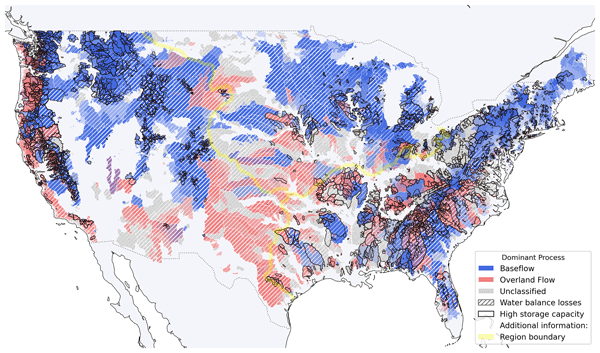
Ryoko Araki, Anne Holt, John C. Hammond, Admin Husic, Gemma Coxon, and Hilary K. McMillan
Hydrol. Earth Syst. Sci., 30, 3647–3673, https://doi.org/10.5194/hess-30-3647-2026, https://doi.org/10.5194/hess-30-3647-2026, 2026
Short summary
Short summary
We mapped dominant hydrologic processes across the United States by analyzing observed streamflow dynamics. Using random forest models and interpretable machine learning techniques, we predicted processes in data-scarce regions and identified key drivers such as climate, soil and geology, land cover, topography, and human influence. The resulting maps of dominant processes and their drivers reveal strong regional patterns that guide hydrologic model selection and water resource management.
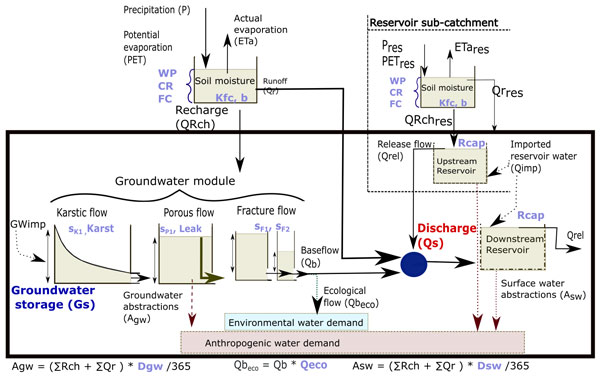
Doris E. Wendt, Gemma Coxon, Saskia Salwey, and Francesca Pianosi
Hydrol. Earth Syst. Sci., 30, 2837–2857, https://doi.org/10.5194/hess-30-2837-2026, https://doi.org/10.5194/hess-30-2837-2026, 2026
Short summary
Short summary
Groundwater is a highly-used water source, which drought management is complicated. We introduce a socio-hydrological water resource model (SHOWER) to aid drought management in groundwater-rich managed environments. Results show which and when drought management interventions influence surface water and groundwater storage, with integrated interventions having most effect on reducing droughts. This encourages further exploration to reduce water shortages and improve future drought resilience.
Felipe Fileni, Hayley J. Fowler, Elizabeth Lewis, Fiona McLay, Gemma Coxon, David Archer, Emma Bruce, Longzhi Yang, Matt Fry, Hollie Cooper, and Ollie Swain
EGUsphere, https://doi.org/10.5194/egusphere-2026-277, https://doi.org/10.5194/egusphere-2026-277, 2026
Short summary
Short summary
This study develops and applies a national framework to identify and flag issues in UK river flow data by combining systematic visual checks with automated tests. We demonstrate the importance of visual inspection, refine and sensitivity-test traditional quality-control methods, and develop new high-flow checks tailored to high-resolution data. We then quantify the frequency of these issues and demonstrate that, if overlooked, they can impact scientific results and lead to misleading conclusions
Felipe Fileni, Hayley J. Fowler, Elizabeth Lewis, Matt Fry, Hollie Cooper, Ollie Swain, Fiona McLay, Gemma Coxon, Emma Bruce, Longzhi Yang, and David Archer
Earth Syst. Sci. Data Discuss., https://doi.org/10.5194/essd-2026-152, https://doi.org/10.5194/essd-2026-152, 2026
Revised manuscript under review for ESSD
Short summary
Short summary
River flow data recorded at 15-minute resolution has been collected across the UK for over 70 years, but it has been difficult to access and use consistently. We brought these records together into a single national dataset, checked them for errors, harmonised different records, and clearly documented any issues and suspect values. The result is a reliable and transparent resource that supports better flood forecasting, water management, and research on climate change impacts on river flows.
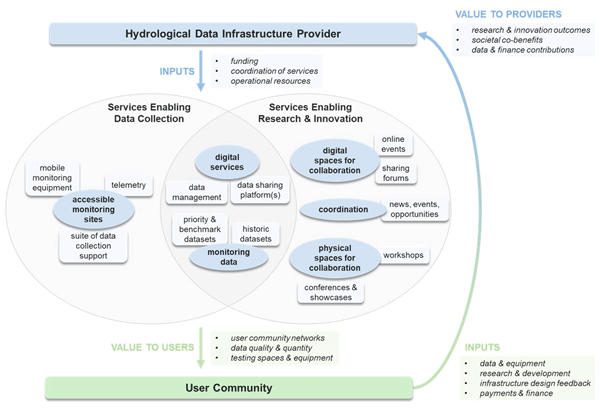
William Veness, Alejandro Dussaillant, Gemma Coxon, Simon De Stercke, Gareth H. Old, Matthew Fry, Jonathan G. Evans, and Wouter Buytaert
Hydrol. Earth Syst. Sci., 29, 6201–6219, https://doi.org/10.5194/hess-29-6201-2025, https://doi.org/10.5194/hess-29-6201-2025, 2025
Short summary
Short summary
We investigated what users want from the next-generation of hydrological monitoring systems to better support science and innovation. Through literature review and interviews with UK experts, we found that beyond providing high-quality data, users particularly value additional support for collecting their own data, sharing it with others, and building collaborations with other data users. Designing systems with these needs in mind can greatly boost long-term engagement, data coverage and impact.
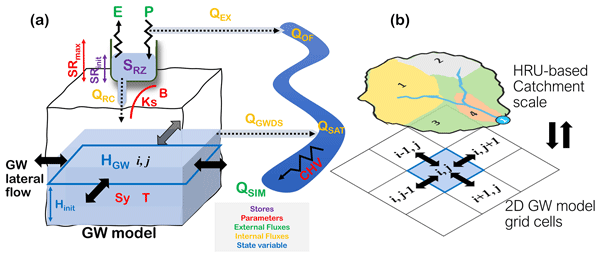
Yanchen Zheng, Gemma Coxon, Mostaquimur Rahman, Ross Woods, Saskia Salwey, Youtong Rong, and Doris E. Wendt
Geosci. Model Dev., 18, 4247–4271, https://doi.org/10.5194/gmd-18-4247-2025, https://doi.org/10.5194/gmd-18-4247-2025, 2025
Short summary
Short summary
Groundwater is vital for people and ecosystems, but most physical models lack the representation of surface–groundwater interactions, leading to inaccurate streamflow predictions in groundwater-rich areas. This study presents DECIPHeR-GW v1, which links surface and groundwater systems to improve predictions of streamflow and groundwater levels. Tested across England and Wales, DECIPHeR-GW shows high accuracy, especially in southeast England, making it a valuable tool for large-scale water management.
Jerom P. M. Aerts, Jannis M. Hoch, Gemma Coxon, Nick C. van de Giesen, and Rolf W. Hut
Hydrol. Earth Syst. Sci., 28, 5011–5030, https://doi.org/10.5194/hess-28-5011-2024, https://doi.org/10.5194/hess-28-5011-2024, 2024
Short summary
Short summary
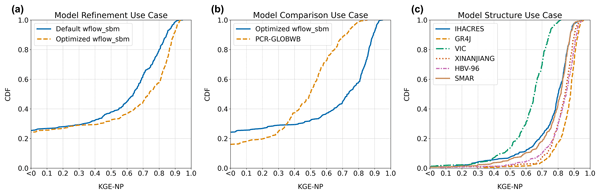
For users of hydrological models, model suitability often hinges on how well simulated outputs match observed discharge. This study highlights the importance of including discharge observation uncertainty in hydrological model performance assessment. We highlight the need to account for this uncertainty in model comparisons and introduce a practical method suitable for any observational time series with available uncertainty estimates.
Saskia Salwey, Gemma Coxon, Francesca Pianosi, Rosanna Lane, Chris Hutton, Michael Bliss Singer, Hilary McMillan, and Jim Freer
Hydrol. Earth Syst. Sci., 28, 4203–4218, https://doi.org/10.5194/hess-28-4203-2024, https://doi.org/10.5194/hess-28-4203-2024, 2024
Short summary
Short summary
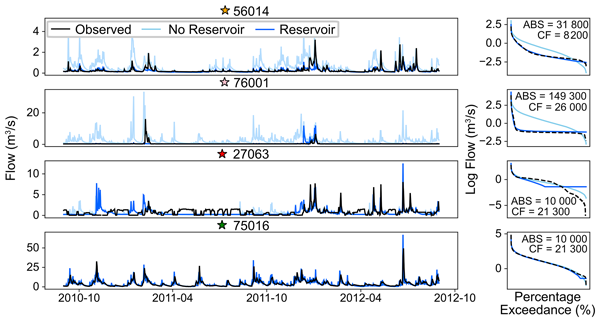
Reservoirs are essential for water resource management and can significantly impact downstream flow. However, representing reservoirs in hydrological models can be challenging, particularly across large scales. We design a new and simple method for simulating river flow downstream of water supply reservoirs using only open-access data. We demonstrate the approach in 264 reservoir catchments across Great Britain, where we can significantly improve the simulation of reservoir-impacted flow.
Yanchen Zheng, Gemma Coxon, Ross Woods, Daniel Power, Miguel Angel Rico-Ramirez, David McJannet, Rafael Rosolem, Jianzhu Li, and Ping Feng
Hydrol. Earth Syst. Sci., 28, 1999–2022, https://doi.org/10.5194/hess-28-1999-2024, https://doi.org/10.5194/hess-28-1999-2024, 2024
Short summary
Short summary
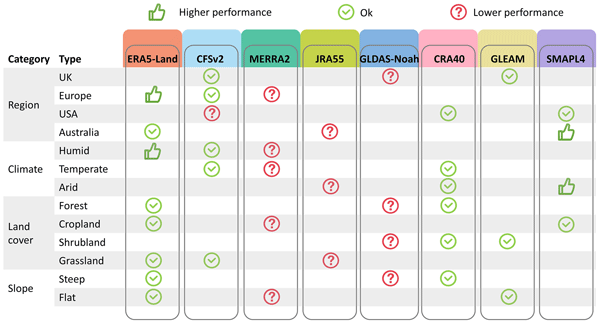
Reanalysis soil moisture products are a vital basis for hydrological and environmental research. Previous product evaluation is limited by the scale difference (point and grid scale). This paper adopts cosmic ray neutron sensor observations, a novel technique that provides root-zone soil moisture at field scale. In this paper, global harmonized CRNS observations were used to assess products. ERA5-Land, SMAPL4, CFSv2, CRA40 and GLEAM show better performance than MERRA2, GLDAS-Noah and JRA55.
Kathryn A. Leeming, John P. Bloomfield, Gemma Coxon, and Yanchen Zheng
Hydrol. Earth Syst. Sci. Discuss., https://doi.org/10.5194/hess-2023-202, https://doi.org/10.5194/hess-2023-202, 2023
Preprint withdrawn
Short summary
Short summary
In this work we characterise annual patterns in baseflow, the component of streamflow that comes from subsurface storage. Our research identified early-, mid-, and late-seasonality of baseflow across catchments in Great Britain over two time blocks: 1976–1995 and 1996–2015, and found that many catchments have earlier seasonal patterns of baseflow in the second time period. These changes are linked to changes in climate signals: snow-melt in highland catchments and effective rainfall changes.
Heidi Kreibich, Kai Schröter, Giuliano Di Baldassarre, Anne F. Van Loon, Maurizio Mazzoleni, Guta Wakbulcho Abeshu, Svetlana Agafonova, Amir AghaKouchak, Hafzullah Aksoy, Camila Alvarez-Garreton, Blanca Aznar, Laila Balkhi, Marlies H. Barendrecht, Sylvain Biancamaria, Liduin Bos-Burgering, Chris Bradley, Yus Budiyono, Wouter Buytaert, Lucinda Capewell, Hayley Carlson, Yonca Cavus, Anaïs Couasnon, Gemma Coxon, Ioannis Daliakopoulos, Marleen C. de Ruiter, Claire Delus, Mathilde Erfurt, Giuseppe Esposito, Didier François, Frédéric Frappart, Jim Freer, Natalia Frolova, Animesh K. Gain, Manolis Grillakis, Jordi Oriol Grima, Diego A. Guzmán, Laurie S. Huning, Monica Ionita, Maxim Kharlamov, Dao Nguyen Khoi, Natalie Kieboom, Maria Kireeva, Aristeidis Koutroulis, Waldo Lavado-Casimiro, Hong-Yi Li, Maria Carmen LLasat, David Macdonald, Johanna Mård, Hannah Mathew-Richards, Andrew McKenzie, Alfonso Mejia, Eduardo Mario Mendiondo, Marjolein Mens, Shifteh Mobini, Guilherme Samprogna Mohor, Viorica Nagavciuc, Thanh Ngo-Duc, Huynh Thi Thao Nguyen, Pham Thi Thao Nhi, Olga Petrucci, Nguyen Hong Quan, Pere Quintana-Seguí, Saman Razavi, Elena Ridolfi, Jannik Riegel, Md Shibly Sadik, Nivedita Sairam, Elisa Savelli, Alexey Sazonov, Sanjib Sharma, Johanna Sörensen, Felipe Augusto Arguello Souza, Kerstin Stahl, Max Steinhausen, Michael Stoelzle, Wiwiana Szalińska, Qiuhong Tang, Fuqiang Tian, Tamara Tokarczyk, Carolina Tovar, Thi Van Thu Tran, Marjolein H. J. van Huijgevoort, Michelle T. H. van Vliet, Sergiy Vorogushyn, Thorsten Wagener, Yueling Wang, Doris E. Wendt, Elliot Wickham, Long Yang, Mauricio Zambrano-Bigiarini, and Philip J. Ward
Earth Syst. Sci. Data, 15, 2009–2023, https://doi.org/10.5194/essd-15-2009-2023, https://doi.org/10.5194/essd-15-2009-2023, 2023
Short summary
Short summary
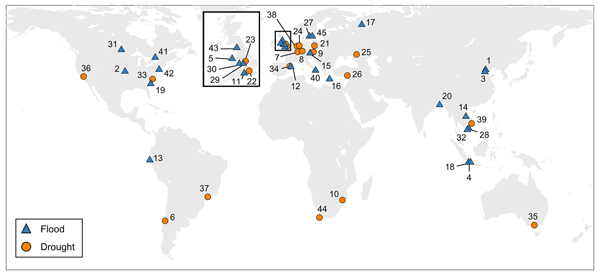
As the adverse impacts of hydrological extremes increase in many regions of the world, a better understanding of the drivers of changes in risk and impacts is essential for effective flood and drought risk management. We present a dataset containing data of paired events, i.e. two floods or two droughts that occurred in the same area. The dataset enables comparative analyses and allows detailed context-specific assessments. Additionally, it supports the testing of socio-hydrological models.
Louisa D. Oldham, Jim Freer, Gemma Coxon, Nicholas Howden, John P. Bloomfield, and Christopher Jackson
Hydrol. Earth Syst. Sci., 27, 761–781, https://doi.org/10.5194/hess-27-761-2023, https://doi.org/10.5194/hess-27-761-2023, 2023
Short summary
Short summary
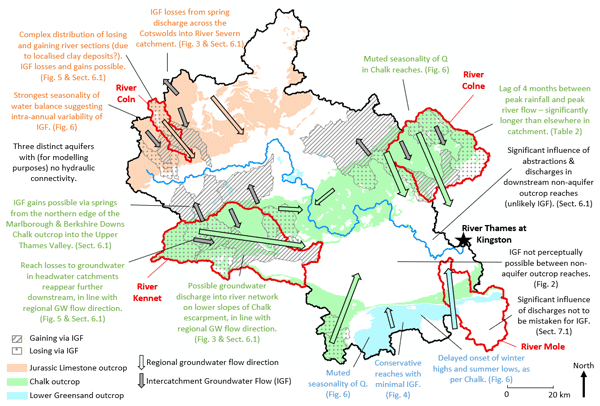
Water can move between river catchments via the subsurface, termed intercatchment groundwater flow (IGF). We show how a perceptual model of IGF can be developed with relatively simple geological interpretation and data requirements. We find that IGF dynamics vary in space, correlated to the dominant underlying geology. We recommend that IGF
loss functionsmay be used in conceptual rainfall–runoff models but should be supported by perceptualisation of IGF processes and connectivities.
Sarah Shannon, Anthony Payne, Jim Freer, Gemma Coxon, Martina Kauzlaric, David Kriegel, and Stephan Harrison
Hydrol. Earth Syst. Sci., 27, 453–480, https://doi.org/10.5194/hess-27-453-2023, https://doi.org/10.5194/hess-27-453-2023, 2023
Short summary
Short summary
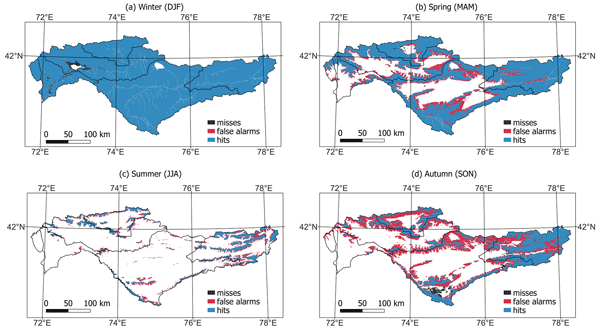
Climate change poses a potential threat to water supply in glaciated river catchments. In this study, we added a snowmelt and glacier melt model to the Dynamic fluxEs and ConnectIvity for Predictions of HydRology model (DECIPHeR). The model is applied to the Naryn River catchment in central Asia and is found to reproduce past change discharge and the spatial extent of seasonal snow cover well.
Rosanna A. Lane, Gemma Coxon, Jim Freer, Jan Seibert, and Thorsten Wagener
Hydrol. Earth Syst. Sci., 26, 5535–5554, https://doi.org/10.5194/hess-26-5535-2022, https://doi.org/10.5194/hess-26-5535-2022, 2022
Short summary
Short summary
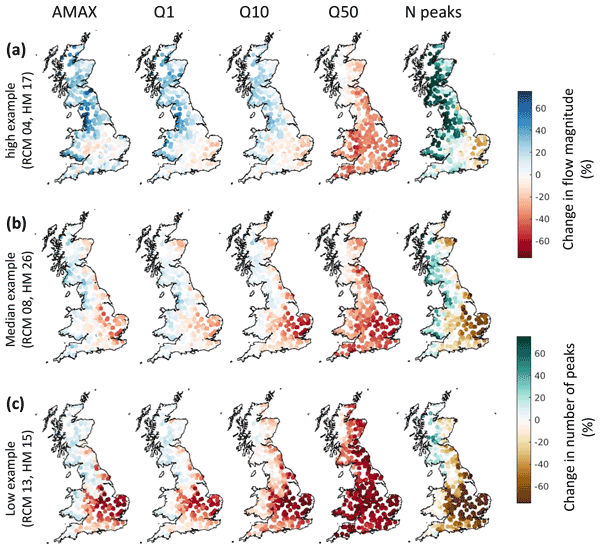
This study modelled the impact of climate change on river high flows across Great Britain (GB). Generally, results indicated an increase in the magnitude and frequency of high flows along the west coast of GB by 2050–2075. In contrast, average flows decreased across GB. All flow projections contained large uncertainties; the climate projections were the largest source of uncertainty overall but hydrological modelling uncertainties were considerable in some regions.
Thomas Lees, Marcus Buechel, Bailey Anderson, Louise Slater, Steven Reece, Gemma Coxon, and Simon J. Dadson
Hydrol. Earth Syst. Sci., 25, 5517–5534, https://doi.org/10.5194/hess-25-5517-2021, https://doi.org/10.5194/hess-25-5517-2021, 2021
Short summary
Short summary
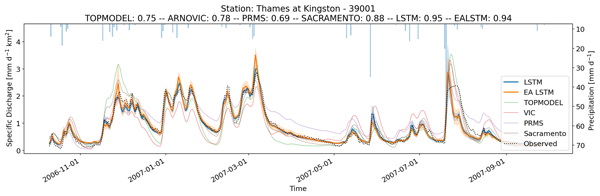
We used deep learning (DL) models to simulate the amount of water moving through a river channel (discharge) based on the rainfall, temperature and potential evaporation in the previous days. We tested the DL models on catchments across Great Britain finding that the model can accurately simulate hydrological systems across a variety of catchment conditions. Ultimately, the model struggled most in areas where there is chalky bedrock and where human influence on the catchment is large.
James G. Carruthers, Anna Murgatroyd, and Hayley J. Fowler
EGUsphere, https://doi.org/10.5194/egusphere-2026-5132, https://doi.org/10.5194/egusphere-2026-5132, 2026
This preprint is open for discussion and under review for Hydrology and Earth System Sciences (HESS).
Short summary
Short summary
River flows in Great Britain vary strongly from year to year, affecting both floods and droughts. We show that large-scale weather patterns over the North Atlantic explain much of this variability in winter, especially in western and northern regions. UKCP18 climate models underestimate this weather-driven streamflow variability, which may affect future flood and drought assessments.
Ryoko Araki, Anne Holt, John C. Hammond, Admin Husic, Gemma Coxon, and Hilary K. McMillan
Hydrol. Earth Syst. Sci., 30, 3647–3673, https://doi.org/10.5194/hess-30-3647-2026, https://doi.org/10.5194/hess-30-3647-2026, 2026
Short summary
Short summary
We mapped dominant hydrologic processes across the United States by analyzing observed streamflow dynamics. Using random forest models and interpretable machine learning techniques, we predicted processes in data-scarce regions and identified key drivers such as climate, soil and geology, land cover, topography, and human influence. The resulting maps of dominant processes and their drivers reveal strong regional patterns that guide hydrologic model selection and water resource management.
Doris E. Wendt, Gemma Coxon, Saskia Salwey, and Francesca Pianosi
Hydrol. Earth Syst. Sci., 30, 2837–2857, https://doi.org/10.5194/hess-30-2837-2026, https://doi.org/10.5194/hess-30-2837-2026, 2026
Short summary
Short summary
Groundwater is a highly-used water source, which drought management is complicated. We introduce a socio-hydrological water resource model (SHOWER) to aid drought management in groundwater-rich managed environments. Results show which and when drought management interventions influence surface water and groundwater storage, with integrated interventions having most effect on reducing droughts. This encourages further exploration to reduce water shortages and improve future drought resilience.
Saskia Salwey, Sandra Hauswirth, Denise Ruijsch, Barry van Jaarsveld, Jonna van Mourik, and Niko Wanders
EGUsphere, https://doi.org/10.5194/egusphere-2026-2335, https://doi.org/10.5194/egusphere-2026-2335, 2026
Short summary
Short summary
This paper investigates how weather conditions influence droughts in groundwater. We focus on understanding why some groundwater droughts last for several years, since these long events can be difficult to manage and have particularly bad impacts. We find that some features of the groundwater system can worsen the effects of dry weather, making long groundwater droughts more likely. We categorize global groundwater data into three groups to describe how it is impacted by the weather.
Felipe Fileni, Hayley J. Fowler, Elizabeth Lewis, Fiona McLay, Gemma Coxon, David Archer, Emma Bruce, Longzhi Yang, Matt Fry, Hollie Cooper, and Ollie Swain
EGUsphere, https://doi.org/10.5194/egusphere-2026-277, https://doi.org/10.5194/egusphere-2026-277, 2026
Short summary
Short summary
This study develops and applies a national framework to identify and flag issues in UK river flow data by combining systematic visual checks with automated tests. We demonstrate the importance of visual inspection, refine and sensitivity-test traditional quality-control methods, and develop new high-flow checks tailored to high-resolution data. We then quantify the frequency of these issues and demonstrate that, if overlooked, they can impact scientific results and lead to misleading conclusions
Felipe Fileni, Hayley J. Fowler, Elizabeth Lewis, Matt Fry, Hollie Cooper, Ollie Swain, Fiona McLay, Gemma Coxon, Emma Bruce, Longzhi Yang, and David Archer
Earth Syst. Sci. Data Discuss., https://doi.org/10.5194/essd-2026-152, https://doi.org/10.5194/essd-2026-152, 2026
Revised manuscript under review for ESSD
Short summary
Short summary
River flow data recorded at 15-minute resolution has been collected across the UK for over 70 years, but it has been difficult to access and use consistently. We brought these records together into a single national dataset, checked them for errors, harmonised different records, and clearly documented any issues and suspect values. The result is a reliable and transparent resource that supports better flood forecasting, water management, and research on climate change impacts on river flows.
Christian Chwala, Aart Overeem, Erlend Øydvin, Louise Petersson Wårdh, Jochen Seidel, Maximilian Graf, Bas Walraven, Elia Covi, Hai Victor Habi, Martin Fencl, Lotte de Vos, Filippo Giannetti, Amy Green, Tess O’Hara, Nico Blettner, Tom Keel, Georges Schutz, Abbas El Hachem, Nicholas Illich, Julius Polz, Taoufiq Shit, Lukáš Kaleta, Damaris Zulkarnaen, and Vojtěch Bareš
EGUsphere, https://doi.org/10.5194/egusphere-2025-5438, https://doi.org/10.5194/egusphere-2025-5438, 2026
Short summary
Short summary
Data from so called opportunistic sensors, devices that have not been designed to provide reliable weather data, can offer valuable rainfall information. But good data processing is crucial. For this task, we created the OpenSense software ecosystem, featuring new specialized tools built on a shared foundation. These new tools allow us to collaboratively advance research and improve the operational usage of opportunistic rainfall data to provide more accurate rainfall maps.
William Veness, Alejandro Dussaillant, Gemma Coxon, Simon De Stercke, Gareth H. Old, Matthew Fry, Jonathan G. Evans, and Wouter Buytaert
Hydrol. Earth Syst. Sci., 29, 6201–6219, https://doi.org/10.5194/hess-29-6201-2025, https://doi.org/10.5194/hess-29-6201-2025, 2025
Short summary
Short summary
We investigated what users want from the next-generation of hydrological monitoring systems to better support science and innovation. Through literature review and interviews with UK experts, we found that beyond providing high-quality data, users particularly value additional support for collecting their own data, sharing it with others, and building collaborations with other data users. Designing systems with these needs in mind can greatly boost long-term engagement, data coverage and impact.
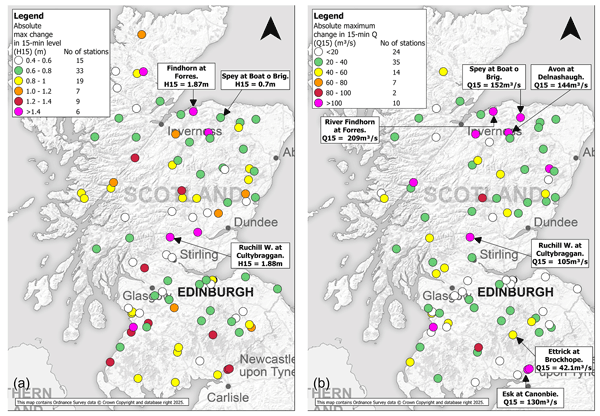
David R. Archer, Felipe Fileni, Sam A. Watkiss, and Hayley J. Fowler
Hydrol. Earth Syst. Sci., 29, 5777–5789, https://doi.org/10.5194/hess-29-5777-2025, https://doi.org/10.5194/hess-29-5777-2025, 2025
Short summary
Short summary
Our intention is to highlight the unacknowledged and sometimes fatal hazard of rapid rate of rise in river level and flow. Using the full 15 min records of 260 Scottish gauging stations, we have extracted the maximum rates of 15 min rise in events generated by intense convective rainfall and described their characteristics in terms of the severity of the hazard within and between catchments. Events have all the properties of kinematic shock whose mere existence has previously been doubted.
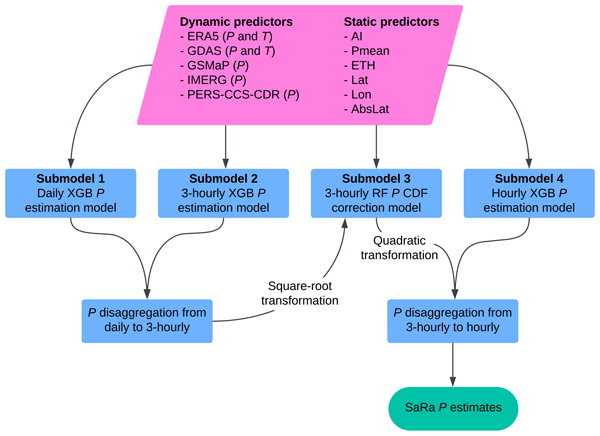
Xuetong Wang, Raied S. Alharbi, Oscar M. Baez-Villanueva, Amy Green, Matthew F. McCabe, Yoshihide Wada, Albert I. J. M. Van Dijk, Muhammad A. Abid, and Hylke E. Beck
Hydrol. Earth Syst. Sci., 29, 4983–5003, https://doi.org/10.5194/hess-29-4983-2025, https://doi.org/10.5194/hess-29-4983-2025, 2025
Short summary
Short summary
Our paper introduces Saudi Rainfall (SaRa), a high-resolution, near-real-time rainfall product for the Arabian Peninsula. Using machine learning, SaRa combines multiple satellite and (re)analysis datasets with static predictors, outperforming existing products in the region. With the fast development and continuing growth in water demand over this region, SaRa could help to address water challenges and support resource management.
Songtang He, Zhenhong Shen, Jeffrey Neal, Zongji Yang, Jiangang Chen, Daojie Wang, Yujing Yang, Peng Zhao, Xudong Hu, Yongming Lin, Youtong Rong, Yanchen Zheng, Xiaoli Su, and Yong Kong
EGUsphere, https://doi.org/10.5194/egusphere-2025-3004, https://doi.org/10.5194/egusphere-2025-3004, 2025
Preprint archived
Short summary
Short summary
We explored why landslides still happen in areas with dense vegetation. Using data from a mountainous region in China, we combined large-scale mapping with detailed field analysis. We found that while plants can help prevent landslides, their weight and interaction with rainfall and wind can sometimes make slopes more unstable. This research highlights the complex role of vegetation and helps improve landslide prediction and prevention in green mountain areas.
Yanchen Zheng, Gemma Coxon, Mostaquimur Rahman, Ross Woods, Saskia Salwey, Youtong Rong, and Doris E. Wendt
Geosci. Model Dev., 18, 4247–4271, https://doi.org/10.5194/gmd-18-4247-2025, https://doi.org/10.5194/gmd-18-4247-2025, 2025
Short summary
Short summary
Groundwater is vital for people and ecosystems, but most physical models lack the representation of surface–groundwater interactions, leading to inaccurate streamflow predictions in groundwater-rich areas. This study presents DECIPHeR-GW v1, which links surface and groundwater systems to improve predictions of streamflow and groundwater levels. Tested across England and Wales, DECIPHeR-GW shows high accuracy, especially in southeast England, making it a valuable tool for large-scale water management.
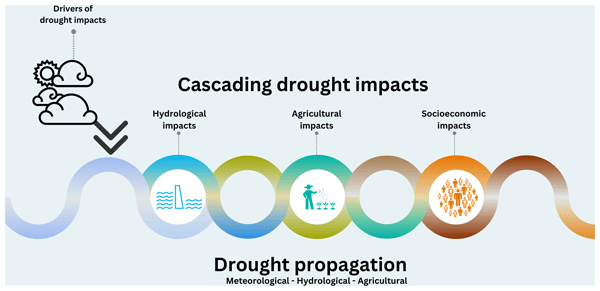
Louise Cavalcante, David W. Walker, Sarra Kchouk, Germano Ribeiro Neto, Taís Maria Nunes Carvalho, Mariana Madruga de Brito, Wieke Pot, Art Dewulf, and Pieter R. van Oel
Nat. Hazards Earth Syst. Sci., 25, 1993–2005, https://doi.org/10.5194/nhess-25-1993-2025, https://doi.org/10.5194/nhess-25-1993-2025, 2025
Short summary
Short summary
Drought affects not only water availability but also agriculture, the economy, and communities. This study explores how public policies help reduce these impacts in Ceará, Northeast Brazil. Using qualitative drought monitoring data, interviews, and policy analysis, we found that policies supporting local economies help lessen drought effects. However, most reported impacts are still related to water shortages, showing the need for broader strategies beyond water supply investment.
Eleyna L. McGrady, Stephen J. Birkinshaw, Elizabeth Lewis, Ben A. Smith, Claire L. Walsh, Geoff Darch, and Jeremy Dearlove
EGUsphere, https://doi.org/10.5194/egusphere-2025-1824, https://doi.org/10.5194/egusphere-2025-1824, 2025
Short summary
Short summary
We developed a method to improve a complex hydrological model that simulates how rivers respond to rainfall across the UK. By automatically adjusting the model’s settings, we made it more accurate at predicting river flows in almost 700 locations. Our method also helps ensure the model reflects real-world conditions. Results provide evidence that detailed hydrological models can now be used at a national scale, which is important for managing water and planning for future climate changes.
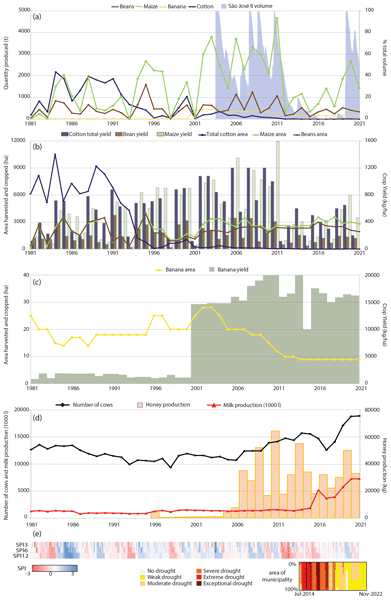
Sarra Kchouk, Louise Cavalcante, Lieke A. Melsen, David W. Walker, Germano Ribeiro Neto, Rubens Gondim, Wouter J. Smolenaars, and Pieter R. van Oel
Nat. Hazards Earth Syst. Sci., 25, 893–912, https://doi.org/10.5194/nhess-25-893-2025, https://doi.org/10.5194/nhess-25-893-2025, 2025
Short summary
Short summary
Droughts impact water and people, yet monitoring often overlooks impacts on people. In northeastern Brazil, we compare official data to local experiences, finding data mismatches and blind spots. Mismatches occur due to the data's broad scope missing finer details. Blind spots arise from ignoring diverse community responses and vulnerabilities to droughts. We suggest enhanced monitoring by technical extension officers for both severe and mild droughts.
Jerom P. M. Aerts, Jannis M. Hoch, Gemma Coxon, Nick C. van de Giesen, and Rolf W. Hut
Hydrol. Earth Syst. Sci., 28, 5011–5030, https://doi.org/10.5194/hess-28-5011-2024, https://doi.org/10.5194/hess-28-5011-2024, 2024
Short summary
Short summary
For users of hydrological models, model suitability often hinges on how well simulated outputs match observed discharge. This study highlights the importance of including discharge observation uncertainty in hydrological model performance assessment. We highlight the need to account for this uncertainty in model comparisons and introduce a practical method suitable for any observational time series with available uncertainty estimates.
Amy C. Green, Chris Kilsby, and András Bárdossy
Hydrol. Earth Syst. Sci., 28, 4539–4558, https://doi.org/10.5194/hess-28-4539-2024, https://doi.org/10.5194/hess-28-4539-2024, 2024
Short summary
Short summary
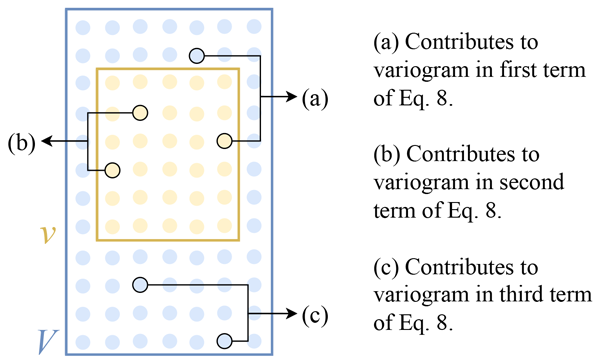
Weather radar is a crucial tool in rainfall estimation, but radar rainfall estimates are subject to many error sources, with the true rainfall field unknown. A flexible model for simulating errors relating to the radar rainfall estimation process is implemented, inverting standard processing methods. This flexible and efficient model performs well in generating realistic weather radar images visually for a large range of event types.
Anne F. Van Loon, Sarra Kchouk, Alessia Matanó, Faranak Tootoonchi, Camila Alvarez-Garreton, Khalid E. A. Hassaballah, Minchao Wu, Marthe L. K. Wens, Anastasiya Shyrokaya, Elena Ridolfi, Riccardo Biella, Viorica Nagavciuc, Marlies H. Barendrecht, Ana Bastos, Louise Cavalcante, Franciska T. de Vries, Margaret Garcia, Johanna Mård, Ileen N. Streefkerk, Claudia Teutschbein, Roshanak Tootoonchi, Ruben Weesie, Valentin Aich, Juan P. Boisier, Giuliano Di Baldassarre, Yiheng Du, Mauricio Galleguillos, René Garreaud, Monica Ionita, Sina Khatami, Johanna K. L. Koehler, Charles H. Luce, Shreedhar Maskey, Heidi D. Mendoza, Moses N. Mwangi, Ilias G. Pechlivanidis, Germano G. Ribeiro Neto, Tirthankar Roy, Robert Stefanski, Patricia Trambauer, Elizabeth A. Koebele, Giulia Vico, and Micha Werner
Nat. Hazards Earth Syst. Sci., 24, 3173–3205, https://doi.org/10.5194/nhess-24-3173-2024, https://doi.org/10.5194/nhess-24-3173-2024, 2024
Short summary
Short summary
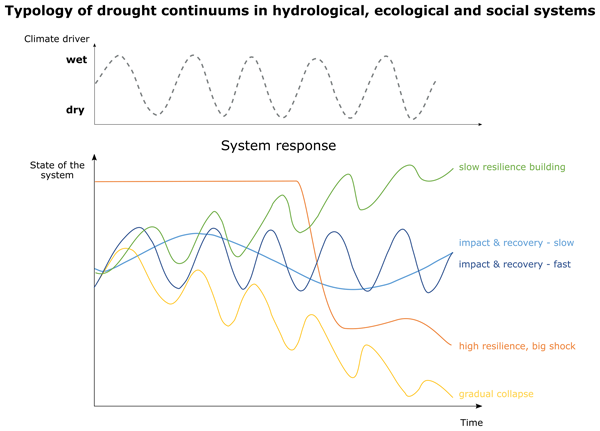
Drought is a creeping phenomenon but is often still analysed and managed like an isolated event, without taking into account what happened before and after. Here, we review the literature and analyse five cases to discuss how droughts and their impacts develop over time. We find that the responses of hydrological, ecological, and social systems can be classified into four types and that the systems interact. We provide suggestions for further research and monitoring, modelling, and management.
Saskia Salwey, Gemma Coxon, Francesca Pianosi, Rosanna Lane, Chris Hutton, Michael Bliss Singer, Hilary McMillan, and Jim Freer
Hydrol. Earth Syst. Sci., 28, 4203–4218, https://doi.org/10.5194/hess-28-4203-2024, https://doi.org/10.5194/hess-28-4203-2024, 2024
Short summary
Short summary
Reservoirs are essential for water resource management and can significantly impact downstream flow. However, representing reservoirs in hydrological models can be challenging, particularly across large scales. We design a new and simple method for simulating river flow downstream of water supply reservoirs using only open-access data. We demonstrate the approach in 264 reservoir catchments across Great Britain, where we can significantly improve the simulation of reservoir-impacted flow.
Yanchen Zheng, Gemma Coxon, Ross Woods, Daniel Power, Miguel Angel Rico-Ramirez, David McJannet, Rafael Rosolem, Jianzhu Li, and Ping Feng
Hydrol. Earth Syst. Sci., 28, 1999–2022, https://doi.org/10.5194/hess-28-1999-2024, https://doi.org/10.5194/hess-28-1999-2024, 2024
Short summary
Short summary
Reanalysis soil moisture products are a vital basis for hydrological and environmental research. Previous product evaluation is limited by the scale difference (point and grid scale). This paper adopts cosmic ray neutron sensor observations, a novel technique that provides root-zone soil moisture at field scale. In this paper, global harmonized CRNS observations were used to assess products. ERA5-Land, SMAPL4, CFSv2, CRA40 and GLEAM show better performance than MERRA2, GLDAS-Noah and JRA55.
Conrad Wasko, Seth Westra, Rory Nathan, Acacia Pepler, Timothy H. Raupach, Andrew Dowdy, Fiona Johnson, Michelle Ho, Kathleen L. McInnes, Doerte Jakob, Jason Evans, Gabriele Villarini, and Hayley J. Fowler
Hydrol. Earth Syst. Sci., 28, 1251–1285, https://doi.org/10.5194/hess-28-1251-2024, https://doi.org/10.5194/hess-28-1251-2024, 2024
Short summary
Short summary
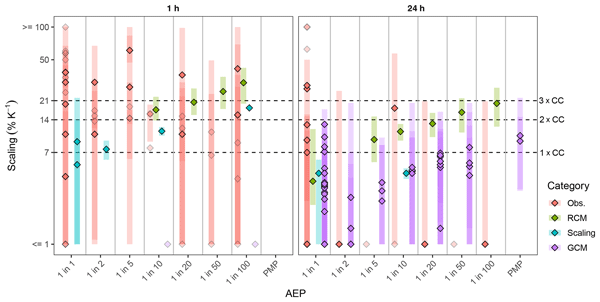
In response to flood risk, design flood estimation is a cornerstone of infrastructure design and emergency response planning, but design flood estimation guidance under climate change is still in its infancy. We perform the first published systematic review of the impact of climate change on design flood estimation and conduct a meta-analysis to provide quantitative estimates of possible future changes in extreme rainfall.
Germano G. Ribeiro Neto, Sarra Kchouk, Lieke A. Melsen, Louise Cavalcante, David W. Walker, Art Dewulf, Alexandre C. Costa, Eduardo S. P. R. Martins, and Pieter R. van Oel
Hydrol. Earth Syst. Sci., 27, 4217–4225, https://doi.org/10.5194/hess-27-4217-2023, https://doi.org/10.5194/hess-27-4217-2023, 2023
Short summary
Short summary
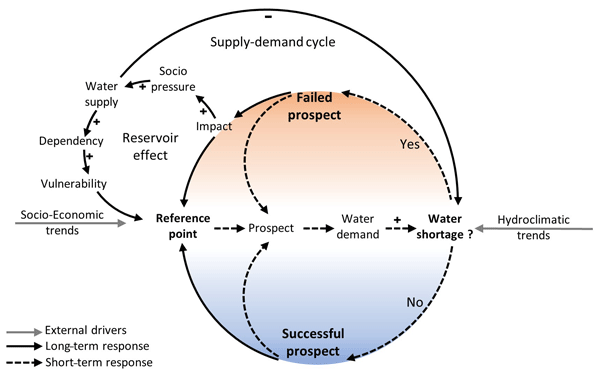
People induce and modify droughts. However, we do not know exactly how relevant human and natural processes interact nor how to evaluate the co-evolution of people and water. Prospect theory can help us to explain the emergence of drought impacts leading to failed welfare expectations (“prospects”) due to water shortage. Our approach helps to explain socio-hydrological phenomena, such as reservoir effects, and can contribute to integrated drought management considering the local context.
Kathryn A. Leeming, John P. Bloomfield, Gemma Coxon, and Yanchen Zheng
Hydrol. Earth Syst. Sci. Discuss., https://doi.org/10.5194/hess-2023-202, https://doi.org/10.5194/hess-2023-202, 2023
Preprint withdrawn
Short summary
Short summary
In this work we characterise annual patterns in baseflow, the component of streamflow that comes from subsurface storage. Our research identified early-, mid-, and late-seasonality of baseflow across catchments in Great Britain over two time blocks: 1976–1995 and 1996–2015, and found that many catchments have earlier seasonal patterns of baseflow in the second time period. These changes are linked to changes in climate signals: snow-melt in highland catchments and effective rainfall changes.
Heidi Kreibich, Kai Schröter, Giuliano Di Baldassarre, Anne F. Van Loon, Maurizio Mazzoleni, Guta Wakbulcho Abeshu, Svetlana Agafonova, Amir AghaKouchak, Hafzullah Aksoy, Camila Alvarez-Garreton, Blanca Aznar, Laila Balkhi, Marlies H. Barendrecht, Sylvain Biancamaria, Liduin Bos-Burgering, Chris Bradley, Yus Budiyono, Wouter Buytaert, Lucinda Capewell, Hayley Carlson, Yonca Cavus, Anaïs Couasnon, Gemma Coxon, Ioannis Daliakopoulos, Marleen C. de Ruiter, Claire Delus, Mathilde Erfurt, Giuseppe Esposito, Didier François, Frédéric Frappart, Jim Freer, Natalia Frolova, Animesh K. Gain, Manolis Grillakis, Jordi Oriol Grima, Diego A. Guzmán, Laurie S. Huning, Monica Ionita, Maxim Kharlamov, Dao Nguyen Khoi, Natalie Kieboom, Maria Kireeva, Aristeidis Koutroulis, Waldo Lavado-Casimiro, Hong-Yi Li, Maria Carmen LLasat, David Macdonald, Johanna Mård, Hannah Mathew-Richards, Andrew McKenzie, Alfonso Mejia, Eduardo Mario Mendiondo, Marjolein Mens, Shifteh Mobini, Guilherme Samprogna Mohor, Viorica Nagavciuc, Thanh Ngo-Duc, Huynh Thi Thao Nguyen, Pham Thi Thao Nhi, Olga Petrucci, Nguyen Hong Quan, Pere Quintana-Seguí, Saman Razavi, Elena Ridolfi, Jannik Riegel, Md Shibly Sadik, Nivedita Sairam, Elisa Savelli, Alexey Sazonov, Sanjib Sharma, Johanna Sörensen, Felipe Augusto Arguello Souza, Kerstin Stahl, Max Steinhausen, Michael Stoelzle, Wiwiana Szalińska, Qiuhong Tang, Fuqiang Tian, Tamara Tokarczyk, Carolina Tovar, Thi Van Thu Tran, Marjolein H. J. van Huijgevoort, Michelle T. H. van Vliet, Sergiy Vorogushyn, Thorsten Wagener, Yueling Wang, Doris E. Wendt, Elliot Wickham, Long Yang, Mauricio Zambrano-Bigiarini, and Philip J. Ward
Earth Syst. Sci. Data, 15, 2009–2023, https://doi.org/10.5194/essd-15-2009-2023, https://doi.org/10.5194/essd-15-2009-2023, 2023
Short summary
Short summary
As the adverse impacts of hydrological extremes increase in many regions of the world, a better understanding of the drivers of changes in risk and impacts is essential for effective flood and drought risk management. We present a dataset containing data of paired events, i.e. two floods or two droughts that occurred in the same area. The dataset enables comparative analyses and allows detailed context-specific assessments. Additionally, it supports the testing of socio-hydrological models.
Louisa D. Oldham, Jim Freer, Gemma Coxon, Nicholas Howden, John P. Bloomfield, and Christopher Jackson
Hydrol. Earth Syst. Sci., 27, 761–781, https://doi.org/10.5194/hess-27-761-2023, https://doi.org/10.5194/hess-27-761-2023, 2023
Short summary
Short summary
Water can move between river catchments via the subsurface, termed intercatchment groundwater flow (IGF). We show how a perceptual model of IGF can be developed with relatively simple geological interpretation and data requirements. We find that IGF dynamics vary in space, correlated to the dominant underlying geology. We recommend that IGF
loss functionsmay be used in conceptual rainfall–runoff models but should be supported by perceptualisation of IGF processes and connectivities.
Sarah Shannon, Anthony Payne, Jim Freer, Gemma Coxon, Martina Kauzlaric, David Kriegel, and Stephan Harrison
Hydrol. Earth Syst. Sci., 27, 453–480, https://doi.org/10.5194/hess-27-453-2023, https://doi.org/10.5194/hess-27-453-2023, 2023
Short summary
Short summary
Climate change poses a potential threat to water supply in glaciated river catchments. In this study, we added a snowmelt and glacier melt model to the Dynamic fluxEs and ConnectIvity for Predictions of HydRology model (DECIPHeR). The model is applied to the Naryn River catchment in central Asia and is found to reproduce past change discharge and the spatial extent of seasonal snow cover well.
Rosanna A. Lane, Gemma Coxon, Jim Freer, Jan Seibert, and Thorsten Wagener
Hydrol. Earth Syst. Sci., 26, 5535–5554, https://doi.org/10.5194/hess-26-5535-2022, https://doi.org/10.5194/hess-26-5535-2022, 2022
Short summary
Short summary
This study modelled the impact of climate change on river high flows across Great Britain (GB). Generally, results indicated an increase in the magnitude and frequency of high flows along the west coast of GB by 2050–2075. In contrast, average flows decreased across GB. All flow projections contained large uncertainties; the climate projections were the largest source of uncertainty overall but hydrological modelling uncertainties were considerable in some regions.
Thomas Lees, Marcus Buechel, Bailey Anderson, Louise Slater, Steven Reece, Gemma Coxon, and Simon J. Dadson
Hydrol. Earth Syst. Sci., 25, 5517–5534, https://doi.org/10.5194/hess-25-5517-2021, https://doi.org/10.5194/hess-25-5517-2021, 2021
Short summary
Short summary
We used deep learning (DL) models to simulate the amount of water moving through a river channel (discharge) based on the rainfall, temperature and potential evaporation in the previous days. We tested the DL models on catchments across Great Britain finding that the model can accurately simulate hydrological systems across a variety of catchment conditions. Ultimately, the model struggled most in areas where there is chalky bedrock and where human influence on the catchment is large.
Cited articles
Addor, N., Newman, A. J., Mizukami, N., and Clark, M. P.: The CAMELS data set: catchment attributes and meteorology for large-sample studies, Hydrol. Earth Syst. Sci., 21, 5293–5313, https://doi.org/10.5194/hess-21-5293-2017, 2017.
Addor, N., Nearing, G., Prieto, C., Newman, A. J., Le Vine, N., and Clark, M. P.: A Ranking of Hydrological Signatures Based on Their Predictability in Space, Water Resour. Res., 54, 8792–8812, https://doi.org/10.1029/2018WR022606, 2018.
Almagro, A., Oliveira, P. T. S., Meira Neto, A. A., Roy, T., and Troch, P.: CABra: a novel large-sample dataset for Brazilian catchments, Hydrol. Earth Syst. Sci., 25, 3105–3135, https://doi.org/10.5194/hess-25-3105-2021, 2021.
Alvarez-Garreton, C., Mendoza, P. A., Boisier, J. P., Addor, N., Galleguillos, M., Zambrano-Bigiarini, M., Lara, A., Puelma, C., Cortes, G., Garreaud, R., McPhee, J., and Ayala, A.: The CAMELS-CL dataset: catchment attributes and meteorology for large sample studies – Chile dataset, Hydrol. Earth Syst. Sci., 22, 5817–5846, https://doi.org/10.5194/hess-22-5817-2018, 2018.
Arsenault, R., Brissette, F., Martel, J.-L., Troin, M., Lévesque, G., Davidson-Chaput, J., Gonzalez, M. C., Ameli, A., and Poulin, A.: A comprehensive, multisource database for hydrometeorological modeling of 14 425 North American watersheds, Sci. Data, 7, 243, https://doi.org/10.1038/s41597-020-00583-2, 2020.
Baston, D.: exactextract: Fast Extraction from Raster Datasets using Polygons, Python package, GitHub [code], https://isciences.github.io/exactextract/ (last access: 25 June 2026), 2024.
Bathelemy, R., Brigode, P., Andréassian, V., Perrin, C., Moron, V., Gaucherel, C., Tric, E., and Boisson, D.: Simbi: historical hydro-meteorological time series and signatures for 24 catchments in Haiti, Earth Syst. Sci. Data, 16, 2073–2098, https://doi.org/10.5194/essd-16-2073-2024, 2024.
Bayliss, A.: Flood estimation handbook: Catchment descriptors, Institute of Hydrology, https://www.ceh.ac.uk/sites/default/files/2021-11/Flood-Estimation Handbook-5-Catchment-Descriptors_Adrian-Bayliss.pdf (last access: 25 June 2026), 1999.
BGS hydrogeology 625k: https://www.bgs.ac.uk/products/hydrogeology/maps.html, last access: 8 October 2019.
Bloomfield, J. P., Gong, M., Marchant, B. P., Coxon, G., and Addor, N.: How is Baseflow Index (BFI) impacted by water resource management practices?, Hydrol. Earth Syst. Sci., 25, 5355–5379, https://doi.org/10.5194/hess-25-5355-2021, 2021.
Brown, M. J., Robinson, E. L., Kay, A. L., Chapman, R., Bell, V. A., and Blyth, E. M.: Potential evapotranspiration derived from HadUK-Grid 1 km gridded climate observations 1969–2022 (Hydro-PE HadUK-Grid), NERC EDS Environmental Information Data Centre [data set], https://doi.org/10.5285/beb62085-ba81-480c-9ed0-2d31c27ff196, 2023.
Chagas, V. B. P., Chaffe, P. L. B., Addor, N., Fan, F. M., Fleischmann, A. S., Paiva, R. C. D., and Siqueira, V. A.: CAMELS-BR: hydrometeorological time series and landscape attributes for 897 catchments in Brazil, Earth Syst. Sci. Data, 12, 2075–2096, https://doi.org/10.5194/essd-12-2075-2020, 2020.
Chagas, V. B. P., Chaffe, P. L. B., and Blöschl, G.: Climate and land management accelerate the Brazilian water cycle, Nat. Commun., 13, 5136, https://doi.org/10.1038/s41467-022-32580-x, 2022a.
Chagas, V. B. P., Chaffe, P. L. B., and Blöschl, G.: Process Controls on Flood Seasonality in Brazil, Geophys. Res. Lett., 49, e2021GL096754, https://doi.org/10.1029/2021GL096754, 2022b.
Cosby, B. J., Hornberger, G. M., Clapp, R. B., and Ginn, T. R.: A Statistical Exploration of the Relationships of Soil Moisture Characteristics to the Physical Properties of Soils, Water Resour. Res., 20, 682–690, https://doi.org/10.1029/WR020i006p00682, 1984.
Coxon, G., Freer, J., Westerberg, I. K., Wagener, T., Woods, R., and Smith, P. J.: A novel framework for discharge uncertainty quantification applied to 500 UK gauging stations, Water Resour. Res., https://doi.org/10.1002/2014WR016532, 2015.
Coxon, G., Addor, N., Bloomfield, J. P., Freer, J., Fry, M., Hannaford, J., Howden, N. J. K., Lane, R., Lewis, M., Robinson, E. L., Wagener, T., and Woods, R.: CAMELS-GB: hydrometeorological time series and landscape attributes for 671 catchments in Great Britain, Earth Syst. Sci. Data, 12, 2459–2483, https://doi.org/10.5194/essd-12-2459-2020, 2020a.
Coxon, G., Addor, N., Bloomfield, J. P., Freer, J., Fry, M., Hannaford, J., Howden, N. J. K., Lane, R., Lewis, M., Robinson, E. L., Wagener, T., and Woods, R.: Catchment attributes and hydro-meteorological timeseries for 671 catchments across Great Britain (CAMELS-GB), NERC Environmental Information Data Centre [data set], https://doi.org/10.5285/8344e4f3-d2ea-44f5-8afa-86d2987543a9, 2020b.
Coxon, G., McMillan, H., Bloomfield, J. P., Bolotin, L., Dean, J. F., Kelleher, C., Slater, L., and Zheng, Y.: Wastewater discharges and urban land cover dominate urban hydrology signals across England and Wales, Environ. Res. Lett., 19, 084016, https://doi.org/10.1088/1748-9326/ad5bf2, 2024.
Coxon, G., Zheng, Y., Barbedo, R., Cooper, H., Fileni, F., Fowler, H., Fry, M., Green, A., Gribbin, T., Harfoot, H., Lewis, E., Qiu, X., Salwey, S., Wendt, D. E., and Neto, G. G. R.: Catchment boundaries, daily and sub-daily hydrometeorological time series, groundwater level time series and attributes for 671 catchments in Great Britain (CAMELS-GB v2), NERC EDS Environmental Information Data Centre [data set], https://doi.org/10.5285/9a46d428-958f-4ac1-86eb-94eee70c0955, 2025.
David, P. C., Chaffe, P. L. B., Chagas, V. B. P., Dal Molin, M., Oliveira, D. Y., Klein, A. H. F., and Fenicia, F.: Correspondence Between Model Structures and Hydrological Signatures: A Large-Sample Case Study Using 508 Brazilian Catchments, Water Resour. Res., 58, e2021WR030619, https://doi.org/10.1029/2021WR030619, 2022.
Dixon, H., Hannaford, J., and Fry, M. J.: The effective management of national hydrometric data: experiences from the United Kingdom, Hydrolog. Sci. J., 58, 1383–1399, https://doi.org/10.1080/02626667.2013.787486, 2013.
Do, H. X., Gudmundsson, L., Leonard, M., and Westra, S.: The Global Streamflow Indices and Metadata Archive (GSIM) – Part 1: The production of a daily streamflow archive and metadata, Earth Syst. Sci. Data, 10, 765–785, https://doi.org/10.5194/essd-10-765-2018, 2018.
do Nascimento, T. V. M., Rudlang, J., Höge, M., van der Ent, R., Chappon, M., Seibert, J., Hrachowitz, M., and Fenicia, F.: EStreams: An integrated dataset and catalogue of streamflow, hydro-climatic and landscape variables for Europe, Sci. Data, 11, 879, https://doi.org/10.1038/s41597-024-03706-1, 2024.
Durant, M. J. and Counsell, C. J.: Inventory of reservoirs amounting to 90 % of total UK storage, NERC Environmental Information Data Centre [data set], https://doi.org/10.5285/f5a7d56c-cea0-4f00-b159-c3788a3b2b38, 2018.
Fileni, F., Fowler, H. J., Lewis, E., Fry, M., Cooper, H., Swain, O., Coxon, G., McLay, F., Bruce, E., Yang, L., and Archer, D.: Sub-hourly river flow data observations from 1369 river gauges in the UK, 1948–2023 (UK-Flow15), NERC EDS Environmental Information Data Centre [data set], https://doi.org/10.5285/211710ac-f01b-4b52-807f-373babb1c368, 2025.
Fileni, F., Fowler, H. J., Lewis, E., Fry, M., Cooper, H., Swain, O., McLay, F., Coxon, G., Bruce, E., Yang, L., and Archer, D.: UK-Flow15 Part 1: Development of a coherent national-scale 15-min flow dataset, Earth Syst. Sci. Data Discuss. [preprint], https://doi.org/10.5194/essd-2026-152, in review, 2026a.
Fileni, F., Fowler, H. J., Lewis, E., McLay, F., Coxon, G., Archer, D., Bruce, E., Yang, L., Fry, M., Cooper, H., and Swain, O.: UK-Flow15-QC: A quality control framework for better river flow data in hydrological research, EGUsphere [preprint], https://doi.org/10.5194/egusphere-2026-277, 2026b.
Fowler, H. J., Coxon, G., and White, C. J.: Hydrology in the 21st century: challenges in science, to policy and practice, Philos. T. Roy. Soc. A, 383, 20240299, https://doi.org/10.1098/rsta.2024.0299, 2025.
Fowler, K. J. A., Acharya, S. C., Addor, N., Chou, C., and Peel, M. C.: CAMELS-AUS: hydrometeorological time series and landscape attributes for 222 catchments in Australia, Earth Syst. Sci. Data, 13, 3847–3867, https://doi.org/10.5194/essd-13-3847-2021, 2021.
Gustard, A., Bullock, A., and Dixon, J. M.: Low flow estimation in the United Kingdom, http://nora.nerc.ac.uk/id/eprint/6050/ (last access: 22 June 2026), 1992.
Hannaford, J.: Development of a strategic data management system for a national hydrological database, the uk national river flow archive, in: Hydroinformatics, World Scientific Publishing Company, 637–644, https://web.archive.org/web/20200321115403id_/http://indiawrm.org/Website/Webpages/PDF/Development of a strategic data management system for a nati.pdf (last access: 25 June 2026), 2004.
Harrigan, S., Hannaford, J., Muchan, K., and Marsh, T. J.: Designation and trend analysis of the updated UK Benchmark Network of river flow stations: the UKBN2 dataset, Hydrol. Res., 49, 552–567, https://doi.org/10.2166/nh.2017.058, 2018.
Helgason, H. B. and Nijssen, B.: LamaH-Ice: LArge-SaMple DAta for Hydrology and Environmental Sciences for Iceland, Earth Syst. Sci. Data, 16, 2741–2771, https://doi.org/10.5194/essd-16-2741-2024, 2024.
Hiederer, R.: Mapping Soil Properties for Europe – Spatial Representation of Soil Database Attributes, Publications Office, Luxembourg, https://doi.org/10.2788/94128, 2013a.
Hiederer, R.: Mapping soil typologies: spatial decision support applied to the European Soil Database, Publications Office, Luxembourg, https://doi.org/10.2788/87286, 2013b.
Höge, M., Kauzlaric, M., Siber, R., Schönenberger, U., Horton, P., Schwanbeck, J., Floriancic, M. G., Viviroli, D., Wilhelm, S., Sikorska-Senoner, A. E., Addor, N., Brunner, M., Pool, S., Zappa, M., and Fenicia, F.: CAMELS-CH: hydro-meteorological time series and landscape attributes for 331 catchments in hydrologic Switzerland, Earth Syst. Sci. Data, 15, 5755–5784, https://doi.org/10.5194/essd-15-5755-2023, 2023.
Hollis, D., McCarthy, M., Kendon, M., Legg, T., and Simpson, I.: HadUK-Grid – A new UK dataset of gridded climate observations, Geosci. Data J., 6, 151–159, https://doi.org/10.1002/gdj3.78, 2019.
Hough, M. N. and Jones, R. J. A.: The United Kingdom Meteorological Office rainfall and evaporation calculation system: MORECS version 2.0 – an overview, Hydrol. Earth Syst. Sci., 1, 227–239, https://doi.org/10.5194/hess-1-227-1997, 1997.
Juston, J., Jansson, P.-E. and Gustafsson, D.: Rating curve uncertainty and change detection in discharge time series: case study with 44-year historic data from the Nyangores River, Kenya, Hydrol. Process., 28, 2509–2523, https://doi.org/10.1002/hyp.9786, 2014.
Keller, V. D. J., Tanguy, M., Prosdocimi, I., Terry, J. A., Hitt, O., Cole, S. J., Fry, M., Morris, D. G., and Dixon, H.: CEH-GEAR: 1 km resolution daily and monthly areal rainfall estimates for the UK for hydrological and other applications, Earth Syst. Sci. Data, 7, 143–155, https://doi.org/10.5194/essd-7-143-2015, 2015.
Kiraz, M., Coxon, G., and Wagener, T.: A Signature-Based Hydrologic Efficiency Metric for Model Calibration and Evaluation in Gauged and Ungauged Catchments, Water Resour. Res., 59, e2023WR035321, https://doi.org/10.1029/2023WR035321, 2023.
Klingler, C., Schulz, K., and Herrnegger, M.: LamaH-CE: LArge-SaMple DAta for Hydrology and Environmental Sciences for Central Europe, Earth Syst. Sci. Data, 13, 4529–4565, https://doi.org/10.5194/essd-13-4529-2021, 2021.
Kratzert, F., Klotz, D., Hochreiter, S., and Nearing, G. S.: A note on leveraging synergy in multiple meteorological data sets with deep learning for rainfall–runoff modeling, Hydrol. Earth Syst. Sci., 25, 2685–2703, https://doi.org/10.5194/hess-25-2685-2021, 2021.
Kratzert, F., Nearing, G., Addor, N., Erickson, T., Gauch, M., Gilon, O., Gudmundsson, L., Hassidim, A., Klotz, D., Nevo, S., Shalev, G., and Matias, Y.: Caravan – A global community dataset for large-sample hydrology, Sci. Data, 10, 61, https://doi.org/10.1038/s41597-023-01975-w, 2023.
Ladson, A. R., Brown, R., Neal, B., and Nathan, R.: A Standard Approach to Baseflow Separation Using The Lyne and Hollick Filter, Australasian Journal of Water Resources, 17, 25–34, https://doi.org/10.7158/13241583.2013.11465417, 2013.
Lees, T., Buechel, M., Anderson, B., Slater, L., Reece, S., Coxon, G., and Dadson, S. J.: Benchmarking data-driven rainfall–runoff models in Great Britain: a comparison of long short-term memory (LSTM)-based models with four lumped conceptual models, Hydrol. Earth Syst. Sci., 25, 5517–5534, https://doi.org/10.5194/hess-25-5517-2021, 2021.
Lewis, E., Quinn, N., Blenkinsop, S., Fowler, H. J., Freer, J., Tanguy, M., Hitt, O., Coxon, G., Bates, P., and Woods, R.: A rule based quality control method for hourly rainfall data and a 1 km resolution gridded hourly rainfall dataset for Great Britain: CEH-GEAR1hr, J. Hydrol., 564, 930–943, https://doi.org/10.1016/j.jhydrol.2018.07.034, 2018.
Lewis, E., Quinn, N., Blenkinsop, S., Fowler, H. J., Freer, J., Tanguy, M., Hitt, O., Coxon, G., Bates, P., Woods, R., Fry, M., Chevuturi, A., Swain, O., and White, S. M.: Gridded estimates of hourly areal rainfall for Great Britain 1990–2016 [CEH-GEAR1hr] v2, NERC EDS Environmental Information Data Centre [data set], https://doi.org/10.5285/fc9423d6-3d54-467f-bb2b-fc7357a3941f, 2022.
Marsh, T. J. and Hannaford, J.: UK Hydrometric Register, Centre for Ecology and Hydrology, Wallingford, UK, ISBN 9780955767227, 2008.
Marston, C., Rowland, C. S., O'Neil, A. W., and Morton, R. D.: Land Cover Map 2021 (25 m rasterised land parcels, GB), NERC EDS Environmental Information Data Centre [data set], https://doi.org/10.5285/a1f85307-cad7-4e32-a445-84410efdfa70, 2022.
Marston, C. G., Morton, R. D., O'Neil, A. W., and Rowland, C. S.: Land Cover Map 2022 (25 m rasterised land parcels, GB), NERC EDS Environmental Information Data Centre [data set], https://doi.org/10.5285/c9449bf5-b8f6-4a1c-b3eb-0d70575cba39, 2024.
McMillan, H., Coxon, G., Araki, R., Salwey, S., Kelleher, C., Zheng, Y., Knoben, W., Gnann, S., Seibert, J., and Bolotin, L.: When good signatures go bad: Applying hydrologic signatures in large sample studies, Hydrol. Process., 37, e14987, https://doi.org/10.1002/hyp.14987, 2023.
McMillan, H. K., Gnann, S. J., and Araki, R.: Large Scale Evaluation of Relationships Between Hydrologic Signatures and Processes, Water Resour. Res., 58, e2021WR031751, https://doi.org/10.1029/2021WR031751, 2022.
Met Office: Met Office Rain Radar Data from the NIMROD System, http://catalogue.ceda.ac.uk/uuid/82adec1f896af6169112d09cc1174499 (last access: 22 June 2026), 2024.
Morris, D. G. and Flavin, R. W.: A digital terrain model for hydrology, in: Vol. 1, Proc 4th International Symposium on Spatial Data Handling, Zürich, 250–262, 1990.
Morton, R. D., Marston, C. G., O'Neil, A. W., and Rowland, C. S.: Land Cover Map 2017 (25 m rasterised land parcels, GB), NERC Environmental Information Data Centre [data set], https://doi.org/10.5285/499212cd-d64a-43ba-b801-95402e4d4098, 2020a.
Morton, R. D., Marston, C. G., O'Neil, A. W., and Rowland, C. S.: Land Cover Map 2018 (25 m rasterised land parcels, GB), NERC Environmental Information Data Centre [data set], https://doi.org/10.5285/25c6451b-5c88-40da-9a63-c3ec473e4874, 2020b.
Morton, R. D., Marston, C. G., O'Neil, A. W., and Rowland, C. S.: Land Cover Map 2019 (25 m rasterised land parcels, GB), NERC Environmental Information Data Centre [data set], https://doi.org/10.5285/f15289da-6424-4a5e-bd92-48c4d9c830cc, 2020c.
Morton, R. D., Marston, C. G., O'Neil, A. W., and Rowland, C. S.: Land Cover Map 2020 (25 m rasterised land parcels, GB), NERC Environmental Information Data Centre [data set], https://doi.org/10.5285/6c22cf6e-b224-414e-aa85-900325baedbd, 2021.
Muchan, K. and Dixon, H.: Ensuring hydrometric data are fit-for-purpose through a national Service Level Agreement, in: Hydrology in a changing world: environmental and human dimensions, edited by: Daniell, T. M., International Association of Hydrological Sciences, Wallingford, UK, 323–329, http://nora.nerc.ac.uk/id/eprint/502971/ (last access: 22 June 2026), 2014.
naddor: camels, GitHub [code], https://github.com/naddor/camels (last access: 23 September 2025), 2025.
Pelletier, J. D., Broxton, P. D., Hazenberg, P., Zeng, X., Troch, P. A., Niu, G., Williams, Z. C., Brunke, M. A., and Gochis, D.: Global 1 km Gridded Thickness of Soil, Regolith, and Sedimentary Deposit Layers, ORNL DAAC, https://doi.org/10.3334/ORNLDAAC/1304, 2016.
Qiu, X., Green, A. C., Blenkinsop, S., and Fowler, H. J.: Developing a radar-rain gauge hourly blended precipitation dataset for Great Britain using the Gauss Blending Method, J. Hydrol., 668, 134954, https://doi.org/10.1016/j.jhydrol.2026.134954, 2026a.
Qiu, X., Green, A. C., Blenkinsop, S., and Fowler, H. J.: Quality control of the composite radar quantitative precipitation estimation product for Great Britain, J. Hydrol., 666, 134755, https://doi.org/10.1016/j.jhydrol.2025.134755, 2026b.
Rameshwaran, P., Bell, V. A., Davies, H. N., Sadler, P., Beverton, A., Thornton, R., and Rhodes-Smith, M.: Gridded actual groundwater, surface water and tidal water abstraction, discharge and Hands-off Flow datasets for England (1999 to 2014), https://doi.org/10.5285/18886F95BA84447F997EFAC96DF456AD, 2025.
Rasheed, Z., Aravamudan, A., Zhang, X., Anagnostopoulos, G. C., and Nikolopoulos, E. I.: Combining global precipitation data and machine learning to predict flood peaks in ungauged areas with similar climate, Adv. Water Resour., 192, 104781, https://doi.org/10.1016/j.advwatres.2024.104781, 2024.
Robinson, E. L., Blyth, E., Clark, D. B., Comyn-Platt, E., Finch, J., and Rudd, A. C.: Climate hydrology and ecology research support system meteorology dataset for Great Britain (1961–2015) [CHESS-met] v1.2, NERC Environmental Information Data Centre [data set], https://doi.org/10.5285/b745e7b1-626c-4ccc-ac27-56582e77b900, 2017a.
Robinson, E. L., Blyth, E. M., Clark, D. B., Finch, J., and Rudd, A. C.: Trends in atmospheric evaporative demand in Great Britain using high-resolution meteorological data, Hydrol. Earth Syst. Sci., 21, 1189–1224, https://doi.org/10.5194/hess-21-1189-2017, 2017b.
Robinson, E. L., Blyth, E. M., Clark, D. B., Comyn-Platt, E., Rudd, A. C., and Wiggins, M.: Climate hydrology and ecology research support system meteorology dataset for Great Britain (1961–2019) [CHESS-met], NERC EDS Environmental Information Data Centre [data set], https://doi.org/10.5285/835a50df-e74f-4bfb-b593-804fd61d5eab, 2023a.
Robinson, E. L., Blyth, E. M., Clark, D. B., Comyn-Platt, E., Rudd, A. C., and Wiggins, M.: Climate hydrology and ecology research support system potential evapotranspiration dataset for Great Britain (1961–2019) [CHESS-PE], NERC EDS Environmental Information Data Centre [data set], https://doi.org/10.5285/8651771d-aa6d-4d0f-8bcd-b3be1f733852, 2023b.
Robinson, E. L., Brown, M. J., Kay, A. L., Lane, R. A., Chapman, R., Bell, V. A., and Blyth, E. M.: Hydro-PE: gridded datasets of historical and future Penman–Monteith potential evaporation for the United Kingdom, Earth Syst. Sci. Data, 15, 4433–4461, https://doi.org/10.5194/essd-15-4433-2023, 2023c.
Rowland, C. E., Morton, D., Marston, C., and Maskell, L.: Recent Land Cover Change, https://www.theoep.org.uk/sites/default/files/reports-files/Recent Land Cover Change.pdf (last access: 22 June 2026), 2024.
Rowland, C. S., Morton, R. D., Carrasco, L., McShane, G., O'Neil, A. W., and Wood, C. M.: Land Cover Map 2015 (25 m raster, GB), NERC Environmental Information Data Centre [data set], https://doi.org/10.5285/bb15e200-9349-403c-bda9-b430093807c7, 2017.
Rowland, C. S., Marston, C. G., Morton, R. D., and O'Neil, A. W.: Land Cover Map 1990 (25 m raster, GB) v2, NERC Environmental Information Data Centre [data set], https://doi.org/10.5285/1be1912a-916e-42c0-98cc-16460fac00e8, 2020.
Salwey, S., Coxon, G., Pianosi, F., Singer, M. B., and Hutton, C.: National-Scale Detection of Reservoir Impacts Through Hydrological Signatures, Water Resour. Res., 59, e2022WR033893, https://doi.org/10.1029/2022WR033893, 2023.
Samaniego, L., Kumar, R., and Attinger, S.: Multiscale parameter regionalization of a grid-based hydrologic model at the mesoscale, Water Resour. Res., 46, https://doi.org/10.1029/2008WR007327, 2010.
Senent-Aparicio, J., Castellanos-Osorio, G., Segura-Méndez, F., López-Ballesteros, A., Jimeno-Sáez, P., and Pérez-Sánchez, J.: BULL Database – Spanish Basin attributes for Unravelling Learning in Large-sample hydrology, Sci. Data, 11, 737, https://doi.org/10.1038/s41597-024-03594-5, 2024.
Slater, L., Coxon, G., Brunner, M., McMillan, H., Yu, L., Zheng, Y., Khouakhi, A., Moulds, S., and Berghuijs, W.: Spatial Sensitivity of River Flooding to Changes in Climate and Land Cover Through Explainable AI, Earths Future, 12, e2023EF004035, https://doi.org/10.1029/2023EF004035, 2024.
Tanguy, V., Dixon, H., Prosdocimi, I., Morris, D., and Keller, V.: Gridded estimates of daily and monthly areal rainfall for the United Kingdom (1890–2019) [CEH-GEAR], NERC EDS Environmental Information Data Centre [data set], https://doi.org/10.5285/dbf13dd5-90cd-457a-a986-f2f9dd97e93c, 2021.
Teutschbein, C.: CAMELS-SE: Long-term hydroclimatic observations (1961–2020) across 50 catchments in Sweden as a resource for modelling, education, and collaboration, Geosci. Data J., https://doi.org/10.1002/gdj3.239, 2024.
Wösten, J. J. H.: The HYPRES database of hydraulic properties of European soils, in: Subsoil compaction; distribution, processes and consequences, edited by: R. Horn, J. J. H., van den Akker, and Arvidsson, J., 135–143, ISBN 3923381441, 2000.
Wösten, J. H. M., Lilly, A., Nemes, A., and Le Bas, C.: Development and use of a database of hydraulic properties of European soils, Geoderma, 90, 169–185, https://doi.org/10.1016/S0016-7061(98)00132-3, 1999.
Wösten, J. H. M., Pachepsky, Y. A., and Rawls, W. J.: Pedotransfer functions: bridging the gap between available basic soil data and missing soil hydraulic characteristics, J. Hydrol., 251, 123–150, https://doi.org/10.1016/S0022-1694(01)00464-4, 2001.
Short summary
We present the second version of a large-sample catchment hydrology dataset for Great Britain. The dataset collates (1) climate, river flow and groundwater timeseries at hourly to monthly timescales, (2) catchment attributes characterising topography, climate, streamflow, land cover, soils, hydrogeology and human influences, and (3) catchment boundaries for 671 catchments across Great Britain. The dataset is publicly available to use in a wide range of environmental and modelling analyses.
We present the second version of a large-sample catchment hydrology dataset for Great Britain....


Altmetrics
Final-revised paper
Preprint